
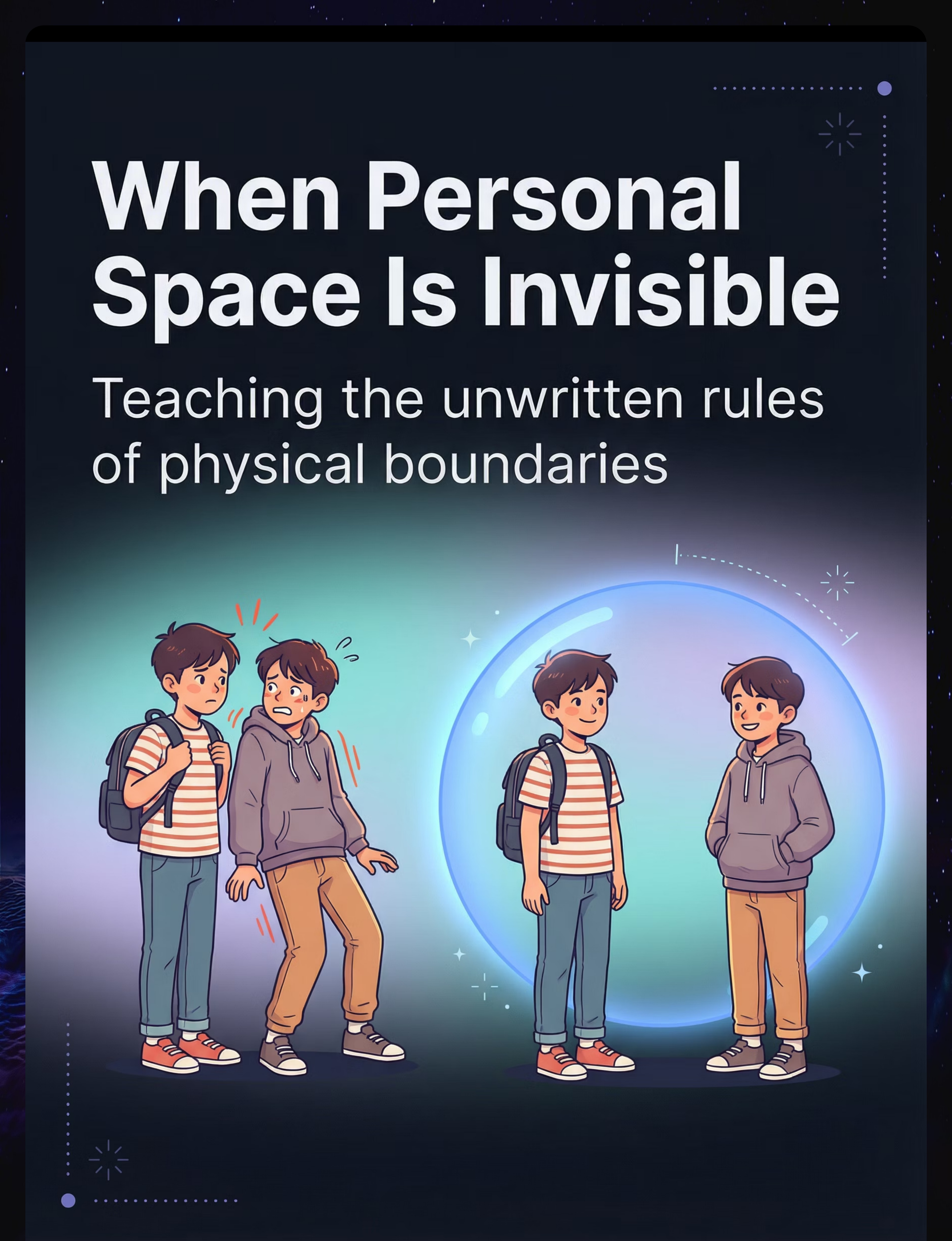
0"He stands so close people back away. He doesn't notice. He steps closer."
There is a reason. And there is a path forward.
🫧 C-314 · Personal Boundaries · Making Invisible Spaces Visible
"You are not failing. Your child is not 'rude.' Their nervous system simply hasn't been given a map that others seem born with. We're going to draw that map — today."
Pinnacle Blooms Network® Consortium · OT · SLP · ABA · SpEd · NeuroDev · CRO · Ages 4–12 · Home-Executable · GPT-OS® Validated
Act I · The Emotional Entry
You Are Among Millions of Families Navigating This Exact Challenge
67%
Space Awareness Difficulties
of children with ASD show significant personal space awareness challenges — SPD Foundation Clinical Database · n=4,200
1 in 36
Children in India
identified with autism-related social-sensory challenges · NIMHANS Registry 2023 · Estimated 4.8M children
80%
Measurable Improvement
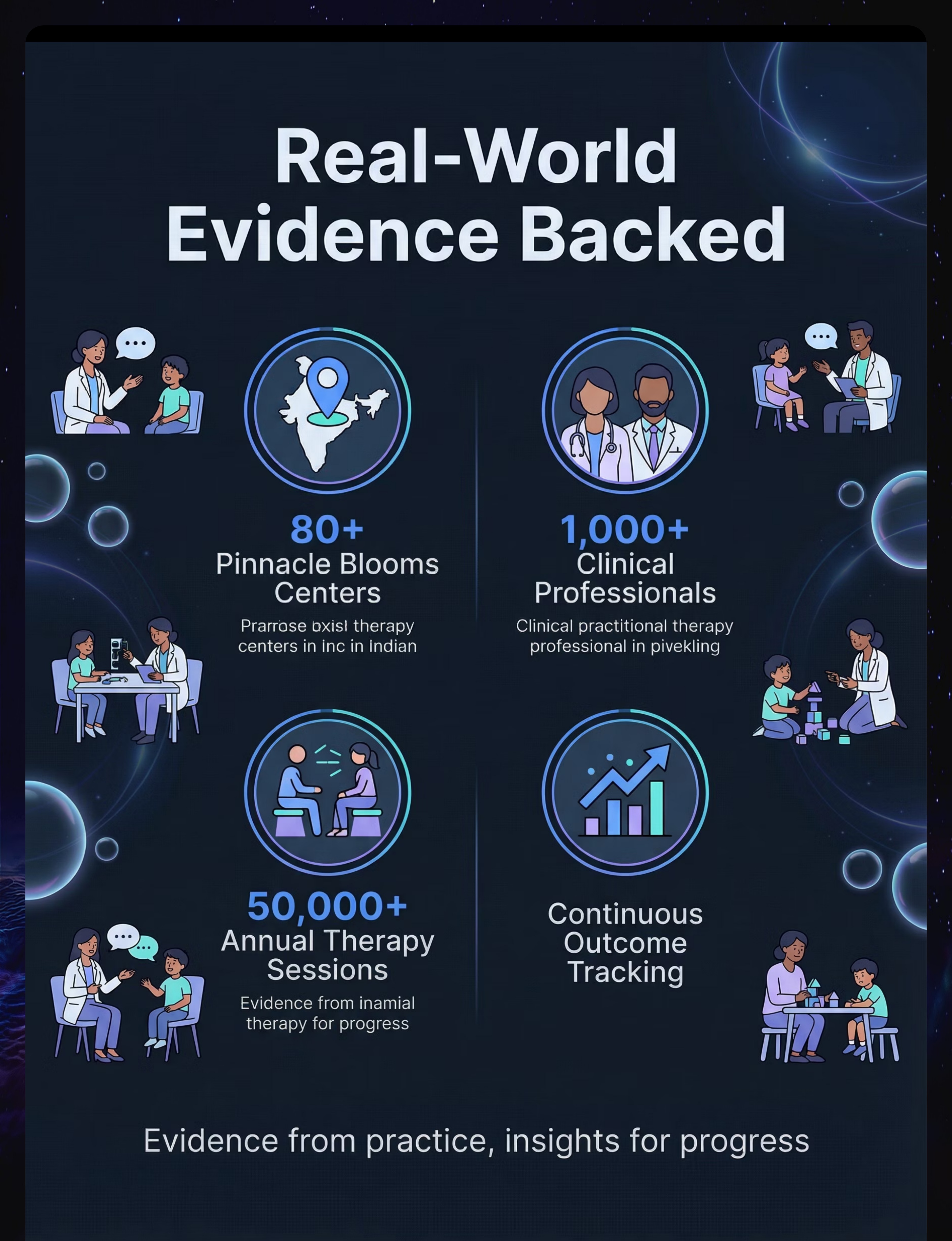
with structured explicit teaching · Pinnacle Blooms Network® RWE · 21M+ sessions
When your child invades others' personal space — standing too close, touching without asking, crowding in lines — it feels isolating. Like everyone else's child somehow knows the invisible rules, and yours was handed a different manual. Here is the truth: they were. Personal space is not universal instinct. It is a learned, culturally transmitted, neurologically processed social skill. And it can be taught explicitly — even when it doesn't develop naturally.
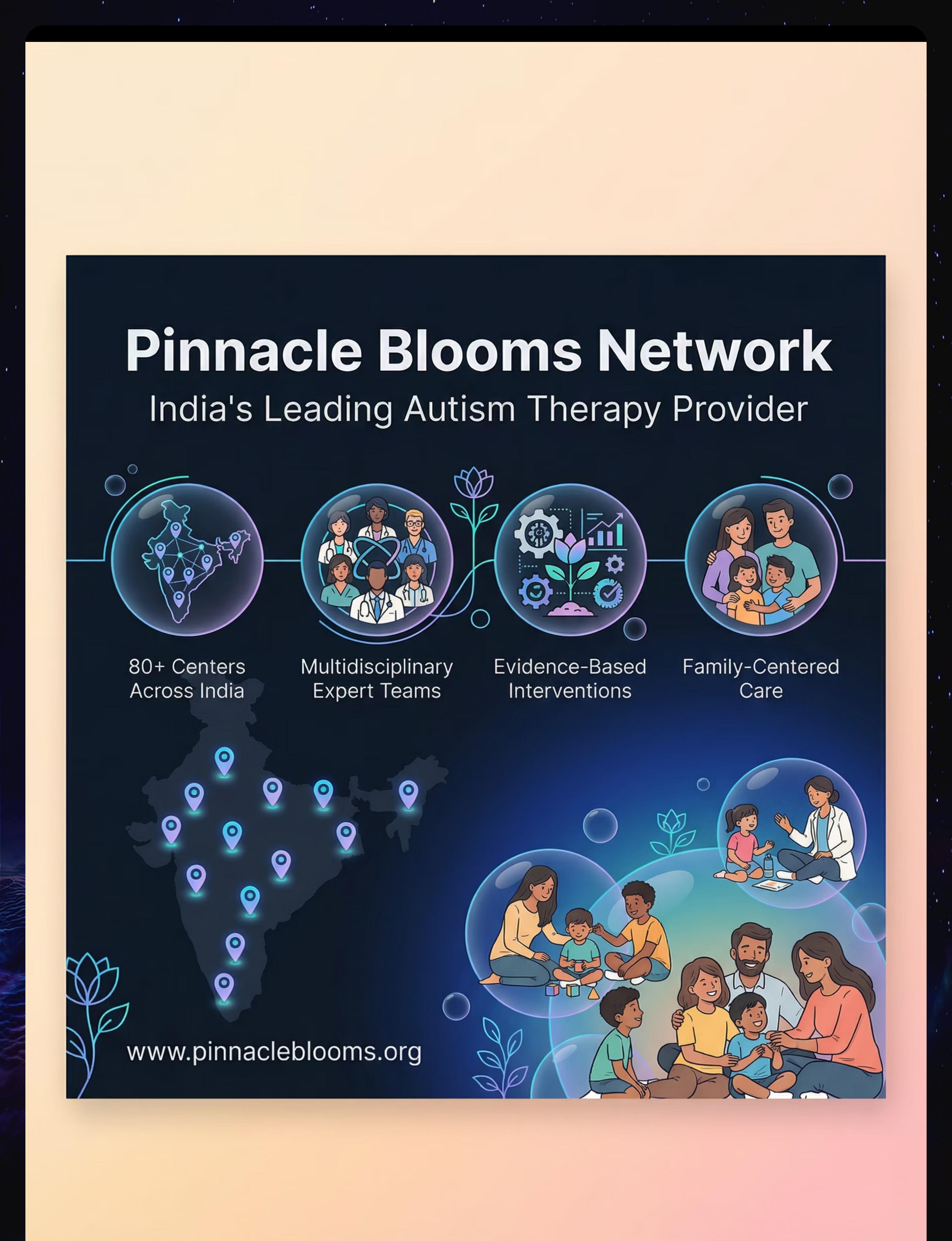
Across India's 80+ Pinnacle centres, personal boundary challenges are among the top 5 most-reported social skill concerns for children ages 4–12 with ASD, ADHD, and sensory processing differences. References: PMC11506176 · PMC10955541 · DOI: 10.12998/wjcc.v12.i7.1260
What's Happening in Your Child's Brain
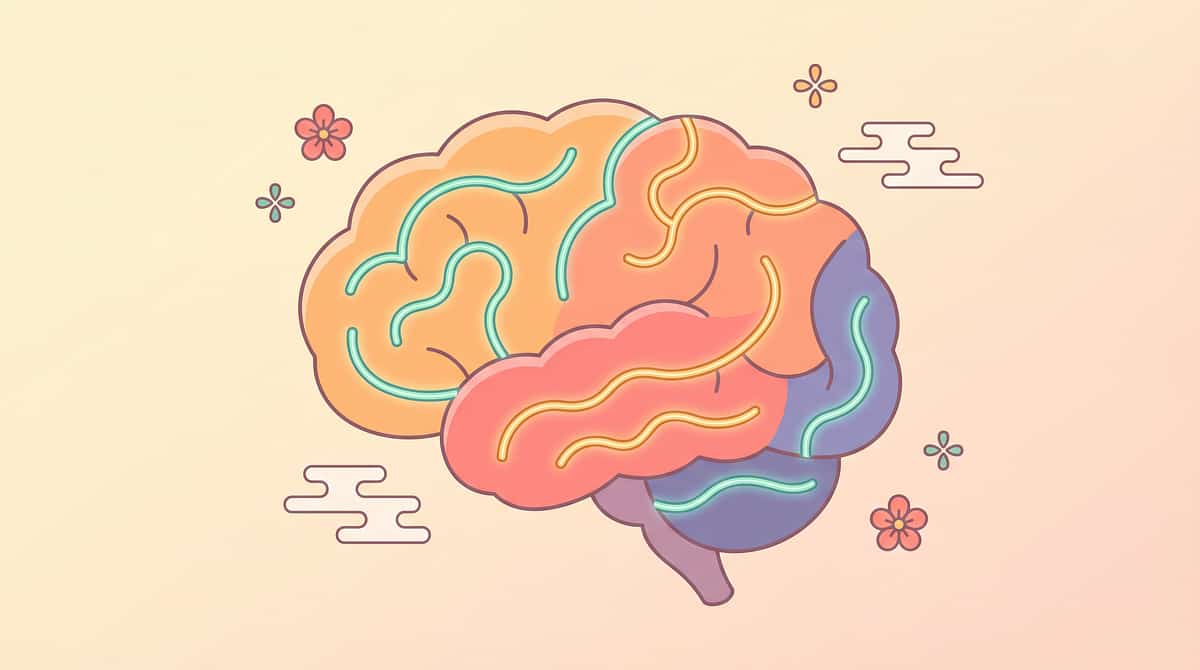
Personal space awareness isn't a single skill — it's the output of three interacting neurological systems. Understanding these systems transforms confusion into compassion, and confusion into a clear plan of action.
1. Proprioception — "Where am I?"
Your child's nervous system processes body position through receptors in joints, muscles, and tendons. In many children with ASD or sensory differences, this signal is underregistered — the brain doesn't clearly sense where the body ends and the space around it begins. If you don't know where you are, you can't know how close you're standing to someone else.
2. Somatosensory Processing — "What does 'too close' feel like?"
The somatosensory cortex processes touch and spatial pressure data. In some children, this system doesn't signal "discomfort" the way it does in neurotypical children — they don't feel they're in someone's space.
3. Social Cognition — "What does their face tell me?"
Reading the micro-signals of discomfort — a leaning back, crossed arms, averted gaze — requires a highly developed social perception network. This is precisely the network most affected in ASD and related conditions.
The Key Insight: "This is not disrespect. This is a wiring difference in three interacting neurological systems — and all three respond to structured, explicit intervention." · Frontiers in Integrative Neuroscience (2020): DOI: 10.3389/fnint.2020.556660
Developmental Context
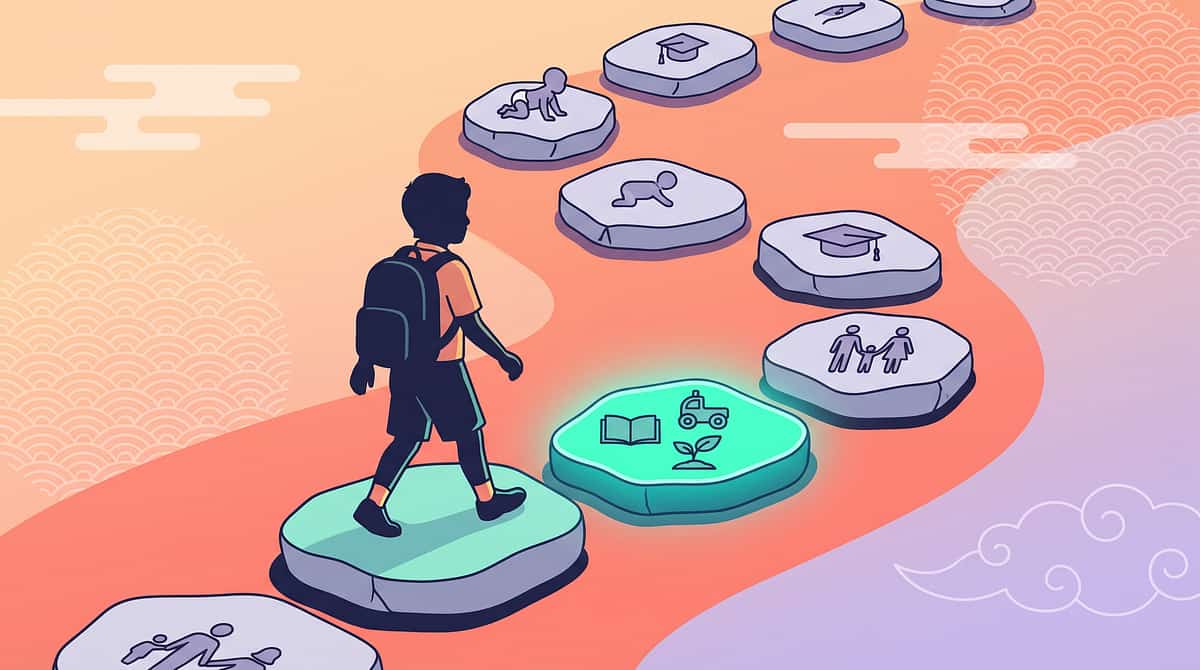
Your Child Isn't "Behind." They're at a Specific Developmental Waypoint — With a Clear Path Forward.
Ages 2–3
Begins parallel play, notices peers. May show no discomfort awareness yet.
Ages 3–4
Begins understanding "mine" / "yours." May crowd others; touch without asking.
Ages 4–6 ⚡ Challenge Zone
Develops intuitive personal space. Peers begin reacting negatively; isolation risk increases.
Ages 6–9
Social space becomes semi-automatic. Without intervention: social rejection patterns deepen.
Ages 9–12
Context-adaptive spacing develops. Intervention window: still highly effective.
Age 12+
Social conventions internalized. With explicit teaching: full naturalization possible.
GPT-OS® Readiness Progression: Stage 1: No space awareness → Stage 2: Visual-cue-dependent → Stage 3: Self-monitored → Stage 4: Context-adaptive → Stage 5: ✅ Naturalized comfort. Most children move 1–2 stages within 8 weeks of consistent home practice.
Research: WHO Care for Child Development Package (2023) · UNICEF MICS Indicators · PMC9978394

Evidence Grade
⚡ Level II Evidence — The Science Behind This Technique
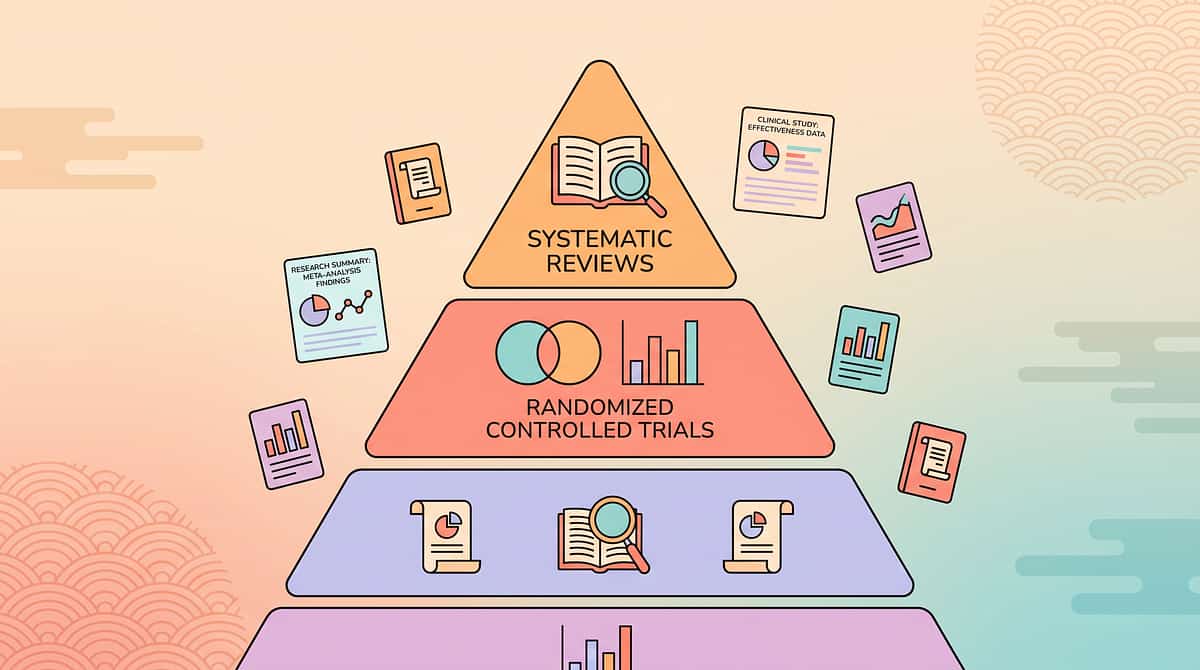
Systematic Reviews + Multiple RCTs + Clinical Consensus · "Clinically Validated · Home-Applicable · Parent-Proven"
PRISMA Systematic Review (2024)
16 studies (2013–2023): Social skills training with explicit boundary teaching meets criteria as evidence-based practice for children with ASD. 📎 PMC11506176
Meta-Analysis (World J Clin Cases, 2024)
24 studies: Explicit social-sensory intervention effectively promotes social participation, body awareness, and appropriate proximity behaviours. 📎 PMC10955541 · DOI: 10.12998/wjcc.v12.i7.1260
Indian RCT (2019)
Home-based explicit social-sensory interventions demonstrated significant outcomes in Indian paediatric populations — confirming home execution efficacy. 📎 DOI: 10.1007/s12098-018-2747-4
Hall, E.T. Proxemics Research (1966)
Foundational research establishing distance zones (intimate, personal, social, public) as biologically rooted and culturally shaped — validating explicit teaching of these norms. 📎 The Hidden Dimension, Doubleday
Act II · The Knowledge Transfer
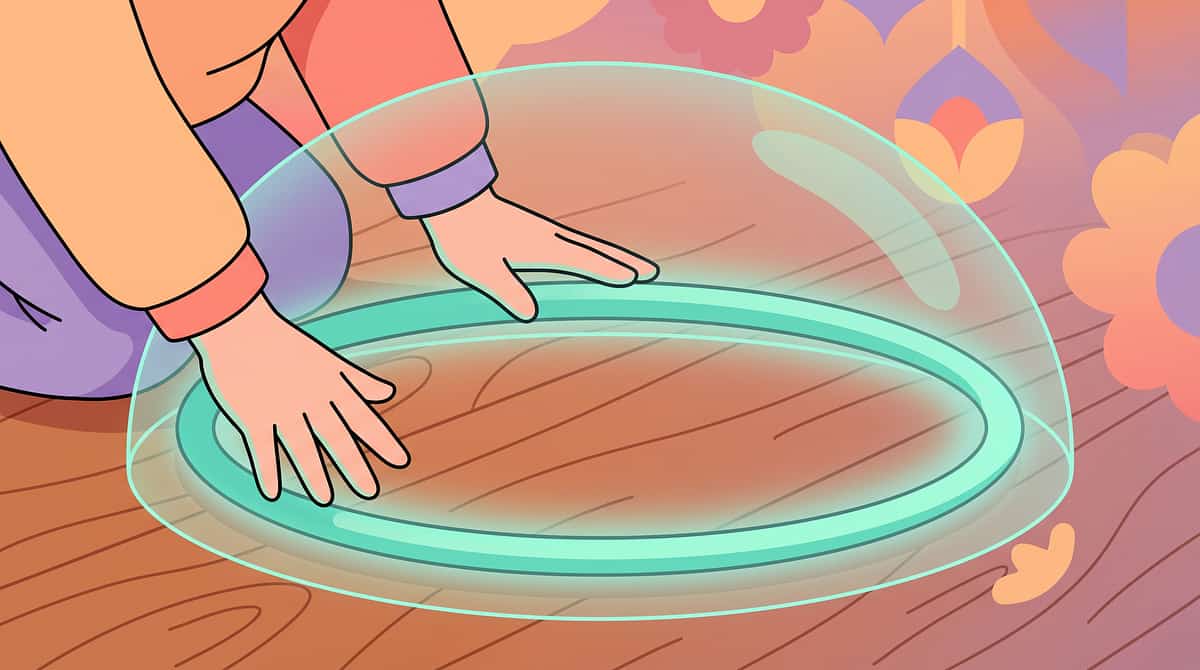
🫧 The Technique: Personal Space & Physical Boundary Awareness Training
Parent-Friendly Alias:"The Invisible Bubble Protocol"
Definition: A multi-material, multi-modal intervention that makes invisible personal space boundaries visible, measurable, and learnable for children who do not develop intuitive proxemic awareness naturally. The protocol combines physical markers (hula hoops, floor tape), visual zone charts, social stories, body measurement tools, and discomfort cue training into a structured home-based curriculum — directly addressing the proprioceptive, social-cognitive, and behavioural roots of personal space difficulty.
🏷️ Domain
Social Skills · Personal Space & Physical Boundaries (SOC-BND)
👶 Ages
4–12 years · 10–20 min sessions · 3–5× per week
🏠 Setting
Home (primary) + Community generalisation · GPT-OS® Series C-314
"We're going to take the invisible bubble that other children seem to 'just know' about — and make it real. Visible. Physical. Learnable. Your child will see it, feel it, practise it, and eventually carry it inside them wherever they go."
Who Uses This Technique
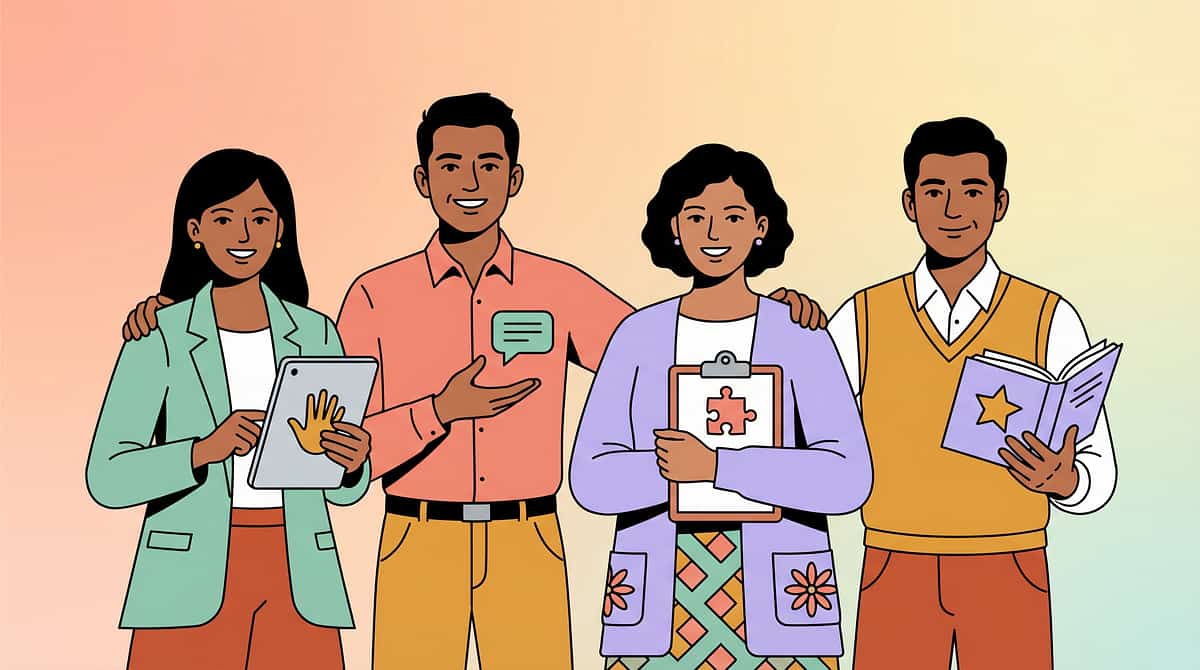
This technique doesn't belong to one therapy room. It crosses every discipline — because personal space connects everything.
🧩 Occupational Therapist (Primary Lead)
Addresses the sensory-motor root: proprioceptive processing differences and body awareness deficits. OT uses weighted vests, compression input, and movement activities. Physical space markers are an OT-designed concrete teaching tool.
🗣️ Speech-Language Pathologist
Addresses the social-communication dimension: explicitly teaching the language of personal space, consent vocabulary ("Can I hug you?"), and social distance zone charts as communication supports.
📊 BCBA / ABA Therapist
Addresses the behavioural practice layer: structured role-play scenarios, reinforcement schedules for correct spacing, discrete trial teaching of distance concepts, and data collection protocols.
📐 Special Educator
Addresses generalisation: translating home-learned boundary skills into classroom settings — school, lunch line, and peer interaction scenarios.
🧠 NeuroDev Paediatrician
Addresses comorbidities: rules out impulse control disorders, anxiety-based proxemic issues, or trauma-related boundary patterns requiring specialist approaches beyond this protocol.
Material 1 of 9
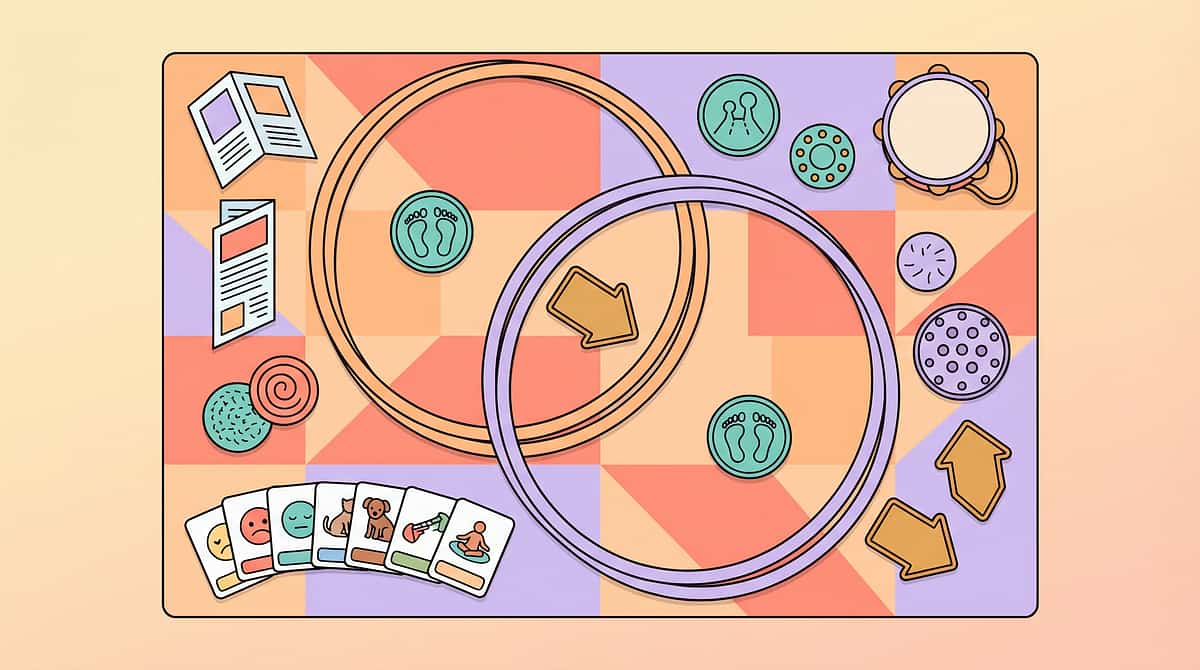
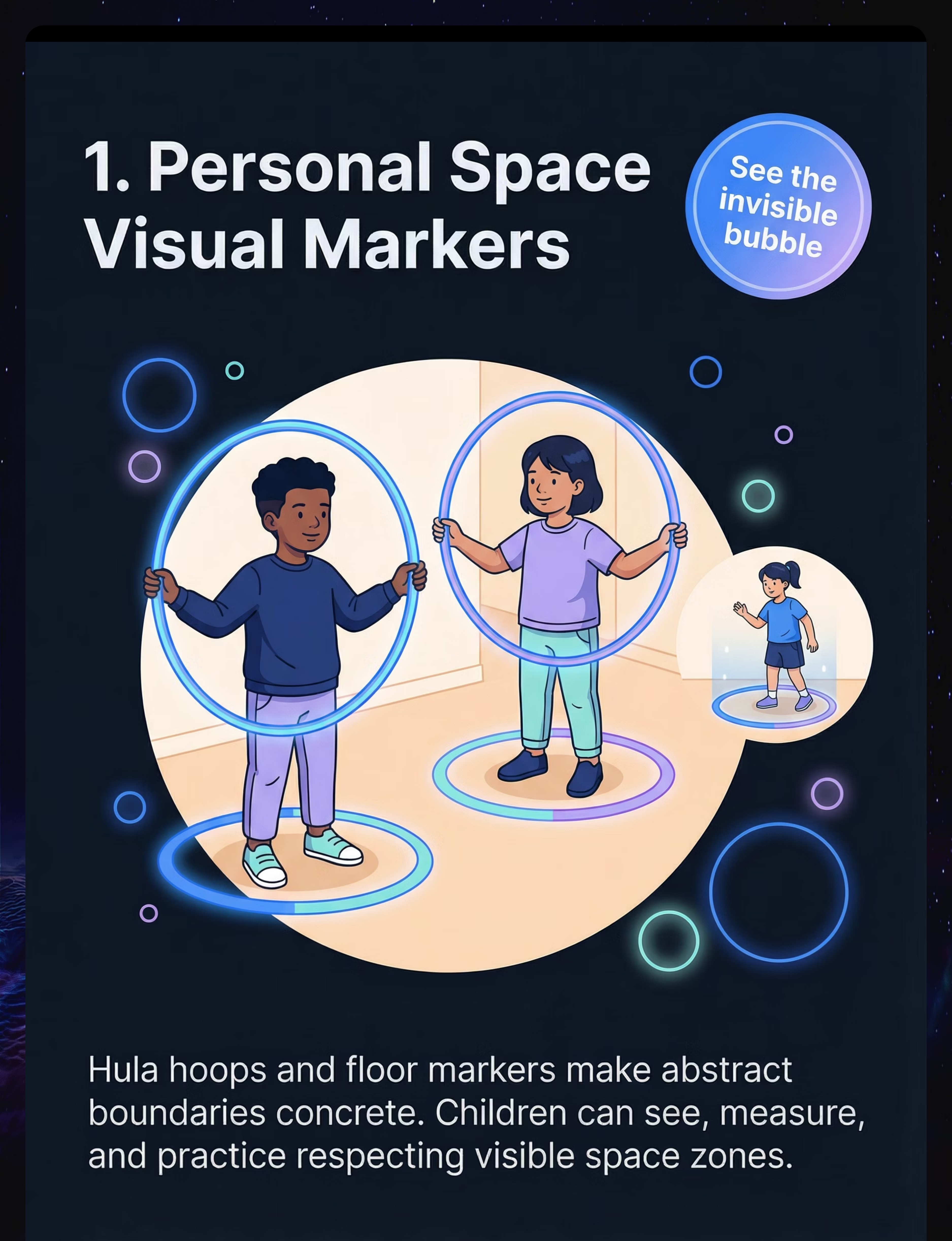
Material 1: Personal Space Visual Markers & Hula Hoops
🏷️Canon: Personal Space / Body Boundaries Tools · 💰Cost: ₹200–500
The visible bubble. Makes abstract distance concrete. This is the anchor material of the entire protocol — the physical object that externalises what other children experience as instinct. When a child holds the hula hoop at waist level, they feel exactly where their personal space ends. The hoop becomes a tangible, joyful, non-threatening prop that teaches a neurological concept through play.
✂️ Free DIY Alternative
Rope circle on floor · Chalk circle on pavement. Same Science: Identical visual boundary signal — the therapeutic principle costs nothing.
⚠️Safety: Ensure floor is clear to prevent tripping. All materials should be free from small parts for children under 6.
Material 2 of 9
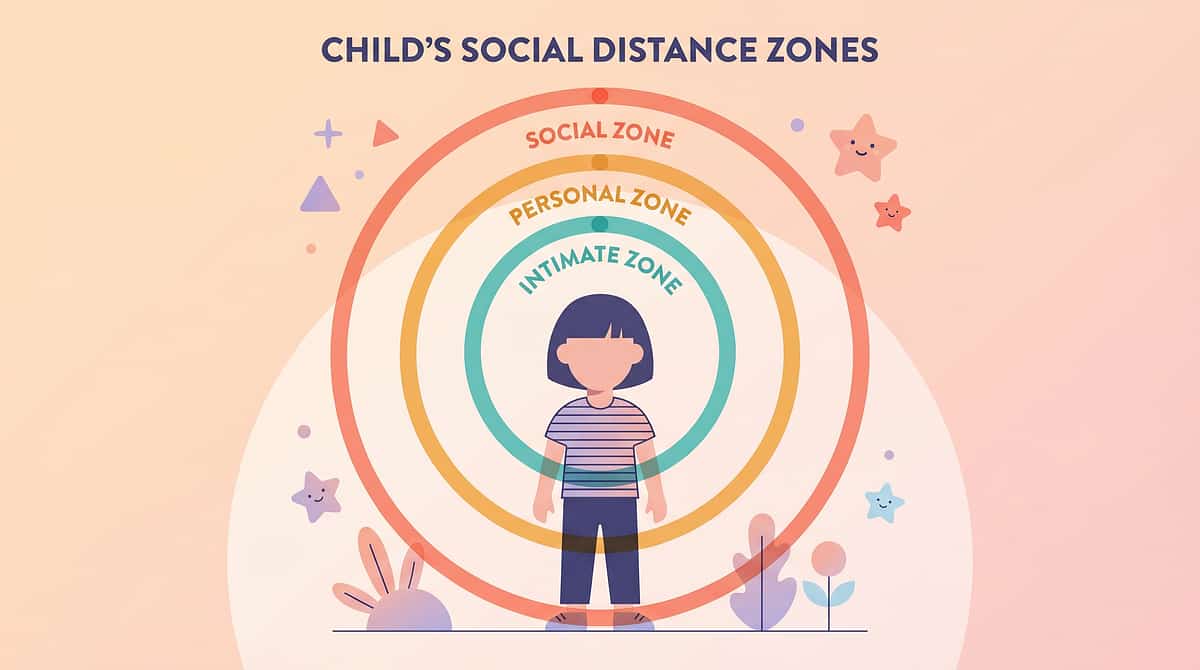
Material 2: Social Distance Zone Charts
🏷️Canon: Visual Rules / Expectations Cards · Social Skills Cards / Scenarios · 💰Cost: ₹250–550
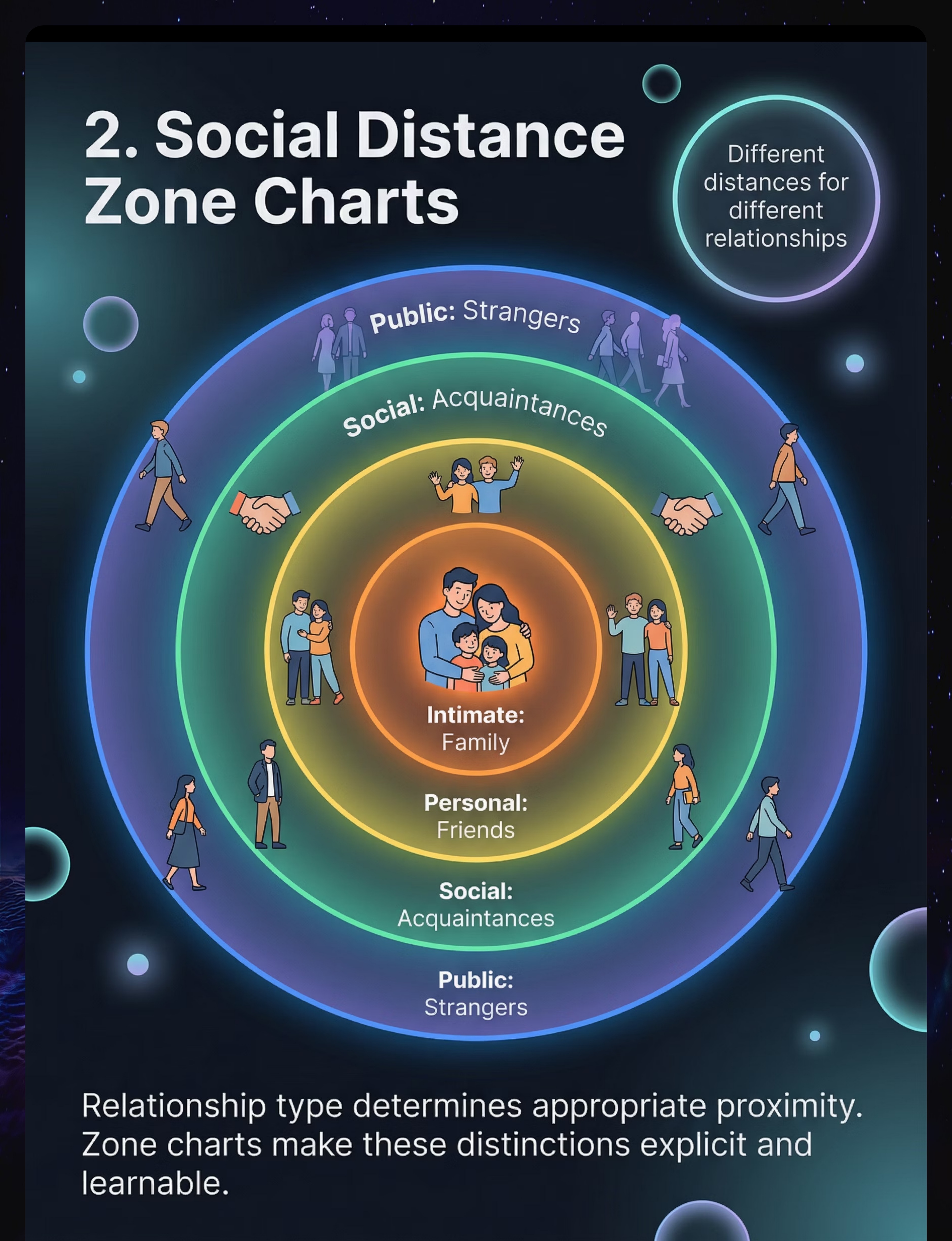
The relationship map. Different people, different distances. Hall's proxemics research (1966) established that humans naturally operate in four distance zones: intimate, personal, social, and public. For children who don't absorb this implicitly, a zone chart makes the invisible rule visible. Each circle on the chart represents a different category of relationship — and a different appropriate distance.
Innermost Circle
Family Zone — Mamma, Papa, grandparents. Closest physical contact appropriate.
Second Circle
Friends Zone — Close friends, familiar peers. Arm's length with permission for contact.
Third Circle
Acquaintances Zone — Classmates, neighbours, teachers. Greater distance, formal greetings.
Outer Circle
Strangers Zone — All the way out. No physical contact without explicit permission.
✂️Free DIY: Draw on paper — 4 concentric circles labelled by name category. Search Amazon.in: "personal space zone chart children"
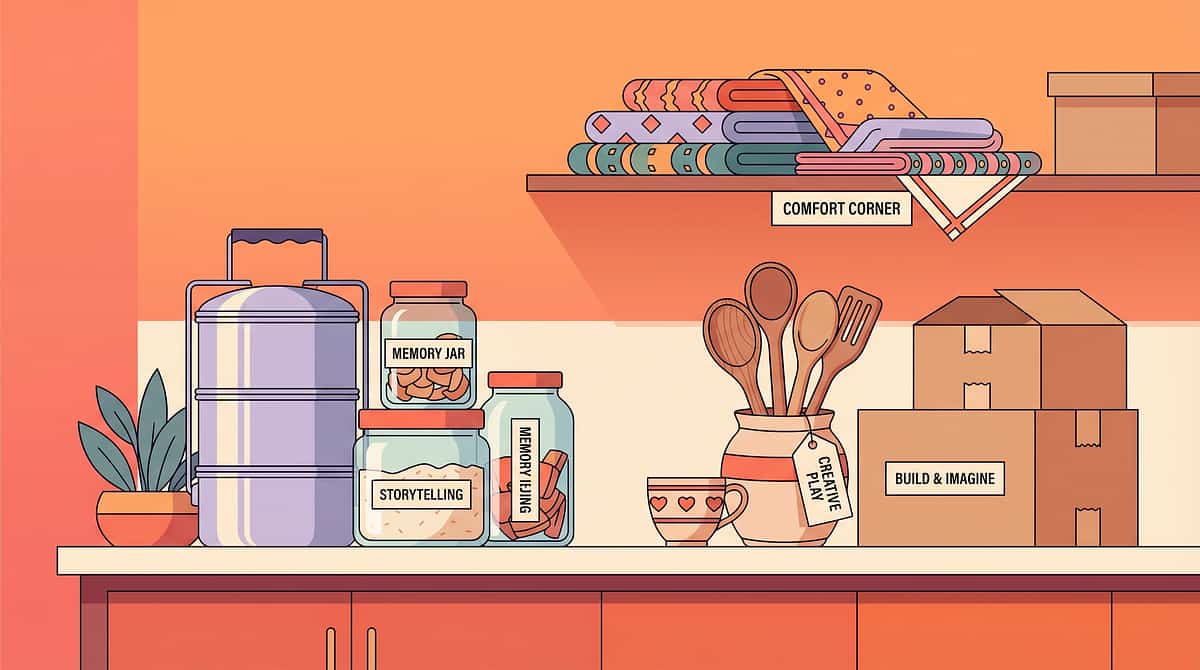
Material 3 of 9
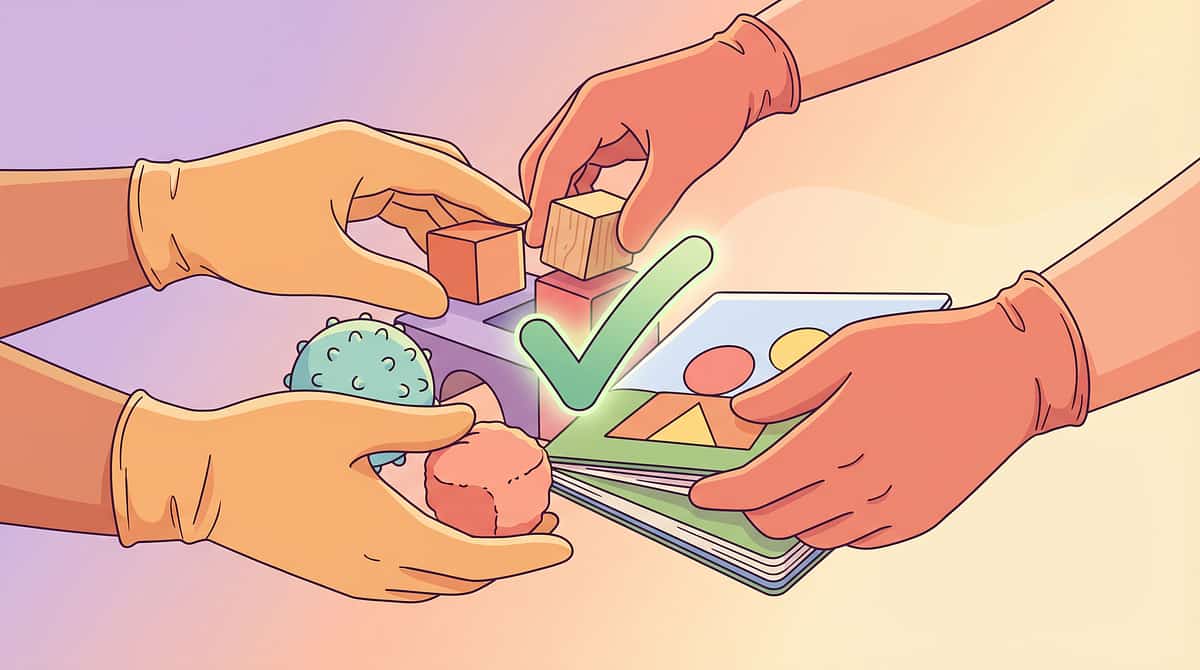
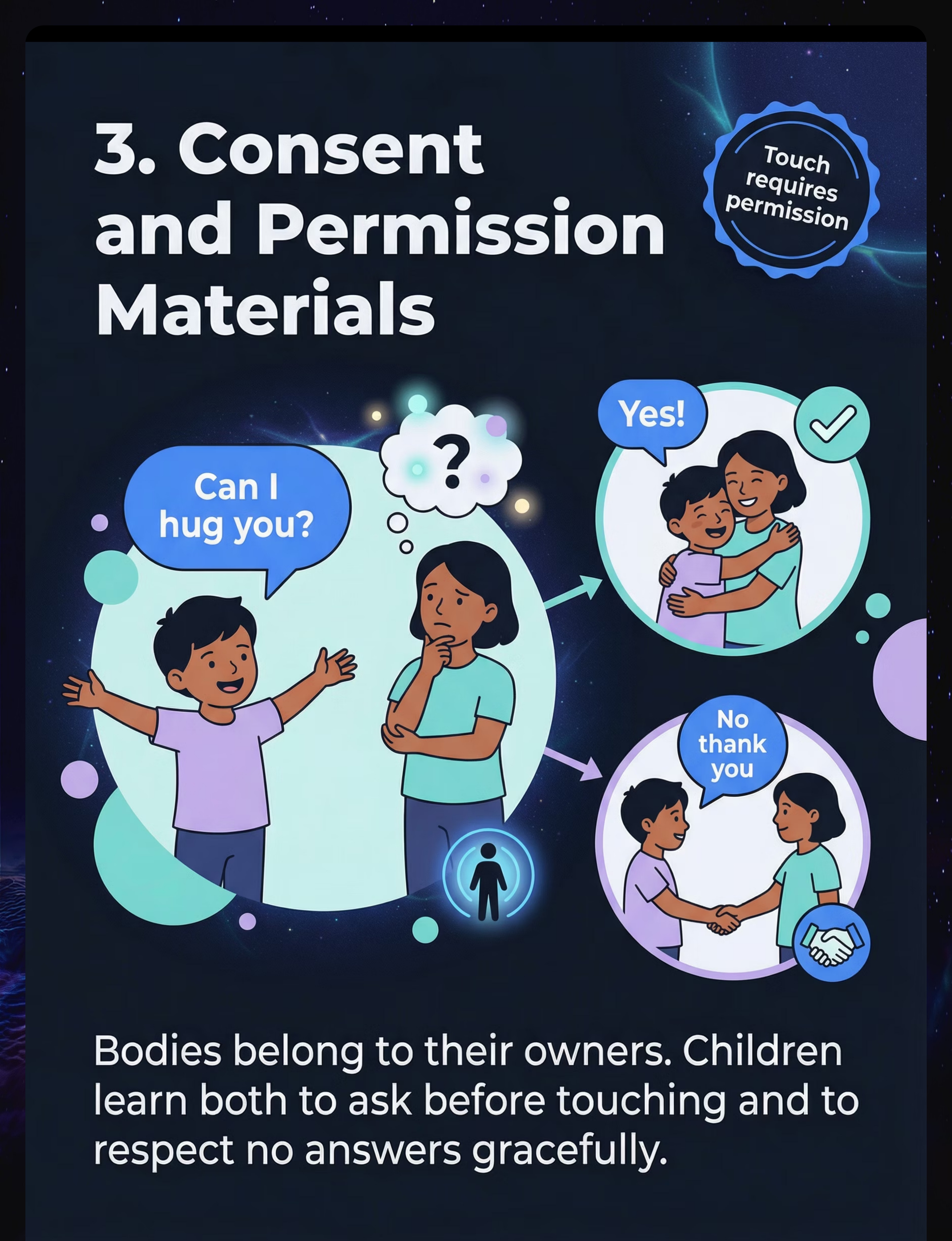
Material 3: Consent & Permission Teaching Materials
🏷️Canon: Personal Space / Body Boundaries Tools · Social Skills Cards / Scenarios · 💰Cost: ₹200–450
The body autonomy foundation. Consent is not just a personal space skill — it is a life skill. These materials explicitly teach children that touch requires asking, that "no" is a valid answer, and that alternatives (high-five, wave) are always available. This is one of the most important and transferable outcomes of the entire C-314 protocol.
📦Pinnacle Recommends: "Pegasus Serious Life Issues Books — Good Touch Bad Touch, Respecting" · Check Amazon.in
🛒 Purchase Option
✂️ Free DIY Alternative
Parent-made story: "Before I hug, I ask" written on a notebook with illustrated scenes. Same science: Identical explicit rule with narrative structure.
Material 4 of 9
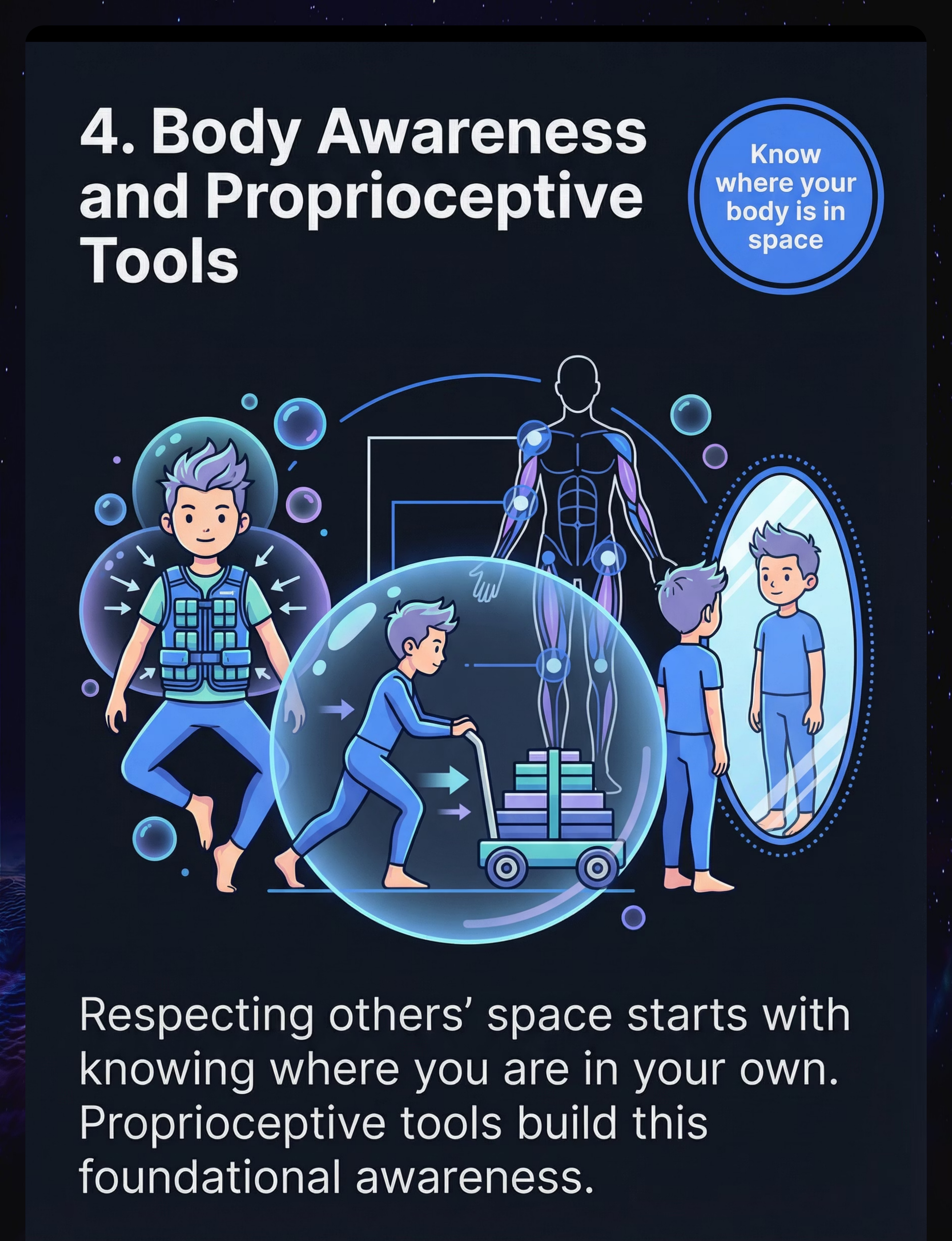
Material 4: Body Awareness & Proprioceptive Tools
🏷️Canon: Compression Vest / Body Sock · Tactile Sensory Kit · 💰Cost: ₹500–1,500
The neurological foundation. A child cannot regulate personal space without first knowing where their own body is in space. Proprioceptive tools — weighted vests, body socks, compression garments — provide deep pressure input that grounds the nervous system, improving body-in-space awareness. This is the sensory bedrock on which all other C-314 skills are built.
For Proprioceptive Seekers
Heavy work warm-up before every session: 5 wall push-ups, carrying weighted items. Then proceed to bubble practice.
Weighted Vest
Clinically graded deep pressure. ⚠️ Never exceed 10% of body weight. Consult OT before use.
Body Sock / Compression
Full-body proprioceptive input. Check sizing guidelines — must not restrict breathing.
⚠️Non-Negotiable Safety Note: Proprioceptive tools require clinically graded weight distribution. Improper DIY versions can be unsafe. Consult your OT before making substitutes for this material category.
✂️DIY options (non-weighted only): Sand-filled cloth bag on shoulders · Wall push-ups · Heavy book carry. Search Amazon.in: "weighted vest children proprioceptive"
Material 5 of 9
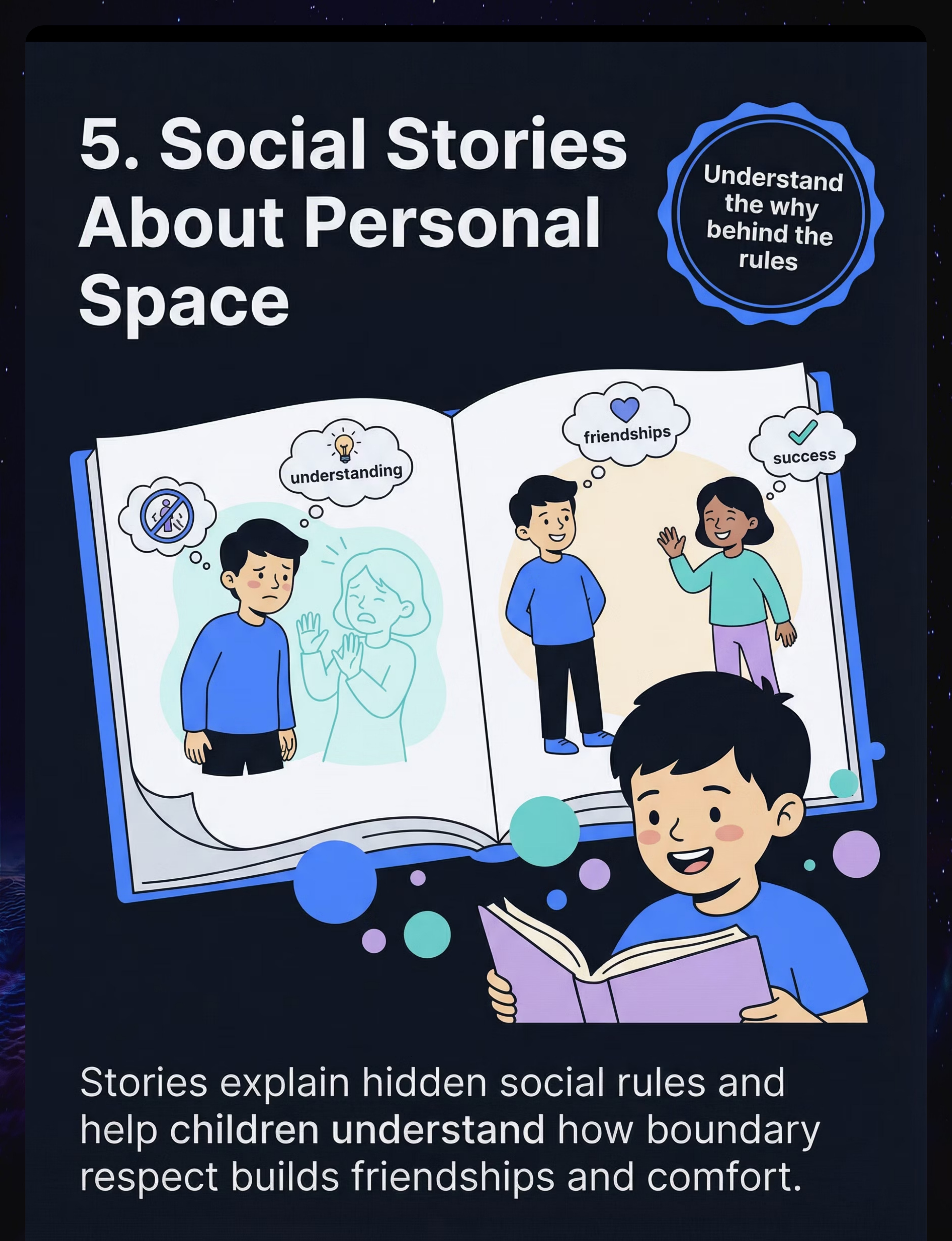
Material 5: Social Stories About Personal Space
🏷️Canon: Social Stories / Narrative Supports · 💰Cost: ₹200–500
The understanding layer. Not just rules — reasons. Developed by Carol Gray, social stories are short, structured narratives written from the child's perspective that explain social situations and appropriate responses. For personal space, a social story doesn't just say "stay an arm's length away" — it explains why this matters, how other people feel, and what the child can do. This builds genuine comprehension rather than rote compliance.
A Sample Social Story Frame
"When I am at school and I want to talk to a friend, I check my bubble first. I put my arm out. If I can touch them, I'm too close. I take one step back. Then my friend feels comfortable and happy."
✂️ Free DIY Alternative
Handwritten / drawn: 5 frames showing a child checking their space bubble. Same narrative-rule teaching as a purchased set. Search Amazon.in: "social stories personal space children"
Research: Gray, C. The New Social Story Book (2015) · Future Horizons — validates the social story methodology used in Materials 5 and 7.
Material 6 of 9
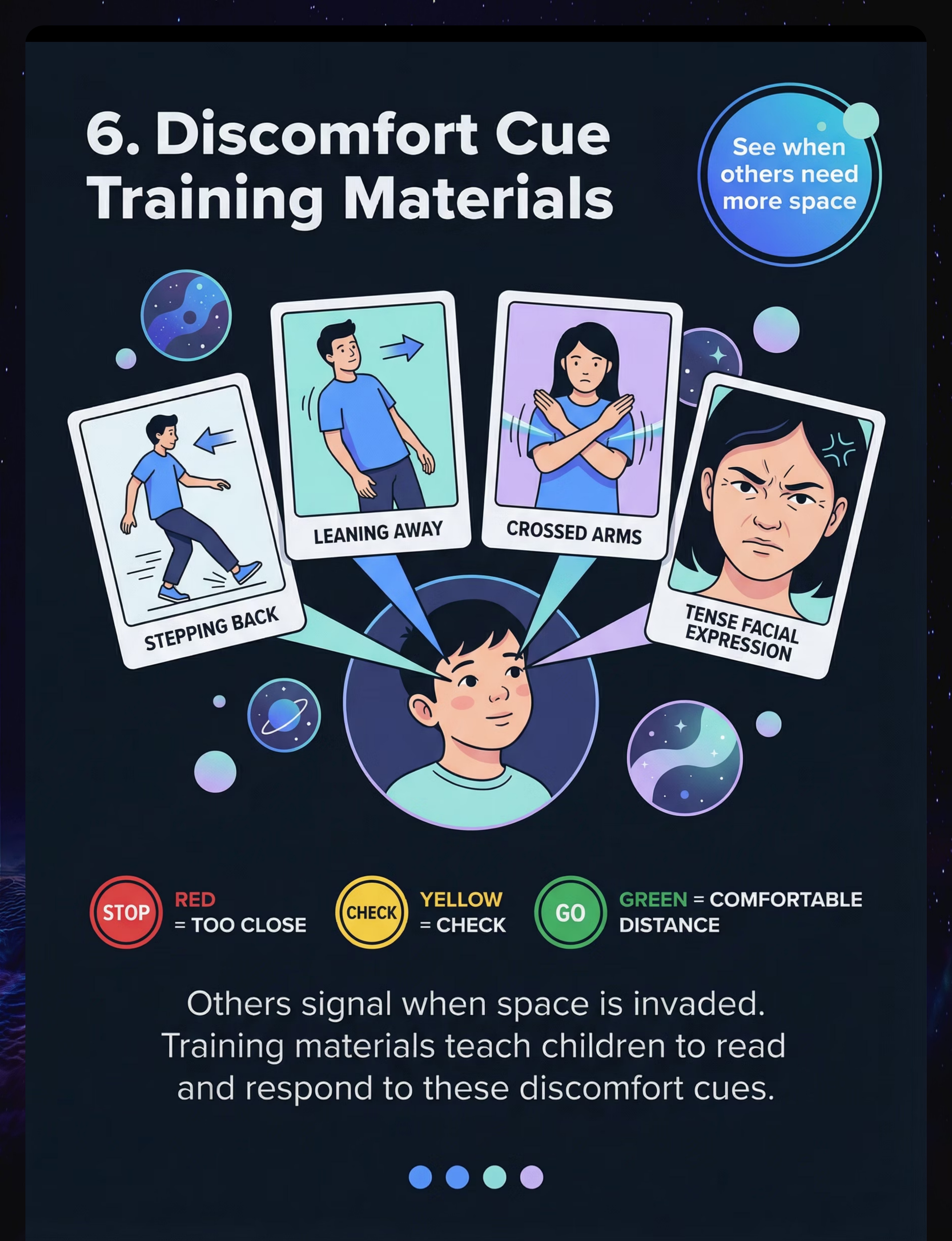
Material 6: Discomfort Cue Training Cards
🏷️Canon: Emotion Cards / Feelings Faces · Social Skills Cards / Scenarios · 💰Cost: ₹250–500
Reading others' signals in real-time. A child may understand personal space rules but still miss the live feedback that tells them they've crossed a boundary. Discomfort cue cards train children to recognise the subtle body language signals that mean "I need more space" — leaning back, crossed arms, tense face, averted gaze. This is the bridge between rule-knowledge and real-world responsiveness.
Leaning Away
Body shifts backward — needs more space. Child practises the response: step back, check arm's length.
Crossed Arms
Protective posture — feeling crowded or uncomfortable. Step back and give space before continuing conversation.
Averted Gaze
Looking away — a signal to pause and reassess proximity. May also indicate the conversation is ending.
🛒Emotion Flash Cards — Amazon.in · ✂️DIY: Print 6 photos from the internet: happy, uncomfortable, leaning away, crossed arms, tense face, open welcome.
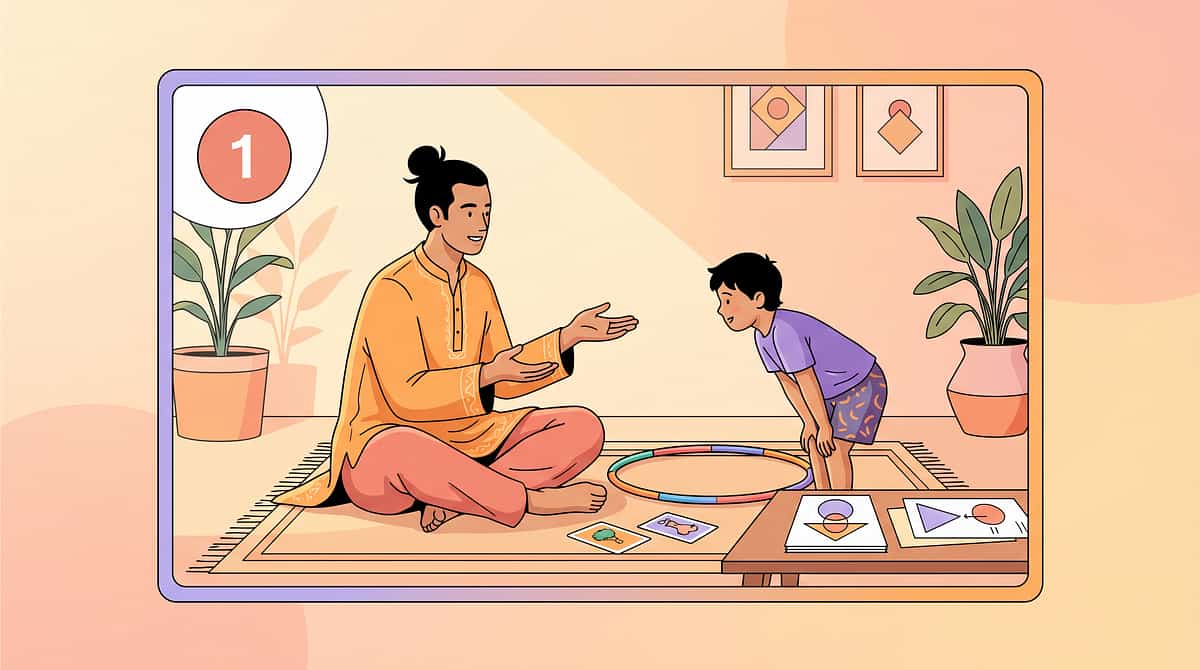
Material 7 of 9
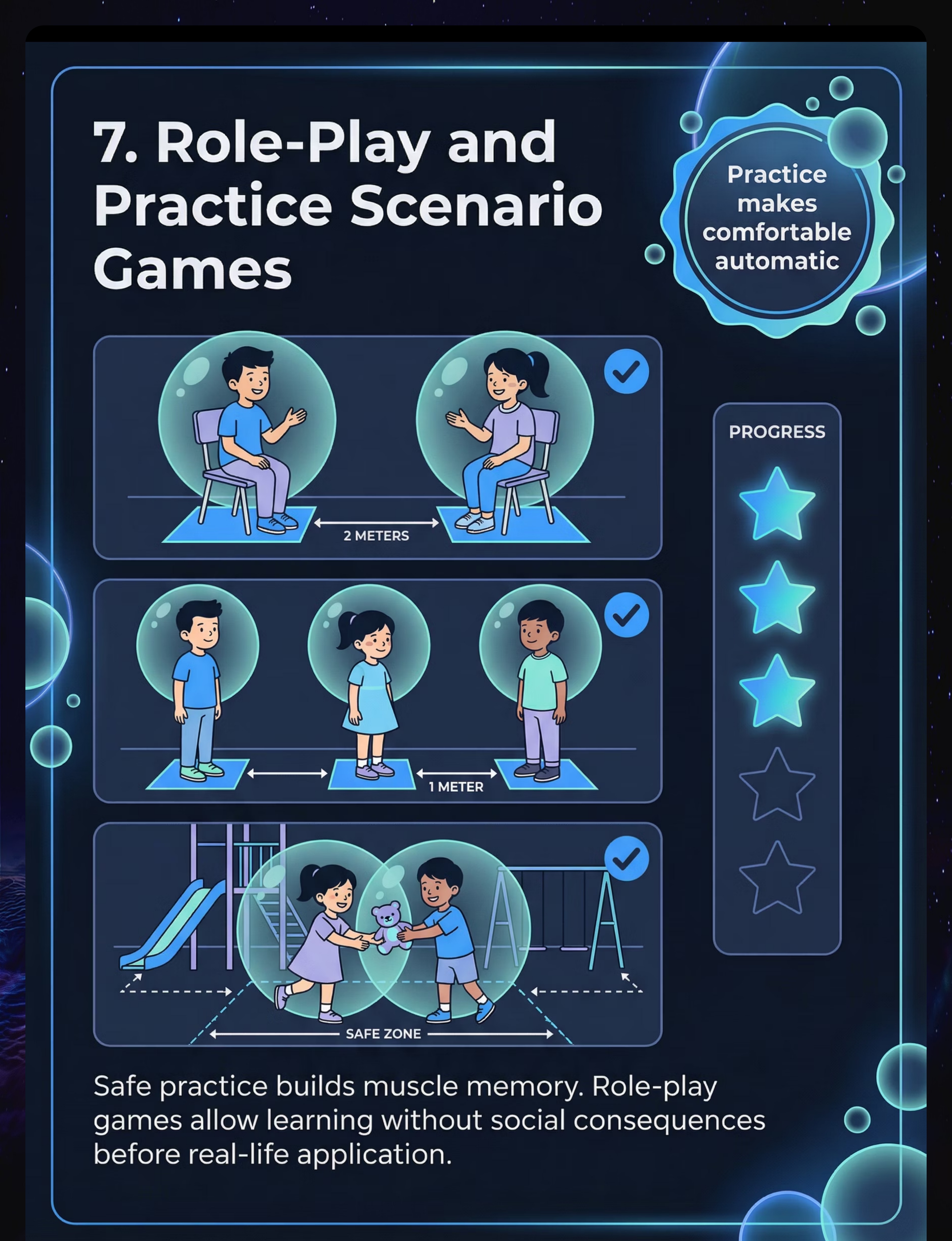
Material 7: Role-Play & Practice Scenario Games
🏷️Canon: Role-Play / Pretend Play Props · Turn-Taking / Cooperative Games · 💰Cost: ₹200–450
Safe rehearsal before real life. The gap between knowing a rule and living a rule is bridged by practice. Role-play scenarios create a safe, low-stakes environment where children can try out personal space behaviours, make mistakes, be corrected warmly, and try again — before they face the same situation with actual peers at school. Role-play is one of the most powerful generalisation tools in the entire protocol.
1
Practice at Home
Parent and child act out: "at the playground", "at school", "at the shops". Use stuffed animals as stand-in peers for lower demand.
2
Vary the Scenario
Change the setting every session — birthday party, bus queue, library. Different contexts, same bubble rule.
3
Practise with Peers
Once home mastery is established, extend to one trusted family member or family friend for generalisation rehearsal.
🛒Search Amazon.in: "social skills role play game children" · ✂️Free DIY: Parent + child act out the scenarios — no materials needed. Same behavioural rehearsal.
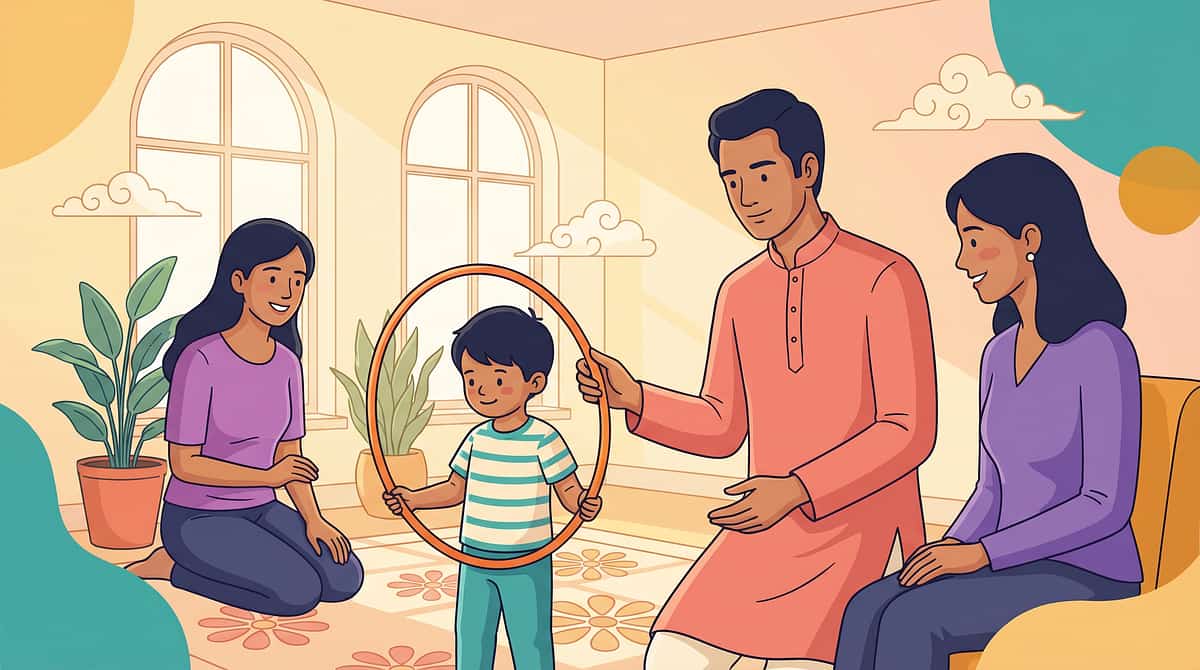
Material 8 of 9
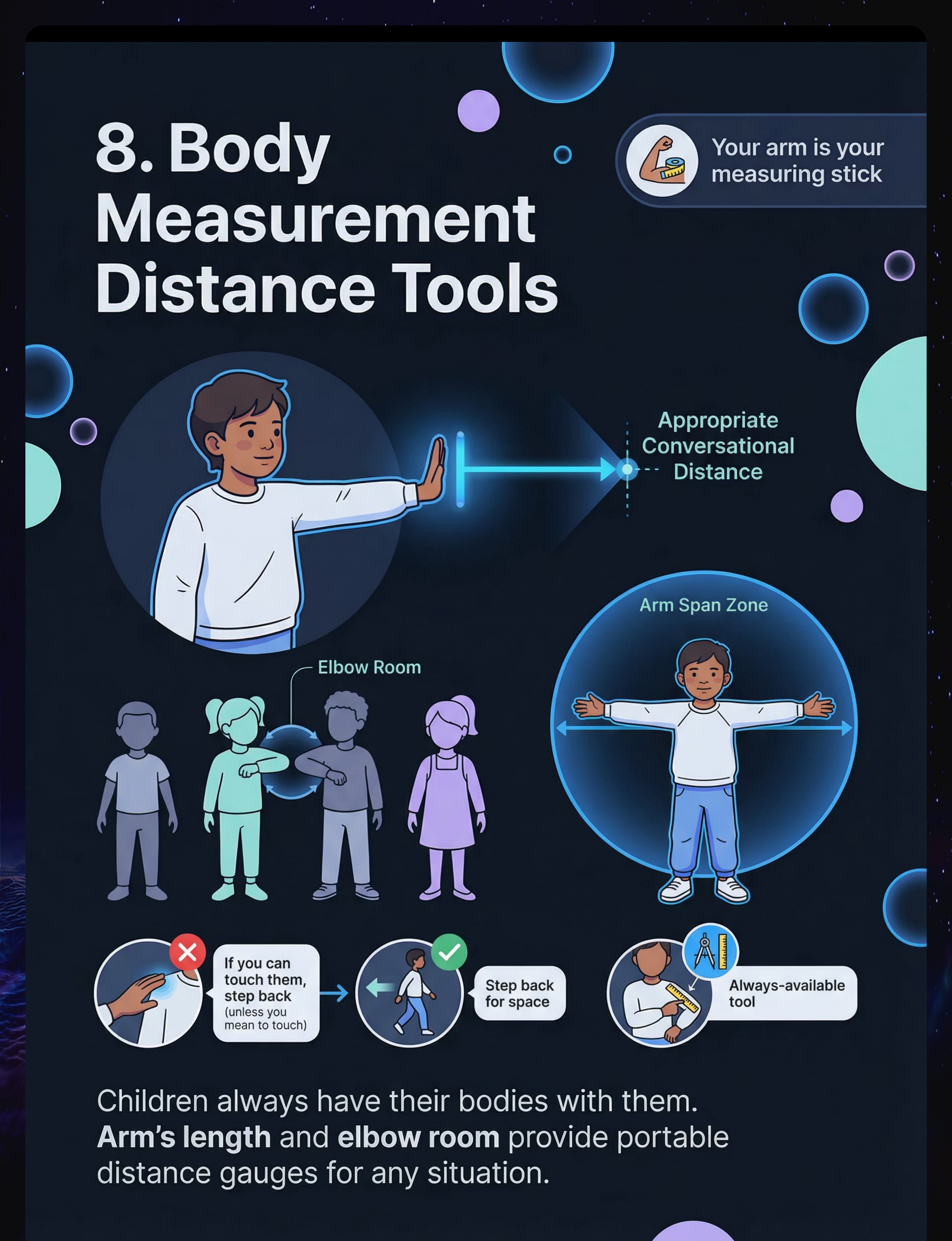
Material 8: Arm's Length & Body Measurement Tools
🏷️Canon: Personal Space / Body Boundaries Tools · 💰Cost: ₹100–300
The portable measuring stick — always available. This is the most important tool in the entire protocol because it requires no equipment, no setup, and no materials to purchase. Every child carries it with them at all times: their own arm. When a child extends their arm before beginning a conversation, they have a built-in personal space gauge that works in any setting, with any person, in any country.
💡The Arm's Length Rule: Before any conversation, extend one arm toward the other person. If your arm can touch them — you're too close. Step back until your arm barely reaches. Now you're at the right distance. This rule is portable, logical, and non-stigmatising for older children.
Why This Is the Most Powerful Tool
Unlike a hula hoop, the arm's length tool goes everywhere. It works on the school bus, in the canteen, at a birthday party, at a temple. It becomes the internalized, automatic habit that represents true mastery of C-314.
Fading Protocol
Physical hoop → Imagined hoop → Arm's length check → Naturalized automatic spacing. The arm's length check is the bridge between supported and independent behaviour.
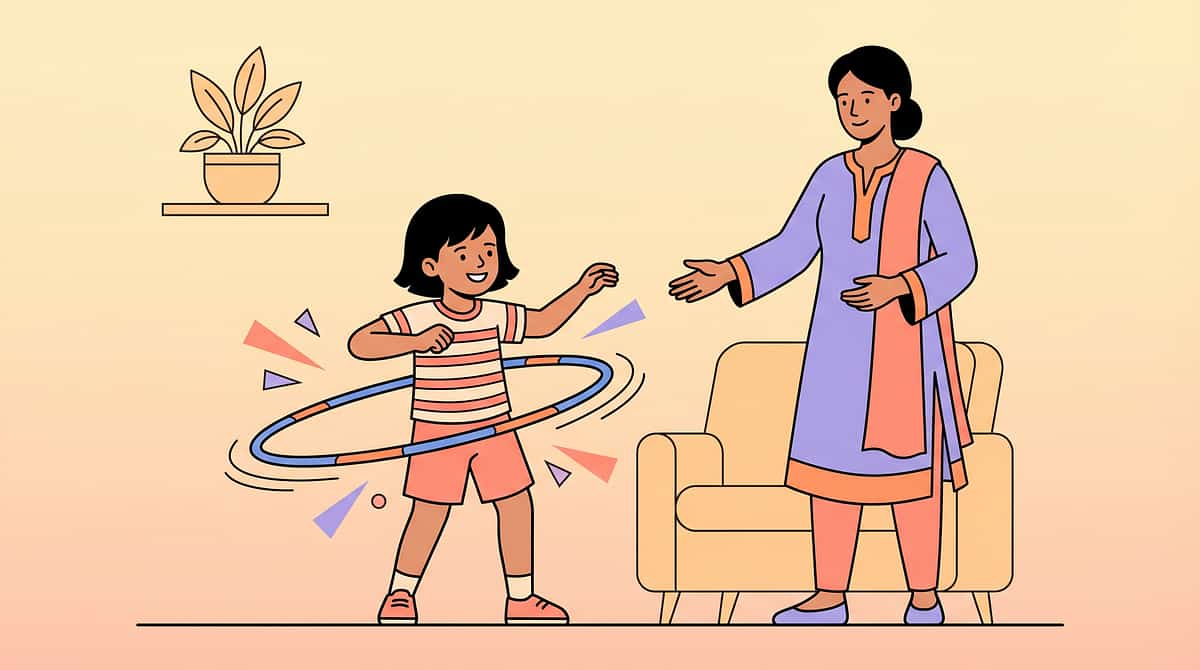
Material 9 of 9
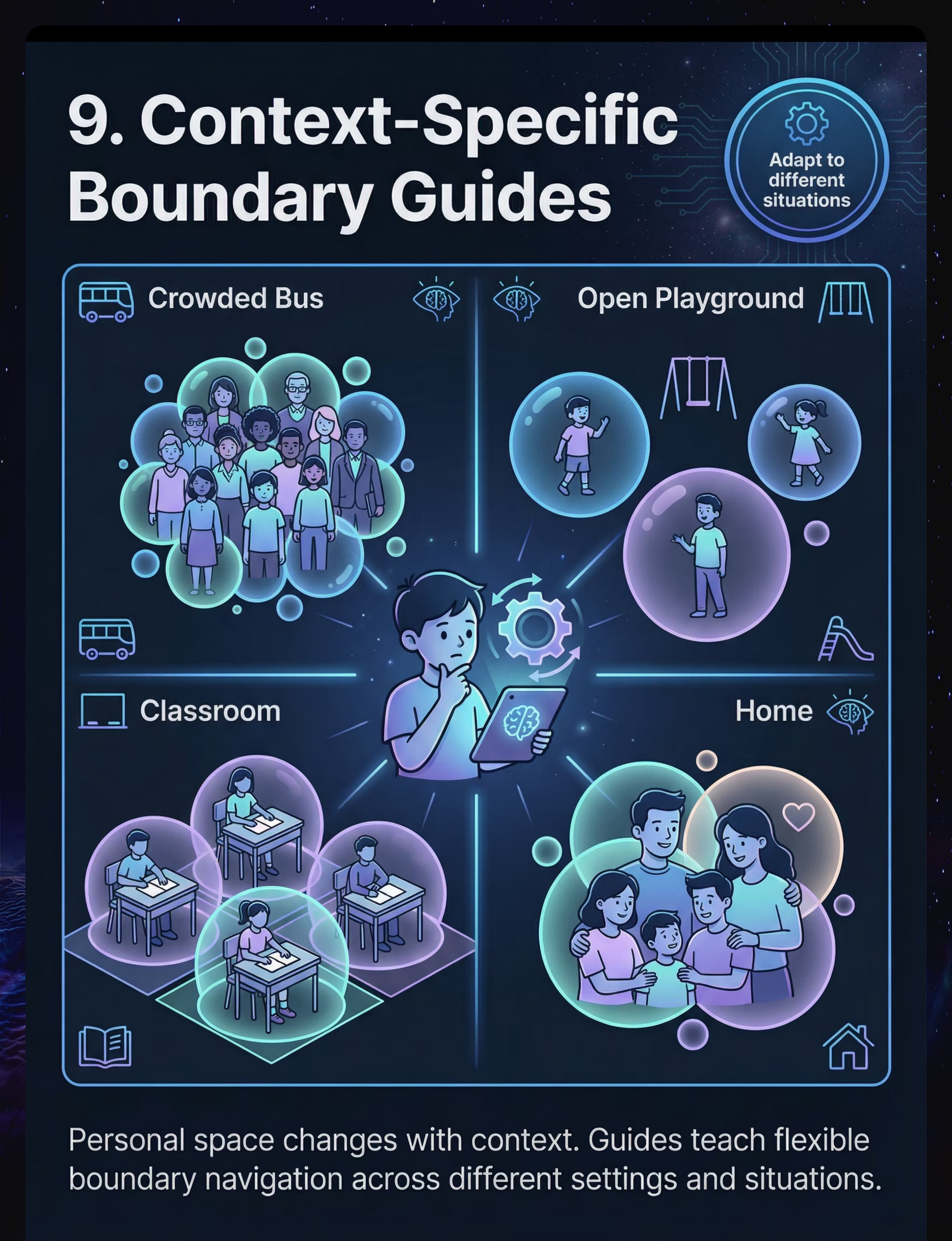
Material 9: Context-Specific Boundary Guides
🏷️Canon: Visual Rules / Expectations Cards · Visual Schedule System · 💰Cost: ₹200–450
Different places, different spaces. Personal space is not one-size-fits-all. The distance appropriate in a crowded bus is different from a library, which is different from a playground, which is different from a family dinner. Context-specific guides create visual maps for each environment your child regularly encounters — eliminating ambiguity and providing clear, predictable rules for every setting.
🏫 School
Classroom desk space, corridor behaviour, lunch queue rules, playground interaction zones.
🚌 Transport
Bus seating, shared spaces, crowded settings — modified rules for unavoidable proximity.
🛒 Community
Shops, temples, parks — public setting rules with strangers and semi-familiar people.
🏠 Home
Family members, visitors, guests — intimate zone clarity and consent rules with known adults.
✂️Free DIY: Notebook page — draw each place your child regularly visits + write the space rule that applies. 🛒Search Amazon.in: "visual rules poster children school"
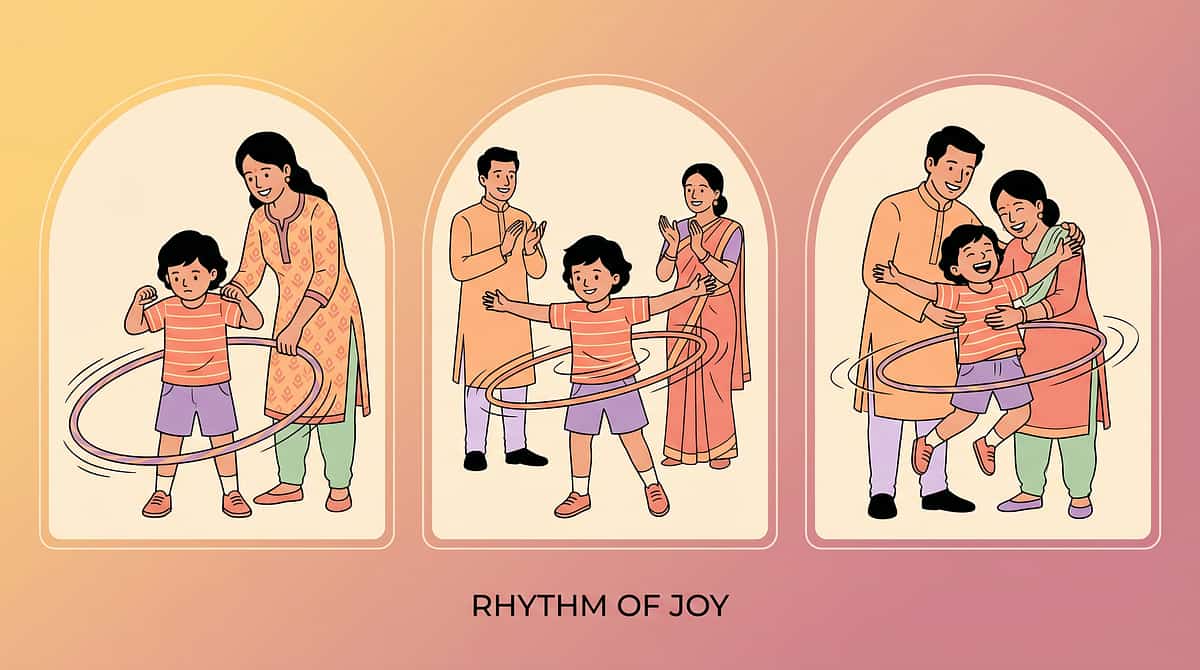
Complete Materials Summary
9 Materials. Most Under ₹500. All Startable Today.
# | Material | Purpose | Cost | Free Alternative | |
1 | Visual Markers & Hula Hoops | The visible bubble | ₹200–500 | Rope circle on floor | |
2 | Zone Charts | Relationship map | ₹250–550 | Draw 4 concentric circles | |
3 | Consent Materials | Body autonomy foundation | ₹200–450 | Parent-made story notebook | |
4 | Proprioceptive Tools | Neurological foundation | ₹500–1,500 | Wall push-ups / heavy carry* | |
5 | Social Stories | Understanding layer | ₹200–500 | 5-frame hand-drawn story | |
6 | Discomfort Cue Cards | Reading others' signals | ₹250–500 | 6 printed photos | |
7 | Role-Play Games | Safe rehearsal | ₹200–450 | Parent + child act-out | |
8 | Arm's Length Tools | Portable measuring stick | ₹100–300 | Child's own arm — free! | |
9 | Context-Specific Guides | Different places, spaces | ₹200–450 | Notebook page per location |
Total investment range: ₹1,850–5,200 for complete setup | Essential starter: ₹700–1,200 | *See safety note for Material 4.
💬 Not sure where to start? Call 9100 181 181 — FREE · 16 languages · 24×7
Equity Access
Every Family. Every Budget. Every Child.
"WHO/UNICEF principles state: effective intervention must be accessible regardless of economic means. Every material in this protocol has a ₹0 version."
The therapeutic principle — making invisible boundaries visible — costs nothing. A hula hoop is ₹200. A piece of rope is free. Both teach exactly the same lesson. Below is a full DIY pathway for every material in the protocol.
The Rope Circle Principle
A rope, a chalk line, or a drawn circle on paper teaches the same visual boundary concept as a manufactured hula hoop. The child's brain registers the circle — not the material it's made from.
The Notebook Story
A parent's hand-drawn social story in a notebook — 5 frames, a stick figure child, a speech bubble — carries identical narrative power to a printed book. The story is the intervention, not the printing.
The Child's Own Arm
Material 8 literally requires nothing. The arm's length tool is built into every child's body. It is free, portable, and always available — the most powerful tool in the protocol costs ₹0.
⚠️When commercial-grade is non-negotiable: Proprioceptive tools (weighted vests, compression clothing) require clinically graded weight distribution — improper DIY versions can be unsafe. Consult OT before making substitutes for Material 4 only.
"Every child in India, at every income level, deserves access to this intervention." — Pinnacle Blooms Network® · UNICEF Equity Alignment · PMC9978394 · WHO NCF Handbook (2022)
🔴 Safety First
Safety First: Before You Begin
🔴 DO NOT PROCEED IF:
Child is in active meltdown or extreme distress · Trauma history involving unwanted touch (specialist consultation required first) · Aggressive behaviour during social proximity — consult BCBA · Significant sensory hypersensitivity — OT assessment required · Recent medical procedure affecting touch sensitivity
🟡 MODIFY IF:
Child is tired, unwell, or hungry · Recent social rejection incident (extra emotional scaffolding needed) · Noisy or crowded environment (single-material focus only) · Currently taking medication affecting sensory processing
🟢 PROCEED WHEN:
Child is fed, rested, and regulated · Environment is calm and prepared · 10–20 uninterrupted minutes available · Parent is patient and unhurried · Materials ready BEFORE beginning
🛑STOP IMMEDIATELY if: Child becomes severely distressed, self-injurious, or aggressive · Physical boundary activities trigger fear beyond normal reluctance · Space invasion accompanied by sexualised content — immediate specialist involvement required · No improvement after 6+ weeks of consistent protocol.
❌ Never shame child for space violations
❌ Never force physical contact as "practice"
❌ Never use physical punishment for boundary violations
❌ Don't expect overnight change — this is a 6–8 week protocol
📞Emergency Helpline: 9100 181 181 · FREE · 24×7 · Pinnacle Blooms Network®
Act III · The Execution
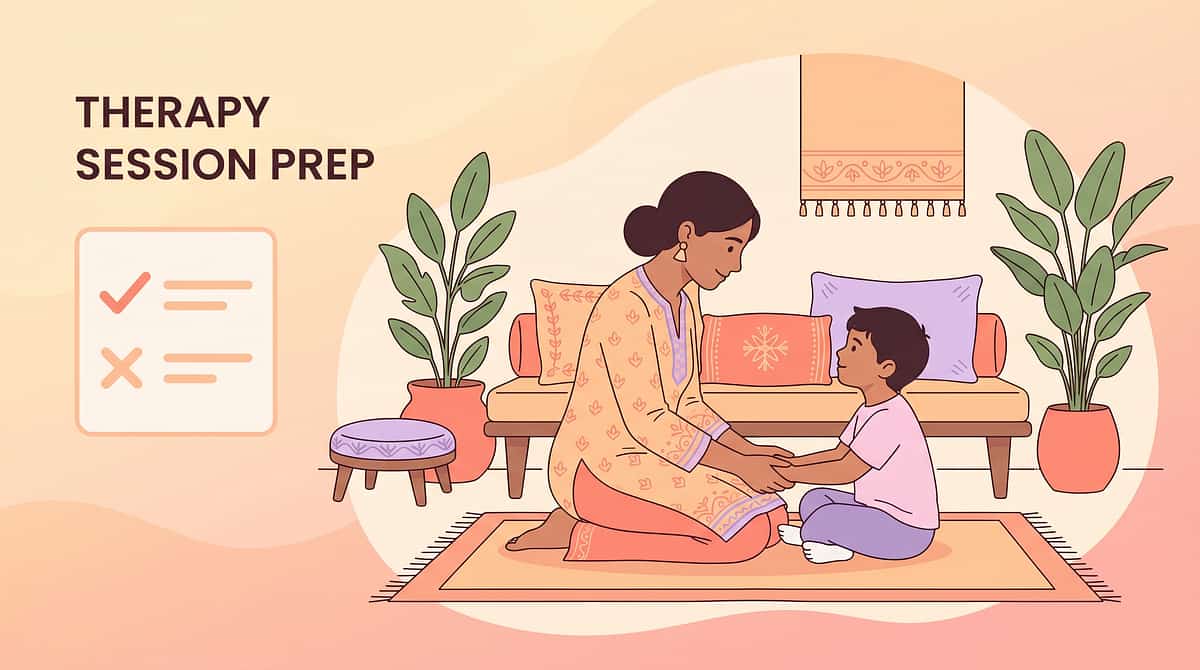
Is Your Child Ready? — Pre-Session Readiness Check
60 seconds now saves 20 minutes of frustration. Check before you begin.
Check | ✅ Green — Go | ⚡ Amber — Modify | 🛑 Red — Postpone | |
Fed & hydrated | Meal/snack 30–90 min ago | Hungry but manageable | Empty stomach / just ate | |
Sleep state | Rested, alert | Slightly tired | Overtired or post-nap groggy | |
Regulation | Calm, engaged | Mild restlessness | Dysregulated, meltdown signs | |
Social readiness | Open to parent interaction | Slightly avoidant | Actively rejecting engagement | |
Sensory state | No heightened sensitivity | Mild sensory seeking | High sensory distress | |
Recent events | Normal day | Minor upset 1h+ ago | Meltdown within last 2 hours |
🟢 ALL/MOST GREEN
→ Full Protocol (Steps 1–6). Proceed with confidence.
⚡ 2+ AMBER
→ Modified Session: Material 8 only (arm's length check). Maximum 5 minutes.
🛑 ANY RED
→ Postpone: Offer comfort activity. Try again in 2–4 hours or tomorrow. "A postponed session is not a failed session — it's good clinical judgement."
Step 01 of 06
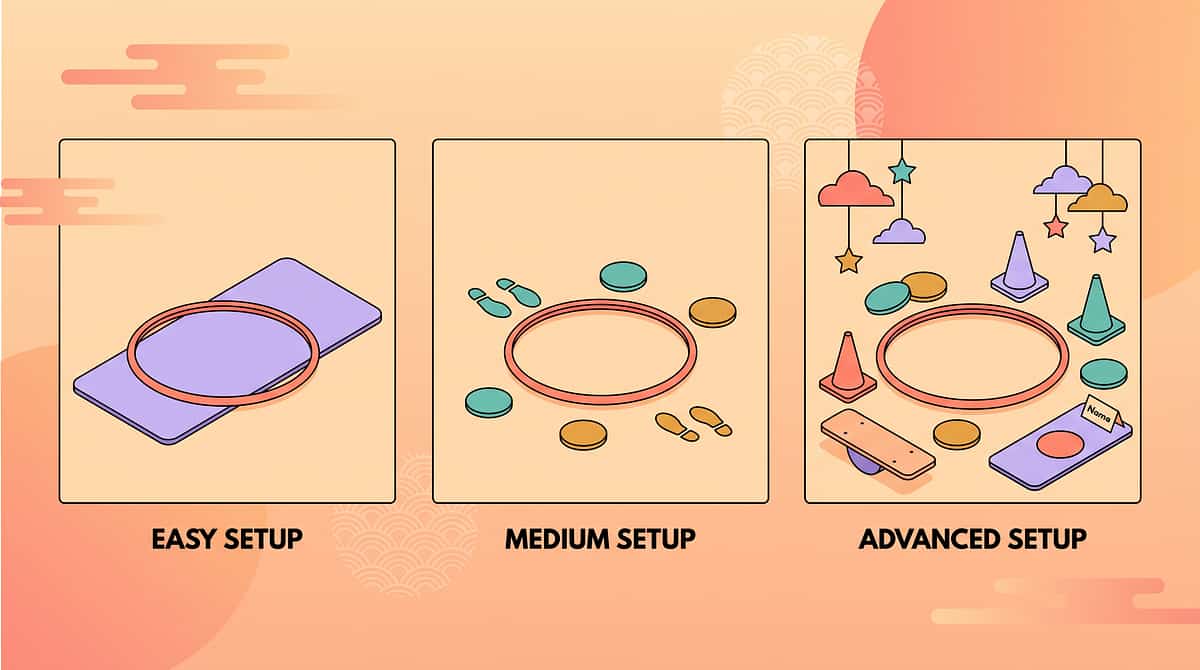
Step 1: The Invitation
⏱️Timing: 30–60 seconds
"Hey [child's name], I've got something cool to show you. We're going to play a space game — with a magic bubble! Want to see your bubble?"
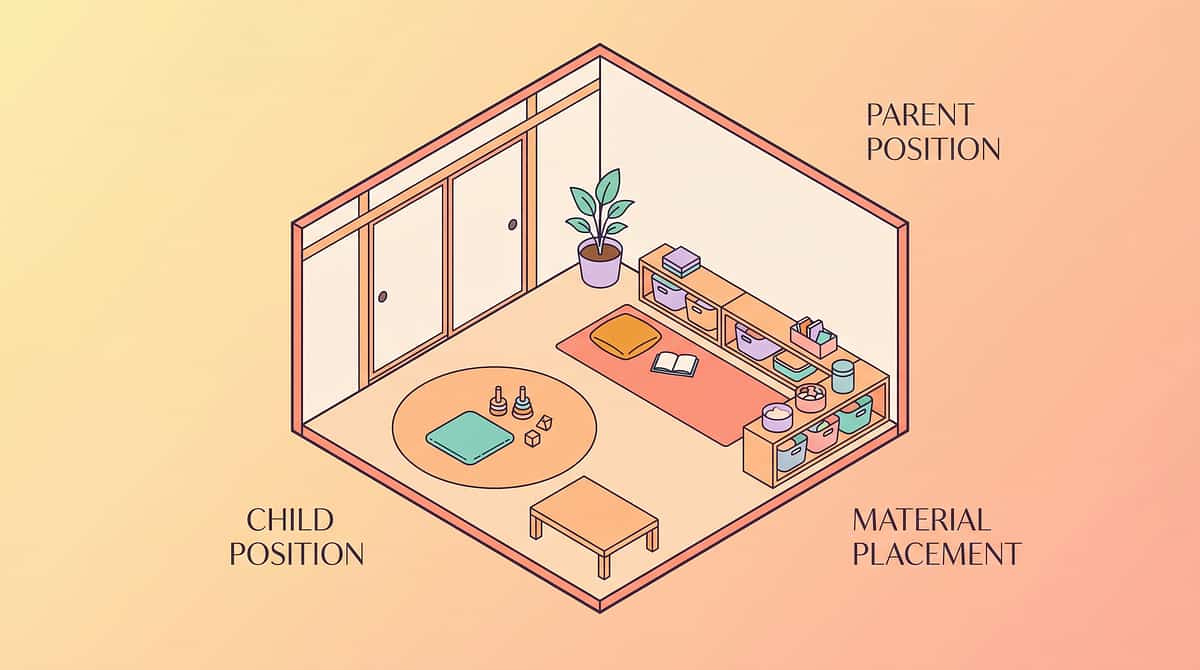
Body Language Guidance
Get to child's eye level (crouch or sit) · Relaxed, curious facial expression — NOT anticipatory/tense · Point toward the hula hoop casually, not dramatically · Hold your body at arm's length distance to model immediately
What Acceptance Looks Like
✅ Child looks at the hoop / moves toward it
✅ Child asks a question about it
✅ Child smiles or shows curiosity
✅ Any approach behaviour
✅ Child asks a question about it
✅ Child smiles or shows curiosity
✅ Any approach behaviour
What Resistance Looks Like → What To Do
⚡ Child ignores → Move hoop closer, make it visually interesting
⚡ "No" → "Okay, want to just look at it?" (reduce demand)
⚡ Walks away → Follow with calm energy: "I'll leave it here — tell me when you want to try"
⚡ "No" → "Okay, want to just look at it?" (reduce demand)
⚡ Walks away → Follow with calm energy: "I'll leave it here — tell me when you want to try"
ABA Principle Applied: Pairing Procedure — the material (hoop) becomes associated with positive interaction before any demand is placed. First 3 sessions: NO demands. Just positive exploration.
Step 02 of 06
Step 2: The Engagement
⏱️Timing: 1–3 minutes
Sessions 1–3: Hula Hoop Only
"This is MY bubble. See? It goes all the way around me." · Walk toward child — let them feel when hoop touches · "See? When I step close enough for the hoop to touch you — that means I'm in your bubble." · Give child the hoop: "Now you try! Show me YOUR bubble."
Sessions 4–7: Add Zone Chart
Place chart on wall/floor. Point to innermost circle: "This is our family circle." Point outward: "Friends here. New friends further. Strangers — all the way out here." Game: parent calls a name — child points to correct zone.
Sessions 8+: Social Stories + Cue Cards
Introduce social stories during engagement phase. Begin discomfort cue card recognition activities. Layer materials progressively as each previous layer is consolidated.
🌟Reinforcement Cue: Praise immediately when child engages: "Yes! That's exactly right — great bubbling!" (within 3 seconds of correct response). · Research: PMC11506176 · ABA Reinforcement Scheduling
Step 03 of 06
Step 3: The Therapeutic Action
⏱️Timing: 5–10 minutes (core therapeutic window)
1
Action A: The Bubble Walk
Child holds hoop at waist while walking toward parent. When hoop touches parent, child must stop. Practice: approach — stop — check. Gradually fade physical support. Purpose: Proprioceptive + visual distance calibration training
2
Action B: Zone Sorting Game
Parent shows photos of different people. Child places each photo in correct distance zone on chart. "How close would we stand with this person?" Purpose: Relationship-distance mapping
3
Action C: Discomfort Cue Reading
Parent acts out discomfort signals (leans back, crosses arms, tenses face). Child watches and identifies: "Is this person needing more space?" Child practises stepping back and checking arm's length. Purpose: Real-time social signal reading
4
Action D: Arm's Length Check
Before any role-play conversation, child extends arm. If arm can touch — too close. Step back until arm barely reaches. Begin conversation. Purpose: Portable self-monitoring tool
5
Action E: Consent Practice
Child must ask first: "Can I give you a hug?" Practise receiving "yes" joyfully AND "no" gracefully with handshake or wave alternative. Purpose: Consent behaviour + boundary respect

Step 3 — Common Errors
Step 3: Common Execution Errors & Fixes
Error | Why It Happens | Fix | |
Child rushes past hoop check | Still operating on habit | Slow the approach; add verbal cue: "Bubble check!" | |
Can't do zone chart (too abstract) | Zone categories still conceptual | Use photos of ACTUAL people child knows for each zone | |
Gets rigid about exact distances | Over-literalisation | Add: "distances can be different for different situations" | |
Resists consent practice | Feels restrictive | Frame positively: "You're AMAZING at asking first!" |
🟢 Ideal Response
Engages playfully, internalises rules within sessions. Celebrate enthusiastically.
🟡 Acceptable Response
Compliant but not enthusiastic. Continue with increased reinforcement and more playful framing.
🔴 Concerning Response
Severe distress, aggression, or complete shutdown. Stop immediately — see troubleshooting (Card 21 of this protocol).

Step 04 of 06
Step 4: Repeat & Vary
⏱️Timing: 3–5 minutes
Action | Reps per Session | Sessions Before Fading Support | |
Bubble Walk (with hoop) | 5–8 | 10–15 sessions | |
Zone Sorting Game | 3–5 rounds | 8–12 sessions | |
Cue Reading Practice | 4–6 scenarios | 12–20 sessions | |
Arm's Length Check | Every role-play | Ongoing → becomes automatic | |
Consent Practice | 4–6 exchanges | 10–15 sessions |
💡The Golden Rule: "3 good reps > 10 forced reps. Quality engagement builds neural pathways. Compliance without engagement does not."
Vary the person in the zone game — use different photos/family members each session
Vary the setting in role-play — today: playground; next session: birthday party
Vary cue strength in discomfort reading — start obvious, progress to subtle
Add stuffed animals as practice partners — lower demand, higher engagement for many children
Satiation Indicators — Stop Before This Point: Child begins making errors they were getting right · Engagement drops · Repetitive questions or behaviour increases · Child starts physically moving away from the activity
Step 05 of 06
Step 5: Reinforce & Celebrate
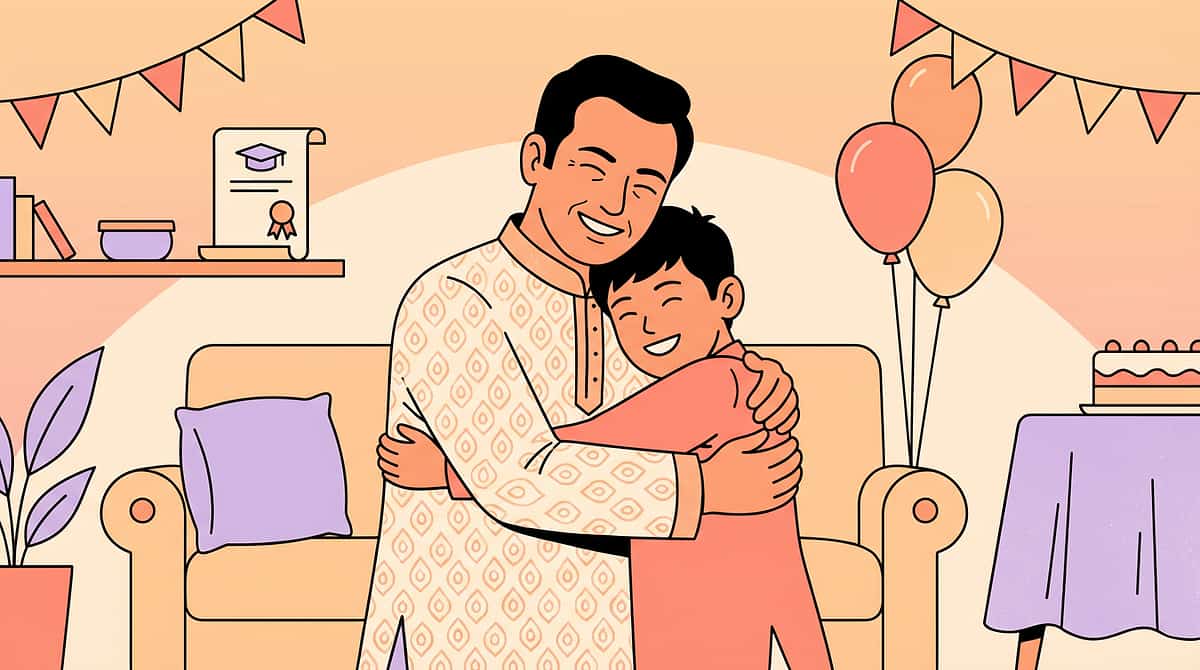
⏱️The Timing Rule: Reinforcement delivered within 3 seconds of the target behaviour. After 3 seconds, the behavioural connection degrades significantly.
For correct arm's length spacing:
"YES! Perfect bubble distance! That was amazing — I could see you checking!"
"YES! Perfect bubble distance! That was amazing — I could see you checking!"
For asking consent before touch:
"Oh WOW — you ASKED first! That was beautiful. Yes, you can hug me!"
"Oh WOW — you ASKED first! That was beautiful. Yes, you can hug me!"
For noticing discomfort cue:
"You saw that! You NOTICED I needed more space — and you stepped back. That's superhero-level awareness!"
"You saw that! You NOTICED I needed more space — and you stepped back. That's superhero-level awareness!"
Type | Examples | Best For | |
Verbal praise (immediate) | Specific, enthusiastic | All children, all sessions | |
Physical celebration | High-five, fist bump (consent-modelled!) | High-energy children | |
Token economy | Sticker on chart → 10 stickers = chosen activity | Children responding to visible progress | |
Natural consequence | "Because you asked, YES you can hug me!" | Deepest learning — real-world outcome | |
Preferred activity access | 5 mins of favourite show/game after session | High-motivation children |
"When they try to check their bubble — even imperfectly — reinforce. The attempt is the evidence of learning in progress."
Step 06 of 06
Step 6: The Cool-Down
⏱️Timing: 2–3 minutes · Why this step matters: Abrupt session endings cause emotional dysregulation — the child's nervous system has been engaged at a heightened level. A structured cool-down prevents post-session meltdowns and creates positive associations with the protocol.
Warning (60 seconds before ending)
"Two more bubble checks, then we're all done with our space game today!" Use a visual timer — sand timer or phone timer shown to child.
Completion Ritual (30 seconds)
"We're done! You were AMAZING today. Let's put the bubble back on its shelf." Child participates in material put-away — even symbolic placement is effective.
Calming Input (60–90 seconds)
🌊 Proprioceptive seekers: brief heavy work — push chair to corner, carry materials.
💨 Sensory avoiders: deep breathing, quiet sitting with comfort item.
🧸 Transition-focused: move directly to preferred "all done" activity.
💨 Sensory avoiders: deep breathing, quiet sitting with comfort item.
🧸 Transition-focused: move directly to preferred "all done" activity.
Bridge Statement (before leaving the space)
"You know what I noticed today? You checked your bubble THREE times without me even reminding you. That's real learning."
🛒Soft animal / comfort toy — ₹425 · Research: NCAEP EBP (2020) — Visual supports and transition evidence-based practice
Data Capture
Capture the Data: Right Now
60 seconds of data now saves hours of guessing later.
📊 Data Point 1: Distance Maintained
How to track: Tally — ✓ each correct trial / total trials
Example: "4/6 trials correct"
Example: "4/6 trials correct"
📊 Data Point 2: Consent Behaviour
How to track: Yes / Partial / No for session
Example: "Yes — asked twice today"
Example: "Yes — asked twice today"
📊 Data Point 3: Cue Recognition
How to track: 0 / 1 / 2+ instances noted
Example: "Noticed 1 cue, responded correctly"
Example: "Noticed 1 cue, responded correctly"
+ Optional Session Note (1 sentence): "[Material] worked well today / struggled with [specific challenge] / noticed [new behaviour]"
How GPT-OS® Uses This Data: Your session data → AbilityScore® Physical Boundary Awareness sub-index → personalised progression recommendations → identifies when to advance to C-315: Turn-Taking Skills. The 3 data points you record today contribute to a living, adaptive profile for your child across 21M+ session patterns.
What If It Didn't Go as Planned?
Most sessions don't go perfectly. That's normal. That's data. Here's what to do.
"Session abandonment is not failure — it's clinical wisdom."
Child refused to engage with the hula hoop
Why: Novel object anxiety, or "too clinical" introduction. Next time: Introduce hoop during free play the day before — no therapy association. Let child play with it freely for 2 days before using therapeutically.
Understood zone chart but immediately violated zones anyway
Why: Cognitive understanding ≠ behavioural automaticity. Knowledge precedes skill. Next time: Don't scold. Say "Bubble check!" as a neutral cue. Reinforce each self-correction, not just perfect performance.
Upset when told "no" during consent practice
Why: Rejection feels overwhelming, especially with sensory-seeking children who crave proximity. Next time: Introduce "no → alternative" script immediately: "No thank you — but can we do a high-five instead?"
Asking consent at home but not generalising to peers/school
Why: Skill learned in one context, not yet transferred. Next time: Role-play with different "partners" and locations. Use teacher communication template (Card 37). Practice in actual environments.
Progress for 2 weeks then regression
Why: Regression is a normal part of skill consolidation — often triggered by environmental change, illness, or stress. Next time: Return to a successful earlier step for 3–5 sessions. Don't advance — consolidate. Document for your therapist.
🚨 If child became severely distressed or self-injurious during this session: 📞 Call 9100 181 181 immediately — Pinnacle Blooms · FREE · 24×7
Personalisation
Adapt & Personalise: No Two Children Are Identical
This protocol adapts to your child. Use the difficulty guidance and sensory profile variations below to customise every session.
For Easier Days / Early Phases
Use physical hoop at all times · Practise with family members only (easiest zone) · Single material per session · 5-minute maximum · No expectations of generalisation yet
For Harder Days / Advanced Phases
Fade all physical supports — imagine the bubble · Practise with acquaintances · Introduce community practice (shops, park) · Multiple materials per session, novel scenarios
Proprioceptive SEEKER
Heavy work warm-up first: 5 push-ups against wall, then bubble practice. Emphasise Material 4. Role-play physically active scenarios. These children often respond fastest to proprioceptive grounding first.
Sensory AVOIDER
Begin at maximum distance zones. No physical demonstration — use cartoon/doll models only initially. Gradual proximity desensitisation: start 3m apart, reduce over weeks. Emphasise consent materials — their OWN boundaries matter first.
Age | Approach | |
4–6 years | Pure play-based · Hoop game · No charts · Simple scripts only | |
6–9 years | Game + chart combination · Zone sorting · Role-play with peers | |
9–12 years | Cognitive understanding emphasis · Social consequences discussed · Community practice |
Act IV · The Progress Arc
Weeks 1–2: What to Expect
In weeks 1–2, you are not looking for mastery. You are looking for tolerance.
✅ Real Progress at This Stage
- Child tolerates hula hoop without refusal
- Can identify 2/4 distance zones on chart
- Uses the word "bubble" in context (even without action)
- Distress time decreases when you say "bubble check"
- Asks consent ONCE during the week unprompted (even imperfectly)
Not Progress Yet — And That's Okay
- Automatic arm's-length checking in real situations (week 4–6)
- Consistent zone-appropriate behaviour with peers (week 6–8)
- Generalising consent to school/community (after mastery)
"If your child tolerated the hoop for 3 minutes without resistance on Session 4, when it was 30 seconds on Session 1 — that is profound neurological progress. Celebrate it."
This is the hardest phase. You may not see changes your child's peers will notice. The changes are happening inside — in neural pathways forming, in cognitive maps being drawn. Trust the process. 📞 Questions? 9100 181 181 · FREE · 24×7
Weeks 3–4: Consolidation Signs
The neural map is forming. Watch for these consolidation signals.
✅Anticipates the protocol — child sets up the hoop before you suggest it (procedural memory forming)
✅Self-corrects with prompt — parent says "bubble check," child adjusts distance immediately
✅Zone chart memory — child can name the zones without looking at the chart
✅Consent asks increase — unprompted consent asking in 30–50% of touch situations at home
✅Noticing others' space — comments on when others are too close (meta-awareness emerging)
"When a child begins to notice personal space violations by others — pointing out 'that man is standing too close to that lady' — this is a profound indicator. Theory of mind + proxemic awareness are activating together."
"By week 3–4, you may notice you are more confident. Your voice during 'bubble check' prompts has changed — less anxious, more matter-of-fact. That confidence transmits to your child."
Weeks 5–8: Mastery Indicators
🏆Mastery Badge Criteria — C-314 Personal Boundaries: To unlock mastery, your child should demonstrate 3 of these 5 in the same week:
Criteria | Observable Measure | |
✅ Arm's length without prompt | Maintains conversational distance ≥4/5 natural interactions at home | |
✅ Consent behaviour | Asks before touching in ≥70% of observed opportunities (not just therapy) | |
✅ Cue recognition | Responds correctly to 2+ discomfort cues in natural settings | |
✅ Context adaptation | Demonstrates different spacing in ≥2 different settings | |
✅ Verbal boundary | Uses "that's my space" or "I need more space" appropriately |
Maintenance Check: Take 5 days off the protocol intentionally. Does the skill persist without daily practice? If yes → mastery achieved. If it degrades → extend consolidation phase.
Celebrate This Win
You did this.
Eight weeks ago, your child stepped forward when everyone else stepped back. They didn't understand why people moved away. They just knew something was wrong, and they didn't know what. Today, they can feel their bubble. They can check their arm's length. They can ask before they touch. They can see when someone needs more space — and they can respond. That didn't happen by itself. You created the conditions for a neural pathway to form. That is one of the most powerful things a parent can do.
🏆 Your Achievement
C-314 Personal Boundaries Protocol — Completed. Physical Boundary Awareness Stage progression documented. GPT-OS® Validated.
🎉 Family Celebration Ideas
Let your child choose a special activity or meal · Create a "Bubble Champion" certificate · Take a family photo · Share your journey to inspire another family
📝Journal Prompt: "The moment I knew it was working was when ____________. My child's face looked ____________ when they got it right."
Research: Parental self-efficacy is the strongest predictor of continued home intervention adherence.
Related Techniques
Related Techniques in This Domain
You already understand the domain. These techniques use materials you may already own.
🔗 C-313 · Reading Social Cues
Difficulty: Intro–Core | Materials: Emotion Cards, Social Skills Cards
→ View Technique
→ View Technique
🔗 C-315 · Turn-Taking Skills
Difficulty: Core | Materials: Visual Timer, Turn-Taking Games
→ View Technique
→ View Technique
🔗 C-316 · Appropriate Touch ⭐
Difficulty: Core | Materials: Consent Materials, Social Stories
Uses materials from C-314 — no new purchases needed
Uses materials from C-314 — no new purchases needed
🔗 C-320 · Body Awareness Difficulties
Difficulty: Core–Advanced | Materials: Proprioceptive Tools, Weighted Vest
🔗C-325 · Sensory Seeking Behaviours (Advanced) · View Technique 🔗B-212 · Personal Space in Talking⭐ Zone charts from C-314 apply directly · View Technique
Act V · Community & Ecosystem
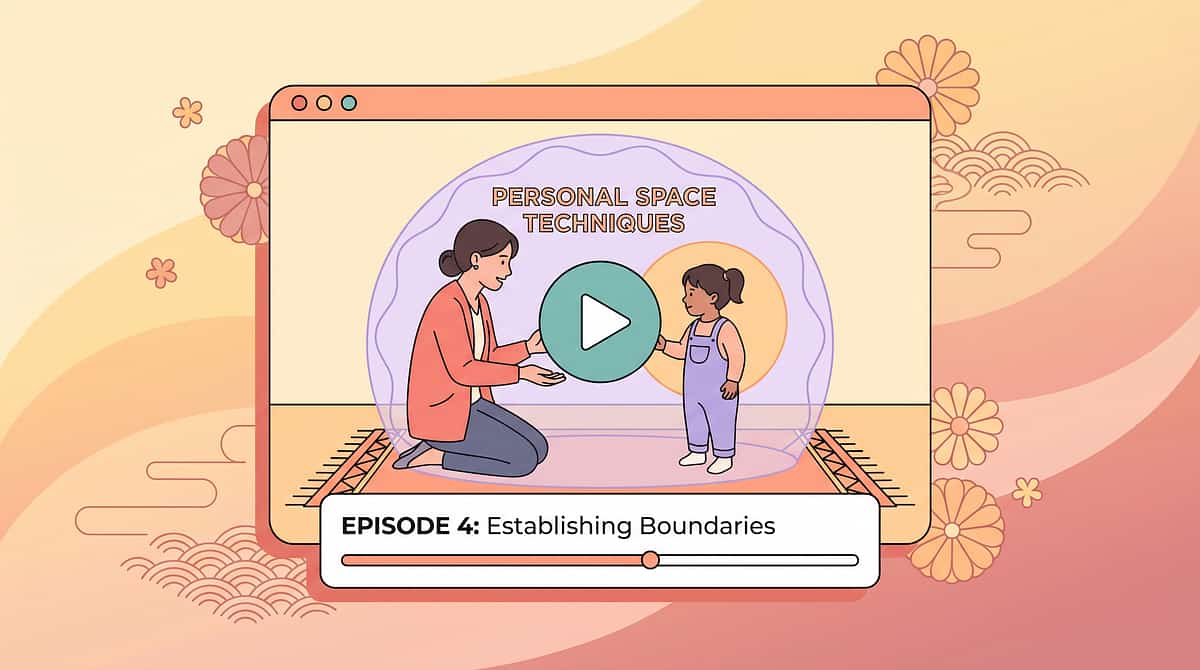
Families Who've Been Here
They were exactly where you are. Here is where they arrived.
Hyderabad · 7-year-old boy
Before: "Three children physically moved away from him during the school group photo. His teacher told me: 'He stands too close to others.' I was devastated."
After 9 weeks: "His teacher called to say a classmate specifically asked to be seated next to him. He'd learned to give space. He'd learned to ask before hugging. For the first time, he was chosen by a peer. Everything changed."
After 9 weeks: "His teacher called to say a classmate specifically asked to be seated next to him. He'd learned to give space. He'd learned to ask before hugging. For the first time, he was chosen by a peer. Everything changed."
Chennai · 5-year-old girl
Before: "She would hug strangers in the grocery store. She'd touch people's hair. She was the warmest child — but her social world was shrinking."
After 6 weeks: "The hula hoop game changed everything. Making the bubble visible clicked something in her brain. She still hugs — but she asks first. The warmth is still there. It's just wrapped in awareness."
After 6 weeks: "The hula hoop game changed everything. Making the bubble visible clicked something in her brain. She still hugs — but she asks first. The warmth is still there. It's just wrapped in awareness."
Remote Family · Rajasthan (Teleconsultation)
Before: "We have no therapy centre within 200km. I felt alone in this."
After 12 weeks (home-only protocol): "I made every material by hand. Rope circles. Drawn zone charts. Handmade social stories. The protocol is the protocol regardless of materials. My son now has a bubble. I can see it — and so can he."
After 12 weeks (home-only protocol): "I made every material by hand. Rope circles. Drawn zone charts. Handmade social stories. The protocol is the protocol regardless of materials. My son now has a bubble. I can see it — and so can he."
Note: Outcomes are illustrative of real patterns; individual results vary by child profile and consistency of implementation.
Connect With Other Parents
Isolation is the enemy of adherence. You don't have to do this alone.
🟢 WhatsApp Community
Personal Boundaries & Social Skills (C-Domain). Connect with parents implementing C-314 across India. unknown link
🌐 Online Parent Forum
Ask questions, share wins, troubleshoot with parents who've completed this protocol. pinnacleblooms.org/parent-community
👥 Local Parent Meetup
Monthly in-person gatherings at Pinnacle centres for parent skill-sharing. Find your nearest meetup
🤝 Peer Mentoring Programme
Connect with a parent who has completed C-314. "Sometimes one parent who's been there matters more than any professional." Request a peer mentor
"You are going to figure this out. Every parent in these groups was sitting exactly where you are — confused, tired, a little hopeless. They figured it out. And when you figure it out, you'll help someone else."
Professional Support
Your Professional Support Team
Home-based intervention works best when backed by professional guidance. Here's your professional layer.
🧩 Occupational Therapist
For: Proprioceptive assessment, sensory integration therapy, Body Awareness Tools guidance (Material 4). Book OT Consultation
🗣️ Speech-Language Pathologist
For: Social communication assessment, consent language development, zone chart verbal practice. Book SLP Session
📊 BCBA / ABA Therapist
For: Behavioural protocols, data interpretation, school generalisation planning. Book ABA Session
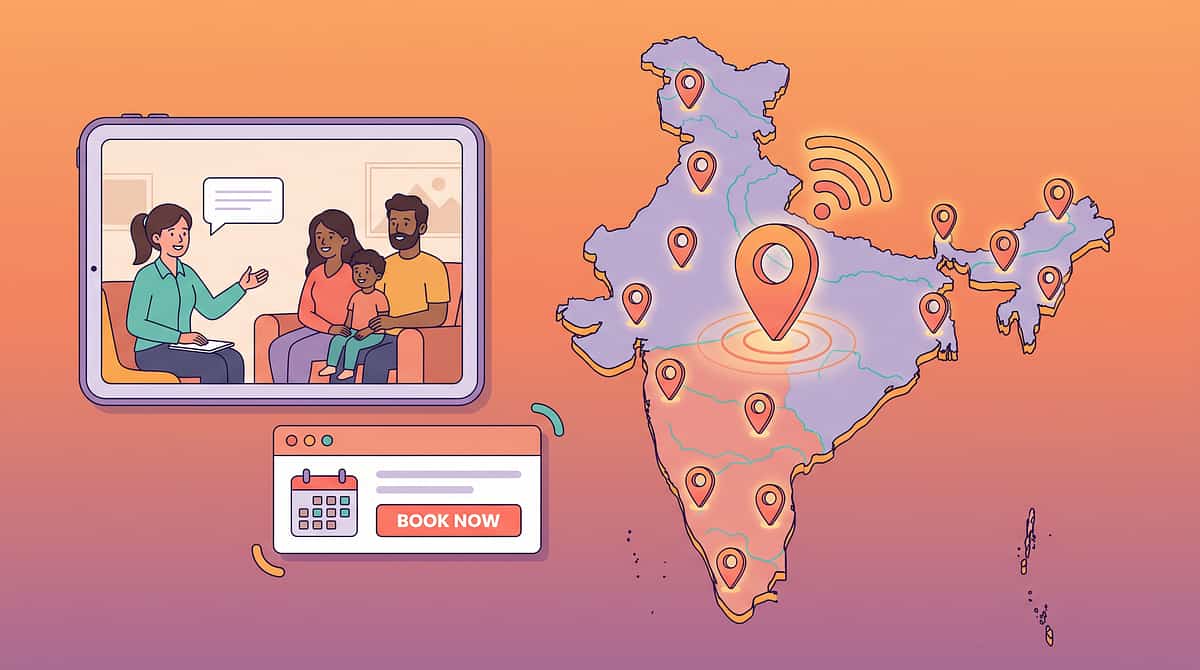
💻 Teleconsultation (All India)
For: Remote families, progress review, question answering. 16+ languages · Same-day booking. Book Teleconsult
📞FREE National Helpline: 9100 181 181 · 16 languages · 24×7 · No cost
AbilityScore® assessment booking · Nearest centre directions · Urgent protocol guidance · Parent coaching
"Home + Clinic = Maximum Impact" — Children combining GPT-OS® home protocols with Pinnacle clinical sessions show 2.3× faster progression on AbilityScore® indices.
AbilityScore® assessment booking · Nearest centre directions · Urgent protocol guidance · Parent coaching
"Home + Clinic = Maximum Impact" — Children combining GPT-OS® home protocols with Pinnacle clinical sessions show 2.3× faster progression on AbilityScore® indices.
Watch the Reel
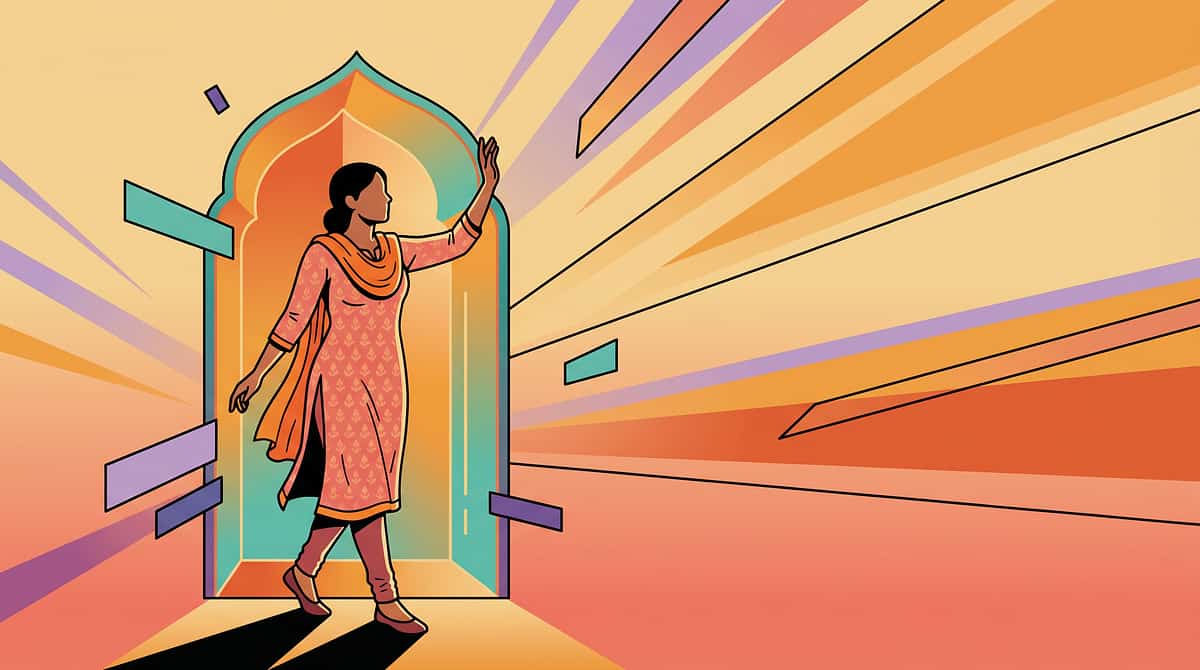
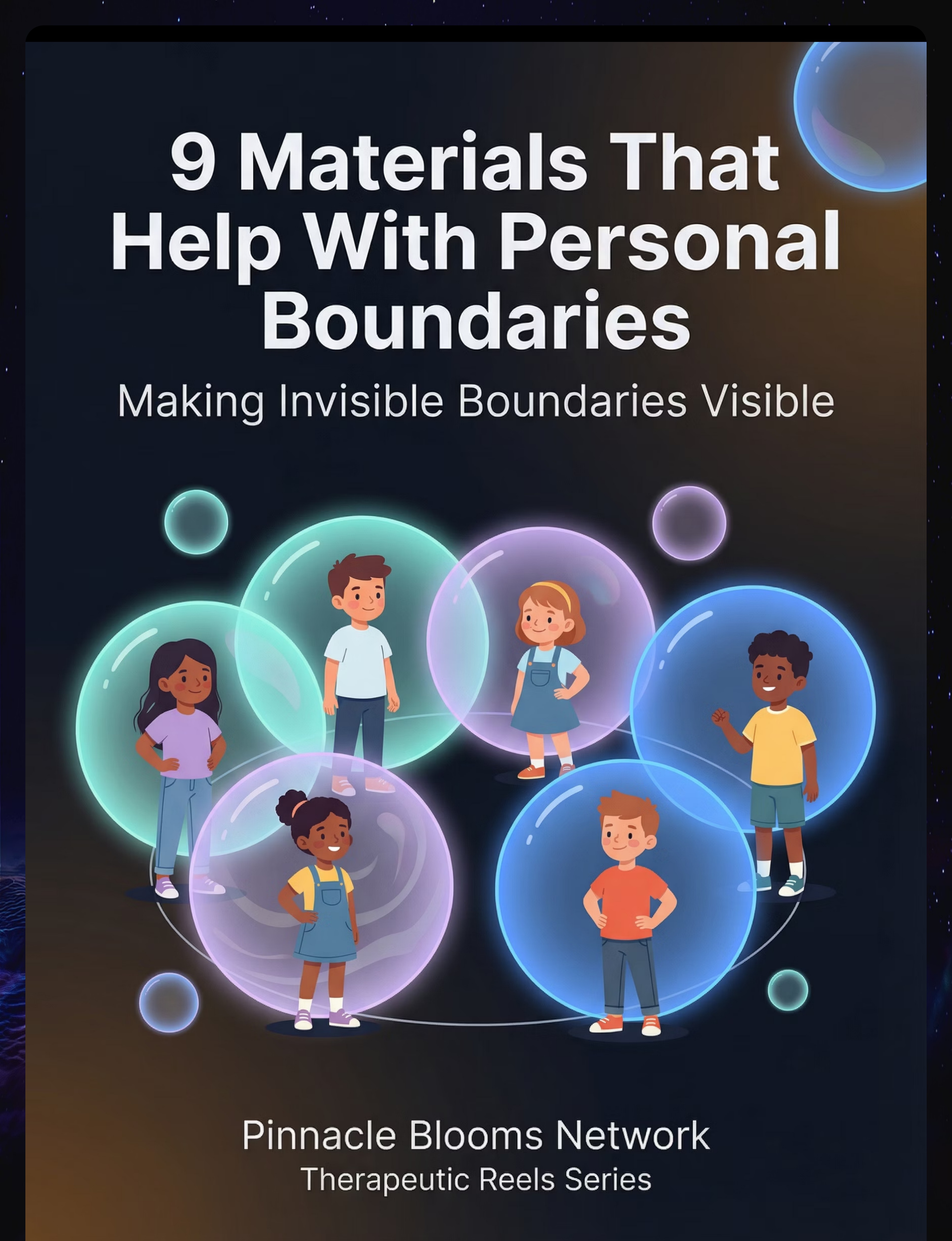
Watch the C-314 Reel: "9 Materials That Help With Personal Boundaries"
Reel ID: C-314 · Domain: Social Skills & Body Awareness Solutions · Episode 314
Therapist demonstrating the hula hoop bubble technique (Material 1)
Social distance zone chart explanation (Material 2)
Consent practice role-play demonstration (Material 3)
Discomfort cue reading in action (Material 6)
Real child footage showing progression (with consent)
"This reel is for every parent who has watched their child step forward as peers step back — and not known what to do. The invisible bubble is real. And we're going to make it visible, together." — Pinnacle Blooms Network® Clinical Team
Series Context: This is Episode 314 of the 9 Materials Series. The next episode (C-315: 9 Materials That Help With Turn-Taking) shows how children who master personal space next build conversational and cooperative turn-taking skills.
Preview of 9 materials that help with personal boundaries Therapy Material
Below is a visual preview of 9 materials that help with personal boundaries therapy material. The pages shown help educators, therapists, and caregivers understand the structure and content of the resource before use. Materials should be used under appropriate professional guidance.



Link copied!
The Pinnacle Promise
✦ PINNACLE BLOOMS NETWORK® ✦
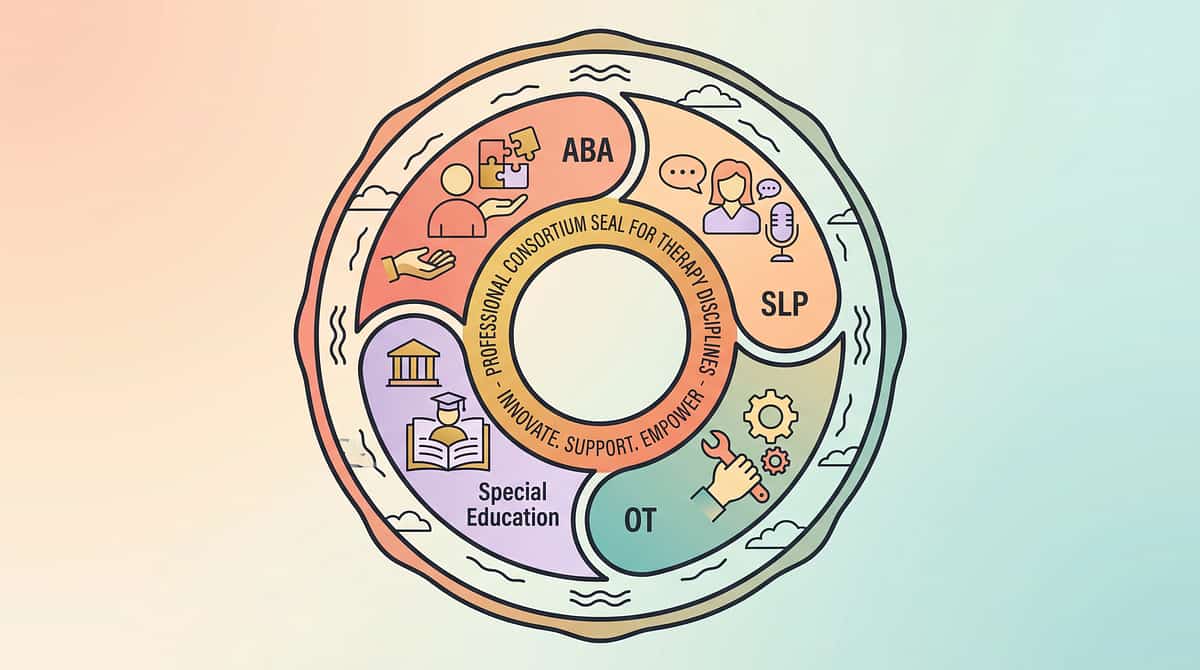
Therapeutic Consortium Seal of Validation
OT · SLP · ABA/BCBA · SpEd · NeuroDev · CRO · WHO-Aligned
Therapeutic Consortium Seal of Validation
OT · SLP · ABA/BCBA · SpEd · NeuroDev · CRO · WHO-Aligned
"From fear to mastery. One technique at a time." Pinnacle Blooms Network® exists to transform every home in India — and across the world — into a proven, scientific, 24×7, personalised, multi-sensory, multi-disciplinary paediatric therapy environment. GPT-OS® makes this possible at scale. You make it real at home.
Medical Disclaimer: This content is educational and does not replace assessment by a licensed occupational therapist, psychologist, speech-language pathologist, or developmental specialist. If you are concerned about your child's personal space awareness, please consult a qualified professional. Individual results may vary. Statistics represent aggregate outcomes across the Pinnacle Blooms Network®. Personal space and boundary difficulties may relate to autism spectrum disorder, ADHD, sensory processing differences, intellectual disability, attachment patterns, trauma, or cultural factors. Comprehensive assessment identifies underlying factors and appropriate interventions.
© 2025 Pinnacle Blooms Network®, unit of Bharath Healthcare Laboratories Pvt. Ltd. All rights reserved. C-314 Personal Boundaries Protocol · GPT-OS® Content Engine · Content developed by the Pinnacle Multidisciplinary Consortium. Unauthorised reproduction prohibited.
CIN: U74999TG2016PTC113063 · DPIIT Recognition: DIPP8651 (Govt. of India) · MSME: Udyog Aadhaar TS20F0009606 · GSTIN: 36AAGCB9722P1Z2
A parent arrived on Card 1 — scared, confused, watching their child step toward people who were stepping away. By Card 40, they have a protocol. They have a map. Their child has a bubble — visible, real, and theirs. The next technique is waiting. The journey continues.