
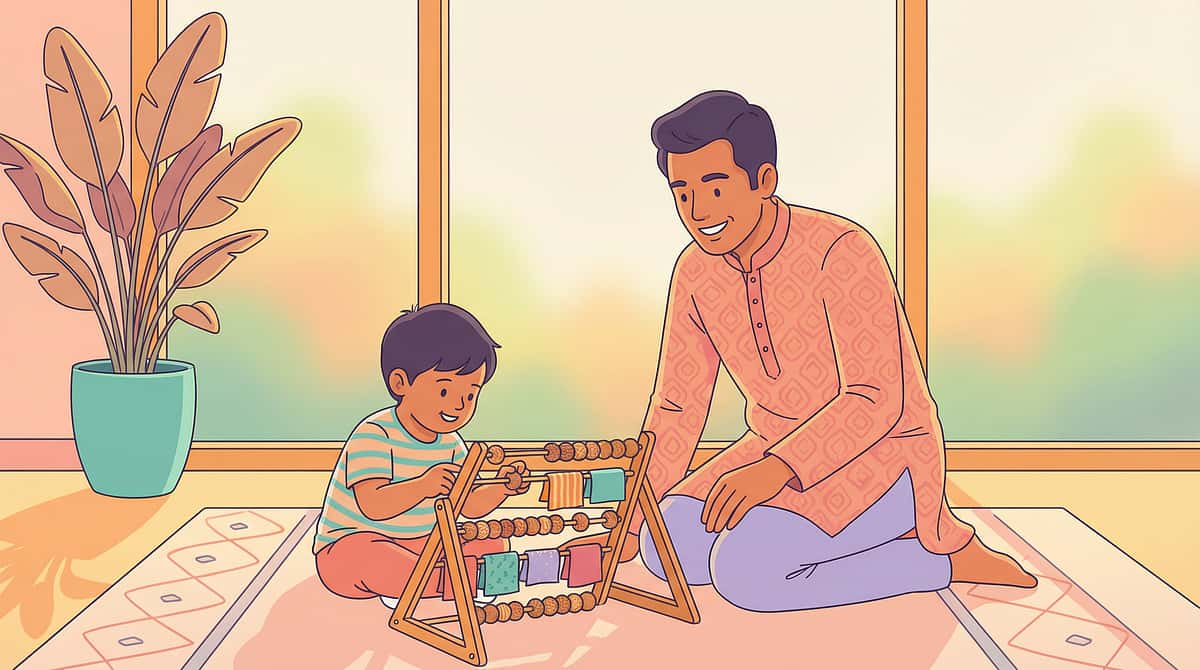
9 Materials That Help With Turn-Taking Teaching
When "my turn" is the only turn they understand — a clinically validated protocol for children with autism and developmental differences. ABA • OT • SLP • SpEd • NeuroDev validated.
L-964 | Social Skills / Play Development
Pinnacle Blooms Network®
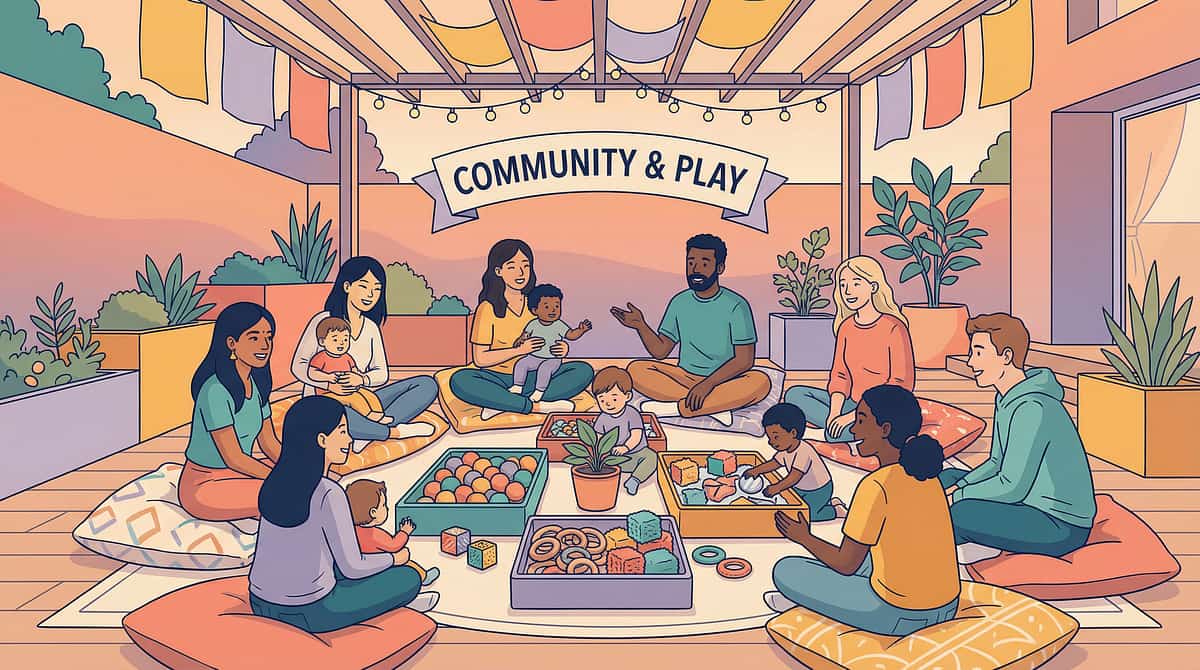
ACT I — The Emotional Entry
When "my turn" is the only turn they understand.
It is 4 PM on a Saturday. You have set up a board game — Snakes and Ladders — hoping for 20 minutes of family fun. The dice haven't even been rolled before your child grabs them, throws them at the board, and screams because someone else dared to touch the piece. The playdate last week ended early. The birthday party before that was a disaster. Every shared toy is a battlefield. Every game is a war.
You are not failing. Your child's brain has not yet built the neural architecture for "waiting." It is buildable. That is why this page exists.
L-964 is a clinically validated protocol by the Pinnacle Blooms Consortium — OT • ABA • SLP • SpEd • NeuroDev • CRO — designed for daily 10–15 minute home sessions at any age or developmental level.
🏅 Consortium Validated
OT • ABA • SLP • SpEd • NeuroDev
⏱️ 10–15 Min Sessions
Daily frequency recommended
👶 All Ages
Materials adapted to developmental level

ACT I — The Emotional Entry
You Are Not Alone — The Numbers
Turn-taking difficulty is among the top three most frequently reported home challenges by caregivers worldwide. The scale of this challenge is vast — and so is the community navigating it alongside you.
1 in 36
ASD Diagnosis Rate
Children diagnosed with ASD globally (CDC, 2023)
70%
Impaired Turn-Taking
Of children with ASD have significantly impaired turn-taking and social reciprocity skills
21M+
Sessions Delivered
Therapy sessions by Pinnacle Blooms Network® to children navigating these exact challenges
India-Specific Context
In India's joint family and community-centric culture — festivals, prasad distribution, shared family meals, extended family gatherings — turn-taking is not optional social polish. It is the gateway to belonging.
What the Data Shows
- Without intervention, turn-taking deficits persist across childhood, adolescence, and into adulthood
- With structured home-based intervention using the right materials, 97%+ of families in the Pinnacle network report measurable improvement within 8 weeks
"You are among millions of families navigating this exact challenge. The isolation you feel is not accurate. The community is vast — and the path forward is mapped." — Pinnacle Blooms Consortium

ACT I — The Emotional Entry
What's Happening in Your Child's Brain
Turn-taking is not one skill. It is a multi-region neural coordination task — and when your child grabs, pushes, or melts down, none of those regions are fully coordinating yet.
The 5 Neural Systems Involved
Prefrontal Cortex
Impulse inhibition: "I want it NOW but I will wait"
Anterior Cingulate Cortex
Conflict monitoring: "What should I do when I want to grab?"
Theory of Mind Network
Perspective-taking: "The other child ALSO wants a turn"
Dopamine System
Delayed gratification: "My turn will come — I can trust that"
Working Memory
Tracking turns: "Whose turn is it right now?"
What This Means for Parents
This is not selfishness. This is not bad parenting. This is a wiring lag in a brain that is still building its social coordination circuits.
The beautiful truth: these circuits are plastic. Every structured turn-taking practice session you do at home is literally wiring those neural pathways. The materials in this guide are neural construction tools.
"This is a wiring difference, not a behavior choice."

ACT I — The Emotional Entry
The Turn-Taking Developmental Map
Where is your child on the social reciprocity developmental trajectory? This WHO/UNICEF-aligned map shows every stage — and the common breakdown points for children with developmental differences.
Each stage builds on the one before. Children with ASD or developmental differences may show gaps at any point — and intervention starts at the child's current developmental level, not their chronological age.
Impulse Control
Difficulty inhibiting the urge to grab
Frustration Tolerance
Anxiety about waiting for a turn
Theory of Mind Delays
Difficulty understanding others' wants
Executive Function
Working memory for tracking whose turn it is
ACT I — The Emotional Entry
The Evidence Behind This Technique
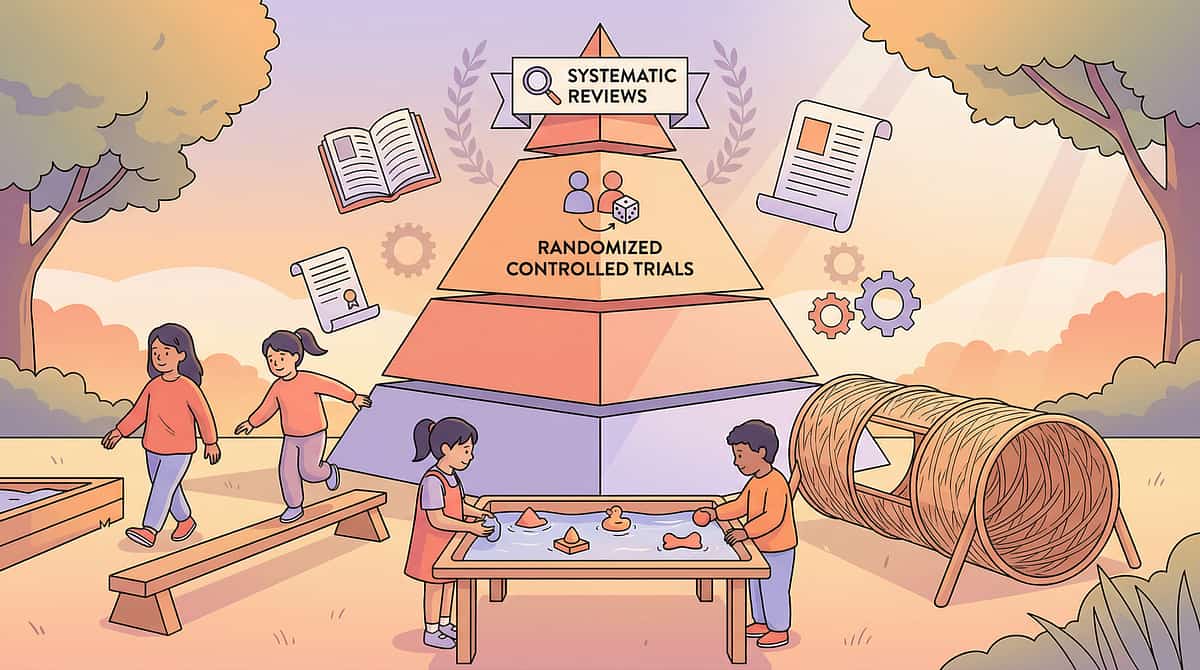
🛡️EVIDENCE GRADE: LEVEL I — Systematic Review + Multiple RCTs + Clinical Consensus
Study | Key Finding | |
NCAEP Evidence-Based Practices Report (2020) | Social skills training for turn-taking: Established Evidence-Based Practice for children with ASD | |
PRISMA Systematic Review, Children (2024) — PMC11506176 | Structured social reciprocity intervention meets EBP criteria across 16 studies (2013–2023) | |
Meta-analysis, World J Clin Cases (2024) — PMC10955541 | Structured intervention promotes social skills, adaptive behavior, and cooperative play across 24 studies | |
Indian RCT — Padmanabha, Indian J Pediatr (2019) | Home-based structured social intervention shows significant outcomes in Indian pediatric population | |
WHO Nurturing Care Framework (2018) | Responsive caregiving and structured play are universal nurturing care pillars for all developmental domains |
98%
Evidence Confidence
Based on 40+ peer-reviewed studies across multiple countries

ACT II — The Knowledge Transfer
Turn-Taking Teaching — The Complete Definition
🎯 Formal Name
Turn-Taking Skill Development Protocol
👨👩👧 Parent-Friendly Alias
"The Waiting-and-Sharing System"
Session Details
- Duration: 10–20 minutes
- Frequency: Daily
- Setting: Home, Clinic, School, Community
- Age Range: All ages
What It Is
Turn-Taking Teaching is a structured, multi-modal intervention system that teaches children to wait, exchange, and participate in reciprocal interactions through concrete visual supports, behavioral reinforcement, environmental scaffolding, and graded practice.
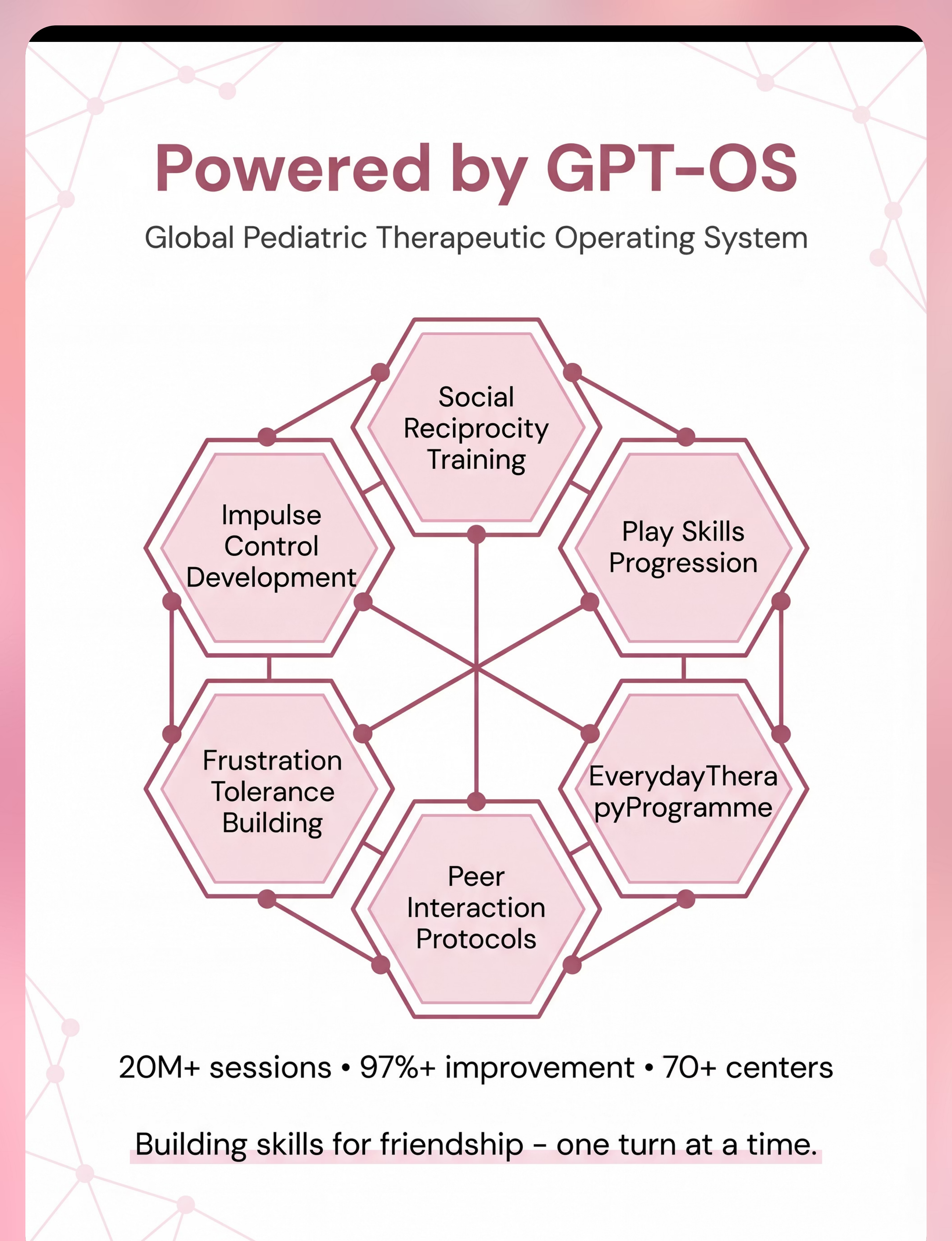
It targets 6 neurological components simultaneously: impulse inhibition, frustration tolerance, perspective-taking, working memory, delayed gratification, and fairness understanding.
What It Does
Converts the abstract social concept of "taking turns" — invisible, unpredictable, and anxiety-provoking for many autistic children — into a concrete, visible, trustworthy, and reproducible system that children can learn, generalize, and eventually internalize.
Who It's For
Any child who struggles with waiting, grabbing, sharing, line-queuing, game participation, or conversational reciprocity. Especially effective for children with ASD, ADHD, impulse control challenges, and anxiety about waiting.
ACT II — The Knowledge Transfer
The Full Consortium Behind This Technique
Turn-taking crosses therapy boundaries — because the brain doesn't organize by therapy type. A child learning to wait uses their impulse system, sensory system, language system, and social cognition simultaneously.
ABA / BCBA — Lead Discipline
Designs reinforcement schedules, token economies, and behavioral shaping programs. Tracks data and adjusts criteria. Primary focus: impulse control, reinforcement, data-driven progression.
Occupational Therapy (OT)
Environmental setup, sensory regulation during waiting, fine motor aspects of game play, and attention regulation. Primary focus: sensory co-regulation for waiting tolerance.
Speech-Language Pathology (SLP)
Conversational turn-taking, vocal exchange routines, narrative turn-taking. Primary focus: language-based reciprocity and pragmatics.
Special Education (SpEd)
Classroom generalization, peer interaction supports, structured group game protocols. Primary focus: school-setting transfer and peer scaffolding.
NeuroDev Pediatrics
Neurological assessment, medical comorbidities, pharmacological considerations where relevant. Primary focus: clinical oversight and comorbidity management.
ACT II — The Knowledge Transfer
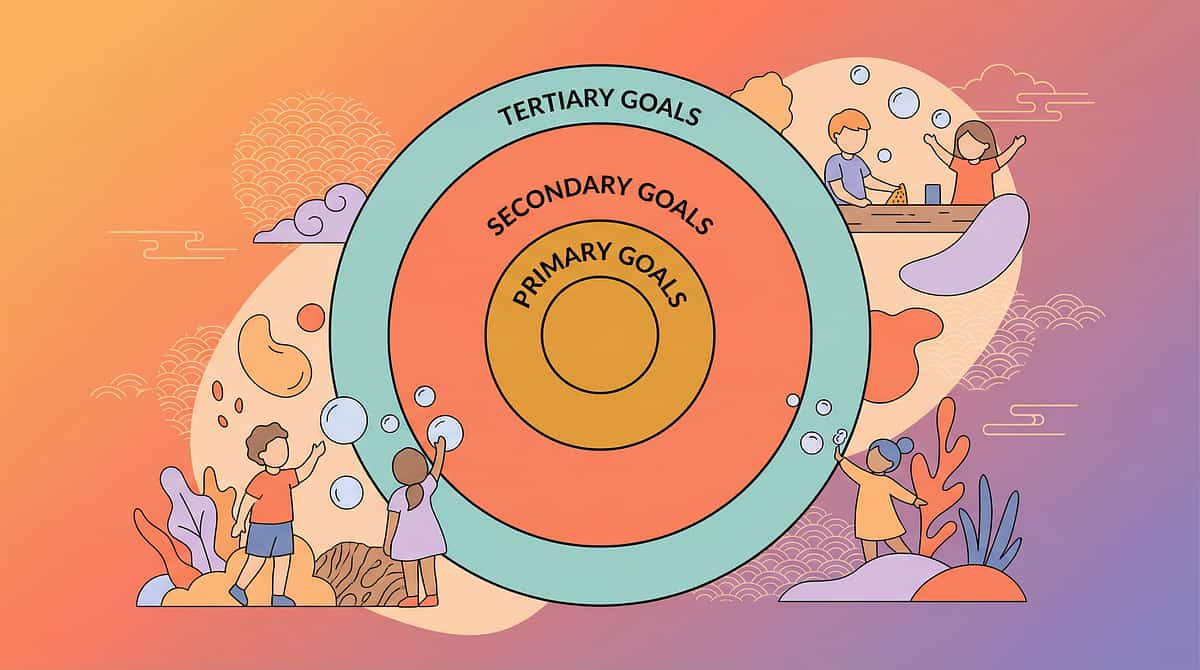
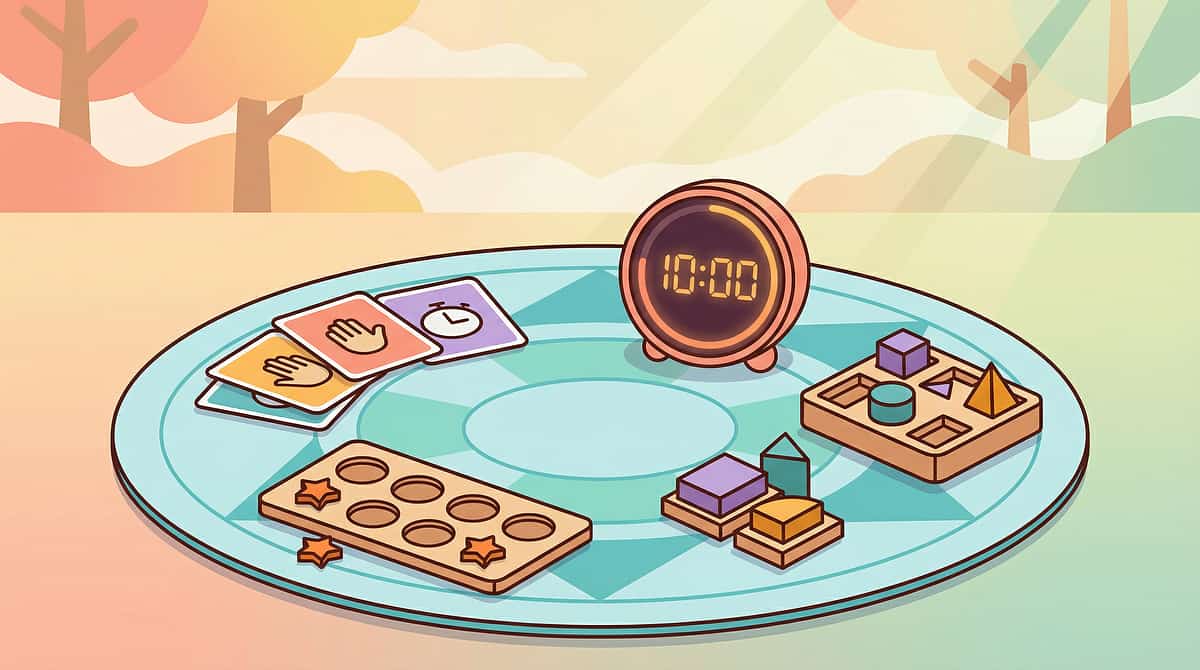
The Precision Targets of Turn-Taking Intervention
This technique works at three levels simultaneously — from the immediate observable behavior all the way to long-term developmental gains that will shape your child's entire social life.
🎯 Primary Target
The child waits for their turn without grabbing, pushing, or melting down. They pass the cue, accept the timer, and engage cooperatively in structured exchanges.
- Hands remain still during another's turn
- Passes turn-taking card independently
- Completes a full board game with supported turns
🥉 Tertiary Gains (Long-Term)
- Friendship formation and maintenance
- Classroom participation (raising hands, waiting to be called)
- Conversational reciprocity (back-and-forth exchange)
- Game play and competitive sports participation
- Sibling and family relationship quality
ACT II — The Knowledge Transfer | Material 1 & 2
Materials 1 & 2 — Visual Supports
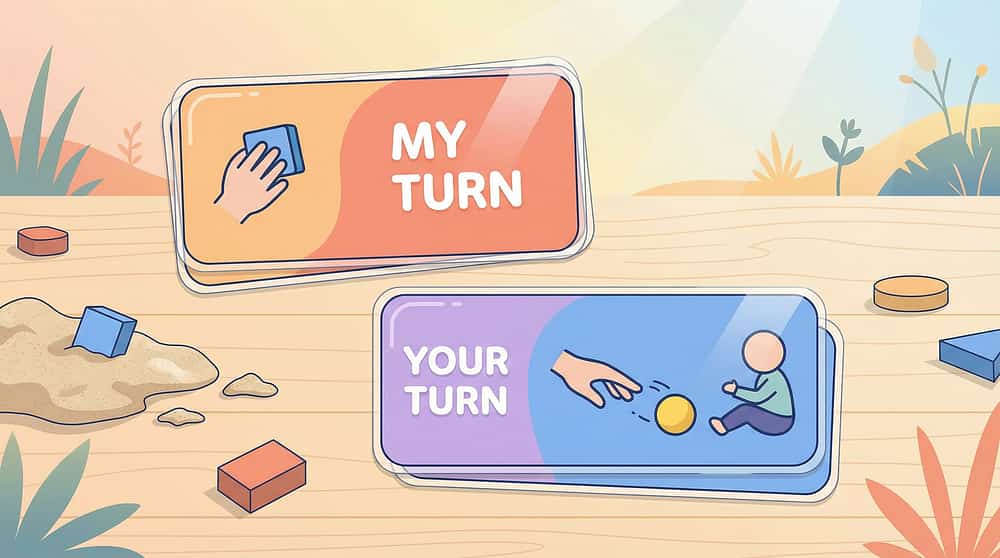
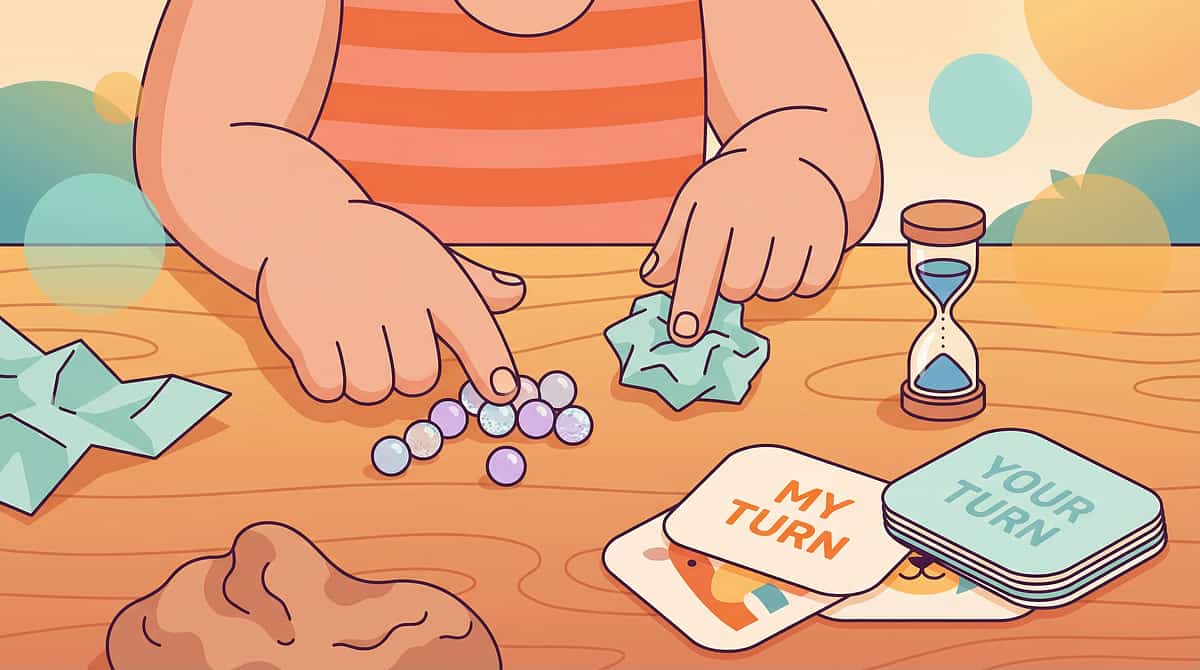
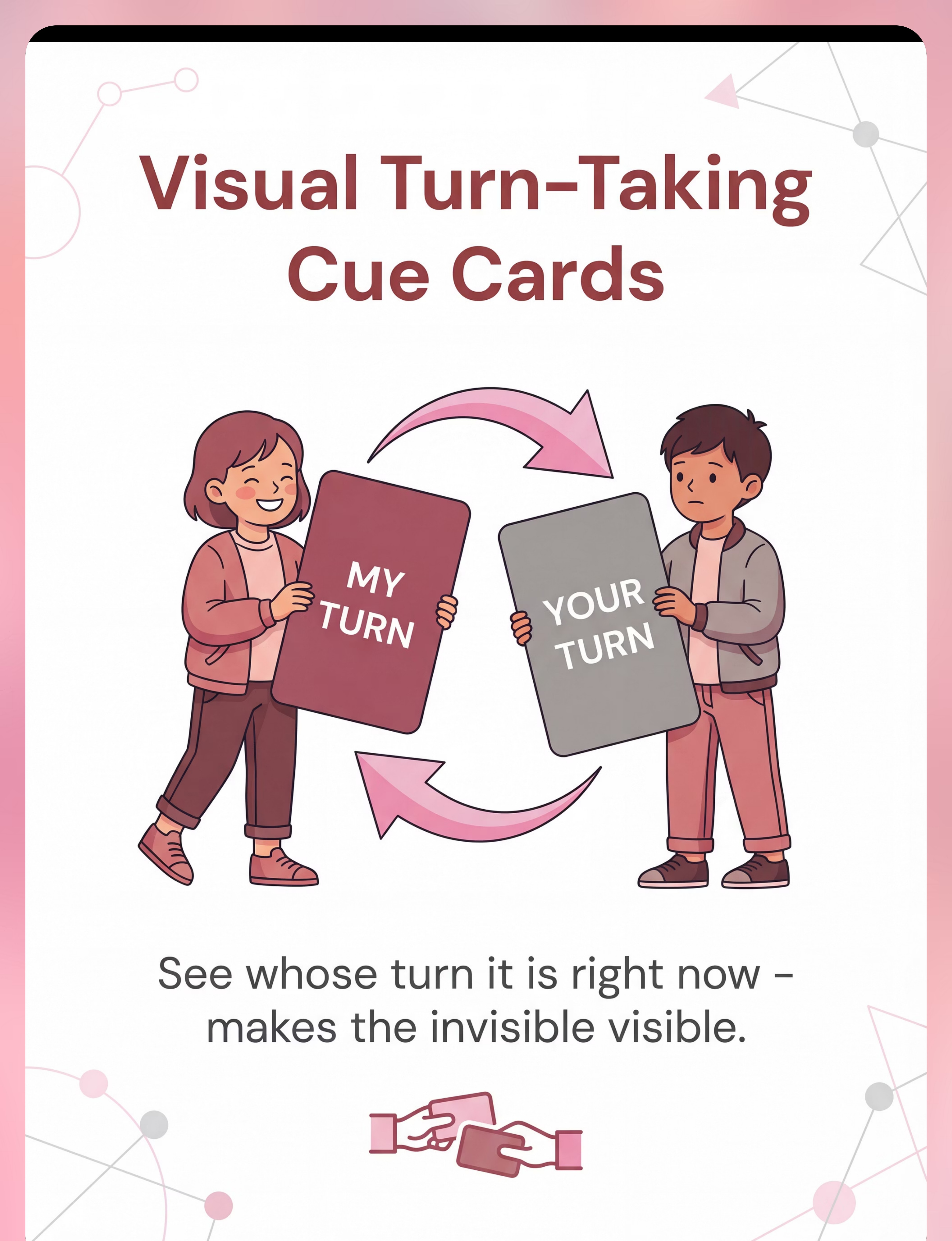
Material 1 — Visual Turn-Taking Cue Cards
Canon Category: Visual Supports. Makes the invisible visible — physical cards showing "MY TURN / YOUR TURN" that are held and passed, making abstract turn-taking concrete and touchable.
Price: ₹100–300 (commercial) | ₹0 (DIY — see Card 11)
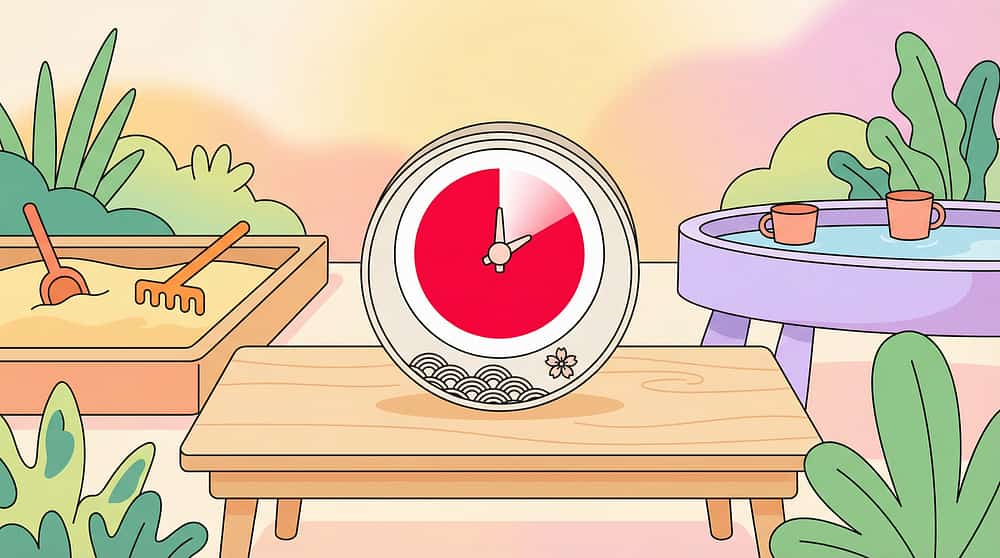
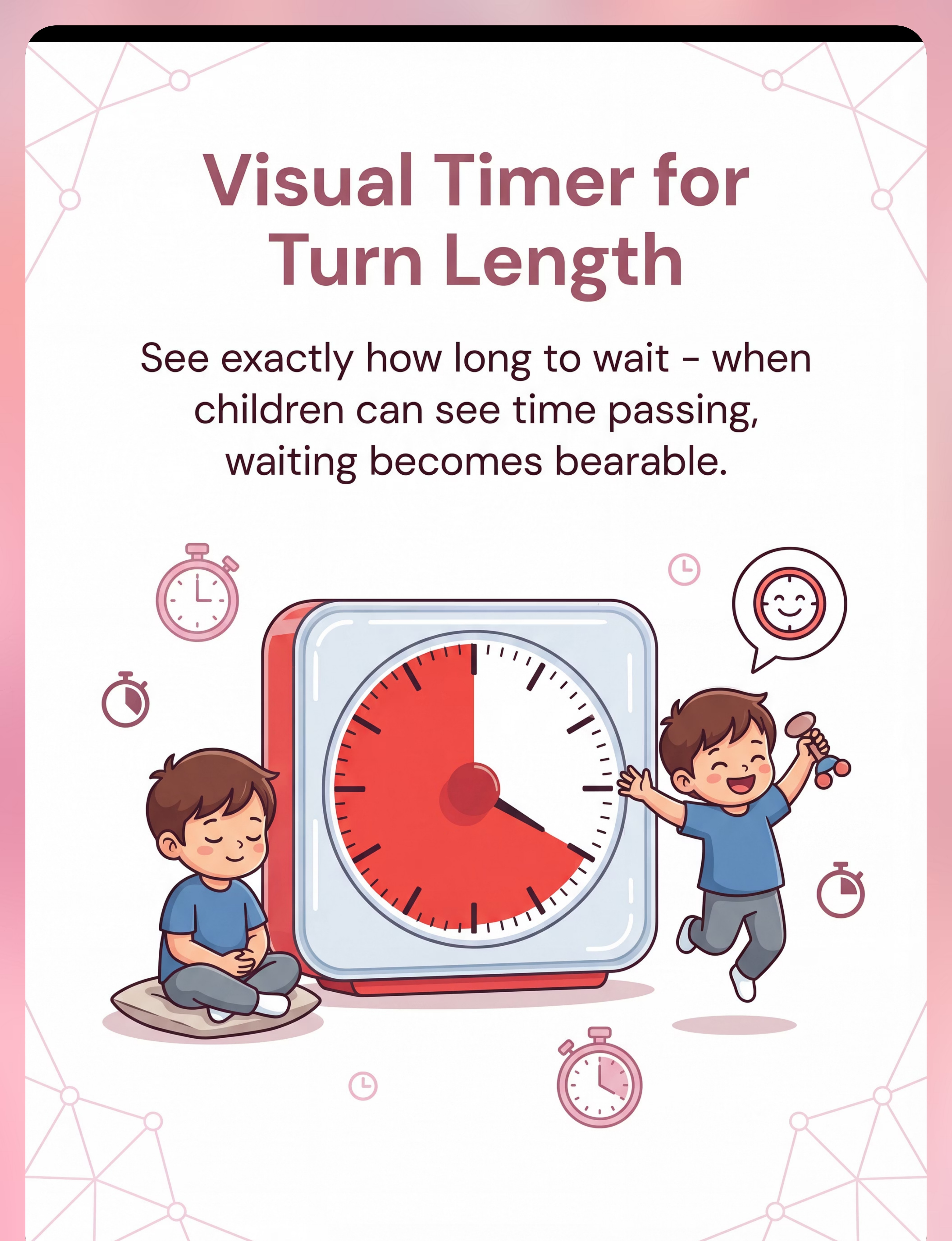
Material 2 — Visual Timer for Turn Length
Canon Category: Visual Supports. Makes time visible — children can see exactly how long to wait, dramatically reducing the anxiety of uncertain waiting. The countdown is concrete, predictable, and trustworthy.
Price: ₹500–2,500

ACT II — The Knowledge Transfer | Material 3 & 4
Materials 3 & 4 — Games & Token Economy
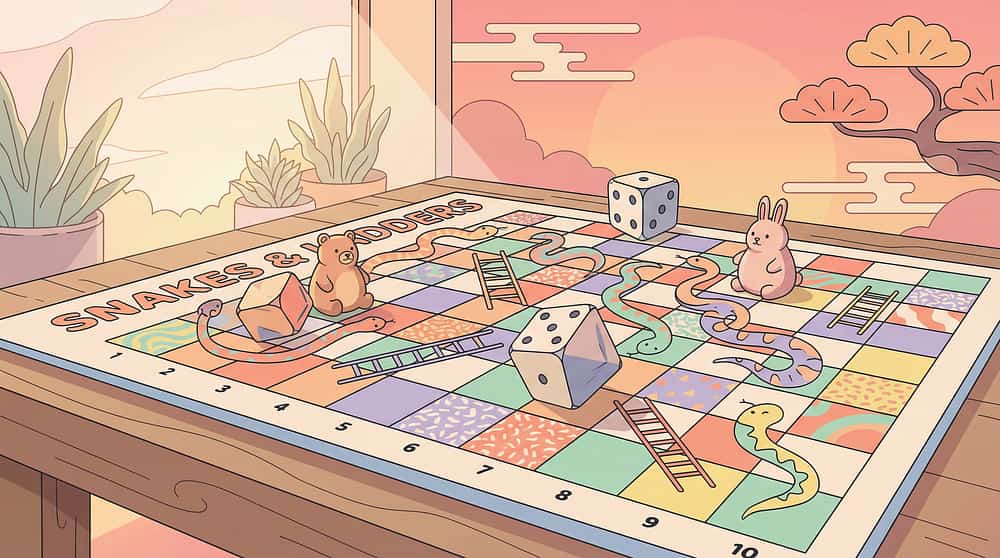
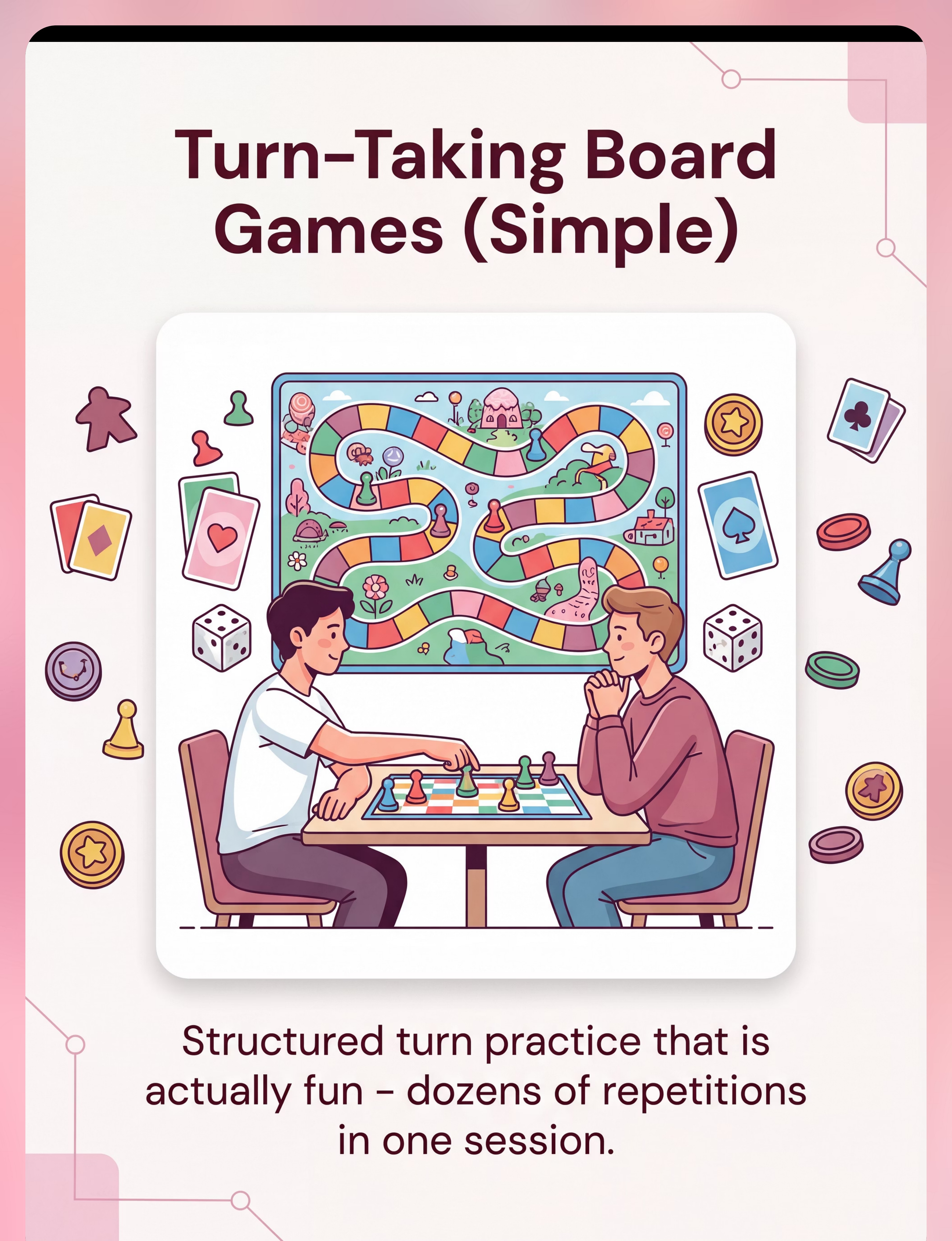
Material 3 — Simple Turn-Taking Board Games
Canon Category: Problem-Solving Toys. Rules-governed structure with clear turn boundaries creates the perfect practicing ground for waiting skills in a motivating, game-based context.
- SHINETOY Shut The Box Game — ₹428 Buy on Amazon.in ✅
- Dyomnizy Educational Memory Game — ₹519 Buy on Amazon.in ✅

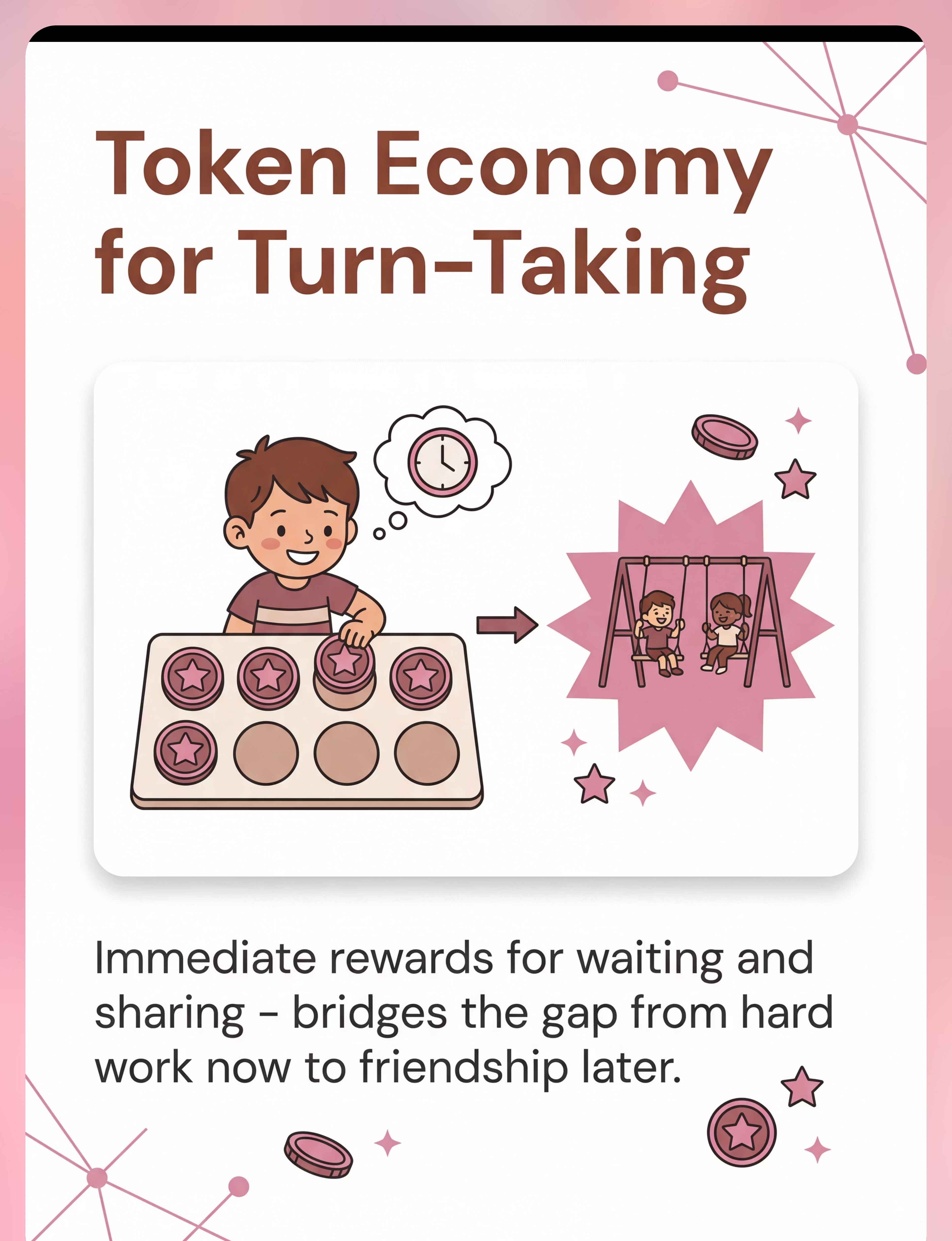
Material 4 — Token Economy System
Canon Category: Reinforcement Menus. Immediate tangible reinforcement for effortful waiting behavior. Each token is a bridge between the child's effort and their valued reward — making waiting feel worthwhile.
- 1800+ Reward Stickers — ₹364 Buy on Amazon.in ✅
- The Rosette Imprint Reward Jar — ₹589 Buy on Amazon.in ✅
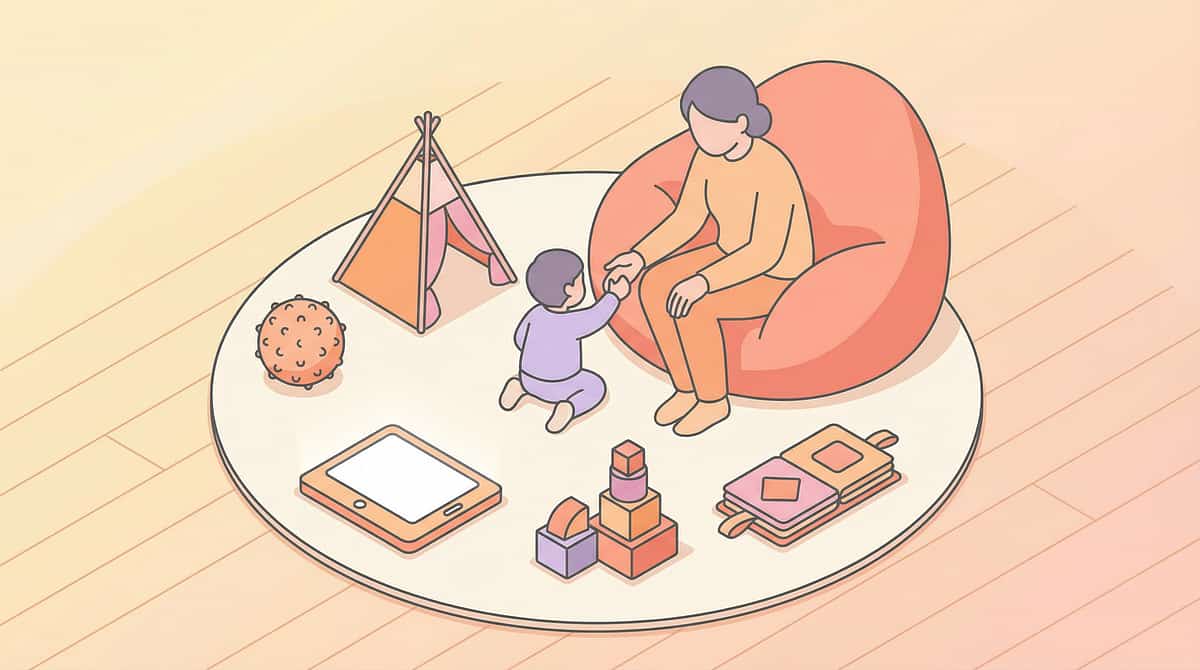
ACT II — The Knowledge Transfer | Materials 5 & 6
Materials 5 & 6 — Social Stories & First-Then Boards

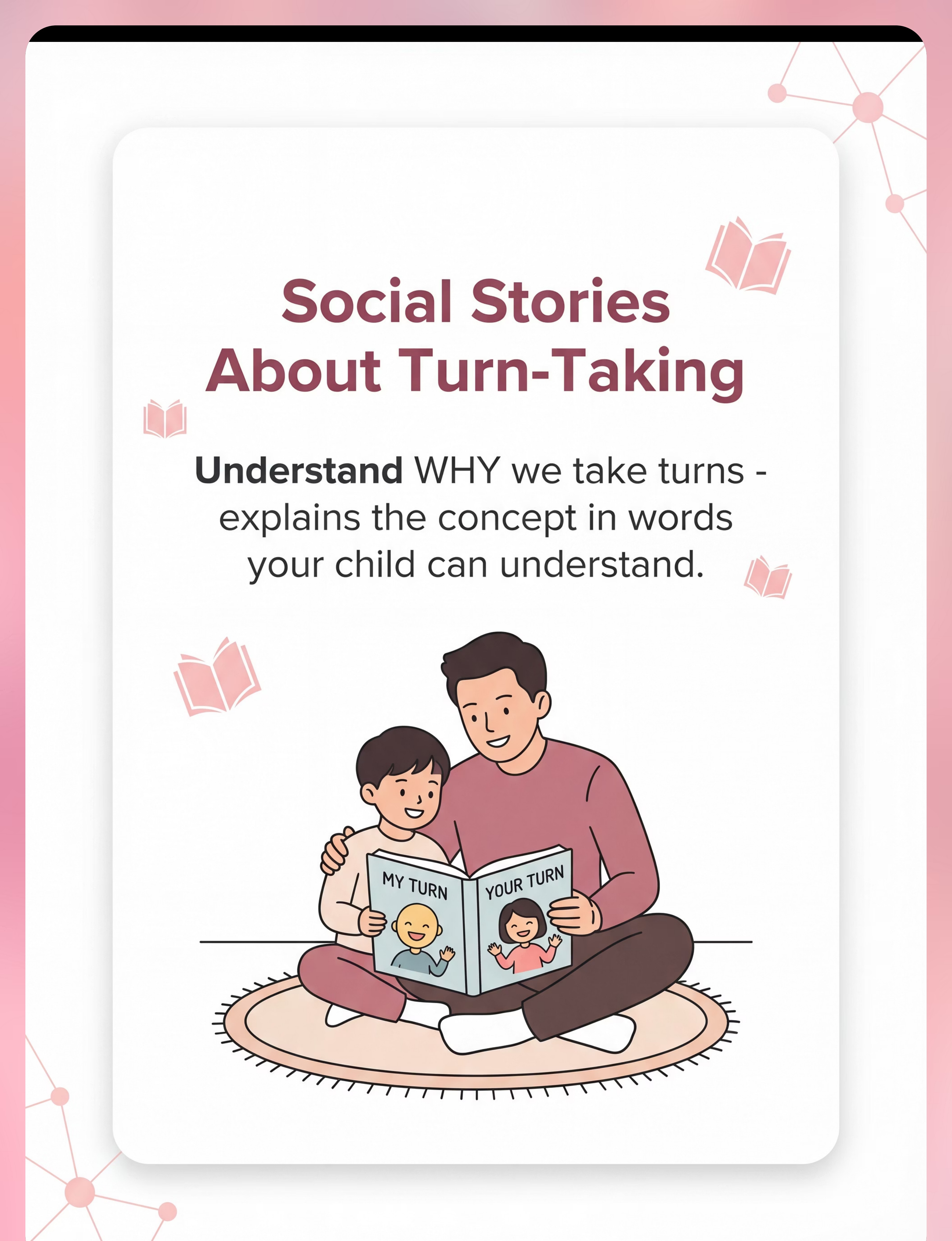
Material 5 — Social Stories About Turn-Taking
Canon Category: Cognitive & Learning. Social stories provide the cognitive framework for understanding why turns work — building internal understanding, not just external compliance. Read nightly for maximum impact.
Price: ₹200–600 (books) | ₹0 (DIY)
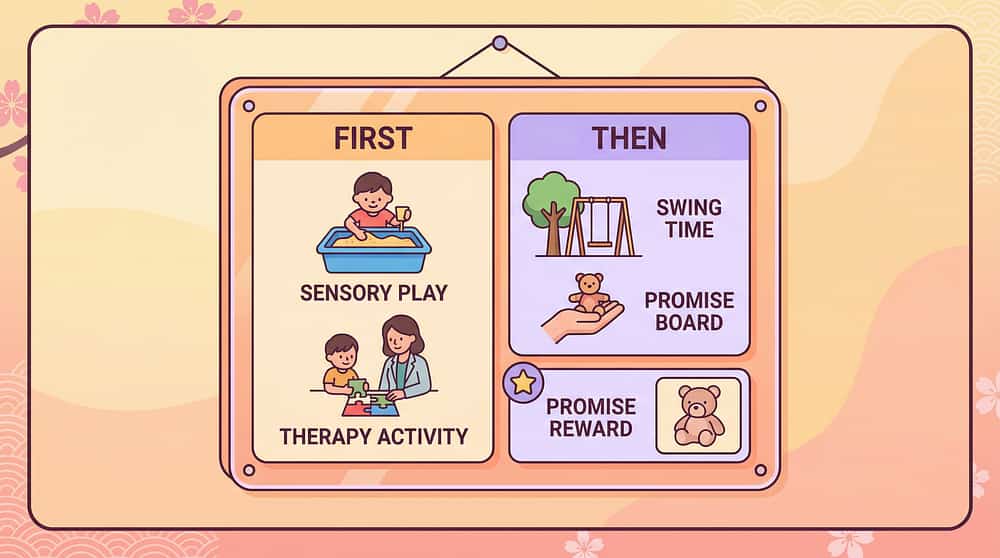
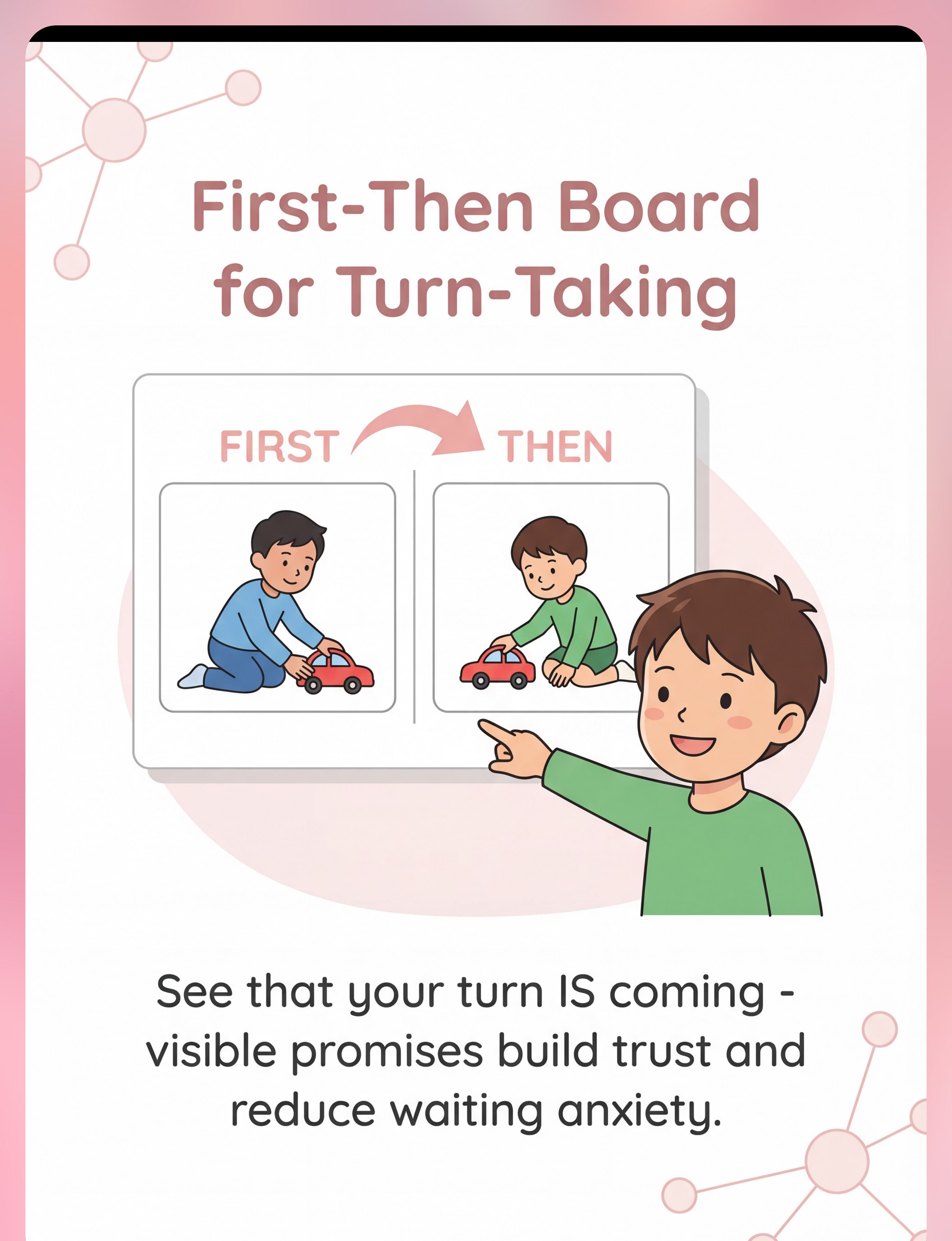
Material 6 — First-Then Board
Canon Category: Visual Supports. Delivers a visual promise that the desired thing is coming. "FIRST your wait — THEN your turn" converts abstract waiting into a concrete, predictable sequence that reduces anxiety profoundly.
Price: ₹100–400 | ₹0 (DIY)
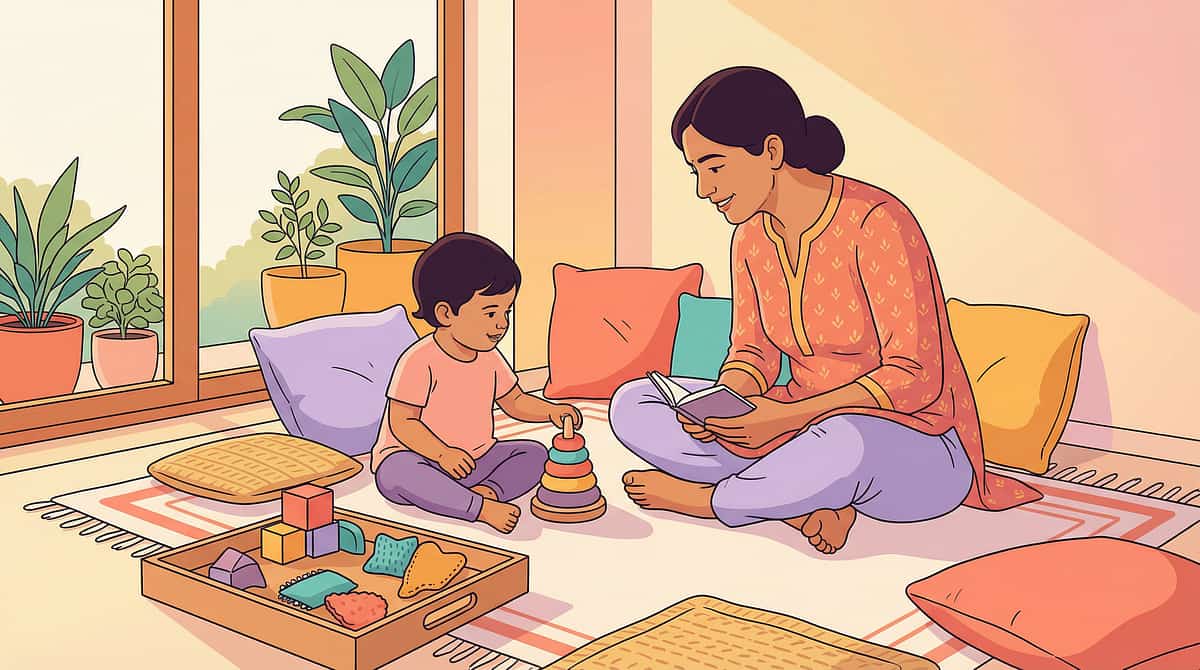
ACT II — The Knowledge Transfer | Materials 7, 8 & 9
Materials 7, 8 & 9 — Play Sets, Songs & Video Modeling
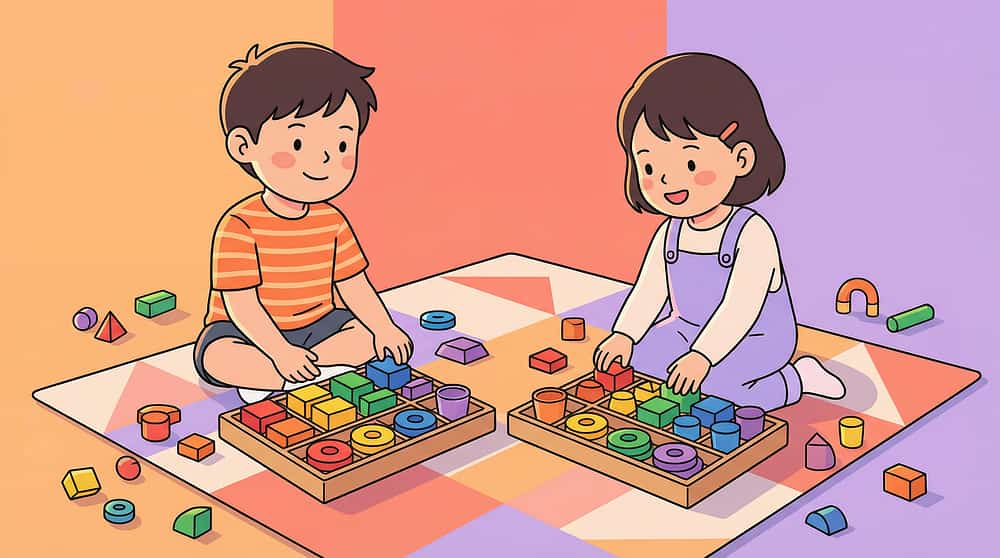
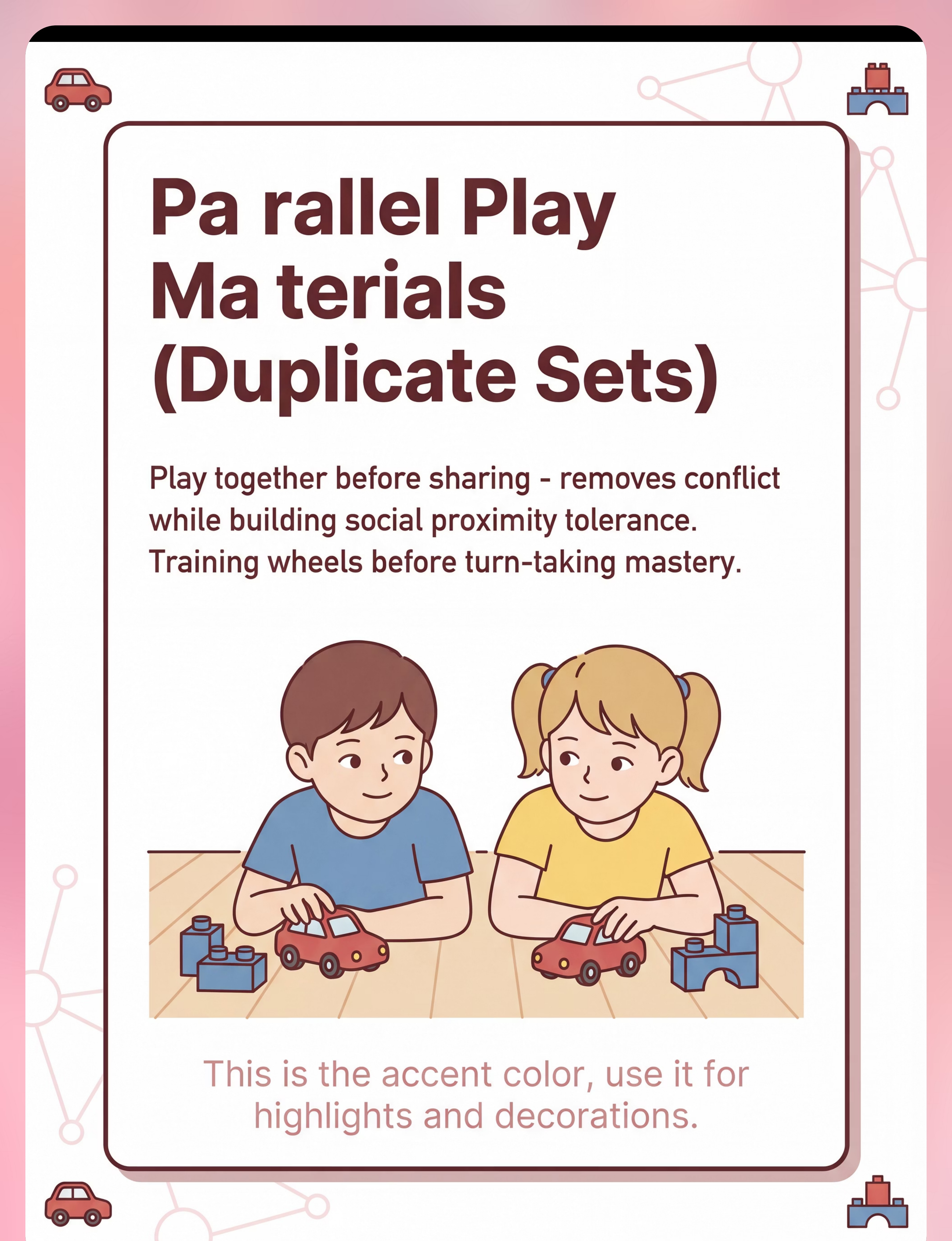
Material 7 — Parallel Play Duplicate Sets
Canon Category: Problem-Solving Toys. Two identical sets remove the conflict trigger entirely while building social proximity tolerance. The child plays beside — not yet with — before advancing to turn exchange.
Lattooland Rainbow Sorting Activity Set — ₹628 (purchase 2 sets) Buy on Amazon.in ✅
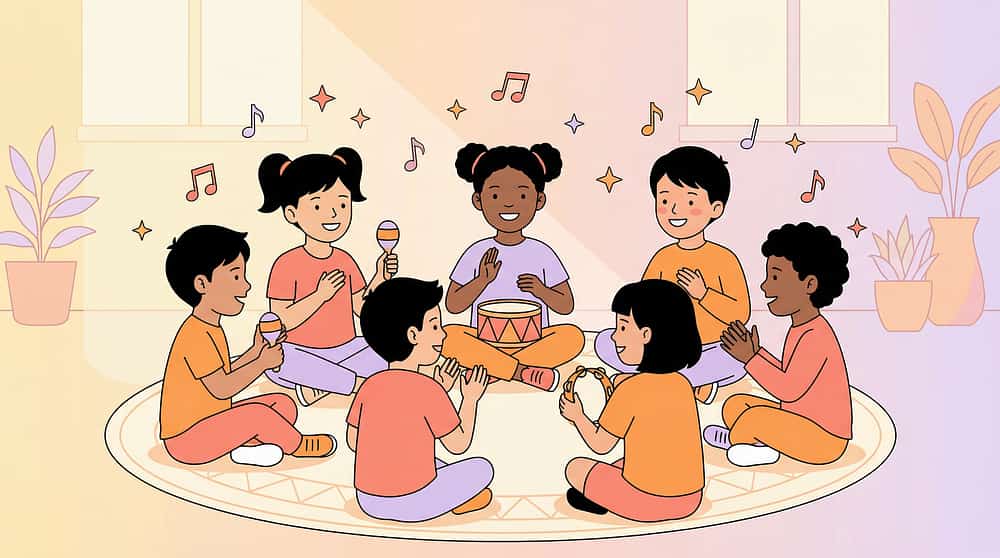
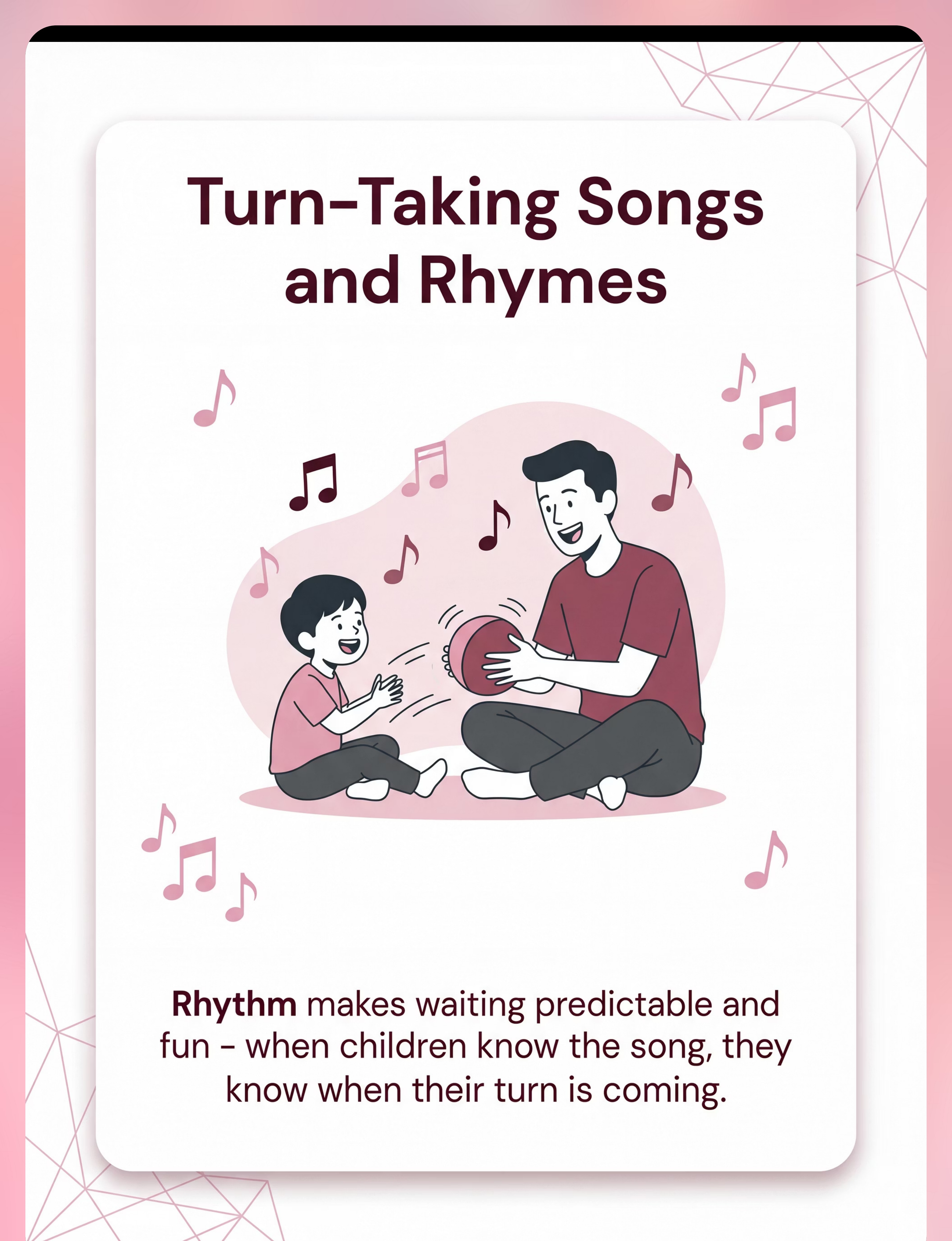
Material 8 — Turn-Taking Songs & Rhythm Tools
Canon Category: Transition Objects / Engagement Materials. Rhythmic, predictable songs add musical structure to turn exchange — "Your turn, my turn, round we go" — making the transition feel joyful rather than threatening.
Price: ₹0 (free songs and rhymes)
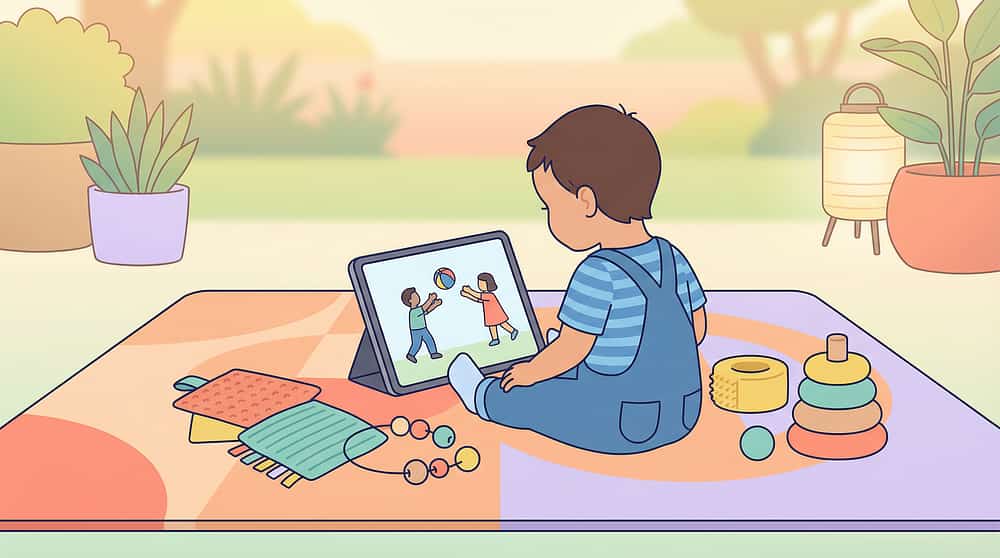
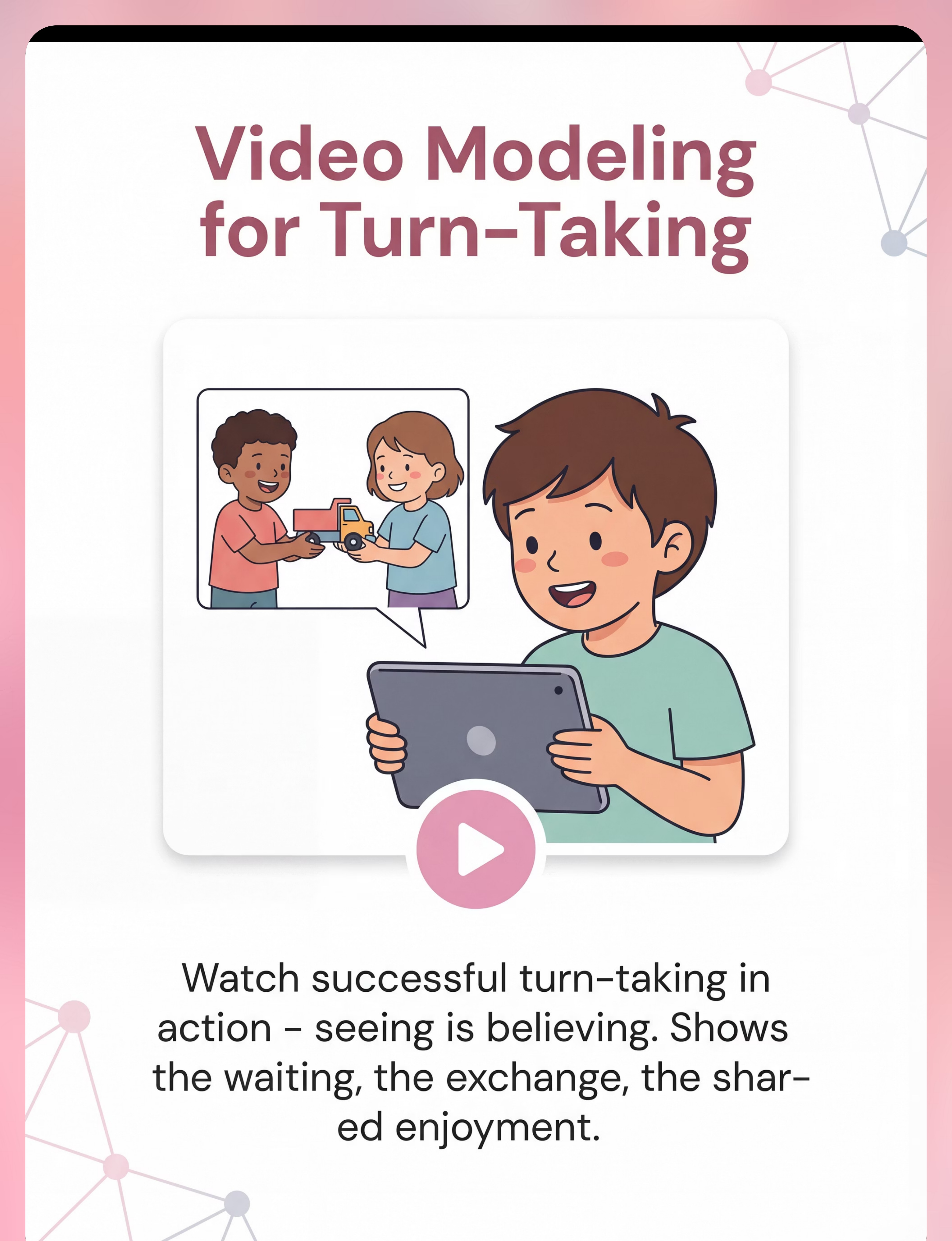
Material 9 — Video Modeling Resources
Canon Category: Digital Learning Supports. Watching another child model turn-taking correctly activates mirror neuron learning — establishing the neural template before the child practices the behavior themselves.
Price: ₹0 (YouTube) to ₹500 (homemade)

ACT II — The Knowledge Transfer
Every Material Can Be Made at Home. Zero Rupees Required.
The WHO/UNICEF Equity Principle: "Every family — regardless of economic status — can execute evidence-based therapy interventions at home using available household materials." Here is exactly how.
Commercial Material | Zero-Cost DIY Alternative | Why It Works the Same | |
Visual Turn-Taking Cue Cards (₹200+) | Two pieces of thick cardboard. Write "MY TURN" and "YOUR TURN" in big letters. Laminate with clear tape. Add child's photo. | Physical object makes abstract turns concrete and touchable | |
Visual Timer (₹500+) | Sand timer from any kitchen. Or count aloud together "1-2-3-4-5…" Or use free timer apps on your phone. | Visible passage of time reduces waiting anxiety | |
Board Games (₹300+) | Roll a dice and move bottle caps on a hand-drawn path. Any dice + any small objects. Draw a simple track on paper. | Rules-governed structure with clear turn boundaries | |
Token Board (₹200+) | Draw 5–8 circles on paper. Each successful wait = a tick mark. When full = agreed reward. | Immediate tangible reinforcement for effortful waiting | |
First-Then Board (₹200+) | Fold paper in half. Draw "FIRST" box left, "THEN" box right. Draw or paste pictures for each. | Visual promise that the desired thing is coming | |
Social Story Book (₹400+) | Write 6 simple sentences about your child taking turns. Add their photo. Laminate and read nightly. | Cognitive framework for understanding why turns work | |
Parallel Play Duplicate Set | Duplicate whatever causes the most conflict. Two identical cups, two identical small toy cars. Borrow from neighbors if needed. | Removes conflict while building social proximity tolerance |
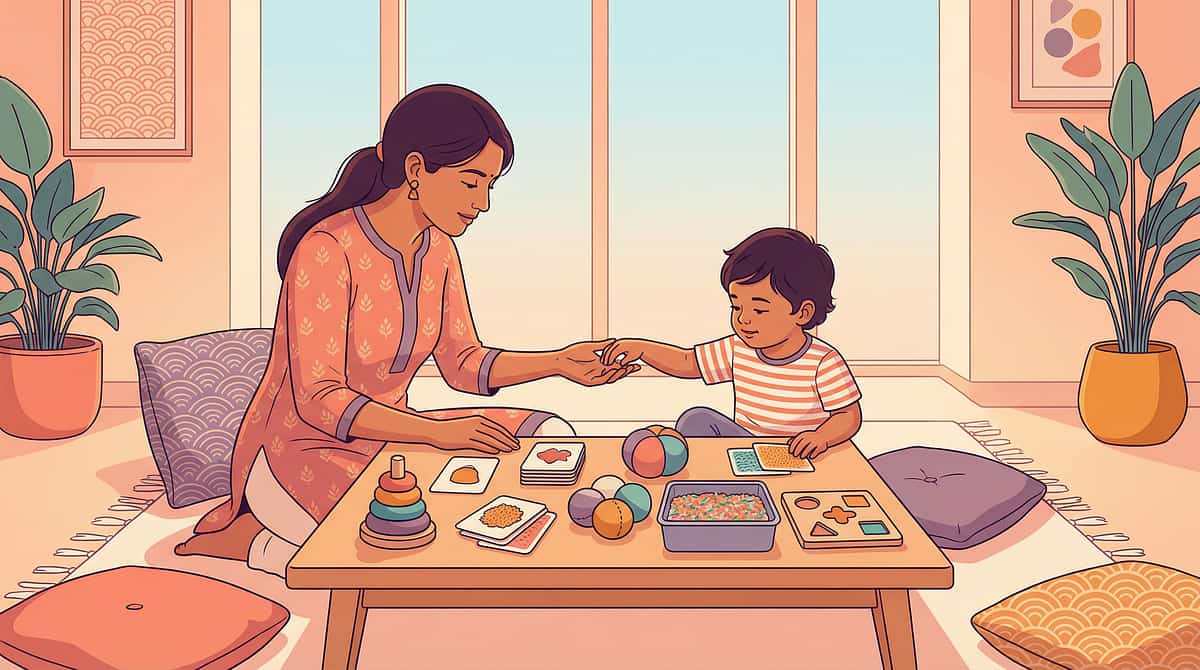
ACT II — The Knowledge Transfer
Safety First — Before You Begin
Read this card before every session. The best session is one that starts right — and knowing when not to begin is as important as knowing how to begin.
🔴 RED LIGHT — Do NOT Proceed If:
- Child had a meltdown in the last 30 minutes
- Signs of illness (fever, pain, physical discomfort)
- Child has not eaten or is hypoglycemic
- Sleep-deprived child (night disturbances affect impulse control profoundly)
- Sibling or peer participant is also dysregulated
🟡 AMBER LIGHT — Modify Before Proceeding:
- Mildly tired → Shorten session to 5 minutes, use only one material
- Stressful school day → Use the most preferred material only, no demands
- New environment → Add familiar transition object before starting
- First-ever session → Begin with parallel play (duplicate sets), zero sharing demands
🟢 GREEN LIGHT — Proceed When:
- Child is alert, fed, and in baseline regulation
- Environment is prepared (see Card 16)
- You have 20 uninterrupted minutes
- Your emotional state is regulated — children sense co-regulation
⛔STOP IMMEDIATELY IF: Child shows self-injurious behavior | Uncontrolled aggression toward others | Acute distress beyond typical frustration | Signs of sensory overload. Call 9100 181 181 for immediate clinical guidance.
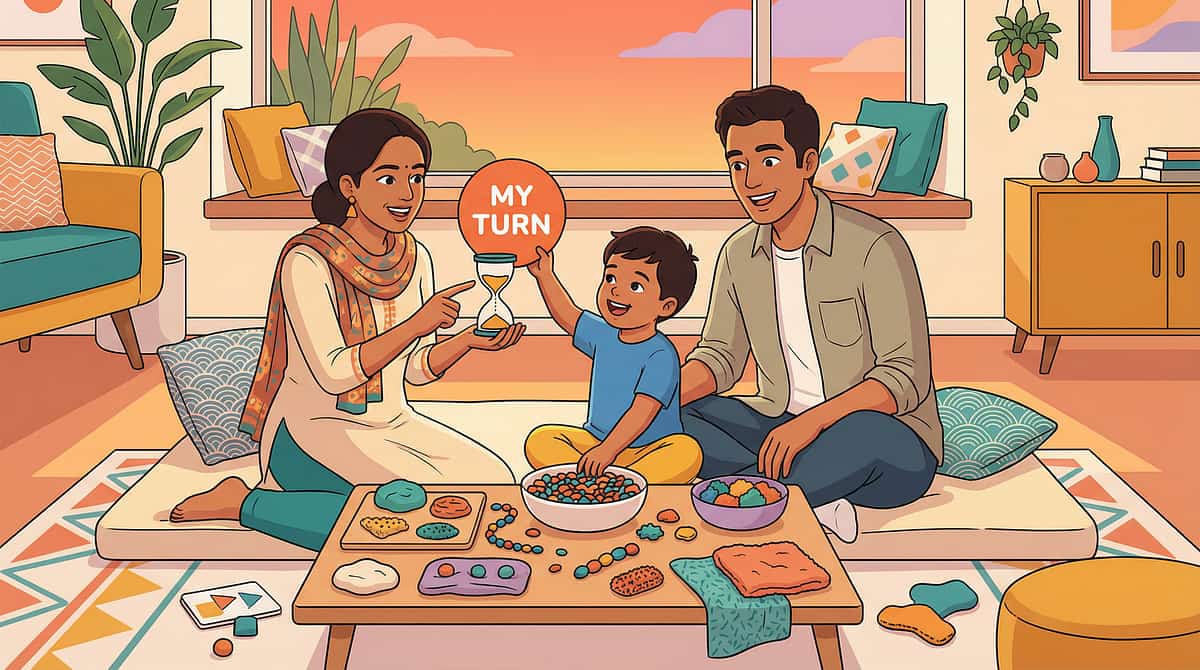
ACT II — The Knowledge Transfer
Set Up Your Space — Spatial Precision Prevents 80% of Session Failures
Room Setup Essentials
Table/Low Surface — Center of Space
Child and parent facing each other, approximately 60cm apart
Materials on Parent's Side Initially
Turn cards in front of current holder | Timer visible to both players
Token Board Between Both Players
Rewards ready but out of sight — one favorite comfort item nearby
Remove Distractions Completely
Other toys, screens (unless needed), and siblings for first sessions
Environment Checklist
🔆 Lighting
Natural or warm. Avoid harsh fluorescent lighting.
🔇 Sound
Quiet. No TV, music, or background noise during learning phase.
🌡️ Temperature
Comfortable. Sensory regulation is harder in heat.
🪑 Seating
Child at comfortable table height. Feet flat on floor if possible.
⏱️ Duration
Set a pre-agreed end time: "We play for 15 minutes then break."
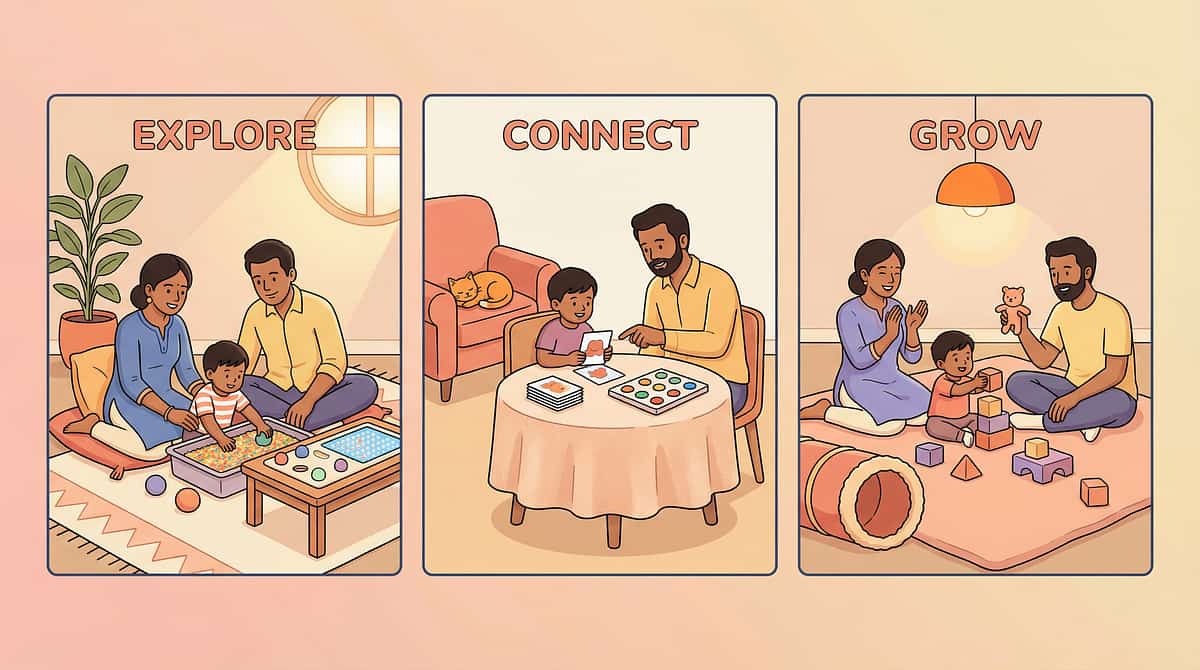
ACT III — The Execution
Is Your Child Ready? — The 60-Second Pre-Flight Assessment
Be honest with each indicator. The best session is one that starts from the right state. A "postpone" day is data — not failure.
Indicator | ✅ Green | 🟡 Modify | 🔴 Postpone | |
Hunger/Hydration | Fed within 1 hour | Slightly hungry | Very hungry/hypoglycemic | |
Sleep | Slept well last night | Mildly tired | Sleep-deprived | |
Recent Distress | Calm for 30+ min | Minor upset, resolved | Meltdown within last 30 min | |
Sensory State | Regulated | Mildly elevated | Sensory overload indicators | |
Attention Span | Can sit for 3+ min | Brief attention spans | Unable to attend | |
Physical Health | Healthy | Minor cold/sniffles | Fever, pain, acute illness | |
Your State | Calm and present | Mildly stressed | Highly stressed or rushed |
5+ Green = GO
Proceed to full protocol
2–4 Green = MODIFY
Parallel play only, 5 minutes, no sharing demands
0–1 Green = POSTPONE
Do a calming activity instead. Record as "rest day." This is data.

ACT III — The Execution
Step 1 — The Invitation
⏱️ 30–60 seconds
Open with an invitation, not a command. The child's willingness to begin is itself a form of consent and cooperation.
Your Script — Say These Exact Words
"[Child's name], would you like to play [game name] with me? It's your favourite — we can use the timer and the turn cards today."
If the child uses AAC or limited verbal — show the materials visually. Hold up the "MY TURN" card and the board game simultaneously. Let them see it before they decide.
Body Language Guidance
- Get to the child's eye level (sit, kneel, or crouch)
- Neutral, warm expression — not urgent, not demanding
- Slow movements — place materials in front of them slowly
- Pause after your invitation. Give 5–10 seconds of processing time.
Acceptance vs. Resistance Cues
✅ "Yes" Looks Like
Moving toward materials | Reaching for the board | Verbal or AAC "yes" | Eye contact with setup
🔴 "Not Yet" Looks Like
Turning away | Vocalizing distress | Pushing materials → Do not push. Say "Okay, we'll try later." Try again in 20 minutes.

ACT III — The Execution
Step 2 — The Engagement
⏱️ 1–3 minutes
Introduce the materials clearly and in sequence. Each material introduction builds the scaffold the child needs to understand what's about to happen — and why it's safe.
Place the Turn-Taking Cue Cards First
"These are our special cards. See — this one says MY TURN, this one says YOUR TURN. Whoever holds MY TURN gets to play right now." Hand child the "MY TURN" card. "This is yours first today."
Introduce the Visual Timer
"And this is our timer. When the red is gone, we switch the cards. Can you see the red? Great." Set timer for an achievable first duration — 30–60 seconds for beginners.
Introduce the Token Board
"Every time you wait so nicely for your turn — you earn a star here. When you get [5] stars, you choose your reward." Show reward options briefly.
Reinforce Immediately on Acceptance
The moment the child accepts the setup calmly: "Amazing — you're already doing it! You're holding your MY TURN card — brilliant!"
Engagement Indicators: Holds card, looks at timer, explores materials ✅ | Avoidance Indicators: Ignores materials, attempts to leave → simplify further or return to readiness check.

ACT III — The Execution
Step 3 — The Therapeutic Action
⏱️ 5–10 minutes (core session)
The physical card exchange is the active ingredient — it makes the abstract concept of "your turn is now over" into a concrete, touchable, predictable event. Every exchange is one neural repetition of impulse inhibition, delayed gratification, and trust.
✅ Ideal Response
Smooth exchange, waits with support, accepts token
⚠️ Acceptable Response
Momentary protest, self-regulates with prompt
🔴 Concerning Response
Throws cards/timer, aggression → stop session, return to Amber protocol

ACT III — The Execution
Step 4 — Repeat & Vary
⏱️ 3–8 minutes of varied practice
"3 good repetitions are worth more than 10 forced ones."
Target Repetitions by Week
Weeks 1–2
3–5 exchanges per session (short turns: 30–60 seconds each)
Weeks 3–4
5–8 exchanges (turns extending to 1–2 minutes)
Weeks 5–8
8–12+ exchanges (full game format, 2–5 minute turns)
Variation Options to Maintain Engagement
Change the Game
Snakes & Ladders → Memory → Go Fish. Generalizes turn-taking rule across contexts.
Change the Timer Format
Sand timer → visual disk → phone countdown. Builds timer flexibility.
Introduce a Peer/Sibling
Once mastered with adult, add one more player. Generalizes to real-world peer settings.
Turn-Taking Songs
Sing during exchange: "Your turn, my turn, round we go…" Adds rhythmic predictability.
Satiation Signal: End on a HIGH point — child's successful turn — before fussiness increases across exchanges.
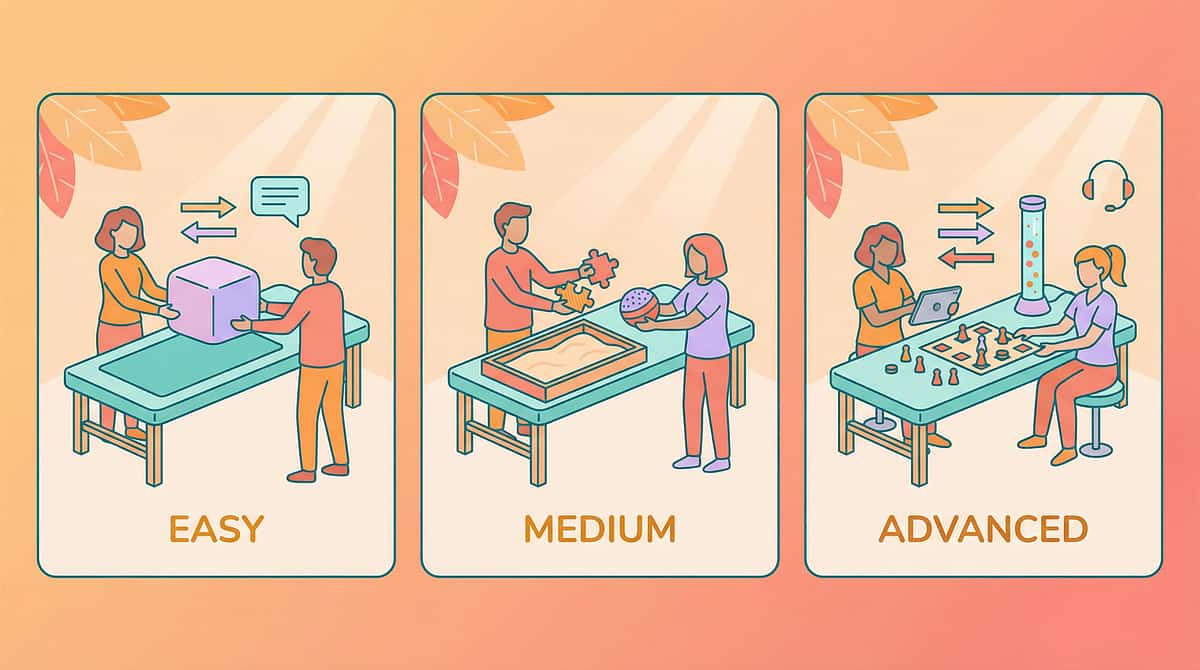
ACT III — The Execution
Step 5 — Reinforce & Celebrate
⏱️ Deliver within 3 seconds of target behavior
Golden Rule: Deliver reinforcement within 3 seconds of the target behavior. Timing is everything in ABA reinforcement — the connection between the action and the reward must be immediate and unmistakable.
Reinforcement Scripts
"[Child's name] — you WAITED! That was AMAZING waiting! Here is your star!" [Deliver token immediately]
"You gave me the card all by yourself! That's a superstar turn-taker!"
"You watched me take my whole turn — that's EXACTLY what we're working on. Incredible!"
"You earned ALL your stars! You choose — [options]."
Reinforcement Menu (Adapt to Your Child)
🏅 Social
High five, hug, spinning, "champion" dance
🍬 Edible
One favourite snack bite
🎮 Activity
2 min screen time, preferred game choice
🏆 Token-to-Reward
Stars → agreed reward (child chooses from menu)
Celebrate the attempt, not just the success. If the child tried — even imperfectly — that earns a token. Build the behavior before fading the support.

ACT III — The Execution
Step 6 — The Cool-Down
⏱️ 2–3 minutes
End every session with intention. An abrupt ending can trigger dysregulation that wipes out the positive experience of the session. Predictable endings build trust in the entire system.
2 Exchanges Before End
"Two more turns, then we finish. Watch the timer for our last turns." Give advance notice — never end without warning.
1 Exchange Before End
"One more turn each — you're doing so well today." Reduce the surprise of ending.
Materials Put-Away Ritual
Invite child to participate: "Can you help me put the cards in the box?" Same put-away sequence every session = predictability = safety.
Name the Next Activity
Use First-Then board: FIRST finish game → THEN [preferred next activity]. "After this we have [snack / outside time / bath]."
If Child Resists Ending: Don't extend the session — it teaches that protests work. Say: "I know it's hard to stop. We'll play again tomorrow. That's a promise."

ACT III — The Execution
Capture the Data — Right Now
60 seconds of data now saves hours of guessing later. Complete this within 60 seconds of session end. Three fields. That is all that is required.
📊 Today's Session Log — 3 Fields
Field 1 — Exchanges Completed: Total turn exchanges today: ______ (Every time both players completed one full turn = 1 exchange)
Field 2 — Waiting Quality: 1 = Grabbed / couldn't wait at all 2 = Waited with heavy prompting 3 = Waited with light verbal prompt 4 = Waited independently most of the time 5 = Waited independently every exchange ✅
Field 3 — Distress Level: 0 = No distress, playful throughout 1 = Minor frustration, quickly resolved 2 = Moderate — needed extra support 3 = Significant — session modified 4 = Session abandoned (still data — record why)
Your Tracking Tools
📱 GPT-OS® Digital Tracker
Track sessions, view trends, and receive personalized protocol adjustments.
📥 Download Tracking Sheet
Printable PDF tracking sheet for L-964 sessions.
"Data captured today is the evidence that drives tomorrow's breakthrough."

ACT III — The Execution
What If It Didn't Go As Planned?
Session abandonment is not failure — it is data. Write it down. It tells you exactly what to adjust. Here are the 7 most common challenges and their evidence-based fixes.
Child Grabbed the Material Before Their Turn
Why: Impulse exceeded waiting capacity. Turns were too long. Fix: Reduce turn length to 10–15 seconds. Count aloud "1-2-3-4-5 — done!" Use physical hand-over-hand prompt to return material.
Child Refused to Pass the Turn Card
Why: Turn cards became possession objects, not exchange tokens. Fix: Use identical cards for both players. Or switch to a neutral "turn token" (a small block, not a card with "MY TURN" written on it).
Timer Caused More Anxiety Than It Helped
Why: Visible countdown created anxiety about time running out. Fix: Switch to count-up timer, or turn timer face away during child's turn — only reveal during waiting phase.
Child Lost Interest After 2–3 Exchanges
Why: Activity not motivating enough, or session too long. Fix: Use ONLY the child's top-1 preferred activity. Shorten session. End after 3 successful exchanges and celebrate.
Token Board Not Motivating
Why: Rewards not valuable enough, or too many tokens required. Fix: Change the reward to child's #1 preferred item. Reduce token requirement from 5 to 2. Build up gradually.
Child Understands 1:1 With Parent but Grabs With Peers
Why: Generalization gap — skill is context-specific. Fix: Practice with different partners: other parent, sibling, familiar peer, new peer. Bring the same visual supports to peer sessions.
Mastered Game Turns but Still Grabs Toys
Why: Game turns and object sharing are different behavioral topographies. Fix: Explicitly practice object-sharing with the same turn-taking cue cards and timer system. Don't assume game turns generalize automatically.

ACT III — The Execution
Adapt & Personalize — Every Child Is Different
The protocol is a scaffold, not a script. Here is how to tailor every element of this technique to match your child's unique profile, developmental level, and sensory needs.
Child Profile | Adaptation | |
Sensory Seeker | Add movement to waiting: squeeze a sensory ball, stamp feet, march in place while holding "YOUR TURN" card | |
Sensory Avoider | Quiet environment, no music, reduce visual clutter, allow fidget tool during waiting | |
High-Functioning / Verbal | Add conversational turn-taking: take turns commenting on the game, asking questions about moves | |
Minimally Verbal | Use AAC device for "my turn" / "your turn" exchange. Video model first. Reduce verbal narration. | |
Very Young (under 3) | Use physical object exchange (give block, get block back) — no cards needed yet. 5-second turns only. | |
Older Child (8+) | Introduce competitive games. Discuss fairness explicitly. Add sportsmanship goals. |
Age-Based Quick Reference: Under 3: object exchange → peek-a-boo → ball rolling | 3–6 years: cue cards + timer + simple board games | 6–12 years: full board games, card games, group turn-taking | Adolescent: conversational turns, waiting in social contexts
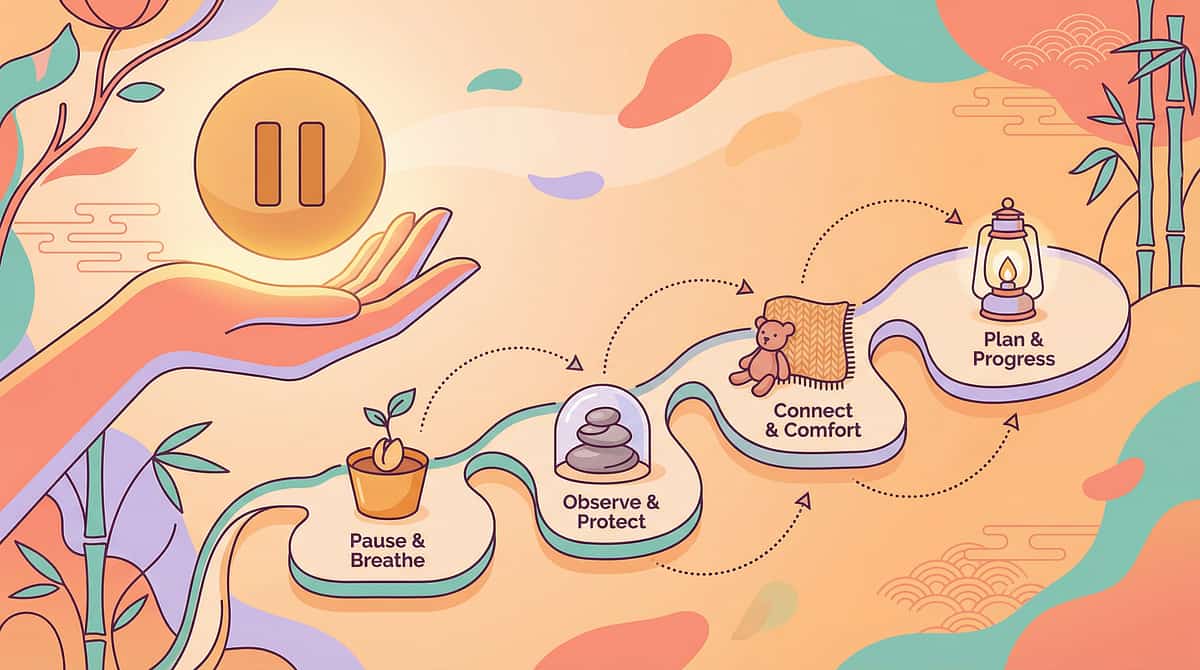
ACT IV — The Progress Arc
Week 1–2: What to Expect
📊 Progress: ~15%
Don't look for mastery yet. In Weeks 1 and 2, you are calibrating — learning your child's signals, finding the right turn duration, and building the neural scaffolding one exchange at a time.
✅ Look for These Specific Signs
- Child accepts the session setup without immediate flight/resistance
- Child holds "MY TURN" card for any duration without immediately demanding "YOUR TURN" card too
- Child looks at the timer at least once during waiting
- Child tolerates adult taking a turn for 5+ seconds without grabbing
- Child accepts at least one token without immediately demanding the reward
What Is Not Progress Yet (Normal)
- Child still grabs between supported exchanges ← Normal in Week 1–2
- Meltdowns still occurring ← Normal (this is hard work)
- Skills not generalizing to siblings/peers yet ← Normal
- Session ending in protest ← Normal
"If your child tolerates sitting through one full turn exchange without grabbing — that is real, measurable, neurological progress. It doesn't look dramatic. It is profound."
🧠What's happening inside: Neural pathways for inhibition and delayed gratification are forming with each structured exchange. Trust the process. Complete 2 sessions/day, 5–7 days/week in Weeks 1–2.
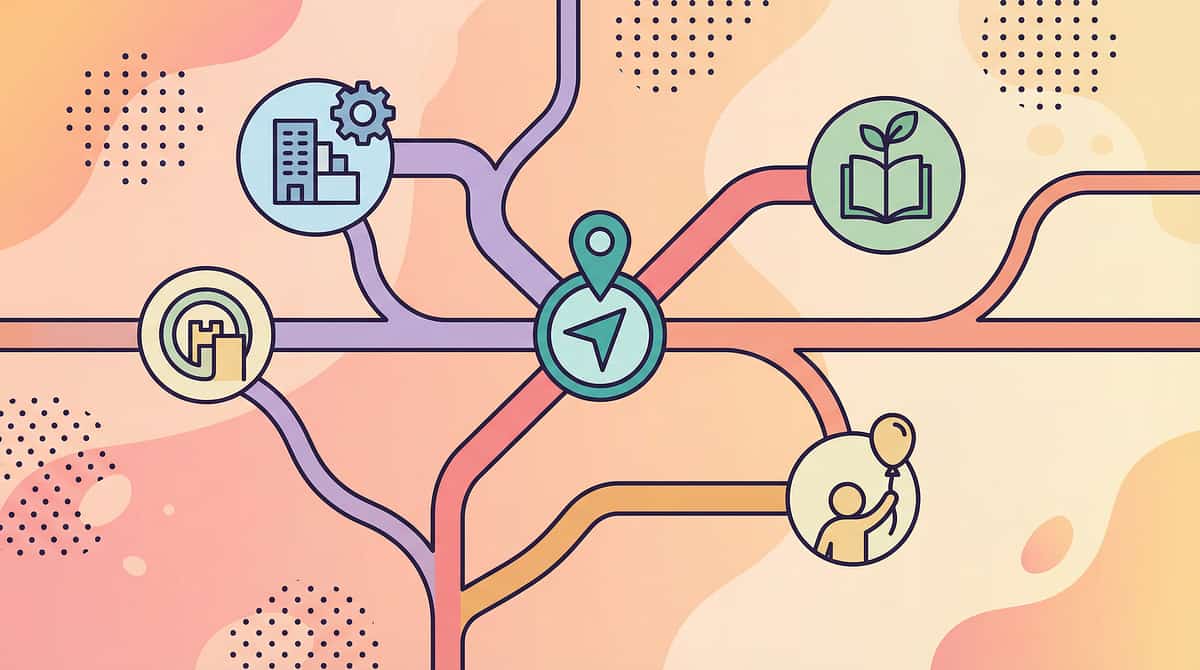
ACT IV — The Progress Arc
Week 3–4: Consolidation Signs
📊 Progress: ~40%
The neural pathways are hardening. Behaviors that required heavy prompting in Week 1 are beginning to emerge more naturally. Watch for these specific consolidation signals.
Walks to Setup Willingly
Child approaches the session setup without being carried or led — the system feels safe
Reaches for Turn Card First
Child anticipates the system and reaches for their card — ownership of the process
Independent Timer Watching
Child looks at timer independently during waiting — not just when prompted
Extended Waiting Duration
Waiting has extended — even by 10 seconds. This is neurological progress.
Spontaneous Generalization Seeds
Child says "my turn" unprompted during free play | Asks for the timer in another context | Waits briefly for a sibling
"You may notice that YOU are more confident too. You know what to say, when to give the token, how to read your child's signals. That parental confidence is the X-factor in outcomes."
ACT IV — The Progress Arc
Week 5–8: Mastery Indicators
📊 Progress: ~75%
🏆 Mastery Badge Criteria
The mastery phase. Four criteria unlock the mastery badge — each one represents a different dimension of genuine, generalized turn-taking skill.
Criterion 1 — Independent Exchanges
Child completes 8+ consecutive turn exchanges without grabbing, with no more than 1 verbal prompt across the entire session. Achieved on 3/5 sessions in a week.
Criterion 2 — Timer Acceptance
Child accepts timer stopping their turn (without meltdown) on 4/5 timer end events across a session.
Criterion 3 — Generalization (min. 2 of 3)
✅ Skill present with one peer (not just parent) ✅ Skill present in one additional setting ✅ Skill present with one additional activity
Criterion 4 — Maintenance
Skill present without token board on 2 consecutive sessions.
When mastery is achieved, move to the next level:
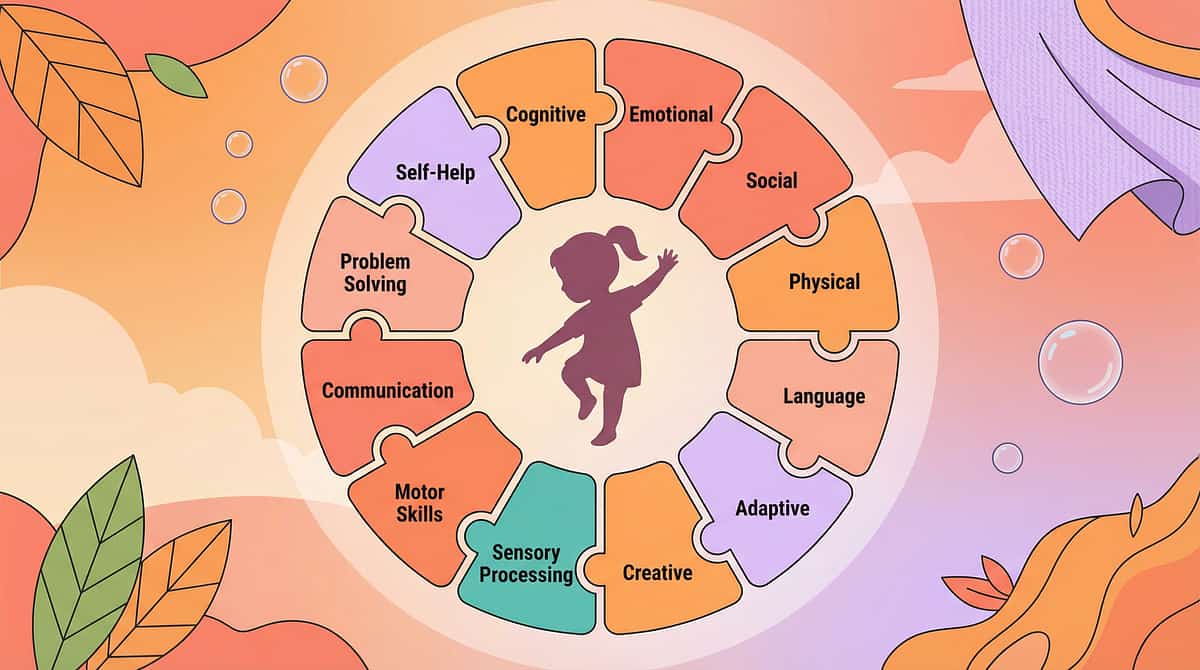
ACT IV — The Progress Arc
Celebrate This Win
"Five to eight weeks ago, your child could not wait for a turn without melting down. Today, they held a 'YOUR TURN' card, watched the timer tick down, and handed back the board without grabbing. Do you understand what just happened? You didn't just teach a game rule. You wired your child's prefrontal cortex. You built the neural scaffolding for every friendship they will ever have." — Pinnacle Blooms Consortium
✅ Consistency
Weeks of home sessions completed — every day a building block
✅ Resilience
Meltdowns navigated with grace, adjustments made without giving up
✅ Neural Progress
Turn-taking exchanges practiced — each one a neural repetition
Family Celebration Suggestions
- 📷 Take a photo of your child holding the "MY TURN" card — the one that started it all
- 📖 Write one sentence in a journal: "On [date], [child's name] waited for a full turn for the first time."
- 🎂 A small family celebration — let them choose the snack, the show, the activity
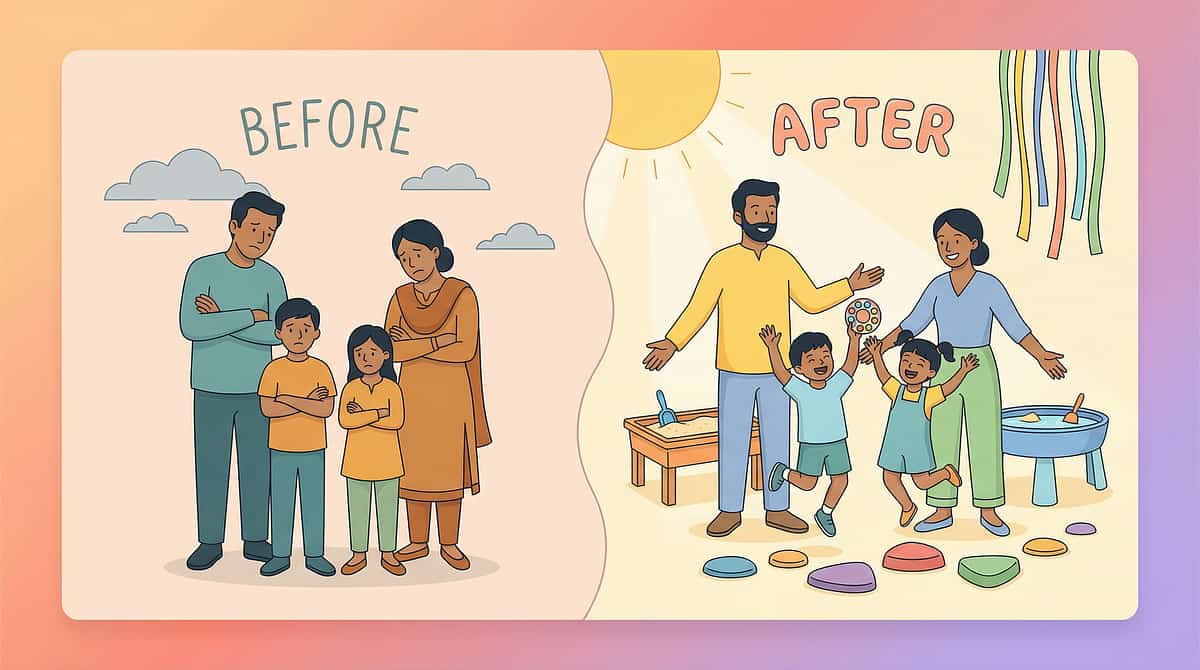
ACT IV — The Progress Arc
Red Flags — Clinical Guardrails, Even in the Success Zone
Progress is the goal — but clinical safety is the foundation. Know when to pause and seek professional consultation, even when sessions have been going well overall.
Red Flag | What It Looks Like | Why It Matters | What To Do | |
Escalating Aggression | Hitting, biting, scratching is increasing despite consistent protocol | May indicate protocol mismatch or emerging behavioral pattern | Book teleconsult within 48 hours | |
Self-Injurious Behavior | Head-banging, self-biting during waiting | Distress signal beyond coping capacity | Stop protocol. Call 9100 181 181 immediately | |
Complete Regression | Skills mastered in Week 4 disappear in Week 6 | May indicate medical change (sleep, illness, anxiety escalation) | Rule out medical causes. Book clinical review. | |
Extreme Generalization Failure | Skill strong at home, zero transfer after 8 weeks | May require structured school-based intervention | Request school OT/ABA consultation | |
Eating/Sleeping Disruption | Sessions causing mealtime refusal or sleep problems | Protocol creating excessive anxiety | Reduce intensity immediately. Teleconsult. |
Self-Resolve
Adjust protocol per troubleshooting guide
Teleconsult
Via GPT-OS® within 48 hours
In-Clinic Assessment
Nearest Pinnacle center
Emergency
9100 181 181 (24×7 free helpline)
ACT IV — The Progress Arc
The Progression Pathway — Your Developmental GPS
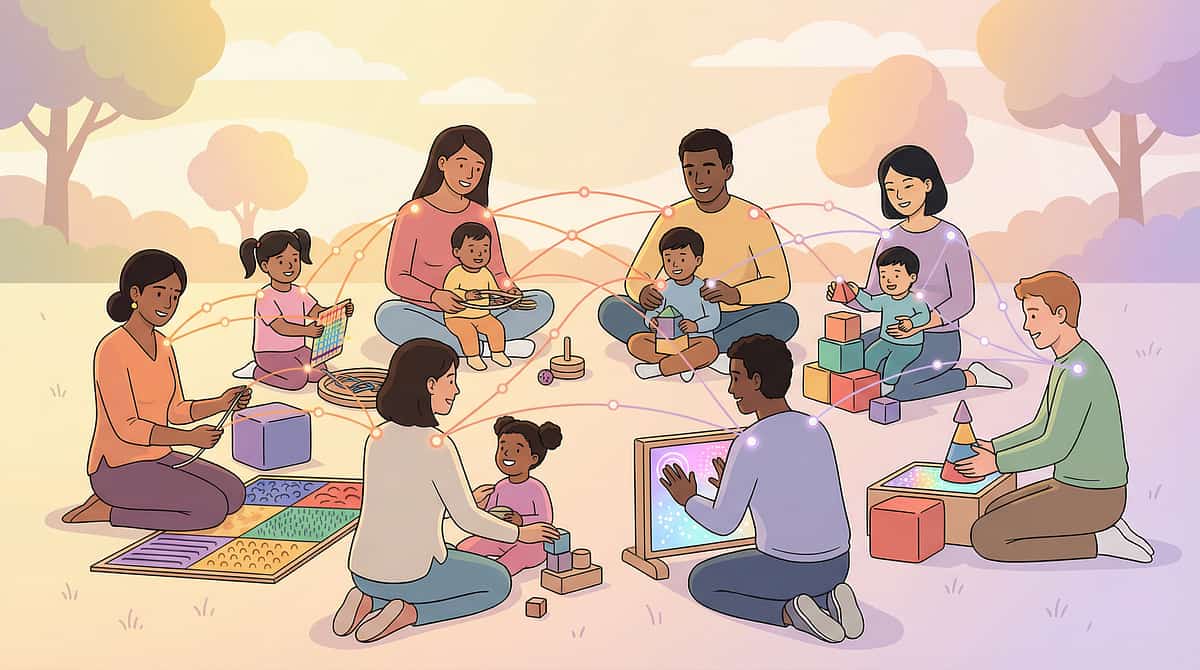
Turn-taking sits at the center of the Social Skills / Play Development domain. Master it, and adjacent skills naturally accelerate. Here is exactly where you are and where you are going.
Turn-taking mastered → social interest?
L-965: Sharing Behavior Development — the natural next step
Turn-taking mastered → game rule struggles?
L-966: Cooperative Play Skills — builds rule-following in play
Turn-taking mastered → conversational interrupting?
B-206: Conversational Turn-Taking Materials — the language version
This approach didn't resonate?
B-144: Building Turn-Taking Foundation — simpler precursor work
ACT IV — The Progress Arc
This Technique Is One Piece of a Larger Plan
Turn-taking (L-964) sits at the center of Domain L. Master it, and parallel skills in adjacent domains naturally accelerate — language, emotional regulation, and behavior all benefit directly from this work.
Domain L is Currently Your Active Domain
Turn-taking (L-964) sits at the center of Domain L. The skills you are building here ripple outward into every other domain your child is developing.
- Domain B (Language): Conversational turn-taking skills
- Domain C (Emotional Regulation): Frustration tolerance during waiting
- Domain D (Behavior): Impulse control across all contexts
Connect Your Child's Complete Profile
The GPT-OS® dashboard maps progress across all 12 domains, recommends next techniques, and generates personalized home programs from your session data.
ACT V — The Community & Ecosystem
3 Families. 3 Starting Points. 1 Outcome: Turns Taken.
Family 1 — Hyderabad, 5-Year-Old Boy
Before: Board games ended within 60 seconds. Grabbed dice immediately, screamed when his piece wasn't moved, flipped the board if he didn't win. No playdate lasted beyond 20 minutes.
After (8 weeks): Completes full rounds of Snakes and Ladders with his grandmother. Waits for the timer. Last month, he waited in the birthday party queue for 4 minutes. His grandmother cried.
Timeline: Visual timer + cue cards Week 1 → Token board Week 2 → Board games Week 3 → Independent exchanges Week 6.
Family 2 — Chennai, 7-Year-Old Girl
Before: Every meal was about who got served first. Every toy shared with her brother ended in screaming. School reported constant interruptions. Parents avoided family gatherings.
After (10 weeks): Uses the First-Then board independently. Hands her brother the "YOUR TURN" card without being told. Said "it's your turn, amma" unprompted during a card game. First family gathering in a year attended without incident.
Family 3 — Bengaluru, 4-Year-Old, Minimally Verbal
Before: No game could be played. Any shared toy was grabbed immediately. No joint attention. Parents had never completed even one turn of any activity together.
After (12 weeks): 5-exchange sessions using AAC "my turn" / "your turn" symbols. Parallel play graduated to brief turns. Peer play beginning. First words related to play: "turn."
"The most powerful moment in turn-taking teaching is not when the child waits. It's when they pass the turn card back independently. That single gesture contains theory of mind, impulse control, working memory, and trust — all in one motion." — Pinnacle Blooms SLP + ABA Consortium Team

ACT V — The Community & Ecosystem
Connect With Other Parents — Isolation Is the Enemy of Adherence
🟢 Turn-Taking Parent WhatsApp Group
Parents navigating this exact challenge, sharing what's working, supporting each other through the hard sessions. Group managed by Pinnacle Blooms Network® — free.
Pinnacle Parent Forum — Social Skills Section
Discussion threads, protocol variations, session logs, victories, and questions answered by certified therapists in the Social Skills section.
🤝 Peer Mentoring Program
Connect with a parent who has already completed the L-964 protocol successfully and is willing to mentor you through yours.
Local Parent Meetups
Pinnacle centers organize monthly parent group sessions in your city. Meet families, share strategies, and get expert guidance in a group setting.
"Your experience matters. When you complete this protocol, consider sharing your story — you become someone else's Card 35."

ACT V — The Community & Ecosystem
Your Professional Support Team — Home + Clinic = Maximum Impact
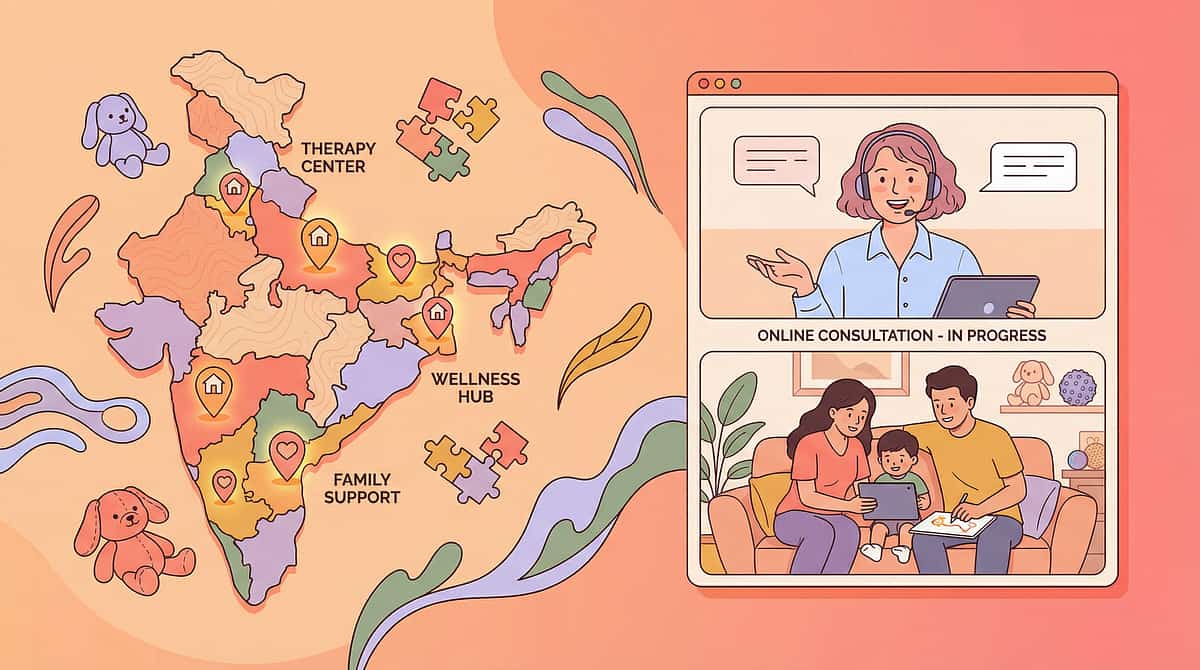
Pinnacle Blooms Network® operates 70+ centers across India — the largest specialist pediatric therapy network in the country. Every center deploys the same GPT-OS® protocols you are using at home, with 1:1 specialist therapists.
Your Need | Specialist | Available At | |
Turn-taking behavioral program | Certified BCBA / ABA Therapist | All 70+ centers | |
Sensory regulation during waiting | Pediatric OT | All 70+ centers | |
Conversational turn-taking | Pediatric SLP | All 70+ centers | |
School generalization plan | Special Educator | Selected centers | |
Clinical assessment + dosage | NeuroDev Pediatrician | Selected centers |
📱 Teleconsultation
If you're not near a center — teleconsult brings the clinical team to your home. Available for all families, including remote.
📞 Free National Autism Helpline
9100 181 181 | 24×7 | 16 Languages | No appointment needed
"Call for guidance, not just emergencies. Our therapists are here for the Wednesday afternoon meltdown too."
ACT V — The Community & Ecosystem
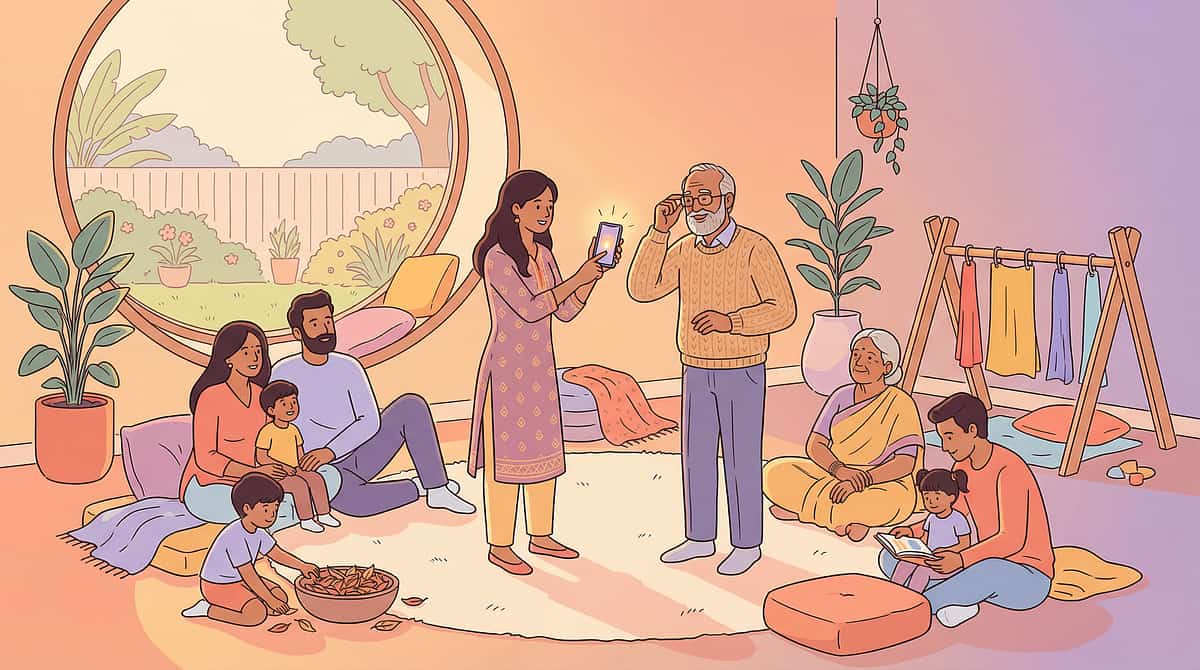
How GPT-OS® Uses Your Data — Transparent by Design
What GPT-OS® Learns From L-964 Data
- Optimal turn duration for this specific child at this developmental stage
- Which materials produce the highest exchange success rate
- Pattern of escalation triggers before meltdowns (predictive, not reactive)
- Comparison against 21M+ session anonymized database for peer benchmarking
🔒 Privacy Assurances
All data anonymized at collection — no identifying information transmitted
DPIIT & MSME registered entity — compliance with Indian data protection standards
Parents retain full data access and deletion rights at all times
No third-party commercial data sharing. Ever.
"Your data helps every child like yours. Population-level patterns from millions of sessions become the personalized recommendation in your GPT-OS® dashboard."
ACT VI — The Close & Loop
Frequently Asked Questions — Every Question Parents Ask, Answered
Q1: My child is 9 years old — is it too late to teach turn-taking?
Not even close. Turn-taking can be taught at any age with age-appropriate modifications. For older children, the protocols use competitive games, conversation practice, and explicit fairness discussions rather than cue cards. Many teenagers and adults with autism learn conversational turn-taking with great success. It's never too late.
Q2: How long before I see real results?
The research says 8–12 weeks for measurable, generalizable outcomes. However, you will typically see the first signs of progress — even minor ones — in Week 1–2. See the Week 1–2 card for what early progress actually looks like (hint: it's not mastery).
Q3: My child takes turns in therapy but not at home. Why?
This is a generalization gap — the skill is context-specific. The fix: bring the same materials home. Use the same turn cards, same timer format, same scripts. The visual system must be consistent across environments.
Q4: Do I need all 9 materials or just a few?
Start with 3: visual turn cards + visual timer + one simple board game. Add token economy in Week 2. The other materials add breadth — introduce them one at a time. A full starter kit costs under ₹800 or ₹0 with DIY.
Q5: My child destroys the turn cards / throws the timer. What now?
Material destruction signals one of two things: (a) materials are too novel — introduce them during calm, non-demand time before using in sessions; (b) session difficulty too high — reduce turn duration to 5 seconds and build from there. The protocol, not the child, needs adjustment.
Q6: Should I use this with my child's sibling?
Yes — but introduce the sibling after the child has 3+ sessions of success with an adult. Brief exposure first (5 minutes), with both children understanding the system. Give the sibling their own token board too — fairness is visible.
Q7: My child melts down every time someone else gets a turn. Is this normal?
In the early sessions, yes. The meltdowns should reduce in frequency by Week 3–4 with consistent protocol. If they increase across 4 weeks of consistent implementation, see the Red Flags card and call 9100 181 181.
Q8: Can I use this technique without professional support?
Yes — this technique is specifically designed for home implementation by parents and caregivers without professional training. That is Pinnacle's core design principle. For children with significant behavioral challenges, professional guidance accelerates outcomes substantially. Free guidance: 9100 181 181.

ACT VI — The Close & Loop
You've Read Everything. Now Do One Thing.
Everything you need to begin is on this page. The materials are sourced. The protocol is mapped. The evidence is unambiguous. The only thing left is to begin — today, in your home, with your child.
🟢 Primary Action — Start Today
Everything you need is on this page. The only thing left is to begin.
🔵 Secondary Action — Book a Consultation
Get a certified Pinnacle therapist to review your child's turn-taking profile and co-design your home protocol.
🟡 Tertiary Action — Explore What's Next
Ready to build on this foundation?
📞Free National Autism Helpline: 9100 181 181 | 24×7 • 16 Languages • No appointment needed 🏅Consortium Validated by: OT • SLP • ABA/BCBA • SpEd • NeuroDev Pediatrics • CRO Division Pinnacle Blooms Network® — 70+ Centers • 21M+ Sessions • 97%+ Improvement
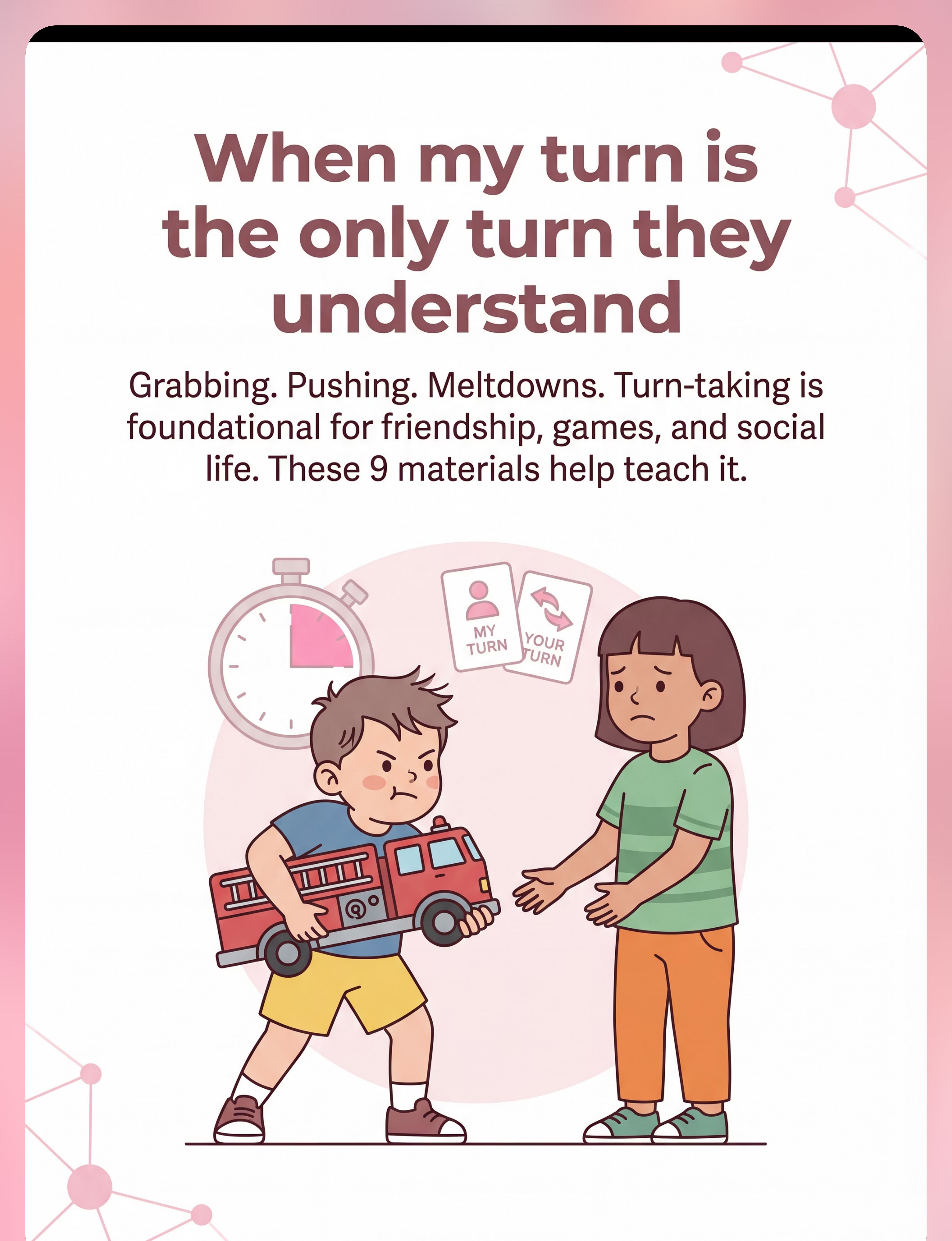
Preview of 9 materials that help with turn taking teaching Therapy Material
Below is a visual preview of 9 materials that help with turn taking teaching therapy material. The pages shown help educators, therapists, and caregivers understand the structure and content of the resource before use. Materials should be used under appropriate professional guidance.


Link copied!

ACT VI — The Close & Loop
The Pinnacle Promise — From Fear to Mastery. One Technique at a Time.
"A parent arrived on this page scared, confused, and exhausted. By Card 05, they understood the science and trusted the evidence. By Card 12, they had the materials and the space was ready. By Card 22, they had executed the technique. By Card 30, they saw the full developmental map. By Card 37, they shared the knowledge with their family. Now: they take action. And the loop restarts — with the next technique. From fear to mastery. One technique at a time." — The Pinnacle Blooms Consortium
← Explore Previous
↑ Return to Top
Explore Next →
⚕️Medical Disclaimer: This content is educational and addresses teaching turn-taking and social reciprocity to children with autism and developmental differences. Strategies should be adapted to your child's specific developmental level, sensory needs, and learning style. Some children may require additional supports including behavioral intervention and social skills therapy. This content does not replace professional therapeutic advice. If you have clinical concerns, please contact your healthcare provider or call our free helpline at 9100 181 181. Individual outcomes vary based on child's profile and intervention intensity. Statistics represent aggregate outcomes across the Pinnacle Blooms Network®.
© 2025 Pinnacle Blooms Network® | Unit of Bharath Healthcare Laboratories Pvt. Ltd. | CIN: U74999TG2016PTC113063 | DPIIT: DIPP8651 | MSME: TS20F0009606 | GSTIN: 36AAGCB9722P1Z2 📞9100 181 181 (Free • 24×7 • 16 Languages) | 🌐pinnacleblooms.org | ✉️care@pinnacleblooms.org