

When Five More Minutes Means Nothing to Your Child
9 clinically validated materials to support transitional objects — building security while growing internal strength. Powered by GPT-OS® | Pinnacle Blooms Network®
Emotional Regulation
Ages 2–12
70+ Countries
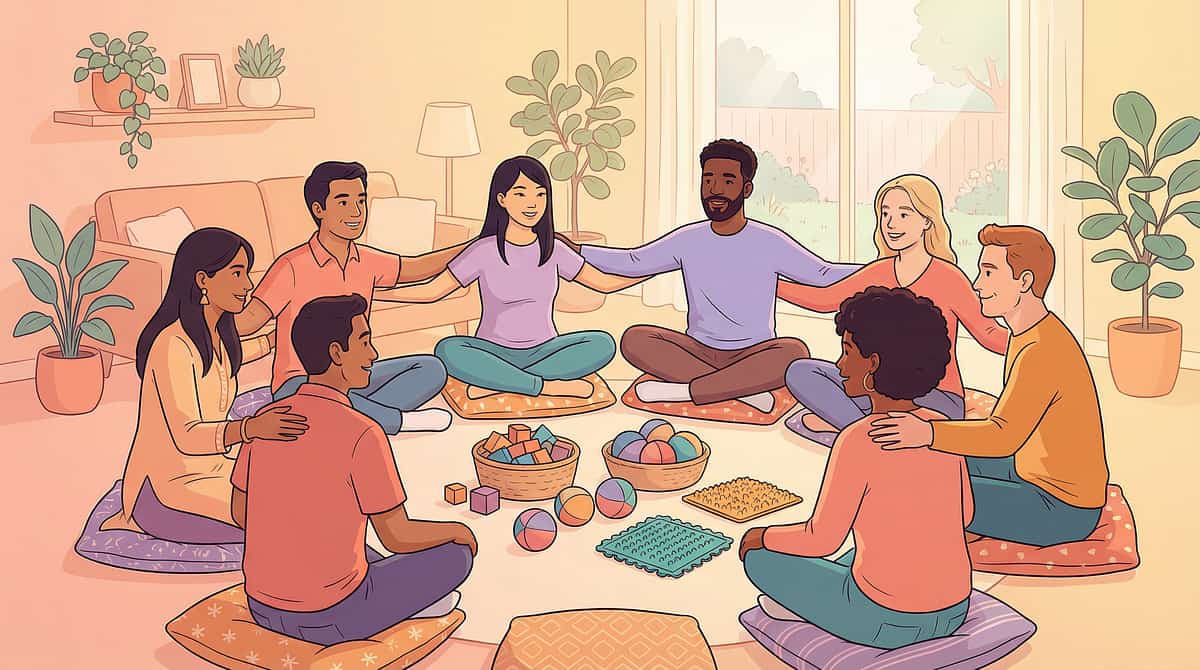
ACT I — THE EMOTIONAL ENTRY
The Recognition Moment
"It's 7:42 AM. The school bag is packed. You've given five warnings. But the moment you say 'we have to go now,' your daughter crumples — not throws a tantrum, but genuinely crumples — because leaving means leaving the rabbit. The rabbit that's been with her since she was eight months old. The rabbit that's now missing an eye and one ear and smells like something only she finds comforting."
You've tried reasoning. You've tried hiding it. Once, in desperation, you tried throwing it away — and the three weeks that followed were the worst of your family's life. You are not failing. You are living with a child whose nervous system found its anchor — and now you need to understand why, and what comes next.
Technique Promise: 9 Materials That Help With Transition Objects — Supporting security while building internal strength. You are not failing. Your child's nervous system found a solution that works. Your job is not to take it away. Your job is to build alongside it.
🏛️ Consortium
OT • Psychology • ABA • SLP • SpEd • NeuroDev
👶 Age Band
2–12 years
🌍 Reach
Serving families in 70+ countries
You Are Not Alone — The Numbers
Transitional object attachment is one of the most common and most misunderstood expressions of a child's nervous system doing exactly what it was designed to do: find an anchor in an unpredictable world. First named by British pediatrician Donald Winnicott in 1951, over 70 years of research confirms this is a wiring-appropriate response — not a character problem.
1 in 36
Children in India
Diagnosed with autism
80%
Anxiety at Transitions
Of autistic children experience significant anxiety around transitions and change
3.4M
Families in India
Experiencing transition-related behavioural challenges daily
"You are not the only parent who has washed a stuffed animal at midnight in secret, or hunted every resale site for an identical replacement. You are among millions."
In India, where 70+ Pinnacle Blooms centers serve families across 23 states, transitional object dependence is among the top three presenting concerns for children aged 4–9, consistently appearing across ASD, anxiety, sensory processing, and developmental delay profiles.

What's Happening in Your Child's Brain
This is not stubbornness. This is neuroscience.
The Biology
Amygdala (The Alarm System): In children with anxiety, ASD, or sensory processing differences, the amygdala operates at an elevated baseline. Transitions trigger this alarm system disproportionately.
Prefrontal Cortex (The Regulation Centre): The PFC is developmentally immature until age 25. The transitional object acts as an external prefrontal cortex — performing the regulation function the brain cannot yet perform internally.
The Olfactory Memory System: The worn rabbit doesn't just feel safe — it smells safe. Olfactory memory is processed through the limbic system. This is why children notice immediately when an object has been washed or replaced. They are neurologically accurate.
Plain English
Your child's brain has learned that THIS object = SAFE. Every time they hold it during stress, that neural pathway strengthens. This is not dependency in a harmful sense — it is the brain being efficient with limited resources.
The goal is not to cut the pathway. It is to build parallel pathways that also lead to SAFE.
"This is a wiring difference, not a behaviour choice. The object works because the nervous system learned it works."

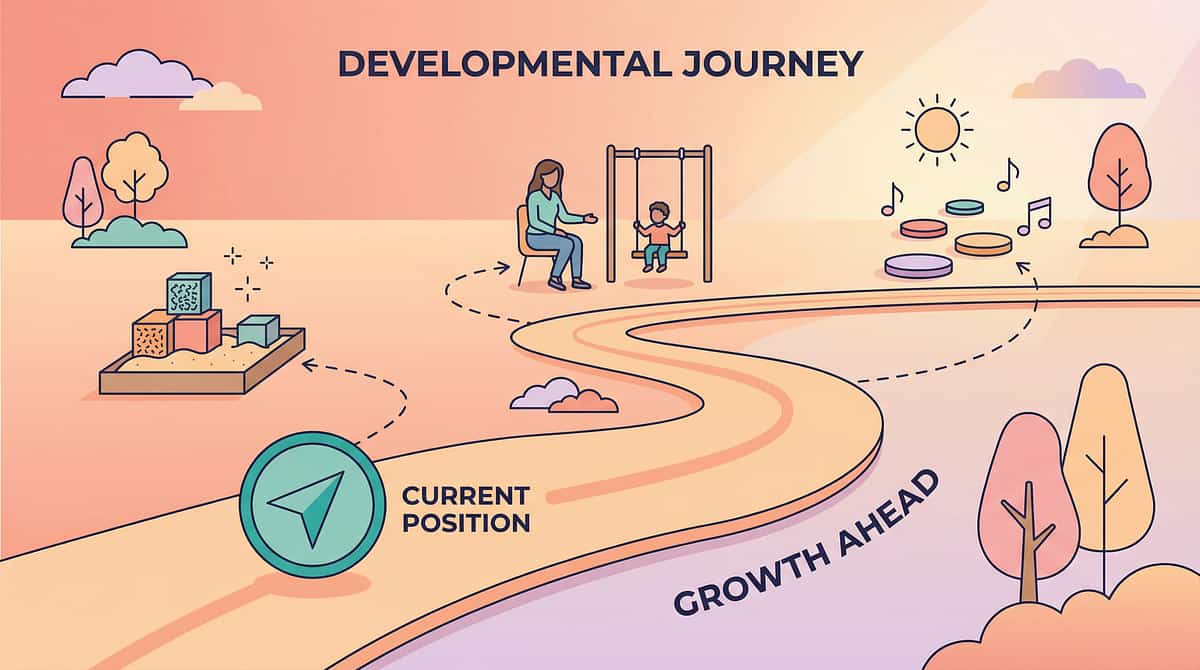
Where This Sits in Development
Your child is here. Here is where we are heading.
Infancy (6–12 mo)
Object attachment emerges
Toddlerhood (1–3 yrs)
PEAK attachment period
Preschool (3–5 yrs)
Object still essential
Early School (5–7 yrs)
Natural reduction for most
School Age (7–12 yrs)
Flexible, choice-based object use
Where many families find us: Children aged 5–10 with attachment, anxiety, ASD, or sensory processing differences often sit in extended attachment patterns. This is NOT failure of development — it is a mismatch between the child's internal regulatory capacity and the demands being placed on it.
Intense transitional object attachment commonly co-occurs with: Autism Spectrum Disorder, Generalized / Separation Anxiety, Sensory Processing Differences, Developmental Delays, and Trauma History. Developmental trajectories are not broken — they are delayed or differently-paced. This page is the bridge.
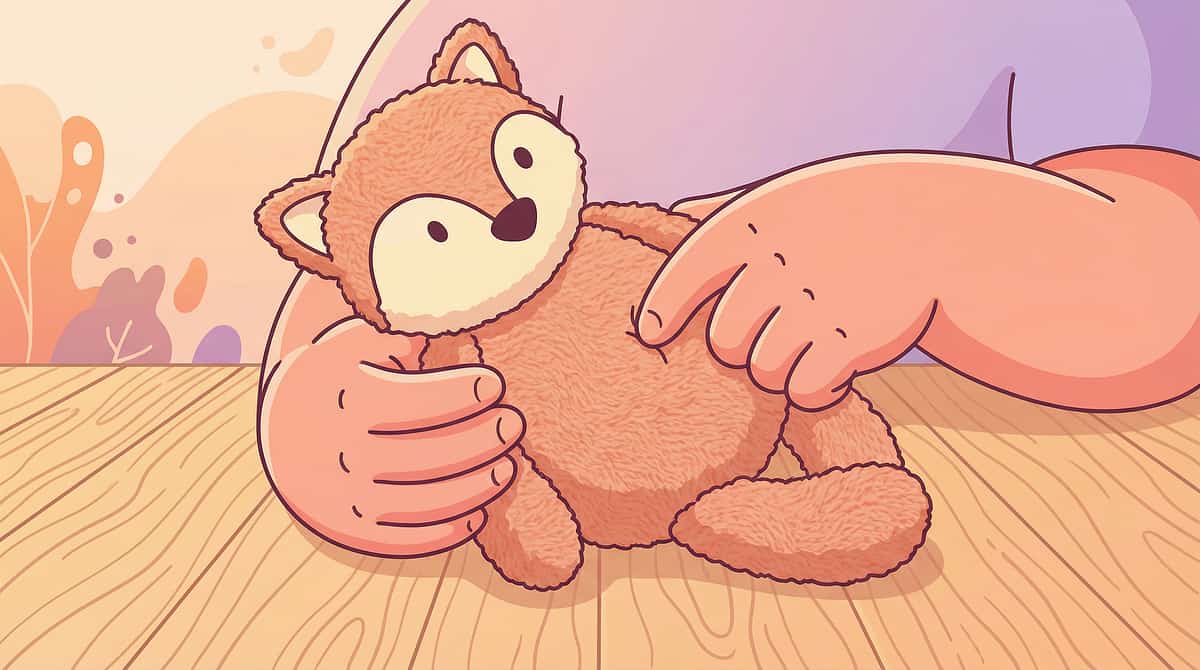
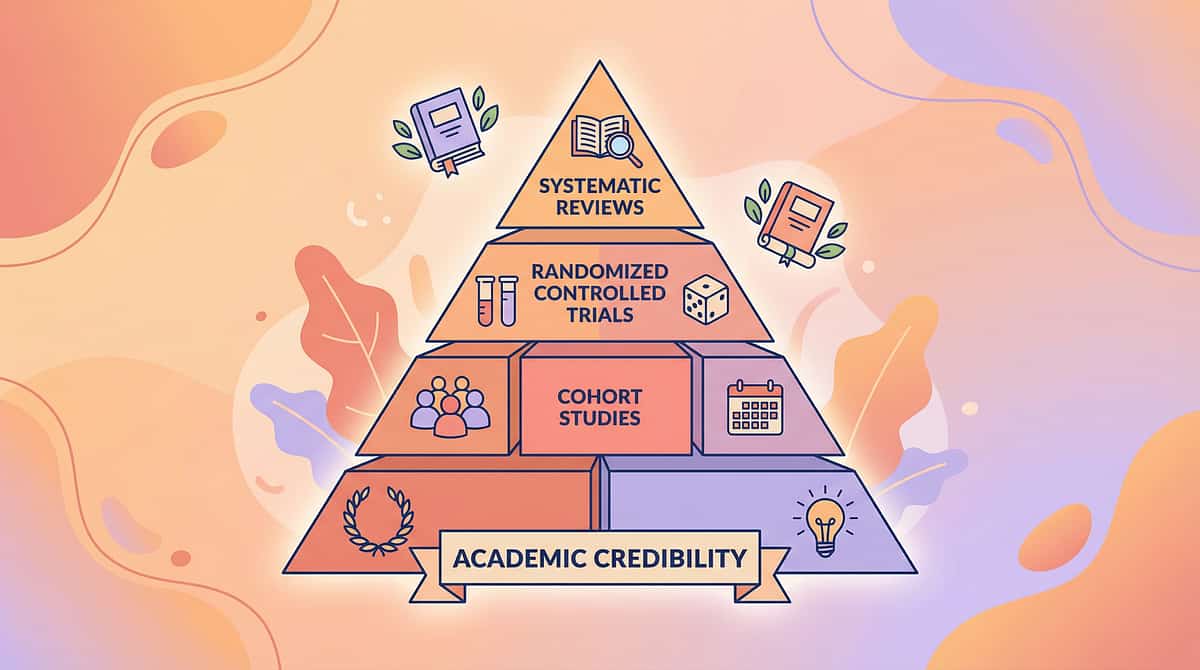
The Evidence Behind This Approach
Clinically validated. Home-applicable. Parent-proven.
Evidence Grade
LEVEL II–III
Clinical Consensus + RCT Support
Backed by 70+ years of research
85% confidence rating
Winnicott (1951)
Transitional objects validated as normal, healthy, developmentally essential. 70+ years of continuous research. Core paediatric development science.
Bowlby & Ainsworth
Attachment theory: evidence-based intervention never removes external regulation before internal capacity is built. Graduated approach is the only clinically sanctioned pathway.
PRISMA Review (2024)
16 articles confirm sensory integration intervention meets criteria for evidence-based practice for children with ASD. Sensory-matching of alternatives directly supported.
Indian Context RCT (2019)
Padmanabha et al. (Indian J Pediatr): home-based sensory interventions demonstrated significant outcomes in Indian paediatric populations.
Pinnacle Real-World Evidence: 20M+ exclusive 1:1 sessions | 97%+ measured improvement | 70+ centers | Emotional Regulation Readiness Index tracking

ACT II — THE KNOWLEDGE TRANSFER
The Technique — What It Is
A transitional object is any physical item — most often soft, portable, and carrying familiar scent or texture — that a child uses to maintain emotional regulation during stress, transition, or separation. The 9-Material Toolkit is not a single intervention. It is a systematically curated collection designed to protect and extend the original object, create accessible alternatives, transfer the regulatory function, and build internal security so that over time the object becomes one choice among many — not the only lifeline.
📍 Domain
Emotional Regulation + Attachment + Anxiety
🎯 Age Range
2–12 years
⏱️ Frequency
Daily, embedded in natural routines
🔢 Reel ID
I-795 | Emotional Regulation Series
This technique builds a toolkit of comfort so your child is never left without a bridge to safety — and gradually, so the bridges they build live inside them.
Who Uses This Technique
Your child's whole team uses this — for different reasons, with the same goal
Occupational Therapist (Primary Lead)
Focuses on the sensory dimension — texture, weight, scent, pressure — and how to replicate that input through portable sensory items and wearables. Designs the sensory-profile-matched calm-down kit.
Psychologist / Counsellor (Co-Lead)
Addresses anxiety and attachment — separation anxiety, connection-seeking, fear of loss, and gradual building of internal security. Leads Social Stories and cognitive coping strategies.
ABA / BCBA (Behaviour Lead)
Applies graduated exposure principles — systematically increasing tolerance without the object, paired with reinforcement of alternative coping strategies. Develops the reinforcement menu.
Speech-Language Pathologist
Creates and adapts Social Stories for transitions, develops language for comfort-seeking communication, and supports parents in creating predictable verbal rituals around transitions.
Special Educator (Home-School)
Ensures consistency between home and school, adapts techniques for classroom transitions, and educates school staff on the function and purpose of comfort objects.
"The brain does not know it is in OT on Tuesdays and ABA on Thursdays. When all disciplines use the same framework, the child's nervous system receives one unified message: change is safe." — 📞 9100 181 181 for multi-disciplinary assessment
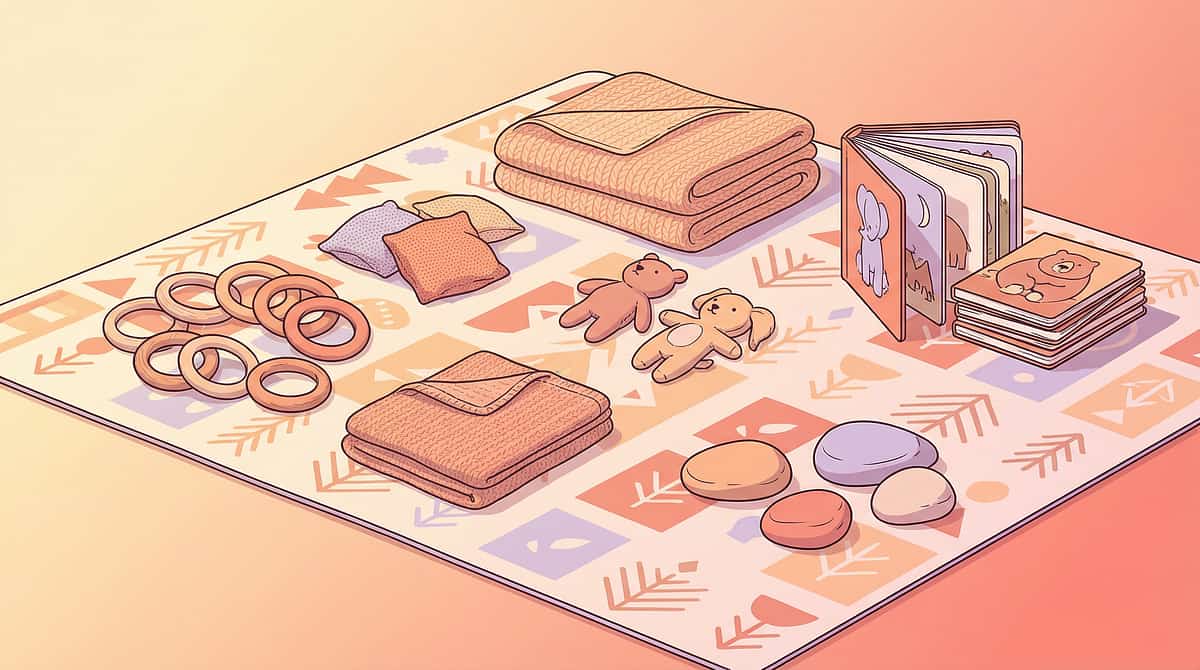
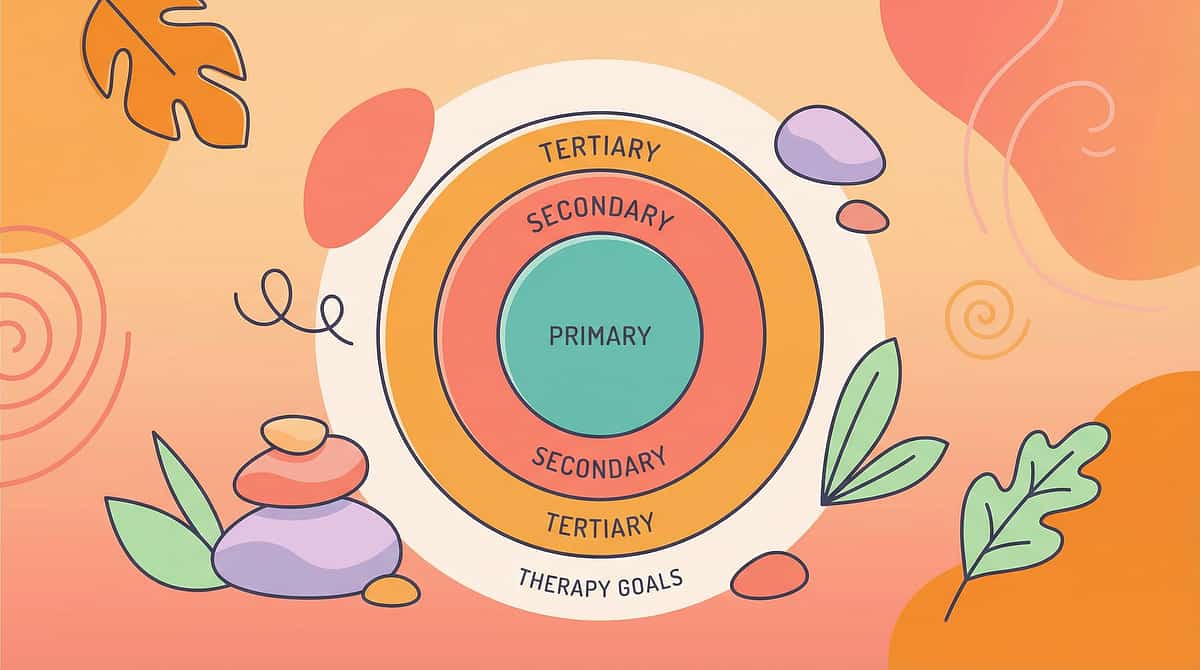
What This Technique Targets
This is not a random comfort measure. It is a precision developmental intervention.
Primary — Emotional Regulation
Child moves through transitions (home→school, activity→activity, caregiver→caregiver) with decreased distress, shorter recovery time, and emerging use of tools beyond the primary object.
Secondary — Self-Soothing
Child begins to reach for portable alternatives, use breathing techniques, refer to family photos, or request transition rituals rather than solely the primary object.
Tertiary — Social Participation
As object dependence becomes less desperate and more flexible, child participates in peer activities without the social friction caused by visible, intense object reliance.
GPT-OS® Readiness Indexes
- Emotional Regulation Readiness Index
- Self-Soothing Capability Index
- Transition Tolerance Readiness
- Attachment Security Index
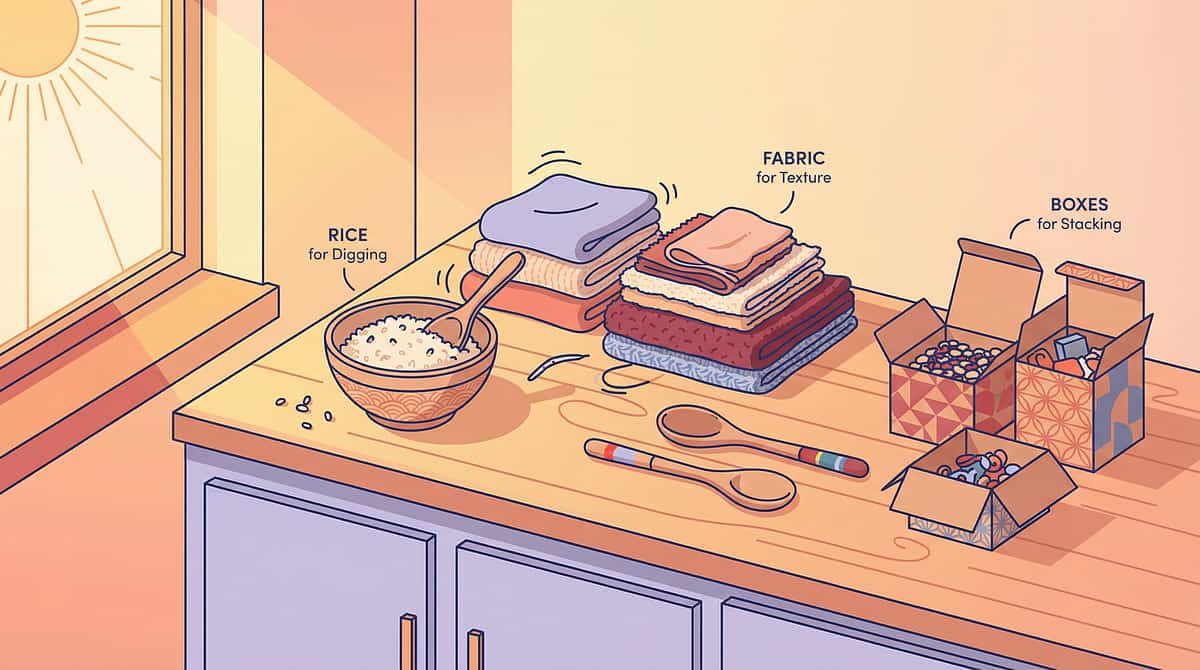
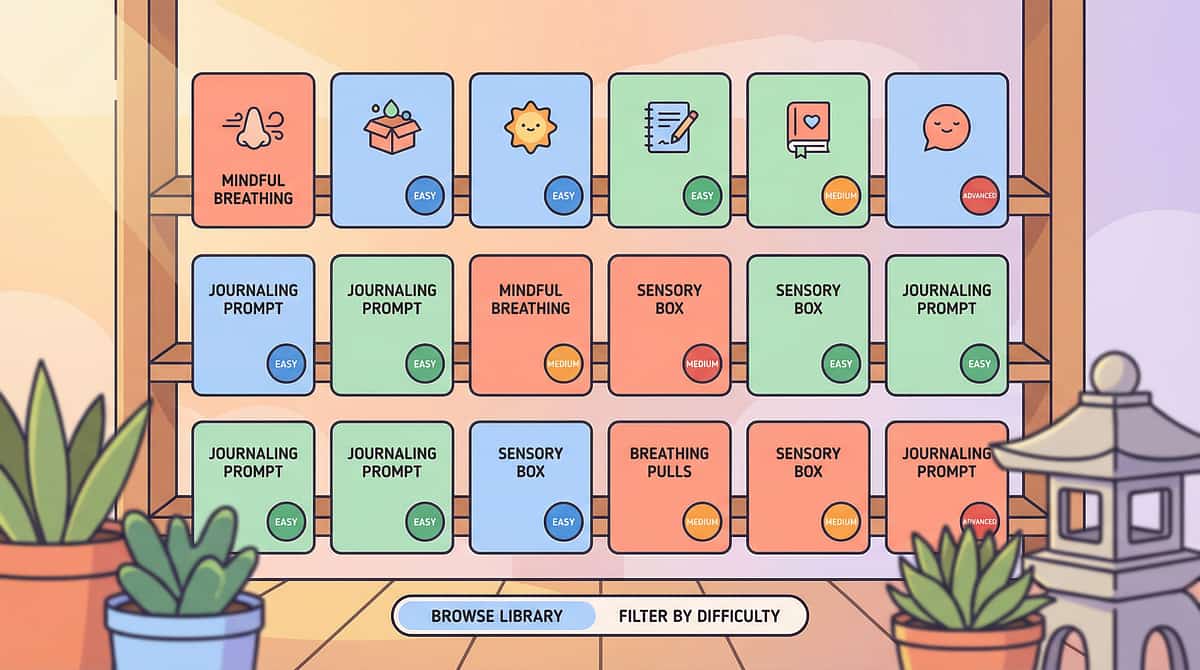
The 9 Materials — Your Child's Comfort Toolkit
Canon-validated materials with direct purchase links
🧸 Material 1 — Soft Comfort Item
Animal Soft Toys — Backup/twin to primary object | Travel-size version
₹425 · Buy on Amazon.in →
₹425 · Buy on Amazon.in →
🔮 Material 2 — Portable Sensory Item
Worry Stones / Smooth Sensory Stones — tactile calming
Search Amazon.in →
Search Amazon.in →
🧶 Material 3 — Wearable Comfort
Sensory Fabric Swatches / Soft Keychains / Comfort Bracelet
Search Amazon.in →
Search Amazon.in →
📸 Material 4 — Connection Object
Photo Keychain / Locket with Photo — visual family connection
Search Amazon.in →
Search Amazon.in →
🎒 Material 5 — Calm-Down Kit
Portable Calm-Down Kit Pouch — child's nervous system HQ
Search Amazon.in →
Search Amazon.in →
🌀 Material 6 — Breathing Tool
Hoberman Sphere / Breathing Ball — physiological regulation
Search Amazon.in →
Search Amazon.in →
📋 Material 7 — Visual Schedule Board
Visual Schedule Board — predictability architecture
Search Amazon.in →
Search Amazon.in →
⭐ Material 8 — Reinforcement Jar
The Rosette Imprint Reward Jar — celebrating brave use of alternatives
₹589 · Buy on Amazon.in →
₹589 · Buy on Amazon.in →
🏷️ Material 9 — Reward Sticker System
1800+ Reward Stickers — reinforcing independent coping steps
₹364 · Buy on Amazon.in →
₹364 · Buy on Amazon.in →
Price Range: ₹425 direct | ₹1,000–5,000 for full starter toolkit
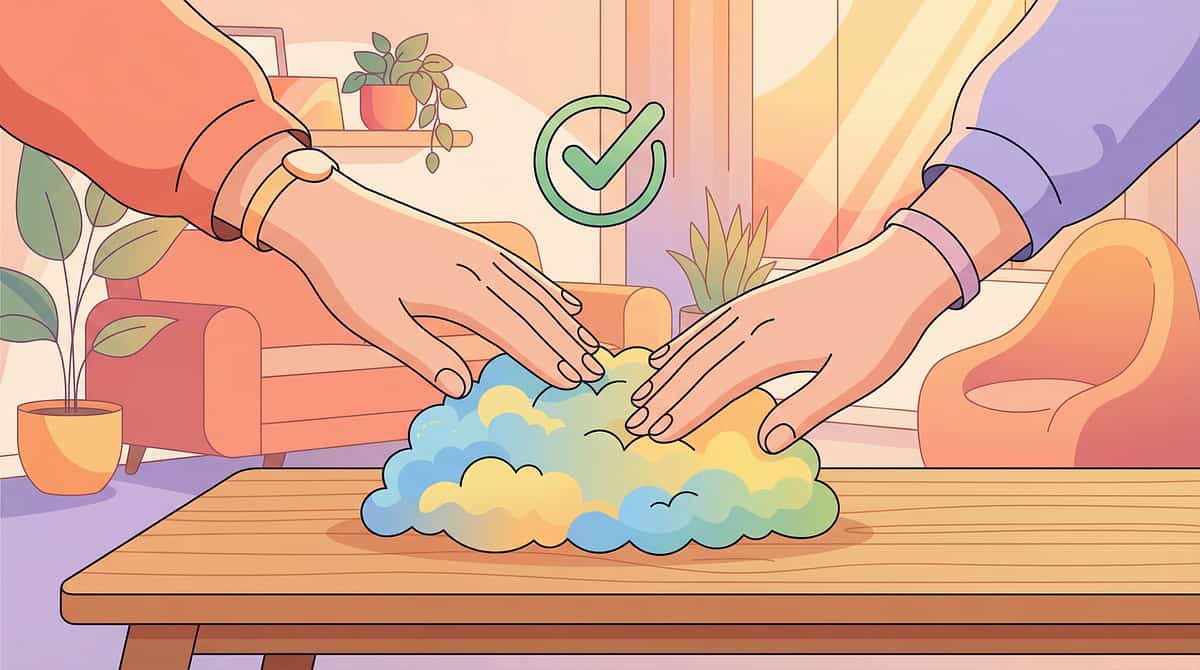
DIY & Substitute Options
Every child, every budget, every home. Zero cost is not zero therapy.
₹0 Philosophy: Per WHO/UNICEF equity principles, every technique in the Pinnacle system has a zero-cost version. The science doesn't cost money. The execution requires only a willing caregiver and the right knowledge.
Material | Commercial | DIY / ₹0 Alternative & Why It Works | |
Backup comfort object | ₹425 | Second piece of similar fabric cut from an old T-shirt — same tactile input without emotional attachment to the original | |
Portable sensory item | ₹200–500 | Smooth river stone collected on a walk together — tactile calming identical to commercial options; meaningful through shared experience | |
Wearable comfort | ₹300–800 | Piece of parent's kameez tied loosely around child's wrist as a "carrying-maa bracelet" — olfactory comfort neurologically equivalent | |
Photo connection object | ₹150–300 | Printed family selfie, laminated with plastic stationery sleeve, hole-punched for bag — visual connection identical, ₹0 if printed at neighbourhood shop | |
Calm-down kit container | ₹200–400 | Any old lunchbox or small cloth bag labeled with child's name — function identical; personalisation adds value | |
Breathing tool | ₹400–800 | Blow bubbles together (₹50 bubble wand) or use a pinwheel — identical physiological breathing regulation outcome |
"The DIY version works because the principle matters, not the price tag. A smooth stone becomes a worry stone the moment a child believes it helps. The belief is built by you — through ritual, attention, and presence."
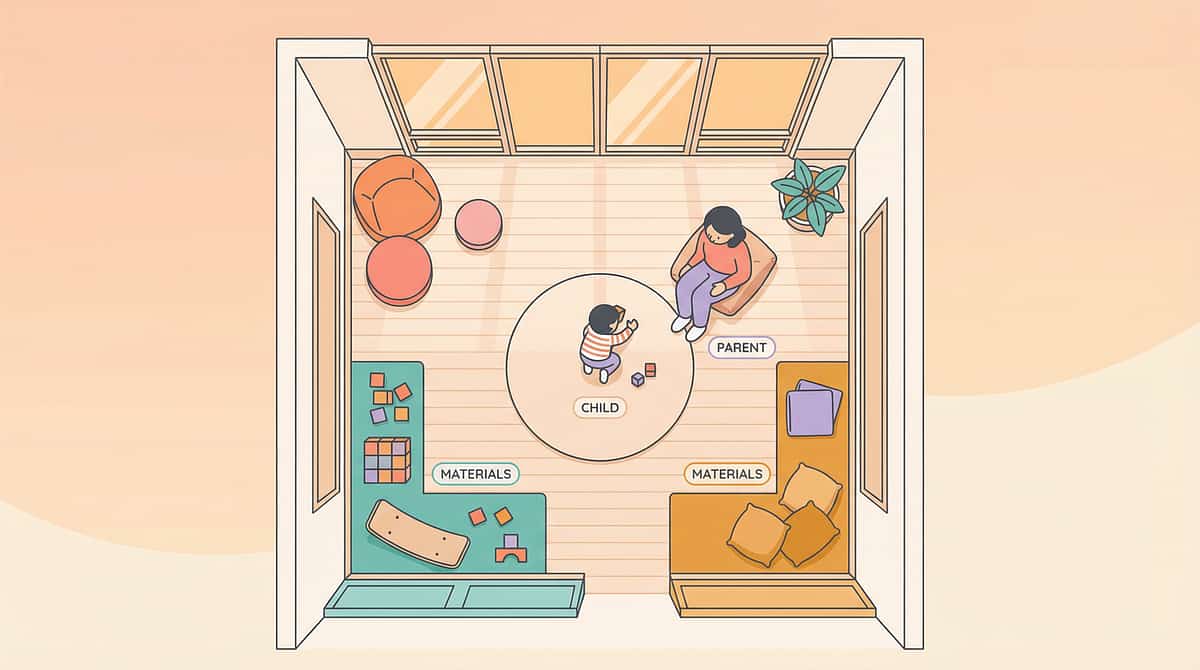
Safety First — Before You Begin
Know the green lights, the pause signals, and the absolute stop signs.
🔴 RED LIGHT — Seek Professional Support
- Child has unresolved trauma related to loss of a comfort object
- Signs of severe anxiety disorder — panic attacks, inability to function even WITH object
- Transitional object use with self-injurious behaviour or extreme aggression
- Diagnosed hoarding disorder (different clinical picture)
- Parent feels unsafe or overwhelmed
🟡 AMBER — Modify Before Proceeding
- Child in a period of high stress (new school, family change, illness)
- Primary object imminently fragile with no backup introduced
- Known sensory profile making some materials uncomfortable
- School has explicitly banned comfort objects
🟢 GREEN LIGHT — Proceed with Confidence
- Child is medically well, recently fed, and in a baseline-regulated state
- At least one caregiver consistent across 80% of transitions
- Parent understands: goal is EXPANSION of tools, not REMOVAL of the object
- All materials age-appropriate and free of choking hazards
"This technique is built on one inviolable principle: never force, never deceive, never shame. Every step is child-led, caregiver-supported, and paced by the child's nervous system — not the calendar." — 📞9100 181 181 if uncertain whether to proceed
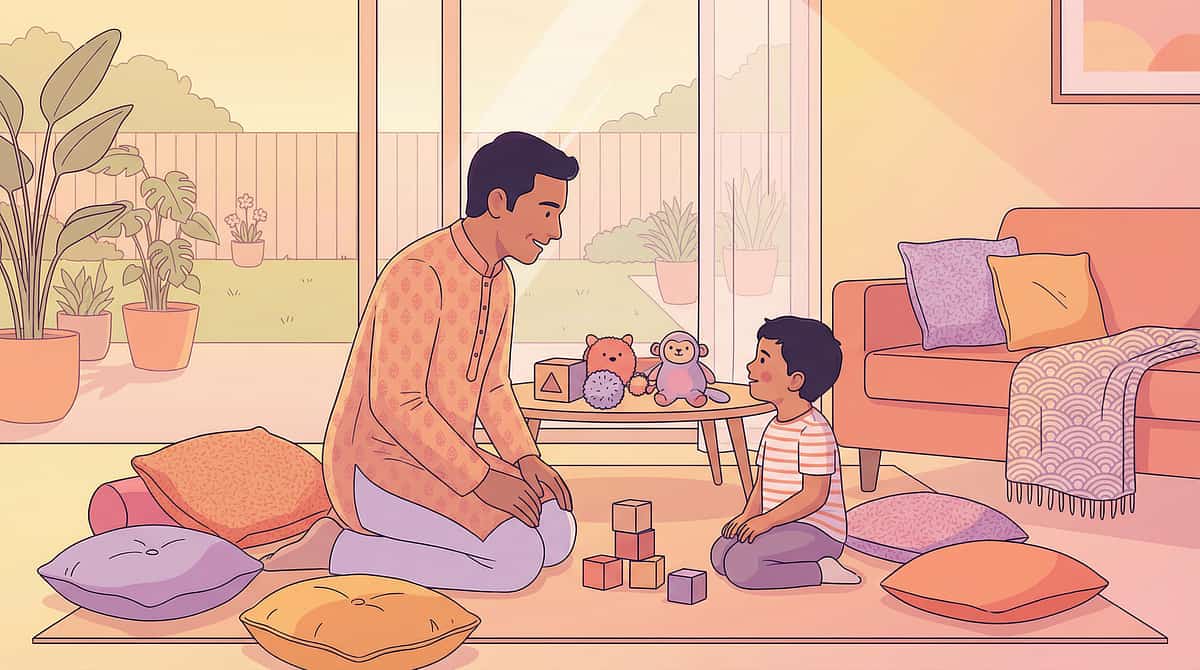
Set Up Your Space
The right environment turns a hard moment into a manageable one.
Unlike formal therapy, the transitional object toolkit is woven into the natural architecture of the home and daily routine. Your "setup" is the construction of a predictable, consistent, comfort-accessible environment.
Zone 1 — The Object's Home Base
A designated, visible, always-accessible location at child's height. Child must always know where it is. "Bunny's safe spot is HERE. Bunny is always here when you need to check."
Zone 2 — Portable Comfort Station
A small designated pouch in the school bag that ALWAYS contains the portable alternative. Child can access it independently.
Zone 3 — The Calm-Down Corner
Soft, low-stimulus corner in child's room with a cushion or beanbag, the calm-down kit, and comfort items. The child's nervous system headquarters.
Zone 4 — The Transition Point
The front door, school gate, or handoff point. A consistent ritual always happens HERE. The goodbye/hello routine has a physical location.
Zone 5 — The Family Connection Wall
Visible wall at child's eye level: family photos, daily schedule, visual countdown to pickup or reunion. Makes connection concrete and visible.
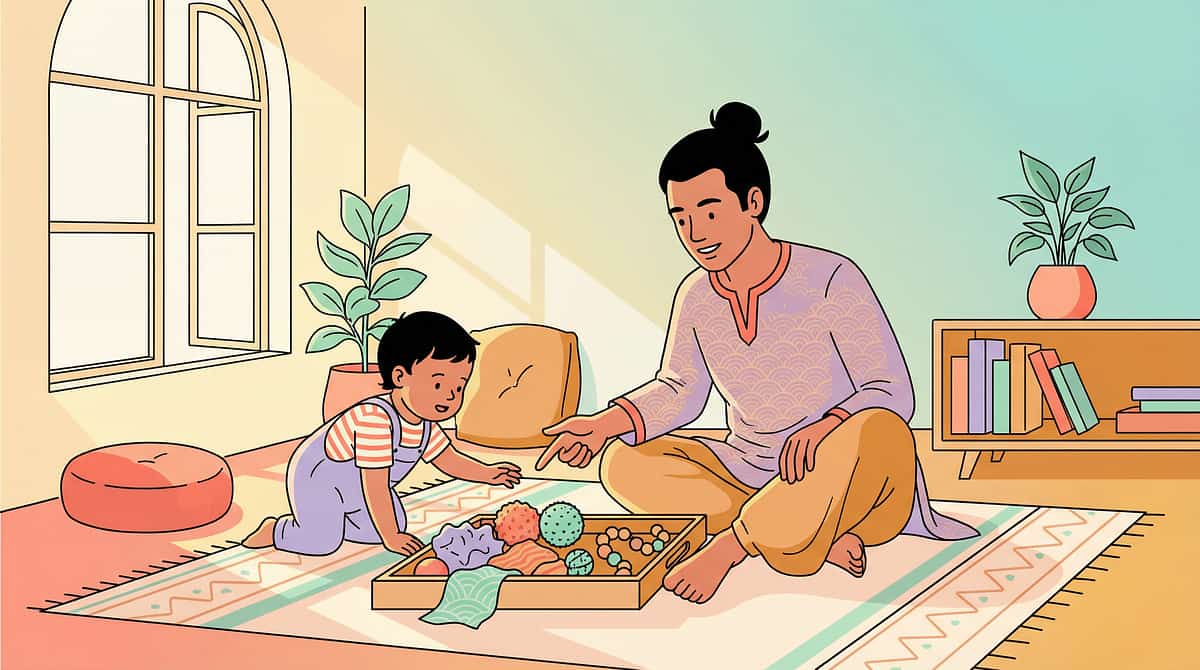
ACT III — THE EXECUTION
Is Your Child Ready? — Readiness Check
60-second readiness check. Don't skip this.
Check | 🟢 Go | 🟡 Modify | 🔴 Postpone | |
Physically well? | Well | Mild cold → gently | Ill → skip today | |
Fed and not hungry? | Fed | Light snack first | Hungry → feed first | |
Recently slept? | Rested | Tired → shorten | Overtired → postpone | |
Emotional state? | Calm/regulated | Mildly dysregulated → calm first | Active meltdown → stop | |
Last 2 hrs: major distress? | No | Minor stress → reduce demands | Major event → skip | |
Primary object available? | Yes | If lost: address loss first | Lost + crisis → crisis support | |
Caregiver regulated? | Calm | Anxious → breathe first | Overwhelmed → skip today |
🟢 GO
All green — proceed to Step 1
🟡 MODIFY
Some amber — introduce ONE new tool only, primary object present throughout
🔴 POSTPONE
Any red — today is not the day. Come back tomorrow.
"A 10-minute session in a regulated state is worth 10 times more than a 60-minute session in a dysregulated one."

Step 1 — The Invitation
STEP 1 OF 6
Every new tool begins with an invitation, not a command.
You are not taking away. You are adding. The child must feel the new material as a gift, not a substitution. The invitation frame is everything.
Parent Script:"I found something that made me think of you. Can I show you? We don't have to use it if you don't want to."
Body Language Guidance
- Sit at the child's level or below — not standing over
- Hold the new item loosely in an open palm — not presenting it
- Have the primary transitional object visible and accessible nearby
- Speak in the tone you use for sharing something you love — not therapy voice
What Acceptance Looks Like
- Child looks at or reaches for the new item
- Child continues playing while occasionally glancing at it
- Child asks a question about it
Resistance — And the Response
- Ignores: "That's okay — it's right here if you ever want to look."
- Says "no": "Okay, I'll just put it here." End there for today.
- Distress: Withdraw new item, offer primary object. Session complete — successfully.
Timing: 30–90 seconds. This step may be ALL that happens on Day 1. That is success.
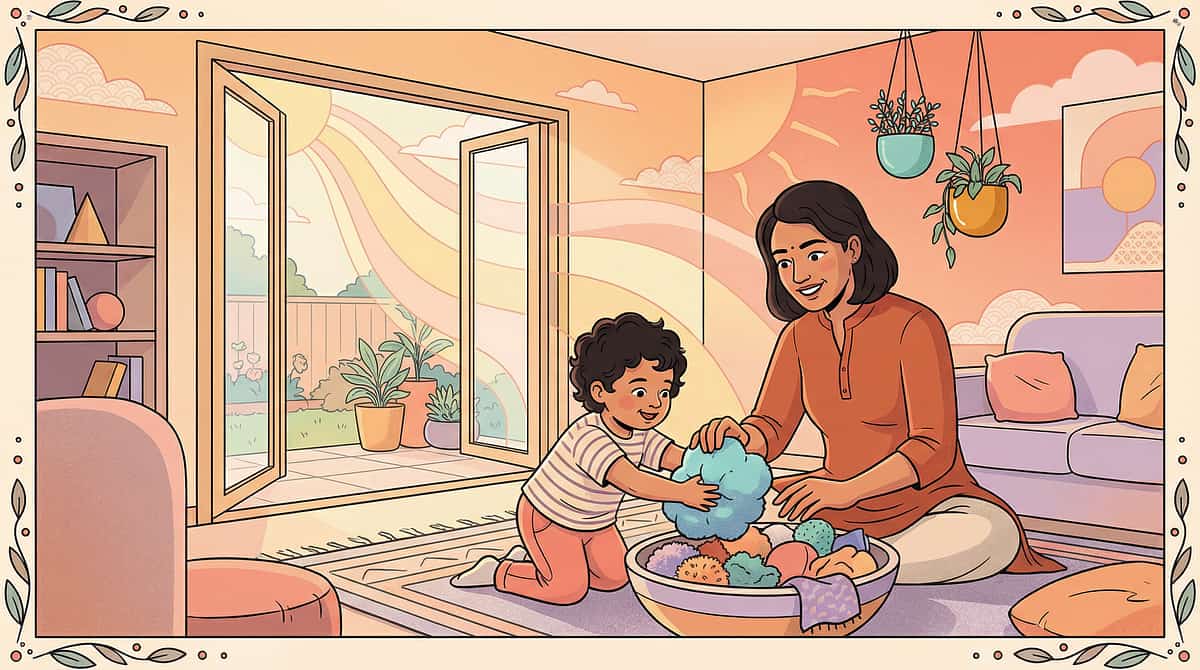
Step 2 — The Engagement
STEP 2 OF 6
Let curiosity do the work. Your only job is to not push.
The child who touched the new item yesterday is now in a different relationship with it. Engagement builds through repeated, low-demand exposure. You are not teaching — you are witnessing.
Parent Script:"Remember this? [Holding stone/portable item/photo] I brought it again. Would you like to hold it while we [read / have breakfast / ride to school]?"
Portable Sensory Items
Present while the child is doing something they enjoy. Mention it briefly. Leave it accessible. Let the child discover its sensory properties independently.
Connection Objects
Frame it as a piece of home: "This is a little bit of our house that can come everywhere you go."
Wearable Comfort
Wear something matching yourself first: "I have one too. Want to try yours?"
Calm-Down Kit
Explore it together when the child is CALM: "Let me show you what's in this special box. We can just look." Never introduce during crisis.
Reinforcement cue when child interacts even briefly:"You tried that! I love that you're so brave about trying new things."
Timing: 1–5 minutes across natural daily routine moments.
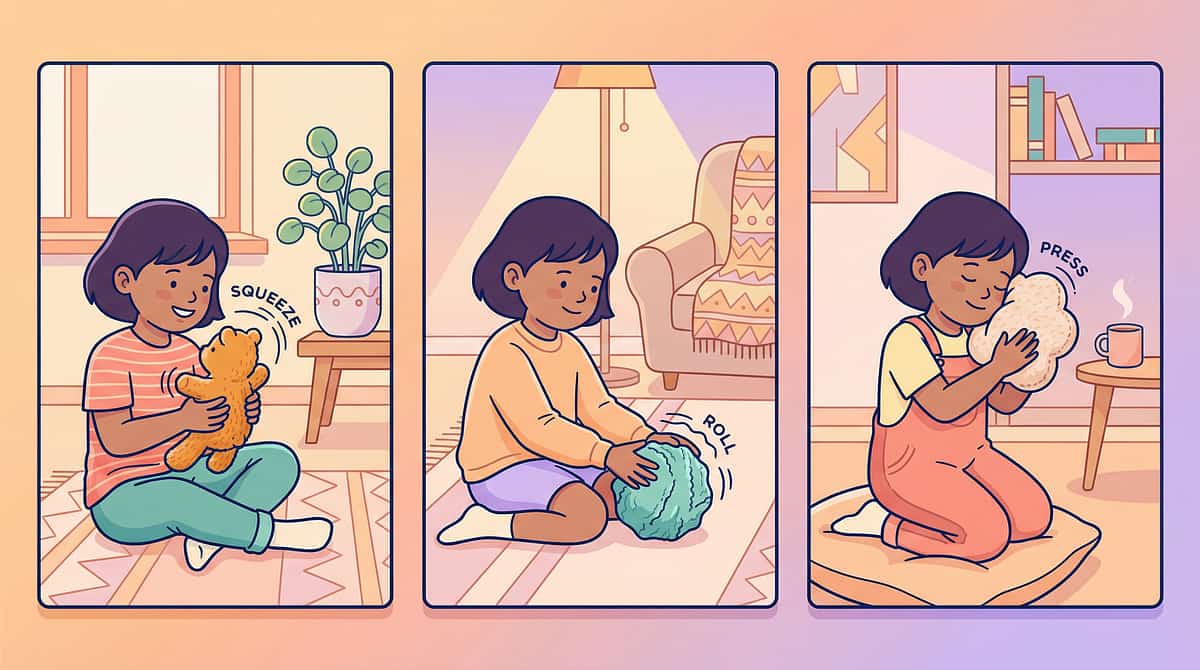
Step 3 — The Therapeutic Action
STEP 3 OF 6
The material is not the therapy. How you use it together is.
Backup Object
Introduce as "bunny's twin." Let child hold both simultaneously. Child decides which goes to school, which stays home. Never force the rotation.
Portable Sensory Item
During mild stress, silently offer: "Here's your stone. Feel how smooth it is." No commentary on whether the original is present.
Wearable Comfort
During morning routine, help child put on the wearable as part of the dress sequence. "Your brave bracelet goes on now."
Connection Object
At school drop-off, hand the photo keychain as part of the goodbye ritual: "Take mummy's face with you. She'll be right here on your bag."
Calm-Down Kit
During mild everyday stress, guide child to the calm-down corner. Use ONE item together. Child selects which one.
Social Story
Read the Social Story at a neutral time — not during a distressed moment. Make it part of bedtime reading. Read 3–5 times before the first relevant transition.
Breathing Tool
Practice WITH the object present: "Let's do big breaths with bunny. In... out..." Three rounds. Child uses object AND breathing tool together.
Transition Ritual
Introduce goodbye ritual consistently at every departure. Same sequence, same words, same location. The ritual IS the therapeutic action — delivered through repetition.
Timing: 5–15 minutes embedded across the natural day. Ideal response: Child uses new material WITH primary object — dual use is progress.

Step 4 — Repeat and Vary
STEP 4 OF 6
Three good interactions are worth more than thirty forced ones.
This is not a session-based intervention. It is a life-embedded one. The "repetitions" are every transition in the day. Your goal is not to count sessions — it is to make every natural transition an opportunity to use one element of the toolkit.
Transition Point | Tool to Use | |
Morning wake-up | Visual schedule review — "let's see today's day" | |
Breakfast → school prep | Goodbye ritual starts 10 minutes before departure | |
School drop-off | Connection object handed over + goodbye ritual | |
School collection | Hello ritual — "you did it! Tell me one good thing" | |
Activity change at home | Countdown warning + first-then board | |
Pre-bedtime | Primary object available + breathing practice | |
Bedtime | Social Story + primary object |
Satiation Indicators — When to Stop
- Child says "I know, I know" to a Social Story → progress sign, reduce frequency
- Child reaches independently for portable item without prompting → success, simply observe
- Child begins goodbye ritual before adult initiates → mastery indicator

Step 5 — Reinforce and Celebrate
STEP 5 OF 6
What you notice grows. What you celebrate, your child repeats.
Reinforcement must be immediate (within 3 seconds), specific (name exactly what you're celebrating), and genuine (match the emotional temperature to the child).
Used portable sensory item
"You used your stone when you felt wobbly! That's YOUR calm coming from YOU. I love watching that."
Separated from object for one activity
"Bunny waited right there and you were brave. How did that feel? Bunny was safe the whole time."
Initiated a breathing exercise
"You remembered to breathe! You KNEW what to do. That's your body getting smarter."
Used calm-down kit independently
"You went to your kit ALL BY YOURSELF. Do you know how big that is? You were your own helper."
"Celebrate the ATTEMPT, not just the success. A child who tried the breathing exercise and then still needed the object has done something real. That is worth celebrating."
Reinforcement Menu:⭐ Reward Sticker Book ₹364 | 🏆 Reward Jar ₹589 | Specific verbal praise (free, most powerful) | Bonus story at bedtime
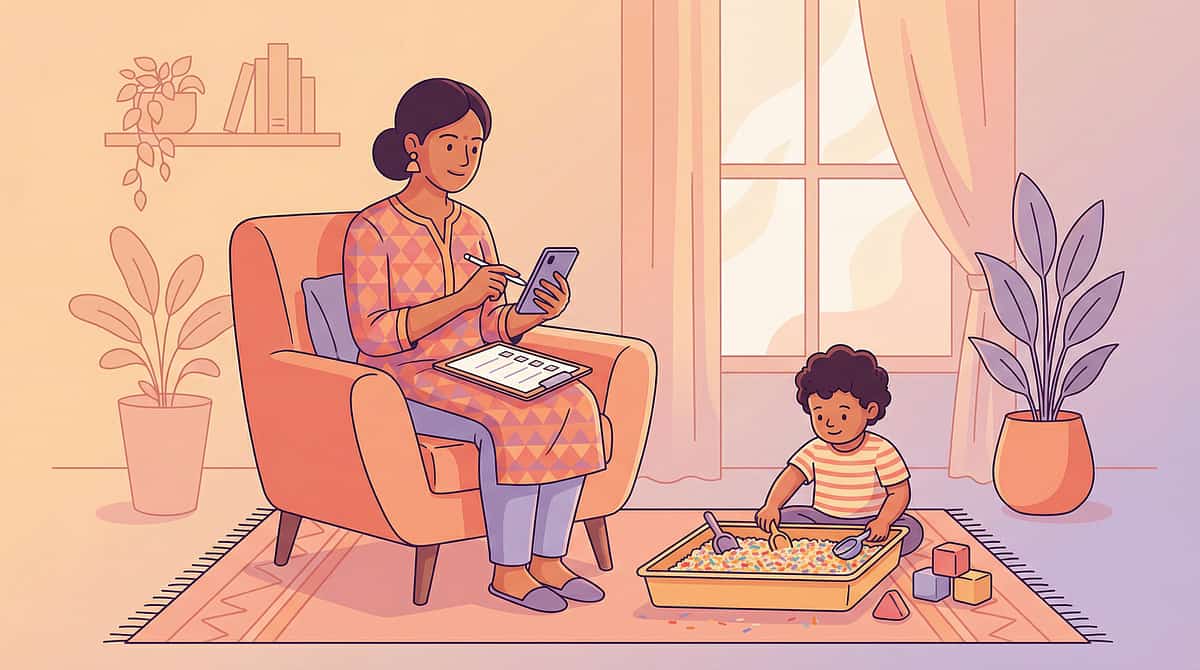
Step 6 — The Cool-Down
STEP 6 OF 6
Every transition ends with a landing. Never abrupt. Always anchored.
No introduction of a new comfort tool ends without the primary object being present, accessible, and honoured. The child must end each session knowing: the object is safe. I am safe. The object is still mine.
Step 1 — Transition Warning
"Two more minutes with your brave bracelet, then it goes in its spot for tonight." Use a visual timer if available.
Step 2 — Ritual Ending
Each item goes to its named spot. Each action is named and given a future: "Your stone will be right here waiting for you tomorrow morning."
Step 3 — Return to Primary Object
"Bunny waited the whole time and bunny is so happy to see you." Reunite with warmth — your tone tells the child whether separation was scary or manageable.
Step 4 — Transition to Next Activity
Name what comes next. Use a first-then board if needed. "Now we're going to [dinner / play / bath]. You did great work today."
If child resists ending: "I know. You want to keep using your stone. Let's put it in your bag so it's yours for tomorrow. It's not going away — it lives here, waiting." — 📞9100 181 181 if transitions remain severely distressing

Capture the Data — Right Now
60 seconds of data now saves hours of guessing later.
You are running the largest personalised paediatric therapy experiment that exists — in your own home, for your specific child. Without data, you are guessing. With data, you are a therapeutic partner in the most powerful sense.
Data Point 1 — Transition Distress Level (0–5)
- 0 = No distress, smooth transition
- 1 = Mild hesitation, self-resolved
- 2 = Moderate distress, resolved with verbal support
- 3 = Significant distress, resolved with primary object
- 4 = Severe distress, prolonged recovery
- 5 = Crisis-level — escalate to professional
Data Point 2 — Alternative Tool Used
- Portable sensory item
- Wearable item
- Connection object
- Calm-down kit
- Breathing technique
- Transition ritual
- Social Story
- None — primary object only
Data Point 3 — Parent Note
One sentence: what happened, what worked, what was different.
"Data is not bureaucracy. It is the difference between hoping your child is improving and KNOWING your child is improving."
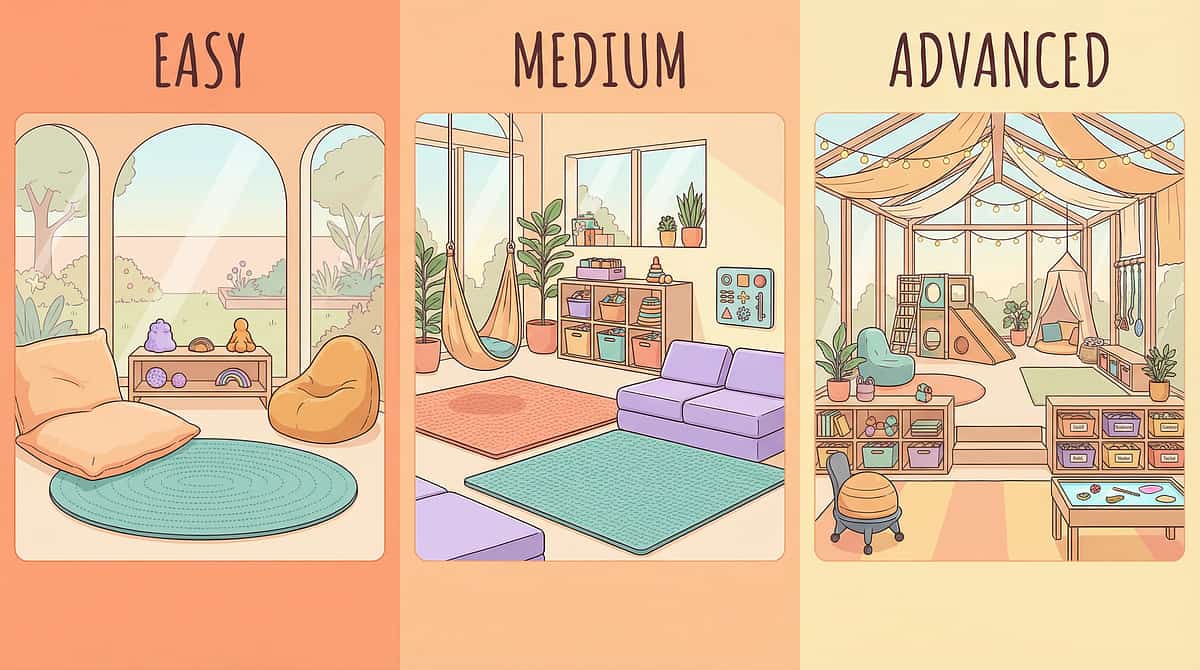
What If It Didn't Go as Planned?
Most sessions don't go perfectly. That's not failure — that's data.
❓ Child completely rejects every alternative
What happened: The nervous system is highly object-specific. Alternatives signal that the original might be threatened.
What to do: Stop introducing alternatives. Spend 2–4 weeks ONLY on protecting and honouring the original object. Rebuild trust that the original is safe before reintroducing alternatives.
What to do: Stop introducing alternatives. Spend 2–4 weeks ONLY on protecting and honouring the original object. Rebuild trust that the original is safe before reintroducing alternatives.
❓ Alternative accepted but distress unchanged
What happened: The alternative is being used but the underlying anxiety driver hasn't been addressed.
What to do: Refer for anxiety assessment. Contact 📞 9100 181 181.
What to do: Refer for anxiety assessment. Contact 📞 9100 181 181.
❓ Goodbye ritual isn't reducing drop-off distress
What happened: The ritual needs more repetitions to become predictable enough to calm.
What to do: Keep it exactly the same for 3–4 more weeks. Same words, same location, same sequence every single time.
What to do: Keep it exactly the same for 3–4 more weeks. Same words, same location, same sequence every single time.
❓ Child detects backup object is different
What happened: The child is correct — it IS different in smell, texture detail, and accumulated experience.
What to do: Reframe: "This is bunny's friend. They're different. Bunny's friend is learning how to be safe for you, just like bunny."
What to do: Reframe: "This is bunny's friend. They're different. Bunny's friend is learning how to be safe for you, just like bunny."
❓ Other caregivers undermine the approach
What to do: Use Card 37 to share this page. Download the Family Guide. Schedule a family meeting. The Pinnacle SpEd team can provide a school communication template.
❓ Child uses calm-down kit as avoidance
What to do: Limit kit access to specific designated times. Use a visual schedule to show when the kit is available. Consult BCBA if persistent.
❓ Parent burns out from maintaining consistency
What happened: This is real and valid — this approach is relentless.
What to do: Call 📞 9100 181 181. Parent support is part of the clinical system. You cannot regulate a dysregulated child from an empty tank.
What to do: Call 📞 9100 181 181. Parent support is part of the clinical system. You cannot regulate a dysregulated child from an empty tank.

Adapt and Personalise
Your child is not a protocol. Adapt this until it fits.
Sensory SEEKER (craves intense input)
- Weighted sensory item rather than light fabric
- Deep pressure wearable (compression bracelet)
- Vibrating or textured fidget in calm-down kit
- Physical "crash" activity as part of transition ritual
- Backup object with pronounced texture appreciated
Sensory AVOIDER (overwhelmed by input)
- Minimal, smooth, low-stimulation portable items
- No scent on wearables; tagless fabrics only
- Calm-down kit with only 2–3 very familiar items
- Transition rituals must be identical every time
- Visual connection objects preferred over tactile
Age | Approach | |
2–4 yrs | Primary object fully respected; backup with no pressure; simple visual schedule ("first this, then bunny") | |
4–6 yrs | Parallel tools: "bunny AND the bracelet"; Social Stories read nightly; choice boards for transitions | |
6–9 yrs | Growing alternative use with primary as backup; breathing tools practiced independently; socially discrete portable items | |
9–12 yrs | Focus on internal regulation tools; very discrete wearables or pocket items; cognitive coping language added |
ASD: Match alternatives exactly to sensory properties of original. Slower pacing, more repetitions. Trauma History: Object represents safety — never remove before safety is established from other sources. Pacing measured in months.
ACT IV — THE PROGRESS ARC
Week 1–2: What to Expect
ORIENTATION PHASE — 15% Progress
Week 1–2 goal: one new association. Not mastery. One association.
✅ What Progress Looks Like
- Child allowed new portable item to be placed in bag without protest
- Child touched the backup object once without distress
- Child sat through the Social Story reading without turning away
- Goodbye ritual followed on 3 out of 7 mornings without escalation
- Child asked where the primary object was — the beginning of conscious tracking
⏳ Not Progress Yet — and Normal
- Child still requires primary object for every transition — normal in weeks 1–2
- Child rejected all alternative tools — normal if introduced gently
- No change in distress levels — neural pathways need more repetitions
- Backup object still sits unused — weeks 1–2 is introduction, not integration
"You are wiring a new pathway through a nervous system that has been routing through ONE path for years. Weeks 1–2 are not about change. They are about introduction. The nervous system is taking note."

Week 3–4: Consolidation Signs
CONSOLIDATION PHASE — 40% Progress
The nervous system starts to believe the alternatives are real.
Child picks up portable sensory item unprompted once or twice this week
Goodbye ritual is anticipated — child may start it before adult does
Backup object accepted in the bag even if not independently used
Distress at transitions slightly shorter in duration — even 30 seconds less is real progress
Child refers to new tools by name ("my stone," "my brave bracelet")
Neural Pathway Formation: The child who begins to anticipate the goodbye ritual is demonstrating predictive neural processing — the brain is beginning to associate the ritual sequence with safety. This is the exact mechanism that will eventually allow transitions without the primary object.
"In week 3–4, many parents report that they feel more confident — not just the child. You have found the rhythm. You are not fighting the nervous system anymore. You are working with it."
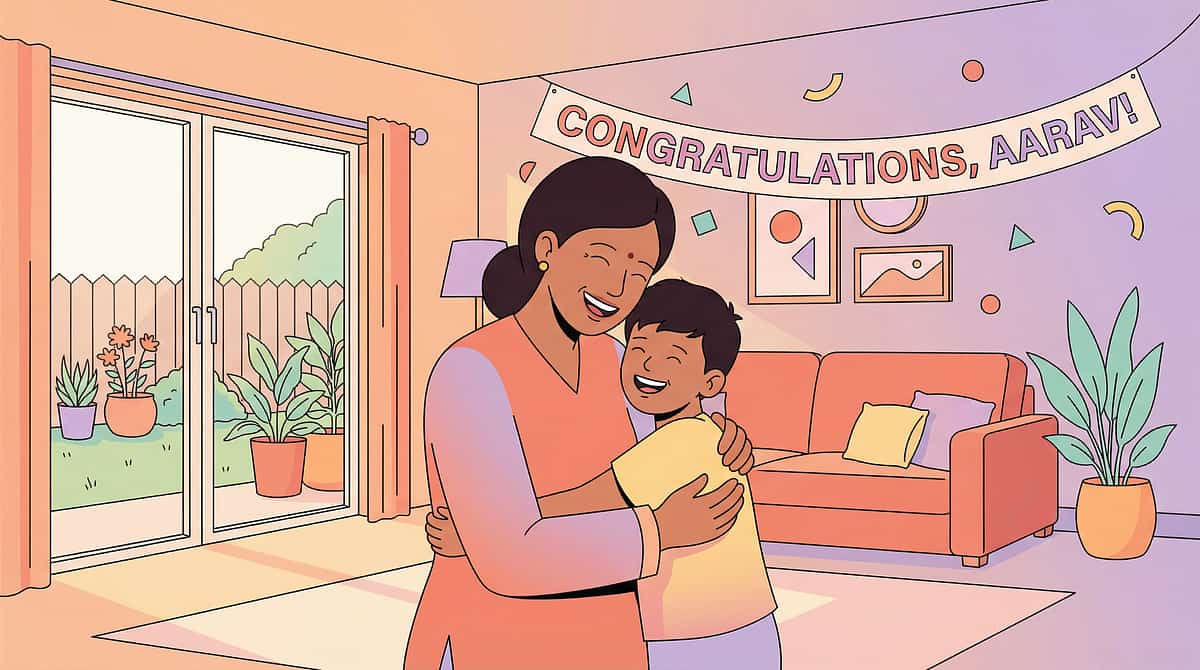
Week 5–8: Mastery Indicators
🏆 MASTERY PHASE — 75% Progress
The toolkit is becoming the child's own.
✅ Independent Selection
Child independently selects from calm-down toolkit during mild stress without adult prompting
✅ School Drop-off
Completed with goodbye ritual + portable item, primary object remaining home on at least 3 days per week
✅ Breathing Alongside
Child uses breathing technique alongside primary object — alongside is mastery at this stage
✅ Distress Drop
Transition distress scores dropped by at least 1 full point on average (tracked via Card 20 data)
Mastery Unlocked Badge Criteria
- Reduced distress at 4+ transitions per week
- Independent alternative tool use
- Primary object used by choice not desperation at least 3 days per week
- Consistent goodbye/hello ritual established
- Skill generalising to NEW transitions not originally trained
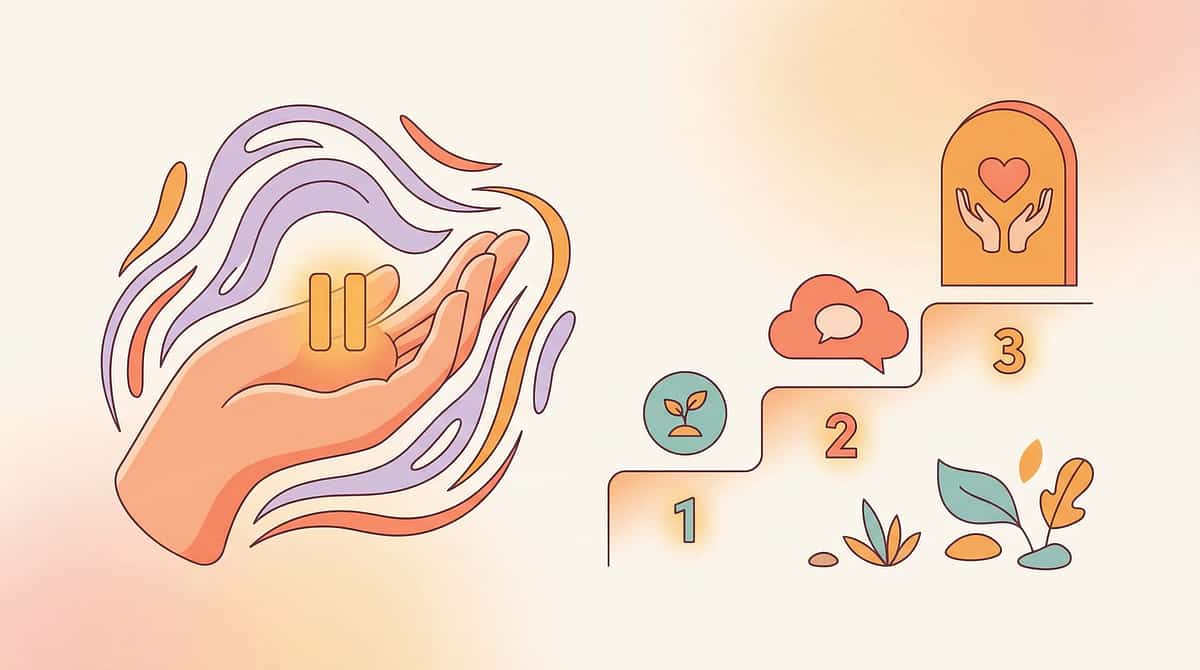
Celebrate This Win
You did this. Your child grew because you refused to stop.
You spent five to eight weeks — through the hard mornings, the school gate tears, the midnight laundry of a worn stuffed animal, the eye-rolls of people who "don't get it" — building something that didn't exist before.
"Look at all the brave tools you have now. Bunny must be so proud."
From
A single object carrying all the weight of safety
To
A toolkit of comfort strategies the child is beginning to own internally
This is not a small thing. This is the beginning of lifelong emotional regulation. Mark this milestone with your child. Take a photo of their calm-down kit, their portable sensory item, their brave bracelet — their toolkit. This is their proof that they built something. Store it in their memory book. Tell the story.
📞9100 181 181 — Share your win with our family counselling team. We track your progress.
Red Flags — When to Pause
Even after progress, these signs mean pause and call.
🚨 Worsening over 8 weeks
If transition distress increased despite consistent implementation, underlying anxiety disorder or ASD may need direct clinical intervention. → Schedule AbilityScore® assessment. Call 📞 9100 181 181.
🚨 Object use escalating not reducing
If child is adding more comfort objects, or existing object's role is intensifying — this signals increasing anxiety. → Psychology referral. Anxiety assessment.
🚨 Any self-injurious behaviour when object is unavailable
Beyond the scope of the materials toolkit — requires immediate clinical support. → Call 📞 9100 181 181 immediately.
🚨 Social isolation increasing
If child is withdrawing from peer activities to stay near the object — social-emotional development is being impacted at a clinical level. → SpEd + Psychology referral.
🚨 Parent-child relationship strain increasing
A parent counselling pathway is available. → Pinnacle Family Counselling. Call 📞 9100 181 181.
🚨 Regression in previously mastered skills
Developmental regression under stress signals the child's nervous system load has exceeded capacity. → Reassess the full developmental picture. Call 📞 9100 181 181.
Trust your instincts. You know your child. If something feels wrong, it is worth a call. 📞9100 181 181 — FREE | 24×7 | 16+ Languages
The Progression Pathway
This technique is not the destination. It is one bridge on a longer journey.
The Transitional Object Support Toolkit builds on the predictability infrastructure of I-793 and I-794. From here, your next-level options branch based on your child's response profile.
If attachment is reducing →
I-797 Emotional Security Development — building the internal felt sense of safety
If transition distress remains →
I-796 Transition Songs — adding auditory predictability to the transition support system
If anxiety is primary driver →
I-820 Anxiety Management in Children — direct anxiety intervention
Long-term goal →
I-800 Self-Regulation Strategies — full internal toolkit, flexible navigation by choice not necessity
Related Techniques in This Domain
You already own materials for some of these. Keep building.
Technique | Code | Difficulty | Materials You May Own | |
9 Materials for Visual Timers | I-794 | ⚪ Foundation | Visual boards | |
9 Materials for Transition Songs | I-796 | ⚪ Foundation | None — free | |
9 Materials for Emotional Security Development | I-797 | 🟡 Core | Calm-down kit | |
9 Materials for Separation Anxiety | I-796+ | 🟡 Core | Connection objects | |
9 Materials for Self-Regulation | I-800 | 🟠 Intermediate | Breathing tools | |
9 Materials for Anxiety Management | I-820 | 🟠 Intermediate | Social Stories |
You Already Own: After completing I-795, you likely own portable sensory items, connection objects, calm-down kit components, Social Story materials, and breathing tools — the core materials for I-796, I-797, and I-820. Your investment carries forward.
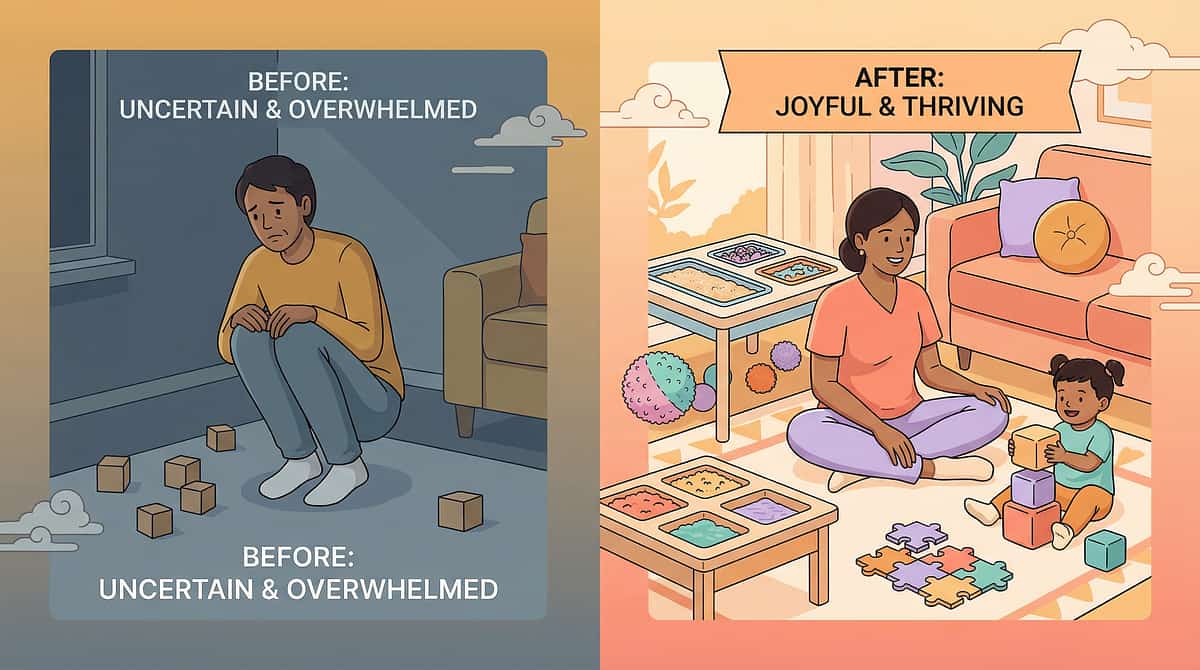
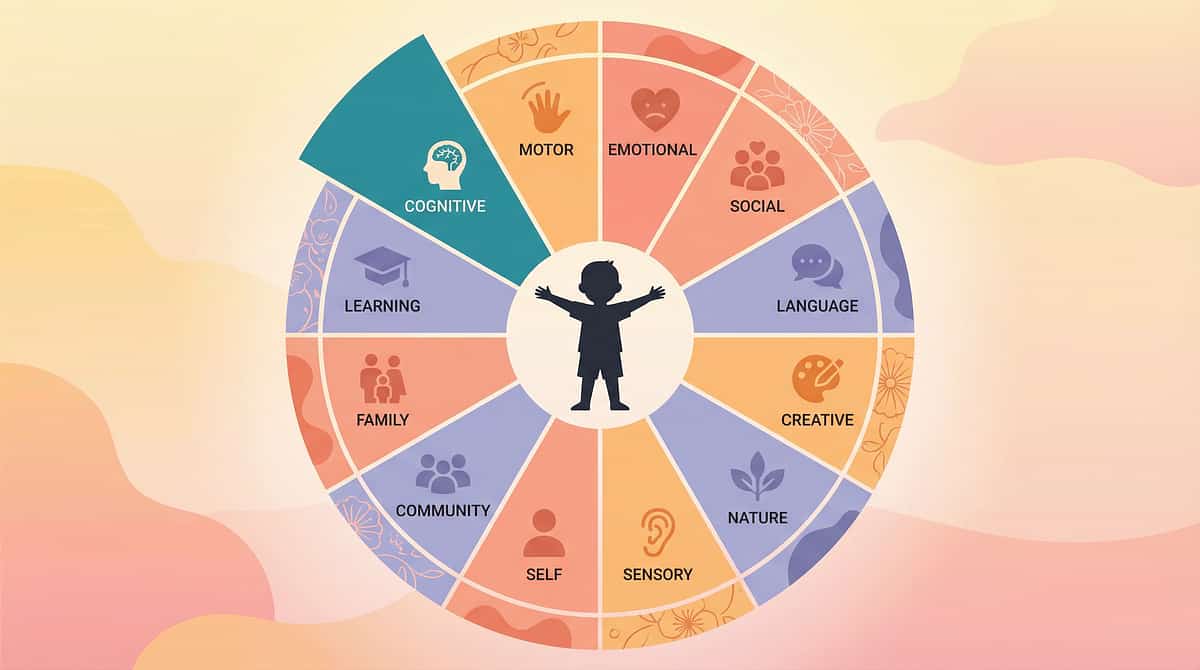
Your Child's Full Developmental Map
This technique is one piece of a larger plan. Here is the whole map.
The Transitional Object Support Toolkit (I-795) is a foundational intervention in Domain C (Emotional Regulation). It directly feeds forward into all higher-level emotional regulation, anxiety management, and independence milestones. Without stable transition management, progress in academic learning, social participation, and daily living is chronically disrupted.
GPT-OS® Integration: When your session data flows into GPT-OS®, the system tracks your Emotional Regulation Readiness Index over time, adjusts the EverydayTherapyProgramme™ based on your child's response data, and flags patterns across all 12 domains for professional review.
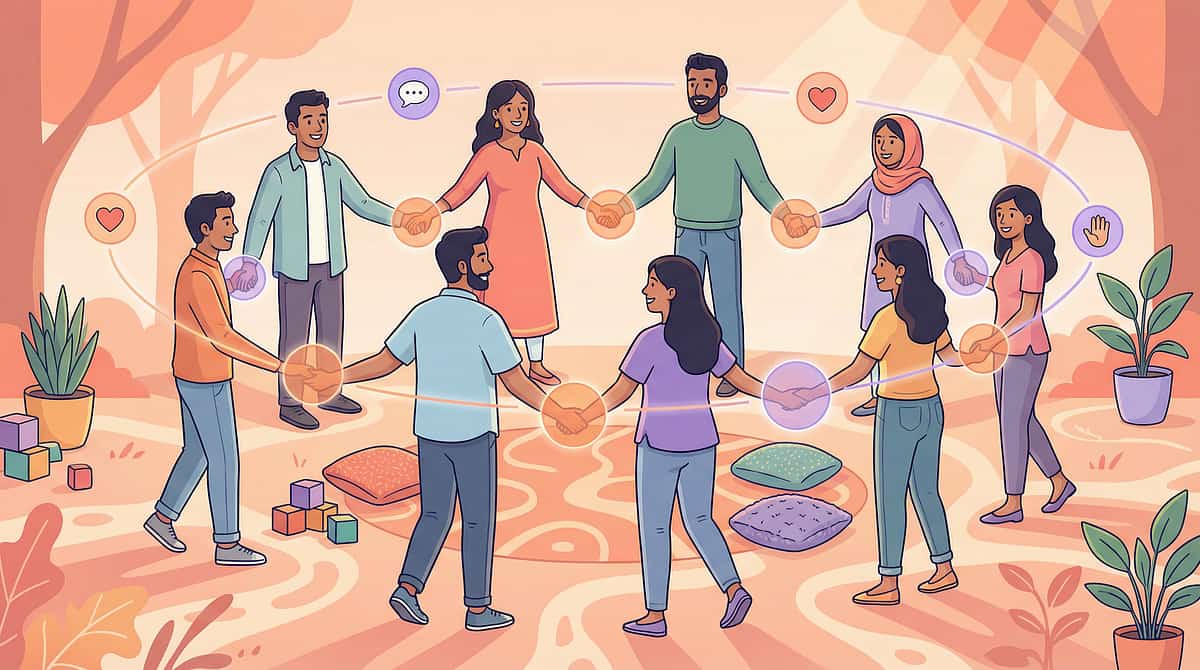
ACT V — THE COMMUNITY AND ECOSYSTEM
Families Who've Been Here
From meltdowns at every threshold to brave goodbyes. Real families. Real data.

Priya, Age 6 — Hyderabad (Anonymised)
Before: Priya could not walk through the school gate without her blanket corner — a frayed piece of her original toddler blanket, held constantly. Teachers expressed concern. Peers had begun commenting. Three weaning attempts had each ended in 2–3 weeks of regression.
The Approach: OT identified that the blanket corner provided specific tactile input at the satin edge and olfactory comfort. A sensory-matched bracelet with a small satin loop was introduced as a travel companion for school.
After (Week 8): Priya carries the bracelet to school and keeps the blanket corner at home. School distress resolved by week 6. She now sometimes forgets the bracelet — and recovers independently.
"We spent two years being told she needed to 'grow out of it.' In eight weeks of understanding why it worked and building alongside it — we have a daughter who goes to school independently."
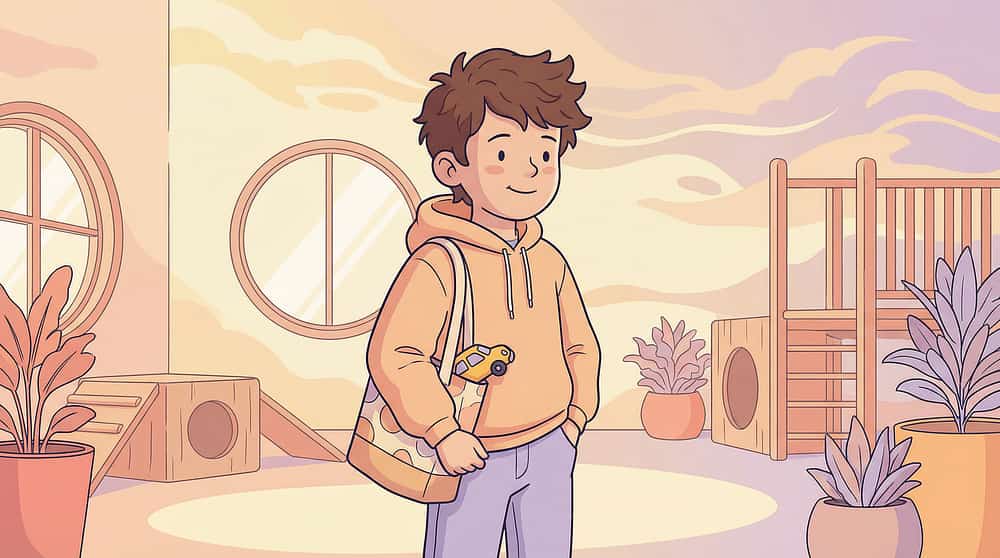
Arjun, Age 8, ASD — Bangalore (Anonymised)
Before: Arjun carried a small yellow car everywhere — literally. Any loss resulted in what the family called "the longest meltdowns of our lives." School had asked the car stay home. The removal attempt precipitated a three-week trauma response.
The Approach: The car was not removed. A clear protocol gave it a home in a specific pouch in the school bag, accessible at break time. A backup car (same model, sourced after 3 weeks of searching) was introduced as "the car's twin." A Social Story was written: "The yellow car waits in the bag. The yellow car is safe."
After (Week 10): Arjun checks it at break by his own decision, not compulsion. Three times in month 3, he left it at home voluntarily. When the school lost a different comfort item, he recovered within 20 minutes — not three weeks.
"This approach treats our son like a person with a nervous system that makes sense, not a problem to be fixed."
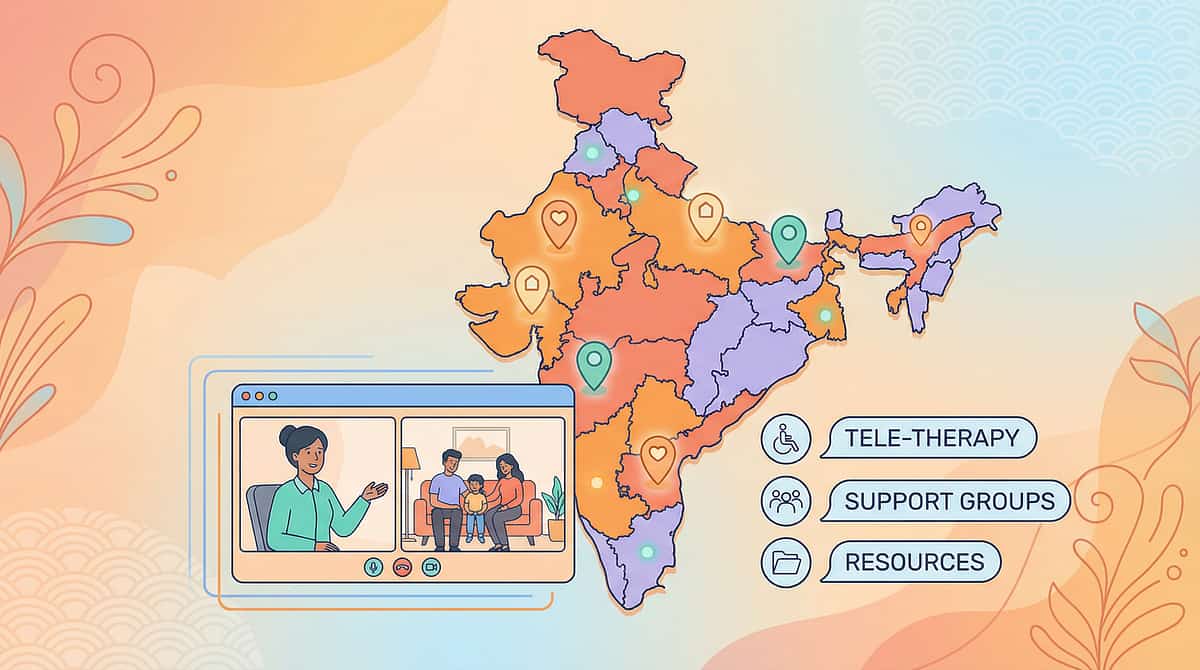
Connect with Other Parents
The parents who understand you most are living your same morning.
WhatsApp Support Group
A moderated, private group for families navigating intense transitional object attachment across ASD, anxiety, and developmental differences. Peer support. Therapist check-ins weekly. Indian families, global reach.
Join the Transition Support Group →
Join the Transition Support Group →
Online Forum
The Pinnacle Community Forum — searchable, parent-generated content, therapist-verified answers.
unknown link
unknown link
Peer Mentoring
Connect with a parent who has completed this pathway with their child. Lived experience mentors — screened, trained, voluntary.
Request a Peer Mentor →
Request a Peer Mentor →
Local Parent Meetup
70+ centers. Monthly parent meetups by city. Meet other families in your neighbourhood on the same journey.
Find Your Nearest Meetup →
Find Your Nearest Meetup →
"Isolation is not just emotionally difficult — it is clinically counterproductive. Parents who connect with other families have significantly higher adherence rates. You are not meant to do this alone."
📞9100 181 181 — Call to be connected to the community team
Your Professional Support Team
Home + clinic = maximum impact. Your professional team is closer than you think.
70+ centres across India | Teleconsultation available from anywhere in the world
Therapist Matching for I-795
- Primary: Paediatric Occupational Therapist — sensory profile + portable alternatives
- Co-Therapy: Child Psychologist — anxiety + attachment dimensions
- Behaviour Lead: BCBA — graduated exposure + reinforcement planning
- School Bridge: Special Educator — home-school consistency
Teleconsultation Pathway
- Initial AbilityScore® assessment (online)
- Sensory profile evaluation via structured parent interview
- EverydayTherapyProgramme™ planning session
- Weekly 30-minute check-in calls with assigned therapist
📞9100 181 181 | FREE National Autism Helpline | 24×7 | 16+ Languages | No appointment needed

The Research Library
For the parent who wants to go deeper. The science is available and open.
Winnicott, D.W. (1951)
Foundational work: transitional objects are normal, healthy developmental phenomena serving as the child's first symbol of the space between self and world. 70+ years of continuous validation.
PRISMA Systematic Review (2024) — PMC11506176
16 studies (2013–2023) confirm sensory integration intervention is evidence-based practice for children with ASD. Directly supports sensory-matched alternative provision. 🔗 PubMed: PMC11506176
Meta-analysis, World J Clin Cases (2024) — PMC10955541
Sensory integration therapy across 24 studies effectively promoted social skills, adaptive behaviour, sensory processing and motor skills. 🔗 PubMed: PMC10955541
Padmanabha et al. (2019) — Indian Journal of Pediatrics
Home-based sensory interventions with parent-administered protocols demonstrated significant outcomes in Indian paediatric populations. The landmark Indian-context validation. DOI: 10.1007/s12098-018-2747-4
WHO Nurturing Care Framework (2018) — PMC9978394
Global framework placing emotional security and responsive caregiving as foundational to all developmental outcomes. 🔗 PMC9978394
NCAEP Evidence-Based Practices Report (2020)
Visual supports, Social Stories, and video modelling classified as evidence-based practices for autism — core components of the I-795 toolkit. 🔗 ncaep.fpg.unc.edu
"Every tool on this page has a reference. Every reference is accessible. We do not ask you to trust us. We ask you to read the evidence."
How GPT-OS® Uses Your Data
Your session data doesn't just help your child. It helps every child like yours.
What GPT-OS® Learns from I-795 Data
- Which of the 9 materials produces the largest reduction in transition distress for this child's profile
- The optimal pacing curve for this child's object attachment pattern
- Whether underlying anxiety needs clinical escalation
- Which transition points remain high-risk vs. resolved
Privacy Assurance
- All data encrypted under DPDP Act (India) compliance
- Parent controls all data sharing — including with therapists
- Anonymised data contributes to 20M+ session learning pool
- No data sold or shared with third parties
"Your child is unique. But your child's pattern has been seen before — in some configuration, by some family in our network. GPT-OS® is the system that learns from all of them, so your child benefits from everyone's experience."
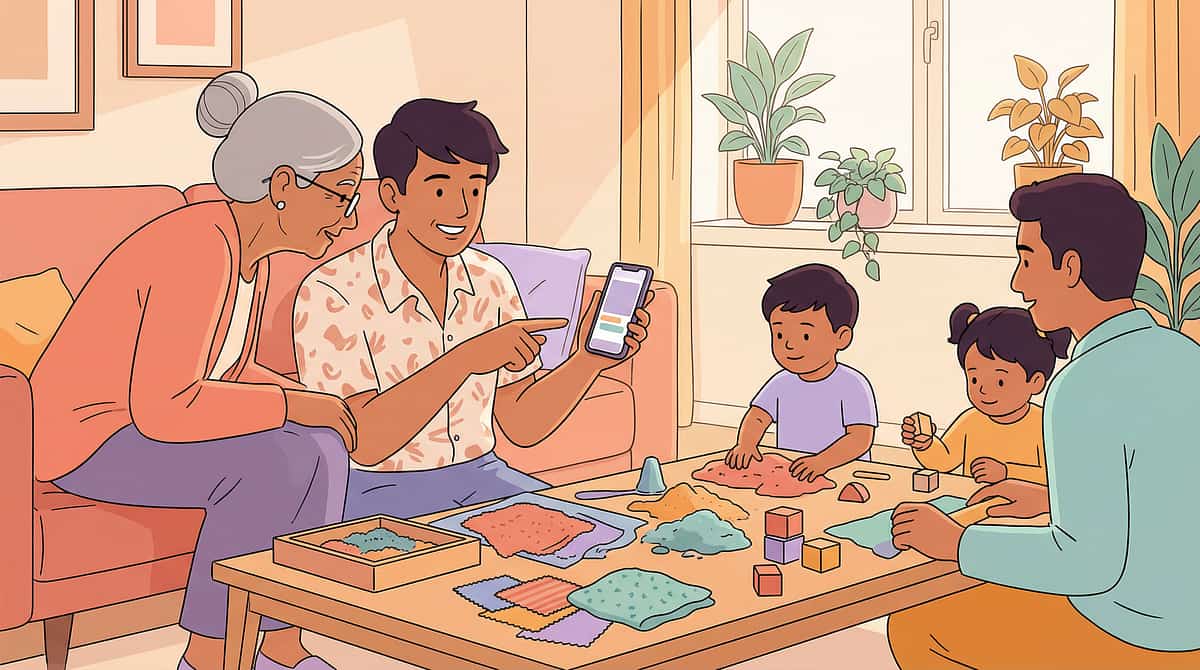
Watch the Reel
Watch the 60-second reel that shows the materials in action.
🎬 Reel ID: I-795
9 Materials That Help With Transition Objects
📺 Series
Emotional Regulation and Attachment — Episode 795
⏱️ Duration
60 seconds | No jargon | Real home use
🎓 Presenter
Pinnacle Blooms Consortium — Paediatric OT, Clinical Psychology, and ABA clinical team
This reel shows the 9 materials from the parent's perspective — not clinical setup, but real home use. The backup object, the sensory stone, the wearable bracelet, the family photo, the calm-down kit, the Social Story, the breathing sphere, the goodbye ritual. 60 seconds.
Video Modelling Note: Video modelling is classified as evidence-based practice for autism (NCAEP, 2020). Seeing the materials in use activates mirror neuron learning — the parent's brain learns the technique differently through video than through reading alone.
← Previous Reel: I-794 — 9 Materials for Visual Timers | Next Reel: I-796 — 9 Materials for Transition Songs →
Share This with Your Family
This knowledge only works if everyone in your child's world has it.
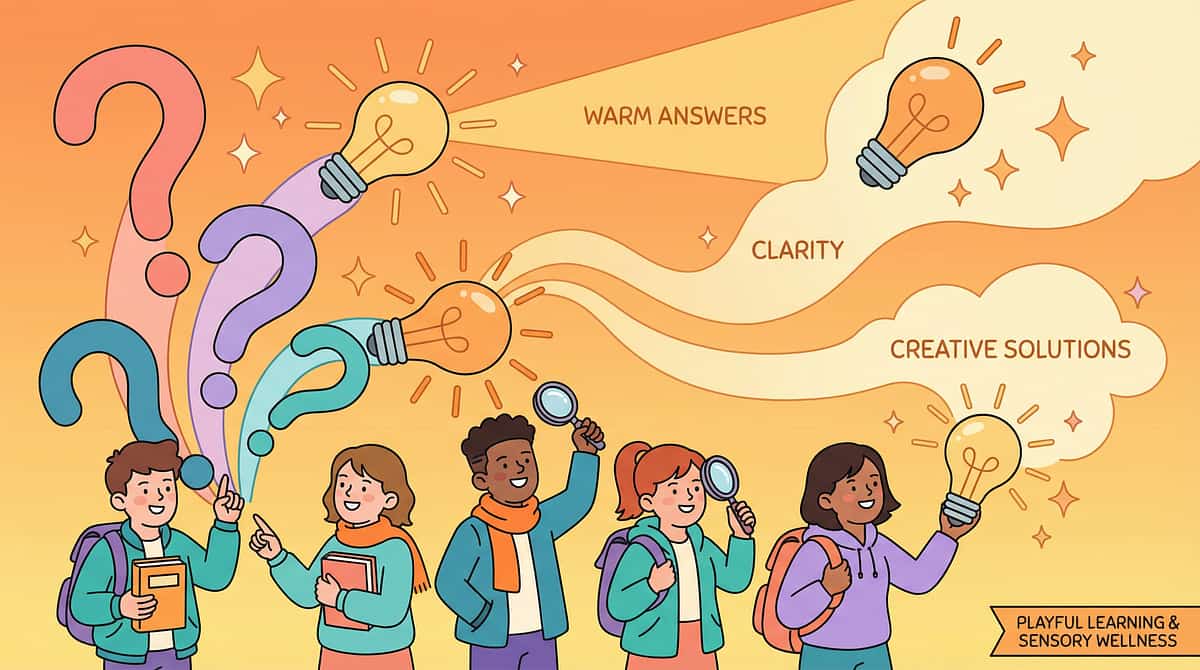
A child whose parent uses the goodbye ritual perfectly, but whose grandmother says "oh, you don't need that silly toy" at the gate — is a child receiving two incompatible nervous system signals. Consistency across caregivers multiplies impact exponentially.
Share Buttons
Pre-formatted WhatsApp message: "This page helped our family with transition challenges. If you care for them, please read it."
Downloadable Resources
- ⬇️ Download Family Guide PDF — 1-page visual summary for any caregiver
- ⬇️ Grandparent Version — Simplified language, larger text, "what the blanket does for their brain" in 200 words
- ⬇️ Teacher Letter Template — Pre-written letter explaining the transitional object's clinical function, requesting school accommodation, with evidence basis
"Consistency across caregivers is not a preference — it is the single biggest predictor of how quickly your child develops flexible regulation. Every person in your child's daily life needs this language."

ACT VI — THE CLOSE AND LOOP
Frequently Asked Questions
The questions every parent asks. Answered without vagueness.
Is my child too old for a transitional object? (She's 7)
There is no universal age at which a transitional object becomes clinically inappropriate. What matters is the function it serves and the impact it has on daily life. A 7-year-old using a comfort object privately or during high-stress moments is within typical variation, especially with ASD, anxiety, or sensory differences. The goal is not removal — it is flexibility.
Should I secretly replace the original with a backup?
No. Children almost always detect the substitution — by scent, by texture detail, by the weight of accumulated experience. Secret substitution damages trust and often increases object attachment intensity when discovered. Always introduce alternatives honestly, with the child's involvement, framed as additions rather than replacements.
My son's ASD means he needs the exact same object. How do I introduce a backup?
Start earlier and move slower. Introduce the backup immediately, before crisis, by rotating both objects equally so they develop the same wear. Name them both. If you're past that point, acknowledge the difference honestly: "This is [original]'s twin. They're different. [Original] is still yours."
The school is telling me to stop bringing the comfort object. What do I do?
Download the Teacher Letter Template from Card 37. The letter explains the clinical function of transitional objects, references the research, and requests structured accommodation during the transition reduction period. If the school does not respond, the Pinnacle SpEd team can provide direct school consultation. Call 📞 9100 181 181.
We tried the goodbye ritual for 3 days and it made things worse.
Three days is not enough for any ritual to register in a nervous system using one strategy for years. Give it 3–4 weeks of absolutely consistent application before assessing. If it genuinely worsens after 4 weeks of consistent application, call the helpline.
What do I do if the original object is destroyed or lost?
Do not minimise the loss. Treat it as a genuine grief event — because for this child, it is. Acknowledge it. Do not immediately substitute. Allow the grief. Over the following days and weeks, gradually introduce the alternatives already in the toolkit. This is a clinical moment — consider contacting 📞 9100 181 181 for support through the transition.
My child wants ME as the transitional object. Is that different?
Yes and no. Parent-as-transitional-object is clinically understood as a separation anxiety presentation. Connection objects and goodbye rituals are particularly effective here. This pathway also benefits from direct psychology input. Call 📞 9100 181 181 to explore the separation anxiety pathway specifically.
How long does this take? Will my child ever not need anything?
Most children with supported, gradual expansion show significant flexibility improvement within 8–16 weeks. "Not needing anything" is not the clinical goal — flexible access to multiple comfort strategies, with the primary object as one option among many, is the goal. The aim is mastery of choice, not elimination of comfort-seeking.
Preview of 9 materials that help with transition objects Therapy Material
Below is a visual preview of 9 materials that help with transition objects therapy material. The pages shown help educators, therapists, and caregivers understand the structure and content of the resource before use. Materials should be used under appropriate professional guidance.


Link copied!
Your Next Step — Start Today
You have everything you need. Start today.
🏛️ Validated By
Pinnacle Blooms Consortium: OT • SLP • ABA/BCBA • SpEd • NeuroDev • Paediatrics
📊 20M+ Sessions
97%+ Measured Improvement | 70+ Centres | GPT-OS® Powered
📞FREE National Autism Helpline | 9100 181 181 | 16+ Languages | 24×7
"Not sure where to start? Call first. Assessment is free."
"Not sure where to start? Call first. Assessment is free."
From fear to mastery. One technique at a time.
Pinnacle Blooms Network® was built to do one thing: transform fear into capability, confusion into clarity, and isolation into community — for every parent, every child, everywhere. The techniques.pinnacleblooms.org library is the world's largest structured paediatric intervention knowledge base — 70,000+ evidence-linked techniques, each validated by 20 million sessions of real-world data.
This content is educational and does not replace individualised professional assessment and intervention from qualified specialists. Intense or prolonged transitional object attachment may be associated with anxiety disorders, autism spectrum disorder, sensory processing differences, trauma history, or other conditions requiring clinical evaluation. Individual outcomes vary.
CIN: U74999TG2016PTC113063 | DPIIT: DIPP8651 | MSME: TS20F0009606 | GSTIN: 36AAGCB9722P1Z2
© 2025–2026 Pinnacle Blooms Network®, unit of Bharath Healthcare Laboratories Pvt. Ltd. All rights reserved.
© 2025–2026 Pinnacle Blooms Network®, unit of Bharath Healthcare Laboratories Pvt. Ltd. All rights reserved.