
The Moment You Realized: Her Hands Are Silent
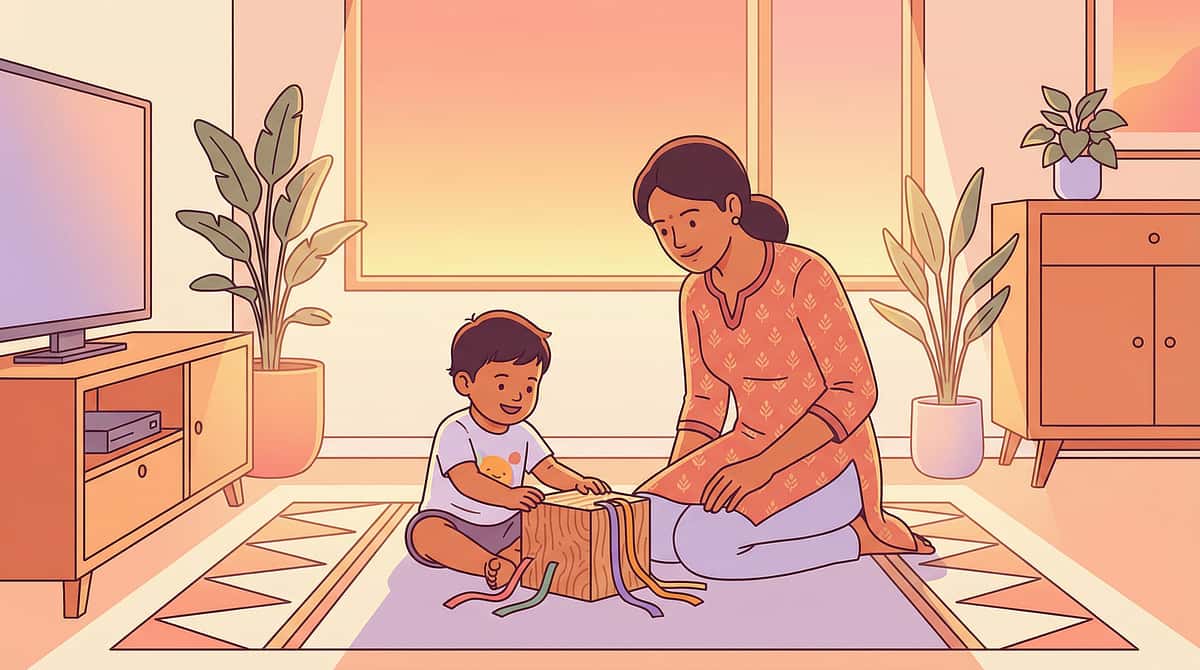
You watch other children at the park — they wave bye-bye, they point at airplanes, they put their arms up to be lifted. Your daughter does none of it. She doesn't wave when someone leaves. She doesn't point at the dog across the street. She doesn't nod yes or shake her head no. When she wants something, she grabs your hand and drags you to it — like you're a tool, not a person.
At 18 months, her hands have no language. Her body doesn't speak. This page will change that.
Technique ID: B-125
Age Band: 8–24 months
Pre-Linguistic Communication Series
You Are Among Millions
Gesture delays are one of the earliest and most significant markers of developmental difference — and you are far from alone. The numbers are humbling, and they exist to remind you: this challenge is known, studied, and addressable.
1 in 36
Children in the U.S.
diagnosed with autism spectrum disorder, where absent or limited gestures is among the earliest identifiable signs. (CDC, 2023)
1 in 100
Children Globally
estimated to be on the autism spectrum, with gesture absence as a key early indicator. (WHO Global Autism Estimate, 2023)
80%+
of Autism Diagnoses
display significant differences in pre-verbal communication patterns, including gesture use. (PRISMA Systematic Review, 2024 — PMC11506176)
21M+
Therapy Sessions
conducted exclusively 1:1 across the Pinnacle Blooms Network, informing every recommendation on this page.
In India alone, an estimated 2–3 million children under age 5 show significant gesture development delays requiring intervention — the majority without access to specialized therapy. You are among millions of families navigating this exact challenge. The difference starts with knowing what to do.
What's Happening in Your Child's Brain
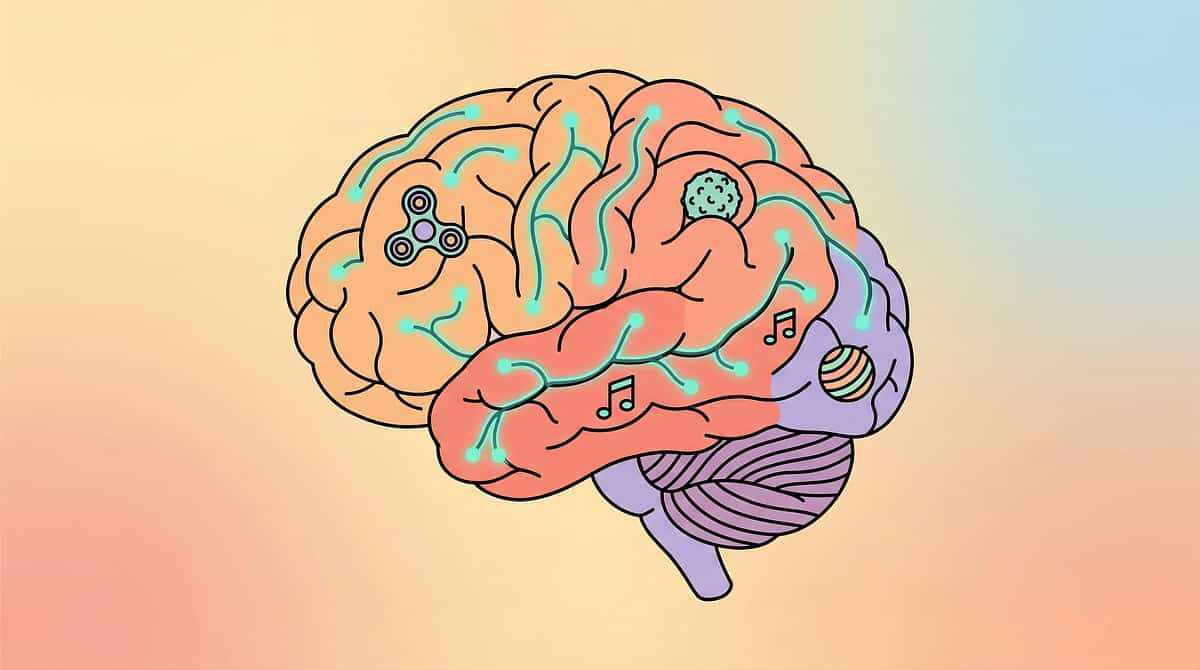
The Neuroscience of Gesture Development — In Plain Language
The Mirror Neuron System
Located in Broca's area — the same region that later powers speech — mirror neurons fire both when your child sees YOU wave and when they attempt to wave themselves. When this system is developing differently, what your child sees doesn't automatically translate to what their body does.
The Motor Planning Network
The supplementary motor area must create a "movement blueprint" for each gesture — wave requires a specific wrist rotation, point requires index finger isolation, nod requires controlled neck flexion. Children with gesture delays often have motor planning systems not yet coordinating these blueprints efficiently.
The Social Cognition Circuit
The superior temporal sulcus processes the social meaning of gestures. For a wave to develop, a child must understand: "This hand movement means goodbye. When someone leaves, I do this." This social-meaning-to-action connection requires intact social cognition pathways.
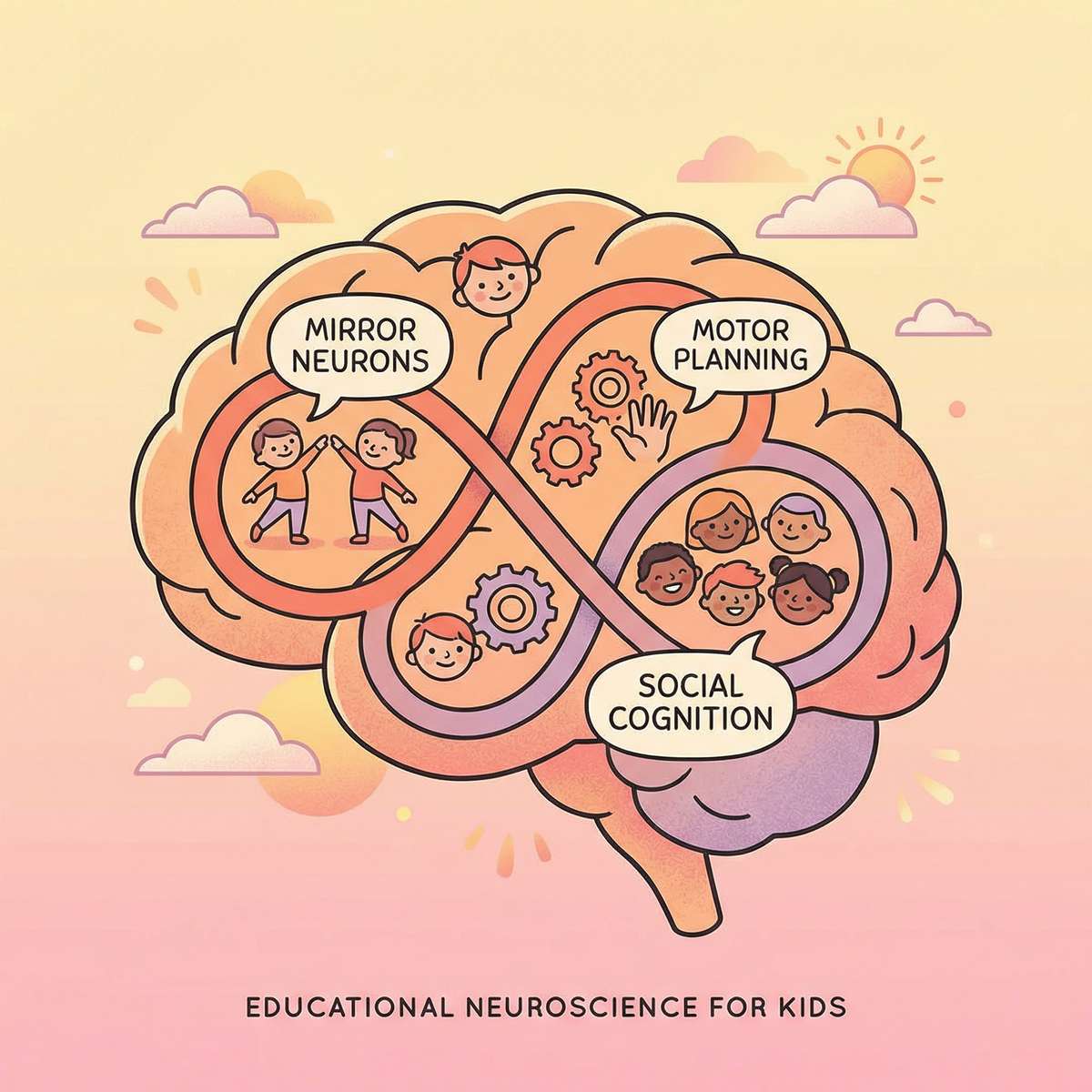
This is a wiring difference, not a behavior choice. Your child is not being stubborn or lazy. Their brain's gesture network needs targeted activation — and the 9 materials on this page are specifically designed to activate it.
Research: Iverson & Goldin-Meadow (2005) | Rowe & Goldin-Meadow (2009) | Frontiers in Integrative Neuroscience (2020): DOI: 10.3389/fnint.2020.556660
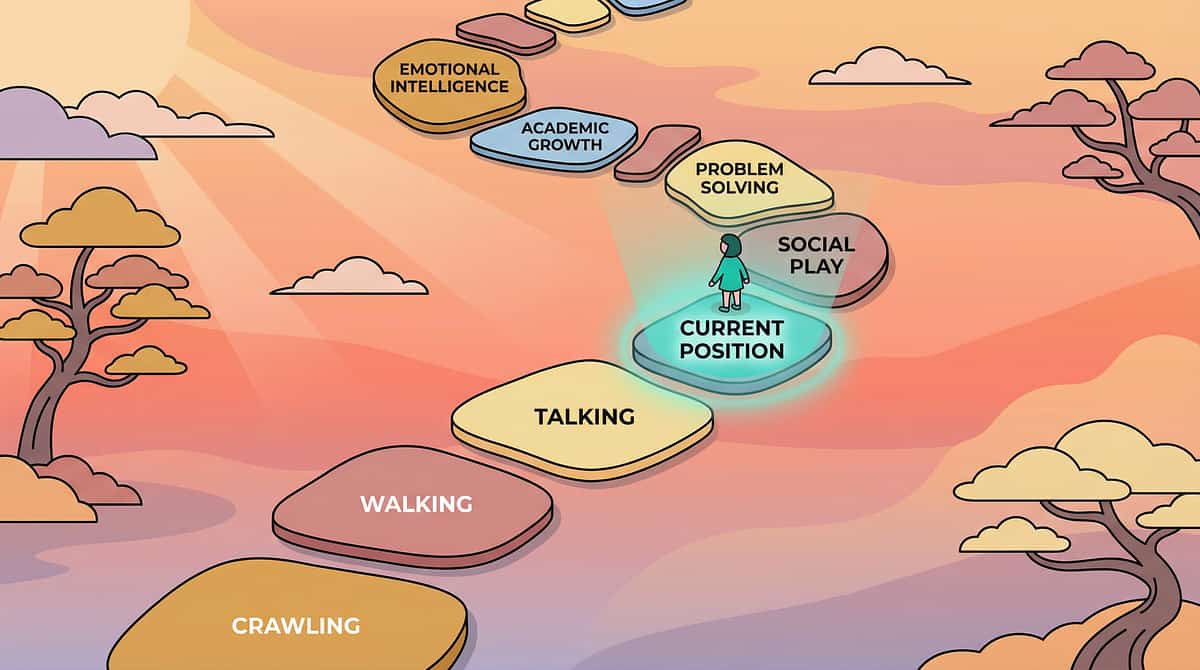
Where This Sits in Your Child's Development
The Gesture Development Timeline — WHO/UNICEF Developmental Framework
6–8 Months: Reaching
Arms extend toward desired objects. "I want that." The first intentional body communication.
8–10 Months: Showing & Giving
Child holds objects up to see. Hands items over. Emerging bye-bye wave. Social gestures begin.
10–12 Months: Pointing to Request
Index finger extends toward wanted items. Head shake for "no." The critical gesture milestone most pediatricians screen for.
12–14 Months: Declarative Pointing
Points at airplane NOT to get it, but to share the experience. Nodding "yes." Clapping. A pivotal social cognition marker.
14–18 Months: Multiple Gestures + Vocalizations
5+ different gestures combined with sounds. Gesture + sound = the bridge to first words.
18–24 Months: Gesture + Word Combos
"More" (sign) + "juice" (word). Gestures scaffold the transition to verbal language.
🚩 Red Flags Warranting Immediate Evaluation: No reaching by 9 months | No showing/giving by 12 months | No waving by 12 months | No pointing by 14–16 months | Fewer than 5 gestures by 16 months | Using adult's hand as tool without eye contact
Source: WHO Care for Child Development Package (2023) | UNICEF MICS Developmental Indicators | Wetherby & Prizant: Communication and Symbolic Behavior Scales (2002) | PMC9978394
The Evidence Behind Gesture Building Interventions
Evidence Grade: Level II–III
Clinically Validated
Landmark Finding — Iverson & Goldin-Meadow (2005)
Gesture is not merely a precursor to language — it actively drives language development. Children who gesture more develop larger vocabularies faster. Teaching gestures directly accelerates verbal language emergence.
Predictive Power — Rowe & Goldin-Meadow (2009)
Gesture use at 14 months predicted vocabulary size at 54 months — making gesture the single strongest early predictor of language outcomes, stronger than babbling frequency or parent vocabulary.
Intervention Efficacy — Systematic Reviews
Structured gesture teaching programs including baby sign language, social routine-based gesture elicitation, and imitation training produce measurable improvements in both gesture repertoire and subsequent verbal language in children with autism and developmental delays.
Pinnacle Real-World Evidence — 21M+ Sessions
Children receiving structured gesture development protocols through the GPT-OS® system show 97%+ measured improvement across the Communication Readiness Index — Pre-Verbal Gesture Development subindex across 70+ centers.
References: Iverson & Goldin-Meadow (2005) | Rowe & Goldin-Meadow (2009) | PMC11506176 | PMC10955541 | DOI: 10.1007/s12098-018-2747-4 | NCAEP Evidence-Based Practices Report (2020)
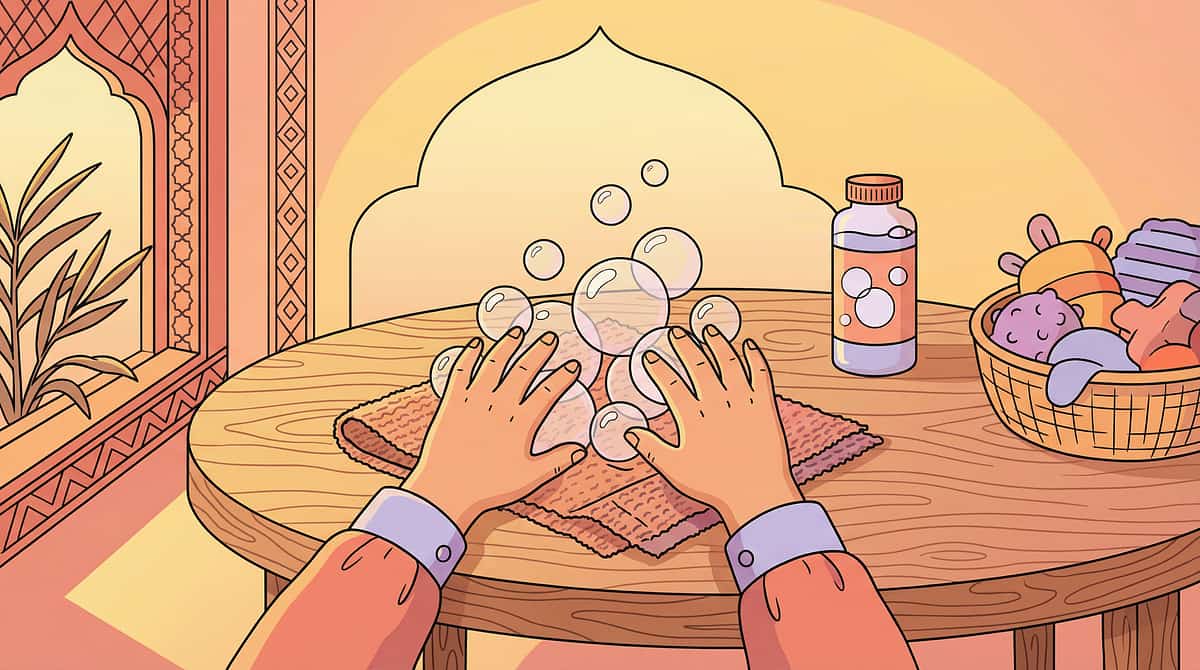
Gesture Development Through Multi-Material Activation
Parent-Friendly Name: "Building Your Child's Body Language"
What It Is
A structured 9-material intervention protocol that systematically builds your child's gesture vocabulary — from the earliest reaching gestures through conventional social gestures (waving, nodding) to symbolic gestures (pretend actions, baby signs). Each material targets a specific gesture type in the developmental sequence, allowing you to start where your child is and build forward.
What It Does
Activates the gesture-language pathway by providing your child's mirror neuron system, motor planning network, and social cognition circuits with the specific sensory-motor inputs they need to "unlock" intentional body communication.
Who It's For
Children aged 8–24 months who show absent, significantly delayed, or very limited gesture use — including children with autism spectrum features, global developmental delay, motor planning difficulties, or unexplained gesture absence.
⏱ Duration
10–15 min per session
📅 Frequency
2–3 structured sessions daily + embedded practice
📆 Timeline
8–12 weeks for measurable gesture emergence
🏠 Setting
Home (primary) + Therapy Center (guided)
Domains Addressed
- 🗣 Communication & Language
- 🧠 Cognitive & Learning
- 👥 Social Skills Development
- ✋ Fine Motor & Hand Skills
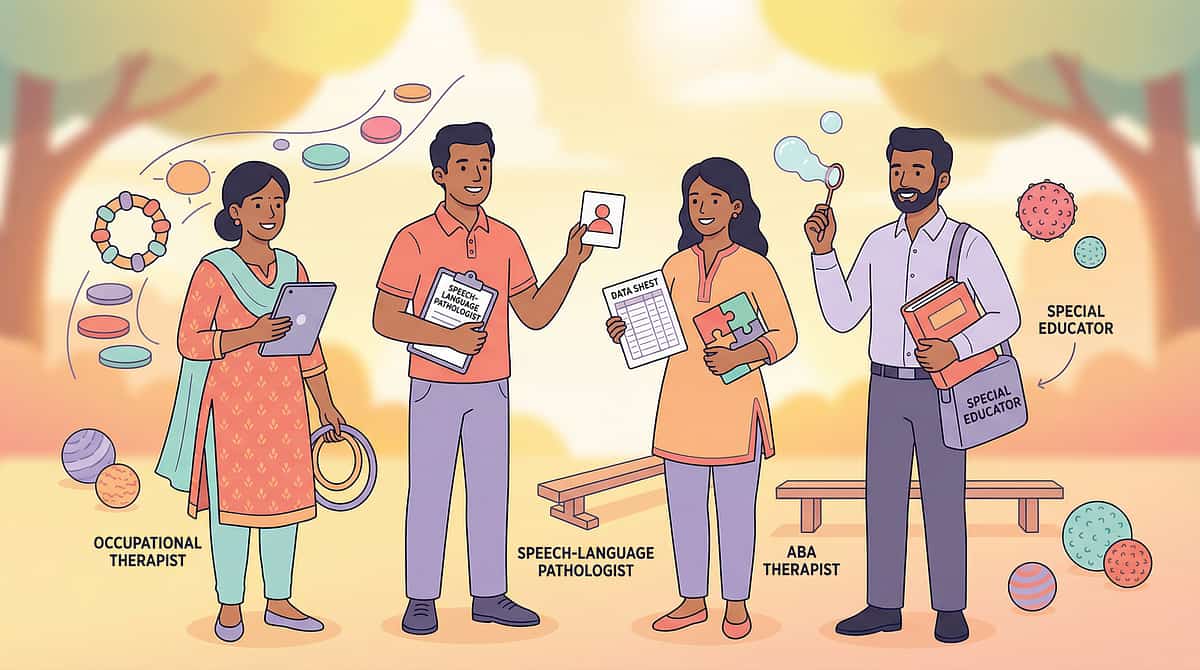
Who Uses This Technique: Your Child's Entire Team
Gesture development crosses therapy boundaries — because the brain doesn't organize by therapy type. Here's how each discipline contributes to your child's gesture development journey.
Speech-Language Pathologist (SLP) — Primary Lead
The SLP designs the gesture development hierarchy, determines which gestures to target first based on your child's communication profile, and coordinates the transition from gesture to verbal language. SLPs treat gestures as the first layer of the communication pyramid.
Occupational Therapist (OT) — Motor Planning Partner
The OT addresses motor planning and fine motor components of gesture production. Waving requires wrist rotation. Pointing requires index finger isolation. Signing requires bilateral hand coordination. When apraxia underlies gesture absence, the OT modifies approaches accordingly.
BCBA — Reinforcement Architect
The BCBA structures the motivation and reinforcement system that makes gesture use rewarding. Using ABA principles, they design communication temptations that create natural opportunities for gesture use — making your child's brain register: "My body can get me things."
Special Educator (SpEd) — Generalization Guide
The special educator embeds gesture practice across learning activities, ensuring gestures generalize beyond therapy sessions into everyday routines — mealtimes, play, transitions, and social interactions.
NeuroDevelopmental Pediatrician — Medical Oversight
The pediatrician evaluates whether gesture absence co-occurs with other developmental markers, rules out hearing loss or neurological conditions, and coordinates the diagnostic process if autism evaluation is indicated.
Source: Adapted WHO/UNICEF Nurturing Care Framework for SLPs (2022) | DOI: 10.1080/17549507.2022.2141327
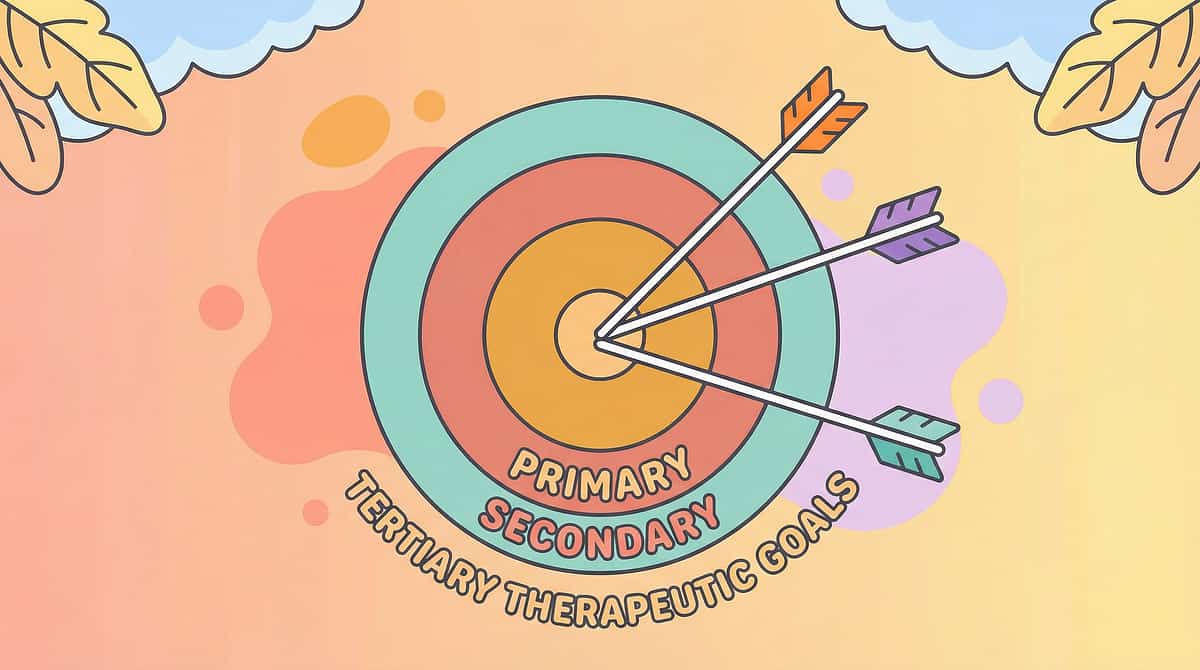
What This Targets: Precision, Not Randomness
🎯 Primary: Gesture Repertoire Expansion
Increase the number and variety of intentional communicative gestures — from 0–2 gestures to 8+ functional gestures across deictic (pointing, showing, giving), conventional (waving, nodding, head shake), and representational (pretend actions, baby signs) categories.
Observable Indicator: Child uses 3+ different gesture types spontaneously within a 30-minute observation period.
Observable Indicator: Child uses 3+ different gesture types spontaneously within a 30-minute observation period.
🎯 Secondary: Communicative Intent
Establish the understanding that "my body can send messages to other people." The child learns that gestures produce social responses — waving gets a wave back, pointing gets the desired object, giving receives enthusiastic acknowledgment.
Observable Indicator: Child makes eye contact with communication partner during or immediately after gesture production.
Observable Indicator: Child makes eye contact with communication partner during or immediately after gesture production.
🎯 Tertiary: Verbal Language Foundation
Build the symbolic representation capacity that directly powers first words. Research shows gesture precedes and predicts verbal language — every gesture taught is a word waiting to be spoken.
Observable Indicator: Child begins combining gestures with vocalizations ("uh" + point; "ma" + arms up).
Observable Indicator: Child begins combining gestures with vocalizations ("uh" + point; "ma" + arms up).
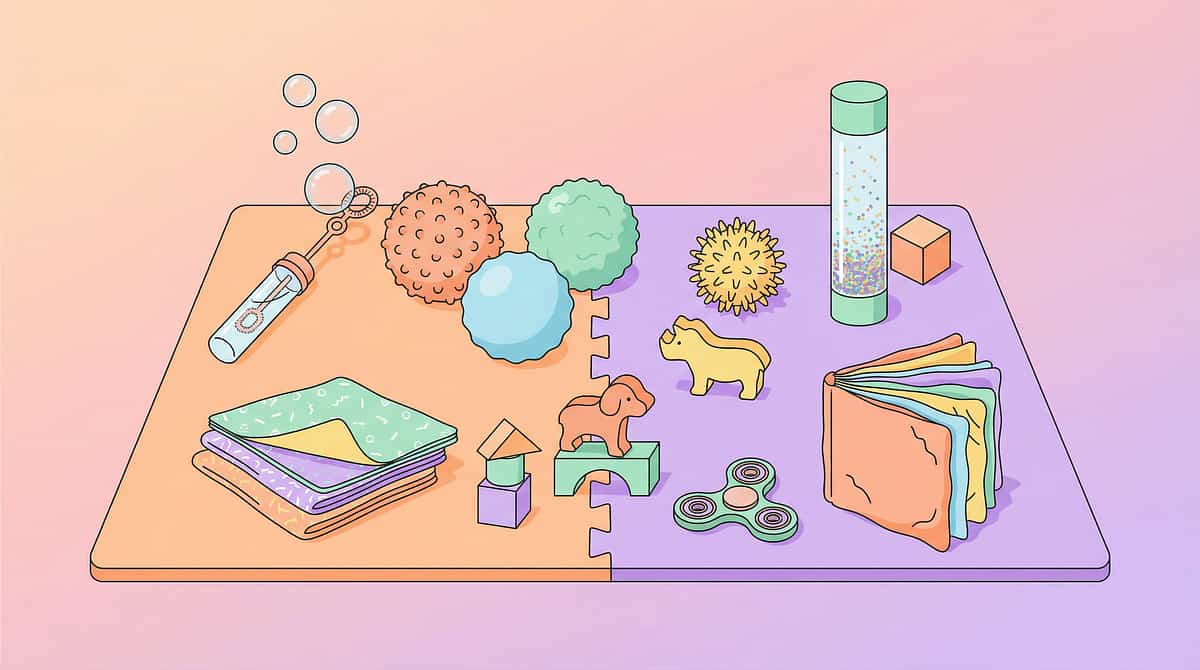
What You Need: The 9 Gesture-Building Materials
Complete Materials Kit — Organized by Gesture Development Sequence
Each of the 9 materials below targets a specific gesture type in the developmental sequence. Start where your child is. Build forward. The kit can be assembled for as little as ₹1,200 — or for free with DIY alternatives (see Card 10).
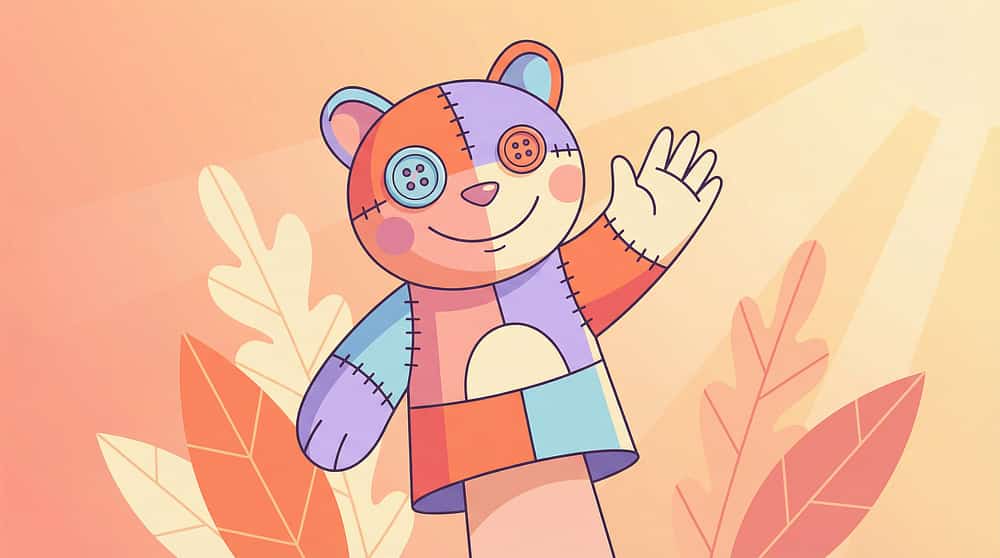
1. Waving Toys & Bye-Bye Practice Materials
Waving hand puppets, mechanical waving toys, figurines with moveable arms, bye-bye themed books, mirror for waving practice.
💰 ₹200–800 | 🏷 Role-Play / Pretend Play Props
💰 ₹200–800 | 🏷 Role-Play / Pretend Play Props
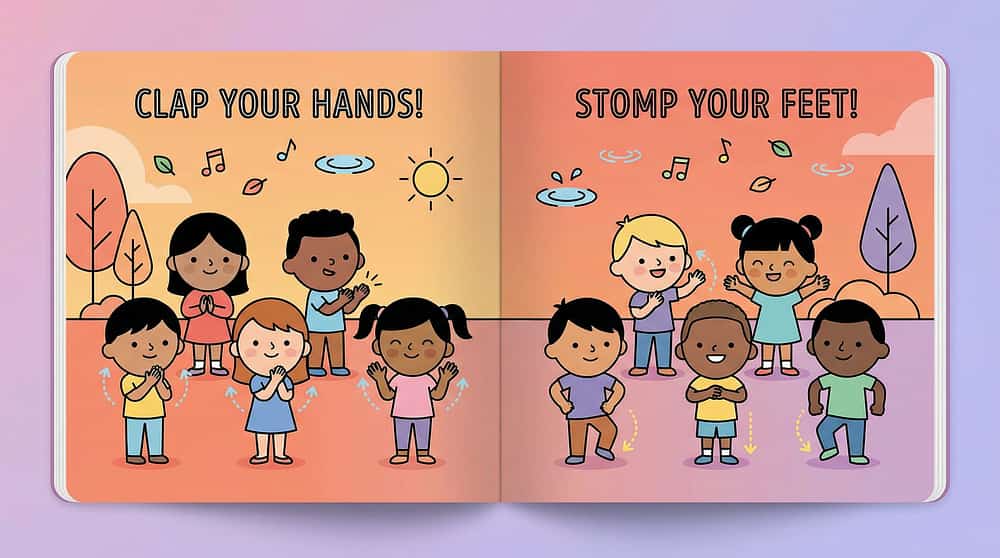
2. Action Songs & Gesture Song Materials
Action song videos (signing versions), action song books with gesture illustrations, gesture song flashcards.
💰 ₹0–500 | 🏷 Sign Language / Gesture Communication Resources
💰 ₹0–500 | 🏷 Sign Language / Gesture Communication Resources
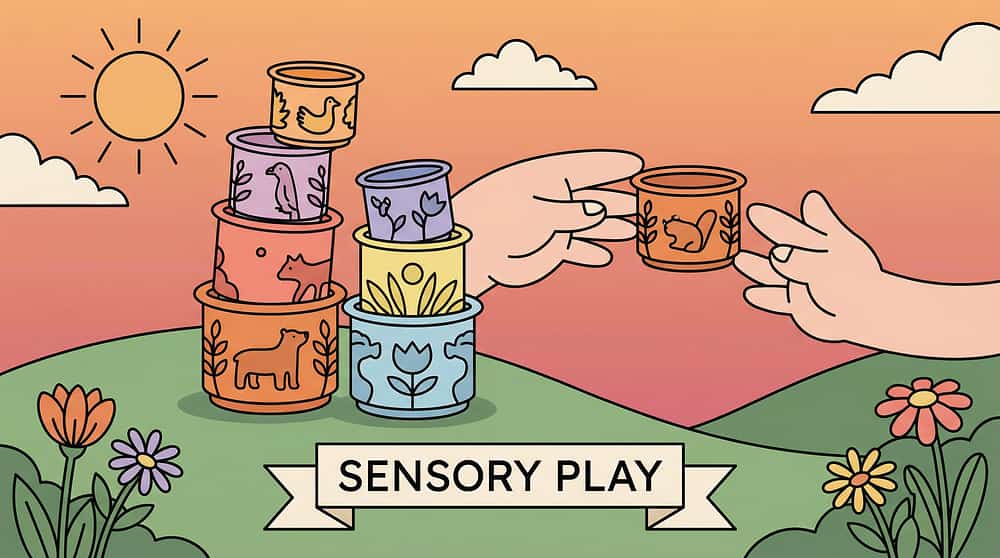
3. Giving & Taking Games with Objects
Balls for rolling, stacking toys, sorting objects, toy dishes, mailbox toys.
💰 ₹100–400 | 🏷 Turn-Taking / Cooperative Games
💰 ₹100–400 | 🏷 Turn-Taking / Cooperative Games
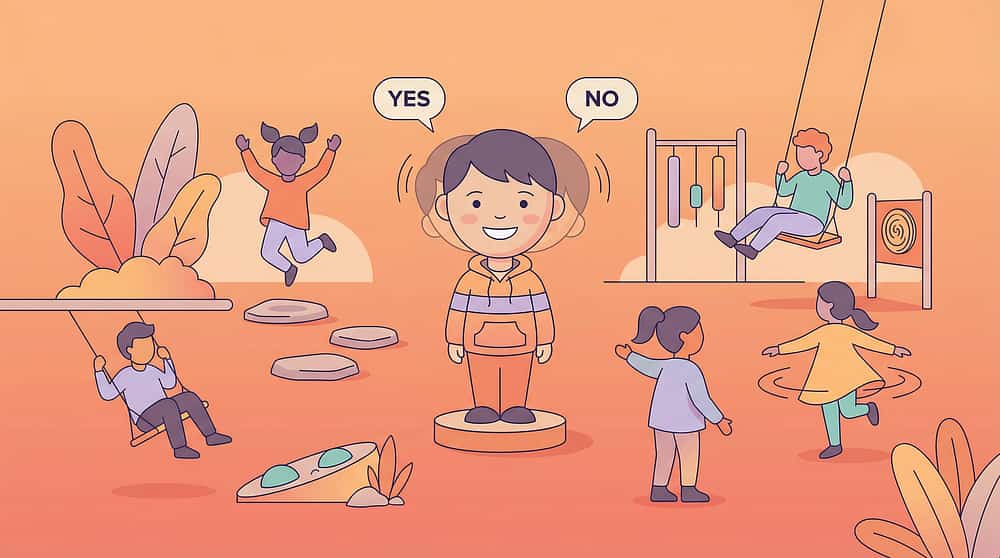
4. Head Movement Games (Yes/No Practice)
Bobblehead toys, yes/no choice cards, puppets for yes/no, interactive books with yes/no questions.
💰 ₹100–500 | 🏷 Cause-Effect Toys / Switch Toys
💰 ₹100–500 | 🏷 Cause-Effect Toys / Switch Toys
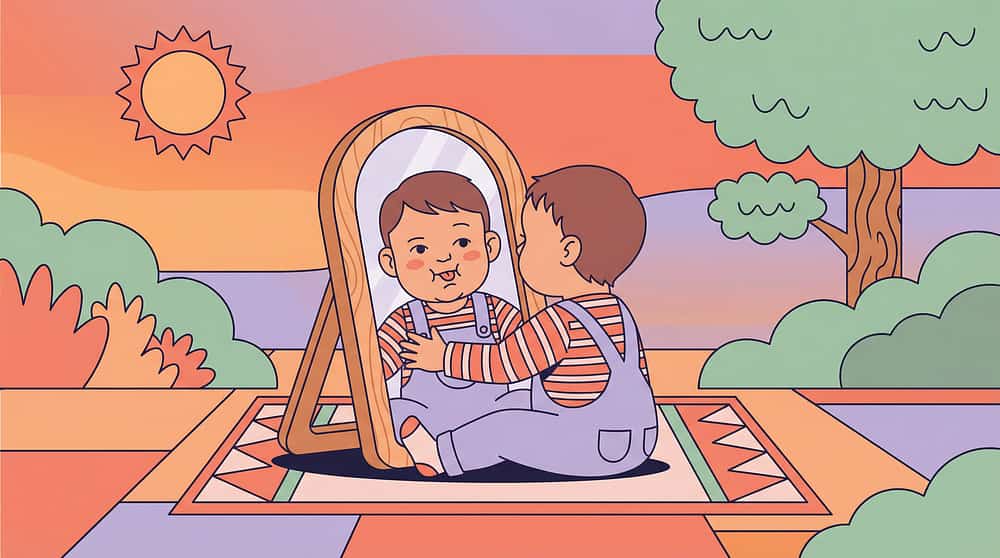
5. Imitation Toys & Copy-Me Games
Mirrors (various sizes), Simon Says activities, copy-cat toys, action cards for copying.
💰 ₹200–800 | 🏷 Turn-Taking / Cooperative Games
💰 ₹200–800 | 🏷 Turn-Taking / Cooperative Games
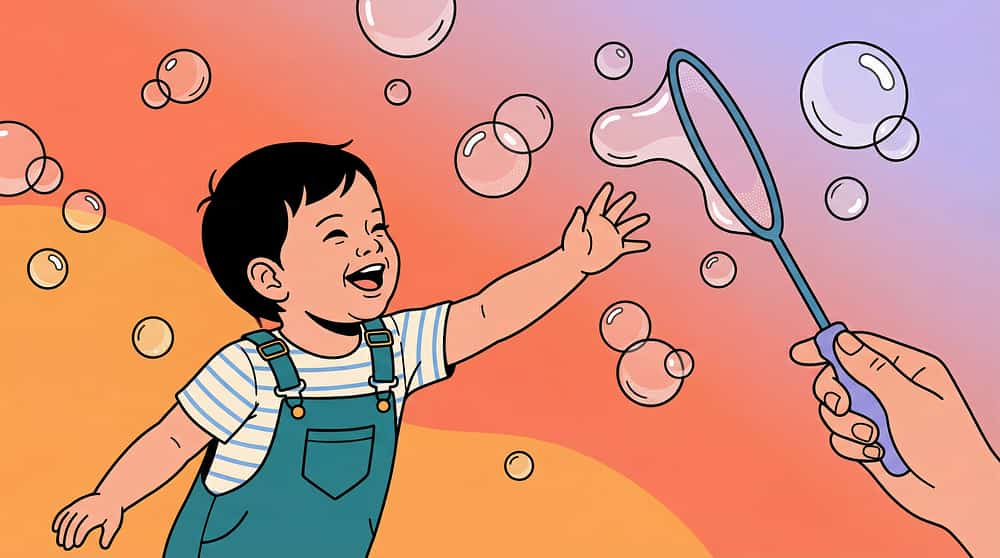
6. Reaching & Arms-Up Games
Bubbles, slightly out-of-reach toys, hanging toys at reaching height, balloon games.
💰 ₹100–400 | 🏷 Cause-Effect Toys / Switch Toys
💰 ₹100–400 | 🏷 Cause-Effect Toys / Switch Toys
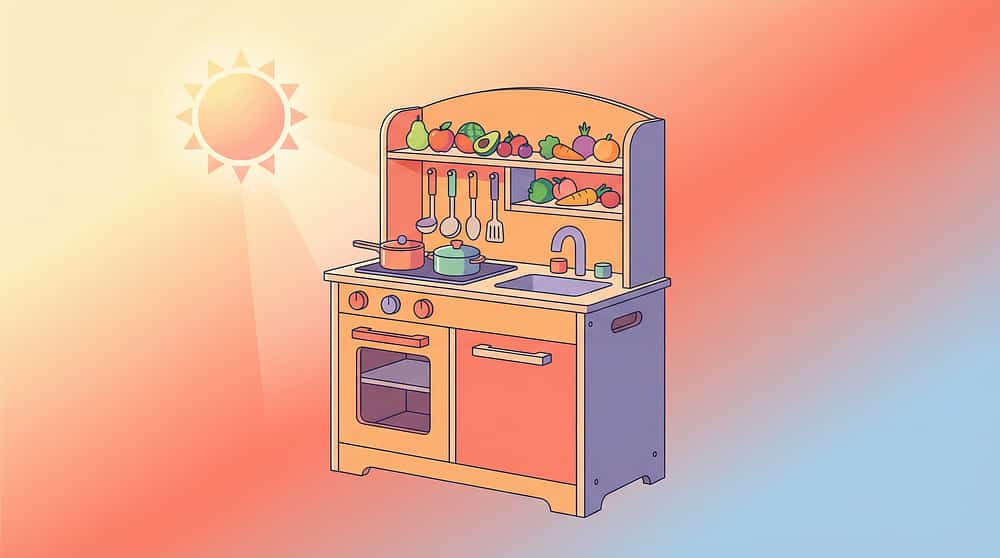
7. Symbolic Action Toys & Pretend Props
Empty cups for pretend drinking, play food, baby dolls, toy telephones, play kitchen items.
💰 ₹200–800 | 🏷 Role-Play / Pretend Play Props
💰 ₹200–800 | 🏷 Role-Play / Pretend Play Props
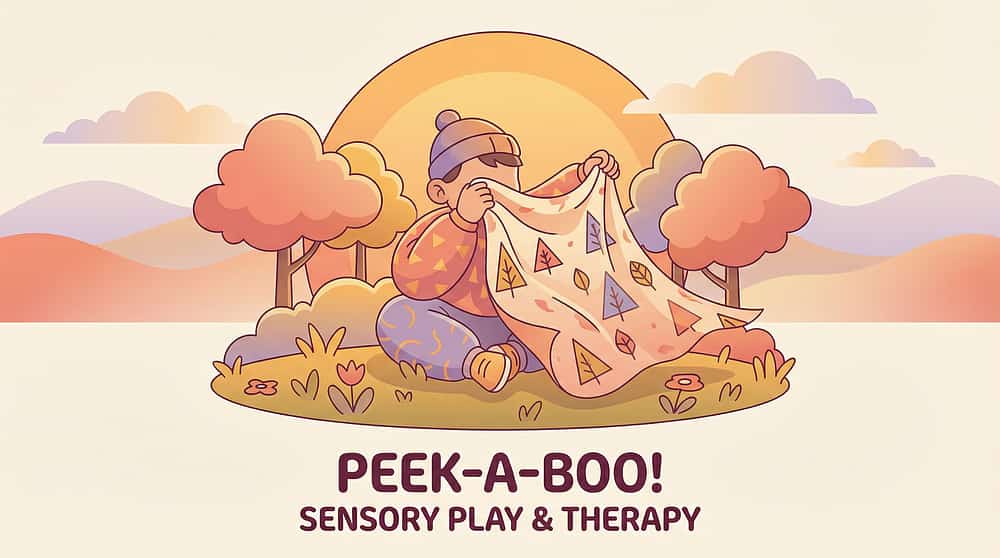
8. Social Routine Props & Interactive Games
Peek-a-boo blankets/scarves, patty-cake rhyme cards, pop-up toys, interactive nursery rhyme props.
💰 ₹100–500 | 🏷 Turn-Taking / Cooperative Games
💰 ₹100–500 | 🏷 Turn-Taking / Cooperative Games
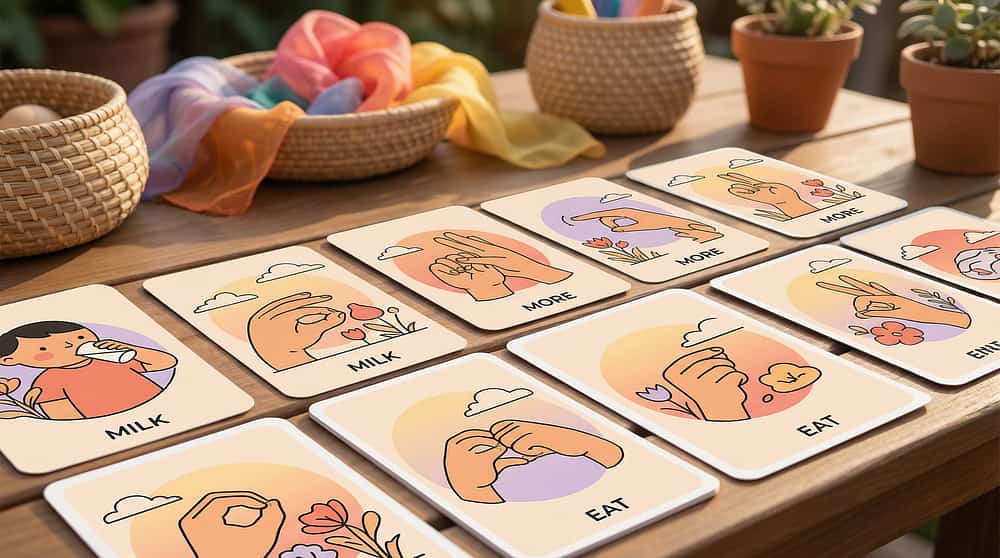
9. Baby Sign Language Materials & Visual Gesture Supports
Baby sign language books, baby sign flashcards, baby sign posters, baby sign videos/apps.
💰 ₹200–800 | 🏷 Sign Language / Gesture Communication Resources
💰 ₹200–800 | 🏷 Sign Language / Gesture Communication Resources
💰 Total Estimated Kit Cost: ₹1,200–5,500 for comprehensive setup.
Pinnacle Recommends 🏅 Start with materials 2, 3, and 9 — these three alone can initiate gesture development at zero to minimal cost.
Pinnacle Recommends 🏅 Start with materials 2, 3, and 9 — these three alone can initiate gesture development at zero to minimal cost.
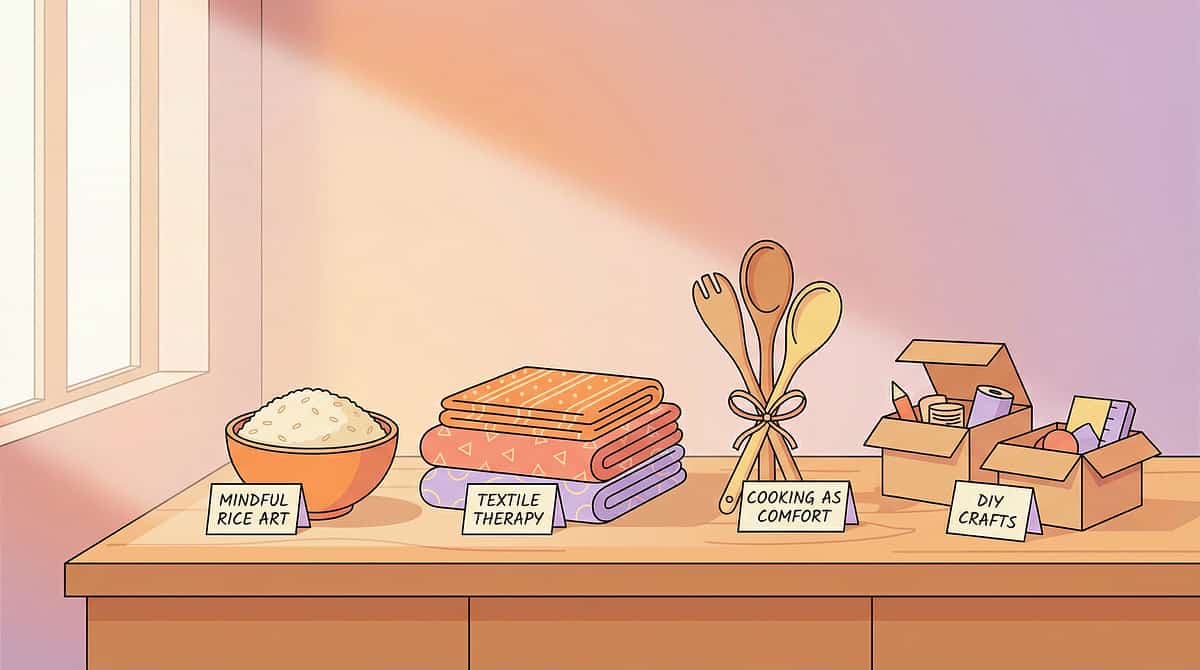
DIY & Zero-Cost Alternatives — Start Today
Every family can do this. Every home has these materials.
Material | Buy Version | DIY / Household Alternative & Why It Works | |
1. Waving Toys | Waving puppet ₹300+ | Any stuffed animal + wave it at every goodbye. Consistency of routine matters more than the toy. | |
2. Action Songs | Song books ₹200+ | FREE: Sing "Itsy Bitsy Spider" or "Wheels on the Bus" daily with exaggerated gestures. Pause before gesture moments. Music + repetition = gesture memory. | |
3. Giving Games | Stacking toys ₹150+ | Any household objects — spoons, cups, blocks. The social exchange is the therapy, not the object. | |
4. Head Movement | Bobblehead ₹200+ | Ask silly questions: "Is Daddy an elephant?" — shake no together. Real conversations create real practice. | |
5. Imitation Toys | Mirror toys ₹300+ | Bathroom mirror. Imitate YOUR CHILD first, then add one new action. Mirror neurons activate watching real people. | |
6. Reaching Games | Hanging toys ₹200+ | Hold favorite snack slightly out of reach. Before picking child up, pause — wait for arms-up. Natural communication temptations are the most powerful. | |
7. Pretend Props | Play kitchen ₹400+ | Empty cup → pretend drinking. Banana → pretend phone. Imagination uses household items better than branded toys. | |
8. Social Routines | Pop-up toys ₹200+ | Any blanket for peek-a-boo. Your hands for patty-cake. YOUR body is the best therapy material. | |
9. Baby Sign | Flashcards ₹200+ | Learn 3 signs from YouTube: "more" (fingertips together), "all done" (hands out), "help" (fist on palm). Consistency of modeling > quality of materials. |
🏷 Zero-Cost Starter Protocol: Start with action songs (free), giving games with household items (free), and 3 baby signs learned from YouTube (free). This costs ₹0 and covers the three most impactful intervention targets.
Source: WHO Nurturing Care Framework (2018) | CCD Package across 54 LMICs | PMC9978394
Safety First — Before You Begin
🔴 DO NOT PROCEED IF:
- Child is ill, feverish, or showing signs of infection
- Child has had a seizure in the past 24 hours
- Child has neck/cervical spine concerns (consult physician for head movement games)
- Child is in active distress, crying, or post-meltdown (wait 20+ minutes)
- Any material has small parts for children under 3 who mouth objects (choking hazard)
🟡 MODIFY THE APPROACH IF:
- Child has motor planning difficulties (apraxia) — accept rougher approximations of gestures
- Child has low muscle tone (hypotonia) — support the arm/hand during gesture attempts
- Child shows tactile defensiveness — substitute with accepted textures
- Child has difficulty releasing objects — start giving games with low-preference items
- Child is overwhelmed by high social intensity — reduce pace, soften voice, increase space
🟢 PROCEED WITH CONFIDENCE WHEN:
- Child is fed, rested, and in a calm-alert state
- Environment is quiet with minimal distractions
- You have 10–15 minutes of uninterrupted time
- Materials are prepared and within reach
- You feel calm and patient — your state matters
🛑 STOP THE SESSION IMMEDIATELY IF: Child shows persistent distress | Child avoids all eye contact for 2+ minutes | Child exhibits self-injurious behavior | You feel frustrated or impatient (pause, breathe, resume later)
Material Safety Checklist:✅ All small parts removed or secured | ✅ Mirrors are acrylic (not glass) | ✅ Toys are clean and age-appropriate | ✅ No loose strings or ribbons over 15cm | ✅ Pretend play items cannot be swallowed
The best session is one that starts right. If today isn't the day — that's data, not failure.
Source: Indian Journal of Pediatrics RCT (2019): DOI: 10.1007/s12098-018-2747-4
Source: Indian Journal of Pediatrics RCT (2019): DOI: 10.1007/s12098-018-2747-4
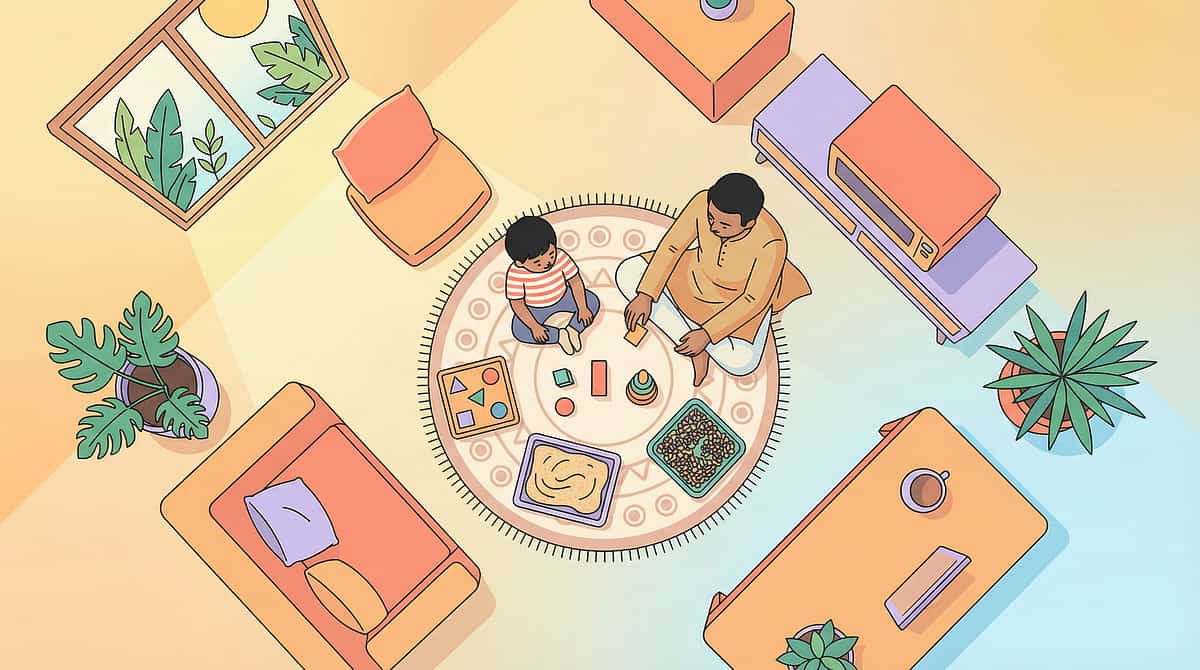
Set Up Your Space
Room Configuration for Gesture Building Sessions
1
Your Child's Position
Seated on floor mat or in highchair. Face-to-face with you. At your eye level or slightly below.
2
Your Position (Parent)
Seated directly facing your child, at their eye level. Your hands must be visible. Distance: arm's length — close enough to guide, far enough for them to initiate.
3
Materials Position
Behind you or beside you, out of child's direct line of sight. You control when materials appear. This creates communication temptation.
4
Mirror (Optional)
To one side, angled so child can see themselves and you simultaneously. Mirrors amplify gesture awareness.
Remove From Space
- ❌ Screens (TV, tablet, phone)
- ❌ Other toys not being used
- ❌ Food/snacks (unless for pretend play or reinforcement)
- ❌ Other people walking through
- ❌ Overhead fluorescent lighting — use warm, soft lighting
Environment Settings
- 🔇Noise: Minimal — turn off background TV/music
- 💡Light: Warm, natural light preferred. Face the window.
- 🌡Temperature: Comfortable — not too warm
- 🧹Floor: Clear space of at least 2m × 2m
"Spatial precision prevents 80% of session failures." — Pinnacle Blooms Clinical Protocol Manual
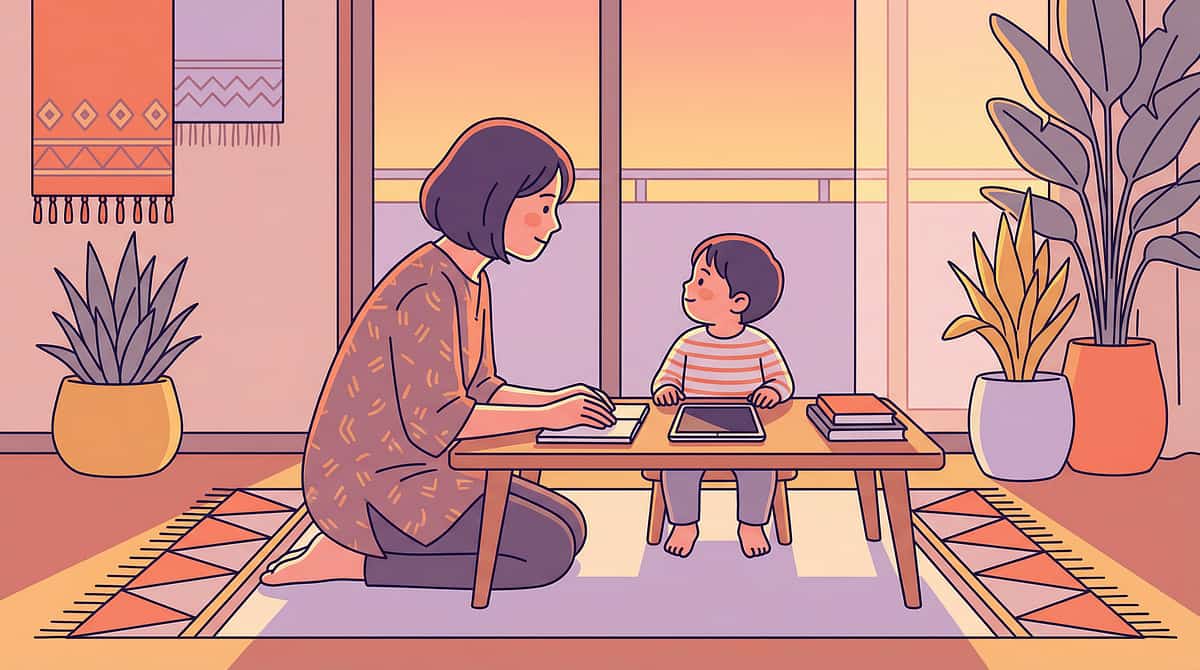
Readiness Check — 60 Seconds Before You Start
Check each item before beginning. This gate protects both you and your child.
✅ Fed?
Child has eaten within the last 1–2 hours — not hungry, not just finished eating.
✅ Rested?
Child is alert, not drowsy or just waking up.
✅ Dry?
Diaper is clean and dry.
✅ Calm?
Child is in a regulated state — not crying, not in sensory overload.
✅ Healthy?
No fever, no active illness, no pain indicators.
✅ Engaged?
Child shows some social awareness — looks at you, responds to name. No meltdown in the past 20 minutes.
Result | Decision | Action | |
✅ All green | GO | Begin with Step 1: The Invitation | |
🟡 1–2 amber | MODIFY | Choose only 1 material, 5-minute session, lower demands | |
🔴 Any red | POSTPONE | Do a calming activity (gentle rocking, quiet music, deep pressure hug). Try again in 1–2 hours. |
"The best session is one that starts right."
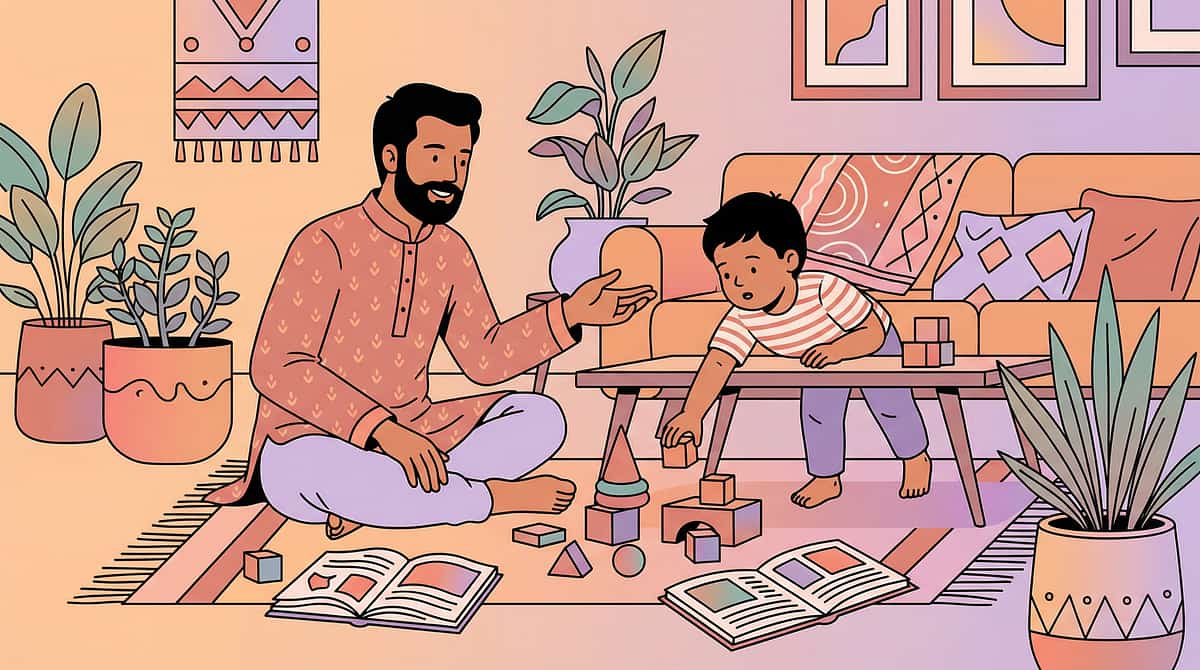
Step 1: The Invitation (30–60 Seconds)
Step 1 of 6
Every protocol begins with an invitation, not a command.
Your Script
"Hey [child's name]! Look what I have! Come see… come see…"
(Show ONE material partially — create curiosity, not overwhelm)
Your Body Language
- Get down to child's eye level
- Lean slightly forward with animated facial expression
- Hold the material at your chest level so child must look at YOU to see it
- Wiggle, shake, or animate the material gently
✅ What Acceptance Looks Like
- Child looks at you
- Child looks at the material
- Child moves toward you
- Child reaches
- Child makes any vocalization
🔄 Resistance & How to Modify
- Child looks away → Wait 10 seconds, try with a different material
- Child cries → Pause, comfort, try later
- Child interested in something else → Join THEIR activity and embed gesture practice into what they're already doing
⏱ Timing: 30–60 seconds. If acceptance doesn't happen in 60 seconds, STOP. This is not the moment. Try again later. Do not force engagement.
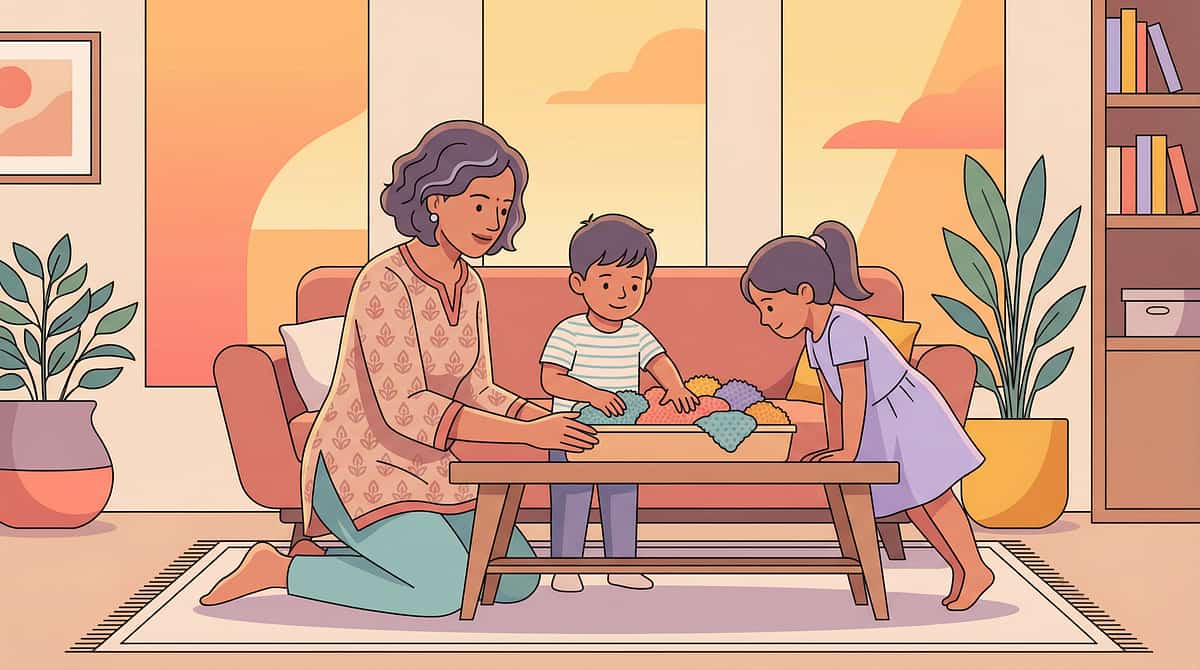
Step 2: The Engagement (1–3 Minutes)
Step 2 of 6
The child is interested. Now deepen the interaction.
No Gestures at All → Start with Material 6: Reaching & Arms-Up Games
Hold bubbles or a favorite toy slightly above and in front of child. Wait. Do not hand it to them. The moment they REACH — even slightly — celebrate: "You're reaching! You want it!" Hand them the item immediately. Reaching = communication = success.
Some Reaching, No Social Gestures → Start with Material 1: Waving Toys
Wave a puppet at the child: "Hi! Hello! Wave hello!" Take child's hand gently and help them wave. Make the puppet "respond" with delight.
Imitates Some Actions → Start with Material 2: Action Songs
Begin a familiar song with exaggerated gestures. Pause at the gesture moment — wait 5 seconds. If they attempt ANY movement — that's your win.
Indicator | Meaning | Action | |
🟢 Engagement | Child watches, reaches, attempts to copy, smiles, vocalizes | Reinforce immediately — celebrate within 3 seconds | |
🟡 Tolerance | Child allows the activity but doesn't actively participate | Continue gently — observational learning is real learning | |
🔴 Avoidance | Child turns away, pushes material away, protests | Modify or pause — honor the communication |
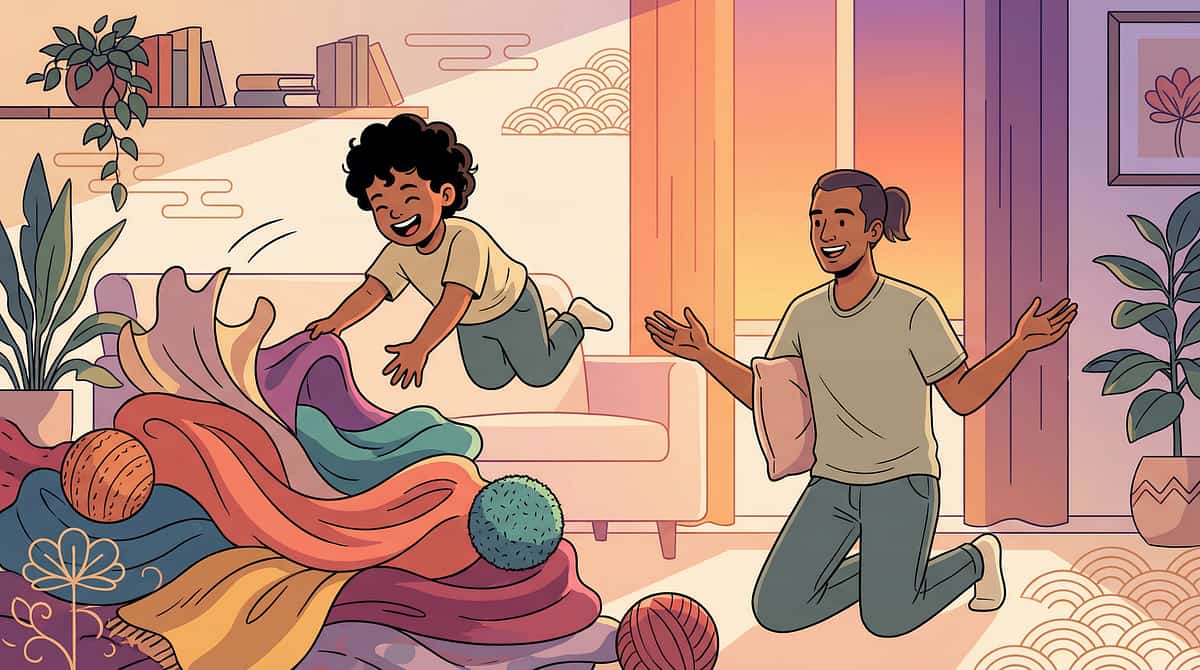
Step 3: The Gesture Building Action (3–5 Minutes)
Step 3 of 6
This is the active therapeutic moment.
This is the heart of every session. Each repetition of the Model → Wait → Shape → Celebrate cycle lays down a new neural connection. The waiting is the hardest part — resist the urge to fill the silence. Give your child's brain the processing time it needs.
Child's Response | Meaning | Action | |
Gesture attempt (any form) | Ideal — neural pathway activating | Reinforce immediately, repeat | |
Watches but doesn't try | Acceptable — observational learning in progress | Continue modeling, don't push | |
Disengages after 2+ minutes | Concerning — session may need modification | Switch material or end session |
Duration of Therapeutic Exposure: Per material: 3–5 minutes | Per session: Focus on 1–2 materials maximum | Total session: 10–15 minutes
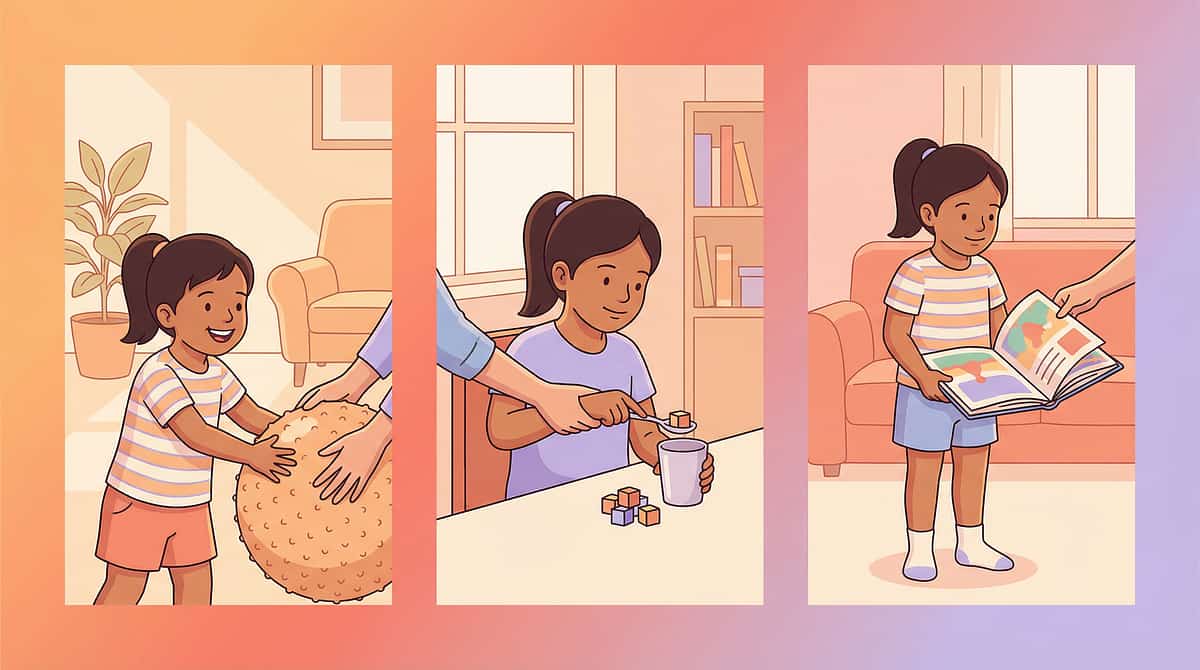
Step 4: Repeat & Vary (3–5 Minutes)
Step 4 of 6
Therapeutic dosage — the "reps" that build neural pathways.
Target Repetitions
3–8 attempts of the target gesture per session.
"3 good reps > 10 forced reps" — Quality of engagement matters more than quantity.
🛑 Satiation Indicators — When to Stop
- Child's attempts become less enthusiastic or stop entirely
- Child looks away consistently or leaves the activity area
- Child becomes fussy or irritable
- You've been going for 15+ minutes (maximum session length for this age)
"End on a high. The last thing should feel like fun, not work."
Variation Options — Keep It Fresh
For Waving
Wave to teddy, wave to the mirror, wave when Daddy leaves the room, wave when the dog walks away, wave to pictures in a book.
For Giving
Give blocks, give spoons, give socks, give food items — each "give" is a communication rep.
For Pointing
Point at the light, point at the fan, point at the dog — different targets, same gesture.
For Signing "More"
More tickles, more swinging, more bubbles, more food — different contexts, same sign.
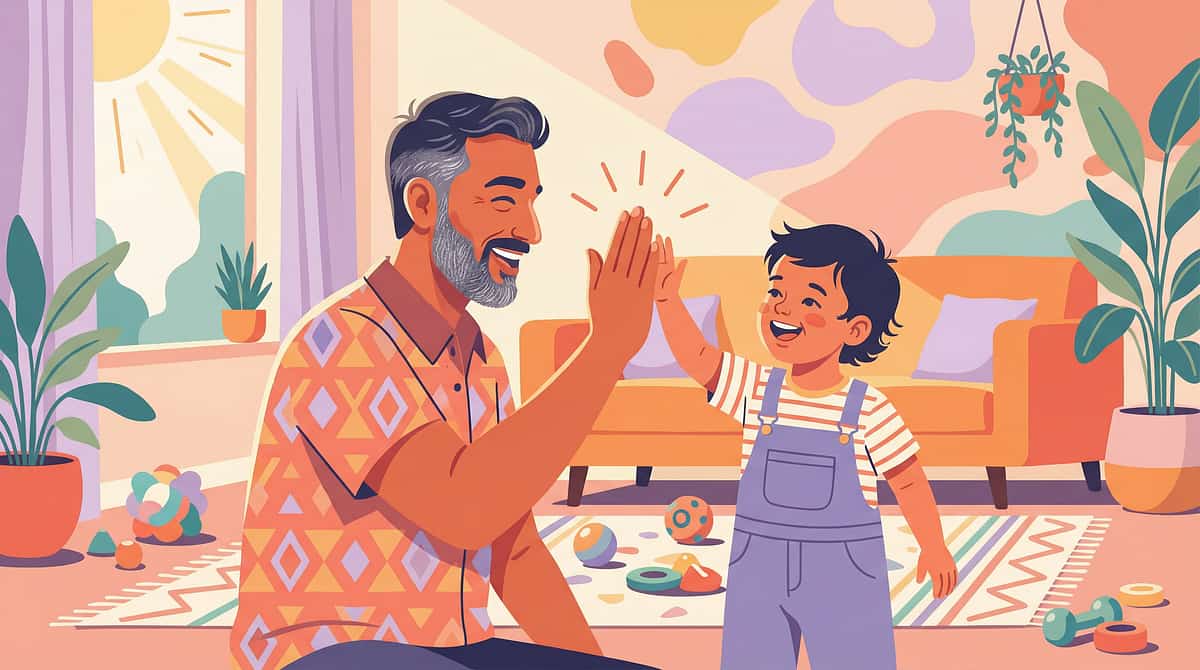
Step 5: Reinforce & Celebrate
Step 5 of 6
The ABA Science of Making Gestures Stick
Within 3 Seconds
The timing of reinforcement is everything. Late reinforcement fails to connect the gesture to the reward. Always reinforce within 3 seconds of the gesture attempt.
Be Specific, Not Generic
❌ "Good job!" (too vague)
✅ "You WAVED! Bye-bye! You waved bye-bye!"
✅ "You POINTED! You want the ball! Here's the ball!"
✅ "You gave me the block! THANK YOU!"
✅ "You WAVED! Bye-bye! You waved bye-bye!"
✅ "You POINTED! You want the ball! Here's the ball!"
✅ "You gave me the block! THANK YOU!"
Match the Reinforcer to Your Child
Social praise (big smile, high-five) + Natural consequence (give them what they pointed at) + Tangible reward (favorite snack when motivation is low) + Sensory reward (tickles, bouncing for sensory-seekers).
"CELEBRATE THE ATTEMPT, NOT JUST THE SUCCESS." A wobbly arm movement toward "wave" IS a wave. A whole-hand point IS a point. A hand press IS a "more" sign. Shape toward precision over weeks. Reinforcement NOW builds the motivation to try again tomorrow.
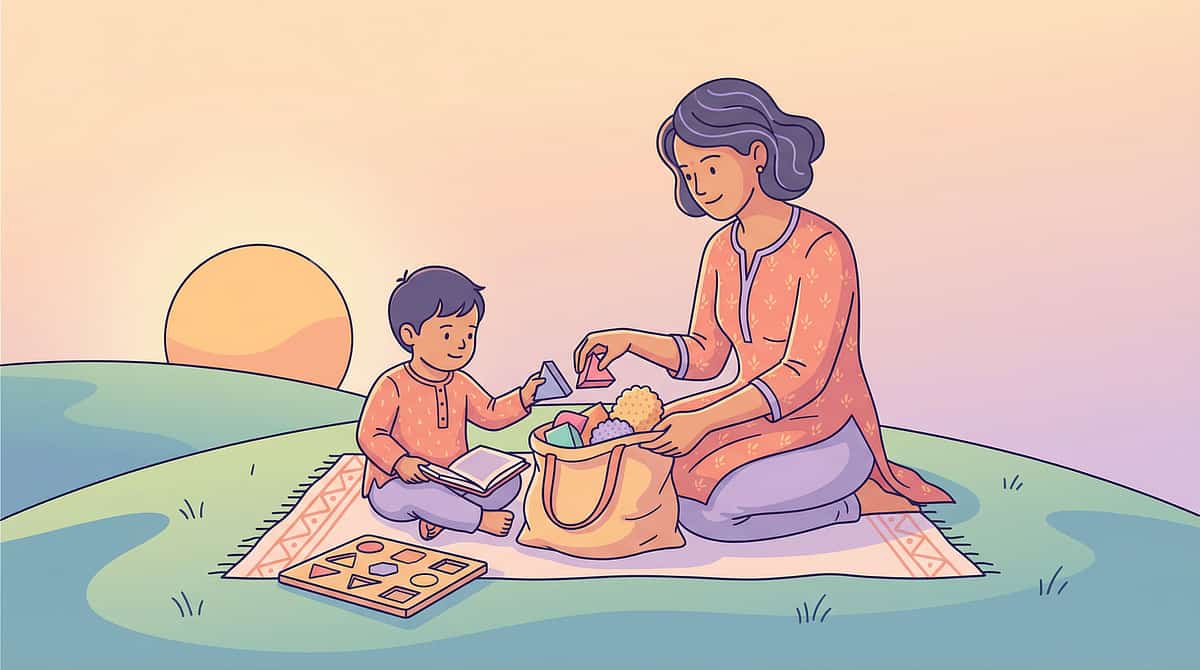
Step 6: The Cool-Down (1–2 Minutes)
Step 6 of 6
No session ends abruptly.
Transition Warning Script
"Two more, then all done!" (hold up 2 fingers)
"One more, then all done!" (hold up 1 finger)
"All done! Great job today!" (sign "all done" — hands palm-out, flip to palm-down)
Material Put-Away Ritual
If child is able, have them help put one item away. Say: "Give me the puppet" (one more gesture opportunity!) → "Thank you! You gave me the puppet!"
Transition to Next Activity
"Session is all done! Now let's go have [snack/play/outside/etc.]"
If Child Resists Ending: Allow 1 more repetition: "One more, then all done." Then gently redirect. Consistency in ending teaches "all done" as a concept — itself a gesture goal.
Cool-Down Activity Choices
Gentle Rocking or Swaying
Sway together for 30 seconds — calming proprioceptive input that signals "session is over, all is well."
Soft Humming or Quiet Song
A familiar, low-key melody signals transition and regulates the nervous system.
Deep Pressure Hug
A firm, sustained squeeze — the most powerful calming input for most young children.
Quiet Book Looking
Side-by-side shared attention with a favorite book. Low demand, high connection.
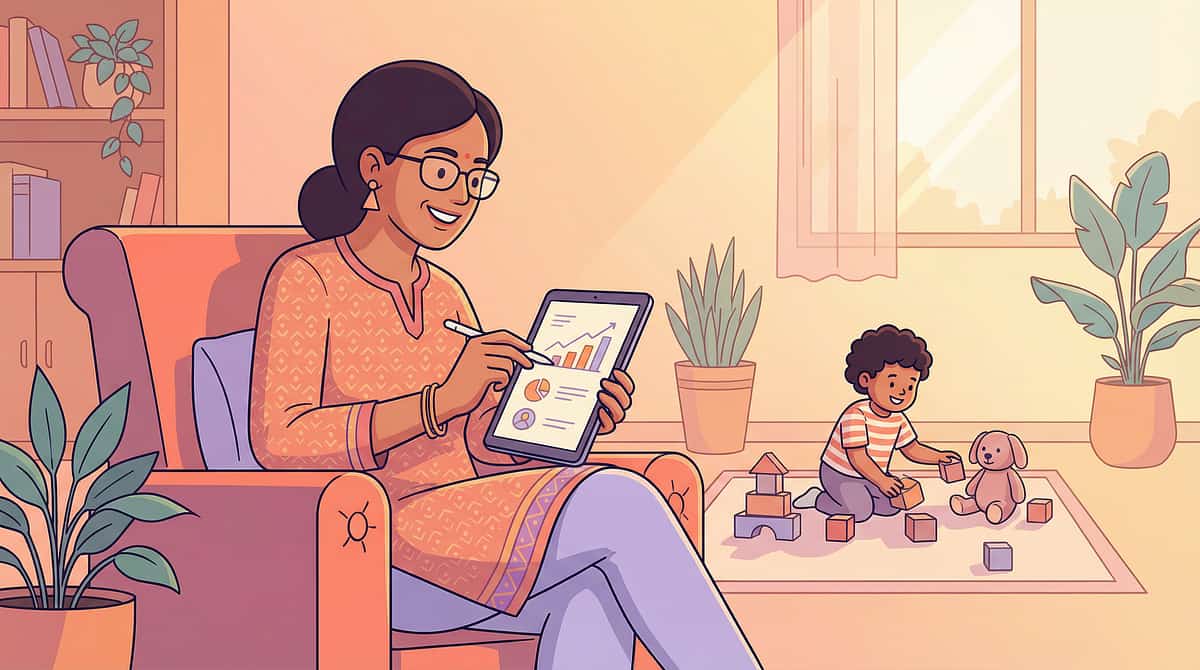
Capture the Data — Right Now (60 Seconds)
Within 60 seconds of session end, record these 3 data points.
Data Point 1: Which Gestures Did Your Child Attempt Today?
☐ Reach | ☐ Wave | ☐ Give | ☐ Point | ☐ Nod | ☐ Head shake | ☐ Sign (which: ___) | ☐ Pretend action | ☐ None
Data Point 2: How Did the Attempt Look?
☐ Spontaneous (child initiated) | ☐ Imitated (copied you) | ☐ Hand-over-hand (physically guided) | ☐ No attempt
Data Point 3: Overall Session Rating
☐ 😊 Great (engaged, attempted, enjoyed) | ☐ 😐 Okay (some engagement, some resistance) | ☐ 😟 Difficult (minimal engagement, high resistance) | ☐ ⏭ Skipped (postponed — note reason)
📥 Download Tracker
unknown link
📱 In-App Tracker
📓 Simple Notebook
Date, gestures attempted, session rating — that's it.
"60 seconds of data now saves hours of guessing later."
What If It Didn't Go As Planned?
The 7 Most Common Problems — And What to Do
Problem 1: "My child wouldn't even look at me."
Why: Child may not yet associate your face with communication opportunities.
Fix: Start with cause-effect toys (press button → something happens). Build shared attention on objects before demanding face-to-face interaction.
Fix: Start with cause-effect toys (press button → something happens). Build shared attention on objects before demanding face-to-face interaction.
Problem 2: "They use my hand as a tool."
Why: This IS a gesture — an instrumental one. It means they understand you can help. It's a foundation.
Fix: When they grab your hand, PAUSE. Open your hand. Wait. Model pointing with YOUR finger. Gradually shape hand-leading into pointing.
Fix: When they grab your hand, PAUSE. Open your hand. Wait. Model pointing with YOUR finger. Gradually shape hand-leading into pointing.
Problem 3: "They imitate everything EXCEPT gestures."
Why: Motor planning for gestures may be harder than for other actions.
Fix: Start with gross motor imitation (clapping, stomping) before fine motor gestures (pointing, signing). Build the imitation muscle on easier actions first.
Fix: Start with gross motor imitation (clapping, stomping) before fine motor gestures (pointing, signing). Build the imitation muscle on easier actions first.
Problem 4: "They waved once but never again."
Why: The neural pathway fired once but wasn't reinforced strongly enough to consolidate.
Fix: Recreate the EXACT context where the wave happened — same routine, same people, same time. Repetition of the trigger context reactivates the pathway.
Fix: Recreate the EXACT context where the wave happened — same routine, same people, same time. Repetition of the trigger context reactivates the pathway.
Problem 5: "My child gets upset when I try to guide their hands."
Why: Tactile defensiveness or loss of autonomy — hand-over-hand feels controlling.
Fix: Switch to modeling only. Or try "hand-under-hand" — place your hands under theirs, gently lift. Or use puppet hands instead of touching their hands directly.
Fix: Switch to modeling only. Or try "hand-under-hand" — place your hands under theirs, gently lift. Or use puppet hands instead of touching their hands directly.
Problem 6: "Nothing happened in the first week."
Why: Gesture development takes time. Neural pathways need repetition to consolidate.
Fix: Keep going. Week 1 is observation, not production. You're building the foundation. Change is coming — trust the process and the data.
Fix: Keep going. Week 1 is observation, not production. You're building the foundation. Change is coming — trust the process and the data.
Problem 7: "The session turned into a meltdown."
Why: Demands exceeded the child's capacity at that moment.
Fix: Next session — lower demands. Start with 2 minutes, not 10. Use their preferred materials. End BEFORE they get upset. Build session tolerance gradually.
Fix: Next session — lower demands. Start with 2 minutes, not 10. Use their preferred materials. End BEFORE they get upset. Build session tolerance gradually.
"Session abandonment is not failure — it's data. It tells you where to adjust."
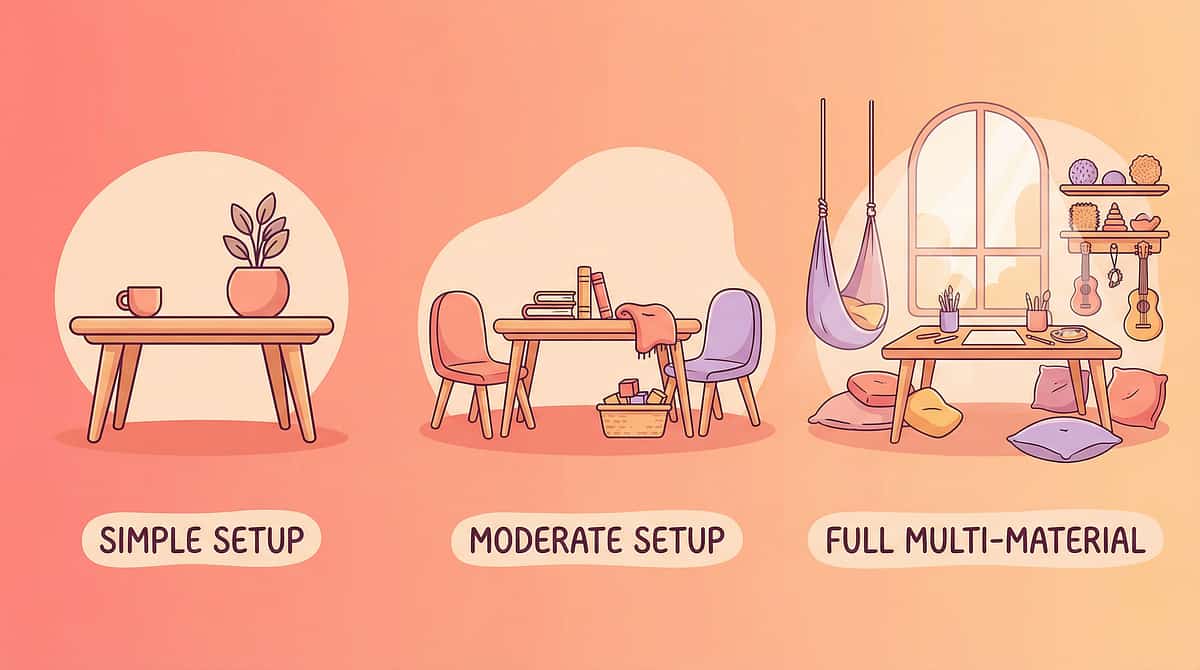
Adapt & Personalize
No two children are identical. Here's how to customize.
1
Easier (Bad Day / Early Stages)
1 material only. 5 minutes max. Accept ANY body movement as gesture. Full hand-over-hand support. No waiting for independent attempts.
2
Standard (Typical Session)
1–2 materials. 10–15 minutes. Model → wait → shape → celebrate. Accept approximations. Follow the 6-step protocol as written.
3
Harder (Breakthroughs / Advanced)
2–3 materials. Add gesture + vocalization combos. Reduce hand-over-hand. Increase wait time. Introduce novel contexts for generalization.
Sensory Profile Variations
For Sensory Seekers: Use high-energy materials — action songs with big movements, bouncing during reaching games, tickle games for social routines. These children are motivated by intense sensory input.
For Sensory Avoiders: Use low-intensity materials — quiet singing, gentle object exchanges, soft peek-a-boo with familiar blanket. Build tolerance gradually. Never force sensory experiences that cause distress.
Age-Based Adjustments
- 8–12 months: Focus on reaching, arms-up, emerging wave. Very short sessions (5 min). Maximum physical support.
- 12–18 months: Add pointing, giving, head movements, first signs. 10-minute sessions. Reduce physical support gradually.
- 18–24 months: Full gesture repertoire building. 15-minute sessions. Focus on spontaneous gesture use and gesture + word combinations.
Week 1–2: What to Expect
Progress: 15%
✅ What You May See
- Child tolerates the session for increasing duration (from 2 min → 5 min → 8 min)
- Child watches your gestures with more sustained attention
- Increased eye contact during material presentation
- Child reaches toward materials more quickly (reduced latency)
- Reduced resistance to hand-over-hand guidance
❌ What Is NOT Progress Yet
- Spontaneous gestures in new settings — too early
- Multiple gesture types — focus on 1–2 first
- Gesture + word combinations — this comes much later
The Emotional Reality for Parents
These first two weeks are the hardest. You will wonder if anything is working. You will compare your child to others. You will doubt yourself.
"If your child watches your wave 3 seconds longer than last week — that is real, measurable, neurological progress. Their mirror neurons are firing. The pathway is being built."

Week 3–4: Consolidation Signs
Progress: 40%
40%
Progress Milestone
Your child's gesture network is consolidating. The pathways are thickening. You are nearly halfway.
6 wks
Avg. First Wave
Most children show their first spontaneous wave attempt around Week 6 of consistent daily practice.
8 wks
Generalization
Gesture use in NEW contexts typically begins around Week 8 — the most powerful indicator of true learning.
Child anticipates gesture moments in familiar routines
Pauses before song gesture, looks expectant at goodbye — the brain has learned the pattern.
Emerging gesture approximations without physical guidance
Floppy wave, whole-hand point, vague reaching — the body is beginning to "know" the movement.
Child begins to show objects
Holds things up for you to see — a milestone in social communication and shared attention.
Increased vocalization DURING gesture attempts
The gesture-language connection is activating. Sound + movement = the bridge to first words.
When to Increase Difficulty: If child is consistently attempting gestures with minimal support → add a second material target. If child waves independently → introduce pointing. If child gives objects → introduce head nod/shake.
"You may notice you're more confident too. That's not a coincidence — your child feels your confidence."
Week 5–8: Mastery Indicators
Progress: 75%
🏆 Mastery Criteria — Badge Unlock
Gesture Type | Mastery Definition | Check | |
Reaching | Child reaches for wanted items without prompting, in 3+ contexts | ☐ | |
Waving | Child waves bye-bye independently when someone leaves | ☐ | |
Giving | Child hands objects to share or request, with eye contact | ☐ | |
Pointing | Child points to request OR to show you something interesting | ☐ | |
Head nod/shake | Child nods yes or shakes no in response to questions | ☐ | |
Baby sign(s) | Child uses 1+ signs functionally (more, eat, all done) | ☐ | |
Pretend gesture | Child pretends to drink, eat, sleep, or phone with objects | ☐ | |
Gesture + vocalization | Child combines gesture with sound (point + "uh!" / sign + "ma!") | ☐ |
5+ checkmarks = MASTERY UNLOCKED 🏆
Mastery Achieved
Move to next level: B-126 (Joint Attention) or B-153 (Complex Gesture Building)
3–4 Checkmarks
Stay at this level for 2–4 more weeks, focusing on unchecked items
Fewer than 3
Consult a professional for individualized guidance. Call Pinnacle Helpline: 9100 181 181
Celebrate This Win 🎉
You Did This.
"You did this. Your child grew because of your commitment. Every wave, every point, every sign was built by your patience, your consistency, and your love."
Remember that moment when her hands had no language? When his body didn't speak? Look at your child now. Those hands that were silent — they wave bye-bye. They point at the airplane. They sign "more" at the dinner table. They hand you a book because they want to read together.
📸 Capture the Moment
Take a photo or video of your child's best gesture — this is a milestone moment worth preserving forever.
📓 Document It
Write it in their development journal — date, gesture, context. This becomes the story of how their voice was found.
👨👩👧 Tell Your Family
They need to know the progress. Grandparents, aunts, uncles — everyone who loves this child deserves to celebrate.
🎊 Mark the Moment
Do something special together — a favorite outing, a special treat, a dance party at home. This is worth celebrating.
Red Flags — When to Pause and Seek Help
Even in progress, these signs mean "contact a professional"
🔴 No Gesture Attempt After 4 Weeks
No gesture attempt of ANY kind after 4 weeks of consistent daily practice. May indicate motor planning difficulty requiring professional OT assessment.
🔴 Losing Previously Acquired Gestures (Regression)
Child loses gestures they previously had. Urgent: contact developmental pediatrician within 1 week. Regression always warrants professional attention.
🔴 Gesture Attempts Cause Physical Pain or Distress
May indicate motor, neurological, or joint concerns requiring immediate medical evaluation.
🔴 No Eye Contact With Any Gesture
May indicate autism-specific social communication pattern requiring comprehensive evaluation.
🔴 Increasing Social Withdrawal Over Time
Child becomes more withdrawn or avoidant of social interaction. Intervention may need professional restructuring.
🔴 Significant Increase in Repetitive Hand Movements
Hand-flapping, finger-flicking, or repetitive hand movements increasing significantly may be self-stimulatory behaviors requiring professional differential assessment.
"Trust your instincts — if something feels wrong, pause and ask. Early action is always better than late worry."
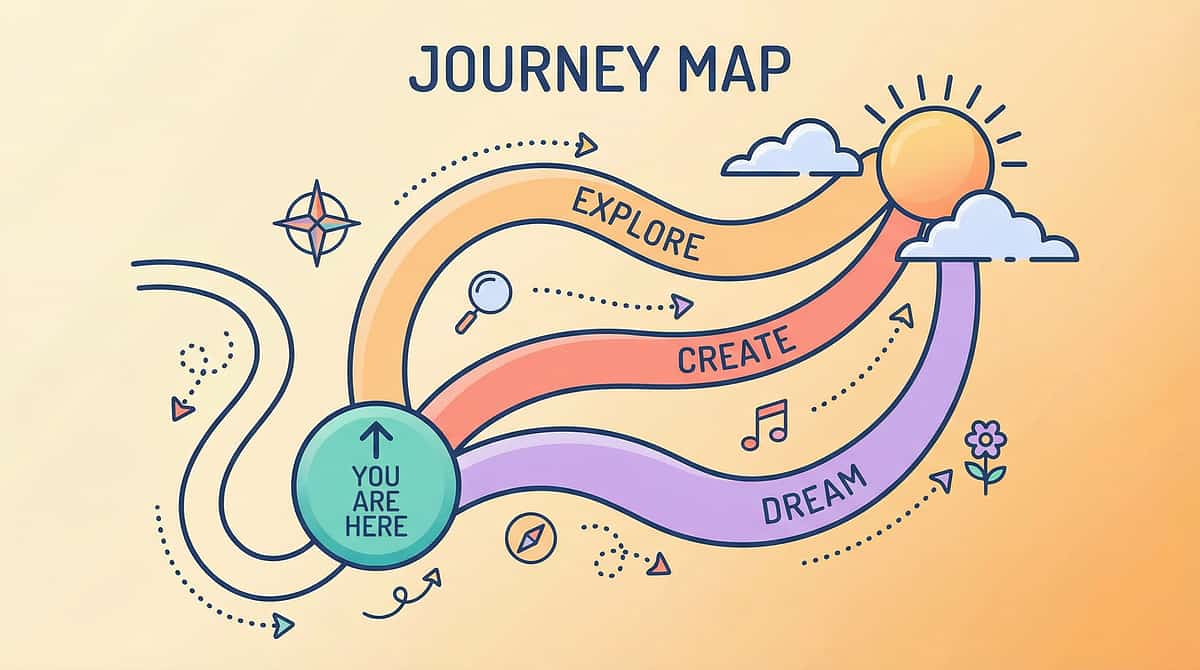
The Progression Pathway
Where You Were → Where You Are → Where You're Going
1
← Before B-125
2
★ B-125: No Gestures
YOU ARE HERE — Full gesture repertoire building across deictic, conventional, and representational gesture categories.
3
→ After B-125
B-126: Joint Attention — If pointing emerged first
B-127: Limited Imitation — If social gestures emerged first
B-178: Uses Gestures Only — Bridge to verbal language
B-127: Limited Imitation — If social gestures emerged first
B-178: Uses Gestures Only — Bridge to verbal language
Long-Term Developmental Goal: Functional communication system → Verbal language emergence → Social communication competence
Related Techniques in Communication & Gesture Development
Technique | Level | Canon Material | Link | |
B-122: No Babbling | 🟢 Intro | Cause-Effect Toys | ||
B-123: Doesn't Point | 🟡 Core | Sign Language / Gesture Resources | ||
B-124: Doesn't Wave | 🟢 Intro | Role-Play / Pretend Play Props | ||
B-126: Doesn't Show Objects | 🟡 Core | Turn-Taking / Cooperative Games | ||
B-127: Doesn't Follow Point | 🟡 Core | Attention/Focus Games | ||
B-153: Needs Gestures to Understand | 🔴 Advanced | Communication Boards |
💡 You already own materials for B-123 and B-124 — the same waving toys, action songs, and sign language materials work across these techniques. Your investment multiplies across the entire domain.
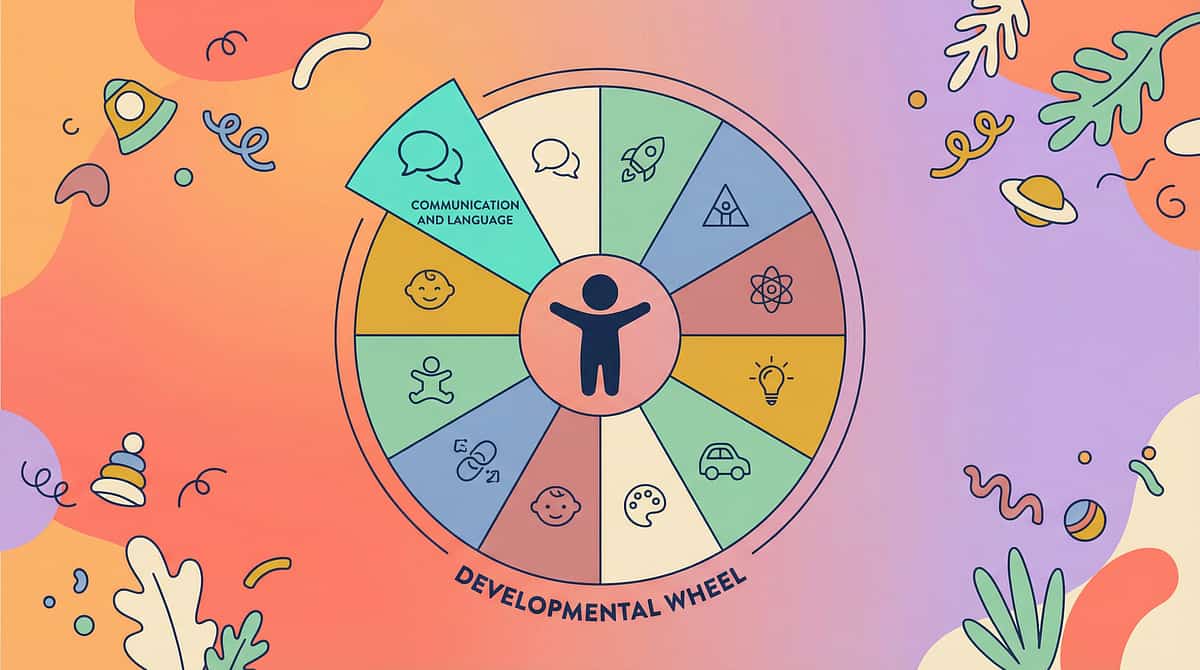
Your Child's Full Developmental Map
This technique is one piece of a larger plan.
How This Technique Connects to Other Domains
01
Gesture Development → Social Skills
Joint attention, turn-taking, and reciprocity all build on gesture foundations.
02
Social Skills → Cognitive Learning
Symbolic representation powers both gesture and abstract thinking.
03
Cognitive Learning → Fine Motor
Hand coordination for gestures directly feeds into drawing, self-care, and play skills.
04
Fine Motor → Emotional Regulation
The ability to express needs through gesture reduces frustration-driven meltdowns.
"One technique ripples across the entire developmental landscape."
See Your Child's Full Profile
The GPT-OS® Developmental Dashboard tracks all 12 domains, shows your child's progress trajectory, and auto-recommends the next technique based on real data.
Families Who've Been Here
Family Story 1 — Hyderabad Center
"He had no gestures at 18 months — not even reaching. We started with the bubble games and action songs. By 20 months, he was reaching. By 22 months, he waved at his grandmother and she cried. By 2.5, he points, waves, nods, and even blows kisses. The gesture foundation changed everything for his communication."
From the Therapist's Notes: This child presented with absent gestures and limited eye contact at 18 months. First spontaneous wave appeared at Week 6. By Week 12, repertoire included 8+ gesture types. Verbal language emerged at 28 months — 4 months after gesture foundation was established.
Family Story 2 — Bangalore Home Therapy Program
"I was told to wait until she talked. But at 16 months with no waving, no pointing, no gestures at all, I started the baby sign protocol. 'More' was her first intentional communication. It changed our lives. She could finally tell us something. The meltdowns dropped because she could sign 'all done' instead of screaming."
Note: Illustrative cases; outcomes vary by child profile. Individual assessment recommended.
Connect With Other Parents
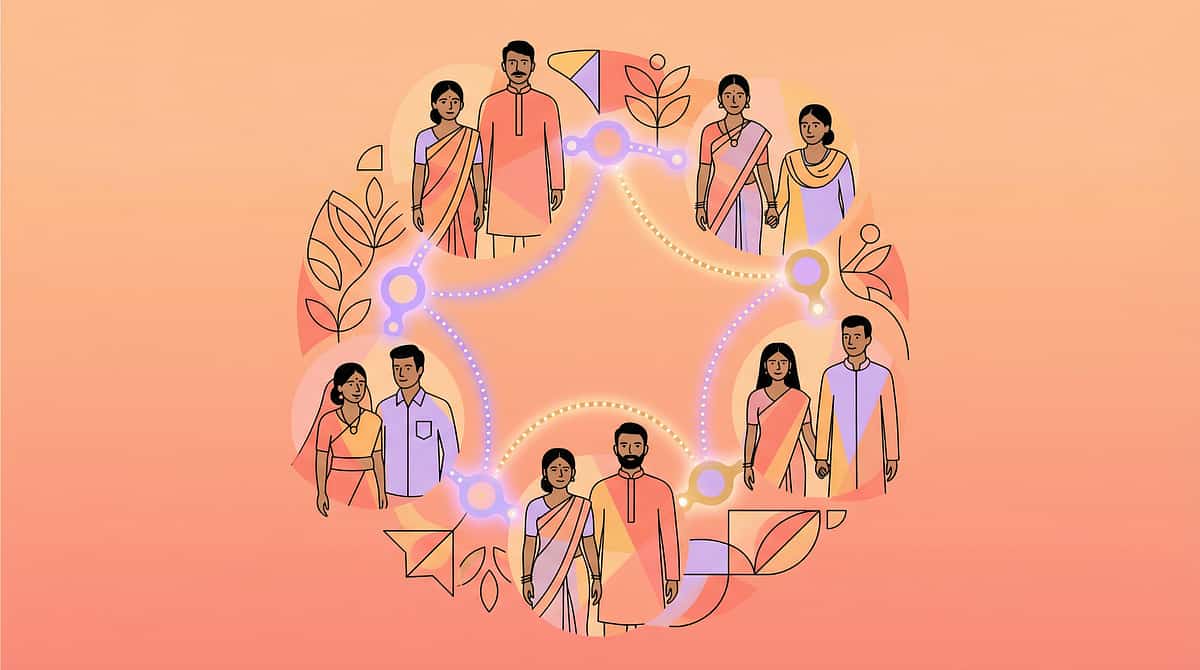
You are not doing this alone.
💬 Gesture Development Parent WhatsApp Group
Connect with families working on the same challenge. Share wins, ask questions, find support from parents who truly understand. Join Group
🌐 Pinnacle Parent Community Forum
Online discussion for gesture and pre-verbal communication topics — available 24/7, in multiple languages. Visit Forum
📍 Local Pinnacle Parent Meetup
Monthly meetups at your nearest Pinnacle center — meet face-to-face with families on the same journey. Find Meetup
🤝 Peer Mentoring
Connect with an experienced parent who has already walked this path. Their hindsight is your shortcut. Request Mentor
"Your experience helps others — consider sharing your journey."
Your Professional Support Team
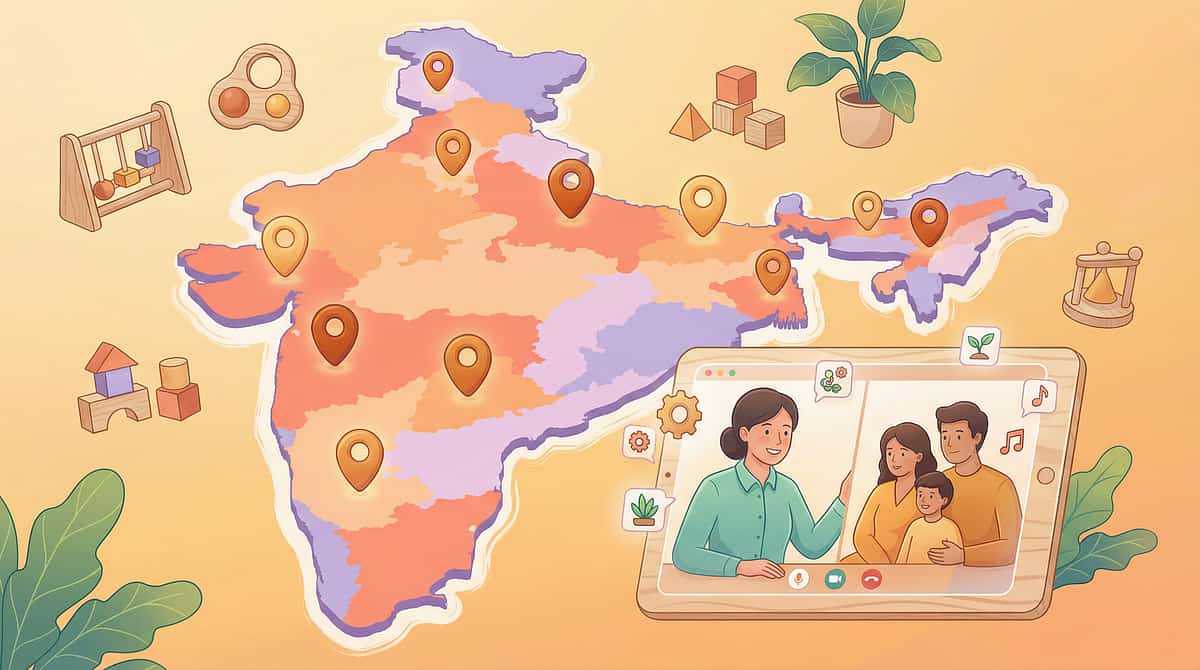
Home + Clinic = Maximum Impact
🗺 Find Your Nearest Center
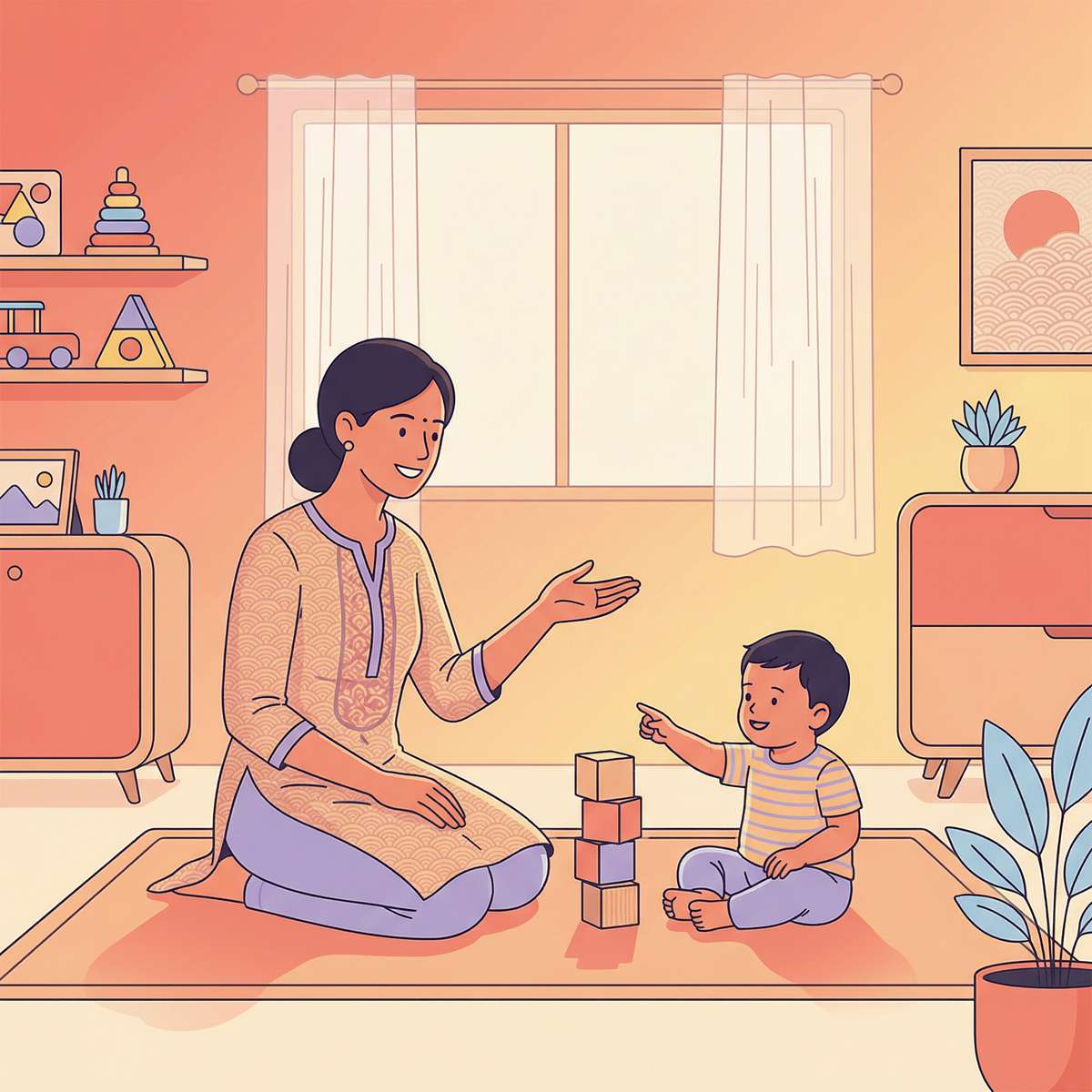
70+ centers across India — every state, every major city. Expert gesture development therapy available near you.
🩺 Therapist Matching
Primary: Speech-Language Pathologist (SLP) | Supporting: Occupational Therapist (OT) + BCBA. Matched to your child's specific profile.
📱 Teleconsultation
Can't visit a center? Book a video consultation with a Pinnacle gesture development specialist from anywhere in India.
📞 FREE National Autism Helpline
9100 181 181
24/7 | 16+ languages | No cost
Trained counselors + therapy guidance + center referrals
9100 181 181
24/7 | 16+ languages | No cost
Trained counselors + therapy guidance + center referrals
"Home-based intervention works best when supported by professional guidance."
The Research Library
For the Parent Who Wants to Go Deeper
Iverson JM, Goldin-Meadow S. (2005)
"Gesture paves the way for language development" — Landmark study establishing gesture as a direct driver of verbal language. PubMed
Rowe ML, Goldin-Meadow S. (2009)
"Differences in early gesture explain SES disparities in child vocabulary" — Gesture at 14 months predicts vocabulary at 54 months. PubMed
PRISMA Systematic Review (2024)
16 articles confirming sensory integration interventions as evidence-based for ASD. PMC11506176
Meta-Analysis (World J Clin Cases, 2024)
Sensory integration therapy effectively promotes social skills and adaptive behavior. PMC10955541
WHO/UNICEF CCD Package (2023)
Caregiver-delivered interventions across 54 low- and middle-income countries. PMC9978394
Padmanabha et al. (Indian J Pediatr, 2019)
Home-based interventions in Indian pediatric populations. DOI: 10.1007/s12098-018-2747-4
Wetherby AM, Prizant BM. (2002)
Communication and Symbolic Behavior Scales (CSBS) — Gold standard pre-linguistic assessment. Available at: CSBS Official
Evidence Pyramid
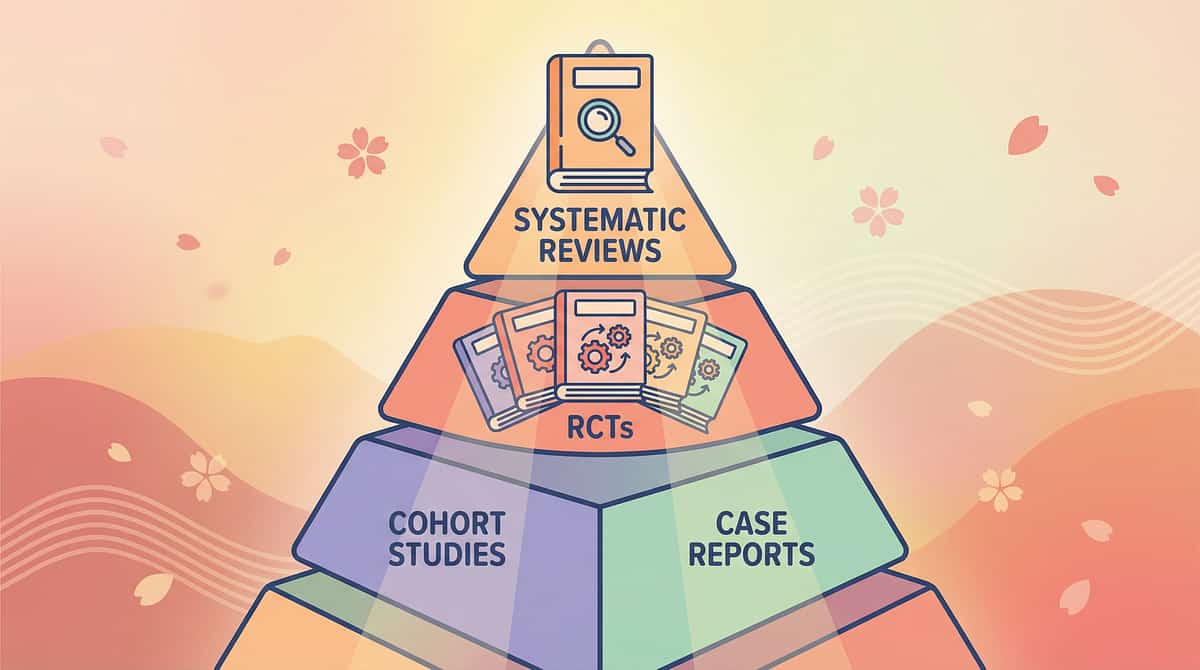
1
Systematic Reviews
Strongest level of evidence
2
Randomized Controlled Trials
Strong individual study evidence
3
Cohort Studies
Observational evidence base
4
Clinical Consensus
Expert practitioner agreement
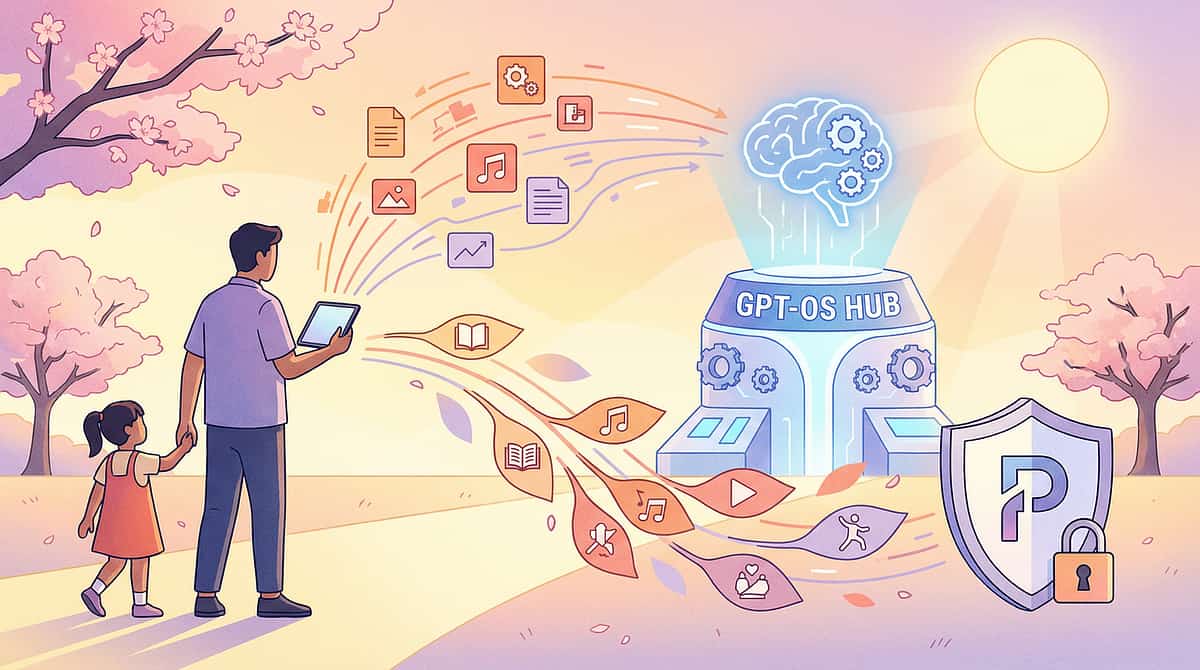
How GPT-OS® Uses Your Data
Transparency. Privacy. Progress.
What GPT-OS® Learns From B-125
- Which gestures emerged first in your child's profile
- Which materials produced the most engagement
- Optimal session duration for your child
- Progression readiness signals for next technique
Population Impact
"Your data helps every child like yours. When 10,000 families track gesture development, GPT-OS® identifies patterns invisible to any single clinician — leading to better recommendations for all families."
🔒 Privacy Protections
- All data is encrypted in transit and at rest
- Data is anonymized for population-level research
- You control what is shared — opt-in only
- Compliant with India's Digital Personal Data Protection Act (2023)
- ISO 27001 certified information security
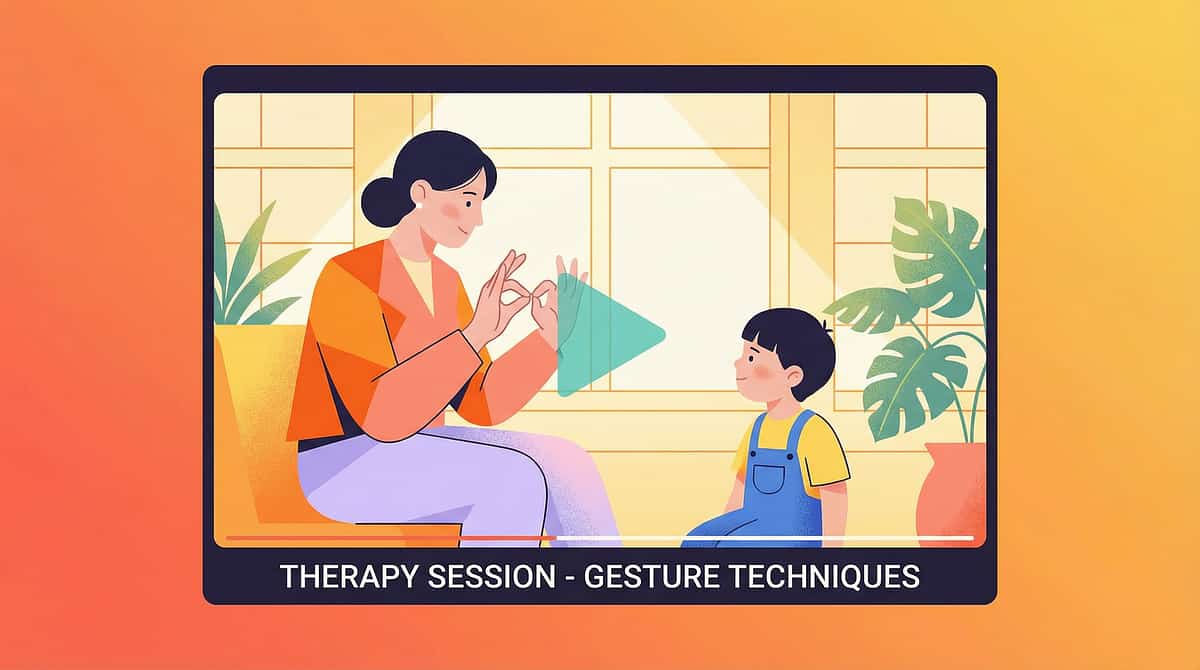
Watch the Reel
🎬 B-125: "9 Materials That Help When Child Has No Gestures"
What You'll See
A Pinnacle therapist demonstrates each of the 9 materials with a real child — showing you exactly what the gesture-building moment looks like. 75 seconds of concentrated clinical wisdom.
Reel Details
- Reel ID: B-125
- Series: Pre-Linguistic Communication — Episode 125
- Domain: Gesture Development
Why Video Matters: Video modeling is classified as an evidence-based practice for autism (NCAEP, 2020). Multi-modal learning — watching + reading + practicing — improves parent skill acquisition significantly over reading alone.
Seeing the technique in action closes the gap between knowing what to do and feeling confident doing it. Watch before your first session. Rewatch after your first challenging session.
Share This With Your Family
Consistency across caregivers multiplies impact.
If only one caregiver executes the technique, progress is limited. When the whole family knows, every interaction — every goodbye wave, every mealtime, every playtime — becomes a gesture-building opportunity. Share this now.
📄 Family Guide PDF
Download 1-Page Caregiver Guide
👴👵 Grandparent Version
Simplified, large-print summary with the 3 most important things grandparents need to know. Download Grandparent Guide
🏫 School Letter
Communication template for teachers and school staff. Download School Letter
What Grandparents Need to Know
- What gestures are and why they matter to your grandchild's development
- How to encourage gestures during visits — wave at hello/goodbye, wait for reaching before giving
- What NOT to do — don't force, don't test, don't compare to other children
"If only one caregiver executes the technique, progress is limited. When the whole family knows, every interaction becomes a gesture-building opportunity."
Source: WHO CCD Package — Multi-caregiver training as critical for intervention generalization | PMC9978394
Frequently Asked Questions
At what age should I be worried about no gestures?
If your child is not waving by 12 months, not pointing by 14–16 months, or using fewer than 5 different gestures by 16 months, these are significant developmental markers warranting professional evaluation. Don't wait — early intervention has the strongest evidence base.
Will teaching baby signs delay speech?
No. Research consistently shows the opposite — baby sign language supports and accelerates verbal language development. Signs bridge the gap between wanting to communicate and being able to speak. Children naturally drop signs as verbal language emerges.
My child uses my hand as a tool. Is that a gesture?
Yes — it's an instrumental gesture. It shows your child understands you can help them. It's a foundation. Your job is to gradually shape hand-leading into pointing by pausing when they grab your hand and modeling a point instead.
How long until I see progress?
Most families see emerging gesture attempts within 2–4 weeks of consistent daily practice. Consolidated gesture use (independent, across contexts) typically appears at 6–8 weeks. Every child's timeline is different — track data (Card 20) to see your child's unique progress curve.
Can I work on all 9 materials at once?
No. Start with 1–2 materials. When those gestures emerge, add another. Overwhelming with too many targets at once reduces effectiveness. Follow the progression in Step 2 (Card 15).
What if my child has been diagnosed with autism?
This protocol is specifically designed for children with autism spectrum features. Gesture development is a core therapeutic target across all autism intervention models (ABA, speech therapy, developmental approaches). The materials work — the timeline may be longer, and professional support is recommended alongside home practice.
Is absence of gestures always autism?
No. Gesture delays can occur in global developmental delay, motor planning difficulties (apraxia), hearing impairment, environmental deprivation, and specific language impairment. However, absence of gestures — especially pointing to share interest — is one of the earliest and most reliable indicators of autism and warrants professional evaluation.
Can I do this without buying any materials?
Yes. Card 10 shows zero-cost DIY alternatives for all 9 materials. Action songs, giving games, and baby signs can be started with absolutely nothing but your body and your voice.
Didn't find your answer? Ask GPT-OS® | Book a Teleconsultation
Your Next Step — Start Now
Take Action Today
🟢 Primary Action
GPT-OS® guided session launcher — walks you through Step 1 to Step 6 in real-time, adapting to your child's responses as you go.
🔵 Secondary Action
Connect with a Pinnacle gesture development specialist at your nearest center for personalized assessment and guided protocol design.
⚪ Explore Next Technique
Ready to progress? Move to B-126: Joint Attention — or browse the full Communication & Language domain for what comes next.
🗣 SLP
Speech-Language Pathology
🤲 OT
Occupational Therapy
📊 BCBA
Applied Behavior Analysis
📚 SpEd
Special Education
🩺 NeuroDev
NeuroDevelopmental Pediatrics
FREE National Autism Helpline: 9100 181 181 — 24/7 | 16+ languages | No cost
pinnacleblooms.org
pinnacleblooms.org
Preview of 9 materials that help when child has no gestures Therapy Material
Below is a visual preview of 9 materials that help when child has no gestures therapy material. The pages shown help educators, therapists, and caregivers understand the structure and content of the resource before use. Materials should be used under appropriate professional guidance.


Link copied!
The Pinnacle Promise
From Fear to Mastery. One Technique at a Time.
"A parent arrived on this page scared, confused, and exhausted. They leave empowered, equipped, and on a path — a path backed by 21M+ therapy sessions, 97%+ measured improvement, and the combined expertise of thousands of clinical professionals across 70+ centers.
Your child's body CAN speak. You just learned how to teach it."
🔬 CRO-Grade Evidence
Clinical Research Organization standards applied to every technique
🌍 WHO/UNICEF-Aligned
Global developmental frameworks adapted for Indian families
🤖 GPT-OS® Governed
AI-powered personalization across 70,000+ techniques
21M+ Sessions
Real-world evidence from 70+ centers across India
Medical Disclaimer: This content is educational and does not replace assessment by a licensed developmental specialist. Gesture delays warrant professional evaluation. Individual results may vary. Statistics represent aggregate outcomes across the Pinnacle Blooms Network. Absence or significant limitation of gestures by 14–16 months may indicate autism spectrum disorder, language delay, motor planning difficulties, or other conditions requiring professional evaluation. Consult with qualified healthcare professionals before implementing any strategies.
Copyright & Attribution: © 2026 Pinnacle Blooms Network®, unit of Bharath Healthcare Laboratories Pvt. Ltd. All rights reserved. Powered by GPT-OS® | Global Pediatric Therapeutic Operating System. CIN: U74999TG2016PTC113063 | DPIIT: DIPP8651 (Govt. of India) | MSME: TS20F0009606 | GSTIN: 36AAGCB9722P1Z2