

"He looks at everything except my face."
You catch yourself waving, singing, making silly faces — anything to earn a glance. You watch other toddlers lock eyes with their mothers in the park and wonder what you're doing wrong. You hold his favourite toy next to your cheek, hoping his eyes will travel just a few inches further — from the toy to your face. They don't.
This is not your failure. This is not his defiance. This is a neurological difference in how your child's brain processes faces — and it has a name, a science, and a solution.
You are not failing. Your child's brain is wired to prioritise objects over faces — and that wiring can be reshaped.
Pinnacle Blooms Network®
Validated by CRO, SLP, OT, BCBA, SpEd & NeuroDevelopmental Paediatrician Consortium

Act I — Recognition
You Are Among Millions
Reduced eye gaze is one of the most common and earliest-presenting features of autism spectrum conditions. It is reported across cultures, continents, and socioeconomic groups. If your child doesn't look at your face — you are not alone, you are not the cause, and there is a clear developmental pathway forward.
70–80%
Face Attention Gap
of children with autism show reduced attention to faces compared to typically developing peers. Source: Dawson et al., Developmental Psychology, 2004
1 in 36
US Autism Prevalence
children are diagnosed with autism — eye gaze difficulties among the earliest identifiable markers. Source: CDC MMWR, 2023
8M+
Indian Families
navigating developmental differences including eye contact and joint attention challenges. Source: INCLEN Trust / Lancet India Estimates
"You are among millions of families navigating this exact challenge. And millions of children have learned to find faces fascinating."
PRISMA systematic review (2024): Sensory integration and social attention interventions show significant efficacy across 16 studies from 2013–2023. Meta-analysis confirms eye gaze interventions improve social skills, adaptive behaviour, and joint attention. PMC11506176 | PMC10955541

Act I — Understanding
The Neuroscience of Eye Gaze — In Plain Language
The Face Processing Network
Your child's brain has a specialised circuit for processing faces. In typical development, this circuit lights up like a Christmas tree when a baby sees a face — making faces the most interesting thing in the world.
Research shows that in children with autism, this circuit responds less strongly to faces and more strongly to objects.
What This Means
Your child isn't choosing to ignore you. Their brain's face-processing system doesn't generate the same "reward signal" that makes faces magnetic. Objects — with their predictable patterns, consistent shapes, and reliable movement — are neurologically easier and more rewarding to process.
The Critical Insight
This wiring is not permanent. Neuroplasticity — the brain's ability to reorganise itself — means that with the right materials and consistent exposure, the face-processing network can strengthen.
Every time your child looks at a face and something good happens, the neural pathway gets a little stronger.
"This is a wiring difference, not a behaviour choice. And wiring can change."
Frontiers in Integrative Neuroscience (2020): Comprehensive framework establishing neurological basis for social attention-based interventions in ASD. Fusiform face area activation differences are well-documented across fMRI studies. DOI: 10.3389/fnint.2020.556660
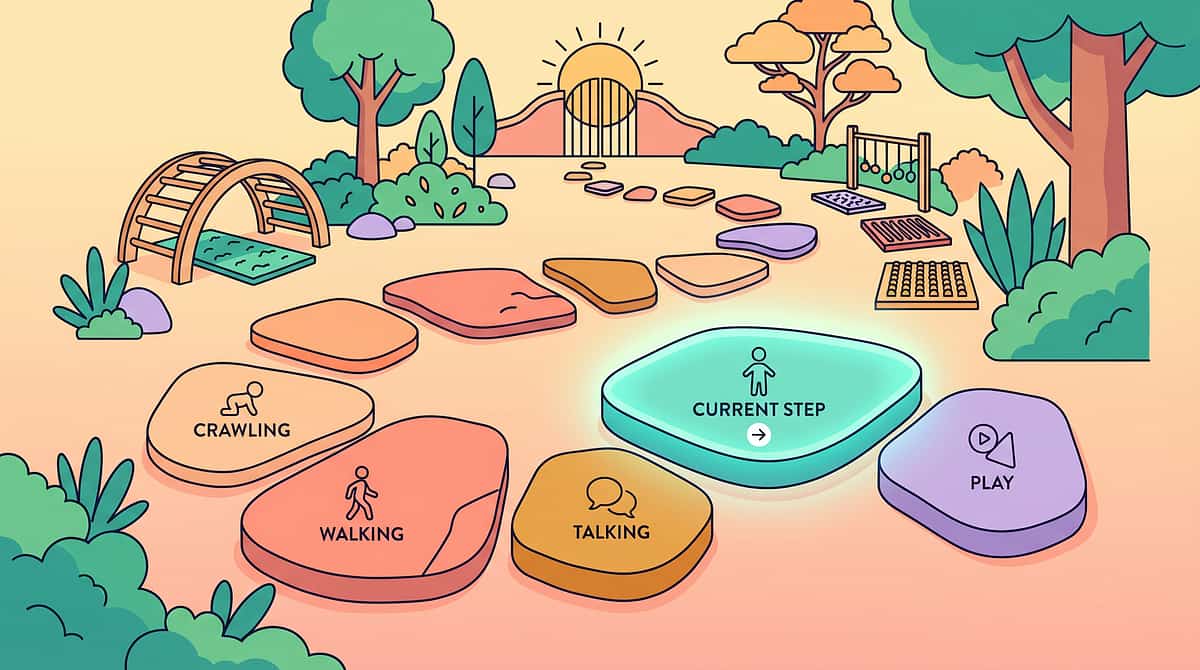
Act I — Context
Your Child's Eye Gaze Journey — The Developmental Map
Understanding where your child sits on the developmental timeline helps you identify the optimal intervention window — and act with confidence.
Birth–2 months
Newborns show innate preference for face-like patterns. Gaze fixation on caregiver's eyes during feeding.
2–4 months
Social smiling emerges. Infant tracks faces across visual field. Gaze duration increases during face-to-face interaction.
4–6 months
Gaze alternation begins — looking at object, then at parent, back to object. Earliest form of joint attention.
6–9 months
Following another person's gaze direction. Looking where someone points. Checking parent's face for emotional cues (social referencing).
9–12 months
Pointing to share interest (protodeclarative pointing). Showing objects to share experience. Fully developed gaze-following.
12–18 months
Complex joint attention — coordinating gaze between objects, people, and events. Using eye contact to request, comment, and share.
⚠️Challenge Zone (12–60 months): If your child is between 12 and 60 months and shows difficulty with eye contact, gaze-following, or joint attention — this is the intervention window. Early action rewires the neural circuits during their most plastic phase.
Reduced eye gaze commonly co-occurs with: delayed speech and language development, difficulty with social play, challenges with imitation, and sensory processing differences. Sources: WHO CCD Package (2023) | PMC9978394

Act I — Trust
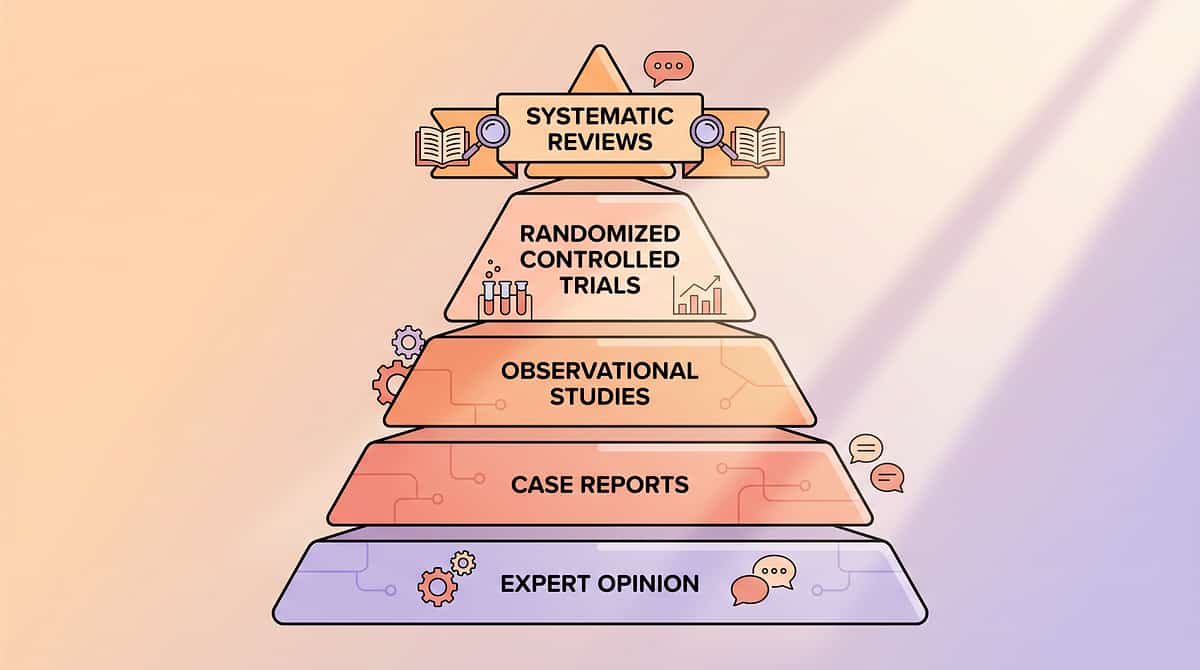
Evidence Grade: Level II — Supported by Randomised Controlled Trials
Evidence Level
RCT-Supported Intervention
Confidence
Kasari et al. (2006)
Randomised controlled intervention: joint attention improvements maintained at 12-month follow-up. J Child Psychology and Psychiatry
Dawson et al. (2004)
Foundational research: early social attention impairments are among the most reliable early markers and intervention targets in autism. Developmental Psychology
PRISMA Systematic Review (2024)
16 articles from 2013–2023 confirm evidence-based practice status. Effect sizes: moderate to large for social communication outcomes. PMC11506176
Padmanabha et al. (2019) — Indian RCT
Home-based interventions in Indian paediatric populations demonstrated significant outcomes with parent-delivered protocols. Indian Journal of Paediatrics | DOI: 10.1007/s12098-018-2747-4
"Clinically validated. Home-applicable. Parent-proven. The materials and techniques on this page are backed by decades of research across multiple disciplines."
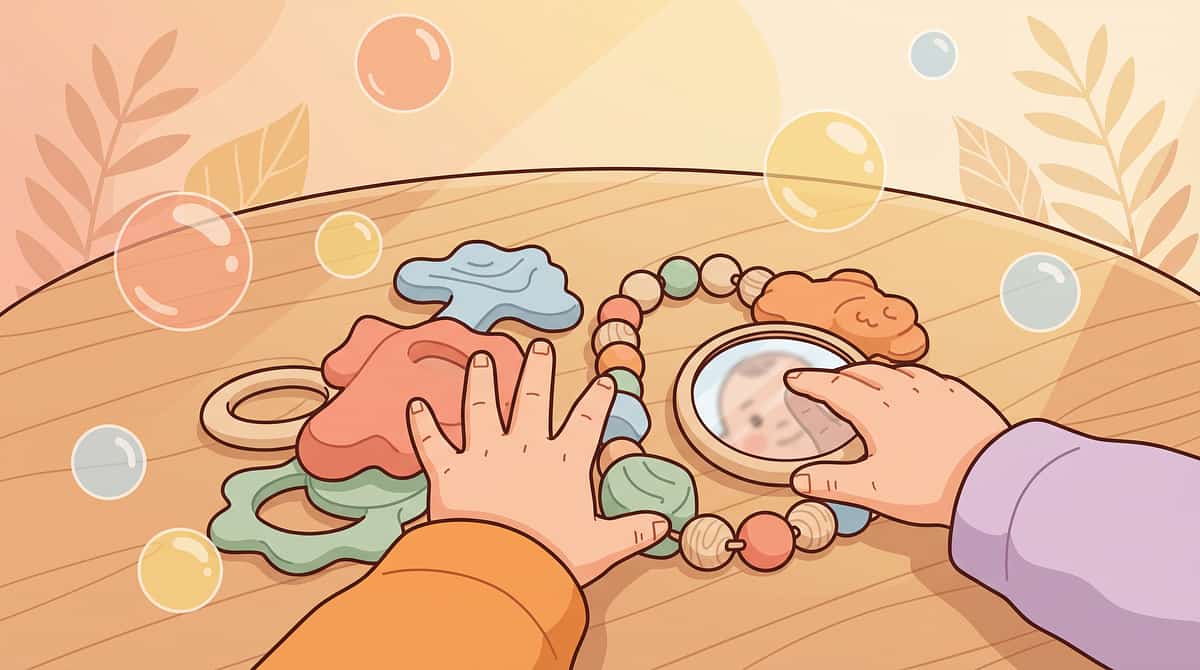
Act II — The Technique
Material-Facilitated Eye Gaze Development Protocol
"Making Faces Fascinating" — The 9-Material Eye Gaze System
Material-facilitated eye gaze development is a structured approach that uses specific physical materials and activities to increase a child's attention to faces, build gaze-following skills, and develop joint attention. Rather than forcing eye contact through demand ("Look at me!"), this approach makes faces inherently interesting by pairing them with rewarding experiences. The child learns: faces are where good things happen.
🏷️ Domain
B: Social Communication
Sub-Domain: Eye Gaze & Joint Attention (SOC-GAZ)
Sub-Domain: Eye Gaze & Joint Attention (SOC-GAZ)
👶 Age Range
12–60 months
⏱️ Session Duration
10–20 minutes per session, 3–5 times daily
🏠 Setting
Home (all rooms and routines)
⭐ Difficulty
Beginner-friendly — No professional training required
Canon Categories covered: Cause-Effect Toys · Mirror Materials · Books & Flashcards · Puppets · Sensory Objects · Digital Tools · Reinforcement Tools

Act II — Disciplines
Your Child's Entire Team Uses Eye Gaze Materials — Here's How
Speech-Language Pathologist (SLP) — Primary Lead
Eye gaze is the gateway to communication. SLPs use gaze-building materials to establish pre-linguistic communication — the looking, pointing, and sharing that comes before words. Joint attention is a prerequisite for language learning.
Occupational Therapist (OT)
OTs address the sensory foundations of eye gaze. If a child finds faces visually overwhelming, the OT modifies environmental conditions and introduces graded visual exposure through materials.
Board Certified Behaviour Analyst (BCBA/ABA)
ABA therapists use systematic reinforcement to build gaze as a functional behaviour. When a child looks at a face and receives a preferred item, the behaviour of "looking" is strengthened — the science behind Material #9.
Special Educator (SpEd)
Special educators integrate eye gaze materials into pre-academic learning contexts — reading face-focused books, following teacher gaze to shared learning targets, and using faces as social cues during group activities.
NeuroDevelopmental Paediatrician
The medical team monitors the neurological underpinnings of gaze development, rules out visual impairment, and tracks progress through standardised assessments mapped to the Social Participation Index.
"This technique crosses therapy boundaries because the brain doesn't organise by therapy type."
Adapted UNICEF/WHO Nurturing Care Framework for SLPs (2022): Multiple disciplines contribute to nurturing care components. DOI: 10.1080/17549507.2022.2141327

Act II — Targets
Precision Targeting — What These Materials Actually Build
Observable Indicators for Parents
Child looks at your face when you call their name
Child follows your point to look at something
Child looks at you when something exciting or unexpected happens
Child shows you objects by holding them up and making eye contact
Child looks at your face when they want something
Meta-analysis (World J Clin Cases, 2024): Social attention interventions effectively promote social skills, adaptive behaviour, and communication across 24 studies. PMC10955541
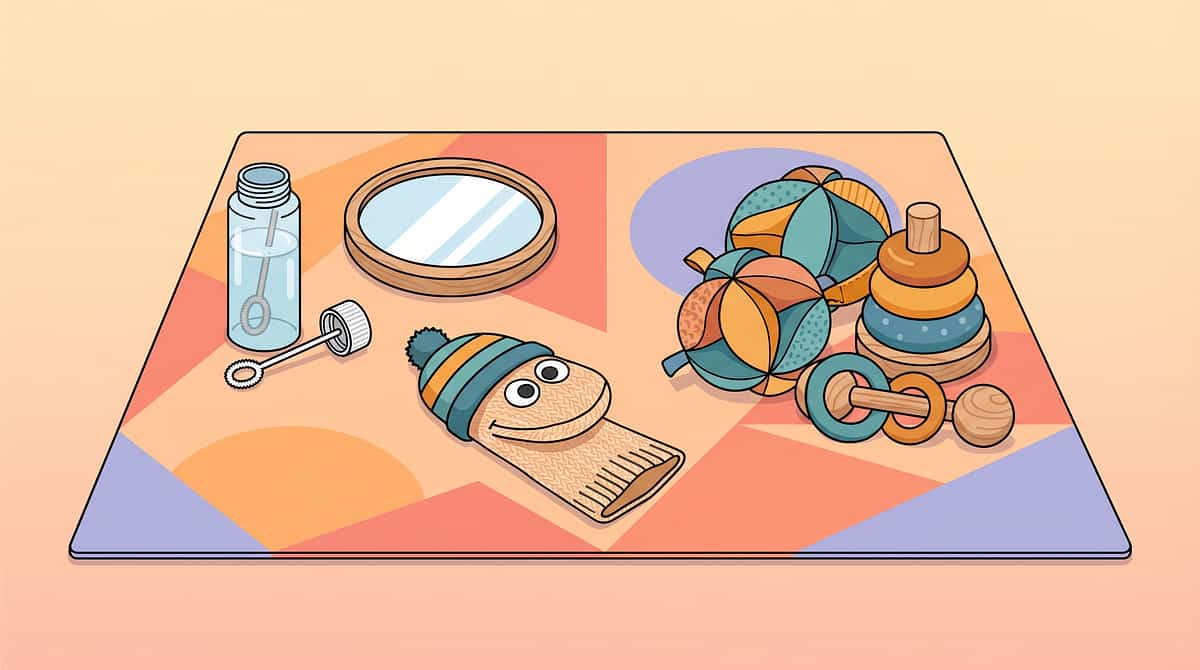
Act II — The 9 Materials
Your Eye Gaze Development Kit — 9 Essential Materials
Every material below is mapped to the Pinnacle 128 Canon Materials system. Essential Starters (Top 3): Materials #1 + #4 + #3 = ₹600–1,900. Full kit: ₹1,300–5,400.
Face-Level Cause-Effect Toys
Canon: Cause-Effect Toys | ₹200–600
Wind-up walkers, bubble wands, light-up spinners, pinwheels
Wind-up walkers, bubble wands, light-up spinners, pinwheels
Pinnacle Recommends
Face Paint & Facial Decorations
Canon: Sensory Art Materials | ₹100–400
Non-toxic face paint, face stickers, clown noses, temporary face tattoos
Non-toxic face paint, face stickers, clown noses, temporary face tattoos
DIY Friendly
Mirror Play Materials
Canon: Mirror Materials | ₹300–1,000
Large floor mirrors, table-top mirrors, flexible safety mirrors
Large floor mirrors, table-top mirrors, flexible safety mirrors
Pinnacle Recommends
Peekaboo Game Materials
Canon: Social Games | ₹100–300
Soft scarves, translucent fabrics, baby blankets, peek-a-boo books
Soft scarves, translucent fabrics, baby blankets, peek-a-boo books
DIY Friendly
Face-Focused Books & Flashcards
Canon: Books & Flashcards | ₹200–600
Board books with baby faces, emotion flashcards, expression matching cards
Board books with baby faces, emotion flashcards, expression matching cards
Pinnacle Recommends
Animated Face Apps & Videos
Canon: Digital Tools | ₹0–500
Face-focused therapy apps, emotion recognition apps, video modelling
Face-focused therapy apps, emotion recognition apps, video modelling
Screen Time Guidelines Apply
Puppets & Face Characters
Canon: Puppets | ₹200–800
Hand puppets, finger puppets, mouth-moving puppets with clear face features
Hand puppets, finger puppets, mouth-moving puppets with clear face features
DIY Friendly
Shared Attention Objects
Canon: Sensory Toys | ₹200–700
Unusual sensory toys, light-up objects, discovery bottles, musical toys
Unusual sensory toys, light-up objects, discovery bottles, musical toys
DIY Friendly
Gaze-Contingent Game Materials
Canon: Reinforcement Tools | ₹0–500
Preferred items for contingent delivery, bubble wands, wind-up toys
Preferred items for contingent delivery, bubble wands, wind-up toys
Uses Items You Already Have
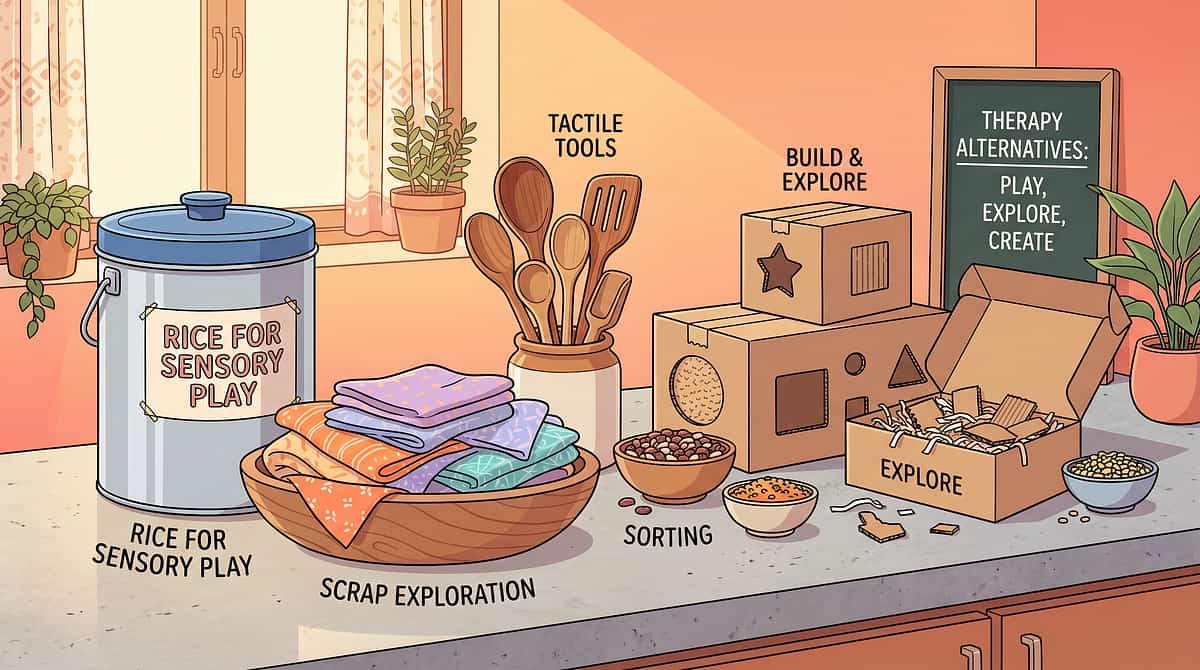
Act II — Equity & Access
Every Family Deserves Access — Zero-Cost DIY Alternatives
"Therapy should never be limited by budget. The Pinnacle Blooms Consortium believes every parent deserves access to evidence-based intervention — regardless of economic circumstance."
#1 Face-Level Toys → DIY
Hold ANY engaging toy near your face during play. Blow bubbles from face level using dishwashing liquid + water. Activate any light-up toy held next to your cheek. Use kitchen items (whisk spinning, jar shaking) at face height.
#2 Face Decorations → DIY
Use child-safe stickers (bindis work perfectly!) on cheeks. Draw dots with washable markers. Wear colourful dupattas or scarves as face frames. Tape small paper flowers to forehead.
#3 Mirror Play → DIY
Use bathroom mirror. Position any reflective surface (steel plate, aluminium foil on cardboard). Use phone front camera as temporary mirror. Stand together at any glass surface.
#4 Peekaboo Materials → DIY
Your hands are the original peekaboo tool. Use any dupatta, towel, bedsheet, or newspaper. Hide behind furniture and pop out. Use cardboard with a face-sized hole cut out.
#5 Face-Focused Books → DIY
Create a photo book with family phone photos printed at local shop (₹2/print). Draw faces on paper together. Cut faces from old magazines. Make a family face collage.
#6 Face Apps/Videos → DIY
Record family video messages with close-up faces on phone. Video call grandparents (faces on screen!). Take selfies together and review them. Record yourself making expressions.
#7 Puppets → DIY
Make sock puppets with button eyes. Draw face on paper bag. Use old glove with drawn eyes. Stuff newspaper in cloth with drawn face. Use hand shadows against a wall.
#8 Shared Attention Objects → DIY
Fill clear bottle with water + glitter + food colouring (discovery bottle). Freeze small toys in ice. Create surprise bags with novel items. Use flashlight in dark room — nature's shared attention tool.
#9 Gaze-Contingent Games → DIY
Hold ANY preferred item at eye level. Wait for eye contact before giving the next bite of food, the next puzzle piece, the next push on the swing. Pause any preferred activity until child looks at you.
"The most powerful eye gaze tool in the world is a parent who makes their face the source of joy."
Indian Journal of Paediatrics RCT (2019): Home-based interventions using locally available materials demonstrated significant outcomes comparable to commercial products. DOI: 10.1007/s12098-018-2747-4

Act II — Safety
🚨 Safety Protocols — Read Before You Begin
These non-negotiables apply to both commercial and DIY materials. Read every point carefully before beginning any session.
Absolute Non-Negotiables
❌ NEVER force eye contact
Never hold a child's face or chin to direct gaze. This creates aversion, not connection. If eye contact feels forced, the child will associate faces with discomfort — the opposite of what we're building.
❌ NEVER punish non-looking
Withholding food, comfort, or affection until a child makes eye contact is harmful and counterproductive. Never make eye contact a condition for basic needs.
❌ NEVER overwhelm with proximity
Respect the child's sensory boundaries. If they pull away, that IS communication — honour it.
Material-Specific Safety
Choking Hazards
Button eyes, small stickers, and toy parts must be age-appropriate. No items smaller than a toilet paper roll for children under 3.
Skin Safety
Face paint MUST be non-toxic, hypoallergenic, tested on small skin patch before full application. Remove immediately if irritation occurs.
Mirror Safety
All mirrors must be shatterproof. Acrylic mirrors or safety-film covered glass only. No loose glass mirrors in play spaces.
Screen Time
Face apps limited to 10–15 minutes per session. Adult MUST be present. Screen time should never replace live face interaction.
Peekaboo Duration
Keep hiding games brief (2–3 seconds hidden). Extended hiding may cause distress. The face should always reappear quickly.
🔴STOP if you see: Child shows distress (crying, covering eyes, turning away repeatedly) · Child becomes aggressive · Signs of visual discomfort (excessive blinking, eye rubbing) · New self-stimulatory behaviours · Fear response to specific materials
Escalation pathway: Self-resolve (adjust approach) → Teleconsult (9100 181 181) → Clinic visit: pinnacleblooms.org/centers
"When in doubt, pause. Trust your instincts. Consult your therapist."
Act II — Setup
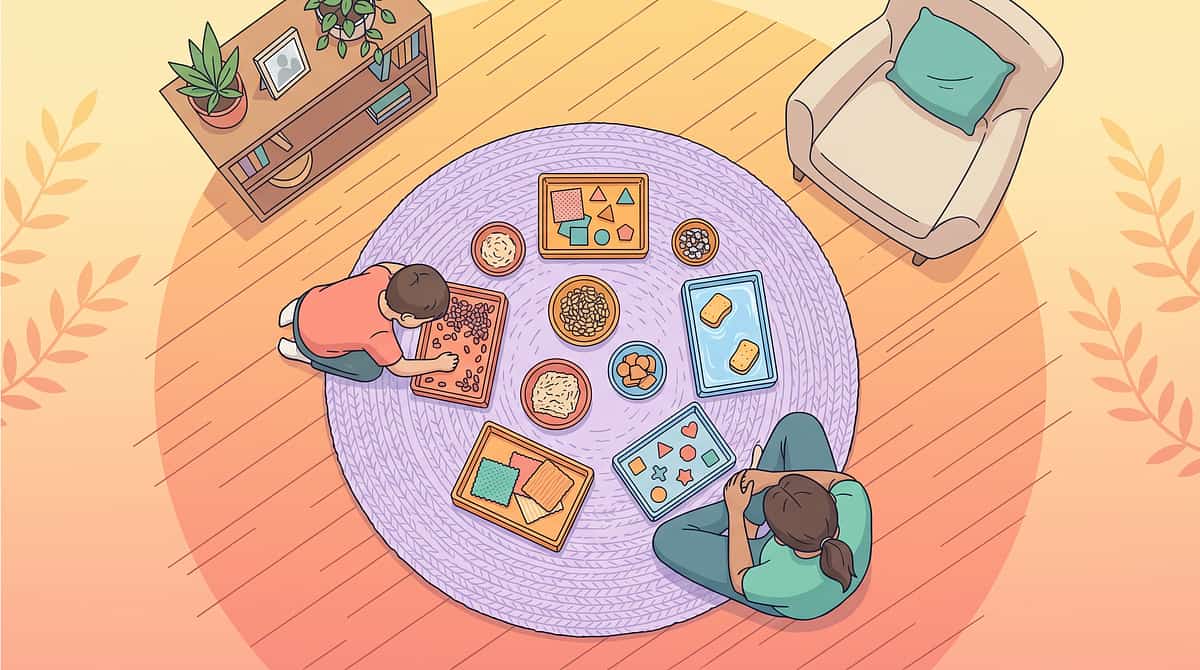
Your Eye Gaze Session Space — 5-Minute Setup
1
Parent Seat
Floor level or low chair. Your face must be at the same height as your child's face. Sit cross-legged on the floor or use a small stool.
2
Child Seat
Directly facing parent, 2–3 feet apart. Small chair, floor cushion, or seated in parent's lap for mirror play. Comfortable and not restrained.
3
Materials Zone
Within parent's arm's reach but NOT within child's reach. You control material access — this enables gaze-contingent delivery (Material #9).
4
Mirror Position
Behind or beside the parent, angled so both faces are visible. Child should see their own face AND parent's face in the same mirror view.
Remove From Space
- Screens (TV, tablet, phone) — unless using Material #6
- Highly preferred toys not part of the session
- Other family members (unless participating)
- Noisy background sources
- Bright overhead lighting
Ideal Conditions
- Lighting: Warm, soft, front-facing light on parent's face — never backlit. Natural window light from the side is ideal.
- Sound: Quiet background. Your voice should be the primary sound source.
- Temperature: 24–26°C. A hot or cold child will not engage.
Sensory Integration Theory (Ayres): Environmental setup is a core principle. Meta-analysis confirms structured 1:1 environments are most effective. PMC10955541

Act III — Execution
Pre-Session Check — 60 Seconds to Decide
Never skip the readiness check. A session started at the wrong moment undoes a week of progress. A session started at the right moment can produce breakthroughs in minutes.
✅ Fed?
Child has eaten within the past hour. Hunger destroys attention.
✅ Rested?
Child is awake and alert, not drowsy or just waking up.
✅ Regulated?
No recent meltdown (wait at least 30 minutes post-meltdown).
✅ Healthy?
No fever, ear infection, or acute illness.
✅ Comfortable?
Clean diaper/clothing, comfortable temperature.
✅ Screen-Free 15+ min?
Brain needs time to shift from passive viewing to active social engagement.
✅ Calm Environment?
No recent transitions, visitors, or disruptions.
✅ ALL GREEN → GO
Begin the session with Material #1 or whichever material you're focusing on today.
🟡 1–2 YELLOW → MODIFY
Use a simplified, shorter version. Start with highest-preference material. Keep to 5 minutes maximum.
🔴 ANY RED → POSTPONE
Try again later. Replace with calming activity: gentle rocking, quiet music, deep pressure hug.
"The best session is one that starts right."

Act III — Invitation
Step 1: The Invitation — Drawing Your Child Into Face-Space
Do NOT call your child to come sit for "therapy." Instead, join their world first. Sit near them. Match their play. Then gradually introduce the eye gaze material.
Phase 1: Enter Their World (1–2 minutes)
Sit on the floor near your child. Don't ask for anything. Mirror what they're doing. If they're spinning a wheel, spin one too. If they're lining up cars, line up one alongside theirs. Match their energy. This communicates: "I'm here with you, not against you."
Phase 2: Introduce the Material (30 seconds)
Bring out the chosen material (e.g., bubble wand) and begin using it near your face. Don't demand attention. Let curiosity do the work. The material creates its own invitation.
Phase 3: Wait (Critical)
After activating the material near your face, WAIT. Count to 5 silently. Don't prompt. Don't say "look!" Let the child's visual system detect the novel stimulus. If they glance — even briefly — you've begun.
For Children Who Avoid Face Proximity
Start with the material at arm's length. Over days, gradually move it closer to your face. No rush. Every inch closer to your face is progress.
For Children Deeply Absorbed in Solo Play
Place the material between you and their current activity. They must look through your face-zone to see their preferred item. Passive face exposure without demand.
Naturalistic developmental behavioural interventions (NDBIs) emphasise child-led engagement with embedded teaching opportunities. Schreibman et al., J Autism Dev Disord, 2015

Act III — Engagement
Step 2: Engagement — When Eyes Start to Travel
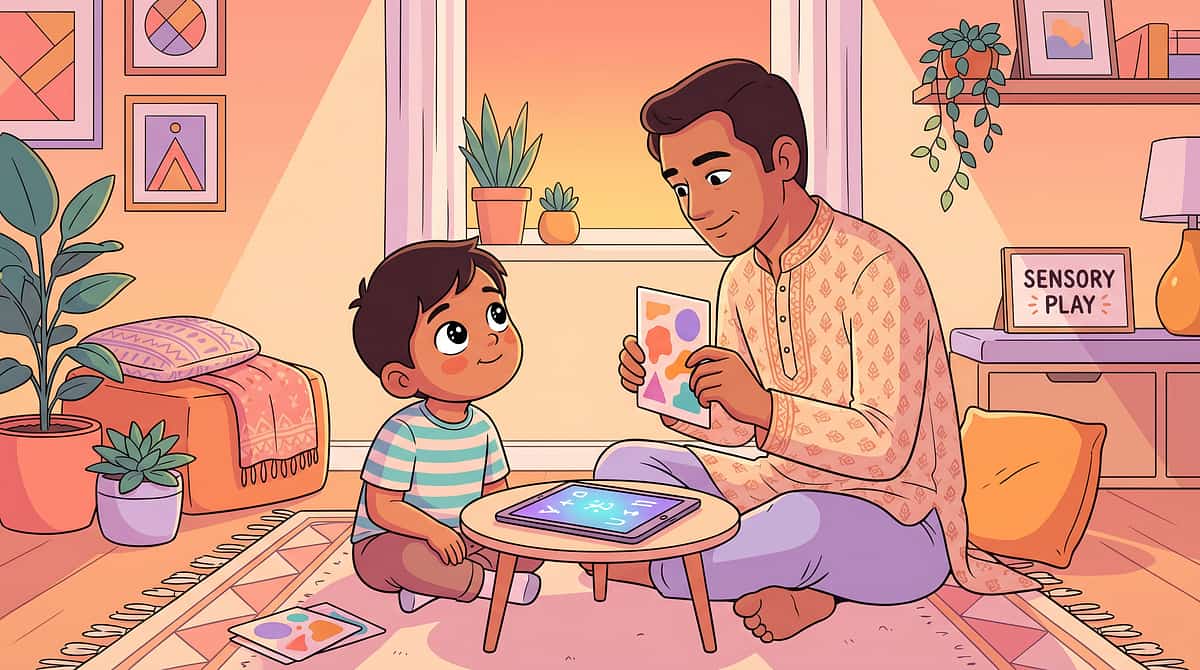
Your child has noticed the material. Now the work begins: gently guiding their visual attention from the material to your face. Each material has its own engagement strategy — here is how each one works.
#1 — Face-Level Toys
Activate the toy at face level. Slowly move it closer to your eyes. When the child's gaze passes across your face — even accidentally — smile broadly. Make your face part of the reward.
#2 — Face Decorations
Point to the sticker/paint on your face. Say the child's name, then point to the decoration. "Look! A star!" The novelty gives them a reason to scan your face area.
#3 — Mirror
Sit together at the mirror. Make exaggerated expressions. Point to features: "Where's mama's nose?" Touch your nose, then the child's. Faces become a game, not a demand.
#4 — Peekaboo
Build the "Where's mama?" anticipation. Cover face for 2 seconds. Uncover with big expression. The child learns: faces disappear and REAPPEAR — and reappearing faces bring joy.
#5 — Face Books
Open to a page of faces. Point to the face's eyes. Then point to YOUR eyes. "Same! Eyes!" Bridge the static face to the live face.
#6 — Face Apps
Watch the animated face together. Point to the screen face's smile, then make the same smile on your face. "Look — same!" Bridge digital to real.
#7 — Puppets
Use the puppet to "look" at the child, then have the puppet "look" at you. The child follows the puppet's gaze — and lands on your face. The puppet is the bridge.
#8 — Shared Objects
Show the child something amazing. When they look at it, bring it near your face. As they track the object, their eyes cross your face. Then show surprise and delight — make your face part of the amazing moment.
#9 — Gaze-Contingent Games
Hold the preferred item at eye level. Wait for the child's eyes to reach yours. The INSTANT they make eye contact — deliver the reward. Speed matters. The connection must be: "I looked → I received."
Kasari et al. (2006): Joint attention intervention RCT demonstrated significant improvement through material-facilitated gaze building. J Child Psychol Psychiatry, 2006
Act III — Core Protocol
Step 3: The Core Eye Gaze Protocol — Your Daily 15-Minute Session
This structured sequence moves from lowest to highest demand, then returns to a gentle close — ensuring the child finishes every session with a positive association to face interaction.
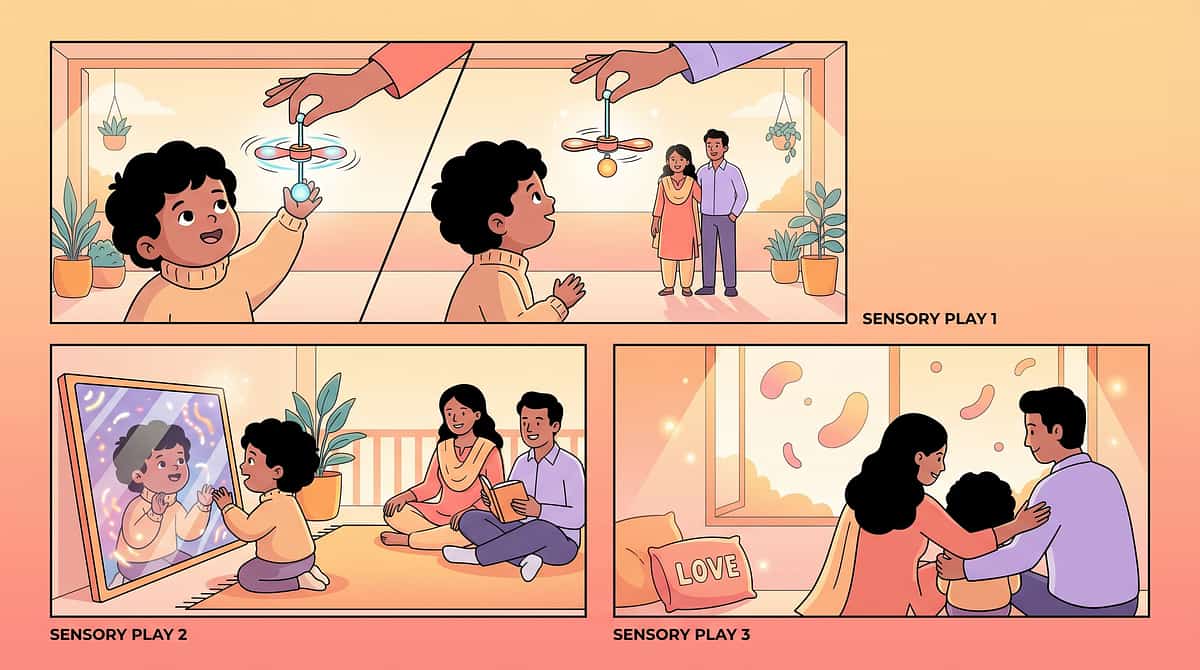
Daily Schedule Integration — 35–40 Minutes Total
🌅 Morning
Peekaboo during dressing (2 min)
🍳 Breakfast
Gaze-contingent bites (3 min)
☀️ Mid-Morning
Mirror play session (5 min)
🍱 Lunch
Face-level toy play (5 min)
📖 Afternoon
Face books together (5 min)
🌙 Evening
Full protocol session (15 min)
🛏️ Bedtime
Puppet goodnight (2 min)
Systematic review confirms distributed practice (multiple short sessions) is superior to massed practice for social skill acquisition. PMC11506176 | NCAEP Evidence-Based Practices (2020)
Act III — Reinforcement
Step 4: The Reward — Making Eye Contact Worth It
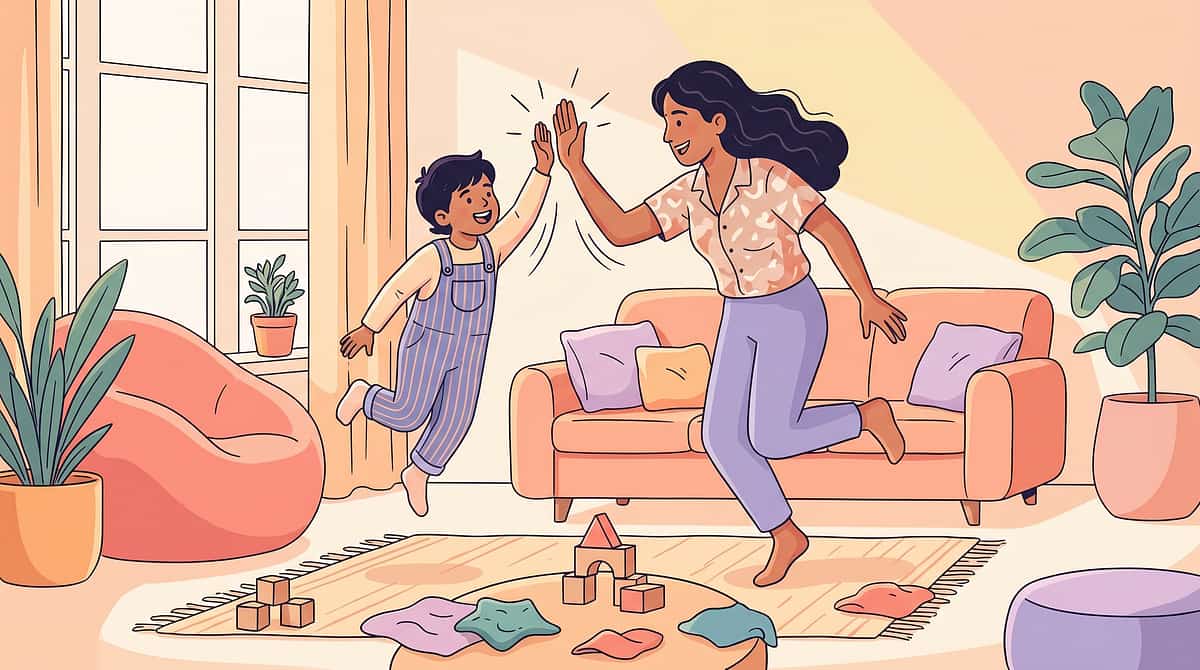
The Principle: Every time your child looks at your face, something wonderful must happen IMMEDIATELY. Speed is everything. The reward must arrive within 1–2 seconds of the gaze landing on your face. This is how the brain learns: "Looking at faces = good things."
Level 3 — Social + Tangible Reward
Eye contact → deliver a small preferred item (bite of snack, puzzle piece, car for the lineup). Paired with social praise. Used for initial shaping when gaze is very rare.
Level 2 — Social + Activity Reward
Eye contact → immediately activate the preferred toy, blow bubbles, start the tickle game, or continue the song. The child's gaze "unlocks" the activity.
Level 1 — Natural Social Reward (GOAL)
Warm smile + animated expression + verbal praise: "You looked at me! I love that!" This is the end goal — where eye contact is rewarding because of the social connection itself.
Fading Schedule
Weeks 1–2
Level 3 (tangible) for every gaze
Weeks 3–4
Alternate Level 2 and Level 3
Weeks 5–6
Primarily Level 2 with occasional Level 3
Weeks 7–8
Primarily Level 1 with occasional Level 2
Week 9+
Level 1 — natural social reward is sufficient
Critical Rule: Never punish the absence of gaze. Only reward its presence. The choice to look must always be the child's. The child should NEVER experience negative consequences for not looking.
Act III — Cool-Down
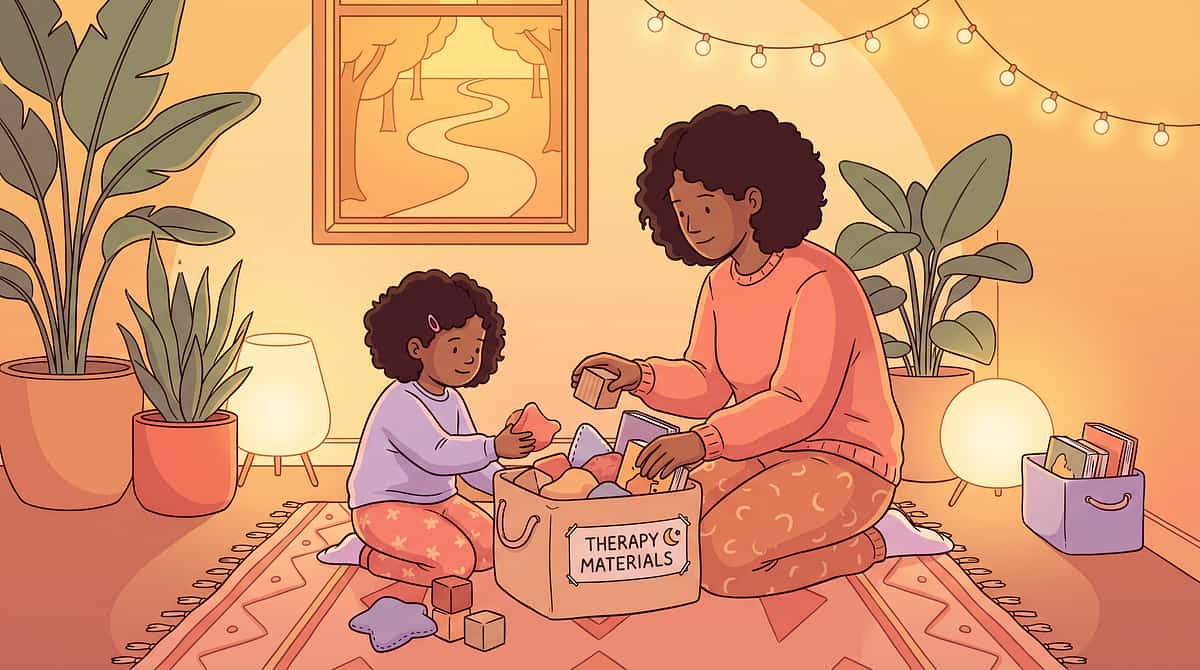
Step 5: The Cool-Down — Every Session Ends on a High Note
Why cool-down matters: If the last moment of a gaze session is stressful or abrupt — the child's brain encodes the entire experience as aversive. If the last moment is warm, gentle, and positive — the brain encodes: "Face time = good time." This determines whether your child will willingly engage tomorrow.
Stop while engagement is still positive
Don't wait until the child is fatigued or fussy. End on a peak, not a valley.
Transition to gentle puppet play
The puppet waves, says "bye bye," gives the child a gentle "puppet kiss." Low demand, high warmth.
Mirror moment
Look in the mirror together one last time. Point to both faces. "There's [child's name]! There's mama/papa!" Smile together.
Physical connection
Offer a hug, a squeeze, a gentle forehead touch. Physical warmth anchors the positive emotional memory.
Narrate the win
"You looked at my face today. That was wonderful. I loved seeing your eyes." Even if the gaze was brief, name it. Celebrate it.
Transition Cue: Use the same phrase every session: "All done with face games! Great looking today!" Consistency signals the session boundary clearly.
Act III — Data
Step 6: Track Progress — 30 Seconds of Data That Changes Everything
You don't need fancy forms or clipboards. A simple notebook or phone note, filled in for 30 seconds after each session, provides the data your therapist needs — and the evidence your own heart needs to trust the process.
📊 Metric 1: Gaze Count
How many times did your child look at your face during the session?
Day 1: ___ Day 2: ___ Day 3: ___
Tally marks are fine!
Day 1: ___ Day 2: ___ Day 3: ___
Tally marks are fine!
⏱️ Metric 2: Longest Gaze Duration
What was the longest single look at your face? (Estimate in seconds)
Day 1: ___s Day 2: ___s Day 3: ___s
Day 1: ___s Day 2: ___s Day 3: ___s
🎯 Metric 3: Spontaneous vs. Prompted
Did the child look on their own (spontaneous) or only when you used a material/prompt?
Day 1: P / S Day 2: P / S Day 3: P / S
Day 1: P / S Day 2: P / S Day 3: P / S
🧸 Metric 4: Material Effectiveness
Which material produced the most gazes today?
Day 1: ________ Day 2: ________ Day 3: ________
Day 1: ________ Day 2: ________ Day 3: ________
😊 Metric 5: Child's Mood
😊 Happy / 😐 Neutral / 😟 Fussy / 😢 Distressed
Record after every session — patterns across weeks reveal optimal session timing.
Record after every session — patterns across weeks reveal optimal session timing.
For families enrolled in Pinnacle Blooms therapy, session data feeds directly into the Social Participation Index within GPT-OS®, enabling automated progress tracking and therapist-guided adjustments.
"Data tells the story your heart already knows — every glance is a miracle in motion."

Act III — Weekly Log
Weekly Eye Gaze Progress Log
Submit your weekly log to keep your own records sharp — and to share with any professional you consult. Consistency matters more than precision.
Child's Initials
Privacy-first — initials only
Week Number
Track week-on-week to see the arc of progress
Average Daily Gaze Count
Your best estimate across all sessions this week
Longest Single Gaze
The longest look at your face this week (in seconds)
Most Effective Material
Which of the 9 materials produced the most face-looking this week?
Concerns or Red Flags
Any observations worth noting for your therapist?
Parent Confidence (1–5)
How confident are you feeling about implementing the protocol?
Privacy: Data is not stored by Pinnacle Blooms unless you are an enrolled family. This log is for your self-tracking. If you are a Pinnacle Blooms Network family, your therapist will review this with you during your next session.

Act III — Troubleshooting
Not Seeing Progress? Here's What to Adjust
"My child ignores all materials and won't look at anything near my face."
→ Start with Material #8 (Shared Attention Objects) at arm's length. Don't bring near face yet. Build object-sharing first. Once the child reliably looks at objects you show, gradually move them face-ward over days.
"My child looks at the toy but never at my face."
→ This is NORMAL at Stage 1. The material is doing its job — bringing eyes toward the face zone. Be patient. Gradually position toys closer to your eyes over sessions. Progress: far from face → near face → across face → at eyes.
"My child gets upset when I try to make eye contact."
→ Reduce demand immediately. Switch to mirror play (indirect face exposure) or puppet play (proxy face). Never push through distress. Build tolerance gradually. If distress persists across 5+ sessions, consult your therapist.
"We had progress but now they've stopped looking again."
→ Regression is normal and expected. It often precedes a developmental leap. Check: Is the child tired? Ill? Has routine changed? Return to a simpler material and rebuild. Don't panic.
"My child will look at screens but not at real faces."
→ Use Material #6 (Face Apps) as a BRIDGE, not a destination. Watch the screen together. Point to the screen face, then make the same expression on YOUR face. Gradually reduce screen, increase live face pairing.
"The sessions feel forced and unnatural."
→ Drop the formal protocol. Embed Materials #1, #4, and #9 into daily routines: peekaboo during diaper changes, face-level toys during snack time, gaze-contingent access to preferred items throughout the day. The best therapy doesn't feel like therapy.
"Other family members think I'm being silly/overreacting."
→ Share Card 37 (Family Guide) with them. Eye gaze intervention has Level II evidence. This is not parental anxiety — it is evidence-based early intervention during the critical neurodevelopmental window.
Clinical troubleshooting protocols derived from Pinnacle Blooms Network clinical practice across 80+ centres and 20M+ therapy sessions.
Act III — Personalisation
Adapt This Technique to YOUR Child
No two children are the same. No two days are the same. Use this guide to calibrate the protocol in real time — always serving the child in front of you today, not an idealised version of progress.
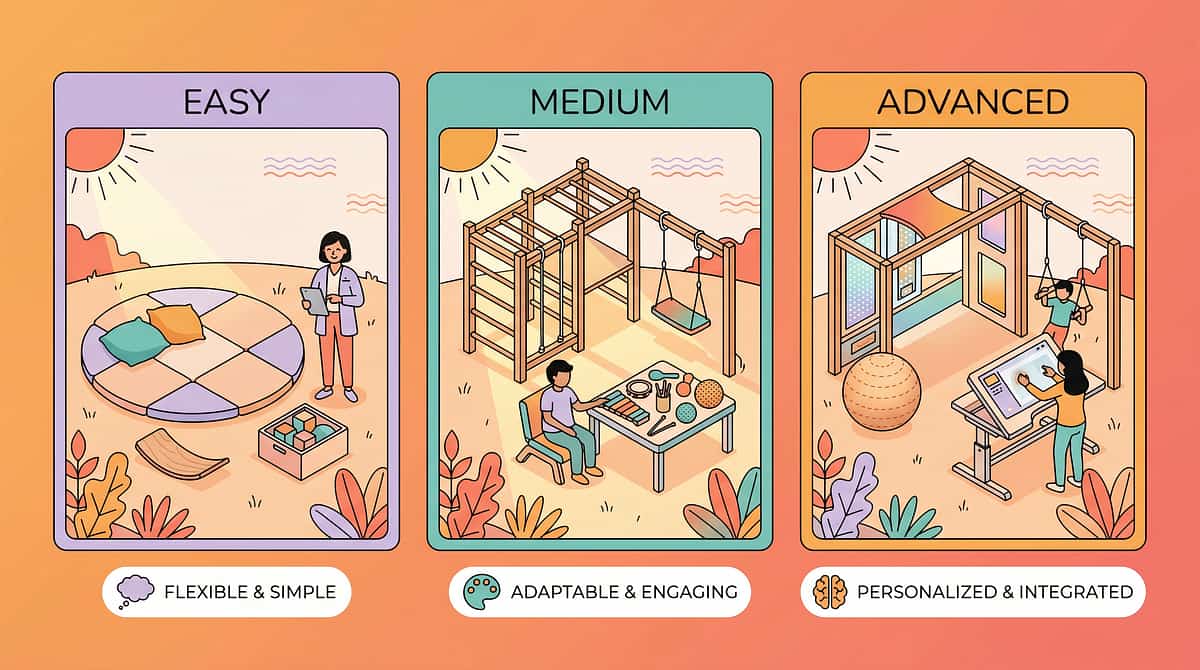
⬇️ Easier Version
Bad days, early stages, younger children
- Use only 1 material per session (child's favourite)
- Shorten session to 5 minutes
- No gaze-contingent requirements
- Accept peripheral gaze as success
- Heavy use of peekaboo — least demanding
⚖️ Standard Version
As described in Steps 1–5
- 15-minute structured session + routine embedding
- 3–4 materials per session
- Gaze-contingent reinforcement active
- Target: 10+ gazes per session
⬆️ Harder Version
Good days, later stages, older children
- Extend gaze duration requirement (2–3 seconds)
- Introduce gaze-shifting: object → you → back
- Add verbal component alongside gaze
- Practice in varied settings and with other people
- Reduce material support — aim for natural gaze
Sensory Profile Variations
Sensory Seeker
Use high-animation materials (light-up toys, musical toys, face paint with sparkles). These children WANT input — give them faces-as-input.
Sensory Avoider
Use low-stimulation materials (soft mirrors, gentle puppet, quiet peekaboo with soft scarf). Reduce face proximity. Build tolerance gradually.
Age Modifications
12–24 months
Focus on Materials #1, #3, #4 (Toys, Mirrors, Peekaboo)
24–36 months
Add Materials #2, #5, #7 (Decorations, Books, Puppets)
36–60 months
Full protocol with emphasis on #8, #9 (Shared Objects, Gaze-Contingent)

Act IV — Progress Arc
Weeks 1–2: The Tolerance Phase
✅ What You Will See
- Child tolerates materials near your face without distress
- Brief, fleeting glances toward your face zone (under 1 second)
- Increased interest in the materials themselves
- Possible curiosity about face decorations or mirror reflections
- Emerging anticipation during peekaboo (body stillness before reveal)
⏳ What You Will Not See Yet
- Sustained eye contact (that comes later)
- Spontaneous face-directed looking without materials
- Joint attention behaviours
- Social referencing
"If your child tolerates you holding a toy near your face for 3 seconds longer than last week — that is real neurological change. The face-processing network is beginning to fire."
Parent Emotional Preparation: These two weeks may feel like nothing is happening. It is. The neural pathways are being built beneath the surface. Trust the process. Trust your data. Trust your child's brain.
Systematic review (Children, 2024): Intervention outcomes emerge across 8–12 week timelines. Early-phase indicators focus on tolerance and participation. PMC11506176
Act IV — Progress Arc
Weeks 3–4: The Neural Pathway Forming
Consolidation Indicators
Child begins to anticipate face-related activities (smiles when you bring out the puppet)
Gaze duration increases to 1–2 seconds
Multiple glances per session (5+)
Child may begin to look at your face when you pause an activity (waiting for you to continue)
First signs of gaze-contingent understanding: "When I look, something happens"
Mirror play becomes a preferred activity
The Moment Parents Miss: Your child may start doing something subtle — looking at you BRIEFLY when something unexpected happens (a loud sound, a new person entering the room, a toy falling). This is SOCIAL REFERENCING. It is one of the most important developmental milestones. It means your child is checking YOUR face for information. Notice it. Celebrate it.
"You may notice you're more confident too. The materials feel natural now. The sessions flow more easily. Your observational skills have sharpened. YOU are changing alongside your child."
Act IV — Breakthrough
Weeks 5–8: The Breakthrough Phase
Mastery Indicators
Sustained Gaze
3+ seconds occurs multiple times per session
Spontaneous Looking
Child looks at your face WITHOUT material prompts — the gold standard
Joint Attention Triangle
Object → you → back to object. The full triangle is forming.
Showing Behaviour
Child brings objects to show you (protodeclarative behaviour)
Gaze to Request
Child looks at preferred item, then looks at you to request it
Generalisation
Skills appearing in other contexts, with other people, in different settings
Mastery Criteria — Badge Unlock ✅
- 10+ spontaneous gazes per day outside of structured sessions
- Joint attention triangle observed at least once daily
- Gaze-contingent reinforcement faded to Level 1 (social reward sufficient)
- Skills generalise to at least 2 different settings
- Skills generalise to at least 2 different people
If mastery criteria are met across 5 consecutive days, your child is ready to progress to: B-143 Social Referencing, B-144 Pointing and Showing, or B-145 Shared Enjoyment.

Act IV — Celebrate
🎉 You Did This.
You sat on the floor. You blew the bubbles at face level. You waited — patiently, sometimes painfully — for that tiny glance. You made sock puppets and painted stars on your cheeks and played peekaboo 500 times. You tracked the data. You adjusted. You persisted.
And then one morning, your child looked at your face and smiled.
Not because a toy was there. Not because you asked. Because YOUR FACE became the most interesting thing in the room.
You did this. Your child grew because of your commitment.
Celebration Suggestions
📸 Capture the Moment
Take a photo of you and your child looking at each other. Frame it.
📝 Write It Down
Write a journal entry about the first time your child spontaneously looked at your face.
🗣️ Tell Someone
Tell your partner, your parent, your friend: "My child looked at me today. Really looked."
🤝 Share the Hope
Share this page with another family who needs hope. One conversation changes everything.
"From fear to connection. One glance at a time."

Act IV — Safety Check
🚨 Red Flags — When to Stop and Seek Professional Guidance
Even after celebrating milestones, safety monitoring continues. These red flags require immediate action.
🔴 No face-directed attention after 4 weeks
There may be an underlying visual processing issue, or the intervention approach needs professional modification. Action: Schedule developmental assessment.
🔴 Loss of previously established eye contact
Regression in eye gaze can be a significant developmental marker requiring immediate professional evaluation. Action: Contact your Pinnacle Blooms therapist or call 9100 181 181 immediately.
🔴 Active gaze avoidance worsening over time
If the child is actively turning away MORE than before intervention, the approach may need modification. Action: Pause home protocol. Consult therapist.
🔴 Escalating distress when faces are near
There may be sensory processing differences affecting visual tolerance that need OT-specific intervention first. Action: Request sensory profile assessment.
🔴 New self-stimulatory behaviours during face activities
The child may be self-regulating against the demand. Action: Reduce to 5-minute sessions. Switch to mirror play only.
🔴 No response to social games by 15 months
This is an early developmental red flag requiring professional developmental screening. Action: Schedule AbilityScore® assessment.
1
Step 1
Self-resolve: reduce intensity, switch material
2
Step 2
Teleconsult: Call 9100 181 181 (FREE, 16+ languages, 24/7)
3
Step 3
Clinic visit: pinnacleblooms.org/centers
"Trust your instincts — if something feels wrong, pause and ask."

Act IV — What Comes Next
Your Child's Eye Gaze Journey — What Comes Next
Eye gaze is not a destination — it is the beginning of a rich social communication pathway. Here is where B-142 sits in the full developmental sequence.
B-140: Building Communication Temptations
Prerequisite — creating the motivation to communicate
B-141: Building Communication Turns
Prerequisite — turn-taking as foundation of social exchange
★ B-142: Eye Gaze Development Materials ★
YOU ARE HERE — building the face-attention foundation
B-143: Social Referencing
Child checks your face for guidance in new situations
B-144: Pointing and Showing
Child uses gestures + gaze to direct your attention
B-145: Shared Enjoyment
Child looks at you to share emotional experiences
Long-Term Goal
Social Communication Competence → Conversational Skills → Peer Relationships → Social Participation
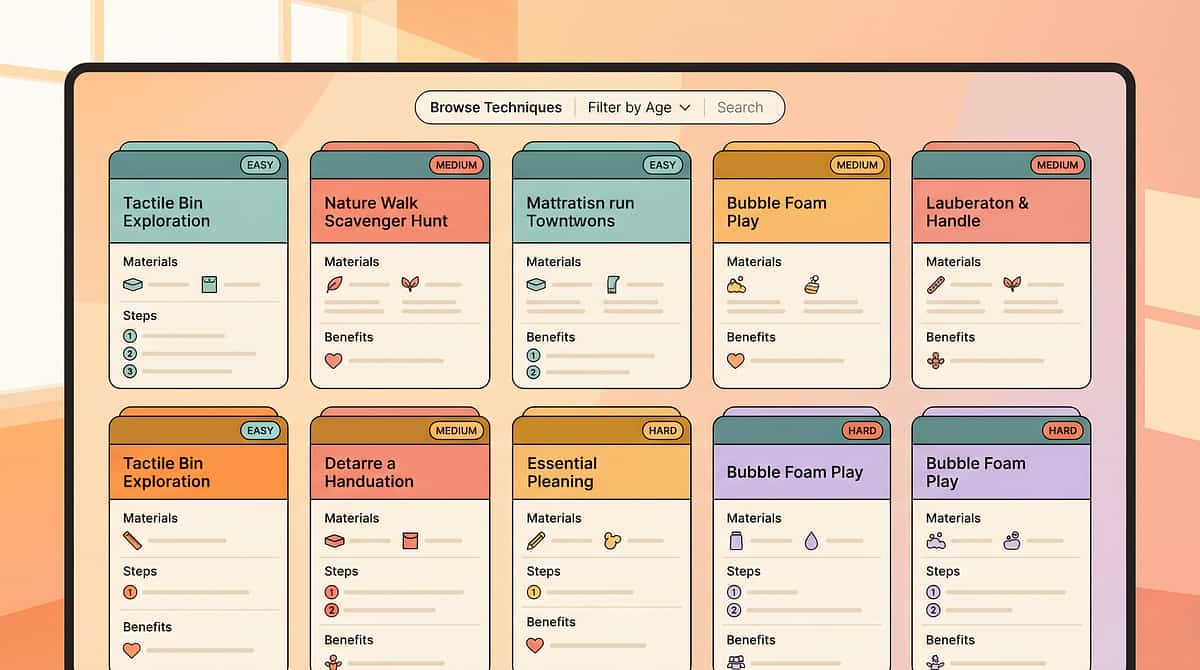
Act IV — Related Techniques
Related Techniques in Your Child's Developmental Map
B-005: Limited Eye Contact
Targeted intervention for persistent eye contact avoidance — an alternative pathway when B-142 needs supplementary support.
B-006: Limited or No Pointing
Building gestural communication alongside gaze — the two skills develop in tandem.
B-141: Building Communication Turns
Turn-taking as the foundation of conversational gaze — the prerequisite technique.
B-143: Social Referencing
Using gaze to read others' emotions — the natural next step after eye gaze is established.
B-145: Shared Enjoyment
The emotional dimension of eye contact — looking to share delight, not just information.
Parent Support Pages
K-881
Parents After Diagnosis — Emotional support for the journey
K-903
Therapy Carryover at Home — Making home therapy effective
K-915
Building Connection Through Play — Play as the vehicle for development
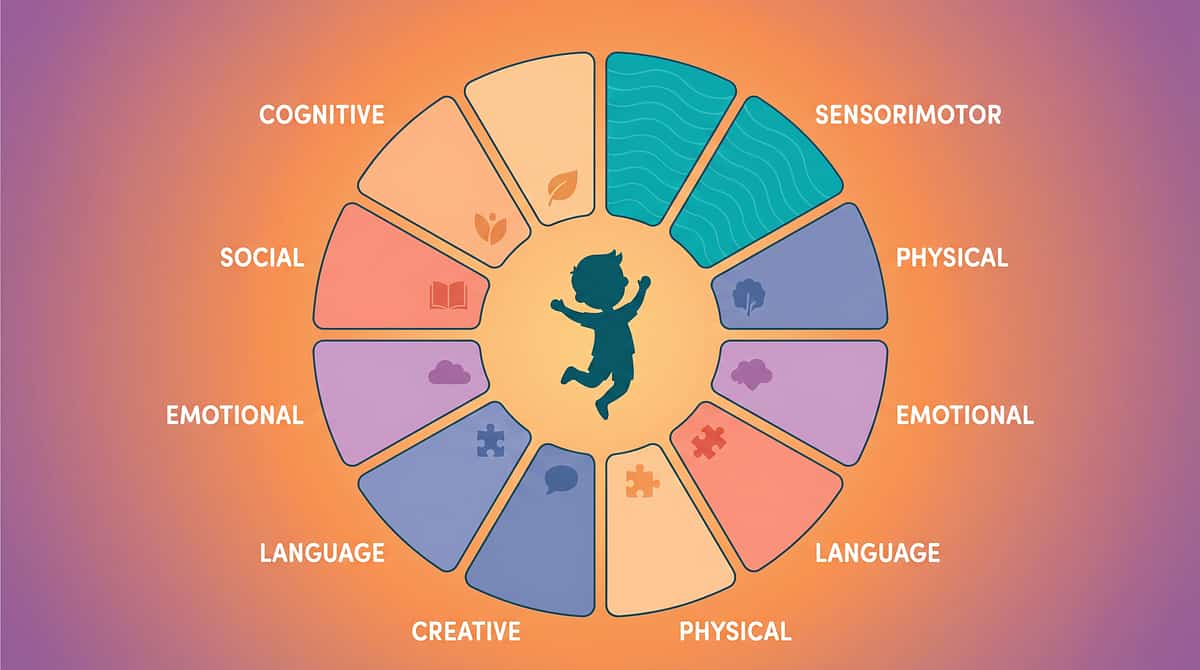
Act IV — Full Map
Where Eye Gaze Sits in Your Child's Complete Developmental Picture
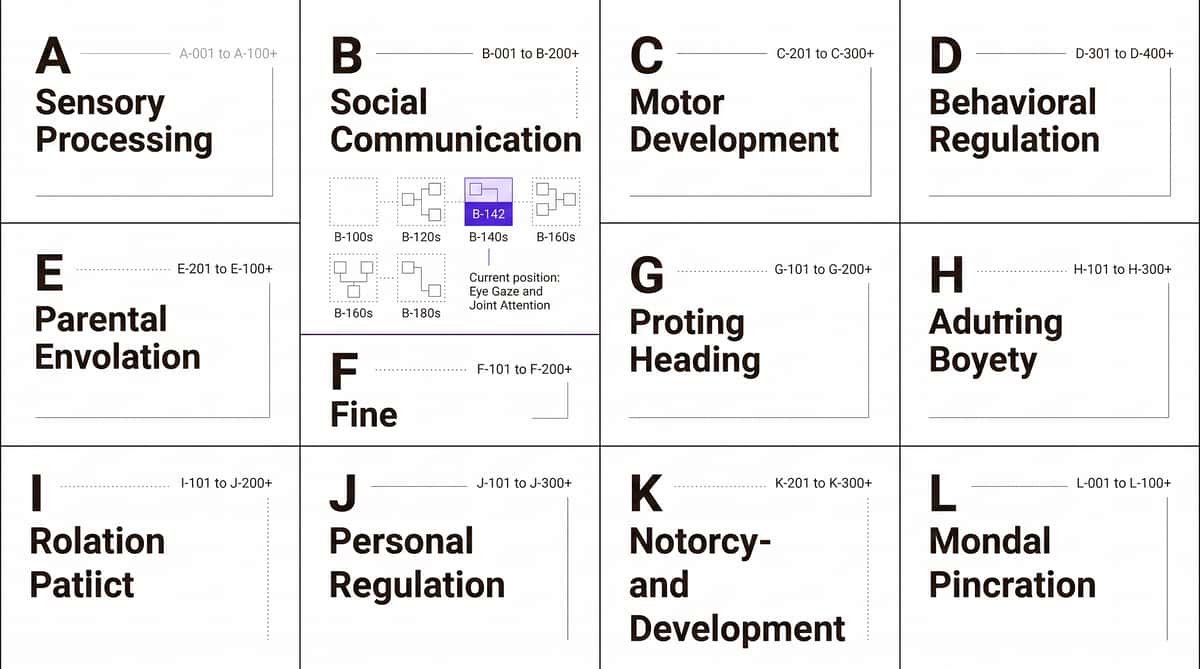
B-142 of 999 technique pages — a single node in the GPT-OS® therapeutic intelligence network. Your child's developmental journey is guided by the most comprehensive therapeutic system ever built.

Act V — Community
From Parents Who Walked This Path
"The first time he looked at me and smiled — really looked — everything changed. It was week 6. We were doing peekaboo with a scarf. He pulled the scarf down himself and stared at my face for what felt like forever. It was probably 3 seconds. Those were the most important 3 seconds of my life."
— Mother, Hyderabad | Pinnacle Blooms Network Family
Illustrative case; outcomes vary by child profile.
Illustrative case; outcomes vary by child profile.
"I tried everything — I made silly faces, I danced, I sang. Nothing. Then our therapist told me to stop trying so hard. She gave me a mirror and said 'just sit together.' Within two weeks, my daughter was touching my reflection in the mirror. A week later, she was touching MY face. Mirrors changed everything."
— Father, Bangalore | Pinnacle Blooms Network Family
Illustrative case; outcomes vary by child profile.
Illustrative case; outcomes vary by child profile.
"We couldn't afford the therapy materials. Our therapist helped us make everything from scratch — sock puppets, a discovery bottle from an old plastic bottle, face photos from our phone printed at the local shop. It worked just the same. Don't let money stop you."
— Mother, Rural Telangana | Pinnacle Blooms Network Family
Illustrative case; outcomes vary by child profile.
Illustrative case; outcomes vary by child profile.

Act V — Connect
You Are Part of a Global Movement
📞 FREE National Autism Helpline
9100 181 181
16+ languages · 24/7 · Always free
16+ languages · 24/7 · Always free
🌐 Website
📧 Email
📍 Find Your Centre
pinnacleblooms.org/centers
80+ centres across India
80+ centres across India
Parent Communities
- Pinnacle Parent Network (ask your centre about joining)
- WhatsApp support groups organised by age and domain
- Monthly parent webinars on social communication techniques
International Resources
WHO Nurturing Care Framework
Autism Speaks (USA)
National Autistic Society (UK)
Action for Autism (India)
Act V — Professional Support
When You Need Professional Guidance
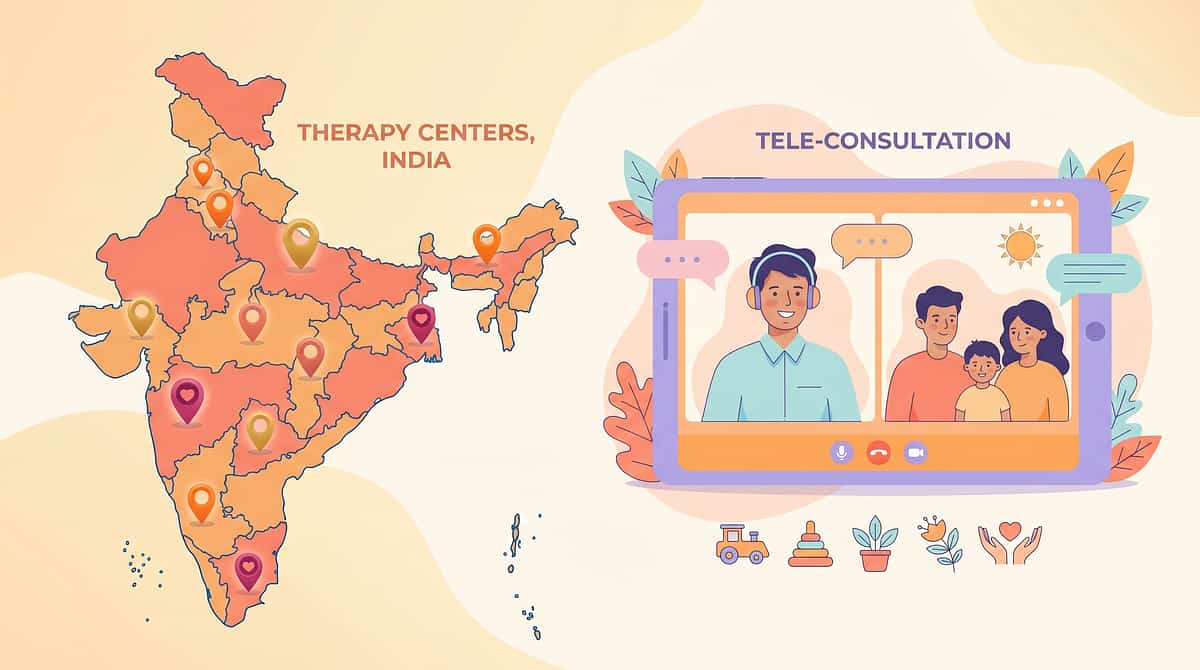
Pinnacle Centre Locator
80+ centres across India. Find the one nearest you.
Teleconsultation
Available for families outside centre coverage areas.
Professional Services Relevant to Eye Gaze
AbilityScore® Assessment
Comprehensive developmental baseline including Social Participation Index
Speech Therapy
Pre-linguistic communication and joint attention protocols
Occupational Therapy
Sensory-visual processing assessment and intervention
ABA Therapy
Systematic gaze-building with data-driven reinforcement
EverydayTherapyProgramme™
Daily home protocols customised to your child's AbilityScore®
Act V — Research
The Science Behind Every Material on This Page
Every technique, every material, every protocol on this page is grounded in peer-reviewed research. Here is the complete evidence index.
[1] Kasari C, Freeman S, Paparella T. (2006)
Joint attention and symbolic play in young children with autism: A randomised controlled intervention study. J Child Psychol Psychiatry. 47(6):611-20.
Key finding: Targeted joint attention intervention significantly increased initiations of joint attention and response to joint attention bids.
Key finding: Targeted joint attention intervention significantly increased initiations of joint attention and response to joint attention bids.
[2] Dawson G, Toth K, Abbott R, et al. (2004)
Early social attention impairments in autism: Social orienting, joint attention, and attention to distress. Developmental Psychology. 40(2):271-83.
Key finding: Social orienting and joint attention are distinct constructs with independent predictive value for autism outcomes.
Key finding: Social orienting and joint attention are distinct constructs with independent predictive value for autism outcomes.
[3] PRISMA Systematic Review (2024)
Sensory integration intervention effectiveness in ASD — 16 articles from 2013–2023.
Key finding: Evidence-based practice status confirmed for social attention interventions. PMC11506176
Key finding: Evidence-based practice status confirmed for social attention interventions. PMC11506176
[4] Meta-analysis (World J Clin Cases, 2024)
Sensory integration therapy efficacy across 24 studies.
Key finding: Significant improvements in social skills, adaptive behaviour, and motor skills. PMC10955541
Key finding: Significant improvements in social skills, adaptive behaviour, and motor skills. PMC10955541
[5] Padmanabha H, et al. (2019)
Home-based sensory interventions in Indian paediatric populations — RCT.
Key finding: Parent-delivered protocols demonstrate significant outcomes with established safety profiles. Indian J Pediatr. DOI: 10.1007/s12098-018-2747-4
Key finding: Parent-delivered protocols demonstrate significant outcomes with established safety profiles. Indian J Pediatr. DOI: 10.1007/s12098-018-2747-4
[6] WHO Nurturing Care Framework (2018)
The comprehensive framework for early childhood development. nurturing-care.org/ncf-for-ecd/
[7] WHO/UNICEF Care for Child Development (CCD) Package (2023)
Age-specific evidence-based recommendations implemented in 54 LMICs. PMC9978394
[8] UNICEF/WHO NCF for SLPs (2022)
Multi-disciplinary framework adaptation for speech-language pathologists. DOI: 10.1080/17549507.2022.2141327

Act V — GPT-OS®
Powered by GPT-OS® — Global Paediatric Therapeutic Operating System
This page is not a blog post. It is a therapeutic intelligence unit generated, validated, and continuously updated through GPT-OS® — the end-to-end operating system governing diagnosis, prognosis, therapy design, execution, monitoring, and readiness outcomes.
20M+
1:1 Sessions
Real therapy data powering every recommendation
97%+
Measured Improvement
Across enrolled families with consistent implementation
80+
Centres
Across India — urban and rural
160+
Countries
Where patents have been filed for this therapeutic system
"This is not software. This is therapeutic infrastructure."
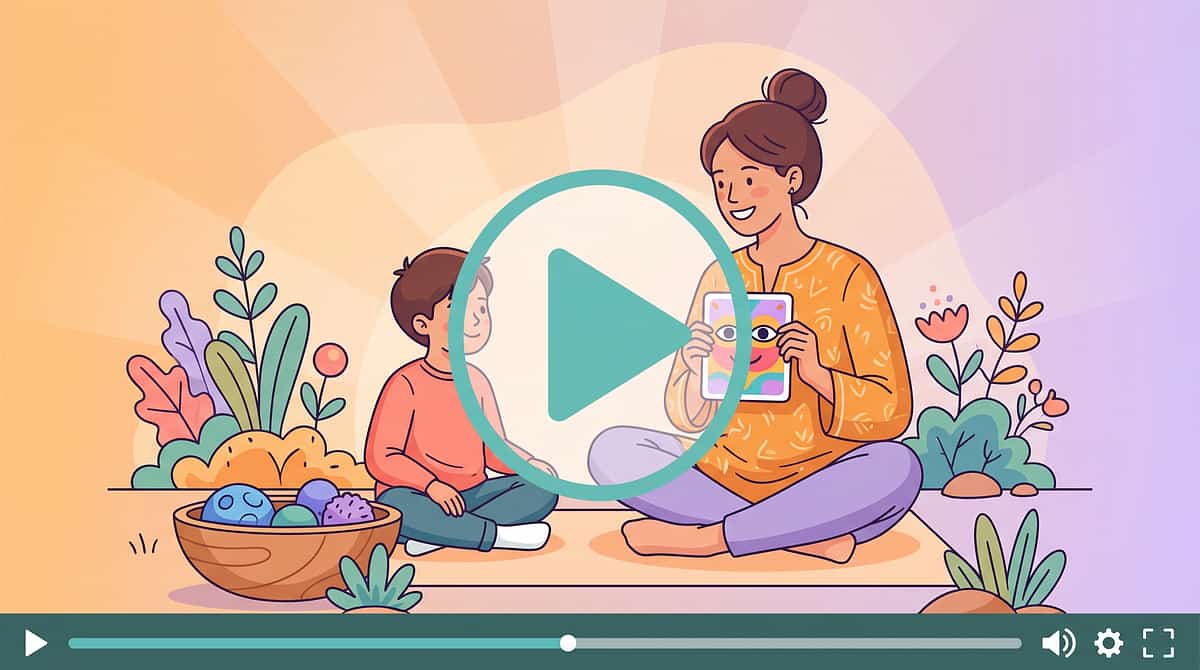
Act V — Video
Watch: 9 Materials That Help With Eye Gaze Development
Social Connection Series — Episode B-142 | Duration: 75 seconds
This 75-second Reel walks through all 9 materials with live demonstrations of each being used with children in home settings. Presented by a Pinnacle Blooms therapist, the video shows practical applications of face-level toys, face decorations, mirror play, peekaboo, face books, face apps, puppets, shared attention objects, and gaze-contingent games.
Video modelling is classified as evidence-based practice for autism (NCAEP, 2020). Multi-modal learning improves parent skill acquisition. NCAEP Evidence-Based Practices Report (2020)

Act V — Share
Share This Knowledge — Consistency Across Caregivers Multiplies Impact
📋 "Explain to Grandparents" Version
"Your grandchild is learning to look at faces. We're using special materials — toys near our face, mirrors, peekaboo — to make faces interesting. When they look at your face, smile big and say something exciting! Don't say 'look at me.' Just make your face the most interesting thing in the room. It's working. Here's what we're doing..."
🏫 Teacher/School Template
"Dear [Teacher], [Child's name] is currently working on eye gaze development skills. At home, we use face-level materials to encourage looking at faces. In the classroom, you can support this by: positioning yourself at the child's eye level during instruction, using animated facial expressions when speaking to [child], and pausing briefly to allow the child to look at you before continuing activities. Thank you for being part of this team."
📄Downloadable Family Guide PDF: 1-page summary of all 9 materials with DIY instructions — shareable with every caregiver in your child's life.
"Consistency across caregivers multiplies impact."
WHO CCD Package: Multi-caregiver training is critical for intervention generalisation. PMC9978394
Act VI — Close
Your Questions, Answered
At what age should I start eye gaze intervention?
The earlier, the better. The brain's face-processing network is most plastic between 12 and 36 months. However, these materials are effective for children up to 60 months and beyond. There is no "too late" — but earlier is better because of neuroplasticity advantages.
Is it normal for my child with autism to avoid eye contact?
Yes. Reduced attention to faces is one of the most well-documented features of autism. Research shows this is a neurological difference — the face-processing regions of the brain respond less strongly to faces compared to objects. This is NOT intentional avoidance or defiance.
Will forcing eye contact help?
No. Forced eye contact creates aversion and anxiety. It teaches the child that faces are associated with pressure. The approach on this page does the opposite — it makes faces the SOURCE of good things, building natural motivation to look.
How long until I see results?
Most families see initial tolerance changes in Weeks 1–2, consolidation in Weeks 3–4, and meaningful gaze behaviours in Weeks 5–8. Individual timelines vary significantly based on the child's age, developmental profile, and intervention consistency.
Can I do this without a therapist?
Yes — this page is designed for parent-led home implementation. However, professional guidance accelerates progress and helps navigate challenges. The FREE helpline (9100 181 181) is available 24/7 for questions.
My child looks at faces sometimes but not consistently. Should I still use these materials?
Absolutely. These materials strengthen and increase existing gaze behaviours. Even children with some eye contact benefit from systematic face-pairing to build joint attention, social referencing, and gaze-shifting skills.
Should I limit screen time during this intervention?
General screen time should be limited to WHO recommendations (no screens under 2, limited for 2–5). However, Material #6 (Face Apps/Videos) is purposeful, adult-guided screen time specifically designed to build face processing. 10–15 minutes maximum, always with an adult present.
What if my child has a visual impairment?
Visual impairment may affect gaze development differently. Consult an ophthalmologist and developmental paediatrician before beginning. Materials can be adapted (e.g., using auditory + tactile cues alongside visual materials) for children with partial vision.
Act VI — Take Action
You've Read the Science. You've Seen the Materials. Now Start.
🟢 Start This Technique Today
Download the family guide PDF + weekly tracker template + DIY instructions. Begin with Materials #1, #3, and #4 — Face-Level Toys, Mirror, and Peekaboo.
🔵 Book a Consultation
Schedule an AbilityScore® assessment at your nearest Pinnacle Blooms centre. Speak with a multi-disciplinary team trained in eye gaze development.
⚪ Explore Next Technique
Ready to progress? Move to B-143: Social Referencing or B-144: Pointing and Showing on the techniques library.
Consortium Seal: Validated by the Pinnacle Blooms Consortium — OT · SLP · ABA · SpEd · NeuroDev · CRO
Preview of 9 materials that help with eye gaze development Therapy Material
Below is a visual preview of 9 materials that help with eye gaze development therapy material. The pages shown help educators, therapists, and caregivers understand the structure and content of the resource before use. Materials should be used under appropriate professional guidance.


Link copied!
Act VI — The Promise
The Pinnacle Promise
Pinnacle Blooms Network®
CRO | SLP | OT | BCBA | SpEd | NeuroDevelopmental Paediatrician
"From fear to mastery. One technique at a time."
A parent arrived on this page scared, confused, and exhausted. They wondered why their child wouldn't look at their face. They leave empowered — with 9 evidence-based materials, detailed protocols, DIY alternatives, safety guidelines, progress tracking, and a clear developmental pathway forward. This is the Pinnacle Blooms promise: every family, regardless of geography or economics, has access to the world's best therapeutic intelligence.
🔗 Explore More Techniques
🔗 Next: B-143 Social Referencing
Your journey continues — the loop restarts
📞 FREE Helpline
9100 181 181
16+ languages · 24/7
16+ languages · 24/7
Disclaimer: This content is educational and does not replace assessment by a licensed developmental specialist or therapist. If you are concerned about your child's eye gaze or social development, please consult a qualified professional. Individual results vary. Statistics represent aggregate outcomes across the Pinnacle Blooms Network. Eye gaze development requires individualised assessment. Never force eye contact.
CIN: U74999TG2016PTC113063 | DPIIT: DIPP8651 (Govt. of India) | MSME: TS20F0009606 | GSTIN: 36AAGCB9722P1Z2
ISO 13485: Medical Device QMS | ISO/IEC 27001: Information Security
© 2026 Pinnacle Blooms Network®, unit of Bharath Healthcare Laboratories Pvt. Ltd. All rights reserved.
Powered by GPT-OS®
ISO 13485: Medical Device QMS | ISO/IEC 27001: Information Security
© 2026 Pinnacle Blooms Network®, unit of Bharath Healthcare Laboratories Pvt. Ltd. All rights reserved.
Powered by GPT-OS®