

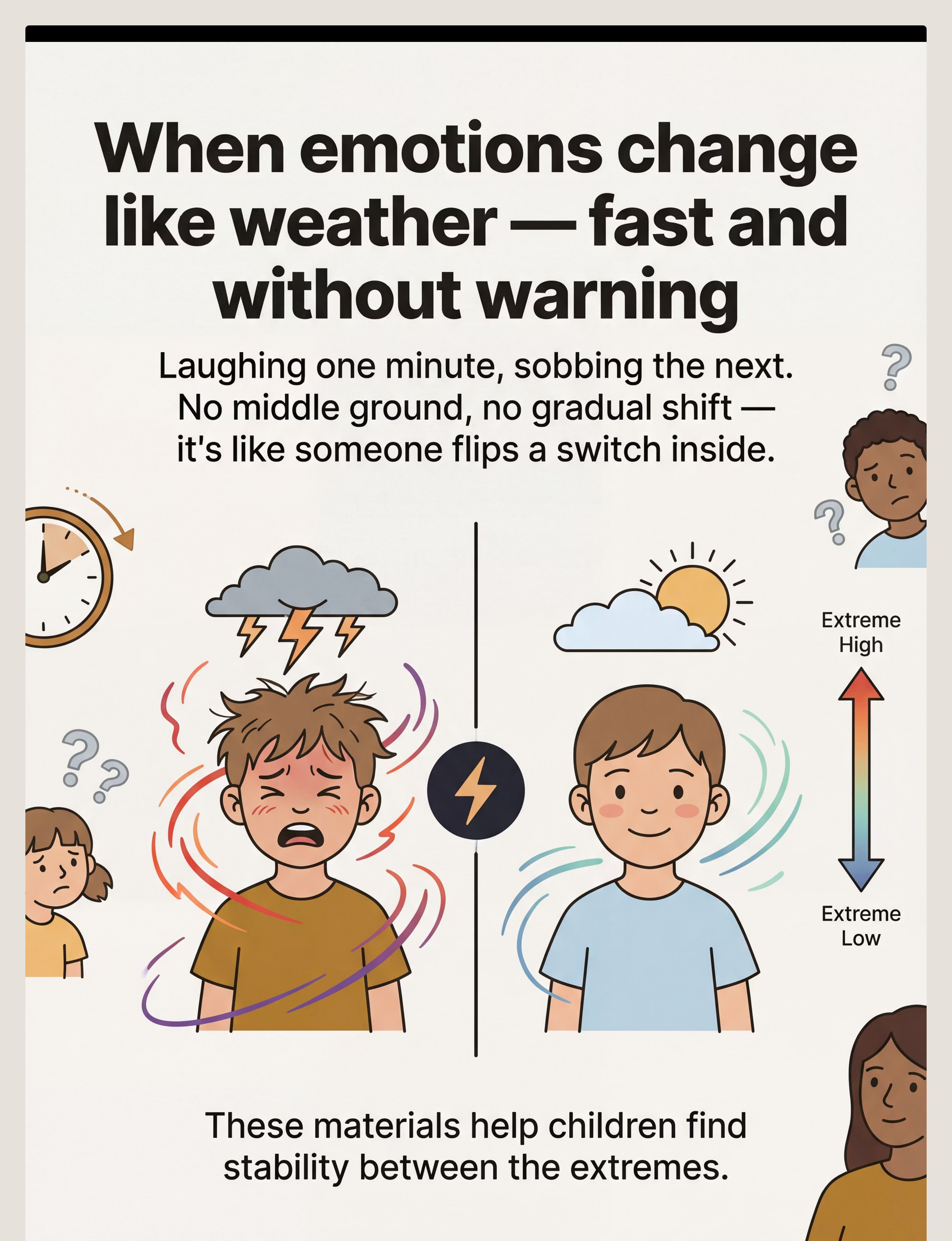
"One minute he's laughing. The next, he's sobbing uncontrollably. No middle ground. No warning. Just a switch."
You didn't imagine this. You didn't cause this. And you are not failing. What you're witnessing is a nervous system that hasn't yet found its middle ground — and there is a proven path forward.
C-251 | Extreme Mood Swings
Domain C — Emotional Regulation & Mood Stability
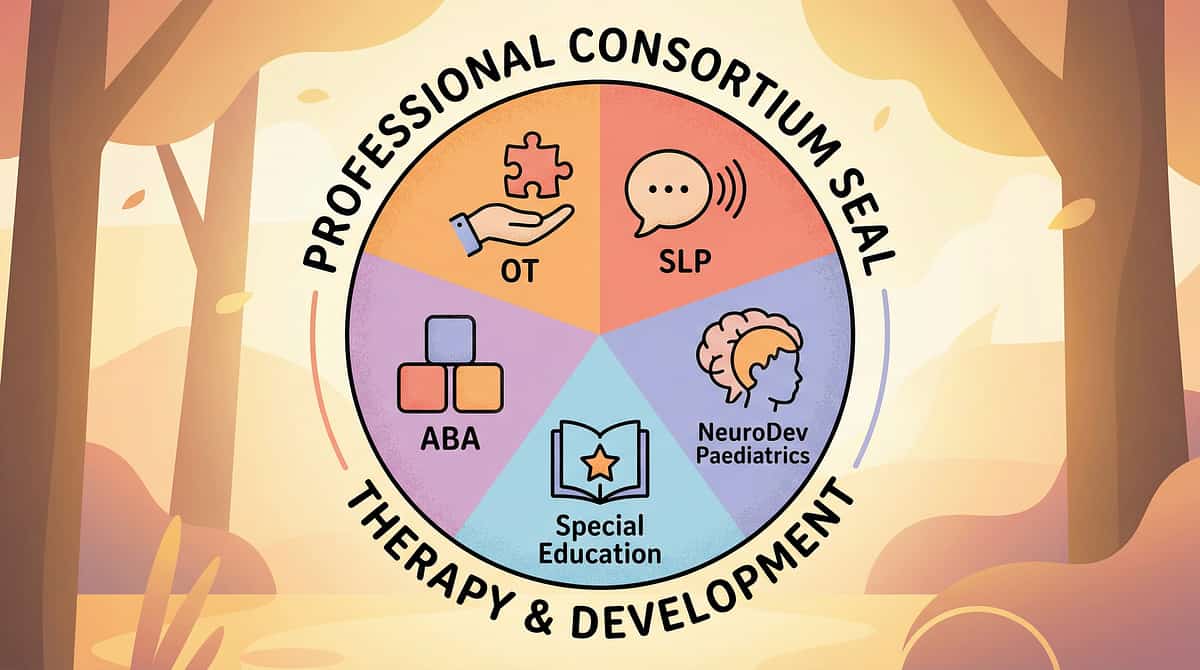
🏥 Pinnacle Blooms Consortium | CRO · OT · SLP · BCBA · SpEd · NeuroDev Pediatrics
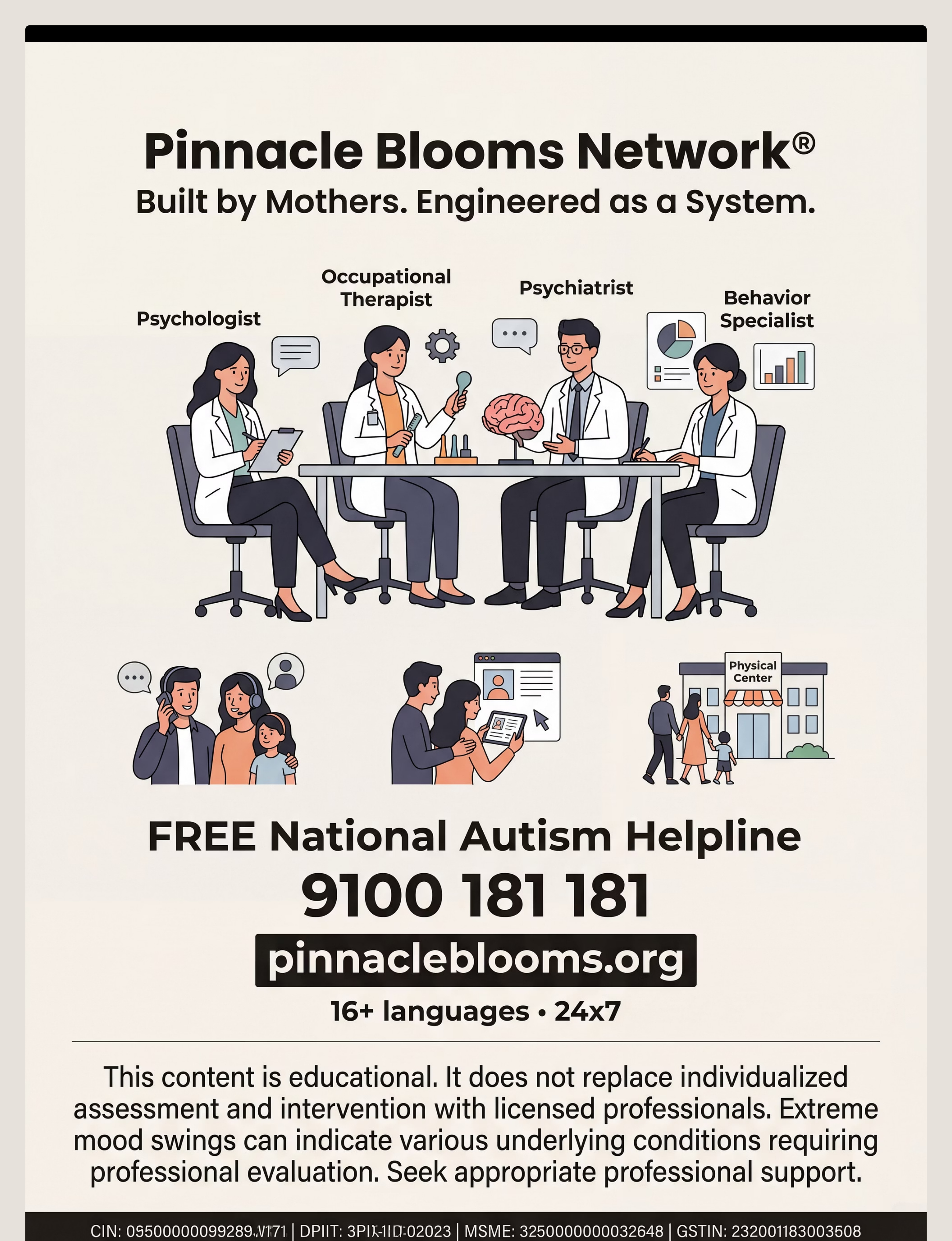
FREE National Autism Helpline: 9100 181 181 | Available 24×7 | 16+ Languages
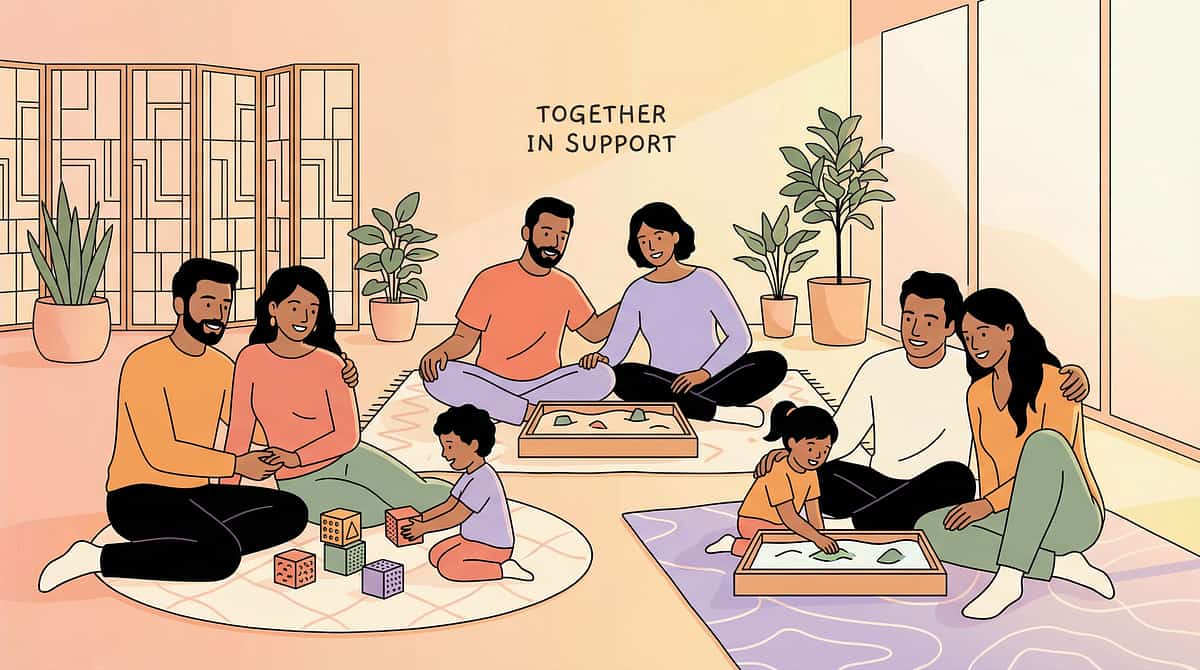
You Are Among Millions of Families Navigating This Exact Storm
40–65%
Children with ASD
experience significant emotional dysregulation (PMC5993679)
1 in 11
Children globally
show clinically significant mood instability by age 10 (WHO MICS Data)
20M+
Therapy sessions
show emotional regulation as top family concern (Pinnacle GPT-OS® Data)
Extreme mood swings are not rare. They are not a parenting failure. They are a neurobiological reality experienced by millions of children — and millions of exhausted, loving families just like yours.
Emotional lability — rapid, intense, disproportionate shifts between emotional states — is a recognised challenge across multiple developmental conditions: autism spectrum, ADHD, sensory processing differences, anxiety, and temperamental intensity. The child is not choosing chaos. Their nervous system is struggling to regulate.
"Your child's nervous system is working hard. So are you. These numbers prove you are not alone."
FREE National Autism Helpline: 9100 181 181
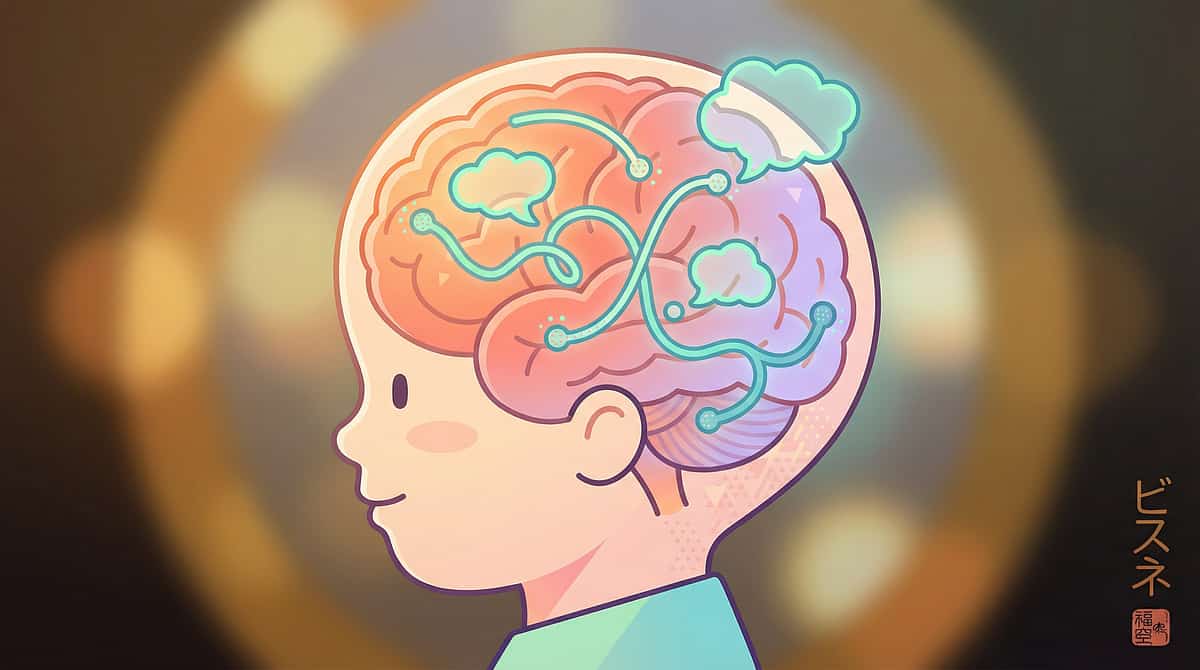
This Is a Wiring Difference — Not a Behaviour Choice
The Amygdala Hijack
When the amygdala fires faster than the prefrontal cortex can respond — emotions flood before reasoning can intervene.
🧠The Amygdala — the brain's alarm system. It detects threat, triggers emotion, acts in milliseconds.
🧠The Prefrontal Cortex — the brain's regulation centre. It interprets, contextualises, and modulates emotion — but it's slower, and in children, still developing.
The Neuroscience, Translated
In children with emotional lability, the gap between these two systems is wider than typical. The amygdala fires. The prefrontal cortex hasn't caught up yet. The result: the emotional switch flips before the brain can apply the brakes.
This is not willfulness. This is neurobiology.
The good news: the prefrontal cortex is the most plastic structure in the brain. With the right materials, consistent practice, and structured support — the gap narrows. The brakes get stronger.
🔬 Frontiers in Integrative Neuroscience (2020): Established neurological basis for sensory and emotional regulation interventions in ASD | DOI: 10.3389/fnint.2020.556660
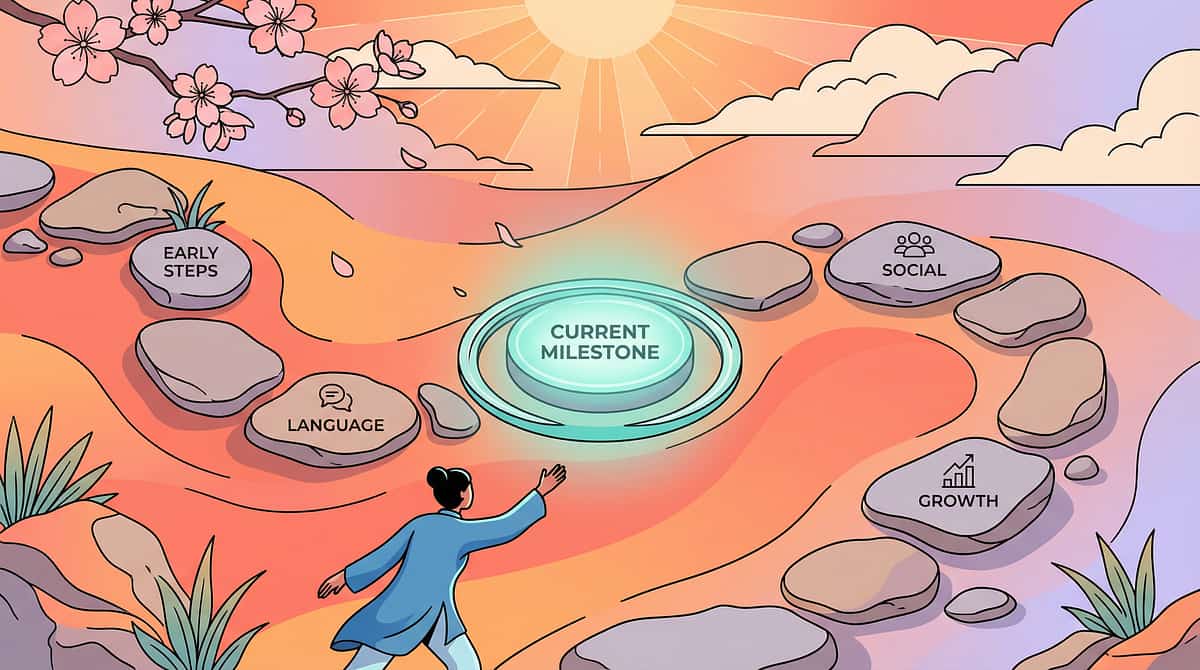
Your Child Is Here. Here Is Where You're Heading.
1
Age 2–3
Big emotions normal — no tools yet
2
Age 3–5
Emerging regulation attempts
3
Age 5–7
Beginning use of strategies with support
4
Age 7–10
Growing self-awareness, co-regulation improving
5
Age 10–12
Flexible emotional regulation
↑ Where mood swings are most intense — and most responsive to intervention (Ages 3–10)
Emotional regulation is not a switch that flips on — it is a skill that develops across childhood and into early adulthood. The prefrontal cortex doesn't fully mature until age 25. Children ages 3–10 are in the highest-leverage window for intervention.
Common co-occurring challenges to be aware of:
- Sensory processing differences (amplify emotional reactivity)
- Sleep disruption (dramatically reduces regulation capacity)
- ADHD (executive function deficits affect emotional control)
- Anxiety (often presents as irritability and volatility in children)
- Autism spectrum (emotional regulation is a core domain challenge)
📍You are not too late. Ages 3–12 represent the highest-yield period for building lasting regulation capacity. | WHO CCD Package (2023) | PMC9978394

Clinically Validated. Home-Applicable. Parent-Proven.
LEVEL I EVIDENCE
Systematic Review + Meta-Analysis
📊 PMC11506176 — Children (2024)
Sensory integration and emotional regulation interventions meet evidence-based practice criteria for children with ASD across 16 studies (2013–2023). Outcomes include improved social skills, adaptive behaviour, and emotional regulation.
📊 PMC10955541 — World J Clin Cases (2024)
40-minute structured sessions show maximum effectiveness. Home-based sessions at 10–20 minutes maintain outcomes when delivered consistently.
📊 Indian RCT — Padmanabha et al. (Indian J Pediatr 2019)
Home-based sensory and regulation interventions demonstrate significant outcomes when parent-administered with structured protocols. DOI: 10.1007/s12098-018-2747-4
📊 WHO/UNICEF CCD Package
Implemented in 54 low- and middle-income countries. Age-specific caregiver interventions for emotional and behavioural regulation show consistent positive outcomes. Reference: PMC9978394
This technique is backed by peer-reviewed science, WHO/UNICEF global frameworks, and 20M+ therapy sessions of real-world Pinnacle data. You are not guessing. You are following a proven system.
FREE Helpline: 9100 181 181 | pinnacleblooms.org
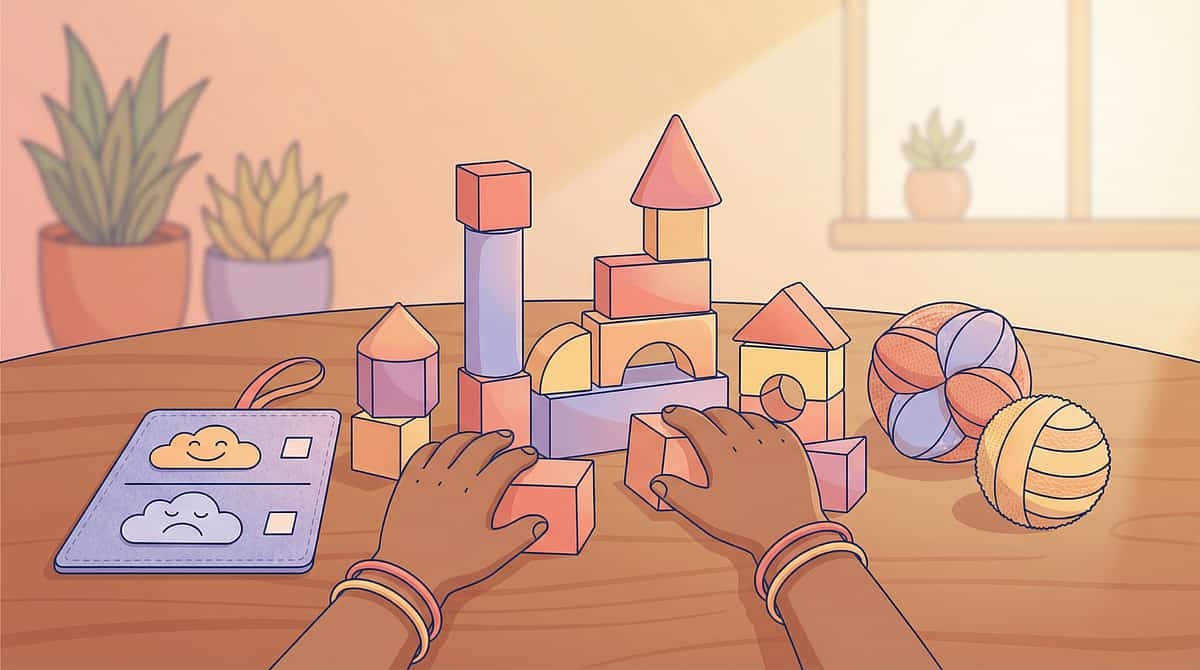
The Technique: Emotional Regulation & Mood Stability Intervention
Parent-friendly alias: "The Steady Ground Programme"
Emotional Regulation & Mood Stability Intervention is a structured, multi-material approach to helping children recognise, understand, and modulate rapid shifts in emotional state. It combines awareness-building tools, regulation strategy delivery, and environmental architecture into a home-executable daily programme.
The intervention builds three capacities over time: (1) Pattern Awareness — the child learns that their moods have triggers, warning signs, and predictable cycles. (2) Strategy Access — the child has tangible tools ready when moods begin to shift. (3) Environmental Stability — the child's environment is structured to minimise triggers and maximise regulatory support.
📂 Domain
C — Emotional Regulation
👶 Age Range
3–12 years
⏱ Duration
10–20 minutes
📅 Frequency
Daily + embedded throughout day
🏠 Setting
Home + School + All Contexts
Canon Materials Used:
Behavior / Feelings Thermometer
Calm-Down Kit
Visual Schedule System
Breathing / Relaxation Tools
Emotion Cards / Feelings Faces
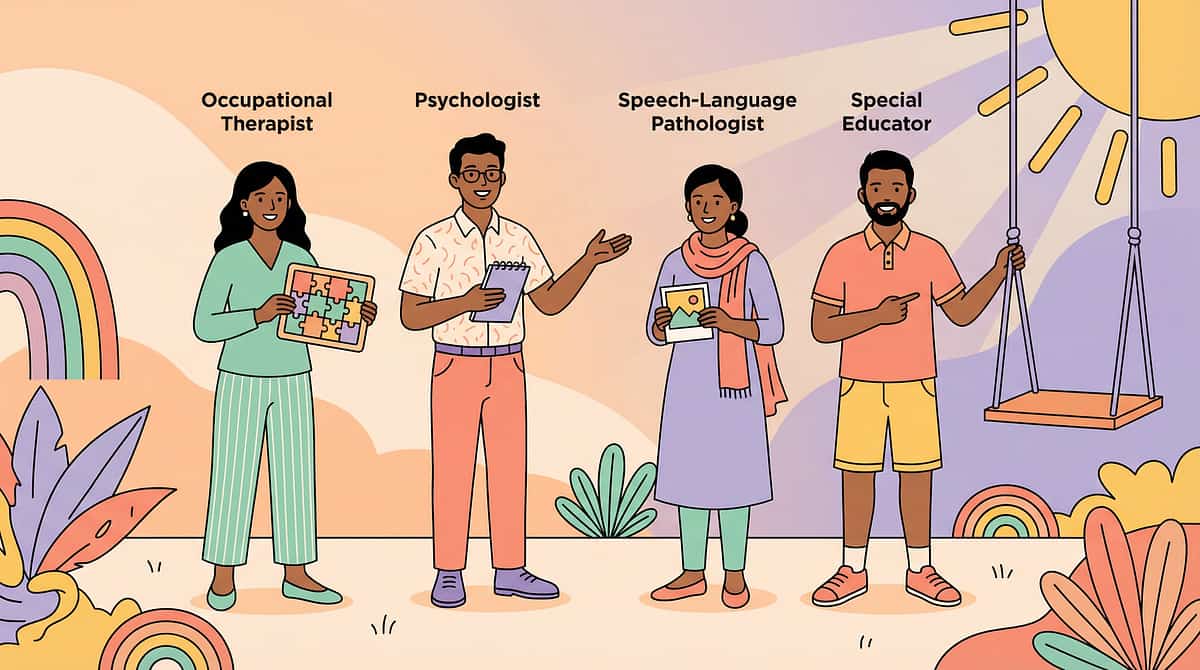
Five Disciplines. One Converged Outcome: A Regulated Child.
Occupational Therapist (OT) — Lead Discipline
Addresses the sensory-regulatory foundation of mood instability. Identifies sensory processing patterns, builds sensory regulation toolkit, assesses arousal modulation needs.
Psychologist / Behavior Specialist (BCBA/ABA)
Conducts functional behavioural analysis of mood swing patterns. Identifies antecedents, consequences, and environmental triggers. Designs reinforcement systems for regulation attempts.
Speech-Language Pathologist (SLP)
Builds emotional vocabulary, supports the child's ability to label and communicate internal states. Creates social stories and narrative supports for emotional experiences.
Special Educator (SpEd)
Adapts academic and social environments for emotional regulation needs. Implements visual schedules, transition supports, and accommodation plans for school.
NeuroDevelopmental Paediatrician
Rules out and manages underlying conditions contributing to emotional lability. Coordinates with all disciplines for a unified care plan.
"The brain doesn't organise by therapy type. That's why five disciplines address the same challenge from five angles — and why GPT-OS® converges them into one coherent plan."
🏥 Pinnacle Blooms Consortium — All five disciplines converge in the GPT-OS® FusionModule™ | Helpline: 9100 181 181
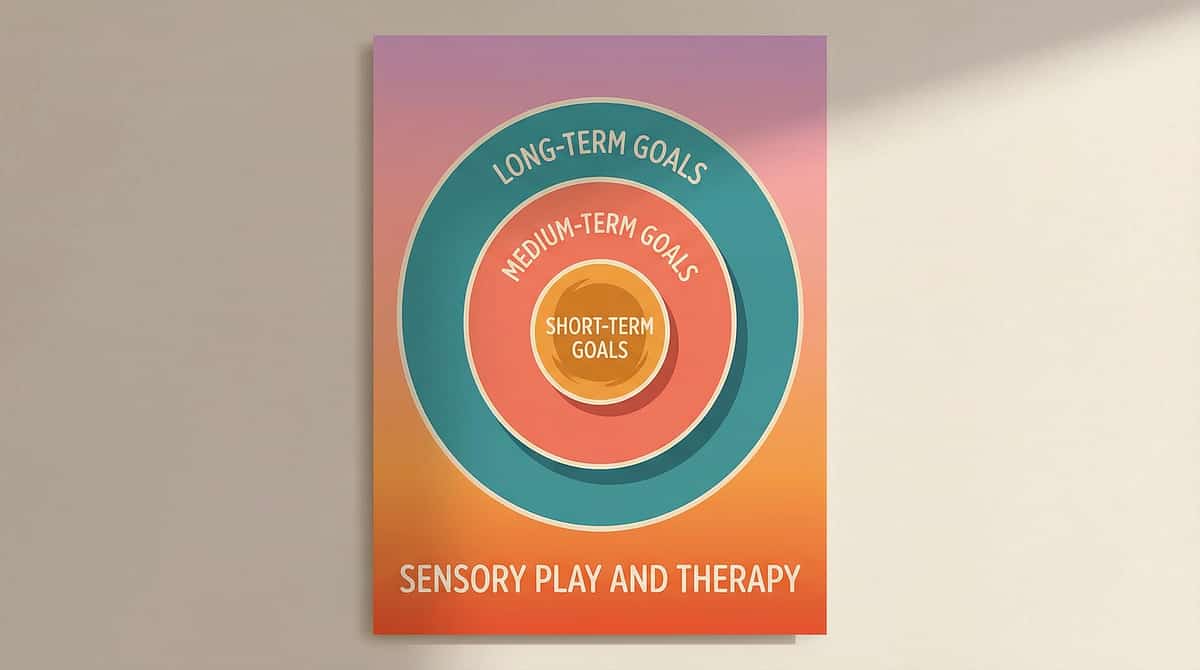
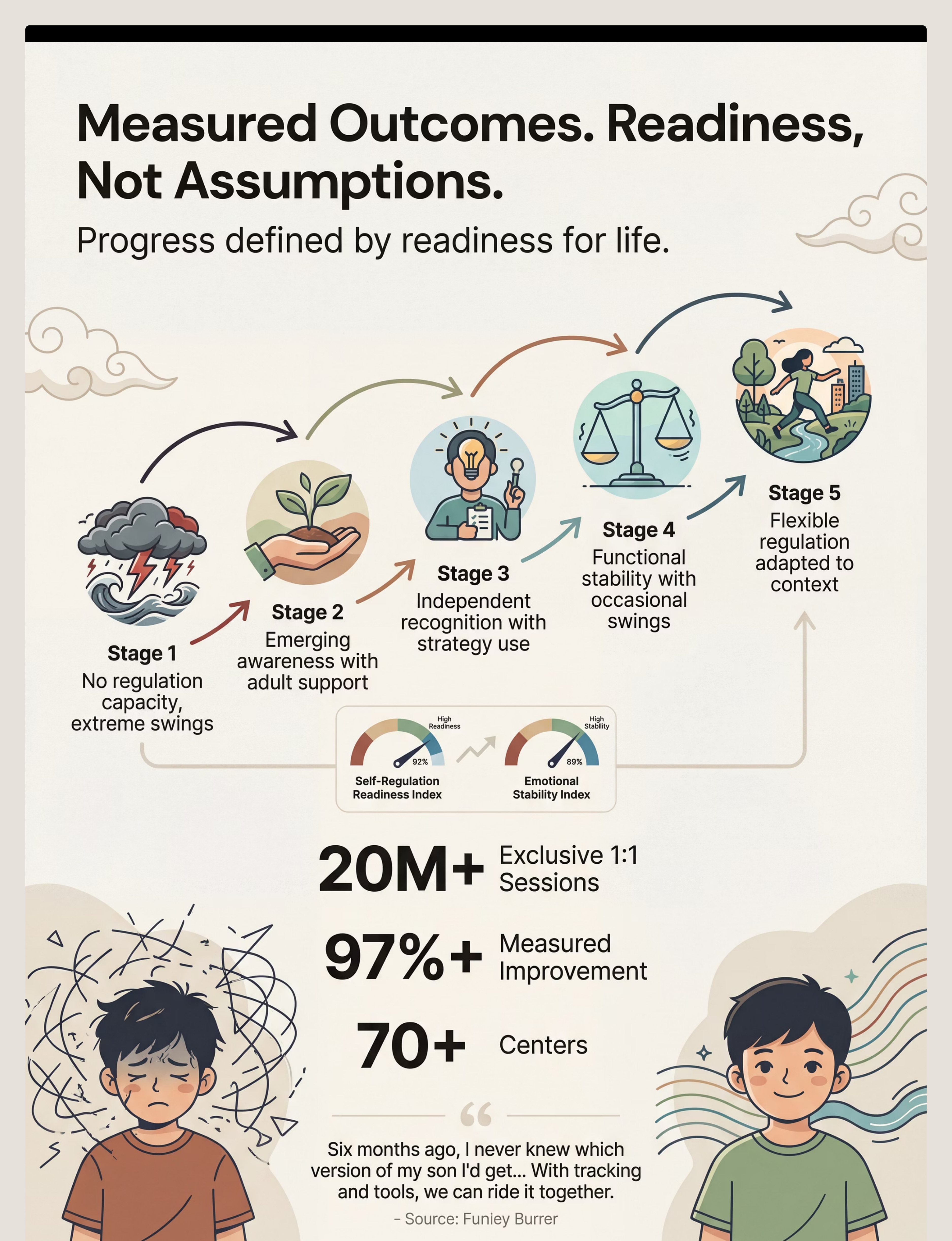
From Emotional Roller Coaster to Navigable Waves — The 3-Layer Outcome Target
📊 Self-Regulation Readiness Index
📊 Emotional Stability Index
📊 Mood Regulation Function Score
📊 Emotional Lability Recovery Capacity
Citation: PMC11506176 | NCAEP Evidence-Based Practices Report (2020)

9 Clinically Validated Materials — All Home-Applicable
Every material below is mapped to the Pinnacle 128 Canon Classification. All are available on Amazon.in and all have free DIY alternatives (see next card).
# | Material | Canon Category | Price Range | Link | |
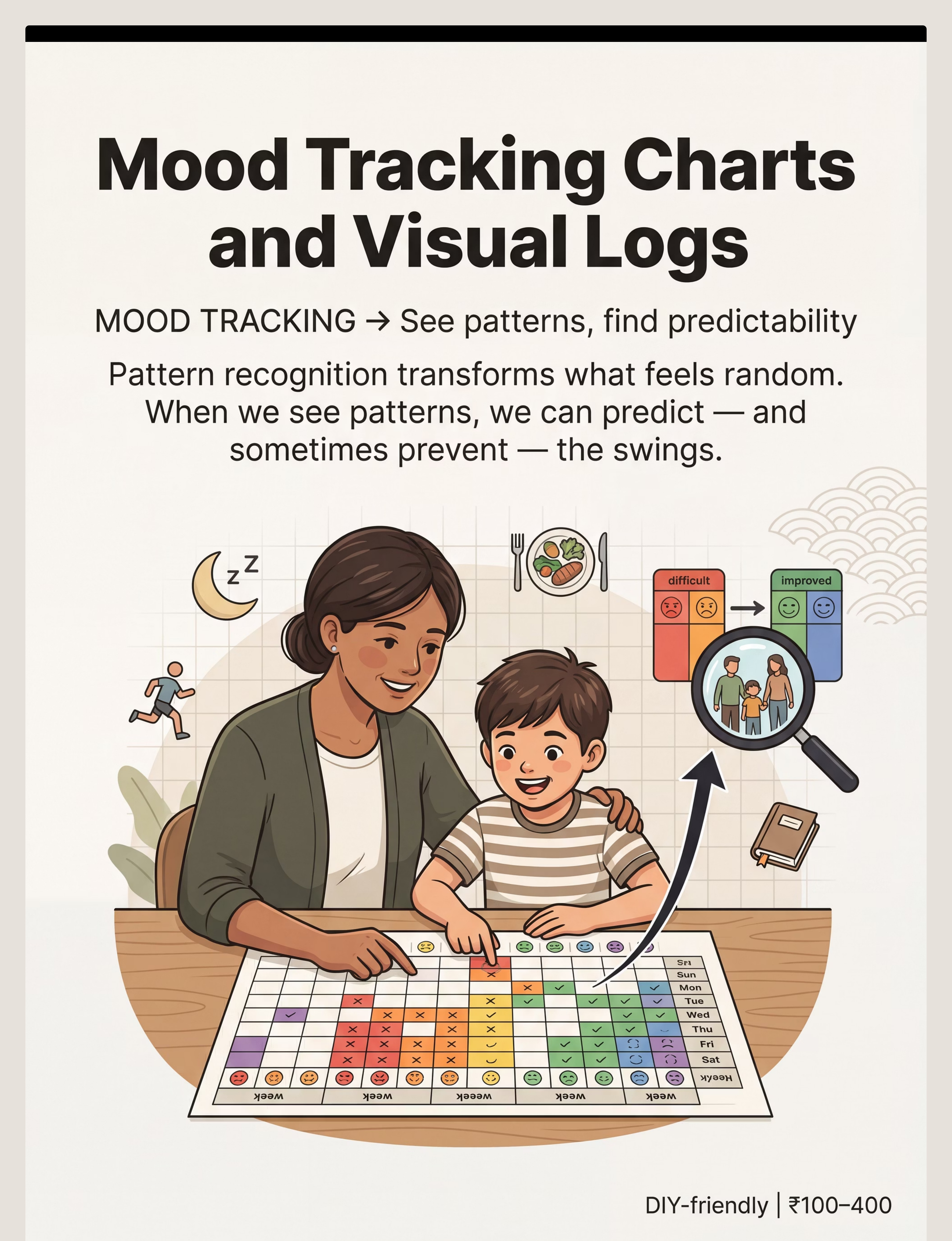
1 | Mood Tracking Charts & Visual Logs | Behavior / Feelings Thermometer | ₹100–400 | Amazon.in | |
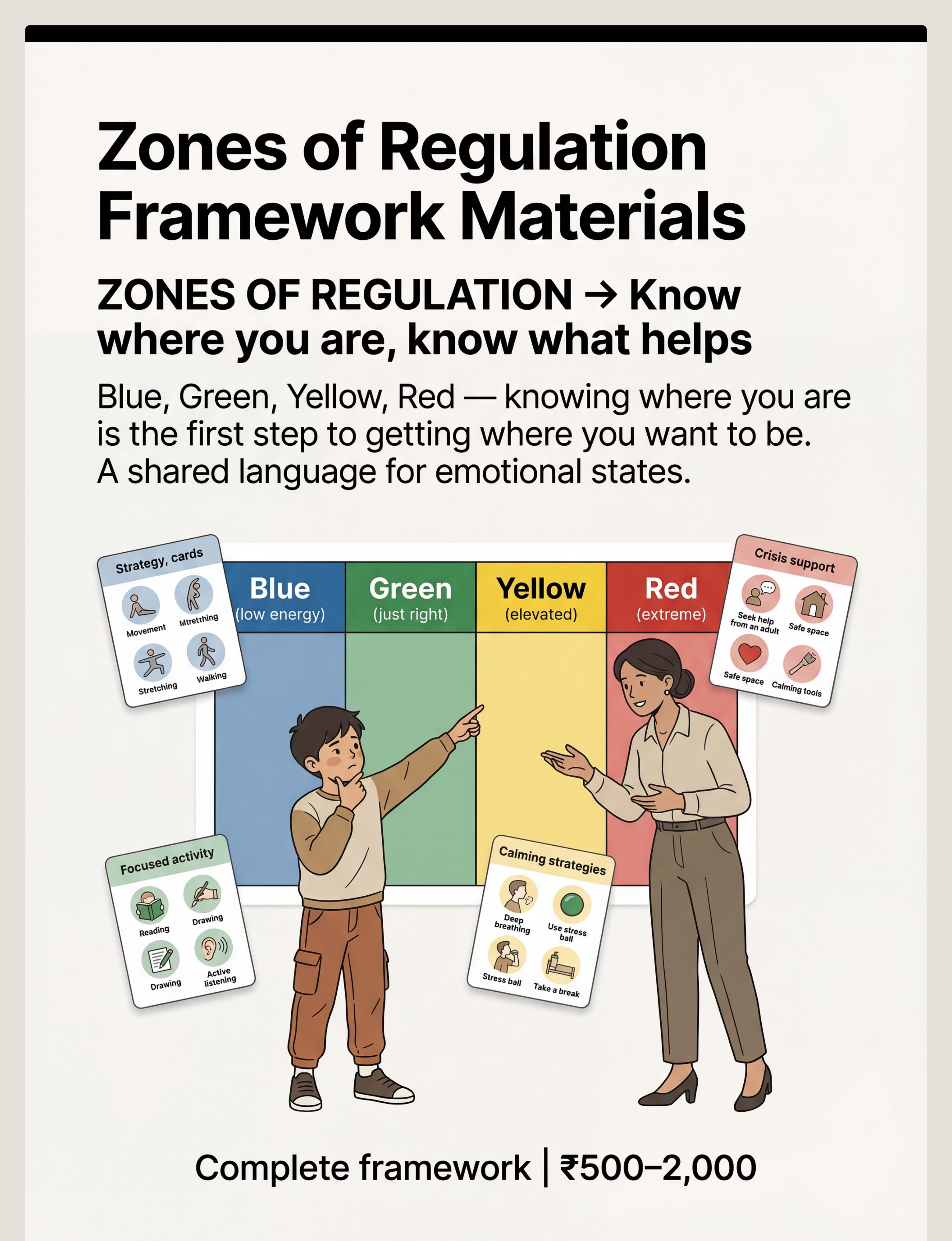
2 | Zones of Regulation Framework | Emotion Cards / Feelings Faces | ₹500–2,000 | Amazon.in | |
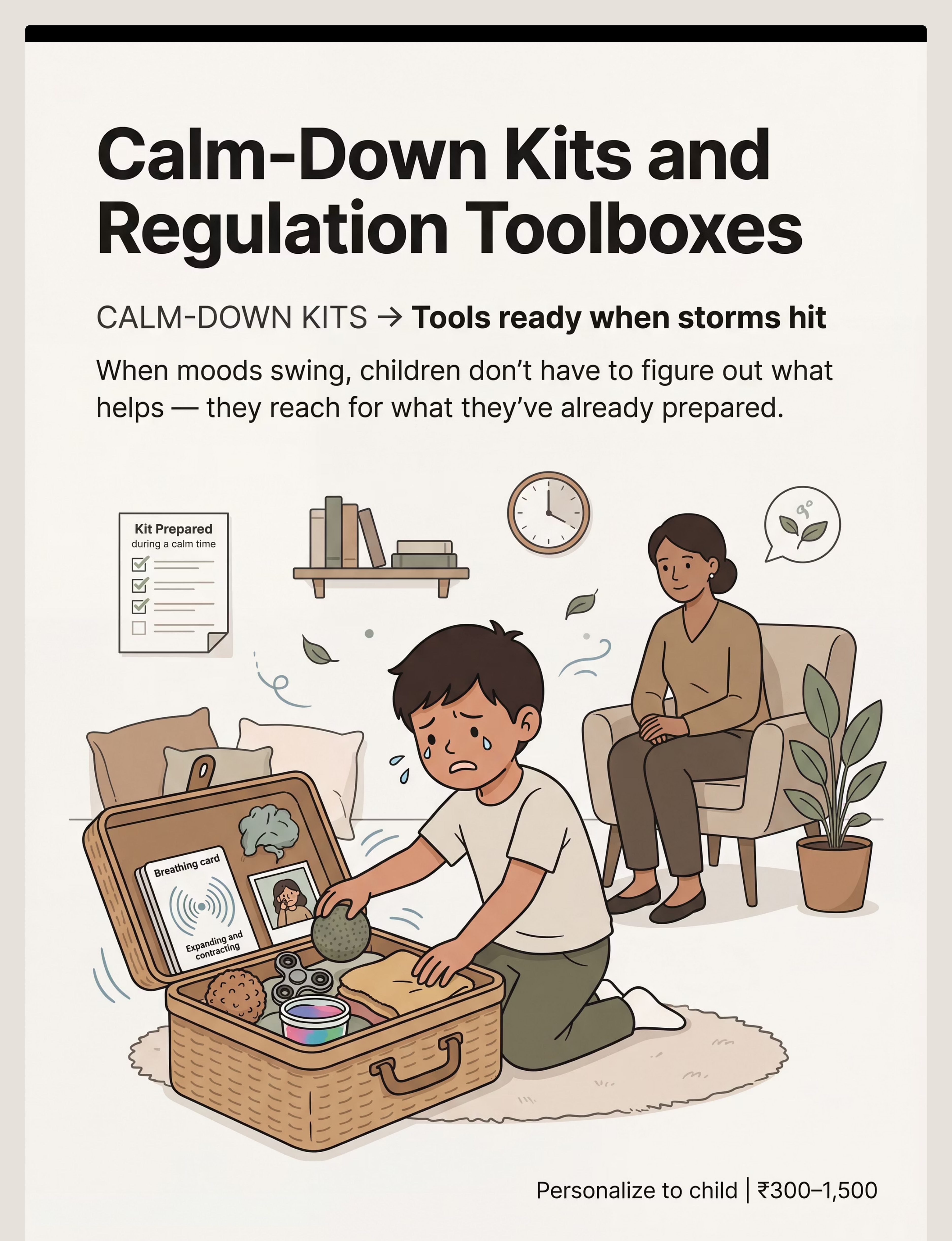
3 | Calm-Down Kit & Regulation Toolbox | Calm-Down Kit / Self-Regulation Toolbox | ₹300–1,500 | Amazon.in | |
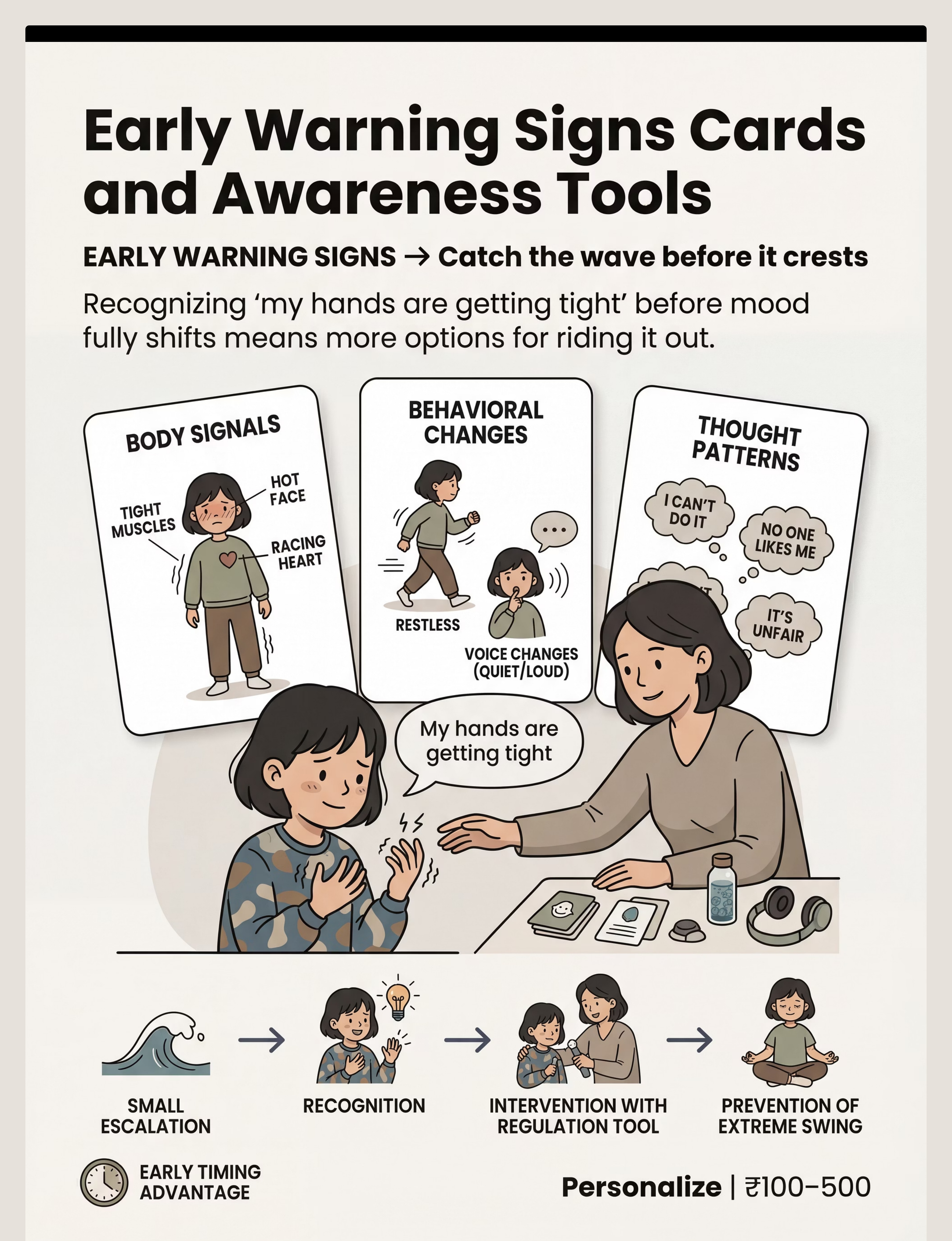
4 | Early Warning Signs Cards | Emotion Cards / Feelings Faces | ₹100–500 | Amazon.in | |
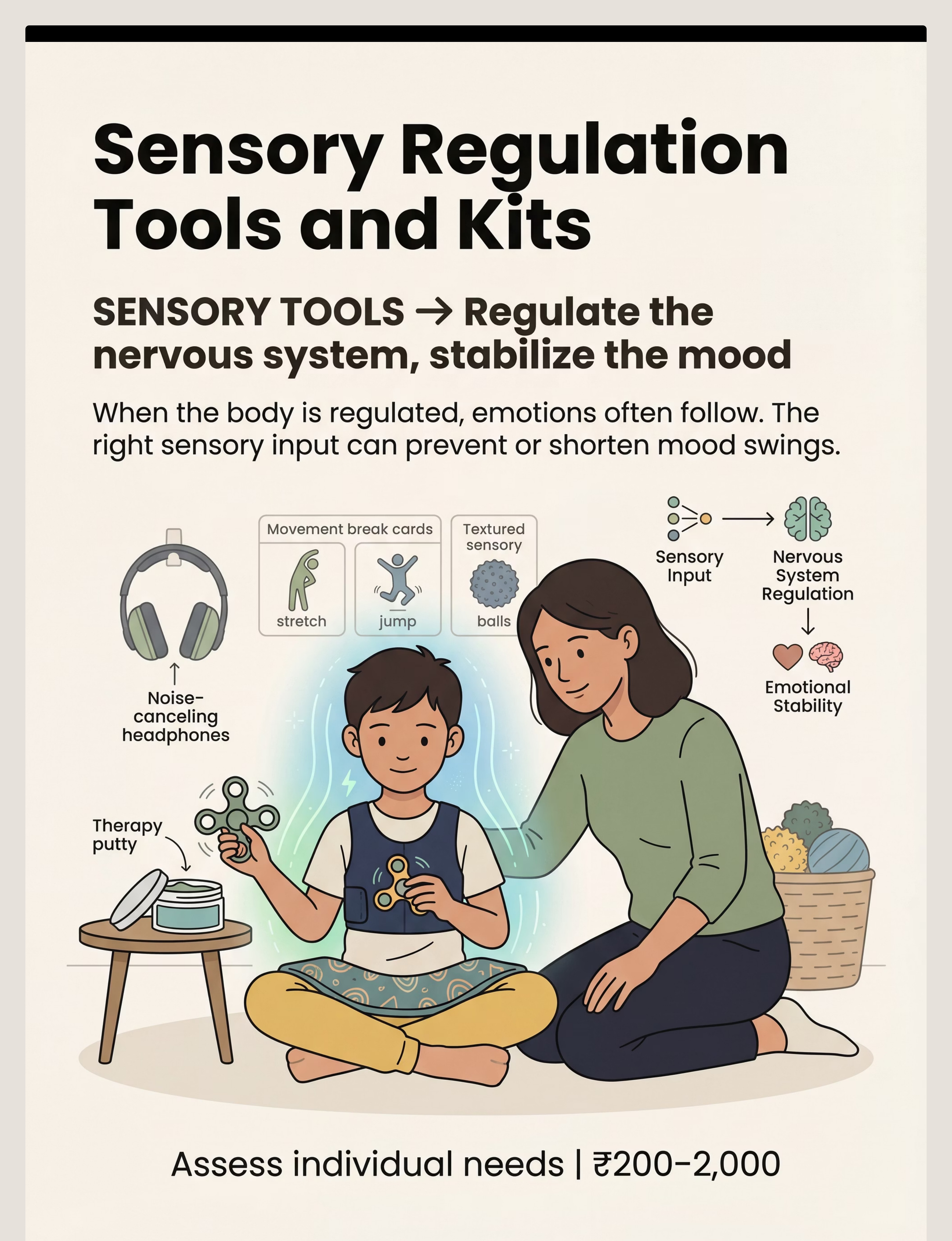
5 | Sensory Regulation Tools | Tactile Sensory Kit + Fidget Tool Set | ₹200–2,000 | Amazon.in | |
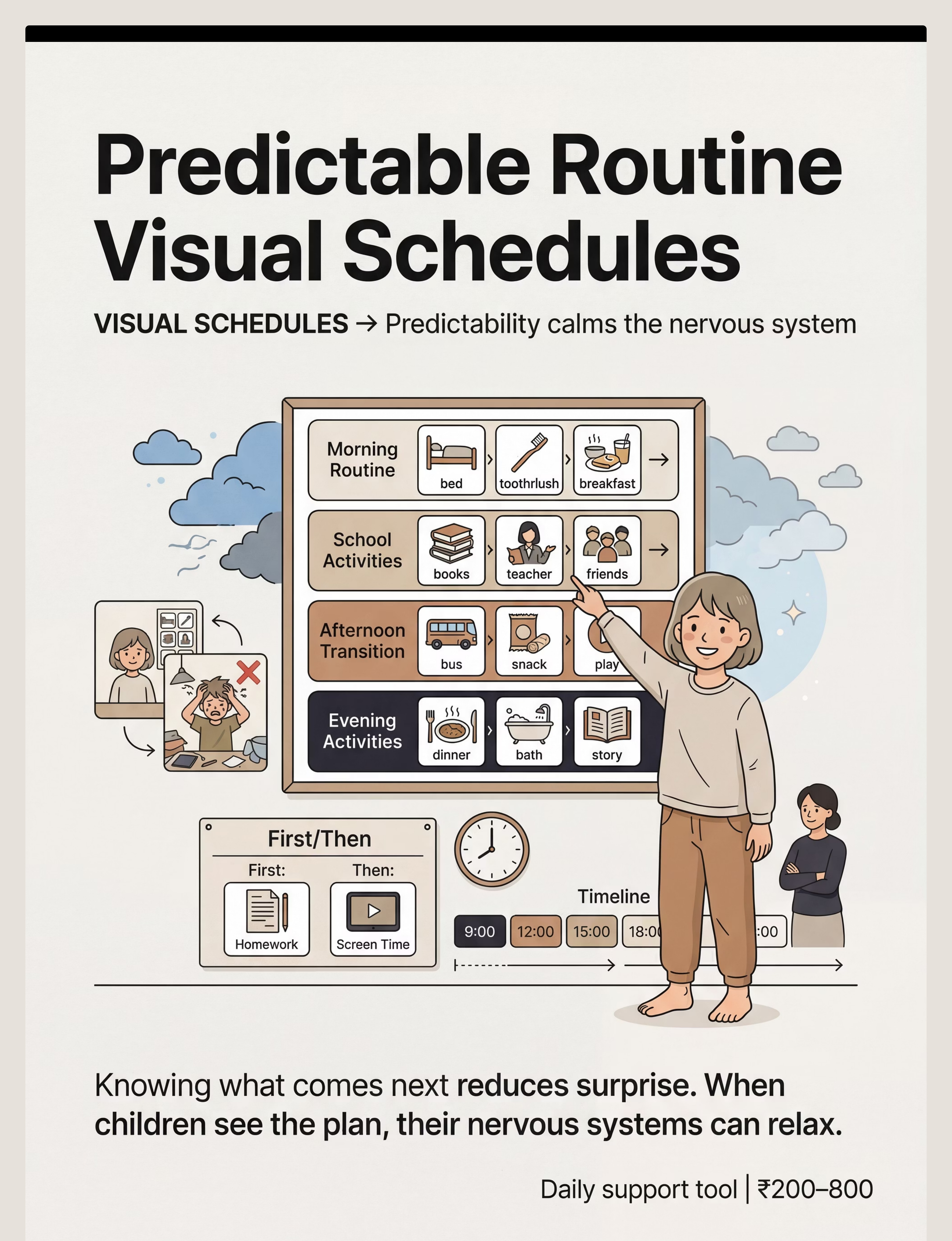
6 | Visual Schedule System | Visual Schedule System | ₹200–800 | Amazon.in | |
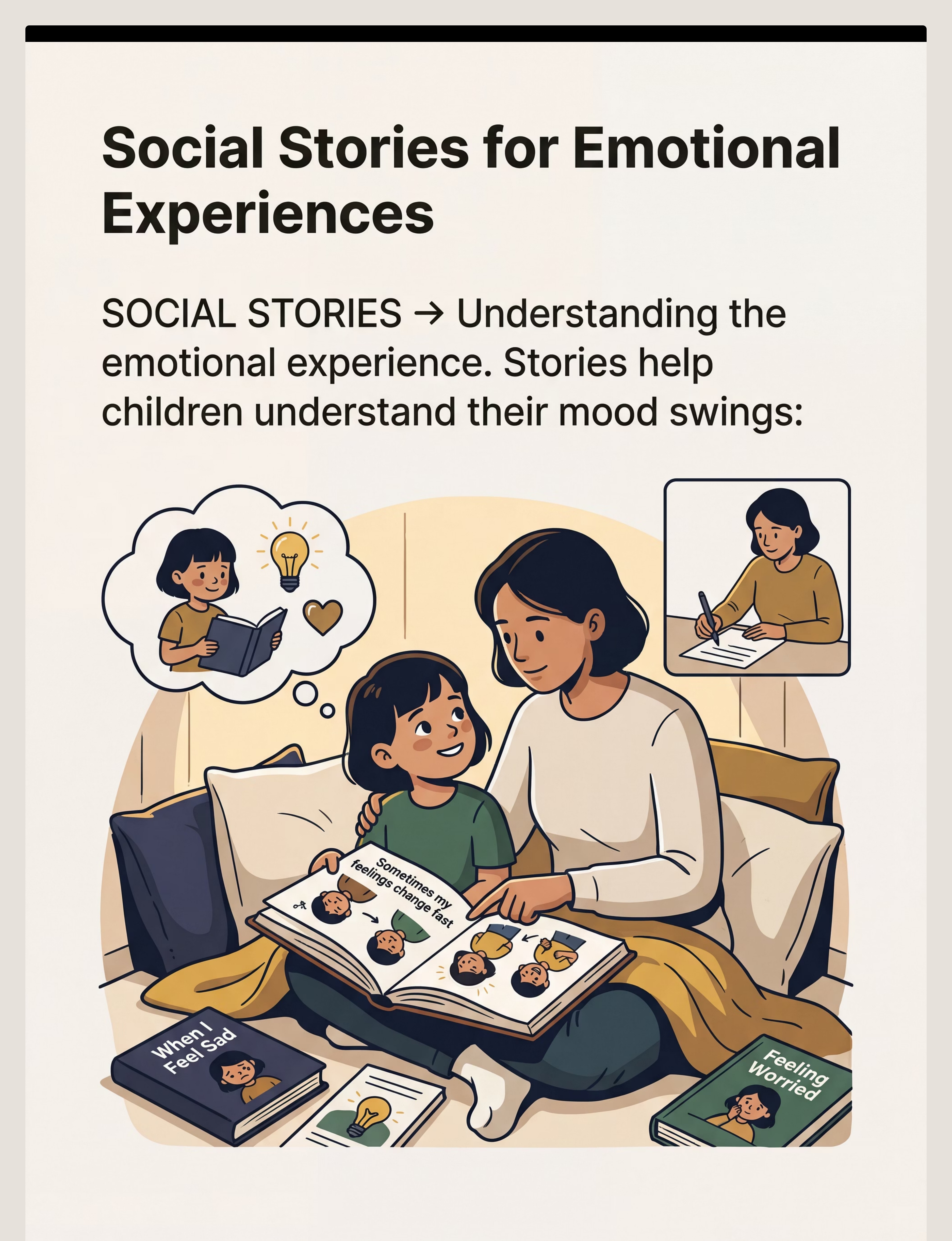
7 | Social Stories for Emotions | Social Stories / Narrative Supports | ₹200–800 | Amazon.in | |
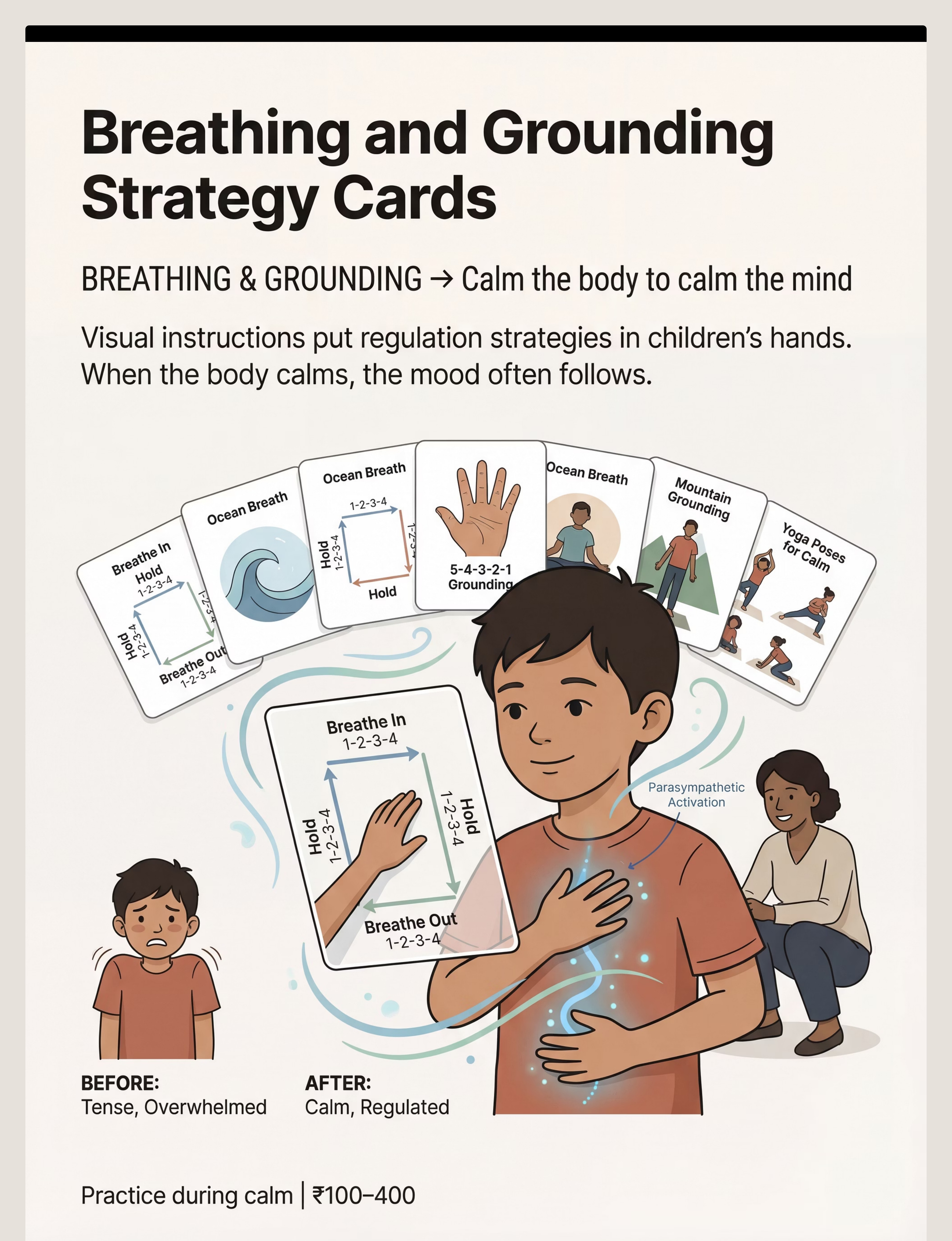
8 | Breathing & Grounding Cards | Breathing / Relaxation Tools | ₹100–400 | Amazon.in | |
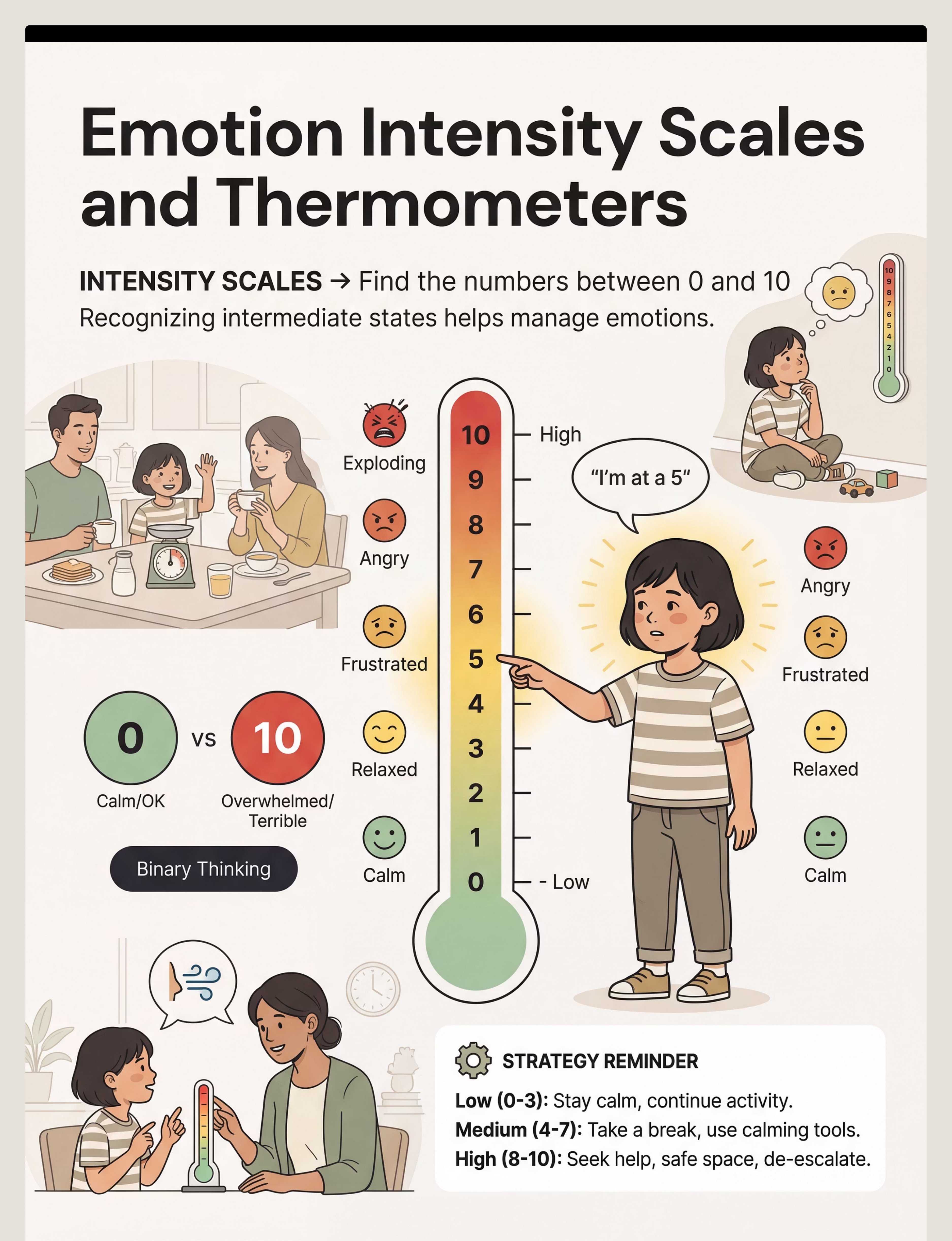
9 | Emotion Intensity Scales | Behavior / Feelings Thermometer | ₹100–500 | Amazon.in |
Total Investment Range
₹900 – ₹8,400 for complete toolkit
Starter Essentials (₹300–600)
Mood chart (DIY) + Basic calm-down kit + Zones visual — enough to begin today.
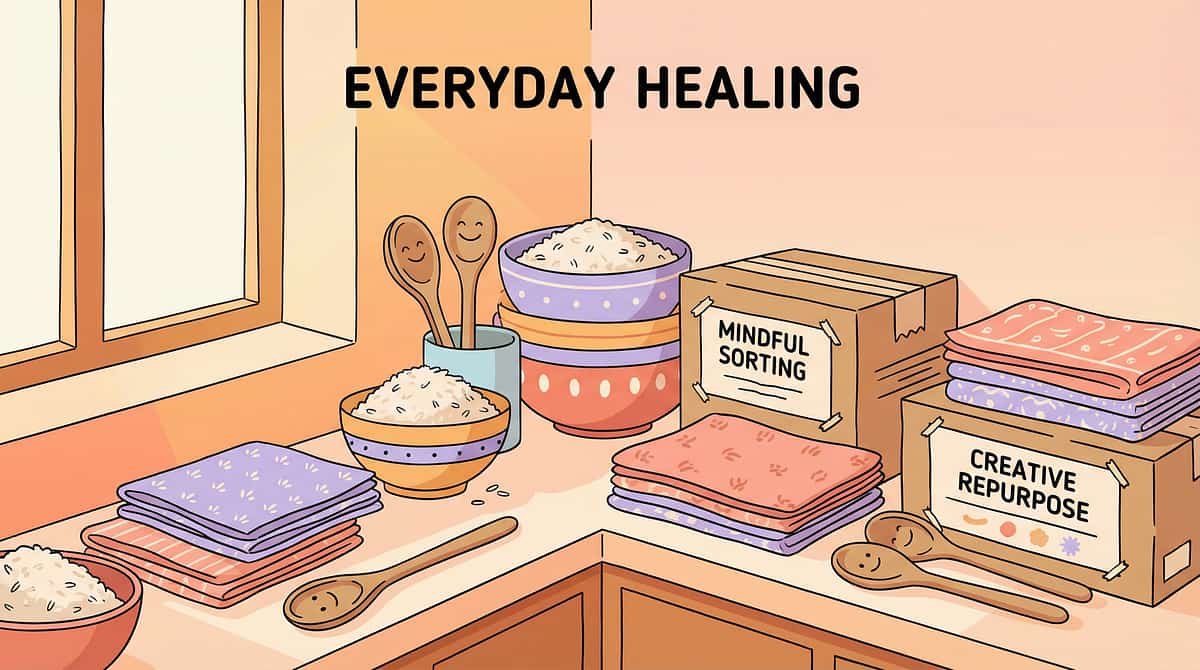
Every Family Can Start Today — With Zero Rupees If Needed
🌍 WHO/UNICEF Inclusion Principle: Effective intervention must be accessible regardless of economic context. All 9 materials have zero-cost DIY alternatives.
Material | Buy This (Amazon.in) | Make This (DIY — Free) | |
Mood Tracking Chart | Printed chart ₹100–400 | Draw 3 columns on paper: Morning/Afternoon/Evening. Add smiley faces. Track daily. | |
Zones of Regulation | Official curriculum ₹500–2,000 | Draw 4 coloured squares on A4 paper. Blue=low, Green=calm, Yellow=elevated, Red=extreme. | |
Calm-Down Kit | Ready kit ₹300–1,500 | Find a shoebox. Add: smooth stone, small soft toy, photo of pet, cotton ball with lavender. | |
Warning Signs Cards | Printed cards ₹100–500 | Write on index cards: "tight hands," "hot face," "talking fast" — your child's actual signs. | |
Sensory Tools | Fidget/weighted ₹200–2,000 | Fill a sock with rice (squeeze ball). Heavy work: carry grocery bag, push laundry basket. | |
Visual Schedule | Board ₹200–800 | Draw boxes on paper, add activity pictures cut from old magazines. Laminate with tape. | |
Social Story | Book ₹200–800 | Write 5 sentences about your child's experience. Add drawings. Read before bedtime. | |
Breathing Cards | Laminated cards ₹100–400 | Draw a star. Trace the points while breathing in/out. Box breathing on any piece of paper. | |
Intensity Scale | Printed thermometer ₹100–500 | Draw a thermometer 1–10 on paper. Colour 1–3 green, 4–6 yellow, 7–10 red. Post on fridge. |
"These techniques work because of the principle — not the price tag."
Citation: WHO NCF Handbook (2022) | PMC9978394

Read This Before Every Session — Non-Negotiable
🔴 RED — STOP. Do Not Proceed
- Child is in active meltdown (this technique is for prevention, not crisis)
- Child has been without sleep for more than 18 hours
- Child has fever, illness, or acute physical discomfort
- Traumatic event in the last 24 hours requiring immediate professional support
- Child has expressed self-harm or harm to others → Contact 9100 181 181 immediately
🟡 AMBER — Modify. Simplify. Shorten.
- Child is at emotional zone Yellow (elevated but not extreme)
- Session timing is close to hunger/mealtime
- There has been a difficult transition earlier that day
- Child is showing mild resistance → Use 5-minute simplified version only
🟢 GREEN — Proceed Fully
- Child is in Green zone (calm, regulated)
- Child is fed, rested, comfortable
- No major transitions or disruptions in past 2 hours
- Environment is set up correctly (see next card)
Material Safety Notes:
- Sensory tools must be tested individually — what calms one child may escalate another
- Breathing strategies must be practised during calm — introducing them in crisis is ineffective
- Tracking tools are supportive, not surveillance — child must feel ownership, not monitoring
STOP IMMEDIATELY AND SEEK PROFESSIONAL SUPPORT IF: Mood swings include self-harm, aggression with injury risk, expressions of hopelessness, or are worsening despite consistent strategies. Call 9100 181 181. | Citation: DOI: 10.1007/s12098-018-2747-4

Spatial Precision Prevents 80% of Session Failures
Room Setup — 6 Key Positions
Child Seated
Floor cushion or bean bag — grounded and comfortable
Parent Position
Adjacent, slightly lower than child eye level
Calm-Down Kit
Within arm's reach of child (right side)
Visual Schedule
Posted at child eye height on wall/board
Mood Tracker
On small table or clipboard — visible
Remove
Screens, bright toys, other children if possible
Environment Checklist
- ✅ Lighting: Soft, indirect — not harsh overhead fluorescent
- ✅ Sound: Quiet or soft white noise — no TV, no notifications
- ✅ Temperature: Comfortable — neither too hot nor too cold
- ✅ Clutter: Minimal — visual simplicity reduces cognitive load
- ✅ Time: NOT during transitions, NOT during hunger windows
- ✅ Duration: Set a visual timer for 15 minutes maximum
Optimal Session Times
- 🕐 Best: 30–45 minutes after a meal, during natural calm
- 🕑 Second best: Morning routine (consistent anchor time)
- 🕒 Avoid: Immediately after school, bedtime
Citation: PMC10955541 — Meta-analysis on session structure efficacy

60-Second Pre-Session Check — Run This Every Time
Before every session, run through these five questions. Your answers determine whether to proceed, modify, or postpone. This habit protects both your child and the integrity of the technique.
Readiness Checklist (5 questions)
- ☐ Is my child currently in Green or Yellow zone (not Red)?
- ☐ Has my child eaten within the last 90 minutes?
- ☐ Has my child slept adequately last night (more than 8 hours for ages 3–8)?
- ☐ Is there no active conflict, upset, or emotional residue from the last 2 hours?
- ☐ Is my child showing interest or at least tolerance when I mention the activity?
Score | Decision | Action | |
5/5 | ✅ GO | Proceed with full 15-minute session | |
3–4/5 | 🟡 MODIFY | Run 5-minute simplified version: mood check-in + one regulation tool | |
0–2/5 | 🔴 POSTPONE | Offer co-regulation instead: sit together, slow breathing, no agenda |
"The best session is one that starts right."
FREE Helpline: 9100 181 181 — if your child is frequently in the Postpone zone, professional assessment is indicated.
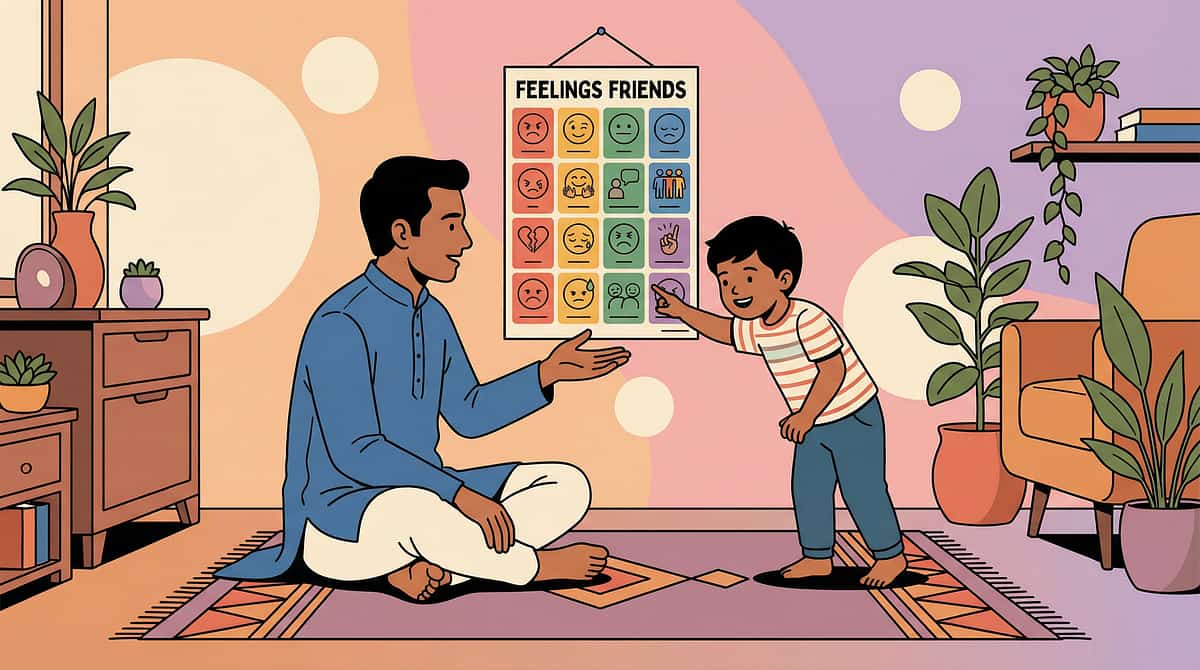
Step 1: Every Session Begins as an Invitation, Never a Command
Step 1 of 6
"Hey [child's name], I've got something I'd love to show you. It's our mood map — want to check in with me today? We'll see how you're doing."
Body Language Guidance
- 🧘 Get to your child's eye level — sit, crouch, or use floor seating
- 🗣 Warm, calm tone — not eager or urgent
- 👐 Open body posture — no crossed arms
- ⏸ Pause after the invitation — allow 10–15 seconds for response
- 🎯 Offer, don't demand
Acceptance Cues
- Eye contact or glance toward materials
- Body turns slightly toward you
- Verbal or gestural acknowledgement
- No active resistance
Resistance Response
"That's okay. I'll leave it right here. We can look whenever you're ready." — No pressure. Try again in 15 minutes.
⏱ Timing: 30–60 seconds | Citation: ABA Pairing Procedures | OT Just-Right Challenge Principle
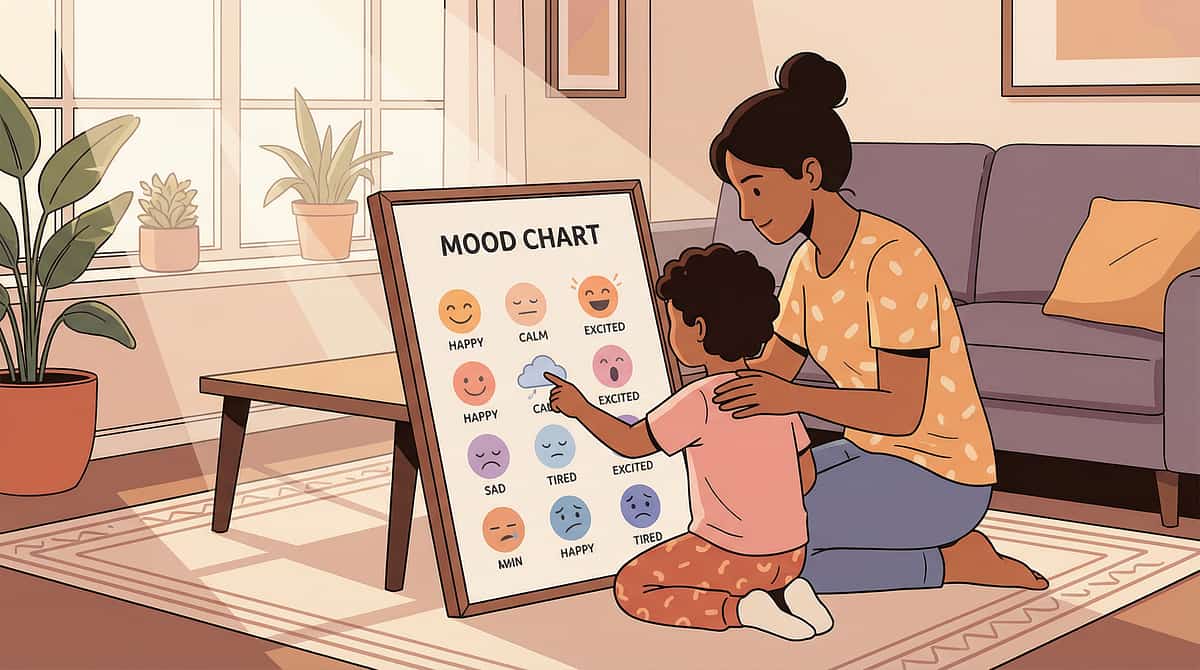
Step 2: Introduce the Mood Map — Create Shared Understanding
Step 2 of 6
"Let's look at our mood map together. Can you show me — where do you think you are right now? Green? Yellow? Or somewhere else?"
Material Introduction
- Hold the Zones chart at child's eye level
- Use curiosity voice ("I wonder which zone...") rather than assessment voice
- Point to specific zones with your finger — give visual anchor
- If child uses intensity scale: "Can you show me a number on our thermometer?"
Child Response | Meaning | Action | |
Points to zone correctly | Engaged | Praise + deepen: "Tell me more about that zone" | |
Points to zone incorrectly | Still engaged | Accept + reflect: "You seem a bit [X] to me too" | |
Shrugs or ignores | Tolerated | Stay with it: "Sometimes it's hard to know. That's okay." | |
Physically turns away | Resistance | Offer sensory tool first, return to mood check later |
⏱ Timing: 1–3 minutes | Citation: PMC11506176 | ABA Reinforcement Scheduling

Step 3: The Active Ingredient — Pattern Recognition + Strategy Delivery
Step 3 of 6
Common Execution Errors to AVOID
- ❌ Introducing new strategies during elevated moments
- ❌ Demanding verbal processing during emotional activation
- ❌ Using the session to process what happened earlier ("Why did you...?")
- ✅ Focus only on the NOW — zone awareness + strategy practice
Duration
6–10 minutes core therapeutic action
Part A: 2–3 min
Part B: 1–2 min
Part C: 3–5 min
Part B: 1–2 min
Part C: 3–5 min
Citation: PMC10955541
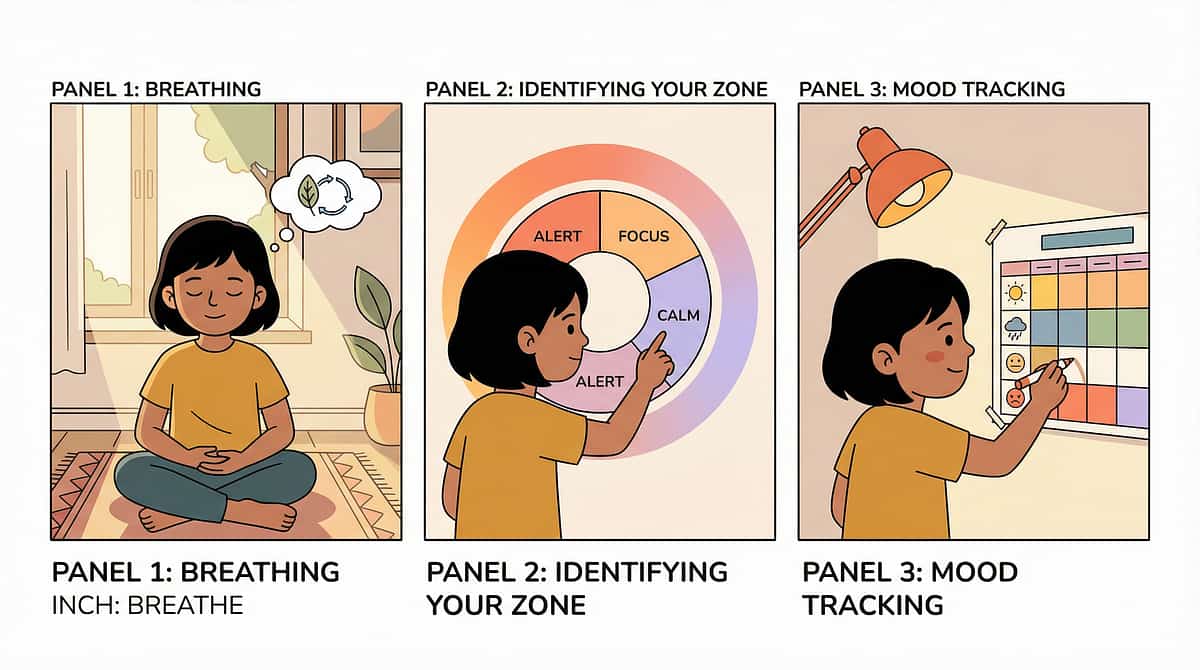
Step 4: 3 Good Repetitions Beat 10 Forced Ones — Always
Step 4 of 6
Breathing/Grounding
3–5 cycles per session
Zone Identification
Daily check-in × 7 days = patterns begin to form
Mood Tracking
Minimum 14 consecutive days before patterns become reliable
Sensory Tools
5–10 minutes per session, 3–5 times per week
Weeks 1–2
Simple zone identification only
Weeks 3–4
Add intensity number to zone identification
Weeks 5–6
Introduce pattern review ("last 5 days look like...")
Weeks 7–8
Child begins to predict: "I'm usually Yellow on Mondays because..."
Week 9+
Child self-initiates check-ins without parent prompt
Satiation Indicators (when to stop):
- Child looks away and doesn't return engagement within 10 seconds
- Child says "all done" or equivalent
- Quality of responses drops significantly
- Fidgeting increases markedly
"Done is better than perfect — 3 minutes of quality engagement is better than 15 minutes of forced participation."

Step 5: Celebrate the Attempt, Not Just the Success
Step 5 of 6
⏱Critical Timing: Reinforce within 3 seconds of the desired behaviour.
Verbal Reinforcement Scripts
✨ "You noticed you were in Yellow. That's HUGE. You're learning your own signals."
✨ "You picked up your breathing card all by yourself. I'm so proud of you."
✨ "Even though you were in Red earlier, you came back to Green. That's called recovery. It's a skill."
Type | Example | Use When | |
Verbal praise | Scripts above | Always — primary reinforcer | |
Physical affirmation | High five, hug (if welcome) | After successful session | |
Token/sticker | Sticker on mood chart | Daily completion | |
Special activity | Extra 5 min preferred activity | Weekly milestone | |
Natural consequence | "You're in Green — great time to do [preferred thing]" | Ongoing |
ABA Principle: Reinforce the regulation attempt, not just the successful regulation. Effort counts. | Citation: BACB ethical reinforcement guidelines

Step 6: No Session Ends Abruptly — The Cool-Down Is Part of the Technique
Step 6 of 6
"Two more minutes, then we're all done for today. You did so well."
If Child Resists Ending
- Do not force an abrupt stop
- Offer: "One more thing — then we're done"
- Never end on conflict — brief extension is preferable to power struggle
- Next time: give a longer 5-minute warning
What This Prevents
Post-session dysregulation (common when sessions end abruptly without transition) and negative association with the technique.
Citation: NCAEP Evidence-Based Practices Report (2020) — Visual supports

Within 60 Seconds of Session End — Record 3 Things
1
Starting Zone
🔵 Blue | 🟢 Green | 🟡 Yellow | 🔴 Red
2
Ending Zone
🔵 Blue | 🟢 Green | 🟡 Yellow | 🔴 Red
3
Notes (Optional)
Strategy used, triggers noticed, time of day, any observations
Data That Matters:
- Starting zone → Ending zone (did the session move the child?)
- Time of day (is morning or afternoon more effective?)
- Which strategy was used (building evidence of what works for THIS child)
- Any triggers noted that day (hunger? transition? change in routine?)
Data captured today becomes the pattern recognised in Week 4. Pattern recognised in Week 4 becomes the trigger avoided in Week 8. Trigger avoided in Week 8 becomes the stability achieved in Week 12.

Every Family Hits These Walls. Here's How to Get Through Them.
❓ "My child refuses to engage with the mood chart"
✅ Try a different format — emoji faces vs. colours vs. numbers. Let child choose the format. Offer to do YOUR check-in first and let them observe.
❓ "The calm-down kit isn't working during actual meltdowns"
✅ The kit is for prevention and early intervention, not active meltdowns. Introduce strategies at Yellow — not when already in Red.
❓ "I can't tell when my child is entering Yellow"
✅ Work with your child during calm to identify THEIR specific signals. Video a calm period and a challenging period to compare.
❓ "My child's zone check-ins seem random"
✅ At first, this is normal. The skill of recognising emotional states builds over 4–6 weeks. Track your observations alongside theirs — gradually they align.
❓ "We're consistent but I see no change after 3 weeks"
✅ 3 weeks is the earliest edge of expected change. Review session timing and environment setup. If no change by Week 6, contact 9100 181 181 for professional guidance.
❓ "My child becomes more upset when I try to name their emotions"
✅ Switch to body-based approach: "Your body seems tense" rather than "You seem angry." Consult OT for sensory-emotional profile.
Escalation Path: Consistent home strategies + no improvement at 6 weeks → Contact 9100 181 181 → AbilityScore® Assessment → Professional intervention planning
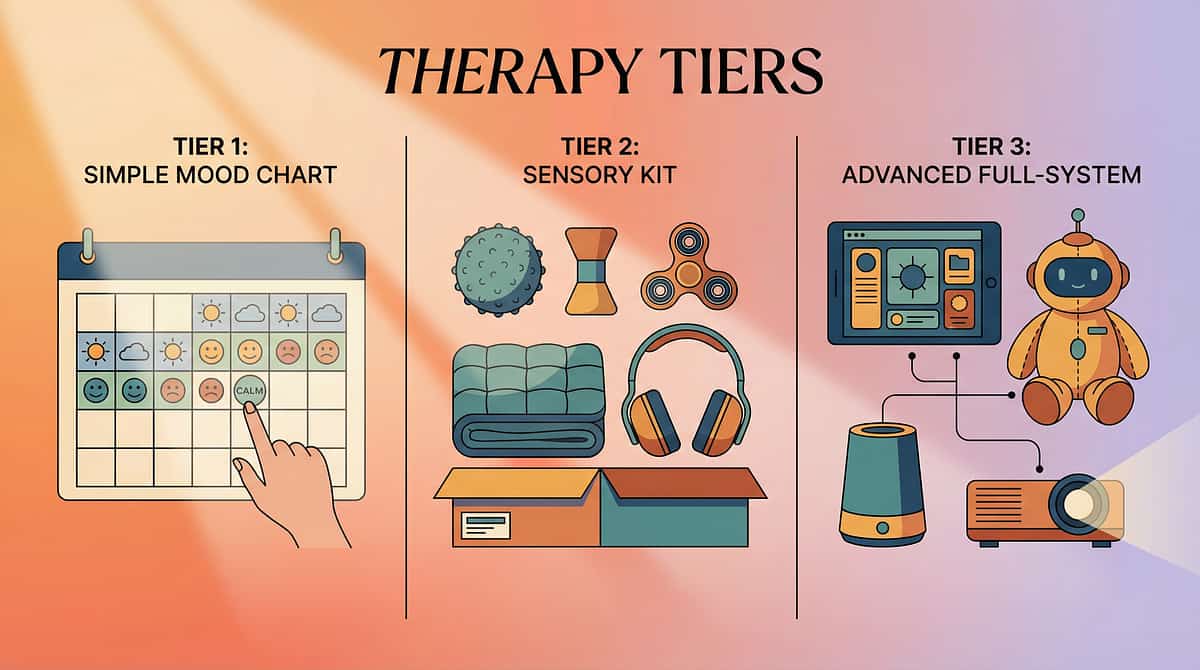
No Two Children Are the Same. Neither Are Their Regulation Profiles.
Child Profile | Easier Version | Standard Version | Advanced Version | |
Resistant to labelling | Body check-in only ("tight or loose?") | Zone identification with pictures | Zone + intensity number | |
Sensory seeker | Movement-based regulation (jump/crash) | Sensory tool + zone check | Integrated sensory-zone protocol | |
Sensory avoider | Minimal tools, maximum space | Standard calm-down kit | Expanded visual supports | |
Non-verbal/low verbal | Pointing to faces/colours | Gesture-based system | AAC integration | |
Highly analytical | Data and tracking emphasis | Standard protocol | Child-led data analysis |
Age Modifications:
Ages 3–5
Max 5 minutes. Emotion faces only. Parent does most of the labelling.
Ages 6–8
10 minutes. Zones + simple intensity. Child labels with support.
Ages 9–12
15–20 minutes. Full protocol. Child begins self-directing.
Clinical Profile Adaptations:
- 🔵With ADHD: High-movement regulation strategies. Shorter, more frequent sessions. Extra visual structure.
- 🟣With Autism: Maximum predictability. Sensory regulation as primary intervention. Visual-first tools.
- 🟡With Anxiety: Grounding strategies prioritised. Reduce environmental unpredictability first.

Weeks 1–2: You Are Planting Seeds, Not Harvesting Fruit
15%
Progress Arc
Weeks 1–2: Foundation-building phase
Observable Indicators at This Stage
- ✅ Child can point to a zone picture when calm
- ✅ Parent has identified 2–3 potential early warning signs
- ✅ Mood chart filled in for at least 5 of 14 days
- ✅ Child has shown curiosity about one material
What "Progress" Looks Like
- Tolerates mood check-in without refusal (even if zone ID is inaccurate)
- Shows slight curiosity when calm-down kit is introduced
- Asks "what's in the box?" — that IS engagement
What Is NOT Progress Yet (don't expect this)
- Spontaneous use of strategies during mood swings
- Accurate zone identification when elevated
- Shorter mood swings
"If your child tolerated the material for 3 seconds longer than last week — that's real progress. The nervous system is learning, even when the behaviour doesn't show it yet."
FREE Helpline: 9100 181 181 — for support during this settling-in period

Weeks 3–4: The Neural Pathway Is Forming — Watch for These Signs
40%
Progress Arc
Weeks 3–4: Consolidation phase
Consolidation Indicators:
- ✅ Child begins to anticipate the mood check-in (may mention it first)
- ✅ Zone identification becoming more consistent during calm
- ✅ Parent and child can now name the child's top 2–3 warning signs by name
- ✅ Mood patterns are becoming visible on the tracking chart
Behavioural Changes Signalling Neural Pathway Formation:
Child spontaneously picks up a fidget tool when feeling elevated — even without prompting
Child mentions "I'm getting to Yellow" — even once — this is HUGE
Recovery time after mood swings shows early shortening — even 5 minutes faster counts
Child asks "can we do our mood thing today?" — self-initiation emerging
"You may notice you're more confident too. You're reading your child's signals faster. The co-regulation capacity you're building is as important as the materials."

Weeks 5–8: From Practised to Automatic — The Skill Is Becoming Part of Who They Are
65%
Progress Arc
Weeks 5–8: Integration and generalisation phase
Integration Indicators:
- ✅ Child uses intensity scale independently during mild elevation ("I'm at a 5")
- ✅ Child reaches for calm-down kit with minimal prompting
- ✅ Mood patterns clearly visible — child can participate in pattern discussion
- ✅ Duration of intense mood episodes shortening noticeably (25–40% reduction typical)
- ✅ Visual schedule transitions showing markedly reduced trigger events
The Generalisation Window (Weeks 6–7): Skills start appearing OUTSIDE your sessions — at school, with grandparents, during unexpected triggers. When you hear these reports, generalisation has begun. The skill is no longer a therapy activity. It's becoming a life skill.
Frequency Adjustment:
- Formal sessions: 3–4×/week
- Embedded check-ins: Multiple daily (morning, after school, before bed)
- GPT-OS® micro-moments: 3–5 minutes, fully integrated into daily routine
Citation: PMC11506176 | Generalisation literature across OT, ABA, SLP

Your Child Has Done Something Extraordinary. Recognise It.
Self-Awareness
Child spontaneously says "I need a minute" before escalating
Zone Mastery
Child identifies their zone reliably in both calm and elevated states
Faster Recovery
Recovery time after mood episodes under 15 minutes (from previous 30–60+)
Reduced Frequency
Extreme swings reduced by more than 50% from baseline
Social Communication
Child can communicate "I'm at a 6" to teachers and other caregivers
Transition Stability
Visual schedule transitions rarely trigger major swings
"Mastery in emotional regulation doesn't mean perfect regulation. It means the child can navigate their emotional landscape with growing skill and decreasing need for external support. The goal is a regulated child — not an emotionless one." — Pinnacle OT Consortium
"You learned something about yourself that many adults never learn. You figured out your warning signs. You built your tools. You practised when it was hard. That is not small. That is extraordinary."

These Signs Mean You Need Professional Support Now
🚨 ESCALATE IMMEDIATELY — Call 9100 181 181 Today
- Child expresses desire to self-harm or harm others during mood episodes
- Mood episodes include extreme dissociation, confusion, or altered states
- Child is showing regression in multiple developmental areas simultaneously
- Family is in crisis — unable to maintain safety or function
⚠️ SEEK ASSESSMENT WITHIN 2 WEEKS
- No measurable improvement after 8 weeks of consistent home intervention
- Mood swings increasing in frequency or intensity despite strategies
- Significant impairment at school (teacher reports, academic decline)
- Child's peers are consistently avoiding them due to unpredictability
- Sleep disruption becoming severe (3+ nights/week significantly disturbed)
- Signs of underlying conditions not yet assessed: ADHD, autism, anxiety, mood disorder
📞FREE NATIONAL AUTISM HELPLINE: 9100 181 181 | Available 24×7 | 16+ Languages | First call includes: Triage assessment + recommendation pathway + nearest centre referral
What Professional Evaluation Covers:
- AbilityScore® Assessment → Emotional regulation profile
- Multidisciplinary evaluation → Underlying condition identification
- FusionModule™ → Converged OT + ABA + SLP + Psychology plan
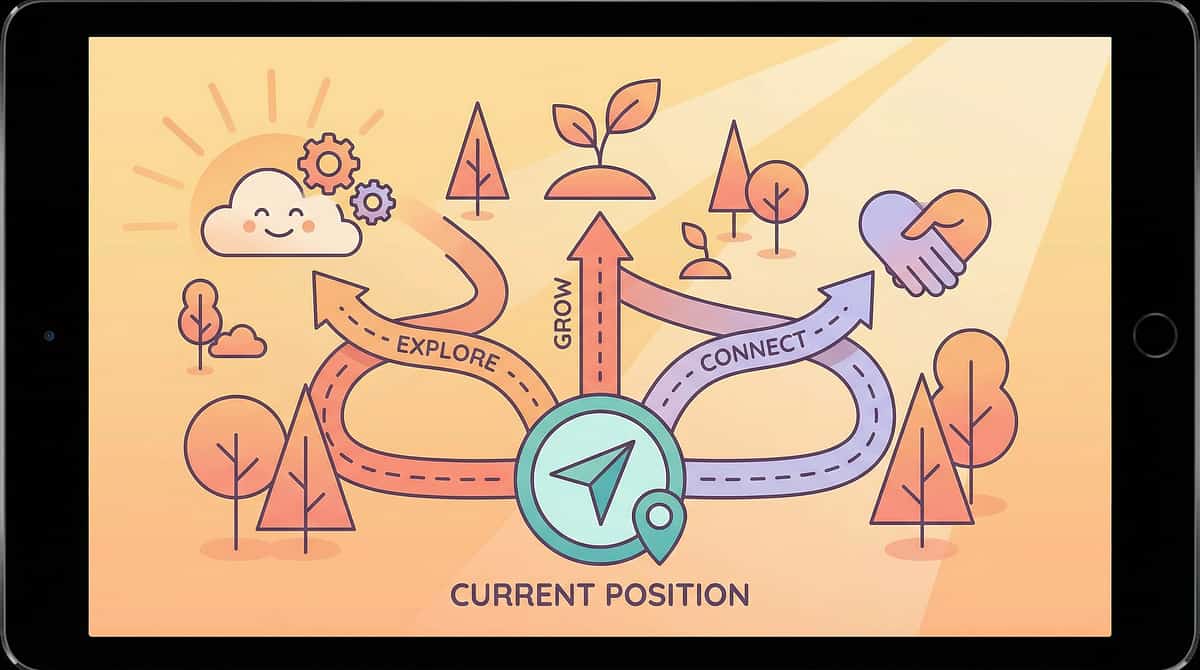
C-251 Is One Step in a Longer Journey. Here's the Full Map.
C-249
Understanding Others' Emotions
C-250
Expressing Feelings Verbally
► C-251 — YOU ARE HERE
Extreme Mood Swings
C-252
Emotional Flexibility & Recovery
C-253 → C-260 → C-275
Frustration Tolerance → Anxiety Management → Meltdown Prevention & Recovery
Parallel Domain Connections:
- 🔗 Domain A (Sensory): A-045 Sensory Regulation → directly supports mood stability
- 🔗 Domain B (Social): B-120 Peer Relationship Skills → mood stability enables social connection
- 🔗 Domain D (Behavioural): D-202 Behavioural Flexibility → overlaps with emotional flexibility
Build the Full Emotional Regulation Architecture
C-249: Understanding Others' Emotions
Foundation for empathy and social navigation

C-250: Expressing Feelings Verbally
The language bridge between internal states and communication
C-252: Emotional Flexibility & Recovery
Next step after mood stability — learning to bounce back

C-253: Frustration Tolerance
Building the capacity to stay regulated under pressure

C-260: Anxiety Management
Anxiety-driven mood volatility — the specific intervention pathway

C-275: Meltdown Prevention & Recovery
The intensive intervention for extreme dysregulation events
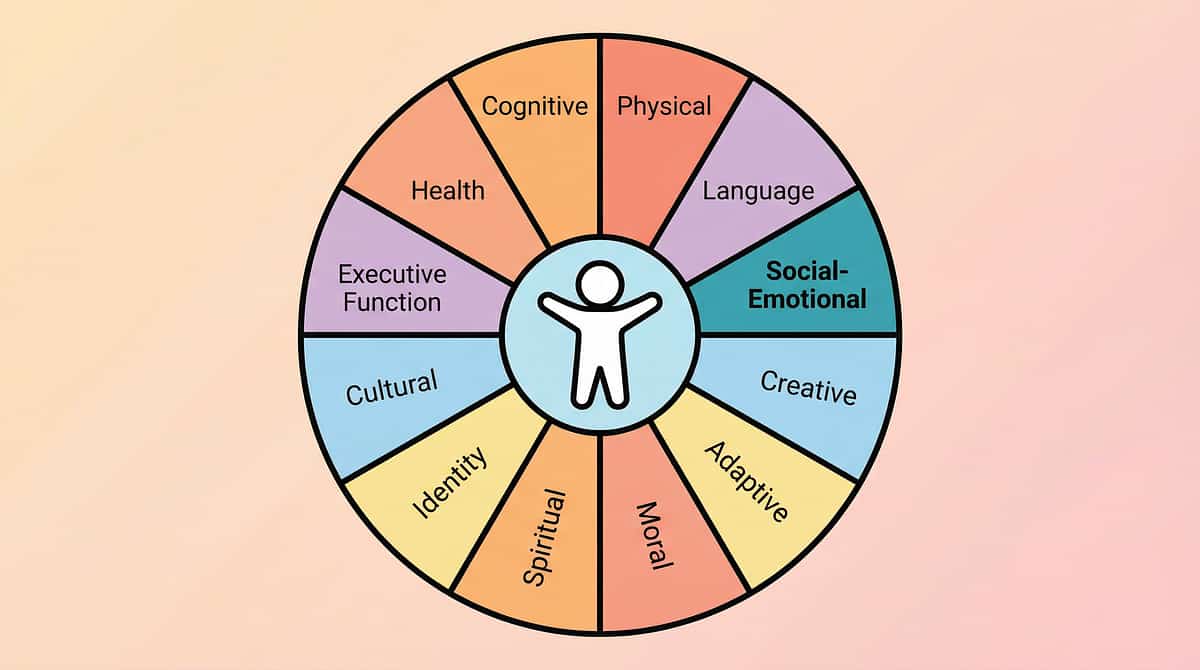
C-251 Is One Piece of a Whole-Child Plan
Emotional regulation doesn't exist in isolation. A dysregulated sensory system (Domain A) feeds emotional lability. Limited communication (Domain B) prevents expressing distress before it escalates. Behavioural flexibility (Domain D) is the sibling skill to emotional flexibility.
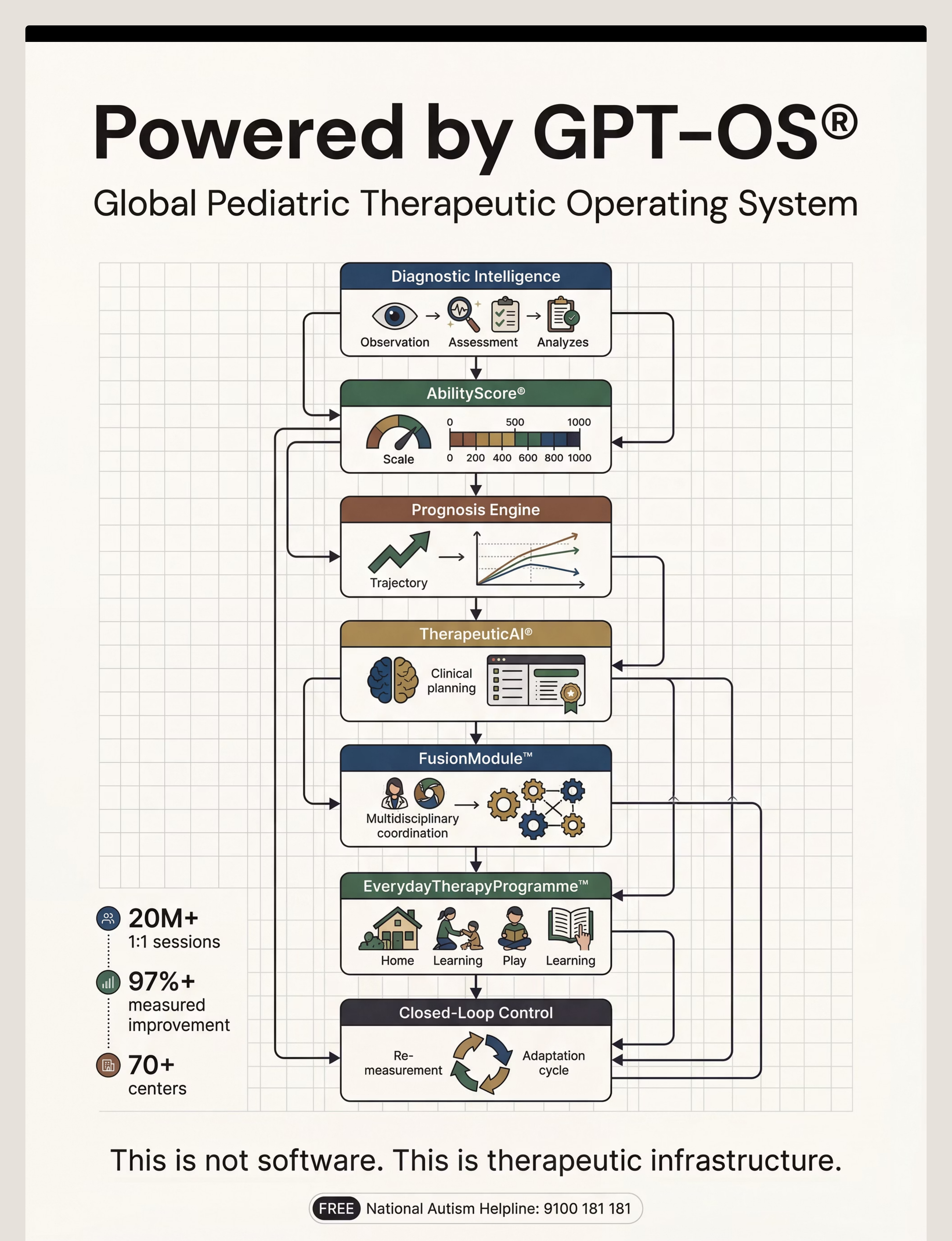
GPT-OS® tracks all 12 domains simultaneously — because your child's development is one connected system, not twelve separate problems.
pinnacleblooms.org/gpt-os | 9100 181 181 | Citation: WHO/UNICEF NCF (2018)

Three Families. Three Different Starting Points. One Destination: Steady Ground.
Family 1 — Before (Week 1)
A 7-year-old boy with 4–6 extreme mood swings daily. No recognisable pattern. Family walking on eggshells. Siblings avoiding him. School reporting daily incidents.
After (Week 10): 1–2 mild swings per day. Independently says "I'm at a Yellow, I need my fidget." Recovery time reduced from 45 minutes to 10–15 minutes. Zero school incidents in past 3 weeks.
"He told me 'my brain was getting too fast, so I used my breathing card.' I cried. He knows himself now." — Mother, Pinnacle Network
Family 2 — Before
A 5-year-old girl with extreme emotional swings primarily around transitions. Morning routine taking 90+ minutes due to meltdowns. Preschool placement at risk.
After (Week 12): Visual schedule established. Morning routine: 25 minutes. Preschool placement secured. Teacher reports "she tells us when she's getting upset now."
"The most powerful moment in emotional regulation work isn't when the swings stop. It's when the child first says 'I notice I'm getting upset.' That moment of self-awareness is the turning point. Everything else follows." — Pinnacle OT Specialist
Outcomes vary by child profile. Pinnacle Network anonymised case observations.

Isolation Is the Enemy of Adherence. Community Is the Solution.
Challenge-Specific WhatsApp Group
"Mood Regulation Parents — Pinnacle Network" — Connect with parents navigating the exact same emotional roller coaster. → Join via pinnacleblooms.org/community
Online Parent Forum
Moderated by Pinnacle clinical team. Ask questions, share what's working, find peers. → forum.pinnacleblooms.org
Local Pinnacle Parent Meetup
Monthly sessions at Pinnacle centres — emotional regulation focus. Find nearest centre: pinnacleblooms.org/centers
Peer Mentoring Programme
Connect with a parent who has navigated this successfully. "They were where you are. Now they're where you're trying to go." → pinnacleblooms.org/peer-mentoring
"Your experience helps every family who comes after you. When you're ready — consider sharing your journey."
FREE Helpline: 9100 181 181 | Citation: WHO NCF Community Engagement Principles
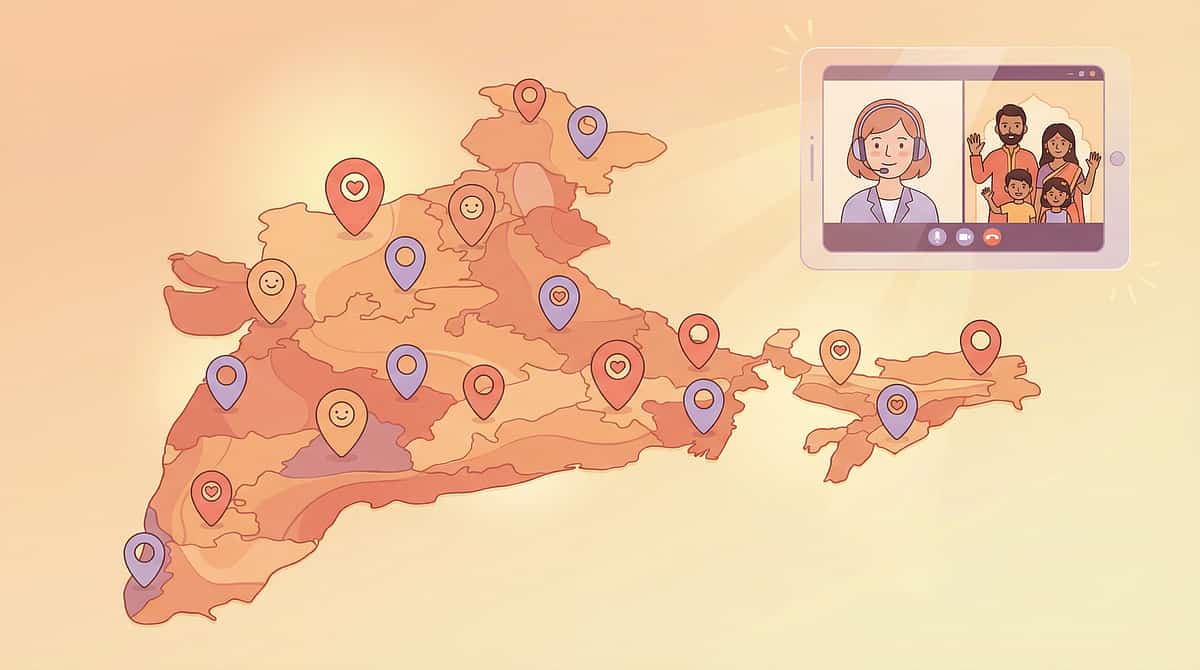
Home + Clinic = Maximum Impact. You Don't Have to Do This Alone.
Therapist Matching by C-251 Disciplines
- 🟣 Occupational Therapist → Sensory-regulatory assessment + kit design
- 🟦 Psychologist/BCBA → Behavioural pattern analysis + reinforcement design
- 🟢 Speech-Language Pathologist → Emotional vocabulary + social story creation
- 🟡 Special Educator → School accommodation planning
Teleconsultation
Available for families outside major cities | 16+ languages. First session includes: Triage + Recommendation + Resource pack.
Find Your Nearest Centre
70+ centres across India
pinnacleblooms.org/centers
Or call: 9100 181 181
Insurance / Funding
Many private insurers now cover paediatric OT and psychology assessments. CGHS, ESIC, and state health schemes: enquire at your nearest centre.
"Home-based practice × Professional guidance = Outcomes neither achieves alone."
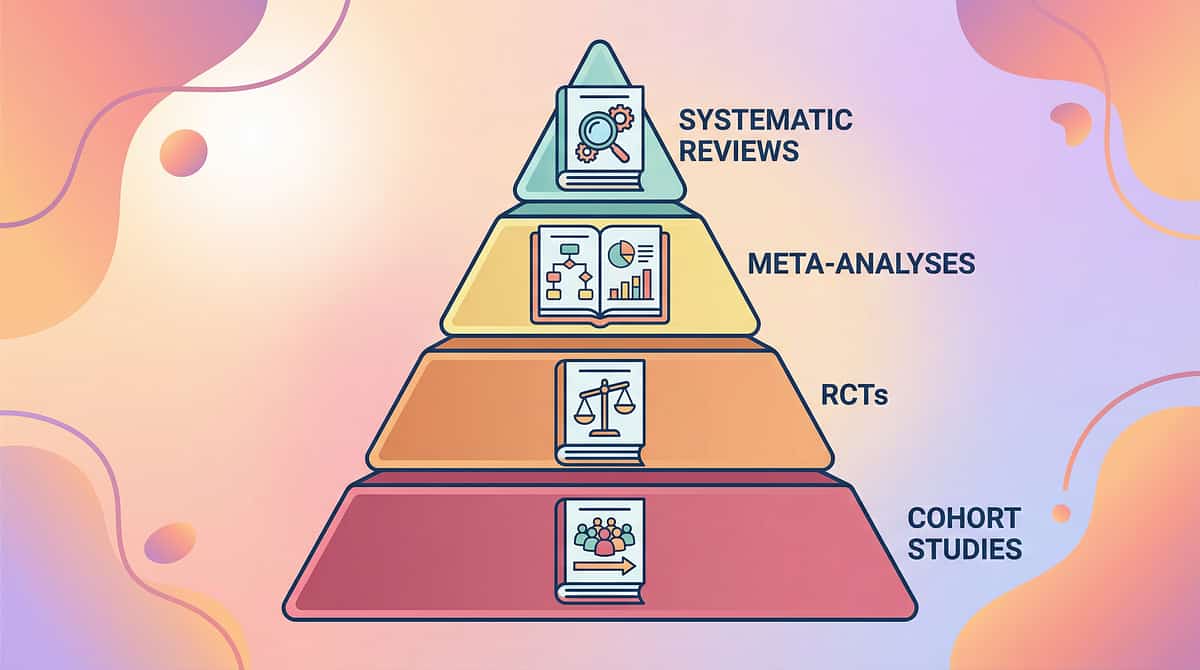
The Science Behind Every Card on This Page
📚 PMC11506176 — Children (2024)
PRISMA Systematic Review: 16 studies (2013–2023) confirm sensory integration and emotional regulation intervention as evidence-based practice for ASD. → pubmed.ncbi.nlm.nih.gov/PMC11506176
📚 PMC10955541 — World J Clin Cases (2024)
Meta-analysis confirming sensory integration therapy effectively promotes social skills, adaptive behaviour, and sensory processing. 40-minute sessions show maximum effectiveness. → pubmed.ncbi.nlm.nih.gov/PMC10955541
📚 PMC5993679 — NCBI Research
Mood dysregulation responds to multimodal intervention including awareness training, strategy teaching, and environmental modification. → ncbi.nlm.nih.gov/pmc/articles/PMC5993679/
📚 Padmanabha et al. (2019) — Indian Journal of Paediatrics
Indian RCT: Home-based sensory and regulation interventions demonstrate significant outcomes when parent-administered with structured protocols. DOI: 10.1007/s12098-018-2747-4
📚 WHO/UNICEF CCD Package (2023)
Age-specific evidence-based caregiver interventions for emotional regulation across 54 low- and middle-income countries. → who.int/publications/i/item/9789240077348 | PMC9978394
📚 NCAEP Evidence-Based Practices Report (2020)
National Clearinghouse on Autism Evidence and Practice: Visual supports, social stories, and video modelling all classified as evidence-based for autism.
Deeper Reading for the Curious Parent
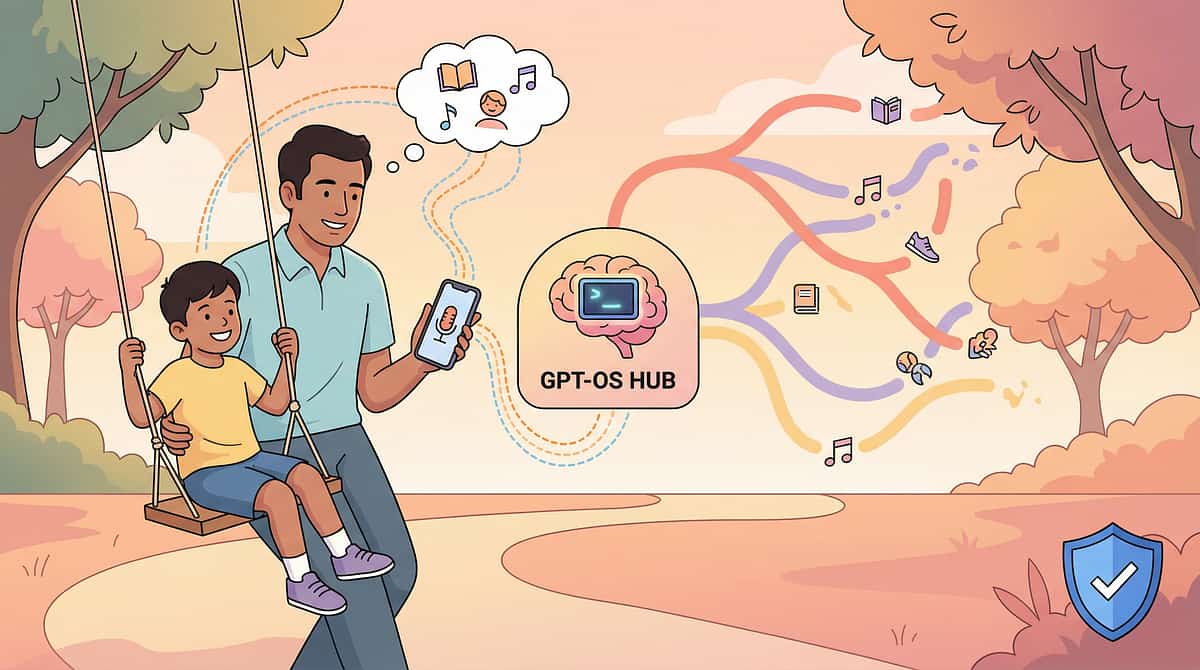
Your Sessions Feed a System That Learns and Adapts — For Your Child and Every Child Like Them
What GPT-OS® Learns from C-251 Data:
- Which zone your child starts and ends sessions in (arousal regulation baseline)
- Which strategies are most effective for THIS child (personalised toolkit)
- Time-of-day patterns (session timing optimisation)
- Trigger patterns (environmental modification recommendations)
- Recovery trajectory (longitudinal progress analysis)
Population-Level Impact
"When 100,000 families track their child's mood regulation data through GPT-OS®, the patterns that emerge help improve recommendations for every family that comes after. Your data helps every child like yours."
🔒 ISO/IEC 27001 | PDPB Compliant | Data never sold | Anonymised for research
AbilityScore®
TherapeuticAI®
FusionModule™
EverydayTherapyProgramme™

Watch the C-251 Reel: 9 Materials That Help With Extreme Mood Swings
🎬 Reel ID: C-251
Emotional Development & Self-Regulation Series — Episode 251
Watch our consortium therapist demonstrate each of the 9 materials in a real home setting. See how to introduce them, how children respond, and what effective use looks like. 60 seconds that could change your next conversation with your child.
👩⚕️ Presented by: Pinnacle OT + Psychology Consortium | This web page is the in-depth companion to the C-251 Reel. The Reel introduces the materials. This page shows you how to use them.
Next in Series:▶️ C-252: 9 Materials That Help With Emotional Flexibility & Recovery
Citation: NCAEP (2020): Video modelling is an evidence-based practice for autism.

Consistency Across Caregivers Multiplies Impact by 3×
Share This Page
📱 Share on WhatsApp — Pre-formatted: "9 materials that helped with my child's mood swings — worth reading"
📧 Share by Email — Subject: "Resources for [child's name]'s emotional regulation"
🔗 techniques.pinnacleblooms.org/emotional-regulation/extreme-mood-swings-c251
"Explain to Grandparents" Summary
- Look for early signs before moods peak — "tight hands, fast talking, pulling away"
- The calm-down box has everything they need — offer it, don't demand calm
- Don't ask them to "calm down" — offer the box instead
- After a hard moment, don't discuss it until they're calm
- If you're worried, call us or 9100 181 181
Citation: WHO CCD Package — multi-caregiver training is critical for intervention generalisation

Your Questions, Answered by the Consortium
Q1: How long before I see real results?
First observable changes typically appear at Weeks 3–4 (tolerance, brief spontaneous use of tools). Meaningful reduction in mood swing frequency and duration typically emerges at Weeks 6–8. Full integration of regulation skills: 12–16 weeks of consistent practice.
Q2: My child seems worse after we started — is this normal?
Yes, sometimes. Introducing awareness can temporarily increase a child's recognition of their own dysregulation before they have the tools to manage it. This phase is typically 1–2 weeks. If worsening continues beyond 2 weeks, contact 9100 181 181.
Q3: How do I use these materials during an actual meltdown?
You don't — not in the moment. These materials are for prevention and early intervention (Yellow zone). During a Red-zone meltdown: stay calm, stay present, minimise demands. After the storm: offer comfort without discussion. Use materials when back in Green.
Q4: What if my child refuses all the materials?
Child-led introduction is key. Never force. Let materials be visible but unthreatening — in their space but not required. Watch what they gravitate toward naturally. Some children self-select regulation tools when given freedom of access.
Q5: Can I do this alongside professional therapy?
Absolutely — this is designed as the home extension of professional intervention. Share this page with your child's OT, psychologist, or BCBA. GPT-OS® integrates home and clinic data seamlessly.
Q6: My child is 12 — is it too late?
No. Emotional regulation capacity continues developing through adolescence and into adulthood. The materials and approaches adapt across age. Adult emotional regulation therapy uses the same foundational principles.
Q7: How do I get my school on board?
Download the School Communication Letter from Card 37. Zones of Regulation is used in thousands of schools globally and is often immediately recognised by teachers. AbilityScore® assessment can generate a school accommodation report.
Q8: My partner doesn't believe in these strategies — what do I do?
Share the evidence cards (Cards 02 and 05) with your partner. Data is often more persuasive than narrative. GPT-OS® progress tracking makes outcomes visible — showing, not telling, your partner the change.

From Roller Coaster to Steady Ground. The Materials Are Ready. The Science Is Proven. The Only Step Left Is Yours.
🟡 Start This Technique Today
Launch your child's EverydayTherapyProgramme™ session in GPT-OS®
📞 Book a Professional Consultation
15-minute teleconsultation with a Pinnacle OT or Psychologist
→ Explore C-252
Emotional Flexibility & Recovery — the next step in your child's journey
🏥Validated by the Pinnacle Blooms Consortium | CRO · OT · SLP · BCBA · SpEd · NeuroDevelopmental Paediatrics
FREE National Autism Helpline: 9100 181 181
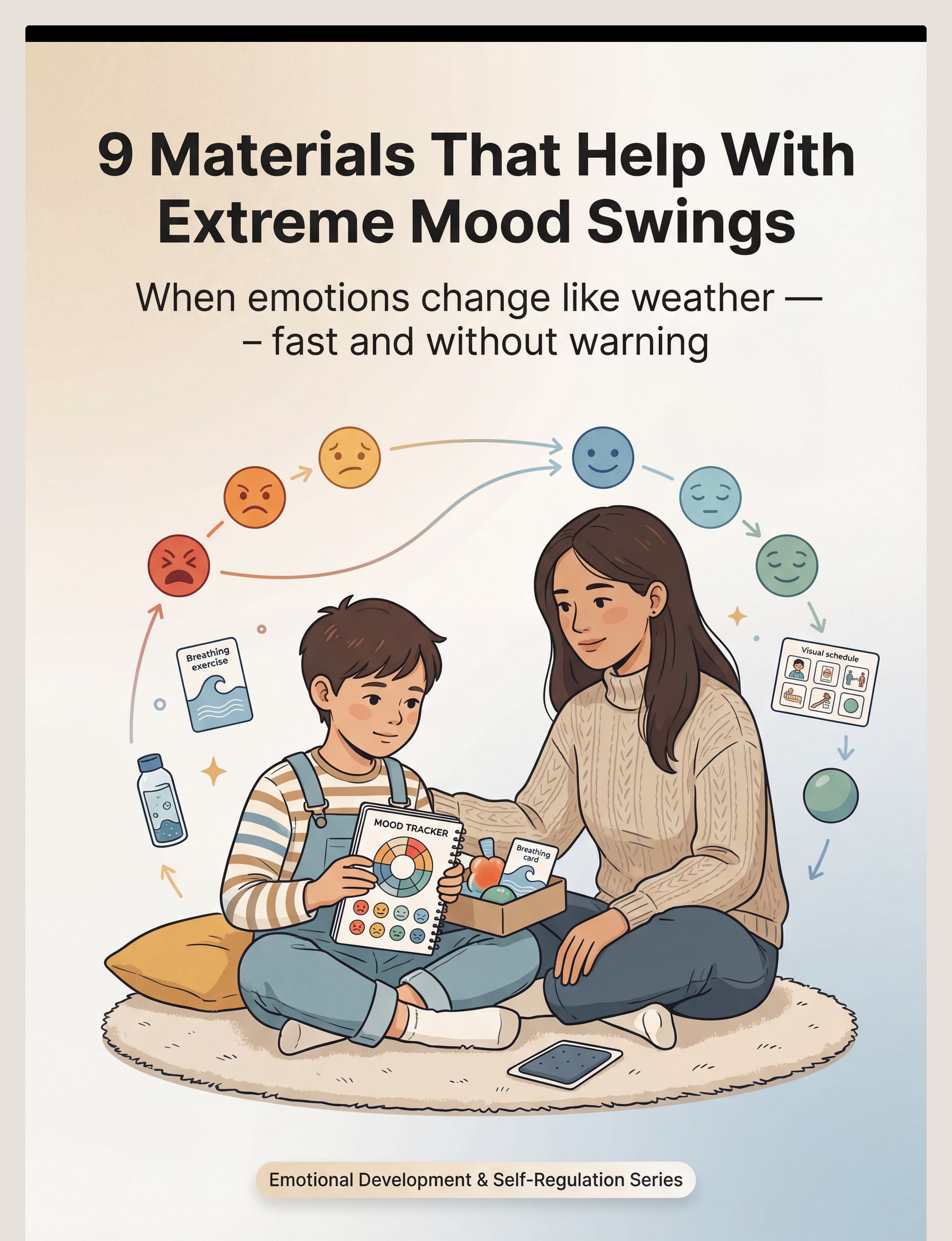
Preview of 9 materials that help with extreme mood swings Therapy Material
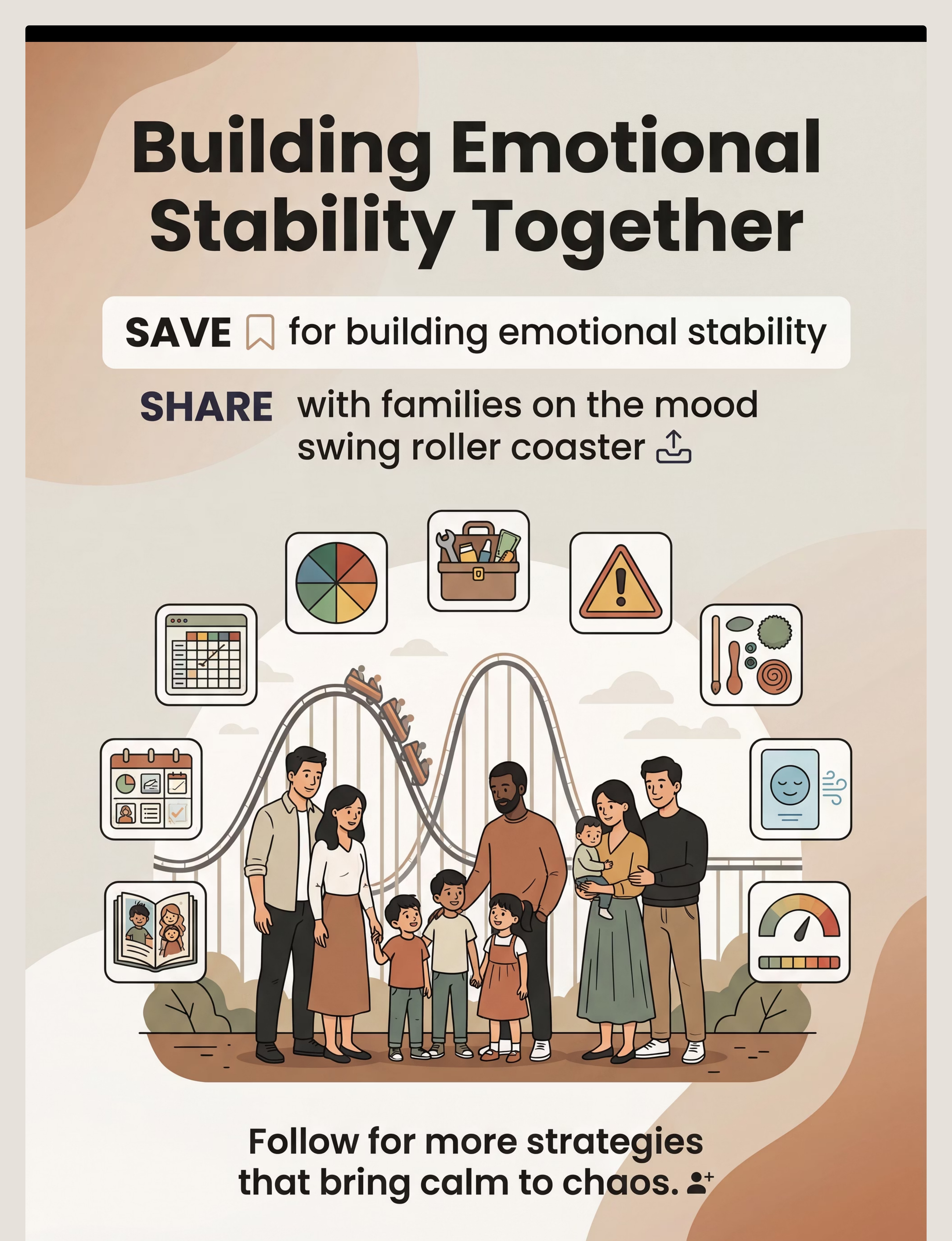
Below is a visual preview of 9 materials that help with extreme mood swings therapy material. The pages shown help educators, therapists, and caregivers understand the structure and content of the resource before use. Materials should be used under appropriate professional guidance.


Link copied!
The Pinnacle Promise
🏥 PINNACLE BLOOMS CONSORTIUM®
CRO · Occupational Therapy · Speech-Language Pathology · Applied Behaviour Analysis · Special Education · NeuroDevelopmental Paediatrics
"From fear to mastery. One technique at a time."
20M+
Sessions Delivered
97%+
Measured Improvement
70+
Centres Nationwide
70+
Countries Reached
C-251 Page Metadata
📍 techniques.pinnacleblooms.org/emotional-regulation/extreme-mood-swings-c251
🗂 Domain C — Emotional Regulation | Code: C-251
📅 Published: 2026 | Reviewed: March 2026
👥 Consortium Lead: OT + Psychology + ABA
📊 Evidence Grade: Level I (Systematic Review)
🗂 Domain C — Emotional Regulation | Code: C-251
📅 Published: 2026 | Reviewed: March 2026
👥 Consortium Lead: OT + Psychology + ABA
📊 Evidence Grade: Level I (Systematic Review)
Statutory Identifiers
CIN: U74999TG2016PTC113063 | DPIIT: DIPP8651 | MSME: TS20F0009606 | GSTIN: 36AAGCB9722P1Z2 | ISO 13485 | ISO/IEC 27001
Medical Disclaimer
This content is educational and does not replace individualised assessment and intervention with licensed professionals. Extreme mood swings can indicate various underlying conditions requiring professional evaluation. Individual results vary. Seek appropriate professional support for your child.
© 2026 Pinnacle Blooms Network®, unit of Bharath Healthcare Laboratories Pvt. Ltd. All rights reserved. GPT-OS®, AbilityScore®, TherapeuticAI®, FusionModule™, EverydayTherapyProgramme™ are proprietary IP.
FREE National Autism Helpline: 9100 181 181 | care@pinnacleblooms.org | pinnacleblooms.org