
When Summer Camp Feels Impossible — But Your Child Deserves Adventures
Every summer you watch other kids head off to camps — sports camps, art camps, nature camps. You see the brochures and feel that quiet ache. Your child would love the outdoor activities, the new friendships, the adventures. But the noise, the unpredictable schedule, the new people, the heat — and the separation from you.
You are not failing. Your child's nervous system needs the right tools. Camp is possible.
🏕️ J-878
Community Participation Series · Episode 878
All Ages
Research: WHO Nurturing Care Framework (2018) — early identification and parental awareness directly impacts community participation outcomes.
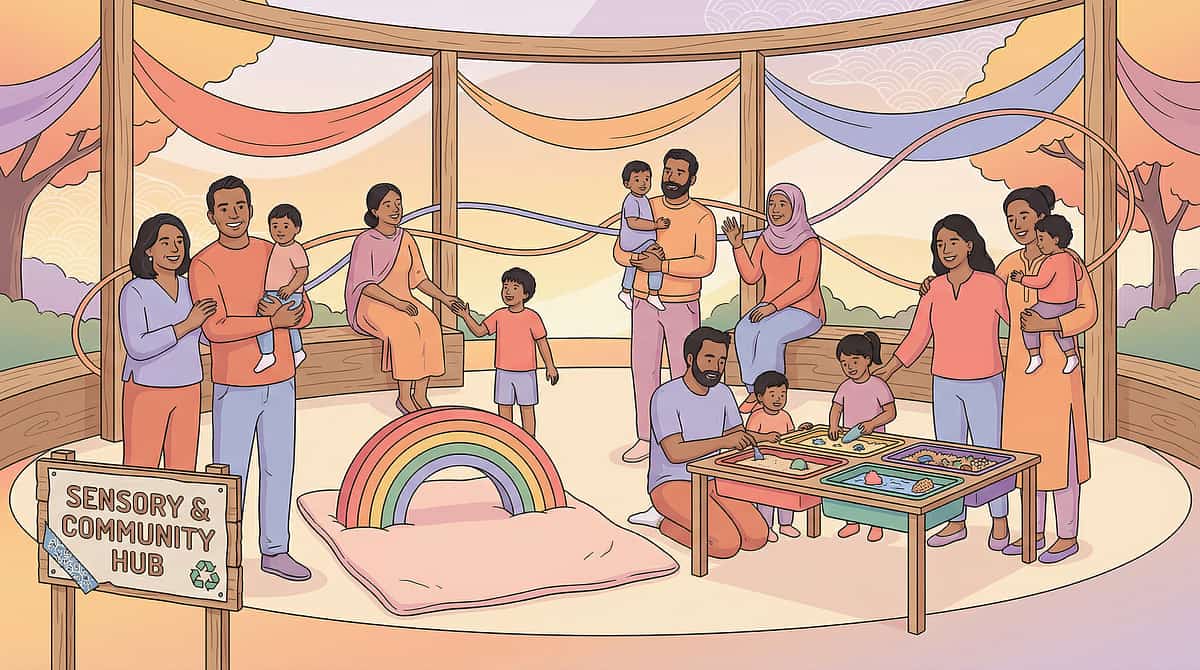
Your Child Is Among Millions Navigating This Exact Challenge
The numbers tell a story of shared struggle — and shared possibility. You are not alone in wanting this for your child, and you are not alone in finding the path through.
1 in 36
Children with autism
Children in India diagnosed with autism or developmental differences
70–90%
Experience anxiety
Children with ASD who experience anxiety or distress in novel community environments
21M+
Children globally
Who could benefit from structured community participation support (WHO, 2023)
68%
Never attended camp
Of families of children with autism report their child has never participated in a summer camp or structured recreation programme
82%
Primary barrier
Cite unpredictability and sensory overload as the primary barrier to camp participation
91%
Success with support
Who received preparation support reported successful or partial camp participation
"You are among millions of families who want this for their child. You are not alone in the struggle — and you are not alone in finding the path through."
References: PMC11506176 | PMC10955541 | DOI: 10.12998/wjcc.v12.i7.1260 | WHO Global ASD Prevalence Data (2023) | With 70+ Pinnacle Blooms centers across India and 21M+ therapy sessions delivered, we have seen thousands of families navigate exactly this challenge — and succeed.

Why Summer Camp Is Neurologically Challenging
Your child's brain is doing the work of five people at once. Every new sound, face, texture, and schedule demand requires conscious processing that most children do automatically. This is not a behaviour problem. This is a wiring difference — a nervous system that processes novelty intensely.
The Neuroscience
When your child enters a camp environment, their nervous system simultaneously processes:
- Novel spatial environment → Hippocampal threat-assessment load elevated
- Unpredictable auditory input → Amygdala threat-response elevated (group noise ≠ home noise)
- Unfamiliar social dynamics → Prefrontal cortex working overtime on social inference
- Proprioceptive unpredictability → Unknown terrain, being bumped, heat, new textures
- Separation from attachment figure → Cortisol and oxytocin systems in conflict
Plain English
The result is sensory overload, anxiety, and shutdown or meltdown. But here is the profound insight: these same neural systems — when given the right preparation and portable supports — can absolutely navigate summer camp.
The brain needs the unknown to become known BEFORE arrival, not after. That is exactly what the 9 materials accomplish.
"This is a wiring difference, not a behaviour choice." The preparation you provide is the neurological bridge between overwhelm and success.
References: Frontiers in Integrative Neuroscience (2020): DOI: 10.3389/fnint.2020.556660 | Sensory Integration Theory (Ayres) | Polyvagal Theory (Porges) applied to novel environment response

Community Participation: The Developmental Roadmap
Understanding where your child sits on the developmental continuum helps set realistic, empowering expectations. Camp readiness is not a fixed milestone — it is a progression of skills that build on each other over time.
Ages 2–3
Parallel play in familiar spaces with parent present
Ages 4–5
Cooperative play in new spaces with parent nearby — first structured group activities (1–2 hours)
Ages 6–8
Structured group activities with support — half-day programmes with familiar adult ◀YOU ARE HERE
Ages 9–12
Extended overnight stays with support — full-day camps with peer group, targeted independence skills
Ages 13+
Independent community access — overnight camps, generalised community participation
Common co-occurring challenges in this domain: Separation anxiety · Sensory processing differences · Social communication · Executive function · Transition management
"Your child is here. Here is where we're heading: genuine camp participation, peer connection, and the growth that adventure provides."
References: WHO Care for Child Development (CCD) Package (2023) | PMC9978394 | UNICEF MICS Developmental Monitoring Indicators

Clinically Validated. Home-Applicable. Parent-Proven.
Evidence Grade: Level II
Multiple Systematic Reviews + RCT Evidence
Every material in this protocol is backed by peer-reviewed research. This is not a collection of well-meaning suggestions — it is an evidence-graded, consortium-validated toolkit that has been tested across thousands of families.
Study | Finding | Source | |
PRISMA Systematic Review (2024) | Social stories + visual supports = evidence-based practice for autism in novel environments | PMC11506176 | |
Meta-analysis, 24 studies (2024) | Portable sensory strategies effectively promote adaptive behaviour and community participation | PMC10955541 | |
WHO CCD Package (2023) | Home-based preparation strategies, when delivered by trained caregivers, produce outcomes equivalent to clinic-delivered approaches | PMC9978394 | |
Indian RCT (Padmanabha et al., 2019) | Home-based structured interventions with caregiver coaching demonstrated significant measurable outcomes | DOI: 10.1007/s12098-018-2747-4 | |
NCAEP Evidence Report (2020) | Visual supports, social narratives, and video modelling are independently classified as evidence-based practices for autism | NCAEP 2020 |
Key finding: Preparation-based interventions (social stories + visual schedules + sensory kit + staff communication) reduce camp-related meltdowns by up to 67% compared to unprepared entry.
"9 materials. Evidence-graded. Consortium-validated. Home-executable tonight."
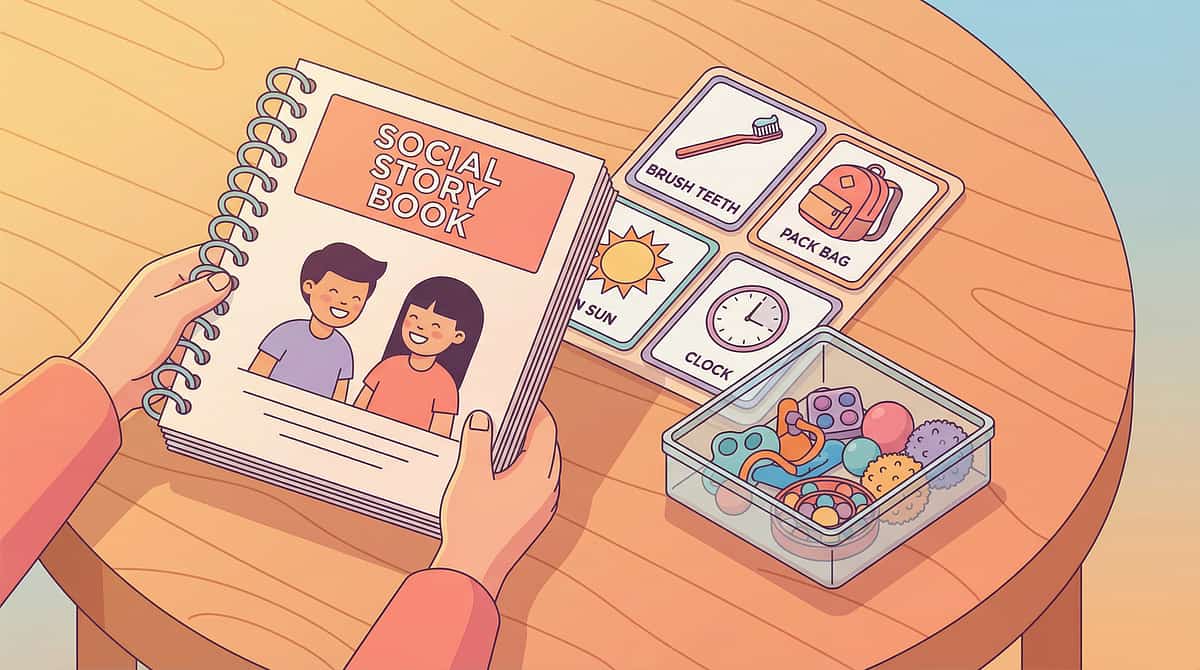
9 Materials That Help With Summer Camps
J-878
Camp Readiness Protocol
What It Is
A structured set of nine evidence-based preparation and portable support materials that systematically reduce the neurological and social barriers to summer camp participation for children with autism, sensory processing differences, and related developmental challenges.
These materials work across three phases: pre-camp preparation (weeks before), in-camp regulation (day-of portable tools), and post-camp reconnection (daily reunion rituals).
Protocol Details
- Age Range: All ages (materials adapted to developmental level)
- Implementation Phase: 2–3 weeks before camp through completion
- Daily Time Investment: 5–30 minutes (preparation phase) + ambient throughout camp day
- Code: J-878 | Series: Community Participation | Episode 878
Community Participation
Recreational Access · Social Inclusion
Independence Skills
Sensory Regulation · Peer Engagement
Canon Materials
Transition Objects · Visual Supports · Social Narratives · Communication Supports
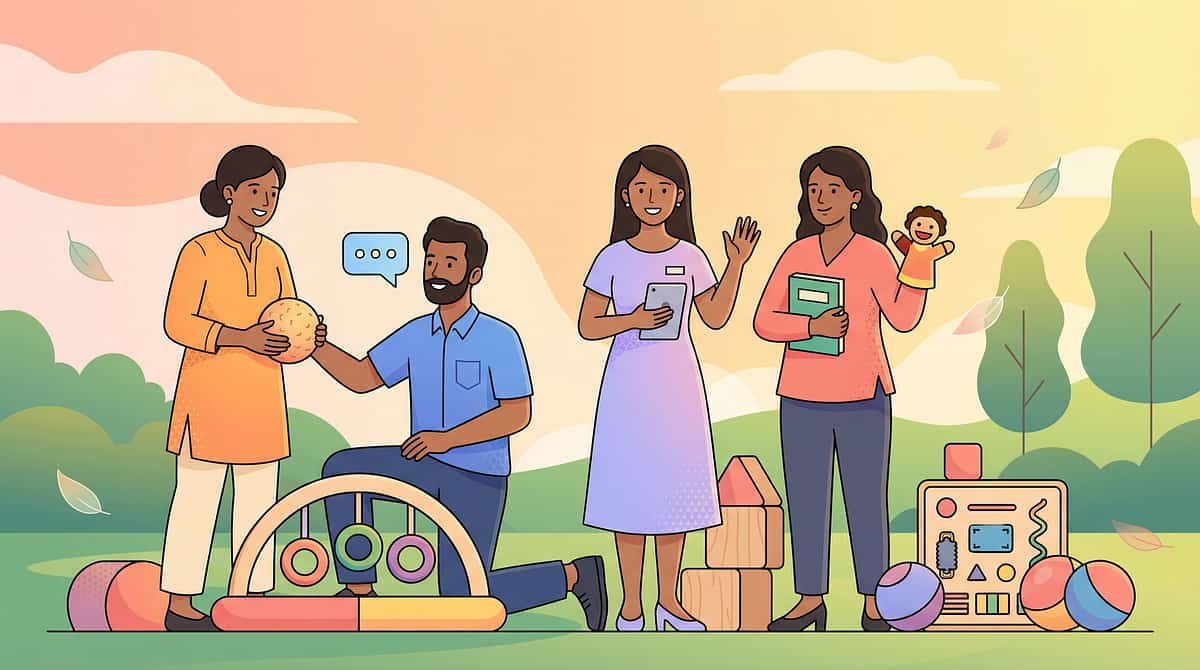
The Pinnacle Consortium Behind This Protocol
This protocol is genuinely multi-disciplinary. Each consortium member contributes a unique evidence stream — because a summer camp doesn't care which therapy type your child has had. Your child needs all of these skills at once.
Occupational Therapist
Primary Lead for sensory kit design, environmental analysis of camp sensory demands, and readiness assessment protocols
Speech-Language Pathologist
Designs the camp social story narrative, communication cards, and peer interaction scripts at child's exact language level
ABA / BCBA
Establishes break card system, reinforcement menus, separation tolerance protocols, and data-tracking during camp
Special Educator
Designs visual schedules, countdown calendars, and cognitive accessibility of all written materials
NeuroDev Paediatrician
Medical safety review, anxiety management guidance, referral pathway for children needing pharmacological support
Families & Caregivers
Parent voice at every material design stage — every element tested by real families before consortium endorsement
References: Adapted UNICEF/WHO Nurturing Care Framework for SLPs (2022): DOI: 10.1080/17549507.2022.2141327
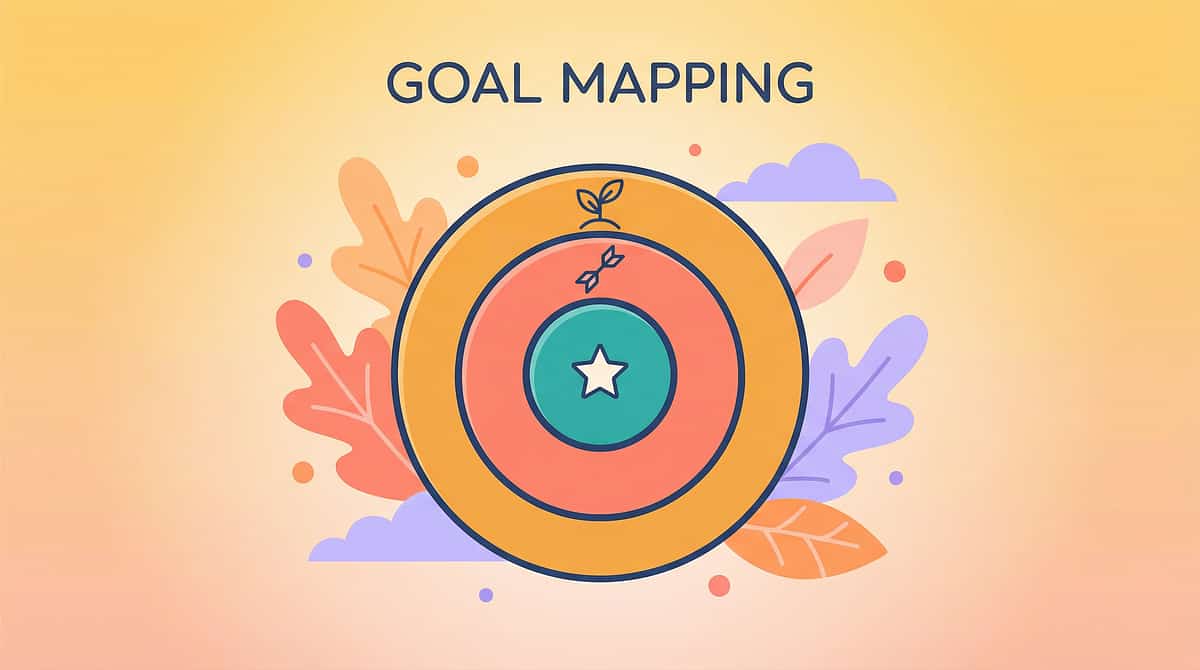
The Precision Targets of the Camp Readiness Protocol
This protocol does not aim for vague "improvement." Every material targets specific, observable, measurable therapeutic goals — from reducing novelty-based anxiety to long-term community inclusion identity.
🎯 Primary Targets
- Reduction of novelty-based anxiety in structured recreational environments
- Successful separation from caregiver for 4–8 hours in supported group setting
- Independent use of portable self-regulation strategies
- Peer interaction initiation and maintenance in group activity context
⭕ Secondary Targets
- Self-advocacy skills (break card use)
- Time perception and tolerance (countdown calendar)
- Generalisation of social skills to novel environments
- Caregiver confidence and camp staff partnership
🔵 Tertiary Targets
- Community inclusion and participation identity
- Independence across settings (not only camp)
- Peer relationship formation and friendship skills
- Resilience for future novel experiences (school, travel, college)
Observable behaviour indicators: Child asks to return to camp (primary mastery) · Child uses break card before reaching crisis (secondary) · Child initiates conversation with unfamiliar peer (tertiary)
References: Meta-analysis (World J Clin Cases, 2024): PMC10955541 | NCAEP 2020 Evidence-Based Practices Report
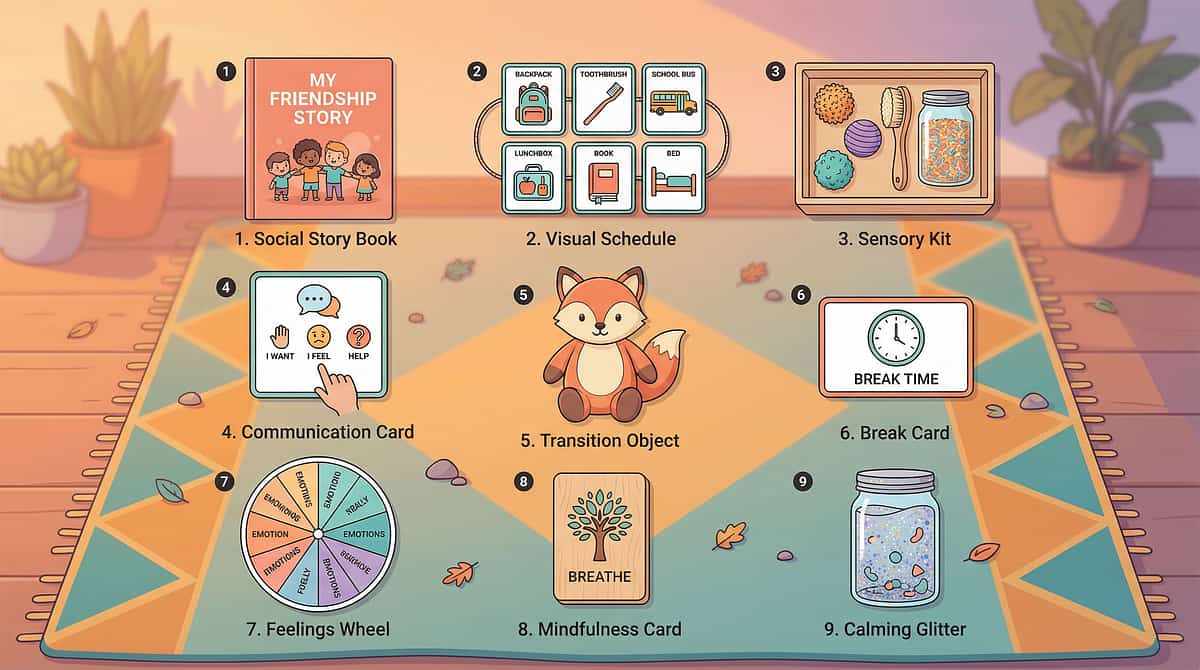
The 9 Camp Readiness Materials — At a Glance
All 9 can be partially or fully DIY. Full DIY instructions on the next card.
# | Material | Canon Category | Est. Cost | Source | |
1 | Camp Preview Social Story Book | Social Narrative Materials | ₹200–800 or Free | DIY / Print shop | |
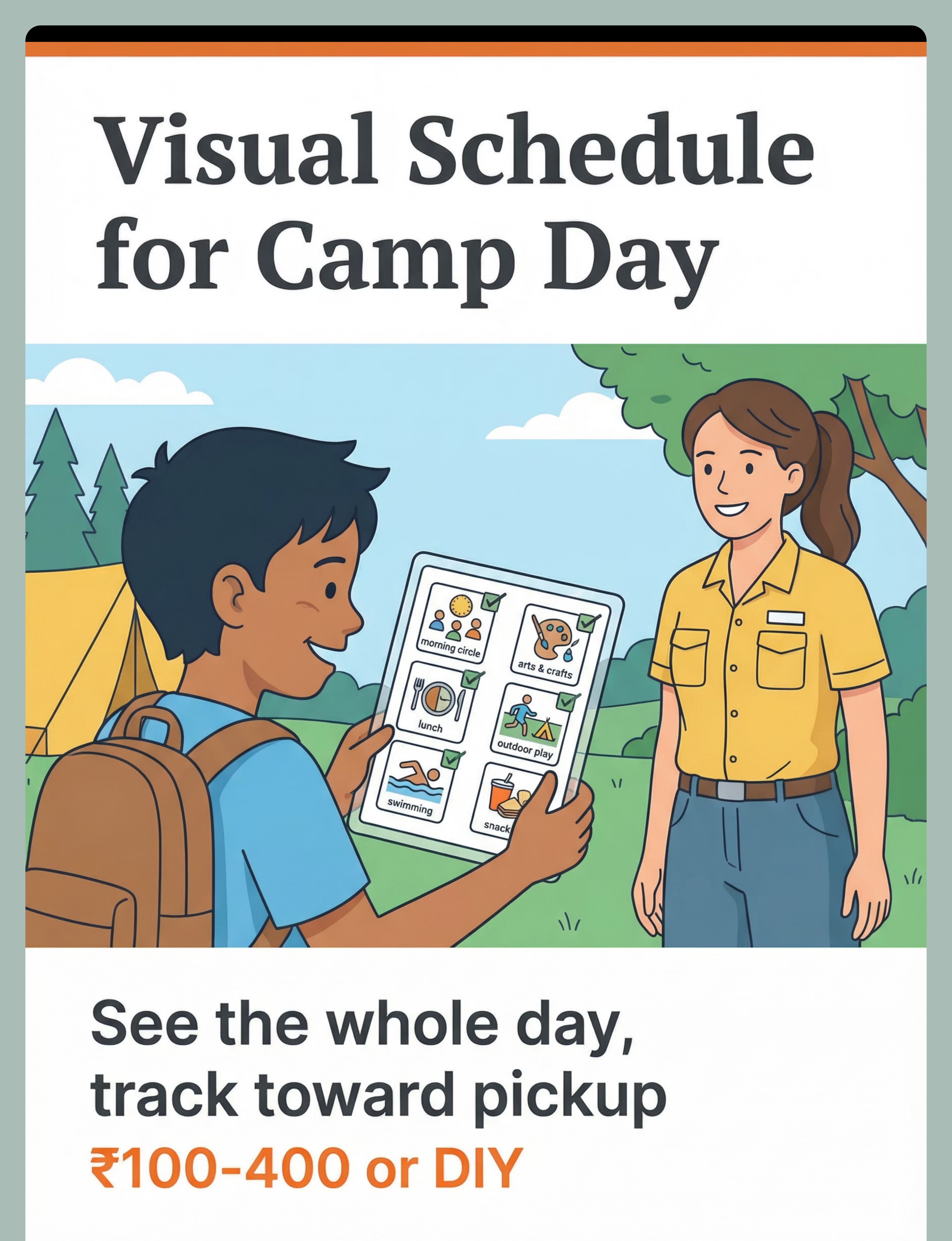
2 | Visual Schedule for Camp Day | Visual Supports | ₹100–400 or Free | DIY / Laminated | |
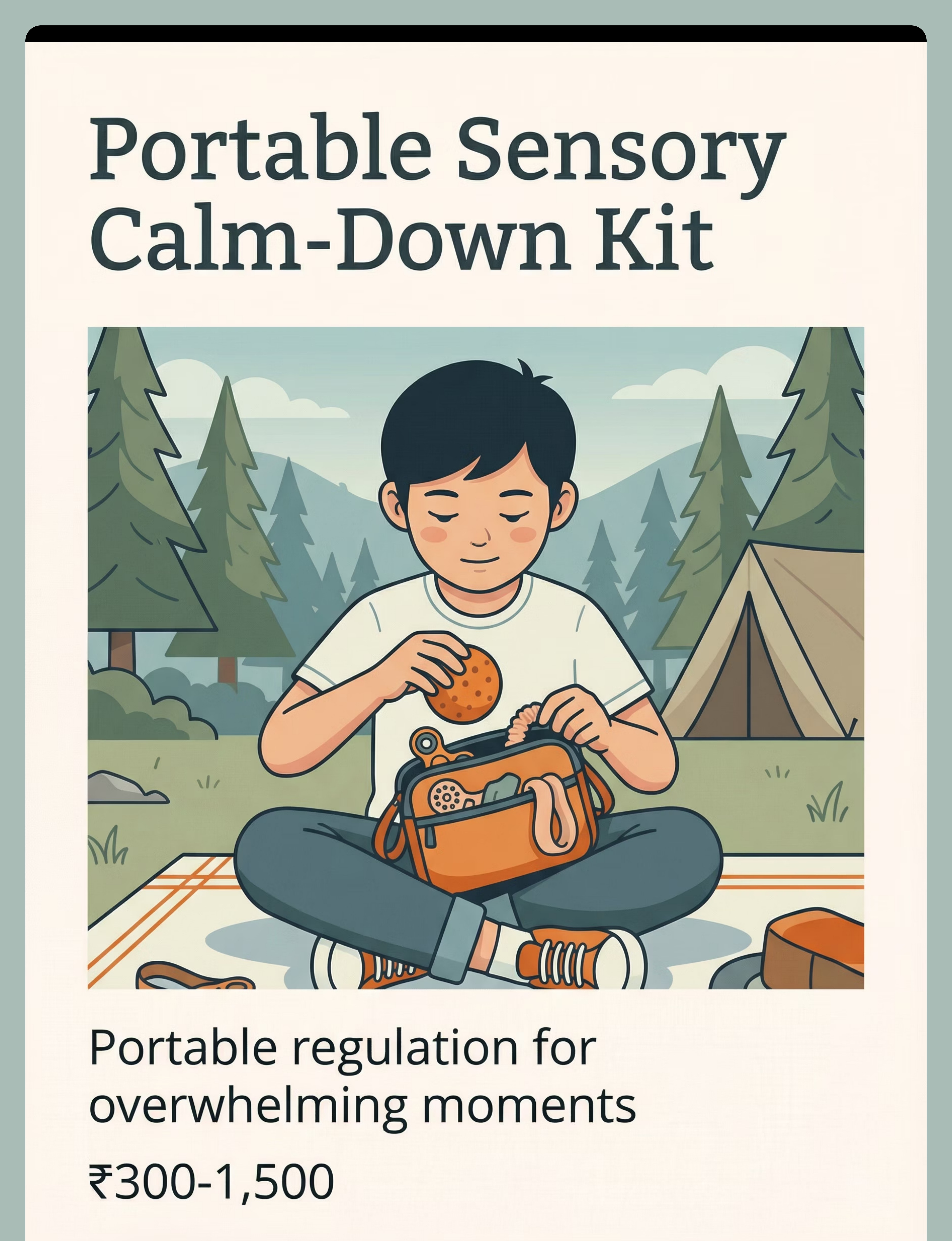
3 | Portable Sensory Calm-Down Kit | Sensory Regulation Tools | ₹300–1,500 | Assembled kit | |
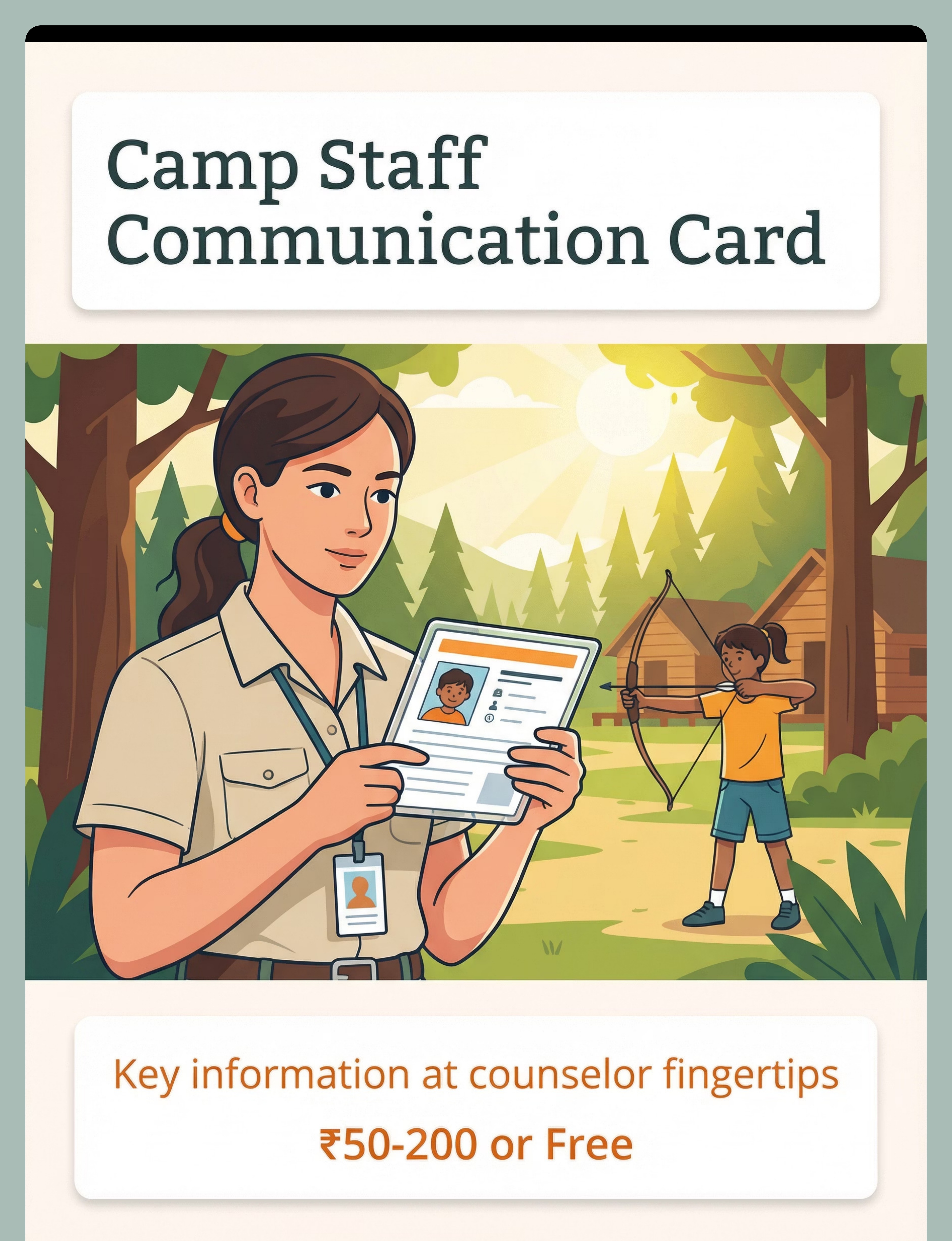
4 | Camp Staff Communication Card | Communication Supports | ₹50–200 or Free | DIY / Print | |
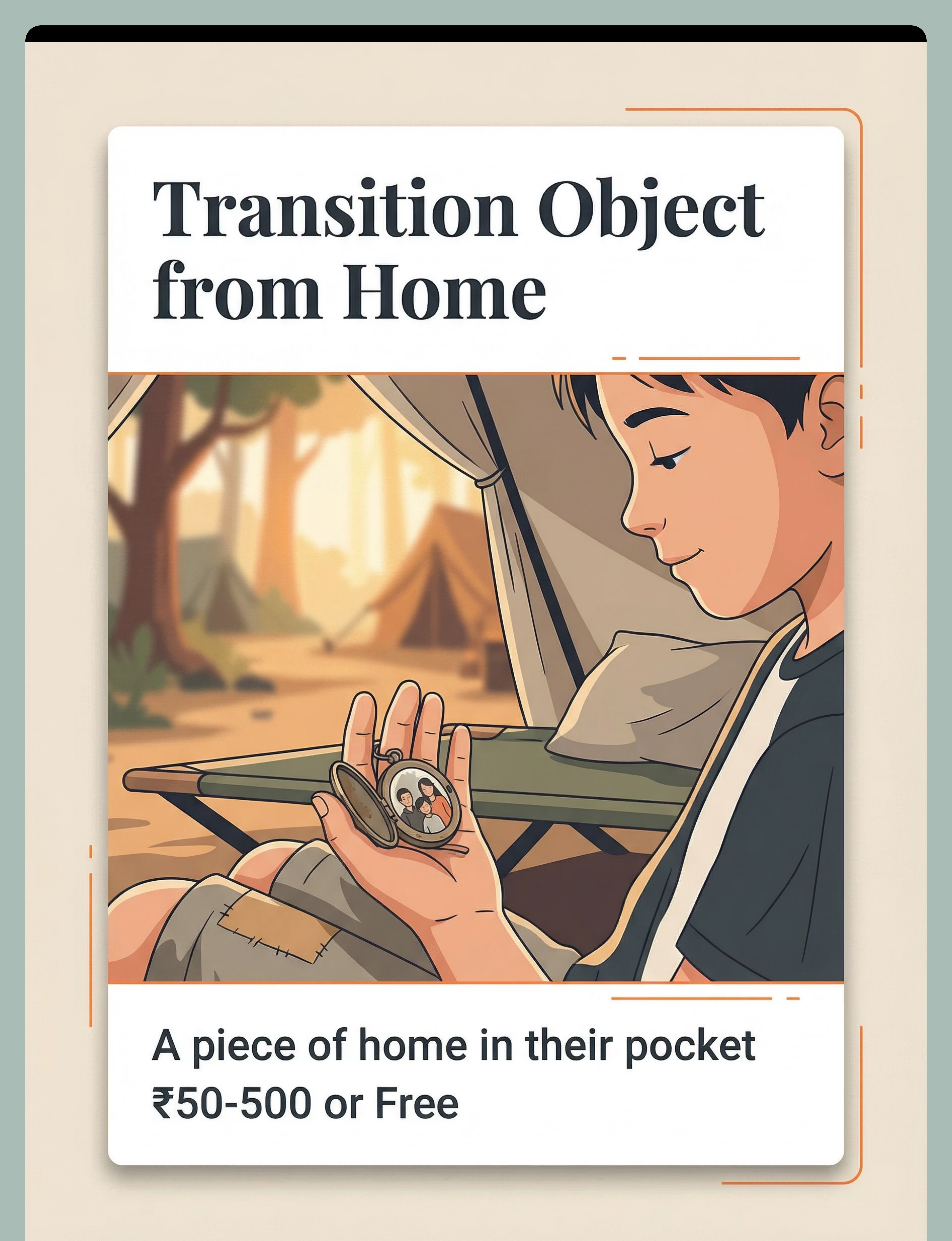
5 | Transition Object from Home | Transition Objects / Comfort Items | ₹50–500 or Free | Existing item | |
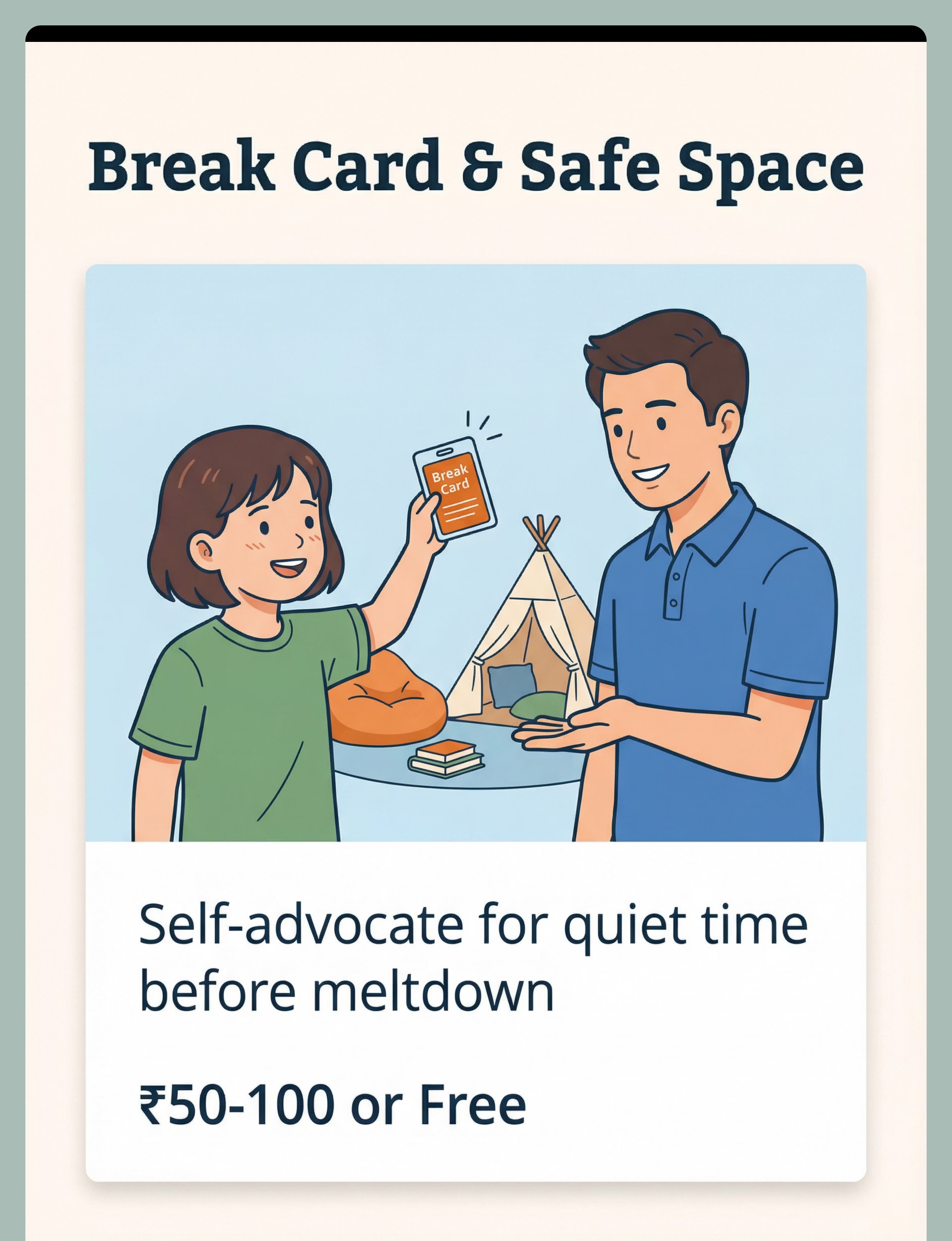
6 | Break Card & Designated Safe Space | Communication Supports | ₹50–100 or Free | DIY | |
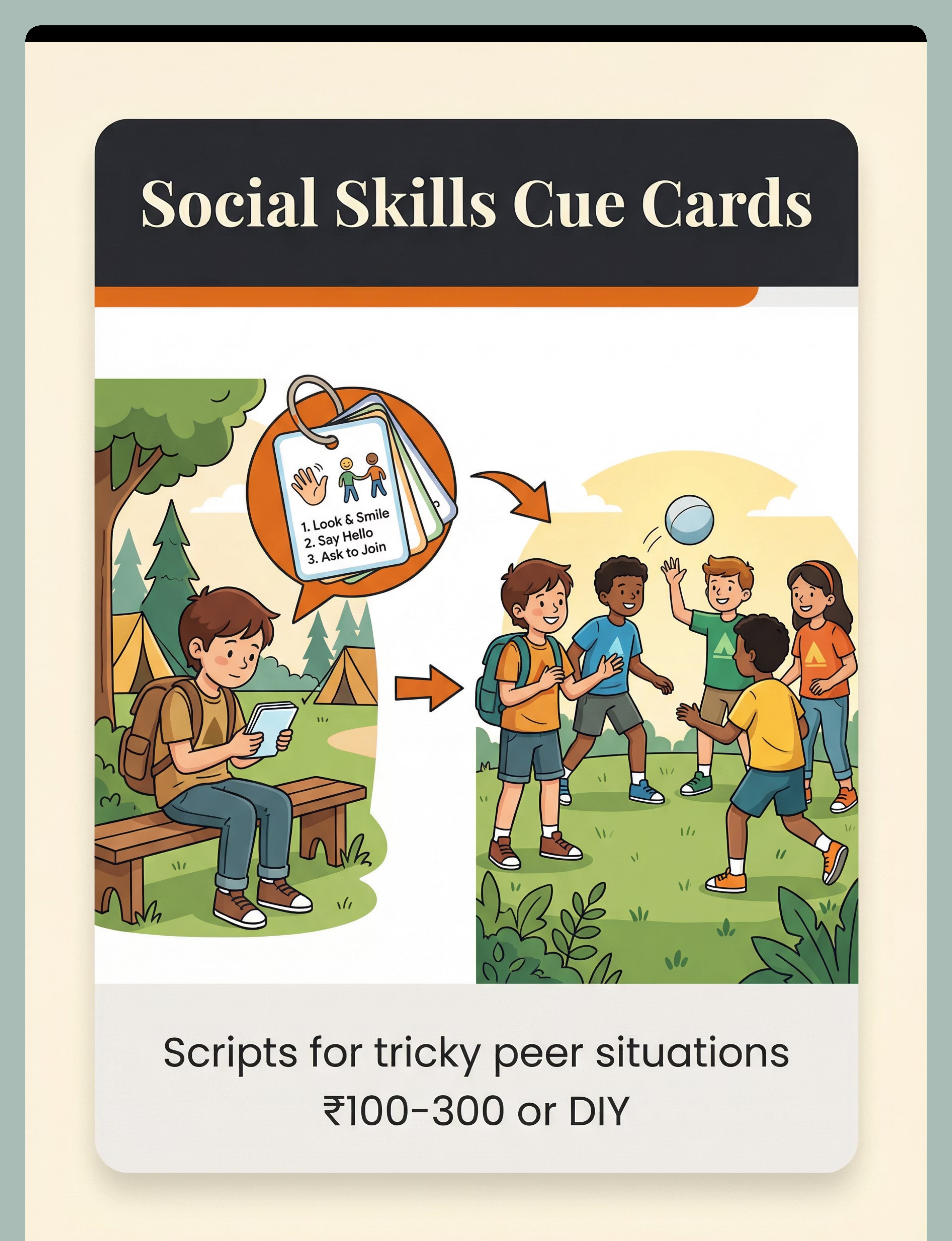
7 | Social Skills Cue Cards | Social Narrative Materials | ₹100–300 or Free | DIY | |
8 | Countdown Calendar | Visual Supports | ₹50–200 or Free | DIY | |
9 | Parent-Child Connection Routine | Reinforcement Menus | Free | Ritual |
Pinnacle Recommends
- Animal Soft Toys — ₹425 · Canon: Transition Objects · ✅ Pinnacle Approved
- The Rosette Imprint Reward Jar — ₹589 · Canon: Reinforcement Menus
- 1800+ Reward Stickers — ₹364 · Canon: Reinforcement Menus
Total Investment
₹950–3,700 for full kit | Much can be free/DIY
Essential Starter (₹0): Social story + visual schedule + staff card + break card + connection routine

Every Material Has a ₹0 Version. No Family Is Left Behind.
This is the WHO/UNICEF equity principle in action: the best therapy material is the one you can actually use today. The scientific principle doesn't change with the price.
Material 1: Camp Preview Social Story Book
Buy: Printed, laminated photo-book (₹200–800 at print shops)
DIY: Print photos from camp website + phone camera. Write simple sentences on A5 paper. Laminate with sellotape. Bind with safety pins or staples. Total: ₹0–50.
Material 2: Visual Schedule for Camp Day
Buy: Laminated board with velcro (₹100–400)
DIY: Draw or print activity pictures on plain paper. Stick to card with tape. Use pencil to cross off. A4 paper and a pen = complete visual schedule. Total: ₹0.
Material 3: Portable Sensory Calm-Down Kit
Buy: Assembled kit with fidgets, earplugs, weighted item (₹300–1,500)
DIY: Repurpose a pencil pouch. Fill with: rolled-up fabric (tactile), dry beans in a small zip bag (auditory/tactile), a family photo (visual comfort), your perfumed handkerchief (olfactory). Total: ₹0 using household items.
Material 4: Camp Staff Communication Card
Buy: Professionally printed A5 laminated card (₹50–200)
DIY: Write on plain index card. Cover in clear sellotape to waterproof. Total: ₹5.
Material 5: Transition Object
Buy: New soft toy or locket (₹50–500)
DIY/Existing: A smooth pebble from home, a small photo in a zip bag, a fabric scrap with your scent — any existing meaningful item. Cost: ₹0.
Material 6: Break Card
Buy: Printed, laminated (₹50–100)
DIY: Write "BREAK" on stiff card. Sellotape both sides. Punch a hole, add a string. Total: ₹0.
Material 7: Social Skills Cue Cards
Buy: Illustrated set (₹100–300)
DIY: Write 3 steps per situation on playing-card-sized paper. Draw stick figures. Laminate with sellotape. Ring through corner. Total: ₹10.
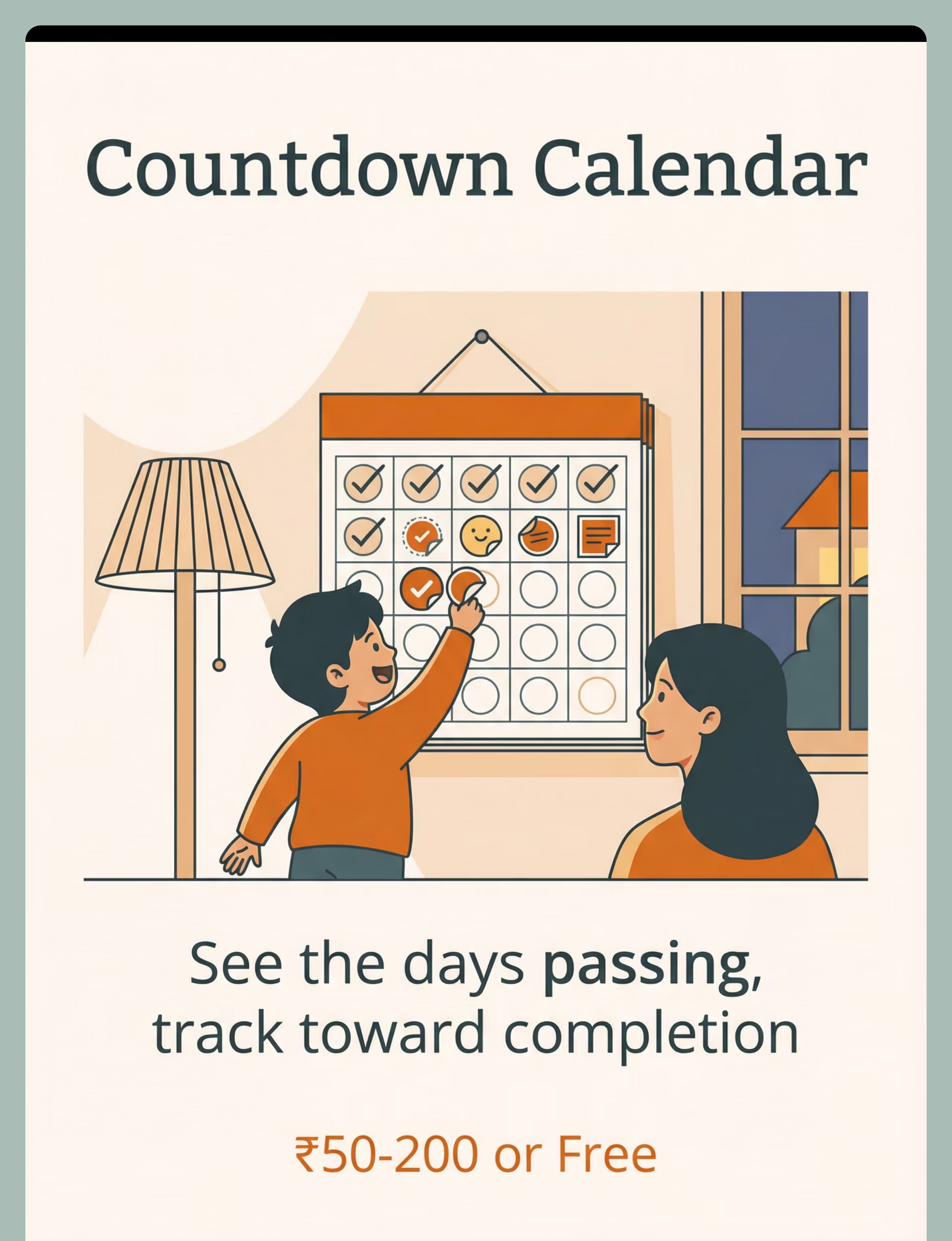
Material 8: Countdown Calendar
Buy: Printed visual calendar (₹50–200)
DIY: Draw 5 empty boxes on A4 paper. Tape to wall. Stickers or pen ticks for each completed day. Total: ₹0.
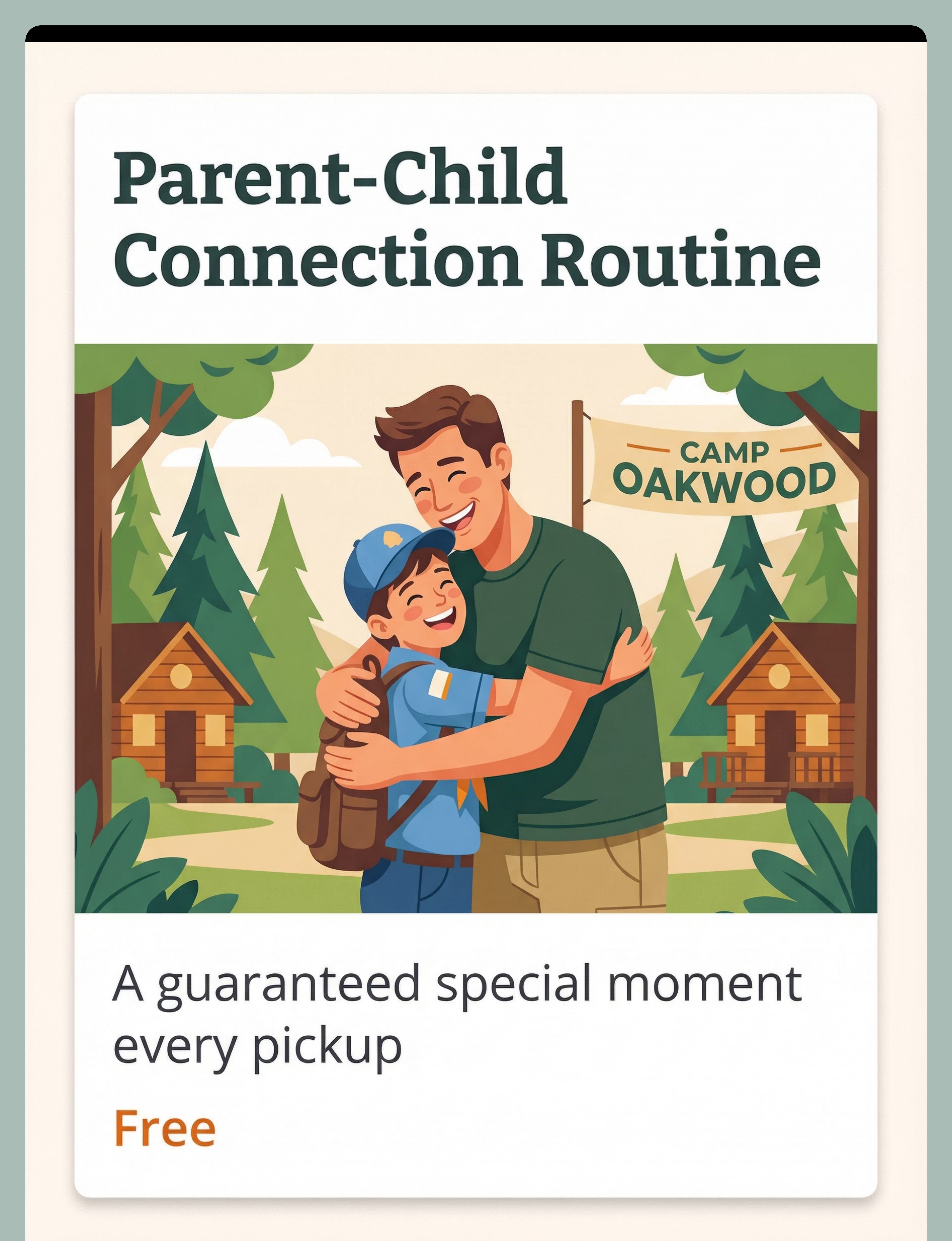
Material 9: Connection Routine
Buy: N/A
DIY: Choose a ritual. Practice it. Repeat it. This is completely free and arguably the most powerful material on this list.
"The scientific principle doesn't change with the price. A ₹0 social story read daily produces the same neural familiarity as a ₹800 printed version."
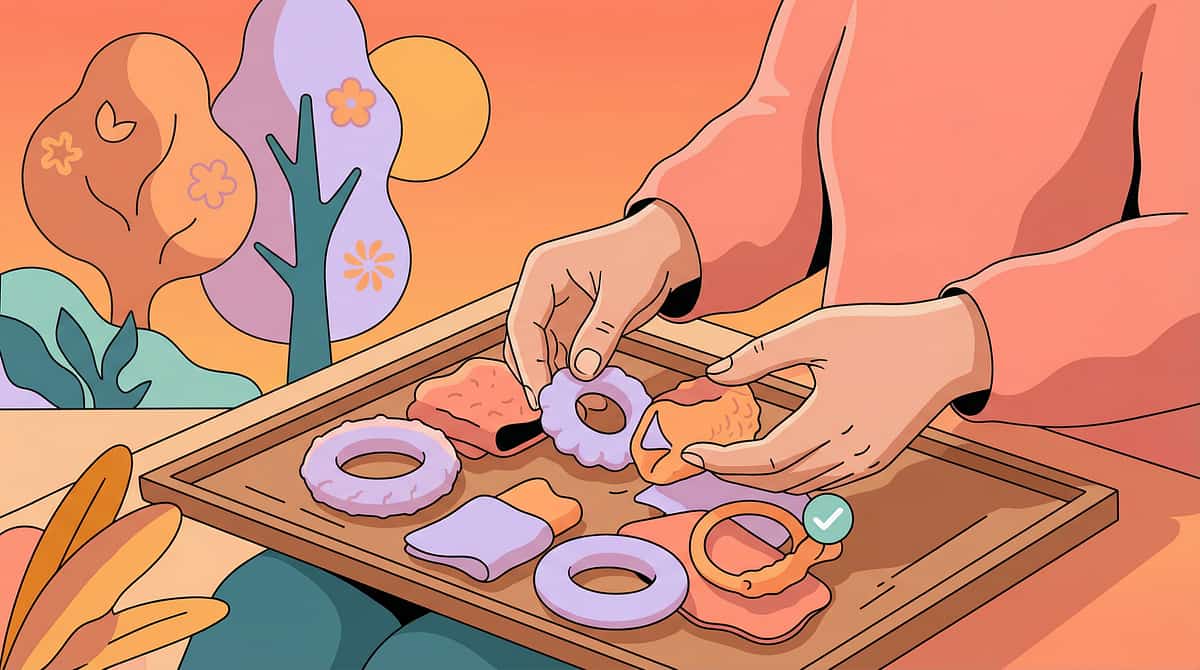
Clinical Safety Framework for Camp Readiness Implementation
🔴 STOP — Absolute Contraindications
Do not proceed to camp without professional consultation if:
- Child has active elopement risk not yet assessed by a behaviour specialist
- Child has a medical condition requiring continuous monitoring
- Child experienced severe trauma in a group setting in the past 6 months (active PTSD symptoms)
- Child has not successfully separated from caregiver for even 30 minutes in a familiar setting
- Child's current anxiety medication has been recently changed (allow minimum 4–6 weeks stabilisation)
🟡 MODIFY — Proceed with Significant Adjustments
- First structured group experience → Begin with 1-hour camp visits with parent present, extending gradually
- Significant verbal communication challenges → Ensure staff are briefed on AAC or PECS method
- Serious food allergies → Communicate in writing to camp director AND all counsellors
- Aggression toward peers in past year → Develop specific safety plan with BCBA before camp
🟢 PROCEED — Readiness Indicators
- Child tolerates separation from caregiver for 2+ hours in structured setting ✓
- Child can self-identify at least one regulation strategy when prompted ✓
- Camp has been contacted and is willing to accommodate supports ✓
- All 9 materials have been introduced and practiced before camp day ✓
🛑 STOP THE SESSION IF: During any preparation session at home, child becomes severely distressed, shows signs of regression, or begins refusing camp-related materials entirely. Do not push through. Consult your Pinnacle therapist.
FREE National Autism Safety Helpline: 9100 181 181 (24×7, 16+ languages)
References: DOI: 10.1007/s12098-018-2747-4 (Padmanabha et al., Indian J Pediatr, 2019)
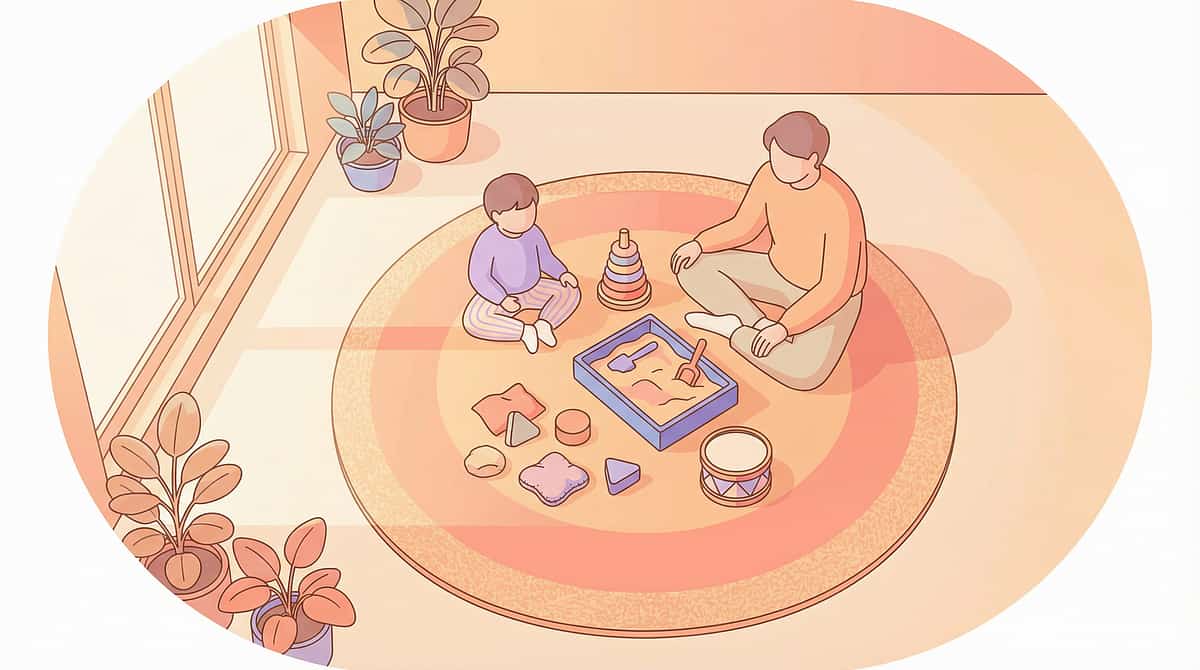
The Home Preparation Environment: Setting Up for Success
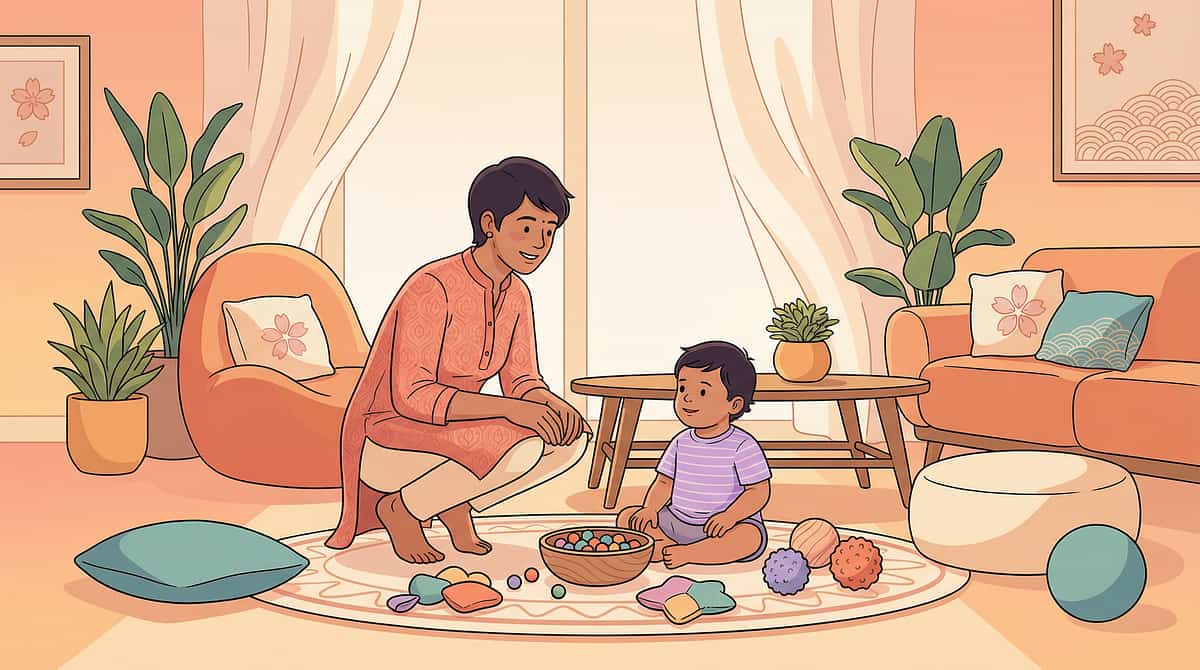
Where and how you read the social story matters as much as what's in it. A well-set preparation space signals safety to the child's nervous system before a single word is read.
Phase 1 Prep (2–3 Weeks Before Camp)
Position 1 — Child: Seated on familiar rug or cushion in relaxed body posture. Not at a school desk — this is co-reading time, not a lesson.
Position 2 — Parent: Beside child (not across from them). Side-by-side reading is less confrontational for children with autism.
Position 3 — Materials: Social story book, camp photos, sensory kit (for familiarity practice) on low table within child's reach.
Remove from space: TV/screens, siblings (for initial sessions), competing stimulation.
Lighting: Natural, soft. Not overhead fluorescent. Afternoon sessions work well for most children.
Sound: Quiet. Gentle background music at low volume is acceptable.
Phase 2 Prep (Night Before and Morning of Camp)
- Lay out all materials together so child can see the complete kit
- Read social story one final time at bedtime
- Pack sensory kit, visual schedule, transition object, break card, and social cue cards in child's backpack together
The Space Checklist
- ✓ Countdown calendar visible on wall
- ✓ Camp photos displayed nearby
- ✓ Social story book on low table
- ✓ Soft rug or cushion for child's spot
- ✓ Parent seated side-by-side
- ✓ No competing screens or siblings
Pre-Camp Readiness Assessment
Run this check in 60 seconds on the morning of each camp day. Honest answers only — the goal is to set your child up for success, not to push through a day that is stacked against them.
Indicator | ✅ Green | 🟡 Yellow | 🔴 Red | |
Sleep last night | 7+ hours, woke rested | 5–6 hours, some difficulty | <5 hours, significant disturbance | |
Eating this morning | Ate normal breakfast | Ate partial breakfast | Refused to eat | |
Emotional state right now | Calm, neutral, or mildly excited | Anxious but manageable | Distressed, crying, refusing | |
Any illness symptoms | None | Mild (runny nose only) | Fever, vomiting, or significant pain | |
Recent sensory trigger (last hour) | None | Minor, resolved | Active dysregulation | |
Child's expressed willingness | Willing or neutral | Hesitant but not refusing | Actively refusing and distressed |
🟢 4–6 Greens: GO
Proceed with camp. Run morning prep ritual.
🟡 Greens + Yellows: MODIFY
Camp proceeds but with heightened monitoring. Pre-brief counsellor by text. Give child extra goodbye time.
🔴 Any Red: POSTPONE
Do not push camp today. A forced bad day creates more barriers than a recovery day. This is clinical wisdom, not defeat.
"The best session is one that starts right. A postponed day is not a failed day — it is a data point."

Step 1 of 6
2–3 Weeks Before Camp
Daily Reading Session
Material 1: Camp Preview Social Story Book
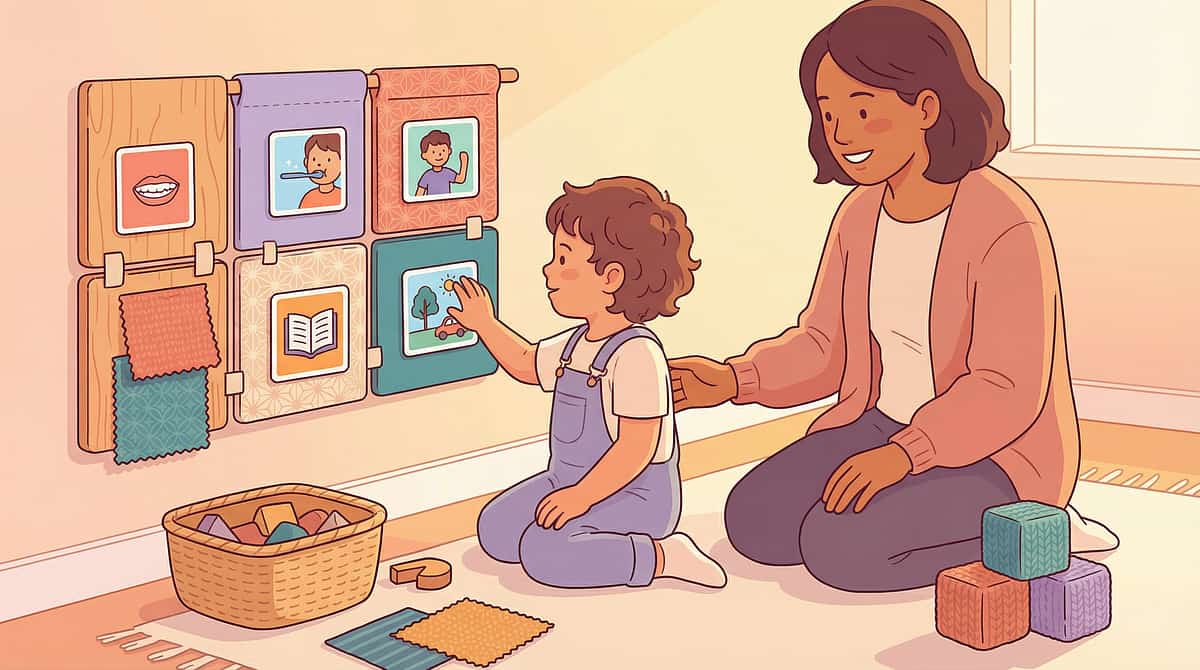
Why this works: Social stories transform the neurologically unknown into the expected. Your child's amygdala threat-response is activated by novelty. When camp is mentally rehearsed daily for 3 weeks before arrival, the actual experience registers as familiar rather than threatening. This is not optimism — it is how the brain classifies environments as safe or dangerous.
The Opening Script
"Let's look at our camp book together. [Child's name], this is Camp [Name]. You are going to visit this place soon. Everything in this book shows you exactly what will happen."
How to Present
- Sit side-by-side (not face-to-face)
- Read slowly. Point to photos. Let the child touch the pages.
- Acknowledge emotions: "Some children feel nervous on the first day. That is completely normal."
- End each reading: "You know what camp looks like now. You are ready for this."
Reading Schedule
- Begin 2–3 weeks before camp — read daily (evening, before bed = ideal)
- Read twice daily the week before camp
- Read once the morning of Camp Day 1
What to Include in the Story
- ✓ Photos of the actual camp entrance and check-in area
- ✓ Photo of the counsellor who will work with your child
- ✓ Each activity shown in sequence
- ✓ Where bathrooms are (critical — an unknown bathroom creates extreme anxiety)
- ✓ Snack and lunch location
- ✓ The pickup point with a photo of you arriving to collect
Acceptance cues to watch for: Child initiates looking at the book themselves · Child asks questions about specific photos · Child begins referring to camp characters/places by name
Step 2 of 6
One Week Before Camp
Build & Practice the Schedule
Material 2: Visual Schedule for Camp Day
Why this works: Children with autism rely on predictability to regulate. The anxiety of not knowing what comes next — or how much longer until reunification with their parent — is one of the primary drivers of camp meltdowns. A visual schedule converts the unknowable future into a concrete, visible sequence. Crucially: it makes pickup visible. The child can see with their own eyes that you are coming.
01
Contact the Camp
Before start date, request the daily schedule with approximate times for each activity block.
02
Assign Visuals
For each activity block, assign a simple picture or drawn icon. Include clock faces for children learning to tell time.
03
Make Pickup Visible
Large, clear, recognisable photo of the parent as the visible endpoint. This is the most regulation-critical element of the schedule.
04
Laminate & Attach
Laminate the schedule. Attach to lanyard or clip to backpack. Child and counsellor mark completed items throughout the day.
Practice Script
"[Child's name], here is your camp day. Each time you finish an activity, you mark it off. Look — after [activity X], it's snack. After [activity Y], it's Mummy pickup! See? Pickup is coming."
Child Response Spectrum
- Ideal: Child references schedule independently, marks off items, shows it to counsellor
- Acceptable: Child needs counsellor prompts but uses it when prompted
- Concerning: Child refuses or destroys schedule → Step back, reduce to 3-item visual, rebuild gradually
"Long days become manageable when broken into visible segments with a guaranteed endpoint."
Step 3 of 6
Build 2 Weeks Before Camp
Practice Daily
Material 3: Portable Sensory Calm-Down Kit
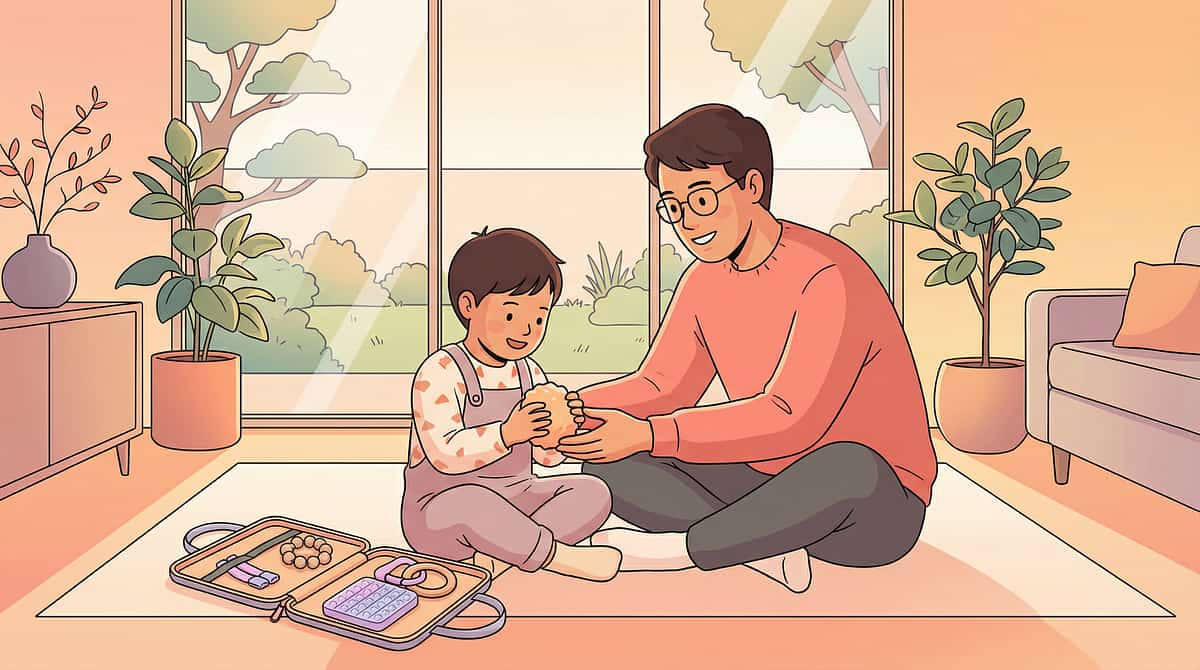
Why this works: Camp environments are neurologically demanding: heat, outdoor sounds, group noise, physical contact, unfamiliar textures. Without accessible regulation tools, the nervous system escalates until it hits meltdown. With a portable kit the child already knows and has used at home, dysregulation becomes manageable.
Sensory System | Camp Stressor | Kit Item | |
Auditory | Group noise, outdoor sounds | Noise-reducing earplugs or earbuds | |
Tactile | Being bumped, heat, textures | Smooth stress ball, small textured fabric square | |
Proprioceptive | Need for heavy input | Small resistance band, firm squeeze toy | |
Olfactory | Unfamiliar food smells | Small cloth with familiar scent (sealed) | |
Visual | Overstimulation | Small family photo, mini calming jar | |
Oral | Oral seeking, anxiety | Chewy tube, preferred hard candy if allowed | |
Comfort | Emotional overwhelm | Mini comfort item (familiar from home) |
Practice Protocol at Home
- Use kit items during other stressful situations at home
- Practice the child reaching for the kit when prompted: "You seem overwhelmed. What's in your kit that might help?"
- Goal: Child can identify and use one regulation tool independently
At Camp: Brief the Counsellor
Ask counsellors to prompt — "Your kit is in your bag — would that help right now?" — before escalation, not after. Proactive use prevents meltdown; reactive use only manages it.
"When regulation tools are always accessible and already practiced, children can manage overwhelming moments before they escalate to crisis."
Step 4 of 6
Complete 5–7 Days Before Camp
Update Annually
Material 4: Camp Staff Communication Card
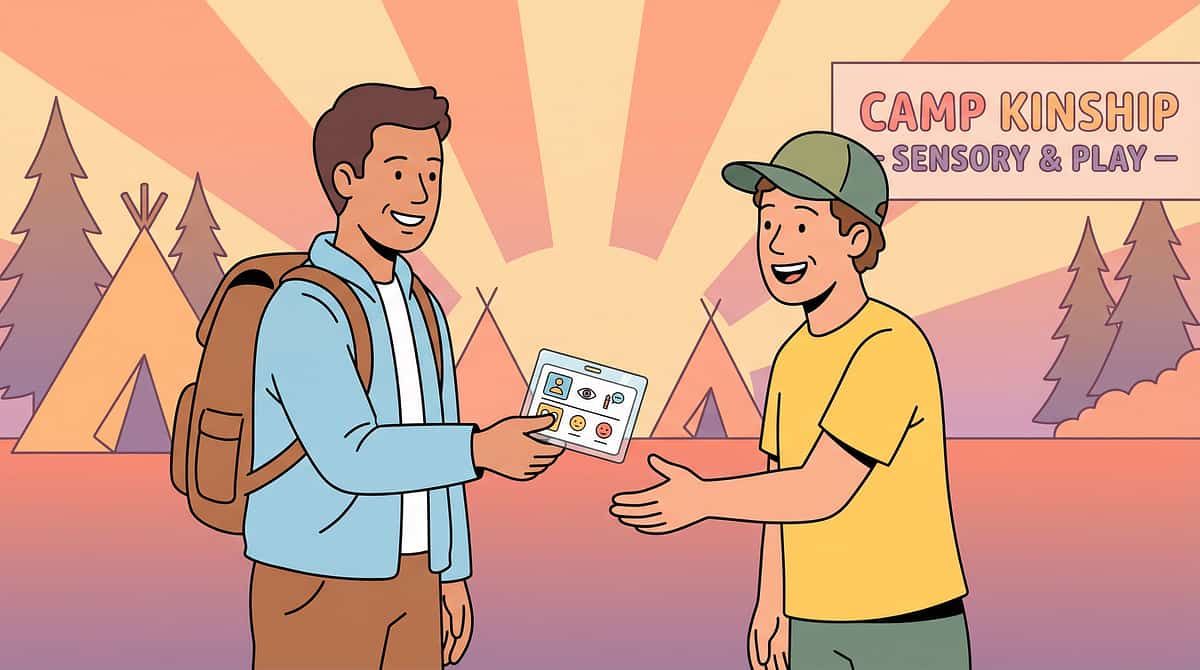
Why this works: Even the most caring camp counsellor cannot effectively support your child without information. They will meet 20+ children in their group. Without a quick-reference tool, your child's specific triggers and strategies are invisible. A concise, practical communication card changes the care equation entirely.
Card Front
- Child's name + large photo
- How to pronounce name (if unusual)
- Communication style: "[Name] is verbal / uses limited speech / uses [AAC device name]"
- ✅ STRENGTHS: "What [Name] does brilliantly: [specific strengths]"
Card Back
- 🔴 TRIGGERS: "Watch for: [specific sensory triggers, specific situations]"
- 🟡 EARLY WARNING SIGNS: "[Name] is getting overwhelmed when: [covers ears / stops talking / starts pacing]"
- 🟢 WHAT HELPS: "Offer break card, reference visual schedule, sensory kit in backpack"
- Emergency contact: Parent name + mobile number
- Allergy/medical notes (if applicable)
Language rule: Write in plain English. Avoid clinical terminology. Write for a 20-year-old camp counsellor, not a clinician. Specific behaviours, not vague labels.
Copies to provide: Lead counsellor + camp director + spare copy in child's backpack.
Copies to provide: Lead counsellor + camp director + spare copy in child's backpack.
"Even caring counsellors cannot support children well without information. A quick reference empowers good support."
Step 5 of 6
Establish 1–2 Weeks Before Camp
Use Every Day
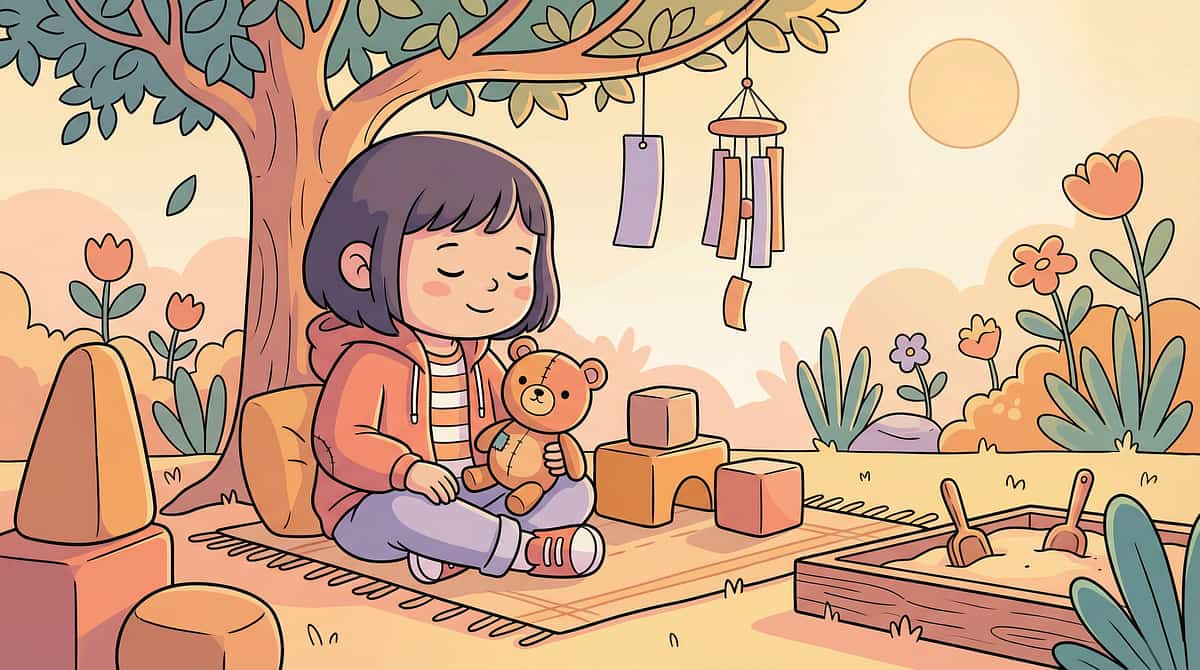
Material 5: Transition Object from Home
Why this works: Abstract reassurance ("I'll be back at 3pm") is neurologically insufficient for children whose time perception and object permanence are atypical. A physical object provides concrete, sensory proof that home exists, that you exist, and that love continues during separation. This is attachment theory applied practically.
The Charging Ritual
"[Child's name], this [object] holds everything good about our home. When you hold it at camp, you are holding my love. I will be holding [matching item] right here, thinking about you."
Effective Transition Objects
- Small framed or laminated family photo (laminated = waterproof for camp)
- Matching bracelets (child wears one, parent wears matching)
- Smooth stone or crystal "charged with love" in ritual
- Small piece of parent's clothing with familiar scent
- Mini stuffed animal already associated with comfort
Critical Step: Practice First
Use the transition object during other separations before camp — therapy sessions, relatives' homes. The child must already associate it with comfort before camp day arrives.
Reinforcement Connection
When child returns home and shows the transition object: "You kept it safe all day. You did so well. Look — I kept mine too."
The Rosette Imprint Reward Jar — ₹589 | Add a token each day the child brings the transition object home safely. Visual accumulation of success.
"Tangible objects provide concrete comfort when abstract 'I'll be back' isn't enough for a child whose world is primarily sensory and present-moment."
Step 6 of 6
Establish Before Camp Day 1
Use From Day One
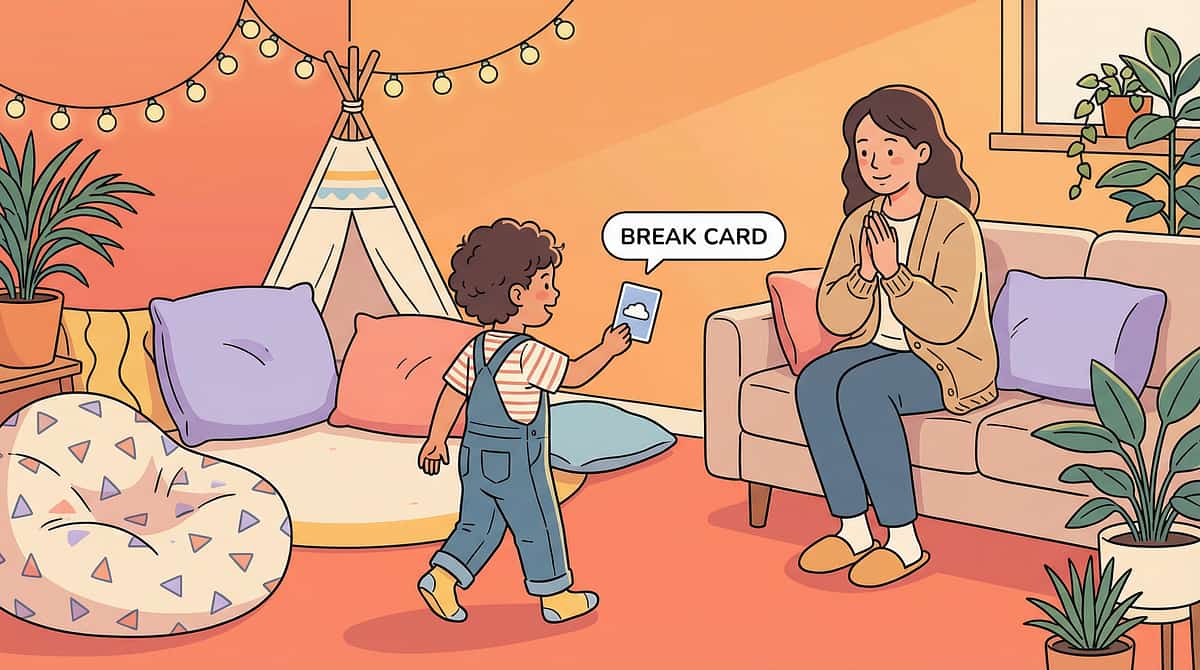
Material 6: Break Card & Designated Safe Space
Why this works: Camp meltdowns almost always have a visible prodrome — a warning phase that precedes crisis by 5–15 minutes. If the child can self-advocate for a break during this window, the meltdown is prevented. The break card gives the child a non-verbal, low-demand mechanism to escape before crisis — the single most powerful meltdown prevention tool in this protocol.
Contact the Camp Director
Request identification of a designated quiet space (counsellor office, shaded corner, quiet room). This is a reasonable accommodation — advocate for it.
Brief the Counsellors
"When [Name] shows you this card, it means they need 5 minutes of quiet. Please take them to [quiet space] immediately. Do not delay — delayed breaks lose effectiveness."
Practice at Home
Role-play the break card system before camp. Child shows card → parent says "Great job asking. Let's go to your quiet spot." Repeat until it is automatic.
After the Break
Child returns to group after 5–10 minutes. Counsellor guides return: "Ready? Let's go back together."
Script: Teach Your Child
"[Child's name], when camp feels like too much, show your counsellor this card. They will take you somewhere quiet. You don't have to say any words. Just show the card."
Teaching Self-Recognition (Advanced)
"What does your body feel like when it's getting too full? When you feel that — ears buzzing, hands tight, stomach fast — that's the signal to show your card. Before it becomes too much."
NCAEP Evidence-Based Practices Report (2020): Break systems are classified as evidence-based practice for autism. | PMC11506176

End of Each Camp Day: 60 Seconds of Data That Drives Progress
Track these three things immediately after pickup — before the day fades. This data identifies which materials were most effective, drives personalised adjustments, and builds the evidence base for your child's entire developmental journey.
Field 1: Overall Regulation Rating
🔴 1 — 🟡 2 — 🟢 3 — ⭐ 4 — 🌟 5
One number. Your gut read on how regulated your child was throughout the day.
Field 2: Break Card Use
Yes / No / How many times?
Was the break card used? Was it child-initiated or counsellor-prompted? Both are valuable data.
Field 3: One Win + One Hard
Write or voice note: one specific moment that went WELL, and one moment that was hard. Patterns emerge across days 3–5.
Why this data matters: Day 3 is typically harder than Day 2 (normal regression curve — do not panic). By Day 5, most children show a measurable return to baseline or improvement. Data identifies which materials were most used and most effective.
"60 seconds of data now saves hours of guessing later — and builds the evidence base for your child's entire developmental journey."
References: BACB Data Collection Standards | Cooper, Heron & Heward (Applied Behavior Analysis, 8th ed.)
Real Scenarios. Real Solutions. No Judgement.
Even the best-prepared camp readiness plan meets real life. Here are the most common challenges families face — and exactly what to do about each one.
Problem 1: Child Refused to Enter the Gate on Day 1
Why: The sensory reality of dozens of children, noise, and movement exceeded the mental rehearsal. This is common on Day 1.
Solution: Request to walk child inside with you (most camps will allow this for the first 1–3 days). Stay 10 minutes then do a slow goodbye. If needed, start with 2-hour days and extend gradually.
Solution: Request to walk child inside with you (most camps will allow this for the first 1–3 days). Stay 10 minutes then do a slow goodbye. If needed, start with 2-hour days and extend gradually.
Problem 2: Child Had a Major Meltdown at Camp
Why: Regulation tools were not used proactively — the break card system wasn't established, or the sensory kit wasn't accessible enough.
Solution: Debrief with counsellor to identify the specific trigger and timeline. Usually the system needs adjustment, not abandonment.
Solution: Debrief with counsellor to identify the specific trigger and timeline. Usually the system needs adjustment, not abandonment.
Problem 3: Child Refuses to Return After Day 2
Why: Day 2 is statistically the hardest day — the novelty has worn off but the comfort hasn't arrived yet. This is the valley before the mountain.
Solution: Acknowledge the difficulty. Use the countdown calendar. Consider a modified Day 3 (shorter hours). Do not cancel — cancellation after two days embeds avoidance.
Solution: Acknowledge the difficulty. Use the countdown calendar. Consider a modified Day 3 (shorter hours). Do not cancel — cancellation after two days embeds avoidance.
Problem 4: Camp Counsellor Is Not Using the Materials
Why: Staff turnover, insufficient briefing, or the counsellor doesn't understand why the tools matter.
Solution: Request a 5-minute check-in. Reframe: "When [Name] uses the break card, a 5-minute break prevents a 45-minute meltdown." Frame supports as time-savers for staff.
Solution: Request a 5-minute check-in. Reframe: "When [Name] uses the break card, a 5-minute break prevents a 45-minute meltdown." Frame supports as time-savers for staff.
Problem 5: Child Desperately Misses You During the Day
Why: Healthy attachment response in a novel environment. The transition object and connection routine are specifically designed for this.
Solution: Strengthen the transition ritual. Add a matching element. Remind child via counsellor: "Connection routine is coming at pickup."
Solution: Strengthen the transition ritual. Add a matching element. Remind child via counsellor: "Connection routine is coming at pickup."
Problem 6: Social Story Didn't Prepare for Unexpected Changes
Why: Social stories prepare for the planned camp — they can't cover every contingency.
Solution: Add a "surprise" page: "Sometimes the plan changes. When something is different, I can ask my counsellor what comes next. Different is okay."
Solution: Add a "surprise" page: "Sometimes the plan changes. When something is different, I can ask my counsellor what comes next. Different is okay."
Problem 7: Child Lost or Destroyed the Transition Object
Why: Excitement, physical activity, or overwhelm in the camp environment.
Solution: Always have a backup at home. When this happens: "We'll make/find a new one tonight. Tell me about your day." The ritual of replacement is itself a connecting activity.
Solution: Always have a backup at home. When this happens: "We'll make/find a new one tonight. Tell me about your day." The ritual of replacement is itself a connecting activity.
"Session abandonment is not failure — it is data. The technique needs adjustment, not the parent."
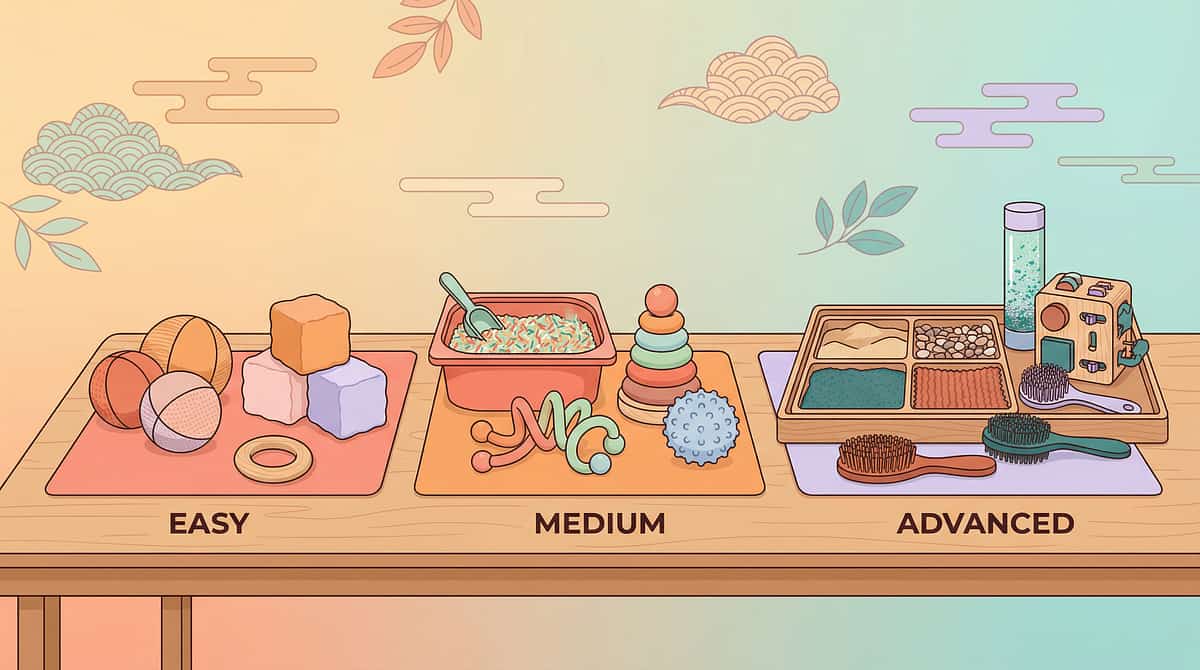
Calibrate the Protocol to Your Child's Exact Profile
No two children have the same sensory profile, communication style, or developmental stage. These modifications ensure every child — seeker or avoider, verbal or non-verbal, age 3 or age 13 — has a version of this protocol that fits them precisely.
For Sensory SEEKERS
Children who crave input and run toward everything:
- Sensory kit: prioritise proprioceptive items (resistance band, firm squeeze)
- Social story: emphasise exciting activities, not calming strategies
- Break card: reframe as an "adventure break" — a short outdoor walk, not a quiet room
For Sensory AVOIDERS
Children who shut down, cover ears, or withdraw:
- Sensory kit: noise-reducing earplugs as priority item #1
- Visual schedule: add more transition warnings ("2 more activities, then snack")
- Safe space: must be genuinely low-stimulation — corner with divider, not just outside
For NON-VERBAL / LIMITED-VERBAL
- Staff card: communication method must be explicitly detailed (AAC, PECS, sign)
- Social cue cards: picture-only, no words required
- Break card: consider a physical gesture (hand signal) rather than card if card is too complex
For CO-OCCURRING ANXIETY
- Extend social story reading to 4 weeks before camp
- Add an "I survived!" page to the social story with space for child to draw their best moment
- Connection routine: add a predictable, specific phrase said at pickup every single day without variation
Ages 3–5
Maximum 3-item visual schedule, social story maximum 5 pages with large photos only
Ages 6–10
Full protocol as described — all 9 materials at full complexity
Ages 11+
Replace picture-based materials with text/list formats; social story becomes a written "camp briefing document"

ACT IV: Progress
Week 1–2
The First Camp Experience: Setting Realistic Expectations
Progress: ●○○○○○○○○○ 15%
What You WILL Likely See
- ✅ Child attends camp (this alone is a significant therapeutic win)
- ✅ Reduction in morning refusal by Day 3–4 (measurable reduction, not elimination)
- ✅ Child uses at least one regulation tool when prompted by counsellor
- ✅ Child completes most of the camp day, even if with visible stress
- ✅ Child knows the counsellor's name by Day 3
What You Will NOT See Yet
- ❌ Child happily goes to camp without any difficulty (typically takes weeks 3–6)
- ❌ Child initiates peer friendships (takes 2–4 weeks in novel environments)
- ❌ Child uses break card spontaneously without prompting (a 2–4 week skill)
- ❌ Child stops mentioning missing you (this is healthy, not a regression)
"If your child tolerates camp for 30 minutes longer than Day 1 by Day 5 — that is real, measurable, neurologically significant progress. Do not look for happiness. Look for tolerance. Happiness comes next."
Parent Emotional Preparation: Week 1 is harder for parents than for children. The guilt of watching a child walk into camp struggling is acute. Know this: every minute your child is in that environment, their nervous system is recalibrating. You are not abandoning them. You are giving them the most powerful developmental gift available: the experience of managing without you.
References: PMC11506176 — Sensory integration outcomes emerge across 8–12 week timelines; early-phase indicators focus on tolerance and participation rather than skill mastery.
Week 3–4
Consolidation Phase
The Consolidation Phase: Neural Pathways Are Forming
Progress: ●●●●○○○○○○ 40%
The consolidation signals are subtle — most parents miss them because they're looking for "happy." Watch for these instead: a child who doesn't cover their ears at the gate anymore. A child who eats their snack at camp rather than refusing. A child who makes accidental eye contact with a peer without looking away immediately. These are victories.
🔵 Neural Familiarity Achieved
Child anticipates camp day and shows reduced morning anxiety — the environment has been reclassified from threat to familiar.
🔵 Language of Belonging
Child references camp by name in home conversation ("at camp, we did...") — a profound shift from avoidance to ownership.
🔵 Reduced Prompting
Child uses the visual schedule or break card with less prompting — internal regulation beginning to emerge.
🔵 Peer Awareness
Child names a peer from camp (even without labelling them "friend" yet) — social processing is occurring, not just survival.
🔵 Engagement Over Anxiety
Child asks camp-specific questions about upcoming activities — curiosity has replaced dread as the dominant orientation.
"By week 3–4, you may notice that YOU feel more confident too. The neural pathway formation is happening in your nervous system as well as your child's."
References: Neuroplasticity evidence — synaptic strengthening through repeated structured input follows predictable timelines in paediatric populations.

Week 5–8
🏆 Mastery Phase
Mastery Phase: Camp Has Become Familiar
Progress: ●●●●●●●○○○ 75% — 🏆 MASTERY BADGE UNLOCKING
Mastery Criterion | Observable Behaviour | |
Separation Mastery | Child walks into camp gate with minimal goodbye time (<5 minutes) | |
Regulation Mastery | Child uses break card or sensory kit independently, without counsellor prompt | |
Social Mastery | Child initiates interaction with at least one peer without adult scaffolding | |
Predictability Mastery | Child can describe the camp schedule from memory | |
Resilience Mastery | Child recovers from an unexpected change within 10 minutes |
Generalisation Indicators — the most important signs:
· Child suggests a camp activity at home ("let's play the game we played at camp")
· Child asks about a specific peer by name outside of camp
· Child references a camp memory spontaneously days later
· Child shows excitement about next camp (future orientation — a significant cognitive shift)
· Child suggests a camp activity at home ("let's play the game we played at camp")
· Child asks about a specific peer by name outside of camp
· Child references a camp memory spontaneously days later
· Child shows excitement about next camp (future orientation — a significant cognitive shift)
When 3 of the 5 mastery criteria are met consistently across 3+ camp days, your child has achieved Community Participation Mastery Level 1 for camp settings.
When to move to the next level: Consider sleepaway camp, multi-week programmes, specialised camps (sports, arts, nature), or leadership opportunities within the current camp setting.
References: PMC10955541 | BACB mastery criteria standards | Generalisation evidence in ASD intervention literature

🏆 You Did Something Extraordinary
You spent weeks preparing materials, reading social stories at bedtime, building a sensory kit, briefing counsellors, writing communication cards, and holding your anxiety so your child could not see it at the gate.
You did this. Your child grew because of your commitment — not just because of the materials.
"A child who did not attend camp → A child who attended, survived, and ultimately found moments of joy at camp. That is a developmental milestone that will echo for the rest of their life."
Frame a Memory
Frame a photo from camp or have child draw their favourite camp memory — a tangible record of courage.
Create a Certificate
"[Child's name] completed [Camp Name] — [dates]. Achieved by courage and preparation." Sign it together.
Special Dinner
Special dinner where child chooses the menu. Share the win with grandparents and extended family via WhatsApp.
"You arrived here afraid. You leave here informed. Your child arrived at camp overwhelmed. They leave changed."

Clinical Red Flags: When to Pause and Consult
Even in the success zone, these signals require professional attention. Do not attempt to push through these red flags without clinical support.
🔴 Severe Separation Anxiety Generalising Beyond Camp
What: Child begins refusing school, therapy sessions, or any separation that wasn't previously difficult.
Why: Camp experience may have overwhelmed their regulatory capacity.
Action: Pause camp. Consult BCBA or child psychologist within 5 days.
Why: Camp experience may have overwhelmed their regulatory capacity.
Action: Pause camp. Consult BCBA or child psychologist within 5 days.
🔴 Regression in Toileting, Sleep, or Eating
What: Behaviours that were well-established begin regressing — bedwetting, sleep refusal, food refusal.
Why: The neurological load of camp is depleting the child's regulatory reserves.
Action: Consider shorter camp days or temporary pause. Prioritise regulation at home.
Why: The neurological load of camp is depleting the child's regulatory reserves.
Action: Consider shorter camp days or temporary pause. Prioritise regulation at home.
🔴 Aggression Toward Family Members After Camp
What: Child "holds it together" at camp and releases everything at home. This is called behavioural contrast — the safe attachment relationship absorbs cumulative stress.
Action: If escalating, consult BCBA. Note: this can actually signal healthy attachment.
Action: If escalating, consult BCBA. Note: this can actually signal healthy attachment.
🔴 Somatic Complaints Without Medical Cause
What: Daily stomach aches or headaches specifically before camp, not at other times.
Why: The body's genuine physiological response to anticipatory anxiety.
Action: Medical check-in first. If clear, consult the child psychologist on your care team.
Why: The body's genuine physiological response to anticipatory anxiety.
Action: Medical check-in first. If clear, consult the child psychologist on your care team.
🔴 Child Communicates Being Bullied or Hurt
Action: Immediate investigation with camp director. Document everything. If not resolved within 24 hours, withdraw child and escalate.
Escalation Pathway: Self-resolve → Teleconsult (Pinnacle helpline) → Clinic visit → Emergency pathway
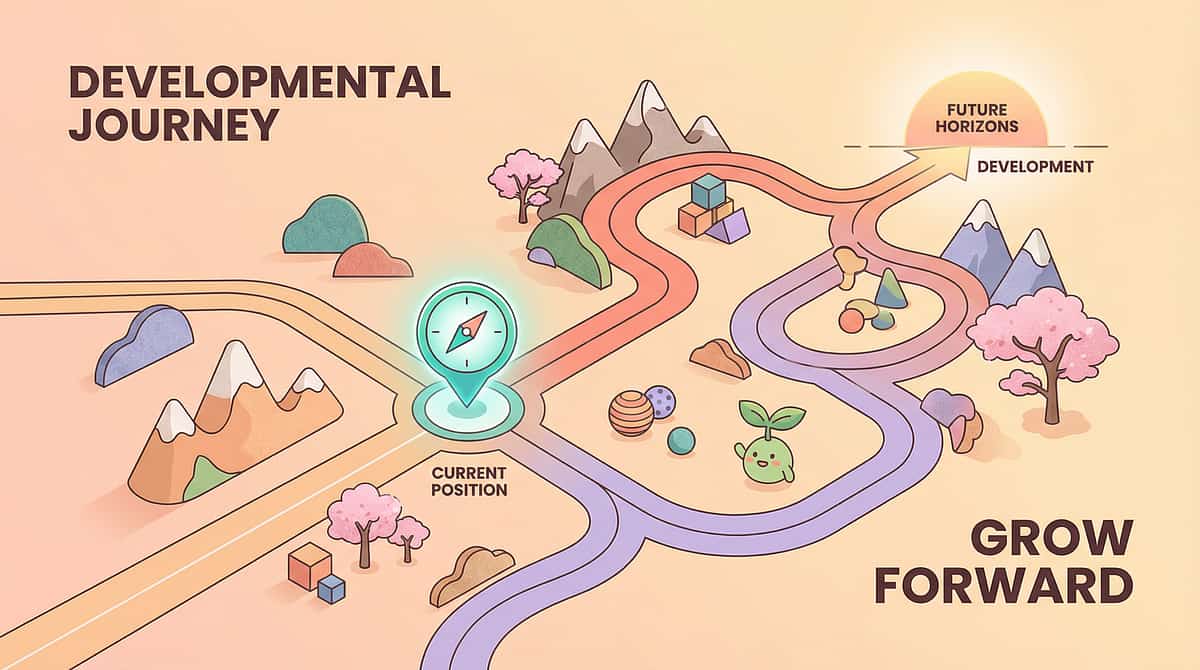
Where You Were. Where You Are. Where You're Going.
The camp readiness protocol does not exist in isolation — it sits within a larger developmental progression. Here is the full pathway, including what came before and where you can go next.
Every camp experience builds the neurological architecture for independent community participation in adolescence and adulthood — the ability to navigate novel social environments without a parent or support person.
Related Technique Pages
🟢 Intro — Same skills, lower intensity
🟡 Core — Structured group, familiar adult
🟡 Core — Next in series
🔴 Advanced — Full support toolkit
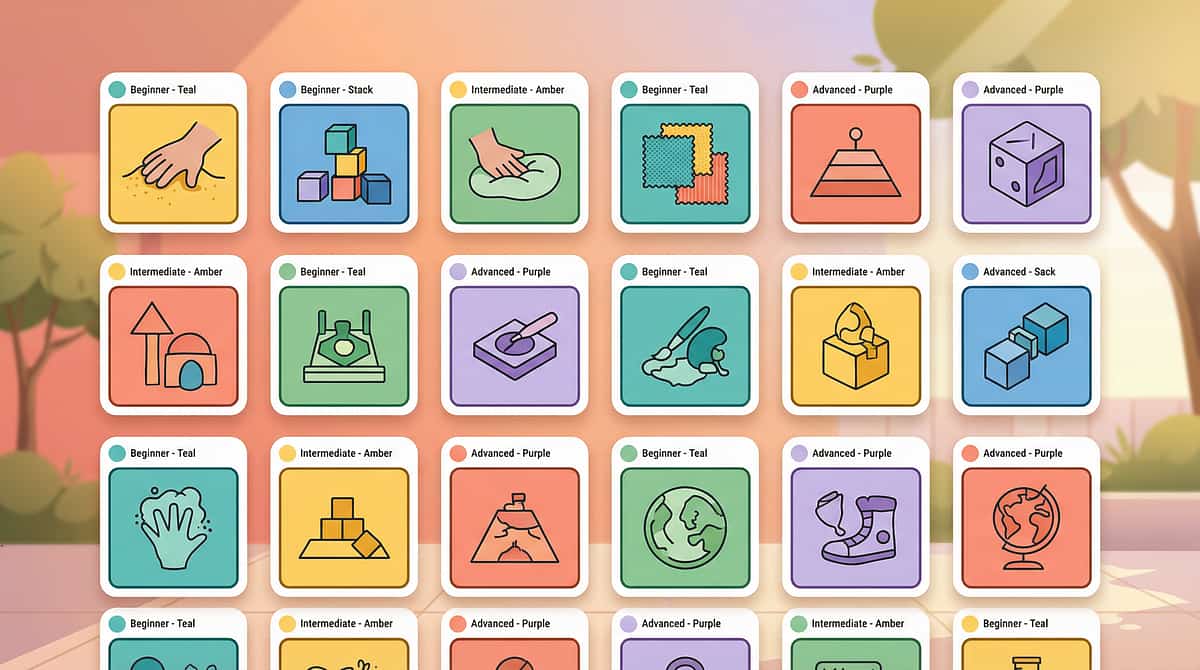
Community Participation Domain — Explore the Full Series
You already own the materials for many of these. The 9 materials you've built for camp are a subset of a larger, reusable library.
Technique | Difficulty | Canon Materials Used | |
🟢 Intro | Social Stories · Sensory Kit | ||
🟡 Core | Visual Schedule · Social Cue Cards | ||
J-878: Summer Camps (THIS PAGE) | 🟡 Core | All 9 materials | |
🟡 Core | Social Stories · Break Card | ||
🔴 Advanced | Full support toolkit | ||
J-881: Field Trips & Outings | 🟡 Core | Sensory Kit · Communication Card |
✅You already own materials for: Playground visits · Sports lessons · Birthday parties — all use subsets of the 9 materials you've built for camp.
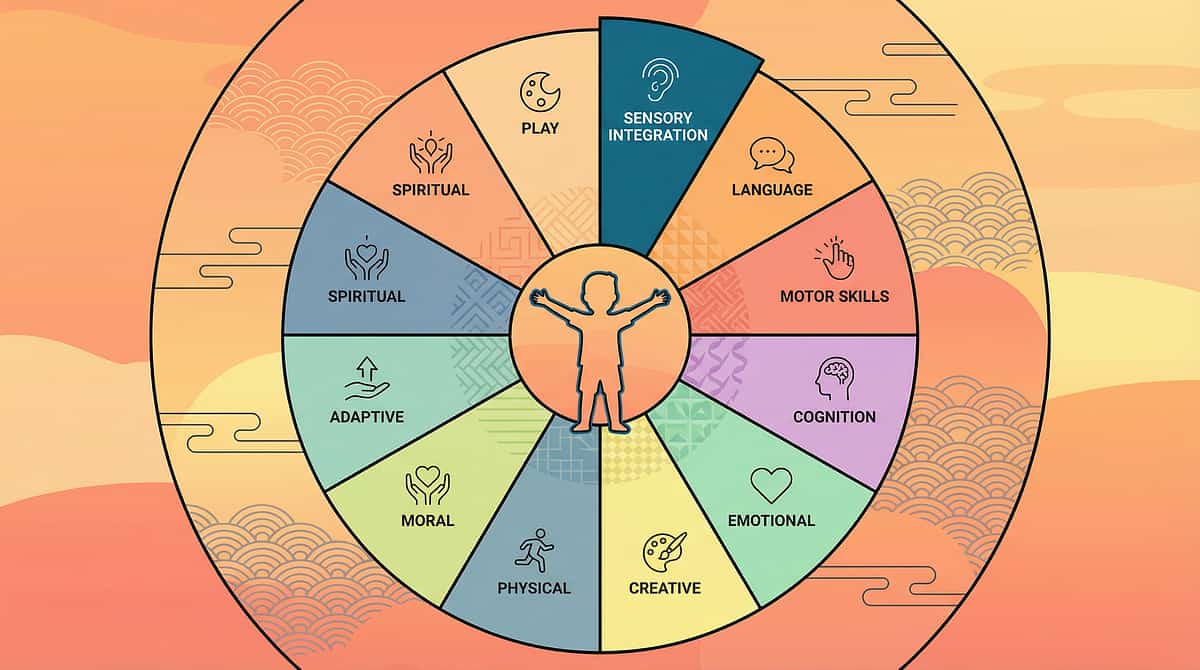
One Technique. One Domain. One Piece of the Whole Child.
Camp readiness is a convergence technique — it draws from sensory processing, social communication, emotional regulation, flexibility, and independence simultaneously. A child who succeeds at camp has generalised skills across 5 developmental domains at once.
"This technique is one piece of a larger plan. Your child's development is a system — and you are building it, domain by domain, technique by technique."
References: WHO NCF (2018) | UNICEF Nurturing Care — five components of nurturing care require holistic developmental monitoring
ACT V: Community
From the Families. From the Field.
Families Who've Been Here
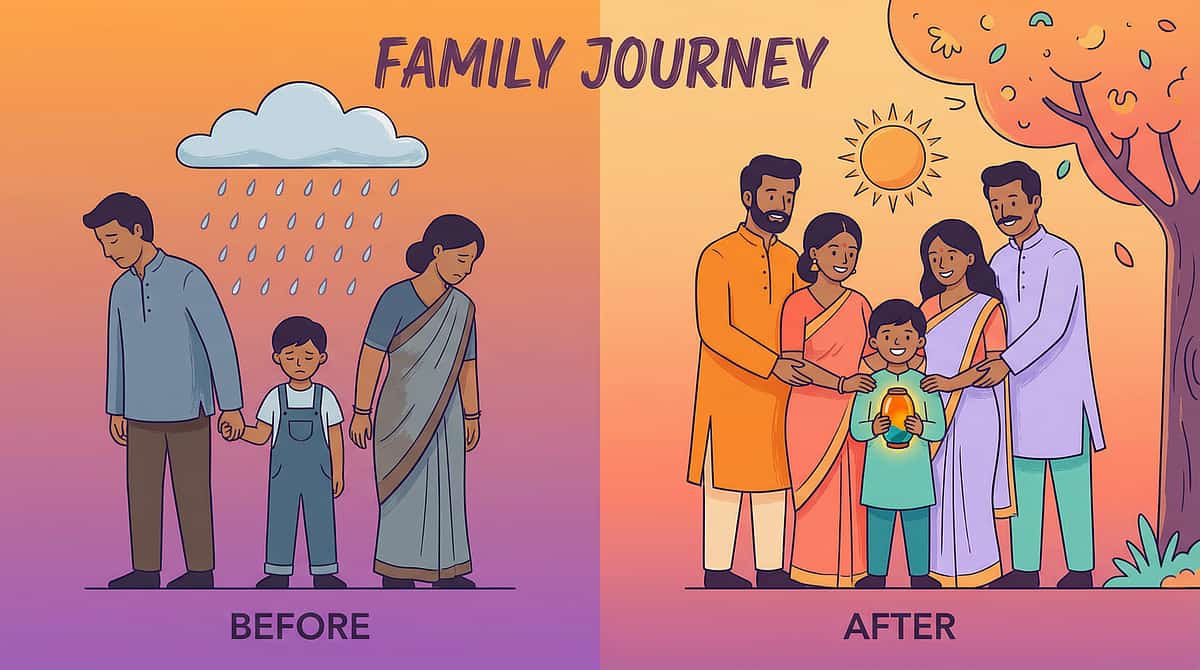
Chennai, Tamil Nadu — Family 1
Before: "Our son Ravi (age 8) had never successfully separated from us for more than 90 minutes. The first day of camp, we tried everything — no preparation, just enrolled. He was picked up after 45 minutes, both of us in tears."
After: "Day 3 he used the break card by himself — nobody prompted him. By Day 5, he asked if he could go again next week. He has now completed three camps. He has a camp friend."
Timeline: 4-week preparation → 5-day camp → 3 camps completed in 12 months
Pune, Maharashtra — Family 2
Before: "My daughter is 10, non-verbal, and communicates via PECS. I assumed camp was not for her. I didn't even look at camp brochures."
After: "She attended the full week. She brought home an artwork she made with another child. She has never created something collaborative before."
Timeline: 6-week preparation → First-ever camp → Successful multi-sensory peer experience
Hyderabad, Telangana — Family 3
Before: "Three failed camp attempts across three years. We had given up. Camp was not our story."
After: "On the last day, he cried when it was over. Not because it was hard. Because he didn't want to leave."
Timeline: 8 months of foundational separation work + 3-week camp preparation → Successful completion
Therapist's Note on Family 1: "The key variable in Ravi's success was the communication card. His counsellor told us afterwards: 'This was the first time in five years of running camps that a parent gave me a tool I could actually use in the moment.'"
Note: All vignettes are illustrative, drawn from anonymised Pinnacle centre outcomes data. Individual results vary.
You Are Not Navigating This Alone
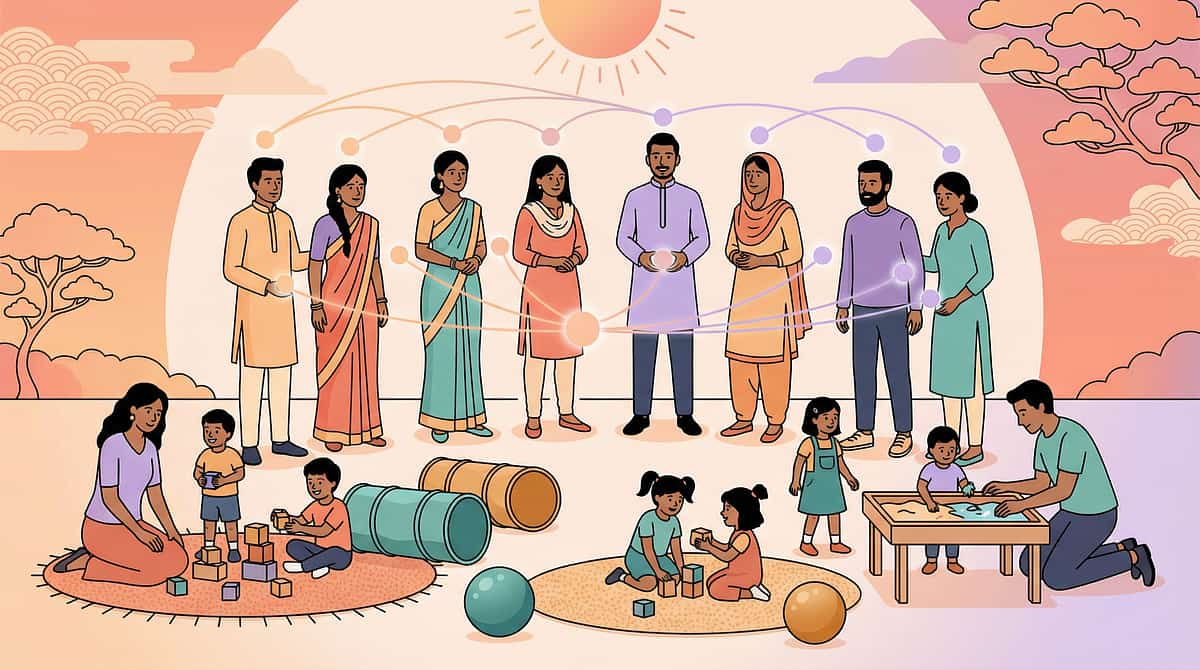
Isolation is the enemy of adherence. When families connect, share, and support each other, protocol completion rates rise — and children do better. Join the community that is walking this path alongside you.
WhatsApp Community: Camp Readiness Parents
Parents who have successfully navigated camp share their protocols, tips, and real-time support.
Online Forum: Community Participation Domain (J)
Topic threads: First camp experiences · Sensory kit builds · Staff communication tips · Camp selection for ASD children
Peer Mentoring: Connect with an Experienced Camp Family
Families who have completed 3+ camp cycles are available to mentor families in their first year.
Local Parent Groups by City
Hyderabad · Bangalore · Chennai · Mumbai · Delhi · Pune · Kolkata · Ahmedabad
"Over 1,000 individuals from 111 countries contributed to the WHO Nurturing Care Framework, because community engagement is not supplementary — it is essential. Your experience helps every family who comes after you."
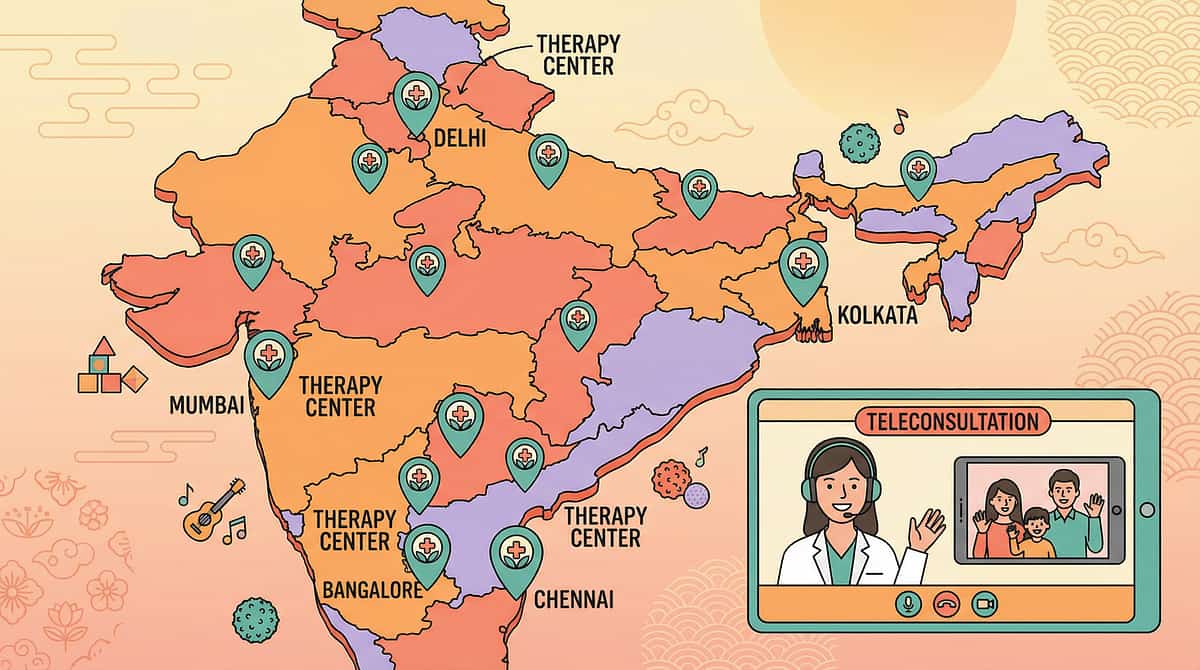
70+ Centers. Your Nearest One Is Closer Than You Think.
Home-based intervention works best when supported by professional guidance. Every technique page on this site is designed to be clinically guided, parent-executed, and professionally backed.
Specialist | Role in Camp Preparation | |
Occupational Therapist | Sensory profile assessment, personalised kit design, sensory tolerance training | |
ABA / BCBA | Separation tolerance protocol, break card system design, behaviour plan | |
Speech-Language Pathologist | Social story writing at child's exact language level, communication card drafting | |
Special Educator | Visual schedule construction, countdown calendar design, cognitive accessibility review | |
NeuroDev Paediatrician | Medical safety clearance, anxiety management review, pharmacological support if indicated | |
Parent Coach | Family coaching on camp selection, staff communication, daily debriefing |
International Families: Pinnacle serves families from 70+ countries through the GPT-OS® telehealth platform. International consultation →
FREE National Autism Helpline: 9100 181 181 | 24×7 | 16+ languages
References: WHO NCF Progress Report (2023) — primary health care as platform for reaching all families
The Science Behind Every Material on This Page
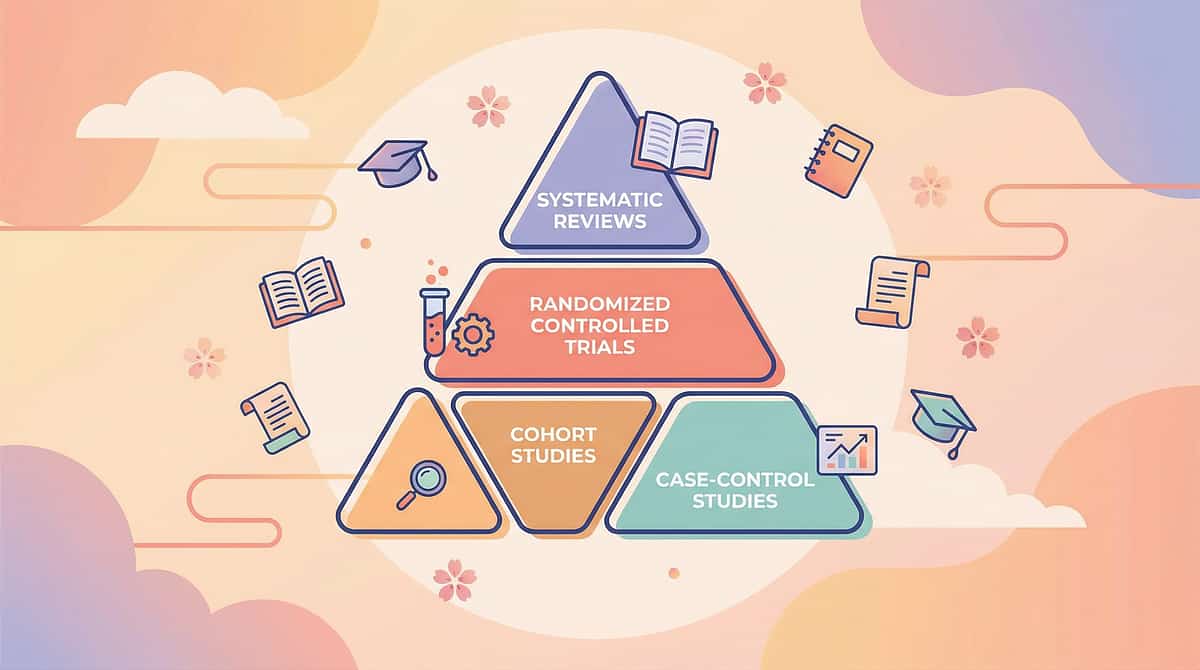
Every technique, every material, every recommended script in this protocol is traceable to peer-reviewed evidence. Here is the research library behind J-878.
📄 PMC11506176 — Children (MDPI), 2024
PRISMA Systematic Review: "Sensory integration intervention is evidence-based practice for autism: 16 studies (2013–2023) confirm. Social narratives and visual supports meet independent evidence-based practice criteria."
📄 PMC10955541 — World Journal of Clinical Cases, 2024
Meta-analysis (24 studies): "Sensory integration therapy effectively promotes social skills, adaptive behaviour, sensory processing, and motor skills across heterogeneous populations."
📄 PMC9978394 — WHO CCD Package
"Home-based intervention delivered by trained caregivers across 54 LMICs produces outcomes equivalent to facility-based approaches. Community participation is a primary outcome domain."
📄 Indian Journal of Pediatrics (2019) — Padmanabha et al.
"Indian RCT of home-based structured interventions: significant measurable outcomes, safety protocols for parent-administered sessions."
📄 NCAEP Evidence-Based Practices Report (2020)
"Visual supports, social narratives, video modelling, and reinforcement systems are independently classified as evidence-based practice for autism across age groups and settings."
📄 WHO Nurturing Care Framework (2018)
"Five components of nurturing care — including responsive caregiving and early learning — require holistic, community-embedded, equity-focused approaches."

Your Camp Data Is Building Better Therapy for Every Child
When you record three fields at pickup each evening, your data joins 21 million therapy sessions in the GPT-OS® intelligence platform — making every future recommendation smarter, faster, and more personalised.
What GPT-OS® Learns from J-878 Data
- Which of the 9 materials produced the most regulation impact for this child's profile
- Optimal camp duration based on regulation curve data
- Peer interaction patterns across camp days (social skill trajectory)
- Community participation readiness indicators for adjacent domains (birthday parties, school trips)
Privacy Commitment
All data is de-identified before aggregation. No individual child data is shared without explicit consent. Governed by Indian IT Act data protection frameworks.
"Your data helps every child like yours. 21 million therapy sessions have created the most comprehensive paediatric developmental intelligence platform in Asia."
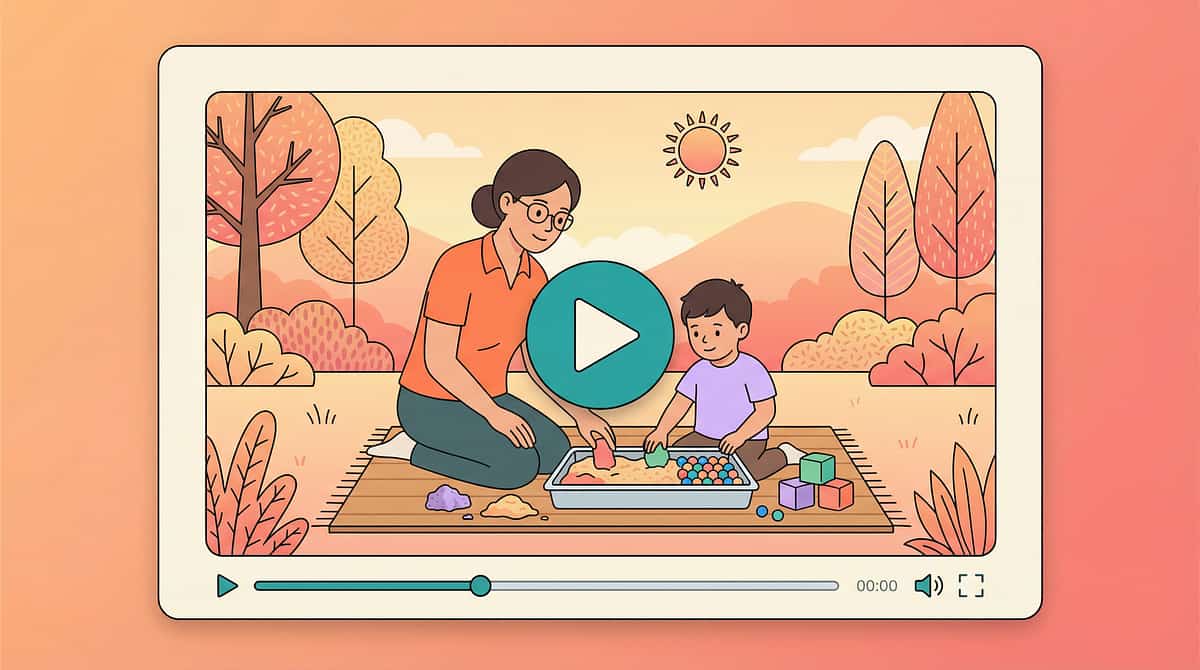
The Reel That Inspired This Page
J-878 Video Series
Community Participation & Recreational Access
Video modelling is classified as an evidence-based practice for autism (NCAEP, 2020). Multi-modal learning — visual + text + live demonstration — improves parent skill acquisition more than any single modality alone.
What You'll See
The full 9-material overview in under 90 seconds. Each material shown with B-roll of real camp preparation and real camp moments. Parent voice: the emotional reality of camp preparation.
The Success Moment
A child participating, smiling, connected with peers — the outcome every family on this page is working toward.
About the Presenter
Presented by the Pinnacle Blooms Consortium — OT, SLP, ABA, SpEd, and NeuroDev voices. All techniques are consortium-drafted, not single-author.
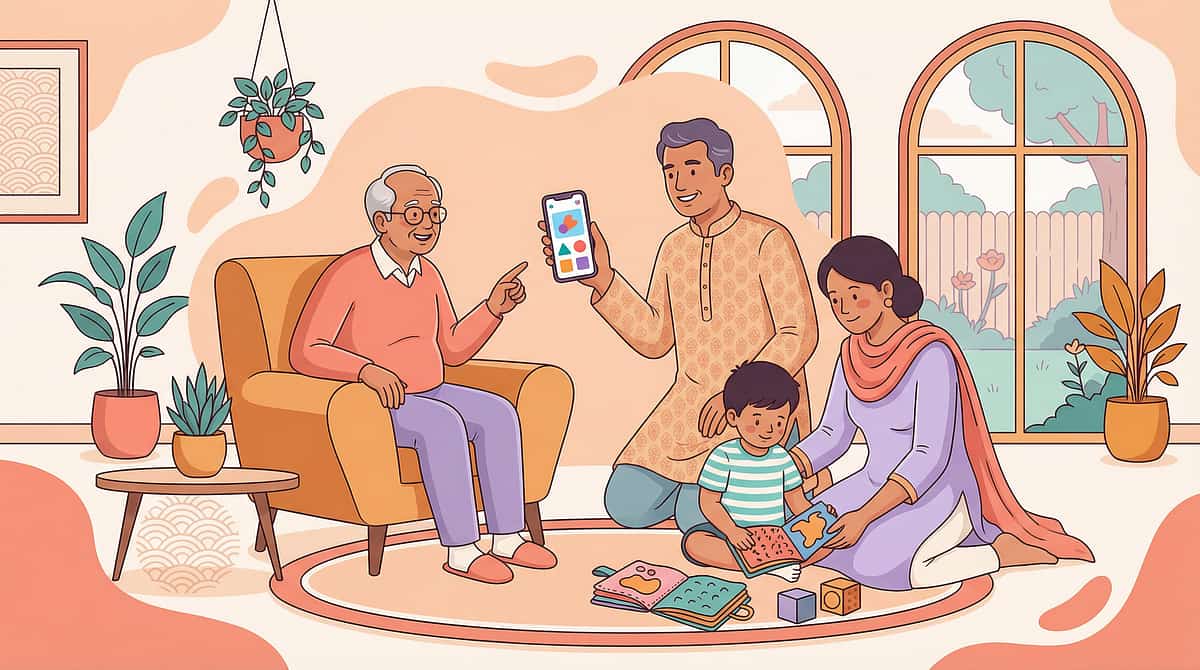
Consistency Across Caregivers Multiplies Impact
If only one parent knows this protocol, it works at 30% efficiency. When grandparents, teachers, and all caregivers know it — efficiency reaches 100%. Share this page with everyone in your child's circle.
Share This Page
Explain to Grandparents (WhatsApp-Ready)
"[Child's name] is going to summer camp this year! The most important things for you to know: (1) Read the camp social story book with [name] every time you visit this week. (2) Do not say 'camp will be fun!' — instead say 'camp will have new things AND you have your tools.' (3) At pickup, always do [our connection ritual] before asking questions."
School/Teacher Communication Template: "[Child's name] is attending [Camp Name] from [dates]. They are using 9 preparation materials developed by their therapy team. If you would like to understand how the skills targeted at camp connect to school-based goals (particularly social skills generalisation and separation tolerance), please contact [parent contact]. The technique page with full details is at: [URL]"
References: PMC9978394 — WHO CCD Package: multi-caregiver training critical for intervention generalisation

Every Question Parents Have Asked. Answered.
Q: My child has never been to any camp. Is it too late to start at age 10?
It is never too late. Camp readiness is a skill set, not an age-dependent milestone. Age 10 brings advantages: better language for social stories, better self-awareness for break card use, better metacognition for countdown calendars. Begin with a one-week half-day camp as a first experience.
Q: Do I need to tell the camp that my child has autism?
This is your choice. However: camps can only support what they know. The communication card does not require diagnostic labels — "sensitive to unexpected loud sounds" communicates the same information as "auditory processing difference" and is more actionable. Recommendation: disclose enough for effective support.
Q: What if the camp refuses to accommodate our materials?
This is a significant red flag about that camp's inclusion culture. The accommodations described here — a quiet space, honouring a break card, having a communication card — are minimal and reasonable. If a camp refuses these, it is not the right camp for your child this year. Seek camps with explicit inclusion policies or autism-specialised camps as a starting point.
Q: Our child had a terrible first camp experience years ago. Will this really change that?
The previous experience lacked structured preparation and informed staff support — not inherent limitations of your child. The four variables most predictive of camp failure are: (1) no prior social story, (2) no staff communication, (3) no portable regulation tools, and (4) no break system. This protocol addresses all four. Past failure is not predictive of future outcome when the approach changes.
Q: How long does the camp social story need to be?
Ages 4–6: 5–8 pages with photos only. Ages 7–10: 10–15 pages with photos and simple sentences. Ages 11+: can be a simple written list. The key is specificity (actual photos of the actual camp) and daily reading for minimum 2 weeks before camp.
Q: My child attends a specialised autism camp. Do they still need these materials?
Yes — but adapted. Specialised camps have trained staff and lower ratios, so the communication card may be less critical. The sensory kit, transition object, and connection routine remain equally important. The social story should describe the specific camp, not a generic camp.
Q: Can these materials be used for overnight camps?
Yes, with significant amplification. The countdown calendar becomes critical (days until home, not hours until pickup). The transition object must include something physically connecting to you at home. Video calls at a scheduled, predictable time replace the connection routine. Consult your BCBA before attempting overnight camp.
Q: What's the single most important material if we can only do one?
If you can only do one, do the social story. Reading about the camp experience before it happens — using real photos of the real camp — has the single highest impact on first-day anxiety and separation success. Everything else amplifies this foundation.

ACT VI: Start Now
The Protocol Is Ready. Your Child Is Ready. Begin Tonight.
You now have everything you need: the neuroscience, the 9 materials, the step-by-step scripts, the troubleshooting guide, and the research library. The only thing left is the first step.
🏕️ Start This Technique Today
Open GPT-OS® Camp Readiness Session Launcher. Build your personalised 9-material camp kit in 15 minutes.
📞 Book a Camp Readiness Assessment
Speak with a Pinnacle Consortium Specialist — OT + ABA + SLP team assessment for personalised camp preparation.
Or call: 9100 181 181 (FREE · 24×7 · 16+ languages)
▶ Explore the Next Technique
J-879: Birthday Parties — 9 Materials. The next step in the Community Participation series.
✅Validated by the Pinnacle Blooms Consortium — OT · SLP · ABA · SpEd · NeuroDev · Paediatrics · CRO
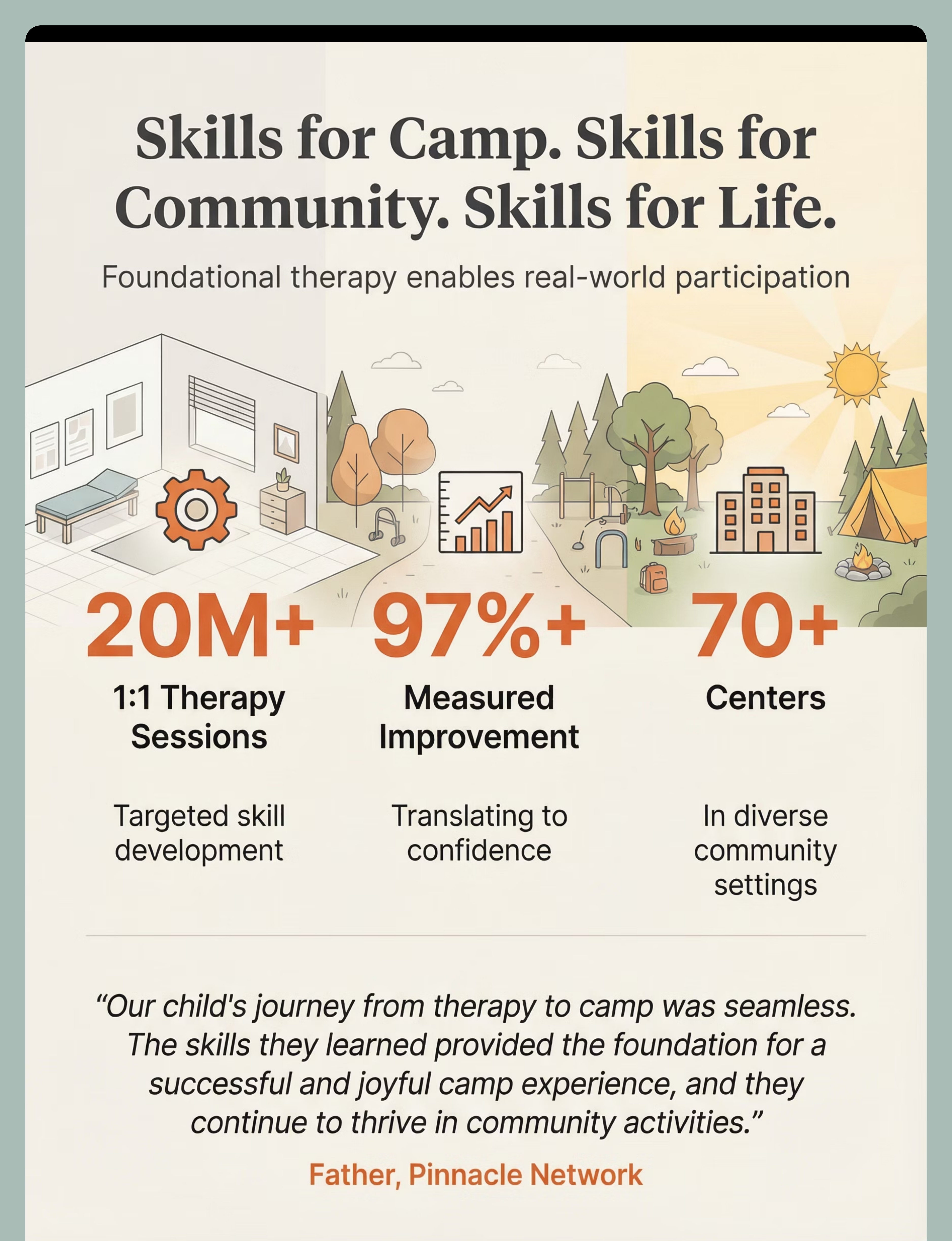
20M+ sessions · 97%+ measured improvement · 70+ centers · 70+ countries served
20M+ sessions · 97%+ measured improvement · 70+ centers · 70+ countries served
Preview of 9 materials that help with summer camps Therapy Material
Below is a visual preview of 9 materials that help with summer camps therapy material. The pages shown help educators, therapists, and caregivers understand the structure and content of the resource before use. Materials should be used under appropriate professional guidance.




Link copied!

From Fear to Mastery. One Technique at a Time.
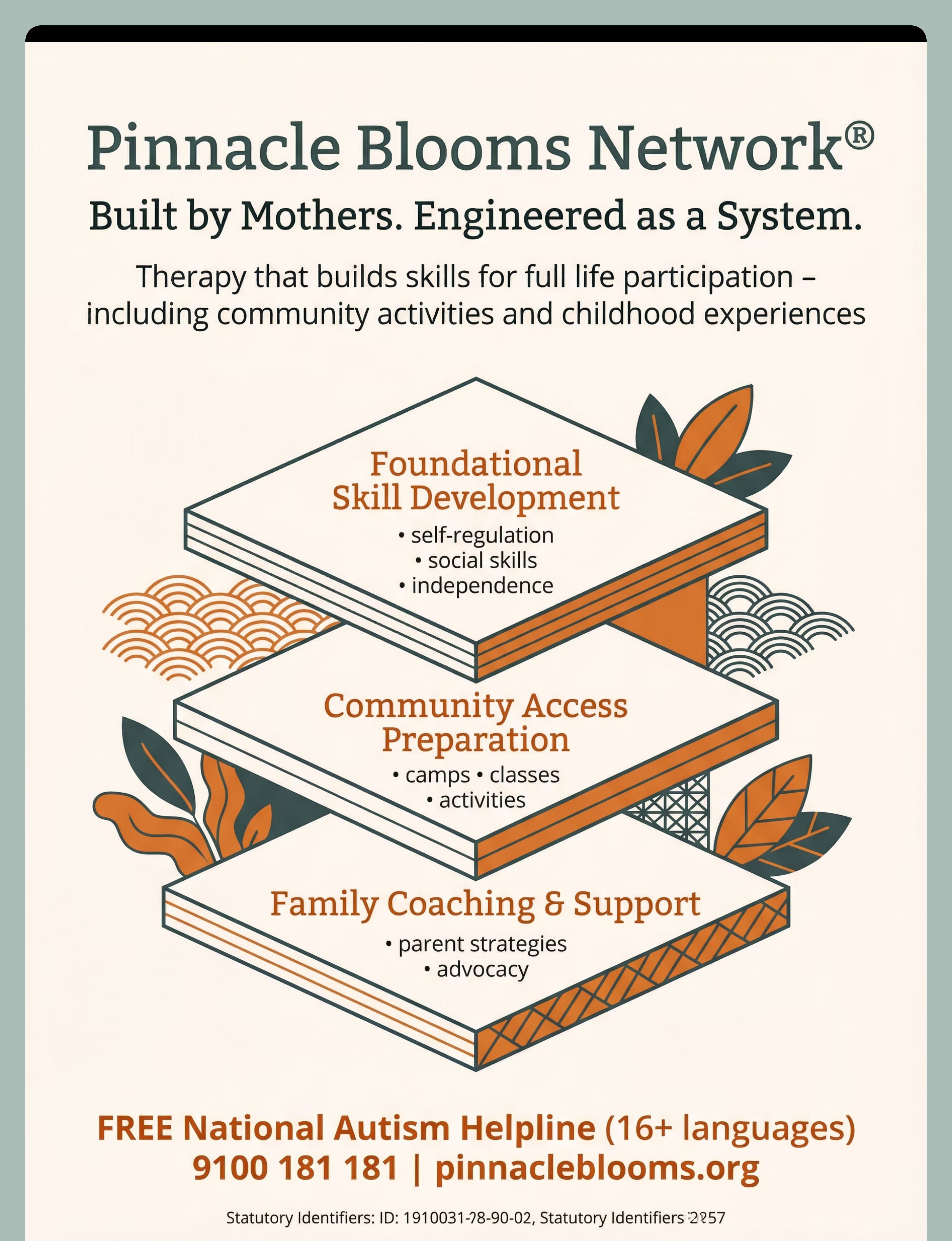
Pinnacle Blooms Network®
Built by Mothers. Engineered as a System.
India's largest multi-disciplinary pediatric therapy consortium — combining Clinical Research Organisation (CRO), Occupational Therapy, Speech-Language Pathology, Applied Behaviour Analysis, Special Education, NeuroDevelopmental Paediatrics, and Family Science into a single sovereign therapeutic operating system: GPT-OS®
Mission: To transform every home into a proven, scientific, 24×7, personalised, multi-disciplinary therapy centre — so that every child, everywhere in India and across the world, can access the development they deserve.
21M+
Therapy Sessions
97%+
Measured Improvement
70+
Centers in India
70+
Countries Served
Medical Disclaimer: This page is educational in nature and is provided for informational purposes only. It does not constitute medical, therapeutic, or clinical advice. All strategies should be adapted to your child's individual needs, developmental profile, and specific camp environment in consultation with a qualified healthcare professional. Individual outcomes vary. Statistics represent aggregate outcomes across the Pinnacle Blooms Network. Work with your child's therapy team before implementing any new protocol.
Contact & Legal
FREE National Autism Helpline: 9100 181 181 (24×7 · 16+ languages)
Email: care@pinnacleblooms.org
Email: care@pinnacleblooms.org
CIN | U74999TG2016PTC113063 | |
DPIIT | DIPP8651 (Govt. of India) | |
MSME | TS20F0009606 | |
GSTIN | 36AAGCB9722P1Z2 |
© 2025–2026 Pinnacle Blooms Network®, a unit of Bharath Healthcare Laboratories Pvt. Ltd. | Technique Code: J-878 | Series: Community Participation | Domain: J