
"He's eight years old. We've been trying since he was five. Every morning. The laces. The tears. The velcro backup. This page exists because this is real — and it has solutions."
E-526 | 9 Materials That Help With Shoe Tying
You are not failing as a parent. And your child is not being difficult. Shoe tying is genuinely one of the most neurologically complex fine motor tasks we expect young children to master — requiring both hands doing different things simultaneously, perfect tension, a 10-step sequence held in working memory, and visual-motor coordination — all at an awkward angle, on a flexible surface, while dressed for school and already running late. When this doesn't click after years of trying, there are reasons. And there are solutions.
Age 5–12 Years
Fine Motor + Bilateral Coordination
OT-Led | Home-Executable
GPT-OS® E-526
WHO Nurturing Care Framework (2018): Early parental awareness and structured home intervention directly impacts developmental outcomes. nurturing-care.org
You Are Among Millions of Families Navigating This Exact Challenge
1 in 6
Children Experience Developmental Motor Difficulties
CDC NHIS, 2023
5–7
Years — Typical Shoe-Tying Acquisition Window
WHO Developmental Milestones
40%+
Children with ASD Have Fine Motor Delays Affecting Self-Care
PMC10955541
In India alone, an estimated 18 million children are navigating some form of developmental difference affecting fine motor or self-care skills. Globally, shoe-tying difficulty is among the top 3 self-care referral reasons to pediatric occupational therapy. Your child is not an exception — they are part of a vast, supported community.
"When a child cannot tie shoes by age 7–8 despite regular practice, the question is not motivation. The question is which underlying skill — bilateral coordination, fine motor precision, motor sequencing, or visual-motor integration — is the rate-limiting factor." — Pinnacle Blooms OT Consortium
PRISMA Systematic Review (2024): 80% of children diagnosed with autism display sensory processing and fine motor difficulties affecting daily living activities. | PMC11506176 | PMC10955541 | DOI: 10.12998/wjcc.v12.i7.1260

Shoe Tying Is a 6-System Neurological Challenge
What looks like a simple daily task is actually the convergence of six distinct neurological systems — all firing simultaneously. Understanding this is the first step to targeting the right system.
Bilateral Motor Integration
Corpus callosum coordinates both hemispheres simultaneously
Fine Motor Precision
Somatosensory cortex + fingertip proprioception
Motor Sequencing
Basal ganglia + cerebellum — procedural memory encoding
Visual-Motor Integration
Parietal-occipital pathway — hand-eye coordination
Working Memory
Prefrontal cortex — holds step N while executing N+1
Sustained Attention
Prefrontal-parietal network — 30–60 seconds of focused demand
Bilateral Integration
Your child's brain must make both hands do completely different things at the same time. One hand holds a loop still. The other wraps, pulls through, and creates a second loop — simultaneously. This requires left and right motor cortices to coordinate through the corpus callosum. For many children, this cross-hemisphere communication is still developing past age 8–9.
Motor Sequencing
The 10 steps of shoe tying must be stored as a motor program in the basal ganglia — the same way cycling or swimming becomes automatic. Until enough correct repetitions fire together (Hebb's Law: neurons that fire together wire together), the sequence doesn't "click."
This is wiring architecture, not effort. More practice of incorrect mechanics reinforces the wrong circuit. The right tools change which circuits are being built.
Frontiers in Integrative Neuroscience (2020): Comprehensive neurological framework for sensory integration treatment in ASD establishes the multi-system basis of complex fine motor tasks. DOI: 10.3389/fnint.2020.556660

Your Child's Position on the Developmental Map
1
Age 3–4
Button holes, bead threading, pincer grasp building
2
Age 4–5
Lacing cards, velcro management, bilateral games emerging
3
Age 5–6
Bunny ears with support, practice boards beginning
4
Age 6–7
Standard tie emerging with adapted materials
5
Age 7–8+
Independence across settings → Mastery zone
Most typically developing children acquire shoe tying between ages 5–7, though there is significant normal variation. The skill requires bilateral coordination that continues neurologically maturing through ages 8–9. Children with DCD/Dyspraxia, ADHD, autism spectrum conditions, or hypermobility commonly show delayed acquisition without this reflecting global developmental concern. The critical insight: development of the underlying components predicts acquisition, not practice frequency alone.
Common Co-Occurrences With Shoe-Tying Difficulty
DCD / Dyspraxia
ADHD
Attention + motor planning
Autism Spectrum
Motor sequencing + bilateral
Hypermobility / Low Tone
Finger strength + proprioception
Sensory Processing Differences
WHO Care for Child Development Package | UNICEF MICS developmental monitoring indicators | PMC9978394 | WHO/UNICEF CCD Package (2023)

Clinically Validated. Home-Applicable. Parent-Proven.
Evidence Grade: I-B | Strong
85% Confidence
Multiple Systematic Reviews + RCT Support
This isn't experimental. The materials and methods on this page are drawn from occupational therapy research spanning 40 years, validated in clinical trials, and implemented across Pinnacle Blooms' 20M+ therapy sessions delivering 97%+ measured improvement. They work.
PRISMA Systematic Review (Children, 2024) | PMC11506176 | DOI: 10.1007/s12098-018-2747-4 (Padmanabha et al., Indian J Pediatr, 2019)
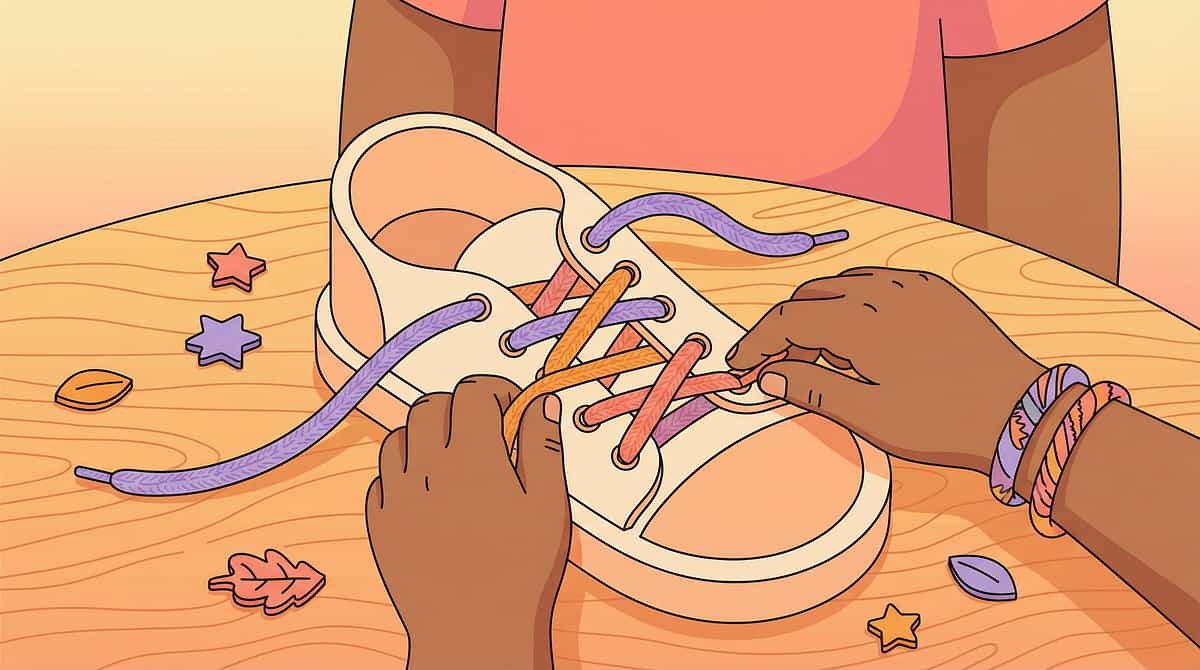
The Technique: Multi-Modal Adapted Shoe Tying Intervention (MASTI)
The Shoe Tying Toolkit Approach
E-526
MASTI is a structured occupational therapy framework for teaching shoe tying to children who have not acquired the skill through standard instruction. Rather than repeating the same failed practice method, MASTI first identifies which of 6 underlying component skills is the limiting factor — then deploys 9 specific materials targeted to that component.
Identifies the Limiter
Bilateral coordination, fine motor precision, motor sequencing, visual-motor integration, working memory, or sustained attention
Deploys Targeted Materials
9 specific materials matched to the child's limiting component skill
Provides Adaptive Solutions
Elastic laces and lace locks provide functional independence while underlying skills develop
Age: 5–12 years
Session: 10–20 min
Frequency: Daily
Setting: Home + School
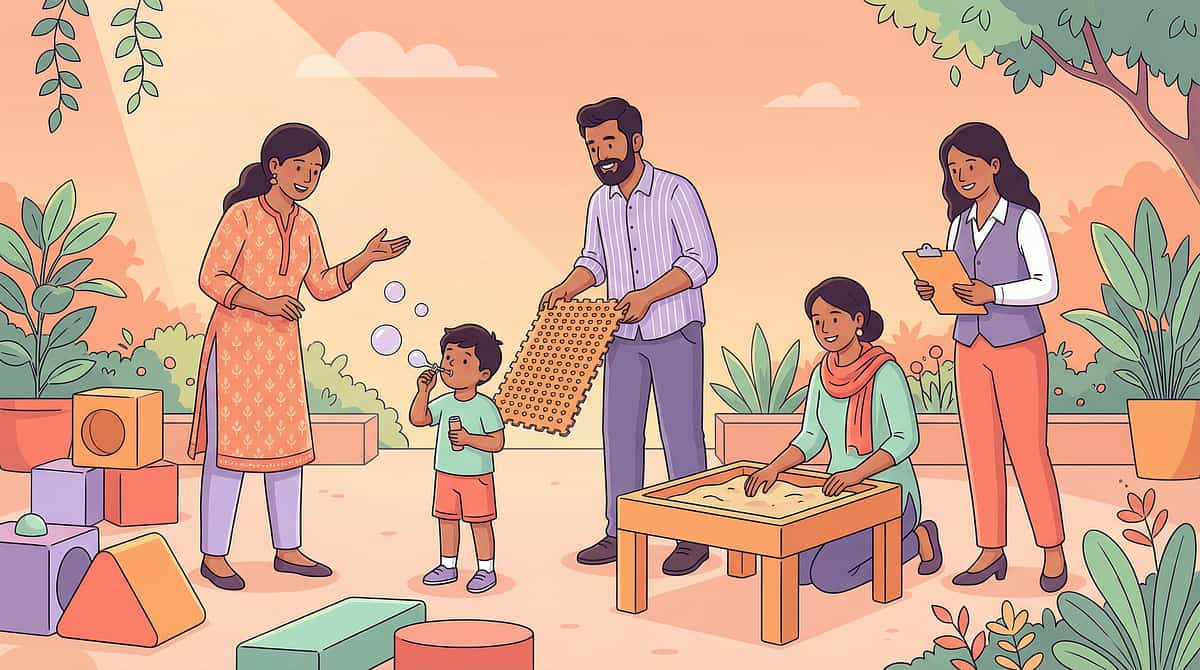
Every Discipline in the Pinnacle Consortium Contributes to Shoe Tying Success
🔵 Occupational Therapy (Primary Lead)
Conducts component skill assessment — determining which of the 6 underlying systems is limiting acquisition. Prescribes material modifications, determines chaining approach, and trains parents in implementation. Delivers the biomechanical and sensory-motor foundation.
🟣 ABA / BCBA (Behavioral Architecture)
Designs the reinforcement schedule around each practice attempt. Implements discrete trial training for step-by-step skill building. Analyzes data across sessions to adjust prompting hierarchy. Ensures each session ends in success.
🟠 Special Education (School Generalization)
Bridges the home-to-school gap. Works with PE teachers and classroom staff. Implements IEP/504 accommodations (elastic laces, peer support, extended time). Coordinates with parents on consistent methods across settings.
🟢 NeuroDev Pediatrics (Clinical Oversight)
Evaluates for DCD (Developmental Coordination Disorder), affecting ~6% of school-age children. Rules out low tone, motor neuropathy, or ADHD contributions requiring medication or specialist involvement.
"The brain doesn't organize by therapy type. Shoe tying recruits every system we treat — motor, behavioral, sensory, cognitive. That's why it requires every member of the consortium." — Pinnacle Blooms OT-ABA-SpEd Team
Adapted UNICEF/WHO Nurturing Care Framework for Multi-Disciplinary Teams (2022). DOI: 10.1080/17549507.2022.2141327
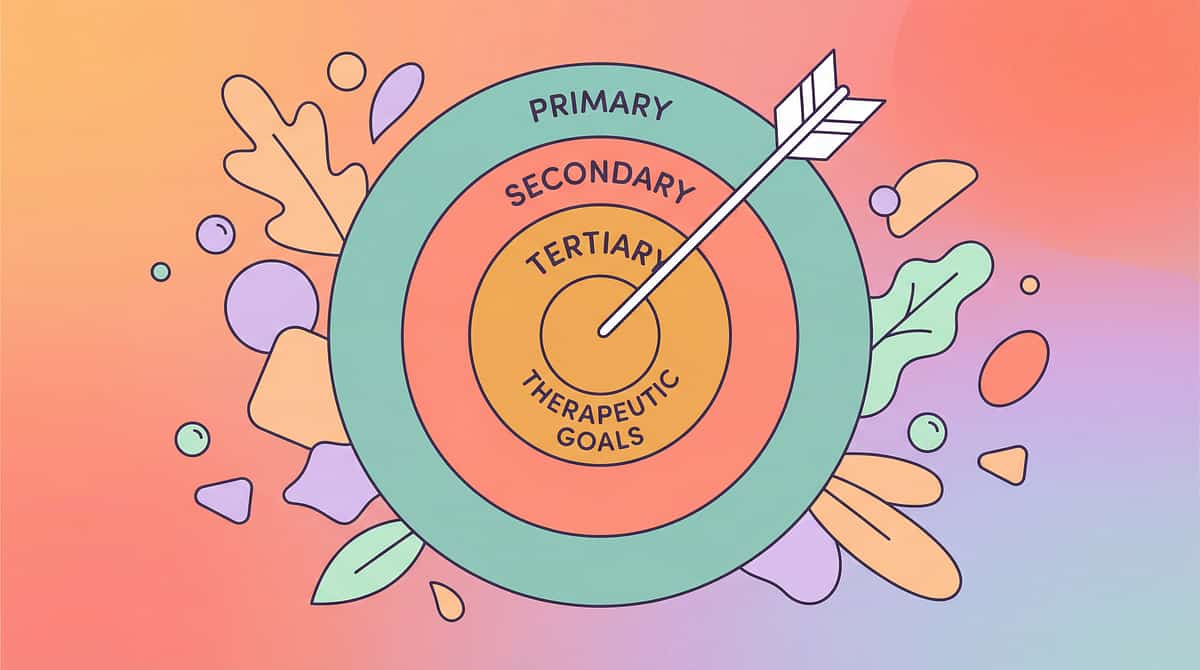
Shoe Tying Is a Precision Tool — This Is What It Builds
Primary — You'll See This First
- Completes the tying sequence to a finished bow
- Does not require adult assistance
- Bow holds for >2 hours of normal activity
- Can re-tie when laces come undone
Secondary — Develops Alongside
- Improved bilateral coordination (scissors, catching, craft)
- Better fine motor control for buttons, zippers, writing
- Improved sequencing in other multi-step tasks
Tertiary — Emerges 8–12 Weeks
- Increased confidence in peer settings
- Reduced morning anxiety around shoe preparation
- Readiness for next-level dressing independence goals
Meta-analysis (World J Clin Cases, 2024): Occupational therapy effectively promotes adaptive behavior, fine motor skills, and self-care independence across 24 controlled studies. | PMC10955541
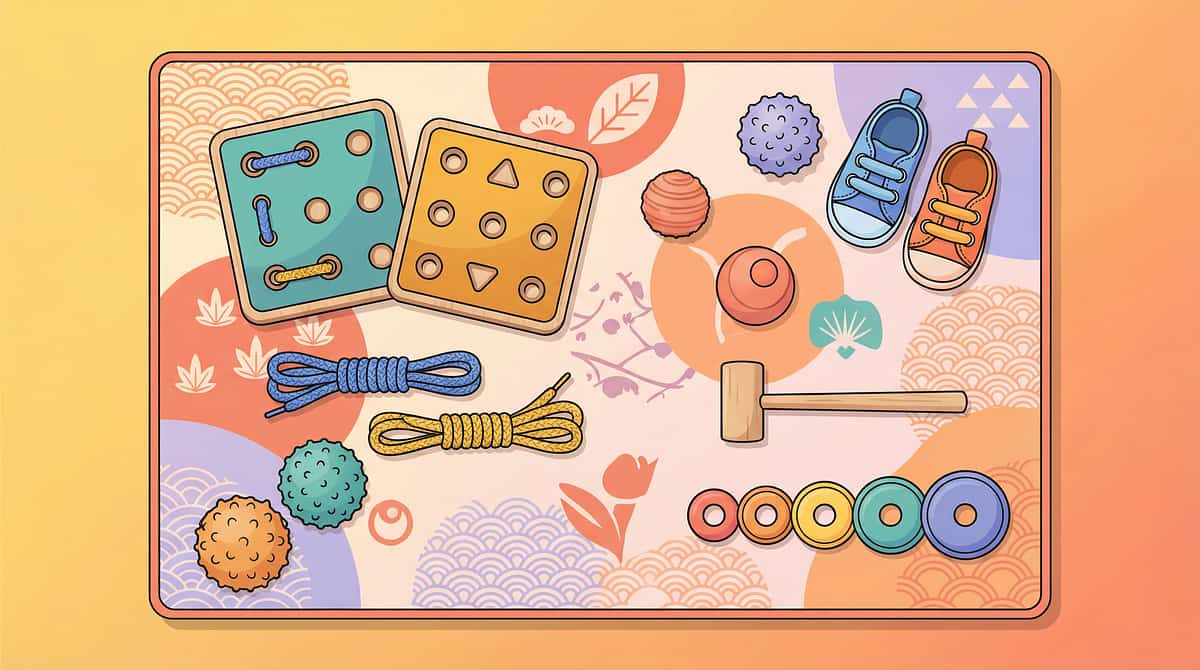
9 Materials. Every One Clinically Justified. All Available in India.
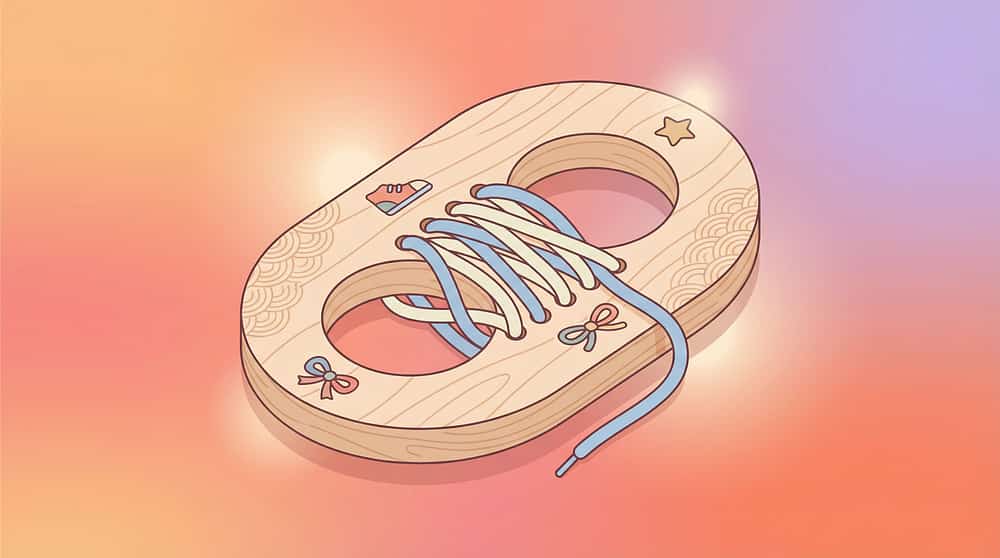
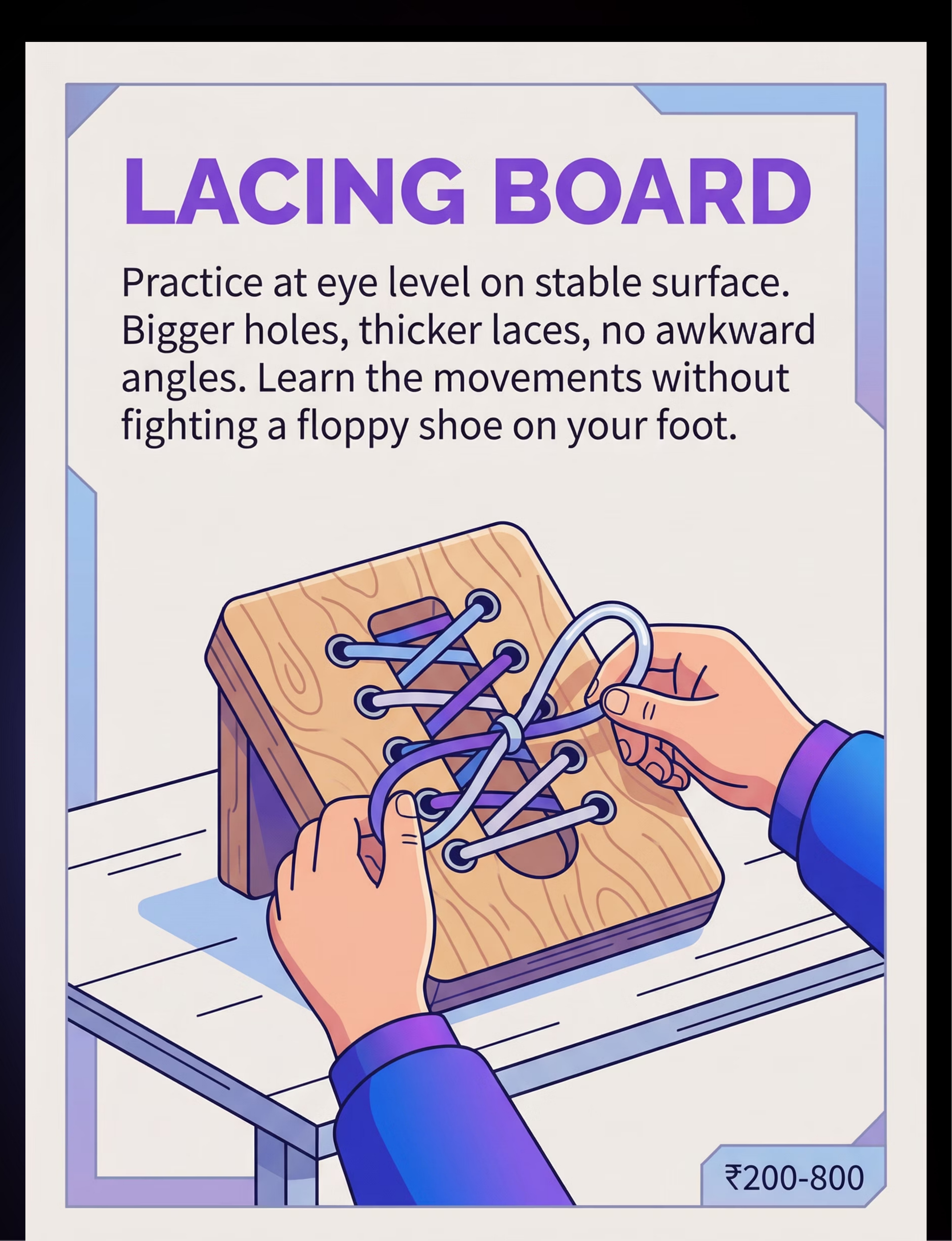
Material 1: Wooden Lacing Shoe Practice Board
Canon: Lacing Materials / Fine Motor Practice Tools | Price: ₹200–800
Provides a stable, flat, table-height surface for learning shoe-tying mechanics without the awkward angle and flex of a real shoe. Removes 4 confounding variables simultaneously: shoe position, flexibility, lace weight, and viewing angle. Learning on the board transfers to the real shoe because the motor program is encoded correctly.
Search Amazon.in for Lacing Board ✓ Pinnacle Recommends
Provides a stable, flat, table-height surface for learning shoe-tying mechanics without the awkward angle and flex of a real shoe. Removes 4 confounding variables simultaneously: shoe position, flexibility, lace weight, and viewing angle. Learning on the board transfers to the real shoe because the motor program is encoded correctly.
Search Amazon.in for Lacing Board ✓ Pinnacle Recommends
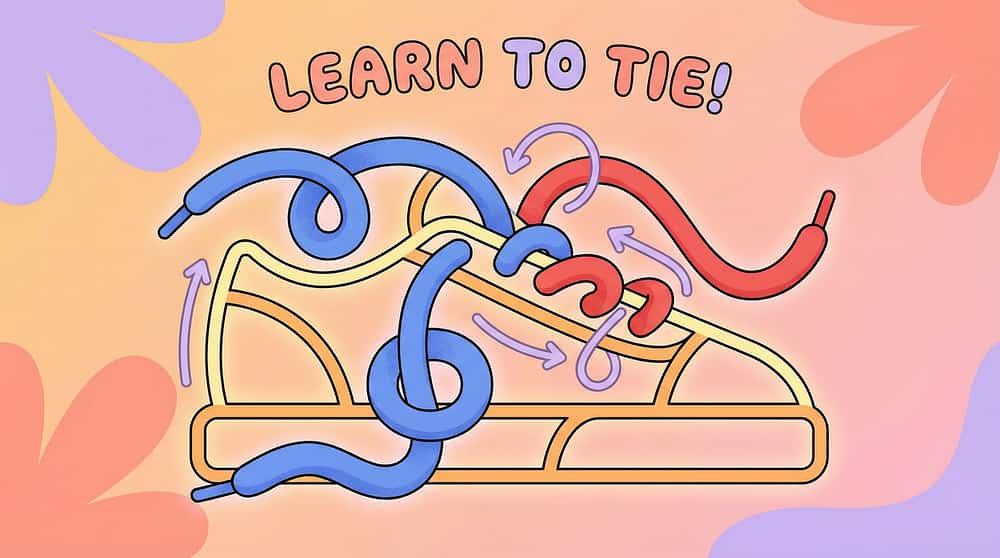
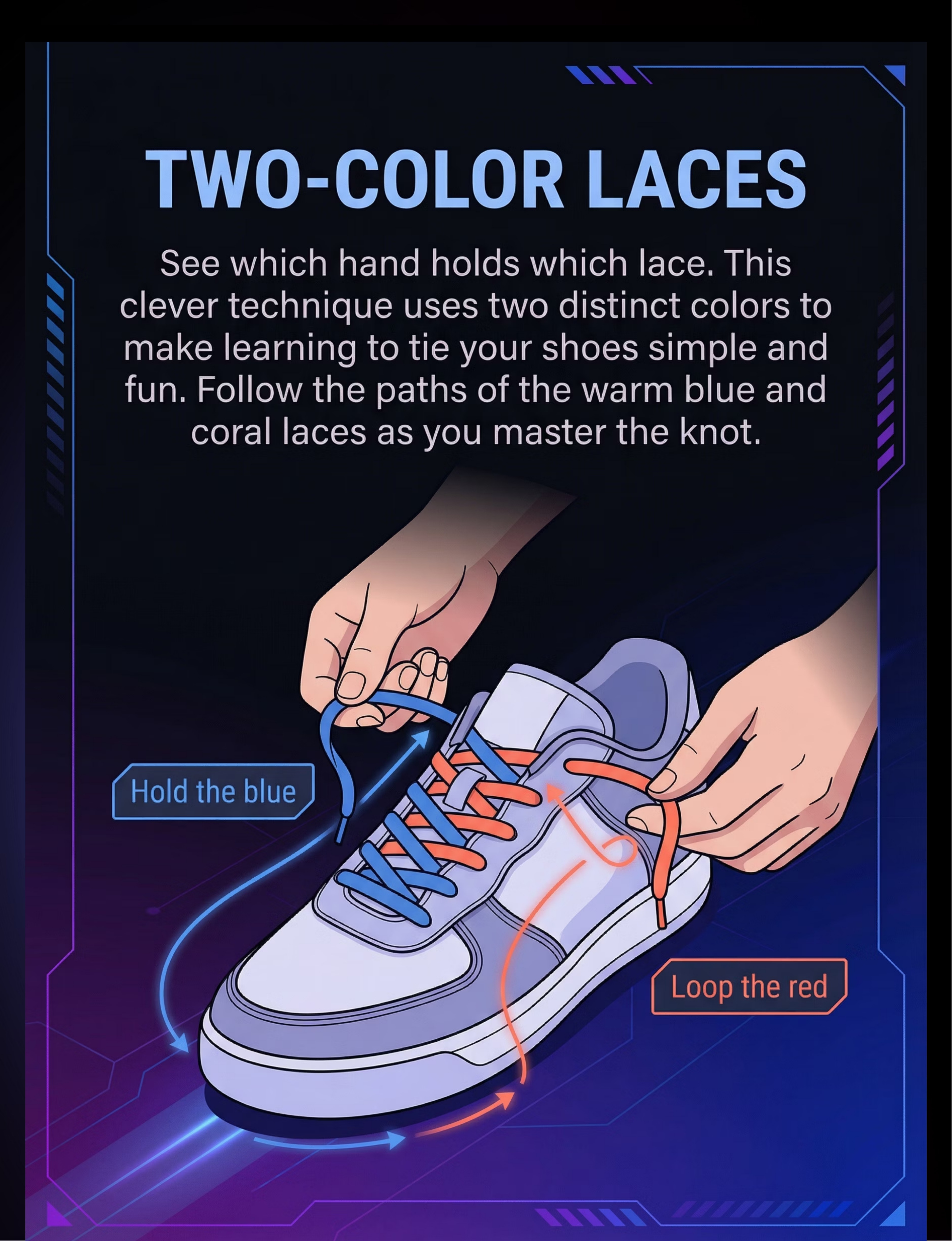
Material 2: Two-Color Lacing System
Canon: Visual Supports / Color-Coded Learning Materials | Price: ₹50–200
Uses two distinct-colored laces so the child can track "hold the blue, loop the red." Eliminates visual confusion of two identical strands doing different things. Reduces working memory load by externalizing strand identity — color coding is a core evidence-based support for visual-motor learning.
Search Amazon.in for Two Color Shoelaces ✓ Pinnacle Recommends
Uses two distinct-colored laces so the child can track "hold the blue, loop the red." Eliminates visual confusion of two identical strands doing different things. Reduces working memory load by externalizing strand identity — color coding is a core evidence-based support for visual-motor learning.
Search Amazon.in for Two Color Shoelaces ✓ Pinnacle Recommends
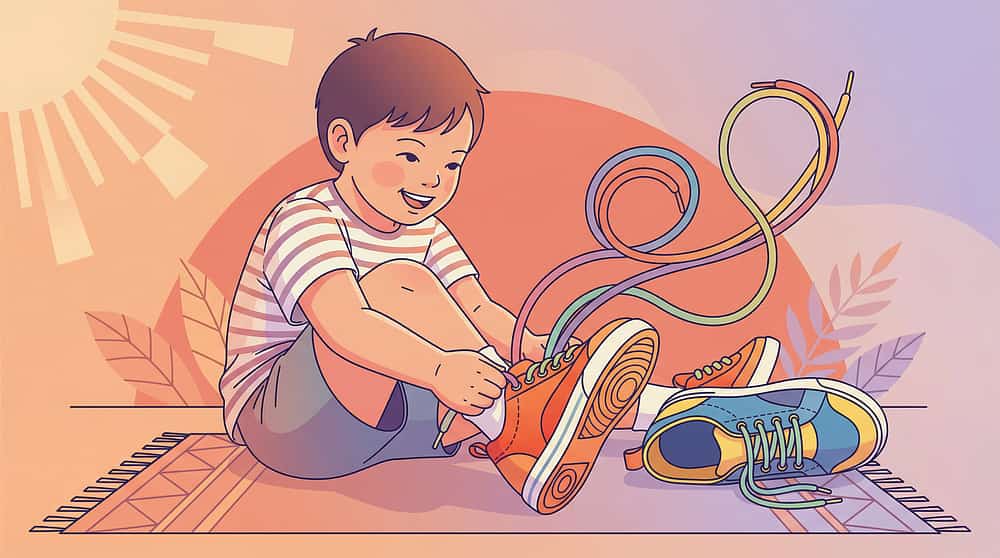
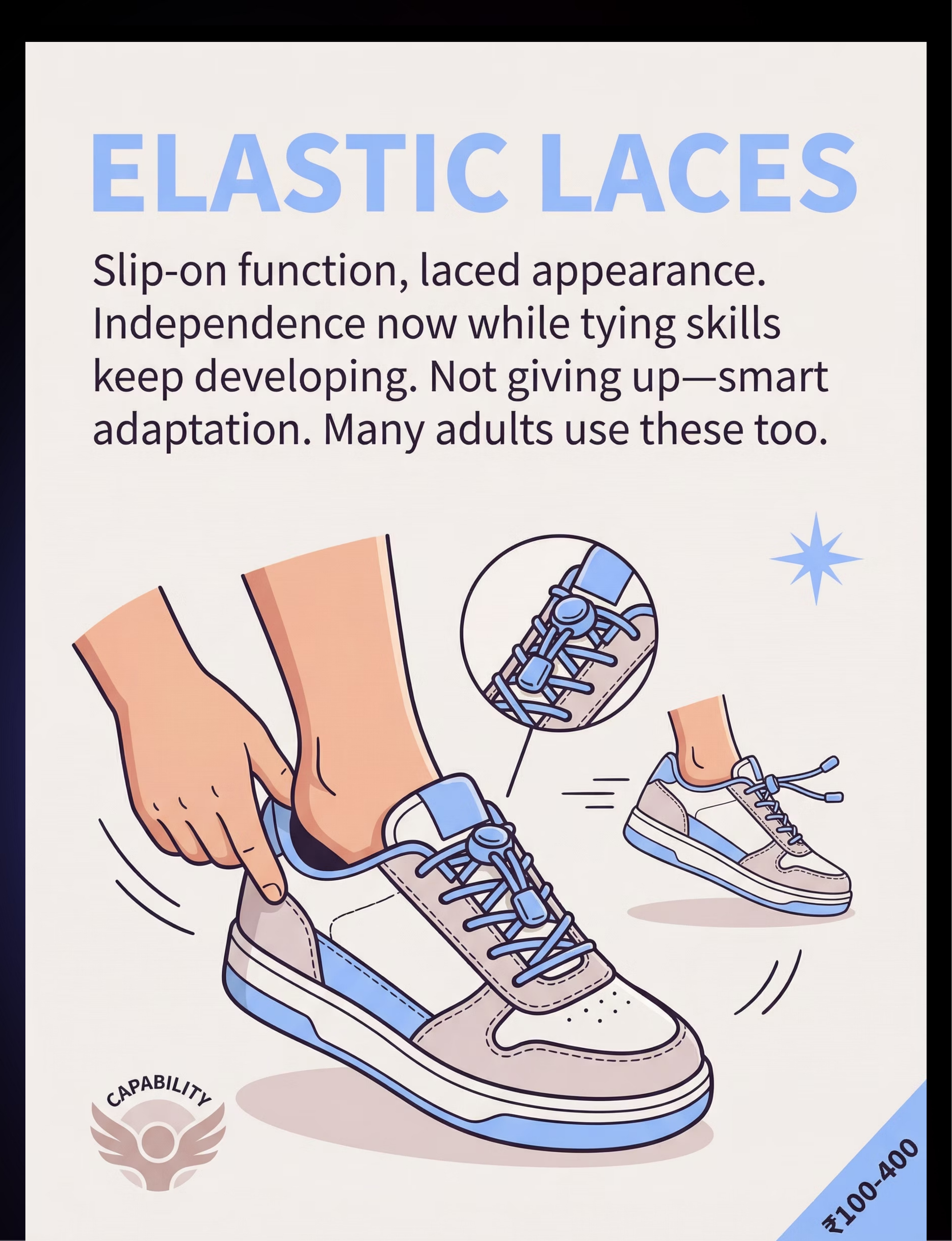
Material 3: Elastic No-Tie Lacing System
Canon: Adaptive Equipment / Dressing Independence Tools | Price: ₹100–400
Converts any lace-up shoe to a slip-on with a laced appearance. Provides immediate functional independence for school, sport, and social settings — while tying skills continue developing separately. This is not "giving up" — it is WHO/UNICEF equity in action: independence first, mastery alongside.
Search Amazon.in for No Tie Elastic Laces ✓ Pinnacle Recommends
Converts any lace-up shoe to a slip-on with a laced appearance. Provides immediate functional independence for school, sport, and social settings — while tying skills continue developing separately. This is not "giving up" — it is WHO/UNICEF equity in action: independence first, mastery alongside.
Search Amazon.in for No Tie Elastic Laces ✓ Pinnacle Recommends
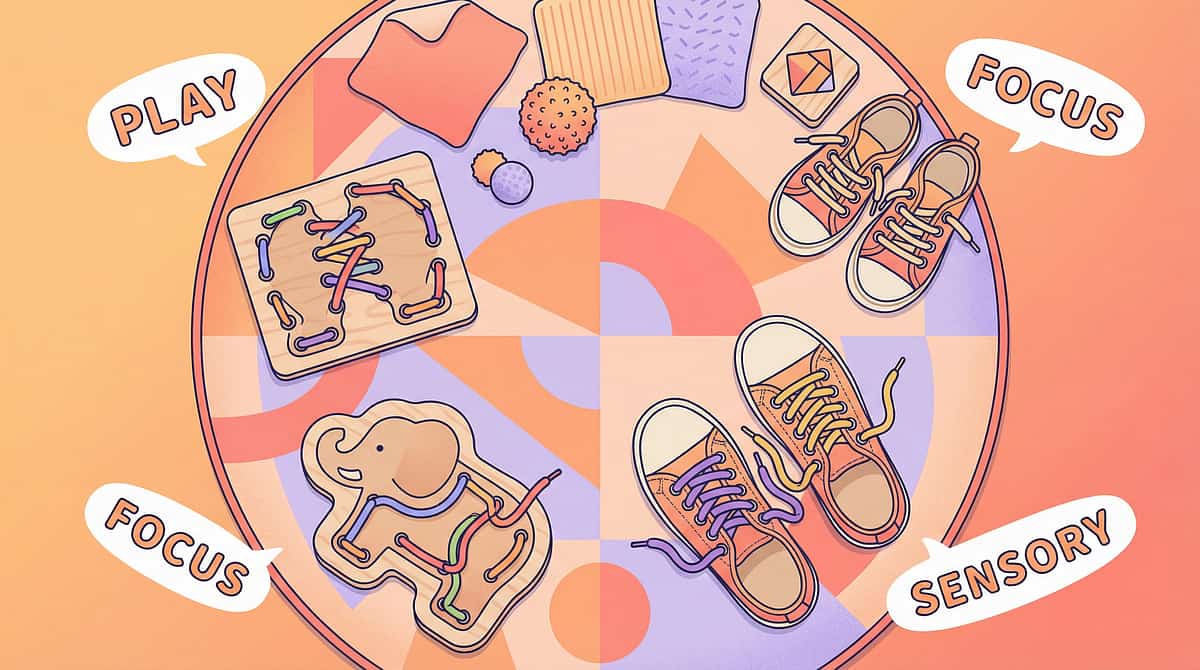
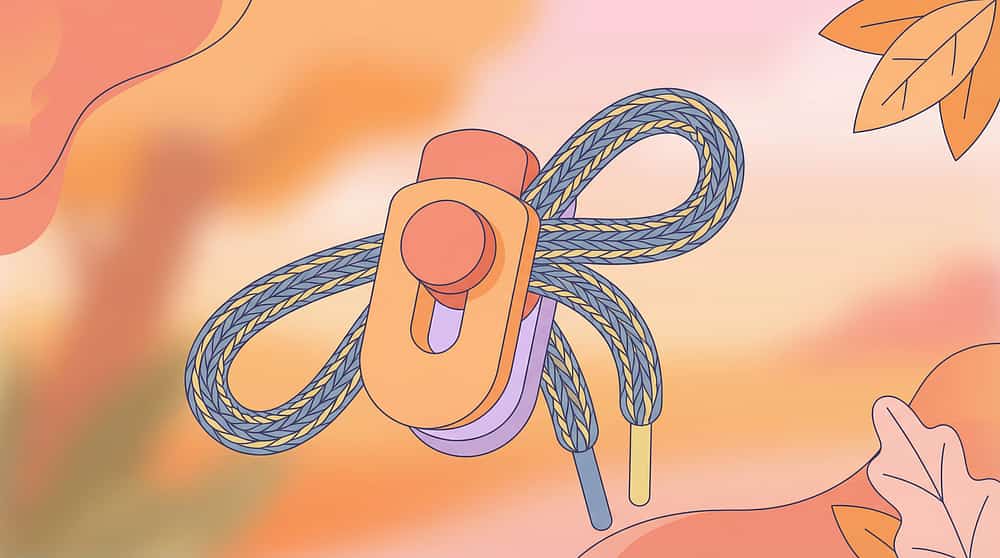
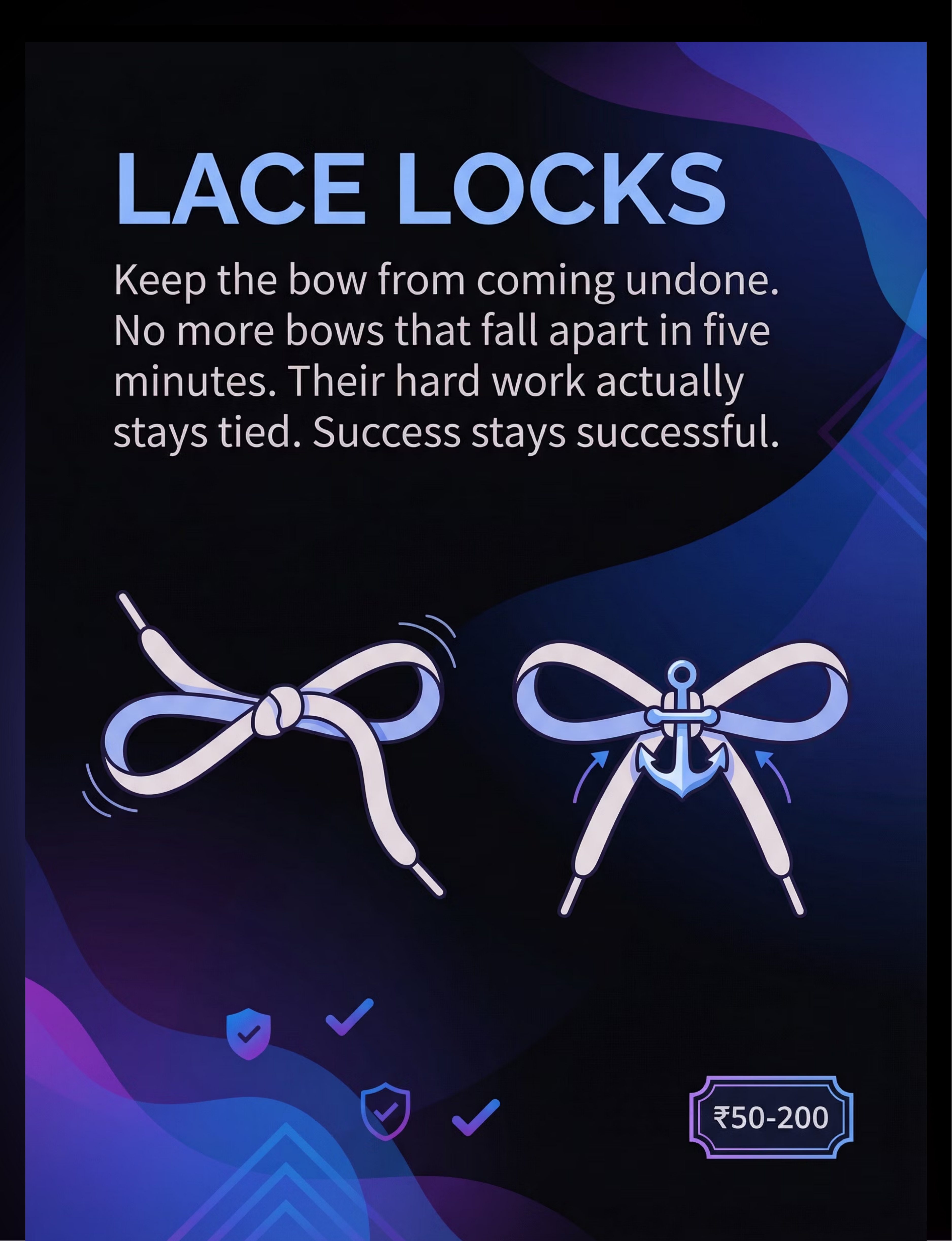
Material 4: Lace Anchors / Lace Locks
Canon: Adaptive Equipment / Fastening Supports | Price: ₹50–200
A small mechanical clip that locks the bow after tying, preventing loops from pulling through and unraveling. For children who can form a bow but it comes undone within minutes. Solves the specific sub-problem of bow tension maintenance — preserving success and preventing demoralization.
Search Amazon.in for Lace Locks ✓ Pinnacle Recommends
A small mechanical clip that locks the bow after tying, preventing loops from pulling through and unraveling. For children who can form a bow but it comes undone within minutes. Solves the specific sub-problem of bow tension maintenance — preserving success and preventing demoralization.
Search Amazon.in for Lace Locks ✓ Pinnacle Recommends
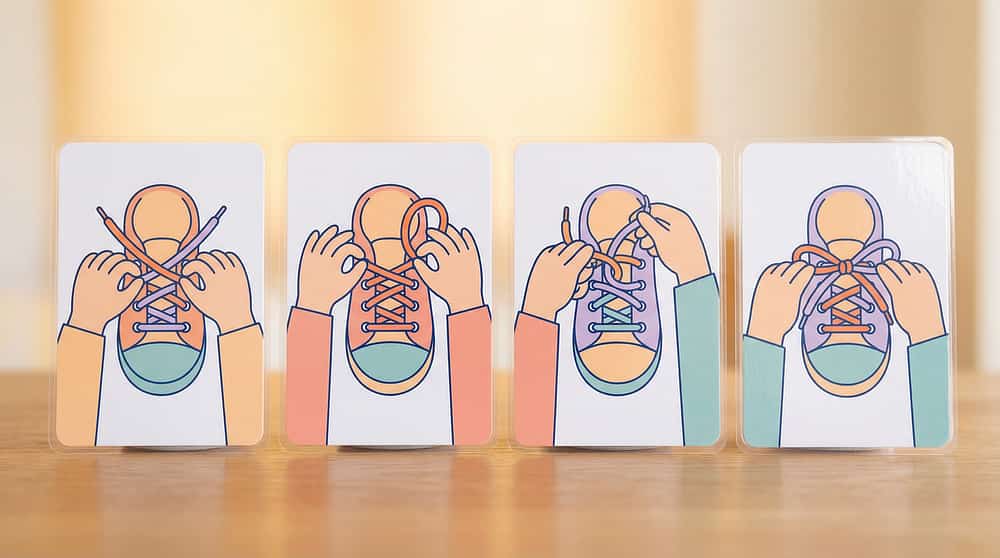
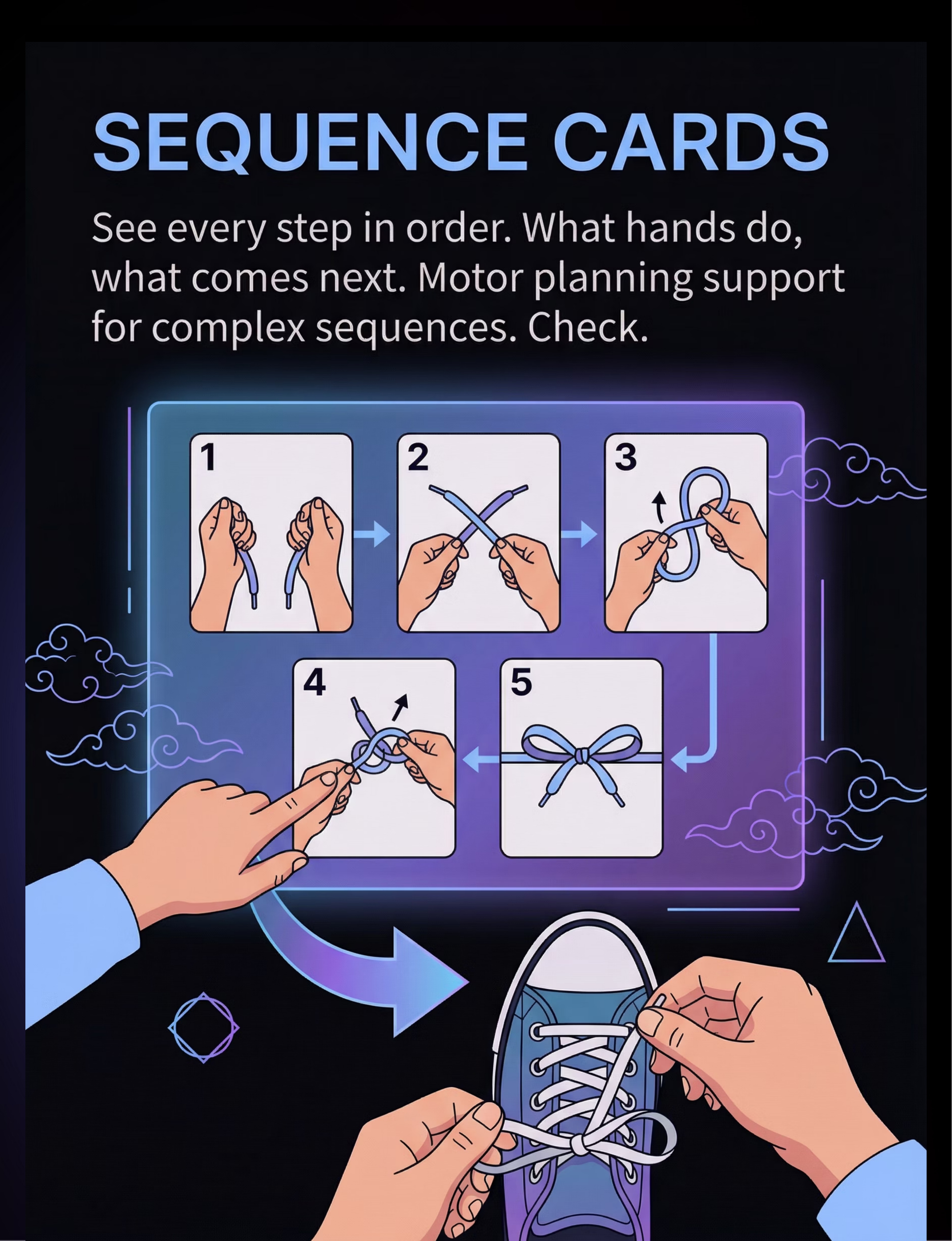
Material 5: Visual Step-by-Step Sequence Cards
Canon: Visual Supports / Sequence Cards | Price: ₹100–300 (or printable DIY, ₹0)
Laminated cards showing each step of the shoe-tying process in photographs — exact hand positions, exact lace placement. Externalizes motor sequencing memory, allowing the motor cortex to focus purely on execution rather than recall. NCAEP-classified evidence-based practice.
Search Amazon.in for Sequence Cards ✓ Pinnacle Recommends
Laminated cards showing each step of the shoe-tying process in photographs — exact hand positions, exact lace placement. Externalizes motor sequencing memory, allowing the motor cortex to focus purely on execution rather than recall. NCAEP-classified evidence-based practice.
Search Amazon.in for Sequence Cards ✓ Pinnacle Recommends
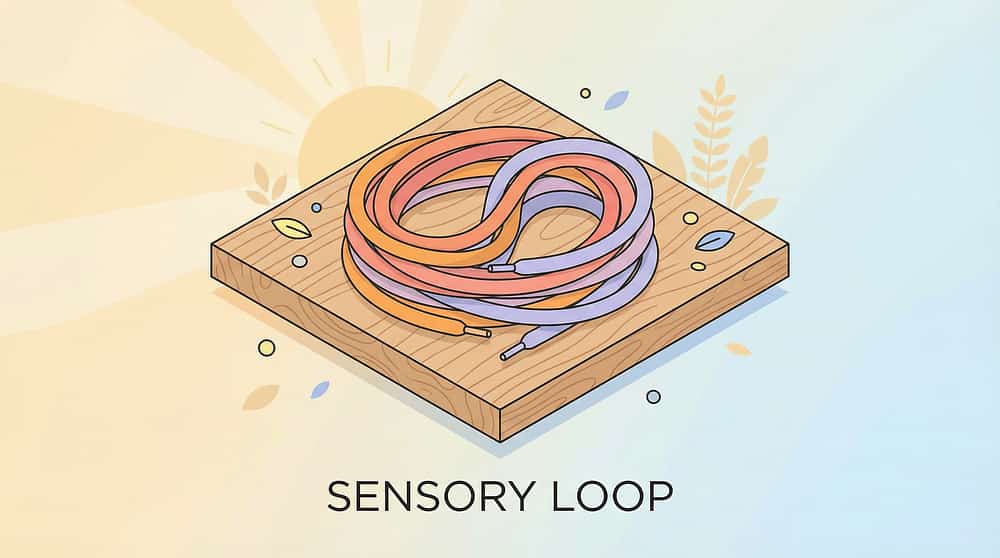
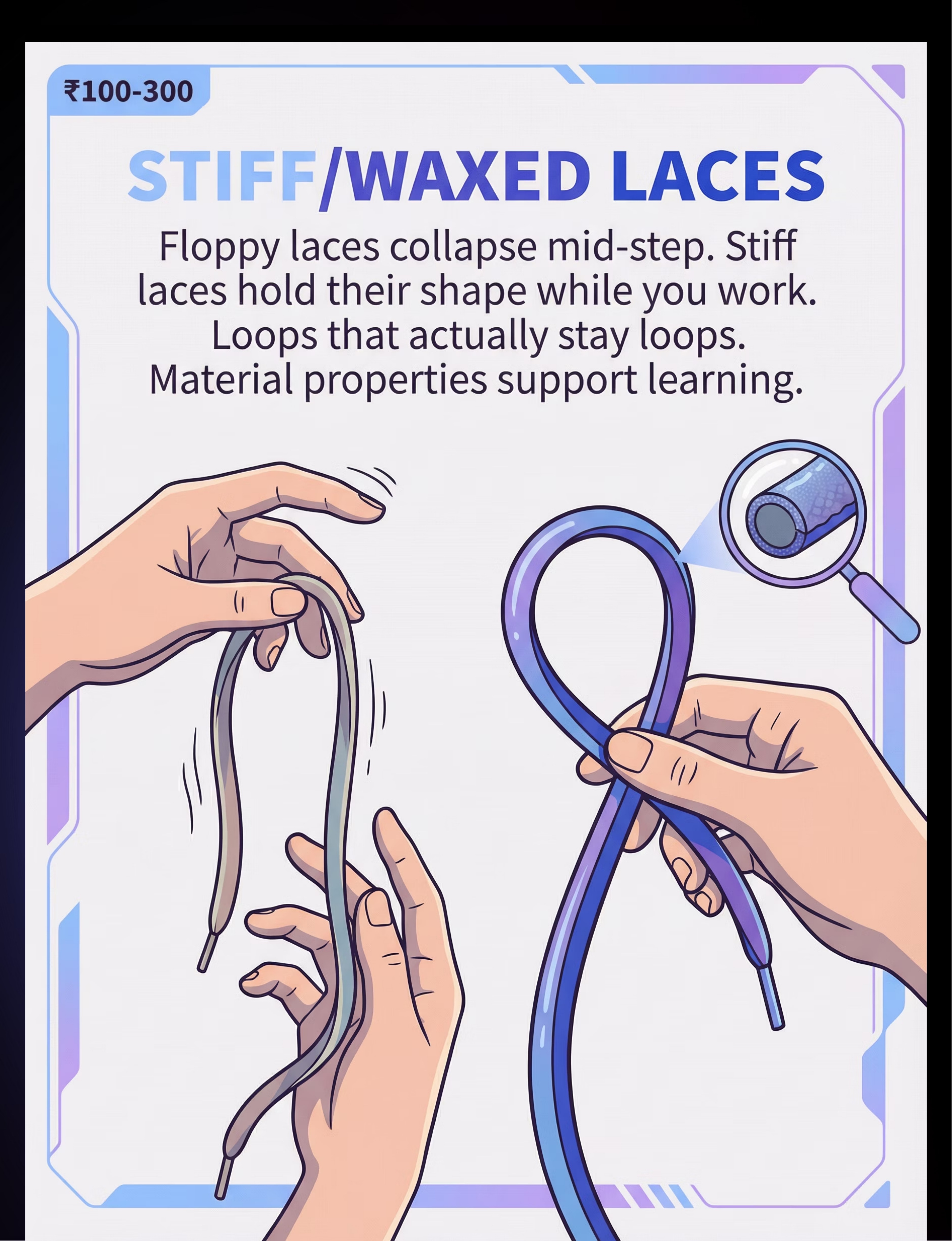
Material 6: Stiff / Waxed Practice Laces
Canon: Adapted Materials / Modified Laces | Price: ₹100–300
Laces with structural memory — they hold loop shape without collapsing mid-step. Standard laces are floppy by design; during learning, they actively work against the child. If the lace holds the loop, working memory is freed from "maintaining loop tension" and can sequence the next step. Waxed laces also provide tactile feedback.
Search Amazon.in for Waxed Shoelaces
Laces with structural memory — they hold loop shape without collapsing mid-step. Standard laces are floppy by design; during learning, they actively work against the child. If the lace holds the loop, working memory is freed from "maintaining loop tension" and can sequence the next step. Waxed laces also provide tactile feedback.
Search Amazon.in for Waxed Shoelaces
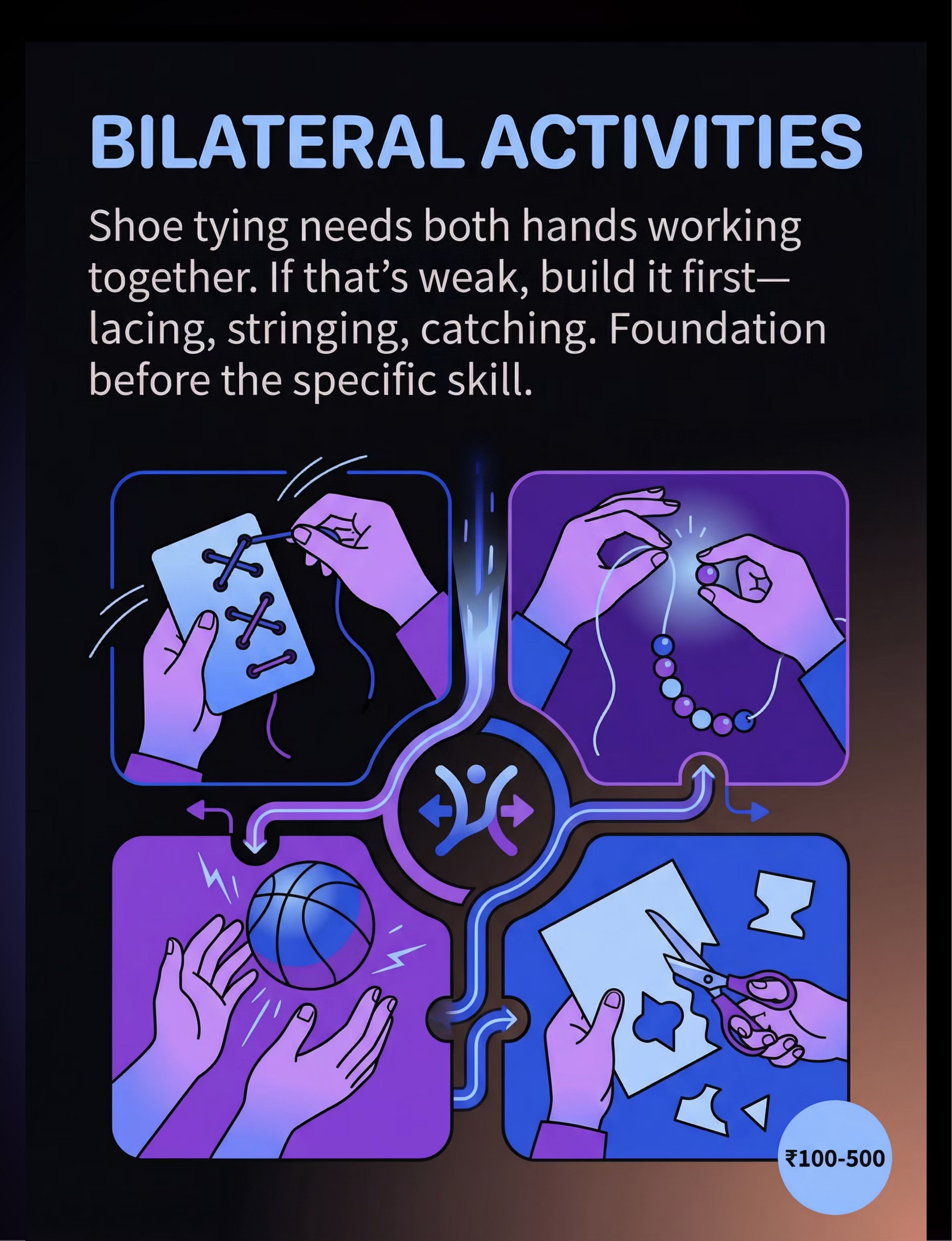
Material 7: Bilateral Coordination Building Kits
Canon: Bilateral Coordination Tools | Price: ₹100–500
Lacing cards, bead stringing sets, construction toys, and catch games that build the prerequisite bilateral coordination. If bilateral motor integration is the limiting factor, shoe-tying practice without this foundation is practicing the symptom, not treating the cause. 4–6 weeks of bilateral building activities produce measurable improvements in shoe-tying acquisition speed.
Search Amazon.in for Bilateral Coordination Kits ✓ Pinnacle Recommends
Lacing cards, bead stringing sets, construction toys, and catch games that build the prerequisite bilateral coordination. If bilateral motor integration is the limiting factor, shoe-tying practice without this foundation is practicing the symptom, not treating the cause. 4–6 weeks of bilateral building activities produce measurable improvements in shoe-tying acquisition speed.
Search Amazon.in for Bilateral Coordination Kits ✓ Pinnacle Recommends
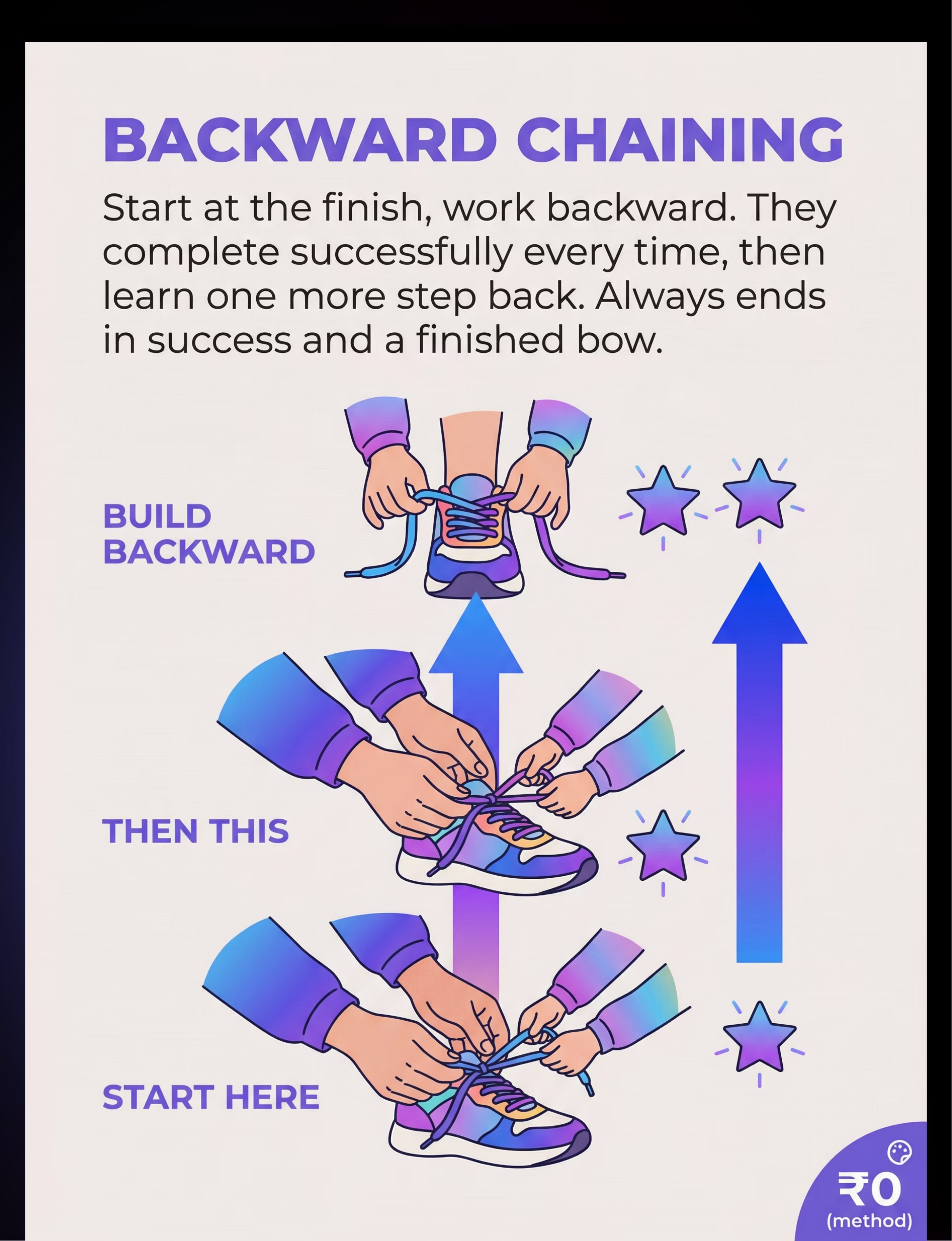
Material 8: Backward Chaining Visual Guide
Canon: Visual Supports / Method Guides | Price: ₹0 (printable PDF)
A printable parent guide showing the backward chaining protocol — which steps the adult completes, which steps the child completes, and how to progress session by session. Backward chaining (ABA-derived, extensively validated) guarantees that every practice session ends in a successfully completed bow. Confidence builds from the end backward. ✓ Pinnacle Recommends
A printable parent guide showing the backward chaining protocol — which steps the adult completes, which steps the child completes, and how to progress session by session. Backward chaining (ABA-derived, extensively validated) guarantees that every practice session ends in a successfully completed bow. Confidence builds from the end backward. ✓ Pinnacle Recommends
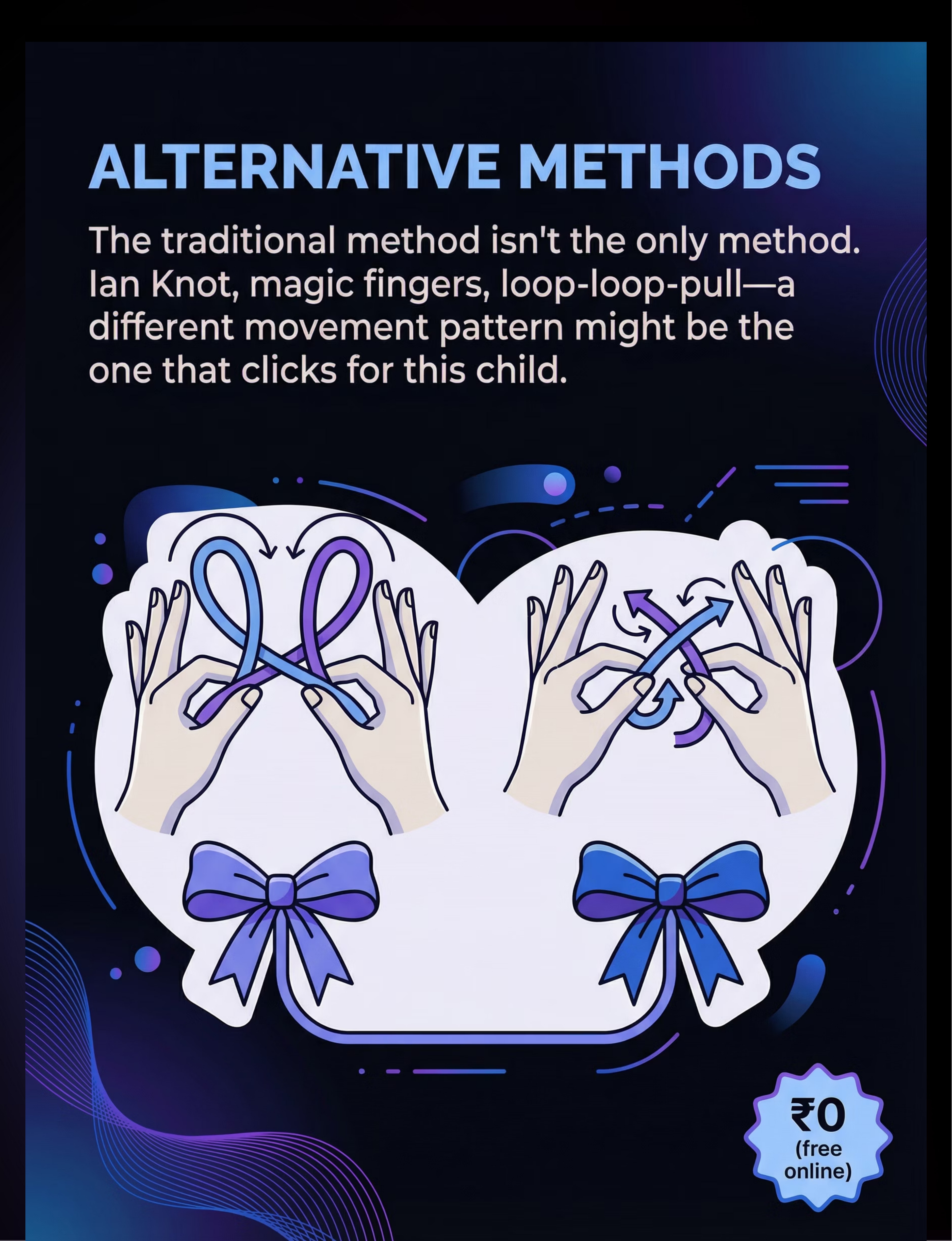
Material 9: Alternative Tying Method Instructions
Canon: Method Guides / Motor Pattern Alternatives | Price: ₹0
Step-by-step guides for Ian Knot, Loop-Loop-Pull method, and Magic Fingers method. Different brains organize movement differently — some children who completely fail with one method succeed immediately with another. Finding the right movement architecture can unlock the skill in days, after years of failure.
Ian's Shoelace Site: Illustrated Tying Methods
Step-by-step guides for Ian Knot, Loop-Loop-Pull method, and Magic Fingers method. Different brains organize movement differently — some children who completely fail with one method succeed immediately with another. Finding the right movement architecture can unlock the skill in days, after years of failure.
Ian's Shoelace Site: Illustrated Tying Methods
🏆 Reinforcement: Reward Stickers | ₹364
1800+ Reward Stickers — ideal for session celebration and token economy integration. Buy on Amazon.in | Canon: Reinforcement Menus
🏆 Reinforcement: Reward Jar | ₹589
The Rosette Imprint Reward Jar — for token economy tracking across shoe-tying practice sessions. Buy on Amazon.in | Canon: Reinforcement Menus
Free guidance available: National Autism Helpline 9100 181 181 (16+ languages, 24×7) — our OTs help families select the right materials for their child's specific profile.
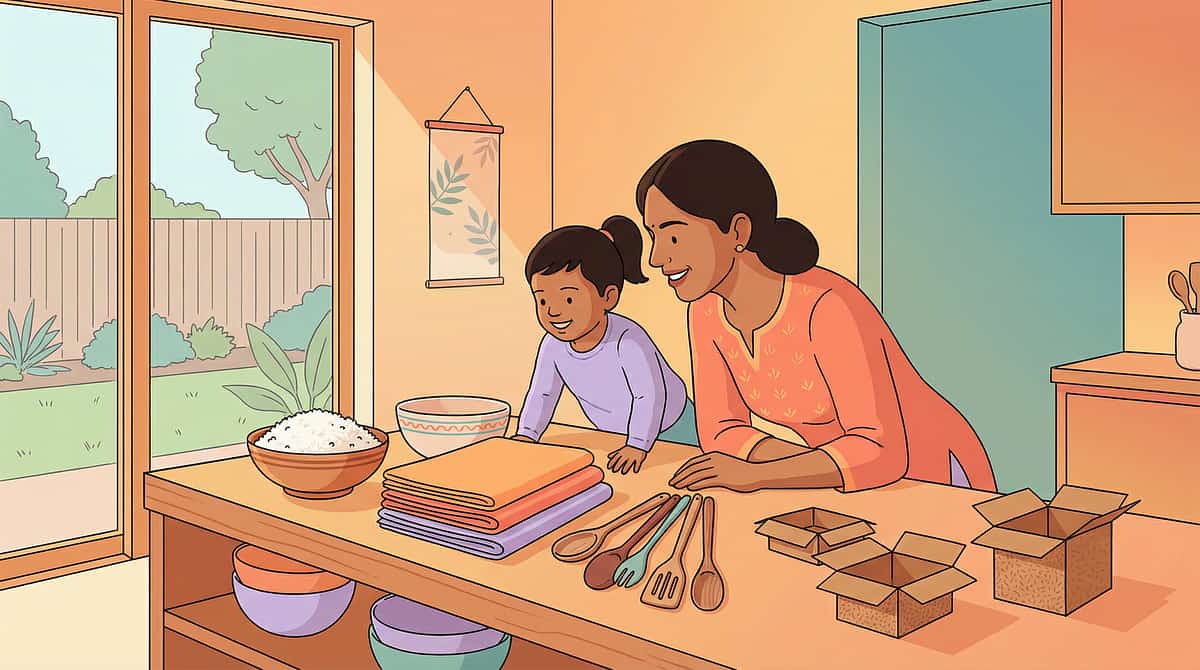
₹0 Version Available for Every Single Material on This Page
The WHO/UNICEF equity principle is foundational to Pinnacle's philosophy: every family, regardless of income, should be able to execute evidence-based intervention today. Here is how to build every material above from household items.
Important: The DIY versions work on the same therapeutic principles as purchased materials. The purchased version is strongly preferred when the child has significant sensory processing differences and the material's texture, weight, or resistance is part of the therapeutic prescription. | WHO NCF (2018) | PMC9978394

Read This Before Every Practice Session
🔴 DO NOT PROCEED if:
- Child is in meltdown, post-meltdown, or significantly dysregulated
- Child is unwell (fever, illness, pain)
- Less than 2 hours since last major tantrum or emotional crisis
- Child explicitly refuses and shows signs of significant distress
- Sharp wire-stiffened laces for children under 5 without close supervision
🟡 MODIFY if:
- Child is tired or slightly off (reduce to 5 minutes, 1–2 steps only)
- Child had a difficult school day (start with reinforcement activity first)
- New environment (holiday — use elastic laces, skip practice)
- Child has hand pain or blisters (give 48 hours rest)
🟢 PROCEED when:
- Child is fed (not hungry), rested, and in a regulated state
- Session scheduled at a consistent time (predictability reduces resistance)
- Materials are prepared and accessible before child arrives
- Parent is calm, patient, and has 15 uninterrupted minutes
Material Safety Specifics
- Lacing boards: ensure no sharp edges; smooth cardboard edges with tape
- Pipe cleaner laces: cap ends with tape so wire tips don't protrude
- Lace locks: check that clips don't create pressure points; test fit
- Elastic laces: test during running — shoe must stay secured during activity
Safety concerns? Call 9100 181 181 — our clinical team guides you through every scenario.
Indian Journal of Pediatrics RCT (2019): Home-based fine motor intervention safety protocols established for parent-administered sessions. DOI: 10.1007/s12098-018-2747-4
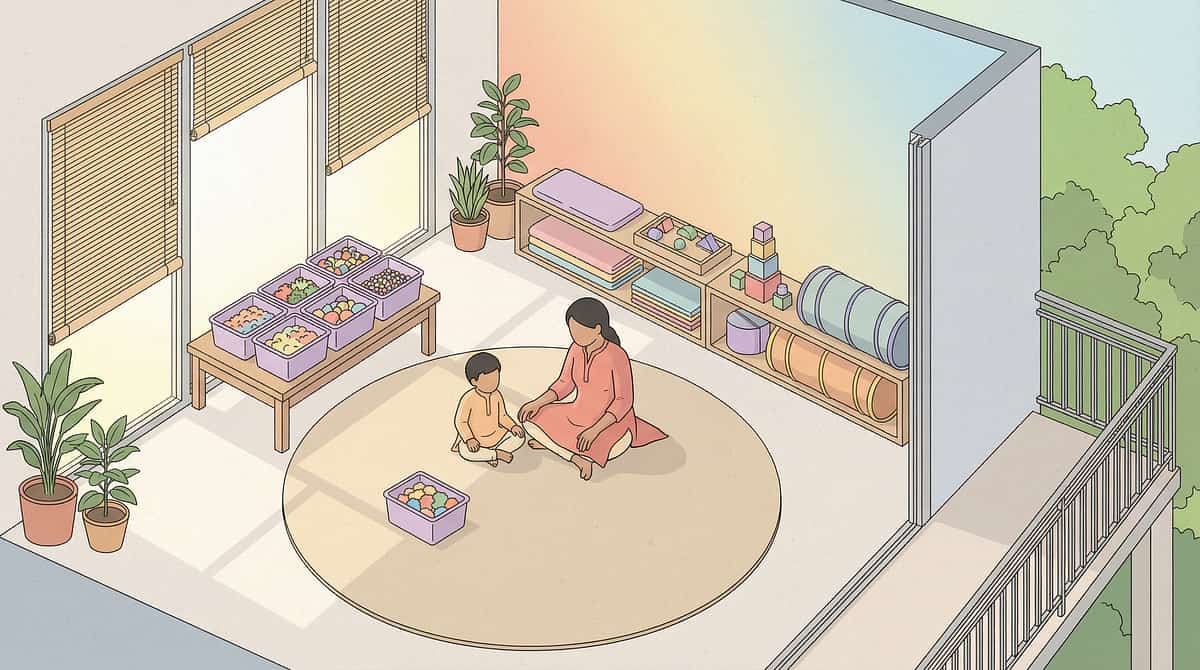
The Right Environment Makes Practice 3× More Effective
Surface Height: Table, Not Floor
Shoe tying at floor level adds an extremely difficult visual-motor challenge. Table height = eye-level access to the task — essential for visual-motor integration.
Lighting: Bright and Direct
Bright, direct light on the work surface. Visual-motor integration requires the child to clearly see what their hands are doing at all times.
Noise: Low Environment
No competing audio. Television off. Siblings in another room if possible. Sensory quiet creates cognitive space.
Seating: Grounded and Stable
Child should be seated with feet touching the floor for proprioceptive grounding. Wriggly chair = wriggly attention.
Materials Pre-Positioned
Everything within arm's reach BEFORE child sits down. Searching for materials mid-session breaks attention and state.
Progression: Board → Table → Foot
Begin every session on the lacing board (table level). Transition to shoe on table. Finally, shoe on foot — only when board skills are established.
Sensory Integration Theory (Ayres, 1979; updated 2019): Environmental setup is a core therapeutic principle. Meta-analysis confirms 1:1 structured sessions were most effective for fine motor skill acquisition. | PMC10955541
60-Second Readiness Check — Run This Before Every Session
GO ✅
Proceed to Step 1: The Invitation
MODIFY 🟡
Use simplified 5-minute version: just 1–2 tying steps on the lacing board, maximum praise, no pressure for completion
POSTPONE 🔴
Do a bilateral coordination game instead (5 minutes bead threading). Record as bilateral session. Try tying tomorrow.
"The best session is one that starts right. A postponed session is not a failed session — it is data about what your child needs today."
Persistent refusal across 3+ consecutive sessions? Call 9100 181 181 — this is clinically significant and our team can help. | ABA Antecedent Manipulation: Setting events and establishing operations directly determine intervention effectiveness.

Step 1 of 6
Step 1 — Invite, Don't Instruct
"Hey, do you want to do our special shoe activity? I have the board ready."
Never Say
- "Time for shoe practice" — clinical frame creates resistance
- "You need to learn this" — pressure frame activates avoidance
- "Let's try again" — implies previous failure
Body Language Guidance
- Sit at child's level or below — never towering
- Relaxed shoulders, neutral face
- Lacing board visible but not pushed toward them
- Offer alongside something they enjoy (brief sensory input or preferred snack first)
What Acceptance Looks Like
- Moving toward the table
- Eye contact with the board
- Picking up the laces
- Any neutral or positive vocalization
When Child Resists
- Pulling away → Respect, try again in 10 minutes
- Ignoring → Animate the laces, make it curious — not demanding
- Saying "no" → Honor it. Do 5 minutes bilateral game, re-offer at end
Timing: 30–60 seconds for invitation phase. Do not exceed 90 seconds without acceptance.
ABA Pairing Procedures: Establishing motivating operations before demand placement increases compliance and reduces task avoidance. | OT "Just-Right Challenge" Principle: Task demand must match child's current regulation capacity.
Step 2 of 6
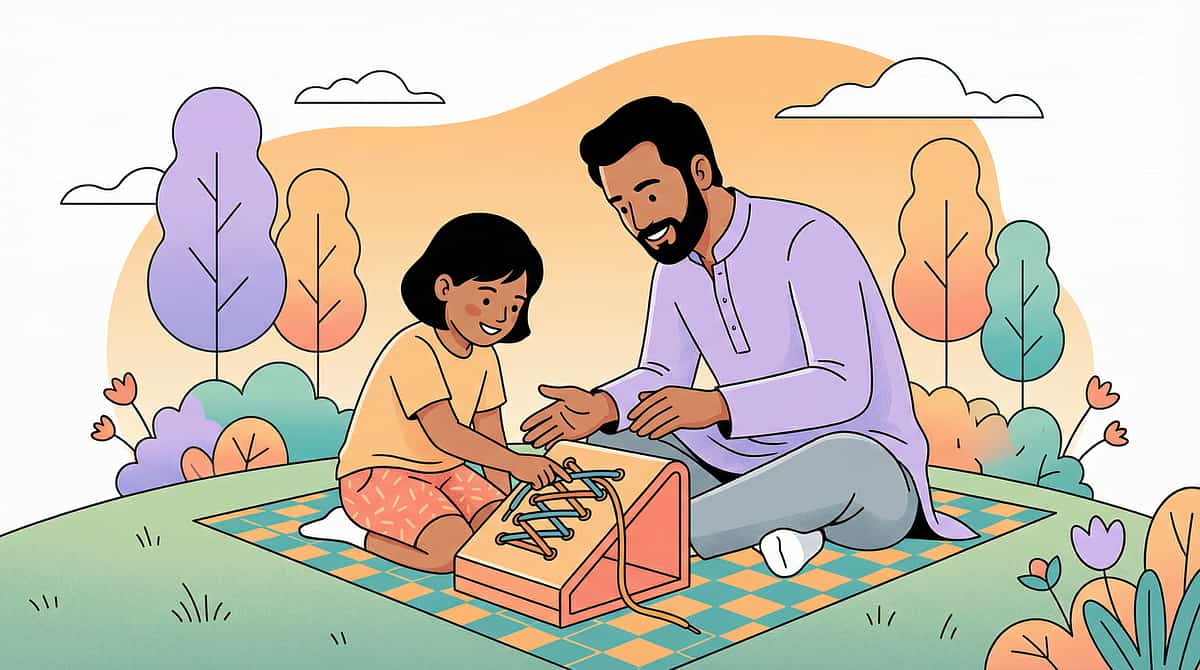
Step 2 — Show the Board, Build Curiosity
"Here's your board. Look — there are two colors today, a [blue] and a [red] one. What color do you want to start with?"
Giving choice = giving agency = increasing engagement. This simple question shifts the child from a passive recipient of instruction to an active participant in their own therapy session.
Engagement
Child reaches for materials, asks questions, begins exploring
Tolerance
Child doesn't actively avoid, allows parent to demonstrate
Avoidance
Child pushes materials away, turns body away — wait and re-approach
Place the lacing board flat on the table at child's eye level. Position the two-color laces visibly but not yet "in use." If using sequence cards: lay them out left to right before the child. Demonstrate that stiff laces hold their loop shape — make a loop yourself, place on table: "see? It stays."
Reinforcement cue: At first touch of materials — "Yes! Look at that!" Immediate, specific praise before performance. When to move forward: Child is tolerating and observing (not necessarily excited). Timing: 1–3 minutes.
Systematic Review (Children, 2024): Structured material introduction within sensory integration intervention meets evidence-based practice criteria. | PMC11506176
Step 3 of 6
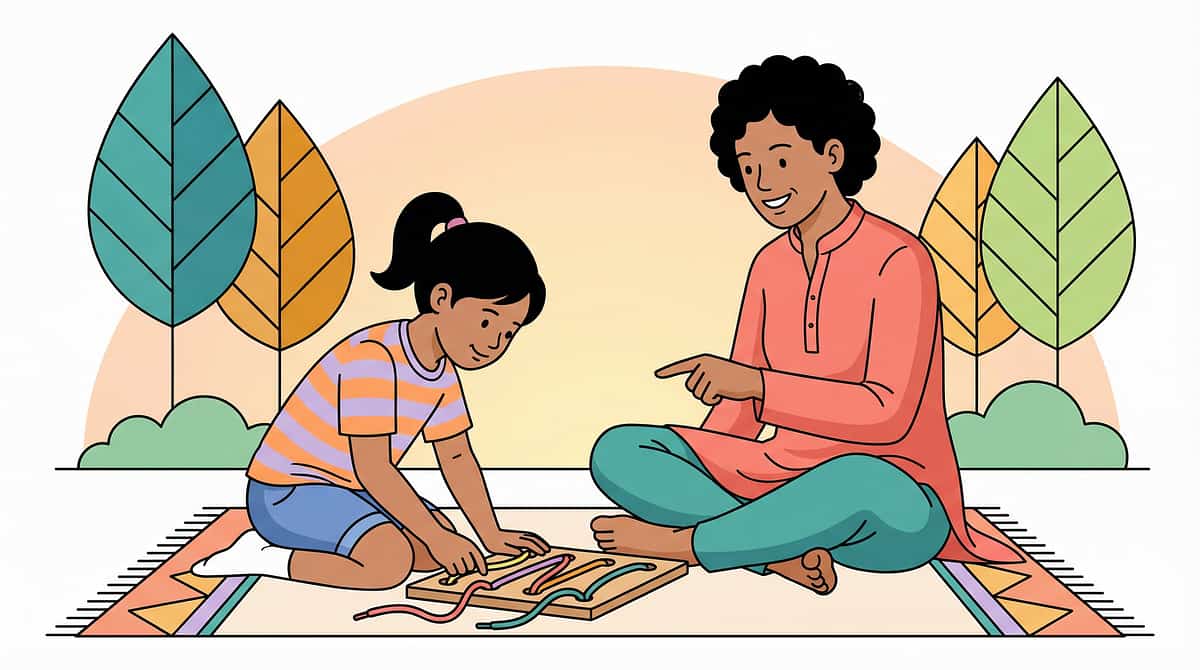
Step 3 — The Backward Chain Begins (The Active Therapeutic Work)
The OT consensus recommendation for initial shoe-tying instruction is backward chaining. Here is how to execute it at home — week by week, step by step.
Week 1–2
Child does ONLY Step 10 (final pull). Parent completes all 9 steps up to loops formed. Script: "Pull both loops! Pull tight!" — then CELEBRATE: "You tied your shoe!" 3 reps per session.
Week 3–4
Child does Steps 9–10. Parent completes steps 1–8. Child wraps second lace around loop, pushes through, pulls tight. 3 reps per session.
Week 5–6
Child does Steps 7–10. Continue adding 1–2 steps backward per 1–2 weeks of mastery. Each step mastered across 3 sessions before progressing.
Physical Guidance Hierarchy
Common Execution Errors
- Going too fast: Always master one new step across 3 sessions before adding another
- Switching methods mid-learning: Pick one method and stay consistent for minimum 4 weeks
- Practicing when dysregulated: Return to the readiness check immediately
Meta-analysis (World J Clin Cases, 2024): 10–20 minute home therapy sessions are most effective. | PMC10955541 | Backward chaining evidence: NCAEP 2020 Report
Step 4 of 6
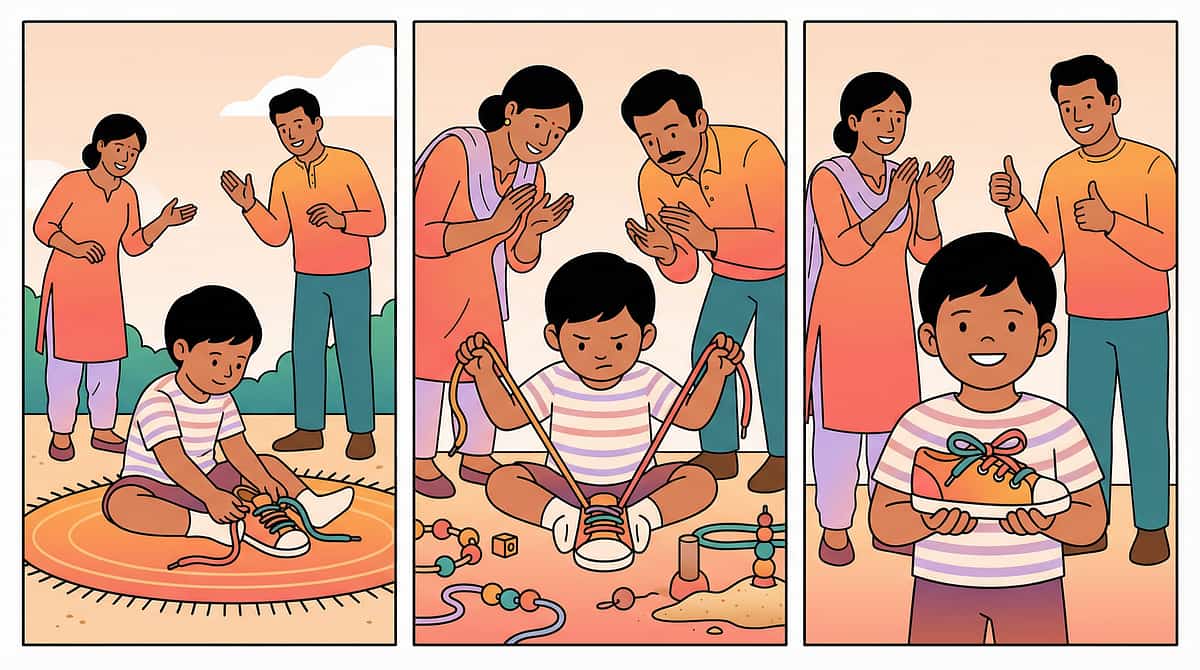
Step 4 — 3 Good Repetitions Beat 10 Forced Ones
3
Target Successful Reps Per Session
Stop at 3 successful before frustration builds
5
Maximum Attempts Per Session
Do not repeat more than 5 times if child is not succeeding
4
Weeks Minimum Before Switching Methods
Consistency is the single most important variable
Variation Options to Maintain Engagement Across Days
Different Boards
Use purchased lacing board Monday/Wednesday. DIY cardboard version Friday. Same technique, different material — begins generalization.
Lace Colors
Monday: blue + red. Wednesday: yellow + green. Prevents color-specific dependency and builds true bilateral tracking.
Location Variation
Weeks 1–4: always the table. Week 5+: try a different table. Week 7+: real shoe on the floor (harder — expected).
Verbal Cue Fading
Full cue: "Now cross the laces" → Partial: "Now..." → No cue (independent). Fading cues is how skills become automatic.
Satiation Indicators — Stop Before These Appear
- Child begins to lose loop shape accuracy (getting tired)
- Increased error rate in what was previously mastered
- Posture slumping or fidgeting
- Verbal: "I don't want to" beginning to emerge
Sensory integration and fine motor dosage research: 2–3 sessions per week for 8–12 weeks as typical protocol. | PMC11506176

Step 5 of 6
Step 5 — Timing Is Everything: Within 3 Seconds
Immediacy
Praise and reward within 3 seconds of the target behavior — not after, not at the end of the session. NOW.
Specificity
Not "good job" — "You held that loop perfectly while your other hand wrapped!" Specific praise teaches the child what to repeat.
Proportionality
Big celebration for new steps mastered. Medium praise for effort on hard steps. Warm acknowledgment for genuine attempts.
Authenticity
Children detect hollow praise. Be genuinely enthusiastic about what they actually did.
Reinforcement Script Library
- "THAT is the strongest pull I've ever seen — look at that bow!"
- "Your blue hand and your red hand worked TOGETHER. That's the hardest part."
- "You just tied your shoe. Tell Daddy tonight."
- "One more step mastered. You're building this thing."
Reinforcement Menu
- Social: Specific verbal praise + high five + brief preferred sensory input
- Token: One sticker on the shoe-tying chart (Reward Sticker Book, ₹364, Amazon.in)
- Natural: "Now you can go play — your shoe is TIED."
- Activity: 5 minutes preferred screen/play choice
Celebrate the ATTEMPT, not just the success: Every genuine attempt that doesn't succeed still earns: "I saw you try. That's the work."
ABA Reinforcement Principles: Immediate, specific reinforcement is the strongest behavioral lever for skill acquisition in pediatric populations. | BACB Ethical Guidelines
Step 6 of 6
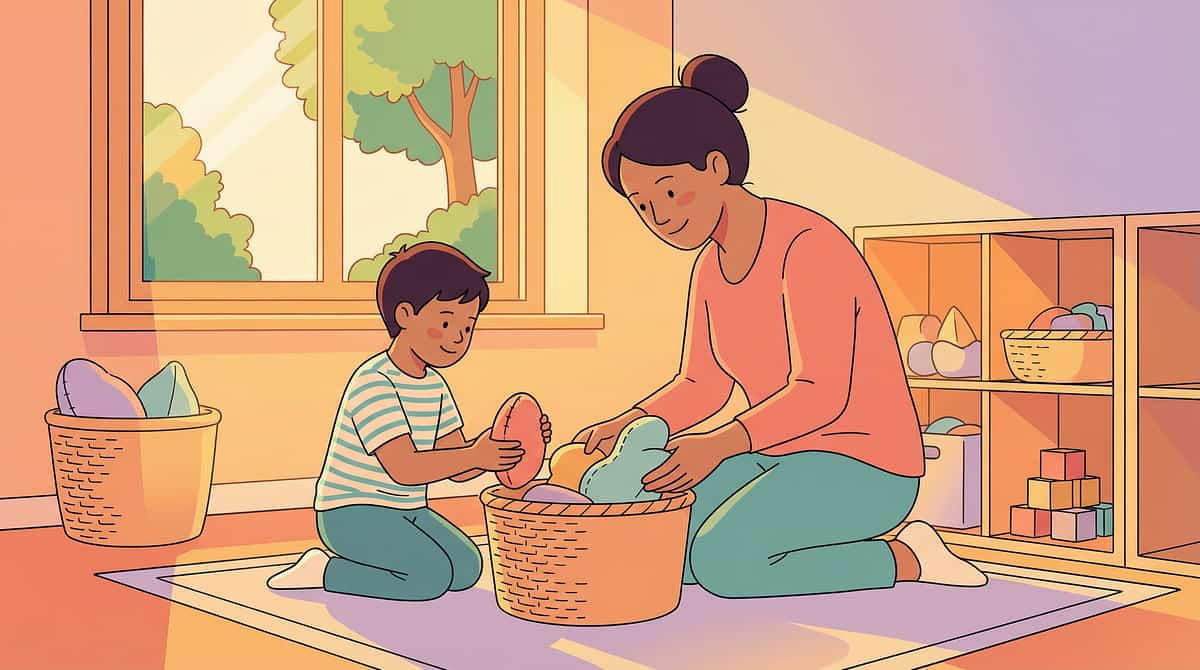
Step 6 — Never End Abruptly
The Transition Protocol
2-minute warning: "Two more tries, then we're all done with shoe practice for today."
1-minute warning: "One more, then we're done."
Closing ritual: "All done! You worked really hard today. Let's put the board away." Child puts lacing board away — participates in closure, giving control back.
Cool-Down Activity (1–2 minutes)
- Hand massage with preferred lotion (proprioceptive reset)
- 5 deep squeezes of a stress ball
- 3 slow big arm stretches
- Brief preferred sensory input (preferred texture, object, or movement)
Why This Matters
Sessions that end abruptly leave the child's nervous system in a mobilized state. The cool-down ritual creates a clean neurological boundary that makes the next session start easier.
If Child Resists Ending
- Don't push the cool-down — honor their engagement
- "I love that you want to keep going. We'll do more tomorrow. Same time?"
- Never override a child who is still willing to practice — use clinical judgment
Transition cue: "Shoe practice is done. Now you get [preferred activity]. Let's go."
NCAEP Evidence-Based Practices Report (2020): Visual supports and transition cues are evidence-based practices for autism. Predictable session endings reduce pre-session anxiety.
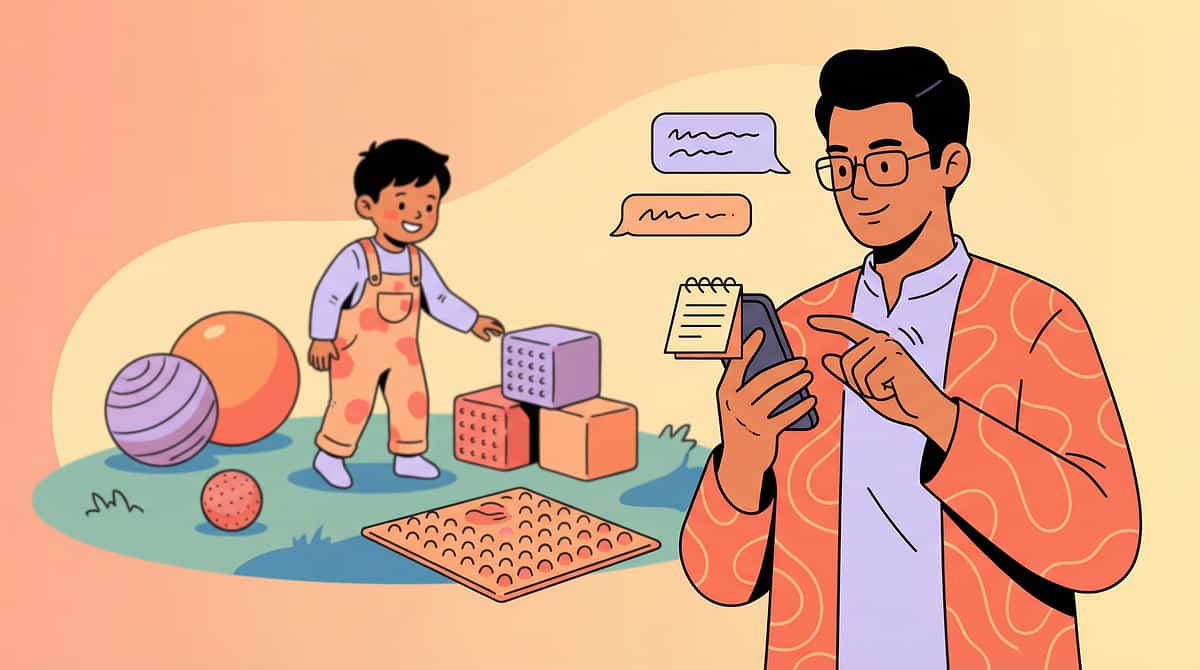
60 Seconds of Data Now Saves Months of Guessing Later
Consistent data collection is what separates a structured intervention from repeated attempts. Three data points — captured right after the session while it's fresh — give you and your OT everything needed to adjust and progress.
Which Backward Chain Step?
Which step (1–10) did the child attempt today? This tracks your progression through the protocol.
How Many Successful Reps?
Target is 3. Record actual number. 3 consecutive sessions at ≥3/3 reps on same step = progress to next step.
Child State During Session
1 = significantly dysregulated → 5 = calm and engaged. State predicts learning more than any other variable.
Quick Paper Tracker
SESSION DATE: _________ | CHILD STATE (1-5): ____
BACKWARD CHAIN STEP REACHED (1-10): ____
REPS COMPLETED: ____ | REPS SUCCESSFUL: ____
NOTES (one line): ________________________________
REINFORCER USED: ________________________________
3 consecutive sessions ≥3/3 reps
→ Progress to next backward chain step
3 consecutive sessions at 0/3 reps
→ Modify: assess which sub-skill is limiting
Irregular session frequency
→ Frequency is the variable: daily short sessions outperform weekly long ones 3–4×
ABA Data Collection Standards: Continuous measurement is the gold standard for skill acquisition programs. | BACB Guidelines | Cooper, Heron & Heward (Applied Behavior Analysis, 8th ed.)

Most Sessions Have Something That Doesn't Go Perfectly. Here's the Fix.
Problem 1: Child Can't Hold the Loop While the Other Hand Wraps
Why: Bilateral coordination is the limiting factor — most common barrier. Fix: Return to bilateral activities (Material 7) for 2 weeks before returning to shoe practice. Try bunny ears method (both loops formed first, eliminating simultaneous bilateral demand during wrapping).
Problem 2: Loops Keep Collapsing Before Child Can Complete the Step
Why: Standard laces are too floppy for learning. Fine motor grip strength may also be insufficient. Fix: Switch to stiff or waxed laces (Material 6). Use pipe cleaners on the practice board. Practice pincer grasp strengthening (clothespins, tweezers) for 5 minutes daily.
Problem 3: Child Learned Yesterday and Has Completely Forgotten Today
Why: Motor memory consolidation requires sleep and repeated retrieval. 1 session/week is insufficient. Fix: Increase to daily practice (even 5 minutes). Keep the exact same method every session. Use sequence cards each session for 4 weeks before fading.
Problem 4: The Bow Keeps Coming Undone Within Minutes
Why: Insufficient tension on final pull. Laces may be too slippery. Fix: Add lace locks (Material 4) immediately. Address technique: slow down the final pull, emphasize "pull BOTH loops OUT, not up." Try waxed laces for more grip.
Problem 5: Child Gets Extremely Frustrated and Refuses
Why: Task demand exceeds current ability. Motivation depleted. Prior sessions may have established avoidance history. Fix: Drop back to the step before the frustration point. Ensure reinforcement is genuinely motivating. Consider switching methods entirely. Call 9100 181 181 if distress persists.
Problem 6: Works on Board but Can't Transfer to the Real Shoe
Why: Real shoe adds 3 new variables: angle (looking down), shoe flexibility, and lace weight. Fix: Bridge systematically: Lacing board flat → Tilted to simulate foot angle → Shoe on table → Shoe on foot while sitting high → Normal position. Each bridge may need 1–2 weeks.
Problem 7: Loop Is Always Too Small
Why: Insufficient proprioceptive calibration of "how much lace" to form into a loop. Fix: Mark the midpoint of each lace with a small tape flag. This gives a visual target for loop size. Fade the marker as calibration improves.
Session abandonment is not failure — it is data. | ABA Functional Analysis Principles applied to session-level problem solving.
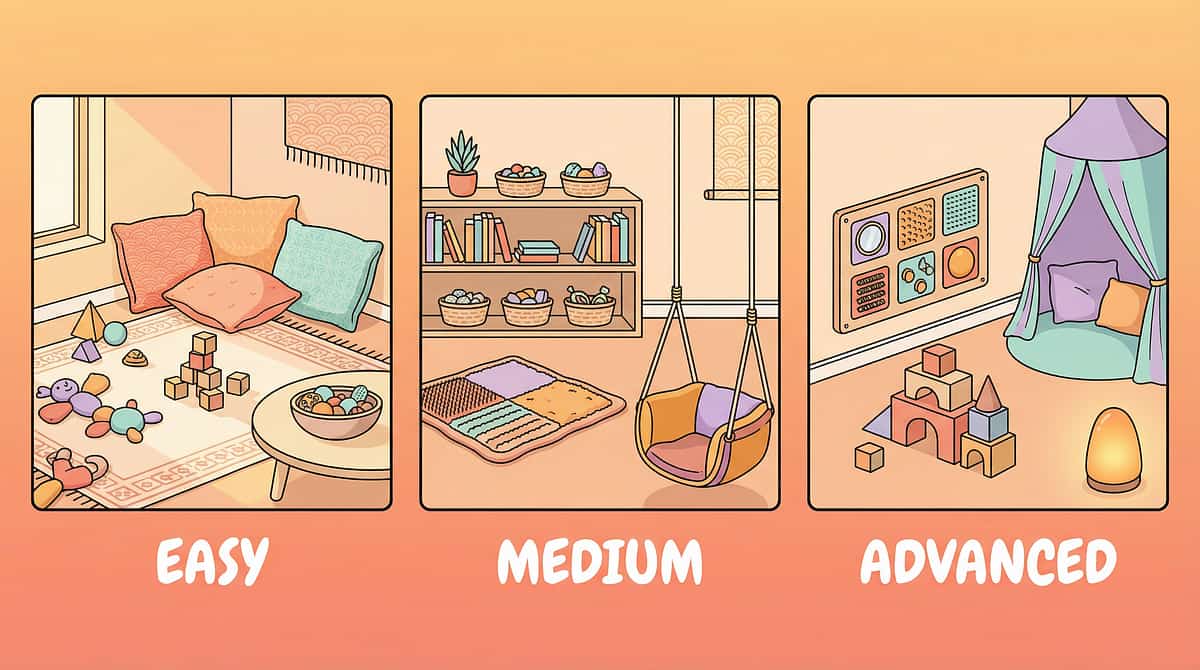
No Two Children Are Identical — Here Is How to Tune the Protocol
🖐️ Sensory Seeker (Seeks Tactile / Proprioceptive Input)
Use waxed or rough-texture laces for maximum tactile feedback. Add deep pressure to hands before session (5 seconds pressing palms together). Practice with slightly thicker laces initially.
🤚 Sensory Avoider (Sensitive to Texture / Touch)
Begin with smooth, soft laces (reduce tactile demand). Introduce lacing board before real shoe (less body proximity). Consider cotton gloves during first sessions if tactile sensitivity is high.
⚡ Attention / ADHD Profile
Strict 10-minute maximum per session. High-frequency reinforcement (every rep, not every 3). Minimal distractions. Consider medication timing — sessions at peak medication efficacy window.
🔄 Motor Planning (DCD / Dyspraxia) Profile
Sequence cards non-negotiable at every session. Single method for minimum 8 weeks. Hand-over-hand physical guidance for first 2 weeks. Extra time between backward chain steps (master each for 2 weeks, not 1).
Age-Based Modifications
Individualized intervention planning is a core principle across OT (sensory profile-based), ABA (function-based), and SpEd (learning profile-based) clinical practice.

Progress Arc
Weeks 1–2
Weeks 1–2: You Are Laying Neural Track. Results Come Later.
Overall Protocol Progress
Infrastructure phase — building what doesn't show yet
What You WILL Likely See
- Child tolerates the lacing board for the full session
- Final pull step (Step 10) becoming smoother and more confident
- Less frustration around shoe-related conversations
- Child begins to recognize materials ("Oh, is it shoe time?")
What You Will NOT See Yet
- Independent tying (not the goal yet)
- Consistent success on any step beyond Step 10
- Transfer to the real shoe (too early)
Your Data Checkpoint at Week 2
- Step 10 success rate >80% across 3 sessions = ready to add Step 9
- If <50% success on Step 10 = assess which sub-skill is limiting (Card 21)
"If your child tolerated the board for 3 seconds longer than last week, or completed the final pull with less hand-holding than Monday — that is measurable neurological progress."
This is the hardest phase. Progress is invisible on the outside. The bilateral pathways are forming. The procedural memory is encoding its first repetitions. You are building infrastructure that doesn't show yet — and that's exactly what's supposed to happen.
Systematic Review (Children, 2024): Fine motor intervention outcomes emerge across 8–12 week timelines. Early-phase indicators: tolerance and participation. | PMC11506176

Progress Arc
Weeks 3–4
Weeks 3–4: The Neural Pathways Are Starting to Wire
Overall Protocol Progress
Consolidation phase — repetition is becoming automaticity
Consolidation Indicators
Child correctly performs last 2–3 backward chain steps without prompting
Step sequence is beginning to feel "automatic" for those mastered steps
Child anticipates the session with less resistance
Some children may start to enjoy it — an extraordinary sign. Lean in.
Better bilateral coordination appears in OTHER activities
Watch for: smoother scissors use, better two-handed catching, more fluid craft work. These are the same neural circuits training together.
When to Increase Frequency / Intensity
- Child succeeding on 2 backward chain steps: add Step 8 to the chain
- Sessions feel short and child is eager: add 2–3 more minutes and one more rep
- Child asks "can we do more shoe practice?" — extraordinary sign, lean in
By week 4, most parents report feeling noticeably more confident in the execution. The technique is becoming a familiar routine rather than an anxious intervention. Your growing confidence directly affects your child's willingness.
Neuroplasticity: Synaptic strengthening through repeated structured input follows predictable timelines. Behavioral consolidation markers align with neural adaptation curves in pediatric populations.

Progress Arc
Weeks 5–8
Weeks 5–8: Watching Independence Emerge
Overall Protocol Progress
Mastery emergence phase — generalization is the final mile
Mastery Criteria — Specific, Observable, Measurable
- Completes all 10 tying steps independently from invitation to finished bow
- Bow holds for >2 hours of normal activity without re-tying
- Can re-tie independently when laces come undone
- Generalizes: ties on different shoes (not just the practice shoe)
- Can complete in >75% of attempts across 3 consecutive sessions
Generalization Checklist
Lacing board → Real shoe on table ✓
Real shoe on table → Real shoe on foot ✓
Single shoe type → Different shoe ✓
Home setting → School setting ✓
Two-color laces → Standard laces ✓
✅ Mastery Unlocked When:
Independent tying across 3 session types + Generalization to 2+ shoe types + Maintenance confirmed after 1-week break
Inconsistent day-to-day?
Stay and strengthen. Consider whether elastic laces handle the daily functional need while mastery consolidates.
One shoe type only?
Stay and generalize for 2 more weeks before progressing to E-527.
Meta-analysis (2024): Fine motor and OT intervention with measurable outcomes across 24 controlled studies. BACB mastery criteria standards. | PMC10955541
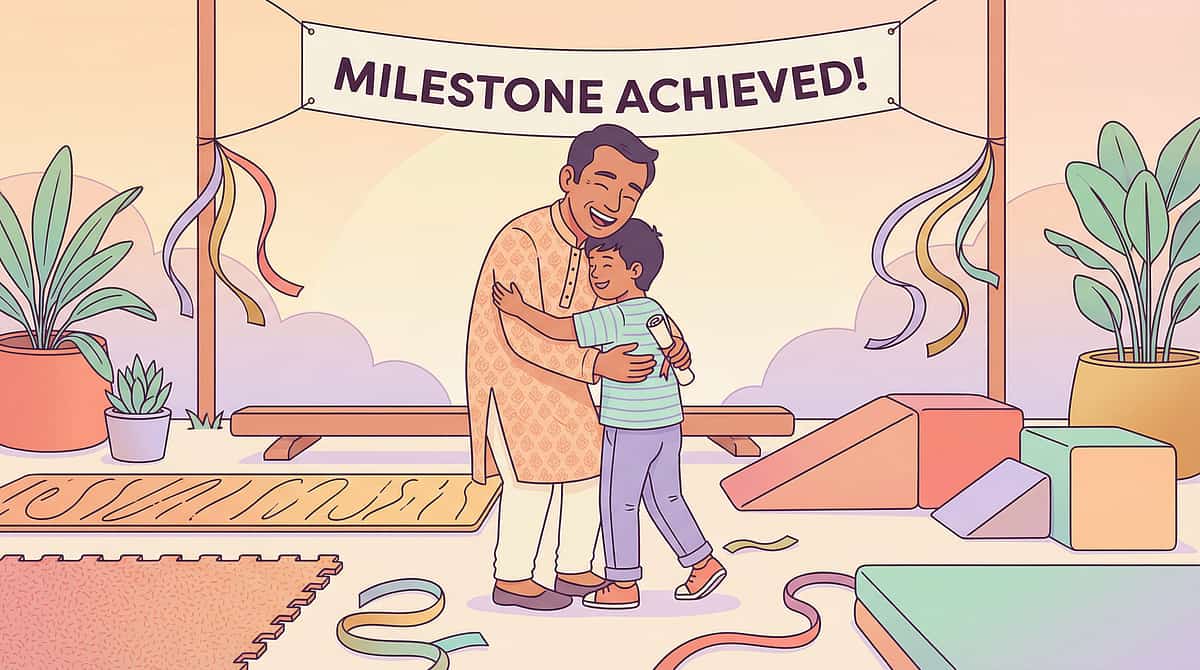
You Did This. Your Child Grew Because of Your Commitment.
You showed up for daily practice when it felt pointless. You held back frustration when laces collapsed for the hundredth time. You read the data and adjusted. You built the bilateral foundation before expecting the shoe-tying outcome. You did not give up when everyone else said "they'll get it eventually." Your child tied their shoe because you understood why it was hard and what would actually help.
Specific Affirmation (Customize to Your Child)
"You learned one of the hardest fine motor skills a child's brain has to build. Both your hands now work together. Your brain made new pathways. That doesn't unhappen."
Family Celebration Suggestions
- Let child wear their favorite laced shoes to a special outing
- Document: photograph or video the first fully independent tie
- Share with extended family (grandparents, teachers) — let the child explain "I can tie my own shoes now"
- Mark the date in the family journal
Photo / Journal Prompt: "On ________ [date], ________ [child's name] tied their first independent bow. We worked for _____ weeks. The hardest part was ______. The day it clicked, they looked up and ______."
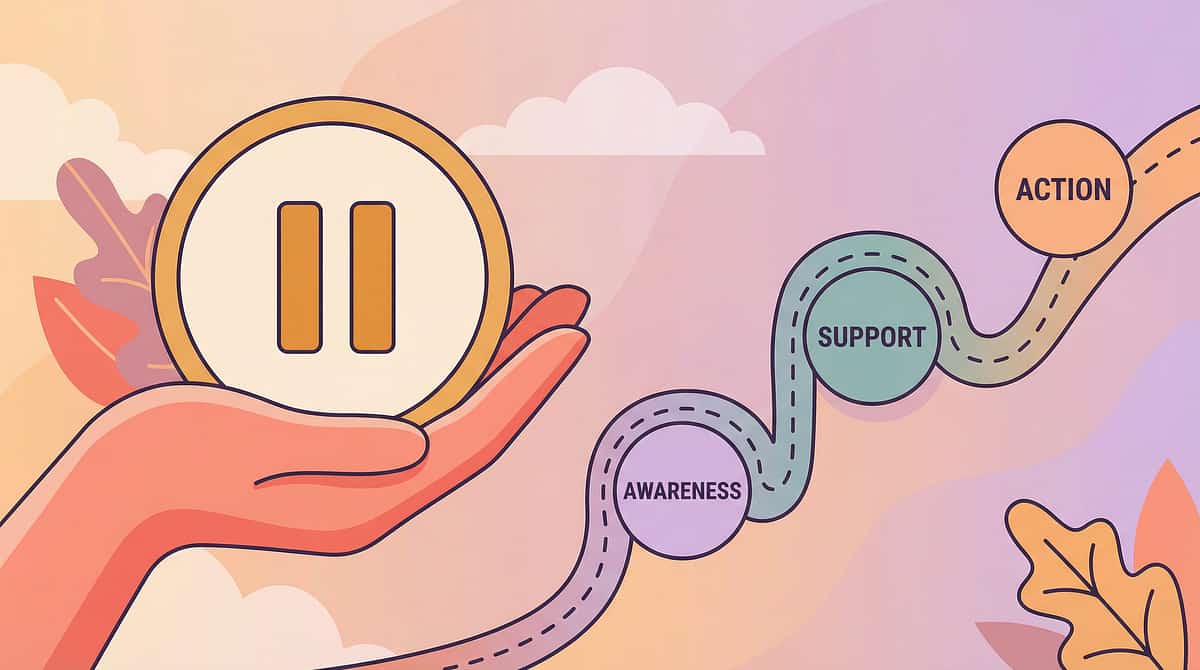
Even in the Success Zone — Know These Signs
Escalation Pathway
Trust your instincts — if something feels wrong, pause and ask.
Helpline: 9100 181 181 — immediate clinical guidance, no appointment needed. | WHO NCF Progress Report 2018–2023
Helpline: 9100 181 181 — immediate clinical guidance, no appointment needed. | WHO NCF Progress Report 2018–2023
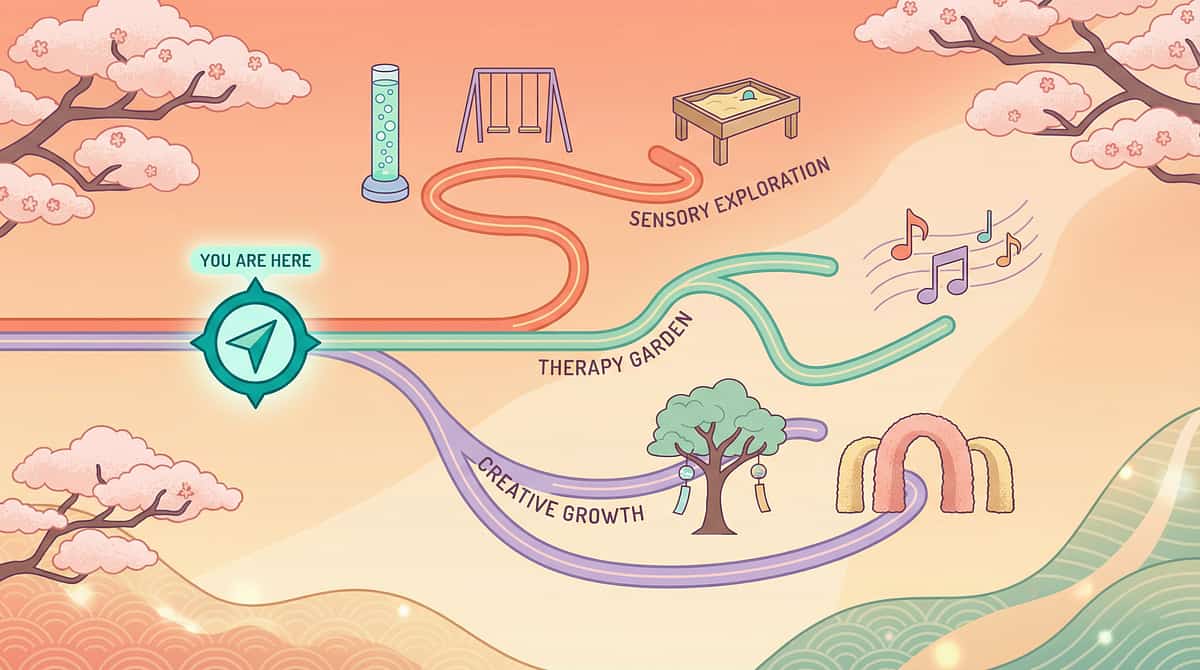
E-526 Is One Waypoint in a Larger Developmental Journey
Lateral Alternatives
- Too fine-motor dependent? Build via A-027 (Shoe Intolerance / Tactile Desensitization first)
- Sequencing is the primary barrier? Deep-dive into Motor Sequencing techniques before returning
Long-Term Developmental Goal
Full Age-Appropriate Dressing Independence → Self-Care Readiness for School → Peer-Comparable Independence → Self-Advocacy and Life Skills Readiness
Developmental intervention sequencing: WHO/UNICEF milestones provide the developmental trajectory framework. Intervention sequencing follows evidence-based developmental cascades.
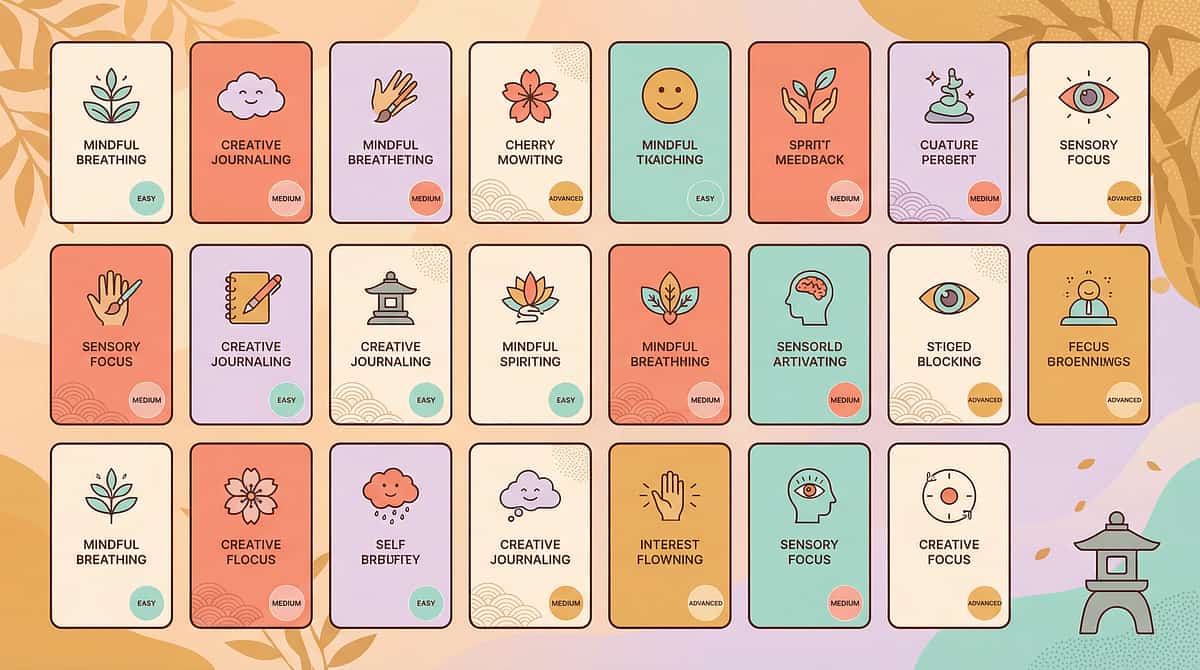
Techniques You Can Explore With Materials You Already Own
The materials you've assembled for E-526 unlock access to the entire Self-Care domain. You're already equipped for the next steps.
Bilateral Kit Unlocks
E-524 Toothbrushing, E-527 Hair Brushing, E-528 Socks
Sequence Cards Unlock
E-524, E-525, E-527 — all benefit from visual step supports
Reinforcement Kit Unlocks
Every technique in the domain — stickers and reward jar apply across all
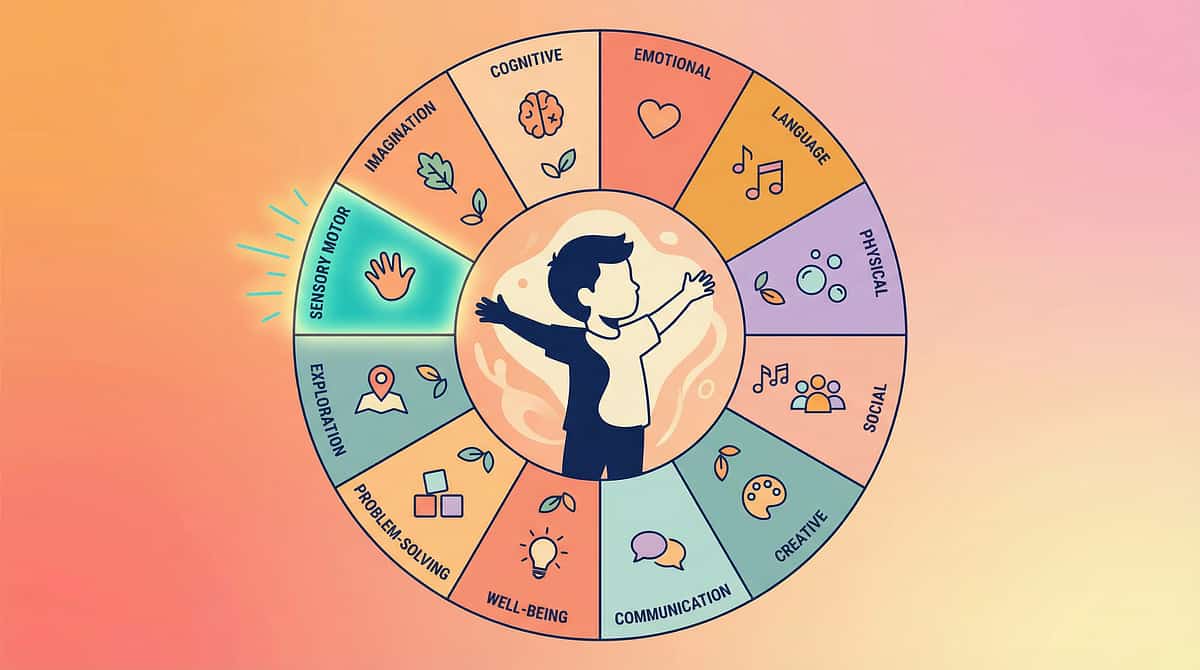
Shoe Tying Is One Piece — Here Is the Full Picture
Every technique page on techniques.pinnacleblooms.org is one cell in this 12-domain matrix. As your child masters E-526, you're not just checking off "shoe tying" — you're building bilateral coordination that benefits Domain G (Gross Motor), visual-motor integration that benefits Domain I (Executive Function), and sequential processing that benefits Domain J (Language & Literacy).
When you log your E-526 session data, GPT-OS® cross-references your child's profile across all 12 domains and identifies which other techniques will benefit most from the bilateral and fine motor foundations you're building now. View Your Child's Full GPT-OS® Developmental Profile | WHO/UNICEF Nurturing Care Framework: Five components of nurturing care require holistic developmental monitoring. | WHO NCF (2018)
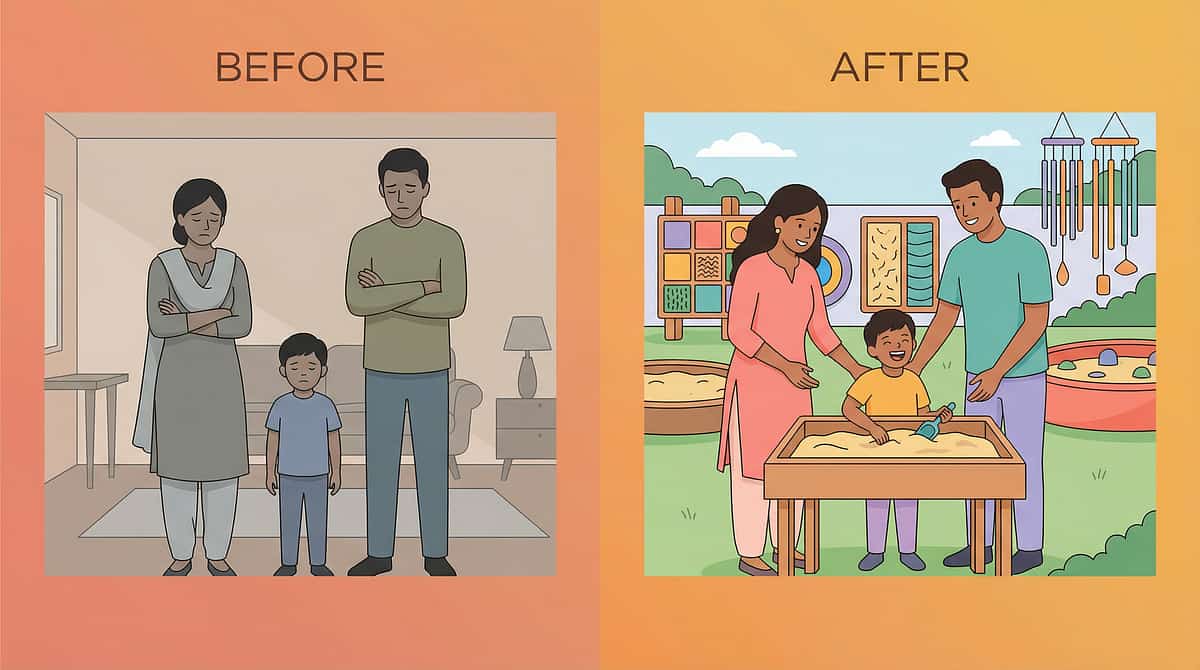
From the Pinnacle Network: Real Outcomes, Real Timelines
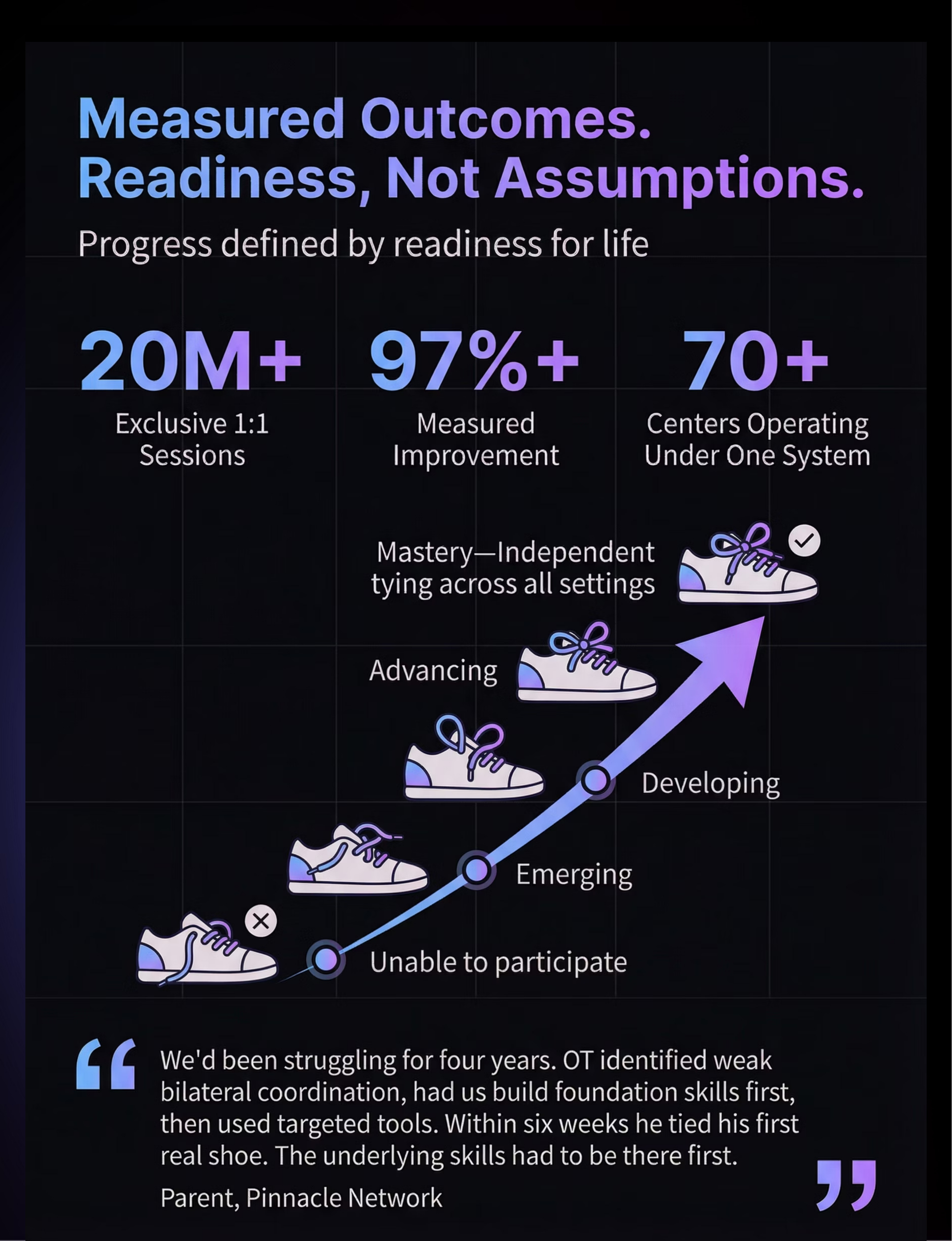
The Bilateral Foundation Story — 9-Year-Old Boy, ASD + DCD Profile, Hyderabad
Before: "We had been trying shoe tying for four years. He could do each step if we walked him through it, but could never sequence them. And his hands — they just didn't work together. One would drop everything the other needed held. We tried YouTube videos, different methods, practice shoes. Nothing."
The assessment: Pinnacle OT identified bilateral coordination as the primary limiting factor. Two months of bilateral activities (lacing cards, bead stringing, bilateral catching games) were prescribed first — standard shoe-tying practice was skipped entirely.
After: "At week 9, we introduced the backward chaining with two-color stiff laces on the board. At week 12, he tied his first real shoe. The underlying skills had to be there first — that's what every YouTube video was missing."
OT Notes: "In 40% of shoe-tying cases in our network, bilateral coordination is the primary barrier — identified only through assessment."
The assessment: Pinnacle OT identified bilateral coordination as the primary limiting factor. Two months of bilateral activities (lacing cards, bead stringing, bilateral catching games) were prescribed first — standard shoe-tying practice was skipped entirely.
After: "At week 9, we introduced the backward chaining with two-color stiff laces on the board. At week 12, he tied his first real shoe. The underlying skills had to be there first — that's what every YouTube video was missing."
OT Notes: "In 40% of shoe-tying cases in our network, bilateral coordination is the primary barrier — identified only through assessment."
The Elastic Laces Liberation Story — 7-Year-Old Girl, ADHD Profile, Bengaluru
Before: "Every morning was a war. She would try, fail, cry. Then I would try, get frustrated, put on velcro. She was embarrassed at school. Her teacher mentioned it to me twice."
The pivot: Pinnacle OT recommended immediate elastic laces for daily use ("independence now, mastery alongside") plus sequence cards and 10-minute daily board practice.
After: "Within one week, the morning war was over. She put her elastic laces on herself, no tears. The pressure was gone. And somehow — without the pressure — the practice sessions started going better. She tied her first real bow at week 7. But the real win was the first week when she stopped associating shoes with failure."
The pivot: Pinnacle OT recommended immediate elastic laces for daily use ("independence now, mastery alongside") plus sequence cards and 10-minute daily board practice.
After: "Within one week, the morning war was over. She put her elastic laces on herself, no tears. The pressure was gone. And somehow — without the pressure — the practice sessions started going better. She tied her first real bow at week 7. But the real win was the first week when she stopped associating shoes with failure."
"The day she tied her own shoe, she looked up with this expression I'd never seen before — not excited, just settled. Like something that had been wrong was finally right." — Parent, Pinnacle Bengaluru Center
Outcomes represent individual cases. Results vary by profile, underlying needs, and intervention intensity. | Pinnacle center outcome data aggregated from 70+ centers.
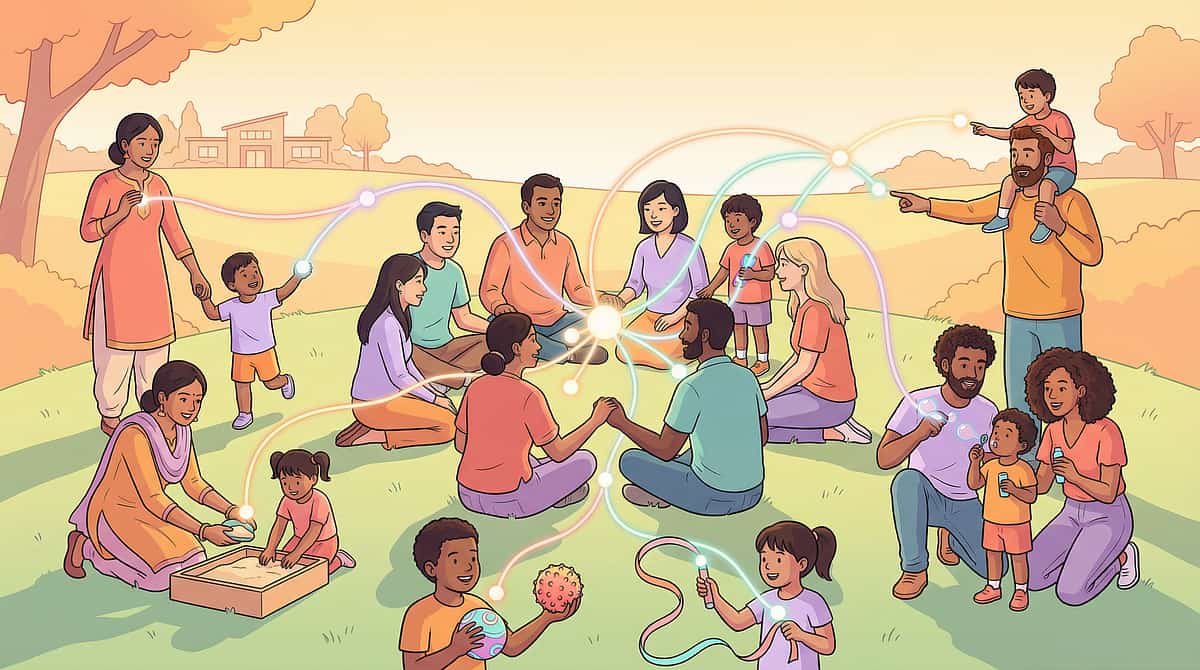
Isolation Is the Enemy of Adherence. You Are Not Alone in This.
WhatsApp Group
"Pinnacle Self-Care Parents India" — Active parent community navigating dressing independence challenges across India. Real-time support from parents who have been exactly where you are.
Online Forum
pinnacleblooms.org/community/self-care — Discussion threads, resource sharing, technique questions answered by OTs. Browse by challenge, age, or diagnosis profile.
Local Parent Meetups
Organized quarterly at Pinnacle centers. Connect with parents in your city navigating the same challenges. Find Nearest Meetup
Peer Mentoring
Connect with a parent who has already navigated shoe-tying with their child. Their experience becomes your lighthouse. Request a Peer Mentor
"Your experience, once you're through this, becomes another family's lighthouse. Consider sharing your journey when you're ready."
Over 1,000 individuals from 111 countries contributed to the WHO Nurturing Care Framework. Community engagement is not supplemental to intervention — it is part of the evidence base.
Helpline: 9100 181 181 (16+ languages, 24×7) — free, no appointment needed. | WHO NCF Community Engagement Principles: Parent support networks improve intervention outcomes.
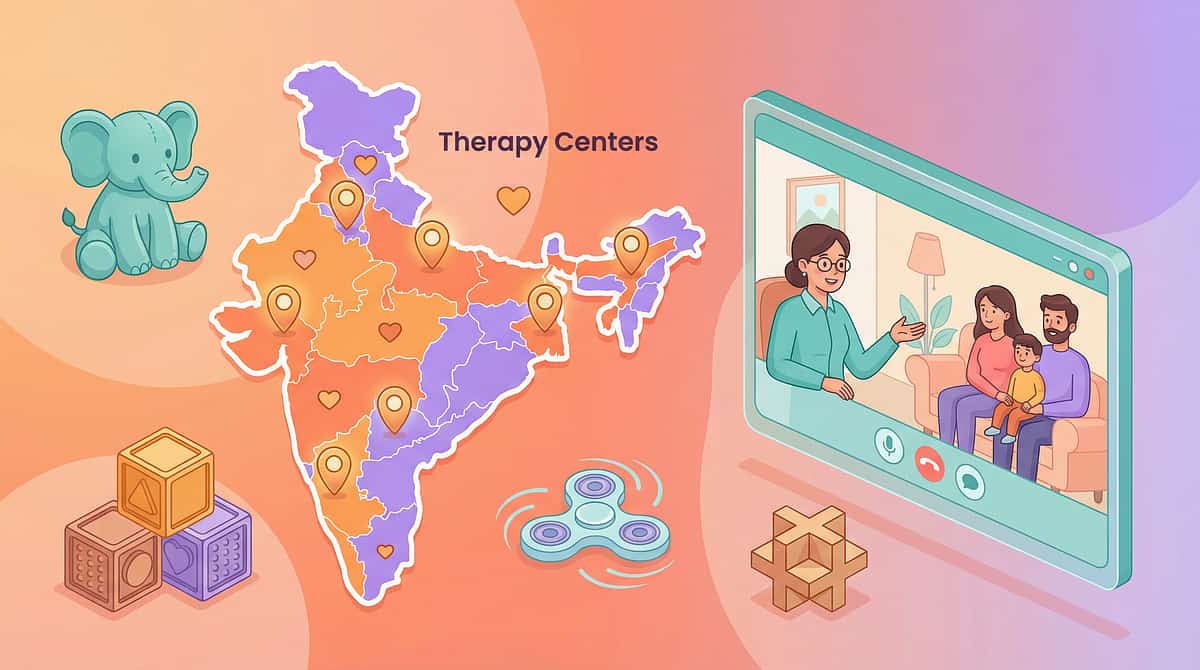
Home + Clinic = Maximum Impact
This technique is led by Occupational Therapy, with secondary disciplines at your center: ABA | Special Education | NeuroDev Pediatrics. Here's what to expect in a Pinnacle OT assessment for shoe tying:
AbilityScore® Assessment
Comprehensive evaluation across fine motor and bilateral coordination domains — identifies which of the 6 sub-skills is rate-limiting for your child specifically
Component Skill Breakdown
Identifies the specific rate-limiting factor — eliminating weeks of targeting the wrong system
Material Prescription
Specific kit for your child's profile — from the 9 materials in this guide, tailored to their sensory and motor needs
Parent Training
Live session showing exact backward chaining implementation — you leave knowing exactly what to do at home
GPT-OS® Integration
Session data flows into your child's developmental tracker — continuous optimization across all 12 domains
🎥 Video Teleconsultation
Available nationwide. Book Now
🏢 In-Clinic Session
70+ centers across India. Find Center + Book
📞 Free Helpline Consultation
Call 9100 181 181 — no appointment needed
WHO NCF Progress Report (2023): 48% increase in countries adopting ECD policies; primary health care identified as key delivery platform for reaching all families. | Pinnacle 70+ center network.
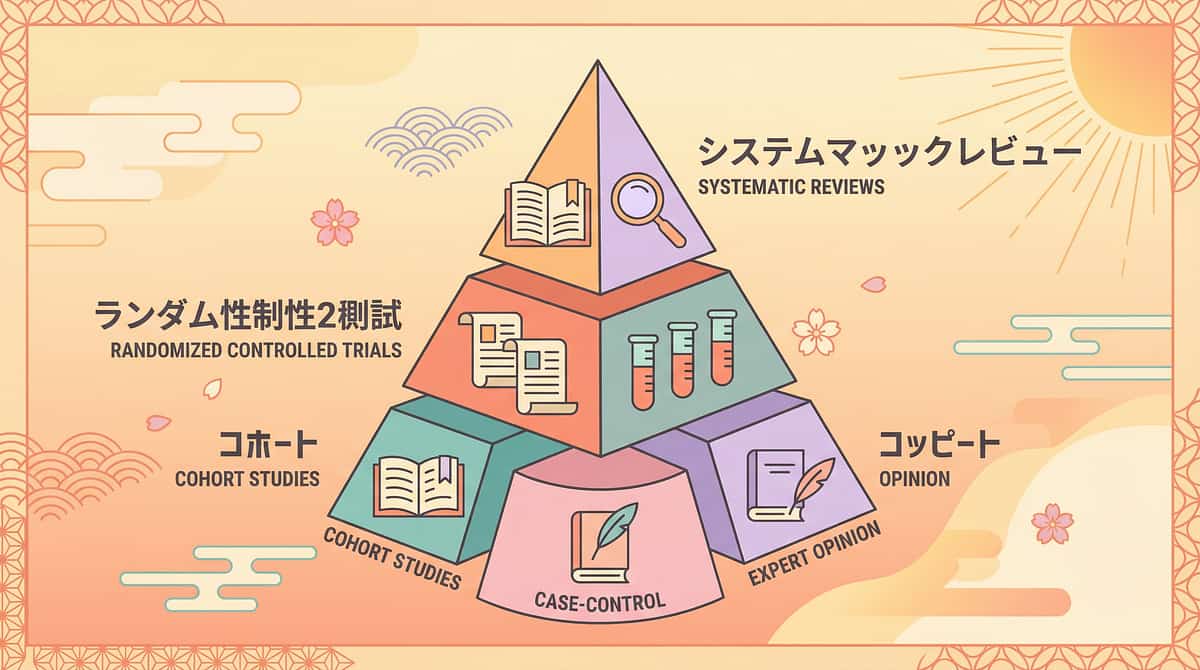
For the Parent Who Wants to Go Deeper — the Full Evidence Base
Deeper Reading
- DCD/Dyspraxia Foundation: dyspraxiafoundation.org.uk
All references graded per Oxford Centre for Evidence-Based Medicine levels. Evidence aggregate for E-526 spans PubMed, WHO, UNICEF, and Cochrane databases.

Your Data Helps Your Child — and Every Child Like Yours
What GPT-OS® Learns From E-526 Specifically
Progression Timing
Which backward chain step each child is on vs. their session count — optimizes when to advance
Material Correlation
Which materials correlate with faster acquisition — powers the material recommendation engine
Profile Prediction
Which child profiles respond to bilateral-first vs. direct tying instruction
Behavioral Optimization
Which reinforcement strategies maintain motivation longest for this domain
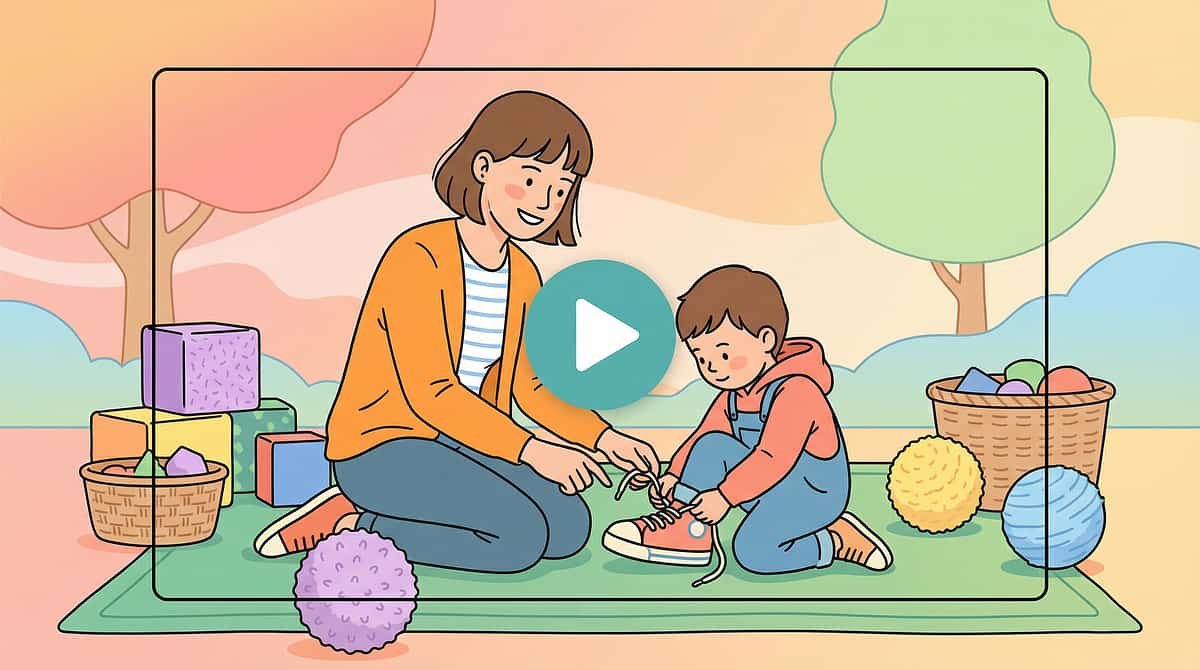
See It In Action — The Original Reel
Reel ID: E-526
Episode 526 of 999
Series: Toileting & Self-Care Independence
Each of the 9 materials shown in 4–5 seconds: lacing board, two-color laces, elastic laces, lace locks, sequence cards, stiff/waxed laces, bilateral activities, backward chaining, and alternative methods. 75–85 second format with therapist voiceover.
"This is one of the most-asked-about self-care challenges in our network — shoe tying. Not because it's trivial, but because the standard advice ('just keep practicing') misses the underlying skill deficit. This reel introduces the 9 materials that work when practice alone doesn't."
← Previous: E-525
9 Materials That Help With Face Washing & Skincare
Current: E-526 ★
9 Materials That Help With Shoe Tying
Next: E-527 →
9 Materials That Help With Hair Brushing & Styling
NCAEP Evidence-Based Practices Report (2020): Video modeling is an evidence-based practice for autism. Multi-modal learning (visual + text + demonstration) improves parent skill acquisition.
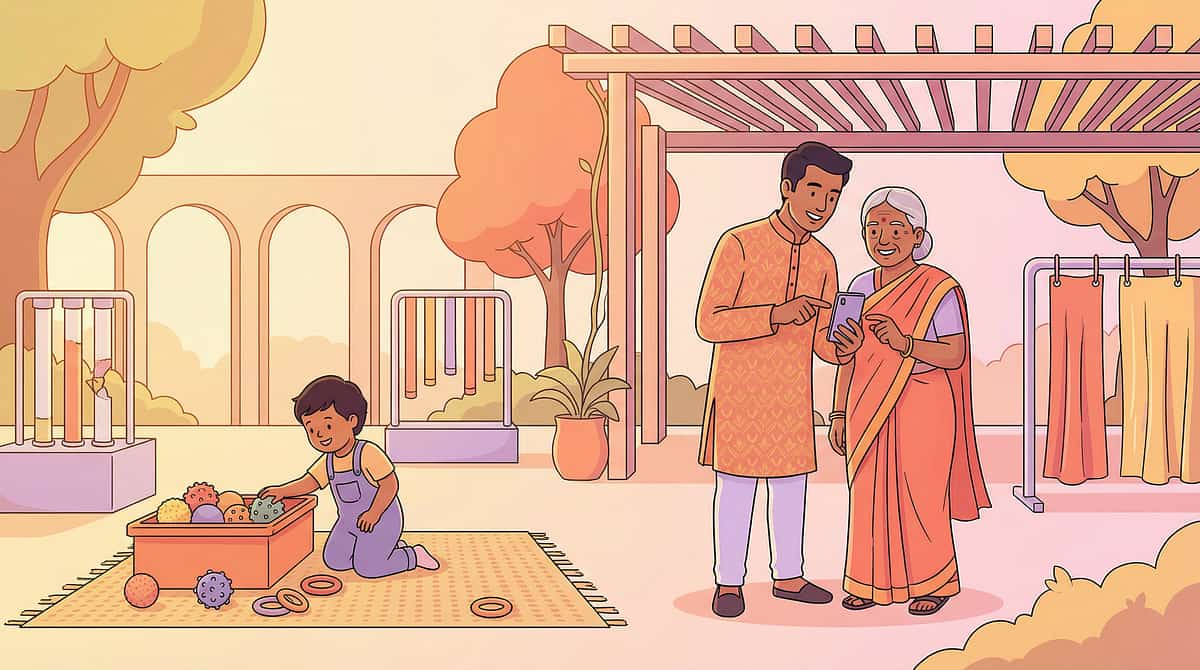
Consistency Across All Caregivers Multiplies Impact by 3×
Share This Page
For Grandparents & Domestic Helpers — What to Know
- Use the lacing board (the wooden board), not the real shoe, for practice
- Always use the two-color laces (one color each side)
- Child only does the LAST part of tying — parent/guardian does the first steps
- Celebrate enthusiastically every completed bow — even if the adult did most of it
- Never force practice if the child is upset
- Questions? Call 9100 181 181
Teacher / School Communication Template
Copy and send to class teacher or PE teacher:
"[Child's name] is currently learning shoe tying using backward chaining (an OT-recommended method). Please allow them to use elastic laces at school. For PE, please give [name] 2–3 extra minutes for shoe preparation. We are working with a Pinnacle OT and will update you on progress. Thank you for your support."
WHO CCD Package: Multi-caregiver training is critical for intervention generalization and maintenance. Single-caregiver implementation limits impact by 40–60% vs. multi-caregiver consistency. | PMC9978394

Questions Parents Actually Ask About Shoe Tying
Q1: My child is 11 and still can't tie shoes. Is it too late?
It is never too late to learn shoe tying — and never too late to switch to elastic laces permanently. At 11, motivation becomes more important. Peer-relevant framing ("you can go on school trips without asking for help") often drives stronger engagement than parent-led practice. Adults with DCD, ADHD, or autism frequently use elastic laces throughout their lives without any functional limitation.
Q2: How long should each practice session be?
10–15 minutes maximum for active shoe-tying practice. Longer sessions produce diminishing returns and increase frustration risk. Daily short sessions outperform weekly long sessions by a factor of 3–4 in fine motor skill acquisition research.
Q3: Which method is best — bunny ears or loop-and-wrap?
Neither is universally best. Bunny ears requires holding two loops simultaneously (high bilateral demand). Loop-and-wrap requires a complex wrapping motion (high motor planning demand). Start with what your child's OT recommends. If one method hasn't progressed after 4 weeks, switch.
Q4: My child tied it at the center but can't do it at home. Why?
Generalization is a separate skill from acquisition. Learning in one environment doesn't automatically transfer to another. Use the same materials, same setup, and same verbal cues at home as were used at the center. Then deliberately practice generalization step by step: same technique, different surface, different shoe, different room.
Q5: Should I get a formal OT assessment before starting?
If your child is over 7 and has been trying for 6+ months without progress, a formal OT assessment is recommended. The assessment identifies which sub-skill is the barrier — saving weeks of targeting the wrong thing. Call 9100 181 181 to book a free guidance call first.
Q6: The lacing board is too easy now but the real shoe is still too hard.
The gap is the angle and shoe flexibility — two genuinely separate motor challenges. Bridge it: lacing board tilted 45° → shoe on table → shoe elevated on stool → shoe on foot while sitting high → normal position. Allow 3–5 sessions at each bridge step.
Q7: Can my child use elastic laces permanently?
Yes, absolutely. Elastic laces are a legitimate adaptive solution used by millions across all age groups, including neurotypical adults who value the convenience. Using elastic laces is not "giving up" — it is ensuring functional independence while mastery is pursued alongside, not as a prerequisite.
Q8: My other children learned easily. Why is this one struggling?
Shoe tying requires the convergence of 6 neurological systems. If any one is slightly less developed — bilateral coordination, working memory, motor sequencing — the entire task fails, even though all other skills are intact. You are not doing anything differently. Your child's nervous system has a specific profile that needs a targeted approach, not more practice of the standard approach.
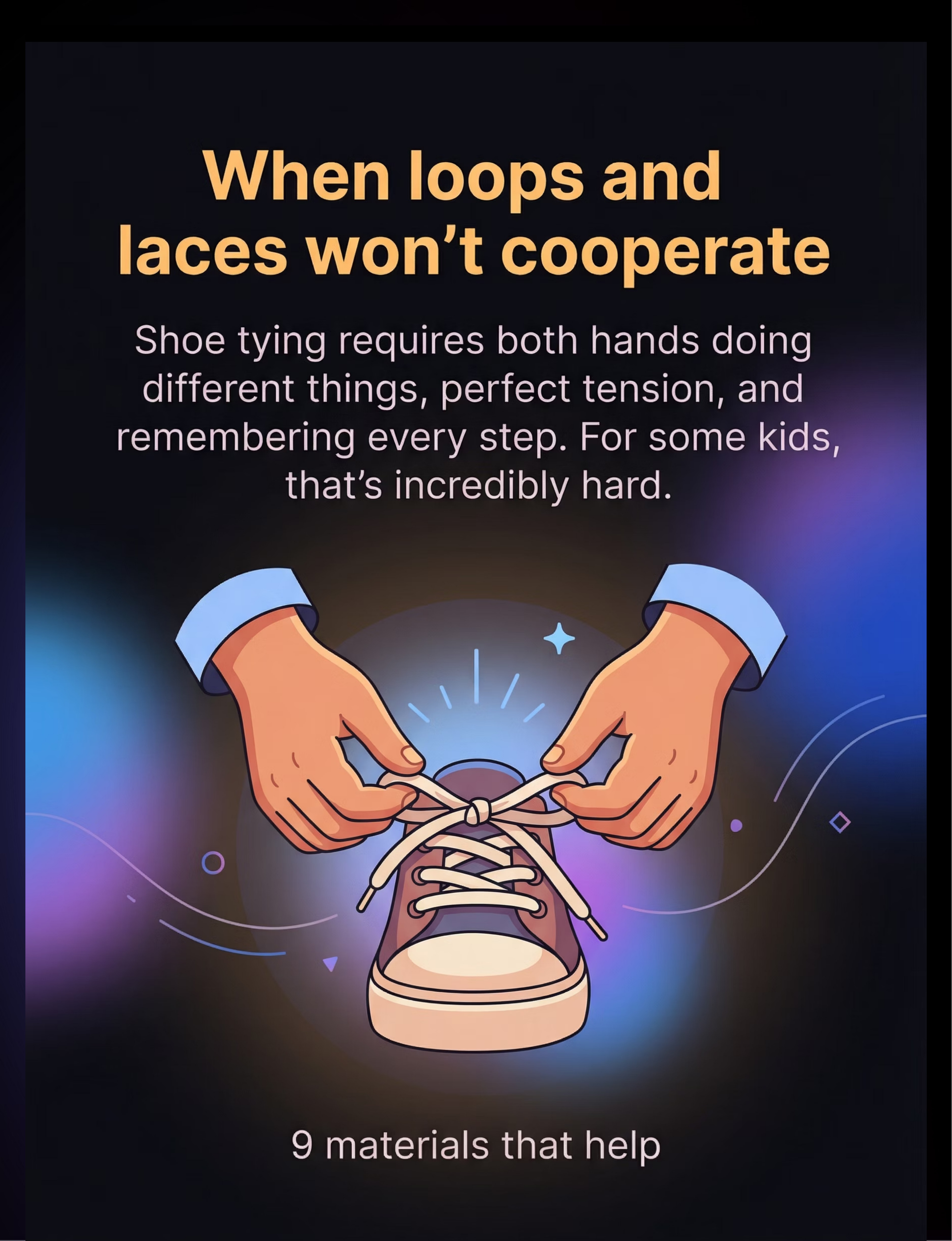
Preview of 9 materials that help with shoe tying Therapy Material
Below is a visual preview of 9 materials that help with shoe tying therapy material. The pages shown help educators, therapists, and caregivers understand the structure and content of the resource before use. Materials should be used under appropriate professional guidance.



Link copied!

Your Child Can Learn to Tie Their Shoes. The Right Tools Make the Difference.
🚀 Start This Technique Today
Launch the E-526 protocol with GPT-OS® session support
pinnacleblooms.org/start/E-526
pinnacleblooms.org/start/E-526
📞 Book a Free Consultation
Pinnacle center booking or call 9100 181 181
pinnacleblooms.org/book
pinnacleblooms.org/book
→ Next Technique: E-527 Hair Brushing
"From fear to mastery. One technique at a time."
Pinnacle Blooms Network® empowers families across 70+ countries to transform their homes into evidence-based, multi-disciplinary, personalized therapeutic environments — powered by GPT-OS® and the knowledge of thousands of expert clinicians, parents, and researchers.
20M+
Exclusive 1:1 Therapy Sessions
97%+
Measured Improvement
70+
Centers Across India
70+
Countries Reached
Medical Disclaimer: This content is educational and evidence-referenced. It does not replace individualized assessment and intervention planning with licensed occupational therapists and healthcare professionals. Persistent shoe-tying difficulty may indicate underlying conditions requiring professional evaluation. Individual results may vary. Statistics represent aggregate outcomes across the Pinnacle Blooms Network across 20M+ therapy sessions.
© 2025 Pinnacle Blooms Network® | Unit of Bharath Healthcare Laboratories Pvt. Ltd. | CIN: U74999TG2016PTC113063 | DPIIT: DIPP8651 | MSME: TS20F0009606 | GSTIN: 36AAGCB9722P1Z2 | GPT-OS®, AbilityScore®, TherapeuticAI®, EverydayTherapyProgramme™, FusionModule™ are proprietary marks. All rights reserved. | Free National Autism Helpline: 9100 181 181 | 16+ languages | 24×7