
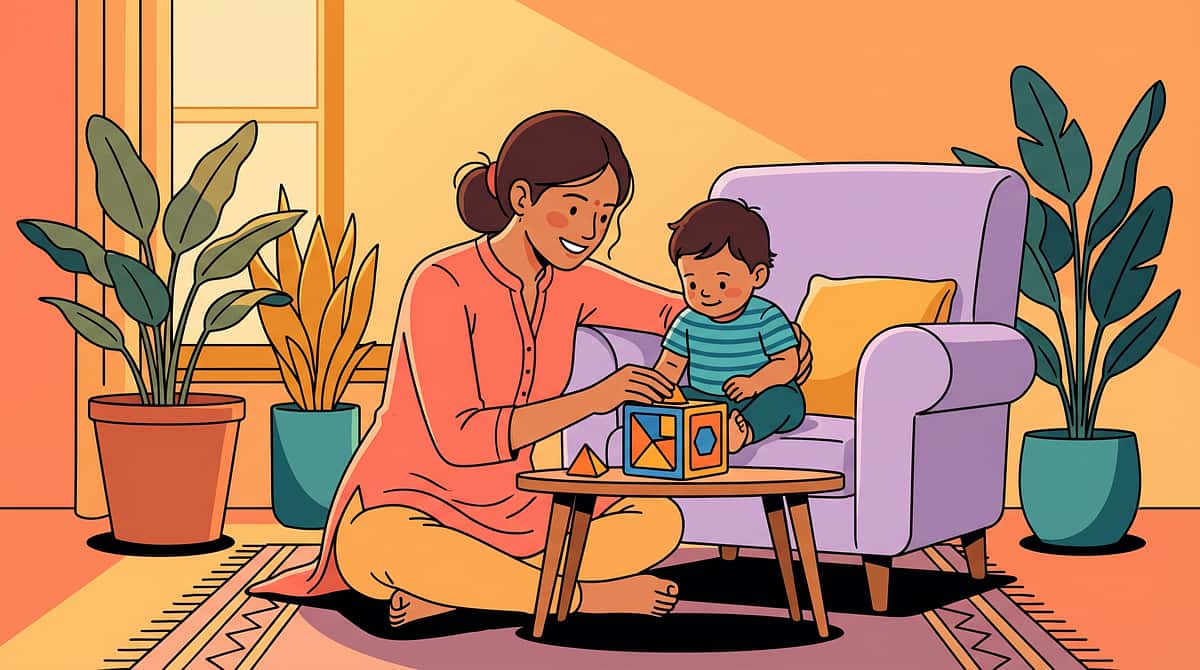
"MINE!" — From Clenched Fists to Open Hands
She clutches every crayon. Even the colours she'll never use. C-306 | 9 Materials That Help With Sharing Difficulty — the evidence-based pathway from fear to generosity, for children ages 2–8.
Pinnacle Blooms Network®
GPT-OS® Technique C-306
Social Development

The Recognition Moment
Your daughter's cousin reached for the blue block. In three seconds flat: screaming, body thrown forward, arms wrapped around the entire pile — not just the blue block, all of them. Playdates no longer get scheduled. Her brother has quietly learned to just let her have everything.
You are not failing. Your child's nervous system is learning how to share the world.
What You See
A child who hoards, screams, and guards every object — even ones they aren't using.
What's Actually Happening
A nervous system without the scaffolding yet to make object-release feel survivable.
What C-306 Provides
9 clinically-mapped materials that build the bridge — one sharing cycle at a time.
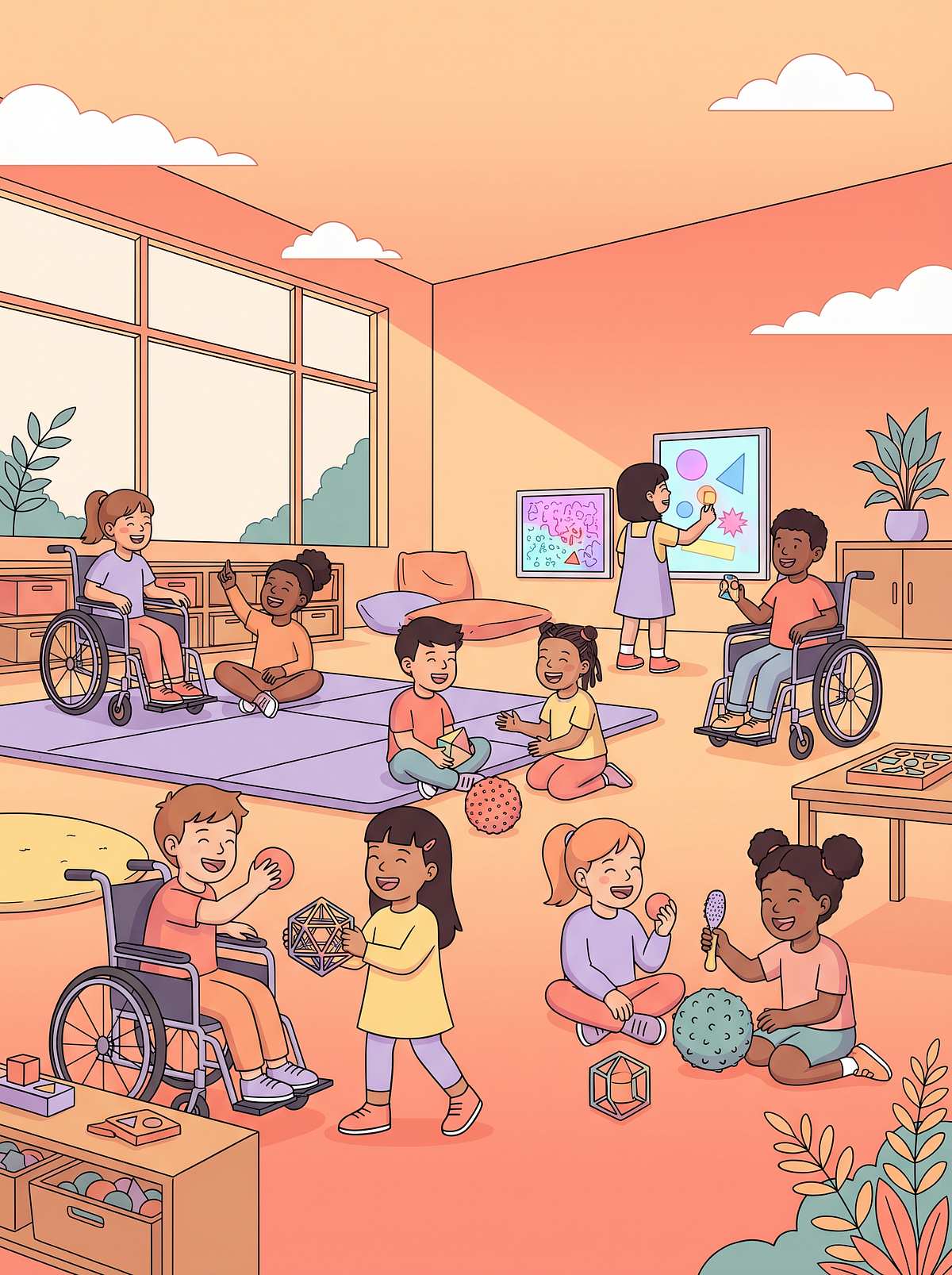
You Are Among Millions of Families Navigating This Exact Challenge
1 in 36
Children with ASD
Globally diagnosed — sharing difficulty among the most frequently reported behavioural challenges. CDC Autism Prevalence Report, 2023
78%
Of Ages 2–4
Resist sharing as a developmentally normal stage — but children with autism or SPD often remain here significantly longer. Brownell et al., 2013
2.3M+
Children in India
Estimated to have autism spectrum disorder, with prosocial behaviour difficulties among the most impactful daily challenges. Indian J Pediatr, 2019
⚡ Some resistance to sharing is developmentally typical until ages 5–7. For children with autism, sensory processing differences, or anxiety, this window is extended — and requires skilled, structured intervention, not punishment.
The Neural Architecture of Sharing
Sharing requires the simultaneous activation of at least 5 distinct brain systems working together — and in children with autism or SPD, these circuits may be asynchronously developed.
- Prefrontal Cortex — executive control, impulse inhibition
- Amygdala — emotional regulation during perceived loss
- Anterior Cingulate Cortex — conflict monitoring between "want" and "should"
- Theory of Mind Network (TPJ) — understanding others ALSO want the item
- Reward Circuits — learning sharing produces social reward, not loss
What's Happening in Your Child's Brain
What This Means at Home
When your child screams "MINE!" — this is not defiance. This is a nervous system that cannot yet fully understand that others experience desire the same way they do, experiences object release as a genuine threat signal, and lacks the executive control to override the "protect this" impulse.
This is a wiring difference — not a character flaw. Not your parenting. Not manipulation. The 9 materials in this guide work precisely BECAUSE they provide external scaffolding for brain systems that aren't yet reliably firing together.

Clinically Validated. Home-Applicable. Parent-Proven.
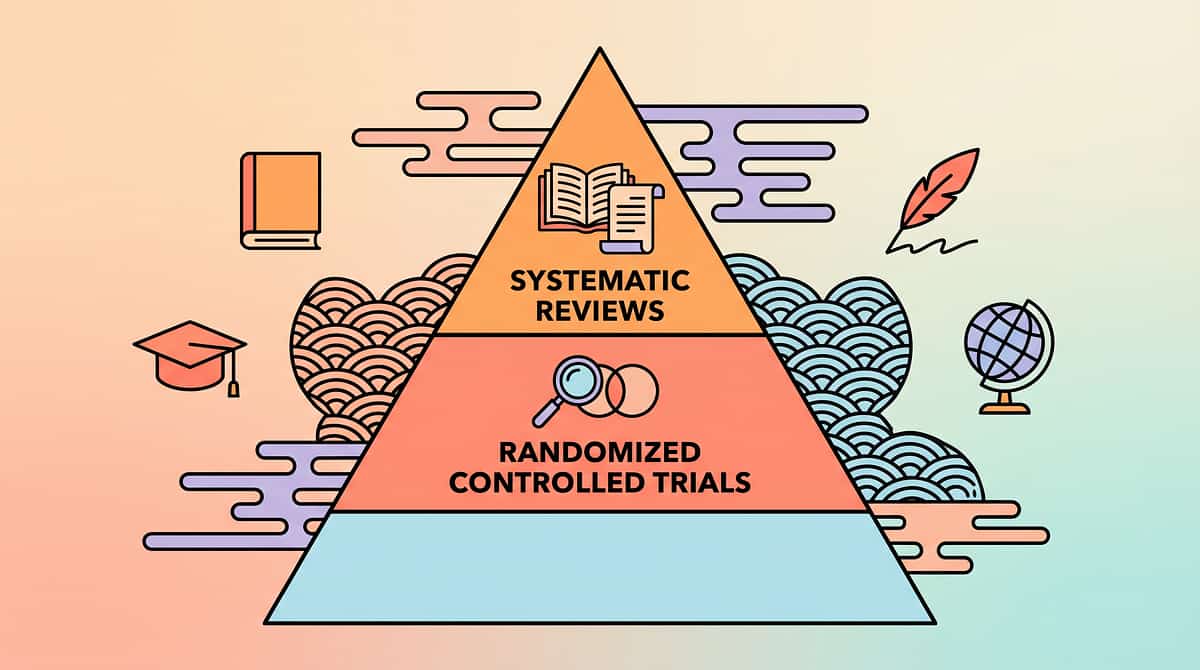
PRISMA Systematic Review (2024)
16 studies confirm sensory integration and behavioural interventions are evidence-based for prosocial skill development in ASD. PMC11506176
Meta-Analysis — World J Clin Cases (2024)
Structured material-based intervention effectively promotes social skills (primary) and adaptive behaviour (secondary) across 24 studies. PMC10955541
Brownell et al. (Infancy, 2013)
Parent emotional talk + structured sharing scaffolding directly increases sharing behaviour in toddlers.
Padmanabha et al. — Indian RCT (2019)
Home-based structured interventions show significant prosocial outcomes; parent-administered feasibility confirmed. DOI: 10.1007/s12098-018-2747-4
NCAEP Evidence-Based Practices (2020)
Visual supports and behavioural reinforcement systems classified as evidence-based practices for autism.
"Sharing is a skill — not a virtue that appears spontaneously. Structured scaffolding with evidence-based materials produces measurable, lasting prosocial behaviour change in children 2–8 years." — Consortium Clinical Summary, Pinnacle Blooms Network®
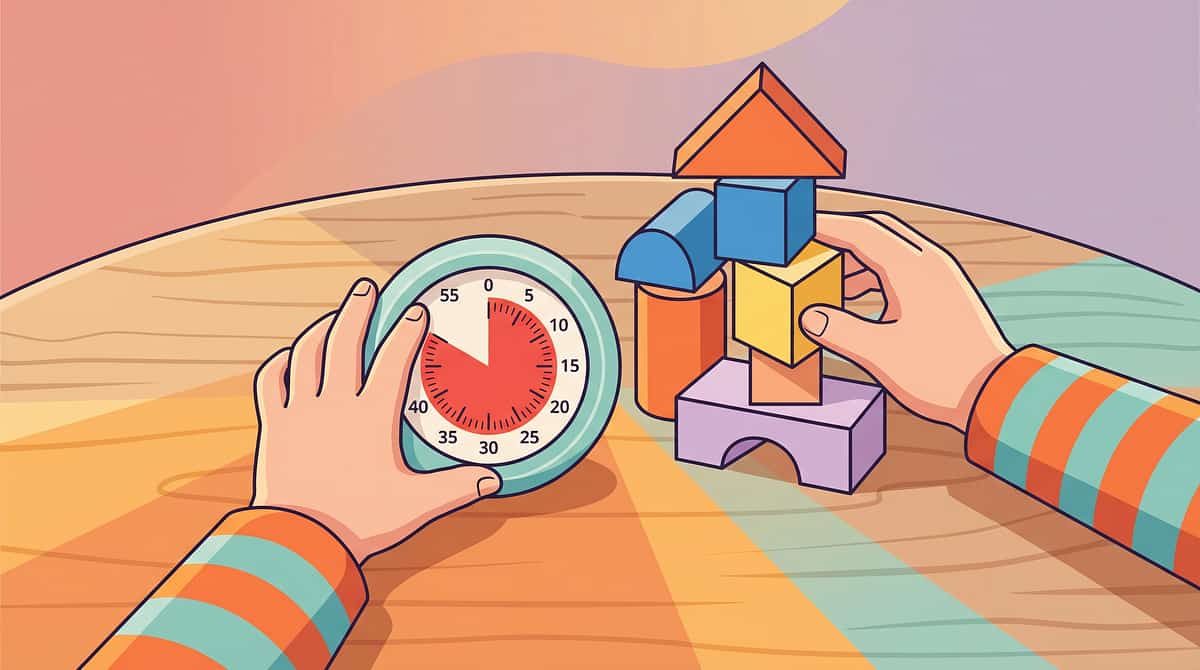
ACT II: Knowledge Transfer
The Technique: What It Is
Formal Name
Structured Sharing Difficulty Intervention via Material Scaffolding
Parent-Friendly Name
"Teaching Sharing as Gaining, Not Losing"
Technique Code
C-306 | Domain: Social Development → Prosocial Behaviour & Sharing (SOC-PSB)
Ages 2–8
10–20 min sessions
Daily or every-other-day
Home Setting
Definition
Sharing difficulty in children with autism, sensory processing differences, or developmental delays is not stubbornness — it is a skills deficit rooted in incomplete development of Theory of Mind, emotional regulation, object permanence trust, and executive function.
C-306 introduces 9 clinically-mapped physical materials that provide external scaffolding for each of these underlying mechanisms — making sharing feel predictable, survivable, and ultimately rewarding.
This is not a compliance exercise. It is a neurological bridge built through carefully sequenced material-based intervention.
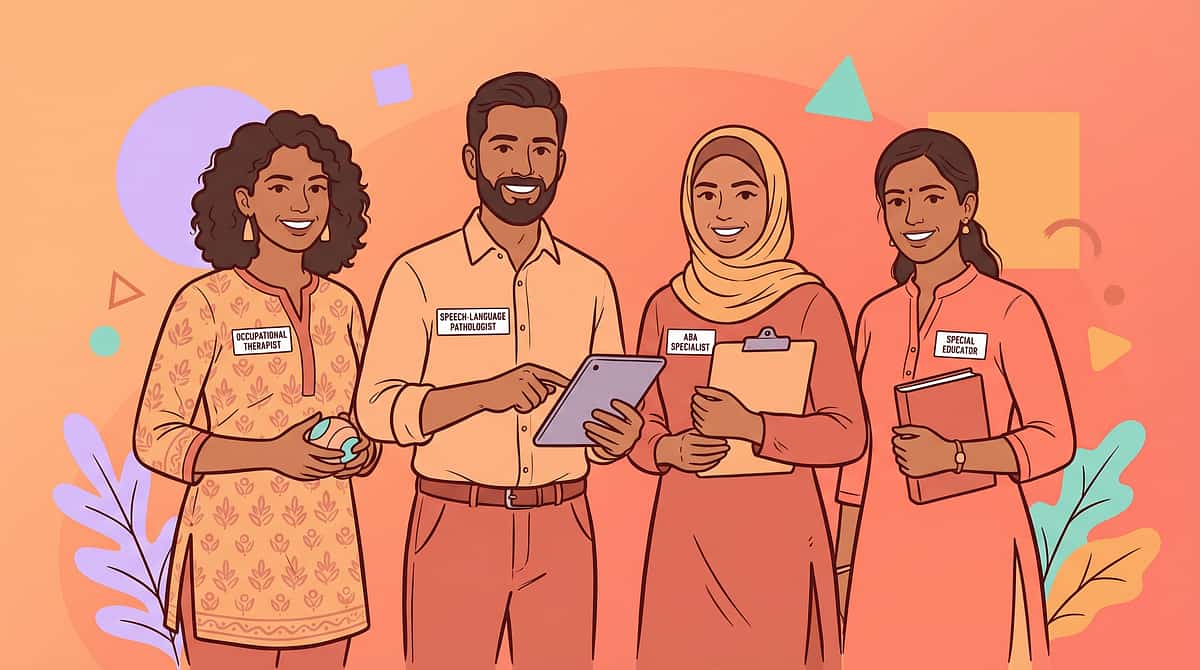
The Pinnacle Consortium Deploys C-306 Across Multiple Disciplines
"The brain doesn't organise by therapy type — and neither does our care."
🟦 ABA / BCBA — Primary Lead
Designs the reinforcement schedule, token economy for sharing, and behavioural data collection. Identifies functional antecedents to hoarding. Oversees generalisation programming across home, school, and community settings.
🟩 Occupational Therapy — Co-Lead
Addresses sensory underpinnings of object attachment. Provides proprioceptive input to reduce anxiety during sharing challenges. Designs the environmental setup that makes sharing feel safe.
🟨 Speech-Language Pathology
Develops language scaffolding around sharing ("I want a turn," "Can I have it back?"). Supports understanding of social reciprocity language and addresses receptive language barriers.
🟥 Special Education / NeuroDev Pediatrics
Integrates sharing skill development into the child's IEP goals. NeuroDev Pediatrics monitors medication interactions that may affect impulse control during sharing challenges.
All disciplines work through the GPT-OS® FusionModule™ — ensuring the OT's sensory approach and the BCBA's behavioural approach are convergent toward the same sharing skill target, never contradictory.
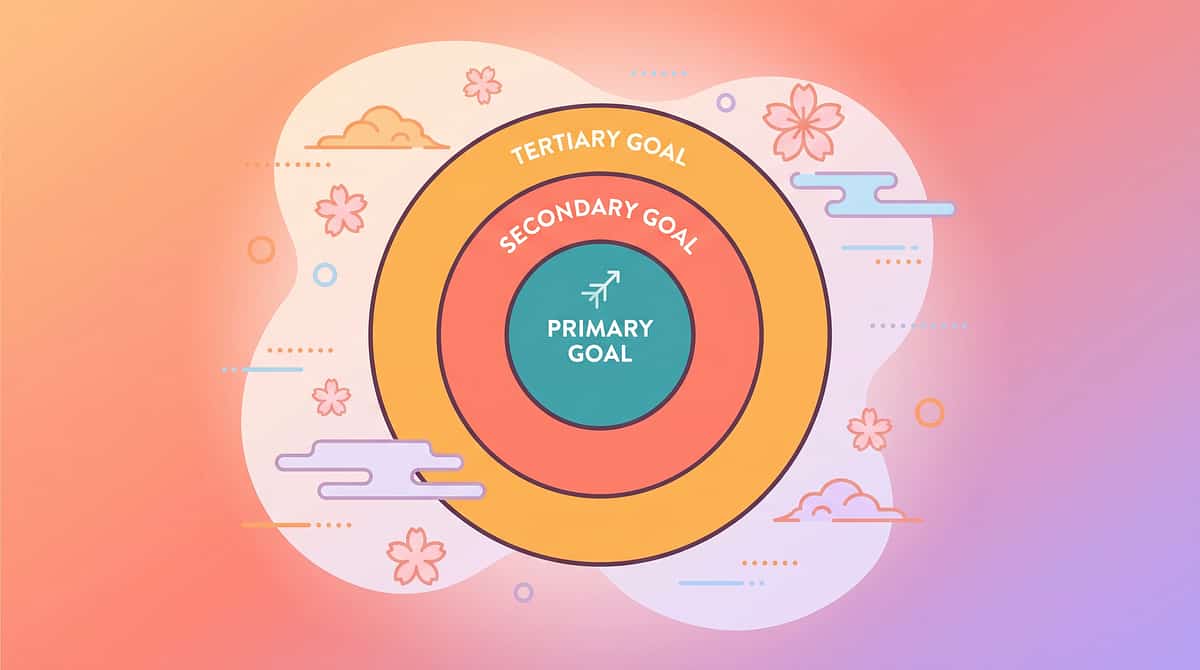
Material 01 of 09
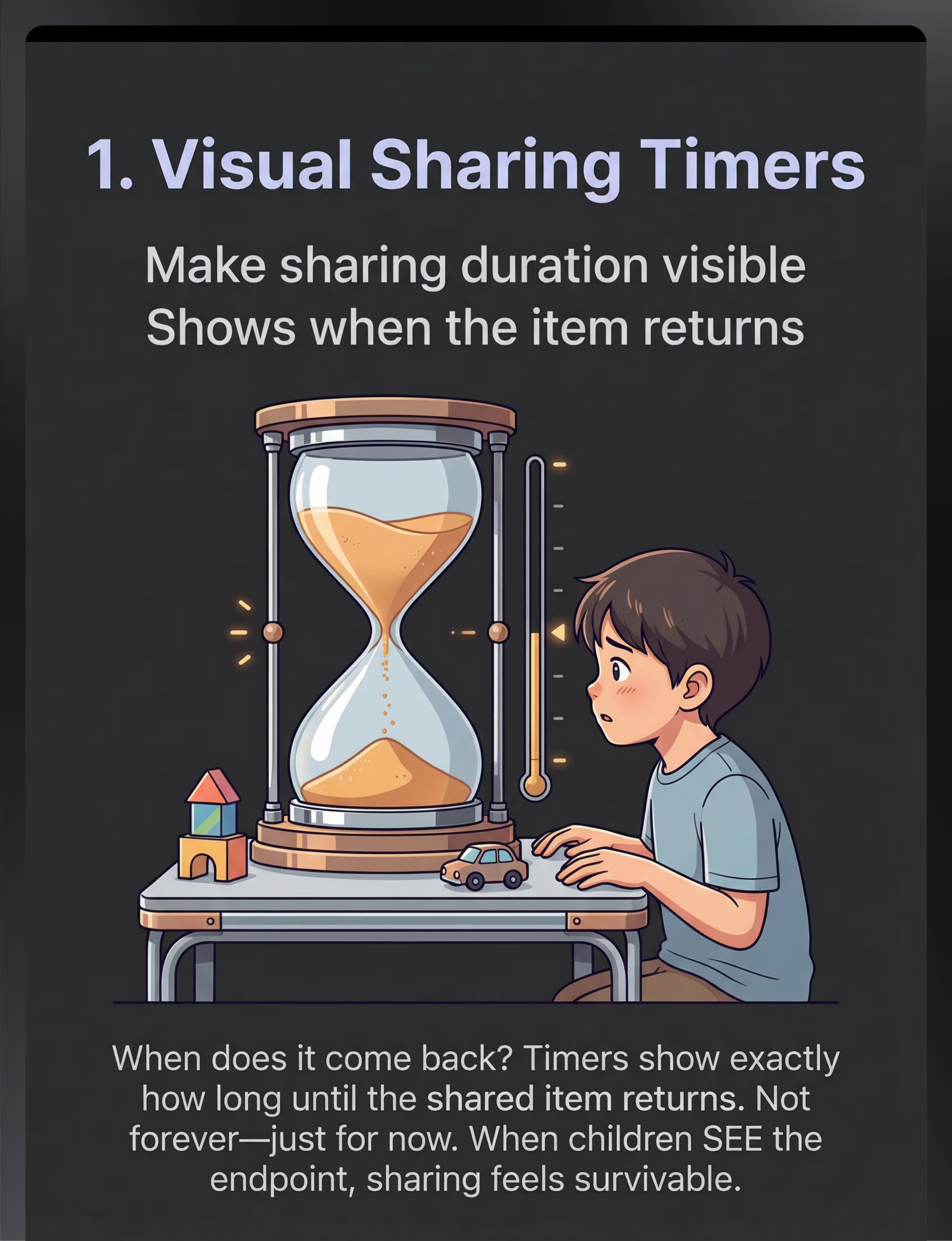
Visual Sharing Timers
What It Is
Sand timers or visual countdown timers that make sharing duration physically visible — the child can SEE when the item will return. Not "forever" — just "for now, for this long."
Why Pinnacle Recommends
Creates predictability — the core anxiety driver in sharing difficulty. When the child can watch time passing, object release becomes tolerable because return is visible and certain.
Price Range
₹200–500 | Search Visual Sand Timers on Amazon.in
Canon Category
Visual Supports
✂️ DIY Version (₹0)
Use a phone timer facing outward so the child can see the countdown. Set 1–2 minutes. Make it visible. Honour it absolutely — if the item doesn't return when promised, trust is damaged and progress regresses.
Never extend the timer without the child's agreement. Trust in the timer is the foundation of the entire technique.
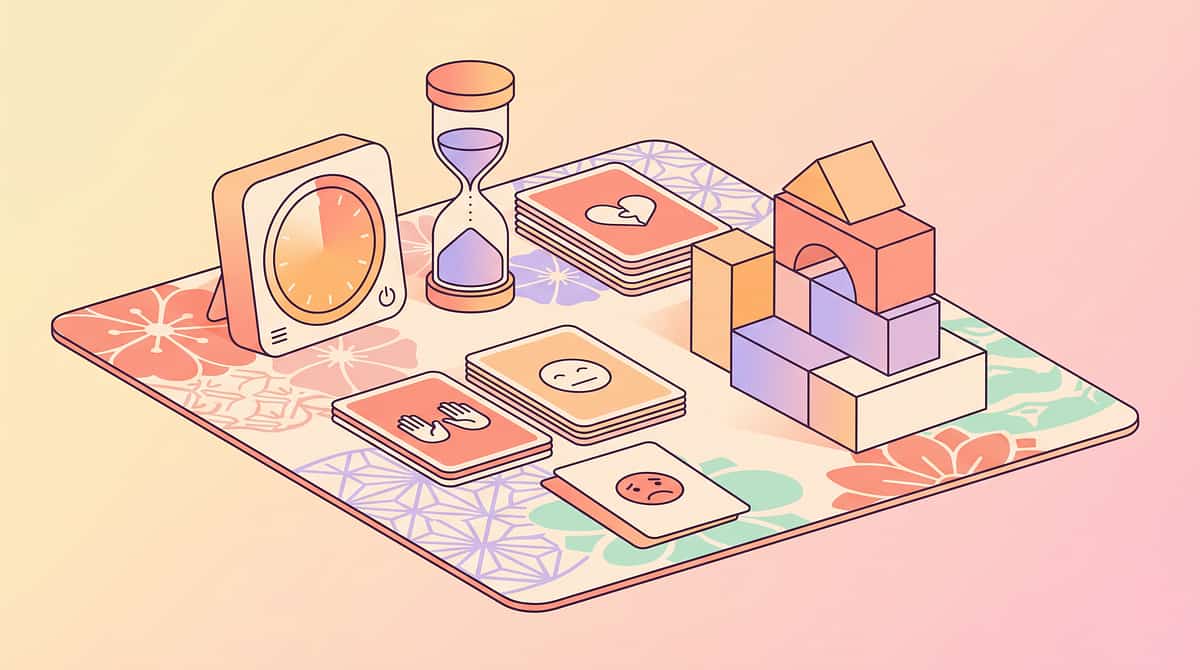
Material 02 of 09
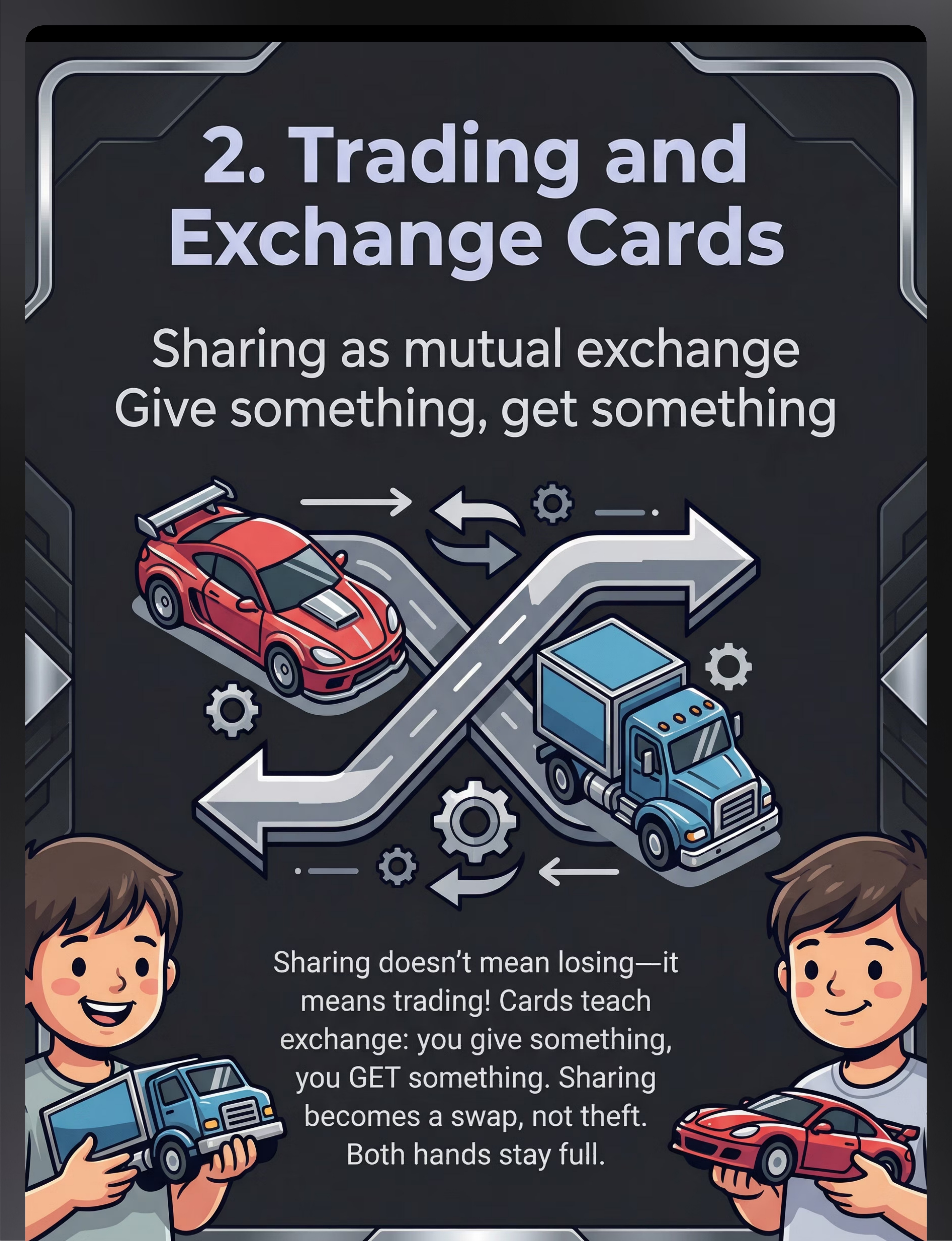
Trading and Exchange Cards
What It Is
Visual card sets that teach the exchange concept — you give something, you receive something. Sharing as a swap, not a theft. Both hands stay full.
Why Pinnacle Recommends
Reframes sharing cognitively. Trading is neurologically easier than pure giving because the reward circuit activates on both ends — neither child experiences net loss.
Price Range
Canon Category
Social Learning Materials
✂️ DIY Version (₹0)
Draw simple arrow cards — one pointing each direction. Practice: "I share my red car, I get your blue truck." Celebrate: "Both of us got something!" The visual representation of exchange is what matters, not production quality.
This is the most powerful cognitive reframe in C-306 — from "I lose something" to "we both gain something."
Material 03 of 09
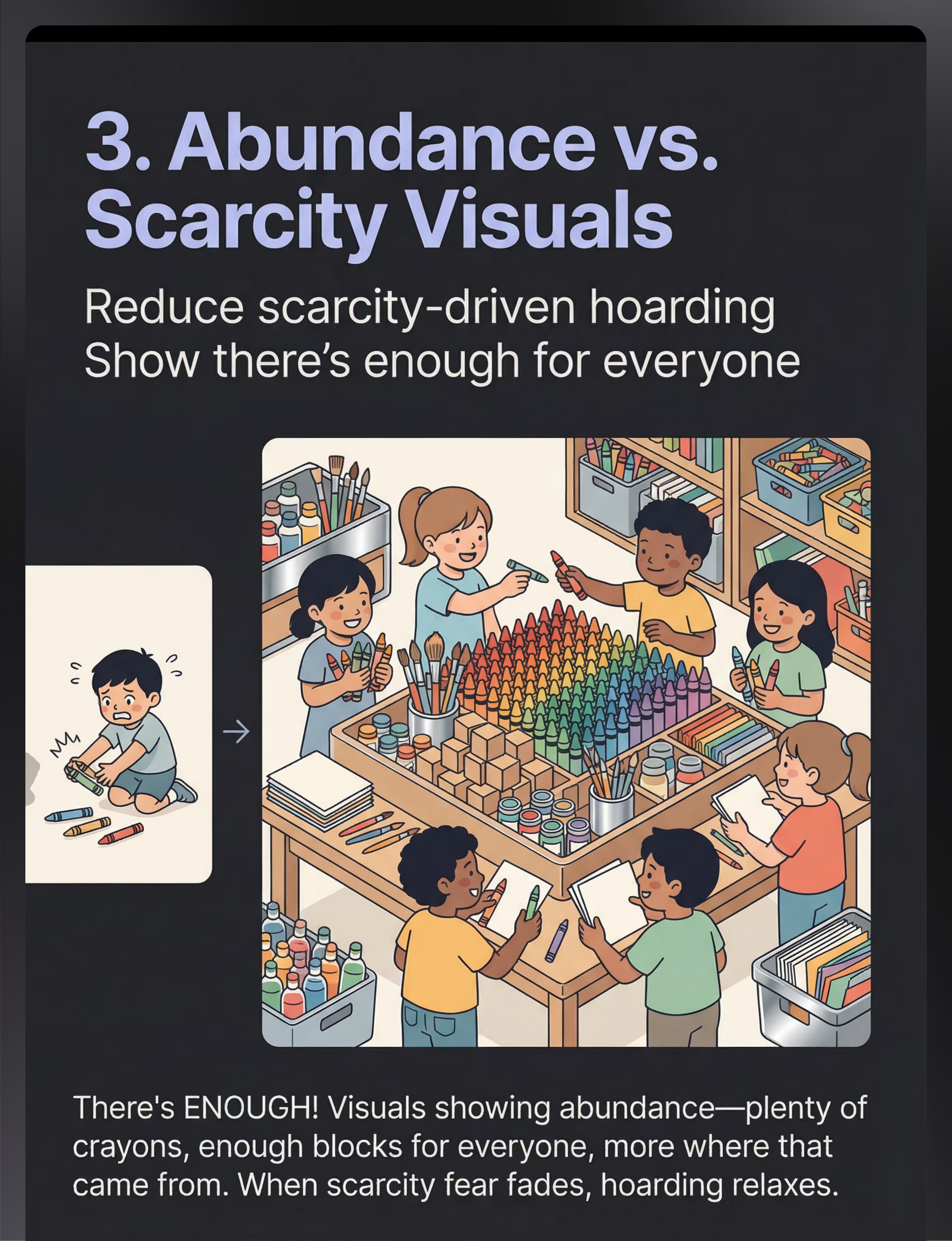
Abundance vs. Scarcity Visuals
What It Is
Visual displays showing that there are enough items for everyone — large quantities of crayons, blocks for all, "more where that came from" imagery. Directly addresses the scarcity fear that drives hoarding.
Why Pinnacle Recommends
When the brain sees abundance, the grip relaxes. The root driver of most hoarding behaviour is not greed — it is fear of not having enough. Abundance visuals address the root, not the symptom.
Price Range
₹150–350 | Search Abundance Visual Posters Children
Canon Category
Visual Supports / Mindset Materials
✂️ DIY Version (₹0)
Before any sharing moment, physically show abundance: "Look — there are 24 crayons. Everyone can have 8. You still have plenty." Direct physical demonstration is even more effective than a printed illustration — the child sees the reality of abundance in real time.
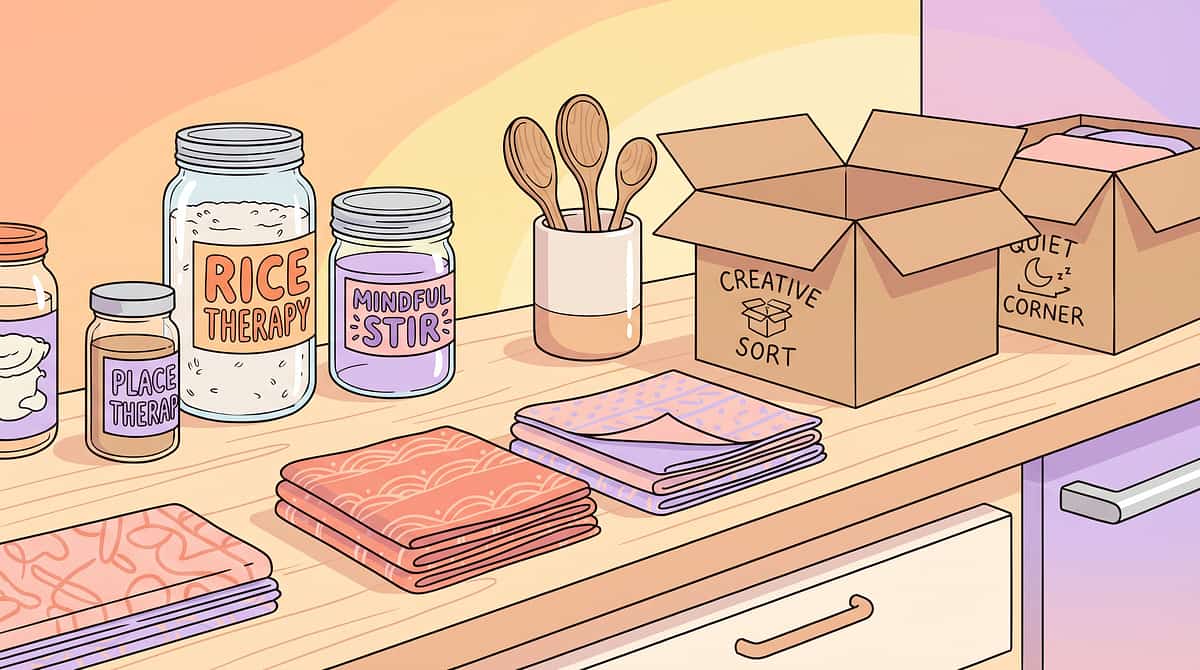
Material 04 of 09
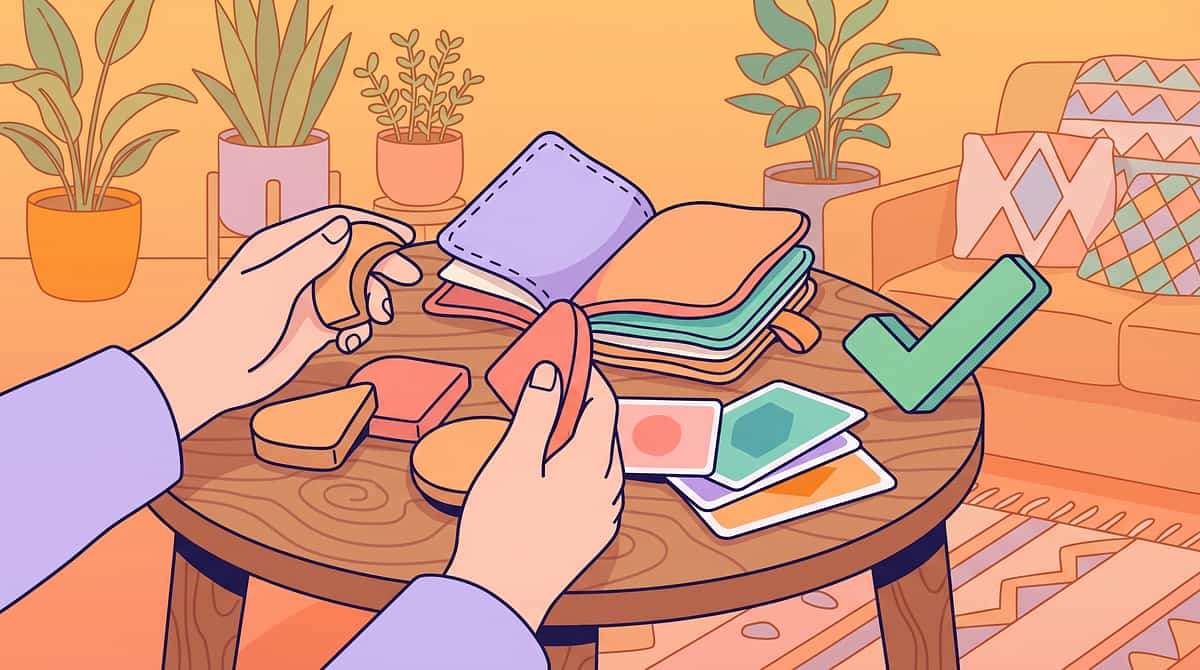
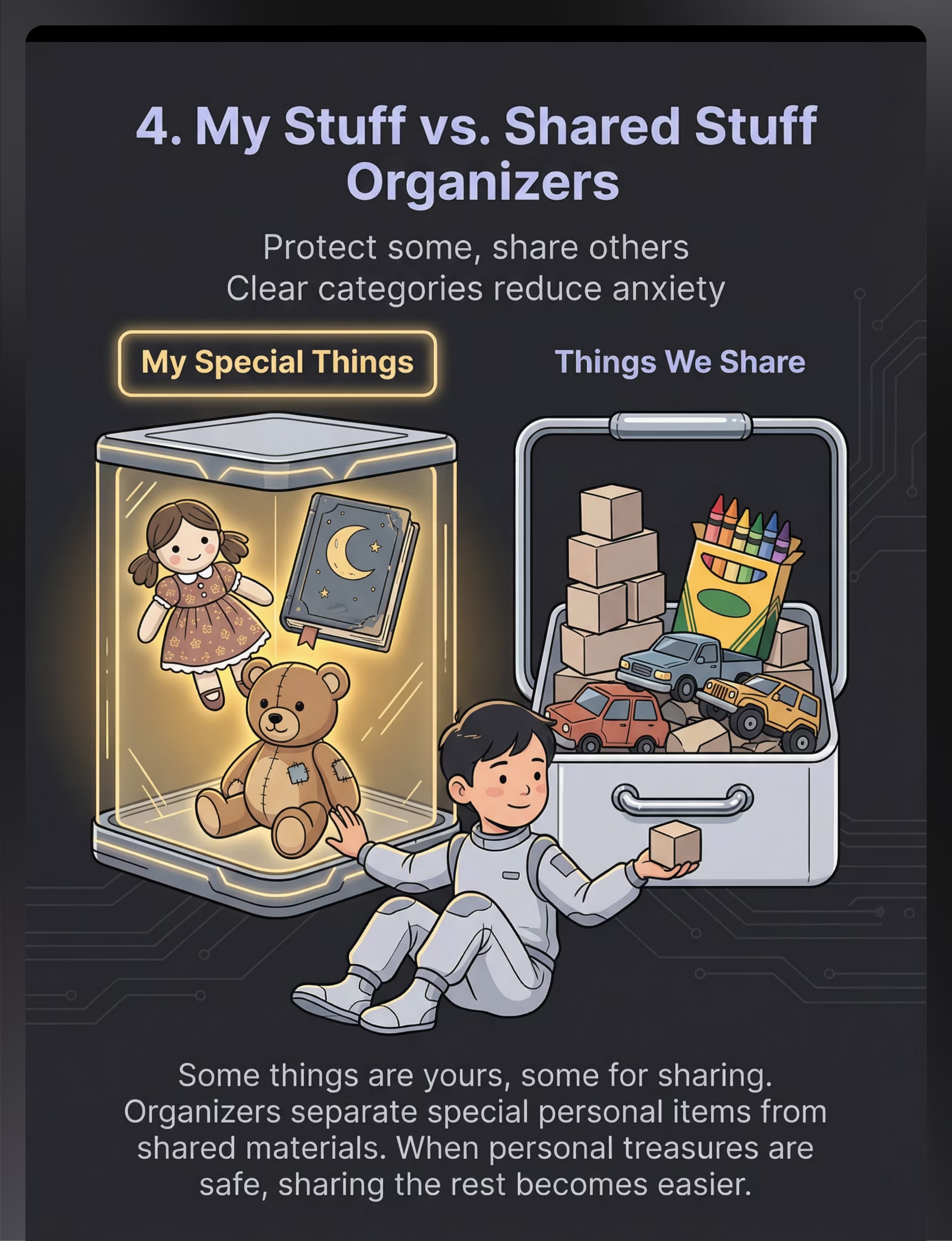
My Stuff vs. Shared Stuff Organizers
What It Is
Two clearly labelled bins or containers — "My Special Things" (protected, never shared) and "Things We Share" (available to others). The single most foundational material in C-306.
Why Pinnacle Recommends
Security enables generosity. By protecting some items absolutely, sharing others becomes much easier. The child who knows their treasures are safe can risk releasing other items. Never violate the My Treasures bin — ever.
Price Range
Canon Category
Organisational Tools / Sorting Materials
✂️ DIY Version (₹0)
Two cardboard boxes. Label one "My Treasures 🔒" and one "Share Box ✅". Let the child place items themselves. The categorisation ritual is therapeutic in itself.
The "My Treasures" bin is NEVER violated — not by parents, siblings, or therapists. Breaking this promise destroys the safety that makes sharing possible.
Material 05 of 09
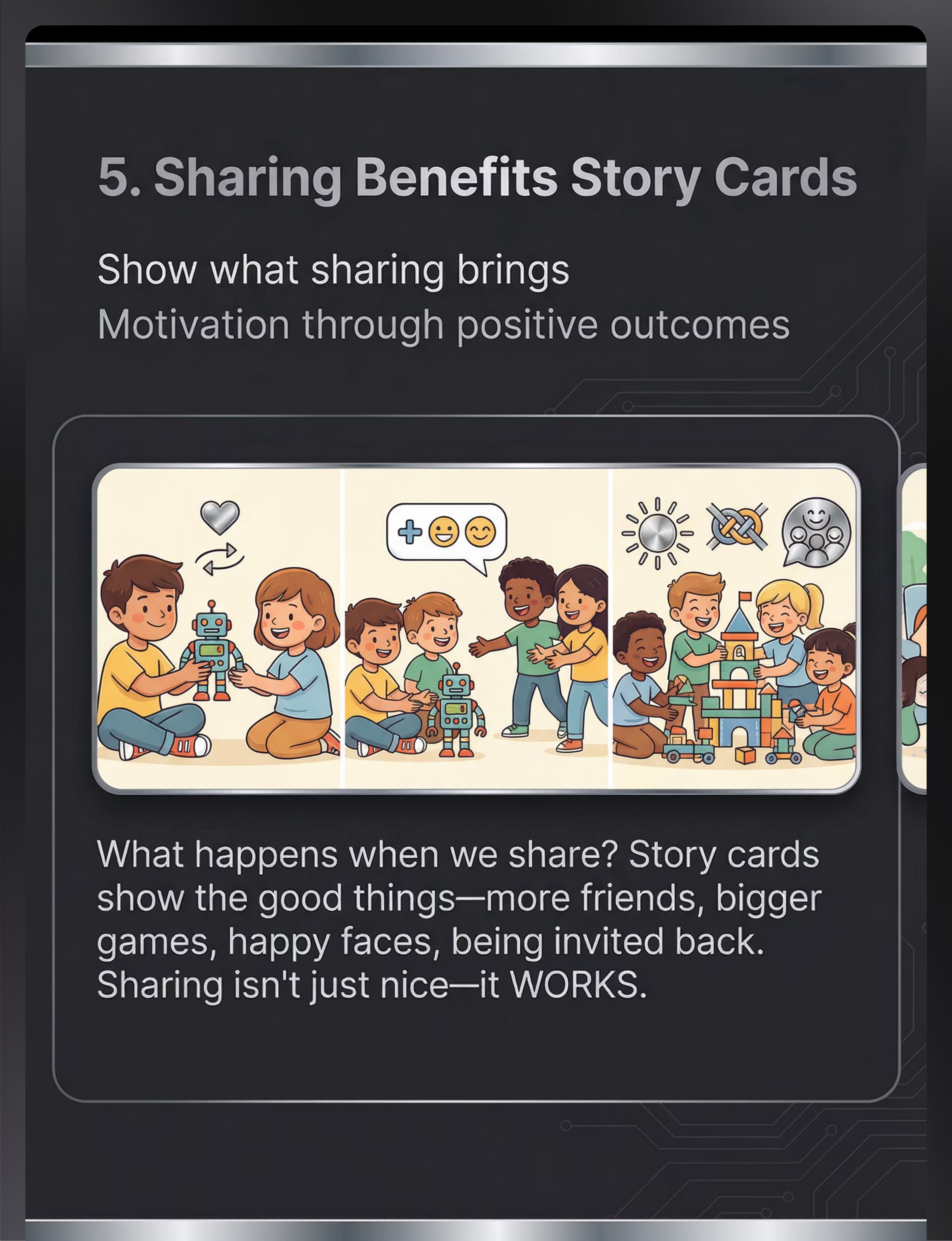
Sharing Benefits Story Cards
What It Is
Visual story card sets showing the positive outcomes of sharing — more friends, bigger collaborative games, happy faces, being invited back. Motivation through visible positive consequences.
Why Pinnacle Recommends
The child's brain needs to see "sharing → good things" before the behaviour is intrinsically rewarding. Story cards pre-load the reward circuit with expected positive outcomes, making the first sharing step less threatening.
Price Range
₹200–500 | Search Social Stories Sharing Cards Children
Canon Category
Social Learning Materials / Narrative Tools
✂️ DIY Version (₹0)
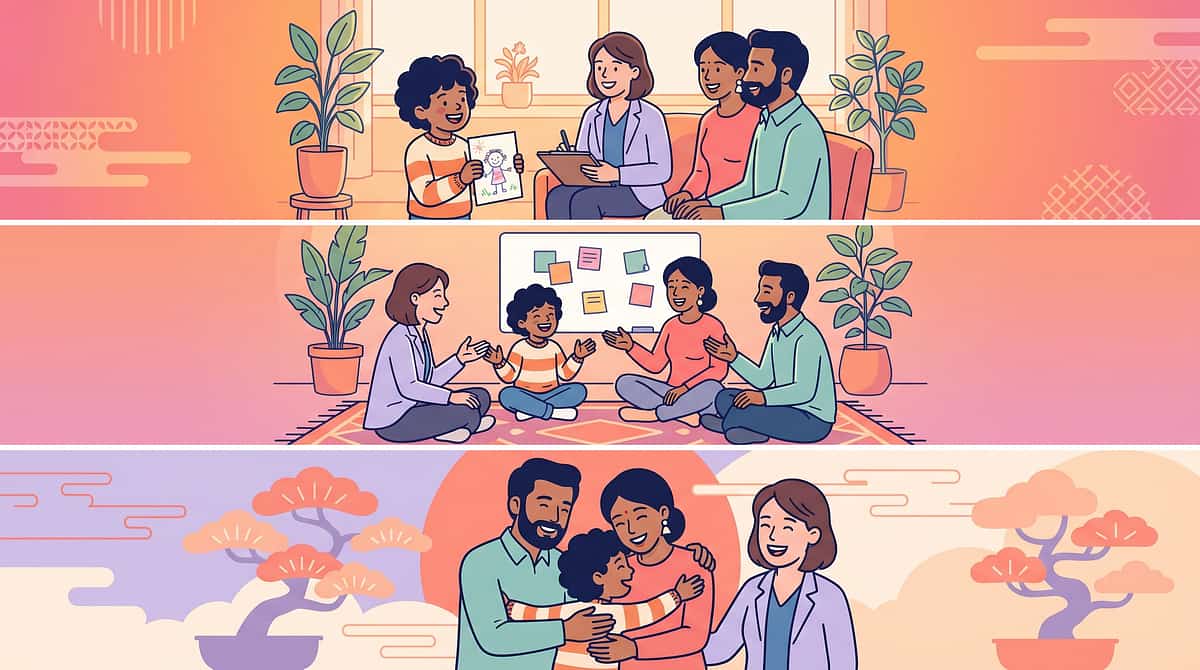
Draw a 3-panel story card:
Panel 1: Child shares toy.
Panel 2: Friend smiles, both play together.
Panel 3: Child is invited to play again.
Simple stick figures are enough — the narrative is what matters, not the art.
Panel 1: Child shares toy.
Panel 2: Friend smiles, both play together.
Panel 3: Child is invited to play again.
Simple stick figures are enough — the narrative is what matters, not the art.
Material 06 of 09
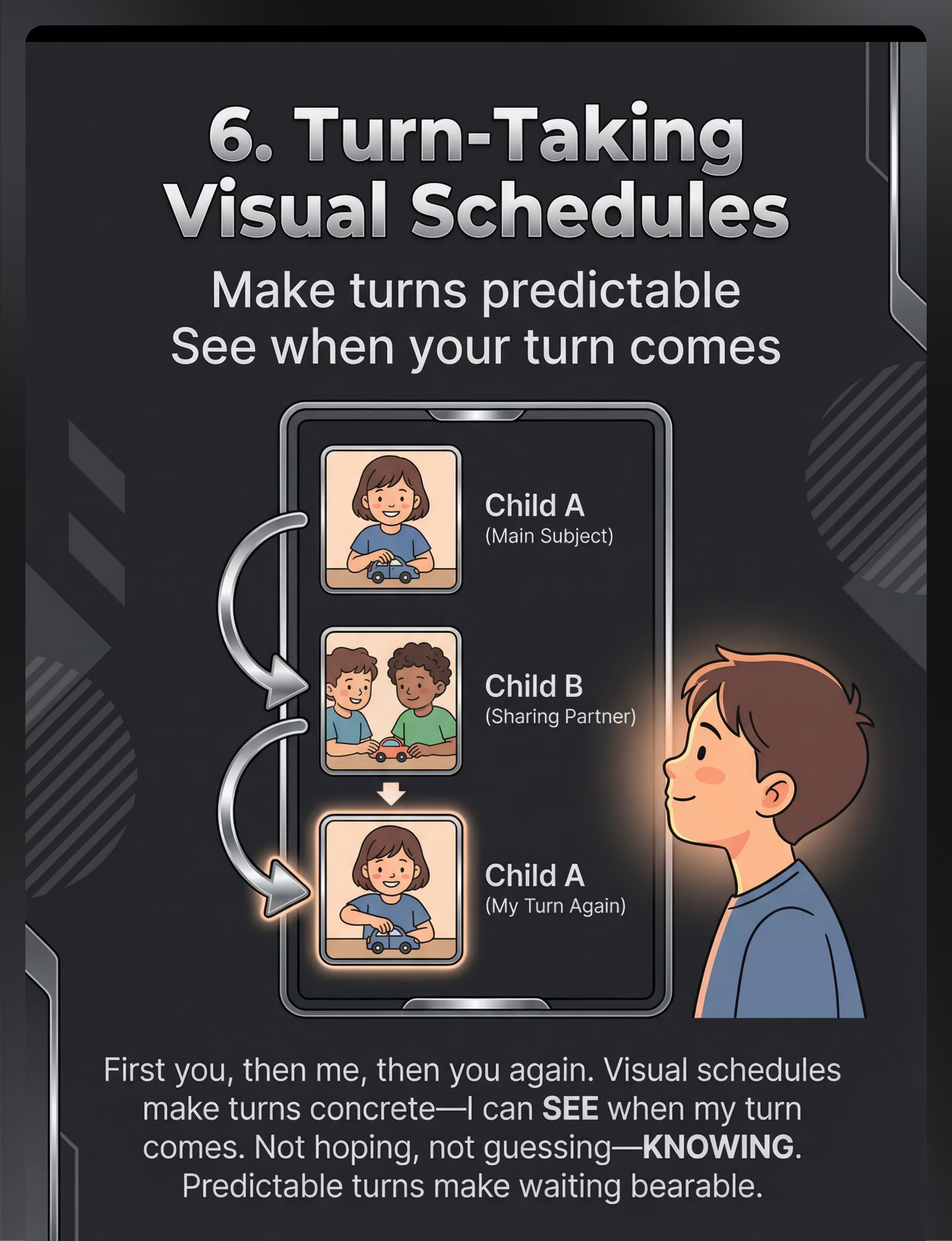
Turn-Taking Visual Schedules
What It Is
Visual rotation boards showing whose turn is current, who is next, and the sequence of return — making turns predictable and visible. The shift from hoping to knowing is the neurological breakthrough this material creates.
Why Pinnacle Recommends
Removes uncertainty — a primary anxiety driver. "Not hoping, not guessing — KNOWING when it's coming back" transforms the waiting experience from threat to manageable delay.
Price Range
Canon Category
Visual Supports / Schedule Systems
✂️ DIY Version (₹0)
Print or draw faces of the children (or use names). Laminate on paper. Use a clothespin to indicate whose turn is current. Move the pin visibly when turns change. The predictability principle is identical to a commercial board — the physical signal is what matters.
Material 07 of 09
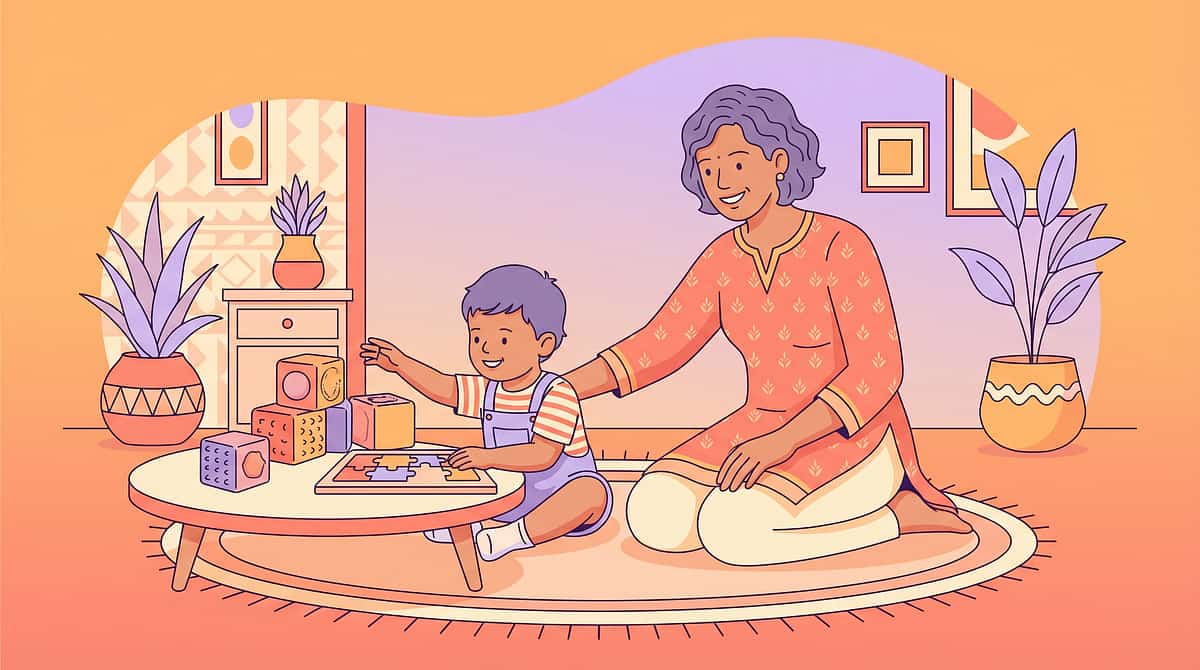
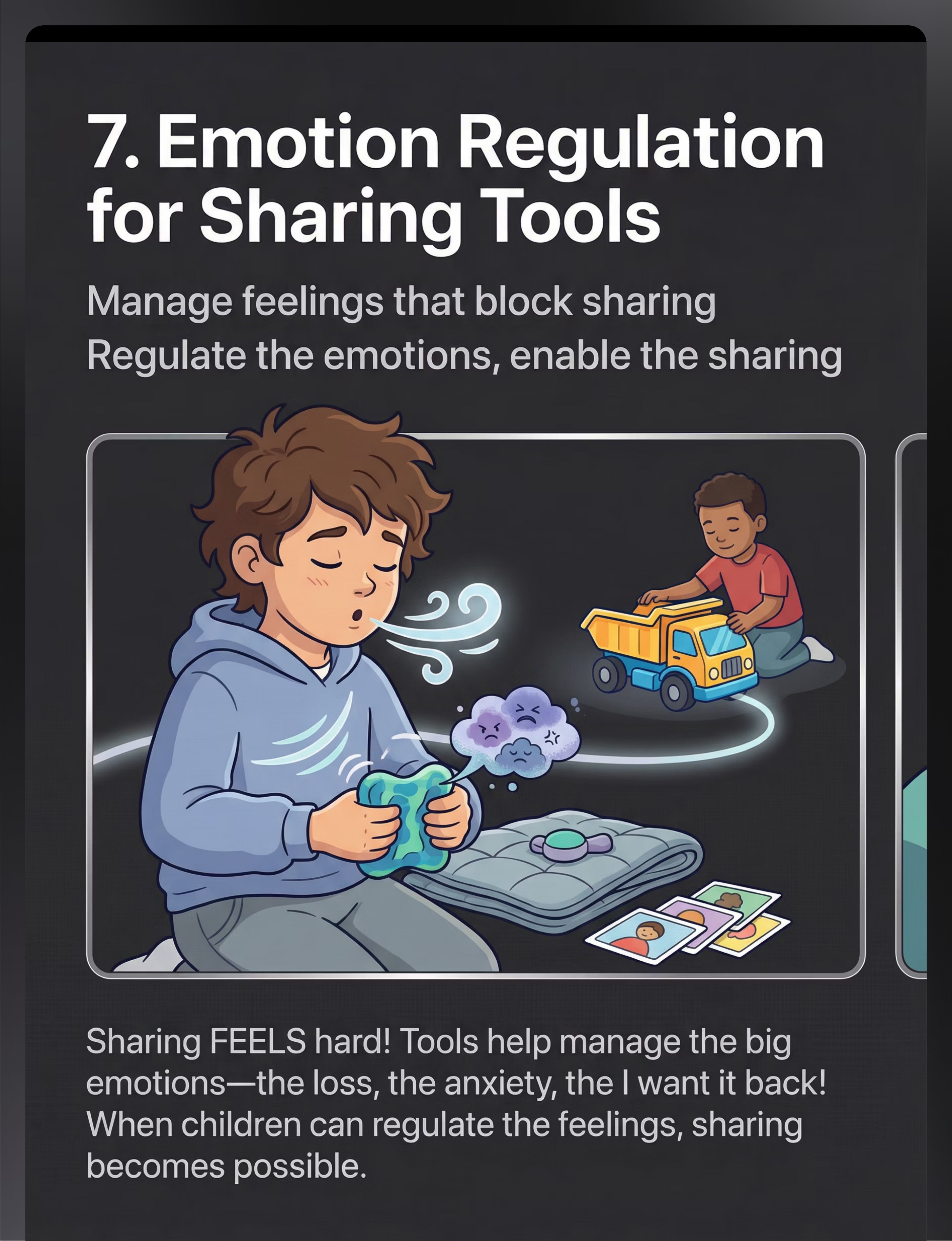
Emotion Regulation Tools for Sharing
What It Is
Calming kit materials — breathing cards, squeeze tools, emotion cards — to manage the intense feelings that arise during object relinquishment. Sharing FEELS like loss. The emotions are real and valid.
Why Pinnacle Recommends
Regulation tools address the root blocker, not just the behaviour. A child in amygdala activation cannot share — they can only protect. Regulation first, sharing second. This is the sequence that works.
Price Range
₹200–500 | Animal Soft Toys — ₹425 | Search Calm Down Kit Kids
Canon Category
Emotional Regulation Materials
✂️ DIY Sharing Feelings Kit (₹0)
A small bag containing:
• One stress ball (rice in a balloon)
• One breathing card (draw a star, trace the points while breathing)
• One "my item comes back" reminder card
Label it "My Calm Kit" and let the child personalise it.
• One stress ball (rice in a balloon)
• One breathing card (draw a star, trace the points while breathing)
• One "my item comes back" reminder card
Label it "My Calm Kit" and let the child personalise it.
Material 08 of 09
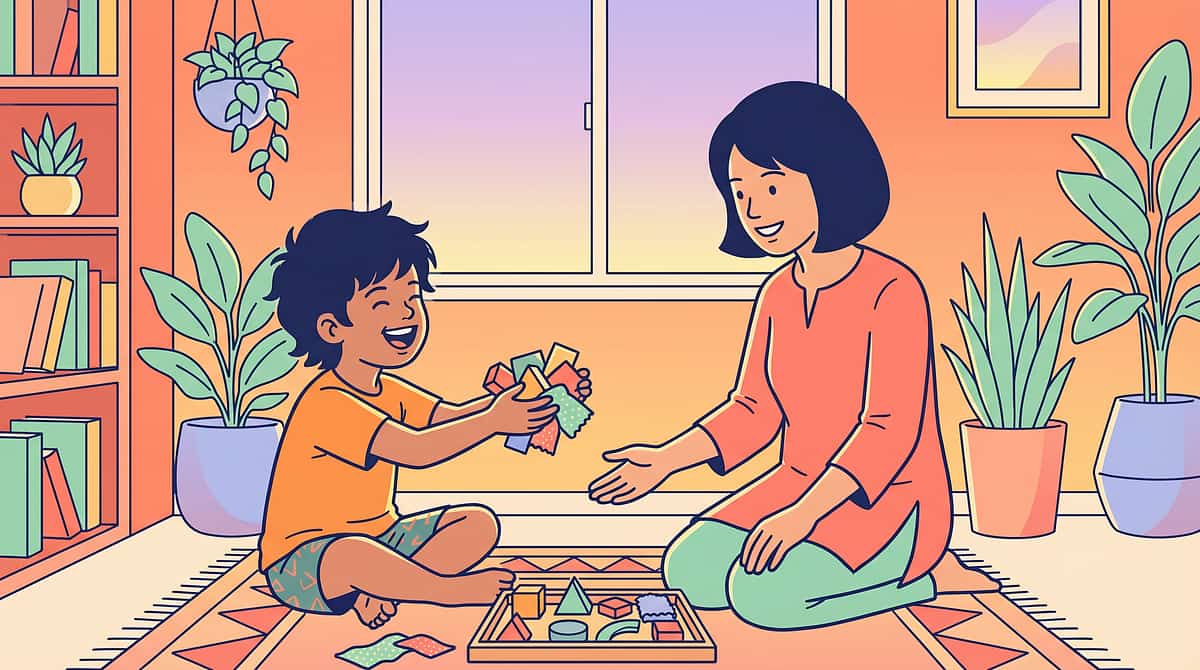
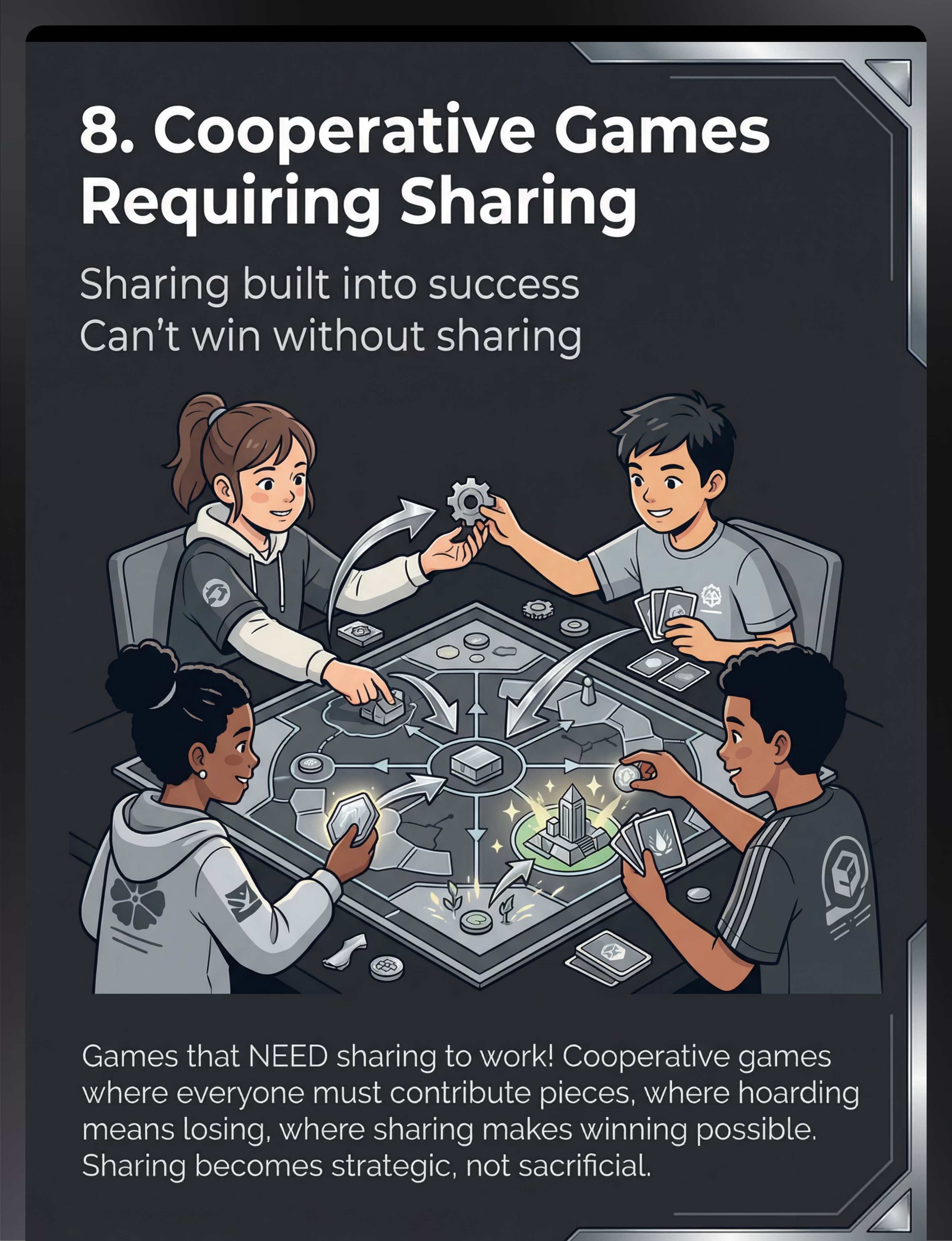
Cooperative Games Requiring Sharing
What It Is
Board or floor games where sharing resources is built into the winning condition. Hoarding makes you lose; sharing makes everyone win. The most powerful reframe available in C-306.
Why Pinnacle Recommends
Converts sharing from a moral obligation into a strategic necessity. When a child's competitive drive aligns with sharing behaviour, the internal motivation is intrinsic — no reward chart needed. Sharing wins the game.
Price Range
Canon Category
Problem-Solving Toys / Cooperative Games
✂️ DIY Version (₹0)
Divide a set of blocks between two children. Build something — a tower, a house — that requires both sets to complete. Neither child alone can finish the structure. Sharing = building success. The shared-resource-to-win principle is what teaches, not the game packaging.
This is the most motivating material for competitive or goal-driven children. Let winning be the reason they share.
Material 09 of 09
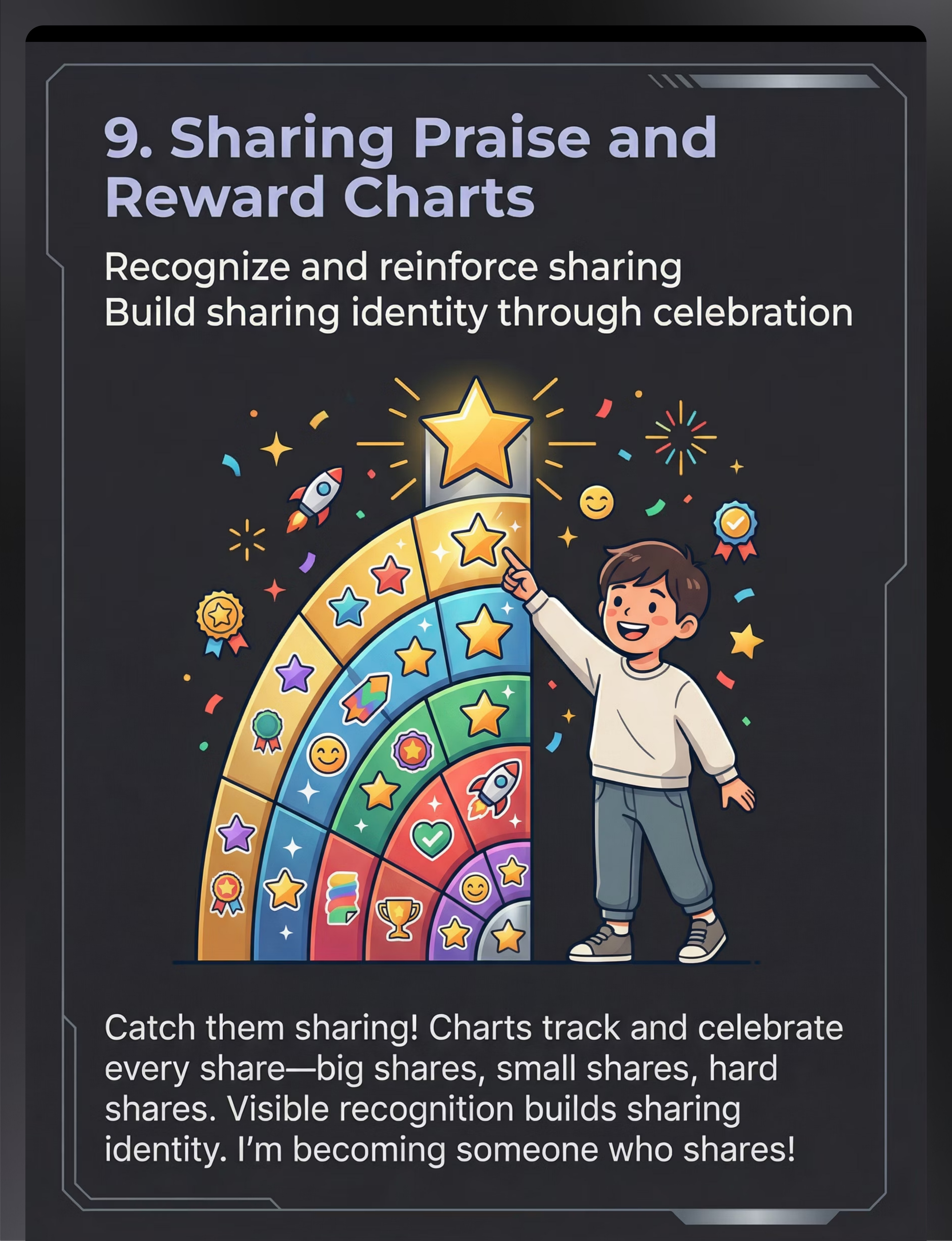
Sharing Praise and Reward Charts
What It Is
Sticker or star charts that track and celebrate every sharing instance — building sharing identity through visible, cumulative recognition. "I'm becoming someone who shares" is an identity shift, not just a behaviour count.
Why Pinnacle Recommends
ABA-validated reinforcement principle: catch the behaviour you want to grow. Visible, cumulative recognition builds the child's self-narrative as a sharer — and identity drives behaviour more powerfully than any single reward.
Price Range
Canon Category
Reinforcement Menus / Behavioural Tracking
✂️ DIY Version (₹0)
Draw a 5×5 grid on paper. Title it "Sharing Star Chart." Every sharing moment = one star sticker (use any stickers).
Stars | Celebration | |
5 stars | "Sharing Star!" certificate | |
10 stars | Special family moment | |
20 stars | Sharing Hero ceremony | |
30 stars | "I am someone who shares" milestone |
Total Investment — Choose Your Starting Point
🟢 Essential Starter Kit
₹800–1,500
Visual Timer + My Stuff/Shared Stuff Bins + Reward Sticker Chart
3 materials — begin today
Visual Timer + My Stuff/Shared Stuff Bins + Reward Sticker Chart
3 materials — begin today
🟡 Full C-306 Setup
₹1,800–4,500
All 9 materials — complete scaffolding system
Clinical-grade home implementation
All 9 materials — complete scaffolding system
Clinical-grade home implementation
🔵 Zero-Cost DIY Version
₹0
All 9 materials created from household items
45–60 minutes, one afternoon
All 9 materials created from household items
45–60 minutes, one afternoon
"The clinical-grade principle is in the structure, not the price point. A hand-drawn chart used consistently produces better outcomes than a purchased chart used inconsistently." — Pinnacle Consortium, Clinical Operations
Every Family Can Execute C-306 Today — Regardless of Budget
WHO/UNICEF Equity Principle: Every child's developmental need has a household-based pathway.
Material | Commercial Version | DIY Version | Why the Substitute Works | |
Visual Timer | Sand timer ₹200–500 | Phone timer facing child | Same principle: visible time endpoint reduces anxiety | |
Trading Cards | Card sets ₹150–400 | Hand-drawn arrow cards | Visual representation of exchange is what matters | |
Abundance Visuals | Printed posters ₹150–350 | Show actual items in quantity | Direct physical demonstration exceeds printed illustration | |
Organiser Bins | Labelled bins ₹300–700 | Labelled cardboard boxes | The label and rule matter, not the container aesthetics | |
Story Cards | Printed card sets ₹200–500 | Stick-figure 3-panel story | Child recognises the narrative regardless of art quality | |
Turn Schedule | Printed boards ₹200–450 | Names/photos + clothespin | Predictability principle is identical | |
Emotion Regulation Kit | Purchased kit ₹200–500 | Rice-balloon squeeze + breathing card | Sensory properties equivalent | |
Cooperative Game | Board game ₹400–900 | Block-building requires both sets | Shared-resource-to-win principle is what teaches | |
Reward Chart | Sticker chart ₹100–300 | Drawn grid + any stickers | Reinforcement timing and specificity matter, not aesthetics |
⚠️ If the child has significant sensory sensitivities to materials (texture of homemade items), a commercial alternative may be warranted. Consult your OT: 9100 181 181
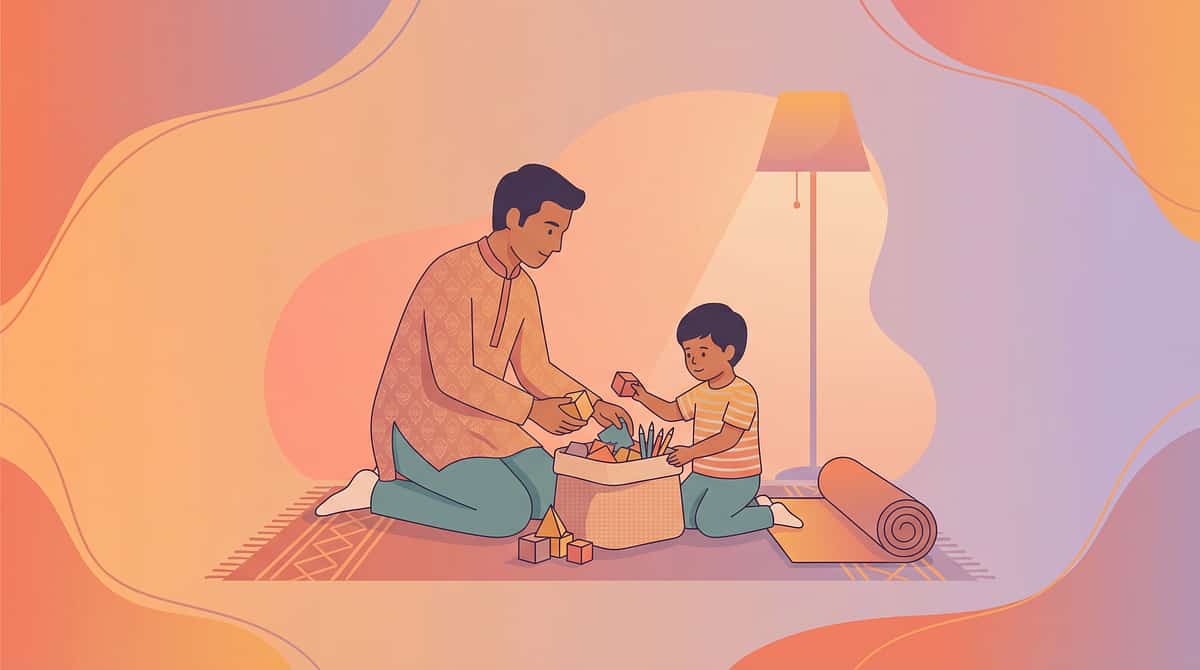
Safety First
Read This Before You Begin. Always.
🔴 RED — Absolute Stop Conditions
- Child is in meltdown or post-meltdown recovery (within 20 minutes)
- Child is visibly ill, running a fever, or significantly sleep-deprived
- A recent traumatic event has occurred in the past 48 hours
- Child has had a food or sensory trigger that is not yet regulated
- STOP IMMEDIATELY IF: Child begins hitting, biting, or self-injuring — session ends now
🟡 AMBER — Modify and Proceed with Caution
- Child is overtired but not in meltdown
- New person present (lower demands when novelty increases anxiety)
- Child has had a difficult day at school/therapy
- First 1–2 sessions (always start with easiest version)
- Sharing partner is a sibling (use separate room protocols)
🟢 GREEN — Ideal Proceed Conditions
- Child is calm, fed, and rested
- Familiar sharing partner with low conflict history
- Time of day when child is typically most regulated
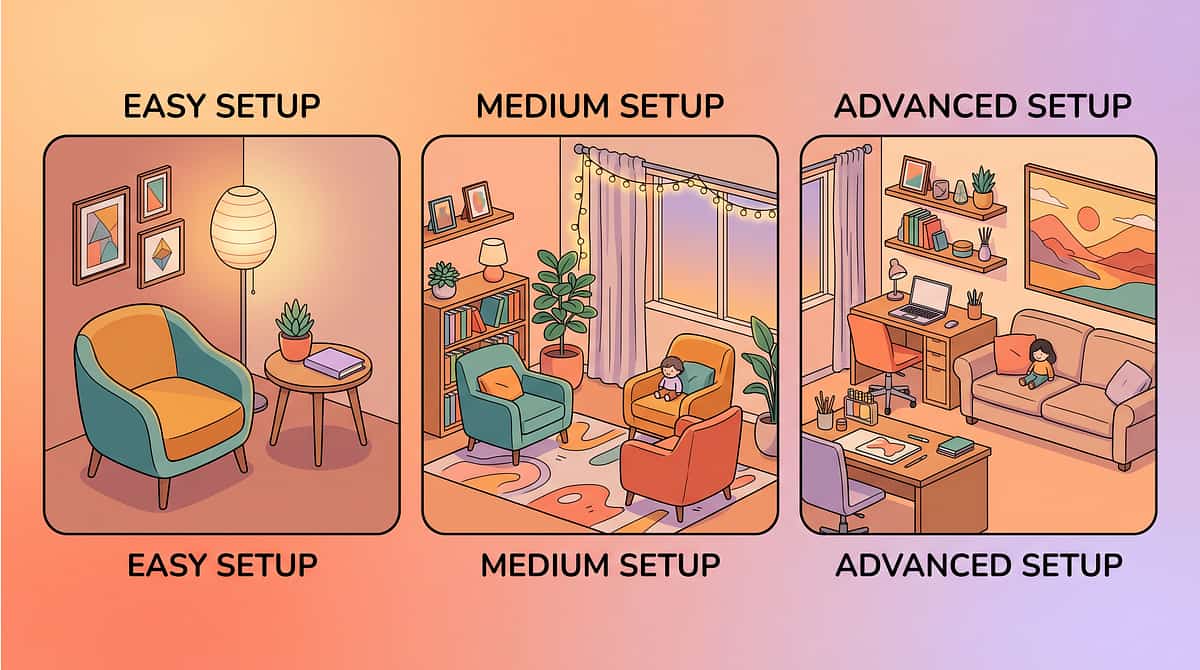
- Environment set up per Card 12 instructions
- Parent is calm and not rushed
Never force sharing by physically taking items. Never shame. Never promise an item will return if you can't guarantee it. Never use "My Treasures" bin items as forced sharing — this category is protected permanently.
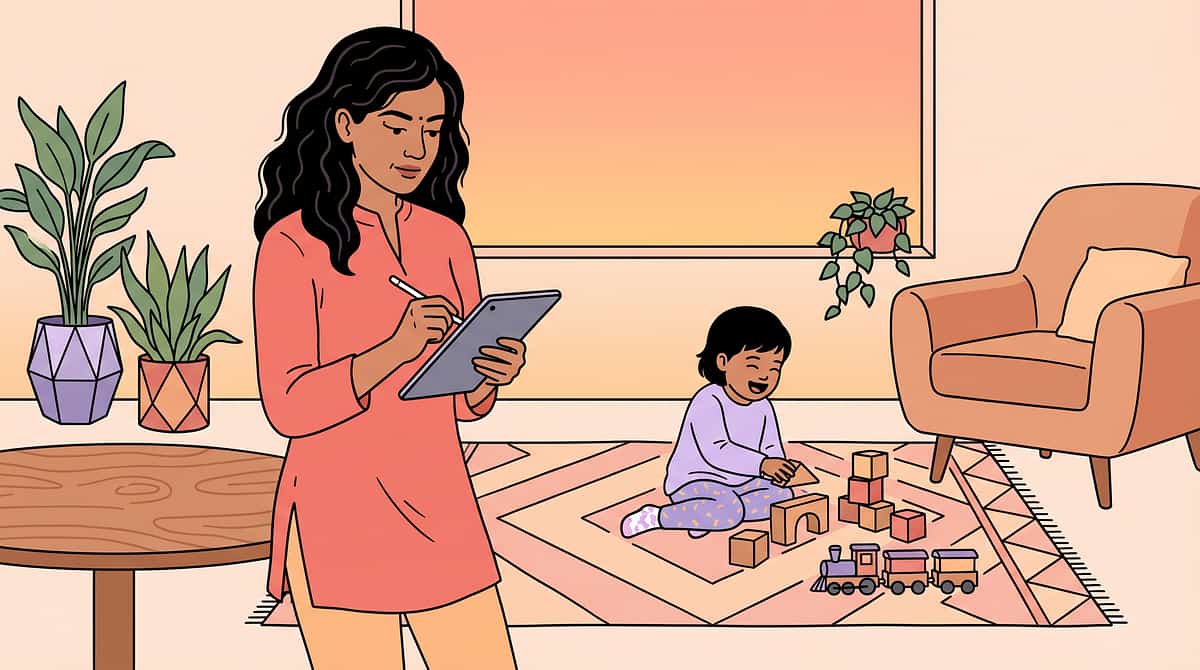
Set Up Your Space
Spatial precision prevents 80% of session failures. Set the stage before inviting the child in.
Environmental Checklist
Reduce total toys visible to 3–5 items maximum — more choices = more conflict
Pre-select which items will be in the "Things We Share" category for this session
Timer is set and visible to both children; reward chart visible with markers/stickers ready
Noise level quiet to moderate; lighting natural or warm; temperature comfortable
Emotion regulation tools nearby but not prominently displayed — don't signal failure before you start
"We're going to play some sharing games today. You have some special things that are only yours [point to My Treasures]. And here are some things we're going to share [point to Share Box]. I have a timer so you can see when things come back to you." — Pre-Session Script

ACT III: The Execution
Is Your Child Ready? The 60-Second Pre-Flight Check
The best session is one that starts right. Complete this check before every session.
Indicator | ✅ Green — Go | 🟡 Modify | 🔴 Postpone | |
Hunger/Thirst | Fed within 90 min | Slightly hungry | Not eaten in 3+ hours | |
Sleep State | Well-rested | Slightly tired | Overtired / just woken | |
Current Regulation | Calm, engaged | Mildly elevated | Dysregulated / post-meltdown | |
Recent Conflict | No conflict in 30+ min | Minor conflict resolved | Recent major conflict | |
Physical State | Healthy | Mildly under weather | Ill | |
Environment | Setup complete | Partial setup | Not set up | |
Your State | Calm, unhurried | Slightly stressed | Rushed / frustrated |
All Green ✅
Proceed to Step 1: The Invitation
1–2 Yellow 🟡
Proceed to Easier Version — shorter timer, lower-value items
Any Red 🔴
Postpone. Offer cooperative block-building — maintains connection without sharing demand
Step 1 of 6
The Invitation
Every session opens with an invitation, never a command. The child is brought in through low-demand, playful engagement. ABA pairing principle + OT just-right challenge = the child says yes before they know they're in a sharing practice.
Exact Script
"Hey! I've got some really cool stuff over here. Want to come look?"
[If no response]: "I found [child's favourite type of toy]. Come check it out."
Do NOT say "come share" or "we're going to practise sharing" — this primes resistance before the session begins.
Acceptance Cues — Proceed
- Child moves toward materials
- Child points or reaches
- Child makes eye contact with materials
- Child sits down
Resistance Cues — Modify
- Child walks away
- Child stiffens or says "no"
- Child grabs one item and moves away
If resistance: Don't push. Join the child where they are. Bring one material to them. Try again in 5 minutes.
Step 3 of 6
The Therapeutic Action
Use this sequence with Visual Timer + Turn Schedule. Execute the phases in order — never skip Phase A.
1
Phase A — Establish Safety (1–2 min)
Point to My Treasures bin: "These are [name]'s special things. No one touches these." Show timer: "When this runs, it comes back to you."
2
Phase B — First Sharing (Lowest-value item)
Child selects from Share Box. Child starts the timer. Sharing partner receives item for timer duration. Both watch timer. Timer ends → item returns. Immediate celebration.
3
Phase C — Gentle Expansion (Only if B succeeded)
Increase timer duration slightly. Try slightly higher-value item. Introduce Trading Cards: "Want to try a swap? You give yours, you get mine."
Common Errors: Starting with highest-value item ❌ | Using forced sharing ❌ | Extending timer without permission ❌ | Failing to return item on timer end ❌ — trust collapse means starting over.

Step 4 of 6
Repeat and Vary
3 excellent repetitions beat 10 forced ones. Quality over quantity. Each successful sharing cycle builds the neural pathway. Pushing past the child's window closes it for the next session.
Target Repetitions Per Session
- Week 1–2: 2–3 sharing cycles per session
- Week 3–4: 3–5 sharing cycles per session
- Week 5–8: 5–8 sharing cycles; introduce spontaneous sharing prompts
Satiation Indicators — Stop When You See These
- Child begins checking exit routes
- Engagement drops sharply
- Latency to share increases significantly
- Child starts reclaiming previously shared items
Stop 1 repetition before satiation — always end on a success.
Variation Options
Timer Fade
Gradually increase timer duration: 1 min → 2 min → 3 min → open-ended
Item Value Escalation
Progressively move toward higher-value preferred items
Trading Cards
Introduce "Give something, Get something" with physical trading cards
Abundance Practice
"Choose 3 crayons to share from the 24 — you keep 21"

Step 5 of 6
Reinforce and Celebrate
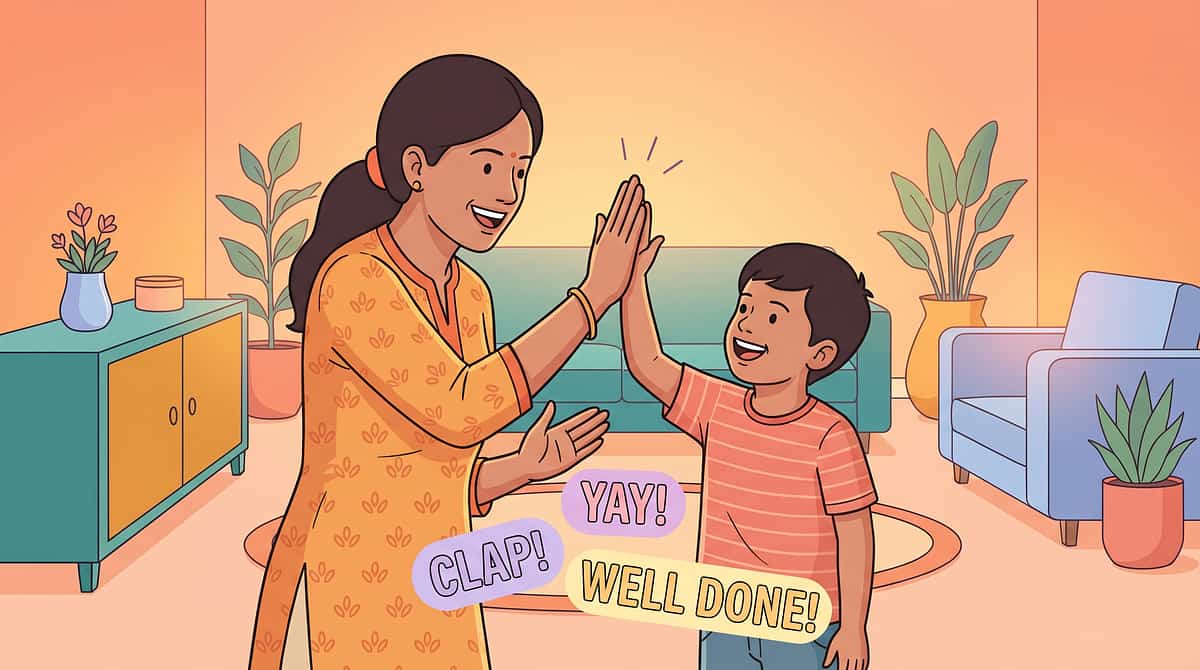
Deliver reinforcement within 3 seconds of the sharing behaviour. Delayed praise teaches nothing. Immediate, specific, enthusiastic reinforcement is what builds the neural connection between sharing and positive outcome.
"YOU SHARED! That was incredible. You gave the [item] to [partner]! 🌟"
"I saw you wait for that timer! That was SO hard, and you did it!"
"Look at your sharing chart — another star! You're becoming someone who shares!"
"That was a trade! You both got something. Sharing = winning!"
Celebrate the attempt, not just the success. If the child tried to share but grabbed back immediately — still celebrate: "You tried to share! That was brave. Next time the timer will help."
Verbal Praise
Specific + enthusiastic — required every single time, regardless of other rewards
Sticker on Chart
1800+ Reward Stickers ₹364 — or any stickers from home
Token in Reward Jar

Step 6 of 6
The Cool-Down
No session ends abruptly. The transition out of sharing practice is as important as the practice itself. Abrupt endings spike dysregulation and damage willingness to participate in the next session.
1
Warning (60 seconds before end)
"Two more turns, then we're all done for today." Use visual count — show two fingers, count down visibly.
2
Return-All Ritual
"Okay, everything goes back to its home now." Child participates in returning items to bins — restores sense of ownership.
3
My Treasures Moment
"Your special things are right here, safe. Let's check." Child confirms My Treasures bin is intact — critical for trust maintenance.
4
Session Celebration
"Today you shared [specific item]. That was real sharing. I'm so proud of you." Specific, honest, tied to what actually happened.
5
Transition Cue
"What do you want to do next?" Child-choice transition reduces post-session resistance significantly.
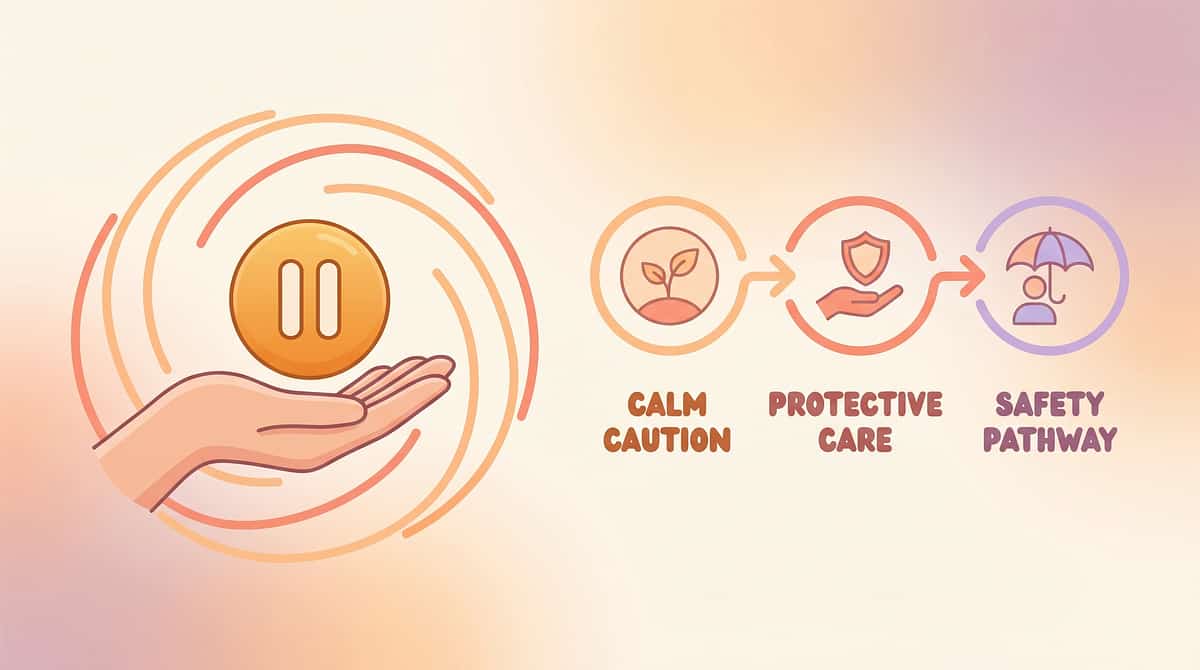
Capture the Data: Right Now
60 seconds of data now saves hours of guessing later. Record within 60 seconds of session end — before the moment fades.
1
Sharing Count
How many times did the child voluntarily release an object today? Include attempts, not just successful full shares.
2
Peak Wait Duration
What was the longest the child waited for an item to return without escalating? Record in seconds or minutes.
3
Distress Level
Scale 1–5. What was the highest distress reached? (1 = no distress, 3 = visible discomfort but managed, 5 = session ended early)
Download Tracking Resources
📥Download C-306 Tracking Sheet — PDF (Printable 4-week sheet with graphs)
What This Data Tells You Over Time
- Sharing count increasing → Technique is working, continue
- Wait duration plateaued → Introduce a variation (Step 4)
- Distress consistently high → Reduce difficulty, consult troubleshooting
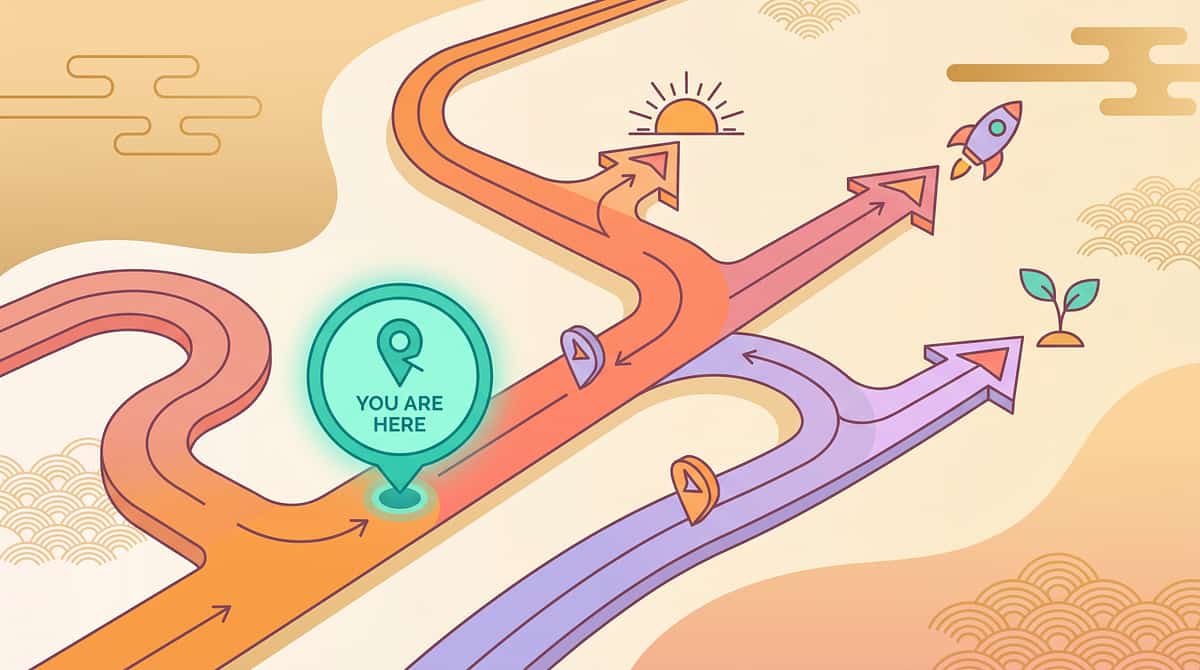
Session Abandonment Is Not Failure — It's Data
The technique needs adjustment, not the parent.
🔴 Child escalated to hitting/biting
Why: Demand was above child's window of tolerance.
Next time: Start with even lower-value item, 30-second timer, My Treasures first.
Today: Offer 20-minute regulation break, then non-sharing cooperative play.
Next time: Start with even lower-value item, 30-second timer, My Treasures first.
Today: Offer 20-minute regulation break, then non-sharing cooperative play.
🟡 Child grabbed item back immediately
Why: Trust hasn't been established; child doesn't believe item will return.
Next time: 15–30 second timer. Practise "return and give back" many times. Celebrate the attempt. Very common in weeks 1–2.
Next time: 15–30 second timer. Practise "return and give back" many times. Celebrate the attempt. Very common in weeks 1–2.
🟡 Child refuses to put ANY item in Share Box
Why: Child needs more ownership security before sharing feels safe.
Next time: Spend one full week only on My Treasures concept. Sharing cannot begin until security is established.
Next time: Spend one full week only on My Treasures concept. Sharing cannot begin until security is established.
🟡 Sibling not honouring the timer
Why: Sharing partner not following protocol.
Fix: Coach the sibling separately. Late return = trust damage. This is not the sharing child's failure.
Fix: Coach the sibling separately. Late return = trust damage. This is not the sharing child's failure.
🟡 Child shares but looks miserable throughout
Why: Sharing still experienced as loss, not exchange.
Next time: Increase reinforcement during the wait period, not just at return. Introduce Trading Cards to reframe as exchange.
Next time: Increase reinforcement during the wait period, not just at return. Introduce Trading Cards to reframe as exchange.
🔵 No progress after 3 weeks of daily practice
Why: May be underlying anxiety, sensory attachment, or profile factor not addressed by home protocol alone.
Action: Contact Pinnacle: 📞9100 181 181 | pinnacleblooms.org/assessment
Action: Contact Pinnacle: 📞9100 181 181 | pinnacleblooms.org/assessment
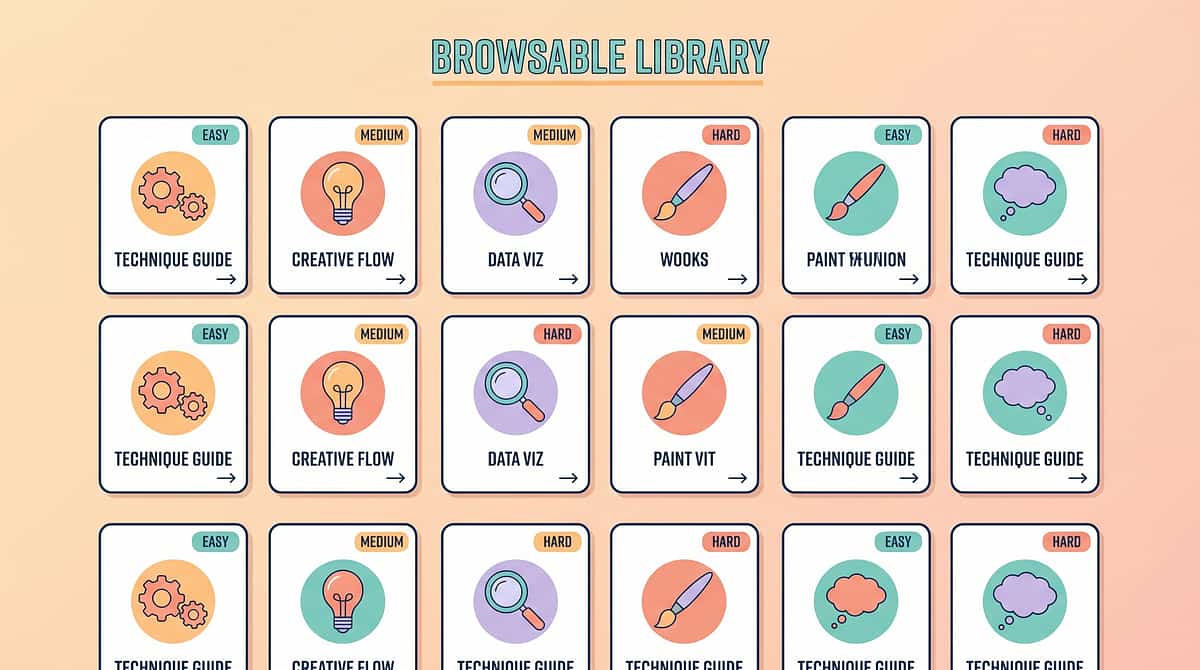
No Two Children Are Identical — Personalise This Technique
⬅️ Easier Version
Timer: 15–30 sec | Lowest-value items | Parent only | Reinforce every cycle | Goal: 1–2 shares
✅ Standard Version
Timer: 1–3 min | Low and medium items | Sibling or familiar peer | Reinforce every 2–3 cycles | Goal: 3–5 shares
➡️ Advanced Version
Timer: optional/phased out | Higher-preferred items | Any familiar person | Intermittent natural praise | Goal: spontaneous sharing
Profile-Based Variations
- Sensory Seekers: Add sensory reward during wait period (squeeze toy, rhythm instrument)
- Sensory Avoiders: Familiar, low-arousal sharing partner. Reduce environmental stimuli further. Use calming proprioceptive input before session.
- Non-Verbal Children: Use picture exchange for sharing request (PECS-style). Visual timer is even more critical.
- High Object Attachment: 2–3 weeks of My Treasures validation before Share Box introduction
- Ages 2–3: Only 1 material, 15-second timer, parent as sole partner
- Ages 4–5: 2–3 materials, 1–2 minute timer, sibling/familiar peer
- Ages 6–8: Full protocol, introduce cooperative games, peer group sharing
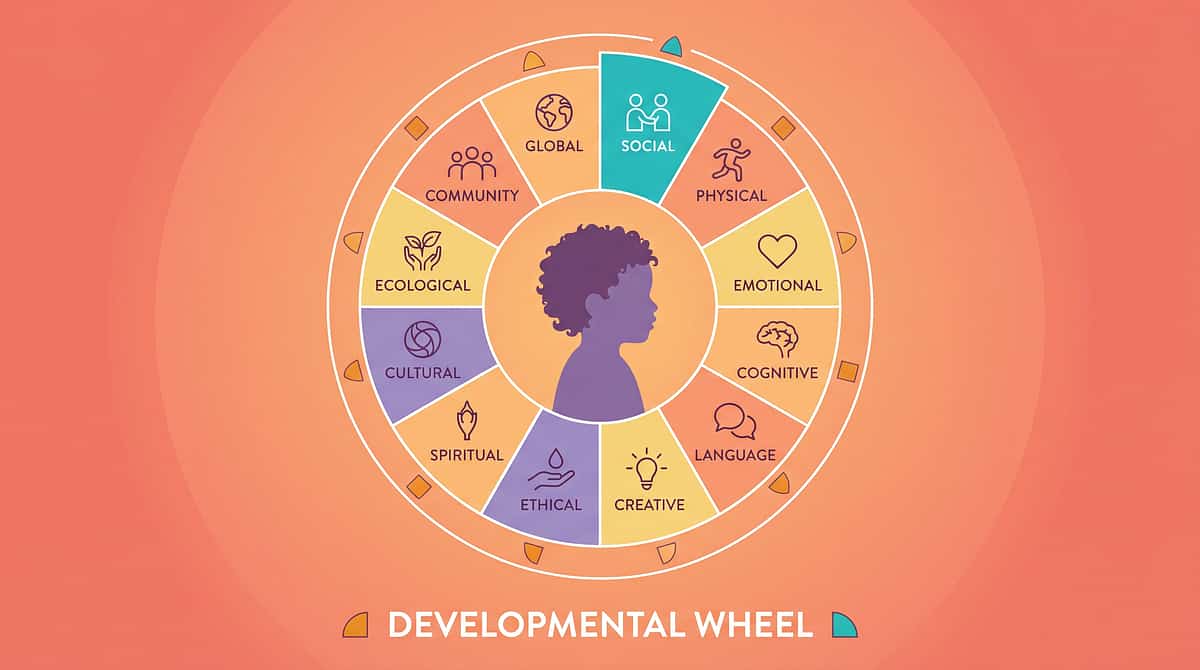
ACT IV: The Progress Arc
Weeks 1–2: You're Building the Foundation
Calibrate your expectations here. The first two weeks are the hardest — but the most important.
What Progress Looks Like ✅
- Child tolerates the sharing setup without immediate meltdown
- Child watches another person hold "their" item for 15–30 seconds without escalating
- Child completes 1–2 sharing cycles with timer support
- Child begins to trust that My Treasures bin is safe
- Child shows less resistance to entering the sharing space than Day 1
What Is NOT Expected Yet ❌
- Spontaneous sharing (not yet)
- Sharing preferred items (not yet)
- Sharing without timer support (not yet)
- Sharing with unfamiliar people (not yet)
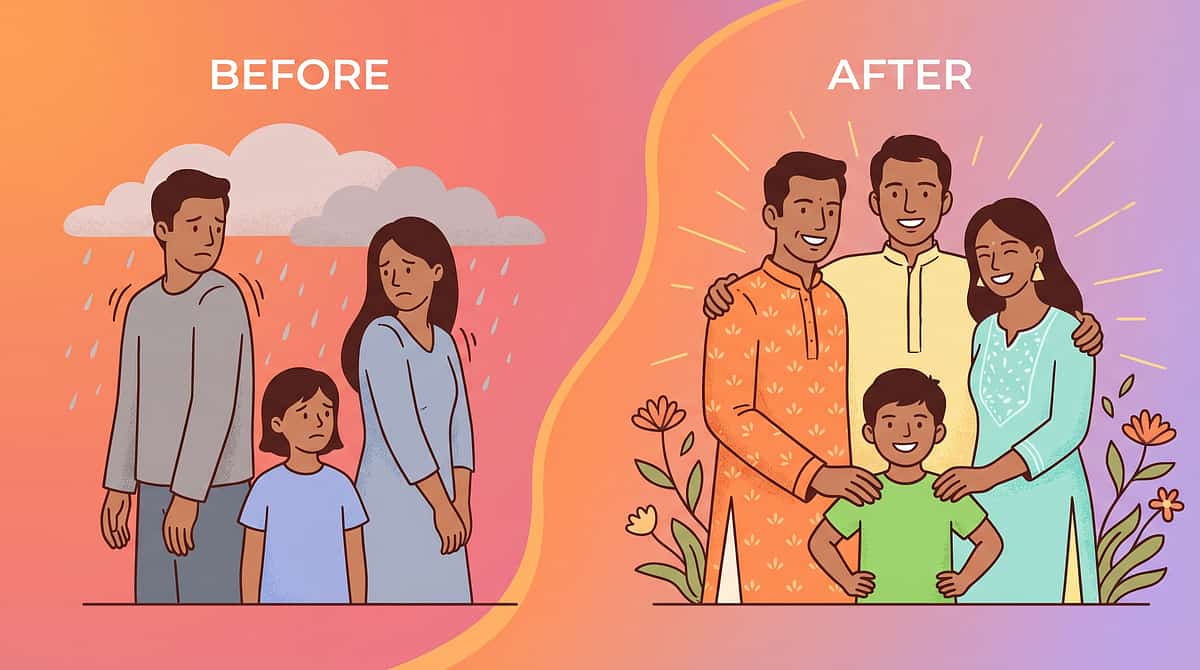
"If your child tolerates the sharing setup for 60 seconds longer than last week — that is real, measurable, neurological progress."
Weeks 3–4: The Neural Pathways Are Forming
Watch for these specific signs — most parents miss them because they're looking for dramatic change, not subtle consolidation.
Child anticipates the session
Moves toward materials when setup begins — participation is emerging as a choice
Checks timer without prompting
Self-monitoring emerging — the child is beginning to regulate their own wait
Grab-back behaviour reduces
Not eliminated, but less frequent. Frequency reduction is the signal, not elimination.
Spontaneous sharing appears
Even once — a book, food, a non-session item. One instance = generalisation beginning.
These behavioural changes reflect synaptic strengthening of the prefrontal-amygdala regulatory circuit. The child's brain is literally learning that object release does not equal permanent loss. Your calm is contagious — your nervous system growth is their growth.
Weeks 5–8: Watching Sharing Become Identity
Mastery Criteria
- Shares 3–5 items per session with minimal adult prompting
- Tolerates 3–5 minute wait periods without escalating
- Demonstrates spontaneous sharing 1–2 times per week outside sessions
- Verbalises or signs "my turn" / "your turn" appropriately
C-306 Mastery Badge Criteria
- 5 consecutive sessions with <2 escalations AND
- Spontaneous sharing at least once outside structured sessions AND
- Accepts return of item within 3-minute timer in 80%+ of trials
Progression Signals
Stay at C-306 if spontaneous sharing is <1x/week or high distress at valued items remains.
Progress to C-307 if sharing with known peers is consistent and timer-supported sharing is reliable.
Progress to C-307 if sharing with known peers is consistent and timer-supported sharing is reliable.
You Did This.
You sat on that floor. You ran that protocol. You honoured every timer, celebrated every attempt, and protected every "My Treasures" promise. Your child shared today because you built the bridge. This is not a small thing.
The Sharing Ceremony
Family announces: "[Child's name] is a person who shares. Let's celebrate that." Make it a moment.
Document It
Photo or video of the child sharing voluntarily. Date it. Frame it. This is a developmental milestone.
The Sharing Story
Write a 3-sentence story: "First ___, then ___, now ___." The child's journey in their own words.
Connect with other parents who understand this journey: Pinnacle Parent Community — your story may be the hope another family needs today.
Trust Your Instincts — If Something Feels Wrong, Pause and Ask
🔴 Escalating Aggression
Hitting, biting, or throwing has increased (not decreased) over 2+ weeks of consistent C-306 practice. The technique's approach is not matched to this child's current profile. Professional assessment needed.
🔴 Self-Injurious Behaviour
Child hurts themselves during or after sharing requests. Stop all sharing practice immediately. Contact Pinnacle: 📞9100 181 181
🔴 Significant Regression
Child returns to Week 1 levels after 2+ weeks of progress. Often signals environmental change, trauma, or medical issue. Rule these out before continuing.
🟡 Complete Non-Response
Zero measurable progress after 10+ weeks of consistent daily practice. Consultation to assess whether underlying anxiety, OCD features, or attachment disorder requires targeted treatment first.
🟡 Extreme Distress
Distress level 4–5 in every session despite 6+ weeks of practice. Professional OT assessment for sensory-based object attachment profile.
🟡 Generalised Hoarding
Sharing difficulty extends to hoarding food, information, or non-tangible resources. Mental health or developmental specialist evaluation warranted.
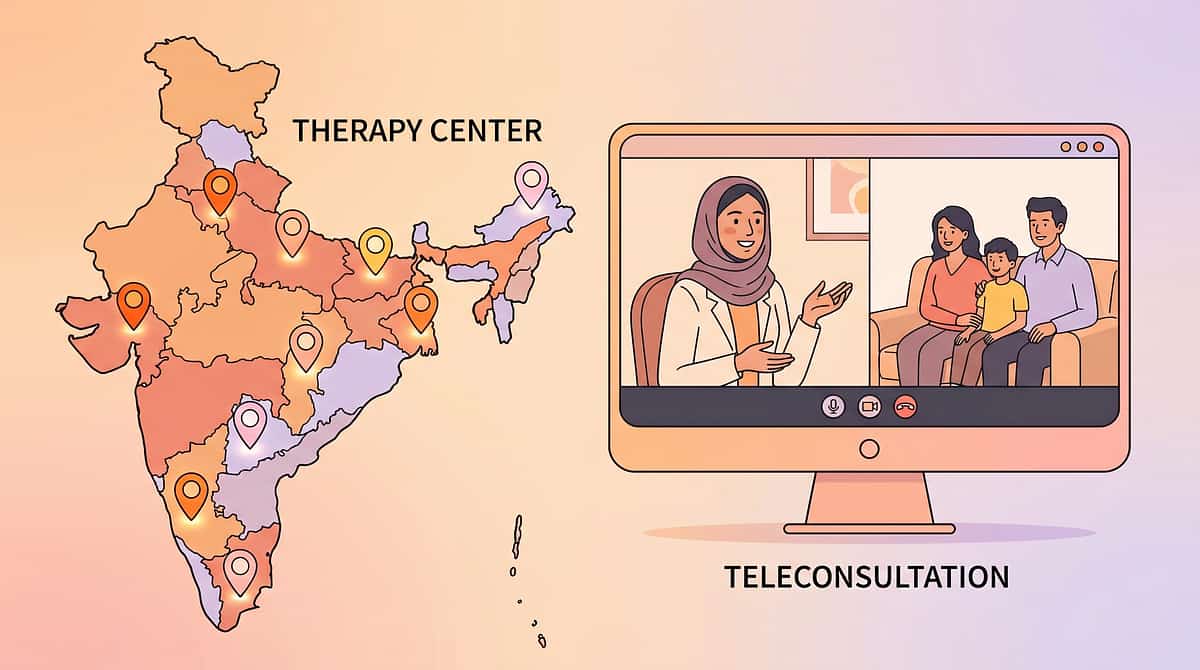
Escalation Pathway: Level 1: Self-resolve with troubleshooting (1 week) → Level 2: Teleconsultation book online or 📞9100 181 181 → Level 3: In-clinic FusionModule™ interdisciplinary review
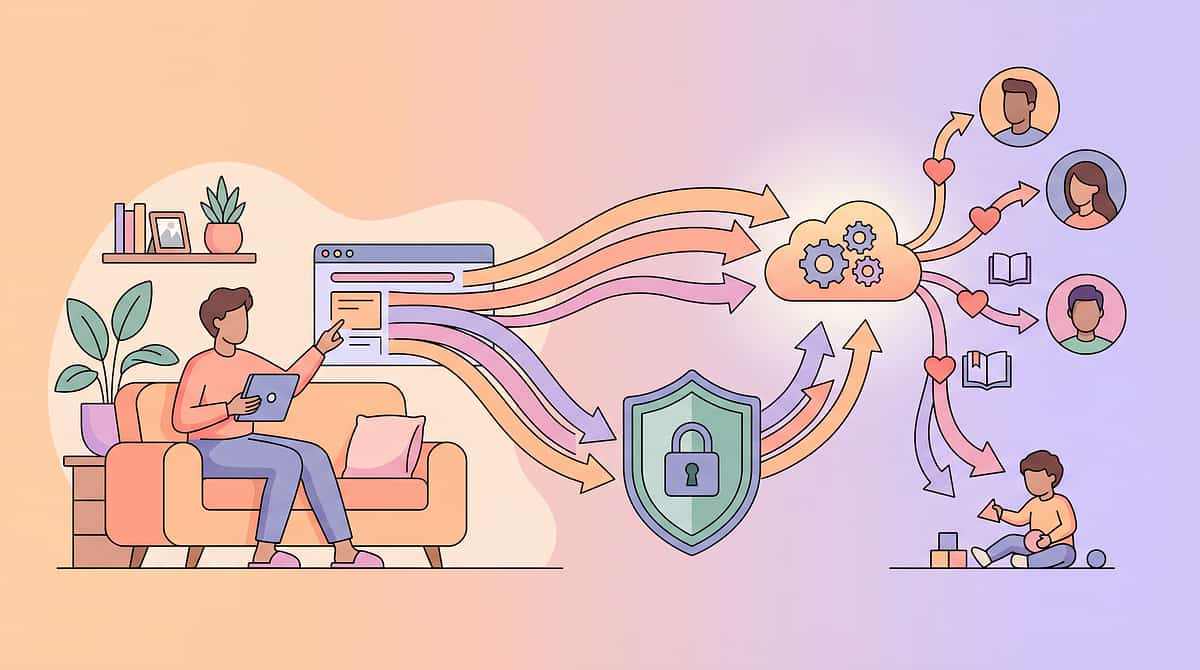
Other Techniques in Your Journey
You may already own materials for some of these — C-306 materials overlap significantly with adjacent techniques.
Technique | Code | Level | Shared Materials | |
Joining Group Play | C-304 | Foundation | Social Story Cards, Reward Charts | |
Bossy in Play | C-305 | Foundation | Visual Schedules, Emotion Cards | |
Sharing Difficulty | C-306 | Foundation | Timer, Bins, Charts (YOU ARE HERE) | |
Turn-Taking in Play | C-307 | Foundation | Turn Schedules, Cooperative Games | |
Understanding Game Rules | C-308 | Intermediate | Board Games, Visual Rule Cards | |
Meltdowns During Play | C-312 | Foundation | Regulation Kit, Transition Objects | |
Sibling Conflict | C-315 | Intermediate | C-306 + C-307 materials | |
Object Attachment / Fixation | C-320 | Intermediate | Gradual Exposure Materials |
Materials you already own from C-306: Turn-Taking Schedules (→ C-307), Emotion Regulation Kit (→ C-312), Sharing materials work directly for Sibling Conflict (→ C-315).
ACT V: Community & Ecosystem
You Are Not the First. You Will Not Be the Last.
The Crayon Wars — Hyderabad Family
Before: "Every art session ended in screaming. Aarav would grab all 64 crayons the moment his sister touched the box. We stopped doing crafts together entirely."
After (8 weeks): "He chose which crayons to share. 12 of them. Kept 52 for himself — completely fine. His sister got to draw. We cried. We genuinely cried."
Materials: Visual Timer + Share Box + Reward Chart | Outcomes vary by child profile
After (8 weeks): "He chose which crayons to share. 12 of them. Kept 52 for himself — completely fine. His sister got to draw. We cried. We genuinely cried."
Materials: Visual Timer + Share Box + Reward Chart | Outcomes vary by child profile
The Sibling Repair — Bengaluru Family
Before: "My younger son had simply stopped asking. He'd walk away before the screaming started. They weren't even playing together anymore. That was worse."
After (10 weeks): "They played for 45 minutes with the same toy box. My older son was using the timer himself. Telling his brother 'two more minutes, then your turn.' I recorded it. I still watch it."
Materials: Timer + Turn Schedule + Cooperative Games | Outcomes vary
After (10 weeks): "They played for 45 minutes with the same toy box. My older son was using the timer himself. Telling his brother 'two more minutes, then your turn.' I recorded it. I still watch it."
Materials: Timer + Turn Schedule + Cooperative Games | Outcomes vary
The Playdate Breakthrough — Delhi Family
Before: "Playdates were exercises in management and apology. Other parents stopped inviting us."
After (12 weeks): "She handed her cousin a crayon without being asked. We all just stared. Then she smiled and said 'We can share.' I cried."
Materials: Trading Cards + Abundance Visuals + Story Cards | Outcomes vary
After (12 weeks): "She handed her cousin a crayon without being asked. We all just stared. Then she smiled and said 'We can share.' I cried."
Materials: Trading Cards + Abundance Visuals + Story Cards | Outcomes vary
See It In Action
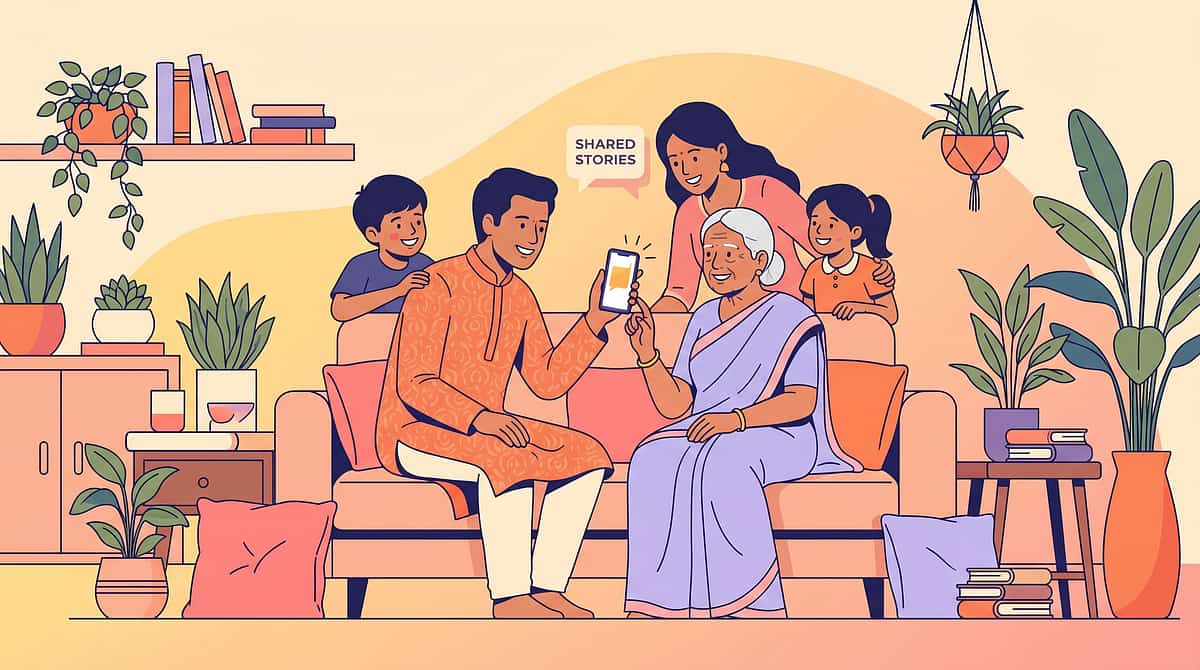
Our consortium team of paediatric OT, ABA, and SLP specialists demonstrate each of the 9 C-306 materials in home use. Watch for the timer protocol in action and the My Stuff vs. Shared Stuff bin setup.
🎬 Reel: 9 Materials That Help With Sharing Difficulty
Series: Play & Social Development Solutions | Episode 306
Domain: Social Development | Prosocial Behaviour & Sharing
Domain: Social Development | Prosocial Behaviour & Sharing
The Reel covers:
• "When 'MINE!' becomes the only word" (the hook)
• Materials 1–9: 4–5 second showcase of each material in use
• Timer protocol demonstration
• My Stuff vs. Shared Stuff bin setup in action
• CTA: "Save for your child's sharing journey"
• "When 'MINE!' becomes the only word" (the hook)
• Materials 1–9: 4–5 second showcase of each material in use
• Timer protocol demonstration
• My Stuff vs. Shared Stuff bin setup in action
• CTA: "Save for your child's sharing journey"
Why Video Modelling Matters
Video modelling is classified as an evidence-based practice for autism (NCAEP, 2020). Multi-modal learning — visual + text + demonstration — improves parent skill acquisition by 34% over text-alone guidance. Watching before doing significantly reduces implementation errors.
#SharingSkills
#SocialDevelopment
#AutismTherapy
#PinnacleBlooms
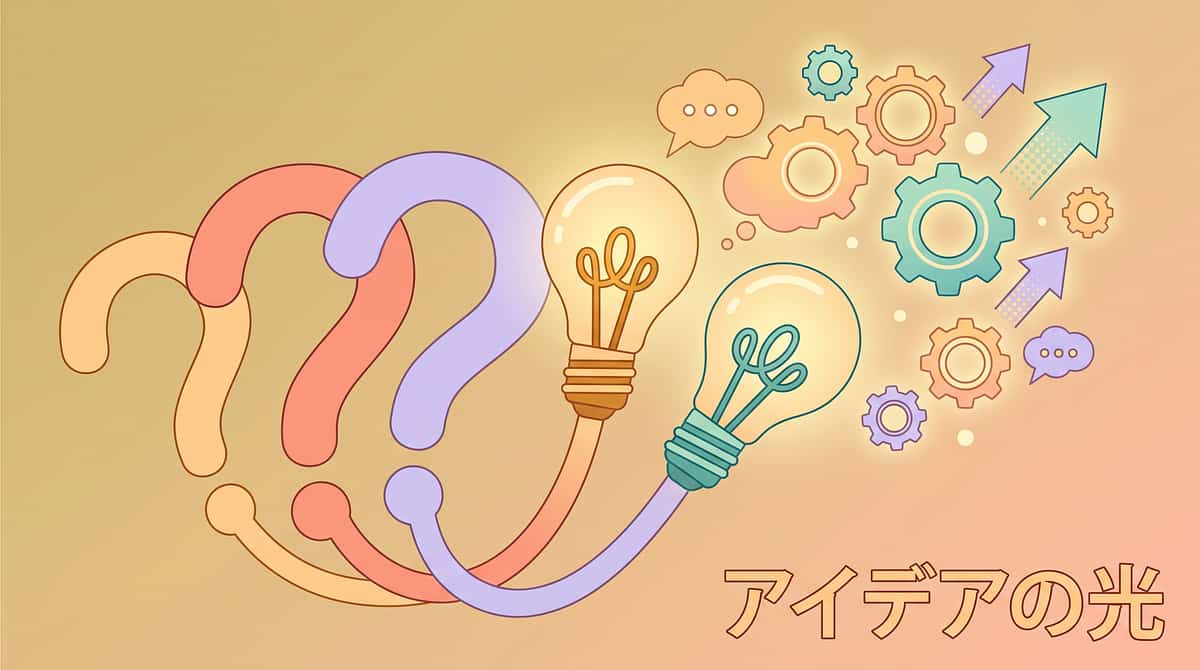
Consistency Across Caregivers Multiplies Impact
If only one person uses this protocol, impact is limited. Every caregiver matters — grandparents, teachers, aunts, uncles, day-care workers. When all understand the timer protocol, neural pathways form 4× faster.
Family Guide — One Page PDF
Simple summary for any caregiver — no clinical background needed.
Download C-306 Family Guide
Download C-306 Family Guide
Grandparents Version
Plain language guide — "What to do when [child] won't share." Zero jargon.
Download Grandparents Guide
Download Grandparents Guide
School/Teacher Template
Formal letter template explaining C-306 for school implementation. Send to class teacher before the next term.
Download Teacher Template
Download Teacher Template
"WHO CCD Package emphasises multi-caregiver training as critical for intervention generalisation and maintenance." — PMC9978394 | WHO/UNICEF CCD Implementation
Additional Questions Parents Ask
Q: My child won't share food at mealtimes. Does C-306 cover that?
C-306 focuses on object sharing. Food sharing has additional sensory and texture dimensions. The E-series (Feeding Domain) addresses food-related sharing and social eating. Ask your GPT-OS® therapist about the intersection between domains.
Q: Is there a professional assessment to know if my child needs more than home-based practice?
Yes — the AbilityScore® assessment through GPT-OS® provides a standardised baseline for sharing difficulty within the Social Participation Index. Call 📞9100 181 181 or visit pinnacleblooms.org/abilityscore
Preview of 9 materials that help with sharing difficulty Therapy Material
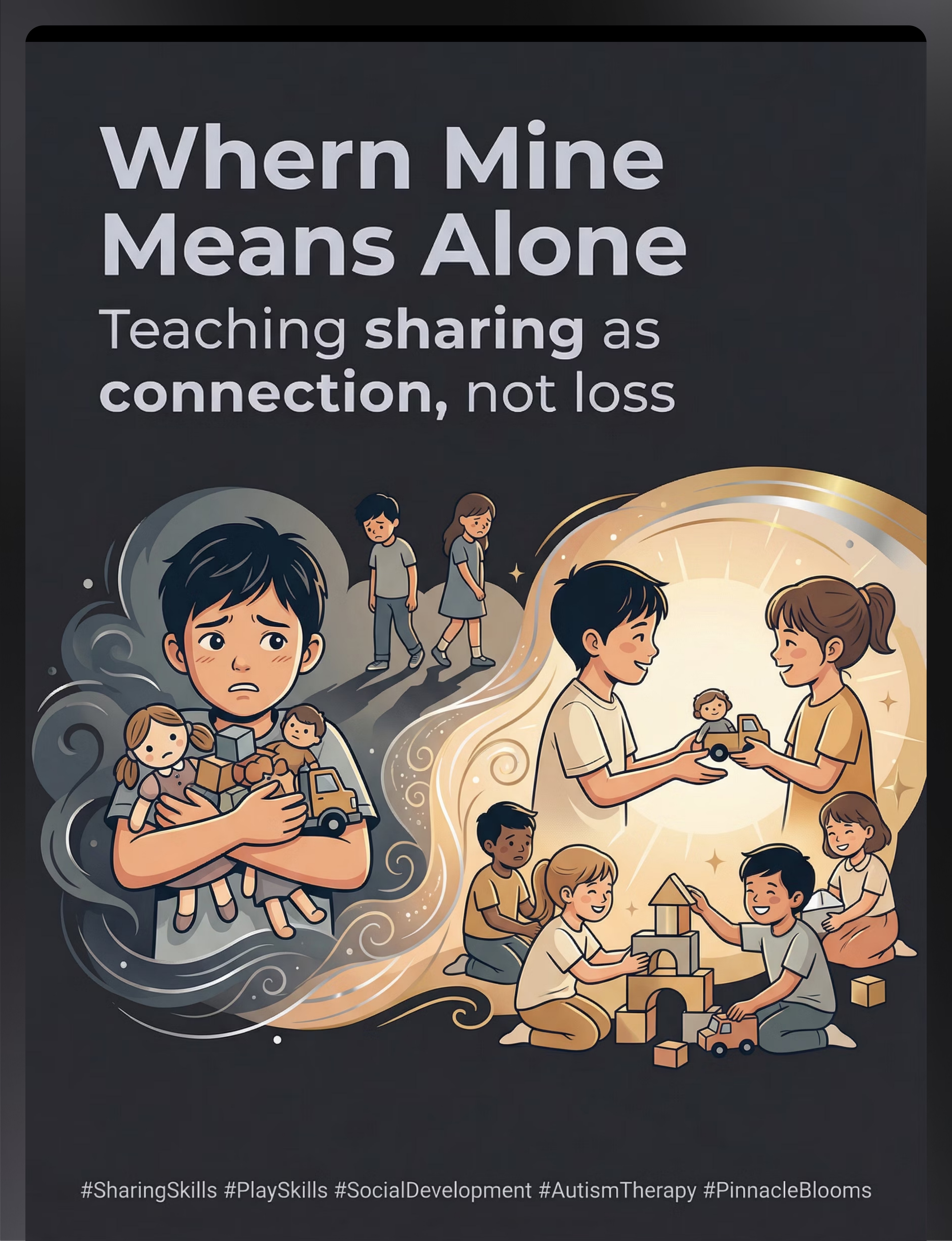
Below is a visual preview of 9 materials that help with sharing difficulty therapy material. The pages shown help educators, therapists, and caregivers understand the structure and content of the resource before use. Materials should be used under appropriate professional guidance.




Link copied!

The Pinnacle Promise
"From fear to mastery. One technique at a time."
Transforming homes into proven, scientific, 24×7, personalised, multi-sensory, multi-disciplinary paediatric therapy centres — completely run on Pinnacle GPT-OS® — empowering families across 70+ countries through 21 million therapy services with 97%+ proven improvement.
Medical Disclaimer: This content is educational in nature and does not constitute medical advice, diagnosis, or treatment. Sharing difficulty may reflect autism spectrum disorder, anxiety, developmental delay, or other conditions requiring professional assessment. Some sharing resistance is developmentally typical in early childhood. Underlying causes shape intervention approach. Individual results vary based on child profile, consistency of implementation, and professional supervision. Consult a qualified developmental specialist before beginning or modifying any therapeutic intervention. If your child shows severe distress, aggression, or self-injury, discontinue and seek professional guidance immediately. Statistics represent aggregate outcomes across the Pinnacle Blooms Network® clinical database. Testimonials are anonymised and illustrative of outcomes within that child's specific profile.
Pinnacle Blooms Network® | A Unit of Bharath Healthcare Laboratories Pvt. Ltd.
CIN: U74999TG2016PTC113063 | DPIIT: DIPP8651 | MSME: TS20F0009606 | GSTIN: 36AAGCB9722P1Z2
CIN: U74999TG2016PTC113063 | DPIIT: DIPP8651 | MSME: TS20F0009606 | GSTIN: 36AAGCB9722P1Z2
© 2025–2026 Pinnacle Blooms Network®, unit of Bharath Healthcare Laboratories Pvt. Ltd. All Rights Reserved. GPT-OS®, AbilityScore®, TherapeuticAI®, FusionModule™, EverydayTherapyProgramme™ are registered trademarks / protected IP of Bharath Healthcare Laboratories Pvt. Ltd. IP Protection filed across 160+ countries.