

You, me, and what we're looking at together — Shared Attention Materials-Based Intervention, Technique B-145
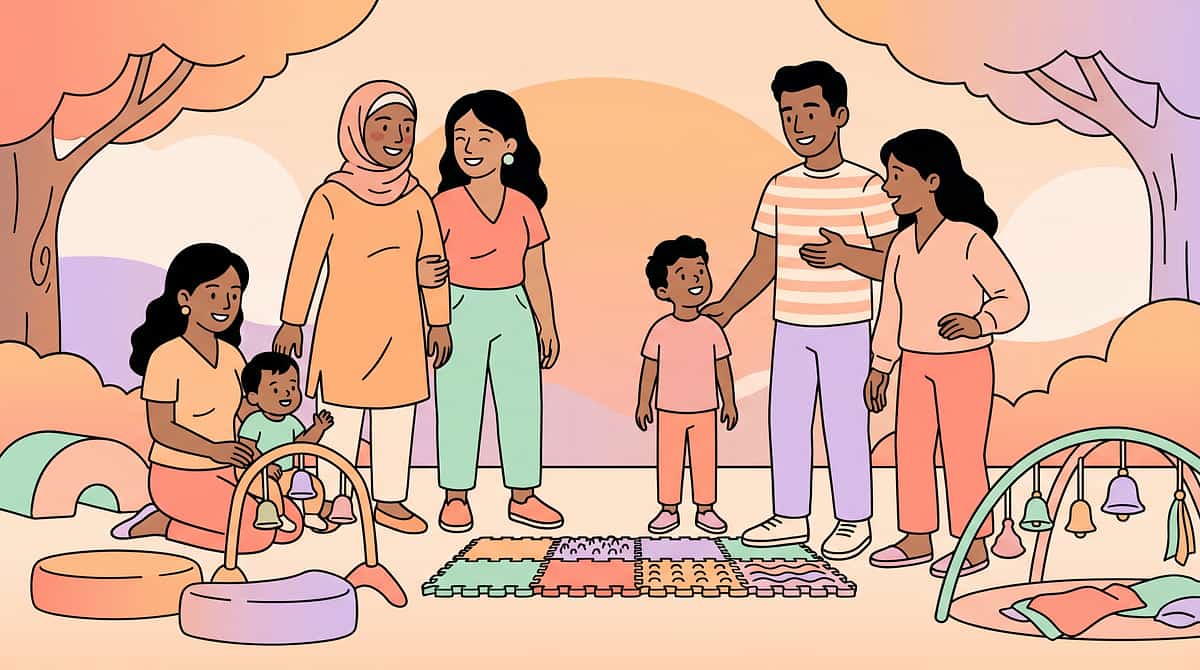
ACT I — THE EMOTIONAL ENTRY
He Plays. But He Never Looks at You.
He picks up a toy. He looks at the toy. He plays with the toy. But he never looks at you to say, "Isn't this amazing?" She notices a bird outside the window — her eyes follow it with curiosity — but she never turns to share the wonder. The moment is his alone. The experience stays private.
You've seen other children do it effortlessly — point at aeroplanes, tug a parent's sleeve to show a caterpillar, look back and forth between a toy and a caregiver's face with eyes that say, "Are you seeing this too?" Your child doesn't. And somewhere deep inside, you feel it — not as a clinical concern, but as a quiet ache: I want to be part of his world.
You Are Not Alone — The Numbers
Joint attention deficits are not a reflection of your parenting. They represent a specific neurological processing difference that responds powerfully to structured, evidence-based intervention.
Children with ASD
of children diagnosed with autism spectrum disorder demonstrate measurable deficits in joint attention — one of the most common and earliest-identified social communication challenges. (Mundy & Newell, 2007)
Children Worldwide
is estimated to live on the autism spectrum (WHO, 2023). In India alone, this translates to an estimated 10–13 million children, each family navigating a unique developmental journey.
Therapy Sessions
delivered across the Pinnacle Blooms Network with 97%+ measured improvement across one or more developmental readiness indexes. Joint attention is one of the most successfully improved skills in early intervention.
CARD 03 — THE BRAIN
What's Happening in Your Child's Brain
The Neural Cascade of Joint Attention
When you point at something and your child follows your finger, four brain regions fire in sequence: the superior temporal sulcus detects where your eyes are looking; the intraparietal sulcus shifts the child's visual attention to match yours; and the medial prefrontal cortex registers that you intended them to look — that you have a mind, with thoughts, directed at something specific. The mirror neuron system helps the child "feel" what another person is attending to.
Why This Matters for Your Child
Joint attention is not a behaviour problem. It is a brain-wiring difference. In children with autism, this neural cascade develops on a different timeline. The brain regions responsible for detecting social gaze, shifting attention between people and objects, and understanding communicative intent process information differently.
This is not a deficit of caring or curiosity. Your child is curious. They simply haven't yet built the neural bridges that automatically connect their curiosity to yours.
References: Frontiers in Integrative Neuroscience, 2020 — DOI: 10.3389/fnint.2020.556660; Charman T., Philosophical Transactions of the Royal Society, 2003

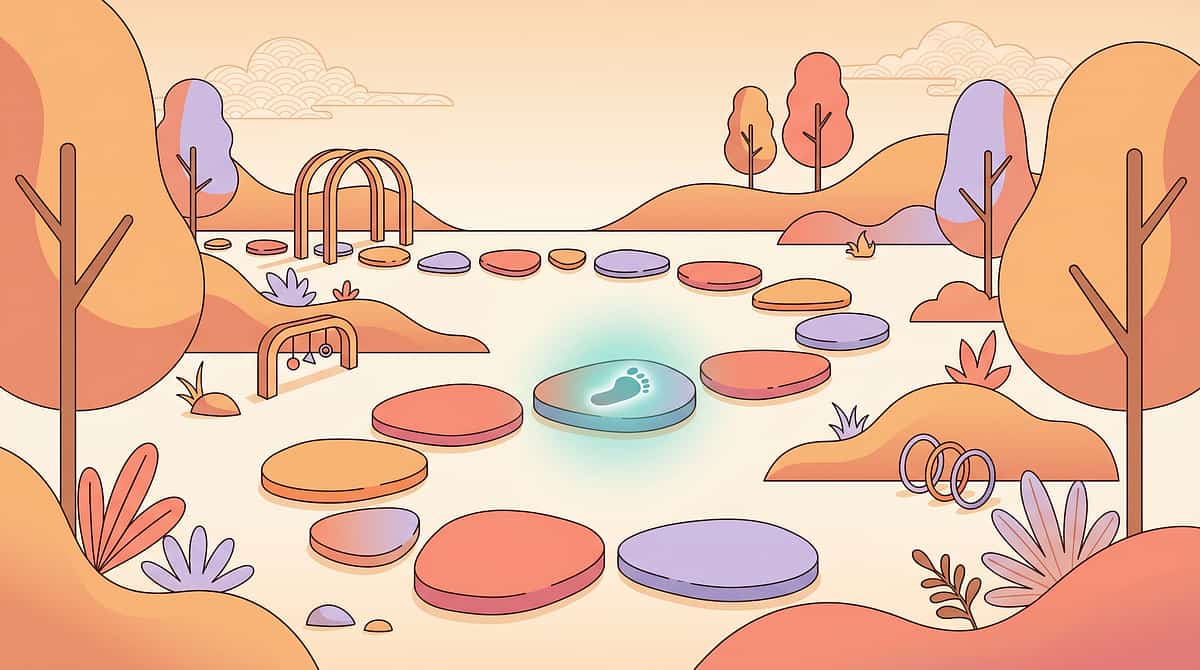
Where Shared Attention Sits in Development
Joint attention is not a "nice to have" — it is the developmental gateway through which language, social cognition, and relationship skills must pass. Per the WHO Care for Child Development Package implemented across 54 countries, this milestone is tracked in UNICEF surveys across 197 nations.
6–9 Months
Social Orienting Emerges. Infant begins following caregiver's gaze direction. Baby turns head to look at what the caregiver is looking at.
9–12 Months
Responding to Joint Attention (RJA). Baby follows a point, looks where you look, begins to understand that your gaze and gestures carry communicative meaning.
12–15 Months
Initiating Joint Attention (IJA). The child begins pointing to show things, holding up objects, looking back and forth between objects and people — the milestone most commonly delayed in autism.
15–18 Months ← Your Child May Be Here
Declarative Pointing. Pointing to share (not just to request) and spontaneous gaze alternation should be established. If absent or reduced, families typically notice now.
18–24 Months → Where We're Heading
Fluid, Spontaneous, Generalised. The child naturally shares experiences, checks caregiver reactions, and uses pointing/showing/giving to connect across partners and settings.
Co-occurring Challenges
Joint attention deficits commonly co-occur with receptive language delays, reduced social referencing, and limited imitation skills. If your child experiences difficulty with shared attention, these related areas may also benefit from attention.
THE EVIDENCE
The Evidence Behind Shared Attention Intervention
Kasari et al. (2006) — Landmark RCT
Targeted joint attention intervention produced significant improvements in initiating joint attention, which generalised to interactions with caregivers and persisted at follow-up. This study established that joint attention is teachable and responds to structured intervention. (Journal of Child Psychology and Psychiatry, 2006)
Comprehensive Meta-Analysis
Children receiving joint attention interventions showed significantly greater improvements in social communication outcomes compared to control groups. The effect was strongest when interventions were naturalistic, play-based, and involved caregiver participation.
Indian Paediatric Research + Pinnacle Data
Home-based, caregiver-mediated interventions produce significant developmental outcomes when structured protocols are followed consistently. The Pinnacle Blooms Network's 20M+ session dataset confirms joint attention as one of the most responsive skill domains to early intervention. (Padmanabha et al., Indian J Pediatr, 2019)
"Clinically validated. Home-applicable. Parent-proven."

ACT II — THE KNOWLEDGE TRANSFER
Materials-Based Shared Attention Building
Parent-Friendly Alias: "The Triangle of Connection Activities"
The Definition
Shared attention building using therapeutic materials is a structured intervention approach where carefully selected objects — bubbles, light-up toys, interactive books, mirrors, and more — are used as "attention anchors" to create natural opportunities for two people to focus on the same thing at the same time. The materials provide the irresistible shared focus point; the parent provides the social bridge. Together, they build the invisible triangle: child → object ← parent.
How It Works
This is not random play. Each of the 9 materials targets a specific component of the joint attention system — from visual co-orientation (looking at the same thing) to declarative pointing (showing something to share) to affective sharing (experiencing emotion together about a shared focus). Used systematically, these materials build the complete neural architecture of shared attention.
Domain
B — Social Communication
Age Range
18 months – 6 years
Duration
10–20 minutes
Frequency
Daily (min. 3×/week)
Difficulty
Introductory → Core
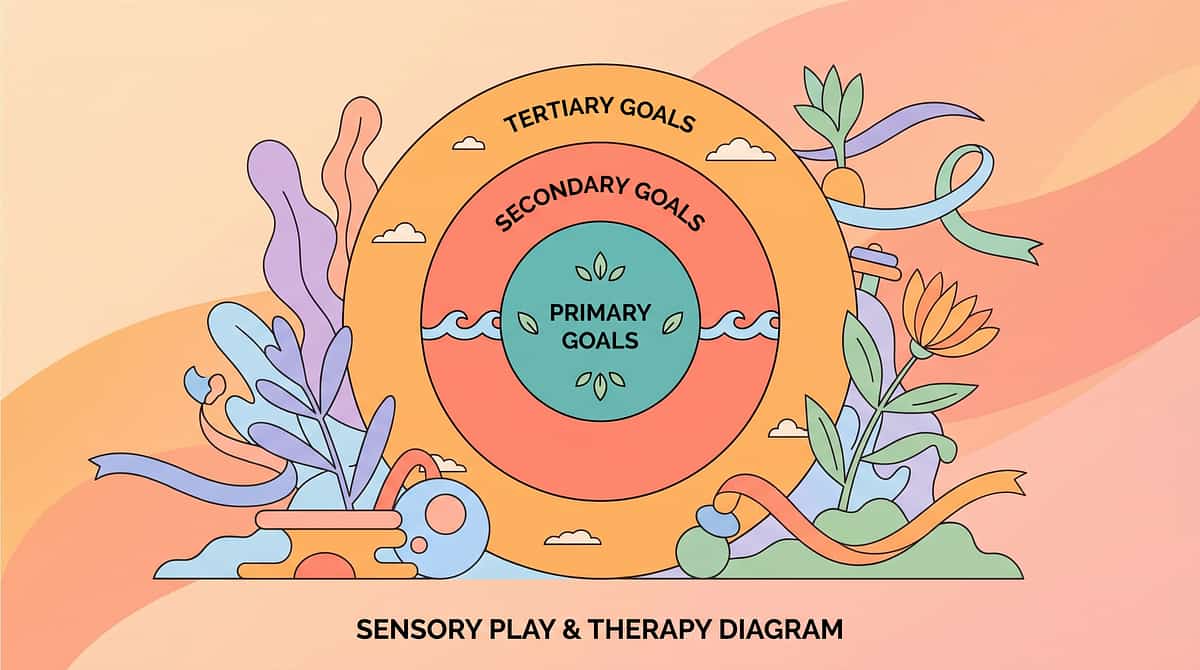
Who Uses This Technique — Your Child's Consortium
This technique crosses therapy boundaries because the brain doesn't organise by therapy type. Joint attention sits at the intersection of social cognition, communication, sensory-motor integration, and academic readiness. Your child receives this intervention from multiple angles — each discipline reinforcing the others.
Speech-Language Pathologist (SLP) — Primary Lead
Uses shared attention materials as the pre-linguistic foundation for language development. Before a child can learn words, they must learn to share focus. The SLP builds the gaze alternation and pointing that precedes first words.
Occupational Therapist (OT)
Addresses the sensory and motor components — ensuring the child can tolerate the sensory input of materials, coordinate visual tracking between objects and people, and execute the motor gestures (pointing, showing, giving) that express shared attention.
Board Certified Behaviour Analyst (BCBA)
Structures the reinforcement contingencies that make shared attention rewarding. Designs prompting hierarchies, reinforcement schedules, and data collection systems that systematically increase the frequency and spontaneity of joint attention.
Special Educator (SpEd)
Embeds shared attention materials into structured learning routines, ensuring the child generalises joint attention skills from therapy to classroom, from one-on-one to group settings, and from novel toys to academic materials.
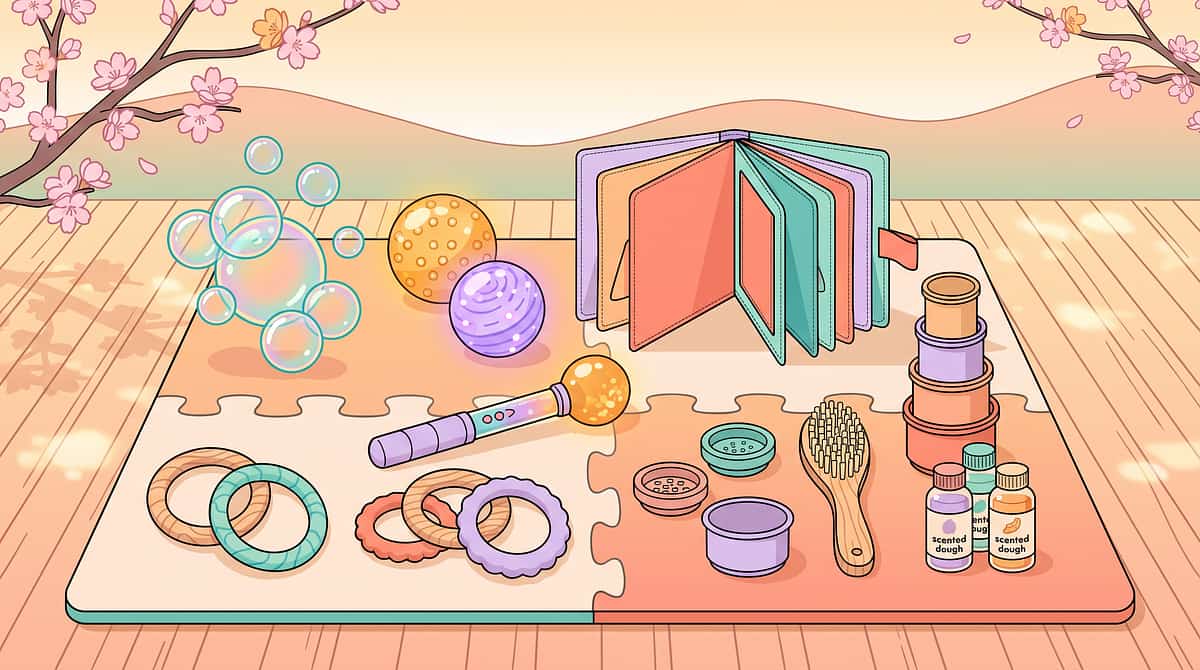
THE 9 MATERIALS — ESSENTIAL STARTERS
What You Need: The Essential 3
Begin your practice with these three materials. They are clinically validated across the Pinnacle Blooms Network's 70+ centres as the highest-impact shared attention anchors for new practitioners. Start here — add the remaining six as confidence grows.

1. Bubble Play Kit
Canon: Bubble Tools | ₹100–500
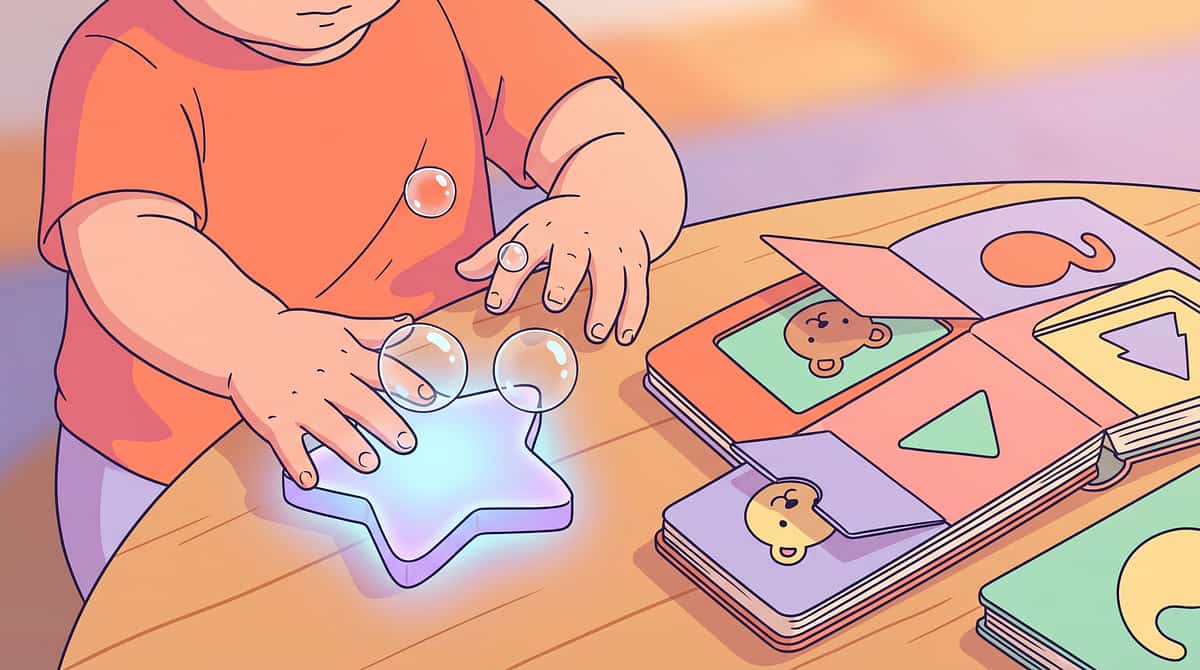
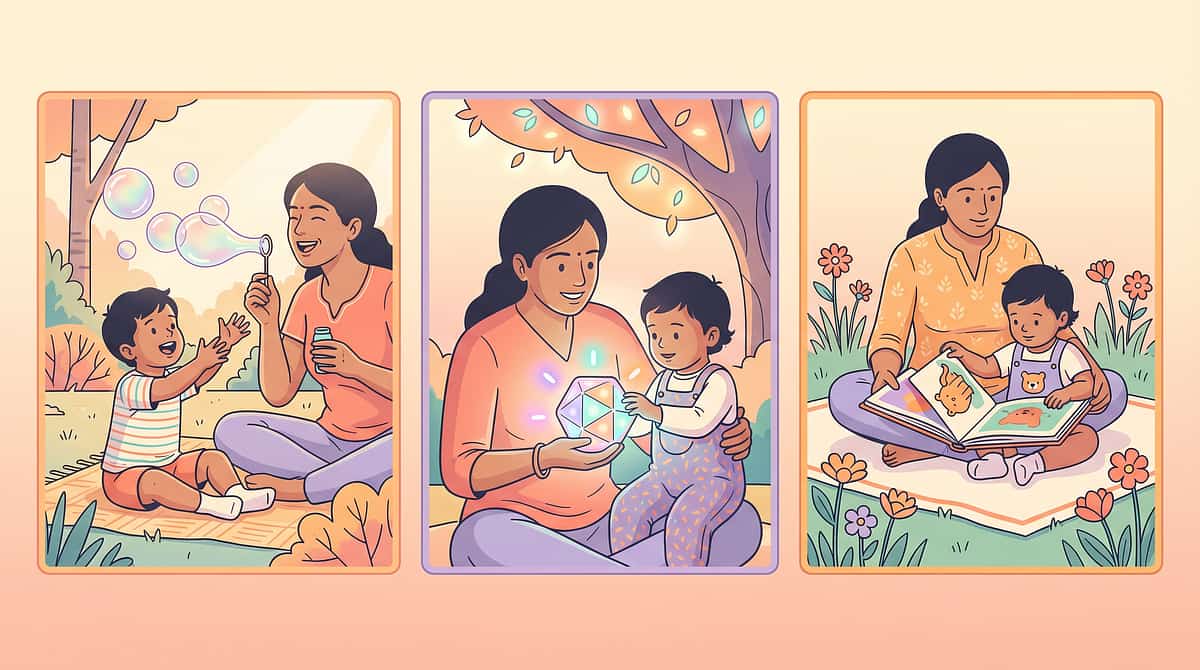
Bubble solution, wands, bubble machines, touchable bubbles. The single most effective shared attention anchor in clinical literature. Bubbles are nearly universally fascinating — they require zero learning, create automatic shared focus, and produce natural gaze alternation between floating bubbles and caregiver faces.
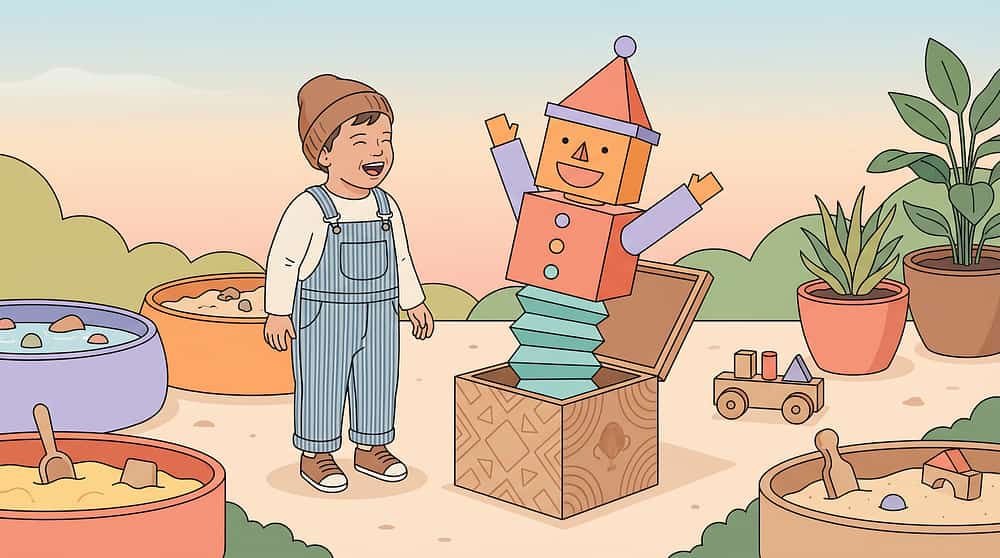
2. Pop-Up & Surprise Toys
Canon: Cause-Effect Toys | ₹300–1,200
Jack-in-the-box, pop-up toys, peek-a-boo toys, spring-loaded surprise toys. The anticipation-surprise cycle is a joint attention engine. The waiting creates shared attention; the surprise creates shared emotion — two components of joint attention in one toy.
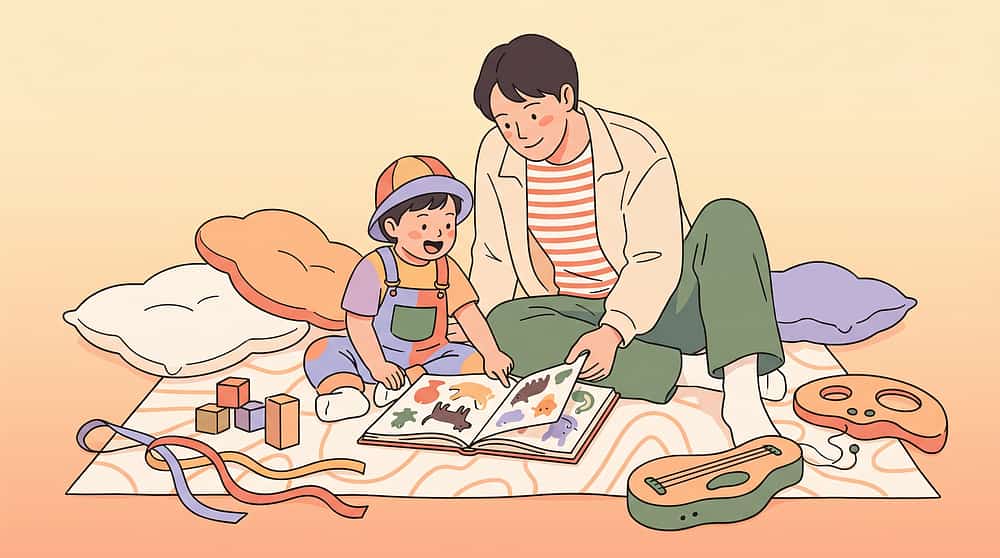
3. Pointing Games & Materials
Canon: Visual Learning Materials | ₹150–600
I Spy books, search-and-find scenes, picture vocabulary cards, point-to picture books. Pointing IS joint attention in physical form — directing another person's attention with a gesture. These materials provide structured practice of the pointing gesture itself.
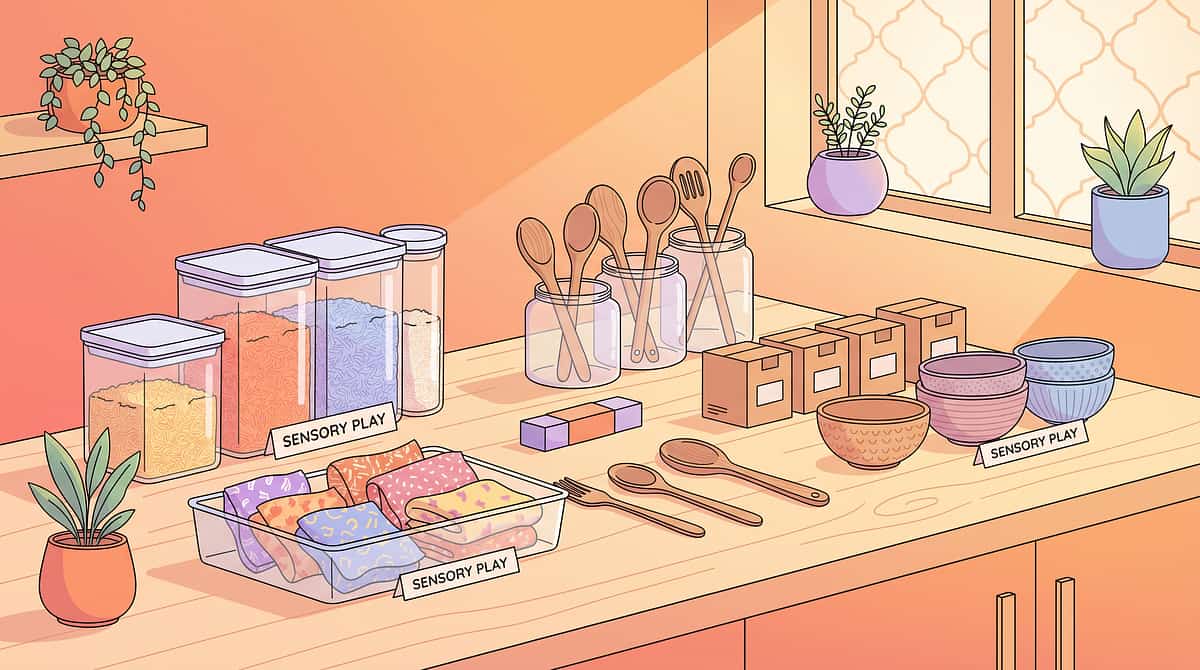
THE 9 MATERIALS — COMPLETE KIT
Materials 4–9: The Complete Shared Attention Kit
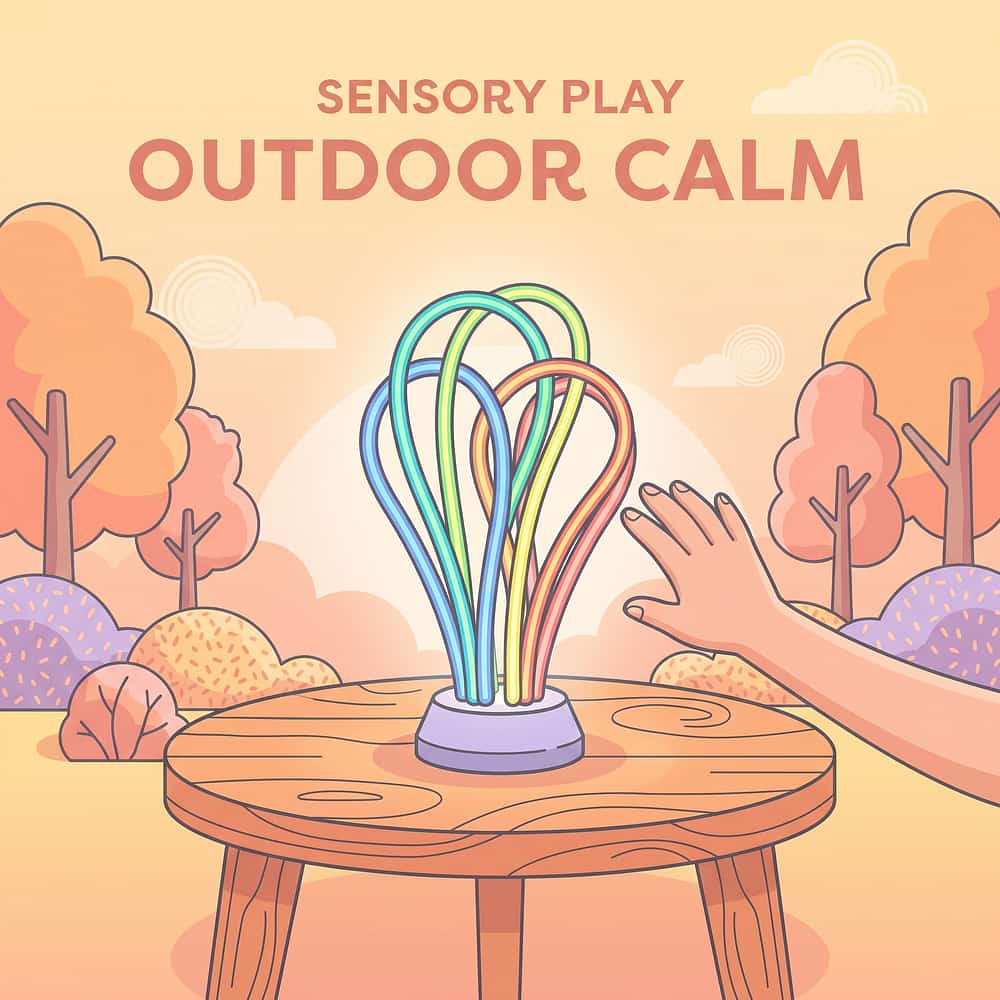
4. Cause-Effect Light Toys | ₹200–1,500
LED projectors, fibre optic lamps, light-up spinning toys, colour-changing orbs. Visual capture is immediate and powerful — light toys create irresistible shared focus points, especially in slightly dimmed environments.
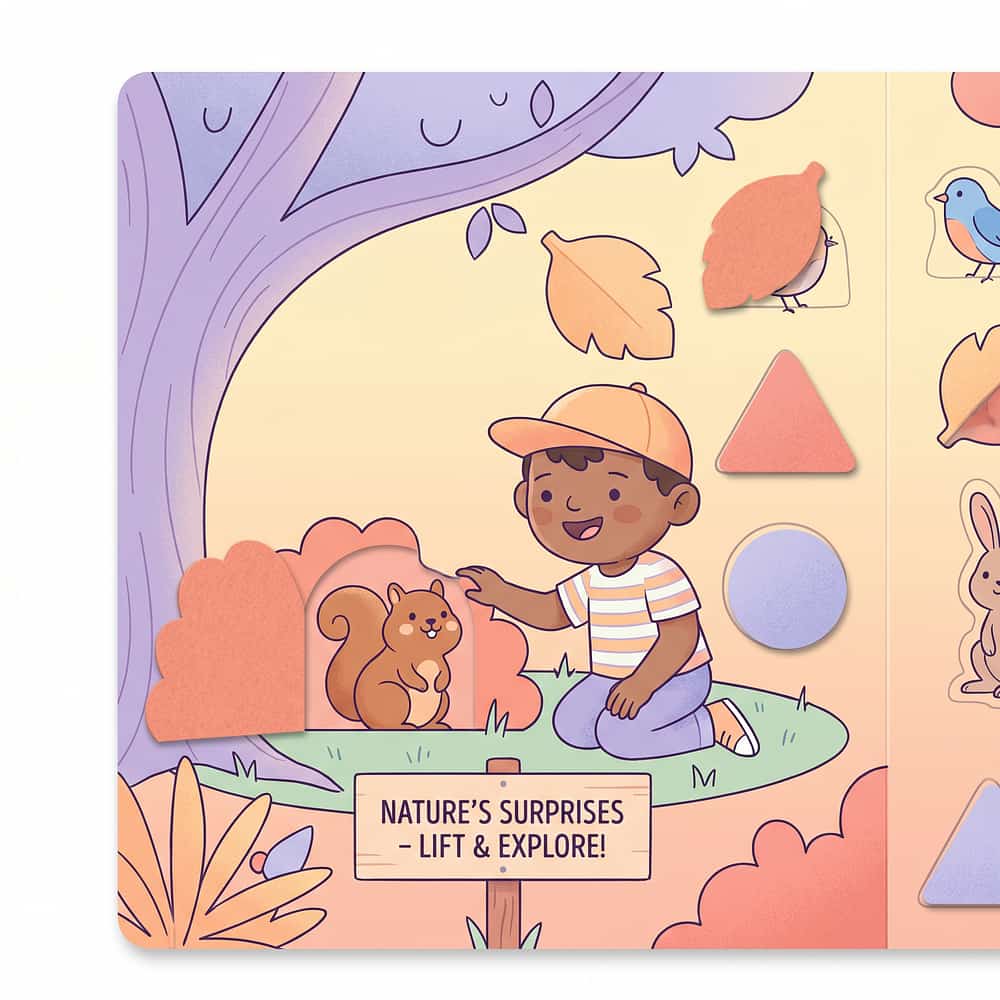
5. Interactive Books with Flaps | ₹200–800
Lift-the-flap, touch-and-feel, sound button books, pop-up books. Guided discovery through pages mirrors the shared attention triangle — point, reveal, react together.
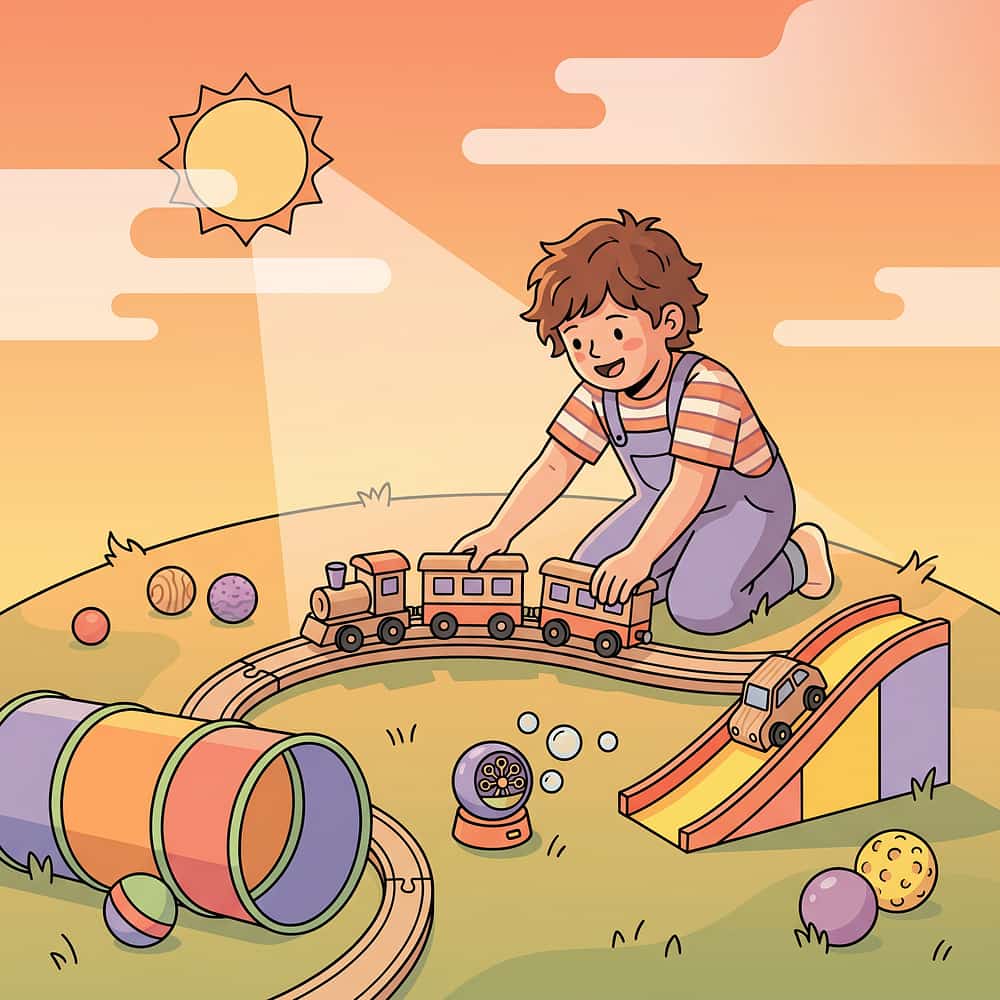
6. Movement Toys (Trains, Cars) | ₹300–2,000
Train sets, car ramps, ball runs, wind-up toys. Predictable movement creates shared visual tracking and anticipation — both powerful joint attention ingredients.

7. Musical Toys & Instruments | ₹200–1,000
Drums, tambourines, rhythm shakers, musical books. Auditory attention capture creates shared reactions to sounds — natural exclamations that invite eye contact and shared delight.
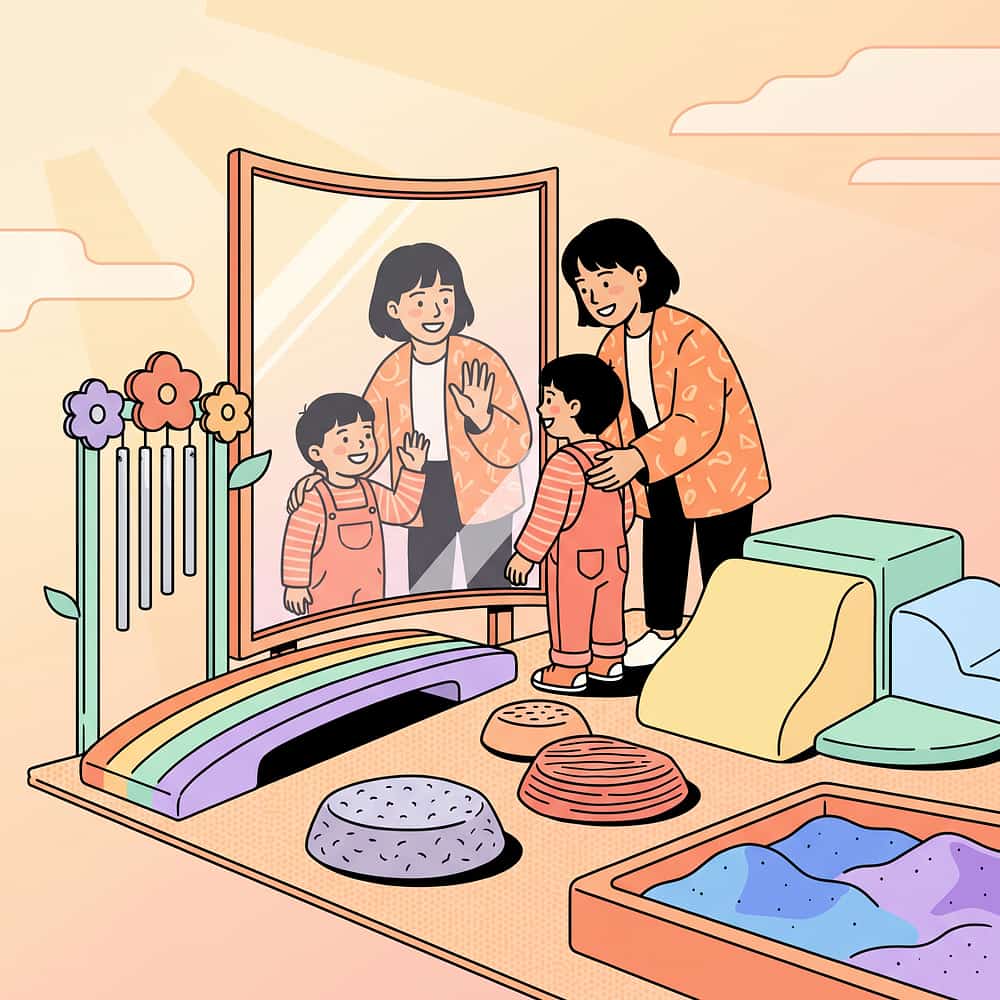
8. Mirrors & Reflective Materials | ₹300–1,500
Safety mirrors (unbreakable acrylic or safety glass), large floor mirrors, mirror books. Seeing two faces simultaneously in one surface is one of the most powerful shared attention tools available.

9. Shared Construction Materials | ₹400–2,000
Duplo/Mega Bloks, magnetic building tiles, stacking toys. Collaborative construction creates sustained shared focus, turn-taking within shared attention, and the powerful "look what we made together!" moment.
Essential Starters Total
₹550–2,300
Complete Kit Total
₹1,850–10,600
Zero-Cost Option
Available for all 9

Zero-Cost Alternatives — Start Today with What You Have
Not every family can order online. Not every village has same-day delivery. The WHO/UNICEF Nurturing Care Framework demands equity — every parent, regardless of economic circumstances, must be able to execute this technique today.
Clinical Material | Household Substitute | Why It Works |
Bubble kit | Dish soap + water + wire hanger bent into loop or slotted spoon | Same visual fascination, same shared tracking, same gaze alternation |
Pop-up toys | Hide a toy under a cloth, reveal with "ta-da!" or shake a ball inside a box | Same anticipation-surprise cycle; same shared emotional reaction |
Light toys | Torch in a dark room, pointed at walls/ceiling | Same visual capture; same cause-effect wonder; same shared focus point |
Interactive books | Any picture book — add your own "flaps" with sticky notes over pictures | Same guided discovery; same point-and-reveal routine |
Movement toys | Roll a ball back and forth; send a toy car down a cardboard ramp | Same shared visual tracking; same anticipation of movement |
Pointing games | Point at objects around the room: "Where's the fan? Where's the door?" | Same pointing practice; zero materials required |
Musical toys | Pots and spoons as drums; fill bottles with rice as shakers | Same auditory attention capture; same shared reaction to sounds |
Mirrors | Any mirror in the home — bathroom mirror, compact mirror, phone in selfie mode | Same face-finding; same dual-face display |
Construction toys | Empty boxes, stacking cups, pillows to build "towers" | Same collaborative focus; same "look what we made!" moments |
Safety First — Before You Begin
🟢 Green Light — Proceed When:
- Child is calm, alert, and fed (not hungry, tired, or in distress)
- Environment is quiet and distraction-minimised (TV off, siblings occupied)
- All materials are age-appropriate (no choking hazards under age 3)
- Bubble solution is non-toxic and child-safe
- Mirrors are safety-rated (unbreakable acrylic or safety glass)
- You have 10–20 uninterrupted minutes
🟡 Amber — Proceed with Caution When:
- Child has sensory sensitivities to specific materials — start with lowest-intensity version
- Child shows initial resistance to shared play — use parallel play first, gradually join
- Child has a history of putting objects in mouth — ensure all materials pass the choke-tube test
- Using light toys with a child who has photosensitivity or seizure history — consult neurologist first
🔴 Red Line — Stop and Consult a Professional If:
- Child becomes severely distressed beyond 2 minutes
- Child demonstrates self-injurious behaviour during activities
- Child has a seizure or seizure-like response to light toys
- You observe loss of previously established joint attention skills (regression = immediate red flag)
- No response to ANY shared attention bid after 4+ weeks of consistent daily practice

Setting Up Your Shared Attention Space
The Ideal Setup
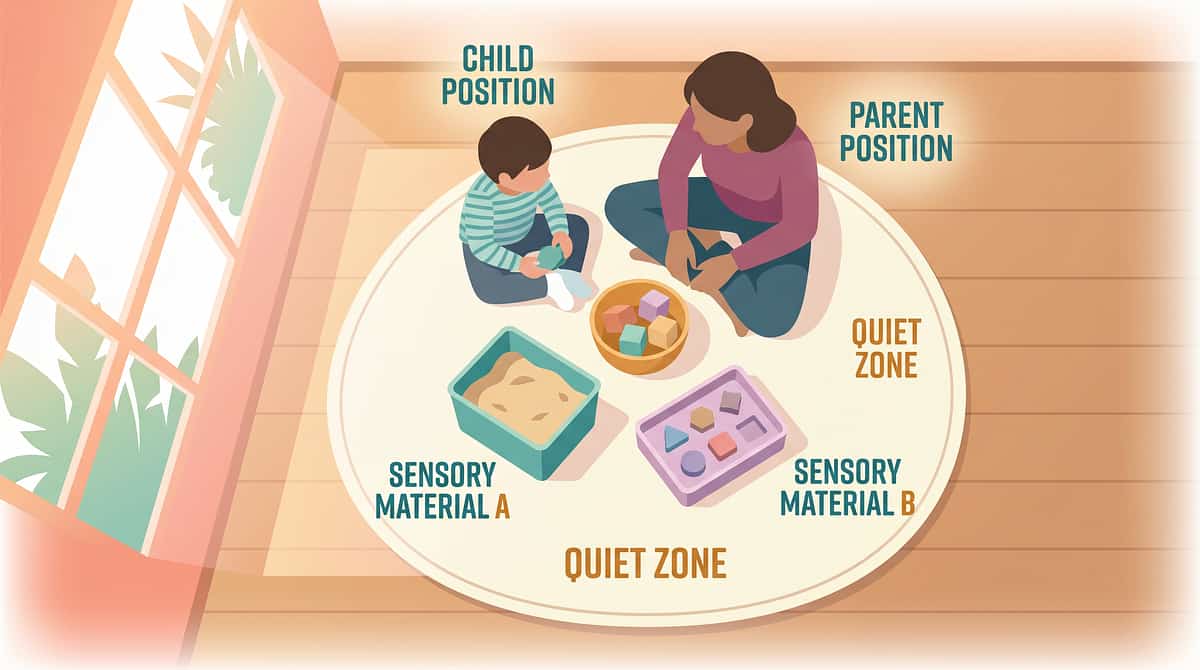
Position: Sit on the floor, facing your child at eye level. Not across a table — on the floor, close, where gaze naturally meets. The materials should be between you and slightly to one side, creating the natural triangle: child ← material → you.
Environment: Quiet room. No screens on. Minimal visual clutter. Natural or warm lighting. A familiar, safe space where the child feels comfortable.
Materials Ready: Have 2–3 materials prepared (not all 9 at once). Start with the child's highest-interest item. Additional materials nearby but out of sight for rotation.
Timing: Mid-morning or early afternoon, after a meal, after rest. Avoid times of transition, hunger, or tiredness.
Duration: Start with 5 minutes. Build to 10–15 minutes over weeks. Three good minutes of shared attention are worth more than fifteen minutes of forced proximity.
Your Session Checklist
- Floor-level seating arranged
- 2–3 materials selected and ready
- Room quiet, screens off
- Child calm, fed, rested
- 10–20 minute window protected
- Other caregivers informed (no interruptions)
Recording (Optional)
If tracking progress via GPT-OS®, set up a phone on a stable surface to record the session. This allows your therapist to review and provide guidance remotely — a powerful tool for accelerating progress without additional clinic visits.

ACT III — THE EXECUTION
Is Your Child Ready Right Now?
✅ Ready — Go Ahead
Calm body, eyes open and scanning the environment, approaching or tolerating your proximity, showing interest in objects, making any vocalizations. This is your window.
⏳ Almost Ready — Wait 5 Minutes
Slightly fussy but redirectable, finishing a preferred activity, just woke up and still groggy, mildly hungry (offer a small snack first). A brief pause pays dividends.
🛑 Not Ready — Try Later
Full tantrum or meltdown in progress, extreme fatigue, illness, high sensory overload, or immediately after a difficult transition. Never start during or immediately after distress.

STEP 1 OF 6
The Invitation: Entering Their World
Position yourself at your child's level. Begin using the material yourself — blow a bubble, press the light toy button, open a flap book — with visible wonder on your face. You are not asking the child to look. You are creating something worth looking at.
With Bubbles
Blow a single, beautiful bubble. Track it with your own eyes. Say softly, with genuine wonder: "Wooow... look at that one." Point at it. Let your face show fascination. The child's peripheral vision will catch your animation before they consciously decide to look.
With Pop-Up Toys
Place the toy between you. Start the mechanism slowly: "Something's going to happen... wait for it..." Your voice, your anticipation, your leaning forward — all of these are social signals that say "something worth attending to is about to happen."
With Light Toys
In a slightly dimmed room, press the button. Let the lights speak for themselves. Look at the lights, then look at your child, then back at the lights. You are modelling the gaze alternation you want to see.

STEP 2 OF 6
Building Engagement: The Shared Moment Emerges
When the Child Looks at the Material
This is your first win. You are now both looking at the same object — shared focus has begun. Quietly narrate: "You see the bubbles! I see them too!" Your voice connects the two attentional beams into a shared experience.
When the Child Looks at You
This is the magic moment. Even a flicker — a half-second glance at your face — is joint attention emerging. Meet their gaze with warmth. Smile. Your face must communicate: "I see you seeing me." Then redirect to the shared object: "Look — there goes another one!" You are completing the triangle.
When the Child Doesn't Look Yet
Move the material closer to your face. Hold the bubble wand at chin level so that looking at the bubbles means looking near your face. This "environmental engineering" increases the probability of incidental gaze contact without demanding it.
The Engagement Formula
Object captures attention → Your animation captures peripheral attention → Child glances at you → You reinforce with warmth → Child returns to object → You narrate → Repeat.
STEP 3 OF 6
The Therapeutic Action: Building the Triangle
This is where the majority of therapeutic input occurs. Aim for 5–10 clear shared attention moments per session. Rotate across all available materials to prevent habituation and maximise engagement.
Bubble Play — Shared Tracking
Blow bubbles. Point to a specific bubble: "Look at the BIG one!" Watch if the child follows your point. When a bubble pops, look at your child with an exaggerated surprised face — "It popped!" You are creating micro-moments of shared experience.
Pop-Up Toys — Shared Anticipation
Build the anticipation: "Ready... ready... wait for it..." When the surprise happens, look IMMEDIATELY at your child's face. Your reaction mirrors theirs. "DID YOU SEE THAT?!" The shared surprise is the therapeutic ingredient.
Light Toys — Shared Cause-Effect
Let the child press the button. When lights appear, say "YOU did that! Look at the lights!" Point. Then look at the child: "Do you see?" The cause-effect gives the child agency; your shared wonder gives the moment social meaning.
Interactive Books — Shared Discovery
Point to a flap: "What's under HERE? Let's find out..." Lift together. React together. "A PUPPY! Do you see the puppy?" Point at the picture. Look at the child. Back to the picture. Triangle, triangle, triangle.
Pointing Games — Direct Practice
"Where's the bird? Can you SHOW me?" Model pointing with your whole arm and index finger extended. Celebrate any approximation — a reach, a look in the right direction, a head turn. "You showed me! I see it!"
STEP 3 CONTINUED — CHILD RESPONSE SPECTRUM
Reading Your Child's Responses in the Moment
✅ Ideal Response
Child looks at object, looks at you, looks back at object, points, vocalises. This is the complete joint attention triangle functioning as designed. Celebrate warmly and immediately.
👍 Acceptable Response
Child looks at object, glances briefly at you, returns to object. Even a single gaze flicker counts as joint attention. This is real, measurable progress. Reinforce it.
⚠️ Concerning Response
Child avoids all shared focus, turns away from materials, shows sustained distress. Reduce intensity, switch materials, or end the session kindly. Review troubleshooting guidance and consider consulting your Pinnacle therapist.
Reference: PMC10955541 — Meta-analysis on therapeutic session structure and dosage in joint attention intervention

STEP 4 OF 6
Repeat & Vary: Therapeutic Dosage
Target Repetitions
5–10 shared attention "moments" per session. A "moment" is any instance where both you and the child are attending to the same thing and at least one social gaze exchange occurs.
Variation Within Session
Rotate materials every 3–4 minutes to prevent habituation. If bubbles are losing their magic, switch to the pop-up toy. If the child fixates on one material, use that material's shared attention potential fully before switching.
Timing
3–5 minutes of varied repetition within the session. This phase anchors the therapeutic gains made in the core action phase.
Satiation Indicators
When the child has had enough:
- Turning away from materials
- Pushing materials aside
- Decreased animation or interest
- Increased self-stimulatory behaviour
- Fussiness or protest

STEP 5 OF 6
Reinforce & Celebrate: Making Connection Rewarding
Reinforcement timing is critical. Reward within 1–2 seconds of ANY shared attention behaviour. Delayed reinforcement loses the connection to the behaviour — immediacy is the mechanism.
Natural Reinforcement — Best
The shared experience IS the reward. Your smile when eyes meet. Your excited voice when they follow your point. Your warmth when they show you something. For many children, the social reward of connection becomes self-reinforcing over time.
Verbal Praise — Specific
Not "good job" — instead: "You LOOKED at me! You showed me the bubble! You saw the light!" Name the exact shared attention behaviour you want to increase. Specificity matters enormously.
Physical Affection — If Tolerated
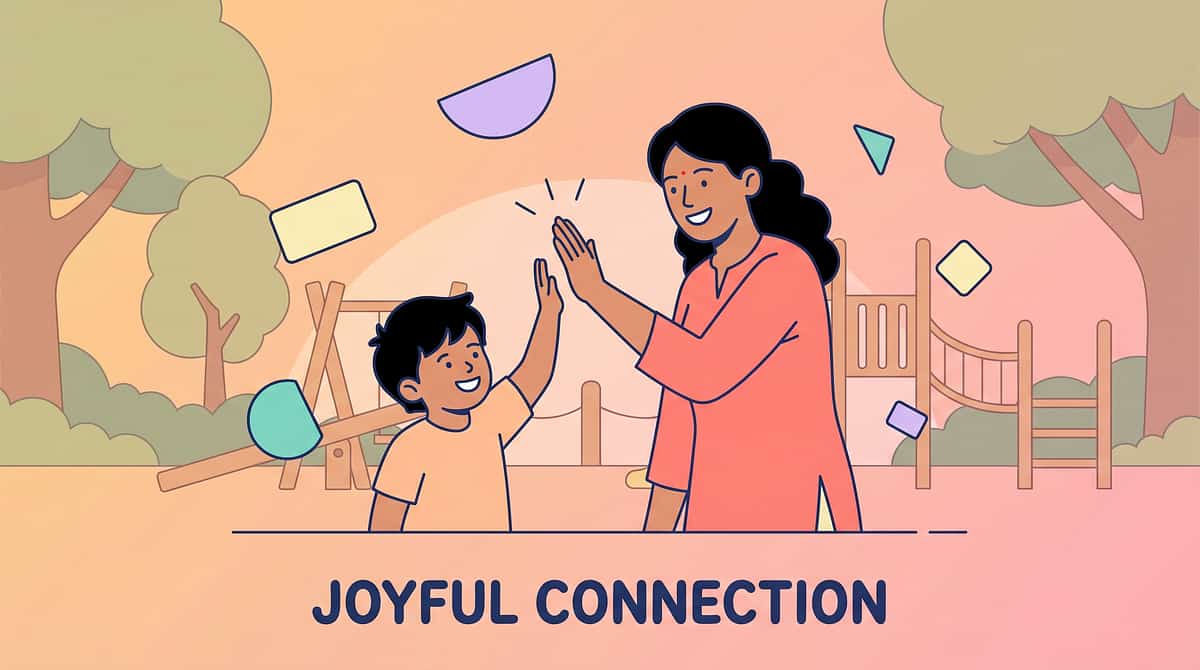
High-five, tickle, squeeze, clap — paired with the shared moment. "You pointed! HIGH FIVE!" Keep it brief and joyful; don't let the celebration outshine the connection it's celebrating.
Tangible — If Needed Initially
For children who don't yet find social interaction rewarding, pair the shared attention moment with a preferred sensory input. Gradually fade tangibles as social reinforcement increases over weeks.
STEP 6 OF 6
Cool Down: Closing the Session with Connection
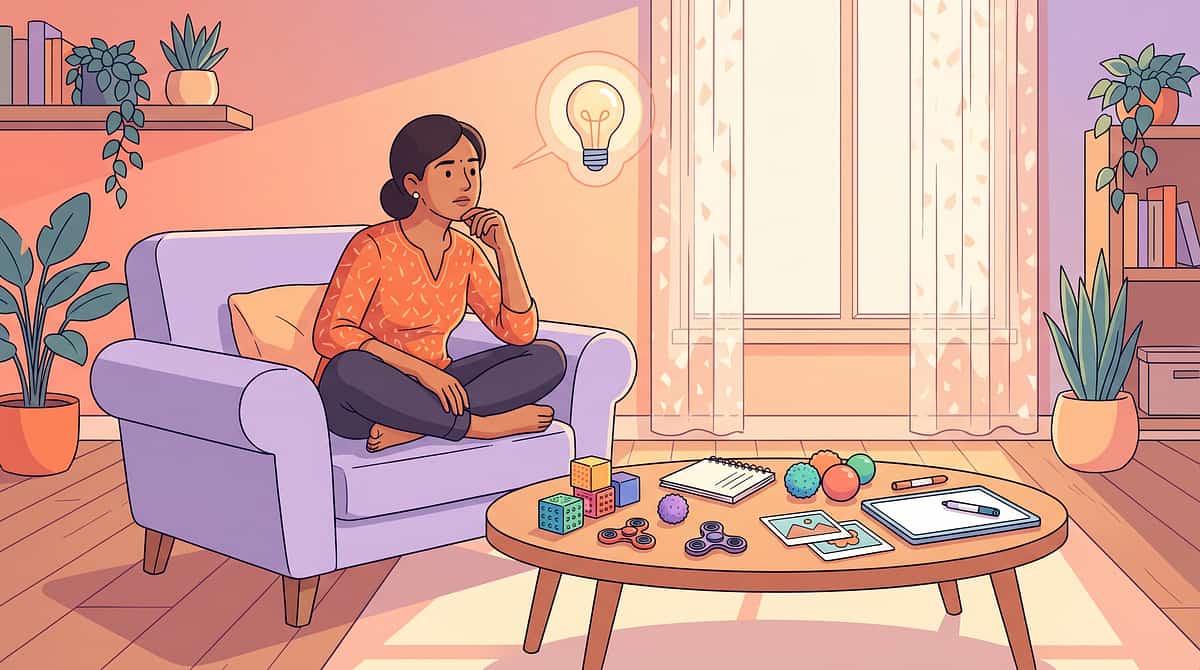
Reduce intensity gradually. Switch from active materials (bubbles, pop-ups) to calmer ones (book, mirror). Slow your voice. Narrate the ending: "We looked at SO many things together today. The bubbles... the lights... you showed me the puppy in the book."
End with a quiet shared moment — sitting together looking at one final thing. A page in a book. Your reflections in a mirror. A last bubble floating slowly down.
Warm-Up
1–2 min
Core Action
5–10 min
Repeat & Vary
3–5 min
Cool Down
2–3 min
Total Session
10–20 min
Track Your Progress — Data Drives Improvement
Consistent data collection transforms home practice from hopeful activity into measurable intervention. Record after each session using the framework below — or upload to GPT-OS® for automated analysis and therapist review.
What to Record After Each Session
- Date and time of session
- Materials used (which 2–3 of the 9)
- Number of shared attention moments (approximate count)
- Child's engagement level (1–5 scale)
- Session duration
- Notes: what worked, what didn't, child's mood
Joint Attention Level Achieved Today
- Level 0: No shared focus
- Level 1: Shared focus on object (no gaze exchange)
- Level 2: Brief gaze to caregiver during shared focus
- Level 3: Gaze alternation (object → you → object)
- Level 4: Following your point
- Level 5: Producing a point to show you something
- Level 6: Spontaneous showing or giving objects to share

Troubleshooting — When It's Not Working
"My child won't look at me at all"
You're not the goal yet — the material is. Position materials near your face. Hold the bubble wand at chin level. Put the light toy between you. The material is the bridge. Eventually, looking at the material means looking near your face, and incidental gaze contact emerges naturally.
"My child only wants to grab materials and play alone"
Control the materials. Hold the bubble solution. Be the one who presses the button. The child needs YOU to access the fun. This creates natural dependency that promotes shared attention — they must look at you to get the toy activated.
"My child gets upset when I try to join their play"
Start with parallel play. Sit nearby with your OWN identical material. Play alongside without demanding interaction. Over days, gradually move closer. Begin commenting on THEIR play: "Oh, you built a tower!" Over time, proximity becomes tolerable, then welcome.
"My child points only to REQUEST things, never to SHARE"
This is normal progression. Imperative pointing (to get things) develops before declarative pointing (to share things). Celebrate requesting points — they are the precursor. Model declarative pointing yourself: "Look! A butterfly!" with no functional reward, just shared wonder.
"We've been doing this for weeks and I see no change"
Review: Are sessions happening daily? Is the environment distraction-free? Are you reinforcing every approximation? If yes to all and truly no change after 4 weeks, consult your Pinnacle Blooms therapist or call the FREE National Autism Helpline: 9100 181 181.
Personalise It — Adapting to Your Child
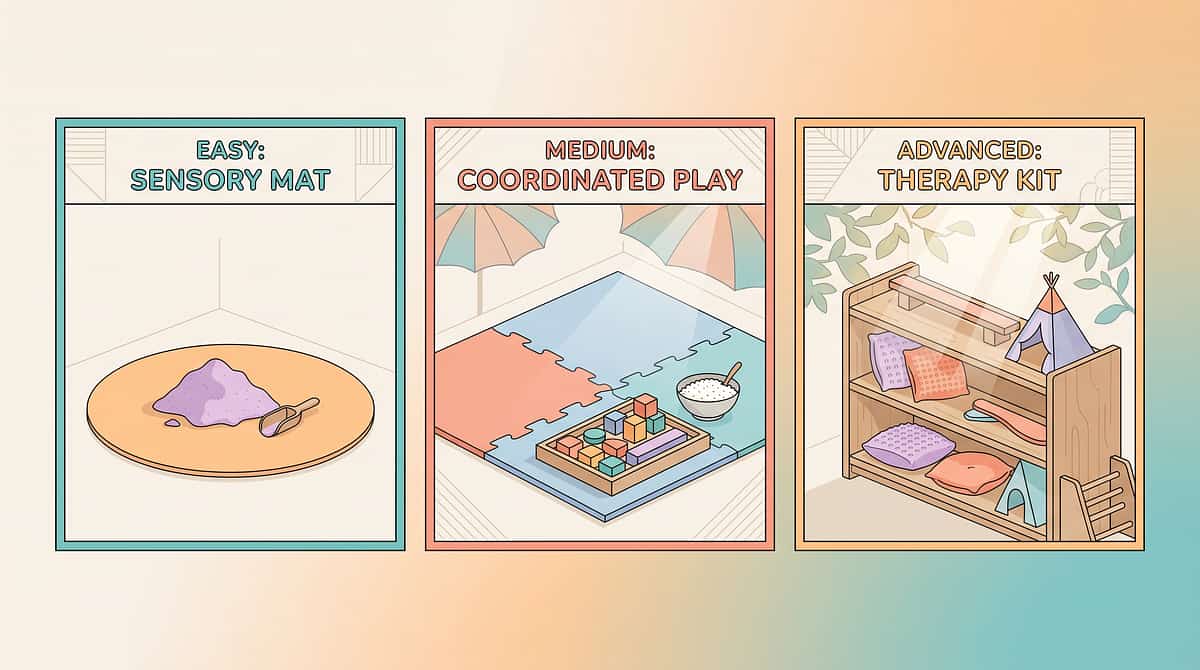
Easier Version
For challenging days or younger children:
- Use only 1 material per session
- Accept ANY visual attention to shared object as success
- Reduce session to 5 minutes
- Increase environmental engineering (materials right next to your face)
- Increase tangible reinforcement
Harder Version
For children making strong progress:
- Use materials at a distance (across the room — "Look over THERE!")
- Introduce novel materials to test generalisation
- Add a third person (sibling, grandparent) to practise with varied partners
- Reduce prompting — wait for SPONTANEOUS shared attention
- Move to outdoor environments (birds, dogs, vehicles as natural shared focus)
Sensory Seeker Version
Use high-intensity materials — bright lights, loud music toys, fast-moving trains. The sensory reward is high, making shared attention highly motivating and intrinsically reinforcing.
Sensory Avoider Version
Use low-intensity materials — touchable bubbles (not messy), quiet books, soft light lamps. Gentle, predictable, within tolerance. The materials must be engaging without being overwhelming.
Age Adaptations
- 18 months – 2 years: Bubbles, pop-ups, simple cause-effect. Focus on responding to YOUR points and gaze.
- 2–4 years: Interactive books, pointing games, mirrors. Focus on initiating points and showing objects.
- 4–6 years: Construction materials, complex movement toys. Focus on sustained shared attention, turn-taking, and narrative sharing.

ACT IV — THE PROGRESS ARC
Weeks 1–2: The Foundation Phase
What You May See
- Increased tolerance of your proximity during play
- Brief glances toward materials you're animating
- Reduced protest when you sit near their play space
- Possible increase in looking at YOUR hands as you operate materials
What You Will Not See Yet
- Spontaneous pointing to share
- Consistent gaze alternation
- Bringing objects to show you
- Following points across the room
"You showed up. You created the opportunity. You sat on the floor. That is not nothing — that is everything."

Weeks 3–4: The First Sparks
Consolidation Indicators
- Child begins to anticipate the activity — shows excitement when materials appear
- Brief gaze alternation emerges — looks at bubble, then flickers eyes to your face, then back
- Begins to follow your point when the pointed-to object is close by
- May bring a material TO you for activation (a requesting gesture that contains the seed of sharing)
- Reduced latency between your bid and their response — they're attending faster
What the Child May Do Spontaneously
- Vocalise during shared moments (even non-words — the emotion has a sound)
- Reach toward your hand when you hold a material
- Show preference for materials-based play WITH you over solitary play
"You may notice you're more confident too. The awkwardness of the first sessions is fading. You're reading your child's cues faster. You ARE becoming a therapist."
Weeks 5–8: The Triangle Becomes Visible
Observable Changes
- Consistent gaze alternation during preferred activities (object → you → object)
- Emerging pointing — even approximate (reaching with open hand)
- Social referencing — looking at your face when something surprising happens
- Initiating shared focus by bringing materials to you or pulling your hand
- Beginning to follow points to more distant objects
- Possible first declarative point — showing you something purely to share
Generalisation Signs
- Shared attention emerging outside structured sessions — during meals, walks, bath time
- Beginning to show things to OTHER people — grandparents, siblings, therapists
- Increased social orientation — looking at people's faces more frequently in general
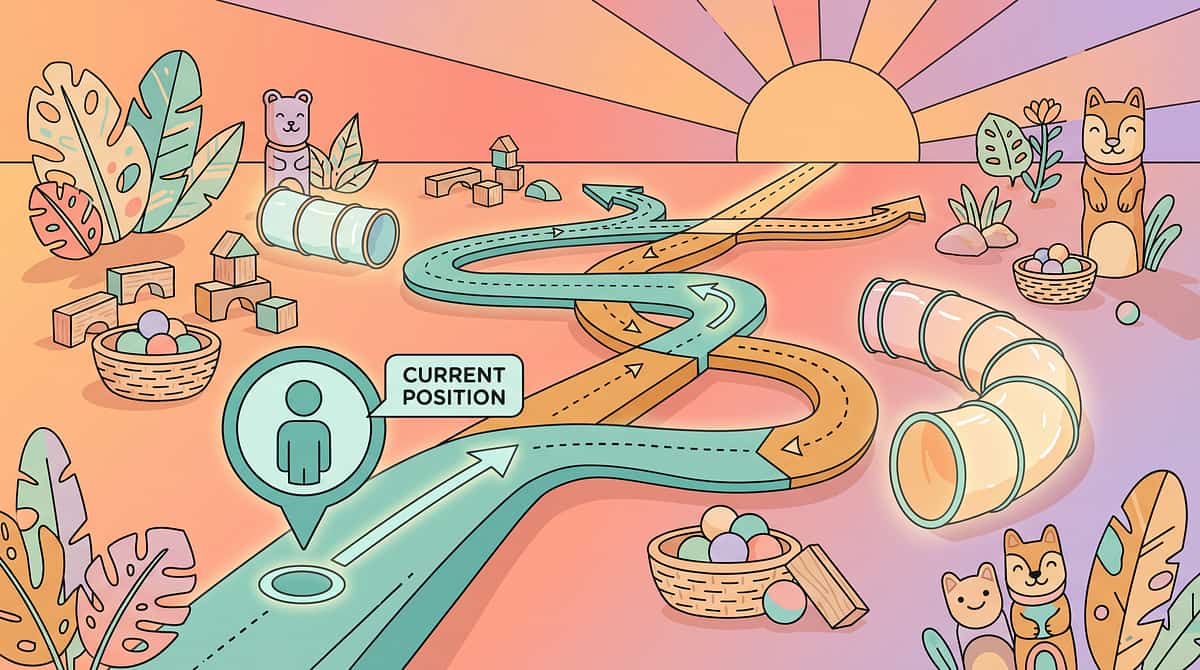
Celebrate Every Connection
🌟 The First Shared Look
When your child's eyes travel from the bubble to your face and back again, hold that moment in your heart. It may last half a second. It represents months of work. It is a neural pathway forming in real time.
👆 The First Point
When a small finger extends toward something and a small face turns to check if you're looking — this is one of the most significant developmental achievements in early childhood. Your child has discovered that their attention can direct yours. They have discovered that minds can be shared.
🧸 The First "Look at This!"
When your child brings you a toy, holds it up, and waits for your reaction — they have crossed from a private world into a shared one. This is the doorway to language, to friendship, to love expressed through attention.
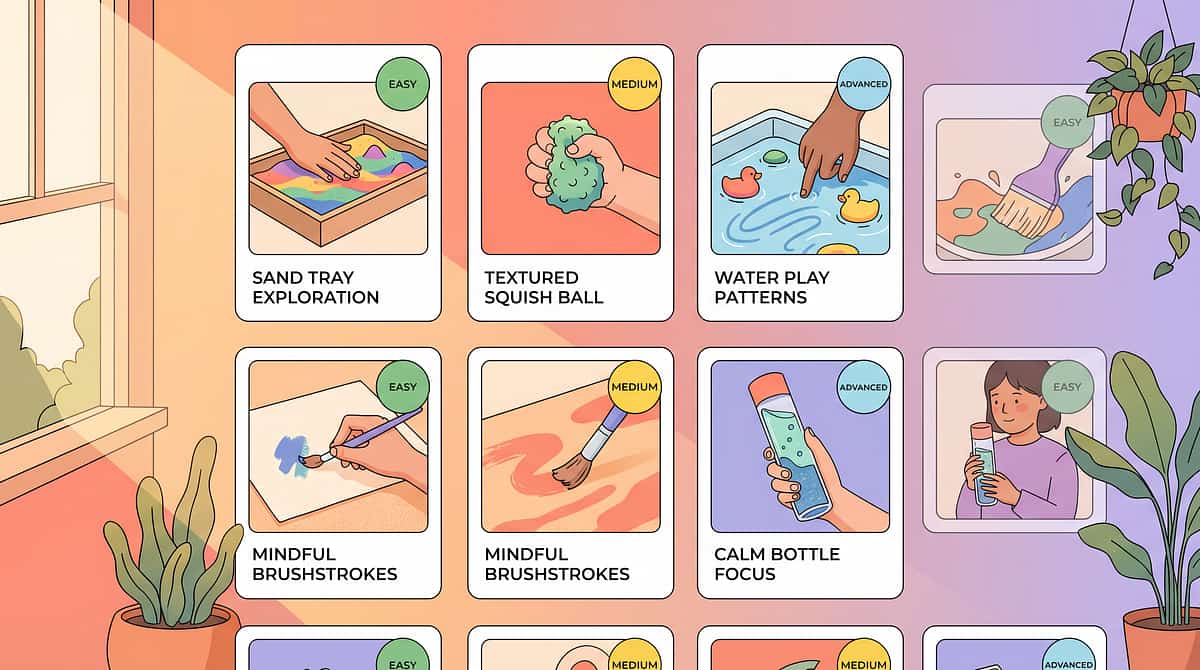
Red Flags — When to Seek Additional Support
Developmental Milestones Missed
- No pointing by 12 months
- No response to pointing by 14 months
- No gaze-following by 18 months
- Complete absence of any shared focus by 24 months
- LOSS of previously established joint attention skills — regression is ALWAYS a red flag
During Intervention
- No improvement after 4+ weeks of consistent daily shared attention activities
- Child shows increasing distress or avoidance with each session
- Associated concerns about hearing, vision, or overall development
Call the FREE National Autism Helpline
9100 181 181 — 16+ languages, available 24/7. Trained specialists ready to guide you.
Request an AbilityScore® Assessment
Through your nearest Pinnacle Blooms centre — a structured developmental evaluation across 591+ observations and 349 skills.
Bring Your Session Tracking Data
Your data is clinically valuable. The more you've tracked, the faster your therapist can identify what's needed.
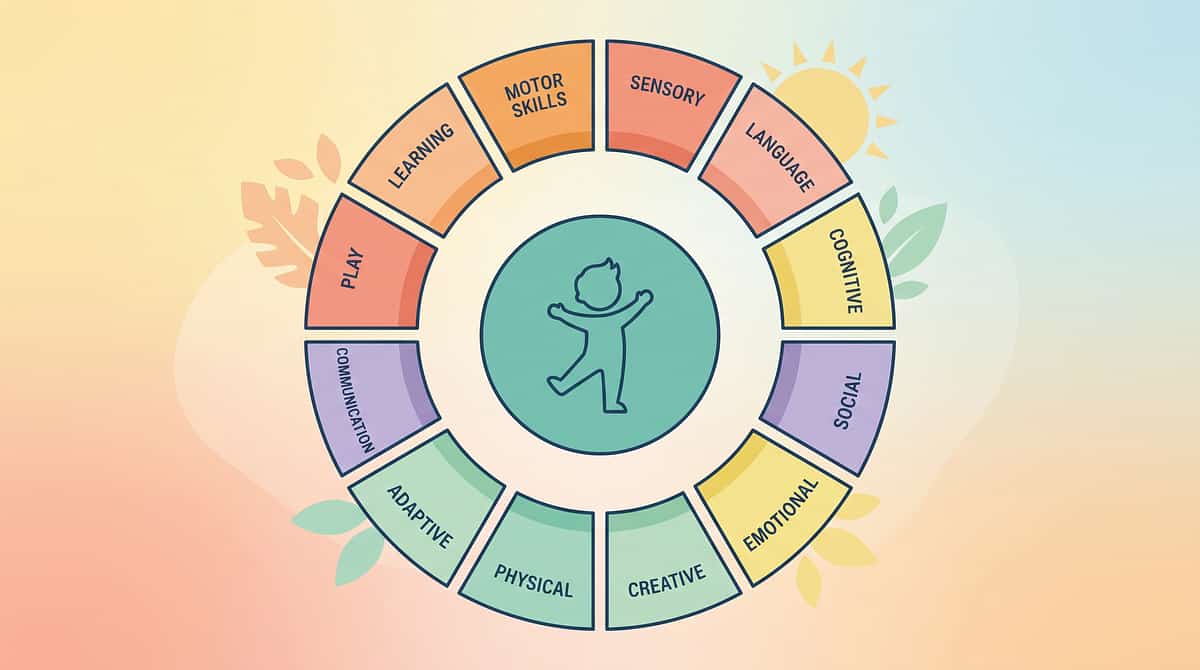
Your Joint Attention Progression Pathway
This pathway shows where B-145 sits within the broader Social Communication curriculum. Progress in shared attention directly unlocks the skills above it — imitation, social referencing, and ultimately rich emotional connection with others.
Prerequisite Techniques
B-143: Teaching Social Smile — Foundation of social orienting
B-144: Building Turn-Taking Foundation — Foundation of social reciprocity
Next-Level Options
B-146: Imitation Skills — If shared attention is emerging
B-147: Social Referencing — If child is checking your face during shared moments
B-148: Emotion Recognition — If shared affect is developing
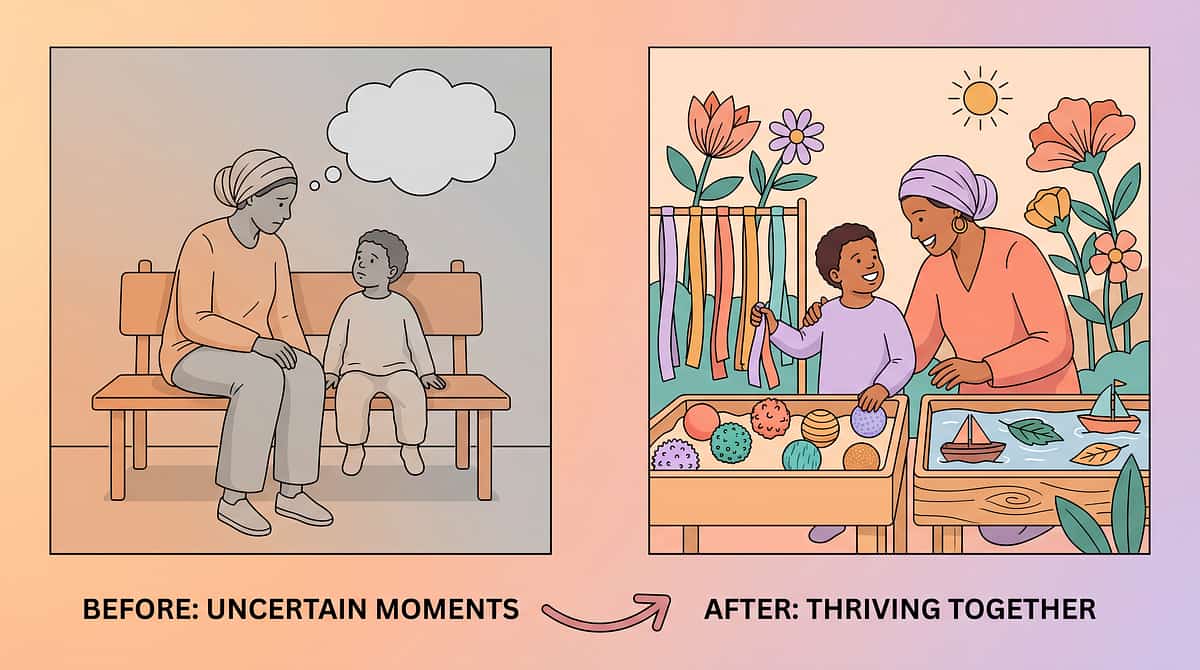
Related Techniques in Social Communication
B-145 sits within a carefully sequenced curriculum. Each technique reinforces the others — progress in shared attention creates the platform for every technique that follows.
Technique | Level | Focus |
B-143: Social Smile | Intro | Foundation of social orientation — the first social connection |
B-144: Turn-Taking | Intro | Reciprocal social interaction — giving and receiving in play |
B-145: Shared Attention (THIS PAGE) | Core | Joint attention triangle — child, object, and social partner connected |
B-146: Imitation Skills | Core | Observational learning through shared focus |
B-147: Social Referencing | Core | Reading caregiver emotional cues in novel situations |
B-149: Play Partner Skills | Advanced | Interactive play with peers — generalised social participation |
ACT V — THE COMMUNITY & ECOSYSTEM
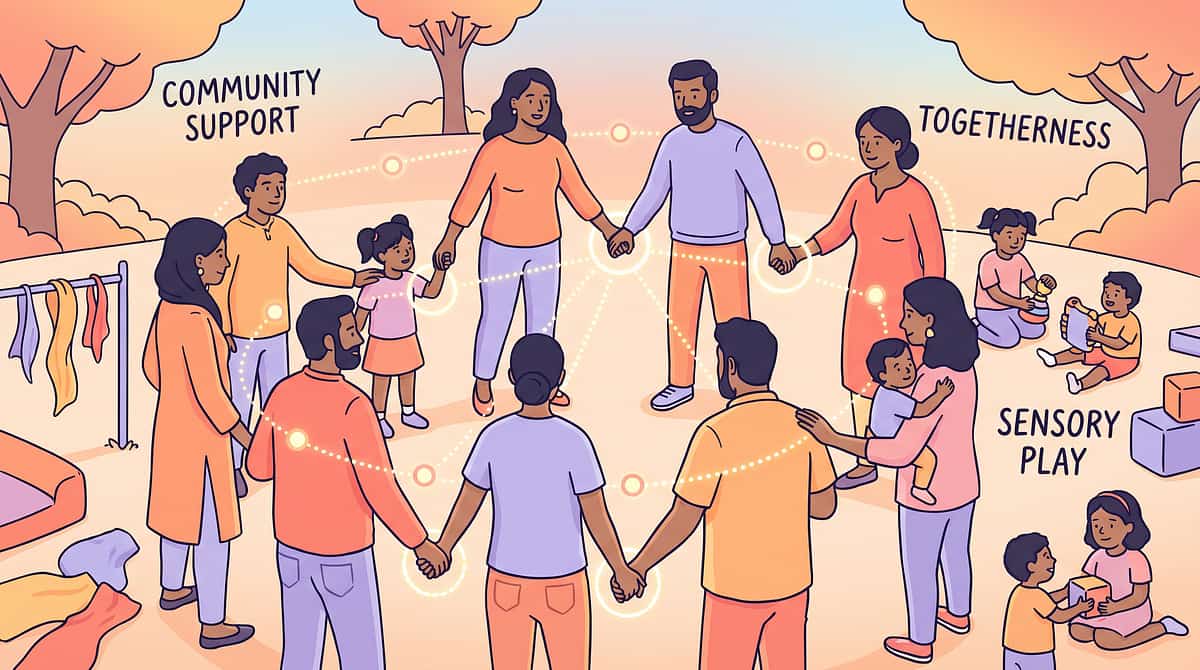
Real Families, Real Connections
"She finally pointed at the bird and looked back at me to see if I was looking too. That moment meant everything. I cried right there in the park."
— Parent, Pinnacle Blooms Network
"We started with bubbles. Just bubbles. For three weeks, he watched them alone. Then one day he looked at me — right at my face — as the bubble popped. I said 'POP!' and he laughed. We were in it together. That was the beginning."
— Parent, Pinnacle Blooms Network
"The pointing came slowly. Then one evening she pointed at the moon through the window and looked at me. She wasn't asking for the moon. She was showing me the moon. That's when I knew the triangle was real."
— Parent, Pinnacle Blooms Network
Connect With Other Families
Pinnacle Parent Community
Connect with thousands of families walking the same path. Share wins, troubleshoot challenges, and find solidarity in the journey. pinnacleblooms.org/community
FREE National Autism Helpline
9100 181 181 — 16+ languages, 24/7 availability. Trained specialists who speak your language and understand your journey.
EverydayTherapyProgramme™
Daily guided micro-interventions delivered to your phone. Turn every ordinary moment into a therapeutic opportunity — evidence-based, personalised, and always with you.
Pinnacle Blooms YouTube
Video demonstrations of shared attention activities — real children, real therapists, real moments of connection being built. See the techniques in action before you try them at home.
You are not doing this alone. Behind this page stands a network of 70+ centres, thousands of therapists, and millions of families who have walked this road and found connection.
Professional Support Near You
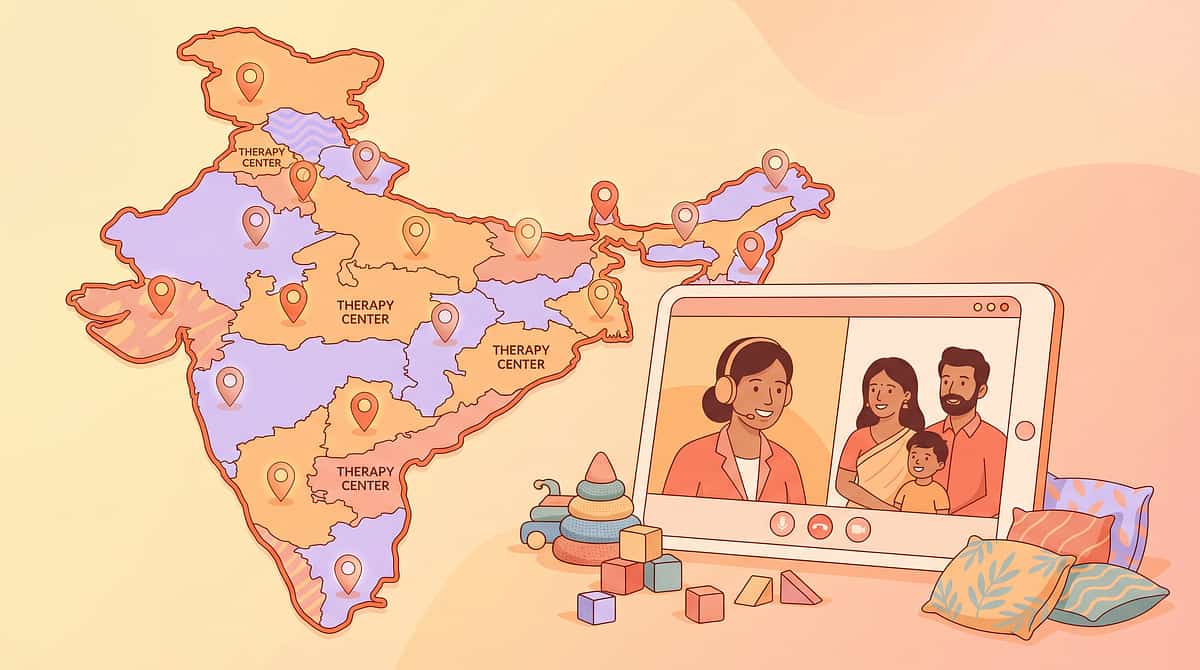
Pinnacle Blooms Network
70+ centres across India providing the full spectrum of paediatric developmental services — all coordinated under one evidence-based operating system.
- Speech-Language Therapy
- Occupational Therapy
- ABA / Behavioural Therapy
- Special Education
- NeuroDevelopmental Paediatric Consultation
- AbilityScore® Diagnostic Assessment
- EverydayTherapyProgramme™
Find Your Centre
Every Pinnacle Blooms centre brings together the full consortium — SLP, OT, BCBA, SpEd, NeuroDev, and CRO — working as one coordinated team around your child's unique profile.
The same consortium experts who designed these activities are available for individual consultation, assessment, and therapy at a centre near you.
Research Index — Every Claim Is Evidence-Backed
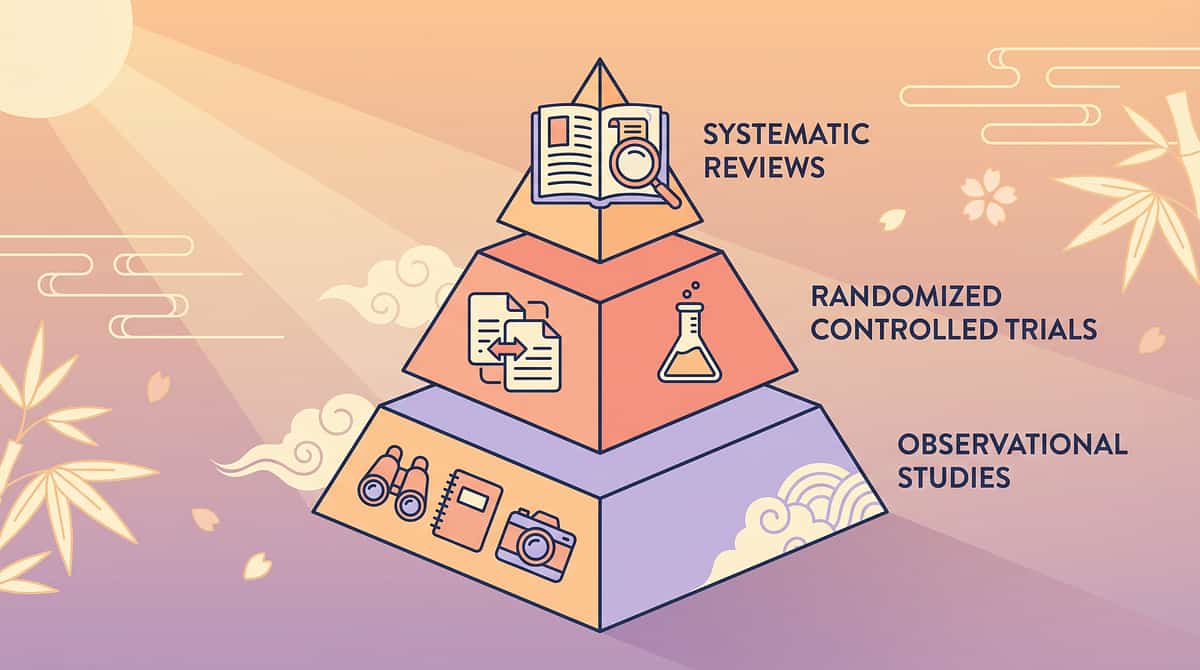
This page is built on a foundation of peer-reviewed research, systematic reviews, and real-world clinical data from 20M+ therapy sessions. Every recommendation can be traced to a source.
Kasari C, Freeman S, Paparella T. (2006). "Joint attention and symbolic play in young children with autism: a randomized controlled intervention study." J Child Psychol Psychiatry. — Landmark RCT establishing joint attention as teachable.
Mundy P, Newell L. (2007). "Attention, joint attention, and social cognition." Current Directions in Psychological Science. — Foundational theoretical framework.
Charman T. (2003). "Why is joint attention a pivotal skill in autism?" Phil Trans R Soc Lond B. — Establishes joint attention as a pivotal developmental skill.
WHO Nurturing Care Framework (2018). nurturing-care.org/ncf-for-ecd/ — PMC9978394 — Global framework for early childhood development.
WHO/UNICEF Care for Child Development Package (2023). Age-specific caregiver recommendations implemented in 54+ countries.
Frontiers in Integrative Neuroscience (2020). DOI: 10.3389/fnint.2020.556660 — Neurological basis for sensory-based interventions in ASD.
Adapted UNICEF/WHO Nurturing Care Framework for SLPs (2022). DOI: 10.1080/17549507.2022.2141327
World J Clin Cases (2024). PMC10955541 — Meta-analysis of intervention outcomes in joint attention therapy.
Children (2024). PMC11506176 — PRISMA systematic review of sensory integration evidence.
Padmanabha et al. Indian J Pediatr (2019). DOI: 10.1007/s12098-018-2747-4 — Indian RCT on home-based interventions.
Pinnacle Blooms Network® Clinical Data. 20M+ sessions, 97%+ measured improvement. GPT-OS® Real-World Evidence.
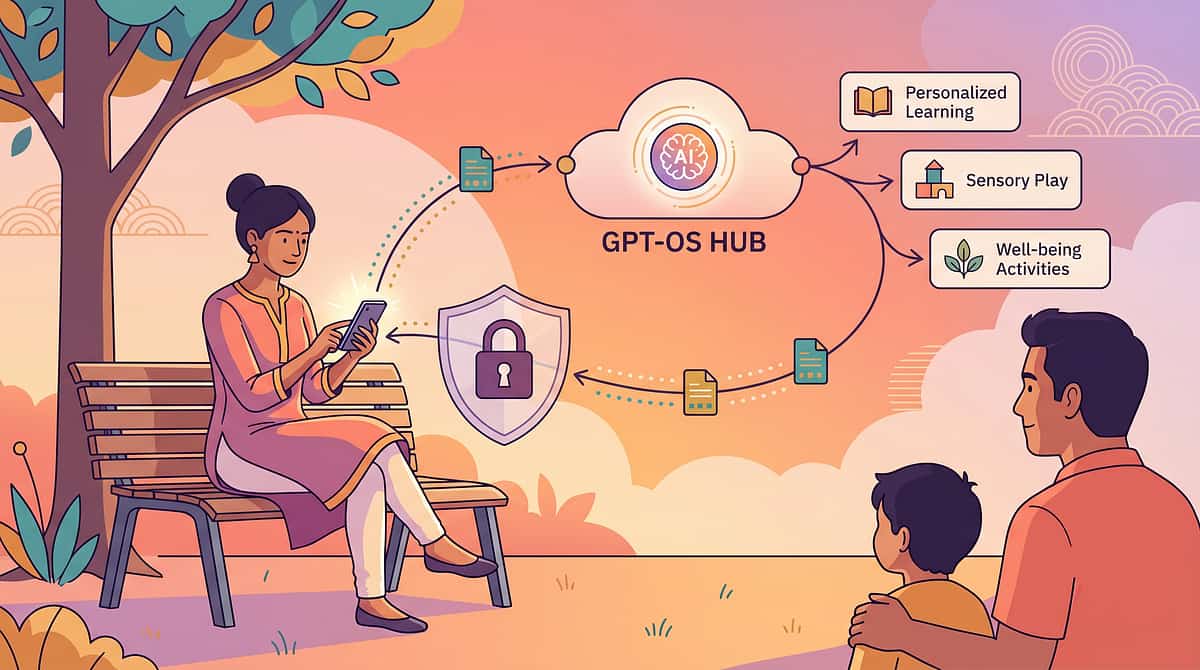
Powered by GPT-OS® — Global Paediatric Therapeutic Operating System
GPT-OS® is the end-to-end operating system governing diagnosis, prognosis, therapy design, execution, monitoring, and readiness outcomes in child development — as one closed, accountable system.
Diagnostic Intelligence Layer
591+ structured observations across 349 skills and 79 developmental abilities — the most comprehensive developmental assessment architecture ever built.
AbilityScore®
Patented universal developmental score (0–1000) establishing baseline and tracking change over time — a single number that tells the complete developmental story.
TherapeuticAI®
Determines therapy focus, intensity, sequencing, and reinforcement logic based on your child's unique profile — not a generic protocol.
EverydayTherapyProgramme™
Translates clinical plans into daily home micro-interventions — the bridge between the clinic and your living room.
FusionModule™
Coordinates speech, OT, behaviour, special education, and medical inputs into one coherent, non-conflicting plan.
Closed-Loop Control
Observation → Score → Plan → Execute → Re-measure → Adapt. The system never stops improving.
1:1 Therapy Sessions
Measured Improvement
Centres Nationwide
Countries with Patents Filed

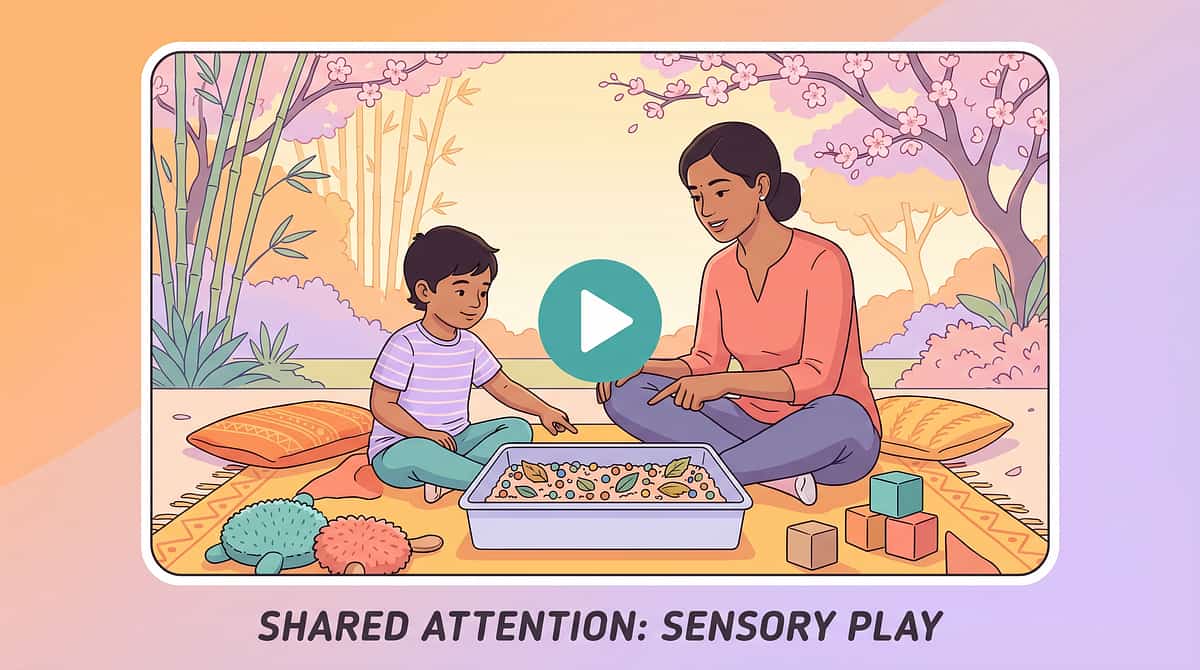
Watch: The Triangle of Connection — 75-Second Visual Guide
See these materials in action — real children, real therapists, real moments of shared attention being built. 75 seconds of hope, science, and practical guidance from the Pinnacle Blooms Consortium.
Share this with your family: Joint attention is a whole-family activity. Grandparents, siblings, aunts, uncles — everyone who interacts with your child can create shared attention moments.
"I found this evidence-based guide to building shared attention with our child. 9 simple materials, proven protocols, and it works at home. From Pinnacle Blooms Network — India's largest autism therapy network."

ACT VI — FAQ
Your Questions, Answered by the Consortium
Q: At what age should I start?
As early as concerns emerge. Joint attention typically develops between 9–18 months. If your child is 18 months+ and not demonstrating shared attention, begin these activities immediately. There is no "too early" for enriched social interaction.
Q: How long until I see results?
Most families observe first emerging signs (increased tolerance, brief gaze shifts) within 2–4 weeks of daily practice. Consistent pointing and spontaneous sharing typically emerge between 6–12 weeks. Every child's timeline is unique and valid.
Q: Can I do this without professional guidance?
Yes — this page provides a complete home protocol. However, professional guidance accelerates progress and catches nuances parents may miss. We recommend pairing home practice with professional therapy for optimal outcomes.
Q: What if my child has no interest in ANY of these materials?
Find what DOES interest your child — even if it's not on this list. Your child's existing interests are the entry point. If they love watching ceiling fans, stand together watching the fan and narrate: "Look at it spin!" The principle (shared focus) applies to ANY interesting stimulus.
Q: Is this the same as forcing eye contact?
Absolutely not. We never force eye contact. We create conditions where shared FOCUS naturally leads to incidental eye contact. The target is shared attention to objects/events — not sustained gaze into eyes.
Q: Can siblings help with these activities?
Yes. Siblings are excellent joint attention partners. They naturally create shared moments through play. Teach siblings the "triangle" concept: look at something together, check if your sibling is looking, celebrate the shared moment.
Q: My child only watches screens — can I use that?
Screens are poor joint attention tools because they capture attention so completely that social sharing becomes unnecessary. These materials are LESS captivating than screens but MORE captivating than nothing — creating the sweet spot where the child needs a social partner to complete the experience.
Q: How does this connect to language development?
Joint attention is the single strongest predictor of vocabulary development in both typical and atypical populations. Before a child learns the WORD for "ball," they must share the EXPERIENCE of "ball" with another person. Shared attention is the platform on which language is built.

ACT VI — YOUR NEXT STEP
Start Now — Every Shared Look Is a Bridge Between Minds
Every shared look is a bridge between minds. Every point is a hand extended across the silence. Every moment of "look at this with me" is a brick in the foundation of language, friendship, and love.
You have read the science. You have the materials (or their zero-cost substitutes). You have the protocol. You have the consortium behind you.
▶ Start This Technique Today
Launch your first shared attention session with the complete protocol on this page. You have everything you need right now.
📞 Book a Consultation
FREE National Autism Helpline: 9100 181 181 | 16+ languages | 24/7 availability
🔄 Explore the Next Technique
Validated by the Pinnacle Blooms Consortium — Technique B-145
Preview of 9 materials that help with shared attention Therapy Material
Below is a visual preview of 9 materials that help with shared attention therapy material. The pages shown help educators, therapists, and caregivers understand the structure and content of the resource before use. Materials should be used under appropriate professional guidance.


THE PINNACLE PROMISE
From Fear to Mastery.
One technique at a time. — The Pinnacle Blooms Consortium
This page was crafted by the combined expertise of Clinical Research Officers, Paediatric Speech-Language Pathologists, Occupational Therapists, Board Certified Behaviour Analysts, Special Educators, and NeuroDevelopmental Paediatricians — the Pinnacle Blooms Consortium. It represents one of 70,000+ technique pages that together form the largest structured paediatric intervention knowledge base on Earth — powered by GPT-OS®, backed by 20M+ therapy sessions, and dedicated to transforming every home into a proven, scientific, personalised therapy centre.
© 2025 Pinnacle Blooms Network®, unit of Bharath Healthcare Laboratories Pvt. Ltd. All rights reserved. CIN: U74999TG2016PTC113063 | DPIIT: DIPP8651 (Govt. of India) | GSTIN: 36AAGCB9722P1Z2
The Triangle of Connection