

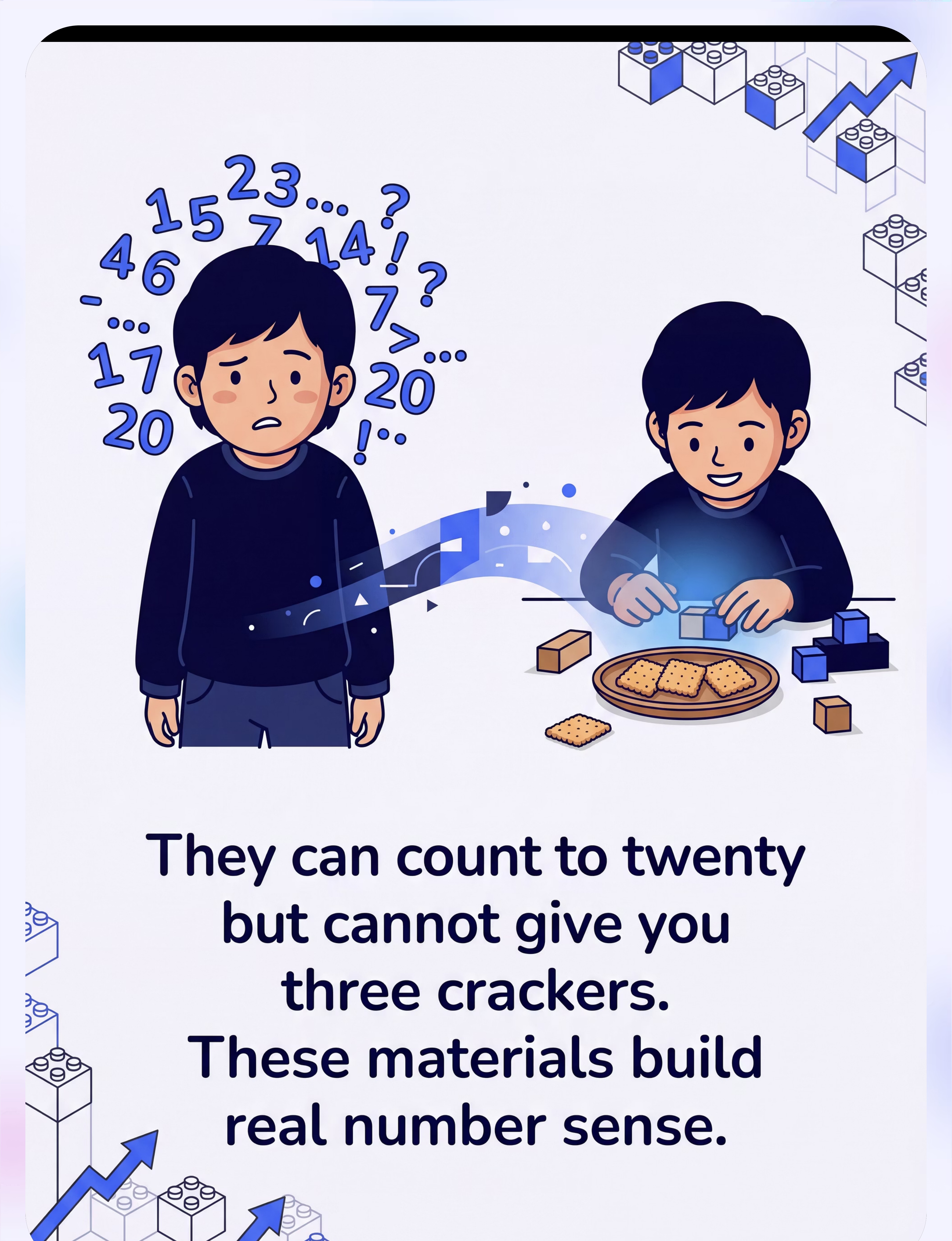
"He can count to twenty but couldn't give me three crackers."
It's the moment that stops you cold. You watch your child recite numbers like a song — perfectly in order, all the way to twenty — then ask them to hand you three pieces of fruit, and they give you a random handful. They've memorized the sounds of numbers. But numbers, to them, still mean nothing.
You are not failing. Your child has not been given the right tools yet. Number sense is built through hands, not memorized through repetition.
🏛️ Pinnacle Blooms Consortium
OT · SpEd · ABA · SLP · NeuroDev
Validated Clinical Content
ACT I — THE EMOTIONAL ENTRY
You Are Among Millions of Families Navigating This Exact Challenge
Number sense difficulties are not rare. They are not a sign of low intelligence. They are not your child's fault. Across India and globally, millions of children enter kindergarten able to count to twenty but unable to demonstrate what "four" actually means. The research is clear: the window from ages 3 to 7 is when foundational math cognition forms. Not through worksheets. Through hands.
1 in 5
Early Number Sense Gaps
Children show significant gaps in foundational number sense before formal schooling begins
68%
Developmental Differences
Children with developmental differences have math readiness challenges requiring structured intervention
3–7
Critical Window (Years)
The window where number sense is most efficiently built — where the right materials make a permanent difference
Sources: National Council of Teachers of Mathematics (NCTM) · Clements & Sarama Learning Trajectories · IES Practice Guide: Teaching Math to Young Children · WHO Care for Child Development (CCD) Package 2023 · PMC9978394

The Neuroscience of Number Sense — In Plain Language
🧠 The Brain's Number Region
Intraparietal Sulcus (IPS)
Sensorimotor input from hands → IPS → Prefrontal cortex for reasoning
The IPS encodes the actual meaning of quantities — not the sounds of number words, but the real-world magnitude that "five" represents.
What the Research Shows
The IPS develops through physical, motor interaction with objects. Picking up three bears, moving them, counting them with a pointed finger — this is not just play. This is the neural wiring process.
Worksheets and flashcards bypass the hands and go directly to verbal memory. But verbal memory and number sense are stored in completely different brain regions.
A child who recites "three" but hands you seven crackers has strong verbal memory and an underdeveloped IPS. The fix is not more repetition. It is hands-on quantity experience.
"This is a brain development gap, not a behavioral or intelligence problem. The IPS builds through touch, movement, and physical manipulation of real quantities. That is the entire scientific premise of this materials list." — Pinnacle NeuroDev Team
Sources: Dehaene, S. — The Number Sense (Oxford, 1997/2011) · Frontiers in Integrative Neuroscience (2020): DOI 10.3389/fnint.2020.556660 · NCTM Principles to Action (2014)

The Math Readiness Developmental Map (Ages 2–8)
YOUR CHILD IS HERE: If your child is 3–7 and showing gaps in one-to-one correspondence, cardinality, or subitizing — they are in the active intervention window. This is not late. This is exactly the right time.
Common Co-Occurrences
ASD
Frequently affects number sense via executive function and attention differences
ADHD
Impacts working memory required for counting sequences
DLD
Developmental Language Disorder affects math vocabulary and word problem understanding
Fine Motor Delays
Impair manipulation of counting materials — Pinnacle OT addresses this directly
Sources: WHO Care for Child Development Package (2023) · UNICEF MICS indicators · Piaget's Conservation of Number · Clements & Sarama Learning Trajectories · PMC9978394

Clinically Validated. Home-Applicable. Parent-Proven.
EVIDENCE GRADE: LEVEL I
Systematic Review + RCT
Finding 1 — IES Practice Guide
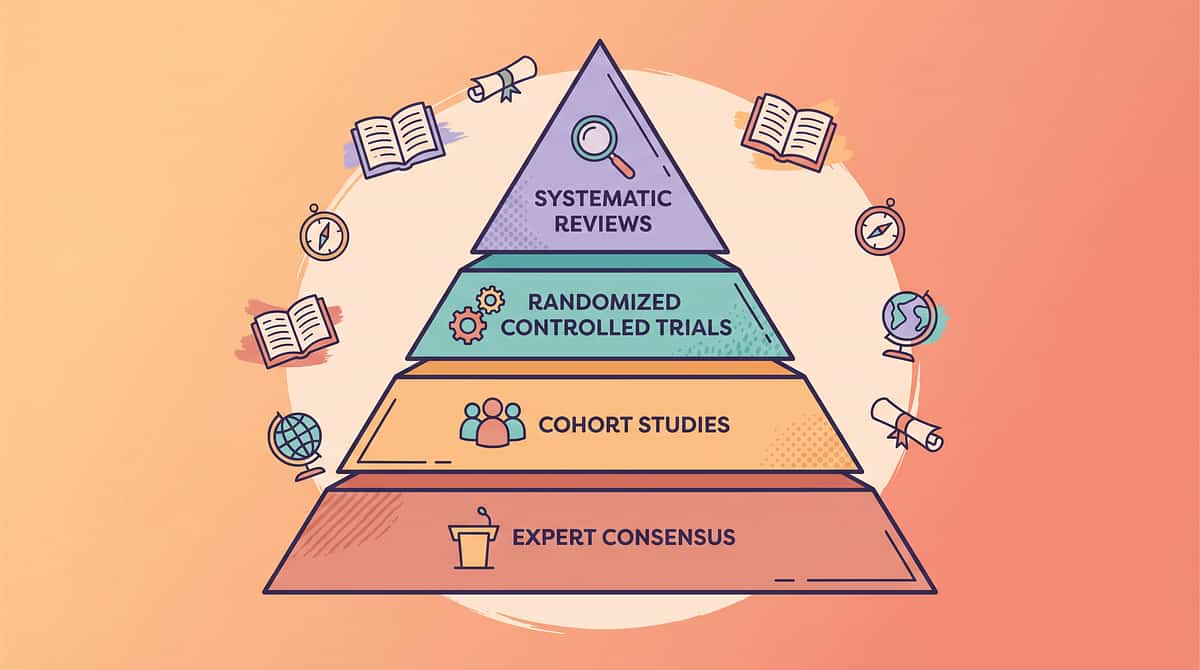
What Works Clearinghouse rates hands-on manipulative-based instruction as the strongest evidence intervention for early math development — the top category in their evidence hierarchy.
Finding 2 — Clements & Sarama
Landmark learning trajectories research demonstrates that children using physical manipulatives show significantly stronger number sense than those taught through worksheets alone — with effects persisting through 3rd grade.
Finding 3 — WHO CCD Package
Implemented across 54 low- and middle-income countries, validates household-material-based early learning as effective at scale — the same principle behind this materials list.
Finding 4 — Montessori Research
Children who move through physical → representational → abstract stages achieve higher mathematical reasoning than those pushed to abstraction prematurely.
"The materials on this page are not suggestions. They are the clinical tools your child's brain requires to build the foundation mathematics stands on."
Citations: PMC11506176 · PMC10955541 · PMC9978394 · What Works Clearinghouse · DOI: 10.1007/s12098-018-2747-4 · NCAEP 2020 · WHO NCF 2018
ACT II — THE KNOWLEDGE TRANSFER
📐 Academic Readiness & Learning — Episode L-992
9 Materials That Help With Math Readiness
"The Concrete Math Foundation Protocol"
Definition: Math readiness is the set of foundational cognitive skills that must be in place before formal mathematical instruction can be meaningful. These include: number sense (understanding what numbers represent), one-to-one correspondence (matching one spoken number to one object), cardinality (knowing the last number counted represents the total), subitizing (instantly recognizing small quantities without counting), quantity comparison (understanding more, less, equal), and conservation of number (recognizing that rearranging objects doesn't change quantity). These skills are built through physical, hands-on manipulation of real objects — not through worksheets, flashcards, or counting apps.
📐 Domain
Academic Readiness & Learning (Domain L)
👶 Age Range
3–7 years
⏱️ Per Session
10–20 minutes
📅 Frequency
Daily or 5×/week

The Multi-Disciplinary Consortium Behind This Protocol
Special Educator (SpEd) — PRIMARY LEAD
Designs the structured learning sequence, targets pre-academic skills, assesses learning profile, and integrates math readiness into the child's individualized education plan.
Occupational Therapist (OT) — Supporting
Addresses fine motor skills for manipulative handling, visual-perceptual processing for quantity recognition, and sensory regulation for learning readiness.
Speech-Language Pathologist (SLP) — Supporting
Builds math vocabulary (more, less, same, how many), word problem comprehension, and narrative understanding for story-based math.
ABA/BCBA — Supporting
Structures reinforcement schedules for practice sessions, addresses attention and task persistence, monitors data and adjusts intervention parameters.
NeuroDev Pediatrician — Oversight
Rules out underlying cognitive, neurological, or attentional factors; guides clinical pathway if dyscalculia screening is indicated.
"Number sense development does not belong to a single therapy discipline. This is why Pinnacle's FusionModule™ coordinates all five disciplines into a single convergent protocol." — Pinnacle GPT-OS® FusionModule™ Design Principle
📞9100 181 181 — FREE National Autism & Child Development Helpline | 16 languages | 24×7

Precision Targets: What These 9 Materials Build
✅ Primary Targets
- One-to-one correspondence — matching one number word to one object
- Cardinality — last number counted = total quantity
- Subitizing — instant quantity recognition without counting
- Quantity comparison — more, less, equal understanding
- Number conservation — quantity unchanged when arrangement changes
- Number symbol recognition — connecting "5" to the quantity five
Observable Indicators of Progress
When this protocol is working, you will notice:
- Your child correctly counts objects to 5, then 10
- They answer "how many?" without recounting
- They can give you exactly 3 crackers
- They say "this pile has more"
- They recognize dice patterns without counting dots
Sources: PMC10955541 · NCTM Principles to Action · IES Practice Guide
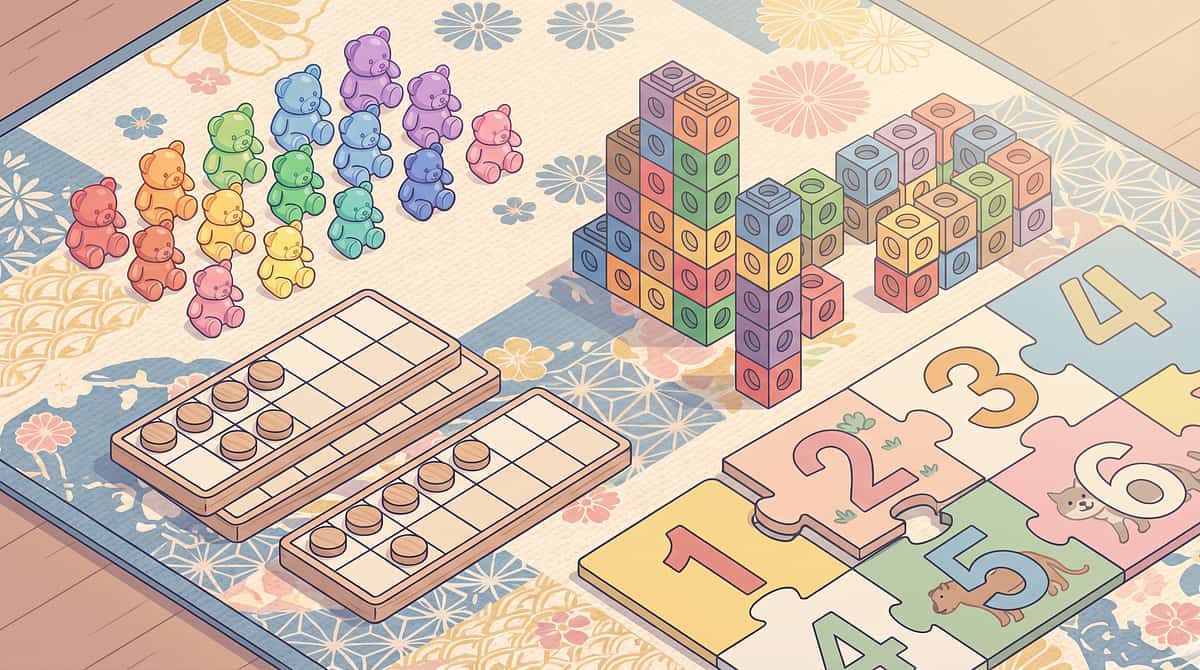
Materials 1–3 of 9
Number/Counting Materials
The 9 Math Readiness Materials — Clinically Validated, Home-Ready
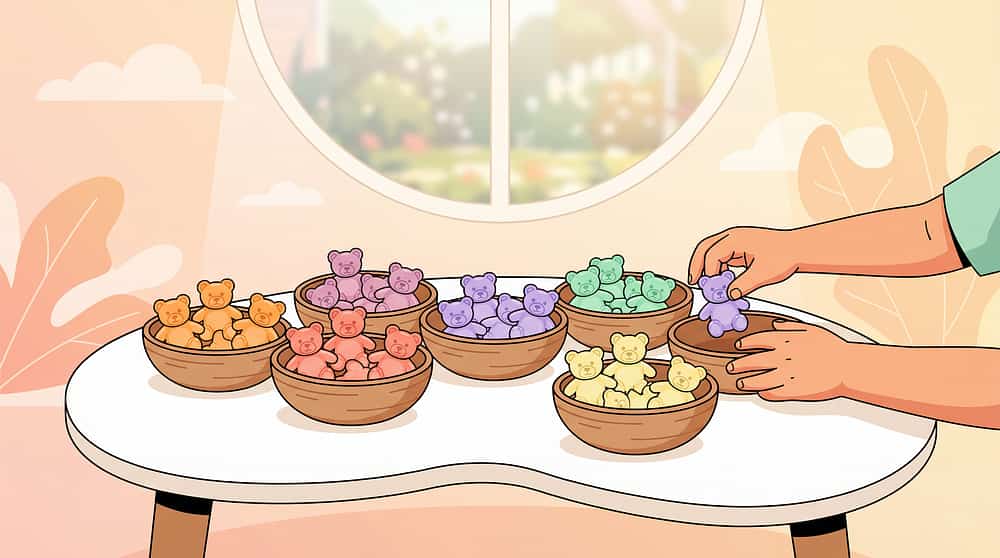
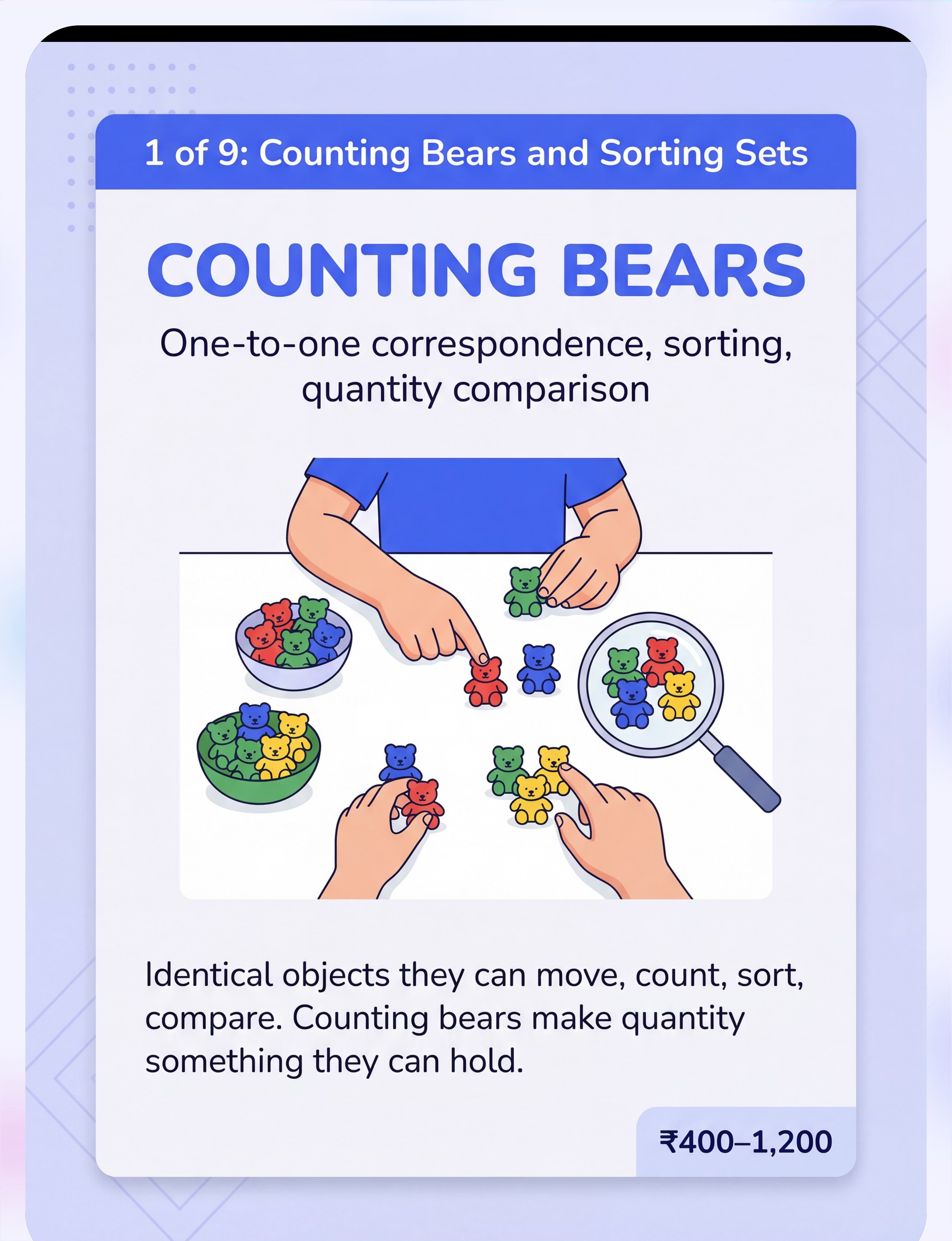
Material 1: Counting Bears & Sorting Sets
Targets: One-to-one correspondence · Sorting · Quantity comparison
Price Range: ₹400–1,200
Pinnacle Recommends: Sets of 100+ in 4–6 colors. Each bear = 1. That's the entire mathematics.
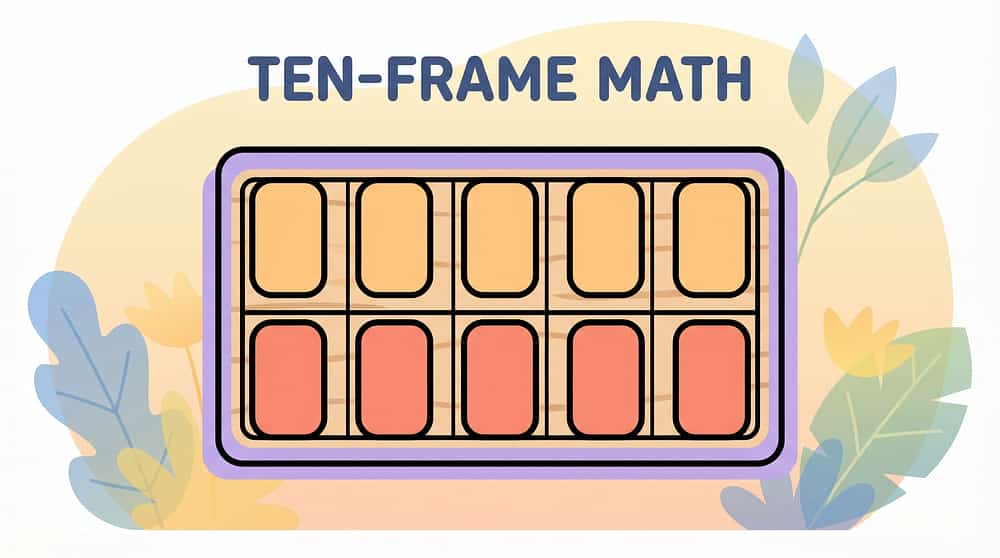
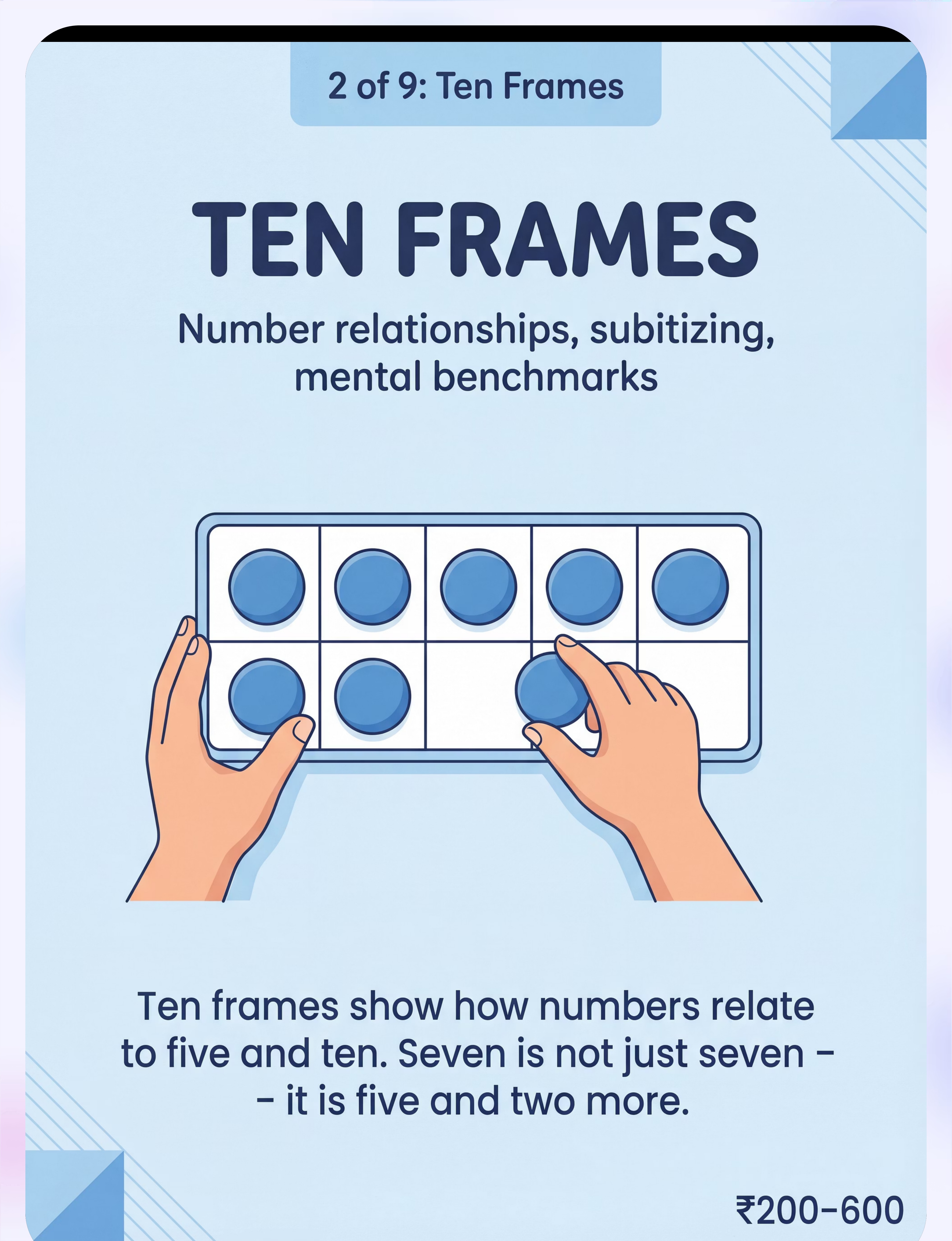
Material 2: Ten Frames
Targets: Number relationships · Subitizing · Five-and-ten benchmarks
Price Range: ₹200–600
Pinnacle Recommends: Laminated reusable frames with 2-sided counters. Multiple copies for comparison activities.

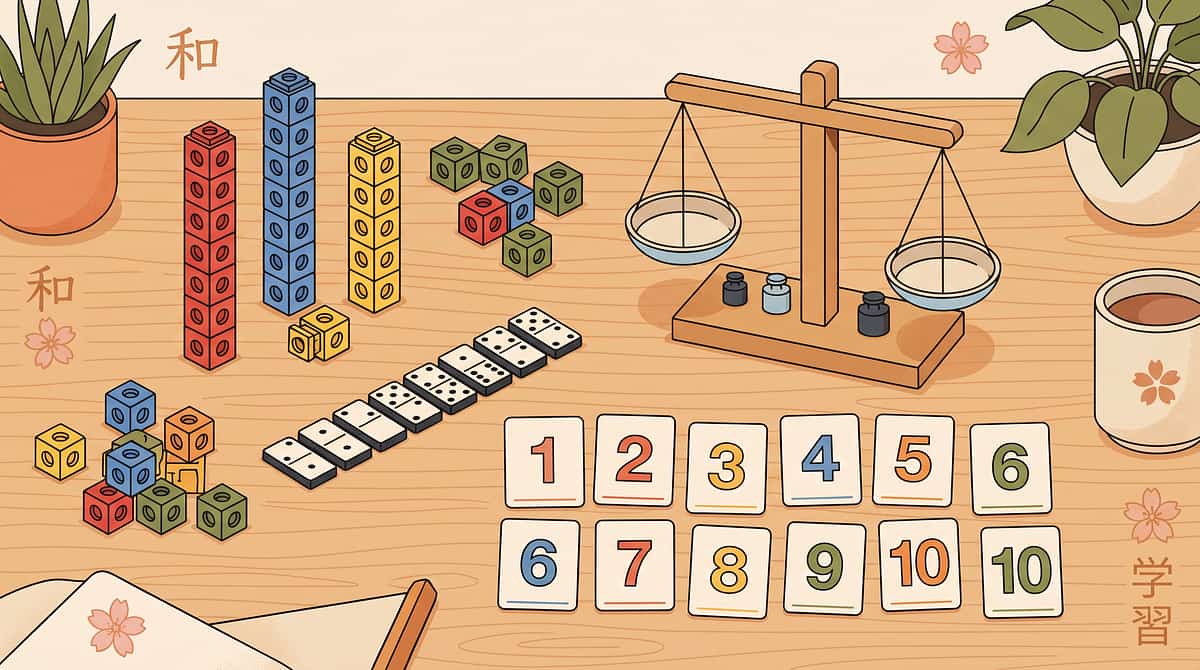
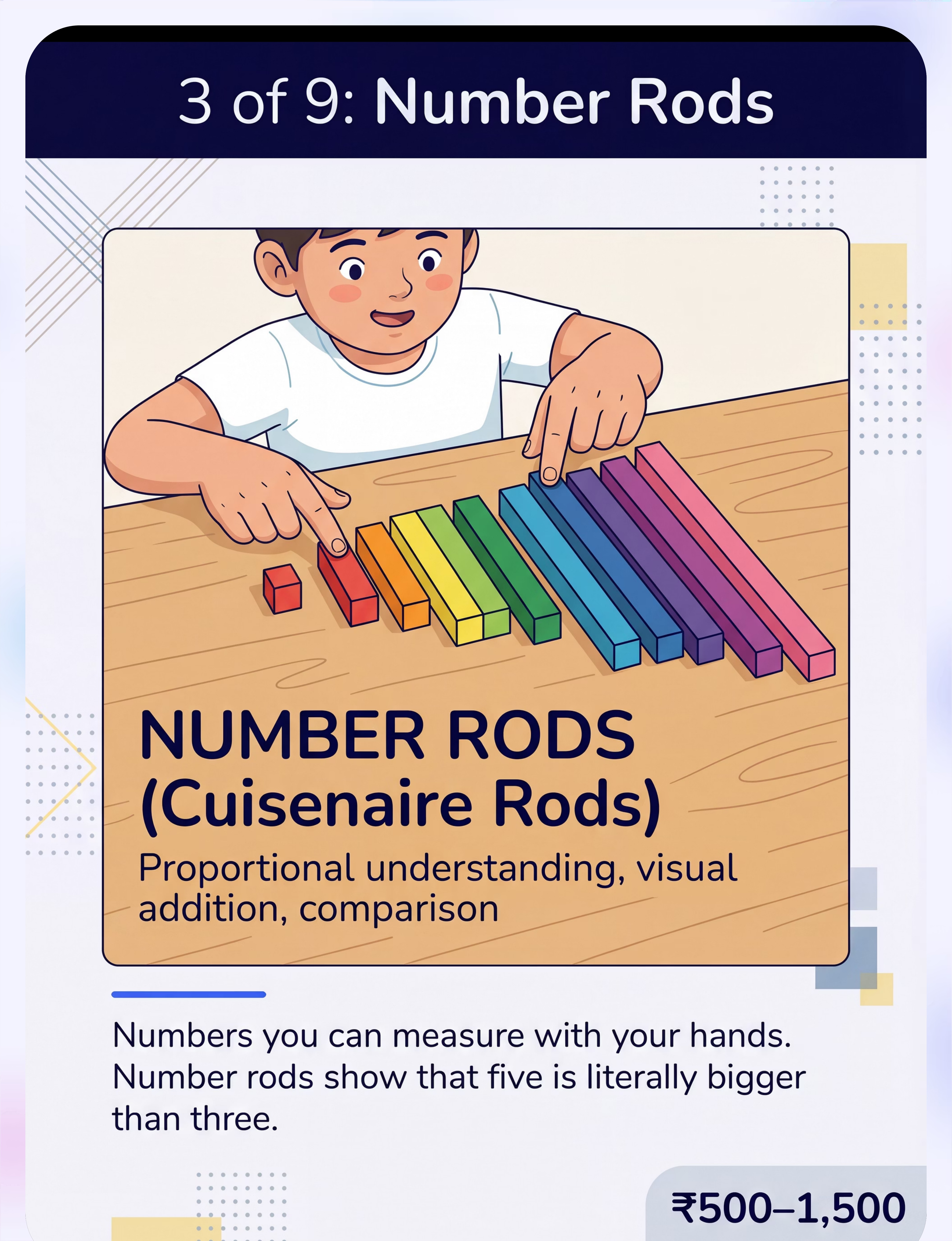
Material 3: Number Rods (Cuisenaire Rods)
Targets: Proportional understanding · Visual addition · Magnitude
Price Range: ₹500–1,500
Pinnacle Recommends: Color-coded proportional sets (1–10 rods). The 5-rod is literally longer than the 3-rod. This is the entire lesson.
Materials 4–6 of 9
Counting · Subitizing · Comparison
Materials 4–6: Building, Recognizing & Comparing
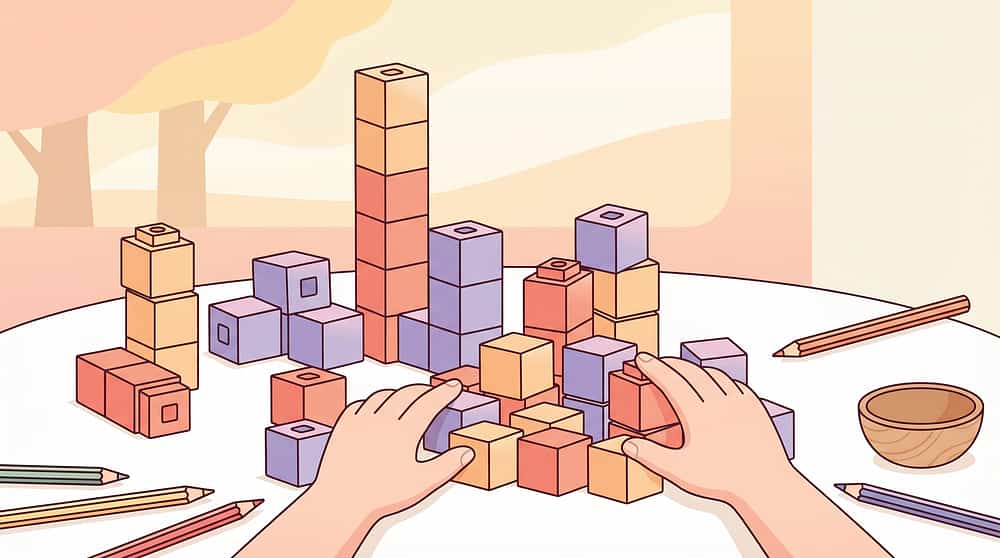
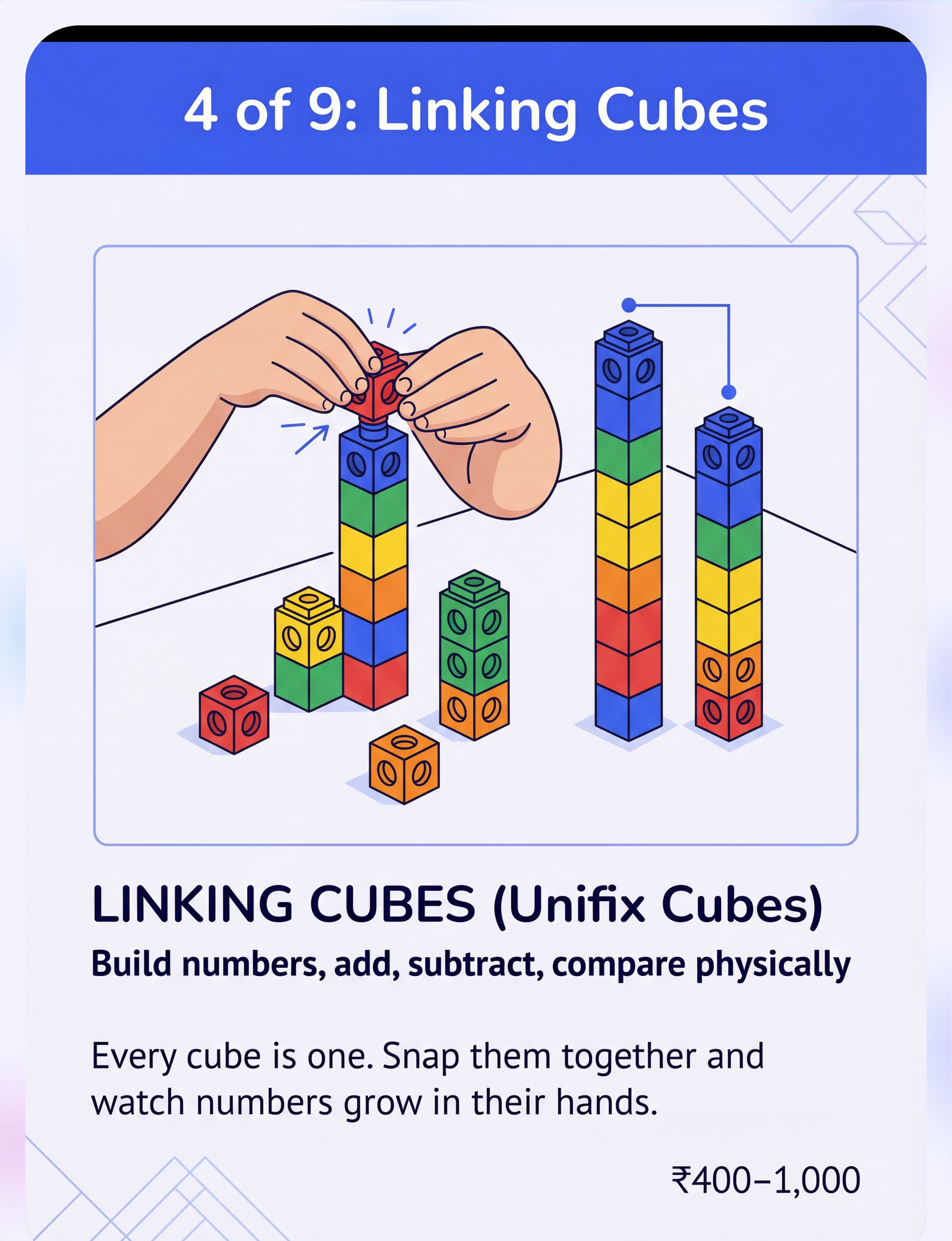
Material 4: Linking Cubes (Unifix Cubes)
Targets: Build numbers physically · Add/subtract concretely · Compare towers
Price Range: ₹400–1,000
Pinnacle Recommends: 100+ cube sets in multiple colors. Snap together = numbers grow in their hands.
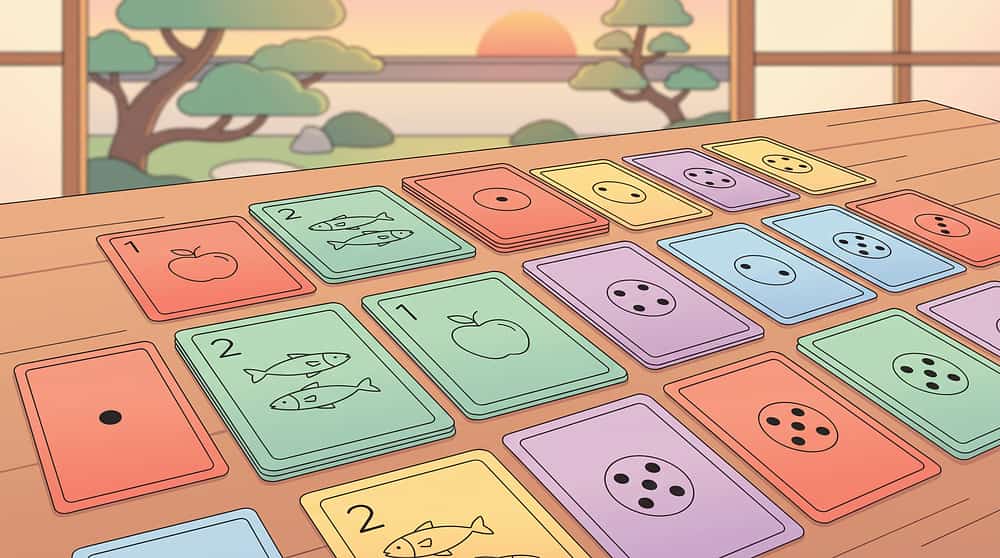
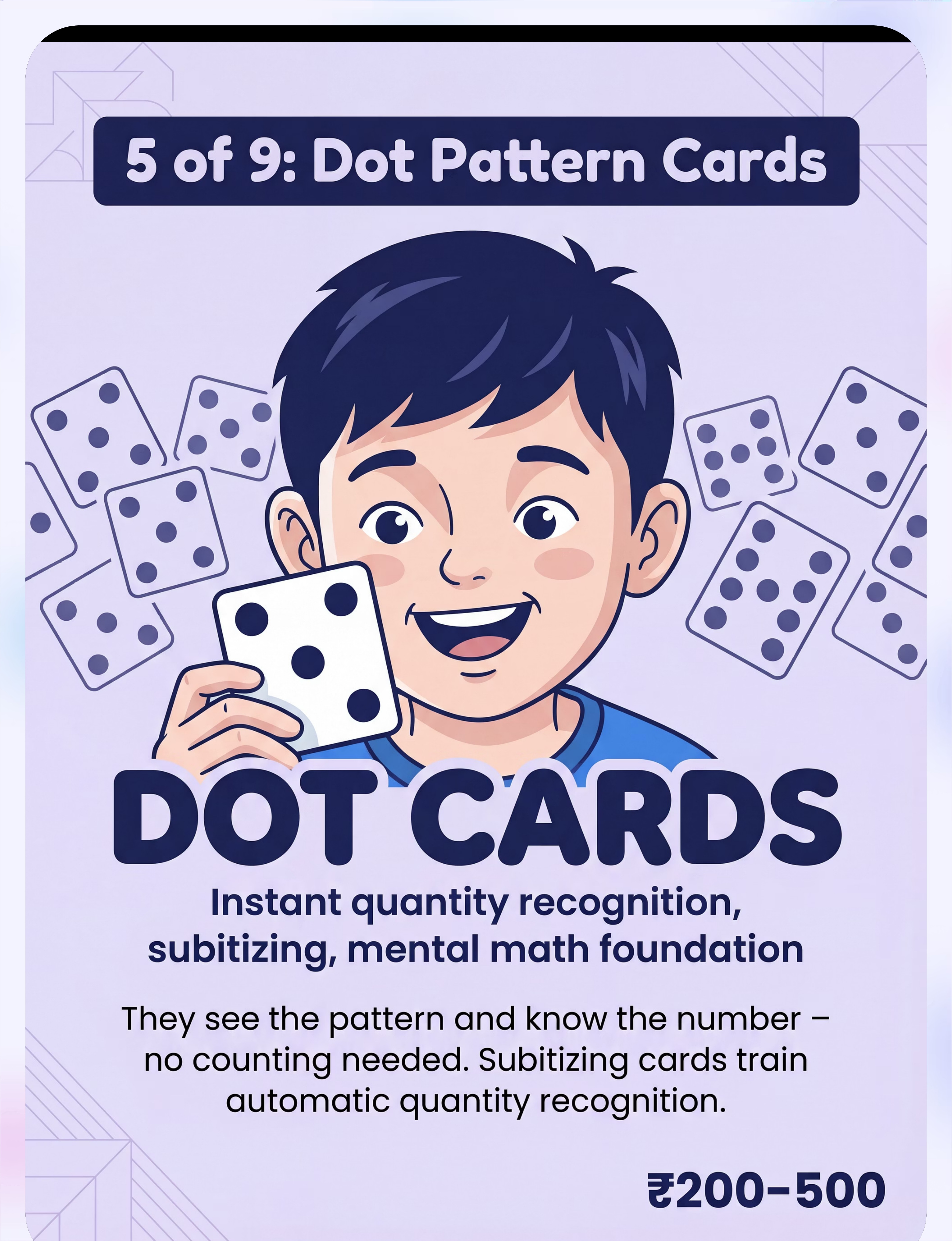
Material 5: Dot Pattern Cards (Subitizing Cards)
Targets: Instant quantity recognition · Mental math foundation · Pattern processing
Price Range: ₹200–500
Pinnacle Recommends: Flash at 1–2 seconds. The goal is instant recognition — not counting. Standard dice and dominoes work perfectly too.

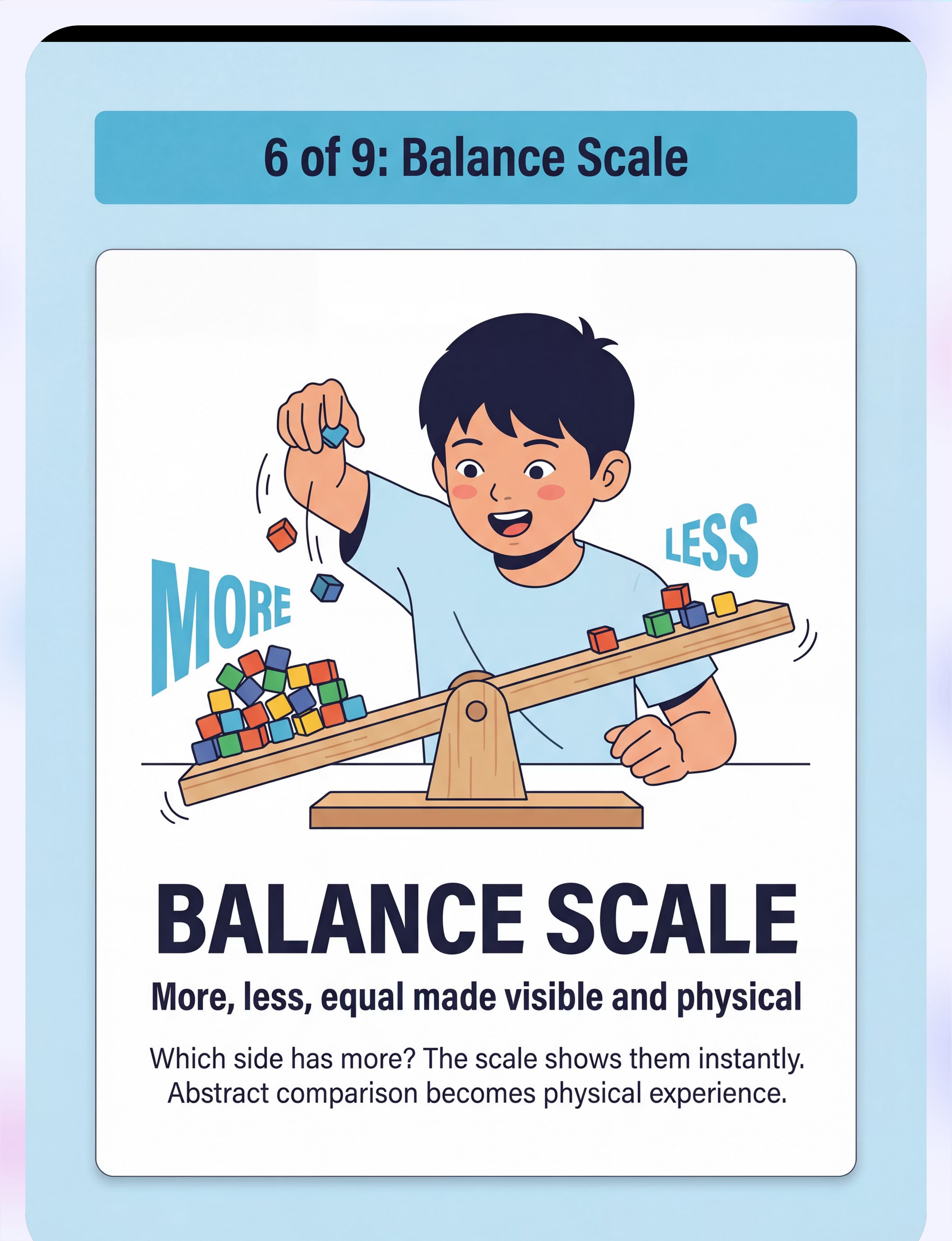
Material 6: Balance Scale & Weighted Objects
Targets: More/less/equal understanding · Comparison · Equivalence concept
Price Range: ₹500–1,500
Pinnacle Recommends: Bucket-style scale for dramatic visual feedback. Use identical objects (blocks, coins) first.
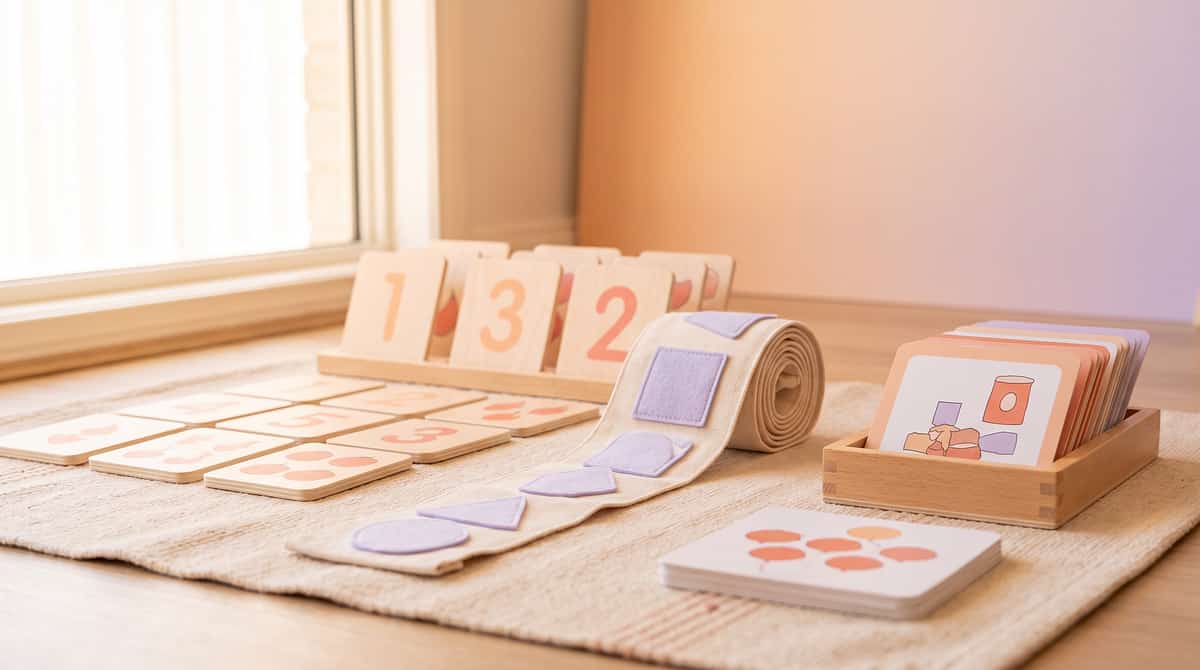
Materials 7–9 of 9
Pinnacle Canon Products Active
Materials 7–9: Matching, Sequencing & Story Math
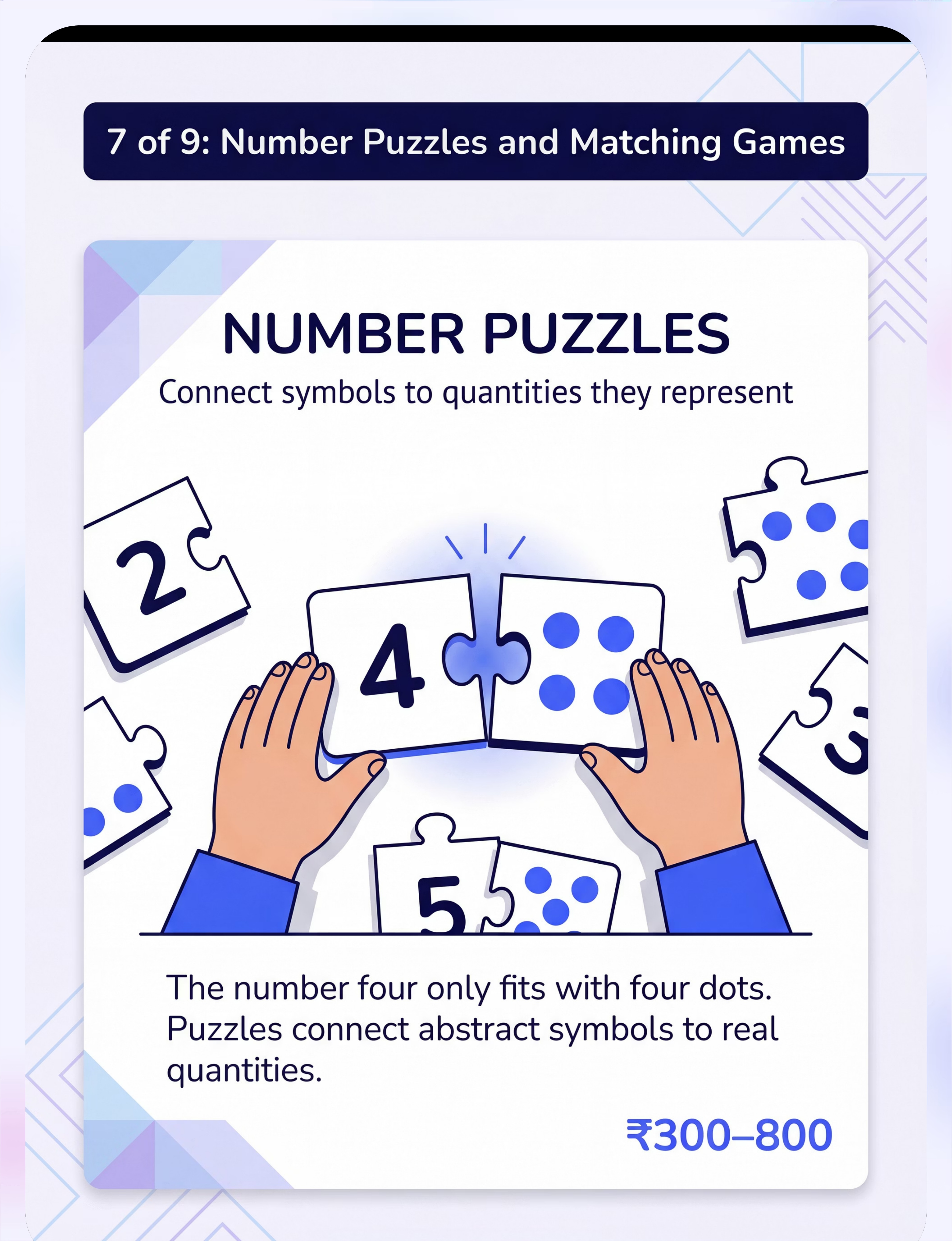
Material 7: Number Puzzles & Matching Games
Targets: Symbol-quantity connection · Numeral recognition · Self-correcting practice
🛒Pinnacle Canon Product — ACTIVE:Dyomnizy Educational Memory Game — ₹519(Matching Games / Memory Games — Pinnacle Canon Canon)
Also: Search Number Puzzles | Pinnacle Recommends: Self-correcting puzzle format — the number 4 piece only fits with 4 dots. This is the non-negotiable design feature.
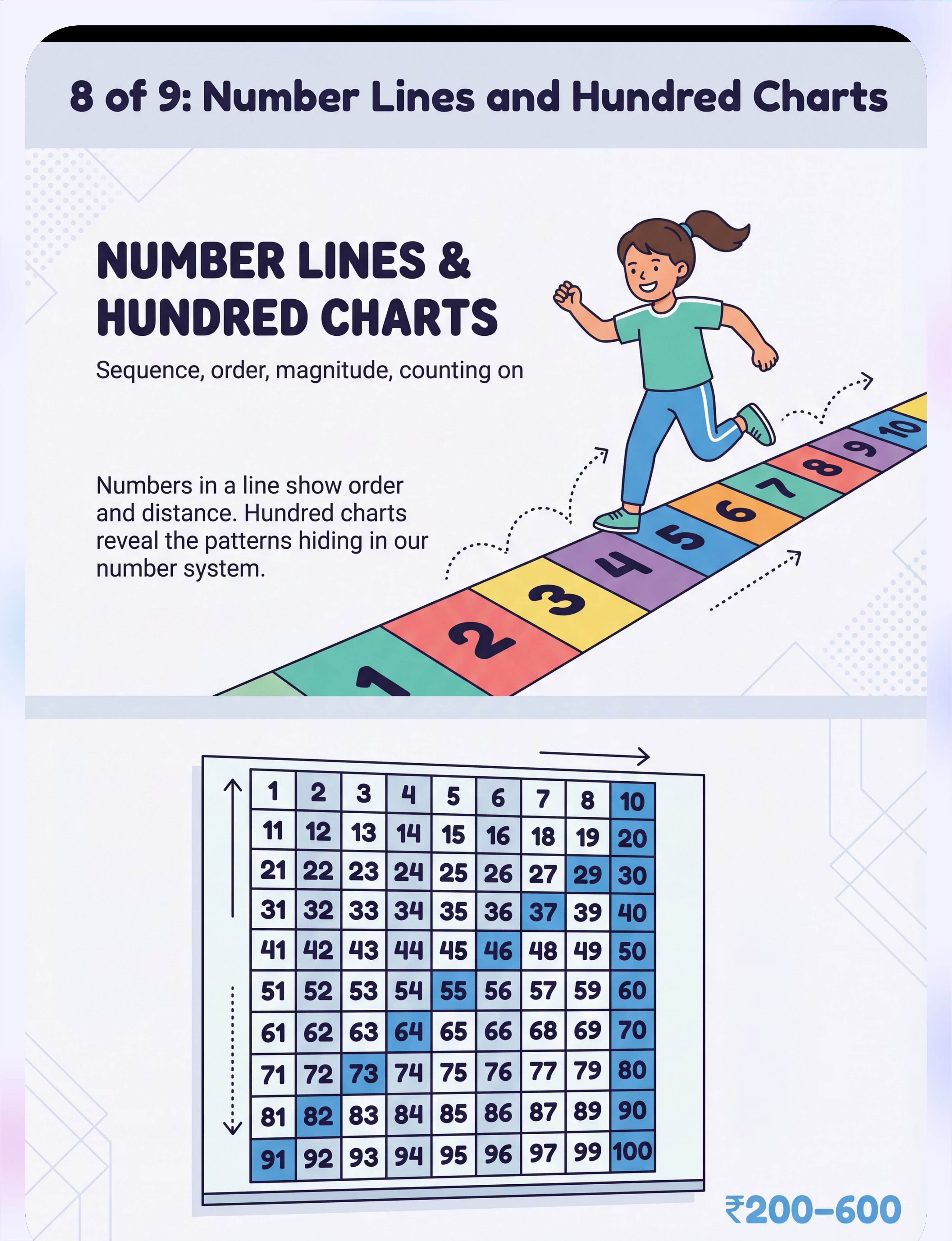
Material 8: Number Lines & Hundred Charts
Targets: Sequential understanding · Counting on · Pattern discovery
🛒Pinnacle Canon Product — ACTIVE:Smartivity DIY Interactive Clock with Stationary — ₹673(Number/Counting Materials — Pinnacle Canon)
Number line/hundred chart: Search here | Pinnacle Recommends: Floor-sized number line for physical jumping. Wall hundred chart (laminated) for pattern discovery. Both formats.
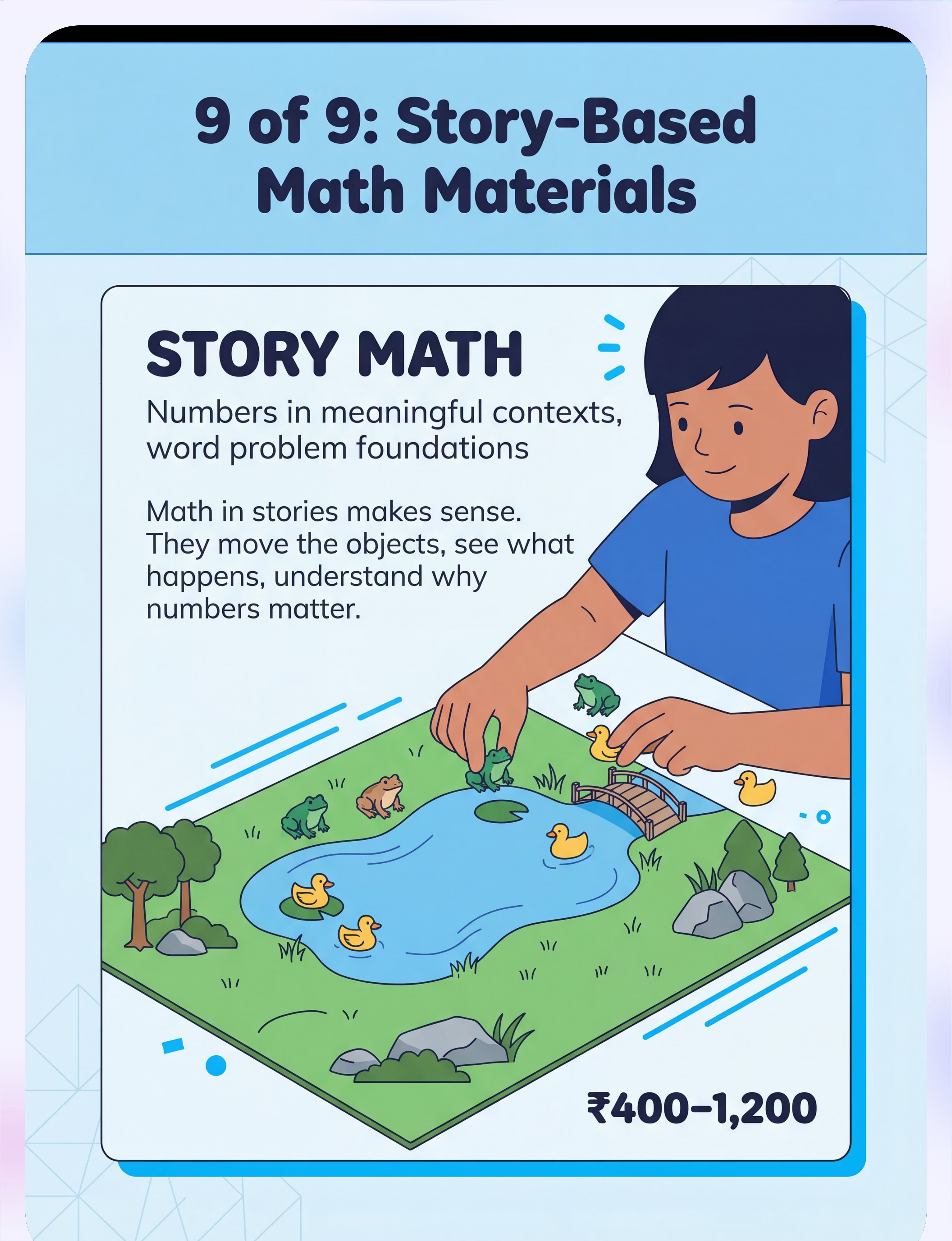
Material 9: Story-Based Math Sets
Targets: Math in context · Problem-solving · Addition & subtraction narratives
🛒Pinnacle Canon Product — ACTIVE:Lattooland Rainbow Sorting Activity Set — ₹628(Sorting Activities — Pinnacle Canon)
Story math sets: Search here | Pinnacle Recommends: Any small figure set (animals, vehicles, people). Math in stories = math with purpose.
💰 Total Starter Kit
₹2,700–8,000 for complete 9-material set
🎯 Budget Starter (3 Essentials)
Counting bears + Ten frames + Linking cubes = ₹1,000–2,800
🛒 Reinforcement Support

DIY & Substitute Options — Zero-Cost Complete Kit
"Every family deserves access to this intervention. WHO/UNICEF equity principles are built into this protocol. Every material has a zero-cost household substitute. The science works regardless of which version you use." — Pinnacle Blooms Consortium | Aligned with WHO NCF 2018
Material | Buy Version | DIY Version | Why DIY Works | |
Counting Bears | Colored bears ₹400–1,200 | Dried beans, buttons, pom-poms, pebbles (50–100 identical items) | Identical small objects serve the same one-to-one function | |
Ten Frames | Laminated boards ₹200–600 | Draw 2×5 grid on paper; egg carton cut to 10 cups | The grid structure is the entire mechanism | |
Number Rods | Cuisenaire rods ₹500–1,500 | Cardstock strips cut to proportional lengths, color-coded; LEGO towers | Proportional length = the entire lesson | |
Linking Cubes | Unifix cubes ₹400–1,000 | LEGO/Duplo bricks; stacking cups; paper clip chains | Linear connection shows cumulative quantity | |
Dot Cards | Subitizing cards ₹200–500 | Dots on index cards in dice patterns; standard dice; domino set | Pattern + flash timing = subitizing training | |
Balance Scale | Bucket scale ₹500–1,500 | Coat hanger + 2 cups tied with string; ruler on cylinder | Clear visual feedback when one side drops | |
Number Puzzles | Self-correcting set ₹300–800 | Index cards cut into 2-piece puzzles; numeral + dot sticker matchup | Unique cuts = self-correction mechanism | |
Number Line | Printed/floor mat ₹200–600 | Tape on floor with paper number cards; chalk outdoors | Physical scale and sequence are preserved | |
Story Math Sets | Figure sets ₹400–1,200 | Any small toys (cars, animals); kitchen items; play food | Familiar objects increase engagement |
Zero-Cost Complete Kit: Dried beans + drawn ten frame + cardstock rods + LEGO blocks + dice + coat hanger scale + index card puzzles + tape number line + small toys = ₹0
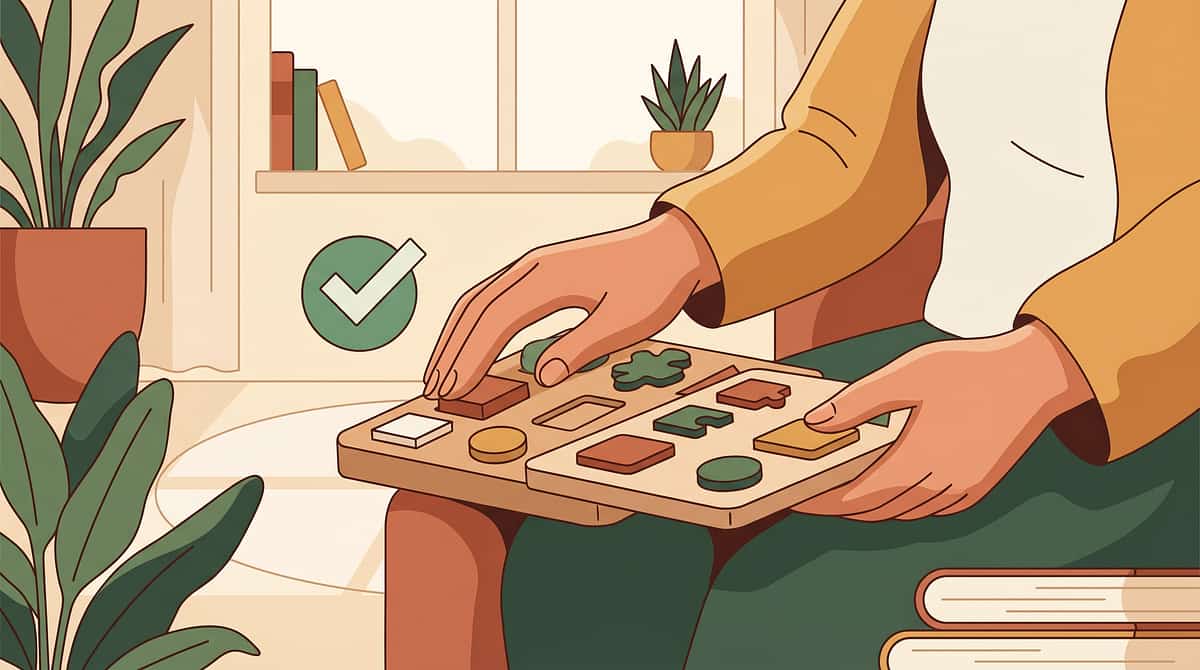
Safety First: Before You Begin
🟢GREEN — SAFE TO PROCEED WHEN: Child is fed, rested, and in a calm-alert state · No fever or illness · At least 30 minutes since a difficult emotional moment · Space is prepared and free of competing stimulation · You have 15–20 uninterrupted minutes · Materials have been checked for safety
🟡AMBER — MODIFY SESSION WHEN: Child is slightly dysregulated but not in meltdown — shorten to 5 minutes · Child is tired but not exhausted — allow more free exploration · Child has mild illness with no fever — reduce to 5–7 minutes · Previous session had a difficult end — begin with most preferred material only
🔴RED — DO NOT PROCEED WHEN: Child is in active meltdown or 30-minute recovery window · Child has fever or acute illness · Child shows significant anxiety when materials are presented · You are in significant emotional distress · Child refuses all materials after two gentle invitations — postpone to tomorrow
⚠️ Material Safety Checklist
- All small objects (counting bears, beans, buttons): supervise closely for children who mouth objects — choking hazard for children under 3 or developmental age equivalent
- Balance scale: ensure stability, secure to surface if needed, no sharp edges
- Number rods (small units): supervise closely for mouthing behaviors
- Floor number line: non-slip surface required, secure tape edges to prevent tripping
- All commercial products: check age rating on packaging before use
STOP IF YOU SEE:
- Covering ears, eyes, or face with significant distress
- Crying that escalates despite redirection
- Throwing or aggressive behavior with materials
- Signs of physical discomfort (gagging, flinching)
- Complete shutdown (non-responsive)
Simply say "All done for now" calmly, put materials away without drama, offer a preferred calm activity. No session = data. Record what happened and try tomorrow.
📞9100 181 181 — If you're unsure whether to proceed, call. Free. 24×7.

The 3-Minute Space Setup
Room Layout Guide
[1] Child position: Seated at table or floor mat, stable seating with feet flat on floor
[2] Parent position: Beside or across — never behind. Eye contact available but not forced.
[3] Materials tray: Within child's reach. Present ONE material at a time from tray. Tray stays to the side.
[4] Visual timer: Child can see it. Reduces "when is this over?" anxiety dramatically.
[5] "All Done" bin: When a material is finished, child places it in bin. Ritual closure per item.
Remove From Space
- 📵 All screens (TV off, phones face-down or out of room)
- 🧸 Other toys or preferred items that will compete for attention
- 🐾 Pets that may disrupt
- 👥 Siblings if possible during first 4 weeks
- 🔊 Background music or noise (unless child uses auditory regulation)
Environment Checklist
- ✅ Lighting: bright, natural preferred — not dim
- ✅ Temperature: comfortable, not too warm
- ✅ Sound: quiet or low white noise — no TV, music
- ✅ Surface: table at child height OR clean floor mat
- ✅ Visual: minimal clutter on work surface
"A consistent setup location trains the brain that 'this is the math learning space.' Children who do sessions in the same location show faster engagement onset by Week 3. Consistency is the architecture of learning."

ACT III — THE EXECUTION
The 60-Second Pre-Session Readiness Check
Check each before beginning. Be honest — there is no shame in a "not today."
- Child is fed (no hunger-driven irritability)
- Child has been awake 30+ minutes (not just woken up)
- No meltdown in the last 45 minutes
- Child shows some calm engagement (even if stimming — stimming ≠ unready)
- No fever or visible illness symptoms
- No medical appointment or significant transition in the last hour
- You have at least 15 uninterrupted minutes available
Score | Decision | Action | |
✅ 7/7 | GO | Proceed to Step 1. Full session. | |
✅ 5–6/7 | MODIFY | Run 1 material only. 8–10 minutes. No new materials. | |
✅ 3–4/7 | SIMPLIFY | 5 minutes of free play with preferred material. No structured counting. Just exploration. | |
⚠️ Under 3/7 | POSTPONE | Offer a preferred calm activity instead. No session today. Tomorrow is fine. |
"The best session is one that starts right. A postponed session is better than a forced session. Forced sessions create aversion. A child who looks forward to 'counting time' learns five times faster than one who dreads it."
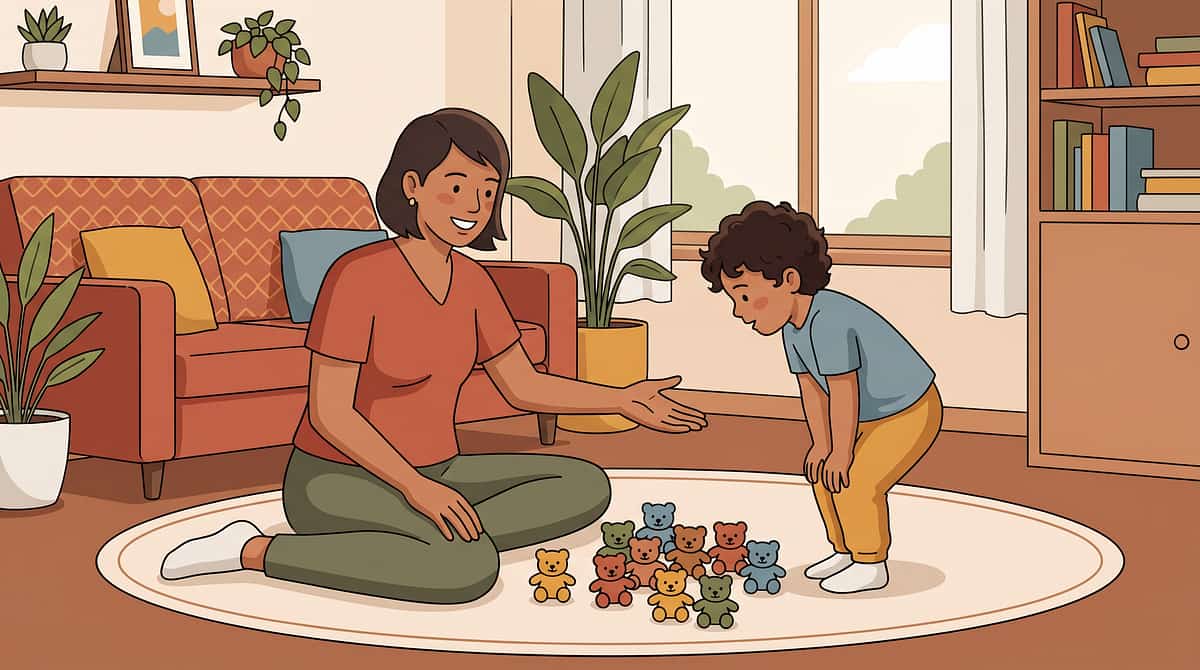
STEP 1 of 6
⏱️ 30–60 seconds
ABA Pairing + OT Just-Right Challenge
Step 1: The Invitation
Bring your child into the activity through a playful, low-demand entry. No demands. No "sit down." Just an invitation.
🗣️"Hey! Come see what I've got. These are counting bears — look at all these colors!"
OR: "I found something cool. Want to see?"
OR: "These bears need to be sorted by color — just like [child's favorite character] sorts things!"
Body Language
- Sit at the child's level — never stand over
- Hold or point to the material with genuine interest
- Avoid direct eye contact demand — parallel attention works better for many children
- No commands: "Sit down," "Look at me," "Pay attention"
Acceptance Cues (what YES looks like)
- Moving toward the materials
- Reaching for an object
- Looking at the materials even briefly
- Any vocal or gestural response
Resistance Guidance
01
First Refusal
Wait 10 seconds, try one more time with a different entry phrase
02
Second Refusal
Move to modified session: 1 material, pure exploration, no counting demands
03
Third Refusal
Close the session warmly — "Maybe later. All done for now."
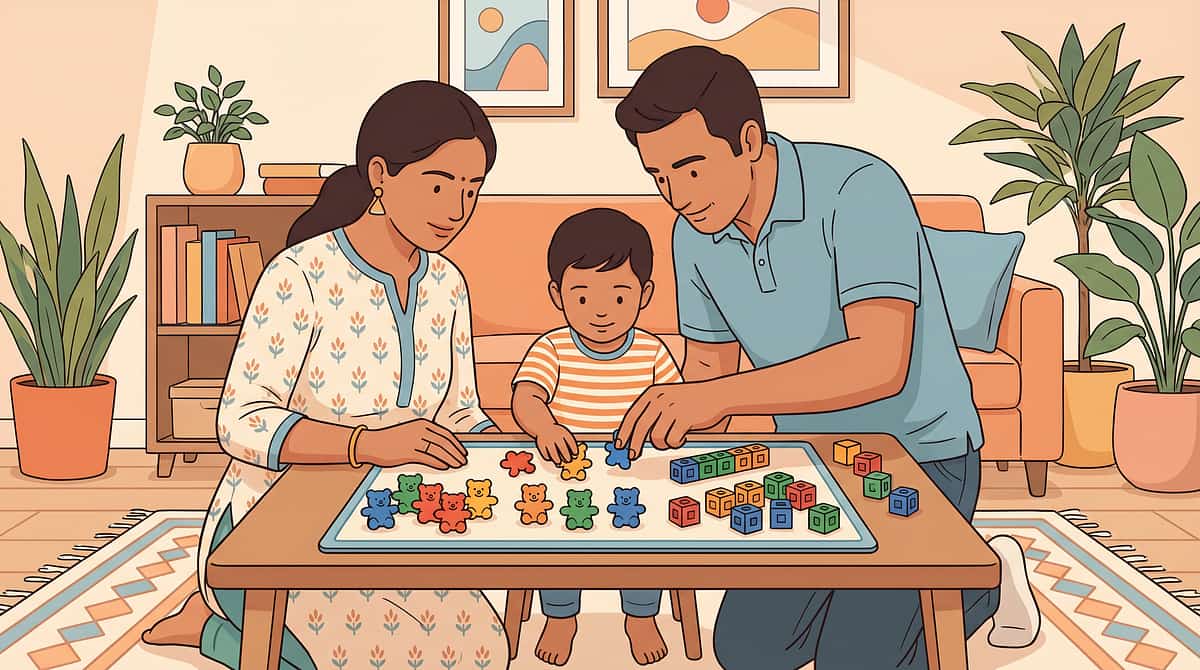
STEP 2 of 6
⏱️ 1–3 minutes
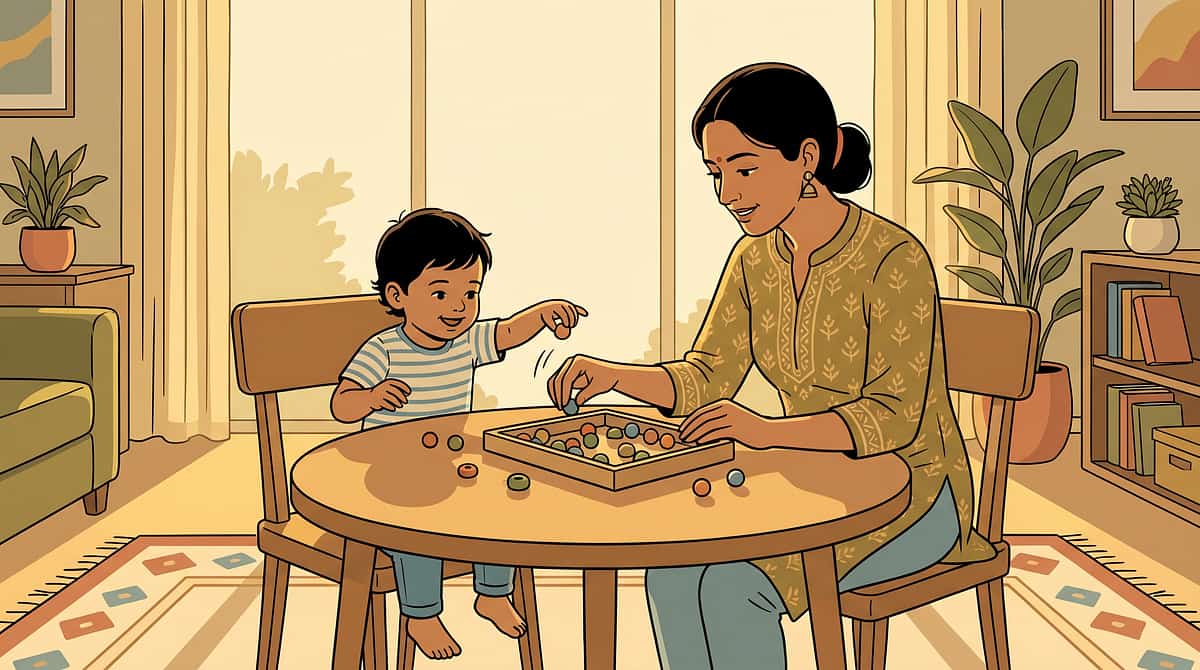
Exploratory Manipulation Phase
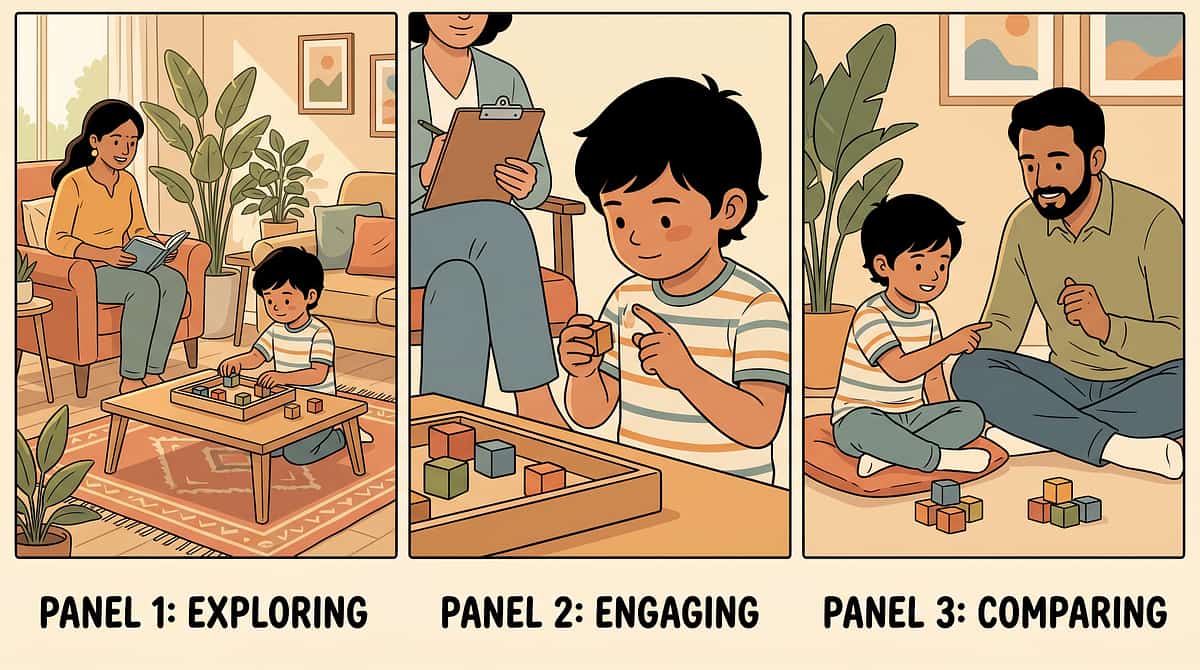
Step 2: The Engagement
The child is near or engaged. Now introduce the material properly and allow free exploration before structured activities begin.
🐻 Counting Bears
"Here — you can touch them. Move them around. They're just for exploring." Allow 60–90 seconds of free handling before any counting instruction.
🔲 Ten Frames
"These are like little beds for the counters. Let's see how many beds there are." Let child freely fill and empty the frame before structured use.
📏 Number Rods
"These are all different sizes. Which one is the biggest? Which is the smallest?" Comparison before counting — hands before language.
🧱 Linking Cubes
"You can snap them together! Let's see how tall you can make a tower." Construction play before quantification.
🎲 Dot Cards
"I'm going to show you a card really fast. Ready? Tell me what you see." Flash 1 card. Accept any response. Celebrate noticing.
🟢 Engaged
Touching, exploring, looking, asking questions, smiling
🟡 Tolerating
Present but passive — stay here, don't push, let tolerance deepen
🔴 Avoiding
Turning away, pushing materials — reduce demand, try pure demonstration
When child touches and interacts with material for the first time — immediately:"Yes! You're exploring! That's exactly right!" Praise the attempt, not the accuracy.
STEP 3 of 6
⏱️ 5–12 minutes
Core Therapeutic Dosage
Step 3: The Therapeutic Action — Materials 1–5
This is the active ingredient. For each material, the core mathematical action that builds the target skill.
Counting Bears — Core Action
"Give me three red bears." Child must select exactly three. Count together if needed: point to each bear as you say "one... two... three." Key: child must MOVE the bears, not just look at them.
⏱️ 5–8 repetitions across 3–5 minutes
Ten Frames — Core Action
Child places counters in the ten frame, filling left-to-right, top-to-bottom. After filling, ask: "How many?" Then: "How many more to fill it up?" This builds the 5- and 10-benchmark automatically.
⏱️ 3–5 fill-and-count cycles
Number Rods — Core Action
Line up rods from smallest to largest (staircase). "Which is longer — the red one or the blue one?" Then: "How much longer?" Place two rods end-to-end: "Do they make the same length as this one?"
⏱️ 4–6 comparison and combination tasks
Linking Cubes — Core Action
"Build me a tower of four." Child snaps 4 cubes. "Now build me a tower of six." Child adds 2 more. "Which is taller? How many more did you add?" Demonstrate addition as building and subtraction as removing.
⏱️ 4–6 build-and-compare cycles
Dot Cards — Core Action
Flash card for 1–2 seconds. "How many dots?" Do NOT allow counting — flash speed prevents it. If child counted, flash faster next time. Progress from 1–3 dots to 1–5, then 1–10 patterns.
⏱️ 10–15 card flashes per session
STEP 3 continued
Materials 6–9
Step 3: The Therapeutic Action — Materials 6–9
Balance Scale — Core Action
"Put three blocks on each side. What happens?" (Balances.) "Now add one more to this side. What happens?" (Tips.) This is more/less/equal made physical and dramatic. Use identical objects first.
⏱️ 5–7 compare-and-predict cycles
Number Puzzles — Core Action
Mix puzzle pieces. "Find the piece that belongs with the number 4." Child searches, tests, finds the 4-dot piece. Self-correction built in — only the right piece fits. Increase speed and quantity range over sessions.
⏱️ Complete 1–10 puzzle set once or twice through
Number Line — Core Action
Start at 1. "Jump to 3. How many jumps did you take?" Embodied movement encodes the sequence. Progress to: "Start at 4 and jump 2 more — where do you land?" This is addition through movement.
⏱️ 8–12 jump sequences
Story Math — Core Action
Narrate: "Three ducks were swimming [place 3 duck figures]. Two more ducks swam over [add 2 more]. How many ducks now?" Child moves figures and counts the result. Repeat with subtraction: ducks swim away.
⏱️ 3–4 stories per session
🟢 Ideal Response
Child completes task accurately, engages with language, asks for more
🟡 Acceptable
Child attempts with support, some errors, stays engaged
🔴 Concerning
Consistent refusal, significant distress, no progress over 3 sessions → see Troubleshooting card
Duration Guidance: 5–12 minutes of core action is sufficient. Quality repetitions > forced quantity. | Sources: PMC10955541 · NCTM · IES Practice Guide
STEP 4 of 6
⏱️ 3–5 additional minutes
Therapeutic Dosage & Variation
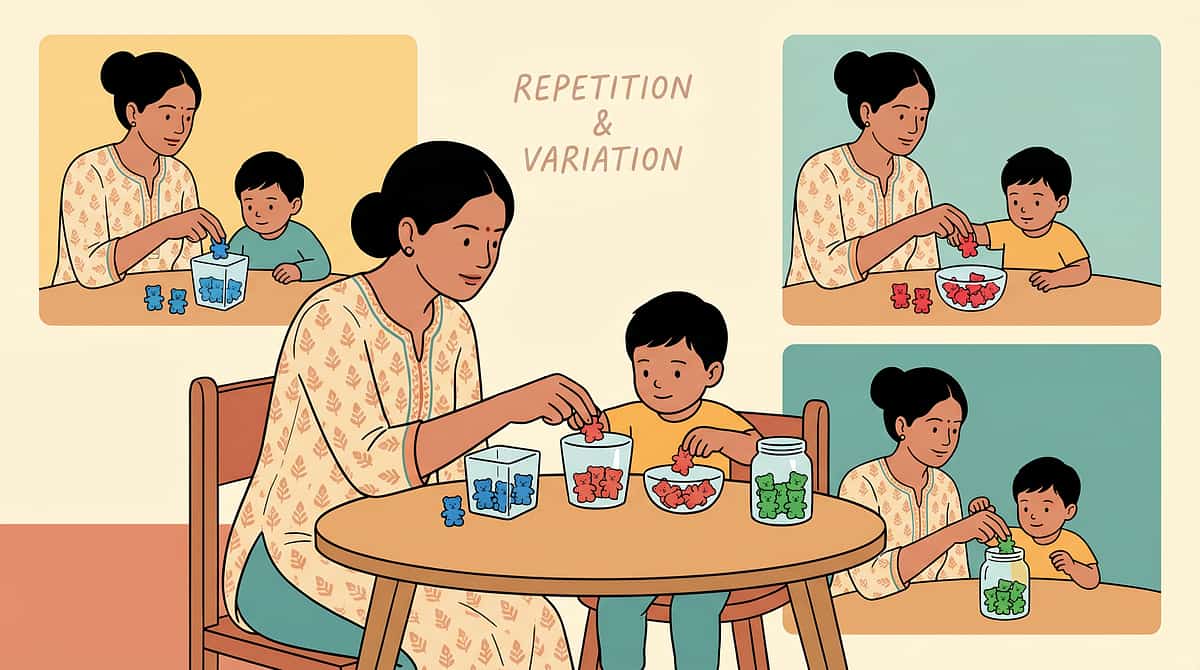
Step 4: Repeat & Vary
"3 good repetitions are worth more than 10 forced ones. The goal is not volume — it is quality of engagement with the mathematical concept."
Material | Minimum Good Reps | Maximum (stop at satiation) | |
Counting Bears | 5 quantity requests | 12 | |
Ten Frames | 3 fill-count cycles | 8 | |
Number Rods | 4 comparisons | 10 | |
Linking Cubes | 4 build-compare pairs | 10 | |
Dot Cards | 10 flashes | 20 | |
Balance Scale | 4 predict-check cycles | 8 | |
Number Puzzles | 1 full set (1–10) | 2 complete sets | |
Number Line | 6 jump sequences | 15 | |
Story Math | 2 stories | 5 |
Variation Strategy (to maintain engagement without changing the concept)
Change the objects — bears → buttons → coins (same counting principle)
Change your voice/affect — whisper counting, excited counting, robot voice
Change the challenge direction — instead of "give me 3," try "I put 3, you add 2 more"
Add a game element — race against a timer, take turns, score a point for each correct response
Satiation is not failure. It is neurological efficiency — the learning has reached its dosage point for this session. Signs: child plays with material rather than completing tasks, response latency increases, errors increase after accuracy, child requests to stop.

STEP 5 of 6
⏱️ Ongoing throughout session
ABA Reinforcement Principles
Step 5: Reinforce & Celebrate
THE SINGLE MOST IMPORTANT TIMING RULE: Within 3 seconds of the desired behavior. Not after the session. Not "good job" at the end. Within 3 seconds of the correct count, the correct match, the accurate comparison.
Reinforcement Scripts (choose by child preference)
🗣️"YES! You counted three! Exactly three! That's right!"
Enthusiastic verbal — most children
Enthusiastic verbal — most children
🗣️"You did it. Three bears. Perfect."
Calm, precise praise — for children who find high energy dysregulating
Calm, precise praise — for children who find high energy dysregulating
🗣️"One more! You got one more than last time!"
Progress-referenced — powerful for children who compare to self
Progress-referenced — powerful for children who compare to self
🗣️"I'm going to write that down — you just counted to five with no mistakes."
Documentation as reward — for older children
Documentation as reward — for older children
Celebrate the Attempt, Not Just the Success
- "I love that you tried that."
- "You're figuring it out."
- "That was a hard one and you didn't give up."
🛒 Reinforcement Options
Pinnacle Canon Products:1800+ Reward Stickers — ₹364 · Rosette Reward Jar — ₹589
Natural Reinforcers (no cost): Extra time with preferred material · Movement break (jumping, spinning) · High five, fist bump, silly dance · Preferred activity immediately after session
Token Economy: 1 token per correct count/match. 5 tokens = preferred activity. Simple. Consistent. The child works the math while earning the reward.

STEP 6 of 6
⏱️ 2–3 minutes
Transition Support + Regulation
Step 6: The Cool-Down
Why this matters: Sessions that end abruptly spike post-session dysregulation. The cool-down signals to the child's brain that "this activity has a shape" — which reduces start-resistance for the next session.
Cool-Down Activity (choose one)
- Free play with one preferred material (no structure, no counting demands) — 90 seconds
- 3 deep breaths together ("big belly breath, blow out the candles")
- Preferred physical movement: 5 jumps, a shake-out, a spin
- Quiet book or puzzle — child's choice
Material Put-Away Ritual
🗣️"Help me put the bears back in their box. Let's count them as they go in."
This is stealth practice — counting in a low-demand, task-completion context.
If Child Resists Ending
01
Offer One More
One more repetition as a "bonus" — then close firmly but warmly
02
Use the Visual Timer
"The timer says we're done. The bears need their rest."
03
Transition Object
"You can hold this bear while we clean up."
Never extend session under protest — it teaches that protest = more session time.
Capture the Data: Right Now
⏱️Do this within 60 seconds of session end. Memory degrades within 3 minutes. 60 seconds of data now = months of clinical insight later.
📅 Field 1: Date + Duration
Example: "Jan 15, 12 min" — Quick note only
📊 Field 2: Material + Performance
Example: "Counting Bears — got quantities 1–5 correct 7/10 trials" — Tally or rating 1–5
💬 Field 3: Child State + Observation
Example: "High engagement, resisted ending. First time counted to 5 independently." — One sentence
Tracking Format Options
📋Paper:📥unknown link
What This Data Powers
After 4 weeks, your data reveals: which materials engage your child most, what time of day produces best performance, how quickly accuracy is building, and whether to escalate frequency or diversify materials. Without data, you're guessing. With it, you're practicing precision pediatric therapy at home.
📞9100 181 181 — Share your tracking data when you call. It makes the guidance 10× more specific.

What If It Didn't Go As Planned?
"Session abandonment is not failure — it is data. A session that ended early tells you exactly what to adjust. There is no such thing as a wasted session."
❓ "My child refused to engage at all"
Why: Material presented before sufficient pairing/familiarity, OR child was not ready.
Fix: Tomorrow, bring the material out 30 minutes before the session and just leave it where the child plays. Let them discover it without any demands. Then attempt the session.
Fix: Tomorrow, bring the material out 30 minutes before the session and just leave it where the child plays. Let them discover it without any demands. Then attempt the session.
❓ "My child threw the materials"
Why: Frustration with difficulty level OR sensory aversion to material texture.
Fix: Drop difficulty immediately — only do quantities 1–2. Consider material substitution (beans instead of plastic bears for tactile sensitivity).
Fix: Drop difficulty immediately — only do quantities 1–2. Consider material substitution (beans instead of plastic bears for tactile sensitivity).
❓ "My child could count but couldn't give me the right amount"
Why: This is cardinality — the most common gap. They have rote counting but not cardinality.
Fix: Slow down dramatically. Count together, pointing to each object. After the last count, say: "So — how many? [pause 5 seconds]... Three! The last number is how many there are." Repeat this explicitly for 2 weeks.
Fix: Slow down dramatically. Count together, pointing to each object. After the last count, say: "So — how many? [pause 5 seconds]... Three! The last number is how many there are." Repeat this explicitly for 2 weeks.
❓ "My child loses interest after 3 minutes"
Why: Session duration exceeds attention capacity, OR material variety is insufficient.
Fix: Rotate 2 materials per session (3 min each). Add movement: count while jumping. Use the preferred material as the "reward" material at the end.
Fix: Rotate 2 materials per session (3 min each). Add movement: count while jumping. Use the preferred material as the "reward" material at the end.
❓ "My child gets the right answer by guessing, not counting"
Why: Random reinforcement if guessing is rewarded the same way as accurate counting.
Fix: Require process, not just answer: "Show me how you know" — child must point to each object. Reward the pointing-and-counting, not just the final answer.
Fix: Require process, not just answer: "Show me how you know" — child must point to each object. Reward the pointing-and-counting, not just the final answer.
❓ "My child understands with materials but immediately forgets in real life"
Why: Generalization gap — skill is context-bound to the therapy materials.
Fix: Intentionally use counting in daily life: "Help me count the forks. How many plates do we need?" Embed the skill across environments (kitchen, bath, garden, playground).
Fix: Intentionally use counting in daily life: "Help me count the forks. How many plates do we need?" Embed the skill across environments (kitchen, bath, garden, playground).
❓ "It's been 3 weeks and I see no progress"
Why: Either the starting point was misidentified, frequency is insufficient, OR there may be a deeper learning profile question.
Fix: Call 📞 9100 181 181. A clinical consultation will identify exactly where the gap is and whether formal assessment is indicated.
Fix: Call 📞 9100 181 181. A clinical consultation will identify exactly where the gap is and whether formal assessment is indicated.
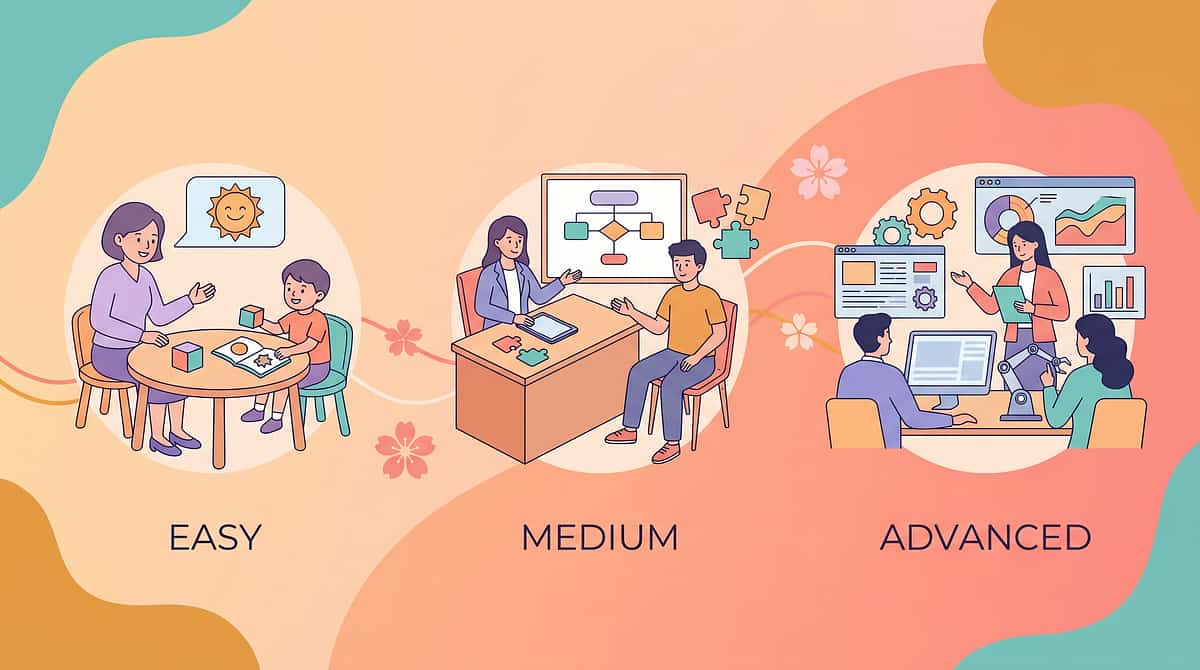
Adapt & Personalize — Your Child Is Not a Protocol
🔷 Sensory Seeker (craves input, high energy)
- Use MORE physical materials (linking cubes snapping, balance scale tipping)
- Add movement: count while jumping on number line, sort bears while standing
- Faster pace, shorter intervals, more variety
- Competition element: race the clock
🔶 Sensory Avoider (sensitive, easily overwhelmed)
- Start with visual materials only (dot cards, number puzzles, number lines)
- Reduce tactile materials initially (ten frames before counting bears)
- Longer free exploration before any demands
- Quieter, shorter sessions (8 minutes max initially)
- Allow distance — child doesn't have to touch everything
🔹 Strong Visual Learner
- Lead with ten frames and dot cards
- Color-code everything
- Use clear visual trackers
- Hundred charts and number lines particularly effective
🔸 Strong Kinesthetic Learner
- Lead with counting bears, linking cubes, balance scale
- All floor activities (number line jumping)
- Maximum manipulation time, minimum paper
Age-Based Modifications
- 3–4 years: Quantities 1–5 only. Free play dominant (80%).
- 4–5 years: Extend to 1–10. Sessions 10–12 minutes. Begin ten frames.
- 5–6 years: Full 9-material rotation. Begin number puzzles and hundred charts.
- 6–7 years: Add story math complexity. Begin mental math. Number rods for addition.
📞 Call 9100 181 181 — describe your child's response pattern from the last 5 sessions. The Pinnacle team will build a personalized adaptation pathway within 15 minutes.

ACT IV — THE PROGRESS ARC
Week 1–2: What to Expect
░░░░░░░░░░░░░░░░░░░░ 15% — Foundation Laying Phase
✅ You WILL Likely See
- Reduced resistance to the materials (curiosity replacing avoidance)
- Ability to count accurately to 3–5 with one-to-one correspondence when guided
- Beginning to respond to "how many?" (even if recounting is needed)
- Recognizing 2–3 dot patterns without counting
- Willingness to engage for the full session duration
⚠️ You Will NOT Yet See
- Independent accurate counting to 10
- Spontaneous number use in daily life
- Quick subitizing beyond 2–3
- Confident quantity comparison
- Any of this without your active support
"If your child tolerates the counting bears for 90 seconds longer than Day 1 — that is real, measurable progress. If they count to 3 correctly once — that is a breakthrough. If they look at a dot card and say 'two' without counting — that is the IPS activating. These small moments ARE the therapy working."
Parent Emotional Preparation: Weeks 1–2 are for you as much as for your child. Your patience in this phase is the single most predictive factor for Week 8 outcomes.
Frequency Target: 5 sessions this week. Even 10 minutes each = 50 minutes of evidence-based math readiness intervention — more targeted instruction than most preschool classrooms provide per week.
Frequency Target: 5 sessions this week. Even 10 minutes each = 50 minutes of evidence-based math readiness intervention — more targeted instruction than most preschool classrooms provide per week.

Week 3–4: Consolidation Signs
░░░░░░░░░░░░░░░░░░░░ 40% — Consolidation Phase
The Neural Turning Point: Week 3 is when the brain begins consolidating what the hands have been learning. Synaptic pathways that formed through repeated manipulation begin to strengthen. You will notice this as behavioral shifts — often subtle, sometimes dramatic.
Child Anticipates the Session
Walks to the material area, asks for "counting time" — a sign of positive association building
Counting to 5 is Automatic
No guidance needed for small quantities — the IPS pathway is solidifying
Child Self-Corrects
Notices a counting mistake and fixes it — metacognitive awareness emerging
Dot Card Recognition to 5
Recognizes dot patterns for 4 and 5 without counting — subitizing is activating
Uses "More" and "Less" Spontaneously
In play contexts, without prompting — generalization has begun
"Mama, there are more grapes in my bowl than yours." This sentence — said spontaneously at dinner, with no prompting — means the IPS is building real number sense. Not just responding to therapy tasks. Thinking mathematically in real life.
If child shows no consolidation signs by Day 21 → Call 📞 9100 181 181 for protocol review.

Week 5–8: Mastery Indicators
███████████████░░░░░ 75% — Mastery Phase 🏅
Skill | Mastery Indicator | |
One-to-one correspondence | Counts objects to 10+ with zero errors, independently | |
Cardinality | Answers "how many?" immediately with last number counted — never recounts | |
Subitizing | Identifies dot patterns 1–5 instantly (under 2 seconds), 1–8 with patterns | |
Quantity comparison | Accurately compares any two quantities to 10 (more/less/same) | |
Number-symbol connection | Matches any numeral 1–10 to correct quantity representation | |
Conservation | Understands that rearranging 5 bears doesn't change "5 bears" | |
Story math | Solves simple addition/subtraction stories with manipulatives |
Generalization Check — The Skill Has Generalized When It Appears in 3+ Environments:
🍽️ Dining Table
Counting cutlery, comparing portions
🌳 Outdoor Play
Counting objects, comparing quantities
🛁 Bathtub
Counting toys, comparing collections
🛒 Shopping
Counting items, comparing amounts
Maintenance Test: Take a 5-day break from formal sessions. Do math activities occur spontaneously? If skill maintains → mastery. If skill degrades → extend structured sessions 2 more weeks.
🏅"Your child has built the foundation that formal mathematics education requires. The materials have served their purpose. The IPS has been activated."
🏅"Your child has built the foundation that formal mathematics education requires. The materials have served their purpose. The IPS has been activated."

Celebrate This Win 🎉🏅🌟
You did this.
Your child grew because of your commitment.
You showed up — session after session — even when it was hard.
Even when you doubted. Even when the session didn't go as planned.
The number sense your child now carries in their brain
was built by your hands as much as theirs.
Your child began this journey unable to demonstrate what "three" means — able to recite numbers but not connect them to reality. They now count with one-to-one correspondence, recognize dot patterns without counting, compare quantities accurately, and use number language spontaneously in daily life.
This is not a small achievement. This is a neurological milestone. The intraparietal sulcus has been activated. The concrete-to-abstract bridge has been built.
Tonight — tell your child: "You know what you've done? You've learned to really understand numbers. That's a big deal. I'm proud of you."
📸Document this moment: Take a photo of your child working with the materials. Write one sentence about who they were when you started and who they are now. This is their story.
📸Document this moment: Take a photo of your child working with the materials. Write one sentence about who they were when you started and who they are now. This is their story.

Red Flags: When to Pause and Consult
"Trust your instincts. If something feels wrong, pause and ask. Pausing is professional. Pushing through warning signs is not dedication — it is risk."
🚩 Flag 1: No Progress in 4 Weeks
What it looks like: Despite daily 15-minute sessions with multiple materials, no observable improvement in cardinality, correspondence, or subitizing.
Why it matters: May indicate dyscalculia, working memory deficit, or attentional profile requiring specialist assessment.
What to do: Call 9100 181 181. Request an AbilityScore® assessment.
🚩 Flag 2: Significant Math Anxiety Emerging
What it looks like: Child shows distress, avoidance, or says "I can't do numbers" with emotional intensity.
Why it matters: Math anxiety activates threat responses that shut down the prefrontal cortex — learning becomes impossible in this state.
What to do: Stop all structured sessions. Return to pure play. Book a consultation.
🚩 Flag 3: Strong Verbal Skills with Isolated Math Difficulty
What it looks like: Child speaks in complex sentences but cannot count reliably — the gap is dramatic.
Why it matters: May indicate domain-specific learning difficulty (dyscalculia) requiring formal neuropsychological evaluation.
What to do: Request specialist assessment via 9100 181 181.
🚩 Flag 4: Regression After Progress
What it looks like: Child who was counting to 8 suddenly cannot count to 4 reliably, with no illness explanation.
What to do: Document, call, consult.
🚩 Flag 5: Concurrent Difficulties in Multiple Domains
What it looks like: Math difficulty + reading difficulty + significant motor delays + behavioral challenges.
What to do: AbilityScore® assessment for full developmental profile.
🚩 Flag 6: Family History of Math Learning Difficulties
What it looks like: Parent, sibling, or close relative with dyscalculia or significant math struggles.
What to do: Mention in the helpline consultation. Early identification = early intervention = better outcomes.
📍 Find nearest Pinnacle center: pinnacleblooms.org/centers

The Progression Pathway — Your Developmental GPS
◄ YOU ARE HERE: L-992
Prerequisite Techniques
- L-990: Pre-Academic Foundations (visual tracking, fine motor, attention)
- L-991: Early Literacy Building (symbol recognition, pattern awareness)
- If these were not completed first: start there, then return to L-992
Next-Level Options (based on child's response)
- Strong responder: Progress to L-994 Writing Readiness
- Reading gap co-occurring: Parallel track with L-993 Reading Readiness
- Math advancing quickly: Escalate to Level 2 math materials (ten-frame operations, number rod arithmetic)
- Needs consolidation: Repeat L-992 with more complex quantities and higher material demands
Long-Term Developmental Goal: Formal mathematics readiness by age 6–7, with all 7 math readiness components solid, enabling meaningful engagement with formal schooling mathematics.
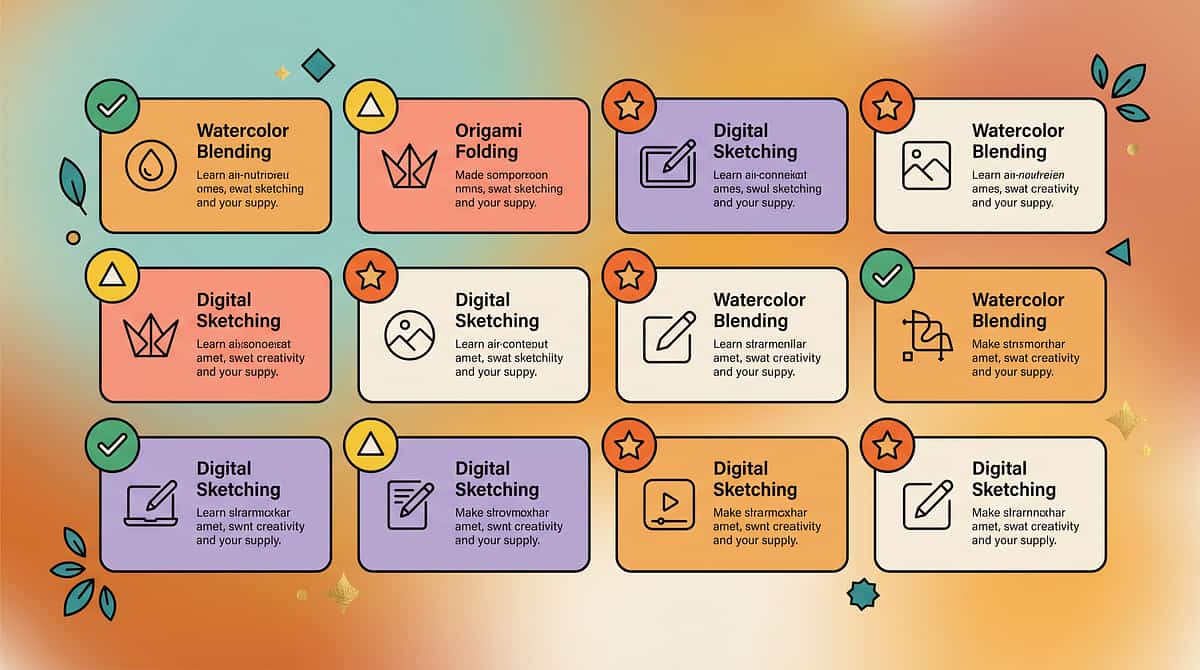
Related Techniques in Academic Readiness & Learning
📐 Domain L
techniques.pinnacleblooms.org/academic-readiness
Technique | Code | Difficulty | Primary Material | Link | |
9 Materials for Pre-Academic Foundations | L-990 | 🟢 Intro | Various foundational | ||
9 Materials for Early Literacy Building | L-991 | 🟢 Intro | Alphabet + phonics materials | ||
9 Materials for Math Readiness | L-992 | 🟡CURRENT | Math manipulatives | You are here | |
9 Materials for Reading Readiness | L-993 | 🟡 Core | Reading and phonics tools | ||
9 Materials for Writing Readiness | L-994 | 🟡 Core | Fine motor + writing tools | ||
9 Materials for Working Memory Support | L-985 | 🟡 Core | Memory games, sequencing |
Materials You Already Own After L-992: Counting bears, linking cubes, ten frames, number puzzles. These materials also appear in L-990, L-985, and several OT domain techniques. You already have the materials for multiple next techniques.
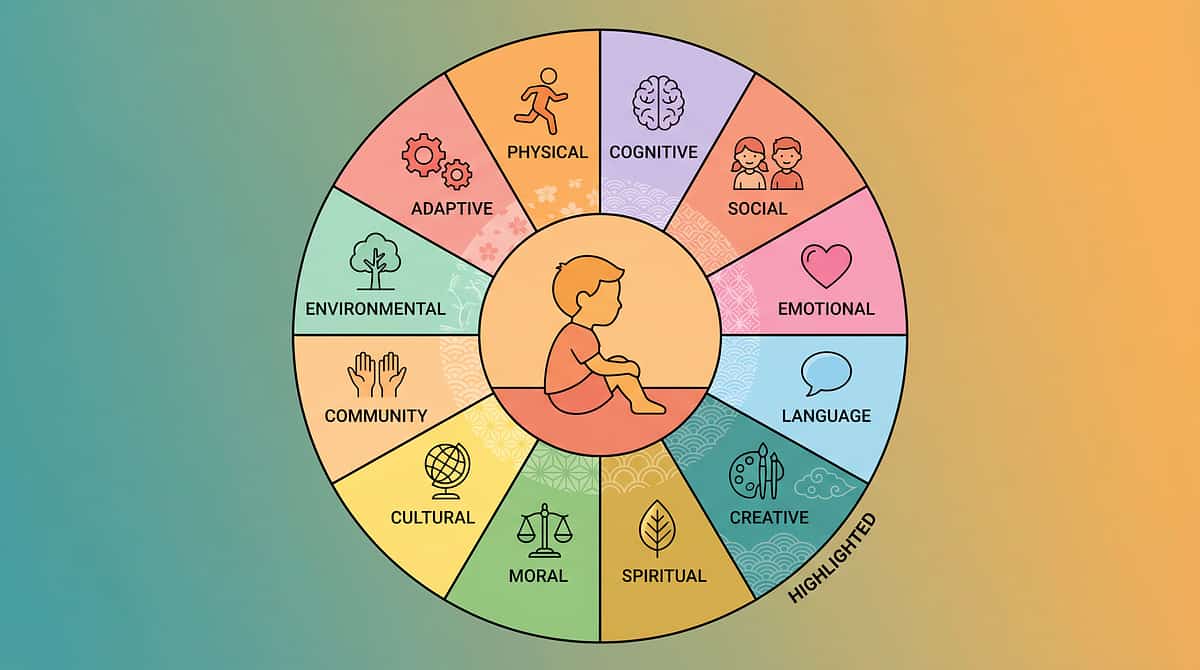
One Technique. One Domain. One Child. One Complete Plan.
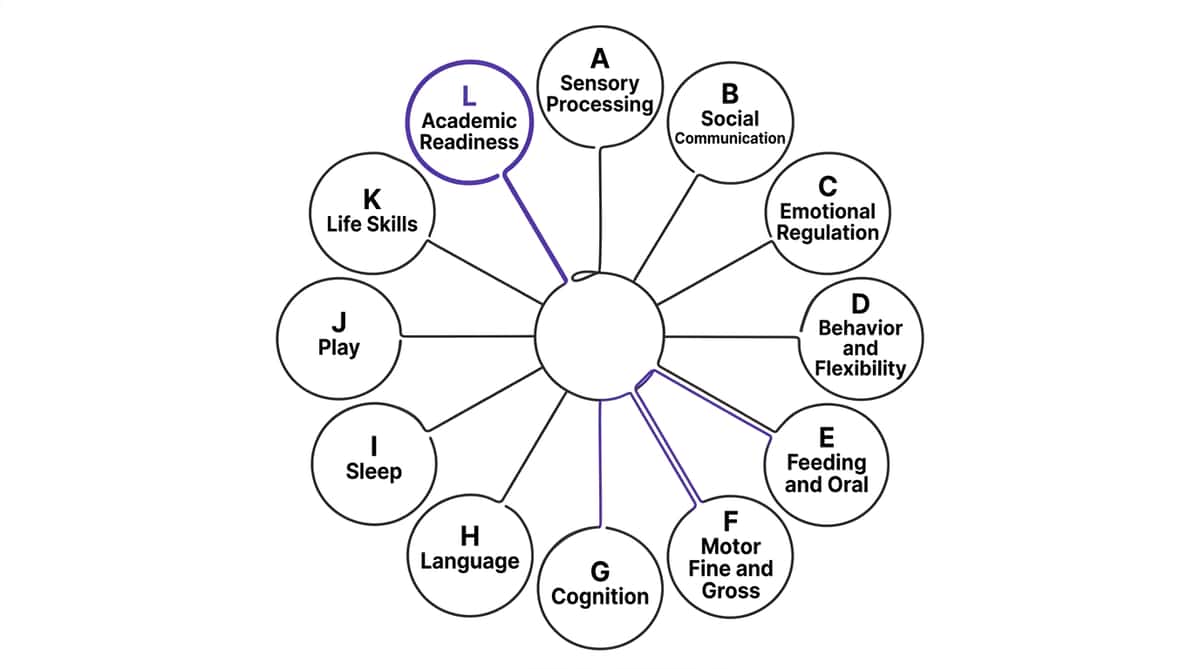
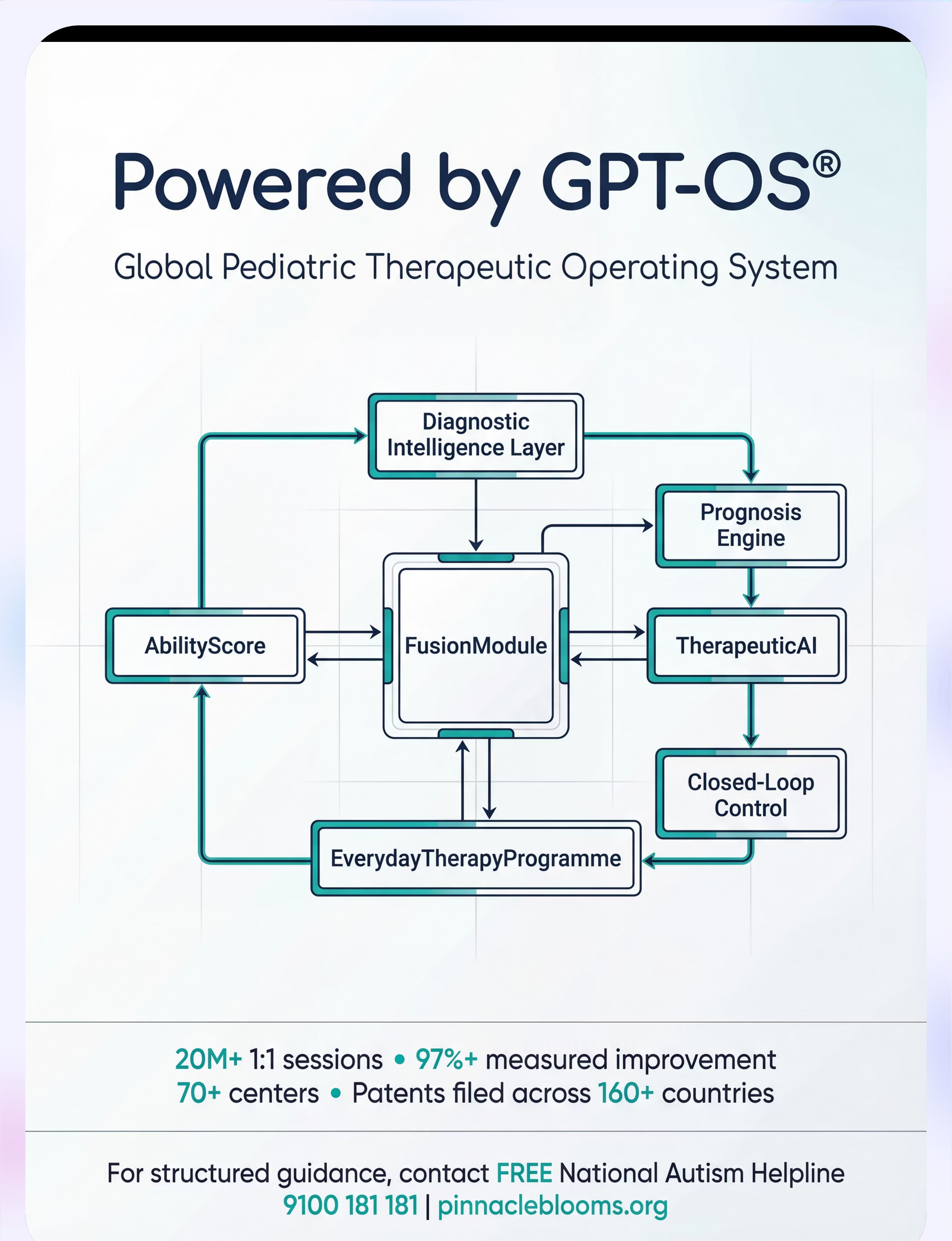
"A child's developmental profile is not a collection of isolated deficits. It is an integrated, interdependent system. Every domain informs every other. GPT-OS® coordinates all 12 simultaneously — because your child does not experience their life one domain at a time." — Pinnacle GPT-OS® FusionModule™
How Math Readiness Connects to Other Domains
- Requires Domain F (Fine Motor) — manipulative handling
- Requires Domain G (Cognition) — working memory, sequencing
- Requires Domain H (Language) — math vocabulary, word problems
- Requires Domain A (Sensory) — regulation for learning
- Supports Domain E (Life Skills) — counting, measuring in daily activities
ACT V — THE COMMUNITY & ECOSYSTEM
From the Families Who Walked This Path Before You
Family A | Arjun, 4 years 8 months | Hyderabad
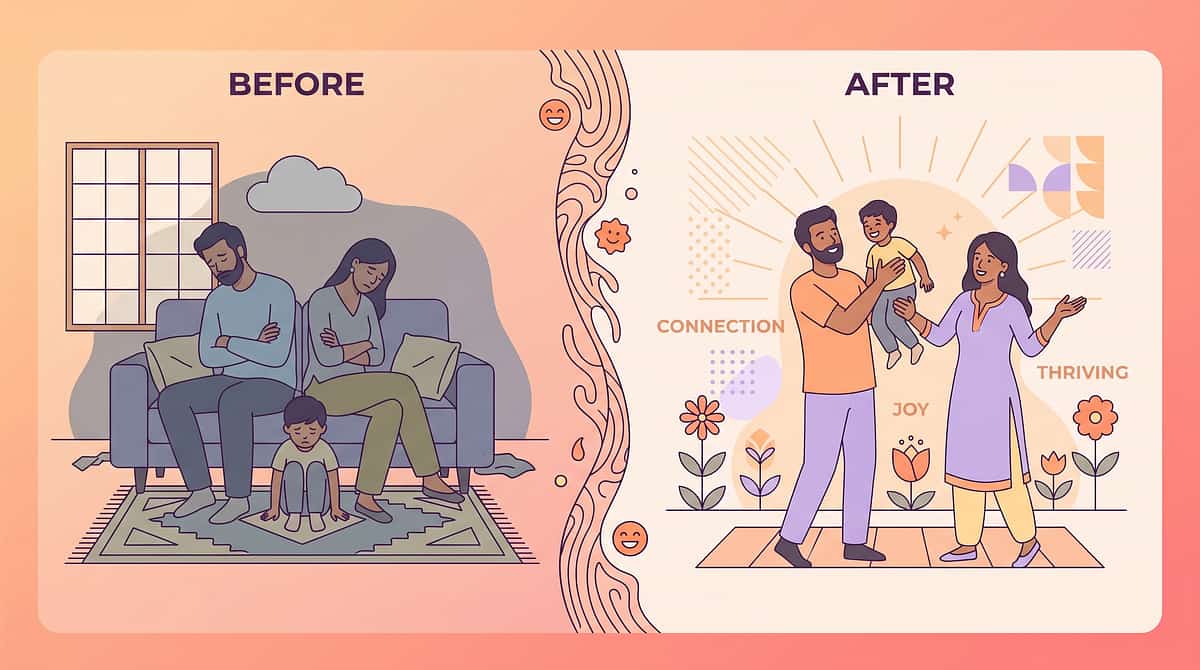
Before: Arjun could count confidently to 30 but set a random number of plates at dinner every night. His SpEd therapist identified the gap: rote counting without cardinality. He had the verbal sequence but not the concept.
The Intervention: Eight weeks with counting bears, ten frames, and daily "table-setting practice." Specific: count bears equal to family members, then place bears as placeholders for plates.
After (Week 8): Arjun sets the table independently and accurately. He spontaneously says "Grandma is coming, so we need one more." He asks to play "the counting game." He no longer says "I'm bad at numbers."
"Arjun's case is the clearest illustration of why we distinguish rote counting from number sense. The material investment was under ₹2,000. The impact is a child who enters kindergarten with mathematical confidence instead of mathematical anxiety." — Pinnacle SpEd Team, Hyderabad Center
Family B | Priya, 5 years 2 months | Bengaluru
Before: Priya's teacher flagged that while her peers were beginning simple addition, Priya couldn't reliably compare "more" and "less." She had significant anxiety around any number task and had begun refusing math circle at preschool.
The Intervention: Seven weeks with balance scale (made from a coat hanger at zero cost), dot cards, and story math using Priya's favorite animal figures. Zero commercial products used.
After (Week 7): Priya initiates "the balance game" independently during free time. She subitizes to 4 reliably. She creates her own math stories. Math anxiety has resolved. She is attending math circle and participating.
"What families often discover is that the anxiety was downstream of the skill gap. Once the skill is there, the anxiety dissolves. Priya didn't need anxiety management — she needed a foundation."
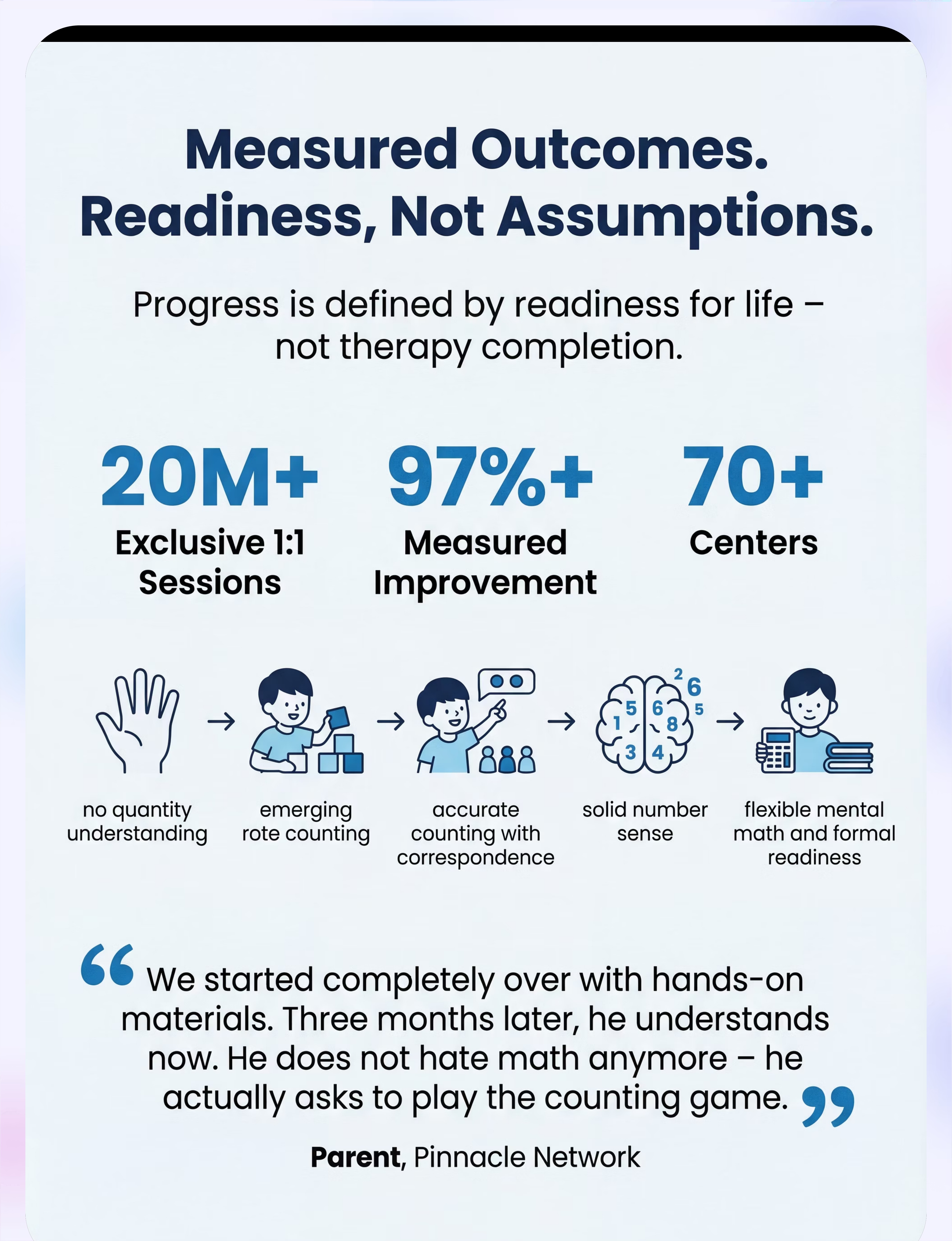
"We started completely over with hands-on materials. Three months later, he understands now. He doesn't hate math anymore — he actually asks to play 'the counting game.'" — Parent, Pinnacle Network
Illustrative composite. Individual results vary. Outcomes depend on child profile and intervention consistency.

Connect With Other Parents
"Isolation is the enemy of adherence. Parents who connect with other families implementing this protocol show 3× higher session consistency by Week 4. You were not meant to do this alone."
WhatsApp: Math Readiness Parent Group
Join 2,400+ families implementing Domain L techniques across India. → Request to join
Online Community: Pinnacle Parent Forum
Share progress, ask questions, read updates from Pinnacle therapists. → pinnacleblooms.org/community
Local Parent Meetup
Pinnacle center-organized monthly meetups for families working on academic readiness. → Find your nearest meetup
Peer Mentoring
Request a 1:1 connection with a parent who has completed this protocol. → pinnacleblooms.org/peer-mentoring
"Your experience matters to the parent who is exactly where you were 8 weeks ago. Consider sharing one thing that worked. One adjustment you made. One moment of breakthrough."
📞9100 181 181 | Free | 16 languages | 24×7 | pinnacleblooms.org

Your Professional Support Team
"Home-based intervention works best when supported by professional guidance. The EverydayTherapyProgramme™ is designed to extend what clinic sessions begin. Home + clinic = maximum impact."
📍 Find Your Nearest Pinnacle Blooms Center
70+ centers across India | All GPT-OS® governed | Academic Readiness + SpEd + OT + ABA + SLP + NeuroDev
Therapist Matching for L-992
For this technique, your primary specialist is a Special Educator (SpEd), supported by OT (for fine motor and sensory readiness).
📱 Teleconsultation
Can't reach a center? Teleconsult available for all families.
Home + Clinic Integration
When you book a session, bring your tracking data (from Card 23). The therapist will build the next protocol phase directly from your home data. This is the GPT-OS® closed-loop model in action.
Insurance / Funding
Information on therapy funding options, government schemes, and insurance coverage: → pinnacleblooms.org/funding-support
The Research Library — Deeper Reading for the Curious Parent
📄 IES Practice Guide — Teaching Math to Young Children
What Works Clearinghouse: Hands-on manipulative instruction is the highest-evidence approach for building early number sense. 🔗 Read: ies.ed.gov/ncee/wwc
📄 Clements & Sarama — Learning Trajectories (2021)
Children progressing through concrete → representational → abstract stages show significantly stronger mathematical reasoning and less math anxiety through elementary school.
📄 WHO Care for Child Development Package (2023)
Household-material-based interventions in 54 LMICs demonstrate effectiveness equivalent to clinic-based interventions when delivered consistently by trained caregivers. 🔗 PMC9978394
📄 Pinnacle Blooms Network® Real-World Evidence (2024)
20M+ sessions | 97%+ measured improvement | Children in Pinnacle network receiving consistent home-based support show significantly accelerated readiness index progress. 🔗 pinnacleblooms.org/research
📄 NCTM — Principles to Action (2014)
Mathematical understanding develops through physical interaction with real quantities. Premature abstraction is the primary cause of math learning difficulties. 🔗 nctm.org
Additional Citations: PMC11506176 · PMC10955541 · PMC9978394 · WHO NCF 2018 · NCAEP 2020 · DOI: 10.1007/s12098-018-2747-4 · DOI: 10.3389/fnint.2020.556660
Watch & Share — Episode L-992
📹Reel Title: 9 Materials That Help With Math Readiness
Reel ID: L-992 | Series: Academic Readiness & Learning
Episode: 992 of 999 | Duration: 60 seconds
Age Band: 3–7 years | Domain: Academic Readiness & Learning (Domain L)
Reel ID: L-992 | Series: Academic Readiness & Learning
Episode: 992 of 999 | Duration: 60 seconds
Age Band: 3–7 years | Domain: Academic Readiness & Learning (Domain L)
The Pinnacle Blooms Consortium team — including our Special Educators, Occupational Therapists, ABA specialists, and NeuroDev Pediatricians — collaboratively produced this reel. What you see in 60 seconds represents a synthesis of 20M+ therapy sessions and decades of consortium expertise.
Series Context: This episode is part of the Academic Readiness & Learning series — 1,000 reels covering the full spectrum of academic readiness challenges for children aged 0–12. Episode 991 (Early Literacy Building) and Episode 993 (Reading Readiness) flank this content.
Share This With Your Family
"Consistency across caregivers multiplies impact. A child who experiences this protocol only from one parent achieves 40% of the possible outcome. The same protocol, across all caregivers, achieves the full 100%."
Explain to Grandparents
"Please don't use flashcards or worksheets. Instead, use the counting bears in the purple bag. Ask [child's name] to give you exactly [number] bears. Count together. That's the entire session. 10 minutes, 5 days a week."
📞9100 181 181 — Available to speak with teachers, grandparents, and other caregivers for 15-minute guidance calls. Free. 24×7.

ACT VI — THE CLOSE & LOOP
Frequently Asked Questions — Your Questions, Answered
❓ My child is 7. Is it too late to start this?
Not at all. The 3–7 window is optimal but not exclusive. Children up to 9–10 years benefit significantly from concrete math readiness work. The protocol runs faster with older children (compress to 4–5 weeks), but all materials apply. Call 9100 181 181 for age-specific guidance.
❓ My child already goes to school. Won't this confuse them?
No. This protocol builds the foundation that makes school instruction comprehensible. If anything, you'll likely see your child become more engaged in school math activities as the concrete foundation makes abstract classroom instruction start to make sense.
❓ We don't have space for all 9 materials. Which 3 should we start with?
Start with: (1) Counting bears or equivalent household counters, (2) Ten frames (drawn on paper), (3) Linking cubes or LEGO. These three cover one-to-one correspondence, cardinality, ten-benchmarks, and physical number building — the most time-efficient starter set.
❓ How long before we see results?
Week 1–2: Improved engagement with materials. Week 3–4: Beginning accurate counting to 5–10. Week 5–8: Solid number sense to 10, with cardinality and subitizing emerging. Track it and call if Week 4 shows no measurable movement.
❓ My child has autism. Does this protocol work for ASD?
Yes — and it is particularly important for children with ASD, who often show strong rote counting with significant gaps in actual number sense. The multi-sensory, hands-on nature of these materials aligns well with many ASD learning profiles. The protocol must be adapted for sensory sensitivities (see personalization card). A specialist consultation via 9100 181 181 will help identify the best starting point.
❓ My child's school says they need "more practice." Isn't that the same as this?
"More practice" usually means more worksheets or more repetition of the same symbols. This protocol is categorically different — it builds the conceptual foundation that makes practice meaningful. A child who has held five bears, built a tower of five cubes, and balanced five weights understands five. Then worksheets make sense.
❓ Is this a substitute for therapy?
No. This is the EverydayTherapyProgramme™ — the home extension of what therapists do in clinic. It extends and amplifies professional therapy. It does not replace it. If your child is not currently receiving professional assessment, call 9100 181 181 to start that process.
❓ What does an AbilityScore® assessment tell me about my child's math readiness?
The AbilityScore® measures across 349 skills and 79 developmental abilities, including the full Cognitive & Learning Readiness Index. For math readiness, it provides: baseline across all 7 readiness components, severity classification, specific gap identification, personalized material prioritization, and progress benchmarks calibrated to your child's profile.
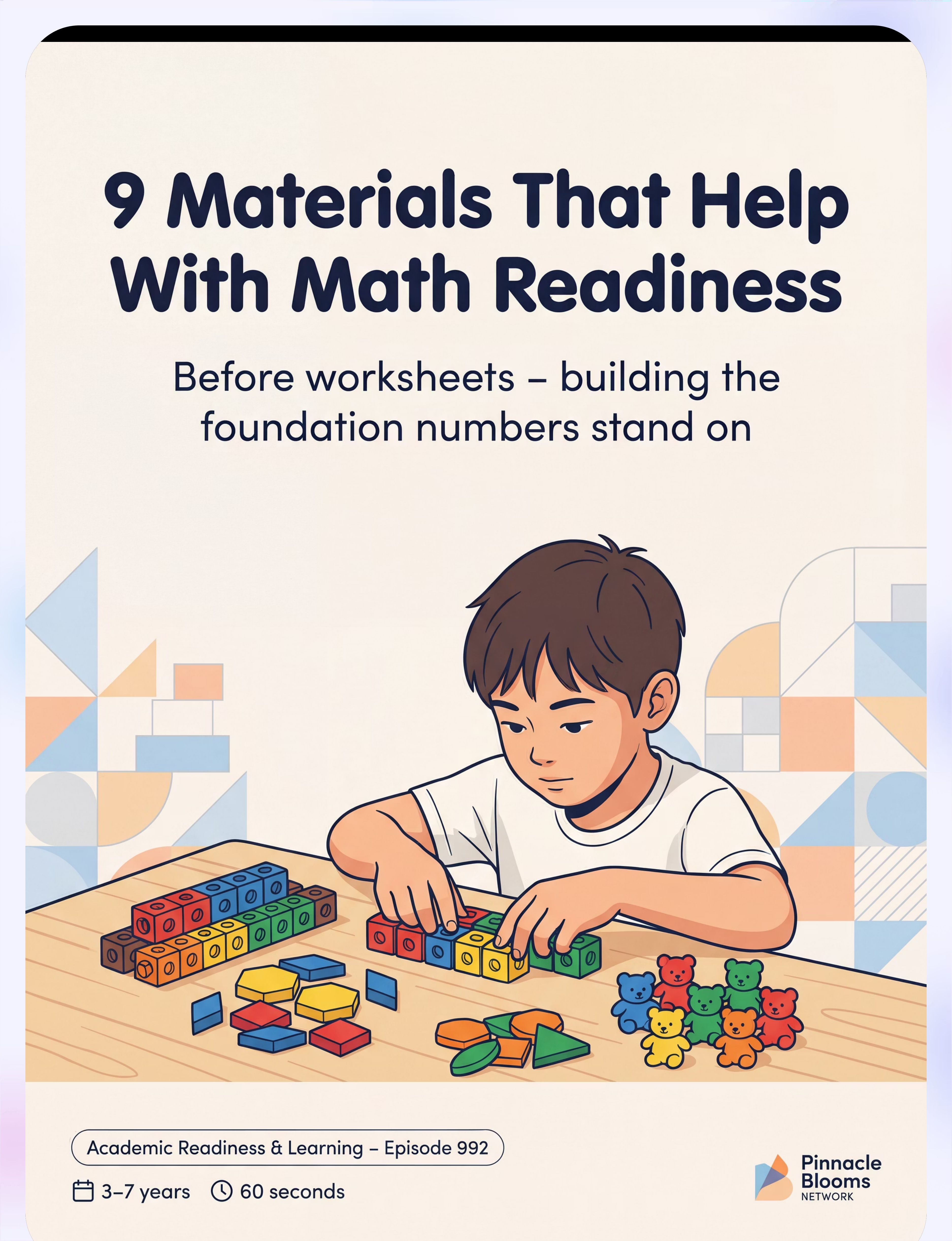
Preview of 9 materials that help with math readiness Therapy Material
Below is a visual preview of 9 materials that help with math readiness therapy material. The pages shown help educators, therapists, and caregivers understand the structure and content of the resource before use. Materials should be used under appropriate professional guidance.


Link copied!

The Pinnacle Promise
"From fear to mastery. One technique at a time."
Pinnacle Blooms Network® is India's largest multi-disciplinary pediatric therapy consortium, operating 70+ centers under the proprietary GPT-OS® platform. Every technique on techniques.pinnacleblooms.org is co-authored by our consortium of Occupational Therapists, Speech-Language Pathologists, ABA/BCBA specialists, Special Educators, NeuroDevelopmental Pediatricians, and Clinical Research experts — and is aligned with WHO, UNICEF, and international evidence-based practice standards.
Full Citation List
PMC11506176 · PMC10955541 · PMC9978394 · WHO NCF 2018 · NCAEP 2020 · DOI: 10.1007/s12098-018-2747-4 (Padmanabha et al., Indian J Pediatr, 2019) · IES Practice Guide: Teaching Math to Young Children · NCTM Principles to Action (2014) · Clements & Sarama (2021) · DOI: 10.3389/fnint.2020.556660
CIN | U74999TG2016PTC113063 | |
DPIIT Recognition | DIPP8651 (Govt. of India) | |
MSME | Udyog Aadhaar: TS20F0009606 | |
GSTIN | 36AAGCB9722P1Z2 |
Medical Disclaimer: This content is educational. It does not replace individualized assessment and intervention from qualified educators, occupational therapists, or developmental specialists. Math readiness needs vary significantly based on developmental profile, learning style, and underlying cognitive abilities. Consult your child's therapy and education team for personalized strategies. Individual results may vary. Statistics represent aggregate outcomes across the Pinnacle Blooms Network®.
© 2025–2026 Pinnacle Blooms Network®, unit of Bharath Healthcare Laboratories Pvt. Ltd. All rights reserved. GPT-OS® is a registered trademark. | techniques.pinnacleblooms.org
Privacy Policy
Terms of Use
Accessibility
Sitemap