
He practices kicks in the living room every day. He's ready. The dojo just doesn't know how to reach him — yet.
Your child watches karate videos obsessively. Lines up stuffed animals and teaches them forms. Begs for lessons. The first class was a disaster — not because he wasn't ready in his heart, but because traditional instruction never accounted for how his brilliant, differently-wired brain learns. This page changes that.
J-877 | Martial Arts Access
9 Evidence-Based Support Materials
Pinnacle Blooms Consortium® Validated
1 in 36. Millions of children. One shared dream — physical activity that fits.
1 in 36
Children with Autism
Diagnosed with autism globally, per CDC 2023 data.
80%
Motor Planning Challenges
Show motor planning challenges affecting physical activity participation.
47%
Excluded from Sports
Autistic children report being excluded from sports and physical activities.
Among India's estimated 18 million children on the autism spectrum, hundreds of thousands want to participate in martial arts — karate, taekwondo, jiu-jitsu, kung fu. The desire is real. The passion is present. What's missing isn't motivation. What's missing is an instruction format that matches how their nervous system learns.
You are among millions of families navigating this exact challenge. And this challenge has documented, evidence-based solutions.
📞 FREE National Autism Helpline: 9100 181 181 | 16+ Languages | pinnacleblooms.org

This isn't about willpower or effort. It's motor planning neuroscience.
The Science: Motor Planning (Praxis)
Motor planning involves a neural cascade across three cortical systems:
- Ideation (prefrontal cortex): "I want to do a front kick"
- Sequencing (premotor cortex): Planning the movement order — foot placement → weight shift → hip rotation → extend
- Execution (motor cortex + cerebellum): Sending precise signals to 47 muscle groups in exact timing
In children with developmental motor differences, the premotor sequencing step is where the cascade breaks down. The child knows what they want to do. Their body doesn't receive the complete motor program fast enough.
What Your Child Experiences in a Traditional Class
The instructor says: "Front stance, down block, step through, reverse punch." Your child's brain hears all four words. Their motor system can only execute one command at a time. By the time they've processed "front stance," the class has already completed the punch.
This is NOT:
- Not trying hard enough
- Not paying attention
- Not wanting to participate
This IS:
- A processing speed difference
- A motor sequencing gap
- Completely addressable with visual scaffolding
"The brain doesn't organize by therapy type. Motor planning affects every physical skill your child wants to master." — Pinnacle Blooms OT Consortium Panel

Your child is here. Here is where the journey goes.
0–2 yrs: Motor Foundations
Body awareness. Crawl/walk. Imitation begins.
2–4 yrs: Bilateral Emergence
Two-hand tasks begin. Early cross-body movement.
4–7 yrs: Motor Planning
Complex sequences emerge. ← Where martial arts sits. Your child is here — with support.
7–12 yrs: Sports & Recreation
Structured activity participation. Peer-based learning.
12+ yrs: Lifelong Physical Activity
Independent access. Belt progression. Community participation.
Motor planning challenges for complex physical sequences typically emerge clearly between ages 4–12, when activity demands escalate beyond simple movement. Martial arts sits in the highest-demand zone: it requires ideation, sequencing, execution, social navigation, sensory regulation, and bilateral coordination — simultaneously. This is not a permanent ceiling. This is a waypoint.
Commonly co-occurring with motor planning challenges: proprioceptive processing differences, vestibular sensitivity, auditory processing differences, and executive function differences (sequence memory, initiation).

Clinically Validated. Home-Applicable. Parent-Proven.
Level I Evidence
Systematic Review + RCT
NCAEP 2020 Evidence-Based Practice
PRISMA Systematic Review — Children (2024)
16 articles, 2013–2023. Sensory integration and motor scaffolding interventions meet criteria as evidence-based practices for children with ASD across physical activity domains. 🔗 PMC11506176
Meta-Analysis — World J Clin Cases (2024)
24 studies. Structured sensory-motor intervention promotes gross motor skills, body awareness, bilateral coordination, and social participation. 🔗 PMC10955541
Indian RCT — Indian J Pediatr (2019)
Home-based protocol. Visual scaffolding + home practice + caregiver training produced significant motor and adaptive skill gains in Indian children. 🔗 DOI: 10.1007/s12098-018-2747-4
NCAEP Evidence-Based Practices Report (2020)
Visual supports, video modeling, and structured physical activity protocols are classified as evidence-based practices for autism. 🔗 ncaep.fpg.unc.edu
Adapted Physical Activity Quarterly
With appropriate visual and sensory supports, children with developmental differences achieve martial arts participation at rates comparable to neurotypical peers. 🔗 journals.humankinetics.com/apaq
"Every material on this page has a documented mechanism. Every strategy has a research lineage. This is not hopeful thinking — this is pediatric science at your kitchen table." — Pinnacle Blooms CRO Panel
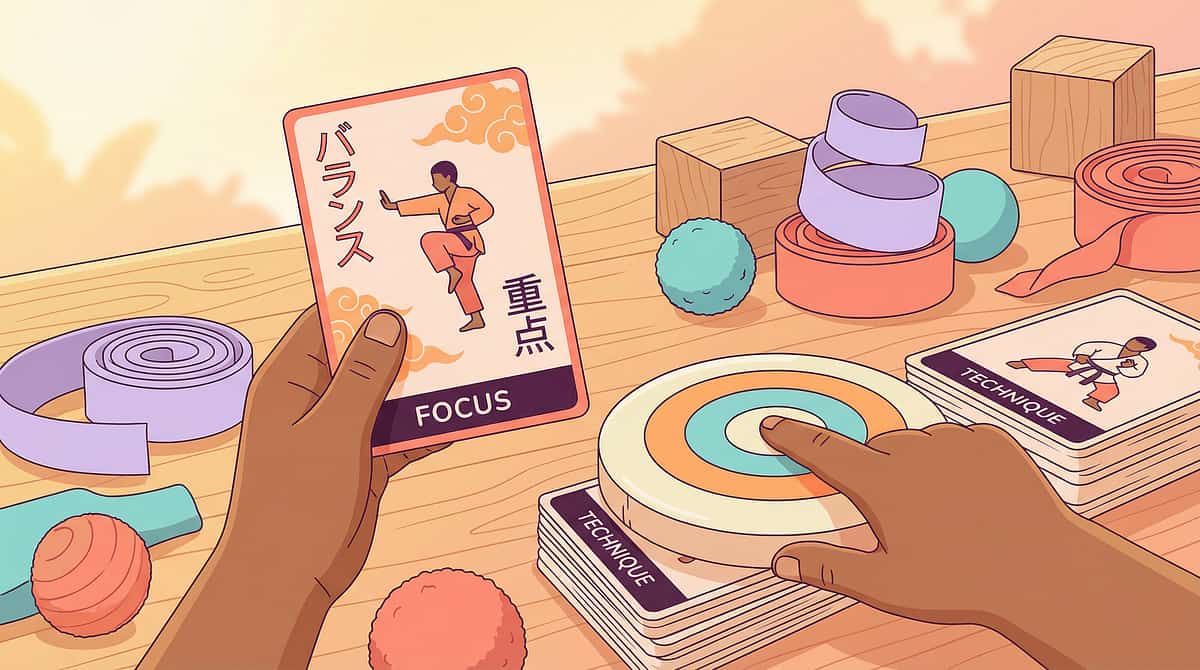
🥋 J-877: Adapted Martial Arts Support Protocol
The Dojo Accessibility Kit
Series: Sports, Recreation & Physical Activity Access
Episode 877 of 999
Adapted Martial Arts Support is a multi-material scaffolding approach that makes martial arts instruction — karate, taekwondo, jiu-jitsu, kung fu, and other disciplines — accessible for children with motor planning differences, sensory processing differences, auditory processing challenges, and body awareness deficits. The approach does NOT simplify the martial art. It translates the instruction format from auditory-sequential to visual-proprioceptive-scaffolded.
Visual Instruction Gaps
Technique Cards, Form Charts
Body Awareness Deficits
Mirror, Weighted Bands
Stance Precision
Floor Tape
Home Practice
Practice Target, Video Recording
Sensory Overwhelm
Noise-Reducing Earbuds
Routine Anxiety
Social Story + Visual Schedule
Age Range: All ages (adapted to developmental level) | Setting: Home + Dojo | Frequency: 3–5× weekly | Duration: 10–20 min home sessions | Disciplines: OT (Primary) + ABA + SLP + SpEd + NeuroDev

6 Disciplines. One Child. One Goal: Physical Activity Access.
Occupational Therapist (Primary Lead)
Addresses motor planning, bilateral coordination, proprioceptive processing, body awareness, and vestibular integration. Selects and calibrates materials for each child's sensory profile.
ABA / BCBA
Structures reinforcement schedules for martial arts practice. Creates visual schedules, social stories, and reward systems. Uses task analysis to break complex techniques into manageable steps.
Speech-Language Pathologist
Addresses auditory processing of verbal instructions. Develops visual-linguistic supports for instructor commands. Works on social communication for partner drills and instructor interaction.
Special Educator
Creates individualized learning supports — technique cards, form charts, visual schedules. Coordinates with dojo instructors on accommodation plans.
Neurodevelopmental Pediatrician
Diagnoses and differentiates motor planning differences. Monitors medication effects on motor performance. Provides medical clearance for martial arts participation.
Clinical Research Organization (CRO)
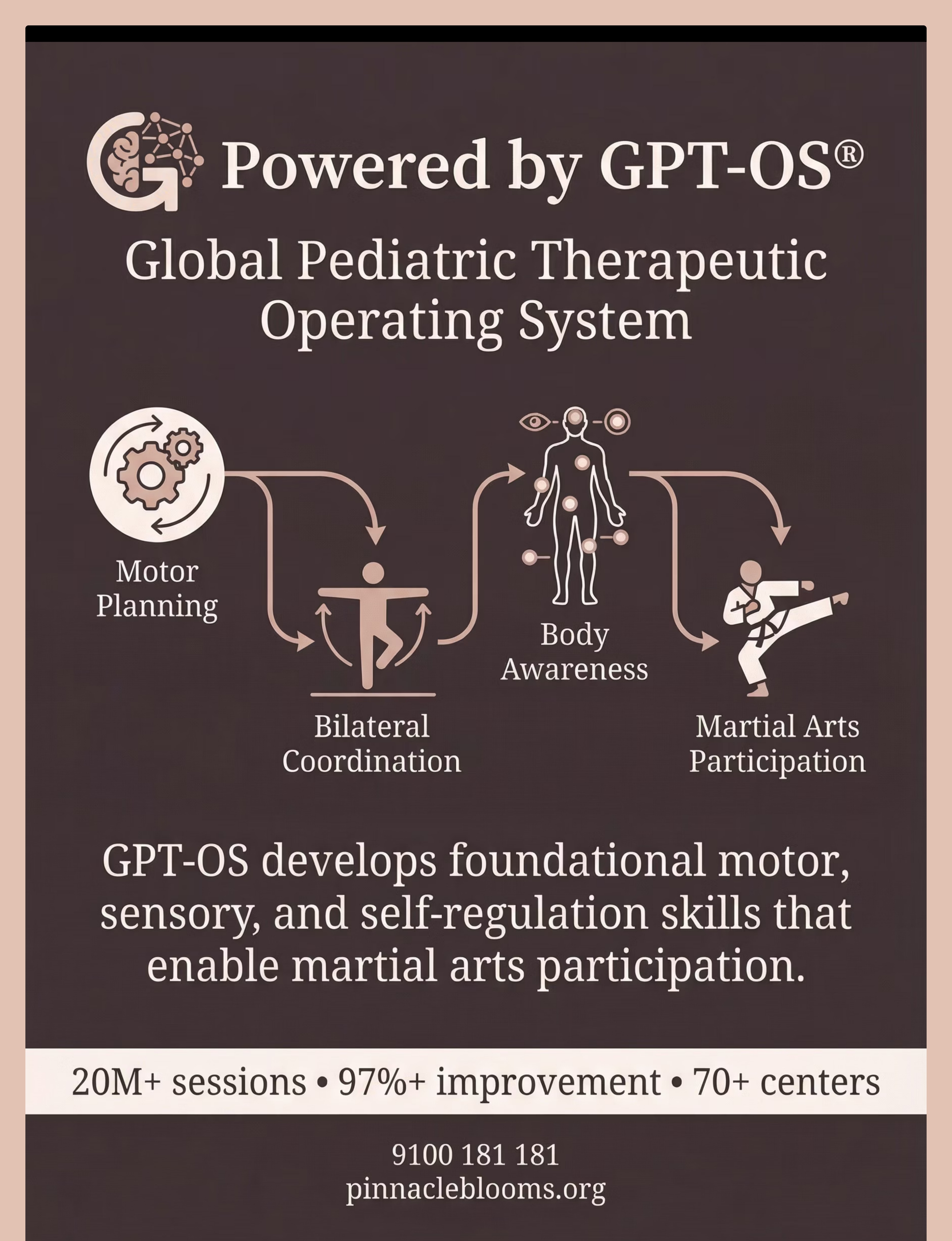
Documents outcomes across Pinnacle's 70+ center network. Tracks which material combinations produce fastest generalization. Feeds population-level data into GPT-OS® algorithms.
📞 Connect with your Pinnacle specialist team: 9100 181 181
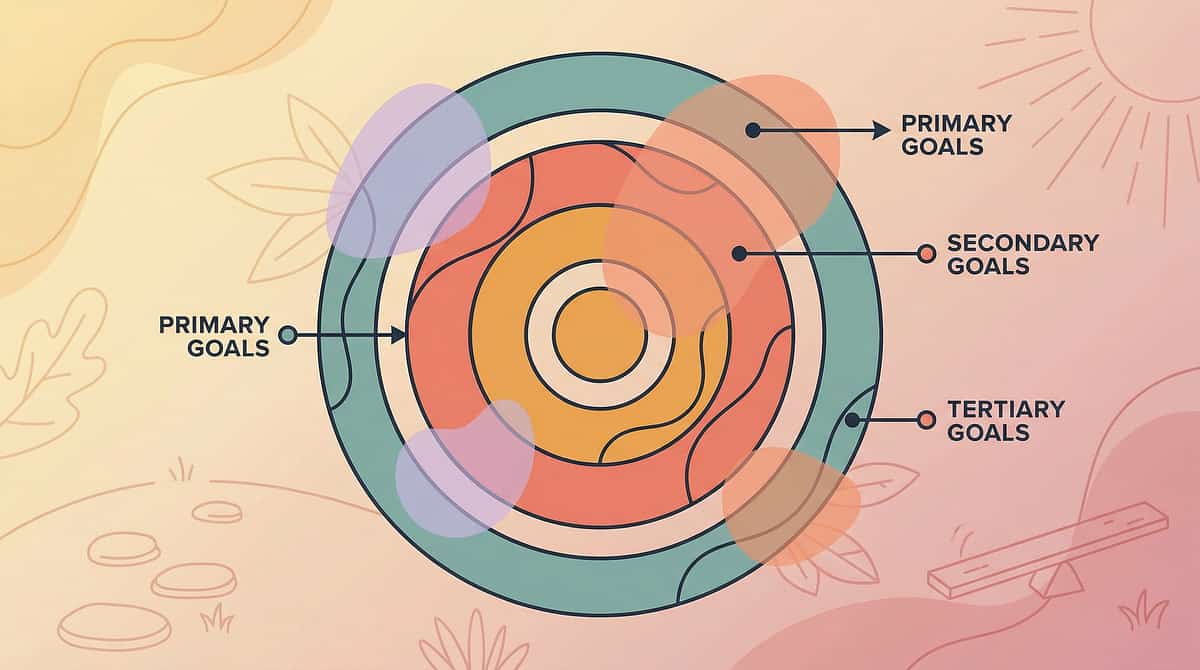
This isn't a random activity. It's a precision developmental tool.
Primary Targets
- Motor Planning: Child executes a 3-step technique sequence after visual review
- Body Awareness: Child self-corrects stance when shown mirror/photo reference
- Proprioception: Child accurately reports where their arm/leg is without looking
Secondary & Tertiary Targets
- Bilateral Coordination: Child executes punch-step-block with L/R coordination
- Impulse Control: Child demonstrates power control in partner drills
- Social Skills: Child follows dojo bow-in/bow-out ceremony independently
- Self-Efficacy: "I can do hard things" internalization from belt progression

9 Materials. Delivered to your home. Your dojo is ready by tomorrow.
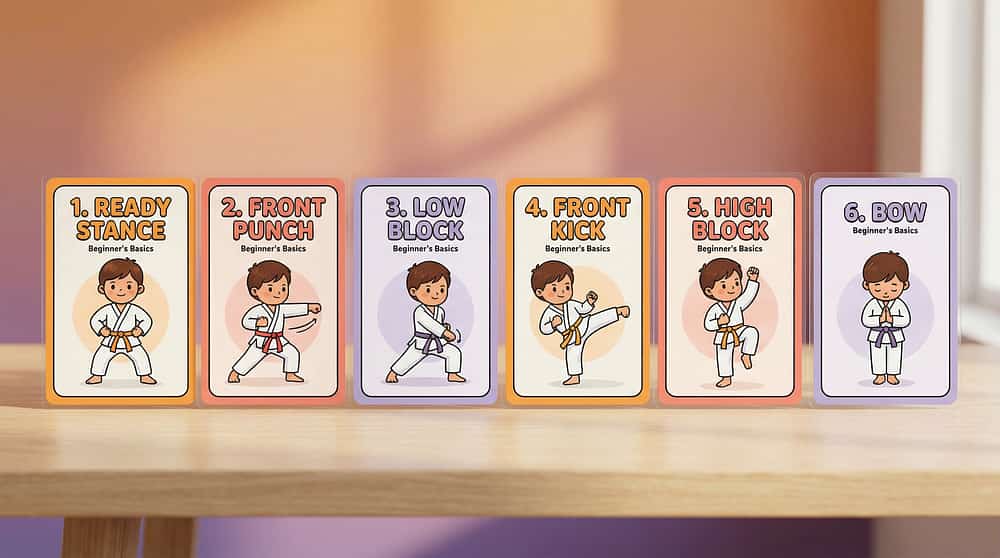
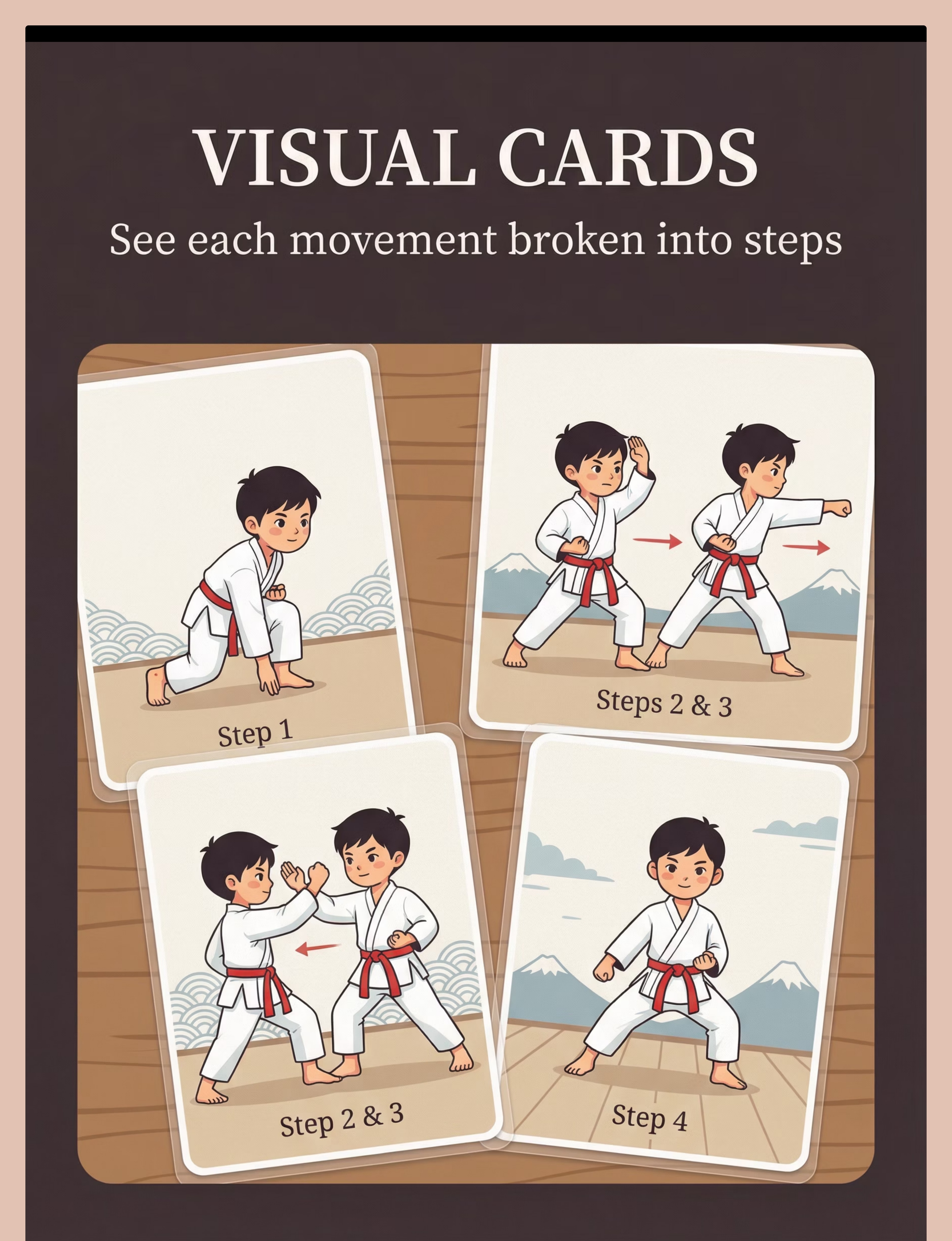
1. Visual Technique Cards with Step-by-Step Photos
Canon: Visual Supports / Communication Aids
Step-by-step photographic cards showing each martial arts technique.
💰 ₹300–1,500 (commercial) | ₹0 (homemade)
Search: Martial Arts Visual Cards on Amazon.in →
🏅Homemade is clinically equivalent for this material
Step-by-step photographic cards showing each martial arts technique.
💰 ₹300–1,500 (commercial) | ₹0 (homemade)
Search: Martial Arts Visual Cards on Amazon.in →
🏅Homemade is clinically equivalent for this material
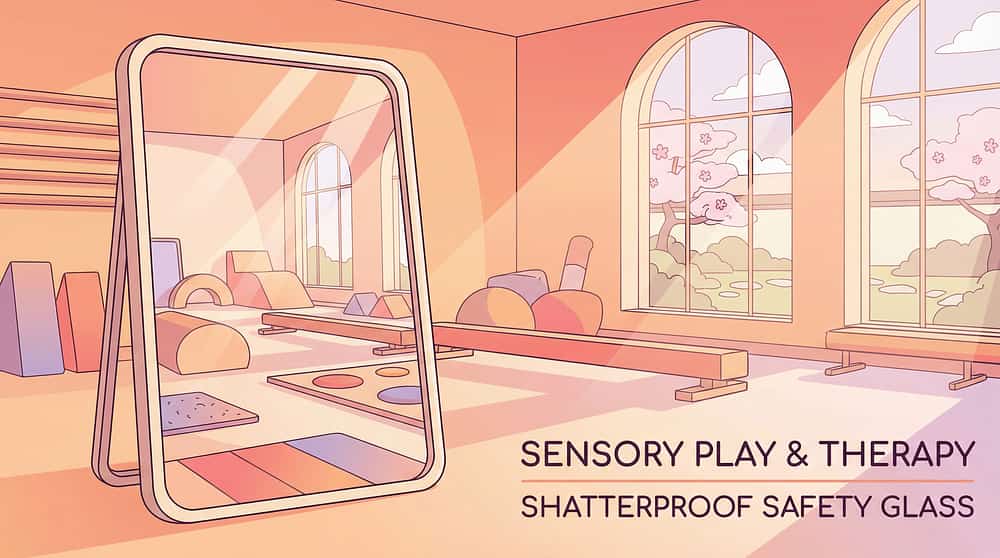
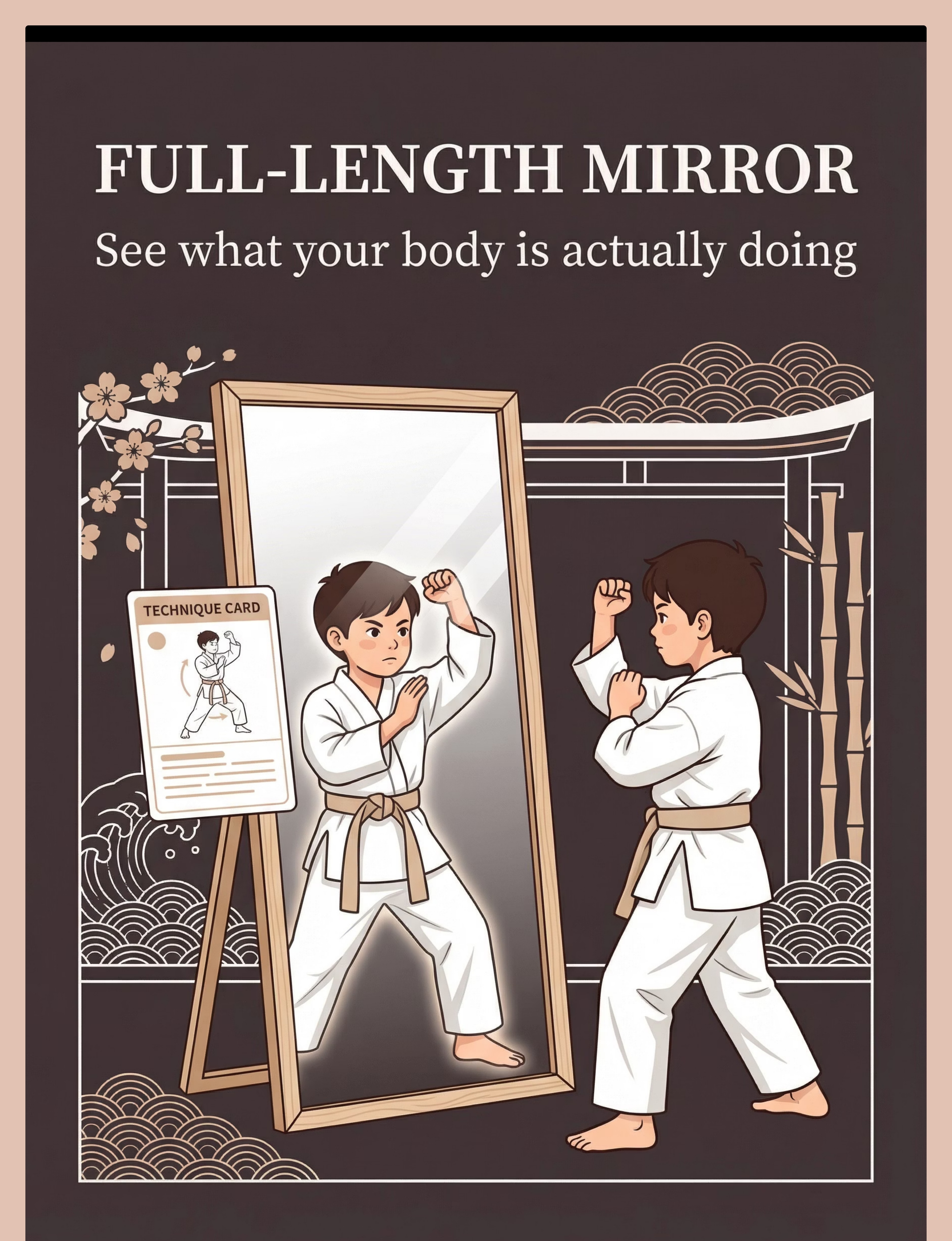
2. Full-Length Mirror (Shatterproof)
Canon: Sensory Feedback Tools
150cm+ height, wall-mounted or weighted freestanding, shatterproof.
💰 ₹1,000–3,000
Search: Full Length Mirror Shatterproof on Amazon.in →
🏅Shatterproof essential for active practice environments
150cm+ height, wall-mounted or weighted freestanding, shatterproof.
💰 ₹1,000–3,000
Search: Full Length Mirror Shatterproof on Amazon.in →
🏅Shatterproof essential for active practice environments
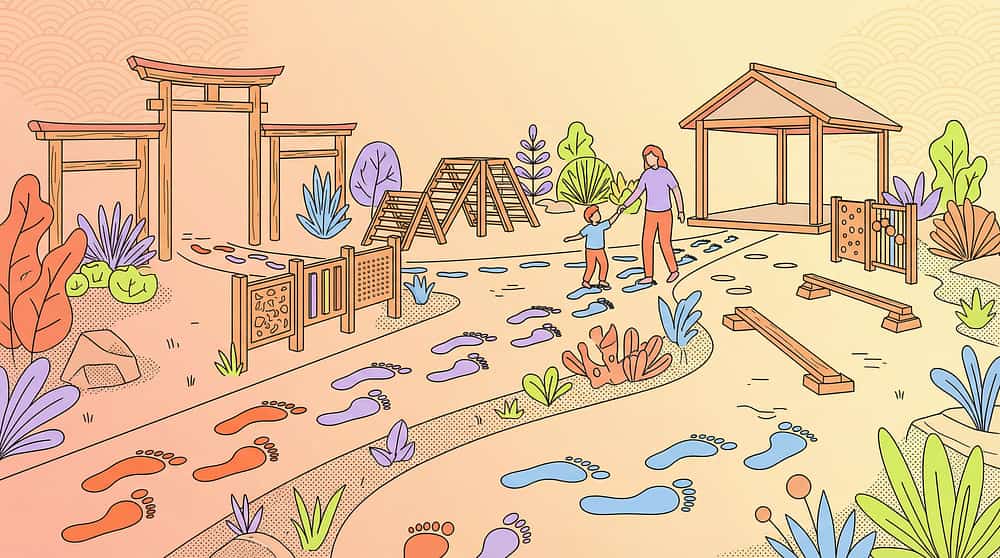
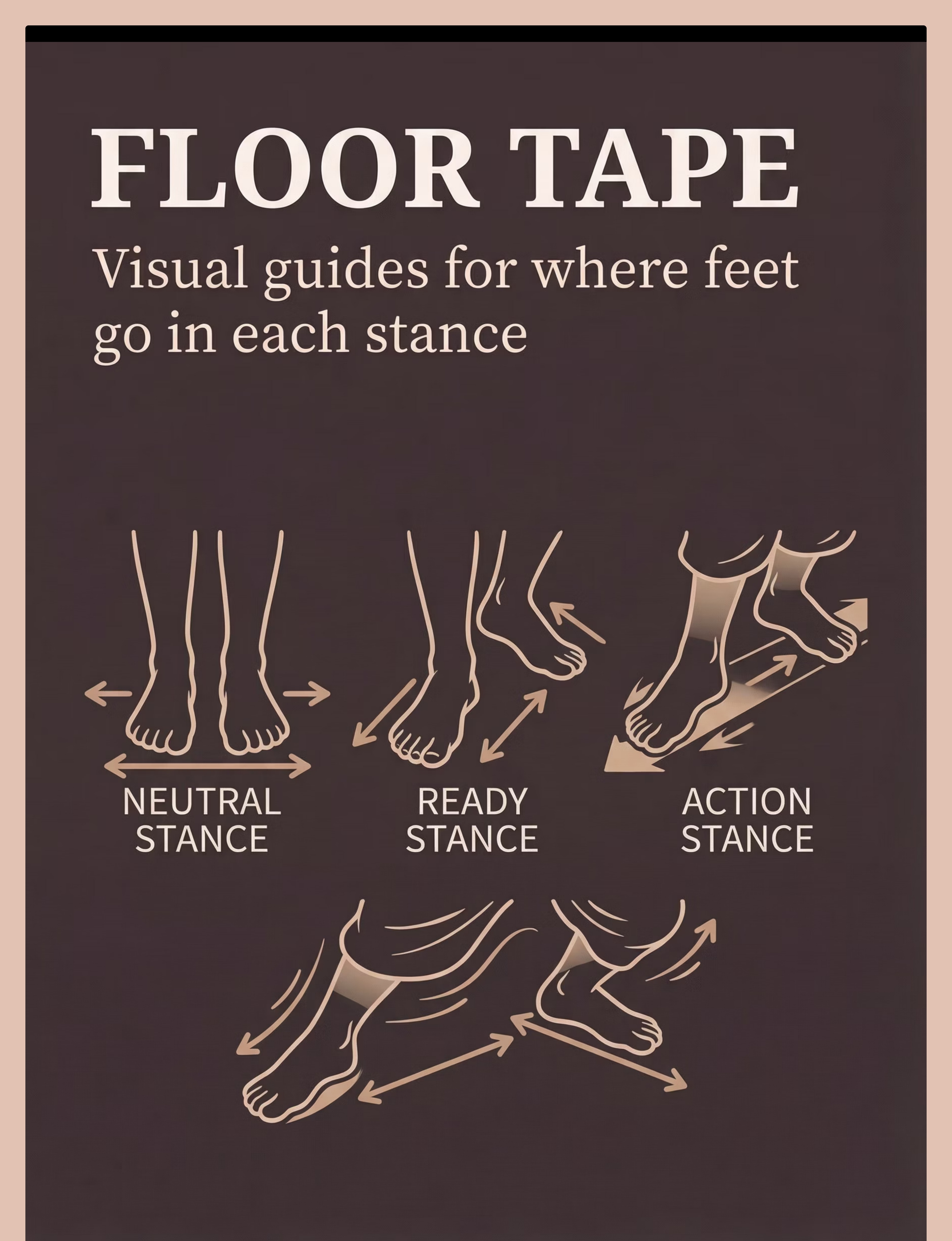
3. Colored Floor Tape / Stance Markers
Canon: Visual Supports / Environmental Modifications
Colored electrical or painter's tape for foot position guides.
💰 ₹100–400
Search: Colored Floor Marking Tape on Amazon.in →
🏅Painter's tape recommended (removable, safe)
Colored electrical or painter's tape for foot position guides.
💰 ₹100–400
Search: Colored Floor Marking Tape on Amazon.in →
🏅Painter's tape recommended (removable, safe)
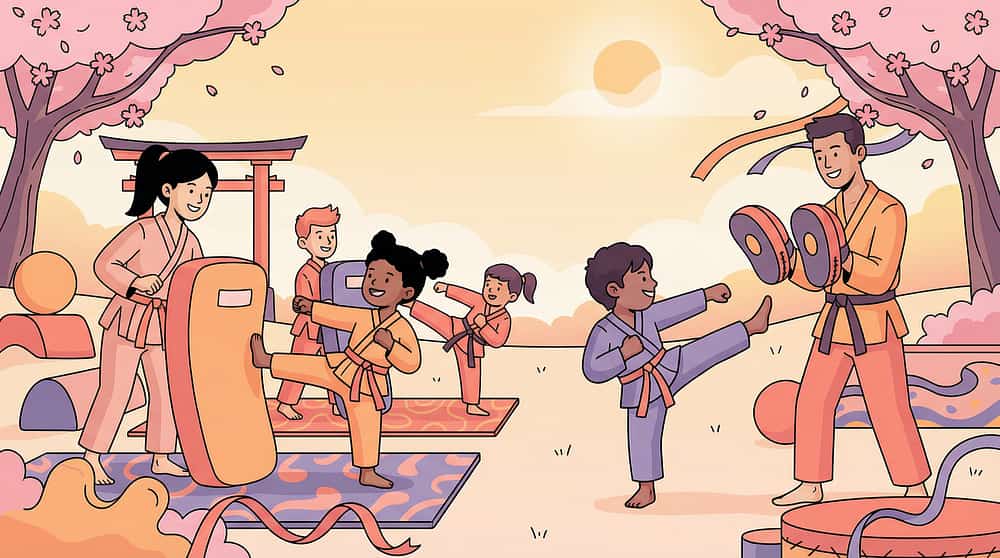
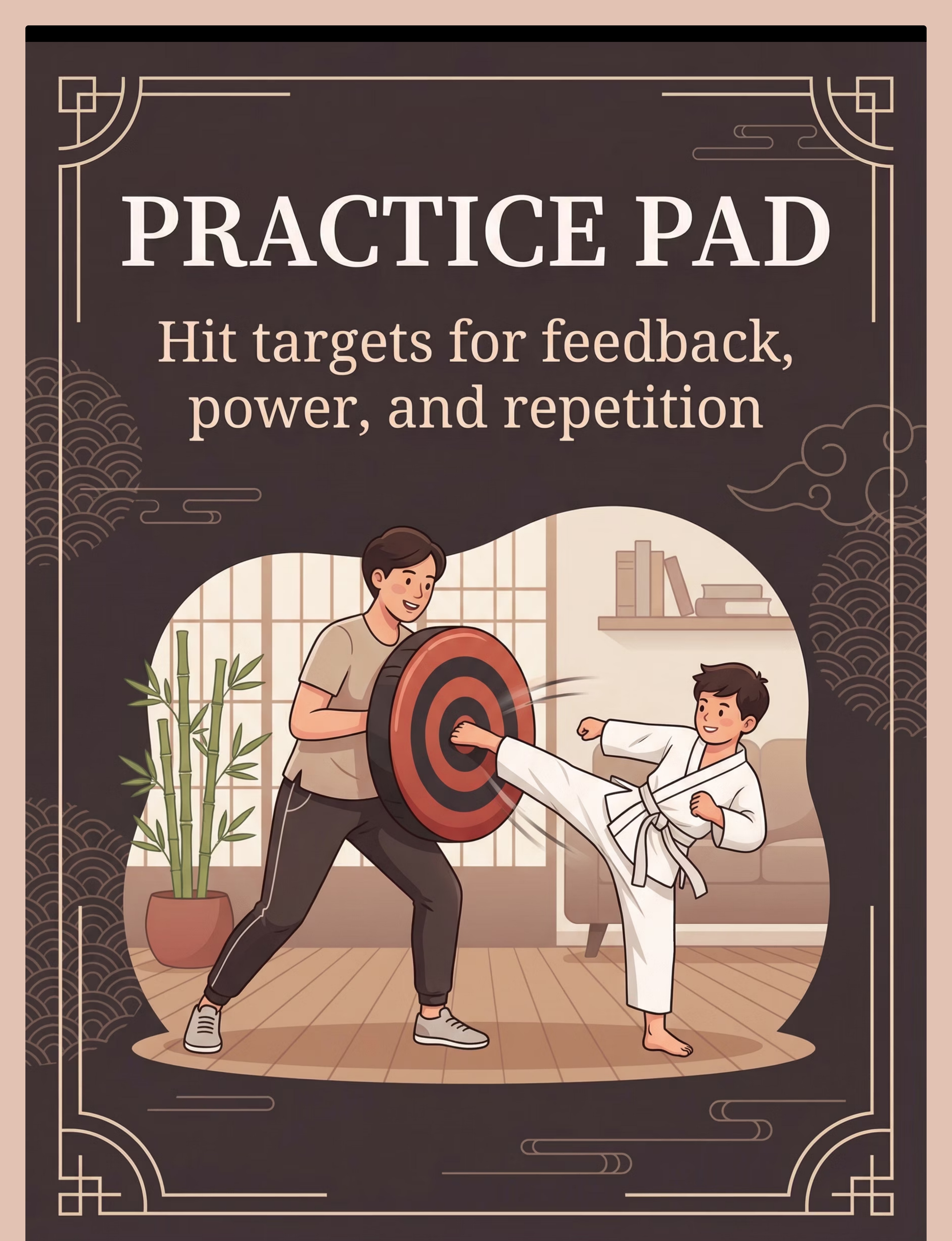
4. Practice Pad / Kicking Target
Canon: Motor/Physical Activity Equipment
Kick shield or focus mitts for home training.
💰 ₹500–3,000
Search: Karate Kick Pad Children on Amazon.in →
🏅Soft kick shields recommended for beginners
Kick shield or focus mitts for home training.
💰 ₹500–3,000
Search: Karate Kick Pad Children on Amazon.in →
🏅Soft kick shields recommended for beginners
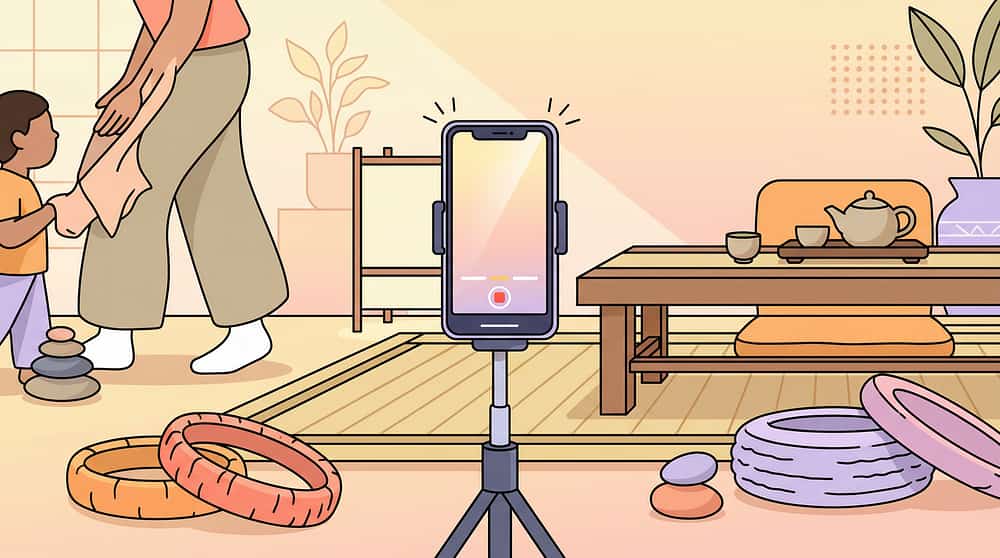
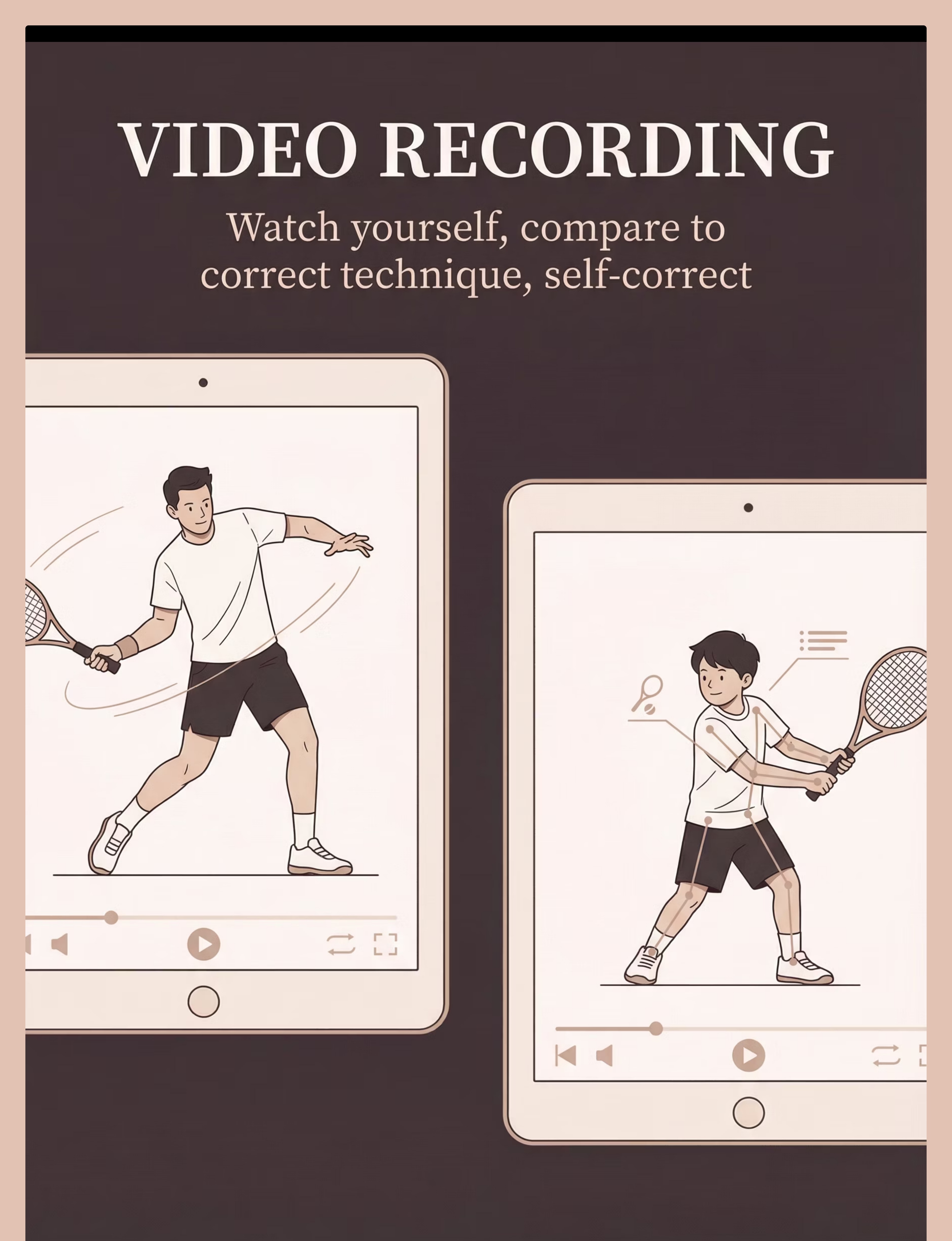
5. Video Recording Setup (Phone Tripod)
Canon: Visual Learning Tools
Stable tripod for recording practice sessions.
💰 ₹0 (phone camera) – ₹2,000 (tripod + stand)
Search: Mobile Phone Tripod Stand on Amazon.in →
🏅Phone camera is fully sufficient
Stable tripod for recording practice sessions.
💰 ₹0 (phone camera) – ₹2,000 (tripod + stand)
Search: Mobile Phone Tripod Stand on Amazon.in →
🏅Phone camera is fully sufficient

9 Materials — Continued
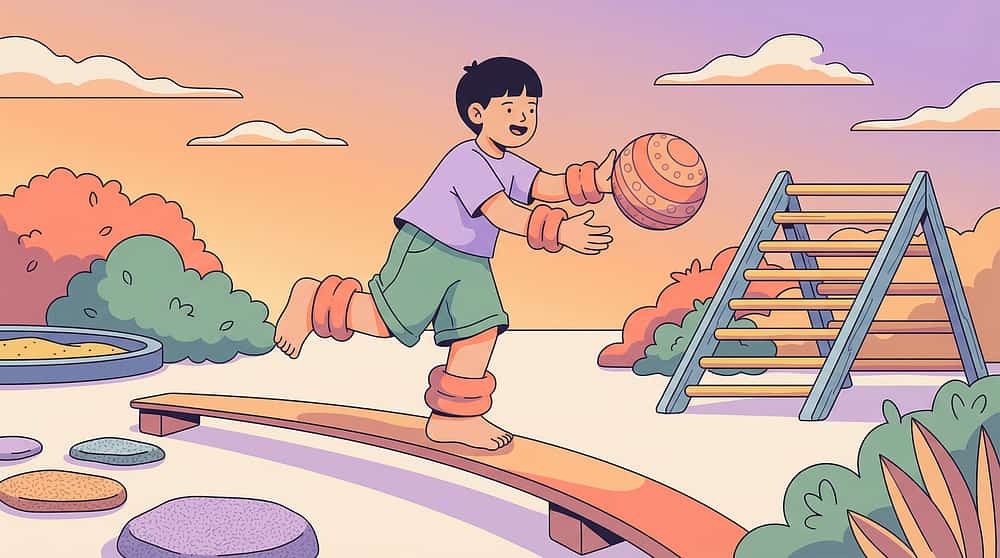
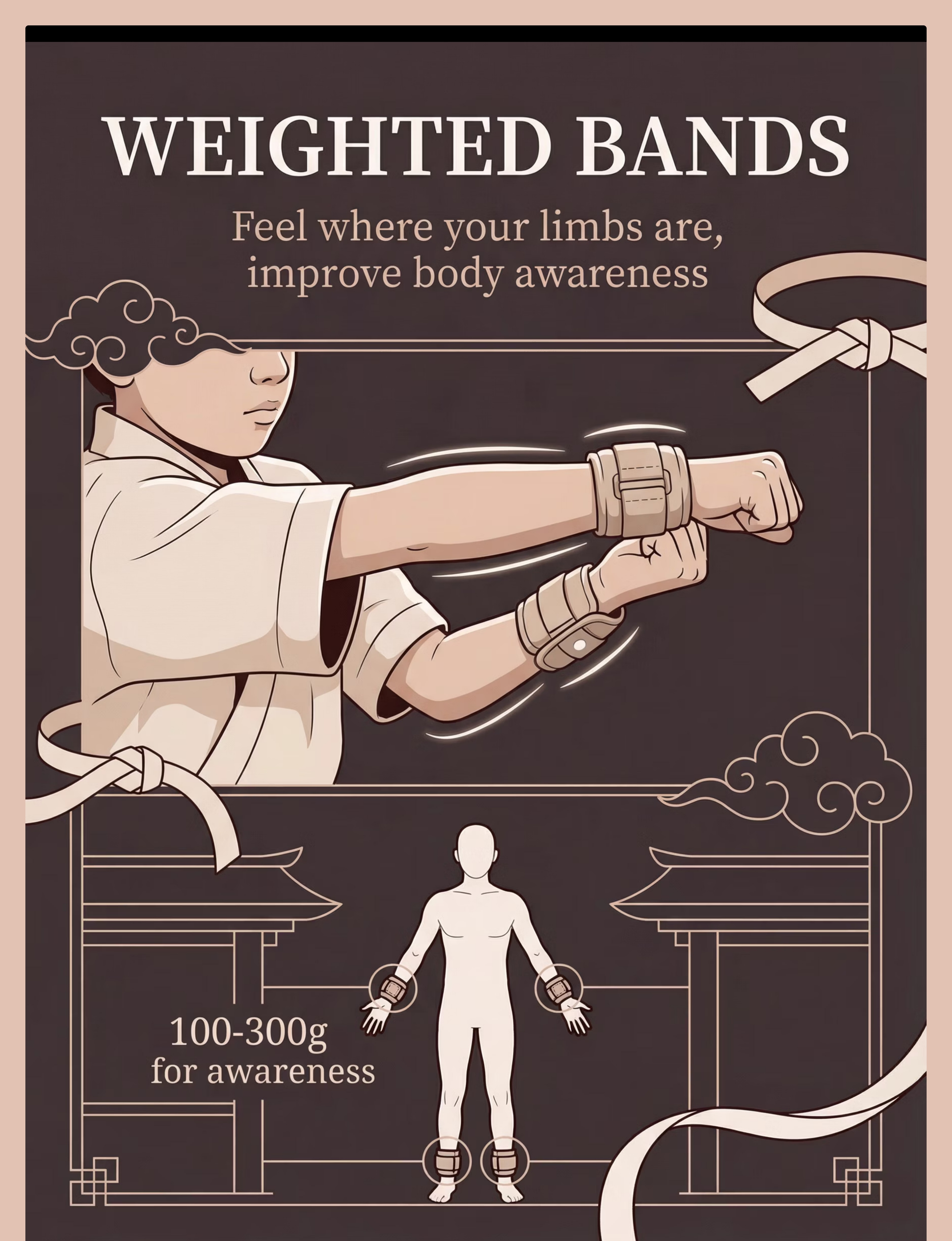
6. Weighted Wrist/Ankle Bands
Canon: Sensory Tools / Weighted Equipment
Light proprioceptive bands (100–300g).
💰 ₹300–1,000
Search: Weighted Wrist Bands Children on Amazon.in →
🏅Consult OT for weight prescription
Light proprioceptive bands (100–300g).
💰 ₹300–1,000
Search: Weighted Wrist Bands Children on Amazon.in →
🏅Consult OT for weight prescription
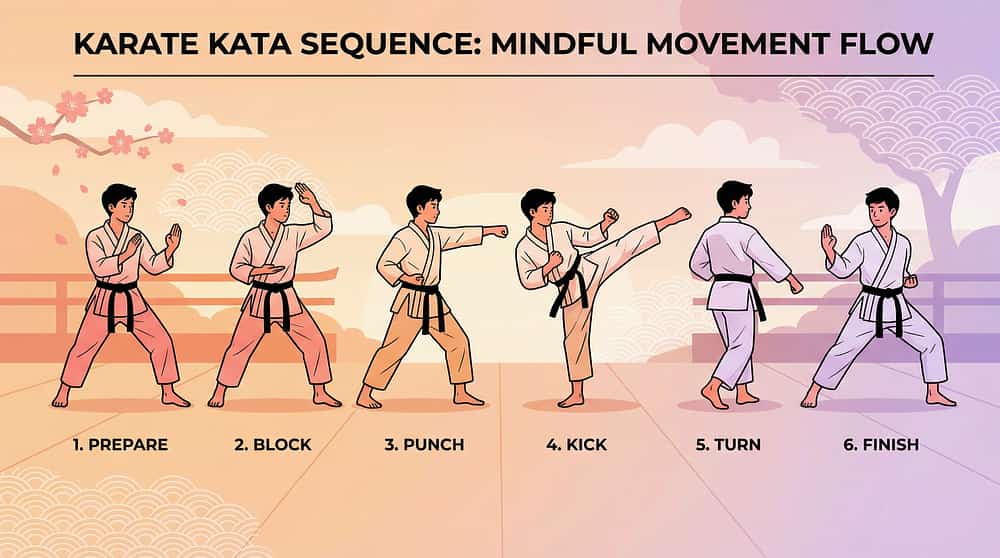
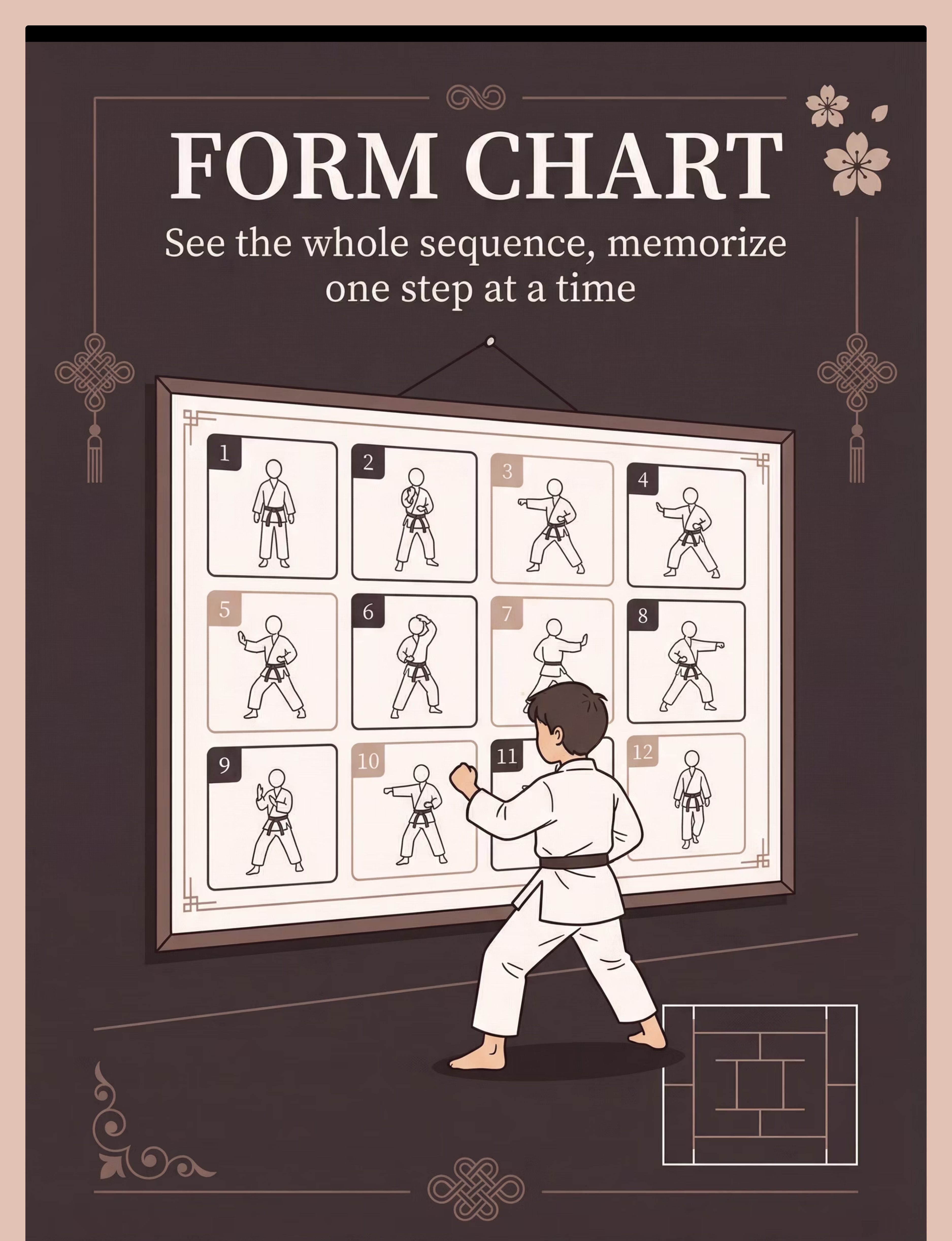
7. Visual Form/Kata Sequence Chart
Canon: Visual Supports / Sequencing Materials
Numbered movement poster for kata/poomsae memorization.
💰 ₹200–800 | ₹0 (homemade)
Search: Karate Kata Sequence Chart Poster on Amazon.in →
🏅Homemade with instructor photos recommended
Numbered movement poster for kata/poomsae memorization.
💰 ₹200–800 | ₹0 (homemade)
Search: Karate Kata Sequence Chart Poster on Amazon.in →
🏅Homemade with instructor photos recommended
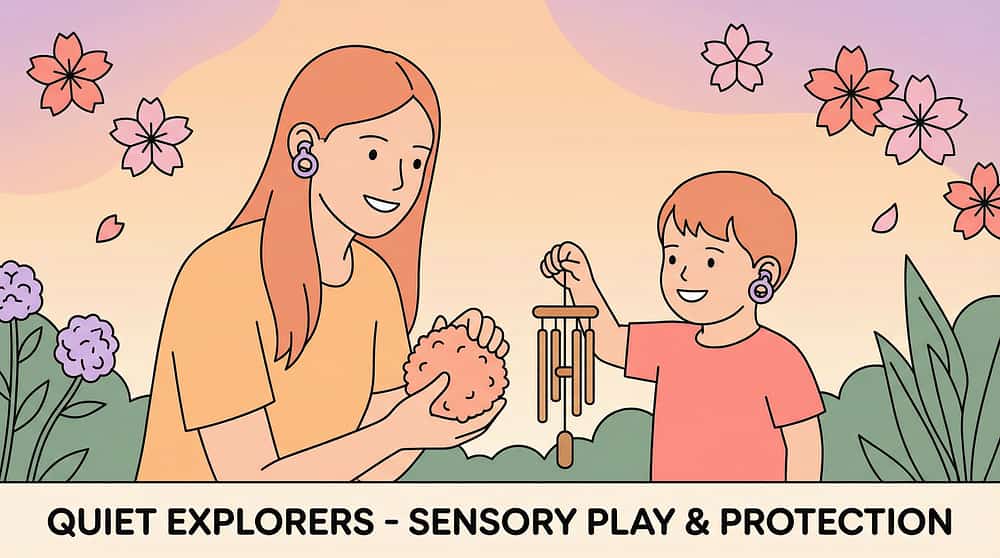
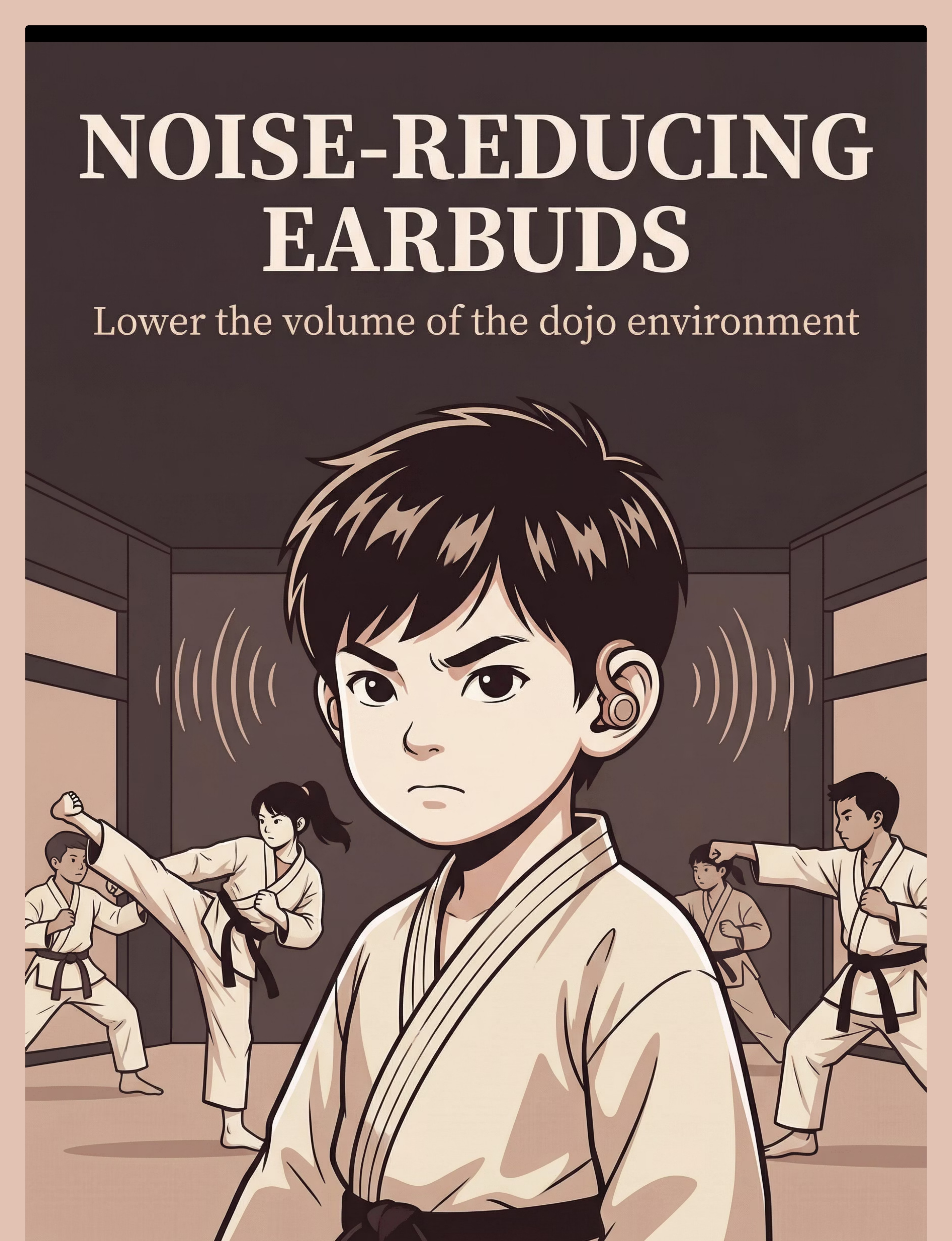
8. Noise-Reducing Earbuds / Loop Earplugs
Canon: Sensory Tools / Auditory Regulation
Low-profile filtered earplugs (Loop, Alpine, or equivalent).
💰 ₹300–2,000
Search: Loop Earplugs Noise Reducing on Amazon.in →
🏅Loop Quiet or musician's earplugs recommended
Low-profile filtered earplugs (Loop, Alpine, or equivalent).
💰 ₹300–2,000
Search: Loop Earplugs Noise Reducing on Amazon.in →
🏅Loop Quiet or musician's earplugs recommended
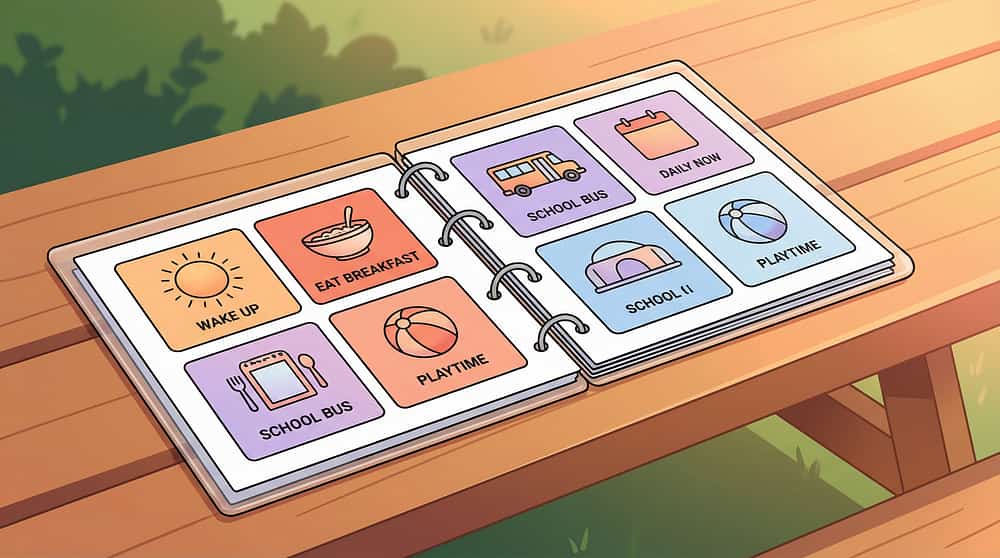
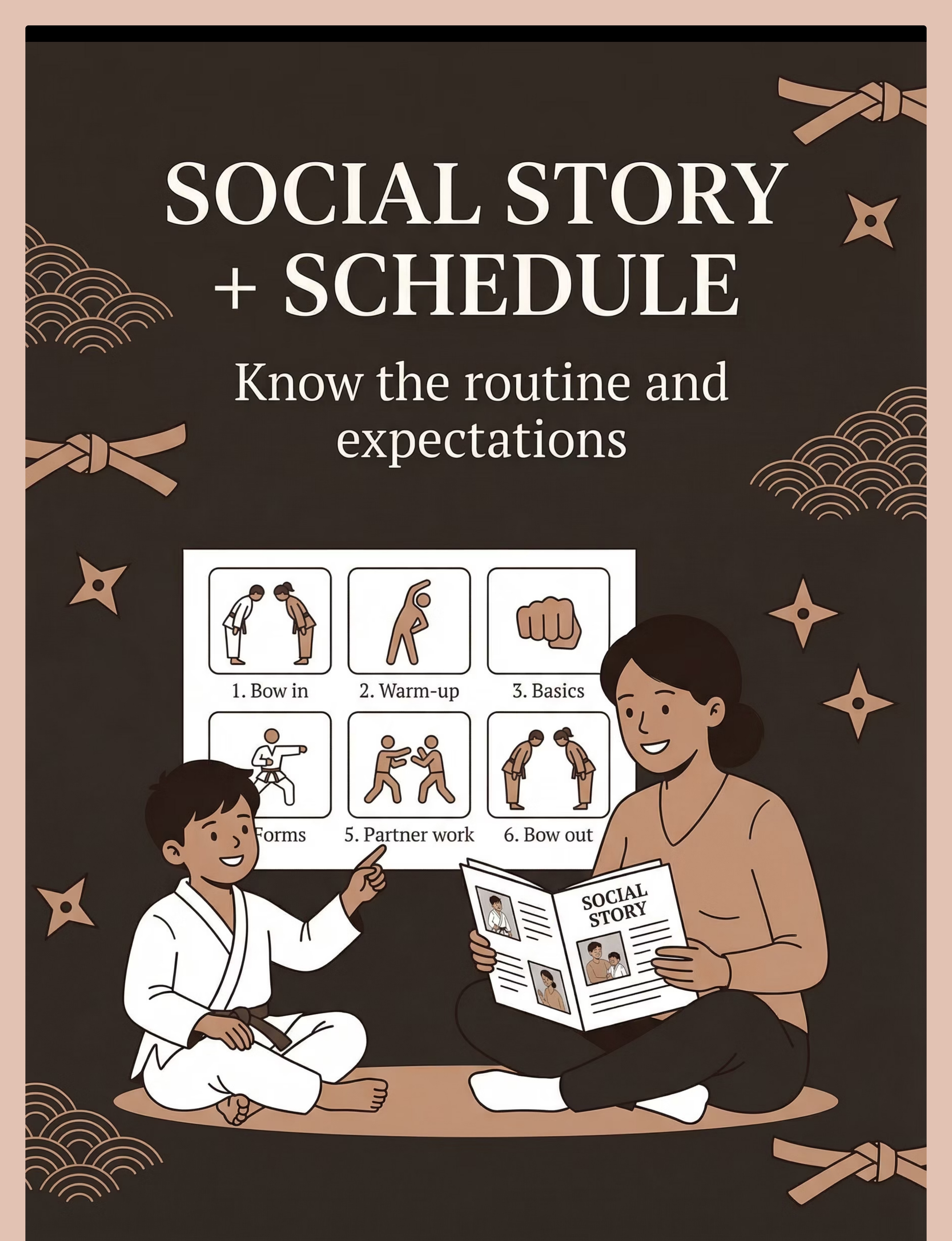
9. Social Story + Visual Class Schedule
Canon: Visual Supports / Social-Emotional Tools
Laminated social story + routine schedule for dojo expectations.
💰 ₹100–400 | ₹0 (printable template)
Search: Laminating Pouches A4 on Amazon.in →
🏅Custom-create with your dojo's photos
Laminated social story + routine schedule for dojo expectations.
💰 ₹100–400 | ₹0 (printable template)
Search: Laminating Pouches A4 on Amazon.in →
🏅Custom-create with your dojo's photos
💰Total Investment: ₹2,500–11,500 full set | Starting kit: ₹1,300–4,000 | 📞 For personalized recommendations: 9100 181 181
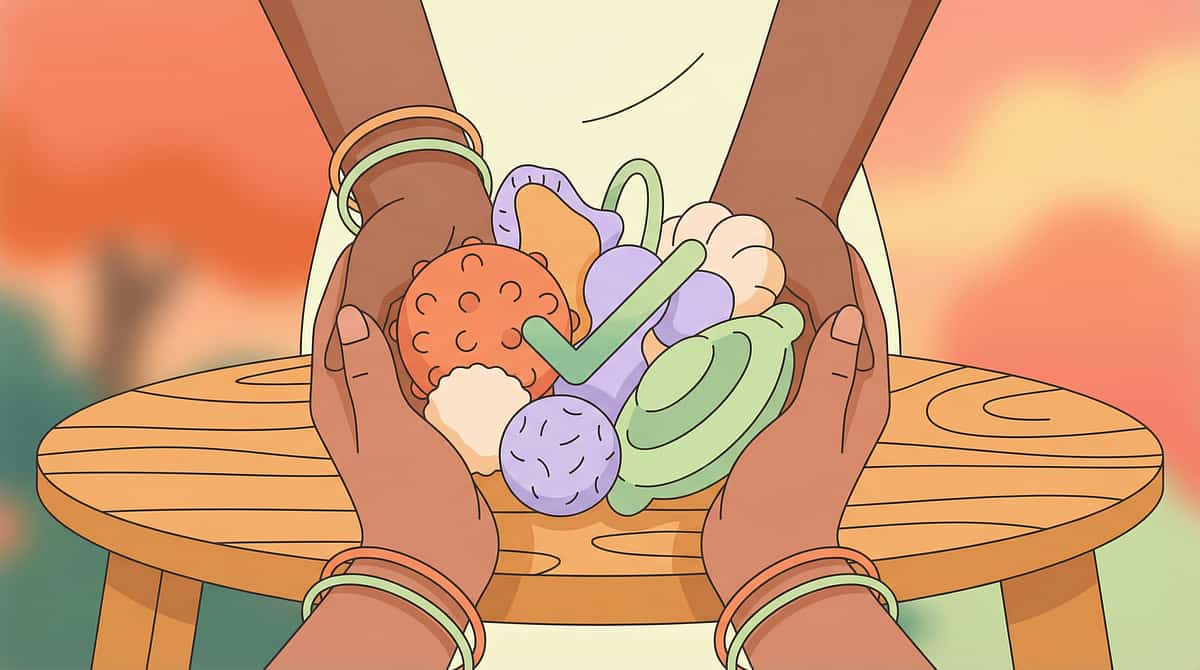
₹0 versions that work as well as the commercial options.
"Every child, regardless of economic circumstance, deserves access to evidence-based support. These alternatives are clinically equivalent." — WHO Nurturing Care Framework Equity Principle
Commercial Option | DIY Substitute | Why It Works | |
Visual Technique Cards (₹1,500) | Screenshot dojo instructor demonstrations → print → laminate with iron/tape | Same visual sequencing principle. Brain processes the steps identically. | |
Full-Length Mirror (₹2,000) | Large polished metal sheet, wardrobe sliding mirror door, or reflective Mylar taped to wall | Reflection quality is sufficient for body position calibration. | |
Colored Floor Tape (₹400) | Chalk on outdoor surfaces, masking tape indoors, string/rope outlines | Visual foot position guide works regardless of material. | |
Kick Pad (₹2,000) | Firm sofa cushion held by parent, rolled sleeping bag, folded blanket | Provides tactile impact feedback — same proprioceptive signal. | |
Phone Tripod (₹1,000) | Stack of books + phone, lean against wall, ask family member to hold | Video review is the key function — stability only needs to be sufficient. | |
Weighted Bands (₹800) | Small ziplock bags filled with rice/sand, wrapped in soft cloth and tied to wrists/ankles | Same proprioceptive loading principle — consult OT for weight. | |
Form Chart Poster (₹600) | Draw stick figures in sequence on A4 paper, number them, tape to wall | Sequencing principle is what matters, not production quality. | |
Noise Earbuds (₹1,000) | Soft foam earplugs (₹30), cotton wool in ears | Volume reduction is the goal — foam achieves this. | |
Social Story (₹400) | Handwritten booklet with photos from your phone | Narrative content is what creates predictability. |
With a phone camera, tape, chalk, household cushions, rice in a bag, and 2 hours of preparation — you have a fully functional martial arts support kit. The science is in the approach, not the price tag.
Read this before the first session. Not optional.
🔴 DO NOT PROCEED IF:
- Child is in acute distress, meltdown, or post-meltdown recovery
- Child shows signs of illness, fever, injury, or extreme fatigue
- Practice space has uncovered sharp furniture corners or fragile items at head level
- Weighted bands exceed 5% of child's body weight (always consult OT)
- Mirror is unstable or not shatterproof in an active practice space
- Child has a vestibular disorder — consult OT before introducing spinning kicks or rolls
🟡 MODIFY BEFORE PROCEEDING:
- Child is in elevated state — increase calm-down activities before session
- Practice space is not fully cleared — pause and clear
- Introduce only one technique per session (never all 9 materials at once)
- Partner drills — always begin with parent as partner, never peer first
- Weighted bands — start with lightest possible weight and build over weeks
🟢 PROCEED WHEN:
- Child is fed, rested, in regulated state
- Practice space cleared and safe (2m × 2m minimum)
- Materials prepared and positioned before bringing child in
- First session is always observational — child explores, parent does not demand performance
⛔Absolute Stop Signs During Session: Self-injurious behavior | severe head-banging | vomiting | extreme hysterical crying lasting 5+ minutes | disorientation → Stop session, provide comfort, contact Pinnacle: 9100 181 181
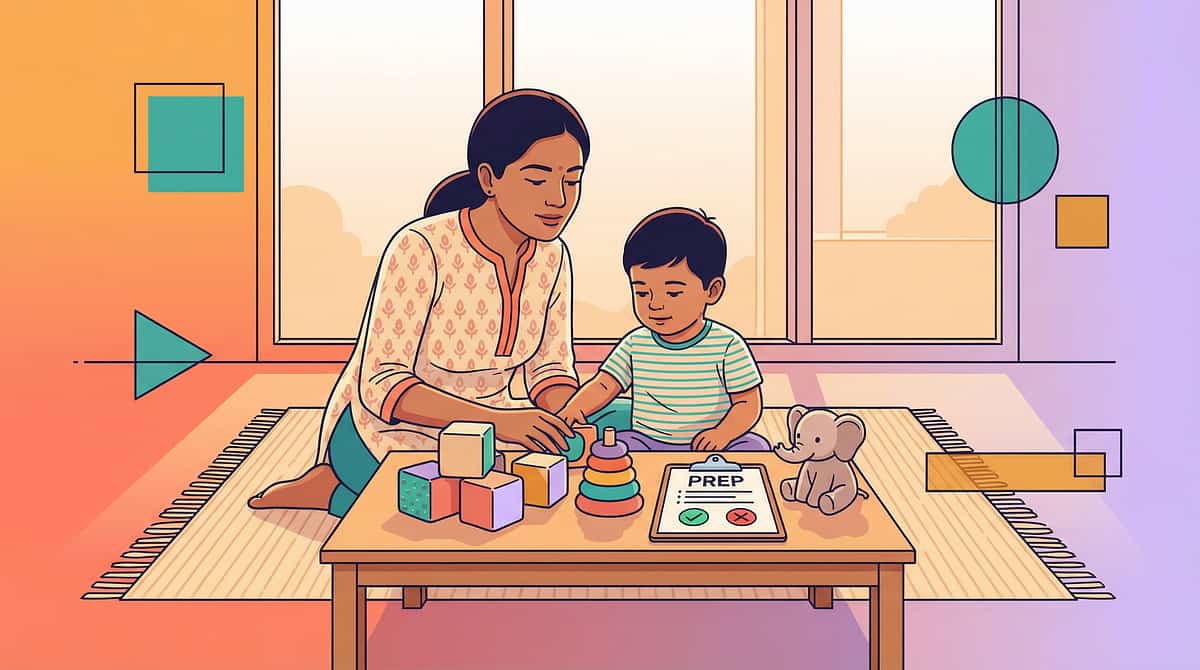
The right space prevents 80% of session failures.
Remove from Space
- Fragile items at arm/leg height
- Other toys (distraction items)
- Other family members (for initial sessions)
- Screens (unless technique reference video)
- Pets during active practice
Environment Settings
- Lighting: Bright enough to see mirror clearly
- Sound: Quiet if possible, or child's preferred background music
- Temperature: Comfortable for movement
- Barefoot preferred for proprioceptive feedback (unless tactile sensitivity)
Prepare in Space
- Mirror positioned where child can see full body
- Floor tape stance markers for today's stance
- Today's technique card visible at child's eye level
- Reference video cued and ready
- Visual timer visible
- Water and small preferred snack accessible post-session
Space Layout
- Mirror: wall-mounted 150cm+, facing practice zone
- Practice Zone: 2m × 2m minimum, clear center
- Parent Position: 1.5m behind/beside child
- Materials Table: technique cards + reference device accessible
- Exit path: always clear, never blocked
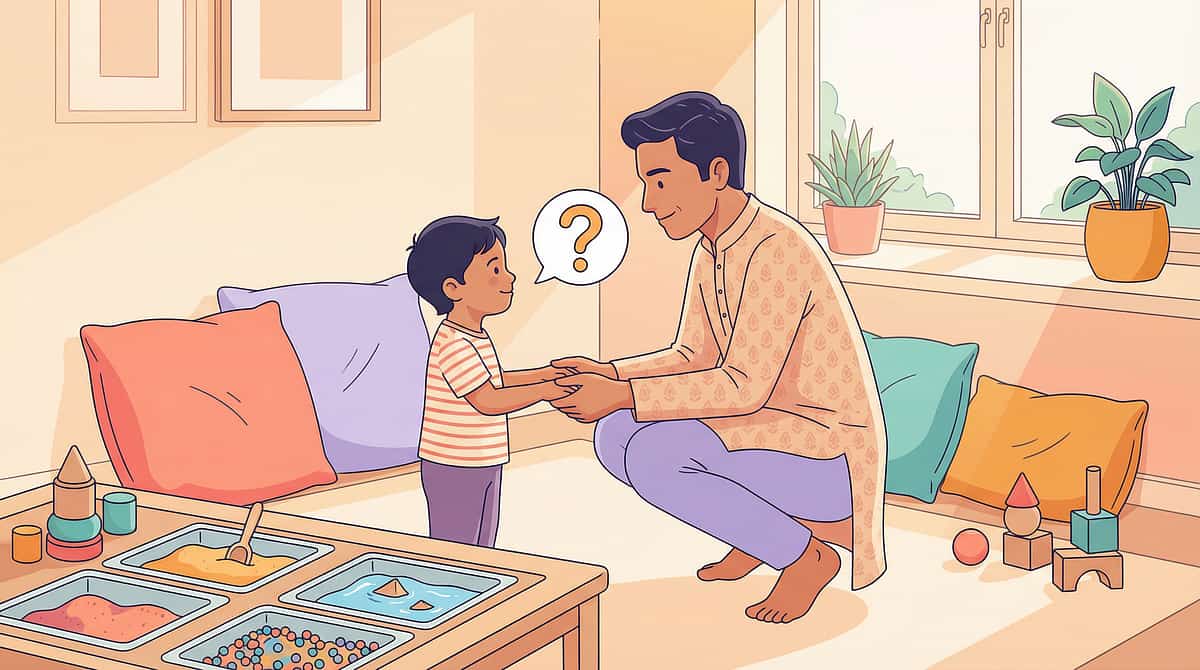
60 seconds now saves a wasted session and a frustrated child.
Before every home session, run this quick readiness check. Observe — don't guess. Your answer determines whether to run a full session, a modified session, or reschedule.
✅ GREEN — Proceed | 🟡 MODIFY | ❌ POSTPONE | |
Child ate in last 2 hours | Child ate 2+ hours ago | Child refuses food, visibly hypoglycemic | |
Child slept adequately | Slightly tired but engaged | Overtired, dark circles, irritable | |
No meltdown in last 4 hours | Mild elevated state but redirectable | Post-meltdown (within 2 hours) | |
Child responds to name | Distracted but present | Completely non-responsive | |
Child shows interest in martial arts topic | Neutral — no interest but not resistant | Active refusal of session | |
No illness symptoms | Mild sniffles, monitored | Fever, vomiting, evident pain |
5–7 GREEN
→ Proceed to full session
3–4 GREEN + 2–3 MODIFY
→ Simplified session (1 material only, 5 min max)
Less than 3 GREEN or ANY POSTPONE
→ Offer alternative activity, schedule for tomorrow
"The best session is one that starts right. A skipped session is not failure — it is clinical judgment." — Pinnacle Blooms ABA Protocol
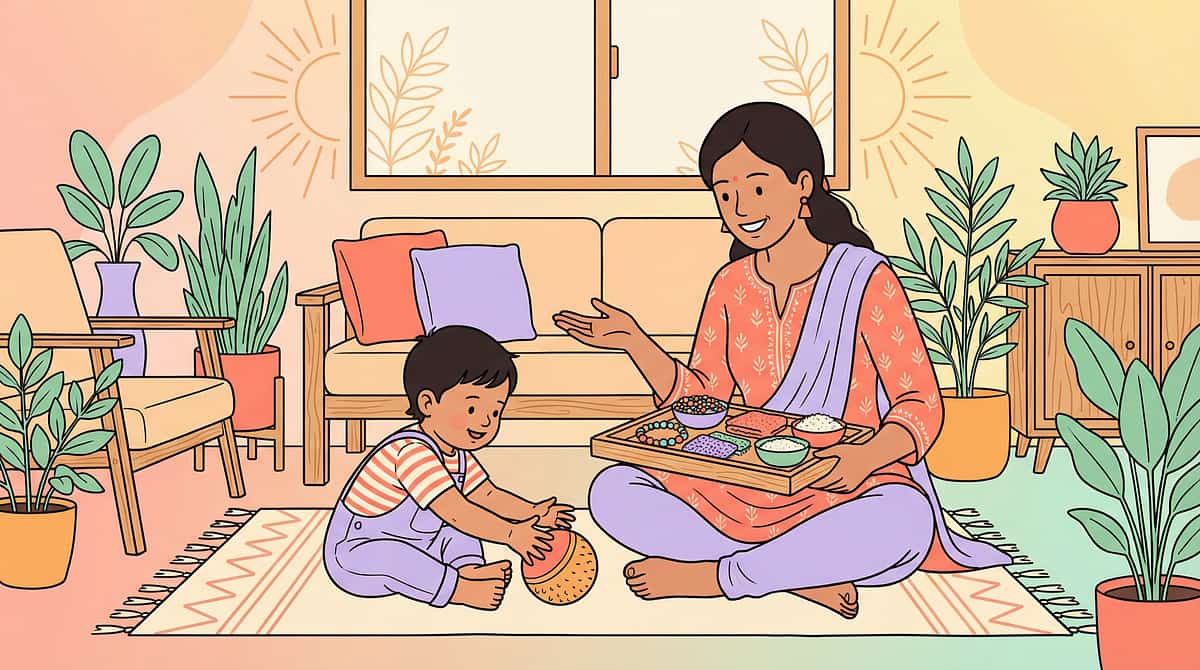
Step 1 of 6
Step 1: The Invitation
What to Do
Bring the child to the practice space naturally — not announced as "therapy" but as "your karate practice time." Show them the technique card for today's focus. Place it at their eye level. Do not ask them to do anything yet.
Exact Words to Say
"Hey — I got your [technique name] card ready. Want to look at it with me?"
For non-verbal children: Point to the card. Hold it at their eye level. Wait 10 seconds for any approach response.
Body Language
- Sit or crouch to child's height (never stand over them)
- Relaxed, not anticipatory
- Card visible, not pushed toward child
- Neutral smile, not excited demand energy
Acceptance Cues (Child is Ready)
- Looks at card
- Steps toward card or practice area
- Begins any movement approximation
- Verbal child says anything about karate/practice
Resistance Cues (Modify)
- Turns away — wait 30 seconds, offer card again
- Verbal refusal: "I don't want to" — validate and offer 5-minute deal
- Physical avoidance — move to neutral activity, try again in 15 minutes
⏱Timing: 30–60 seconds
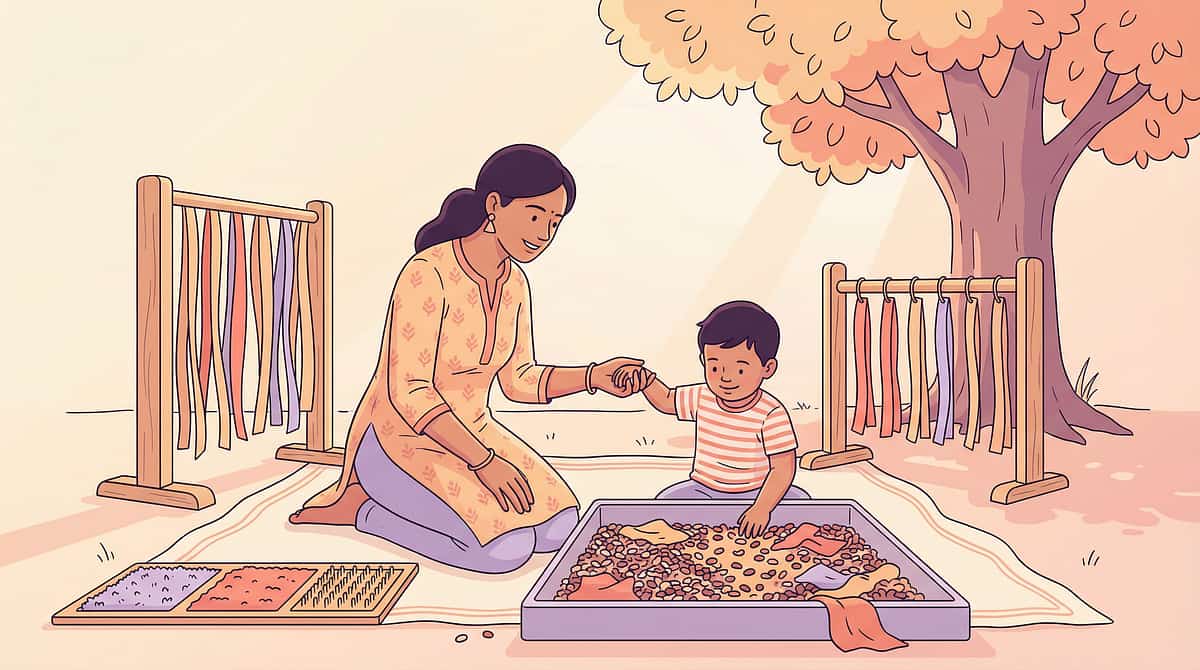
Step 2 of 6
Step 2: The Engagement
What to Do
Once the child is looking at the technique card, point to Step 1 on the card (the starting position). Model the position yourself. Do NOT ask the child to mirror you yet. This is observation only.
Exact Words to Say
"Look — this is where we start. Feet like this. Watch me."
[Parent models the starting stance, holds for 5 seconds, returns to neutral]
"See? Easy. Just like the picture."
[Parent models the starting stance, holds for 5 seconds, returns to neutral]
"See? Easy. Just like the picture."
Introducing Materials
Weighted bands:"These little bands help your arms feel where they are. Want to try them on?" Let child inspect before putting on.
Mirror:"Look in the mirror — that's you! Let's see what karate-you looks like."
Child Response Spectrum
- Engagement: Child imitates your stance spontaneously → Celebrate immediately: "YES! That's it!"
- Tolerance: Child watches but doesn't move → Normal for Sessions 1–3. Continue observation.
- Avoidance: Child moves away → Reduce demand. Card observation only today.
First positive engagement = first reinforcement. Immediate. Specific.
"I love how you looked at that card so carefully!"
"I love how you looked at that card so carefully!"
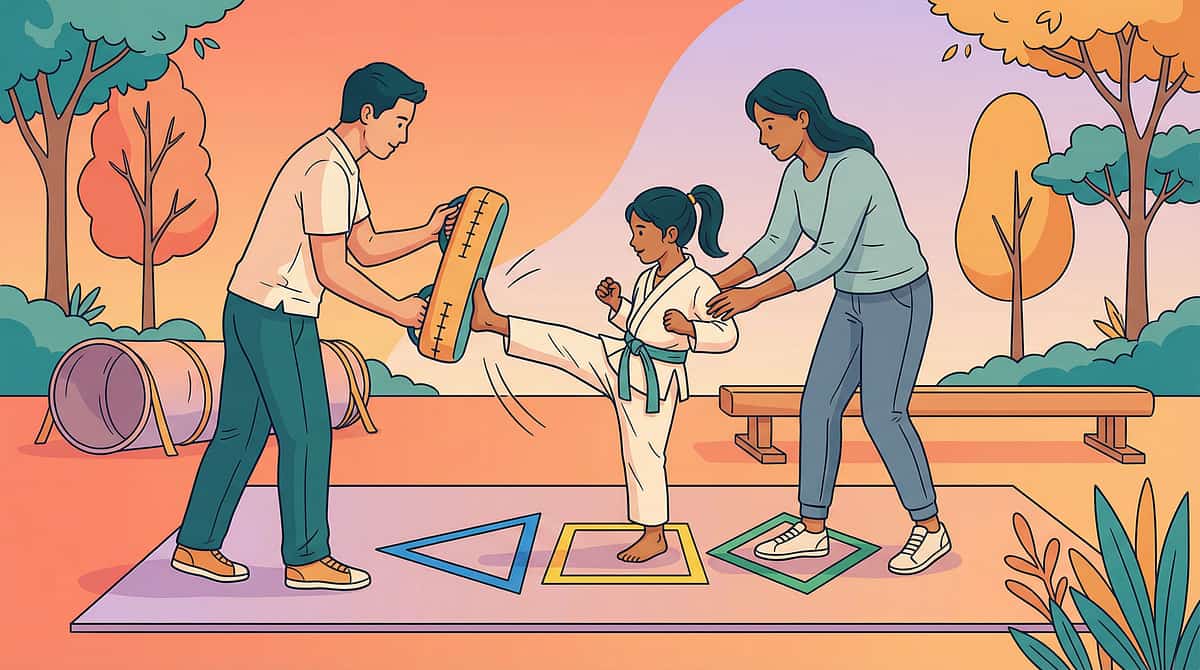
Step 3 of 6
Step 3: The Therapeutic Action
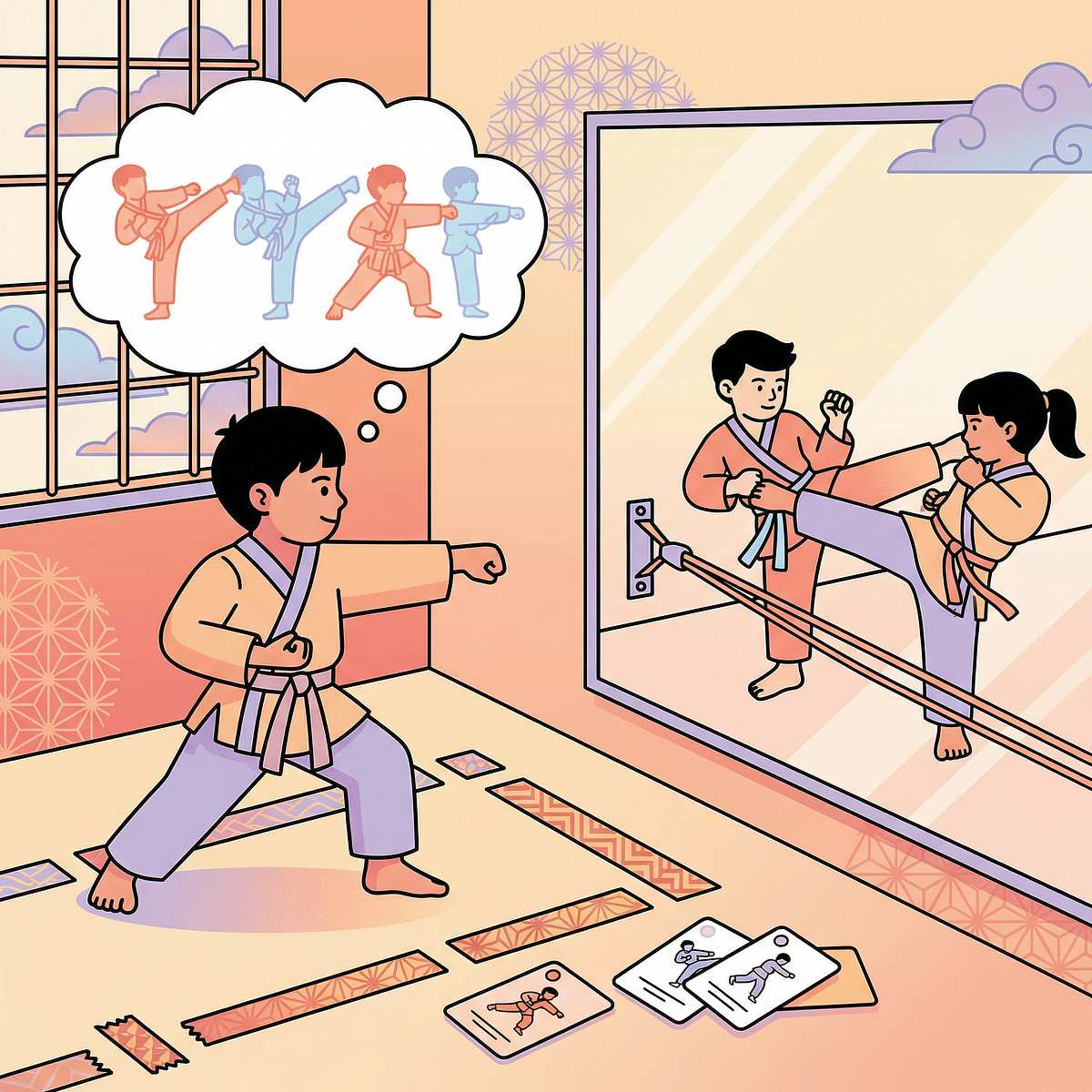
Choose ONE material per session for the core therapeutic action. Rotating through options keeps engagement fresh and targets different developmental pathways.
Option A: Visual Technique Cards
Refer to Step 1 photo. Parent models. Child attempts. Parent points to card after each attempt: "Does it look like the picture?" Child self-corrects. 3–5 repetitions maximum.
Option B: Mirror Practice
Child stands in front of mirror. Parent beside (not behind). Child practices stance while watching reflection. Parent verbal cue only: "Check your mirror. What does your front knee look like?" Do NOT physically correct. 3–5 repetitions.
Option C: Floor Tape Stances
Direct child to stand on tape footprints. Child feels correct position through visual guide. "Your feet found the right spots! How does that feel?" Child practices upper body technique from correct foot base. 5–8 repetitions.
Option D: Practice Target Training
Parent holds kick shield at child's hip height (kicks) or chest height (punches). Child strikes pad: "Kick — go." Parent provides impact feedback: "You hit it! Feel that? That's power with accuracy." 5–10 repetitions.
Option E: Video Recording + Review
Record child doing 3 repetitions. Review together immediately. Pause at key frame. Ask: "What do you notice? What's different from the technique card?" Never point out errors first — ask child to discover. Watch 2–3 times.
⏱Duration: 5–12 minutes of active therapeutic action | If child becomes distressed or shows self-injury → Stop immediately
Step 4 of 6
Step 4: Repeat & Vary
Therapeutic Dosage Guide
- Technique Cards: 3–5 reps per technique card
- Mirror Practice: 3–5 stance holds (10 sec each)
- Floor Tape: 5–8 stance placements
- Practice Target: 5–10 strikes per technique
- Video Review: 2–3 playback sessions
- Weighted Bands: Full session wear (15–20 min max)
🏅Golden Rule: 3 good reps > 10 forced reps
Variation Options (Maintain Engagement)
- Change the technique: If front kick is mastered, move to side kick card
- Change the direction: Practice in front of mirror, then without mirror
- Add challenge: Remove floor tape markers after 3 successful stance placements
- Change partner: Swap kick pad to sibling or other family member
Satiation Indicators (Child Has Had Enough)
- Increasing latency between reps
- Quality drops across repetitions
- Child begins looking away or moving toward exit
- Emotional dysregulation increases
"The satiation point is not failure. It is the body's signal that learning consolidation is happening."

Step 5 of 6
Step 5: Reinforce & Celebrate
Timing is everything: Reinforcement must be delivered within 3 seconds of the desired behavior. Not after the session. Not at dinner. Now.
Level 4 — Preferred Activity
5 minutes of child's preferred activity as immediate reward for breakthrough moments.
Level 3 — Token
Sticker on "Dojo Progress Chart." Belt-color stickers (white → yellow → orange → green...) for extended motivation.
Level 2 — Physical
High-five, fist bump, shoulder squeeze — child's preference (if child accepts touch).
Level 1 — Verbal (Always)
"YES! You checked your mirror and fixed your stance! That is EXACTLY what we're working on!" Specific > Generic. "You fixed your knee" > "Good job."
"The effort matters as much as the outcome. Your child's brain is building motor pathways every time they attempt — even imperfectly." — Pinnacle Blooms ABA Team
📞9100 181 181 — Ask our BCBA about personalized reinforcement schedules

Step 6 of 6
Step 6: The Cool-Down
Why cool-down is non-negotiable: Martial arts is a high-proprioceptive, high-arousal activity. Ending abruptly leaves the nervous system in an elevated state — what parents describe as "she's always worse AFTER practice."
Exact Transition Words
"Two more kicks, then we're done with practice today." [Visual timer showing 2 minutes]
"Bow to the practice area." [Child bows — echoes dojo ritual, provides closure]
"Practice is done. You worked so hard today."
"Practice is done. You worked so hard today."
If Child Resists Ending
- Offer "one more" rule: ONLY if child is regulated (not as negotiation under demand)
- Use First-Then: "First cool-down stretch, then [preferred activity]"
- Never extend session under tantrum pressure — this reinforces tantrum behavior
Transition to Next Activity
Clear advance notice: "After we put everything away, we're going to [specific next activity]."
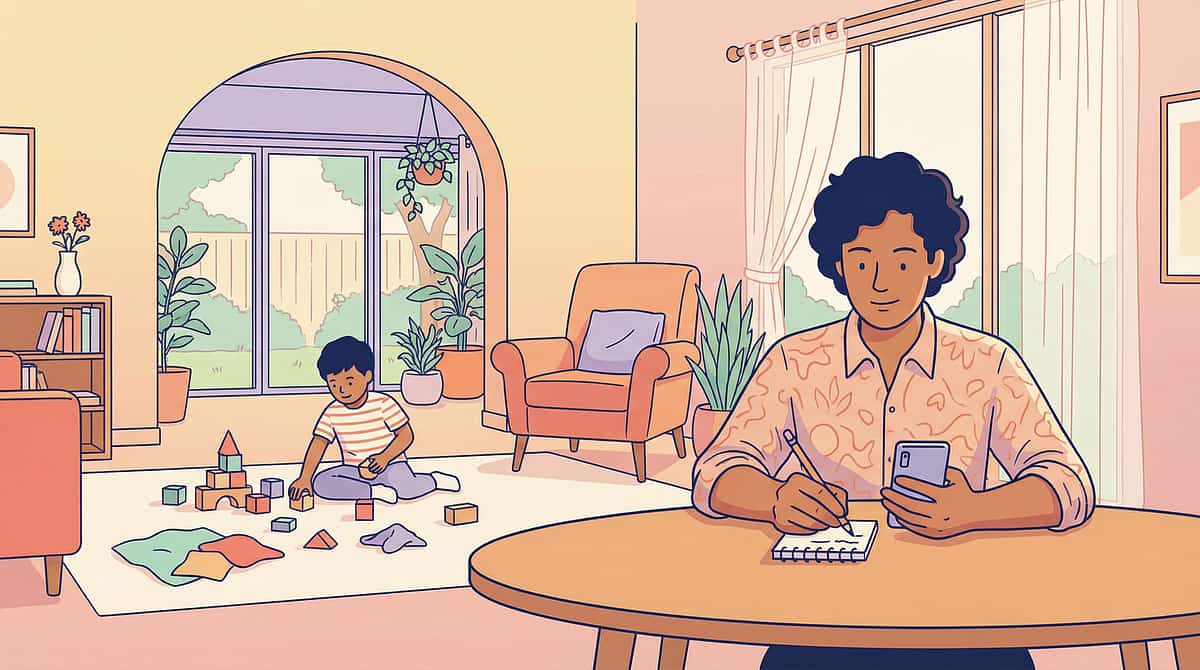
60 seconds of data now saves hours of guessing later.
What to Record (Within 60 Seconds of Session End)
- Material Used: Technique Cards / Mirror / Tape / Target / Video / Bands / Form Chart / Earbuds / Story
- Engagement Level: 1 (Refused) — 2 — 3 (Tolerated) — 4 — 5 (Enthusiastic)
- Technique Practiced: _____________
- Repetitions Completed: _____ (target: 3–5)
- Notable Moment: What did child do that they couldn't last week?
- Tomorrow's Plan: _____________
Track Over Time
Week | Material Used | Engagement (1–5) | Key Win | |
1 | ||||
2 | ||||
3 | ||||
4 |
"Your data, combined with data from thousands of families across Pinnacle's network, makes the AI recommendations for your child more precise with every session."
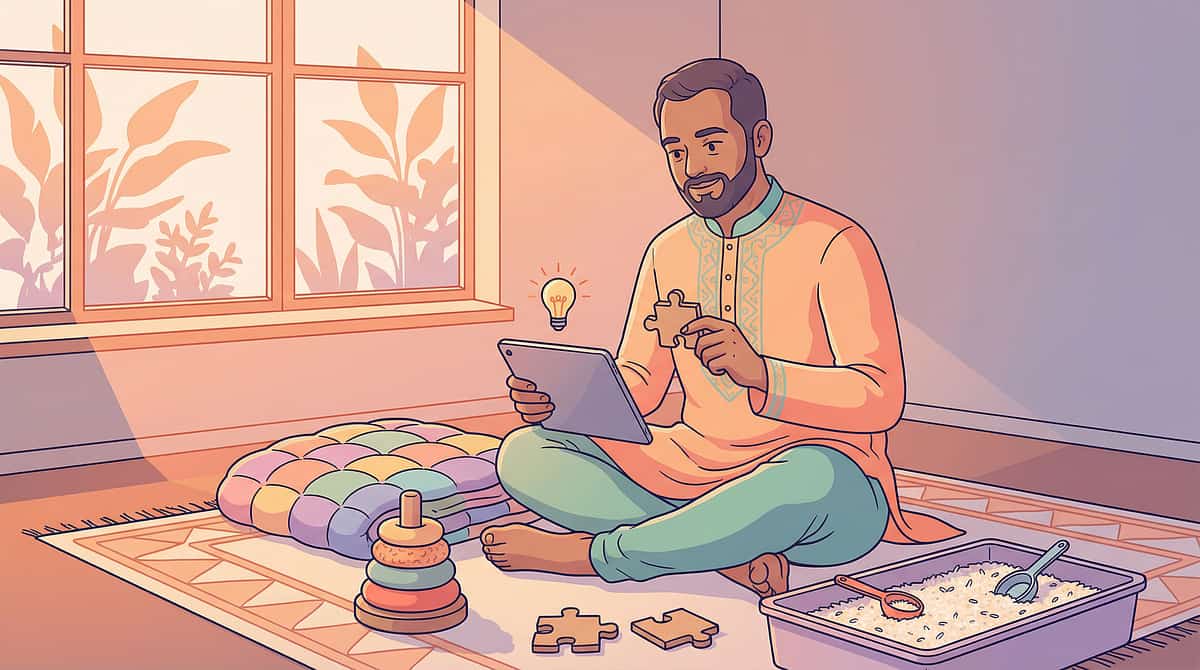
Most sessions don't go perfectly. Here's your fix for the 7 most common problems.
❌ Problem 1: Child refused the session entirely
Why: Session announced too abruptly, child in elevated state, or demand energy too high.
Fix: Reduce to zero-demand observation: "Come sit with me and watch this karate video." No practice today. Build approach, not avoidance.
Fix: Reduce to zero-demand observation: "Come sit with me and watch this karate video." No practice today. Build approach, not avoidance.
❌ Problem 2: Child can't imitate the technique card
Why: Motor planning gap — still image isn't providing enough movement information.
Fix: Video model instead of photo. Slow-motion video of parent demonstrating the specific movement. Screen + physical practice together.
Fix: Video model instead of photo. Slow-motion video of parent demonstrating the specific movement. Screen + physical practice together.
❌ Problem 3: Child gets frustrated at the mirror
Why: Seeing themselves not match the ideal image is discouraging, or mirror creates sensory disturbance.
Fix: Cover technique card temporarily. Focus on ONE specific body part only: "Just check your front knee today." Or switch to video review.
Fix: Cover technique card temporarily. Focus on ONE specific body part only: "Just check your front knee today." Or switch to video review.
❌ Problem 4: Child hits the kick pad too hard
Why: Power calibration requires practice. Proprioceptive awareness of force output is developing.
Fix: Introduce "color code" for force: GREEN = light touch (10% power), YELLOW = medium (50%), RED = full power. Practice GREEN only. Build up over weeks.
Fix: Introduce "color code" for force: GREEN = light touch (10% power), YELLOW = medium (50%), RED = full power. Practice GREEN only. Build up over weeks.
❌ Problem 5: Earbuds fall out / child rejects them
Why: Tactile sensitivity in ear canal, or fit is incorrect.
Fix: Try foam earplugs in different size. Or use over-ear noise-reducing headphones briefly. Or skip earbuds and try white noise as alternative background sound before class.
Fix: Try foam earplugs in different size. Or use over-ear noise-reducing headphones briefly. Or skip earbuds and try white noise as alternative background sound before class.
❌ Problem 6: Child memorized the form chart but performs wrong in class
Why: Knowing ≠ executing. Motor planning requires the body to practice, not just the memory.
Fix: Practice with form chart visible in home setup. Gradually reduce visibility (fold bottom half, then top half, then remove).
Fix: Practice with form chart visible in home setup. Gradually reduce visibility (fold bottom half, then top half, then remove).
❌ Problem 7: Session abandonment — child walked away mid-session
Why: Satiation point reached, demand level too high, or dysregulation building.
Fix: Session abandonment is DATA, not failure. Reduce session to half length next time. One material only. Track which material causes earliest satiation.
Fix: Session abandonment is DATA, not failure. Reduce session to half length next time. One material only. Track which material causes earliest satiation.
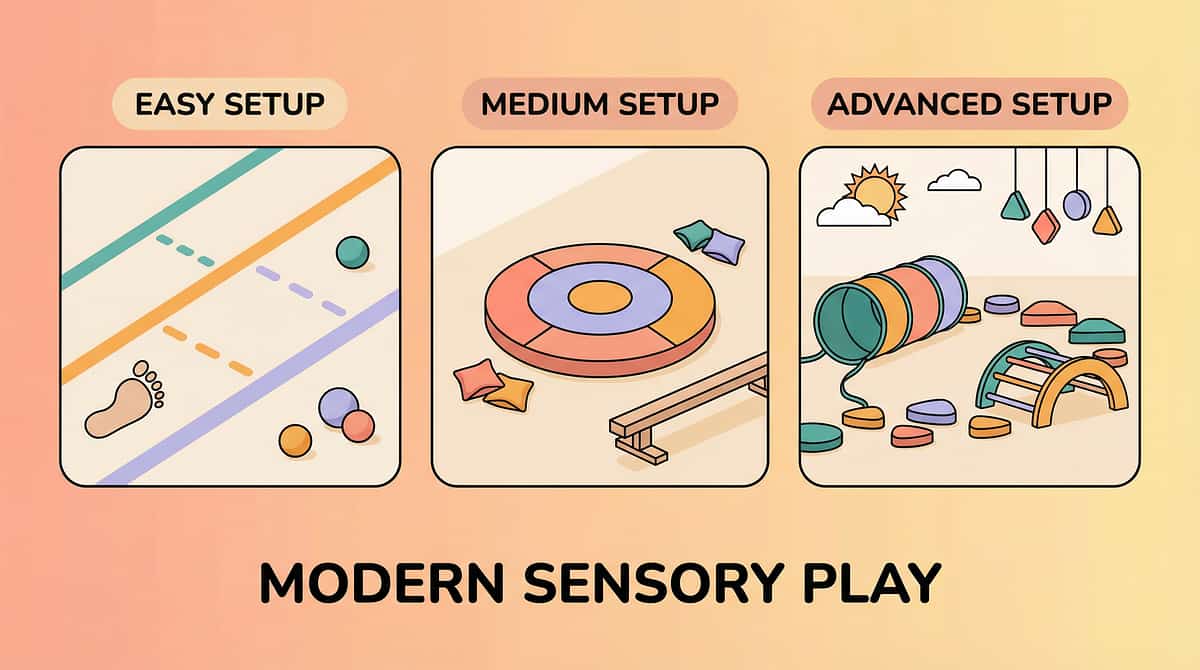
Your child is not the average child. Neither is this protocol.
🔴 Sensory Seeker
More practice pad work (impact seeking satisfied). Heavier weighted bands (within OT recommendation). Partner work introduced earlier. High-energy session openers. Longer sessions (up to 20 min).
🔵 Sensory Avoider
Mirror practice before any physical contact work. Barefoot practice on carpet. Noise-reducing earbuds in all practice. Gradual approach to weighted bands. Shorter sessions (10 min max). Social story reviewed every session.
🟡 Mixed Profile
OT consultation essential. Alternate high-input and low-input activities within session. Allow child to choose material for that day's session. Data tracking becomes critical to identify pattern.
Ages 4–6
Visual cards only + mirror. No weighted bands. 5-minute sessions.
Ages 7–10
Full 9-material protocol available. 10–15 minute sessions.
Ages 11+
Full protocol + video self-analysis + independent form chart use. 15–20 minute sessions.

Week 1–2: Tolerance, not mastery. Both are victory.
Progress: Week 1–2 | 15%
Realistic Week 1–2 Indicators (This Is Good Progress)
- ✅ Child enters practice space without protest 3/5 sessions
- ✅ Child looks at technique card for 10+ seconds (up from 2 seconds)
- ✅ Child tolerates weighted bands for 5 minutes (first session: refused)
- ✅ Child attempts to imitate ONE step from technique card
- ✅ Child watches parent model without leaving the space
What Is Not Progress Yet (Normal — Do Not Worry)
- ❌ Child cannot execute complete techniques yet
- ❌ Child doesn't ask to practice spontaneously yet
- ❌ Dojo instructor hasn't noticed improvement yet
- ❌ Child still gets overwhelmed in group classes sometimes
"The absence of regression IS progress. If your child is returning to the practice space, the nervous system is saying 'I am safe here.' That is the foundation every subsequent skill is built on."
Patience Metric: "If your child tolerates the technique card for 3 seconds longer than last week — that is real, measurable, neurologically significant progress."

Week 3–4: Watch for these. They're easy to miss — but they're huge.
Progress: Week 3–4 | 40%
🧠 Child anticipates the practice routine
Brings their own technique card to the space before being prompted. Neural pathways are encoding the routine.
🧠 Child self-references the mirror unprompted
Uses mirror as a self-correction tool independently during practice.
🧠 Child uses dojo vocabulary spontaneously at home
"That's a front stance!" — Language is generalizing from dojo to home context.
🧠 Reduced anxiety about attending class
Less resistance on class days. The dojo environment is becoming predictable, not threatening.
🧠 Child begins correcting parent's demonstration
"That's not right, Dad — the arm goes like this." This is a huge sign. Mastery knowledge is forming.
If Week 3–4 shows 3+ consolidation signs → Increase home practice to 4–5× per week. Add second material combination per session.
"You may notice you're more confident too. Your instincts about which material works for your child are getting sharper. Trust them." — Pinnacle Blooms

Week 5–8: The moment you've been working toward.
Progress: Week 5–8 | 75%
🏆 Mastery Badge Unlocking...
6/6
Mastery Criteria
Observable, measurable benchmarks to confirm mastery before progressing.
4/6
Move Forward
If 4 of 6 mastery criteria met → Begin next technique level.
2/6
Strengthen
If only 2 of 6 met → Strengthen current techniques for 2 more weeks.
Technique execution
Child performs 3 techniques from cards in correct sequence without visual prompting.
Stance accuracy
Child places feet on correct positions BEFORE looking at floor tape markers (internal proprioceptive map forming).
Self-correction
Child watches video review and identifies own errors independently without parent pointing out.
Generalization
Techniques practiced at home appear in dojo sessions — cross-context transfer achieved.
Reduced sensory overwhelm
Child attends full class session with noise-reducing earbuds and reports it was "okay" (previously "terrible").
Social engagement
Child bows in/out correctly and responds to instructor independently.

🏆 You did this. Your child grew because of your commitment.
You Showed Up
To practice sessions even when you were tired, even when progress felt invisible.
You Adapted
The protocol when the first approach didn't work. Flexibility is clinical wisdom, not inconsistency.
You Celebrated
Small wins that others couldn't even see. Those 3-second latency reductions matter enormously.
You Provided Scaffolding
That their school, their dojo, and the world hasn't known how to provide. You filled the gap.
Your child can now do something they couldn't do 8 weeks ago. That's not a small thing. That is neural pathway construction, sensory system development, and confidence architecture — all achieved in your living room.
🥋The Milestone Moment: Take your child to select their next martial arts material — new technique cards for the next belt level. Make it a celebration outing, not just a purchase.
"Record a video of your child performing the technique they've mastered. In 12 months, this will be one of the most powerful things you own."
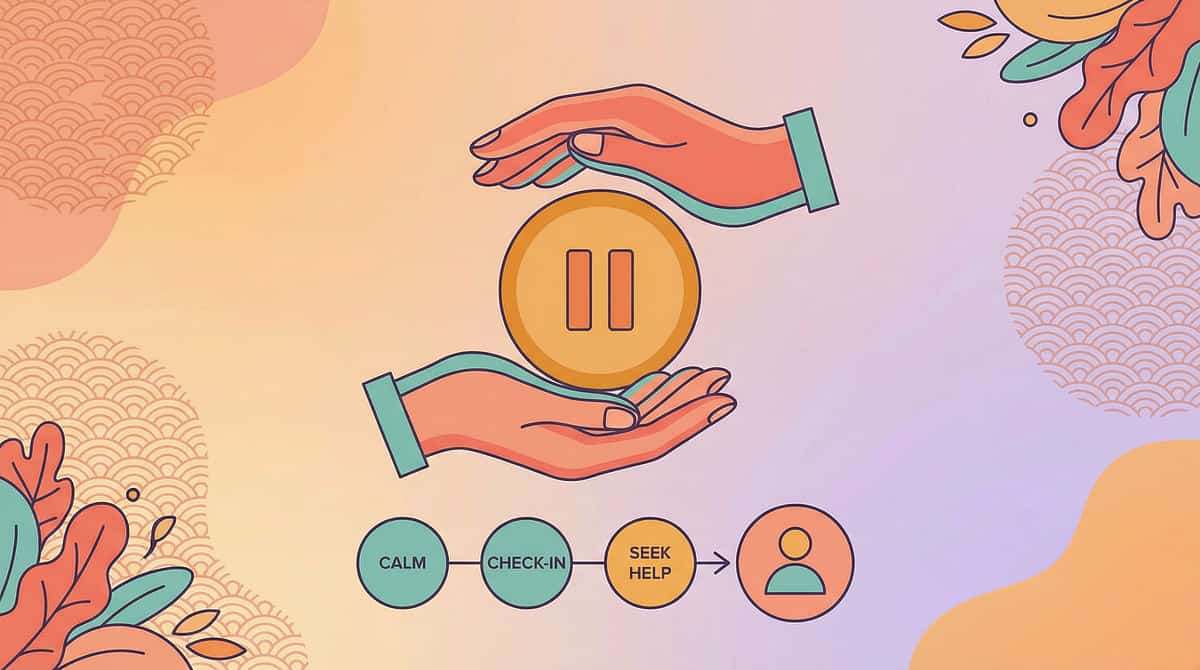
Even in the celebration zone — awareness protects the journey.
🔴 Flag 1: Regression Without Explanation
Looks like: Skills mastered 2 weeks ago are now absent. Child refuses previously enjoyed materials.
Matters because: Could indicate underlying medical issue, sensory regression, or significant environmental stressor.
What to do: Pause protocol for 5 days. If doesn't resolve → teleconsult.
Matters because: Could indicate underlying medical issue, sensory regression, or significant environmental stressor.
What to do: Pause protocol for 5 days. If doesn't resolve → teleconsult.
🔴 Flag 2: Escalating Self-Stimulatory Behavior After Sessions
Looks like: Significantly increased hand-flapping, spinning, or other stims for 30+ minutes after sessions end.
Matters because: Post-session dysregulation may mean the sensory dosage is too high.
What to do: Extend cool-down to 10 minutes. Reduce session intensity. Consult OT.
Matters because: Post-session dysregulation may mean the sensory dosage is too high.
What to do: Extend cool-down to 10 minutes. Reduce session intensity. Consult OT.
🔴 Flag 3: New Fear Response to Dojo Environment
Looks like: Child who previously tolerated class now shows panic symptoms approaching dojo.
Matters because: A specific negative event may have occurred. Pushing through reinforces fear.
What to do: Do not push attendance. Investigate with instructor. Partial attendance (watch only) until resolved.
Matters because: A specific negative event may have occurred. Pushing through reinforces fear.
What to do: Do not push attendance. Investigate with instructor. Partial attendance (watch only) until resolved.
🔴 Flag 4: Weighted Bands Causing Distress
Looks like: Child pulls at bands, cries when put on, shows sensory avoidance of any touch to wrists/ankles.
Matters because: Weight may be too heavy, or child's tactile profile has changed.
What to do: Remove immediately. Reduce to compression clothing only. OT re-assessment.
Matters because: Weight may be too heavy, or child's tactile profile has changed.
What to do: Remove immediately. Reduce to compression clothing only. OT re-assessment.
🔴 Flag 5: Physical Complaints (Joint Pain, Persistent Headaches)
Looks like: Child reports pain in knees, wrists, or head consistently after practice.
Matters because: Could indicate hypermobility, injury, or sensory over-loading.
What to do: Pause physical practice. Pediatric assessment.
Matters because: Could indicate hypermobility, injury, or sensory over-loading.
What to do: Pause physical practice. Pediatric assessment.
📞Escalation Pathway: Concern noticed → Self-resolve (5 days) → GPT-OS® Teleconsult → 9100 181 181 → Pinnacle Center visit → (if urgent) Pediatric / Emergency care
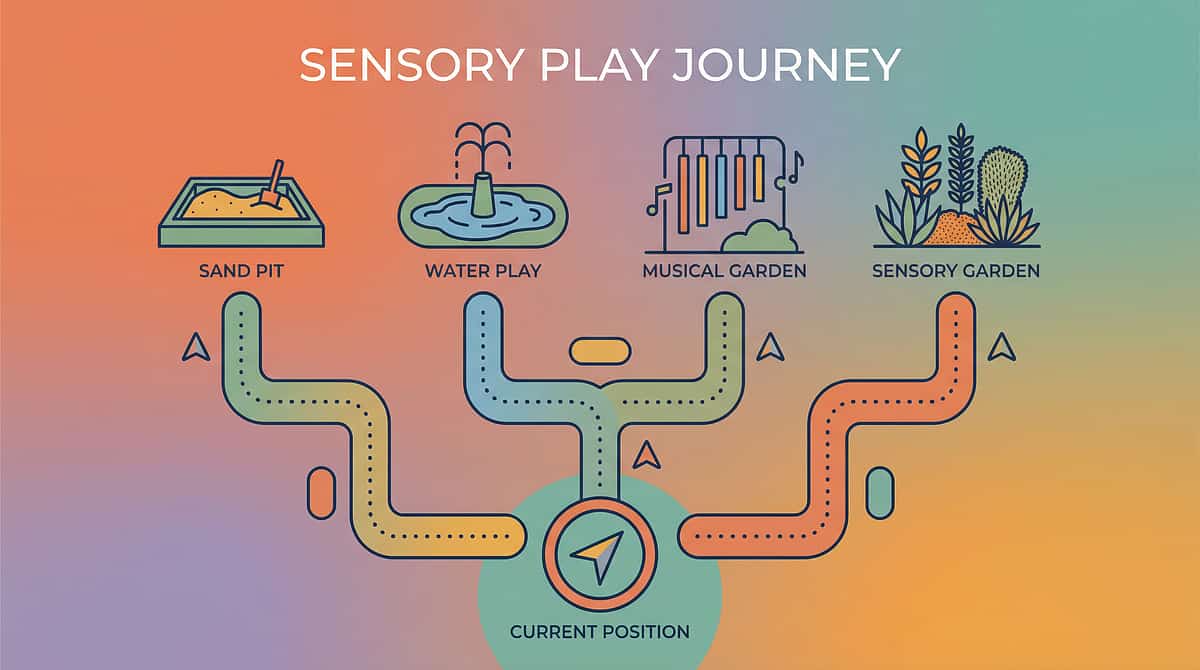
You're not done. You're on a journey. Here's where it goes.
J-876: Dance & Movement Classes
Prerequisite domain. Visual + sequencing overlap with J-877.
J-877: Martial Arts Materials
← YOU ARE HERE. Current technique. Materials kit complete.
J-878: Swimming Materials
Next in series. Bilateral coordination + proprioceptive gains transfer directly.
J-879: Gymnastics Materials
Floor tape + video recording materials overlap. Vestibular progression.
J-875: Team Sports Materials
Social skills + video recording. Peer-based physical activity access.
Next Steps Based on Your Child's Response
- Strong motor gains → D-401: Bilateral Coordination Protocol
- Sensory integration needs → A-series: Sensory Integration Techniques
- Social skills emerging → B-series: Social Skills in Physical Contexts
Long-Term Goals This Protocol Feeds
- Independent martial arts participation
- Belt progression and rank achievement
- Lifelong physical activity habit
- Self-regulation and confidence infrastructure
More techniques in Physical Activity Access. Sorted by what you already have.
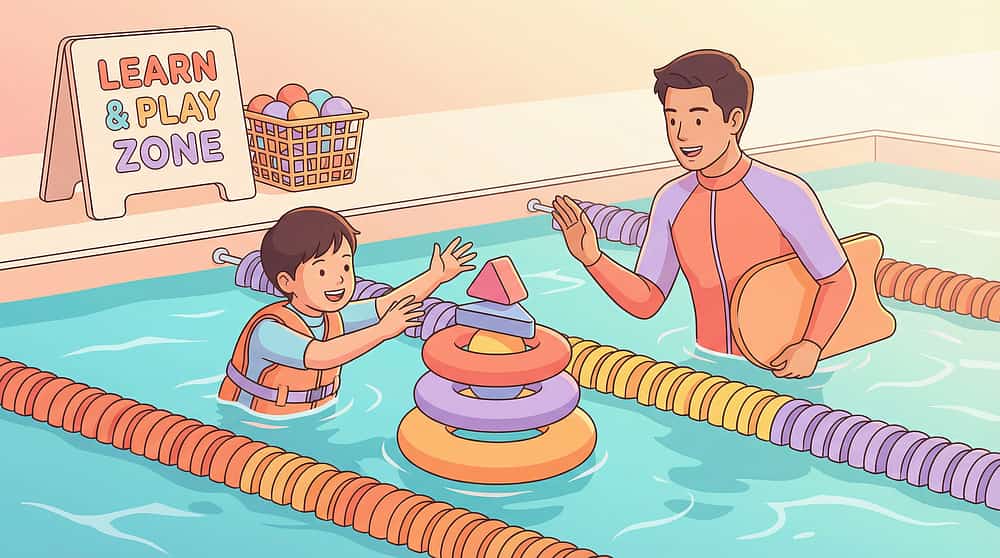
🏊 J-878: 9 Materials That Help With Swimming
Intro–Core Level | Materials overlap: Visual Cards ✅ | Mirror ✅
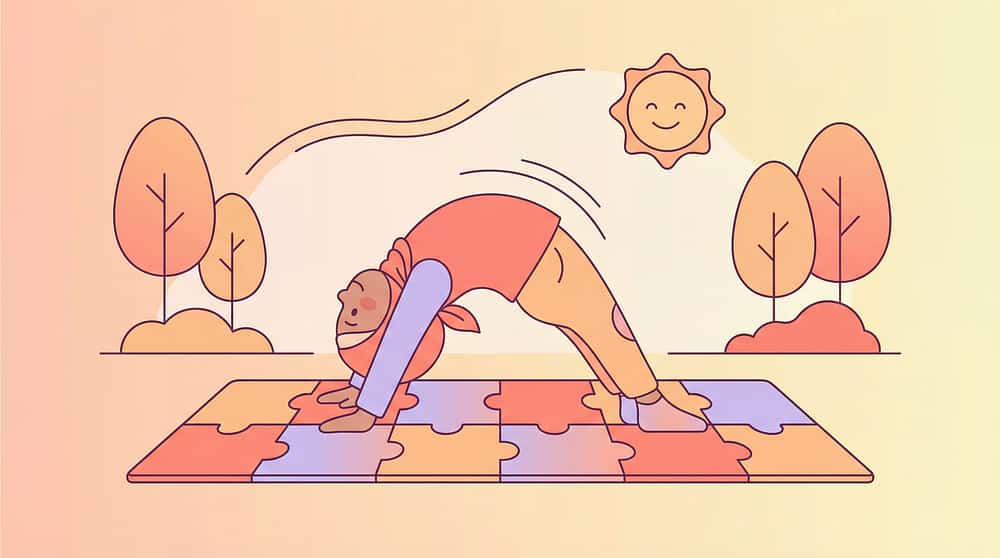
🤸 J-879: 9 Materials That Help With Gymnastics
Core Level | Materials overlap: Floor Tape ✅ | Video Recording ✅
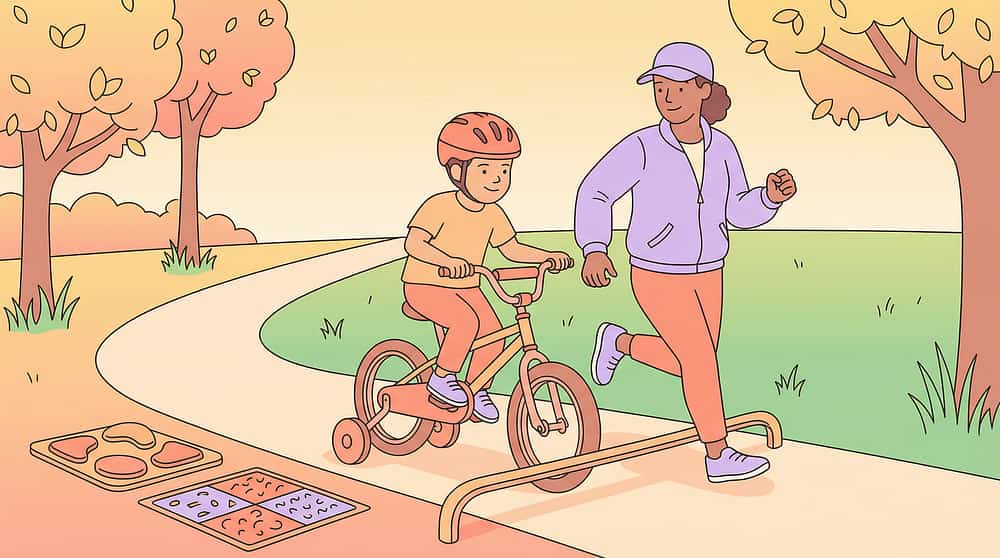
🚴 J-880: 9 Materials That Help With Cycling
Intro Level | Materials overlap: Mirror ✅ | Weighted Bands ✅
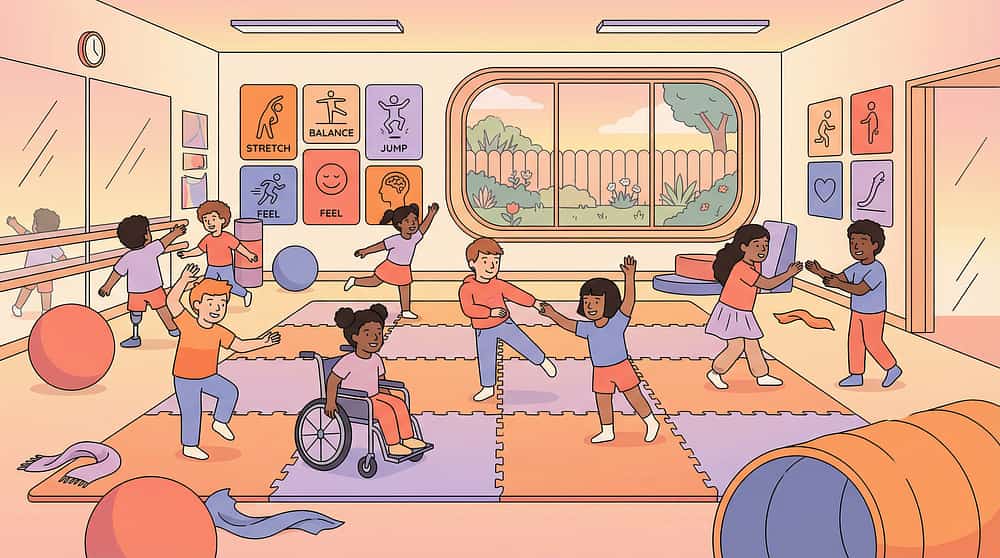
💃 J-876: Dance and Movement Classes
Core Level | Materials overlap: Visual Cards ✅ | Form Chart ✅
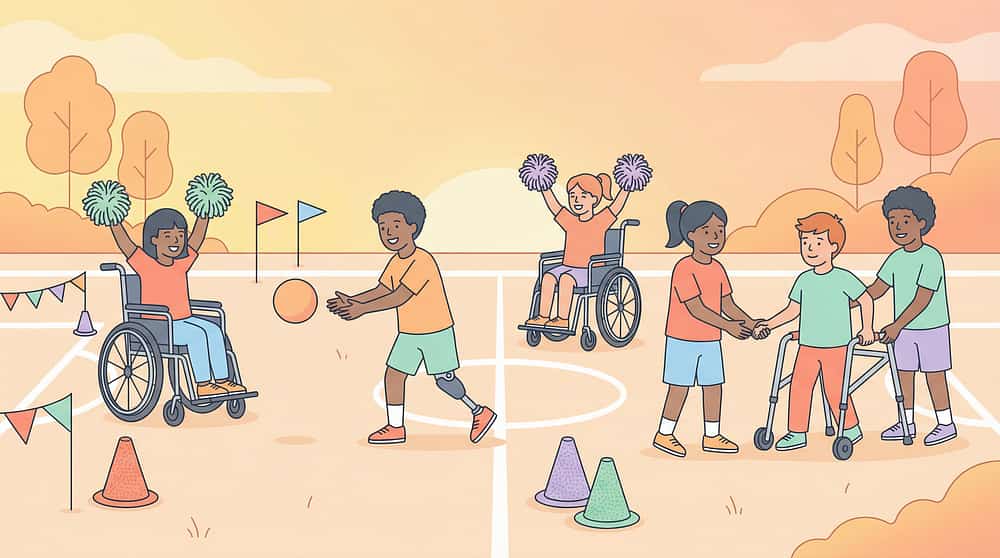
⚽ J-875: 9 Materials That Help With Team Sports
Core–Advanced Level | Materials overlap: Video Recording ✅ | Social Story ✅
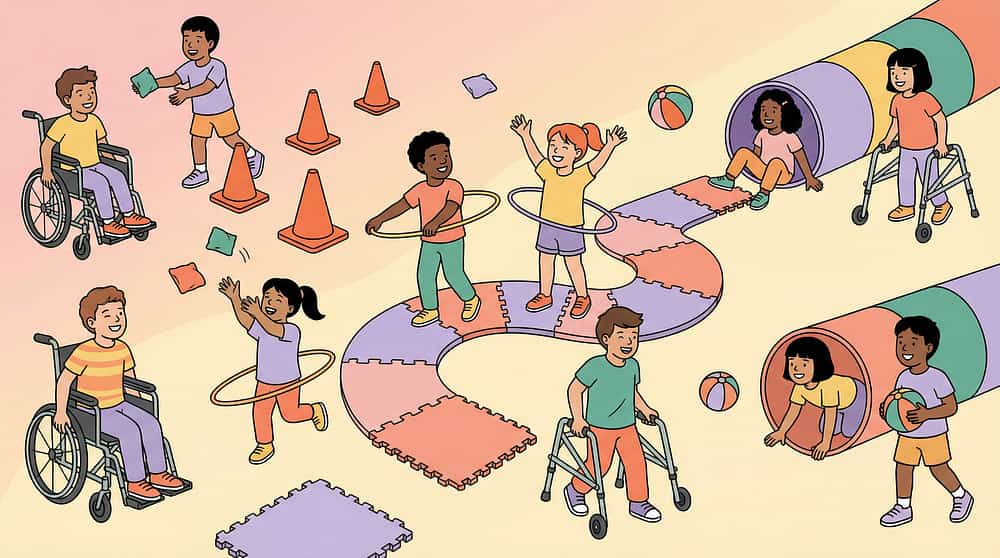
🏃 G-634: 9 Materials That Help With Sports and Team Games
Core Level | Domain G — Physical Activity Foundations
🔖"You already own materials for 3+ of these techniques."
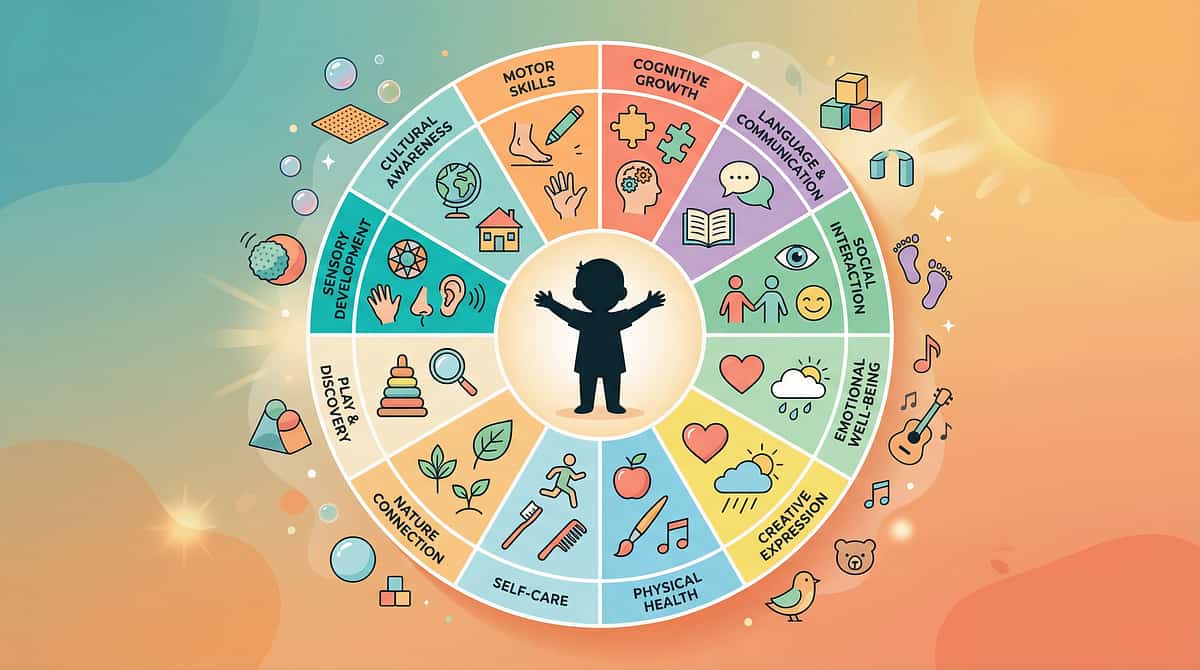
This technique is one piece of a larger plan. Here's the whole map.
Your current position: Domain J — Physical Activity Access | Technique J-877 | Martial Arts Materials
Domain A (Sensory)
Sensory processing supports make physical activity possible
Domain D (Behavioral)
Impulse control developed in martial arts transfers to classroom
Domain F (Motor)
Motor development is the foundation for all physical activity
Domain C (Social)
Partner work and instructor interaction builds social skills
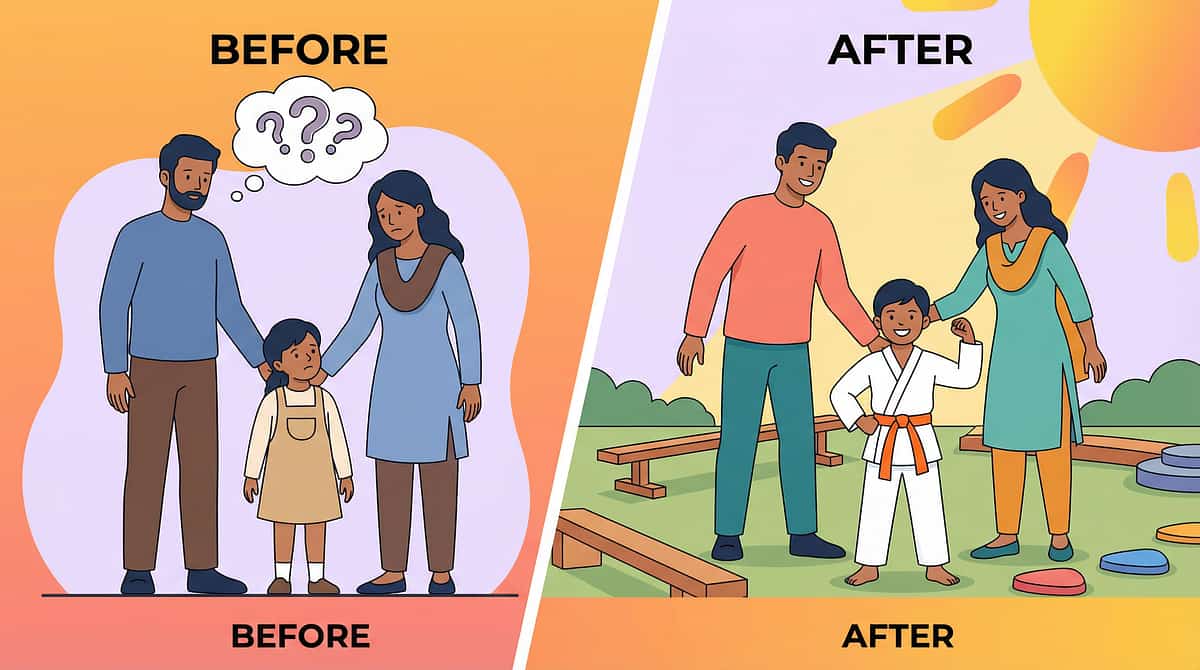
Children who were told "martial arts isn't for them" earned black belts.
Aryan, 9 Years — Delhi
Before:"Our son tried taekwondo twice and failed both times. He couldn't follow the instructor's verbal sequences. The sensory noise of the dojo triggered meltdowns. We gave up."
After OT assessment + visual technique cards, floor tape markers, noise-reducing earbuds, and 12 weeks of bilateral coordination work:
"He tested for his yellow belt last month. When he broke his first board, he turned to me with tears and said, 'I did it, Mama. I really did it.' Martial arts gave him something he never had before — the knowledge that he could do hard things." — Mother, Pinnacle Network, Delhi
Priya, 7 Years — Bengaluru
Before:"She'd come home from every karate class crying. She couldn't remember the kata sequences. She called herself 'too broken for karate.'"
After creating a kata sequence chart with YouTube screenshots, laminated and studied nightly:
"Four months later, she performed her first kata at the belt test — from memory — in front of 20 parents. The look on her face was worth every session." — Father, Pinnacle Network, Bengaluru
"The parents in these stories are not exceptions. They are what happens when evidence-based visual scaffolding meets parental commitment. Your child's story can follow the same arc." — Pinnacle Blooms OT Consortium Panel
Individual outcomes vary based on child's specific profile and intervention intensity.

Isolation is the enemy of adherence. Your community exists.
Pinnacle Parent WhatsApp Group — Sports & Physical Activity Access
Families navigating adaptive sports, physical activity support, and martial arts participation. Join Group →
Online Forum — Martial Arts for Neurodiverse Children
Discuss techniques, instructors, dojos, and breakthrough moments with families globally. Join Forum →
Local Pinnacle Parent Meetups
Monthly meetups at your nearest Pinnacle center — in-person parent community and resource sharing. Find Your Center →
Peer Mentoring
Connect with a parent who has already walked this journey with their child. Request Peer Mentor →
"Consider sharing your journey — anonymously or with attribution. The parent on Month 1 who reads your Month 8 story will keep going because of you."
WHO Nurturing Care Framework: Community engagement is a core principle of sustainable intervention.

Home practice is powerful. Professional guidance makes it transformative.
🏥 Occupational Therapist
Motor planning assessment, sensory profile mapping, weighted equipment prescription, bilateral coordination protocol design.
Book OT Assessment →
Book OT Assessment →
🧠 ABA / BCBA
Behavior support planning for dojo environment, reinforcement schedule design, data collection system setup.
Book BCBA Consultation →
Book BCBA Consultation →
👨⚕️ Neurodevelopmental Pediatrician
Full diagnostic assessment, motor planning differential, medical clearance for martial arts participation.
Book NeuroDev Assessment →
Book NeuroDev Assessment →
📞FREE National Autism Helpline: 9100 181 181 | 16+ Languages | 24×7
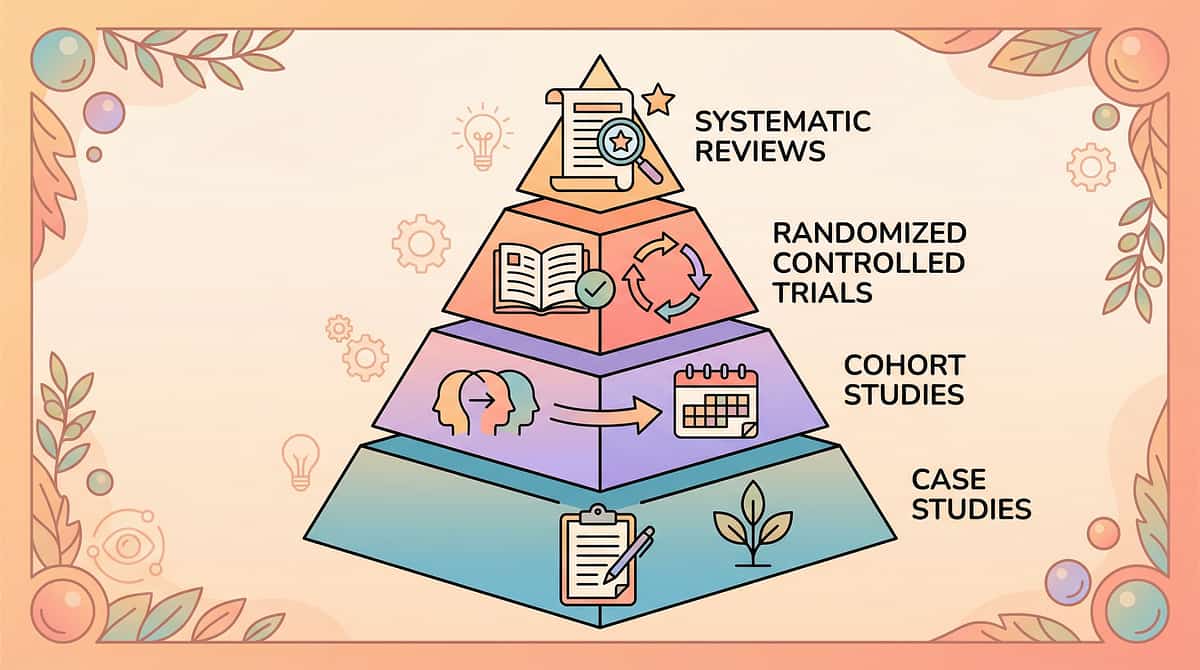
Every material. Every protocol. Every claim. Sourced.
📄 PRISMA Systematic Review — Children (2024)
16 articles, 2013–2023. Confirms motor scaffolding and sensory integration as evidence-based practices for children with ASD in physical activity contexts. 🔗 PMC11506176
📄 Meta-Analysis — World J Clin Cases (2024)
24 studies. Structured sensory-motor intervention promotes gross motor, body awareness, bilateral coordination, and social skills. 🔗 PMC10955541
📄 Indian RCT — Indian J Pediatr (2019)
Home-based protocol with visual scaffolding in Indian children showed significant functional gains. 🔗 DOI: 10.1007/s12098-018-2747-4
📄 Frontiers in Integrative Neuroscience (2020)
Neurological framework for sensory-motor processing treatment in ASD — establishes mechanism for all 9 materials. 🔗 DOI: 10.3389/fnint.2020.556660
📄 NCAEP Evidence-Based Practices Report (2020)
Visual supports, video modeling, and structured physical activity classified as evidence-based practices for autism. 🔗 ncaep.fpg.unc.edu
📄 WHO Nurturing Care Framework (2018)
Five components of nurturing care validated across 54 LMICs. Household-based interventions showing motor and adaptive skill development efficacy. 🔗 nurturing-care.org | PMC9978394
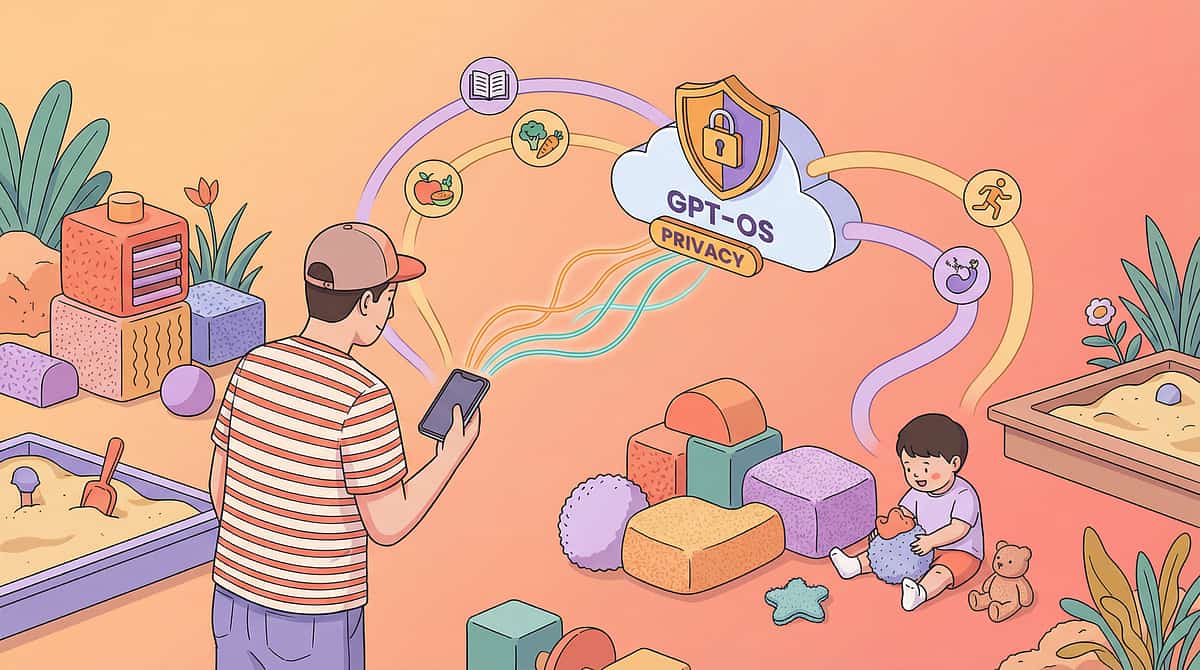
Your data. Your child's progress. Every family's breakthrough.
What GPT-OS® Learns From Your Data
- What material combinations work fastest?
- Which sensory profiles respond to which approaches?
- What's the optimal progression sequence?
- Average mastery timelines for matching profiles
🔒 Privacy Assurance
- Data is anonymized before population analysis
- Your child's individual data is never shared
- Stored per Indian IT Act 2000 and PDPB 2023 standards
- You retain full control of your data at all times
"Your data helps every child like yours. The family who records session data consistently is contributing to a global pediatric intelligence system that will serve children for decades." — Pinnacle CRO Panel

The reel that brought families to this page. Watch it with your child.
📹 J-877: 9 Materials That Help With Martial Arts
Series: Sports, Recreation & Physical Activity
75–85 seconds | 16+ Languages
The reel introduces all 9 materials at a glance — a visual summary of what this full page explains in depth:
Visual Technique Cards
Full-Length Mirror
Floor Tape
Practice Pad
Video Recording
Weighted Bands
Form Chart
Noise-Reducing Earbuds
Social Story + Schedule
"Video modeling is classified as an evidence-based practice for autism (NCAEP, 2020). Watching the reel with your child before practice is itself a therapeutic activity."
Related reels in series: J-876: Dance and Movement Classes | J-878: Swimming | J-879: Gymnastics

This page should be in every dojo instructor's hands. Every school's resource library. Every grandparent's phone.
⬇ Family Guide (1-Page PDF)
Quick reference for all 9 materials. Print and post at home.
⬇ Dojo Instructor Brief
2-page evidence summary for sharing with martial arts instructors.
⬇ Session Tracking Sheet
8-week printable data log for home practice documentation.
⬇ School Communication Letter
Professional template explaining the martial arts support protocol for PE teachers and school staff.
Explain to Grandparents Version:"Your grandchild is learning karate with some special tools that help their brain understand the movements. Let them show you their technique cards. Let them practice in front of the mirror. Say 'good try' after every attempt — not just the perfect ones."
"Consistency across caregivers multiplies impact. If you do it at home and it's undone everywhere else, the neural pathways can't consolidate." — PMC9978394 | WHO CCD Package

8 questions every parent has after reading this page.
My child's dojo instructor won't allow modifications. What do I do?
Most instructors become supportive when presented with a brief written explanation. Download the "Dojo Instructor Brief" from Card 37. Lead with "These supports have helped my child participate in class more fully." If the instructor remains inflexible, seek an instructor who teaches adaptive martial arts. The technique matters less than the instructor.
Which of the 9 materials should we start with?
Start with the two zero-cost options: technique cards (homemade) and floor tape. These address the most common barriers (motor planning + stance accuracy) without any investment. Add the mirror in Week 2. Build the full kit over 4 weeks.
My child is non-verbal. Are these materials appropriate?
Yes — these materials are MORE beneficial for non-verbal children than verbal ones, because they bypass the verbal instruction channel entirely. Technique cards, mirror, floor tape, and video review all work through visual and proprioceptive pathways.
How long before we see progress at the dojo?
Home practice progress typically precedes dojo progress by 2–4 weeks. Expect visible improvement in the dojo setting around Weeks 4–6 of consistent home practice. Inform the instructor so they know to look for specific improvements (stance accuracy, technique sequencing) rather than evaluating overall performance.
Can weighted bands be worn during class?
Consult your OT and the instructor. Many instructors allow light wrist bands. Ankle bands are more problematic during kicking techniques. Start with home practice use and progress to dojo use only after OT clearance and instructor approval.
My child has vestibular sensitivity — is martial arts still appropriate?
Many martial arts are appropriate with vestibular accommodation. Begin with styles that minimize spinning (karate, judo, jiu-jitsu). Progress spinning kick elements (taekwondo) only after OT-guided vestibular tolerance building.
What if we try all 9 materials and the dojo still doesn't work?
Private martial arts lessons (1:1 with an instructor) may be the right next step. Home-only martial arts practice through video instruction programs is a legitimate alternative. Some children need 12–18 months of foundational OT motor work before group instruction is achievable. Not now doesn't mean not ever.
Where can I find an inclusive / adaptive martial arts class in India?
Contact Pinnacle at 9100 181 181 — we maintain relationships with adaptive sports instructors across India. The Special Olympics India network also supports inclusive martial arts programs. Ask your nearest Pinnacle center for local recommendations.
Preview of 9 materials that help with martial arts Therapy Material
Below is a visual preview of 9 materials that help with martial arts therapy material. The pages shown help educators, therapists, and caregivers understand the structure and content of the resource before use. Materials should be used under appropriate professional guidance.





Link copied!

Your child is ready for martial arts. The materials are available. Today is the right day.
🥋 Start This Technique Today
A guided 15-minute home practice session — materials checklist, real-time prompts, data capture.
📞 Book a Consultation
Speak with an OT or BCBA who specializes in physical activity access for children with developmental differences.
➡ Explore Next Technique
J-878: Swimming Materials — the next technique in the Sports & Recreation Access series.
Pinnacle Blooms Consortium® Validated
OT • SLP • ABA • SpEd • NeuroDev • CRO
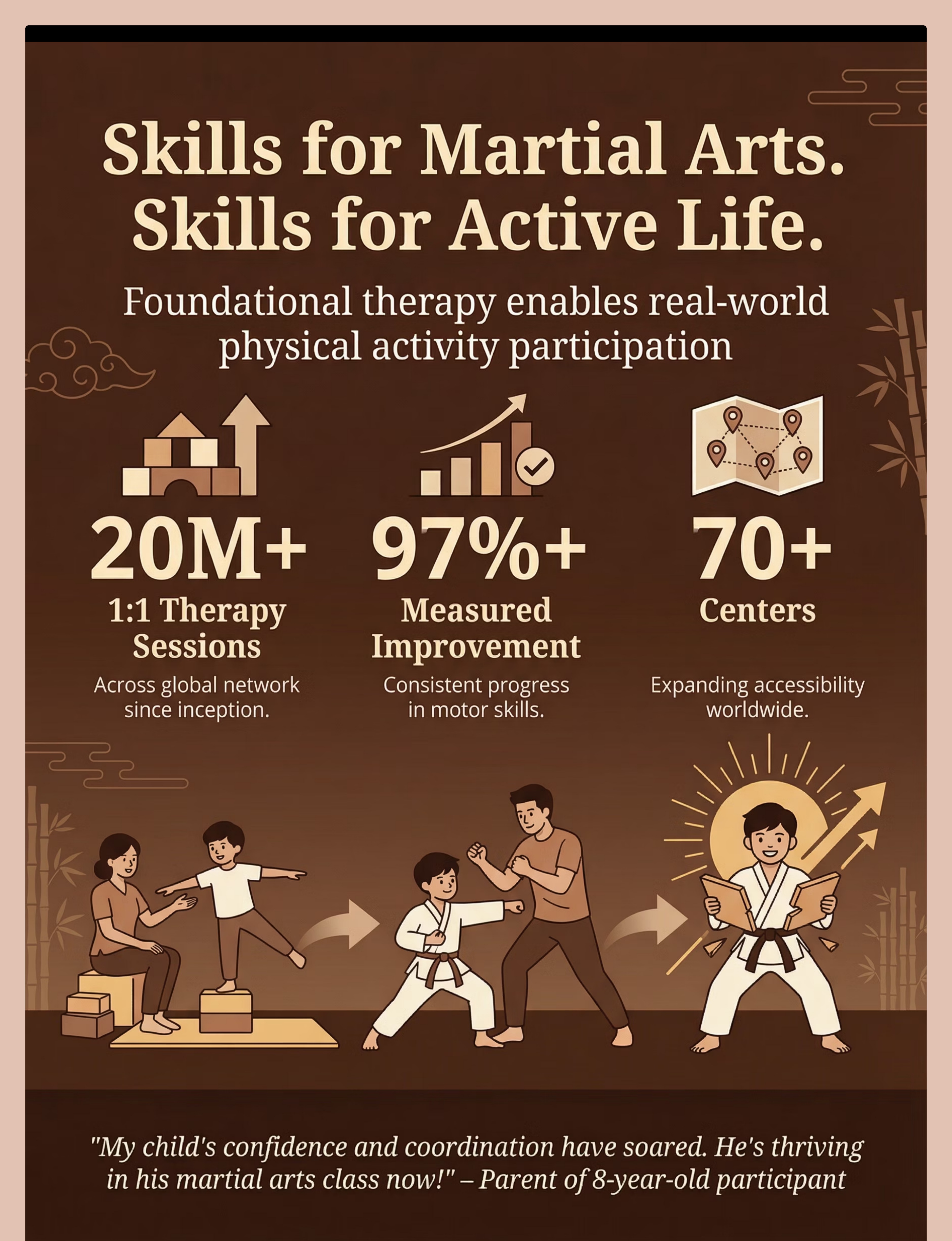
70+ Centers | 21M+ Therapy Services
"From fear to mastery. One technique at a time." — The Pinnacle Blooms Consortium®
J-877 | 9 Materials That Help With Martial Arts
Physical Activity Access | Motor Planning | Body Awareness | Self-Regulation
Domain J | Series: Sports & Recreation | Episode 877 of 999
Physical Activity Access | Motor Planning | Body Awareness | Self-Regulation
Domain J | Series: Sports & Recreation | Episode 877 of 999
This page provides educational information about supporting children with developmental and sensory differences in martial arts participation. Content is developed by the Pinnacle Blooms Consortium® of qualified pediatric therapists and represents consortium clinical consensus. This content does not replace individualized professional assessment and therapy. Strategies should be adapted to your child's specific profile by qualified professionals. Individual outcomes vary based on child's specific needs and intervention intensity.
© 2025 Pinnacle Blooms Network®, unit of Bharath Healthcare Laboratories Pvt. Ltd. All rights reserved. | CIN: U74999TG2016PTC113063 | DPIIT: DIPP8651 | MSME: TS20F0009606 | GSTIN: 36AAGCB9722P1Z2
📞 FREE National Autism Helpline: 9100 181 181 | 16+ Languages | 24×7 | 🌐 pinnacleblooms.org | 📧contact@pinnacleblooms.org
📞 FREE National Autism Helpline: 9100 181 181 | 16+ Languages | 24×7 | 🌐 pinnacleblooms.org | 📧contact@pinnacleblooms.org