
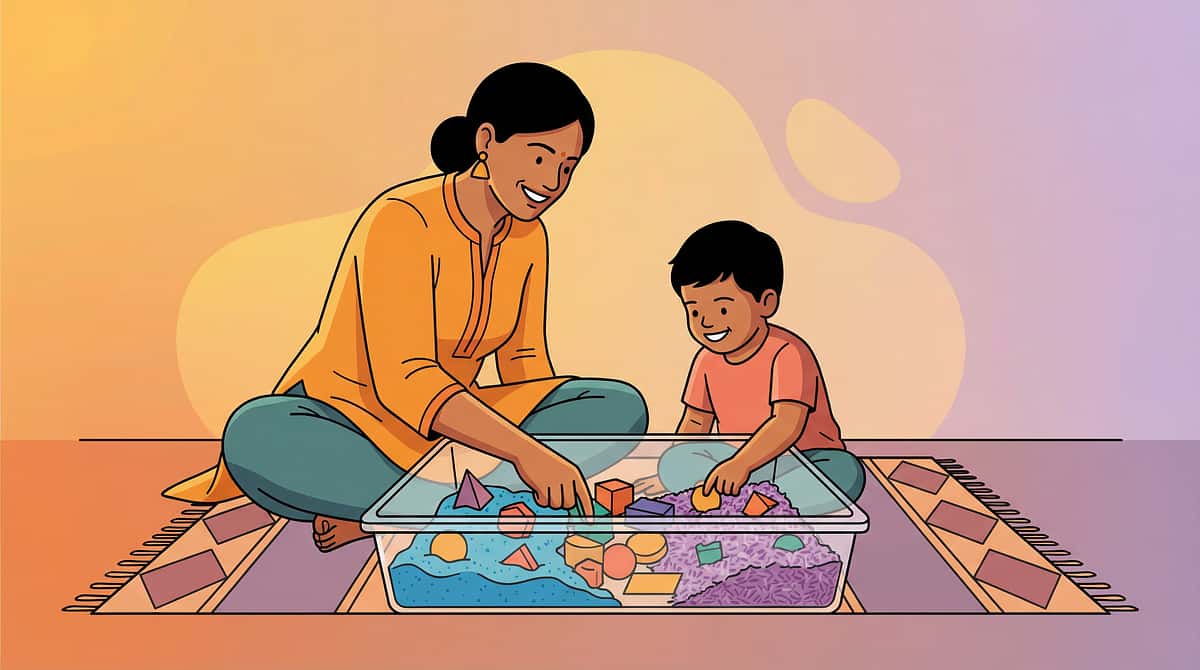
When Play Stays Literal — Unlock Your Child's Imagination
He sits on the floor surrounded by toys. Every car is lined up, perfectly spaced. The wheels spin, again and again. The dolls sit untouched in the corner. You watch other children at the park turning sticks into swords and mud pies into birthday cakes. Your child pushes the same car along the same path, the same way, every single time.
You are not failing. Your child's brain is wired for precision, for patterns, for understanding the physical world with extraordinary detail. What it needs now is a bridge — from the literal to the imagined, from the concrete to the symbolic. This bridge exists. These materials build it.
"You are not failing. Your child's brain processes the world differently. Pretend play is a skill that develops — and we are going to show you exactly how to help it emerge." — Pinnacle Blooms Consortium
Drafted by the Pinnacle Blooms Consortium
SLP • OT • BCBA • SpEd • NeuroDev
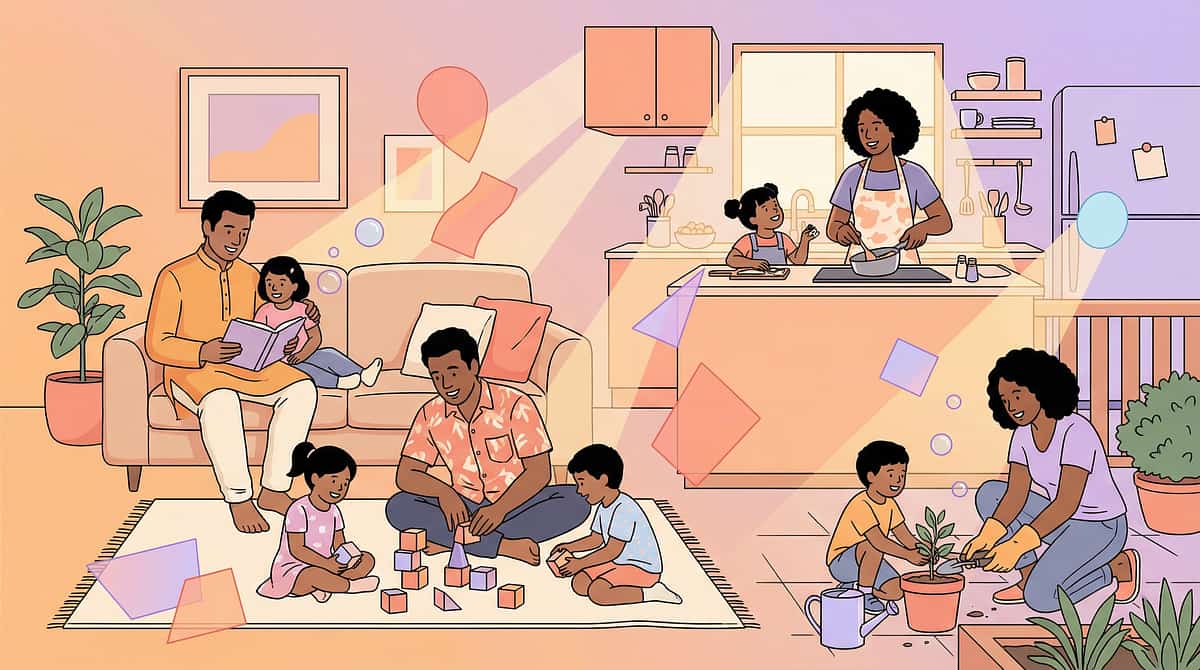
You Are Among Millions
Limited pretend play is one of the most well-documented developmental markers in autism spectrum disorder and related neurodevelopmental conditions. Across 197 countries, the UNICEF Multiple Indicator Cluster Surveys track early childhood development indicators including symbolic play milestones. When pretend play is limited, it is a signal — not a sentence.
1 in 36
Children with ASD
Children in the United States are diagnosed with autism spectrum disorder (CDC, 2023). Limited pretend play is a core diagnostic feature.
75–80%
Show Limited Play
Of children with ASD demonstrate restricted, repetitive patterns of play behavior, including limited or absent pretend play (Lord et al., 2022; DSM-5-TR).
18M+
Families in India
Families in India alone navigate developmental differences in their children. You are not isolated — you are part of a global community finding answers.
"You are among millions of families navigating this exact challenge. And the research is clear: pretend play skills can be developed with the right materials, scaffolding, and support."
Research Citations: CDC Autism Prevalence Data (2023) | DSM-5-TR Diagnostic Criteria for ASD | UNICEF MICS Early Childhood Development Module | WHO Nurturing Care Framework (2018)

The Neuroscience of Imagination
What Happens When a Child Pretends
When a typically developing child picks up a banana and holds it to their ear like a phone, three brain systems activate simultaneously. The prefrontal cortex generates the "what if." The medial temporal lobe retrieves the memory of what a phone looks like. And the Default Mode Network — the "imagination network" — weaves these into a coherent pretend scenario.
What Happens in Your Child's Brain
In children with limited pretend play, these systems are not broken — they are developing along a different timeline. The neural pathways supporting symbolic thinking require repeated, scaffolded experience to strengthen. The prefrontal flexibility needed to assign new meaning to familiar objects develops through exposure to exactly the right materials at exactly the right time.
Key Insight: "This is a wiring difference, not a behavior choice. Your child isn't refusing to pretend — the neural pathways that support imagination are still forming. And they CAN form, with the right input."
Research Citations: Leslie AM (1987). Pretense and representation. Psychological Review. | Lillard AS et al. (2013). The impact of pretend play on children's development. | Frontiers in Integrative Neuroscience (2020). DOI: 10.3389/fnint.2020.556660
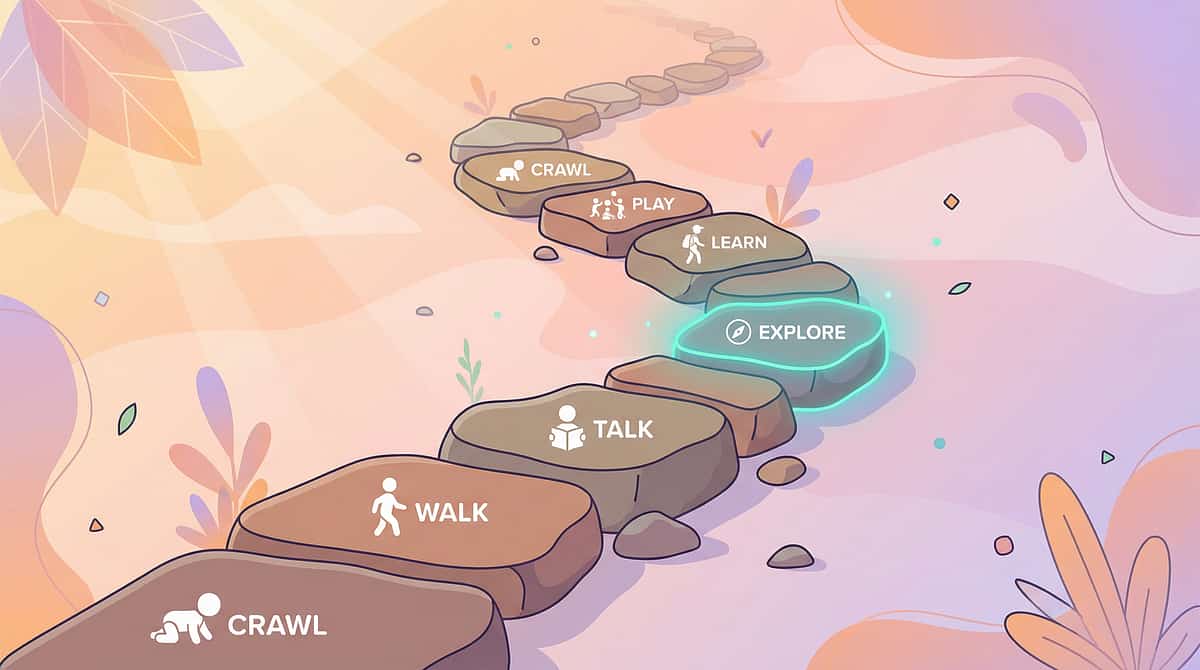
The Pretend Play Developmental Staircase
Every child's pretend play develops in predictable stages. Understanding where your child currently is — and where they're heading — transforms uncertainty into a clear path forward. Each material on this page is designed to help your child climb to the next step.
Age 12–18 Months: Pretend on Self
Child pretends to drink from an empty cup or sleep. Simple self-directed pretend using real or realistic objects.
Age 18–24 Months: Pretend on Others
Child feeds a doll, pretends to comb parent's hair. Beginning of understanding "other minds."
Age 24–36 Months: Substitution Play
A banana becomes a phone. A block becomes a car. Multi-step pretend sequences emerge — the cognitive leap from concrete to symbolic.
Age 36–48 Months: Role Play and Character Adoption
Child becomes "the doctor," "the firefighter." Adopts different voices and mannerisms. Narrative play with beginning-middle-end structure.
Age 48+ Months: Complex Social Pretend with Peers
Elaborate scenarios with multiple children. Negotiated roles, collaborative stories, flexible plotlines — the foundation for social competence and academic readiness.
Co-occurring Awareness: Limited pretend play commonly co-occurs with language delays, difficulty with imitation, restricted interests, sensory processing differences, and challenges with social reciprocity. Addressing pretend play creates cascading benefits across all these domains.

Clinically Validated. Home-Applicable. Parent-Proven.
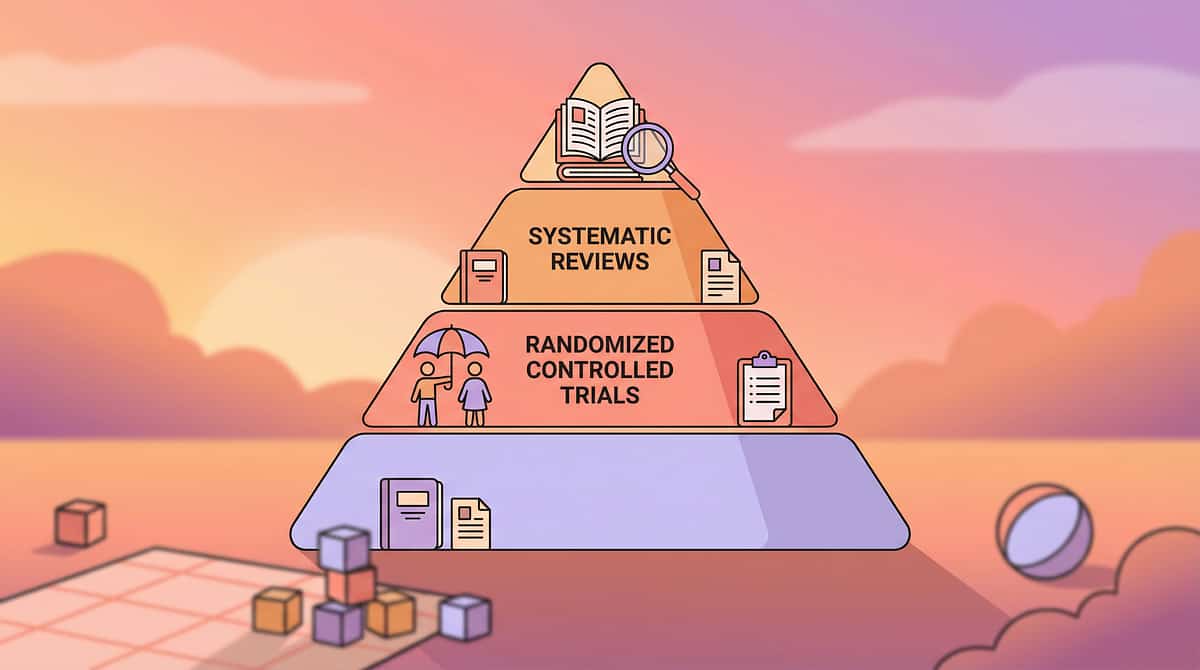
EVIDENCE LEVEL: II-A
Multiple controlled studies and systematic reviews support play-based intervention with structured materials for developing pretend play skills in children with ASD.
Play Intervention Outcomes
Kasari, Freeman & Paparella (2006) demonstrated that targeted play interventions significantly increased diversity and complexity of symbolic play in children with autism, with gains maintained at follow-up. Journal of Child Psychology and Psychiatry.
Pretend Play and Theory of Mind
Leslie AM (1987) established the foundational link between pretend play and theory of mind development — the ability to understand that others have thoughts, feelings, and perspectives different from one's own.
Material-Based Play Scaffolding
Wolfberg PJ (2009) documented evidence that play skills in children with autism can be systematically supported through appropriate materials, modeling, and graduated scaffolding.
Pinnacle Clinical Data
Across 20M+ exclusive 1:1 therapy sessions with a 97%+ measured improvement rate, play-based interventions demonstrate consistent gains in symbolic thinking and pretend play progression.
"This is not experimental. Pretend play intervention is backed by decades of research, implemented across clinical settings worldwide, and proven effective in Pinnacle's own network across 70+ centers."
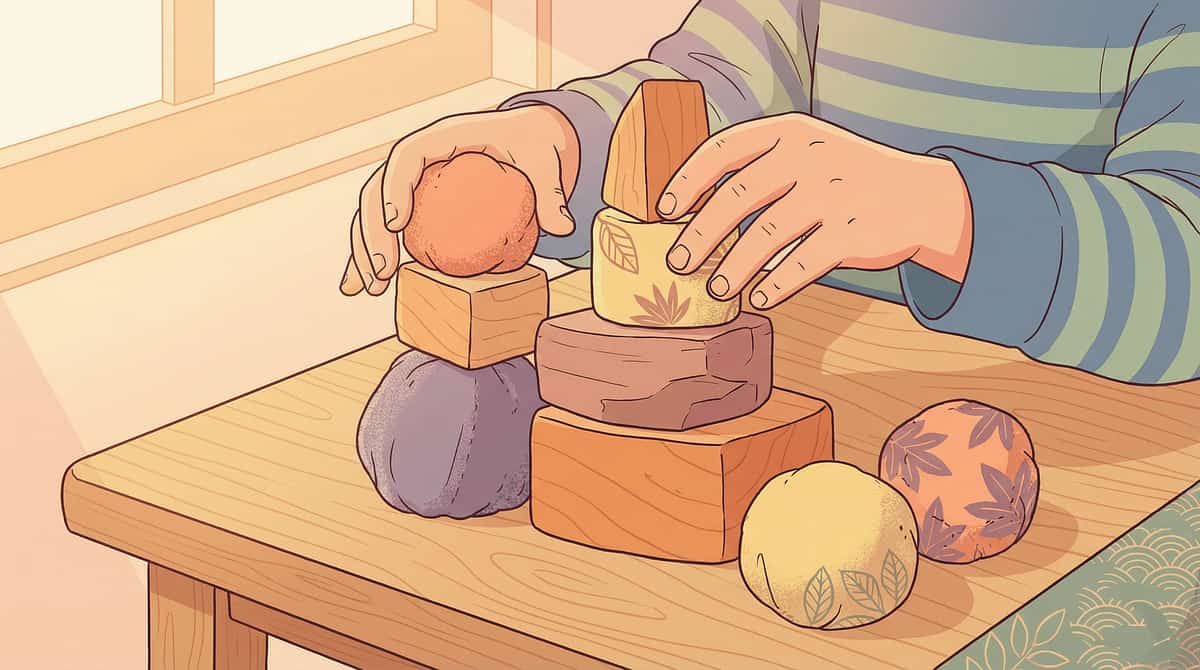
Materials-Scaffolded Pretend Play Development
Parent-Friendly Alias: "Unlocking Imagination Through the Right Toys"
Materials-Scaffolded Pretend Play Development is a structured intervention technique that uses 9 categories of carefully selected therapy materials — from realistic play sets to abstract substitution objects — to systematically build pretend play skills in children who play with toys in literal, repetitive, or functional-only ways. The technique follows a developmental staircase: starting with highly realistic props (where the leap to pretend is smallest) and progressively moving toward abstract objects that require pure imagination.
🏷️ Domain
Behavioral / Developmental — Pretend Play Development | Code: BEH-PLY-PRE
👶 Age Range
18–60 months
⏱️ Duration
10–20 minutes per session
📅 Frequency
Daily, embedded in natural play routines
Canon Categories: Social Skills & Interaction — Role Play/Pretend Play Props | Cognitive & Learning | Fine Motor & Hand Skills — Building Toys | Reel Reference: B-131 | Play and Imagination Differences Series

A Technique That Crosses Therapy Boundaries
Pretend play is simultaneously a cognitive skill, a language skill, a sensory-motor skill, and an academic readiness skill. That's why the Pinnacle Consortium approaches it as one integrated intervention — not siloed by discipline.
Board Certified Behavior Analyst (BCBA)
Leads: Play skill programming, reinforcement scheduling, data collection. Uses pretend play targets in discrete trial training, natural environment teaching, and pivotal response training. Tracks: Rate of pretend play initiations, diversity of play actions, duration of sustained pretend sequences.
Speech-Language Pathologist (SLP)
Leads: Language through play — expanding vocabulary, narrative skills, social communication. Uses pretend play as a vehicle: "The car is going WHERE? To the STORE! What will we BUY?" Tracks: Symbolic language use, narrative complexity, verbal pretend play scripts.
Occupational Therapist (OT)
Leads: Sensory-motor play, fine motor integration, sensory preferences in material selection. Uses play materials to address sensory processing alongside imagination. Tracks: Motor planning in pretend sequences, sensory tolerance during play, bilateral coordination.
Special Educator (SpEd)
Leads: Cognitive flexibility, academic readiness through play, peer interaction skills. Uses pretend play for abstract thinking: "If this block is a phone, what else could it be?" Tracks: Cognitive flexibility measures, peer play participation, school readiness indicators.

Precision Targets — What This Technique Builds
🎯 PRIMARY TARGET: Symbolic/Pretend Play Skills
Object substitution (banana = phone) • Role adoption (becoming "the doctor") • Narrative play sequences (beginning → middle → end) • Pretend actions on self and others. Observable Indicator: Child uses objects in pretend ways without adult modeling.
🎯 SECONDARY TARGETS: Theory of Mind & Social Cognition
Understanding that others have thoughts/feelings (doll is "hungry," puppet is "scared") • Perspective-taking foundation • Joint attention during pretend play. Observable Indicator: Child attributes internal states to figures/characters.
🎯 TERTIARY TARGETS: Cascading Developmental Gains
Language development (pretend narratives expand vocabulary 3× faster than drill-based instruction) • Cognitive flexibility • Academic readiness • Social participation • Emotional regulation. Observable Indicator: Gains generalize to non-play contexts.
"This is not a random activity. It is a precision intervention targeting the cognitive architecture that supports abstract thinking, social understanding, and academic success." — Meta-analysis, World J Clin Cases (2024) | PMC10955541
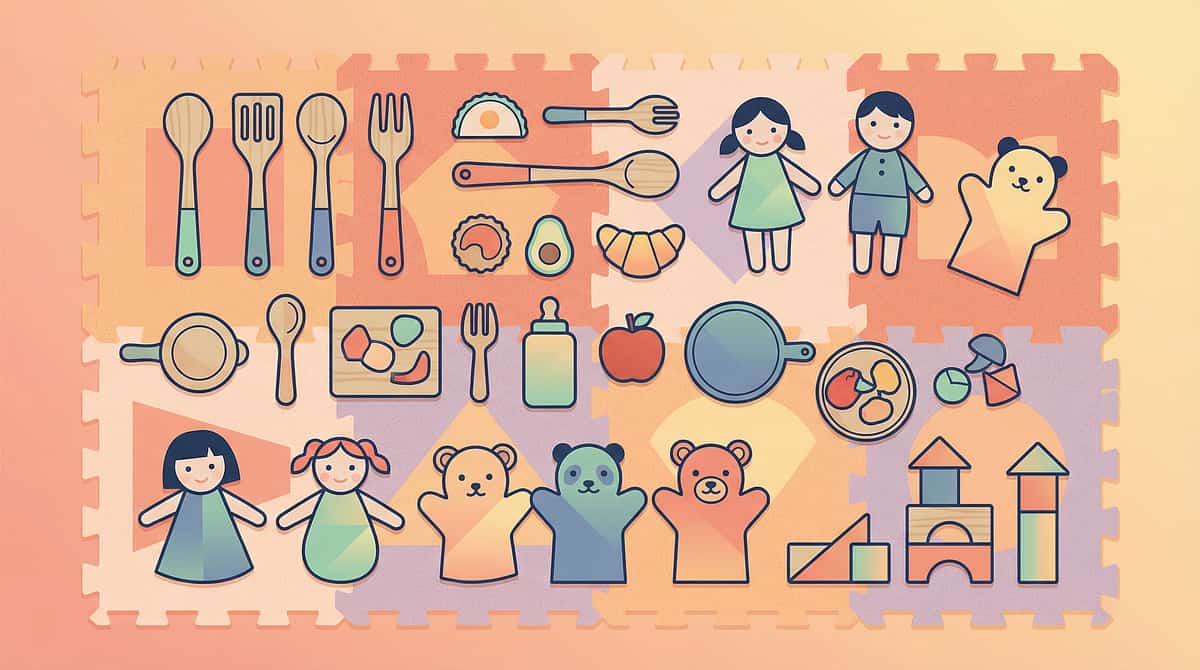
The 9 Materials — Your Imagination Toolkit
IMPORTANT: These 9 materials follow a developmental progression. Start with Material 1 (most realistic, smallest cognitive leap) and progress toward Material 9 (most abstract, largest cognitive leap) as your child develops.
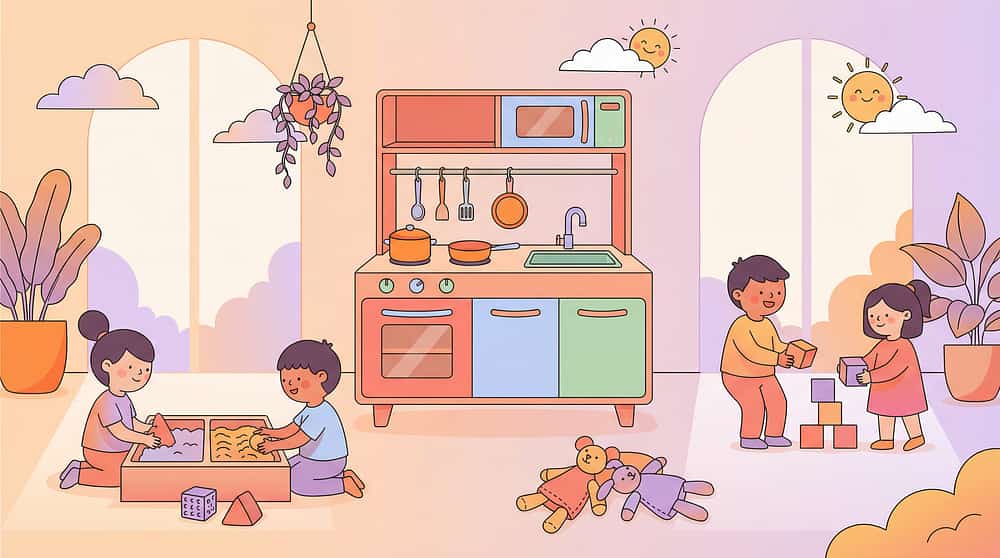
1. Realistic Pretend Play Sets
🏷️ Canon: Role Play/Pretend Play Props | 💰 ₹500–₹3,000 | 🏅 Pinnacle Recommends
Why: When items clearly represent real objects, the leap to pretend is smaller. Kitchens, doctor kits, tool benches — start with what looks most like the real thing.
Key items: Play kitchen sets, Doctor/medical kits, Tool bench sets, Baby care sets
Why: When items clearly represent real objects, the leap to pretend is smaller. Kitchens, doctor kits, tool benches — start with what looks most like the real thing.
Key items: Play kitchen sets, Doctor/medical kits, Tool bench sets, Baby care sets
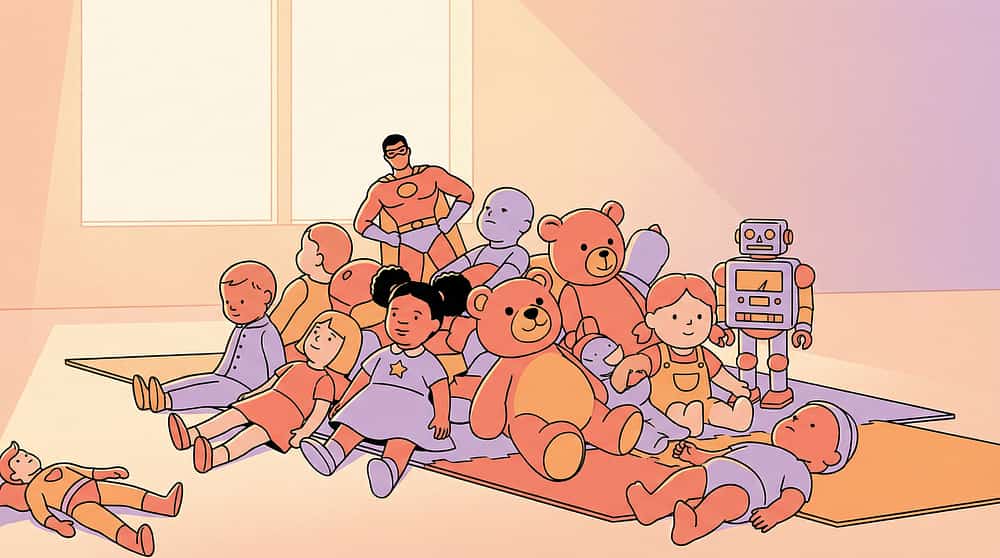
2. Dolls and Action Figures
🏷️ Canon: Social Skills & Interaction | 💰 ₹300–₹2,000 | 🏅 Pinnacle Recommends
Why: Characters give children someone to pretend WITH and ABOUT — building the foundation for understanding other minds (theory of mind).
Key items: Baby dolls, Action figures, Character figurines, Diverse representation dolls
Why: Characters give children someone to pretend WITH and ABOUT — building the foundation for understanding other minds (theory of mind).
Key items: Baby dolls, Action figures, Character figurines, Diverse representation dolls

3. Dress-Up Clothes and Costumes
🏷️ Canon: Role Play/Pretend Play Props | 💰 ₹200–₹1,500
Why: When you put on a firefighter hat, you CAN be a firefighter. Physical transformation supports imaginative transformation.
Key items: Career dress-up, Capes and masks, Hats collection, Simple accessories
Why: When you put on a firefighter hat, you CAN be a firefighter. Physical transformation supports imaginative transformation.
Key items: Career dress-up, Capes and masks, Hats collection, Simple accessories
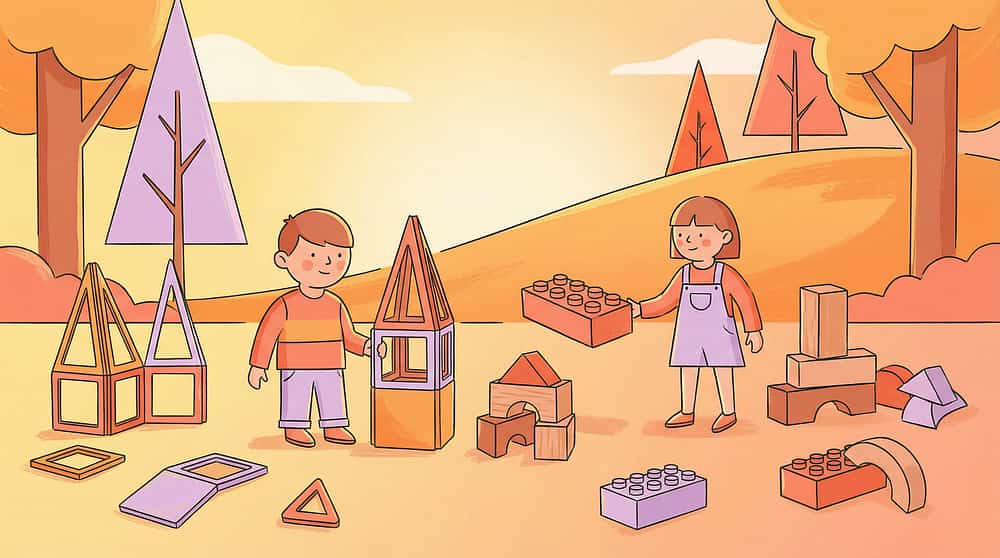
4. Open-Ended Building Materials
🏷️ Canon: Fine Motor & Hand Skills — Building Toys | 💰 ₹300–₹2,500 | 🏅 Pinnacle Recommends
Why: Building leads to pretending. A tower becomes a castle, boxes become a train.
Key items: Wooden blocks, Magna-Tiles, LEGO Duplo, Cardboard boxes
Why: Building leads to pretending. A tower becomes a castle, boxes become a train.
Key items: Wooden blocks, Magna-Tiles, LEGO Duplo, Cardboard boxes
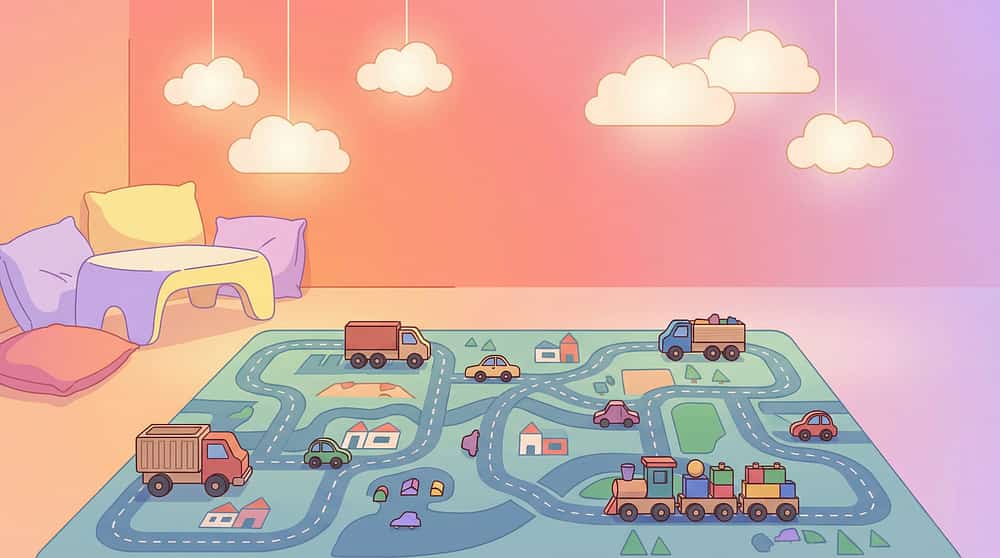
5. Vehicle Sets with Destinations
🏷️ Canon: Cognitive & Learning | 💰 ₹400–₹2,000
Why: When vehicles have somewhere to go, play becomes a journey with a story. Destinations create narrative structure naturally.
Key items: Car play mats with roads, Train sets with stations, Parking garages, Town playsets
Why: When vehicles have somewhere to go, play becomes a journey with a story. Destinations create narrative structure naturally.
Key items: Car play mats with roads, Train sets with stations, Parking garages, Town playsets
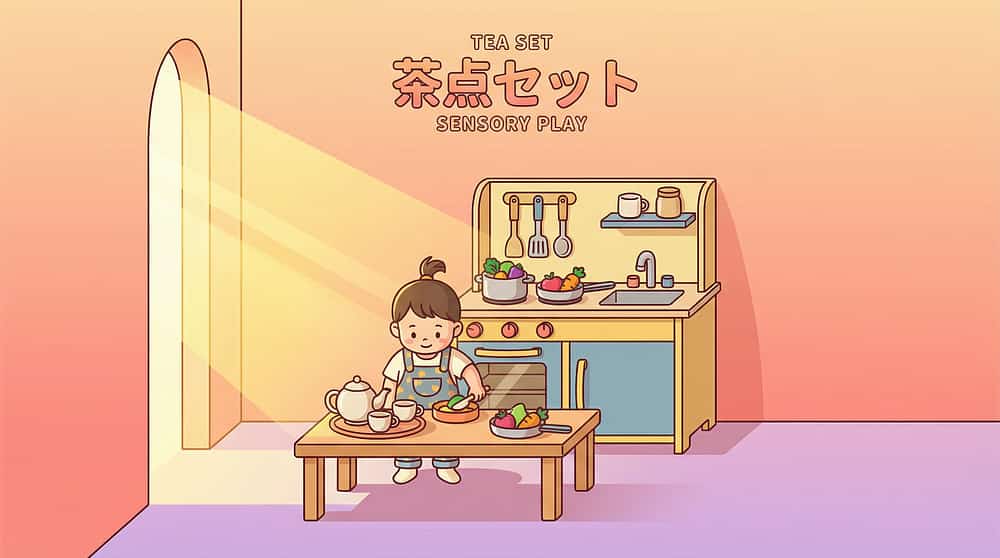
6. Play Food and Kitchen Items
🏷️ Canon: Role Play/Pretend Play Props | 💰 ₹200–₹1,500
Why: Everyone eats — cooking is relatable. The most universal entry point into pretend play.
Key items: Realistic play food sets, Velcro cutting food, Pots/pans/utensils, Tea sets
Why: Everyone eats — cooking is relatable. The most universal entry point into pretend play.
Key items: Realistic play food sets, Velcro cutting food, Pots/pans/utensils, Tea sets
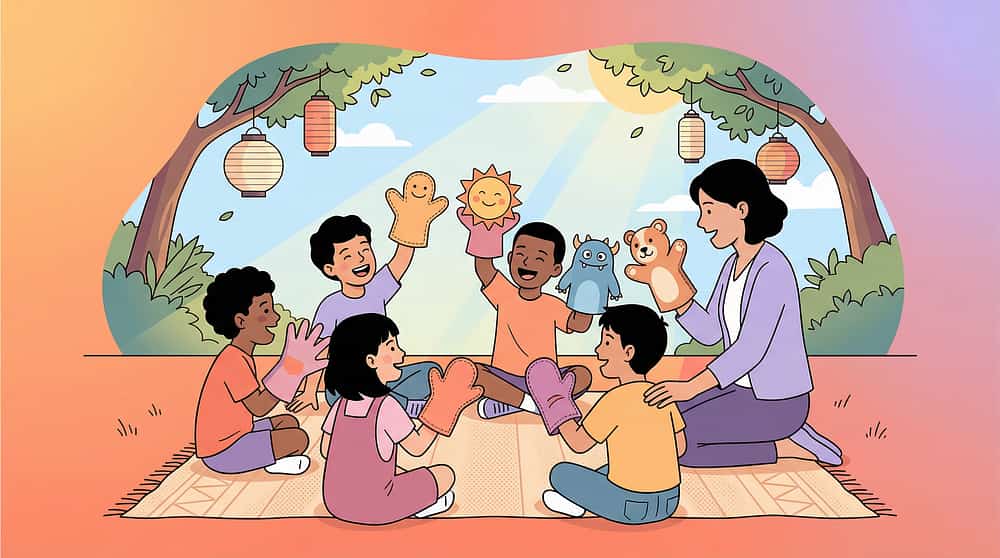
7. Puppets and Stuffed Animals
🏷️ Canon: Social Skills & Interaction | 💰 ₹150–₹1,000
Why: It's often easier to make a puppet talk than to pretend yourself. The puppet becomes a safe pretend partner, reducing the demand on the child.
Key items: Hand puppets, Finger puppets, Expressive stuffed animals, Character puppets
Why: It's often easier to make a puppet talk than to pretend yourself. The puppet becomes a safe pretend partner, reducing the demand on the child.
Key items: Hand puppets, Finger puppets, Expressive stuffed animals, Character puppets
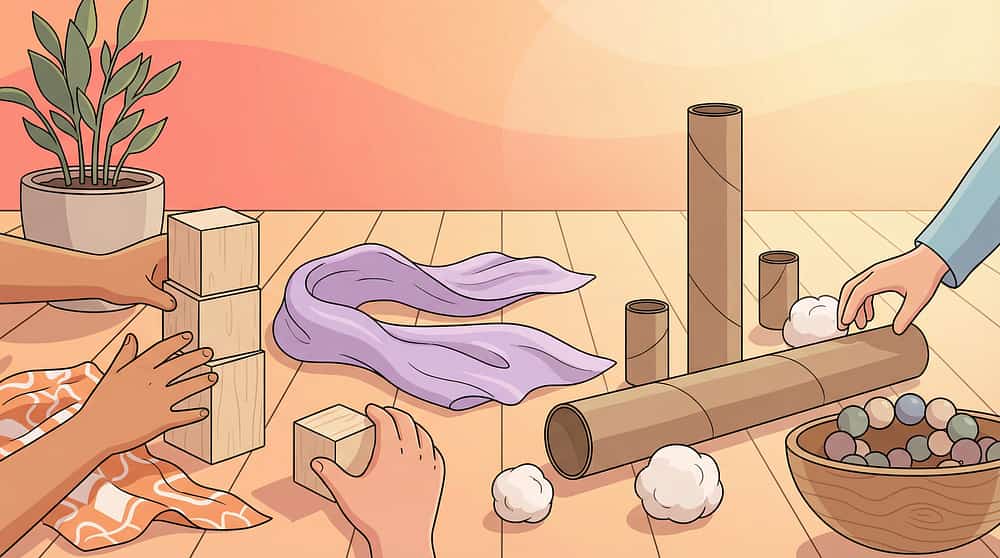
8. Simple Substitution Objects
🏷️ Canon: Cognitive & Learning | 💰 ₹0–₹200
Why: A block becomes a phone, a spoon becomes a microphone, fabric becomes a cape — imagination in its purest form.
⚠️ Only introduce AFTER realistic pretend is established. This is the advanced stage.
Key items: Plain wooden blocks, Scarves/fabric, Empty containers, Cardboard tubes
Why: A block becomes a phone, a spoon becomes a microphone, fabric becomes a cape — imagination in its purest form.
⚠️ Only introduce AFTER realistic pretend is established. This is the advanced stage.
Key items: Plain wooden blocks, Scarves/fabric, Empty containers, Cardboard tubes
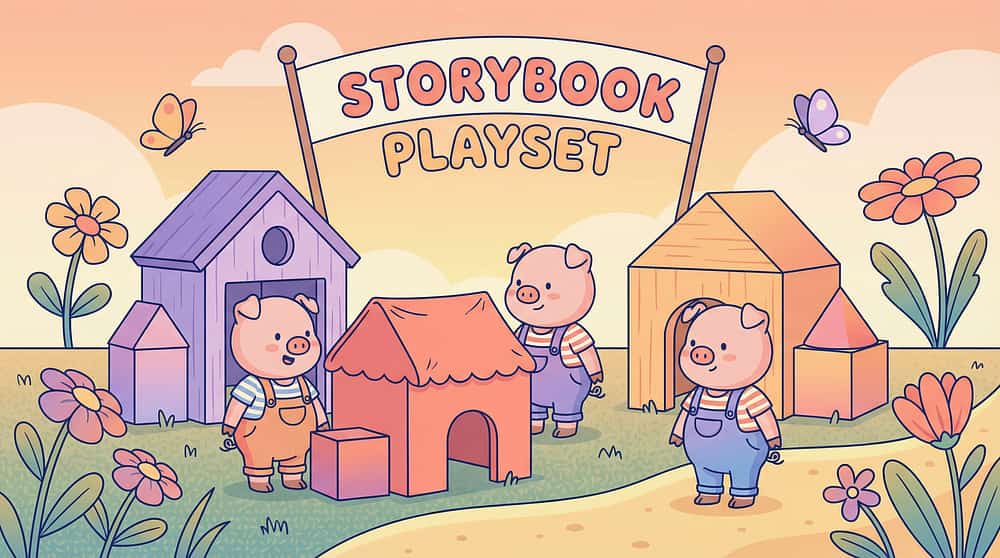
9. Story-Linked Play Sets
🏷️ Canon: Cognitive & Learning | 💰 ₹300–₹2,000
Why: Known stories provide ready-made pretend scripts. Structured narrative reduces the demand on imagination.
Key items: Three Little Pigs set, Favorite character playsets, Fairy tale figure sets, Book-linked play kits
Why: Known stories provide ready-made pretend scripts. Structured narrative reduces the demand on imagination.
Key items: Three Little Pigs set, Favorite character playsets, Fairy tale figure sets, Book-linked play kits
Total Investment: Comprehensive Setup: ₹2,650–₹15,500 | Essential Starters (3 items): ₹700–₹6,500 — Start with: (1) Realistic play kitchen or doctor kit, (2) One doll or figure set, (3) Play food.
Zero-Cost Imagination — DIY Alternatives
"Not every family can order from Amazon. Not every village has same-day delivery. The WHO Nurturing Care Framework emphasizes equity-focused interventions. Here is how to build every material from household items — because imagination doesn't require a receipt."
Material | Buy This | Make This (₹0) | |
1. Realistic Play Sets | Kitchen set (₹1,500) | Real household items — empty containers, wooden spoons, old phones. Real items require zero abstraction. | |
2. Dolls/Figures | Baby doll (₹500) | Sock puppets with button eyes. Drawn figures on cardboard. Any character the child connects with. | |
3. Dress-Up | Costume set (₹800) | Old clothes, fabric scraps, parent's hats. A scarf becomes a cape, a pot becomes a helmet. | |
4. Building Materials | Magnetic tiles (₹1,500) | Cardboard boxes — free and become anything. Toilet paper tubes, egg cartons, tape. | |
5. Vehicles + Destinations | Car play mat (₹600) | Draw roads on cardboard or use tape on the floor. Create destinations with boxes. | |
6. Play Food | Food set (₹400) | Play dough as food. Empty containers as ingredients. Real pots and wooden spoons. | |
7. Puppets | Hand puppet (₹300) | Sock puppets. Paper bag puppets. Any stuffed animal with personality. | |
8. Substitution Objects | Wooden blocks (₹200) | Already at home — blocks, sticks, containers, fabric. Free and limitless. | |
9. Story-Linked Sets | Playset (₹600) | Make simple figures from paper or clay. Three cardboard houses for Three Little Pigs. |
Why DIY Works: The therapeutic principle is the same regardless of material cost. A ₹1,500 play kitchen and a collection of real pots and spoons activate the same neural pathways. What matters is the scaffolding, the modeling, and the parent-child interaction — not the price tag. For sensory-specific items, clinical-grade versions may be important — consult your Pinnacle therapist.
Safety Gate — Read Before You Begin
🔴 DO NOT PROCEED IF:
- Child is currently in a meltdown or severe dysregulation state
- Child has a known fear/phobia related to specific play materials (puppets, masks)
- Child is unwell, hungry, or sleep-deprived
- Play materials contain small parts for children under 36 months who mouth objects
- Child shows signs of allergic reaction to material textures
🟡 MODIFY AND PROCEED WITH CAUTION IF:
- Child has sensory sensitivities to specific textures (costumes, play dough)
- Child becomes distressed with new toys — introduce ONE material at a time
- Child has food restrictions — be thoughtful about play food
- Child is tired or slightly dysregulated — use a simplified, shorter version
🟢 PROCEED WHEN:
- Child is fed, rested, and in a calm-alert state
- Environment is set up (see Card 12)
- Parent has reviewed the protocol steps
- Materials are age-appropriate and safety-checked
- Child shows neutral-to-positive affect toward the play space
🚨 STOP IMMEDIATELY IF: Child shows acute distress that does not resolve with comfort | Child attempts to eat/swallow play materials | Child's behavior escalates despite modification | You observe any concerning behavior — trust your instincts.
Safety Notes on Specific Materials: Dress-up: Start with accessories (hats, capes), not full costumes. Puppets: Never force if child is frightened — follow their reaction. Substitution objects: Don't introduce prematurely — returning to realistic props is NOT failure. Play food: Ensure size is safe and monitor mouthing behavior.
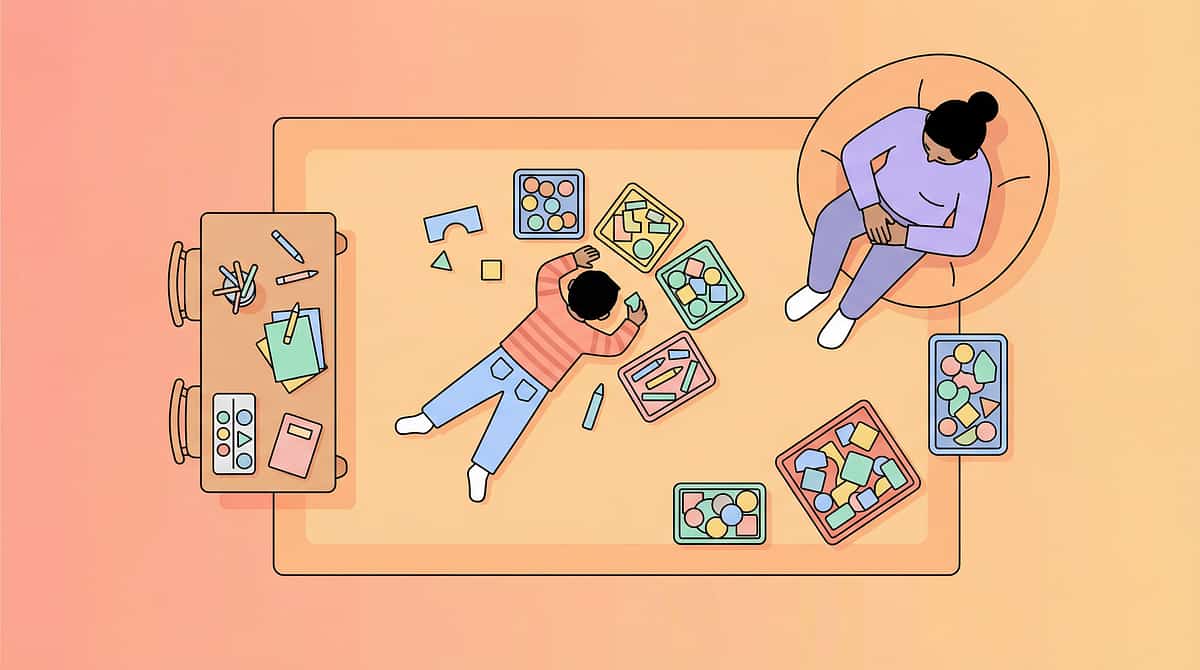
Your Play Stage — Setting Up the Space
The environment is as important as the materials. A thoughtfully set-up space signals to your child's nervous system that this is a safe, predictable, inviting place to explore — not a test, not a task, but an open invitation.
Floor Space & Comfort
Clear area of at least 4×4 feet, clean floor surface. Natural, well-lit (not harsh fluorescent). Comfortable temperature throughout.
Quiet & Distraction-Free
Turn off TV, music, and background noise. Phones away. No screens visible. No competing toys in the play area.
Materials — Less is More
Set out ONLY 2–3 items from ONE material category initially. Do NOT present all 9 categories at once. Overwhelm kills imagination.
Parent Position & Time
On the floor, at child's level — NOT on a chair looking down. At least 15 uninterrupted minutes available. Parent calm and present, not rushing.
Critical Principle: Materials are displayed like an invitation to explore, not set up like a test. Follow the child's interest — if they gravitate toward the kitchen set, start there. Same time, same place creates a ritual that reduces anxiety and increases engagement.
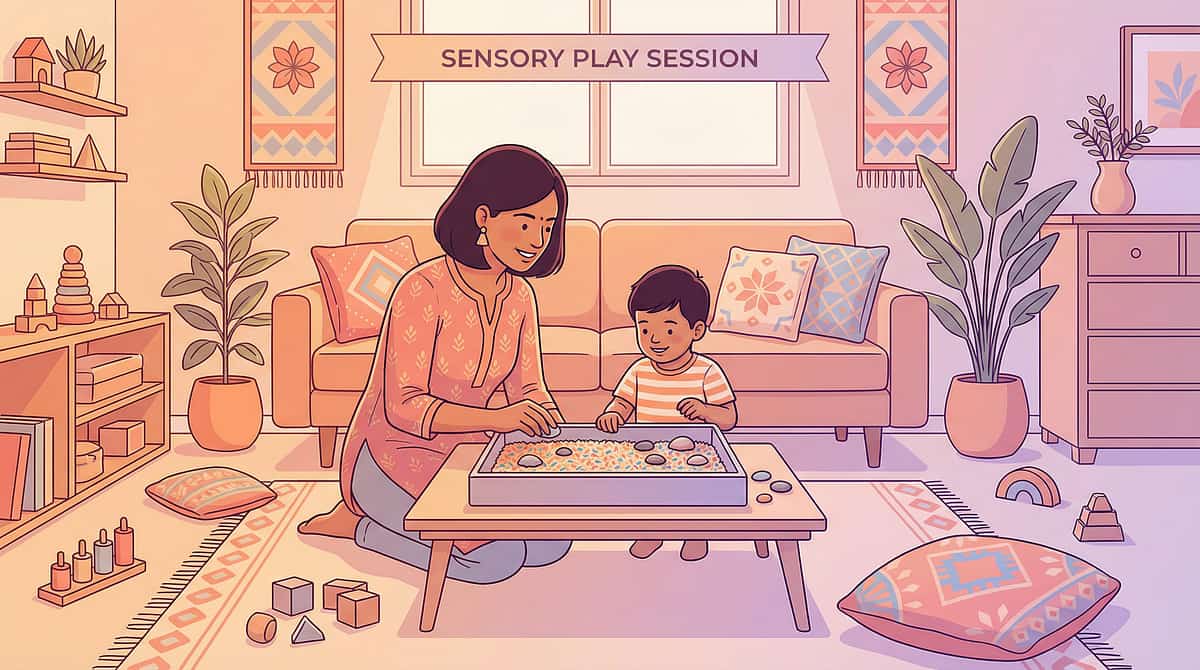
60-Second Readiness Check
The best session is one that starts right. Never push through when your child isn't ready. Postponing is not failure — it is clinical precision.
Child is fed (not hungry)
Child is rested (not due for nap)
Child is in a calm-alert state (eyes open, responsive, not crying)
No meltdown in the last 30 minutes
No signs of illness (fever, pain, gastrointestinal distress)
No screen time in the last 15 minutes
✅ 5+ YES → GO
Proceed to Step 1: The Invitation.
🟡 3–4 YES → MODIFY
Use simplified version — shorter duration, fewer materials, lower demand. Just model play without expecting participation.
🔴 0–2 YES → POSTPONE
Do a calming activity instead (deep pressure, quiet book, sensory-regulating activity). Try again later.

Step 1: The Invitation
Duration: 30–60 seconds
What You Do: Sit on the floor beside your child. Pick up one material. Begin playing with it yourself — in pretend. Do NOT hand it to the child. Do NOT give instructions. Just play. Every protocol begins with an invitation, not a command. You are showing, not telling. The child decides to join.
"Pick up the toy kitchen spoon. Stir the pretend pot. Bring the spoon to your lips. 'Mmm! I'm cooking soup! Stir, stir, stir. Let me taste... mmm, yummy!' Glance at your child with a smile. Return to playing."
What Acceptance Looks Like
- Child glances at what you're doing (even briefly)
- Child moves closer to the materials
- Child reaches for a material
- Child watches for more than 3 seconds
What Resistance Looks Like
- Child walks away → Keep playing. The invitation stays open.
- Child pushes materials away → Remove the specific item, try a different one.
- Child shows distress → Move to the Cool-Down (Step 6). Try again tomorrow.
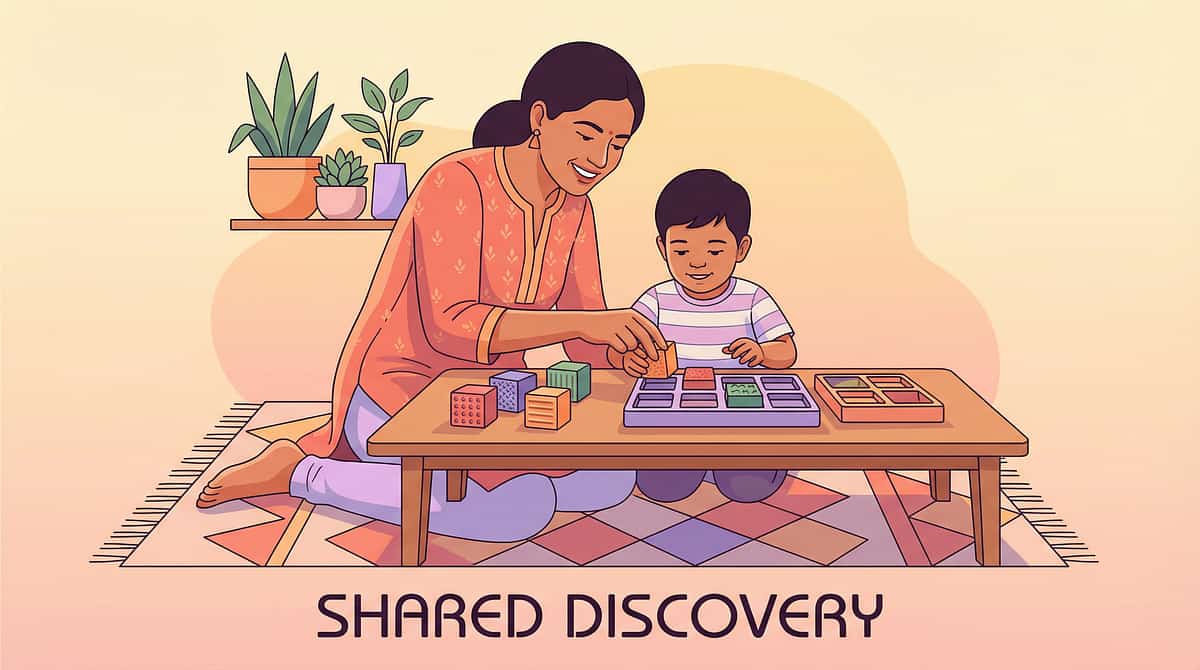
Step 2: The Engagement
Duration: 1–3 minutes
What You Do: The child has shown interest. Now deepen the interaction by adding more pretend elements — slowly. Present materials at child's eye level. Offer, don't push — hold out the item and wait. If the child uses it functionally (spinning wheels, lining up), that's okay. You model the pretend version alongside.
"Child picks up a play apple. You say: 'Oh! An apple! Are you going to eat the apple? Let me get a plate...' Place the play plate in front of the child. 'Yum! Let's put it on the plate. Chop, chop, chop!' Model cutting the apple with a play knife."
Reinforcement Cue: The moment the child does ANYTHING that resembles pretend — even holding a spoon near a pot, even placing a figure in a car — immediately reinforce: "You're stirring! You're cooking just like mommy/daddy!" or "The car is going! Where is it going?"
"Celebrate every step toward pretend. A spoon held near a pot is not nothing — it's the beginning of everything."

Step 3: The Therapeutic Action
Duration: 3–5 minutes
This is the main event. You and your child are now co-playing with the materials. Your job is to MODEL pretend while the child participates at whatever level they can.
1
Level 1 — Parallel Play
Child watches, you pretend. They may watch, they may ignore. They are absorbing. "The doctor is checking the teddy bear! Oh no, teddy has a fever!"
2
Level 2 — Supported Play
Child participates with your help. Guide the child's hands or offer materials at the right moment. "Can you check teddy's heart? Listen... bump bump bump!"
3
Level 3 — Independent Pretend
Child initiates — feeding the doll without being told, making the car "go to school." When this happens — celebrate internally. This is the breakthrough.
❌ Common Errors to Avoid
- Talking too much — let silence and modeling do the work
- Asking too many questions — feels like a test
- Correcting the child's play — if they put the stethoscope on the doll's foot, that's VALID pretend
- Expecting too much too soon — Level 1 can last weeks. That's normal.
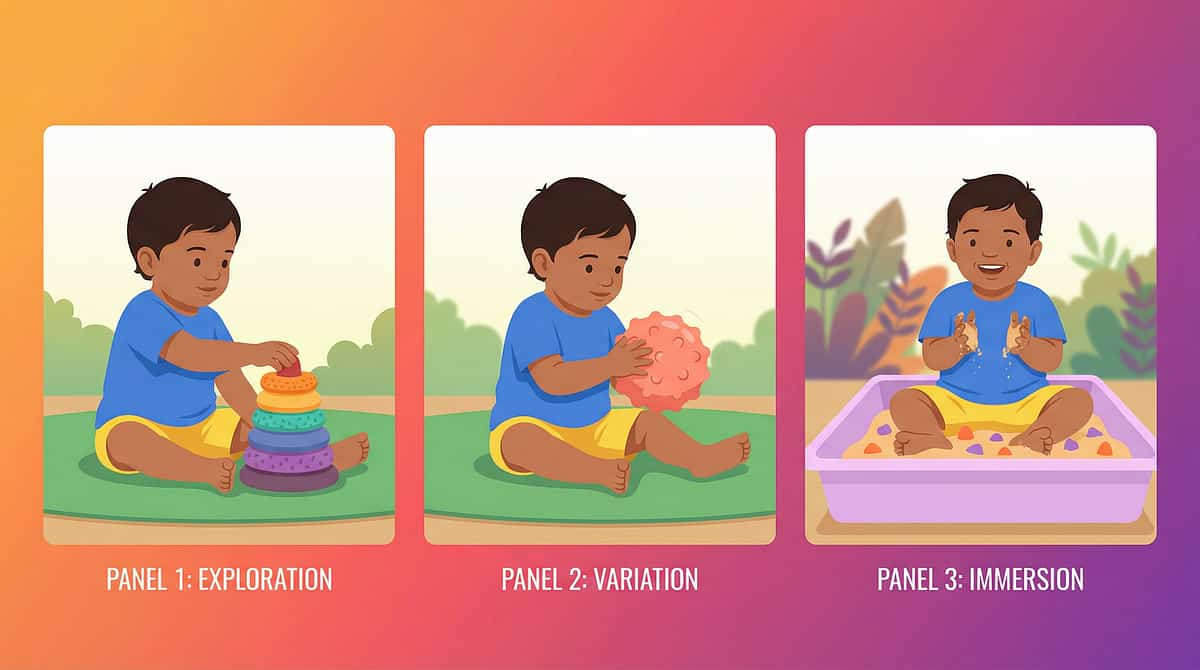
Step 4: Repeat & Vary
Duration: 3–5 minutes
Therapeutic Dosage: Target 3–5 pretend play sequences per session. A "sequence" = one complete pretend action (stirring soup, feeding doll, driving car to store).
Same Material, Different Scenario
"First we cooked soup, now let's make chai!"
Same Scenario, Different Character
"Teddy ate dinner, now it's dolly's turn!"
Same Pretend, New Vocabulary
"We stirred. Now let's POUR. Now let's SERVE."
Satiation Indicators — when the child has had enough: Child pushes materials away gently | Child's attention shifts to other parts of the room | Child yawns, rubs eyes, or shows fatigue signals | Engagement quality drops (mechanical actions vs. engaged play).
"3 good pretend sequences > 10 forced ones. If you get 2 genuine pretend actions and the child is done — that session was a success. Stop on a high note."
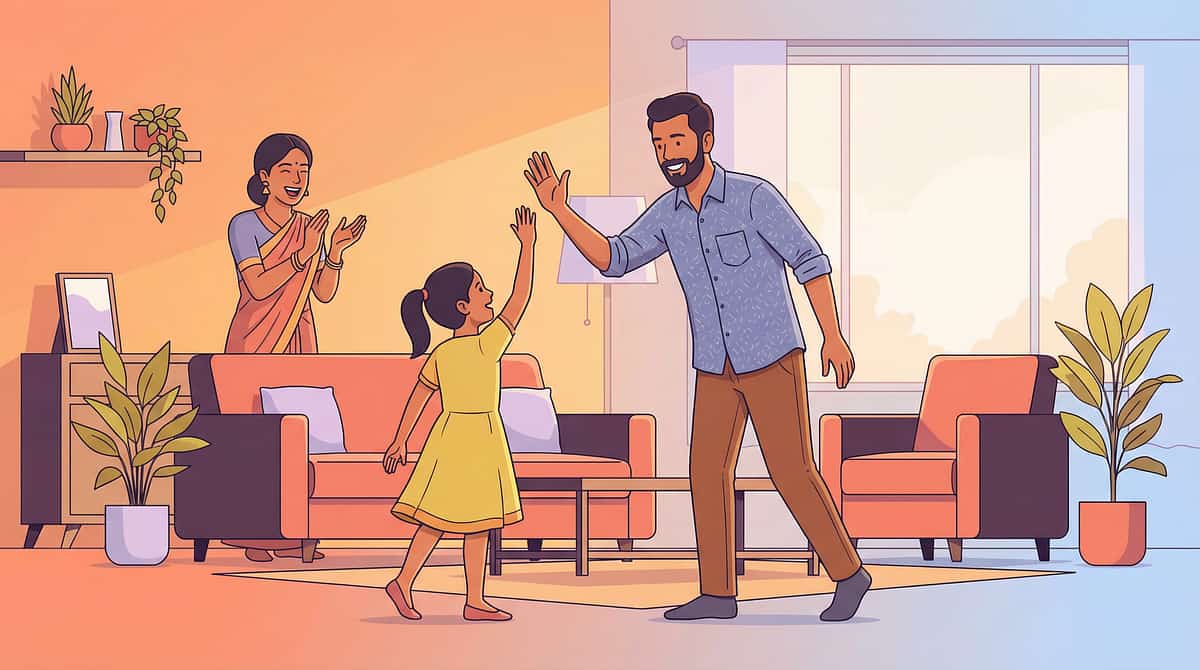
Step 5: Reinforce & Celebrate
WHEN: Within 3 seconds of ANY pretend behavior. Timing matters more than magnitude.
"You PRETENDED to drink the tea! That was amazing!"
"The car went to the store! What a great story!"
"The block became a phone! You used your imagination!"
✅ Specific — Powerful
- "You fed the doll!" (specific, descriptive)
- "The block became a phone! You used your imagination!" (names the skill)
❌ Vague — Less Effective
- "Good job!" (vague, uninformative)
- "Nice playing!" (doesn't tell the child what was good)
"Celebrate the attempt, not just the success. A child who holds the spoon NEAR the pot — even without stirring — is attempting pretend. That attempt deserves celebration."
Step 6: The Cool-Down
Duration: 1–2 minutes
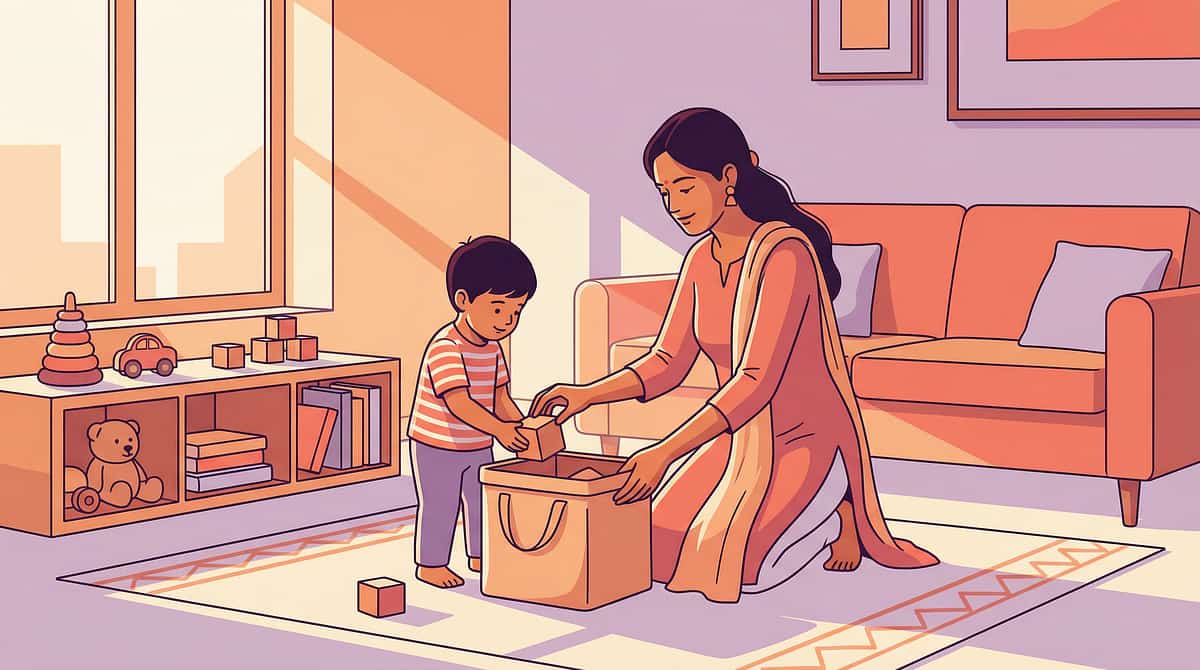
Transitions matter. A predictable, warm ending to each session builds trust, reduces anxiety, and makes your child more willing to engage next time.
"Two more stirs, then all done cooking! Two... one... all done! Let's put the food away. The kitchen is closing for today!"
1–2 Minutes of Calming Sensory Input
Deep pressure hug • Quiet book together • Gentle rocking • Favorite calming activity
Material Put-Away Ritual
"Dolly goes back to bed. Goodnight, dolly!" Even cleanup can be pretend — include the child in the routine.
Transition to Next Activity
"All done playing pretend! Now it's time for [snack/outdoor/next activity]." Use a visual timer if child resists ending. Offer "one more" with a clear ending, then hold the boundary.

60-Second Data Capture — Do It Now
Within 60 seconds of the session ending, record these 3 data points. 60 seconds of data now saves hours of guessing later.
1
Pretend Play Level Observed Today
- Level 0: No pretend play observed
- Level 1: Functional play with objects only
- Level 2: Simple pretend with realistic props (adult modeling required)
- Level 3: Independent simple pretend with realistic props
- Level 4: Pretend with substitution (object represents another)
- Level 5: Multi-step pretend sequences independently
- Level 6: Social pretend play with peers
2
Engagement Duration
How long did the child remain engaged in play (any level)? _____ minutes
3
Session Rating
- 😊 Great session — multiple pretend moments
- 🙂 Good session — some pretend or high engagement
- 😐 Okay session — mostly functional play, brief pretend
- 😟 Difficult session — child resistant or distressed
- ⏭️ Postponed — child not ready today
Troubleshooting — It's Data, Not Failure
Every challenge you encounter is information about what to adjust. There is no such thing as a failed session — only data that guides your next step.
Problem 1: "My child ignored the materials completely."
That's okay. Place materials nearby during their preferred activity. Let proximity work. Try again tomorrow. It can take 3–7 exposures before engagement.
Problem 2: "My child only plays functionally — spinning wheels, lining up."
This IS the starting point. Sit beside them and add ONE pretend element to THEIR functional play: "The cars are all going to a race! Ready, set, GO!"
Problem 3: "My child got upset when I tried to change how they play."
Never disrupt their play — ADD to it. If they're lining up cars, build a garage at the end of the line. If they're spinning wheels, become the "mechanic" who checks wheels.
Problem 4: "I modeled pretend but my child just watched."
Watching IS participating. The mirror neuron system is activating. Continue modeling across sessions. Participation follows observation.
Problem 5: "My child grabbed one toy and walked away."
Follow them. Bring the pretend to where THEY go. If they take the car to the couch, the couch becomes the mountain for the car to climb.
Problem 6: "We had a great session yesterday but today nothing worked."
Variability is normal. Development is not linear. One great session followed by three quiet ones is still progress.
Problem 7: "My child became severely distressed."
Stop immediately. Provide comfort. Do NOT retry today. If distress occurs across multiple sessions, consult your Pinnacle therapist for a modified approach.
"Session abandonment is not failure — it's data."
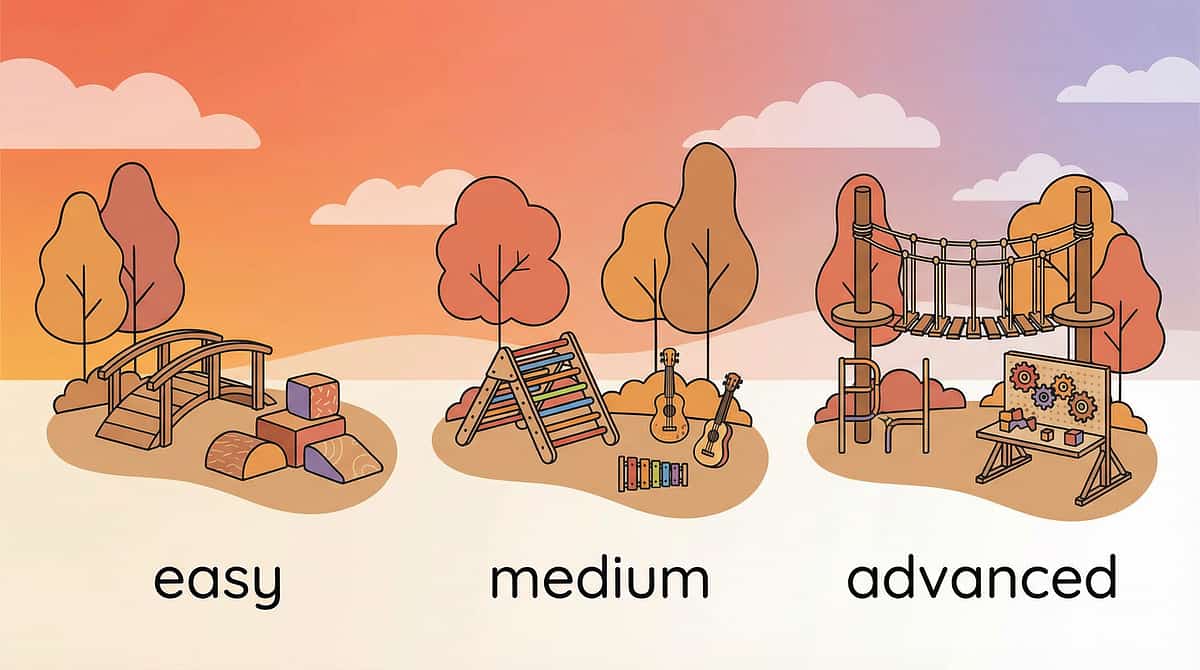
Make It Yours — Adapt to Your Child
Sensory Seeker
Choose materials with strong sensory input — play dough food, textured costumes, noisy vehicles.
Sensory Avoider
Choose calm, predictable materials — soft dolls, wooden blocks, simple puppets. Avoid overwhelming textures.
Mixed Profile
Start with preferred sensory channel, gradually introduce less-preferred materials over time.
Interest-Based Entry Points: Loves trains? → Start with Material 5 (Vehicle Sets). Loves cooking shows? → Start with Material 6 (Play Food). Loves animals? → Start with Material 7 (Puppets). Loves building? → Start with Material 4 (Building Materials).

Weeks 1–2: The Tolerance Phase
Progress: ~15%
Weeks 1–2 require patience. You are planting seeds. The shoots are invisible. But beneath the surface, neural pathways are forming each time your child sees you pretend, each time they touch a new material, each time they sit in proximity to the play space.
✅ What Progress Looks Like (It's Subtle)
- Child allows the materials to be present during play (doesn't push away)
- Child briefly glances at your pretend play modeling
- Child touches or holds a new material for longer than baseline
- Child tolerates you playing nearby without distress
- Occasional functional engagement with play materials (even non-pretend)
❌ What Progress Does NOT Look Like Yet
- Child spontaneously pretending
- Child creating stories or narratives
- Child using substitution objects
- Child inviting you into pretend play
"If your child tolerates the play materials for even 30 seconds longer than last week — that is real, measurable, neurological progress."

Weeks 3–4: The Consolidation Phase
Progress: ~40%
Something is shifting. The exposure is accumulating. You may notice small but significant behavioral changes that signal neural pathway formation — the neural infrastructure of imagination being built, quietly, one session at a time.
Anticipatory Behavior
Child begins to anticipate play time — moves toward the play area when it's set up.
Voluntary Engagement
Child picks up play materials voluntarily (even if used functionally) and watches your pretend with longer attention.
Emerging Pretend
Brief moments of pretend emerge — a spoon near a pot, a car pushed toward a destination. The "double look" appears: material → you → material.
Spontaneous Sound Effects
"Vroom!" with a car. "Mmm" with food. Holding a figure/doll as if it's alive, not just an object.
"You may notice you're more confident too. The scripts come more naturally. The setups feel easier. You're becoming the therapist this technique requires."

Weeks 5–8: The Mastery Phase
Progress: ~75%
🏅 Mastery Criteria
This is where the work becomes visible. The imagination that seemed unreachable is now being expressed — spontaneously, independently, generalizably. The skill is internalizing.
🏅 Independent Pretend
Child demonstrates pretend play actions independently, without adult modeling required.
🏅 Multiple Schemas
Child uses at least 2 different pretend schemas (e.g., cooking AND doctor play).
🏅 Sequenced Pretend
Child creates 2-step pretend sequences (stir → serve, or drive → park).
🏅 Generalization
Pretend play appears with different materials, in different rooms, with different people — at grandparent's house, during mealtimes, while watching other children.
When to Move to Next Level: If mastery criteria are met → Progress to Material Categories 3–5 (dress-up, building, vehicles) or advance to substitution play (Material 8). Does the child still pretend when you DON'T set up the formal session? If yes — the skill is internalizing.

You Did This.
"You sat on the floor when you were exhausted. You modeled pretend when it felt silly. You waited through weeks of watching without responding. You trusted the process, the materials, and your child. And your child's imagination began to bloom."
Your child now has the beginnings of pretend play — the cognitive foundation for abstract thinking, language development, social understanding, and academic readiness. This is not a small thing. This is transformative.
Document the Milestone
Take a photo of your child pretending. This is one of those days worth recording.
Tell Your Child
"I love the way you play!" Share the moment with your partner, parents, and therapist.
Write It Down
Note this in your journal. Remember Card 1 — the cars lined up, the wheels spinning. Look at the distance you've traveled together.

When to Pause and Seek Guidance
Trust your instincts. If something feels wrong, pause and ask. That is not anxiety — it is clinical precision. The following indicators signal that professional guidance is needed beyond this home protocol.
🚩 Red Flag 1: No Tolerance Increase
After 4 weeks of consistent daily sessions, child shows NO increase in tolerance for play materials (still pushes away, still avoidant). → Schedule assessment.
🚩 Red Flag 2: Increasing Distress
Child's distress during play sessions is INCREASING rather than decreasing over time. → Pause and consult therapist immediately.
🚩 Red Flag 3: Concurrent Regression
Child shows regression in other areas (language, social engagement, eating) coinciding with play intervention. → Immediate clinical review.
🚩 Red Flag 4: New Repetitive Behaviors
Child develops new obsessive behaviors centered around the play materials. → Behavioral assessment required.
🚩 Red Flag 5: No Pretend Play by 24 Months
This is a developmental red flag for autism spectrum disorder regardless of other symptoms. → Comprehensive evaluation recommended.
01
Self-Resolve
Modify approach using Card 22 adaptations first.
02
Teleconsult
Book a teleconsultation with Pinnacle → 1800-123-7838
03
Clinic Visit
Full developmental assessment → Find nearest Pinnacle center
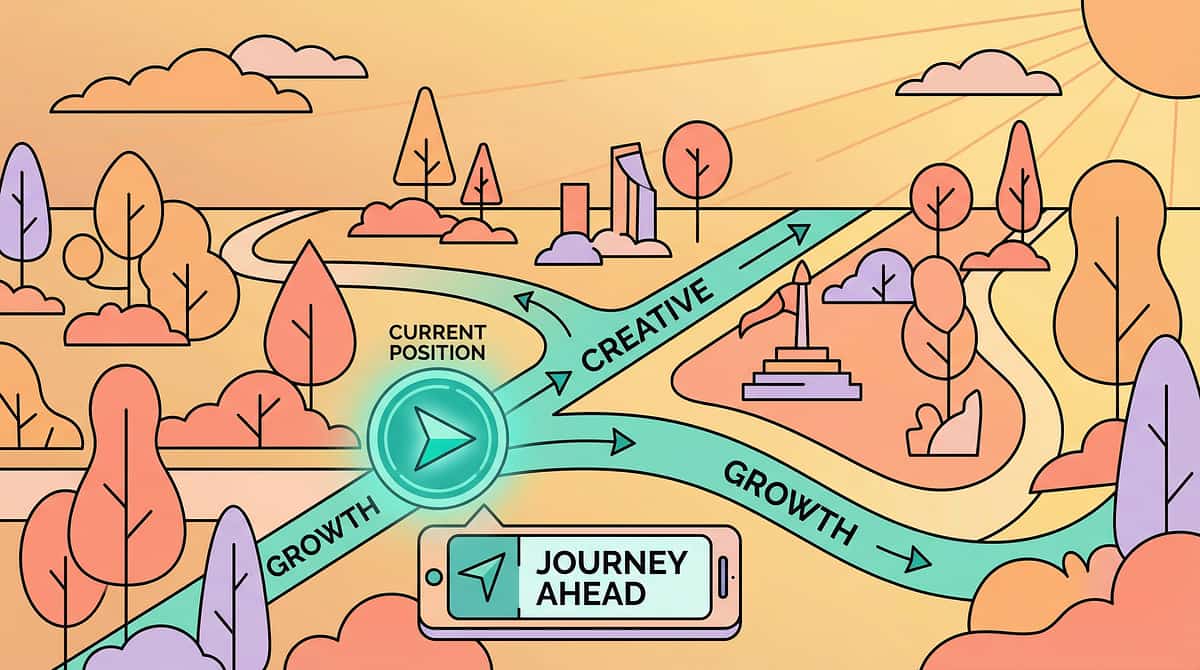
Your Child's Play Development Journey
← Prerequisite Techniques
- B-130: Doesn't Imitate — Imitation is the precursor to pretend play
- B-104: Doesn't Play with Toys — Functional play comes before pretend play
→ Next Level Options
- B-132: Limited Functional Play
- B-131-DD-01: Using Realistic Play Sets (Deep Dive)
- B-131-DD-02: Teaching Object Substitution (Deep Dive)
- ↔ B-094: Unusual Object Attachment
- ↔ K-936: Scaffolding Pretend Play
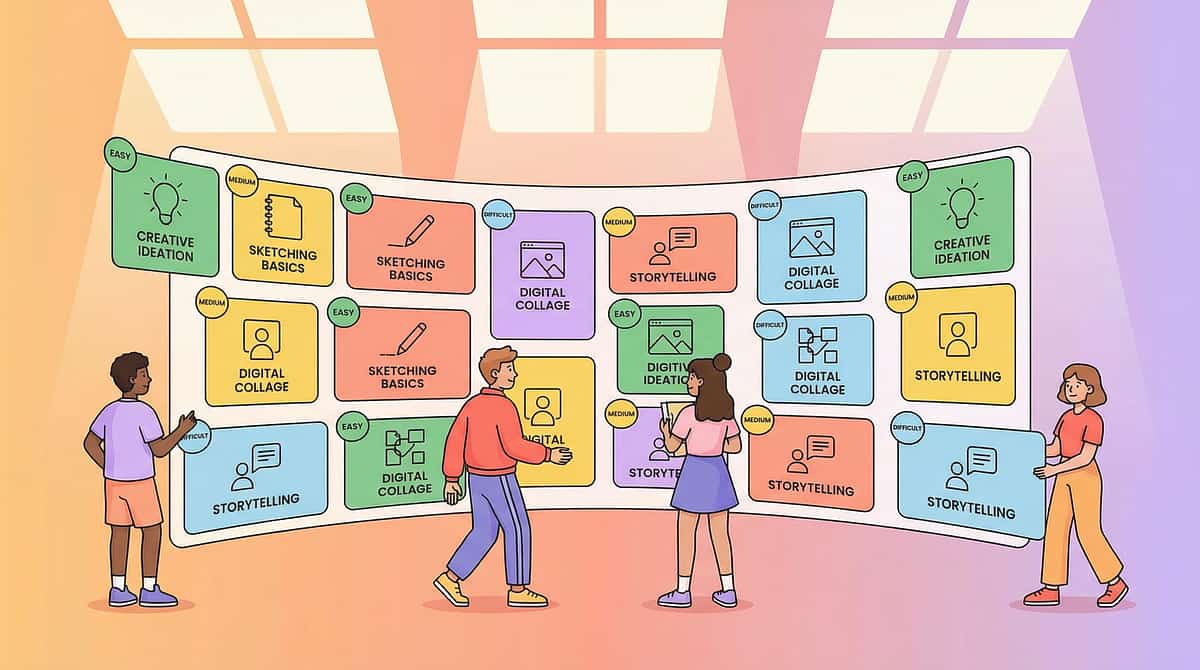
More Techniques in Play & Imagination
Your investment in imagination tools pays dividends across the entire Play & Imagination domain. You likely already own materials for most of these techniques.
Technique | Difficulty | Materials You May Already Own | |
B-130: Doesn't Imitate | Intro | Dolls, Action Figures | |
B-132: Limited Functional Play | Intro | Realistic Play Sets, Building Materials | |
B-094: Unusual Object Attachment | Core | Substitution Objects, Puppets | |
K-903: Therapy Carryover at Home | Intro | All materials from B-131 | |
K-910: Teaching Through Play | Core | Play Food, Kitchen Items | |
K-936: Scaffolding Pretend Play | Advanced | All 9 material categories |

One Technique, One Domain, One Child — The Full Picture
Pretend play doesn't exist in isolation. It feeds and is fed by every other developmental domain. This technique is one piece of a larger, integrated plan for your child's growth.
Speech & Language
Pretend play expands vocabulary and narrative skills.
Social Communication
Joint attention, turn-taking in play.
Cognitive Development
Abstract thinking, symbolic reasoning.
Academic Readiness
Symbolic thinking is the foundation of literacy and numeracy.

From Their Homes to Yours
"My son only spun wheels on cars — no stories, no pretend. We started with the play kitchen because he loved watching me cook. For two weeks, he just stood nearby. In week three, he picked up the play spoon and held it near the pot. I cried. After six months of daily play with these materials, he started making the cars 'go to the store' and 'visit friends.' Now he plays pretend with his sister."
— Parent, Pinnacle Network (Illustrative; outcomes vary)
"Our daughter would line up her dolls but never 'play' with them. We started with puppets because she loved animals. The day the puppet 'talked' to her and she talked back — that was the day everything changed. She's 4 now and creates elaborate stories with her puppets every afternoon."
— Parent, Pinnacle Network (Illustrative; outcomes vary)
From the Therapist's Notes: "This child's pretend play progression followed the classic developmental staircase: tolerance → proximity → functional engagement → supported pretend → independent pretend. The key was starting with Material 6 (play kitchen) because it connected to an existing interest. Parent consistency was the critical variable — daily 10-minute sessions for 6 months."

You're Not Alone in This
Thousands of families are on this same journey. Your experience matters — not just to you, but to the family who starts tomorrow and needs to hear from someone who has walked this path.
WhatsApp Community
Join Pinnacle Parent WhatsApp Community — Play Development Group
Online Parent Forum
Play & Imagination Discussion Forum
Local Meetups
Find a Local Pinnacle Parent Meetup
Peer Mentoring
Connect with a Peer Mentor — an Experienced Parent
"Your experience helps others. Consider sharing your journey — the family who starts tomorrow needs to hear from you."
Professional Backup — Pinnacle Is Here
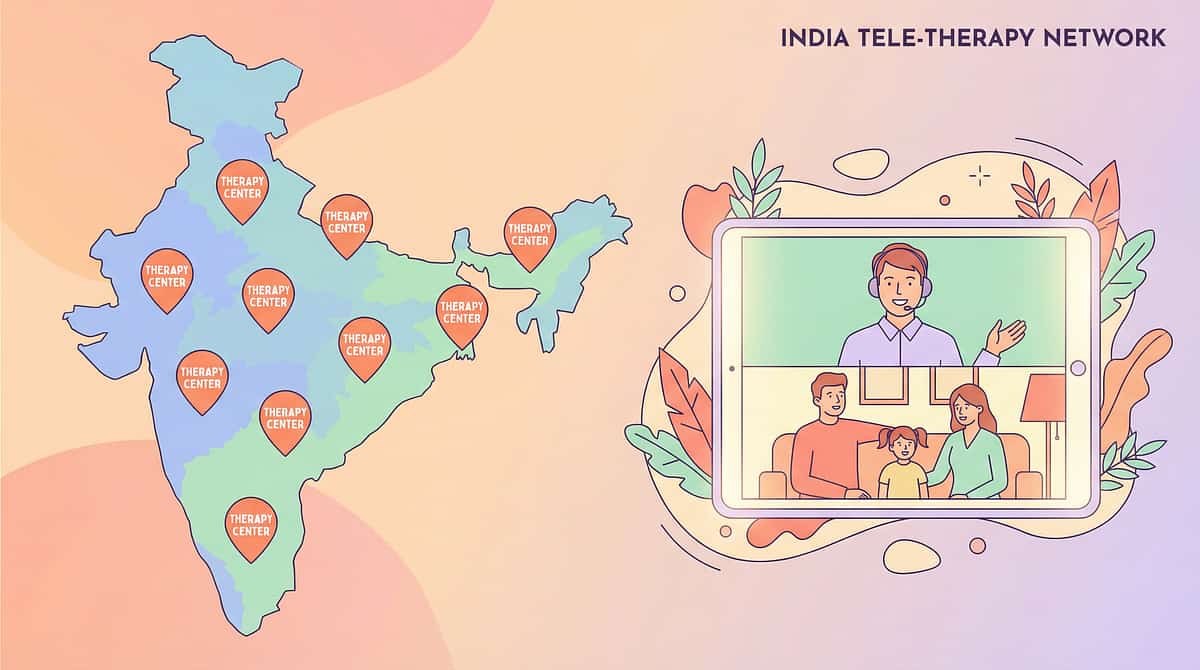
Pinnacle Blooms Network — 70+ Centers Across India. Home practice amplified by professional guidance creates the maximum impact for your child. You don't have to do this alone.
Developmental Assessment
Play skills evaluation across developmental levels — understand exactly where your child is and where they're heading.
ABA Therapy
Play skill programming with data-driven progression through the developmental staircase.
Speech Therapy
Language development through play — expanding vocabulary and narrative skills.
Occupational Therapy
Sensory-motor play integration — pairing sensory regulation with pretend play development.
Special Education
Cognitive flexibility and school readiness through play.
Parent Training
EverydayTherapyProgramme™ for daily play practice at home — become your child's best therapist.
📞
FREE Helpline
9100 181 181 — 16+ languages, 24×7
🌐
Website
📧
The Evidence — For the Curious Parent
📄 Leslie AM (1987)
Pretense and representation: The origins of "theory of mind." Psychological Review. Established the foundational link between pretend play and theory of mind.
📄 Kasari et al. (2006)
Joint attention and symbolic play in young children with autism. J Child Psychology and Psychiatry. Targeted play interventions increase symbolic play in children with ASD.
📄 Wolfberg PJ (2009)
Play and imagination in children with autism. Evidence for systematic play skill development through appropriate materials and scaffolding.
📄 PRISMA Review (2024)
16 articles (2013–2023) confirm evidence-based practice status. PMC11506176
📄 Meta-analysis (2024)
Across 24 studies — effective promotion of social skills, adaptive behavior. PMC10955541
📄 WHO Nurturing Care Framework (2018)
Five components of nurturing care including early learning/play. https://nurturing-care.org/ncf-for-ecd/
📄 WHO CCD Package
Implemented in 54 LMICs — household-material-based interventions. PMC9978394
📄 Pinnacle Clinical Data
20M+ sessions, 97%+ measured improvement rate across 70+ centers. pinnacleblooms.org

Powered by GPT-OS® — How Your Data Drives Progress
What GPT-OS® Learns from This Technique
- Your child's pretend play level progression over time
- Which material categories generate the most engagement
- Optimal session timing and duration for your child
- When to recommend advancing to the next material category or technique
- How play development connects to the broader developmental profile
Privacy & Data Protection
- 🔒 Your data is encrypted and protected under GPT-OS® data governance protocols
- 🔒 Data is used to improve recommendations for YOUR child and, in aggregate, for all children
- 🔒 Compliant with Indian IT Act and international data protection standards
Readiness Tracking
Progress tracked through the Learning & Academic Readiness Index (symbolic thinking, cognitive flexibility) and Social Participation Index (peer play readiness, cooperative play skills).
"Your data helps every child like yours. The more families contribute, the more precise our recommendations become for everyone."

Watch: 9 Materials That Help With Limited Pretend Play
📹 Reel ID: B-131
Play and Imagination Differences Series — Episode 131
Duration: 75 seconds
Watch a Pinnacle therapist demonstrate each of the 9 materials and see how they are used with real children in therapeutic sessions. Video modeling is classified as an evidence-based practice for autism (NCAEP, 2020). Multi-modal learning — reading + watching + doing — improves parent skill acquisition and confidence significantly.
Reel Details: Reel ID: B-131 | Series: Play and Imagination Differences Series — Episode 131 | Domain: Behavioral / Developmental — Pretend Play Development
Video embed (B-131) available through the Pinnacle GPT-OS® platform. Log in to access the full video library.
Video embed (B-131) available through the Pinnacle GPT-OS® platform. Log in to access the full video library.
Consistency Across Caregivers Multiplies Impact
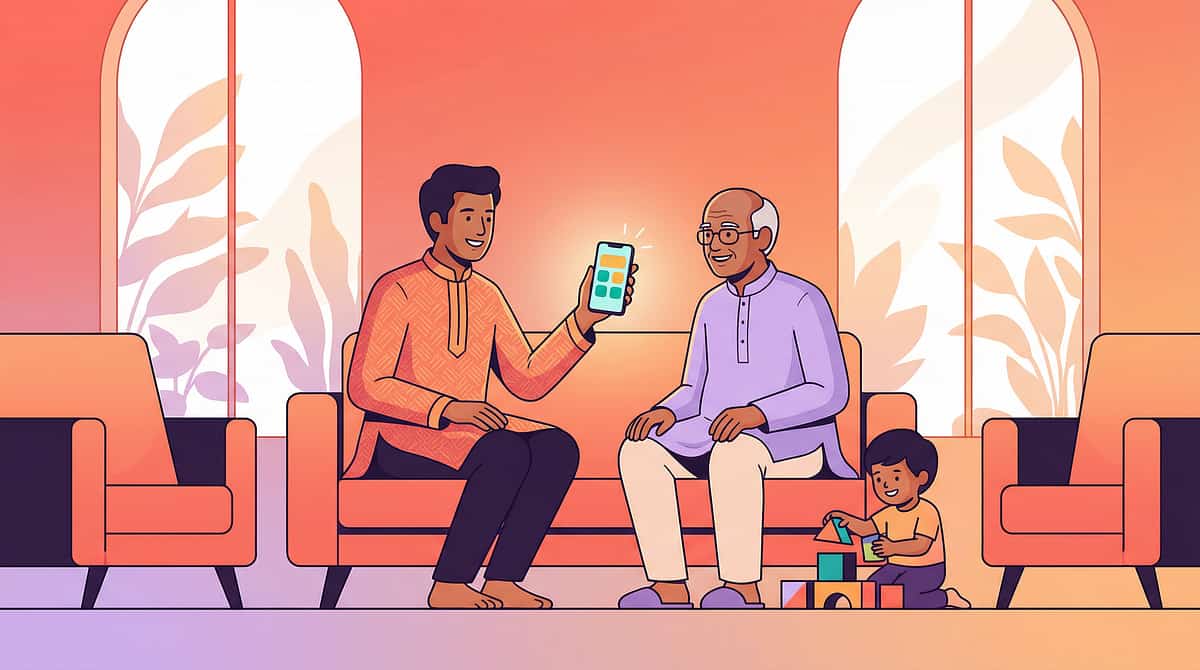
If only one caregiver executes this technique, the impact is limited. When grandparents, spouses, school teachers, and nannies all understand the approach — your child's world becomes a consistent learning environment and a full-time imagination school.
Family Guide (1-Page PDF)
unknown link
Grandparent Version
unknown link
Share This Page
Share on WhatsApp | Share via Email | Copy Link — every caregiver who reads this page amplifies your child's progress.
"Dear Teacher, our child is working on developing pretend play skills using a structured materials approach guided by Pinnacle Blooms Network. If possible, please: (1) Provide opportunities for pretend play with realistic props, (2) Model pretend actions during play time, (3) Celebrate any pretend play attempts. Thank you for being part of our child's team."
Your Questions, Answered
Q1: At what age should I be concerned about limited pretend play?
If your child shows no pretend play by 24 months, this is a developmental red flag and warrants evaluation. However, pretend play skills can be supported at any age with appropriate intervention.
Q2: How long until I see results?
Most families notice tolerance and engagement changes in weeks 1–2, emerging pretend behaviors in weeks 3–4, and independent pretend play elements in weeks 5–8. Full development takes 3–6 months of consistent daily sessions.
Q3: Should I start with all 9 materials?
No. Start with 1–2 material categories based on your child's interests (see Card 22). Add new categories as the child masters each level.
Q4: My child only wants to play with one toy. Should I take it away?
Never remove a preferred toy. Instead, ADD pretend elements around it. If they love cars, add destinations. If they love blocks, build a house for a doll.
Q5: Is this only for children with autism?
No. Any child with limited pretend play — regardless of diagnosis — can benefit from materials-scaffolded play development. The approach is based on universal developmental principles.
Q6: Can I do this without buying expensive toys?
Absolutely. See Card 10 for zero-cost DIY alternatives for every material category. The therapeutic principle works with household items.
Q7: What if my spouse/partner doesn't understand?
Share this page (Card 37), the simplified family guide, and the Reel (Card 36). If they need more convincing, book a family teleconsult with Pinnacle.
Q8: Should I stop if my child resists?
If the child shows mild resistance, modify the approach (easier version, shorter session, different material). If the child shows severe distress, stop and consult a professional. Resistance itself is data — it tells you what to adjust.

The Time to Start Is Today
Every day of consistent, loving, scaffolded play is a day your child's imagination grows stronger. You have the knowledge. You have the materials — or know how to make them. You have the protocol. The only step left is to sit on the floor and begin.
🚀 Start This Technique Today
📞 Book a Play Assessment
Talk to a Specialist | FREE Helpline: 9100 181 181 (16+ languages, 24×7)
→ Explore Next Technique
20M+
Sessions Delivered
97%+
Measured Improvement
70+
Centers Across India
✅ Validated by the Pinnacle Blooms Consortium
OT • SLP • BCBA • SpEd • NeuroDev
Preview of 9 materials that help with limited pretend play Therapy Material
Below is a visual preview of 9 materials that help with limited pretend play therapy material. The pages shown help educators, therapists, and caregivers understand the structure and content of the resource before use. Materials should be used under appropriate professional guidance.


Link copied!

The Pinnacle Promise
"A parent arrived on this page watching their child line up cars in silence. By now, they understand the neuroscience, hold the materials, know the protocol, track the data, and see the trajectory. The imagination that seemed absent is emerging. The story that seemed stuck is unfolding. This is what 21 million therapy sessions, 1,000+ clinical professionals, and 70+ centers have taught us: every child's imagination can bloom. Given the right bridge. Given the right materials. Given a parent willing to sit on the floor and pretend."
Pinnacle Blooms Network®
SLP • OT • BCBA • SpEd • NeuroDev
"From fear to mastery. One technique at a time."
Explore More Techniques
Return to Top
Revisit the recognition moment — share this page with another caregiver.
Next Recommended Technique
Medical Disclaimer: This content is for educational purposes only and does not replace professional evaluation or treatment. Limited pretend play may indicate developmental conditions including autism spectrum disorder requiring comprehensive assessment. Consult a developmental pediatrician, psychologist, or other qualified professional for individualized guidance. Individual results vary.
Legal & Statutory: © 2026 Pinnacle Blooms Network®, unit of Bharath Healthcare Laboratories Pvt. Ltd. All rights reserved. CIN: U74999TG2016PTC113063 | DPIIT: DIPP8651 | MSME: TS20F0009606 | GSTIN: 36AAGCB9722P1Z2 | ISO 13485 Medical Device QMS | ISO/IEC 27001 Information Security. Patent applications filed across 160+ countries.
Powered by GPT-OS® — Global Pediatric Therapeutic Operating System | techniques.pinnacleblooms.org | pinnacleblooms.org