
Drop-off separation anxiety affects millions of children aged 2–8 worldwide. It is one of the most documented, most researched challenges in early childhood development. It is not a reflection of your parenting. It is a neurological signal with evidence-based solutions. This page gives you 9 proven materials — each backed by clinical research from GPT-OS®'s 20 million+ therapy sessions — that make goodbye not just possible, but manageable.
0
School drop-off ranks among the top 5 most distressing daily events reported by parents of neurodiverse children. You are not isolated. You are not uniquely failing. You are part of an enormous global community of parents who are learning — right now — that targeted tools work infinitely better than words alone.
Experience clinically significant separation anxiety at some point during preschool years
Children with autism or developmental differences show heightened separation anxiety due to transition challenges
Delivered by Pinnacle Blooms Network® — with 97%+ measured improvement across anxiety and emotional regulation domains
In India alone, conservative estimates suggest over 2.3 million children experience significant drop-off separation anxiety annually. The silence around this challenge keeps parents isolated. This page breaks that silence with science.
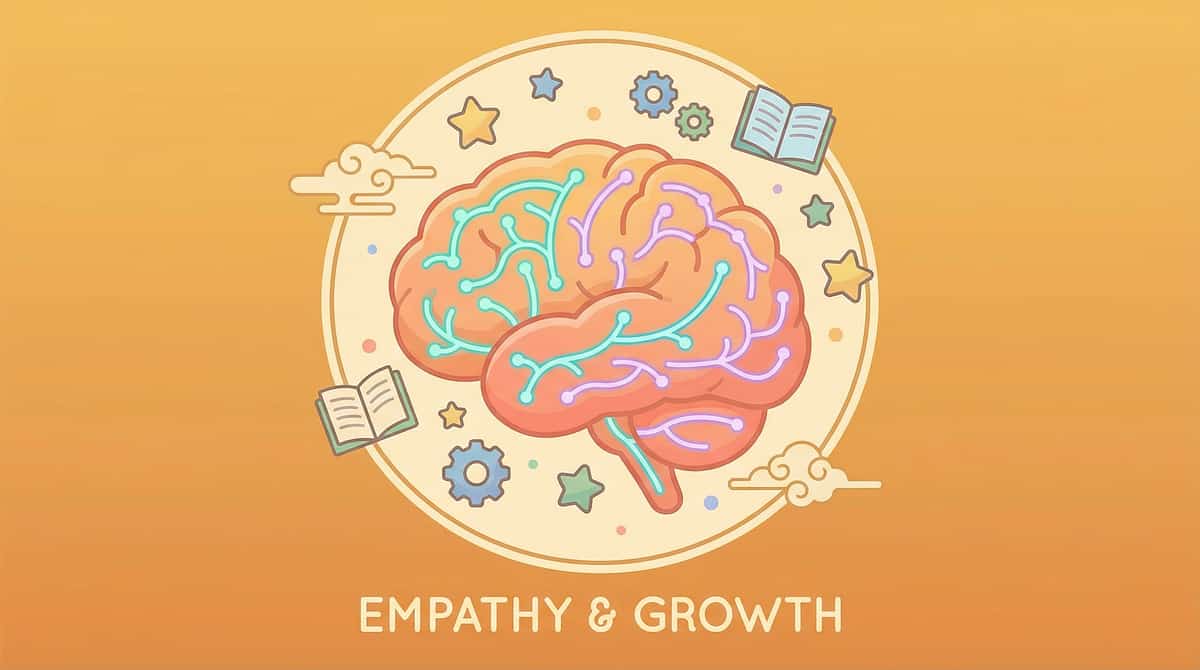
When your child reaches the classroom door, their amygdala — the brain's threat-detection centre — fires an alarm signal that floods the body with cortisol and adrenaline. The prefrontal cortex, which handles rational thought ("Mummy always comes back"), is still developing until age 25 — and is temporarily offline during this threat response.
This is why logic doesn't work. "I'll be back at 3pm" lands on a brain in full fight-or-flight. The words arrive but cannot be processed.
- Your child is NOT being manipulative
- Reassurance doesn't reach the activated brain
- The nervous system needs physical objects and rituals — not words
- Predictable routines literally re-wire the threat response over time
- With the right tools, the amygdala learns: "this goodbye is safe"
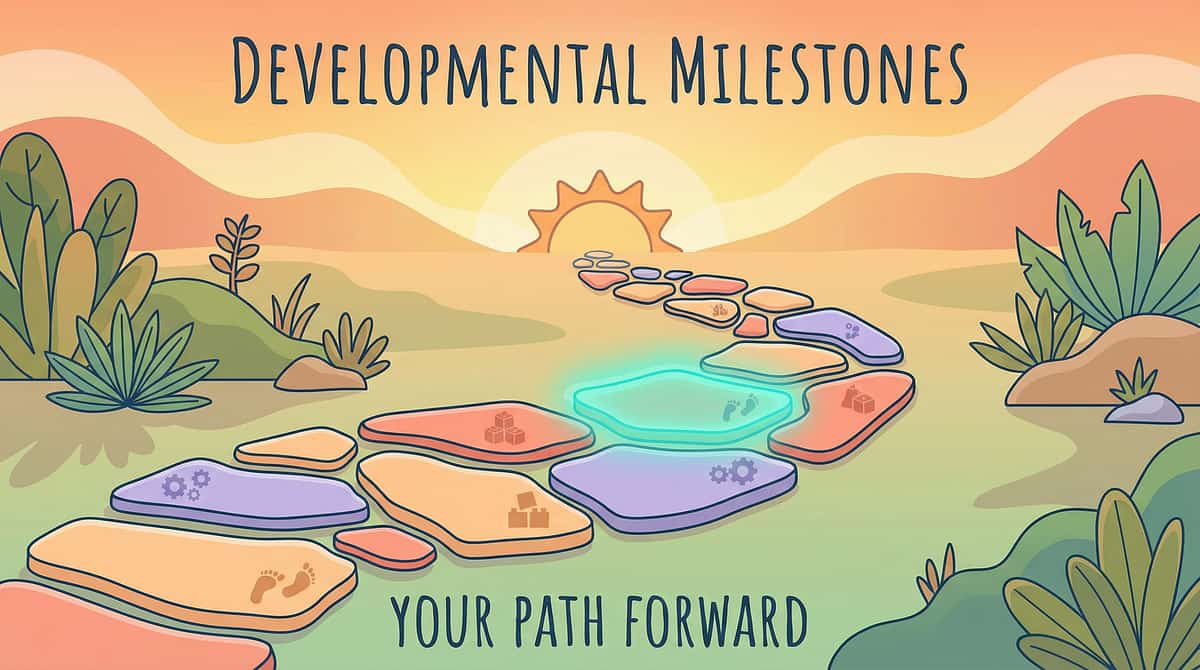
Understanding where separation anxiety fits in your child's developmental arc is the first step to working with it — not against it. The timeline below shows that your child is in a well-documented, well-researched developmental zone.
Separation anxiety peaks. Drop-off distress is developmentally expected but not inevitable without tools. Comfort objects and parental scent anchors are most effective.
Second peak at school entry. Visual schedules and goodbye rituals become the primary therapeutic tools. This is the window where intervention produces the fastest results.
Should be resolving. Persistent intensity signals an underlying anxiety pattern that responds well to brave reward systems and worry externalisation tools.

Every material and strategy on this page is supported by peer-reviewed research. The evidence base is not thin — it is deep, replicated, and internationally endorsed. Here is the science that powers every card.
Study | Finding | Reference |
PRISMA Systematic Review (2024) | 16 studies confirm sensory and transitional object interventions are evidence-based practice for anxiety management in ASD | PMC11506176 |
Meta-analysis, World J Clin Cases (2024) | Structured transitional supports effectively promote social-emotional skills, adaptive behaviour, and self-regulation | PMC10955541 |
Indian RCT, Padmanabha et al. (2019) | Home-based, parent-administered anxiety interventions show significant outcomes in Indian paediatric populations | DOI:10.1007/s12098-018-2747-4 |
NCAEP Evidence-Based Practices (2020) | Visual supports, social stories, and structured goodbye rituals classified as evidence-based practices for autism | NCAEP 2020 |
WHO CCD Package | Multi-caregiver implementation of structured transition supports demonstrates efficacy across 54 countries | PMC9978394 |
Formal Name: Drop-Off Separation Anxiety Intervention via Transitional Material Support
Parent-Friendly Alias: "The Goodbye Toolkit" — 9 materials that make separation manageable
Emotional Regulation / Separation Anxiety
2–8 years
5–10 minutes at each drop-off
Daily — every drop-off
Separation Readiness Index
When your child's Pinnacle care team uses this technique, you are accessing five disciplines in coordinated, simultaneous focus on the same challenge — through a single protocol, governed by one system: GPT-OS®.
Addresses the sensory regulation component of drop-off anxiety. Designs the sensory tool kit (glitter jars, fidgets, weighted items) matched to the child's sensory profile. Identifies whether school environment sensory overwhelm is amplifying separation distress.
Structures the goodbye ritual as a behavioural protocol. Implements the brave bead token economy. Tracks separation data across sessions. Uses reinforcement scheduling to build independence at transitions.
Develops visual communication supports (goodbye cards, social stories). Builds the child's vocabulary for naming and expressing their feelings. Creates recordable voice message scripts.
Coordinates with school staff on ritual implementation and visual schedule placement. Bridges home and classroom protocol consistency. Adapts materials for the specific school environment.
Assesses whether separation anxiety reflects an underlying anxiety disorder requiring clinical intervention. Determines when tool-based support alone is insufficient and stepped-up care is warranted.
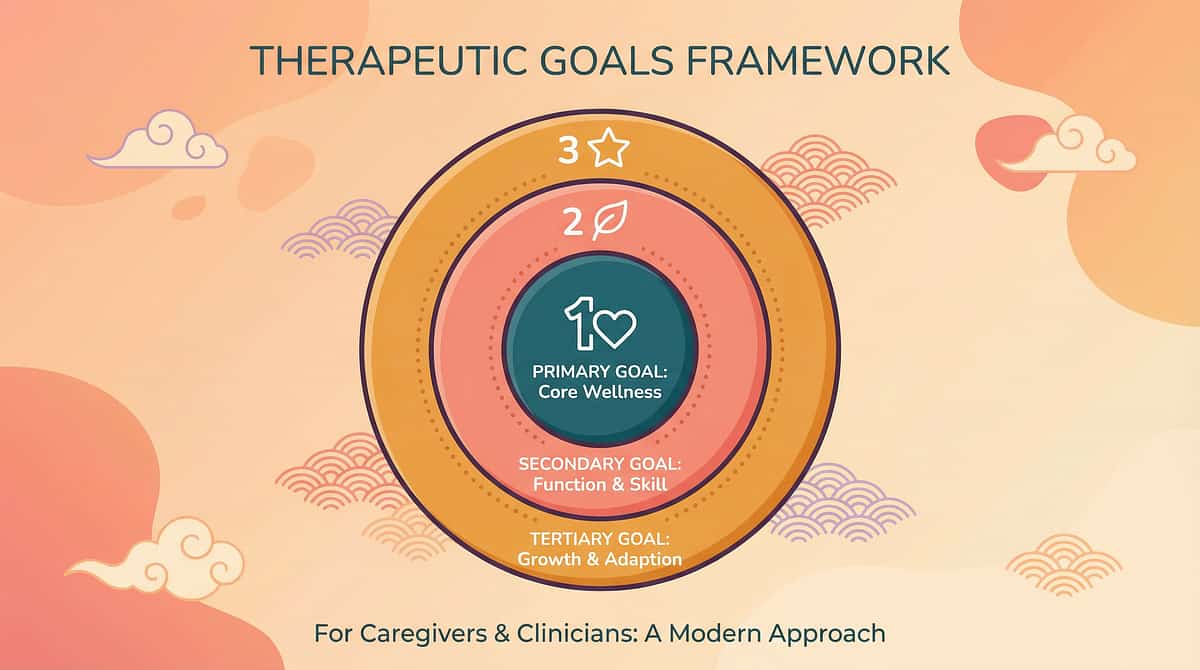
Child spends less than 5 minutes recovering after parent leaves (down from 15–20)
Child can hold/use transitional object without parent prompting
Child completes ritual steps without running after departing parent
Physical symptoms (stomachaches, headaches before school) decrease in frequency
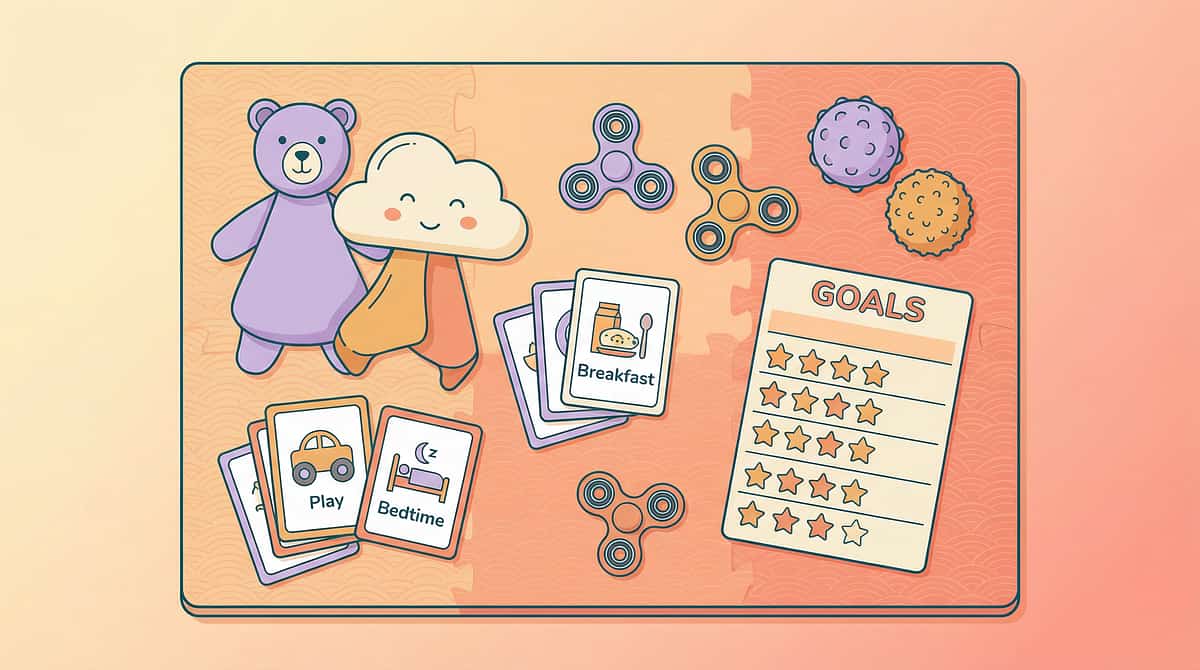
These nine materials form a complete, evidence-based system. Use all nine for maximum impact, or start with the Minimum Viable Toolkit (see box below) and build from there.
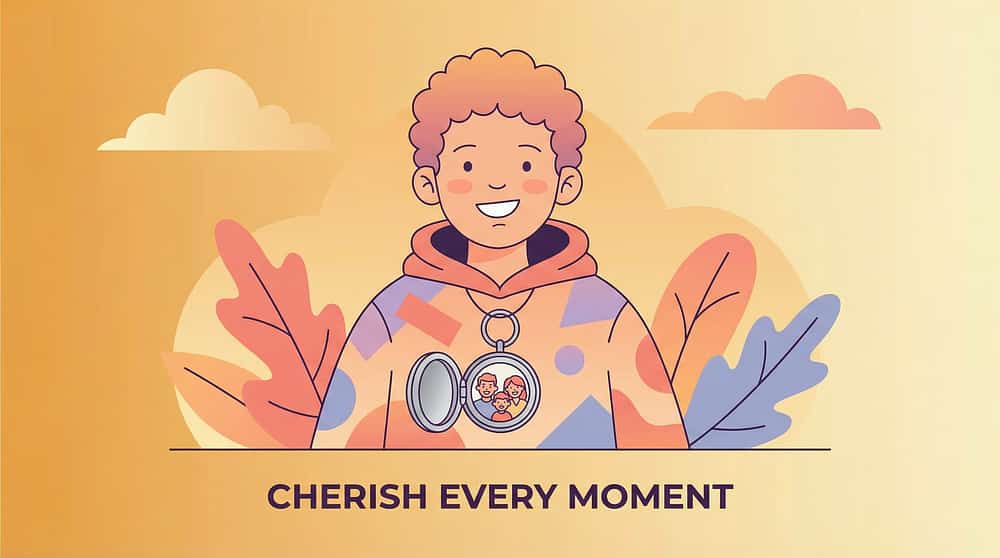
See your face, feel your love.
Canon: Transition Objects / Comfort Items
Price: ₹100–500 | Search Amazon.in: "photo keychain locket children"
DIY: Laminated wallet-sized photo in clear ID holder — FREE
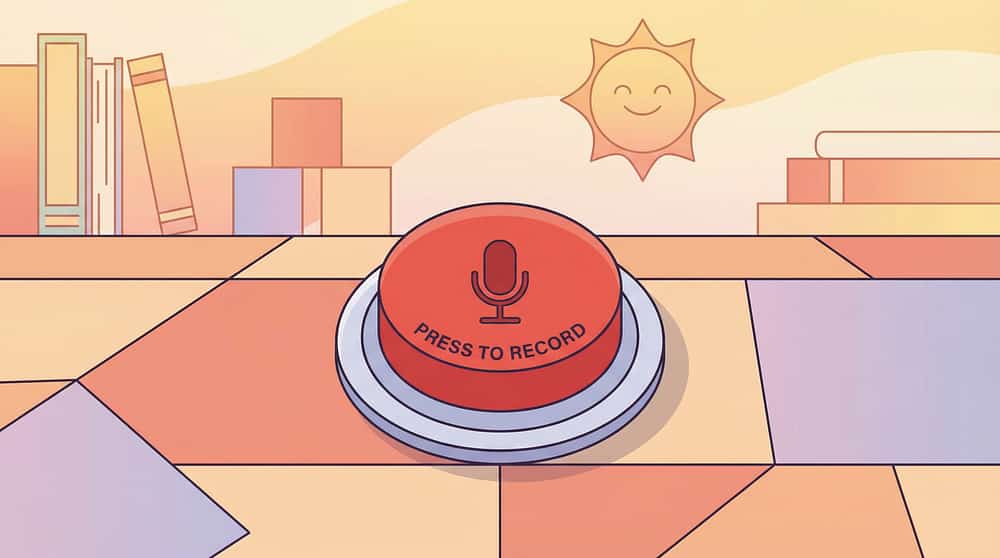
Hear your voice, feel your calm.
Canon: Communication / Sensory Support
Price: ₹200–1,000 | Search Amazon.in: "recordable button talking photo frame children"
DIY: Voice recording on shared family tablet or phone — FREE

Piece of home in pocket or cubby.
Canon: Transition Objects / Comfort Items — Active Pinnacle Product
Pinnacle Recommended:Animal Soft Toys — ₹425
DIY: Child's chosen stuffed animal, parent's scented handkerchief — already owned
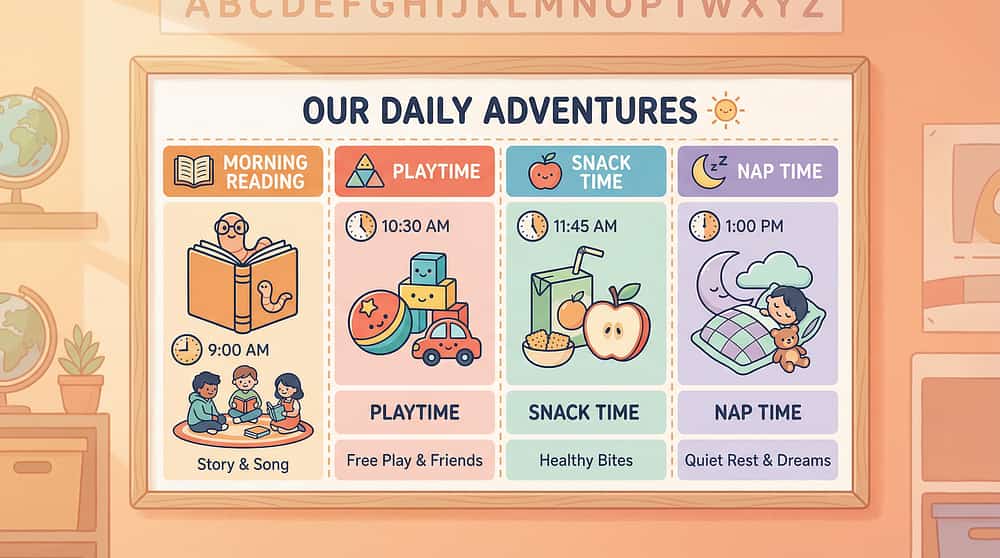
See the day. See when I return.
Canon: Visual Supports / Schedules
Price: ₹200–800 (mostly DIY) | Search Amazon.in: "visual schedule children daily routine chart"
DIY: Laminated poster board with Velcro picture symbols — ₹50–100
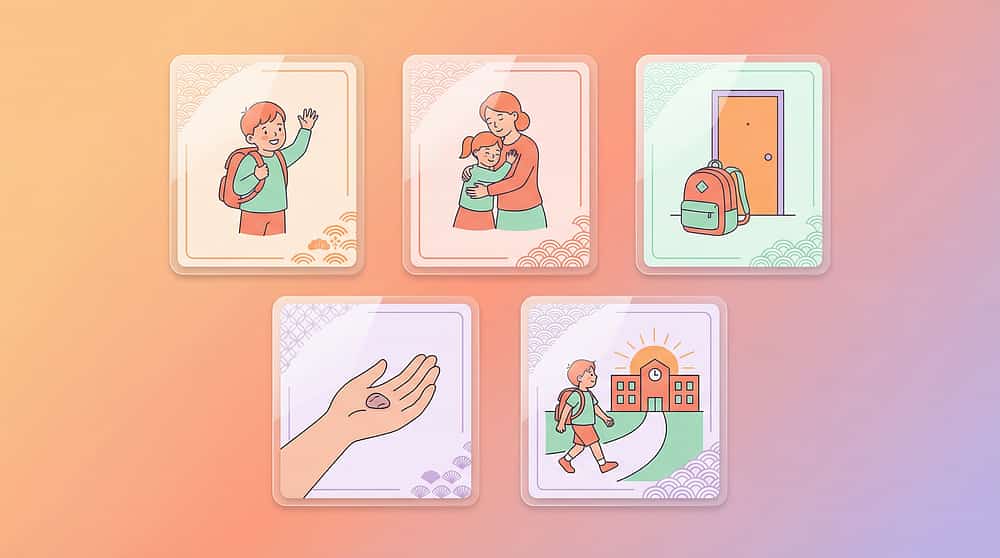
Same goodbye, every time, no surprises.
Canon: Social Stories / Communication Cards
Price: ₹100–500 (mostly DIY)
DIY: Index cards laminated, photos of ritual steps, binder ring — ₹50–80

Feed your worries. Free your mind.
Canon: Emotional Regulation Tools
Price: ₹300–1,500 | Search Amazon.in: "worry monster stuffed toy children anxiety"
DIY: Decorated shoebox with slot in lid — ₹0
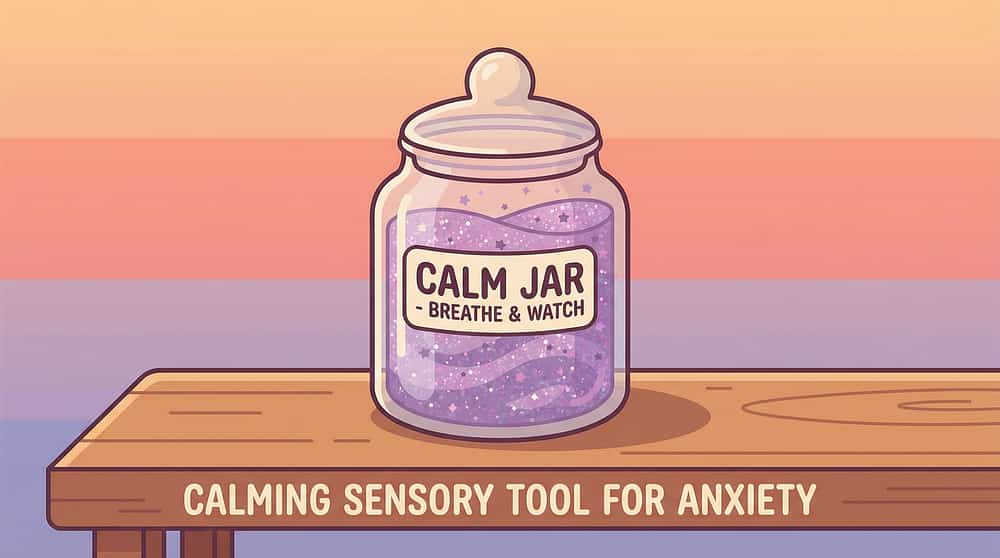
Watch the glitter, calm the body.
Canon: Sensory Tools / Calming Aids
Price: ₹100–500 | Search Amazon.in: "calm down glitter jar sensory bottle children"
DIY: Clear plastic bottle + clear glue + glitter — ₹30–50
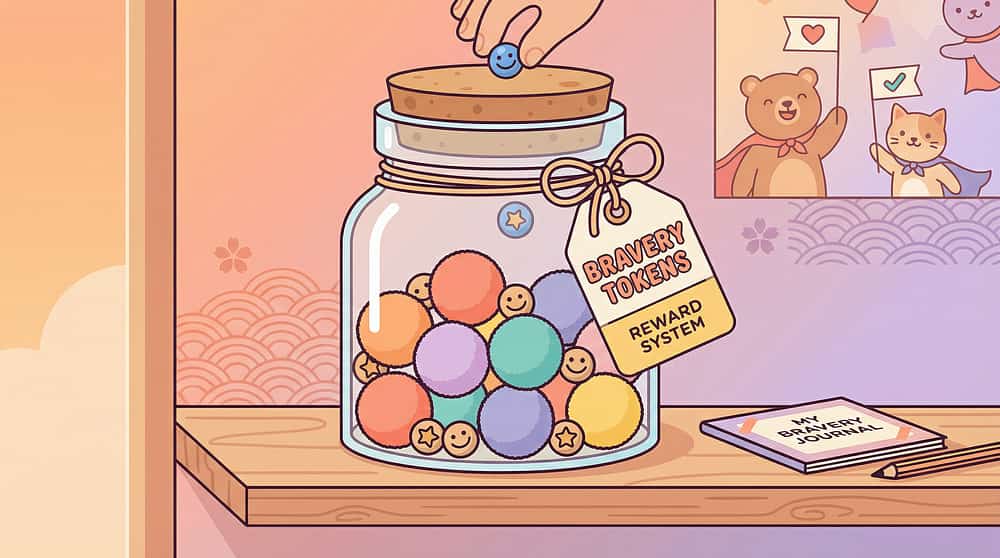
See your courage. Grow your bravery.
Canon: Reinforcement Menus — Active Pinnacle Product
Rosette Imprint Reward Jar — ₹589
1800+ Reward Stickers — ₹364
Your worlds are connected.
Canon: Transition Objects / Communication Bridge
Price: ₹0–300 (mostly free)
DIY: Print photo of parent and teacher together — ₹10–20 at photo shop
Material | ₹0 DIY Version | Why It Works Equally Well |
Parent Photo | Print on home printer or phone screen — laminate with clear tape | Visual representation of parent is the therapeutic mechanism, not the frame |
Voice Message | Phone voice memo app, played on shared device | Parent's voice activates the same neural calming pathways regardless of device |
Comfort Object | Any item child already loves; parent's unwashed t-shirt piece | Scent of parent is the active ingredient — can be transferred to any soft item overnight |
Day Schedule Chart | A4 paper with drawn icons + Velcro dots | Visual sequence is the mechanism — hand-drawn icons work identically |
Goodbye Ritual Cards | Index cards + hand-drawn or printed images | Consistency of ritual matters, not production quality |
Worry Monster | Decorated shoe box + slot for paper | The externalisation act ("putting worry somewhere") is the therapeutic mechanism |
Calm-Down Jar | Clear plastic bottle + water + glitter + clear glue, sealed | Identical effect to commercial version |
Brave Beads | Any jar + buttons, stones, or any tokens | Token visibility and accumulation is the mechanism, not the material |
Teacher-Parent Photo | Printed photo at local photo shop (₹10–20) or phone screen | Visual proof of connection is the mechanism |
Safety is the foundation of effective therapy. Review all three sections below before beginning the toolkit. When in doubt, consult the Pinnacle helpline: 9100 181 181.
- Child is in acute medical distress, sick, or sleep-deprived
- Child is experiencing panic-level symptoms: rapid breathing, chest pain, vomiting before school
- Child has recently experienced trauma or significant loss — professional consultation first
- Materials include small parts and child is under 3 or mouths objects (choking risk)
- You are in acute parental anxiety crisis — your nervous system state transfers to your child
- Child had a rough night or is hungry — run through calming routine first
- New school year, new teacher, or post-holiday return — expect regression, increase tool intensity temporarily
- Younger sibling also starting to show separation anxiety — address both children's needs separately
- Child has recently experienced teasing or negative school event — social investigation needed alongside tools
- Child is fed, reasonably rested, and in their typical baseline state
- Materials are prepared the night before (no rushing)
- Parent's own nervous system is as regulated as possible
- Teacher has been briefed on the ritual and is prepared to receive the child
- Photo keychains: no small detachable parts; breakaway cord only; rounded edges
- Comfort objects: washable, labelled, no glass eyes on stuffed animals for under-3s
- Glitter jar: fully sealed with waterproof adhesive — child must not open; plastic only, not glass
- Brave beads: large enough to not be choking hazards (minimum 2cm diameter)
- Voice buttons: fully enclosed batteries; age-appropriate volume
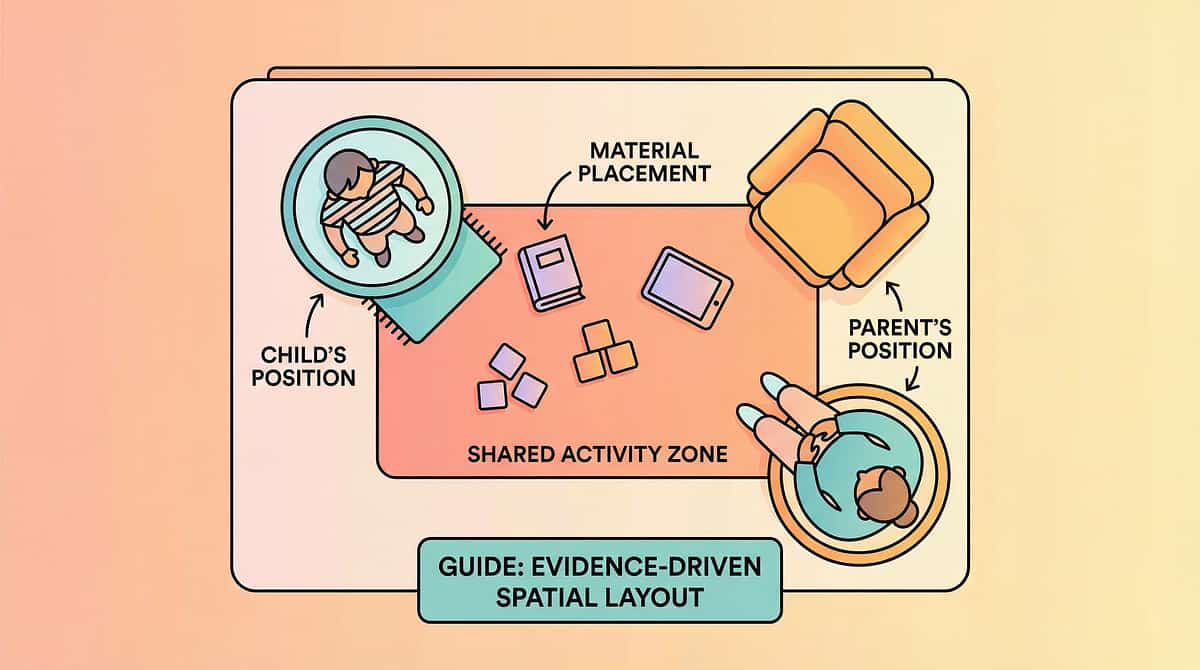
Success at the school gate begins the night before. These four preparation windows — evening, morning, car, and drop-off — are your complete operational guide.
Pack transitional object. Check voice button. Attach photo keychain to backpack. Review visual schedule with child at bedtime. Read social story / goodbye ritual cards together. Place brave beads jar in view for morning.
Say: "Today might feel hard. That's okay. You have your tools." Run through goodbye ritual cards together — seated, calm, not rushed. Child holds comfort object while reviewing visual schedule. Check backpack: photo ✓ voice button ✓ comfort object ✓ worry monster ✓
Soft music or silence — no escalating conversation. Child can press voice button to hear your message. Review: "After snack, then outdoor play, then lunch, then I'm there. You've got this."
Follow ritual EXACTLY as practised — no variations. Hand child to teacher. Complete ritual close: same phrase every single day. Wave once from door — then leave. Do not return. Do not linger.
Before every drop-off morning, run this 60-second assessment. It takes less than a minute and prevents the most common causes of ritual failure.
Indicator | ✅ Go | ⚠️ Modify | 🔴 Postpone |
Sleep last night | 7+ hours | 5–6 hours | Under 5 hours |
Ate breakfast | Full meal | Small amount | Nothing / vomiting |
Body language | Baseline, not rigid | Tense but engageable | Shutdown or explosive |
Night-before anxiety | None or mild | Moderate questioning | Severe, up all night |
Physical complaint | None | Mild stomachache | Active vomiting / pain |
Recent stressor | None | Minor conflict | Major trauma/event |
Simplify the ritual to its 2 most essential steps. Extend the morning routine by 5 minutes. Use calming sensory input first (brush, squeeze, heavy blanket). Reduce expectations: goodbye without clinging is success today. Brief update to teacher: "Harder morning today."
You cannot regulate another person's nervous system before regulating your own. If YOU are in acute stress or running late, take 3 deep breaths in the car before entering the school zone. Your calm is the most powerful tool in the toolkit.
If the child is genuinely unwell, keep home. One sick day does not undo weeks of progress. Forced participation during acute distress creates negative associations that worsen anxiety. Rest and retry tomorrow.
30–60 seconds | Setting: Home — the night before AND morning of
"Tomorrow we're going to do our special goodbye. Want to look at your goodbye cards with me? And we'll get your [comfort object's name] all packed and ready for school."
- Child engages with the cards
- Child chooses or confirms their comfort object
- Child reviews the visual schedule calmly
- Child asks questions about the school day (curiosity, not panic)
- "I don't want to go to school" → Acknowledge: "I know. It can feel hard. Your tools will be with you. Let's get them ready." Do NOT debate whether school is necessary.
- Refusal to look at cards → Don't force. Read the social story instead. Cards can be reviewed in the car.
- Tears at bedtime → Comfort, then tool: "That's your worry feeling. Want to put it in the worry monster before bed?"
"Okay, time to check our goodbye bag. You've got [name object], you've got [name photo], you've got your brave bead ready for after school. You're completely equipped."
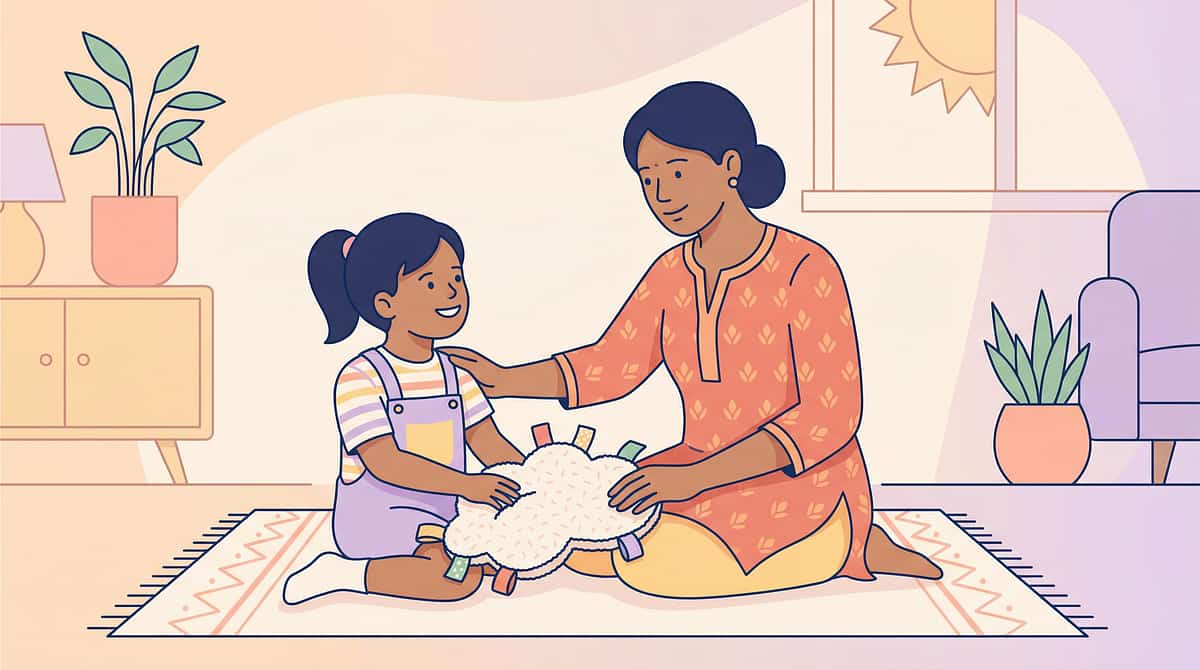
1–3 minutes | Setting: Car en route / outside school entrance
"Let's look at your schedule. First: arrival and circle time — that's fun. Then snack — you love snack. Then outdoor play. Then lunch. Then rest time. Then — [point to parent's picture at end] — me. That's when I come. How many things until me? Count with me."
Child Response | Meaning | Action |
Child counts activities | Engaged, using visual thinking | Continue — this is working |
Child says "too many" | Anxiety about duration | "Let's just focus on: first one activity, then you'll feel better" |
Child grips comfort object tightly | Anxiety present but using tool | Affirm: "Good — hold your [name object]. It'll go with you." |
Child presses voice button | Seeking parental voice connection | Let them. "There I am. I'll be there at pickup just like the recording says." |
Child starts crying | Anticipatory anxiety activated | Don't stop. Continue ritual. Calm, steady, brief. "I see you're feeling worried. We're going to do our goodbye. Ready?" |
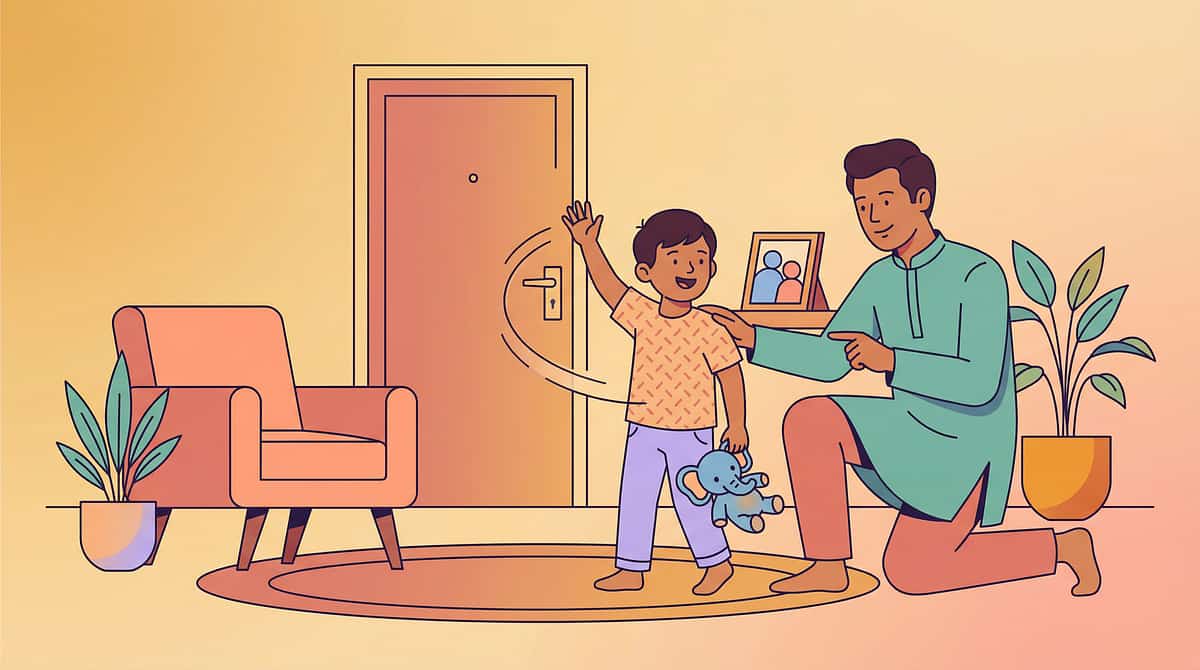
The Goodbye Ritual | 60–90 seconds maximum
Hug [3 squeezes = "I Love You"]
"See you after lunch, [family nickname]! I love you."
"Here is [comfort object]. In your cubby."
Child's hand to teacher's hand
One wave from the door
Parent turns and exits. Does not return.
Error | Why It Fails | Correction |
Returning when child cries | Teaches: "crying brings parent back" | Wave once, leave; trust teacher to support |
Extending ritual when child escalates | Escalation becomes ritual-extending behaviour | Shorten ritual on hard days, don't lengthen |
Sneaking out without goodbye | Creates vigilance anxiety: "parent might disappear anytime" | Always say goodbye — even imperfect goodbye is better than none |
Different words each day | Loses predictability — the ritual's source of power | Write the exact script. Use it verbatim. |
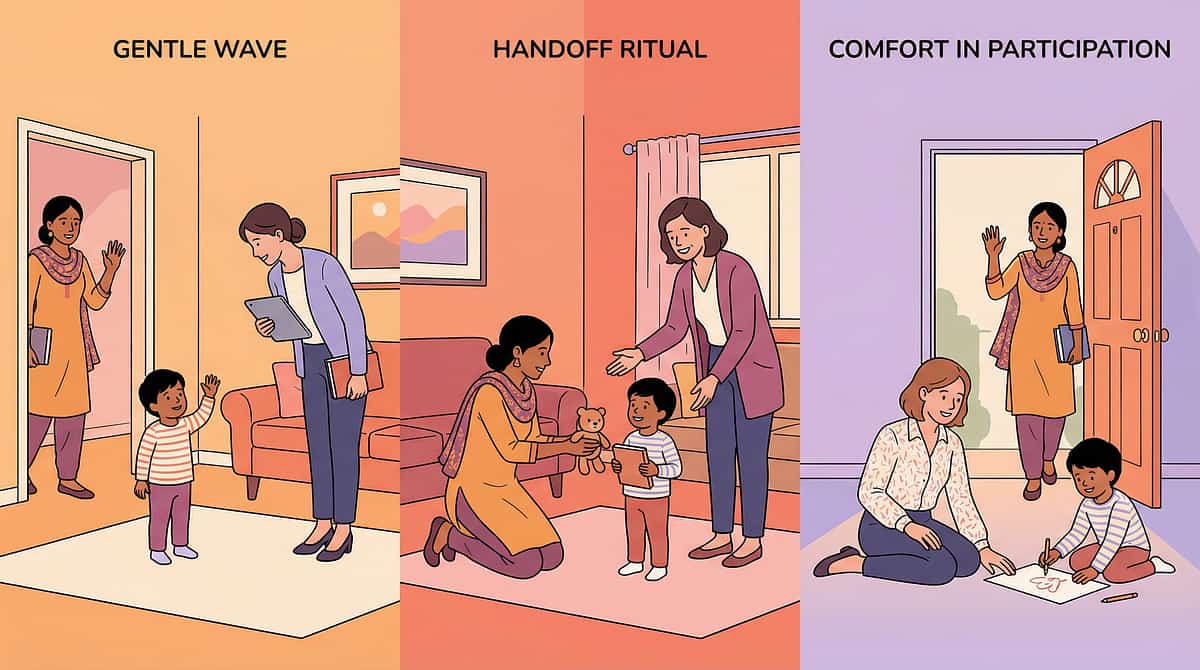
Daily repetition | Variation within consistent structure
Unlike once-weekly therapy sessions, drop-off ritual practice happens every school day. This high frequency is a therapeutic advantage: the brain receives consistent, repeated evidence that "this goodbye is safe and ends in reunion." Neural pathway formation requires repetition.
"3 good days > 10 forced days." Three drop-offs where the child completes the ritual and recovers within 10 minutes build more neural strength than ten days of sustained crisis. On very hard days, completing one ritual element counts as success.
The structure of the ritual must be identical. The contents can evolve:
- Week 1–2: Hug + photo hand-off + wave
- Week 3–4: Add goodbye phrase + hand child to teacher
- Week 5–6: Add brave bead acknowledgement
- Month 2: Begin fading — comfort object to backpack rather than hand
- Child completing ritual without distress — increase independence
- Child reminds YOU of ritual steps — begin fading supports
- Child shows irritation at ritual rather than anxiety — fade that element

After drop-off + at pickup
Deliver specific praise DURING the ritual, not only at successful completion:
- "I love how you held your [object] — that's using your brave tools."
- "You did the goodbye with me. That is really brave."
- Even if the child cried: "You did the goodbye even though it was hard. That's courage."
Timing: Within 3 seconds of the desired behaviour.
Reunion must be on time, warm but not dramatic: "I'm here! I told you I'd come. I always do."
Brave bead moment: "You were brave today. One bead for the jar." [Child places bead]
The reunion itself is the reinforcement. Parent returns EXACTLY when promised. This is the single most powerful therapeutic message: "I said I would come back. I came back. I will always come back."
"Celebrate the attempt, not just the success." A child who cried through the entire ritual but stayed — earned a bead. A child who ran three steps after the parent but stopped — earned a bead. Progress is direction, not perfection.
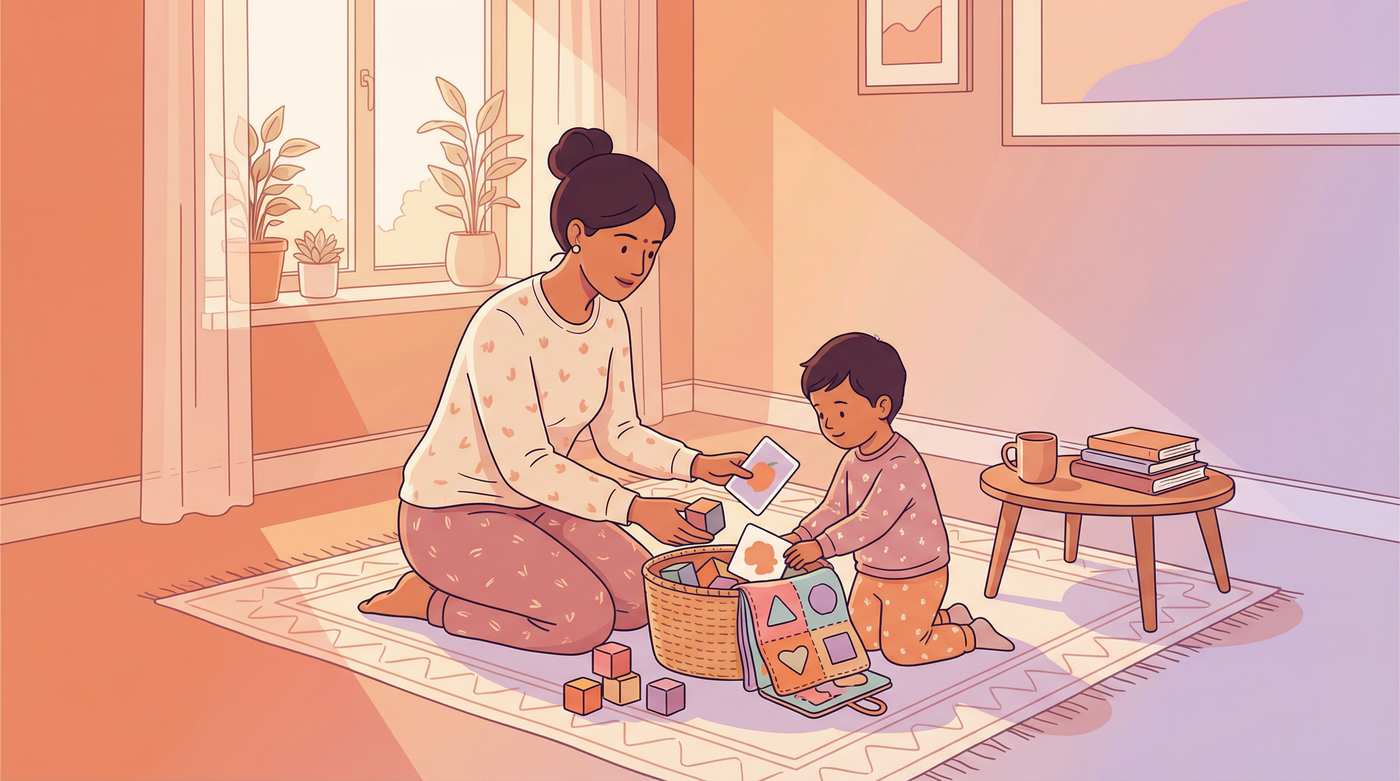
After school | 10–15 minutes | The after-school decompression
Children who struggled at drop-off often need a "safe landing" after school — time with the parent before demands, questions, or activities. Provide:
- Physical connection first: hug, lap time, physical proximity
- Minimal verbal demands — no interrogation ("Was it better today? Did you cry?")
- Snack and quiet time before processing
"Want to check your worry monster and see if it kept your worries safe?" This opens a child-led space to process the day. Listen. Don't fix. Don't dismiss.
- Re-scent comfort object (sleep with it, or spray with parent's fragrance)
- Record fresh voice message if needed
- Read goodbye cards + social story together
- Review tomorrow's visual schedule together
- Add brave bead together if not done at pickup
- Verbal close: "Tomorrow I will come back, just like today."
- ❌ Don't repeatedly ask "Are you worried about tomorrow?" — you're planting the seed
- ❌ Don't let child stay home "just this once" for non-illness reasons
- ❌ Don't skip the evening ritual prep — it's half the therapeutic work

Tracking just three data points per drop-off transforms your subjective experience into objective evidence — and tells you whether to continue, modify, or escalate. The data sheet is your anchor when the emotional experience feels overwhelming.
Minutes from parent departure to child engagement with teacher/activity. Why it matters: Tracks the most clinically meaningful outcome of the intervention.
Which steps completed: 0/6, 1/6… 6/6. Why it matters: Shows which components of the ritual are working and which need adjustment.
Which material the child used independently (photo, voice, object, jar). Why it matters: Tracks movement from parent-supported to child-initiated regulation — the ultimate goal.
- Distress duration NOT decreasing after week 3 → modify ritual or seek professional consultation
- Ritual completion increasing but distress not decreasing → underlying anxiety issue beyond ritual — contact helpline
- Tool use increasing → strong signal — child is developing independent regulation. Celebrate this.

Every drop-off that doesn't go as planned is diagnostic information. Use these seven troubleshooting guides to adjust your approach — not abandon it.
Why: Ritual ending felt too abrupt. Transition to teacher was incomplete.
Next time: Ensure full physical handover to teacher BEFORE parent steps back. Teacher engages child with immediate activity as parent steps away. Parent waves from door; teacher does NOT let go until child's attention has shifted.
Why: Post-weekend regression is almost universal. Weekends with full parental presence reset the separation difficulty.
Next time: Monday = extended ritual morning. Wake 10 minutes earlier. Additional social story review. Pre-commitment: "One extra bead for Monday bravery."
Why: Object is serving its function — security anchor. Forcing release creates battle.
Next time: Allow object to stay in hand through drop-off and teacher transition. Teacher facilitates cubby placement after parent departs. Fade object location over 2 weeks.
Why: School has not been briefed or is using a different approach.
Fix: Schedule brief meeting or send the written teacher communication template (Card 37). Most teachers welcome structured handover — it makes their morning easier too.
Why: Physical symptoms may be genuine anxiety somatisation or learned avoidance.
Action: Rule out actual illness with paediatrician. If anxiety somatisation: tools still work; symptoms will decrease as anxiety decreases. Do not reward staying home for somatisation.
Why: Social learning. Child sees that distress produces prolonged parental presence.
Next time: Apply ALL tools to younger sibling from the start. Address separately — their anxiety is real even if socially initiated.
Why: Tools are parent-initiated, not yet child-initiated.
Goal: Transfer ownership to child. Ask: "What tools do you have with you today?" rather than handing tools. This builds autonomous regulation.
Easier Version (mild anxiety, just starting):
- Parent enters classroom
- Ritual at classroom door
- Comfort object in hand
- Photo keychain given by parent each morning
- Voice button kept by teacher for child's use
Harder Version (severe anxiety, ready for independence):
- Parent waves from car
- Ritual completed at home
- Comfort object in backpack
- Photo in wallet for emergencies only
- Visual schedule reviewed once, then put away
Sensory Seeker (seeks stimulation, high movement, loud): Use proprioceptive input before ritual (jumping jacks, heavy backpack, wall push-ups). Ritual can include gross motor element (high-five, fist bump). Fidget tool that provides movement input.
Sensory Avoider (overwhelmed by stimulation, crowds, noise): Arrive early (before crowd), quieter drop-off point if available. Weighted comfort object. Slow, deep pressure hug over quick light touch.
- Ages 2–3: Photos only (no words), 2-step ritual, parent scent is primary tool
- Ages 3–5: All 9 materials applicable; social story highly effective
- Ages 5–8: Child helps create their own goodbye cards; worry journalling may replace worry monster

"Progress at Week 2 Looks Nothing Like What You're Hoping For. That's Normal."
You are building the ritual before it has been proven. This is normal and expected.
What You'll See | What It Means |
Distress duration: same or slightly worse | Expected. Rituals require repetition before the brain registers them as safe. |
Child touching/checking comfort object more | The tool is being adopted. This is the mechanism working. |
Child shows relief when you hand over photo | Transitional object connection forming. Positive sign. |
Morning preparation slightly calmer at home | Pre-departure anxiety reducing first. School anxiety follows. |
One drop-off significantly better than others | Inconsistency is normal. Secure the good day's ritual elements. |

"The Brain Is Forming New Pathways. Here Is How to Recognise It."
The amygdala is learning: "this is a known event — it is safe." Behavioural signs are now visible.
Observable Sign | Neural Mechanism |
Child ANTICIPATES ritual ("Time for our goodbye!") | Procedural memory has encoded the ritual as a predictable, safe event |
Child reaches for comfort object without prompting | Tool use becoming internalised — object is now a genuine anchor |
Drop-off distress duration under 5 minutes consistently | Amygdala response shortened — "known event, safe" pathway forming |
Child talks about school positively after pickup | Positive school associations beginning to compete with separation anxiety |
Voice button use decreasing | Child trusts parent's return without needing constant auditory reminder |
You may notice you're more confident too. The parent's nervous system also consolidates at weeks 3–4. Your drop-off will feel less dreadful. This is your own neurological progress — your amygdala is also learning that this transition is manageable.
If Week 3–4 shows consistent improvement: begin adding one tool-independence step — child places comfort object in cubby independently, child hands over photo themselves. Each small transfer of ownership is a therapeutic milestone.

Mastery unlocked. Here is how you'll know — and how to maintain it.
- Child completes goodbye ritual without physical clinging for 5+ consecutive school days
- Distress duration under 3 minutes, or no visible distress at all
- Child initiates at least one ritual element independently
- Child uses self-regulation tool independently when distress arises during the school day
- No physical symptoms (stomachaches, etc.) on 4 of 5 school mornings
After 2 weeks of mastery: gradually fade comfort object from hand to backpack. Phase out voice button for daily use (keep as emergency tool). Shorten ritual from 6 steps to 3. Maintain brave bead system but shift criteria to academic/social bravery, not just separation.

You showed up. Every morning. Even the catastrophic ones. Even the days you drove to work with tears in your eyes. Even the days you wanted to just keep them home. You maintained the ritual. You trusted the tools. You kept the reunion promises. Your child's nervous system is different now than it was 8 weeks ago. That is a fact, not a hope.
You were reading this page with desperate hope.
The ritual felt mechanical and uncertain.
You noticed the first morning that felt almost okay.
Your child reached for their comfort object before you offered it.
The classroom door stopped being the most dreaded place in your morning.
Tools are powerful — but they are not substitutes for professional evaluation when warning signs are present. This card tells you exactly when to stop and reach out.
🔴 Red Flag | What It Looks Like | Action |
School Refusal | Child completely unable to attend school due to separation anxiety | Contact Pinnacle helpline immediately: 9100 181 181 |
Panic Symptoms | Rapid breathing, chest pain, feeling of dying, shaking that cannot self-resolve | Medical evaluation + child psychologist referral |
Safety Risk | Child runs into dangerous areas, traffic, or self-injures when separated | Immediate professional intervention required |
Weeks of Worsening | Tools applied consistently for 4+ weeks with NO improvement or deterioration | Underlying anxiety disorder likely — clinical assessment needed |
Generalisation of Fear | Child now afraid to be without parent in ALL settings, all times | Separation anxiety has generalised — stepped-up clinical care needed |
Persistent Physical Symptoms | Vomiting, weight loss, sleep refusal for 2+ weeks | Rule out medical cause, then anxiety somatisation treatment |
This page
pinnacleblooms.org
Centre evaluation
Full programme
FREE Helpline: 9100 181 181 | 24x7 | 16+ languages | pinnacleblooms.org
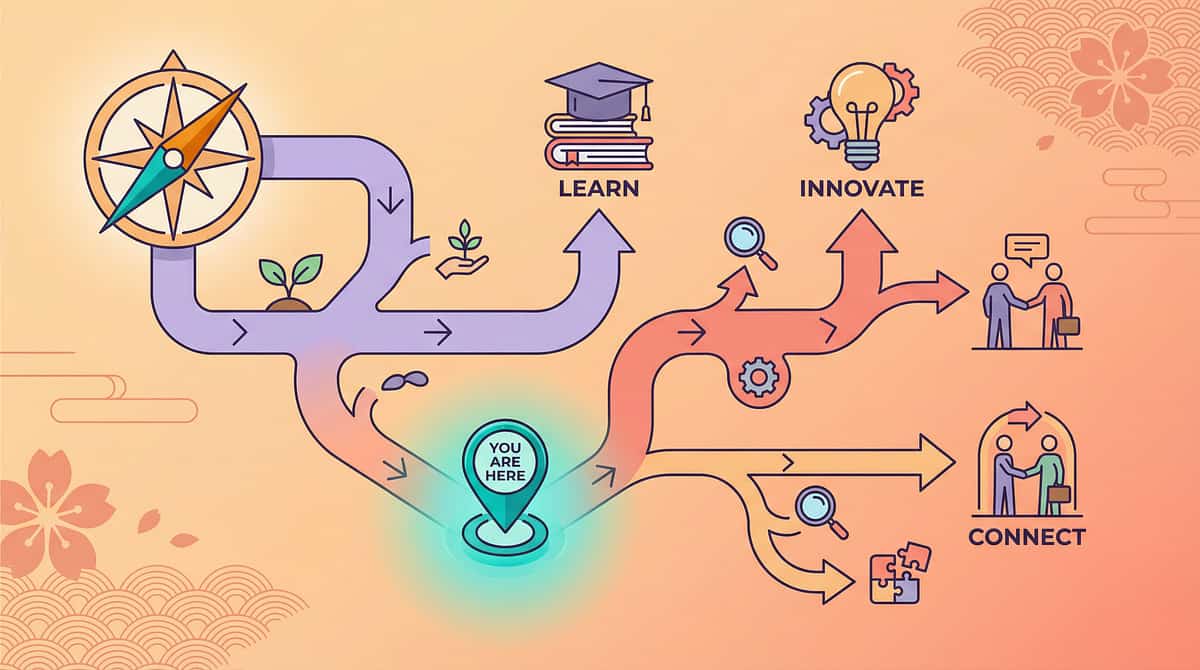
H-703 is one step in a carefully sequenced developmental pathway. Based on how your child responded to this technique, here is where to go next.
If Your Child Responded Best To... | Next Recommended Technique |
Visual supports + schedules | H-705: New Situation Anxiety (visual preparation) |
Sensory regulation tools | A-domain: Sensory Processing techniques |
Brave beads + reward systems | D-domain: Behaviour & Flexibility techniques |
Social stories + communication | B-domain: Social Communication techniques |
The materials you already own from H-703 are directly transferable to these related techniques. You may already be more equipped than you realise.
INTRO level | Canon: Visual Schedules + Sensory Calming
CORE level | Canon: Transition Objects + Comfort Items + Relaxation
CORE level | Canon: Social Stories + Preparation Tools
ADVANCED level | Canon: Emotional Regulation Tools
CORE level | Canon: Visual Supports + Transition Objects
CORE level | Canon: Sensory Tools + Reinforcement Systems
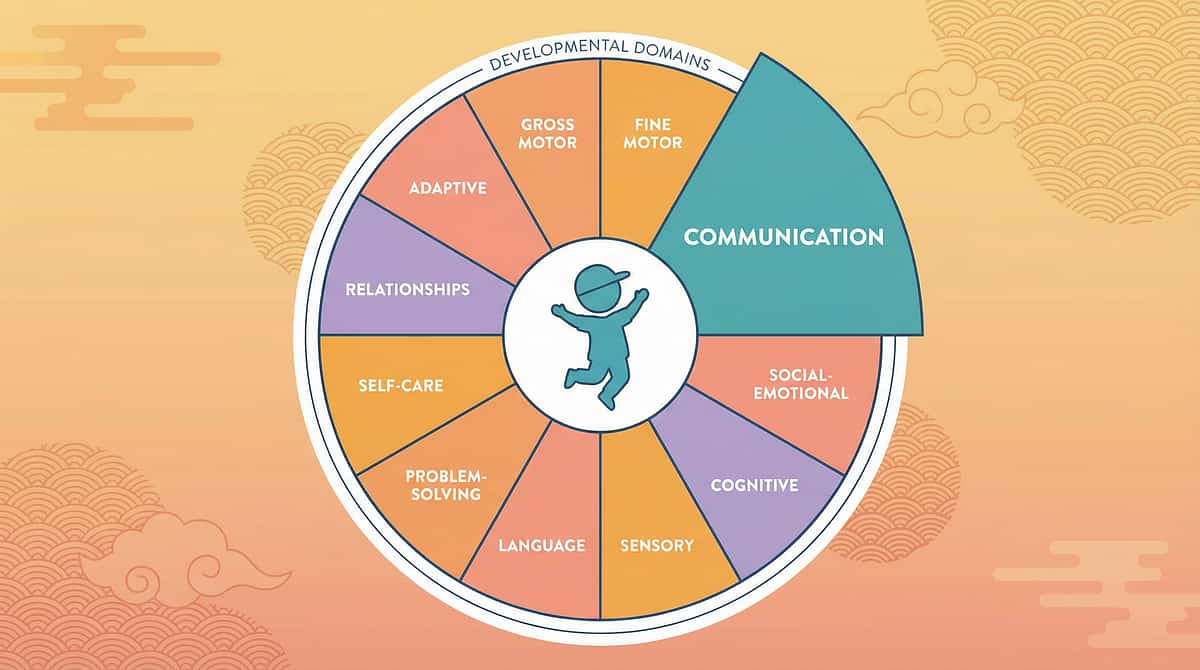
A child who cannot regulate their own emotions cannot access their learning capacity. Every other intervention in every other domain becomes more effective when the child has tools to manage their emotional state. Separation anxiety intervention is not a "nice-to-have" — it is often the prerequisite for everything else to work.
Your session data from H-703 contributes to your child's Separation Readiness Index and Emotional Regulation Readiness Index — two of the most heavily weighted components in the GPT-OS® AbilityScore®. This data shapes your child's personalised intervention sequence.
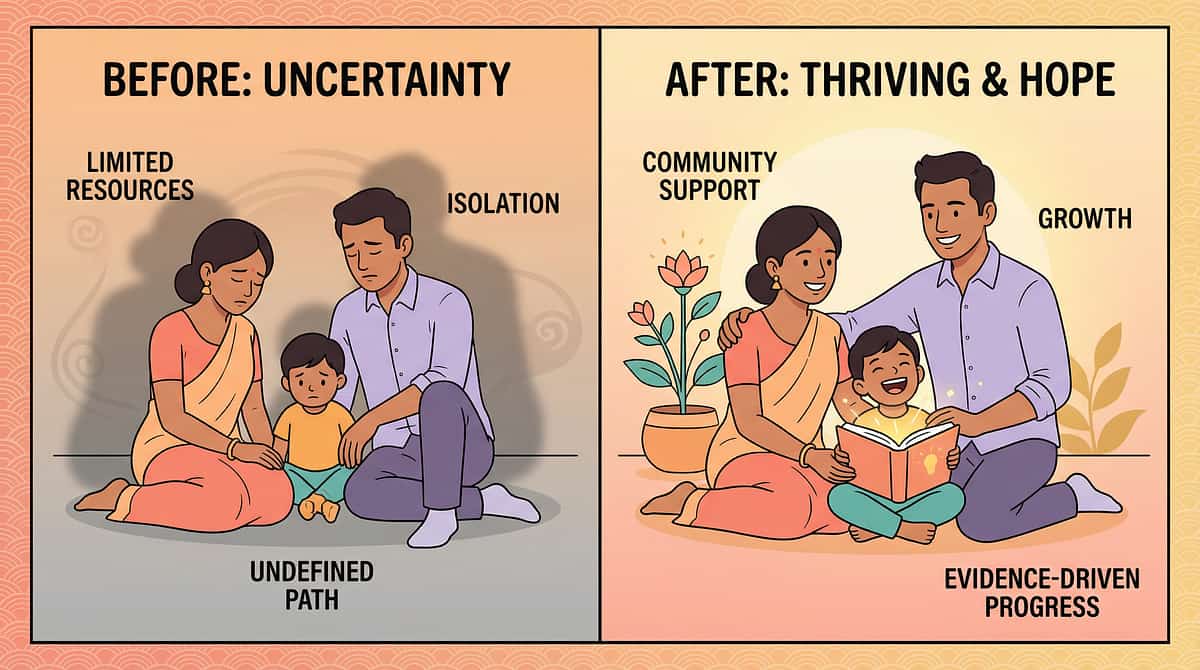
"My 4-year-old daughter would cling to my sari at the school gate, screaming for 20–25 minutes. The principal called me twice. I started dropping her and running — but I could hear her screaming down the street. I thought something was fundamentally wrong with her or with me."
"The goodbye ritual was the turning point. We say the same four things, in the same order, every morning. She hands me the photo and says 'see you at lunch, Amma.' Regular mornings? She waves and walks in. I still tear up but now it's from relief, not guilt."
Therapist's Notes: Visual schedule + parent photo keychain + consistent 90-second ritual. Distress duration moved from 20+ minutes to under 2 minutes in 7 weeks.
"My 5-year-old son started ASD intervention at 3. Drop-off was catastrophic — he would bite and kick when we reached the school gate. Teachers were afraid to receive him. We thought school was simply not possible for him."
"The worry monster was absurd to me at first. But he genuinely believed his worries were inside it. By week 12, he was placing the monster in his cubby himself and going straight to his seat. The staff couldn't believe it was the same child."
Therapist's Notes: Worry externalisation + transitional comfort object + sensory glitter jar used in car pre-arrival. ABA-structured brave bead protocol with 5-minute session data tracking.
"My daughter was fine at drop-off — it was ME who was the problem. My anxiety was through the roof. I would text the teacher 6 times a day. I know now that she was watching my face and reading my terror."
"GPT-OS® assessment showed her Separation Readiness Index was actually higher than I thought — her anxiety was feeding off mine. When I changed, she changed within 2 weeks. The tools were always there. I just needed to believe they'd work before she could believe it."
Clinical note: Parent anxiety is a significant modulating factor in child separation outcomes. Parental confidence is therapeutic.
Outcomes vary by child profile, underlying factors, and implementation consistency. Cases are illustrative composites from the Pinnacle clinical network.

Parents navigating school drop-off anxiety across India. Moderated by Pinnacle counsellors. Non-clinical peer support. Share tools, questions, and breakthroughs.
pinnacleblooms.org — technique-specific threads, therapist-moderated, 16+ languages.
Pinnacle centres host monthly parent support circles. Find your nearest centre: pinnacleblooms.org/centers
Parents who have completed H-703 successfully volunteer to support parents just beginning. Request a mentor at care@pinnacleblooms.org
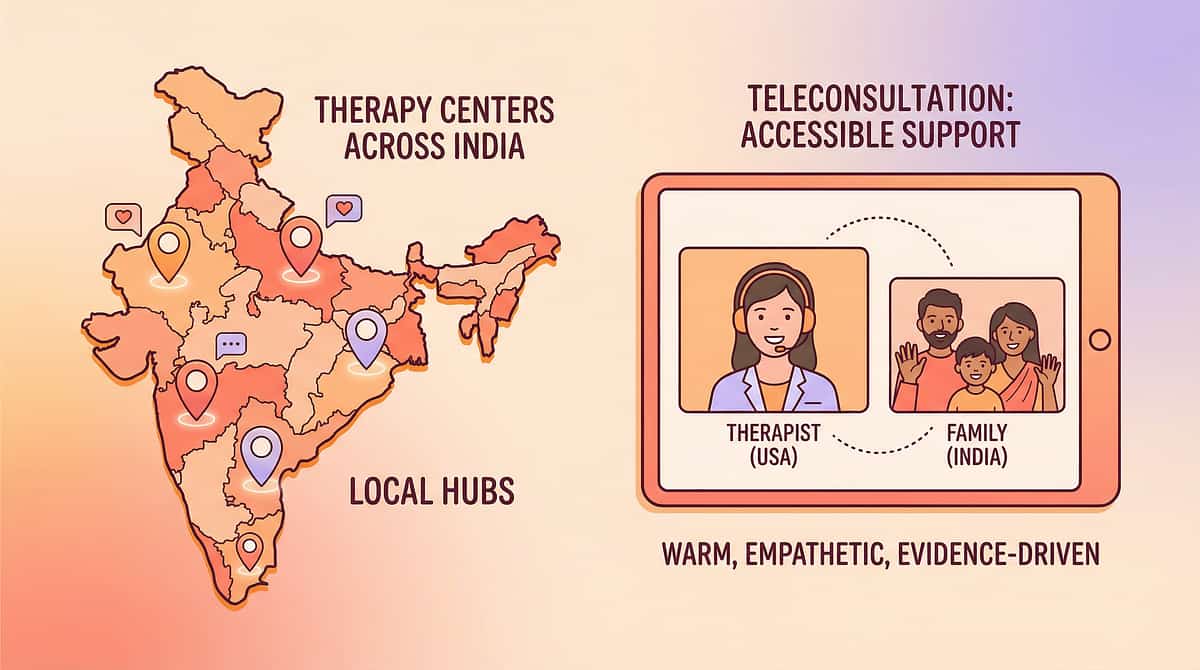
Tools used at home are powerful. They become even more powerful when coordinated with a professional team who can personalise your child's programme, monitor progress, and escalate care when needed.
Available 7am–9pm IST | 16+ languages | Within 48 hours
pinnacleblooms.org/teleconsult
70+ centres across India
pinnacleblooms.org/centers
- Child Psychologist: for persistent, worsening, or generalised separation anxiety
- Occupational Therapist: for sensory component assessment and sensory toolkit design
- ABA/BCBA: for behavioural protocol design and data-driven intervention planning
- Special Educator: for school-environment coordination and transition planning
- AbilityScore® across all 12 domains
- Separation Readiness Index baseline
- Sensory profile assessment (if OT flagged)
- Family consultation: home implementation planning
- School liaison guidance
- GPT-OS® personalised intervention pathway
FREE National Autism Helpline: 9100 181 181
24x7 | No appointment needed for initial guidance
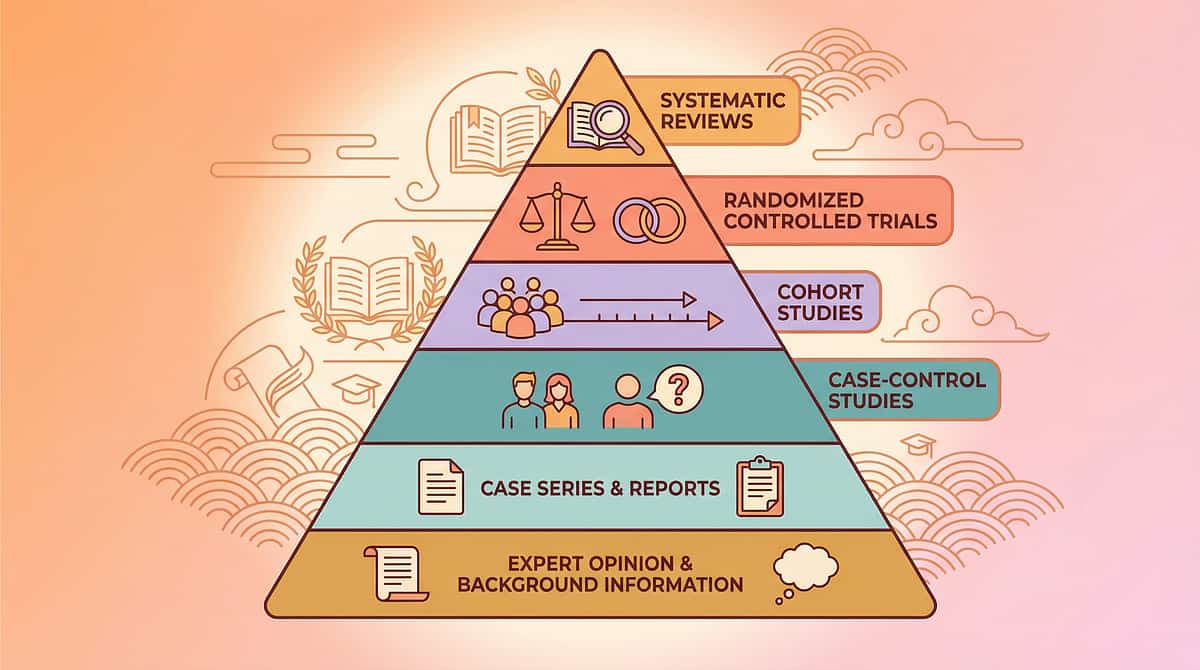
Study | Finding | Link |
PRISMA Systematic Review, Children (2024) | 16 studies confirm transitional object + structured goodbye interventions are evidence-based practice | |
Meta-analysis, World J Clin Cases (2024) | Sensory + behavioural intervention promotes social, emotional, and adaptive skill outcomes across 24 studies | |
Padmanabha et al., Indian J Pediatr (2019) | Home-based parent-administered interventions demonstrate significant outcomes in Indian paediatric populations | |
WHO CCD Package (2023) | Caregiver-implemented structured transition protocols effective across 54 LMICs | |
NCAEP (2020) | Visual supports, social stories, and structured routines classified as evidence-based for autism |
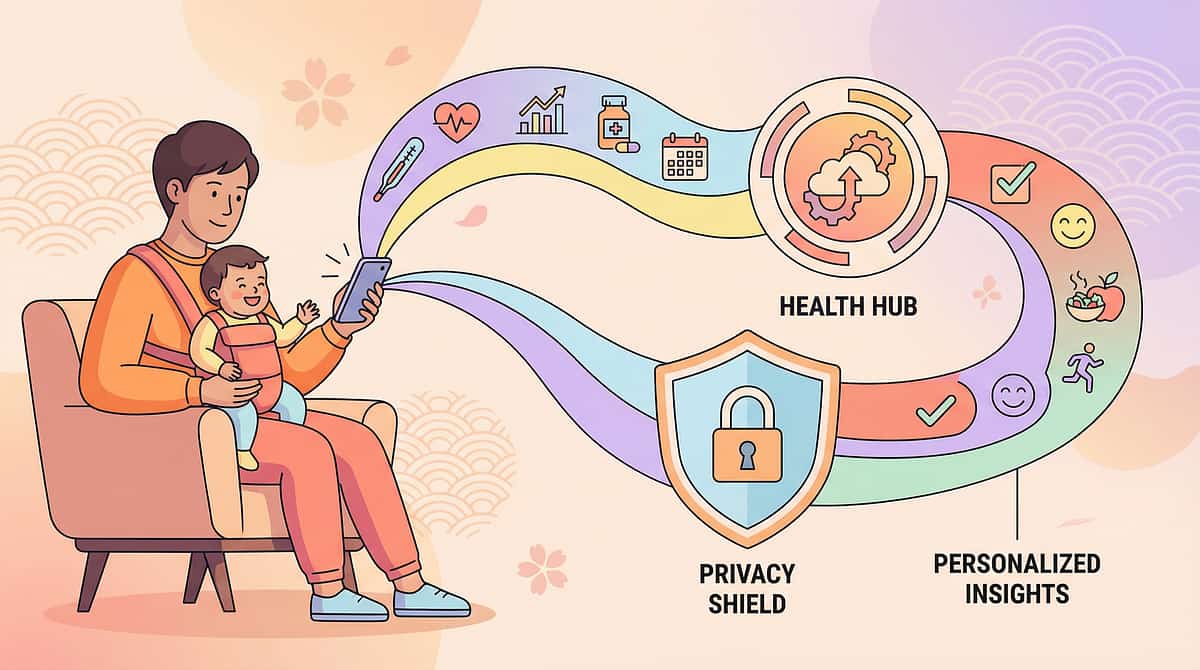
- Which materials show fastest distress-duration reduction in this child's profile
- Whether sensory tools or structure tools are more effective for this child
- Optimal ritual length (some children need 4 steps, some need 6)
- Week-over-week trajectory against population norms
- Escalation detection: flags if distress duration is not improving at expected rate
All data is anonymised for population analysis. Individual data is accessible only to the care team and family. DPIIT-registered, MSME-certified, GSTIN-compliant data governance. CIN: U74999TG2016PTC113063.
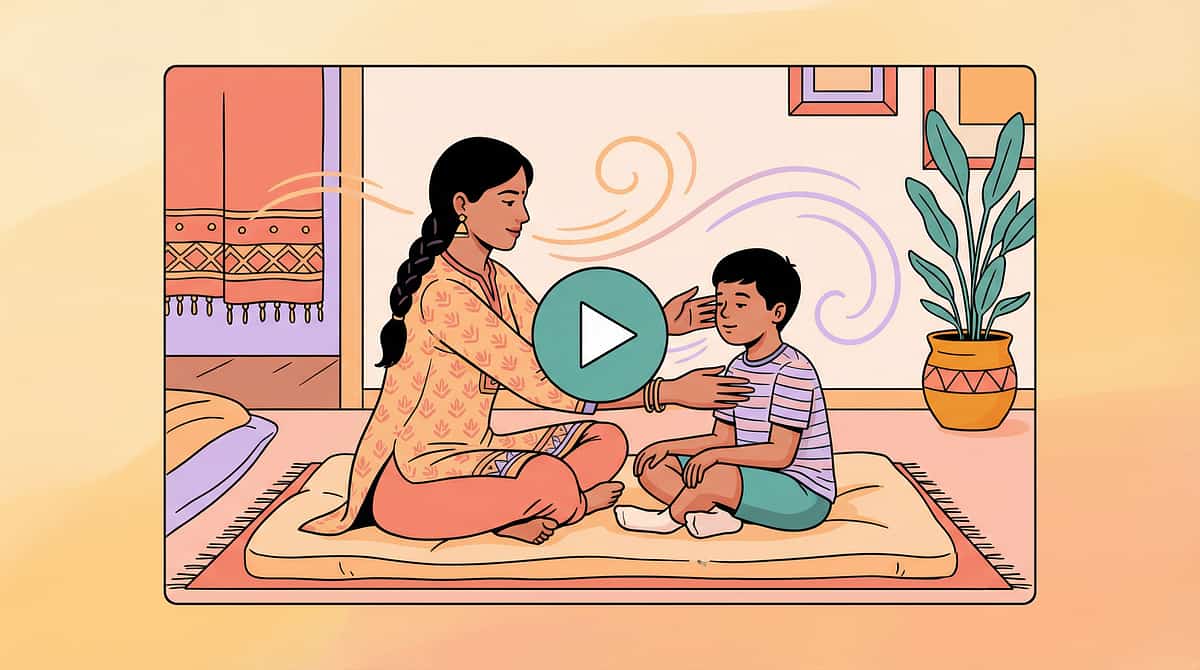
In this reel, Pinnacle's multi-disciplinary team demonstrates each of the 9 materials — showing exactly how each is used during a real drop-off transition, what the child's response looks like, and how the parent can execute the technique correctly.
This web page and the reel work together. The page gives you the full clinical protocol. The reel shows you the physical execution. Research confirms that multi-modal learning (text + visual demonstration) significantly improves parent skill acquisition and implementation accuracy.
- ← H-702: Morning Routine Anxiety Materials
- → H-704: Bedtime Separation Anxiety Materials
The goodbye toolkit only works when every adult in the child's life uses the same protocol. Grandparents, school staff, and other caregivers need a briefing — not an explanation.
"When [child's name] gets upset at drop-off, please do NOT: say 'don't cry, be brave' | give extra treats for crying | extend the goodbye | come back after saying goodbye. Instead: Follow the 4-step ritual exactly as written on this card. Hand the child to the teacher. Wave once. Leave confidently. The crying will stop within minutes. Your calmness is more powerful than any words."
"Dear [Teacher's name], We are working on [child's name]'s drop-off separation anxiety using a structured protocol from Pinnacle Blooms Network. The key elements: [ritual steps]. The transitional object is [name] — please allow it in the cubby. Visual schedule is attached. The voice button is in [child]'s bag — please allow access if distressed. Thank you."
"9 materials for drop-off separation anxiety. This page changed our mornings. [link]"
Subject: "Drop-off anxiety tools that actually work"
techniques.pinnacleblooms.org/emotional-regulation/drop-off-separation-H-703
Simplified 1-page PDF for grandparents, babysitters, and family members who assist with drop-off

Yes — possibly more urgently than parents whose children cry for longer. The rapid recovery is positive neurological evidence. BUT the pre-departure distress and physical symptoms accumulate over months. Tools make the transition itself manageable, protecting your child's association with school. Don't dismiss short-duration distress as "not serious enough."
Tools must be practised at home during calm moments before they're used at high-stress drop-off. The child who has shaken their glitter jar 20 times at home will reach for it at school. The child who encounters it only during crisis won't. Practice first. Drop-off second.
No. Staying until the crying stops teaches the child: crying = parent stays. The ritual's clean ending is the therapeutic message: "I am leaving confidently because this is safe." Hand the child to the teacher. Wave once. Leave. Trust the teacher. The crying will stop within minutes of your departure in most cases.
Yes — and often even more effectively for children with autism due to their strong preference for predictability and routine. The visual schedule, goodbye ritual, and comfort object work with the autistic brain's strength in pattern recognition. OT assessment to match tools to sensory profile is recommended.
Most schools will accommodate a brief, consistent goodbye ritual once you explain the clinical rationale. Provide the teacher communication template (Card 37). For children who feel self-conscious: small, discreet comfort objects (a stone in a pocket, photo in wallet) or a very brief 3-step ritual can preserve the mechanism while being age-appropriate.
This is a red flag indicating either an underlying anxiety disorder requiring clinical intervention, a sensory processing component not addressed by current tools, or a school-environment factor (bullying, learning difficulty, teacher relationship) driving the anxiety. Contact helpline: 9100 181 181.
Share this page. The evidence base for transitional objects and structured goodbye rituals is decades deep and WHO-endorsed. "Toughing it out" without tools does not build resilience — it builds a negative school association that can last years. Tools that work gradually teach independence; the brave beads system literally measures growing bravery.
Most children no longer need the full toolkit after 3–6 months of consistent implementation. Fading is gradual: comfort object from hand to backpack (weeks 6–8), voice button to emergencies only (weeks 8–12), ritual from 6 steps to 3 (months 3–4). After school transitions (new grade, new school), tools may briefly re-emerge — this is expected and normal.

Every morning you wait is another morning without the tools. Every morning you use the toolkit is a deposit into your child's neurological safety bank. The investment is small. The return is everything.
GPT-OS® session launcher for H-703. Begin your personalised drop-off intervention protocol. 10 minutes of setup, used every morning.
FREE National Autism Helpline: 9100 181 181 | 24x7
First consultation complimentary. AbilityScore® assessment included.
H-704: Bedtime Separation Anxiety Materials
The separation challenge doesn't end at the school door. Tonight, another transition awaits.
Preview of 9 materials that help with drop off separation Therapy Material
Below is a visual preview of 9 materials that help with drop off separation therapy material. The pages shown help educators, therapists, and caregivers understand the structure and content of the resource before use. Materials should be used under appropriate professional guidance.



"From fear to mastery. One technique at a time."
Pinnacle Blooms Network® is India's largest multi-disciplinary paediatric therapy consortium — OT, SLP, ABA/BCBA, Special Education, NeuroDev Paediatrics, Child Psychology, and CRO — operating under a single therapeutic operating system: GPT-OS®. We exist to transform every home into a 24x7 personalised, evidence-based therapy environment for children who need us.
Built by Mothers. Engineered as a System.
Exclusive 1:1 therapy sessions
Measured improvement
Centres across India
Countries served
- CIN: U74999TG2016PTC113063
- DPIIT: DIPP8651 (Government of India)
- MSME: Udyog Aadhaar: TS20F0009606
- GSTIN: 36AAGCB9722P1Z2
FREE National Autism Helpline: 9100 181 181
pinnacleblooms.org | care@pinnacleblooms.org
© 2025–2026 Pinnacle Blooms Network®, unit of Bharath Healthcare Laboratories Pvt. Ltd. All rights reserved. | techniques.pinnacleblooms.org | H-703 | Domain H: Emotional Regulation
Every morning, his little hands grip your clothes so tightly. The classroom door. The screaming. The teacher pulling him away. You drive to work replaying his terrified face — and wonder if you are the worst parent in the world. You are not failing. Your child's nervous system is speaking — loudly, urgently, in the only language it knows.