
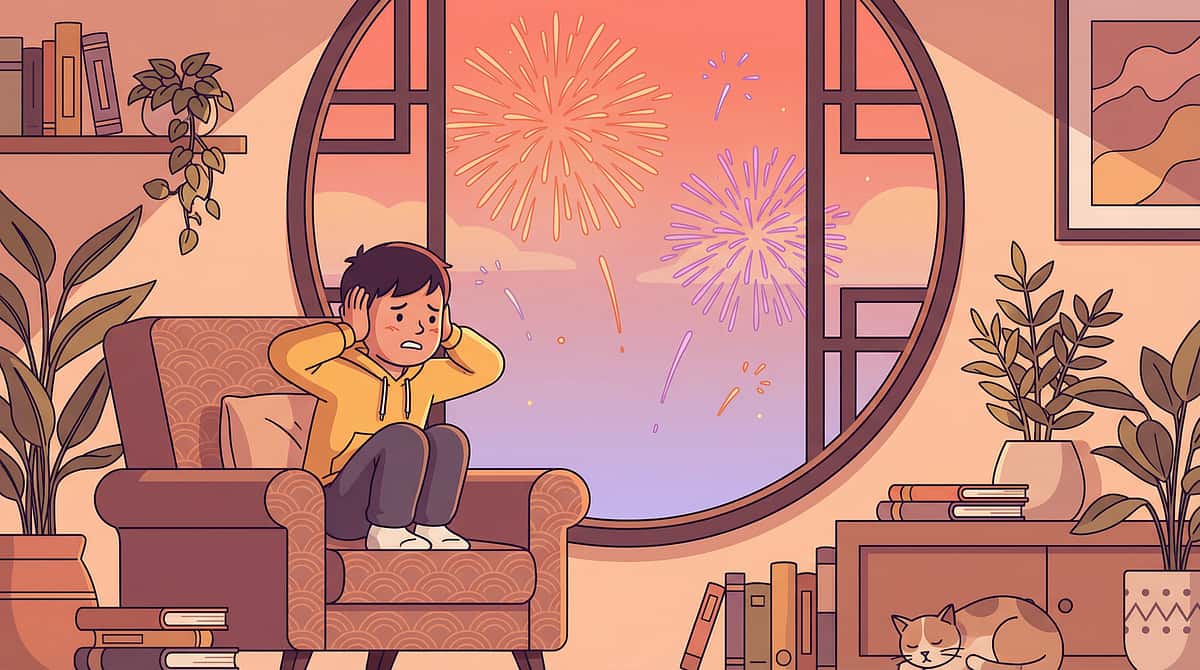
When Festivals Mean Fear, Not Celebration
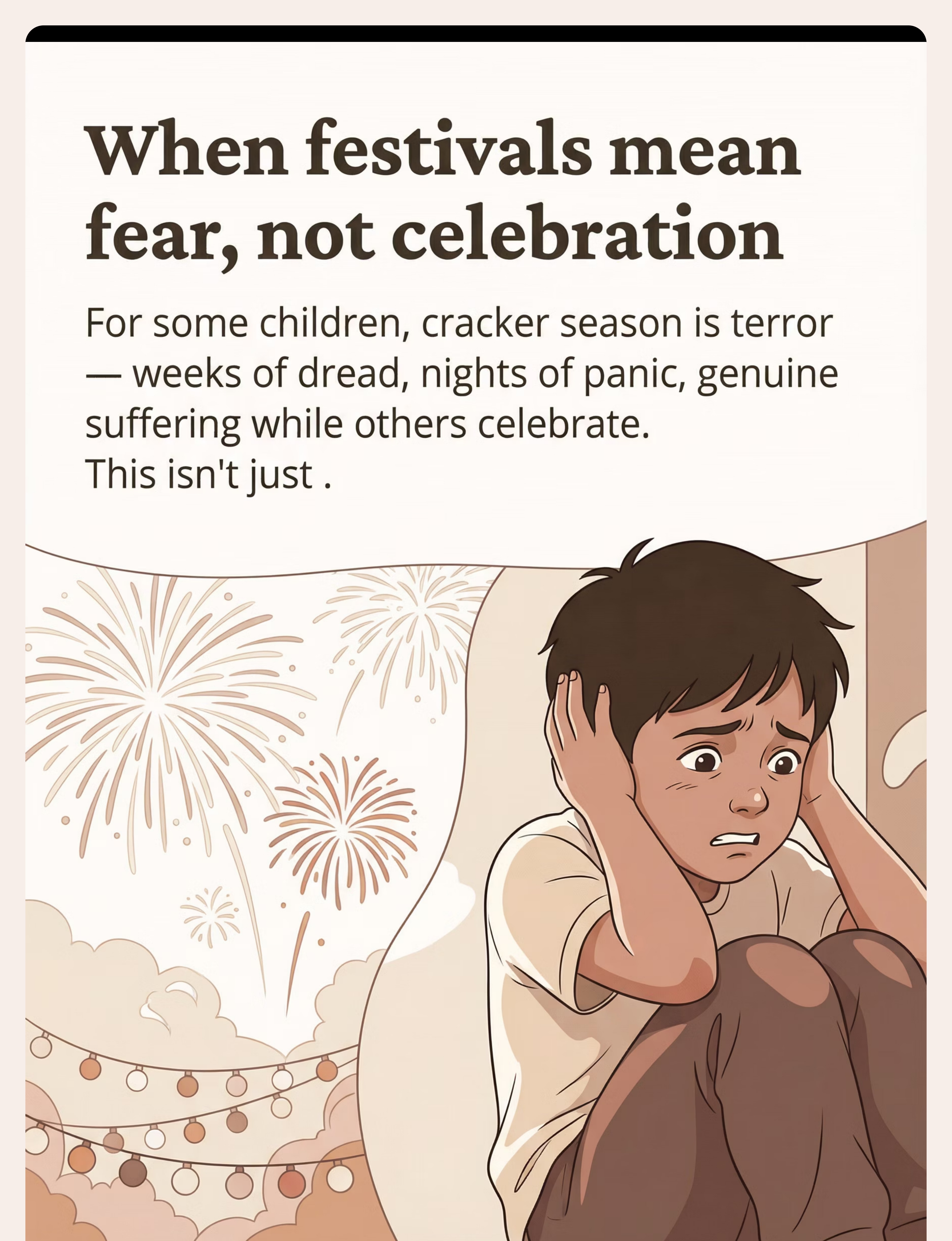
Diwali is supposed to be joy. Lights, sweets, family, celebration. But your child is hiding under a blanket, hands pressed so hard against their ears that they shake. Every distant bang makes them flinch — and it's not even Diwali yet. The festival is three weeks away, and the terror has already begun.
You've tried explaining that crackers can't hurt them from inside the house. Logic doesn't touch fear this deep.
This is Technique A-047: Sensory-Protective Coping for Explosive Sound Fear. A multi-material intervention strategy for auditory over-responsivity to crackers, fireworks, and explosive sounds — validated by the Pinnacle Blooms Consortium of Occupational Therapists, Behavior Analysts, Speech-Language Pathologists, Special Educators, and NeuroDevelopmental Pediatricians.
You are not failing. Your child's nervous system is speaking. And there are 9 materials that can help it cope.
Domain
Auditory Over-Responsivity + Startle Sensitivity + Sound Phobia
Ages
2–12 years | Home + Community | Festival Contexts
Validated By
OT • SLP • ABA • SpEd • NeuroDev Consortium
Research Foundation: WHO Nurturing Care Framework (2018): "The period from pregnancy to age 3 is key for a child's development" — validates that early identification and parental awareness directly impacts outcomes.
Pinnacle Blooms Network®
Sensory Solutions Series — Episode 47
Technique A-047
You Are Among Millions
The isolation you feel during Diwali — watching other children celebrate while yours suffers — is shared by families in every state, every city, every country where festivals involve explosive sounds. You are among millions of families navigating this exact challenge.
80%+
ASD + Auditory Over-Responsivity
of children diagnosed with autism display sensory processing difficulties, with auditory over-responsivity being one of the most common and functionally disruptive patterns. — PRISMA Systematic Review, Children, 2024 (PMC11506176)
50–70%
Sound Sensitivity Rate
of children with sensory processing differences exhibit specific sound sensitivity, with explosive, unpredictable sounds ranking among the top triggers. — Meta-Analysis, World J Clin Cases, 2024 (PMC10955541)
~18M
Indian Families Affected
Indian families navigating neurodevelopmental challenges where festival-season sound sensitivity causes measurable distress — scaling to over 100 million families globally. — WHO/UNICEF prevalence extrapolations
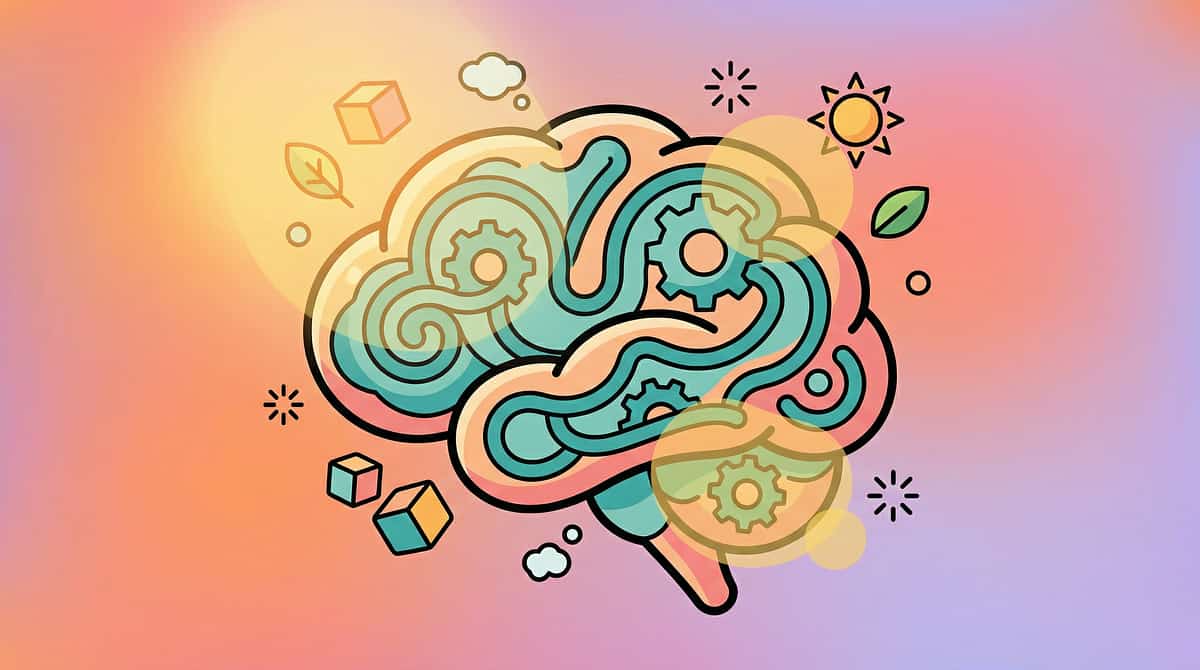
This Is Neurology, Not Behavior
Your child isn't choosing to be afraid. Their auditory system is wired to amplify sudden sounds far beyond what you experience.
How Sound Travels in the Brain
Sound wave → Ear → Auditory nerve → Thalamus (relay station) → Auditory cortex → Amygdala (fear center). In typical processing, the thalamus filters and moderates the signal. In auditory over-responsivity, this filtering mechanism is compromised — the signal arrives at dramatically higher perceived intensity.
The amygdala activates fight-or-flight faster, stronger, and at a lower threshold. A cracker that registers as "startling but fine" to you registers as a "life-threatening explosion" to your child's nervous system.
Three Overlapping Components
Auditory Over-Responsivity
Lower threshold for sound registration, causing overwhelm at levels others tolerate.
Startle Hypersensitivity
Exaggerated startle reflex where the whole body responds as if to danger.
Conditioned Fear / Anticipatory Anxiety
Learned association where mere anticipation of sounds triggers the stress response days or weeks before the event.
This is a wiring difference, not a behavior choice. You cannot reason away a neurological response. But you can protect, regulate, and gradually build tolerance.
Research Citation: Frontiers in Integrative Neuroscience (2020): Comprehensive framework for evaluating sensory integration/sensory processing treatment in ASD. DOI: 10.3389/fnint.2020.556660

Developmental Context: When Sound Sensitivity Peaks and What Co-Occurs
Understanding where your child sits on the developmental timeline — and what commonly co-occurs — helps you see the full picture and plan targeted support.
Ages 3–5 represent the peak presentation window — festival seasons become the first major challenge, and anticipatory anxiety develops. Fear may generalize to balloons, thunder, and car backfires. Without intervention, patterns consolidate by ages 5–8. With consistent tool use, children aged 8–12 build flexible coping and real self-advocacy skills.
Common Co-Occurring Challenges
General auditory sensitivity (vacuum cleaners, school bells), tactile over-responsivity, anxiety in uncontrollable situations, sleep disturbances during festival season, and social withdrawal during sound-heavy community events.
Your Child's Window
Ages 2–12 is the optimal intervention window. Early preparation and consistent tool use now builds the neural pathways for managed coping across the lifespan.

Evidence Grade: Level I–II (Strong to Moderate)
Clinically Validated
Home-Applicable
Parent-Proven
This technique is not guesswork. It is grounded in peer-reviewed, consortium-validated research. Here is the evidence foundation supporting each layer of the protocol.
PRISMA Systematic Review (2024)
16 articles from 2013–2023 confirm that sensory integration intervention meets criteria to be considered evidence-based practice for children with ASD. This includes auditory processing interventions using sensory-protective materials. — PMC11506176
Meta-Analysis (World J Clin Cases, 2024)
Across 24 studies, sensory integration therapy effectively promoted social skills, adaptive behavior, sensory processing, and motor skills. Individual treatment sessions with structured material protocols showed the strongest effect sizes. — PMC10955541
Indian RCT (Padmanabha et al., 2019)
Home-based sensory interventions demonstrated significant outcomes when parents were trained in material-based protocols and provided structured guidance. — Indian J Pediatr, 2019 | DOI: 10.1007/s12098-018-2747-4
Deep Pressure Research
Weighted blankets and compression tools show measurable reduction in autonomic arousal markers (heart rate, cortisol) in children with sensory processing differences.
ANC / Ear Protection Evidence
Noise reduction interventions for individuals with hyperacusis and auditory over-responsivity demonstrate significant improvement in functional participation and reduced anxiety.
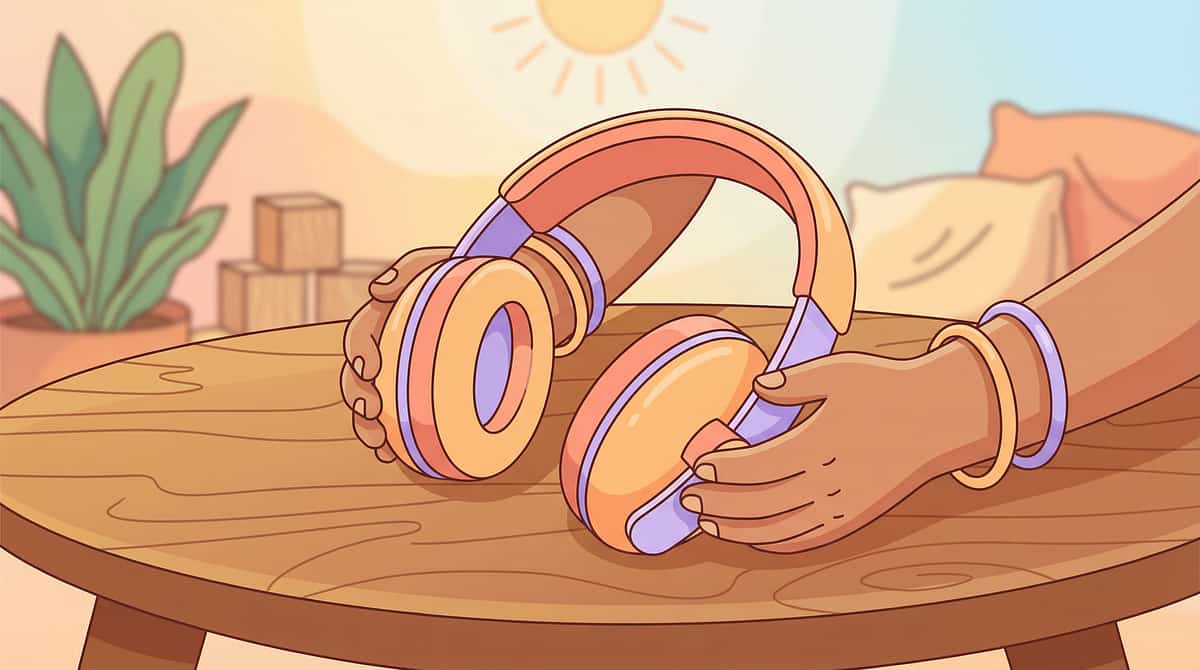
Sensory-Protective Coping for Explosive Sound Fear
Parent-Friendly Name: "The Cracker Season Survival Kit"
A multi-material, multi-layered intervention strategy that combines auditory protection, nervous system regulation, environmental control, cognitive support, and organizational preparation to enable children with auditory over-responsivity to cope with explosive sounds during festivals, weddings, and unpredictable community celebrations.
What It Does
Reduces the sensory impact of explosive sounds below the child's distress threshold while simultaneously calming the nervous system's fear response, providing cognitive predictability, and building a replicable coping protocol the child can internalize over time.
Who It's For
Children aged 2–12 who experience intense fear, distress, and physiological arousal in response to sudden, loud, explosive sounds — particularly crackers, fireworks, and similar festival sounds.
Domain Badges
Domain A: Sensory Processing
Auditory Over-Responsivity
Ages 2–12
Home + Community
Canon Materials in This Technique
- Noise-Reducing Headphones / Ear Defenders
- Weighted Blanket / Lap Pad
- Fidget Tool Set
- Sensory Tent / Hideaway / Calm-Down Space
- Social Stories / Narrative Supports
- Visual Timer
- Calm-Down Kit / Self-Regulation Toolbox
- White Noise / Sound Machines
Duration
Festival Season Protocol — preparation weeks before, coping during, review after.
This Technique Crosses Therapy Boundaries — Because the Brain Doesn't Organize by Therapy Type
No single discipline owns sound sensitivity. The most effective interventions draw from four overlapping professional perspectives, each adding a distinct and non-replaceable layer of clinical expertise.
Occupational Therapist (OT) — Primary Lead
Evaluates auditory processing profile, selects appropriate protection levels, calibrates weighted blanket specifications, designs the safe space environment, and develops the graduated desensitization plan when the child is ready.
Board Certified Behavior Analyst (BCBA) — Secondary
Addresses the anxiety and avoidance behavior pattern — designing reinforcement schedules for coping tool use, creating behavioral momentum through graduated exposure protocols, and building the token economy that motivates coping practice.
Speech-Language Pathologist (SLP) — Supporting
Contributes to social story development — ensuring age-appropriate language, creating self-advocacy scripts ("I need my ear muffs"), and developing communication supports for children who become non-verbal during extreme distress.
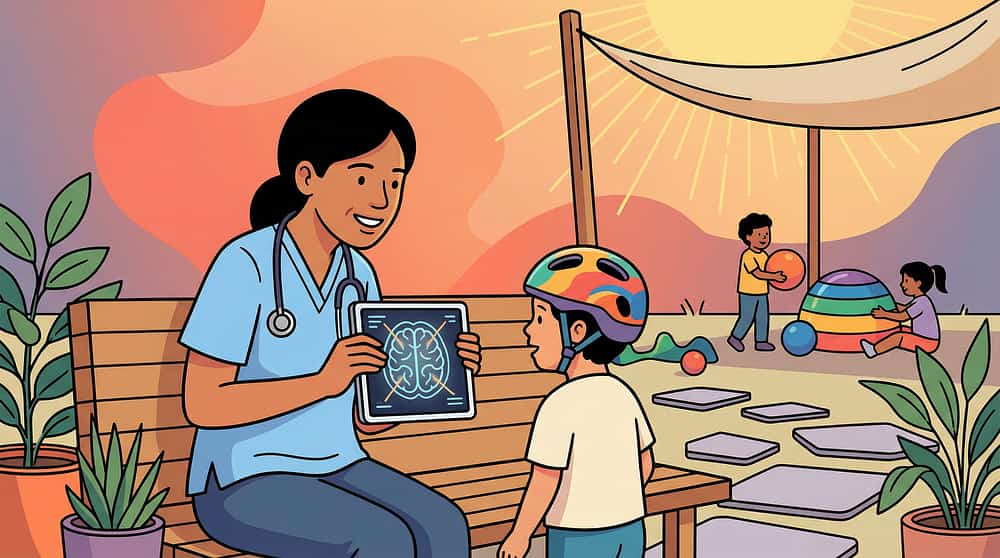
NeuroDevelopmental Pediatrician — Supporting
Evaluates whether medication support is indicated for severe anxiety, assesses comorbid conditions, and provides the medical framework for understanding the child's specific auditory processing profile.
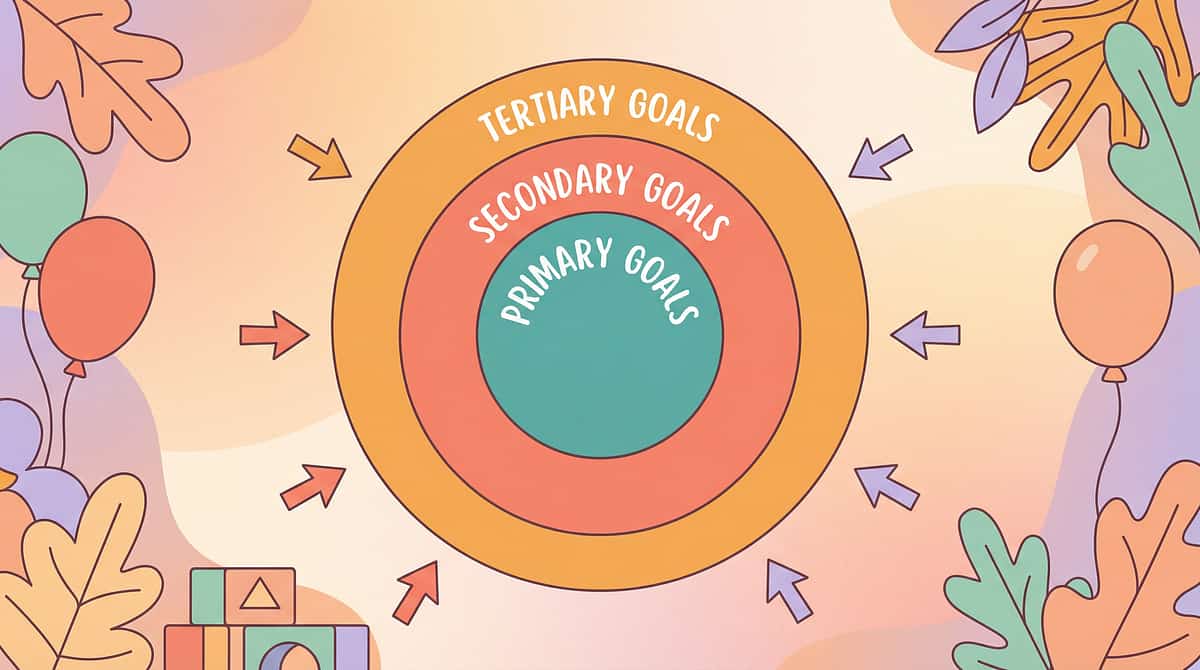
Precision Targeting: Not Random — Engineered
Every material in this protocol addresses a specific target. Understanding the bullseye helps you prioritize when resources are limited and track progress with precision.
Observable Indicators of Progress
- Child reaches for coping tools independently when sounds begin
- Duration of distress episode decreases across festival days
- Anticipatory statements shift from "I'm scared" to "Where's my kit?"
- Participation in non-sound aspects of celebration increases
Research Foundation
Meta-analysis (World J Clin Cases, 2024): Sensory integration therapy effectively promoted social skills (primary), adaptive behavior (secondary), sensory processing, and motor skills (tertiary) across 24 studies. — PMC10955541
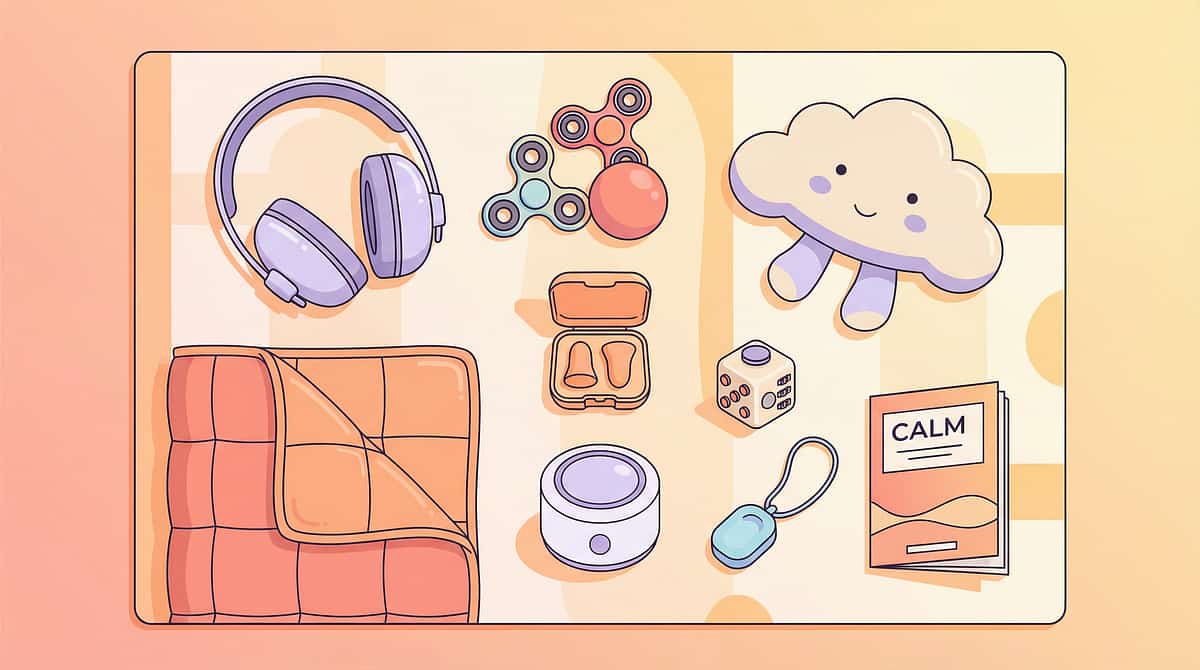
The 9 Materials — Everything You Need
Each material in this protocol serves a specific neurological function. Together they form a layered sensory protection system. Here is the complete kit — from the most critical to the most versatile.
Total Investment Range: ₹0–₹25,000
Scales from zero-cost DIY to full commercial setup
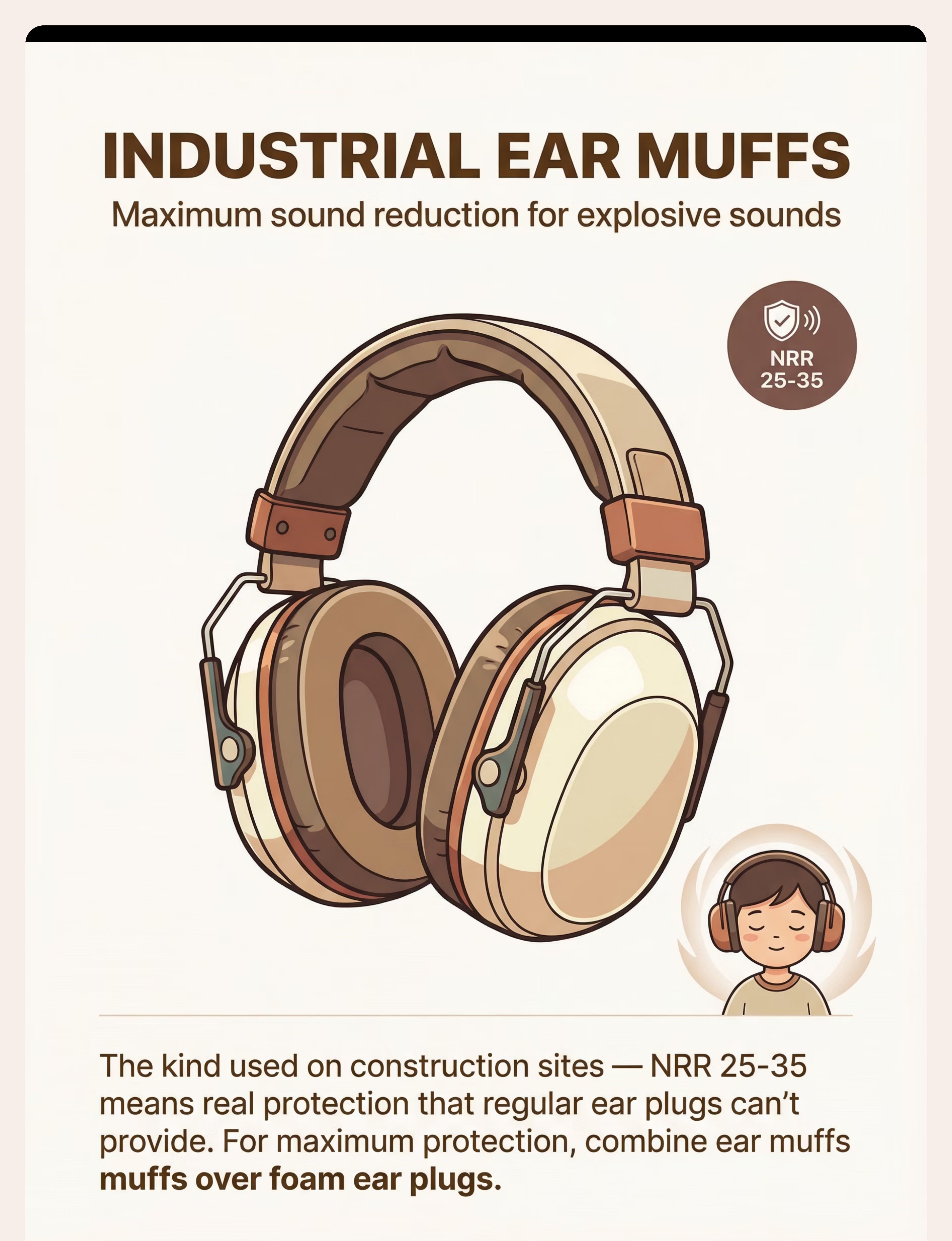
Industrial-Grade Noise-Canceling Ear Muffs 🔊🛡️
Canon: Noise-Reducing Headphones / Ear Defenders | NRR Rating: 25–35 dB (construction/industrial grade) | Price: ₹500–₹3,000
Look for NRR (Noise Reduction Rating) of at least 25 dB. Child-sized industrial muffs available. MOST CRITICAL — Start here.
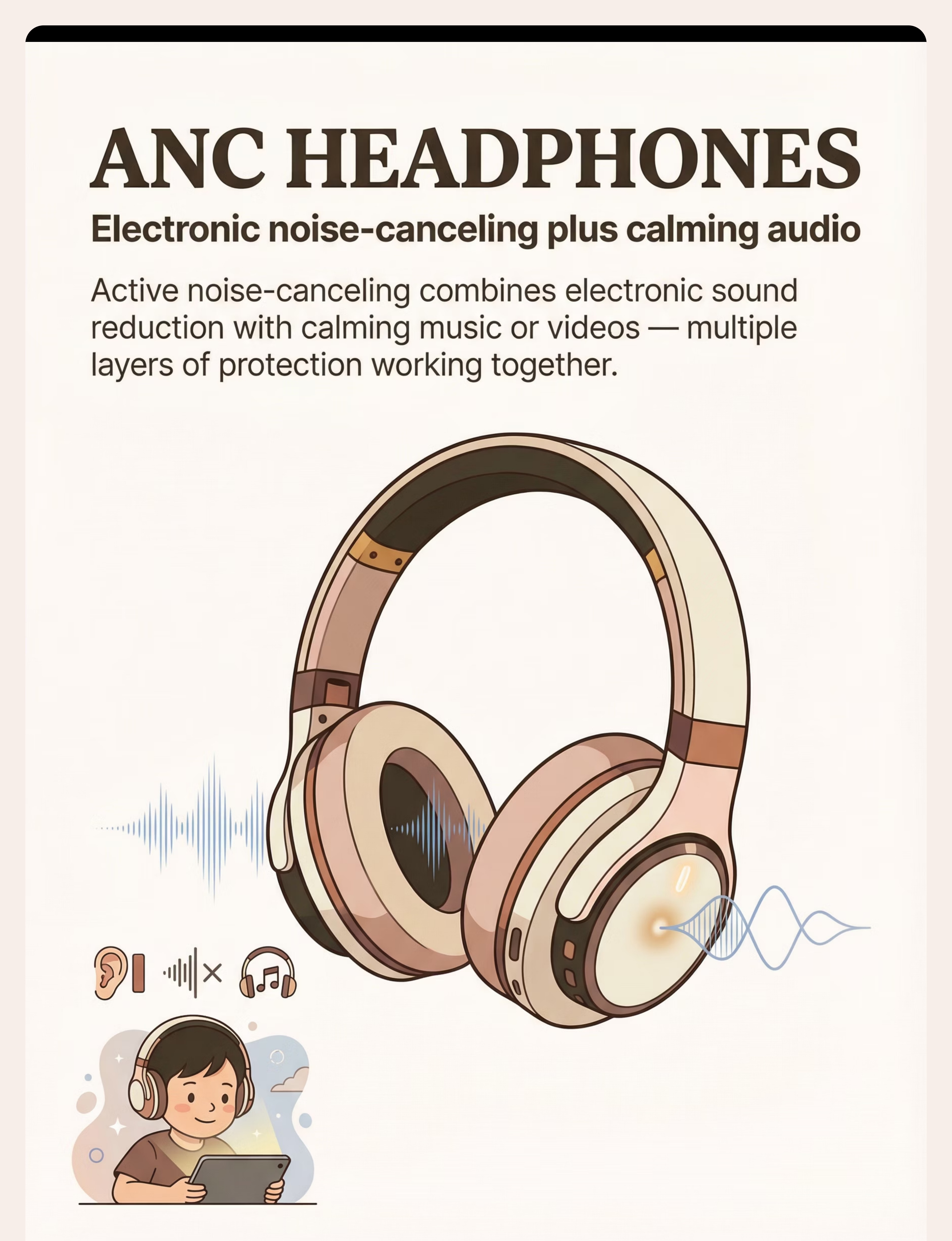
Active Noise-Canceling (ANC) Headphones 🎧
Canon: Noise-Reducing Headphones / Ear Defenders | Price: ₹2,000–₹20,000
Combines electronic sound cancellation + calming audio playback for a dual-layer protection effect.
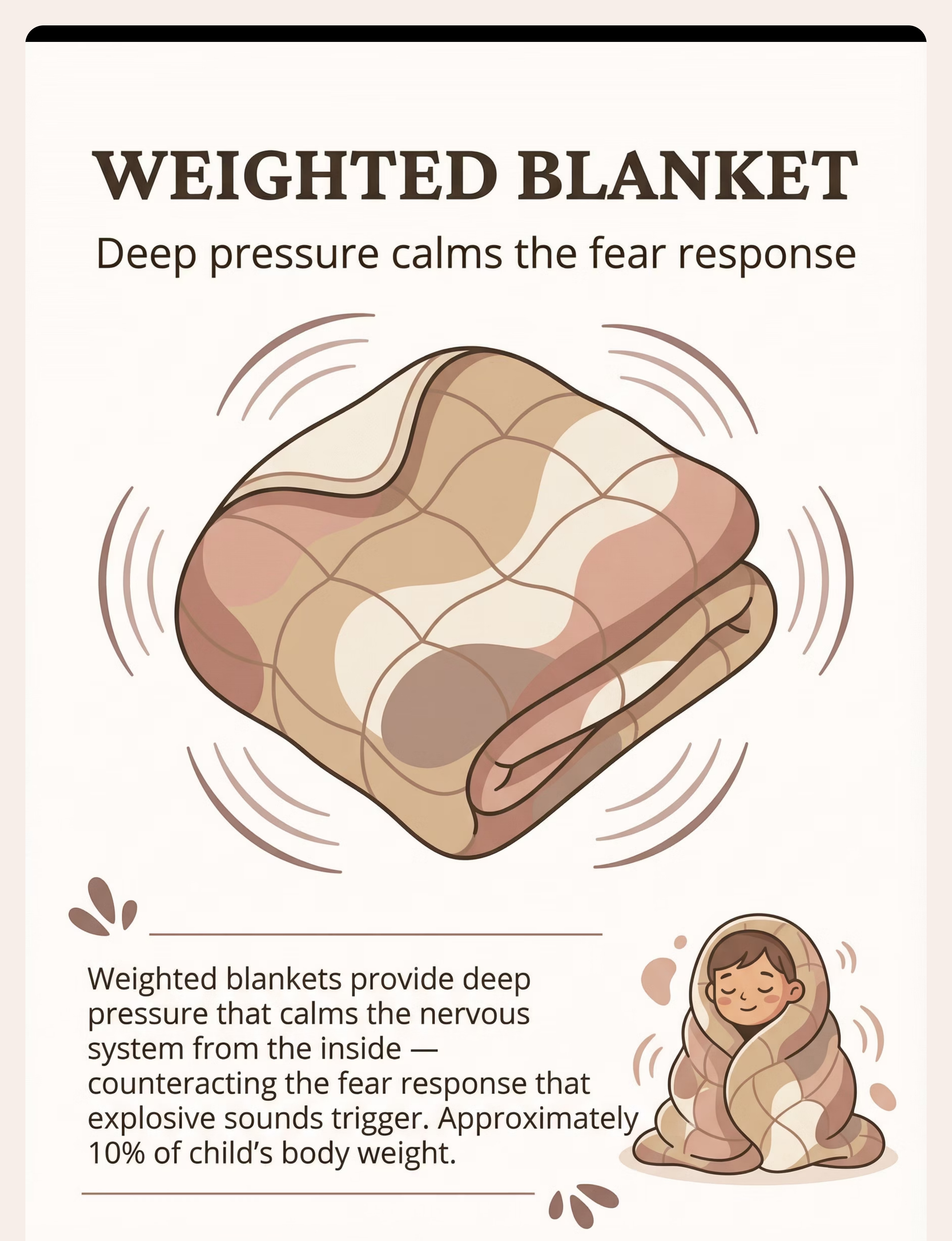
Weighted Blanket or Compression Tools 🧸
Canon: Weighted Blanket / Lap Pad | Rule: Approximately 10% of child's body weight | Price: ₹2,000–₹8,000
Deep pressure signals "safe" to the proprioceptive system, activating the parasympathetic calming response.
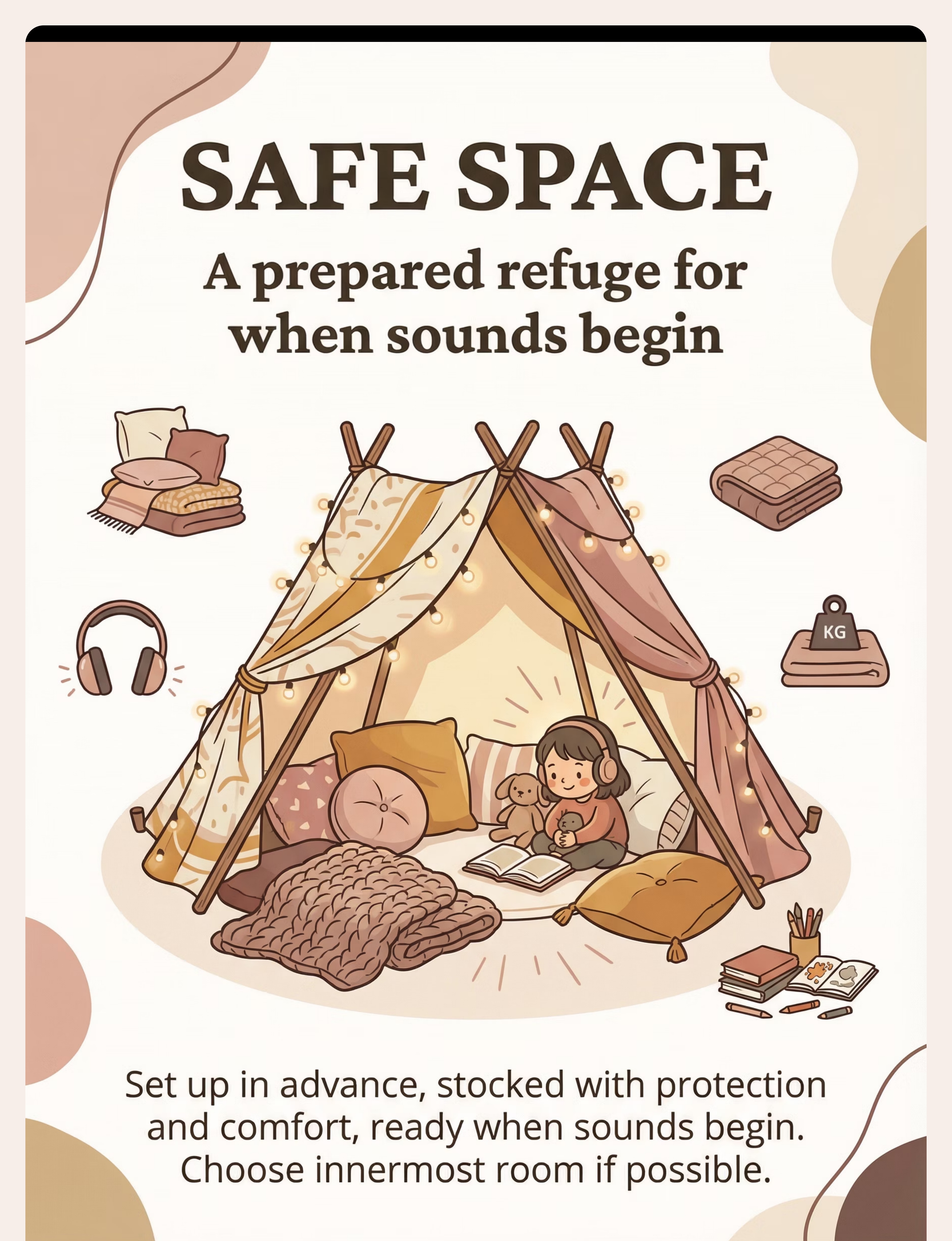
Safe Space Setup (Tent / Den / Hideaway) ⛺
Canon: Sensory Tent / Hideaway / Calm-Down Space | Price: ₹500–₹5,000
Choose innermost room, stock with comfort items and protection tools. The psychological refuge is as important as the physical sound reduction.
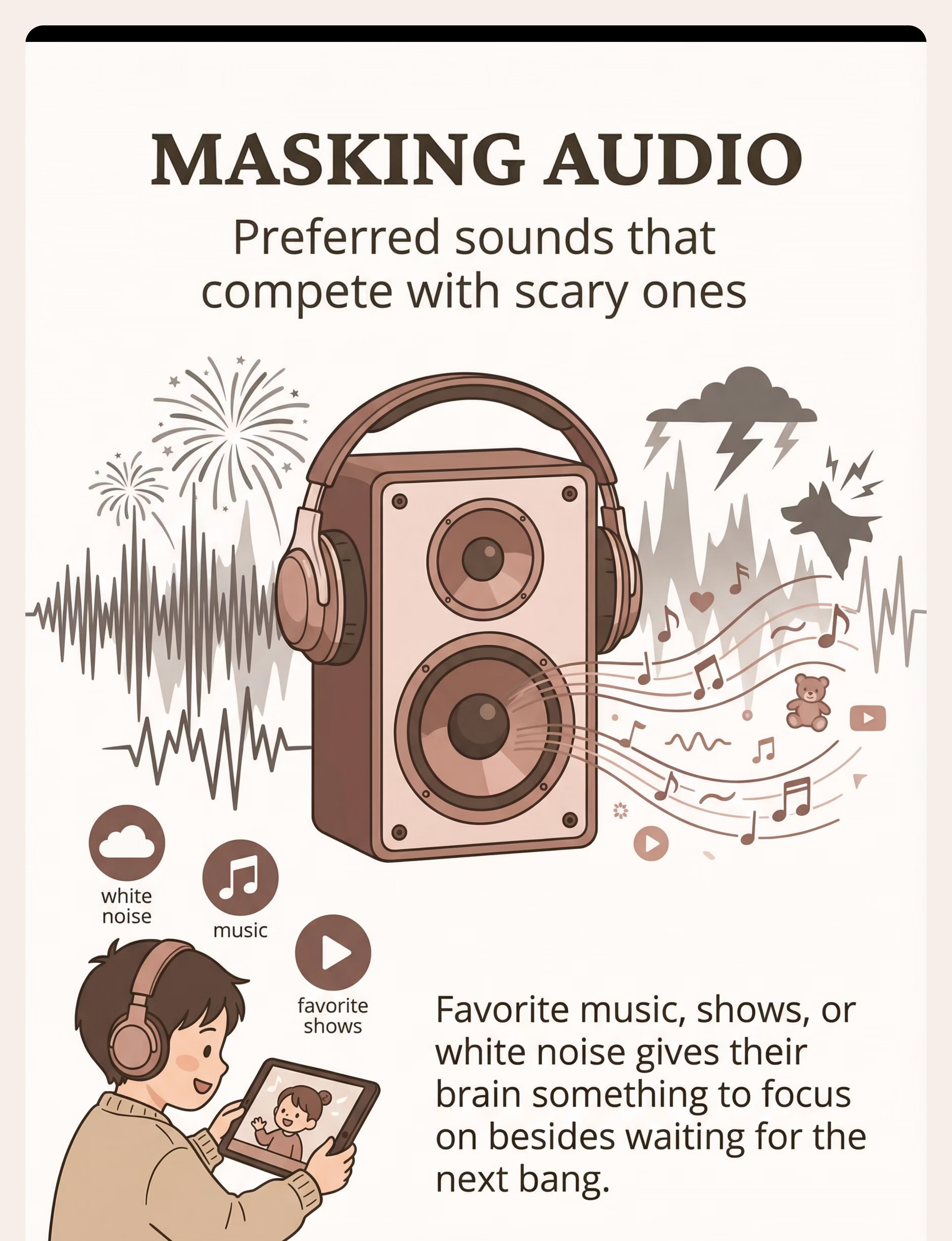
Masking Audio (White Noise / Music / Preferred Shows) 🔉
Canon: White Noise / Sound Machines | Price: ₹0–₹3,000
Favorite music, shows, or white/brown noise to compete with external sounds. More sensory channels occupied with preferred input = less bandwidth allocated to scary input.
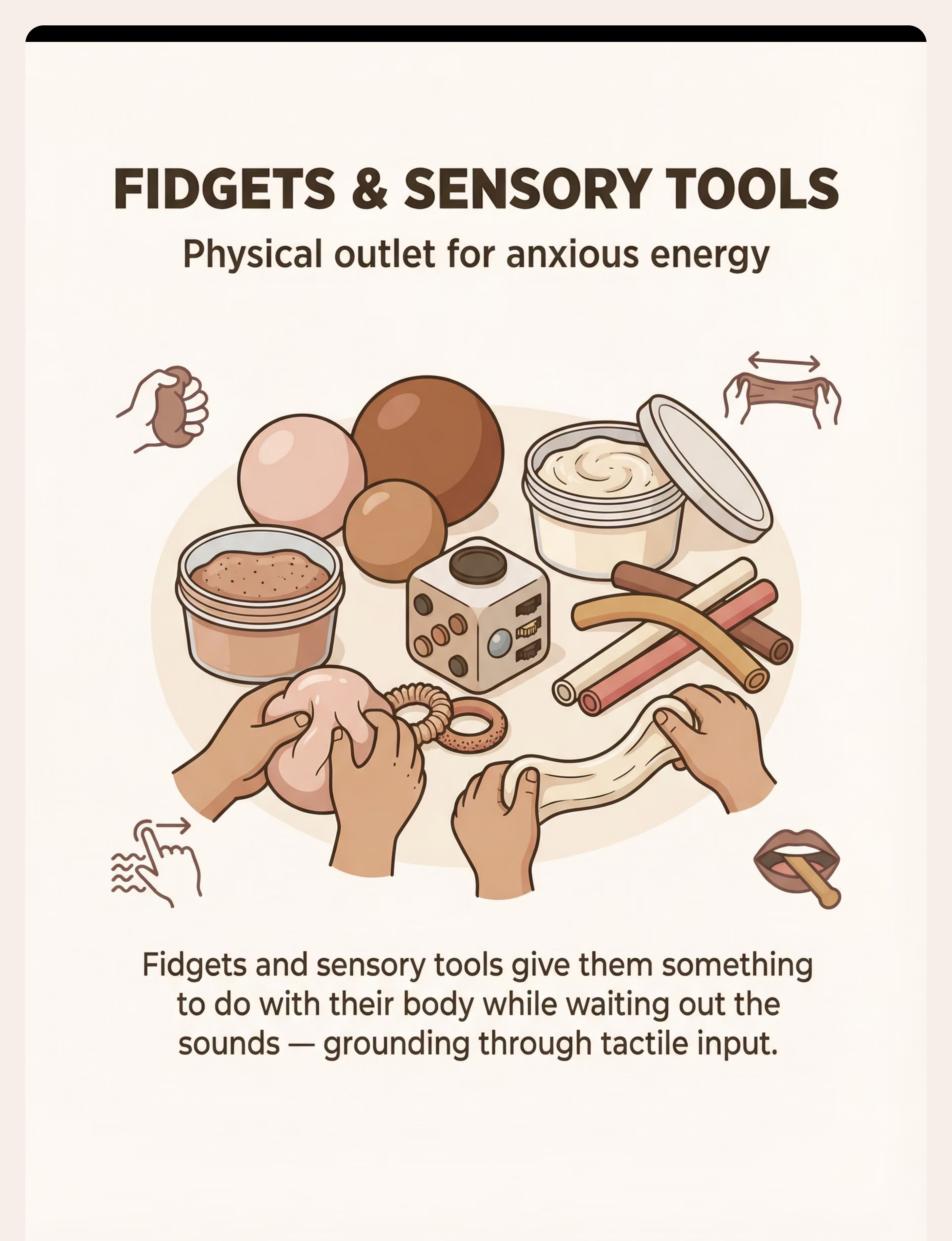
Fidgets and Sensory Tools 🤲
Canon: Fidget Tool Set | Price: ₹100–₹1,500
Stress balls, putty, fidget cubes, chewy tubes — physical outlet for anxiety. Hands busy = body occupied = nervous system grounded.
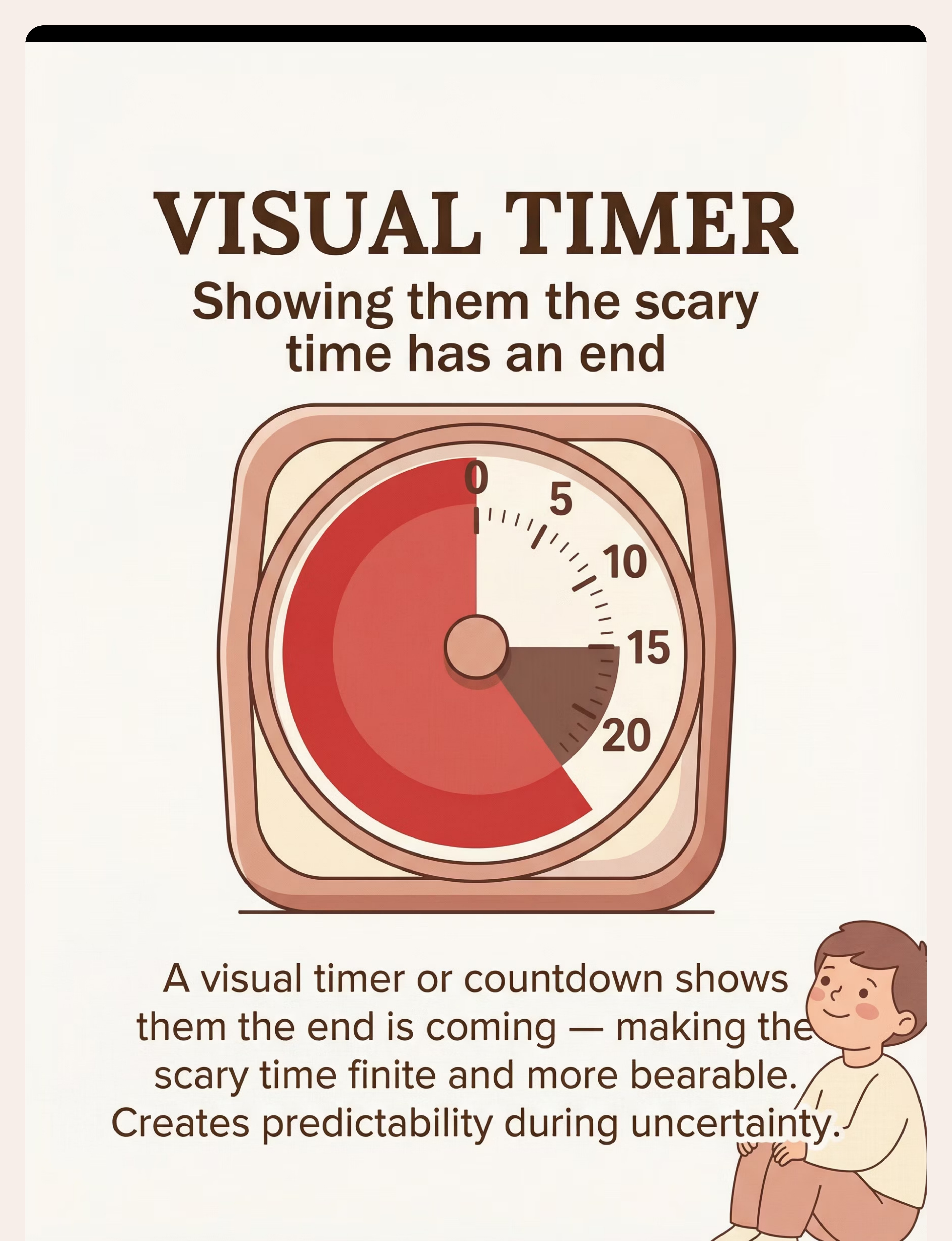
Visual Timer and Countdown ⏱️
Canon: Visual Timer | Price: ₹0–₹2,000
Makes "when will it end?" concrete and visible. Transforms abstract dread into a shrinking visual — one of the most powerful anxiety-reduction tools available.
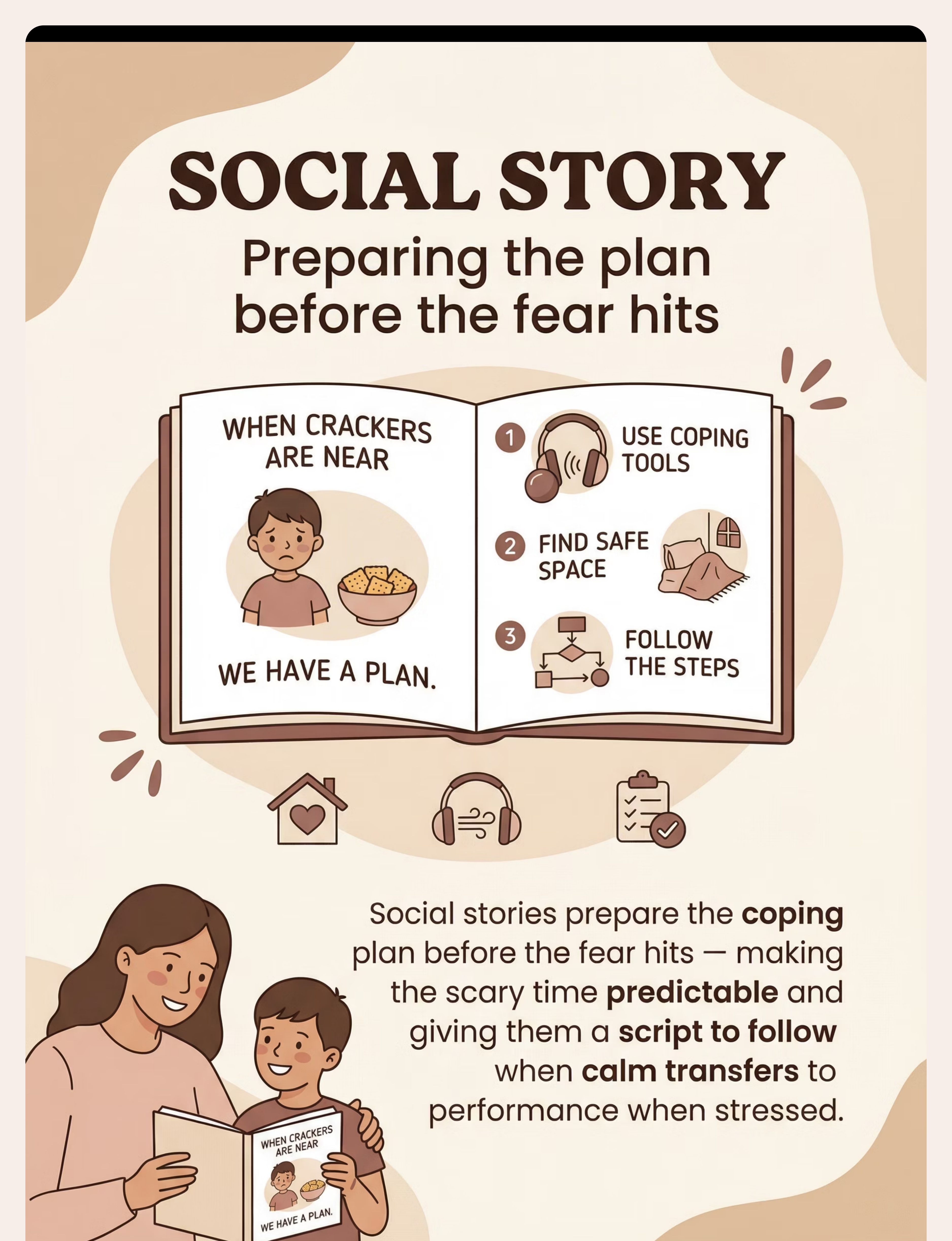
Social Story and Preparation Materials 📖
Canon: Social Stories / Narrative Supports | Price: ₹0–₹500 (DIY or printable templates)
Personalized coping plan prepared and rehearsed before the festival. The brain copes better with events it has already "rehearsed" in narrative form.
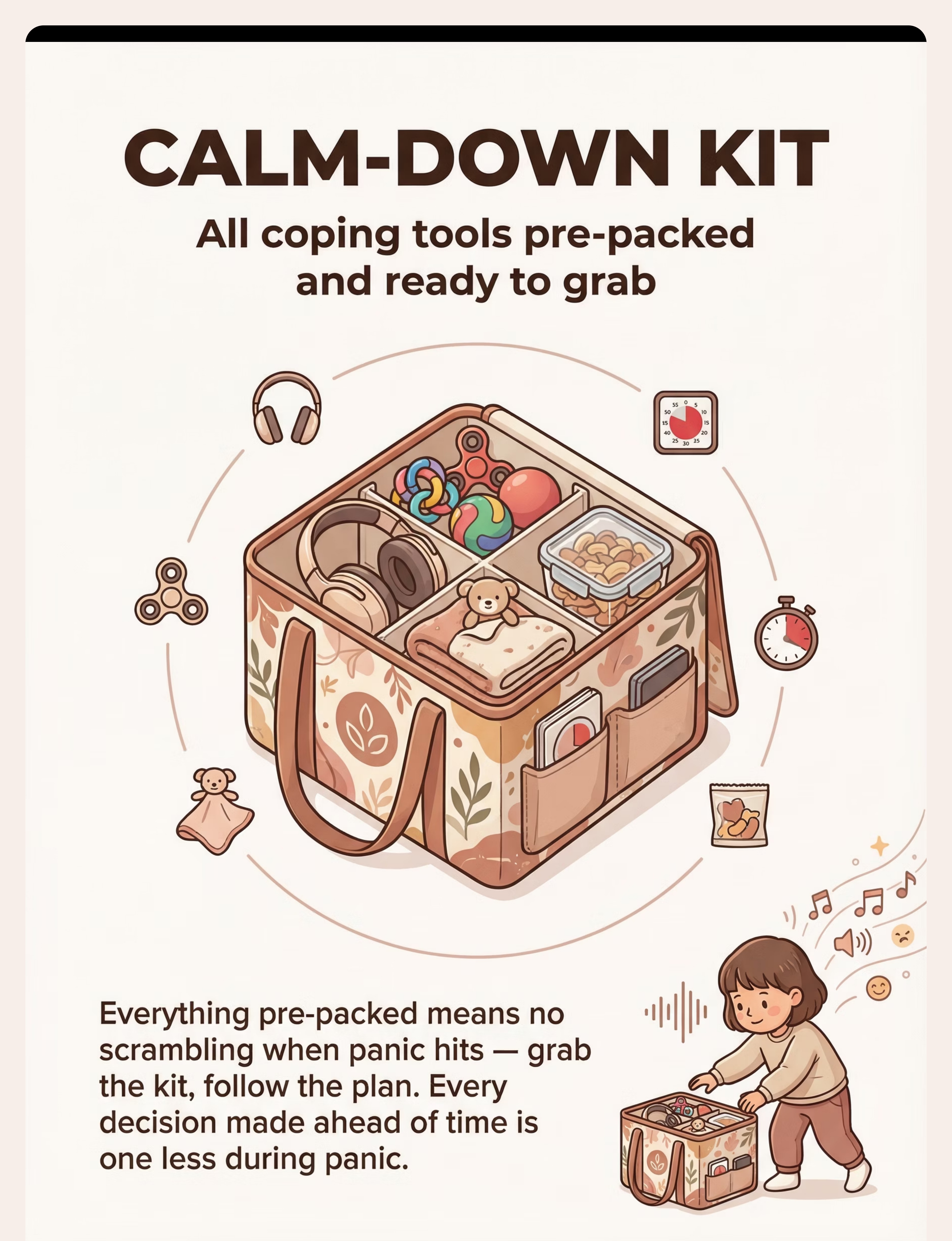
Calm-Down Kit (Pre-Packed and Ready) 🎒
Canon: Calm-Down Kit / Self-Regulation Toolbox | Price: ₹0–₹500 (container) + cost of items inside
Container with ALL tools pre-packed — grab and go when sounds begin. The organizational principle reduces response time from minutes to seconds.
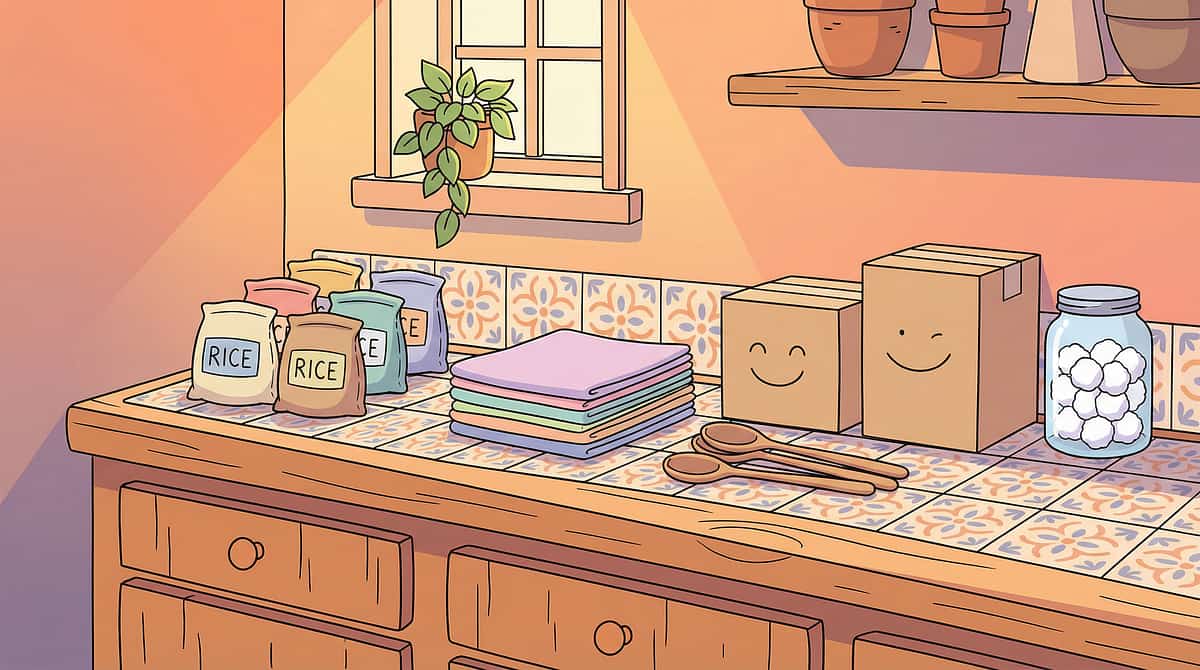
Can't Order? Make It. The Science Still Works.
Not every family can order from Amazon. Not every village has same-day delivery. The WHO/UNICEF inclusion principle demands that every parent can execute this technique TODAY with what they have. The neurological mechanism works whether the tool costs ₹10,000 or costs nothing.
Buy This | Make This | Why It Works | |
Industrial ear muffs (₹500–3,000) | Thick cotton plugs wrapped in cloth + tight beanie/headband pressed over ears | Increases passive sound attenuation. Won't match NRR 25, but adds meaningful reduction | |
ANC headphones (₹2,000–20,000) | Any over-ear headphones playing loud favorite music/show on phone | Passive isolation + masking audio achieves partial ANC effect | |
Weighted blanket (₹2,000–8,000) | Heavy quilt layered with rice bags sewn into pockets; tight swaddling for younger children | Same deep pressure principle — activates parasympathetic calming | |
Pop-up tent (₹500–5,000) | Blanket fort in innermost room using chairs, cushions, bedsheets | Same psychological refuge — enclosed, prepared, stocked space | |
White noise machine (₹500–3,000) | Phone playing brown noise on YouTube; loud fan; old radio between stations | Same masking principle — competing sound | |
Commercial fidgets (₹100–1,500) | Dough balls from flour + water; rubber bands to stretch; stones to squeeze; bubble wrap | Same tactile grounding — hands busy, body occupied | |
Visual timer (₹500–2,000) | Sand timer (₹50); timer app on phone; countdown written on paper and crossed off | Same principle — making time concrete and finite | |
Printed social story (₹100–500) | Hand-drawn picture book with child's coping plan; photos of their safe space on phone | Same preparation and rehearsal principle | |
Commercial calm-down kit bag (₹200–500) | Any box, bag, or backpack decorated by child | Same organizational principle — everything in one place |
⚠️ NON-NEGOTIABLE: For severe auditory over-responsivity, industrial-grade ear protection is not optional. Consumer earplugs and regular headphones are clinically insufficient for explosive sound levels. If only one item is purchased, let it be proper ear muffs with NRR 25+.
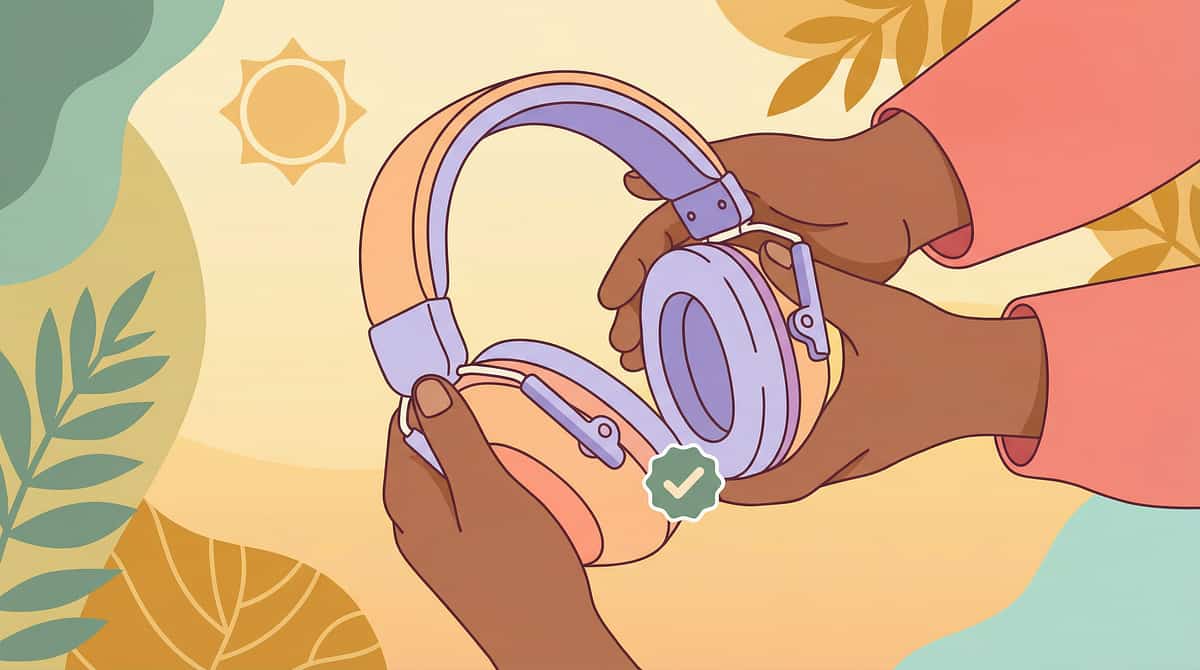
Safety Gate: Read Before Proceeding
This protocol is designed to be safe and effective for the vast majority of children ages 2–12. However, certain conditions require modification or professional consultation before you begin. Read every traffic light below before implementing.
1
🔴 DO NOT USE THIS PROTOCOL IF:
- Child has ear infection, ear pain, or recent ear surgery (contraindicated until cleared)
- Child has claustrophobia or extreme anxiety about enclosed spaces (use open corner instead of tent)
- Child has respiratory condition exacerbated by heavy blankets (use weighted lap pad instead)
- Child has known seizure disorder triggered by sensory input (consult NeuroDev Pediatrician first)
2
🟡 MODIFY IF:
- Child is under age 2 (weighted blanket not recommended; use swaddling and holding instead)
- Child has oral motor concerns (chewy fidgets require OT assessment for safe use)
- Child has skin sensitivity (ensure ear muff pads don't cause irritation; use fabric cover)
- Child refuses ear protection (combine masking audio + safe space + weighted blanket as alternative layers)
3
🟢 PROCEED WHEN:
- Materials have been tested before festival (child is familiar and comfortable with each tool)
- Safe space is set up and stocked in advance (not during panic)
- Social story has been reviewed multiple times before the event
- Parent has practiced calm presence and knows the coping protocol
- Emergency plan is in place (pediatrician contact, nearest Pinnacle center)
⛔ ABSOLUTE RED LINES — STOP IMMEDIATELY IF: Child shows signs of breathing difficulty under weighted blanket | Child cannot hear parent's voice at all through ear protection | Child's distress escalates despite all tools | Child shows self-injurious behavior during sound exposure.
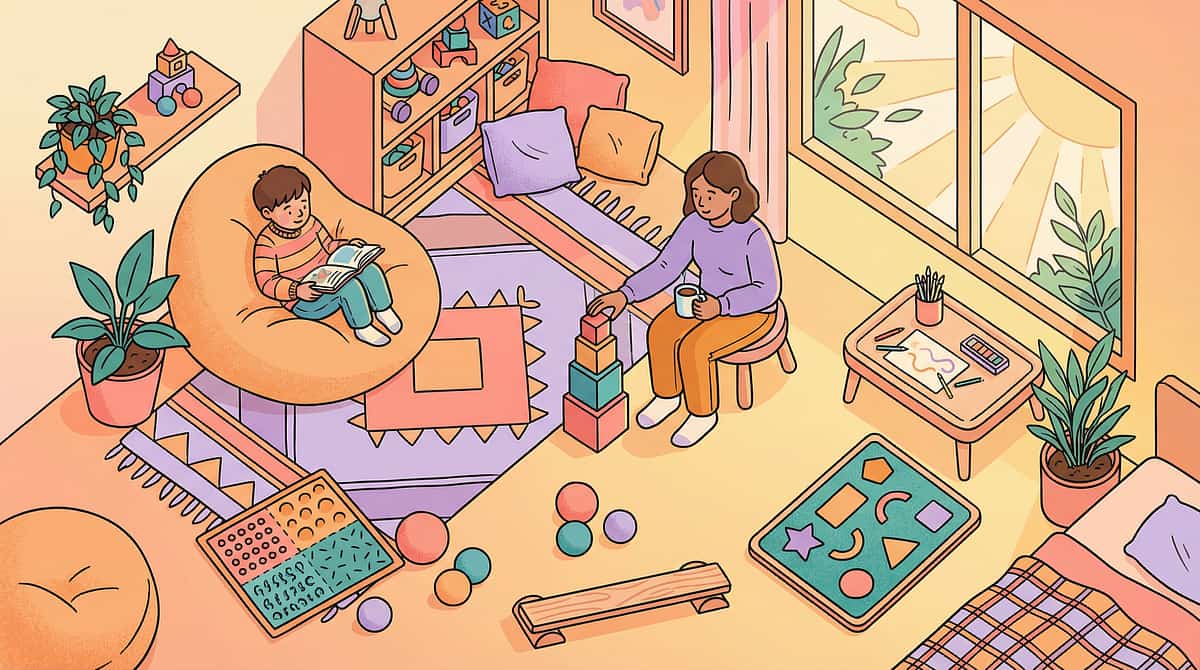
The Cracker Season Room Layout
The physical environment is a therapeutic tool. Set up your safe space 1–2 weeks before festival season and practice using it multiple times. The child should associate this space with safety BEFORE they need it — not discover it for the first time during a panic.
Choose the Innermost Room
Maximum walls between child and external sounds. Bathroom, walk-in closet, or center bedroom often work best.
Set Up the Safe Space (①)
Tent or fort away from windows. Stock with all comfort items, activities, snacks, and water before festival night.
Ear Protection Station (②)
Ear muffs and ANC headphones placed at the safe space entrance — the first thing the child reaches for.
Weighted Blanket (③), Audio Station (④), Fidget Station (⑤)
Blanket pre-spread and ready. Device pre-loaded with calming playlist. Calm-down kit at arm's reach inside the space.
Visual Timer (⑥) + Parent Position (⑦)
Timer visible from child's position. Parent adjacent — not inside (give child ownership) but within arm's reach and visual contact.
What to REMOVE
Close all windows and doors. Draw curtains (reduces light flash from fireworks). Remove sound-reflecting surfaces from the room.
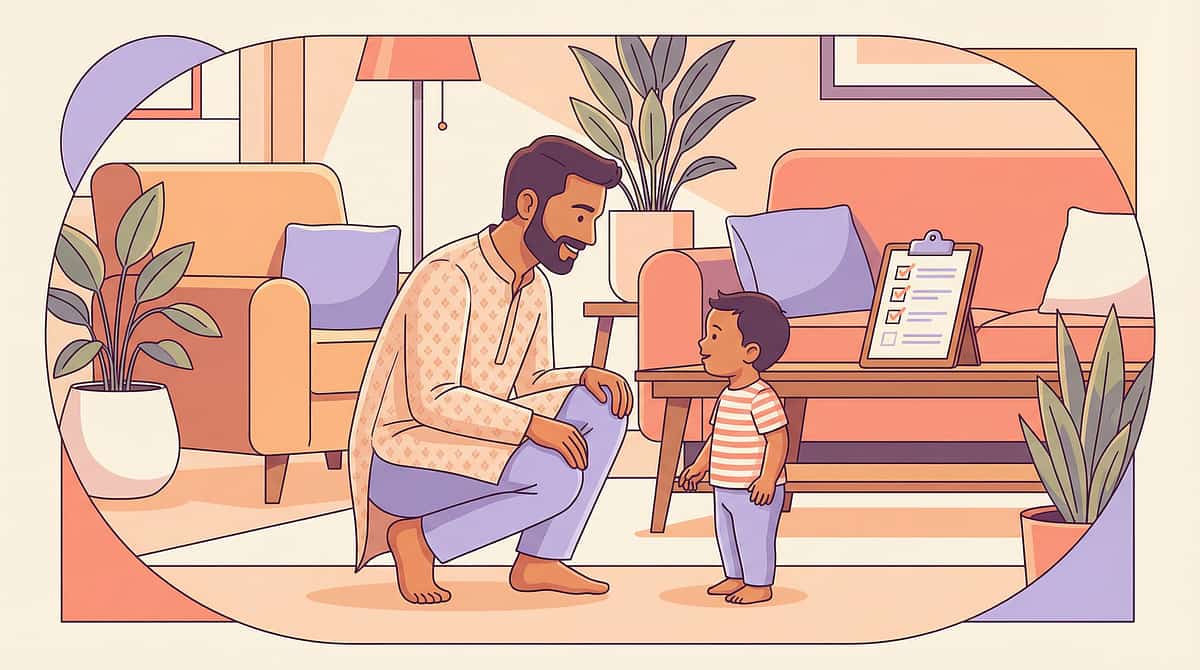
Pre-Festival Readiness Assessment
Before the first cracker sounds, run through this readiness check. The goal is to confirm that your child has had meaningful exposure to each tool BEFORE they need it under stress. A familiar tool works. An unfamiliar tool adds anxiety.
✅ Tool Familiarity Checklist
- Child has worn ear muffs at least 3 times without distress
- Child has spent time in the safe space voluntarily (not only during fear)
- Child has used weighted blanket and expressed comfort or tolerance
- Social story has been reviewed together at least 5 times
- Calm-down kit is complete and child knows where it is
- Masking audio playlist tested and child engages with it
- Visual timer practiced — child understands the concept of "time remaining"
- Parent has practiced the calm presence protocol (no panic-matching)
- Backup plan exists if primary tools don't work
Decision Gate
- All GREEN → GO — Execute the festival coping protocol as planned
- Some AMBER → MODIFY — Use the tools the child has accepted; skip unfamiliar ones; add extra parent presence
- Any RED → POSTPONE full protocol — Use maximum environmental protection and hold/comfort the child through the event. Begin preparation for next festival immediately after.
"The best session is one that starts right."
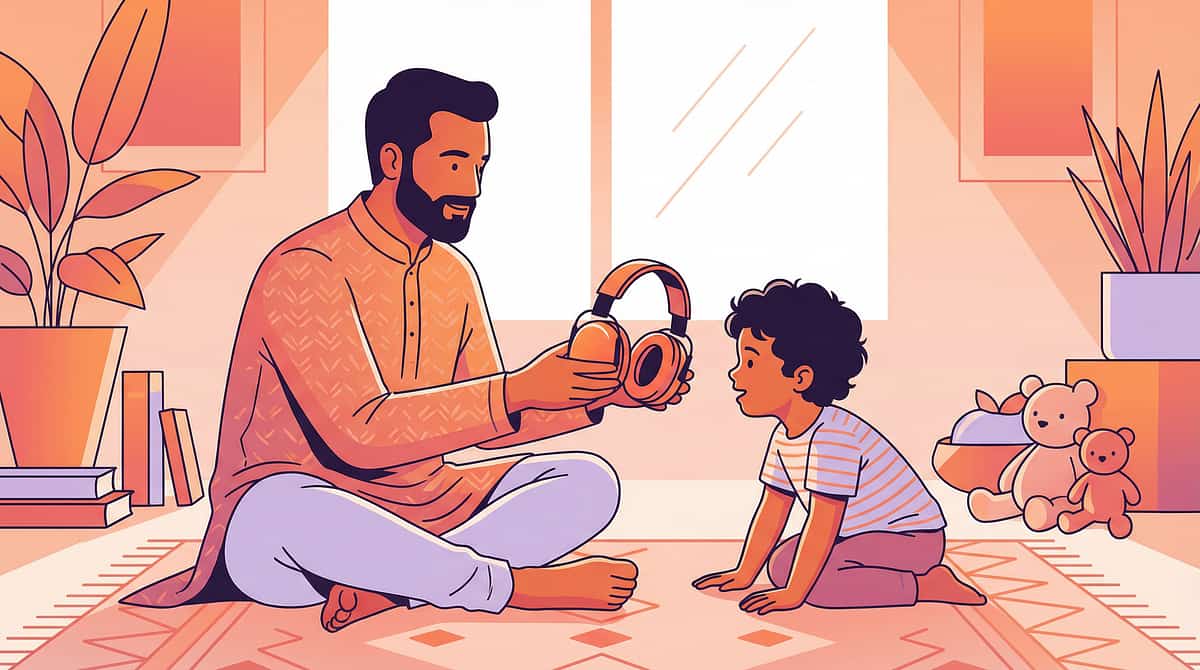
Step 1: The Invitation to Safety
Step 1 of 6
Timing: As soon as distant sounds begin
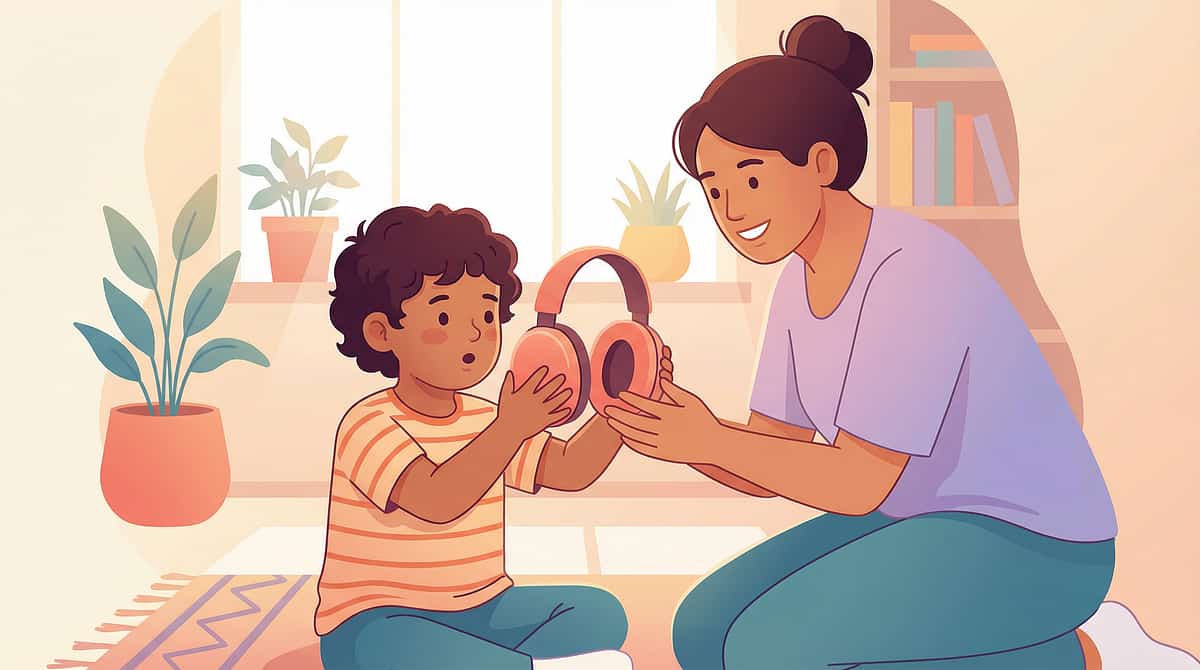
The invitation is a 30–60 second transition to safety — not a negotiation. Your tone, body language, and pace communicate more than your words. A calm parent creates a calmer child.
What to Say (Script)
"Hey [child's name], the crackers are going to start soon / have started. Let's go to our special space! Remember our plan? Let's get our kit and go."
Body Language Cues
- Calm, steady voice — not urgent, not panicked
- Physical warmth — offer hand, gentle touch on shoulder
- Move toward the safe space together — don't carry unless the child requests
- Model using tools: "I'm going to put some music on. Want to put on your ear muffs?"
Reading the Child's Response
Acceptance: Moves willingly, reaches for ear muffs, says "okay," or echoes part of the script.
Resistance / Already in panic: Skip invitation, move to direct protection — put ear muffs on, wrap in blanket, carry to safe space.
Frozen: Gently guide physically while narrating: "I'm going to put your ear muffs on now. We're going to our space."
Step 2: Layering the Protection
Step 2 of 6
Timing: 1–3 minutes after entering safe space
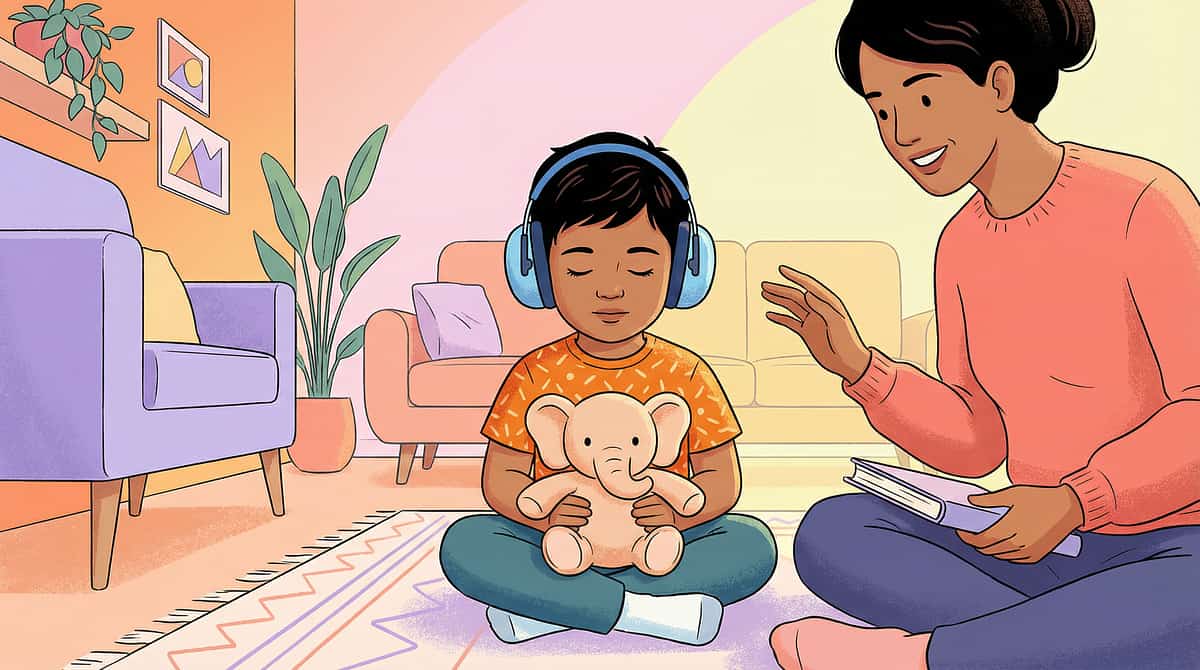
The layers work synergistically. Each layer addresses a different neurological channel. The order matters — start with the highest-impact protection (auditory) and build outward.
Layer 4 — Cognitive Anchoring
Set the visual timer where the child can see it. Remind them: "Look — this many minutes/hours. Then it gets quiet." This transforms abstract dread into a shrinking, visible boundary.
Layer 3 — Sensory Distraction
Place fidgets within reach. Begin preferred show or video on tablet. More sensory channels occupied with PREFERRED input = less bandwidth allocated to SCARY input.
Layer 2 — Deep Pressure Regulation
Wrap weighted blanket or place over lap. The goal is firm, even pressure that signals "safe" to the proprioceptive system, activating the parasympathetic nervous system.
Layer 1 — Auditory Protection (FIRST PRIORITY)
Put on industrial ear muffs. If child tolerates, add foam ear plugs underneath for maximum protection. If using ANC headphones, power on ANC and begin playing preferred audio immediately.
Reinforcement Cue: "You're doing amazing. You came to your space, you put on your ear muffs, you're using your tools. That's so brave."
Child should visibly show decreased arousal within 3–5 minutes if tools are working effectively.
Step 3: Active Coping During Peak Sounds
Step 3 of 6
Timing: Duration of sound event
This is not a single therapeutic action — it is a sustained coping state. The child remains in the safe space with protection layers active throughout the sound event. Your role shifts from initiator to calm anchor.
Stay Visible and Calm
Your regulated presence is itself a co-regulation tool. The nervous system of a dysregulated child literally borrows from a regulated caregiver's nervous system.
Periodically Check and Reference
Ear muffs still on? Blanket comfortable? Device charged? Reference the timer: "Look, 30 minutes have passed. Less than before!"
Narrate Normalcy
"The sounds are just crackers. They're far away. Our space is safe." Offer fidgets and snacks — keep hands busy, keep blood sugar stable.
Allow Movement
If child needs to rock, pace, stim, or move — let them. Movement helps regulate. Stillness is not the goal; coping is.
Child Response Spectrum
- Ideal: Child copes with tools, shows reduced distress, engages with preferred activity
- Acceptable: Child is anxious but contained, uses some tools, needs frequent reassurance
- Concerning: Distress does not decrease after 15 minutes → consider leaving the environment entirely
The Core Insight
The goal is NOT the absence of fear. The goal is MANAGED fear — fear that the child can COPE with rather than be overwhelmed by.
Step 4: Sustaining Coping Across Multi-Day Festivals
Step 4 of 6
Timing: Across 3–5 festival days
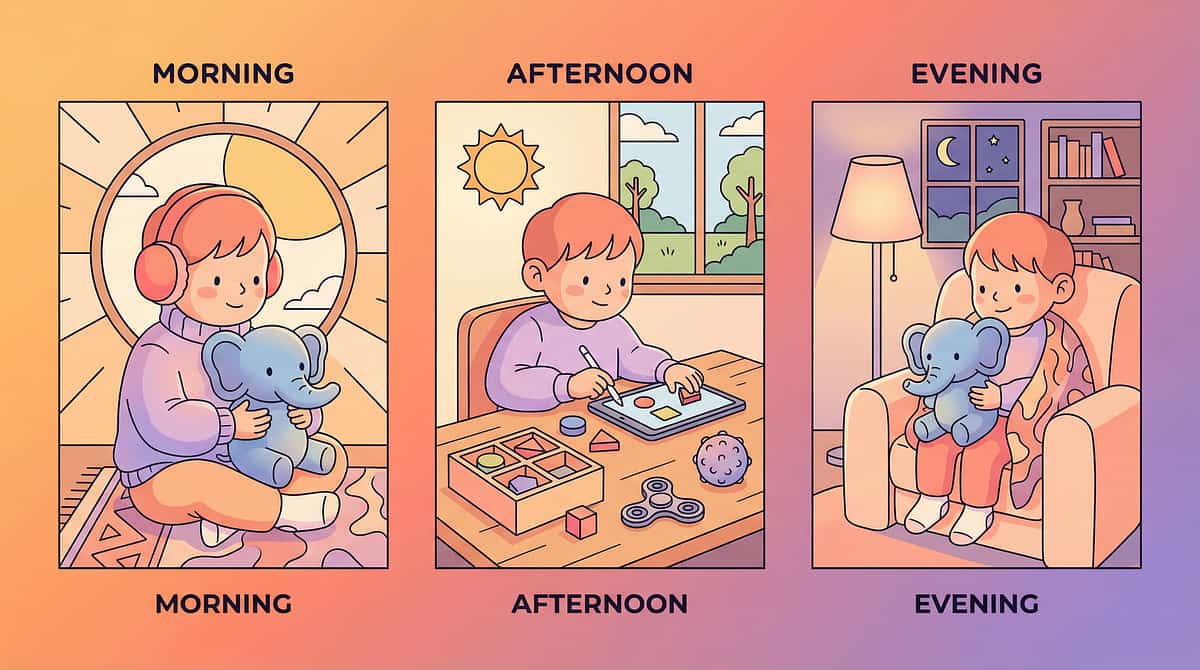
Diwali is not one night. It is a multi-day experience with escalating and de-escalating sound intensity. Each day builds on the previous. Don't reduce support prematurely — follow the child's lead, not the calendar.
Day 1 — Festival Eve
Full protocol. Maximum support. This is the rehearsal night. Every unfamiliarity becomes familiarity.
Day 2 — Main Festival
Full protocol. Likely the loudest night. All layers active. Don't be tempted to reduce tools because "yesterday went well."
Day 3+
If preceding nights went well, the child may need less support. Follow the child's lead — not the protocol's schedule.
Variation Options to Maintain Engagement
Rotate Shows/Music Daily
Novelty maintains engagement across multiple days.
Introduce a Brave Chart
Mark each coping period survived with a sticker.
Change Fidgets Daily
Different textures keep tactile input interesting.
Social Support Layer
Invite a trusted friend/family member into the safe space if child agrees.
"3 good coping periods > 10 forced ones."
Step 5: Celebrate the Coping, Not Just the Calm
Step 5 of 6
Timing: Within 3 seconds of coping behavior + after each festival night
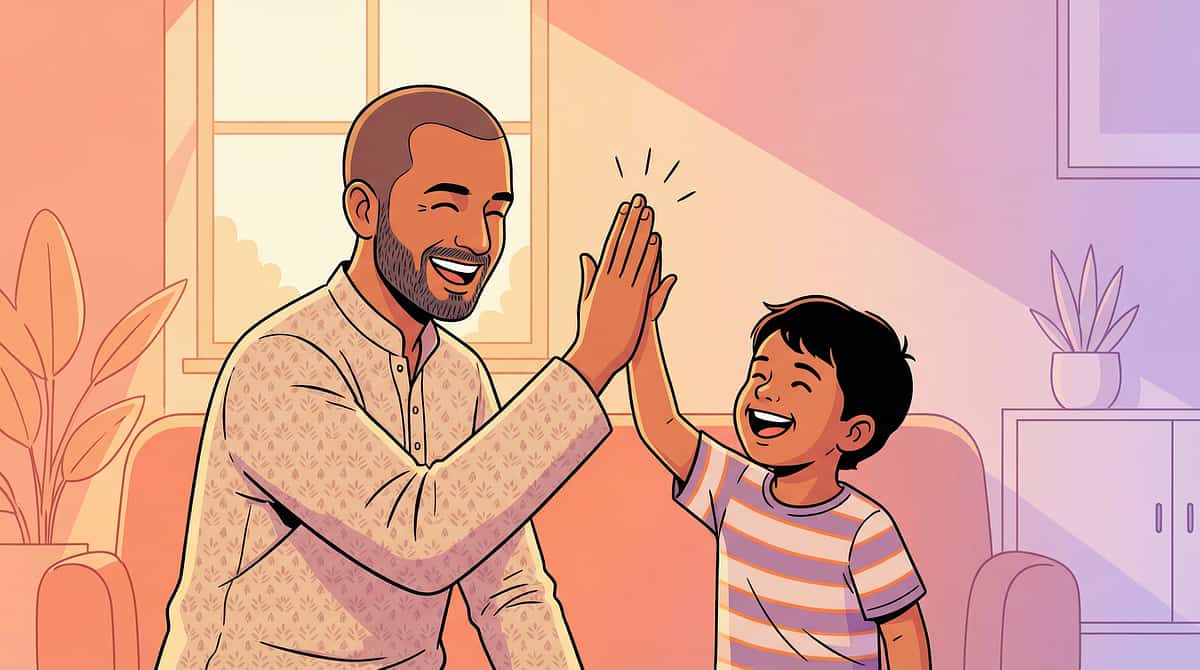
Reinforcement is not optional — it is the neurological mechanism by which the brain encodes "coping works." Specific, immediate, genuine praise changes the wiring. Generic praise ("good job") does not.
During the Event
"You put on your ear muffs all by yourself! That's your coping power!" | "Look at you using your breathing! That's exactly what we practiced!" | "You checked your timer — you're managing this!"
After the Sounds Stop
"You did it. You coped through the whole night. That took real courage." | "Let's look at your brave chart — three nights of coping! That's amazing." | "What helped the most tonight? The ear muffs? The show? Your fidgets?"
Reinforcement Menu
Sticker on brave chart
Extra screen time next morning
Favorite breakfast after coping night
Special calm outing next day
Show brave chart to grandparents
Celebrate the attempt, not just the success. If the child tried to use tools but still had a meltdown — STILL praise the attempt: "You reached for your ear muffs. That was so smart. Next time, we'll be even faster."
Step 6: Transitioning Out of Coping Mode
Step 6 of 6
Timing: As sounds begin to fade
The transition out is as important as the transition in. A rushed ending can destabilize a child who has worked hard to regulate. Let the child lead the pace of de-escalation.
Transition Warning Script
"The crackers are getting quieter now. Do you hear that? Less and less. Almost done."
Give 5–10 minutes of warning before expecting any physical transition.
What If Child Resists Ending?
- Doesn't want to leave: Let them sleep in the safe space if safe to do so. This is fine.
- Hypervigilant after sounds stop: "If more come, your tools are right here. But listen — it's quiet now."
- Delayed emotional release: Crying after the event is normal post-stress processing. Hold, validate, don't minimize.
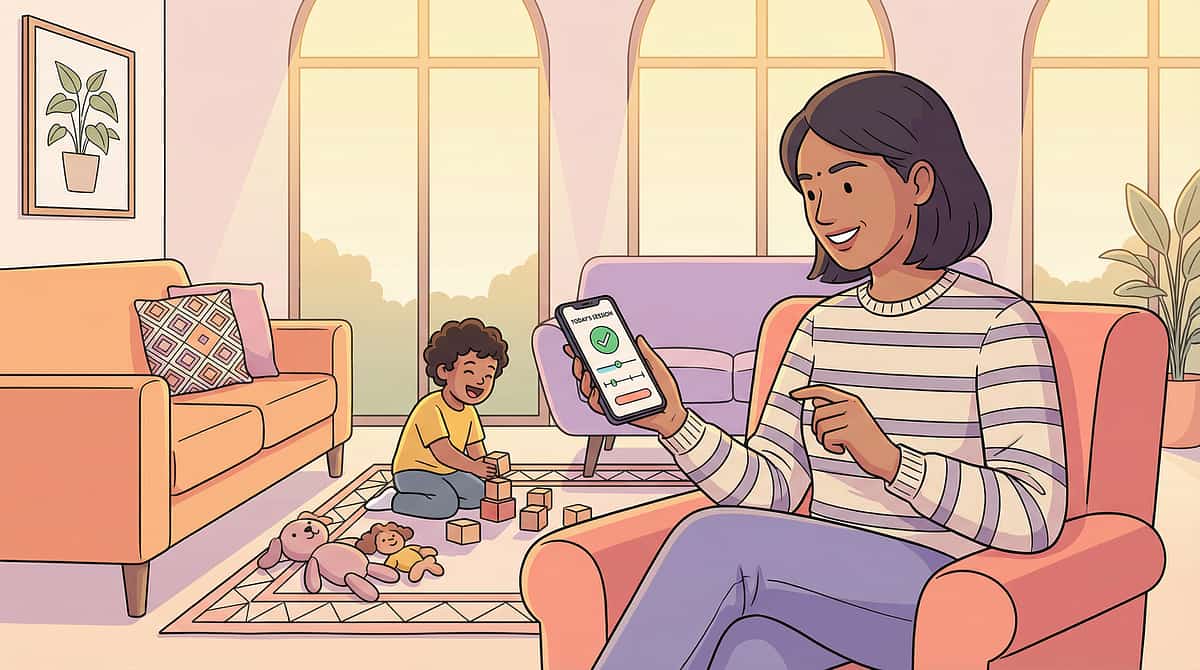
60 Seconds of Data Now Saves Hours of Guessing Later
Documentation is not bureaucracy — it is the compass for next festival season. Three Diwalis of recorded data creates a personalized coping blueprint more powerful than any generic protocol. Capture it within 60 seconds of event end, while the detail is fresh.
Data Point | How to Record | Example | |
1. Distress Level | Rating: 1 (calm) to 10 (maximum panic) | "Tonight was a 6 — down from 8 last night" | |
2. Tools Used | Checklist: which tools the child used | "Ear muffs ✅ Blanket ✅ Timer ✅ Fidgets ❌ Social story ✅" | |
3. Coping Duration | How long the child sustained coping before break/meltdown | "Coped for 45 minutes, then needed 10-minute break, then coped again" | |
Bonus: Best Tool | Which single tool helped most | "The ANC headphones with favorite show" | |
Bonus: What Didn't Work | What to adjust next time | "Sand timer too small — couldn't see from inside tent" |
📱 GPT-OS® In-App Tracker
📄 PDF Tracking Sheet
unknown link
📝 Simple Notebook
Just write the 3 core data points — distress rating, tools used, coping duration.
Every Session Teaches Something. Session Abandonment Is Data, Not Failure.
Things will not always go as planned. That is not evidence that you are failing — it is information about how to adjust. Here are the most common challenges families face, and exactly what to do about each one.
Problem 1: Child Refuses Ear Muffs Completely
Don't force. Try headband-style protection. Try ANC headphones (often better tolerated). Increase masking audio volume. Work on ear protection tolerance BETWEEN festivals, not during them.
Problem 2: Distress Didn't Decrease With All Tools Active
The distress threshold is higher than the tools can reach. This indicates clinical-level intervention is needed. Contact Pinnacle for a Comprehensive Sensory Processing Evaluation. Consider removing child from sound environment entirely during peak hours.
Problem 3: Child Had a Full Meltdown Despite Preparation
This is NOT failure. After the meltdown: comfort, wait, try again when sounds resume at a lower level. Meltdowns in the face of genuine neurological overwhelm are a nervous system response, not a behavioral choice. Document for the therapist.
Problem 4: Ear Muffs Caused Pain or Irritation
Try different padding, adjust headband tightness, or switch to over-ear ANC headphones with softer cushions. For extended wear, alternate between muffs and headphones every 30 minutes.
Problem 5: Child Became MORE Anxious From Social Story
Rewrite to focus 80% on the COPING PLAN and only 20% on "what will happen." Or skip the social story and rely on the physical tools alone.
Problem 6: Weighted Blanket Caused Overheating
Use weighted lap pad instead. Or use compression vest without blanket. Keep the safe space well-ventilated. Offer water frequently.
Problem 7: Sounds Lasted Much Longer Than Timer Predicted
Never overpromise on timing. Reset the timer honestly: "We have more time. Let's set a new timer." Broken trust on timing makes the next use of the timer ineffective.
"The technique needs adjustment, not the parent."
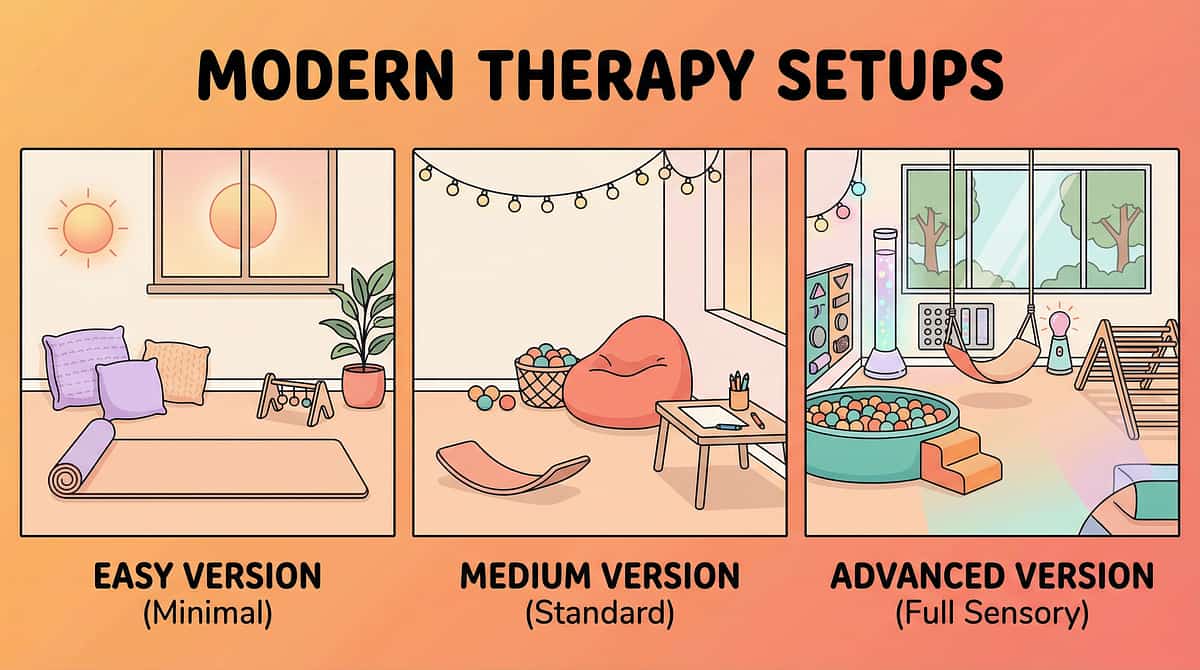
No Two Children Are Identical — Customize for Yours
The standard protocol is a starting point, not a prescription. Your child's age, sensory profile, and current readiness level should shape every element of how you implement this technique. Here is your customization guide.
EASIER VERSION
For first-time use, younger children, or severe fear. Maximum protection with parent INSIDE the space. Full co-regulated coping. Remove any expectation of independence. Plan to leave environment if sounds exceed 30 minutes.
STANDARD VERSION
Full 9-material protocol as described. Parent adjacent but not inside safe space. Child practices independent tool use with parent available. Full festival duration with breaks as needed.
HARDER VERSION
For children building independence. Fewer tools (ear muffs + one fidget only). Increased parent distance. Brief "sound breaks" — remove ear protection for 30 seconds in a lull. Extends to community settings.
Sensory Profile Variations
- Sensory AVOIDER: Maximize protection layers, minimize exposure, emphasize safe space
- Mixed Profile (avoids sound but seeks deep pressure): Heavy on weighted blanket and compression, combine with ear protection
- Co-Occurring Visual Sensitivity: Add blackout curtains/eye mask (firework light flashes compound auditory distress)
Age Modifications
- 2–4 years: Parent-led entirely. Carrying, holding, swaddling. No expectation of independent tool use.
- 5–8 years: Collaborative. Child participates in setup and practices tools, but parent initiates and guides.
- 9–12 years: Child-led. Child manages own kit, decides when to enter safe space, monitors own timer.

Preparation Phase: Building Familiarity Before the Festival
Weeks 1–2
Progress: ~15%
In weeks 1–2 — ideally 2–4 weeks before Diwali or the anticipated festival — you are NOT coping with sounds yet. You are building familiarity with the tools. This pre-festival investment is what makes festival night manageable.
5+
Minutes in ear muffs
Child tolerates wearing ear muffs for 5+ minutes during quiet activities — reading, drawing, screen time
5x
Social story reviews
Social story reviewed together at least 5 times before festival. Child can retell it in their own words or point to pictures
3x
Voluntary safe space visits
Child voluntarily enters the safe space for non-crisis activities — playing, reading, watching a show
What This IS: Tool familiarity. Not sound tolerance yet.
What This is NOT: Expecting the child to "be ready" for crackers. They don't need to hear any sounds during this phase.
What This is NOT: Expecting the child to "be ready" for crackers. They don't need to hear any sounds during this phase.
"If your child wears the ear muffs for 30 seconds longer today than yesterday — that's real progress."

First Festival: The Real Test
Weeks 3–4
Progress: ~40%
This is the first actual festival experience with the new tools. The preparation has been done. Now the nervous system meets reality — and reality, with the right tools, is manageable. Look for these consolidation signs as evidence that the protocol is working.
Behavioral Consolidation Indicators
- Child reaches for tools when sounds occur — without being told
- Distress duration decreases across festival nights (night 2 shorter than night 1)
- Child references the social story: "Where's my kit?" or "Is it almost time for it to stop?"
- Anticipatory anxiety is present but modulated: "I'm nervous but I have my plan"
- Child can identify which tools help most: "The headphones are best"
Neural Pathway Forming
The child is learning that THEY have agency over their experience. Each successful coping cycle strengthens the neural association:
Sound → Tool → Coping → Survival → Confidence
This is classical counter-conditioning in real time. Each festival night builds the pathway more firmly than the last.
Parent Milestone: You may notice you're calmer too. Your own anticipatory dread may have decreased because you have a plan. That regulation is contagious — in the best possible way.

Mastery: From Coping to Confidence
Weeks 5–8
Progress: ~75%
🏅 Mastery Zone
Mastery in this context doesn't mean the child likes crackers. It means the child can manage the experience with decreasing support across festival seasons. This typically emerges across 2–3 full festival cycles.
Independent Protocol Initiation
Child independently initiates coping protocol when sounds begin — without parent prompting.
Distress Reduction
Distress level reduces from 8–10 to 4–6 (manageable anxiety, not terror). Anticipatory anxiety decreases — child may say "Diwali is coming, we need to get my kit ready" rather than "I'm scared."
Festival Participation
Child participates in non-sound aspects of festival — lights, sweets, family gathering, rangoli. Social engagement with celebration returns, even as sound sensitivity persists.
Generalization Across Settings
Coping strategies transfer to thunderstorms, school events with loudspeakers, and wedding processions. Self-advocacy develops: "I need my headphones for the loud part."
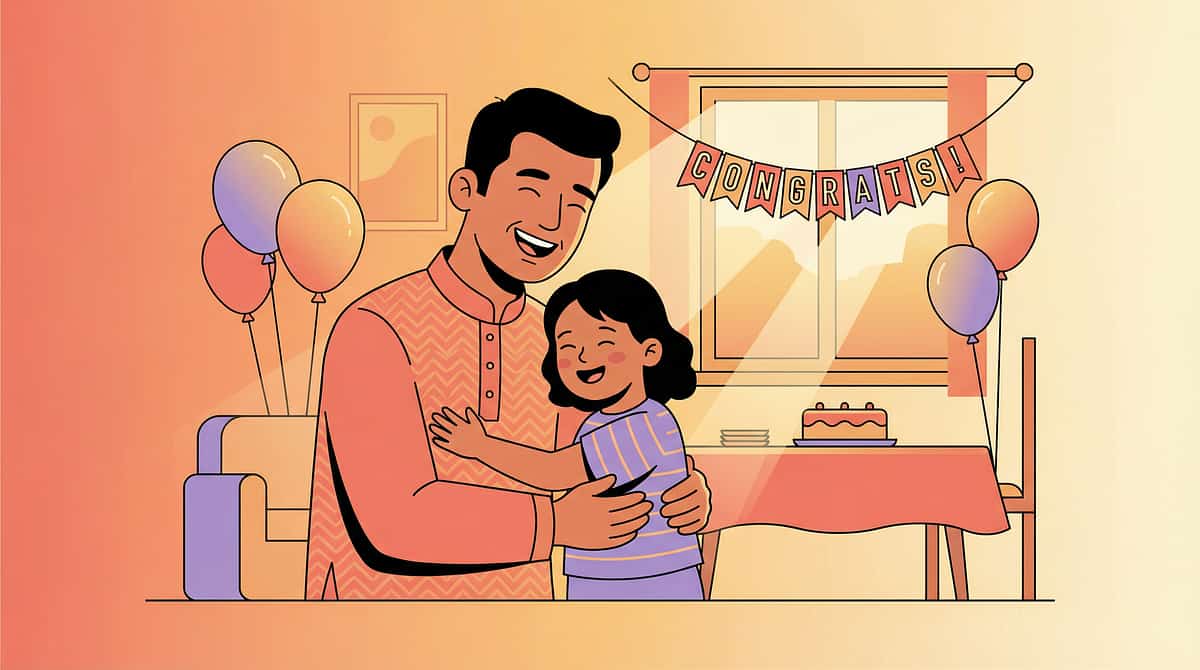
You Did This. Your Child Grew Because of Your Commitment.
Think back to that first Diwali when you felt helpless. When your child screamed and you couldn't make it stop. When you considered leaving the city because you had no other answer. Now look at what you built: A safe space. A stocked kit. A plan. A child who reaches for their tools instead of collapsing in terror.
That transformation didn't happen by accident. It happened because you prepared, you practiced, you showed up with calm when everything inside you wanted to panic too. This is what therapeutic parenting looks like at its finest.
Document the Milestone
Take a photo of the child with their coping kit. Write in a journal what worked this festival vs. last festival.
Celebrate Together
Create a "Festival Success" certificate together. Let the child share their success with someone they trust.
Share Your Win
Tell other parents in the Pinnacle community what worked for your family. Your experience may be the thing that gives another family hope.

Even in Progress, Watch for These Signs
Progress is real — but so are warning signs. Even when a technique is working, certain patterns indicate that the situation requires more than home management. Trust these signals.
🚩 Red Flag 1: Fear Is SPREADING, Not Shrinking
If the child's fear generalizes to MORE sounds over time — everyday sounds like doorbells, kitchen sounds, or normal conversation volume — the sensory profile may require clinical intervention beyond this home protocol.
🚩 Red Flag 2: Avoidance Is Increasing
If the child refuses to leave the house not just during festivals but during normal periods, or if school avoidance begins in anticipation of possible sounds — professional anxiety intervention is indicated.
🚩 Red Flag 3: Physical Symptoms Without Sound Exposure
Stomachaches, headaches, sleep disturbance, or appetite loss weeks before any festival due to anticipatory anxiety — this exceeds sensory coping and enters anxiety disorder territory.
🚩 Red Flag 4: Self-Injurious Behavior During Sound Exposure
Head-banging, biting, hitting self — STOP the protocol immediately and seek clinical evaluation.
🚩 Red Flag 5: No Improvement After 2 Full Festival Seasons
If distress levels haven't measurably decreased after 2 full cycles of consistent preparation and tool use — professional evaluation for anxiety disorder, PTSD-like response, or hyperacusis is needed.
🟢 Self-Resolve
Adjust tools, modify approach
🟡 Teleconsult
Book a Pinnacle teleconsultation
🔴 Clinic Visit
Comprehensive Sensory Processing Evaluation at nearest Pinnacle center
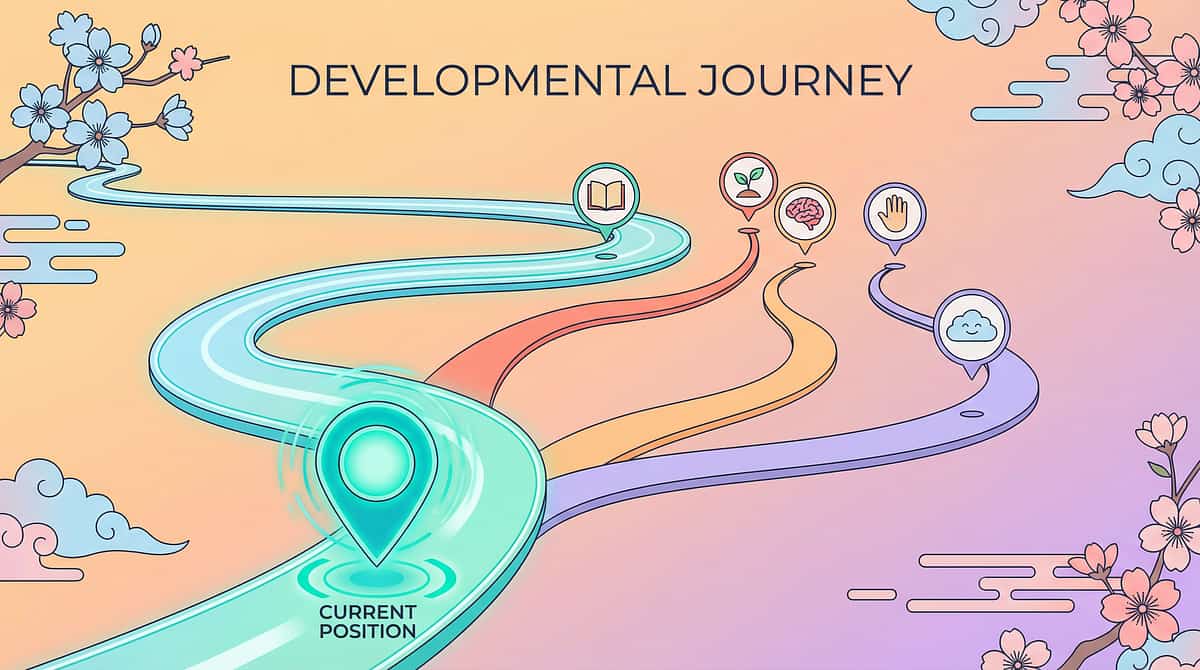
Your Child's Sound Sensitivity Journey
This technique does not exist in isolation. It is one node in a connected network of techniques, each building on the last. Understanding where you are — and where you are heading — keeps the journey purposeful and the progress measurable.
Prerequisite Technique
A-044: General Sensitivity to Loud Sounds — foundational technique for broad auditory over-responsivity before festival-specific work begins.
Lateral & Next-Level Techniques
- B-015: Anxiety in Predictable Situations
- A-047-DD-01: Choosing Industrial Ear Protection
- A-047-DD-02: Creating Effective Social Stories for Fear Events
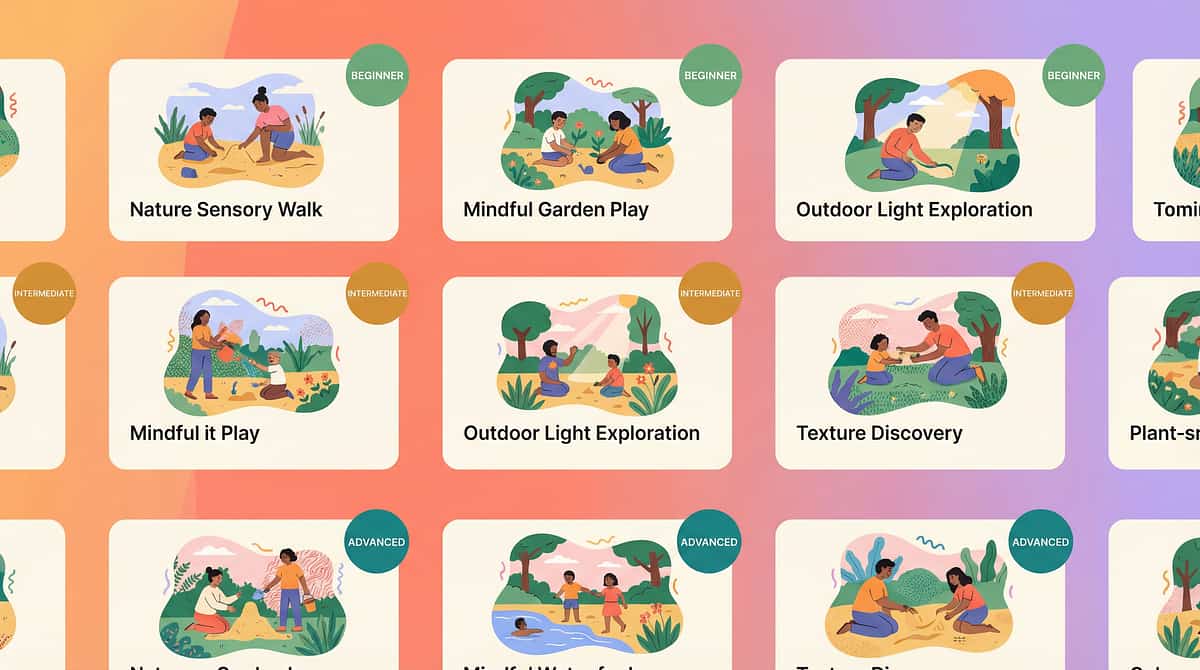
More Auditory Processing & Sensory Regulation Techniques
Your investment in the Cracker Season Survival Kit equips you for multiple related techniques. The materials overlap significantly — you already own most of what you need for all six techniques below.
Technique | Difficulty | Focus | Materials You Already Own | |
A-044: General Sensitivity to Loud Sounds | Intro ⬜⬜⬜ | Broad auditory sensitivity | Ear muffs ✅ Weighted blanket ✅ | |
A-049: Covers Ears Constantly | Core ⬛⬛⬜ | Constant protective behaviors | All 9 materials ✅ | |
A-042: Sensitivity to Specific Sounds (Misophonia-like) | Core ⬛⬛⬜ | Trigger-specific sounds | Headphones ✅ Safe space ✅ | |
B-015: Anxiety in Predictable Situations | Core ⬛⬛⬜ | Anticipatory anxiety | Social story ✅ Visual timer ✅ Calm-down kit ✅ | |
K-950: Understanding Sound Phobias | Parent Education 📚 | Caregiver knowledge base | N/A — knowledge-based | |
K-955: Festival Season Preparation | Parent Education 📚 | Festival planning guide | All 9 materials ✅ |
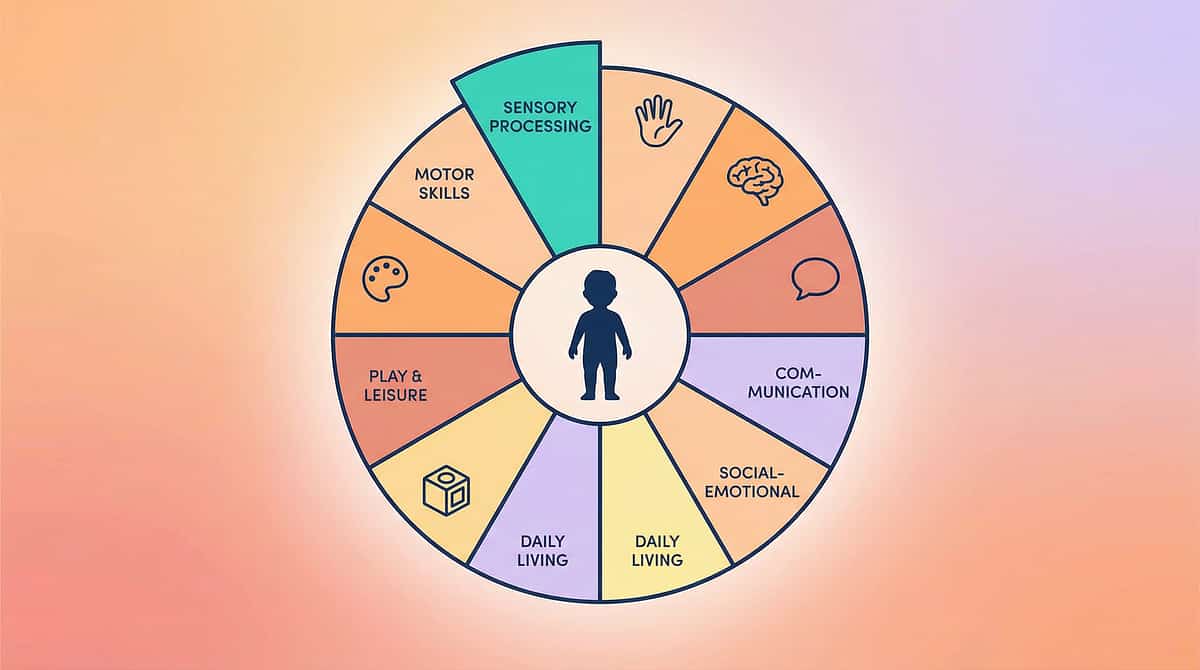
This Technique Is One Piece of a Larger Plan
Sound sensitivity doesn't exist in a developmental vacuum. This technique lives in Domain A — Sensory Processing, but its impact ripples across at least four other developmental domains. Understanding the full picture helps you sequence interventions strategically.
This technique lives in Domain A but directly impacts Domains B (emotional regulation), D (social participation during festivals), I (sleep during festival season), and K (family wellbeing). GPT-OS® maps these cross-domain impacts and recommends techniques that address multiple domains simultaneously.
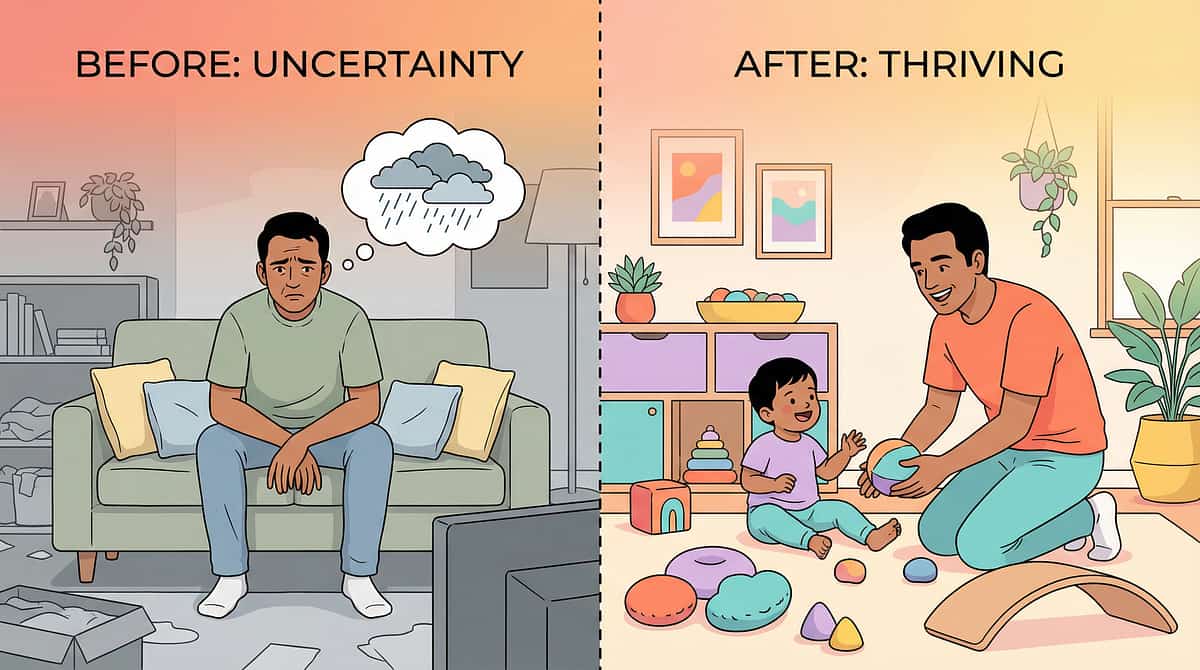
Real Families. Real Coping. Measured Progress.
These anonymized stories represent the lived experience of families across the Pinnacle Network. The details change — the transformation pattern is consistent.
Family Story 1 — Hyderabad
Before: "Diwali was our worst week of the year. My 6-year-old would scream for hours, hide under his bed, refuse to eat or sleep. We tried everything — cotton in ears, loud music, leaving the city. Nothing worked consistently."
After (2 festival seasons with protocol): "He goes to his 'fort' with his kit. He puts on his ear muffs himself. He watches Bluey through his ANC headphones. He still doesn't love crackers — but he copes. Last Diwali, he came out after the sounds stopped and asked for a sweet. That was a first."
Timeline: 2 festival seasons. Distress rating: 9/10 → 4/10. — Parent, Pinnacle Network, Hyderabad
Family Story 2 — Bangalore
Before: "My daughter was so terrified that she'd start crying two weeks before Diwali just seeing advertisements. School became impossible during cracker week."
After: "We prepared a school kit — a smaller version of the home kit. Her teacher keeps the ear muffs in the classroom. At home, she sets up her own safe space now — she calls it her 'quiet cave.' She even helped her younger brother make his own kit."
— Parent, Pinnacle Network, Bangalore
From the Therapist's Notes
"The shift we see is from external locus of control ('make the sounds stop') to internal locus ('I have tools when sounds happen'). This is the fundamental therapeutic shift — and it generalizes to other life challenges."
— Senior OT, Pinnacle Blooms Network
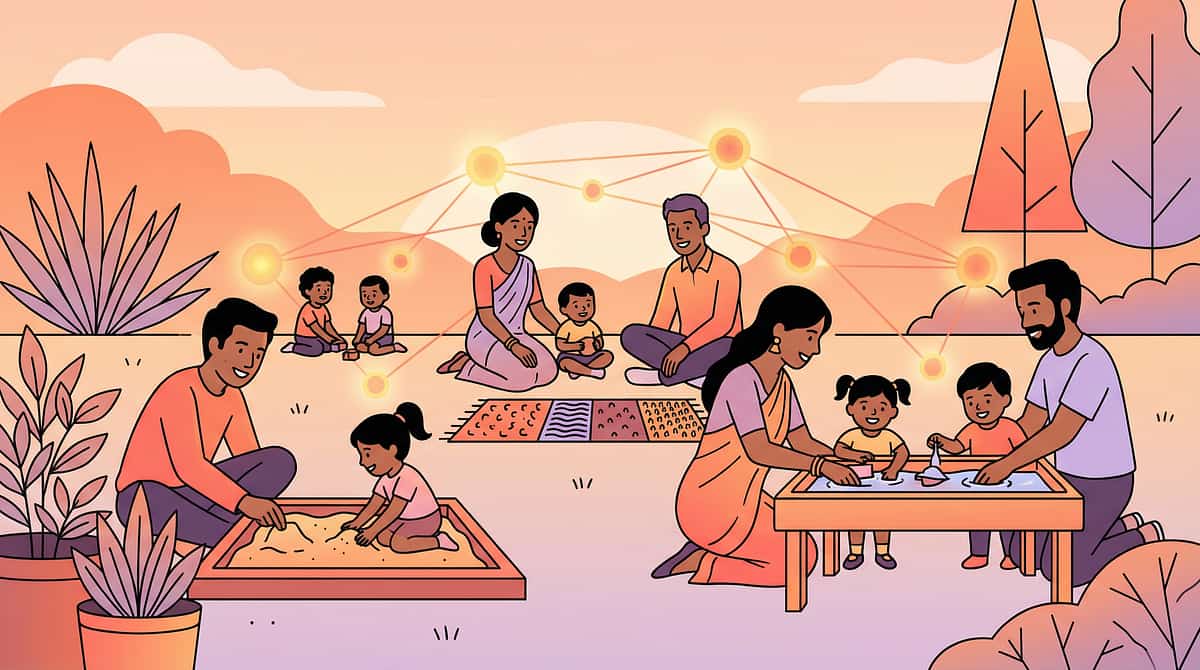
You Don't Have to Navigate Festival Season Alone
Community changes outcomes. The parent who hears "ear muffs changed everything for us" from another parent trusts it more than any clinical recommendation. Connection accelerates progress — for children and caregivers alike.
Sensory Solutions Parent WhatsApp Group
Real-time support from parents who have navigated exactly what you are facing. Join the group
Festival Preparation Support Group
Seasonal group active before each major festival. Preparation checklists, shared resources, peer encouragement. Join the group
Local Pinnacle Parent Meetup
In-person connection with families in your city. Find a local meetup
Peer Mentoring Program
Connect with an experienced parent who has already navigated 2–3 festival seasons with tools. Connect with a mentor
Your experience helps others. Consider sharing what worked for your family. Lived experience from a parent peer may give another family the courage to begin.
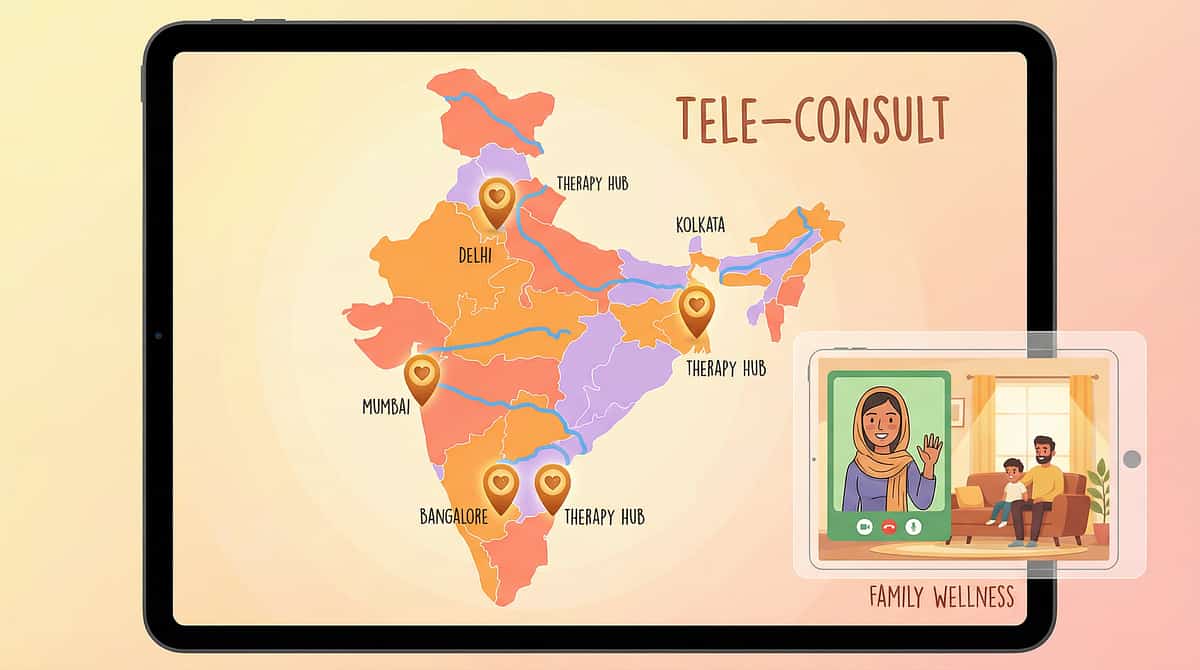
Home + Clinic = Maximum Impact
Home implementation of this protocol is powerful. But home implementation supported by clinical expertise is exponentially more powerful. The Pinnacle Network provides every layer of professional support this technique requires.
🧠 Occupational Therapy (Sensory Integration)
Auditory processing evaluation and individualized desensitization protocol tailored to your child's specific profile.
📊 Comprehensive Sensory Processing Evaluation
Full sensory profile within GPT-OS® Diagnostic Intelligence Layer — understanding the complete picture, not just the surface behavior.
💭 Anxiety and Coping Skill Development
CBT-informed strategies for anticipatory anxiety that extends beyond festival season to all predictable but uncontrollable situations.
📖 Social Stories and Visual Support Creation
Professionally crafted, fully personalized materials — not generic templates, but your child's actual coping plan in visual form.
👨👩👧 Parent Training
Equipping YOU as the co-therapist through the EverydayTherapyProgramme™ — daily micro-interventions extending clinic impact into home life.
📞 FREE National Autism Helpline: 9100 181 181 — 16+ languages, available 24×7. 70+ centers across India | Serving families from 70+ countries.
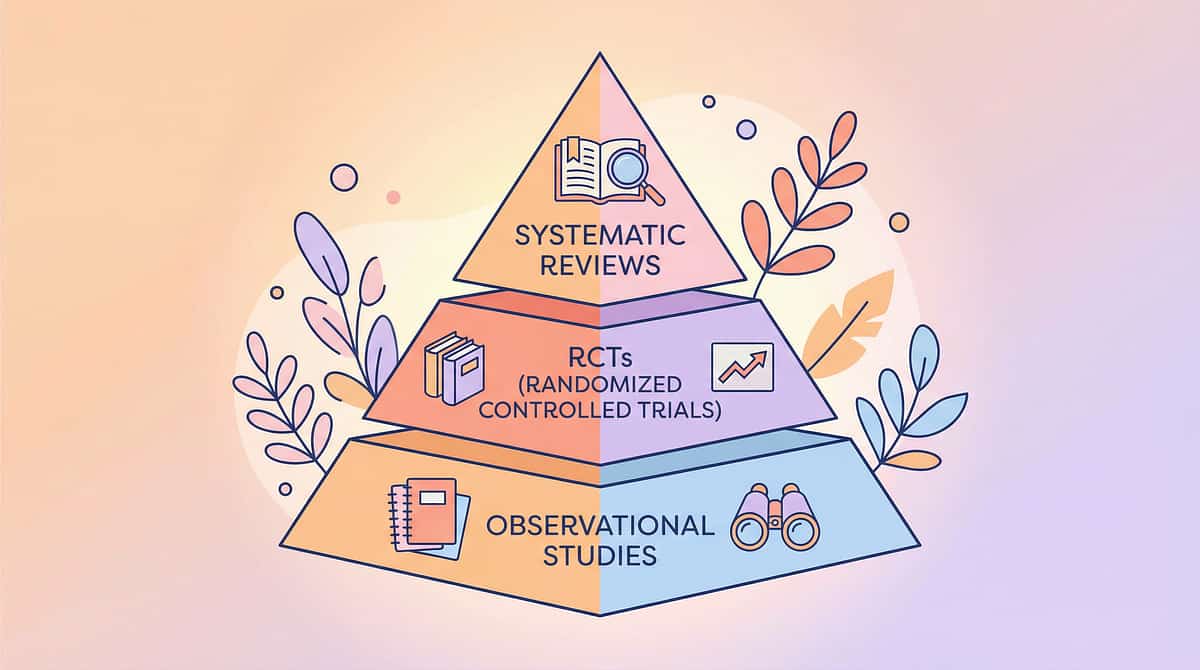
Deeper Reading for the Curious Parent
Every recommendation in this technique is traceable to a peer-reviewed source. Here is the complete research library, organized by evidence strength. Follow the links to read the original studies.
PRISMA Systematic Review (2024) — Highest Evidence Level
"Sensory integration intervention for ASD: A systematic review" — 16 articles, 2013–2023, confirming evidence-based status for auditory processing interventions using sensory-protective materials. → PMC11506176
Meta-Analysis (World J Clin Cases, 2024)
24 studies showing effective promotion of social skills, adaptive behavior, sensory processing across SI therapy. → PMC10955541 | DOI: 10.12998/wjcc.v12.i7.1260
Indian RCT (Padmanabha et al., 2019)
Home-based sensory interventions demonstrating significant outcomes with parent training protocols. → DOI: 10.1007/s12098-018-2747-4
Frontiers in Integrative Neuroscience (2020)
Framework for evaluating sensory integration treatment in ASD — neurological basis established. → DOI: 10.3389/fnint.2020.556660
WHO Nurturing Care Framework (2018)
Global framework for early childhood development. Context-specific, equity-focused interventions. → nurturing-care.org
WHO CCD Package + NCAEP Report (2020)
Care for Child Development implemented in 54 countries → PMC9978394 | Visual supports and video modeling as EBPs → NCAEP Report
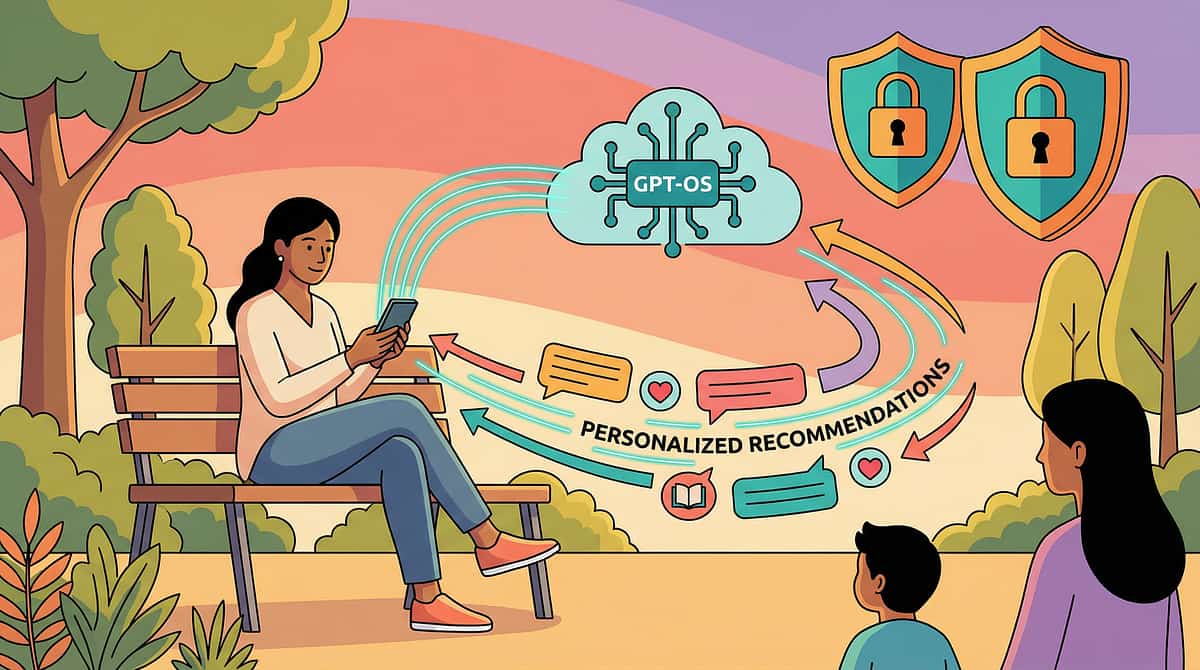
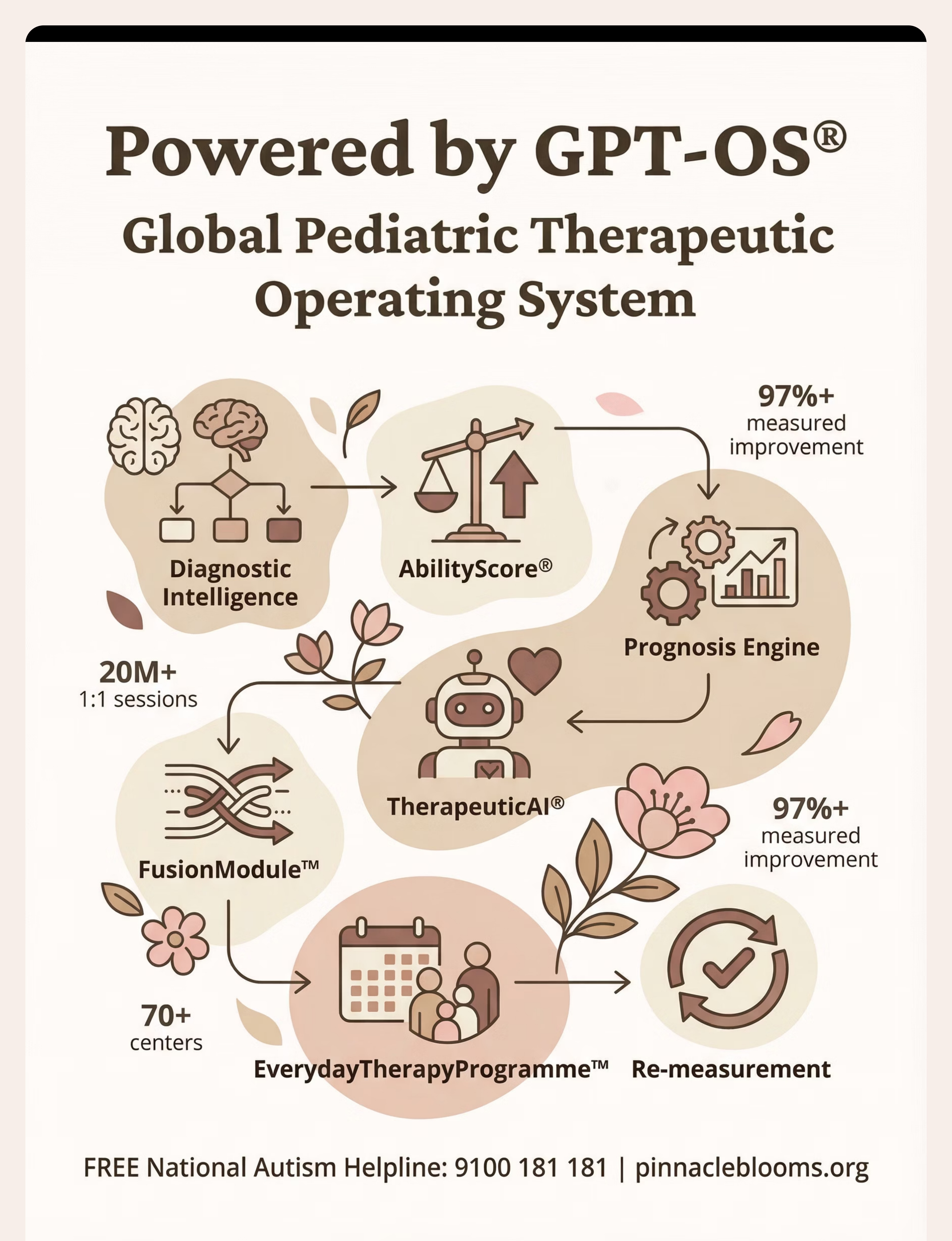
Powered by GPT-OS® — Global Pediatric Therapeutic Operating System
Every session you document feeds a learning system designed to serve every child like yours more effectively. Here is how your data creates value — for your child and for millions of others.
What GPT-OS® Learns From This Technique's Data
- Which tools are most effective for YOUR child's specific auditory profile
- Optimal preparation timeline (how many weeks before festival to begin)
- Distress reduction trajectory prediction across festival seasons
- Cross-technique recommendations based on response patterns
Privacy and Data Protection
- All data encrypted in transit and at rest
- Anonymized for population-level analysis
- You control your data — delete at any time
- Compliant with India's DPDP Act 2023 and international standards
GPT-OS® Core Stack
Diagnostic Intelligence Layer
AbilityScore® comprehensive profiling
Prognosis Engine
TherapeuticAI® outcome prediction
FusionModule™
Cross-domain technique sequencing
EverydayTherapyProgramme™
Closed-loop therapeutic control at home
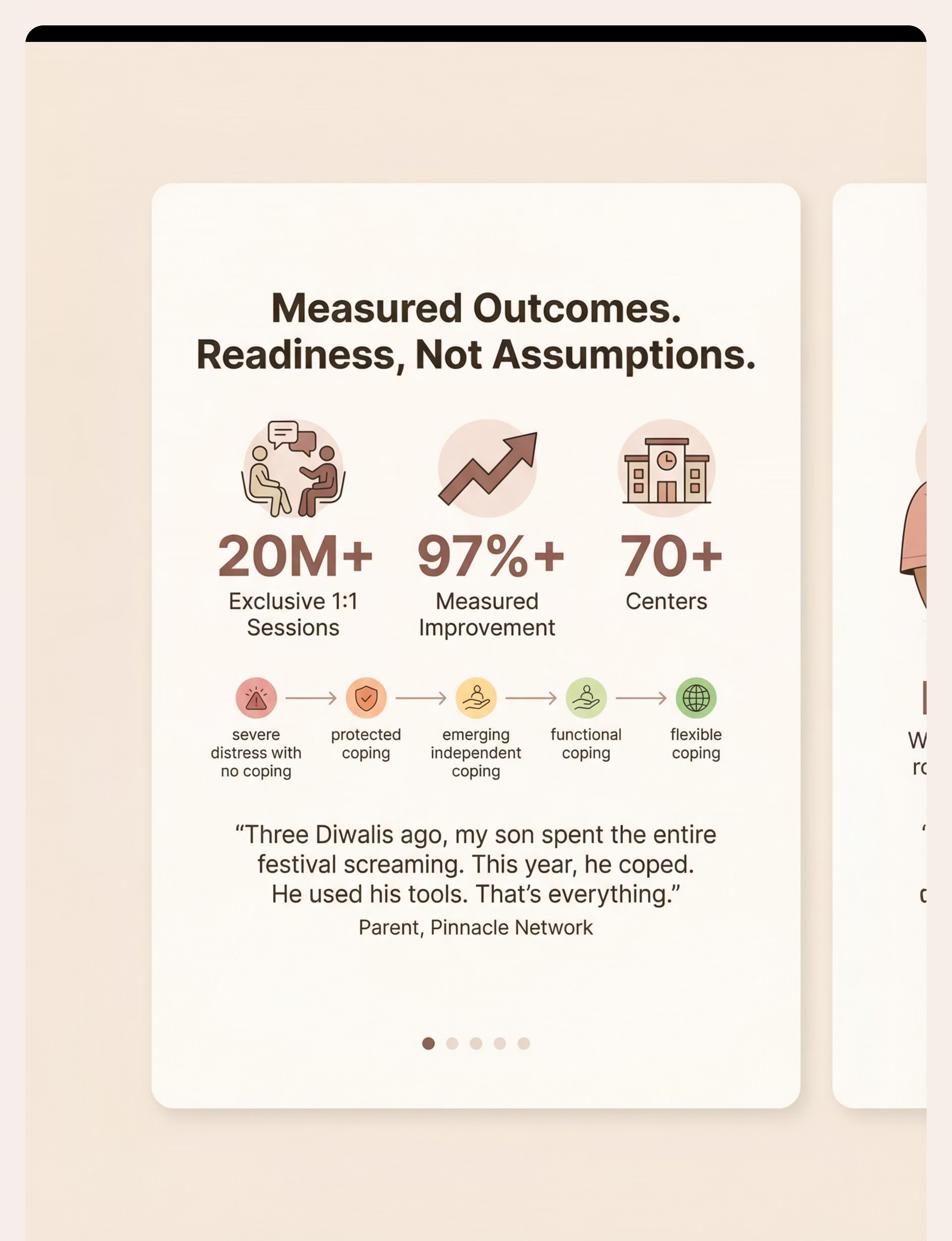
20M+
1:1 Sessions
Documented therapeutic sessions in the GPT-OS® ecosystem
97%+
Measured Improvement
Families report measurable progress across tracked domains
70+
Centers Across India
With families served from 70+ countries globally
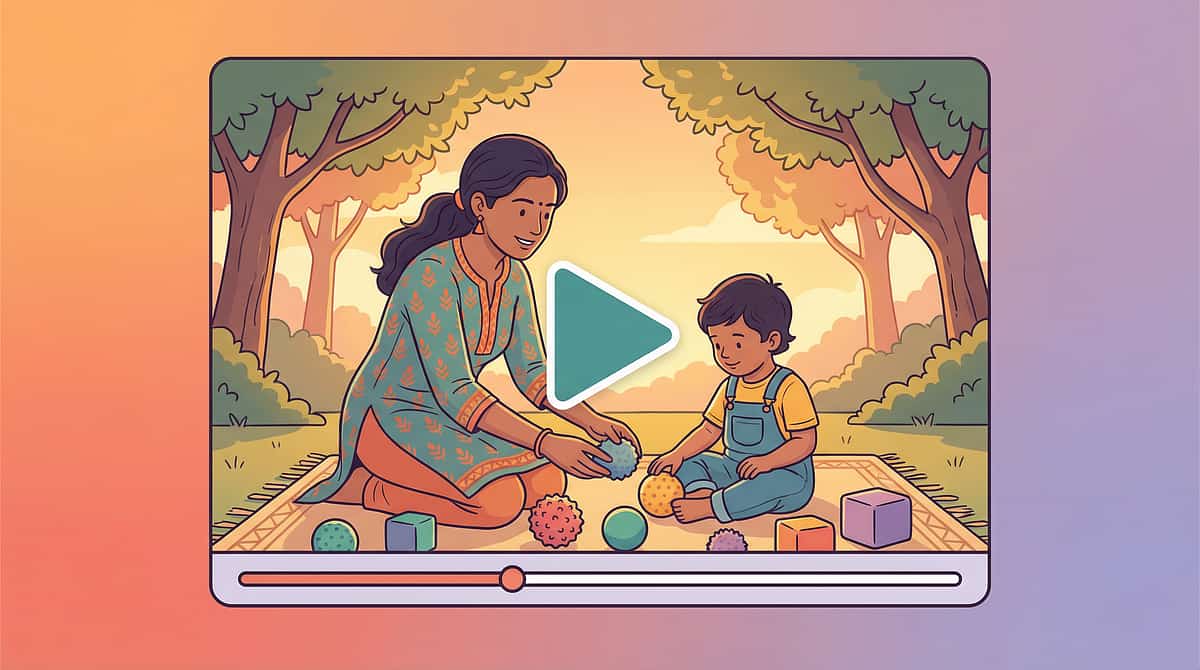
Watch: "9 Materials That Help With Cracker and Firework Fear"
Reel A-047
Sensory Solutions Series — Episode 47
60 seconds
In 60 seconds, see all 9 materials demonstrated by a Pinnacle therapist. Visual content reinforces everything you've read on this page — and gives you a shareable format for family members who prefer video over text.
📹 Reel Details
Domain: Sensory Processing — Auditory Over-Responsivity
Duration: 60 seconds
Therapist: Pinnacle Blooms OT Team
Format: "9 Materials That Help With..." series
Available on: Instagram, YouTube, Pinnacle website
Duration: 60 seconds
Therapist: Pinnacle Blooms OT Team
Format: "9 Materials That Help With..." series
Available on: Instagram, YouTube, Pinnacle website
Why Watch?
Seeing the tools in use removes the last barrier between knowing and doing. The therapist demonstrates proper ear muff positioning, weighted blanket application, and calm-down kit organization in real time.
Share It
This reel is designed to be shared with grandparents, teachers, babysitters, and extended family who need a quick visual reference without reading the full technique guide.
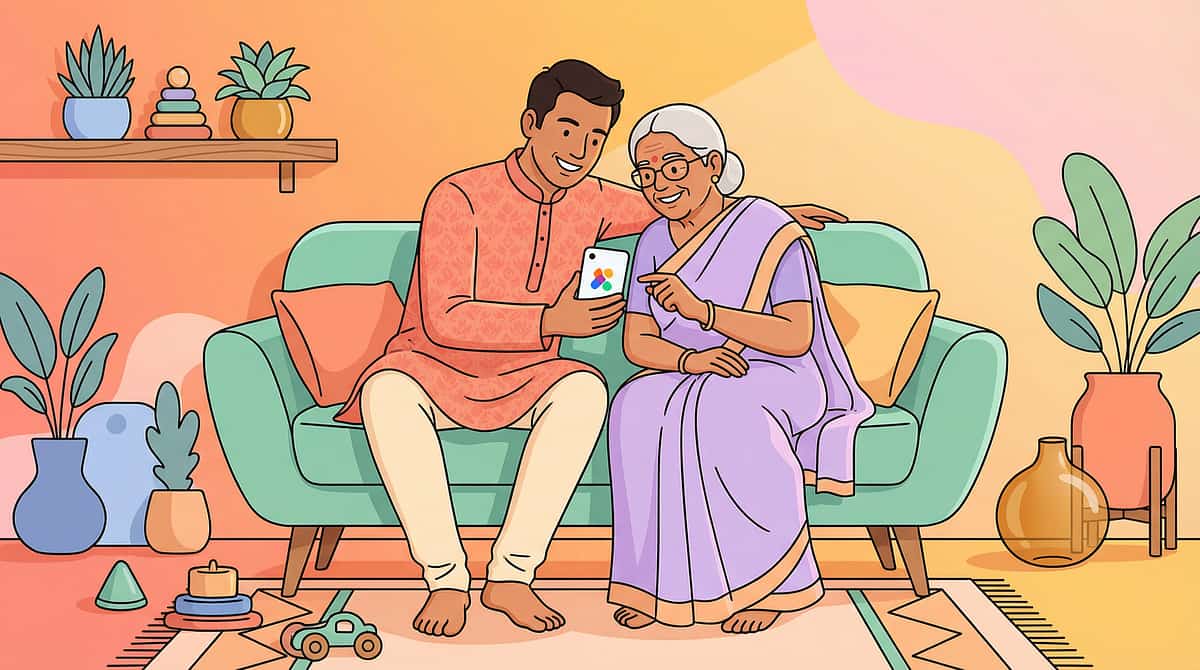
Consistency Across Caregivers Multiplies Impact
A coping protocol only works if every caregiver in the child's life executes it consistently. One caregiver who dismisses the tools undermines the safety architecture another caregiver spent weeks building. Share this page — and these specific resources — with everyone who cares for your child.
WhatsApp-Ready Message
"Our child has sound sensitivity. During festival season, these 9 tools help them cope: ear muffs, ANC headphones, weighted blanket, safe space, masking audio, fidgets, visual timer, social story, and calm-down kit. Full guide from Pinnacle Blooms: [LINK]. Please read — your consistency helps our child."
Family Guide (1-Page PDF)
"Cracker Season Coping Plan" — simplified, printable, designed for quick reference. unknown link
"Explain to Grandparents" Version
Simple language, large text, visual-heavy. Designed for family members who may be skeptical of the tools or unfamiliar with sensory processing differences.
School Communication Template
Letter to teacher explaining the child's sound sensitivity and the tools needed at school during cracker season. Professional language that earns cooperation.

Your Questions, Answered
These are the questions Pinnacle therapists and parent community members ask most consistently. If your specific question isn't here, GPT-OS® can answer it — or a teleconsultation with a Pinnacle specialist will.
Q1: Will my child grow out of firework fear?
Some children's auditory processing matures and sensitivity naturally decreases. Others maintain sensitivity into adulthood. Rather than waiting for them to "grow out of it," equipping them with coping tools ensures they can manage regardless of whether the sensitivity resolves.
Q2: Should I avoid festivals entirely to protect my child?
Avoiding entirely reinforces the avoidance pattern and deprives the child and family of cultural participation. The goal is SUPPORTED COPING, not avoidance. Participate in non-sound aspects while managing the sound component with tools.
Q3: Can this approach make the fear worse?
This protocol is protective, not exposure-based. You're reducing the sound impact, not forcing the child to endure it. Properly implemented, it should reduce distress. If distress increases, consult a professional.
Q4: My child won't wear ear muffs. What do I do?
Practice wearing them during pleasant activities first — never introduce during a fear event. Try different styles: headband, over-ear, in-ear. Some children prefer ANC headphones with music over muffs. Work with an OT on tolerance building.
Q5: How early before Diwali should we start preparing?
Minimum 2 weeks. Ideally 4 weeks. The child needs multiple practice sessions with each tool before the real event. The social story should be reviewed daily in the final week.
Q6: What about desensitization? Shouldn't we expose them to sounds gradually?
Systematic desensitization can be effective BUT should be led by a trained OT or psychologist. Home-based forced exposure without professional guidance risks sensitization — making the fear WORSE. This protocol focuses on PROTECTION AND COPING. Desensitization is a separate, clinical process.
Q7: My extended family thinks I'm overreacting. How do I handle this?
Share this page with them (Card 37). Brief script: "They have sensory processing differences — their brain processes sound differently. We have a clinical coping plan. Your support helps." Set firm boundaries around your child's safety.
Q8: Is this technique only for Diwali?
No. This protocol applies to New Year's Eve, weddings with fireworks, cricket victory celebrations, political celebrations, thunderstorms, or any situation involving sudden, explosive sounds. Keep the calm-down kit accessible year-round.

The Next Festival Is Coming. Your Child Needs the Plan Before the First Bang.
Every week of preparation before festival season is worth more than any intervention during it. The calm-down kit works because it was packed calmly. The safe space works because it was built before the fear. Start now — not the night before Diwali.
🟢 Start This Technique Today
Begin with GPT-OS® guided preparation. Step-by-step, personalized to your child's specific sensory profile and age.
🟡 Book a Consultation
Speak with a Pinnacle OT or BCBA who specializes in auditory processing and festival coping. Available via teleconsultation in 16+ languages.
🔵 Explore Next Technique
Continue building your child's sensory toolkit with related techniques. Your investment in these materials goes further than one technique.
✅ Validated by the Pinnacle Blooms Consortium
OT
SLP
ABA
SpEd
NeuroDev
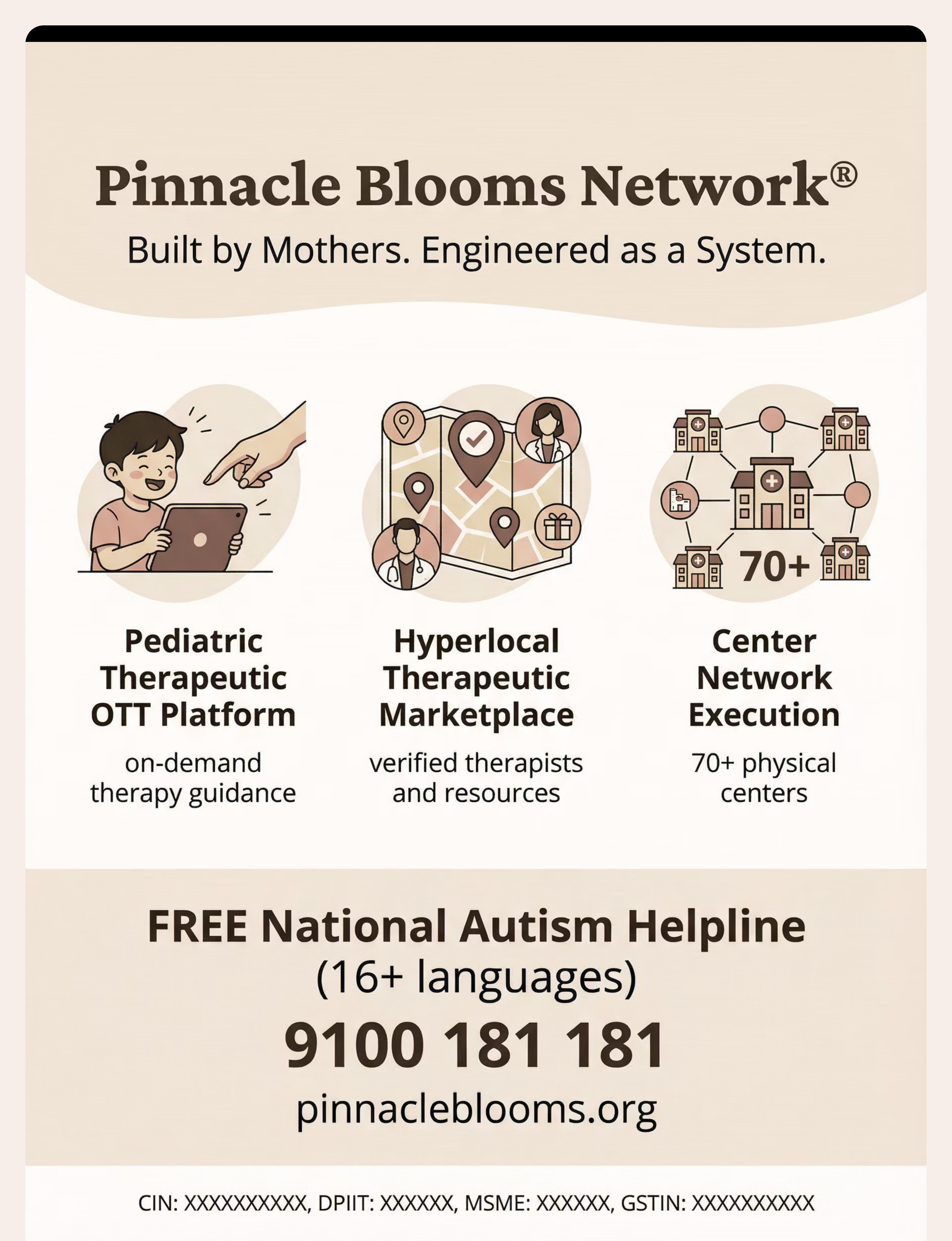
Preview of 9 materials that help with cracker and firework fear Therapy Material
Below is a visual preview of 9 materials that help with cracker and firework fear therapy material. The pages shown help educators, therapists, and caregivers understand the structure and content of the resource before use. Materials should be used under appropriate professional guidance.


Link copied!
From Fear to Coping. One Festival at a Time.
🏥 OT
🗣️ SLP
🧠 ABA
📚 SpEd
👨⚕️ NeuroDev
This page was created by the Pinnacle Blooms Consortium — a multidisciplinary team of Occupational Therapists, Speech-Language Pathologists, Board Certified Behavior Analysts, Special Educators, NeuroDevelopmental Pediatricians, Mothers, Fathers, Caregivers, Clinical Research Organization experts, Regulatory Specialists, and Gamma.app Web Architects — within the Pinnacle GPT-OS® ecosystem.
Aligned with WHO Nurturing Care Framework, UNICEF developmental indicators, NCAEP evidence-based practices, and Indian pediatric clinical standards.
Medical Disclaimer: This content is educational. It does not replace assessment by a licensed occupational therapist, psychologist, or healthcare provider. Severe sound phobias or anxiety may require comprehensive evaluation and professional-guided intervention including possible desensitization therapy or anxiety treatment. Individual results may vary. Statistics represent aggregate outcomes across the Pinnacle Blooms Network. Always consult a qualified healthcare professional before implementing any therapeutic intervention.
techniques.pinnacleblooms.org — The largest structured pediatric intervention knowledge base on Earth. 40 cards × 70,000+ techniques = 2,800,000 evidence-linked, parent-empowering knowledge units.
© 2026 Pinnacle Blooms Network®, unit of Bharath Healthcare Laboratories Pvt. Ltd. All rights reserved. Pinnacle GPT-OS® — From fear to mastery. One technique at a time.