

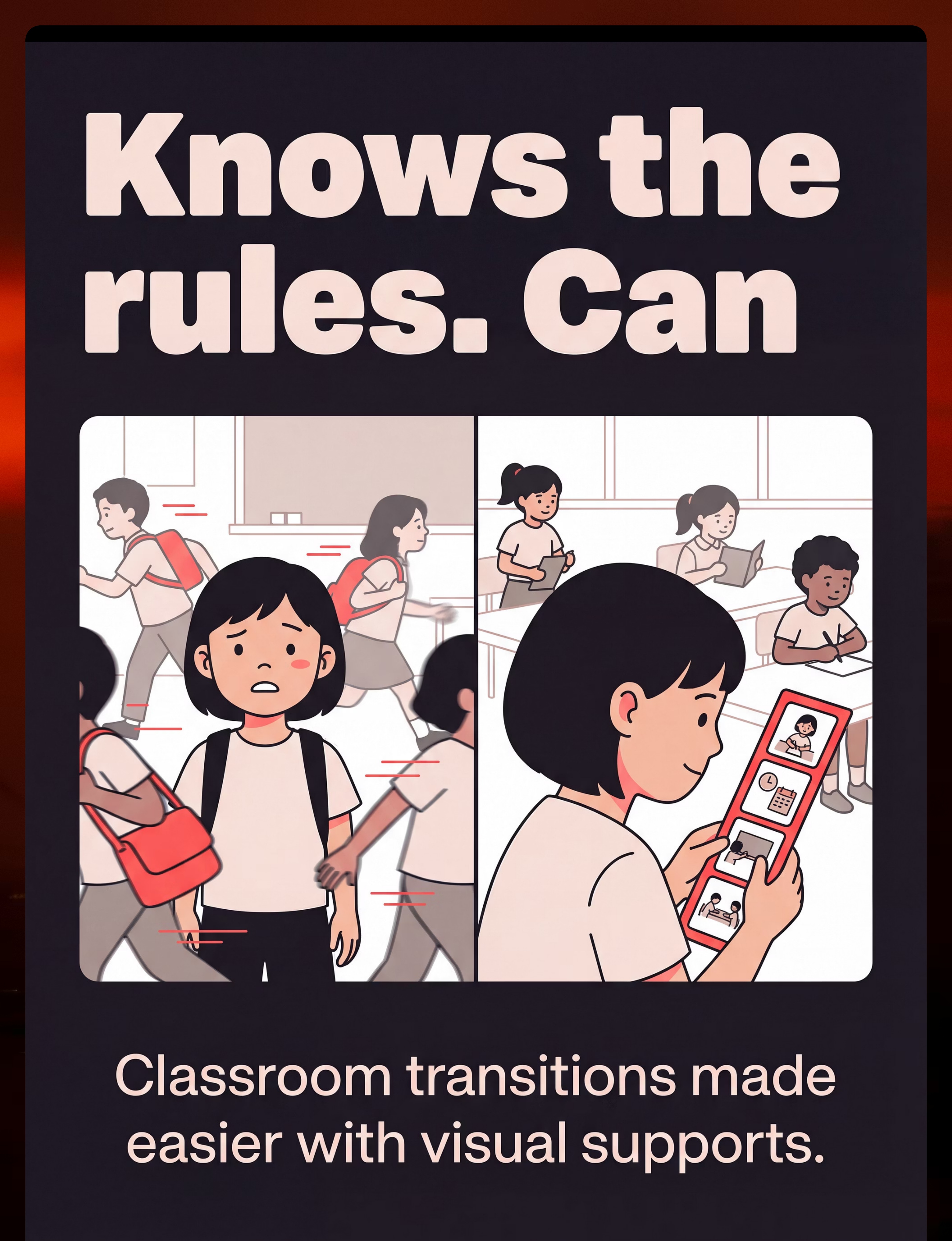
Knows the Rules. Can't Follow Them Consistently.
That note from the teacher said "capable but inconsistent." His behavior chart: red, red, red, yellow, red. You've tried reward charts, consequences, role-play. Nothing sticks inside the actual classroom. You are not failing. Your child's executive system is speaking.
🏥 The brain that struggles with routines is not a defiant brain. It is a brain that needs external scaffolding that other brains build internally. 9 Materials That Make Classroom Routines Stick — School Readiness & Academic Skills, Episode H-706
🌸 Pinnacle Blooms Network®
#ClassroomRoutines
#ExecutiveFunction
#VisualSupports

This Is Not Your Child. This Is Neuroscience.
When a child knows what to do but consistently cannot do it in the classroom, working memory, cognitive flexibility, inhibitory control, and self-monitoring are the domains in question — not character, not effort, not parenting. This is established neuroscience, not opinion.
1 in 6
Children Affected
Show significant executive function challenges affecting classroom performance
50M+
Global Families
Navigating school-related executive function difficulties worldwide
13.7M
Indian Children
Ages 5–14 with diagnosed neurodevelopmental differences affecting school routines
"80% of children with autism display executive function challenges that directly impact classroom routine compliance."
Executive function challenges are among the most prevalent yet least understood school difficulties. They present across ADHD, autism, learning disabilities, developmental delays, and even anxiety. The classroom is a high-demand executive environment: dozens of transitions, multi-step directions, unpredictable schedule shifts, and the requirement to self-monitor — all simultaneously. You are among millions of families navigating this exact challenge. And there are tools that work.
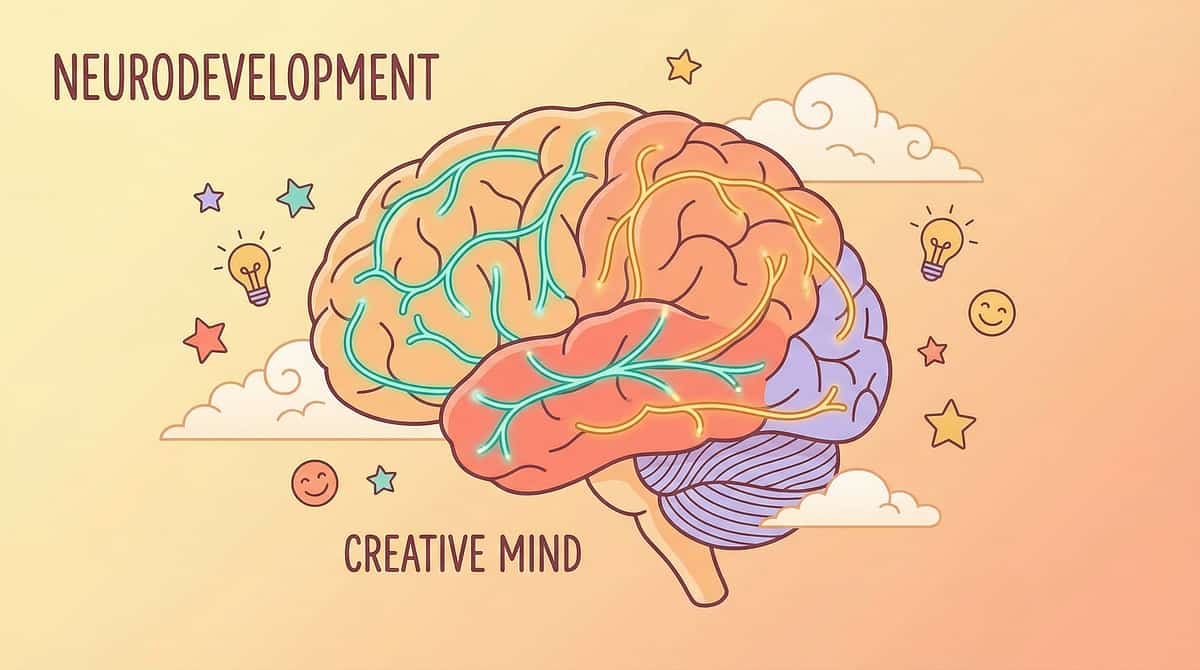
This Is a Wiring Difference. Not a Behavior Choice.
The Neuroscience
Prefrontal Cortex (PFC) — The Manager: Governs all executive functions — planning, sequencing, inhibition, working memory, cognitive shifting. In children with EF challenges, the PFC develops 2–3 years behind peers. What looks like a 7-year-old "misbehaving" may neurologically be a child whose executive brain is operating at a 4–5-year-old level.
Working Memory Deficit: "Put away math, get your reading book, sit on the carpet" requires holding 3 sequential instructions in working memory while executing them. When capacity is limited, instructions cascade out before execution begins.
Cognitive Flexibility Deficit: For children with reduced cognitive flexibility, abrupt transitions are neurologically impossible — not difficult. Impossible.
Inhibitory Control Deficit: Not blurting out, not continuing a preferred activity, not reacting to distractions — all require inhibitory control. When underdeveloped, the behavior looks identical to defiance but has an entirely different neural origin.
What This Means at Home & School
- When your child "forgets" the routine he did yesterday: Working memory did not encode it as automatic yet. He needs an external memory — a visual schedule.
- When he melts down at transitions: His PFC cannot disengage from the current activity without scaffolding. He needs advance warnings and countdown systems.
- When he seems not to hear directions: He heard them. His brain cannot hold them long enough to act. He needs visual cues at the point of action.
- When he's the last one ready every single time: His planning and sequencing systems are processing slower — not lazier.
"External supports don't bypass the brain — they give it the scaffolding to perform at its actual capability."

Your Child Is Here. Here Is Where We're Heading.
Children with executive function delays are not falling behind permanently — they are developing on a different timeline. Visual supports, transition systems, and organizational scaffolds bridge the gap while the PFC matures.
Ages 3–4
WHO milestone: Begin following 2-step routines. EF-challenged children need 2+ adult prompts for single-step routines.
Ages 4–5
WHO milestone: Follow 3-step classroom routines with reminders. EF-challenged children require continuous adult scaffolding for 2-step routines.
Ages 5–7 ★
Expected independent routine compliance. EF-challenged children still need full external prompting — THIS is the gap visual supports are designed to bridge.
Ages 7–9
Typically self-monitor classroom behavior. With appropriate supports, EF-challenged children begin independent self-monitoring.
Ages 9–12
Internalize routines, adapt to changes. With scaffolding, children internalize through supported practice.
📌Early scaffolding (ages 3–8) has the greatest neuroplasticity impact. The brain's capacity to build executive function pathways through supported practice is highest in this window. Do not wait for "growing out of it." EF challenges commonly co-occur with: ADHD • Autism • Learning Disabilities • Anxiety • Developmental Language Disorder • Sensory Processing Differences.

Clinically Validated. Home-Applicable. Parent-Proven.
EVIDENCE GRADE: LEVEL I
Systematic Review + RCT Evidence
Study | Finding | Relevance | |
PRISMA Systematic Review (2024) — PMC11506176 | Visual supports confirmed as Level I EBP for ASD across 16 studies (2013–2023) | Visual schedules and cue systems = Level I evidence | |
NCAEP (2020) | Visual supports, self-monitoring, and structured routines classified as EBPs | All 9 materials in this reel have EBP status | |
Meta-analysis, World J Clin Cases (2024) — PMC10955541 | Sensory + visual + behavioral interventions show significant improvement in adaptive behavior | Sensory regulation tools support routine compliance | |
Padmanabha et al., Indian J Pediatr (2019) | Home-based structured interventions show significant outcomes in Indian pediatric population | These tools work in Indian home and school contexts | |
WHO CCD Package (2023) — PMC9978394 | Multi-caregiver structured programs across 54 LMICs show consistent developmental outcomes | School + home consistency amplifies impact |
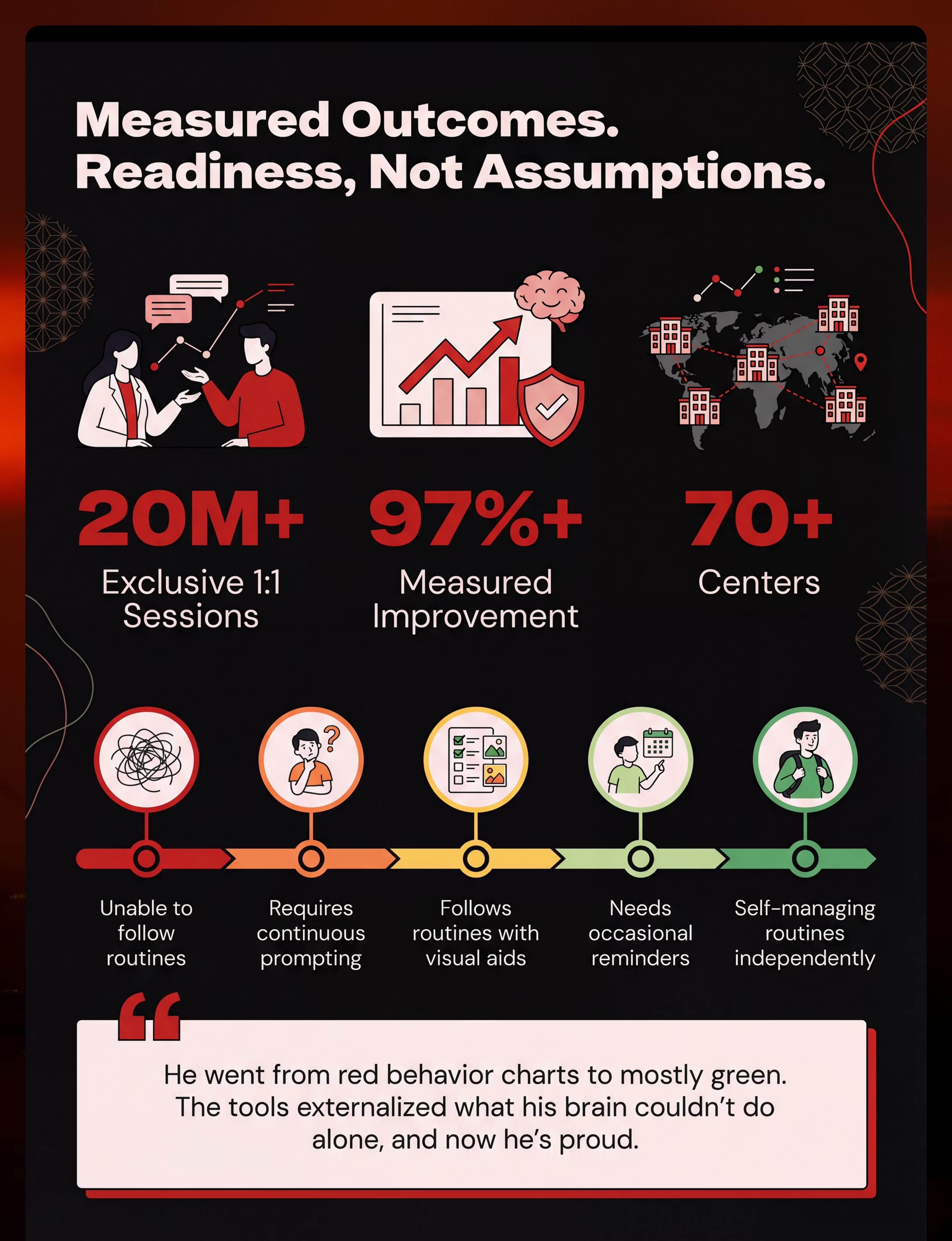
94%
Evidence Confidence
Convergence of OT, behavioral science, special education, and neurodevelopment research
97%
Measured Improvement
Across 20M+ exclusive 1:1 Pinnacle therapy sessions
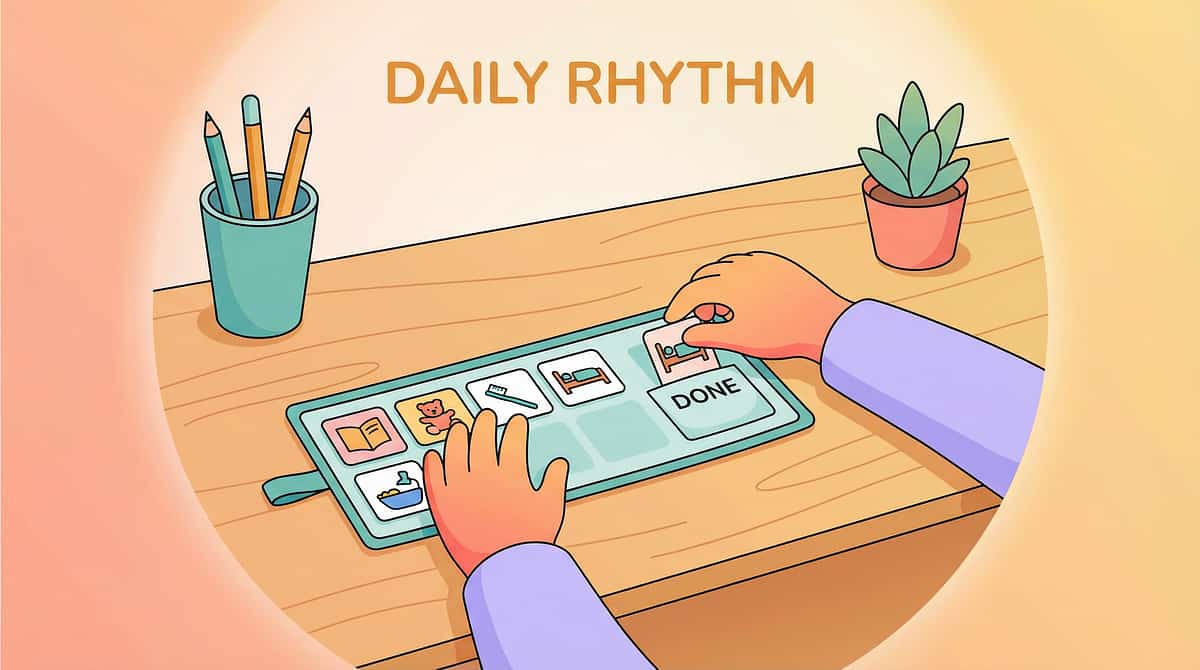
9 Materials That Help With Classroom Routines
🎓 School Readiness / Executive Function / SCH-ROUT
👦 Ages 3–12
📅 Daily Use
The School Day Toolkit — Externalizing What the Brain Can't Hold Internally. Classroom Routine Support Materials are a curated set of visual, organizational, and sensory tools that externalize the executive functions children with ADHD, autism, or developmental differences cannot yet reliably perform internally. Rather than relying on verbal reminders, consequences, or repetition, these materials replace the need for internal working memory, planning, cognitive flexibility, and self-monitoring with concrete, visible, manipulable tools at the point of need.
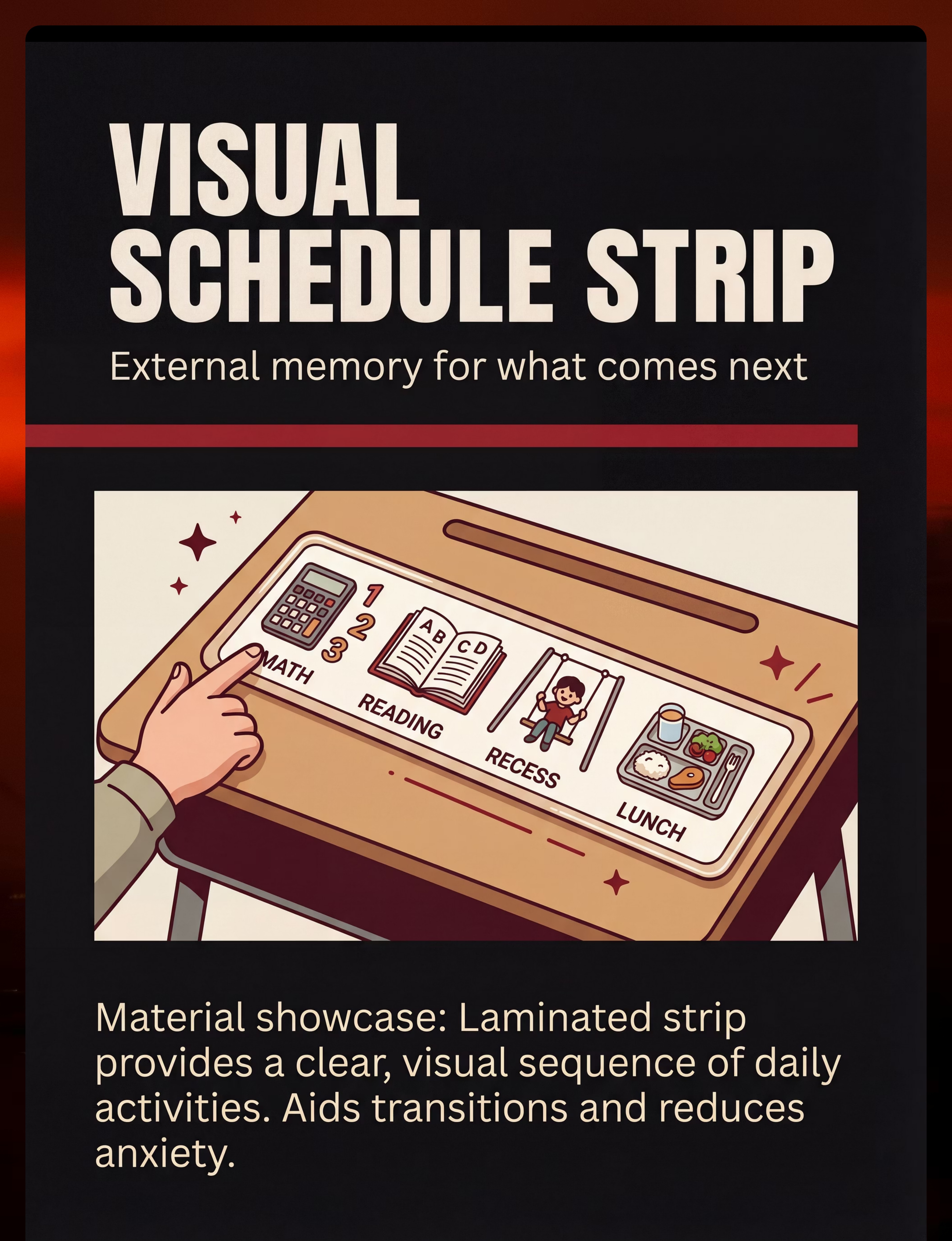
Visual Schedule Strip
External working memory for the full school day
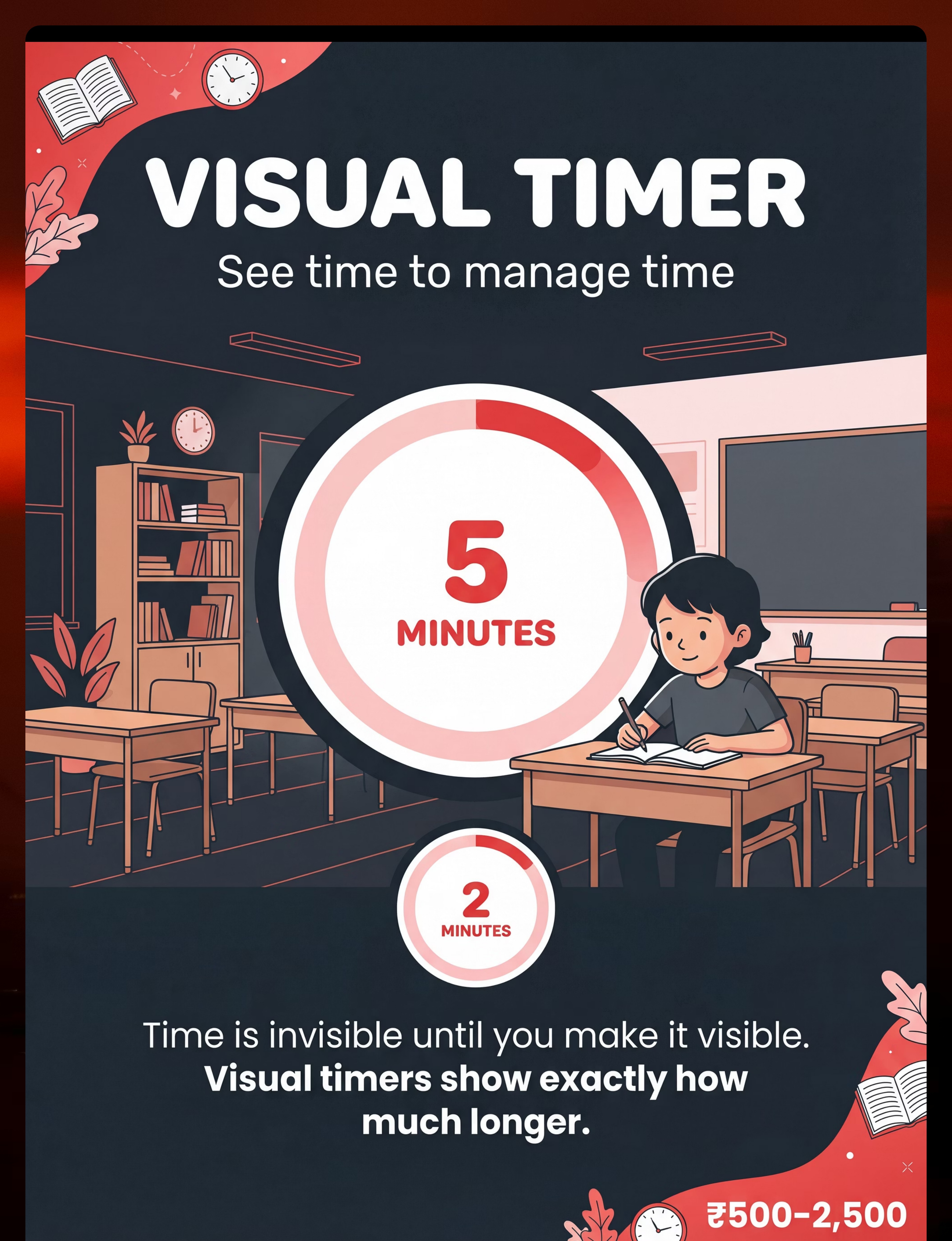
Visual Timer
Makes invisible time concrete and visible
Transition Warning Cards
Gives the brain time to prepare for cognitive shifting
First-Then Board
Sequences activities and makes motivation visible
Visual Checklists
Breaks multi-step routines into checkable steps
Desk Organization
Eliminates the excavation project of finding materials
Behavior Cue Cards
Just-in-time visual reminders of expected behavior
Self-Monitoring Tools
Externalizes the self-awareness process
Sensory Support Kit
Maintains regulation needed for routine compliance
💡These tools don't create dependency. They create success. A child who masters routines with visual supports is succeeding. Over time, supports are faded as internal executive functions develop. Think: glasses for the eyes, visual schedules for the brain.

The Entire Consortium Converges Here
Six disciplines each bring a unique lens to classroom routine support — and all of them are essential. No single therapy type owns executive function. Neither does any single solution.
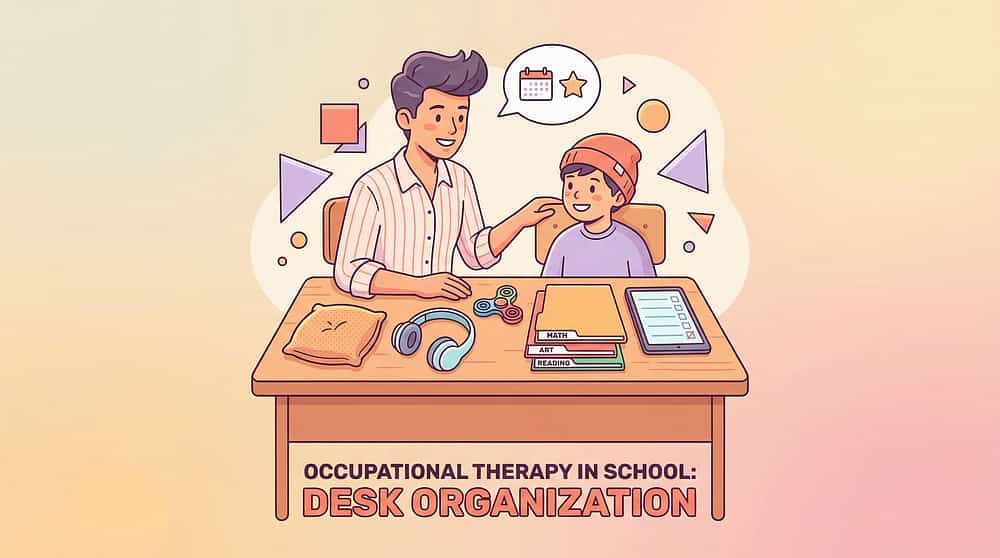
🦺 Occupational Therapist
PRIMARY LEAD. OTs assess sensory processing differences, fine motor components of organization, and environmental modifications. They design visual schedule strips and set up desk organization systems based on the child's specific sensory-motor profile.

🧠 ABA/BCBA Therapist
Designs behavioral scaffolding systems. ABA therapists specify the reinforcement schedules linked to routine compliance, build self-monitoring protocols, and track data on routine completion rates.
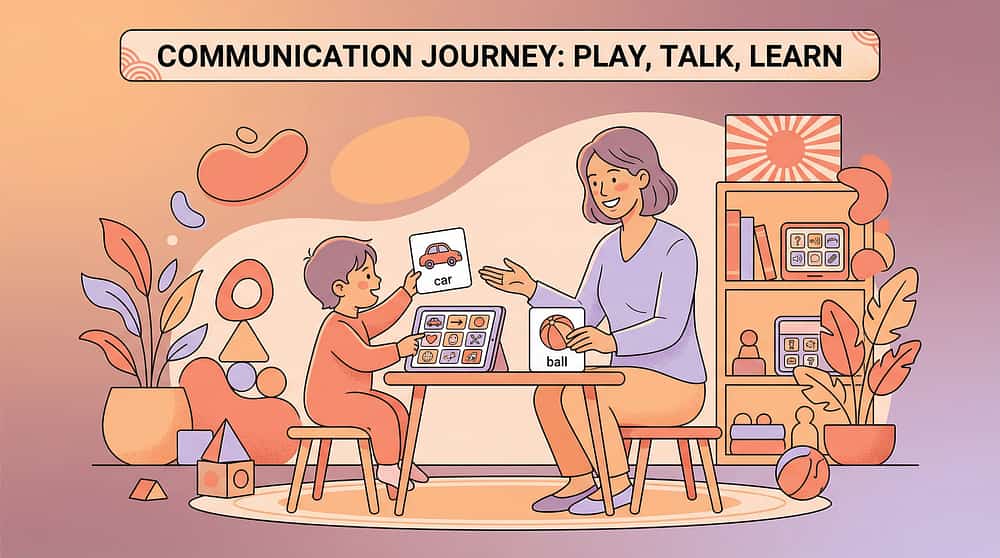
🗣️ Speech-Language Pathologist
Manages communication components. SLPs ensure visual schedules, cue cards, and checklists use appropriate AAC symbols or language levels. For non-verbal children, picture-based systems must align with their AAC system.
📚 Special Educator
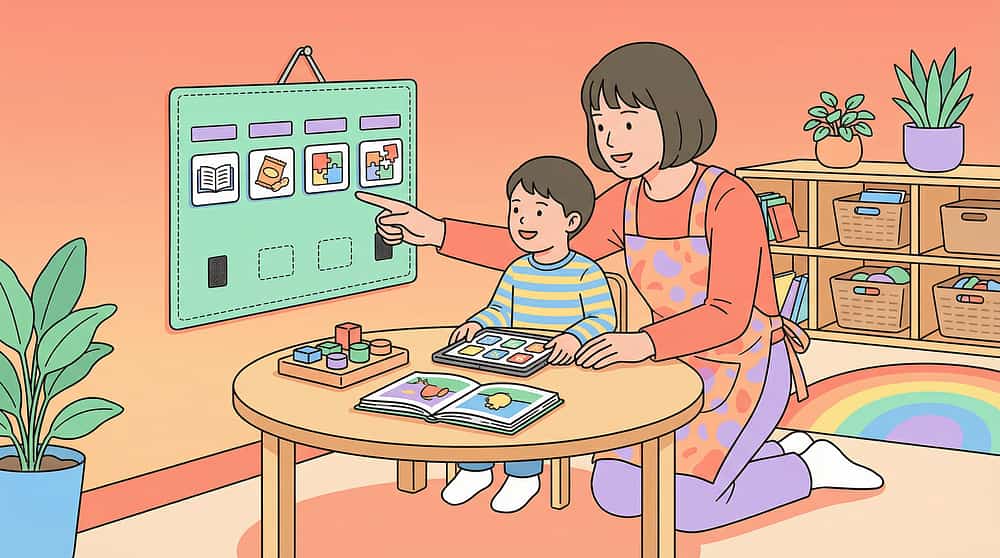
Classroom implementation lead. SpEd professionals translate all therapeutic recommendations into IEP accommodations, coordinate with classroom teachers, and monitor routine compliance across the full school day.

🧬 NeuroDev Pediatrician
Assesses underlying diagnoses. Confirms whether ADHD, ASD, DCD, or other diagnoses are present and guides the intensity of support needed. Monitors medication impact on executive function where applicable.

🌸 CRO (Clinical Research)
Validates tool selection with evidence. Ensures each of the 9 materials has published research support, tracks outcomes data through GPT-OS®, and contributes to the 20M+ session outcome dataset.
"The brain doesn't organize by therapy type. Neither does the Pinnacle Consortium."
9 Executive Functions These Materials Directly Address
Each of the 9 materials is matched to a specific executive function — the gap the tool is designed to bridge, from the "before" state to the measurable "after."
# | Executive Function | Before Materials | After Materials | |
1 | Working Memory | Forgets multi-step directions mid-execution | Visual schedule externalizes the sequence permanently | |
2 | Cognitive Flexibility | Melts down at transitions, cannot shift | Transition warnings provide cognitive preparation time | |
3 | Inhibitory Control | Continues preferred activity when told to stop | First-Then board makes stopping + starting visible | |
4 | Planning & Sequencing | Cannot organize materials or begin tasks | Desk organization and checklists remove planning demand | |
5 | Time Perception | "5 minutes" is meaningless | Visual timer makes time concrete and visible | |
6 | Self-Monitoring | Unaware of off-task behavior | Self-monitoring checklist externalizes awareness | |
7 | Initiation | Cannot begin tasks without adult prompt | First-Then board creates momentum | |
8 | Sustained Attention | Dysregulated brain cannot maintain focus | Sensory kit maintains regulation needed for attention | |
9 | Generalization | Skills don't transfer across settings | Consistent visual systems bridge home + school transfer |
Ages 3–5
Visual schedules + First-Then boards (primary tools)
Ages 5–8
Full 9-material toolkit as described
Ages 8–12
Self-monitoring systems become primary; fade other tools progressively
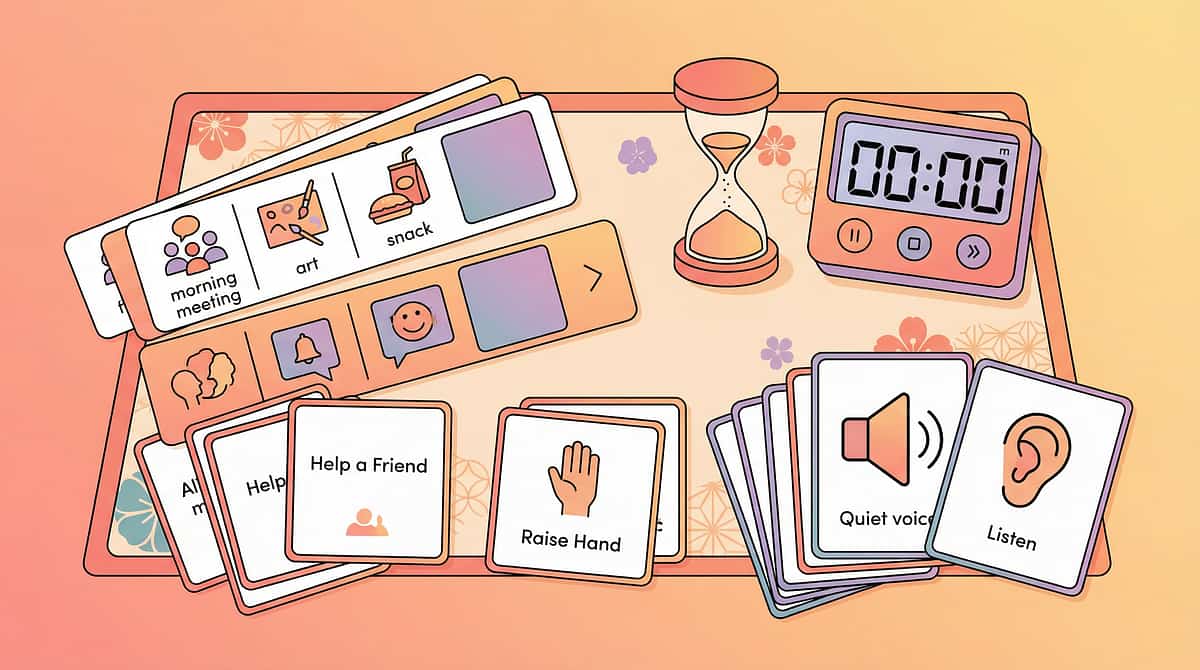
9 Materials. 9 Executive Functions. One School Day Transformed.
📋 1. Visual Schedule Strip
External working memory for the full school day
₹200–800 / DIY ₹0
⏱️ 2. Visual Timer
Makes invisible time concrete and visible
₹500–2,500 / App: Free
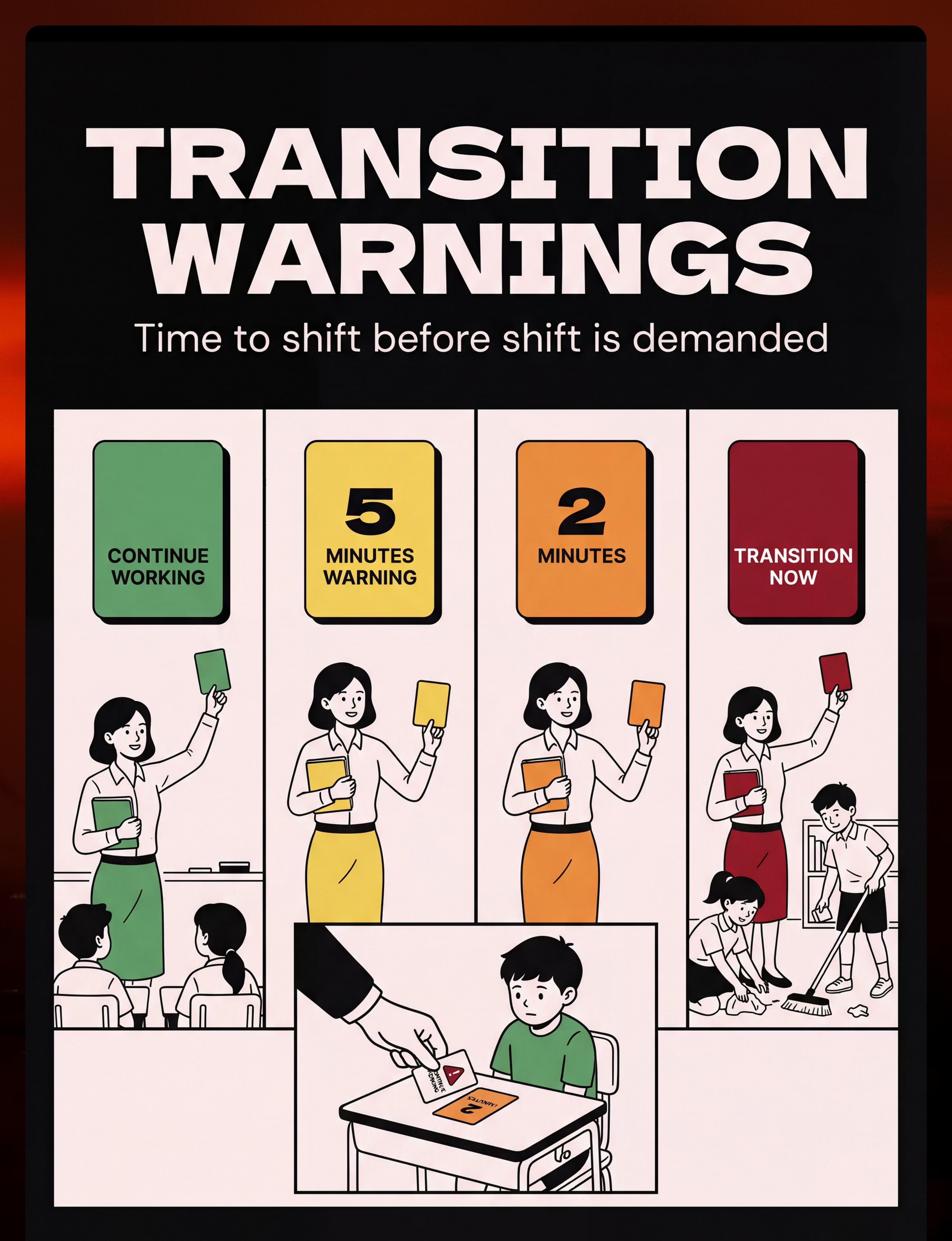
🟡 3. Transition Warning Cards
₹100–500 / DIY ₹0
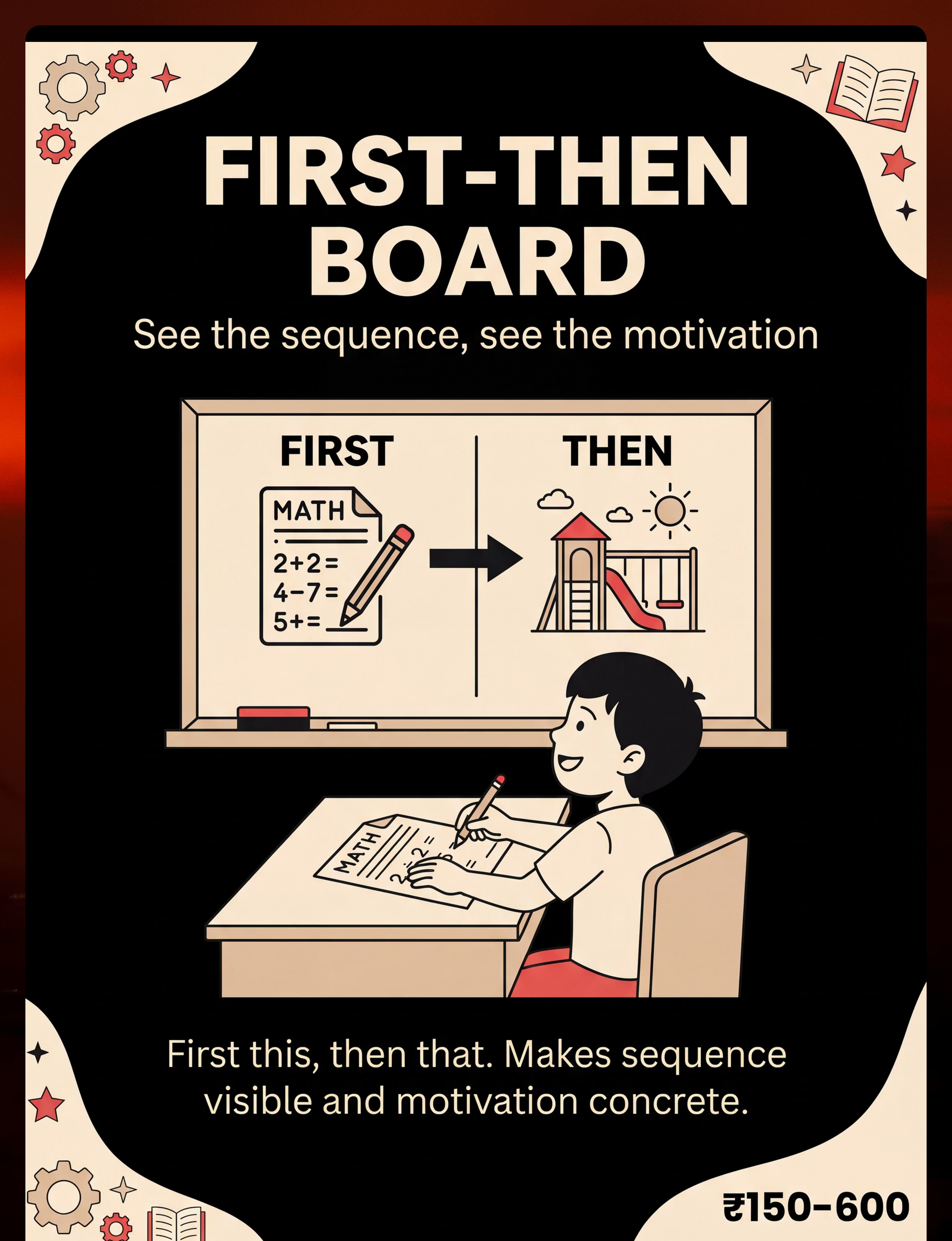
📌 4. First-Then Board
Sequences activities and makes motivation visible
₹150–600 / DIY ₹0
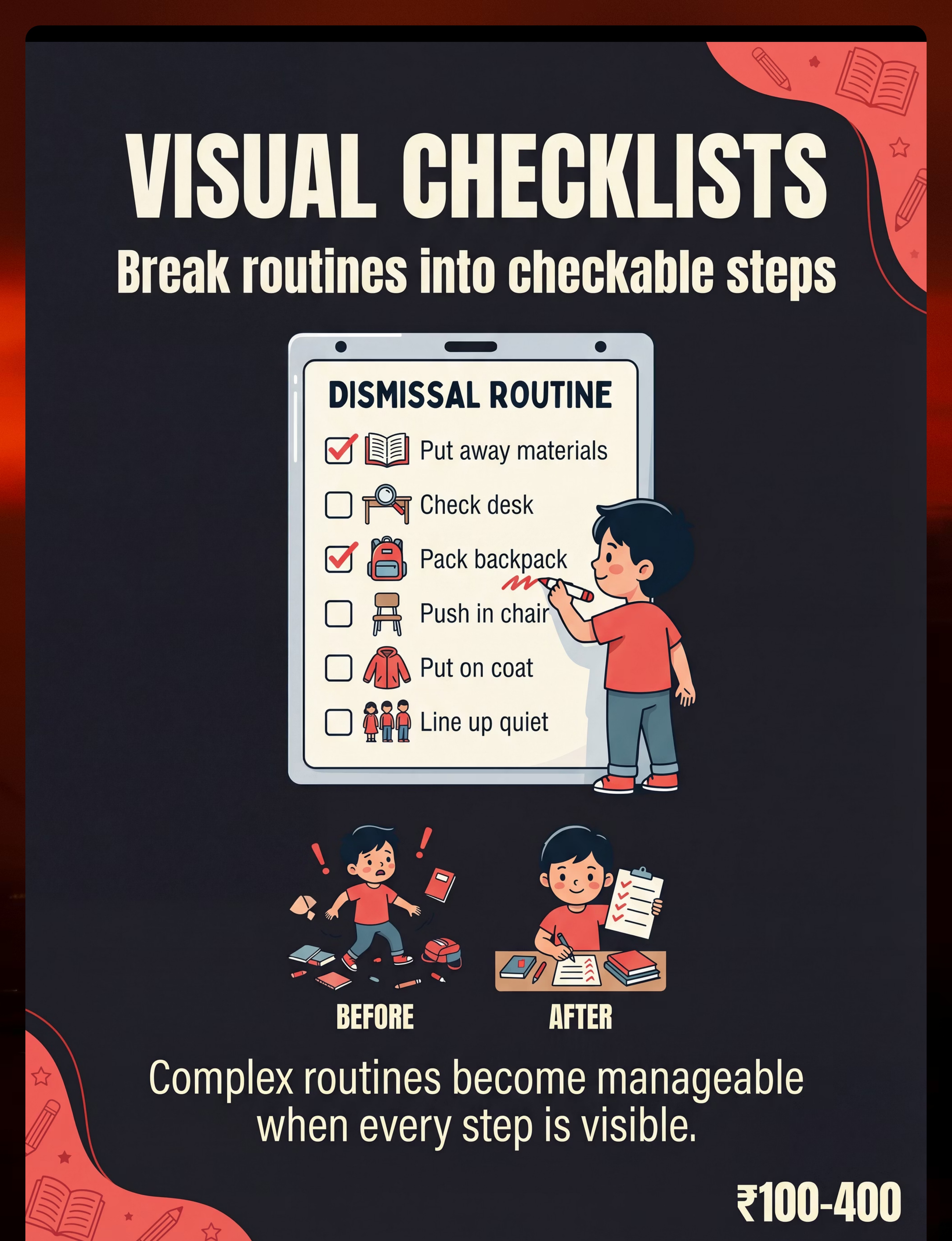
✅ 5. Visual Checklists
Breaks multi-step routines into checkable steps
₹100–400 / DIY ₹0
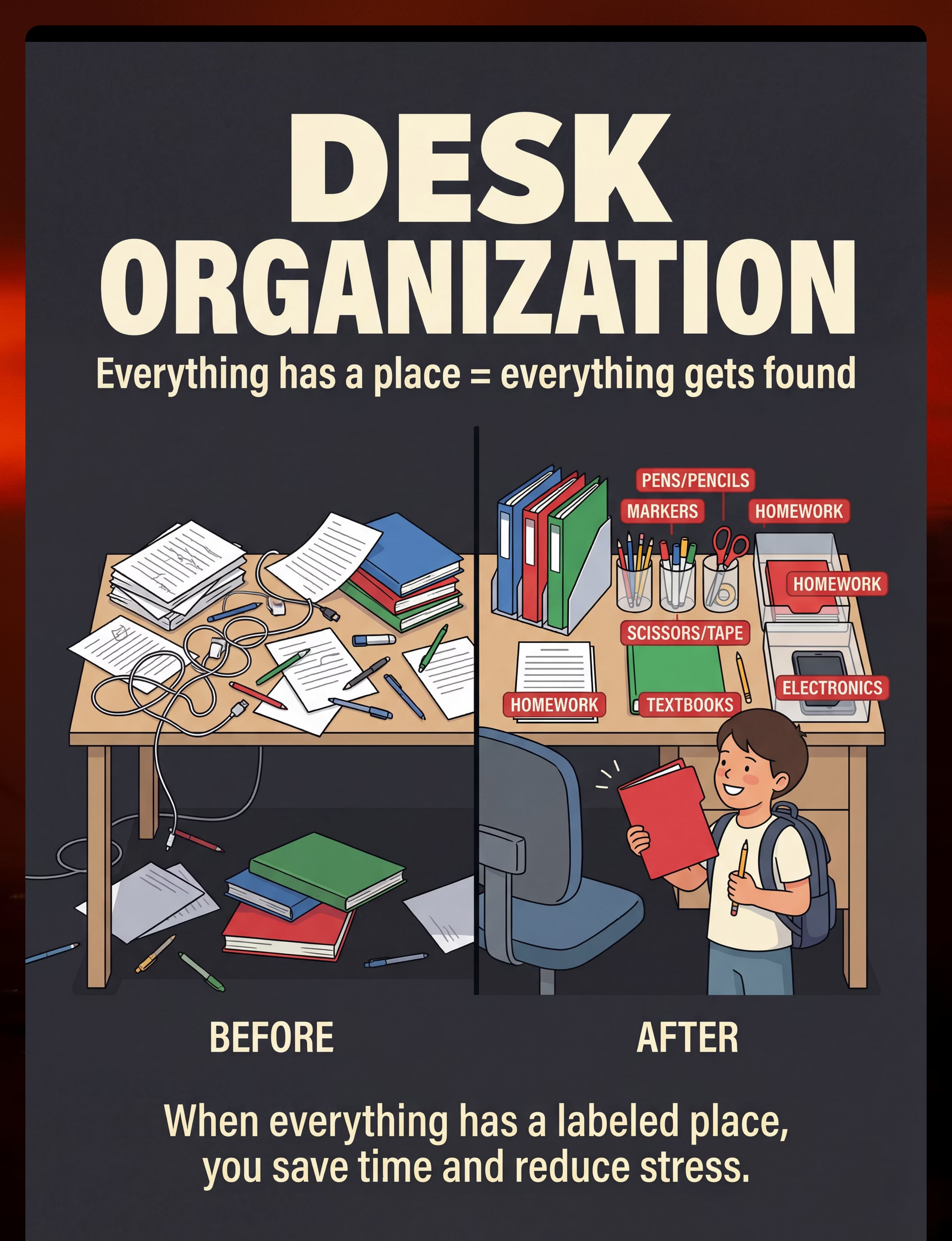
🗂️ 6. Desk Organization
Eliminates the excavation project of finding materials
₹300–1,200 / DIY ₹0
🃏 7. Behavior Cue Cards
Just-in-time visual reminders of expected behavior
₹100–400 / DIY ₹0
🔄 8. Self-Monitoring Tools
Externalizes the self-awareness process
₹200–1,000 / DIY ₹0
🎧 9. Sensory Support Kit
Maintains regulation needed for routine compliance
₹500–2,500 / DIY ₹0
💰Comprehensive Kit: ₹1,700–9,000 | 💡DIY Starter Kit: ₹0 — Everything can be made at home. Zero budget is not a barrier to beginning.

Material 1: Visual Schedule Strip
Working Memory
NCAEP Level I EBP
₹200–800 / DIY ₹0
"What's in the brain can be forgotten; what's on the desk can always be checked."
Why It Works (OT + ABA Science)
The individual visual schedule strip is the single most powerful tool for classroom routine success. While most classrooms post a class schedule, children with working memory challenges need their own personal, desk-accessible schedule — this is a working memory prosthetic, not redundancy.
A personal schedule answers the four executive questions that consume cognitive resources: What am I doing now? What comes next? How much longer? When is lunch? Without needing to ask the teacher, appear lost, or become anxious.
DIY Protocol
- Format options: Horizontal laminated strip | Vertical flip cards | Velcro icon board
- Visual elements: Photos of actual classroom activities + written labels
- Interactivity: Velcro icons moved to "done" envelope | Dry-erase checkmarks
- Size: 3–4" tall × 12–18" long for desk | Credit-card size for lanyard
- Content: Match actual school schedule including specials, lunch, recess, transitions
Materials needed: Laminating sheets, printed activity icons, Velcro strips, laminator (or local print shop), dry-erase markers

Material 2: Visual Timer & Time Management Display
Time Perception
PMC10955541
₹500–2,500 / App: Free
"You can't manage what you can't perceive. Make time visible."
Why It Works (NeuroDev Science)
Time is invisible and abstract — two characteristics that make it neurologically unmanageable for children with executive function differences. "Five minutes" and "soon" are meaningless without internal time representation.
Visual timers show time as a diminishing quantity (shrinking red arc, falling sand, depleting bar) — making temporal concepts concrete. This answers "How much longer?" in a way verbal statements never can.
Visual Timer Types
- Time Timer (red disk diminishes) — gold standard, ₹1,500–2,500
- Sand timers (1, 2, 5, 10 min sets) — ₹500–1,000
- Free apps: Time Timer app, Visual Timer app
- DIY: Paper plate with spinning cardboard wedge
How to Use
- Transition warnings: "Timer shows 2 minutes until cleanup"
- Work pacing: "Complete morning work before timer ends"
- Wait time visualization: "Watch it shrink"
Material 3: Transition Warning Cards & Countdown System
Cognitive Flexibility
NCAEP EBP (2020)
₹100–500 / DIY ₹0
"An abrupt transition is an impossible transition for many brains."
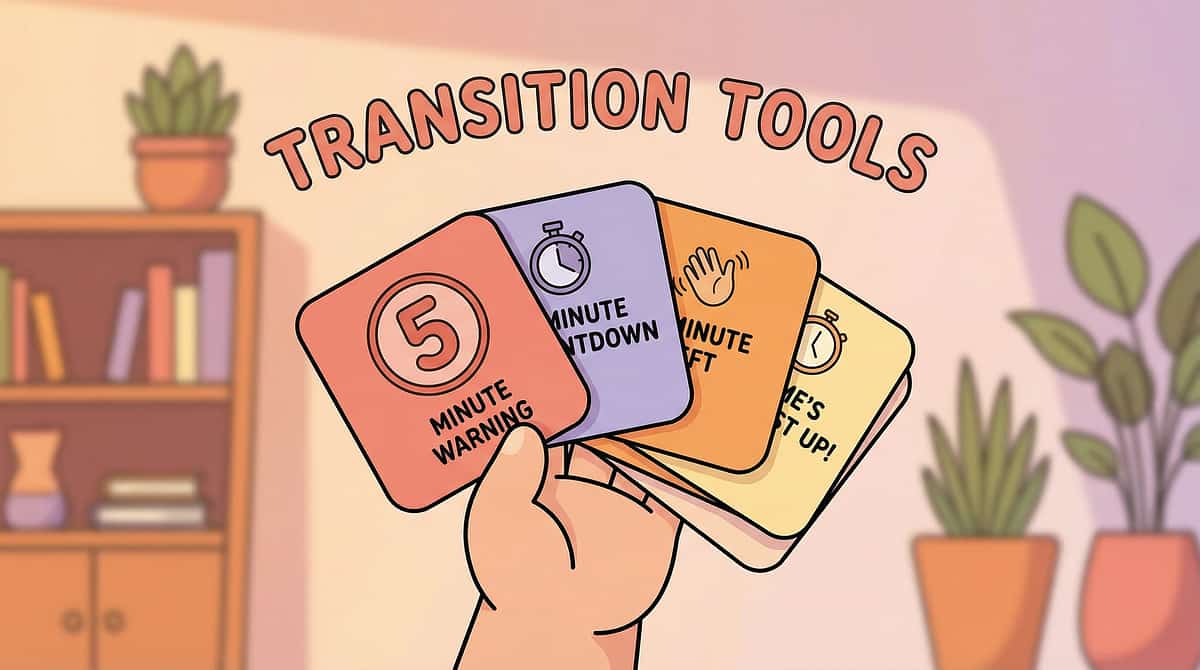
Transitions — moving from one activity to another — are the most executive-demanding moments in the school day. The cognitive shift requires: stopping the current activity, disengaging from it emotionally, holding the next activity in mind, planning transition steps, and initiating new behavior. This is a 5-step executive sequence happening in 3 seconds. Transition warning systems provide the advance preparation time executive-challenged brains need.
🟢 Green Card
Continue working — 5 min remaining
🟡 Yellow Card
5-minute warning — begin mental preparation
🟠 Orange Card
2-minute warning — begin physical preparation
🔴 Red Card
Transition now
For individual use: Small card placed on desk by teacher | Personal countdown strip. These cards can be used for the whole class — normalizing the support for all learners.
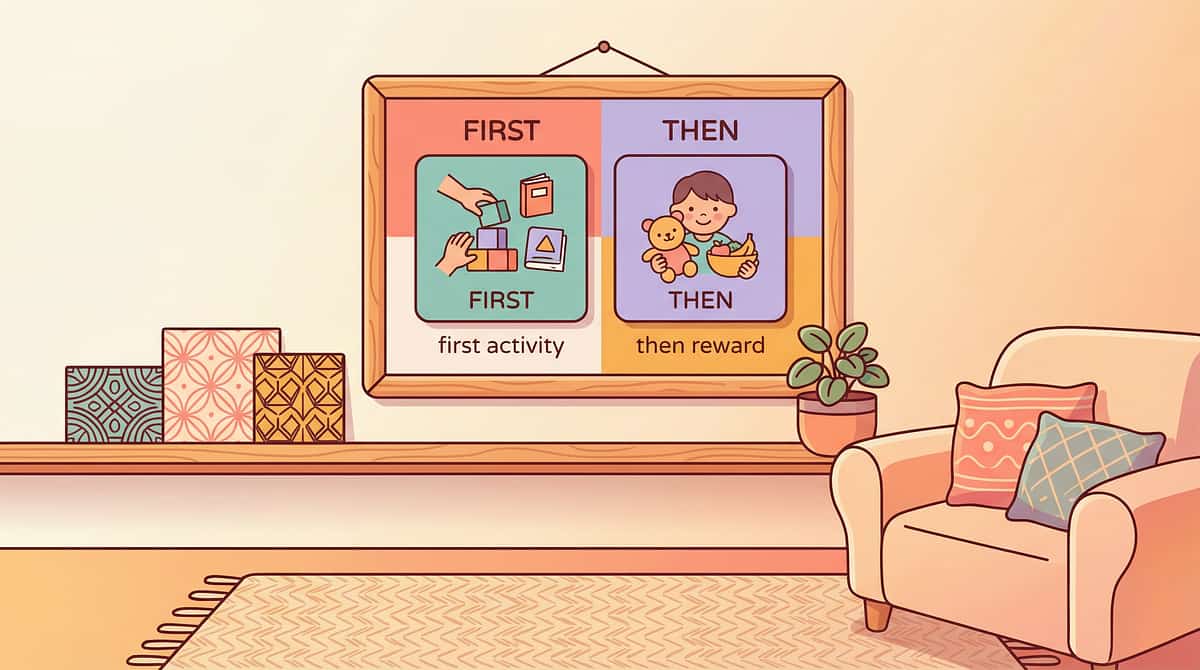
Material 4: First-Then Board & Contingency Visuals
Initiation + Motivation
ABA Contingency Management
₹150–600 / DIY ₹0
"When the brain can see what comes after, it can get through what comes before."
Why It Works (ABA + Motivation Science)
The First-Then board makes sequence and contingency concrete. "First math, then recess" becomes a visible, non-negotiable statement. It serves four executive functions simultaneously: externalizes the sequence (working memory), creates clear contingency (motivation), keeps preferred activities visible without verbal negotiation, and answers "When can I...?" without escalation.
Extended Versions
- First-Then-Then (3 activities)
- First-Timer-Then (timed first activity)
- Choice board in "Then" position
⚠️Critical Rule: Always honor the "Then." If the contingency isn't delivered, the system loses credibility and effectiveness permanently.
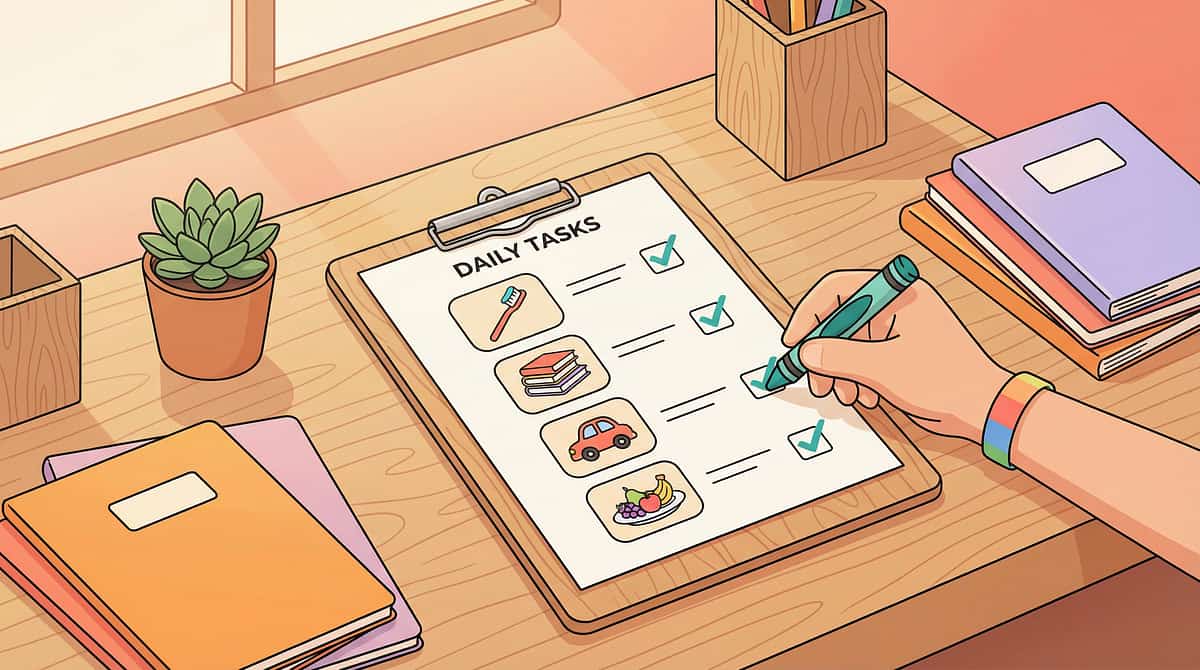
Material 5: Routine Task Cards & Visual Checklists
Planning + Sequencing
PMC11506176
₹100–400 / DIY ₹0
"Working memory has limits. Checklists extend those limits indefinitely."
"Pack up for dismissal" sounds simple — it is actually a 6-step executive sequence requiring working memory, planning, and self-monitoring. Children with executive function challenges complete step 1, then forget steps 2–5, do them out of order, or get stuck indefinitely. Visual checklists break complex routines into explicit, sequential, checkable steps.
Morning Arrival
Unpack bag → hang coat → put away lunch → get out materials → check schedule
Dismissal Pack-Up
Complete checklist → pack bag → clear desk → check folders → line up
Lunch Preparation
Put away work → get lunch box → wash hands → walk to cafeteria
Transitions to Specials
Stop work → put materials away → get needed item → line up → wait quietly
The child executes each step, checks it off, and moves to the next — without needing to hold the entire sequence in working memory. Most used routines to break down also include: bathroom routine, material management, and lining up.
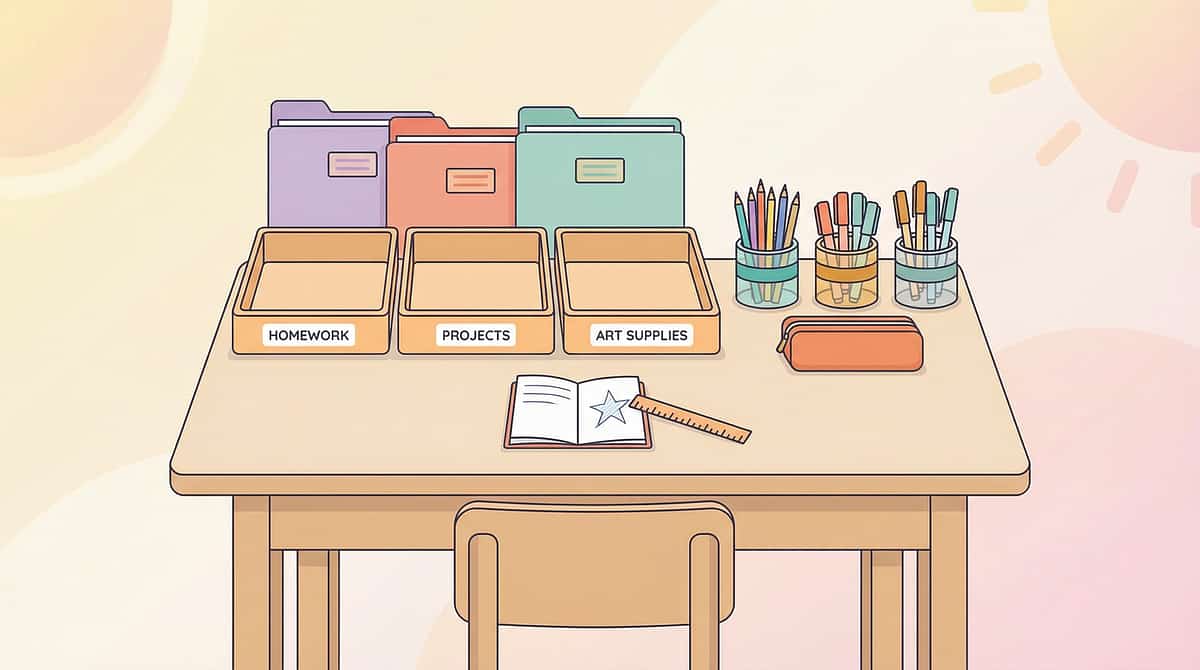
Material 6: Desk Organization System & Material Management
Planning + Organization
OT Environmental Modification
₹300–1,200 / DIY ₹0
"Disorganization steals time from every routine. Organize once, succeed repeatedly."
Why It Works (Planning + Organization Science)
A disorganized desk is both symptom and cause of routine failure. Children with executive function challenges have catastrophically disorganized desks — not from laziness, but because organization requires planning, categorization, and sustained effort. The messy desk makes every routine harder: "Get your math book" becomes a 5-minute excavation project. Desk organization systems eliminate the planning demand by making material locations automatic and visual.
System Components
- Color-coded folders matching schedule colors (math=blue, reading=red)
- Labeled containers for all supplies
- "Turn in" vs. "Keep" folder system
- Photo of ideal organized desk taped inside for reference
- End-of-day desk routine checklist
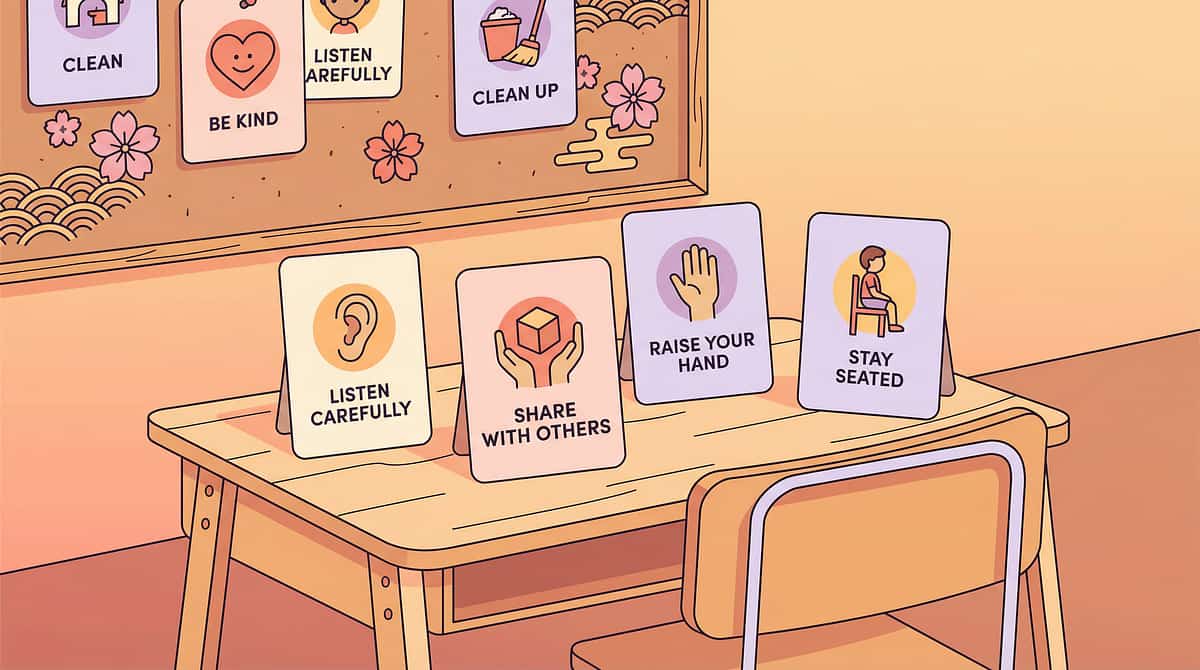
Material 7: Behavior Expectation Cue Cards
Working Memory + Retrieval
NCAEP (2020) Visual Supports EBP
₹100–400 / DIY ₹0
"Memory fails in the moment of need. Visual cues don't."
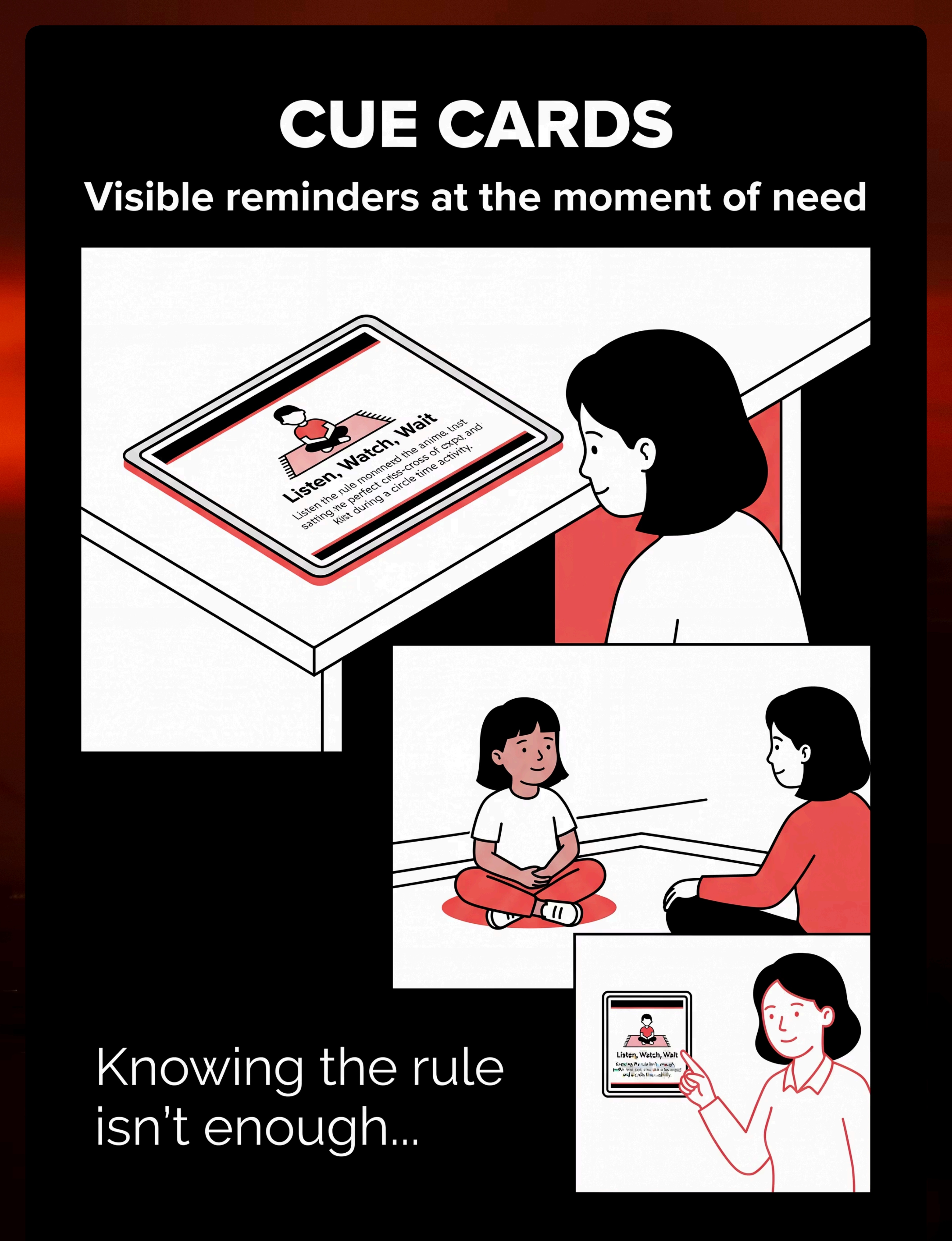
Children with executive function challenges often know classroom expectations but cannot access that knowledge in the moment of need. This is a retrieval failure, not a knowledge failure. Cue cards externalize expected behavior at the point of need — rather than internally generating "What am I supposed to do during carpet time?", a small card shows the specific expected behaviors for that context.
Carpet Time
Sit criss-cross, hands in lap, eyes on teacher, quiet mouth
Desk Work
Eyes on paper, pencil working, quiet voice, stay seated
Asking for Help
Raise hand, wait quietly, make eye contact, use words
Lining Up
Push in chair, stand up quietly, walk to line, keep hands to self
💡Discrete prompting: Teacher can point to the card silently — far less stigmatizing than verbal redirection. The child learns to self-monitor against the visible standard.

Material 8: Self-Monitoring Checklists & Reflection Tools
Metacognition + Self-Regulation
Self-Monitoring EBP (NCAEP, 2020)
₹200–1,000 / DIY ₹0
"You can't manage behavior you're not aware of. Self-monitoring builds awareness."
Why It Works (Metacognition Science)
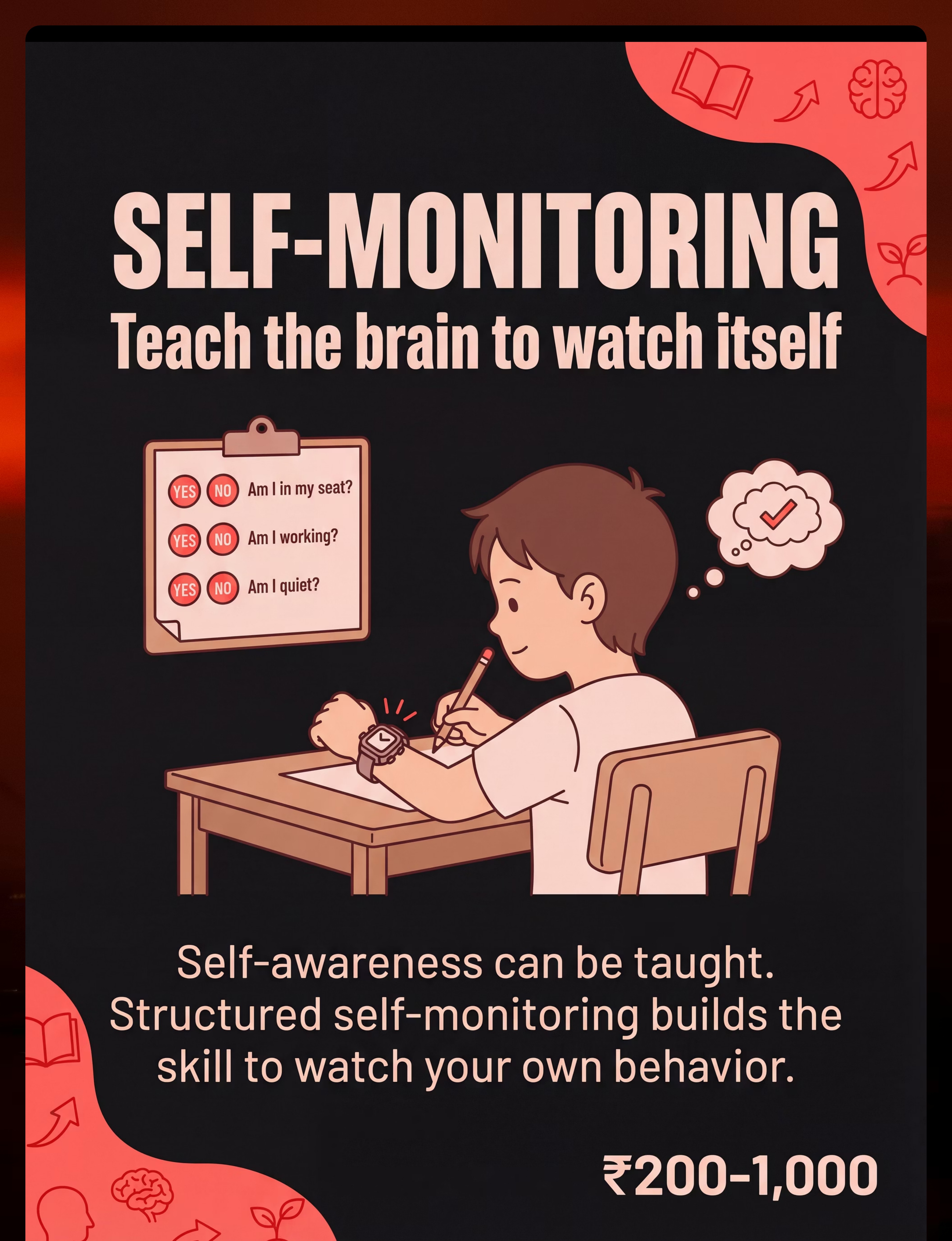
Self-monitoring — evaluating one's own behavior against expectations — is a core executive function that develops slowly. Children with EF challenges often don't realize they're off-task until an adult points it out. Self-monitoring tools externalize this awareness process. A periodic checklist prompts: "Am I in my seat? Am I working? Am I being quiet?" — building the self-awareness the brain isn't generating naturally.
Implementation Protocol
- Vibrating reminder watch (set at 5-minute intervals)
- Teacher's secret signal
- 3–5 simple yes/no questions per check
- Points for honest self-assessment
- Gradually extend intervals → eventually internalized
Reflection Tools
- End-of-activity rating scales
- "What went well / what was hard" sheets
- Goal-setting for next session
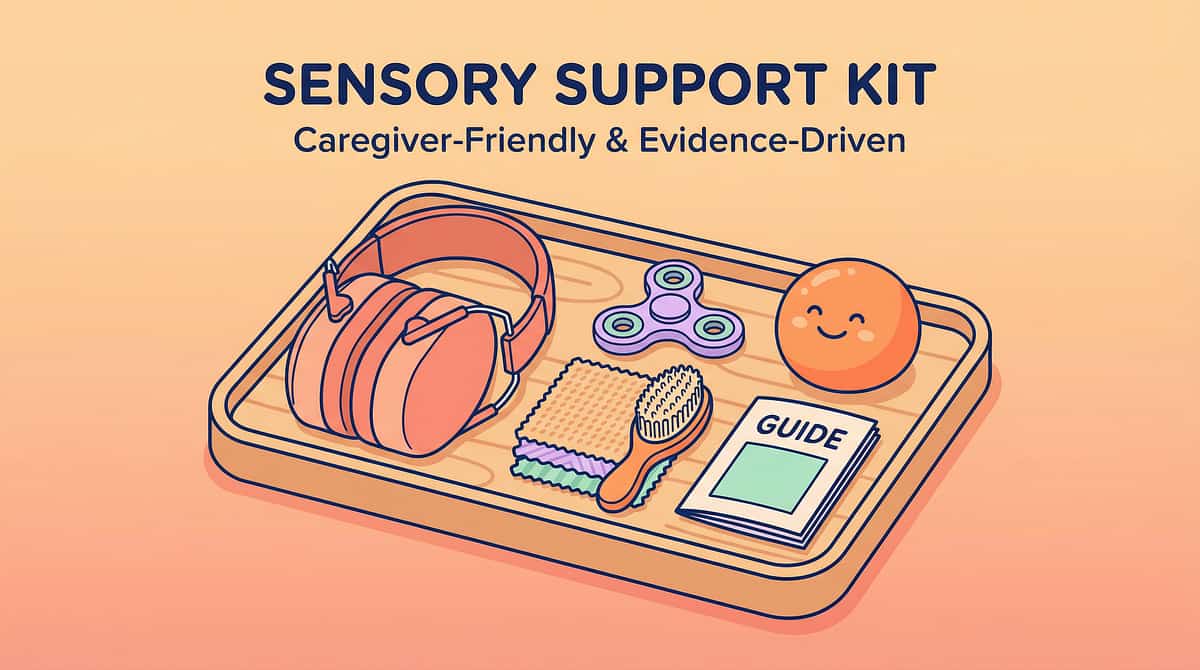
Material 9: Sensory Support Kit for Regulation
Sensory Processing + Self-Regulation
SI Intervention EBP (NCAEP, 2020)
₹500–2,500 / DIY ₹0–200
"Routines require regulation. Sensory support enables the regulation that enables routines."
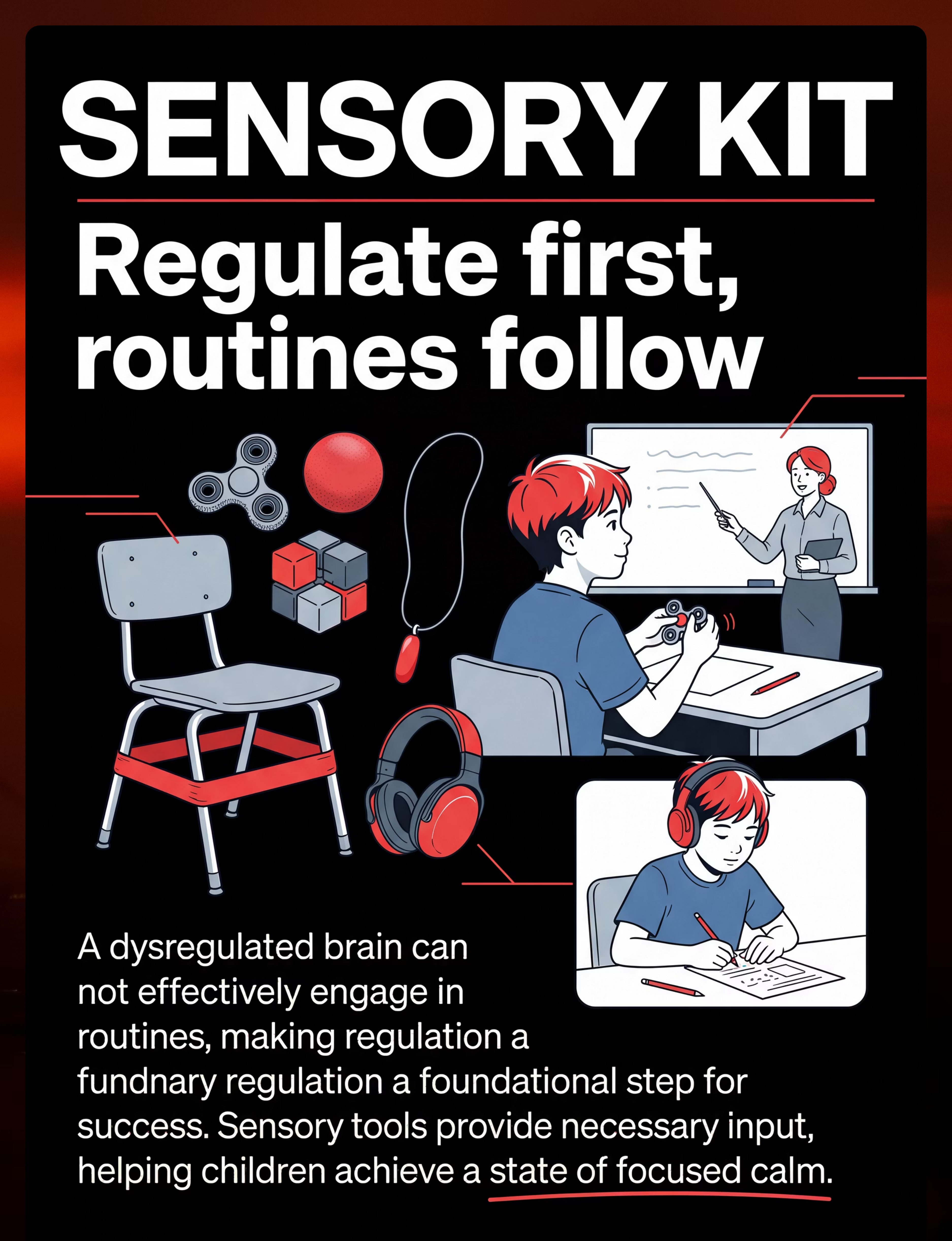
A dysregulated nervous system cannot execute routines. Children with sensory processing differences may be overwhelmed by classroom noise, distracted by visual stimulation, or under-aroused and sluggish. When dysregulated, the brain's cognitive resources are consumed managing sensory input — leaving nothing for sequential instructions.
🖐️ Quiet Fidgets
Putty, textured items, velcro strip under desk — for tactile and proprioceptive input
🪑 Chair Support
Chair bands or wobble cushion — provides proprioceptive input for movement-seeking children
🎧 Noise Reduction
Noise-reducing headphones or earplugs — for auditory sensitivity or classroom noise overwhelm
👓 Visual Privacy
Privacy shield or carrel — for visual overwhelm; reduces competing sensory input
⚠️Safety: OT consultation before kit assembly. Chew tools must be designed for chewing. No distracting items for others. Replace worn items promptly.

Before You Begin: Make the Environment Ready
✅ Safety Checklist
Physical Safety:
- Laminated materials have smooth, rounded edges
- Lanyards use breakaway clasps only
- Fidget tools are silent (no clicking/rattling for peers)
- Chew tools are commercially designed for oral use
- Timer sounds are non-startling (use visual mode for sensory-sensitive children)
- All materials are age-appropriate size (no small parts under 6 yrs)
Emotional Safety:
- Supports do not single out or stigmatize the child
- Discrete prompting preferred over public correction
- All tools are framed positively ("Here's your helper" not "You need this because you can't...")
- Child is involved in creating/personalizing materials where possible
- Monitor for increased anxiety related to any specific tool
🛠️ Setup Protocol
Home Preparation:
- Photograph actual classroom spaces the child uses
- Identify child's preferred colors for color-coding
- Print or purchase activity icons matching school schedule
- Laminate all materials (local print shop ₹5–10/sheet)
- Cut, edge, and add Velcro where needed
- Organize in labeled container before first use
School Coordination:
- Send teacher a brief summary of planned supports
- Request classroom schedule to match visual schedule content
- Ask about existing classroom visual systems (avoid duplication)
- Propose IEP/504 accommodation if appropriate
- Offer to supply materials — most schools welcome ready-made tools
- Establish communication channel for daily feedback
🎯First Session Rule: Introduce one material at a time. Master it before adding the next. Two tools used well outperform nine tools used inconsistently.
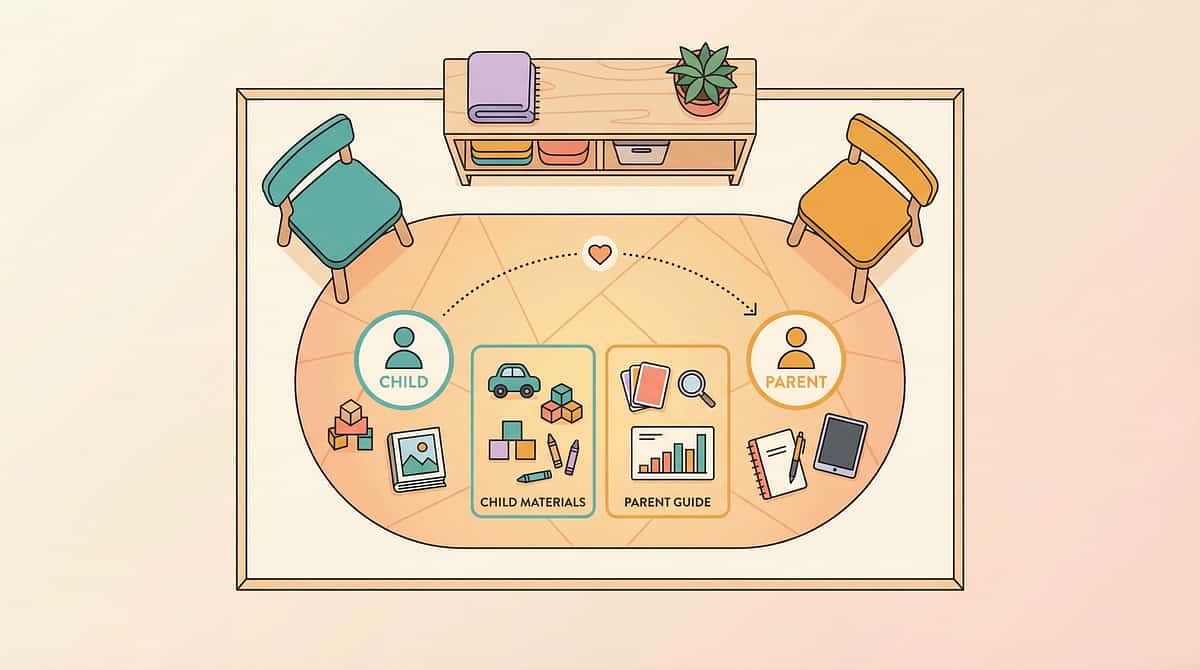
The Best Session Is One That Starts Right
Before introducing or reinforcing any classroom routine tools, check your child's readiness state. Proceeding when a child is dysregulated does not speed progress — it creates aversion to the tools themselves.
🟢 GREEN — Proceed
- Child is in regulated baseline state
- No recent distressing event (last 30 minutes)
- Basic needs met: not hungry, tired, or in sensory overload
- School day schedule is typical, no unexpected disruptions pending
- Child is responsive to adult presence
🟡 YELLOW — Modify
- Child is mildly elevated but not distressed
- Use simplified version: First-Then board + timer only
- Reduce number of routine steps being practiced
- Use more frequent and enthusiastic reinforcement
🔴 RED — Postpone
- Child is dysregulated, in meltdown, or post-meltdown recovery
- Significant unexpected schedule change just occurred
- Child is unwell (even mildly)
- Implement sensory kit FIRST to restore regulation
- Postpone routine practice to tomorrow
⚠️Do not force compliance during dysregulation. Forcing during dysregulation creates aversion to the tools themselves — setting progress back significantly.
Step 1: The Invitation
① Step 1 of 6
30–60 seconds
"Hey, I made something special for you. It's going to make school feel a lot easier — like having a helper right at your desk. Can I show you how it works?"
Body Language Guidance
- Sit at child's level (eye-to-eye)
- Calm, warm, low-volume voice — not directive
- Hold the material casually, not formally
- Allow 10–15 seconds of looking/touching before explaining
What Acceptance Looks Like
- Child looks at or touches the material
- Any verbal or nonverbal engagement
- Body orients toward the material (even slightly)
Handling Resistance
- Push-away: "No problem. I'll leave it here in case you want to try it later."
- Ignoring: "I'm going to put this on your desk. You don't have to use it — it'll just be there."
- Verbal refusal: Honor it. Try again tomorrow. Never force.
The invitation is not a demand. It is an offer. Honor the child's pace — trust builds the foundation for tool use.

Step 2: The Engagement
② Step 2 of 6
1–3 minutes
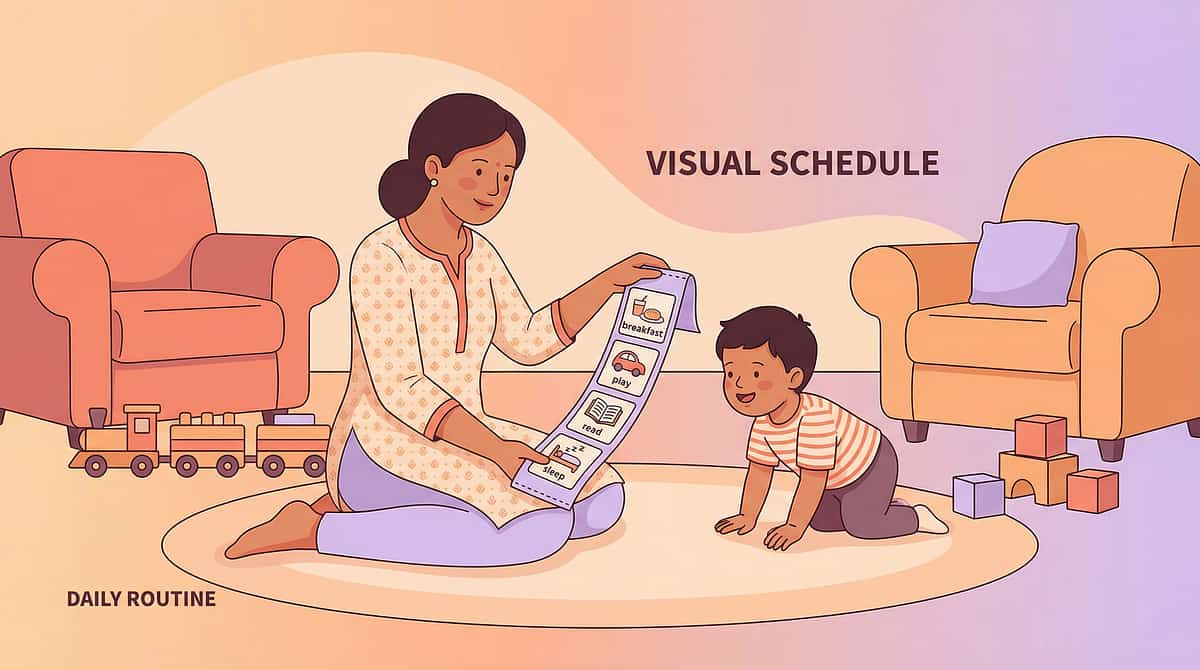
For Visual Schedule Strip
Show the schedule together. Point to each activity icon. Say: "This is math — see the pencil? Then reading — see the book? Then recess — see the swings? You get to move the icon to 'done' when you finish each one. Let's practice."
For Visual Timer
Set to 2 minutes. Say: "See this red part? When all the red is gone, it's time to switch. Watch it get smaller and smaller. Can you tell me when it's almost gone?"
For First-Then Board
Show with current activity on left, preferred activity on right. Say: "First we're going to do [current task] — see it here? Then — [preferred activity] — see it here? When you finish first, then you get then."
Engagement Indicators
- Child watches the tool in use
- Child attempts to manipulate the tool (touching velcro, moving icons)
- Verbal engagement: "That's me?" / "When does this turn red?"
- Any question about the tool
💬Reinforcement cue: Praise any engagement immediately: "Yes! You're checking your schedule — that's exactly what it's for!"
Step 3: The Therapeutic Action
③ Step 3 of 6
15–20 minutes/day
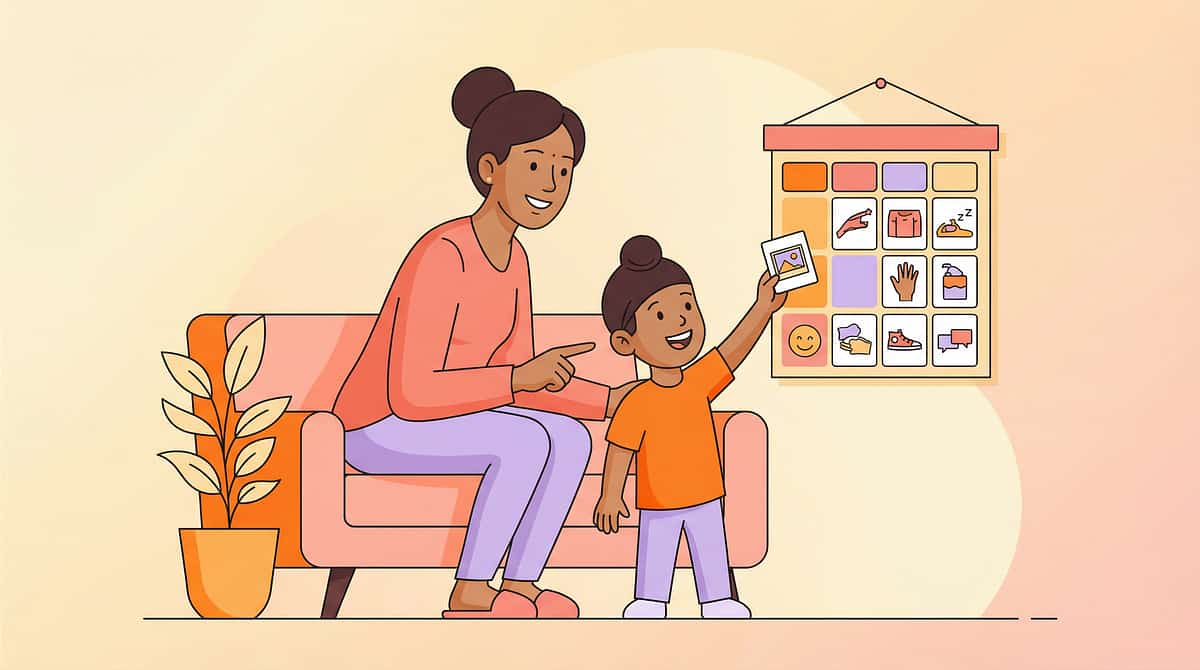
Each phase builds the neural pathway that will eventually run automatically at school. Phase A creates ownership; Phase B transfers the skill to real conditions; Phase C makes multi-step routines manageable. Do not rush through phases — depth in each builds durability.
📋Classroom Coordination — What to ask the teacher: (1) "Can this visual schedule strip stay on his desk?" (2) "Can you use the colored transition warning cards for the whole class?" (3) "Can his checklist stay taped inside his desk?" (4) "Can you point to his cue card instead of verbally redirecting?"
⚠️Concerning signs — contact therapist if: Child actively refuses all tools, significant anxiety increases, or any new distressing behaviors emerge specifically around tool use.
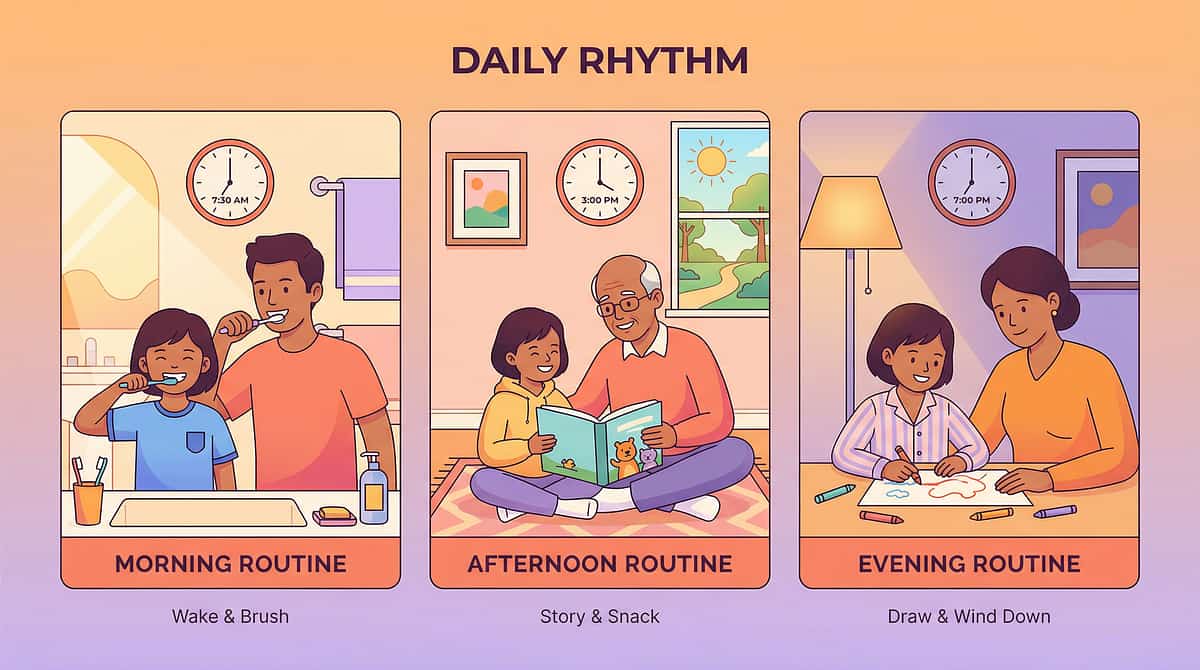
Step 4: Repeat & Vary
④ Step 4 of 6
Daily, Every Session
Material | Repetition Dosage | Fading Timeline | |
Visual Schedule | Every school day — non-negotiable | Begin fading after 8–12 weeks of independent use | |
Transition Warnings | Every transition, every day | Predictability IS the therapy | |
Checklists | Every occurrence of target routine | Twice daily for morning + dismissal | |
Self-Monitoring | Start at 5-min check intervals | Extend to 10 min after 2 weeks; 20 min after 4 weeks | |
Sensory Kit | Proactively throughout day | Not just when dysregulated |
Variation Options (to maintain engagement)
- Let child choose color coding for folders
- Let child draw their own icons for the schedule strip
- Change the "Then" activity on First-Then board to current motivating items
- Introduce new fidget tools to sensory kit monthly
- Upgrade from picture checklist to word checklist as reading develops
Satiation indicators (when the child has had enough): Complete disengagement from the material | Attempts to change or throw the material | Increasing vocalization or motor movement | Yawning or looking away repeatedly.
"3 sessions of consistent, reinforced tool use > 10 sessions of forced, inconsistent compliance."

Step 5: Reinforce & Celebrate
⑤ Step 5 of 6
Within 3 seconds of desired behavior
🏆The Rule: Within 3 seconds of desired behavior, deliver specific, enthusiastic reinforcement.
Checking the schedule independently
"You checked your schedule yourself! That's EXACTLY what it's for. You're being your own teacher."
Completing a transition with warning
"You packed up when the timer went off! That was perfect. Your brain heard the warning and got ready — that's the goal!"
Completing a checklist step
"You checked off packing your lunch box! Did you see yourself do that? That's you managing your own routine."
Using a sensory tool proactively
"You got your fidget before you needed it. That's self-regulation — you knew what your body needed."
"Celebrate the attempt, not just the success. A child who checked the schedule and still got it wrong is practicing. Celebrate the checking."
📞9100 181 181 — FREE National Autism Helpline | Guidance on reinforcement systems for your child
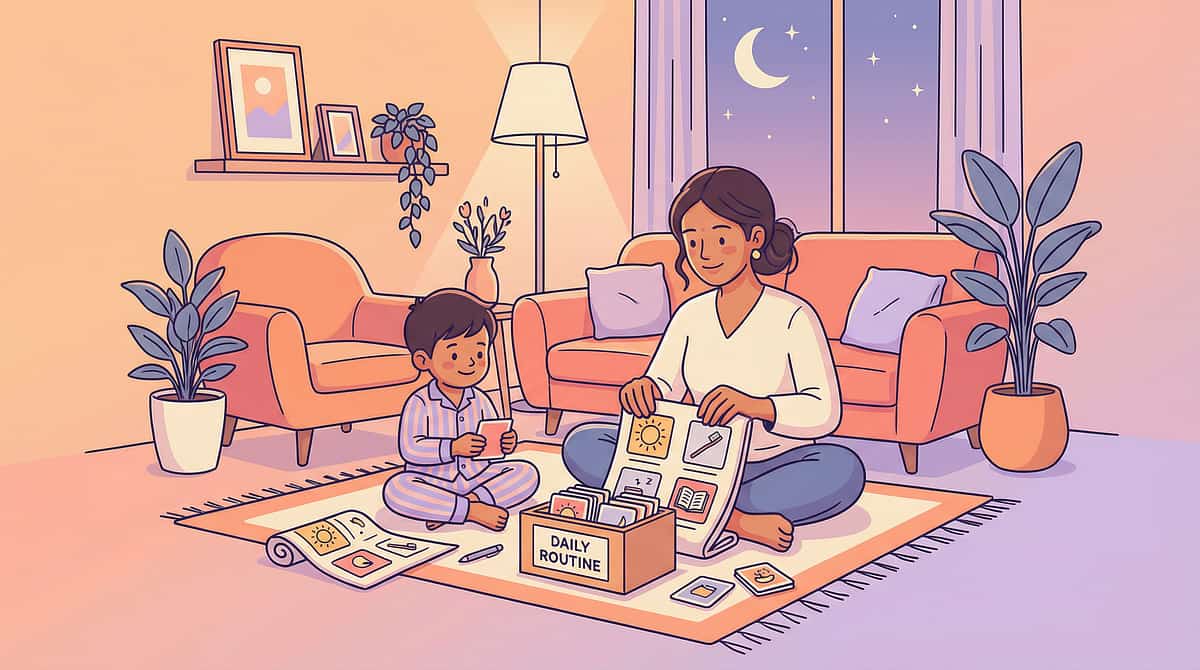
Step 6: The Cool-Down
⑥ Step 6 of 6
No session ends abruptly
Every session transitions with the same care as a classroom transition. Abrupt endings undermine the very skills you are building.
Transition Words
"All done for today. You did [X] routine steps by yourself. Tomorrow we'll do it again."
If Child Resists Ending
- "I know you want to keep going — that means it's working."
- Offer First-Then: "First we put away our tools, then we have [preferred activity]."
- Never forcefully remove materials.
Post-Session Regulation
2–3 minutes of preferred calm activity (not screen). This consolidates the session and prevents post-practice dysregulation. This small step makes a meaningful difference in how children feel about tomorrow's session.

Data Captured Now = Progress Visible Later
📊 Daily Tracker
Complete within 60 seconds of session ending
Daily Tracker (3 Fields Only)
📅Date: _______________
⏱️Routine practiced: [ ] Morning arrival [ ] Dismissal [ ] Transition [ ] Other
📊Independence level today:
[ ] Adult-prompted for all steps
[ ] Adult-prompted for most steps
[ ] Adult-prompted for some steps
[ ] Mostly independent with tools
[ ] Fully independent with tools
[ ] Adult-prompted for all steps
[ ] Adult-prompted for most steps
[ ] Adult-prompted for some steps
[ ] Mostly independent with tools
[ ] Fully independent with tools
💬One observation: _______________
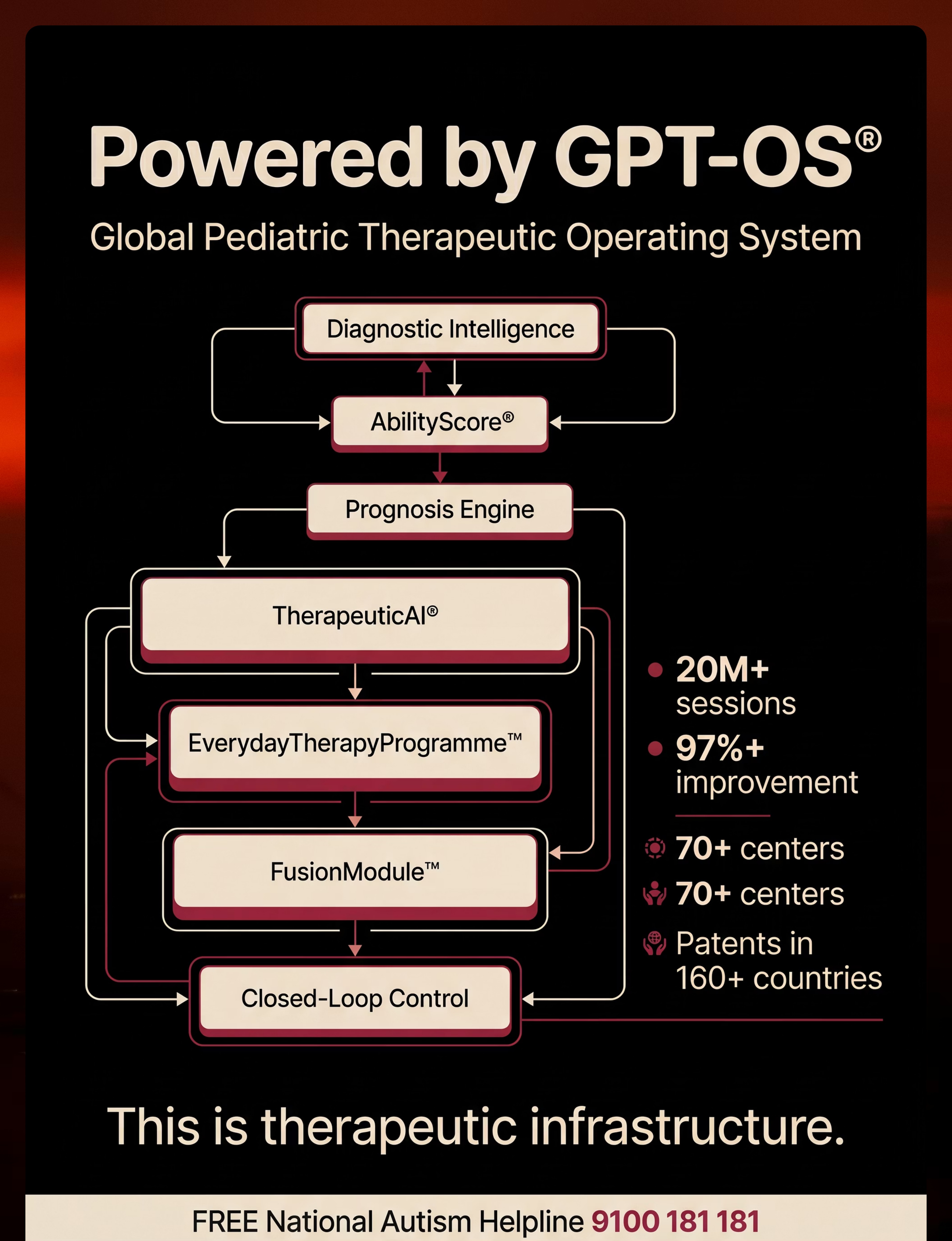
GPT-OS® Integration
Your data flows into:
- Personal progress dashboard (visible to parent + therapist)
- AbilityScore® recalibration (monthly)
- EverydayTherapyProgramme™ adaptation engine
- Population-level outcome dataset (anonymized)
"Your 60-second data entry today shapes your child's personalized recommendation tomorrow."
Stage 1
Unable to follow routines independently
Stage 2
Requires continuous adult prompting
Stage 3
Follows routines with visual aids
Stage 4
Needs occasional reminders only
Stage 5
Self-managing routines independently
📞9100 181 181 | Ask about GPT-OS® tracking for your child

It's Not Failing. It's Calibrating.
Every implementation challenge has a solution. Use this troubleshooting guide to diagnose and adjust — before giving up on a tool that may just need refinement.
❌ Child refuses the visual schedule
✅ Let child co-create it — draw their own icons, choose their own colors. Ownership drives use. Start with just 2 activities (not the full day). Use their photo instead of generic icons.
❌ Tools work at home but not at school
✅ Tools must be functionally identical across settings — same icons, colors, format. The teacher must actively prompt tool use, not just permit it. Home success proves the tool works; the gap is in school implementation, not the child.
❌ Timer creates more anxiety than it relieves
✅ This child needs shorter warnings (1 minute only, not 5). Or visual-only timers (no sounds). Or eliminate timers entirely and use visual countdowns (5-4-3-2-1 cards) instead.
❌ Child "plays" with materials instead of using them
✅ Actually good — reduce novelty through consistent access. "Playing" with a fidget tool IS therapeutic. For schedule/checklist misuse, briefly review purpose: "This is your helper. Let's use it together."
❌ Teacher removed the tools
✅ Request an IEP or 504 accommodation meeting. Bring this page and research citations (PMC11506176, NCAEP 2020). Frame as accommodation: "He needs these the same way a child with vision problems needs glasses."
❌ Child succeeds with one tool but resists others
✅ Build on what works. Perfect use of one tool > struggling with nine. Gradually introduce additional tools only after the working tool is fully internalized.
⚠️When to escalate: Contact Pinnacle Blooms Network® or your local therapist if: No improvement in 6+ weeks | Significant regression | New behaviors emerging | Child shows distress specifically related to tool use.
📞9100 181 181 — Free consultation, 16+ languages
📞9100 181 181 — Free consultation, 16+ languages
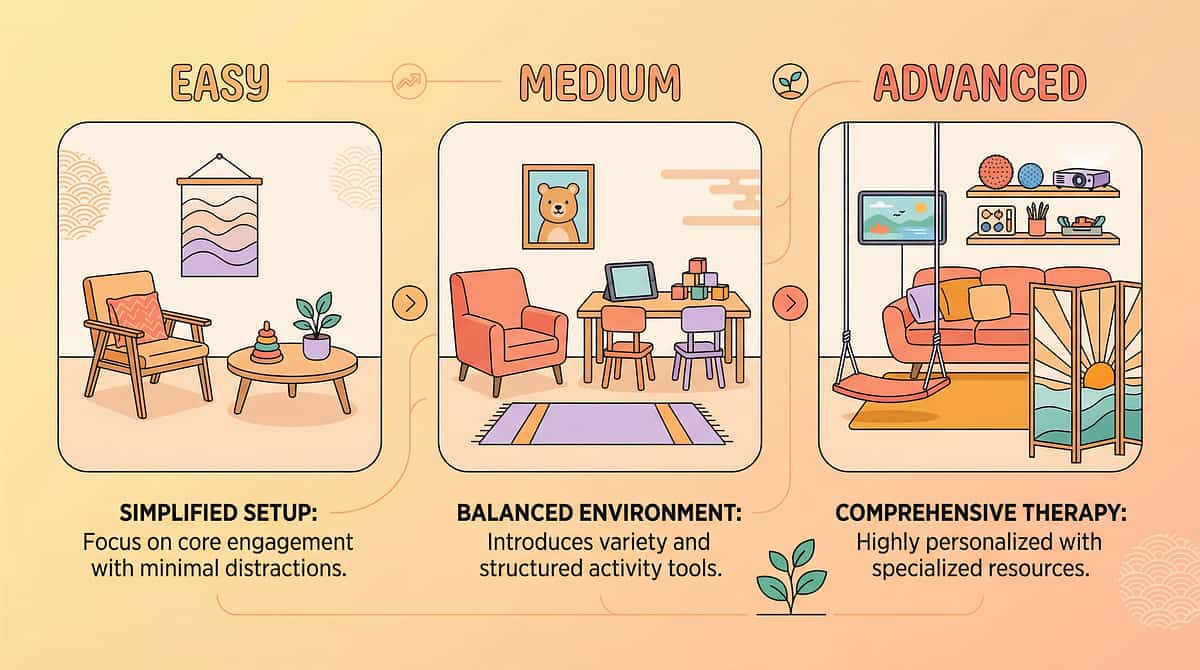
Same Science. Personalized to Your Child.
Adaptation by Age
Ages 3–5
Visual schedule (2–4 items max) + First-Then board + visual timer only
Ages 5–8
Full 9-material toolkit as described across all school contexts
Ages 8–12
Graduate to word-based self-monitoring + reflection tools; fade picture schedules progressively

Weeks 1–2: The Novelty Phase
📈 Progress: 15%
Tolerance Phase
90
75
60
65
50
Tolerates schedule on desk·26.47%
Looks at schedule when directed·22.06%
Reduced "what's next" questions·17.65%
First-Then reduces negotiation·19.12%
Some transition warnings heeded·14.71%
✅ What You WILL See
- Child tolerates visual schedule on desk (does not remove it)
- Child looks at schedule when directed (not yet independently)
- Reduced verbal questioning about "what's next"
- First-Then board reduces some negotiation
- Some transition warnings are heeded (not all — this is normal)
❌ What You Will NOT See Yet
- Independent schedule checking without prompts
- Consistent transition success
- Significant reduction in behavior chart reds
- Teacher notes dramatically improving
"If your child tolerates the visual schedule on their desk without removing it — that is real progress in Week 1."
Patience is the active therapeutic ingredient in weeks 1–2.
Patience is the active therapeutic ingredient in weeks 1–2.

Weeks 3–4: Consolidation Signs
📈 Progress: 40%
Neural Pathway Formation
1–2x
Daily
Times child begins checking schedule before being prompted
7–8/10
Transitions
Transition warnings now reliably helping
40%
Progress
Overall implementation progress by end of Week 4
What this means neurologically: The prefrontal cortex is beginning to recognize these tools as external memory extensions. Neural pathways associating the visual cue with the expected action are strengthening through repetition. This is synaptic consolidation — the brain is literally rewiring.
"When your child looks at their schedule before you prompt them — even once — they have demonstrated that the external memory system is beginning to work."
📈Increase Intensity Now: Add self-monitoring checklist (if not already introduced) | Extend timer intervals by 1–2 minutes | Begin practicing generalization: use same tools in new settings.

Weeks 5–8: The Mastery Arc
📈 Progress: 70%
Independent Use Emerging
✅ Schedule Independence
Child uses visual schedule independently 4–5 times/day without prompting
✅ Self-Monitoring Accuracy
Self-monitoring checklist showing 80%+ "yes" accuracy at check intervals
✅ Transition Success
Transition success rate 8–9 out of 10 occurrences
✅ Teacher Reports
Significant improvement in routine compliance; behavior chart showing more greens than reds
Begin Graduated Fading (in this order)
- First: Reduce adult reminders to use tools
- Then: Simplify visual schedule (fewer, text-based vs. picture-based)
- Then: Reduce checklist steps as sequence internalizes
- Last: Fade tools only after 4+ weeks of independent mastery
🌟Permanent Accommodations: Some children will always benefit from visual schedules and organizational systems. This is not failure — it is recognition that the brain works differently. A visual schedule used independently for life is a success, not a crutch.
📞9100 181 181 | Fading guidance from Pinnacle OT/ABA team
📞9100 181 181 | Fading guidance from Pinnacle OT/ABA team

🏆 Look How Far You've Come.
Every one of these milestones represents actual neural pathway formation. Your consistency made this happen.
First Independent Check
First time child checked the schedule without being told — working memory prosthetic is activated
First Green Day
First green day on the behavior chart with supports in place — the system is working
First Unassisted Transition
First transition completed without adult intervention — cognitive flexibility is scaffolded
First Checklist Solo
First time child packed their bag using checklist alone — sequential planning is externalized
Teacher Noticed
First time teacher said "I noticed a difference this week" — generalization is happening
Proactive Self-Regulation
First time child requested their sensory tool proactively — metacognition is emerging
📞9100 181 181 | Tell us your milestone — we celebrate every win.
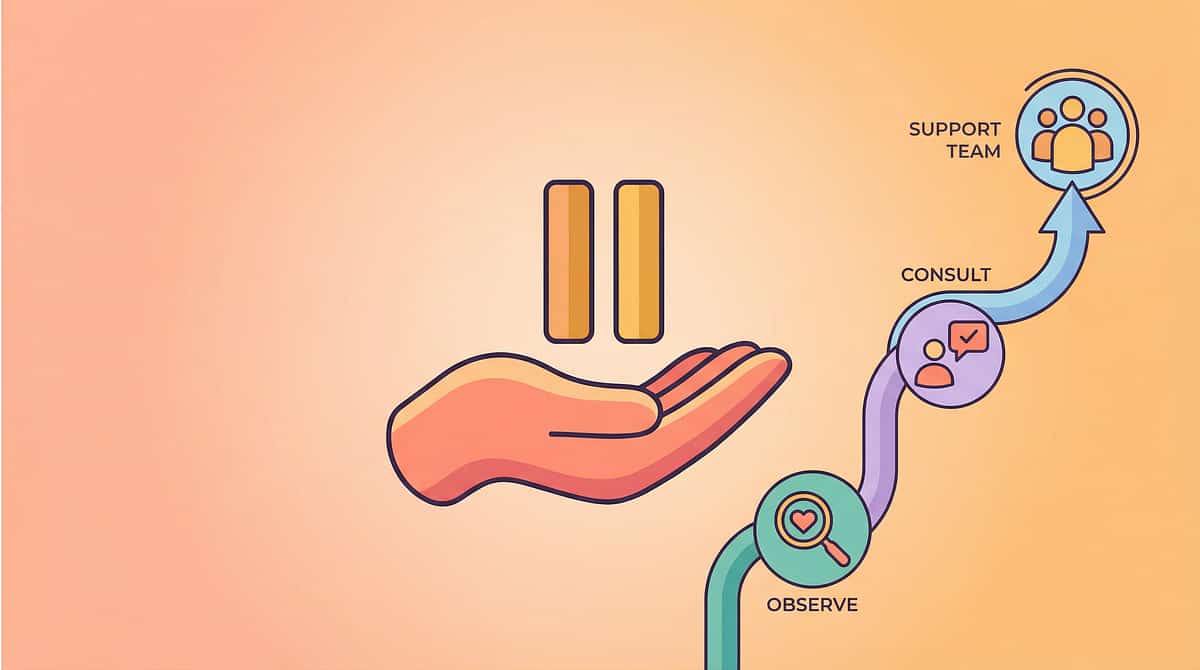
These Signs Require Professional Consultation
🚨 Red Flags
Do Not Wait — Act Now
🚨 Tool-Specific Distress
Significant distress or anxiety specifically related to visual supports after 2+ weeks of consistent use. May indicate sensory sensitivities to materials requiring OT assessment.
🚨 Complete Refusal + Escalation
Complete refusal of all structured supports with increasing behavioral intensity. May indicate need for comprehensive functional behavior assessment (FBA).
🚨 New Self-Injurious Behaviors
New self-injurious behaviors emerging during routine practice. Requires immediate professional assessment — do not continue implementation.
🚨 No Improvement at 6+ Weeks
Child's behavior is significantly worse after 6+ weeks of consistent, correct implementation. May indicate incorrect tool selection for this child's specific profile.
📞9100 181 181 — FREE | 24×7 | 16+ Languages | Pinnacle Blooms Network®
🌐pinnacleblooms.org | 📧care@pinnacleblooms.org | 🏥Find your nearest Pinnacle center
🌐pinnacleblooms.org | 📧care@pinnacleblooms.org | 🏥Find your nearest Pinnacle center
What Connects to This Technique

H-705: Managing Classroom Transitions
Transition warnings are shared infrastructure — the same color-coded countdown system used here directly supports H-705. Why related: overlapping tools, complementary targets.

H-704: Following Classroom Directions
Working memory support tools overlap directly — the visual schedule and cue cards that support direction-following are the same materials used here.
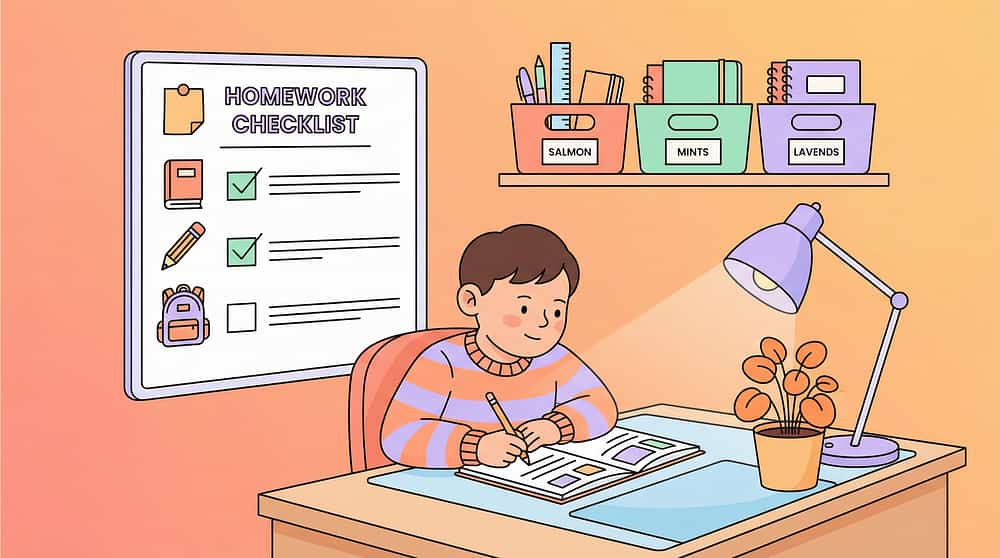
H-707: Homework Completion
Checklist systems transfer directly to homework. The sequential task card skills built in H-706 are prerequisite to H-707 implementation.

G-655: Self-Regulation Skills
Sensory regulation underpins all routine compliance. The sensory support kit in H-706 connects directly to the broader self-regulation domain.
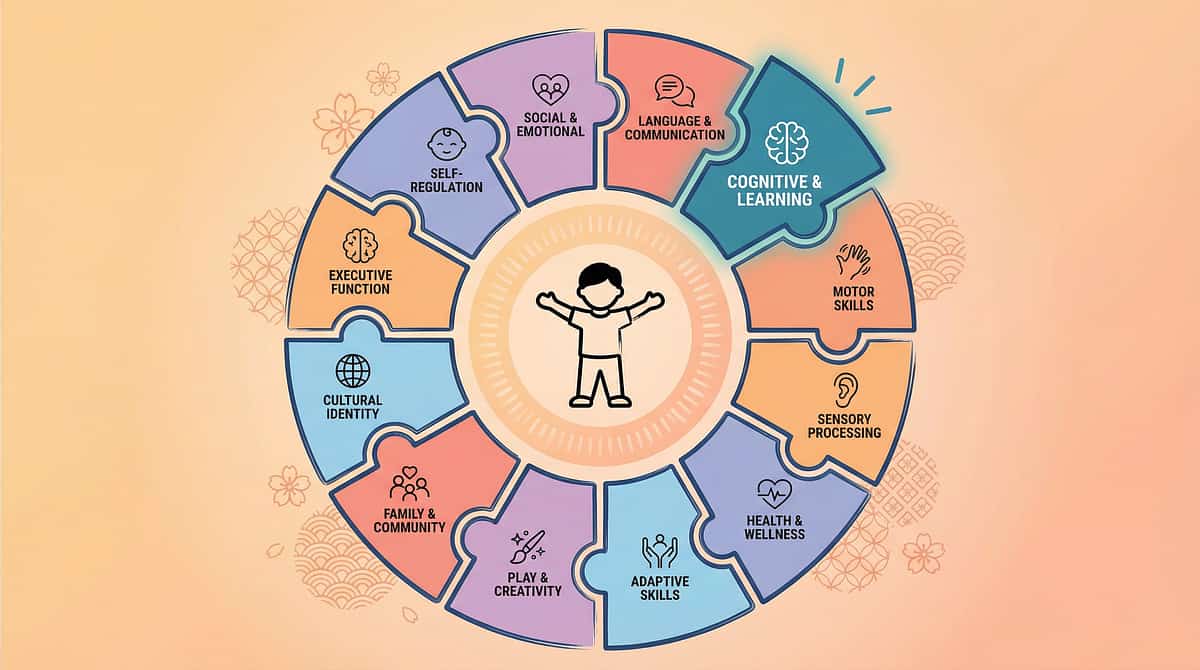
Where H-706 Sits in the 800-Technique School Readiness Domain
"You are not at the beginning of a long journey. You are in the middle of one. And the map is complete."
GPT-OS® tracks progress across all 800 techniques in this domain, personalizing each child's path based on real-time data from 20M+ sessions. Your data contributes to a population-level learning system that helps every family like yours.
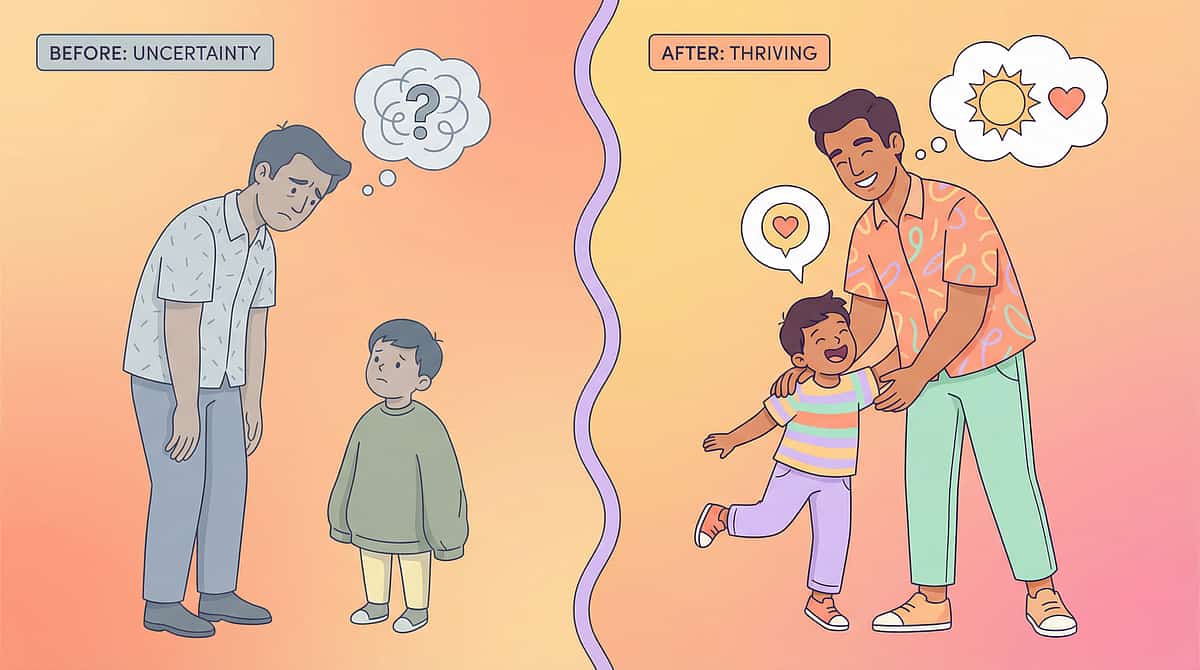
From Red Charts to Green Weeks
🌸 Real Family Stories
Pinnacle Network
"My son's behavior charts were red almost every day. Not because he was being defiant — he wanted to do well — but because he couldn't follow classroom routines that his classmates did automatically. We worked with his OT to create a personal visual schedule strip, transition warning system, and routine checklists. The first week with these tools, he got green three days. By the end of the month, he was mostly green. His teacher said he went from the child who held up every transition to the child who was ready before anyone had to prompt him. The tools externalized what his brain couldn't do internally. He still uses some of them in third grade, and that's okay — he's succeeding."
— Parent, Pinnacle Network | 7-year-old with ADHD
"We'd tried reward charts, losing privileges, role-playing at home. Nothing transferred to the actual classroom. The moment we put the visual schedule strip on his desk, his teacher called me. She said he checked it himself, unprompted, during the first morning. Just once. But she'd never seen him do that before. That one moment told me his brain had something to hold onto."
— Father, Pinnacle Hyderabad | 6-year-old, autism + ADHD
97%+
Measured Improvement
Across Pinnacle Network families using structured visual support protocols
20M+
Therapy Sessions
Exclusive 1:1 sessions powering GPT-OS® outcome data
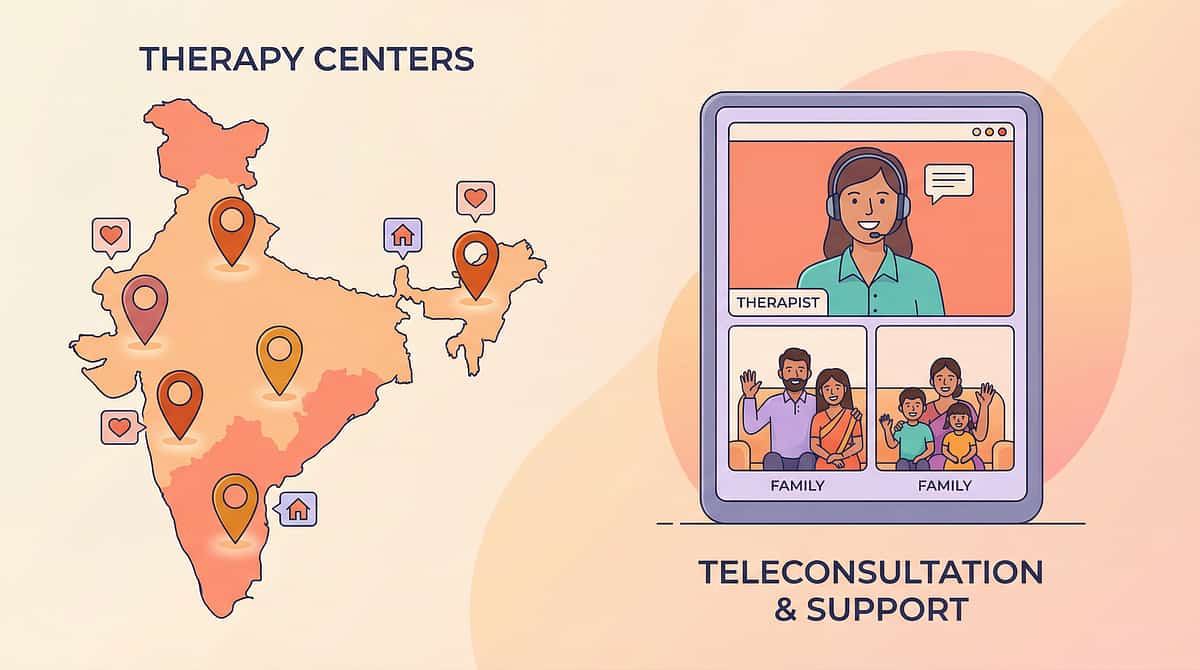
70+
Centers
Across India — bringing expert support close to home
Illustrative cases. Outcomes vary by child profile, school context, and implementation consistency.

You Don't Have to Figure This Out Alone
🌸 Pinnacle Parent Network
India's largest parent community for neurodevelopmental therapy families. Connect with parents navigating the exact same school challenges.
pinnacleblooms.org/community
pinnacleblooms.org/community
📱 WhatsApp Support Groups
Region-specific groups in Telugu, Tamil, Hindi, English, Kannada, Malayalam, Marathi + more. Request via helpline: 9100 181 181
🏫 School Advocacy Resources
Templates for communicating with teachers about visual supports, 504 plans, and IEP accommodations.
pinnacleblooms.org/advocacy
pinnacleblooms.org/advocacy
🌐 International Connections
"The knowledge that works for your child belongs to every family navigating this. Share freely."
Every Question Parents Ask — Answered
❓ Won't these supports create dependency? What if he uses them forever?
✅ The data shows two outcomes: (1) For most children, supports are gradually faded as internal executive functions develop. (2) For some children, supports become permanent accommodations — and that is success. A child managing routines independently with a visual schedule is succeeding, just as a person who uses glasses is seeing successfully. The goal is function, not tool elimination.
❓ My child's teacher says "All the other children manage without these."
✅ All children with vision below 20/20 need glasses. Children with executive function challenges need visual supports. NCAEP (2020) classifies visual supports as evidence-based practice for neurodevelopmental differences. This is not a preference — it is an accommodation. Request an IEP or 504 meeting if needed.
❓ We've been consistent for 4 weeks with no improvement. Should we stop?
✅ No. Executive function interventions typically show measurable change at 8–12 weeks. Review implementation fidelity: Are tools used every day, every transition? Is reinforcement delivered within 3 seconds? Are home and school systems identical? If all yes and no improvement at 10 weeks — escalate to therapist.
❓ My child attends a mainstream school. Will the teacher implement these?
✅ Most teachers will implement when given ready-made materials and a brief explanation. The school has legal obligations under the Rights of Persons with Disabilities Act (India, 2016) to provide reasonable accommodations. Be specific: "I am requesting that this visual schedule strip remain on his desk during school."
❓ How do I explain the visual schedule to a child who can't read yet?
✅ For pre-readers: use photos of actual activities (photograph the math worksheet, photograph the playground equipment). Use your child's actual face in the "child doing the activity" icons. The brain processes familiar images faster than abstract symbols.
❓ My child removes the schedule or tears up the checklist.
✅ This is communication. Solutions: (1) Reduce to 2–3 activities on schedule instead of full day. (2) Let child co-create the schedule. (3) Try a different format (lanyard card instead of desk strip). (4) Contact your OT for a sensory assessment.
❓ At home he follows the schedule perfectly. At school, nothing works. Why?
✅ Transfer failure. The tools must be functionally identical across settings: same icons, colors, format, language. The teacher must prompt tool use actively (not just permit it). Home success proves the tool works — the gap is in school implementation, not the child.
❓ How do I know if my child needs formal assessment vs. just trying these materials?
✅ Try the materials for 4–6 weeks. If significant improvement: continue and consult Pinnacle for optimization. If no improvement or worsening behavior: seek comprehensive assessment (AbilityScore® + Executive Function evaluation). Assessment identifies those who need additional or different support.
Preview of 9 materials that help with classroom routines Therapy Material
Below is a visual preview of 9 materials that help with classroom routines therapy material. The pages shown help educators, therapists, and caregivers understand the structure and content of the resource before use. Materials should be used under appropriate professional guidance.




Link copied!

From Red Charts to Green Weeks. Start Today.
Every parent who arrived on this page wondering why their child struggles with classroom routines now has the neuroscience, the tools, the evidence, and the step-by-step protocol to transform their child's school experience. That is the Pinnacle Promise.
20M+
Therapy Sessions
Exclusive 1:1 sessions powering GPT-OS® outcome data
97%+
Measured Improvement
Across the Pinnacle Blooms Network
70+
Centers India-Wide
Hyderabad • Bangalore • Chennai • Mumbai • Delhi • Pune + more
70+
Countries Served
Patents filed in 160+ countries | Teleconsultation available globally
🌸Pinnacle Blooms Network® | Built by Mothers. Engineered as a System.
OT • SLP • ABA • SpEd • NeuroDev • CRO • WHO/UNICEF Aligned
📞9100 181 181 — FREE National Autism Helpline | 16+ Languages | 24×7
🌐pinnacleblooms.org | 📧care@pinnacleblooms.org
CIN U74999TG2016PTC113063 | DPIIT DIPP8651 | MSME TS20F0009606 | GSTIN 36AAGCB9722P1Z2
This content is educational. It does not replace individualized assessment and intervention from licensed occupational therapists, school psychologists, special educators, or behavioral specialists. Classroom support strategies should be tailored to each child's specific executive function profile, developmental level, sensory needs, and school context. Individual results vary. © 2025 Pinnacle Blooms Network®, unit of Bharath Healthcare Laboratories Pvt. Ltd. All rights reserved.
⬆ Return to Top | ➡ Next: H-707 Homework Completion | 🗺 Browse All School Readiness Techniques
OT • SLP • ABA • SpEd • NeuroDev • CRO • WHO/UNICEF Aligned
📞9100 181 181 — FREE National Autism Helpline | 16+ Languages | 24×7
🌐pinnacleblooms.org | 📧care@pinnacleblooms.org
CIN U74999TG2016PTC113063 | DPIIT DIPP8651 | MSME TS20F0009606 | GSTIN 36AAGCB9722P1Z2
This content is educational. It does not replace individualized assessment and intervention from licensed occupational therapists, school psychologists, special educators, or behavioral specialists. Classroom support strategies should be tailored to each child's specific executive function profile, developmental level, sensory needs, and school context. Individual results vary. © 2025 Pinnacle Blooms Network®, unit of Bharath Healthcare Laboratories Pvt. Ltd. All rights reserved.
⬆ Return to Top | ➡ Next: H-707 Homework Completion | 🗺 Browse All School Readiness Techniques