



B-128-9-Materials-That-Help-When-There-Are-No-Words-by-18-Months
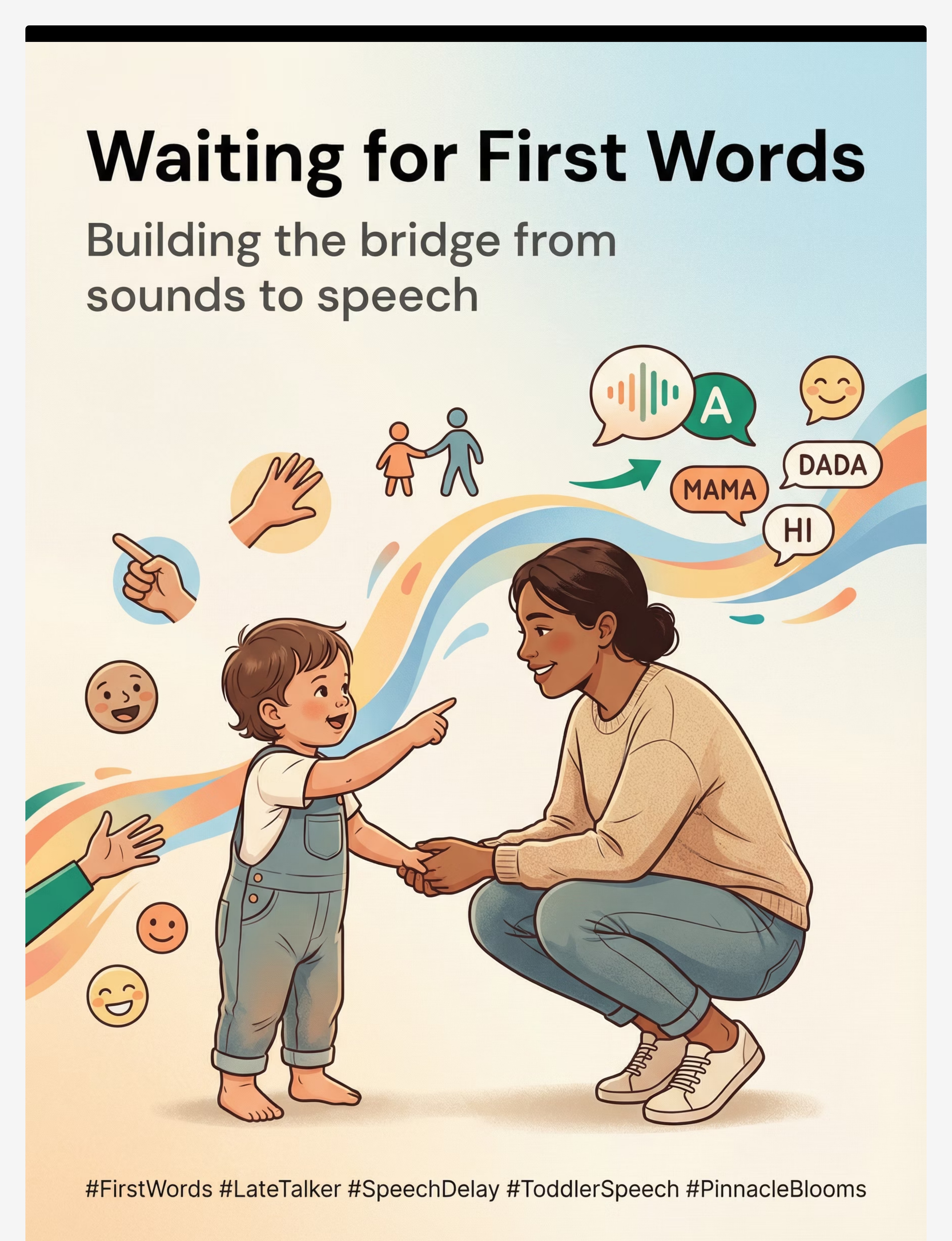
"He's 18 months old. He points. He pulls my hand. He cries. But no words. Not mama. Not dada. Nothing."
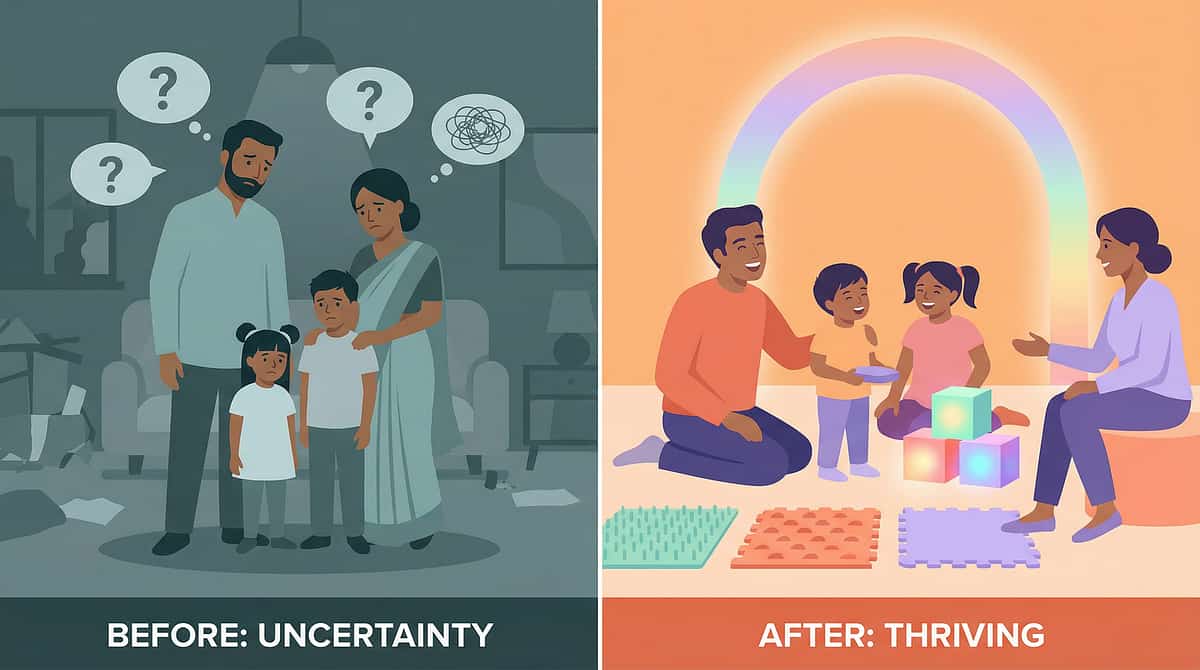
You've counted the months. You've watched other children babble and chatter. You've Googled "18 month old not talking" at 2 AM. Your pediatrician may have said "wait and see" — but your instincts are screaming that you should be doing something. You are not failing. Your child IS communicating — through gestures, sounds, and the desperate pull of your hand toward what they want. Words are the next bridge, and you can help build it.
Pinnacle Blooms Consortium
Speech-Language Development Series — B-128
ACT I — THE EMOTIONAL ENTRY
You Are Not Alone — The Numbers
The research is clear: early intervention during the 18–24 month window is particularly effective because it aligns with the natural language explosion window. You are among millions of parents who have stood exactly where you are standing right now.
10–20%
Late Talkers
Of children aged 18–24 months produce significantly fewer words than developmental norms predict. (Rescorla, 2011)
50
Words by 18 Months
The typical vocabulary milestone at 18 months. Many children who later receive developmental diagnoses first present with expressive language delay at this age.
Millions
Families Worldwide
Navigate this exact moment — watching their child understand the world but not yet having words to participate in it. WHO/UNICEF: 10+ meaningful words expected by 18 months.
What's Happening in Your Child's Brain
The Neuroscience
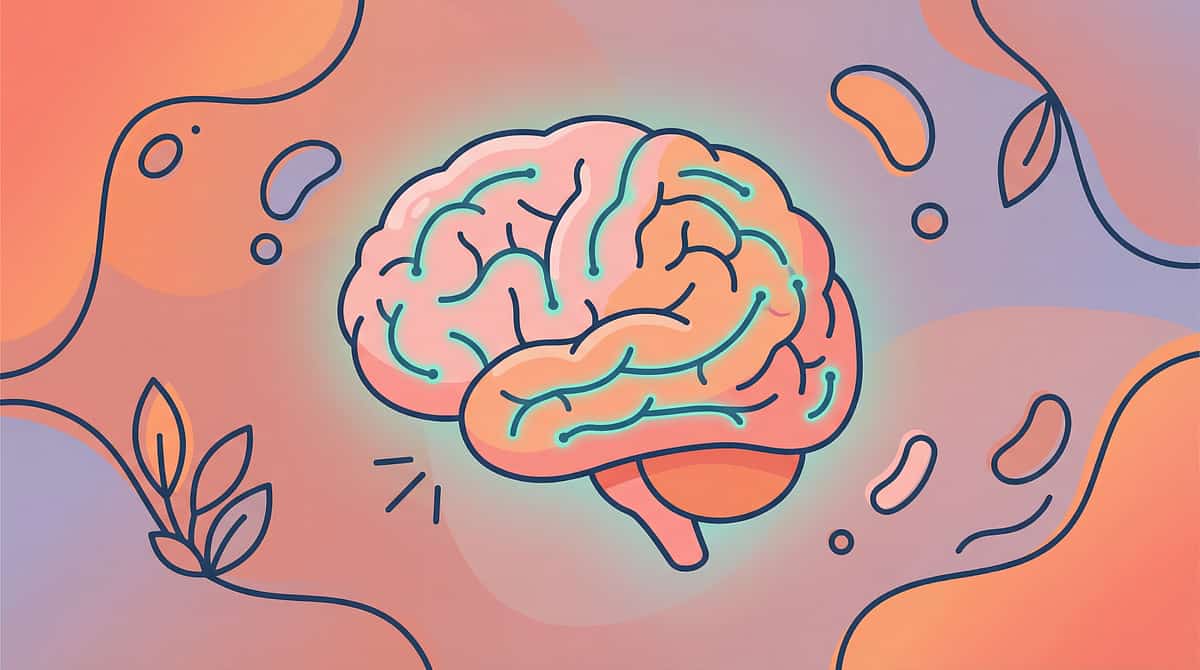
Your child's brain is building the most complex communication system in nature. The journey from understanding language (receptive) to producing language (expressive) involves coordinating Broca's area (speech production), Wernicke's area (language comprehension), the motor cortex, and the auditory cortex — all simultaneously.
When a child understands but doesn't yet speak, it often means the receptive pathways are strong, but the production pathways — the motor planning required to coordinate lips, tongue, jaw, voice, and breath — are still forming.
What This Means for Your Family
This is a wiring difference in timing, not a behavior problem. Your child isn't being stubborn. Their brain is processing language beautifully — it just hasn't yet connected all the circuits needed to push words out of their mouth.
The 9 materials in this technique create the conditions that help those circuits connect: motivation to communicate, simple sound targets, consistent word-meaning pairings, and natural pauses that invite vocalization.
Sources: Kuhl (2010), Neuron 67(5); Dehaene-Lambertz et al. (2006), PNAS
Where This Sits in Development
Your child is in the most pivotal language acquisition window. The 18–24 month period is not a deadline — it's an opportunity. The brain is most plastic during this period for language acquisition.
1
0–6 Months
Cooing, vocal exploration, social smiling — Foundation
2
6–10 Months
Babbling (ba-ba, da-da consonant-vowel combos) — Building
3
10–14 Months
First words emerge (mama, dada, ball, more) — Expected Emergence
4
⚠️ 18 Months
Typically 10–50 words — YOUR CHILD IS HERE. Current Challenge Zone.
5
24 Months
Word explosion begins (50–200+ words), 2-word combinations — Horizon Goal

Expressive language delay at 18 months can occur in isolation (true "late talkers"), or alongside autism spectrum differences, oral-motor planning difficulties (apraxia), hearing differences, or global developmental delays. This technique supports word emergence regardless of the underlying cause.
The Evidence Behind This Technique
Evidence Grade: Level II
Systematic Reviews + Clinical Consensus
Key Finding: Environmental enrichment with communication temptation materials — where motivating objects are paired with consistent word models and natural pauses — is a foundational approach in early language intervention. Multiple systematic reviews confirm that parent-implemented language strategies using structured materials significantly increase word production in late-talking toddlers.
Roberts & Kaiser (2011)
Meta-analysis of 18 studies — parent-implemented language interventions produce significant gains in expressive language. American Journal of Speech-Language Pathology.
Heidlage et al. (2020)
Systematic review — parent training for early language intervention shows strong evidence. Journal of Early Intervention.
NCAEP (2020)
National Clearinghouse on Autism Evidence and Practice: Naturalistic intervention classified as evidence-based practice.
"Clinically validated. Home-applicable. Parent-proven."
ACT II — THE KNOWLEDGE TRANSFER
The Technique — What It Is
Communication Temptation Materials Protocol for First Word Emergence
Parent-Friendly Alias: "The First Words Material Kit"
A structured approach using 9 carefully selected material categories — each chosen for their ability to create natural motivation to communicate, provide simple-sound word targets, and build consistent word-meaning associations through play. These are not random toys. Each material exploits a specific principle of language acquisition: cause-effect pairing, anticipation, turn-taking, imitation, and motivation-driven requesting.
Domain Badges
🏷️ Domain: Speech-Language | SLP-EXP-FW
🏷️ Canon: Communication & Language | Cognitive & Learning | Sensory Regulation
🏷️ Age Range: 12–24 months
🏷️ Session Duration: 5–15 min per material
🏷️ Frequency: Daily embedding + 2–3x structured play daily
Who Uses This Technique
"This technique crosses therapy boundaries because the brain doesn't organize by therapy type." — Pinnacle Blooms Consortium
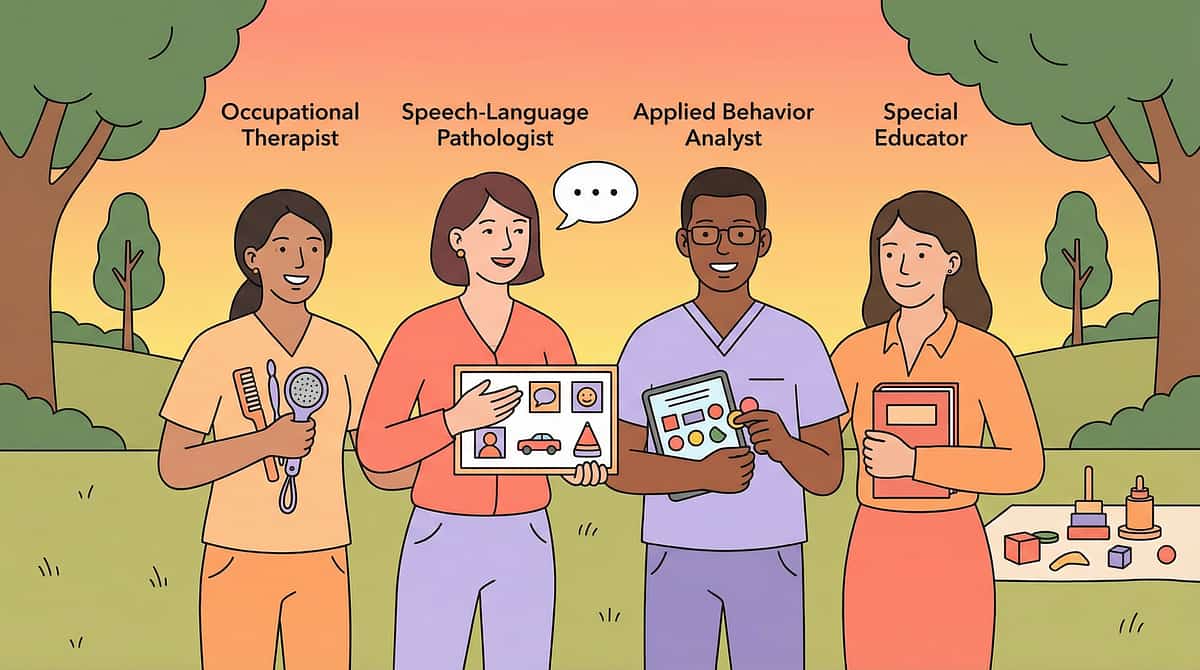
Speech-Language Pathologist (SLP) — Lead
SLPs design word targets, sound hierarchies, and communication temptation strategies. They select which words to target first based on the child's phonological inventory and determine optimal pause duration for word-modeling.
Applied Behavior Analyst (ABA / BCBA)
ABA therapists structure requesting sequences, reinforcement timing, and communication temptation arrangements. Manding (requesting) protocols and cause-effect pairing sequences are core ABA strategies here.
Occupational Therapist (OT)
OTs contribute the sensory engagement component — selecting balls with appropriate textures, instruments with suitable sound levels for sensory-sensitive children, and ensuring motor demands match the child's fine motor capacity.
Special Educator (SpEd)
Special educators embed these materials into structured learning routines, create generalization opportunities across settings, and develop visual supports that complement the verbal targets.
What This Technique Targets
Every material in this protocol is designed to hit layered developmental outcomes — from the moment a child produces their first intentional sound all the way to social communication and academic readiness.
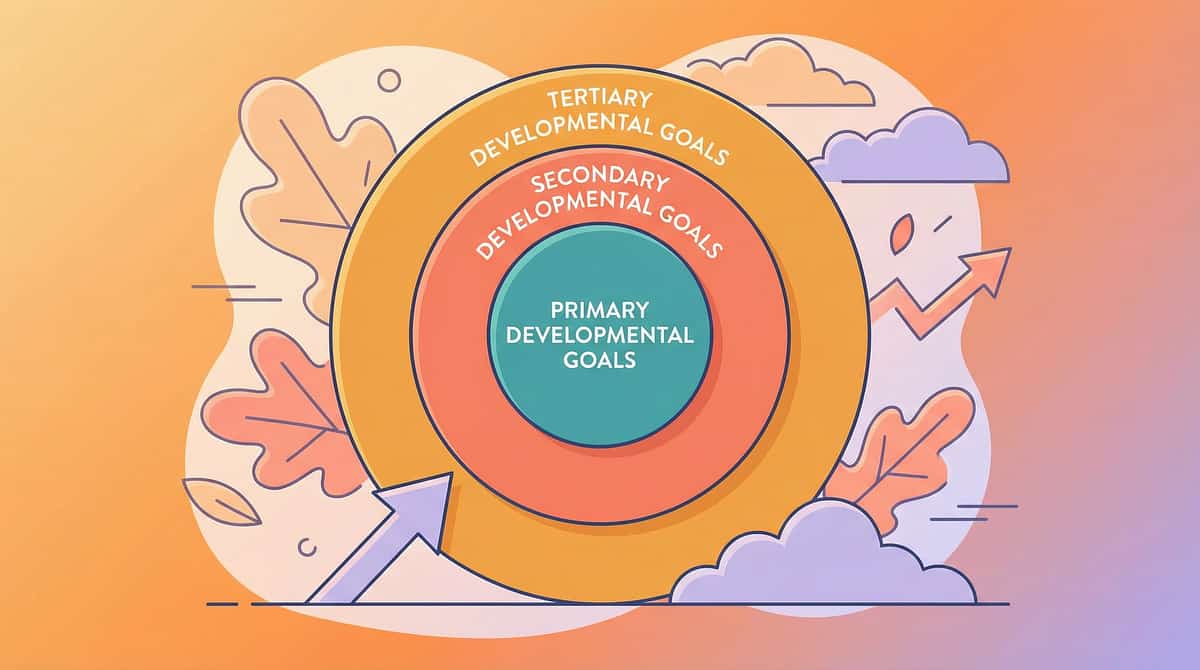
🎯 Primary Target
Expressive Vocabulary — First Word Production. Child produces at least one consistent, meaningful word; uses vocalization with communicative intent; imitates a word model within play context.
🎯 Secondary Targets
Verbal imitation of sounds and combinations; communicative intent to get needs met; joint attention — sharing focus with parent; turn-taking in reciprocal exchange during play.
🎯 Long-Term Gains
Expressive vocabulary expansion (0 → 10+ → 50+ → word combinations); social communication (requesting, commenting, protesting); oral-motor coordination; parent-child interaction quality.
The 9 Primary Materials — Your First Words Kit
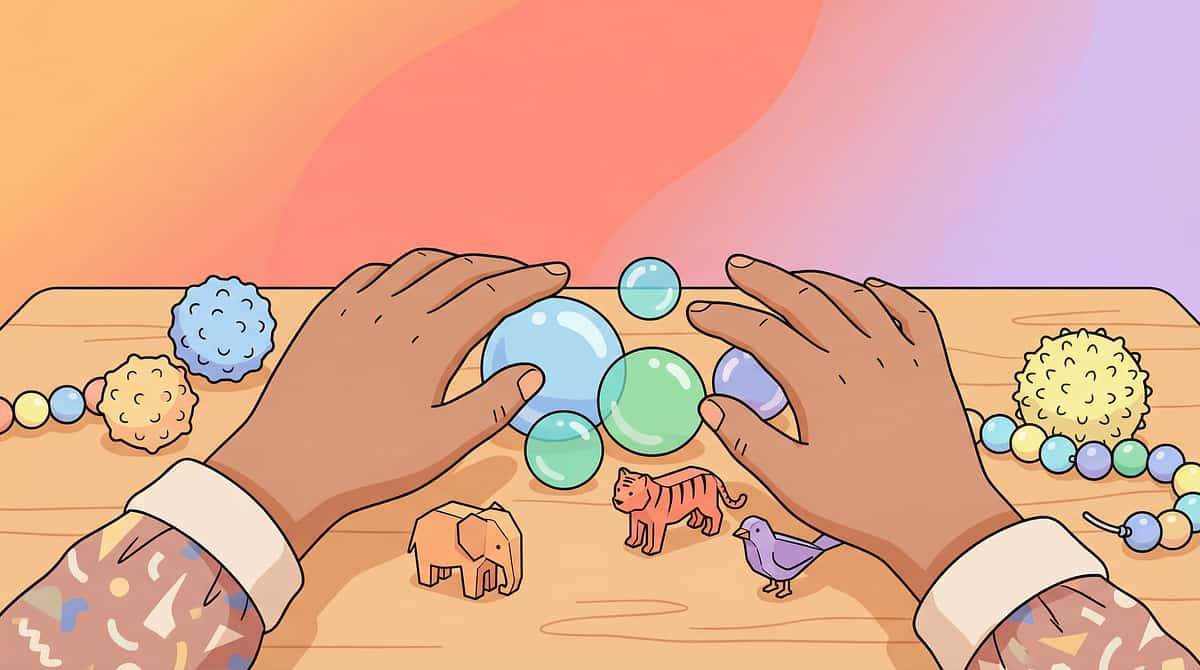
These are not random toys. Each material exploits a specific principle of language acquisition. Together they form a complete communication temptation system. Essential starters (under ₹700): Bubbles + Animal Figurines + Favorite Snacks.
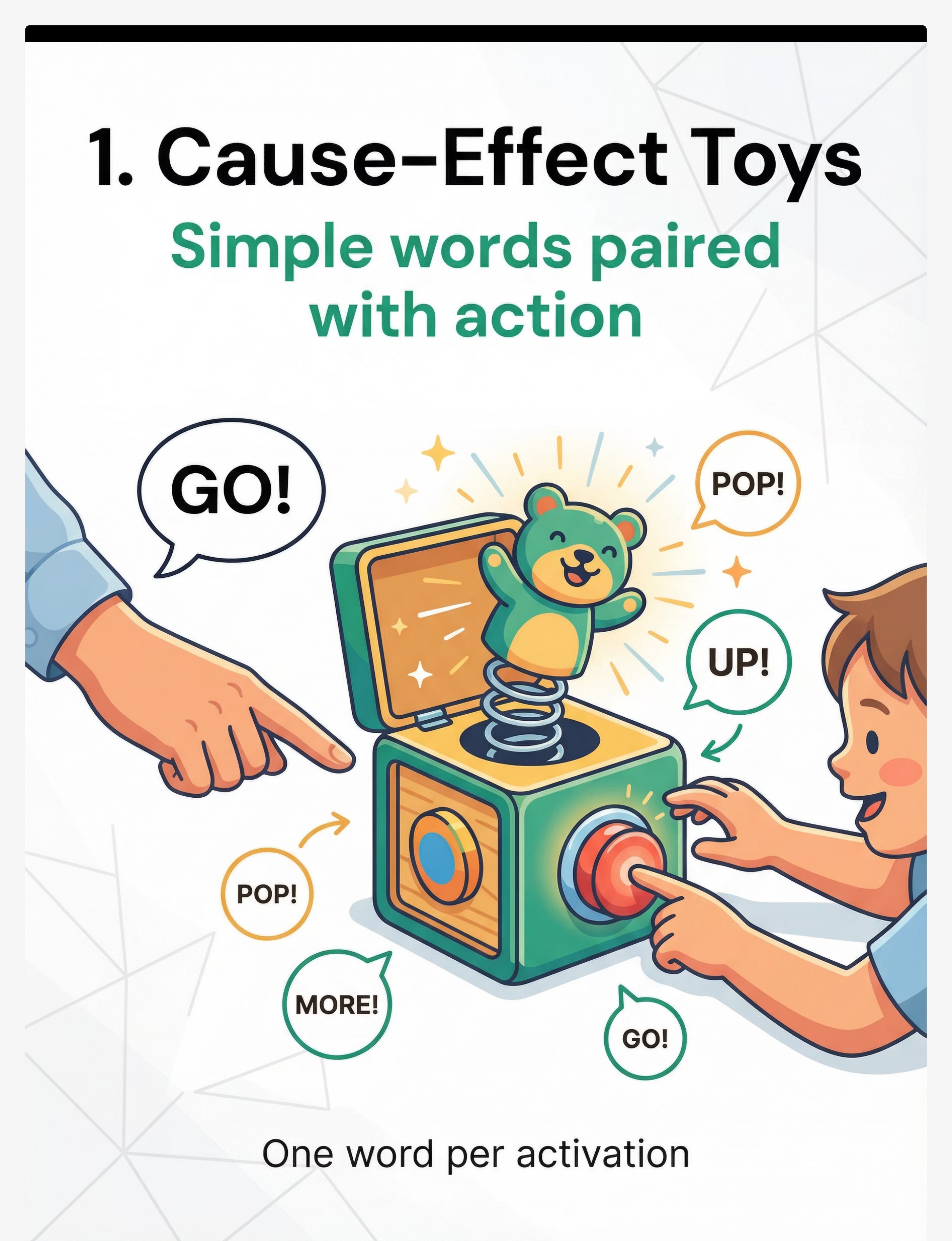
1. Cause-and-Effect Toys
Pop-up toys, ball drops, push-button music toys. Target Words: "Go!" "Pop!" "Up!" "More!" | ₹300–1,500 | Browse →
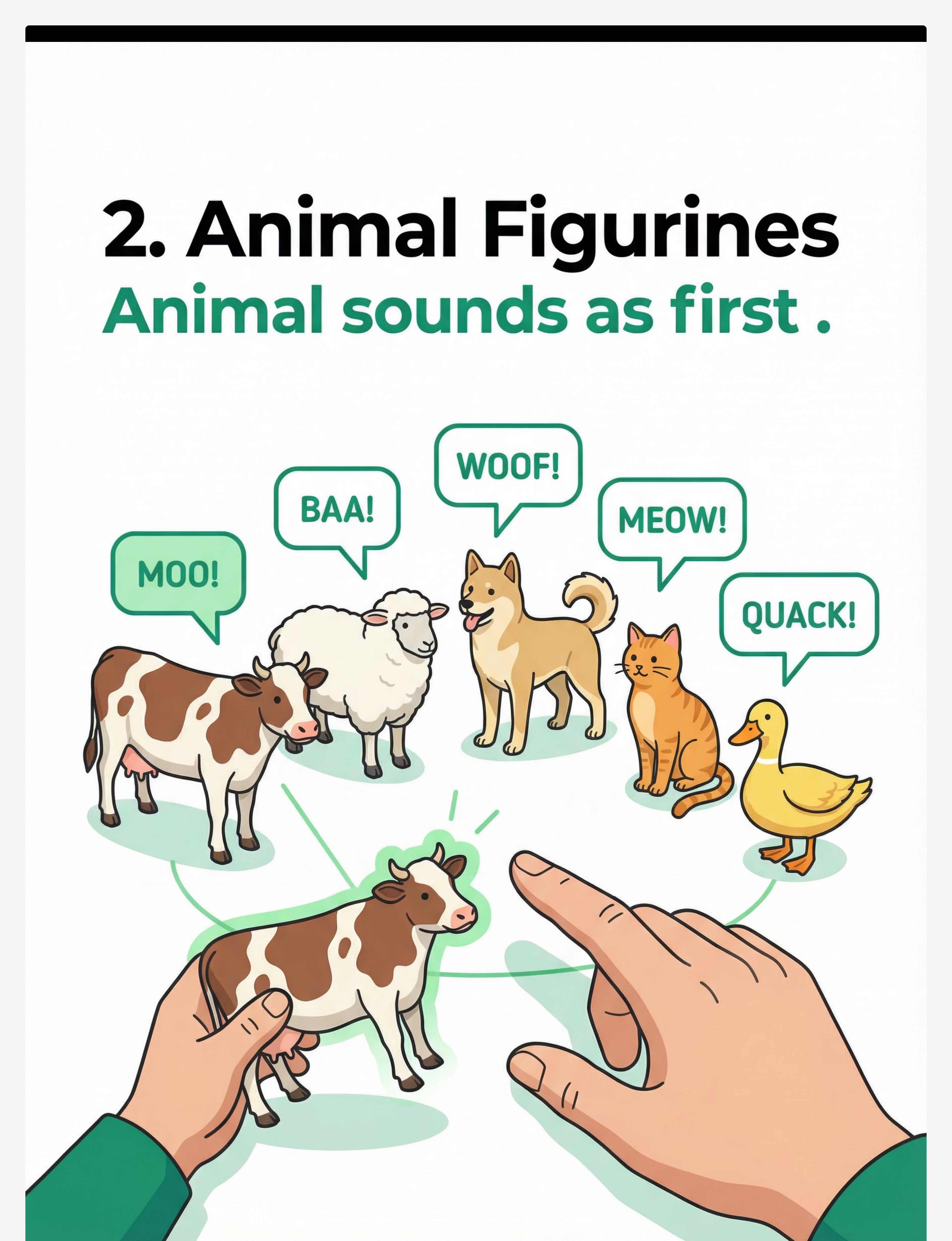
2. Animal Figurines
Farm sets, zoo figurines, finger puppets. Target Words: "Moo!" "Baa!" "Woof!" "Meow!" | ₹200–800 | Browse →
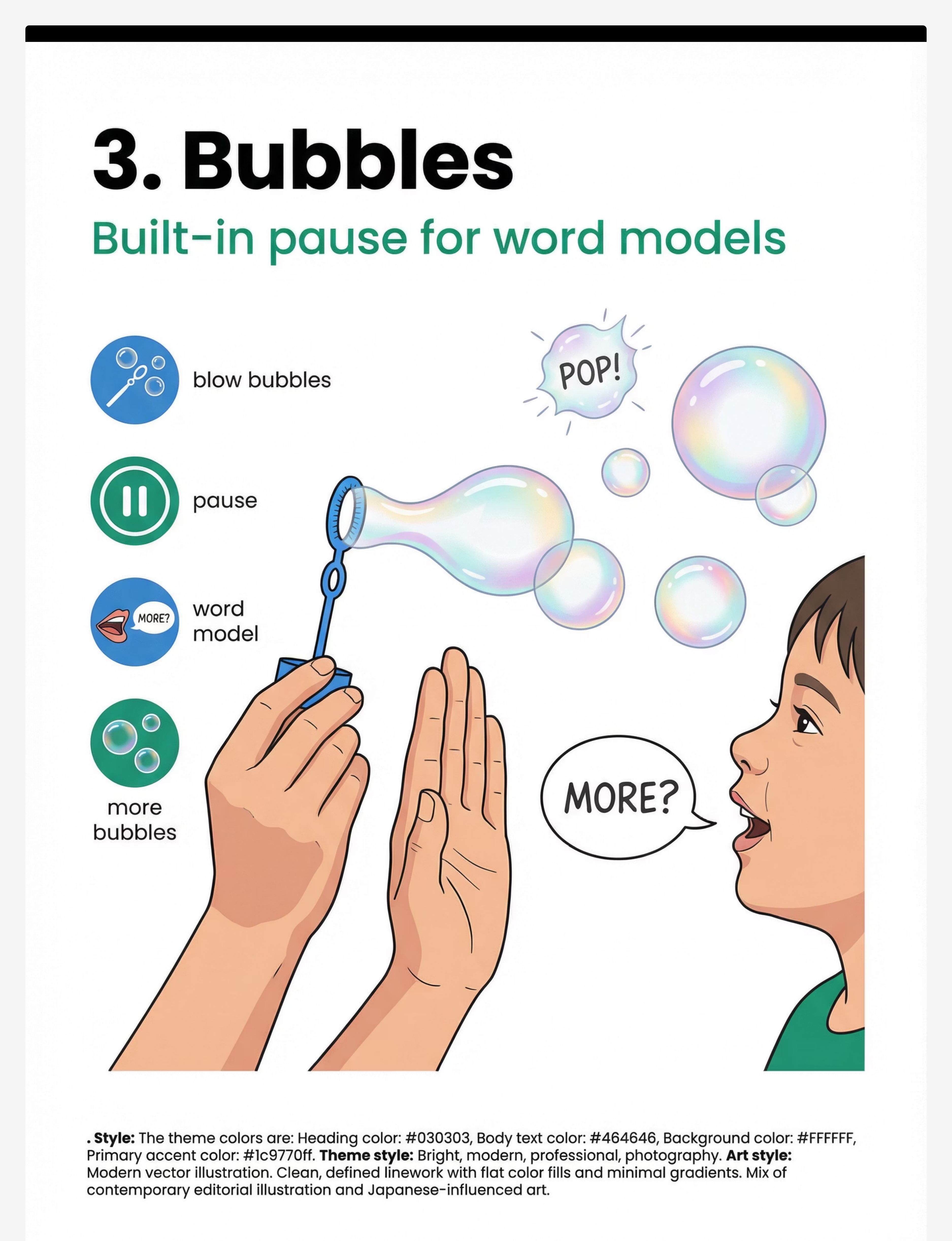
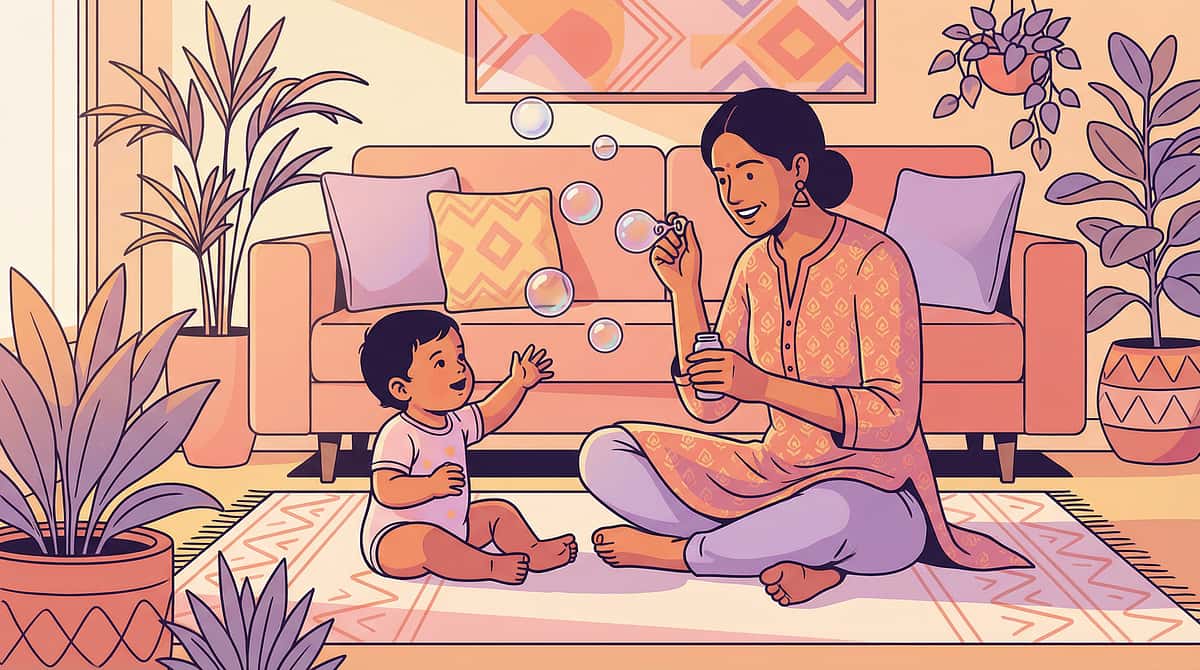
3. Bubbles
Bubble wands, no-spill containers, bubble machines. Target Words: "More!" "Pop!" "Bubble!" "Go!" | ₹100–600 | Browse →
4. Vehicles with Sound Effects
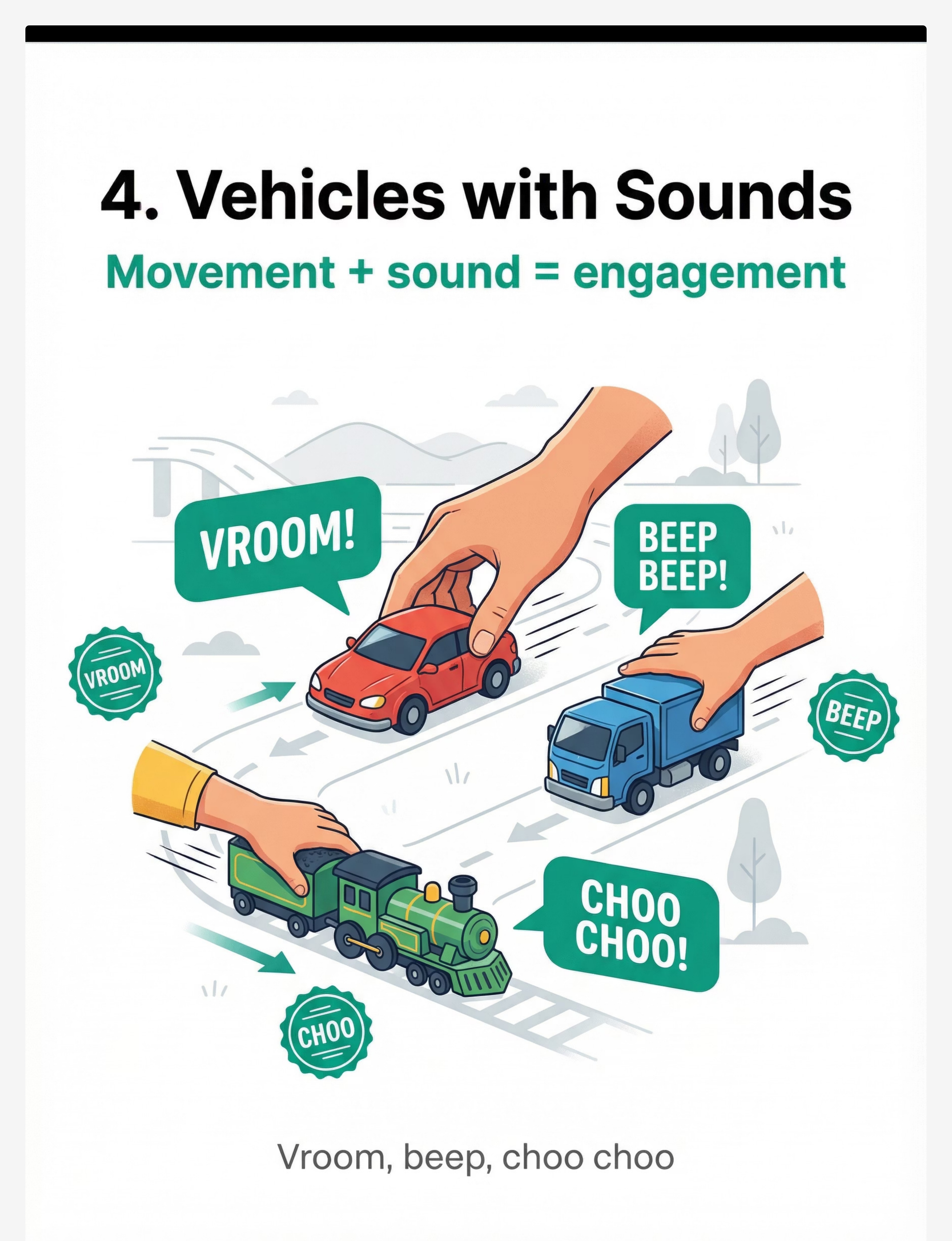
Push cars, train sets, vehicle ramps, ride-on toys. Target Words: "Vroom!" "Beep!" "Choo choo!" "Go!" "Stop!" | ₹200–1,000
5. Simple Lift-the-Flap Books
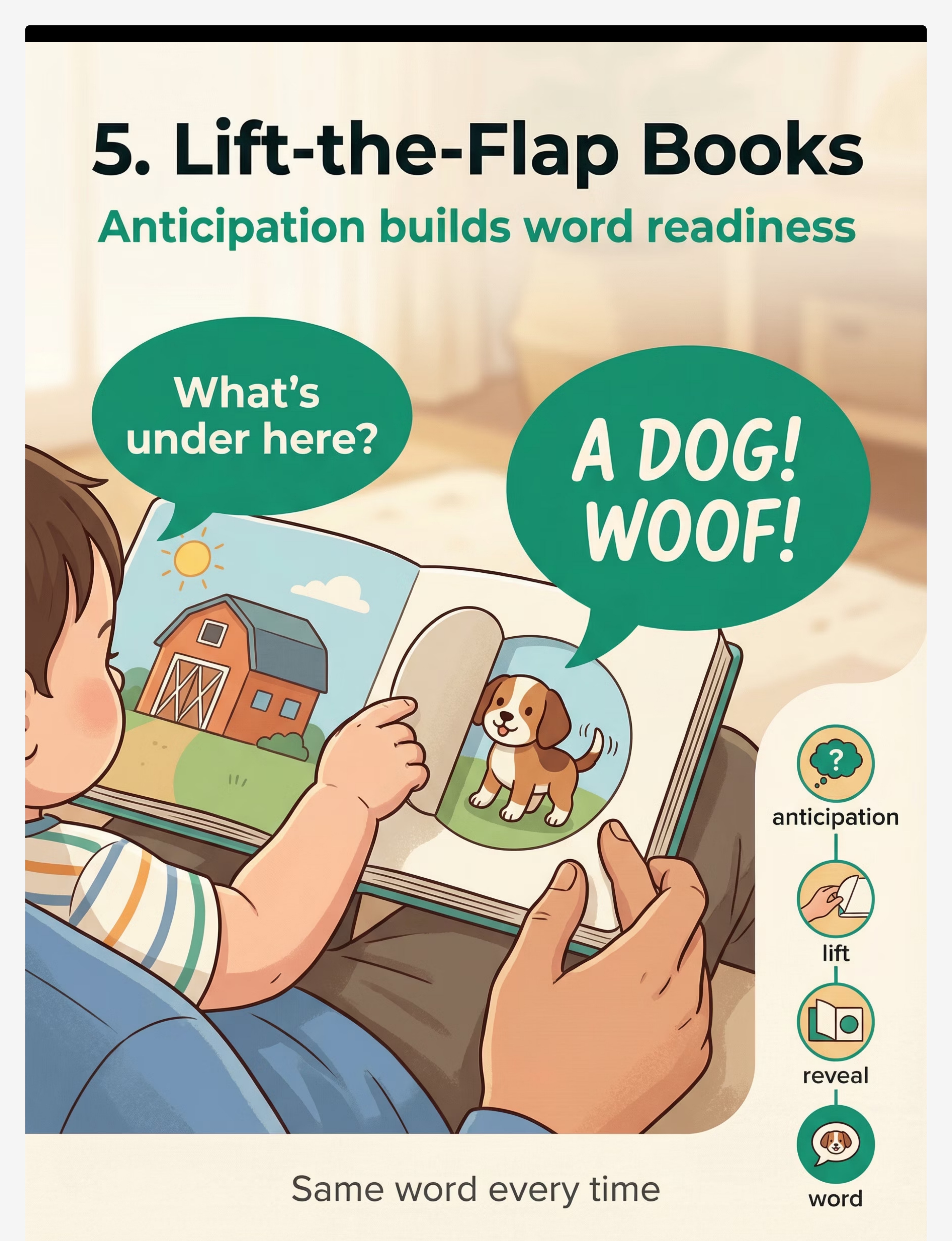
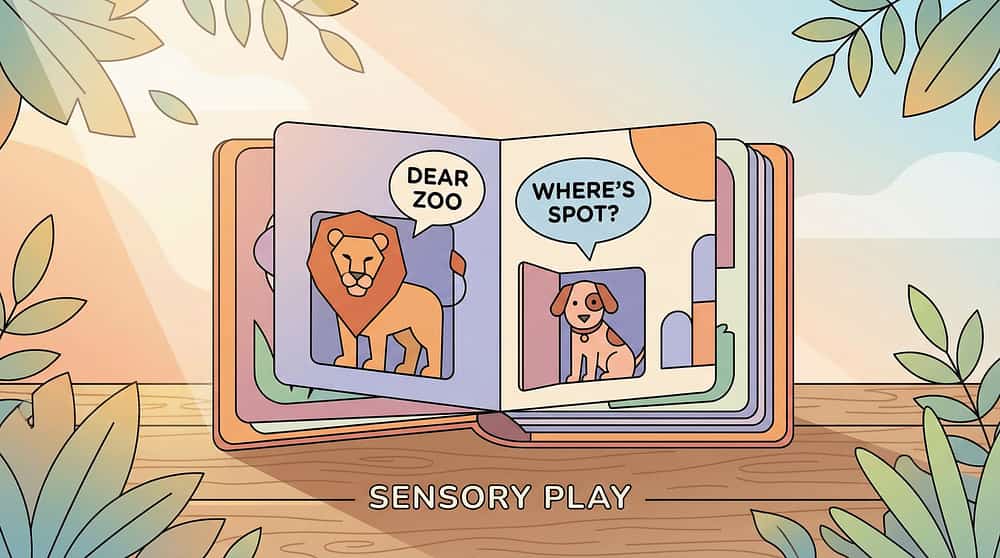
Where's Spot?, Dear Zoo, That's Not My… series. Target Words: "Dog!" "Woof!" "Cat!" "Where?" "There!" | ₹200–600 | Browse →
6. Balls
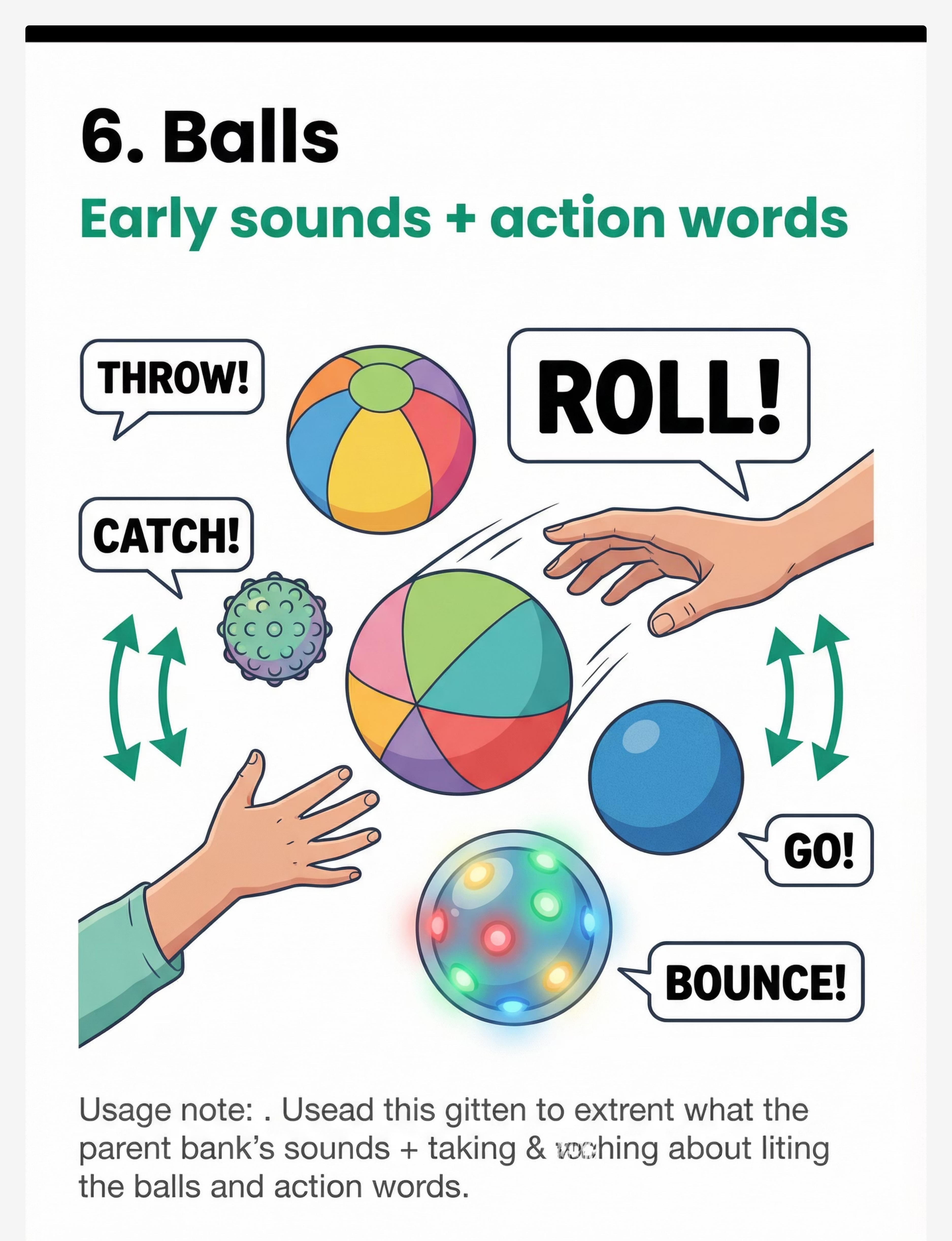
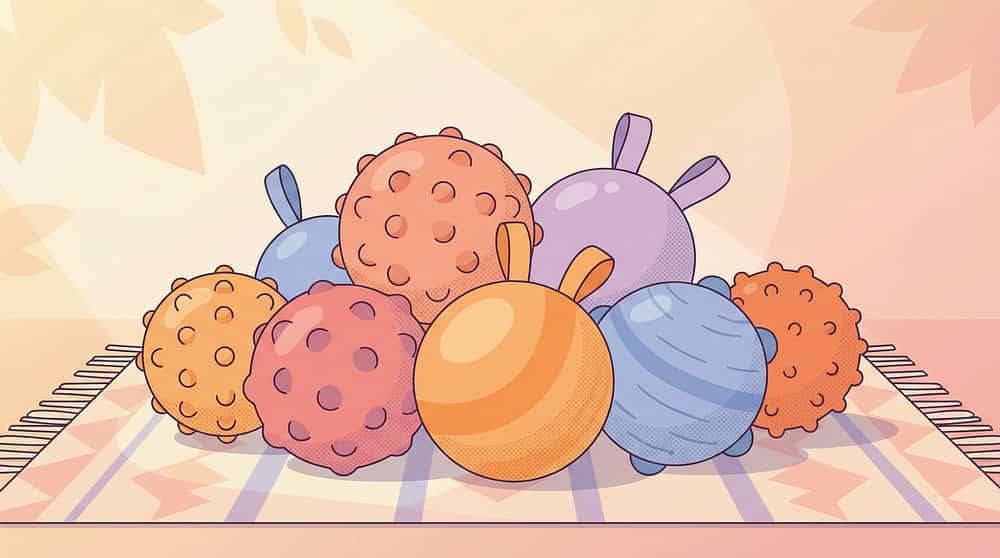
Soft fabric balls, textured sensory balls, light-up balls. Target Words: "Ball!" "Roll!" "Throw!" "Bounce!" | ₹100–500
7. Mirrors
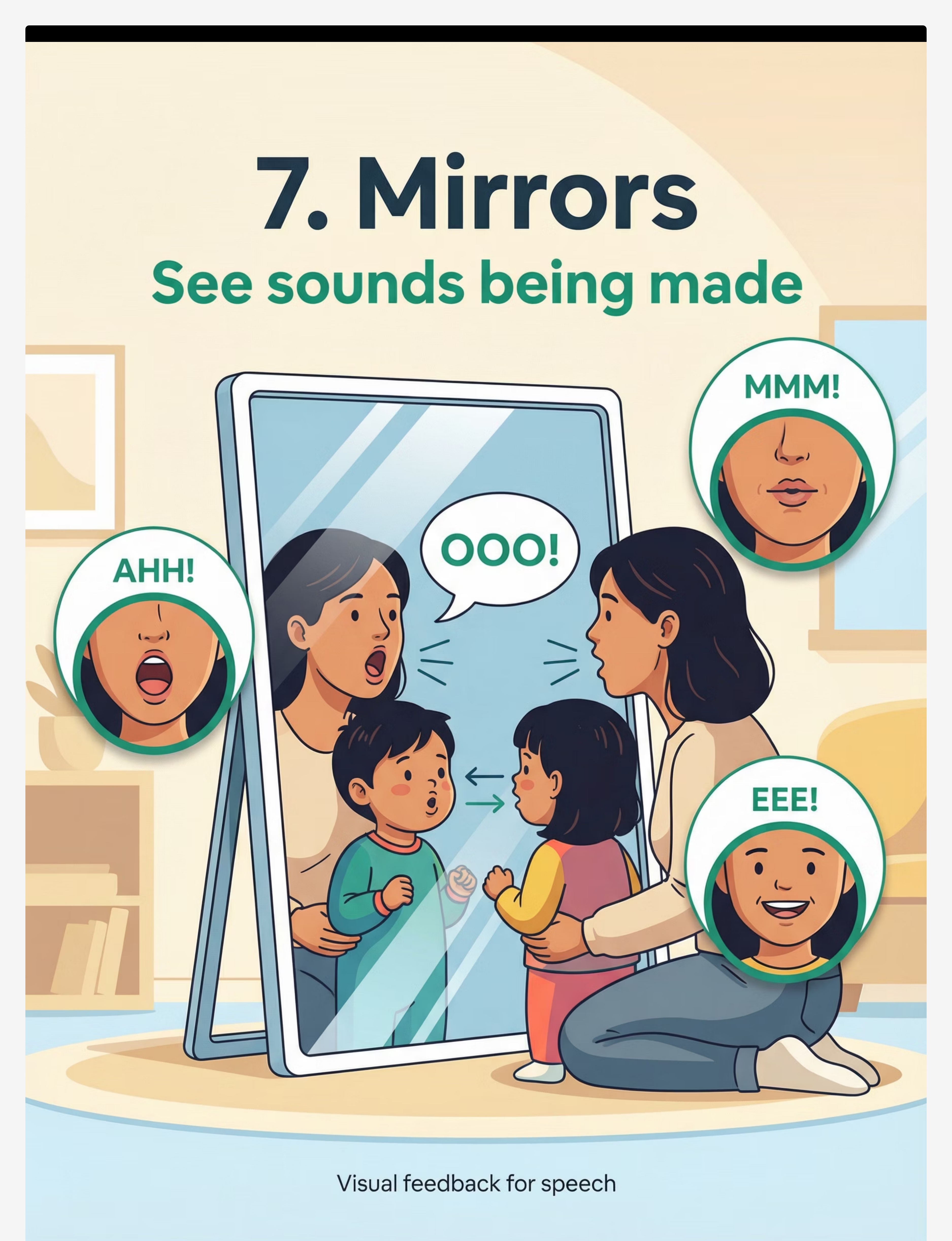
Unbreakable wall mirrors, handheld baby-safe mirrors. Target Words: "Ahh!" "Ooo!" "Mmm!" "Eee!" (vowel sounds + mouth awareness) | ₹200–800 | Browse →
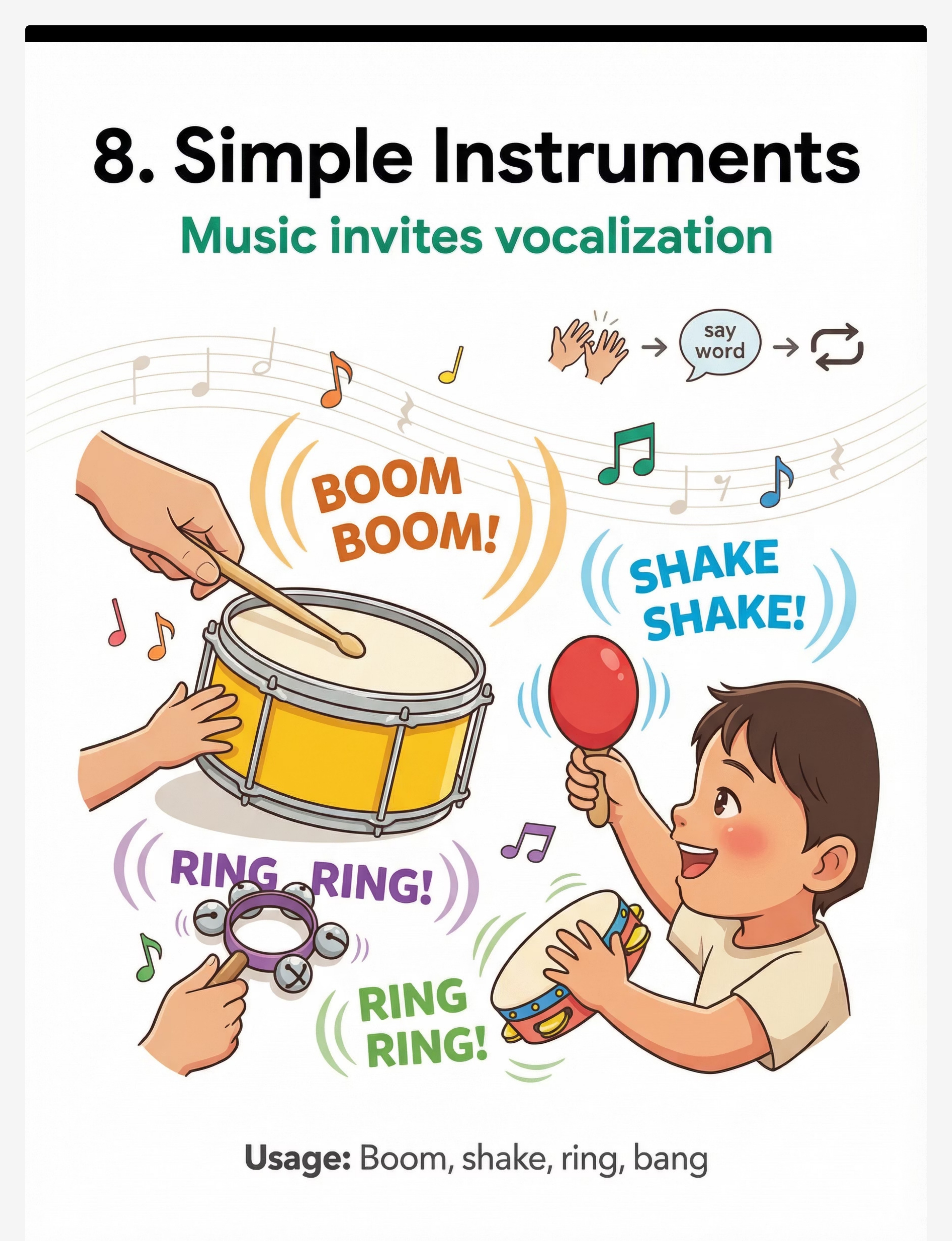
8. Simple Musical Instruments
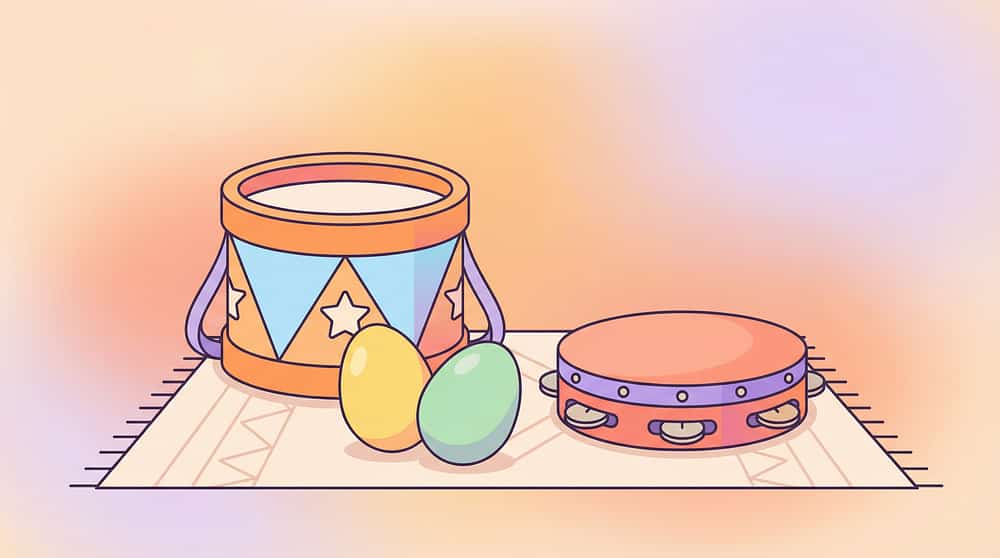
Baby drums, egg shakers, tambourines, bells, maracas. Target Words: "Boom!" "Shake!" "Ring!" "Bang!" "More!" | ₹200–1,000
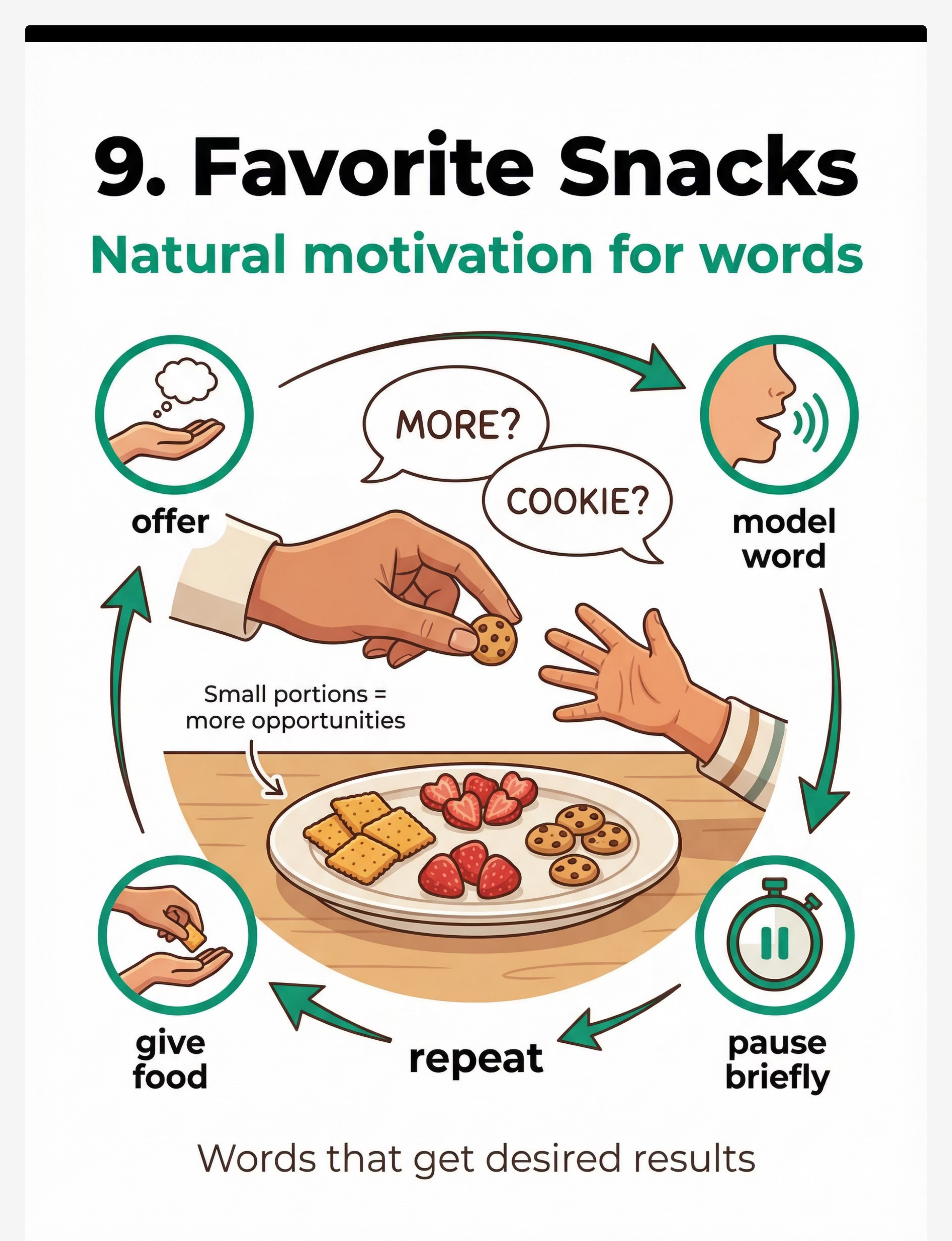
9. Favorite Snacks
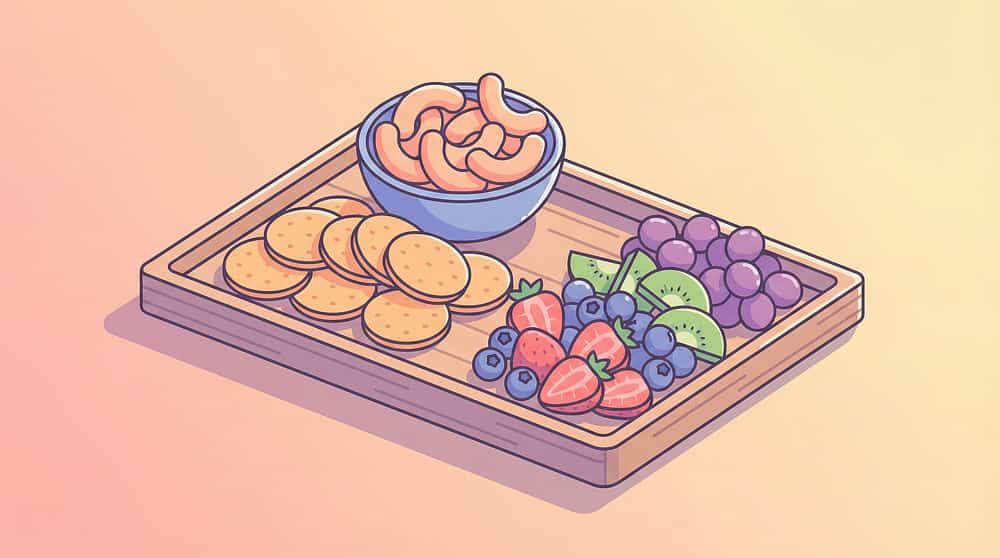
Crackers, fruit pieces, puffs, cheese pieces. Target Words: "More!" "Eat!" "Yum!" "Please!" | ₹0 — Use what you have. The highest-motivation material in the kit.
DIY & Substitute Options — Start Today, Zero Cost
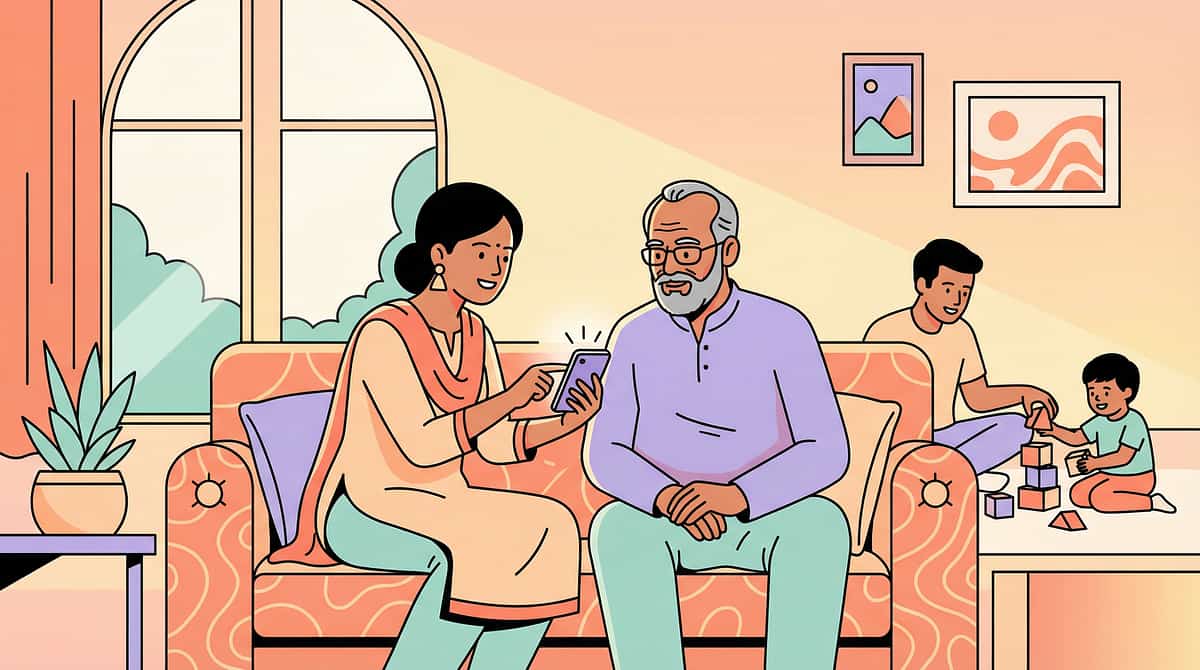
Not every family can order from Amazon. Not every village has same-day delivery. Every parent, regardless of economic status, can start this technique TODAY with household items. This is the WHO/UNICEF inclusion principle in action. The therapeutic principle isn't in the product — it's in the interaction pattern.
Material
Buy This
Make This (Zero Cost)
Cause-Effect Toys
Pop-up toy (₹300+)
Light switch, doorbell, wind-up toy. Say "Go!" every activation.
Animal Figurines
Animal set (₹200+)
Any stuffed animal or picture. Point and make the sound: "Moo!"
Bubbles
Bubble wand (₹100+)
Soap + water + any ring/wire loop. The pause-model-blow routine works with any bubbles.
Vehicles
Toy car (₹200+)
Rolling water bottle, any ball. "Vroom!" works for anything that moves.
Lift-the-Flap Books
Board book (₹200+)
Tape paper over pictures in any magazine. Lift = reveal = word.
Balls
Textured ball (₹100+)
Roll-up socks, small orange, any round object. "Roll!" "Go!"
Mirrors
Safety mirror (₹200+)
Any bathroom mirror or cupboard mirror. Sit together and make sounds.
Instruments
Drum/shaker (₹200+)
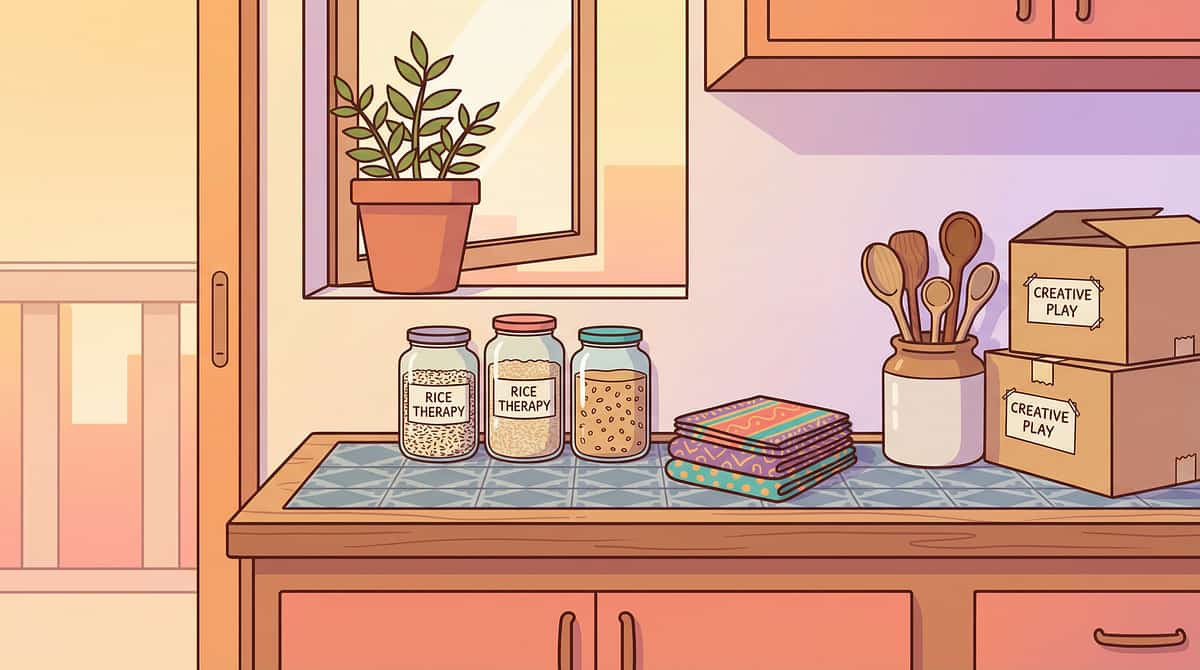
Rice in sealed bottle = shaker. Pot + spoon = drum. "Boom!" "Shake!"
Snacks
N/A
Already free. Any favorite food in small portions. "More?" is the magic word.

Non-negotiable: The interaction pattern (model word → pause → accept attempt → give access) cannot be substituted. The materials are flexible; the method is not.
Safety First — Before You Begin
🔴 RED — STOP — Do NOT Proceed If:
  • Your child is ill, running a fever, or recovering from illness
  • Your child is in a dysregulated state or just post-meltdown
  • You are frustrated, angry, or emotionally overwhelmed (your state matters)
  • Your child has unscreened hearing — get hearing screened FIRST
  • Any material presents a choking hazard for your child's current stage
🟡 AMBER — MODIFY — Proceed With Caution If:
  • Child is tired or hungry (shorten session, use snack material first)
  • Child shows sensory sensitivity to sounds (start with quieter materials — balls, books, snacks)
  • Child is in a new or unfamiliar environment
  • You have less than 5 minutes (use one material, not all nine)
🟢 GREEN — GO — Optimal Conditions:
  • Child is fed, rested, and in a calm-alert state
  • Environment is quiet with minimal distractions
  • You have 10–15 minutes of uninterrupted time
  • Materials are prepared and within reach
  • You feel calm, patient, and ready to follow your child's lead
⚠️ CRITICAL: NEVER withhold a toy, food, or desired item to force word production. Keep pauses BRIEF (3–5 seconds maximum). Snack practice: NEVER withhold food to the point of distress. All materials must be free of choking hazards for 12–24 month children.
Set Up Your Space
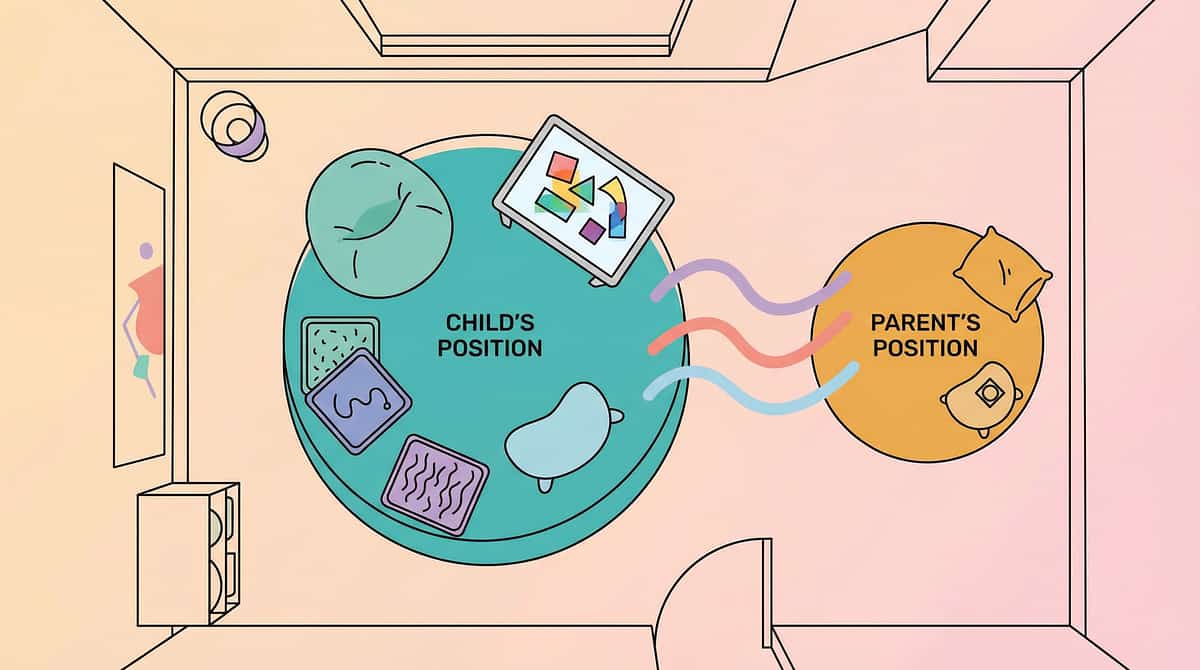
Room Setup — 5 Key Positions
1
Floor Level
Sit face-to-face with your child. Eye contact is critical for word modeling.
2
Materials Within YOUR Reach, Not Child's
You control access to create natural communication opportunities.
3
Clear Area
Remove competing toys, screens, other distractions. Less is more.
4
Good Lighting
Natural light or well-lit room so child can see your mouth clearly when you model words.
5
Sound-Off
TV/music OFF. Background noise competes directly with your word models.
Material Preparation
  • Choose 2–3 materials per session (not all 9 at once)
  • Rotate materials daily to maintain novelty
  • Have materials ready BEFORE inviting child — don't fumble while their attention drifts
  • Keep a "communication kit" bag with your 3 favorite materials always ready
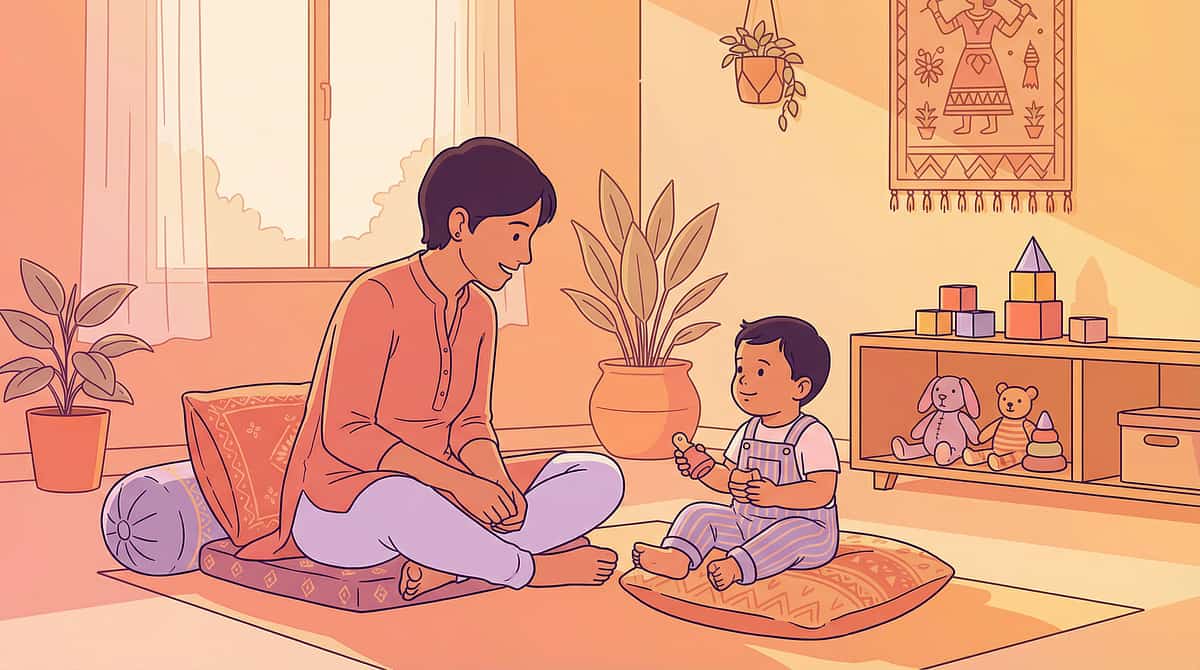
Parent Positioning
  • Face-to-face at child's eye level
  • Close enough that child can see your mouth when you model words
  • Slightly leaning forward — engaged posture signals "I'm here with you"
ACT III — THE EXECUTION
Is Your Child Ready? — 60-Second Readiness Check
Before every session, take 60 seconds to assess. The best session is one that starts right. A session that begins when a child is not ready can create negative associations — patience here protects all the sessions that follow.
Child is fed
Not hungry or thirsty — baseline comfort secured
Child is rested
Not approaching nap time — energy available for learning
Child is calm and alert
Not mid-meltdown or just post-meltdown
Child is healthy
No fever, illness, or discomfort
Child shows interest
Looking around, reaching for things — engaged with environment
YOU are calm
Emotionally available and patient — your state transfers to your child

Decision Gate: All green → GO (begin Step 1). 1–2 amber → MODIFY (use simplest material, 3–5 min). Any red → POSTPONE. Try again later. "The best session is one that starts right."
Step 1: The Invitation
⏱️ Duration: 30–60 seconds
The Script
Sit on the floor at your child's level. Hold one material (e.g., bubbles) where your child can see it but can't reach it yet. Make eye contact. Smile. Say with gentle excitement:
"Look! Bubbles! Want bubbles?"
Hold the bubble wand where they can see it. Wait 3–5 seconds. Watch for any response — a reach, a look, a vocalization, a bounce of excitement.
What Acceptance Looks Like
  • Child reaches toward the material
  • Child makes eye contact with you or the material
  • Child vocalizes (any sound — "aah," "mmm," "buh")
  • Child moves body toward you
What Resistance Looks Like & How to Modify
  • Child turns away → Try a different material. Follow THEIR interest.
  • Child fusses → They may not be ready. Return to readiness check.
  • Child ignores → Place material in their visual field, animate it gently, try again.
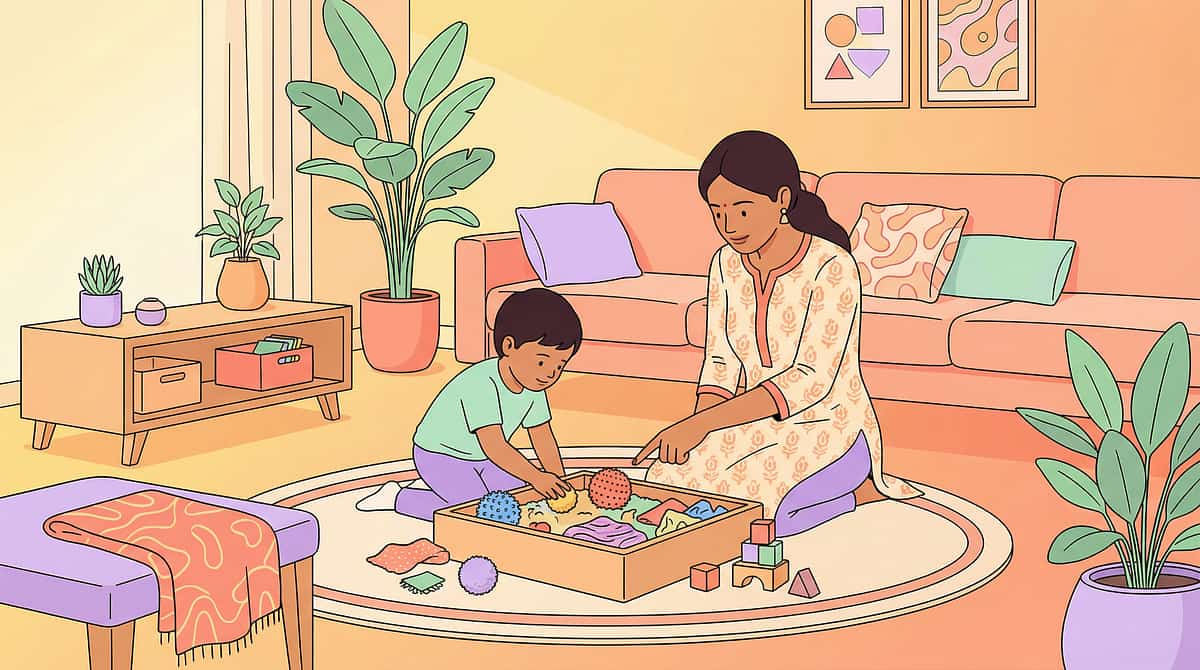
Golden Rule
Invitation, not command. Never force engagement. If the child chooses a different object, follow their lead and model words for THAT object instead.
Step 2: The Engagement
⏱️ Duration: 1–3 minutes
The Core Pattern applies to ALL 9 materials. Once your child engages, you enter this 5-part cycle that forms the backbone of every session.
1
1. Present
Show the material with excitement and animation
2
2. Model
Say the target word clearly: "POP!" "MOO!" "MORE!" One word at a time.
3
3. Pause
Wait 3–5 seconds. Look expectantly. Lean in slightly.
4
4. Accept
ANY vocalization = success. A grunt, a vowel, a consonant attempt.
5
5. Reward
Immediately give access. "You said it! More bubbles!"
Material
Model Word
Script
Bubbles
"More!"
Blow bubbles → pause → "More?" → wait → blow more
Animals
"Moo!"
Pick up cow → "Moo!" → hand to child → "Moo!"
Cause-Effect
"Go!"
Hand on button → "Go!" → press → "Pop!"
Vehicles
"Vroom!"
Hold car → "Vroom!" → push car → "Vroom!"
Books
"Dog!"
Point to flap → "What's that?" → lift → "Dog! Woof!"
Balls
"Roll!"
Hold ball → "Roll!" → roll to child → "Roll!"
Mirror
"Ahh!"
Sit at mirror → open mouth → "Ahh!" → point to child's mouth
Instruments
"Boom!"
Hold drumstick → "Boom!" → hit drum → "Boom!"
Snacks
"More!"
Offer piece → "More?" → wait → give piece
Step 3: The Therapeutic Action
⏱️ Duration: 3–5 minutes — The Active Ingredient
This is the heart of the technique. You are creating a controlled "communication temptation" — a situation where the child is naturally motivated to communicate because they want something, and you are providing the word model that fills the gap between desire and access.
TEMPT
Place desired material in sight but out of reach, or pause an ongoing activity
MODEL
Say the target word clearly, slowly, with emphasis: "MORE!"
WAIT
3–5 seconds of expectant silence. Eyebrows up. Lean in. This pause is where the magic happens.
HONOR
Accept ANY communicative attempt and immediately provide access.

The Critical Principle: You are NOT withholding. You are creating a brief, playful pause in which the child has the opportunity to vocalize. If they don't, you model again and give access anyway. Over time, the child learns that sounds in that pause get faster access. (Source: Wetherby & Prizant's Communication Temptation Protocol; NCAEP 2020)
Step 4: Repeat & Vary
⏱️ Duration: 3–5 minutes
Therapeutic Dosage
  • Per material: 5–10 cycles of TEMPT → MODEL → WAIT → HONOR
  • Per session: 2–3 materials rotated (15–30 total cycles)
  • Per day: 2–3 structured sessions PLUS naturalistic embedding throughout routines
  • Per week: Every day. Language doesn't take weekends off.
"3 good reps > 10 forced reps" — Quality of engagement matters more than quantity.
Variation Within Materials
  • Bubbles: Vary "more" → "pop" → "go" → "up" across rounds
  • Animals: Rotate — cow today, dog tomorrow, sheep next
  • Vehicles: Cars, then trains, then trucks — different sounds each
  • Instruments: Drum → shaker → bells → back to drum
Satiation Indicators — When to Switch:
  • Child loses interest and looks away consistently
  • Child pushes the material away
  • Child's vocalizations decrease (bored, not learning)
  • You've done 10+ cycles and the energy has dropped

Step 5: Reinforce & Celebrate
⏱️ Within 3 seconds of any vocalization
Reinforcement is the fuel that builds neural pathways. Every celebration you offer — no matter how small — tells your child's brain: "That sound was worth making again."
Child Does
You Say
You Do
Makes ANY sound during the pause
"Yes! You said it! MORE BUBBLES!"
Immediately blow bubbles / give access
Imitates part of the word ("mmm" for "more")
"MOR! I heard you! More bubbles!"
Enthusiastic access + physical celebration
Says something close to the word
"MORE! You said MORE! Amazing!"
Access + clapping + big smile
Says the target word clearly
"MORE! You said MORE! WOW!"
Access + maximum celebration + hug if welcome
Makes no sound but reaches/gestures
"You want MORE! More bubbles!"
Model word, give access, try again next cycle

Golden Rule: "Celebrate the attempt, not just the success." A child who makes "mmm" when you modeled "more" is doing extraordinary neurological work. Celebrate it as such.
Step 6: The Cool-Down
⏱️ Duration: 1–2 minutes
Transition Script
"2 more! Two more bubbles, then all done." [blow] "1 more! Last one!" [blow] "All done! Bubbles all done. You did so well!"
Cool-Down Activities
  • Gentle clapping together
  • Slow rocking or swaying
  • Putting materials away together ("bye-bye bubbles!")
  • Transition object (favorite soft toy)
  • Calm song or humming
Material Put-Away Ritual
Let the child participate — handing you materials, closing the bubble container, putting animals back in the box. Model words during cleanup: "In!" "Bye-bye!" "All done!"
If Child Resists Ending
  • Don't abruptly remove materials — creates negative association
  • Offer a transition: "Bubbles are done. Want to read a book?"
  • Use visual/verbal countdown: "3… 2… 1… all done!"
  • Redirect to a calming, preferred activity

Capture the Data — Right Now
⏱️ Within 60 seconds of session end
"60 seconds of data now saves hours of guessing later." Recording what happened — even briefly — allows you to track real progress over weeks, identify patterns, and share meaningful information with your therapist.
1
Materials Used Today
Circle or check: ☐ Cause-Effect ☐ Animals ☐ Bubbles ☐ Vehicles ☐ Books ☐ Balls ☐ Mirror ☐ Instruments ☐ Snacks
2
Best Vocalization Attempt
Write exactly what your child said (even approximate): ____________ Examples: "mmm" / "buh" / "muh" / "pop" / "gah" / nothing today
3
Overall Session Rating
Refused/ended early | Tolerated but passive | Engaged with attempts | Made sound attempts | Produced recognizable word
What If It Didn't Go As Planned?
"Session abandonment is not failure — it's data." Every imperfect session teaches you something about your child's current state, preferences, and readiness. Use these solutions to adapt quickly.
Problem: "Zero interest in any material"
Fix: Follow the child's lead. What ARE they interested in right now? A spoon? A shoe? A remote control? Model words for THAT object. The principle works with any object.
Problem: "Child just grabbed the toy and played alone"
Fix: Start with materials YOU control — bubbles (you hold the wand), snacks (you hold the food). These naturally require the child to look to you for access.
Problem: "I waited but child made no sound"
Fix: Model the word again, give access, try again. Don't extend the pause — this creates frustration, not words. Repetition over weeks builds the pattern.
Problem: "My child cried when I paused"
Fix: Shorten pauses to 1–2 seconds. Honor crying as communication — give access immediately. Build up pause duration gradually over weeks.
Problem: "Sounds don't sound like words"
Fix: That IS progress. Pre-word vocalizations are the precursor to words. "Ba" during bubble play is the brain connecting communication to result. Celebrate every vocalization.
Problem: "We've done this a week and nothing changed"
Fix: Language emergence follows exponential, not linear, curves. Weeks 1–2 build invisible neural pathways. Trust the process. Continue daily. The change is happening inside the brain before it appears outside.
Adapt & Personalize
No two children are the same. This technique is designed to flex — from early, sensitive stages to advanced progression toward word combinations. Use the guide below to find your starting point today.
EASIER — Bad days, early stages, sensitive children
  • Use only 1 material per session
  • Shorten pause to 1–2 seconds
  • Accept any behavior (reach, look, sound) as "word attempt"
  • Use snacks only (highest motivation, lowest demand)
  • Sessions: 3–5 minutes maximum
STANDARD — Weeks 2–4, building routine
  • Use 2–3 materials per session
  • Pause 3–5 seconds
  • Celebrate vocalizations specifically
  • Rotate materials daily
  • Sessions: 10–15 minutes
HARDER — Weeks 4+, child is vocalizing
  • Wait for vocalization before providing access
  • Shape closer approximations ("mmm" → "moh" → "more")
  • Introduce 2-word models ("more bubbles!" "go car!")
  • Extend to new settings (park, bath, meals)
  • Sessions: 15–20 minutes with natural embedding

Sensory Profile Adaptations: Sound-sensitive → start with books, figurines, snacks. Movement-seeking → prioritize balls, vehicles, cause-effect toys. Visually engaged → prioritize bubbles, light-up balls, mirrors. Food-motivated → use snacks as primary material.
ACT IV — THE PROGRESS ARC
Week 1–2: What to Expect
What Progress Looks Like Now
  • Child begins to anticipate the pause (looks at you expectantly when you stop)
  • Child's vocalizations during play increase in frequency (even non-word sounds)
  • Child shows preference for specific materials (engagement indicator)
  • Child tolerates the play routine for longer periods
  • YOU become more comfortable with the TEMPT → MODEL → WAIT → HONOR pattern
What is NOT Progress Yet (and that's normal)
  • Clear words — don't expect them yet
  • Consistent imitation — emerging, not established
  • Using words outside of play sessions — generalization comes later
  • Your spouse hearing a clear word — early attempts are subtle
"If your child vocalizes during the pause even once more than last week — that's real progress. You are laying neural pathways."

Parent Emotional Preparation: This is the patience phase. You may feel like "nothing is happening." The neuroscience says otherwise. Synaptic connections are forming with every cycle. Trust the dosage.
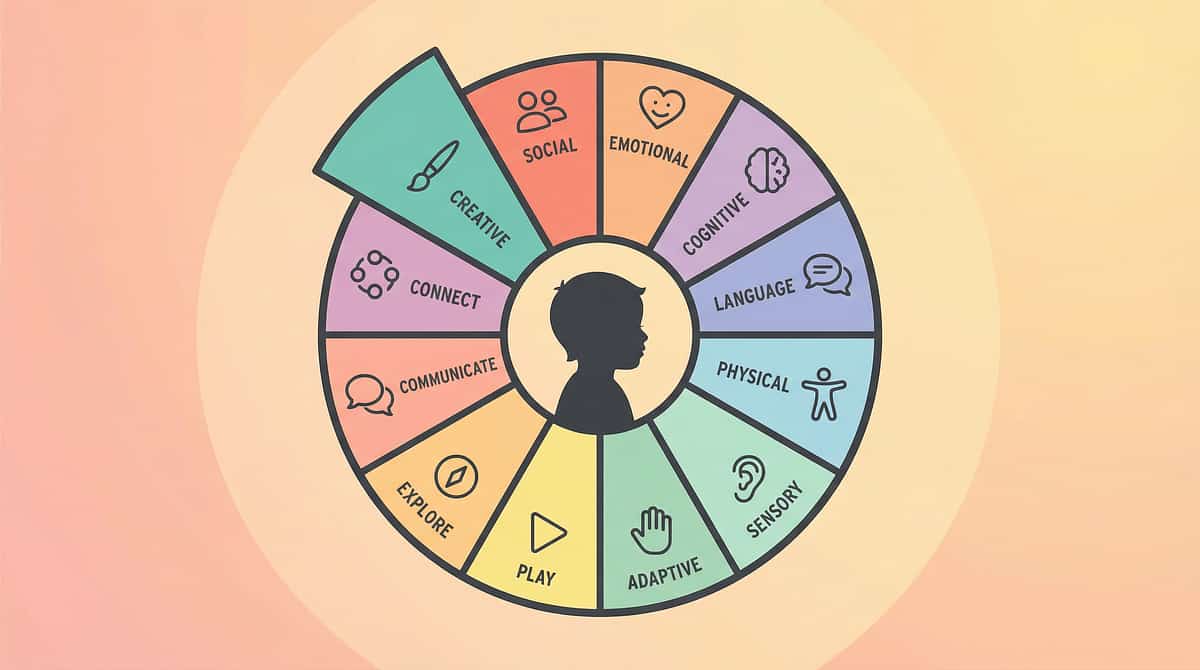
Your Child's Full Developmental Map
"This technique is one piece of a larger plan. Your child's development spans 12 interconnected domains. Language doesn't develop in isolation — every material in this technique simultaneously feeds multiple developmental pathways."

Domain B (Speech-Language) is the primary focus of B-128. But notice how each of the 9 materials touches 4–6 domains simultaneously. You are doing far more than building words — you are building a brain.
Week 3–4: Consolidation Signs
Something is shifting. The routine is becoming familiar — to your child AND to you. Watch for these consolidation indicators that tell you the neural pathways are forming and the technique is working at the level you can't yet see.
Child Seeks the Materials
Goes to the "communication kit" bag — they're initiating the exchange now.
Spontaneous Sounds During Play
Child begins to vocalize DURING the activity without prompting.
First Word Approximations
"muh" for more, "buh" for bubbles, "guh" for go — these count. This is real language.
Increased Eye Contact
Child watches YOUR mouth when you model words — visual feedback seeking.
Gesture + Sound Combinations
Pointing + "uh!" is a powerful communicative act. The bridge to words is building.
Smoother Turn-Taking
Child waits, you model, child attempts — the rhythm is natural now.
Parent Milestone: "You may notice you're more confident too. The routine feels natural now." If you're seeing 3+ of the above indicators, move to the STANDARD difficulty level and add a third material to sessions.
Week 5–8: Mastery Indicators
Progress Bar: ~75% → Mastery
🏆 Consistent Meaningful Words
Produces 1–3 consistent, meaningful words (even approximations used intentionally — these are real words).
🏆 Requesting with Vocalization
Uses sound to request during the play routine — not just random sounds, but directed at you with intent.
🏆 Word Imitation Within 5 Seconds
Imitates at least some word models within 5 seconds of hearing them.
🏆 Generalization Beginning
"muh" at snack time without the formal routine — word use beginning to spread into daily life, new settings, and new people.

"Mastery Unlocked" Criteria: When your child consistently uses 3+ words with communicative intent across 2+ settings → you have achieved the primary target of this technique. Celebrate. → Next: B-129 (Limited Word Imitation) or B-130 (Vocabulary Not Growing)
Celebrate This Win
"You did this. Your child's first words emerged because of YOUR commitment."

Remember Card 01? You were searching "18 month old not talking" at 2 AM. You were wondering if you were failing. You weren't. You were about to become your child's most important therapist.
You Built Neural Pathways
You learned the neuroscience, executed a structured communication protocol daily, and built real synaptic connections in your child's brain through love, patience, and play.
Document It
📸 Record the first clear word attempt. You'll want this memory. Journal entry — what were you doing? What material were they playing with?
Share & Celebrate
📱 Share with your family — "Did you hear that? They said 'more'!" 🎉 This is a milestone worth marking. A family celebration is not optional — it's therapeutic.
Red Flags — When to Pause & Seek Professional Evaluation
Safety Alert
"Trust your instincts — if something feels wrong, pause and ask. No parent has ever regretted seeking professional guidance too early."
🚩 No words by 24 months
If after 6–8 weeks of consistent daily practice your child has produced zero vocalizations with communicative intent, professional evaluation is not optional. This does not mean you failed.
🚩 Loss of sounds or words
If your child was making sounds or approximating words and then STOPPED — regression requires immediate professional evaluation.
🚩 No response to their name
If your child consistently doesn't turn when their name is called, even in a quiet room.
🚩 No pointing or gesturing
If your child doesn't point to show or request by 18 months, this suggests broader communication concerns.
🚩 No shared enjoyment
If your child doesn't look at you to share excitement during play (joint attention), this may indicate social communication differences.
🚩 Hearing concerns
If your child doesn't respond to environmental sounds or doesn't seem to hear your voice clearly — get hearing screened FIRST.

Escalation Pathway: (1) Continue with modifications 2 more weeks → (2) Book virtual teleconsultation with Pinnacle SLP → (3) In-person comprehensive evaluation. FREE National Autism Helpline: 9100 181 181 | 24x7 | 16+ languages
The Progression Pathway
Where you were. Where you are. Where you're going. Every technique in the Pinnacle Blooms library builds on what came before and opens the door to what comes next.
B-115 Reduced Babbling
Prerequisite: early vocal play
B-117 Limited Vocal Imitation
Prerequisite: emerging imitation
B-128 No Words by 18 Months
YOU ARE HERE
B-129 Limited Word Imitation
Path A — if child is vocalizing
B-130 Vocabulary Not Growing
Path B — slow lexical expansion
Path A — Word Imitation Focus
→ B-129: If child is vocalizing but not yet imitating specific words
Path B — Vocabulary Expansion
→ B-130: If child has a few words but isn't adding new ones
Path C — Regression Monitoring
→ B-131: If child had words that disappeared — requires immediate professional evaluation
"You already own materials for 5 of these 6 techniques." Your investment in the First Words Material Kit continues to pay dividends across the entire speech-language domain.
Technique
Level
Materials You Already Own
Status
B-115: Reduced Babbling
Intro
Bubbles, Mirrors, Instruments
Prerequisite
B-117: Limited Vocal Imitation
Intro
Animals, Mirrors, Instruments
Prerequisite
B-129: Limited Word Imitation
Core
Animals, Books, Snacks
Next Step
B-130: Vocabulary Not Growing
Core
All 9 materials
Next Step
B-131: Words Lost or Regressed
Alert
Professional evaluation required ⚠️
Red Flag
K-970: Daily Routines for Language
Support
Household items
Parallel
ACT V — COMMUNITY & ECOSYSTEM
Families Who've Been Here
Anika — Hyderabad | Material: Bubbles + Snacks | Week 6
"My son was 19 months. He understood everything — follow instructions, find objects — but wouldn't say a single word. I Googled 'late talker' every night. The first time he said 'muh' during bubble play, I cried. By week 5, he was saying 'more,' 'pop,' and 'go.' Three words. Three words that changed everything."
Ravi — Bengaluru | Material: Animal Figurines + Mirror Play | Week 8
"Our daughter was 20 months with zero words. Her first word was 'moo.' Not mama, not dada — moo. And we celebrated like she'd won the Nobel Prize. She now has 12 words at 22 months. Animal sounds using early-developing sounds (m, b, w) are often easier than conventional first words."
Priya — Chennai | Material: Cause-Effect Toys + Balls | Week 5
"My twin boys were both late talkers at 17 months. I felt like I was failing twice. They started saying 'go!' to each other during ball play. They taught each other. I just provided the model."
Connect With Other Parents
You are not alone — and you don't have to navigate this in silence. Thousands of families across India and globally are on this exact journey right now. Connection with community is not optional — it's part of the intervention.
Late Talker Parent Support Group
📱 WhatsApp group moderated by Pinnacle SLPs. Share progress, ask questions, celebrate milestones with parents who understand exactly what you're going through.
Pinnacle Parent Community Forum
🌐pinnacleblooms.org/community — Connect with families across India and globally. Ask questions, share wins, and get perspective from the community.
Local Parent Meetups
📍 Find your nearest Pinnacle Blooms center and join monthly parent coffee sessions. Real connection with families in your city. Center Locator →
Peer Mentoring
🤝 Connect with an experienced parent who has navigated the first words journey. "Your experience helps others — consider sharing your journey."
Your Professional Support Team
Home + Clinic = Maximum Impact. This technique is designed for daily home practice — but professional evaluation and support multiply outcomes and ensure your child is on the right pathway.
Find Your Nearest Pinnacle Blooms Center
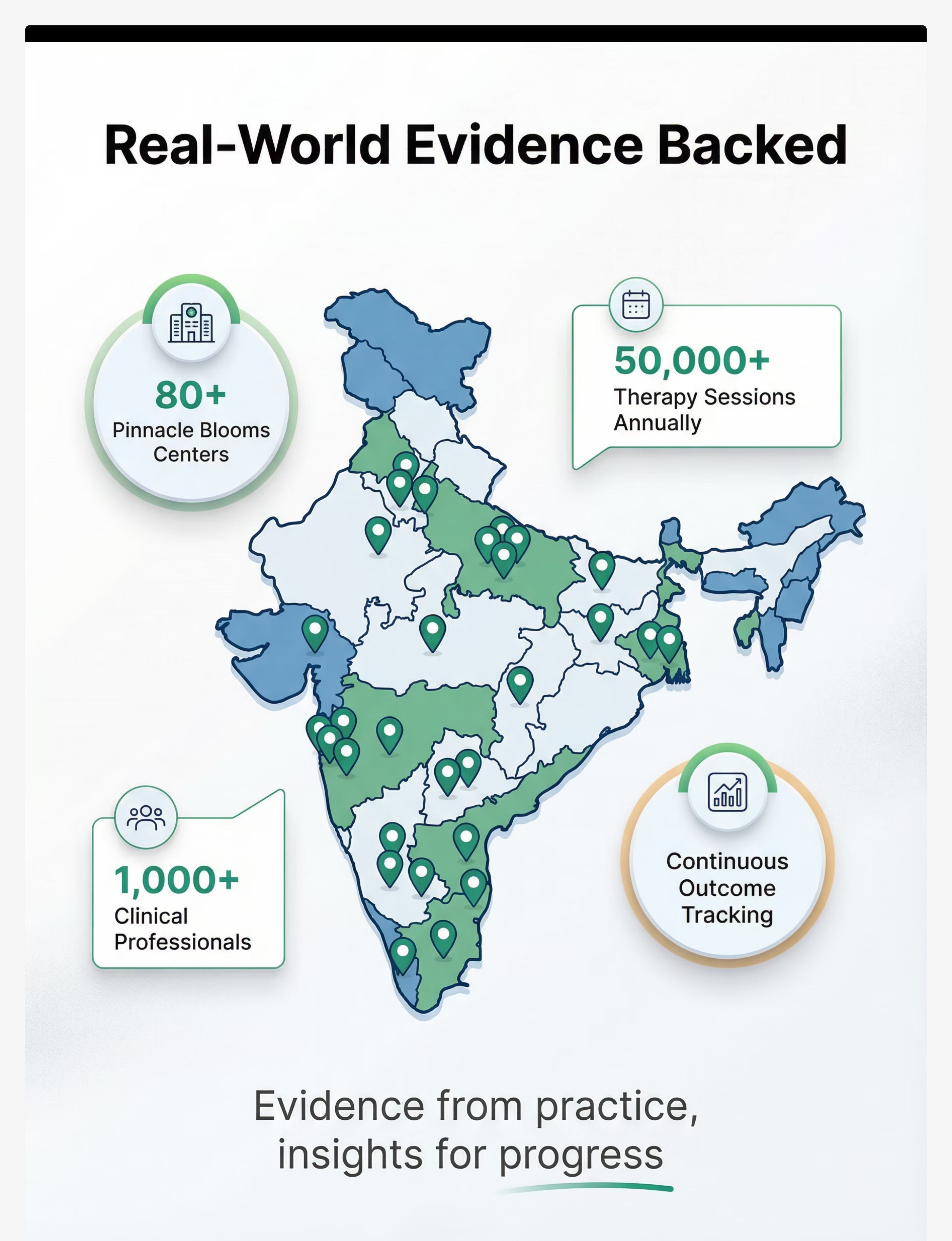
🗺️ 80+ Centers Across India | pinnacleblooms.org/centers
Teleconsultation
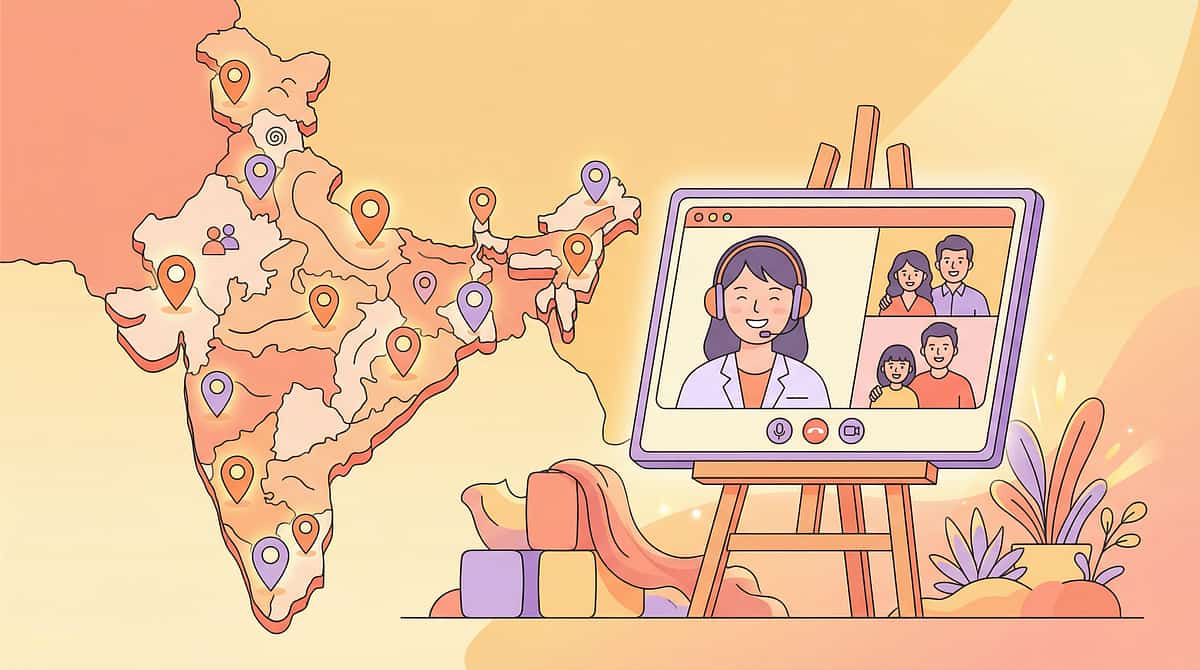
Can't visit in person? Book a virtual consultation with a Pinnacle SLP. pinnacleblooms.org/teleconsult
FREE National Autism Helpline
📞9100 181 181 | 24x7 | 16+ languages | pinnacleblooms.org
Therapist Matching
  • Primary: Speech-Language Pathologist specializing in early language intervention
  • Secondary: ABA Therapist with communication focus
  • Supporting: Developmental Pediatrician for comprehensive evaluation
Pinnacle Services for This Technique
  • Speech-Language Evaluation
  • Early Intervention Programme
  • Speech Therapy (1:1)
  • ABA Therapy (communication focus)
  • Parent Training (EverydayTherapyProgramme™)
The Research Library
For the parent — or professional — who wants to go deeper. This technique draws from Levels I–III of evidence across multiple disciplines.
01
Roberts & Kaiser (2011)
"The Effectiveness of Parent-Implemented Language Interventions: A Meta-Analysis." 18 studies showing significant expressive language gains. American Journal of Speech-Language Pathology, 20(3), 180-199.
02
Heidlage et al. (2020)
"Effects of Parent-Implemented Language Interventions on Child Linguistic Outcomes: A Meta-Analysis." Strong evidence for parent training. Early Childhood Research Quarterly, 50, 6-23.
03
NCAEP (2020)
National Clearinghouse on Autism Evidence and Practice: Naturalistic Intervention classified as evidence-based practice for children and youth with autism.
04
WHO Nurturing Care Framework (2018) + CCD Package (2023)
nurturing-care.org/ncf-for-ecd/ | Implemented across 54 LMICs. Household-material-based intervention efficacy. PMC9978394.
05
Fenson et al. (2007) + Rescorla (2011) + Kuhl (2010)
MacArthur-Bates CDI normative data; Late talker prevalence and outcomes; Brain mechanisms in early language acquisition. Neuron, 67(5), 713-727.

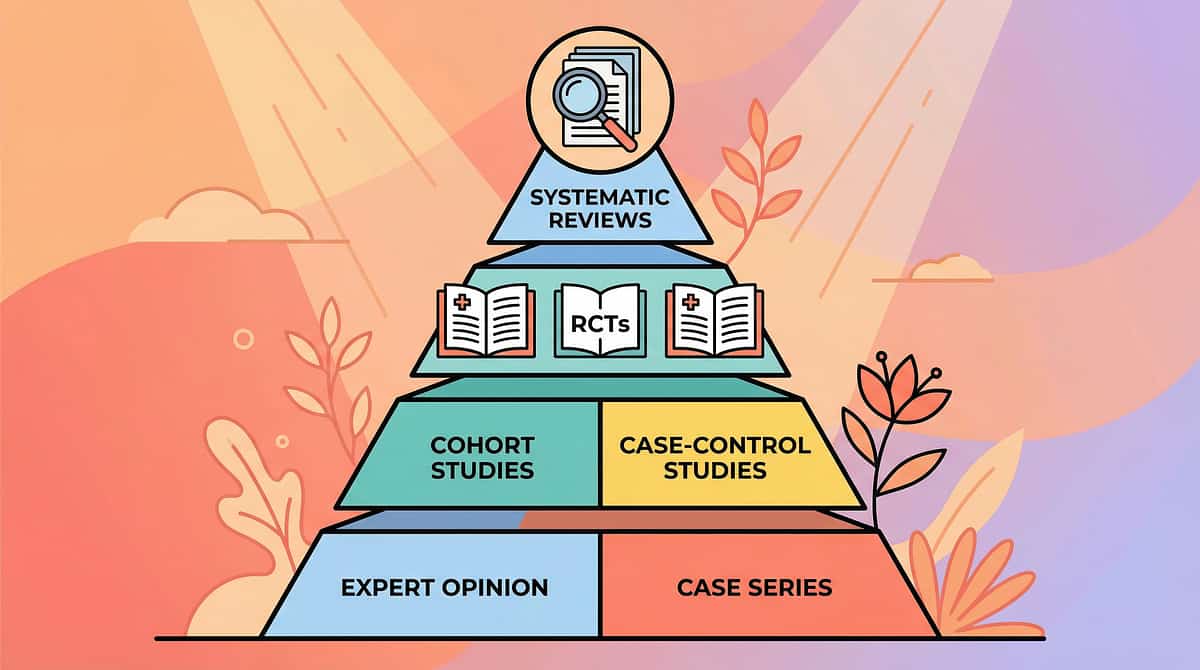
Evidence Pyramid: Systematic Reviews > RCTs > Cohort Studies > Case Studies > Clinical Consensus. This technique draws from Levels I–III across SLP, ABA, and developmental pediatrics.
How GPT-OS® Uses Your Data
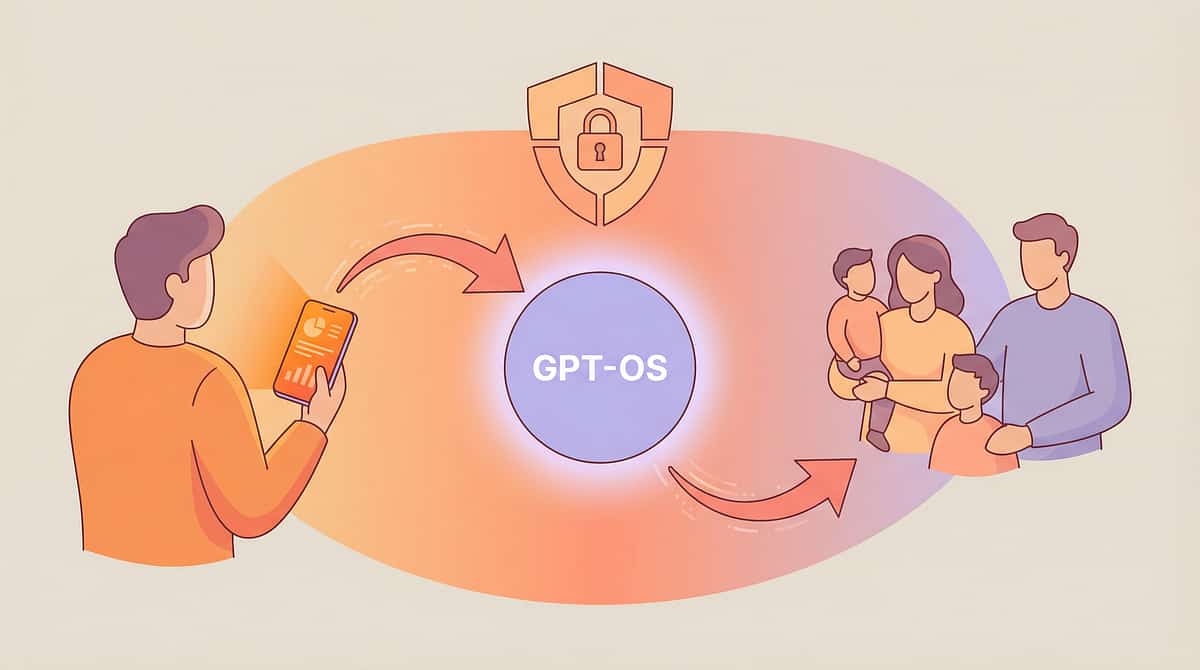
"Your data helps every child like yours." Every session you record feeds a system that learns — improving recommendations for your child and for the millions of families navigating this same journey globally.
What GPT-OS® Learns From This Technique
  • Which materials produce the fastest word emergence for children with similar profiles
  • Optimal session duration and frequency for different age bands
  • Which word targets (animal sounds vs. action words vs. requesting words) emerge first
  • How many weeks of practice typically precede first word production
  • Red flag patterns that indicate need for professional evaluation
GPT-OS® Stack for This Technique
  • AbilityScore®: Baseline expressive language score (0–1000)
  • Communication Readiness Index: Expressive Vocabulary subindex tracking
  • TherapeuticAI®: Material selection and difficulty progression
  • EverydayTherapyProgramme™: Daily word-building in natural routines
  • FusionModule™: Coordinating SLP + ABA + developmental inputs
All data anonymized. Individual family data never shared. HIPAA-equivalent protections applied.
Watch the Reel
Reel ID: B-128
Duration: 75 seconds
Series: Speech-Language — Episode 128
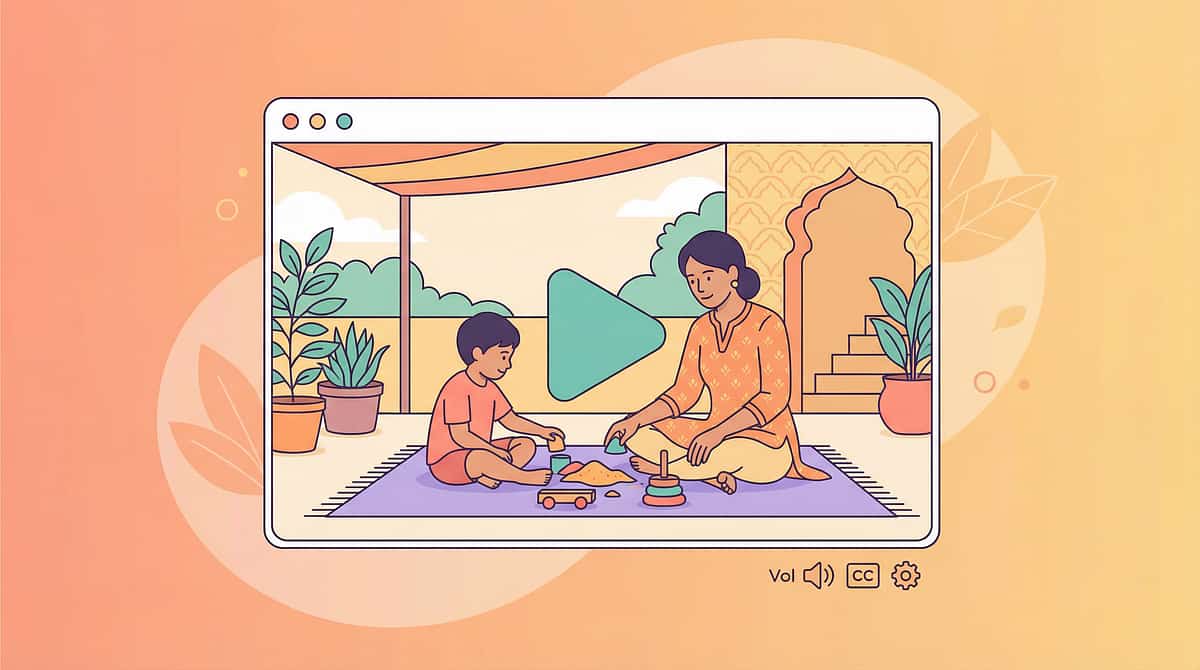
🎬"9 Materials That Help When There Are No Words by 18 Months" — Watch a Pinnacle Blooms Speech-Language Pathologist demonstrate each of the 9 materials with a toddler. See the TEMPT → MODEL → WAIT → HONOR cycle in real time. Watch how the therapist pauses, models words, and celebrates every vocalization attempt.
🎬 B-128-DD-03
"Using Bubbles to Teach 'More' and 'Pop'" — Deep dive on the single highest-impact material
🎬 B-128-DD-02
"Animal Sounds as First Words" — Why 'moo' and 'baa' are often easier than 'mama' and 'dada'
🎬 B-128-DD-09
"Using Snack Time for Word Practice" — The zero-cost, highest-motivation material in action
Share This With Your Family
Consistency across caregivers multiplies impact. If only one parent executes this technique, progress is limited. When both parents, grandparents, siblings, and caregivers use the same word models and pause-wait technique, the child hears consistent language input across their entire day. Research shows multi-caregiver training is critical for intervention generalization. (WHO CCD Package, PMC9978394)
"Explain to Grandparents" Simplified Version
"We're using special toys to help [child's name] start talking. When you play with them, say the word for what they want — like 'more' or 'ball' — then wait a few seconds. If they make ANY sound, smile and give them what they want. That's it. That's the whole thing."
Teacher / School Communication Template
"[Child's name] is working on first word emergence using a communication temptation approach. When they reach for something, please say the word clearly, wait briefly, and honor any vocalization. The word targets are: more, go, pop, up, ball."
ACT VI — THE CLOSE & LOOP
Frequently Asked Questions
Q: "Is my child autistic if they have no words at 18 months?"
Not necessarily. Expressive language delay occurs in typically developing children (10–20% are "late talkers"), in children on the autism spectrum, and in children with hearing differences or other developmental variations. This technique supports word emergence regardless of underlying cause. Professional evaluation is recommended to determine the specific pathway.
Q: "Should I stop using gestures/signs since we want spoken words?"
Absolutely not. Research consistently shows that gestures and signs SUPPORT spoken language development — they don't replace it. Continue honoring all forms of communication while modeling spoken words alongside them.
Q: "How long before I see results?"
Most families see emerging vocalizations within 2–4 weeks. First word approximations typically appear by weeks 4–6. Clear words may take 6–8 weeks of consistent daily practice. Every child's timeline is different.
Q: "Can I use this if my child already has a few words?"
Yes. If your child has 1–5 words, this technique helps expand vocabulary through new word targets in motivating materials. Move to the STANDARD or HARDER difficulty level.
Q: "My child only says the word during play sessions, not in daily life."
Generalization takes time. Once a word is established in play, begin embedding it in daily routines: "More rice? More water? More story?" The material creates the pathway; daily life reinforces it.
Q: "Do I need to buy all 9 materials?"
No. Start with bubbles + animal figurines + favorite snacks (total cost: under ₹700, or free with DIY). Add materials as your child shows interest and progress.
Q: "My pediatrician said to wait until 2 years. Should I?"
The Pinnacle Blooms Consortium, aligned with WHO/UNICEF developmental monitoring recommendations, advocates for early intervention during the 18–24 month window. You don't need a formal diagnosis to start these materials — and you don't need to wait to seek a speech-language evaluation.
Q: "Can grandparents and siblings do this too?"
Yes — and they should. Share the Family Guide (Card 37). The more caregivers who use the MODEL → PAUSE → HONOR pattern, the more opportunities your child has to practice each day.

Your Next Step — Start Now

The time for reading is over. The time for action is now. Every day in the 18–24 month window is a language opportunity. Choose your path below. 🟢 Start This Technique Today Download the First Words Material Kit checklist. Choose your first 3 materials. Begin your first session tonight. GPT-OS® Session Launcher — Communication Readiness Track → 🔵 Book a Speech-Language Evaluation Schedule an AbilityScore® assessment. Get a comprehensive Speech-Language Evaluation. Connect with a Pinnacle SLP who specializes in first word emergence. 📞 9100 181 181 | pinnacleblooms.org/book → ⚪ Explore the Next Technique → B-129: Limited Word Imitation | → B-130: Vocabulary Not Growing | Browse all Speech-Language techniques at techniques.pinnacleblooms.org/speech-language/ ✅ Consortium Seal: Validated by the Pinnacle Blooms Consortium | Disciplines: SLP • OT • ABA • SpEd • NeuroDev | Powered by GPT-OS® | techniques.pinnacleblooms.org

Preview of 9 materials that help when there are no words by 18 months Therapy Material

Below is a visual preview of 9 materials that help when there are no words by 18 months therapy material. The pages shown help educators, therapists, and caregivers understand the structure and content of the resource before use. Materials should be used under appropriate professional guidance.

Page 1
Page 2
Page 3
Page 4
Page 5
Page 6
Page 7
Page 8
Page 9
Page 10
Page 11
Page 12
Page 13
Page 14
Page 15
Page 16
Page 17
Page 18
Page 19
Page 20
Link copied!
"From fear to mastery. One technique at a time."
The Pinnacle Blooms Consortium
Speech-Language Pathologists • Occupational Therapists • Board Certified Behavior Analysts • Special Educators • NeuroDevelopmental Pediatricians • Gamma.app Design Team • Mothers • Fathers • Families
Our Mission
To transform every home into a personalized, evidence-based, 24/7 multidisciplinary therapy center — empowering families across 70+ countries to support their child's development with clinical precision and parental love.
The Numbers
80+ Centers | 1,000+ Clinical Professionals | 21 Million+ Therapy Sessions | 97%+ Measured Improvement | 70+ Countries Served | Powered by GPT-OS®

Medical Disclaimer: This content is for informational and educational purposes only. It does not constitute medical advice, diagnosis, or treatment. Always consult with qualified healthcare professionals before starting any intervention program. The materials and techniques described are general recommendations and should be adapted to your child's specific needs with professional guidance. Pinnacle Blooms Network recommends professional speech-language evaluation for any child not producing words by 18 months.
© 2026 Pinnacle Blooms Network. All rights reserved. Content developed under GPT-OS® Consortium Specification v2.0. Technique ID: B-128 | Domain: SLP-EXP-FW | Published: techniques.pinnacleblooms.org/speech-language/materials-help-no-words-18-months