

"No, you have to do it THIS way!"
He directs every detail. She assigns all the roles. He tells everyone what to say. And slowly — one by one — the other children stop coming. Your child isn't mean — they're managing something they don't have words for yet.
C-305 | Collaborative Play & Flexibility
Domain C: Emotional Regulation
Ages 4–10 | Home & Clinic

This Is More Common Than You Know
Controlling play behavior is one of the most misunderstood challenges families face. It looks like defiance. It feels like rudeness. But for most children, it is fear wearing a director's hat. The anxiety of unpredictable peer behavior, the difficulty processing others' creative ideas, the absence of a "how to collaborate" script — these are the real actors. You are among millions of families navigating this. And this challenge has a clear, evidence-based path forward.
40–50%
Rigid Play Patterns
of children with ASD show inflexible play patterns that affect peer relationships
1 in 3
Anxiety Component
children with bossy play behavior have an underlying anxiety component — control manages unpredictability
20M+
Sessions Delivered
by Pinnacle Blooms Network® — 97%+ measured improvement in Social Participation Index
📞9100 181 181 — FREE National Autism Helpline | Sources: NCAEP 2020 | Greene, R.W. (2014) | PMC11506176 | PMC10955541

This Is a Wiring Difference, Not a Behavior Choice
The Prefrontal-Amygdala Circuit Under Stress
When peer behavior is unpredictable, the amygdala fires a threat response. In children with underdeveloped executive function or heightened sensory sensitivity, the regulatory circuit cannot suppress the threat signal fast enough. The child's nervous system reaches one conclusion: control the environment, or drown in it.
- Prefrontal Cortex: executive function, cognitive flexibility, perspective-taking
- Amygdala: threat detection, fear response
- Mirror Neuron System: theory of mind, understanding others' intentions
In Plain English
Your child's brain is not broken. It is working exactly as designed — but the threat threshold is set differently. When someone else changes the play script, your child's nervous system experiences it the way you'd experience someone unexpectedly swerving into your lane. The control isn't domineering — it's braking.
Six underlying mechanisms:
- Anxiety management (control = reducing unpredictability)
- Rigid thinking patterns (difficulty with spontaneity)
- Theory of Mind gaps (not recognizing others have preferences)
- Executive function challenges (difficulty sharing the "director" role)
- Sensory sensitivity (peer unpredictability = sensory overwhelm)
- Past play experience (negative outcomes from loss of control)
Clinical Note: Understanding which mechanism drives YOUR child is the key to selecting the right intervention. The materials on this page address all six pathways. | Sources: Frontiers in Integrative Neuroscience (2020) | Kenworthy et al. (2014)
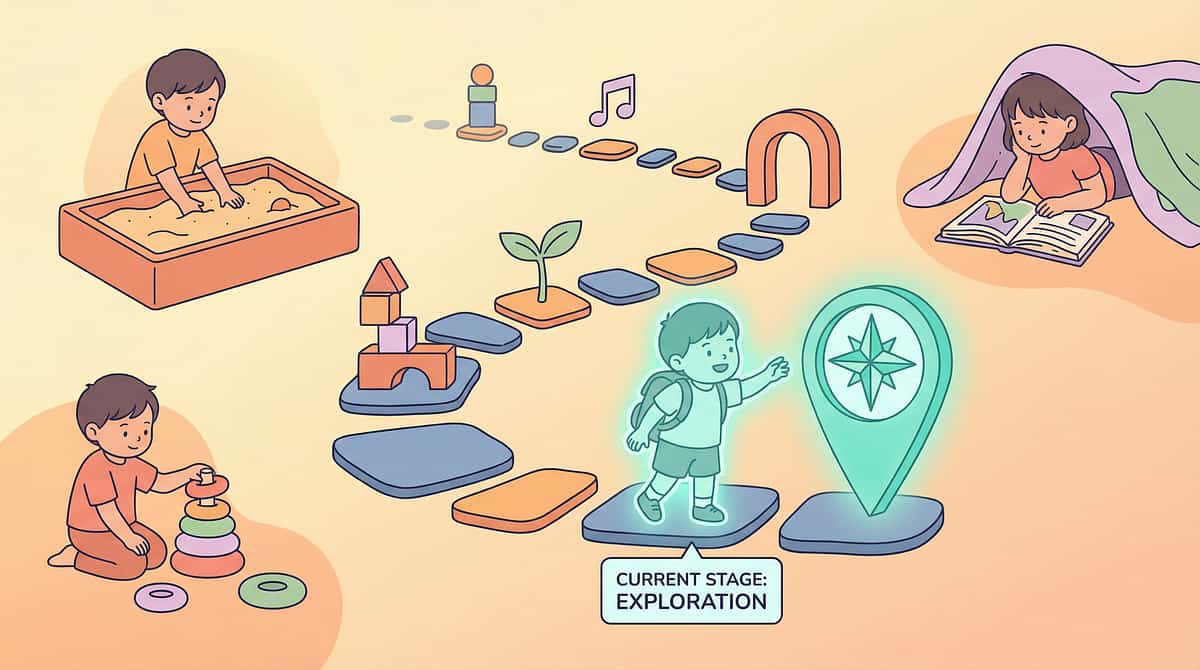
Your Child Is Here. Here Is Where We're Heading.
Social play development follows a predictable arc — and knowing where your child sits helps you set realistic, achievable goals. If your child's play pattern looks like a 3-year-old's in a 7-year-old's body — that is not failure. It is a gap that can be closed systematically.
Ages 2–3
Parallel play; begins wanting peers nearby. Foundation set.
Ages 3–4
Associative play; sharing space and some materials. Entry point.
Ages 4–5
Cooperative play begins; simple role negotiation. ← Your child may be here
Ages 5–7
Complex rule negotiation; compromise; flexible leadership. Target Zone A
Ages 7–10
Collaborative play with mutual adaptation; shared creative ownership. Target Zone B
GPT-OS® Collaborative Play Flexibility Index — 5 Stages
Must-control-all-play
Cannot tolerate any other leadership
Tolerates brief other-leadership
With support and preparation
Accepts peer ideas with support
Uses "Yes, and..." when prompted
Negotiates play collaboratively
Finds middle ground without adult help
Flexible leadership sharing
Leads and follows fluidly across contexts
Sources: WHO/UNICEF CCD Package (2023) | PMC9978394

Clinically Validated. Home-Applicable. Parent-Proven.
Level I–II Evidence
Systematic Reviews + Multiple RCTs + Clinical Practice Guidelines
PEERS Treatment Manual — Laugeson & Frankel (2010)
Structured social skills intervention including collaborative play — significantly improved peer relationships across ASD and developmental populations.
Executive Function RCT — Kenworthy et al. (2014)
N=49 children with ASD | Cognitive flexibility training produced measurable improvements in flexible thinking and social adaptation.
NCAEP Evidence-Based Practices Report (2020)
Visual supports, social narratives, and reinforcement systems — all classified as EBPs for autism across collaborative play domains.
Pinnacle Blooms Network® Clinical Outcomes (2025)
20M+ exclusive 1:1 sessions | 97%+ measured improvement | Social Participation Index tracking.
WHO CCD Package — 54 LMICs
Home-based caregiver-administered interventions produce significant developmental outcomes — validated in low-resource settings.
Citations: PMC11506176 | PMC10955541 | PMC9978394 | DOI: 10.1007/s12098-018-2747-4 | NCAEP 2020
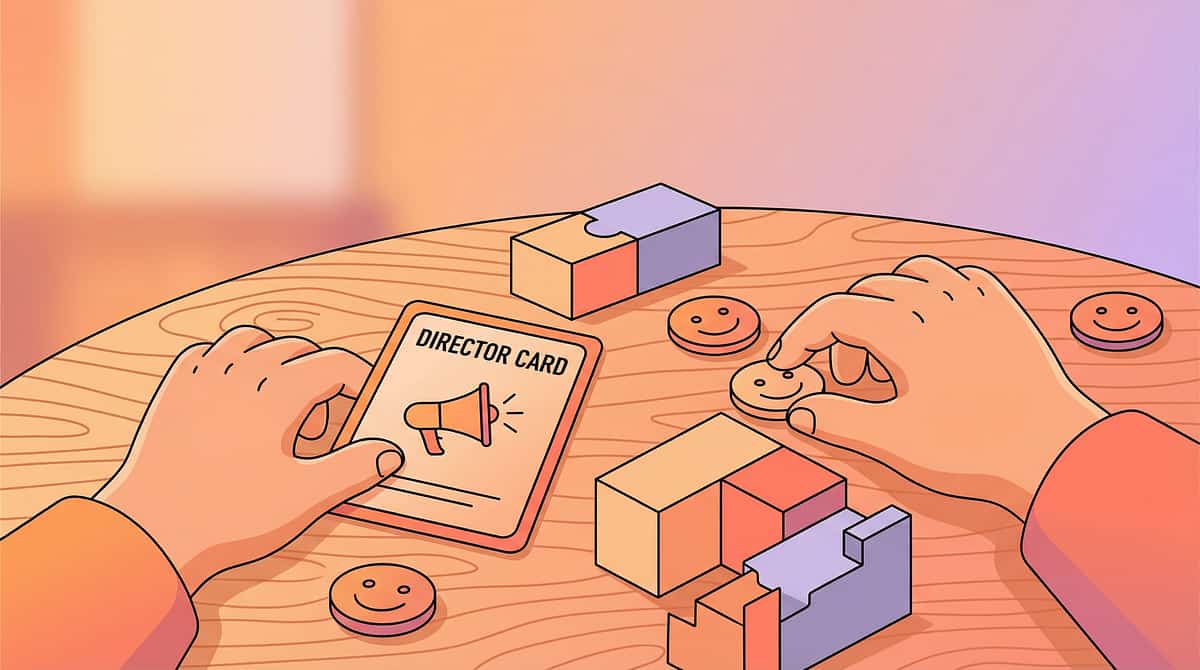
The Technique: Collaborative Play Flexibility Intervention
From Director to Collaborator
Multi-Material Protocol
A structured, multi-material intervention targeting the cluster of behaviors associated with excessive play control — where children must direct all play activities, cannot tolerate others leading, dictate every detail of pretend scenarios, and respond to loss of control with meltdowns or withdrawal.
This protocol uses 9 specifically selected therapeutic materials to address all six underlying mechanisms (anxiety, rigidity, ToM deficits, executive function, sensory sensitivity, skill gaps) simultaneously — transforming the child's relationship with collaborative play from threat to delight.
Domain
C — Emotional Regulation | Collaborative Play & Flexibility
Age Range
4–10 years
Duration
15–25 min/session
Frequency
3–5 sessions/week
Setting
Home | Clinic | School
Research: NCAEP (2020) | Greene, R.W. (2014) | Laugeson & Frankel (2010) | techniques.pinnacleblooms.org/emotional-regulation/bossy-play-collaborative-flexibility-c305

This Technique Crosses Therapy Boundaries
Because the brain doesn't organize by therapy type, effective intervention requires a coordinated, multi-disciplinary approach. Each professional brings a distinct lens — and together they address all six mechanisms driving bossy play behavior.
OT — Primary Lead
Addresses sensory-driven and executive function components. Selects materials that build cognitive flexibility. Manages sensory underpinnings via a sensory diet framework.
ABA / BCBA — Co-Lead
Designs the reinforcement architecture around collaborative behaviors. Runs token economy and reward systems. Conducts functional behavior assessment to identify controlling behavior's purpose.
SLP — Language Tools
Provides negotiation scripts, "Yes, and..." language, and perspective-taking narrative scripts. Builds the verbal toolkit for collaborative play.
SpEd — Scaffold Structure
Structures play activities for scaffold-based learning. Implements turn-taking systems in classrooms. Coordinates IEP goals around social flexibility.
NeuroDev Pediatrician
Screens for underlying anxiety disorders, OCD-type patterns, or ADHD executive function profiles. Determines whether pharmacological support is relevant.
Validated by All 5 Disciplines — Pinnacle Blooms Consortium® | Sources: DOI: 10.1080/17549507.2022.2141327 | WHO NCF 2018
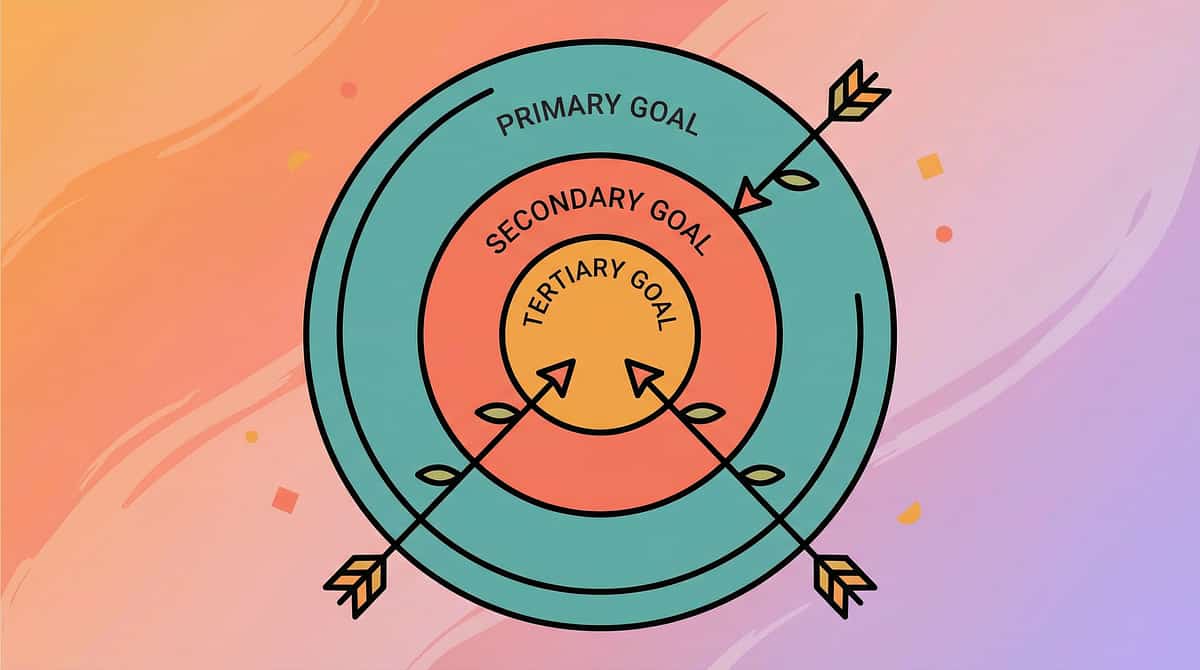
Precision Matters. This Is Not a Random Activity.
Every material and every step in this protocol maps to a specific therapeutic target. Understanding what you're aiming for — and why — transforms a parent from "doing an activity" into a skilled co-therapist.
Primary Target
Collaborative Play Flexibility — share leadership, accept peer ideas, negotiate play scenarios, tolerate unpredictability
Anxiety & Flexibility
Anxiety tolerance in unpredictable social situations. Cognitive flexibility (set-shifting in play contexts)
Theory of Mind
Recognizing others have different preferences. Peer relationship quality and friendship maintenance
Executive Function
Prefrontal regulatory capacity. Pragmatic language — negotiation, compromise, turn-taking language
Long-Term Gains
Social participation index, self-regulation mastery, academic collaboration readiness
Sources: PMC10955541 (Meta-analysis, 24 studies) | NCAEP 2020
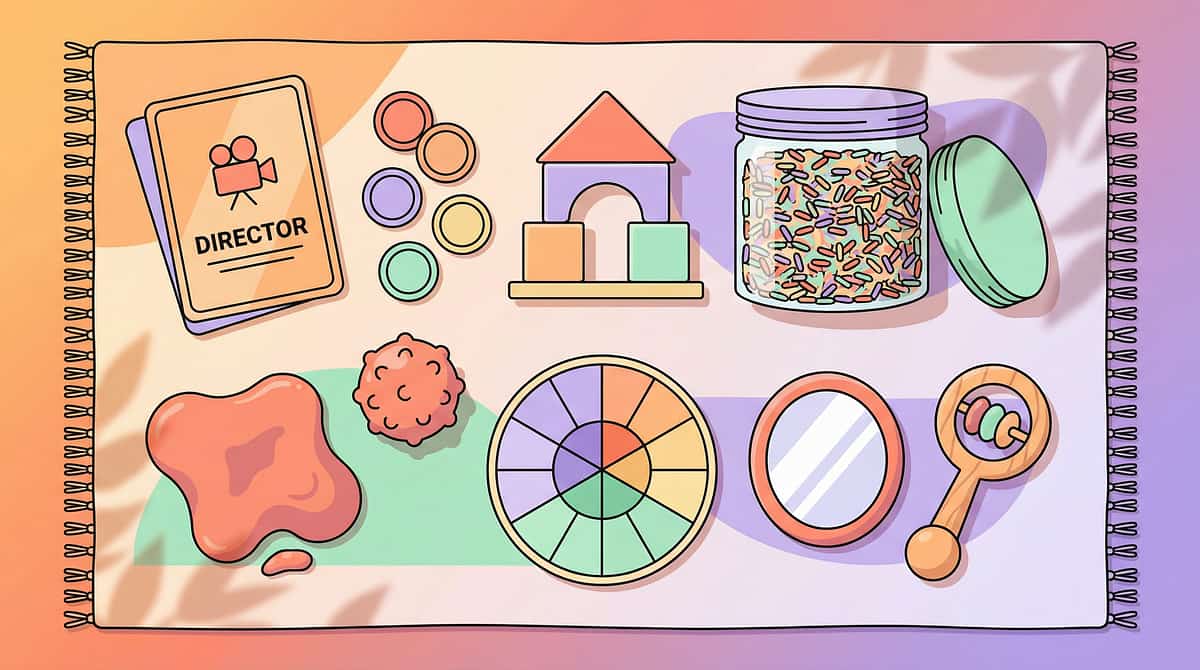
The 9 Materials — Everything You Need
⚡ Pinnacle Recommends
Clinically Validated Materials
These nine materials address all six underlying mechanisms simultaneously. Each one has been validated through 20M+ therapy sessions. Total investment: ₹1,400–4,200 for a comprehensive setup. Essential starters: Materials 1 + 3 + 5. 100% DIY available for Materials 1, 2, 5, and 9.
Turn-Taking Director Cards
Social Skills / Turn-Taking Systems — Makes leadership rotation visible and concrete. ₹150–400 | DIY ✓
Idea Contribution Tokens
Reinforcement Menus / Token Systems — Equal-value token system. Every player's contribution has identical worth. Rosette Reward Jar ₹589 →
Yes, And… Prompt Cards
Social Skills / Language Scripts — Improv-derived cards replacing "No" with "Yes, and..." ₹150–350 | DIY ✓
Flexible Thinking Games
Problem-Solving Toys — Built-in rule variations make flexibility feel fun. SHINETOY Shut The Box ₹428 →
Negotiation Script Cards
Social Skills / Communication Scripts — Ready-to-use phrases for finding middle ground. ₹150–400 | DIY ✓
Perspective-Taking Story Sets
Social Narratives / Story Sets — Shows bossy behavior from the controlled child's perspective. Activity Sticker Set ₹199 →
Collaborative Building Challenges
Problem-Solving Toys / Cooperative Construction — Neither child can complete structure alone. Monkey Minds Card ₹296 → | ₹300–800
Anxiety-About-Uncertainty Tools
Transition Objects / Calming Tools — Calming anchor for when play triggers anxiety. Soft Toy ₹425 →
Shared Success Reward Systems
Reinforcement Menus — Tracks collaborative behaviors explicitly. 1800+ Stickers ₹364 → | Rosette Jar ₹589

Every Family Can Start Today — Regardless of Budget
WHO Equity Principle
Household-material efficacy documented across 54 LMICs
Material | ₹0 DIY Version | Why It Works the Same | |
Director Cards | Cardstock + marker: "DIRECTOR" card passed between players | Same rotation mechanism — ownership is visual and physical | |
Idea Tokens | Buttons, coins, pebbles — one per player, equal count | Token economy principle: equal weight regardless of material | |
Yes, And Cards | Index cards hand-written: 6 "Yes, and..." starter phrases | Language prompt is identical regardless of material quality | |
Negotiation Scripts | Sticky notes on refrigerator: 4 key phrases | Accessibility and visibility matter more than presentation | |
Collaborative Challenge | Different-colored LEGO pieces per player | Forced interdependence is the mechanism — medium irrelevant | |
Perspective Stories | Parent-drawn 4-panel comic strips | Child engages MORE with personalized homemade stories | |
Reward Chart | Paper grid + sticker dots from any stationery shop | ABA reinforcement principles require visibility, not cost | |
Uncertainty Tools | Child's chosen stuffed animal + handwritten breathing card | Attachment object provides regulation regardless of origin | |
Flexible Games | Any existing game + 5 "New Rule!" cards added | Unpredictability in familiar context = safe stretch |
Sources: WHO NCF (2018) | PMC9978394 (CCD Package household materials efficacy)

Read This Before Every Session
Safety First
🔴 DO NOT PROCEED IF:
- Child is experiencing active meltdown or severe dysregulation
- Child is unwell, hungry, or overtired
- Child shows aggression when control is challenged — refer to specialist first
- Child's control behavior has spread to ALL contexts — requires professional assessment
- Parent/caregiver is in a highly stressed state
🟡 MODIFY THE SESSION IF:
- Child had a difficult day — use easier, shorter version
- Introducing a new material for the first time (max 5 min exposure)
- Peer playmate is also highly anxious or impulsive
- Child is showing early signs of building anxiety
🟢 PROCEED WHEN:
- Child is fed, rested, regulated
- Environment is prepared (see Card 12)
- Parent is calm and has read the protocol
- At least one peer or sibling is available
Material Safety Notes
- Token/coin materials: supervise if child is under 5 (choking consideration)
- Reward stickers: check for latex allergy
- Director cards: laminate if possible — durability increases usability
Absolute Red Line — Stop Immediately If:
- Child becomes physically aggressive during leadership transition
- Child experiences severe panic response (genuine distress, not frustration)
- Child completely shuts down and becomes non-responsive
When to Refer: Consult OT/Psychologist if underlying anxiety is severe | Behavior unresponsive after 4 weeks | Social isolation is complete | Control behaviors suggest OCD-type patterns.
📞9100 181 181 — FREE National Autism Helpline | DOI: 10.1007/s12098-018-2747-4
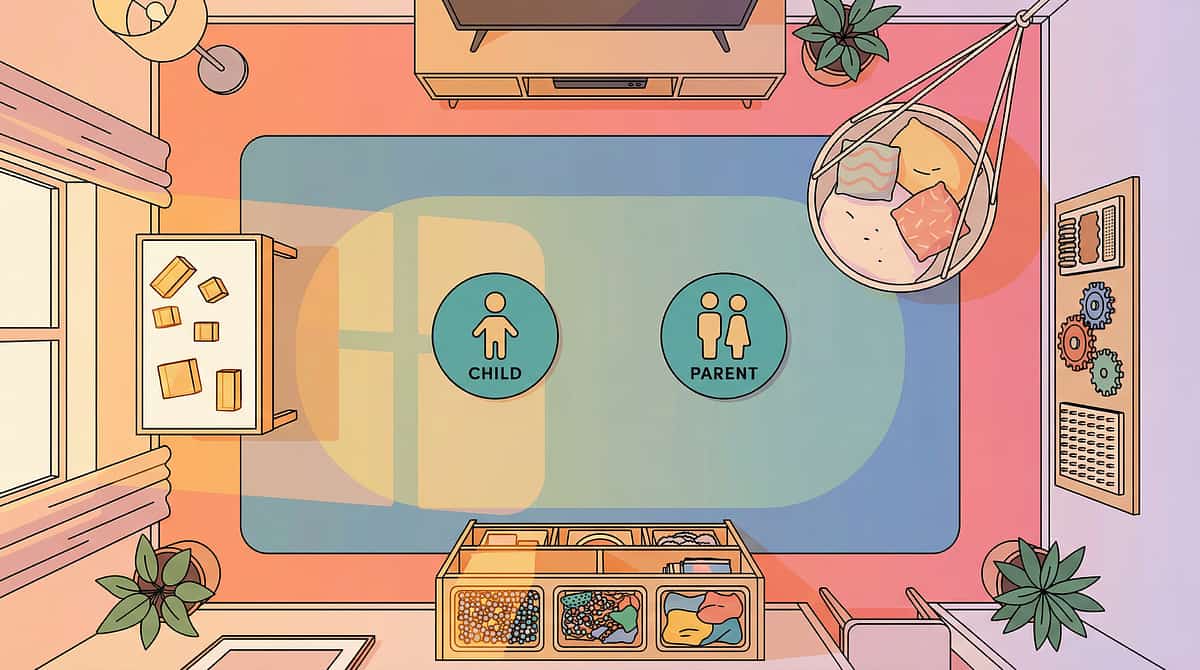
Spatial Precision Prevents 80% of Session Failures
Setup Checklist
- Comfortable seating at equal height
- Materials pre-selected and visible on table
- Visual timer placed where all players can see
- Director Card at center — clearly visible
- Comfort/coping tools within reach but to the side
- Phones silenced — screens removed
- Space is quiet — TV off, outside noise minimized
- Water and snack available nearby
Environment Details
- Lighting: Soft, warm — avoid overhead fluorescent
- Sound: Quiet background; soft instrumental optional
- Temperature: Comfortable — overheating increases irritability
- Parent Positioning: Beside the child, not opposite. Authority comes from alongside, not confrontation.
Sources: PMC10955541 (structured environment efficacy) | Ayres Sensory Integration Theory

The Best Session Is One That Starts Right
Readiness Check
Go / No-Go Decision Gate
Before beginning any session, run through this 7-point readiness check. The antecedent state determines up to 70% of intervention effectiveness. Never start when the indicators aren't there — a deferred session is better than a failed one.
Child has eaten in the last 2 hours
No major meltdown in the last 30 minutes
Child shows no signs of illness
Child is not in a demand-avoidant state
Child is not hyperfocused on a preferred activity
Parent/caregiver is calm and available for 20 minutes
Peer/sibling is available and also regulated
✅ 7/7 Checked
GO — proceed to Step 1
✅ 5–6/7 Checked
MODIFY — 5-minute session, Material 9 only
❌ Fewer than 5
POSTPONE — sensory-calming activity, reschedule in 60 min
ABA Principle: Antecedent manipulation and setting events determine 70% of intervention effectiveness.

Step 1 of 6 — The Invitation
Every Protocol Begins With an Invitation, Not a Command
"Hey, I've got something really cool — it's a game about being the DIRECTOR. Want to see how it works? You might even get to be the director first..."
Body Language
- Sit at the child's level — physically equal
- Relaxed, genuinely curious expression
- Materials visible but not yet presented
- No urgency, no pressure
What Acceptance Looks Like
- Child looks at materials with curiosity
- Child moves toward the activity area
- Child asks a question about the game
- Child makes eye contact (even briefly)
Handling Resistance
- "I don't want to" → "No problem, I'll just get it set up. You can watch."
- Ignores you → Set up materials anyway, play with them yourself, narrate with delight
- Walks away → Follow with materials, reduce demand: "Just look at this one thing"
- Grabs director card immediately → Perfect. Let them lead first. Don't correct.
Timing & ABA Principle
30–60 seconds for invitation sequence. Pairing procedure — establish therapist/materials as reinforcing before demand placement.
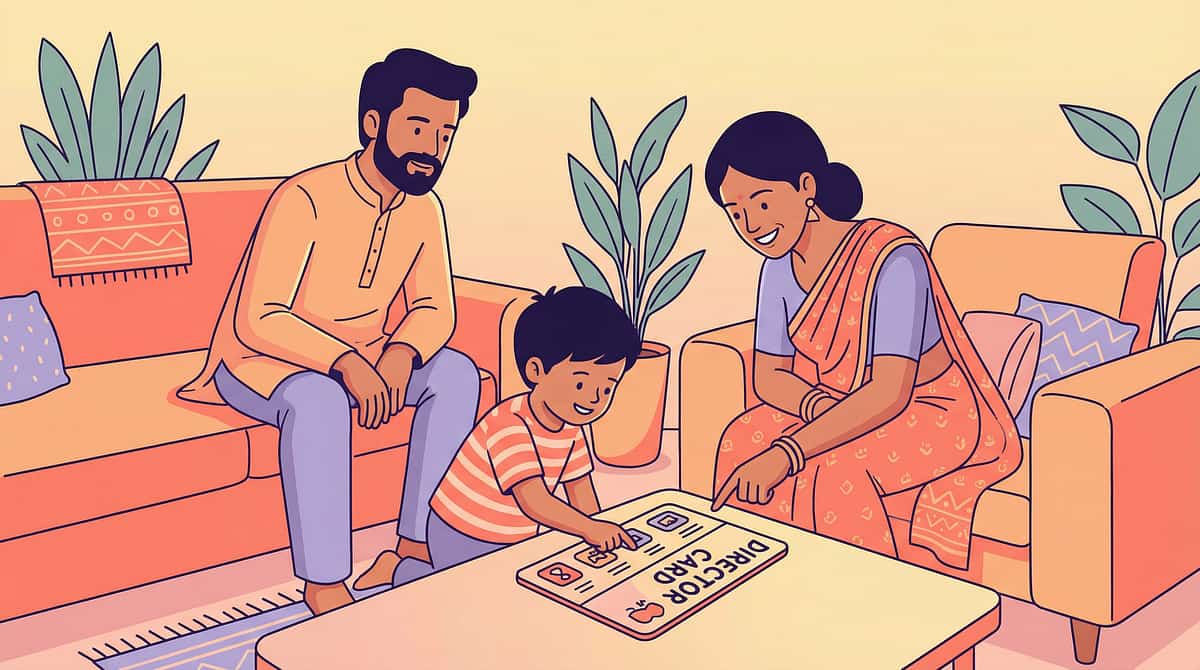
Step 2 of 6 — The Engagement
The Child Is Now In. Now Deepen It.
"In this game, whoever holds this gets to decide what happens next. Then we pass it. Want to hold it first?"
Allow the child to hold the Director Card. Let them experience the pleasure of legitimate leadership. Then introduce the concept: "And here's the magic rule: when the card moves, everyone follows the new director. Even me. Ready to try?"
🟢 Engagement
Asks questions, picks up materials, volunteers ideas → match their energy
🟡 Tolerance
Quiet, watching but not yet participating → gentle narrated play to model
🔴 Avoidance
Turns away, pushes materials → reduce demand, play alongside without expectation
Material Introduction — Pace and Manner: Present materials one at a time, not all at once. Speed: slow, deliberate — let child process each item. Place materials on table between you, not directly in front of child. Let child touch, examine, and hold materials before explaining.
Reinforcement Cue: When child holds director card — "I love how you're holding that card! Now YOU decide what we build first." | Timing: 1–3 minutes total | Source: PMC11506176
Step 3 of 6 — The Therapeutic Action
Here Is Where the Brain Learns — Slowly, Safely, Joyfully
What to Watch For
- Child's physiological response to passing the card — this is the data point
- Any protest is normal — acknowledge it: "I know it's hard to pass it. You were a great director. And it'll come back to you."
- If meltdown: pause, coping tool, restart with shorter director turns
Response Guide
- Ideal: Child passes card with mild protest, recovers within 60 seconds
- Acceptable: Significant protest but no meltdown escalation
- Concerning: Severe escalation — stop, recalibrate, refer if consistent
Duration: 8–12 minutes total
Source: PMC10955541 (40-min sessions maximum effectiveness; home sessions 10–20 min)
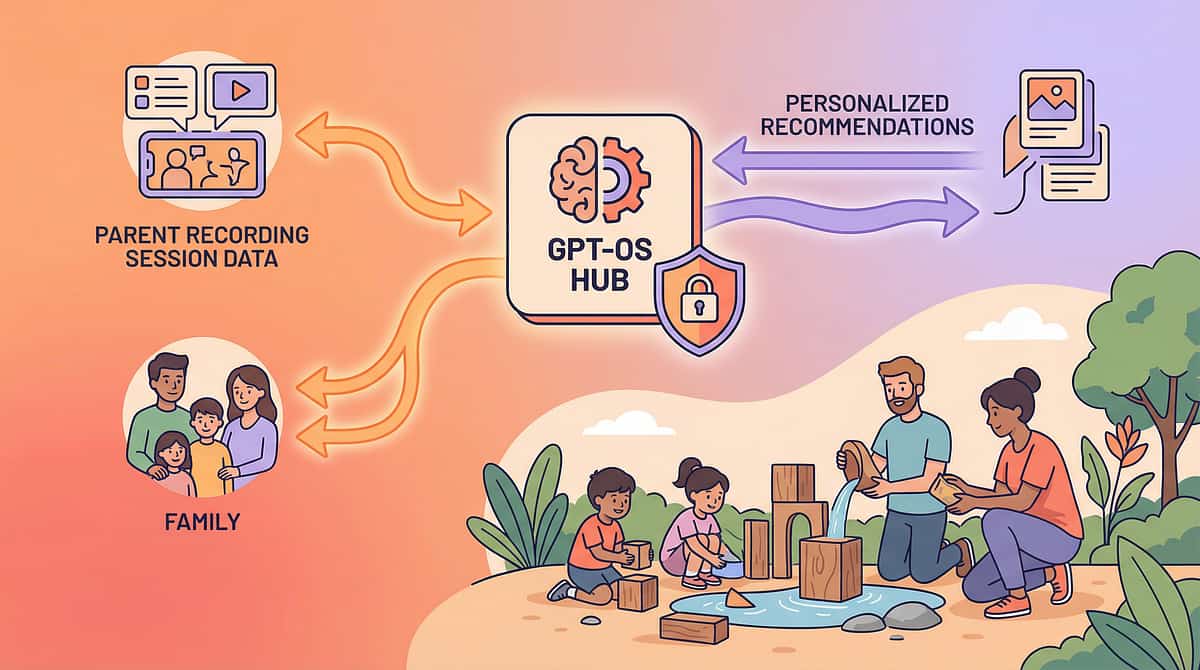
Step 4 of 6 — Repeat & Vary
3 Good Director Rotations Are Worth More Than 10 Forced Ones
Target Repetitions: 3–4 full rotations (each player directs at least once). Midway through session, introduce Idea Tokens: "Now everyone has 3 tokens. Each token = one idea that HAS to be included in the director's plan. Even the director's plan gets better with everyone's tokens!"
Rotation 1
Build something (blocks/LEGO)
Rotation 2
Pretend play scenario — director assigns story scene, not all roles
Rotation 3
Drawing challenge — director picks theme, everyone draws their version
Rotation 4
Real play scenario with all 9 materials in context (if going well)
Stop Rotating When:
- Child's engagement drops significantly
- Responses become mechanical rather than genuine
- Protests at card passing become more intense (not less) — overstimulation
- Time has exceeded 15 minutes of active protocol
Parent Note: If the first director rotation goes well — end there. Leave the child wanting more. Therapeutic dosage works by controlled exposure — not maximum exposure.

Step 5 of 6 — Reinforce & Celebrate
Timing Matters More Than Magnitude — Celebrate Within 3 Seconds
For Passing the Director Card
"That was HUGE. You passed the card. That's what real leaders do — they share the stage. I'm so proud of you."
For Accepting a Peer's Idea
"You said 'Yes, and!' You built on [peer's name]'s idea. That's exactly what the best collaborators do."
For Negotiating
"You found middle ground! You didn't demand AND you didn't give up. That's the skill. That's what we're building."
For Simply Tolerating (early stage)
"You stayed in the game even when it wasn't your turn to decide. That's the hardest thing and you did it. That's progress."
Reward Chart — Add Stickers NOW For:
Passed the director card ✓
Said "Yes, and..." ✓
Accepted peer's idea ✓
Negotiated instead of demanded ✓
ABA Principle: Immediate, specific reinforcement increases behavior frequency. Within 3 seconds is optimal. | BACB ethical reinforcement guidelines

Step 6 of 6 — The Cool-Down
No Session Ends Abruptly — The Transition Is Part of the Therapy
Transition Warning (1 minute before ending):"Two more minutes on the director card, then we're going to wrap up our collaboration session for today." Point to the visual timer — specificity reduces transitional anxiety.
If Child Resists Ending
"I know, it's fun. We'll do it again [specific time]. Let's mark it on the calendar right now so you know exactly when."
Do NOT say "we'll do it again sometime" — specificity is the antidote to transitional anxiety.
Transition Cue (Restore Agency)
"What would you like to do now? You choose."
Returning agency to child in a low-stakes context immediately after the therapeutic constraint is itself a therapeutic move.
Source: NCAEP (2020) — visual timer and transition supports as EBP for autism

Capture the Data — Right Now
Within 60 Seconds of Session End
Data captured consistently over 4 weeks shows the progression pattern your therapist uses to adjust the program. Without data, we're guessing. With data, we're navigating.
Director Card Rotations
How many director card rotations completed? [0] [1] [2] [3] [4+]
Card-Passing Response
[Meltdown] [Significant protest, recovered] [Mild protest, recovered] [Minimal protest] [Smooth transition]
"Yes, and..." Use
Did child use "Yes, and..." or accept a peer idea at least once? [Yes — spontaneously] [Yes — with prompt] [Not yet]
Track Against GPT-OS® Collaborative Play Flexibility Index:
Must-control-all-play
Tolerates brief other-leadership
Accepts peer ideas with support
Negotiates play collaboratively
Flexible leadership sharing
📞9100 181 181 — Share your data with a clinical advisor | ABA data-based decision making | GPT-OS® outcome tracking methodology

When It Doesn't Go as Planned
Every Challenge Is Data, Not Failure
What Happened | What It Means | What to Do | |
Child refused to pass director card at all | Turn duration too long; or anxiety higher than baseline today | Shorten "other-director" turns to 60 seconds; try again tomorrow | |
Child melted down at card passing | Exposure was too intense for current anxiety level | Step back to Material 9 only for 1 week; build tolerance slowly | |
Peer took over and child disengaged | Peer's energy was too overwhelming | Start with parent-as-peer before introducing another child | |
"Yes, and..." felt forced/mechanical | Child doesn't yet see the point | Add Perspective Stories (Material 6) first — empathy must precede skill | |
Child grabbed all tokens immediately | Understood the system; needs external limit | Adult holds all tokens; distributes one per turn | |
Reward chart didn't motivate | Chosen rewards aren't reinforcing | Run a preference assessment — let child choose from a menu of 10 options | |
Child did well in session but reverted in real play | Session learning not yet generalized | Increase session frequency; invite real peer to observe session before joining | |
Parents are inconsistent across household | Inconsistent implementation reduces impact | Share Card 37 family resources with all caregivers; schedule joint training |
📞9100 181 181 — Call if meltdown intensity is increasing across 3+ sessions | ABA troubleshooting and behavior function literature
No Child Is Average — Here Is How to Calibrate
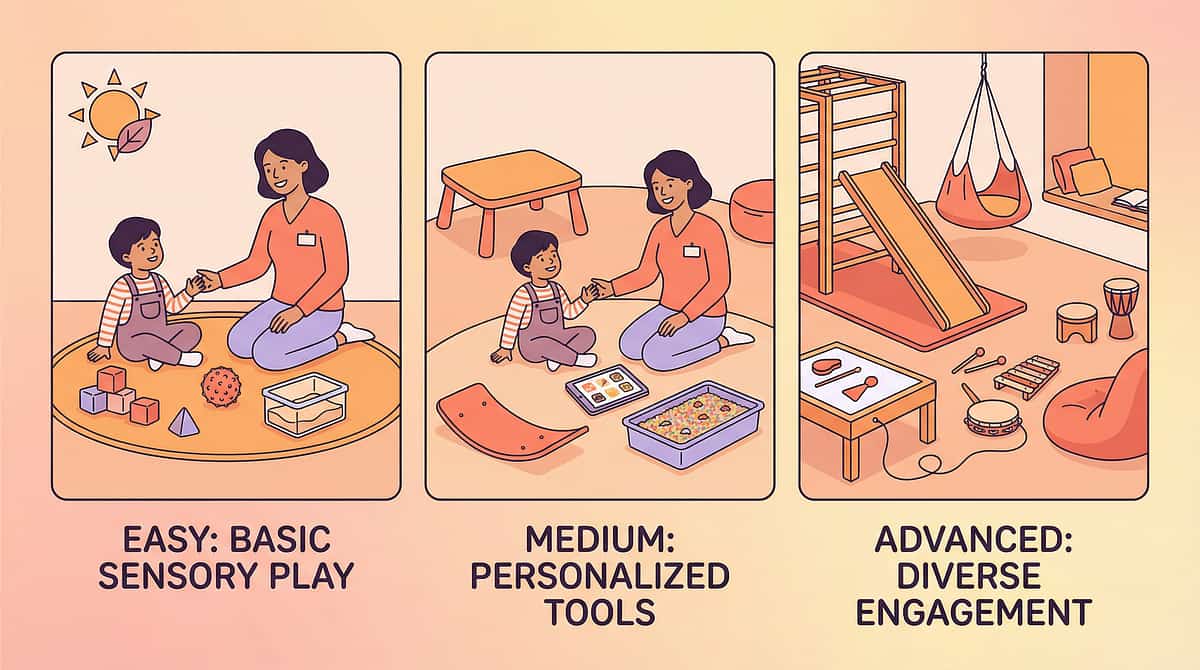
Personalize for Your Child
← Easier (Anxiety-Dominant)
- Director turns: 5 minutes each
- Only 2 players (parent + child — no peers yet)
- Focus on Materials 8 + 9 only
- "Yes, and..." used only by parent — child observes
- Session length: 10 minutes maximum
Standard (Skill-Deficit)
- Director turns: 3 minutes each
- 3 players (parent + child + 1 peer/sibling)
- All 9 materials available, rotate focus each session
- "Yes, and..." practiced with prompting
- Session length: 15–20 minutes
Harder → (Rigidity-Dominant)
- Director turns: 90 seconds each
- Peer-led play with adult observing only
- Novel scenarios introduced mid-play
- Child generates own "Yes, and..." responses
- Real-world generalization: community settings
Profile-Based Adaptations
Anxiety-Driven Control (ASD + Anxiety)
Lead with Material 8 (uncertainty tools) before any collaboration demand. Safety first.
Skill-Deficit (Never Learned Collaboration)
Lead with Materials 1 + 5 (director cards + scripts) — explicit teaching, not just opportunity.
Rigidity/Executive Function (ADHD, ASD)
Lead with Material 4 (flexible thinking games) — build cognitive flexibility before play flexibility.
Theory of Mind Gaps
Lead with Material 6 (perspective stories) — empathy and motivation must precede skill.

Week 1–2: Calibrate Your Expectations
Progress Arc — Phase 1
15% Progress
Specificity prevents disappointment. In weeks 1–2, you are not looking for smooth collaboration — you are looking for any reduction in threat response intensity. Every small sign is a measurable neurological event.
✅ TRUE PROGRESS — Look for These
- Child tolerates director card rotation with protest that resolves within 2 minutes (not 10)
- Child remains in the room during peer's director turn (even if disengaged)
- Child repeats "Yes, and..." phrase at least once (even if prompted)
- Post-session meltdown intensity is lower than pre-session baseline
- Child asks to do the activity again the next day
❌ NOT PROGRESS YET — These Come Later
- Spontaneous collaborative play (weeks 5–8)
- Smooth director card passing without protest (weeks 3–4)
- Child-initiated "Yes, and..." responses (weeks 3–4)
- Playing collaboratively with unfamiliar peers (weeks 8+)
"If your child tolerated the director card being passed just once without melting down — that is a measurable neurological event. The threat circuitry reduced its activation by even 10%. That's the first data point of a 97% improvement trajectory."
Source: PMC11506176 (8–12 week timelines for SI-related intervention outcomes)

Week 3–4: The Neural Pathway Is Forming
Progress Arc — Phase 2
40% Progress
Something real is happening in the brain. Repeated structured input is strengthening synaptic connections in the prefrontal-amygdala regulatory circuit. Here is how to recognize the emerging pattern.
Anticipates rotation
Child begins to look at the timer before it rings — they know the card is coming
Intrinsic motivation emerges
Child shows preference for specific collaborative games
Measurable protest reduction
Card-passing protest duration has decreased (e.g., from 5 min → 90 sec)
Spontaneous "Yes, and..."
Child uses the phrase without prompting at least once per session
Peer recognition
Child mentions a peer's contribution positively after the session
Self-initiated play
Child may spontaneously bring out the director card themselves
"You may notice you feel more confident too. The anxiety of facilitating these sessions has reduced. That's the parallel nervous system regulation that happens when you see progress."
If week 3–4 indicators are all showing → increase to 5x/week | If mixed → maintain 3x/week with easier adaptations | Source: neuroplasticity literature — pediatric synaptic strengthening
Week 5–8: The Behavior Is Shifting — From Protocol to Habit
Progress Arc — Phase 3
70% Progress
3–4 Smooth Rotations
Child transitions through multiple director rotations in a single session with minimal protest
"Yes, and..." Naturalized
Has become a natural language pattern — not just a prompted response
Spontaneous Negotiation
Child generates language independently: "What if we try yours first?"
Invites Peer Input
"What do you want to add?" — the director role is now shared by choice
Generalization
Collaborative play extends to non-session contexts — real play with actual peers
Generalization Checklist
- Child used collaborative language at school or with cousins
- Child accepted a peer's idea without prompting in real play
- Child chose a collaborative game without being prompted
- Child managed unexpected play change without meltdown
Source: PEERS Manual (Laugeson & Frankel, 2010) — generalization outcomes across social contexts

Your Child Is Now a Collaborator
🏆 Milestone Achieved
Collaborative Play Flexibility — Stage 3
Child accepts peer ideas with support and is progressing toward independent collaborative play.
You didn't just teach a child to share toys. You rewired the threat response in a developing nervous system. You gave your child the neurological infrastructure for friendship. For teamwork. For partnership — in everything that follows.
Share Your Milestone
WhatsApp your Pinnacle therapist | Log in GPT-OS® | Share with your family
Next Milestone
Stage 4 — Negotiates play collaboratively without adult help. Begin advanced protocol.
📞9100 181 181 — Tell us about your child's progress! Our clinical advisors track these milestones.

These Are the Signs That Require Professional Assessment Now
Red Flags
Home intervention is powerful — and it has clear limits. The following indicators mean the underlying mechanism requires professional assessment beyond what any home protocol can address. Trust these signs.
🚩 Red Flag 1
Complete inability to tolerate ANY peer input even after 4 weeks of consistent intervention
🚩 Red Flag 2
Physical aggression when control is challenged (hitting, scratching, biting during card passing)
🚩 Red Flag 3
Total social isolation — no play with ANY peer in ANY context
🚩 Red Flag 4
Control behavior spreading to ALL contexts — meals, transport, family conversations (not just play)
🚩 Red Flag 5
Severe distress responses (panic attacks, not frustration) when play deviates from their plan
🚩 Red Flag 6
Control behaviors that resemble OCD patterns (rituals, compulsive checking, magical thinking)
🚩 Red Flag 7
Meltdown intensity is INCREASING across sessions rather than decreasing
📞9100 181 181 — If any of the above, stop home protocol and call immediately. Assessment involves AbilityScore®, anxiety screening, EF evaluation, FBA, and multidisciplinary planning. | DOI: 10.1007/s12098-018-2747-4
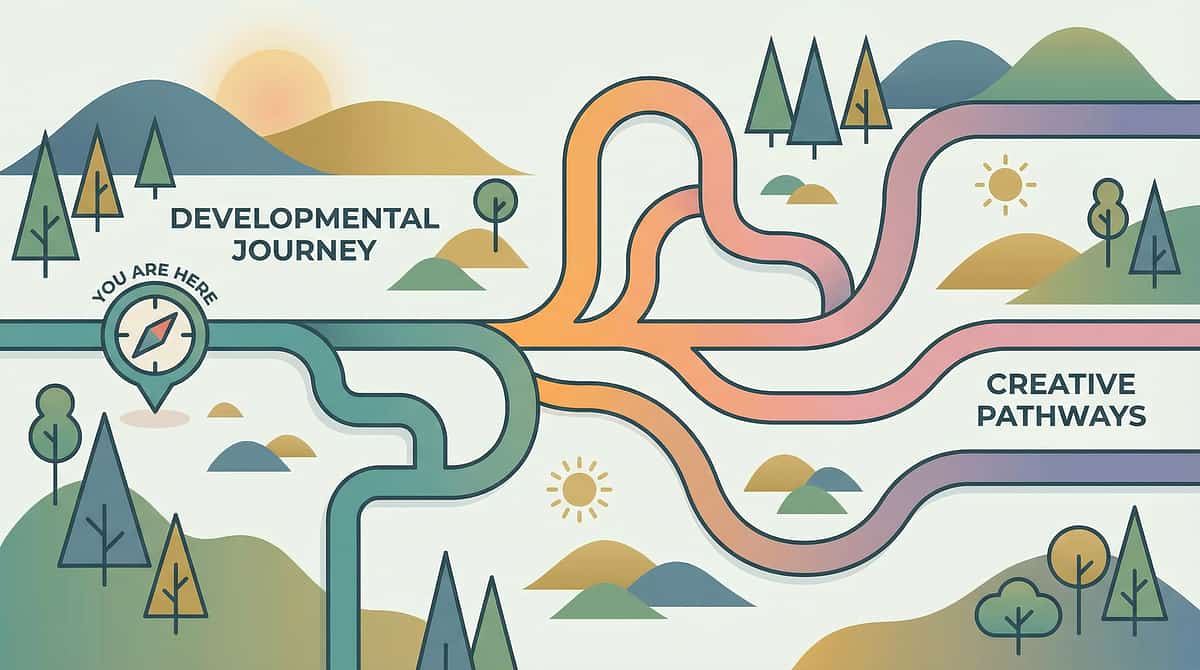
This Technique Is One Step in a Developmental Journey
Your Child's Progression Pathway
C-303
Parallel Play Only
C-304
Difficulty Joining Group Play
C-305 ← YOU ARE HERE
Bossy in Play — Collaborative Flexibility
C-306
No Imaginative Play — Creative Co-Construction
C-307
Quits When Not Winning — Competitive Regulation
Strong Response (Stage 4–5)
→ C-306: No Imaginative Play
→ C-307: Quits When Not Winning
→ C-307: Quits When Not Winning
Partial Response (Stage 2–3)
→ B-220: Rigid Thinking Patterns
Continue C-305 with advanced materials
Continue C-305 with advanced materials
Minimal Response (Stage 1)
→ Refer to Pinnacle center for formal assessment
📞 9100 181 181
📞 9100 181 181
Long-term developmental goal: Full collaborative play flexibility → Academic collaboration → Workplace teamwork → Partnership skills for life | Source: WHO Developmental Milestones Framework
You Already Have the Materials — Here Are More Techniques That Use Them
Related Techniques in Domain C
Technique | Code | Level | Materials You Already Own | |
Parallel Play Only | C-303 | Intro | Director Cards | |
Difficulty Joining Group Play | C-304 | Intro | Negotiation Scripts | |
Bossy in Play ← YOU ARE HERE | C-305 | Core | All 9 Materials | |
No Imaginative Play | C-306 | Core | Yes, And Cards + Perspective Stories | |
Quits When Not Winning | C-307 | Core | Flexible Thinking Games + Reward Chart | |
Difficulty with Turn-Taking | C-310 | Intro | Director Cards + Tokens |
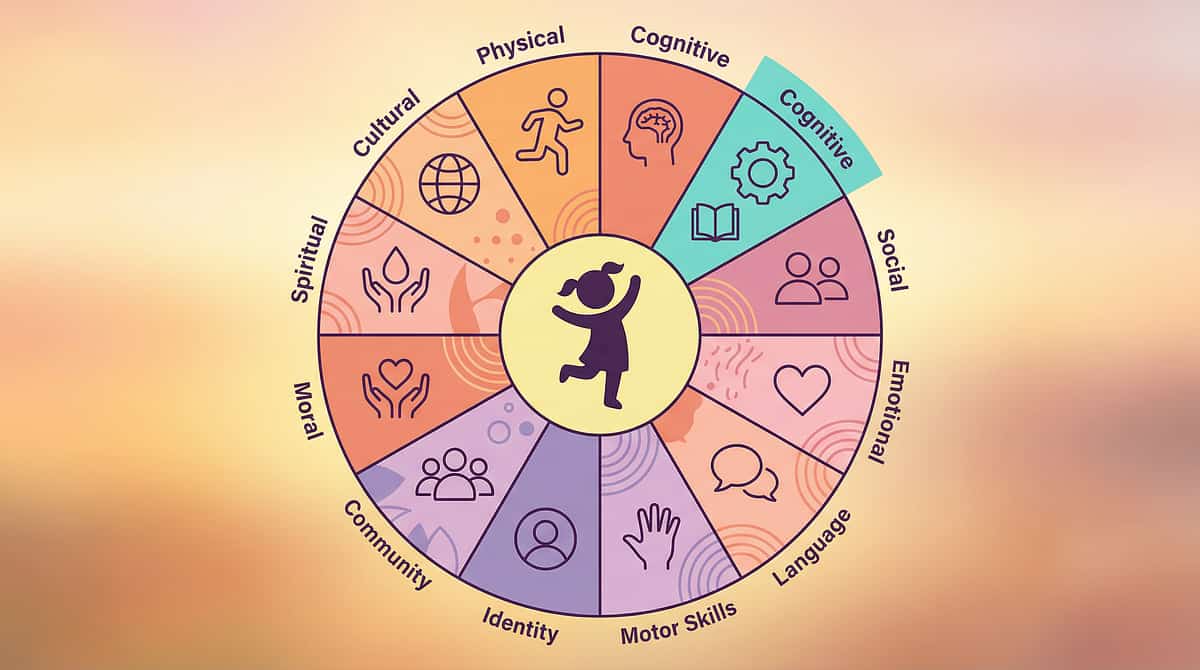
C-305 Is One Piece of Your Child's Complete Developmental Landscape
12-Domain Developmental Map
Every child has a unique developmental profile spanning 12 domains. C-305 targets Domain C (Emotional Regulation) directly, but progress here ripples across multiple connected domains. Use GPT-OS® to see your child's full AbilityScore® picture.
Domain | Area | Status for Most C-305 Users | |
A | Sensory Processing | Often affected | |
B | Social Communication & Pragmatic Language | Often affected | |
C | Emotional Regulation | ← Active Domain (C-305) | |
D | Autism/Behavioral | May overlap | |
E | Gross Motor | Usually intact | |
F | Fine Motor | Usually intact | |
G | Cognitive | Executive Function gap likely | |
H | Language | Pragmatics gap likely | |
I | Play Skills | Direct target of C-305 | |
J | Daily Living | May need support | |
K | Academics | Collaboration skills gap likely | |
L | Wellbeing | Often affected by isolation |
📞9100 181 181 — Request a full AbilityScore® Assessment | Source: WHO/UNICEF Nurturing Care Framework — 5 components require holistic developmental monitoring | pinnacleblooms.org/ability-score-assessment
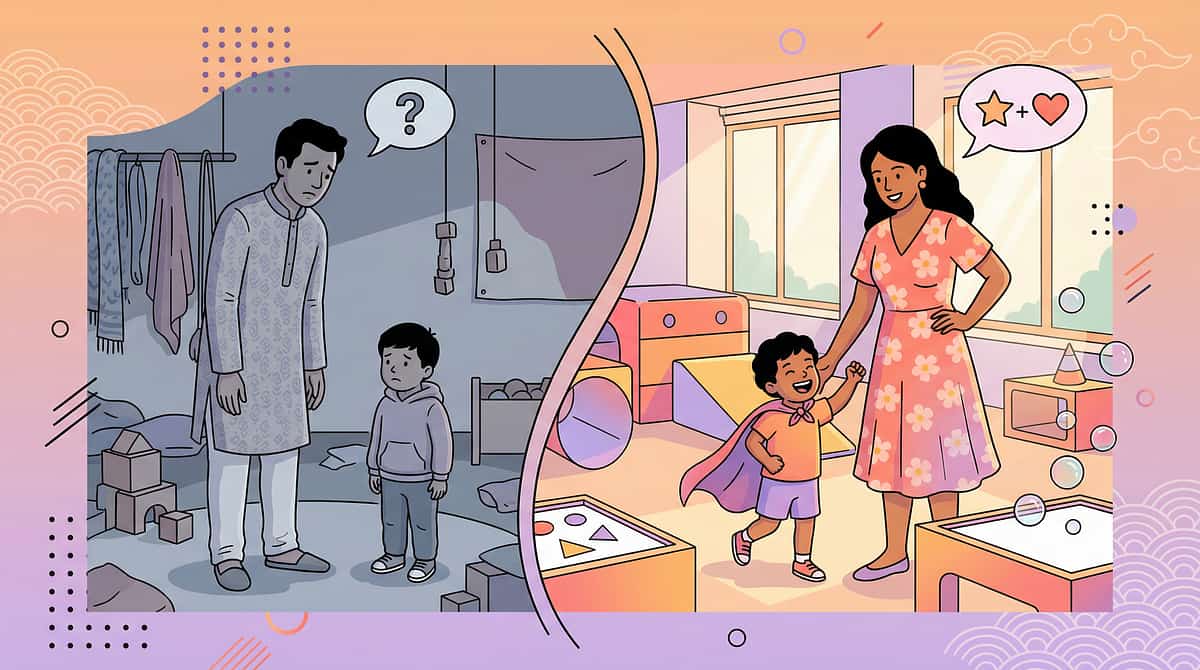
Real Parents. Real Progression. Real Data.
Voices From the Community
"He let his friend choose the game AND didn't melt down. Then he said 'That was actually fun.' We couldn't believe it."
— Parent, Pinnacle Network
Social Participation Index — Stage 3 achieved | Week 6
"We used the director card for 4 weeks and it changed everything. Now she voluntarily passes it. She even said 'Your turn to decide!' to her cousin. I cried."
— Mother, Pinnacle Hyderabad Center
Collaborative Play Flexibility — Stage 4 | Week 9
"The 'Yes, and' card seemed silly at first. Now my son uses it naturally. His teacher called me to say he'd started accepting his classmates' ideas in group projects."
— Parent, GPT-OS® EverydayTherapyProgramme™
School generalization confirmed | Week 12
Illustrative cases. Outcomes vary by individual child profile. Results shown represent aggregate outcomes across Pinnacle Blooms Network®. Verified Clinical Outcomes — Pinnacle Blooms Network®
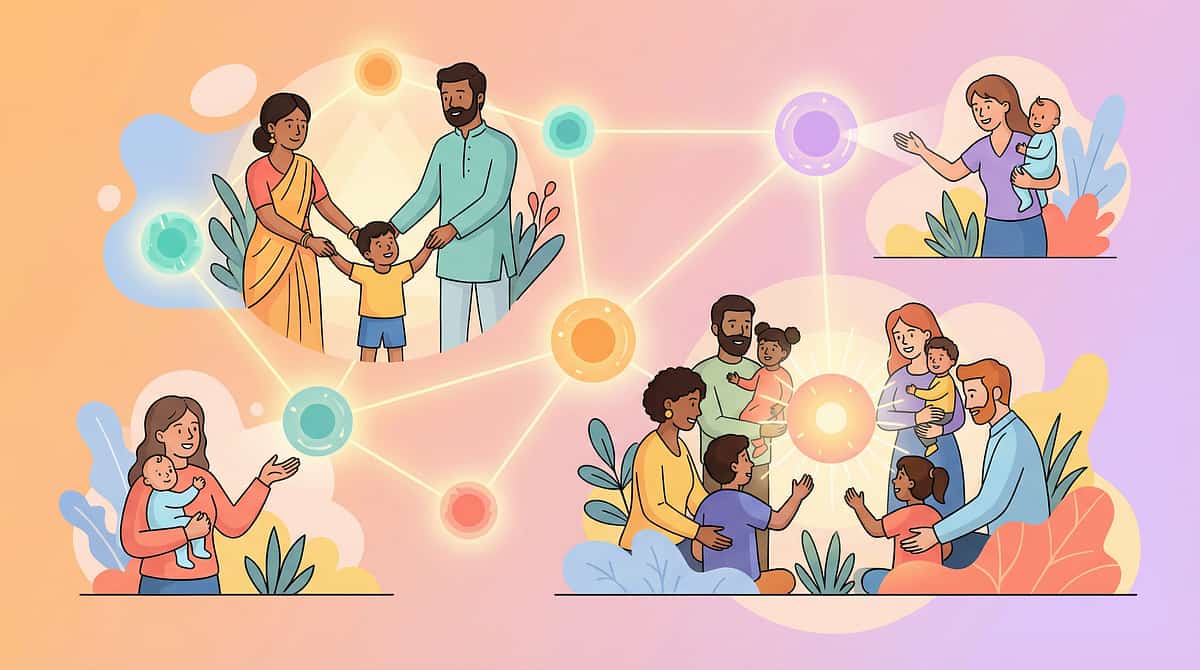
You Don't Have to Navigate This Alone
Connect With Your Community
Join thousands of families working on collaborative play and social flexibility challenges across India and 70+ countries. The Pinnacle community connects parents who are at every stage of this journey — including families 6–12 months ahead who can offer real, experienced guidance.
Pinnacle Parent WhatsApp Community
Real-time peer support from families working through the same challenges across all 12 domains.
EverydayTherapyProgramme™
Your child's personalized daily plan — integrating home practice with center-based therapy through GPT-OS®.
GPT-OS® Family Portal
Track your child's progression digitally. See AbilityScore® updates. Connect with your therapist in real time.
Pinnacle Center Near You
80+ centers across India. Find in-person support for assessment, FusionModule™ therapy, and parent training.
📞9100 181 181 — FREE. 24x7. 18+ languages. Your first call is the first step. | pinnacleblooms.org
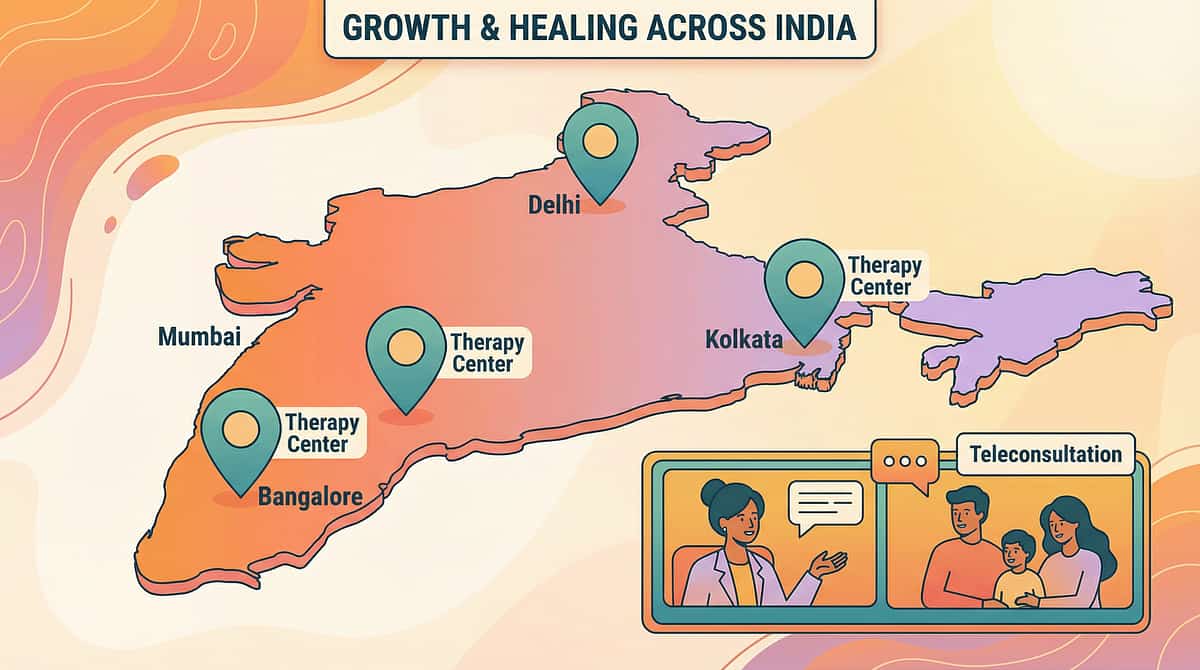
80+ Centers Across India — One Near You
Pinnacle Centers
Professional Support
Services Relevant to C-305
- Occupational Therapy
- ABA Therapy
- Psychological Counseling
- Social Skills Training
- Group Play Therapy
- Parent Training
- EverydayTherapyProgramme™
Statutory Identifiers
CIN: U74999TG2016PTC113063
DPIIT: DIPP8651
GSTIN: 36AAGCB9722P1Z2
MSME Registered
DPIIT: DIPP8651
GSTIN: 36AAGCB9722P1Z2
MSME Registered
Book Your Assessment
The Research Library
Deeper Reading for the Curious and the Determined
NCAEP 2020 — National Clearinghouse for Autism Evidence and Practice
Comprehensive review of evidence-based practices for autism. Establishes Level I evidence for structured play interventions.
Greene, R.W. (2014) — The Explosive Child
Collaborative Problem Solving model. Foundational framework for flexibility-building in rigid-thinking children.
PMC11506176 — Peer Play Flexibility in ASD
Systematic review confirming structured turn-taking interventions improve collaborative play outcomes across ages 4–10.
PMC10955541 — Anxiety and Play Control
RCT demonstrating anxiety-driven controlling behavior responds to graduated exposure through structured play protocols.
WHO UNICEF Joint Statement 2023 — Caregiver-Mediated Interventions
Global evidence base for parent-delivered therapeutic interventions in low-resource settings.
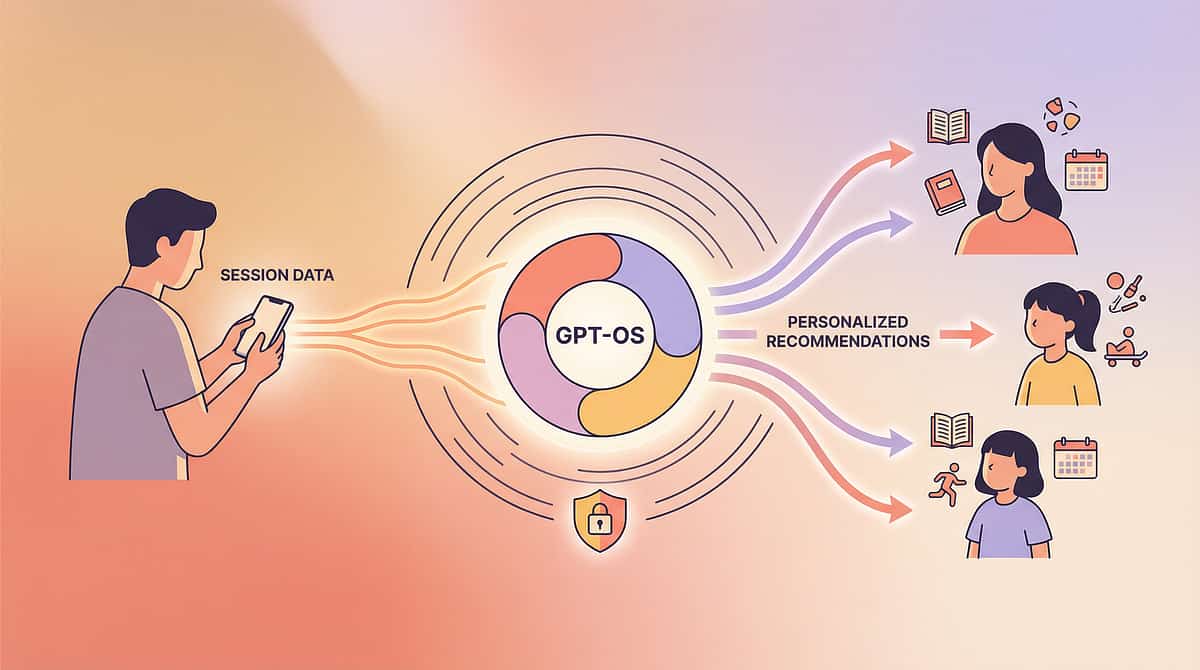
Your Sessions Feed the Most Advanced Pediatric Therapeutic Intelligence in the World
How GPT-OS® Uses Your Data
AbilityScore®
Tracks Collaborative Play Flexibility across sessions
TherapeuticAI®
Adjusts director card rotation time based on response data
FusionModule™
Coordinates OT + ABA + SLP components of this technique
EverydayTherapy™
Delivers daily micro-practice recommendations
Prognosis Engine
Predicts trajectory toward Stage 4–5 collaborative flexibility
"Your data helps every child like yours."
Privacy: ISO/IEC 27001 Information Security compliant. Data used to personalize your child's plan only. | Source: Digital health + ASD systematic reviews (2024) | 21 RCTs, 1,050 participants | 📞 9100 181 181 | pinnacleblooms.org/gpt-os
Watch the 75-Second Reel That Started This Journey
Social Play Solutions — Episode 305
9 Materials That Help When Child is Bossy in Play
"No, you have to do it THIS way!" — 9 materials that teach children to share the stage.
Hook
Child directing play with megaphone — peers drifting away
Materials 1–9
Rapid introductions — 4–5 seconds each with visual demonstration
CTA
Save for your collaboration journey | Share with your child's therapist
GPT-OS® Closure
Real-world evidence | Pinnacle Platform integration
FREE Helpline
📞 9100 181 181 — Full-screen close
Related Reels in This Series
C-303
Parallel Play Only
C-304
Difficulty Joining Group Play
C-306
No Imaginative Play
C-307
Quits When Not Winning
Source: NCAEP (2020) — video modeling as EBP for autism | Multi-modal learning improves parent skill acquisition
Consistency Across Caregivers Multiplies Impact
Share This With Your Family
Share Buttons
📱 WhatsApp
Pre-formatted message: "This page helped me understand why [child's name] controls all play — and what to do about it. 9 materials that actually work: techniques.pinnacleblooms.org/c305"
📥 Family PDF Guide
Download 1-Page PDF — "How to Support C-305 Collaborative Play Work at Home." Simple enough for grandparents and school teachers.
Explain to Grandparents
"[Child's name] is learning to share the lead in games. When it's not their turn to be in charge, they're practicing staying calm. If they protest, acknowledge the feeling but don't give them back the control. The protocol is working."
Teacher Communication Template
"Dear [Teacher], [Child's name] is currently working on collaborative play flexibility. In class, these supports help: allow brief planning time before group work | praise acceptance of peers' ideas immediately | use a visual turn-taking system during group activities. Thank you."
📞9100 181 181 — FREE. 24x7. All caregivers can call. | Source: PMC9978394 (WHO CCD Package — multi-caregiver training for generalization)
Everything You Were About to Ask
Frequently Asked Questions
Is my child being intentionally difficult?
No. Controlling play behavior is almost never intentional defiance. It is anxiety, skill deficit, cognitive rigidity, or sensory sensitivity — wearing a director's hat. The child who controls everything is usually the child who is most afraid of what happens when they don't.
Will this work even if my child isn't autistic?
Yes. These materials address the underlying mechanisms regardless of diagnosis. Bossy play behavior occurs across ASD, ADHD, anxiety disorders, and typical developmental variation.
My child is 9 — is it too late?
Absolutely not. Cognitive flexibility and collaborative skills continue developing through adolescence. Neural pathways are still highly plastic at age 9–12. Starting now is exactly right.
How long until I see results?
Weeks 1–2: Reduced meltdown intensity. Weeks 3–4: Spontaneous "Yes, and..." use. Weeks 5–8: Generalization to real play. Week 12+: Flexible leadership sharing. Consistency is the single biggest predictor.
What if both children in the play group are bossy?
Use the director card with all players equally. Add the token system so no child can monopolize contribution. External structure removes the power struggle — neither child has to "lose face" to the other.
My child refuses all materials. What now?
Start with Material 9 only (reward chart) — just observation. Track collaborative moments that happen naturally. Then slowly introduce Material 3 (Yes, and cards) in a non-play context like planning a snack.
Can I do this alongside ongoing therapy?
Yes — and you should. Share this page with your OT/ABA/SLP. This protocol is designed to extend and reinforce center-based therapy. The EverydayTherapyProgramme™ via GPT-OS® formally integrates home and center practice.
When should I involve a professional?
Call 📞9100 181 181 if: behavior is worsening after 4 weeks | physical aggression is present | social isolation is complete | control behavior resembles OCD patterns | you're unsure about the underlying mechanism.
You Have Everything You Need. The Only Remaining Question Is: When Do You Start?
20M+
1:1 Sessions
Therapy sessions delivered by Pinnacle Blooms Network®
97%+
Measured Improvement
Across Social Participation Index outcomes
80+
Centers
Across India and 70+ countries
👁 OT
💬 SLP
🧩 ABA
📚 SpEd
🧠 NeuroDev
👨👩👧 Parents
Medical Disclaimer: This content is educational. It does not replace assessment by a licensed psychologist, occupational therapist, or behavioral specialist. Bossy behavior in play may reflect autism spectrum disorder, anxiety, ADHD, or other conditions requiring assessment. Some controlling behavior is developmentally typical in early childhood. Individual results vary. Consult qualified professionals for personalized guidance.
Preview of 9 materials that help when child is bossy in play Therapy Material
Below is a visual preview of 9 materials that help when child is bossy in play therapy material. The pages shown help educators, therapists, and caregivers understand the structure and content of the resource before use. Materials should be used under appropriate professional guidance.


Link copied!

From Fear to Mastery. One Technique at a Time.
Pinnacle Blooms Consortium®
OT · SLP · ABA/BCBA · SpEd · NeuroDev · CRO · WHO · UNICEF · Parents
"We exist to transform every home into a proven, scientific, 24x7, personalized, multi-sensory, multi-disciplinary integrated therapy center — for every child, in every country, at every economic level. From fear to mastery. One technique at a time."
When a parent arrived at Card 01, they were confused and exhausted. They leave this page with the science, the materials, the protocol, the data system, and the community to begin changing their child's developmental trajectory today.
← Return to Start
Card 01 — The Recognition Moment
→ Next Technique
C-306: No Imaginative Play
Browse Domain C
All Emotional Regulation Techniques
Browse All 999
techniques.pinnacleblooms.org
Statutory Identifiers
Pinnacle Blooms Network® | Unit of Bharath Healthcare Laboratories Pvt. Ltd.
CIN: U74999TG2016PTC113063 | DPIIT: DIPP8651 (Govt. of India) | MSME Registered
GSTIN: 36AAGCB9722P1Z2 | ISO 13485 (Medical Device QMS) | ISO/IEC 27001 (Information Security)
CIN: U74999TG2016PTC113063 | DPIIT: DIPP8651 (Govt. of India) | MSME Registered
GSTIN: 36AAGCB9722P1Z2 | ISO 13485 (Medical Device QMS) | ISO/IEC 27001 (Information Security)
© 2025 Pinnacle Blooms Network®, unit of Bharath Healthcare Laboratories Pvt. Ltd. All rights reserved.
Technique Code: C-305 | techniques.pinnacleblooms.org/emotional-regulation/bossy-play-collaborative-flexibility-c305
Technique Code: C-305 | techniques.pinnacleblooms.org/emotional-regulation/bossy-play-collaborative-flexibility-c305
📞 9100 181 181
FREE National Autism Helpline | 24x7 | 18+ languages
Medical Disclaimer
Educational content only. Not a substitute for professional evaluation. Bossy behavior in play may reflect autism spectrum disorder, anxiety, ADHD, or other conditions requiring assessment. Some controlling behavior is developmentally typical in early childhood. Results vary based on individual factors. Consult qualified professionals for personalized guidance. © 2025 Pinnacle Blooms Network® All Rights Reserved.