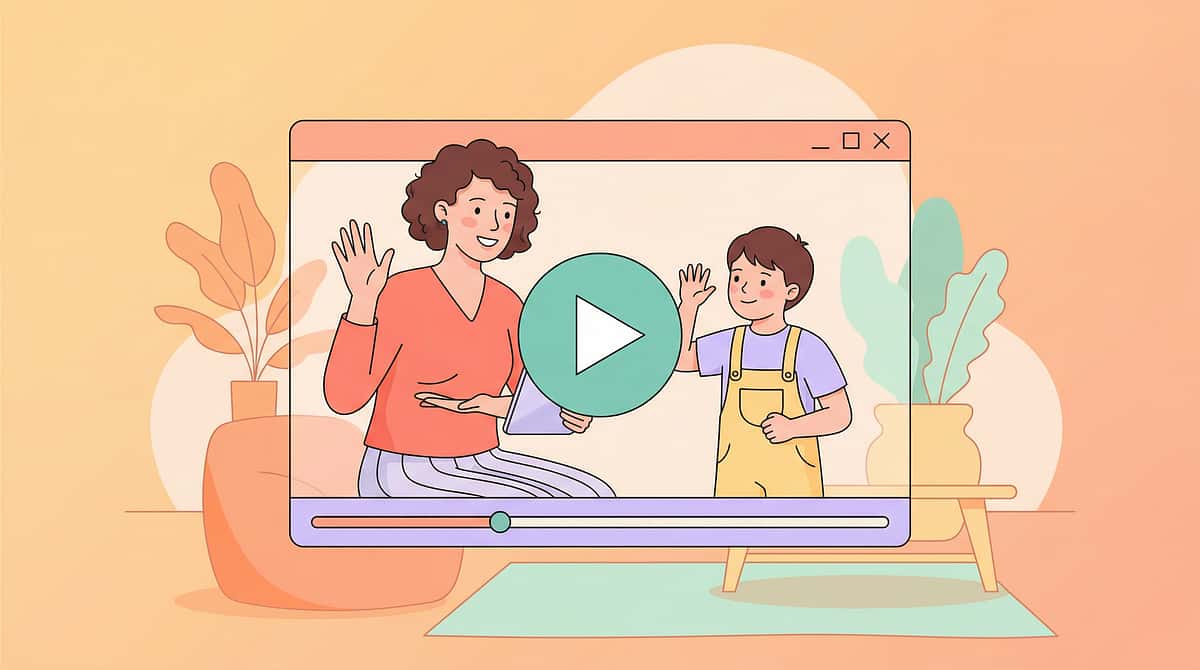
Why Won't They Wave Back?
Building Your Child's First Symbolic Social Gesture — 9 evidence-based therapy materials to teach waving, designed for home use by the Pinnacle Blooms Consortium.
B-124
Ages 9–24 Months
Early Social Communication
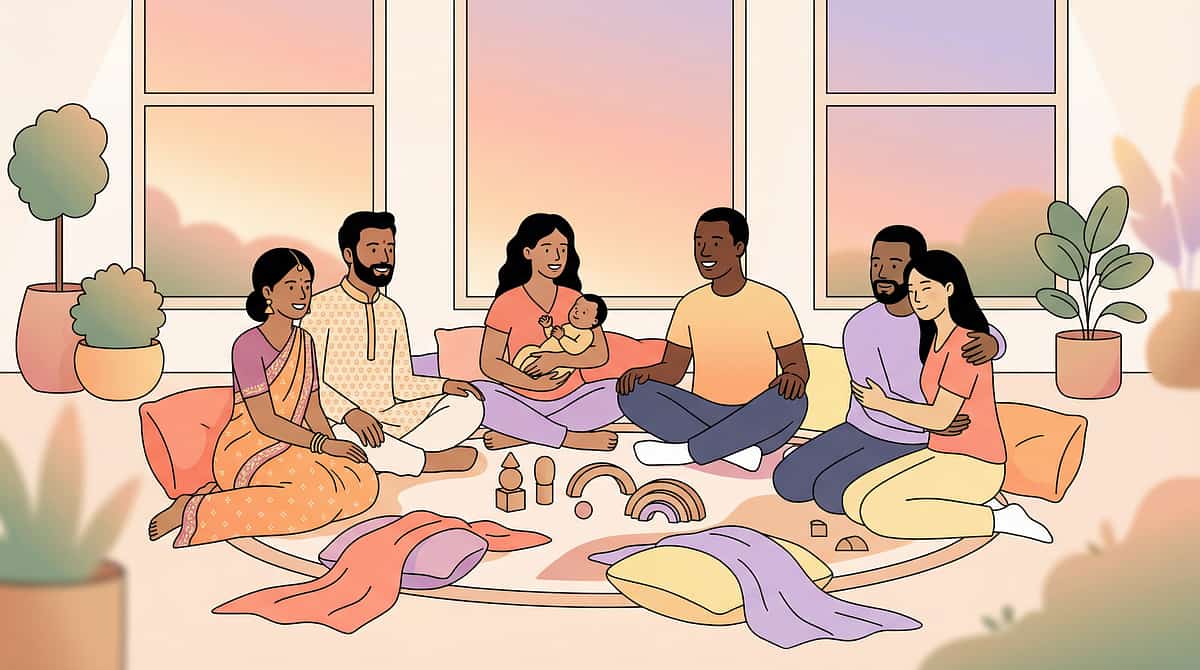
You Are Not Alone
Millions of families worldwide are navigating this exact moment — the wave that hasn't come yet. The numbers tell a story of shared experience, not isolation.
1 in 36
Children Globally
Diagnosed with autism spectrum disorder worldwide (CDC, 2024). Social gesture delays — including absent waving — are among the earliest observable indicators, appearing before 12 months.
1 in 100
Children in India
Estimated to be on the autism spectrum (INCLEN Study, Lancet Global Health). With 26 million births annually, approximately 260,000 Indian families each year may navigate this exact moment.
9–12
Months: Wave Emerges
Waving typically emerges between 9–12 months. Absence of conventional gestures by 12 months, combined with limited pointing and showing, is a significant early marker for social communication differences.
You are among millions of families worldwide navigating this exact challenge. The fact that you're here means your child already has their greatest advantage — a parent who noticed, who searched, and who is ready to act.
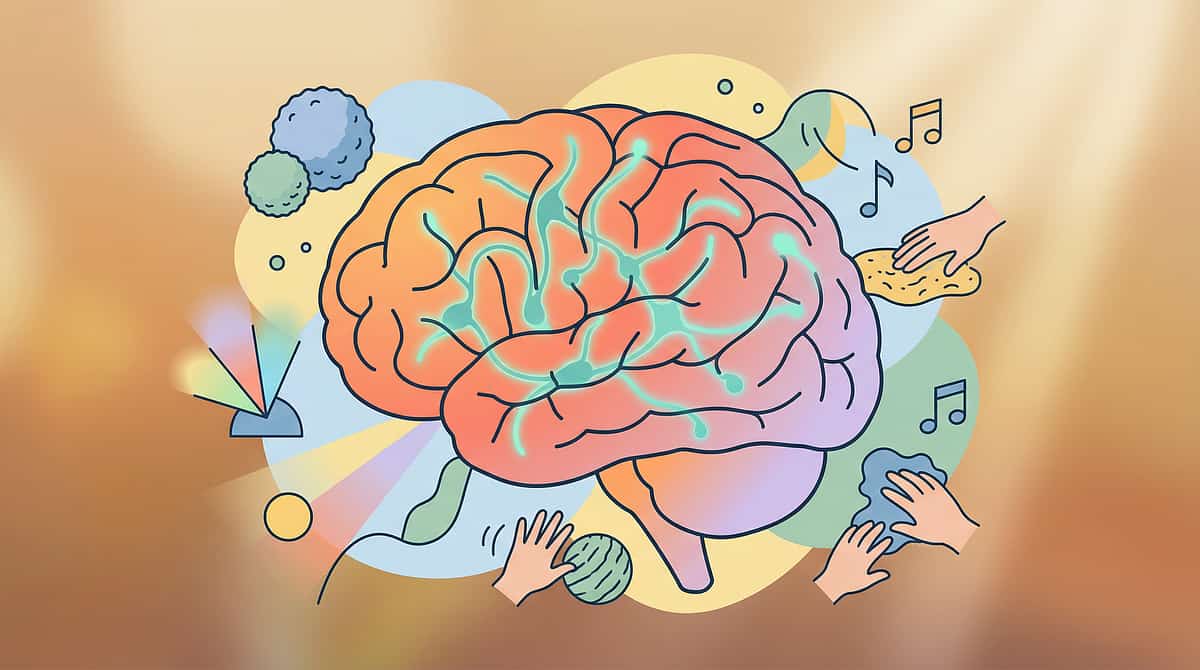
What's Happening in Your Child's Brain
Waving looks simple. It isn't. Here's what your child's brain needs to coordinate — and why it can be genuinely hard:
The Mirror Neuron System
When your child watches you wave, specialized brain cells called mirror neurons should "fire" as if they themselves were waving. In children with social communication differences, this mirror system may respond differently — they see the movement but don't automatically feel the impulse to copy it.
The Superior Temporal Sulcus
This brain region processes biological motion — the difference between a hand waving (social signal) and a branch moving in wind (not social). Your child may be processing your wave as "interesting movement" rather than "social message directed at me."
The Premotor Cortex
Even when the child understands the gesture, their motor planning system must translate "I want to wave" into raise arm → open hand → move hand side-to-side. Motor planning challenges (dyspraxia) can make this translation difficult.
Parent Translation: This is a wiring difference, not a behavior choice. Your child isn't ignoring you — their brain is processing the gesture through a different pathway. The 9 materials we'll introduce work by strengthening each of these neural connections: imitation, social understanding, and motor execution.
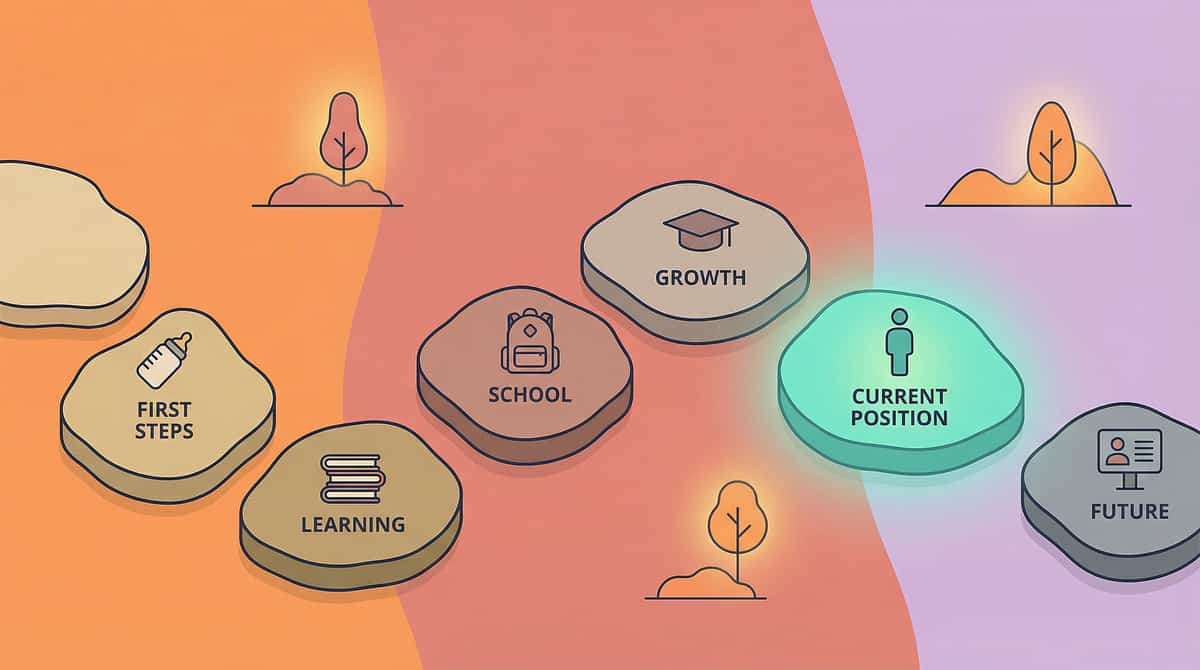
Where This Sits in Development
Waving is your child's first conventional gesture — a movement with a shared social meaning. Here's the full developmental arc, and where your child is right now.
Age | Gesture Milestone | Status | |
6–8 months | Reaches toward objects and people | Foundation | |
8–10 months | Begins showing objects to others | Pre-gesture | |
9–12 months | Waving emerges as first conventional gesture | YOUR CHILD IS HERE | |
10–13 months | Pointing to request (proto-imperative) | Next milestone | |
12–14 months | Pointing to share interest (proto-declarative) | Upcoming | |
14–18 months | Uses 5+ gestures regularly | Integration | |
18–24 months | Combines gestures with words | Advanced |
Children who don't wave by 12 months often also show: limited pointing (B-123), reduced imitation of actions (B-125), inconsistent response to name (B-121), and limited social reciprocity (B-126). Waving is the gateway gesture — once this bridge is built, pointing, showing, and combined gesture-word communication follow predictable developmental pathways.

The Evidence Behind These Materials
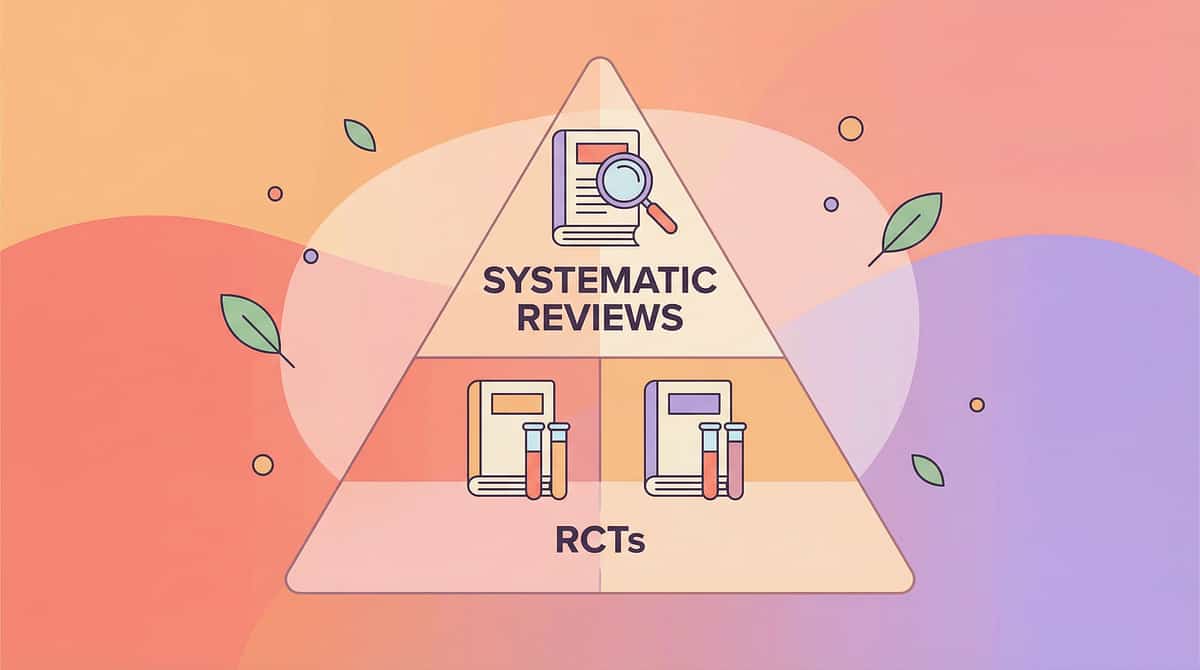
Level II–III Evidence
Systematic Reviews & RCTs
These aren't experimental ideas — they are the same materials and approaches used daily across Pinnacle Blooms Network's 80+ centers by 1,000+ licensed therapists. Here's the science:
Video Modeling — Evidence-Based Practice
Classified as an evidence-based practice for autism by the National Clearinghouse on Autism Evidence and Practice (NCAEP, 2020), based on 114 studies meeting rigorous inclusion criteria.
Gesture & Imitation Interventions
Hand-over-hand guidance and imitation training show significant improvements in social communication outcomes in children aged 9–24 months (Systematic review, Journal of Autism and Developmental Disorders, 2023).
Music-Based Interventions
Greeting songs facilitate social engagement and gesture production in young children with ASD, with effect sizes ranging from moderate to large across 12 RCTs (Cochrane Review: Gold et al., updated 2022).
Home-Based Parent Implementation
Parent-implemented interventions demonstrate developmental gains comparable to clinic-based delivery when supported by structured protocols (Padmanabha et al., Indian Journal of Pediatrics, 2019).
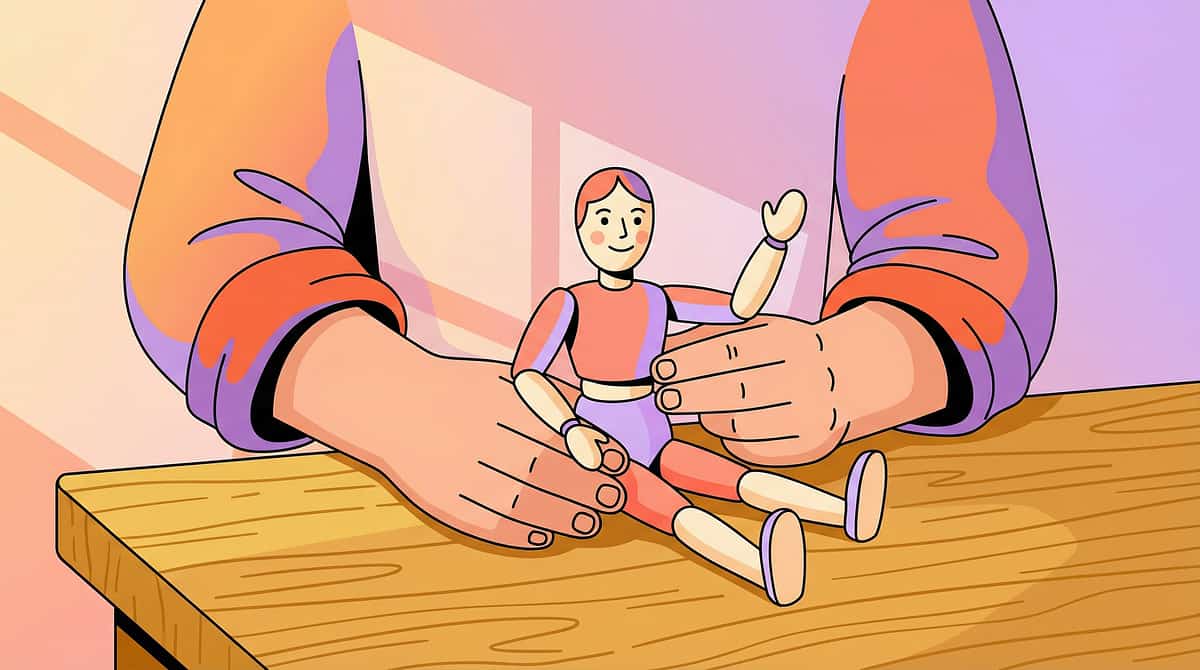
The Technique — What It Is
Domain: Social Communication
SOC-GEST-SR
Ages 9–24 Months
Formal Name: Material-Assisted Waving Gesture Development Protocol
Parent-Friendly Name: "Teaching Your Child to Wave — 9 Tools That Build the Bridge"
Parent-Friendly Name: "Teaching Your Child to Wave — 9 Tools That Build the Bridge"
This intervention uses 9 carefully selected therapy materials — spanning physical guidance tools, visual models, musical routines, puppet play, video examples, pretend play sets, mirrors, movement games, and transition cues — to teach your child the waving gesture from multiple angles simultaneously. Each material targets a different component of the waving skill: the motor action (how to move the hand), the social understanding (when and why we wave), and the symbolic meaning (that waving "stands for" hello or goodbye).
⏱️ Session
10–15 minutes
🔄 Frequency
3–5x daily (embedded in natural routines)
📍 Setting
Home & Therapy
👶 Age Range
9–24 months
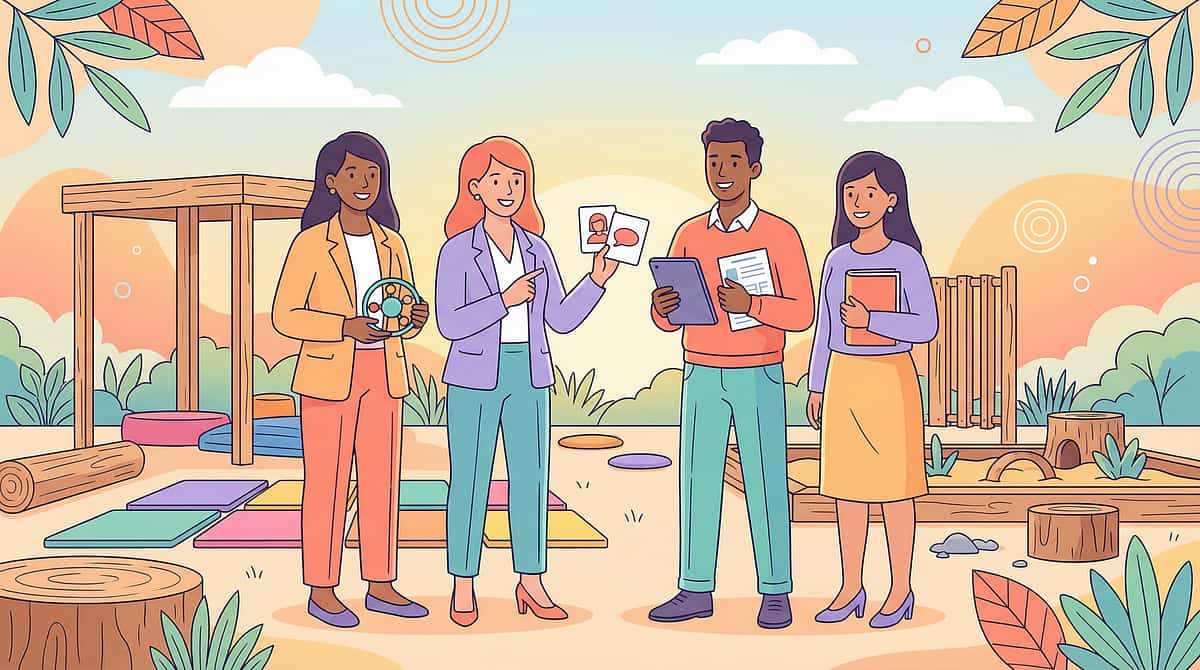
Who Uses This Technique — Your Child's Multidisciplinary Team
This technique crosses therapy boundaries because the brain doesn't organize by therapy type. Here's how each specialist contributes to building the waving gesture.
Speech-Language Pathologist (SLP) — Primary Lead
The SLP drives gesture development as a core component of pre-verbal communication. They use waving as a gateway to the broader gesture repertoire — pointing, showing, giving, nodding — and embed it within social communication routines, ensuring your child understands that waving means "hello" or "goodbye," not just a motor trick.
Occupational Therapist (OT) — Motor Planning
The OT addresses motor execution challenges. For children with dyspraxia or motor planning difficulties, the OT uses hand-over-hand guidance, graded motor sequences, and sensory-motor integration strategies. They also address tactile sensitivities that may make hand contact uncomfortable during guidance.
Board Certified Behavior Analyst (BCBA)
The BCBA designs the reinforcement schedule and creates the generalization plan — transferring waving from "only during the wave song" to "spontaneously when grandma arrives." Using ABA's discrete trial and natural environment training, the BCBA ensures the gesture is maintained across people, settings, and contexts.
Special Educator — Routine Integration
The Special Educator embeds waving into daily routines — arrival/departure rituals, classroom transitions, social play groups — creating the consistent practice contexts that make waving automatic. They also coordinate with families to ensure home and school approaches are aligned.
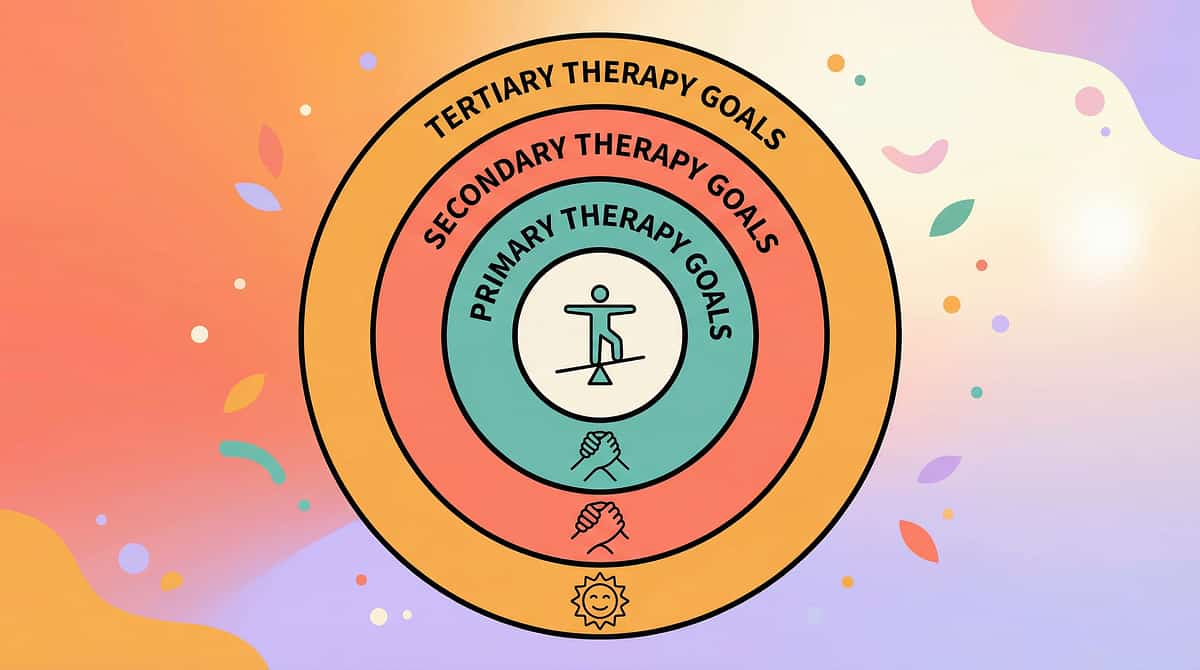
What This Targets — Precision, Not Guesswork
Every therapy material in this protocol is mapped to a specific developmental target. Understanding what you're aiming for helps you celebrate the right milestones.
🎯 Primary Target
Waving gesture production — Your child raises their hand and moves it side-to-side in response to or initiation of greeting/farewell contexts. Observable indicator: spontaneous wave within 5 seconds of a greeting cue.
🎯 Secondary Targets
- Motor imitation — copying observed actions (foundation for ALL learning through observation)
- Social reciprocity — the back-and-forth exchange of social signals
- Joint attention — shared focus between child, adult, and social event
- Symbolic understanding — grasping that a movement "stands for" a meaning
🎯 Tertiary Targets
- Broader gesture repertoire (pointing, nodding, shaking head)
- Social motivation — desire to engage in social exchanges
- Pre-verbal communication foundation
- Caregiver confidence — consistency feeds progress
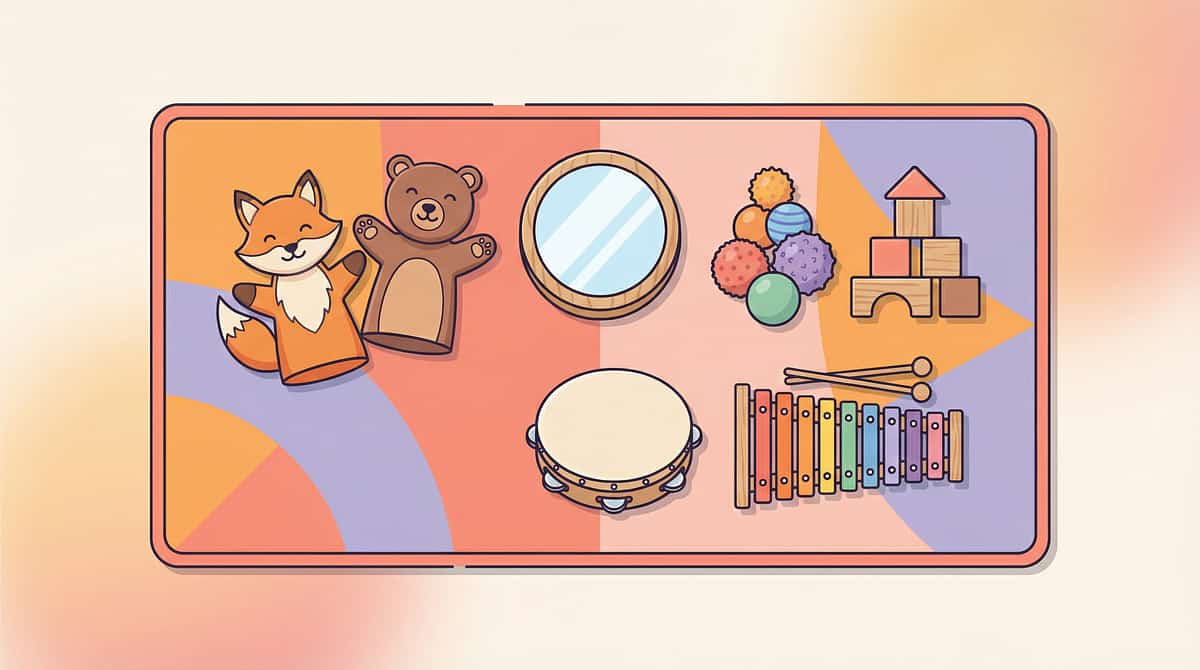
What You Need — The 9 Materials
Nine carefully selected materials, each targeting a different aspect of waving. You don't need all nine at once — start with the essentials marked below.
# | Material | Category | Price (INR) | Priority | |
1 | Hand-Over-Hand Guidance Tools (puppet gloves, finger puppets) | Physical Guidance | ₹200–600 | Start here | |
2 | Waving Character Toys (mechanical waving animals) | Visual Modeling | ₹300–1,000 | Recommended | |
3 | Greeting Songs & Music (hello/goodbye recordings) | Music & Auditory | ₹0–200 | Essential (FREE) | |
4 | Waving Puppets & Stuffed Animals (poseable arms) | Pretend Play | ₹200–800 | Essential | |
5 | Video Modeling Resources (children waving videos) | Digital/Video | ₹0–500 | Recommended | |
6 | Door & Window Play Sets (dollhouses, garages) | Pretend Play | ₹500–2,000 | Enrichment | |
7 | Mirror Cards & Visual Supports (picture cards + mirror) | Visual Supports | ₹100–500 | Essential | |
8 | Waving Games & Activities (movement games) | Social Interaction | ₹0–300 | Essential (FREE) | |
9 | Transition & Routine Markers (bells, visual schedules) | Visual Supports | ₹100–500 | Recommended |
Pinnacle Recommends: Items 1, 3, 4, 7, and 8 form the minimum effective toolkit. Start with these five. Total essential investment: under ₹500 — or FREE with household alternatives.
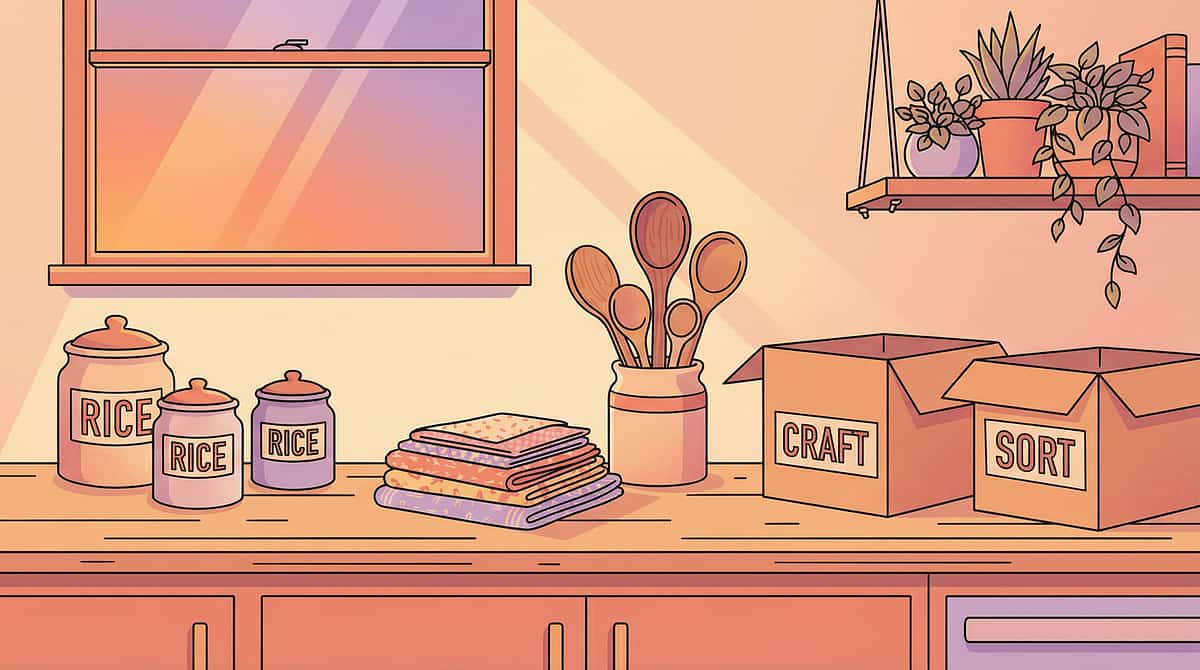
DIY & Zero-Cost Alternatives — Every Family Can Start Today
Five of these nine materials can be executed with zero cost using household items. The WHO Nurturing Care Framework specifically emphasizes that effective interventions must be accessible regardless of economic status. You don't need to buy anything to start tonight.
1. Hand-Over-Hand Tools → Free
Use matching socks as hand puppets. Gently hold child's wrist and guide wave motion during natural goodbye moments. Keep touch light and playful.
2. Waving Character Toys → Free
Use any stuffed animal and move its arm in a wave while saying "bye-bye!" Repetition builds the connection between movement and meaning.
3. Greeting Songs → Free
Create a simple family goodbye song: "Bye-bye, bye-bye, wave bye-bye!" Sing it every time someone leaves. The routine creates the waving context automatically.
4. Waving Puppets → Free
Any stuffed animal works — help your child move the toy's arm to wave. "Teddy waves bye-bye! Now YOU wave bye-bye!" Use it as a bridge to self-waving.
5. Video Modeling → Free
Record family members waving and show to child before goodbye moments. Make a "waving video" starring siblings or cousins — familiar faces increase engagement.
6. Door Play Sets → Free
Use any cardboard box with a "door" cut in it. Figures go in ("bye-bye!") and come out ("hello!"). Wave each time. Transfer practice to real doors.
7. Mirror & Visual Supports → Free
Print a picture of a child waving. Show it at goodbye time. Practice in front of any mirror — let child see their own hand move. Visual feedback is powerful.
8. Waving Games → Free
Modify any action song: "If you're happy and you know it, wave your hands!" Play "wave to everyone in the room." No purchase needed.
9. Transition Markers → Low Cost
Ring a small bell every time someone leaves and prompt wave. Put a "wave here" picture on the door at child's eye level as a visual reminder.
Safety First — Before You Begin
Creating a safe, optimal practice environment is the first therapeutic step. Use this traffic-light system before every session.
🟢 GREEN — Proceed When:
- Child is fed, rested, and in a calm-alert state
- Child is not ill or recovering from a meltdown
- Environment is quiet with minimal distractions
- You have 10–15 uninterrupted minutes
- All materials are age-appropriate and checked for small parts
🟡 AMBER — Modify When:
- Child is tired but not overtired → Shorten to 5 minutes, use only songs and mirror
- Child seems irritable → Skip hand-over-hand, use only visual models
- Multiple distractions present → Move to quieter space or postpone
- Child is recovering from illness → Gentle approach only, no physical prompting
🔴 RED — Stop Immediately If:
- Child shows signs of distress during hand-over-hand guidance
- Child becomes rigid or frozen when you touch their hand (may indicate tactile sensitivity)
- Child has a meltdown during any material presentation
- Child shows self-injurious behavior during practice
Critical: Some children are touch-sensitive — use lighter touch or guide at wrist/fararm instead of hand. NEVER force. Don't create performance anxiety around greetings — keep ALL practice playful. Don't punish lack of waving. Ever.
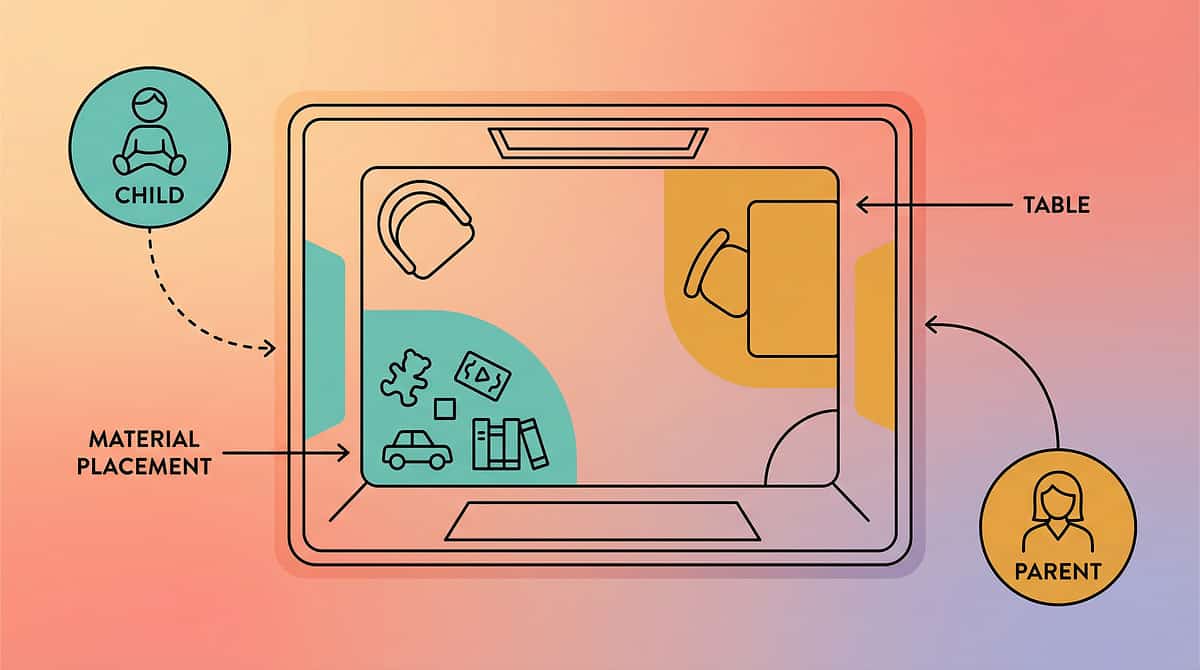
Set Up Your Space
A consistent, distraction-reduced "waving practice zone" dramatically increases session effectiveness. Here's how to set it up in under 5 minutes.
The 4 Positions
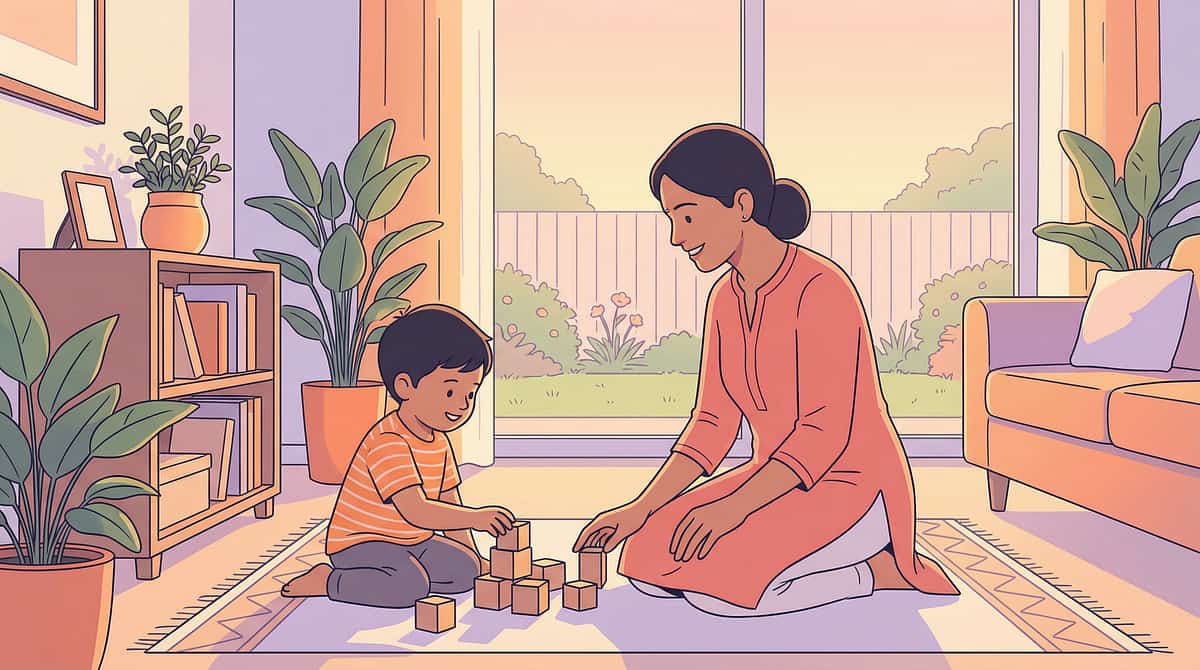
Position 1 — You: Sit or kneel at your child's eye level, directly facing them. Your face and hands should be easily visible. Distance: arm's length away.
Position 2 — Your Child: Seated comfortably — on floor, in highchair, or on your lap. Ensure their arms are free to move.
Position 3 — The Mirror: Place a child-safe mirror to the child's side so they can see themselves and you simultaneously.
Position 4 — Material Station: Keep today's chosen material within your reach but out of the child's sight until introduction. Rotate materials — don't use all 9 at once.
What to Remove
- Other toys and screens (distractions pull attention from the social exchange)
- Loud background noise (TV, music that isn't the greeting song)
- Other children initially — add social partners later for generalization
Best Locations
Front door area (natural goodbye context), living room floor, child's room — anywhere that becomes a consistent "waving practice spot." Natural lighting preferred. Quiet environment.
Lighting & Sound
The greeting song is the only planned auditory input. Structured 1:1 individual sessions showed maximum effectiveness in meta-analysis research (PMC10955541).
Is Your Child Ready? — 60-Second Readiness Check
The best session is one that starts right. Run through this checklist before every practice — it takes less than a minute and prevents wasted effort and unnecessary distress.
Child has eaten within the last 2 hours?
Child has slept adequately (not overtired)?
No meltdown in the past 30 minutes?
Child is alert and somewhat engaged with surroundings?
No signs of illness (fever, runny nose, discomfort)?
Child is in a safe, familiar setting?
A natural goodbye/hello moment is approaching or can be created?
✅ All YES → GO
Proceed with full session
🟡 1–2 NO → MODIFY
Songs + mirror only, 5 minutes
🔴 3+ NO → POSTPONE
Try again at a better time
Step 1 of 6
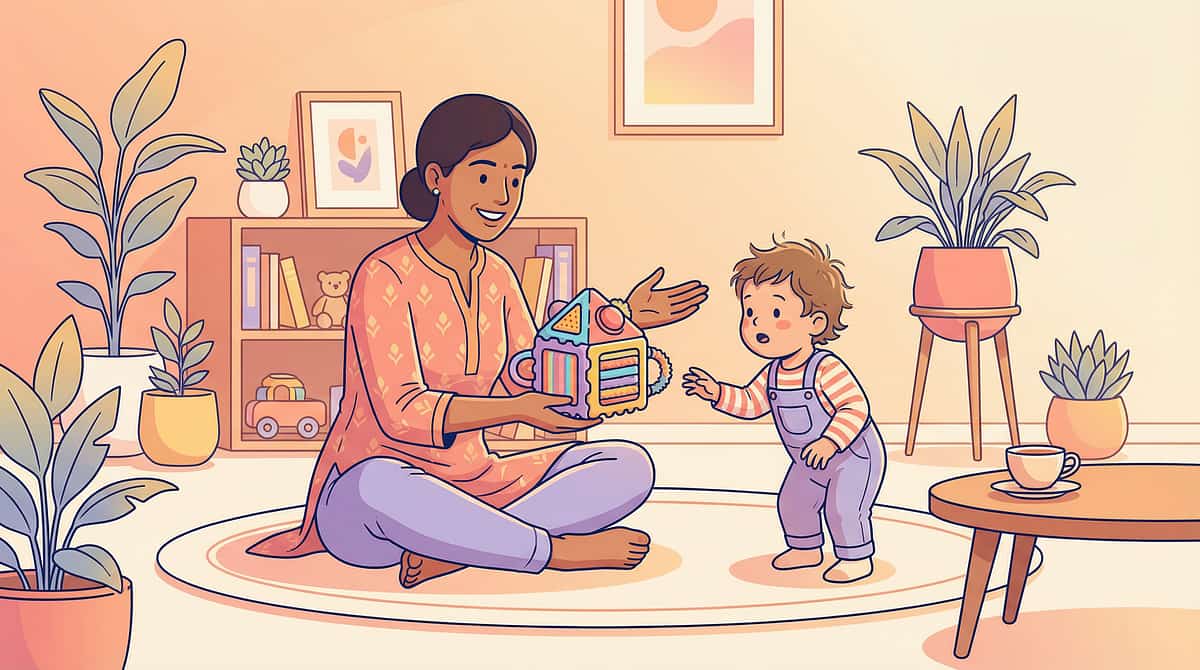
The Invitation (30–60 Seconds)
Every waving practice begins with an invitation, not a command. You don't say "Wave now." You create the context where waving naturally happens — then wait for your child to step into it.
With a puppet or stuffed animal:
"Oh look! Teddy is here! Hi Teddy! 👋 Can you say hi to Teddy?"At a natural goodbye moment:
"Daddy is going to work! Let's wave bye-bye to Daddy! Bye-bye! 👋"
What Acceptance Looks Like ✅
- Child looks at you or the puppet (social attention established)
- Child reaches for the material (engagement cue)
- Child smiles or vocalizes (positive affect)
- Child's body orients toward you (social orientation)
What Resistance Looks Like — And What To Do
- Child turns away → Follow their gaze, bring puppet into their visual field gently
- Child cries or fusses → Pause, offer comfort, try again in 5 minutes
- Child shows no reaction → Proceed with gentle enthusiasm, don't escalate pressure
Step 2 of 6
The Engagement (1–3 Minutes)
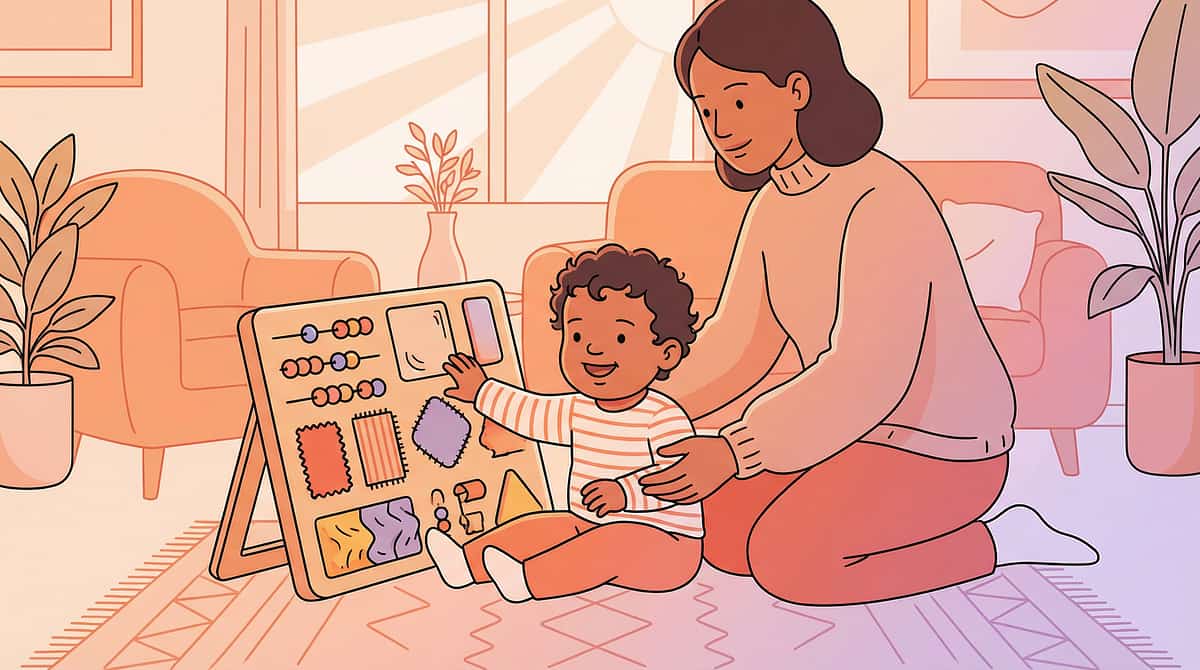
Choose ONE material for this session. Introduce it with enthusiasm and slow, clear demonstration. Rotate materials across sessions for variety and generalization.
Material 1: Hand-Over-Hand Tools
Put matching puppet gloves on yourself and the child. Wave your puppet hand. Say "Wave!" with a big smile. Gently take the child's puppet hand and help it wave. Keep touch light. Make the puppet "talk" — "Hi! Bye-bye!"
Material 2: Waving Toys
Activate the waving toy in front of the child. Point to the toy's arm. Say "Look! The bear is waving! Hi bear! 👋" Wave yourself. Pause. Wait 3–5 seconds for any response from the child.
Material 3: Greeting Songs
Begin the hello/goodbye song. Wave enthusiastically during the waving part. Sing slowly. Repeat the waving motion 3–4 times within the song. If the child moves their hand AT ALL, celebrate immediately.
Material 4: Puppets
Put puppet on your hand. Make it wave at child. "Mr. Lion waves hello! 👋" Hand a puppet to the child. Help the child's puppet wave. "Your puppet waves too! Bye-bye!" Bridge from puppet-waving to self-waving.
🟢 Watching with interest
Continue
🟡 Tolerating but not engaged
Add more animation, sound effects
🔴 Actively avoiding
Switch material or postpone
Step 3 of 6
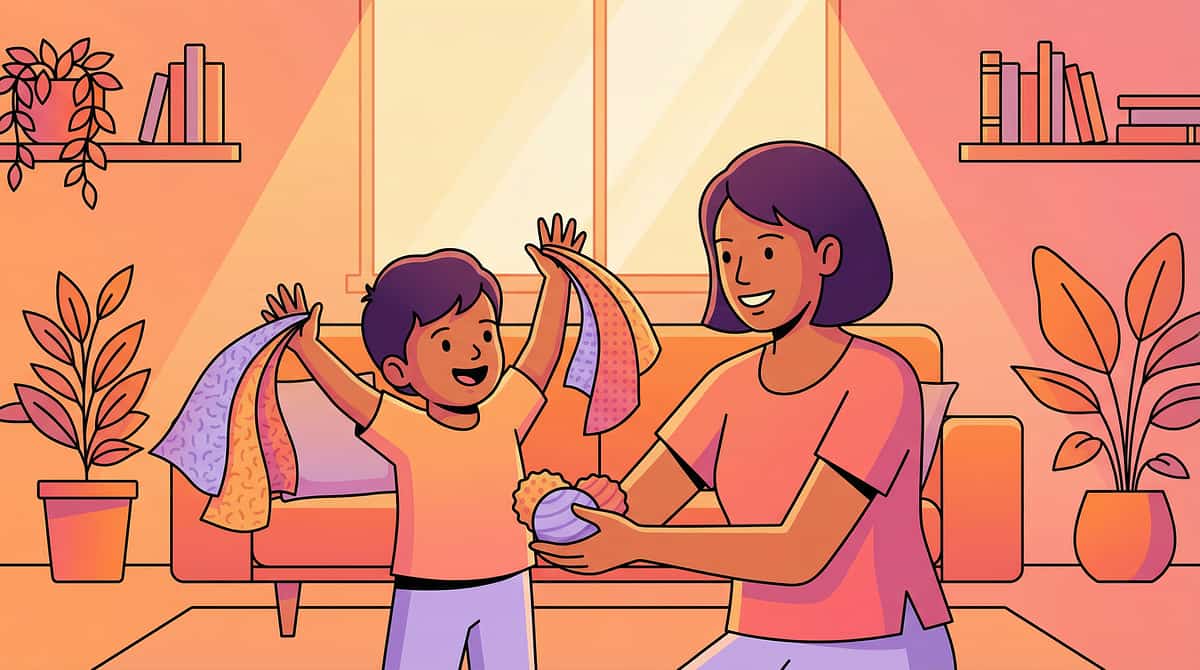
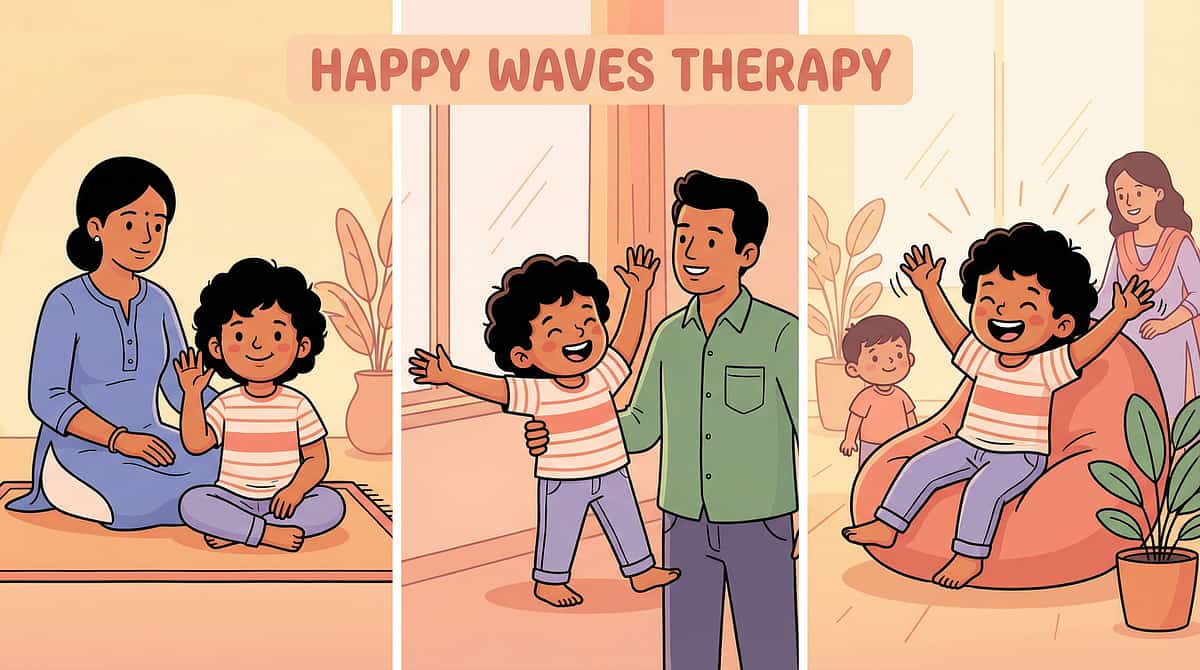
The Waving Practice (3–5 Minutes)
This is the active teaching moment. You are building the neural pathway from "seeing a wave" to "producing a wave." Choose one of three evidence-based approaches based on your child's current skill level.
1
Approach A: Physical Guidance (Fading)
Guide full wave → reduce to wrist guidance → reduce to light forearm touch → reduce to gestural prompt → goal: child waves with your model only (no touch). Move down one level every 3–5 successes.
2
Approach B: Visual Modeling (Imitation)
Wave clearly in child's line of sight → use toy/puppet simultaneously → point to child's hand → wait 5 seconds for ANY hand movement. Accept ALL approximations — a hand raise, a fist pump, a palm turn. These are all on the path.
3
Approach C: Routine Embedding
Play the greeting song → wave every time. At every door transition → wave and prompt. When family arrives/leaves → create the waving moment. At video call start/end → wave at screen together.
Common Errors to Avoid:❌ Grabbing hand too firmly — use light, playful touch. ❌ Repeating "wave!" with frustration — stay calm. ❌ Moving too fast through prompting levels — stay at current support until 3 successes. ❌ Only practicing in formal sessions — embed waving in EVERY natural hello/goodbye throughout the day.
Step 4 of 6
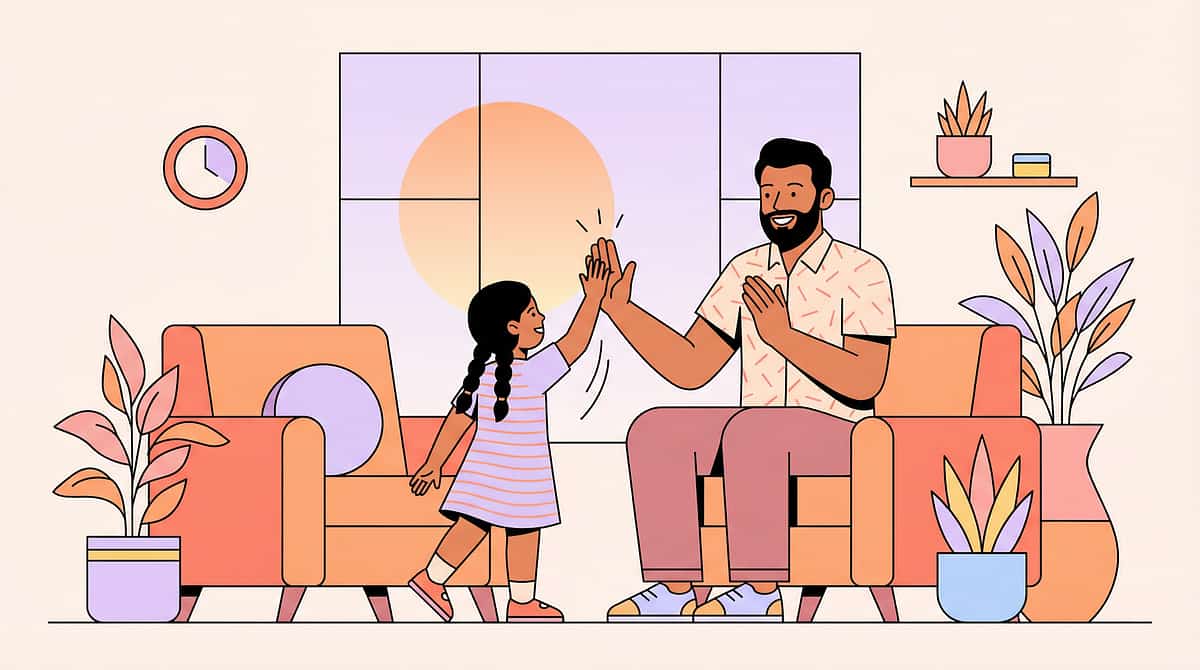
Repeat & Vary (3–5 Minutes)
Repetition builds neural pathways. Variation prevents boredom and builds generalization. Target 5–10 waving opportunities per session — but quality always beats quantity.
Variation Within a Session
- Wave at the puppet, then wave at yourself, then wave at a picture of grandma
- Wave with right hand, then left hand
- Wave slowly, then wave fast (make it silly!)
- Wave sitting, then wave standing
- Wave the toy's arm, then wave your own arm
Satiation Indicators — When to Stop
- Child starts looking away consistently
- Response quality drops (was waving, now just staring)
- Child becomes fidgety or tries to leave
- Child pushes materials away
The Golden Rule: 3 good repetitions beat 10 forced ones. If your child waves beautifully 3 times and then loses interest, that's a GREAT session. Always stop on a high note.
Step 5 of 6
Reinforce & Celebrate
Reinforcement is the fuel that drives learning. Timing, specificity, and enthusiasm all matter. Celebrate the attempt, not just the success — shaping successive approximations is the science.
"YES! You WAVED! Bye-bye! 👋👋👋 That was AMAZING!""Look at your hand go! Hi! You said hi with your hand! I'm so proud!""Teddy saw your wave! Teddy is SO happy! 👋🧸"
Within 3 Seconds
Reinforcement must come within 3 seconds of the behavior. Delayed praise doesn't build the connection.
Be Specific
Name what they did. "You waved!" — not just "Good job!" Specificity teaches them exactly what earned the praise.
Social Praise First
Your voice and face are the most powerful reinforcers. Songs, tickles, brief toy turns, and small snacks are secondary — use sparingly.
Celebrate the Attempt
A hand raise toward waving deserves the SAME celebration as a full wave. Shaping successive approximations is the foundation of behavioral learning science.
Step 6 of 6
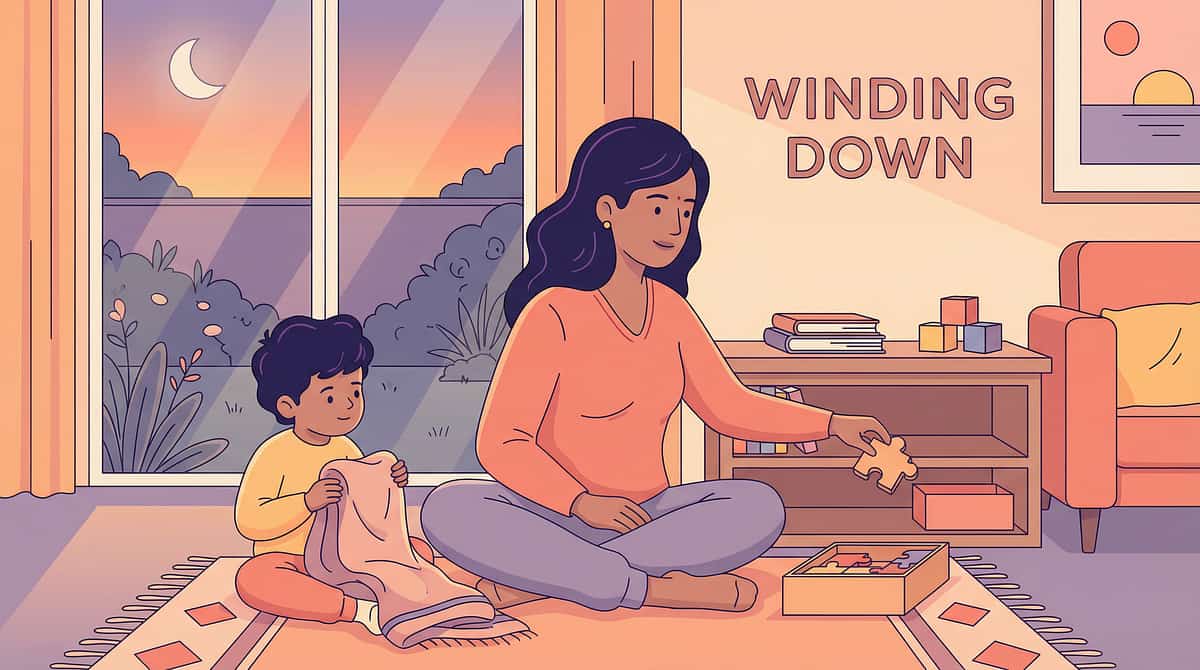
The Cool-Down (1–2 Minutes)
A smooth transition out of practice is as important as the practice itself. Abrupt endings create protest and negative associations. A brief cool-down also creates one final natural waving opportunity.
"Two more waves, then all done! Wave to Teddy... one more... wave bye-bye! All done! Great waving today!"
Give a Transition Warning
Signal the end of waving practice with 2 more repetitions and a clear "all done" phrase. Predictability reduces protest.
Offer a Calming Activity
A favorite book, gentle music, cuddling, or quiet play. This prevents post-session dysregulation and creates a positive emotional association with waving practice.
Material Put-Away Ritual
If able, let the child help put the puppet/toy away. "Let's put Mr. Lion to sleep. Wave bye-bye to Mr. Lion! 👋" — one final natural wave opportunity.
If child resists ending, use a visual timer next session to show "how much wave time is left." Don't extend indefinitely — consistency in session length builds routine and makes sessions feel safe and predictable.
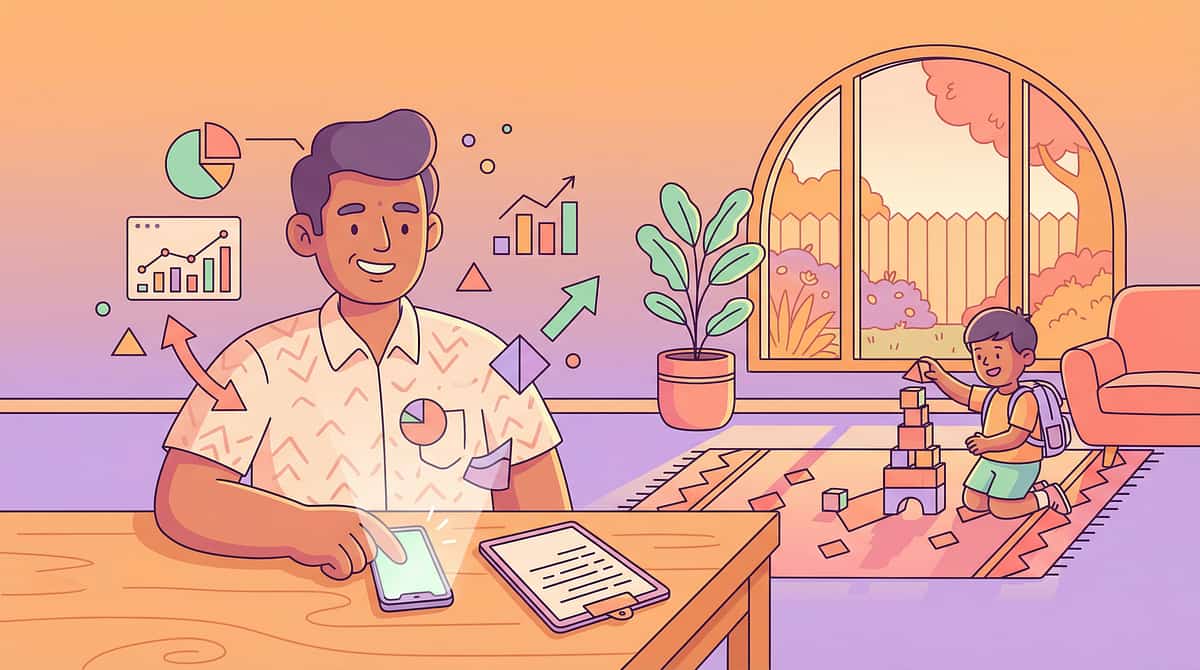
Capture the Data — Right Now (60 Seconds)
Data transforms guesswork into progress tracking. "60 seconds of data now saves hours of guessing later." Record these 3 data points after every session — on paper, phone, or the GPT-OS® tracker.
1
Wave Attempts
How many times did your child attempt to wave? Count ANY upward hand movement in response to a waving cue. Even a partial raise counts. → Write the number: ___
2
Support Level
Full hand-over-hand → Wrist/forearm guidance → Light touch prompt → Gesture/model only → Verbal prompt only → Spontaneous (no prompt!). Circle the level used today and track if it's decreasing over time.
3
Child Mood & Engagement
😊 Enjoyed it → 😐 Tolerated it → 😟 Resisted/distressed. This mood data reveals what conditions produce the best sessions and helps you refine your timing and approach.
What If It Didn't Go As Planned?
Every challenge in practice is data, not failure. Here are the most common problems families encounter and exactly what to do next.
"My child pulled away when I tried hand-over-hand."
Your child may be touch-sensitive. Switch to wrist or forearm guidance, or skip physical prompting entirely and use visual models (toy waving, video modeling) instead. The goal is the same; the path is different.
"My child waves but only during the song."
This is actually progress! They've learned the gesture in one context. Now generalize: sing the first note of the song, then fade it. Wave at the door without the song. Gradually expand contexts one at a time.
"My child waves with palm facing themselves (reverse wave)."
This is common — they're copying the visual appearance of YOUR wave from their perspective. Use mirror practice so they can see their own wave from the front. Use hand-over-hand to correct palm orientation gently.
"My child waves at random times, not during greetings."
They've learned the motor action but not the social context. Emphasize routine markers: ONLY wave at doors, ONLY wave when the bell rings, ONLY when someone says "bye-bye." Context understanding will follow.
"It's been a week and absolutely nothing."
One week is very early. Look for micro-progress: Does the child look at your hand when you wave? Do they attend to the puppet? Any increased hand movement? These are real precursor signs. Continue for 4 full weeks before adjusting approach.
"My child had a meltdown during practice."
Session abandonment is data, not failure. Was the child in optimal state? Was the demand too high? Were there environmental triggers? Reduce demand next session and use the readiness check more carefully.
"Family members try to force the wave."
Never force, always celebrate attempts, and consistency across caregivers multiplies impact. A forced wave teaches nothing. Share Card 37 (the family sharing guide) with all caregivers in your child's life.
Adapt & Personalize — No Two Children Are Identical
These materials and protocols are a starting point, not a prescription. Adjust difficulty, sensory demands, and session length to match your child's unique profile.
◀ Easier Modifications
For struggling or younger children:
- Accept any upward hand movement as a "wave" (lower the criterion)
- Use only one material (songs) until comfortable
- Practice only during one routine (dinner goodbye) until consistent
- Provide full physical guidance with no expectation of independence
- Keep sessions to 3–5 minutes
▶ Harder Modifications
For children making strong progress:
- Expect wave with open palm and side-to-side motion
- Practice in 3+ different contexts daily
- Fade all prompts — child waves only in response to others' waves
- Add initiation: child waves first without adult waving
- Combine wave with vocalization: "bye!" + 👋
Sensory Avoider
Skip hand-over-hand entirely. Use only visual models, songs, and puppets. No unexpected touch.
Sensory Seeker
Add animated, high-energy waving games. Use vibrating toys. Make waving BIG and physical.
9–12 Months
Focus on exposure and motor modeling. Hand-over-hand is primary approach.
12–18 Months
Focus on imitation and routine embedding. Reduce physical guidance progressively.
18–24 Months
Focus on spontaneous use and generalization. Fade all supports systematically.
Week 1–2: What to Expect
Progress: ~15%
This is the hardest phase — maximum effort, minimum visible reward. Neural pathways are forming beneath the surface before you see them emerge as behavior. Stay the course.
✅ What Progress Looks Like
- Child begins to attend to your waving (watches your hand move) — this alone is a win
- Child tolerates hand-over-hand guidance longer than before (from 1 second to 3 seconds)
- Child anticipates the waving song (perks up when they hear the first notes)
- A fleeting hand raise that could be a wave — count it
⏳ What Is NOT Progress Yet
- Your child will not wave spontaneously at grandma this week
- They will not wave consistently or on command
- They may show zero observable change — and that's still within normal range
If your child tolerates the guidance for 3 seconds longer than last week — that's real progress. The data you're capturing will reveal patterns invisible to the naked eye. Parent emotional preparation for this phase is part of the protocol.
Week 3–4: Consolidation Signs
Progress: ~40%
The neural pathways built in weeks 1–2 are beginning to show. Look for these consolidation indicators — they signal that the bridge between "seeing a wave" and "producing a wave" is forming.
Child anticipates the wave in routine contexts
Looks at door when they hear "bye-bye" — context association is forming even before the gesture appears.
Partial wave production begins
Hand raise, fist opening, arm movement — with prompting. These are NOT failures; they are the steps to waving, and they deserve celebration.
Support level shifts down
From full hand-over-hand to wrist guidance, or from physical prompt to gestural prompt. This fading of support is the clearest indicator of neural pathway formation.
Puppet arm waving — independent
Child waves the puppet's arm independently. This is a gateway — they're demonstrating the gesture concept through the puppet before applying it to themselves.
Positive affect during practice
Child shows smiling and engagement during wave practice. Positive emotional association signals that the social meaning is beginning to register.
Parent Milestone: "You may notice you're more confident too." Your prompting is smoother, your timing is better, and you're reading your child's cues faster. This is skill building for both of you.
Week 5–8: Mastery Indicators
Progress: ~75%
Mastery Approaching
This is where the work becomes visible. True mastery means the gesture is reliable, spontaneous, and generalizes beyond the practice room.
Verbal Prompt Only
Child produces recognizable wave (hand up, open palm, side-to-side motion) with verbal prompt only — no physical or gestural support needed.
3+ Contexts
Child waves in at least 3 different contexts: door goodbye, video call, song time. Generalization across contexts is the hallmark of true learning.
3+ People
Child waves to at least 3 different people: parent, grandparent, therapist. Generalization across people confirms the social function is understood.
Maintained for 2+ Weeks
Wave maintains without regression for at least two consecutive weeks — indicating the skill is consolidated, not just emerging.
🏅 Mastery Badge Unlocked when: Child spontaneously waves in appropriate greeting/farewell contexts across people and settings with no prompt needed. Generalization indicators include waving at TV characters who wave, waving at their own reflection, and initiating a wave before the adult does.
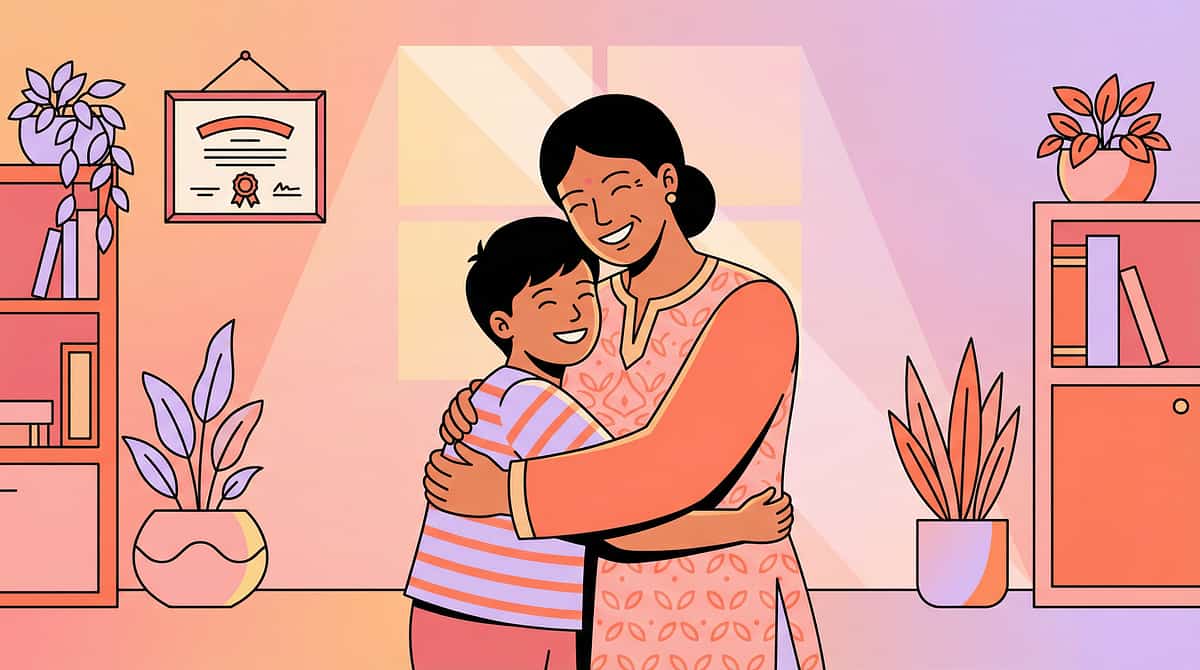
Celebrate Every Win
Each of these milestones represents a neural pathway connecting — a bridge between your child and the social world being built, one connection at a time. Don't wait for the "big" wave. Every step deserves a moment of recognition.
🌟 Milestone 1: First Attended Wave
The first time your child watched someone wave with clear attention — tracking the movement, processing the social signal.
🌟 Milestone 2: First Guided Wave
The first time your child tolerated hand-over-hand waving — choosing to stay with the experience rather than pulling away.
🌟 Milestone 3: First Independent Attempt
The first time your child raised their hand on their own — any upward hand movement in a greeting context counts.
🌟 Milestone 4: First Context Wave
The first time your child waved at the right time and place — at the door, at the right person, in the right moment.
🌟 Milestone 5: First Spontaneous Wave
The first time they waved without any prompt — pure, independent social gesture production.
🌟 THE MOMENT: First Initiated Wave
The first time THEY waved first — your child chose to initiate social connection with their own gesture. This is what all the work was for.
📸 Take a video of the first wave. You will want this later. Note the date, context, and who they waved at. Share it with your Pinnacle Blooms therapist — this data feeds GPT-OS® and helps every child like yours.
Red Flags — When to Seek Professional Evaluation
Waving absence alone by 12 months may be within normal variation. But combined with other social communication concerns, it is clinically significant and warrants comprehensive developmental evaluation.
🚩 Seek Evaluation After 8 Weeks of Consistent Practice If:
- No change in social attention (child still doesn't watch others wave)
- No tolerance of ANY physical guidance (persistent tactile avoidance)
- No motor movement toward waving in any context
- Regression: child was waving and stopped
- Combined with no pointing, no showing, no reaching for pickup by 14 months
📞 Seek Evaluation At:
FREE National Autism Helpline: 9100 181 181
Available 24x7 in 16+ languages
Available 24x7 in 16+ languages
Recommended Assessment:
AbilityScore® Comprehensive Developmental Evaluation
AbilityScore® Comprehensive Developmental Evaluation
When to Refer Immediately
Absence of waving by 12 months in combination with no pointing, no showing, limited imitation, and reduced response to name warrants immediate developmental assessment through a NeuroDevelopmental Pediatrician — do not wait for your next scheduled well-child visit.
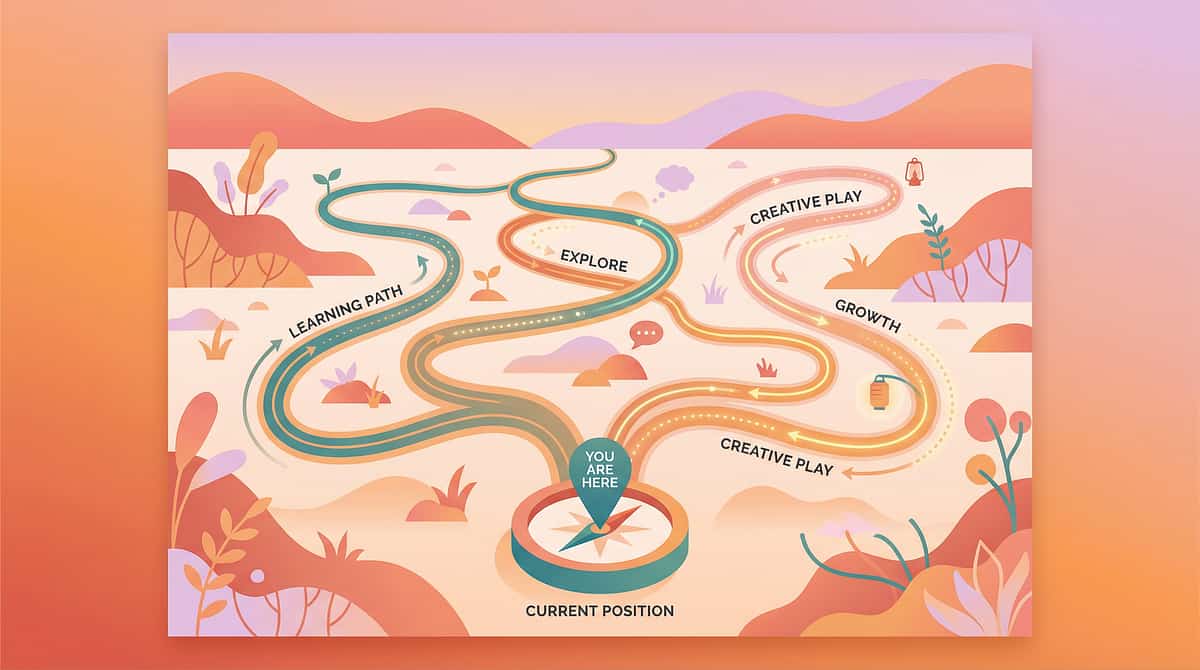
Your Child's Progression Pathway
Waving is the gateway gesture — a bridge to the full gesture repertoire and ultimately to spoken language. Here's where this technique leads as your child's skills grow.
If your child is also not responding to name, start with B-121 first — social attention is the foundation upon which gesture imitation is built. Each technique in this series builds on the last, creating a staircase of increasingly complex social communication skills.
Prerequisite Check
Is your child responding to their name? If not, B-121 should be your starting point.
Current: B-124 — Waving
You are here. Materials-assisted waving gesture development.
Next: B-123 — Pointing
Once waving is consistent, pointing to request follows naturally.
Then: B-126 — Social Reciprocity
The back-and-forth social exchange that forms the foundation of all communication.
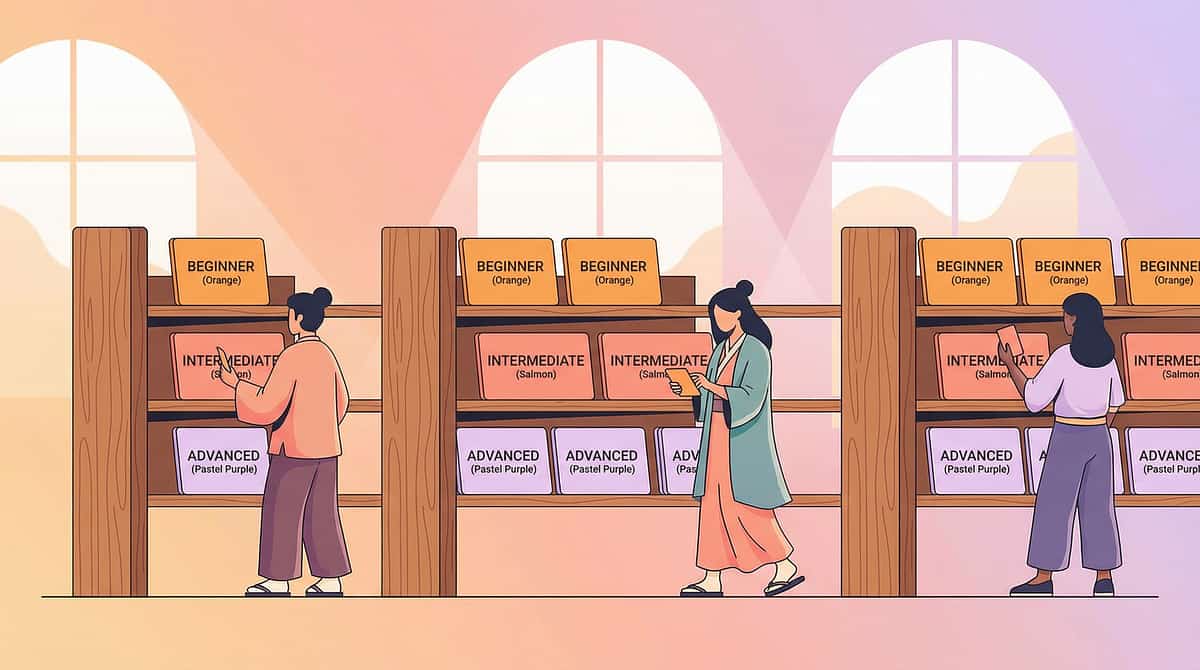
Related Techniques in Your Child's Journey
These techniques are part of the same Early Social Communication Series. Each addresses a different component of the gesture and communication foundation your child is building.
B-121: 9 Materials That Help When Child Doesn't Respond to Name
Social attention foundation. If your child isn't reliably responding to their name, start here before advancing to gesture work. → View Technique
B-123: 9 Materials That Help When Child Doesn't Point
Gesture development progression. Pointing is the next conventional gesture after waving — this technique is your next destination after B-124. → View Technique
B-125: 9 Materials That Help With Limited Imitation
Motor copying foundation. Imitation is the broader skill that waving builds upon — expanding this opens the entire gesture repertoire. → View Technique
B-126: 9 Materials That Help With Limited Social Reciprocity
Back-and-forth social exchange — the communicative dance that waving initiates. → View Technique
K-903: Therapy Carryover at Home
How to implement clinic-recommended strategies at home consistently and confidently. → View Technique
K-967: Understanding Gesture Milestones
A parent's guide to the full gesture developmental arc — what to expect and when. → View Technique
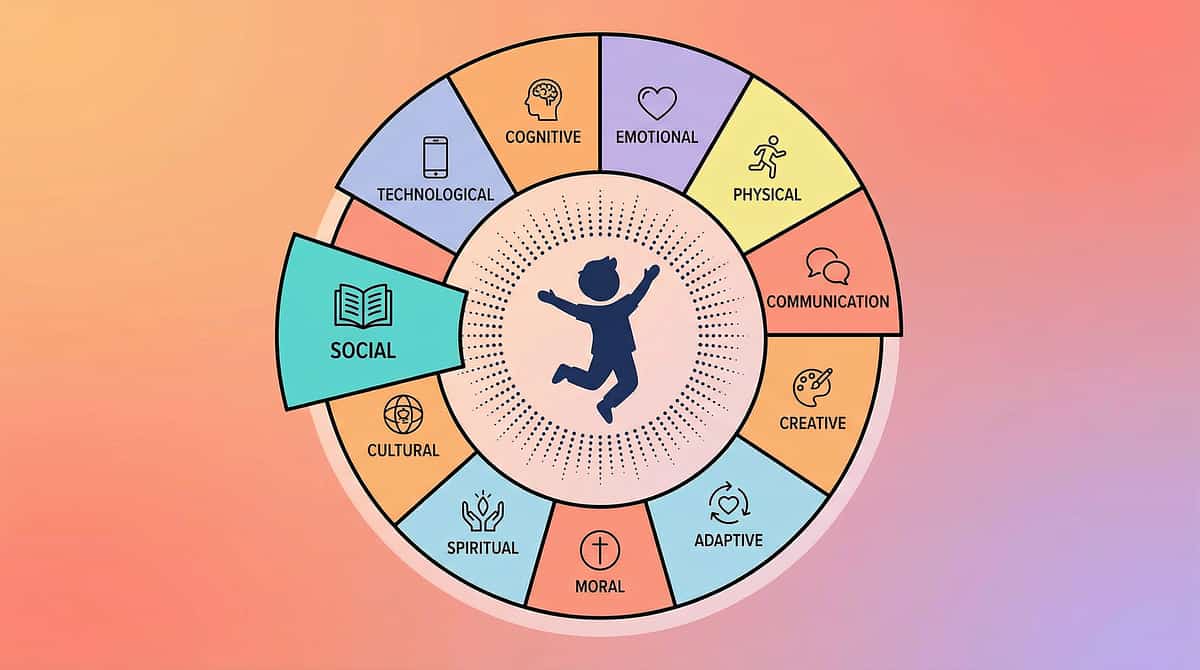
The Full Developmental Map — Social Communication Domain
This page is one of 70,000+ intervention technique pages in the Pinnacle Blooms Therapeutic Knowledge Base — the largest structured pediatric intervention knowledge system on Earth. Here's how B-124 fits into the broader Early Social Communication Series.
Domain
Social Communication
Sub-Domain
Gesture Development & Social Reciprocity
Domain Code
SOC-GEST-SR
Series Position
Episode 124 of 150 in cluster
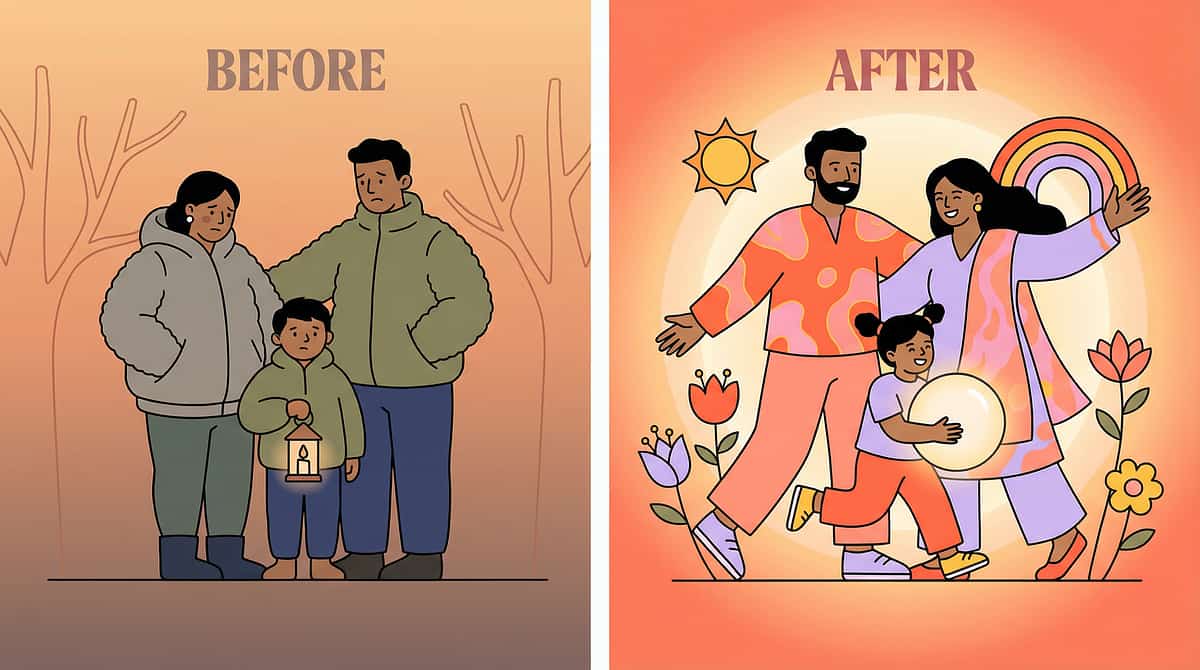
Stories From Families Like Yours
These are real accounts from families who navigated the same moment you're in right now. Names have been anonymized and experiences shared with consent. Individual results vary.
Priya, Mother — Hyderabad
"My son was 14 months and had never waved. Not once. His paediatrician said 'wait and watch.' But waiting felt wrong. We started with the puppet approach — a simple sock puppet — and within 3 weeks, he waved the puppet's hand. By week 6, he waved his own hand at the door when his father left for work. I cried. That one small gesture changed everything — it told me he was in there, connecting."
Rajesh, Father — Mumbai
"We were told our daughter might be on the spectrum at 11 months because she had no gestures — no waving, no pointing, nothing. The greeting song technique was what worked for us. We made up a silly goodbye song and sang it 10 times a day. She started moving her hand during the song first, then at the door, then at people. Now at 22 months, she waves at everyone. It was the first domino."
Ananya, Mother — Bangalore
"The mirror was the breakthrough. My son loved looking at himself. Once we combined mirror practice with waving, he could SEE what his hand was doing. That visual feedback was what he needed. Six months later, his therapist at Pinnacle Blooms told us his gesture repertoire was age-appropriate."
Connect With Pinnacle Blooms Network
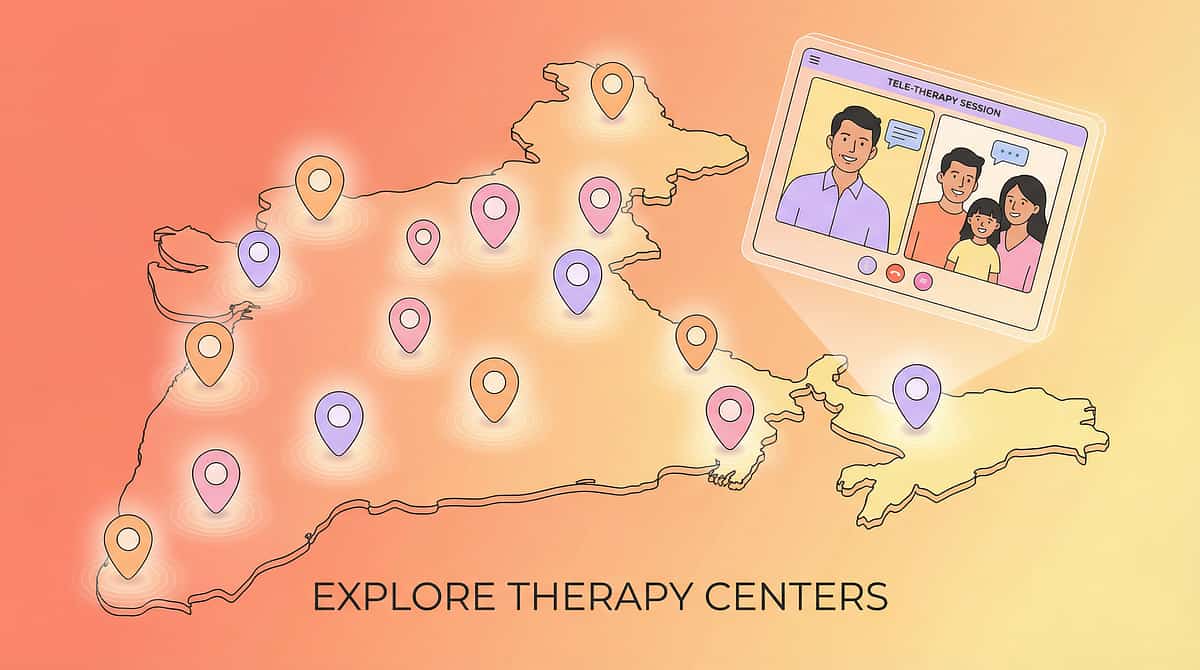
India's largest autism therapy network — built by mothers, engineered as a system. 80+ centers across India, 1,000+ licensed therapists, 21M+ therapy sessions delivered.
📞 FREE National Autism Helpline
9100 181 181
Available 24x7 in 16+ languages. Call anytime — whether you have a specific concern or simply need guidance on where to start.
Available 24x7 in 16+ languages. Call anytime — whether you have a specific concern or simply need guidance on where to start.
🌐 Website
Relevant Services for Waving & Gesture Concerns
- Comprehensive Developmental Assessment (AbilityScore®)
- Early Intervention Programme
- Speech Therapy (gesture & communication focus)
- Occupational Therapy (motor planning)
- ABA Therapy (gesture teaching & generalization)
- Parent Training Programme
- EverydayTherapyProgramme™ (daily home micro-interventions)
When to Consult a Professional
Not every child who isn't waving at 10 months needs a clinic appointment. But some do — and knowing the difference helps you act at the right time.
✅ Try at Home First When:
- Child is 9–12 months with only absent waving (isolated concern)
- Child is making progress in other areas (babbling, eye contact, responding to name)
- Child is generally engaged and social but hasn't "figured out" the waving motion
- You have the time and consistency for daily practice
🔴 Seek Professional Evaluation When:
- Child is 12+ months with NO conventional gestures (no waving, pointing, or showing)
- Waving absence combined with limited eye contact, babbling, or name response
- Child shows regression in previously acquired skills
- 8+ weeks of consistent home practice with no observable change
- You feel something is "not right" — parent intuition is powerful clinical data
The Research Behind This Page
Every recommendation on this page is anchored in peer-reviewed evidence. These are the core citations informing the B-124 protocol.
NCAEP Evidence-Based Practices Report (2020)
National Clearinghouse on Autism Evidence and Practice. Video modeling classified as evidence-based practice based on 114 studies. Link: NCAEP Report
PMC11506176 — PRISMA Systematic Review (2024)
16 articles from 2013–2023 confirm sensory integration intervention meets evidence-based practice criteria for children with ASD. PubMed Link
PMC10955541 — Meta-Analysis (2024)
World J Clin Cases. Intervention effectively promotes social skills, adaptive behavior, sensory processing, and motor skills across 24 studies. PubMed Link
PMC9978394 — WHO CCD Package Implementation
Care for Child Development across 54 LMICs demonstrates caregiver-implemented intervention efficacy. PubMed Link
Padmanabha et al. — Indian Journal of Pediatrics (2019)
DOI: 10.1007/s12098-018-2747-4. Home-based interventions demonstrate significant outcomes in Indian pediatric populations — directly relevant to the home-applicability of this protocol.
Rizzolatti & Craighero (2004)
Mirror Neuron System. Annual Review of Neuroscience. Foundational research underpinning the imitation and motor modeling approaches in this technique.
WHO Nurturing Care Framework (2018)
Equity-focused interventions across 54 LMICs. Basis for the zero-cost alternatives and accessibility emphasis in this protocol. nurturing-care.org
Cochrane Review: Music Therapy for ASD (Gold et al., 2022)
Music-based interventions facilitate social engagement and gesture production with effect sizes from moderate to large across 12 RCTs.
How GPT-OS® Uses Your Data
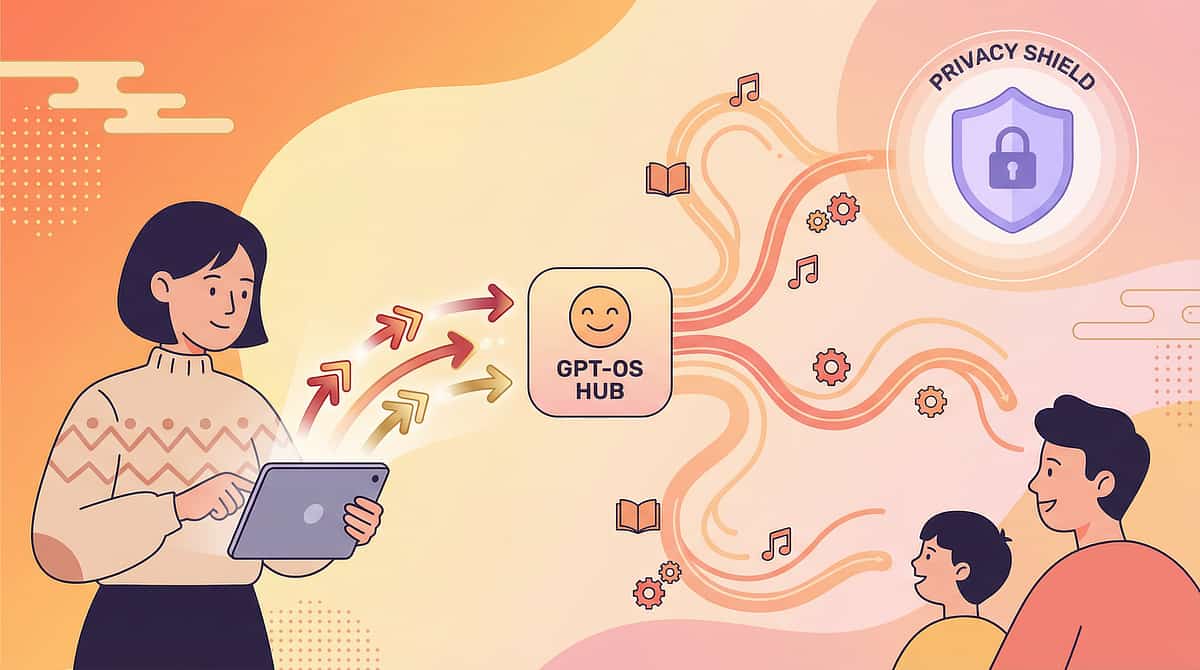
Every data point you capture becomes part of a learning system that improves recommendations — for your child and for every child like yours in the Pinnacle Blooms network.
What GPT-OS® Learns From Your Waving Data
- Rate of prompt-level fading (how quickly your child moves toward independent waving)
- Context sensitivity (where waving emerges first — songs? doors? video calls?)
- Material effectiveness (which of the 9 materials produced the breakthrough)
- Cross-technique correlation (waving progress predicts pointing readiness)
Privacy & Data Protection
- Your child's data is encrypted under Indian data protection regulations
- No personally identifiable data shared externally
- Aggregated anonymized population data improves recommendations for ALL families
- You control your data — view, export, or delete at any time
Stage 1: No Response
No social awareness of greeting context
Stage 2: Attends to Waving
Watches others wave with interest
Stage 3: Waves with Physical Support
Produces wave with hand-over-hand guidance
Stage 4: Waves with Prompt
Waves when adult models or gives verbal cue
Stage 5: Spontaneous Wave
Waves without any prompt in appropriate contexts
Stage 6: Initiates Waving
Child waves first — initiates social connection
Watch the Reel — B-124
B-124 Reel
75 Seconds
Early Social Communication Series — Episode 124
Reel Title: 9 Materials That Help When Child Doesn't Wave
Series: Early Social Communication Series — Episode 124
Domain: Social Communication — Gesture Development & Social Reciprocity
Series: Early Social Communication Series — Episode 124
Domain: Social Communication — Gesture Development & Social Reciprocity
A Pinnacle Blooms therapist demonstrates all 9 materials in action — from hand-over-hand guidance to puppet play to greeting songs. Watch how each material is presented to a child, what successful waving looks like at each stage, and how to adapt when things don't go as planned.
This web page is the comprehensive deep-dive behind the 75-second Reel. Every material mentioned in the video is detailed in Cards 9–10 with DIY alternatives and scientific rationale. Watch the Reel for the overview; return to this page for the full protocol.
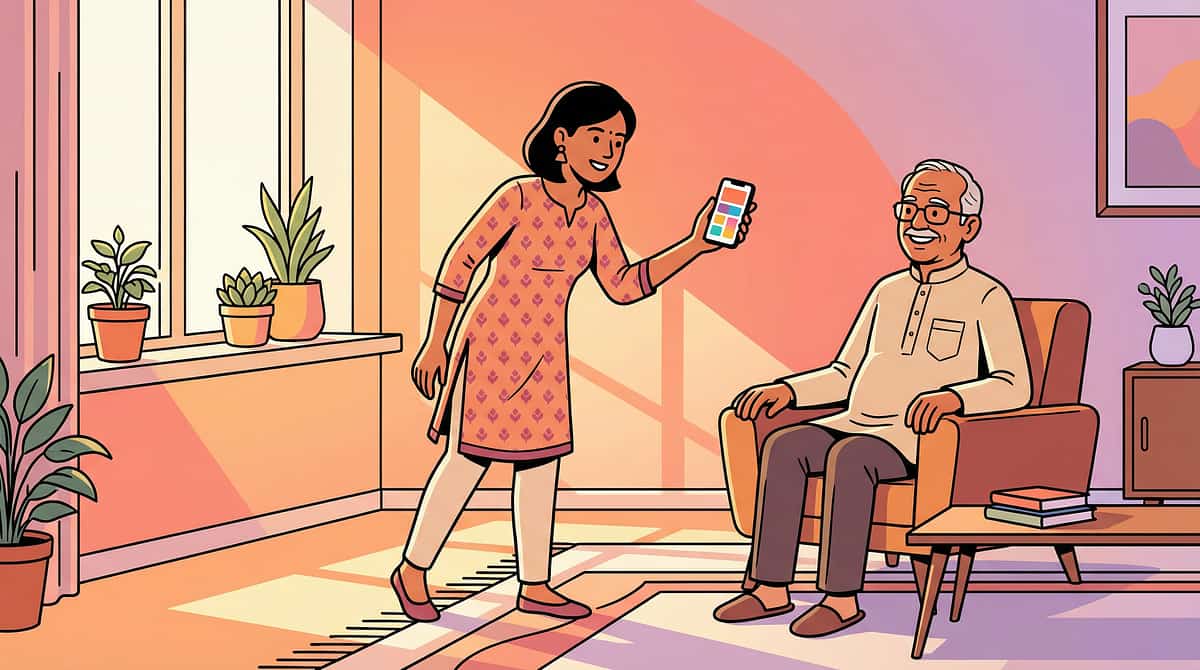
Share This With Your Family
Research shows multi-caregiver consistency is the single strongest predictor of intervention generalization. If only one parent practices waving, the learning is limited. When every caregiver knows the approach, consistency multiplies impact.
💜 For Grandparents — Simplified Version
"[Child's name] is learning to wave. Here's how you can help: Every time you arrive or leave, wave slowly at eye level. If you see ANY hand movement, get excited! Say 'You waved! Bye-bye!' Don't worry if it takes time. Don't force their hand. Just model the wave every single time. That's it. You're doing therapy."
🏫 For Teachers & School
"Dear [Teacher], [Child's name] is working on waving as part of their communication development plan. Could you please wave during arrival and departure and praise any wave attempt? A brief wave prompt during circle time transitions would also help with generalization. Thank you for being part of our team."
Frequently Asked Questions
My baby is only 9 months old. Is it too early to worry about waving?
It's not too early to start, but it is too early to worry. Waving typically emerges between 9–12 months. Introducing these materials at 9 months is proactive, not anxious — you're building the foundation, not treating a deficit.
My child waves backward (palm facing themselves). Is that a problem?
Reverse waving is common in children with autism — they copy the visual appearance of YOUR wave from their perspective. Use mirror practice so they see their wave from the front, and gently guide palm orientation with hand-over-hand.
Do I need to buy all 9 materials?
No. Five of the nine materials can be executed for free with household items. Start with greeting songs (free), any stuffed animal as a puppet, and a mirror. Add others as you discover what works for your child.
How often should we practice?
Formal sessions: once daily, 10–15 minutes. Informal practice: EVERY hello and goodbye moment throughout the day. The goal is 20+ natural waving opportunities daily, not just one structured session.
My child is 2 years old and still doesn't wave. Is it too late?
Absolutely not. While early intervention is ideal, these materials work across a wide age range. The neural pathways for gesture learning remain highly plastic through early childhood. Start now — every day matters.
Should I stop the techniques if my child starts speech therapy?
No — continue! These home materials complement clinical therapy. Share your tracking data with your child's therapist so they can align clinic and home approaches seamlessly.
What if my child waves at objects but not people?
They've learned the motor action but not the social function. Shift to ONLY waving at people and use the objects (puppets, toys) as bridges to human-directed waves. Context will come.
Can these materials help with other gestures too, like pointing or clapping?
Yes! The same principles — motor modeling, imitation training, routine embedding, and reinforcement — apply to ALL conventional gestures. Waving is the gateway. Once this pathway is built, others follow.
Your Next Step — Start Now
You arrived on this page worried about a wave that wasn't there. Now you have the knowledge, the materials, the protocol, and the science. Your child's first wave is waiting. Go build it.
🟢 Start This Technique Today
Launch a GPT-OS® guided session — get a step-by-step, personalized waving session plan based on your child's age, current skill level, and available materials.
🔵 Book a Consultation
Connect with a licensed Speech-Language Pathologist or Developmental Therapist at your nearest Pinnacle Blooms center for comprehensive gesture development evaluation.
📞 9100 181 181
📞 9100 181 181
⚪ Explore the Next Technique
If your child is waving, explore imitation skills — the broader foundation that waving is built upon.
B-125: Limited Imitation →
B-125: Limited Imitation →
✅ Validated by the Pinnacle Blooms Consortium
SLP • OT • ABA • SpEd • NeuroDev
Preview of 9 materials that help when child doesnt wave Therapy Material
Below is a visual preview of 9 materials that help when child doesnt wave therapy material. The pages shown help educators, therapists, and caregivers understand the structure and content of the resource before use. Materials should be used under appropriate professional guidance.


Link copied!
The Pinnacle Promise
Pinnacle Blooms Network®
Consortium Validated
"From fear to mastery. One technique at a time."
You arrived on this page worried about a wave that wasn't there. Now you have the knowledge, the materials, the protocol, and the science to build that bridge. Your child's first wave is waiting. Go build it.
🗣️ Speech-Language Pathology
🖐️ Occupational Therapy
📊 Applied Behavior Analysis
📚 Special Education
🩺 NeuroDevelopmental Pediatrics
Medical Disclaimer: This content is for educational and informational purposes only. It does not constitute medical advice, diagnosis, or treatment. Please consult with qualified healthcare professionals for proper evaluation and individualized recommendations. Results vary by individual.
© 2025 Pinnacle Blooms Network. All Rights Reserved. Powered by GPT-OS® Therapy Intelligence
Technique ID: B-124 | Domain: SOC-GEST-SR | Series: Early Social Communication | Version: 2.0
Technique ID: B-124 | Domain: SOC-GEST-SR | Series: Early Social Communication | Version: 2.0