
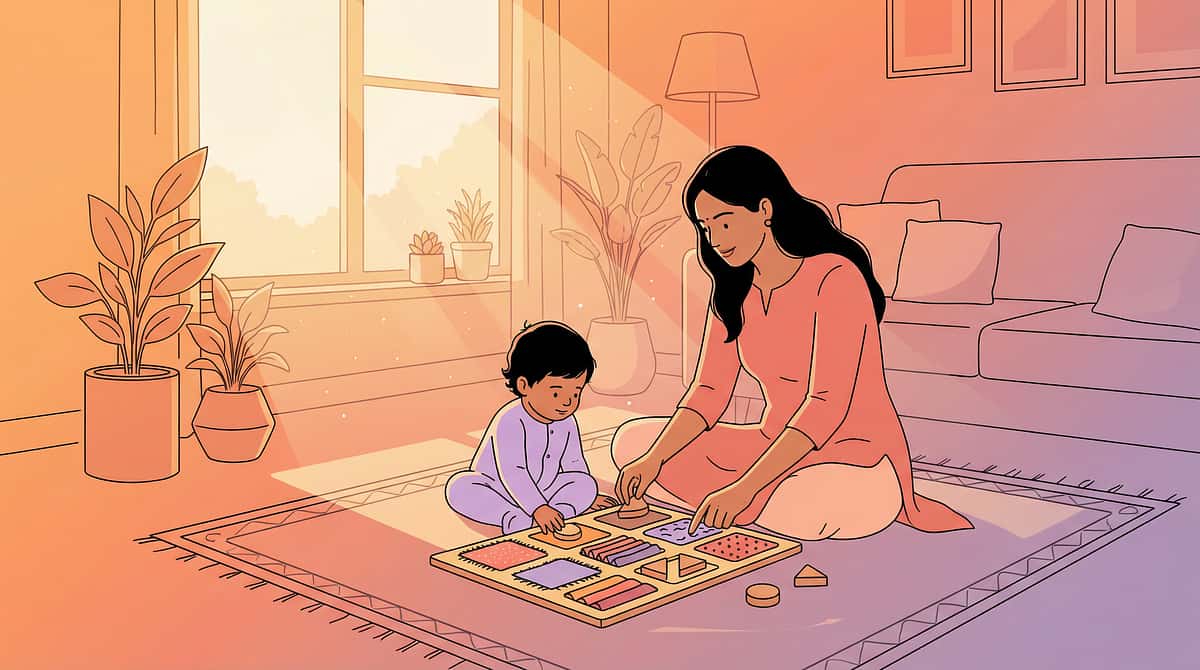
He Wants to Tell You Something. You Can See It in His Eyes.
It's breakfast time. Your child is staring at the cereal box on the counter. His hand reaches up. His mouth opens — but nothing comes. No word. No sign. No point. Just that look that says I want that but I don't know how to tell you. And when you can't understand, the screaming starts. Not because he's misbehaving — because he's trapped behind a wall that separates what he thinks from what he can say.
You are not failing your child. Your child is not broken. There is a bridge between silence and voice — and you are about to learn exactly how to build it.
Domain: Speech-Language / AAC
Age: 18 months – 6 years
Series: B-136
You Are Not Alone — The Numbers
Millions of families worldwide are navigating this exact moment — the moment before first communication breaks through. The science is clear: every child can communicate. The path is individual. You are not alone, and your child is not without hope.
1 in 36
Children Diagnosed with ASD
In the United States, per CDC 2024 MMWR Surveillance Summary — many are pre-verbal or minimally verbal at time of diagnosis.
25–50%
Minimally Verbal Past Age 5
Without targeted intervention — but with early, evidence-based AAC support, the majority develop functional communication. (Tager-Flusberg & Kasari, 2013)
21M+
Therapy Sessions Delivered
By Pinnacle Blooms Network across India — with 97%+ measured improvement across developmental readiness indexes, including Communication Readiness.
India alone has an estimated 2–3 million children on the autism spectrum. Communication support infrastructure remains critically uneven — which is exactly why Pinnacle built GPT-OS® to bring evidence-based protocols to every home, in every language, at every economic level.
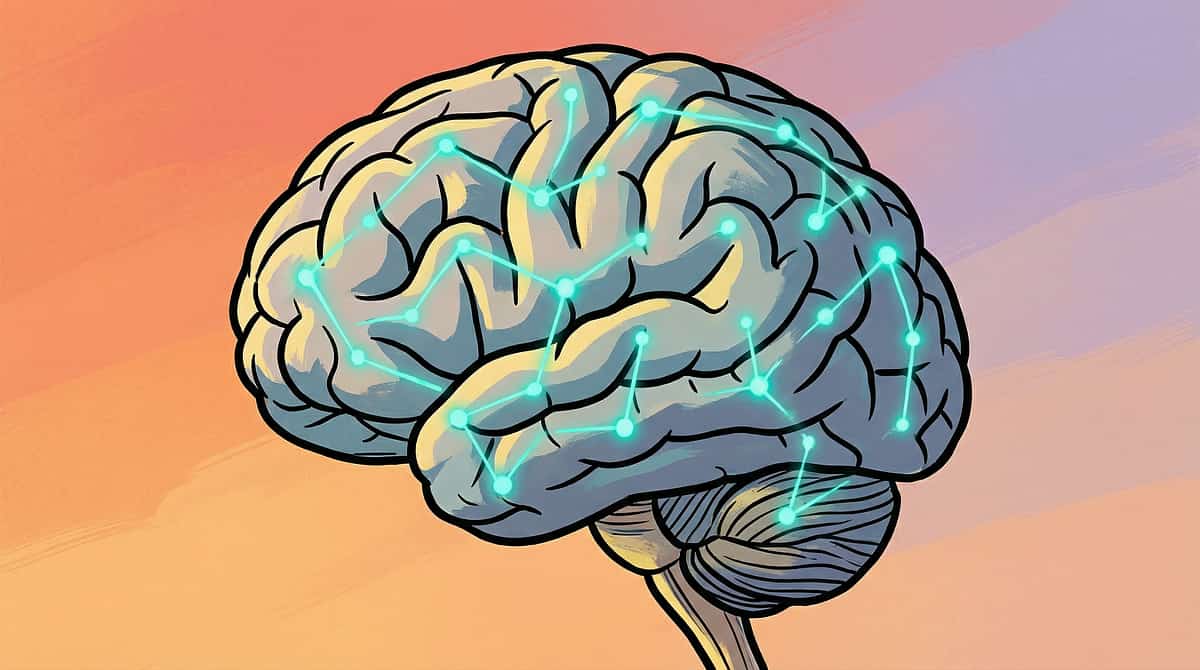
What's Happening in Your Child's Brain
The Neuroscience — Plain English
Your child's brain has the desire to communicate — that's why you can see it in their eyes. The areas that understand language (Wernicke's area) may be developing ahead of the areas that produce speech (Broca's area) and the motor planning regions that coordinate lips, tongue, and breath into words.
This is a wiring and timing difference, not a behavior choice. Your child is not choosing silence — their brain's communication highway is still under construction.
AAC, sign language, PECS, and other tools provide alternative routes while the highway continues to develop.
Key Insight: "Your child understands more than they can express. AAC and alternative communication do NOT prevent speech — research consistently shows they SUPPORT verbal language development." — ASHA Position Statement; Romski & Sevcik (2005)
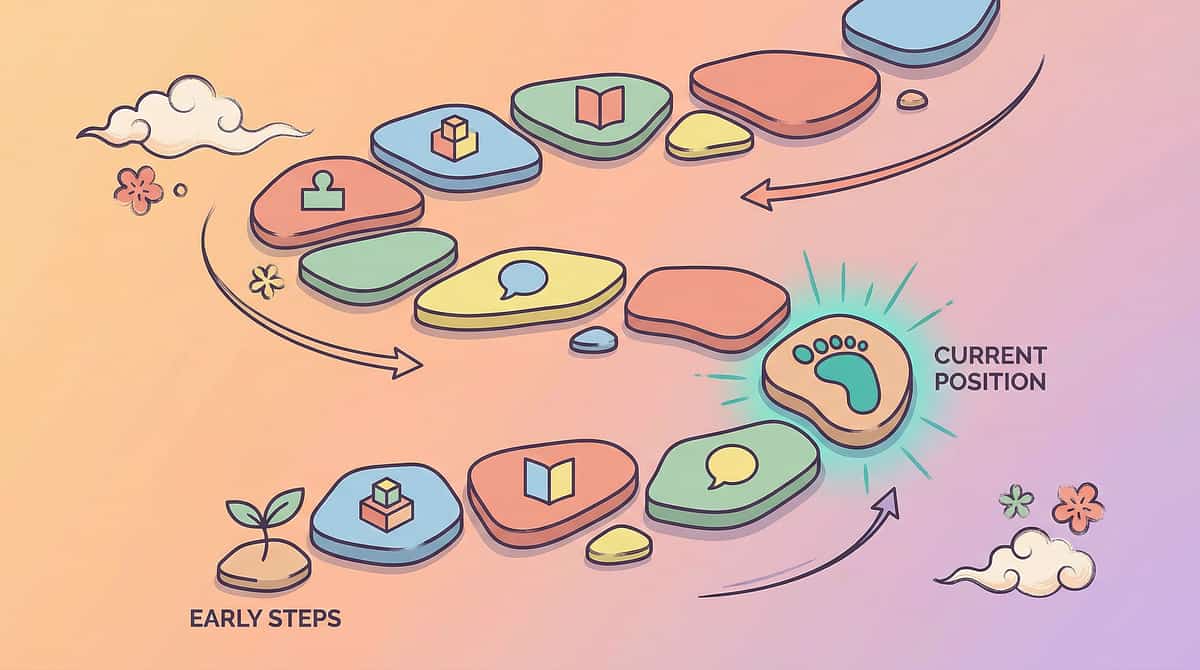
Where This Sits in Development
Your child's communication development follows a hierarchy — from pre-intentional behavior to intentional behavior, to unconventional communication, to conventional communication, to symbolic language. We meet your child exactly where they are and move them forward.
0–12 Months
Cooing, babbling, first gestures. Your child may be quieter than expected or have limited babbling.
12–18 Months
First words, follows simple commands. No consistent words or limited response to verbal cues may be present.
⚠️ 18 Months – 3 Years
YOUR CHILD MAY BE HERE. Vocabulary explosion and 2-word combinations expected — pre-verbal or minimally verbal children need targeted support now.
3–5 Years
Sentences, questions, narrative. With intervention, functional communication is achievable at any modality.
5+ Years
Complex language, social communication. Early intervention creates this trajectory — it's never too late to start.
Communication delays commonly co-occur with sensory processing differences (80%+ in ASD), motor planning challenges (apraxia of speech), joint attention difficulties, and limited imitative repertoire — which is why Pinnacle uses a multidisciplinary, integrated approach.

The Evidence Behind This Technique
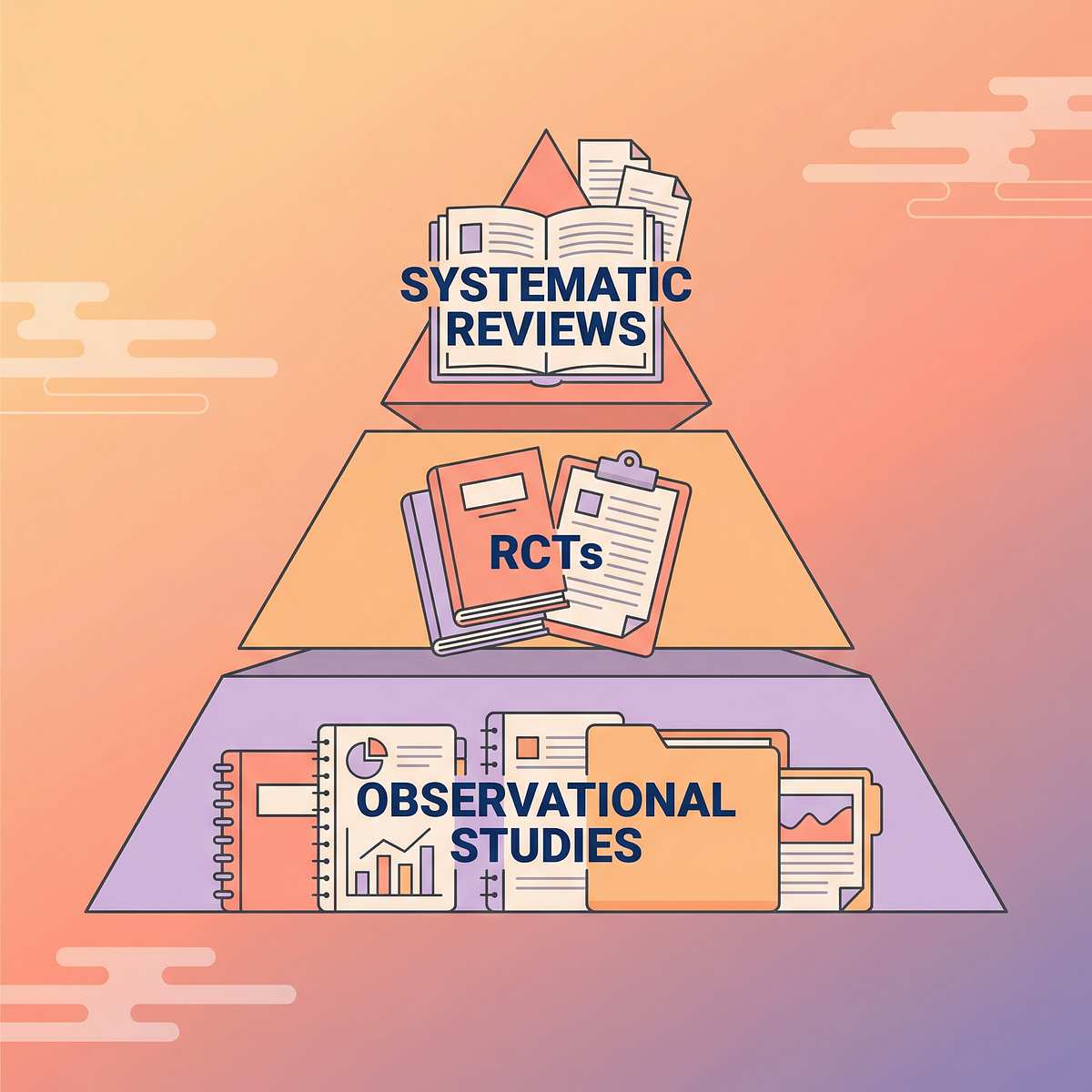
⬢ Evidence Level: Strong (Level I–II)
Systematic Reviews + Meta-Analyses + RCTs
✅ AAC Does NOT Hinder Speech
Multiple systematic reviews confirm AAC supports and often accelerates verbal language in pre-verbal children. (Romski & Sevcik, 2005; Millar, Light & Schlosser, 2006)
✅ PECS Is Evidence-Based
The Picture Exchange Communication System has Level I evidence from RCTs showing functional communication gains. (Bondy & Frost, 2001; National Autism Center, 2015)
✅ Early Intervention Is Critical
Children who receive communication intervention before age 3 show significantly better outcomes than those who wait. (Brady et al., 2016; ASHA Early Intervention Position Statement)
✅ Multi-Modal Is Optimal
Total communication approach — speech + sign + AAC + PECS — produces best outcomes across studies. (NCAEP Evidence-Based Practices Report, 2020)
Pinnacle Real-World Evidence: 97%+ measured improvement across Communication Readiness Index • Tracked through AbilityScore® longitudinal system • Validated across 80+ centers. Clinically validated. Home-applicable. Parent-proven.
The Technique — What It Is
Building Your Child's First Voice
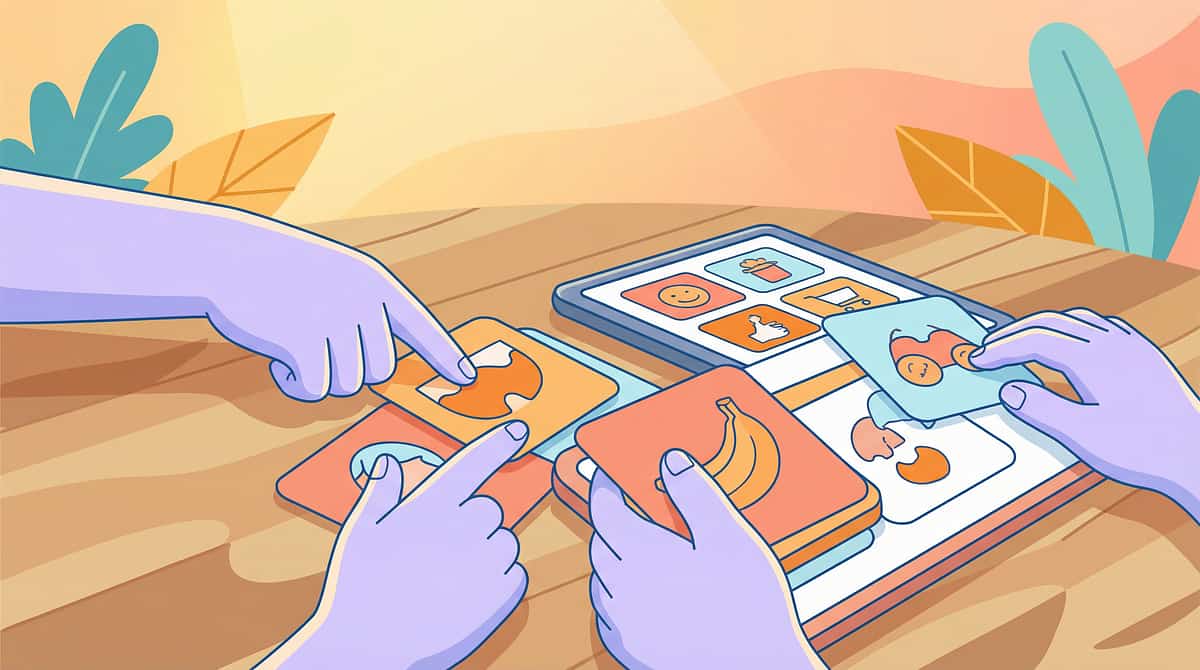
Teaching First Communication is the process of establishing a child's first reliable, functional communication — whether through spoken words, sign language, picture exchange, AAC devices, or any combination. This is not about waiting for words. This is about giving your child the MEANS to communicate NOW, in whatever form works for their brain and body.
The 9 materials in this guide represent the evidence-based tools that speech-language pathologists, behavior analysts, and developmental specialists use to bridge the gap between silence and voice.
Domain B
Speech-Language / AAC
Age Range
18 months – 6 years
Session
10–20 min (home) | 30–45 min (clinical)
Frequency
Daily | Min. 3×/week
Who Uses This Technique
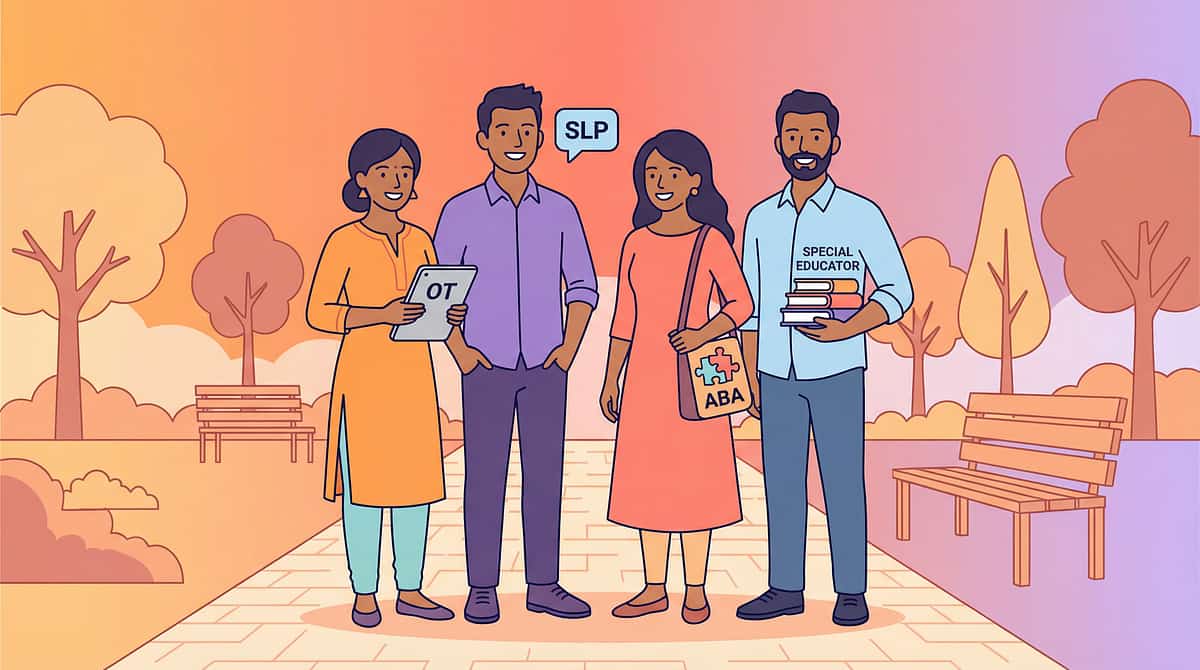
Communication doesn't organize itself by therapy type. It's simultaneously a language skill, a learned behavior, a motor act, a functional academic skill, and a neurodevelopmental milestone. Pinnacle's FusionModule™ integrates all five disciplines.
Speech-Language Pathologist (SLP)
Designs the communication system, selects AAC modality, establishes vocabulary, and trains parents in responsive communication strategies. Leads AAC evaluation and device selection.
Board Certified Behavior Analyst (BCBA)
Structures the learning environment using ABA principles — reinforcement schedules, prompting hierarchies, and shaping procedures that make communication attempts more likely.
Occupational Therapist (OT)
Addresses motor components — hand strength for signing, fine motor access for AAC devices, sensory regulation, and seating for device access.
Special Educator (SpEd)
Integrates communication into structured learning, generalizes skills across academic contexts, and builds vocabulary tied to functional daily routines.
NeuroDevelopmental Pediatrician
Provides diagnostic clarity, rules out medical contributors to communication delay, and oversees the integrated intervention plan within the broader developmental profile.
What This Technique Targets
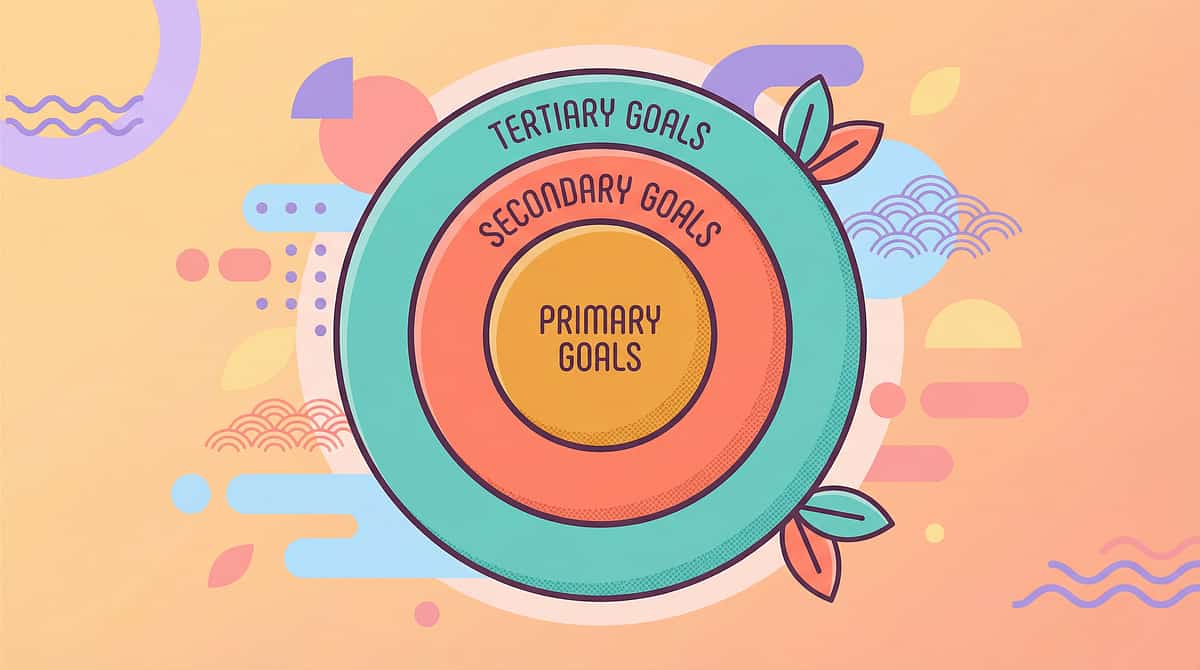
🎯 Primary Target: First Functional Communication
The child produces their first reliable, intentional communication through ANY modality — a button press requesting a toy, a picture exchange that gets a snack, a sign that says "more," or a spoken approximation. Observable indicator: child initiates communication with expected result at least 3× independently.
🔵 Secondary Targets
- Joint Attention — Shared focus between child, object, and communication partner
- Cause-and-Effect Understanding — "When I do THIS, THAT happens" — foundational for AAC use
- Imitation Skills — Copying models is how communication forms are learned
- Turn-Taking — Communication is a back-and-forth exchange
- Frustration Reduction — When communication works, tantrums decrease
🟢 Long-Term Developmental Gains
- Expanded vocabulary across contexts
- Multi-word combinations and sentence building
- Social interaction and peer engagement
- Academic readiness and classroom participation
- Self-advocacy and independence
- Emotional expression and regulation
Observable Signs of Progress
- Child directs a message to a person and gets a response
- Child looks between an object and a person (joint attention)
- Child repeats an action that produced a result
- Fewer tantrums during communication moments
What You Need — The 9 Materials
Your complete communication materials toolkit. Every item here is clinically validated by the Pinnacle Blooms Consortium and mapped to Canon Material categories. You can start today with zero cost — your child's favorite items are all you need to begin.
1
Single-Message AAC Devices
Low-Tech AAC | ₹2,000–8,000 | ✅ DIY: Recordable buttons available
2
PECS Materials
Low-Tech AAC | ₹500–3,000 | ✅ DIY: Print + laminate at home
3
Sign Language Supports
No-Tech | ₹200–1,500 | ✅ DIY: Free online resources
4
Core Vocabulary Boards
Low-Tech AAC | ₹300–2,000 | ✅ DIY: Print core word boards
5
Highly Motivating Materials
Foundational | ₹100–1,000 | ✅ DIY: Your child's favorite items
6
Visual Choice Materials
No-Tech | ₹0–500 | ✅ DIY: Any two items your child loves
7
Object-Based Communication
No-Tech | ₹0–500 | ✅ DIY: Household objects you already own
8
Beginner AAC Apps
High-Tech AAC | ₹0–15,000 | ✅ DIY: Free apps on Android & iOS
9
Imitation / Modeling Materials
Foundational | ₹200–1,500 | ✅ DIY: Musical toys, mirrors, pots and spoons
Essential Starters (₹0 to begin): Start TODAY with highly motivating materials (free — your child's favorite items), visual choices (free — any two items), and object-based communication (free — household objects). You do not need to purchase anything to begin.
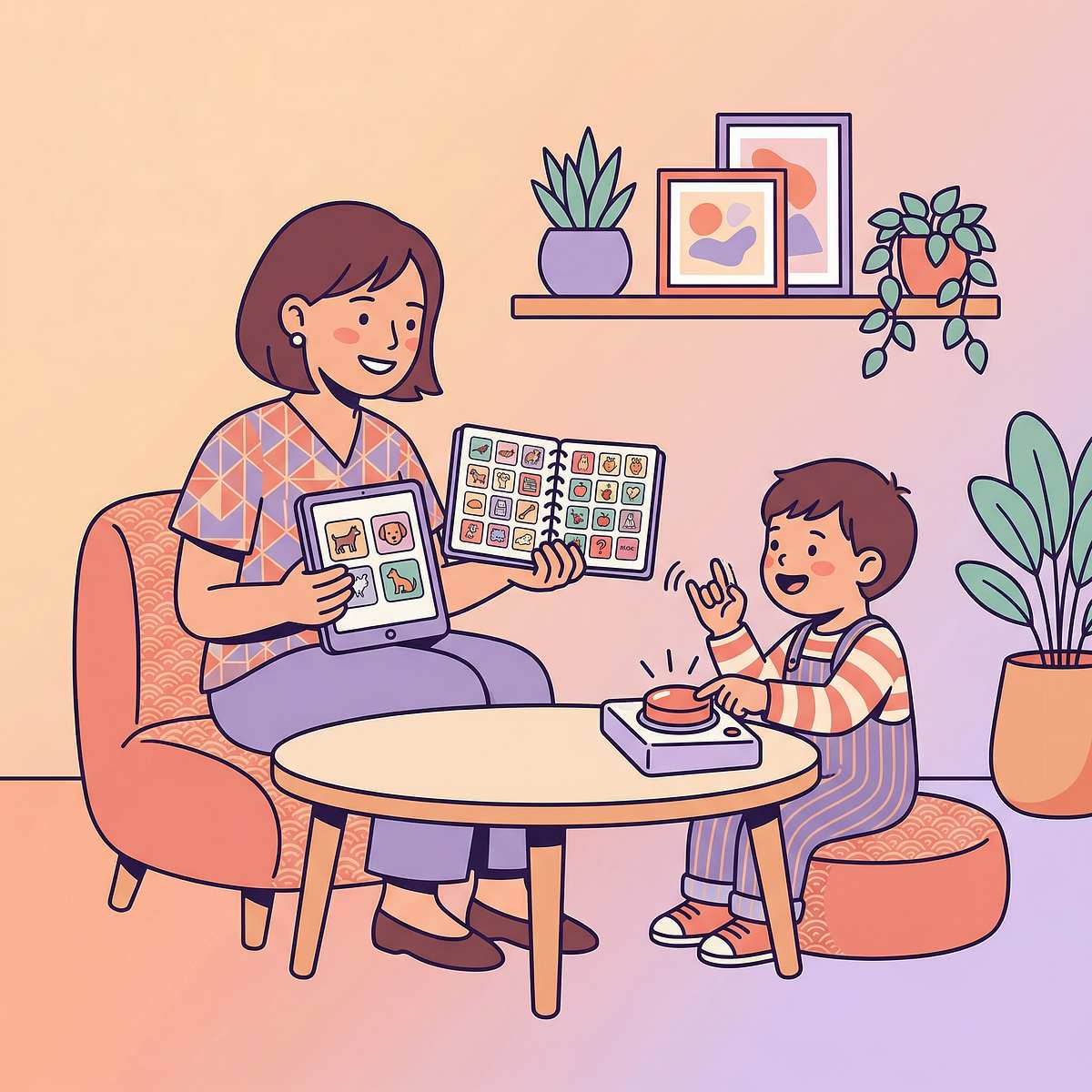
DIY & Zero-Cost Alternatives
The Pinnacle Equity Promise: The science of first communication doesn't require expensive equipment — it requires the RIGHT approach with whatever materials you have. Here is how to start with zero cost.
Material | Clinical Grade | Zero-Cost DIY | |
AAC Device | Big Mack / AbleNet device (₹5,000+) | Recordable greeting card (₹100–200) — records and plays one message | |
PECS Materials | Official PECS kit (₹2,000+) | Print photos of favorite items, laminate with clear tape, add velcro strips | |
Sign Language | Professional sign cards (₹500+) | Free sign language videos on YouTube + printed visual guides online | |
Core Vocabulary Board | Commercial boards (₹1,000+) | Draw/print 4–8 core words (MORE, STOP, HELP, WANT, GO, ALL DONE) on cardboard | |
Motivating Items | Specialized therapy toys | Your child's TOP 3 favorites — bubbles, snacks, beloved toys | |
Visual Choices | Choice cards/boards | Hold up ANY two items your child wants and let them choose | |
Object Communication | Tangible symbol kits | Real spoon = eating, real cup = drink, real ball = play | |
AAC App | Proloquo2Go (₹15,000+) | Free: LetMeTalk, Avaz Lite, CBoard — available on Android/iOS | |
Imitation Materials | Specialized imitation kits | Clap hands, bang a pot with a spoon — anything that invites "do what I do" |
When Clinical Grade Is Non-Negotiable: If your child has significant motor challenges affecting access, a professional AAC evaluation should precede device selection. Complex communication needs require customized high-tech AAC solutions guided by an SLP.
Safety First — Before You Begin
🔴 RED — Do NOT Proceed If:
- Child is in active medical distress (seizure, high fever, acute illness)
- Child is still in acute dysregulation after a severe meltdown — wait for calm
- Introducing small AAC parts to a child under 3 who mouths objects — CHOKING HAZARD
- Child has a known allergy to any material component
🟡 AMBER — Modify If:
- Child is tired, hungry, or coming off a difficult transition — use visual choices only
- Child has motor difficulties that make signing or button-pressing painful — adjust modality
- Child shows increasing distress rather than engagement — STOP and switch to calming activity
- Communication attempts are being ignored — fix the reinforcement loop first
🟢 GREEN — Proceed When:
- Child is calm, alert, and fed
- Environment is quiet with minimal distractions
- Motivating item is ready to deliver IMMEDIATELY when communication occurs
- You are emotionally calm and ready to respond with enthusiasm
- You have 10–15 uninterrupted minutes
Critical Safety Rule: The device/picture/sign MUST "work" every single time. If your child presses a button that says "cookie" and you don't give them a cookie, you've taught them that communication doesn't work. Communication failure is the #1 reason children abandon AAC.
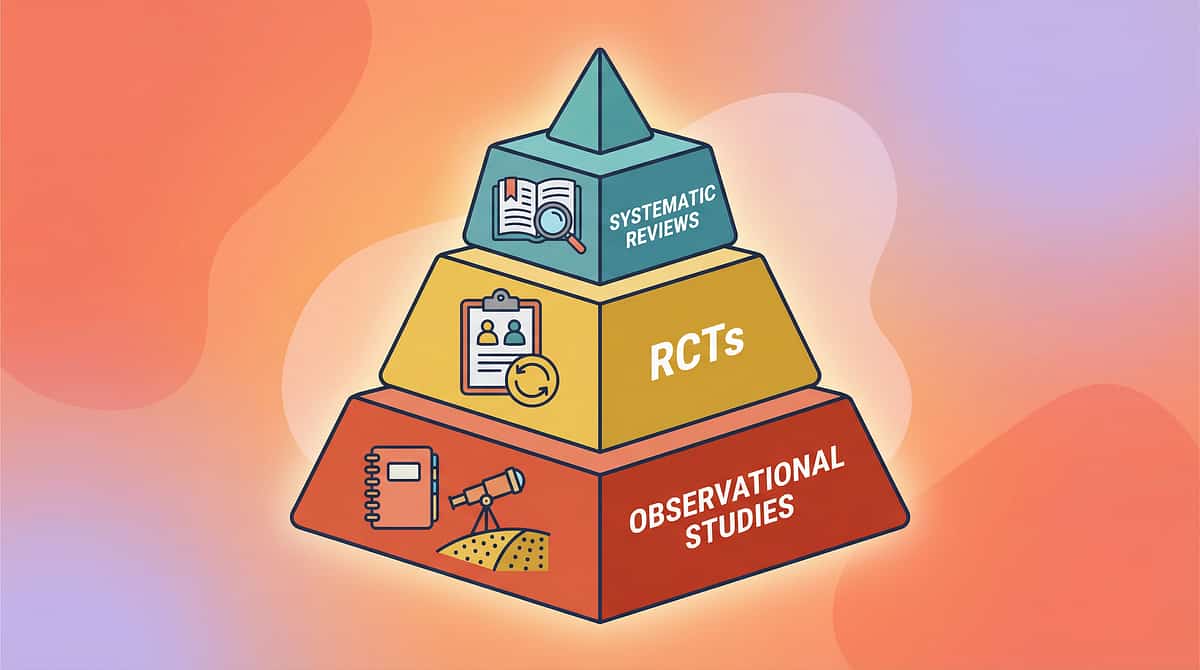
Set Up Your Space
Your 4-Position Setup
Your Child
Seated comfortably at a small table or on the floor, at a height where they can easily access communication materials. AAC device within arm's reach.
You (Parent/Caregiver)
Directly across or beside your child at eye level. Not behind, not above. You need to see their face — and they need to see yours.
Communication Materials
Between you and your child — accessible but not overwhelming. Start with just 1–2 options. Add complexity only after mastery.
Motivating Items
Visible but NOT within reach. They can see the bubbles, the snack, the toy — but they need to COMMUNICATE to get it. This is the motivation engine.
Remove From the Space
- ❌ TV/screens playing in the background
- ❌ Siblings who might interrupt
- ❌ Competing toys or visual clutter
- ❌ Loud music or background conversation
Environment Settings
- 💡 Bright, natural lighting preferred
- 🔇 Quiet — noise competes with AAC output
- 🌡️ Comfortable temperature — sensory discomfort blocks communication
- ⏱️ Visual timer set for 10–15 minutes
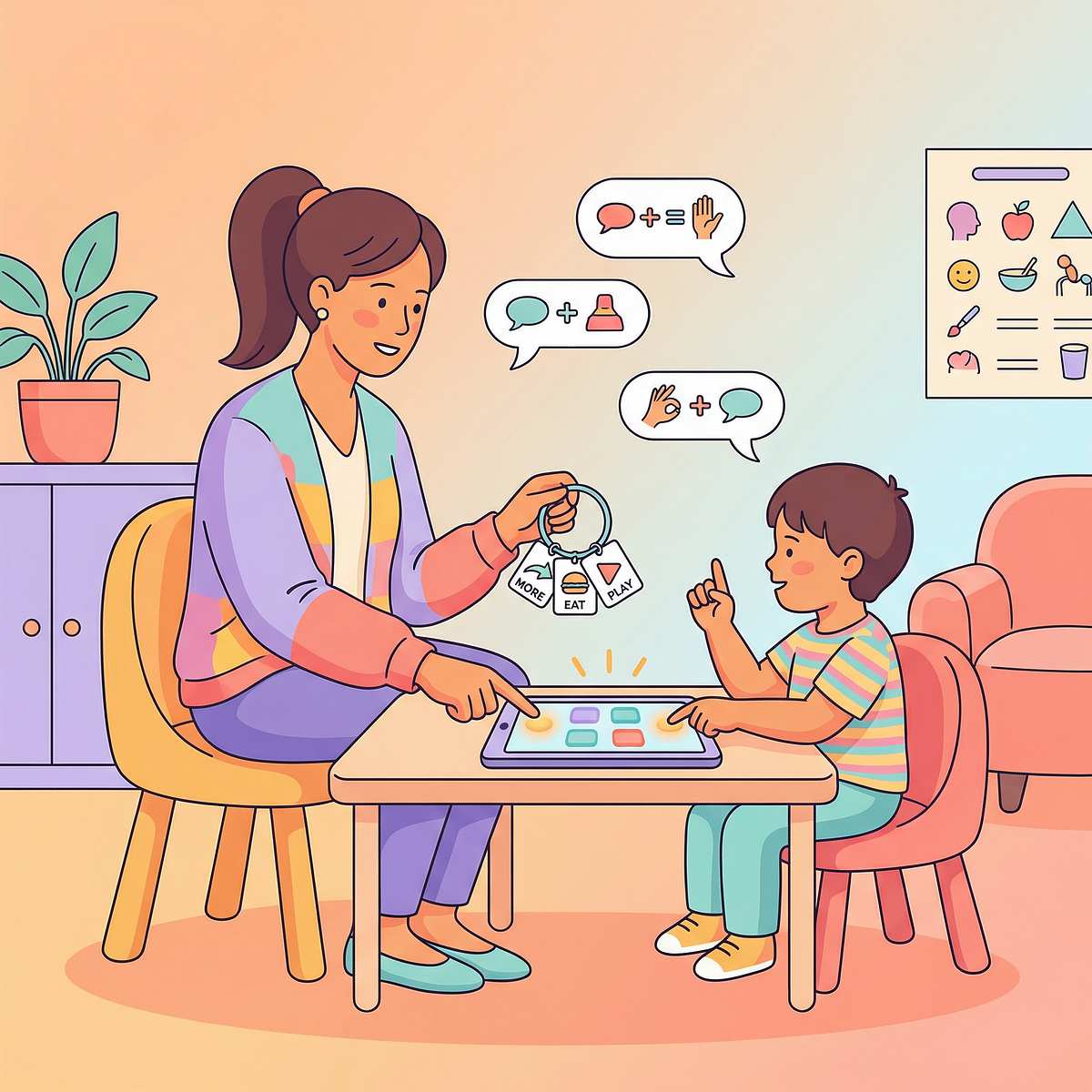
Is Your Child Ready? — Readiness Check
Do This First — Every Session
60-Second Assessment
The best session is one that starts right. A session that starts wrong teaches your child that communication is stressful. Take 60 seconds before every session to confirm readiness.
✅ Child is fed
If not → Feed first. Hunger overrides communication motivation every time.
✅ Child is rested
If not → Postpone to after nap or next day. Fatigue blocks learning.
✅ Child is calm
If not → Use calming strategy first, wait 15 minutes, then reassess.
✅ Motivating item identified
Test it: does child reach, look at, or vocalize toward the item? If not, find a new motivator.
✅ Parent is emotionally ready
Your frustration communicates. Take a breath. This is play, not a test.
✅ Environment is set up
Complete the Card 12 setup before starting. Preparation is part of the session.
All ✅ → GO
Begin with Step 1: The Invitation
1–2 ❌ → MODIFY
Use simplified version: visual choices only with top motivator
3+ ❌ → POSTPONE
Not today. Do a calming, preferred activity. Tomorrow is fine.

Step 1: The Invitation
⏱️ Duration: 30–60 seconds
ABA Principle: Pairing
What You Say
"Hey [child's name]! Look what I have! Want to play with me?"
Hold the motivating item visible. Smile. Get down to their level. Wait. Do NOT push. Do NOT place their hand on the device. This is an invitation, not a command.
Your Body Language
Warm. Open. Leaning slightly forward. Eyes bright. Voice animated but not overwhelming. You are the most exciting thing in the room right now.
ABA Principle in Action
Pairing — you are associating yourself and the materials with good things before placing any communication demand. This is the foundation everything else is built on.
What Acceptance Looks Like
- Child looks at you AND the item
- Child reaches toward the item or toward you
- Child moves closer to the materials
- Child vocalizes — any sound directed at you or the item
- Child smiles or shows excitement
What Resistance Looks Like & How to Modify
- Child turns away → Wait 10 seconds. Try a different motivator. Don't chase.
- Child pushes materials away → Remove them. Try again in 5 minutes.
- Child melts down → Comfort first. Session is postponed.
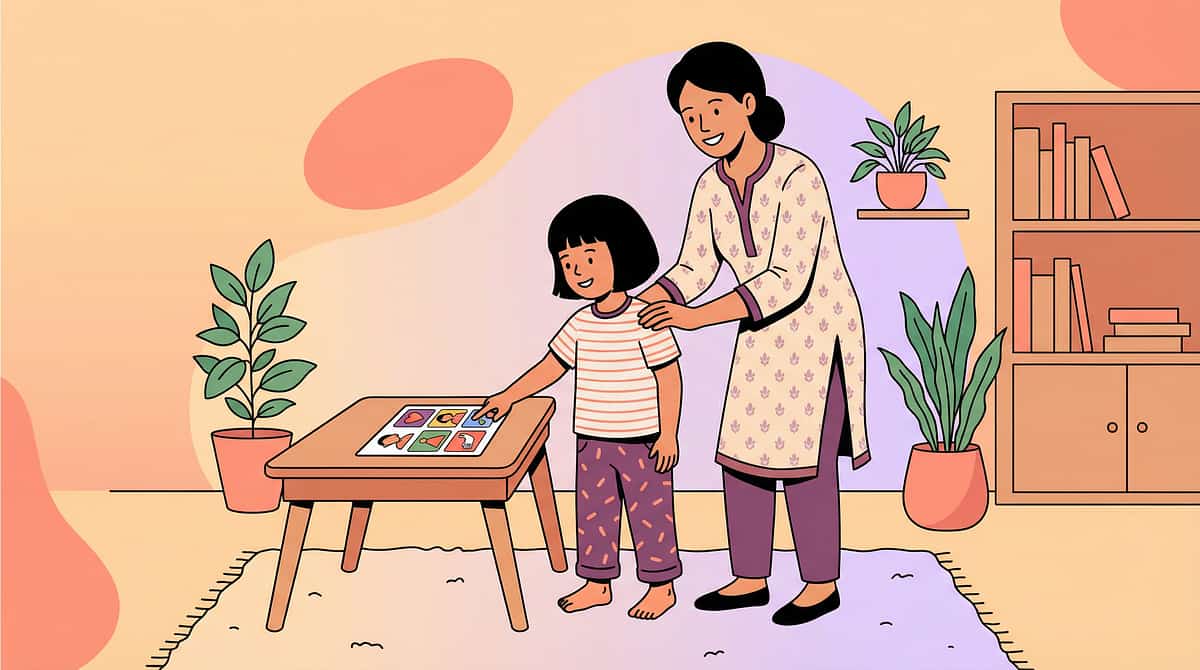
Step 2: The Engagement
⏱️ Duration: 1–3 minutes
Choose Your Communication Pathway
Single-Message AAC Device
Place the device between you both. Press it yourself: "COOKIE!" Then give yourself a tiny piece. Press again, give to child. Message: this button = this item.
PECS (Picture Exchange)
Place the picture card on the table. Pick it up, hand it to yourself, say "Oh! Cookie!" and give yourself a piece. Model 2–3 times before expecting any response.
Sign Language
Make the sign clearly and slowly in your child's line of sight. Say the word as you sign. Do this 3–5 times before expecting any response.
Core Vocabulary Board
Point to the core word ("WANT" or "MORE") as you say it. Pair with the desired item. Model 3–5 times. Let your child watch and absorb.
Visual Choices
Hold up two items — one preferred, one neutral. "Which one? THIS one or THIS one?" Wait for ANY indication — reaching, looking, leaning.
When child shows ANY interest in the material — immediate praise: "You're looking at the button! That's great!" Reinforce attention before you reinforce communication.
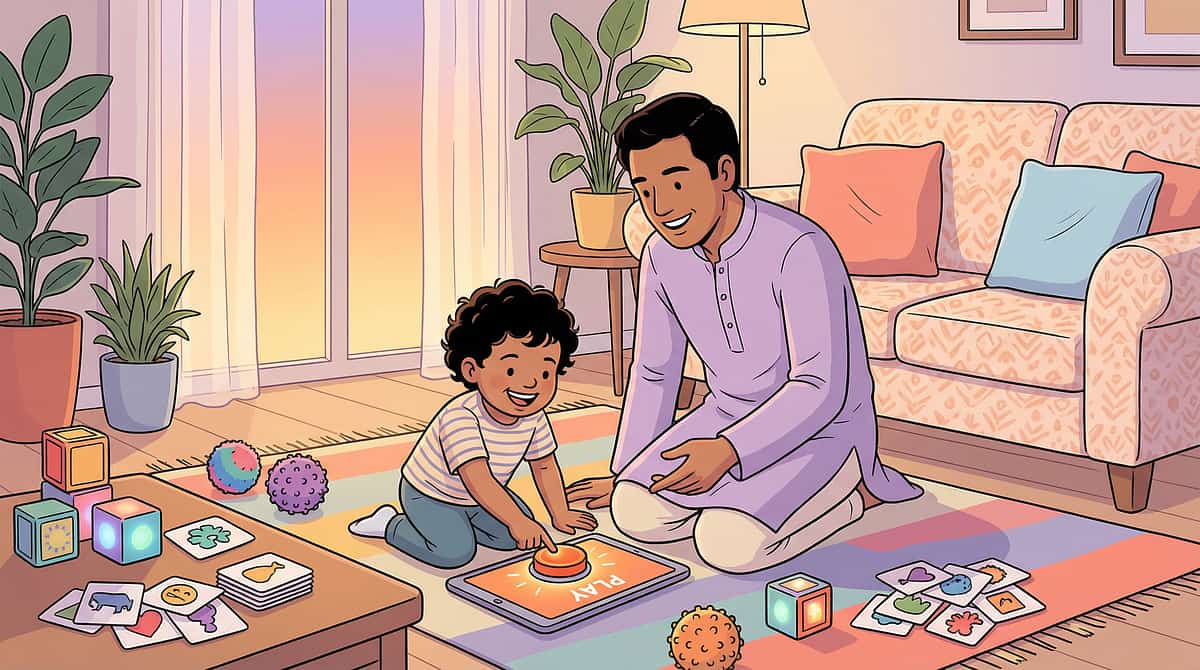
Step 3: The First Communication Moment
⏱️ Duration: 3–7 minutes
The Core of Every Session
THE GOAL: Your child performs an intentional communicative act — presses the button, hands you the picture, makes the sign, points to the core word, or makes a choice — and GETS THE ITEM IMMEDIATELY.
The microsecond your child communicates — button press, card exchange, sign approximation, word approximation, or clear choice — deliver the item and celebrate: "YOU SAID COOKIE! HERE'S YOUR COOKIE! Amazing!"
❌ Waiting too long
More than 3 seconds to reinforce kills the connection
❌ Requiring perfection
An approximation IS communication — honor it
❌ Moving too fast
Give your child time before helping through prompts
❌ Talking too much
Your child needs processing time — silence is therapeutic
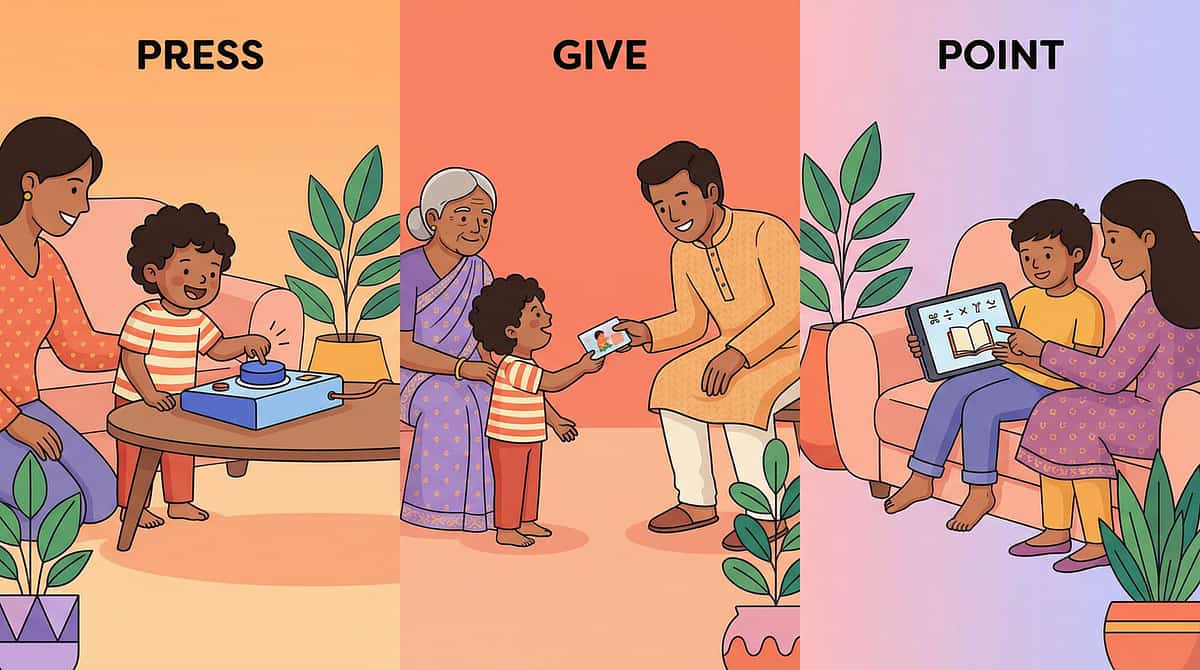
Step 4: Repeat & Vary
⏱️ Duration: 3–5 minutes
Target: 3–8 successful exchanges
How to Repeat
After the first successful exchange, reset. Hold the item visible again. Wait. The child should initiate faster the second time. If they don't, use one level less prompting than last time.
How to Vary (After 3+ Exchanges)
- Change the motivating item (switch from cookie to bubbles)
- Change the location of the device/card slightly
- Change the communication partner (try a sibling)
- Model a DIFFERENT core word ("MORE" instead of "WANT")
- Introduce ONE new sign alongside the mastered one
Satiation Indicators — When to Stop
- Child pushes the item away — they're full or done
- Response time is getting longer and longer
- Child is looking away, body turning, yawning
- Child is getting frustrated despite communication "working"
- YOU are getting frustrated — this matters as much
"3 successful, joyful communication exchanges are worth more than 10 forced, crying ones. End on a high note. Every. Single. Time."

Step 5: Reinforce & Celebrate
⏱️ Within 3 seconds of EVERY attempt
"YES! You told me! You said [ITEM]! HERE YOU GO! I love when you tell me what you want!"
Immediate
Within 3 seconds. Delay kills the connection between communication and result. No exceptions at this stage.
Specific
Name what they did: "You pressed the button!" — not just "Good job!" Specificity builds the neural connection.
Enthusiastic
Your excitement IS the secondary reinforcer. Big smile. Animated voice. Clapping. Make it feel like winning.
Natural
The item itself is the primary reinforcer. The praise is the bonus. Deliver both together.
Every Time
At this stage, EVERY communication attempt gets reinforced. No exceptions. You are building trust in the system.
Celebrate the Attempt, Not Just the Success: If your child reaches TOWARD the button but doesn't press it — reinforce it by helping them complete the press and delivering the item. Shaping means reinforcing successive approximations.

Step 6: The Cool-Down
⏱️ Duration: 1–2 minutes
Evidence-Based: Visual Supports + Transitions
Transition Warning (30 Seconds Before End)
"Two more times, then all done!"
If your child uses a visual timer, point to it. If they respond to "all done" — sign it, show the card, or say it clearly. Predictability reduces resistance.
Cool-Down Activity
After the last exchange, provide a calm, preferred activity for 1–2 minutes:
- Gentle sensory play — soft texture, calm music
- Looking at a favorite book together
- Quiet snuggle or lap time
- Preferred calming self-stimulatory activity — let them stim, it's regulation
Material Put-Away Ritual
If your child can participate: "Let's put the [communication tool] away. All done!" This teaches that communication tools are always available and always returned to the same place.
Transition to Next Activity
"[Child's name], communication time is all done! Great work today! Now it's time for [next activity]."
If Child Resists Ending
One more exchange is okay: "You want MORE? Okay, ONE more. Then all done." Follow through consistently — boundaries build safety.

Capture the Data — Right Now
⏱️ Do This Within 60 Seconds of Session End
60 seconds of data now saves hours of guessing later. Your child's progress is in these numbers. Use whatever format works for you — the goal is consistency, not perfection.
📊 Communication Attempts
Use tally marks during or immediately after the session. Example: IIII III = 8 total attempts.
📈 Prompting Level
I = Independent | G = Gestural | M = Model | P = Physical. Record level used for each attempt. Trending toward I = progress.
😊 Child's Emotional State
😊 Happy / 😐 Neutral / 😢 Frustrated. Emotional state data predicts session timing and format adjustments.
GPT-OS® In-App Tracker
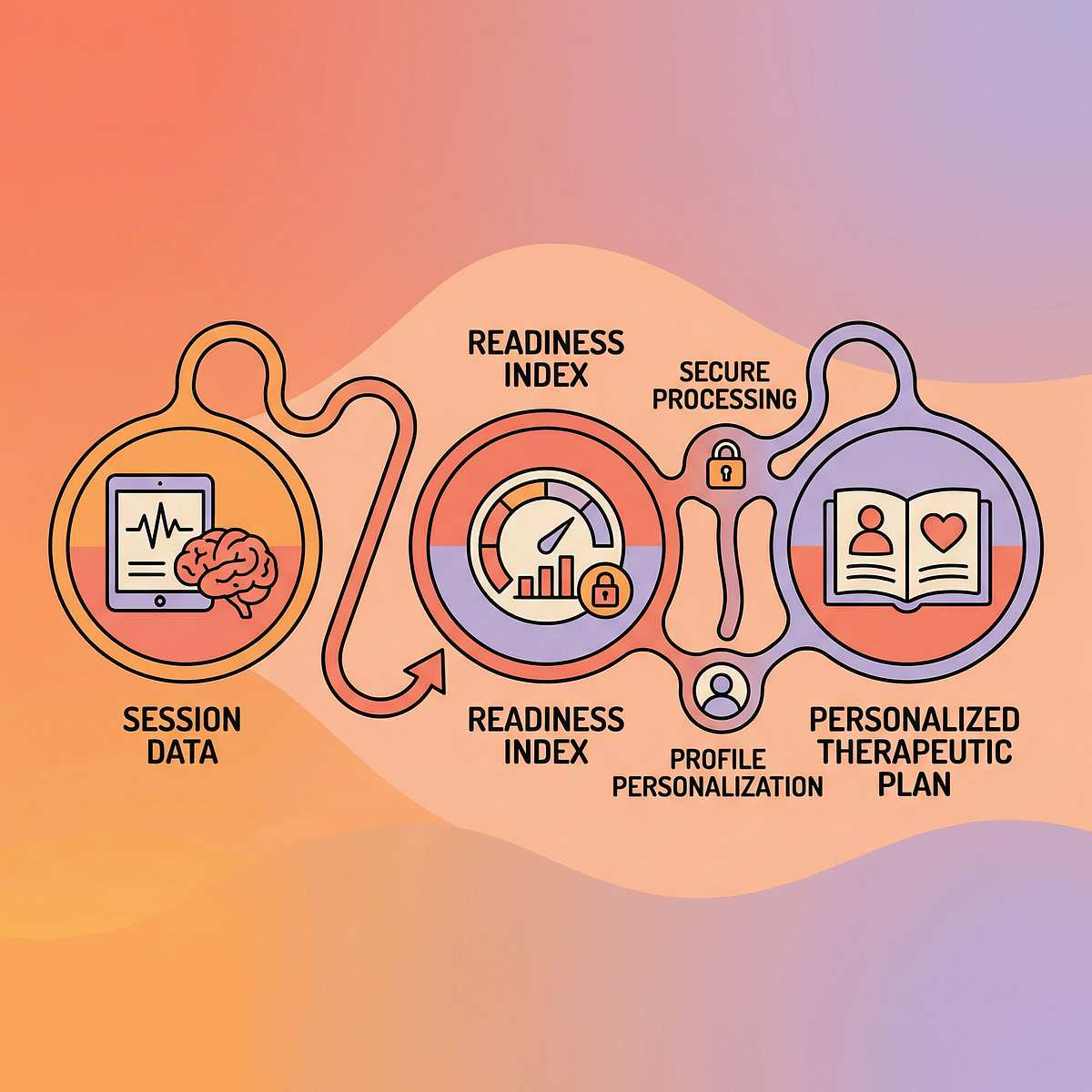
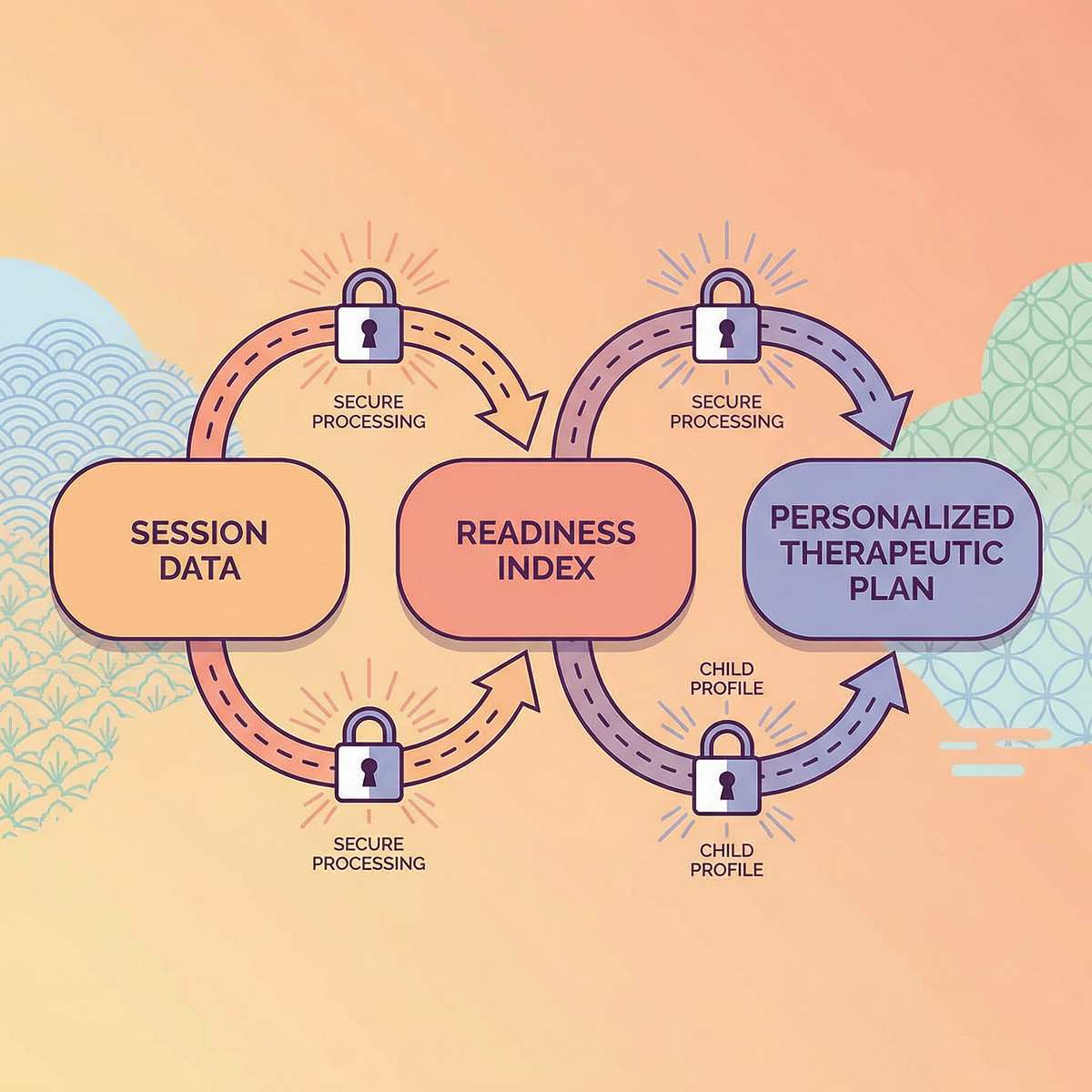
Data feeds directly into your child's AbilityScore® Communication Readiness Index — building their longitudinal developmental profile.
Downloadable PDF Sheet
Print and use on the fridge. Fill in daily. Simple paper tracking works just as well for families starting out.
Quick Notes
Phone notepad, voice memo, WhatsApp message to yourself — anything is better than nothing. Start where you are.
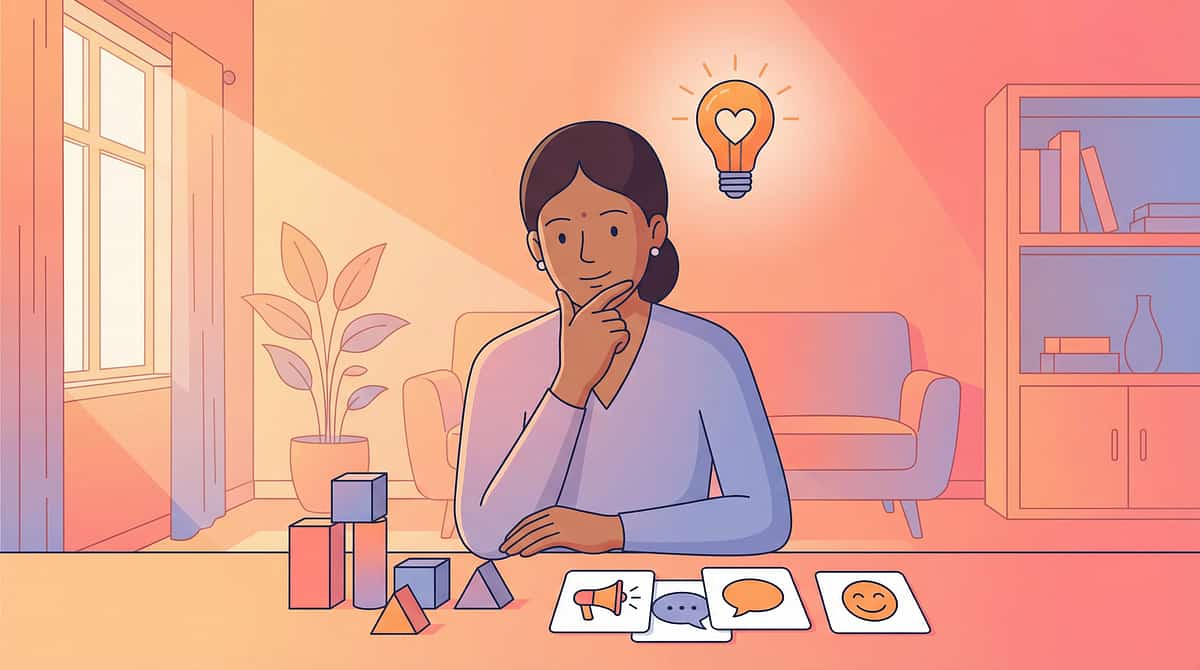
What If It Didn't Go as Planned?
Reality Check
7 Common Challenges + Fixes
Most sessions don't go perfectly. That's not failure — that's data. Here are the 7 most common challenges with first communication sessions and exactly what to do:
Zero interest in the communication tool
Why: The motivating item wasn't motivating enough today. Fix: Observe what your child gravitates to naturally before tomorrow's session. The tool is only as effective as the motivation behind it.
Child cried or melted down
Why: Demand was too high or child was not in a regulated state. Fix: Next time, reduce demand (visual choice only). Check readiness. Consider a different time of day.
Child grabbed the item without communicating
Why: The item was within reach. Communication wasn't required. Fix: Keep the motivating item VISIBLE but OUT OF REACH at all times.
Child communicated once but refused to repeat
Why: One exchange may be your child's current capacity — and that's FINE. Fix: Celebrate the one exchange. End positively. Stamina increases naturally over time.
Child used a different modality than offered
Why: Your child found what works for their brain. This is WONDERFUL, not wrong. Fix: Honor whatever modality they used. Build from their lead.
You lost patience or got frustrated
Why: You're human. This is hard emotional work. Fix: End the session kindly. Walk away. Breathe. Your frustration is data about session timing and length too.
Child understood but wouldn't initiate
Why: Understanding comes before production — this IS progress. Fix: Increase WAIT TIME before prompting. Some children need 15–20 seconds. Silence is thinking time.
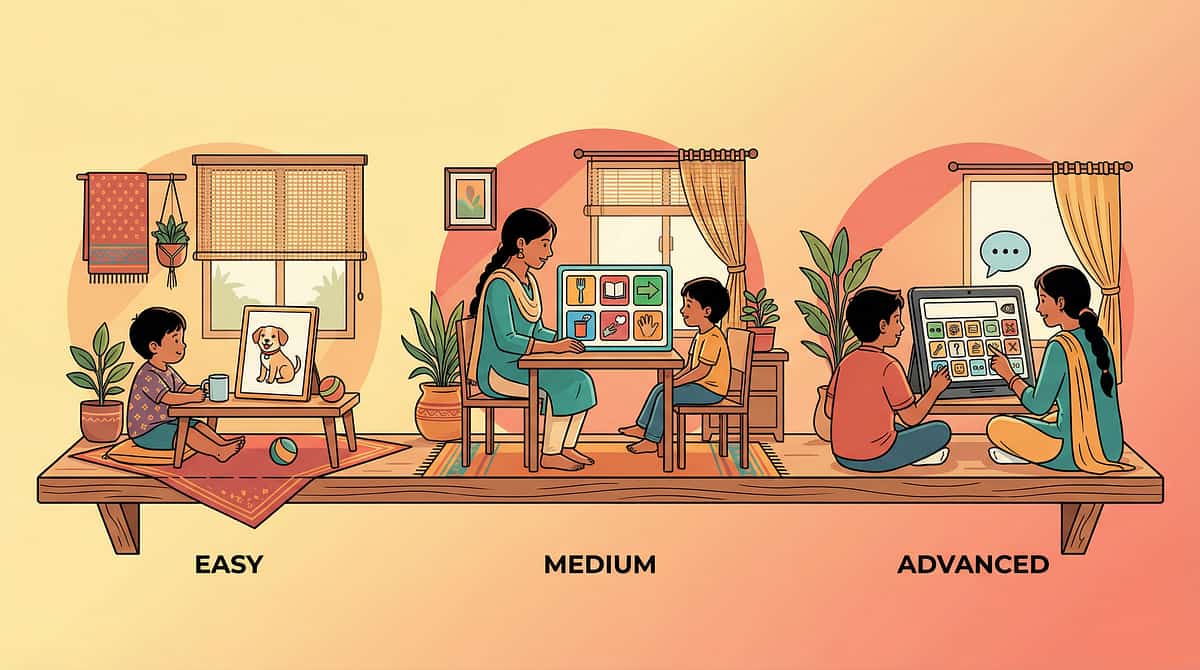
Adapt & Personalize
No Two Children Are Identical
The 6-step protocol is a framework, not a script. Here's how to adjust it for your individual child's sensory profile, motor abilities, and developmental level.
Easiest
Visual choices only — hold up two items, child reaches for one. No device, no cards needed.
Easy
Single-message device with full physical prompting — you help them press every time.
Moderate
PECS exchange or sign language with gestural/model prompting only.
Advanced
Independent AAC device use with 4+ vocabulary items, minimal prompting needed.
Mastery
Multi-word combinations across multiple contexts without any prompting.
Sensory Seeker Adjustments
- Use AAC devices with sound output — auditory feedback is rewarding
- Add movement to communication — sign language combines motor + communication
- Use vibrating devices or light-up buttons for extra sensory reward
Sensory Avoider Adjustments
- Start with quiet modalities — picture exchange, visual choices, no sound
- Reduce environmental stimulation during sessions
- Introduce sound-based AAC gradually with volume control

Weeks 1–2: What to Expect
Progress Bar: 15%
The Tolerance & Noticing Phase
Your brain wants dramatic change. The science says small, consistent steps are how communication development actually works. Here's what genuine progress looks like in the first two weeks — and it's more subtle than you might expect.
✅ What IS Progress
- Child tolerates communication materials being present without pushing them away
- Child looks at device/card/your hands when you model
- Child communicates with full physical prompting — and that absolutely counts
- One moment of independent communication — just one — is enormous
- Frustration may initially INCREASE as child learns there's a system
❌ What Is NOT Expected Yet
- Independent AAC use across the day
- Combining words or symbols
- Using communication with unfamiliar people
- This is NOT the time to add vocabulary or complexity
If your child tolerates the communication tool for 5 seconds longer than yesterday — that's real, measurable, neurological progress. Trust the process. Research: Communication intervention outcomes emerge across 8–12 week timelines (PMC11506176).

Weeks 3–4: Consolidation Signs
Progress Bar: 40%
The Building Phase
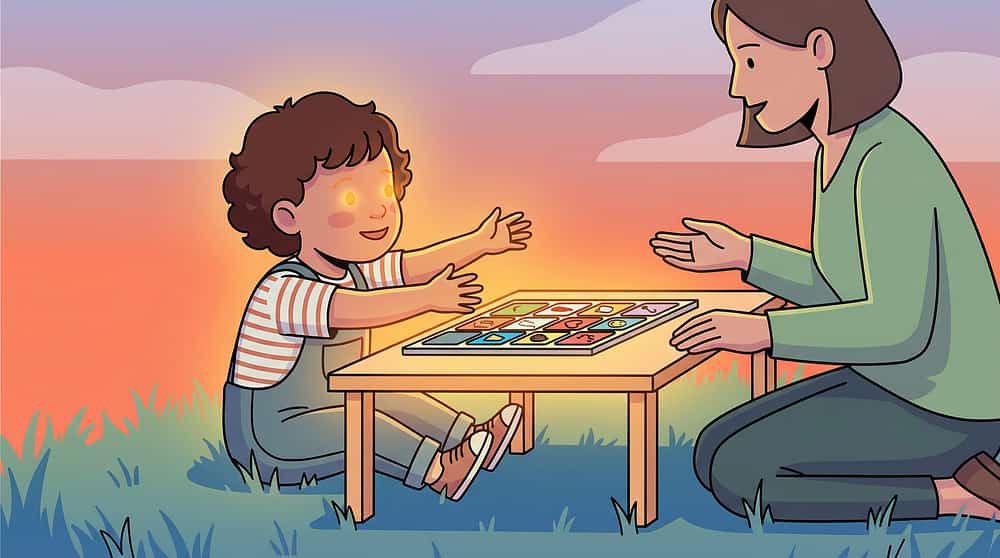
Anticipation Emerging
Child moves toward the table or reaches for the device before you even prompt. This is neural pathway formation — your child's brain is learning the routine.
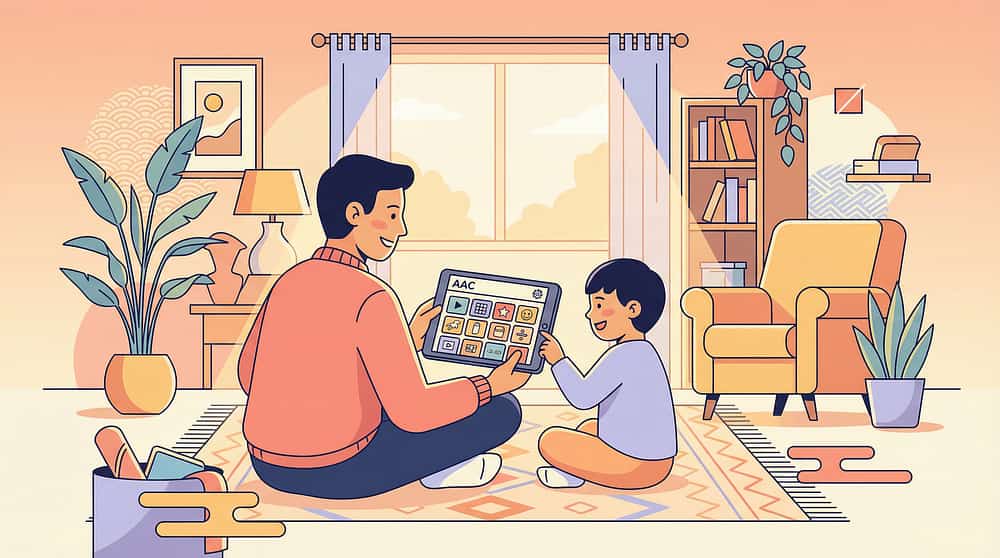
Prompting Level Decreasing
Moving from physical to gestural to model-only. Response time is getting shorter. These are the clearest measurable signs that learning is happening.
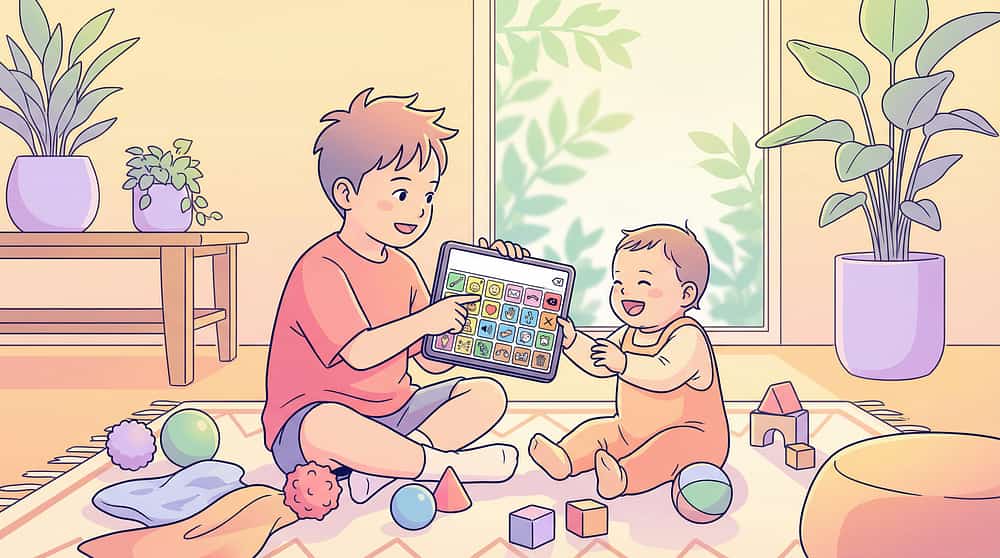
First Generalization Seeds
Child may try to use communication with someone else — a sibling, grandparent. Spontaneous attempts outside sessions are the first signs that communication is becoming theirs, not just yours.
If your child is showing spontaneous communication attempts outside structured sessions, respond to EVERY attempt — not just during formal practice time. Generalization is the goal. You may also notice you're more confident. That matters — your confidence feeds their confidence.
Weeks 5–8: Mastery Indicators
Progress Bar: 75%
🏆 Mastery Unlocked
When your child can independently request 5+ different items or activities using their preferred communication modality, across 2+ contexts, with 2+ communication partners — First Communication Is Established.🎉
80%
Independent Communication
Child initiates communication without prompting at least 80% of all opportunities
2+
Contexts
Communication used in at least 2 different contexts — not just during sessions
5+
Vocabulary Items
Child is using more than 5 different communicative messages across modalities
When to Move to the Next Level
Expand vocabulary within the current modality → Begin multi-word combinations (AAC: "WANT + COOKIE" instead of just "COOKIE") → Introduce next technique in the Communication Foundations Series.
Celebrate This Win 🎉
"From fear to first words. One technique at a time."
You started weeks ago watching your child struggle in silence. Today, your child COMMUNICATES. They press a button and get their cookie. They hand you a picture and get their toy. They make a sign and you understand. They point to a word and the world responds.
This is not a small thing. This is the most important developmental breakthrough in your child' s life so far.
Your child grew because of YOUR commitment. YOU showed up. YOU set up the space. YOU waited patiently. YOU celebrated every attempt. YOU didn't give up on the hard days.
📸 Capture This Moment
Take a photo or video of your child communicating independently. Save it. Date it. This is the "before" snapshot of a lifetime of communication growth.
📝 Journal This Milestone
"On [date], [child's name] independently communicated [what] using [modality] for the first time." Write it down. It matters.
📱 Share With Your Team
Share with your Pinnacle therapy team for inclusion in the clinical record. This moment belongs in the longitudinal story of your child's development.

Red Flags — When to Pause
⚠️ Pause & Seek Guidance
Trust your instincts. If something feels wrong, pause and ask. There is no shame in seeking help — that's exactly what the Pinnacle network is here for.
🔴 Complete Regression
Child was communicating and has stopped entirely for more than 2 weeks. Requires professional assessment.
🔴 Severe Distress Every Session
Every session ends in extended meltdown (30+ minutes) despite all modifications. Professional guidance needed.
🔴 Self-Injurious Behavior
Child is hurting themselves during communication attempts (head-banging, biting). Stop immediately and contact a professional.
🔴 No Progress After 8 Weeks
Despite consistent implementation, no change in prompting level or frequency. A comprehensive evaluation will clarify next steps.
🔴 Loss of Skills in Other Areas
Communication difficulties accompanied by motor, social, or feeding regression requires urgent evaluation.
🔴 New Medical Symptoms
Seizures, hearing changes, or illness that could affect communication. Escalate to medical care immediately.
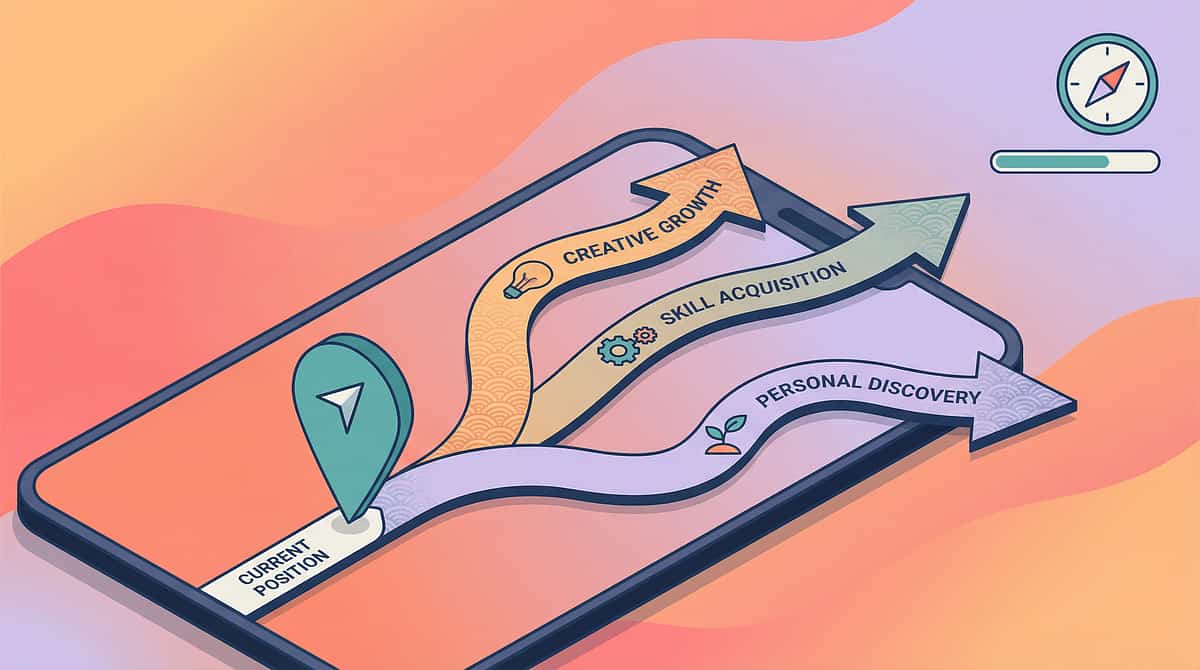
The Progression Pathway
🔵 You Are Here: B-136
Communication Foundations Series
Prerequisite Techniques
- ← B-134: Limited Communicative Intent
- ← B-135: Joint Attention Development
- ← B-133: Physical Leading to Objects
Lateral Alternative
→ B-137: Expanding Early Vocabulary — if your child already has some communication but needs more words
Long-Term Goal: Functional, independent, multi-context communication supporting social participation, academic readiness, and self-advocacy.
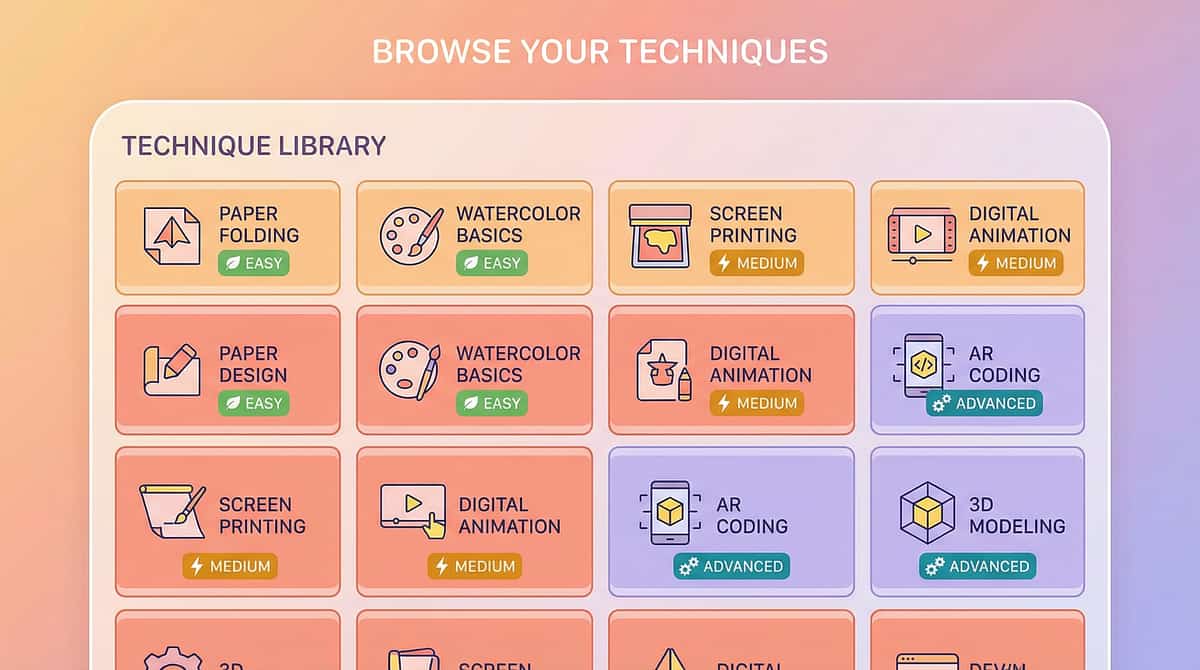
Related Techniques in This Domain
Your investment in these 9 materials opens the door to dozens of related techniques. Communication materials are reusable across your child's entire developmental journey. Here's where to go next.
1
B-134: Limited Communicative Intent
🟢 Intro Level | ✅ Motivating items you already own. Establish the desire and motivation to communicate before the form.
2
B-135: Joint Attention Development
🟢 Intro Level | ✅ Motivating items + visual supports. Build the shared focus between child, object, and person that underpins all communication.
3
B-137: Expanding Early Vocabulary
🟡 Core Level | ✅ AAC devices, PECS, core boards. The natural next step once first communication is established.
4
K-920: AAC Implementation at Home
🟡 Core Level | ✅ AAC devices/apps. Deep implementation guide for families building full home AAC systems.
5
K-945: Communication Throughout the Day
🟡 Core Level | ✅ All 9 materials from this page. Embed communication opportunities into meals, play, dressing, and every daily routine.
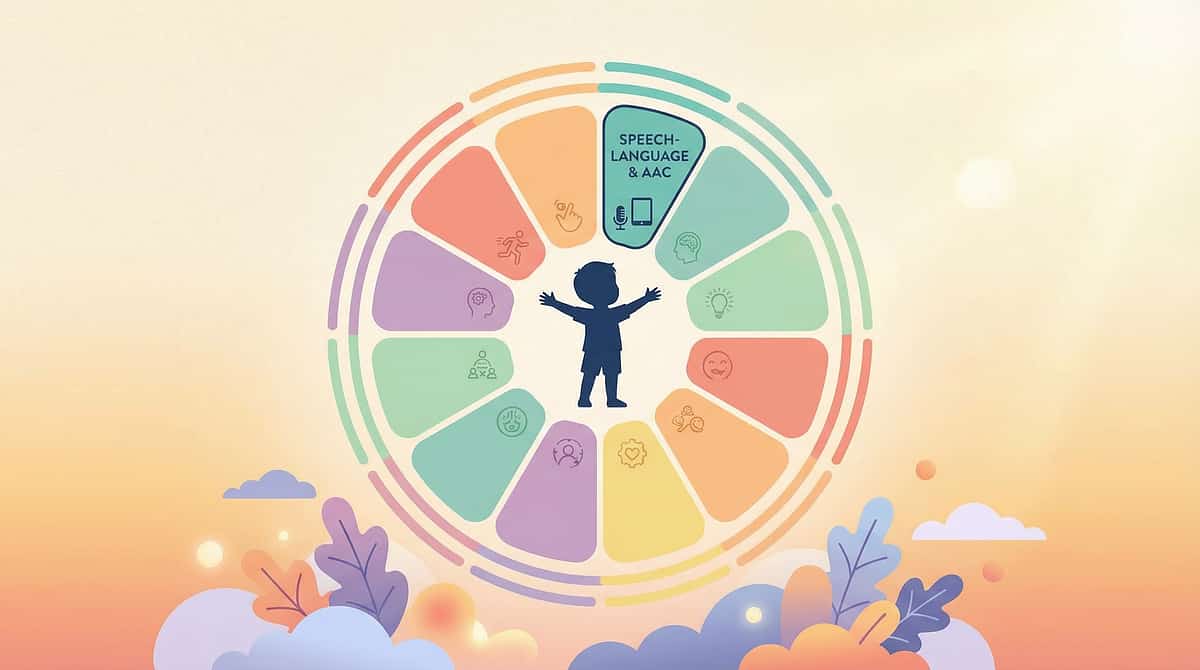
Your Child's Full Developmental Map
Domain B: Speech-Language & AAC ← You Are Here
Communication development doesn't happen in isolation. Your child's communication journey connects to their sensory processing (Domain A), social skills (Domain E), behavioral regulation (Domain F — communication reduces frustration-driven behavior), and every other domain. First communication is one piece of a larger, beautifully interconnected developmental story.
GPT-OS® Integration: Through Pinnacle's AbilityScore® system, your child's progress in first communication feeds into their full developmental profile across all 12 domains — showing you the complete picture and guiding the next intervention priority.
Families Who've Been Here
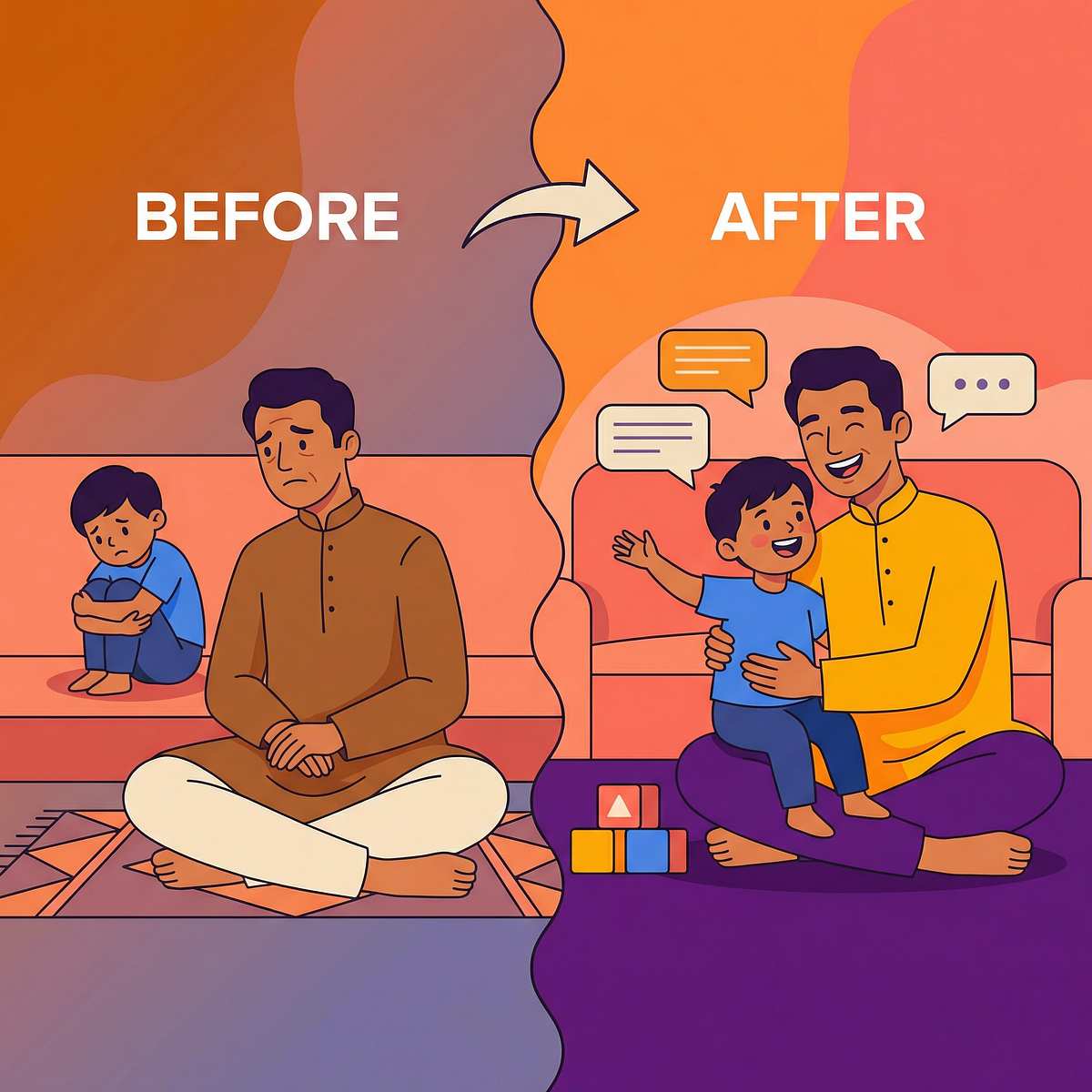
The Button That Changed Everything
Before: 3-year-old boy. No words, no signs, no gestures. Communicated only through screaming and physical leading. Family felt hopeless.
After (8 weeks): Using 6 different single-message recordings independently. Transitioning to a beginner AAC app with 12 vocabulary items. Tantrums reduced by 70%. First two-word combination: "MORE BUBBLES."
After (8 weeks): Using 6 different single-message recordings independently. Transitioning to a beginner AAC app with 12 vocabulary items. Tantrums reduced by 70%. First two-word combination: "MORE BUBBLES."
"We tried everything. Then they introduced a simple button. When he pressed it and I gave him what he asked for — the look on his face. He understood. He could talk. That button was his first voice." — Parent, Pinnacle Network
Pictures Became Words
Before: 4-year-old girl. Some vocalizations but no consistent words. Understood more than she could express. Cried in frustration multiple times daily.
After (12 weeks): Using PECS sentence strip ("I WANT + [item]"). Beginning to vocalize approximations alongside picture exchange. Verbal words are EMERGING alongside PECS.
After (12 weeks): Using PECS sentence strip ("I WANT + [item]"). Beginning to vocalize approximations alongside picture exchange. Verbal words are EMERGING alongside PECS.
"AAC and PECS don't replace speech — they BUILD the neural pathways that speech needs. Children who use AAC first often develop verbal language faster than those who wait." — SLP, Pinnacle Blooms Network
Illustrative cases; individual outcomes vary. All stories anonymized per clinical ethics protocols.
Connect With Other Parents
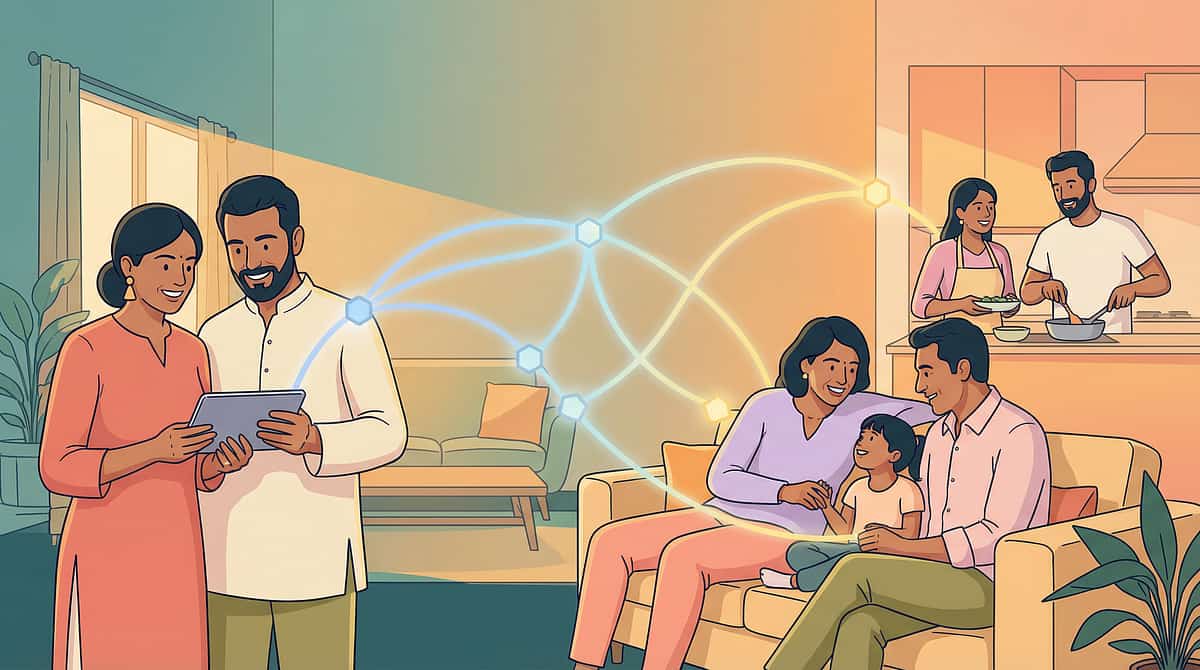
You Are Not a Solo Operator Anymore
When you connect with families navigating the same journey, something shifts. You stop feeling alone. You start sharing what works. The community becomes part of the intervention.
First Communication Parent Group
Connect with other parents teaching first communication right now. Share wins, ask questions, and get peer support from families who've been exactly where you are.
Pinnacle Online Forum
Moderated by Pinnacle therapists. Post questions, share progress, and get professional guidance alongside peer support from a community that truly understands.
Local Parent Meetups
Pinnacle centers host monthly parent meetups by therapy domain. Meet families in your area navigating the same journey — in person, in your language.
Peer Mentoring
Connect one-on-one with a parent who has successfully navigated first communication and is further along the journey. They've been where you are. They made it.
Your Professional Support Team
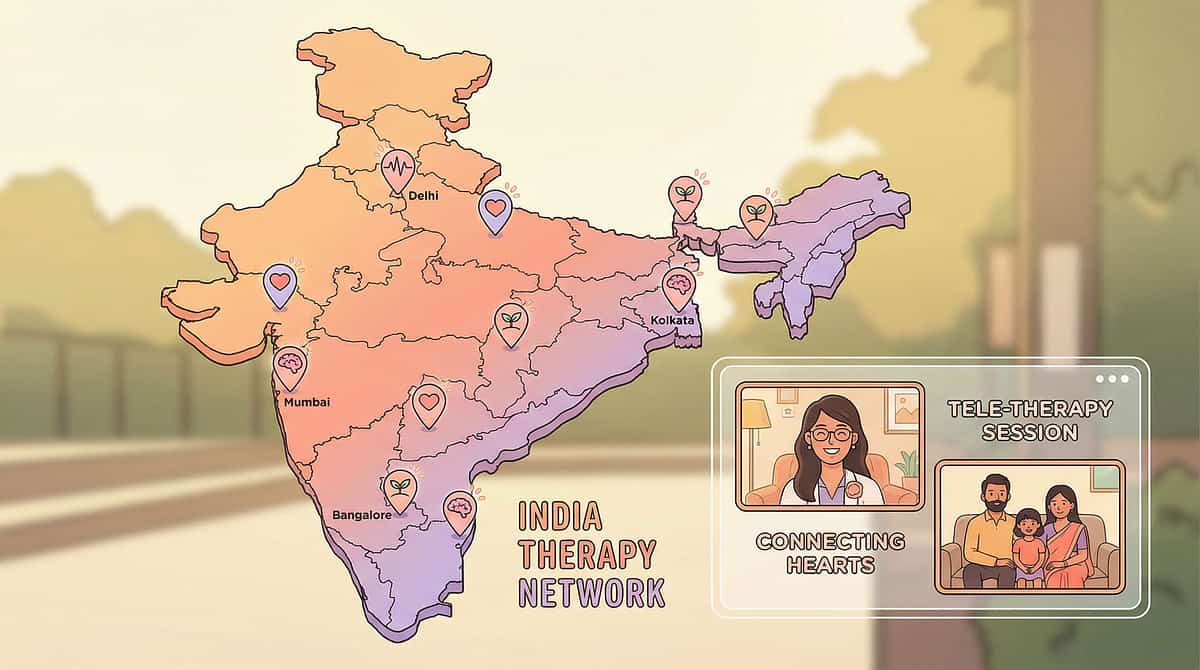
Home + Clinic = Maximum Impact
Home-based communication practice is most effective when supported by professional guidance. Pinnacle's 80+ center network provides the clinical depth that makes home practice more powerful.
🏥 SLP-Led Communication Evaluation
Comprehensive assessment of your child's current communication status, AAC candidacy, and individualized communication program design.
🏥 AAC Evaluation & Training
Device selection, vocabulary programming, access method determination, and parent training for AAC implementation across home and school.
🏥 ABA Communication Programming
Structured teaching programs with reinforcement schedules, prompting hierarchies, and generalization strategies customized to your child.
🏥 Teleconsultation
Can't reach a center? Video consultation with Pinnacle SLPs available for families anywhere in India — and internationally.
The Research Library
Deeper Reading for the Curious Parent
You Don't Need to Read These to Start
Every material on this page has been selected based on the strongest available evidence. These are the key studies and frameworks supporting first communication intervention.
📚 Romski & Sevcik (2005)
Augmentative communication and early intervention: Myths and realities. Infants & Young Children. — AAC supports rather than hinders verbal language development. Foundational myth-busting evidence.
📚 Bondy & Frost (2001)
The Picture Exchange Communication System. Behavior Modification. — PECS as evidence-based functional communication training with Level I RCT evidence.
📚 Brady et al. (2016)
Communication services and supports for individuals with severe disabilities. AJIDD. — Comprehensive review confirming early intervention produces significantly better outcomes.
📚 NCAEP Evidence-Based Practices Report (2020)
National Clearinghouse on Autism Evidence and Practice. Classifies AAC, PECS, visual supports, and video modeling as evidence-based practices for autism.
📚 PRISMA Systematic Review (Children, 2024)
16 articles confirming communication intervention as evidence-based practice for children with ASD. PMC11506176. The most current systematic synthesis available.
📚 WHO Nurturing Care Framework (2018)
International evidence framework for early childhood development including responsive caregiving and early learning. Foundation of the global equity approach.
How GPT-OS® Uses Your Data
Personalized. Private. Powerful.
What GPT-OS® Learns From Your Data
- Which communication modality your child responds to fastest
- Optimal session length and frequency for YOUR child
- Prompting reduction trajectory — moving toward independence
- Motivation patterns — which reinforcers work best on which days
- Generalization readiness — when to expand beyond structured sessions
🔒 Privacy & Data Protection
- All data encrypted in transit and at rest
- Your child's data is never sold or shared without consent
- De-identified population data improves recommendations for ALL families
- Compliant with Indian IT Act and international data protection standards
"Your data helps every child like yours. As more families contribute session data, GPT-OS® becomes smarter for everyone."
Watch the Reel
🎬 Reel B-136
Communication Foundations Series — Episode 136
75 seconds
A Pinnacle therapist walks you through each of the 9 materials in this guide — demonstrating how each one is used with a real child in a real therapy setting. See the AAC button press. Watch the PECS exchange happen. Watch a child sign "MORE" for the first time.
Every demonstration follows the exact protocols described on this page. Multi-modal learning — visual + text + demonstration — is classified as an evidence-based practice for autism (NCAEP, 2020) and significantly improves parent skill acquisition.
Domain
Speech-Language / AAC
Duration
75 seconds
Series
Episode 136 of 999
Share This With Your Family
Consistency Across Caregivers Multiplies Impact
If only one parent executes this technique, communication practice happens only when that parent is present. When EVERYONE in the family knows the system — spouse, grandparents, siblings, babysitter, school aide — communication practice happens ALL DAY. That's the difference between good outcomes and exceptional ones.
👴👵 For Grandparents — Plain Language
"Your grandchild is learning to communicate. Right now, they use a button/pictures/signs to tell us what they want. When they press the button/hand you a picture/make a sign, please IMMEDIATELY give them what they asked for and say the word. This is NOT a toy — this is their VOICE. Please respond to it the same way you would if they said the word out loud."
🏫 For Teachers & School Aides
A dedicated school communication letter is available to download — explaining your child's communication system, the modality they use, and exactly how staff should respond to communication attempts throughout the school day.
Frequently Asked Questions
8 Most Common Questions
Will AAC or pictures prevent my child from learning to talk?
No. This is the #1 myth in communication intervention. Research consistently shows that AAC supports verbal language development — it does not replace or prevent it. Children who use AAC often develop verbal language faster than children who wait. (Romski & Sevcik, 2005; Millar, Light & Schlosser, 2006)
My child is only 2 — is it too early to start AAC?
It is never too early. There is no minimum age. Children do not need to "fail at speech" before AAC is offered. Early introduction at 18 months is supported by evidence. (ASHA Position Statement on AAC)
Which method is best — speech, signs, PECS, or AAC devices?
The best method is the one that WORKS for YOUR child. Most children benefit from a total communication approach using multiple modalities. The form of communication matters less than establishing reliable, successful communication. Follow your child's lead.
How long until I see results?
Most families see initial communication attempts within 1–4 weeks of consistent daily practice. Significant progress (independent communication) typically emerges over 5–8 weeks. Every child's timeline is different — patience is part of the process.
My child already uses gestures — do they still need this?
Gestures are communication — and that's wonderful! This technique helps expand from gestures to MORE sophisticated communication, adding words, signs, pictures, or AAC to build on the strength already there.
Can I do this at home without a therapist?
Yes — this guide is designed for parent-led home practice. However, professional guidance from an SLP maximizes outcomes. The ideal model is home practice + professional support. This page gives you everything you need to start right now.
What if my child has motor difficulties?
An OT can assess access methods and recommend adaptations — adapted switches, eye-gaze technology, head pointers, partner-assisted scanning. No motor challenge should prevent communication access.
How do I know if my child needs professional evaluation?
All pre-verbal or minimally verbal children should have a comprehensive communication evaluation. AAC evaluation should not wait. Contact Pinnacle's FREE helpline: 9100 181 181.
Your Child Deserves a Voice. You Have the Tools. Start Today.
🟢 Start This Technique Today
Download the tracking sheet, gather your child's favorite motivator, set up the space (Card 12), and begin with Step 1: The Invitation (Card 14). You can start with ZERO materials — just two items your child loves. Right now. Today.
🔵 Book a Communication Evaluation
Your child deserves a comprehensive assessment by a certified SLP. Pinnacle offers in-person and teleconsultation options across India and internationally. No waitlist. No minimum age.
⚪ Explore the Next Technique
Ready for more? Continue the Communication Foundations Series with B-137: Expanding Early Vocabulary — the natural next step after first communication is established.
Validated by the Pinnacle Blooms Consortium — OT • SLP • BCBA • Special Education • NeuroDevelopmental Pediatrics — 21M+ sessions • 97%+ measured improvement • 80+ centers • Patents filed across 160+ countries
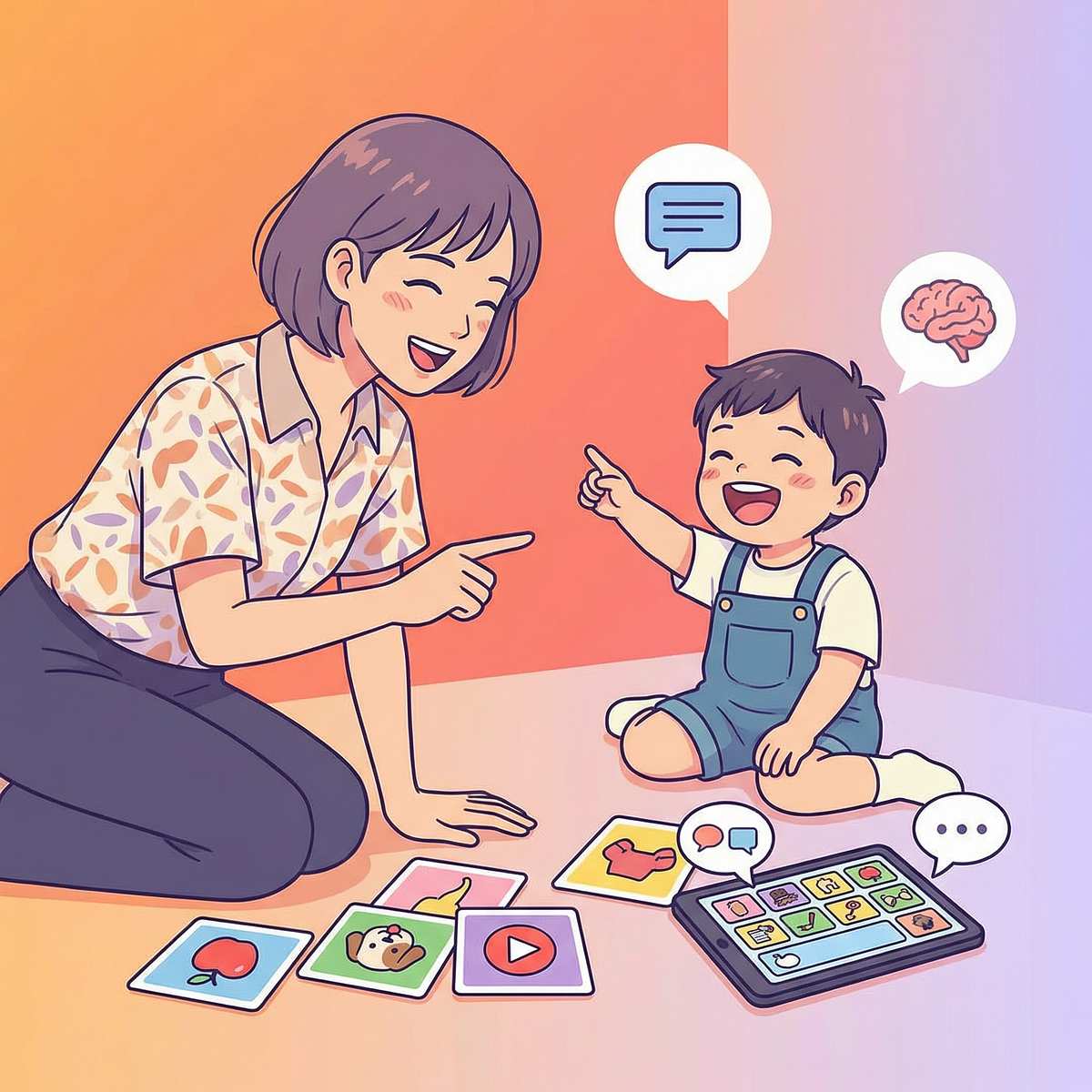
Preview of 9 materials that help teaching first communication Therapy Material
Below is a visual preview of 9 materials that help teaching first communication therapy material. The pages shown help educators, therapists, and caregivers understand the structure and content of the resource before use. Materials should be used under appropriate professional guidance.


Link copied!
The Pinnacle Promise
🩺 SLP • 🧠 OT • 📊 BCBA • 📚 SpEd • 👨⚕️ NeuroDev Pediatrics
"From fear to mastery. One technique at a time."
Every child can communicate. The path is individual — some will speak, some will sign, some will use pictures, some will use technology, most will use a combination. What matters is that no child is left without a voice. What matters is that every parent has the tools, the knowledge, and the support to build that voice — right from home.
This page is one of 70,000+ evidence-based intervention technique pages in the Pinnacle GPT-OS® digital library — the largest structured pediatric intervention knowledge base on Earth.
Medical Disclaimer: This content is for educational purposes only and does not replace professional evaluation or treatment. First communication teaching requires individualized assessment and intervention planning. AAC decisions should involve qualified speech-language pathologists and AAC specialists. Individual results vary significantly. Consult qualified professionals for personalized guidance.
© 2025 Pinnacle Blooms Network®, unit of Bharath Healthcare Laboratories Pvt. Ltd. All rights reserved. CIN: U74999TG2016PTC113063 | DPIIT: DIPP8651 | MSME: TS20F0009606 | GSTIN: 36AAGCB9722P1Z2 | ISO 13485: Medical Device QMS | ISO/IEC 27001: Information Security
Powered by GPT-OS® — Global Pediatric Therapeutic Operating System. Standardized. Personalized. Evidence-Based.