

Reading Social Cues — 9 Materials That Help
Making the hidden language of faces, bodies, and tones visible, explicit, and teachable. From Pinnacle Blooms Network® — India's largest autism therapy consortium.
🌸 Pinnacle Blooms Network®
Domain: Nonverbal Communication
Age: 4–14 years
C-313

"She kept talking. He had been trying to leave for five minutes. She genuinely didn't see it."
Every room speaks a silent language — a sigh here, a glance away there, arms folding, a conversation winding down. For most people, reading these signals is as automatic as breathing. For your child, these signals simply don't register. Not inattention. Not selfishness. A genuine perceptual difference in how the brain processes the nonverbal layer of human communication.
"You are not failing as a parent. Your child is not failing socially. The channel is there — it just needs to be tuned."
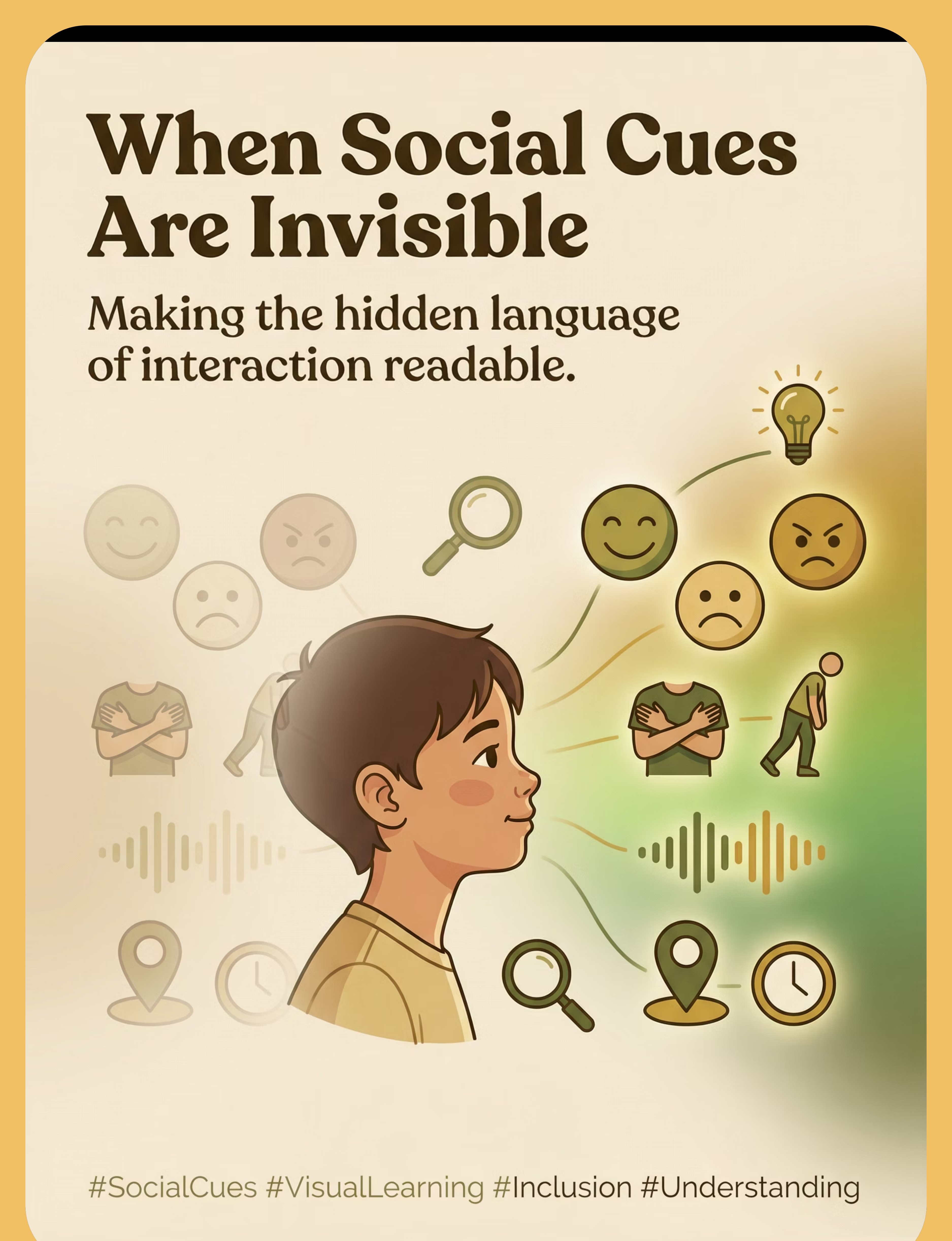
Reading Social Cues is an explicit teaching intervention that makes the hidden language of faces, bodies, and tones visible — and teachable.

This Is One of the Most Common Challenges in Neurodevelopmental Therapy
When your child misses the eye rolls, the sighs, the crossed arms — they are not unusual, not broken, and absolutely not alone. Across India's 70+ Pinnacle centres, social cue reading difficulty is among the most frequent presentations our SLP and ABA teams address.
1 in 36
Children on the Autism Spectrum
Globally, per CDC 2023 data
85%+
Show Nonverbal Cue Difficulty
The single most reported functional challenge in ASD therapy
21M+
Therapy Sessions Documented
Pinnacle Network RWE: social perception as primary intervention target
"You are among millions of families who have sat where you're sitting — and whose children learned to read the room. This is teachable."
📚 PRISMA Systematic Review 2024 (PMC11506176) | Meta-analysis: Social Cue Training in ASD (Baron-Cohen, 2001) | Pinnacle RWE: 97%+ measured improvement across social communication domains

What's Happening in Your Child's Brain
The Social Perception Network
The brain has a dedicated "social perception network" — a connected circuit that automatically reads faces, interprets body posture, decodes vocal tone, and integrates all three signals in under 200 milliseconds. In most people, this network runs unconsciously.
In many neurodivergent children, this circuit operates differently — not broken, but running on a different configuration. It's like receiving a radio signal in a language you haven't been taught: the broadcast is there, but the meaning stays locked.
Key Brain Regions Involved
- Superior Temporal Sulcus (STS): Primary processor of biological motion and social signals — shows reduced activation in ASD fMRI studies
- Fusiform Face Area (FFA): Facial expression processing — atypical activation pattern
- Mirror Neuron System: Connects seeing another's emotion to feeling it — reduced coupling documented
- Anterior Insula: Integrates multimodal social information (face + body + voice) — key bottleneck
"Because this is a learned processing pattern — not a fixed trait — it can be retrained. The brain remains plastic. Explicit teaching builds the pathways that didn't form automatically. This is neuroplasticity in action."

The Evidence Behind This Technique
🛡️ LEVEL I — SYSTEMATIC REVIEW + RCT SUPPORTED
Confidence: HIGH
20+ Peer-Reviewed Studies
Study | Finding | Source | |
PRISMA Systematic Review (2024) | Explicit social cue training meets evidence-based practice criteria for ASD | PMC11506176 | |
Meta-analysis (2024, 24 studies) | Social skills improvement measurable across faces, bodies, and tone | PMC10955541 | |
Baron-Cohen et al. (2001) | Reading the Mind in the Eyes Test — facial emotion reading is trainable | J Child Psychol Psychiatry | |
NCAEP Report (2020) | Social skills training = confirmed evidence-based practice | NCAEP 2020 | |
Pinnacle Network RWE | 97%+ improvement across social communication index with GPT-OS® intervention | Clinical data |
"Clinically validated. Home-applicable. Parent-proven. The evidence base for teaching social cue reading is among the strongest in paediatric neurodevelopmental therapy."
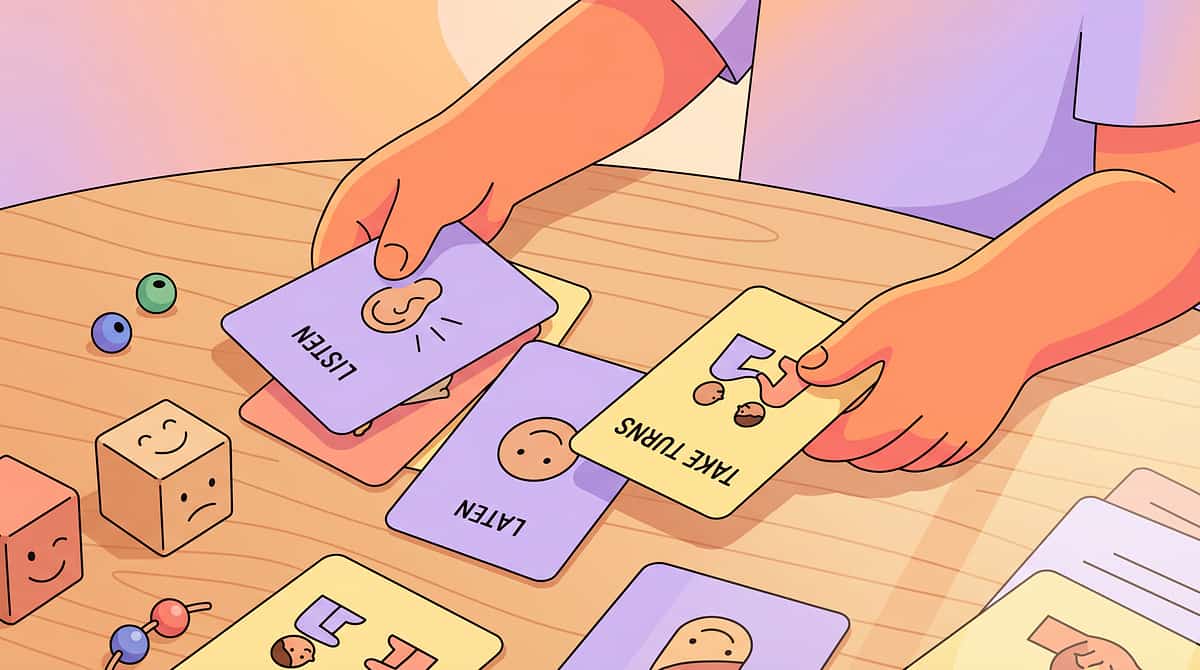
The Technique — What It Is
Formal Name
Multimodal Social Cue Recognition Intervention
Parent-Friendly Alias
"Making the Invisible Visible" / Social Reading Training
Session Specifications
Age Range | 4–14 years | |
Duration | 15–25 minutes | |
Frequency | Daily | |
Setting | Home + generalisation to all settings |
What It Is NOT
- Not asking the child to "try harder to notice"
- Not punishment-based ("pay attention!")
- Not artificial social scripting only
- Not a one-session fix — a systematic 8–12 week skill-building progression
Reading Social Cues is an explicit teaching intervention that systematically builds a child's ability to perceive and interpret the nonverbal signals that compose the "hidden language" of human interaction — facial expressions, body language, vocal tone, proximity, and contextual signals.
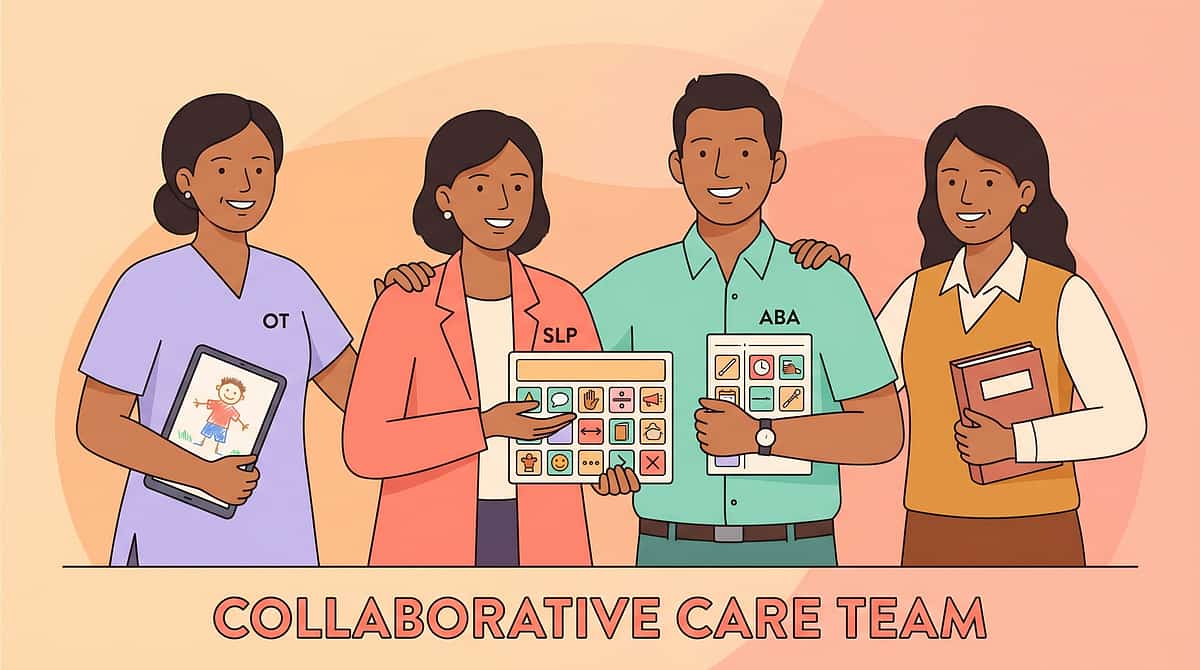
Five Disciplines. One Goal. Your Child Reads the Room.
The brain doesn't organise by therapy type. Your SLP, OT, ABA therapist, and special educator are all targeting the same social perceptual network — from different entry points. That's the power of the Pinnacle FusionModule™.
🗣️ SLP — Primary Lead
Addresses pragmatic language — the social USE of language. Teaches how tone, expression, and context shape communicative intent. Delivers structured social language training sessions.
🧠 ABA / BCBA
Designs discrete trial training for cue recognition. Builds reinforcement schedules for successful cue identification. Data-drives the progression from prompted to independent reading.
🖐️ Occupational Therapy
Addresses sensory processing contributions. Builds regulation capacity to support social attention. Works on multi-channel processing integration.
📚 Special Education
Transfers skills to school settings. Works with the classroom team on generalisation — the same cues matter in maths class, PE, and lunch. Trains teacher cue-coaching.
🧬 NeuroDev Paediatrics
Assesses underlying processing differences. Rules out sensory acuity issues. Coordinates medical supports where indicated.
National Autism Helpline 📞9100 181 181 — 18+ languages, 24×7, FREE
9 Materials — A Complete System for Making Social Cues Visible
Every material in this system has a purpose. Together, they address each cue channel — face, body, voice, context — and progress from controlled practice to real-world generalisation. You don't need to begin with all nine. Start with one or two that match your child's profile and build from there.
Facial Expression Recognition Cards & Games
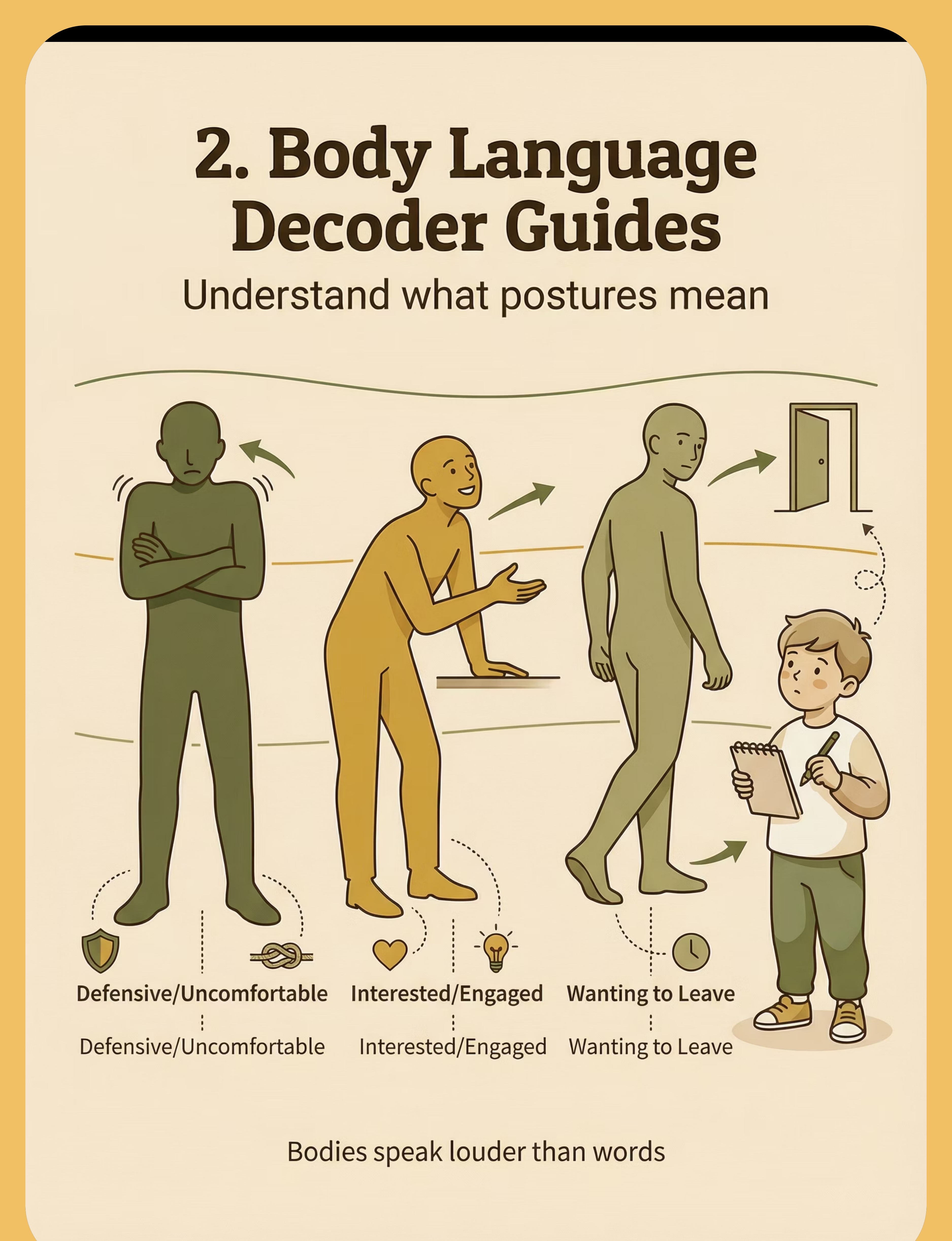
Body Language Decoder Guides & Posture Cards
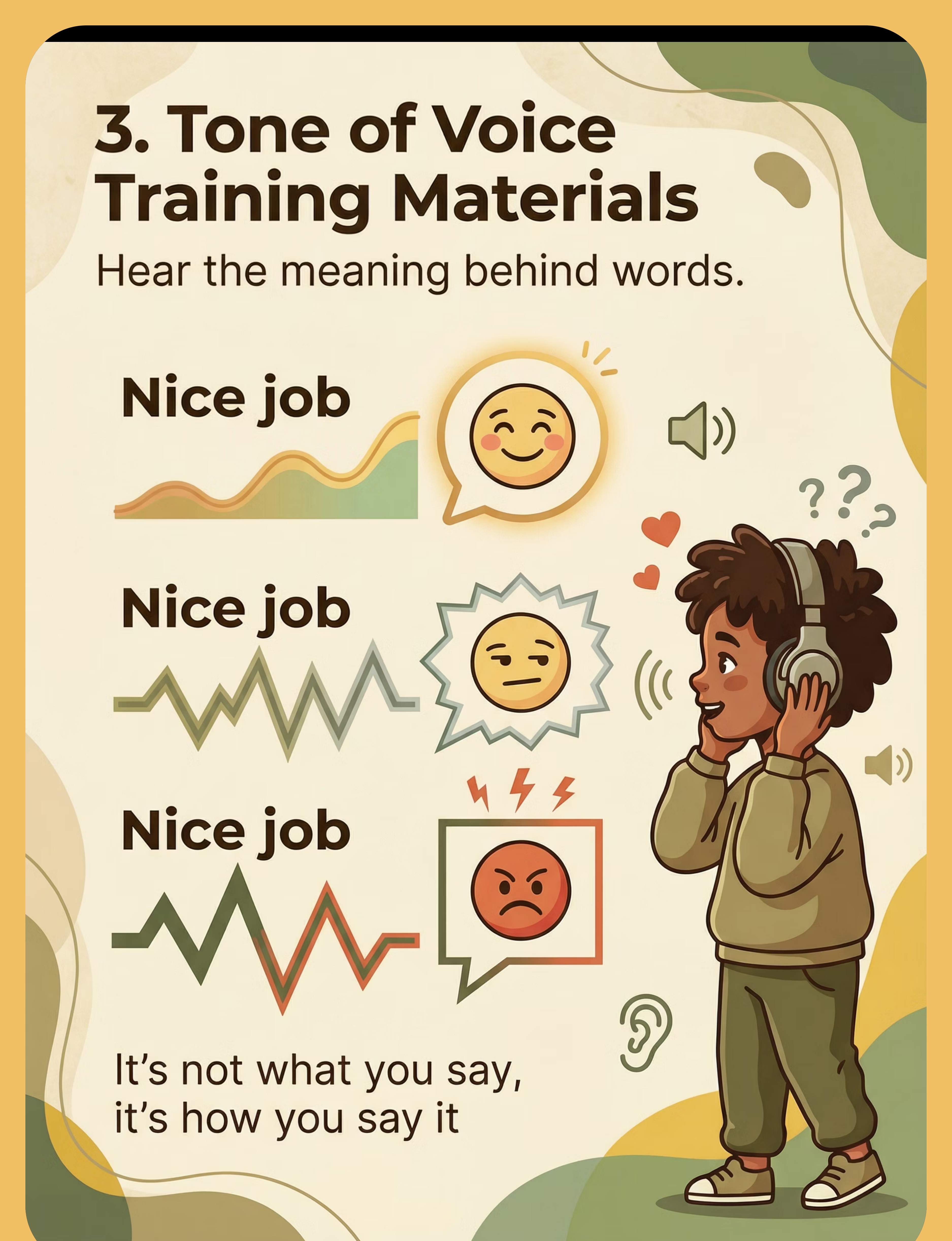
Tone of Voice Training Materials & Audio Exercises
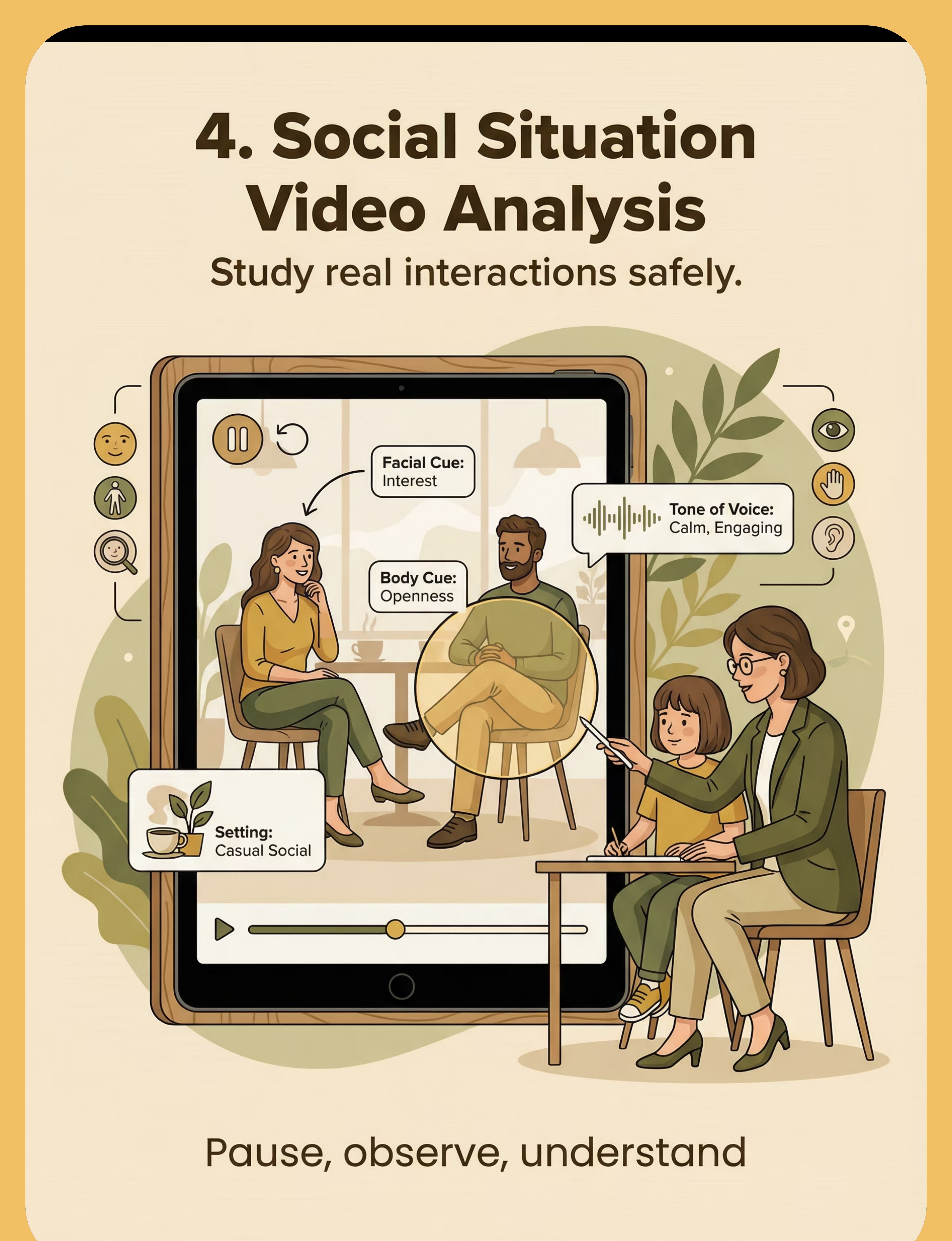
Social Situation Video Analysis Tools
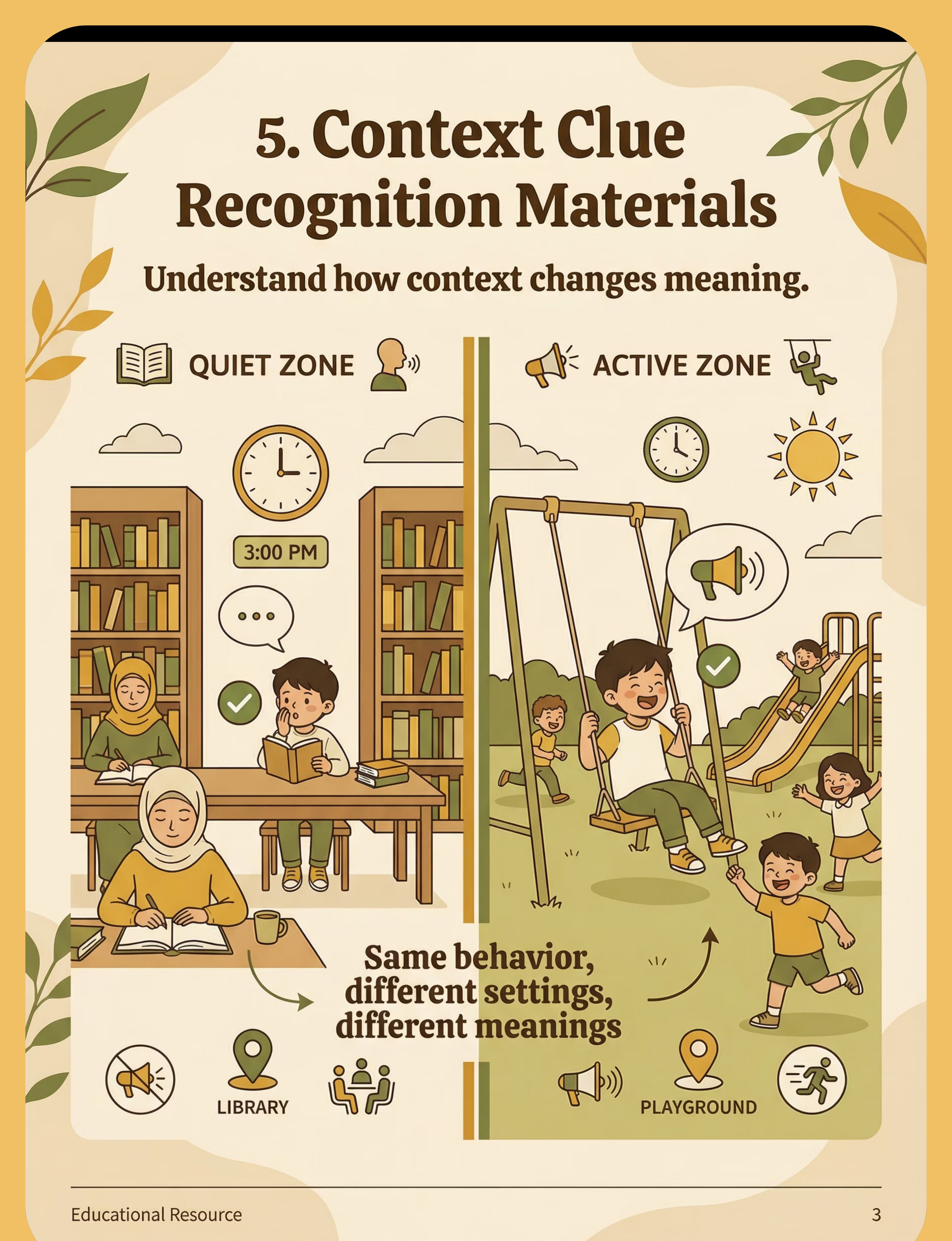
Context Clue Recognition Materials
Social Comics & Graphic Story Materials
Social Detective Games & Clue-Finding Activities
Cue Integration Practice Scenarios
Real-Time Cue Coaching Tools & Prompt Cards

Material 1 — Facial Expression Recognition Cards & Games
Social Communication Materials
₹200–500 | DIY: ₹0
Why It Works
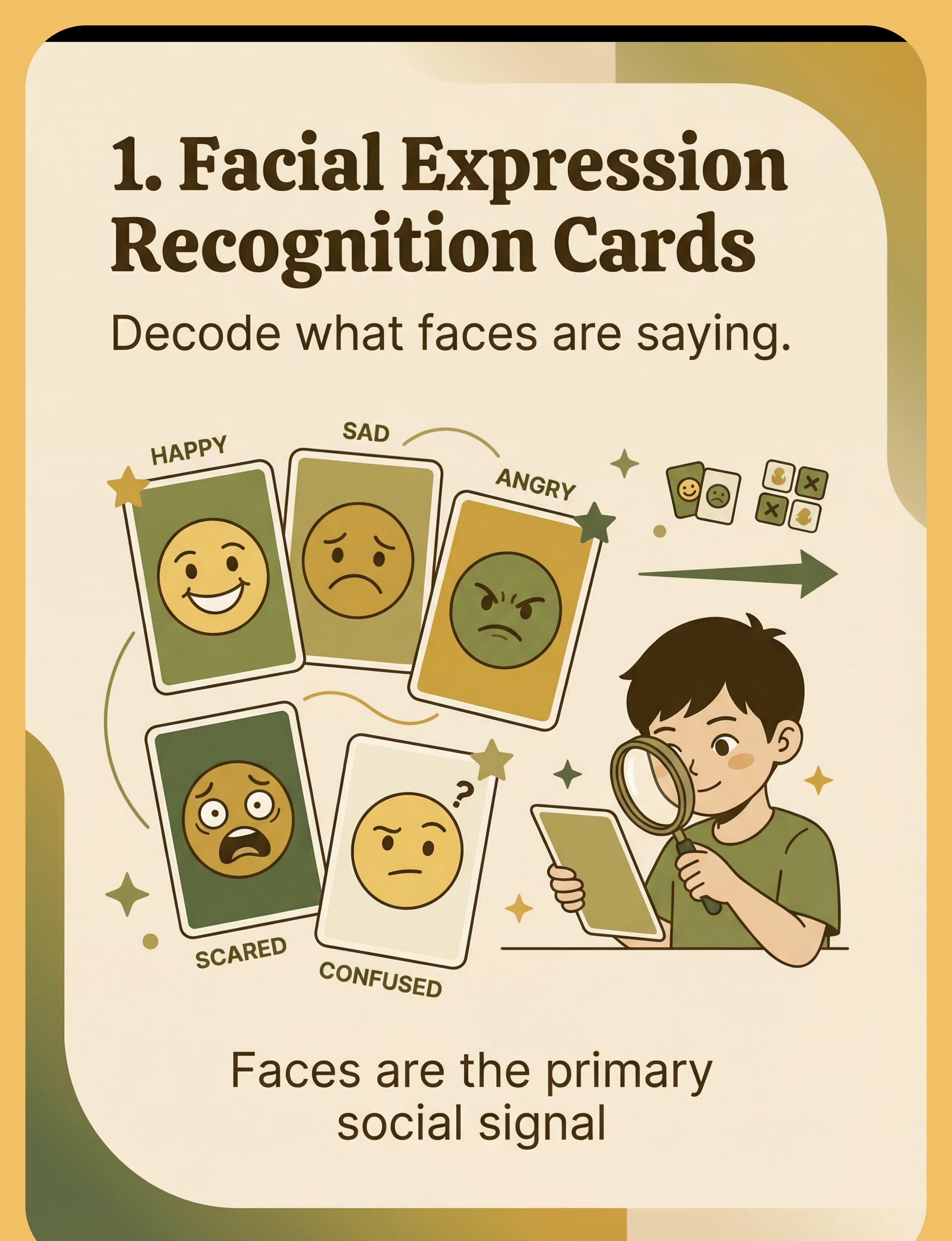
Faces are the primary social signal. These cards isolate the facial channel for systematic practice without the overwhelming complexity of real-time interaction. Children build a "visual vocabulary" of emotions — learning to name what they see before they learn to respond to it.
Progress from basic (happy/sad/angry) to subtle (frustrated, bored, confused) as accuracy builds.
DIY Version (₹0)
Print photos of faces from magazines or family photos. Label each with the emotion. Practice: "Show me the angry face." "What is this person feeling?"
Safety Note
Some children find prolonged direct focus on faces uncomfortable — respect limits, use cartoon or illustrated cards as a starting point.
Material 2 — Body Language Decoder Guides & Posture Cards
Social Communication Materials
₹150–400 | DIY: ₹0
Why It Works
Bodies speak louder than words. When a person crosses their arms, turns away, or leans in — their body is sending a message. These guides make that language explicit: each posture labelled, each meaning explained.
Children who learn body language report feeling suddenly "plugged in" to conversations. The OT and SLP teams use these guides to build a somatic vocabulary that complements facial expression training.
DIY Version (₹0)
Create a home poster showing 6–8 common postures with meaning labels. Practice with family members: "Show me 'I'm bored.'" "What does this body say?" Use family videos to spot postures in real context.
Safety Note
Body language has cultural variation — teach relevant regional patterns. Avoid rigid "one posture = one meaning" rules.

Material 3 — Tone of Voice Training Materials & Audio Exercises
Communication & Language Materials
₹200–500 | DIY: ₹0
Why It Works
"Nice job" can mean five completely different things depending on how it's said. Tone training teaches the auditory dimension — how pitch, speed, volume, and emphasis change meaning entirely. Children who can't tell sincere from sarcastic are navigating the social world with a critical signal missing.
DIY Version (₹0)
Parent reads the same sentence in different tones — genuinely happy, sarcastic, annoyed, confused. Child guesses the feeling behind the tone. Practice with: "Great, you did it again." "Oh, really?" "I'm fine." Discuss what made each tone different.
Safety Note
Sarcasm detection is genuinely difficult for many children with ASD — set realistic expectations. Build towards understanding, not perfect detection.
Material 4 — Social Situation Video Analysis Tools
Communication & Language Materials
₹0–600 (free with family videos)
Why It Works
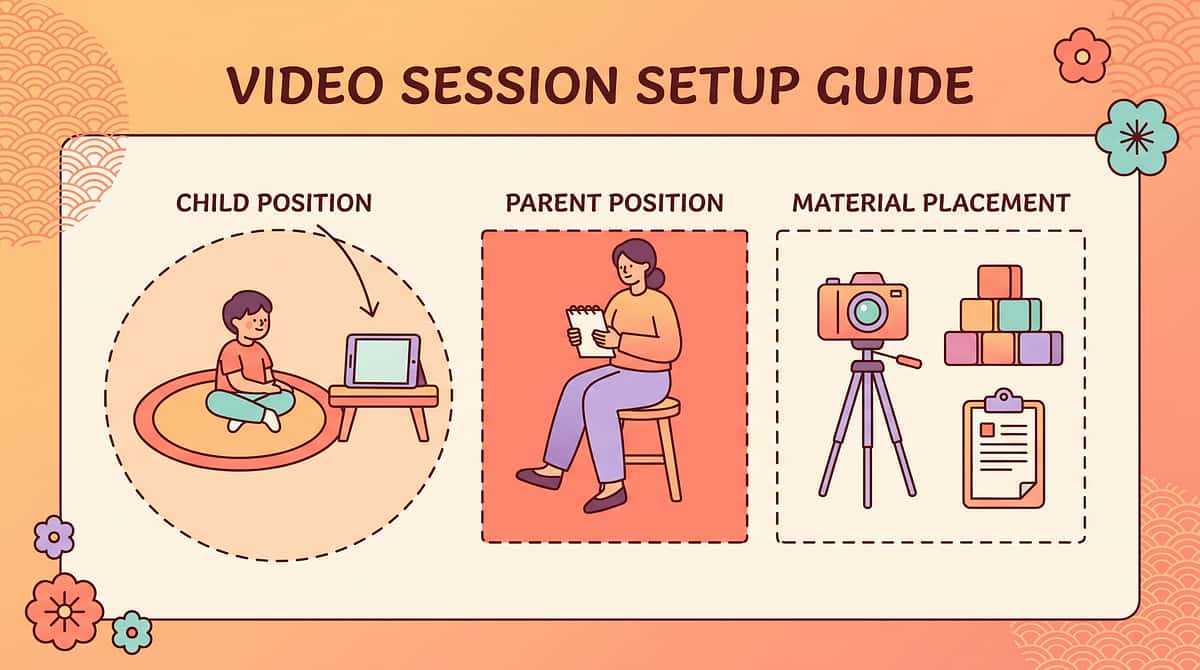
Video slows real-time social interaction to a pauseable, rewindable learning medium. No social pressure. No real-time overwhelm. The child studies an interaction frame by frame, guided by a parent or therapist to notice: the face, the body, the voice, the context. Then predicts and verifies.
This is one of only two materials in C-313 that is classified as a confirmed Evidence-Based Practice by NCAEP 2020 in its own right.
DIY Version (₹0)
Pause family-appropriate TV shows or YouTube at key moments. "What do you notice about her face?" "Watch his body. What is it saying?" "What do you think he's feeling?" Then play and verify.
Safety Note
Video is simpler than live interaction — always work towards generalisation. Guide attention to relevant cues; some children fixate on irrelevant details.
Material 5 — Context Clue Recognition Materials
Cognitive & Learning Materials
₹150–350 | DIY: ₹0
Why It Works
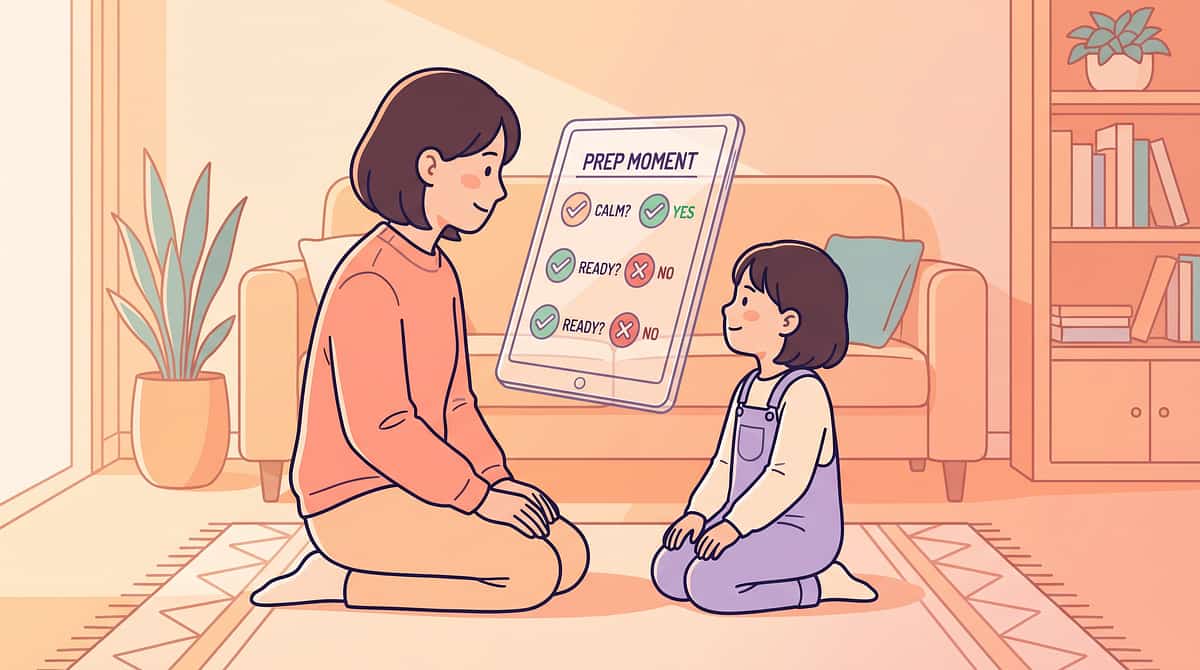
The same behaviour means different things in different settings. Loud talking at a playground: fine. Loud talking in a library: a social error. Context clue materials teach children to "read the room" — factoring location, time, who's present, and situation before interpreting any individual cue.
DIY Version (₹0)
Present scenarios: "We're at a birthday party. Is it okay to talk loudly? What about at Grandma's quiet dinner table?" Create a "context metre" chart — different settings with different rules posted visually in the home.
Safety Note
Context rules have exceptions — teach flexibility alongside the rules. The goal is awareness, not rigidity.
Material 6 — Social Comics & Graphic Story Materials
Communication & Language Materials
₹200–500 | DIY: ₹0
Why It Works
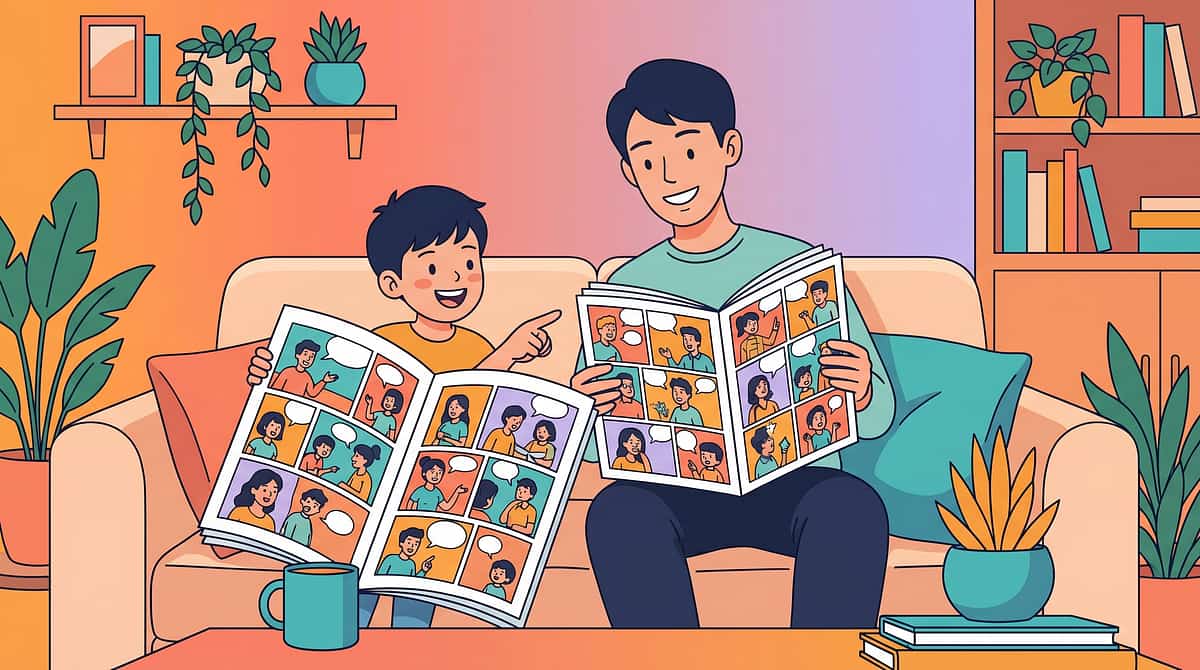
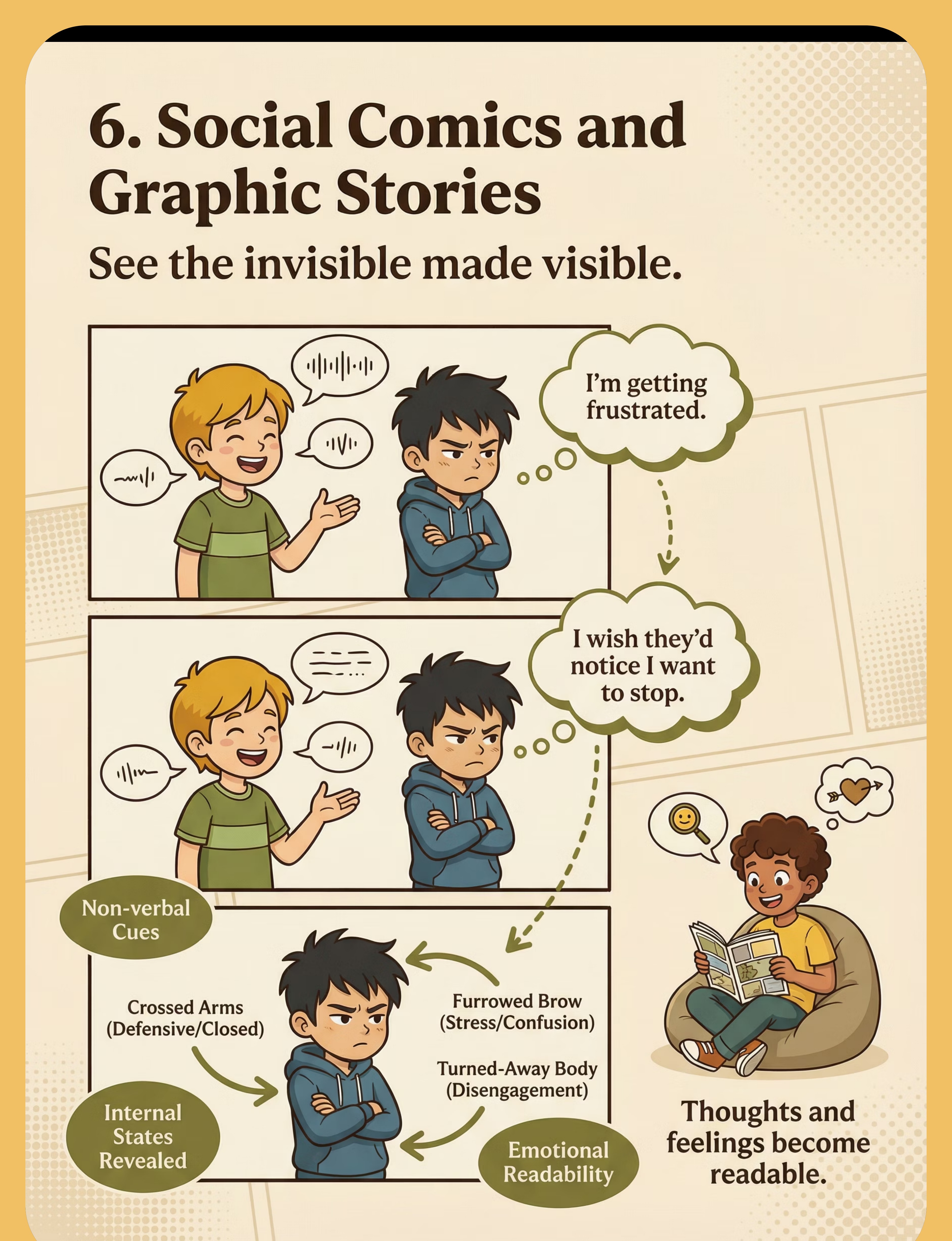
Comics make the invisible visible. Thought bubbles reveal internal states that can't be seen. Emotion indicators label what faces are feeling. The child reads the story while simultaneously reading the social layer of the story — a uniquely powerful format because it provides the "answer key" for the cues it's teaching.
DIY Version (₹0)
Draw simple 3-panel comics showing social situations. Add thought bubbles: "I want her to stop talking." Draw attention to face-to-feeling connections. Even stick figures work — the thought bubble is the teaching tool.
Safety Note
Comics simplify complex reality — supplement with real-world application. Don't let the child stay only in the comic world.

Material 7 — Social Detective Games & Clue-Finding Activities
Problem-Solving Toys (Canon)
₹200–450 | DIY: ₹0
Why It Works
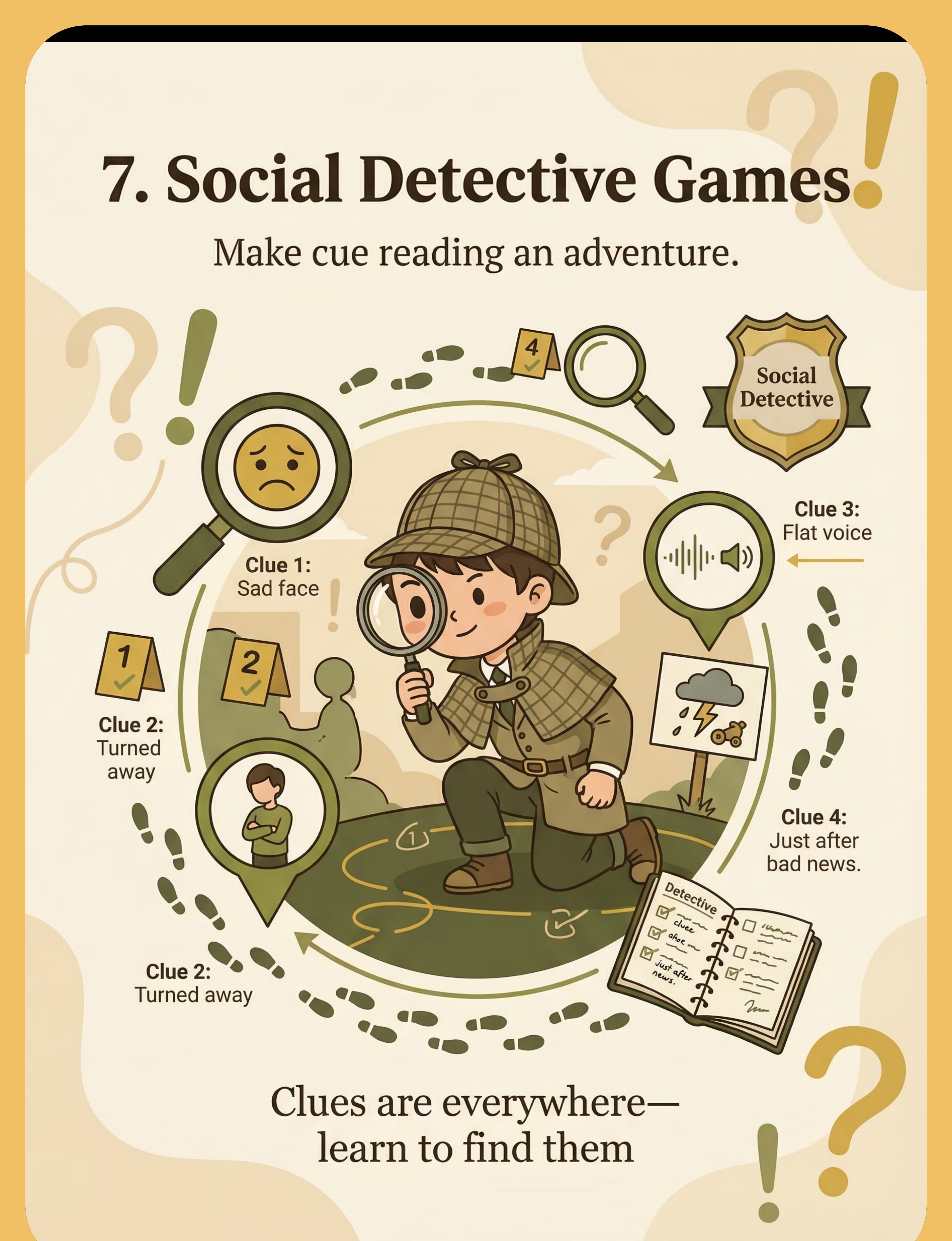
Reframes cue reading as engaging investigation. The child becomes a "Social Detective" gathering evidence — Clue 1: Sad face. Clue 2: Turned away. Clue 3: Flat voice. Conclusion: This person is upset.
The detective metaphor removes the emotional complexity of real social interaction, replacing it with a puzzle-solving frame that many neurodivergent children find highly motivating.
DIY Version (₹0)
Introduce "Social Detective" as a game. Give missions: "I need you to find 3 clues about how Grandpa is feeling." Provide a detective notebook for recording clues. Celebrate detective work enthusiastically.
Safety Note
Don't let the detective frame become surveillance. Focus on understanding, not judging. Balance observation with connection.
Material 8 — Cue Integration Practice Scenarios
Social Communication Materials
₹150–400 | DIY: ₹0
Why It Works
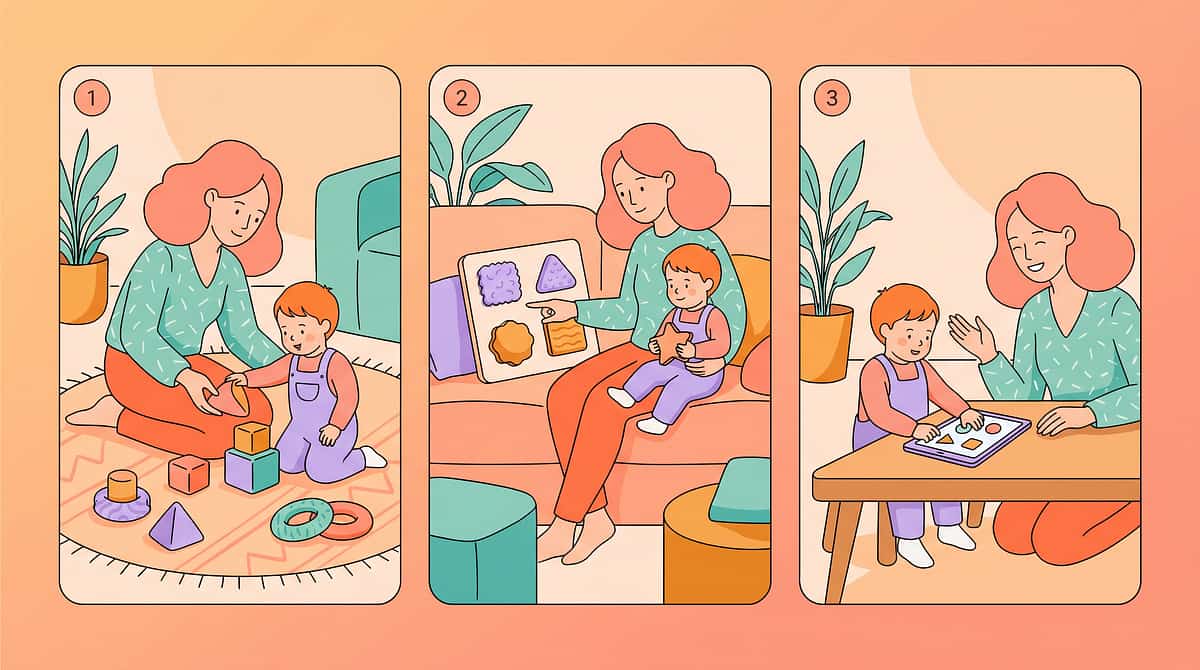
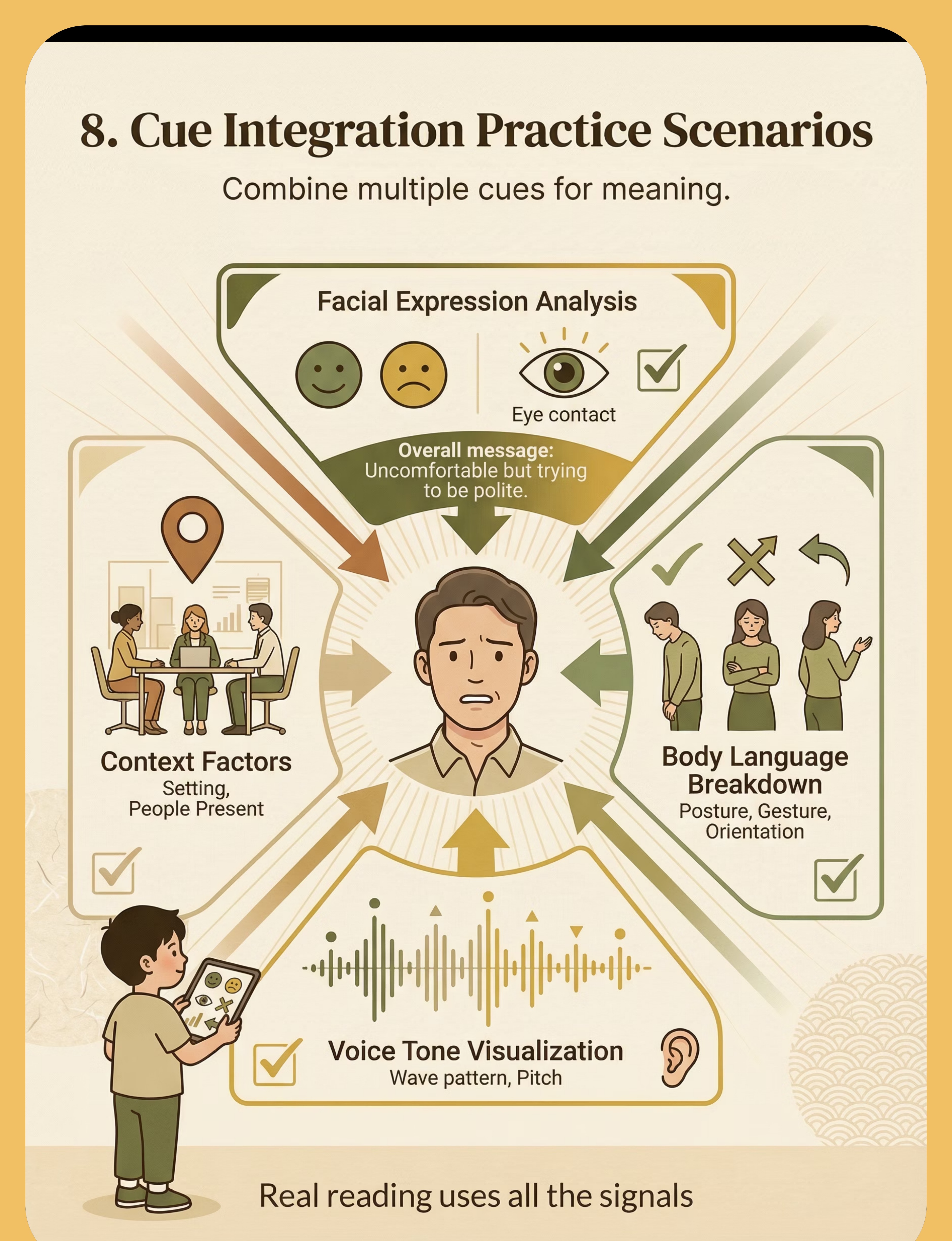
Real social reading requires integrating multiple cue channels simultaneously — face + body + voice + context = full message. These scenarios provide structured practice combining all channels into unified understanding. The child practises: "What does the face say? The body? The voice? The context? Put it together."
DIY Version (₹0)
After teaching individual cue types separately, present scenes combining them. Ask: "What is the face doing? What is the body doing? What is the voice doing? What does all of this mean together?" Start with agreeing cues, then introduce mixed signals.
Safety Note
Don't overwhelm — build integration gradually, one channel at a time, then two, then all. Some children need 4–6 weeks of individual cue work before integration.
Material 9 — Real-Time Cue Coaching Tools & Prompt Cards
Reinforcement Menus (Canon)
₹100–300 | DIY: ₹0
Why It Works
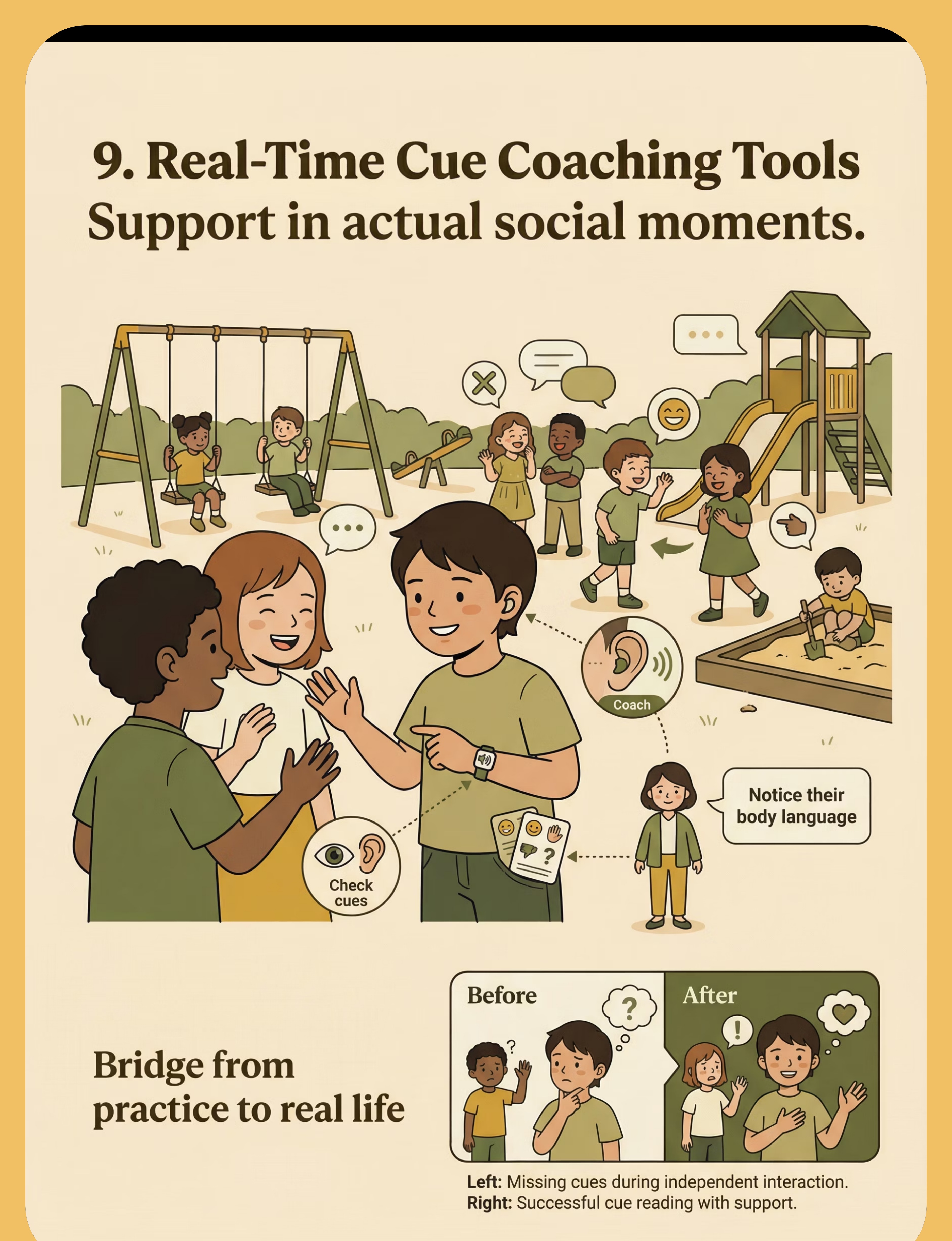
The crucial bridge from practice to real life. Learned skills don't automatically transfer. Real-time coaching tools provide discreet in-the-moment reminders to apply learned skills during actual social interactions — a wristband that says "check faces," a pocket card showing key cues, a gentle parent whisper system.
Canon Products Available
- Rosette Imprint Reward Jar ₹589 → amzn.in/d/02C5R9Jn
- 1800+ Reward Stickers ₹364 → amzn.in/d/01wrHJWX
DIY Version (₹0)
Create a "cue check" wristband. Make a pocket card with 3 reminder icons: 👁️ Check face | 👐 Check body | 👂 Check tone.
Safety Note
Supports should be discreet — the child's dignity matters. Fade supports progressively; the goal is independent cue reading, not permanent prompting.
Materials Budget Summary
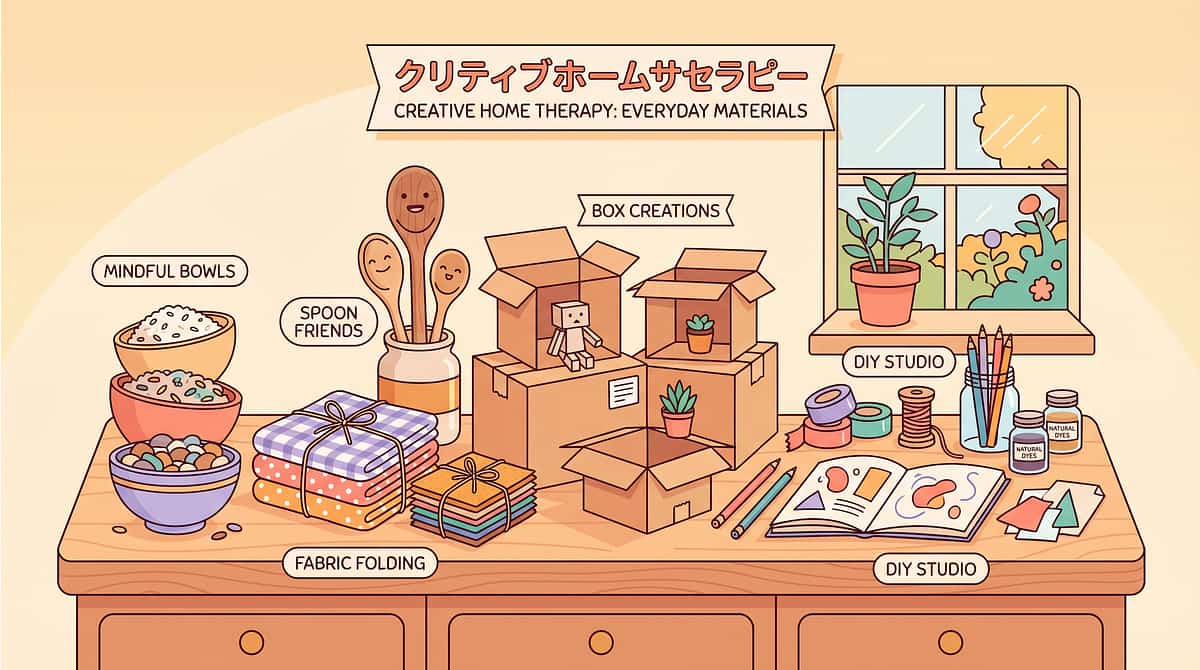
You do not need to purchase every item before you begin. All 9 technique types can be executed with household items and parent time. The commercial materials enhance the experience — they don't gate entry to it.
Setup Level | Materials | Estimated Cost | |
🟢 Starter | DIY versions of all 9 | ₹0 — Start today | |
🟡 Core | Materials 1, 2, 7 purchased | ₹600–1,350 | |
🔵 Full System | All 9 purchased | ₹1,350–4,000 |
Zero-cost complete session possible: YES — all 9 technique types can be executed with household items and parent time.
Every Material on This List Has a ₹0 Version. Start Today.
"Evidence-based intervention should never be gated by economic access. Every child in every home in every income bracket can begin this work today." — WHO/UNICEF Equity Principle
Material | Commercial | Household Substitute | Why It Works | |
Facial Expression Cards | ₹200–500 | Printed family photos + emotion labels | Same isolation of facial channel — faces are faces | |
Body Language Guides | ₹150–400 | Drawn chart with stick figures + labels | Visual labelling works regardless of art quality | |
Tone Training | ₹200–500 | Parent voice demonstrations + family videos | Live modelling is often MORE effective than recorded | |
Video Analysis | ₹0–600 | Family videos + TV shows + YouTube | Available, familiar, free | |
Context Materials | ₹150–350 | Real-home location discussions | Home is the ideal context — it's real, it's immediate | |
Social Comics | ₹200–500 | Parent-drawn 3-panel stick comics | Thought bubbles work at any artistic level | |
Detective Games | ₹200–450 | Paper notebook + magnifying glass toy | The frame is the magic — materials are secondary | |
Integration Scenarios | ₹150–400 | Live family practice scenarios | Real people > cards for integration practice | |
Coaching Tools | ₹100–300 | Handwritten wristband + pocket card | Homemade is invisible — preferred for dignity |
When the clinical-grade material is non-negotiable: When a child has co-occurring visual processing differences, audio processing disorders, or requires standardised stimuli for clinical measurement — consult your Pinnacle therapist.

Safety First — Before You Begin
These guidelines protect your child and ensure every session is productive. Review the traffic-light system before every session until it becomes second nature.
🔴 DO NOT PROCEED IF:
- Child is in acute distress, meltdown, or post-meltdown dysregulation (wait 30+ minutes minimum)
- Child is showing signs of illness, fever, or unusual pain
- Child had a significantly traumatic social experience in the past 24 hours
- Child is severely sleep-deprived
- Current social situation involves a crisis requiring immediate resolution
🟡 MODIFY IF:
- Child seems tired but manageable → shorten to 5–10 minutes
- Child is anxious → start with most comfortable cue type only
- You as a parent are in a stressed state → reschedule
- Child had a difficult social experience recently → use fictional or video materials only
🟢 PROCEED WHEN:
- Child is fed, rested, and regulated
- Parent is calm and prepared
- Space is set up (see Card 12)
- Session materials are ready before the child enters the space
- 20–30 minutes of uninterrupted time available
⚠️ STOP IMMEDIATELY IF: Child shows signs of severe distress, self-harm, or aggressive behaviour | Child dissociates or becomes non-responsive | Child becomes fixated on negative social scenarios in an anxiety-escalating way | Parent becomes dysregulated.
📞9100 181 181 — FREE National Autism Helpline | 24×7 | 18+ languages
Set Up Your Space
The Right Environment Makes the Technique 3× More Effective
REMOVE from space
- Screens (TV, tablets, phones — except video analysis tool when needed)
- Siblings during initial sessions
- Background noise sources
- Visually overwhelming clutter
ADD to space
- Body language reference poster at child's eye height on wall
- Materials organised and within reach (not scattered)
- Visual timer (not auditory alarm — transition support)
- One comfort item if needed for regulation
Environment Specifications
Factor | Ideal Setting | |
Lighting | Bright but not harsh — child needs to see parent's face clearly | |
Sound | Quiet background, no competing speech | |
Temperature | Child's comfort zone | |
Seating | Same height, slight angle (reduces direct eye-contact pressure) | |
Duration | 15–25 minutes maximum. Better to end well than run long. |
"The face practice is the technique. The environment setup is the multiplier. Spatial precision prevents 80% of session failures."

Is Your Child Ready? — 60-Second Readiness Check
Pre-Session Assessment
Physiological Readiness
- Fed in the past 2 hours
- Slept adequately last night
- No signs of illness or pain
- Not in post-meltdown window (1+ hours since last dysregulation)
Emotional / Behavioural Readiness
- Child's affect is neutral to positive
- No significant negative social event in last 30 minutes
- Child is responsive to parent (makes eye contact or acknowledges presence)
- Stimming or movement is self-regulatory (not escalating)
Attention Readiness
- Child can attend to a task for 3+ minutes currently
- Child is not fixated on another topic or demand
- Child's arousal level is calm-to-alert (not high arousal or tired)
Decision Gate
Result | Action | |
✅ 8/9+ indicators met | GO — Begin the session | |
⚠️ 5–7 indicators met | MODIFY — Simplest material, 10 minutes, low demand | |
❌ Fewer than 5 indicators | POSTPONE — Offer a calming preferred activity. No guilt. |
"The best session is one that starts right. A postponed session is not a failed session — it's clinical intelligence."
Step 1 of 6
⏱️ 30–60 seconds
Step 1 — The Invitation
Every session begins with an invitation, not a command. The child is brought into the activity through low-demand, motivating engagement. No "sit down, we're doing social skills practice" — that activates resistance. Instead: entry through interest.
For Younger Children
"Hey, I found this really cool detective game. I need your help solving something. Want to try?"
Curiosity Frame
"I've been looking at these cards and I can't figure out what this face is doing. Can you help me?"
For Older Children
"I want to show you something interesting about how people communicate without words. You in?"
Parent Body Language During Invitation
- Seated at child's level, relaxed posture — open, not leaning in aggressively
- Material in hand but not pushed toward child
- Neutral to warm facial expression (not overly excited — this raises arousal)
- Allow 3–5 seconds of silence after the invitation
If child resists: Child walks away → Wait 60 seconds and try again with different opening | Child says "no" → "That's fine. I'll just look at it here." (play the material yourself, use observation learning) | Child ignores → Follow the child's lead for 2 minutes, then re-introduce.

Step 2 of 6
⏱️ 1–3 minutes
Step 2 — The Engagement
The child is now engaged. Introduce the therapeutic material or activity with clear, low-demand instruction. Match the material to the child's current highest-interest cue type — faces first for visual learners, tone first for auditory learners, stories first for language-strong children.
For Facial Expression Cards
- Place 3 cards face up. Name each emotion as you place it.
- "I'm going to show you one card at a time. Just tell me what feeling you see."
- First trial: obvious, unambiguous expression (big smile = happy)
- Accept any reasonable answer. Elaborate: "Yes! Happy — look at those crinkled eyes!"
For Social Detective Frame
- "I need your detective skills. Here's a mystery."
- Present a scene (photo, comic panel, or family video screenshot)
- "I need to know how this person is feeling. What clues do you see?"
- Wait for the child to respond. Do not fill the silence immediately.
Reinforcement Timing Begins Here
- Every correct identification → immediate verbal praise within 3 seconds
- Every attempt (right or wrong) → acknowledge and elaborate
- Sustained engagement (30+ seconds) → natural reinforcer offered
Child Response Indicators
🟢Engagement: Child is looking at material, responding, asking questions
🟡Tolerance: Child complies but is not actively interested — acceptable, continue with gentle encouragement
🔴Avoidance: Child looks away, changes subject, physically moves away — reduce demand, return to invitation mode

Step 3 of 6
⏱️ 5–12 minutes (core session)
Step 3 — The Therapeutic Action
This is where the explicit teaching happens. The child practises recognising, naming, and interpreting social cues — with guided support. The parent's role shifts from inviter to coach.
1. NOTICE
"Look at this face/body/voice. What do you see?" Direct attention to the specific cue channel.
2. NAME
"What is this called?" Label the cue explicitly — never assume the child already knows the name.
3. MEANING
"What does this tell us about what this person is feeling, thinking, or wanting?" Connect the cue to its social meaning.
4. PREDICT
"If this person feels [emotion], what might they do next?" Extend from recognition to social prediction — the goal.
For Video Analysis
Pause → Ask: "Notice anything about the face? The body? The voice?" → Unpause → "Were we right?"
For Social Detective
"Gather your clues. Face says ___, body says ___, voice says ___. What's your conclusion, Detective?"
Parent Execution Guide
- Speak at 70% of your normal speed — processing takes more time
- Do NOT correct immediately when the child is wrong — pause, redirect: "Let's look again together"
- Celebrate the ATTEMPT, not just the correct answer
- Each child needs approximately 100–200 presentations of a cue before recognition becomes automatic

Step 4 of 6
⏱️ 3–5 minutes
Step 4 — Repeat & Vary
Therapeutic dosage through varied repetition. Not the same stimulus presented identically — variation within the same cue type to prevent habituation while building robust recognition.
Minimum Effective Dose
5 high-quality, engaged trials per session
Optimal Dose
8–12 varied trials per session
The Rule
5 good trials > 15 forced trials. Quality always over quantity.
Variation Strategies Per Material
Material | How to Vary | |
Facial Expression Cards | Move from photos → cartoon → family photos → video stills | |
Body Language Guides | Move from posters → acted by parent → video clips → real-world spotting | |
Tone Training | Move from parent demos → recorded audio → TV clips → real conversations | |
Social Detective | Move from photos → video → family scenarios → real social situations |
Satiation indicators — session is complete when: Child's response latency is increasing | Answers becoming less specific or more random | Engagement indicators dropping | Child says "all done" or asks to stop — HONOUR THIS IMMEDIATELY.

Step 5 of 6
⏱️ Throughout session + final 1–2 minutes
Step 5 — Reinforce & Celebrate
Reinforcement timing matters more than reinforcement magnitude. The biological window for reinforcement to strengthen behaviour is 0–3 seconds after the desired response.
For Correct Identification
"Yes! You saw that. That's exactly what a sad/bored/angry face looks like. Great detective work!"
For Attempts (Even Incorrect)
"Good try — you're thinking about it. Let's look together."
For Noticing a NEW Cue
"Wait — did you just catch that? You noticed his body turning away. That's a new skill. That's real progress."
Reinforcement Menu (Canon-Linked)
Verbal
Specific, enthusiastic, immediate — "You read that face perfectly!"
Token System
Sticker on a "Cue Detective" chart for each successful identification. 1800+ Reward Stickers ₹364 → amzn.in
Activity Reinforcer
2 minutes of preferred activity after 10 successful trials
Tangible
Small reward from the Reward Jar for milestone achievements. Rosette Imprint Reward Jar ₹589 → amzn.in
Natural Reinforcer
Connection — "You understood what I was feeling. That felt good for both of us."
"Celebrate the attempt, not just the accuracy. Celebrating attempts builds intrinsic motivation. Celebrating only correct answers builds anxiety."
📞9100 181 181 — FREE | 24×7 | 18+ languages
Capture the Data — Right Now
60 Seconds of Data Now = Weeks of Clarity Later
3 Data Points Only
Data Point | How to Record | Example | |
1. Accuracy rate | Correct identifications ÷ total trials | "6/10 facial expressions identified correctly" | |
2. Engagement quality | Scale 1–5 (1=refused, 5=fully engaged) | "4 — engaged throughout, slight drop at end" | |
3. New milestone? | Yes/No + description | "Yes — first time he noticed a body language cue unprompted" |
Recording Options
- 📱GPT-OS® App tracker (links to AbilityScore® progression — recommended)
- 📄Downloadable PDF tracking sheet → pinnacleblooms.org/tracker-C313
- 📝Simple notebook — Date | Accuracy | Engagement | Note
"Data is not bureaucracy. Data is how your home sessions inform your Pinnacle therapist's clinical planning. Every data point contributes to your child's AbilityScore® trajectory."

Most Sessions Don't Go Perfectly. This Is What to Do.
Problem 1: Child Refused to Participate
Why: Demand aversion, low motivation for the specific material, not the right readiness moment.
Do next time: Change the entry material (try detective game instead of expression cards), use a more powerful motivator in the invitation, check readiness indicators before starting.
Do next time: Change the entry material (try detective game instead of expression cards), use a more powerful motivator in the invitation, check readiness indicators before starting.
Problem 2: Child Became Emotional at Negative Expressions
Why: Emotional contagion — seeing strong negative expressions can trigger the child's own emotional response.
Do next time: Start ONLY with positive and neutral expressions. Introduce negative emotions via cartoon illustrations, not photos. Build tolerance gradually.
Do next time: Start ONLY with positive and neutral expressions. Introduce negative emotions via cartoon illustrations, not photos. Build tolerance gradually.
Problem 3: Child Gave Random or Silly Answers
Why: Anxiety management through humour — the child is avoiding the task by making it a game.
Do next time: Reduce the demand (make the materials obviously easy). Use the detective frame. Consider: is the material too hard?
Do next time: Reduce the demand (make the materials obviously easy). Use the detective frame. Consider: is the material too hard?
Problem 4: Child Identifies Cues in Practice but Misses Them in Real Life
Why: Generalisation gap — this is expected and normal at early stages.
Do next time: Bridge practice to real life deliberately. Before entering a social situation: "Your mission: notice one thing about how people are feeling." Debrief after.
Do next time: Bridge practice to real life deliberately. Before entering a social situation: "Your mission: notice one thing about how people are feeling." Debrief after.
Troubleshooting (Continued)
Problem 5: Child Insists the Emotions Shown Are Wrong
Why: Often the child IS right — expressions are ambiguous, cultural, contextual. Or: the child is defending against making an error.
Do next time: Validate: "You could be right! Faces can mean different things. What does the rest of the body say?" Teach emotional ambiguity as a feature, not a bug.
Do next time: Validate: "You could be right! Faces can mean different things. What does the rest of the body say?" Teach emotional ambiguity as a feature, not a bug.
Problem 6: Parent Becomes Frustrated
Why: Vicarious frustration is real and understandable.
Do this: Take a break from the session. Remind yourself: "This is a genuine processing difference, not laziness." Session abandonment today is not failure — it's data and self-care.
Do this: Take a break from the session. Remind yourself: "This is a genuine processing difference, not laziness." Session abandonment today is not failure — it's data and self-care.
Problem 7: Child Was Great in Session but Failed Immediately After in Real Life
Why: Near-transfer vs. far-transfer. Skills learned in structured settings don't immediately transfer to natural environments.
Do next time: Celebrate the session success. Reduce expectations for immediate real-world transfer. Schedule explicit generalisation practice at planned social events.
Do next time: Celebrate the session success. Reduce expectations for immediate real-world transfer. Schedule explicit generalisation practice at planned social events.
"Every failed session is a data point, not a judgment."
Your Child Is Unique. This Technique Adapts to Them.
Modification by Starting Cue Type
Child Profile | Best Starting Material | Why | |
Visual learner, language-strong | Facial Expression Cards | Leverages visual processing strength | |
Auditory or music-oriented | Tone of Voice training | Entry via strongest channel | |
Narrative or story-oriented | Social Comics | Story frame makes cue context accessible | |
Game or competition-oriented | Social Detective | Task completion motivation | |
Video-obsessed | Video Analysis | Uses existing reinforcer |
Sensory Profile Adaptations
Sensory Seeker (high arousal):
- Use more dramatic, exaggerated expressions as starting stimuli
- More energetic delivery of reinforcement
- Allow movement during the session
- Higher frequency, shorter sessions
Sensory Avoider (easily overwhelmed):
- Start with cartoon or illustrated faces, not photos
- Use quieter, calmer reinforcement delivery
- Keep sessions shorter (10 minutes maximum initially)
- Reduce number of cards or stimuli visible at one time
Age-Based Modifications
Age Range | Modification | |
4–6 years | Start with 3 basic emotions only (happy/sad/angry). Use toys or puppets as the "social situation actors." High visual, low language demand. | |
7–10 years | Expand to 6–8 emotions. Begin body language. Social Detective frame is ideal for this age group. | |
11–14 years | Include nuanced social situations (sarcasm, group dynamics, exclusion signals). Video analysis of social media and peer interactions. |
Act IV — The Progress Arc
Weeks 1–2 — The Noticing Phase
Progress: ████░░░░░░░░ 15%
Not mastery — awareness. These first two weeks are about establishing the practice rhythm and the motivational foundation. Progress will often feel invisible — trust the process.
Child can identify 3–5 basic facial expressions when shown cards (not yet in real life)
Child is willing to engage with the practice sessions (participation itself is progress)
Child responds to the detective or game framing (motivation established)
ONE moment where the child spontaneously mentions someone's face or tone — even if incorrectly ("He looks happy" when he's actually excited — the noticing is the win)
Resistance to sessions decreasing (child is becoming accustomed to the routine)
"If your child tolerates the session for 3 minutes longer than last week — that is neurologically significant progress. The pathway is forming."
📞9100 181 181 — FREE | If you're feeling discouraged, call. Our SLPs provide free telephone consultation.
Act IV — The Progress Arc
Weeks 3–4 — The Brain Is Beginning to Store This Vocabulary
Progress: █████████░░░ 40%
This is the week when neural consolidation accelerates. The child's brain has now processed each cue type 40–60 times. Synaptic efficiency begins to improve. The child stops THINKING about recognition and starts DOING it — even if only for familiar, basic cues.
Child ANTICIPATES the practice session (asks when we're doing "the detective game")
Child identifies basic emotions reliably (80%+ on cards) without prompting
Child begins to generalise SPONTANEOUSLY — comments on TV characters' faces or tones
Child asks questions about social cues during real life: "Why does she look like that?"
Child can identify 2–3 body language postures from the guide
FEWER social misreadings in low-complexity situations (calm, familiar environments)
When to increase frequency: If the child is showing strong consolidation indicators → increase practice frequency to 2× daily (short 10-minute sessions) OR begin introducing a second cue type in parallel.
"You may notice you are more confident too. Your instincts about how to deliver this technique are sharpening. That is also measurable growth."

🏆 Mastery Phase
Weeks 5–8 — Conscious Competence Emerging
Progress: █████████████████░░░░ 75%
Facial Expression Mastery
- Identifies 6+ emotions from photos with 80%+ accuracy
- Identifies basic emotions from video with 70%+ accuracy
- Begins spontaneously labelling emotions in real interactions
Body Language Mastery
- Identifies 5+ posture meanings with 80%+ accuracy
- Notices and labels at least one body language cue per day unprompted
- Can describe what a posture means when asked in real time
Tone Mastery
- Distinguishes sincere from sarcastic with 70%+ accuracy on trained examples
- Asks for clarification ("Were you serious?") — this is HUGE
- Adjusts interpretation of messages when tone contradicts words
Integration Mastery
- Can describe a social situation using at least 2 cue channels
- Makes social predictions that account for multiple cues
- Real-world generalisation in at least one setting outside home
When to move to next technique level: When 3 of 4 mastery criteria are met → Explore: C-314 (Understanding Sarcasm) and C-315 (Perspective Taking).
You Did This. Your Child Grew Because You Showed Up Every Day.
Your child — who once moved through social situations without seeing the signals — has now built a vocabulary of social cues. They can name emotions. They notice body language. They pause before they assume. They ask: "What does that tone mean?" This is not a small thing. This is a rewiring of perception.
You Created Daily Practice
When it was inconvenient, you showed up anyway.
You Stayed Regulated
So your child could co-regulate and learn in safety.
You Celebrated Attempts
Not just successes — building intrinsic motivation.
You Trusted the Process
Patiently waiting for a payoff that required weeks of invisible work.
"From 'she doesn't notice anything' to 'she said I looked worried and asked if I was okay.' — That is everything." — Parent, Pinnacle Blooms Network®, Hyderabad centre (Illustrative; outcomes vary)
Red Flags — When to Pause and Consult
These Signs Mean Pause — Not Fail and Stop
🔴 Cue-Reading Attempts Causing Significant Distress
Child becomes severely anxious, tearful, or agitated when asked to identify emotions — this suggests an underlying emotional processing sensitivity requiring clinical management.
🔴 Fixation on Negative Cues
Child becomes preoccupied with reading anger, threat, or rejection signals in all interactions — possible anxiety overlay requiring assessment.
🔴 No Progress After 12+ Weeks of Consistent Practice
Zero movement across all cue types suggests need for comprehensive reassessment of auditory/visual processing, sensory profile, or co-occurring conditions.
🔴 Regression in Previously Acquired Skills
Child was identifying 6 emotions and now consistently misses all of them — possible medical cause, stress response, or developmental shift requiring review.
🔴 Social Isolation Increasing Despite Practice
More social withdrawal, not less — the technique may be increasing self-consciousness without building confidence. Clinical adjustment needed.
📞National Autism Helpline: 9100 181 181 | FREE | 24×7 | 18+ languages
More Techniques for the Same Social Perceptual System
If you've built your C-313 materials kit, you already own 60%+ of the materials needed for C-314 and C-315. Your investment builds across techniques.
Technique Code | Name | Difficulty | Materials You Already Own | |
C-312 | Understanding Personal Space | 🟢 Intro | Body Language Guides | |
C-314 | Understanding Sarcasm & Humour | 🟡 Core | Tone Training Materials | |
C-315 | Perspective Taking | 🟡 Core | Social Comics | |
C-311 | Keeping Friends | 🟢 Intro | Context Cards | |
B-199 | Only Talks About Interests | 🟡 Core | Detective Games | |
B-205 | Misses Social Context | 🟠 Advanced | Integration Scenarios |
All techniques above live in the Social Communication domain, Nonverbal Communication & Social Perception subcategory. Browse full domain: techniques.pinnacleblooms.org/social-communication
Three Families. Three Journeys. One Direction.

Arjun, Age 7 — Hyderabad
Before: "He was so confused when kids got annoyed with him. He'd keep talking about trains while their whole body language was screaming 'stop.' He genuinely couldn't see it."
8 weeks later: "He paused mid-sentence last week and said 'You look bored — do you want me to stop?' I almost dropped the phone. He saw it."
Therapist's Notes: Arjun's progression from cue-blind to prompted-noticing in 6 weeks was faster than average. The Social Detective frame was key — it matched his systematic, investigation-oriented cognitive style. (Illustrative; outcomes vary.)

Priya, Age 11 — Delhi
Before: "Teachers kept saying she was 'rude' because she didn't notice when people were done with a conversation. She wasn't rude. She was genuinely not seeing the signals."
12 weeks later: "She now says 'Wait — your face looks annoyed. Did I say something wrong?' Not perfect — but she's noticing."
Therapist's Notes: For Priya, tone of voice training was the breakthrough. Once she could hear emotional meaning in voice, the other cue channels became more accessible. (Illustrative; outcomes vary.)

Rohan, Age 5 — Bangalore
Before: "He walked up to strangers and started talking like he'd known them forever. No awareness of discomfort. We were terrified for his safety."
10 weeks later: "He now looks at faces before he approaches someone. He can't always read them right, but he LOOKS. That look is everything."
Therapist's Notes: Facial expression cards plus video analysis was the combination. The video bridge was critical — it allowed him to practise in a context that wasn't overwhelming. (Illustrative; outcomes vary.)

You Are Not Meant to Do This Alone
🔵 Social Cue Reading Parent WhatsApp Group
Parents specifically working on nonverbal communication and social perception. Join Group — C-313 Community
🟢 Pinnacle Blooms Online Parent Community
35,000+ families across India and 70 countries. Share victories, troubleshoot challenges, find peer mentors. Join at pinnacleblooms.org/community
🟡 Peer Mentoring
Be matched with a parent whose child has progressed through this exact technique. Request a Peer Mentor — FREE
🔴 Local Parent Meetups
Pinnacle centres across 70+ cities host monthly parent support groups. Find your nearest meetup
"Parents who participate in peer support communities show 40% higher home-intervention adherence rates than parents who work alone. Community is not a supplement — it's a clinical variable."
📞9100 181 181 — FREE | 24×7 | 18+ languages
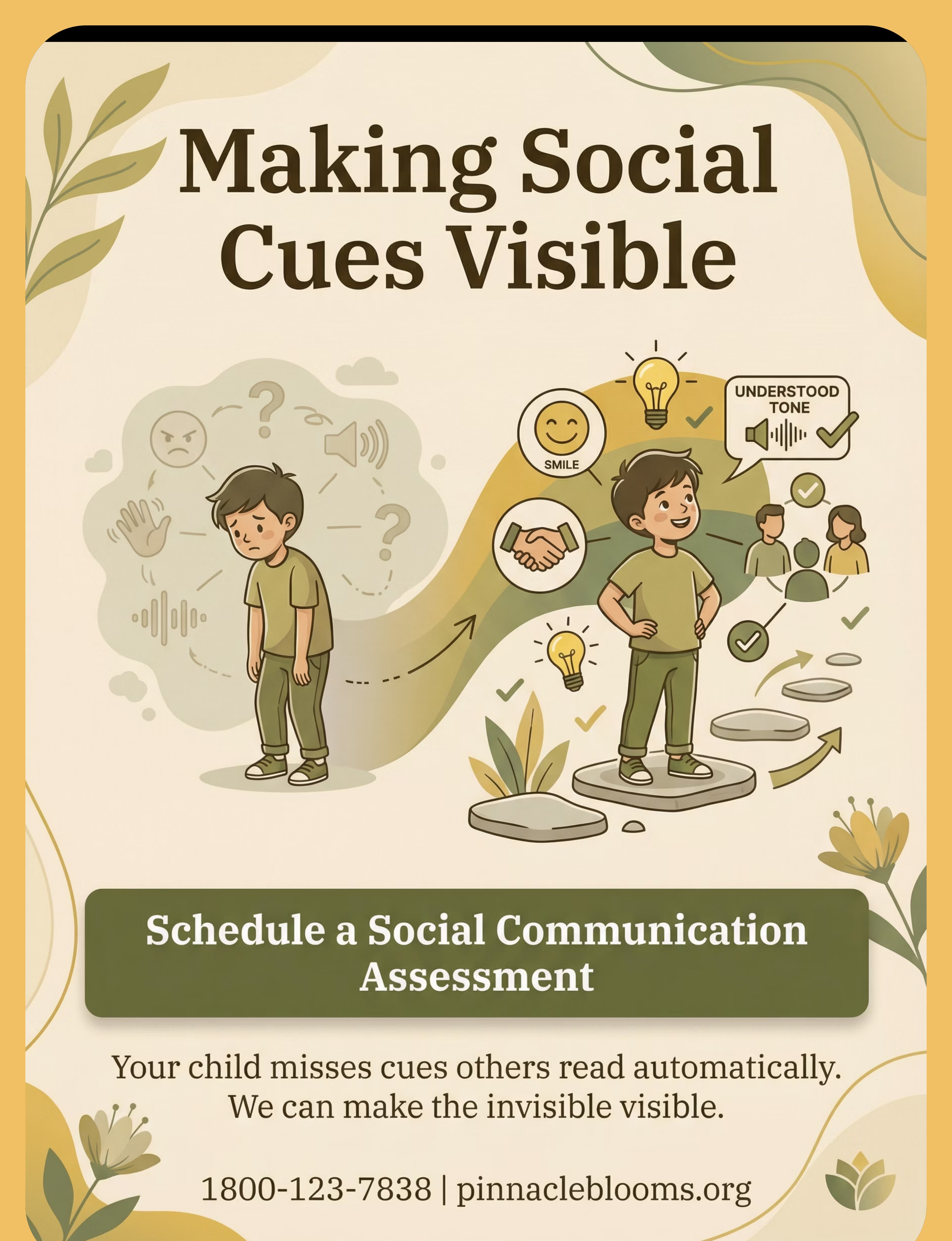
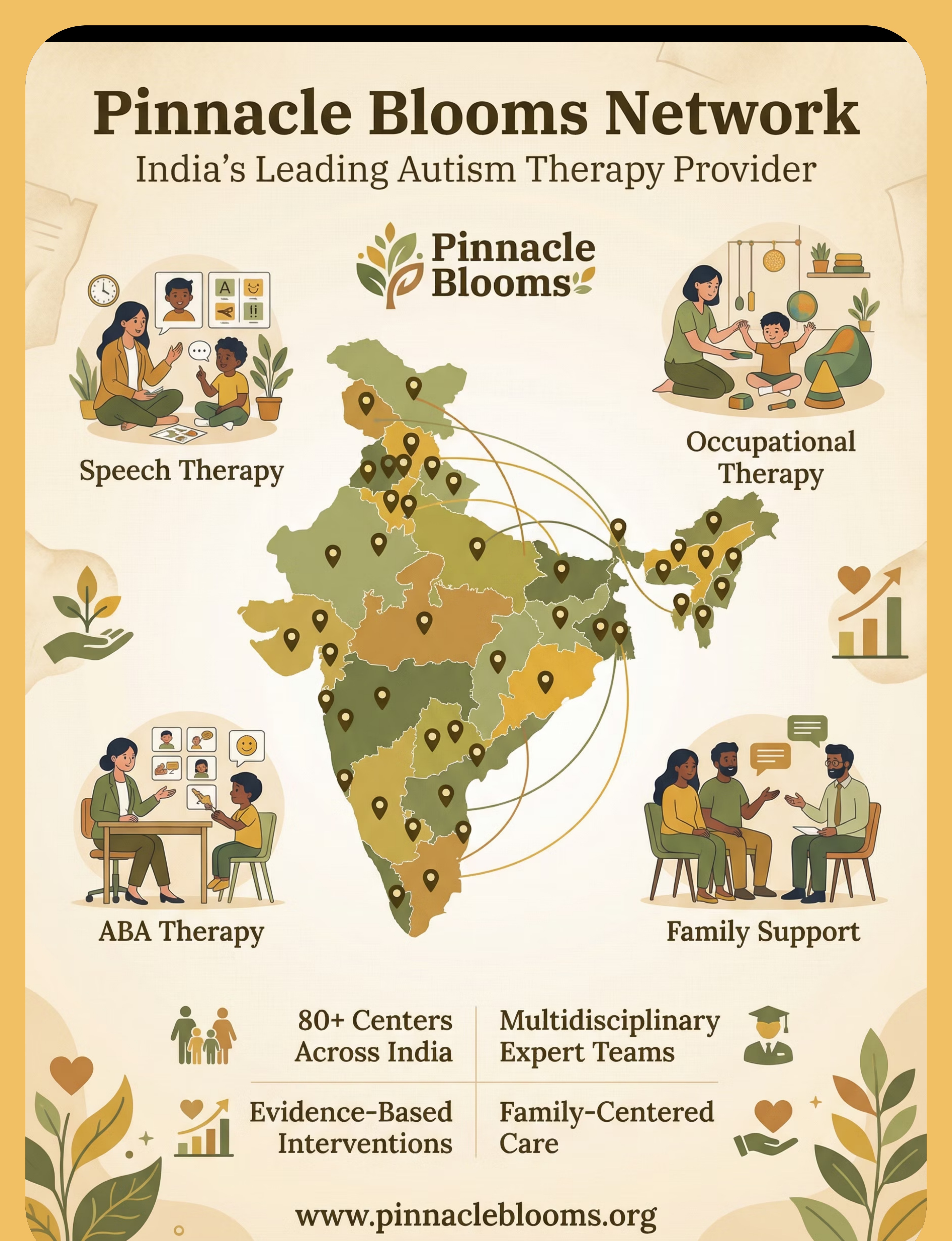
Preview of 9 materials that help reading social cues Therapy Material
Below is a visual preview of 9 materials that help reading social cues therapy material. The pages shown help educators, therapists, and caregivers understand the structure and content of the resource before use. Materials should be used under appropriate professional guidance.



Link copied!

Home + Clinic = Maximum Impact
Research consistently shows: children receiving professional intervention PLUS consistent home practice show 2–3× better outcomes than either alone. Your home practice is the multiplier for the clinical work. The clinical work is the architecture that makes the home practice effective.
Service | What They Do for C-313 | |
SLP (Pragmatics) | Formal social language assessment, structured cue training, clinical monitoring | |
ABA / BCBA | Data-driven cue recognition training, reinforcement optimisation, generalisation programming | |
Occupational Therapy | Sensory processing assessment, regulation support to free up capacity for cue reading | |
Special Education | School generalisation, teacher training, classroom accommodation planning | |
Teleconsultation | Remote SLP/ABA review of your home session data — no centre visit needed |