
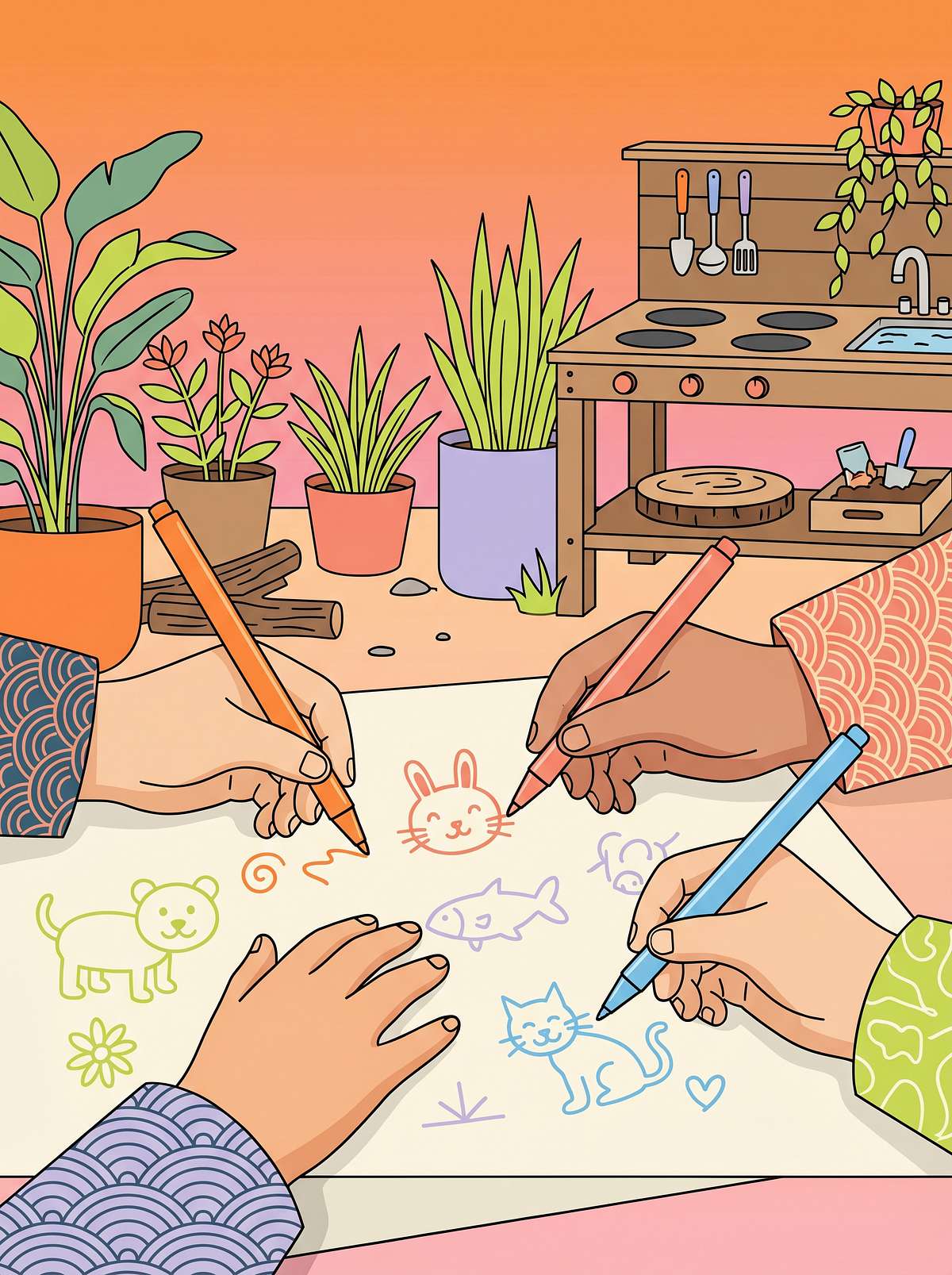
"He holds the crayon like a hammer. His paper tears. He says 'I can't' and pushes it away."
It's 8 AM. Kindergarten starts in two months. Your child's preschool teacher has gently mentioned that the other children are writing their names while your child can barely draw a circle without the lines falling apart. You've tried handwriting workbooks. You've tried guiding the hand. Every attempt ends in frustration — theirs and yours.
What you are watching is not laziness. What you are watching is not a behavior problem. What you are watching is a hand that is not yet ready to write.
✍️9 Materials That Help With Writing Readiness — Building the foundation before the pencil. You are not failing. Your child's hands are simply at an earlier developmental stage than expected — and there is a precise, playful, evidence-based path forward.
Pinnacle Blooms Consortium®
OT • SLP • SpEd • ABA
Age 2–7 Years
Domain L: Fine Motor
📞FREE National Autism Helpline: 9100 181 181 | 16+ Languages | 24×7

You Are Not Alone: The Numbers
You are among millions of families navigating this exact challenge. When your child struggles to hold a crayon, form a circle, or cut along a line — they are not an outlier. Writing is one of the most neurologically complex motor tasks a human performs, requiring simultaneous coordination of postural stability, shoulder strength, wrist position, finger isolation, visual-motor integration, and sustained attention.
1 in 6
Daily Impact
Children experience developmental difficulties affecting daily activities including writing
40–60%
ASD & Dev. Differences
Children with autism or developmental differences show significant fine motor delays affecting pre-writing readiness
3 in 10
School Referrals
School-age children referred for learning difficulties have underlying fine motor or visual-motor integration gaps
🇮🇳India Data: Approximately 18 million children under 8 currently show fine motor delays — the majority without formal diagnosis or targeted intervention. Source: National Trust India + Pinnacle Network clinical intake data
When the foundation is missing, no amount of handwriting practice will build it. The foundation must be built first.

What's Happening in Your Child's Brain
Writing begins in the brain — and the brain builds it from the body up.
The Proximal-to-Distal Law
Your child's nervous system builds motor control from the core outward — from the trunk, to the shoulder, to the elbow, to the wrist, to the fingers. This is called the proximal-to-distal developmental law, and it is hardwired into every human nervous system.
- A child cannot have stable, precise finger movements if their shoulder girdle is weak
- A child cannot control wrist position during writing if their core posture is unstable
- A child cannot form letters with their fingertips if their hand's intrinsic muscles are underdeveloped
This is a wiring development gap — not a behavior choice, not a character flaw, not a learning disability in isolation.
The 7-Level Motor Hierarchy for Writing
Core Stability
Shoulder Strength
Wrist Control
Palmar Arch Development
Finger Isolation
Tripod Grasp
Visual-Motor Integration

Where This Sits in Development
Your child is here. Here is where we're heading. Understanding the developmental timeline helps you see that writing readiness challenges are not random — they follow a predictable sequence that can be supported at every stage.
🎯Age 2–7: The Writing Readiness Window. During this period, the brain's motor cortex is developing rapidly through play-based sensorimotor experience. Every game of threading beads, every squeeze of putty, every peg placed in a board is a neural pathway being laid that will directly serve handwriting for life.
What Typically Co-Occurs With Writing Readiness Delays
Sensory Processing
Tactile sensitivity or seeking behaviors
Low Muscle Tone
Hypotonia affecting grip and endurance
Attention Challenges
Difficulty sustaining focus on tabletop tasks
ASD Differences
Autism spectrum developmental variations
DCD
Developmental coordination disorder
Speech Delays
Fine oral and hand motor are often linked

The Evidence Behind These Materials
These aren't craft activities. These are clinically validated developmental tools backed by peer-reviewed research and multi-country implementation evidence.
⭐⭐⭐⭐ Level II Evidence
PRISMA Systematic Review (2024)
16 studies (2013–2023) confirm sensory integration and fine motor intervention meets criteria as Evidence-Based Practice for children with ASD.
PMC11506176 | Children, 2024
16 studies (2013–2023) confirm sensory integration and fine motor intervention meets criteria as Evidence-Based Practice for children with ASD.
PMC11506176 | Children, 2024
Meta-Analysis Validated
World J Clin Cases (2024)
24 studies. Sensory integration therapy effectively promotes fine motor skills, adaptive behavior, and visual-motor integration.
PMC10955541 | DOI: 10.12998/wjcc.v12.i7.1260
24 studies. Sensory integration therapy effectively promotes fine motor skills, adaptive behavior, and visual-motor integration.
PMC10955541 | DOI: 10.12998/wjcc.v12.i7.1260
RCT Proven
Indian RCT (2019)
Home-based fine motor and sensory interventions delivered by trained parents demonstrated significant outcomes for Indian children with developmental differences.
DOI: 10.1007/s12098-018-2747-4
Home-based fine motor and sensory interventions delivered by trained parents demonstrated significant outcomes for Indian children with developmental differences.
DOI: 10.1007/s12098-018-2747-4
"These 9 materials are not guesswork. They are the tools occupational therapists at Pinnacle's 70+ centers use across 20 million+ therapy sessions — now made available for you to use at home, guided by the same clinical framework."

✍️ 9 Materials That Help With Writing Readiness
Domain L: Fine Motor & Pre-Academics
OT Protocol FM-WRT
Age: 2–7 Years
Daily 10–15 min
6–8 Week Programme
Formal alias: Pre-Writing Foundational Skills Development Protocol | Parent alias: "Building Ready Hands"
Definition: Writing readiness is not about teaching letters. It is about developing the physical and neurological infrastructure that makes writing possible — and then effortless. The term refers to the constellation of fine motor, sensorimotor, and visual-motor skills that must be in place before a child can successfully learn to form letters: hand strength, finger isolation, bilateral coordination, crossing midline, tripod grasp development, visual-motor integration, and postural stability.
The 9 materials featured in this programme each target a specific layer of this infrastructure. Used consistently over 6–8 weeks, they build the foundation from which formal handwriting instruction can succeed — without frustration, avoidance, or compensatory grip patterns.
Therapy Putty
Pegboards
Tongs & Tweezers
Lacing Cards
Vertical Surfaces
Finger Isolation Tools
Sensory Trays
Scissors
Pre-Writing Cards
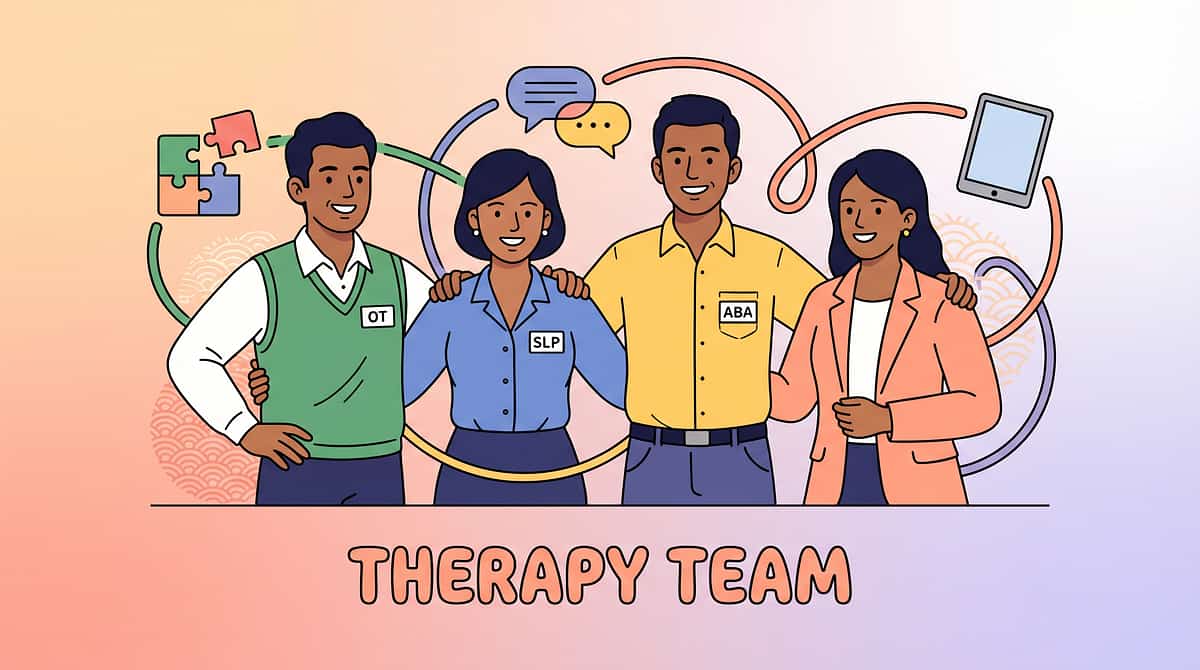
Five Disciplines. One Goal: Ready Hands, Ready Minds.
Building writing readiness isn't a single-discipline endeavor. The Pinnacle FusionModule™ ensures that gains across occupational therapy, speech-language pathology, ABA, special education, and neurodevelopmental pediatrics stack — not compete. The brain does not organize itself by therapy type.
Occupational Therapy — PRIMARY LEAD
OTs design the full fine motor hierarchy progression. Putty, pegs, tongs, vertical surfaces — these are core OT tools for grasp and coordination.
Speech-Language Pathology
SLPs address oral motor connections to fine motor. Hand and mouth motor development are neurologically linked. Oral motor work often accompanies fine motor.
ABA / BCBA
ABA practitioners structure reinforcement schedules during fine motor sessions — making the materials motivating, not just therapeutic.
Special Education
SpEd teachers apply these materials in classroom pre-writing stations, IEP goals, and adapted curricula for school-based support.
NeuroDev Pediatrics
NeuroDev doctors monitor underlying conditions (hypotonia, DCD, ASD) that affect fine motor development and coordinate cross-discipline management.
📞9100 181 181 — Ask which discipline should lead your child's fine motor assessment.

What These Materials Target
This isn't general play. Each material is a precision tool targeting specific developmental systems across three levels of impact.
Observable Progress Indicators
You will see your child... | This means... |
Holding putty longer without fatigue | Intrinsic hand strength building |
Picking up pegs with thumb-index-middle | Tripod grasp pattern emerging |
Both hands working on lacing card | Bilateral coordination developing |
Drawing on chalkboard without cramping | Wrist position naturally correcting |
Using index finger to point/trace | Finger isolation improving |
Secondary Targets
- Sustained attention to tabletop tasks
- Visual-motor integration (eye-hand coordination)
- Crossing midline (reaching across the body's centerline)
- In-hand manipulation (moving objects within one hand)
- Self-regulation during structured activities
- Frustration tolerance with challenging tasks
9 Materials. One Developmental Toolkit. Build Ready Hands.

1. Therapy Putty & Resistive Dough
Builds intrinsic hand muscle strength — the 20+ small muscles that sustain pencil grip.
Price: ₹300–800 | Resistance: Soft → Medium → Firm
Price: ₹300–800 | Resistance: Soft → Medium → Firm
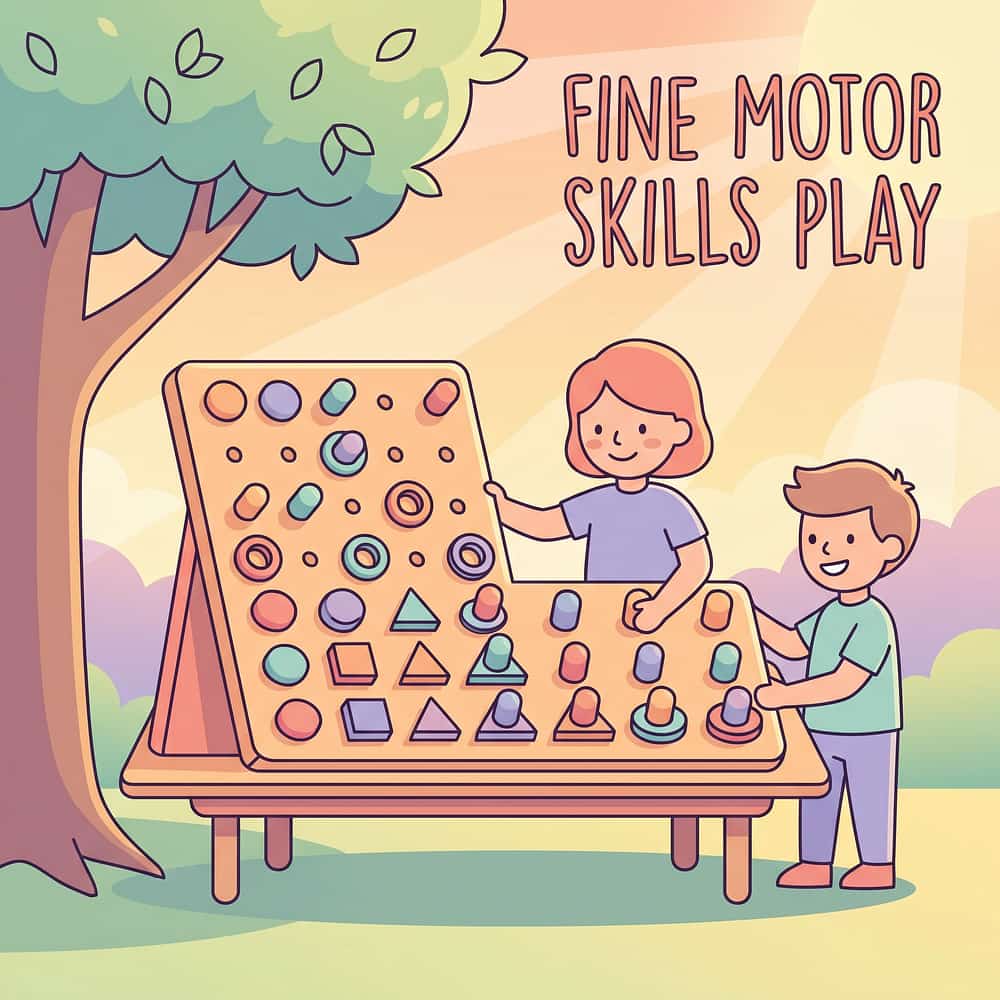
2. Pegboards & Pegs
Develops pincer grasp, in-hand manipulation, bilateral coordination, and visual-motor integration simultaneously.
Price: ₹400–1,500 | Start large pegs, progress to small
Price: ₹400–1,500 | Start large pegs, progress to small

3. Tongs, Tweezers & Chopsticks
Trains the exact tripod muscle group used for pencil grip — through play.
Price: ₹150–600 | Jumbo tongs → Standard → Fine tweezers
Price: ₹150–600 | Jumbo tongs → Standard → Fine tweezers
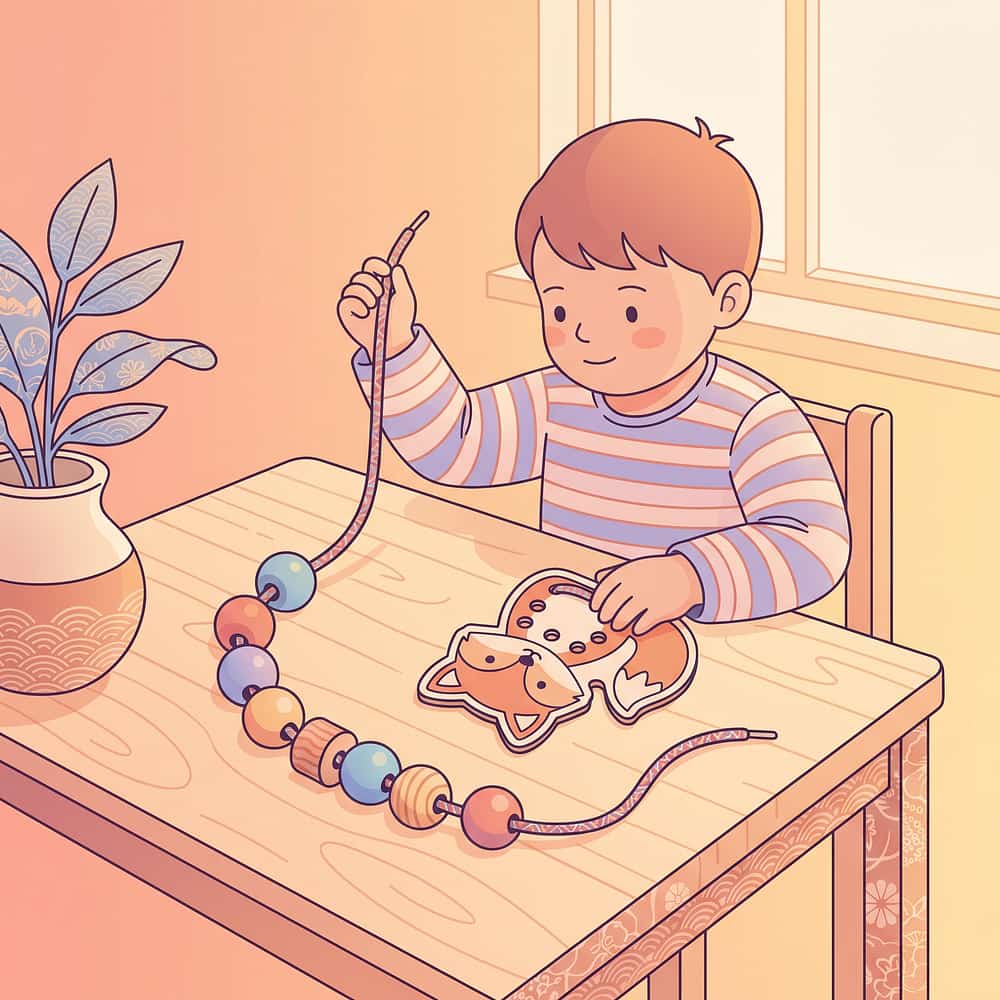
4. Lacing Cards & Beading
Bilateral coordination: one hand holds, one hand works. Crossing midline. Pincer grasp endurance.
Price: ₹200–800 | Large laces first, progress to smaller beads
Price: ₹200–800 | Large laces first, progress to smaller beads
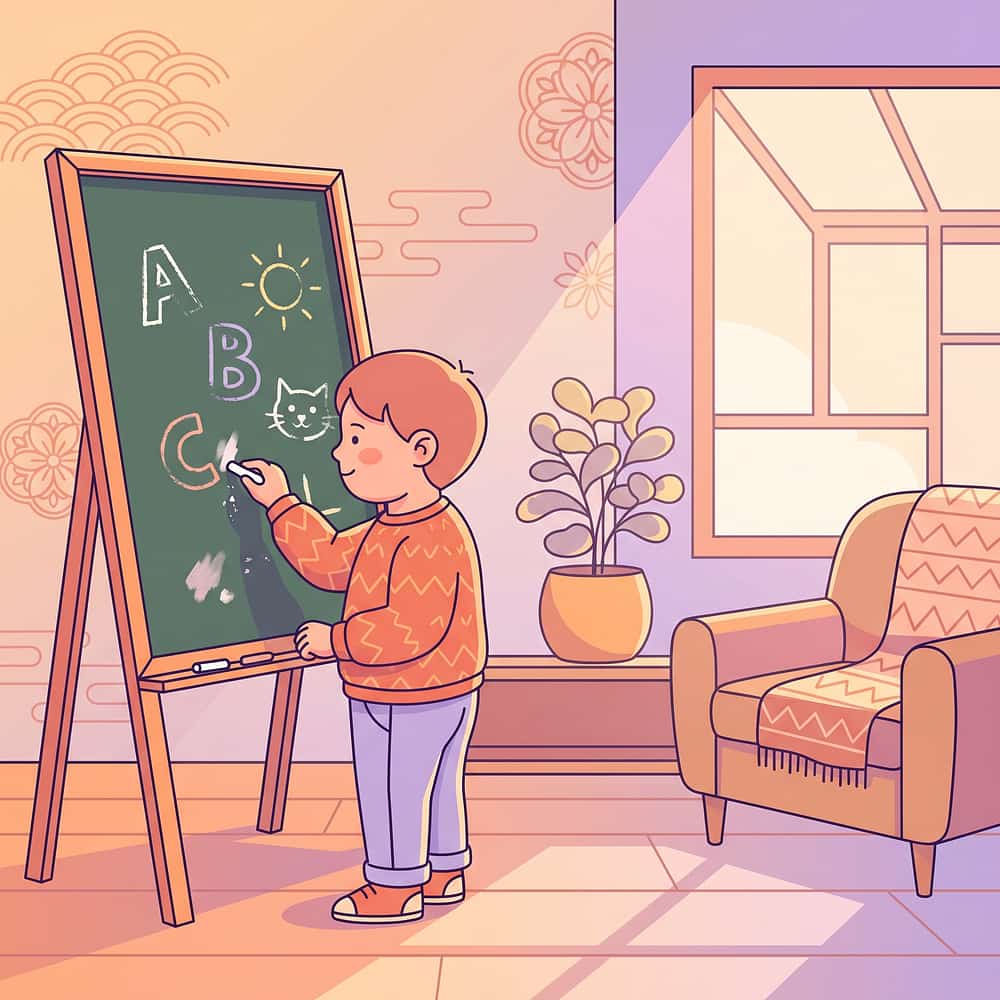
5. Vertical Surface Writing Tools
Positions wrist in optimal extension. Builds shoulder stability (proximal for distal). Prevents poor grip without correction.
Price: ₹500–2,500
Price: ₹500–2,500

6. Finger Isolation Tools
Each finger learns its own job. Index isolation for pencil precision. Ring-pinky tuck and stabilize.
Price: ₹200–1,000 | Spray bottle → finger puppet → hole punch
Price: ₹200–1,000 | Spray bottle → finger puppet → hole punch

7. Sensory Writing Trays
Practice pre-writing movements with tactile feedback — no pressure, no wrong answers, mistakes disappear.
Price: ₹200–600 | Sand, salt, or rice in shallow tray
Price: ₹200–600 | Sand, salt, or rice in shallow tray
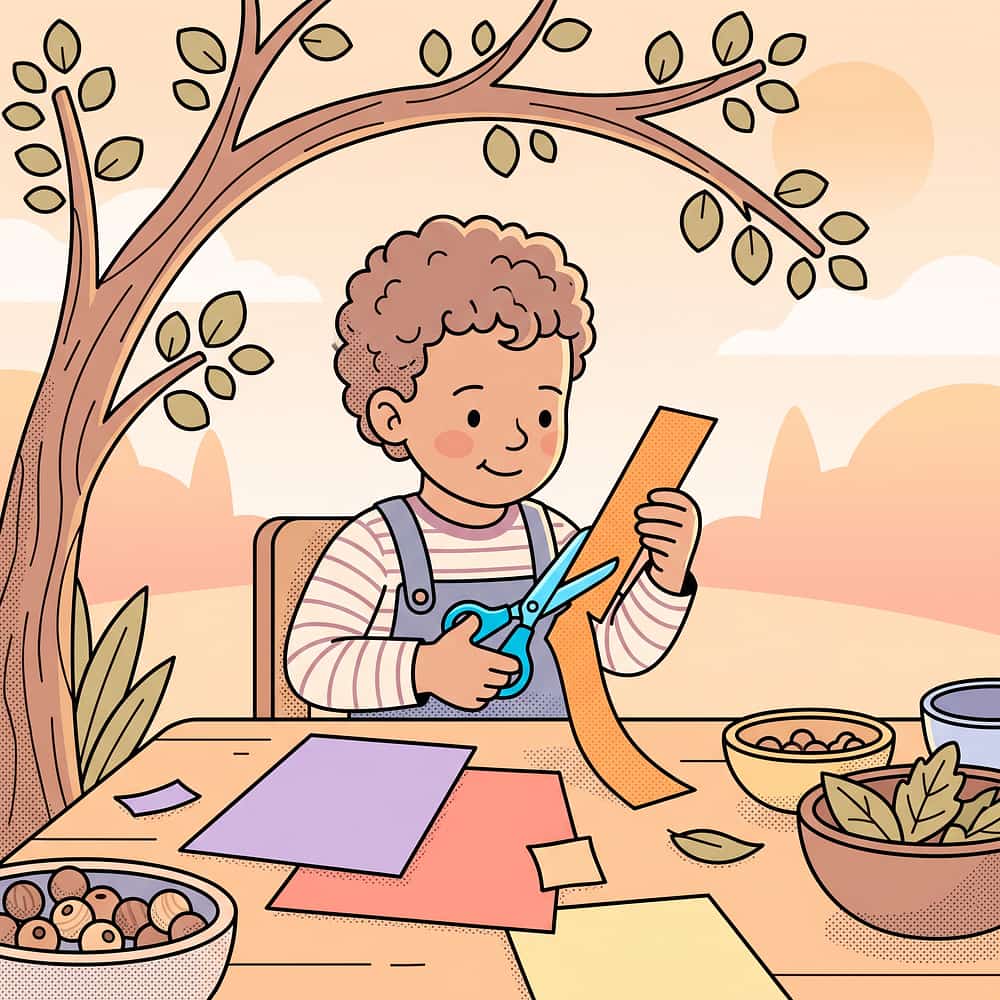
8. Safety Scissors & Cutting Materials
Scissors train the same hand muscles as writing. Open-close strengthens the web space critical for pencil grasp.
Price: ₹100–500 | Spring-loaded for low strength
Price: ₹100–500 | Spring-loaded for low strength
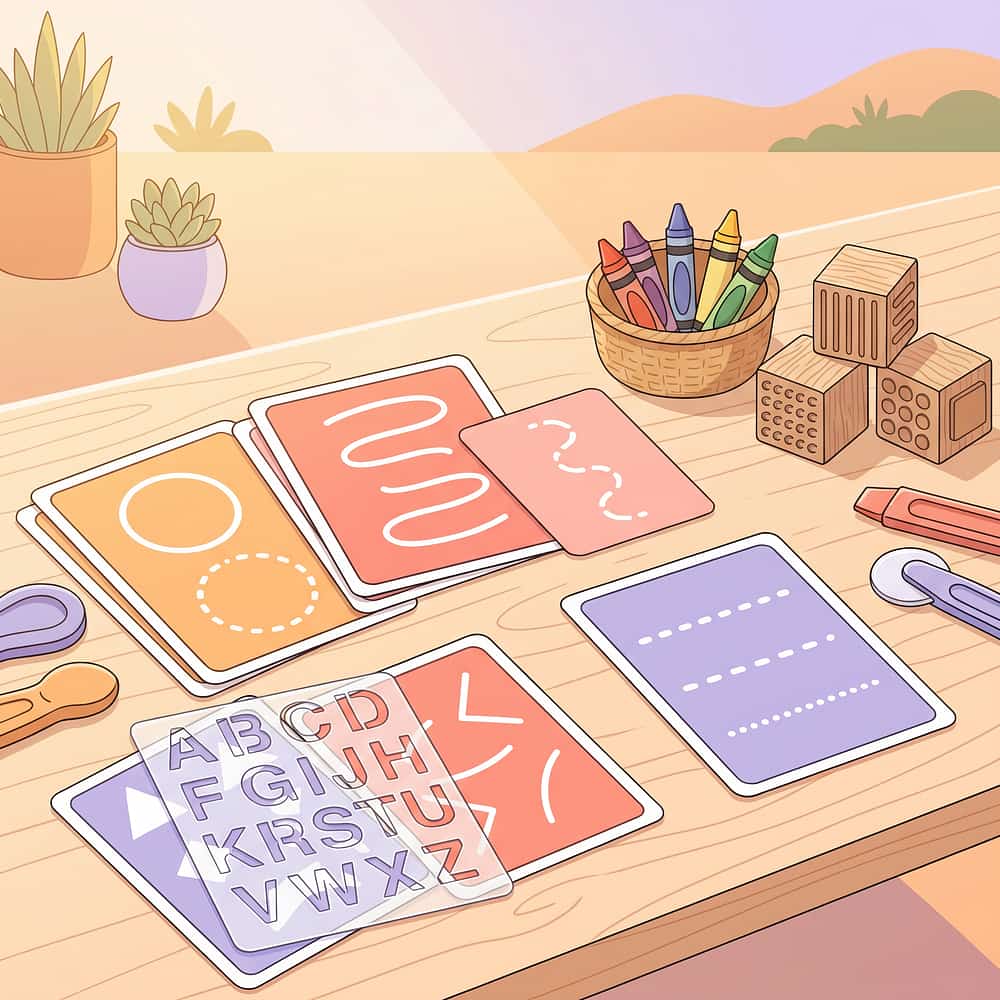
9. Pre-Writing Stroke Cards & Stencils
Letters are made of strokes. Master the 9 strokes first — then letters are combinations, not mysteries.
Price: ₹200–800 | Laminated for dry-erase reuse
Price: ₹200–800 | Laminated for dry-erase reuse

Every Family, Every Budget — Writing Readiness Is Accessible Today
Anchored in WHO/UNICEF equity principles: effective intervention should not be limited by economic access. Every material below has a household equivalent that preserves the same therapeutic principle.
🛒 Clinical Material | 🏠 Household DIY Equivalent |
Therapy Putty | Mix 2 cups flour + 1 cup salt + 2 tbsp cream of tartar + 2 tbsp oil + 1.5 cups boiling water. Add extra flour for resistance. Store airtight. |
Pegboards & Pegs | Corrugated cardboard + pencil-punched holes + golf tees as pegs. Or: egg carton + toothpicks (supervised). Pattern cards drawn on paper. |
Tongs & Tweezers | Kitchen tongs in 2 sizes. Clothespins (spring-loaded = great resistance). Transfer games with pom-poms, cotton balls between muffin tin cups. |
Lacing Cards | Cut cardboard shapes, punch holes with pencil, use shoelace. Pasta (penne) on yarn with tape-stiffened tip. |
Vertical Surface Tools | Paper taped to wall at shoulder height. Chalk on any smooth surface. Washable window markers on glass. Cardboard box easel. |
Finger Isolation Tools | Small spray bottle for plant watering (index isolation). Popping bubble wrap one finger at a time. Crumpling paper into balls one-handed. |
Sensory Trays | Rice, salt, or sand in any shallow container. Shaving cream on a smooth surface. Wet sand. Cornmeal tray. |
Scissors | Begin with playdough cutting (softer than paper). Progress to magazine snipping → construction paper strips → lines. |
Pre-Writing Cards | Draw strokes on index cards, laminate with tape for dry-erase reuse. Sticker dots as start/stop markers. Highlighter traces for child to follow. |
✅Zero-Cost Starter Kit: Homemade dough | Cardboard pegboard | Kitchen tongs | Paper on wall + chalk | Salt tray | Playdough for snipping
Total cost: ₹0 — Effective from today, in any home, anywhere in the world.
Total cost: ₹0 — Effective from today, in any home, anywhere in the world.
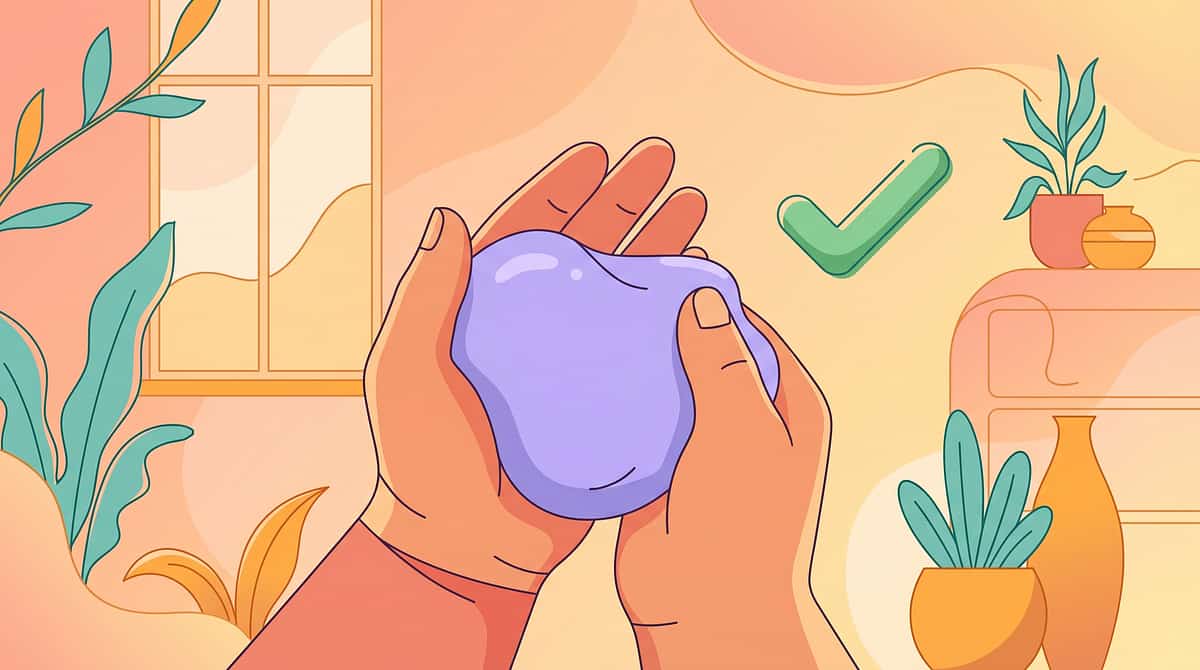
Material #1: Therapy Putty — The Foundational Strengthener
Therapy putty is an essential tool for developing crucial fine motor skills, acting as a resistance training gym for your child's hands. It specifically targets the intrinsic hand muscles—the small muscles within the hand that are vital for tasks like holding a pencil, manipulating small objects, and fastening buttons. By strengthening these muscles, children gain better endurance and control, preventing fatigue and improving precision in their fine motor tasks.
Regular use of therapy putty helps build the foundational hand strength and coordination necessary for effective pencil grip and overall manual dexterity. Unlike general play, the controlled resistance of therapy putty provides a targeted workout, preparing young hands for the complex demands of writing and self-care.
Domain L: Fine Motor
OT Protocol FM-001
Age 2–7
Daily 5–10 min
The 5 Core Putty Exercises
1. Pinching
Use thumb and index finger to pinch off small pieces, or embed beads and have child pinch them out. Develops pincer grasp and finger isolation.
2. Pulling
Encourage child to pull the putty apart with both hands or individually. Strengthens general hand and finger extensors.
3. Rolling
Roll the putty into a snake or ball using fingers and palm. Improves palmar arch development and in-hand manipulation.
4. Squeezing
Have the child squeeze the entire ball of putty tightly, or hide small objects within and have them squeeze to find them. Enhances overall grip strength.
5. Hiding Objects
Hide small coins, beads, or buttons in the putty and ask the child to find them using only their fingers, without using the other hand. Improves finger isolation and tactile discrimination.
Resistance Levels & Age Guidance
- Soft: Age 2-3 years, for initial strengthening and engagement.
- Medium: Age 3-5 years, as strength increases and for sustained work.
- Firm: Age 5-7 years, for advanced strengthening and endurance building.
Always start with softer resistance and gradually increase as hand strength improves. The goal is challenging but achievable resistance.
Clinical Evidence & Usage
Occupational therapy research consistently highlights the positive correlation between intrinsic hand muscle strength and effective pencil control, handwriting legibility, and reduced writing fatigue. Regular, short bursts of putty work are more effective than infrequent, long sessions.
Recommendation: 5-10 minutes daily, ideally before any writing-related task, to "warm up" the hands. This prepares muscles for better performance and posture.
Household Substitute: Commercial playdough or homemade salt dough can provide a similar resistive experience, though the resistance levels may be less consistent than clinical putty.
What Parents Notice After 4 Weeks of Daily Putty Work
- Improved pencil grip endurance – less hand cramping.
- Neater handwriting and better letter formation.
- Faster and more efficient fine motor skill execution (e.g., buttoning shirts, using zippers).
- Increased confidence in tabletop activities requiring hand strength.
Brand: Pinnacle Blooms Consortium®
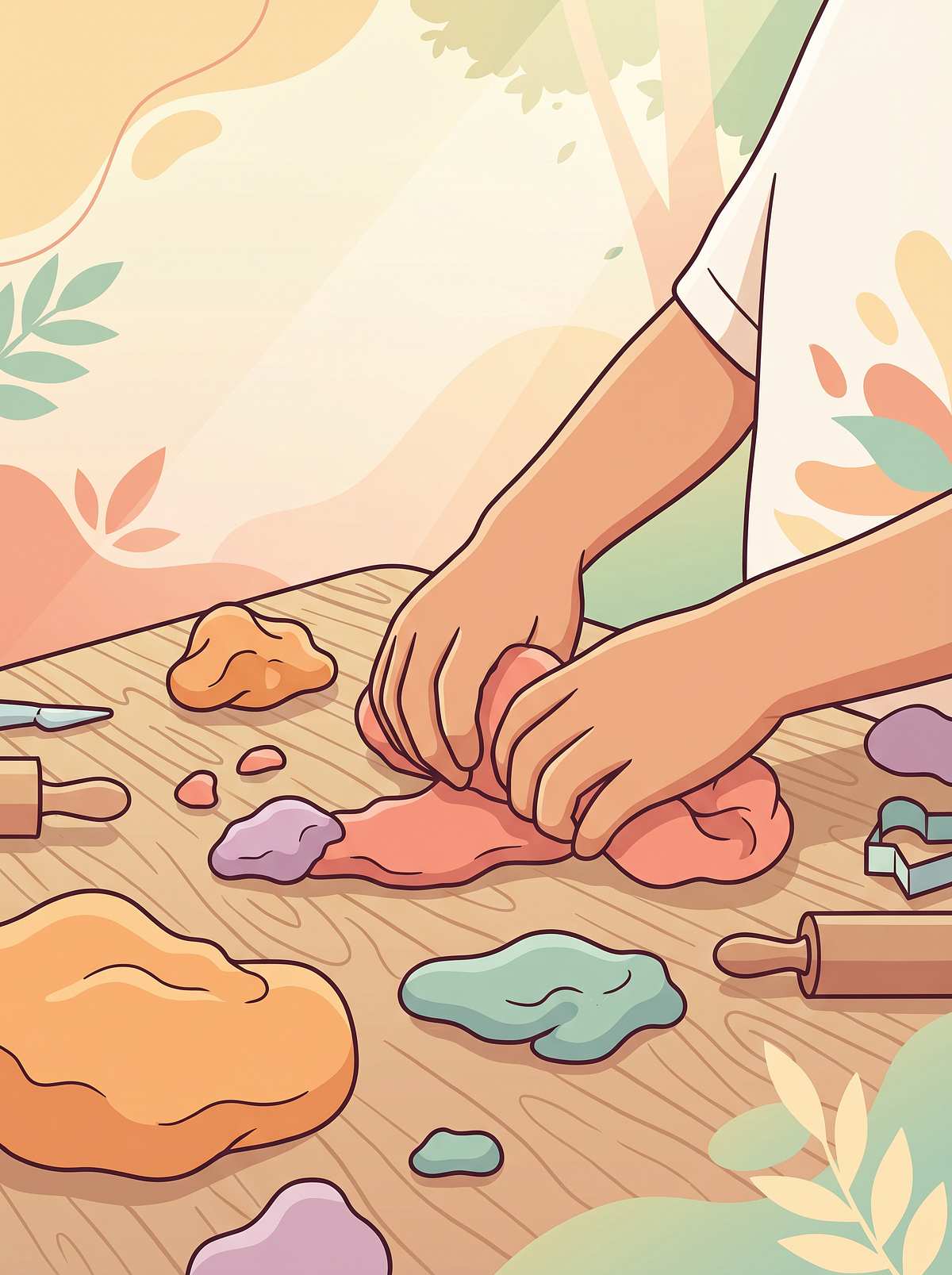
Material #2: Playdough — The Sensory-Motor Bridge
While therapy putty provides targeted resistance for pure strengthening, playdough offers a unique blend of sensory exploration and fine motor skill development, making it an indispensable tool for writing readiness. Its softer, more malleable texture engages a wider range of sensory input, transforming simple hand exercises into a rich, multi-sensory experience.
Playdough encourages children to explore textures, shapes, and resistive properties, providing essential proprioceptive and tactile feedback. This combined sensory-motor engagement helps integrate touch and movement, which is critical for developing body awareness and control necessary for handwriting and daily living skills.
Domain L: Fine Motor
Sensory Integration
Age 2–6
Daily 10 min
The 6 Core Playdough Activities
Rolling Snakes
Encourages bilateral coordination as both hands work together, promoting a linear motion essential for pre-writing strokes.
Making Balls
Develops palmar arch strength and in-hand manipulation, crucial for efficient pencil grip and object control.
Pressing Flat
Strengthens hand muscles and improves hand-eye coordination as children exert controlled pressure.
Cutting with Plastic Knife
Hones fine motor precision, wrist stability, and prepares hands for scissor skills with a safe, resistive medium.
Poking with Fingers
Targets individual finger isolation and strengthening, particularly the index finger, a key component of a functional pencil grasp.
Making Letters/Shapes
Connects sensory-motor skills to pre-writing concepts, enhancing letter recognition and formation through tactile learning.
Sensory & Bilateral Benefits
Playdough provides rich proprioceptive input (feedback from muscles and joints) and tactile input (touch sensation). This deep pressure and varied texture help children regulate their sensory systems, improving focus and body awareness. Manipulating playdough also naturally encourages bilateral coordination, where both sides of the body work together, a foundational skill for tasks like cutting, drawing, and dressing.
Therapeutic Playdough Recipe
Make your own therapeutic playdough!
- Mix 1 cup flour, 1/2 cup salt, 2 tsp cream of tartar.
- Add 1 tbsp oil, 1 cup boiling water (careful!).
- Stir until it forms a sticky ball, then knead on a floured surface until smooth.
Texture Boosters: Add fine sand, rice, or oats for extra tactile input. Scent Boosters: A few drops of lavender or peppermint essential oil for aromatherapy.
Playdough Comparison: Which One is Right for You?
Type | Pros | Cons | Best For |
Store-Bought | Consistent texture, readily available, wide color range. | Less sensory variety, can dry out quickly, potential chemical additives. | General play, quick access, classroom settings. |
Homemade Standard | Customizable firmness, non-toxic ingredients, cost-effective, fresh. | Requires prep time, consistency can vary, shorter shelf life. | Specific resistance needs, budget-conscious, sensitivity concerns. |
Homemade Scented/Textured | Enhanced sensory experience, calming/alerting effects, deep proprioceptive input. | Requires specific additives, potential allergen concerns (essential oils). | Sensory integration therapy, calming activities, sustained engagement. |
Why Scented Playdough Doubles the Therapeutic Benefit
Adding essential oils like lavender (calming) or peppermint (alerting) to playdough creates a multi-sensory experience that engages the olfactory system. This not only increases a child's engagement and attention span but can also help regulate emotions and improve focus, making the fine motor work even more effective. It turns a simple activity into a holistic sensory integration exercise.
Brand: Pinnacle Blooms Consortium®

Material #3: Tweezers & Tongs — Precision Grip Training
Beyond the foundational strengthening offered by putty and the sensory exploration of playdough, tweezers and tongs introduce the critical element of precision. These simple tools are powerful allies in developing the refined pincer grasp and visual-motor integration essential for confident pencil control and legible handwriting.
The ability to effectively manipulate small objects between the thumb and index finger (the pincer grasp) is often cited by occupational therapists as the #1 predictor of future pencil control and fine motor dexterity. Training this grip through resistive activities builds the muscle memory and coordination needed for intricate tasks like writing, buttoning, and zipping.
Domain L: Fine Motor
OT Protocol FM-003
Age 2.5–7
Daily 5–8 min
The Pincer Grip Progression
Large Tongs
Easiest: Builds initial strength and hand-eye coordination with less precision required.
Small Tongs
Intermediate: Requires more control and a developing pincer grasp with smaller objects.
Tweezers
Advanced: Demands precise thumb-index finger isolation and fine motor control.
Fine-Tip Tweezers
Expert: Highest level of precision for minute objects, mimicking advanced pencil manipulation.
Engaging Activities for Precision Training
- Pom-Pom Transfer: Use various sized tongs to transfer soft pom-poms from one bowl to another.
- Bead Pick-Up: Employ tweezers to carefully pick up small beads (e.g., pony beads) and place them into a small container with a narrow opening.
- Color Sorting: Sort small, uniform items like buttons, mini pom-poms, or small erasers by color into partitioned trays using tweezers.
- "Feeding" Animals: Use tongs or tweezers to "feed" small objects (e.g., dried beans, tiny blocks) into the mouths of toy animals.
- Ice Cube Tray Sorting: Pick up tiny items and place them into the individual compartments of an ice cube tray, promoting accuracy.
These activities are not just about strengthening fingers; they are crucial for visual-motor integration. As children concentrate on picking up and placing small objects, their eyes and hands learn to work together seamlessly. This coordinated effort is directly transferable to following a line on paper, forming letters correctly, and staying within boundaries when coloring or writing.
The Pincer-to-Pencil Connection — What OTs Know That Most Parents Don't
A strong, stable pincer grip provides the foundation for the dynamic tripod grasp required for handwriting. Without it, children often compensate with awkward pencil grips, leading to fatigue, slower writing speed, and illegible output. Early training with tongs and tweezers directly builds the specific muscle groups and neural pathways that support an efficient and comfortable pencil hold, preventing future struggles.
Safety Note: Always supervise younger children during these activities due to the presence of small items, which can pose a choking hazard. Select age-appropriate materials and ensure proper supervision.
Brand: Pinnacle Blooms Consortium®

Material #4: Lacing Cards — Threading the Path to Pencil Control
Lacing cards are deceptively simple, yet incredibly powerful tools for building essential pre-writing skills. Far beyond just a fun activity, they systematically develop a crucial set of motor and cognitive abilities that directly translate to legible handwriting and sustained academic success. By engaging children in purposeful threading, we refine their coordination, concentration, and precision, preparing their hands and minds for the complex demands of writing.
Domain L: Fine Motor
Bilateral Coordination
Age 2–6
Daily 8–10 min
The 3 Stages of Lacing Mastery
Random Threading
The initial stage where children explore the holes and lace without a specific pattern, focusing on basic hand-eye coordination and manipulation.
In-and-Out Pattern
Children begin to understand and execute a simple, alternating "over and under" pattern, requiring improved sequencing and visual planning.
Complex Patterns
Advanced lacing involves intricate designs, multiple laces, or following specific visual guides, demanding high levels of visual tracking and fine motor control.
The continuous, controlled movement required for lacing directly mirrors the motor demands of writing. Each pull and guide of the lace strengthens finger muscles, develops consistent pressure, and trains the hand to maintain a smooth flow—qualities critical for forming letters and words on paper. It also hones bilateral coordination, as one hand stabilizes the card while the other manipulates the lace, a foundational skill for handwriting and other daily tasks.
DIY Lacing Cards & Progression
- Make Your Own: Create lacing cards from sturdy materials like foam sheets, recycled cardboard, or laminated pictures. Simply punch holes along the edges or within a design.
- Lace Progression: Start with thick, easy-to-grasp shoelaces, then progress to thinner laces, and finally to fine thread for advanced precision.
Why Lacing is Secretly One of the Best Pre-Writing Activities
Lacing activities are exceptional for building not just fine motor skills, but also crucial readiness for cursive writing. The continuous, flowing motion of threading directly translates to the connected strokes of cursive letters, helping children develop the necessary fluidity and control without lifting their pencil. It trains the eye to follow lines and curves, the hand to execute sustained movements, and the brain to coordinate these complex actions seamlessly. It's a holistic preparation for the continuous line of handwriting.
Brand: Pinnacle Blooms Consortium®
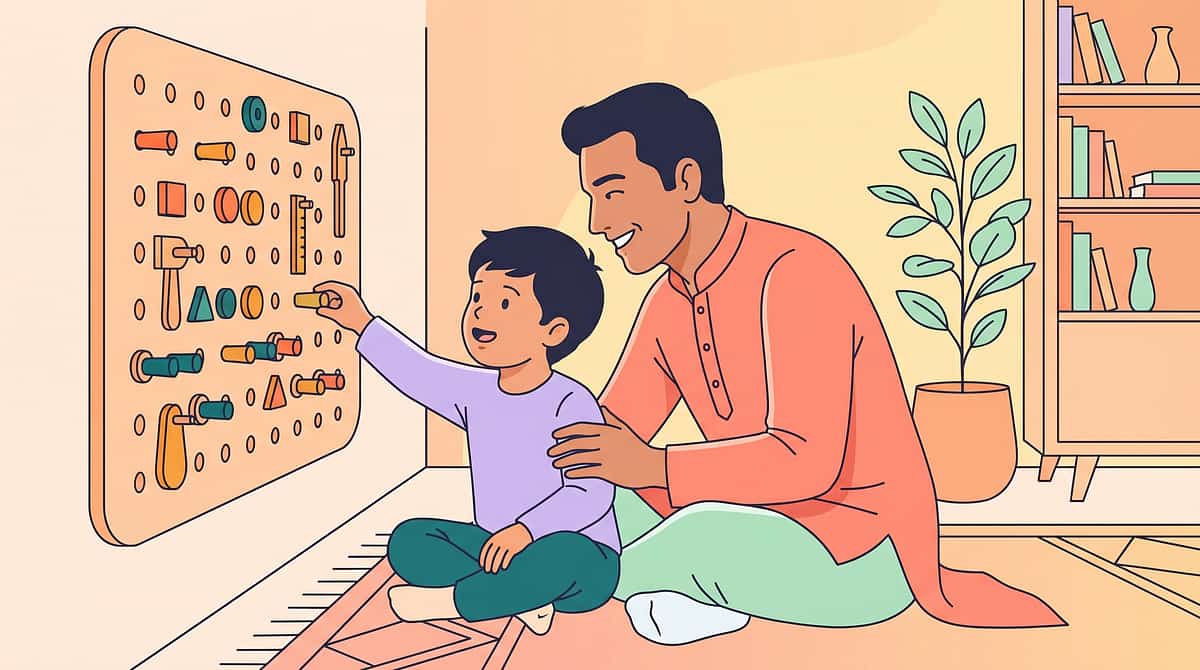
Material #5: Pegboards — Spatial Reasoning Meets Fine Motor
Pegboards are not just a classic toy; they are a sophisticated tool for developing critical pre-writing and pre-math skills. By engaging children in precise peg manipulation, these activities profoundly enhance finger isolation, spatial reasoning, pattern recognition, and visual-motor integration. This seemingly simple task lays a robust foundation for more complex academic demands, making pegboards an indispensable resource in early childhood development.
Domain L: Fine Motor + Cognitive
Visual-Motor Integration
Age 3–7
Daily 8 min
The 4 Levels of Pegboard Mastery
Free Exploration
Children independently place pegs, experimenting with grip and placement without rules. Focus is on cause-and-effect and basic motor control.
Copying Patterns
Replicating a given design from a card or model. This demands visual attention, sequencing, and precise spatial matching.
Creating Original Designs
Imagining and constructing unique patterns. This fosters creativity, planning, and abstract spatial thinking, leading to greater independence.
Timed Challenges
Placing pegs or creating patterns against a clock. Builds speed, efficiency, and reinforces learned motor planning under pressure.
The act of grasping and inserting individual pegs strengthens critical finger muscles, especially promoting thumb-index finger isolation—a precursor to a mature pencil grip. More importantly, pegboard activities directly map to letter formation. The spatial placement of pegs on a grid translates conceptually to placing letters correctly on ruled lines, understanding top, middle, and bottom spaces. This visual understanding of a structured space is vital for legible handwriting.
Beyond writing, pegboards are a fantastic early introduction to math readiness. They naturally develop concepts like counting, one-to-one correspondence, geometric shapes, and symmetry. Children learn to count pegs, identify rows and columns, and even create simple graphs, all while refining fine motor skills.
Types of Pegboards:
- Standard Pegboards: Traditional boards with holes for plastic pegs, often in various colors for pattern creation.
- Geoboards: Boards with pegs arranged in a grid, used with rubber bands to form geometric shapes and explore spatial relationships.
- Light-Up Pegboards: Modern versions where pegs illuminate, adding a sensory element and engaging visual tracking.
The Spatial-to-Symbolic Connection: Why Pegboards Predict Reading AND Writing Success
Pegboard activities strengthen the brain's ability to interpret and manipulate spatial information. This skill is critical not only for accurately forming letters (writing) but also for differentiating between similar-looking letters (like 'b' and 'd') and tracking text across a page (reading). The consistent visual feedback from peg placement reinforces neural pathways essential for symbolic representation and literacy development.
Brand: Pinnacle Blooms Consortium®

Material #6: Adapted Scissors — Cutting the Path to Control
Domain L: Fine Motor
Bilateral Coordination
Age 3–7
Supervised Daily 10 min
Beyond being a fun craft activity, cutting with scissors is a profoundly critical pre-writing milestone. This seemingly simple action orchestrates a symphony of fine motor skills, including the development of bilateral coordination, crucial hand separation, and precise wrist rotation. These foundational movements are not just for cutting; they are the building blocks for controlling a pencil with fluidity and endurance, making adapted scissors an invaluable tool in early development.
The Scissor Skill Progression
Tearing Paper
Develops hand strength and bilateral coordination without the complexity of scissors.
Snipping Fringe
Introduces the open-and-shut motion, refining grasp and release along a straight edge.
Cutting Straight Lines
Requires sustained focus and coordinated hand movements to follow a defined path.
Cutting Curved Lines
Demands refined wrist rotation and continuous adjustment to navigate arcs and circles.
Cutting Shapes
Integrates visual-motor planning and precision to cut out squares, triangles, and complex forms.
Complex Patterns
Involves intricate cutting, often requiring advanced planning, problem-solving, and dexterity.
The "Helper Hand" Concept
While the dominant hand operates the scissors, the non-dominant hand, often called the "helper hand," is equally vital. It learns to stabilize and rotate the paper, guiding it into the scissor blades. This dynamic collaboration fosters robust bilateral coordination, essential for handwriting, drawing, and countless daily tasks where both hands must work together efficiently.
Types of Adapted Scissors
- Spring-Loaded Scissors: Automatically reopen after each cut, reducing hand fatigue and making them easier for children with weaker grasp.
- Loop Scissors: Designed with continuous loops instead of finger holes, ideal for children who struggle with finger placement or have limited finger dexterity.
- Self-Opening Scissors: Similar to spring-loaded, these lighten the load on intrinsic hand muscles.
- Double-Handled Scissors: Allow an adult or therapist to guide the child's cutting motion, providing support and teaching proper mechanics.
Structured Cutting Activities for Skill Building
- "Haircut" Activity: Draw simple faces on paper with long "hair" strips. Children cut the hair, practicing snipping.
- "Road Trip" Cutting: Draw wavy or zig-zag lines as "roads" and have children cut along them, guiding a small toy car.
- "Pizza Slice" Cutting: Draw a large circle and divide it into "slices." Children cut along the lines to separate the slices, practicing cutting curves and straight lines from a central point.
- "Story Sequence" Strips: Print a simple story in pictures across several strips. Children cut the strips apart and then sequence them, combining fine motor with cognitive skills.
Safety and Supervision
Always ensure close adult supervision during all cutting activities. Teach children proper scissor grip and how to pass scissors safely (blades closed, handle first). Store scissors out of reach when not in use.
When your child can cut a circle, they are ready to write
Mastering the ability to cut a perfect circle is a strong indicator of advanced fine motor control, bilateral coordination, and visual-motor integration—all fundamental prerequisites for successful handwriting. It signifies the development of mature hand muscles and precise control.
Brand: Pinnacle Blooms Consortium®
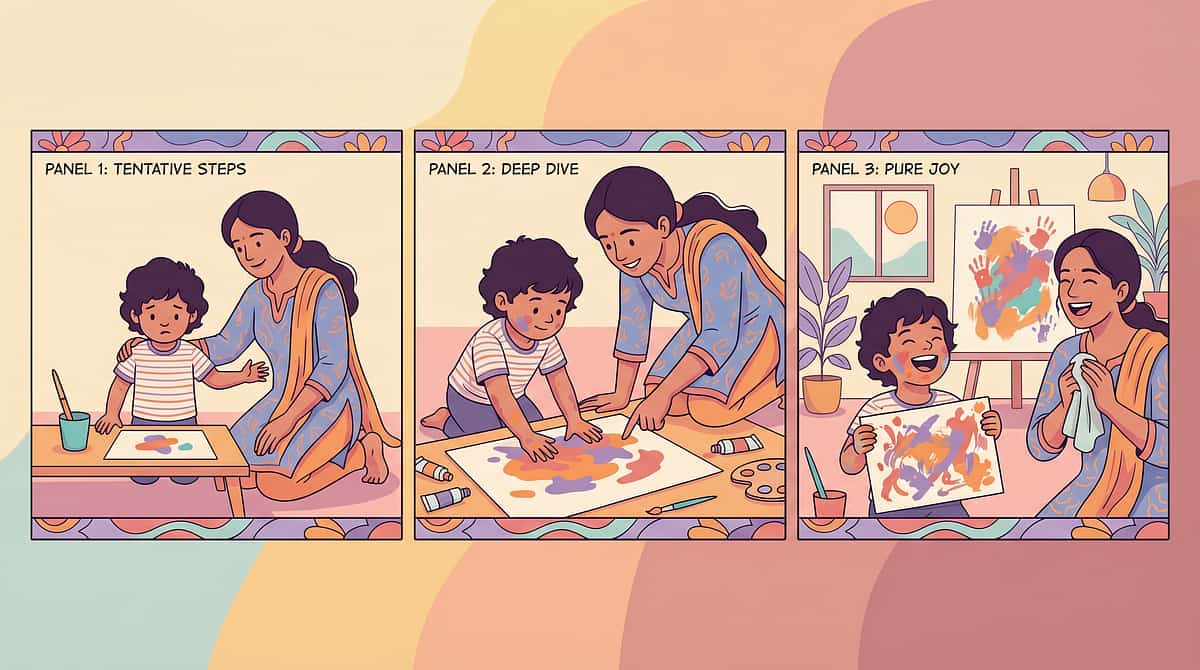
Material #7: Finger Painting — The Whole-Hand Approach
Domain L: Fine Motor + Sensory
Tactile Processing
Age 2–6
Weekly 2–3x
Finger painting is far more than just a messy play activity; it's a profoundly powerful neurological exercise fundamental to writing readiness. This direct, full-hand tactile experience provides rich proprioceptive and sensory feedback, deeply engaging the brain's motor and sensory centers. Children learn to interpret sensations from their hands, modulate pressure, and coordinate movements, laying down essential neural pathways for controlled, precise hand movements required for holding a pencil and forming letters.
Building Blocks for Writing
Through the vibrant, squishy world of finger paint, children organically develop critical fine motor skills:
Arch Development
Strengthens the intrinsic hand muscles that form the arches of the palm, vital for a stable pencil grasp.
Finger Independence
Encourages individual finger movement, separating the fingers for precision and control.
Pressure Modulation
Teaches children to adjust the force they apply, a key skill for consistent line quality in writing.
Crossing Midline
Promotes bilateral coordination as hands work across the body's center, enhancing brain integration.
Therapeutic Techniques
Specific finger painting techniques can be intentionally used to target developmental goals:
Whole Hand Smearing
Develops broad strokes and full-hand contact for sensory input.
Fingertip Dotting
Refines isolation of individual fingers and light touch control.
Finger Dragging Lines
Encourages linear movements, mimicking letter strokes and pre-writing patterns.
Two-Finger Pinch Strokes
Prepares for a refined pencil grip by engaging the thumb and forefinger.
Knuckle Rolling
Strengthens the wrist and engages the larger hand muscles for sustained endurance.
For children with tactile defensiveness, finger painting offers a controlled and safe environment to explore various textures and temperatures, gradually desensitizing their touch receptors. It allows them to self-regulate the sensory input, leading to improved tolerance and integration.
The Child Who Refuses to Touch Paint
A child's aversion to touching finger paint may be a significant indicator of tactile defensiveness, showing exactly where therapeutic intervention and sensory integration work need to begin. This is a crucial diagnostic signal, not simply defiance.
The natural progression from whole-hand finger painting to using a brush, and finally to a pencil, builds upon these fundamental skills. Each stage refines motor control, pressure awareness, and hand-eye coordination, seamlessly preparing the child for the intricate demands of handwriting.
DIY Edible Finger Paint Recipes
For sensory-sensitive children, or those prone to putting things in their mouth, edible finger paints are a safe and fun alternative:
Yogurt Paint
- Plain yogurt mixed with food coloring or fruit puree.
- Offers a creamy texture and is completely safe to taste.
Pudding Paint
- Instant pudding (vanilla, chocolate) prepared with less milk for a thicker consistency.
- Great for exploring different flavors and textures.
Brand: Pinnacle Blooms Consortium®
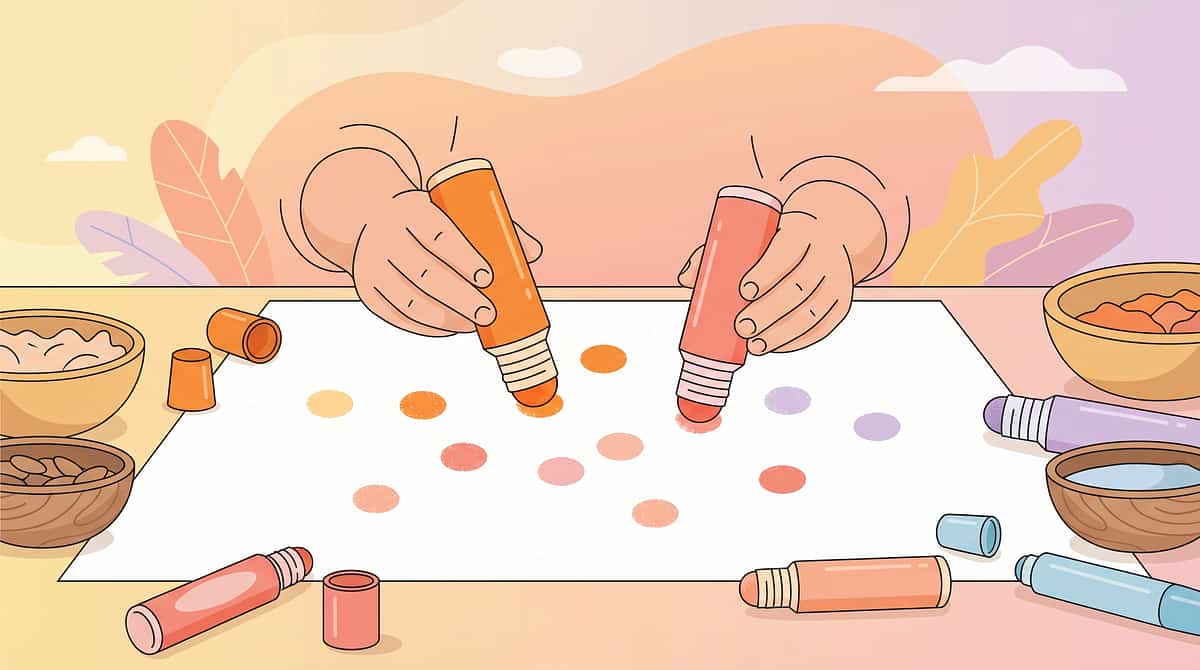
Material #8: Dot Markers — The Bridge Between Painting and Writing
Domain L: Fine Motor
Pre-Writing
Age 2–5
Daily 5–8 min
Dot markers, also known as bingo daubers, serve as an indispensable transitional tool in the journey from broad-stroke finger painting to the precise control required for pencil use. They offer a unique blend of sensory engagement and controlled motor practice, bridging the gap between free-form artistic expression and structured writing tasks. This makes them ideal for young children developing foundational pre-writing skills.
These engaging tools naturally foster the development of critical skills: controlled pressure, as children learn to apply just enough force for a clear dot; wrist stability for steady hand movements; visual targeting and hand-eye coordination as they aim for specific spots; and early color recognition. Crucially, dot markers teach the fundamental "lift and place" motion—the rhythmic up-and-down movement essential for forming individual letters and shaping pre-writing strokes.
Grip Progression & Controlled Movement
Using dot markers supports a natural grip progression vital for pencil readiness. Children often start with a fist grip, gradually transitioning to a palmar grip (whole hand holding the marker) and eventually moving towards a more refined digital grip, which closely mimics the tripod grip required for pencils. This progression strengthens the small muscles of the hand and promotes greater dexterity.
Structured Activities for Skill Building
Dot-to-Dot Patterns
Connect numbered or lettered dots to form shapes and pictures, enhancing sequencing and fine motor control.
Letter Outlines
Fill in large letter shapes by dotting inside the lines, introducing letter recognition and boundary awareness.
Number Stamping
Stamp the corresponding number of dots next to each numeral, reinforcing one-to-one correspondence.
Pattern Sequences
Create simple A-B-A-B or A-B-C patterns with different colored dots, promoting visual discrimination.
Free Art & Exploration
Encourage creative expression, allowing children to experiment with colors and dot patterns without strict rules.
Why dot markers are used in every Pinnacle OT session for ages 2–4
Dot markers naturally encourage the "lift and place" motion crucial for early letter formation, while simultaneously developing hand strength and visual motor skills in a fun, less demanding way than pencils.
Printable activity sheets featuring these ideas are readily available online, making dot markers a versatile and accessible tool for both home and therapeutic settings.
Brand: Pinnacle Blooms Consortium®
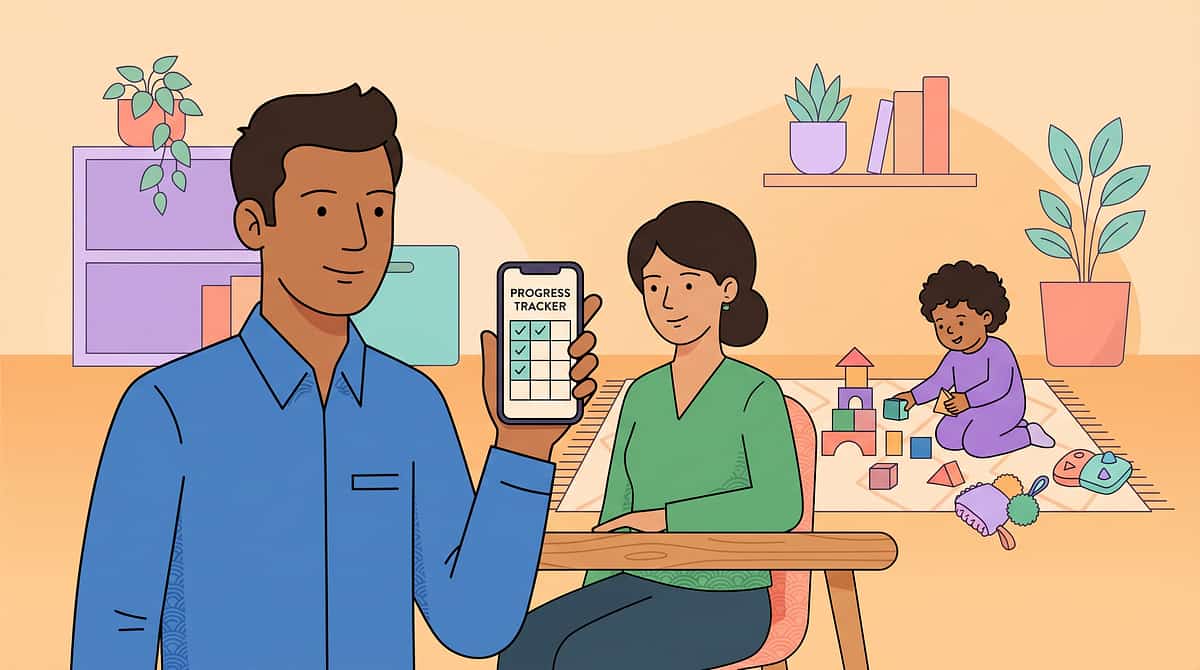
The 10-Minute Daily Protocol — Building Writing Readiness Without Overwhelm
Parent Protocol
Daily Routine
Age 2–7
OT-Designed
Building essential fine motor skills for writing doesn't require hours of dedicated effort. Our "10-Minute Daily Protocol" emphasizes consistency over intensity, proving that short, focused bursts of activity are far more effective than sporadic, longer sessions. Just 10 minutes a day can create remarkable progress.
This structured approach is designed to fit seamlessly into busy family routines, preventing burnout for both parents and children. It transforms critical skill-building into an engaging daily ritual, making learning fun and impactful.
Structured Daily Flow (10 Minutes)
Warm-up (2 min): Hand & Finger Preparation
Begin with activities that wake up the small muscles in the hands. Think therapy putty squeezing, playdough manipulation (rolling, squishing, pulling), or even simple hand stretches. This primes their hands for the core activity.
Core Activity (5 min): Targeted Skill-Building
This is the heart of the protocol. Each day, select one of the nine specialized fine motor materials. Focus on engaged interaction with the chosen material, encouraging purposeful movements relevant to writing readiness. Rotate through the materials to maintain novelty and develop a broad range of skills.
Cool-down (3 min): Low-Demand Sensory Engagement
End with a relaxing, less demanding activity. Finger painting (great for tactile input and large movements), water play, or using dot markers in a free-play style are perfect. This helps transition the child out of focused work while still engaging their hands.
The 10-Minute Rule
Research consistently shows that 10 minutes of targeted fine motor work daily produces measurable gains in fine motor control and writing readiness within 6–8 weeks. Consistency truly is key.
Weekly Material Rotation for Core Activity
Day | Core Activity Material |
Monday | Dot Markers & Activity Sheets |
Tuesday | Vertical Surface Drawing (Chalkboard/Whiteboard) |
Wednesday | Tweezer & Pom-Pom Transfers |
Thursday | Sticker Peeling & Placement |
Friday | Lacing Beads & Stringing Activities |
Saturday | Small Block Construction (LEGO, Duplo) |
Sunday | Child-Safe Scissor Cutting Activities |
Tips for Success
- Make it Play:
- Observe & Adapt:
- When Refusal Happens:
- Celebrate Efforts:
Brand: Pinnacle Blooms Consortium®

Sensory Considerations — When Touch Is the First Barrier
Sensory Integration
OT Specialty
Age 2–7
Clinical Guidance
Sensory Processing Disorder (SPD) impacts how the brain interprets sensory information, profoundly influencing a child's ability to engage with fine motor tasks, particularly writing. When a child struggles with pencil grasp, pressure, or endurance, it's often not a behavioral issue but a sensory one. Understanding a child's sensory profile is crucial for effective intervention and fostering writing readiness.
SPD can manifest in various ways, making seemingly simple tasks like holding a pencil or feeling paper textures a significant challenge. These neurological differences require tailored approaches to help children develop the foundational motor skills needed for academic success.
Sensory Profiles Affecting Writing Readiness
Tactile Defensive
Children with tactile defensiveness overreact to touch and textures. They may avoid messy play, resist holding certain writing tools, or dislike the feel of paper. This can lead to a very light, inconsistent pencil grip or an avoidance of writing tasks altogether.
Material Modification: Start with gloved hands for touch-based activities, gradually introducing different textures. Use weighted pencils or softer grips to provide calming sensory input. Consider writing on smooth surfaces initially.
Proprioceptive Seeking
These children crave deep pressure input and often press too hard, resulting in broken pencil tips, ripped paper, and quick fatigue. They may not feel their pencil's pressure, leading them to apply excessive force to register the sensation.
Material Modification: Use pencils with thicker lead, softer paper, or carbon paper underneath to provide immediate feedback on pressure. Encourage writing on vertical surfaces to utilize body weight. Theraputty activities before writing can provide needed input.
Low Registration
Children with low registration under-respond to sensory input. They may not feel the pencil in their hand or recognize how much pressure they're applying. This results in very light, faded writing that is barely legible, often appearing "lazy" or unfocused.
Material Modification: Use vibrating pens or pencils, textured grips, or pencils with increased vibration feedback. Writing on sandpaper or highly textured paper can increase sensory input. Weighted pens can also provide better awareness.
Addressing these sensory differences is paramount. It involves more than just modifying tools; it's about understanding the child's internal experience and creating an environment that supports their sensory needs, laying a stronger foundation for writing development.
The Neurological Difference
Sensory processing is not a behavior problem. It is a neurological difference that requires a neurological solution. Recognizing this shift in perspective is the first step towards effective support.
The Sensory Diet Concept
A "sensory diet" is a personalized plan of sensory activities designed to help a child regulate their responses to sensory input throughout the day. It's like a meal plan for the senses, providing the right amount and type of input to keep the nervous system organized. For writing readiness, a sensory diet can include:
- Regular movement breaks for proprioceptive input.
- Opportunities for deep pressure activities (e.g., weighted blankets, tight hugs) before fine motor tasks.
- Exposure to varied textures through play to desensitize or alert the tactile system.
- Using fidget tools or oral motor input (chewing gum, chewy snacks) to enhance focus and calm the system during sedentary tasks.
By proactively addressing sensory needs, children are better equipped to attend, focus, and motor plan, making the challenging task of learning to write significantly more manageable and enjoyable.
Brand: Pinnacle Blooms Consortium®

Red Flags — When to Seek Professional Help
Clinical Guidance
Early Intervention
All Ages
Urgent Action
Recognizing developmental delays early is paramount. If you observe any persistent difficulties in your child's fine motor skills or related behaviors, remember this: early intervention is always better than waiting. It unlocks a critical window of opportunity for effective support and improved outcomes, preventing smaller challenges from becoming significant hurdles later on.
Fine Motor Red Flags by Age
Observe if your child consistently cannot perform the following age-appropriate tasks:
Age | Cannot Do |
2 Years | Stack 3 small blocks, or scribble spontaneously. |
3 Years | Copy a simple circle, or use a spoon without significant spilling. |
4 Years | Copy a cross (+), or cut paper with child-safe scissors. |
5 Years | Copy a square shape, or draw a person with 3+ distinct body parts. |
6 Years | Write their own name (first name), or copy simple words. |
Behavioral Red Flags
- Extreme avoidance of all drawing, coloring, or manipulative activities.
- Frequent meltdowns or severe frustration specifically triggered by writing or fine motor tasks.
- Visible fatigue or hand pain after less than 5 minutes of focused hand use (e.g., coloring, cutting).
- Consistently switching hands for fine motor tasks after age 4, indicating unsettled hand dominance.
- Excessive drooling, messy eating, or difficulty with self-feeding tasks beyond typical developmental stages.
The "Wait and See" Myth
The common advice to "wait and see" if a child will grow out of developmental delays often leads to 12 to 18 months of lost critical development time. During these formative years, the brain is rapidly developing. Delaying intervention means missing crucial windows where the brain is most receptive to learning new motor patterns, making later remediation more challenging and less effective.
The Window of Neuroplasticity
Ages 2–7 are considered the most responsive years for fine motor intervention. During this period, the brain's neuroplasticity allows for significant rewiring and skill development with targeted support.
What to Do Next
If you notice several of these red flags, don't hesitate to seek professional guidance:
- Contact your pediatrician:
- Request an Occupational Therapy (OT) evaluation:
- Consider a developmental specialist:
Brand: Pinnacle Blooms Consortium®

The OT Assessment Process — What Happens in an Evaluation
OT Assessment
Clinical Process
Age 2–7
First Steps
Understanding your child's fine motor and writing readiness challenges begins with a comprehensive Occupational Therapy (OT) evaluation. This isn't just a checklist; it's a deep dive into how your child interacts with their environment, identifying specific areas where support can make the biggest difference. It's a collaborative process designed to create a personalized roadmap for success.
What an OT Evaluation Looks Like
An OT evaluation is typically a playful, interactive session where a trained therapist observes your child performing various tasks. It often takes place in a comfortable setting, allowing the child to feel at ease. The therapist uses a combination of structured activities, standardized tests, and informal observations to gather a holistic picture of your child's abilities and challenges.
Key Assessment Areas
Grip Strength & Hand Function
Assesses how well a child can grasp, manipulate objects, and sustain functional hand movements for tasks like writing, cutting, and self-care. This includes looking at pencil grip, bilateral coordination, and finger dexterity.
Visual-Motor Integration (VMI)
Evaluates the coordination between visual perception and motor skills, crucial for tasks like copying shapes, drawing, aligning letters on a line, and completing puzzles.
Sensory Processing
Identifies how a child registers, interprets, and responds to sensory input (touch, movement, body position, sound, sight), which impacts attention, behavior, and motor control. The therapist observes for over- or under-responsiveness.
Postural Stability & Core Strength
Examines the foundation for all fine motor tasks. Good trunk and shoulder stability are essential for precise hand movements. Weak core muscles can lead to fatigue and poor control during writing.
Developmental History & Parent Interview
A crucial component where the therapist gathers information about your child's medical history, developmental milestones, daily routines, and specific concerns from your perspective as a parent.
Common Standardized Assessments
OTs use specific, research-backed tools to objectively measure skills. These include the Beery-Buktenica Developmental Test of Visual-Motor Integration (Beery VMI) for VMI, the Bruininks-Oseretsky Test of Motor Proficiency (BOT-2) for a broad range of motor skills, and the Peabody Developmental Motor Scales (PDMS-2) for early motor development.
Understanding the Report
Following the evaluation, you'll receive a detailed report outlining findings, standardized scores, and treatment recommendations. Look for specific strengths, identified challenges, and measurable goals. Don't hesitate to ask your OT to clarify any terminology or explain how the findings relate to your child's daily life.
Preparing Your Child
To reduce anxiety, explain to your child that they will be playing games with a friendly person who wants to help them become stronger and better at drawing or writing. Avoid using words like "test." Encourage a good night's sleep and a healthy breakfast.
Questions to Ask Your OT
- What are my child's primary strengths and challenges?
- What are the proposed goals for therapy, and how will progress be measured?
- What activities can I do at home to support my child's development?
- How often will therapy occur, and for how long?
- What are the next steps if therapy is recommended?
The Neurological Map
An OT evaluation is not a judgment of your parenting. It is a map of your child's nervous system, providing insights to guide support.
Brand: Pinnacle Blooms Consortium®

Home Practice vs. Clinic — Getting the Balance Right
Parent Guidance
Home Program
OT Partnership
Age 2–7
For children developing fine motor skills, the journey to improvement is a partnership between professional guidance and daily life. Clinic sessions provide specialized, targeted intervention, but the true impact comes from integrating those strategies into your child's home environment. Understanding this balance is key to unlocking their full potential.
The Clinic-Home Continuum
Occupational therapy isn't a "fix-it-and-forget-it" solution. Think of it as a continuous loop: in the clinic, your child's OT introduces new skills and provides specific therapeutic activities designed to address their unique challenges. At home, you, as the parent, play a vital role in reinforcing these skills, generalizing them across various contexts, and making them a natural part of everyday activities. This consistent practice is where real, lasting change happens.
Your child's OT sees them 1–2 hours per week. You see them 70+ hours. You are the most powerful intervention.
Why Home Practice is Non-Negotiable
Clinical intervention, while crucial, only accounts for a small fraction of a child's week. Home practice isn't optional; it's approximately 80% of the effective intervention. During the critical neuroplasticity window (ages 2-7), frequent and consistent exposure to new motor patterns helps consolidate learning and build neural pathways. Without home reinforcement, progress can be slower, and skills may not generalize to real-world tasks.
Your Essential Roles: Observer, Facilitator, Encourager
It's important to understand that your role at home is NOT to be your child's therapist. Your key responsibilities are:
Observer
Notice how your child approaches tasks, what challenges them, and what strategies they naturally use. Share these insights with your OT.
Facilitator
Set up the environment with appropriate tools and materials (e.g., adaptive crayons, child-sized scissors). Integrate therapeutic activities into daily routines.
Encourager
Celebrate effort and small successes. Maintain a positive, playful approach to prevent frustration and build confidence.
Common Home Practice Pitfalls to Avoid
- Correcting Too Early: Resist the urge to immediately correct grip or form. Let them try and explore first, then offer gentle guidance.
- Forcing Practice: Avoid turning practice into a chore. Keep sessions short, fun, and child-led to prevent burnout or resistance.
- Comparing to Siblings/Peers: Every child develops at their own pace. Focus on your child's individual progress and celebrate their unique strengths.
- Ignoring the "Just Right Challenge": Activities should be stimulating enough to promote growth but not so difficult that they lead to constant failure. Collaborate with your OT to find this balance.
Clinic Session vs. Home Practice: A Comparison
Aspect | Clinic Session | Home Practice |
Frequency | 1-2 times per week | Daily, short bursts |
Duration | 45-60 minutes | 5-15 minutes (integrated) |
Goals | Introduce & master new skills | Reinforce & generalize skills |
Who Leads | Occupational Therapist | Parent (as facilitator) |
Environment | Therapeutic, structured | Natural, everyday settings |
By embracing your role in home practice, you empower your child to build foundational skills that will serve them throughout their development and beyond. It's a journey best traveled together, with Pinnacle Blooms Consortium® supporting every step.
Brand: Pinnacle Blooms Consortium®

Tracking Your Child's Progress — Milestones That Matter
Progress Monitoring
Parent Tool
OT Partnership
Age 2–7
Monitoring your child's fine motor progress isn't just about documenting development; it's a powerful tool for both parents and children. For you, it offers clear insights into which therapeutic strategies are effective, validating your efforts and providing direction. For your child, seeing their own improvement, however small, can be incredibly motivating, boosting their confidence and engagement in activities.
Key Domains to Observe
Grip Quality
Observe how your child holds pencils, crayons, and utensils. Are their fingers positioned efficiently? Is the grip too tight or too loose?
Endurance
How long can your child engage in a fine motor task before showing signs of fatigue, hand cramping, or disinterest? Track increases in sustained attention.
Precision
Note the accuracy of their movements. Can they cut along a line, place small beads, or draw shapes with controlled strokes?
Emotional Regulation
How does your child react to challenges? Monitor their frustration tolerance, persistence, and ability to self-calm during demanding tasks.
Documenting Progress
Consistent documentation helps visualize growth over time. Here are simple ways to keep track:
- Photos & Videos: Capture short clips or pictures of your child performing specific tasks (e.g., cutting, drawing, building blocks). Date them for easy comparison.
- Dated Work Samples: Keep a "portfolio" folder of your child's drawings, writing, or craft projects. Seeing the evolution of their skills on paper can be incredibly rewarding.
- Short Notes: Jot down observations after therapy sessions or home practice. Note any new skills, challenges, or breakthroughs.
The Journey of Growth
Progress in fine motor development is rarely linear. Plateaus are normal. Regression after illness or major life changes is normal. Keep going—your consistency makes a difference.
Fine Motor Milestone Markers: What Good Progress Looks Like
Use this table as a general guide. Your OT will provide specific goals tailored to your child.
Timeframe | Grip Quality | Endurance | Precision | Emotional Regulation |
4 Weeks | Slight improvement in finger isolation; less whole-hand gripping. | Can sustain tasks 1-2 minutes longer without frustration. | Attempts to color within larger boundaries; more controlled lines. | Shows mild frustration but recovers quickly with encouragement. |
8 Weeks | More consistent use of a functional, developing grasp (e.g., static tripod). | Able to complete a 5-10 minute fine motor activity. | Draws basic shapes more accurately; improved scissor control. | Attempts challenging tasks; uses simple problem-solving strategies. |
12 Weeks | Transitioning towards a dynamic tripod grip; less effortful hold. | Can work on fine motor tasks for 15+ minutes with minimal fatigue. | Copies more complex shapes; uses two hands for bilateral tasks. | Seeks help when stuck; demonstrates increased persistence. |
Brand: Pinnacle Blooms Consortium®

The Pinnacle FusionModule™ — Five Disciplines, One Child
Pinnacle FusionModule™
Interdisciplinary
Clinical Model
Age 2–7
Pinnacle Blooms Consortium® introduces the FusionModule™, our proprietary integrated therapy model designed to address the complex developmental needs of children. Unlike fragmented, single-discipline approaches, the FusionModule™ seamlessly combines the expertise of Occupational Therapy (OT), Speech-Language Pathology (SLP), Applied Behavior Analysis (ABA), Special Education (SpEd), and Neurodevelopmental Pediatrics. This holistic model recognizes that a child's development is interconnected, and true progress demands a unified strategy.
For children with complex developmental profiles, single-discipline therapy often falls short. Progress in one area can be hindered by challenges in another. The FusionModule™ ensures all facets of a child's development are nurtured simultaneously, fostering more robust and sustainable growth.
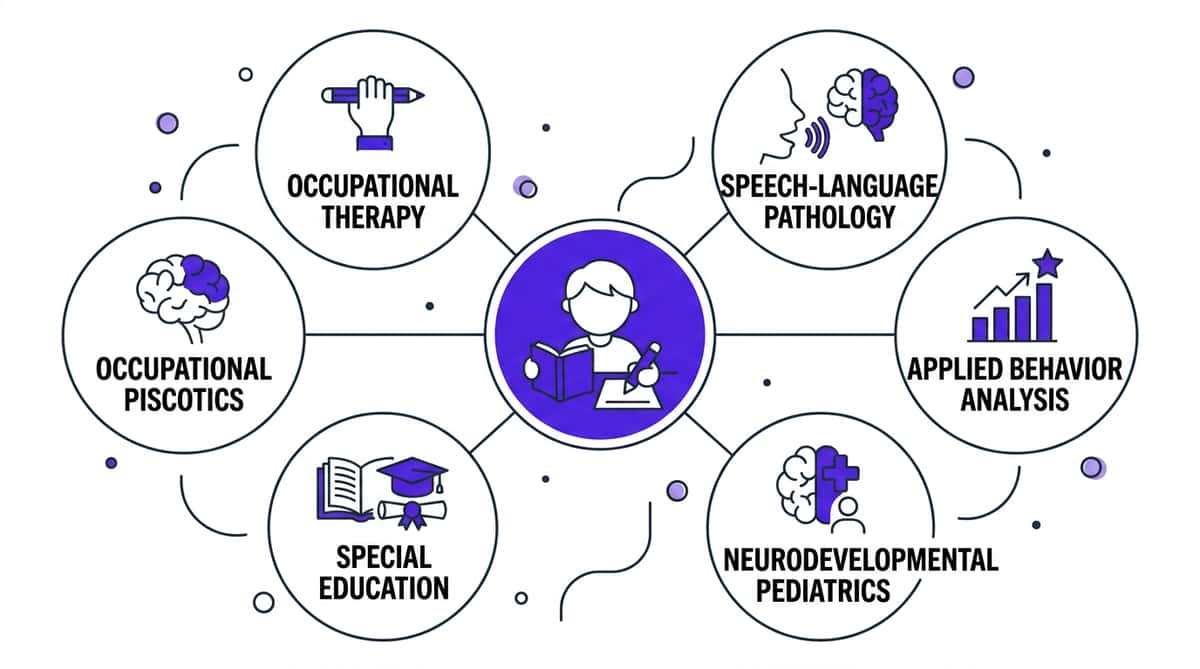
Consider writing readiness, a skill that exemplifies this interdisciplinary need:
- OT addresses hand function, sensory processing, and postural stability.
- SLP enhances oral motor skills, language processing, and phonological awareness (the crucial letter-sound connection).
- ABA provides motivation, supports task completion, and offers behavior support during writing tasks.
- SpEd tailors curriculum adaptation, aligns with IEP goals, and implements classroom accommodations.
- Neurodevelopmental Pediatrics offers medical oversight, medication review, and neurological assessment.
At the heart of our model is the FusionModule™ case conference, where our diverse team meets weekly to discuss each child's progress, adapt strategies, and ensure seamless integration of therapies. This collaborative approach leads to exceptional outcomes: children in the FusionModule™ program show 2.3x faster gains in writing readiness compared to those in single-discipline therapies.
The Writing Skill: More Than Just a Hand
Writing is not just a hand skill. It is a whole-brain, whole-body, whole-child skill.
Brand: Pinnacle Blooms Consortium®
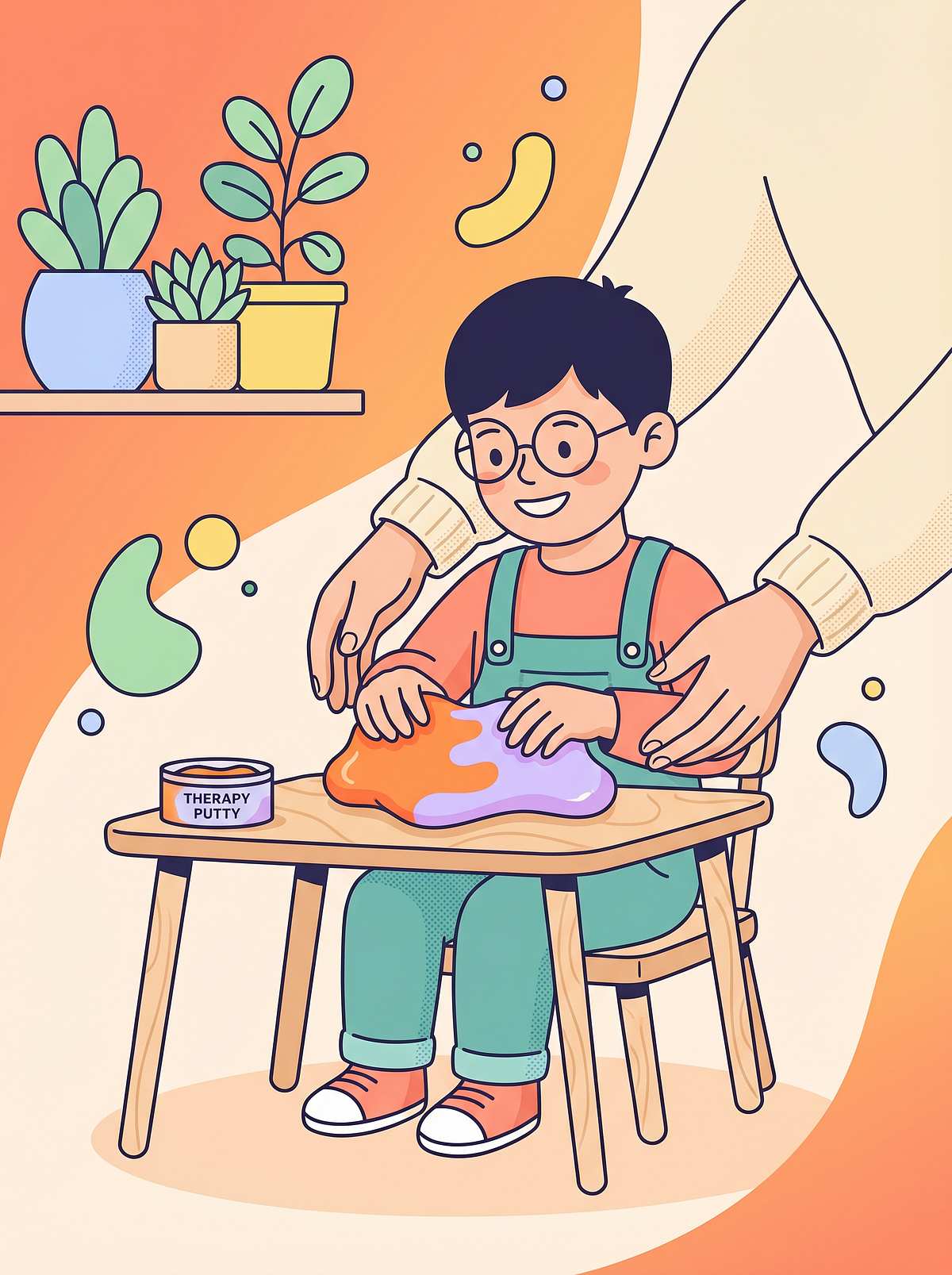
The Role of OT in Writing Readiness — What Your Occupational Therapist Actually Does
Occupational Therapy
Clinical Role
Writing Readiness
Age 2–7
Occupational Therapy (OT) plays a crucial, multifaceted role in preparing a child for successful writing. Beyond just holding a pencil, writing readiness involves a complex interplay of physical, sensory, and cognitive skills that an OT meticulously addresses. Our therapists at Pinnacle Blooms Consortium® are experts in identifying and supporting these foundational elements.
A Holistic Approach to Writing Foundations
An OT's scope in writing readiness is broad, encompassing several critical developmental areas:
- Hand Strength & Dexterity: Developing the small muscles in the hand and fingers essential for manipulating writing tools.
- Grip Development: Fostering an efficient pencil grasp that minimizes fatigue and maximizes control.
- Sensory Integration: Ensuring the child can process sensory input (touch, pressure, proprioception) from their hands, impacting motor control and body awareness.
- Postural Control: Establishing a stable core and shoulder girdle from which fine motor movements can emanate.
- Visual-Motor Integration: Coordinating visual information with motor actions, critical for tasks like copying shapes, staying within lines, and spacing letters.
Three Levels of OT Intervention
Prevention
Early intervention to build foundational skills, often before specific difficulties arise, promoting healthy development.
Remediation
Targeted strategies to address existing deficits, helping children overcome specific challenges in fine motor or sensory processing.
Compensation
Teaching adaptive techniques or recommending modifications (e.g., pencil grips) to bypass persistent challenges and ensure participation.
Techniques and Goals in Action
OT sessions incorporate evidence-based techniques such as Handwriting Without Tears (HWT) for a multi-sensory approach to letter formation, sensory integration therapy to regulate responses to sensory input, and focused exercises for constraint-induced movement therapy or even kinesiotaping to support muscle function. A typical session might include warm-up activities, gross motor play to build core strength, specific fine motor tasks like beading or cutting, and focused writing practice.
OT goals are crafted as SMART goals (Specific, Measurable, Achievable, Relevant, Time-bound). For example: "By 12 weeks, the child will maintain a dynamic tripod grasp for 10 minutes during writing tasks, with no more than 2 verbal prompts, across 3 consecutive sessions."
OT Across Environments
The OT's role adapts to the environment:
- Clinic: Intensive, individualized therapy with specialized equipment.
- School: Integrating strategies into the classroom, collaborating with teachers to support academic tasks.
- Home: Empowering parents with practical strategies for daily routines and play to reinforce skills.
OT: Neuroscience Applied to Function
OT is not tutoring. OT is not babysitting. OT is neuroscience applied to daily function, expertly guiding your child towards independence in meaningful activities.
Brand: Pinnacle Blooms Consortium®

The Role of SLP in Writing Readiness — The Language-to-Letter Connection
Speech-Language Pathology
Phonological Awareness
Writing Readiness
Age 2–7
Speech-Language Pathology (SLP) plays a surprisingly fundamental role in preparing a child for successful writing, far beyond simply correcting speech sounds. The ability to communicate verbally lays the groundwork for written expression. At Pinnacle Blooms Consortium®, our SLPs bridge the gap between spoken language and emergent literacy, recognizing that a strong oral language foundation is indispensable for writing readiness.
Central to this connection is phonological awareness — the ability to hear, identify, and manipulate individual sounds (phonemes) in spoken words. This critical skill is consistently identified as the #1 predictor of both reading and writing success. If a child cannot distinguish the sounds in words orally, transferring those sounds to letters on a page becomes an insurmountable challenge.
SLP's Core Contributions to Writing Readiness
Oral Motor Development
The intricate muscles used for speaking, chewing, and swallowing (oral motor skills) share neurological pathways with the fine motor control needed for writing. Our SLPs address muscle strength and coordination, which can indirectly enhance hand dexterity and pencil grasp.
Phonological Awareness Training
Through engaging activities like rhyming, segmenting words into sounds (e.g., "c-a-t"), and blending sounds to form words, SLPs build the auditory foundation crucial for spelling, decoding, and fluent writing.
Vocabulary & Language Comprehension
A rich vocabulary and strong language comprehension are vital. Children cannot effectively write what they cannot understand or express verbally. SLPs expand children's lexicon and improve their understanding of complex sentences, which translates directly to richer written expression.
Narrative Structure
Understanding how stories are organized (beginning, middle, end, characters, plot) is a precursor to constructing coherent written narratives and essays. SLPs work on developing these narrative skills, which improve sentence formation and text organization.
Augmentative Communication
For non-verbal children, SLPs facilitate writing readiness through Augmentative and Alternative Communication (AAC) systems. These tools provide a means for expression, allowing children to participate in writing tasks and develop literacy skills.
The Collaborative Edge: SLP & OT
In the FusionModule™, SLPs and OTs work hand-in-hand. While the OT focuses on the physical mechanics of writing (hand strength, grasp), the SLP ensures the child has the linguistic foundation to put meaningful words onto paper. This integrated approach addresses both the 'how' and the 'what' of writing, creating a seamless pathway to literacy. Our therapists collaborate on activities that simultaneously target oral motor skills and fine motor tasks, maximizing therapeutic impact.
The Language-Literacy Connection
A child who cannot hear the sounds in 'cat' cannot write the letters in 'cat'. Language comes before literacy.
Brand: Pinnacle Blooms Consortium®
The Role of ABA in Writing Readiness — Building the Will to Write
Applied Behavior Analysis
Motivation
Task Analysis
Age 2–7
Applied Behavior Analysis (ABA) brings a unique and powerful perspective to writing readiness, focusing not just on the physical act of writing, but on the motivation and behavioral foundations necessary for success. At Pinnacle Blooms Consortium®, our ABA therapists employ data-driven strategies to cultivate a child's "will to write," ensuring they are engaged, persistent, and successful in learning complex tasks. ABA excels at breaking down challenging skills, building positive associations with learning, and providing robust support for behavioral obstacles.
Core ABA Strategies for Writing Readiness
Task Analysis
Writing a name seems simple, but ABA breaks it into granular steps—from holding the pencil correctly, forming individual letters, to spacing and staying on the line. This meticulous breakdown allows for precise teaching and measurement of progress.
Errorless Learning
We proactively set up the environment for success. Before a child can make a mistake, we provide prompts and support, gradually fading them as mastery develops. This builds confidence and prevents frustration, fostering a positive learning experience.
Differential Reinforcement
Effort and approximations are celebrated, not just perfect outcomes. By reinforcing even small steps toward the goal, we keep children motivated and engaged, nurturing persistence even when tasks are challenging.
Escape Extinction
When avoidance behaviors arise (like refusing to pick up a pencil), ABA therapists systematically address these. We teach alternative, appropriate ways to communicate needs, preventing the child from escaping the task, thus building tolerance and engagement.
ABA also tackles the common "I can't" response by distinguishing between learned helplessness and a genuine skill deficit. Through precise data collection, we objectively measure progress, ensuring interventions are effective and adaptive. This rigorous system means every step forward is quantified, allowing for transparent progress tracking and goal achievement. It’s a common misconception that ABA is only for behavior problems; in reality, it's a powerful tool for teaching any skill, including the intricate steps of writing.
ABA: Bridging the Gap
The child who says 'I can't' may be telling you 'I haven't been taught how yet.' ABA builds the bridge from perceived inability to confident competence.
Brand: Pinnacle Blooms Consortium®

The Role of Special Education in Writing Readiness — From Therapy to Classroom
Special Education
IEP
Classroom Accommodations
Age 3–7
The Special Educator serves as the critical bridge between the specialized therapies and the daily academic environment. While therapists (OT, SLP, ABA) focus on foundational skill development, the SpEd specialist ensures these skills are integrated and applied effectively within the curriculum. Their unique role is to adapt the learning environment and curriculum, enabling children to access education and demonstrate their knowledge, paving the way for writing independence.
5 Key SpEd Contributions to Writing Readiness
Individualized Education Program (IEP) Goal Writing
SpEd specialists are adept at crafting specific, measurable, achievable, relevant, and time-bound (SMART) IEP goals that target a child's unique writing readiness needs. For example, an IEP goal might be: "By the end of the instructional period, given verbal and visual prompts, [student's name] will correctly hold a pencil with a tripod grasp for 5 minutes during writing tasks in 4 out of 5 observed opportunities."
Classroom Accommodation Design
Identifying and implementing effective accommodations is central to the SpEd role. This includes recommending and integrating tools such as slant boards to improve posture and wrist extension, ergonomic pencil grips, adapted paper with raised lines or bold baselines, and sensory seating to enhance focus during writing tasks.
Curriculum Modification & Differentiation
Special Educators modify the academic curriculum to reduce the physical demands of writing while still fostering literacy. This might involve allowing dictated responses, using word processors, providing pre-written sentence starters, or focusing on expressive content over mechanical perfection during the initial stages of skill building.
Teacher Training and Consultation
A crucial aspect of SpEd's work is empowering general education teachers. This involves providing training on how to use adaptive tools, implement writing strategies, manage behavioral challenges during academic tasks, and understand the specific needs and IEP goals of children with diverse learning profiles.
Transition Planning & Support
SpEd specialists facilitate smooth transitions for children moving between educational stages, particularly from preschool to kindergarten. They ensure that new teachers are aware of a child's writing readiness levels, established accommodations, and successful strategies, promoting continuity in support and academic progress.
Understanding Accommodations vs. Modifications
It's vital for parents and educators to distinguish between accommodations and modifications. Accommodations are changes to how a child learns or demonstrates learning (e.g., using a laptop instead of handwriting) but do not change what is being taught or the learning expectations. Modifications alter what a child is taught or expected to learn (e.g., reducing the number of essay questions). Both are crucial, but understanding their differences ensures appropriate support that maintains academic rigor while fostering success.
The Power of Accommodations
An accommodation does not lower the bar. It levels the playing field, providing equitable access to education for every child.
Collaborative Synergy in the FusionModule™
In the Pinnacle Blooms Consortium® FusionModule™, the Special Educator works hand-in-hand with OT, SLP, and ABA therapists. While the OT addresses fine motor control for writing, the SLP builds the linguistic foundation, and ABA ensures motivation and task adherence. The SpEd specialist synthesizes these efforts, ensuring that therapy gains translate into functional academic skills in the classroom. This integrated approach ensures a holistic development, addressing every facet of writing readiness.
Legal Framework: Rights of Persons with Disabilities Act 2016 (India)
In India, the Rights of Persons with Disabilities Act 2016 (RPwD Act) mandates inclusive education and reasonable accommodations for children with disabilities. This Act empowers parents to advocate for necessary supports, including those related to writing readiness, ensuring that schools provide an environment where every child can thrive. Special Educators play a key role in interpreting and implementing these legal provisions, ensuring compliance and advocating for the child's rights to an accessible and equitable education.
Brand: Pinnacle Blooms Consortium®

Frequently Asked Questions — What Parents Ask Most
FAQ
Parent Questions
All Ages
Practical Guidance
Navigating your child's developmental journey can bring many questions, especially concerning crucial skills like writing readiness. Here are answers to some of the most common concerns parents share with Pinnacle Blooms Consortium®.
My child is 4 and still can't hold a crayon properly. Is this autism?
Difficulty holding a crayon at age 4 is often a sign of underdeveloped fine motor skills, not necessarily autism. While some children with autism may have fine motor challenges, many neurotypical children also experience these delays. A comprehensive assessment by a Special Educator or Occupational Therapist (OT) can pinpoint the exact cause and guide appropriate interventions.
How long will it take before I see improvement?
The timeline for improvement varies greatly for each child, depending on the severity of the delay, consistency of intervention, and individual learning pace. Some children show progress within weeks, while others might take several months. Our specialists at Pinnacle Blooms Consortium® will work with you to set realistic goals and track progress, ensuring every small step is celebrated.
My child's school says they're fine. Should I still seek OT?
School assessments might focus on academic benchmarks, which may not always capture subtle fine motor difficulties. If you have persistent concerns, it's always advisable to seek an independent evaluation from a qualified Occupational Therapist. Early intervention is key, and a specialist can provide a detailed analysis of your child's specific needs, even if they're "fine" at school.
Can I do this at home without a therapist?
While structured therapy from professionals is highly recommended for significant delays, parents can absolutely support writing readiness at home. Simple activities like playing with playdough, using child-safe scissors, stringing beads, or doing puzzles can strengthen hand muscles and coordination. Our tele-therapy and community models empower parents with tailored exercises and guidance for home-based support.
My child hates all these activities. What do I do?
It's crucial to make learning fun and engaging! Incorporate activities into play, use positive reinforcement, and offer choices. If your child resists, try different approaches, materials, or even a different time of day. Our ABA therapists are experts at identifying motivators and designing interventions that make tasks more enjoyable and build compliance.
Is there a difference between fine motor delay and dysgraphia?
Yes, there is a distinction. Fine motor delay refers to a general difficulty with small muscle movements, which can impact writing. Dysgraphia, however, is a specific learning disability affecting writing abilities, often characterized by illegible handwriting, inconsistent spacing, and difficulty organizing thoughts on paper, even when fine motor skills are adequate. An evaluation can determine the precise diagnosis.
My child uses their left hand. Does that change anything?
Left-handedness is a natural variation and should not be a cause for concern. Many left-handed children simply need specific adjustments, such as proper paper positioning, pencil grip, and seating, to ensure comfort and efficiency in writing. Our therapists are skilled in guiding both left- and right-handed children to develop optimal writing techniques.
We've been doing therapy for 6 months and I see no progress. What's wrong?
Lack of observable progress can be disheartening, but it doesn't necessarily mean something is "wrong." It's an opportunity to re-evaluate the approach. This could involve adjusting the therapy plan, exploring different techniques, increasing frequency, or re-assessing underlying factors. Regular communication with your therapy team at Pinnacle Blooms Consortium® is vital to discuss concerns and make necessary modifications.
At what age is it too late to intervene?
While early intervention is highly beneficial, it's never truly "too late" to provide support for writing readiness or other developmental skills. Children's brains are remarkably plastic, and with consistent and appropriate interventions, significant progress can be made at any age. The focus shifts from early development to compensatory strategies and skill building for functional independence.
How do I talk to my child's teacher about this?
Approach the conversation collaboratively. Start by sharing your observations and concerns, then explain the recommendations from any specialists your child is seeing. Provide the teacher with concrete strategies or accommodations suggested by your therapists. Our Special Educators can also help you advocate effectively, ensuring a cohesive support system between home and school.

Success Stories — Real Families, Real Progress
Success Stories
Real Outcomes
Families
Inspiration
At Pinnacle Blooms Consortium®, we celebrate every milestone. These stories highlight the transformative journeys of children and families, demonstrating how personalized intervention can unlock potential and foster incredible growth.
Arjun, Age 4, Hyderabad
Presenting: Difficulty holding crayons, tearing paper out of frustration, and complete refusal of drawing activities.
Diagnosis: Sensory Processing Disorder with significant fine motor delay.
Intervention: A 12-week intensive program combining Occupational Therapy (OT) and Applied Behavior Analysis (ABA), supplemented by a structured home program focusing on therapy putty exercises and drawing on vertical surfaces.
Outcome: Arjun is now confidently writing his name, actively participates in classroom art activities, and has shown a remarkable reduction in frustration-induced meltdowns.
Priya, Age 5, Mumbai
Presenting: Extremely light pencil pressure, rendering her writing nearly invisible, diagnosed as low registration in proprioception.
Intervention: An 8-week Occupational Therapy program utilizing weighted pencils, textured paper for sensory feedback, and various proprioceptive activities to improve body awareness and muscle control.
Outcome: Priya now exhibits legible writing with appropriate pressure and an improved pencil grip, successfully starting kindergarten with age-appropriate writing skills.
Rohan, Age 6, Delhi
Presenting: Diagnosed with Autism and severe fine motor delay, non-verbal, and showed no interest in writing tools or pre-writing tasks.
Intervention: A 16-week comprehensive FusionModule™ program, integrating Occupational Therapy, Speech-Language Pathology (SLP), Applied Behavior Analysis (ABA), and Special Education (SpEd) for a holistic approach.
Outcome: Rohan is now effectively using an Augmentative and Alternative Communication (AAC) device to express himself, has begun tracing letters, and actively engages in classroom activities, demonstrating significant progress in both communication and fine motor skills.
These are real outcomes achieved through dedicated effort and expert guidance. Names have been changed to protect privacy. Individual results may vary based on the child's unique needs and the consistency of intervention.

The Morning Routine — Embedding Writing Readiness Into Daily Life
Daily Routine
Stealth Therapy
Parent Strategy
Age 2–7
At Pinnacle Blooms Consortium®, we believe that therapy doesn't always have to "look" like therapy. Integrating fine motor skill development seamlessly into your child's daily routine can be incredibly effective and less stressful for everyone. This approach transforms mundane tasks into powerful opportunities for growth, fostering independence and building crucial writing readiness skills.
Here’s how you can weave essential fine motor activities into a typical morning, turning everyday moments into therapeutic gains:
6:30 AM: Wake Up
Begin with proprioceptive input: a few minutes under a heavy blanket or a full-body stretch to help with body awareness and regulation, preparing muscles for activity.
6:45 AM: Breakfast
Encourage self-feeding using a spoon and fork. This builds bilateral coordination, grip strength, and control—all vital for holding a pencil.
7:00 AM: Dressing
Buttons, zippers, and shoelaces are excellent fine motor challenges. These tasks enhance finger dexterity, hand-eye coordination, and problem-solving skills.
7:15 AM: Brushing Teeth
Focus on grip, pressure modulation, and rhythmic movements. Consider a timer for duration and a visual cue for proper technique.
7:20 AM: Putty Warm-Up
A quick 5-minute session with therapy putty to warm up hand muscles before heading out. Squeezing, pinching, and rolling prime the hands for the day's tasks.
7:30 AM: Packing Bag
Opening and closing zippers, organizing books, and placing items in specific pockets improve dexterity, planning, and bilateral coordination.
8:00 AM: Travel Time
In the car or bus, engage in finger games, hand exercises, or even light tracing activities if conditions allow. These keep fine motor muscles engaged and ready.
This "stealth therapy" approach empowers parents to integrate therapeutic activities into the natural rhythm of family life, making skill development a fun and consistent part of every day. By turning routine tasks into purposeful practice, you reinforce learning and build confidence without your child even realizing they're "doing therapy."
The most powerful therapy happens at the breakfast table, not just in the clinic.
The Science of Grip — Understanding Pencil Grasp Development
Pencil Grip
Fine Motor Science
OT Knowledge
Age 2–7
At Pinnacle Blooms Consortium®, we delve into the intricate science behind every developmental milestone, including the seemingly simple act of holding a pencil. Understanding the natural progression of pencil grip is crucial for fostering handwriting readiness and preventing future difficulties. It's not about forcing an "ideal" grip, but rather guiding children towards a functional one.
The 5 Stages of Pencil Grip Development
1. Palmar-Supinate Grasp
(Age 1–1.5)
(Age 1–1.5)
The pencil is held in a fisted hand, with the arm moving as a single unit from the shoulder. This early stage is reflexive and foundational, focusing on whole-arm movement.
2. Digital-Pronate Grasp
(Age 2–3)
(Age 2–3)
Fingers begin to wrap around the pencil, often pointing downwards, with the wrist pronated (palm facing down). Movement still largely comes from the elbow and shoulder, but finger involvement increases.
3. Static Tripod Grasp
(Age 3.5–4)
(Age 3.5–4)
The pencil is held with three fingers (thumb, index, and middle) in a tripod formation. While the grip is established, movement primarily comes from the wrist and forearm, with minimal finger movement during writing.
4. Dynamic Tripod Grasp
(Age 4.5–6)
(Age 4.5–6)
This is the typically desired "functional" grip. The pencil is held with three fingers, but now fine movements emanate from the fingers themselves. This allows for increased speed, precision, and endurance in writing.
5. Lateral Tripod/Quadrupod
(Age 6+)
(Age 6+)
Functional variations often emerge. A lateral tripod involves the thumb tucked against the side of the index finger. A quadrupod uses four fingers. Both are considered functional if they allow for legibility, speed, and endurance.
Forcing a child into a "correct" grip before they've developed the underlying motor skills can be counterproductive. It can lead to frustration, muscle fatigue, and a lifelong aversion to writing. Instead, focusing on the building blocks of a functional grip is key.
Components of a Functional Grip
- Stability: A strong base of support from the hand arch and forearm.
- Mobility: The ability for fingers to move freely and independently for precise control.
- Arch Support: The natural curve of the hand that allows for efficient manipulation of tools.
Common Dysfunctional Grips & Their Indicators
Observing how a child holds a pencil can offer insights into underlying motor challenges:
- Thumb Wrap: Often indicates weak intrinsic hand muscles, leading the thumb to compensate by wrapping around the pencil.
- Fisted Grip (beyond age 2): Can suggest sensory-seeking behavior for increased proprioceptive input or low muscle tone in the hand and forearm.
- Lateral Pinch: Holding the pencil with the side of the index finger and thumb, rather than pads, may point to poor finger isolation.
Adaptive Tools & Strategies
For children struggling to achieve a functional grip, various adaptive tools can provide support:
- Pencil Grips: Ergonomically designed grips encourage proper finger placement.
- Triangular Pencils: Their shape naturally guides fingers into a more functional position.
- Weighted Pencils: Provide increased proprioceptive input, helpful for children with low registration or tremors.
There is no single 'correct' grip. There is a functional grip — one that allows speed, legibility, and endurance.

Pre-Writing Strokes — The 8 Lines That Predict Handwriting Success
Pre-Writing Strokes
Letter Formation
OT Protocol
Age 2–5
At Pinnacle Blooms Consortium®, we recognize that fluent handwriting isn't just about tracing letters; it's built upon a foundation of fundamental shapes known as pre-writing strokes. These seemingly simple lines and curves are the essential building blocks for every single letter in the alphabet, both uppercase and lowercase. Mastering them developmentally paves the way for legible, efficient, and enjoyable writing.
When children struggle with forming basic strokes, letter formation becomes a challenging and often frustrating task. Each stroke refines different motor skills, hand-eye coordination, and visual-spatial perception critical for writing readiness. Neglecting these early steps can lead to poor pencil control, slow writing speed, and an aversion to written communication later on.
The 8 Essential Pre-Writing Strokes
Vertical Line
(Age 2)
(Age 2)
The first foundational stroke. Essential for letters like I, L, T, H. Practice by drawing rain, tall trees, or stripes. This develops controlled up-and-down movement.
Horizontal Line
(Age 2.5)
(Age 2.5)
Introduces left-to-right movement. Critical for letters such as F, E, T, H. Activities include drawing roads, fences, or the top of tables. Focus on straight, even lines.
Circle
(Age 3)
(Age 3)
The first curvilinear stroke, requiring continuous motor control. Found in O, C, G, Q, D, P. Encourage drawing suns, bubbles, or faces. This also enhances hand dominance.
Cross / Plus (+)
(Age 3.5)
(Age 3.5)
Combines vertical and horizontal lines, teaching intersection. Important for T, X. Practice by drawing plus signs or marking an 'X' on a map. Reinforces starting and stopping.
Right Diagonal Line
(Age 4)
(Age 4)
Introduces slanted lines (top-right to bottom-left). Key for A, K, M, N, V, W, X, Z. Draw slides, roofs, or mountain peaks. Builds visual perception of angles.
Square
(Age 4.5)
(Age 4.5)
Combines multiple vertical and horizontal lines with controlled turns. Develops the ability to form closed shapes, crucial for many letters. Practice drawing windows or blocks.
Left Diagonal Line
(Age 4.5)
(Age 4.5)
The opposite slanted line (top-left to bottom-right). Also vital for A, K, M, N, V, W, X, Z. Drawing the other side of a roof or a ramp reinforces diagonal control.
Triangle
(Age 5)
(Age 5)
Combines all three types of lines (vertical, horizontal, diagonal) to form a complex closed shape. Essential for letters like A, M, N. Encourage drawing pyramids or slices of pizza.
Engaging children in playful activities is the best way to practice these strokes. Techniques like "sky writing" – where children make large arm movements in the air, mimicking the stroke before attempting it on paper – are highly effective. This builds gross motor memory which then translates to finer motor control with a pencil. Other fun activities include tracing in sand, drawing with chalk on pavement, or using finger paints.
Every letter in the alphabet is made from combinations of these 8 strokes. Master the strokes, master the letters.

Postural Foundations — Why Your Child's Core Strength Affects Their Handwriting
Postural Stability
Core Strength
OT Foundation
Age 2–7
At Pinnacle Blooms Consortium®, we understand that fluent, legible handwriting begins not with the fingers, but with the core. The proximal-to-distal principle in development means that children gain control over their trunk and shoulders before they master the fine movements of their wrists and fingers. If a child’s core is unstable, their body will compensate, making precise hand movements difficult.
Imagine trying to write while sitting on a wobbly stool. Just as an unstable base affects your balance, a child who slumps at the desk lacks the foundational support needed for good writing. This biomechanical chain dictates that stability must come from the center outwards—from core to shoulder, then to elbow, wrist, and finally, to the fingers. Without a stable trunk and shoulder girdle, the hands and fingers cannot achieve the isolated, controlled movements necessary for efficient letter formation.
The 4 Postural Foundations for Writing
Core Stability
Strong trunk muscles provide the anchor for all arm and hand movements, preventing slouching and promoting an upright posture.
Shoulder Girdle Stability
A stable shoulder allows the arm to move freely and precisely, ensuring controlled reach and placement of the hand on the paper.
Elbow Stability & Forearm Rotation
The elbow acts as a pivot, supporting the forearm's ability to rotate for writing curves and circles, essential for letter formation.
Wrist Extension & Stability
A slightly extended, stable wrist allows the fingers to move with maximum dexterity and endurance, preventing fatigue.
Signs of Poor Postural Stability During Writing
Head on Arm or Desk: Indicating muscle fatigue and lack of endurance.
Leaning Excessively on the Table: Seeking external support due to insufficient core strength.
Feet Dangling: Lack of a stable base for the lower body, affecting overall balance and trunk engagement.
Frequent Position Changes/Fidgeting: Inability to maintain a comfortable, stable position for prolonged periods.
Building Postural Stability: Practical Exercises
Incorporating playful activities into a child's routine can significantly improve their core and shoulder strength, laying the groundwork for better handwriting:
- Animal Walks: Bear crawls, crab walks, and army crawls engage major muscle groups.
- Wall Push-Ups: Strengthen shoulders and arms in a modified push-up position.
- Wheelbarrow Walking: Excellent for developing shoulder and core stability, as well as bilateral coordination.
- Prone on Elbows Activities: Lying on the stomach and propping up on elbows while reading or playing a tablet strengthens back and neck extensors.
Optimal Seating Recommendations
Ensure proper seating to support postural stability: feet flat on the floor (or on a footrest if needed), hips at a 90-degree angle, and the table height at elbow level when the child's forearms are resting comfortably.
You cannot build a house from the roof down. You cannot build handwriting from the fingers up.

Visual-Motor Integration — When the Eyes and Hands Don't Talk to Each Other
Visual-Motor Integration
VMI
OT Assessment
Age 3–7
At Pinnacle Blooms Consortium®, we recognize that effective learning, especially in early literacy, hinges on a crucial skill: Visual-Motor Integration (VMI). VMI is the brain's ability to coordinate visual information with motor output—essentially, how well your eyes tell your hands what to do. It’s a foundational skill for everything from writing to daily tasks.
For writing, VMI is non-negotiable. It enables children to copy from a whiteboard, stay within lines, space letters correctly, and even read their own handwriting. Without solid VMI, the act of forming letters becomes a constant struggle, impacting both legibility and efficiency.
The Three Pillars of VMI
Visual Perception
The ability to see and interpret visual information accurately.
Motor Execution
The dexterity and control needed for precise hand and arm movements.
Integration
The brain's seamless connection between what is seen and how the body responds.
Recognizing VMI Difficulties
Parents and educators often notice specific signs:
- Reversing letters or numbers (e.g., "b" for "d", "p" for "q")
- Poor spacing between letters and words, or difficulty staying on lines
- Struggling to copy shapes, drawings, or text from a board or book
- Inconsistent letter size and formation
- Difficulty drawing something accurately, even if they can clearly see it
The Beery-Buktenica Developmental Test of Visual-Motor Integration (Beery VMI) is a widely used assessment that measures these abilities through copying geometric shapes. Scores help identify specific areas of need and guide intervention strategies.
A child with poor VMI sees the letter correctly but cannot tell their hand what to do. This is not a vision problem. It is a brain integration problem.
Activities to Enhance VMI
Engaging activities can significantly strengthen VMI skills:
Mazes & Dot-to-Dot
Develop visual tracking, planning, and precise pencil control.
Copying Block Designs
Improves spatial awareness and the ability to reproduce visual patterns.
Tracing Activities
Builds hand-eye coordination and muscle memory for letter strokes.
Bead Stringing/Patterning
Refines fine motor control and visual discrimination for sequences.
Puzzles
Enhances visual perception, problem-solving, and spatial reasoning.

Bilateral Coordination — Teaching Both Hands to Work as a Team
Bilateral Coordination
Midline Crossing
OT Foundation
Age 2–7
At Pinnacle Blooms Consortium®, we understand that seamless handwriting emerges from a symphony of motor skills. A key player in this symphony is Bilateral Coordination — the remarkable ability to use both sides of the body together in a smooth, integrated, and effective way. This fundamental skill is not just for complex movements; it's critical for everyday tasks, especially when it comes to early literacy and writing.
For children learning to write, bilateral coordination is non-negotiable. It's what allows the non-dominant hand to stabilize the paper and adjust its position, while the dominant hand focuses on forming letters with precision and control. Without this teamwork, writing becomes a cumbersome, two-handed battle instead of a fluid, purposeful act.
The Three Pillars of Bilateral Coordination
Bilateral coordination can be categorized into three distinct types, each essential for various activities, with asymmetrical coordination being paramount for writing development:
Symmetrical Actions
Both hands perform the same movement simultaneously, like clapping hands, rolling dough with a rolling pin, or pushing a swing.
Alternating Actions
Hands move in opposition or sequence, such as marching, climbing stairs, or pedaling a bicycle. This requires rhythmic timing.
Asymmetrical Actions
Each hand performs a different, yet complementary, action. This is the most advanced form, crucial for tasks like cutting with scissors (one hand stabilizes, the other cuts) or, critically, writing (one hand writes, the other holds and positions the paper).
It's this asymmetrical bilateral coordination that directly impacts a child's ability to engage in academic tasks requiring fine motor control and sustained attention. When the hands can efficiently work together, the brain can focus on the cognitive aspects of learning.
Recognizing Challenges in Bilateral Coordination
Parents and educators might observe several indicators that a child is struggling with bilateral coordination:
- Difficulty cutting along lines or using scissors effectively.
- Inability to stabilize paper with one hand while writing or drawing with the other.
- Avoiding activities that require crossing the body's midline (e.g., reaching across for an object).
- Poor hand-eye coordination in sports, such as catching or throwing a ball.
- Clumsiness or awkward movements during tasks requiring both hands.
The concept of midline crossing is particularly important here. The imaginary line dividing the body into left and right halves. When a child struggles to cross this midline, it can signal underdeveloped neural pathways between the brain's hemispheres, impacting learning and motor tasks.
Engaging Activities to Strengthen Bilateral Coordination
Simple, playful activities can significantly bolster a child's bilateral coordination, paving the way for improved writing and overall motor skills:

Lacing & Stringing Beads
Requires precise coordination for feeding the lace and manipulating small objects, enhancing fine motor teamwork.

Cutting with Scissors
The quintessential asymmetrical task: one hand controls the paper, the other manages the cutting action.
Building with LEGOs/Blocks
Requires stabilizing a base while attaching pieces, promoting coordination and spatial reasoning.
Clapping Games
Fun symmetrical activities that improve rhythm, timing, and motor planning.

Catching & Throwing
Develops hand-eye coordination and the ability to track moving objects while coordinating movements.

Large Art Activities
Drawing on large canvases or chalkboards encourages arm movements that cross the midline.
"The hand that holds the paper is doing as much work as the hand that holds the pencil."

Action Plan
Getting Started
Parent Guide
Week 1
Getting Started Today — Your First 7 Days
Embarking on your child's developmental journey can feel overwhelming, but you don't need to have everything figured out. You just need to start. At Pinnacle Blooms Consortium®, we're here to guide you with practical, manageable steps.
Your Week 1 Action Plan
Take the first small steps towards strengthening crucial skills with this simple day-by-day guide:
Day 1: Observe & Document
Take a short video of your child drawing or writing. Note what you observe: how they hold the pencil, how they sit, or any hesitations.
Day 2: Try Therapy Putty
Introduce therapy putty for just 5 minutes. Make it fun by squishing, pulling, and hiding small objects within it. This builds hand strength.
Day 3: Vertical Surface Fun
Tape a large piece of paper to the wall or use chalk on an outdoor surface. Drawing vertically encourages wrist extension and shoulder stability.
Day 4: Dot Marker Play
Offer dot markers for 10 minutes of free play. They promote a relaxed grip and hand-eye coordination without the pressure of precision.
Day 5: Connect with Pinnacle
Call the FREE National Autism Helpline (details below) or book an Occupational Therapy (OT) assessment to discuss observations and next steps.
Day 6: Playdough Day
Spend time together making homemade playdough. The sensory input and resistance are excellent for developing hand muscles and fine motor control.
Day 7: Reflect & Recharge
Review the week. Which activities did your child enjoy most? Which seemed to engage them? These insights are valuable for building future activities.
Essentials for Week 1 (Under ₹500 Total)
- Therapy Putty: For strengthening hand muscles and sensory input.
- Dot Markers: Encourages a proper grasp and pre-writing skills.
- Playdough (ingredients): Promotes fine motor development through squishing and shaping.
Free Activities to Boost Skills
- Vertical Surface Drawing: Tape paper to a wall or use a chalkboard. Great for wrist extension and core stability.
- Finger Painting with Food: Yogurt, pudding, or pureed vegetables on a tray for sensory exploration and pre-writing strokes.
- Lacing with Shoelaces: Use an old shoelace and pasta or beads to practice bilateral coordination and fine motor skills.
"The best time to start was yesterday. The second best time is today."
You've taken a significant first step, and every small effort counts. Remember, progress isn't always linear, but consistency and a supportive environment make all the difference. Pinnacle Blooms Consortium® is with you every step of the way.
FREE National Autism Helpline: 9100 181 181 | 16+ Languages | 24×7
Preview of 9 materials that help with writing readiness Therapy Material
Below is a visual preview of 9 materials that help with writing readiness therapy material. The pages shown help educators, therapists, and caregivers understand the structure and content of the resource before use. Materials should be used under appropriate professional guidance.


Link copied!
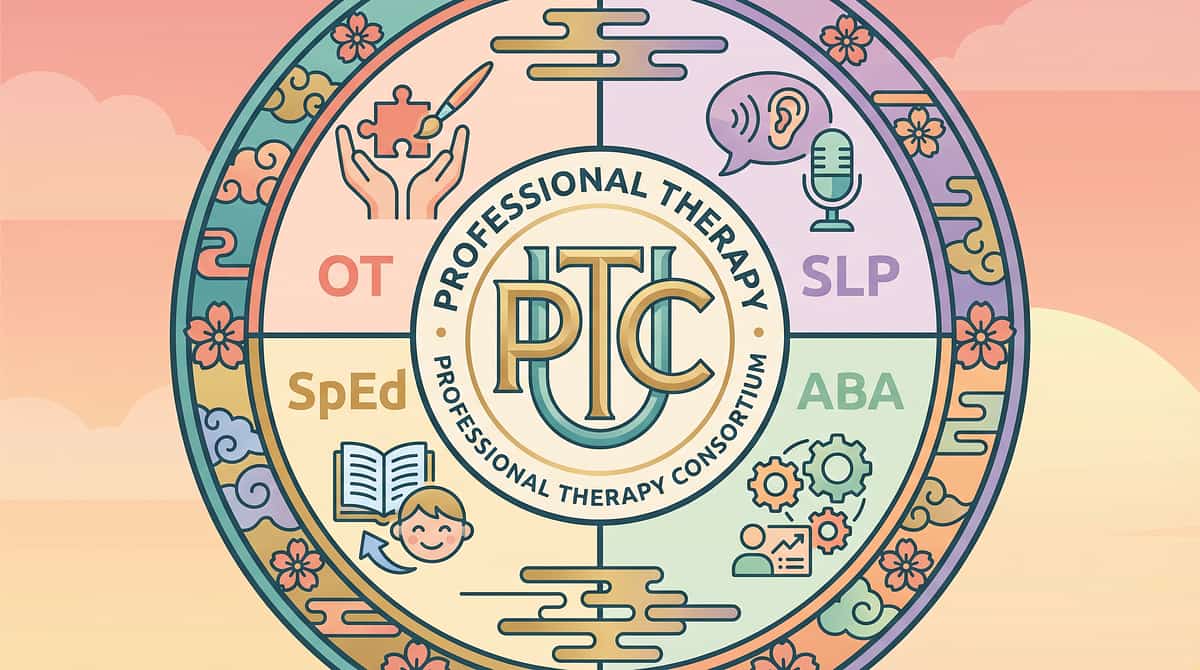
Pinnacle Blooms Consortium®
OT • SLP • SpEd • ABA
Age 0–18
India-Wide
Connect With Pinnacle Blooms Consortium® — Your Next Step
Taking the first step towards unlocking your child's full potential is an act of love and courage. At Pinnacle Blooms Consortium®, we understand the journey can be complex, and we're here to provide clarity, support, and expert guidance every step of the way. You've embarked on a path of discovery, and now it's time to transform insight into action.
Your Path to Partnership
FREE National Autism Helpline
Connect with expert advisors instantly. Available 24×7 in over 16 languages.
Call us at: 9100 181 181
Call us at: 9100 181 181
Book an OT Assessment
Schedule a comprehensive Occupational Therapy assessment, available conveniently in-clinic or via tele-therapy, to create a personalized plan.
Join the Pinnacle Parent Community
Find solace and strength in our supportive network. Access exclusive support groups, webinars, and workshops tailored for parents.
Download the Free Guide
Access our "Writing Readiness Home Program Guide" – practical activities and strategies you can implement from home today.
Pinnacle Blooms Consortium® specializes in comprehensive interventional therapies including Occupational Therapy (OT), Speech-Language Pathology (SLP), Applied Behavior Analysis (ABA), Special Education (SpEd), Neurodevelopmental Pediatrics, and our innovative FusionModule™ programs. We proudly serve children aged 0–18 across all developmental profiles and socioeconomic levels throughout India.
"Every child can learn. Every family deserves support. Every hand can be ready to write."
Your child's story is not finished. The next chapter, filled with growth and achievement, starts with a single phone call.
9100 181 181