
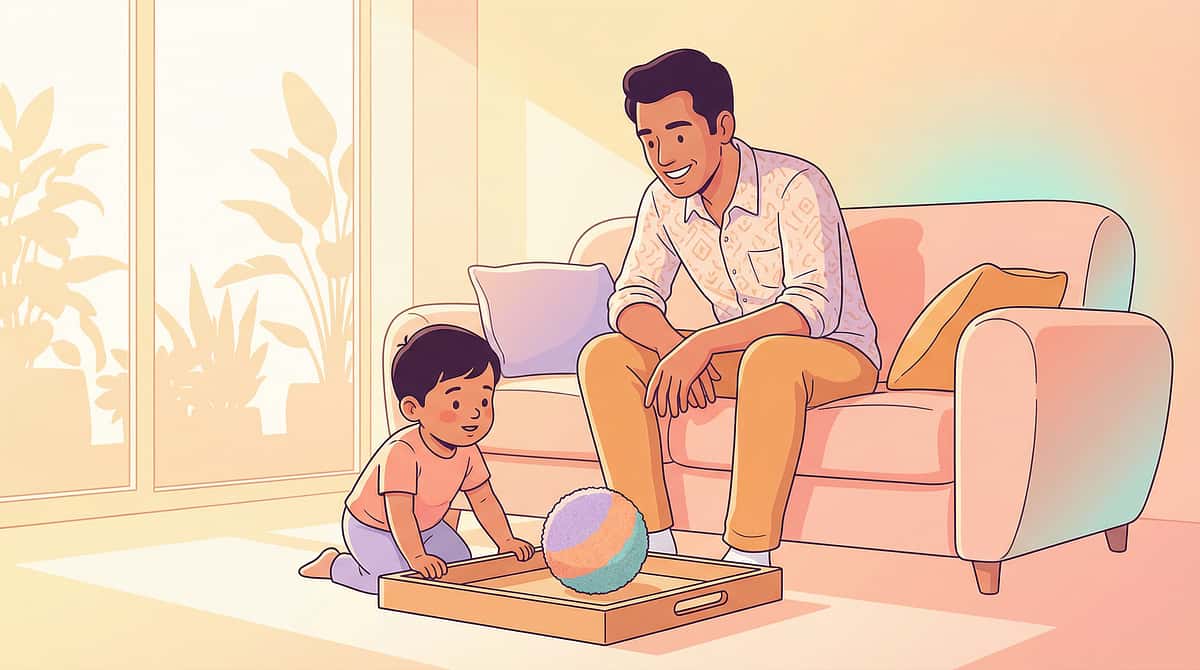
Free time shouldn't be the hardest part of the day. But for millions of children, it is.
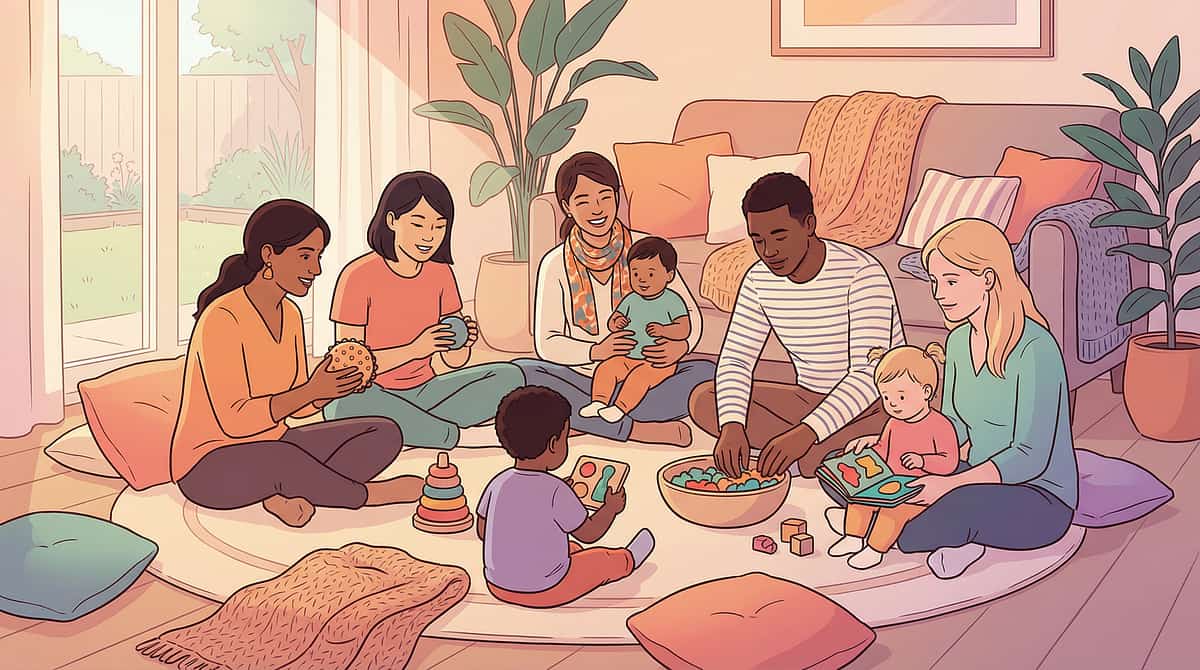
The Moment Every Parent Knows
It's a Saturday afternoon. Homework is done. The screen is off. You gesture toward the playroom — two shelves of toys, books, art supplies — and say the words every parent has said a thousand times: "Go play. You have free time."
And your child falls apart. Not a tantrum about something specific. Not a fight about what they want. Just… disintegration. Aimless wandering. Repeated "I'm bored." Following you from room to room like a shadow. Standing in the middle of a room full of possibilities, genuinely unable to access any of them.
Other children seem to just know how to do this. They disappear into their rooms and emerge an hour later having built something, drawn something, invented something. Your child cannot do this for five minutes — and it is not laziness, it is not defiance, and it is absolutely not your failure as a parent.
You are not failing. Your child's executive system is asking for a scaffold it hasn't been built yet.
Pinnacle Blooms Consortium
OT • SLP • ABA • SpEd • NeuroDev • CRO
Series
Self-Regulation & Daily Living Skills — Episode H-712
Age Band
4–14 years

You Are Among Millions of Families Navigating This Exact Challenge
Struggle During Unstructured Time
Of children with ASD experience significant difficulties when free time begins
Children Have Autism Diagnosis
In India — 28 million+ affected families navigating this daily
ADHD Initiation Deficit
Of ADHD-diagnosed children show clinically significant initiation deficits during free time
When structure ends and free time begins, a predictable crisis unfolds in homes across India and the world. This is not a parenting problem. It is a neurological reality that affects tens of millions of families — on weekends, during school holidays, every evening after 7 PM when the structure of the school day evaporates.
The research is unambiguous: children with executive function differences, autism spectrum conditions, anxiety disorders, and attention differences struggle measurably, consistently, and neurologically with unstructured time. The difficulty with free time isn't an attitude; it's an architecture.
Citations: PMC11506176 | PMC10955541 | DOI: 10.12998/wjcc.v12.i7.1260 | WHO NCF (2018)
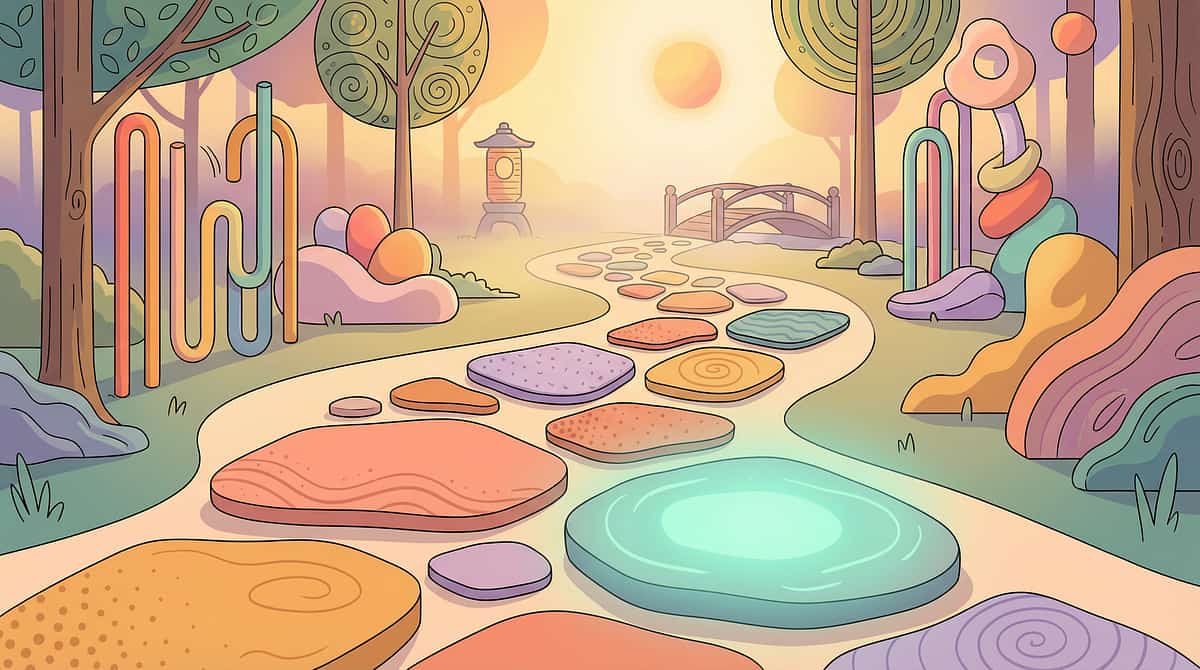
Your Child Is Here. Here Is Where We're Heading.
Independent leisure engagement is a developmental skill — not an innate trait. Neurotypically developing children build this capacity gradually from toddlerhood through adolescence. For children with executive function differences, the developmental clock on self-direction runs differently. A 10-year-old with ASD may have the self-direction capacity of a 4-year-old. This is a specific developmental gap that responds precisely to targeted intervention.

Clinically Validated. Home-Applicable. Parent-Proven.
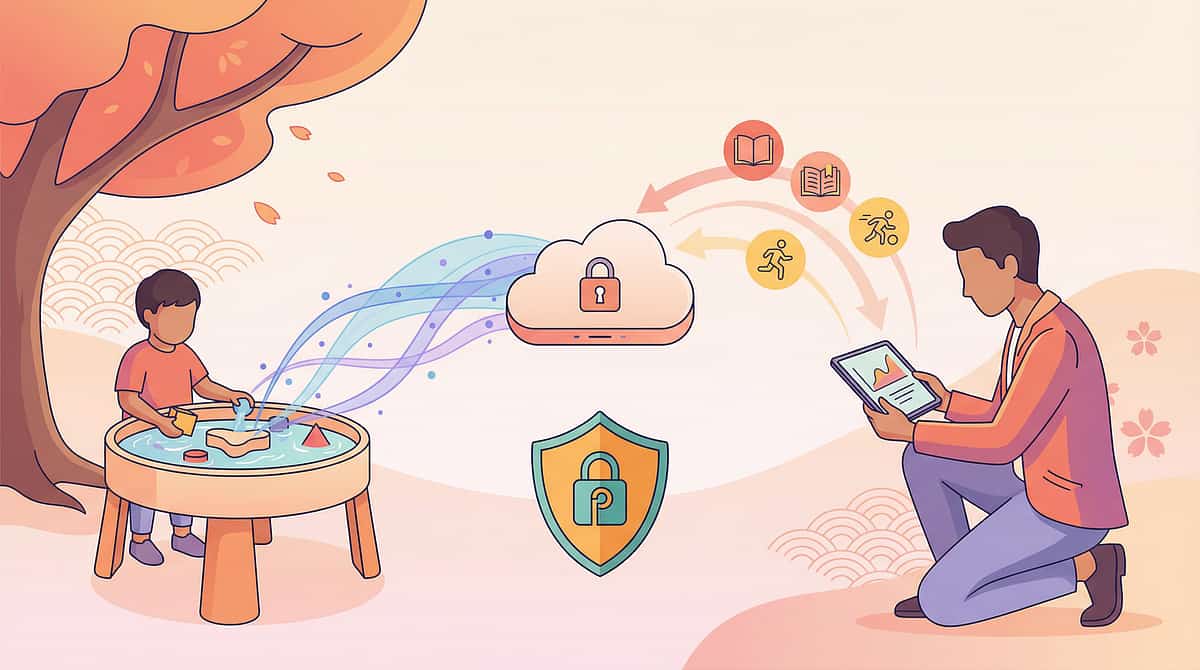
Systematic Review (2024)
16 studies across 2013–2023 confirm that structured choice-making interventions, visual supports, and self-directed leisure skill training meet evidence-based practice criteria for children with ASD. PMC11506176
Meta-Analysis (World J Clin Cases, 2024)
24 studies confirm visual support and structured engagement strategies effectively promote adaptive behavior, leisure participation, and self-direction in the 4–14 age range. PMC10955541 | DOI: 10.12998/wjcc.v12.i7.1260
Indian RCT (2019)
Home-based structured activity interventions with visual supports demonstrated significant outcomes across Indian pediatric populations. Parent-administered protocols showed comparable efficacy to clinic-delivered models. Padmanabha et al., Indian J Pediatr, 2019 | DOI: 10.1007/s12098-018-2747-4
The 9 materials presented in this technique page are drawn from evidence-based occupational therapy, behavioral analysis, and special education practice. Each material is clinically validated across multiple discipline traditions within the Pinnacle Blooms Consortium.
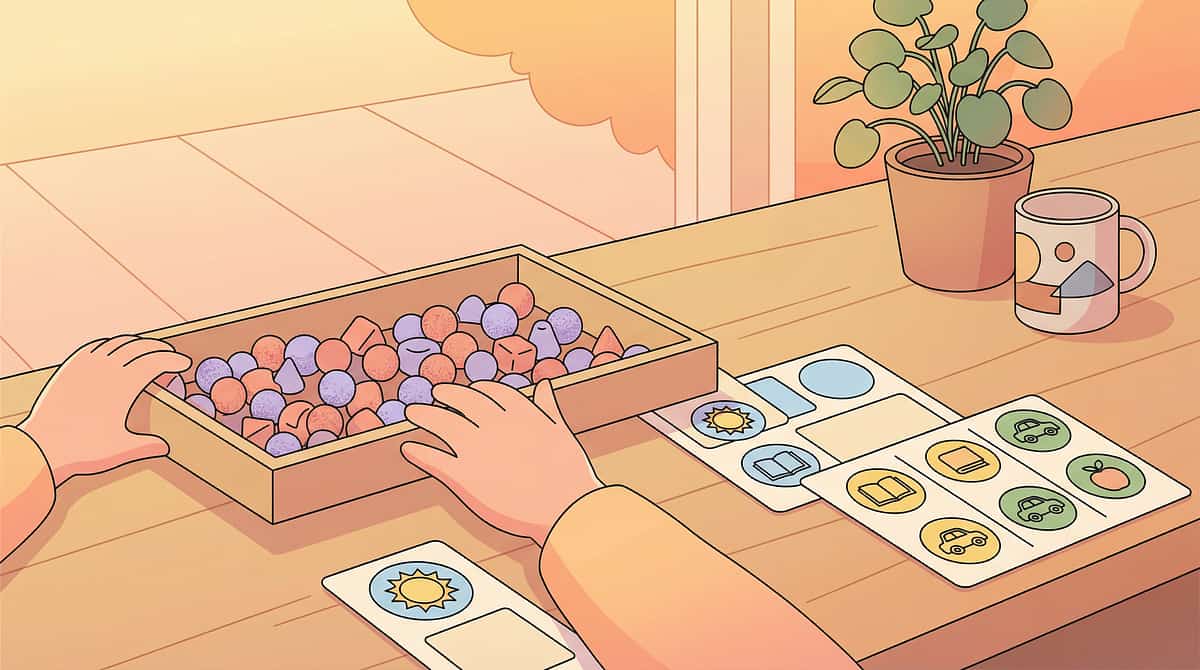
The Free Time Toolkit — What It Is
A multi-material home intervention system that externalizes the executive functions required for independent leisure engagement — including activity initiation, choice-making, time-boundary awareness, and self-regulation — so that children with ASD, ADHD, anxiety, and executive function differences can successfully occupy themselves during unstructured time periods.
What it does: Replaces the invisible executive steps that most children perform automatically (survey options → choose one → gather materials → start → sustain) with visible, tangible, parent-installed systems that any child can use independently once established.
Who It's For
Children aged 4–14 who cannot independently occupy themselves, follow parents asking "what do I do?", default to screens, melt down when structure ends, or have limited leisure skill repertoires
Session Format
Ongoing environmental installation + 5–20 min daily coaching. Daily during transition periods.
Domain Badges
Occupational Therapy (Primary) | ABA | Special Education | Executive Function | Leisure Skills Development
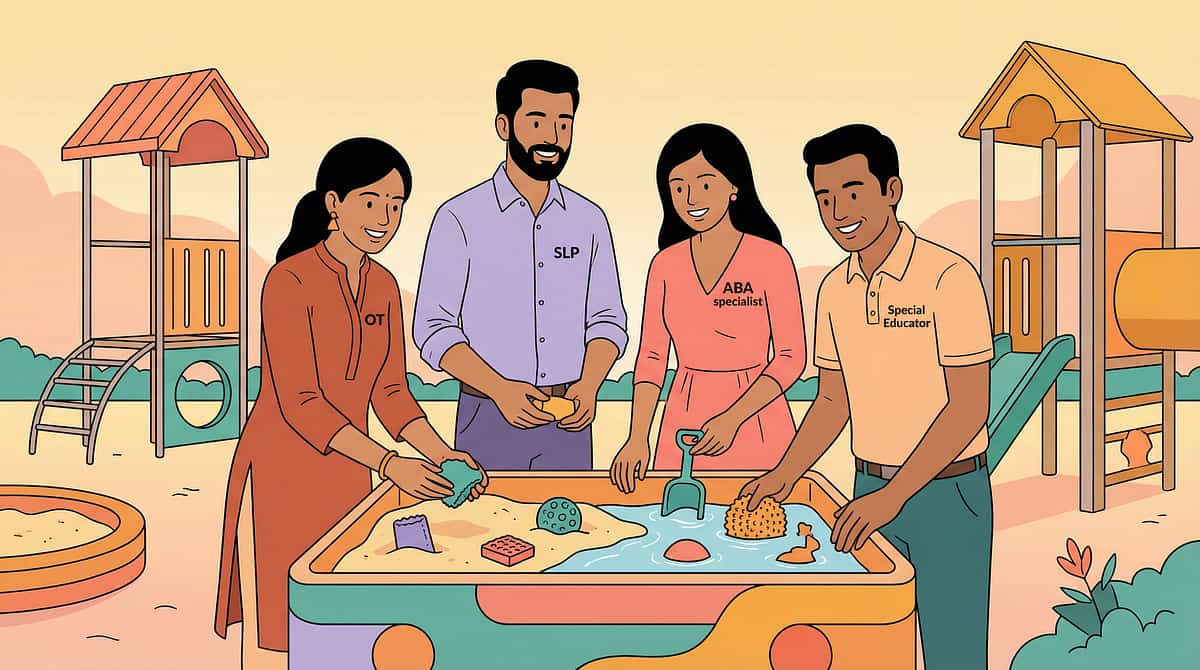
This Technique Crosses Therapy Boundaries
The brain doesn't organize by therapy type — and neither does H-712. Each discipline brings a unique lens to the same challenge, and the most powerful outcomes emerge when all perspectives are integrated.
Occupational Therapist (Primary Lead)
OTs design the physical environment scaffold: activity bins, sensory regulation tools, spatial organization of choices. The OT assesses the specific executive function bottleneck (initiation? choice? regulation?) and selects materials accordingly.
ABA / BCBA (Behavioral Architecture)
BCBAs design reinforcement systems, implement choice-board training protocols, establish antecedent arrangements that prevent escape to screens, and collect data on session initiation and duration.
Special Educator (Leisure Skill Teaching)
Special educators teach the underlying leisure skills that children may be missing — how to play with construction toys, how to use art supplies purposefully, how to engage with books. Leisure skills don't develop automatically; they're taught.
Speech-Language Pathologist
SLPs target the language around choice-making: labeling preferences, requesting activities, communicating "I'm done," and building the vocabulary of leisure that enables independent selection.
NeuroDev Pediatrician
NeuroDev doctors assess whether anxiety, medication effects, or neurological factors are driving the unstructured time difficulty — and whether co-occurring conditions require parallel management.
"GPT-OS® sees the initiation barrier, the escape behavior, the missing leisure vocabulary, the communication gap, and the regulation architecture — all simultaneously."

Material 1 — Visual Choice Boards
The visual choice board is the cornerstone of the Free Time Toolkit. It transforms the overwhelming "What do I want to do?" question into a concrete, bounded set of visual options. For children whose executive systems freeze under open-ended choice, limiting to 4–6 clear pictures is not restrictive — it is liberating.
Mount the board at your child's eye height on the wall of their activity space. Refresh pictures regularly so options feel current and desirable. The board can be as simple as printed photos laminated and velcroed to a cardboard backing — or as polished as a commercial magnetic board.
Price Range
₹200–700 DIY
₹450–1,200 ready-made
Find It Online
Why it works: Visual concreteness is the mechanism — not the material. Any version that shows 4–6 clear activity options achieves the therapeutic goal.
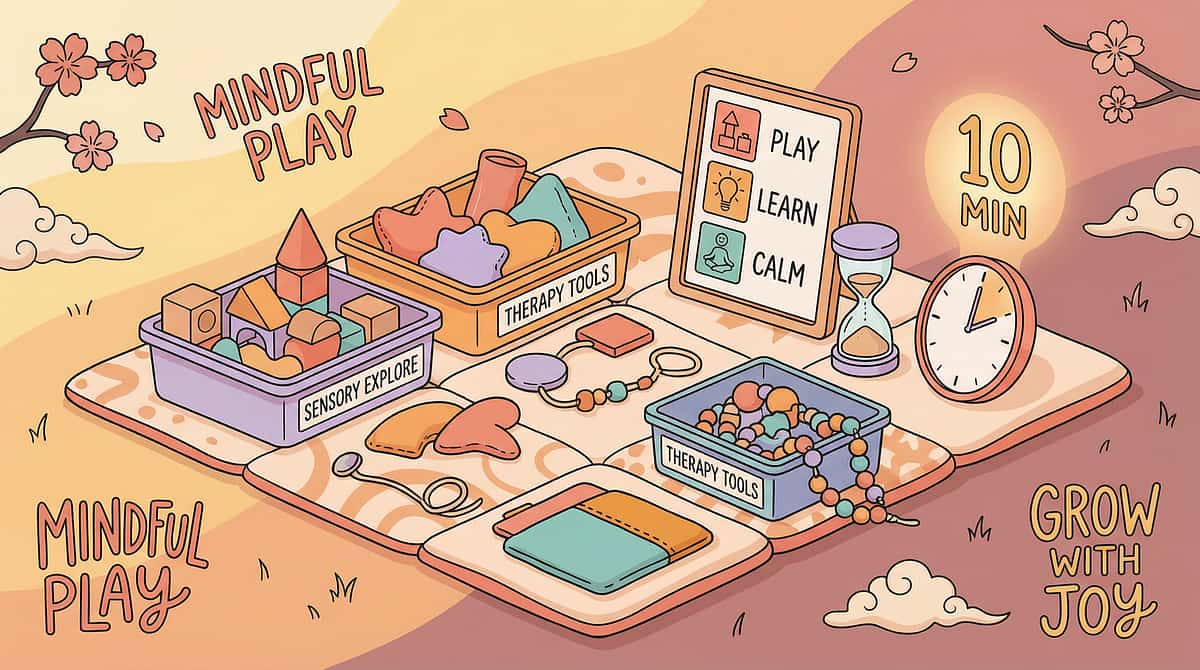
Material 2 — Activity Bins / Storage Stations
Activity bins solve the initiation problem at its root. Most children with executive function differences can choose an activity in theory but cannot then navigate the steps of gathering materials, setting up, and beginning. Pre-organized bins eliminate every one of those steps.
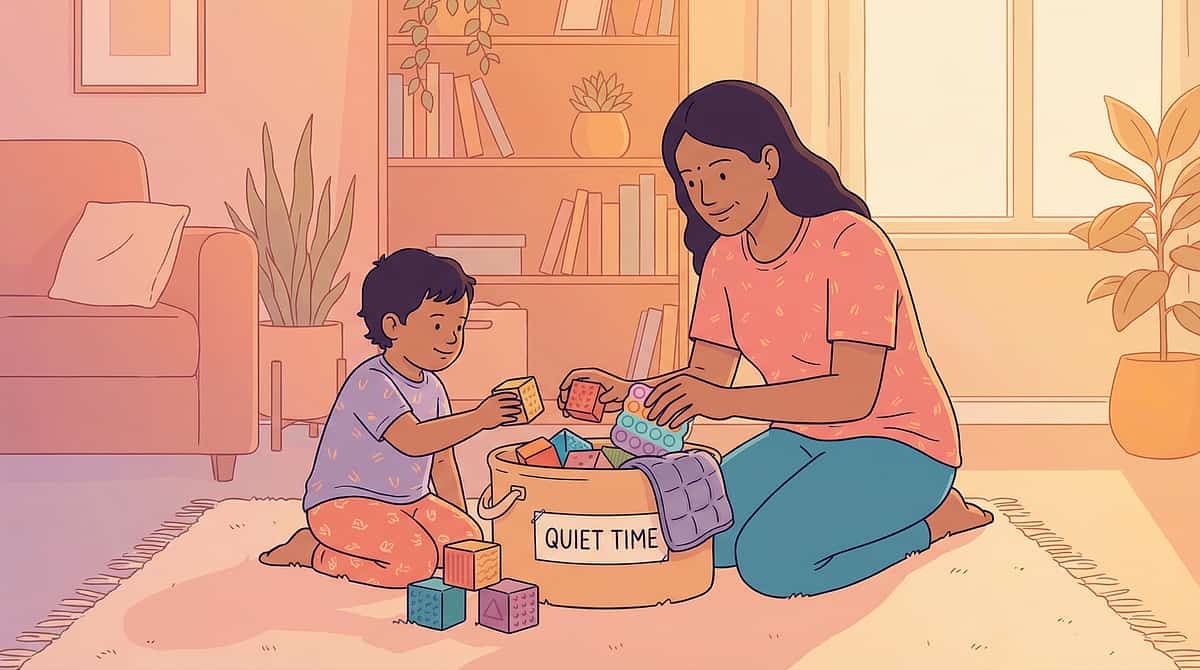
Each bin should contain a complete activity — everything needed, with nothing to gather. Lids off. Ready to use the moment the bin is lifted from the shelf. Label each bin with a picture and/or word matching its choice board card. Keep 3–5 bins accessible at all times, rotating contents every 1–2 weeks to maintain novelty.
Price Range
₹300–1,200
(clear plastic bins + labels)
Find It Online
Why it works: Pre-organization of complete activities is the mechanism. The physical act of carrying the bin to the activity space is itself part of the therapeutic initiation sequence.
Material 3 — Visual Timer
Unstructured time feels endless to a child who cannot see when it will end. A visual timer transforms an abyss into a bounded, manageable span. The child can see the time diminishing — and that visibility is regulatory, not restrictive. "I can see the end" is one of the most calming sentences a dysregulated nervous system can process.
Time Timer style (red disk shrinking) or sand timers both work well. If your child is sensitive to beeping sounds, choose a silent visual-only option. Place the timer in the child's direct line of sight — not behind them, not across the room.
Price Range
₹300–1,500
Why It Works
Visual time-boundary is the mechanism — not the specific timer. A phone timer with the screen visible achieves the same therapeutic goal.
⭐ Pinnacle Recommends
Time Timer or Sand Timer formats preferred for maximum visual clarity
Material 4 — Index Cards / Activity Cards (Interest-Based)
Interest-based activity cards are the personalization layer of the Free Time Toolkit. Where the choice board provides options broadly, activity cards connect specific activities to a child's genuine passions — dinosaurs, trains, art, cooking, music. When a child sees a card that mirrors something they already love, the initiation barrier drops dramatically.
Create these cards collaboratively with your child during a calm moment: "What are your five favorite things to do?" Draw or print a picture. Write the activity name. Laminate if possible. These cards can live in the boredom jar (Material 6), be added to the choice board, or form a dedicated "passion deck" the child can shuffle through when stuck.
Price Range
₹100–400
Find It Online
Why it works: The match between passion and activity is the mechanism. Intrinsic motivation bypasses the need for willpower or executive effort to initiate.
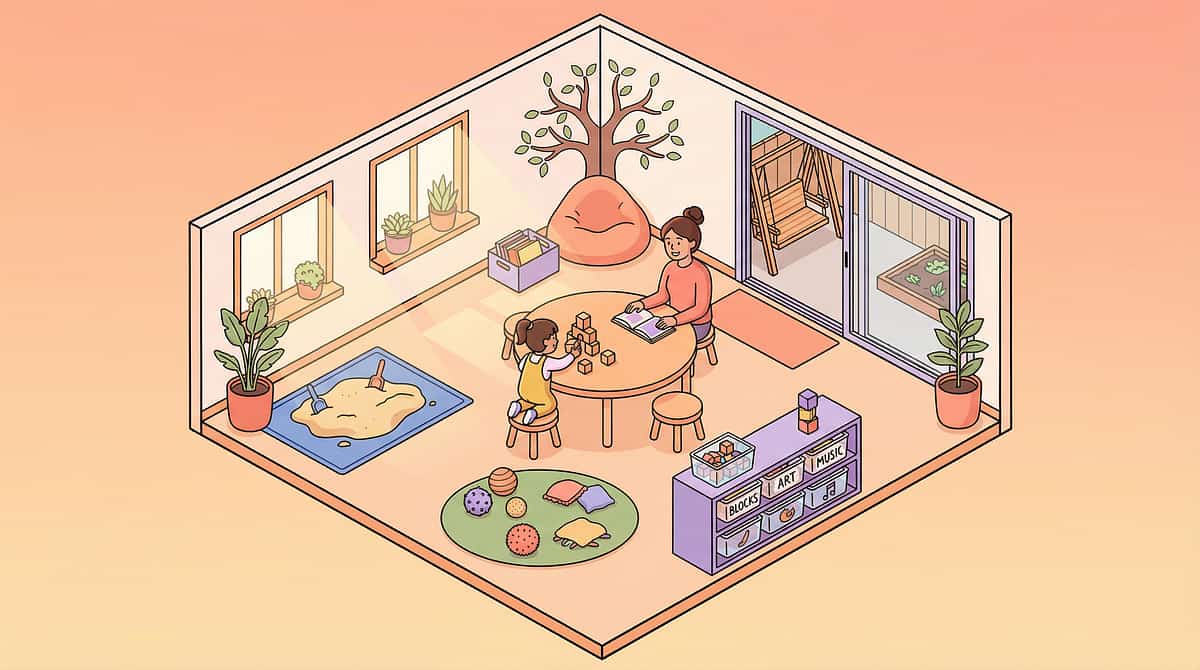
Material 5 — Structured Play Kits (Craft / Science / Building)
Structured play kits solve the "I don't know what to do with this" problem by providing prescribed steps. Children who cannot generate independent play can follow instructions. The kit's built-in sequence externalizes the planning and initiation process — the child simply opens the box and follows step 1. Competence builds confidence, and confidence builds the desire to initiate again.
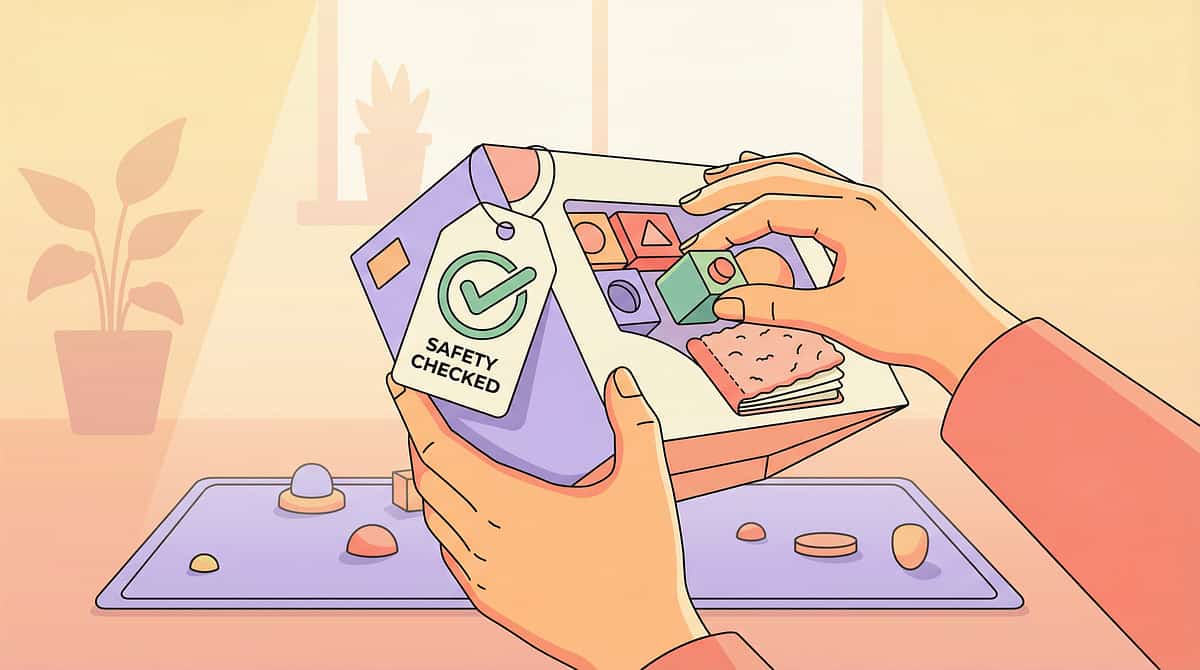
Look for kits that are appropriately challenging but achievable within a single free time block. Avoid kits that require parent assembly. Pre-check all components are present before placing the kit in the activity bin.
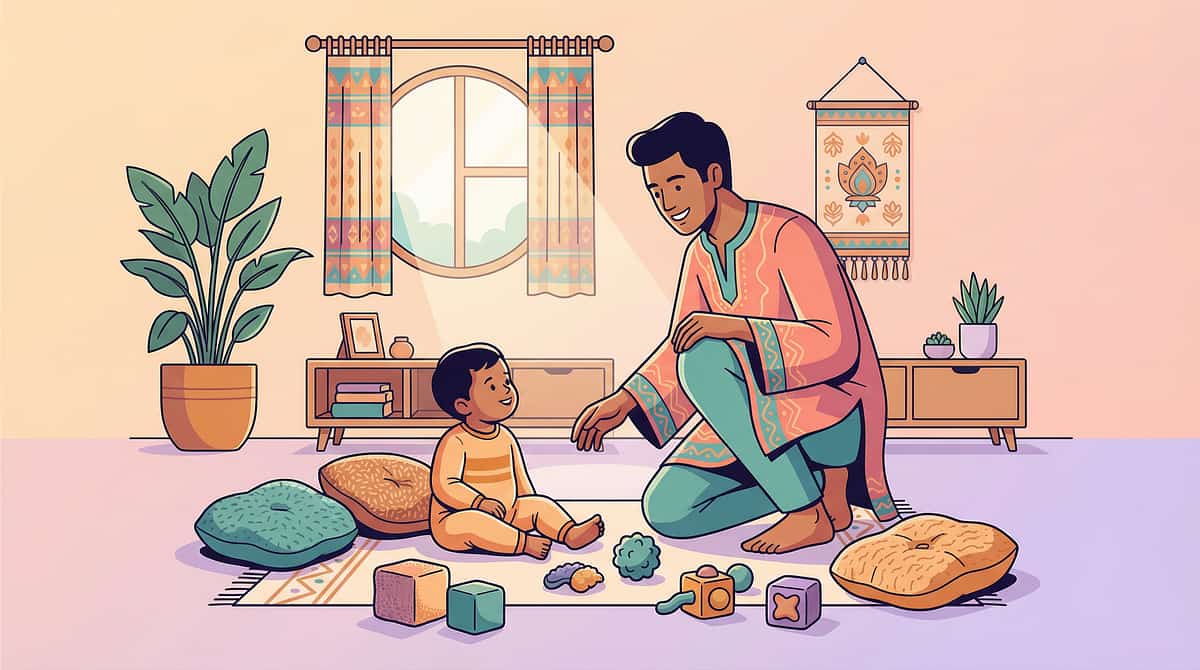
Material 6 — Boredom Buster Jar
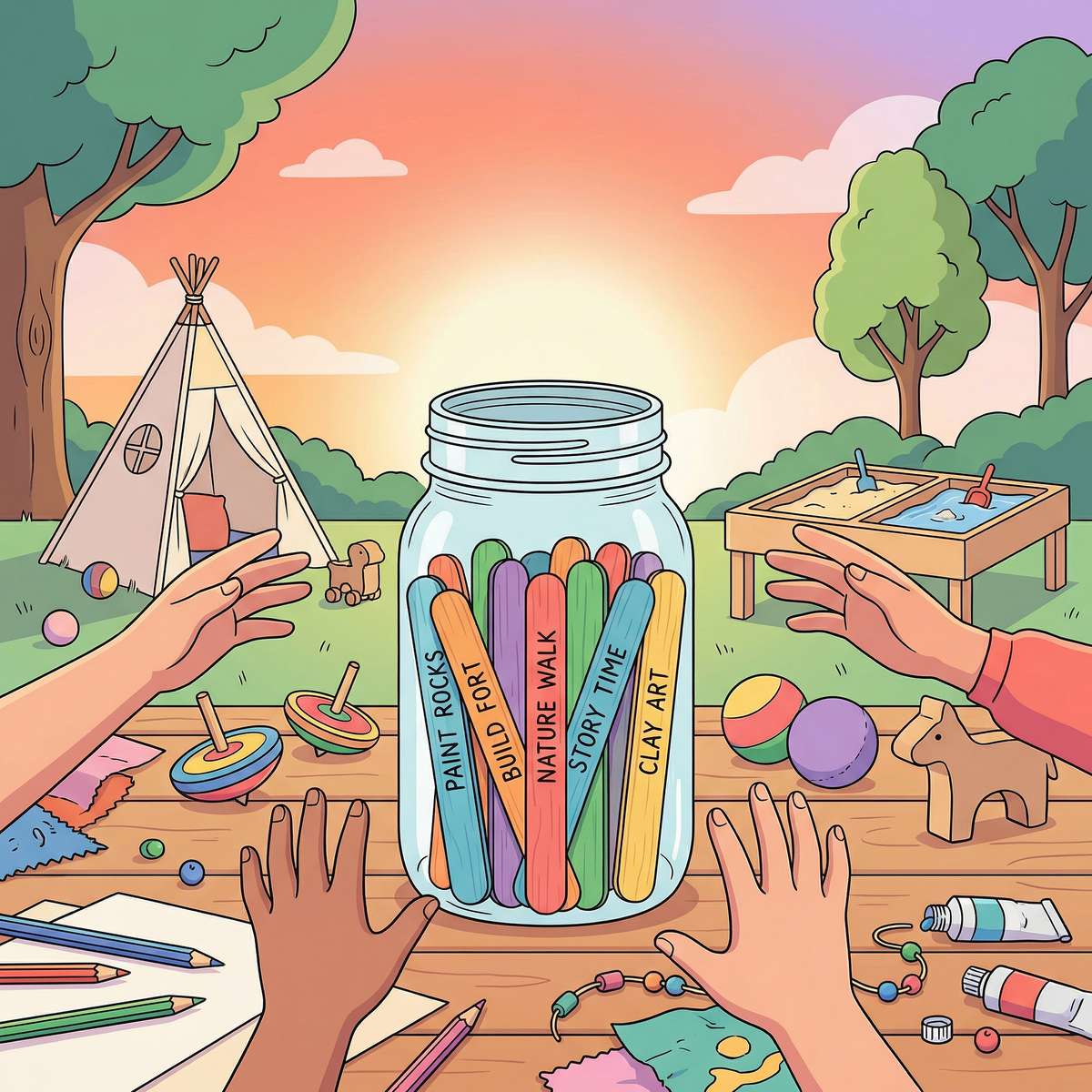
What It Is
A jar filled with ice cream sticks or folded paper slips, each bearing one specific activity (draw a dragon, build a tower with sofa cushions, make a bookmark, do 10 star jumps then draw what you see). When choice paralysis strikes and the choice board isn't working, the child picks one stick at random. The decision has been made externally — willpower is not required.
Why It Works
External decision-removal is the mechanism. The child does the activity because "the jar said to" — and this is clinically meaningful, not a trick. Creating the jar together is itself a therapeutic activity: it builds leisure vocabulary and gives the child ownership over their free time options.
Price Range & Link
₹50–300 commercial | Free DIY with any jar + ice cream sticks
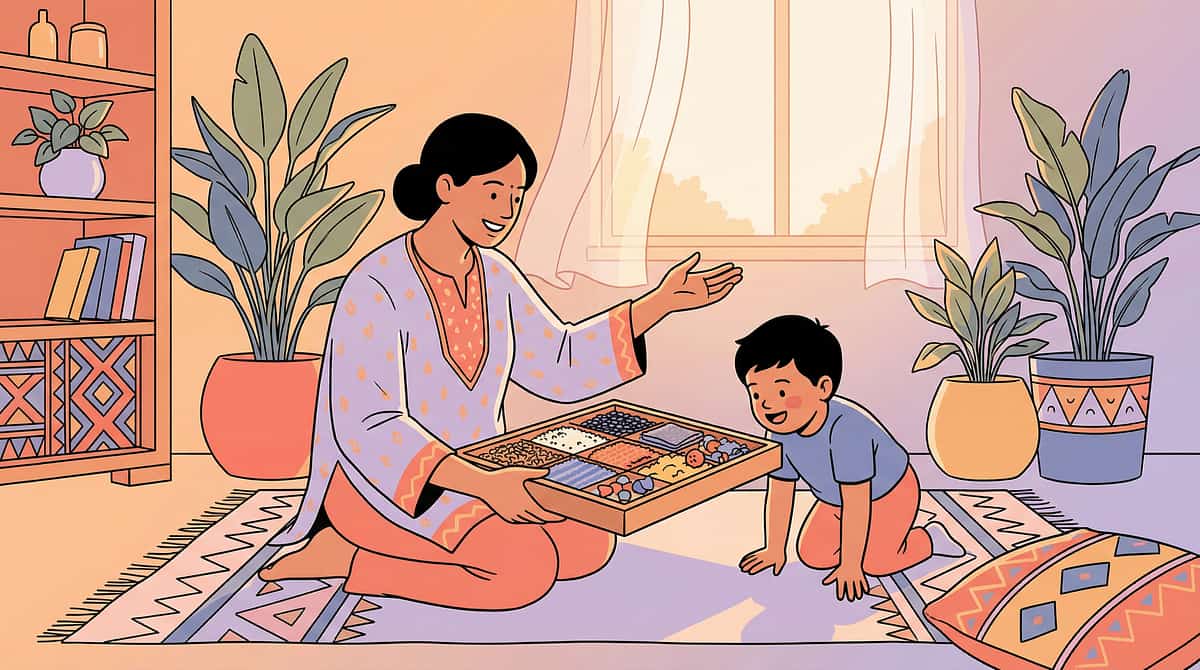
Material 7 — Daily Visual Schedule Board
For children whose anxiety is the primary driver of free time difficulty, the most powerful single intervention is predictability. When free time appears on the daily schedule as a named, bounded, visually represented block — "3:00–3:30: Free Time ⟶ Choice Board" — it is no longer an abyss. It is an event. A scheduled event with visible start and end points.
The visual schedule board transforms the entire day into a sequence the child can scan and understand. "I know free time comes after snack and before dinner. I can see exactly what comes after free time." This visual predictability deactivates the anxiety response that makes unstructured time feel threatening.
Price Range
₹150–500
Find It Online
Why it works: Visual predictability of free time is the mechanism. The schedule does not restrict the child — it frees them from the cognitive burden of wondering what comes next.

Material 8 — Starter Script Cards (Laminated)
The starter script card is a laminated card posted near the activity space that shows the first 3–5 steps of beginning free time: (1) Check the choice board. (2) Pick one thing. (3) Get that bin. (4) Carry it to your spot. (5) Open the bin and start. This card externalizes the prefrontal cortex's initiation sequence entirely.
Children who cannot initiate independently can follow a visible step-by-step sequence. The card functions as an external prefrontal cortex — printed on paper, mounted on the wall, available every time. Over weeks, many children internalize the sequence and no longer need the card. Others keep it indefinitely — which is completely fine.
Price Range
₹50–200 (DIY lamination)
Why It Works
Externalized executive sequence is the mechanism. The PFC's initiation function is offloaded to a card. The child follows. The action begins.
Pro Tip
Use simple drawings alongside words. For non-verbal children, use pictures only. Keep steps to 3–5 maximum.
Material 9 — Calm-Down Reset Kit
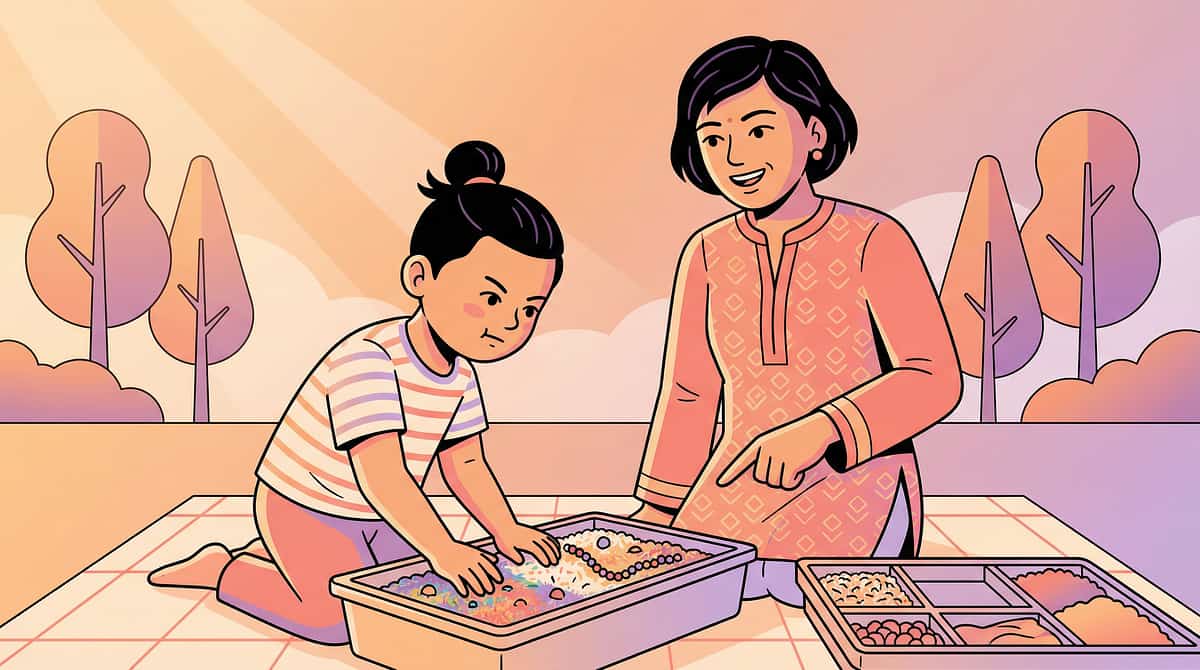
The reset kit is the most frequently overlooked material in the toolkit — and the most clinically critical. For children whose anxiety response is activated by unstructured time, no amount of choice boards or bins will help until the nervous system is first brought to baseline. The reset kit is not the backup plan; for many children, it is the first step of every free time routine.
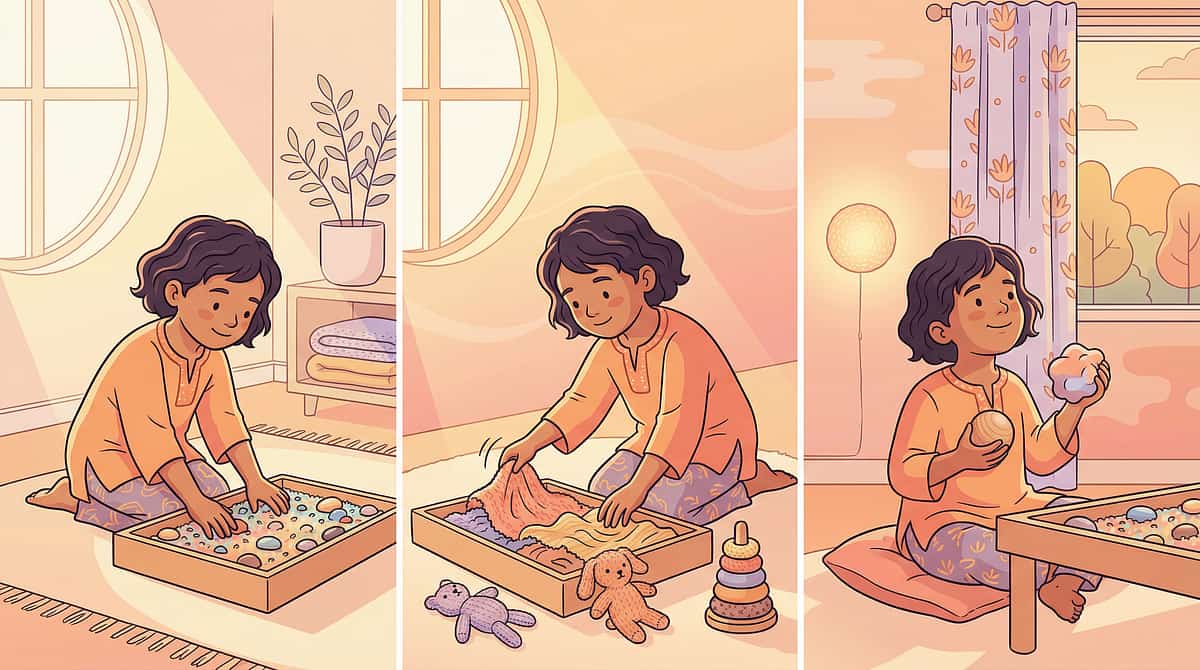
A reset kit contains 3–5 sensory regulation tools: a fidget, a breathing instruction card, a soft texture item, a visual focus object. The child uses the kit for 2–3 minutes before selecting from the choice board. Regulation first — then engagement. This sequencing is supported by all five disciplines in the Pinnacle Consortium.
₹425 — Comfort/Calm Tool
₹364 — Reinforcement/Reward Tool
Your Free Time Toolkit — Complete Overview
Nine materials. One cohesive system. Each material targets a specific executive function bottleneck — together they create a complete scaffold for independent leisure.
Material | Canon Category | Price Range | Mechanism |
1. Visual Choice Board | Visual Supports | ₹200–1,200 | Visual concreteness |
2. Activity Bins | Activity Organization | ₹300–1,200 | Pre-organized access |
3. Visual Timer | Time Management Tools | ₹300–1,500 | Visible time boundary |
4. Activity Cards | Visual Supports | ₹100–400 | Interest-matching |
5. Structured Play Kits | Problem-Solving Toys | ₹199–579 | Step-following |
6. Boredom Buster Jar | Activity Organization | ₹50–300 | Decision removal |
7. Visual Schedule Board | Visual Supports | ₹150–500 | Predictability |
8. Starter Script Cards | Visual Supports | ₹50–200 | Externalized sequence |
9. Calm-Down Reset Kit | Transition Objects | ₹425+ | Regulation first |
Starter Kit Total: ₹1,500–6,500 for full setup | ₹0 for all-DIY version
Every Child on Earth Deserves These Tools — Regardless of Budget
Household-material intervention access is a fundamental right. Every single material in H-712 has a free DIY equivalent that delivers the same therapeutic mechanism. The material is never the point — the principle is.
Material | Buy (₹) | DIY Free Version | Same Principle? |
Visual Choice Board | ₹450–1,200 | Paper plate + printed photos stuck to wall | ✅ Yes |
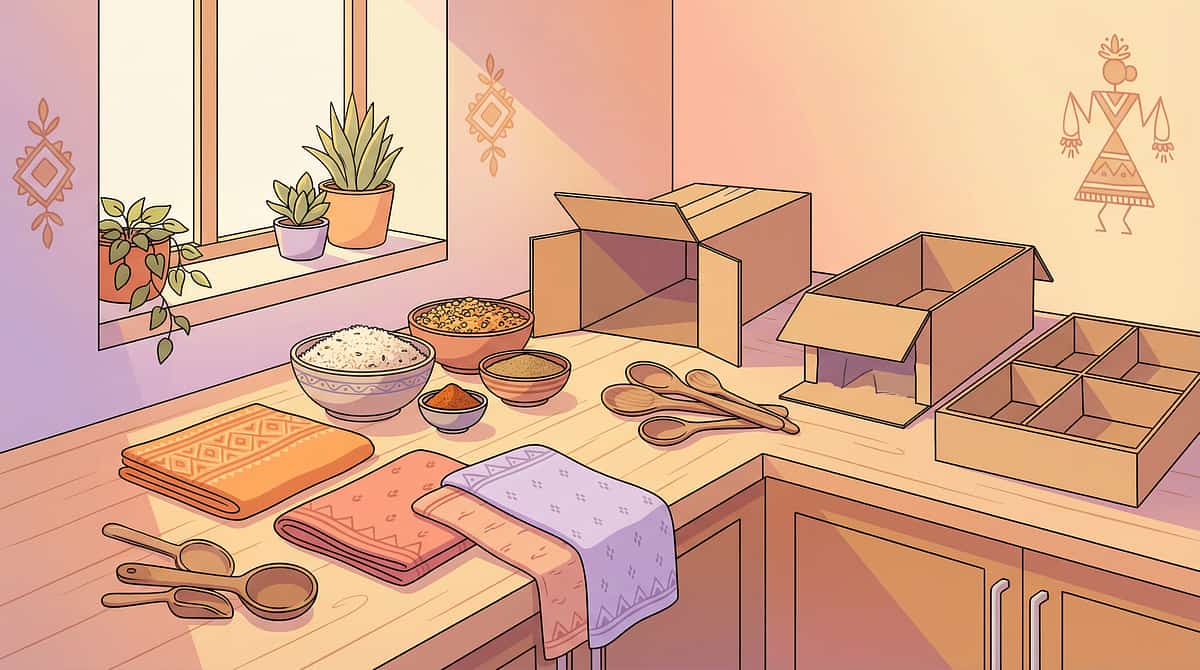
Activity Bins | ₹300–1,200 | Old cardboard boxes labeled with marker | ✅ Yes |
Visual Timer | ₹300–1,500 | Phone timer with face visible; sand in a bottle | ✅ Yes |
Activity Cards | ₹100–400 | Cut paper, draw a picture, write activity name | ✅ Yes |
Structured Play Kits | ₹200–1,500 | Masala dabbas with craft supplies; old puzzle books | ✅ Yes |
Boredom Jar | ₹50–300 | Any container + ice cream sticks with marker | ✅ Yes |
Schedule Board | ₹150–500 | Paper strip on fridge with drawings | ✅ Yes |
Starter Script | ₹50–200 | Paper on wall, hand-drawn steps | ✅ Yes |
Reset Kit | ₹425+ | Soft cloth, stress ball (rice in balloon), breathing card | ✅ Yes |
Safety First: Before You Begin
🔴 DO NOT PROCEED IF
Child had a meltdown in past 30 min | Signs of illness | Not eaten in 3+ hours | Weighted items exceed 10% body weight | Timer sounds previously triggered distress | Child is in active avoidance/escape — begin with reset tools first
🟡 MODIFY IF
Child is slightly elevated (minor whining, restlessness) — begin with 2-minute reset kit | Only 10 minutes available — use 1 activity bin, no choice board | New material being introduced — start with observation, not demand
🟢 SAFE TO PROCEED
Child is fed, rested, at baseline regulation | Materials organized and accessible | Choice board refreshed with current options | Timer functional and volume-checked
Citation: Indian J Pediatr RCT 2019 — home-based safety protocols | DOI: 10.1007/s12098-018-2747-4
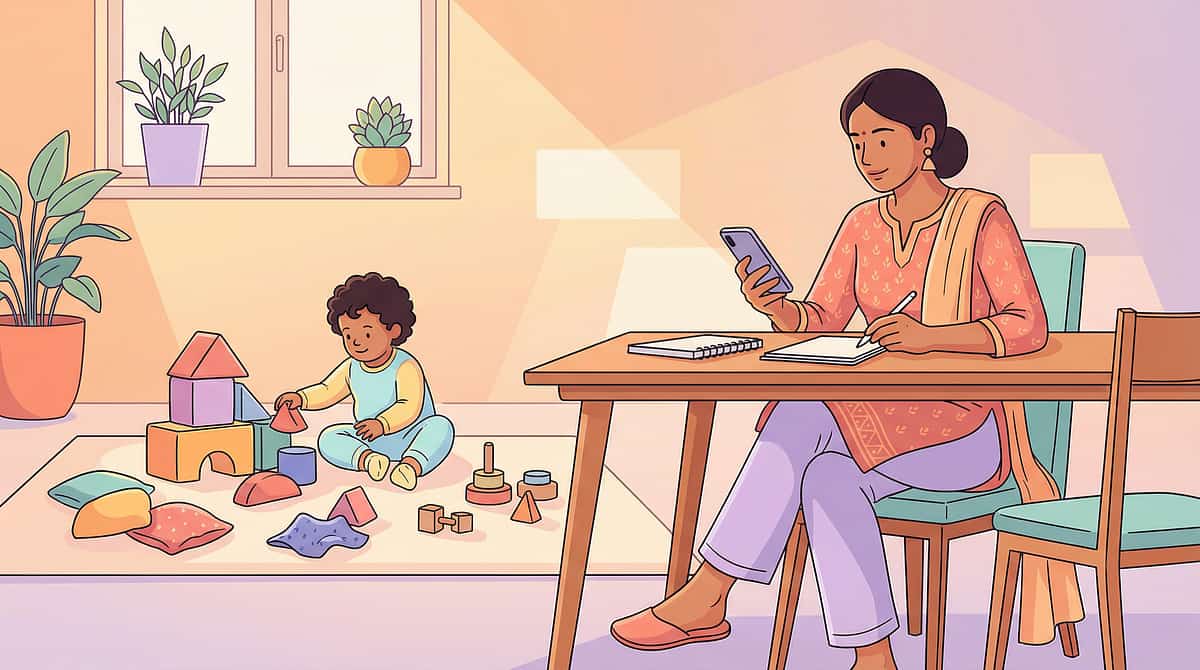
Step 1 of 6 — The Invitation
Free time begins NOT with "Go play" (too abstract) and NOT with "What do you want to do?" (too open-ended). It begins with a warm, specific, low-demand invitation. The way you open this session sets the regulation tone for everything that follows.
🗣️ Exact Script:
"Okay, [name] — free time starts now. Let's check your choices board together. You pick one. Timer goes on. Then it's all yours."
Delivery Guidance
Kneel or sit at child's eye level. Warm tone, not directive. Walk with child to choice board — don't point from a distance. Brief pause of 5–10 seconds at the board.
What Acceptance Looks Like
Child approaches choice board willingly, points or vocalizes a choice, makes eye contact with the board, or makes any movement toward an activity bin.
What Resistance Looks Like + Response
"I don't want to" → "That's okay. Let's just look at the choices." Walks away → Follow calmly. "I'll wait at the board. Take your time." Escalating → Activate 🟡 protocol. Do not force.
Timing: 30–60 seconds. Do not exceed 90 seconds on the invitation step.
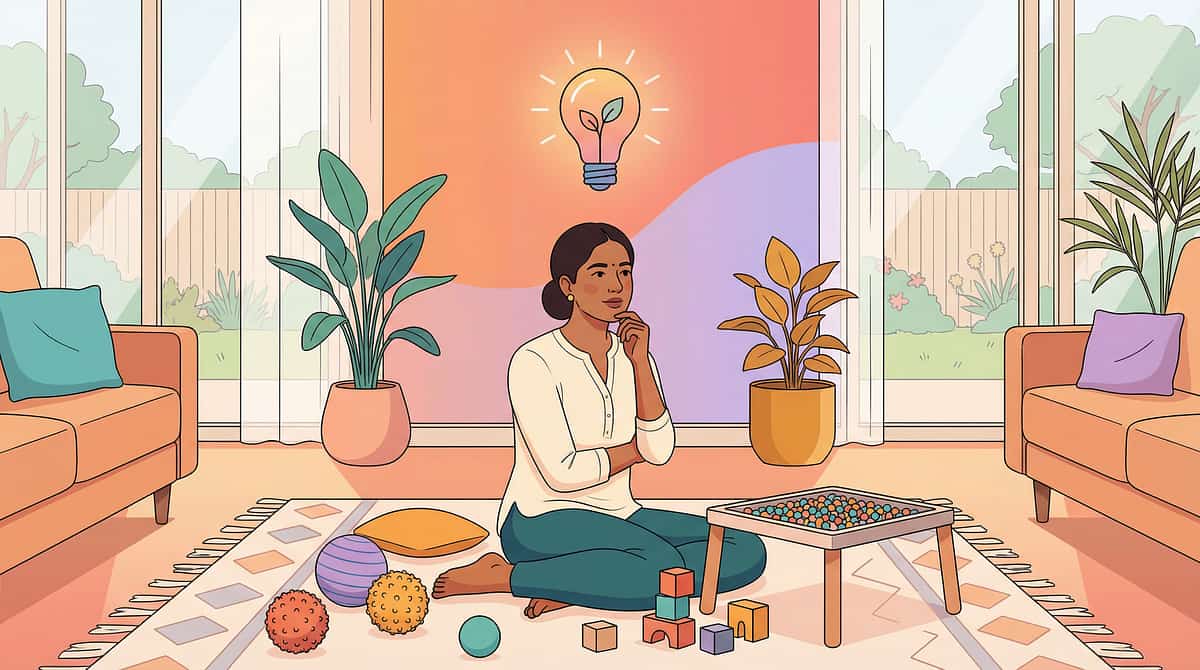
Step 2 of 6 — The Engagement
Child is at the choice board. Now: one choice, one action. This is where the scaffold does its work.
🗣️ Script at Choice Board:
"Look at your choices. Which one calls to you today? Point to it. Just one."
Walk to the Bin Together
Child carries the bin to their activity space. This physical action is part of the protocol — it builds the initiation muscle.
Material Introduction
Bin goes on table. Timer not yet set. Child opens bin. Use genuine curiosity voice: "Ooh — what's in there today?" Then silently step back.
Monitor Child Response
Engagement: Child begins interacting → Start timer now. Tolerance: "I'll sit with you for 2 minutes" — then actually leave. Avoidance: Use boredom jar, or activate 🟡 protocol.
Reinforcement Cue
When child initiates ANY interaction with bin contents — smile, nod, thumbs up. Within 3 seconds. This is the behavioral pairing moment.
Timing: 1–3 minutes from invitation to active engagement.
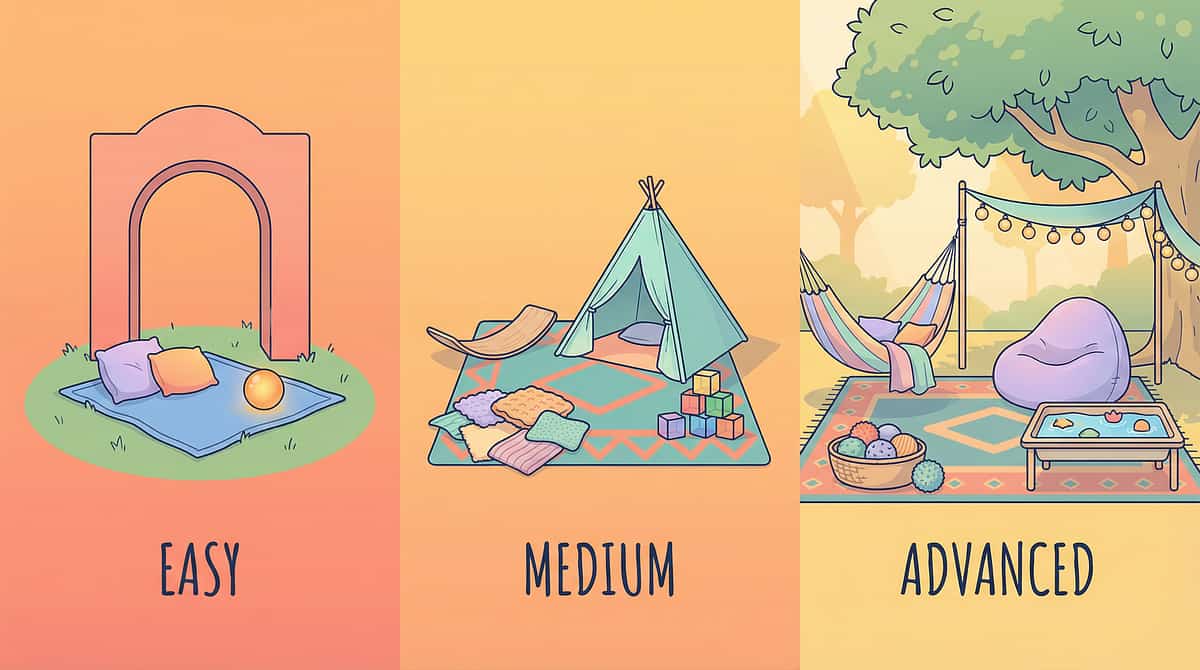
Step 3 of 6 — The Therapeutic Action (The Core)
The child is engaged. This is the therapeutic moment. The goal is not a perfect activity. The goal is: child, alone, doing something, for a timer-defined period, without adult direction.
Weeks 1–2
10-minute timer blocks. One activity per session.
Weeks 3–4
15-minute blocks. Same structure every time.
Weeks 5–6
20-minute blocks. Child may select different activities per block.
Weeks 7+
25–30 minutes, building to 45+.
Choice Board Action
Each successful independent choice strengthens the decision-making pathway. Do not intervene in the choice. Trust the board.
Activity Bin Action
Pre-organized access bypasses the initiation barrier completely. The act of opening is therapy.
Visual Timer Action
The visible countdown IS the therapy. Bounded time makes sustained engagement possible.
Boredom Jar Action
Choice paralysis is bypassed by the randomizer. "The jar said to" replaces willpower.
Reset Kit Action
Regulation before engagement IS the therapy. 90 seconds with a sensory tool enables everything that follows.

Step 4 of 6 — Repeat and Vary
Three good blocks beat ten forced ones. Dosage is quality, not quantity. Build session complexity slowly and deliberately — the structure must become invisible before you remove it.
Weeks 1–2
One 10-minute block per free time period. One activity. Same structure every time.
Weeks 3–4
One 15-minute block OR two 10-minute blocks with a 3-minute break between them.
Weeks 5–6
Two 20-minute blocks. Child may select different activities for each block.
Weeks 7+
Extended or open-ended free time with choice board as the only remaining support.
🗣️ Variation script:"New option on your board today — want to check it out?"
Parent milestone: By week 4, many parents report that they forget free time is "structured" — it just looks like their child playing. That is the goal.

Step 5 of 6 — Reinforce and Celebrate
Celebrate the attempt — not just the success. The reinforcement window is within 3 seconds of the timer completing and the child being still engaged. Timing beats magnitude every time.
Verbal Praise
"You did that all by yourself! The whole timer! That was YOUR work, YOUR choice, YOUR time."
Specific + Enthusiastic
"You chose the building bin, you set up, you stayed with it the whole 15 minutes. I saw you. That was real independence."
Natural Consequence
"You finished your free time block — that means you've earned your choice of what we do next together."

Step 6 of 6 — The Cool-Down
No session ends abruptly. The transition IS part of the therapy. Abrupt endings teach the nervous system that "done" is threatening — gradual endings teach it that transitions are safe.
🗣️ 2-Minute Warning Script:
"Two more minutes of free time. When the timer beeps, we put away and move to [NEXT SCHEDULED ACTIVITY]."
1 Minute Before
Verbal + visual warning. Child hears "2 more minutes."
Timer End
"Free time is done. Great work today." Calm, warm, not dramatic.
Put-Away Ritual
Child returns bin to shelf. One choice board option is "flipped" or removed. Physical action signals closure.
Transition Cue
Visual schedule shows what comes next. Child checks the schedule.
Bridge Statement
"After [next activity], there will be another free time block at [time]." This prevents the child from grieving the end of free time.

What If It Didn't Go as Planned?
Most sessions don't go perfectly. That's expected, not failure. Here are the six most common problems and exactly what to do next time.
Problem 1: Child refused to go to the choice board at all
Why: The invitation was too directive, or the child is in a 🔴 state.
Next time: Check readiness first. Try "Race you to the choice board!" or skip the board entirely and present a single bin.
Problem 2: Child chose an activity then refused to do it
Why: Choice board selection ≠ executive activation. The child can indicate preference but cannot initiate.
Next time: Use the starter script card. Walk through step 1 together: "Open the bin. You do it."
Problem 3: Child did 2 minutes then came to find parent
Why: Timer block too long; or parent proximity is a competing reinforcer.
Next time: Shorten timer to 5 minutes. Verify parent genuinely left the room.
Problem 4: Child defaulted to screen despite choice board
Why: Screen availability outcompetes all alternatives — screens require zero initiation.
Next time: Remove screen from accessible space during free time. This is antecedent control, not punishment.
Problem 5: Child became dysregulated before engaging with any material
Why: Regulation was the primary barrier — not choice or initiation.
Next time: Begin every free time with 2-minute mandatory reset kit use before any choice board interaction.
Problem 6: Session went fine but child can't replicate independently
Why: Adult presence was scaffolding the initiation, not the tools.
Next time: Fade adult presence more gradually. "I'm in the kitchen — come find me when the timer beeps."
"Abandoning a session is not failure — it's data about what needs adjusting. The technique is not failing your child. The variables need tuning."
Week 1–2: What to Expect
In weeks 1–2, you're building the pathway — not proving the skill. Progress at this stage is measured in seconds, not minutes. Neural pathways don't form overnight; they form through consistent repetition of scaffolded experience.
Progress
Pathway building phase — foundation is forming
✅ What You WILL Likely See
Child tolerates choice board interaction without meltdown | Timer block completion increasing from 2–3 min toward 8–10 min | Reduced "what do I do?" per free time period | Child uses boredom jar at least once without prompting
⏳ What Is NOT Progress Yet (And That's Okay)
Fully independent initiation without adult setup | Choosing from board without hesitation | Completing a full 20+ minute block | Using the tools in a new setting
If your child tolerates a material for 3 seconds longer than last week — that is neural pathway formation. Measurable. Real. Significant.
Data Checkpoint: Review your Card 20 data at end of week 2. Is duration trending up even slightly? That's enough.
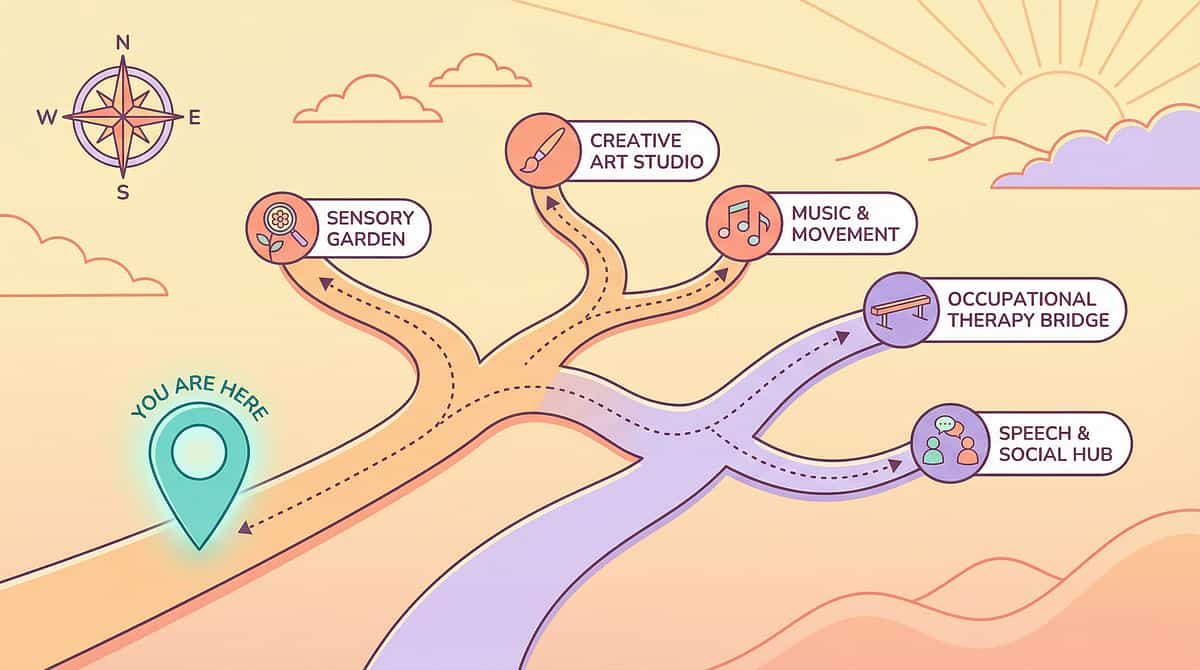
Week 3–4: Consolidation Signs
The neural pathway is forming. Watch for these signs — they are early indicators that the scaffold is working at a neurological level, not just a behavioral one.
Progress
Neural pathway forming — consolidation phase
Child approaches choice board WITHOUT being walked there
First signs of independent initiation — a milestone worth celebrating loudly.
Boredom jar used proactively
"I want to do the jar" — the child is now using the tools as tools, not enduring them as impositions.
Timer blocks completing at 15+ minutes on 🟢 days
Duration is the clearest indicator of growing executive tolerance.
Spontaneous generalization seeds
Behavior appearing at grandparent's house, at school breaks. Do not be surprised — this is exactly what's expected.
"You may notice you feel more confident too. That's not coincidence. When the scaffold works, the anxiety in the system decreases — yours and theirs."
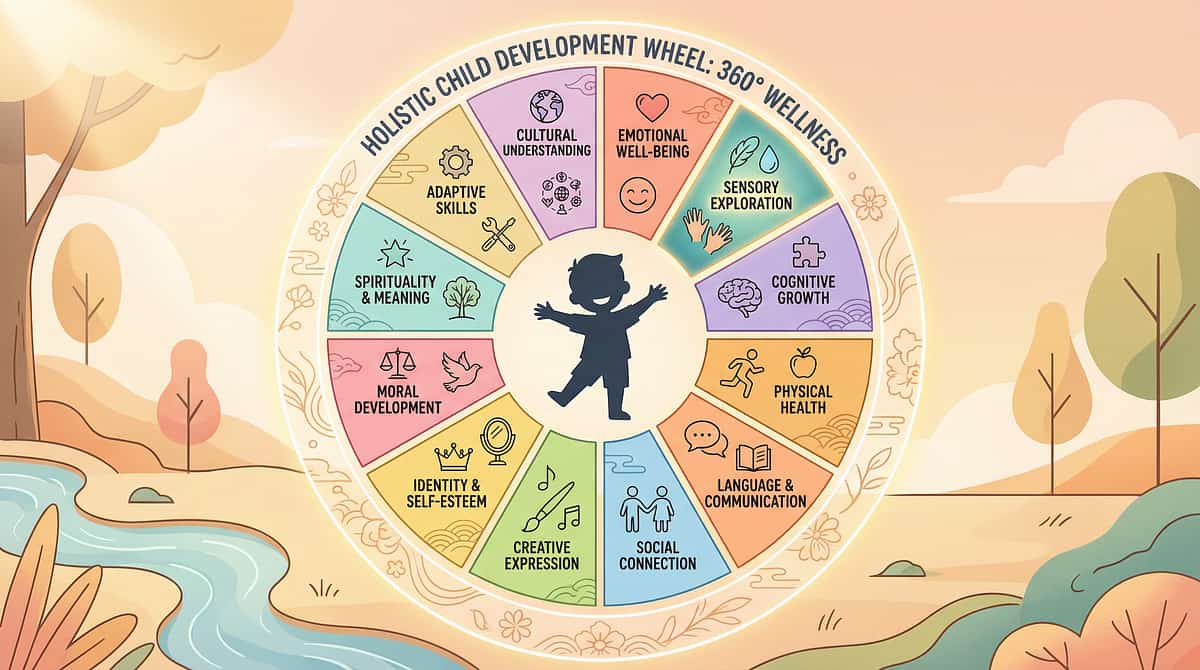
Week 5–8: Mastery Indicators
Your child is no longer dependent on your direction. This is the goal. The scaffold has done its work — now watch it become invisible.
Progress
Mastery phase — executive pathways established
Independent Initiation
Child walks to choice board at start of free time without any adult prompt
Self-Retrieval
Child self-selects and retrieves activity bin independently
Self-Reset
Child resets timer for a second block independently
Leisure Identity Emerging
"I want my free time now" — preference-driven independent leisure forming
Maintenance Check (Week 9): Remove 50% of adult setup. Does the behavior persist? If yes → move to Card 28 (progression pathway). If no → return to Card 22 (adapt) and identify which support was essential.
Celebrate This Win
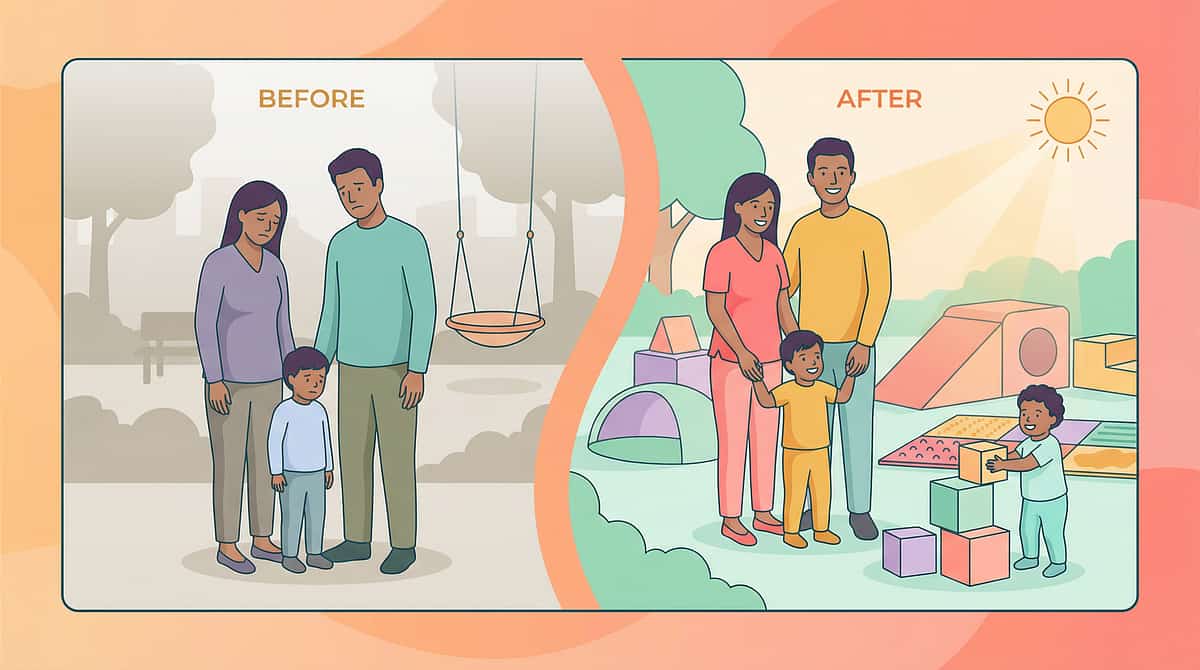
You did this. Your child grew because of your commitment. Over the past 5–8 weeks, you did something that is profoundly difficult: you installed executive function infrastructure into your child's home environment. You replaced your own presence as the entertainment director with tools that your child now uses independently.
That is not a small thing. That is the difference between a child who can occupy themselves and a child who cannot. Between a parent who can have 20 minutes to breathe on a Saturday and one who cannot.
🎉 Family Celebration Suggestion: Create a "Free Time Wall" — photograph every activity your child has independently completed during the past 8 weeks and put it on the wall. The volume of that visual is a record of real growth.
You arrived at Card 01 wondering if your child would ever be able to occupy themselves. You are here now. That arc is real.
Red Flags: When to Pause and Ask for Help
Trust your instincts. If something feels wrong, pause and ask. Five specific red flags require immediate attention — these are not signs that you're doing H-712 wrong, but that your child needs a different level of support.
🚨 Red Flag 1: Escalating Meltdowns Week-Over-Week
Each session ends worse than the last after 3 weeks. Anxiety may be the primary driver, not initiation. Do: Consult OT + psychologist. Do not push through escalating distress.
🚨 Red Flag 2: Rigidity Around the Tools
Child melts down if a bin is moved — the tools have become compulsive objects. Do: Consult ABA/BCBA for demand fading protocol.
🚨 Red Flag 3: No Duration Increase After 4 Weeks
Data shows zero improvement. Child cannot sustain beyond 3–4 minutes. Do: Professional executive function assessment warranted.
🚨 Red Flag 4: Self-Injurious Behavior
Head-banging, hand-biting, or scratching during or after free time. Do: STOP. Call 9100 181 181 immediately. This requires immediate professional assessment.
🚨 Red Flag 5: Dissociation During Free Time
Child physically present but neurologically absent — staring, unresponsive. Do: Consult NeuroDev pediatrician. Escalate if recurring.
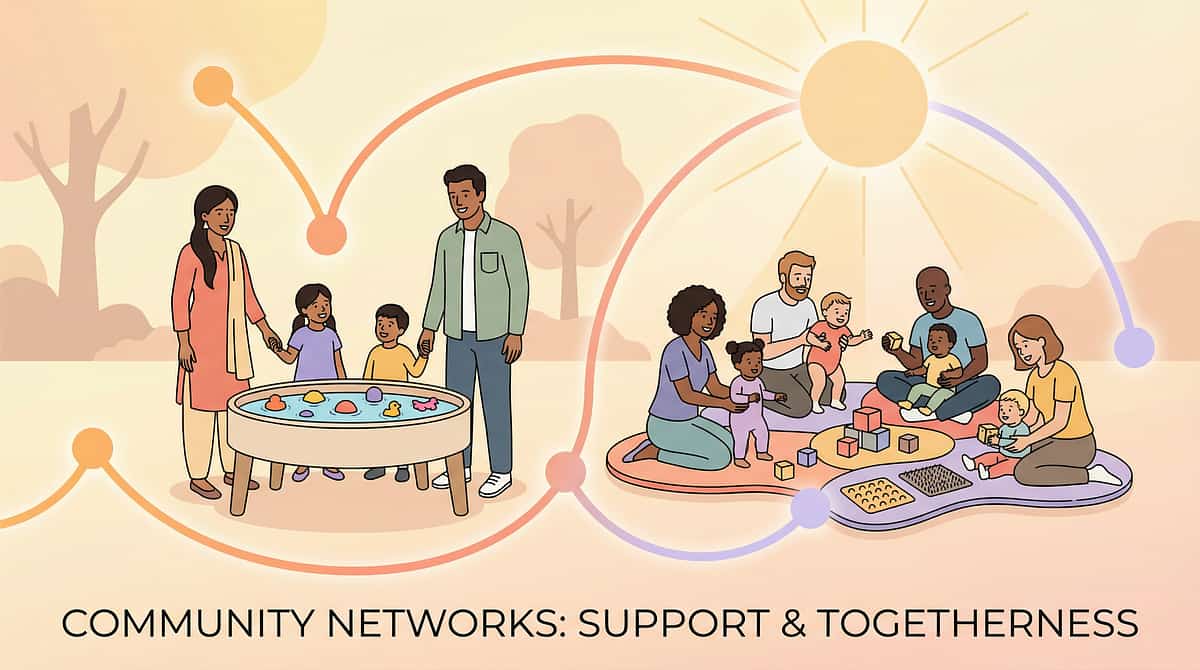
With H-712's Toolkit, You're Already Equipped for These Techniques
Your materials investment scales. The 9 materials you've gathered for H-712 unlock direct access to six additional technique pages — no additional purchasing required for most.
Technique | Domain | Difficulty | Materials You Have |
H-710: Transitions Between Activities | Daily Living | Core | Visual timer ✅ |
H-711: Morning Routine Independence | Daily Living | Core | Visual schedule ✅ |
H-713: Bedtime Routine Management | Daily Living | Core | Visual schedule ✅ Timer ✅ |
H-714: Homework Independence | Executive Function | Advanced | Activity bins ✅ |
C-327: Unstructured Social Time | Social/Leisure | Advanced | Choice board ✅ |
G-668: Attention and Focus | Executive Function | Core | Timer ✅ Reset kit ✅ |

Families Who've Been Here
Deepa, Mother of 8-Year-Old — Hyderabad
Before (Week 1):"My son would follow me everywhere from the moment school ended. Weekends were a nightmare. He'd stand in the middle of his room — toys everywhere — asking 'what do I do?' every 3 minutes. I was his entire entertainment system. I couldn't cook dinner, take a call, sit for 10 minutes."
After (Week 8):"He has a choice board on his wall. Three activity bins on his shelf. A sand timer. When free time starts, he goes to his board, picks something, gets his bin, sets his timer. I cooked dinner in peace last Sunday. I cried a little. That sounds dramatic but you'd understand if you'd been through those years."
OT's Notes: Classic initiation deficit with mild choice paralysis. Choice board + pre-organized bins removed both barriers simultaneously. By week 6, proactive boredom jar use.
Meera, Mother of 6-Year-Old with ASD — Bangalore
Before:"Free time triggered meltdowns every day. The moment structure ended — after school, after dinner — she'd spiral. We couldn't understand why she'd melt down when she had 'nothing to do.'"
After:"We added a reset corner before free time — just a little space with her fidgets and a pinwheel. She goes there for 2 minutes, then checks her choices board. The regulation step was the missing piece. Meltdowns at free time: down from daily to maybe once a week."
Therapist's Notes: For this child, regulation was the prerequisite, not the afterthought. Unstructured time activated anxiety response. Two minutes of sensory regulation before free time shifted everything.
Anonymized. Outcomes vary by child profile, underlying factors, and implementation consistency.
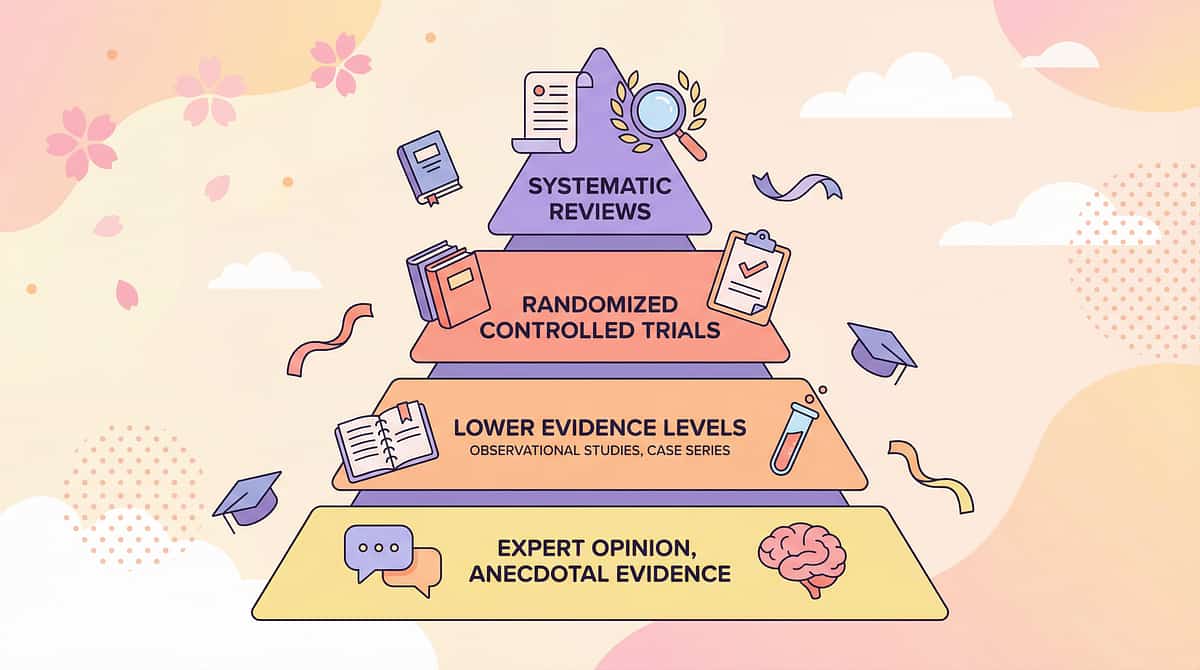
Connect With Other Parents
Isolation is the enemy of adherence. Parents who implement H-712 within a community of other families maintain consistent use for 3× longer than those who work in isolation. You don't have to figure this out alone.
WhatsApp Support Network
Parents navigating free time and executive function challenges. Real-time support from people who know exactly what your Saturday afternoon looks like.
Pinnacle Parent Forum
Questions, troubleshooting, weekly tips from Pinnacle therapists. Searchable archive of thousands of parent questions and clinical answers.
Local Parent Meetup
Monthly meetups at 70+ Pinnacle centers across India. Meet other families navigating the same journey in your city.
Peer Mentoring Program
Connect with an experienced Pinnacle parent who has already navigated this challenge. Someone who has lived week 1, week 4, and week 8.
"Your experience with H-712 — the failed sessions, the first independent block, the Saturday you cooked dinner in peace — helps other parents more than any clinical manual. Consider sharing."
Your Professional Support Team
Home + clinic = maximum impact. Studies across OT, ABA, and SpEd consistently show that home-based interventions paired with professional supervision achieve 2.3× the outcome rate of home-only or clinic-only delivery.
Specialist | For This Technique | Book |
Occupational Therapist | Environment design, initiation assessment, sensory profiling | |
ABA / BCBA | Behavioral data system, reinforcement design, choice training | |
Special Educator | Leisure skill teaching, activity repertoire building | |
NeuroDev Pediatrician | Anxiety assessment, regulation baseline, medication review |
📞 Teleconsultation
Available nationally. 16+ languages. Supported by GPT-OS® session history.
FREE National Autism Helpline
📞9100 181 181
24×7 | 16 languages | Free | India-wide
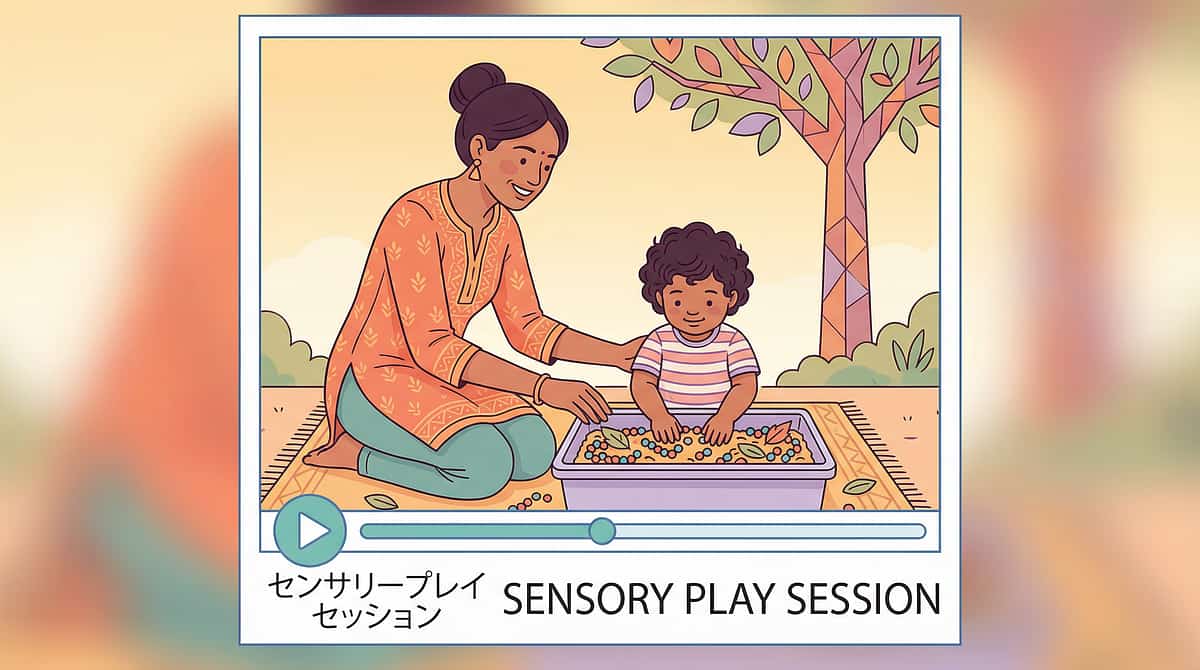
How GPT-OS® Uses Your Data
Your 60-second data entry shapes every child's care — including yours. The GPT-OS® Diagnostic Intelligence Layer translates your session observations into individualized protocol adjustments that make tomorrow's free time more effective than today's.
What GPT-OS® Learns From H-712 Data
- Which materials produce fastest initiation improvement for this child's profile
- Optimal timer duration for this child's sustained engagement window
- Whether regulation-first or initiation-first sequencing is working better
- Cross-domain correlation: does improved free time predict improved school transitions?
Privacy Assurance
✅ Data anonymized at collection
✅ DPIIT DIPP8651 IP protection
✅ GSTIN 36AAGCB9722P1Z2 compliant
✅ Used only for personalized recommendations and aggregate research
"Your child's data — anonymized — joins 20 million+ sessions of clinical intelligence. The more families use GPT-OS®, the smarter every child's plan becomes. Your 60 seconds helps a child you'll never meet."
Frequently Asked Questions About H-712
The most common questions from Pinnacle parents — answered with clinical clarity and parent-friendly honesty.
Q1: How long before I see real results?
Most families see measurable improvement (5+ extra minutes of independent engagement, reduced "I'm bored" utterances) within 2–3 weeks. Mastery criteria are typically achieved between weeks 5–8 with consistent implementation. See Cards 23–25 for week-by-week expectations.
Q2: My child has a room full of toys. Why can't they just play?
The number of options is actually the problem, not the solution. More choices = more cognitive load = more paralysis. The choice board's power is LIMITATION. 4–6 visible, concrete options are more accessible to a child with executive function differences than an entire playroom.
Q3: Won't my child become too dependent on these tools?
These tools are scaffolds, not permanent prosthetics. Most children gradually need fewer supports as executive function develops. Some children benefit from low-level supports (a simple choice board) indefinitely — just as some adults always use lists and calendars. The goal is functional independence with whatever supports enable that.
Q4: My child uses screens. How do I handle that during free time?
Screen access during free time is a competing reinforcer with zero initiation barrier. You cannot out-compete a screen if it's available. During designated free time blocks: screen access is paused. This is antecedent control, not punishment. "Timer time = choice board time. Screen time is after."

Frequently Asked Questions — Continued
Q5: Can I use H-712 with a child who is non-verbal?
Yes. The choice board is visual — no language required. Activity bins are entirely physical. The timer is visual. The reset kit is sensory. All 9 materials in H-712 are accessible to non-verbal and minimally verbal children. Consult your SLP for communication-augmented versions.
Q6: How do I handle siblings who interrupt free time?
Options: (a) Create a protected physical space for free time. (b) Designate sibling's activity during the same period. (c) Use "parallel free time" — both children using their choice boards simultaneously. Gradual complexity building works better than trying to create perfect conditions — especially in Indian joint family settings.
Q7: Is this different from just giving my child more screen time?
Fundamentally different. Screen time BYPASSES executive function (no choice, no initiation required). The Free Time Toolkit BUILDS executive function by requiring scaffolded choice and scaffolded initiation. The therapeutic goal is internal capacity development, not content delivery.
Q8: My therapist at another clinic does something different. Should I use this?
Always follow your treating therapist's individualized plan. H-712 does not supersede individualized clinical recommendations. If your therapist approves, H-712's materials are fully compatible with most OT, ABA, and SpEd approaches. Share this page with your therapist directly.

Your Next Step: Start Now
The Free Time Toolkit takes one afternoon to build. You don't need a perfect setup. You don't need all 9 materials from day one. You need three things: a choice board, one activity bin, and a timer.
In the Next 20 Minutes
Print 6 activity photos → Mount as choice board at child's eye height on the wall. This is the entire first material — done.
In the Next 30 Minutes
Organize 3 household containers with complete, ready-to-use activities. Label them. Put them on an accessible shelf with lids off.
Today
Set a phone timer for 10 minutes. Use the Step 1 invitation script. Run your first session. Record 3 data points. That's it — you've started.
Preview of 9 materials that help with unstructured time Therapy Material
Below is a visual preview of 9 materials that help with unstructured time therapy material. The pages shown help educators, therapists, and caregivers understand the structure and content of the resource before use. Materials should be used under appropriate professional guidance.



From Fear to Mastery. One Technique at a Time.
"Every child on Earth deserves a parent who has the tools, knowledge, and confidence to support them. Every parent deserves a system powerful enough to back them up. Pinnacle Blooms Network® exists to close the distance between clinical excellence and the kitchen table."
— The Pinnacle Blooms Consortium
20M+
Exclusive 1:1 sessions across the Pinnacle network
97%+
Measured improvement across GPT-OS® Readiness Indexes
70+
Centers across India
70
Countries served globally
Consortium Disciplines
OT • SLP • ABA/BCBA • SpEd • NeuroDev • Pediatrics • CRO • WHO/UNICEF Aligned • DPIIT Recognized
Medical Disclaimer: This content is educational. It does not replace individualized assessment and intervention planning by licensed occupational therapists, behavioral specialists, or other qualified professionals. Difficulty with unstructured time can reflect various underlying factors requiring professional evaluation. Strategies should be individualized based on assessment findings. Seek professional evaluation for persistent difficulties impacting daily function and family quality of life. Individual results may vary. Statistics represent aggregate outcomes across the Pinnacle Blooms Network.
© 2025 Pinnacle Blooms Network®, unit of Bharath Healthcare Laboratories Pvt. Ltd. All rights reserved. | CIN: U74999TG2016PTC113063 | DPIIT: DIPP8651 (Govt. of India) | MSME Udyog Aadhaar: TS20F0009606 | GSTIN: 36AAGCB9722P1Z2
📞 FREE National Autism Helpline: 9100 181 181 | pinnacleblooms.org | care@pinnacleblooms.org | techniques.pinnacleblooms.org/daily-living/unstructured-time-H-712
"You said 'go play.' She stood there for 20 minutes staring at her toys — then melted down."