

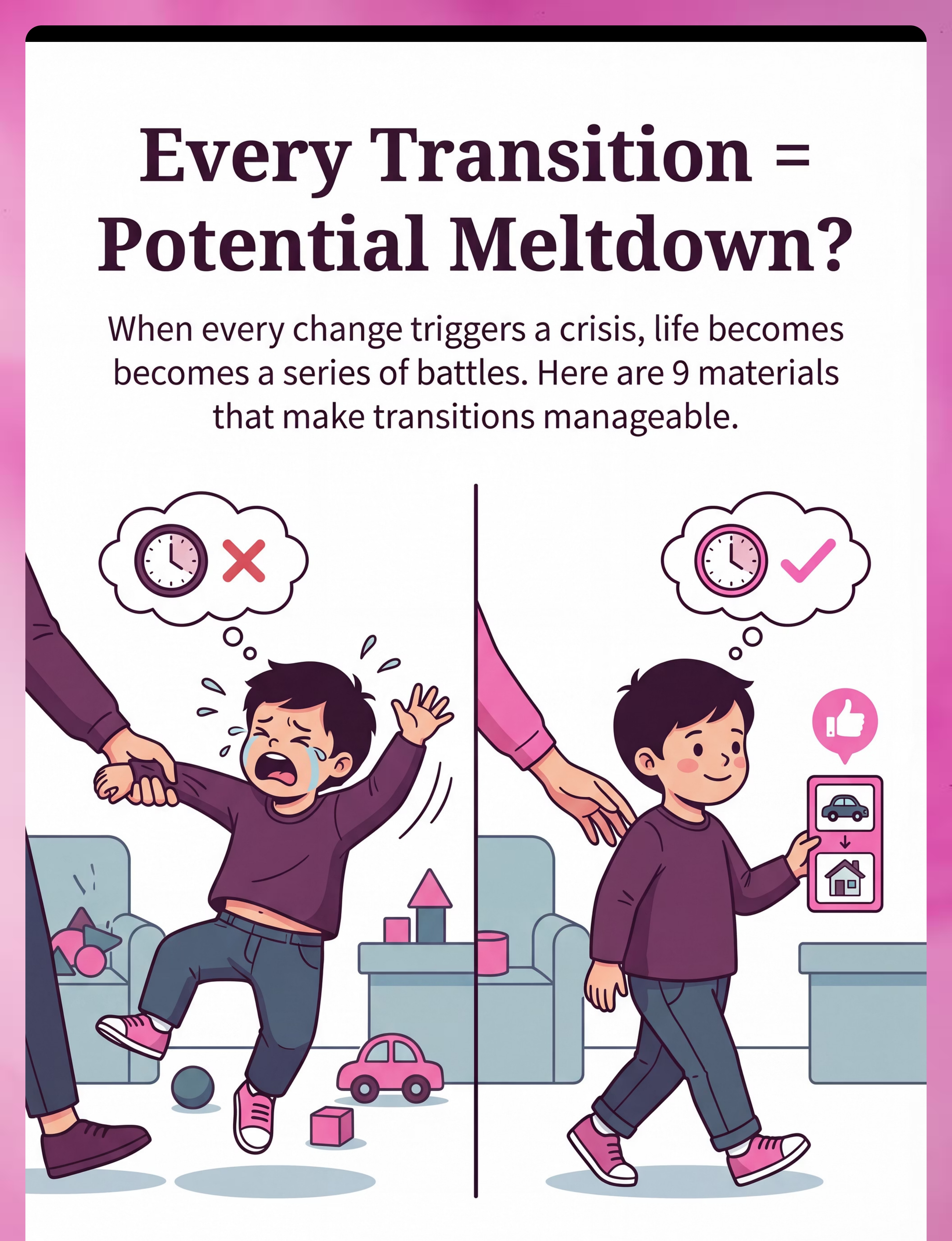
9 Materials That Help With Transition Training
From meltdowns at every change to smooth, supported transitions — practical tools that create the predictability children's brains need to shift, adapt, and move forward.
Daily Living & Independence Skills
Episode 977
Series Badge
Behavioral Flexibility · Transition Management · Emotional Regulation
Ages 2–12 · Home + School + Community
Designed for parents, teachers, therapists, and caregivers navigating the daily reality of transition difficulties — in every setting, at every change point.
Domain: Behavioral Flexibility / Adaptive Behavior / Executive Function / Emotional Regulation / Daily Living Skills
What You'll Find Here
- 9 specific, practical materials — each one named and explained
- DIY guidance for every material
- Safety notes and key insights
- A starter kit path for getting started today
"Every. Single. Transition. That's when it falls apart."
Leaving the house — meltdown. Coming home from the park — meltdown. Stopping screen time — meltdown. Bedtime — meltdown. Changing activities at school — meltdown. It's not just the big transitions, either. It's switching from one toy to another. It's putting shoes on. It's finishing a snack. It's literally any moment when one thing ends and another begins.
This is the voice of thousands of families. If this sounds like your daily reality, you are not alone — and this is not a parenting failure. This is a real neurological challenge with real, practical solutions.
"He CAN'T. It's not defiance."
I've tried warnings. 'Five more minutes!' He ignores them or uses them to ramp up his anxiety. I've tried timers. The beep triggers panic. I've tried choices. He can't process them in the moment. I've tried just pushing through — and it makes everything worse.
It's not defiance. I can see it in his face — he's overwhelmed, not oppositional. But knowing that doesn't make it easier. Every day is a series of battles at every junction. I'm exhausted from managing around transitions, from dreading the next one, from apologizing to everyone around us. I need help. Not just strategies — actual tools, materials, something concrete that makes transitions possible.
His teachers say the same thing. Circle time to centers? Disaster. Centers to lunch? Disaster. Specialists back to classroom? Disaster. Transitions are his biggest challenge — and it's not unique to home.

Understanding the Problem: What Are Transition Difficulties?
Clinical Term: Transition Difficulties / Task-Switching Deficits / Insistence on Sameness / Behavioral Inflexibility / Change Intolerance
Transition difficulties refer to significant challenges in shifting from one activity, location, or state to another. These difficulties are particularly common in autism spectrum disorder, ADHD, and other neurodevelopmental conditions. Transitions require multiple executive function skills working simultaneously — and for children with neurodevelopmental differences, any or all of these components may be impaired.
In autism specifically, the DSM-5 criteria include 'insistence on sameness, inflexible adherence to routines, or ritualized patterns' — transition difficulties are a core feature, not a secondary problem. Neuroimaging research points to differences in the anterior cingulate cortex and prefrontal regions involved in task-switching.
Why It Matters: The Real-World Impact
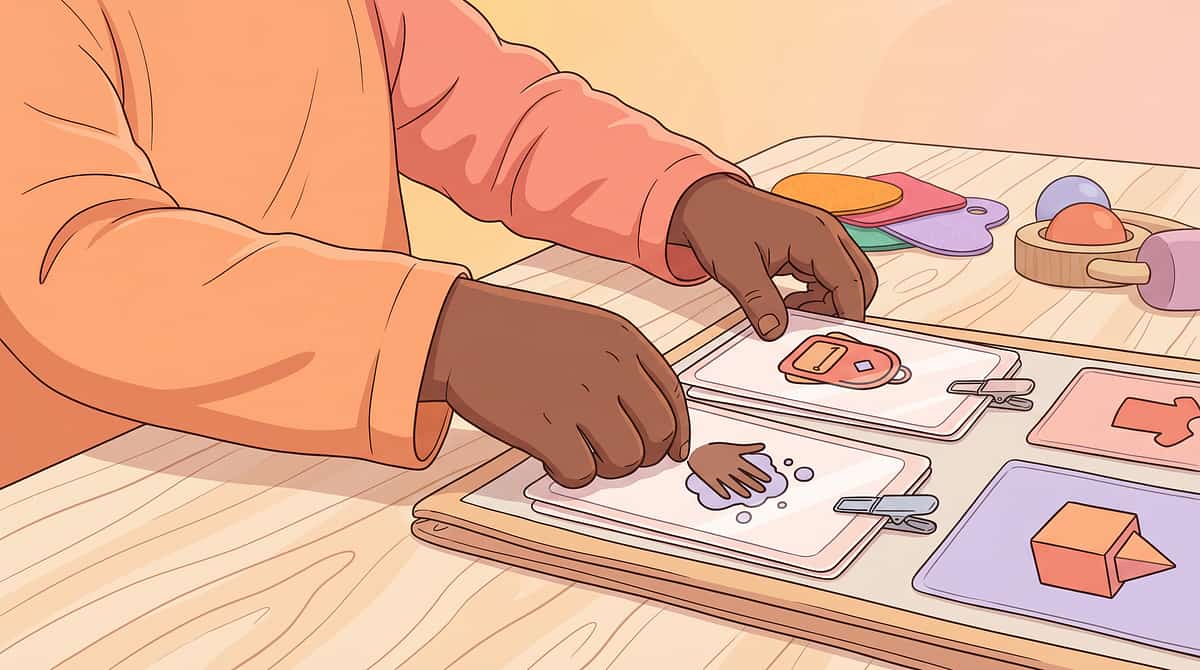
Transition difficulties cause significant functional impairment across every domain of a child's life. They limit participation in activities, create chronic family stress, disrupt educational settings, and can lead to challenging behaviors including aggression, self-injury, and elopement.
Family Life
Families restructure their entire lives around minimizing transitions — avoiding outings, restaurants, activities. Becoming prisoners of inflexibility.
School Setting
Every activity change, every schedule shift, every specialist visit becomes a potential crisis. Learning is disrupted. Social participation is limited.
Community
Simple outings — a store trip, a playground visit — become multi-meltdown ordeals. Families withdraw from community life.
Child's Well-Being
The child is suffering. Their body tenses. Breathing changes. Fight-or-flight triggers before the transition even begins. By the time it happens, they're already dysregulated.

Common Signs of Transition Difficulties
Some difficulty with transitions is developmentally normal in toddlers. But intensity, duration, and persistence beyond age 3–4 — or difficulties that significantly exceed same-age peers — warrant attention. Look for these signs:
Behavioral Signs
- Meltdowns, tantrums, or shutdowns at activity changes
- Extreme difficulty stopping preferred activities
- Physical resistance — going limp, running away
- Aggression or self-injury triggered by transitions
- Need for specific rituals or sequences during transitions
Emotional & Anticipatory Signs
- Anxiety or distress when routines change
- Need for excessive warnings or preparation time
- Anticipatory anxiety about upcoming transitions
- Difficulty with transitions even to preferred activities
- Recovery time needed after transitions before engaging
Context-Specific Signs
- Better transitions with specific people or in specific contexts
- Resistance to both leaving AND arriving at locations
- Difficulty with unexpected schedule changes
- Transition difficulties increasing when tired or stressed
The Developmental Context: Goals That Actually Make Sense
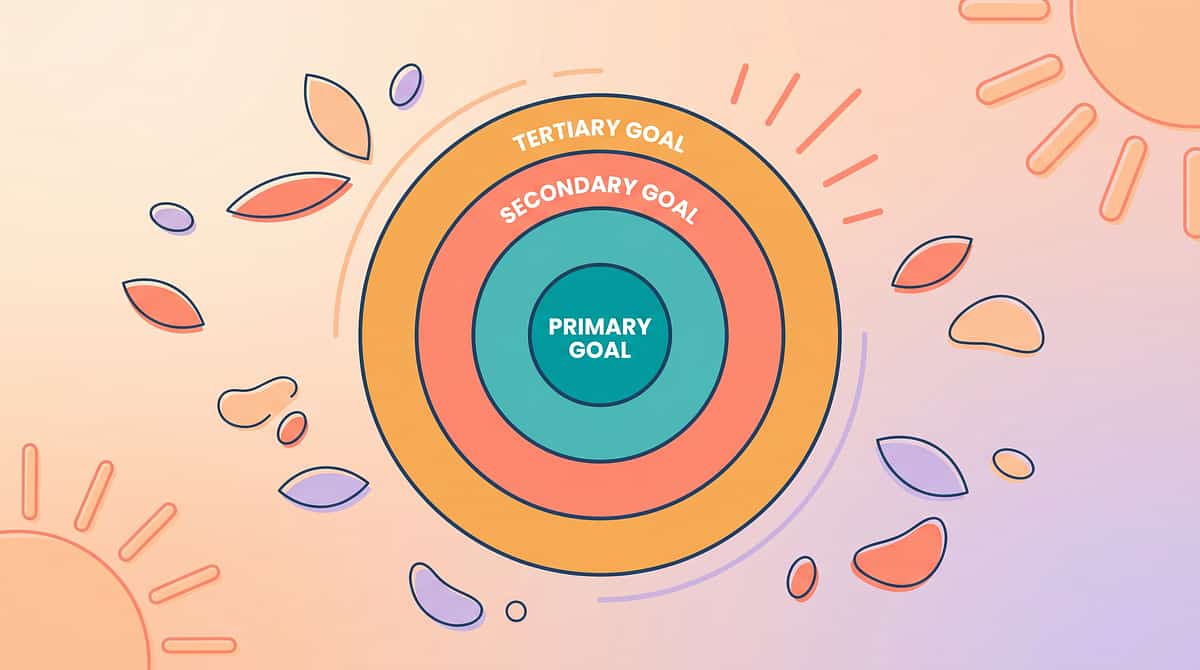
The developmental goal is not to make children appear neurotypical. It's to build internal strategies and external systems that make transitions manageable — with whatever support is genuinely needed.
Maximum External Support
Adult-managed transitions with multiple cues, full visual schedule management, and high-frequency reinforcement.
Shared Management
Child participates in setting timers and checking schedules with adult guidance and consistent reinforcement.
Prompted Independence
Child uses supports independently when given verbal reminders. Self-access to transition tools with intermittent reinforcement.
Flexible Adaptation
Child handles expected and some unexpected transitions using internalized strategies and self-advocacy.
Over time, children may progress through these stages — but both outcomes are valid: some children will always need external supports; others will gradually internalize the skills. The goal is functional, sustainable transitions — however that's achieved.

9 Materials at a Glance
Here are all nine materials covered in this resource. Each addresses a specific component of what makes transitions so difficult for children with neurodevelopmental differences.
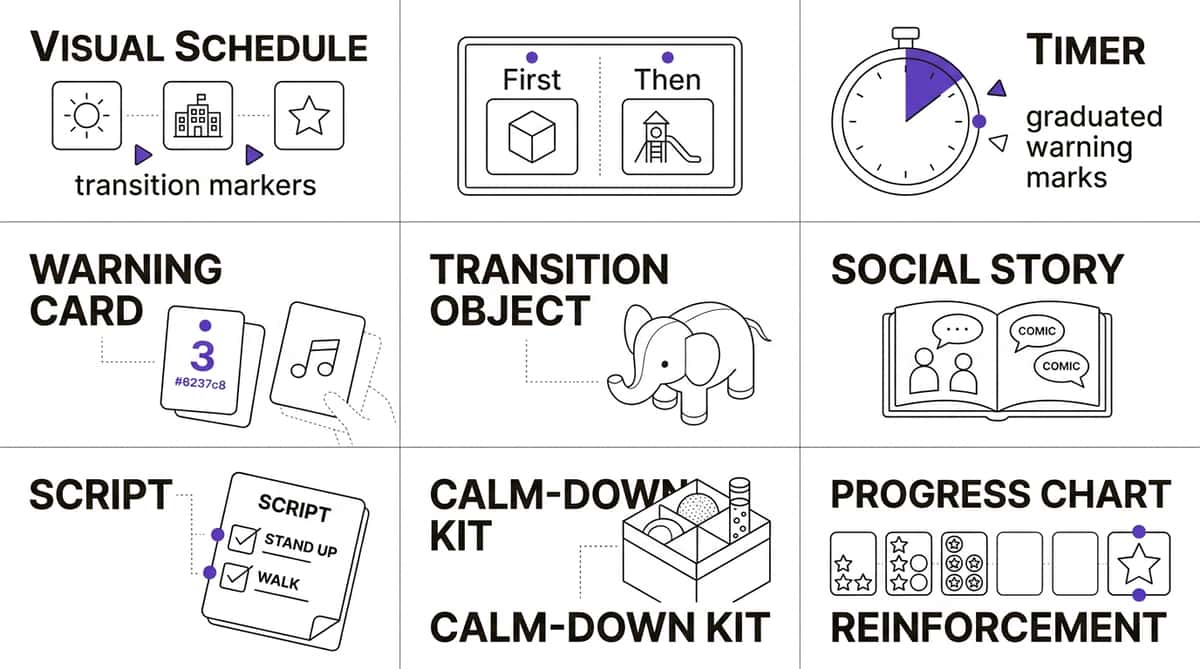
Material 1 of 9
Predictability
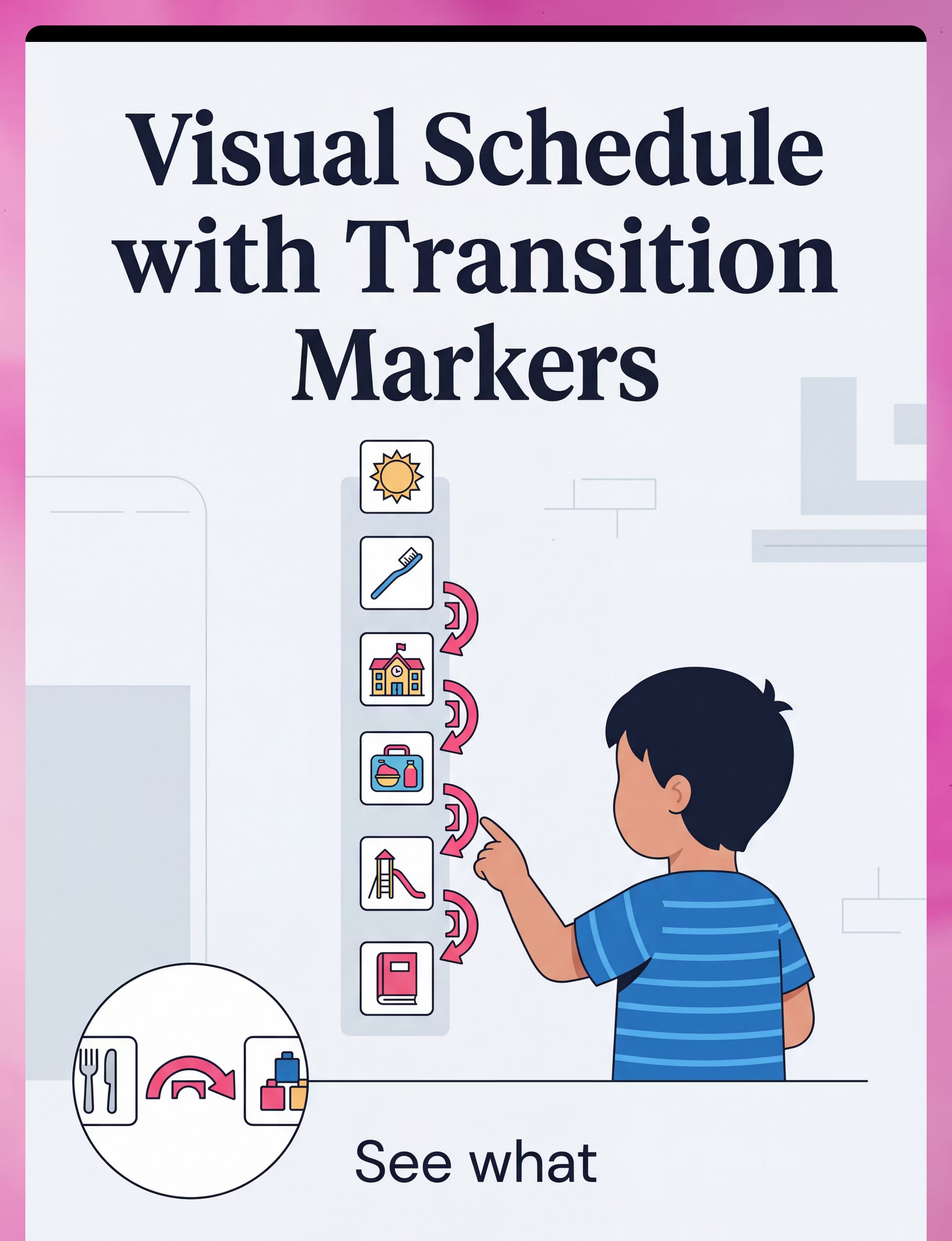
Visual Schedule with Transition Markers
"See what's coming, including the changes."
Why It Helps
Transition difficulties often stem from not knowing what comes next or when the current activity will end. A visual schedule externalizes the sequence of the day, making the abstract concept of "what's happening" concrete and visible.
But a standard visual schedule isn't enough for severe transition difficulties — it needs explicit transition markers that highlight the moments of change. The markers serve as advance warning: "A change is coming." The schedule also answers the anxiety-provoking question "And then what?" — the child can see what comes after the transition, reducing fear of the unknown.
Key Insight: Predictability is the antidote to transition anxiety. When children can see what's coming, they can prepare themselves.
How Transition Markers Work
Transition markers might be a specific symbol (a star, an arrow, a "change" icon) placed between activities, or color-coding that distinguishes transition points from activities. Think: "Math → CHANGE → Lunch" not just "Math, Lunch."
Price Range
₹200–800 | DIY options available at near-zero cost
Safety Note
Introduce the schedule positively — it's a helpful tool, not a control mechanism. Let the child interact with the schedule, not just receive information from it.

Visual Schedule: DIY Guide
Match the Level
Use objects for earliest learners, photos for concrete thinkers, icons/symbols for more abstract understanding, and words for readers. Generic schedules are less meaningful — use your child's actual activities and locations.
Create Distinct Transition Markers
Design a visual for "transition" that looks different from activity icons — an arrow, a bridge, footsteps, or a custom symbol. Place it between activities, not alongside them.
Make It Moveable
Allow activities to be moved to a "done" section or removed entirely. Shows progress through the day. A moveable "NOW" marker (an arrow or clip) shows the child exactly where they are.
Build Consistency
Schedule in the same location, consistently referenced. Create a portable version for trips and community outings. At day's start, walk through the schedule together — including all transitions.
Materials needed: Schedule board or strip · Velcro or magnet system · Activity pictures or icons · Transition marker symbols · "Now" indicator · Done section or envelope
Material 2 of 9
Time
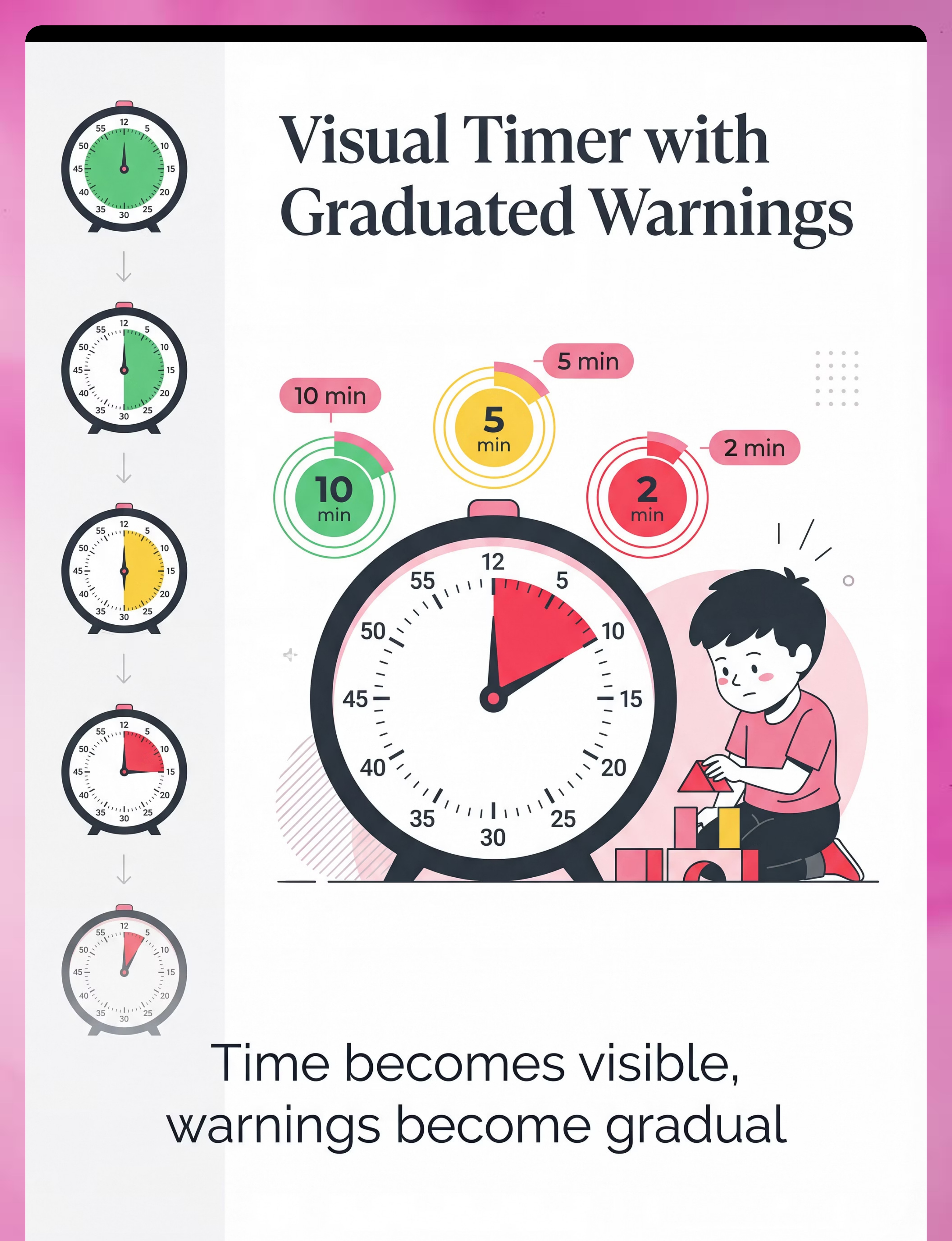
Visual Timer with Graduated Warnings
"Time becomes visible, warnings become gradual."
Why It Helps
Abstract time concepts like "five more minutes" are meaningless to many children with developmental differences. They can't feel how long five minutes is or see it passing. Visual timers make the passage of time concrete and visible — typically through color that disappears or sand that flows.
For transition difficulties specifically, a single timer isn't enough. Graduated warnings prepare the nervous system gradually rather than suddenly. Instead of one warning then transition, the child might see: 10 minutes (yellow) → 5 minutes (orange) → 2 minutes (red) → transition. Each warning is a smaller step toward the change, allowing incremental adjustment.
The timer also removes parent/teacher as the "bad guy" — the timer ends the activity, not the adult.
Key Insight: Abstract time becomes concrete when you can see it. Graduated warnings prepare the brain in steps, not sudden shifts.
Price Range
₹300–1,500
Safety Note
Some children become more anxious watching time disappear. Observe your child's response — if the timer increases anxiety, try shorter durations, less visible countdowns, or alternative methods.

Visual Timer: DIY Implementation Guide
Choose the Right Timer Type
Time Timer (shows red disappearing), sand timers (visual flow), digital visual timer apps, or DIY options. Choose based on your child's visual processing style.
Set Up Graduated Warnings
Build a sequence, not a single warning: 10-min timer (green) → 5-min (yellow) → 2-min (red) → 30-second verbal "almost time." Each step is a smaller increment toward the transition.
Remove Auditory Alerts
For sensory-sensitive children, the beep can trigger the meltdown you're trying to prevent. Use visual-only timers or turn off sound completely.
Build Positive Association
Use timers during transitions to preferred activities first. Start with preferred-to-preferred. Build positive association before applying to difficult transitions.
Materials needed: Visual timer (Time Timer brand or similar) · Multiple timers for different locations · Warning color system · Timer app for portability

Material 3 of 9
Predictability
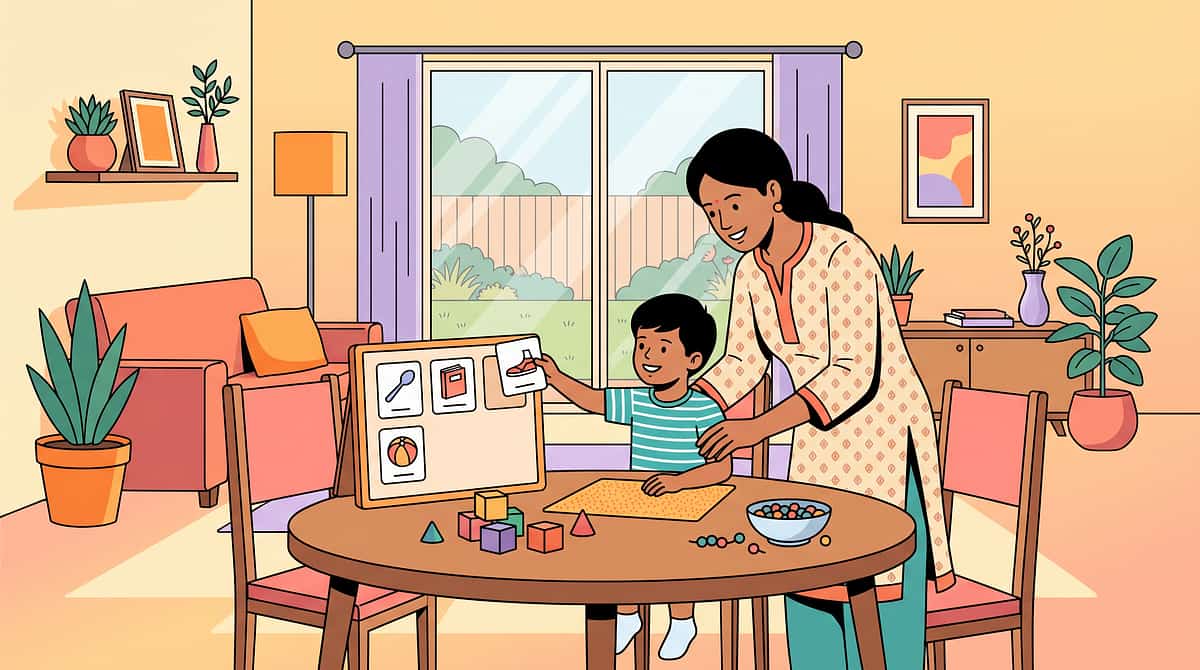
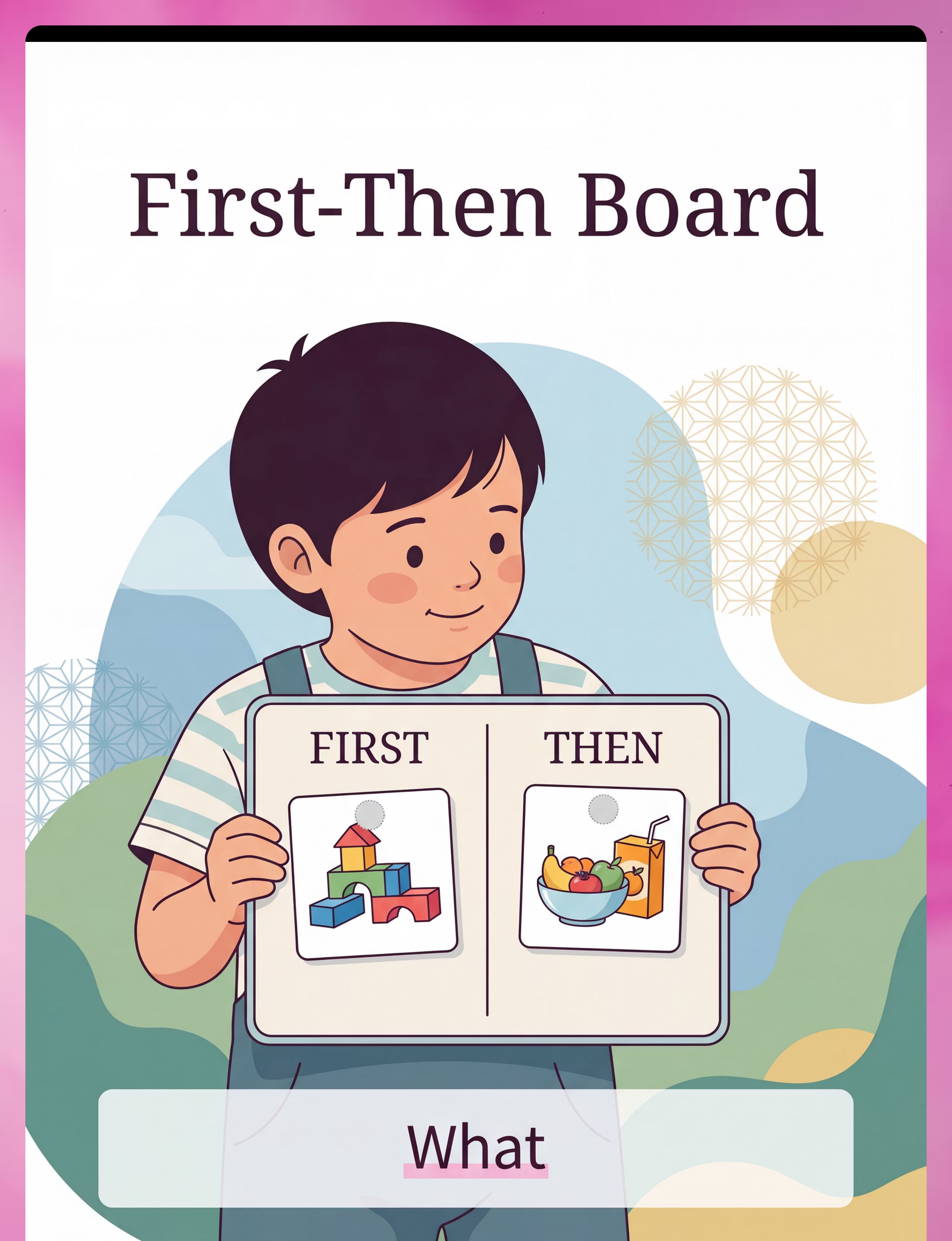
First-Then Board
"What's now, what's next — clearly visible."
Why It Helps
The First-Then board is one of the most effective transition tools because it directly addresses the question driving transition anxiety: "What happens after this ends?" The board shows two things — the current or required activity ("First") and what comes after ("Then"). This simple structure creates contingency clarity.
"First" might be a non-preferred activity (putting on shoes); "Then" might be a preferred activity (going to the park). The board makes the connection explicit and visual. The child isn't just losing the current activity — they're gaining the next one. Instead of fighting about stopping, the focus shifts to what's coming.
Key Insight: Knowing what comes next reduces the fear of what's being lost. First-Then makes the sequence explicit.
Price Range
₹150–500 | Easily made at home
Safety Note
The First-Then board is a communication tool, not a bribery system. "Then" should be what naturally comes next, not a reward offered to prevent a meltdown.

First-Then Board: DIY Guide
Keep It Simple
Board divided into two sections — "First" on left, "Then" on right. Some children prefer top/bottom orientation. Use Velcro to attach and change pictures flexibly throughout the day.
Match Representation Format
Use the same picture/icon format as other visual supports. Consistency across all supports aids comprehension and reduces learning a new system.
Update Immediately
After "First" is completed, immediately move "Then" picture to the "First" position — it's now the current activity. This maintains trust in the system and keeps it functionally accurate.
Build in Choice
When possible, let the child choose "Then" from options. Offering 2–3 choices increases buy-in and reduces resistance significantly. Use the board proactively — before transitions, not during meltdowns.
Materials needed: First-Then board (purchased or homemade) · Velcro strips · Picture library matching child's activities · Portable version for travel and school
Material 4 of 9
Bridging
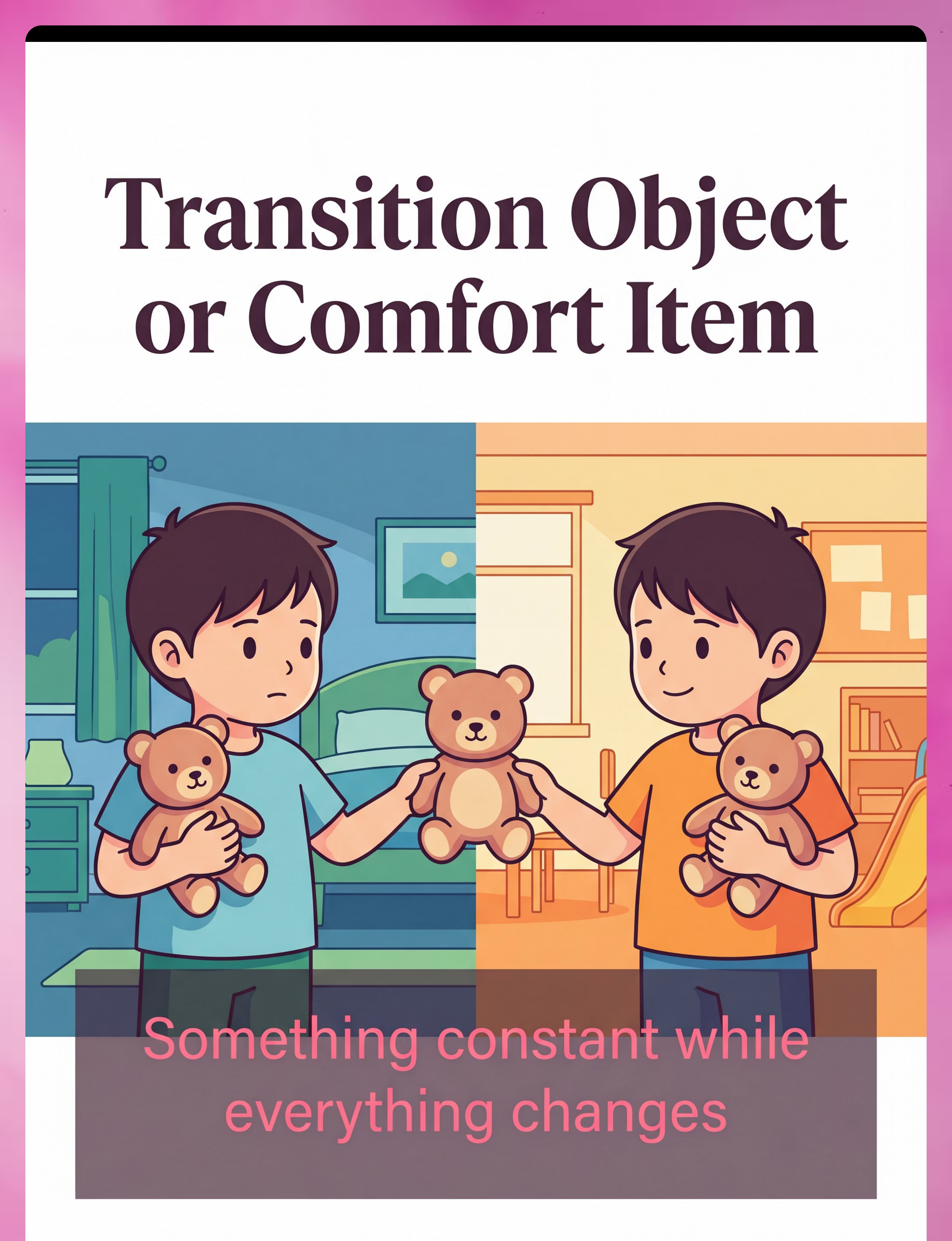
Transition Object or Comfort Item
"Something constant while everything changes."
Why It Helps
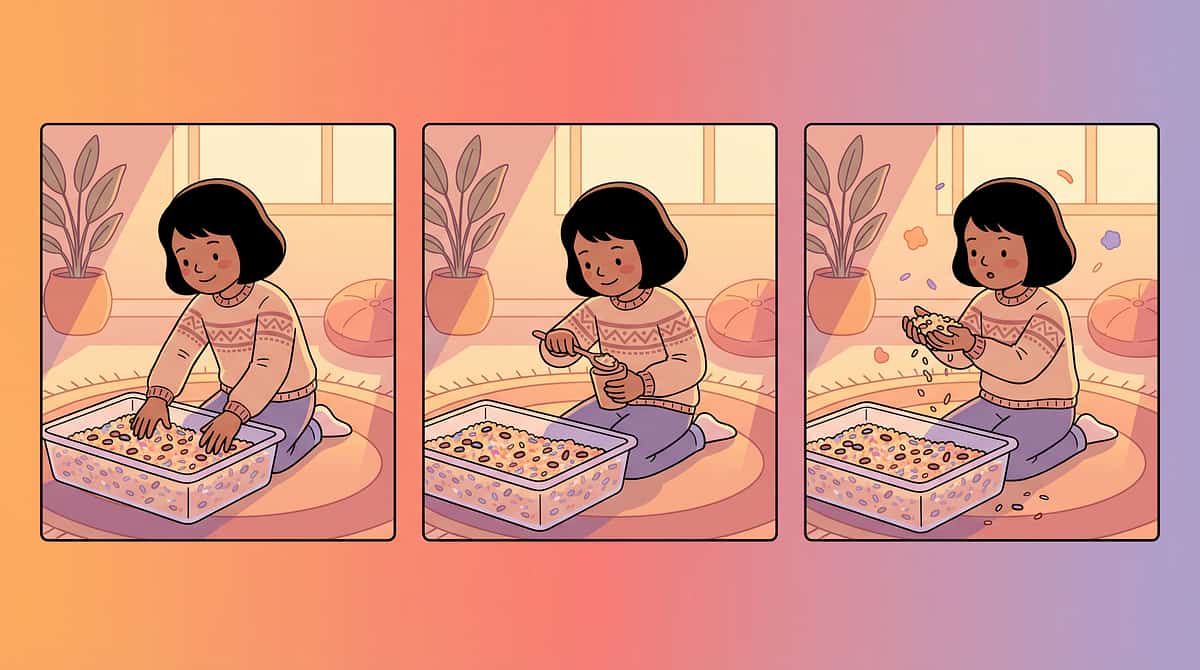
Transition objects provide continuity across change — something that travels with the child from one activity, location, or state to another. While everything else is changing, the transition object remains constant. This constancy can be profoundly regulating for children who struggle with transitions.
The object might be a specific toy, a sensory item (fidget, stress ball, chewy), a picture of something meaningful, or any item with special significance. Some children benefit from objects that connect to the destination ("carry this picture of the playground as we go to the playground"). Others need objects that connect to what they're leaving ("take one block from block play to carry to snack"). The object serves as a bridge, making the change feel less absolute.
Key Insight: Change is less threatening when something constant comes with you. Transition objects are bridges across the unknown.
Price Range: ₹100–500 | Often free — child selects an existing meaningful item
Transition Object: DIY Guide
Child-Selected
Let the child choose the object when possible. Their choice has significantly more regulatory power than your assignment. Their preferences matter most.
Add Sensory Component
Objects with sensory properties — squishy, textured, chewable — provide additional regulation during transition stress. The sensory input helps regulate the nervous system during change.
Make It Official
"This is your transition buddy. He goes with you to help with changes." Naming creates significance and intentionality. The object becomes associated with successful transitions.
Visual Pairing Option
Some children respond to carrying the visual icon from the schedule — the picture of the next activity becomes the transition object, connecting the tool systems together.
Safety Note: Ensure transition objects are safe and appropriate for all settings. An object that works at home might not be appropriate at school. Have a backup object for when the primary is unavailable.
Materials needed: Transition object (child's choice) · Sensory items as options · Photos or icons if using visual transition objects · Small container for portable objects
Material 5 of 9
Cueing
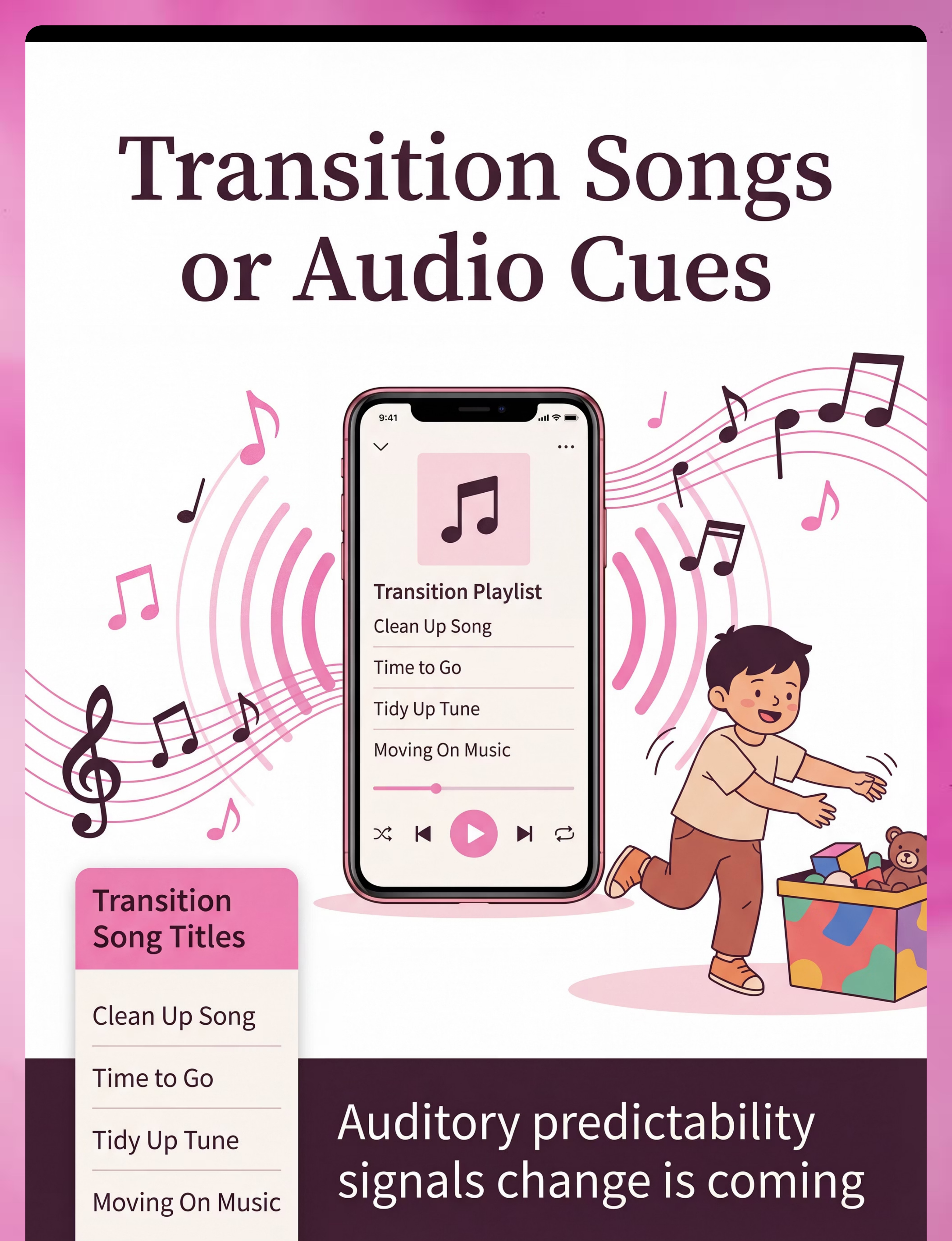
Transition Songs or Audio Cues
"Auditory predictability signals that change is coming."
Why It Helps
Auditory cues can powerfully signal transitions, especially for children with auditory learning strengths. A consistent transition song or audio cue becomes a reliable predictor of change — when this sound happens, a transition is coming. This predictability can reduce transition anxiety because the child knows exactly what's happening when they hear it.
Transition songs work well for several reasons: they're engaging, they have built-in duration (the song length provides preparation time), they're consistent, and they can include instructional content. Many classrooms already use transition songs successfully — these can be adapted for home use. For some children, having control over the audio (pressing play themselves) increases acceptance and reduces feeling that transitions are done to them.
Key Insight: Consistent audio cues create predictability through sound. When the song starts, the brain can prepare for change.
Price Range
₹0–200 | Free options widely available
Safety Note
Some children find sudden audio aversive even when the song is familiar. Observe for signs of auditory sensitivity and adjust volume and song selection accordingly.
Transition Songs: DIY Implementation Guide
Choose Carefully
Song should be calming rather than overstimulating. Test songs before committing — observe your child's response. What's soothing to you may not be soothing to them.
Use the Same Song Consistently
The same song for the same transition type, every time. "Clean-up song" is always that specific song. Predictability is the entire mechanism — variety defeats the purpose.
Match Length to Need
Song length should match needed transition time. Songs with clear beginning and ending work better than fade-outs — the child knows exactly when the transition period is over.
Give Child Control
Let the child start the music when possible — even pressing play on a device increases sense of control and reduces resistance to the transition itself. Different songs for different transitions helps distinguish types.
Non-music option: For children who don't respond to music, other consistent audio cues work equally well — a chime, a bell, a specific phrase, or a timer sound. Consistency of the cue matters more than the type. Materials needed: Music player or phone · Selected transition songs or playlists · Audio cue device (chime, bell) · Visual pairing if needed

Material 6 of 9
Understanding
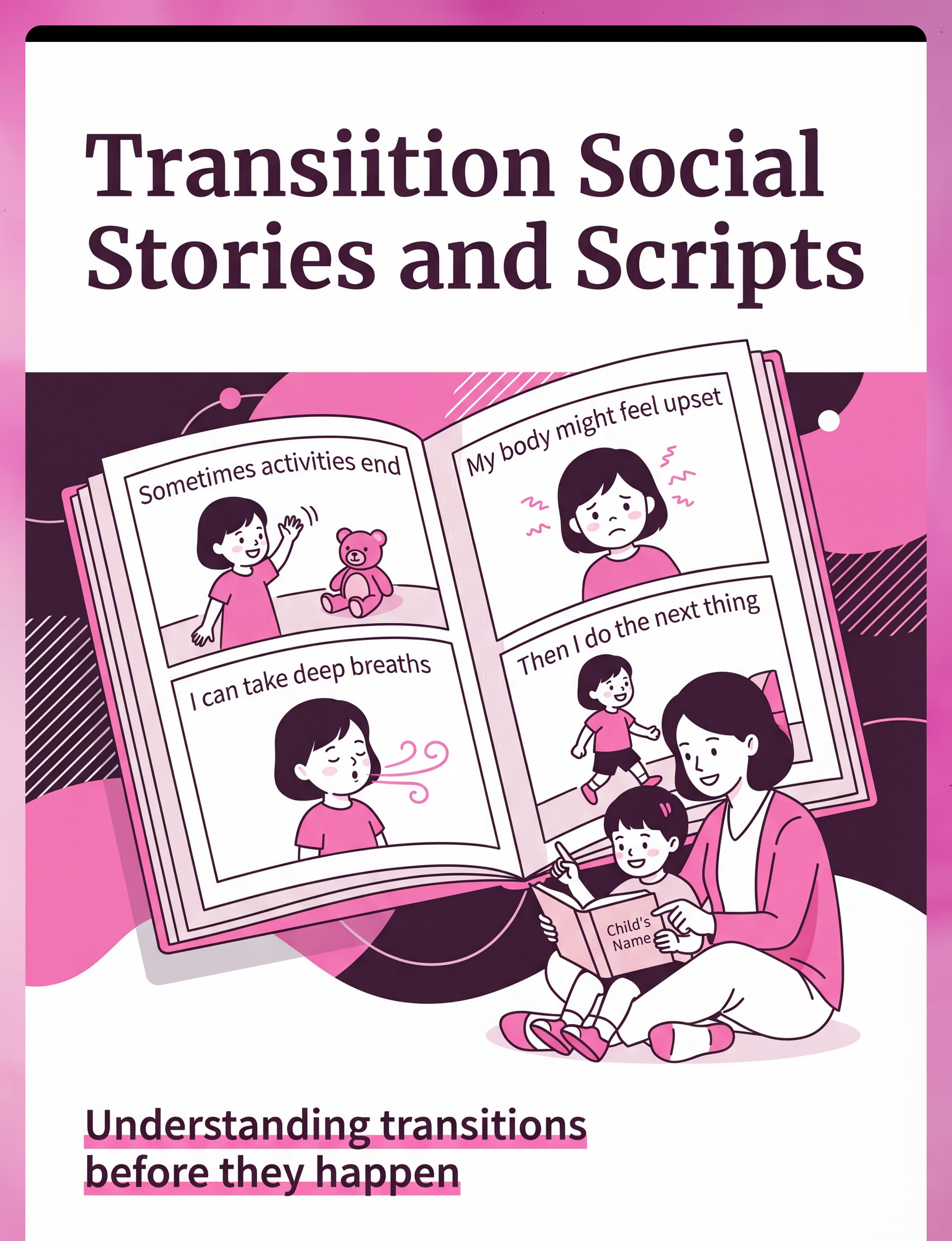
Transition Social Stories and Scripts
"Understanding transitions before they happen."
Why It Helps
Social stories provide cognitive preparation for transitions by explaining what will happen, why it happens, and how the child can cope. Unlike in-the-moment supports, social stories are teaching tools used before transitions to build understanding and skills.
A transition social story might explain: what transitions are, why they happen, how the child's body might feel during transitions, what strategies can help, and what will happen after the transition. This cognitive framework helps children understand their experience and provides language for what's happening.
Scripts take social stories further by giving children specific things to say or do during transitions. Practicing these scripts outside of transition moments builds automatic responses that can be accessed during transition stress.
Key Insight: Understanding reduces fear. When children know what transitions are and what to do, they're better equipped to handle them.
Price Range: ₹100–400 | Fully DIY-able
Safety Note
Social stories are teaching tools, not crisis interventions. Use during calm times to build skills — not during meltdowns.

Social Stories: DIY Creation Guide
Personalize Deeply
Use the child's name, their actual activities, their actual settings. Generic stories are significantly less effective than stories that describe the child's real life and real transitions.
Include Body Awareness
"Sometimes my body feels upset when things change. My heart might beat fast. My muscles might feel tight." Helping children recognize transition distress in their body is the foundation of self-regulation.
Provide Coping Steps
"I can take deep breaths. I can squeeze my transition object. I can look at what's coming next." Include specific, actionable strategies — not just feelings acknowledgment.
End with Success
"When I handle transitions, I feel proud. I can enjoy the next activity." Positive outcome endings build confidence and motivation toward the behavior.
Practice Scripts: Don't just read scripts — practice them. Role-play transitions using the script. "Let's pretend the timer went off. What do you do? What do you say?" Read stories daily, not just during crisis. Build familiarity before it's needed.
Materials needed: Social story books (purchased or homemade) · Script cards · Photos for personalization · Practice schedule
Material 7 of 9
Regulation
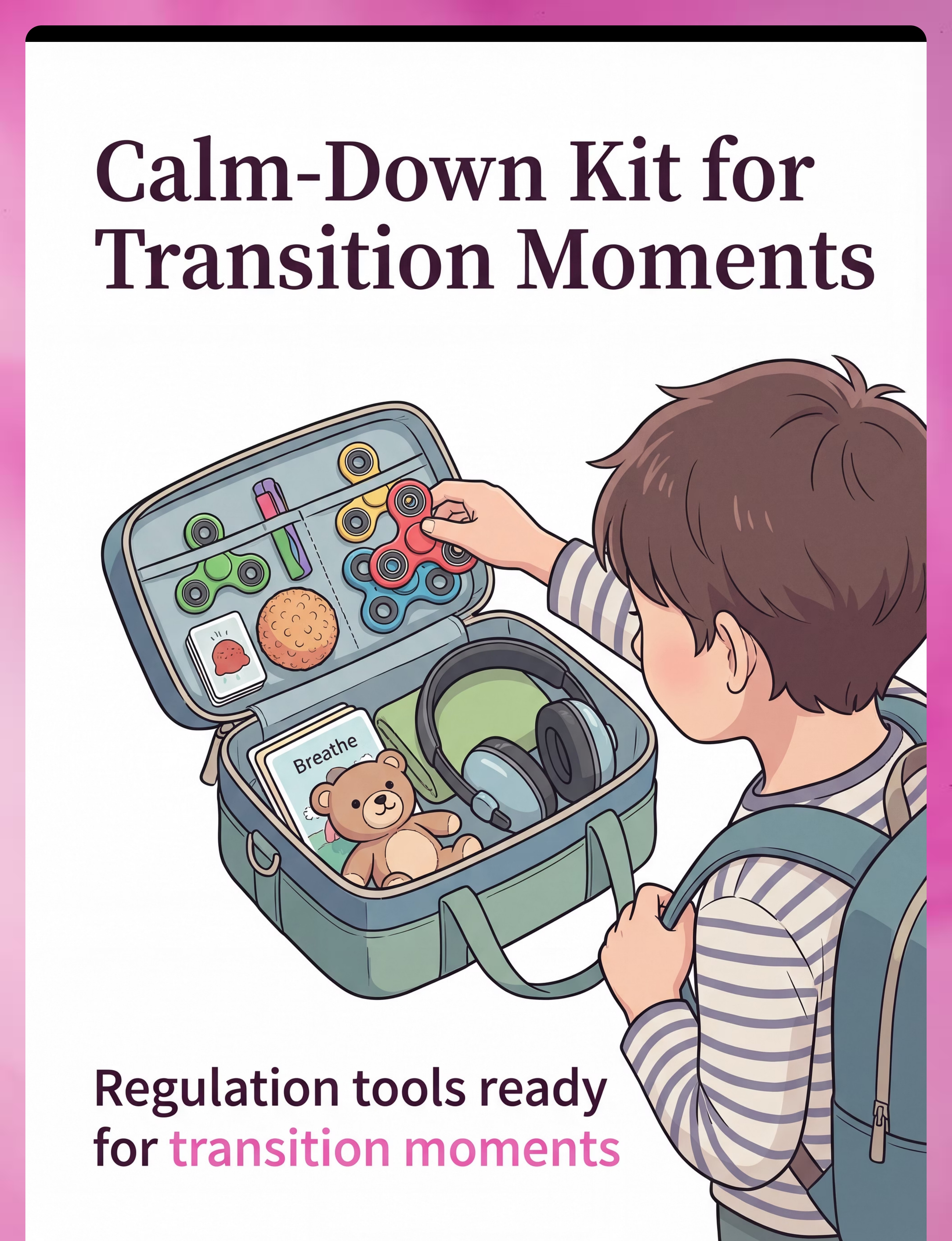
Calm-Down Kit for Transition Moments
"Regulation tools ready when the nervous system needs support."
Why It Helps
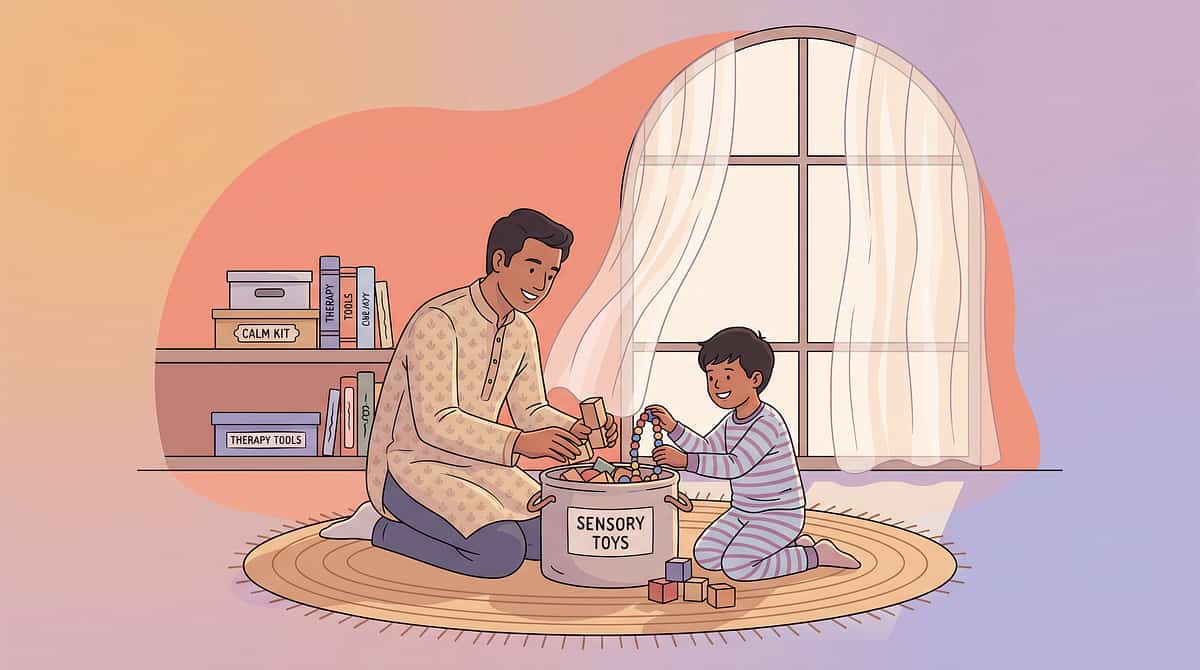
Even with preparation and predictability, transitions can trigger dysregulation. A calm-down kit provides immediate access to regulation tools specifically for transition moments. This isn't a general sensory kit — it's curated for the transition context, portable, and ready to deploy when transition stress escalates.
Having the kit present normalizes transition difficulty: "Transitions can be hard, and here are your helpers." Over time, children learn to access kit items independently, building genuine self-regulation capacity. The kit also provides a physical focus during transitions — instead of fixating on what's being lost, the child can engage with kit items, preventing escalation before it starts.
Key Insight: Having regulation tools immediately available prevents escalation. The kit makes support portable and consistently accessible.
Price Range
₹300–1,000
Safety Note
Ensure all kit items are safe and developmentally appropriate. No choking hazards for younger children. Check items regularly for wear and safety.

Calm-Down Kit: Building Your Kit
Sensory Variety
Include different sensory inputs — tactile (fidget, putty), oral (chewy, sour candy), proprioceptive (stress ball, resistance band). Variety ensures something works across different dysregulation states.
Visual Supports
Mini First-Then card, coping strategy visual, "I can do hard things" card. These connect the kit to the broader transition support system already in place.
Comfort Item
Small comfort object, photo of family, something with emotional significance. The emotional anchor matters as much as the sensory regulation for many children.
Sensory Reduction
For children with sensory sensitivities, include items that reduce input — earplugs, sunglasses, small blanket. The transition environment itself may be part of the dysregulation.
Teach Use Explicitly: "When you feel your body getting tight during a change, you can squeeze this." Start with adult prompting; fade to child self-initiation over time. Let child help select items — their preferences matter more than what "should" work.

Material 8 of 9
Time
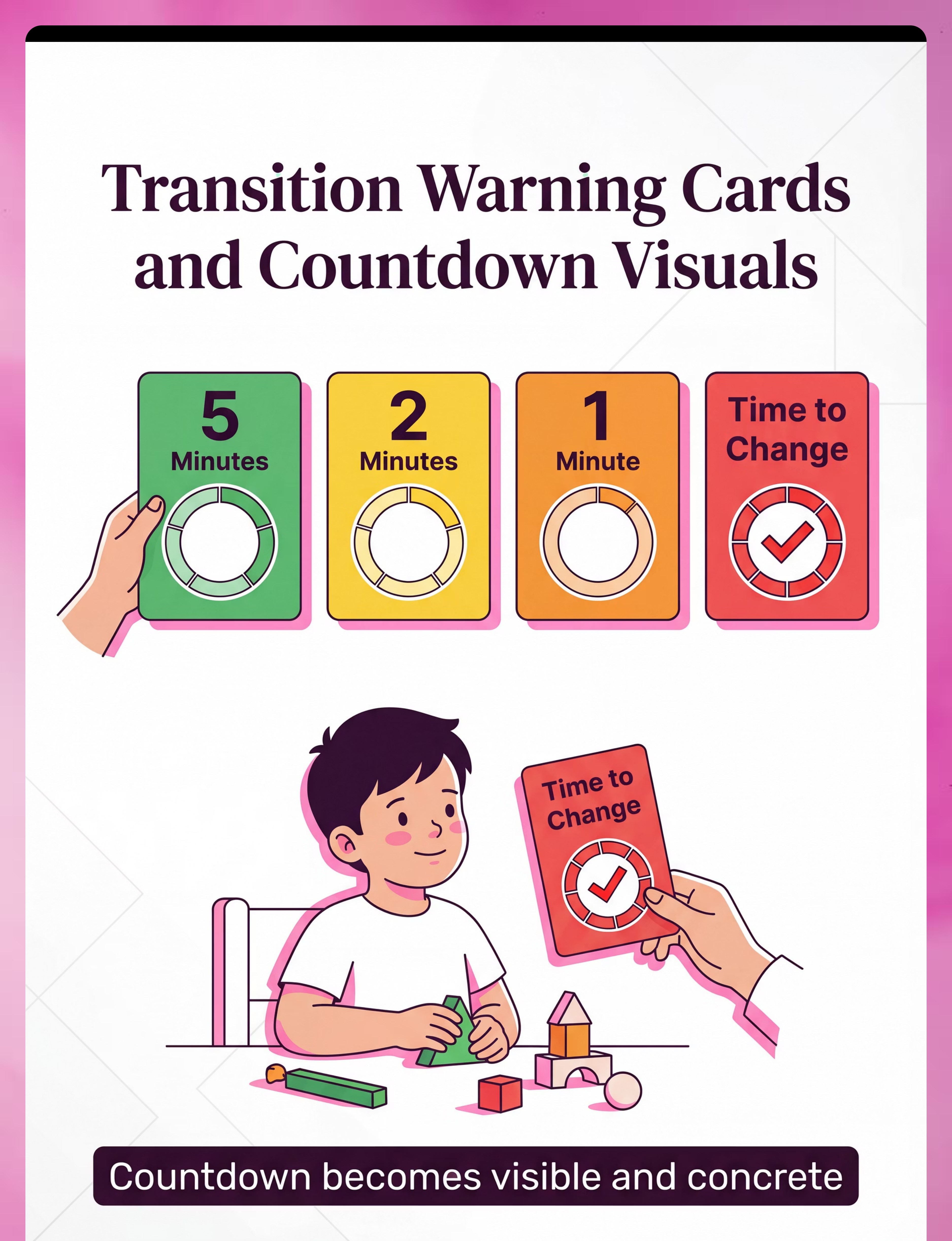
Transition Warning Cards and Countdown Visuals
"Countdown becomes visible and concrete."
Why It Helps
Verbal warnings often fail for children with transition difficulties — either they don't process verbal information well, or verbal warnings have become associated with anxiety. Visual warning cards and countdown systems provide the same information through a different modality.
Warning cards are physical objects shown to the child at specific intervals: a "5 minutes" card, a "2 minutes" card, a "1 minute" card, then a "time to change" card. Each card looks obviously different, creating clear visual distinction between warning levels. The physical card can be placed near the child, held by them, or attached to the activity — and unlike spoken words that disappear, the visual stays present as the child processes the information.
Key Insight: Visual warnings stay present and concrete. Unlike words that disappear, cards remain visible as the child processes the information.
Price Range: ₹100–300 | Fully DIY-able

Warning Cards: DIY Creation Guide
Build Clear Progression
Cards should have obvious visual progression — numbers (5–4–3–2–1), colors (green to red), or symbols (full to empty). Each card must look obviously different from others. Don't rely on subtle differences.
Make Them Durable
Laminate or use sturdy material — cards will be handled frequently. Approximately playing-card to index-card size works for most children. Combine number/word with visual for multimodal support.
Let Child Hold the Card
Physical possession of the warning card can increase processing and acceptance. When the child holds the card, they participate in the countdown rather than just receiving information passively.
Make the Final Card Distinct
The "time to change" or "transition now" final card should be clearly distinct from all warning cards. This is the definitive signal — it should look different from every preceding card in the sequence.
Safety Note: Observe whether countdown visuals increase or decrease anxiety. Some children do better with less advance notice. Adjust warning timing based on your child's individual response.
Materials needed: Warning cards (numbered or colored) · Laminating materials · "Transition now" final card · Card ring or holder · Multiple sets for different settings

Material 9 of 9
Motivation
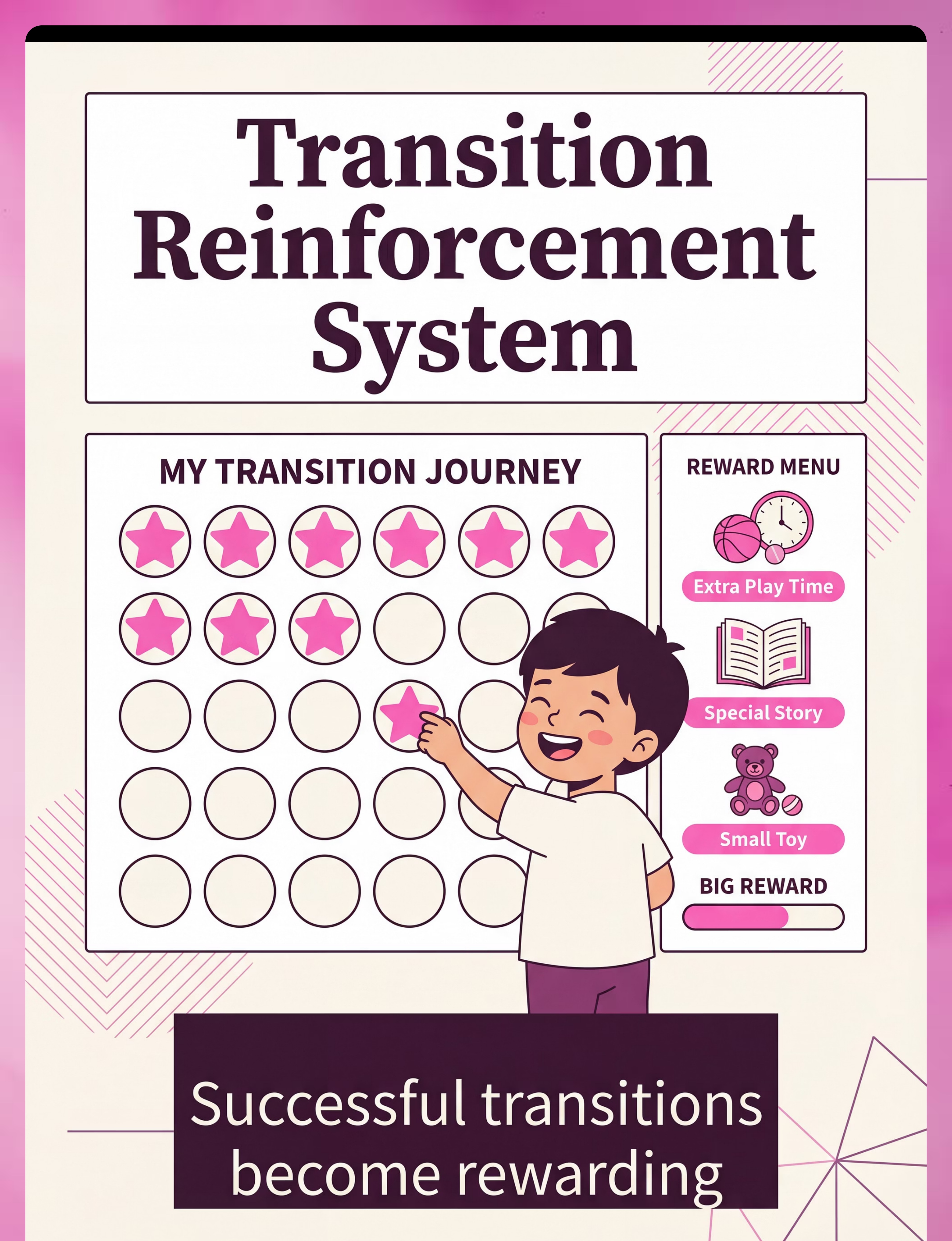
Transition Reinforcement System
"Successful transitions become rewarding."
Why It Helps
Building transition skills requires motivation, and reinforcement systems provide that motivation systematically. A transition reinforcement system offers immediate acknowledgment and reward for successful transitions, creating positive associations with change rather than only negative experiences.
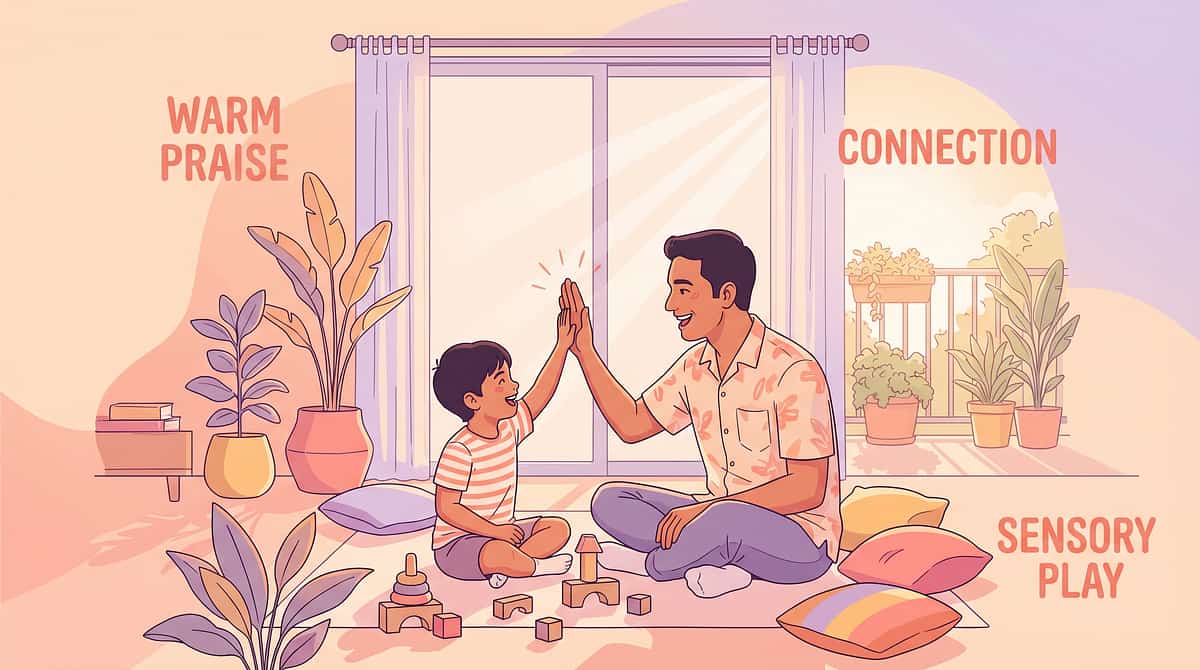
Reinforcement can be social (praise, high-fives, celebration), tangible (tokens, stickers, points toward rewards), or activity-based. The key is immediacy — reinforcement must come right after the successful transition to build the connection between the behavior and the reward. Token systems work particularly well: earned tokens can be exchanged for preferred items or activities, teaching delayed gratification while providing immediate feedback.
Key Insight: Positive experiences with transitions build skills faster than consequences for failures. Reinforcement creates motivation and positive associations with change.
Price Range
₹100–400 | Sticker charts are near-free
Safety Note
Reinforcement systems should build skills, not create dependence. Plan for fading from the start, moving toward intrinsic motivation and natural reinforcement.
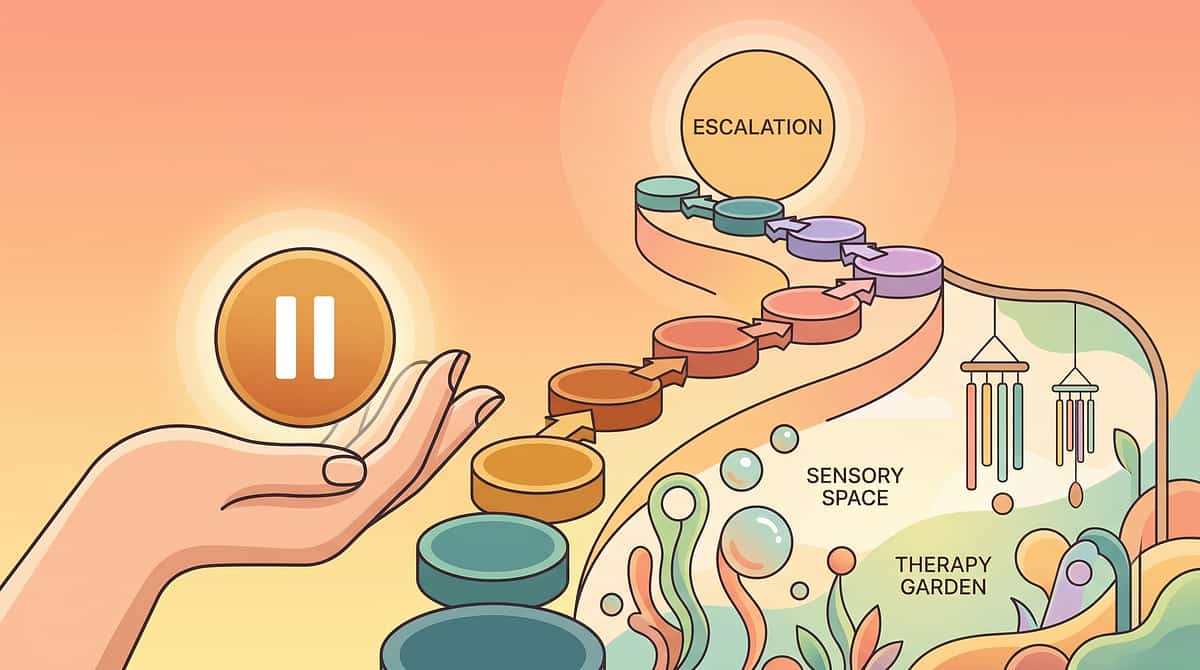
Reinforcement System: DIY Implementation Guide
Define "Success" Clearly
"Successful transition" might mean no crying, following the timer, or using a coping strategy — define it specifically for your child. Be clear about exactly what earns reinforcement.
Start Generous
Initially reinforce every successful transition, even partially successful ones. Build positive momentum first. As transitions improve, fade from constant to intermittent to natural reinforcement.
Make Progress Visible
Sticker chart, token board, tally marks. Seeing accumulation is itself motivating. Visual tracking makes abstract progress concrete — exactly like visual timers make abstract time concrete.
Avoid the Bribery Trap
Reinforcement is for successful completion, not offered as a bribe before the transition. "Great job stopping calmly! Here's your token." ✓ — not "If you stop without crying, you'll get a sticker." ✗
Materials needed: Token board or sticker chart · Tokens, stickers, or markers · Reward menu with options · Visual tracking system · Preferred reinforcers (child-selected)

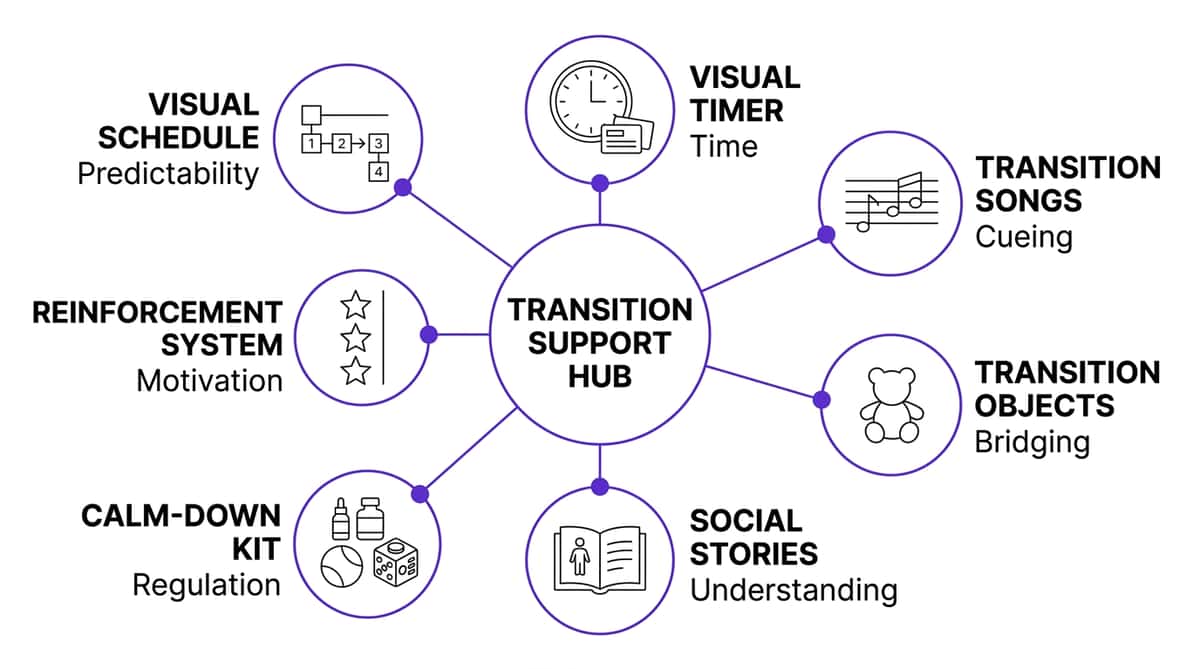
How All 9 Materials Work Together
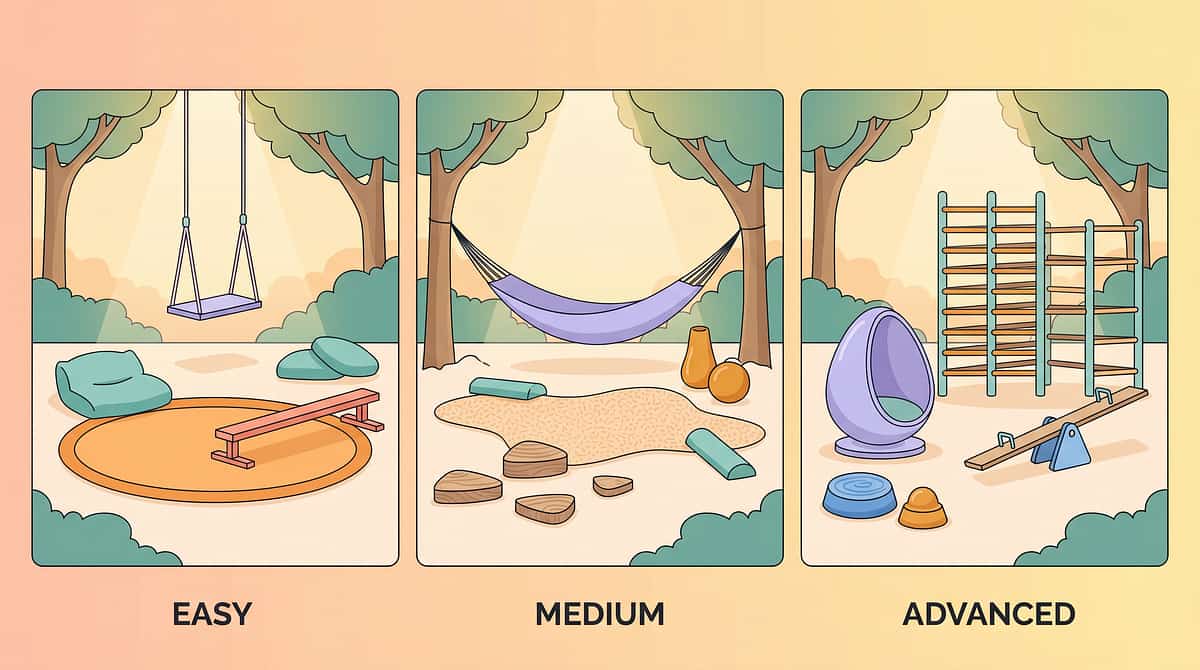
Each material addresses a specific component of the transition challenge. Together, they form a complete multimodal support system — more powerful than any single tool used alone.
Where to Start: Priority Guide
Essential — Start Here
- Visual Schedule with Transition Markers
- Visual Timer with Graduated Warnings
- First-Then Board
These three create the foundation of predictability that all other supports build upon.
Important — Add Next
- Transition Warning Cards
- Calm-Down Kit
- Reinforcement System
Layer these in after the foundation is established and child understands the visual system.
Supportive — Enhance
- Transition Object or Comfort Item
- Transition Songs or Audio Cues
- Social Stories and Scripts
These enrich the system with sensory, auditory, and cognitive layers as needed.
Budget Starter Kit: Hand-drawn schedule + Phone timer app + Paper First-Then cards + Sticker chart = Full starter system at near-zero cost. Total system investment: ₹1,200–5,500 for comprehensive transition support.
Getting Started: Step-by-Step Implementation
Assess Current Patterns
Which transitions are hardest? What helps even slightly? What makes it worse? Map the landscape before choosing tools.
Build the Visual Schedule
Start here — it's the foundation for everything else. Include transition markers from day one. Post consistently and reference together daily.
Add Visual Timer
Apply to 2–3 most challenging transitions first. Use graduated warnings — not a single timer. Start with preferred-to-preferred transitions.
Introduce First-Then Board
Use for highest-resistance transitions. Let child help select "Then" options. Use proactively, before transitions — never as crisis intervention.
Layer Additional Supports
Based on child's response, add warning cards, calm-down kit, reinforcement system. Build gradually — 2–3 supports at a time.
Expand Across Settings
Coordinate with school for consistent implementation. Consistency across environments is what transforms support into internalized skill.

Common Mistakes to Avoid
Introducing Too Many Supports at Once
Start with 2–3 materials and build gradually. Overwhelming the system before the child understands any single tool undermines trust in all of them.
Inconsistent Use
Supports work through predictability. Inconsistency is the single fastest way to undermine them. Every adult in the child's life needs to use the same systems the same way.
Using Only During Difficult Transitions
Build skills and positive associations during easier transitions first. Children shouldn't only encounter these tools during high-stress moments.
Expecting Immediate Results
System-building takes 2–4 weeks minimum. Progress may be invisible early. Consistency during this period is essential — most families quit just before results appear.
Removing Supports Too Quickly
Fade gradually based on demonstrated skill — not based on time elapsed. Let the child show you when they're ready for less support, not the calendar.
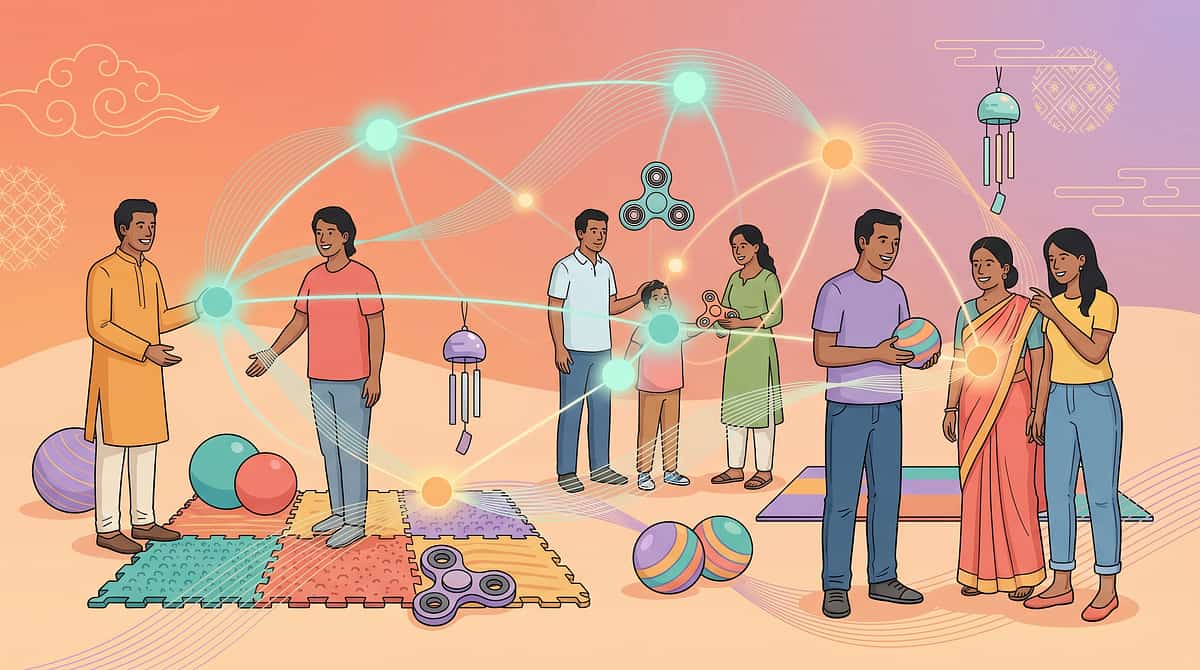
Signs That the System Is Working
Progress with transition difficulties is often gradual and non-linear. Here are the signs that your supports are taking hold — even before meltdowns disappear entirely:
Independent Schedule Reference
Child begins checking the visual schedule without prompting — they're internalizing the system.
Reduced Intensity
Transition behaviors decrease in intensity or duration, even if they still occur. Shorter meltdowns = real progress.
Unprompted Strategy Use
Child uses transition strategies (deep breaths, transition object, coping phrase) without being reminded. Self-regulation is building.
Tolerance for Unexpected Changes
Child begins tolerating some unexpected transitions — the most meaningful indicator of genuine flexibility building.
Types of Transitions: A Clinical Framework
Not all transitions are the same. Understanding which type is hardest for your child helps you select the right supports. Different transition types require different emphases in your support toolkit.
Activity → Activity
Shifting from one activity to another (blocks to snack, play to work). Core challenge: Disengaging from current activity, loss of preferred activity. Best supports: Visual timer, First-Then board, transition object from current activity.
Location → Location
Moving from one place to another (home to car, classroom to playground). Core challenge: Physical movement requirement, environmental change, loss of familiar setting. Best supports: Visual schedule, transition song, comfort object that travels.
Person → Person
Shifting between caregivers (parent to teacher, therapist to parent). Core challenge: Relationship and expectation shift, attachment transitions. Best supports: Consistent transition ritual, photo of upcoming person, transition object from previous person.
Unexpected Changes
Unplanned transitions due to schedule changes or environmental factors. Core challenge: No preparation time, violation of expectations. Best supports: Flexible visual schedule with a "surprise" option, coping cards, change tolerance building over time.
What Doesn't Work — And Why
Approaches With Limited Evidence
Forcing Sudden Transitions
Without preparation, this maximizes nervous system activation. The behavior escalates — and the child learns that transitions are unpredictable and threatening.
Verbal Warnings Alone
Without visual support, verbal information often doesn't process during transition stress. Words disappear into the air — visuals stay present.
Punishment-Based Approaches
Consequences for transition difficulties punish a neurological difference, not a choice. They increase anxiety, which worsens transitions rather than improving them.
Single-Modality Intervention
The most effective transition support is multimodal — visual + auditory + sensory + behavioral. No single tool covers all the components of the challenge.
The Clinical Principle
Transition difficulties stem from genuine neurological differences in executive function — particularly task-switching and cognitive flexibility. Visual and structural supports work by externalizing the internal processes that neurotypical brains handle automatically.
These supports create predictability, make abstract concepts concrete (time, sequence), and provide the scaffolding that enables the brain to navigate change. Intervention should be supportive, not eliminative — the goal is functional transitions with whatever support is needed, not forcing neurotypical-appearing transitions through willpower or compliance pressure.
A Message to Exhausted Parents
I understand the exhaustion of fighting through every single change in the day. The way a simple trip to the store becomes a three-meltdown ordeal: leaving home, arriving at the store, leaving the store. The way you've stopped going places because the transitions aren't worth it. The way other parents say 'just tell them it's time to go' and have no idea how absurd that sounds to you.
Your child isn't choosing to melt down at every transition. Their brain genuinely struggles with shifting — stopping one thing, starting another, handling the uncertainty of change. This is a real neurological difference, and it deserves real support, not judgment about parenting.
The materials in this resource create the external structure that helps their internal processing work. These tools won't make transitions effortless overnight. But they can make them possible. Progress is often gradual — but it happens. I've seen families who structured their entire lives around avoiding transitions reclaim flexibility. It takes time, consistency, and the right tools. These are those tools.
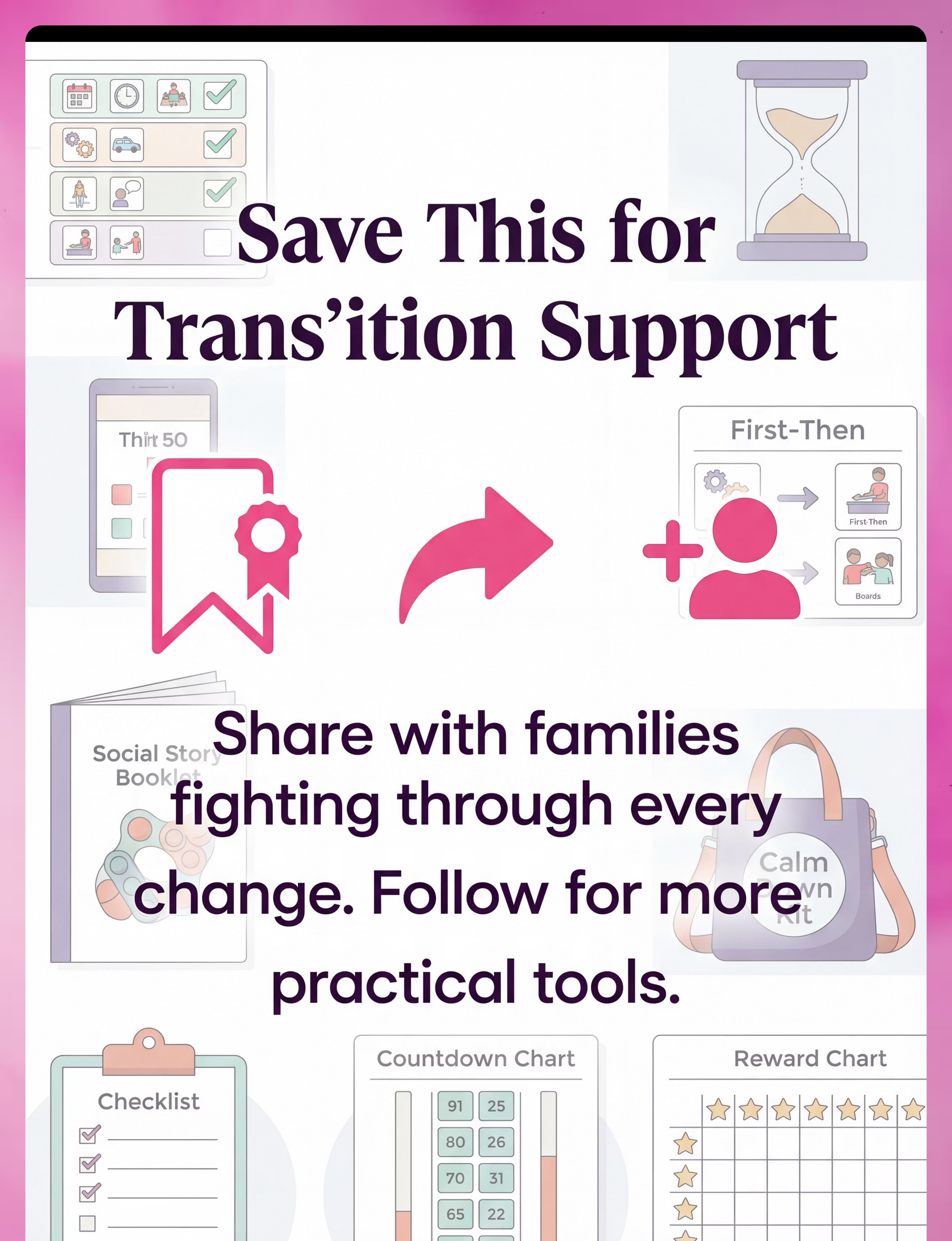
Save, Share & Follow
Coming Next
Episode L-978: 9 Materials That Help With Waiting Skills — the next challenge in the Behavioral Flexibility & Daily Living Skills series.
Follow the Daily Living & Independence Skills series for practical, material-based tools across the full spectrum of behavioral flexibility challenges.
Help Another Family
If this content helped you, share it with a parent who is struggling through every daily transition battle. Save it for your own reference during challenging days. Follow for more practical tools in this series.
Next in cluster: L-975 Routine Building · L-978 Waiting Skills · L-979 Handling Unexpected Changes
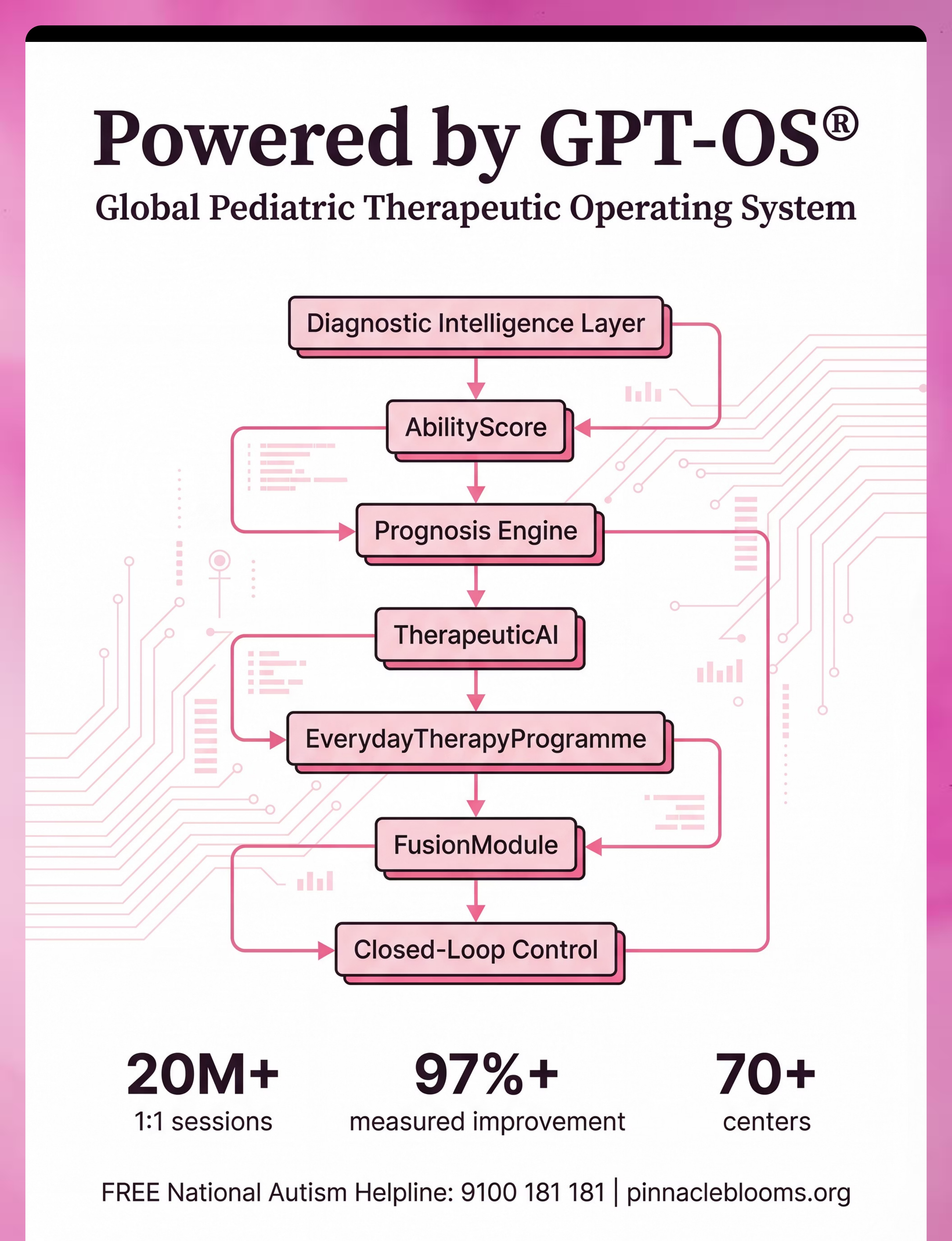
Powered by GPT-OS®
Global Pediatric Therapeutic Operating System
GPT-OS® is the end-to-end operating system that governs diagnosis, prognosis, therapy design, execution, monitoring, and readiness outcomes in child development — as one closed, accountable system.
1
Diagnostic Intelligence Layer
Converts 591+ structured observations across 349 skills and 79 developmental abilities into standardized diagnostic clarity.
2
AbilityScore®
A patented universal developmental score (0–1000) that establishes baseline, severity, and longitudinal change across domains.
3
Prognosis Engine
Predicts developmental trajectories and risk windows using historical response patterns from 20M+ real therapy sessions.
4
TherapeuticAI®
Determines therapy focus, intensity, sequencing, reinforcement logic, and escalation thresholds for each child.
5
EverydayTherapyProgramme™
Translates clinical plans into daily, home-executable micro-interventions families can actually implement.
6
FusionModule™
Coordinates speech, OT, behavior, special education, and medical inputs into a single converged therapeutic pathway.
7
Closed-Loop Control
Observation → Score → Plan → Execute → Re-measure → Adapt. Every intervention feeds the next.
This is not software. This is therapeutic infrastructure. For personalized transition intervention, contact the FREE National Autism Helpline: 9100 181 181 | pinnacleblooms.org
Real-World Evidence
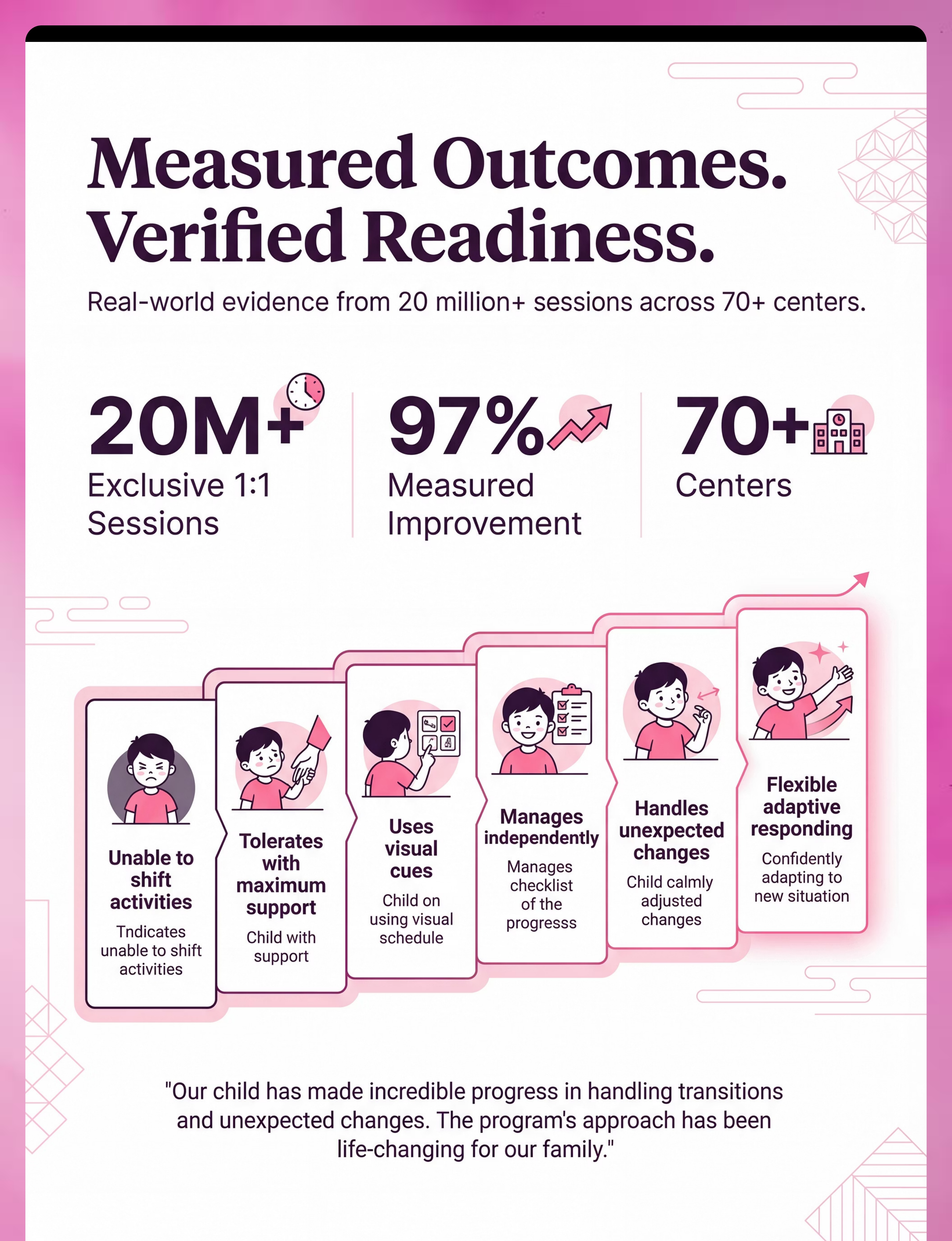
Measured Outcomes. Verified Readiness.
Real-world evidence from 20 million+ sessions across 70+ centers. GPT-OS evaluates outcomes using standardized readiness indexes that reflect real-world functional capability, not just clinical scores.
20M+
Exclusive 1:1 Sessions
Across converged therapy disciplines — speech, OT, behavior, special education, and medical.
97%+
Measured Improvement
Across one or more readiness indexes — Behavioral Flexibility, Self-Regulation, Daily Living, School Participation, Community Inclusion.
70+
Centers
Operating under a single clinical system with unified diagnostic, therapeutic, and outcomes standards.
Transition Skills: Functional Progression Tracked
From: child unable to shift activities without severe behavioral response → tolerates some transitions with maximum support → completes transitions with visual and verbal cues → manages transitions with timer and schedule independently → handles unexpected transitions with minimal support → flexible, adaptive responding to routine changes.

A Parent's Story: "The Tools Work."
Every single activity change used to be a battle. Getting him out the door — meltdown. Stopping tablet time — meltdown. Leaving the playground — meltdown. We implemented the full transition system: visual schedule with transition markers, visual timer with graduated warnings, First-Then board, transition songs, and a calm-down kit he carries everywhere. The first two weeks were still hard — he had to learn to trust the system. But by week three, he started looking at the timer himself. By month two, he was checking his schedule independently. Now, four months in, the meltdowns have decreased by about 80%. He can handle most transitions with the visual supports. Last week, we had to leave the park early due to weather, and he coped. He wasn't happy, but he coped. That would have been unthinkable six months ago. The tools work. They don't fix him — there's nothing to fix. They support his brain in doing something that's genuinely difficult for his neurology.
— Parent, Pinnacle Network
Illustrative case; individual outcomes vary based on child's profile, implementation fidelity, and other factors.
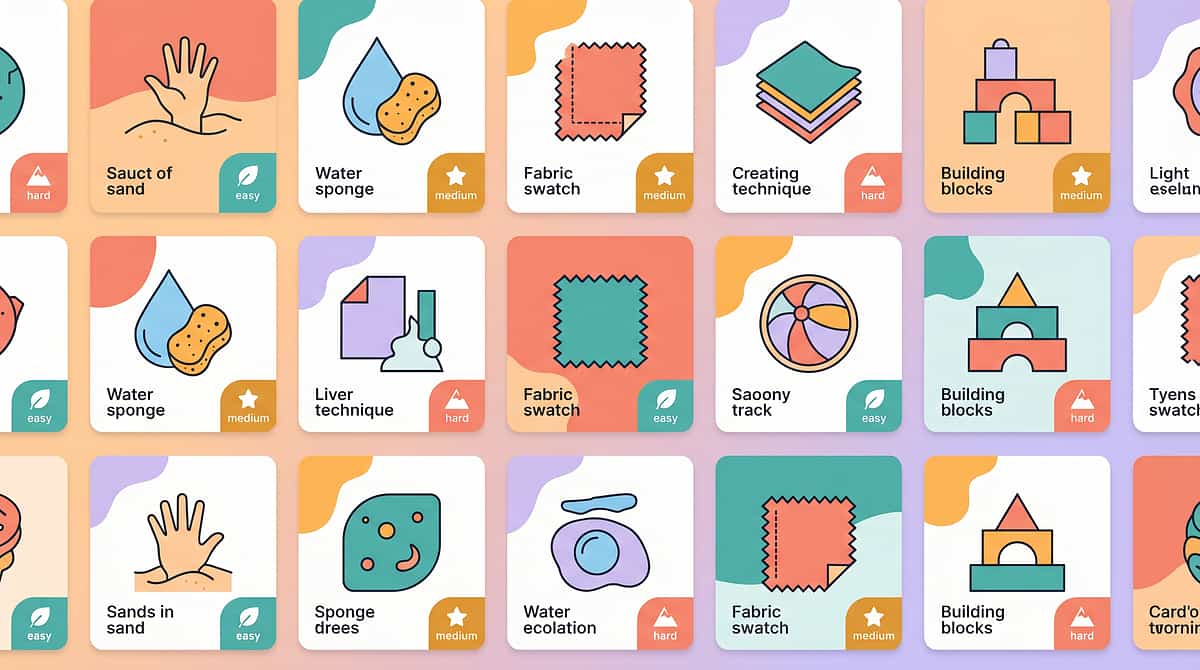
Preview of 9 materials that help with transition training Therapy Material
Below is a visual preview of 9 materials that help with transition training therapy material. The pages shown help educators, therapists, and caregivers understand the structure and content of the resource before use. Materials should be used under appropriate professional guidance.


Link copied!

About Pinnacle
Pinnacle Blooms Network®
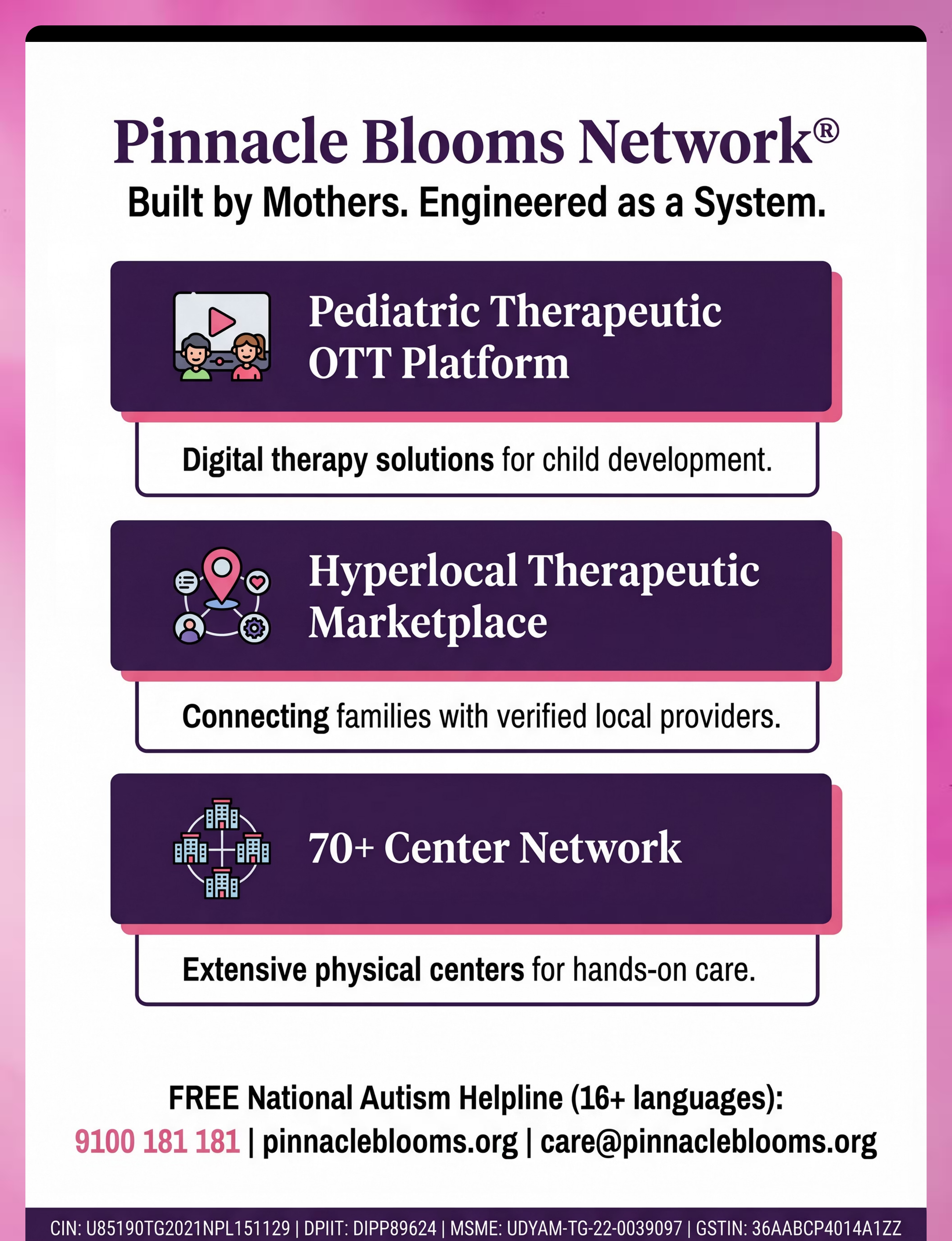
Built by Mothers. Engineered as a System. — Pinnacle is the execution layer of GPT-OS® — delivering therapy, daily programs, digital continuity, and measurable outcomes at population scale.
Pediatric Therapeutic OTT Platform
On-demand therapy guidance, parent education, and EverydayTherapyProgramme™ delivery across 16+ languages.
Hyperlocal Marketplace
Connects families to verified therapists, centers, programs, and materials. Precision matching to child profile and location.
Center Network
70+ physical centers operating under GPT-OS® standards — unified clinical system, consistent outcomes measurement.
FREE National Autism Helpline
9100 181 181 — Available in 16+ languages, 24x7
pinnacleblooms.org | care@pinnacleblooms.org
Statutory Identifiers
CIN: U74999TG2016PTC113063
DPIIT: DIPP8651 (Govt. of India)
MSME: Udyog Aadhaar: TS20F0009606
GSTIN: 36AAGCB9722P1Z2
DPIIT: DIPP8651 (Govt. of India)
MSME: Udyog Aadhaar: TS20F0009606
GSTIN: 36AAGCB9722P1Z2
20M+ sessions · 97%+ measured improvement · 70+ centers · Global IP protection