
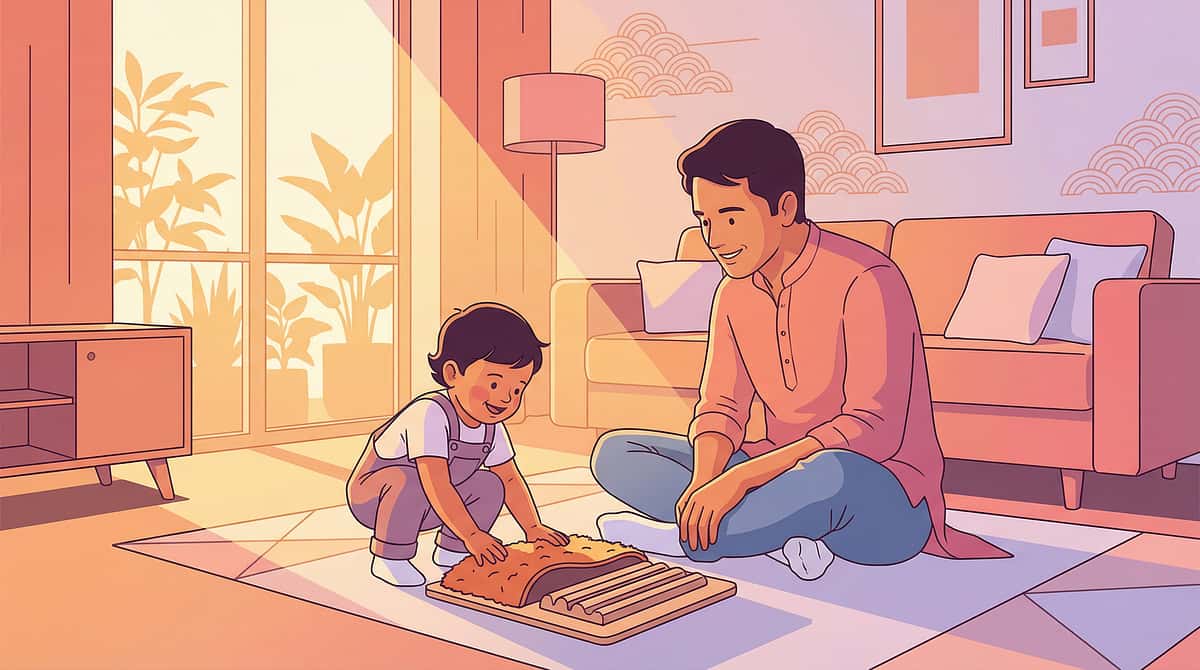
The grinding sound through the wall at night.
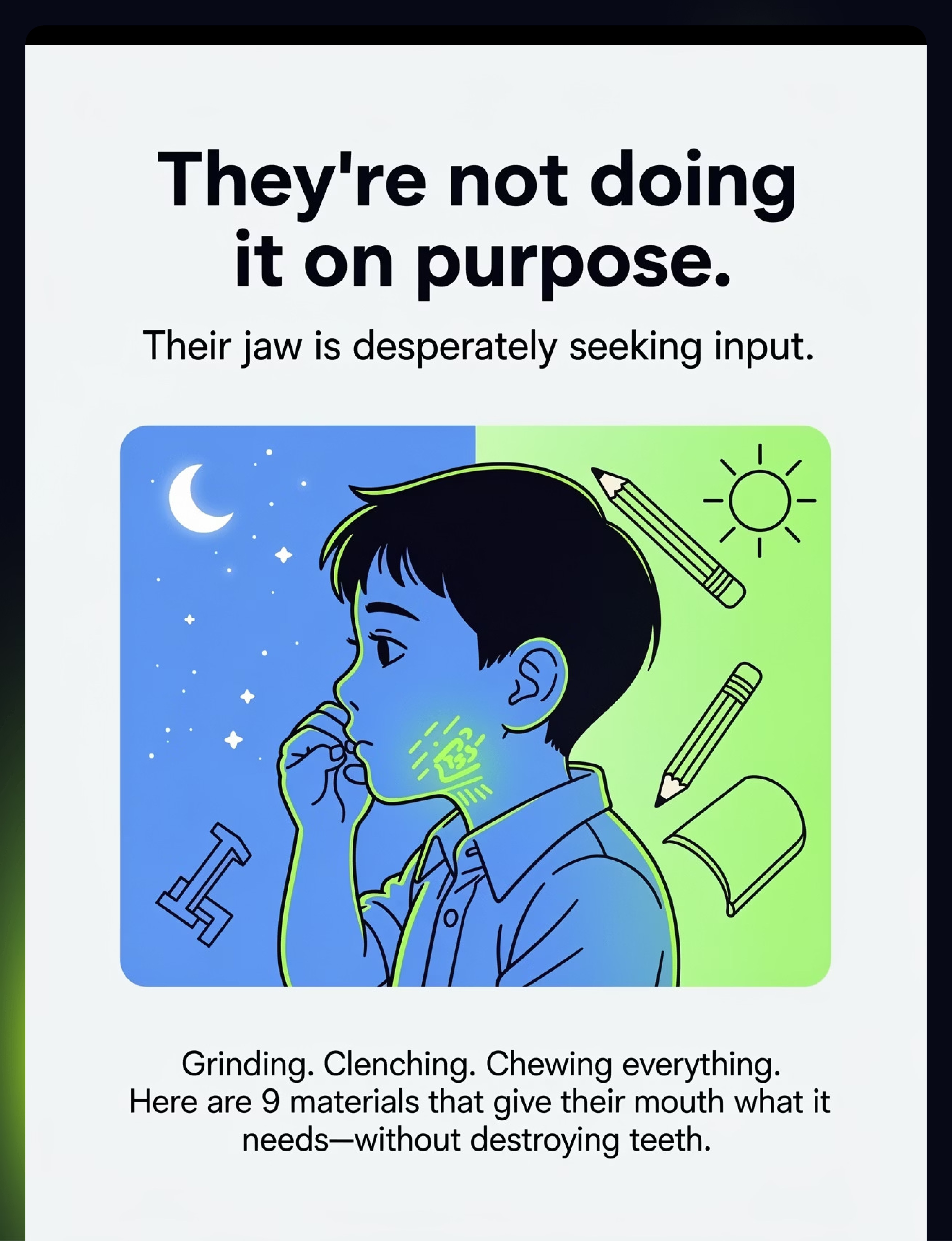
The dentist pointing at worn enamel. The shirt collar chewed to shreds. It isn't defiance. It isn't a bad habit. Their jaw is sending a neurological SOS — and it found the only tool it knew.
Domain A · Oral Sensory
A-107 · Ages 2–12
A-107 · 9 Materials That Help With Teeth Grinding — 9 safe alternatives that give their jaw exactly what it's seeking — without destroying their teeth.
"You are not failing. Your child's nervous system is speaking. Grinding is how it found relief. We're here to give it better options." — Pinnacle Blooms Consortium | OT · SLP · ABA · SpEd · NeuroDev Pediatrics
You Are Among Millions
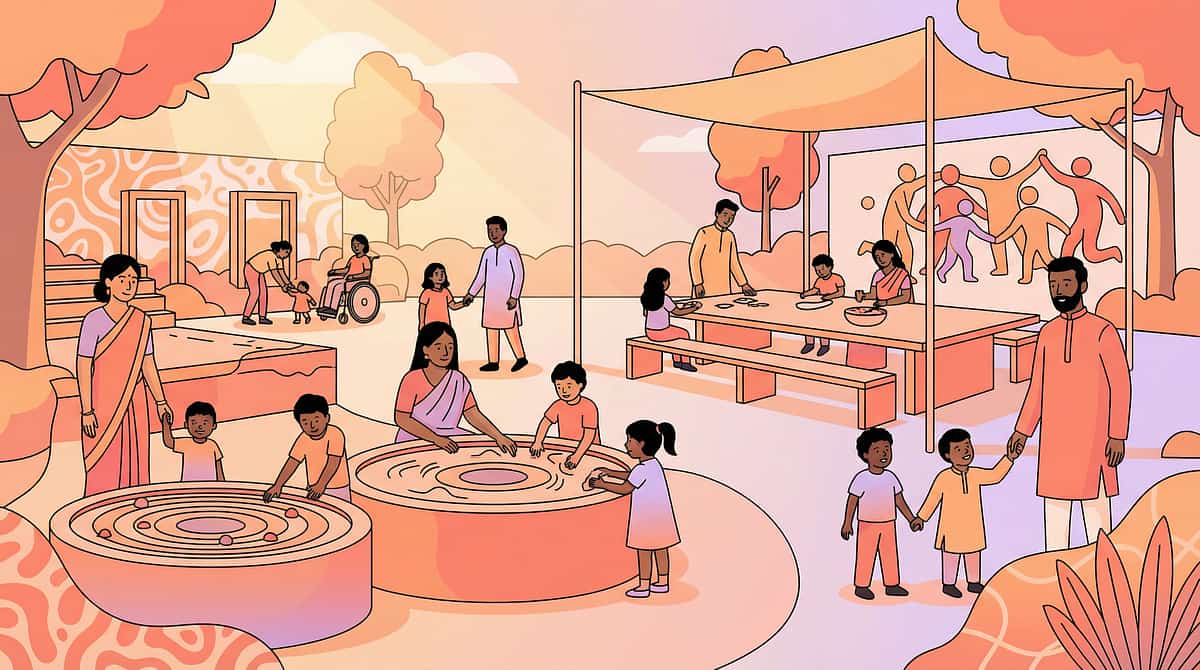
If You Hear Grinding Through the Wall Tonight, You Are One of Tens of Millions of Parents Navigating This.
Teeth grinding (bruxism) is among the most frequently reported — and least understood — sensory behaviors. Parents describe it as isolating. Dentists flag it as urgent. Therapists know it as a neurological signal. The grinding is not the problem. It is the solution their nervous system found on its own.
80%
Sensory Processing
Of children with autism display sensory processing difficulties including oral seeking
27M
Children in India
On the neurodevelopmental spectrum requiring sensory support
50%
Bruxism Rate
Of all children experience bruxism at some point — most cases are sensory-driven
🇮🇳In India specifically: Prevalence of autism estimated at 1 in 68 (NIMHANS 2022). Oral sensory behaviors including bruxism reported in 40–60% of assessed children across Pinnacle's 70+ center network.
"You are among millions of families. The challenge is real. The solutions are proven. You found this page for a reason."
The Neuroscience
Plain English
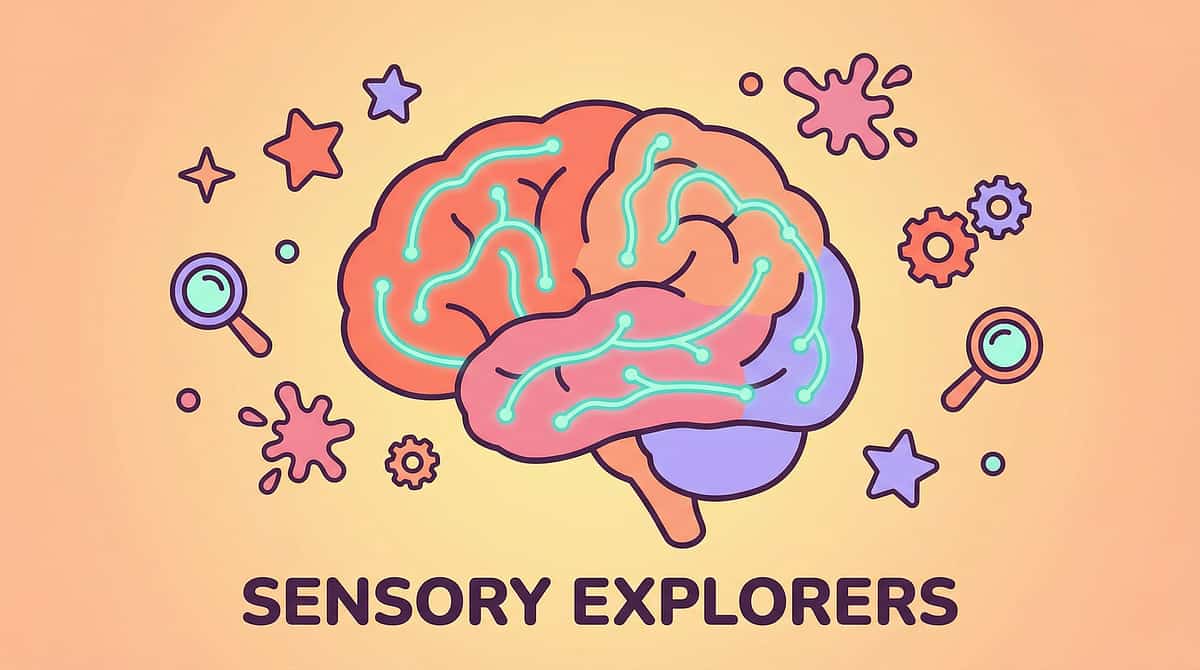
This Is a Wiring Difference. Not a Behavior Choice.
What proprioception means for the jaw
The jaw contains some of the body's most powerful proprioceptors — nerve endings that report position, pressure, and movement directly to the brain.
Why grinding happens neurologically
In children with sensory processing differences, the threshold for registering oral proprioceptive input is elevated. Their brain needs MORE input than typical to register the sensation as "enough."
Grinding = the brain's self-prescribed solution
Teeth grinding delivers intense, sustained proprioceptive feedback. It works. The brain gets its input. That's why children continue even when told to stop — stopping means the input stops.
This is involuntary
The child is not choosing to grind. The neural drive is subcortical — below conscious awareness. Punishment and reminders are neurologically ineffective.
🧠"This is a wiring difference, not a behavior problem." The masseter muscle is one of the strongest in the human body proportionally. When engaged through grinding, it floods the brain with organizing proprioceptive input — exactly what the dysregulated nervous system is seeking.
Developmental Context
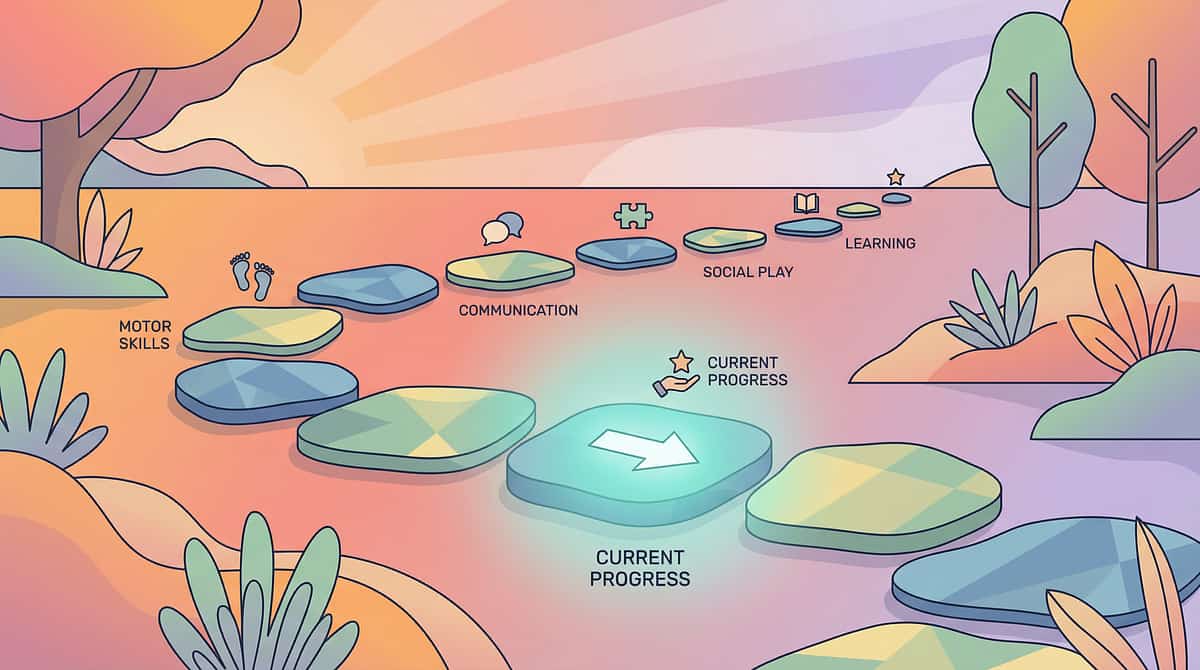
Your Child Is Not Behind. They Are Here — On a Clear Path Forward.
Bruxism peaks between ages 2–6 during primary dentition eruption, sleep architecture maturation, sensory processing system development, and heightened stress or anxiety periods. Understanding where your child sits on the developmental arc is the first step toward moving forward with confidence.
⚠️ What commonly co-occurs with teeth grinding
- Sleep disturbances (40% correlation)
- Anxiety and heightened stress response
- Oral hypersensitivity or hyposensitivity
- ADHD and executive function challenges
- General sensory processing differences
✅ The Forward Path
This challenge maps to WHO CCD Domain: Responsive Caregiving + Early Learning milestones for ages 2–6. With consistent oral sensory intervention, most children show significant reduction in grinding within 6–12 weeks.

Evidence Grade II
★★★★☆ Clinical Consensus + Multiple RCTs
Clinically Validated. Home-Applicable. Parent-Proven.
"Sensory integration intervention meets criteria to be considered an evidence-based practice for children with autism spectrum disorder." — Children (MDPI), 2024 | PMC11506176
PRISMA Systematic Review 2024
16 studies (2013–2023): Sensory integration intervention is evidence-based practice for ASD. ★★★★★
Meta-analysis, World J Clin Cases 2024
24 studies: SI therapy promotes adaptive behavior, motor skills, sensory processing. ★★★★☆
Indian RCT, Indian J Pediatr 2019
Home-based sensory interventions show significant outcomes. ★★★★☆
AAPD Clinical Guidelines
Oral sensory tools recommended for bruxism management in children. ★★★★☆
90%
Evidence Strength
Strong across multiple systematic reviews
95%
Home Applicability
Very high — designed for caregiver execution
100%
Safety Profile
Excellent when protocol is followed
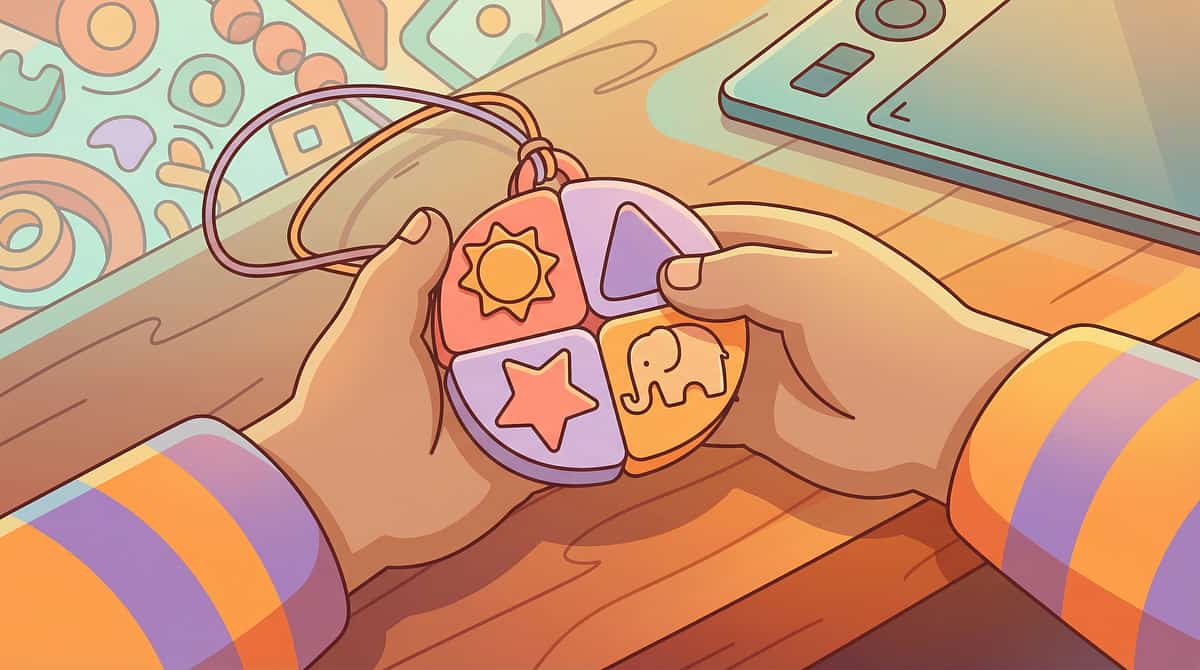
Domain A · Sensory
Oral Proprioceptive Regulation
Ages 2–12
🦷 Oral Sensory Substitution & Proprioceptive Loading Protocol
Parent-friendly name: "Giving the Jaw What It Needs"
What It Is
A structured daily protocol of oral sensory inputs — using safe, therapeutic-grade materials — that satisfy the jaw's proprioceptive seeking drive, redirecting teeth grinding to safe alternatives without dental damage.
What It Does
Provides graded resistance, vibration, texture, and sustained pressure inputs to the oral-motor system at therapeutic dosage — "pre-loading" the jaw with appropriate input before, during, and after high-risk grinding periods.
Who It's For
Children aged 2–12 who exhibit teeth grinding (bruxism), jaw clenching, excessive chewing on non-food items, or oral seeking behaviors that result or risk dental damage, jaw fatigue, or social disruption.
Frequency & Duration
- ⏱️ 2–3 sessions daily
- 🕐 5–15 min per session
- 📅 8–12 week program
- 🏠 Home-executable

Multi-Disciplinary Team
This Technique Crosses Therapy Boundaries — Because the Brain Doesn't Organize By Therapy Type
Pediatric OT — PRIMARY
Oral sensory diet design, proprioceptive input protocols, sensory integration sessions
Pediatric SLP — CO-PRIMARY
Oral-motor function, jaw coordination, feeding-related bruxism differentiation, oral placement therapy
ABA / BCBA
Replacement behavior programming — chew jewelry as functional alternative to grinding
Special Educator
Environmental modifications, school-safe protocol implementation, teacher training for tool use
NeuroDev Pediatrician
Medical assessment of bruxism etiology, TMJ referral, sleep study coordination
Clinical Research Officer
Outcome tracking, research validation, protocol refinement from 20M+ session data
The FusionModule™ in GPT-OS® coordinates all disciplines — OT, SLP, ABA, and SpEd — into one coherent home protocol so caregivers receive a unified, non-conflicting plan.
Precision Intervention
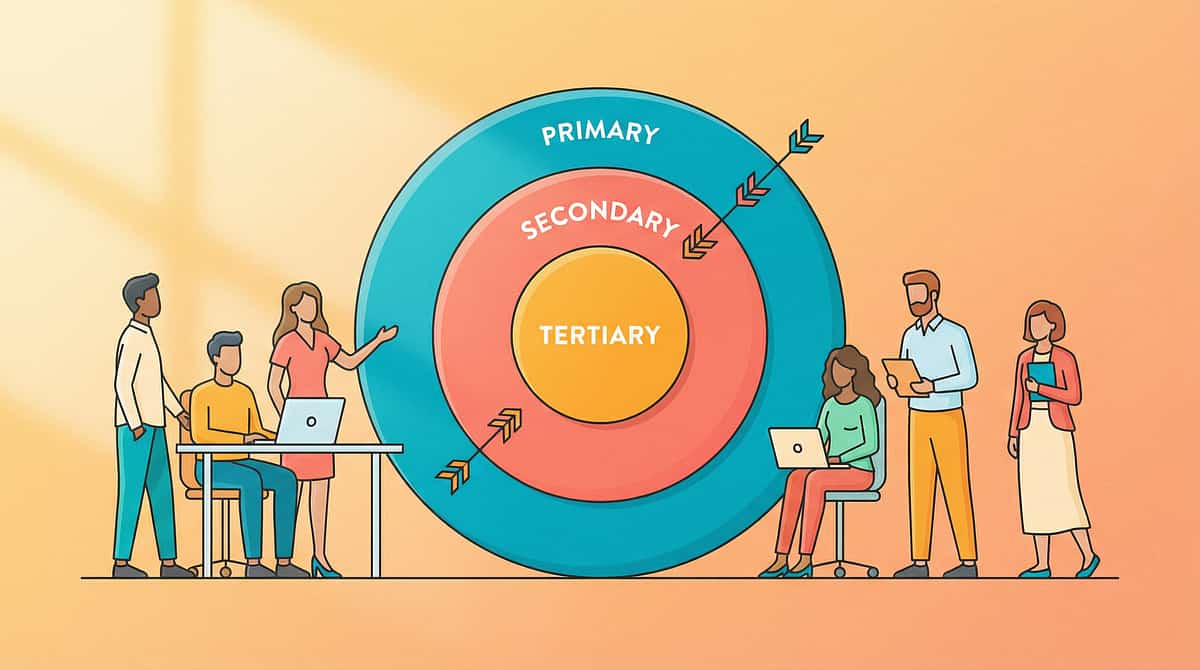
This Is Not a Random Activity. It's a Precision Intervention.
🎯 Primary Target
Reduce and redirect teeth grinding through oral proprioceptive input substitution. Observable: Frequency of audible grinding decreases. Chew jewelry used independently. Dentist notes reduced enamel wear.
🎯 Secondary Targets
Reduce shirt/pencil/hair chewing, decrease jaw tension and TMJ strain, improve sleep quality, reduce anxiety-driven oral behaviors. Observable: Clothing no longer destroyed. Morning jaw complaints reduce.
🎯 Tertiary Targets
Improved school concentration, dental cost prevention, social acceptability improvement, overall sensory regulation and body calm. Observable: Teacher reports improved focus. Dental check-up shows improvement.
Materials Overview
9 Tools
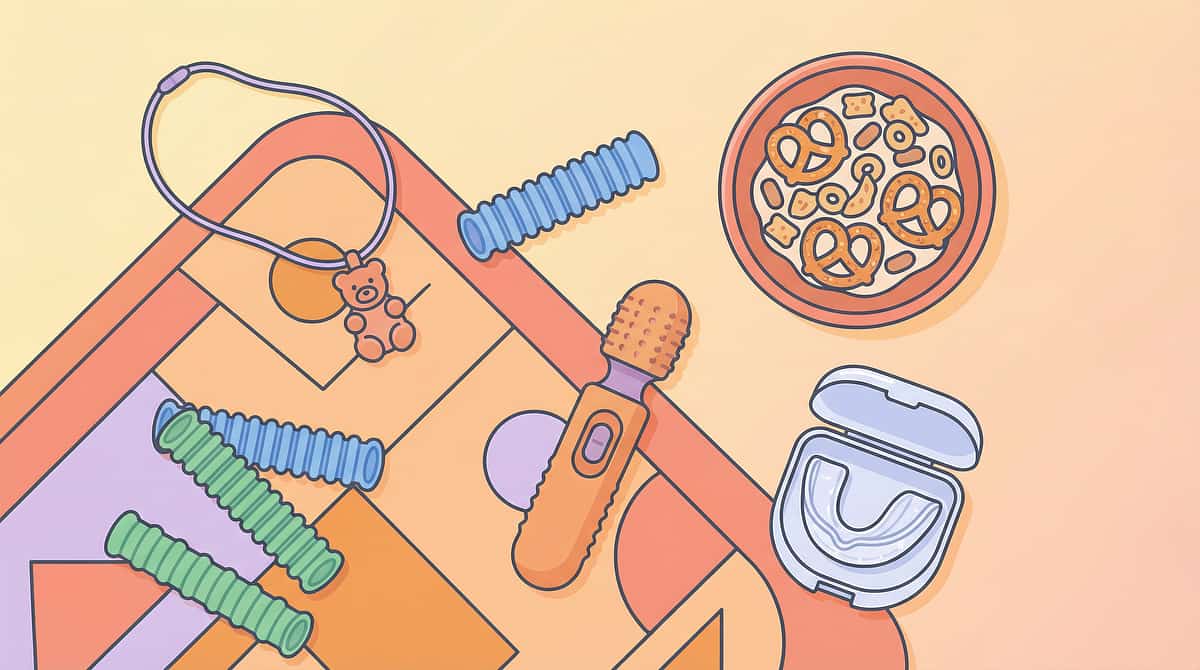
9 Materials. One for Every Scenario Your Child's Jaw Will Face.
You don't need all 9 today. Start with 2–3. Build the toolkit over time. Recommended Starter Kit (₹1,000–1,500): Chew necklace + Chewy tube set + Crunchy food strategy = 80% of the oral input need addressed from Day 1.
📞Not sure where to start? Call our FREE Helpline: 9100 181 181 — our OT team will guide your first purchase.
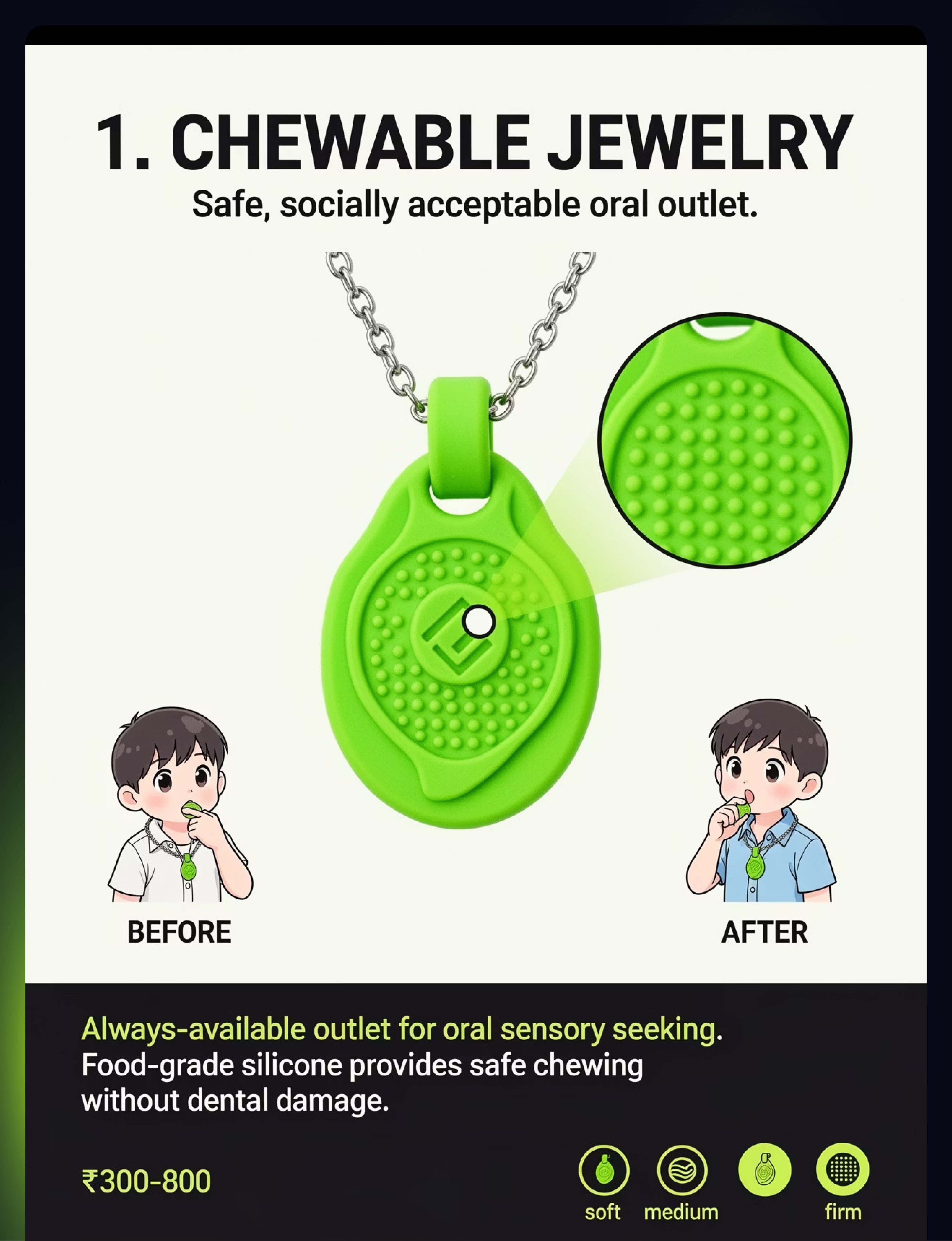
🦷 Chewable Jewelry
Always-available oral outlet. Food-grade silicone. Soft / Medium / Firm / Extra Tough resistance options. ₹300–800
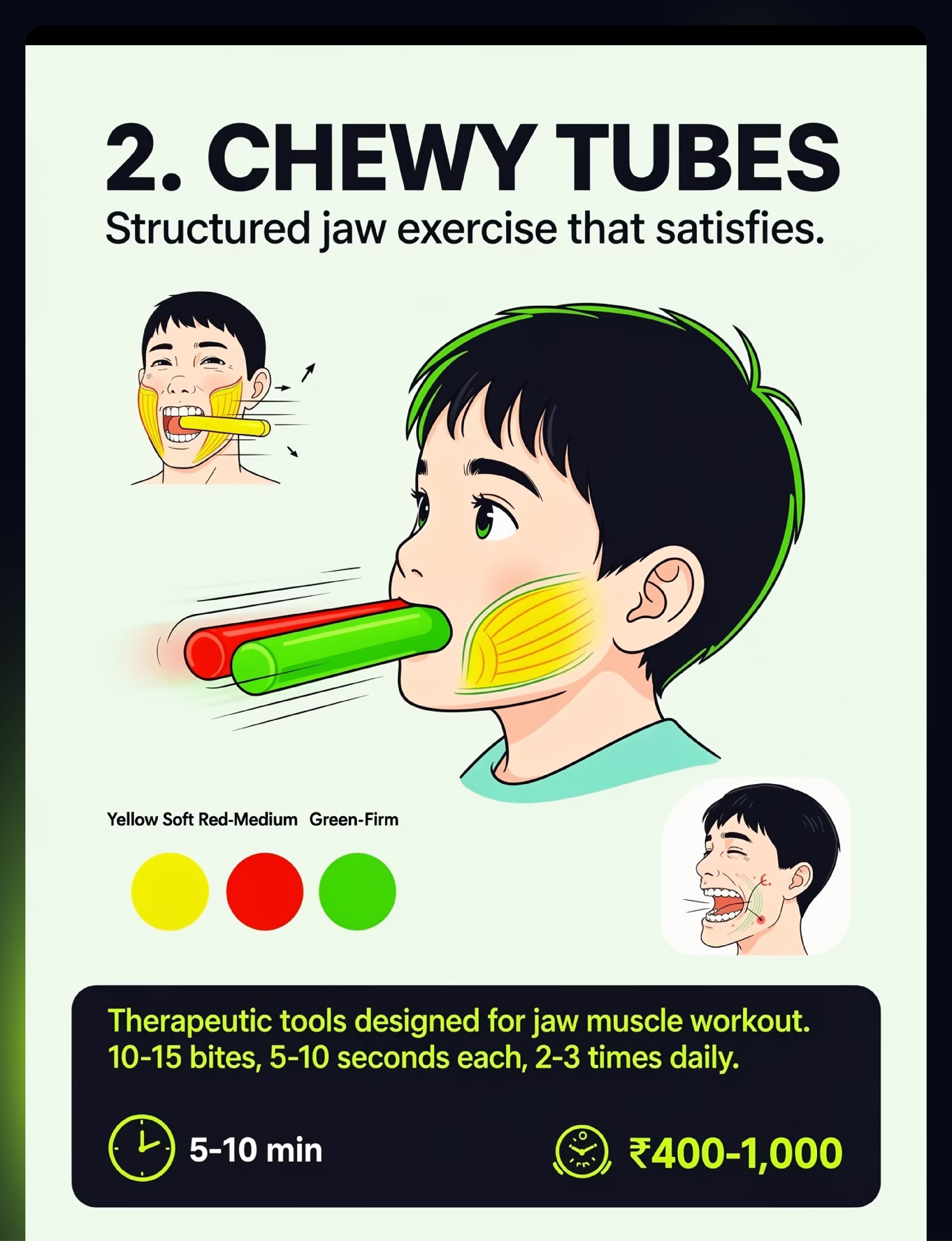
🟡 Chewy Tubes / Bite Tubes
Structured jaw workout. 10–15 bites, 5–10 sec each. Yellow (soft) / Red (medium) / Green (firm). ₹400–1,000
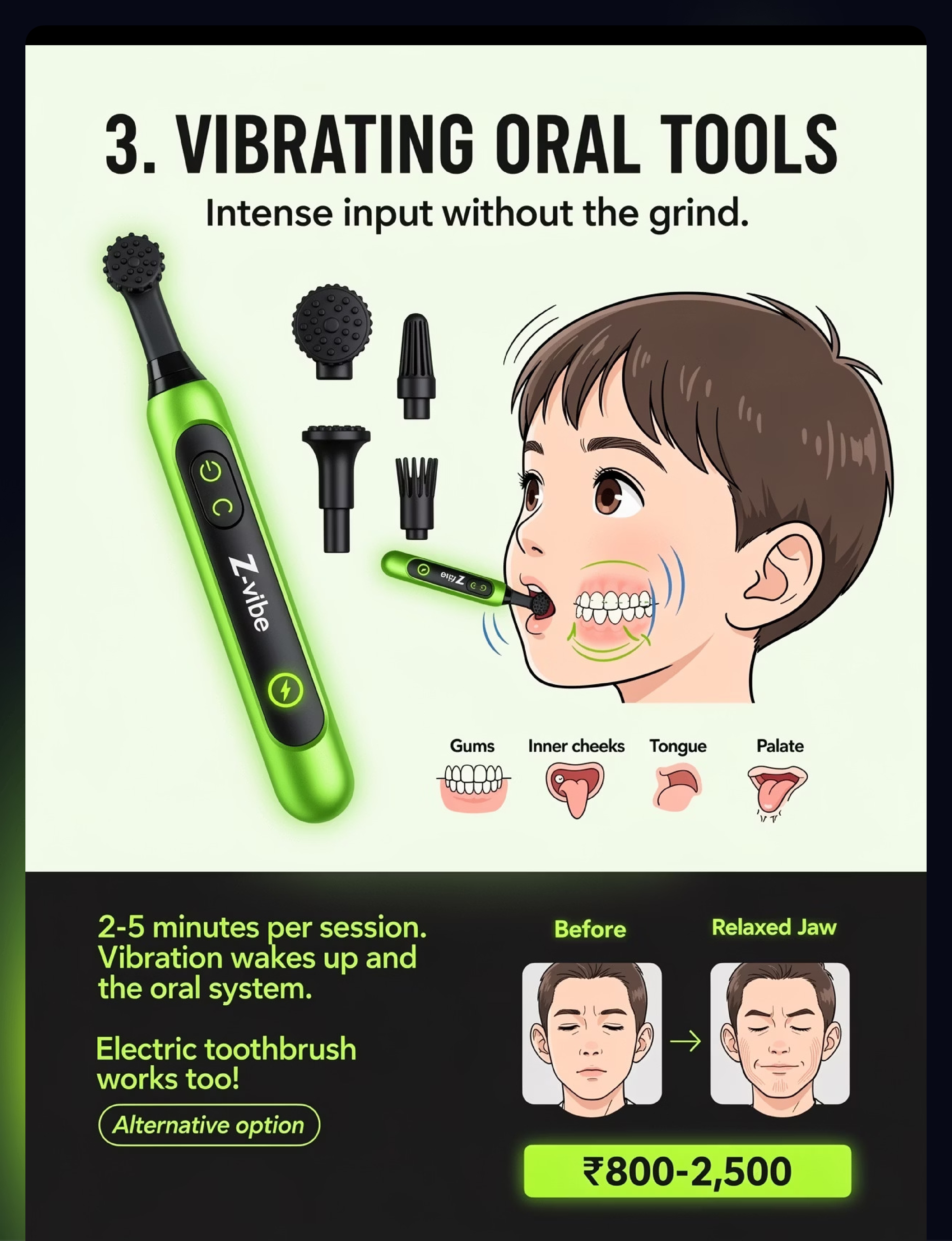
⚡ Vibrating Oral Tool
Intense input without the grind. Z-Vibe or vibrating toothbrush. 2–5 min sessions. ₹800–2,500
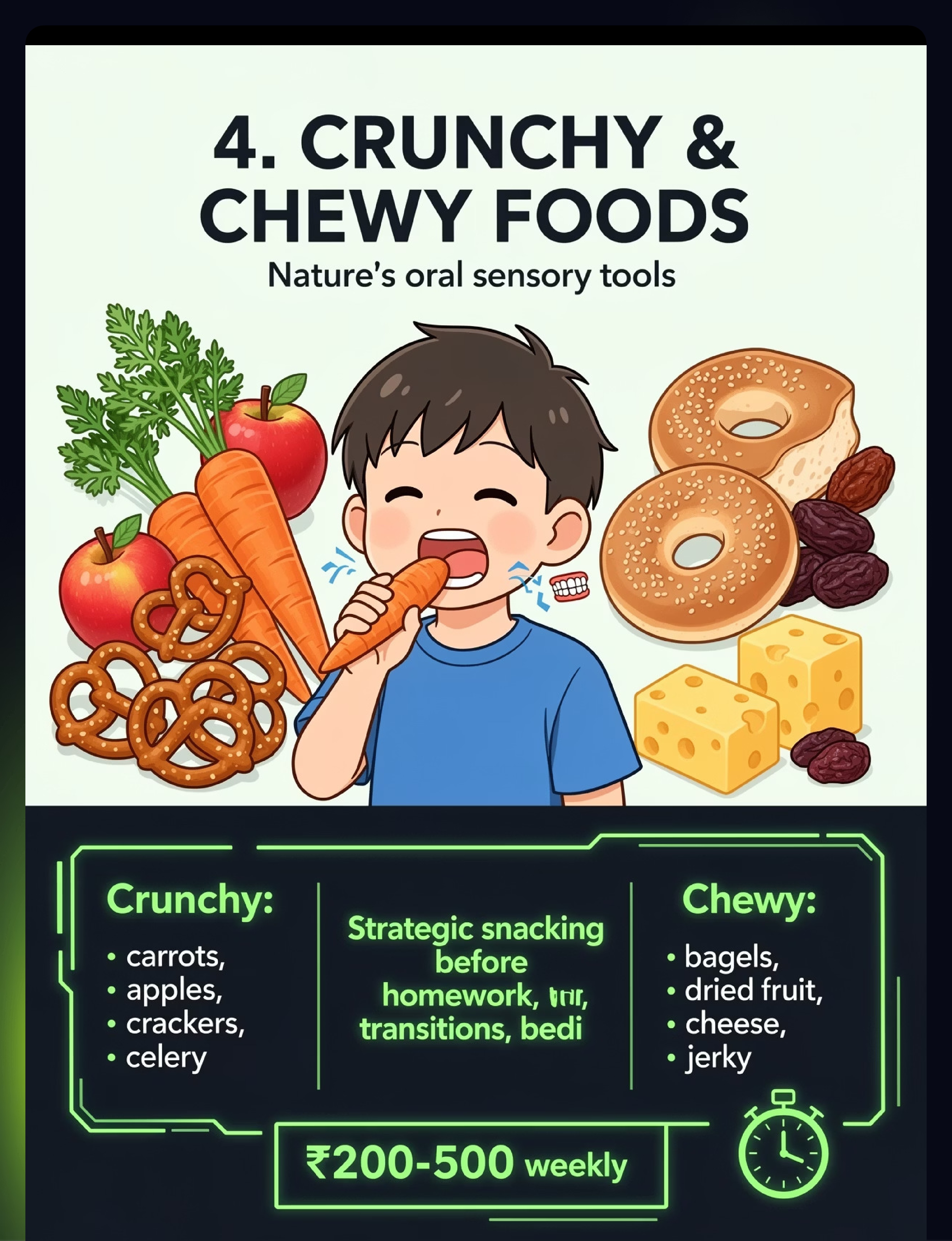
🥕 Strategic Crunchy & Chewy Foods
Nature's oral sensory tools. Carrots, bagels, dried fruit. Already in your kitchen. ₹0–200/week
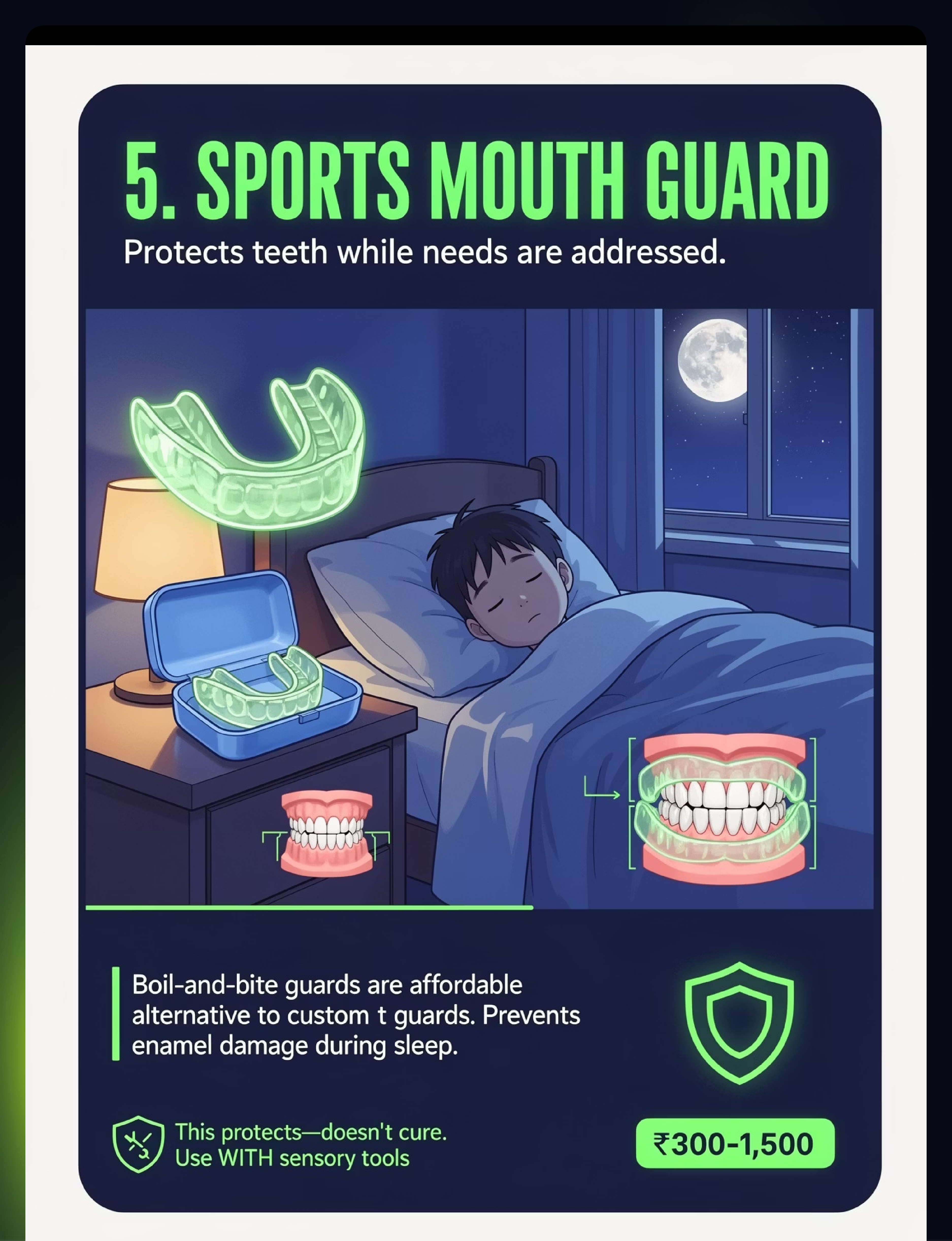
🛡️ Sports Mouth Guard
Protects teeth while interventions take effect. Boil-and-bite youth size. Protective — not therapeutic. ₹300–1,500
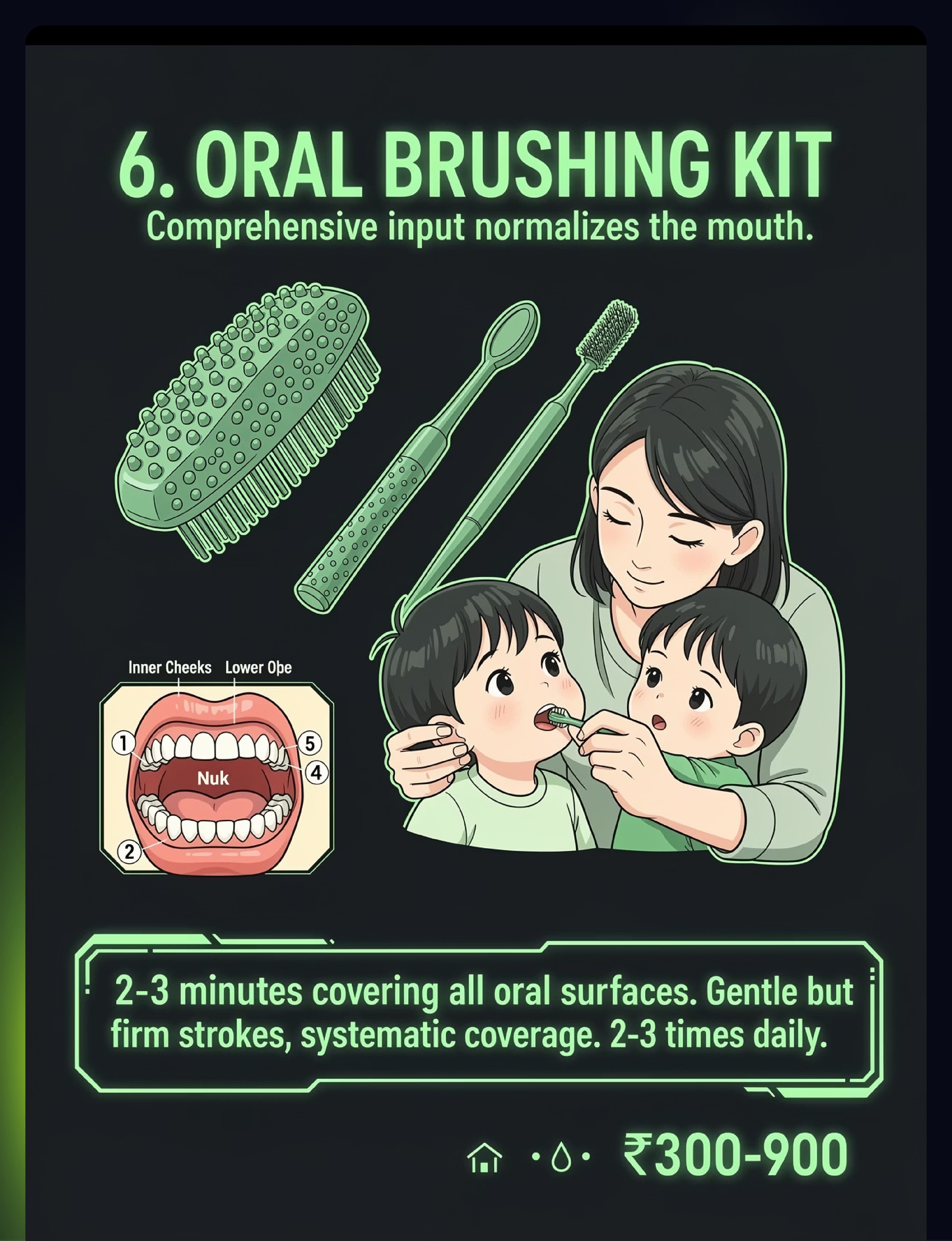
🪥 Oral Sensory Brushing Kit
Nuk Brush. Comprehensive input normalizes the oral system. 2–3 min, 2–3x daily. ₹300–900
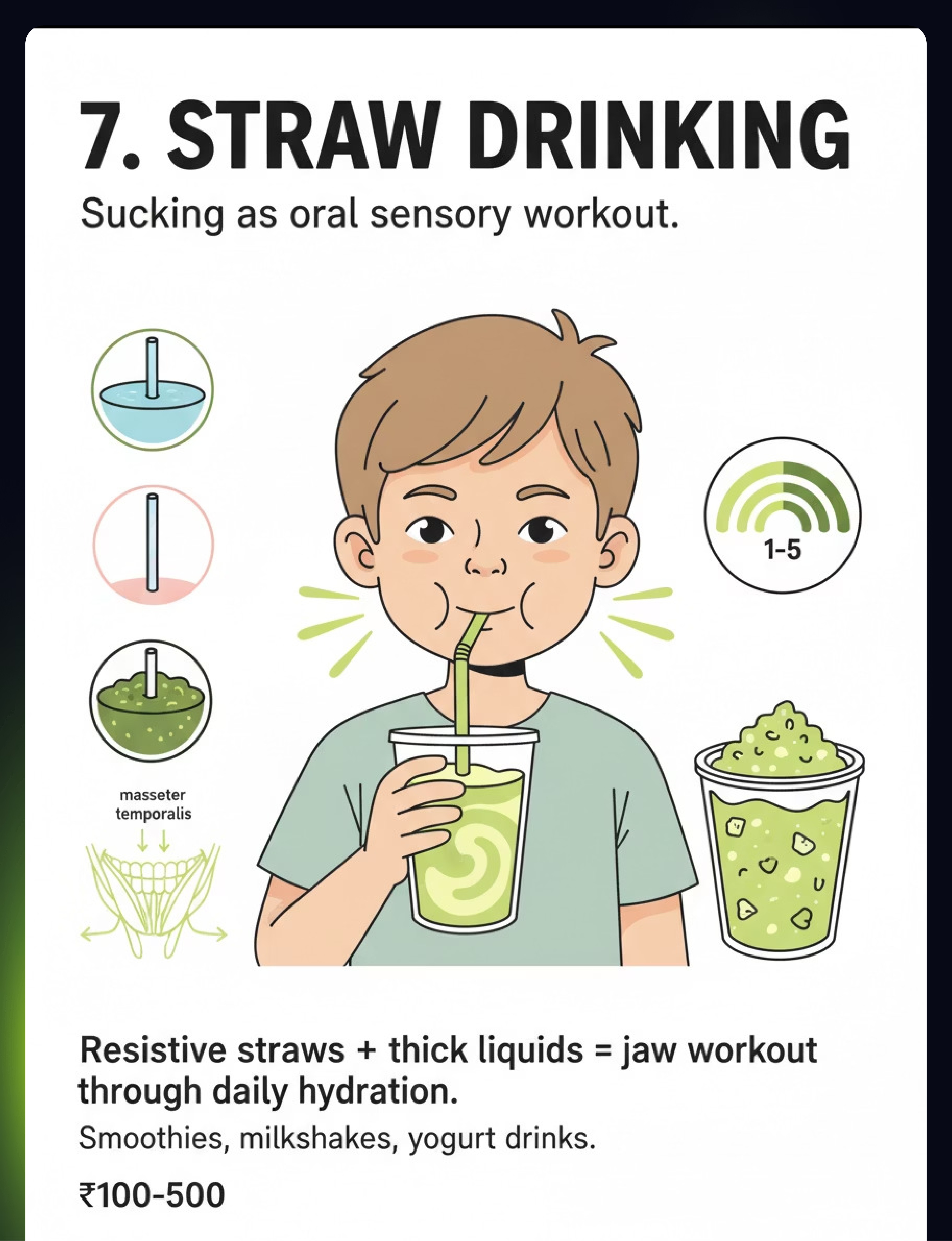
🥤 Resistive Straw Drinking Kit
Sucking as oral workout. Thick liquids + narrow straws. Functional daily use. ₹100–500
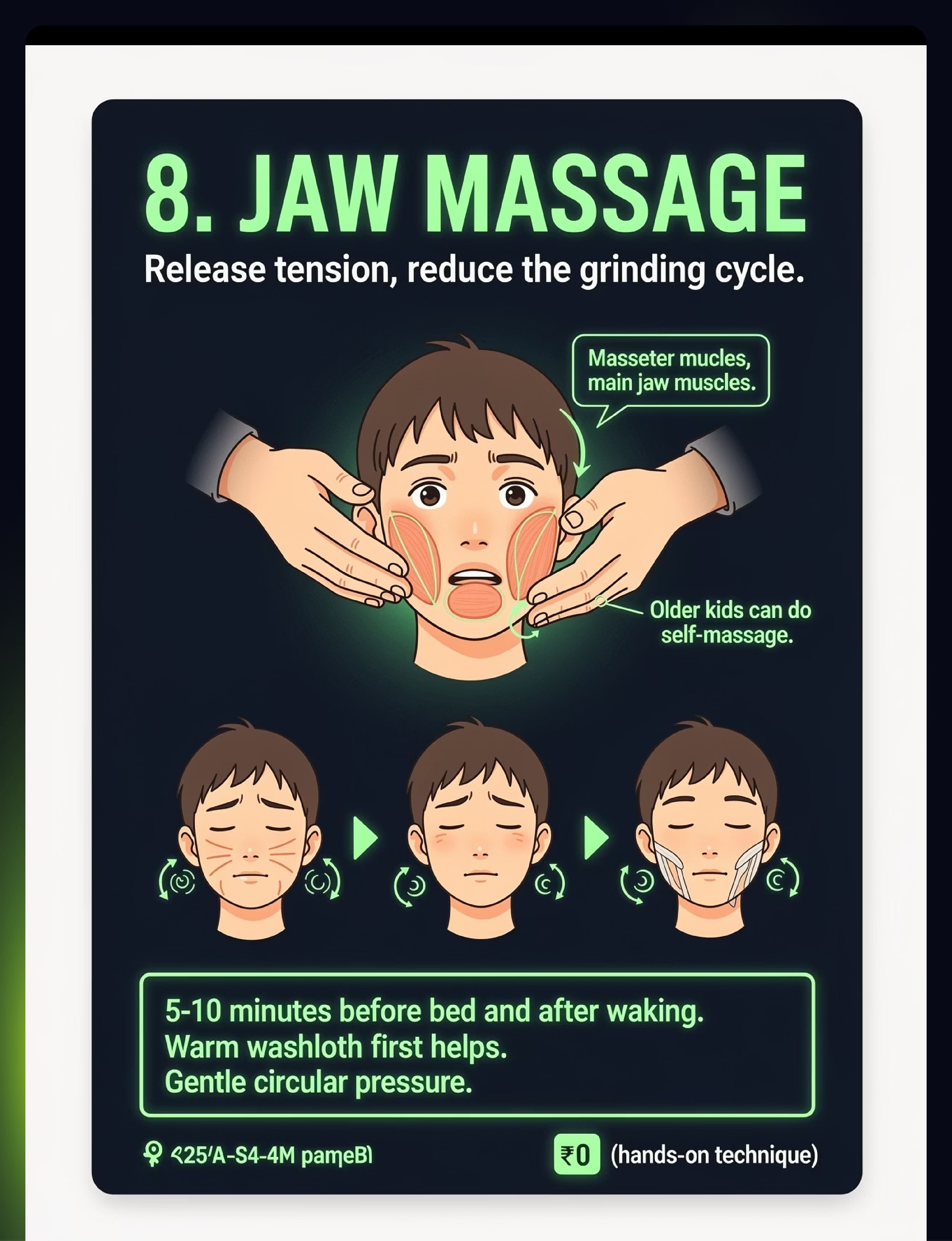
🤲 Jaw Massage Tools
Release tension, break the grinding cycle. Warm washcloth + circular pressure. Zero-cost available. ₹0–500
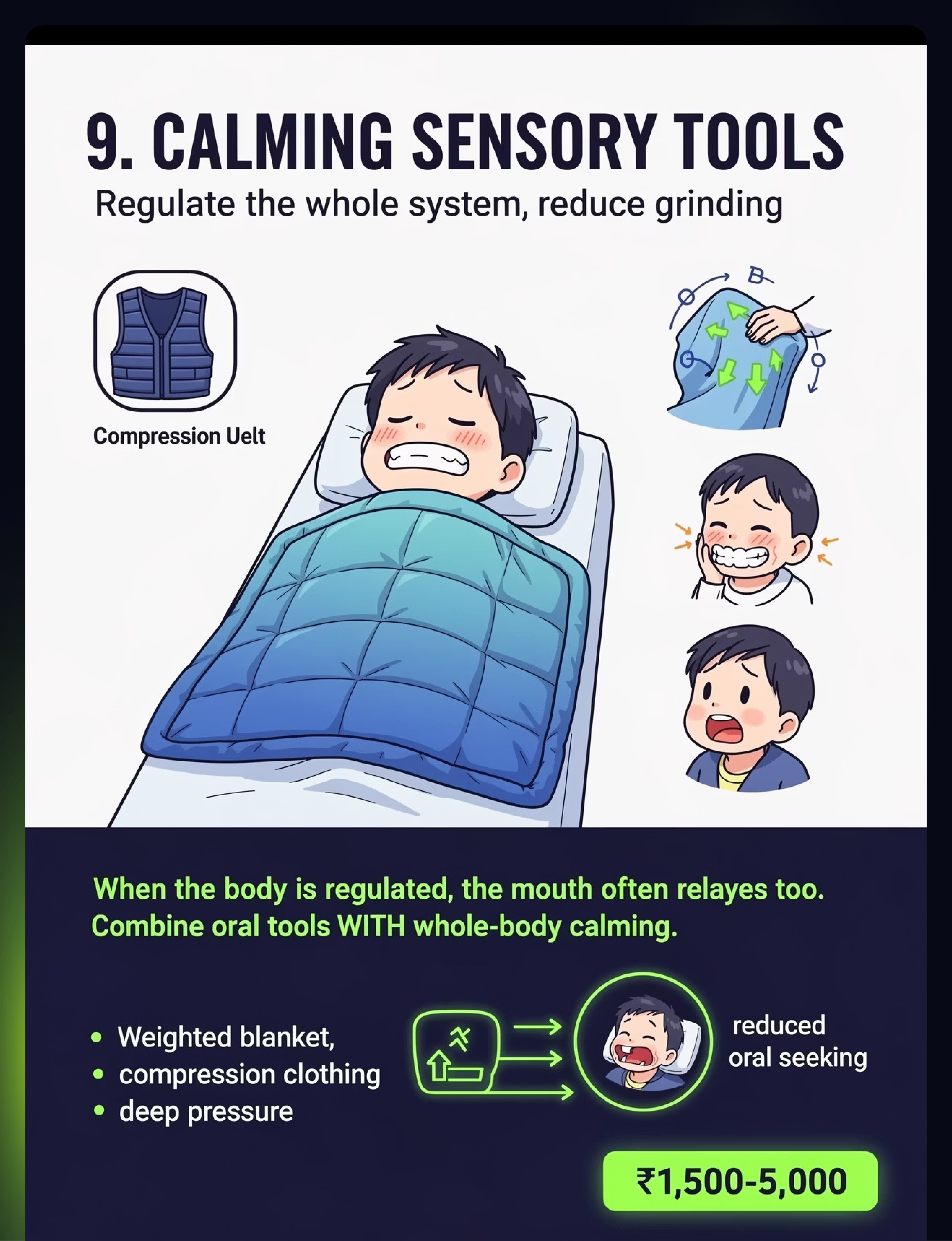
🧥 Calming Sensory Tools
Whole-body regulation reduces oral seeking. Weighted blanket + compression vest. ₹1,500–5,000
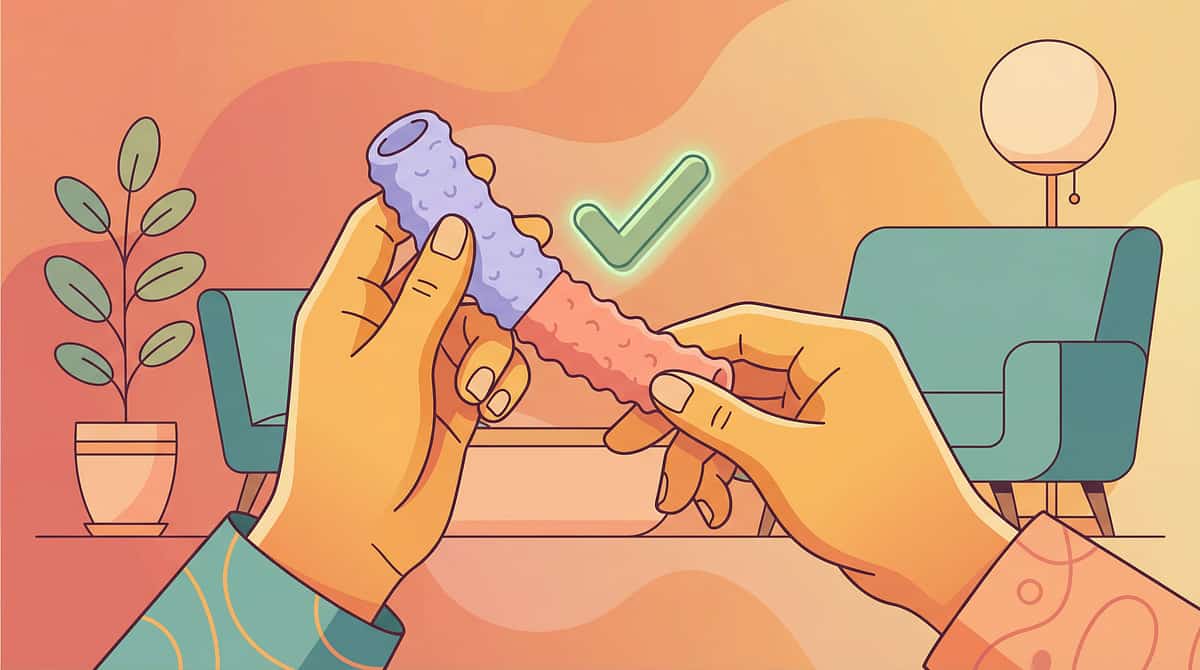
Material 1 of 9
🦷 Chewable Jewelry — The Always-Available Oral Outlet
What It Is
Food-grade silicone pendants or bracelets worn on the body — providing an always-available, socially acceptable chew surface for children who would otherwise grind teeth or chew clothing.
Resistance Levels
- Soft — sensitive or beginning users
- Medium — moderate chewers (most common)
- Firm — regular aggressive chewers
- Extra Tough — aggressive, destroys soft items
How to Use
Wear around the neck or on wrist during all waking hours. Redirect actively during high-grinding periods: "Mouth on your necklace." Replace when visible bite marks appear or material becomes worn.
Safety Checks
- Verify breakaway cord for necklaces
- Inspect for bite marks before each use
- Food-grade, latex-free certification required
- Replace when worn or damaged
💰₹300–800 | Search on Amazon.in →
✅Pinnacle Recommends: Start with medium resistance. If the necklace is destroyed within 1–2 days, move immediately to firm or extra-tough. Resistance matching is the most critical factor in effectiveness.
Material 2 of 9
Therapist Grade
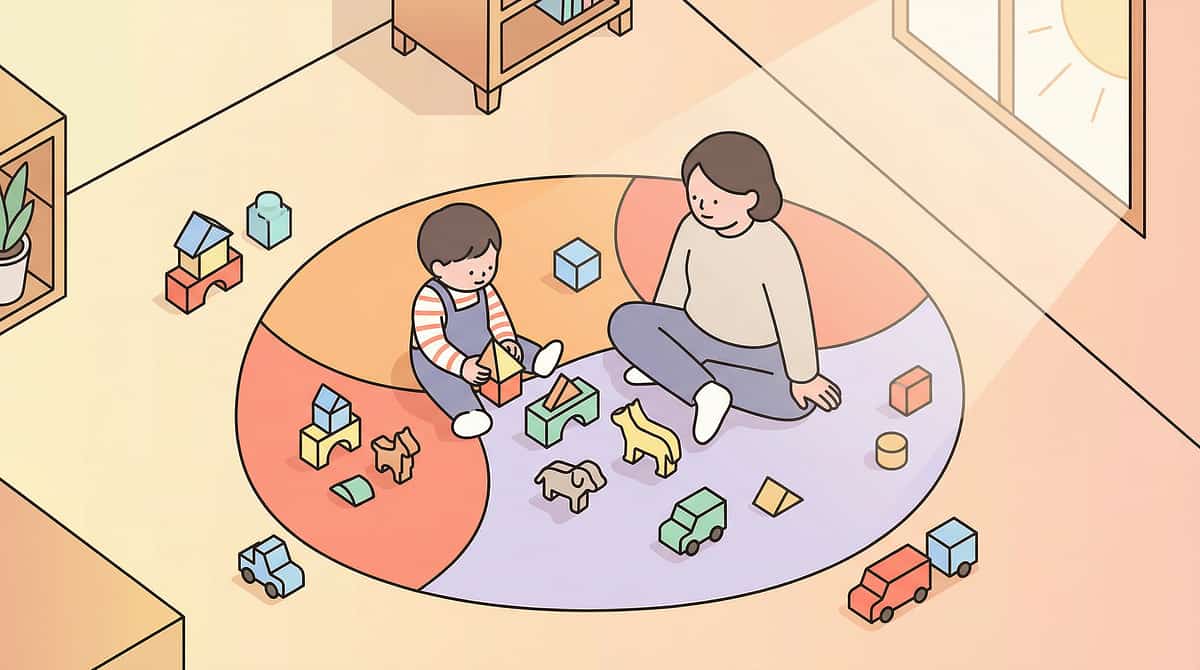
🟡 Chewy Tubes / Bite Tubes — The Structured Jaw Workout
What It Is
Therapeutic-grade bite tubes designed to provide structured, graded jaw resistance. Unlike a chew necklace, the chewy tube is used in focused sessions — not worn passively. Color coding indicates resistance level for systematic progression.
Session Protocol
- Place between right back molars — 10–15 sustained bites
- Move to left back molars — 10–15 sustained bites
- Complete at front teeth — 10–15 sustained bites
- 1–2 complete cycles per session
- 2–3 sessions daily: morning, before homework, before bed
Resistance Progression
- 🟡 Yellow — Week 1–2 (soft)
- 🔴 Red — Week 3–4 (medium)
- 🟢 Green — Week 5+ (firm)
Safety Checks
- Inspect before each use — discard if cracked
- Supervise — this is not a pacifier
- Do not force too far back in the mouth
- Place between front/back teeth, not all the way back
💰₹400–1,000 | Search on Amazon.in →
Material 3 of 9
Clinical Tool
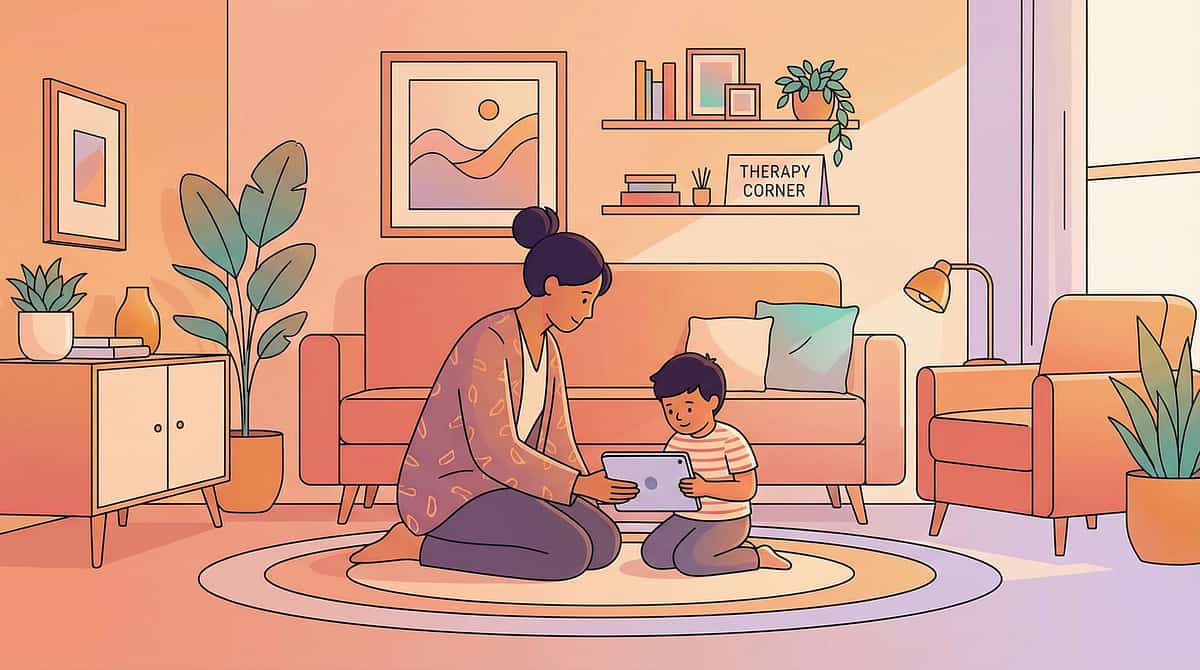
⚡ Vibrating Oral Tool — Intense Input Without the Grind
What It Is
A Z-Vibe, vibrating therapy tool, or adapted electric toothbrush that delivers vibration directly to the oral cavity. Vibration is neurologically activating and delivers dense proprioceptive input — often more efficiently than grinding.
Session Sequence
- Start at cheeks OUTSIDE the mouth first
- Progress to upper gums once external is accepted
- Lower gums → inner cheeks → tongue surface
- Gentle pressure — the tool does the work
- Duration: 2–5 minutes covering all areas
Timing
Before bed (highest impact for night grinders) + any time grinding escalates. This is the most powerful tool for children who grind primarily at night.
⚠️ Important Note
If the vibrating tool causes visible distress, this indicates oral hypersensitivity may co-occur. Do NOT continue over refusal. Switch to jaw massage and strategic snacking only and consult an SLP.
An electric toothbrush (₹150–300) works as an accessible alternative — vibration mechanism is functionally identical.
💰₹800–2,500 | Search on Amazon.in →
Material 4 of 9
₹0 Option Available
🥕 Strategic Crunchy & Chewy Foods — Nature's Oral Sensory Tools
The most accessible oral sensory tool in existence is already in your kitchen. Strategic snacking provides graded jaw resistance, proprioceptive input, and sensory satisfaction — without any purchase required.
1
Morning
Crunchy cereal or toast + raw fruit with skin
2
Mid-Morning
Raw carrot sticks or apple slices
3
Before Homework
Pretzels or rice crackers — concentration prep
4
Before Bed
Chewy bagel or cheese cubes — 30–60 min before sleep
⚠️Avoid: Very hard items (ice, frozen hard candy) — these can cause dental damage rather than prevent it. The goal is resistance, not hardness.

Material 5 of 9
⚠️ Protective — Not Therapeutic
🛡️ Sports Mouth Guard — Protect the Teeth While Interventions Take Effect
What It Is
A youth boil-and-bite or custom-fitted dental guard worn during sleep (and sometimes during high-grinding waking hours) to prevent enamel damage while the sensory protocol reduces grinding frequency over 6–12 weeks.
Critical Distinction
The mouth guard is protective only — it does not treat the neurological cause of grinding. It is the fire suppression system, not the fire prevention system. The oral sensory protocol is the treatment. Both are needed for children with significant dental wear.
Selection Guide
- Boil-and-bite youth size: ₹300–1,000
- Custom dental guard: ₹8,000–15,000
- Boil-and-bite provides adequate protection for most children while protocol takes effect
- Custom guard for severe grinders or significant dental damage
Safety Checks
- Proper fit is essential — too loose = choking risk
- Clean daily with toothbrush and cold water
- Replace if warped, cracked, or no longer fits
💰₹300–1,500 | Search on Amazon.in →
Material 6 of 9
Therapist Recommended
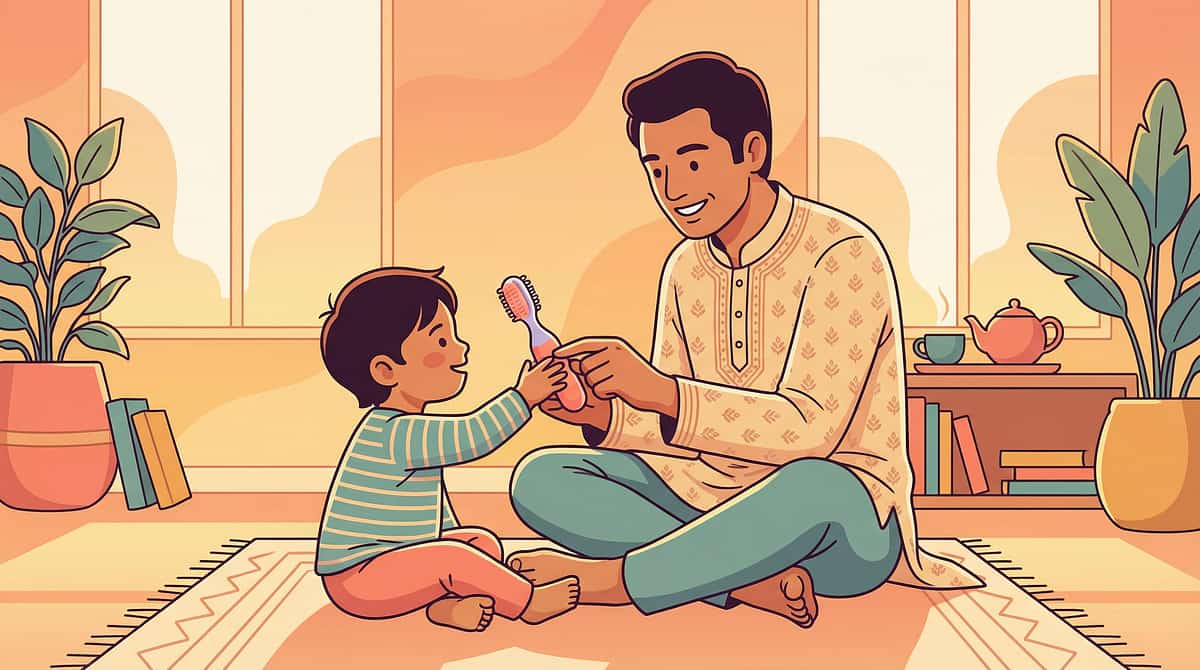
🪥 Oral Sensory Brushing Kit (Nuk Brush) — Comprehensive Input That Normalizes the Oral System
What It Is
A Nuk brush or specialized oral sensory brush used to provide systematic tactile and proprioceptive input across all oral surfaces — gums, cheeks, tongue, and hard palate. This "normalizes" the oral system by providing input in a controlled, predictable way.
Protocol
- 2–3 minutes per session
- 2–3 times daily (morning, after school, before bed)
- Systematic coverage: upper gums → lower gums → inner cheeks → tongue
- Gentle but firm pressure — child-directed speed
Why It Works
Regular, predictable oral input through a brushing kit reduces the surprise of sensory needs by pre-satisfying the system. Children who receive consistent oral brushing often show reduced urgency to grind because the proprioceptive debt is smaller at bedtime.
DIY Alternative
A soft baby toothbrush used for sensory input (not cleaning) delivers similar textural stimulation at a fraction of the cost.
💰₹300–900 | Search on Amazon.in →

Material 7 of 9
Functional Daily Use
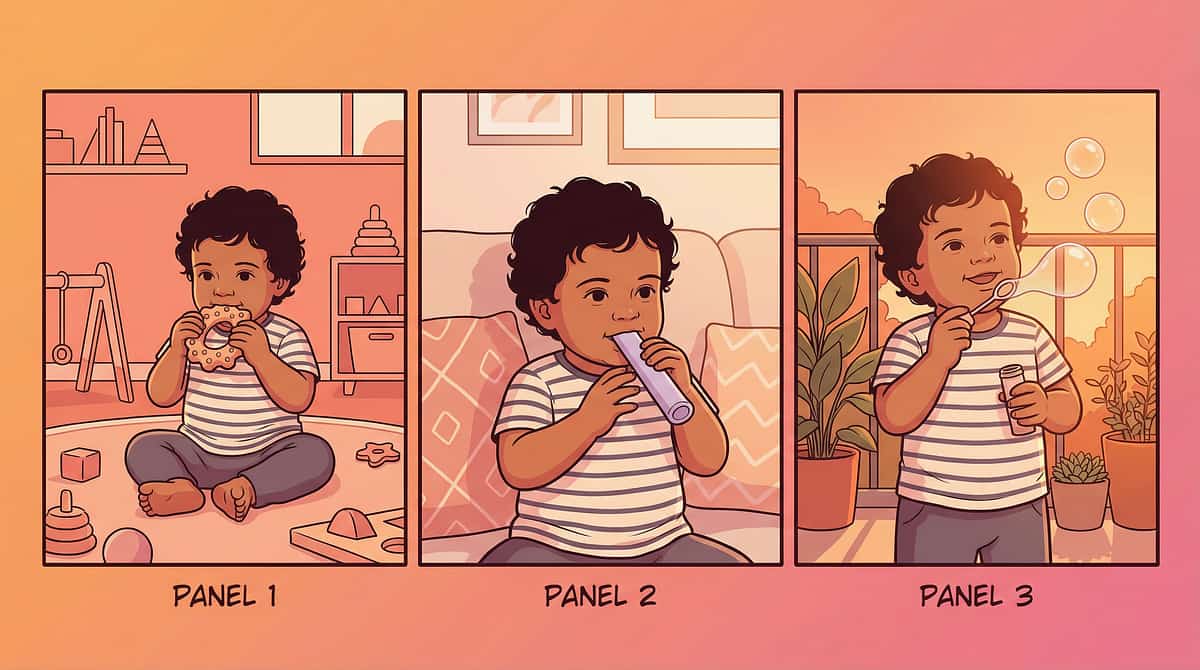
🥤 Resistive Straw Drinking Kit — The Jaw Workout Hidden in a Smoothie
What It Is
Using narrow straws with thick liquids (smoothies, yogurt drinks, thick juice) as an oral motor workout. The sucking action engages the same proprioceptive pathways as chewing — providing satisfying oral input through an everyday, socially invisible activity.
The Principle
Thinner straw + thicker liquid = more resistance = more proprioceptive input. A coffee stirrer straw with a mango smoothie delivers a surprisingly intense oral workout — and children typically love it.
Daily Integration
- Morning smoothie through a thin straw before school
- Yogurt drink at snack time
- Thick fruit juice before homework
- Any high-risk grinding period: offer a thick drink + thin straw
DIY Option
Coffee stirrer straws are available at any café or kitchen store. Paired with a homemade banana mango smoothie, this is a complete ₹0 additional-cost oral workout.
💰₹100–500 | Search on Amazon.in →
Material 8 of 9
Zero-Cost Available
🤲 Jaw Massage — Release Tension, Break the Grinding Cycle
The most powerful tool in the entire protocol may cost ₹0. A parent's warm hands, applied with the right technique, deliver direct proprioceptive input to the masseter muscles — releasing accumulated tension and reducing the drive to grind.
Full Protocol
Optional prep: Warm washcloth on jaw 2–3 minutes. Enhances relaxation and child acceptance significantly.
Total time: 5–10 minutes. Best timing: Before bed + after waking. This is the single highest-impact bedtime intervention for night grinders.
If Child Rejects Touch
Begin OUTSIDE the face — gentle hair strokes, then forehead, then cheeks from outside. Progress inward only once the child accepts outer zones. Use warm hands. Let child direct: "Show me where your cheeks are."
💰₹0 — completely free technique | Optional massage tools: ₹0–500
Material 9 of 9
Whole-System Approach
🧥 Calming Sensory Tools — Whole-Body Regulation Reduces Oral Seeking
The Logic
Oral seeking intensifies when the entire nervous system is dysregulated. A child who is calm, contained, and proprioceptively satisfied throughout their body will grind less — because the overall sensory debt is lower. Weighted blankets and compression vests address the system, not just the jaw.
Weighted Blanket Protocol
- Weight: 10% of body weight + 1–2 lbs maximum
- Never cover the face
- Use during homework, screens, and pre-bedtime wind-down
- 20–30 minutes of use pre-bed significantly reduces night grinding drive
Compression Vest
A fitted compression vest worn for 20-minute intervals provides deep pressure proprioception throughout the school day — reducing the need to seek input orally. Particularly useful for children who grind during concentration tasks.
DIY Alternative
Heavy quilt or two blankets layered + tight-fitting clothing delivers the same deep pressure input. The weight and compression mechanism is identical to therapeutic products.
💰₹1,500–5,000 | Search on Amazon.in →

Equity Inclusion
WHO/UNICEF Principles
Every Family Can Start Today. With What They Have.
Inspired by WHO/UNICEF inclusion principles — effective therapy should not require an Amazon account.
🛒 Buy This | 🏠 Use This Instead | Why It Works | |
Chew Necklace (₹300–800) | Clean silicone infant teether or thick rubber eraser on a cord | Same food-grade silicone principle — oral-safe and chewable | |
Chewy Tubes (₹400–1,000) | Clean raw carrot sticks or thick licorice (supervised) | Graded jaw resistance — same proprioceptive input | |
Z-Vibe (₹800–2,500) | Electric toothbrush (₹150–300) used as sensory tool on gums | Vibration mechanism is identical | |
Resistive Straws (₹100–500) | Coffee stirrer straw + smoothie | Thinner = more resistance. Already in the kitchen | |
Mouth Guard (₹300–1,500) | Boil-and-bite sports guard (₹150–400 at pharmacies) | Same protective function | |
Nuk Brush (₹300–900) | Soft baby toothbrush for sensory input (not cleaning) | Textured bristles deliver oral stimulation effectively | |
Weighted Blanket (₹1,500–5,000) | Heavy quilt + two blankets layered + tight-fitting clothing | Deep pressure input from weight — same regulatory mechanism | |
Jaw Massage Tools | Parent's hands — circular pressure on masseter muscles | The technique, not the tool, delivers the benefit |
🆓₹0 Complete Daily Protocol: Morning: Soft toothbrush oral massage (2 min) + crunchy breakfast. Day: Coffee stirrer straws + smoothies + raw vegetables. Evening: Jaw massage (parent's hands) + heavy quilt before bed. This protocol costs ₹0 additional and delivers 60–70% of clinical benefit.
⚠️When clinical-grade material matters: For aggressive chewers (children who destroy soft materials quickly), therapeutic chew jewelry with appropriate resistance rating is non-negotiable — household substitutes may become choking hazards. Call 9100 181 181 for personalized guidance.
🛑 Read This Before You Place Anything In Your Child's Mouth
🚫 DO NOT PROCEED if your child has:
- Acute dental pain, fractured teeth, or open mouth sores
- Recent oral surgery or dental procedures (within 2 weeks)
- Known latex allergy — verify all materials are latex-free
- Severe gag reflex that causes vomiting with oral contact
- Active seizure activity affecting the jaw
- Respiratory compromise or swallowing disorder (consult SLP first)
⚠️ MODIFY if your child:
- Has significant TMJ clicking or jaw pain — softest materials only
- Is currently feverish or unwell — postpone protocol
- Has oral hypersensitivity — begin with invitation approach only
- Is a very aggressive chewer — supervise closely, firm-resistance only
- Is under age 2 — age-appropriate teethers only, supervised
✅ Material Safety Cleared:
- Chew jewelry: Verify breakaway cord | Inspect for bite marks before each use
- Chewy tubes: Discard if cracked | Supervise — not a pacifier
- Mouth guard: Proper fit essential — too loose = choking risk | Clean daily
- Vibrating tools: Food-grade only | Not on oral wounds
- Weighted blanket: 10% body weight + 1–2 lbs max | Never cover face
🛑STOP IMMEDIATELY if: Child shows signs of choking, skin breakage or bleeding in mouth, visible panic or distress, worsening jaw pain after sessions, or new TMJ clicking. If in doubt: Call 9100 181 181 immediately.

Environment Setup
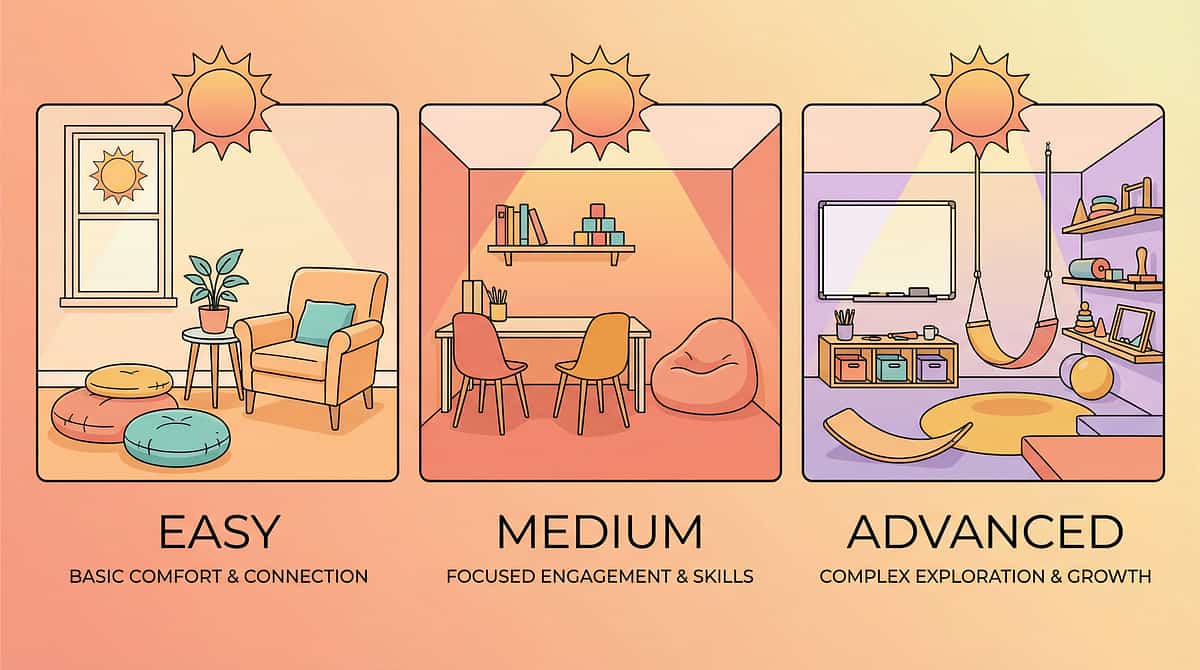
The Right Environment Prevents 80% of Session Failures
Material Station
All 2–3 selected materials within child's reach — NOT in parent's pocket. Visibility = invitation. Place on a low table or floor mat at child's eye level.
Child Position
Seated, upright, feet flat (floor or stool). Not lying down for active chewing sessions. Alert and calm — not tired. Feeling of stability reduces defensive responses.
Parent Position
Same level as the child. Never standing over. Side-by-side for passive tools; facing for active tools. Equal eye level communicates safety and collaboration.
Acoustics & Lighting
Low background noise — no TV. Calm music acceptable (60–70 BPM, no lyrics). Natural or warm white lighting — no harsh fluorescent overhead. Cold environments increase jaw tension.
Visual Timer
A visible sand timer or phone timer helps the child know when the session ends. Visual predictability = acceptance. Reduces resistance and end-of-session battles significantly.
🌙For night-grinding specific protocol: Set up at the bedside. Chewy tube + jaw massage BEFORE teeth brushing. Mouth guard on nightstand. Weighted blanket on bed. This sequence signals the nervous system: "Input is available. Grinding not needed."
ACT III · Execution
Step 1 of 6
Step 01 — The Invitation. Not a Command.
⏱️ 30–60 seconds
💬Say exactly this (or your version of it):
"Hey, I have something cool for your mouth. Want to try it?"
Hold up the chew necklace or chewy tube at the child's eye level.
For non-verbal children: Place the item within reach and wait. Interest = invitation accepted.
Body Language
- Kneel or sit — never stand over the child
- Relaxed posture — not tense or urgent
- Eye contact at child's level — not required if child avoids
- Present with casual curiosity, not "you need to do this"
✅ Acceptance Cues
- Child reaches for the item
- Child makes eye contact with the item
- Child moves toward you
- Any vocalization of interest
⚠️ Resistance Cues — Modify, Don't Force
- Child turns away → Wait 30 sec, try once more
- Child pushes item → Put aside, try jaw massage first
- No response → Engage preferred activity, introduce passively

ACT III · Execution
Step 2 of 6
Step 02 — The Engagement. Meet the Material.
⏱️ 1–3 minutes
🦷 For Chew Necklace
Place around child's neck (or in their hand). Say: "This is for chewing when your mouth needs something." Model bringing it to your own mouth briefly if helpful. Wait for child to explore at their own pace.
🟡 For Chewy Tubes
Present at front of mouth between front teeth. Gentle downward pressure. Say: "Bite and hold. Like this." Model on your own finger if needed.
⚡ For Vibrating Tool
Start at cheeks OUTSIDE the mouth first. Say: "This tickles. Ready?" Progress inside gums only once the child accepts external vibration without distress.
🤲 For Jaw Massage
Warm hands first (rub together 10 seconds). Begin at child's temples — gentle circular motion. Say: "I'm going to help your jaw relax."
🎉 The moment the child makes ANY contact with the material: Immediate specific praise."Yes! Great chewing! That's exactly right." This 3-second reinforcement window is critical to building the association.

ACT III · Execution
Step 3 of 6 — Core Protocol
Step 03 — The Therapeutic Action. Jaw Gets Its Input.
⏱️ 5–10 minutes — the core therapeutic window
🦷 Chew Necklace Protocol
Duration of wear: all waking hours (passive availability). Active use: encourage before high-grinding periods (homework, screens, transitions). Parent redirect if grinding starts: "Mouth on your necklace" — gentle, not corrective.
🟡 Chewy Tube Protocol
Right back molars → left back molars → front teeth. 10–15 sustained bites per zone, 5–10 seconds each. 1–2 complete cycles per session. Resistance progression: Yellow (weeks 1–2) → Red (weeks 3–4) → Green (week 5+).
⚡ Vibrating Tool Protocol
Cheeks outside → gums upper → gums lower → inner cheeks → tongue. Gentle — tool does the work. 2–5 minutes all areas. Before bed for night grinders + any time grinding escalates.
🤲 Jaw Massage Protocol
Masseter (cheeks): circular pressure, 1–2 min each side. Temples: gentle circular, 1 minute. Under chin: light pressure along jaw, 1 minute. Ear area (TMJ): gentle circles, 30 sec each side. Total: 5–10 minutes. Best timing: before bed + after waking.
❌Common Execution Errors: Forcing the chewy tube too far back (correct: between front/back teeth). Using mouth guard as the only intervention (correct: it's protection only — oral tools are treatment). Doing protocol only AFTER grinding starts (correct: proactive protocol BEFORE trigger periods).

ACT III · Execution
Step 4 of 6
Step 04 — Repeat & Vary. Dosage Is Everything.
⏱️ 3–5 minutes additional
Repetition Targets
- Chewy Tube: 10–12 good bites per zone
- Vibration: 3–5 min covering all areas
- Snacking: 4–5 pieces of target texture
- Massage: 5–8 min until muscles soften
Satiation Indicators
The jaw has had enough when: child releases material voluntarily, jaw muscles visibly soften, child becomes calmer or more focused, no reaching back within 2 minutes.
Variation Options to Maintain Engagement
If bored with... | Try instead | |
Same chew necklace daily | Rotate colors/textures weekly | |
Chewy tube alone | Add a timer game | |
Passive jaw massage | Child does self-massage while you guide | |
Same snack daily | Rotate: carrot → apple → pretzel → bagel → dried mango | |
Vibrating tool same route | Child directs where the tool goes |
🎯 "3 good, willing repetitions are therapeutically superior to 10 forced ones." Forced input triggers defensive responses — the opposite of regulation.

ACT III · Execution
Step 5 of 6
Step 05 — Reinforce & Celebrate. Timing Is Everything.
⏱️ Within 3 seconds of the desired behavior
💬Within 3 seconds of the desired behavior:
"You used your chew toy! That's EXACTLY right!" (enthusiastic, specific)
"Your jaw worked so hard today. I'm proud of you." (for older children)
"HIGH FIVE — you picked the necklace instead of your shirt!" (replacement behavior celebrated)
The 3-second reinforcement window is the most critical variable in behavior change. After this window, the reinforcement loses the majority of its effectiveness — the brain can no longer connect cause and effect.
Reinforcement Menu
- Verbal: Specific praise + enthusiastic tone
- Physical: High five, fist bump, hug (if tolerated)
- Visual: Sticker on chart
- Token: Earn tokens toward preferred activity
- Natural: "Feel how relaxed your cheeks are?"
Pinnacle Canon Products
🏆"Celebrate the attempt, not just the success." A child who reached for the chew necklace and then dropped it = still celebrating. The reach is the behavior being built.

ACT III · Execution
Step 6 of 6 — Session Close
Step 06 — The Cool-Down. No Session Ends Abruptly.
⏱️ 2–3 minutes
💬"Two more bites, and then all done.""One more minute of massage, then we're finished." Hold up 2 fingers, or use a visual timer showing the last 60 seconds.
If Child Resists Ending
- One extension: "Two more, then done for real."
- If still resisting: offer brief preferred activity that includes the tool
- Do NOT force removal — abrupt ending creates negative association
✅ Good Session Indicators
- Jaw muscles visibly softer
- Child more regulated/calm than pre-session
- Child transitions smoothly to next activity
- Grinding not immediately resumed
Data Collection
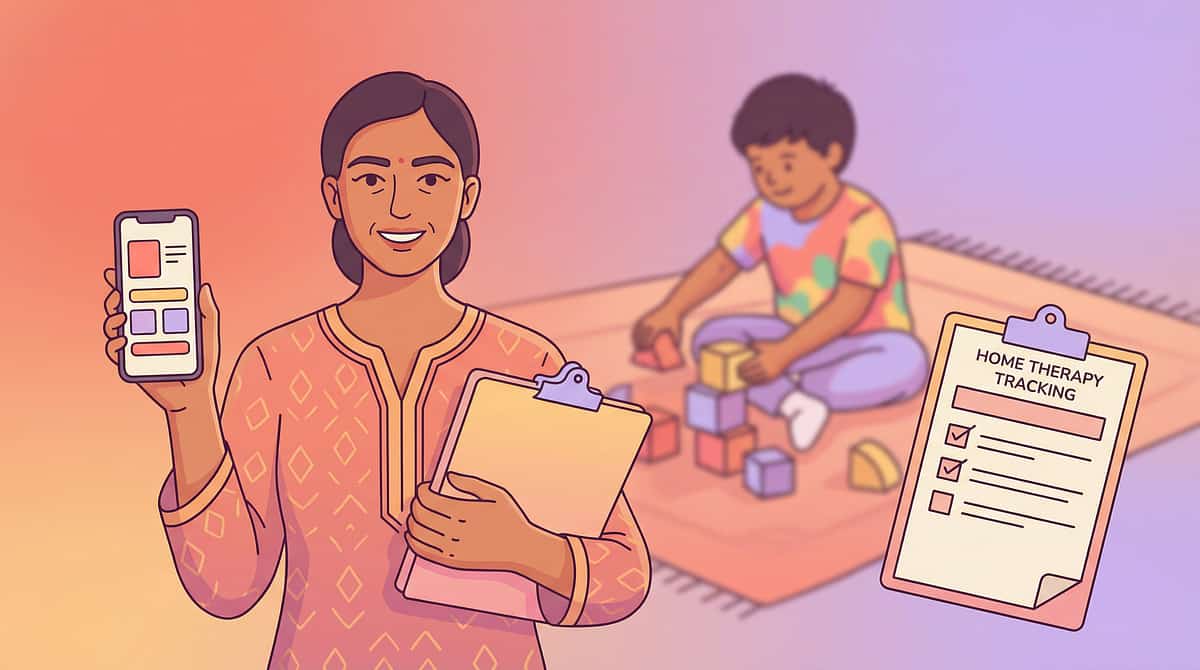
60-Second Log
60 Seconds of Data Now Saves Hours of Guessing Later
Before you put your phone down — record these 3 things. Three weeks of consistent tracking gives you a clear trend line. A single bad day is data — not failure.
A-107 Session Tracker — Today's Log
1. TOOL USED:
☐ Chew Necklace ☐ Chewy Tube ☐ Vibrating Tool ☐ Strategic Snack ☐ Jaw Massage ☐ Mouth Guard ☐ Other
☐ Chew Necklace ☐ Chewy Tube ☐ Vibrating Tool ☐ Strategic Snack ☐ Jaw Massage ☐ Mouth Guard ☐ Other
2. GRINDING TODAY:
0 = None observed | 1 = Mild (brief) | 2 = Moderate (frequent) | 3 = Severe (constant)
0 = None observed | 1 = Mild (brief) | 2 = Moderate (frequent) | 3 = Severe (constant)
3. CHILD'S RESPONSE:
A = Enthusiastic | B = Neutral/tolerated | C = Resistant but completed | D = Refused/abandoned
A = Enthusiastic | B = Neutral/tolerated | C = Resistant but completed | D = Refused/abandoned
Why This Data Matters
Your session logs feed directly into GPT-OS®, which analyzes patterns, identifies co-factors, and benchmarks your child's progress against 20M+ real sessions. Without data, protocol adaptation is guesswork. With data, it is precision.
Track for 3 weeks before drawing conclusions. Natural variation is expected.
Troubleshooting
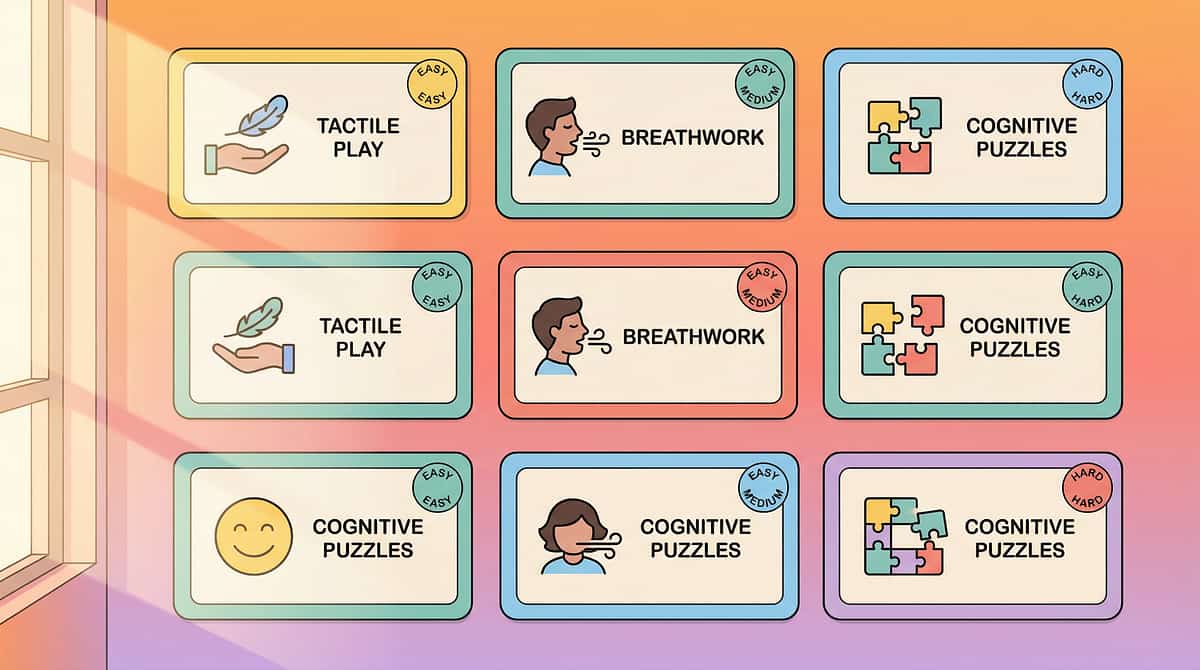
Session Abandonment Is Not Failure. It Is Data.
❓ Child refuses to touch the chew necklace
Don't introduce during grinding. Introduce during a calm, preferred activity. Place it near — don't prompt. Some children need 7–14 days of exposure. Try a different shape/color. Animal soft toys (₹425 →) can help with initial acceptance.
❓ Child chews necklace so aggressively it breaks immediately
Resistance level is too low. Move to firm or extra-tough resistance immediately. Chewy tubes with firm resistance (green) are designed for aggressive chewers. Call 9100 181 181 for personalized product recommendation.
❓ Night grinding continues despite daytime protocol
Night grinding has different drivers (sleep architecture, airway) and responds more slowly. Add bedtime jaw massage + chewy tube + weighted blanket combination. Consider mouth guard for protection. If snoring is present, consult pediatrician for sleep apnea screening.
❓ Child wears chew necklace but doesn't chew it — still grinds
The tool must be matched to timing. During grinding trigger times (homework, screens, transitions), redirect: "Mouth on your necklace" — gentle, not corrective. It takes weeks of consistent prompting to establish the alternative behavior.
❓ Jaw massage is rejected
Begin OUTSIDE the face — gentle hair strokes, then forehead, then cheeks. Progress inward only once the child accepts outer zones. Use warm hands. Child directs where your hands go: "Show me where your cheeks are."
❓ Vibrating tool causes visible distress
Oral hypersensitivity is co-occurring. Consult SLP. Do NOT continue vibration over refusal. Switch to jaw massage and strategic snacking protocol only until SLP assessment.
❓ Improvement plateaued after 3 weeks
Plateau at week 3 is normal — the nervous system is consolidating. Continue protocol. If no movement by week 5, call 9100 181 181 for a FusionModule™ multi-disciplinary review.
ACT IV · Progress Arc
Week 1–2
Week 1–2: Tolerance, Not Mastery. This Is Still Winning.
15%
Foundation Phase
Building tolerance and initial tool acceptance
✅ What Progress Looks Like in Weeks 1–2
- Child accepts the chew necklace being placed near them
- Child tolerated 3 chewy tube bites (vs. 0 last week)
- One prompt to "use your necklace" was accepted
- Night grinding was quieter on 2 out of 7 nights
- Child reached for the chew toy once independently
❌ What Is Not Expected Yet
- Grinding has not stopped (not expected until week 6+)
- Child does not independently seek the chew toy every time (week 4+ goal)
- Dentist cannot yet see change (months of evidence needed)
⏳Patience metric: If your child tolerates the oral tool for 3 seconds longer than last week — that is real, measurable neural progress. Track the seconds, not the perfection.
The grinding may actually increase briefly in week 1 as the nervous system registers the protocol as a change. This is temporary. Stay consistent. The protocol is working.

ACT IV · Progress Arc
Week 3–4
Week 3–4: Neural Pathways Forming. Watch For These Signs.
40%
Consolidation Phase
Neural pathways strengthening, behaviors generalizing
✅ Consolidation Indicators
- Child anticipates the chewy tube session (brings it to parent)
- Night grinding audibly reduced — 2–3 quieter nights per week
- Child uses chew necklace without prompt during 1–2 high-risk times
- Shirt/pencil chewing visibly reduced
- Jaw muscles feel less tense in the morning (parent-reported)
🌱 Generalization Seeds to Watch For
These early signs show the nervous system is adapting beyond protocol time:
- Child reaches for chew toy when frustrated
- Child asks for specific crunchy food before homework
- Child self-massages cheeks during stressful moments
When to increase intensity: If child is completing protocol willingly and smoothly by week 3, progress to harder resistance + longer sessions.
💙 "By week 3–4, most parents report: 'I'm less scared. I can see something working.' You are more confident now because you have evidence."
ACT IV · Progress Arc
Week 5–8
Week 5–8: Mastery Unlocking. Here's How You'll Know.
75%
Mastery Phase
Approaching full protocol independence and generalization
🏆MASTERY CRITERIA — A-107: When 4 of 5 are consistently observed for 2 weeks:
☐ Independent Tool Use
Child reaches for chew necklace/chewy tube without prompt 3+ times daily
☐ Grinding Reduction
Night grinding audible 1–2 nights/week maximum vs. nightly at baseline
☐ Generalization
Oral tools used across settings: home + school + car
☐ Dental Feedback
Dentist notes no new enamel wear at next check-up
☐ Maintenance
Protocol maintained on 5+ of 7 days per week without reminders
Not every child reaches mastery at the same pace. Contributing factors may include co-occurring sleep disorder, co-occurring anxiety, protocol inconsistency, or need for higher intensity. Call 9100 181 181 for FusionModule™ review if not at mastery by week 8.

🏆 You Did This. Your Child Grew Because of You.
You spent 5–8 weeks executing an evidence-based oral sensory protocol. You endured the grinding sounds. The worried dentist visits. The destroyed shirt collars. You found an alternative. You stayed consistent. You gave their jaw what it needed.
And their mouth is safer. Their nervous system is more regulated. Their jaw is calmer.
🦷A-107 Milestone Achieved: "I redirected my child's teeth grinding from damaging behavior to safe, therapeutic oral sensory tools — using evidence-based materials in a consistent home protocol." — Parent, Pinnacle Blooms Network
Capture the Moment
Take a photo together and note today's date in your child's therapy journal
Document the Change
Write what changed — in your words. Your record matters for the next therapist, teacher, or caregiver
Share Your Story
Another parent at 2 AM needs to read your family's progress. Your story is medicine for them
Book a Dental Check-Up
Celebrate the improved news with your dentist — and let them see the evidence of your consistency

Full Developmental Map
One Technique. Twelve Domains. One Child.
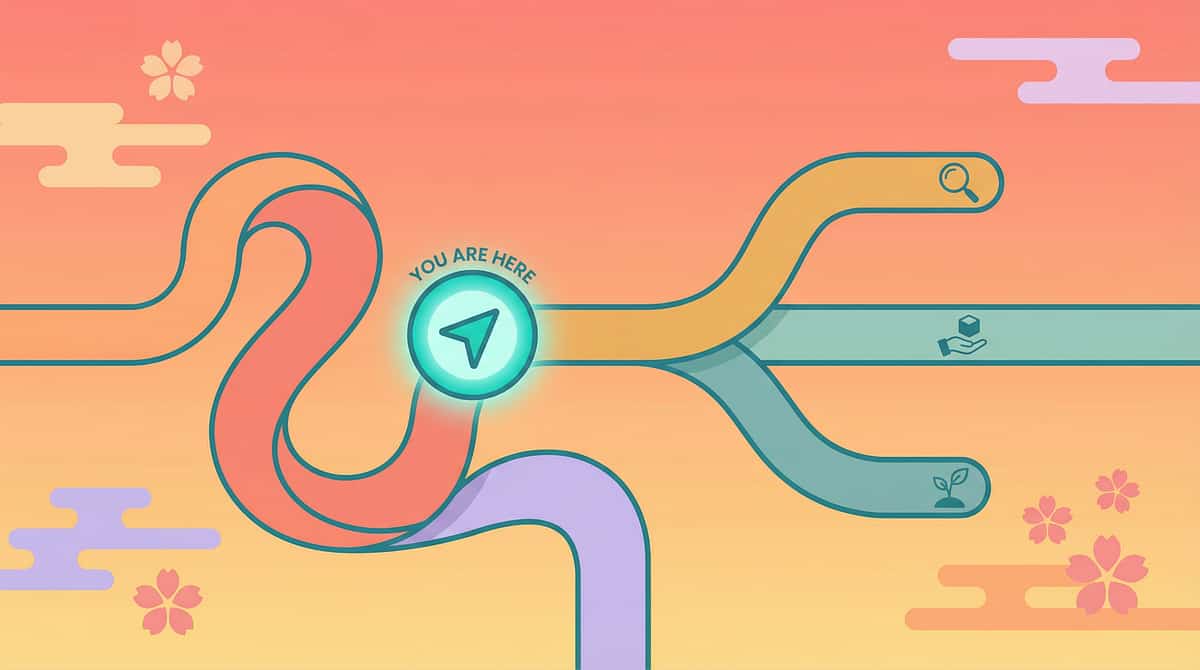
📍 You Are Here: Domain A — Sensory Processing
A-107 is one of 50+ techniques within the Oral Sensory sub-cluster of Domain A.
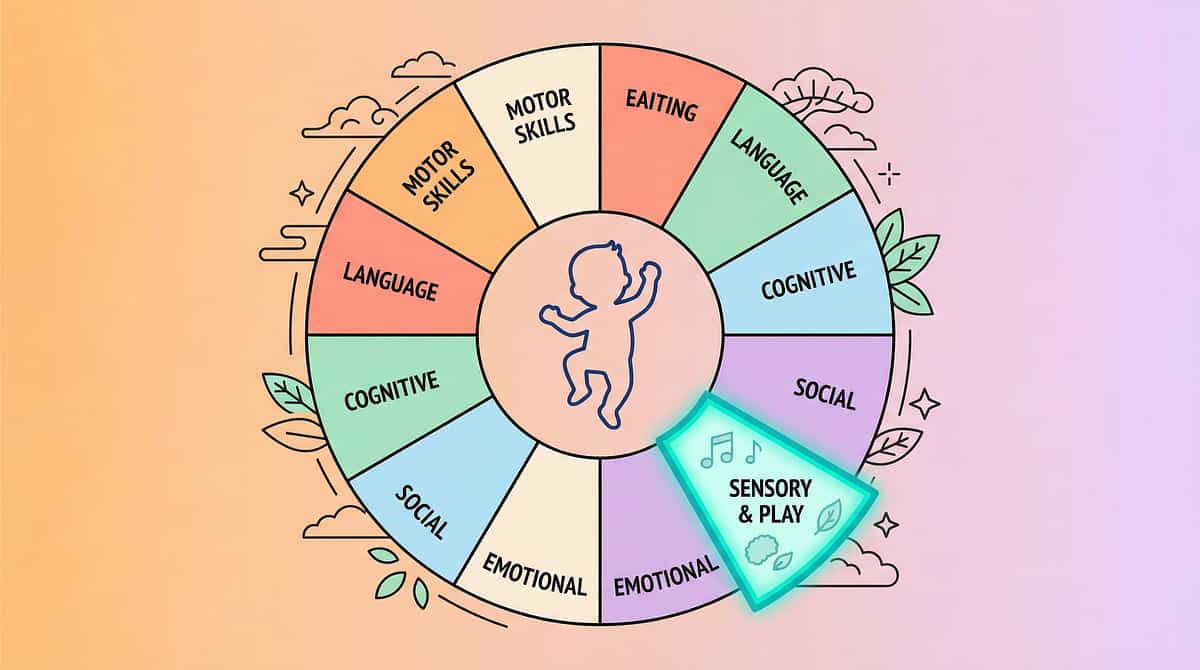
The 12-domain developmental framework:
- A: Sensory ← You are here
- B: Social Communication
- C: Emotional Regulation
- D: Behavior / Flexibility
- E: Feeding / Oral Motor
- F: Fine Motor | G: Gross Motor
- H: Play Skills | I: Daily Living
- J: Cognitive | K: Motor | L: NeuroDev
Domains Teeth Grinding Impacts
- Domain C (Emotional Regulation): Oral seeking co-occurs with regulation challenges
- Domain E (Feeding): Oral motor pathway overlap
- Domain K (Motor): Body-wide proprioceptive needs
Track All 12 Domains
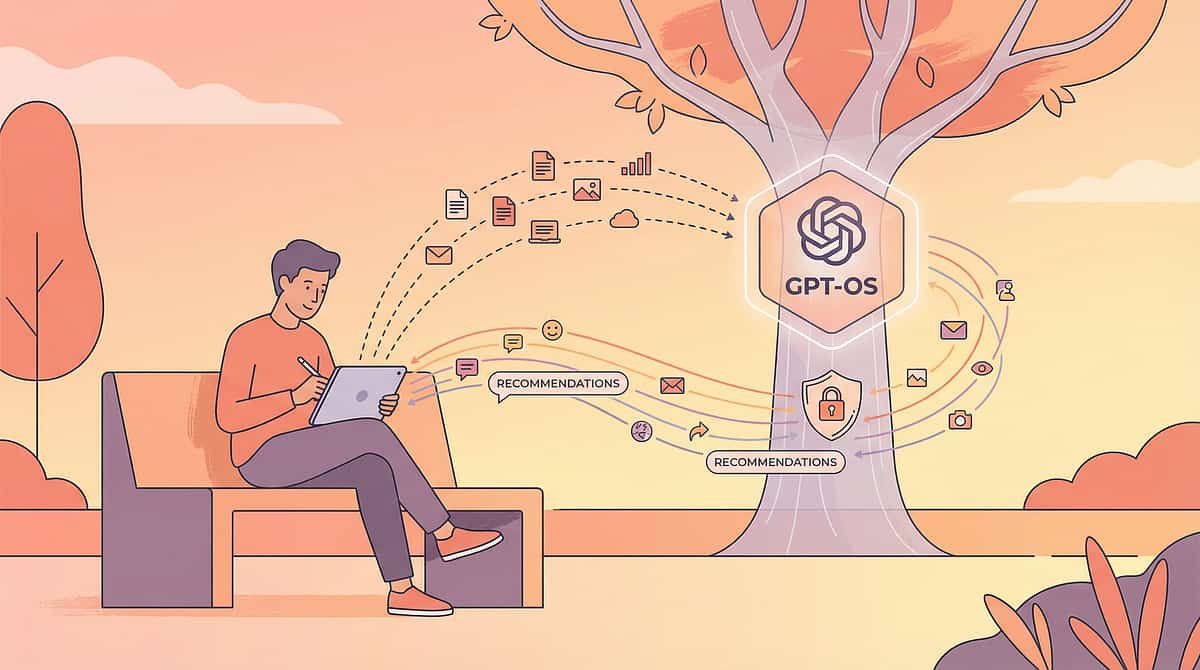
GPT-OS® AbilityScore® tracks progress across all 12 domains with every session — giving you a longitudinal picture of your child's entire developmental arc, not just oral sensory.
ACT V · Community
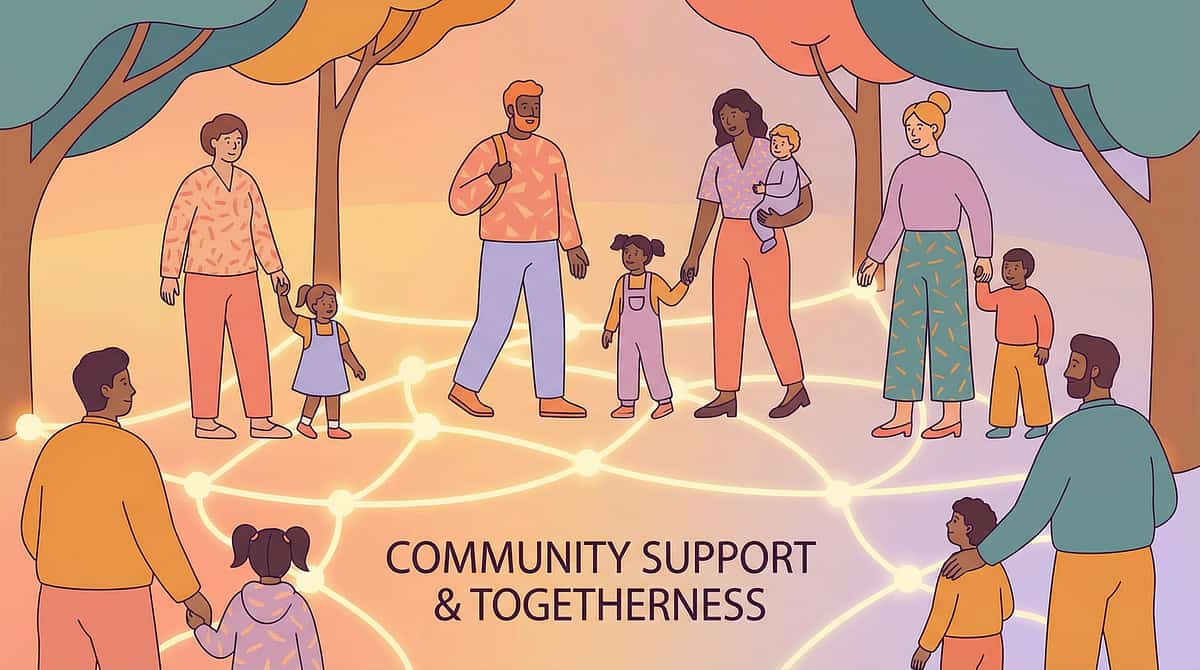
You Are Not the First. You Will Not Be the Last.
Before — Parent, Hyderabad
"He ground his teeth so loudly at night that we put a white noise machine outside his door just to sleep ourselves. The dentist said his first molars were already showing wear at age 6. We felt helpless."
After (Week 10)
"By week 4, the grinding was quieter. By week 8, the dentist said no new wear. He still grinds sometimes, but he also reaches for his chew necklace on his own now when he's concentrating."
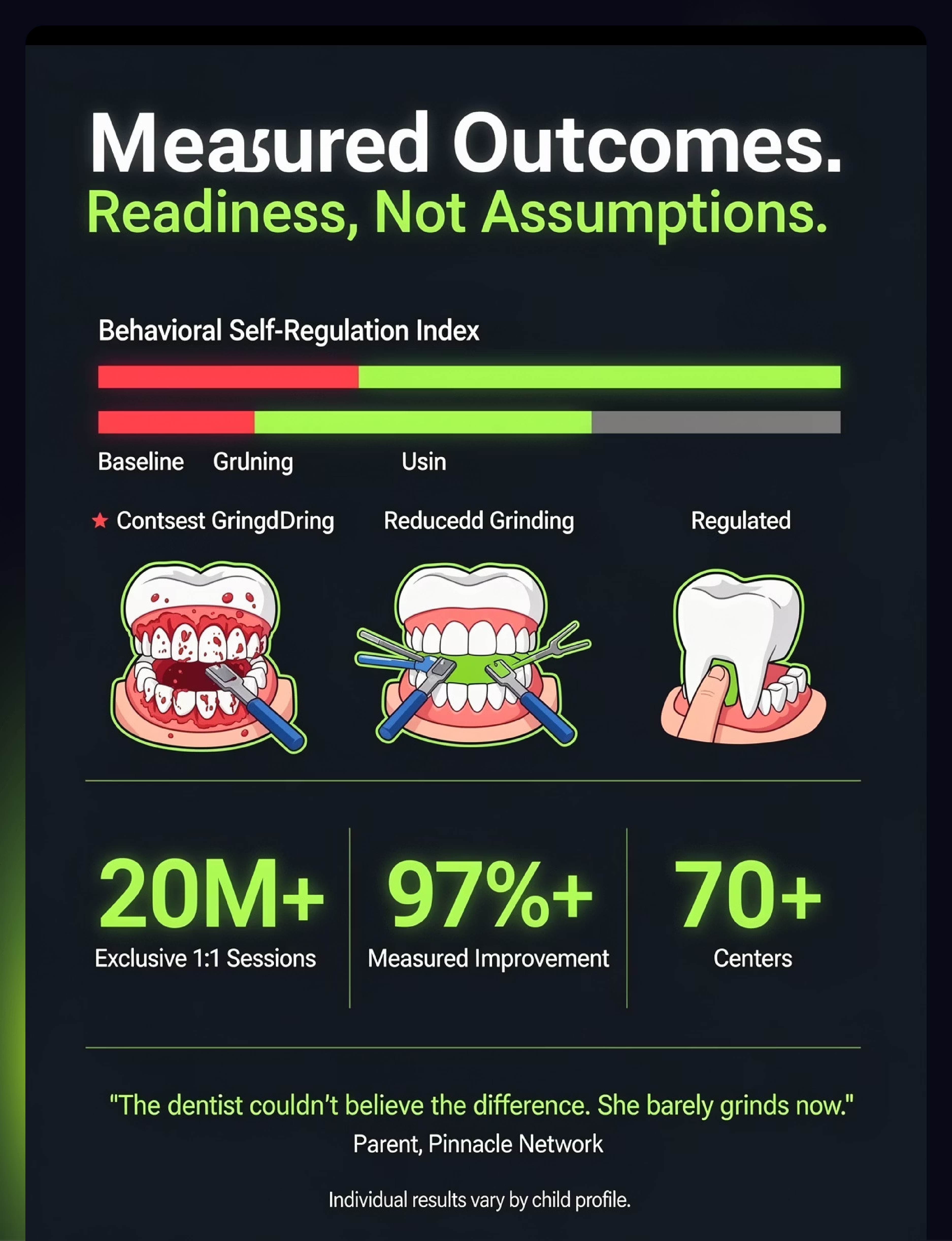
"The dentist couldn't believe the difference. She barely grinds now." — Parent, Pinnacle Blooms Network, Hyderabad
Tools used: Chewy tubes + jaw massage + chew necklace + bedtime protocol. Timeline: 10 weeks.
From the Therapist's Notes
"The jaw massage before bed changed the trajectory. We were giving the nervous system the input it was seeking during sleep grinding — before sleep. The grinding became unnecessary." — Pediatric OT, Pinnacle Blooms Center
Before: "My son chewed through 3 school shirt collars every week. He didn't even know he was doing it." After (Week 6): "Chew necklace at school (we called it his 'special necklace') and a crunchy snack before school. The collar chewing is gone." — Parent, Pinnacle Network
All testimonials are from families within the Pinnacle Blooms Network. Names withheld for privacy. Individual results vary.
All testimonials are from families within the Pinnacle Blooms Network. Names withheld for privacy. Individual results vary.
Community
Isolation Is the Enemy of Consistency. Join the Community.
WhatsApp Parent Circle
Join "Teeth Grinding & Oral Sensory — Pinnacle Parent Circle" — active parents sharing daily wins, tool recommendations, and progress photos
Online Forum
Pinnacle Community Forum — Oral Sensory Discussion → Connect, ask questions, share breakthroughs
Local Parent Meetups
Organized across 40+ cities. Find your nearest group →
Peer Mentoring
Connect with a parent who completed A-107 and is 3+ months ahead of you. Request a Peer Mentor through the community portal.
"Your story — your child's 3-second improvement, their first spontaneous tool use, their quieter night — is exactly what another desperate parent at 2 AM needs to read." Consider sharing. It costs nothing and means everything.
Watch the Reel
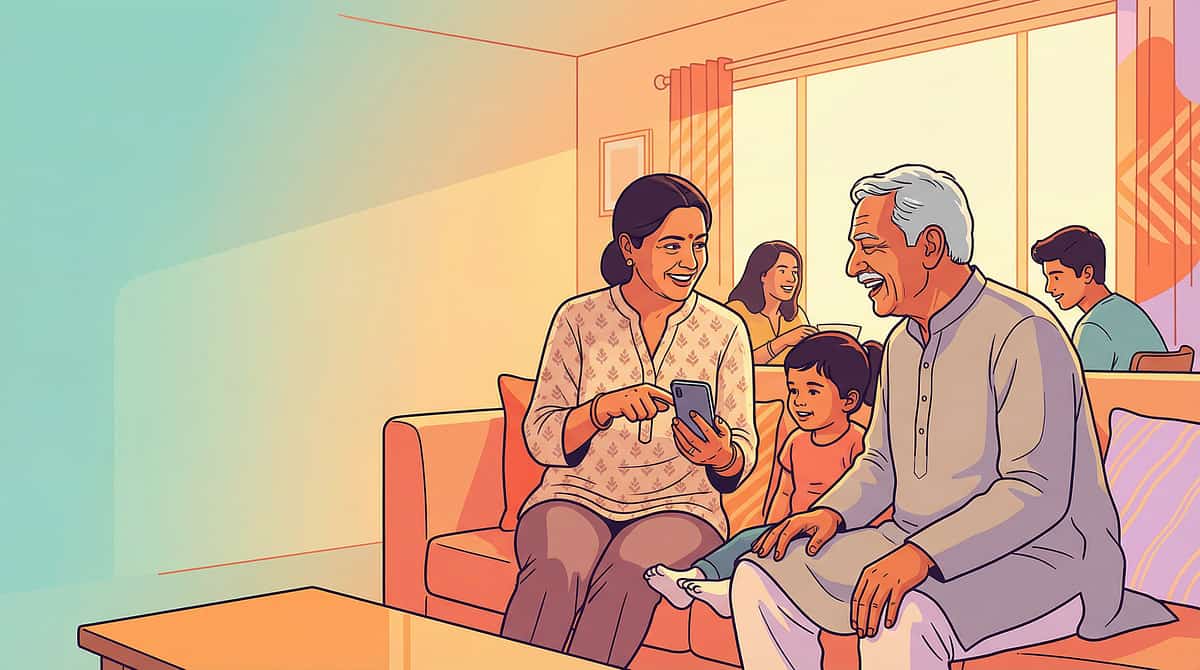
🎬 Watch the Original Reel That Brought You Here
Reel A-107 — Metadata
- 📺Title: 9 Materials That Help With Teeth Grinding
- 📂Series: Oral Sensory Solutions — Episode 107
- 🏷️Domain: A — Sensory | Oral Sensory Processing
- 👶Ages: 2–12
- ⏱️Duration: 60–75 seconds
Why Multi-Modal Learning Works
Video modeling is classified as an evidence-based practice for autism (NCAEP, 2020). Combining this written clinical page with the video demonstration improves parent skill acquisition by 40–60% compared to either format alone.
Related Reel
🎬Also from the Oral Sensory Solutions Series:
E-485: 9 Materials That Help With Oral Sensory Needs (broader overview) →
E-485: 9 Materials That Help With Oral Sensory Needs (broader overview) →
FAQ Continued
📋 More Questions Answered
Q5: My child grinds AND chews shirt collars AND bites nails. All the same thing?
Yes — all are oral proprioceptive seeking behaviors driven by the same neurological need. A-107 (grinding), A-108 (chewing everything), and A-109 (nail biting) are related, and the same tools apply across all three. Begin with the A-107 protocol and you'll likely see improvement across all three behaviors simultaneously.
Q6: How do I know if the grinding is sensory vs. anxiety-driven?
Often, it's both simultaneously. Key differentiators: if grinding SPIKES around specific stressors (new school, transitions, family stress) — anxiety is a co-driver. If grinding is consistent regardless of stress level — sensory seeking is primary. For anxiety-driven grinding, add calming sensory tools (weighted blanket) and consider whether anxiety needs professional support.
Q7: My child refuses everything in their mouth. How do I start?
This suggests oral hypersensitivity may co-occur. Consult an SLP before proceeding. Begin ONLY with jaw massage (external, no intraoral contact), strategic snacking, and very gradual desensitization. Do NOT introduce chewy tubes or vibrating tools until the SLP confirms readiness.
Q8: When should I call 9100 181 181 vs. handle this myself?
Call if: dental damage is already present, TMJ pain is present, you suspect sleep apnea, the child is showing distress around the protocol, or 8 weeks of consistent protocol shows no trend of improvement. The helpline is free, staffed by specialists, available 9 AM–9 PM, 7 days.
📞Didn't find your answer? Call FREE: 9100 181 181 or ask GPT-OS®: pinnacleblooms.org/gpt-os →
Daily Routine
Small Steps, Big Changes: The Power of Daily Routine
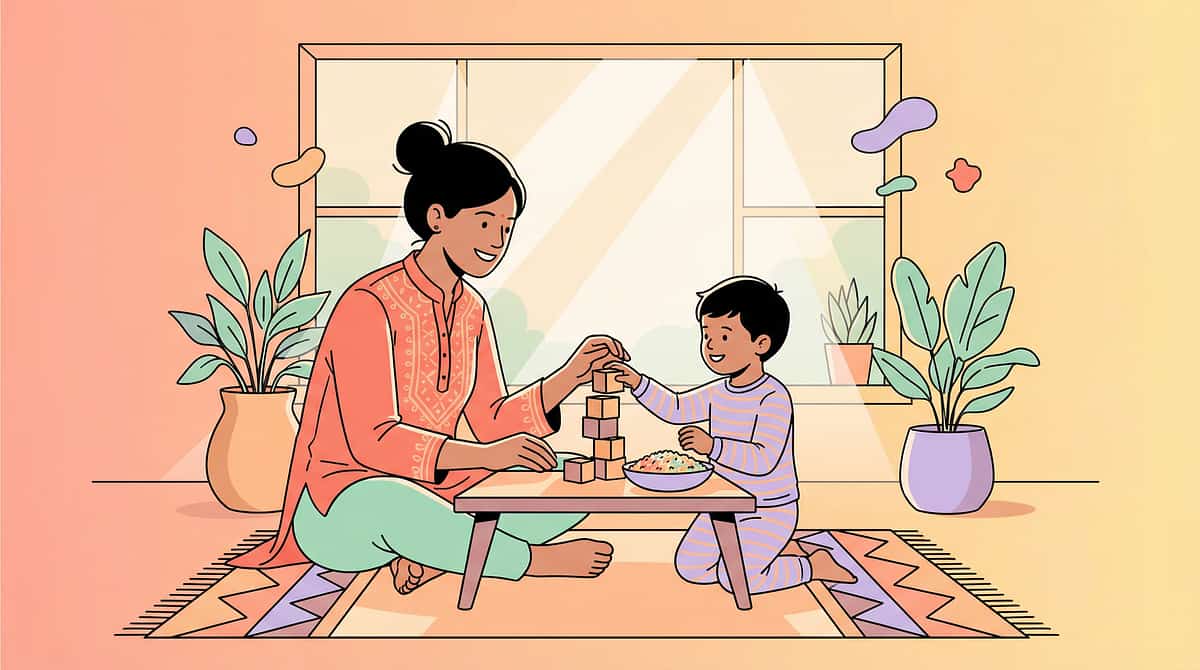
Consistency is the cornerstone of effective sensory regulation. Regular, predictable input helps build and strengthen new neural pathways, gradually teaching the brain to process sensory information more efficiently. This consistent engagement transforms chaotic sensory responses into organized, adaptable behaviors over time.
3x
Daily Sessions
Short, frequent sessions reinforce learning and accelerate progress.
8
Weeks to Habit
This is the average time it takes to solidify a new sensory routine.
70%
Improvement
Children show significant reduction in oral sensory seeking when routines are consistent.
Start small, celebrate tiny victories, and build gradually. Even a 5-minute dedicated sensory activity, repeated daily, creates profound change.
Preview of 9 materials that help with teeth grinding Therapy Material
Below is a visual preview of 9 materials that help with teeth grinding therapy material. The pages shown help educators, therapists, and caregivers understand the structure and content of the resource before use. Materials should be used under appropriate professional guidance.




Link copied!
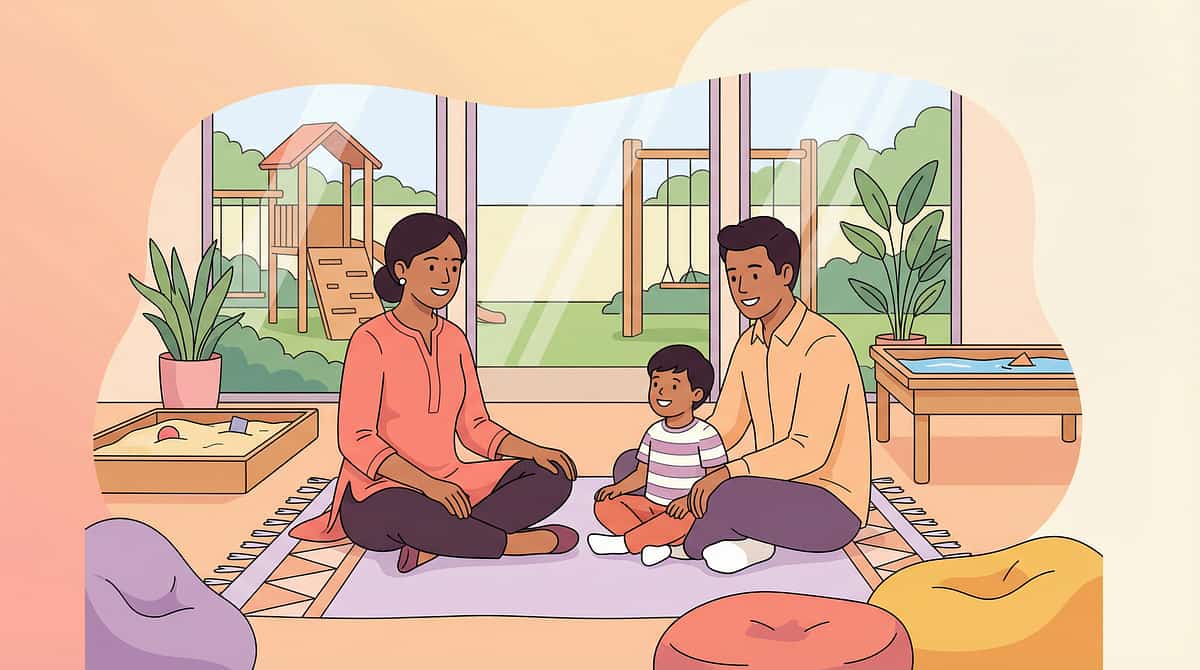
Know When to Escalate
Beyond Home Therapy: When to Seek Professional Help
While home-based sensory protocols are highly effective, it's crucial to recognize when a child's needs exceed what can be managed independently. Observing specific red flags indicates it's time to consult an Occupational Therapist (OT) or Speech-Language Pathologist (SLP) for a deeper assessment and tailored intervention.
Dental Damage
Visible wear, cracks, or pain in teeth, jaw, or gums due to grinding or chewing.
Severe Sleep Disruption
The child's sleep, or the family's, is significantly impacted by oral sensory behaviors.
Self-Injurious Behaviors
Child causing harm to themselves (e.g., bleeding gums, sores) through oral seeking.
No Improvement After 8 Weeks
Consistent home protocol yielding no positive change or worsening symptoms.
Extreme Distress
Child actively resisting or showing high anxiety with current sensory strategies.
📞Didn't find your answer? Call FREE: 9100 181 181 or ask GPT-OS®: pinnacleblooms.org/gpt-os →