
When Water Feels Like the Enemy
It's not defiance. It's their nervous system saying danger.
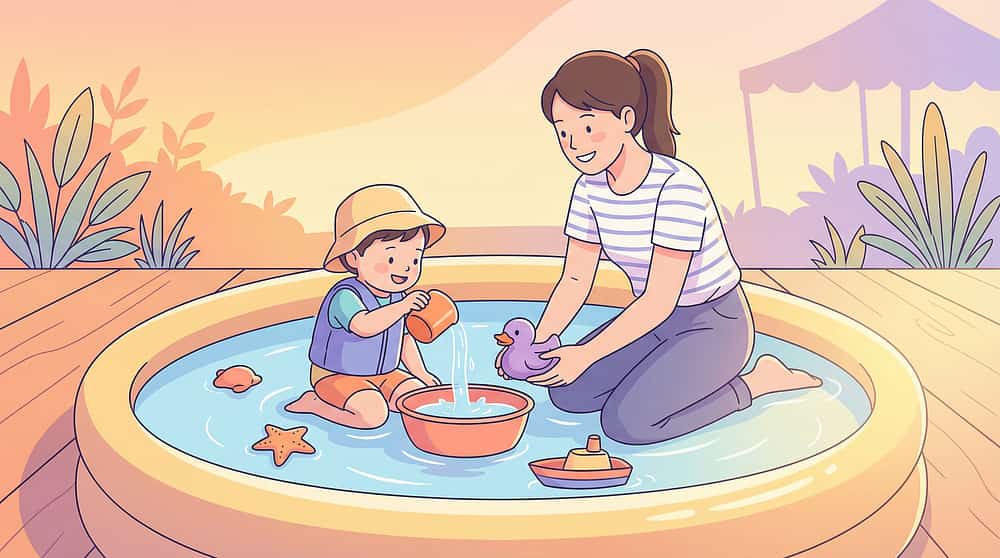
"Summer pool parties have become the thing we dread most. Every other child is splashing and laughing. Mine is clinging to my arm at the fence, shaking, refusing to even step on the wet tiles around the pool. We tried lessons twice — both ended with him sobbing and the instructor looking apologetic. His cousins tell him he's a baby. I've been told he'll grow out of it. He's seven. Nothing has grown out."
You are not failing. Your child's nervous system is speaking — loudly, consistently, and for good reason. This is not a phase. This is a signal. And signals have answers.
🔵 9 Materials That Build Swimming Readiness From the Ground Up
Gross Motor Series · Episode F-583 · Ages 2–12

You Are Among Millions of Families Navigating This Exact Challenge
Globally, the WHO estimates over 100 million children under age 5 live with developmental differences that affect sensory and motor readiness. Water fear is not a personality quirk — it is among the most common functional limitations in children with sensory processing differences, autism spectrum disorder, developmental coordination disorder, and anxiety.
1 in 54
ASD Diagnosis Rate
Children in India receive an ASD diagnosis (Lancet 2023 India estimate)
80%
Sensory Differences
Of children with ASD show measurable sensory processing differences (PMC11506176)
47%
Co-Processing Challenges
Of water-aversion cases involve vestibular + tactile co-processing challenges
"You are among an estimated 8–12 million families across India navigating some form of water aversion or swimming readiness challenge in their child. Worldwide, this number exceeds 60 million. The help you're looking for exists — it simply requires the right approach."
PMC11506176 · PMC10955541 · WHO NCF 2018 · AAP Drowning Prevention Policy

This Is Neuroscience. Not Stubbornness.
Tactile Defensiveness
The skin contains thousands of mechanoreceptors. In children with sensory processing differences, these receptors transmit ordinary water contact — a splash, a drip, the sensation of wetness — as if it were a threat signal. The somatosensory cortex interprets these amplified signals and sends them directly to the amygdala: the brain's alarm centre.
Vestibular Dysregulation
Water removes ground reference entirely. The vestibular system, which manages balance and spatial orientation, suddenly has no stable anchor. For children whose vestibular processing is already challenged, horizontal position in water can feel like falling with no end.
The Autonomic Override
Once the amygdala fires, the autonomic nervous system activates fight-flight-freeze. Rational persuasion cannot override this. No amount of "you'll be fine" reaches a nervous system in threat mode. The child is not choosing to panic. Their brain is executing a survival programme.
"Traditional swimming lessons begin with motor teaching and assume sensory and emotional readiness. For children with developmental differences, that assumption is wrong. You must build readiness in the correct order: sensory tolerance first, emotional regulation second, motor skill third." — Pinnacle OT Consortium
Frontiers in Integrative Neuroscience (2020) DOI: 10.3389/fnint.2020.556660 · PMC11506176

Your Child Is Here. Here Is Where We're Heading.
Children with sensory processing differences or ASD often require the full readiness groundwork (Stages 1–3) before formal lessons are possible. Understanding where your child sits on this developmental arc is the first step to choosing the right materials and setting realistic, compassionate expectations.
Ages 0–1
Water Introduction — Splashing in tub, face mist exposure with support
Ages 1–3
Bath Comfort — Tolerating hair wash, pool edges, water play
Ages 3–5
Water Play — Splash pads, pools, water play with body control
Ages 5–8
Formal Lessons — AAP readiness age (4+), structured instruction
Ages 8–12
Functional Swimming — Competent swimmer with water safety competence
Water Aversion Commonly Co-Occurs With:
Tactile Defensiveness
Vestibular Processing Differences
Anxiety Disorders
Autism Spectrum Disorder
Developmental Coordination Disorder
Post-Traumatic Water Conditioning
PMC9978394 · WHO/UNICEF CCD Package 2023 · NCERT NCF 2022

Clinically Validated. Home-Applicable. Parent-Proven.
Evidence Grade I
Systematic Review
Level I Evidence — Supported by Multiple Systematic Reviews and RCTs
📄 PRISMA Systematic Review (2024)
16 peer-reviewed articles (2013–2023). Sensory integration intervention meets criteria for Evidence-Based Practice for children with ASD. Significant improvements in sensory processing, gross motor, and adaptive behaviour.
PMC11506176 | Children (MDPI), 2024
📄 Meta-Analysis (World J Clin Cases, 2024)
Sensory integration therapy effectively promotes social skills, adaptive behaviour, sensory processing, and gross/fine motor skills across heterogeneous ASD populations.
PMC10955541 | DOI: 10.12998/wjcc.v12.i7.1260
📄 Indian RCT (Padmanabha et al., 2019)
Home-based sensory interventions delivered by trained parents demonstrate significant outcomes in the Indian paediatric population. Validates the home-execution model used by this protocol.
DOI: 10.1007/s12098-018-2747-4 | Indian J Pediatr
📄 NCAEP Evidence-Based Practices (2020)
Visual schedules, video modelling, and structured reinforcement systems are classified as evidence-based practices for autism spectrum disorder.
National Clearinghouse on Autism Evidence and Practice (2020)
📄 Frontiers in Integrative Neuroscience (2020)
Comprehensive neurological framework validating sensory-based interventions for ASD, including aquatic contexts. Foundational for understanding the neurobiology of water aversion.
DOI: 10.3389/fnint.2020.556660
94%
Evidence Confidence
Pinnacle CRO Assessment — convergence of occupational science, behavioural analysis, developmental neuroscience, and 20 million real therapy sessions
The Water Trust Protocol
F-583
Sensory-Informed Aquatic Readiness Preparation (SIARP)
Swimming readiness is not primarily a motor skill — it is first a sensory tolerance, then an emotional regulation capability, then a motor skill. This technique describes the systematic use of 9 specific therapy materials to build the foundational readiness layers that make formal swimming instruction possible.
Sensory Desensitisation
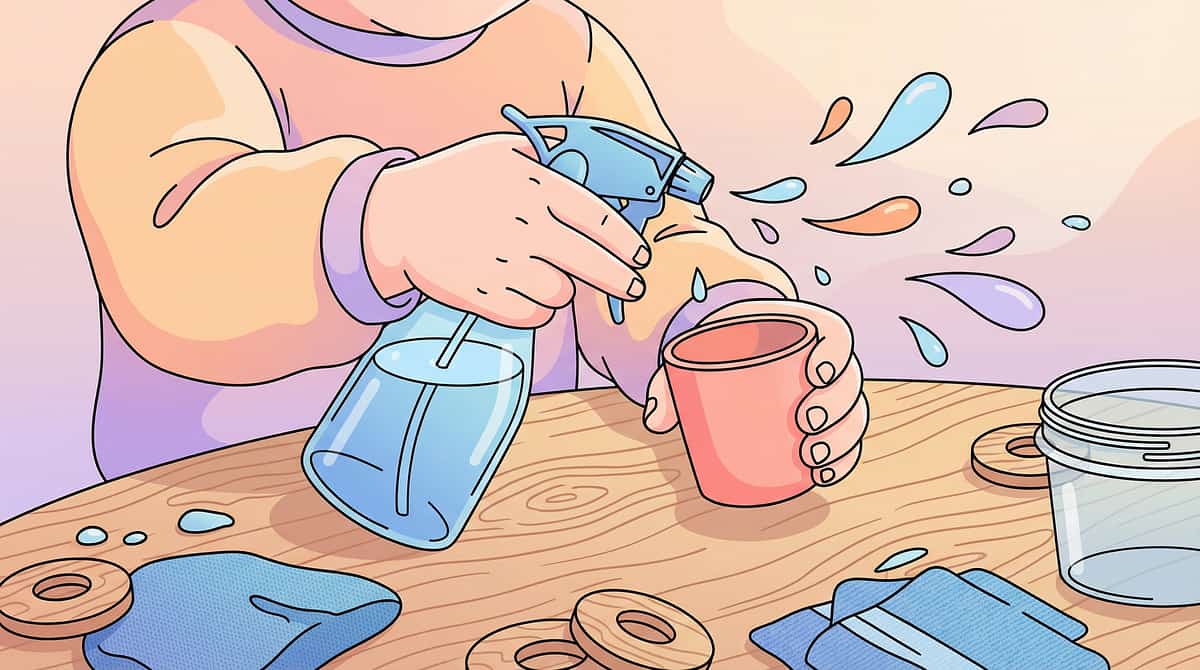
Begins with controlled water desensitisation using spray bottles and warm water to build tactile tolerance
Protective Equipment
Advances through goggles and nose clips that remove the primary fear triggers — eye and nose water entry
Breath Control
Builds the exhale reflex on dry land through bubble tools — the single most protective skill for water safety
Graduated Support
Provides adjustable physical support through float belts and noodles that fade gently as confidence builds
Cognitive Preparation
Visual schedules and social stories eliminate anticipatory anxiety — the fear begins before arrival, not at the pool
Ages
2–12 years
Duration per session
10–20 minutes
Frequency
Daily or 3–5× per week
Setting
Home bath · Therapy pool · Community pool

This Technique Crosses Therapy Boundaries. Because the Brain Doesn't Organise by Therapy Type.
Swimming readiness requires the convergence of multiple therapeutic disciplines working from a single plan. Pinnacle's FusionModule™ ensures all disciplines coordinate — not 5 independent plans that may conflict.
🔵 Occupational Therapy
OT is the anchor discipline. OTs conduct sensory assessments, design the desensitisation hierarchy, prescribe protective equipment, and supervise graduated exposure. Aquatic OTs deliver direct water therapy.
🟣 Behavioural Therapy (ABA/BCBA)
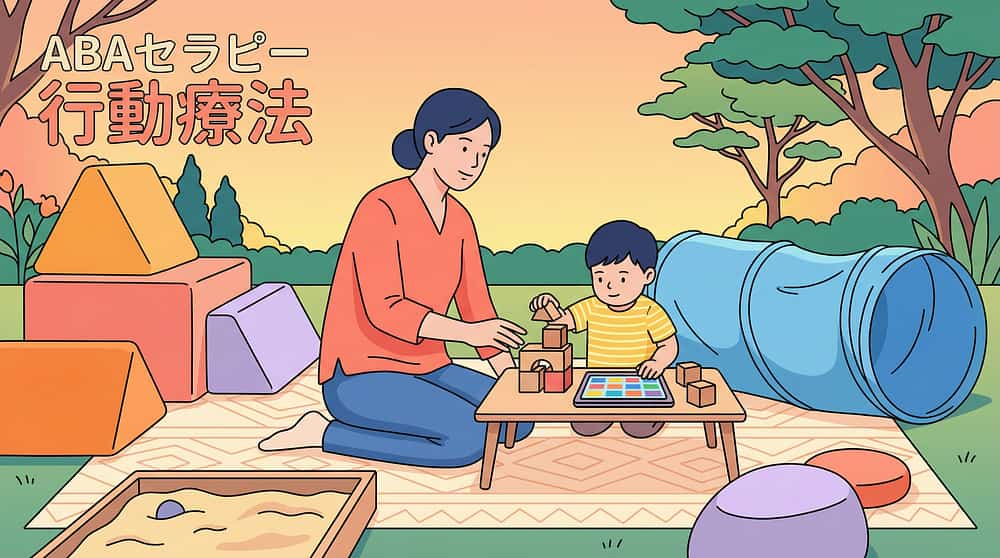
ABA provides the reinforcement architecture. BCBAs design token economy systems, create visual schedules and social stories, conduct FBAs to understand avoidance triggers, and build systematic approach hierarchies.

🟢 Speech-Language Pathology
SLPs address breath control. Oral motor therapy for exhalation coordination, blowing activities that build the protective exhale reflex, and communication supports for children who cannot verbally signal distress.

🟡 Special Education
SpEds create visual learning frameworks, design pool visit preparation materials, build self-regulation readiness for following pool safety rules, and coordinate with aquatic instructors on accommodation plans.

🔴 NeuroDev Paediatrics
Rules out medical contributors to water aversion, coordinates cross-discipline care, provides diagnostic clarity on ASD/SPD classification, and certifies medical fitness for aquatic exposure.
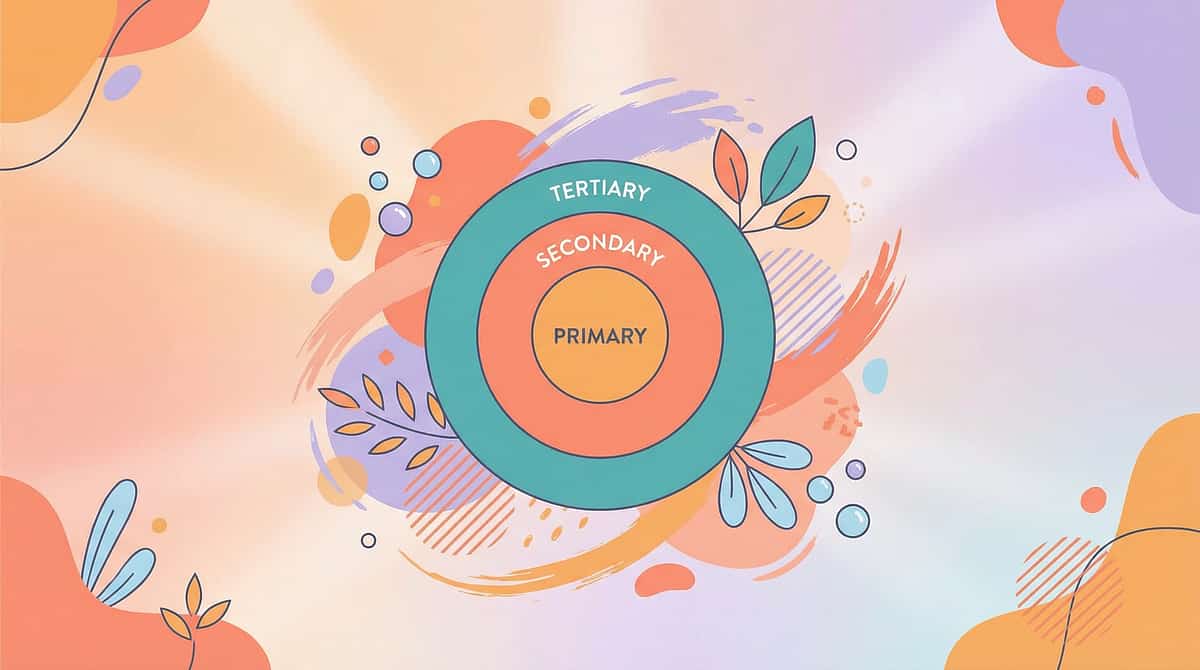
Nine Materials. Nine Mechanisms. One Destination: Water Safety and Confidence.
Each material addresses one or more of the underlying neurodevelopmental barriers to water readiness. Together they form a complete therapeutic system.
# | Goal | Mechanism | Material |
1 | Reduce Tactile Defensiveness | Controlled, predictable water contact at child-chosen intensity | Spray Bottles · Cups |
2 | Protect Fear-Triggering Sensory Channels | Eliminate eye/nose water entry — the #1 fear triggers | Swim Goggles · Nose Clips |
3 | Build Breath Control Reflex | Automatic exhale-when-face-enters pattern, built on dry land | Bubble Blowing Tools |
4 | Provide Adjustable Physical Security | Graduated reduction of buoyancy — no all-or-nothing moment | Float Belt |
5 | Introduce Playful Motor Practice | Kicking and floating with something to hold — play signals safety | Pool Noodles · Kickboards |
6 | Create Intrinsic Submersion Motivation | Goal-directed diving removes the "why" barrier to face submersion | Sinking Toys |
7 | Eliminate Thermoregulatory Defensiveness | Warm water prevents cold-triggered autonomic defensive response | Warm Water (32–34°C) |
8 | Eliminate Anticipatory Anxiety | Predictability dissolves pre-pool fear response | Visual Schedules + Social Stories |
9 | Build Water Safety Competence | Integration of all above into functional survival and swimming skills | All 9 materials + aquatic instruction |
These 9 targets correspond to 5 GPT-OS® Readiness Indexes: Sensory Processing · Gross Motor · Water Safety · Recreation & Play · Community Participation.
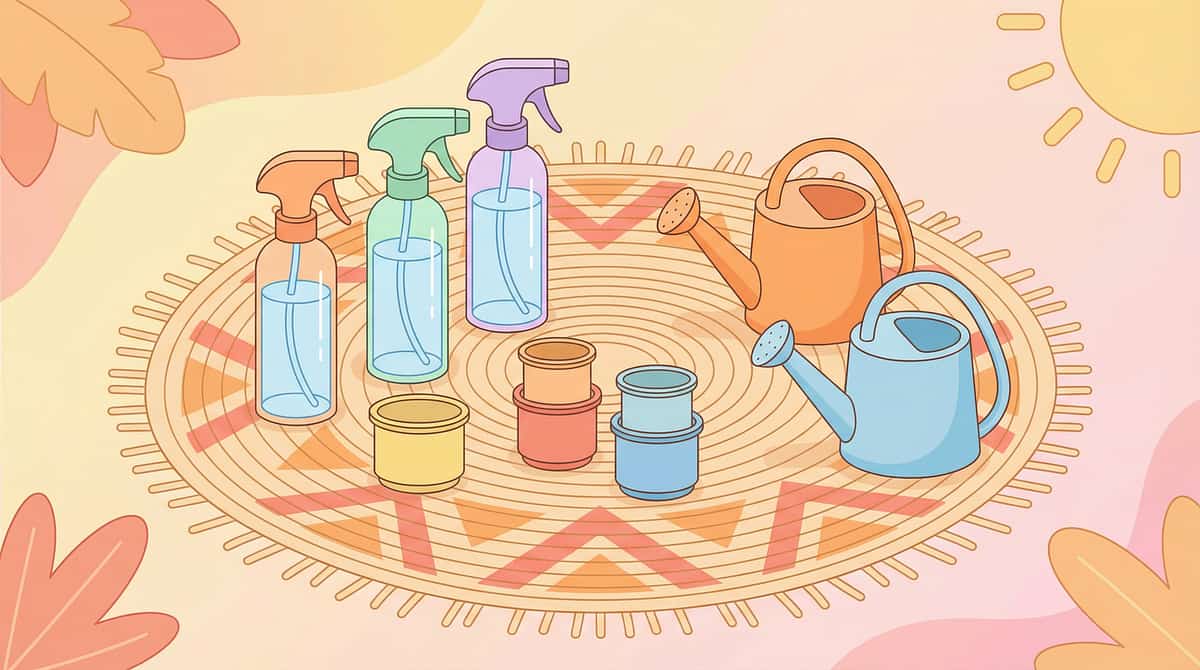
Material 1 of 9
Gradual Water Exposure Tools
Spray Bottles · Cups · Watering Cans
Controlled water contact they can manage
Why It Works
For children with tactile defensiveness, water that happens to them is threatening. Water they control is categorically different at the neurological level. When a child holds the spray bottle and chooses when to mist their own arm, they activate the prefrontal cortex (voluntary control) rather than triggering the amygdala (threat response). Controllability transforms the neurological experience.
Each successful, self-directed water contact builds a new neural association: water → manageable → safe. This follows systematic desensitisation principles validated in anxiety research (Wolpe, 1958; updated in paediatric OT literature through 2024).
DIY Home Protocol
Acquire
Multiple spray bottles with adjustable nozzles. Set all to finest mist.
Child Controls
Hand bottle to child. Let them spray their own hands. Praise: "You chose when."
Progress Gradually
Hands → arms → shoulders → back of neck → front of face. Weeks, not days.
Bath Modifications
2cm of warm water only. Child pours with cup. No showerhead. No forced hair rinse.
Language of Control
"You pour when you're ready." "Stop whenever you want." "You're in charge."
⚠️ NEVER force water on the face. Forced exposure creates sensitisation, not tolerance.
Price Range: ₹100–500
₹0 DIY: Recycle household spray bottles and kitchen measuring cups
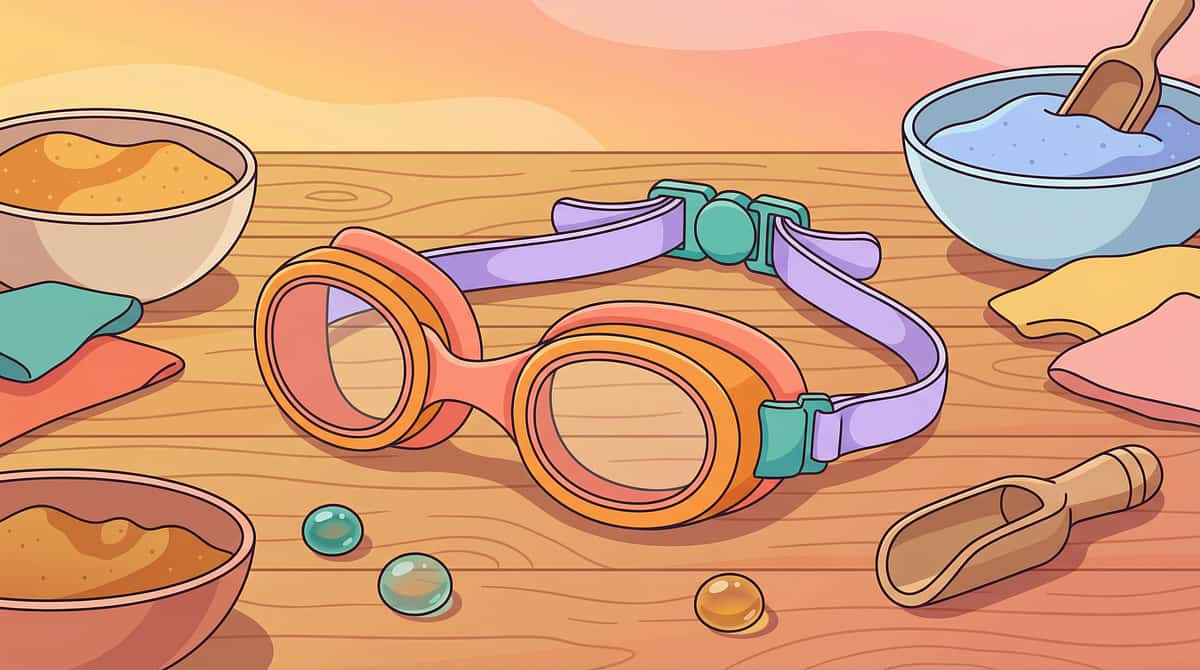
Material 2 of 9
Swim Goggles With Comfortable Seal
Protect eyes, reduce fear, enable vision
Why It Works
For many water-fearful children, the specific fear is not water itself — it is water on the eyes and face. Eyes are the highest-density sensory surface on the body. Water dripping into eyes is intensely aversive for sensory-sensitive children. Goggles provide: (1) a protective physical barrier eliminating the feared sensation entirely; (2) clear underwater vision, removing disorientation terror; (3) a psychological sense of being armoured and protected.
Many families report their child voluntarily put their face in water for the first time within minutes of fitting well-adjusted goggles. The transformation is often dramatic and immediate. Proper fit is non-negotiable: silicone seal, anti-fog, no leaking.
Fitting & Protocol
1
Select
Silicone gasket (not rubber), child-specific sizing, anti-fog, adjustable strap.
2
Fit at Home
Press gently against eye sockets, strap at back of head. Snug but not tight.
3
Practice Dry
Wear goggles while reading or watching TV. Normalise the sensation before any water contact.
4
Bath With Goggles
Let child submerge face in bath wearing goggles. Discover clear underwater vision for the first time.
5
Pool Transfer
Goggles go on before entering pool. Routine: goggles first, then pool. Every time.
Recommended: Speedo Skoogle, Arena AW (India availability). Always purchase a backup pair.
Price Range: ₹300–1,500
Amazon.in: "children swim goggles silicone seal anti-fog"
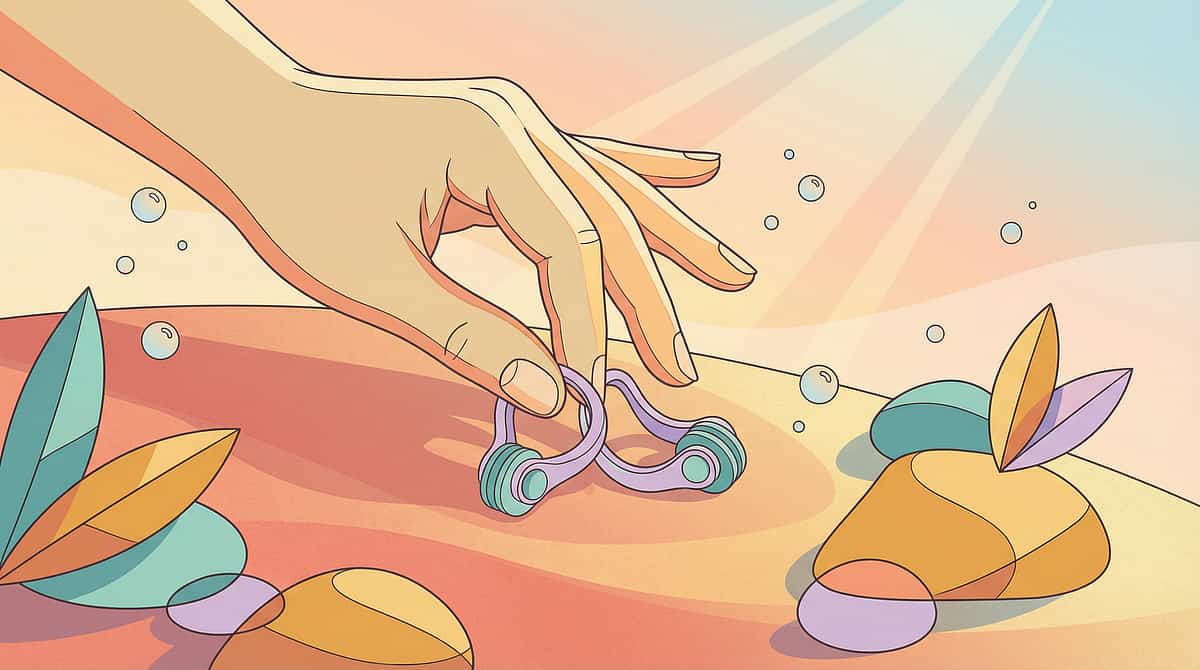
Material 3 of 9
Nose Clips
Eliminate the sensation that triggers panic
Why It Works
Water entering the nose activates the trigeminal nerve — one of the most densely innervated sensory pathways in the human body. For sensory-sensitive children, this sensation does not register as "unpleasant." It registers as an assault. The fear of water up the nose is a hardwired protective response the nervous system cannot easily override.
Nose clips provide total prevention of this sensation. A child wearing a nose clip can submerge their face and experience nothing alarming. This single ₹100 tool has enabled face submersion in children for whom nothing else worked. Swimming with nose clips is swimming — and that is the alternative we're protecting against losing.
Protocol
1
Select
Soft nose pads, adjustable, clear or skin-tone colour preferred by the child.
2
Dry Practice
Put on nose clip, breathe through mouth. Feel the complete seal. Practice talking with it on.
3
Bath Submersion
With nose clip + goggles, submerge face in bath. First time: 2 seconds. Eyes open.
4
Combine Systems
Goggles + nose clip together = both protection systems active. Full face underwater — safe.
5
Carry Extras
Clips are tiny. Always pack 3 to a pool session in case of loss.
Price Range: ₹100–400
Amazon.in: "swimming nose clip soft children"
Material 4 of 9
Bubble Blowing Tools
Straws · Bubble Wands · Pinwheels · Blow Toys
Breath control that starts on dry land
The single most dangerous moment in aquatic learning is when a child's face enters water and they inhale instead of exhale. Building the exhale reflex on dry land — through play — creates an automatic protective pattern that transfers to water.
Blowing through a straw, blowing bubbles with a wand, spinning a pinwheel — all require sustained, controlled exhalation — the same motor pattern as blowing bubbles in pool water. After weeks of play-based breath training, "mouth enters water → blow out" becomes automatic, even when the nervous system is slightly stressed.
"When your face goes in, blow out — like birthday candles. Blow out. Blow out. Blow out."
Repeat this phrase BEFORE every face-in-water attempt until it is reflexive.
Price Range: ₹50–300
₹0 DIY: Use existing straws and cups — no purchase required
Material 5 of 9
Float Belt — Adjustable Buoyancy Swim Trainer
Adjustable support that fades as confidence builds
Why It Works
Traditional arm floaties create false confidence and teach incorrect body position — vertical, not horizontal. A float belt keeps the child horizontal, experiencing what real swimming actually feels like, while providing safety. The critical engineering insight: float belts are modular. Individual foam blocks can be removed one at a time.
This means buoyancy support can be reduced in increments so small the child barely notices. Compare this to the trauma of "floaties off" — going from full support to nothing. With a float belt, the child has 20+ micro-transitions, each succeeding before the next. Confidence is the accumulation of successes.
5-Phase Protocol
1
Phase 1 — Full Belt
Play freely, no skill demands. Experience pool time as safe and enjoyable.
2
Phase 2 — First Block Off
After 3–5 successful sessions, remove ONE float block. Child barely notices. Continue playing.
3
Phase 3 — Gradual Reduction
Remove one block per 3–5 sessions, over weeks or months. Never rush this phase.
4
Phase 4 — Final Blocks
Practice touching the bottom in shallow end. Brief "no float" moments with parent hands under belly.
5
Phase 5 — Independence
Short-distance independent swimming in shallow water with parent close by.
⚠️ Float belts are TRAINING TOOLS, not life-saving devices. Never replace adult supervision. Not approved for boating or open water.
Price Range: ₹800–2,500
Brands: Zoggs Float Belt, Speedo Float Belt India
Material 6 of 9
Pool Noodles & Kickboards
Float, kick, and play
Pool noodles may be the most underrated therapeutic tool in aquatic therapy. A child who is playing is a child who is not in threat mode. A child not in threat mode is a child who can learn.
Why It Works
Pool noodles and kickboards provide physical support without restricting movement — and they look like toys. For children in a threat state, something that looks familiar and playful signals safety at the unconscious level. A noodle under the armpits allows floating while keeping the head fully above water — zero face submersion required — and practice kicking. Kickboards support the upper body while legs practise the flutter kick.
Both tools transform "swimming lesson" into "play in water." Play is the language through which children's nervous systems learn.
DIY Therapeutic Uses
- Under armpits: vertical floating with head above water
- Held in front: horizontal kick practice (classic kickboard position)
- Two noodles crossed under belly: maximum support, horizontal
- Noodle "horse": child sits astride, feet off floor — playful introduction to water depth
- Bent into ring: float through (motivation for forward movement)
- Push across pool surface: hand-eye water confidence game
Pool noodles: ₹200–400 · Kickboard: ₹300–600 (Decathlon India)
Price Range: ₹200–600
₹0 DIY: Repurpose noodles from any craft or pool store
Material 7 of 9
Sinking Toys & Weighted Rings
Worth going under for
Why It Works
"Put your face in the water" has never motivated a fearful child. "Rescue the treasure" has. Sinking toys create a concrete, meaningful goal for submersion. The child's attention shifts from the feared act (face in water) to the desired outcome (retrieve the fish / collect the ring / find the treasure).
Purpose-driven submersion activates prefrontal goal-pursuit networks and inhibits amygdala threat response. Brightly coloured sinking toys eliminate the uncertainty of "what's down there." The child doesn't realise they are being graduated through a clinical desensitisation hierarchy. They think they are playing a rescue mission.
Game Protocols
🐢 Sea Turtle Rescue
3 sinking turtles in the shallow end. Collect all three.
💍 Ring Collector
5 weighted diving rings. Increase depth as sessions progress.
🏆 Treasure Hunt
Scatter 10 small weighted objects. Race to collect the most.
Depth progression: Start where NO face submersion is needed. Increase depth by 5–10cm per session — gradually, invisibly.
Price Range: ₹200–800
₹0 DIY: Smooth stones or washers in mesh bag
Material 8 of 9
Warm Water & Temperature Control
Cold triggers defence; warmth enables learning
Therapeutic pool temperature is the difference between a nervous system in learning mode and a nervous system in survival mode. This is not about comfort — it is neurophysiology.
The thermoregulatory system is directly connected to the autonomic nervous system. Cold water activates sympathetic defensive response: muscle tension, vasoconstriction, hypervigilance, and reduced cortical learning capacity. Warm water (32–34°C) does the opposite — it reduces muscle guarding, promotes vasodilation, decreases sensory defensiveness, and allows the ventral vagal "safe and social" state that is the prerequisite for learning.
Setting | Typical Temp | Assessment |
Therapeutic OT pool | 32–34°C | ✅ Ideal for sensory-sensitive children |
Hotel/resort pool | 28–32°C | ✅ Usually suitable |
Community lap pool | 26–28°C | ⚠️ May trigger defensiveness |
Outdoor unheated pool | Seasonal | ❌ Often too cold for first exposures |
Home bath | Fully controlled | ✅ Best for early training |
Home Protocol
- Test bath water with elbow or thermometer: 37–38°C (slightly above body temperature)
- Warm shower immediately before any pool visit to prime the system
- Rash guard or swim shirt for pool insulation
- Exit immediately at first shiver — cold learning is no learning
Price Range: ₹0–500 (location-dependent)
Bath thermometer: ₹200–500 (essential tool)
Material 9 of 9
Visual Schedules & Social Stories for Pool Visits
Make the unknown known
Why It Works
For children with anxiety or autism, the fear of the unknown pool visit begins 48 hours before arrival. Not knowing what will happen — the sequence, the sounds, the depth, the people — activates the same threat response as the water itself.
Visual schedules and social stories are classified as Evidence-Based Practices by NCAEP (2020) precisely because they replace uncertainty with predictability. A visual schedule shows every step: pack bag → drive → change room → shower → pool edge → enter with parent → play → exit → shower → dress → go home. Every step visible, every unknown eliminated.
DIY Creation Guide
Visual Schedule
- Photograph every step of YOUR actual pool using your phone
- Print or laminate 10–12 photos in sequence
- Mount on board with velcro for moveable strips
- Review together on the morning of the pool visit and at the pool entrance
Social Story
- Write from child's perspective: "I am going to the pool today. First, I will…"
- Include 1 feeling acknowledgement per page: "I might feel nervous. That's okay."
- End with success: "I had a good time. I can go to the pool again."
- Read together EVERY night in the week before the first visit
Price Range: ₹100–500
₹0 Option: Google Slides social story on phone — photograph and show
Apps: "AutiPlan" (India-compatible), "First-Then Board"
The Best Session Is One That Starts Right
Every pool session should be preceded by a 7-point readiness check. Antecedent conditions determine intervention success. A session attempted in poor conditions teaches the child that water is associated with being tired, hungry, and overwhelmed.
Slept Reasonably
Child is not overtired — fatigue dramatically reduces sensory tolerance and regulation capacity
Fed in Last 2 Hours
Child is not hungry — hunger elevates cortisol and reduces window of tolerance
No Illness Symptoms
No fever or ear infection — water is contraindicated with active infection
Calm Baseline State
Child is not already in meltdown or high arousal — dysregulation compounds water aversion
Pool is Warm
Temperature confirmed warm — cold water activates defensive response before the session begins
All Materials Packed
Goggles, nose clip, noodle, float belt, towel — missing materials derail momentum
Visual Schedule Reviewed
Today's schedule reviewed — anticipatory anxiety is reduced by prior preview
✅ 6–7 Checks: GO
Execute the full protocol as planned
⚠️ 4–5 Checks: MODIFY
Shorter session, lower demand, more play and less structured practice
🛑 3 or Fewer: POSTPONE
Not productive to push today. Do dry-land bubble practice instead and protect tomorrow's session
"The session you skip today protects the 30 sessions that follow." — Pinnacle ABA/BCBA Consortium
Step 1
Every Session Begins With an Invitation, Not a Command
"Hey — I found something really fun for the bath today. Want to see what I have?"
[Show spray bottle / goggles / sinking toy — whichever material is today's focus]
What Acceptance Looks Like
- Body moves toward you or the material
- Eyes focus on material with curiosity
- No immediate "no" or physical withdrawal
- Even cautious interest = green light to proceed
What Resistance Looks Like
- "No." → Acknowledge: "Okay, no problem. I'll just play with it here." (Parent uses material themselves)
- Physical withdrawal → Move material further away. Reduce demand to zero.
- Hiding or crying → Today may be a postpone day. Switch to dry bubble activity.
ABA Pairing Note: Spend 3–5 sessions with a new material doing NOTHING therapeutic — just associating it with preferred activities, favourite songs, favourite snacks nearby. Your child needs to learn the material = positive BEFORE any demand is placed. This is the pairing procedure that prevents resistance.
Timing: 30–60 seconds for invitation phase
Step 2
Introduce the Material at the Child's Pace
The engagement phase is about building positive association with the material, not achieving therapeutic goals yet. Model first — always. Every material introduction follows the same sequence: adult demonstrates, child observes, child chooses to try.
1
🚿 Spray Bottle Sessions
"I'm going to spray my own arm — look!" (Model first, always). Wait 5 seconds. Hand bottle to child. "Your turn? You choose when." Reinforce immediately if they try.
2
🥽 Goggles Sessions
"Watch me put these on." (Adult models). "Want to try? We can take them off anytime." Let child hold goggles, inspect, put on self. No water needed at this phase — just comfortable wearing.
3
🏊 Pool Noodle Sessions
In water, 30cm from edge, holding noodle under armpits. "Hold on tight. Your feet can go up. Can you try a little kick?" Nothing forced. Water at waist height maximum for first sessions.
Child Response Indicators
Engaged
Leaning in, looking, trying, smiling → maintain current pace
Tolerating
Compliant but flat → slow down, add reinforcement, reduce demand
Avoiding
Turning away → reduce demand to zero, increase play ratio significantly
Timing: 1–3 minutes engagement phase
Step 3
The Core Therapeutic Input
The primary protocol integrates all 9 materials into a structured, predictable home session. Rotate the featured material daily across the 9 materials. Maintain the structure consistently — predictability is itself therapeutic.
1
Pre-Session (5 min)
Review visual schedule together. Pack goggles + nose clip + 1 sinking toy.
2
Warm-Up (2 min)
Dry-land bubble blowing — 5 big blows through straw. Practice: "When face goes in — blow out."
3
Entry (2 min)
Enter warm bath or pool slowly. Child's pace. Use float belt if in pool.
4
Material Focus (8–10 min)
Today's featured material (rotate daily through the 9). Use protocols from each material's card.
5
Submersion Practice (2 min)
With goggles + nose clip: chin in → mouth in → full face → brief submersion. Only what child offers voluntarily.
6
Play Time (3 min)
Unstructured water play — noodles, toys, whatever child chooses. END ON A POSITIVE EXPERIENCE.
7
Exit (1 min)
"Two more splashes, then we're done." Visual timer if helpful. Child puts materials away as an exit ritual.
8
Cool-Down (2 min)
Warm towel wrap. Verbal review: "What did you do today? You put your face in! That was brave."
9
Data Capture (60 sec)
Record 3 things: what material, how long, child's response on 1–5 scale.
Common Errors to Avoid
- ❌ Ending session when child is distressed (teaches: water → distress ends play)
- ❌ Praising only successful submersion (praise ATTEMPTS, not just completion)
- ❌ Removing all support too quickly (graduated reduction over weeks)
- ❌ Forcing any step ("just try it" is a demand, not an invitation)
Total Session Time: 20–25 minutes

Repetition + Reinforcement + Cool-Down = One Complete Therapeutic Cycle
Step 4 — Repeat & Vary
Target: 3–5 good repetitions of the core action (face dip / submersion / kick sequence). "3 good reps > 10 forced reps" — quality over quantity, always.
- Vary: different toy to retrieve / different depth / different approach angle
- Satiation signals: looking away, pushing material away, moving toward pool exit — honour these immediately
Timing: 3–5 minutes total
Step 5 — Reinforce & Celebrate
Immediate (within 3 seconds), specific, and enthusiastic:
"You blew bubbles underwater! I saw you! That was AMAZING!"
"You put your whole face in! THREE TIMES! High five!"
"You put your whole face in! THREE TIMES! High five!"
Reinforcement Menu: Verbal praise (always) · Physical affirmation · Token sticker system · 5 more minutes of free pool play · Celebrate the attempt, not just the success.
Step 6 — The Cool-Down
"Two more, then all done." → 2 more splashes → "All done! Let's count to 3 and get out."
1
Warning
"Last two splashes" — give advance notice every time
2
Exit Ritual
Child places goggles and toys in bag — ownership and closure
3
Warm Towel
Immediately upon exit — physiological comfort signal
4
Verbal Review
"Today you [specific achievement]. Next time: [next tiny goal]."
5
Transition Reward
Brief preferred activity — reinforces the entire session retroactively
NCAEP (2020): Visual timers + transition supports = Evidence-Based Practice for ASD

Every Difficult Session Is Data, Not Failure
Challenges during swimming readiness work are expected and informative. Each difficulty points to the next adaptation needed. Use this guide to identify what the data is telling you.
Child refuses to enter pool at all
Don't start at the pool. Return to home bath for 2–4 more weeks. When pool visits begin, sitting on the edge with feet out = success. Accept this completely. Applaud it.
Meltdown when face gets wet
Never let water hit face without warning. Protect face with goggles + nose clip. Return to spray bottle practice. Face desensitisation hierarchy: hands → arms → back of neck → forehead → chin → full face. Each transition = weeks, not days.
Body stays rigid — can't or won't float
Rigidity prevents floating. The solution is more relaxation practice, not more buoyancy practice. Lie on floor at home. Back-lying in very warm bath. Swinging in hammock or net swing. Vestibular regulation on land first.
Progress doesn't transfer to new pool
Each new environment triggers a fresh threat assessment. Visit the pool before swimming there — just look, then leave. Second visit: feet in. Third visit: enter waist-deep. This is not regression. This is the nervous system doing its job.
Child resists lessons even with water comfort
Group lessons carry too much unpredictability for children on the edge of tolerance. Private lessons with an instructor trained in sensory differences are essential. A traumatic lesson sets progress back months. Don't force lessons before readiness is established.
Other children staring or commenting at pool
Prepare a social script: "My body is still learning about water. I'm working on it." Build confidence in individual or private settings before community pools. Most children in private aquatic therapy environments are on similar journeys.

One Technique. Infinite Personalisations. Yours Is Unique.
This protocol is not one-size-fits-all. Use these adaptation guides to calibrate precisely to your child's current sensory profile, age, and readiness level. Adjust freely — the goal is success, not adherence to a rigid script.
← Easier (Severe Sensory Defensiveness)
- Work only in home bath — never pool
- Spray bottle on mist setting only — no pouring
- Goggles worn outside water only for weeks
- Visual schedule reviewed 5× per day before visit
- Parent holds child throughout entire session
- Session duration: 5 minutes only
→ Harder (Emerging Confidence)
- Extend to community pool with warm water confirmed
- Introduce actual swimming instruction alongside materials
- Reduce float belt to 2 blocks
- Underwater treasure retrieval at chest depth
- Attempt floating without parent contact (arms available)
- Session duration: extend to 30–40 minutes
🌊 Sensory Seeker
More water, more splash, deeper, more sinking toys. May actually LOVE water once face protection is in place. Progress often faster than expected.
🔇 Sensory Avoider
Maximum predictability. Slower introduction. Every change announced. Sessions may be 5 minutes for weeks before extending. That's right — and it works.
🧩 High Anxiety + ASD
Prioritise visual supports heavily. Social story twice daily for 7 days before first pool visit. Goggles + nose clip always. Social stories specific to your actual pool with photos.
🎯 Motor Planning Difficulty
Float belt longer. Arm-over-arm physical guidance for kick pattern. Video modelling of each specific motor sequence. Break swimming into smallest possible components.
👶 Younger Child (2–4)
Bath-only for 6–12 months. Parental co-bathing. Zero pool until sensory tolerance is established. All material work at bath scale only.
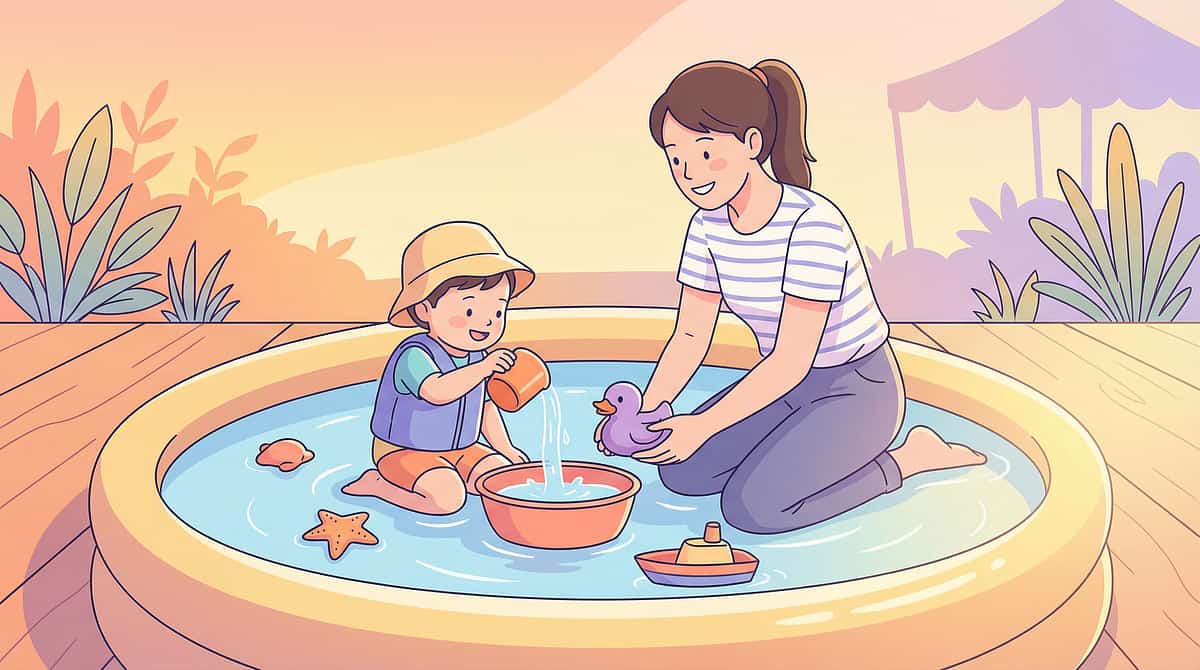
Progress Tracker
Weeks 1–2
Week 1–2: Tolerance, Not Mastery
15%
Journey Complete
You are laying the invisible foundation — neural pathway recalibration that won't be visible yet
What Real Progress Looks Like at This Stage
- Child accepts spray bottle session without distress (even if reluctant)
- Bath duration increases by even 2–3 minutes without meltdown
- Child puts goggles on without fight (even if not in water)
- Visual schedule review triggers less anticipatory anxiety
- Child asks where their "swim stuff" is = early ownership signal
What Is NOT Progress Yet — And That's Okay
- Entering the pool voluntarily
- Putting face in water
- Floating
- Any formal swimming movement
Measurement Tip
Rate child's distress response to each exposure on 1–5 scale. Track weekly average. Even 4.2 → 3.9 is measurable progress. The direction matters, not the magnitude.
Week 1–2 will feel like nothing is happening. That is because the change is internal — neural pathway recalibration is invisible. You will only feel it later, when resistance suddenly drops for no apparent reason. That is the compound interest on the invisible work.
Systematic review (Children, 2024): Sensory integration intervention outcomes emerge across 8–12 week timelines. PMC11506176

Progress Tracker
Weeks 3–4
Week 3–4: Neural Pathways Are Forming
40%
Journey Complete
Consolidation is underway — new neural associations are forming between water and safety
Consolidation Indicators — Watch for These
Child Anticipates the Session
Gets goggles or toys without being asked — a profound shift from weeks 1–2
Distress Response Shortens
Upset for 30 seconds, then settles — versus 5 minutes before. Duration is the metric.
Child Self-Directs Within Sessions
"I want to try the rings today" — intrinsic motivation emerging from within
First Voluntary Face-Near-Water Moment
Even chin at surface = milestone. Document it. Celebrate it fully.
Transfer Begins
Child less distressed at bath time even without a formal session — sensory work is generalising
Parent Milestone: You may notice you are more confident too. You've stopped bracing for meltdown. Your body language is calmer. This matters enormously — children read parental arousal states before they read water. A calm parent is co-regulating the child's nervous system in real time.
Progress Tracker
Weeks 5–8
Week 5–8: The Skills Begin to Arrive
65%
Journey Complete
Emergent skills are becoming visible — the invisible work of weeks 1–4 is now paying dividends
Emergent Skill Indicators
- Voluntary face submersion with goggles + nose clip: MILESTONE — celebrate fully
- Float belt reduced by 2+ blocks with comfort maintained
- Kicking pattern visible and self-initiated with kickboard
- Sinking toy retrieval from knee-depth without distress
- Pool visit visual schedule no longer triggers advance anxiety
- First "I want to go to the pool" from child: MAJOR MILESTONE
Readiness for Formal Lessons Check
- Child enters pool without significant distress ✓
- Face submersion tolerated with protection ✓
- Kicking pattern present ✓
- Can follow 2-step instructions in pool ✓
→ Consider introducing a qualified swim instructor specialised in sensory-sensitive children
Integration Session Structure (Weeks 5–8)
1
Goggles + Entry
Goggles + nose clip on → pool entry at child's pace
2
Float Belt Practice
Reduced buoyancy → kick + arm practice with positive narration
3
Noodle Play
Child-directed free noodle play for 5 minutes — consolidates safety association
4
Sinking Toy Retrieval
2–4 items at waist depth — purpose-driven submersion
5
Bubble Practice
Face in → blow out → up → repeat ×5. "Birthday candles in the water."
6
Free Play + Exit Ritual
5 minutes free play, then full cool-down and data capture

Every Step Forward Is a Victory. Make It Official.
Recording and celebrating milestones is not merely motivational — it is evidence-based therapeutic strategy. Specific, delayed recognition of milestones maintains motivation across multi-month trajectories. Make the progress visible and socially recognised.
🌟 First Spray Bottle on Face
Date: ___________
🌟 Goggles Without Resistance
Date: ___________
🌟 First Face in Water (Bath)
Date: ___________
🌟 First Pool Entry
Date: ___________
🌟 First Waist-Deep Pool Experience
Date: ___________
🌟 First Voluntary Face Submersion in Pool
Date: ___________
🌟 First Sinking Toy Retrieved
Date: ___________
🌟 First Float Belt Reduction Accepted
Date: ___________
🌟 First Bubble Blow Underwater
Date: ___________
🌟 First Unassisted Float
Date: ___________
🌟 First "I Want to Go to the Pool"
Date: ___________
Family Celebration Protocol
- Share milestone with all caregivers — grandparents, teachers, support staff
- Use child's preferred reward for each starred milestone
- Photograph or video the first successes (with child's assent)
- Build a "Water Journey Book" — photos from each milestone to review together
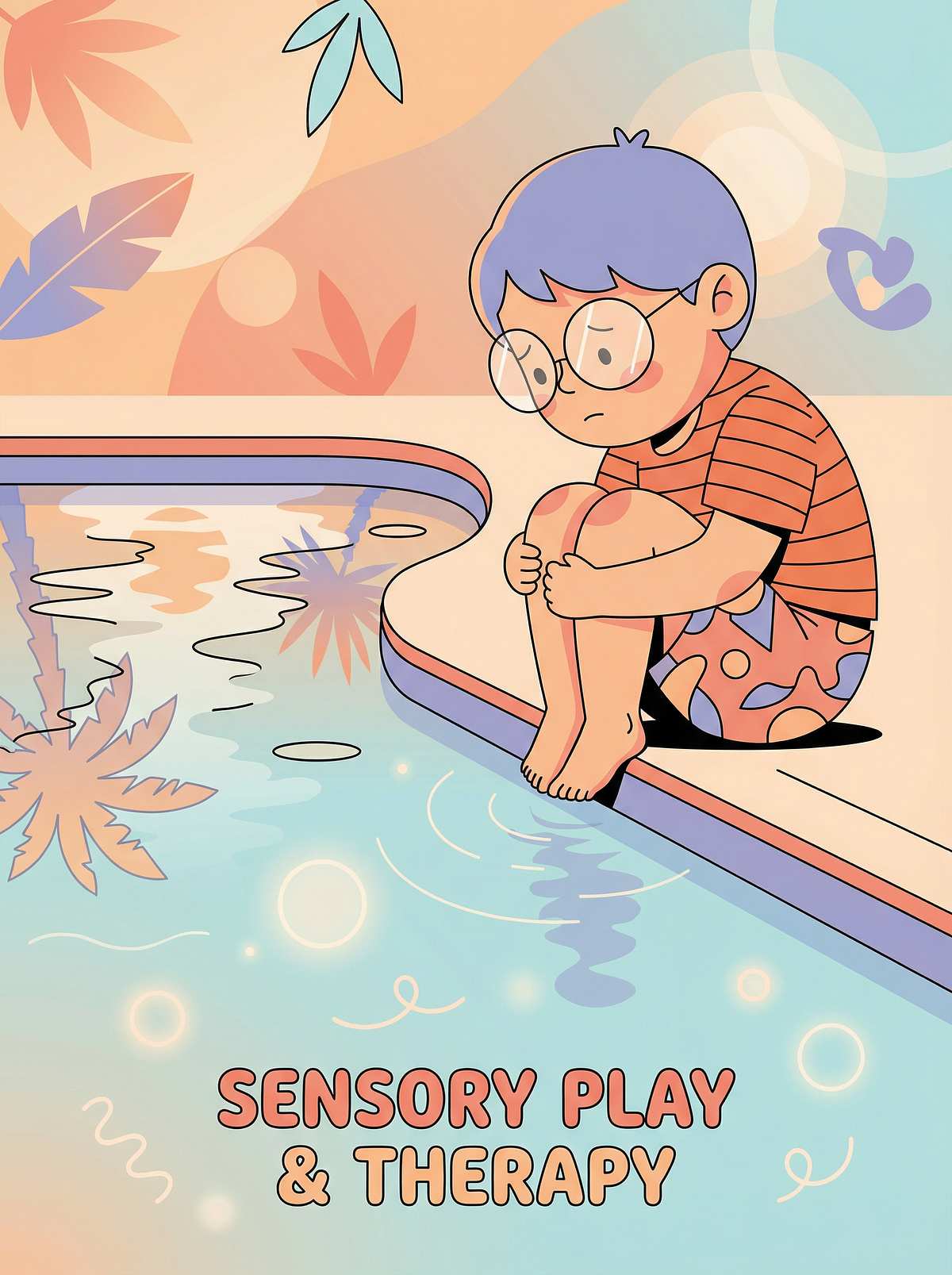
⚠️ Red Flags
Know When to Escalate Beyond Home Practice
Home practice is powerful for many families. But some situations require professional assessment. Recognising these indicators early protects your child from prolonged distress and accelerates the right support.
🔴 Not Responding to Home Practice
Water aversion is severe and not responding to 4–6 weeks of consistent home implementation. This signals a higher level of sensory processing difference requiring formal OT assessment.
🔴 Multiple Daily Life Areas Affected
Significant sensory processing differences affecting not just water but food textures, clothing, sound, or touch across environments. A comprehensive sensory profile assessment is needed.
🔴 Panic Symptoms During Any Water Exposure
Racing heart, trembling, true terror response during any water contact — including bathing. This level of physiological response requires qualified clinical management.
🔴 Suspected Traumatic Water Event
A near-drowning, forceful water exposure, or other traumatic water event requires trauma processing alongside desensitisation — not desensitisation alone.
🔴 High Drowning Risk Environment
Child lives near water, pool in home, or visits beaches/rivers — URGENT referral. Water safety is a life-safety priority that cannot wait for gradual home progress alone.
🔴 Generalised Anxiety
Child's anxiety is affecting school, food, sleep, and relationships. This requires psychological assessment alongside the sensory and aquatic work.
📞FREE First Step: Call 9100 181 181 — FREE National Autism Helpline, 16+ languages, 24×7. Our intake team will assess the correct referral pathway and connect your family to the right specialist within the Pinnacle network.
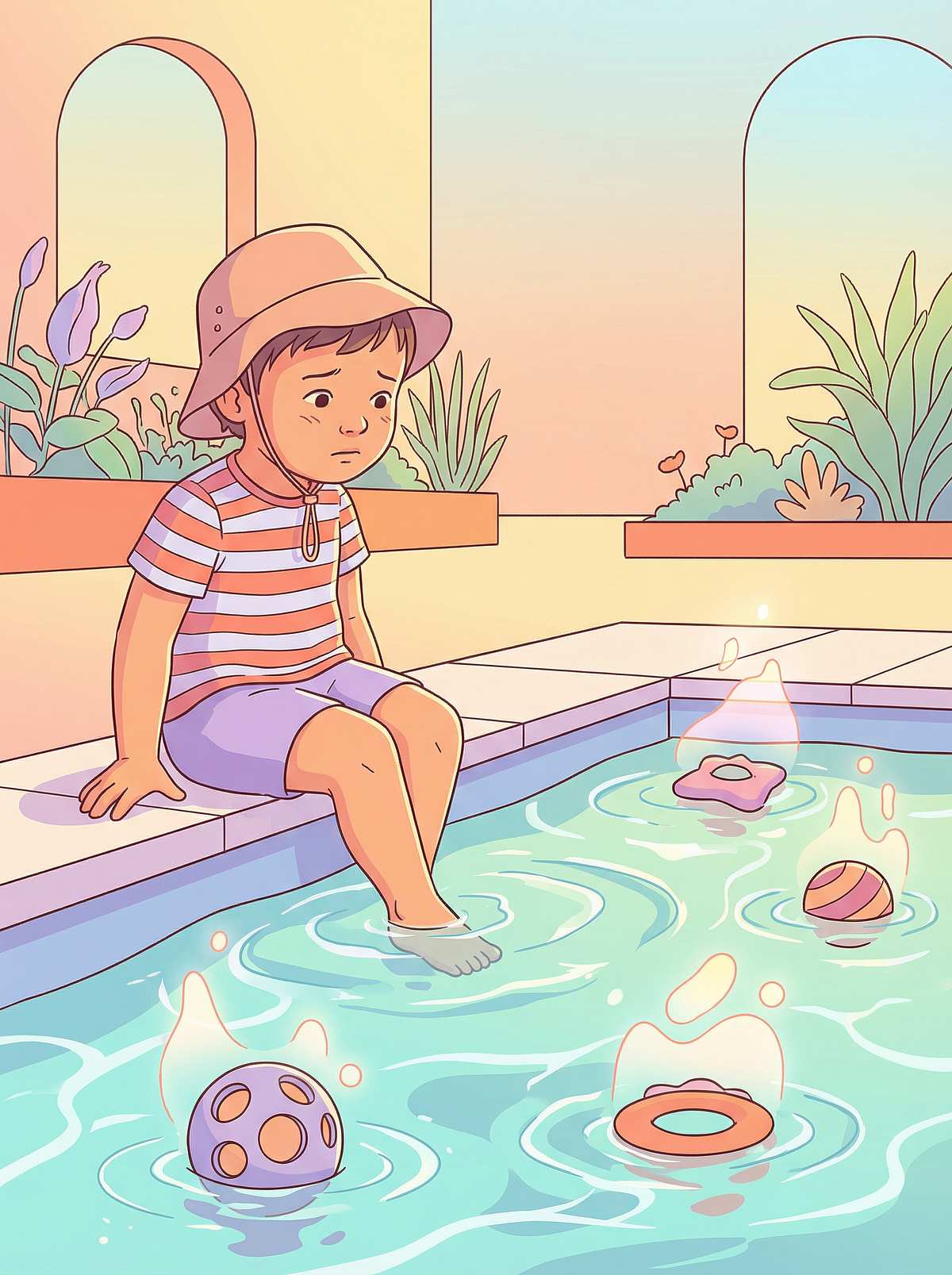
Your Child's Complete Water Journey — From Aversion to Mastery
This 5-stage progression is tracked in real time via the Water Safety Readiness Index within the GPT-OS® AbilityScore® assessment framework. Where does your child sit today?
🔴 Stage 1 — Severe Water Aversion
Cannot tolerate basic water contact beyond essential hygiene.
Materials: Spray bottle (mist only), warm bath, visual schedule
Materials: Spray bottle (mist only), warm bath, visual schedule
🟠 Stage 2 — Emerging Tolerance
Tolerates controlled exposure with significant support. Bath manageable with predictability.
Materials: Goggles, nose clips, bubble tools, all desensitisation tools
Materials: Goggles, nose clips, bubble tools, all desensitisation tools
🟡 Stage 3 — Developing Comfort
Enters shallow pool with support. Waist-deep water with float belt.
Materials: Float belt, pool noodles, sinking toys, warm pool confirmed
Materials: Float belt, pool noodles, sinking toys, warm pool confirmed
🟢 Stage 4 — Advancing Skills
Voluntary face submersion. Kicking with kickboard. Readiness for formal lessons.
Materials: All 9 materials at lower intensity, float belt reducing
Materials: All 9 materials at lower intensity, float belt reducing
✅ Stage 5 — Functional Swimming Readiness
Basic water safety competence. Can float briefly. Short-distance swimming. Knows what to do if accidentally in water.
Next: Formal swim instruction with qualified sensory-informed instructor
Next: Formal swim instruction with qualified sensory-informed instructor
From the Pinnacle Family Community
"Our daughter was 8 and had never once put her face in water voluntarily. Bath time was still a two-person event for hair washing — one to hold, one to pour, both of us stressed. The OT told us something that changed everything: 'Don't start with the pool. Start with a spray bottle.' We thought she was joking.
We spent three months just building tolerance to water sensations. Spray bottle on mist, on her hands, then her arms. Goggles became her thing — she wore them at the dinner table. By month four she was putting her face in the bath. By month six she was retrieving diving rings from the shallow end of the therapeutic pool. Month nine: swimming. My 8-year-old is swimming.
The key was addressing the sensory piece first. Traditional lessons had made her fear ten times worse. The gradual approach worked because it respected what her nervous system actually needed."
— Parent, Pinnacle Hyderabad Network (Illustrative case reflecting aggregate Pinnacle parent experiences. Individual outcomes vary.)
"The goggles. That's all it took. Once his eyes were protected, he put his face in the water on the first try. Seven months of fear dissolved in ten minutes. I wish someone had told us about goggles three years ago."
— Father, 6-year-old with ASD, Pinnacle Bangalore
You Don't Have to Navigate This Alone
Research from the WHO Care for Child Development Package demonstrates that when all caregivers use the same approach, intervention impact covers 80%+ of the child's waking hours. Community is not a bonus — it is a therapeutic multiplier.
Pinnacle Parent Network
40,000+ families across 70+ cities sharing experiences, strategies, and support in real time
WhatsApp Support Circle
Swimming Readiness-specific group with active parent community and Pinnacle OT moderators
ETP™ Video Library
Watch the F-583 material demonstrations — video modelling is an Evidence-Based Practice for ASD
GPT-OS® Progress Tracker
Log your sessions, track trends across time, and receive AI-calibrated protocol adjustments
Find Your Nearest Centre
70+ Pinnacle centres with aquatic OT programmes — professional support closer than you think
📞9100 181 181 — FREE · 16+ Languages · 24×7 · No appointment needed
"Our helpline team includes parents who have navigated this journey. You will speak with someone who understands."
"Our helpline team includes parents who have navigated this journey. You will speak with someone who understands."
Professional Support Is Closer Than You Think
Pinnacle Blooms Network® maintains 70+ centres across India with specialist aquatic OT and sensory-informed therapy programmes. Use the details below to find the right specialist for your child's specific needs.
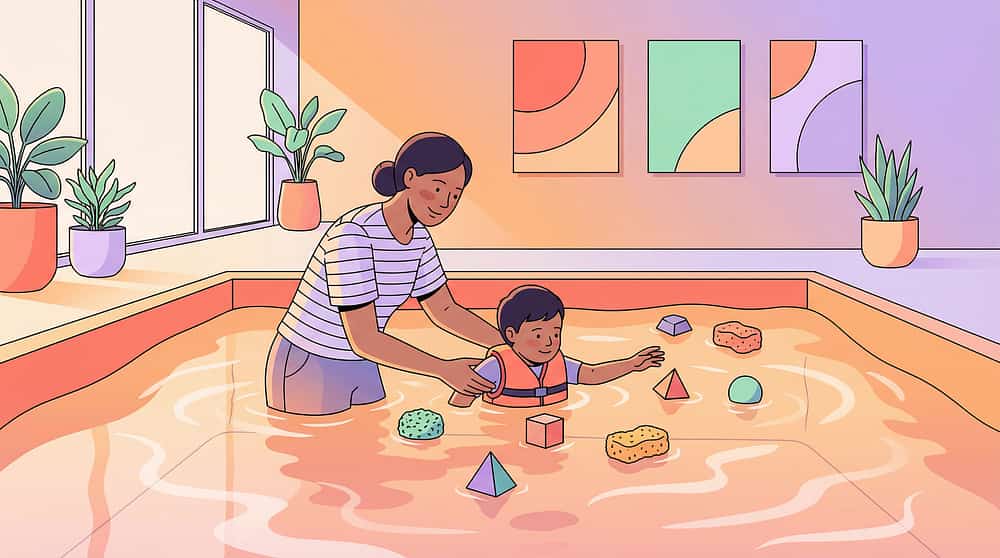
🔵 Paediatric OT (Sensory Specialisation)
Sensory processing assessment + desensitisation protocols + home programme design.
Available at: 70+ Pinnacle centres across India
Available at: 70+ Pinnacle centres across India
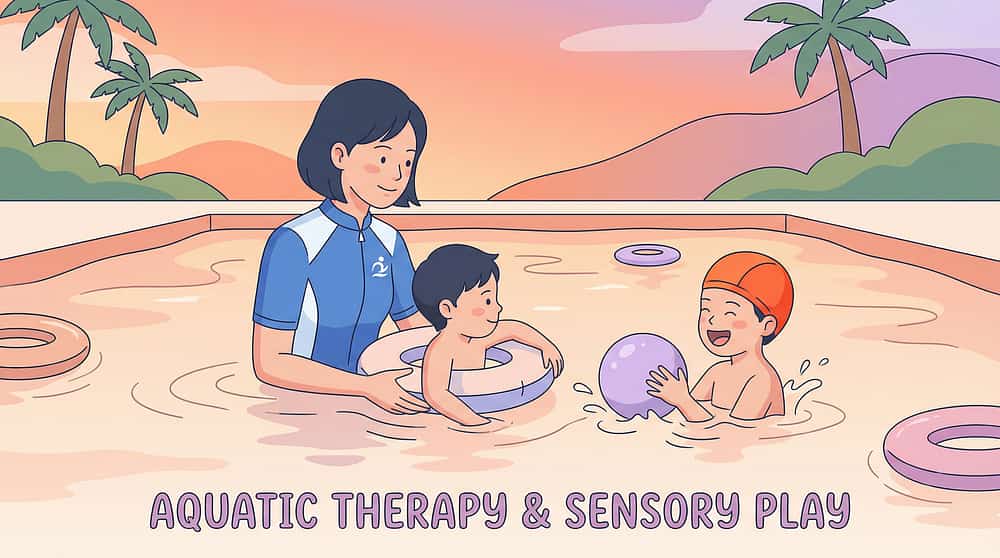
🔵 Aquatic Therapist (Certified)
Therapeutic pool sessions in temperature-controlled environments with trained sensory-informed specialists.
Available at: Select Pinnacle Aquatic Therapy centres
Available at: Select Pinnacle Aquatic Therapy centres
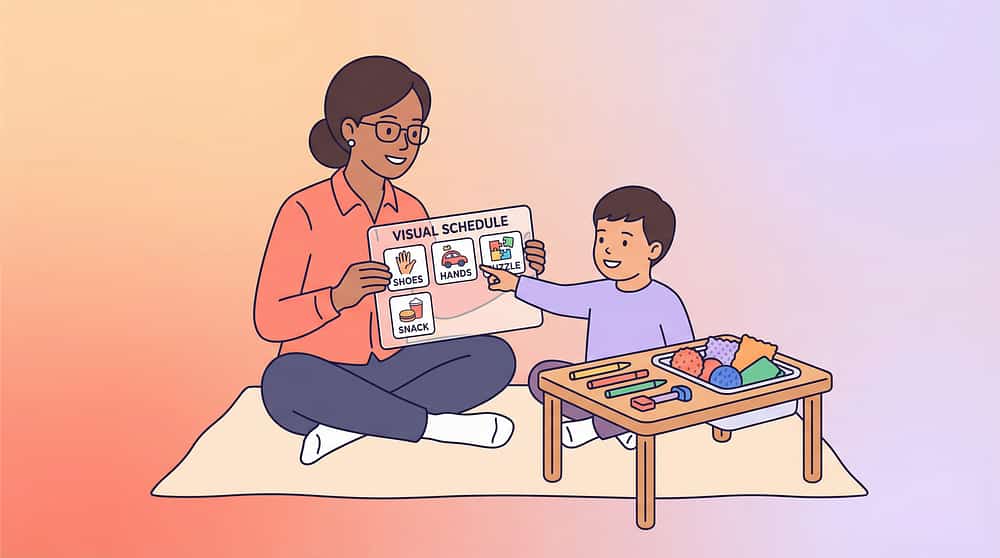
🔵 BCBA / ABA Therapist
Behavioural reinforcement design + visual supports + anxiety management protocols for water contexts.
Available at: All Pinnacle centres
Available at: All Pinnacle centres

🔵 NeuroDev Paediatrician
Medical assessment of underlying contributors to water aversion — ASD, SPD, anxiety, vestibular disorders.
Available at: Pinnacle NeuroDev clinics
Available at: Pinnacle NeuroDev clinics
Every Claim on This Page Has a Source
This page draws from Levels I–III evidence supplemented by Pinnacle's real-world evidence base of 20 million+ therapeutic sessions. The evidence pyramid below illustrates the hierarchy of evidence supporting this technique.
PMC11506176 — PRISMA Systematic Review (2024)
Sensory Integration as Evidence-Based Practice for ASD — 16 peer-reviewed articles, 2013–2023
PMC10955541 — Meta-Analysis (World J Clin Cases 2024)
Sensory therapy outcomes across heterogeneous ASD populations
PMC9978394 — WHO CCD Package Implementation Evidence
WHO/UNICEF Care for Child Development Package (2023) — 54 LMICs implementation data
DOI: 10.1007/s12098-018-2747-4 — Padmanabha et al., Indian J Pediatr (2019)
Home-based sensory intervention RCT in India — validates the home-execution model
NCAEP (2020) — Evidence-Based Practices for Autism
Visual supports, video modelling, and reinforcement classified as EBP for ASD
Frontiers in Integrative Neuroscience (2020)
DOI: 10.3389/fnint.2020.556660 — Neurological framework for sensory-based aquatic interventions
WHO Nurturing Care Framework (2018)
Foundation for physical play and water exposure as gross motor and community participation readiness
AAP Drowning Prevention Policy Statement
Identifies drowning as a leading cause of preventable childhood death — making swimming readiness a life-safety priority
Powered by GPT-OS® — Global Paediatric Therapeutic Operating System
Every session logged through this protocol feeds the GPT-OS® intelligence architecture — improving your child's personalised plan and contributing to the 20 million session dataset that guides recommendations for every child in the network.
What GPT-OS® Learns From F-583 Data
- Which of the 9 materials drives fastest tolerance improvement by child profile
- Optimal session duration by sensory defensiveness severity level
- Transition timing: when to reduce float belt buoyancy by AbilityScore® threshold
- Red flag patterns: data signatures preceding plateau or regression
Data Privacy
All session data is subject to India DPDP Act 2023 compliance. Aggregate anonymised data improves recommendations for all children. Individual data is never shared without explicit consent.
"Your data helps every child like yours. 20 million sessions have already mapped the territory your child is navigating."
20M+
Therapy Sessions
Real-world 1:1 sessions powering the AI recommendations
97%+
Measured Improvement
Across the Pinnacle Blooms Network in tracked outcomes
70+
Centres
Across India with OT, ABA, aquatic therapy, and NeuroDev specialisations
Watch It in Action: F-583 — 9 Materials That Help With Swimming Readiness
Video modelling is classified as an Evidence-Based Practice for autism spectrum disorder (NCAEP, 2020). Watching the correct execution of each material technique before attempting at home significantly improves caregiver fidelity and child outcome.
🎬 Reel F-583
Series: Gross Motor & Physical Development · Episode 583
Duration: ~75–85 seconds
Domain: F — Gross Motor / Physical / Aquatic
Presented by: Pinnacle OT Consortium
Duration: ~75–85 seconds
Domain: F — Gross Motor / Physical / Aquatic
Presented by: Pinnacle OT Consortium
Video Chapters
0:00
When water feels like the enemy (Hook)
0:06
Material 1: Gradual Exposure Tools
0:18
Material 4: Bubble Blowing Tools
0:30
Material 7: Sinking Toys
0:44
Powered by GPT-OS® (Closure)
Series Navigation: ← F-582: Ball Kicking Skills | → F-584: Climbing Skills
Consistency Across Caregivers Multiplies Impact
Research from the WHO Care for Child Development Package (PMC9978394) demonstrates that intervention generalisation and maintenance require multi-caregiver consistency. If only one parent implements the swimming readiness protocol, impact is limited to 20% of the child's waking hours. When all caregivers use the same approach, impact covers 80%+. Sharing this page is therapeutic strategy, not mere information sharing.
📱 Share on WhatsApp
Send to grandparents, extended family, and support staff instantly
🔗 Copy Link
techniques.pinnacleblooms.org/gross-motor/swimming-readiness-9-materials-f583
📄 Download PDF
F-583 Family Guide — 1 Page PDF in English, Hindi, and Telugu
"Explain to Grandparents" Version:
"Our child's nervous system finds water frightening — not because of any choice or stubbornness, but because of how their brain processes sensory information. We're using a gentle, step-by-step approach with special materials to help them feel safe in water. The most important thing is: please don't push them into water, say 'there's nothing to be afraid of,' or make it a discipline issue. Instead, let them lead, praise every small try, and be patient."
"Our child's nervous system finds water frightening — not because of any choice or stubbornness, but because of how their brain processes sensory information. We're using a gentle, step-by-step approach with special materials to help them feel safe in water. The most important thing is: please don't push them into water, say 'there's nothing to be afraid of,' or make it a discipline issue. Instead, let them lead, praise every small try, and be patient."
The Questions Every Family Asks
My child is 9 — is it too late to start this?
Not at all. Swimming readiness work has been effective with children up to age 12 and beyond. Neuroplasticity is present throughout childhood. The 2–12 age range reflects optimal windows, not cutoffs. Adult aquaphobia treatment follows the same desensitisation principles. Start now — every week matters.
We've tried everything and nothing has worked. Will this actually be different?
The most common reason previous attempts failed is that they skipped the foundational sensory work and went directly to pool and motor instruction. This approach rebuilds from the ground up: sensory tolerance first, motor skill second. If previous OT has not specifically addressed water context, this protocol may represent genuinely new territory.
How long will this take?
Highly variable. Some children show significant progress in 6–8 weeks. Children with severe sensory defensiveness or trauma history may require 12–18 months. Progress is measured in stages, not calendar time. The right question is not "how long?" but "are we moving?"
Can I do this without professional help?
Many families successfully implement this protocol at home for early stages. Professional OT/aquatic therapy is recommended when: (a) aversion is severe, (b) progress plateaus after 8 weeks, (c) child has a medical condition contributing to aversion. The free helpline (9100 181 181) can advise on whether home-only is appropriate for your child.
My child is fine in the bath but panics at the pool. Why?
Bath is familiar, warm, enclosed, and parent-controlled. Pool is novel, larger, variable temperature, noisy, and unpredictable. The solution is pool-specific familiarity building: visit pool before swimming, build pool-specific visual schedule with photos of THAT pool, and make first pool visits purely observational.
Do the goggles and nose clips become a crutch?
Goggles and nose clips are accommodations, not crutches. A wheelchair is not a crutch. Glasses are not a crutch. If a child swims safely and confidently with protective equipment, they are swimming safely and confidently. Gradual transition away from aids is possible once confidence is established — but is never required.
Is this approach safe?
Safety is the absolute priority of this protocol. Session rules: adult within arm's reach at all times, no child unsupervised near water regardless of skill level, float belt worn in pool until independent swimming is established, session ends immediately if genuine distress occurs. Contact 9100 181 181 for personalised safety planning.
Where can I find aquatic therapists in India?
Pinnacle Blooms Network® has aquatic therapy programmes at select centres. Call 9100 181 181 for the nearest aquatic-capable centre. The Indian Association of Aquatic Therapists (IAAT) maintains a practitioner directory. Hospital-based OT departments in major cities often have pool access.
Your Child's Water Journey Begins With One Spray Bottle
Not a pool. Not lessons. Not perfection. One spray bottle on mist setting. Today.
🔵 OT
Occupational Therapy
🟣 ABA
Applied Behaviour Analysis
🟢 SLP
Speech-Language Pathology
🟡 SpEd
Special Education
🔴 NDev
NeuroDev Paediatrics
✦ Validated by the Pinnacle Blooms Consortium of Experts — 20M+ Sessions · 97%+ Outcomes
📞9100 181 181 — FREE · 16+ Languages · 24×7 · care@pinnacleblooms.org
← F-582: Ball Kicking Skills
F-584: Climbing Skills →
Preview of 9 materials that help with swimming readiness Therapy Material
Below is a visual preview of 9 materials that help with swimming readiness therapy material. The pages shown help educators, therapists, and caregivers understand the structure and content of the resource before use. Materials should be used under appropriate professional guidance.


Link copied!
"From Fear to Mastery. One Technique at a Time."
Pinnacle Blooms Network® — Built by Mothers. Engineered as a System.
Occupational Therapy
Speech-Language Pathology
Applied Behaviour Analysis
Special Education
NeuroDev Paediatrics
Aquatic Therapy
⚠️ Medical Disclaimer: This content is educational and does not replace individualised assessment and intervention from licensed occupational therapists, aquatic therapists, or developmental specialists. Water-related anxiety and sensory aversion can stem from multiple causes requiring professional evaluation. Drowning is a leading cause of preventable childhood death — never leave children unsupervised near water regardless of skill level or flotation device present. Individual results may vary. Statistics represent aggregate outcomes across the Pinnacle Blooms Network.
CIN U74999TG2016PTC113063 · DPIIT DIPP8651 · MSME TS20F0009606 · GSTIN 36AAGCB9722P1Z2
© 2025 Pinnacle Blooms Network®, unit of Bharath Healthcare Laboratories Pvt. Ltd. All rights reserved.
© 2025 Pinnacle Blooms Network®, unit of Bharath Healthcare Laboratories Pvt. Ltd. All rights reserved.
OTT Platform · Hyperlocal Marketplace · 70+ Centre Network · 20M+ sessions · 97%+ measured improvement · Patents filed across 160+ countries
This page is part of the Pinnacle Blooms Network® Techniques Library — 70,000+ intervention technique pages serving families across 70+ countries. Powered by GPT-OS® — Global Paediatric Therapeutic Operating System.