
9 Materials That Help With Single Outfit Rigidity
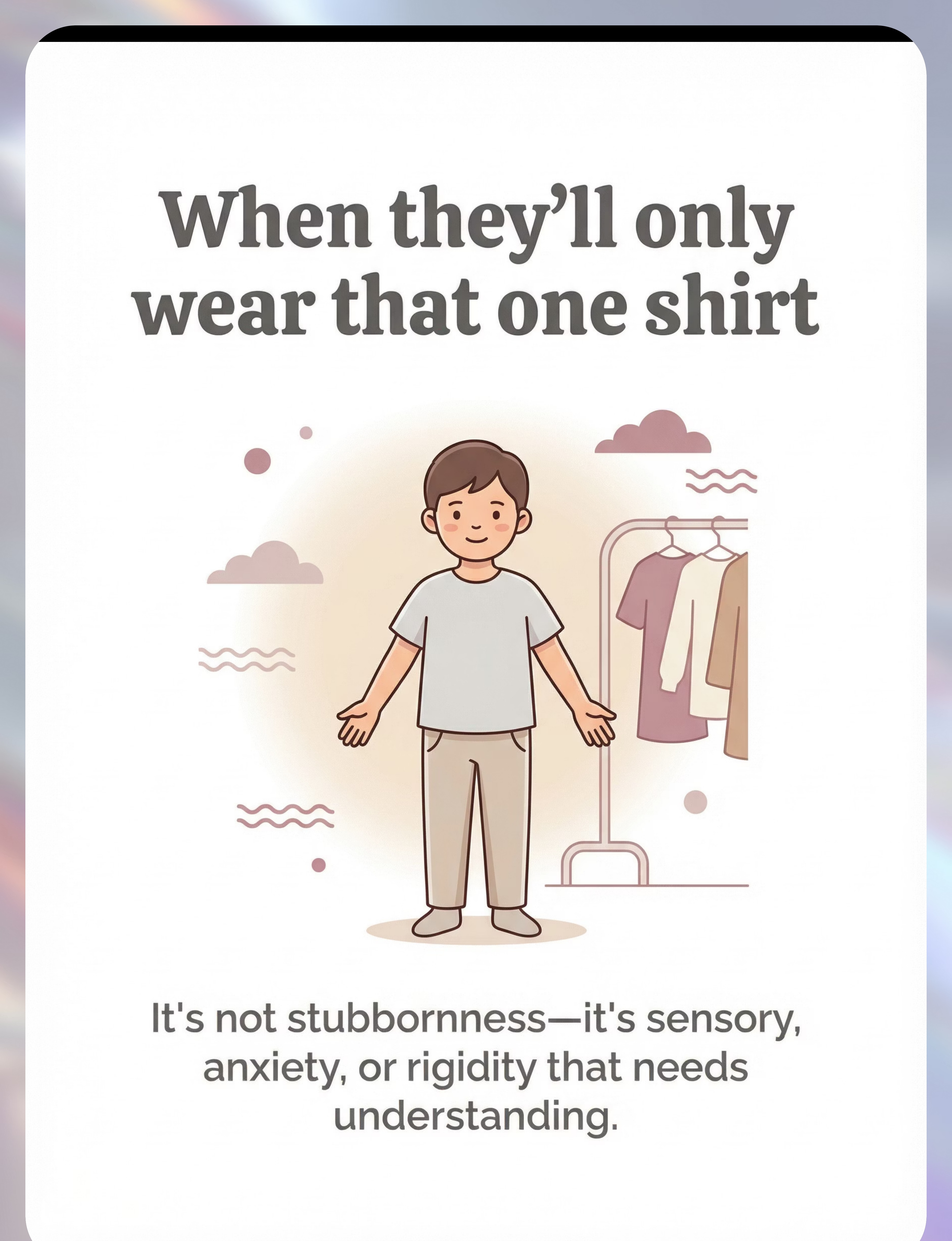
When they'll only wear that one shirt — every single day. This is Technique E-528 from the Pinnacle Blooms Network® Self-Care / Dressing series. Evidence-based materials and a complete home intervention protocol, powered by GPT-OS®.
E-528
Age 2–12 yrs
OT + ABA + Psychology
Self-Care / Dressing
The Same Shirt. Every Single Day.
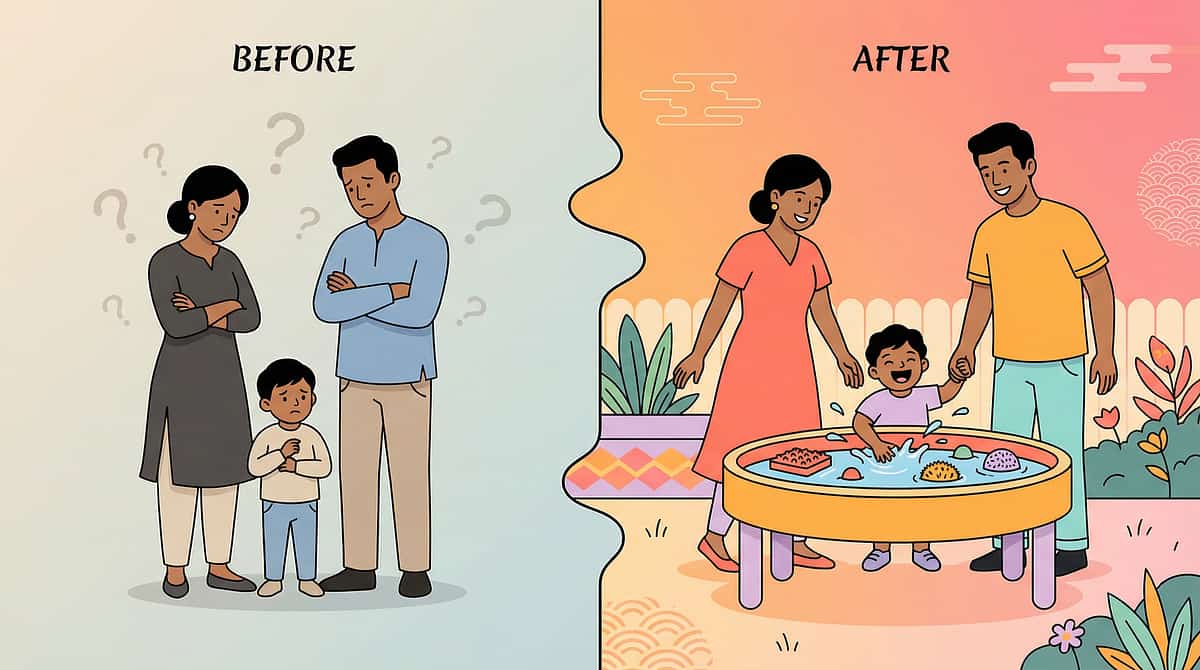
"My child has worn the same dinosaur shirt for six months straight. The same gray sweatpants. Every single day — birthday parties, school photos, family events. I bought three duplicates just to rotate for washing. The original is faded, stretched, barely fits — and they can still tell the difference between the original and the duplicates. They know. The moment I try anything else, it's screaming, crying, grabbing at the fabric, saying it 'hurts' or feels 'wrong.' Other parents think I should just make them wear different clothes. They don't see what I see — genuine, overwhelming distress. This isn't a preference tantrum. Something about that one outfit feels like the only safe thing in the world."
You are not failing. Your child's nervous system is speaking. And there are 9 evidence-based materials that help.
🏛️ Pinnacle Blooms Consortium | Episode E-528 | Age 2–12 yrs | OT + ABA + Psychology + NeuroDev | WHO Nurturing Care Framework (2018): Early parental awareness directly impacts developmental outcomes.

Millions of Families Live This Every Morning
You are among hundreds of thousands of families navigating single outfit rigidity. The exhaustion you feel, the judgment you've absorbed, the duplicates in the laundry — this is a globally documented, clinically understood challenge. It is not your parenting. It is not your child's defiance. It is a nervous system difference that responds to specific, evidence-based intervention.
60–80%
Clothing Rigidity in Autism
Of autistic children experience clothing rigidity to some degree — peer-reviewed clinical data
80%
Sensory Processing Difficulties
Of children with ASD display sensory processing difficulties — PRISMA Systematic Review, PMC11506176
1 in 36
Children in India
Diagnosed on the autism spectrum — over 500,000 families navigating this right now
"When a parent finally learns their child isn't being stubborn — that something real is happening neurologically — everything changes." — Pinnacle Blooms Consortium, OT Clinical Team
Research: PMC11506176 | PMC10955541 | DOI: 10.12998/wjcc.v12.i7.1260
This Is a Wiring Difference, Not a Behavior Choice
Your child's somatosensory cortex — the brain region that processes touch — is amplifying tactile signals that most nervous systems filter as background noise. The seam of a sock. The tag at the collar. The slight stiffness of a new fabric. To your child, these signals arrive at a volume that a typical nervous system would only register during actual injury.
The preferred outfit has been "learned" by their sensory system as safe — the precise weight, softness, and fit have been mapped as non-threatening. Any deviation, even in an "identical" duplicate, triggers the amygdala's threat response. Their sensory system is running a threat scan with forensic precision.
This Is NOT
- Stubbornness
- Attention-seeking
- Bad parenting
- A phase that force will fix
This IS
- Sensory Processing Difference ✓
- Anxiety-driven safety behavior ✓
- Autism-related insistence on sameness ✓
- A nervous system communicating its limits ✓
Frontiers in Integrative Neuroscience (2020): Neurological framework for sensory integration in ASD establishes biological basis for sensory-based clothing intolerance. DOI: 10.3389/fnint.2020.556660

Where This Sits in Development
Your child is here. Here is where we're heading.
Ages 2–4
Clothing preferences are developmentally normal. Most children go through "favorite shirt" phases that resolve naturally.
Ages 3–6 (Peak Window)
For children with sensory processing differences, ASD, or anxiety disorders, preferences crystallize into rigidity. This is the critical intervention window — the earlier the intervention, the more neural plasticity supports change.
Ages 5–8
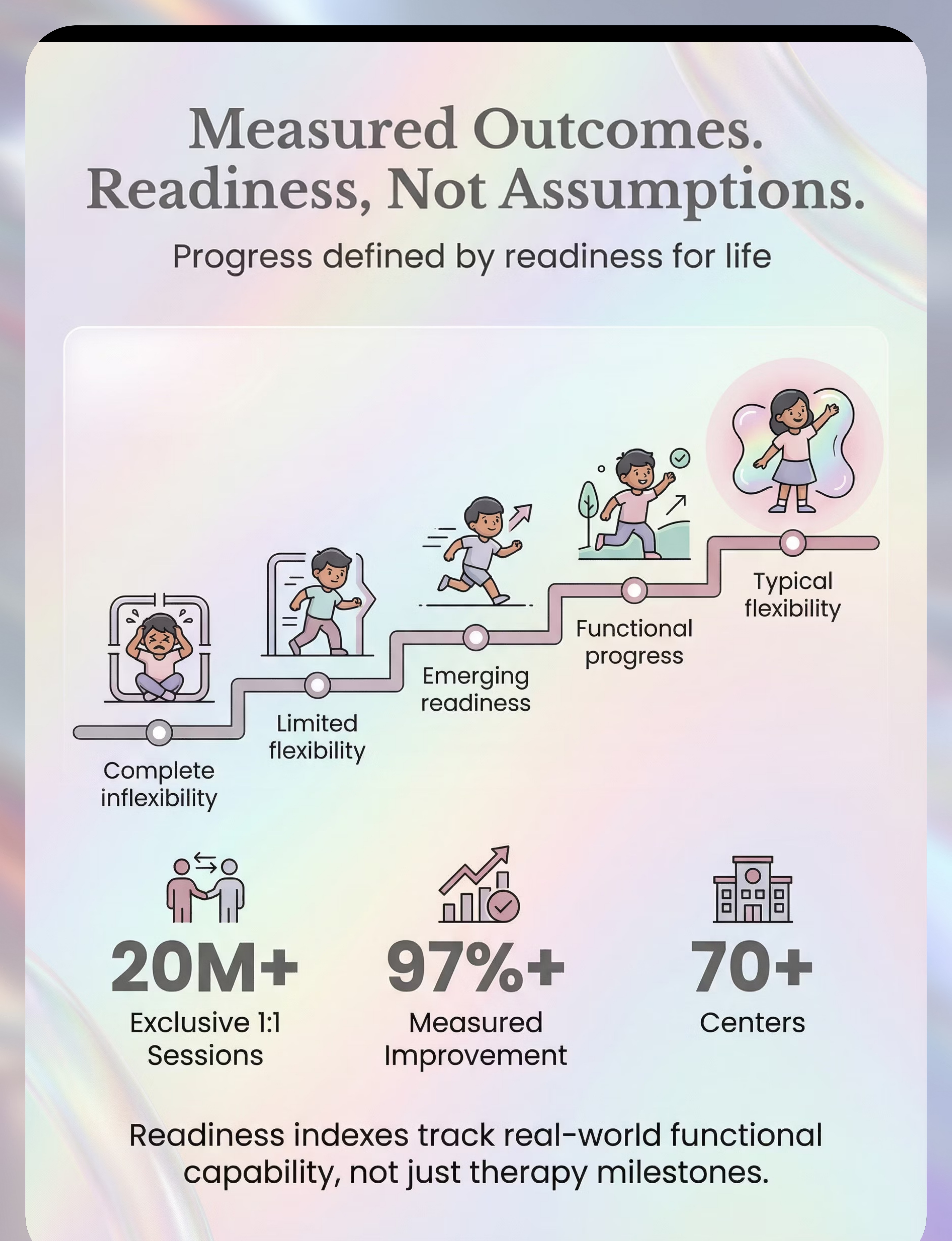
With consistent, evidence-based intervention, most children develop tolerable flexibility — not zero preference, but genuine functional options.
Comorbidity Awareness
Single outfit rigidity commonly co-occurs with: ASD (60–80%), Sensory Processing Disorder, Anxiety/OCD, ADHD, and Developmental Coordination Disorder. WHO frameworks target clothing independence for ages 4–6.
PMC9978394 | WHO/UNICEF CCD Package (2023) | UNICEF MICS indicators
Clinically Validated. Home-Applicable. Parent-Proven.
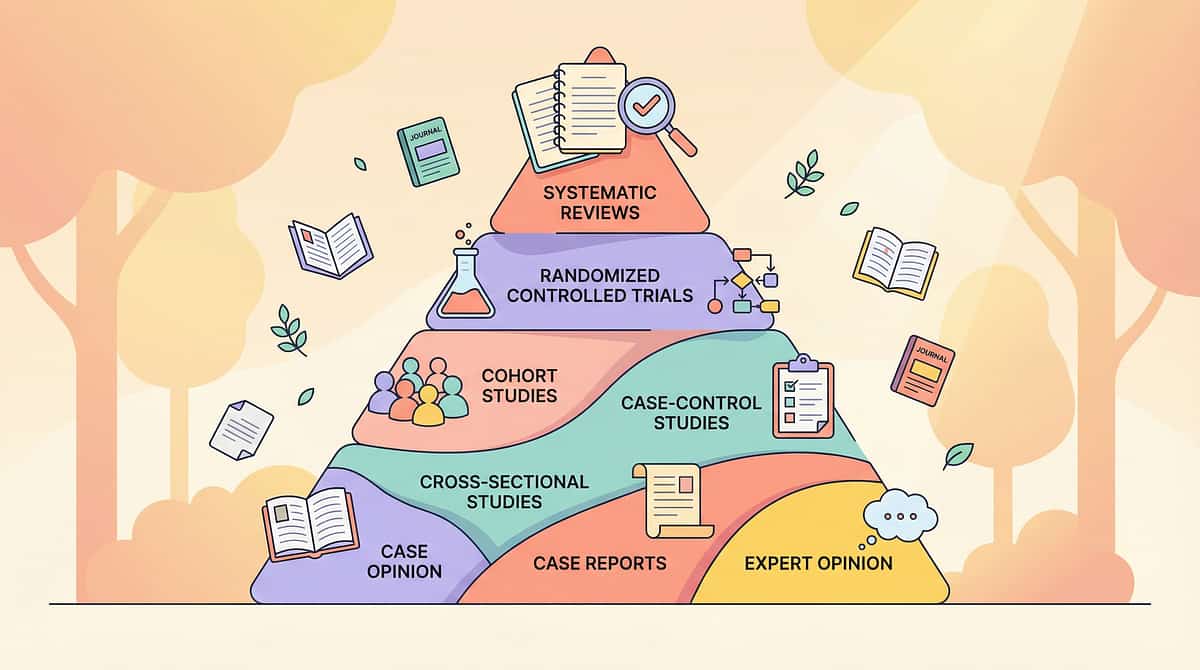
Evidence Grade: I–II
Systematic Review + Multiple RCTs
Sensory + Behavioral Intervention Class
Study | Finding | Relevance to E-528 | |
PRISMA Systematic Review (2024) — PMC11506176 | 16 studies (2013–2023): Sensory integration intervention is evidence-based practice for ASD | Validates sensory-matched wardrobe + pre-washing + layering | |
Meta-analysis, World J Clin Cases (2024) — PMC10955541 | 24 studies: SI therapy promotes adaptive behavior and social participation | Validates graduated exposure + timer approaches | |
Indian RCT (Padmanabha et al., 2019) | Home-based sensory interventions showed significant outcomes in Indian pediatric population | Confirms home-executable protocol for Indian families | |
NCAEP Evidence-Based Practices (2020) | Visual supports and social stories classified as evidence-based practice for autism | Validates choice boards + social stories + transition rituals |
"Neither 'just give in' nor 'just make them' works. Graduated, supported flexibility-building is the evidence-based middle path."
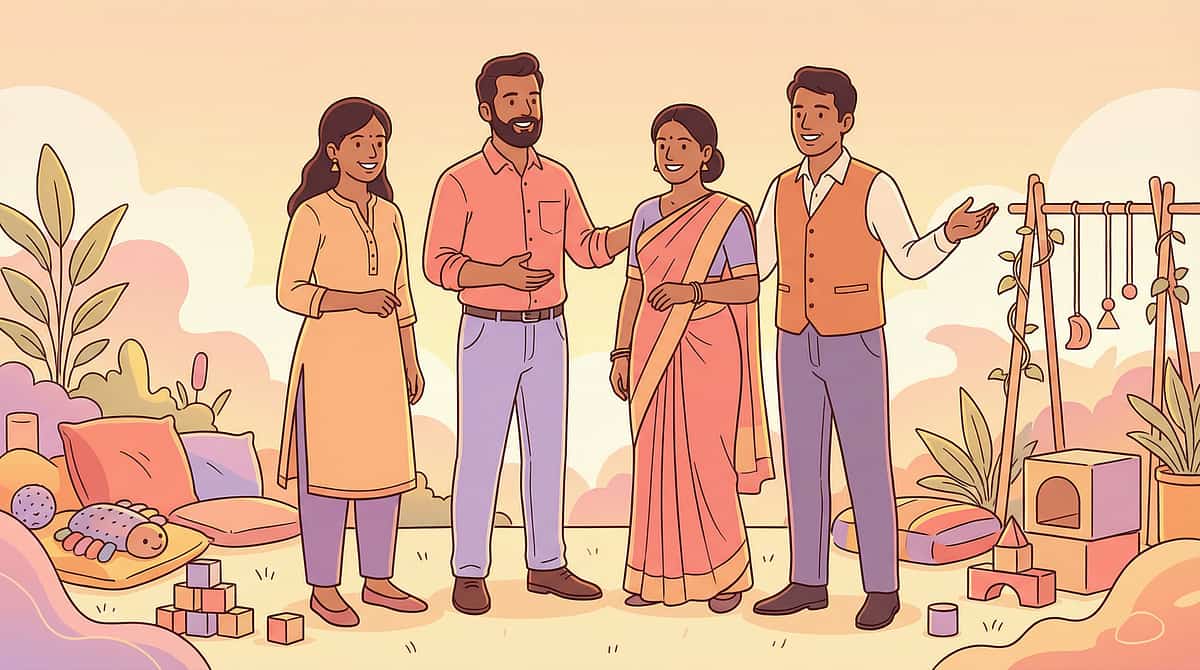
The Clothing Comfort Expansion Programme
Technique E-528 — Single Outfit Rigidity Intervention Protocol
A multi-modal, function-based home intervention that addresses a child's intense, persistent insistence on wearing only one specific outfit. The protocol combines sensory analysis, gradual exposure, visual supports, and anxiety-management strategies into a structured but flexible home programme.
What It Does
Identifies the underlying function of the rigidity — sensory, anxiety, or autism-related insistence on sameness — then builds clothing flexibility by addressing the root cause.
Who It's For
Children aged 2–12 who experience genuine distress when required to wear alternatives to a preferred outfit, significantly impacting daily functioning.
Session Format
10–20 minutes daily during transition periods. Self-Care / Dressing domain. Canon Material: Transition Objects & Comfort Items.
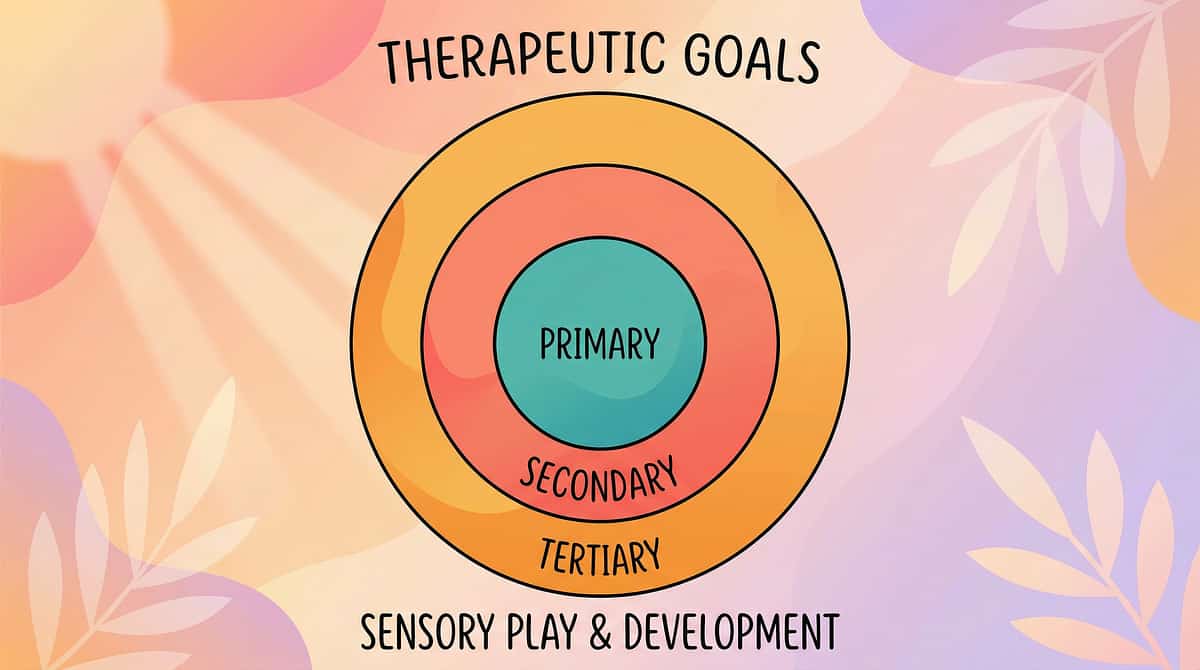
This Technique Crosses Therapy Boundaries
Because the brain doesn't organize by therapy type, single outfit rigidity requires coordinated multi-disciplinary support. Each discipline brings a unique and essential lens.
Occupational Therapy (OT) — Primary Lead
Sensory processing assessment, sensory-matched wardrobe construction, tactile desensitization, pre-washing protocols, and layering strategies. OT's sensory profile tools identify exactly what makes the preferred outfit tolerable.
Behavioral Therapy (ABA/BCBA)
Function-based assessment identifies WHY the rigidity serves the child. Applies graduated exposure hierarchy, timer-based practice sessions, and reinforcement systems for flexibility attempts.
Child Psychology / Psychiatry
When rigidity is primarily anxiety-driven or OCD-related, cognitive-behavioral approaches and anxiety management complement sensory and behavioral work. May include medication evaluation for severe cases.
Special Education / NeuroDev Pediatrics
Visual supports, social stories, and choice boards for neurodiverse learners. School accommodation planning, uniform modification advocacy, and comprehensive developmental evaluation.
Pinnacle's FusionModule™ coordinates all four disciplines into a single converged therapeutic pathway. DOI: 10.1080/17549507.2022.2141327
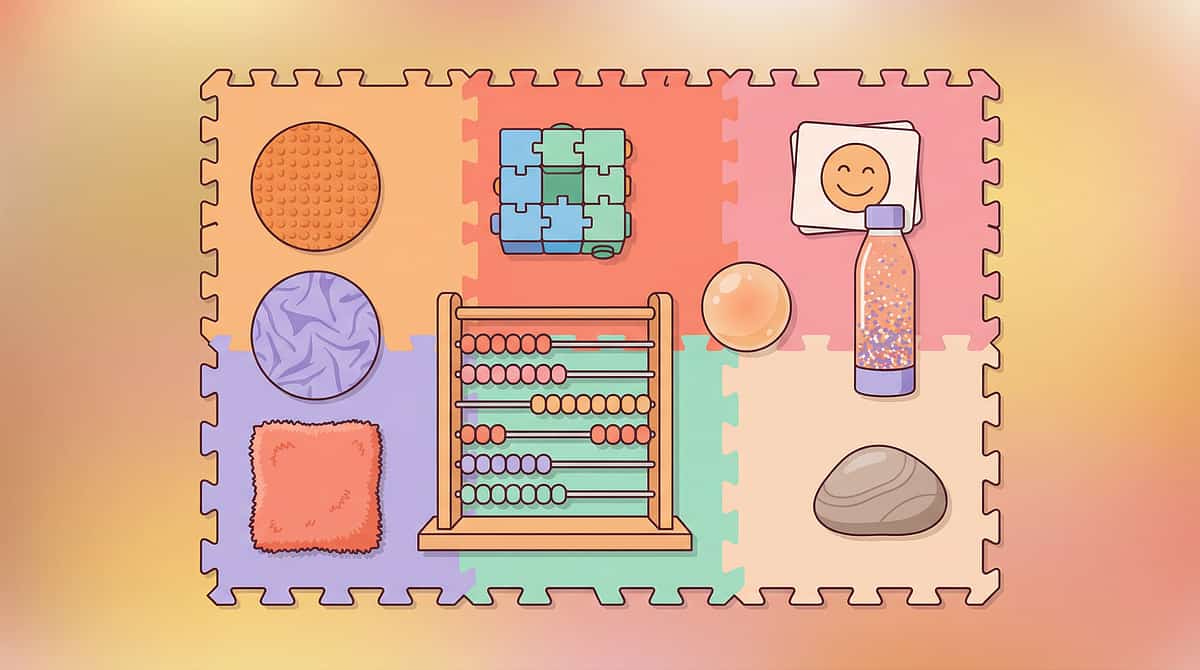
Precision Targets — What This Technique Addresses
E-528 is not a random activity. Every element is mapped to specific therapeutic goals across three rings of impact.
Primary Target
Clothing Flexibility: Child tolerates wearing 2–5 different sensory-appropriate items without significant distress. Measured by number of acceptable items, duration tolerated, and distress level on a 0–10 scale.
Secondary & Tertiary Targets
Transition tolerance, anxiety management, and sensory integration gains lead ultimately to adaptive daily living skills, social participation, and school readiness — the long-term developmental outcomes.
PMC10955541: Sensory integration therapy effectively promoted adaptive behavior (primary), social skills (secondary), and motor/processing skills (tertiary) across 24 studies.

9 Materials That Help With Single Outfit Rigidity
From the 128 Canon Materials of Pediatric Therapy | Pinnacle Recommends
Sensory-Matched Duplicate Wardrobe
Sensory / Tactile Materials | ₹500–3,000
Graduated Exposure Clothing Ladder
Visual Supports / Behavior Tools | ₹100–400
Sensory Pre-Washing & Softening Kit
Sensory / Tactile Materials | ₹200–600
Visual Choice Board for Clothing
Visual Supports / Choice-Making Tools | ₹100–400
Social Story Books About Clothing Changes
Social Stories / Narrative Supports | ₹100–500
Comfort Object Transfer Items
Transition Objects / Comfort Items | ₹50–300 (₹425 Canon product)
Scheduled Clothing Practice Timer
Visual Timers / Time Management Tools | ₹200–800
Layering & Transitional Clothing
Adaptive Clothing / Sensory-Friendly Garments | ₹200–600
Transition Ritual & Preparation Tools
Visual Schedules / Transition Supports | ₹100–400
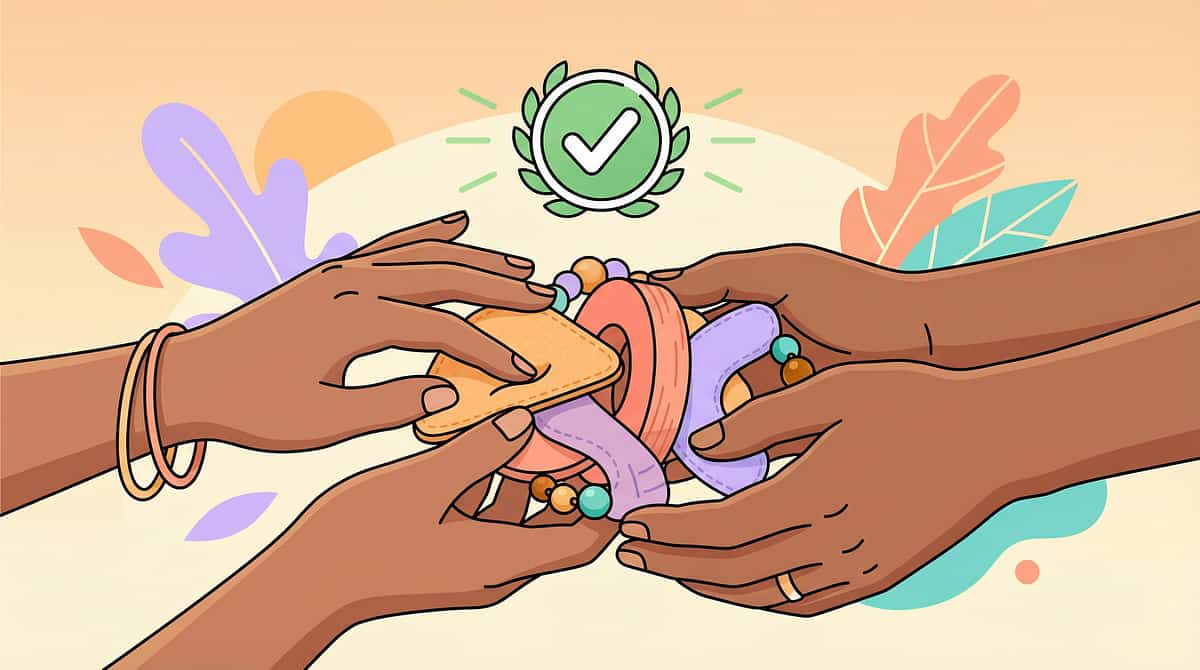
Material 1 — Sensory-Matched Duplicate Wardrobe
Sensory / Tactile Materials
₹500–3,000
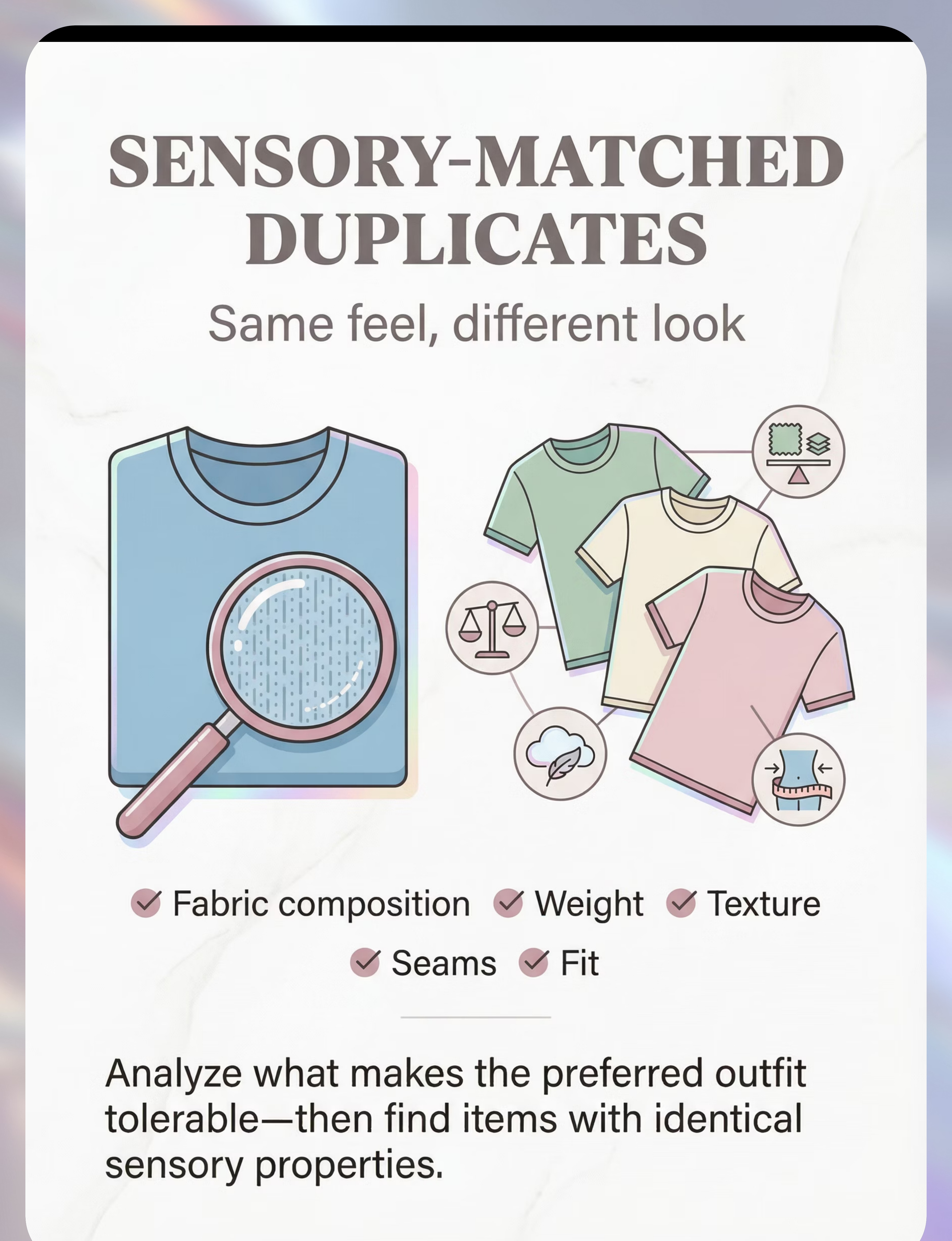
What it is: A systematic analysis of the preferred outfit's sensory properties — fabric composition, weight, fit, seams, texture, tag presence — followed by sourcing other garments with identical sensory properties. Different colors and styles, but the same sensory experience.
Why it works: The rigidity often isn't about the specific shirt — it's about the sensory experience the shirt provides. Match that experience in new garments, and the nervous system has no reason to reject them.
DIY Approach
Document the preferred outfit's properties on a sensory profile card. Take the garment shopping to compare against new items. Feel fabrics eyes-closed. Source from the same brand and manufacturer for consistency.
What to Look For
- Same fabric composition (cotton %, blend)
- Identical seam placement and stitching style
- Same fit — not just size, but cut and drape
- No tags, or same tag placement
- Matching weight — feel with eyes closed
🛒 Search "seamless tagless sensory shirts children" on Amazon.in | Source same brand in new colors for best matching results.
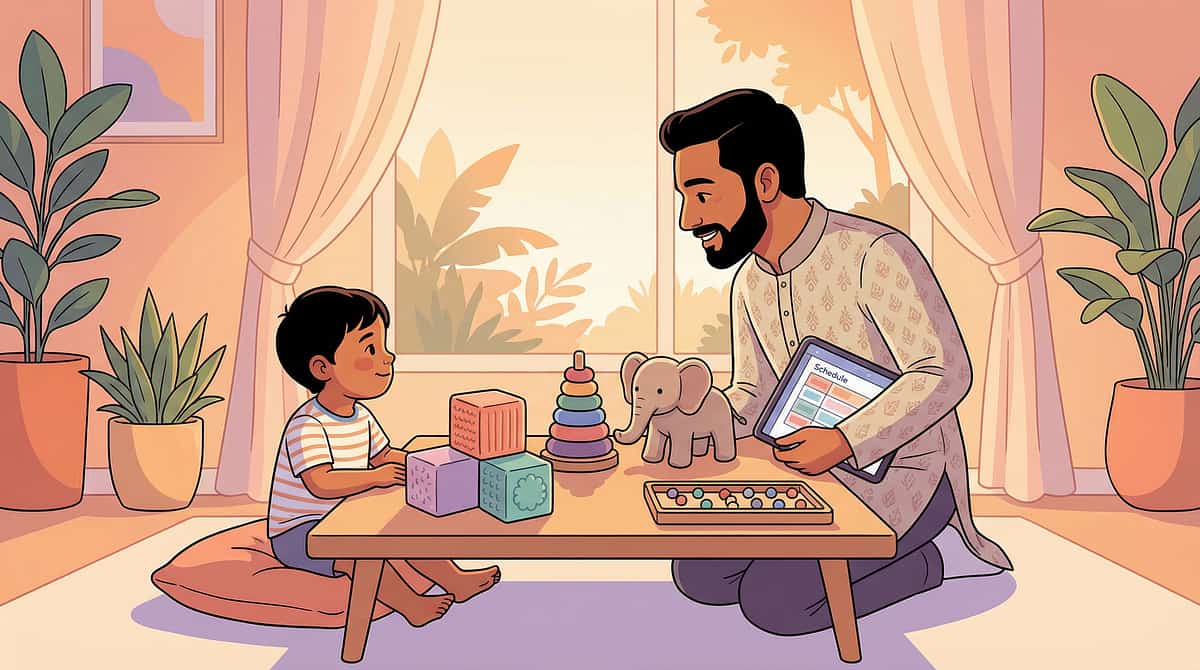
Material 2 — Graduated Exposure Clothing Ladder
Visual Supports / Behavior Tools
₹100–400
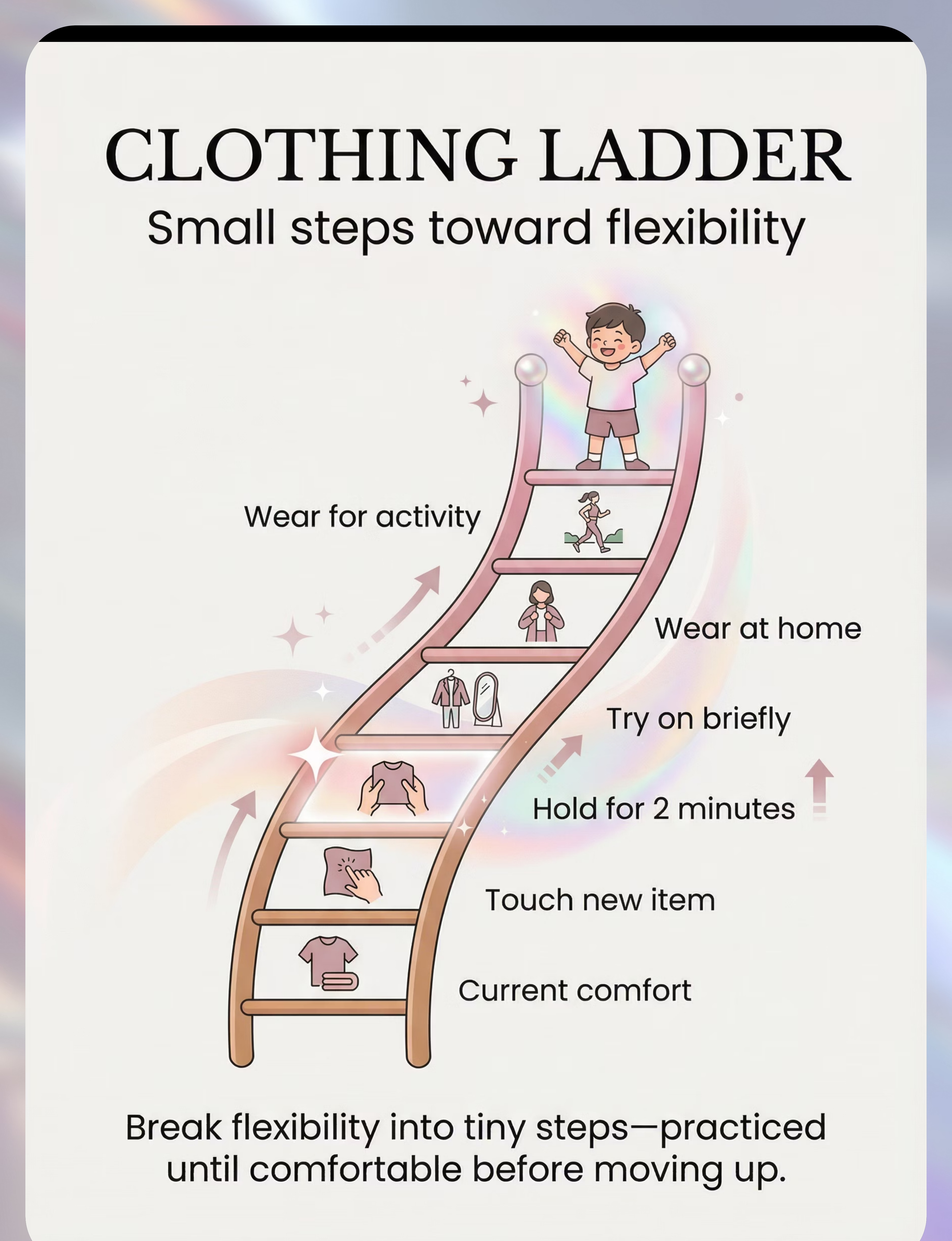
What it is: A visual ladder with 8–10 rungs progressing from the current safe outfit at the bottom to comfortable flexibility with alternatives at the top. Each rung is practiced until genuinely comfortable before ascending. Graduated exposure is the gold standard for anxiety-driven avoidance — building positive associations through success is neurologically incompatible with fear.
Critical principle: Do NOT advance to the next rung until 3 consecutive sessions at the current rung show no distress. Progress earned through comfort, never through pressure.
🛒 DIY: Poster board ₹50 | Lamination sheets | Reward stickers ₹100 — the graduated structure is the tool, not the material quality.
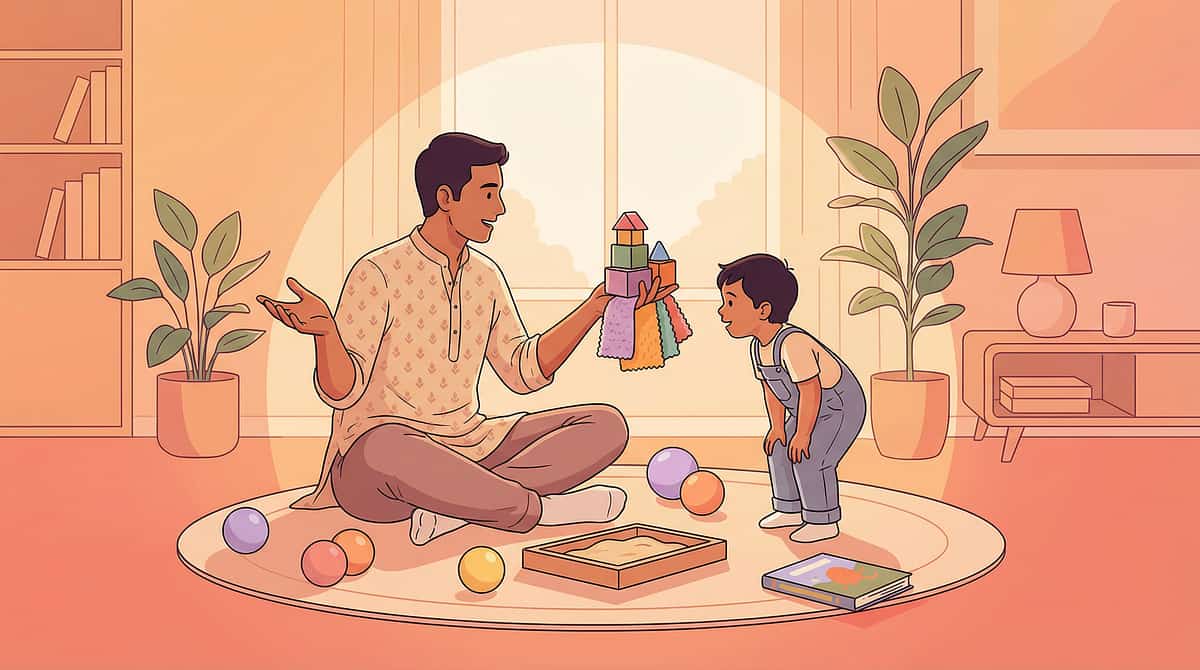
Material 3 — Sensory Pre-Washing & Softening Kit
Sensory / Tactile Materials
₹200–600
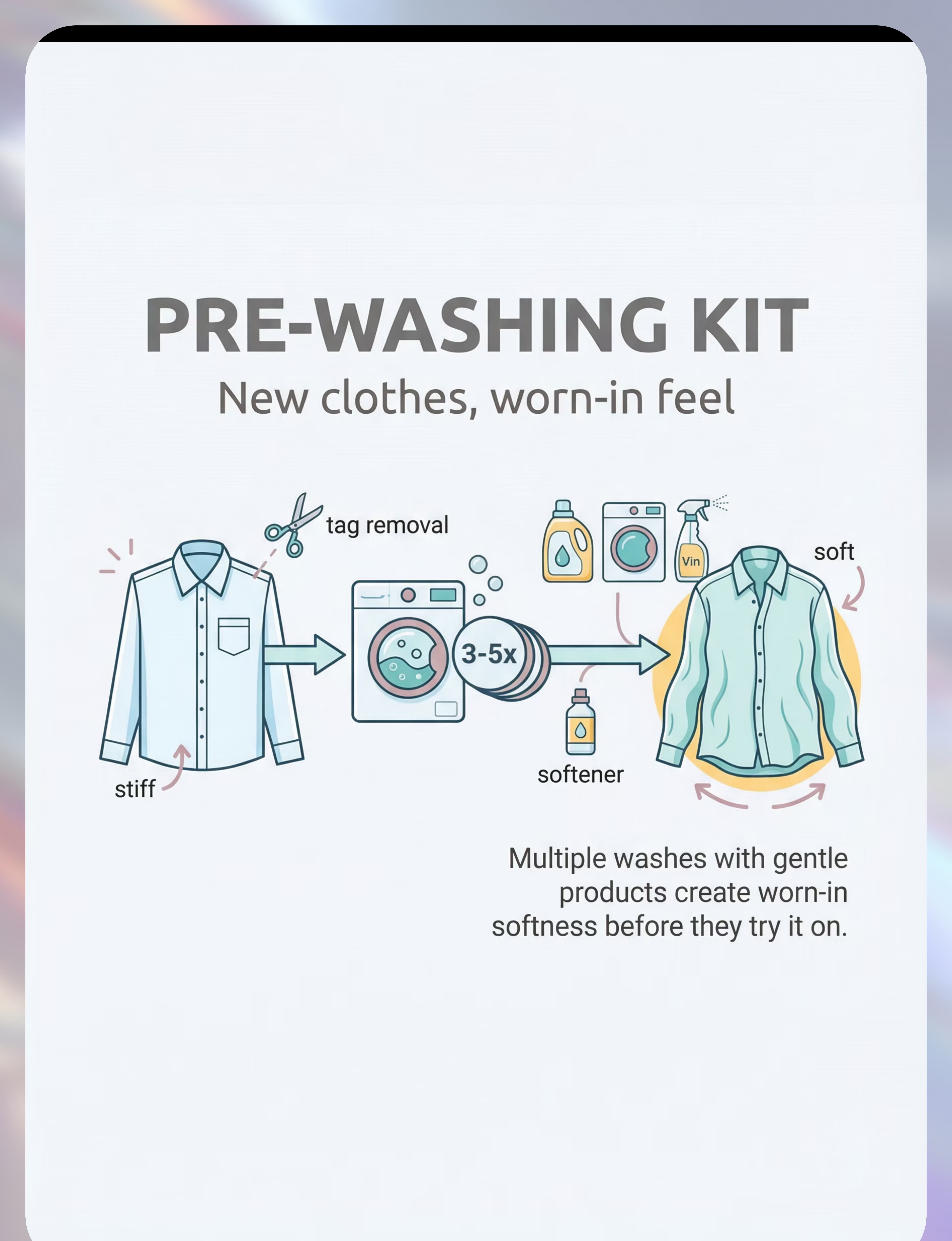
What it is: A protocol that treats new clothing before introduction — multiple wash cycles with unscented detergent, vinegar rinse, fabric softener, and tumble-drying — creating worn-in softness before the child ever touches it.
Why it works: New clothing has factory chemicals, sizing agents, and stiffness that registers as sensory-intolerable even when the fabric would ultimately be acceptable. Pre-washing bridges the gap between "new and threatening" and "safe and familiar."
Remove All Tags
Cut out every tag before introduction — tags are a primary sensory irritant.
Wash 3–5 Times
Use fragrance-free, unscented detergent only. Unfamiliar scent triggers rejection even with perfect texture.
White Vinegar Rinse
Add to rinse cycle — naturally softens fibers and removes residual factory chemicals.
Fragrance-Free Softener
Final softening step. Tumble dry for maximum softness before any child contact.
🛒 Himalaya/Ecostore unscented detergent ₹200 | White vinegar ₹80 | Fragrance-free softener ₹150
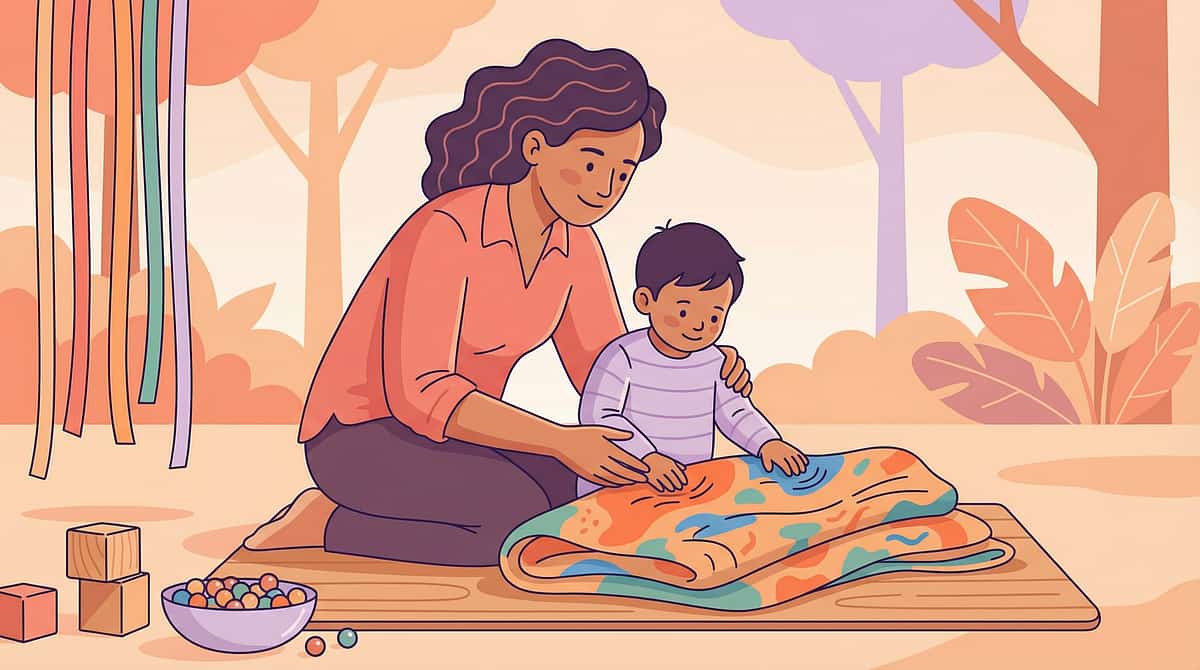
Material 4 — Visual Choice Board for Clothing
Visual Supports / Choice-Making Tools
₹100–400
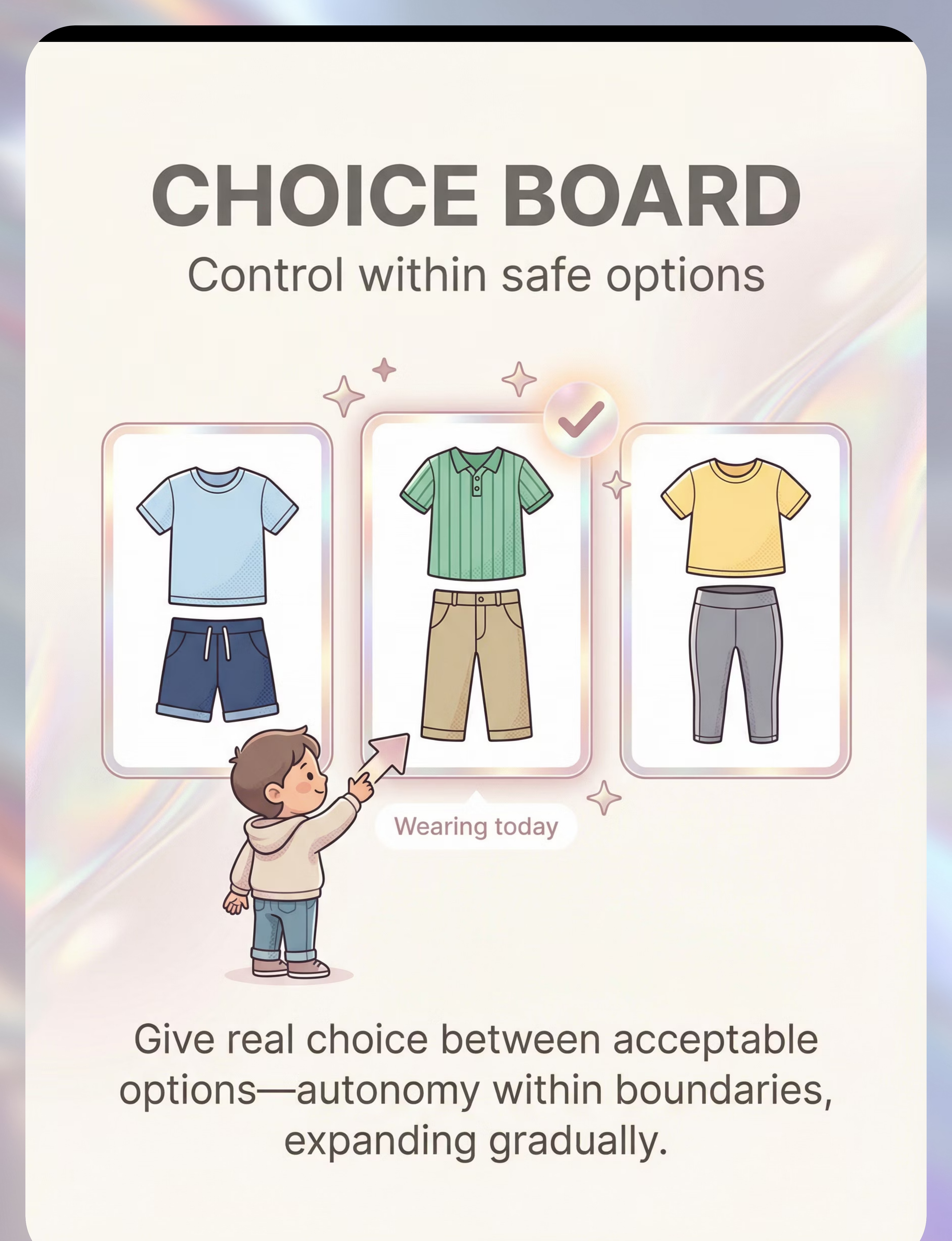
What it is: A magnetic or velcro board displaying 2–4 pre-approved, sensory-appropriate outfit options. The child physically selects and moves their choice to a "Wearing Today" spot — real autonomy within safe boundaries.
Why It Works
Some rigidity stems from control needs — the preferred outfit is the one predictable thing the child controls. A choice board satisfies the need for control while introducing alternatives. The child's nervous system relaxes when it holds the decision.
How to Build It
- Velcro board + photographed outfit options
- Velcro dots on back of each photo
- "Wearing Today" pocket at bottom
- Start with preferred outfit + ONE carefully matched alternative
- Add new options only as tolerance grows
The key insight: child agency comes from the choice itself — not the quality of the board. A hand-drawn cardboard version works as well as a laminated professional set if the choice structure is preserved.
🛒 Velcro board ₹200 | Photo prints ₹30 | Velcro dots ₹50 — display at child's eye level in the dressing area.
Material 5 — Social Story Books About Clothing Changes
Social Stories / Narrative Supports
₹100–500
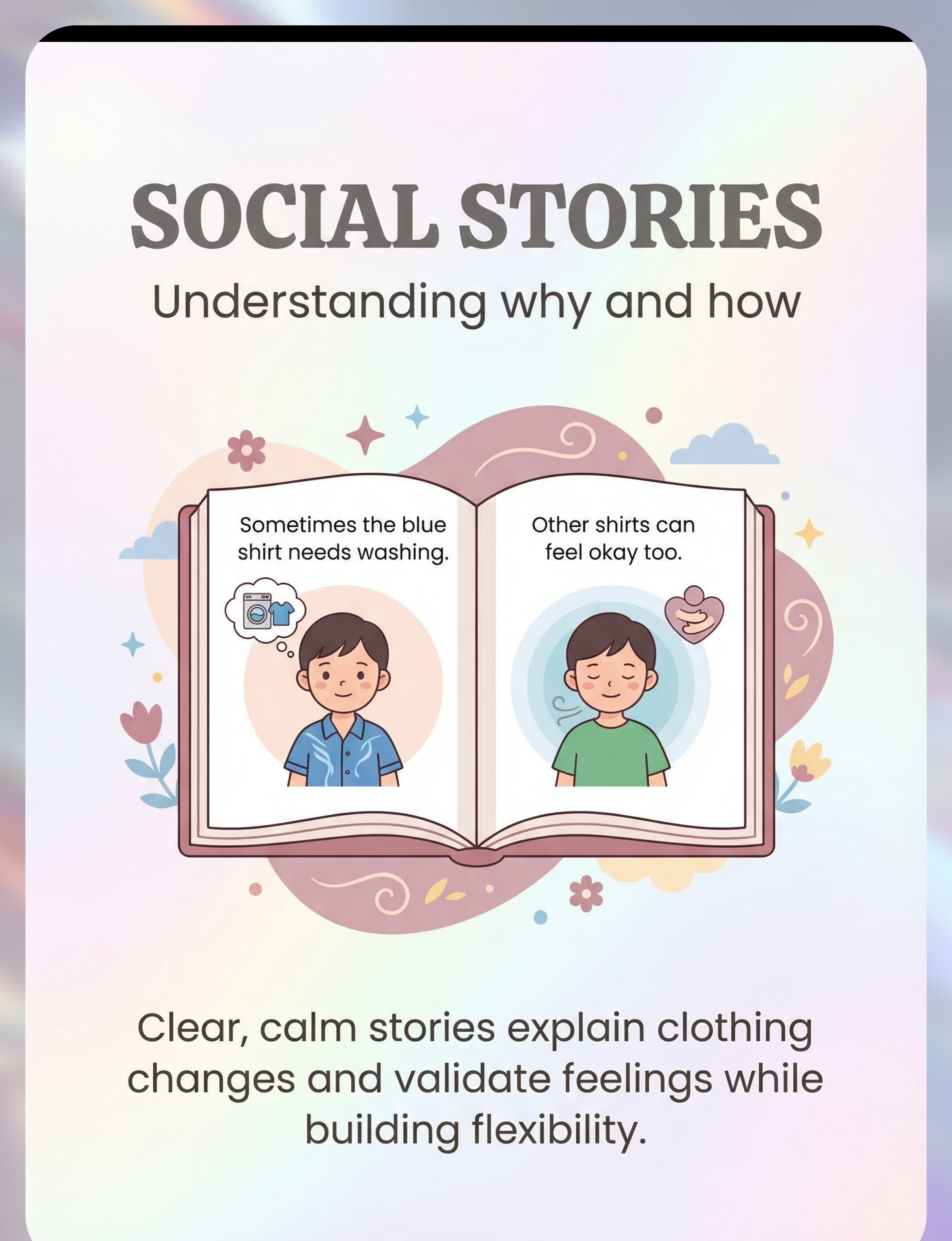
What it is: Short, personalized, illustrated narratives that explain why clothing sometimes needs to change, validate the discomfort, and provide a clear coping roadmap — featuring the child's name and specific situations.
"Sometimes [name] wears their favorite blue shirt. Sometimes the blue shirt needs washing. [Name] can try a different shirt. It might feel different at first — that's okay. [Name] takes deep breaths. The new shirt can feel okay too. Then the blue shirt will be clean again."
Why it works: Children with autism benefit enormously from explicit explanation of what others assume is obvious. The story removes the mystery of why change is happening. Predictability through narrative reduces the amygdala's threat response before the clothing change even begins.
Story Elements That Work
- Child's actual name and specific outfit
- Validation of discomfort ("it might feel different — that's okay")
- A clear coping strategy (deep breath, comfort object)
- A reassuring ending (preferred item will return)
How to Use It
- Read daily — not only before changes
- Read when child is calm and regulated
- Let child hold and "read" it independently
- Update story as child progresses
🛒 DIY: A4 paper + photos of child + simple language + lamination. Story creation apps ₹0–200. The narrative content is the intervention — format is secondary.

Material 6 — Comfort Object Transfer Items
⭐ Canon Product
Transition Objects / Comfort Items
₹50–425
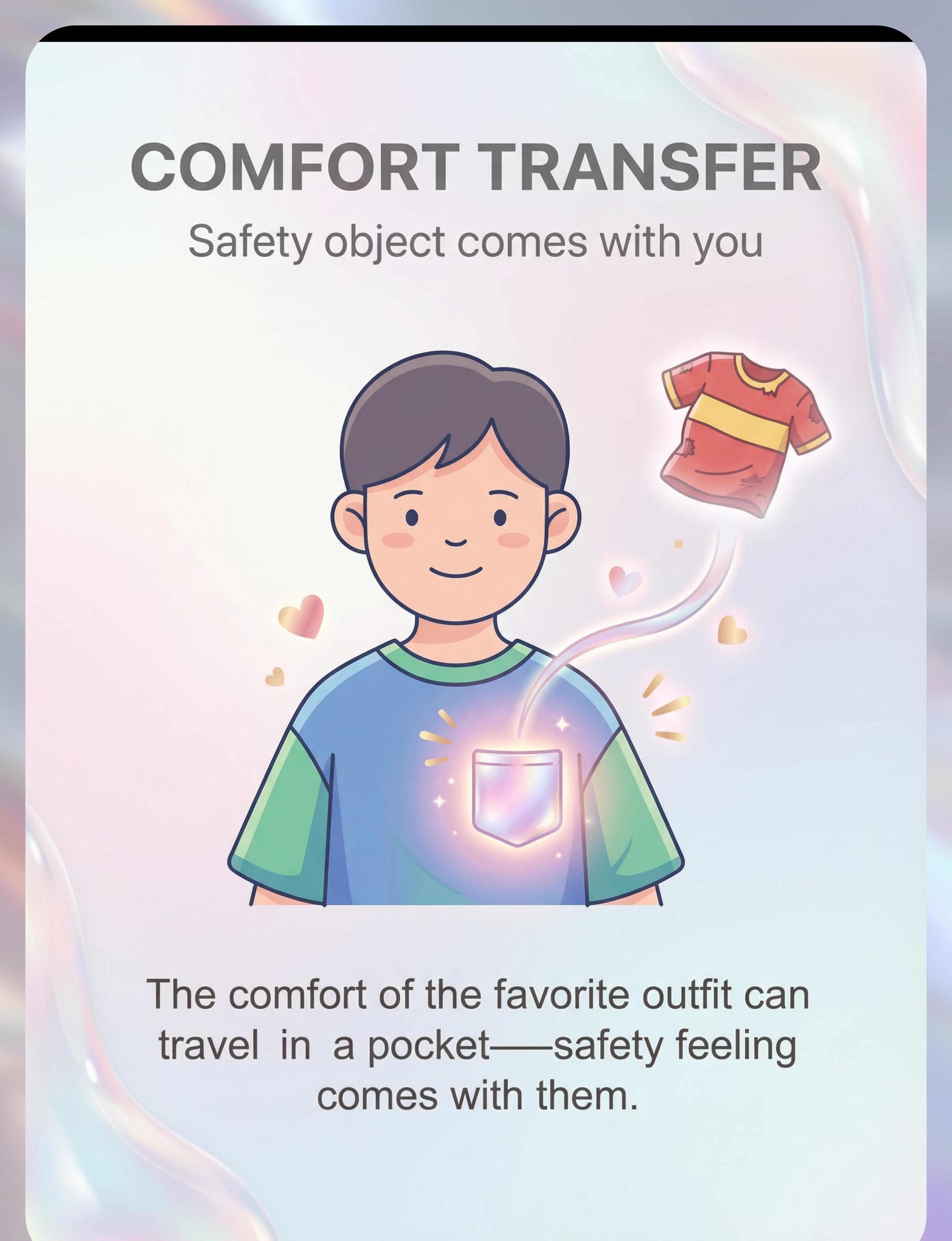
What it is: A portable comfort item — a small square of preferred fabric in a pocket, a wristband of matching material, a special token — that carries "the feeling" of the preferred outfit even when different clothing is worn.
Why it works: The preferred outfit functions as a comfort object providing emotional regulation. By transferring some of that comfort to a portable item, the child learns the security travels with them — not only with the specific garment. This is the bridge between "outfit as safety" and "self as safety."
Pinnacle Recommends
Transition Objects / Comfort Items | Canon Product | ₹425
DIY Approach
Cut a small square from an OLD or outgrown version of the preferred shirt — never the current preferred outfit. Hem edges. Attach to a keychain or make pocket-sized.
⚠️ Safety: Never cut the current preferred outfit. Use old duplicates only. Ensure no fraying edges or small parts for children under 3.
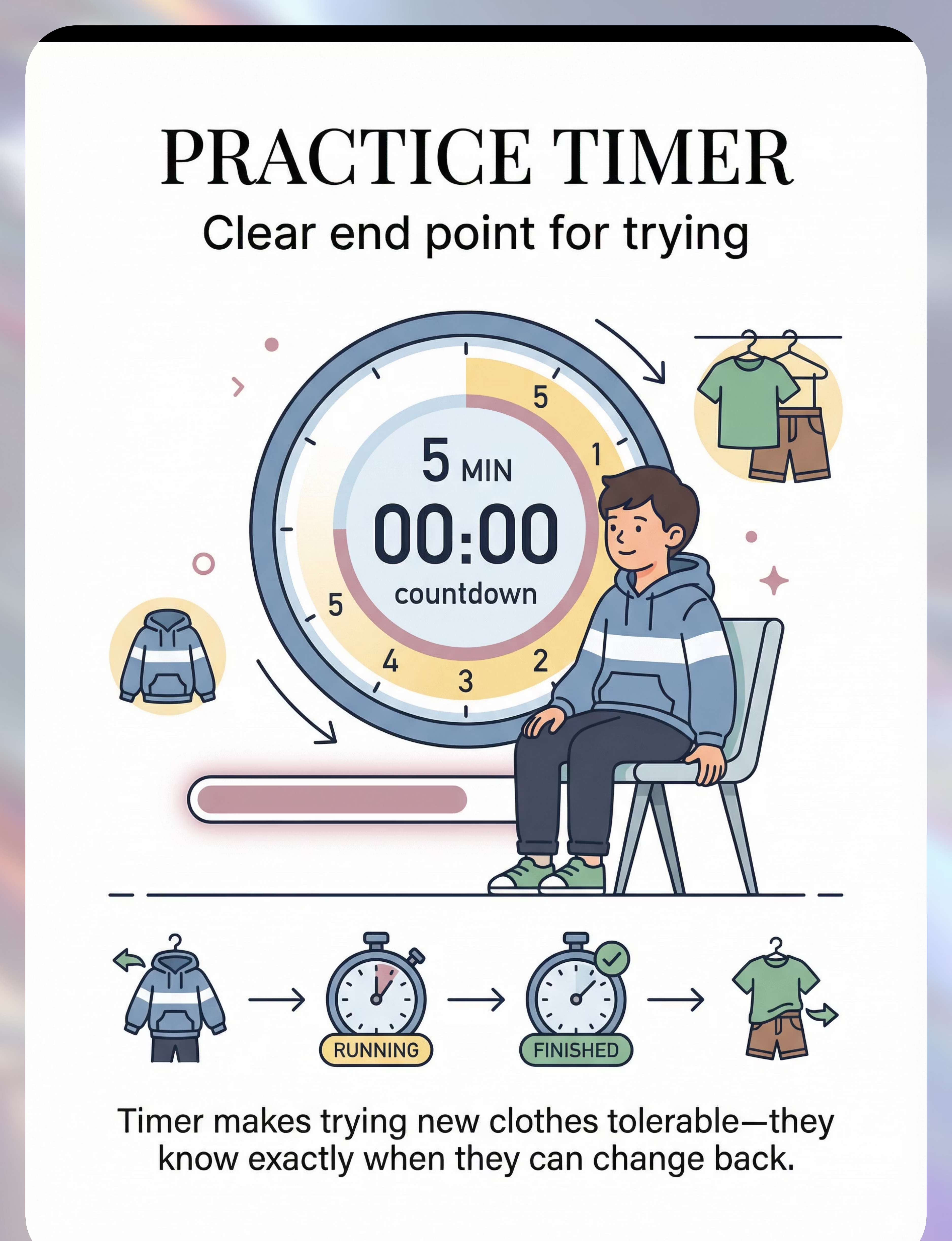
Material 7 — Scheduled Clothing Practice Timer
Visual Timers / Time Management Tools
₹200–800
What it is: A visual countdown timer that makes wearing new clothing tolerable by providing a clear, visible end point. The child agrees to wear an alternative for a specific, negotiated duration — and knows exactly when they can change back.
Why it works: The fear of being "trapped" in uncomfortable clothing forever is a major driver of rigidity. A visual timer that is ALWAYS honored removes this fear. Predictability enables tolerance. Trust is the intervention.
2–3 Minutes
Week 1–2. First sessions only. Build the association that the timer always ends.
5–10 Minutes
Week 3–4 when distress is ≤3/10 at shorter durations. Never rush this progression.
30–60 Minutes
Advanced phase. Weeks apart from the previous step. Child leads the pace.
Critical rule: ALWAYS honor the timer. Never negotiate extension. Trust broken once requires weeks to rebuild. | 🛒 Sand hourglasses ₹150–300 | Digital visual timers ₹300–600 | Time Timer app (free)

Material 8 — Layering & Transitional Clothing
Adaptive Clothing / Sensory-Friendly Garments
₹200–600
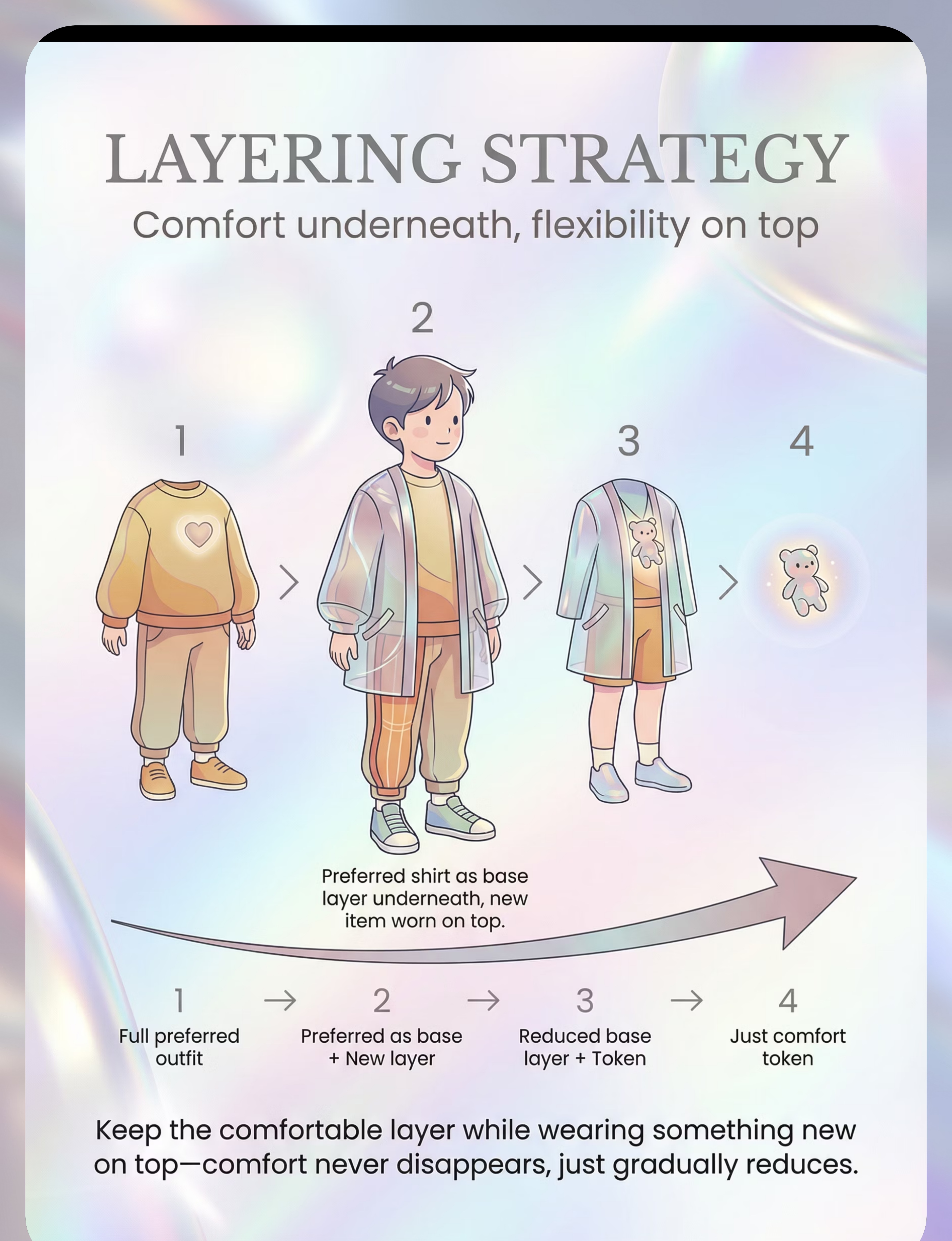
What it is: A bridge strategy using the preferred outfit as a comfortable base layer while introducing new clothing on top. Gradual reduction of the comfort layer over time — from full preferred outfit, to preferred as a tank top underneath, to a fabric square in pocket, to just the comfort token.
Key principle: The child is never suddenly stripped of their comfort. The preferred layer remains present while new clothing is introduced above it. Comfort never disappears — it gradually reduces as tolerance grows over months, not days. Begin with the full layered approach as the starting point, not the goal.
🛒 Tagless undershirts ₹150–300 | Seamless base layers ₹200–400 | Any existing comfortable vest works as a starting inner layer.
Material 9 — Transition Ritual & Preparation Tools
Visual Schedules / Transition Supports
₹100–400
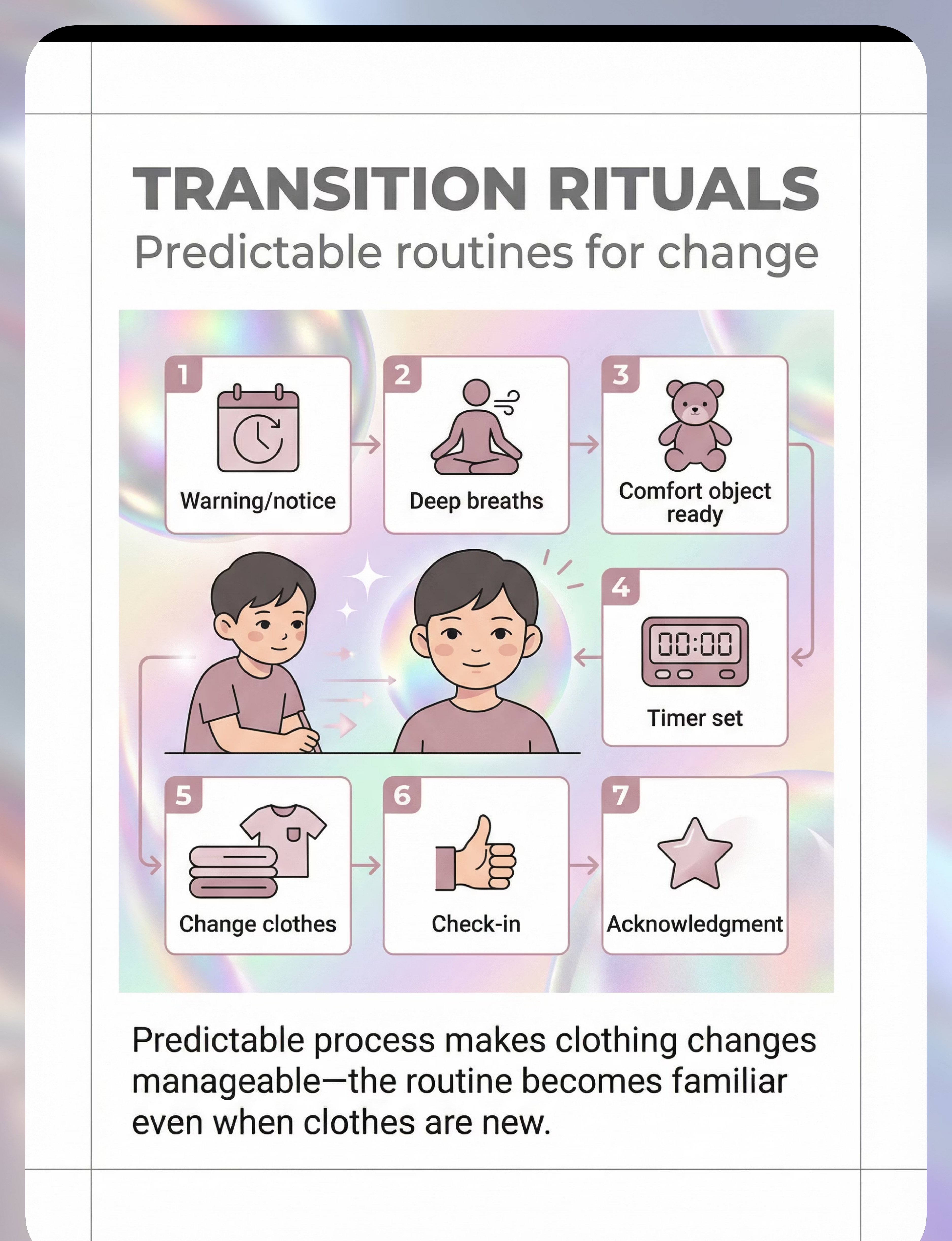
What it is: A predictable, ritualized routine that frames every clothing change as a manageable event with fixed structure — advance warning, calming, comfort tools ready, timer set, change, check-in, acknowledgment.
Why it works: Unpredictability is the core driver of clothing-change anxiety. When the process around the change is predictable, the change itself becomes more tolerable. The routine becomes familiar even when the clothes are new.
Visual Warning (30 min before)
Show the visual schedule. "In 30 minutes, we'll try the new shirt."
10-Minute Warning
Gentle reminder. Child can see the timeline is predictable.
Deep Breaths Together
Calming before the transition. Parent models regulation.
Comfort Object Ready
In pocket or hand before clothing change begins.
Timer Set & Visible
Child sees agreed duration before changing.
Change + Calm Acknowledgment
"You did something hard. That took real bravery."
🛒 DIY: Hand-drawn steps on cardboard, same sequence daily. Consistency of sequence is the intervention. AOTA + NCAEP (2020): Visual supports are evidence-based practice for autism.
Every Family Can Start Today — Regardless of Budget
WHO/UNICEF Inclusion Principle: No family left behind due to cost. Using only items in your home today — an old t-shirt scrap, a piece of paper, a kitchen timer, and a phone for photos — you can begin every element of this intervention at ₹0.
Material | Clinical Option | Cost | DIY / Free Alternative | |
Sensory-Matched Wardrobe | Same-brand duplicates / OT assessment | ₹500–3,000 | Hands-on fabric analysis using existing clothes — the sensory matching is the intervention, not the brand | |
Clothing Ladder | Printed poster + reward stickers | ₹200 | A4 paper + pen + hand-drawn rungs + hand-stamps — the graduated structure is the tool | |
Pre-Washing Kit | Unscented detergent + softener | ₹400–600 | Baking soda wash + sun-dry — removes stiffness equally effectively | |
Choice Board | Velcro board + laminated photos | ₹300 | Cardboard box lid + tape + hand-drawn options — agency comes from the choice, not board quality | |
Social Stories | Printed/bound custom book | ₹200–500 | Hand-written story in notebook with child's photo | |
Comfort Object | Canon product | ₹425 | Old t-shirt scrap hemmed with scissors — familiarity of fabric is all that's needed | |
Visual Timer | Time Timer clock | ₹400–600 | Sand egg timer from kitchen — the visible end-point is what matters | |
Layering | Seamless tagless undershirts | ₹200–400 | Any existing comfortable vest — presence of comfort layer is the bridge | |
Transition Ritual | Laminated visual card set | ₹200 | Hand-drawn steps on cardboard, same sequence daily |
WHO NCF (2018): Context-specific, equity-focused interventions. CCD Package efficacy demonstrated with household materials across 54 LMICs. PMC9978394
Read Before You Begin — Safety Guardrails
🔴 DO NOT PROCEED if:
- Child is in meltdown or post-meltdown dysregulation
- Child is ill, feverish, or in unrelated physical discomfort
- Child shows self-injurious behavior (SIB) related to clothing — seek professional assessment first
- You are under extreme time pressure (rushing to school/appointment)
- Rigidity extends severely to 6+ life domains — professional evaluation first
🟡 MODIFY APPROACH if:
- Child has not eaten recently — hunger amplifies sensory sensitivity
- High-stress day (travel, new schedule, family illness)
- Recent traumatic clothing incident — restart from an easier rung
- Temperature extremes — layering not appropriate in 35°C+ heat
🟢 SAFE TO PROCEED when:
- Child is regulated, fed, and rested
- Environment is calm, unhurried, and familiar
- All support materials are prepared in advance
- Parent is calm — nervous energy transfers
- You have 20–30 uninterrupted minutes
STOP IMMEDIATELY if: Child begins self-injury, is unable to breathe/speak due to distress, or escalation exceeds typical protest to panic-level response. | FREE Helpline: 9100 181 181 (24x7, 16+ languages)
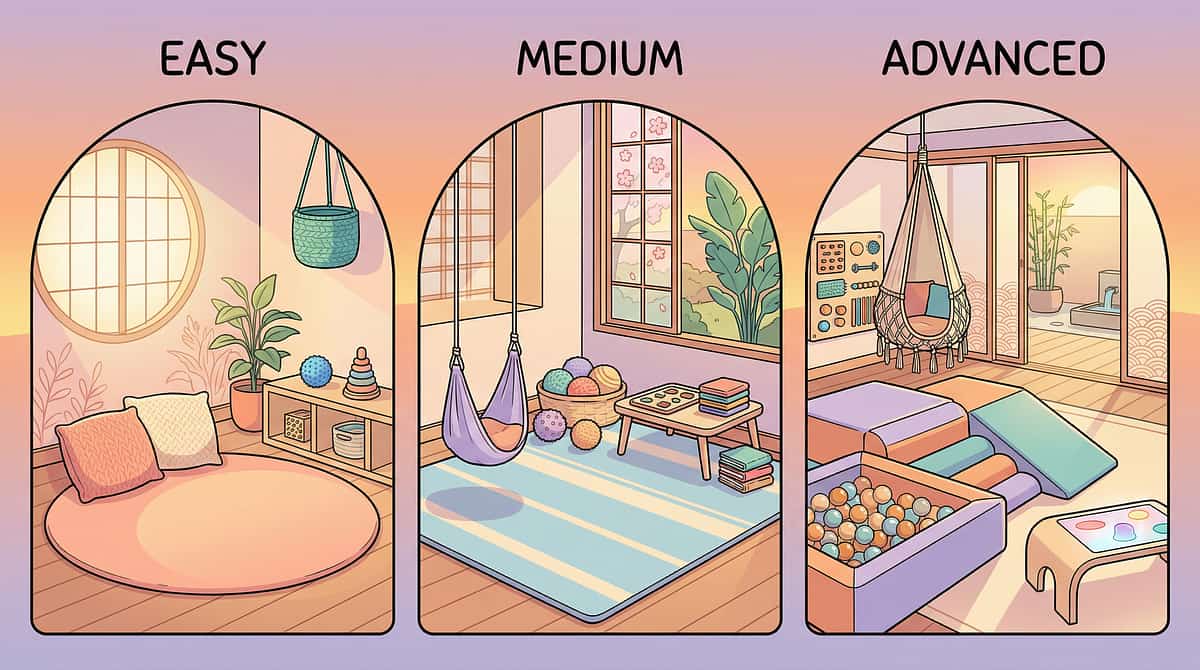
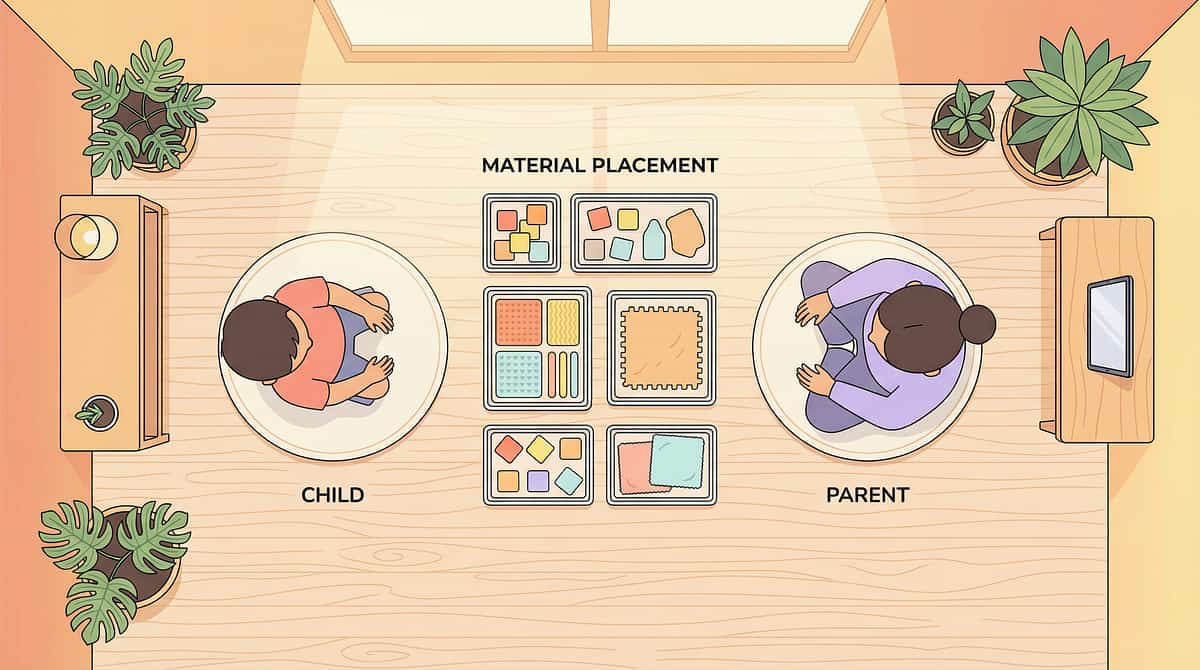
Set Up Your Space — The Right Environment Is Half the Intervention
Before your first session, prepare the physical environment deliberately. The setup communicates safety before a single word is spoken.
What Must Be Present
- [1] Child: seated, calm, comfortable
- [2] New clothing: pre-washed, folded, accessible — NOT hidden or forced
- [3] Preferred outfit: visible ("your safe option is still here")
- [4] Visual timer: where child can see it
- [5] Comfort object: in pocket or on dresser
- [6] Choice board: at child's eye level
- [7] Parent: beside/slightly behind — NOT blocking exit
Environmental Requirements
Lighting: Natural or warm light. Avoid harsh fluorescent — amplifies sensory sensitivity.
Sound: Quiet or familiar background sound. No TV, no unexpected noises.
Remove from space: Extra clothing items (visual overwhelm), distracting toys, other people (unless child's preferred person), anything associated with past clothing conflicts.
Best Timing
Mid-morning on a calm day. NOT immediately before leaving. NOT during post-school dysregulation.
Sensory Integration Theory (Ayres): Environmental setup is a core principle. PMC10955541: Structured environment is essential for session effectiveness.

Is Your Child Ready? — The Readiness Check
The best session is one that starts right. Run this quick check before every session — not just the first.
Indicator | 🟢 Green | 🟡 Amber | 🔴 Red | |
Fed within last 2 hours | Yes | Light snack possible | Not yet — feed first | |
Rested (not overtired) | Yes | Slightly tired | Overtired — postpone | |
Currently regulated | Calm/alert | Slightly restless | Dysregulated — wait | |
No illness signs | Healthy | Very mild symptoms | Ill — postpone | |
No recent meltdown | Clear (>2 hrs) | >2 hrs ago | Within 2 hrs — wait | |
Environment ready | Set up | Minor gaps | Not ready — set up first | |
Parent state | Calm | Mild stress | Anxious/rushed — self-regulate first |
All Green → Proceed
Move to Step 1: The Invitation
Mostly Green, 1–2 Amber → Modify
Comfort object introduction only today — no clothing change attempt
Any Red → Postpone
Choose a calming activity instead. Note what caused the red — this is data.

Step 1 of 6
The Invitation — Begin With Invitation, Never a Command
"Hey [name], I have something I want to show you. You don't have to do anything yet — just look with me."
Body Language Guidance
- Sit at child's level — floor or chair, never towering above
- Relaxed posture — no tension or urgency in face or hands
- Preferred outfit visibly present nearby
- Voice: warm, low, unhurried
- Choice board accessible but not yet presented
Reading the Response
Acceptance: Eye contact, body orientation toward you, no pulling away, small vocal/gesture acknowledgment.
Resistance: Move to preferred outfit → "That's okay, your shirt is right there. I just wanted to show you something first."
No engagement: Try again in 10 minutes. Signs of rising anxiety → "We're not changing anything today. Just looking."
Timing: 30–60 seconds. This step is entirely about emotional safety. No material is introduced yet. No demand is placed.
ABA Pairing Procedures: Establishing motivating operations before demand placement. OT "Just-Right Challenge" principle.

Step 2 of 6
The Engagement — Introduce the Material, Not the Demand
"I found something that feels really similar to your [blue shirt]. Want to feel it? Just your hands — that's it."
Hold the new item OUT toward the child — never toward their body. Let child reach for it. Keep your own hands relaxed. Present at the child's pace, not yours. If sensory-matched, the child may actually express interest.
Response | Meaning | Parent Action | |
Child reaches and feels fabric | High engagement | Continue to Step 3 | |
Child looks but doesn't touch | Tolerance | "You looked at it — that was brave." Stay here today. | |
Child looks away | Mild avoidance | Place item on flat surface nearby. Let proximity do the work. | |
Child moves away or protests | Refusal | Accept. "Okay, we're done with that for now." No consequences. |
Reinforcement cue: Any engagement — even a glance — is worth calm, specific praise: "You looked at it. Thank you for trying." | PMC11506176: Structured material introduction meets evidence-based practice criteria. | Timing: 1–3 minutes.

Step 3 of 6
The Therapeutic Action — Calibrated to Today's Readiness
Choose the action based on the child's current position on the Clothing Ladder. Never skip rungs — each step must be genuinely comfortable before advancing.
Rungs 1–2 (Early Phase): Sensory Exploration
Place the pre-washed item on a flat surface. Invite touch only. Compare textures side-by-side. Narrate calmly: "This one is soft too. Feel how it doesn't have any bumpy seams." No wearing required.
Rungs 3–4 (Mid Phase): Brief Wearing Attempt
Child tries on new item with preferred item immediately accessible. Timer starts (2–5 minutes). Comfort object in pocket. Parent stays close and calm. No pressure — exploring, not being tested.
Rungs 5–6 (Advanced Phase): Extended Wearing
Child wears sensory-matched item during a highly preferred activity (tablet, LEGO, snack). Timer for agreed duration. Check-in at halfway. Preferred outfit visible but not immediately accessible.
Common error: Removing preferred outfit before child is ready. Preferred outfit stays visible until tolerance is genuinely built. Stay at each rung until comfortable — days, not minutes. PMC10955541: Core therapeutic action should occupy 40–60% of session time.
Step 4 of 6
Repeat & Vary — 3 Good Sessions Beat 10 Forced Ones
1
Weeks 1–2
Daily exposure sessions, 5–10 minutes. Same rung, same material. Build comfort through repetition. Do NOT advance until 3 consecutive sessions show no distress.
2
Weeks 3–4
Advance one rung when ready — only on child's signal (asks for item, puts it on independently). Variation: same item, different room context.
3
Weeks 5–8
Same items, new settings. Brief wear during preferred activities. Begin adding a 2nd new item to choice board.
Satiation Indicators — Stop for Today When:
- Child begins removing preferred outfit from sight
- Repetitive questions about "when is this done"
- Increased self-regulation behaviors (stimming)
- Quality of engagement drops significantly
- Any onset of distress indicators
Variation Options
- Different sensory-matched item each week (same properties, new color)
- Wearing during highly preferred activity (new item = good association)
- Child chooses WHICH sensory-matched item from choice board
- Layering as variation (preferred under + new on top)

Step 5 of 6
Reinforce & Celebrate — Celebrate the Attempt, Not Just the Success
Timing rule: Reinforcement within 3 seconds of any positive response. The child who touches the new fabric for 2 seconds has done something neurologically significant. That attempt deserves recognition.
Verbal Reinforcement Scripts
Use calm, specific praise — not over-the-top effusion:
- "You touched the new shirt. That was brave."
- "You wore it for the whole timer. You did something hard."
- "Your body figured out the new fabric. That's real progress."
Avoid: "OH WOW AMAZING I'M SO PROUD!!!" — over-praise creates performance anxiety.
Reinforcement Menu
- Preferred sensory activity immediately after (proprioceptive input)
- Choice of next activity
- Token on clothing flexibility chart
- Extra time with preferred toy or screen
- Physical affirmation (if welcomed: high five, hug)
- Verbal narration to preferred family member: "Tell Dad what you did today."
Token system: Each attempt (not just success) earns a token. 5 tokens → agreed-upon reward. Chart visible in dressing area.
ABA Reinforcement Principles: Immediate, specific reinforcement increases behavior occurrence. Token economy has strong evidence in autism intervention. BACB ethical guidelines.
Step 6 of 6
The Cool-Down — No Session Ends Abruptly
The cool-down is not optional. It is part of the therapeutic intervention — and it builds the trust that makes the next session possible.
CRITICAL: Honor the timer. If you negotiated past it even once, you destroyed next session's trust. Let them change back. No "just a bit longer." Trust is built right here.
Post-Session Transition
Preferred sensory activity, comfort input, or free choice for 10 minutes following every session. This decompression period supports nervous system recovery and positive association with the process.
Breakthrough Indicator
If the child resists ending the session and wants to keep the new item — note it immediately as data. Gently: "You can wear it longer if you want. Or we can put it away and you choose next time." This is a significant milestone.
NCAEP Evidence-Based Practices (2020): Visual timers and transition support are classified as evidence-based practice for autism.
Capture the Data — Right Now
60 seconds of data now saves hours of guessing later. Post-session data capture — do within 60 seconds of session end. This data feeds the GPT-OS® AbilityScore® Flexibility and Adaptability Readiness Index.
1. Engagement Level
Rating 1–5 (1=refusal, 5=initiated wearing)
Example: "Today: 3 — touched fabric, brief wearing"
Example: "Today: 3 — touched fabric, brief wearing"
2. Duration Tolerated
Minutes in new clothing
Example: "Today: 7 minutes"
Example: "Today: 7 minutes"
3. Distress Level
Rating 0–10 (0=none, 10=full meltdown)
Example: "Today: 4 — mild protest at transition"
Example: "Today: 4 — mild protest at transition"
Week | Duration | Distress | Engagement | |
Week 1 | 3 min | 8/10 | 1 — refusal/reluctant touch | |
Week 2 | 5 min | 6/10 | 2 — tolerated with protest | |
Week 3 | 8 min | 5/10 | 3 — engaged with some calm | |
Week 4 | 12 min | 3/10 | 4 — chose from board ← PROGRESS |
ABA Data Collection Standards: Continuous measurement (frequency, duration) as standard practice. BACB Guidelines + Cooper, Heron & Heward, Applied Behavior Analysis, 8th ed.
What If It Didn't Go As Planned? — Session Abandonment Is Not Failure. It's Data.
Child refused to look at or touch the new item
Why: The step was too large. Next time: Place new item across the room for a week — not introduced, just present. Move gradually closer over days before asking for touch. Proximity tolerance is Rung 0.
Fine at home but melted down wearing outside
Why: New setting + new clothing = double novelty overload. Next time: Master wearing at home for full durations before any outside exposure. Introduce one variable at a time.
Duplicates of preferred item are rejected ("that's not the real one")
Why: The child's sensory discrimination is forensic. Minor differences in softness, weight, or smell are detectable. Next time: Run through the full 5-wash pre-washing protocol. Wash alongside preferred item to transfer scent.
Timer strategy worked once but stopped working
Why: Duration was increased too fast, or trust was broken (timer pushed past once). Next time: Return to shorter duration. Never violate the timer agreement. Rebuild trust before extending.
No progress after 4–6 weeks of consistent implementation
Why: May have misidentified the underlying function. Sensory approach won't fully work for anxiety-primary rigidity. Next time: Seek OT evaluation for formal sensory profile. Contact Pinnacle: 9100 181 181
Adapt & Personalize — No Two Children Are Identical
Your protocol should reflect your child's unique profile. Use this guide to calibrate every session.
Sensory Avoider (Primary Sensory Driver)
Prioritize: Materials 1, 3, 8 (sensory matching, pre-washing, layering)
Key insight: The sensory system needs evidence of safety, not raw exposure. Spend 2–3 weeks on sensory matching before any wearing attempts.
Key insight: The sensory system needs evidence of safety, not raw exposure. Spend 2–3 weeks on sensory matching before any wearing attempts.
Sensory Seeker (Novelty-Seeking, Proprioceptive Comfort)
Prioritize: Materials 8, 6 (compression layering, comfort transfer)
Key insight: May be seeking specific sensory input, not avoiding it. Explore weighted or compression fabric options.
Key insight: May be seeking specific sensory input, not avoiding it. Explore weighted or compression fabric options.
Anxiety-Primary (Fear-Driven Rigidity)
Prioritize: Materials 2, 7, 9 (clothing ladder, timer, transition rituals)
Key insight: The outfit is a safety behavior. Build alternative safety sources — coping toolkit — before exposure begins.
Key insight: The outfit is a safety behavior. Build alternative safety sources — coping toolkit — before exposure begins.
Rigidity-Primary (Autism-Related Sameness)
Prioritize: Materials 4, 5, 9 (choice board, social stories, predictability)
Key insight: Offering control in the process reduces the need to control the outcome. Visual prediction is the key lever.
Key insight: Offering control in the process reduces the need to control the outcome. Visual prediction is the key lever.
Age-Based Modifications
- Ages 2–4: Max 5-minute sessions. All sensory-based. No explanations — pure sensory exploration.
- Ages 5–8: Add visual supports, social stories, choice boards. Explanation becomes available.
- Ages 9–12: Full protocol. Child co-designs the ladder and participates in problem-solving.
Difficulty Calibration
Easier (bad days): Look at item in same room → Touch with hands only
Moderate: Try on briefly → Wear 5 min at home
Advanced (breakthrough days): Extended wear → Wear in new setting
Week 1–2: You're Building the Foundation
You're not seeing results yet. And that's exactly right.
Progress at Week 2
Invisible neural pathway formation. Foundation-building phase.
Weeks Ahead
Weeks before visible behavioral change follows internal neural adaptation
Realistic Week 1–2 indicators — these ARE progress, even if they don't feel like it:
- ✓ Child accepts new item in the room without needing it removed immediately
- ✓ Distress during clothing change is slightly shorter (8 min instead of 15)
- ✓ Child touches new fabric without prompting — curiosity emerging
- ✓ Morning routine is 2 minutes calmer — process is becoming predictable
- ✓ No regression after first session — nervous system is processing, not rejecting
"If your child tolerated the new fabric for 3 seconds more than last week — that is real, measurable, neurological progress. The brain is literally rewiring."
PMC11506176: Sensory integration outcomes emerge across 8–12 week timelines. Early-phase indicators focus on tolerance and participation rather than skill mastery.
Week 3–4: The Nervous System Is Starting to Believe
Progress at Week 4
Consolidation phase. Sensory safety pathways are strengthening.
Consolidation indicators — what to look for in weeks 3–4:
Child initiates touching new items
Sensory curiosity without prompting — a profound early-stage signal.
Timer sessions are noticeably calmer
Distress drops from 6/10 to 3–4/10. The predictability is working.
Choice board is used without protest
Control structure is accepted. Child is beginning to own the process.
One spontaneous flexibility moment
Child wears an alternative briefly without session structure. This is the first glimpse of genuine neurological change.
"You may notice you're more confident too. You've stopped dreading morning routines. You have a system. That confidence is detectable to your child — and it helps."
Neuroplasticity: Synaptic strengthening through repeated structured input follows predictable timelines in pediatric populations. Advance to next rung when 3 consecutive sessions show distress ≤2/10.
Week 5–8: Real Flexibility Is Emerging
Progress at Week 8
Mastery phase. Genuine flexibility becoming robust and generalizable.
3+ Items in Rotation
Child has multiple acceptable clothing options worn without significant distress
90+ Minutes Tolerated
New items worn for extended durations without meltdown during preferred activities
Morning Routine Under 5 Min
Clothing selection and dressing completed without major distress event
Flexibility Generalizes
Appropriate clothing worn for at least one occasion or setting outside the home
"Mastery does not mean your child will enthusiastically wear anything. It means genuine, workable flexibility — with preferences but not rigidity. Some preference is permanent, normal, and fine. The goal was never zero preference. The goal was functional flexibility."
PMC10955541: Meta-analysis across 24 studies confirmed effective skill promotion. BACB mastery criteria standards applied.
You Did This. Your Child Grew Because of Your Commitment.
Your child arrived at this technique unable to tolerate any clothing but one specific item — a single shirt, a single pair of pants, that felt like the only safe thing in the world. You stayed calm when others said "just make them wear it." You researched. You built a sensory profile. You pre-washed. You built a ladder. You honored every timer. You placed a comfort token in their pocket and watched them face their fear with it.
And they did it. Not perfectly. Not without hard days. But genuinely, neurologically, permanently — your child built flexibility they did not have before.
📸 Document the Milestone
Photograph the new items in the wardrobe alongside the original preferred outfit. Visual evidence of the journey.
👨👩👧 Share the Win
Let the child show a trusted family member their clothing flexibility — in their new acceptable outfit.
📓 Journal the Moment
"Date: ___. [Child's name] wore _____ today for ___ minutes. What I want to remember: _____."
Parental self-efficacy research: Parent confidence is the strongest predictor of continued home-based intervention implementation. PMC9978394
Red Flags — When to Pause and Seek Help
Trust your instincts — if something feels wrong, pause and ask.
🔴 Rigidity Intensifying, Not Reducing
After 6+ weeks of consistent, function-matched intervention, rigidity is WORSE — extending to new areas. This suggests an unidentified underlying condition requiring professional evaluation.
🔴 Self-Injurious Behavior (SIB)
Child hitting themselves, scratching, or head-banging when clothing changes are approached. Stop immediately. Seek OT + behavioral assessment.
🔴 6+ Rigid Behaviors
If insistence on sameness spans food, routes, routines, objects, AND clothing — a comprehensive autism evaluation is warranted without delay.
🔴 School Attendance Affected
Child refusing school due to inability to wear appropriate clothing. School-level accommodation planning needed alongside home intervention.
FREE Helpline: 9100 181 181 — 24x7, 16+ languages. WHO NCF: Primary health care as platform for early identification and referral.

The Progression Pathway — You Are on a Journey
E-528 is one step in a carefully sequenced developmental continuum. Based on your child's response profile, here is what comes next.
E-527
Temperature-Appropriate Clothing Awareness (prerequisite)
E-528
Single Outfit Rigidity
YOU ARE HERE
YOU ARE HERE
E-529
Sock Seam Sensitivity (next: tactile defensiveness in accessories)
E-530
Tag & Label Intolerance (sensory overload from garment details)
If Sensory Was Primary → Next
- E-529: Sock Seam Sensitivity
- E-530: Tag and Label Intolerance
- E-531: Fabric Texture Sensitivities
If Anxiety or Rigidity Was Primary → Next
- Transition tolerance techniques (broader flexibility training)
- Anxiety management series
- Routine flexibility techniques (generalizing beyond clothing)
WHO Developmental Milestones Framework + domain-specific intervention sequencing literature. GPT-OS® 12-Domain progression architecture.

They Started Exactly Where You Are
Family Story — Mumbai, Maharashtra
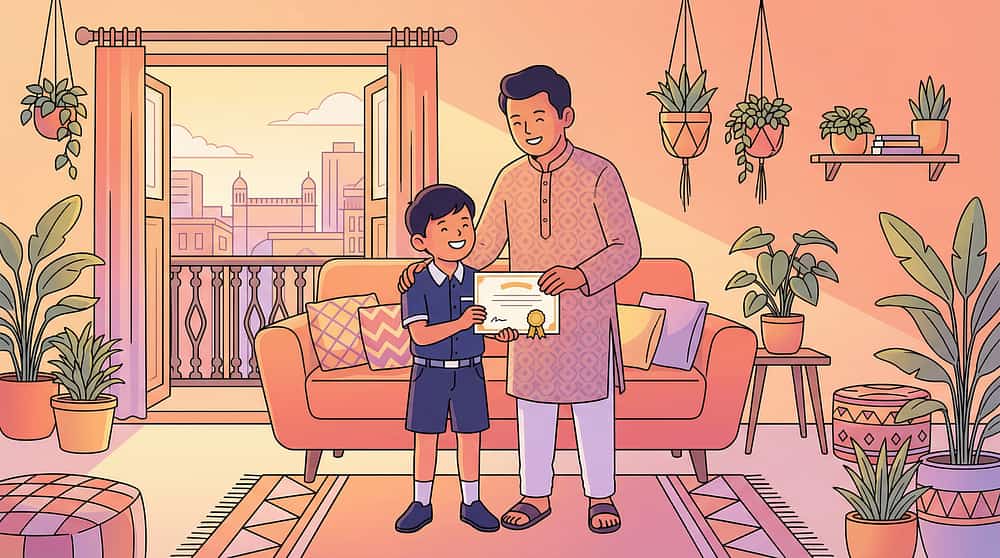
Before:"My son wore the same dinosaur shirt for eight months. Three duplicates rotating through laundry. Meltdowns if any were unavailable. He could detect the difference between originals and duplicates by feel alone."
After (4 months):"He now has 5 acceptable shirts and wears them without protest. He wore a school uniform for the first time. He wore a costume in the school play. I never thought that was possible."
Family Story — Hyderabad, Telangana
Before:"My 7-year-old wore one gray tracksuit every day for a year. The new school uniform was impossible. School threatened consequences. I was caught between my daughter's genuine distress and the school's requirements."
After (3 months):"She wears the uniform. Not happily, but willingly. She keeps her gray tracksuit in her bag 'for emergencies' — which means she never needs it anymore. She has the security to manage without it."
Individual results vary. Illustrative cases — not guarantees. Qualitative research: Peer narratives are the strongest motivator for home-based intervention adherence.
Preview of 9 materials that help with single outfit rigidity Therapy Material
Below is a visual preview of 9 materials that help with single outfit rigidity therapy material. The pages shown help educators, therapists, and caregivers understand the structure and content of the resource before use. Materials should be used under appropriate professional guidance.


Link copied!

From Fear to Mastery — One Technique at a Time
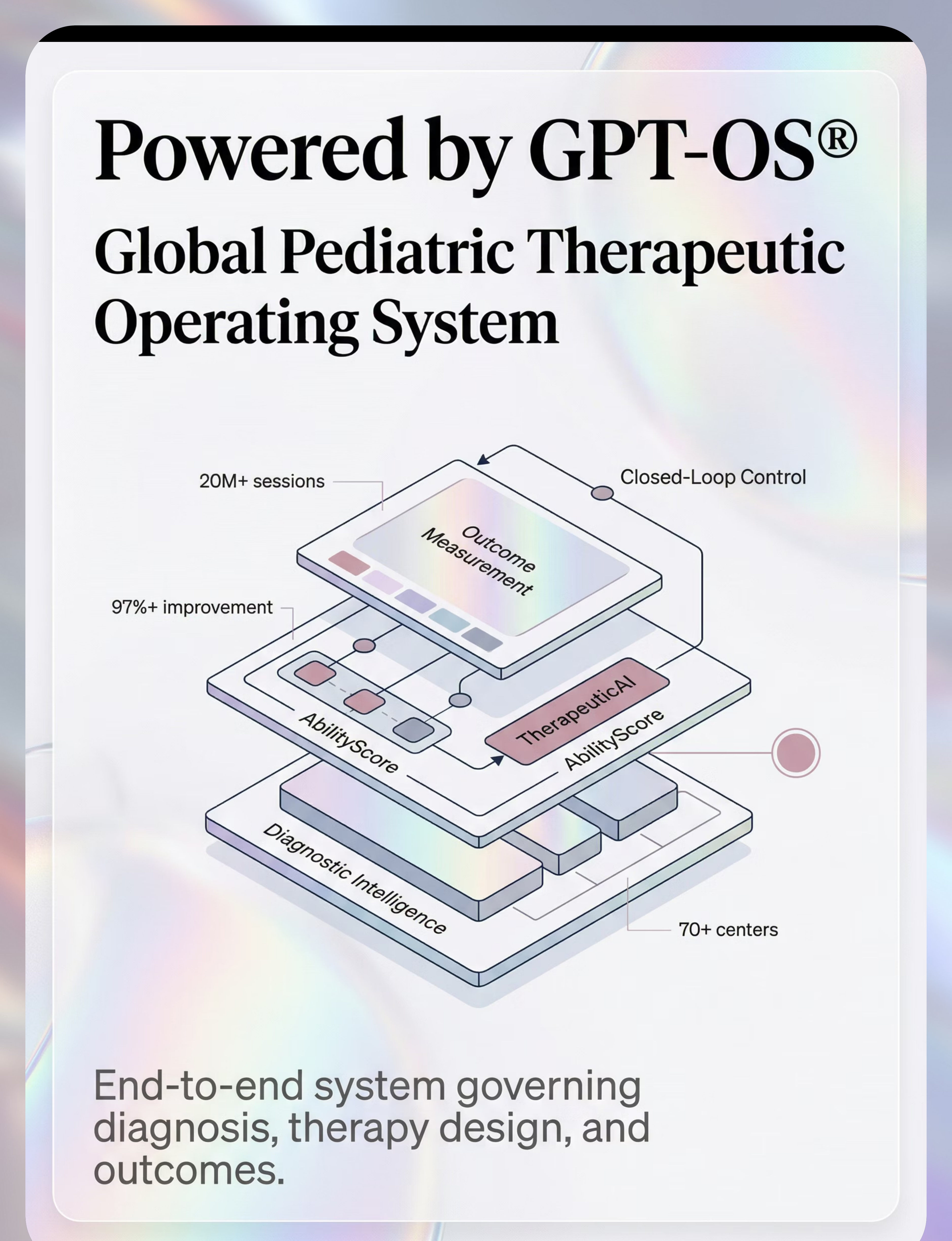
Pinnacle Blooms Network® exists to transform every home into a 24x7, personalized, multi-sensory, multi-disciplinary pediatric therapy environment — powered by GPT-OS® and the world's most evidence-rich pediatric intervention knowledge base. No family navigates their child's development alone.
Take Your Next Step
FREE National Autism Helpline: 9100 181 181
24x7 | 16+ languages
24x7 | 16+ languages
Validated by Pinnacle Blooms Consortium
🔵 OT | 🟢 ABA | 🟡 SLP | 🔴 SpEd | 🟣 NeuroDev | 🟠 CRO
20M+ sessions | 97%+ improvement | 70+ centers
GPT-OS® | AbilityScore® | TherapeuticAI®
GPT-OS® | AbilityScore® | TherapeuticAI®
"Built by Mothers. Engineered as a System."
This content is educational and does not replace individualized assessment by licensed professionals. Individual results may vary. CIN: U74999TG2016PTC113063 | DPIIT: DIPP8651 | MSME: TS20F0009606 | GSTIN: 36AAGCB9722P1Z2
© 2025–2026 Pinnacle Blooms Network®, unit of Bharath Healthcare Laboratories Pvt. Ltd. All rights reserved. | pinnacleblooms.org | care@pinnacleblooms.org