

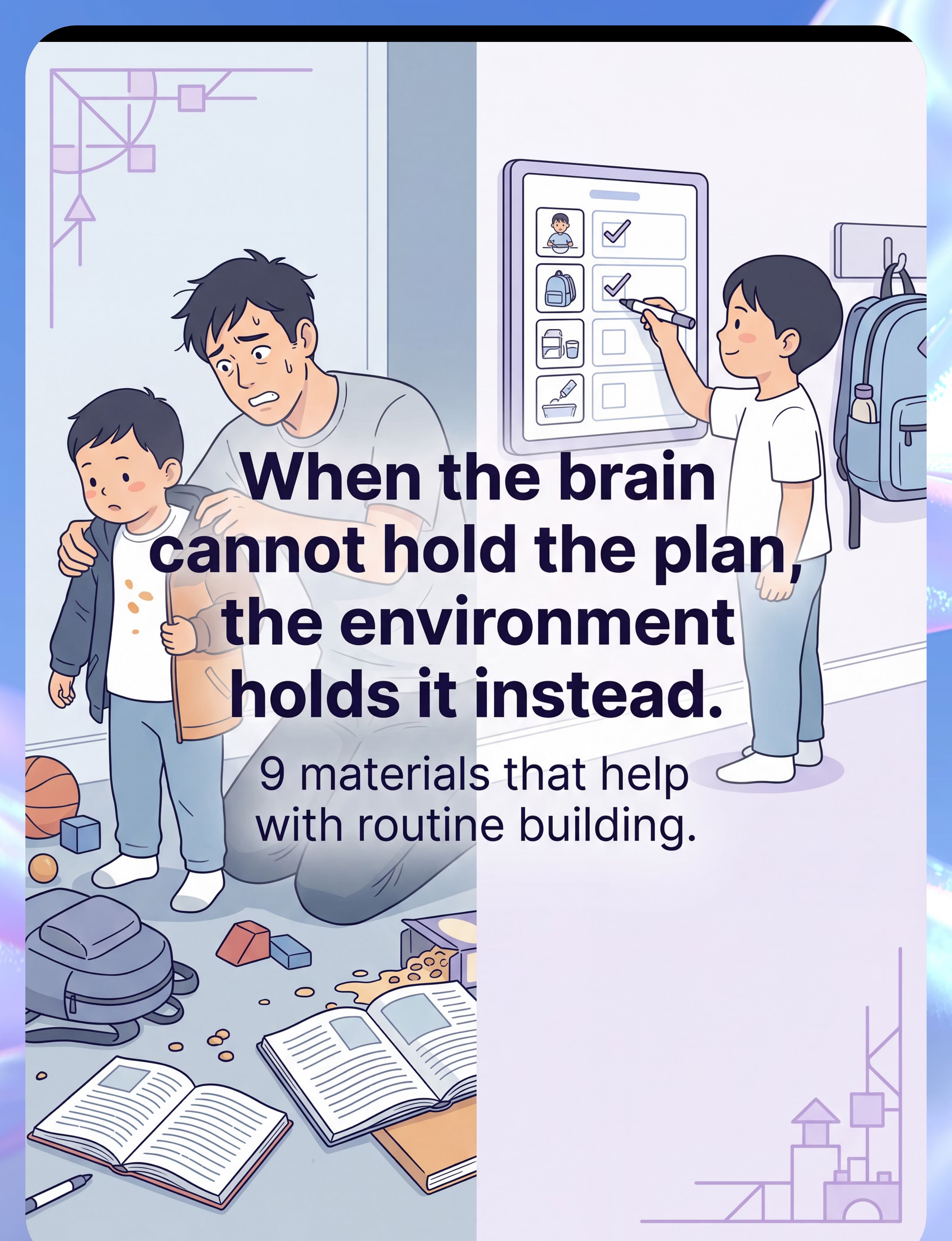
When the brain can't hold the plan, the environment holds it instead.
Your child isn't defiant. Their executive system is developing. Here are 9 materials that bridge the gap — evidence-based, home-deployable, and reviewed by India's largest pediatric therapy consortium.

Act I · Recognition
The Recognition Moment
"My son is eight. Every morning is the same battle. He can recite his routine perfectly when I ask — brush teeth, get dressed, eat breakfast, pack bag. But without me standing over him directing every single step? Nothing happens. He wanders off, plays with toys in his underwear, forgets what comes next. By the time we leave, we're both exhausted and late. His OT mentioned visual schedules. I need to know what actually works."
You are not failing. Your child's executive system is speaking — and there are materials that listen back.
🧠 Pinnacle Consortium
OT · SLP · ABA · SpEd · NeuroDev · CRO · Pediatrics
📋 Series L-954
Executive Function & Daily Living Skills
👶 Ages 2–12
All settings — home, school, community
Research anchor: WHO Nurturing Care Framework (2018) — early caregiver awareness directly impacts developmental outcomes.

Act I · Normalization
Millions of families navigate this exact moment every morning.
1 in 36
Children with Autism
Diagnosed in the US (CDC, 2023)
80%
Executive Function Difficulty
Of autistic children experience challenges with routines and sequencing
40M+
Families Worldwide
Raising children with developmental differences that impact daily living
India Context: An estimated 1 in 68 children has autism spectrum disorder (NIMHANS, 2017). With 500M+ children under 18, the scale of need for evidence-based routine support is immense — and systematically underaddressed. Across every Pinnacle center, the most common parent question is: "Why does my child know the routine but still can't follow it?" This is not parental failure. It is a neurological reality — and it has specific, evidence-based solutions.
PRISMA systematic review (PMC11506176, 2024): executive function challenges are among the highest-prevalence difficulties in pediatric developmental populations. UNICEF MICS indicators track routine and self-care independence as key developmental milestones across 197 countries.

Act I · Neuroscience
This is not defiance. This is neuroscience.
The Executive Function System
Your child's prefrontal cortex — the brain's "conductor" — is responsible for:
- Working Memory: Holding the sequence of steps in mind while executing them
- Task Initiation: Starting each step without external prompting
- Sequencing: Knowing what comes in what order
- Time Perception: Understanding how long things take
- Transition Management: Shifting smoothly between activities
- Self-Monitoring: Tracking whether you're on track
Parent Translation
"When we ask children to 'follow their routine,' we're actually asking them to simultaneously hold multiple steps in working memory, initiate each task without a trigger, monitor time passing, sequence correctly, and shift attention between activities — all while their prefrontal cortex is still 5–15 years away from full maturity."
Visual supports do what the developing brain cannot yet do alone: they hold the plan, show what's next, and make time visible.
The Key Insight: If your child can tell you the routine when asked but can't execute it independently — the problem is not knowledge. It's working memory and initiation. They know it; they just can't hold it and act on it simultaneously. This distinction changes everything about how we help.
Reference: Frontiers in Integrative Neuroscience (2020) — DOI: 10.3389/fnint.2020.556660 | Meta-analysis, World J Clin Cases (2024) — PMC10955541

Act I · Development
Your child is here. Here is where we're heading.
Routine challenges frequently co-occur with ASD, ADHD, Developmental Coordination Disorder, anxiety disorders, and intellectual disability. Each profile responds to visual supports — with adaptation.
The Forward Path: Routine building is a teachable skill, not a fixed trait. The goal is not permanent dependence on visual schedules — it is to use visual scaffolding to build the neural pathways that eventually make routines automatic. The schedule is the bridge, not the destination.
WHO Care for Child Development (CCD) Package — implemented in 54 low- and middle-income countries — identifies routine predictability as a core component of nurturing care and school readiness. (PMC9978394)

Act I · Evidence
Clinically validated. Home-applicable. Caregiver-proven.
PRISMA Systematic Review (2024) — PMC11506176
16 studies (2013–2023) confirm visual schedule systems meet criteria as evidence-based practices for children with ASD and executive function challenges.
Meta-Analysis, World J Clin Cases (2024) — PMC10955541
Structured visual environments showed statistically significant improvements in routine independence and adaptive behavior.
Indian RCT, Padmanabha et al. (2019)
Home-based visual support interventions demonstrated significant outcomes in Indian pediatric populations — DOI: 10.1007/s12098-018-2747-4
NCAEP Evidence-Based Practices Report (2020)
Visual supports classified as evidence-based practice for autism across independence and adaptive behavior outcome domains.
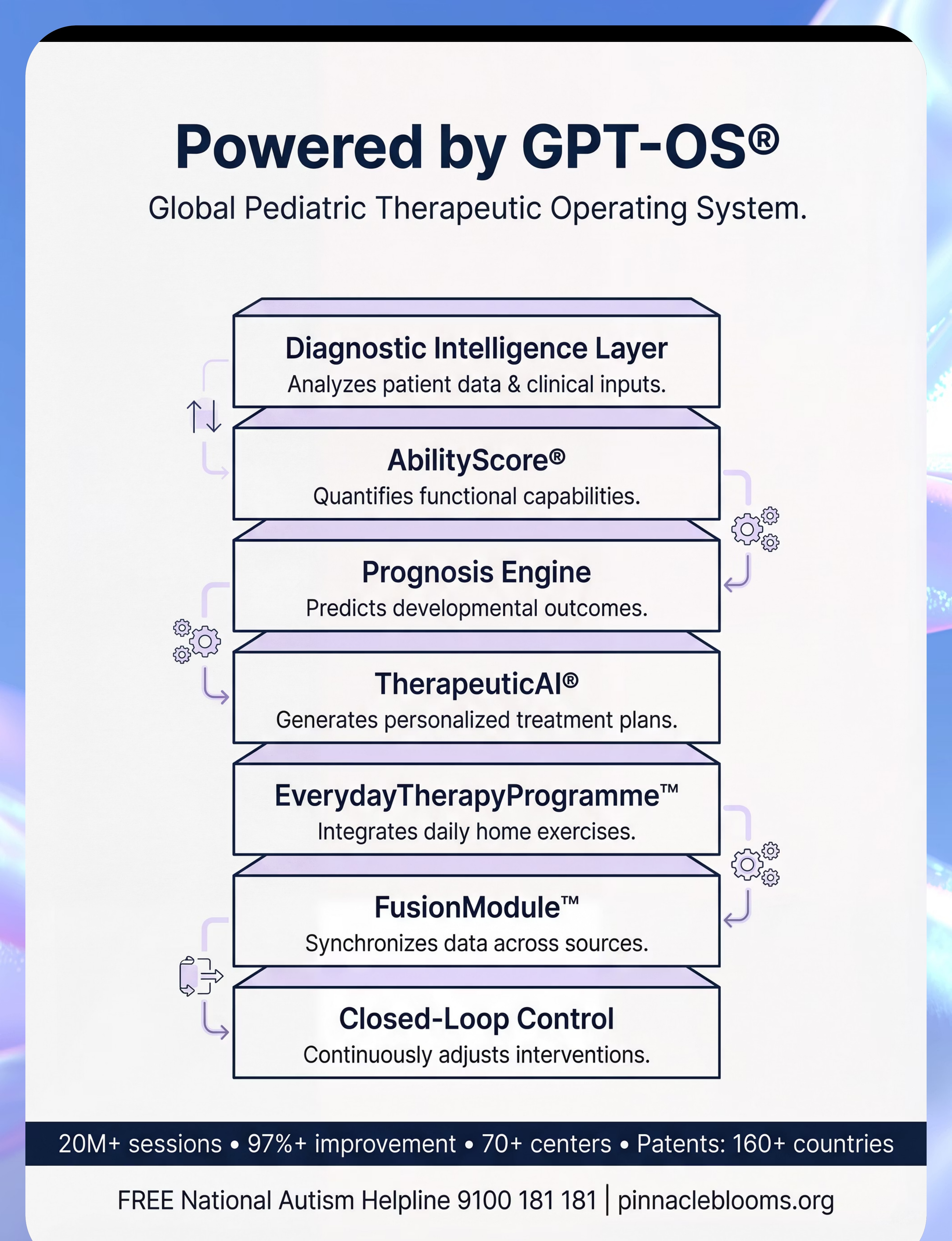
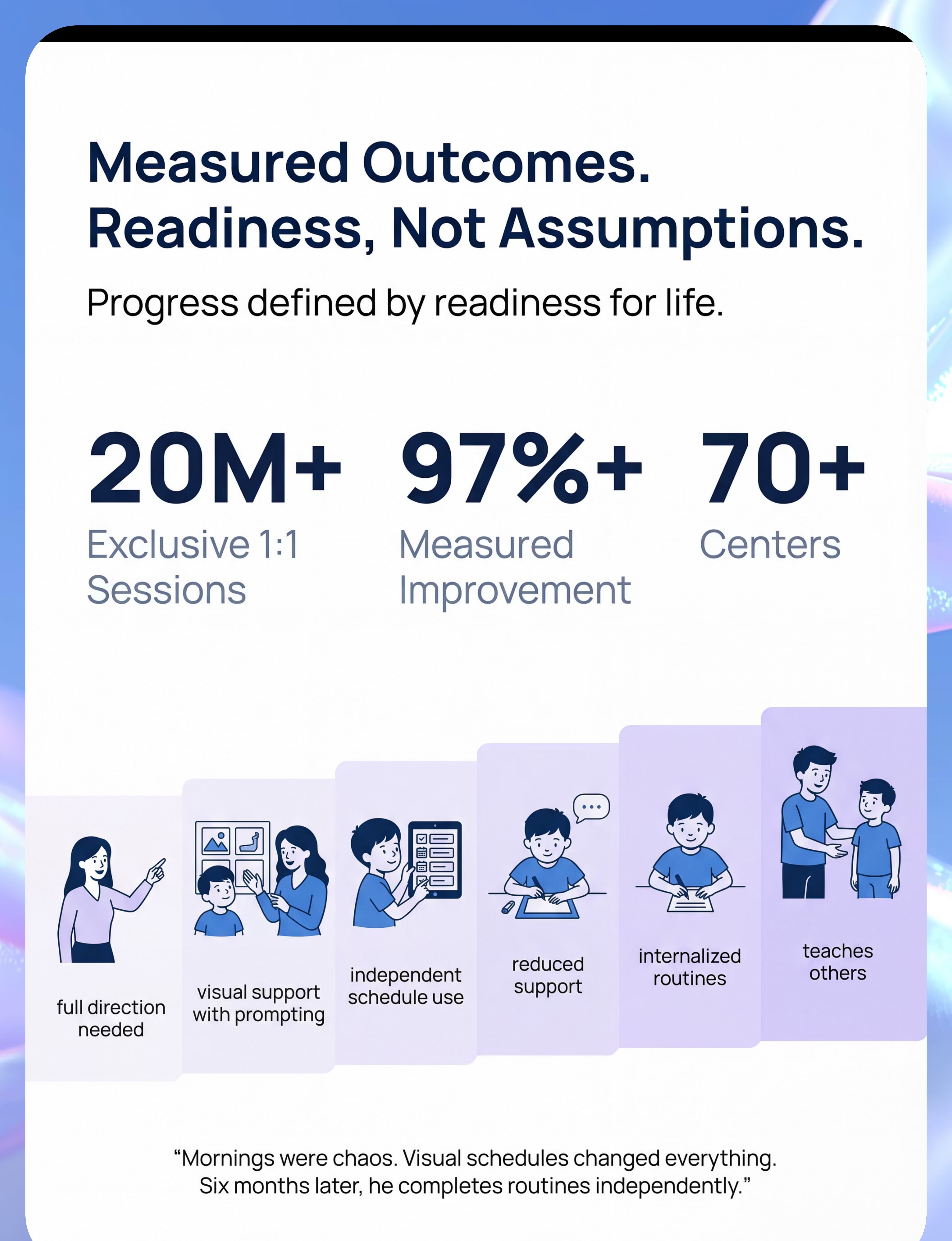
Across 20M+ exclusive 1:1 therapy sessions at 70+ centers, Pinnacle's GPT-OS® tracks the Executive Function Readiness Index — quantifying progression from full dependence to independence across routine domains.
"This is not experimental. This is not alternative. This is the current evidence-based standard of care for executive function support in pediatric populations worldwide." — Pinnacle Blooms Consortium, 2025

Act II · The Technique
Routine Building Through Visual Supports
Formal Name: Visual Support-Based Routine Building | Parent-Friendly Alias: "The Schedule That Remembers For Your Child" | Reel ID: L-954
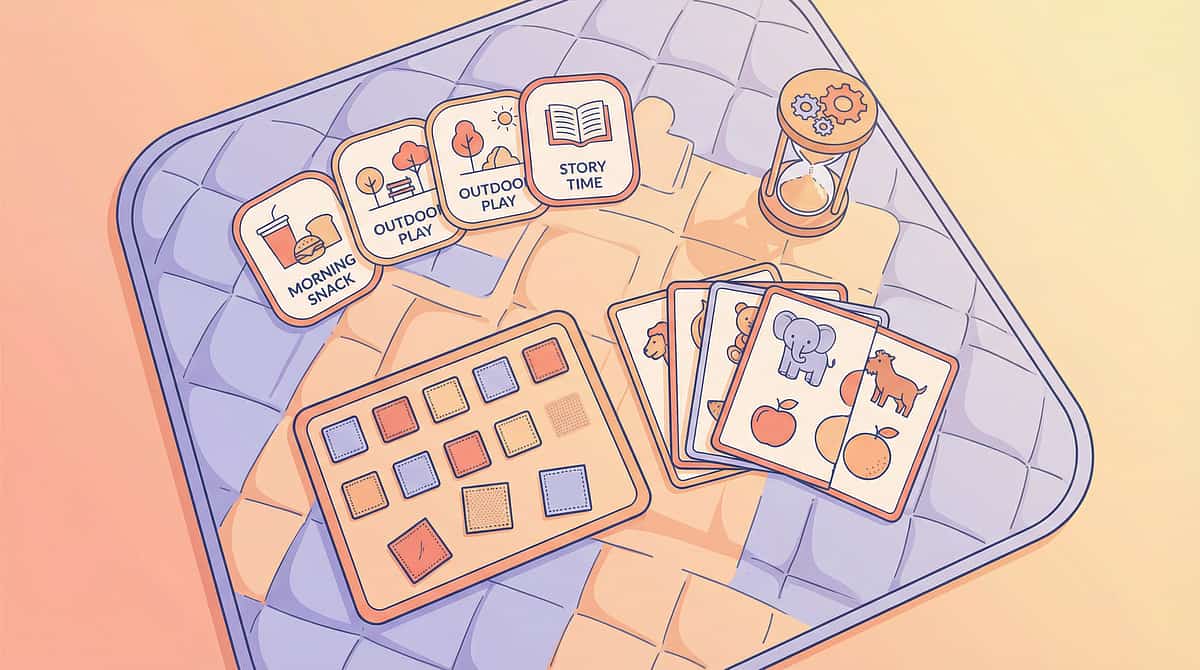
What it is: The systematic use of externalized visual tools — schedules, timers, charts, sequence cards — to compensate for executive function challenges in sequencing, working memory, initiation, and time perception. By making the routine visible, concrete, and interactive, these materials hold the cognitive work that the developing brain struggles to manage independently.
What it does: Reduces prompt dependence. Builds habit through consistent visual exposure. Bridges the gap between "knows the routine" and "executes the routine independently."
Who it's for: Children with autism, ADHD, developmental delays, anxiety, or any child who struggles with routine independence regardless of diagnosis.
📋 Domain
Executive Function / Adaptive Behavior / Daily Living Skills
🎯 Ages 2–12
Ongoing as needed
⏱️ 5–20 min
Per routine session
🔄 Daily
Every routine occurrence
📍 All Settings
Home · School · Community
Act II · Disciplines
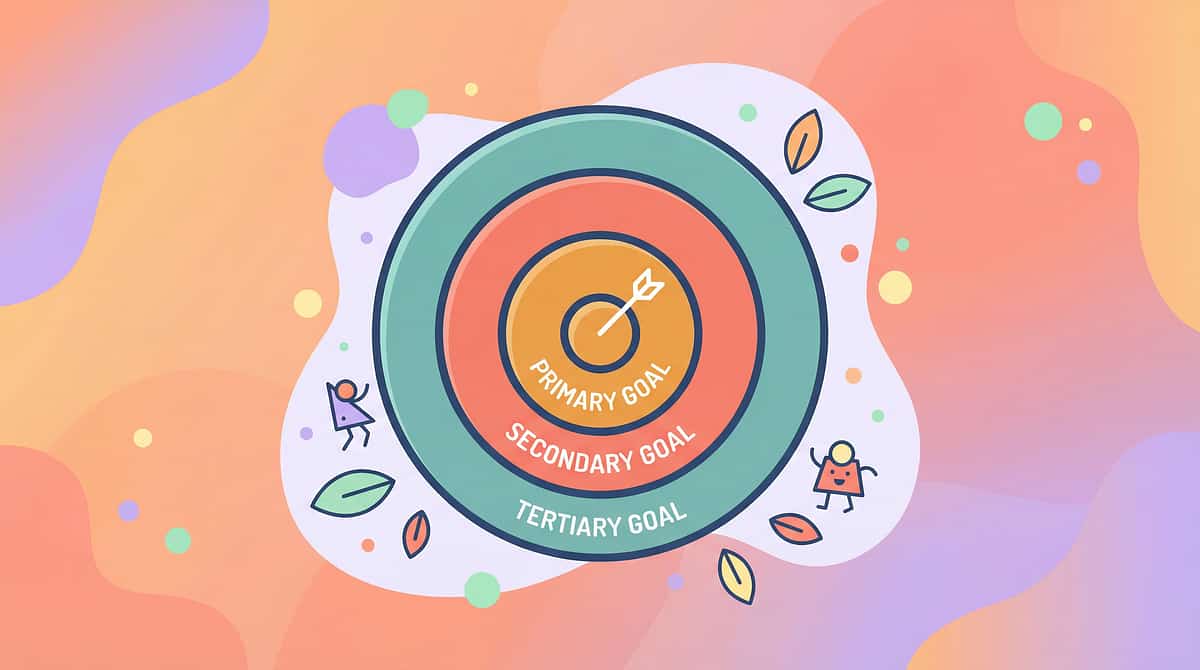
Five therapy disciplines. One unified approach. All pointing to the same tools.
Occupational Therapy (Lead)
OTs are the primary architects of visual support systems. They assess executive function, design individualized visual schedules, train parents in implementation, and progressively fade supports toward independence.
Speech-Language Pathology
SLPs integrate routine building into communication goals. Visual schedules scaffold language development by pairing actions with words. Sequencing language ("first… then… next…") emerges more reliably when the child can see the sequence.
Applied Behavior Analysis
ABA provides the reinforcement architecture. Token economies, reward systems, and prompt fading protocols make routine building systematic and measurable.
Special Education
SpEd professionals integrate visual supports across the school day — classroom schedules, transition systems, and independence programs mirror and extend home-based routine work.
NeuroDevelopmental Pediatrics
NeuroDev doctors contextualize routine challenges within the child's broader diagnostic profile, rule out medical contributors, and coordinate the multi-disciplinary approach.
Act II · Targets
Six executive functions. Nine materials. One independent child.
Executive Function Challenge | What It Looks Like | What Visual Supports Target | |
Working Memory | Can't hold multiple steps while doing them | Visual schedules externalize the sequence — the board remembers | |
Task Initiation | Can't start without being prompted | Visual cue becomes the prompt — child learns to check, not wait | |
Sequencing | Gets steps in wrong order or skips | Visible linear sequence removes need to generate it mentally | |
Time Perception | No sense of how long things take | Visual timers make abstract time concrete and monitorable | |
Transition Management | Meltdowns at activity switches | Warning systems + transition objects make change predictable | |
Self-Monitoring | Can't tell if they're on track | Checkboxes + token boards provide visible progress feedback |
Observable Outcome Targets
Completes morning routine with zero verbal prompts (8 weeks)
Independently checks visual schedule before asking "what's next?" (4 weeks)
Moves between activities with fewer than 2 meltdowns per week (6 weeks)
Completes 3+ routine steps consecutively without redirection (8 weeks)
Act II · Material 1
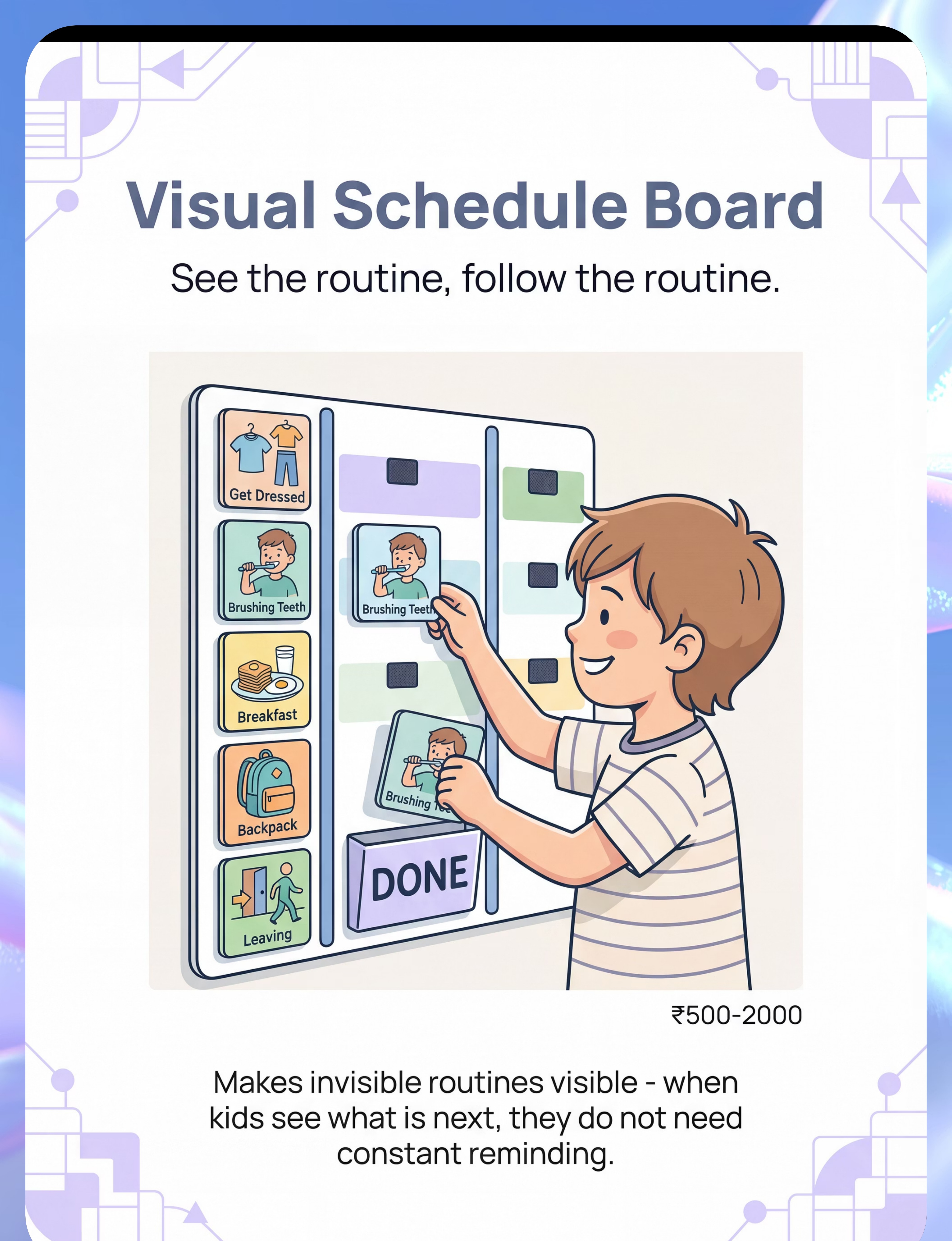
Material 1: Visual Schedule Board (Velcro-Based)
Canon Category: Visual Supports / Schedule Systems | Pinnacle Recommends: Velcro-compatible fabric boards with laminated photo cards
The foundational tool. Transforms invisible sequences into visible, interactive steps. Each routine step is a Velcro picture card — when done, it moves to the "finished" section. This single material addresses working memory, sequencing, and self-monitoring simultaneously.
When a child physically moves a card from "to do" to "done," they experience concrete, satisfying closure at each step. This tactile feedback reinforces the routine-checking behavior and builds the habit of referencing external organizational systems — a skill that generalizes into adulthood.
💰 Price Range
₹500–2,000
🛒 Where to Buy
⭐ DIY Option
Magnetic whiteboard / fridge + printed photos

Act II · Materials 2 & 3
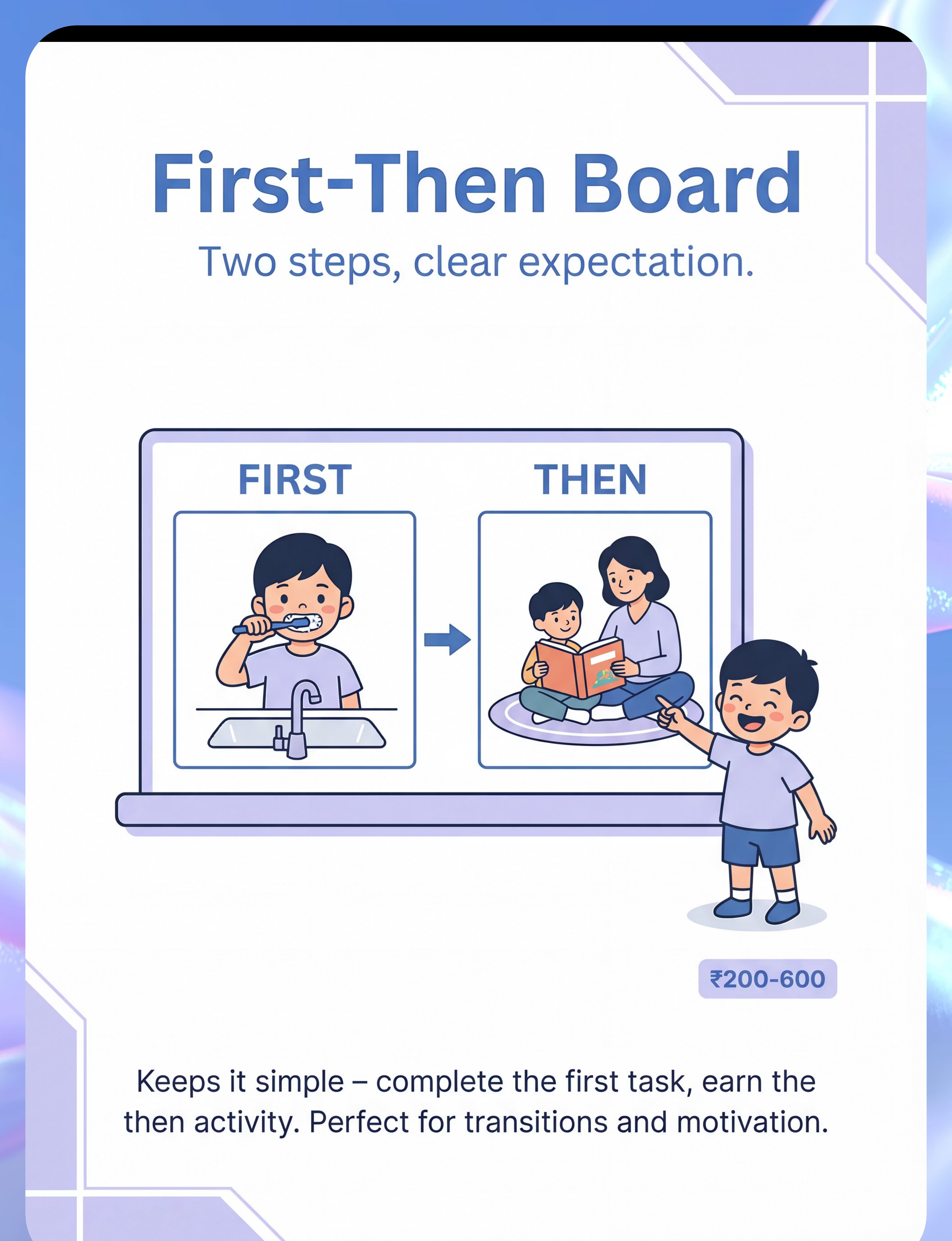
Material 2: First-Then Board
Canon Category: Visual Supports / Contingency Boards
Two-step visual: FIRST (less preferred) → THEN (preferred). Perfect for transitions and motivation. Reduces resistance to non-preferred tasks by making the reward visible and guaranteed. Ideal for children not yet ready for a full schedule — start here.
- 💰 ₹200–600
- Portable size with interchangeable picture cards
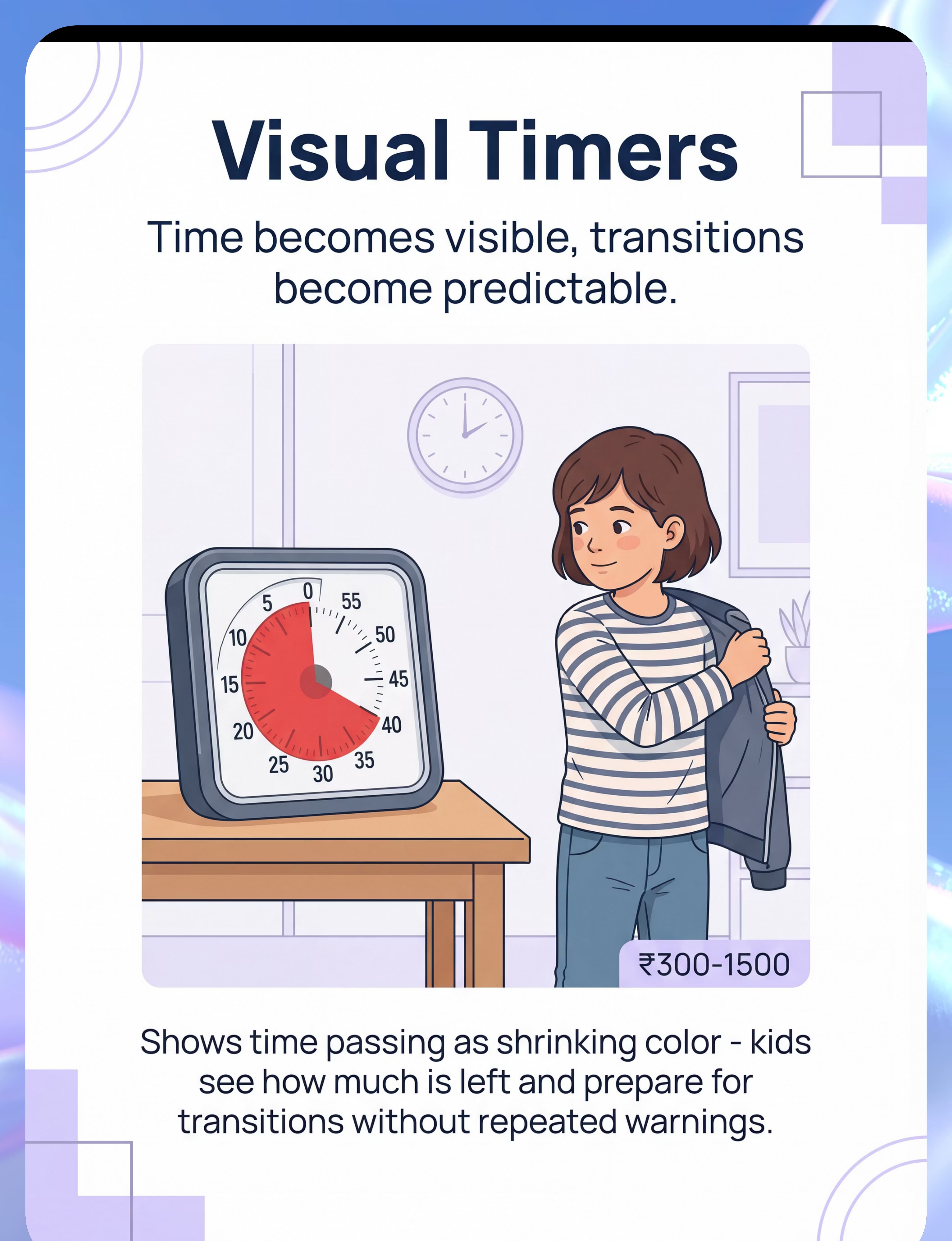
Material 3: Visual Timer
Canon Category: Time Management Tools / Visual Supports
Makes time visible as a shrinking colored section. Children can see how much time remains, preparing for transitions without verbal warnings. Eliminates the "time blindness" component of executive function challenges — a critical tool for both ADHD and ASD profiles.
- 💰 ₹300–1,500
- Time Timer style with red disk; sand timers for shorter intervals
- 📦 Smartivity DIY Interactive Clock ₹673 → Buy
Act II · Materials 4 & 5
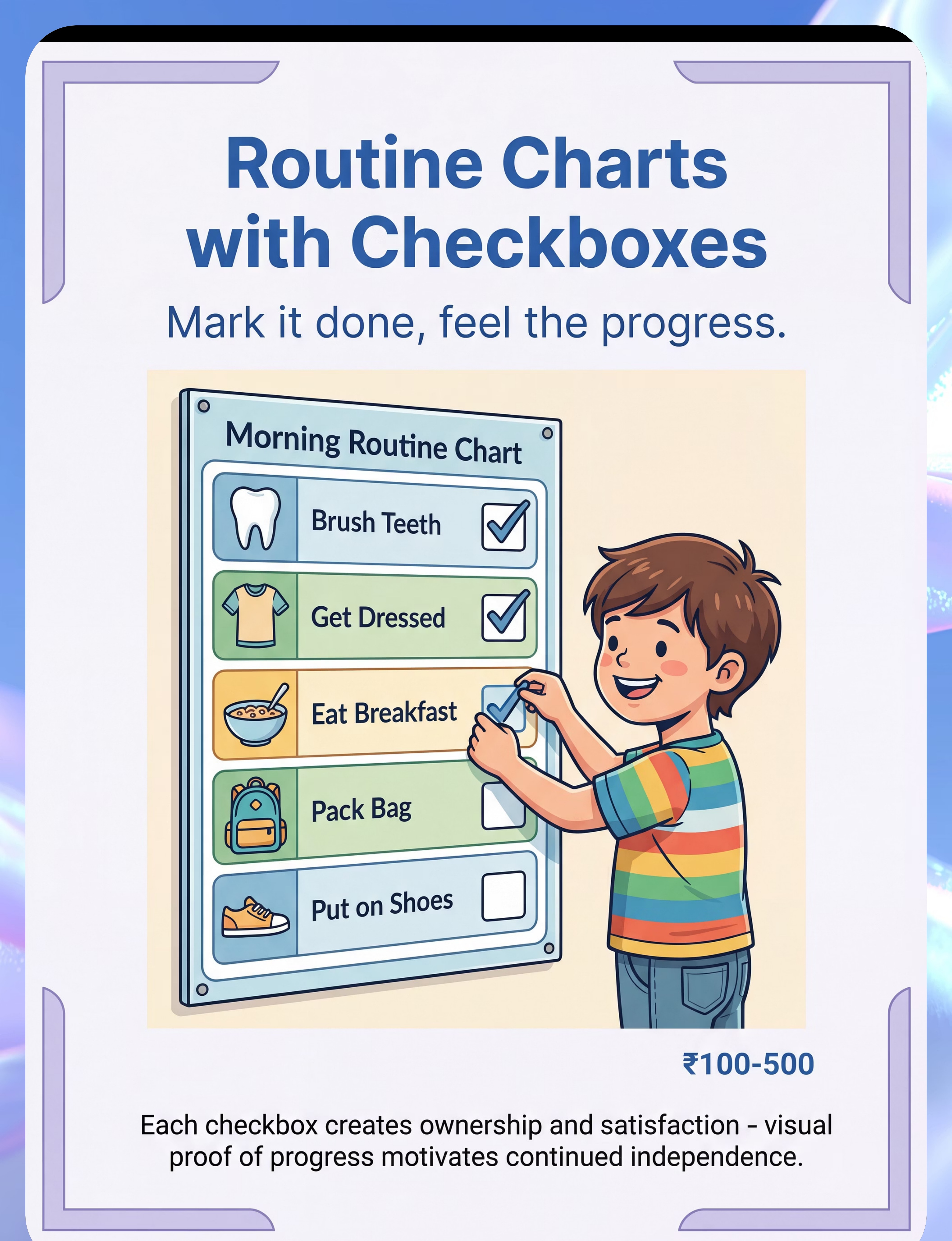
Material 4: Routine Chart with Checkboxes
Canon Category: Visual Supports / Self-Monitoring Tools
Laminated picture + word chart with checkbox per step. Physical checking creates ownership and satisfaction. Reusable with dry-erase marker — sustainable and cost-effective. The act of checking each box engages self-monitoring and builds a sense of accomplishment that motivates continued effort.
- 💰 ₹100–500
- DIY: Printed and laminated at any print shop
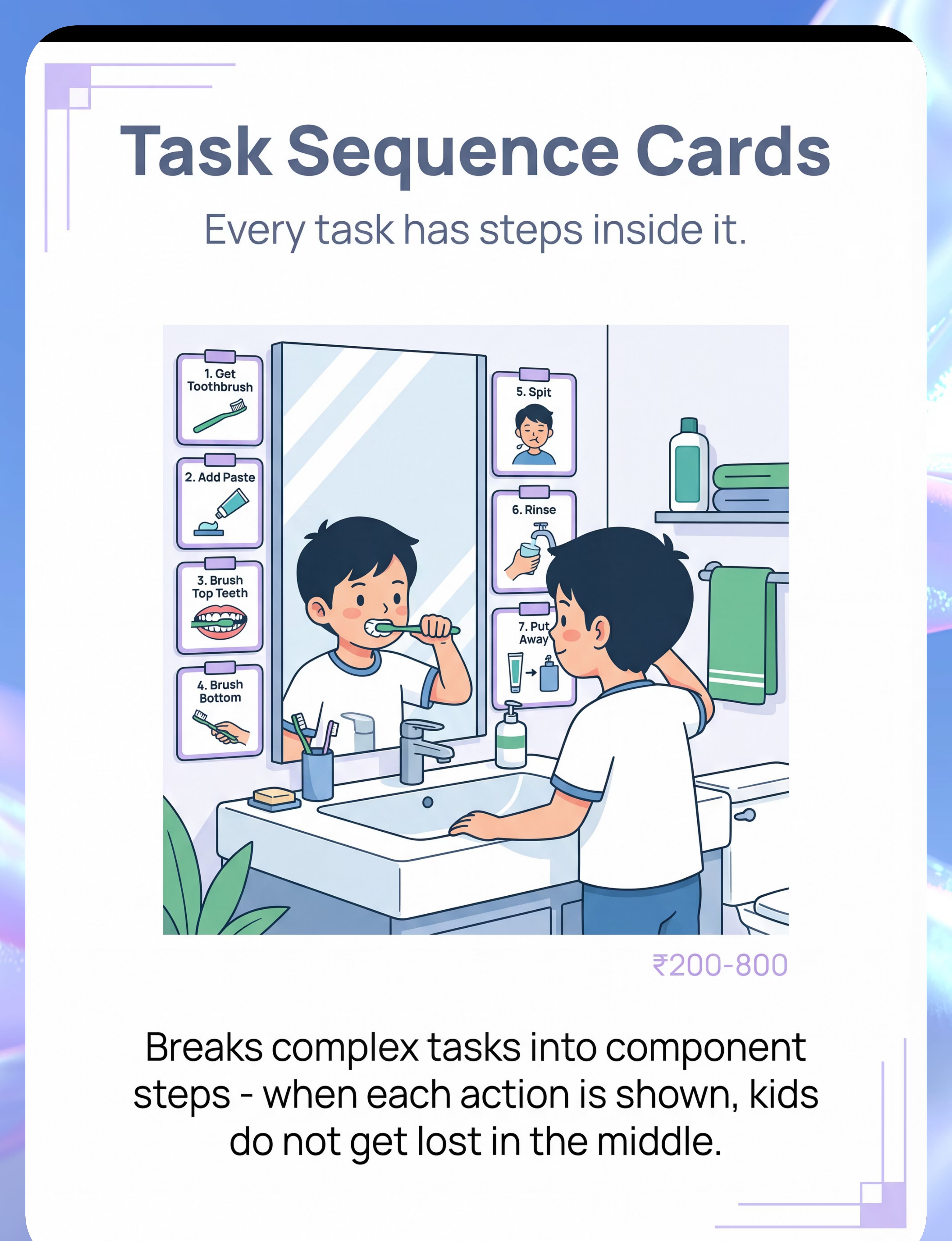
Material 5: Task Sequence Cards
Canon Category: Visual Supports / Task Analysis Cards
Step-by-step cards for complex tasks — tooth brushing, handwashing, getting dressed. Posted at point of use: bathroom, bedroom, backpack station. Breaks down multi-component tasks into single, illustrated steps that the child can follow independently, without any adult direction.
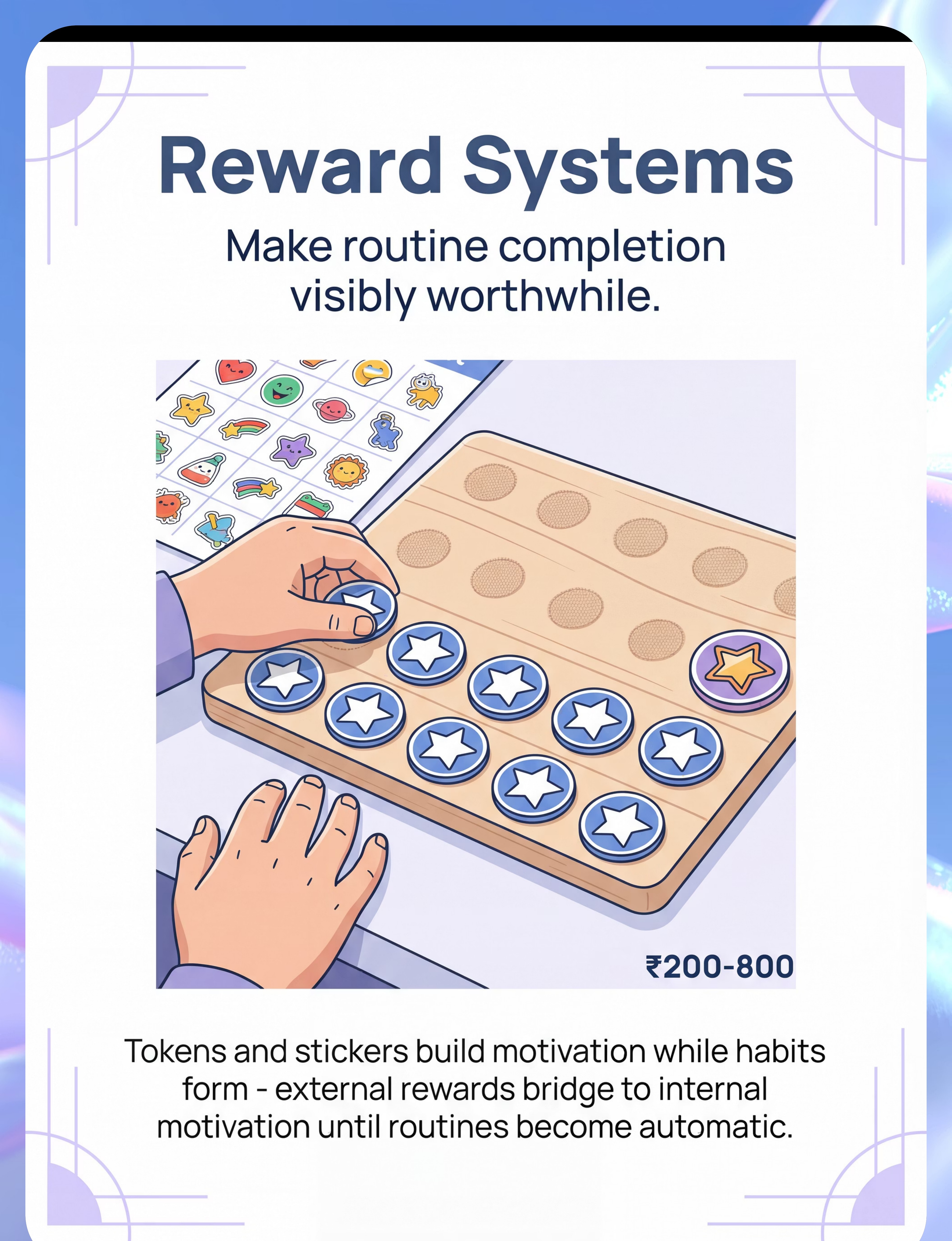
- 💰 ₹200–800
- ⭐ Photograph your own child's hands doing each step for best recognition

Act II · Materials 6, 7, 8 & 9
Materials 6–9: Transitions, Choice, Story & Reward
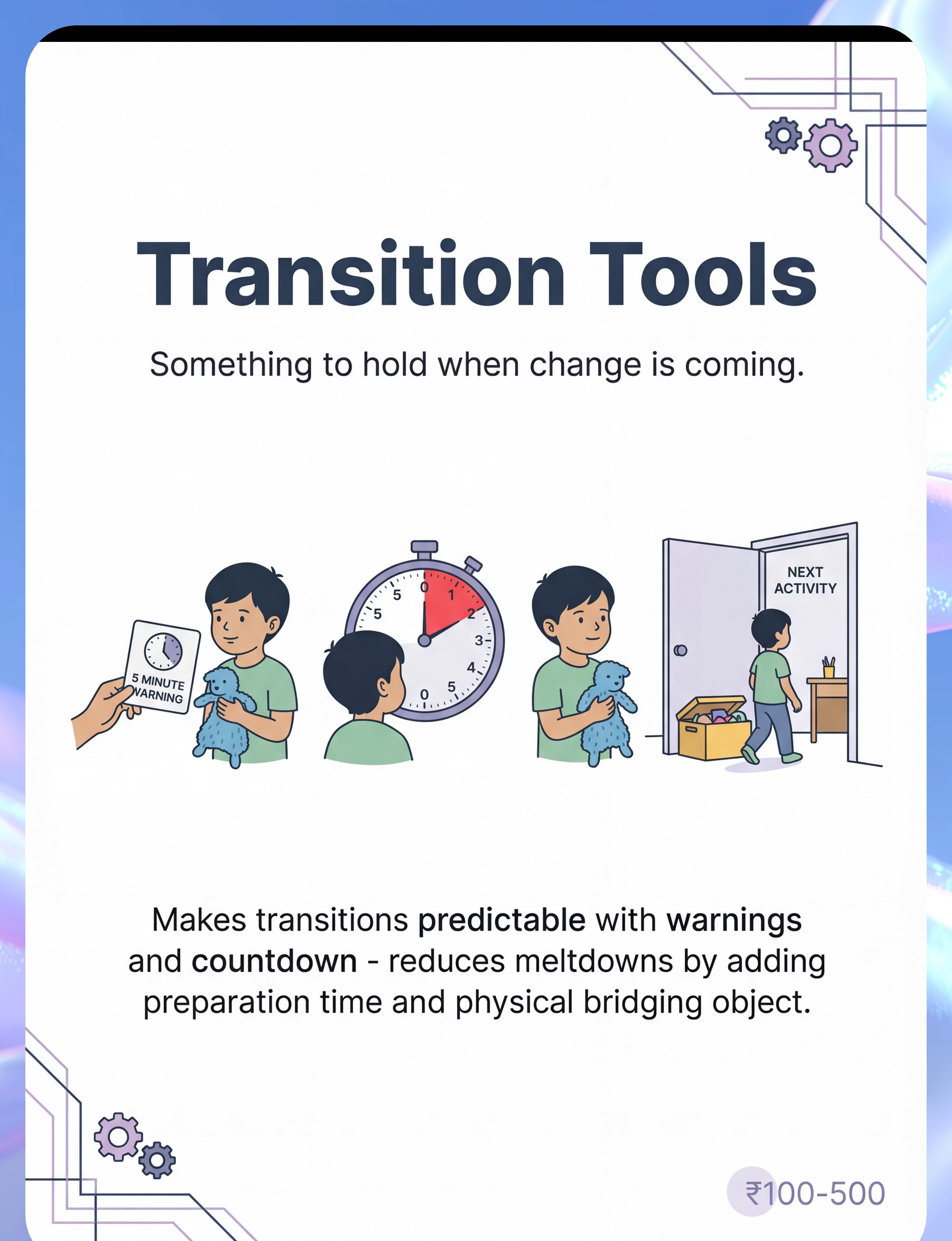
Material 6: Transition Objects + Warning Cards
Canon: Transition Objects / Comfort Items. Physical item carried between activities + countdown warning cards. Makes transitions predictable and manageable. 💰 ₹100–500 | 📦 Animal Soft Toys ₹425 → Buy
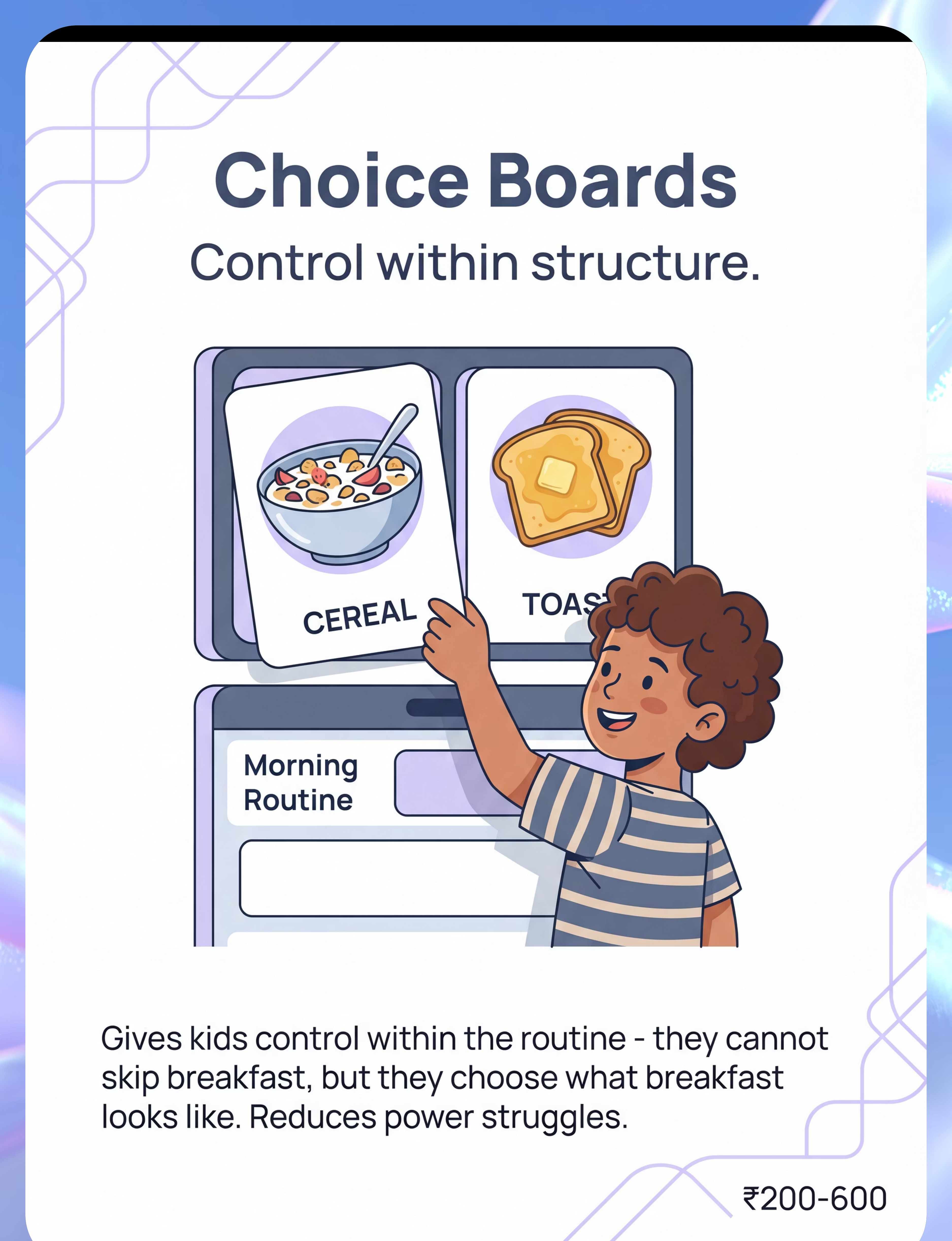
Material 7: Choice Board
Canon: Visual Supports / Choice-Making Systems. Limited-option visual boards (2–3 choices) for bounded decisions within the routine. Builds autonomy without undermining structure. 💰 ₹200–600 | Search Amazon.in →
Material 8: Social Stories for Routines
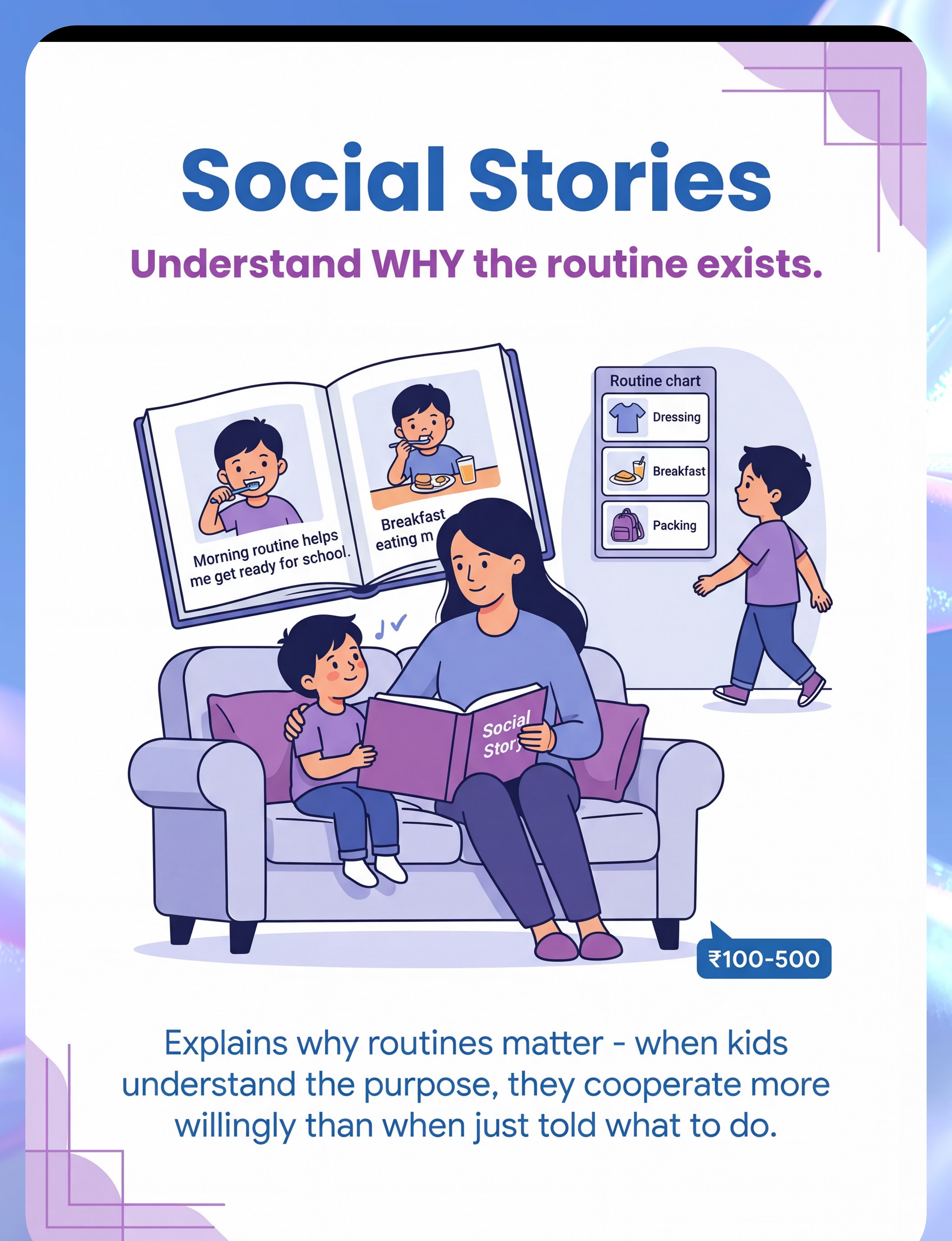
Canon: Social Stories / Narrative Supports. Simple illustrated stories explaining WHY routines exist and what to expect. Builds comprehension and buy-in. Carol Gray methodology. 💰 ₹100–500 | Search Amazon.in →
₹0
DIY Version
Fully achievable with household materials
₹600–2.5K
Starter Kit
Schedule + Timer + Chart + First-Then Board
₹1.6–7.7K
Full System
All 9 materials, clinical-grade

Act II · DIY Options
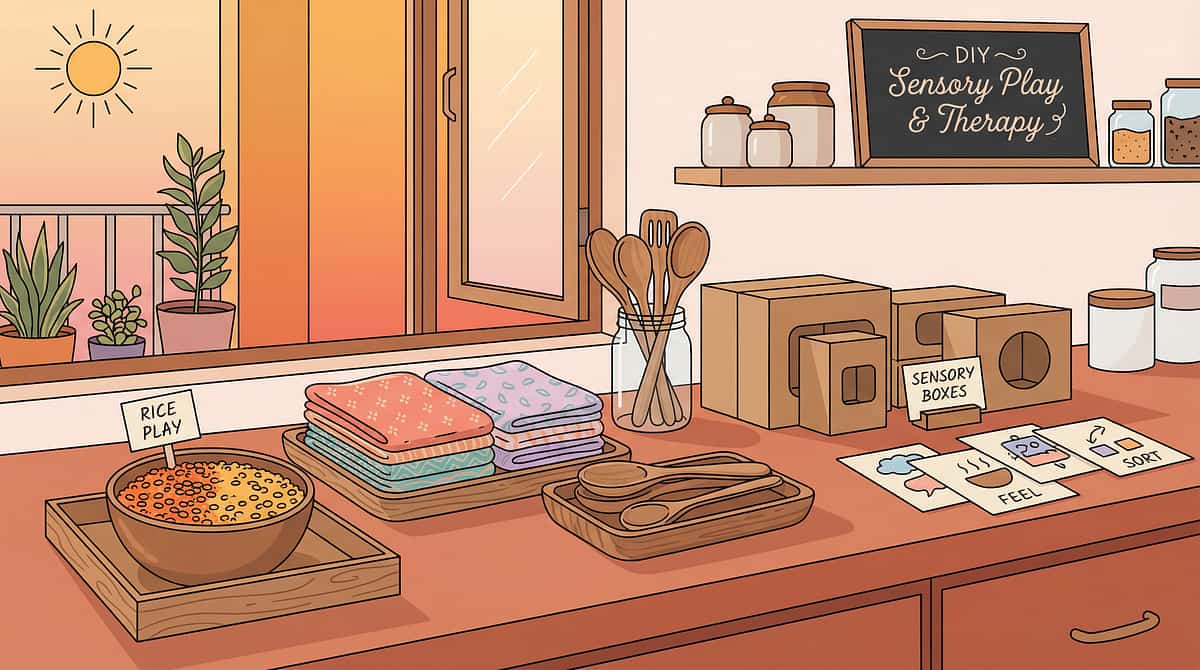
Every family can start today. Even with ₹0.
The WHO/UNICEF principle of equity-first intervention means no child should be excluded from evidence-based support due to resource limitations. Every material in this system has a zero-cost alternative that uses the same neuroscientific principle.
Material | Clinical Version | Household Alternative | |
Visual Schedule Board | Velcro fabric board ₹500+ | Magnetic whiteboard / fridge + printed photos | |
First-Then Board | Commercial board ₹200+ | Folded paper with two sections + hand-drawn images | |
Visual Timer | Time Timer ₹300+ | Sand timer / phone timer app | |
Routine Chart | Printed laminated chart | Hand-drawn on paper in plastic sleeve | |
Task Sequence Cards | Commercial card sets | Phone photographs printed at ₹2/photo | |
Transition Object | Purchased comfort item | Any preferred small toy already owned | |
Choice Board | Commercial board | Paper with 2 photos glued on | |
Social Stories | Published books | Parent-written pages with phone photos, stapled | |
Token Board | Commercial board | Paper grid + sticker dots / coins / buttons |
Non-Negotiable: When clinical-grade IS essential — visual timers for children with significant time anxiety require good visual accuracy. A phone app is acceptable; a vague hand-drawn clock is not. When precision matters, invest in the tool.

Act II · Safety
Read this before your first session. It matters.
🟢 GREEN LIGHT — Good to Proceed When:
- Child is fed, not overtired, not ill
- Child is in a regulated (calm-enough) state — not mid-meltdown
- Environment is set up as described in the Setup card
- You have at least 15 minutes without interruption
- All materials are prepared and accessible before starting
🟡 AMBER — Proceed With Modification When:
- Child is tired but not dysregulated — simplify to 3-step routine only
- Routine has just changed — use Social Story first (Material #8)
- Child had a difficult earlier in the day — use First-Then only (2 steps max)
- You don't have all materials — start with what you have
🔴 RED LINE — Stop Immediately If:
- Child escalating toward self-injurious behavior during routine
- Physical distress signs (vomiting, breathing changes, extreme dissociation)
- Complete refusal lasting more than 10 minutes — postpone and consult therapist
- Visual supports increasing (not decreasing) anxiety — individual assessment needed
Material Safety Checklist
- Small Velcro pieces: supervise young children (choking hazard under age 3)
- Token objects (coins, chips): ensure non-chokeable size
- Sand timers: glass versions — supervise; plastic versions — safe for independent use
- Visual schedule placement: secure at child's eye level (not falling-hazard height)
Professional Red Flags — Consult Your Therapist If: No progress after 4 consistent weeks · Escalating transitions after 2 weeks · Child shows no picture comprehension (may need object-level supports first).

Act II · Setup
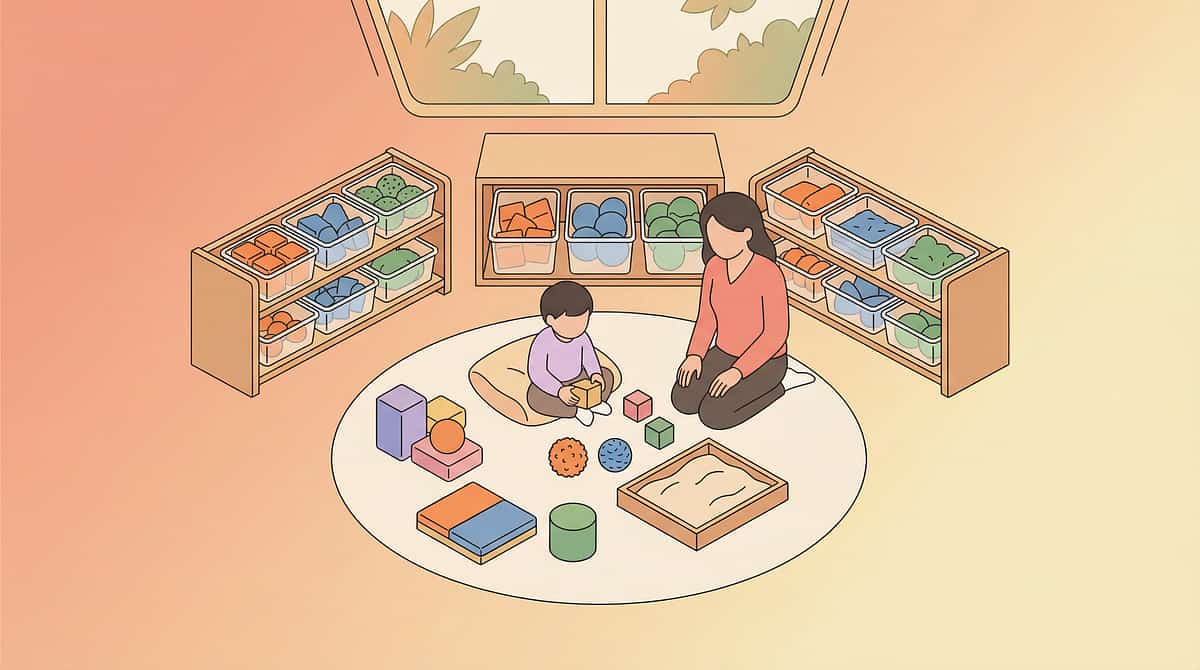
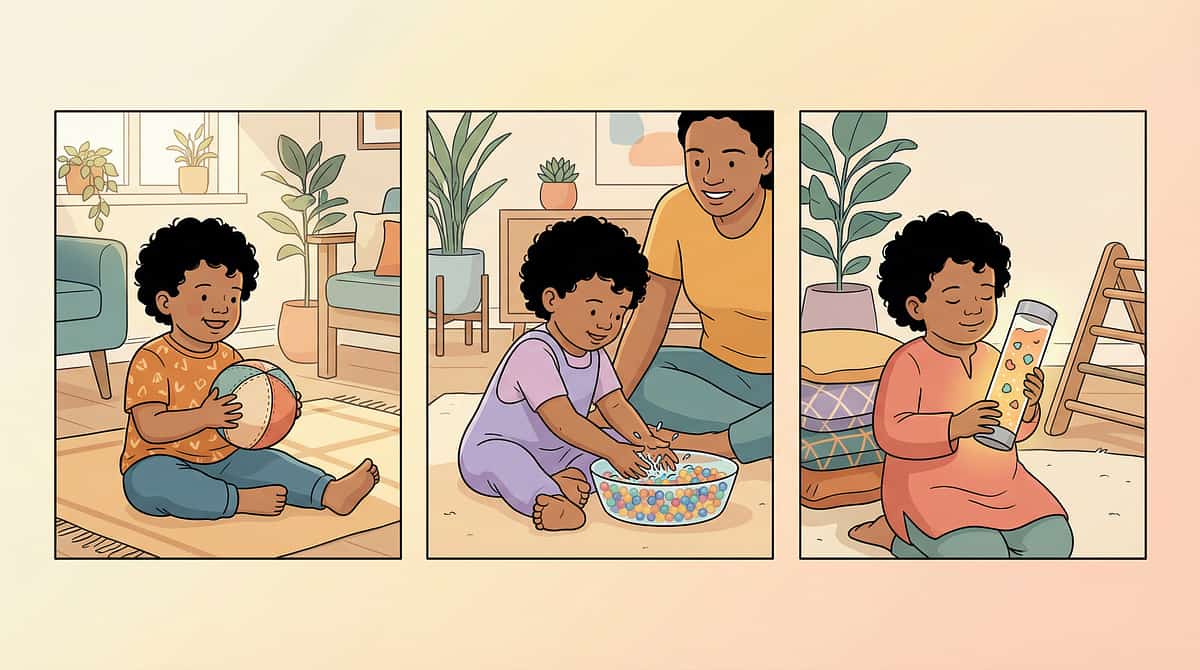
Spatial precision prevents 80% of session failures. Set this up first.
Bedroom Setup
- Visual Schedule Board at eye level near bedroom door
- Visual Timer on dresser, visible from bed
- Clothes laid out the night before on chair/floor — not in drawer
- Distractors removed or minimized (toys out of sight during dressing)
Bathroom Setup
- Task Sequence Cards laminated on mirror or wall
- Visual Timer on counter
- All hygiene materials out and ready before routine starts
Pre-Routine Setup Checklist
- Visual schedule is current — all cards in starting position
- Timer set for routine duration and visible
- All materials for routine pre-positioned
- Reward/token system ready to access
- Parent has physically set up space 5 minutes before routine start
Environmental Guidance
- Lighting: Bright enough to see schedule clearly
- Sound: Minimal background noise during initial learning phase
- Visual clutter: Reduce irrelevant visuals near the schedule
The Key Insight: The environment is the intervention. A visual schedule hung in the wrong location stops working — not because the technique failed, but because the setup did.
Act III · Readiness
60-second pre-flight check. The best session is one that starts right.
Check | ✅ GO | ⚡ MODIFY | ❌ POSTPONE | |
Fed in last 2 hours? | Yes | Small snack first | Hungry = dysregulated | |
Slept adequately? | Yes | Shorten session | Overtired = no learning | |
Recovered from meltdown? | >2hr ago | >30min, calm now | <30min ago | |
Calm/regulated state? | Yes | Slightly elevated OK | Dysregulated | |
No active illness? | Yes | Mild, child comfortable | Acute illness | |
Schedule prepared? | Yes | Partial OK | Unprepared = failure |
⚡ MODIFY — Simplified Version
- Use First-Then board only (2 steps, not full routine)
- Reduce to 3 highest-priority steps
- Double reinforcement schedule
- Shorten session by 50%
❌ POSTPONE — Do This Instead
- Offer a preferred calming activity
- Do one joint-attention activity together
- Return to routine practice within 24 hours
- Note what triggered postponement for therapist discussion
"Antecedent conditions determine intervention effectiveness. The most carefully designed visual schedule will fail if deployed to a dysregulated, hungry, exhausted child. Readiness assessment is not optional — it is the intervention." — Pinnacle Blooms Consortium

Act III · Step 1
Step 1: Every routine begins with an invitation. Not a command.
Before any demand, establish connection. Before any instruction, establish safety. The child must feel invited into the routine, not compelled into it. This distinction is the difference between compliance and participation — and participation generalizes; compliance doesn't.
"Hey [Name], let's check our schedule together. Want to see what's first?"
(If resistance:) "Come look — there's something good on here for you."
Body Language Guidance
- Crouch to child's eye level
- Open posture — no blocking or steering
- Point to schedule; don't pull child toward it
- Enthusiastic but not loud
- Wait 10–15 seconds for response before any prompt
What Resistance Looks Like + Modify
- Complete avoidance: Show one preferred card only
- Verbal refusal: "Let's just look at the first card"
- Physical escape: Offer choice: "Which do you want to do first — brush teeth or get dressed?"
If not engaged in 60 seconds, use Choice Board (Material #7) as entry point.

Act III · Step 2
Step 2: The child is looking. Now deepen the connection.
The child has accepted the invitation. Now you introduce the visual schedule as a tool — not just a poster on the wall, but an interactive system the child uses. This step transforms a passive decoration into an active cognitive scaffold.
"See this card? [Point to first task card] This tells us: first we [read/show task]. Let's do it together. Go ahead — you do it while I watch."
How to Present Each Card
Hold at Eye Level
Point to card on the board at child's eye level
Name Simply
"Brush teeth" — not a paragraph. One clear label.
Show "Done" Section
"When you finish, the card goes HERE." Make it concrete.
Model if Needed
For non-readers: point to picture, demonstrate action once
The ABA 3-Second Window: The moment the child picks up the first card or takes a step toward the task — IMMEDIATE PRAISE. "Yes! You're checking your schedule — that's exactly right!" Deliver within 3 seconds. This is when reinforcement works.

Act III · Step 3
Step 3: The child executes the routine step. This is the intervention.
The child independently performs the routine step while referencing their visual schedule. The parent's role shifts from director to observer. The schedule is the guide — not the parent's voice. This is the hardest shift for most caregivers, and the most important one.
During the Task
- Child refers to task sequence cards (posted at point of use)
- Parent observes without verbal instruction
- Parent provides non-verbal encouragement (thumbs up, nod)
- If child asks "What do I do?" → point to schedule card, do not answer verbally
Common Execution Errors
- Parent still directing verbally: Redirect — "Check your card" and stay quiet
- Schedule not consulted: Gently return child to check schedule — building the habit matters
- Rushing completion: Use timer to slow pacing; add step-level task cards
- Skipping steps: Those steps may need their own sub-sequence cards
✅ Ideal
Child references schedule → completes step → moves card to "done" independently
✓ Acceptable
Completes step with minimal verbal prompt ("check your schedule") → moves card with guidance
⚠️ Concerning
Requires full physical guidance for every step after 4+ weeks — consult OT

Act III · Step 4
Step 4: Consistency builds the highway. Variation makes it flexible.
The Dosage Principle: 3 good routine completions with visual support > 10 forced, prompt-dependent completions.
Daily
Frequency
Every occurrence of the target routine
5/7
Weekly Minimum
Days per week for habit formation
6–8 wks
Phase Duration
Consistent daily use before habit begins internalizing
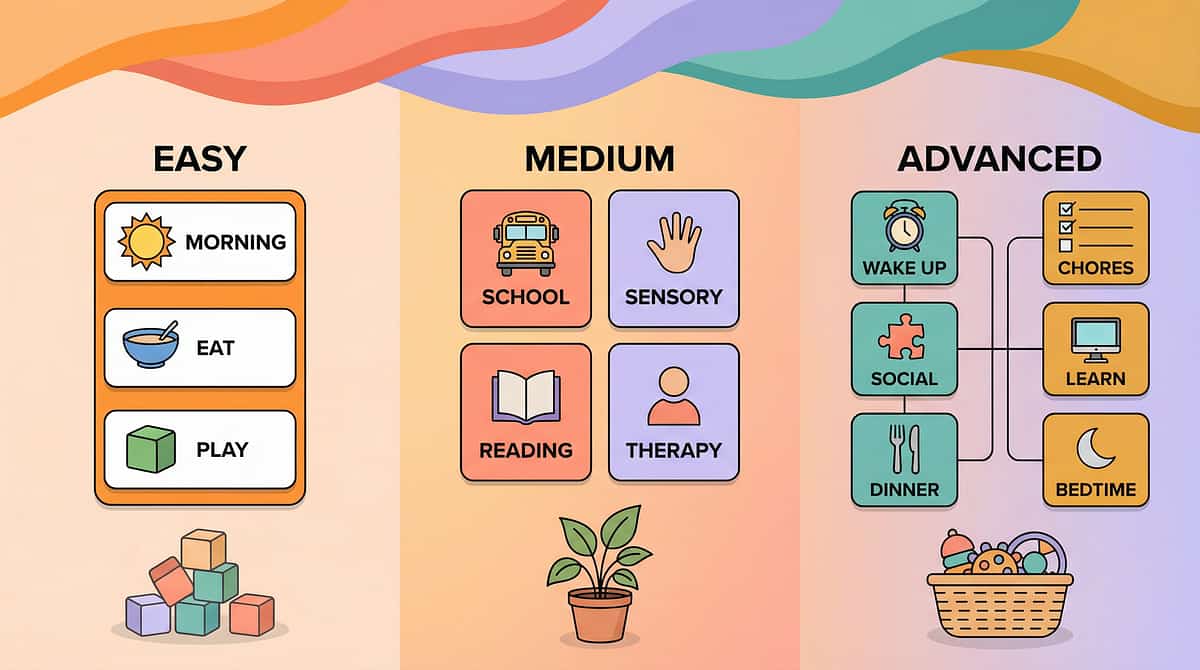
Variation Options to Maintain Engagement
A: Change the Reward
New sticker theme, new token style — keep structure same
B: Add Choice Points
"Brush teeth first or get dressed first? Pick your card."
C: Child as Teacher
"Show me how you check your schedule. Teach me what it says."
D: Photograph Progress
Phone photo of completed schedule at end — visual proof of accomplishment
"Three routine completions where the child genuinely engages with the visual system are worth more than ten where the parent carried the execution. We're building a habit of schedule-checking — not just routine-doing. The schedule-checking behavior will generalize; the parent-directed behavior will not." — Pinnacle Blooms Consortium
Act III · Step 5
Step 5: Celebrate the attempt. Reward the behavior you want to see again.
Timing Rule: Reinforcement must arrive within 3 seconds of the target behavior. Specificity Rule: Name exactly what you're reinforcing. Consistency Rule: Same behavior → same reinforcement during habit formation.
"You checked your schedule! THAT is exactly what we're working on. Well done." (+1 token on token board / sticker on chart)
Reinforcement Type | Examples | When to Use | |
Immediate Verbal | "You did it!" "Yes — schedule check!" | Every single time, every routine | |
Token Economy | Token on board (Material #9) | Habit-formation phase (weeks 1–6) | |
Sticker Chart | Sticker for each step completion | Visual accumulation; exchange for reward | |
Natural Consequence | "Because you got ready on time, we have 5 extra minutes for [preferred activity]" | As intrinsic motivation builds | |
Activity Reward | Preferred activity earned via First-Then | For completing full routine |
Celebrate the Attempt, Not Just the Success: If your child checked the schedule and then did the wrong thing — celebrate the schedule-check. "You looked at your card — great! Let's see what it says together." The visual-checking behavior is the skill we're building. Execution will follow.

Act III · Step 6
Step 6: End intentionally. Every routine needs a closing ritual.
Sessions that end abruptly spike anxiety. Children with executive function challenges need to know this activity is ending and this is what comes next. The closing ritual is itself a routine — and it models exactly what we're teaching.
Transition Warning
"Two more steps, then we're all done with the schedule today."
Completion Ritual
Child moves final card(s) to "Done" section
Summary Statement
"Look — your whole schedule is finished! You checked every card."
Material Put-Away
Child (if able) places tokens on board, caps marker, puts First-Then board in designated spot
Transition Preview
"Now it's time for [next activity] — which you chose on your choice board."
Physical Closing Cue
High-five, fist bump, or preferred sensory gesture — consistent each day
If Child Resists Ending: Extend by one more "step" only. "One more, then done — I promise." Give transition object (Material #6). Honor the agreement — breaking it undermines the predictability of the entire system.

Act III · Data
60 seconds of data today = months of insight tomorrow.
You cannot see progress in individual sessions — it's invisible day to day. Data reveals the trend. And the trend is what reassures you, guides your therapist, and tells GPT-OS® where to adjust the program.
📋 L-954 ROUTINE BUILDING SESSION LOG
Date: _________ Routine: □ Morning □ Bedtime □ Afterschool □ Other
Date: _________ Routine: □ Morning □ Bedtime □ Afterschool □ Other
1
Field 1: Schedule Checks
How many times did child independently reference the visual schedule (without being prompted)?
□ 0 □ 1–2 □ 3–4 □ 5+
□ 0 □ 1–2 □ 3–4 □ 5+
2
Field 2: Verbal Prompts Required
How many verbal prompts did YOU give during the routine?
□ 0 (full independence) □ 1–3 □ 4–6 □ 7+ (full dependence)
□ 0 (full independence) □ 1–3 □ 4–6 □ 7+ (full dependence)
3
Field 3: Transition Quality
Rate today's transitions (activity switches):
□ No meltdowns □ 1 minor upset □ 2–3 upsets □ Major meltdown
□ No meltdowns □ 1 minor upset □ 2–3 upsets □ Major meltdown
Data entered here feeds directly into the Adaptive Behavior Readiness Index within GPT-OS® — tracking your child's progression across the 6-stage independence continuum from Full Adult Direction Required → Manages Routines Independently Across Settings.

Act III · Troubleshoot
Stuck? Here's what the data says and what to do next.
Problem 1: Child ignores the visual schedule completely
Possible causes: Doesn't understand pictures / no motivation / too complex / wrong location
Solutions: Test picture comprehension first. Add reward system immediately. Simplify to 2-step First-Then board. Move schedule to exact point of use. Teach schedule-checking explicitly as a separate activity before using in real routine.
Solutions: Test picture comprehension first. Add reward system immediately. Simplify to 2-step First-Then board. Move schedule to exact point of use. Teach schedule-checking explicitly as a separate activity before using in real routine.
Problem 2: Works at home but not at school
Possible causes: Different formats / reinforcement / adult expectations
Solutions: Contact teacher/special educator and share this page. Create identical format for both settings (same pictures, same layout). Request school OT referral: 📞 9100 181 181
Solutions: Contact teacher/special educator and share this page. Create identical format for both settings (same pictures, same layout). Request school OT referral: 📞 9100 181 181
Problem 3: Meltdowns at transitions still occurring
Possible causes: Transition too abrupt / preferred activity ending / no warning
Solutions: Add 5-minute + 2-minute warnings. Use First-Then board during the transition itself. Provide transition object (Material #6). Check: Is the "next activity" aversive? That's a motivation problem, not a transition problem.
Solutions: Add 5-minute + 2-minute warnings. Use First-Then board during the transition itself. Provide transition object (Material #6). Check: Is the "next activity" aversive? That's a motivation problem, not a transition problem.
Problem 4: Routine rigidity (meltdowns at ANY variation)
Possible causes: Anxiety / need for sameness (common in ASD)
Solutions: Don't force flexibility too soon. Begin with "planned surprises" — one intentional minor change per week. Use Choice Boards to build controlled flexibility. Social Stories for specific routine changes.
Solutions: Don't force flexibility too soon. Begin with "planned surprises" — one intentional minor change per week. Use Choice Boards to build controlled flexibility. Social Stories for specific routine changes.
Problem 5: No progress after 6 weeks
This requires professional assessment. A Pinnacle OT will assess: visual comprehension level, sensory processing factors, reinforcement effectiveness, and whether a different modality is needed. 📞9100 181 181

Act III · Personalize
One technique. A thousand versions. Find yours.
EASIER
1–2 step First-Then board. Tangible objects. Parent nearby. Reinforce every step. 3 steps maximum.
STANDARD
Full visual schedule (5–8 steps). Photo cards. Token economy every 3–5 steps. Timer + Choice board.
HARDER
Written checklist. No token economy. Child modifies own schedule. Flexibility practice 3x/week.
Profile-Based Variations
For Autism
Emphasize transition objects + advance Social Stories for any changes. Don't rush schedule fading — predictability is protective.
For ADHD
Short-burst reinforcement (token every step). Visual timers essential. Add novelty elements (new sticker theme weekly).
For Anxiety
Extra transition warnings. Preview schedule before routine starts. Build in "comfort steps" mid-routine.
For Developmental Delay
Match visual complexity to developmental level, not chronological age. Photos over line drawings. Celebrate smaller increments.
Age Adaptations
- Ages 2–4: Object-based schedules, sand timers, tangible rewards, 2–3 steps max
- Ages 5–7: Photo + simple word cards, visual timer, sticker charts, 4–6 steps
- Ages 8–10: Written + picture hybrid, token economy, self-monitoring checkboxes, 6–10 steps
- Ages 10–12: Written checklists, digital planning apps, self-created schedules
Act IV · Week 1–2
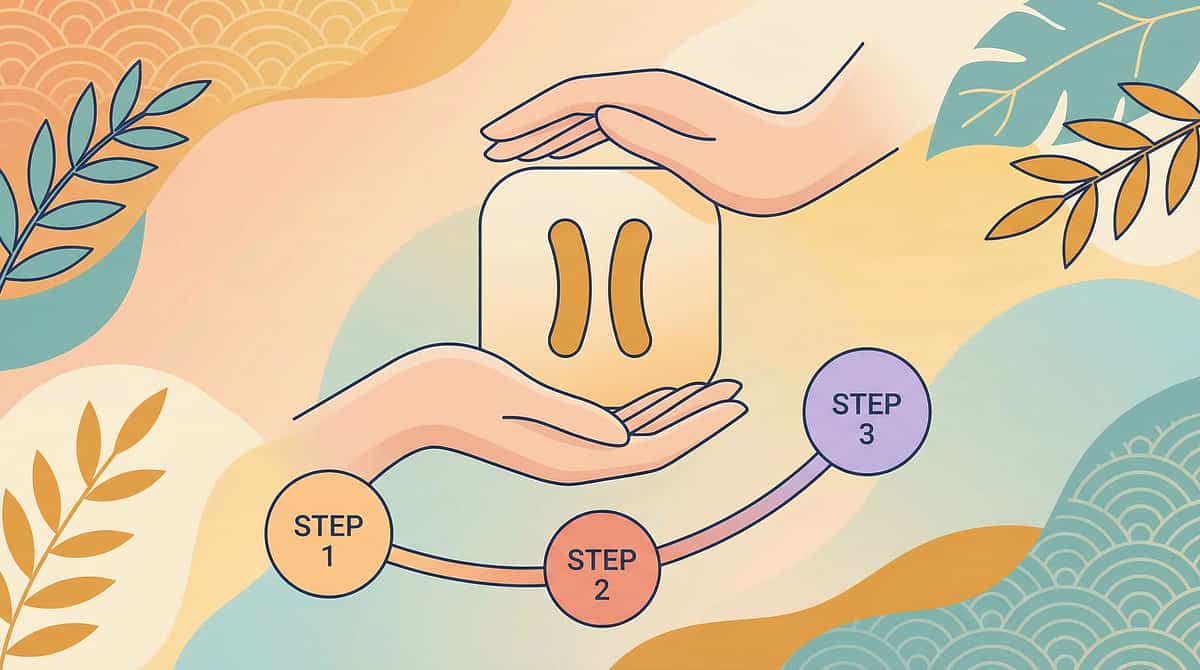
Weeks 1–2: You're planting the seed. Don't look for the flower yet.
15%
Progress Milestone
Tolerance and awareness phase
✅ What You WILL See
- Child begins to recognize the schedule exists and is relevant
- Child tolerates being near the schedule (even without using it)
- 3+ routine practices with visual system in place
- At least one moment of child voluntarily touching or looking at a card
- Minor reduction in "what's next?" questions
❌ Not Progress Yet — And That's Okay
- Independent schedule use (that's week 3–4 minimum)
- Elimination of transition meltdowns (week 5–8)
- Significant reduction in verbal prompts (week 3–4)
"If your child tolerates the visual schedule for 3 seconds longer than last week, that is measurable neurological progress. The brain is building the association between 'schedule exists' and 'schedule is useful.' Trust the process."
Week 1–2 Action Items: Set up schedule in ALL routine locations · Practice the schedule-pointing habit yourself (model it) · Log sessions using the Card 20 tracker · Contact Pinnacle if you need setup support: 9100 181 181
Act IV · Week 3–4
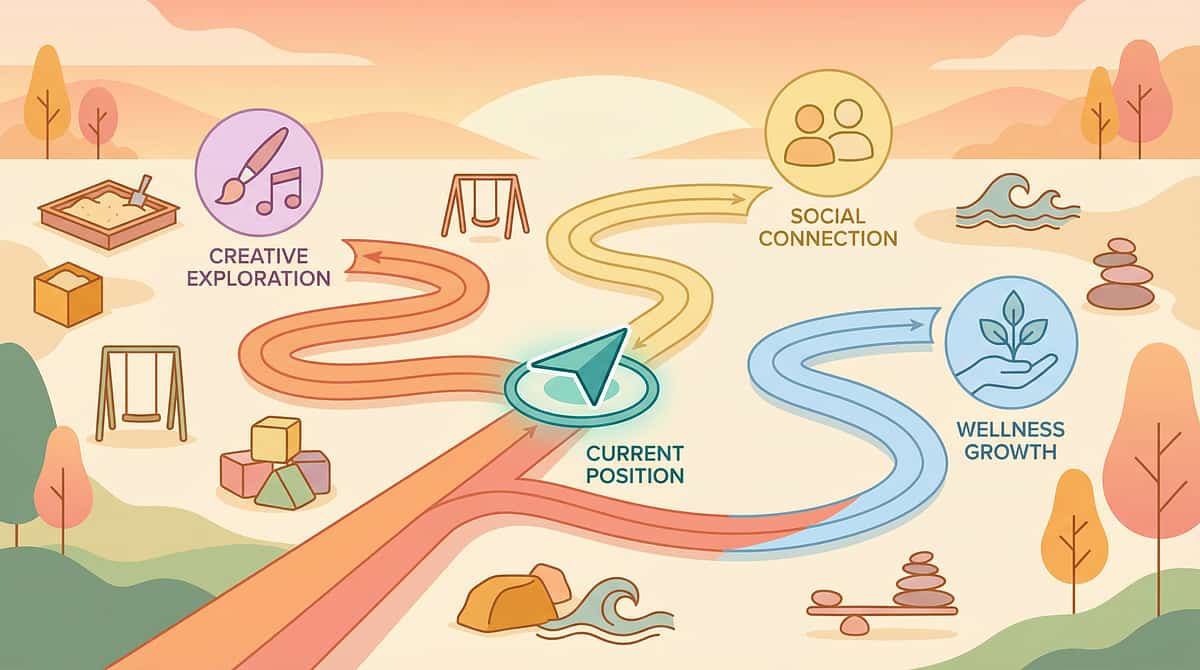
Weeks 3–4: Neural pathways are forming. Watch for these signs.
40%
Progress Milestone
Consolidation phase
Consolidation Indicators — What to Look For
Child goes to schedule independently at least once without being told
"What's next?" questions reduce by 30–50%
Child moves a completed task card to "Done" with minimal prompting
Child refers to task sequence cards during complex tasks without prompting
Transition warnings are beginning to work — child prepares, not always meltdown
You are giving fewer verbal directions during the routine
"By week 4, you may notice that you yourself feel more confident. You know the system. Your anxiety about the morning is decreasing. This is co-regulation — your regulated state supports your child's regulation."
When to Increase: If child shows consistent independent schedule use → introduce one additional routine. If asking for the schedule when you forget → reduce visual complexity to test internalization.
Act IV · Week 5–8
Weeks 5–8: Independence is emerging. You are not needed for every step anymore.
70%
Progress Milestone
Independence emerging phase
Independence Indicators
- Child completes 3+ consecutive steps without any prompting
- Independently accesses visual schedule most days
- Transition meltdowns reduced by 50%+ vs. week 1
- Can complete routine in your absence
- Child begins self-correcting (notices skipped step, goes back)
The Generalization Window
Weeks 5–8 is when to introduce the system to other settings:
- Share with school — request same visual system in classroom
- Introduce routine at grandparents' house with portable schedule
- Take a travel version for holidays
Fading the Visual Supports (when ready)
Important: Keep schedule available even after mastery — for difficult days, illness, holidays, and new situations.
Act IV · Celebrate
You did this. Your consistency built this skill.
🥉 First Independent Schedule Check
Your child looked at the schedule without being told. The neural pathway is real.
🥈 First Self-Directed Routine Step
Your child started a routine step without you initiating it. They initiated. This is the skill.
🥇 First Meltdown-Free Transition
Your child moved between activities with a transition warning and no meltdown. Regulation through prediction.
🏆 First Solo Routine Completion
Your child completed the full routine from start to finish with zero verbal prompts. This is independence.
🌟 "I know what's next!" (Child-Initiated)
Your child told YOU what comes next, without checking the schedule. It's internalized. It's theirs.
"The parents who succeed at home-based routine building are not parents with more time, more resources, or more expertise. They are parents who provided consistency. You did that. Whatever milestone you just hit — you did that." — Pinnacle Blooms Consortium

Act IV · Red Flags
When home practice needs clinical backup.
🟡 AMBER FLAGS — Contact Therapist Within 2 Weeks
- No improvement in schedule engagement after 4 consecutive weeks of consistent practice
- Child shows increasing (not decreasing) resistance to the visual system
- Transitions remain equally difficult or worse after 3 weeks
- Child's distress during routine practice is escalating
- You are unable to maintain consistent practice due to your own overwhelm (valid — support exists)
🔴 RED FLAGS — Call Within 48 Hours
- Child develops new self-injurious behavior during routine practice
- Extreme anxiety response to routine changes (non-stopping distress, hours)
- Child appears to have no picture comprehension despite consistent effort
- Significant regression in previously established routine skills
- Any behavior that feels unsafe
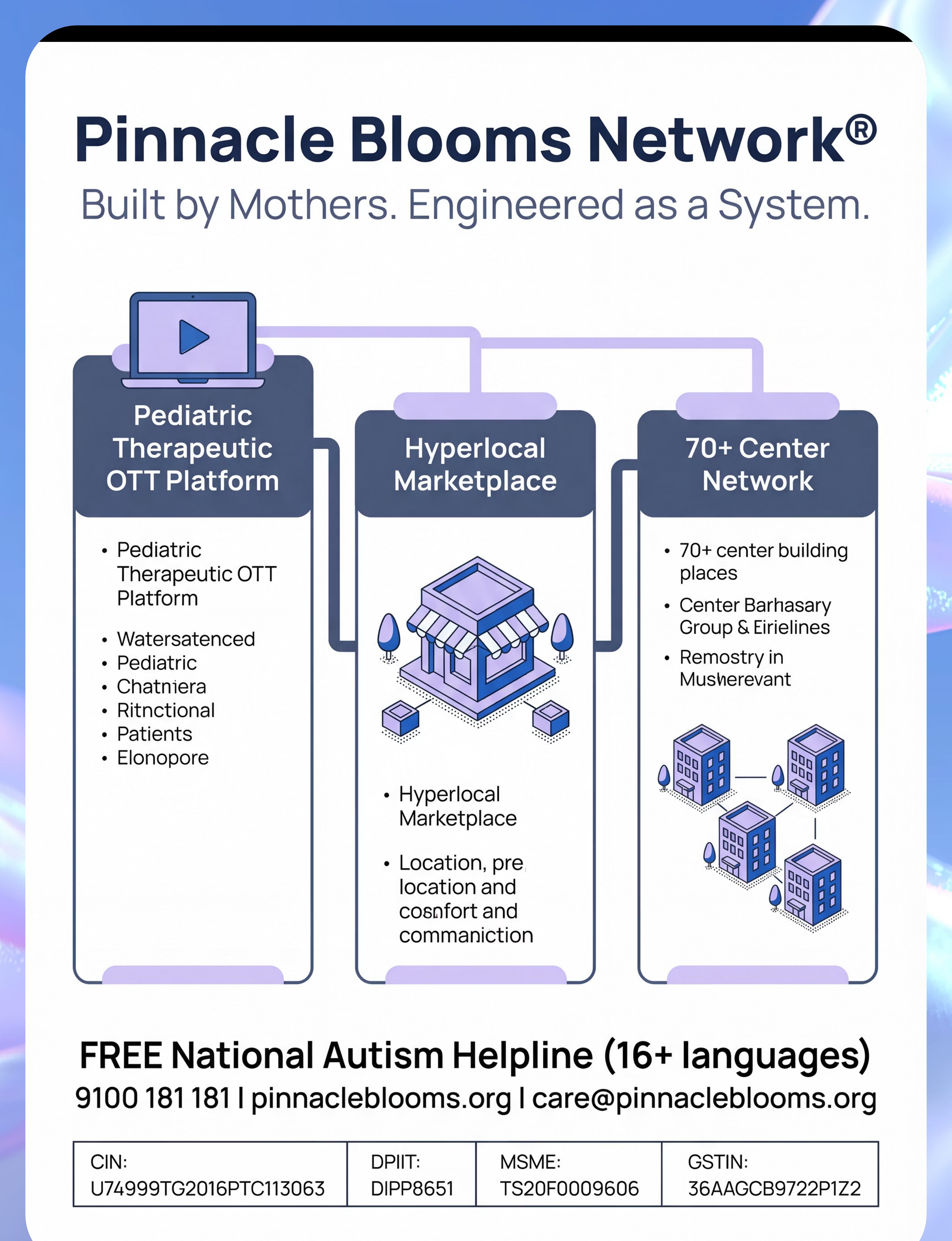
FREE Helpline (24x7, 16+ languages): 📞 9100 181 181
When you call: (1) Triage by trained therapist · (2) Immediate guidance for urgent situations · (3) Assessment referral within your nearest Pinnacle center (70+ locations) · (4) GPT-OS® formal evaluation of executive function profile
When you call: (1) Triage by trained therapist · (2) Immediate guidance for urgent situations · (3) Assessment referral within your nearest Pinnacle center (70+ locations) · (4) GPT-OS® formal evaluation of executive function profile

Act IV · Pathway
When home practice and professional support work together, outcomes multiply.
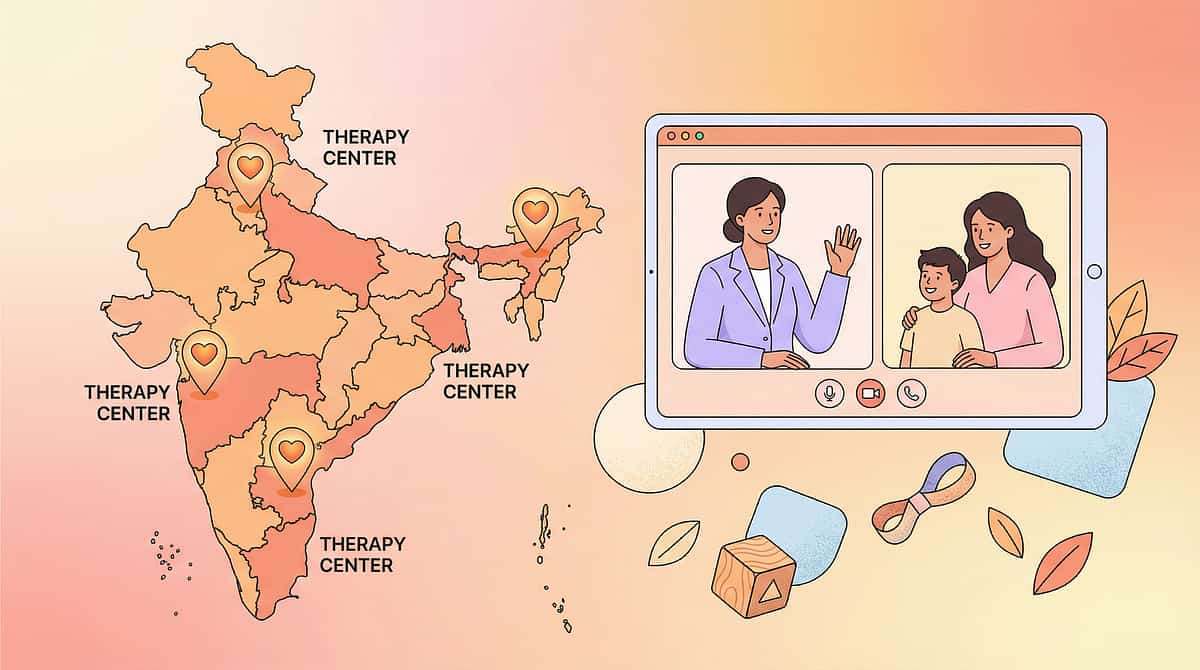
Find your nearest Pinnacle Blooms center: pinnacleblooms.org/centers — operating across Hyderabad, Bengaluru, Chennai, Mumbai, Delhi, Pune, and 60+ more locations across India.
Act IV · Related
Routine building is one skill in a system of skills. Here's what connects.
Reel | Title | Relationship to L-954 | |
L-952 | Working Memory Support | The cognitive foundation that visual schedules compensate for | |
L-953 | Task Initiation | Starting the routine — the step before following it | |
L-954 | Routine Building ← YOU ARE HERE | The full visual support system | |
L-955 | Time Management | Extends visual timers into full time-awareness curriculum | |
L-956 | Flexibility & Adaptability | Building the routine flexibility that choice boards begin | |
L-960 | Self-Care Independence | Applying routine skills to dressing, hygiene, and daily living |
Cross-Domain Connections
Sensory Regulation
Dysregulation blocks routine following — often needs to be addressed first
Transition Support
The intersection of routines and transitions — deeply linked
Independence & Daily Living
Routine as the foundation of independent living across all domains
Act V · Community Story
"Mornings used to be a battleground. Visual schedules changed everything."
"My son, Arjun, is 7 years old. He was diagnosed with ASD at 3, and from the moment he could walk, mornings were war. He could recite his routine perfectly when I asked him — brush teeth, get dressed, eat breakfast, pack bag. But every single morning, I was standing over him directing every single step. The moment I walked away, he'd start playing. I spent every morning shouting the same instructions. We were both exhausted and late every day.His OT at Pinnacle showed me visual schedules. We put laminated photo cards in the bathroom and bedroom. The first week — honestly, nothing. He ignored them. Week two, he started looking at them when I pointed. Week three, something shifted. He walked to the bathroom and checked his card before I said anything.By month two, he was checking the schedule himself. By month four, he started telling ME when he'd finished each step — 'I did teeth, Amma, see?' Six months in, he completes his entire morning routine with barely a glance at the chart. It's internalized. The schedule didn't make him dependent. It built the bridge he needed to cross from knowing the routine to actually doing it."
— Parent, Pinnacle Blooms Network®, Hyderabad. Illustrative case; outcomes vary by child, underlying challenges, and intervention consistency.

Act V · Community
You are not navigating this alone. 70,000+ families are building routines right now.
Pinnacle Parent WhatsApp Community
16+ regional language groups. Connect with parents at the same stage as you. Join via WhatsApp →
Pinnacle Online Parent Forums
Topic-specific forums: Morning Routines / Bedtime / School Transitions / ABA at Home. Join the forum →
EverydayTherapyProgramme™ Newsletter
Weekly home therapy tips from the Pinnacle Consortium. Free. Subscribe →
International Community
Pinnacle serves families across 70+ countries. Global parent community in English. International families →
Global Support Resources

Act V · Centers
70+ centers. Find professional support near you.
✅ GPT-OS® AbilityScore®
Standardized assessment available at every center
✅ FusionModule™
OT, ABA, SLP, SpEd under one roof
✅ 1:1 Exclusively
No group-based sessions — individual sessions only
✅ GPT-OS® Tracking
Data tracked across every session for closed-loop progress
All centers: pinnacleblooms.org/centers — across Hyderabad, Bengaluru, Chennai, Mumbai, Delhi, Pune, and 60+ more locations across India.
Can't come to a center? Teleconsultation + Digital EverydayTherapyProgramme™ available. pinnacleblooms.org/online

Act V · Research
Built on evidence. Validated by science. Delivered by consortium.
PMC11506176 — PRISMA Systematic Review (2024)
16 studies confirm visual schedule systems are evidence-based practices for ASD and executive function. Children.Read study →
PMC10955541 — Meta-Analysis (2024)
Structured visual environments: statistically significant improvements in routine independence and adaptive behavior. World J Clin Cases.Read study →
DOI: 10.1007/s12098-018-2747-4 — Indian RCT (2019)
Home-based interventions in Indian pediatric populations — significant outcomes. Indian Journal of Pediatrics.Read study →
NCAEP (2020) + WHO NCF (2018)
Visual supports classified as evidence-based practice for autism. Nurturing Care Framework: structured environments associated with improved cognitive and adaptive development. Read framework →
20M+
Exclusive 1:1 Sessions
Pinnacle clinical data
97%+
Measured Improvement
Across GPT-OS® tracked outcomes
160+
Countries — Patents Filed
GPT-OS® global IP protection
Academic collaboration and research partnerships: research@pinnacleblooms.org

Act VI · FAQ
Everything you wanted to ask. Answered by the consortium.
Q1: Will my child become permanently dependent on visual schedules?
No. Visual supports are scaffolding, not a permanent crutch. Most children will need progressively less visual support as habits form. Some children (and adults) will always benefit from visual organization tools — and that's fine, because adults use calendars and to-do lists without stigma.
Q2: My child can read. Do they still need picture-based schedules?
It depends. For many children with ASD, pictorial information processes faster with less cognitive load than text, even when reading skill is present. Start with pictures; shift to picture + word; eventually try word-only if the child demonstrates equal comprehension. Follow the child, not the developmental expectation.
Q3: How long until I see results?
Tolerance of the visual system: 1–2 weeks. Beginning to use schedule independently: 3–4 weeks. Significant reduction in verbal prompts: 5–8 weeks. Internalized routine (schedule optional): 3–6 months. If no progress after 4 consistent weeks, professional assessment is recommended.
Q4: What if we can't afford the materials?
Every material in this system has a ₹0 DIY alternative. The neurological principle is identical regardless of material cost. Start with printed photos, a felt square, and Velcro — total cost under ₹100.
Q5: My child tears up or throws the schedule. What do I do?
This is communication. Make the schedule more durable (laminated, mounted securely). Identify WHICH card is torn/thrown — that step may need modification. Return to a 2-step First-Then board and rebuild. Call 9100 181 181 if pattern continues.
Q6: Do I need to do this with EVERY routine simultaneously?
No — start with ONE routine only (morning or bedtime, not both). Get one routine working before adding another. Trying to implement all routines simultaneously dilutes consistency and overwhelms both parent and child.
Q7: My child's school refuses to use visual schedules. What can I do?
Request a meeting with the principal, special educator, and class teacher. Bring this page and research citations. Ask for a trial period. Contact Pinnacle at 9100 181 181 — specialist educators can provide school advocacy support and join school meetings as needed.
Q8: Is this only for children with autism?
No. Visual routine supports benefit any child with executive function challenges — ADHD, developmental delay, anxiety, learning differences, and neurotypical children who struggle with transitions. The neuroscience applies broadly: any developing brain benefits from externalized working memory support.

Act VI · Start Now
You have everything you need. Start today.
You have read the evidence, the science, the protocol, and the community. You know what your child needs. The next step is yours.
📞 Call 9100 181 181
FREE National Autism Helpline · 16+ Languages · 24x7
Get personalized guidance from our specialist team. No bots, no menus on first call — a specialist therapist answers.
Get personalized guidance from our specialist team. No bots, no menus on first call — a specialist therapist answers.
🏥 Find Your Nearest Center
70+ Pinnacle centers across India. Professional OT, ABA, SLP, and SpEd support under one roof. pinnacleblooms.org/centers
📋 Request an AbilityScore® Assessment
The GPT-OS® evaluation that builds your child's personalized therapy plan. pinnacleblooms.org/ability-score
20M+
Sessions Completed
97%+
Measured Improvement
70+
Centers Across India
70+
Countries Served
Preview of 9 materials that help with routine building Therapy Material
Below is a visual preview of 9 materials that help with routine building therapy material. The pages shown help educators, therapists, and caregivers understand the structure and content of the resource before use. Materials should be used under appropriate professional guidance.


Link copied!

Act VI · The Promise & Loop
This technique builds the foundation. The next one builds on it.
"Every routine your child masters is a neural pathway made permanent. Every morning that moves from chaos to calm is development in action. Every visual schedule that becomes unnecessary — because the child has internalized the routine — is a milestone that changes the trajectory of a life.We built this system for you. Clinically. Scientifically. With the love of every parent, therapist, and child who made Pinnacle what it is.Now go build the routine."— Pinnacle Blooms Consortium, 2025
Coming Next in the Executive Function Series:
⏱️L-955: 9 Materials That Help With Time Management
When your child can follow the routine, time awareness is the next frontier.
techniques.pinnacleblooms.org/executive-function/time-management-L-955
⏱️L-955: 9 Materials That Help With Time Management
When your child can follow the routine, time awareness is the next frontier.
techniques.pinnacleblooms.org/executive-function/time-management-L-955
This content is educational. It does not replace professional assessment or individualized intervention by qualified therapists or educators. Visual support systems should be designed based on individual needs, abilities, and learning profile. Individual results vary based on child, underlying challenges, and intervention consistency.
CIN: U74999TG2016PTC113063 · DIPP8651 (Govt. of India) · GSTIN: 36AAGCB9722P1Z2
Pinnacle Blooms Network® — Built by Mothers. Engineered as a System.
© 2025 Pinnacle Blooms Network®, unit of Bharath Healthcare Laboratories Pvt. Ltd. All rights reserved.
© 2025 Pinnacle Blooms Network®, unit of Bharath Healthcare Laboratories Pvt. Ltd. All rights reserved.