
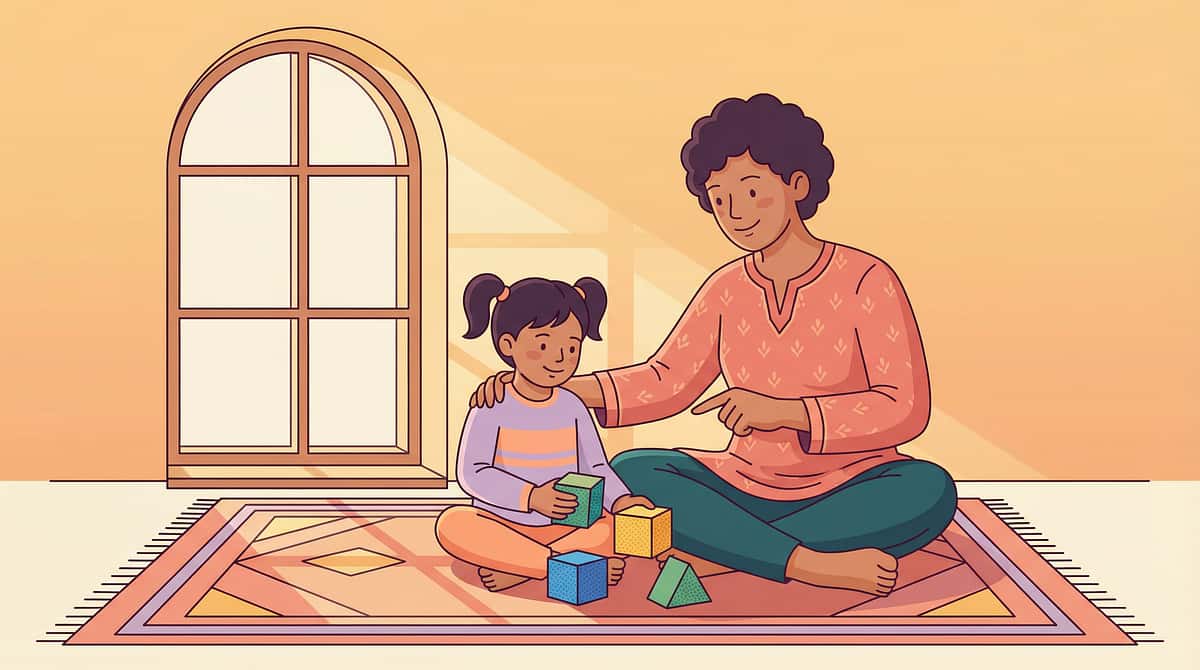
"My child lights up for every song. But when they try to dance — their body and the music are in completely different conversations."
It's not stubbornness. It's not shyness. Something deeper is happening — and it has a name, a neuroscience, and a solution.
9 Materials That Help With Rhythm & Dance | F-582 | Gross Motor & Physical Development
"You are not failing. Your child's nervous system is speaking."
🏛️Pinnacle Blooms Consortium | OT • SLP • ABA • SpEd • NeuroDev • Music Therapy
WHO Nurturing Care Framework (2018): Early parental awareness directly impacts developmental outcomes.
WHO Nurturing Care Framework (2018): Early parental awareness directly impacts developmental outcomes.

ACT I: THE EMOTIONAL ENTRY
You Are Among Millions of Families Navigating This Exact Challenge
1 in 6
Movement Coordination
Children experience movement coordination difficulties
80%
ASD & Rhythm
Children with ASD report significant rhythm and motor synchronisation challenges
47M+
Globally Affected
Children globally affected by developmental coordination challenges (WHO, 2024)
Rhythm difficulties are not rare. They are not a parenting failure. When a child loves music but cannot synchronise their body to it — this is a documented neurological pattern affecting millions of children across every country, every socioeconomic background, every culture. In India alone, an estimated 8–12 million children experience significant motor coordination challenges affecting their ability to participate in dance, music classes, and rhythmic play.
"You are not watching something wrong with your child. You are watching a nervous system that needs a different kind of bridge between hearing rhythm and producing it." — Pinnacle Blooms Clinical Consortium
PRISMA Systematic Review (2024): 80% of children diagnosed with ASD display sensory-motor processing difficulties. World J Clin Cases, 2024. | PMC11506176 | PMC10955541
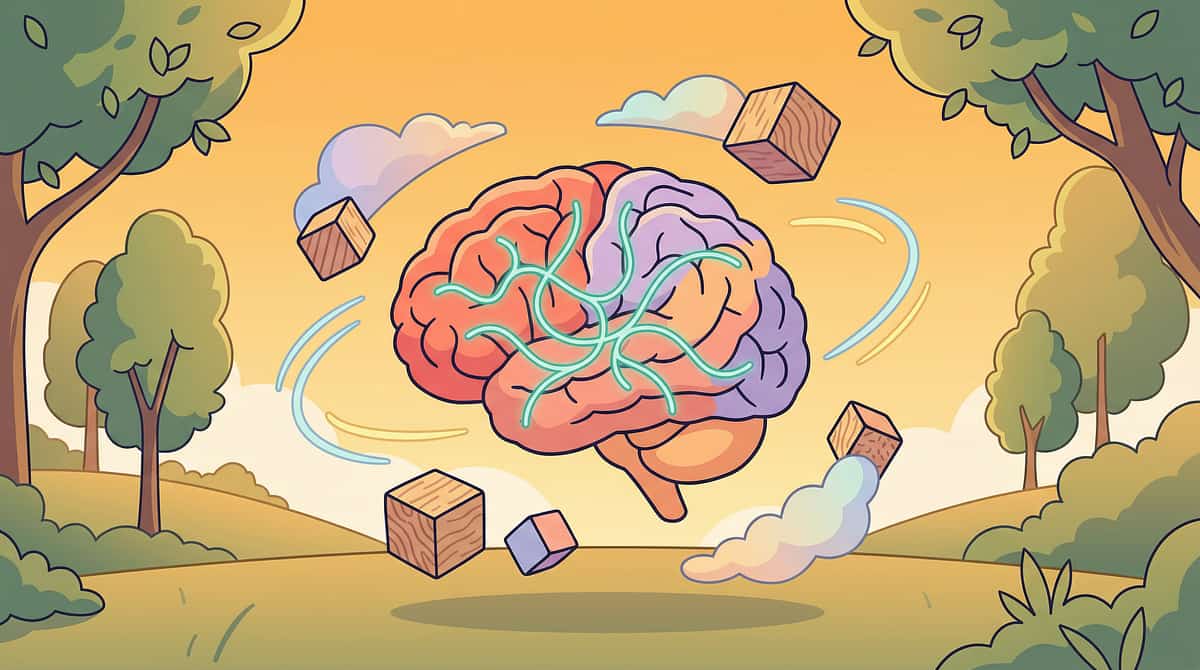
What's Happening in Your Child's Brain
Understanding the neurological pathway helps parents see why rhythm difficulties are a wiring difference — not a behaviour choice.
The Neurological Pathway
Auditory Cortex
Perceives and internalises the rhythm
Temporal Processing
Predicts when the next beat arrives
Motor Planning
Organises the movement sequence
Bilateral Coordination
Both sides of the body work in sync
Vestibular + Proprioception
Balance and body-in-space awareness during movement
Plain English
Auditory-Motor Synchronisation is the brain's ability to hear a rhythmic beat and translate it into precisely timed movement — millisecond by millisecond. When your child seems "off the beat," it's not that they don't hear the music. What's happening is the translation chain — from auditory cortex to motor cortex to muscle execution — has a delay or a break.
This is a wiring difference, not a behaviour choice. It cannot be fixed by practice alone. It requires targeted materials and approaches that rebuild the missing bridges.
- Auditory Processing: Hearing and internalising the beat
- Temporal Processing: Predicting when the next beat comes
- Motor Planning: Organising body movements in sequence
- Bilateral Coordination: Right and left sides working together
- Vestibular Processing: Balance while moving through space
- Proprioception: Knowing where your body is without looking
Frontiers in Integrative Neuroscience (2020): DOI: 10.3389/fnint.2020.556660

Where This Sits in Development
Every child's rhythm journey has a map. Here is where your child is — and where they're heading.
0–18 Months
Responds to musical beat; bouncing to music emerges by 5–7 months
18–36 Months
Spontaneous bouncing/swaying to music; simple beat clapping emerges
3–5 Years
Clapping to simple songs; marching to a steady beat; simple dance production
5–7 Years
Basic dance sequences with rhythm; complex coordination developing
7–14 Years
Complex coordinated movement with music; rhythm in sport and PE
Your child's challenge may sit anywhere in this timeline — and it is fully addressable. Children with ASD, DCD/Dyspraxia, ADHD, Auditory Processing Disorder, or Sensory Processing Differences often show persistent rhythm difficulties. These are neurological — not motivational.
WHO Care for Child Development Package (2023) | UNICEF MICS developmental indicators (197 countries) | PMC9978394

Evidence Foundation
Clinically Validated. Home-Applicable. Parent-Proven.
🏆 Evidence Level: I–II
Systematic Reviews + RCTs | Multiple disciplines | 16+ studies (2013–2023)
Systematic Reviews / PRISMA
Randomised Controlled Trials
Cohort Studies
Clinical Consensus
Expert Panel
Key Research Findings
Rhythm-Based Sensory-Motor Intervention
Significantly improves auditory-motor synchronisation, bilateral coordination, and motor planning in children with developmental differences (PRISMA Review, 2024 — 16 studies)
Music Therapy with Movement
Evidence-based practice for autism across motor, social, and communication domains (American Music Therapy Association + NCAEP 2020)
Home-Based Intervention
Indian RCT demonstrates significant outcomes when parents execute structured sensory-motor protocols at home (Padmanabha et al., Indian J Pediatr, 2019)
Multi-Sensory Approach
Adding visual and proprioceptive channels to auditory rhythm training dramatically improves synchronisation outcomes (Frontiers in Neuroscience, 2020)
PMC11506176 | PMC10955541 | PMC9978394 | WHO NCF 2018 | NCAEP 2020
ACT II: THE KNOWLEDGE TRANSFER
F-582: What This Technique Is
🎵 Technique Identity
Formal Name: Auditory-Motor Synchronisation Materials & Rhythm Scaffolding
Parent-Friendly Name: "Materials That Help Your Child Find the Beat"
Series: Gross Motor & Physical Development | Episode 582
📍 Domain
Gross Motor / Physical Development / Music Therapy
👶 Age Range
3–14 years
⏱️ Duration
10–20 minutes per session
📅 Frequency
3–5 times per week
Definition
This technique introduces 9 specific therapy materials that bridge the gap between hearing rhythm and producing it through the body. Each material targets one or more of the broken links in the auditory-motor chain — providing external scaffolding (drums, visual beats, floor markers, weighted bands, mirrors, partner dancing) that gradually internalises into the child's own rhythm capacity.
This is not a music lesson. This is neurological scaffolding — building the infrastructure between brain and body that allows joy, coordination, and social participation in dance and rhythm to emerge.
Bilateral Coordination
Motor Planning
Vestibular
Auditory-Motor Integration
Setting: Home | Therapy Centre | School | Community
Need Help? FREE National Helpline (16+ languages): 9100 181 181 | pinnacleblooms.org

Who Uses This Technique
This technique crosses therapy boundaries because the brain doesn't organise by therapy type.
Occupational Therapy (Primary Lead)
Addresses motor planning, bilateral coordination, vestibular processing, and proprioception through structured sensory-motor rhythm activities.
Music Therapy
Auditory-motor synchronisation, beat perception training, rhythm instrument work, and movement-to-music protocols.
Neurodevelopmental Paediatrics
Oversees neurodevelopmental assessment, diagnoses underlying conditions (DCD, ASD, ADHD), and informs adaptation of intensity.
Speech-Language Pathology
Oral-motor rhythm, prosody training, and social communication within shared musical activities.
Special Education
Rhythm-based learning sequences, academic engagement through music, and participation in school dance/music programmes.
ABA / BCBA
Reinforcement scheduling within rhythm sessions, data collection on synchronisation milestones, and behavioural shaping of dance participation.
"When a child cannot find the beat, it is never a single-discipline problem. At Pinnacle, the OT identifies the sensory-motor gap, the music therapist builds the auditory bridge, the BCBA reinforces each successful synchronisation, and the family executes daily." — Pinnacle Blooms Clinical Consortium 🏛️
Material 1 of 9
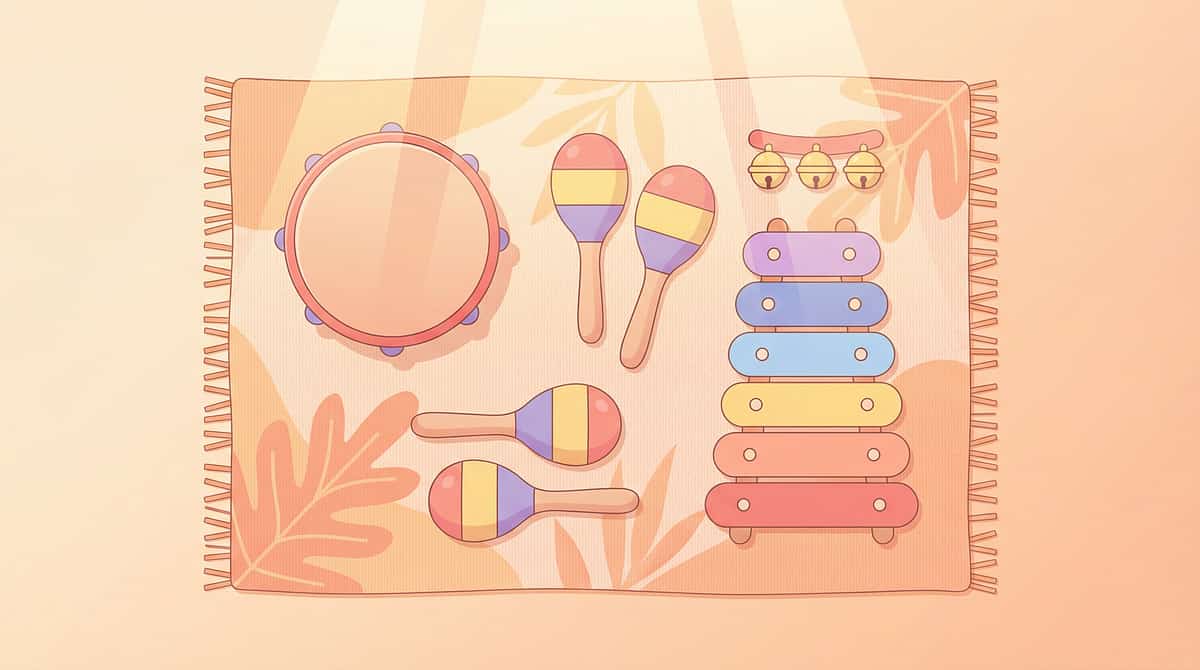
Drum / Rhythm Percussion Set
Why It Works
Creates rhythm internally before following external beats. Proprioceptive feedback from striking builds auditory-motor pathways. The child becomes the beat-maker — establishing ownership and internal rhythm generation from the very first session.
Therapeutic Target
Auditory-motor synchronisation | Internal beat awareness | Proprioceptive feedback loops
Price Range
₹800–5,000
How to Use It
Present the drum at the child's mid-body height. Demonstrate one slow, clear strike — pause — smile. Extend toward the child and wait. Do not impose a tempo. Let the child strike freely first, then mirror exactly what they do.
💡DIY Option (₹0): An upturned bucket + wooden spoon delivers the same cause-effect: strike = immediate sound = rhythm control. No budget required to begin today.
Canon Category
Music & Rhythm Instruments | Pinnacle 128 Canon Materials System
Material 2 of 9
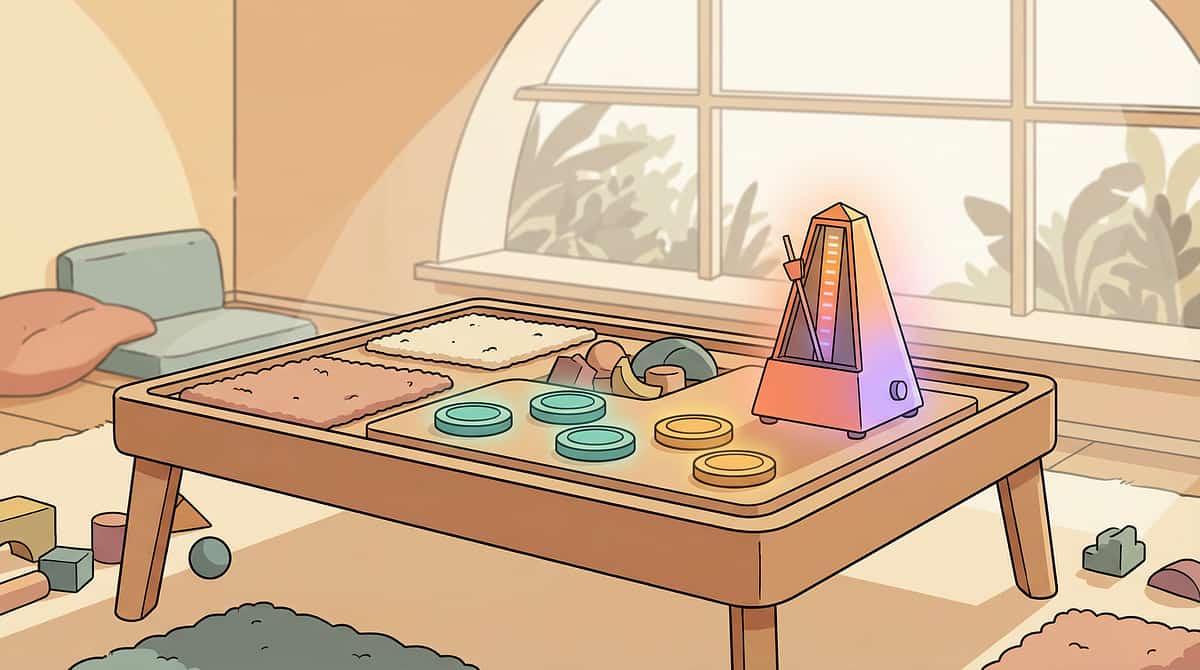
Visual Beat Markers / Light-Up Metronome
Why It Works
Adds a visual channel to auditory rhythm. Children who cannot sync to sound alone can often synchronise immediately to a visual flash. This dual-channel approach — hearing the beat and seeing it simultaneously — dramatically reduces the processing gap.
Price Range
₹500–3,000
How to Use It
Start at 50–60 BPM — slower than feels necessary. Point to the light; tap your own knee on each flash. Invite the child to join: "You do it too if you want." The visual cue provides external beat memory that working memory deficits cannot.
💡DIY Option (₹0): Phone metronome app + manual flashlight tap = same dual-channel audio + visual beat on every tick.
⚠️Safety: Check for photosensitivity or seizure history before using any flashing lights. If in doubt, use a bouncing-ball metronome animation instead.
Material 3 of 9
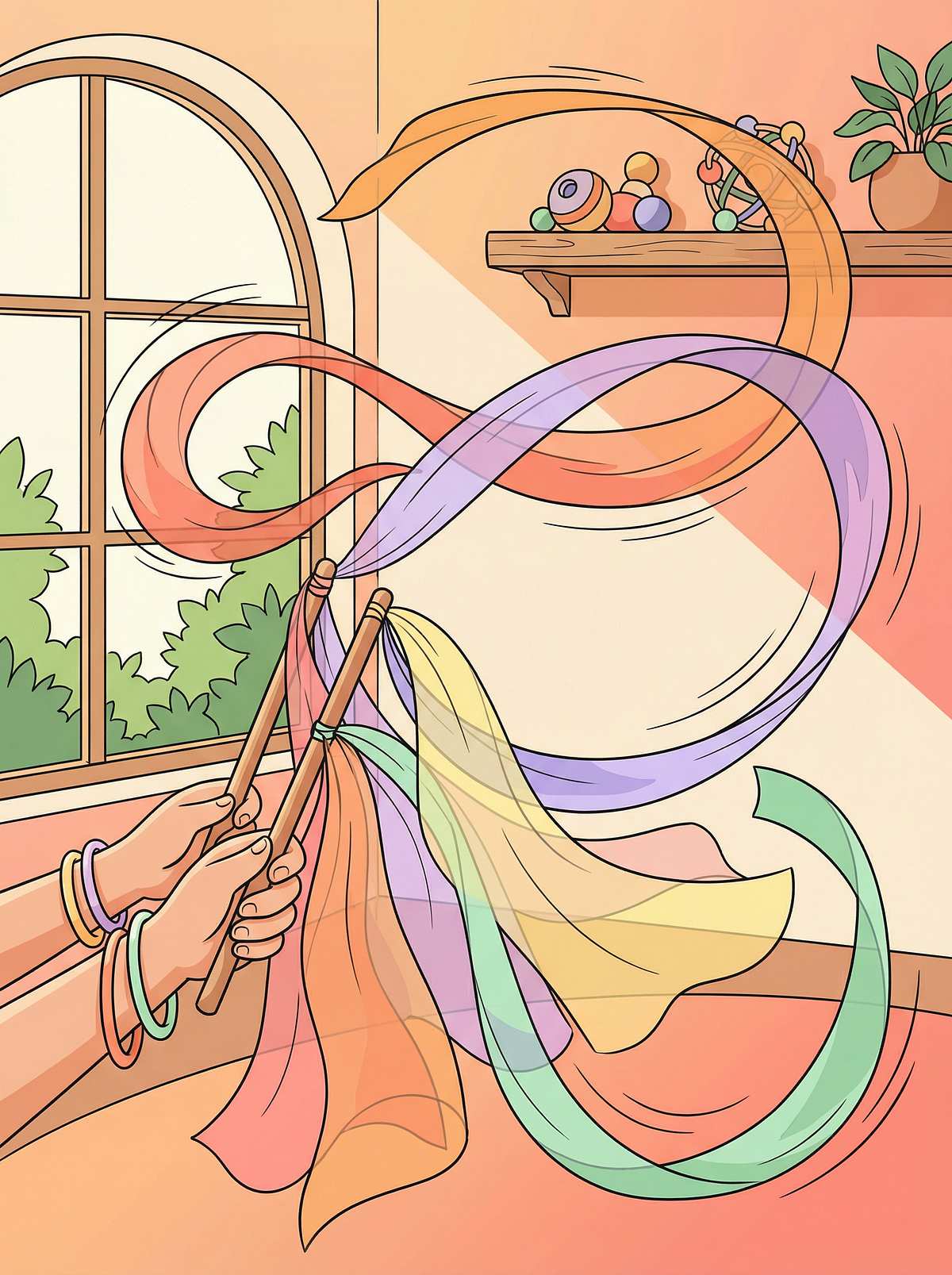
Ribbon Wands / Dance Scarves
Why It Works
Makes movement visible — the flowing trail shows the body exactly where it has been, naturally slowing movement for coordination. The ribbon provides real-time visual feedback of arm path and reduces performance pressure enormously. Children who freeze during "dancing" often move freely when they have a ribbon.
💡DIY Option (₹0): A long ribbon or dupatta strip tied to a chopstick delivers the same movement trail and visual feedback.
Therapeutic Target
Movement flow awareness | Visual proprioceptive feedback | Reduced performance anxiety | Arm-body coordination
Canon Category
Movement Flow Tools
Price Range
₹200–800
Material 4 of 9
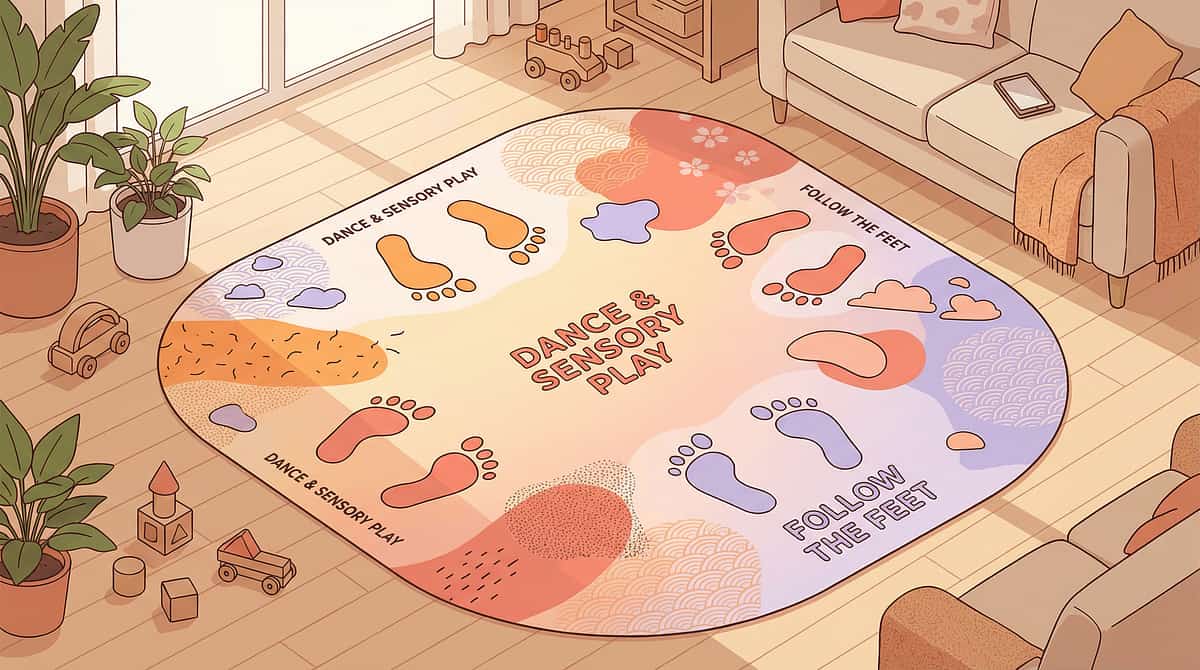
Floor Markers / Dance Mat with Positions
Why It Works
Externalises the movement plan. The child sees exactly where each foot goes — reducing the motor planning load from internal (the brain must generate the plan) to external (the floor shows the plan). This single shift unlocks movement in children who otherwise freeze.
Price Range
₹500–2,500
How to Use It
Lay 3–6 markers in sequence before the child enters the space. Begin with a simple left-right-left pattern. Add beat timing once the sequence is learned spatially. Script: "Can you step on the blue one every time you hear the beat?"
💡DIY Option (₹20): Coloured paper cut-outs + masking tape = same spatial guidance and visible foot targets. This is one of the most powerful ₹0 tools in the entire kit.
Canon Category
Spatial Planning Aids
Material 5 of 9
Slow-Tempo Music Library (60–80 BPM)
Why It Works
Fast music overwhelms developing rhythm systems. Meeting the child's processing speed at 60–80 BPM builds the neural pathways that faster music assumes already exist. Most commercial children's music is far too fast — this is the single most commonly overlooked variable in home rhythm practice.
At 60 BPM, there is one beat per second — enough time for the auditory cortex to perceive, the motor cortex to plan, and the muscles to execute. At 120 BPM, that window halves.
How to Find It
Search Spotify or YouTube for "60 BPM children rhythm playlist" — dozens of free options are available. Look for "slow children's songs," "lullaby tempo," or "60 BPM metronome beat."
Price Range
₹0–500 (playlist curation or streaming)
💡Free Resource (₹0): YouTube bouncing-ball lyric videos at slow tempo — the visual ball on each beat adds a bonus visual channel at no cost.
Canon Category
Tempo-Graded Music
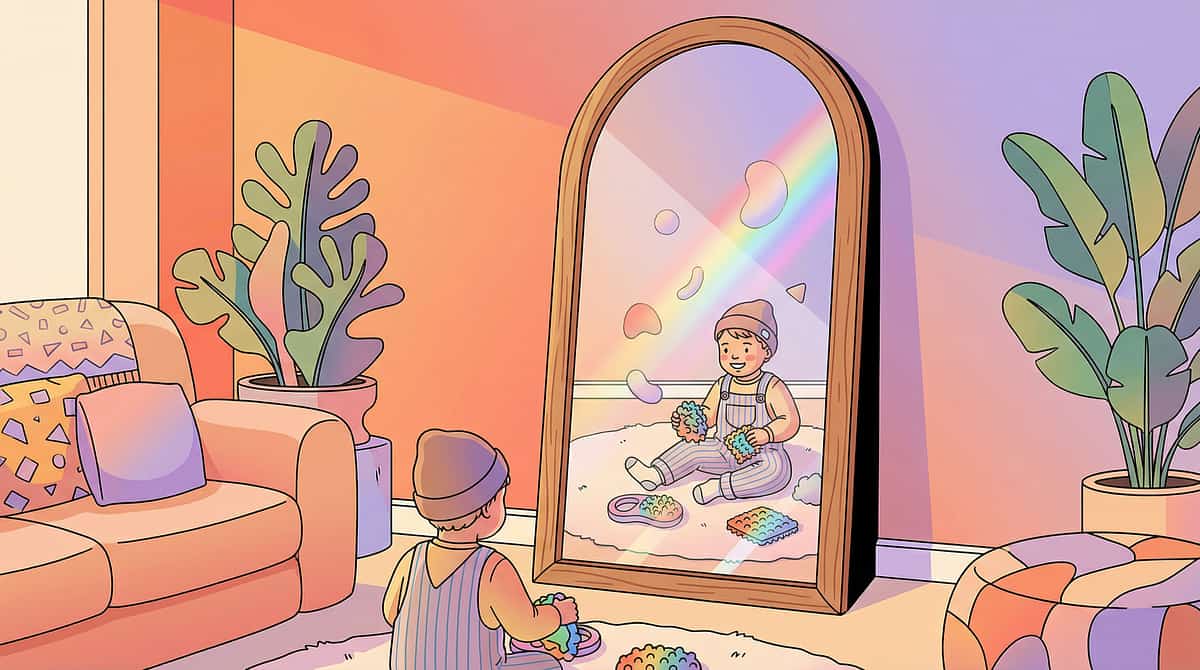
Material 6 of 9
Full-Length Mirror
Why It Works
Externalises proprioception. Children with poor body awareness see what their body is actually doing — enabling self-correction without verbal instruction. The mirror provides immediate, continuous visual feedback that no amount of verbal coaching can replicate. Many children are surprised to discover what their body looks like during movement.
Price Range
₹1,500–5,000
How to Use It
Position at child's eye level — full body must be visible during movement. Stand alongside the child (not behind). Script: "Look — your ribbon is dancing with the music!" The mirror transforms self-consciousness into self-discovery.
💡Alternative (Free): Smartphone video recording + immediate playback delivers the same visual feedback loop — and the child can watch it repeatedly at their own pace.
⚠️Safety: Secure standing mirrors firmly. Safety-backed glass is mandatory. Never leave an unsecured mirror in a child's play space.
Canon Category
Visual Feedback Tools
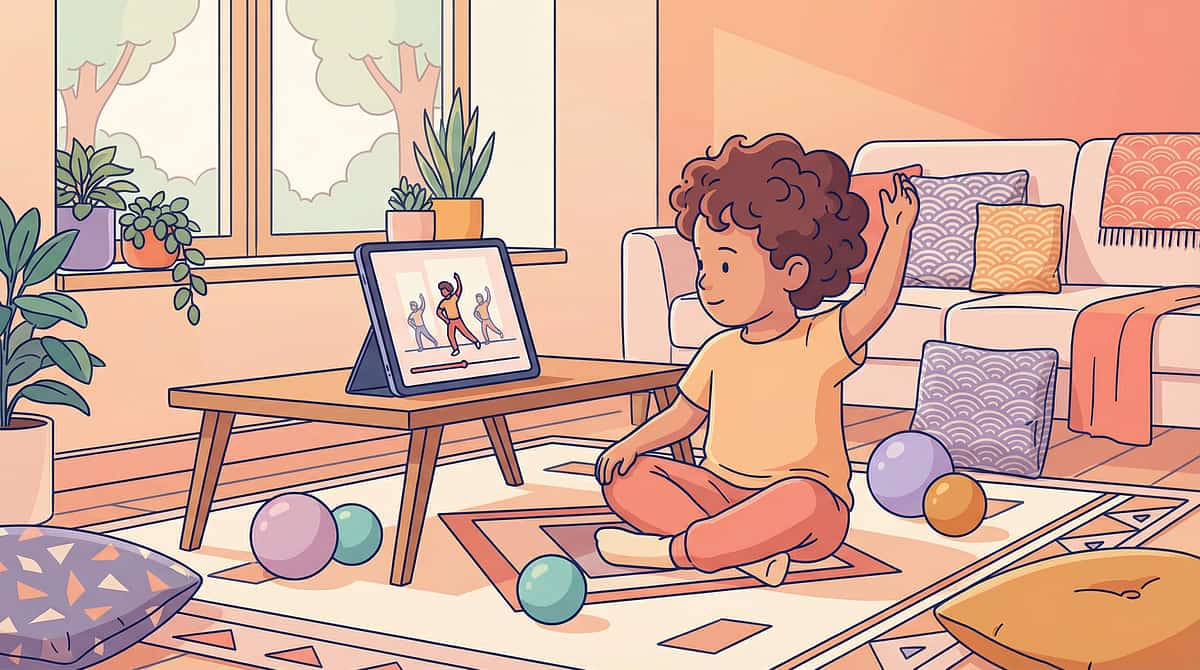
Material 7 of 9
Video Modelling / Dance Tutorial Collection
Why It Works
Infinite repetition at learner-controlled pace. Video modelling is classified as an evidence-based practice for autism by the National Clearinghouse on Autism Evidence & Practice (NCAEP, 2020). The child can watch, pause, replay, and learn without any social pressure — removing the performance anxiety that live instruction creates.
💡Pro Tip: Record your own demonstrations — personalised models are the most powerful. A child watching their own parent demonstrate a move is more motivating than any professional video.
How to Find It
Free: YouTube search "easy slow dance tutorial for kids". Filter by speed — look for tutorials that explicitly demonstrate moves slowly and allow pausing.
For Older Children (8–14)
Video self-modelling — recording the child's own rhythmic movement and playing it back immediately — is particularly powerful for this age group. Seeing yourself succeed creates powerful internal motivation.
Price Range
₹0–1,000
Canon Category
Video Modelling Resources | NCAEP Evidence-Based Practice 2020
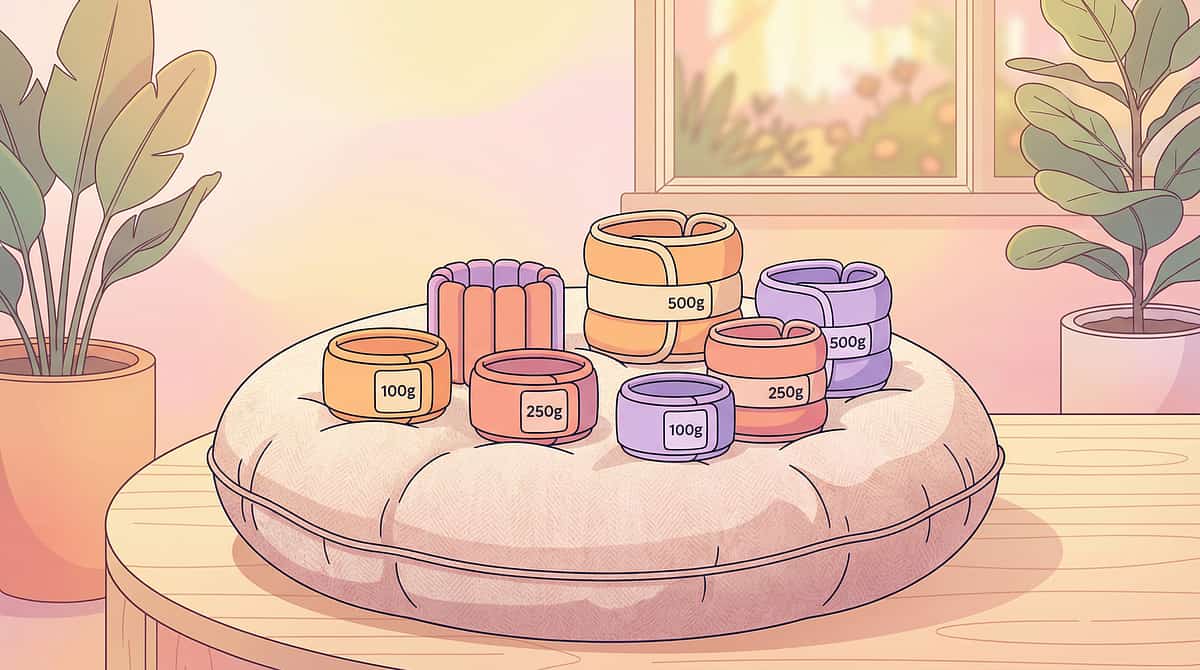
Material 8 of 9
Weighted Wristbands / Ankle Weights (100–500g)
Why It Works
Enhanced proprioceptive feedback — increased sensory information about where limbs are in space during movement. The same principle as weighted blankets: more sensory input helps the nervous system build a clearer body map. For children who "lose" their arms during dancing, this extra input is often transformative.
Price Range
₹300–1,200
How to Use It
Use only for the active Phase C (Move to the Beat) portion of a session — not for extended periods. Light weights only: 100–500g maximum. Observe the child's response closely; if they seem uncomfortable or restrict movement, remove immediately.
💡DIY Option (₹0): A sand-filled sock tied gently at the wrist delivers the same proprioceptive input — same sensory awareness, zero cost.
⚠️Safety: Light weights only (100–500g). Do not use for extended periods. Consult an OT before using weighted accessories for children with joint hypermobility or recent injury.
Canon Category
Proprioceptive Support Tools
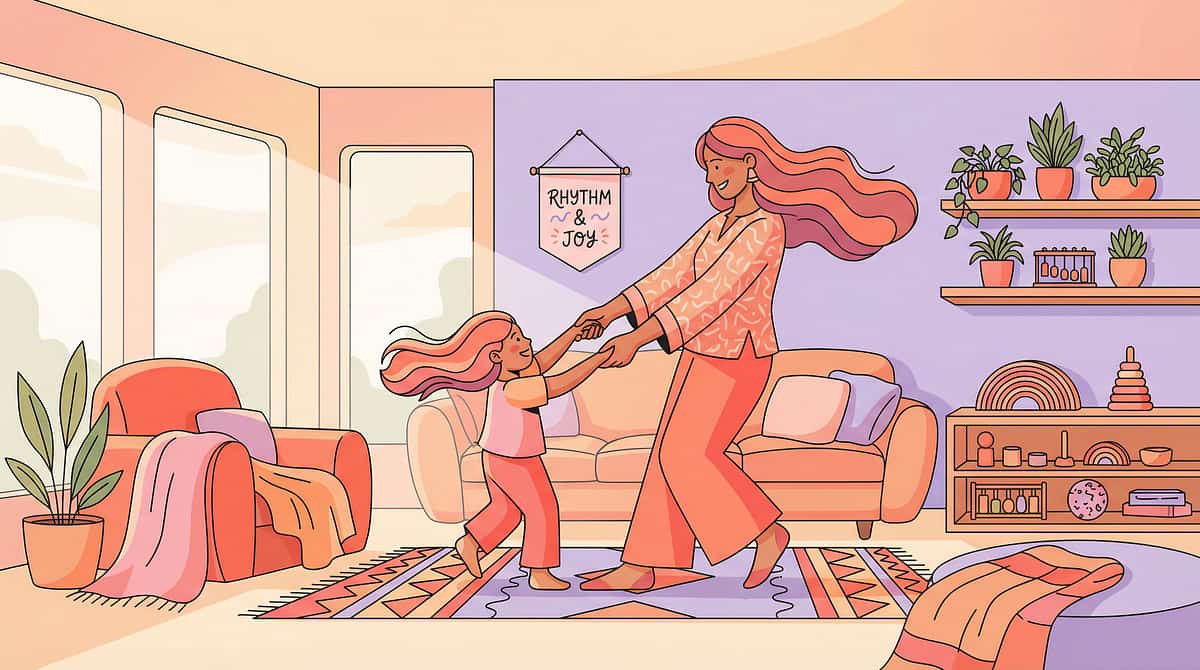
Material 9 of 9
Partner / Buddy Dance System
Why It Works
Physical connection transmits timing and movement through touch — a form of learning that watching and listening cannot provide. When a parent holds a child's hands and sways to the beat, the child's nervous system receives rhythm through proprioception and tactile sensation simultaneously. This "rhythm by touch" is often the fastest pathway for children who struggle with all other channels.
"You are the most important material in this toolkit."
How to Use It
Hold both hands, face the child, and sway slowly to 60 BPM music. No instructions needed — the body learns from the body. Switch to a ribbon-bridge (each person holds one end of a ribbon) for children with tactile defensiveness.
Cost
₹0 — Parent, sibling, grandparent, or peer. Human connection is the scaffold.
Canon Category
Social Scaffolding | Highest-value material in the F-582 toolkit
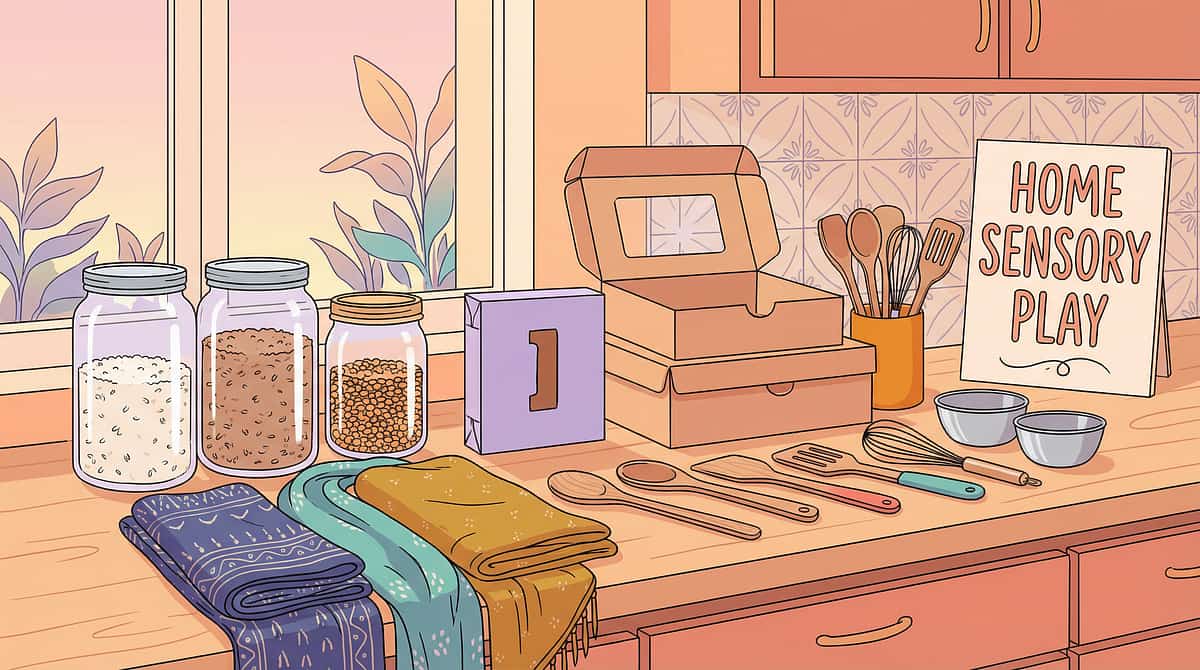
Starter Kit: Begin Today for ₹0–₹20
Every family, regardless of budget, can start today. The zero-cost kit uses household materials and delivers the same therapeutic foundation as clinical-grade equipment.
1. Bucket Drum
Upturned plastic bucket + wooden spoon. Same cause-effect: strike = immediate sound = rhythm control. Cost: ₹0
2. Phone Metronome
Free metronome app + manual flashlight tap. Same dual-channel: audio + visual beat. Cost: ₹0
3. Slow Playlist
YouTube 60 BPM playlist. Same tempo calibration: processing speed matched to child. Cost: ₹0
4. Paper Markers
Coloured paper squares + masking tape. Same spatial guidance: visible foot targets. Cost: ₹20
5. Dance Partner
You — present, patient, joyful. Rhythm transmitted through touch. Cost: ₹0
When clinical-grade materials are non-negotiable: if the child has significant vestibular processing difficulties or tactile defensiveness, consult an OT before DIY weighted alternatives. For children with photosensitivity, avoid DIY flashing lights.
WHO NCF (2018) equity principles | CCD Package: household-material intervention efficacy validated across 54 LMICs | PMC9978394
Safety First: Before You Begin
Every safe session starts with these checks. Running through this traffic-light system takes under two minutes and prevents the majority of session difficulties.
1
🔴 Do NOT Proceed If
- Child has active ear infection or vertigo — vestibular activities are contraindicated
- Child has photosensitivity or seizure history — avoid flashing lights (Material 2)
- Child is in acute distress, post-meltdown, or severely dysregulated
- Child has a recent joint injury — no weighted accessories
- Child is showing signs of illness (fever, pain, significant fatigue)
- Environment has noise/sensory interference the child cannot tolerate
2
🟡 Modify If
- Child seems mildly unsettled — reduce to 5 minutes, use only 1 material
- Child resists physical partner contact — substitute mirror + video
- Weighted accessories cause visible discomfort — remove immediately, start lighter
- Flashing lights cause agitation — use bouncing-ball rhythm animation instead
3
🟢 Optimal Proceed Indicators
- Child is fed (not hungry), rested, and in a regulated state
- Space is clear of trip hazards with adequate floor room
- Parent is calm, patient, with 15–20 uninterrupted minutes
- Child has recently engaged positively with music or movement
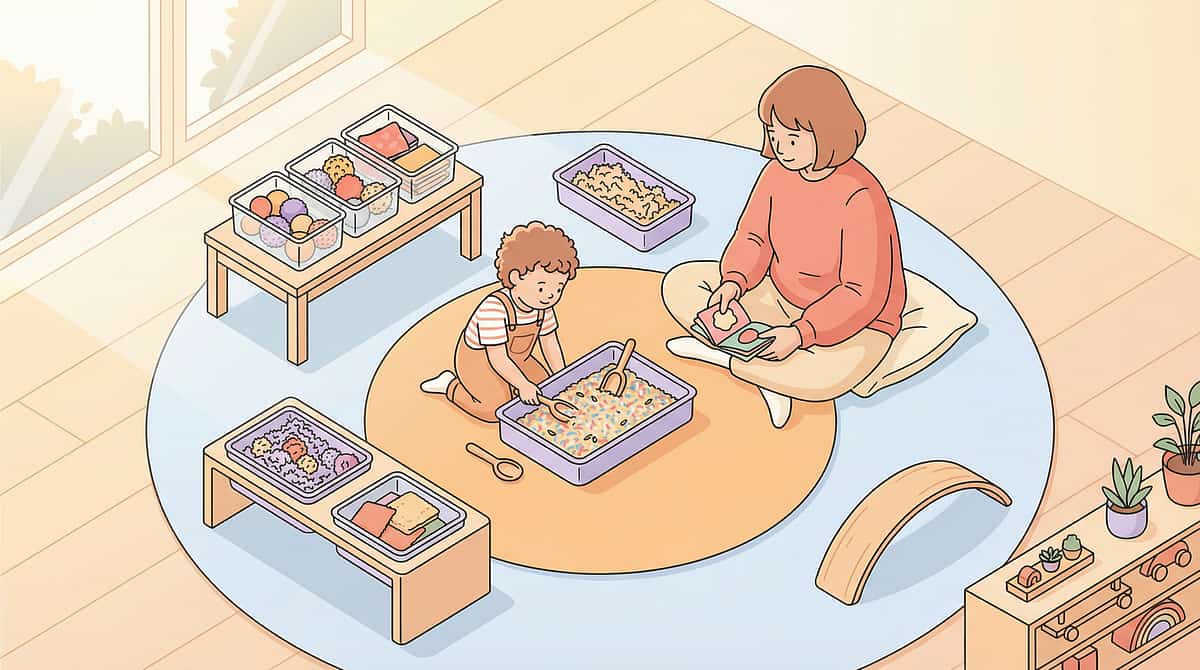
Set Up Your Space
Spatial precision prevents 80% of session failures. Set up the space before the child enters — the environment signals safety and structure from the moment they walk in.
1
Clear the Floor
Minimum 2m × 2m — remove furniture, objects, and trip hazards. The child needs to be able to extend arms fully without striking walls or objects.
2
Position the Mirror
At child's eye level on the far wall — full body must be visible during movement. Secure standing mirrors firmly; safety-backed glass only.
3
Lay Floor Markers
3–6 spots in sequence before child enters. The plan is already visible — this reduces motor planning load immediately.
4
Position the Drum
Within child's reach from standing centre position — right side. Not presented formally; just placed naturally.
5
Cue the Music
Slow playlist ready at 60 BPM, volume comfortable (audible but not overwhelming). Test before child enters.
6
Parent Position
Alongside child (not behind), within arm's reach for partner dancing. Remove distracting toys, screens, and competing sensory elements.
Sensory Integration Theory (A. Jean Ayres) — environmental setup as a core intervention principle | PMC10955541 (1:1 structured environment efficacy)
ACT III: THE EXECUTION
Is Your Child Ready? The 60-Second Readiness Check
The best session is one that starts right. Before every session, run this quick assessment — it takes 60 seconds and prevents the most common causes of session breakdown.
Check | 🟢 GO | 🟡 Modify | 🔴 Postpone |
Fed? | Ate 30–60 min ago, not hungry | Mild hunger → offer small snack first | Recently ate large meal → wait 45 min |
Rested? | Alert and engaged | Slightly tired → shorten to 10 min | Overtired/just woke → reschedule |
Regulated? | Calm baseline, no recent meltdown | Mild irritability → start with drumming only | Dysregulated/post-meltdown → postpone |
Receptive? | Responds to name, making eye contact | Distracted but redirectable | Completely withdrawn → offer calm activity first |
Physical? | No pain, no visible illness | Mild cold but otherwise okay → shorter, gentler | Fever, ear pain, joint pain → postpone |
✅ 3+ Green = GO
Proceed to Step 1: The Invitation
⚡ 2+ Amber = Modify
1 material, 8–10 minutes, lowest intensity
🛑 1+ Red = Postpone
Offer preferred calming activity; log as "session skipped — state not optimal"
Step 1 of 6
The Invitation
Every session begins with an invitation, not a demand. The child enters the activity through play, not prescription. This single principle is what separates successful home sessions from frustrating ones.
The Exact Words
"Hey, I found something cool. Want to see if we can make some music together? No pressure — just for a second."
Body Language
- Get to child's eye level — crouch or sit
- Open posture; no crossed arms
- Relaxed face — genuine smile, not performance smile
- Hold the drum or ribbon casually — no formal presentation
Maximum 30–60 seconds for invitation phase. If no uptake after 60 seconds: play the drum solo yourself — child will often approach within 2 minutes.
What Acceptance Looks Like
- Moves toward the material
- Reaches for the drum or ribbon
- Maintains proximity without fleeing
- Vocalises positively (even without words)
- Watches parent's hands with curiosity
What Resistance Looks Like — and How to Respond
- Turns away → reduce proximity; play the drum yourself for 30 seconds; wait
- Says "no" → honour it: "Okay, I'll just play for a minute, you can watch"
- Moves away → follow playfully without pressure; bring the drum casually
- Covers ears → music volume is too high; lower it; offer drum without music
ABA Pairing Principle: Establish positive association before any demand. | OT "Just-Right Challenge": Match task demand to current capacity.
Step 2 of 6
The Engagement
The child is now present. Introduce the material with intent. The reinforcement schedule begins here — every intentional strike or movement deserves an immediate, enthusiastic response.
For Drum / Percussion (start here — all children)
"Watch — I'm going to tap this. Can you hear it? Tap tap tap. Your turn. Just tap whenever you want."
- Present drum at child's mid-body height
- Demonstrate one slow, clear strike — pause — smile
- Wait 5–10 seconds after extending the drum
- Do NOT count, do NOT impose tempo — let child strike freely first
- Mirror whatever the child does: child taps twice → you tap twice → smile
For Visual Beat Markers (add after drum success)
"See this light? Every time it blinks, that's the beat. Let's try tapping together when it blinks."
- Start at 50–60 BPM — slower than feels necessary
- Point to the light; tap your own knee on each flash
- Invite: "You do it too if you want" — no demand
Reinforcement Cue — When to Praise
Immediately (within 2–3 seconds) after any intentional strike or movement:
"Yes! That's exactly it!" / "I heard that — perfect!" / "You did it!"
Timing matters more than magnitude. Immediate + specific + enthusiastic = neural pathway stamped.
PMC11506176 | Reinforcement scheduling from ABA literature | Structured material introduction | 1–3 minutes engagement phase
Step 3 of 6
The Therapeutic Action — The Core Event
The active ingredient: moving with the rhythm — first producing it (drum), then following it (music + visual), then embodying it (floor markers + partner). The session should feel like play that happens to have structure — not structured practice that permits a little fun.
1
Phase A: Create the Beat (5–7 min)
Child controls the drum. Parent mirrors the rhythm. No external music yet. Script: "I'm going to follow your beat. You're the conductor."
2
Phase B: Follow the Beat (3–5 min)
Introduce slow music at 60 BPM — matching the child's natural drumming tempo. Encourage clapping or marching. Use floor markers: "Step on the blue one every time you hear the beat."
3
Phase C: Move to the Beat (2–3 min)
Wave the ribbon wand on the beat. Step on markers in sequence: red → blue → yellow → repeat. Mirror reflection. Add weighted bands just for this phase if used.
Common Execution Errors to Avoid
❌ Counting aloud on every beat — makes it feel like school; use body movement instead
❌ Correcting off-beat attempts verbally — redirect by modelling, not critique
❌ Tempo too fast — if child is struggling, tempo is always the problem; slow down first
❌ Too many materials at once — start with 1, add second only after success with first
Total duration: 10–15 minutes | Core action: 6–9 minutes | PMC10955541 | NCAEP 2020 video modelling evidence
Step 4 of 6
Repeat and Vary
"3 good repetitions are worth more than 10 forced ones." Therapeutic dosage is about quality of engagement — not volume of attempts.
Material | Target Reps/Session | Variation to Maintain Engagement |
Drum beats | 3–5 rounds of 8–16 beats | Switch hands; change drum surface; parent and child alternate leading |
Floor marker sequence | 4–6 complete sequences | Change marker order; add a jump; try eyes closed briefly |
Ribbon wand movements | 3–4 continuous phrases | Change direction; figure-8 patterns; mirror each other |
Partner dance sways | 2–3 rounds of 16 counts | Switch who leads; add turns; vary distance |
Video modelling | 2–3 replays of same move | Slow motion; side-by-side with mirror; compare recordings |
Satiation Indicators — When the Child Has Had Enough
- Drops the material mid-sequence
- Starts looking away or moving toward something else
- Increases vocal protests or frustration signals
- Movements become significantly more erratic (fatigue)
- Asks for break using any communication form
When you see satiation: honour it immediately. "Great work — let's put this down for a minute." Do not push through. Satiation-honouring builds trust that accelerates the next session's engagement.
Step 4 of 6 — Continued
Variation by Profile
No two children are identical. Use these profile-based variations to adjust repetition style and intensity within each session.
Sensory Seeker
More percussion, louder drums, faster tempo progression. Jump-on-beat floor marker games. Active partner dancing. 80 BPM ceiling; high-energy music.
Sensory Avoider
Quieter drums; music very soft initially. Solo practice before partner; no mirror initially. 50–55 BPM; instrumental-only music. Fewer materials per session; longer settling time.
Motor Planning Profile
Video modelling first — always watch before attempting. Floor markers essential. Break every sequence to single movements. Verbal self-talk encouraged: child narrates each movement.
Attention Challenges (ADHD)
Shorter sessions (8–10 min). High-interest music only. Reinforcement every 4 beats. Remove all distractors. Session during medication peak time if applicable.
SI therapy dosage: 2–3 sessions/week for 8–12 weeks as optimal protocol | Pinnacle clinical data: 3 good reps consistently outperforms 10 forced reps across all technique domains
Step 5 of 6
Reinforce and Celebrate
The ABA reinforcement principle: Timing matters more than magnitude. Immediate + specific + enthusiastic = neural pathway stamped. Reinforce within 2–3 seconds of any successful beat.
Verbal Reinforcement Scripts
- "YES! That was exactly on the beat!"
- "I felt that rhythm — your hands are finding it!"
- "Did you feel that? That was synchronised!"
- "You stayed with the beat for SIX whole counts — that's incredible!"
Physical Reinforcement (if child accepts)
- High five immediately after successful sequence
- Shoulder celebration tap
- Victory jump together on the last beat
Reinforcement Menu Options
Social | Tangible | Activity | Sensory |
Enthusiastic verbal praise | Sticker/stamp | Choose next song | Spin together |
Celebratory clap-along | Small treat | Extra dance time | Jump 3 times |
"Tell Daddy about this" | Sticker on chart | Watch their recording | Squeeze/deep pressure |
Celebrate the attempt, not just the success. Any child who tries rhythm — even off-beat — deserves celebration for the courage to try given how many times their body has failed them in the past.
Step 6 of 6
The Cool-Down
No session ends abruptly. The nervous system needs to transition, not stop. A structured two-minute cool-down prevents post-session dysregulation and builds positive associations with rhythm activities.
1
The Warning (30 seconds)
"Two more beats, then we're going to put the drum away for today." Show a visual timer if needed. Allow the child to complete the announced repetitions — never cut off mid-beat.
2
The Cool-Down Activity (60–90 seconds)
Choose one: Slow sway (hands held, 8 counts) | Deep breath beats (in for 4 beats, out for 4 beats) | Lying still (30 seconds listening without moving — proprioceptive reset)
3
The Put-Away Ritual
"Can you help me put the ribbon back on its hook?" Child participates in cleaning up — extends the activity, builds responsibility, and signals definitive closure.
4
Transition to Next Activity
"Great work today. Now you can [choose preferred next activity]." Have the next activity visible or ready — the transition becomes a reward, not a loss.
If child resists ending: "I know — it's fun! We'll do it again tomorrow. For now, one last drum hit, then it's time." One extension maximum, then gentle firmness. Visual timer + transition support: Evidence-Based Practice for autism (NCAEP, 2020).
Capture the Data: Right Now
60 seconds of data now saves hours of guessing later. Record these three fields within 60 seconds of session end — before memory fades and the next activity begins.
1
Synchronisation Rating (1–5)
- 1 = Could not synchronise even briefly
- 2 = 1–4 beats synchronised then lost
- 3 = 5–10 beats synchronised with support
- 4 = 10–20 beats sustained with visual cues
- 5 = 20+ beats independent synchronisation
2
Materials That Worked Today
☐ Drum ☐ Visual metronome ☐ Ribbon wand ☐ Floor markers ☐ Slow music ☐ Mirror ☐ Video ☐ Weighted bands ☐ Partner
3
Child State + One Note
State: [Regulated / Mildly dysregulated / Dysregulated]
Note: What worked? What didn't? Any new behaviour?
Note: What worked? What didn't? Any new behaviour?
Why this data matters: Week 1–4: Reveals which materials resonate for this child's neurological profile. Week 5–8: Synchronisation rating trend shows whether the approach is working. Week 9+: Data drives GPT-OS® personalised recommendations for the next technique.
What If It Didn't Go as Planned?
Session abandonment is not failure — it's data. Most sessions don't go perfectly. Here are the 7 most common rhythm session challenges — with immediate fixes.
"My child refused to touch any of the materials"
Why: Performance anxiety from prior failures; novelty aversion; sensory sensitivity. Fix: Parent plays alone for 5 minutes without inviting child. Curiosity usually wins. Next session, try the material that seemed least threatening. Start with drum — it's the most controllable.
"My child started on beat but lost it immediately"
Why: Working memory or sustained attention challenge; tempo too fast even at 60 BPM. Fix: Break into shorter phrases: 4 beats, pause, 4 beats. Celebrate each 4-beat unit. Try 50 BPM.
"My child got frustrated and had a meltdown"
Why: Built-up frustration from repeated rhythm failures; session demand exceeded regulation capacity. Fix: Stop immediately. Note time and trigger. Next session: start with partner dancing (lowest demand) before any instruments.
"The drum was so exciting it became dysregulating"
Why: Sensory seeker response — percussion is highly stimulating. Fix: Use quieter fabric djembe; add slow music over drumming; time-limit drum to 2 minutes then transition to ribbon wand.
"My child can synchronise alone but freezes with music added"
Why: Two-channel processing overload — auditory input of music competes with internal rhythm. Fix: Keep music near-inaudible initially. Use visual beat only. Add volume gradually over 3–4 sessions.
"Partner dancing caused distress due to touch sensitivity"
Why: Tactile defensiveness; not ready for physical connection. Fix: Ribbon-bridge — each person holds one end of a ribbon (no direct hand contact). Gradually shorten the ribbon over sessions.
"No progress after 4 weeks"
Why: Underlying deficit may require professional assessment; materials may not match neurological pattern. Fix: Book OT + music therapy assessment via Pinnacle: 9100 181 181. Underlying DCD, auditory processing disorder, or vestibular dysfunction requires professional identification.
Adapt and Personalise
No two children are identical. Your child's rhythm toolkit is unique to them — use these age-based and profile-based modifications to build a session structure that fits.
Age-Based Modifications
3–5 Years | 5–8 Years | 8–14 Years |
Drum + partner only | Add floor markers + mirror | Add video self-modelling |
5–8 minutes maximum | 10–12 minutes | 12–20 minutes |
1–2 materials per session | 2–3 materials | Up to 4 materials |
Only songs they already love | Introduce new music slowly | Peer-modelled tutorials |
Difficulty Progression
⭐ Easier: Drum Alone
No music, no markers, no sequence. Just child + drum + parent mirror. Pure internal beat generation.
⭐⭐ Core: Drum + 60 BPM + 1 Floor Marker
Add external beat and one spatial anchor. Two channels operating together.
⭐⭐⭐ Advanced: 3 Materials + 80 BPM + Sequence
Full integration: auditory + visual + proprioceptive + spatial + partner channels all active.
OT sensory profile-based individualisation | ABA function-based adaptation | SLP communication profile-based modification
ACT IV: THE PROGRESS ARC
Week 1–2: What to Expect
The best sessions in Weeks 1–2 may look unremarkable to an outside observer. What's actually happening is invisible but essential: the nervous system is learning that rhythm activities are safe.
15%
Week 1–2 Progress
Tolerance and First Contact — the foundation everything else is built upon
Realistic Week 1–2 Indicators
✅ Child tolerates the drum being in the room (even without touching it)
✅ Child makes at least one intentional rhythmic strike per session
✅ Child's baseline anxiety about rhythm activities has not increased
✅ Parent can complete a 10-minute session without abandonment
✅ Child shows any positive response to the music choice
"My child let me put the drum in front of them without hiding. Last week they ran from the room." "They tapped it three times. Off-beat. But they tapped it." "The meltdown at the end was shorter than before." — These are real progress. Document them.
PMC11506176 | SI intervention outcomes emerge across 8–12 week timelines | Early phase = tolerance, not mastery
Week 3–4: Consolidation Signs
Neural pathways are forming. This is the week families often say "something shifted." The child's nervous system is beginning to predict rhythm rather than just react to it.
40%
Week 3–4 Progress
Neural Pathways Forming — the invisible work becoming visible
✅ Consolidation Indicators
- Child anticipates the session — asks "are we doing drum today?"
- Child sustains synchronisation for 5–10 beats at least once per session
- Child independently picks up a material without full parent initiation
- Emotional resistance at session start has reduced
- Child begins to experiment — varies rhythm, tries new patterns
🌱 Generalisation Seeds
- Child hums or claps spontaneously to music outside sessions
- Child asks to change song — showing musical preference engagement
- Rhythmic play appearing spontaneously with siblings
- Demonstrates different qualities of movement (stronger beat, softer beat)
When to increase frequency: If child consistently hits 5+ sustained beats with visual support → introduce 70 BPM. If child is requesting the session → increase to 5×/week from 3×/week.
"You may notice you're more confident too. Your instincts about your child's rhythm pattern are sharpening. You know what works. That expertise is yours now."
Week 5–8: Mastery Indicators
This is the breakthrough zone — where private home practice becomes visible confidence. The child who once froze is now requesting the session.
75%
Week 5–8 Progress
Mastery Unlocking — specific, observable, measurable criteria
🏆 Mastery Criteria — Specific, Observable, Measurable
1
Sustains 20+ beats of synchronisation independently at 70–80 BPM
2
Executes 3-step floor marker sequence while maintaining beat
3
Can correct own off-beat drift within 2–3 beats (self-regulation of rhythm)
4
Participates in partner dance without physical resistance
5
Shows enthusiasm at session start (approach > avoidance)
🏅Mastery Unlocked: When child meets 4 of 5 mastery criteria for 2 consecutive weeks, they are ready for next-level technique. If criteria met but child remains anxious in social dance contexts — stay at this level to strengthen confidence before social exposure.
PMC10955541 | Mastery criteria from BACB behavioural measurement standards | Generalisation evidence across SI intervention literature
You Did This. Your Child Grew Because of Your Commitment.
Your child arrived at this technique unable to synchronise their body to music — despite loving music deeply. For weeks, you showed up. You set up the space, found the right tempo, drummed alongside them when they couldn't find the beat, held their hands as a dance partner, and never gave up.
And now look: They can sustain a rhythm. They can follow a beat. Their body has found the bridge.
🎵 Family Dance Moment
Put on their favourite slow song — the one that worked — and dance together as a family for 3 minutes. Not a therapy session. Just joy.
📸 Photo Journal Prompt
Record 30 seconds of your child dancing on-beat today. This is evidence — of their capacity, and of your effort.
🌟 Share Your Story
Your journey helps another parent who is exactly where you were in Week 1. Consider sharing with the Pinnacle community.
Parental self-efficacy: parent confidence is the strongest predictor of continued home-based intervention | Celebration rituals reinforce parental commitment cycles
Related Techniques in This Domain
You already own materials for several of these. Each technique shares core materials with F-582 — meaning your investment extends further than one technique.
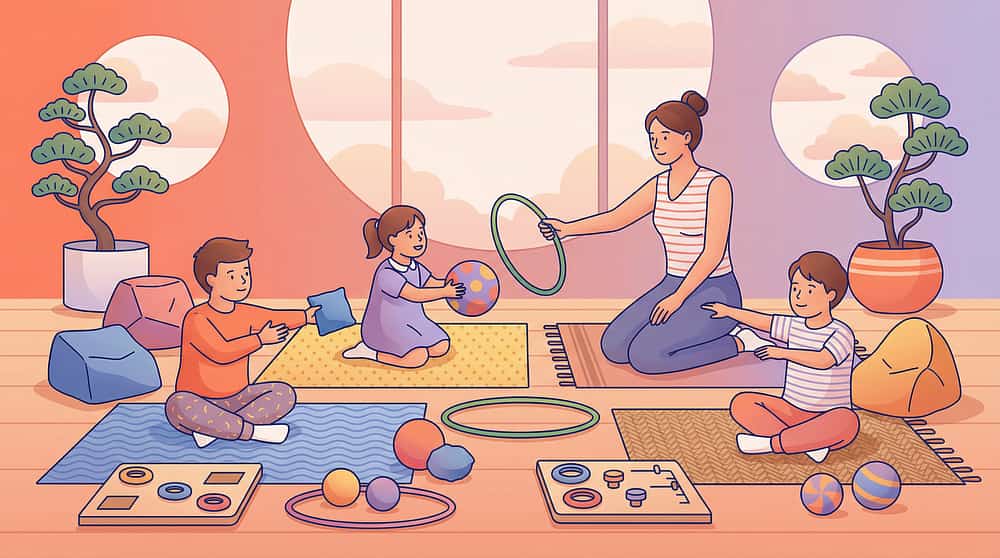
F-575: Bilateral Coordination
INTRO
Same floor markers ✓
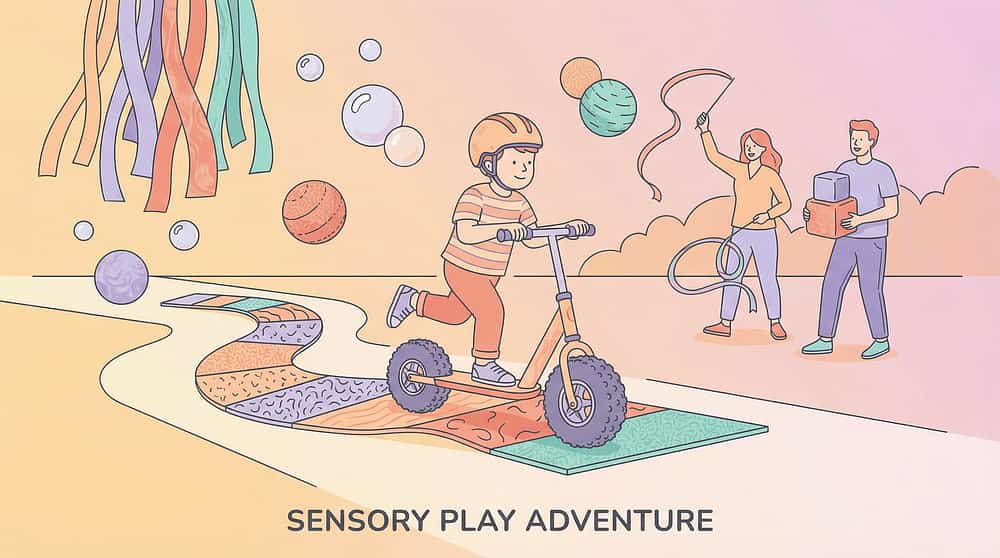
F-580: Scooter & Skateboard Skills
CORE
Same weighted bands ✓
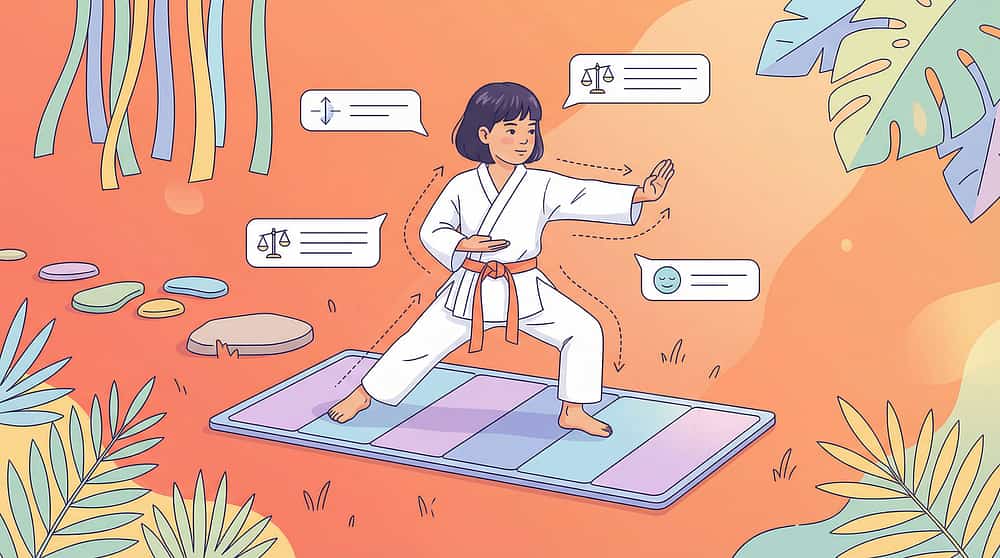
F-583: Martial Arts Foundations
ADVANCED
Same floor markers + partner ✓
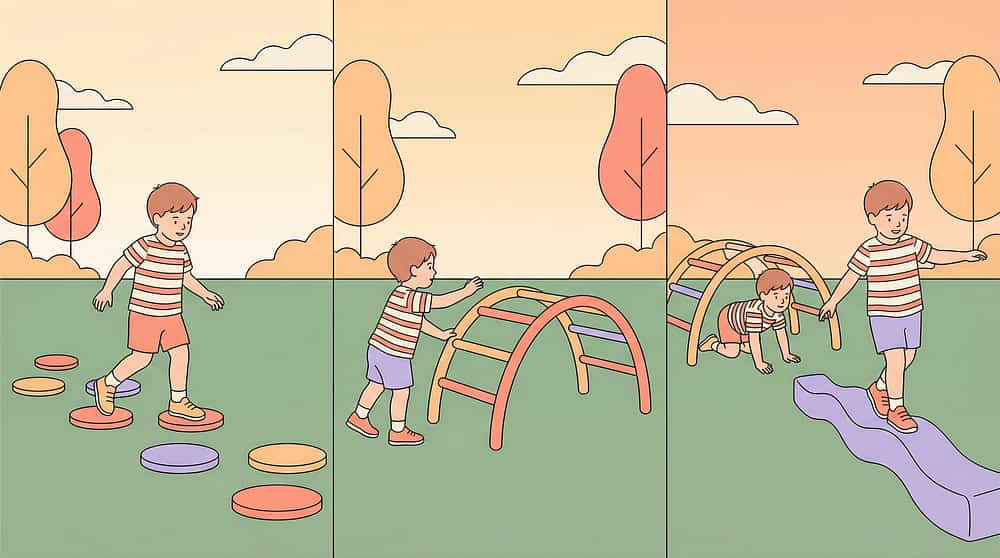
F-578: Motor Planning
CORE
Same video modelling ✓
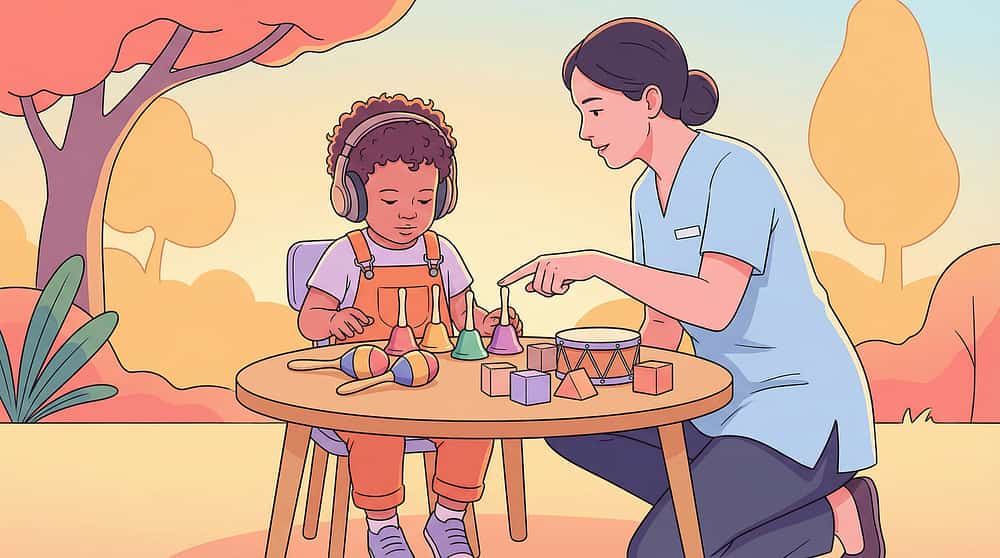
F-590: Auditory Processing
CORE
Same visual beat markers ✓
F-595: Body Awareness
INTRO–CORE
Same weighted bands + mirror ✓
Your Child's Full Developmental Map
F-582 is one technique in your child's complete developmental journey across 12 domains — each interconnected, each important.
Domain F: Gross Motor & Physical Development
Techniques F-500 to F-600 | Your current technique: F-582 | 100 techniques in this domain alone
Powered by GPT-OS®
AbilityScore® across all 12 domains shows exactly which domains need attention now, which are building well, and what the intervention sequence should be.
20M+
Sessions
1:1 therapy sessions completed
97%+
Improvement
Measured improvement rate
70+
Centres
Across India + teleconsultation globally
WHO/UNICEF Nurturing Care Framework: 5 components of nurturing care require holistic developmental monitoring | UNICEF 2025 country profiles (42 indicators per country)
ACT V: THE COMMUNITY & ECOSYSTEM
Families Who've Been Here
The journey from "my body can't dance" to joyful movement is real — documented in homes across India and around the world.
Arjun's Story — 7 Years Old, 8 Weeks
"Arjun had quit two dance classes due to frustration and tears. He loved Bollywood music constantly — but when the beat started, he'd stand frozen, then run to a corner. He told us his body was broken."
After 8 weeks of F-582: "The floor markers were the breakthrough. Suddenly his body knew where to go. Week 6, he danced to a full song — slow version, floor markers still there — and he finished it and looked up at us like he'd conquered something enormous. Because he had."
Materials: Floor markers + slow music + partner dancing | Setting: Home living room
Priya's Story — 10 Years Old, ASD + DCD, 12 Weeks
"Rhythm was always a source of shame for her — she'd cover her ears at school music class and refuse to participate. Her OT said the auditory-motor gap was significant."
After 12 weeks: "The drum changed everything first. She made the beat — she controlled it. Nobody was asking her to follow anything. Within 3 weeks she was drumming to her favourite songs. The dancing came much later, but the shame disappeared at Week 3."
Materials: Drum + visual metronome + weighted wristbands | Professional support: OT co-direction
"The most common mistake families make is starting with music and expecting the child to synchronise immediately. We always start with the child creating the rhythm — not following it. That reversal changes everything." — Pinnacle Blooms OT Consortium, 2024
Names and identifying details changed. Illustrative cases; outcomes vary by child profile, underlying factors, and intervention consistency.
Connect with Other Parents
Isolation is the enemy of adherence. You don't have to do this alone. Thousands of families are navigating the exact same challenge — right now — and community connection is one of the strongest predictors of home intervention success.
WhatsApp Parent Group
Active parents of children aged 3–14 working on rhythm, dance coordination, and motor planning. Daily tips, question sharing, and wins celebrated.
Pinnacle Online Community
Full forum + resource library + therapist Q&A threads. pinnacleblooms.org/community
Local Parent Meetups
Find your nearest centre's parent group. Call 9100 181 181 or visit pinnacleblooms.org/centres
Peer Mentoring
Connect with a parent who completed this journey 6–12 months ago. Sometimes the most powerful guidance is: "We were exactly where you are."
"Over 1,000 parent voices shaped the WHO Nurturing Care Framework. Here, millions of parent experiences shape GPT-OS®. Your participation makes every recommendation smarter for every child."
How GPT-OS® Uses Your Data
Your session data doesn't disappear. It builds intelligence — for your child and every child like them. Every time you complete a 60-second data entry (Card 20), it flows into the GPT-OS® architecture.
GPT-OS® Data Architecture
What GPT-OS® Learns from F-582 Data
- Which of the 9 materials performs best for specific neurological profiles
- Optimal session timing for rhythm development by age and diagnosis
- Tempo progression rates that predict mastery most efficiently
- Red flag patterns that predict the need for professional escalation
Privacy Assurance
All data is anonymised at ingestion. No identifiable information stored. DPIIT DIPP8651 | India data protection standards | GDPR-aligned for international families.
"The parent in Hyderabad whose data built the recommendation that helped the child in Helsinki — that is GPT-OS®."
Digital health interventions for ASD: 21 RCTs, 1,050 participants (2024 meta-analysis)
Preview of 9 materials that help with rhythm and dance Therapy Material
Below is a visual preview of 9 materials that help with rhythm and dance therapy material. The pages shown help educators, therapists, and caregivers understand the structure and content of the resource before use. Materials should be used under appropriate professional guidance.


Link copied!
The Pinnacle Promise
🏛️ Pinnacle Blooms Network® | Built by Mothers. Engineered as a System.
"From fear to mastery. One technique at a time."
Pinnacle Blooms Network® was built to transform every home into a proven, scientific, 24×7, personalised, multi-sensory, multi-disciplinary therapeutic environment — for every child, in every geography, at every economic level. 70,000+ intervention techniques. 70+ centres. 20M+ sessions. 97%+ measured improvement.
Powered by GPT-OS® — the Global Paediatric Therapeutic Operating System.
Navigate
FREE National Autism Helpline (16+ languages)
Statutory Identifiers
CIN: U74999TG2016PTC113063
DPIIT: DIPP8651 (Govt. of India)
MSME Udyog Aadhaar: TS20F0009606
GSTIN: 36AAGCB9722P1Z2
DPIIT: DIPP8651 (Govt. of India)
MSME Udyog Aadhaar: TS20F0009606
GSTIN: 36AAGCB9722P1Z2
Medical Disclaimer
This content is educational and does not replace individualised assessment and intervention from licensed occupational therapists, music therapists, or developmental specialists. Rhythm and motor coordination challenges can stem from multiple underlying causes requiring professional evaluation. Individual results vary by child profile, underlying conditions, and intervention consistency. Always consult a qualified professional for diagnosis and treatment.
© 2025 Pinnacle Blooms Network®, unit of Bharath Healthcare Laboratories Pvt. Ltd. All rights reserved. GPT-OS®, AbilityScore®, TherapeuticAI®, EverydayTherapyProgramme™, FusionModule™ are registered trademarks.
→ This page loops to: F-583: Martial Arts Foundations → The journey continues. One technique at a time.