

When recess is the hardest part of the day
And you're not there to help
You drop him off and count the minutes until pickup. At 10:30, while other children race toward swings and shout each other's names, your child stands at the edge of the playground. Watching. Wanting. Not knowing how to cross that invisible line that seems effortless for everyone else.
He comes home with fragments: "No one played with me." "I just walked around." "I hate recess."
You feel the helplessness of not being there — and the guilt of not knowing what to do when you're not. You are not failing. Your child's social nervous system is speaking. And it can be heard.
This page — built by India's largest consortium of pediatric OTs, SLPs, BCBAs, Special Educators, and NeuroDevelopmental Physicians — gives you 9 evidence-backed materials to make the unstructured manageable.
🏥 Pinnacle Blooms Consortium
OT + SLP + ABA + SpEd + NeuroDev
📍 70+ Centers Across India
Serving 70+ Countries Worldwide
🎓 Evidence-Based
20M+ Sessions · 97%+ Improvement
WHO Nurturing Care Framework (2018): "The period from pregnancy to age 8 is key for a child's development — parental awareness directly impacts outcomes." → nurturing-care.org

ACT I — RECOGNITION
1 in 36 children. Millions of playground edges.
Recess isolation is not rare. It is under-supported.
1 in 36
Global ASD Rate
Children diagnosed with autism globally (CDC 2023)
~18M
India
Children with developmental differences affecting school participation
68%
School Impact
Children with ASD report recess as the most challenging school period
80%
Sensory Difficulty
Children with ASD experience sensory processing difficulties intensifying in unstructured environments
3×
School Avoidance Risk
Children who struggle at recess are 3× more likely to develop school avoidance by Grade 4
Recess is not optional. It is where peer relationships form, social language develops, and children learn the invisible curriculum of friendship. A child who spends twenty minutes daily in isolation loses 3,600 minutes of social learning per school year — a developmental cost that compounds.
Your child is among millions of families navigating this exact challenge. The difference is: most families don't yet know that targeted, simple materials can transform those twenty minutes.
PRISMA Systematic Review (2024): 80% of children diagnosed with autism display sensory processing difficulties. | PMC11506176 | PMC10955541 | DOI: 10.12998/wjcc.v12.i7.1260

ACT I — DEVELOPMENT
Your child is here. Here is where we're heading.
Ages 2–3
Parallel Play — solo beside peers
Ages 3–5
Play Entry — initiating contact
Ages 5–8
Group Games — rules, roles, turn-taking
Ages 8–12
Complex Social — hierarchy, friendship maintenance
What Typically Emerges (Ages 5–8)
- Cooperative play with shared rules
- Game-joining scripts ("Can I play?")
- Rejection tolerance ("Okay, maybe next time")
- Reading social group dynamics
- Navigating playground hierarchies
What Recess Challenges Signal
- Social communication differences (SLP domain)
- Sensory processing intensity (OT domain)
- Executive function gaps (neurodevelopmental domain)
- Anxiety amplification (psychology domain)
- Motor coordination differences (OT + physio domain)
What Commonly Co-occurs
- ASD (Social communication + sensory)
- ADHD (Impulse control + executive function)
- DCD (Developmental Coordination Disorder)
- Social Anxiety Disorder
- Language Processing Differences
"Your child is not behind on a race. They are on a developmental path. These materials create the scaffolding for the next step — from the playground edge to the game."
WHO Care for Child Development (CCD) Package: Age-specific evidence-based recommendations for caregivers, implemented in 54 LMICs. | UNICEF MICS developmental monitoring indicators across 197 countries. | PMC9978394

ACT II — DISCIPLINES
Five disciplines. One unified playground strategy.
Occupational Therapist
Lead for Sensory. Assesses sensory processing profile. Designs regulation kit (headphones, fidgets). Prescribes pre-recess sensory diet. Monitors sensory tolerance on playground.
Speech-Language Pathologist
Lead for Social. Scripts social initiation phrases. Targets pragmatic language for peer entry. Designs social narratives for recess context. Addresses the language of games.
BCBA / ABA Therapist
Lead for Behavior. Designs reinforcement system for successful recess attempts. Programs self-advocacy training. Addresses avoidance behavior. Tracks peer interaction data.
Special Educator
Lead for Participation. Collaborates with school staff for buddy systems. Integrates recess goals into IEP. Designs activity menus for the specific playground. Coordinates team.
NeuroDevelopmental Physician
Diagnostic Authority. Rules out co-occurring conditions. Medication review if anxiety is a primary barrier. Provides school documentation for support services.
"At Pinnacle, recess is not a social break from therapy. It is therapy — a daily 20-minute applied practice session for everything we build in the clinic. No single discipline owns recess. All five do." — Pinnacle Blooms Consortium, OT + SLP + ABA Integration Protocol
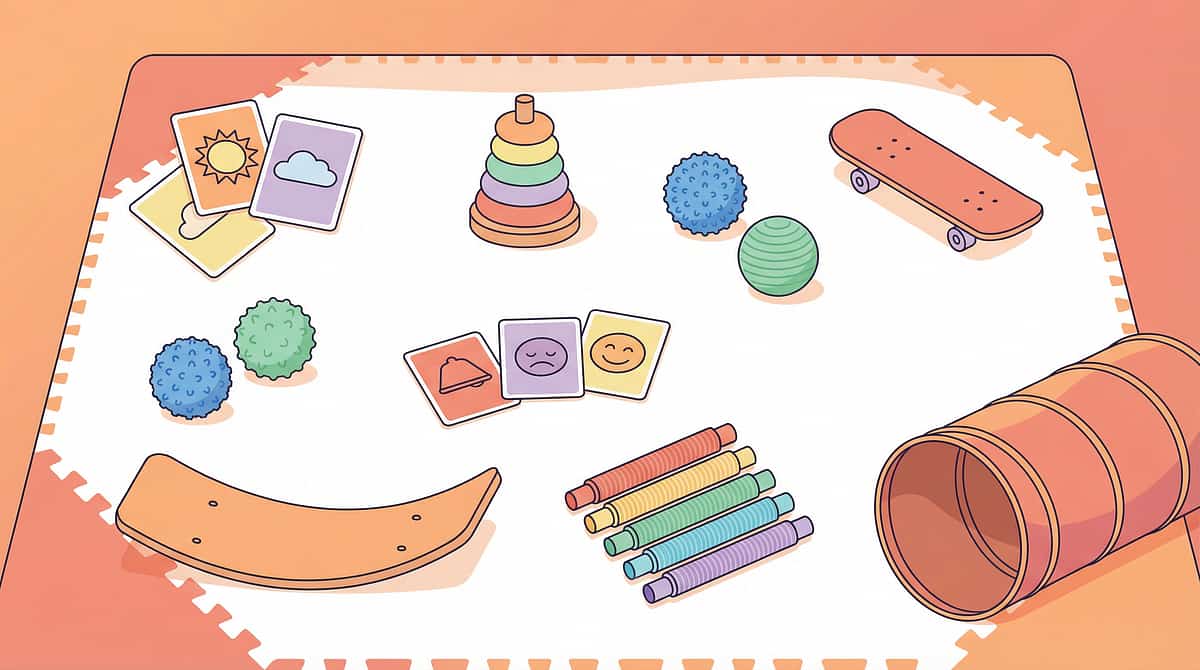
ACT II — THE 9 MATERIALS
9 materials. Most cost under ₹500. All usable from your home.
# | Material | Category | Price Range | Rating | |
1 | Social Scripts & Cue Cards | Social Communication | ₹0–400 | ⭐ Essential | |
2 | Structured Game Cards & Activity Menus | Visual Supports | ₹0–600 | ⭐ Essential | |
3 | Sensory Regulation Tools | Sensory Processing | ₹300–2,000 | ⭐ Essential | |
4 | Visual Game Rule Cards | Cognitive Support | ₹200–500 | ⭐⭐ Core | |
5 | Buddy & Peer Support System | Social Navigation | ₹0–200 | ⭐ Essential | |
6 | Portable Structured Activity Equipment | Activity Participation | ₹200–1,000 | ⭐⭐ Core | |
7 | Social Narratives & Recess Preparation | Preparation | ₹100–500 | ⭐⭐ Core | |
8 | Self-Advocacy & Help-Seeking Cards | Communication | ₹100–300 | ⭐⭐ Core | |
9 | Recess Success Plan & Visual Supports | Coordination | ₹0–200 | ⭐ Essential |
Pinnacle Canon Products — Active Inventory
- 🛒The Rosette Imprint Reward Jar — Reinforcement Menus | Use: Reward successful recess attempts
- 🛒1800+ Reward Stickers — Teacher & Parent Pack — Reinforcement Menus | Use: Tangible reinforcement for social initiation milestones
- 🛒Animal Soft Toys — Transition & Comfort Items — Transition Objects | Use: Pre-recess calming anchor, post-recess transition comfort
- 🛒SHINETOY 8 Dice Shut The Box Game — Problem-Solving Toys | Use: Portable structured activity for peer engagement
📞9100 181 181 — Ask our therapists which materials your child needs most
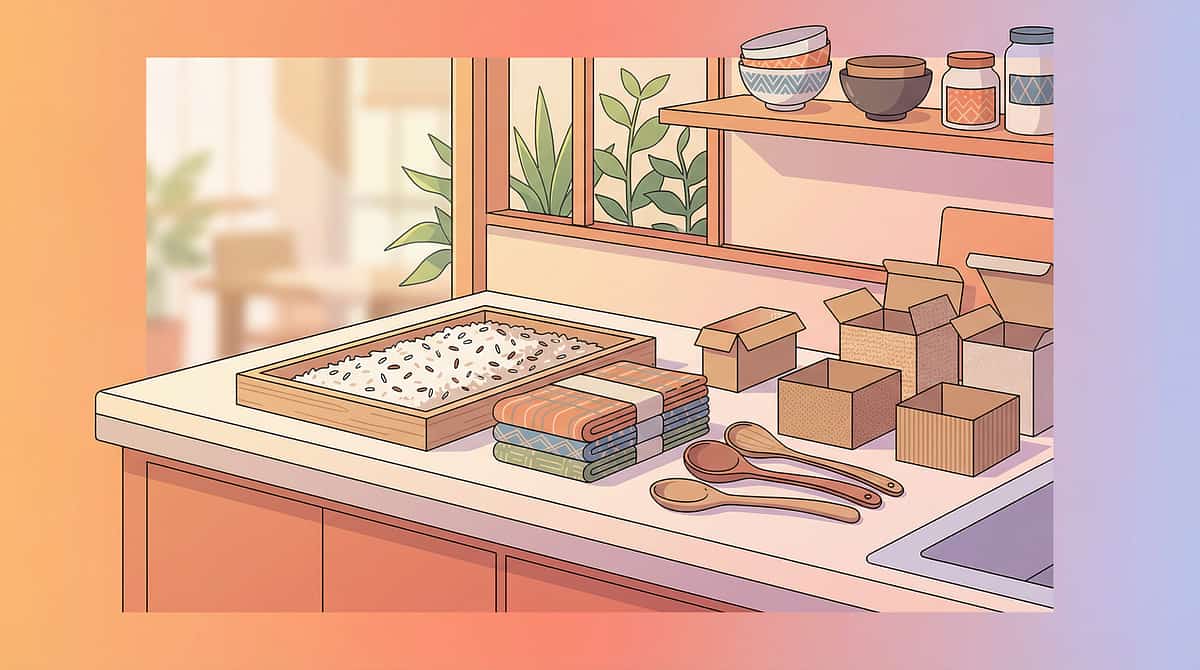
ACT II — DIY ALTERNATIVES
₹0 version available. Your kitchen drawer is a therapy supply.
Material | Buy Option | DIY / Free Alternative | Why DIY Works | |
Social Scripts | Pre-printed cue card sets ₹200–400 | Write phrases on index cards, laminate with tape | Same linguistic scaffolding, identical neurological effect | |
Activity Menu | Printed visual board ₹300–600 | Handwrite 5 activities on paper, draw icons | Choice menu principle works regardless of production quality | |
Sensory Tools | Commercial fidgets ₹300–800 | Squishy ball from market ₹30; tight headband for pressure | Proprioceptive + tactile input is physiologically equivalent | |
Game Rule Cards | Pre-printed game guides ₹300 | Hand-drawn step cards with stick figures | Visual + verbal encoding of rules is what matters | |
Buddy System | Organizational materials ₹200 | Phone call to one classmate's parent | Human connection has zero production cost | |
Structured Activity | Commercial games ₹400–1,000 | Deck of UNO ₹50; origami paper ₹20 | Turn-taking structure is the therapeutic ingredient | |
Social Narrative | Published books ₹300–500 | Write a 1-page story with child's name + your playground | Personalization is more effective than generic print | |
Self-Advocacy Cards | Pre-printed sets ₹200 | Write 4 phrases on business-card-sized paper | The words are the intervention; the medium is irrelevant | |
Success Plan | Template ₹0 | One sheet of A4 paper with 4 columns | Organization and sharing is the value, not the form |
Right now, with nothing but paper and a pen, you can create: ✅ 5 social scripts on 5 index cards ✅ An activity menu with 6 playground options ✅ A 1-page recess social narrative ✅ 4 self-advocacy phrases on a folded card. Total cost: ₹0. Total impact: Potentially transformative.
WHO NCF (2018): Context-specific, equity-focused interventions. CCD Package implemented across 54 LMICs using household materials demonstrates equivalent efficacy. | PMC9978394

ACT II — SAFETY
Read this before Day 1. Non-negotiable.
🔴 ABSOLUTE STOP SIGNS
Do NOT proceed if:
- Child is currently experiencing a meltdown or extreme distress
- Child has been bullied or physically harmed at recess recently (require school investigation first)
- Child has an undiagnosed anxiety disorder making playground entry panic-level
- School has not been informed of planned supports
- Child expresses terror (not just reluctance) about recess
🟡 MODIFY FIRST
Adapt if:
- Child is in a sensory-overloaded state post-school
- New school year / new playground layout — rebuild familiarity first
- Recent peer rejection — address emotionally first
- Child is on new medication — observe effects before adding social demands
- Physical illness or fatigue — simplify or postpone
🟢 PROCEED WITH CONFIDENCE
You're ready when:
- Child is medically stable and regulated at home
- School staff are aware of at least one planned support
- You have reviewed materials with child in a calm moment
- You have one backup plan ready
- Child has expressed ANY openness — even minimal — to trying
Material Safety Notes
- Sensory headphones: ensure noise-reducing, NOT noise-canceling (child must hear safety signals)
- Fidgets: check for choking hazards (no small parts for children under 7)
- Cue cards on lanyards: use breakaway lanyards only (standard lanyards are strangulation risk)
- Social scripts: ensure discretion — visible laminated cards can attract peer attention and stigma
Indian Journal of Pediatrics RCT (Padmanabha et al., 2019): Home-based interventions safety protocols for parent-administered sessions. | DOI: 10.1007/s12098-018-2747-4
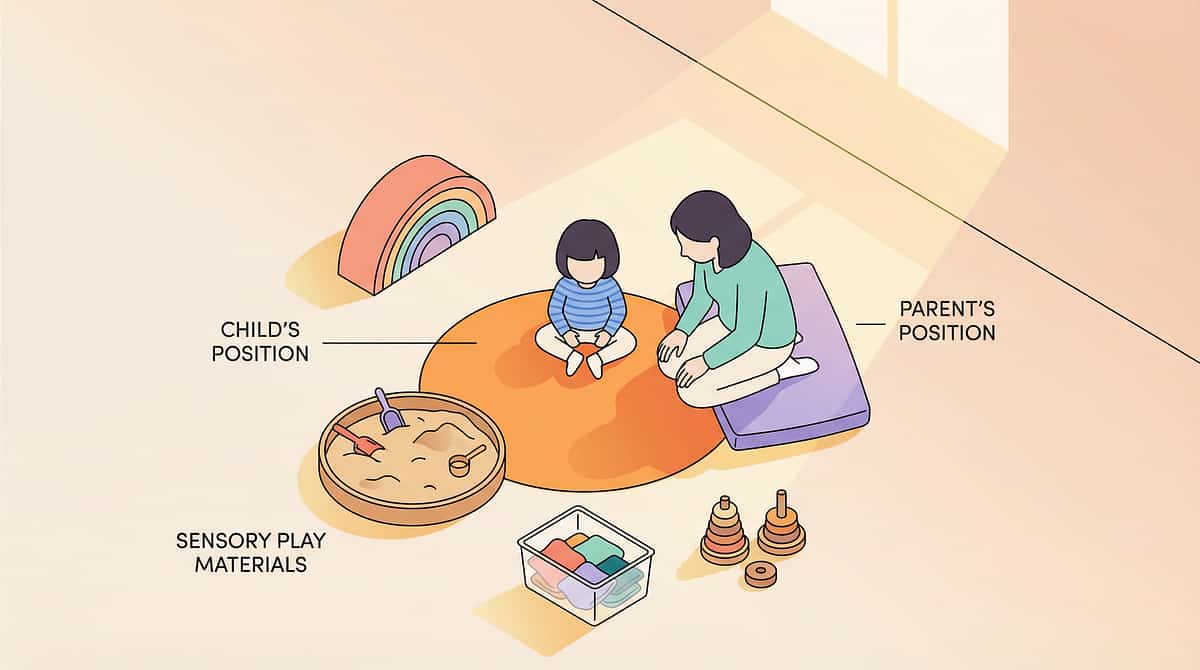
ACT II — SETUP
Three environments to prepare. Clinic takes care of itself.
🏠 HOME SETUP — Where you build the toolkit
- Flat workspace: table + chair for card-making sessions (30 min)
- Materials ready: index cards, markers, laminate sheets or tape, scissors
- "Practice playground" in backyard/building compound for role-play
- Evening routine slot: 10 min before bed to review scripts for tomorrow
- Visual reminder location: bathroom mirror, school bag pocket, or lunchbox note
Practice Script (night before): Parent: "Let's do our recess practice. I'll be the classmate. You walk up and say..." Child: [uses script card] "Can I play too?" Parent: [vary response] "Yes!" / "We're full" / "What do you want to play?"
🏫 SCHOOL SETUP — Where the system gets activated
- Class teacher: Knows about sensory tools and has approved
- Recess supervisor: Aware of buddy system and has identified a supportive peer
- School counselor/SpEd coordinator: Has received the Recess Success Plan
- Quiet zone: Confirmed location on playground where child can go if overwhelmed
What to say to the teacher:"My child has a Recess Success Plan from their therapist. I'd like to share it with you and discuss two simple supports. Can we have a 10-minute meeting this week?"
🎒 CHILD'S DAILY RECESS KIT
Small pouch/zippered pocket in backpack:
- Social script cards (5 phrases, laminated, pocket-sized)
- Activity menu card (laminated, pocket-sized)
- One sensory tool (fidget or ear plugs)
- Self-advocacy card ("I need help" / "I need a break")
- (Optional) Small structured activity for table area
📞9100 181 181 — Our therapists can help you build this system

STEP 2 OF 6
The Recess Entry — The moment the whistle blows.
This five-step sequence transforms a previously overwhelming moment into a manageable, practiced routine. Each micro-step reduces cognitive load — so that when your child reaches Step 2D, their nervous system has been regulated, their plan is clear, and their words are ready.
Situation | Material to Deploy | Script | |
Joining group game | Game Rule Card + Social Script | "Can I play? I know this game." | |
No peers available | Activity Menu + Structured Activity | [self-direct to activity] | |
Sensory overwhelm | Sensory Tool (ear plugs / fidget) | "I need a minute" [self-advocacy card] | |
Rejection happens | Self-Advocacy Card + backup plan | "Okay, maybe next time." |
Systematic review (Children, 2024): Sensory integration + structured social supports meet evidence-based practice criteria for school participation. | PMC11506176
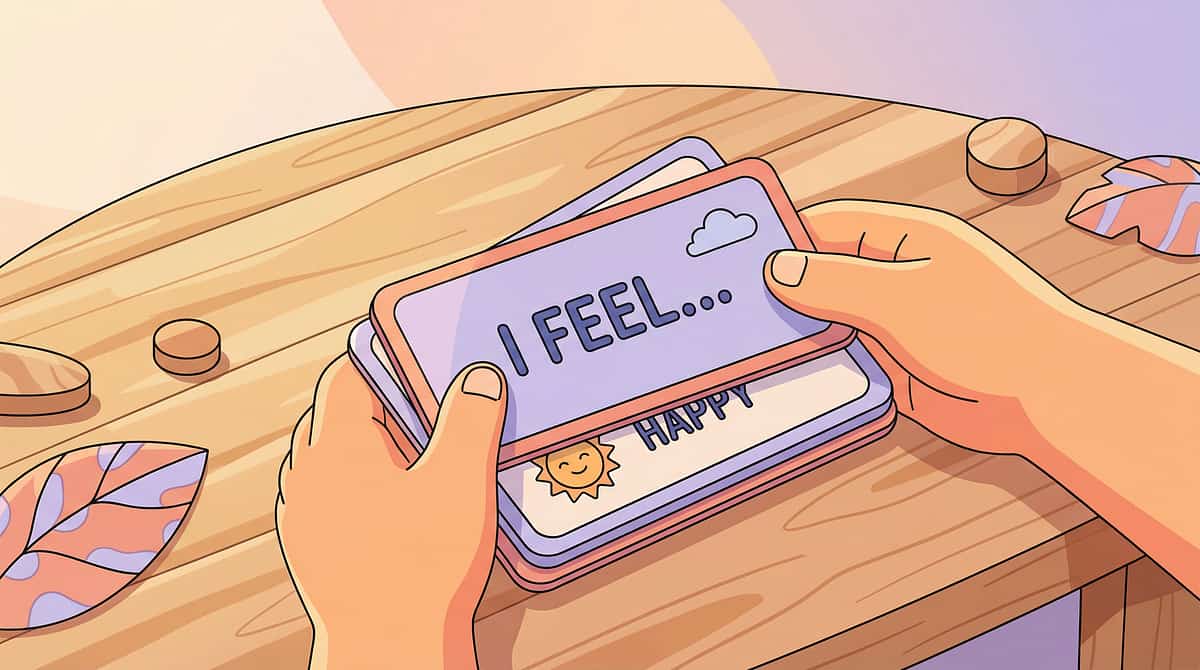
STEP 3 OF 6 — MATERIAL 1
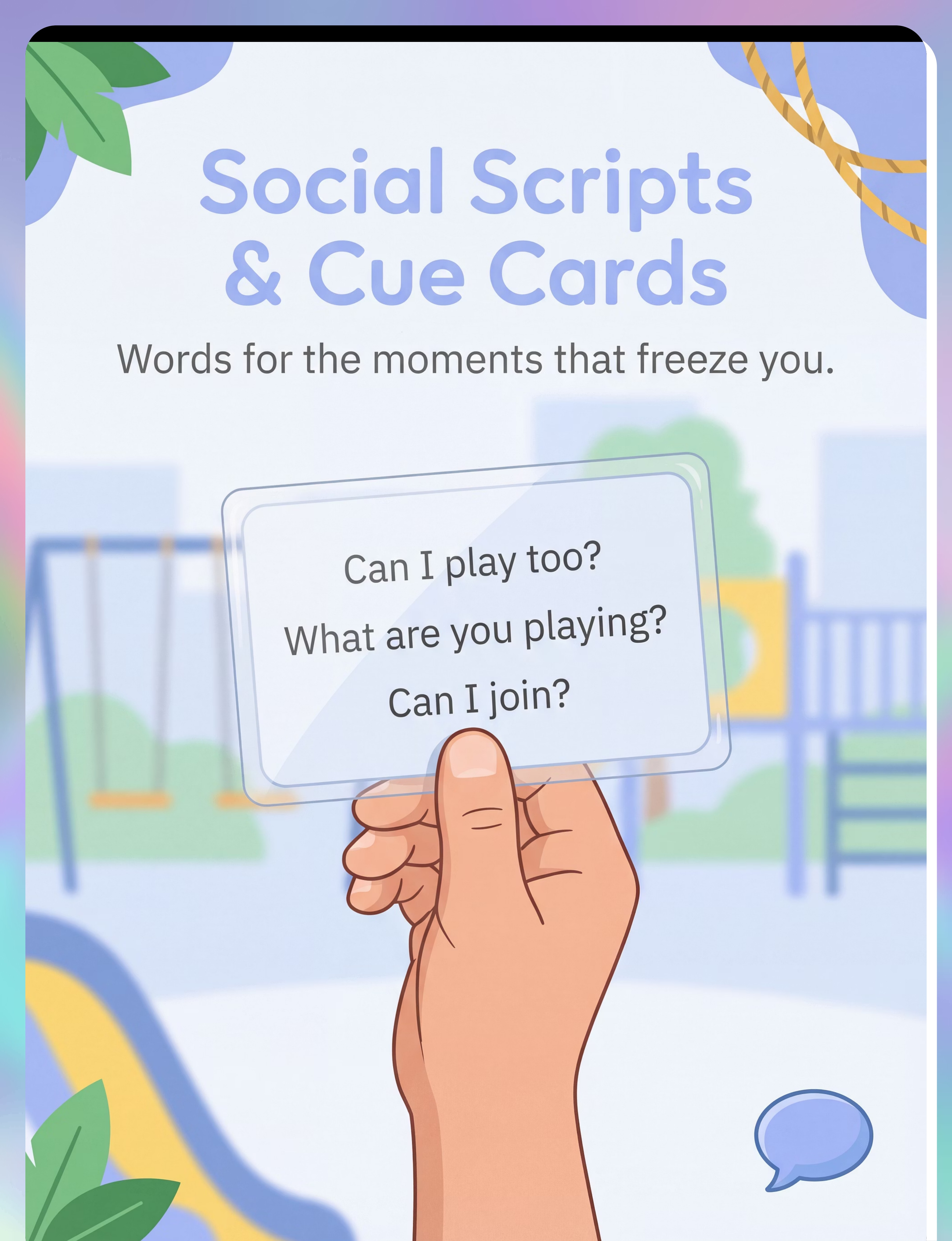
Material 1: Social Scripts & Cue Cards
What it is: Laminated pocket cards with exact phrases for 4 recess situations. When to use: Before approaching peers; when frozen at game edge; when rejected.
Print or write 5 phrases
"Can I play too?" | "What are you playing?" | "Want to play ___?" | "Okay, maybe next time." | "I need help."
Laminate and size correctly
Laminate (or tape index card). Size: business card. Fits in pocket or on school bag clip.
Home practice nightly
Role-play each scenario for 5 minutes. Vary responses: yes, no, ignored. Build rejection tolerance through rehearsal.
School use: child consults before approaching
Card stays in pocket. Child glances at card, then approaches — reducing cognitive load at the critical moment.
Fade plan
Once child uses phrases without looking at card, retire it. Independence is the goal.
DIY Cost
₹0 — paper and pen only
Outcome Indicator
Child initiates approach with words (not silence or off-topic remarks)
STEP 3 OF 6 — MATERIAL 2
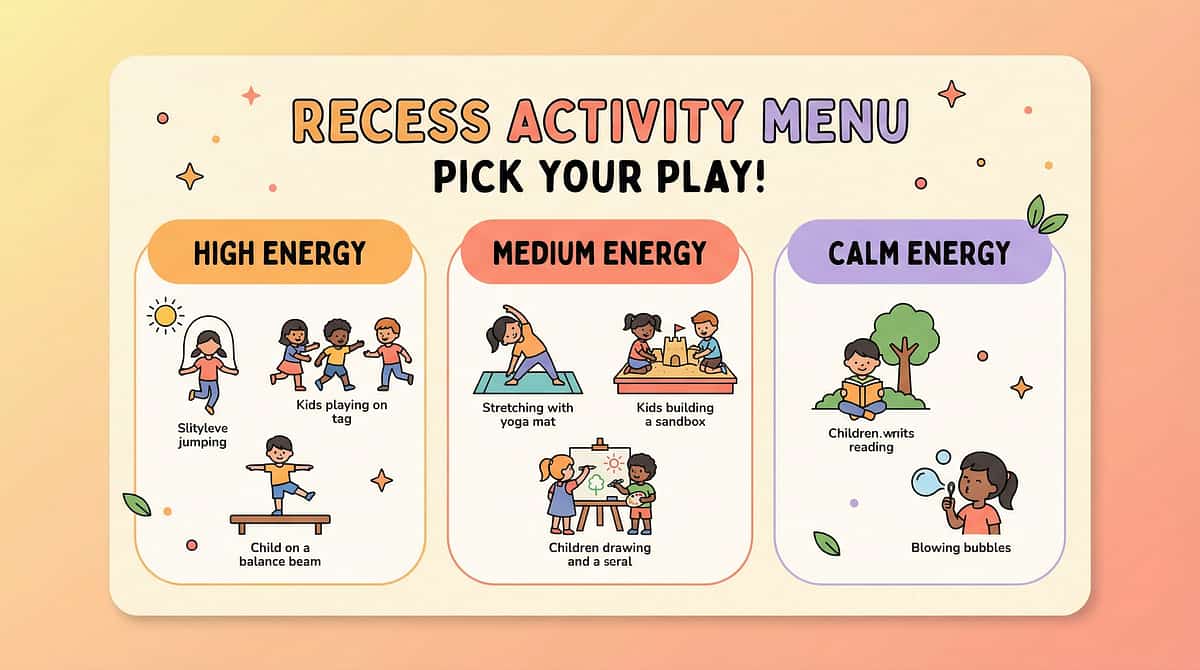
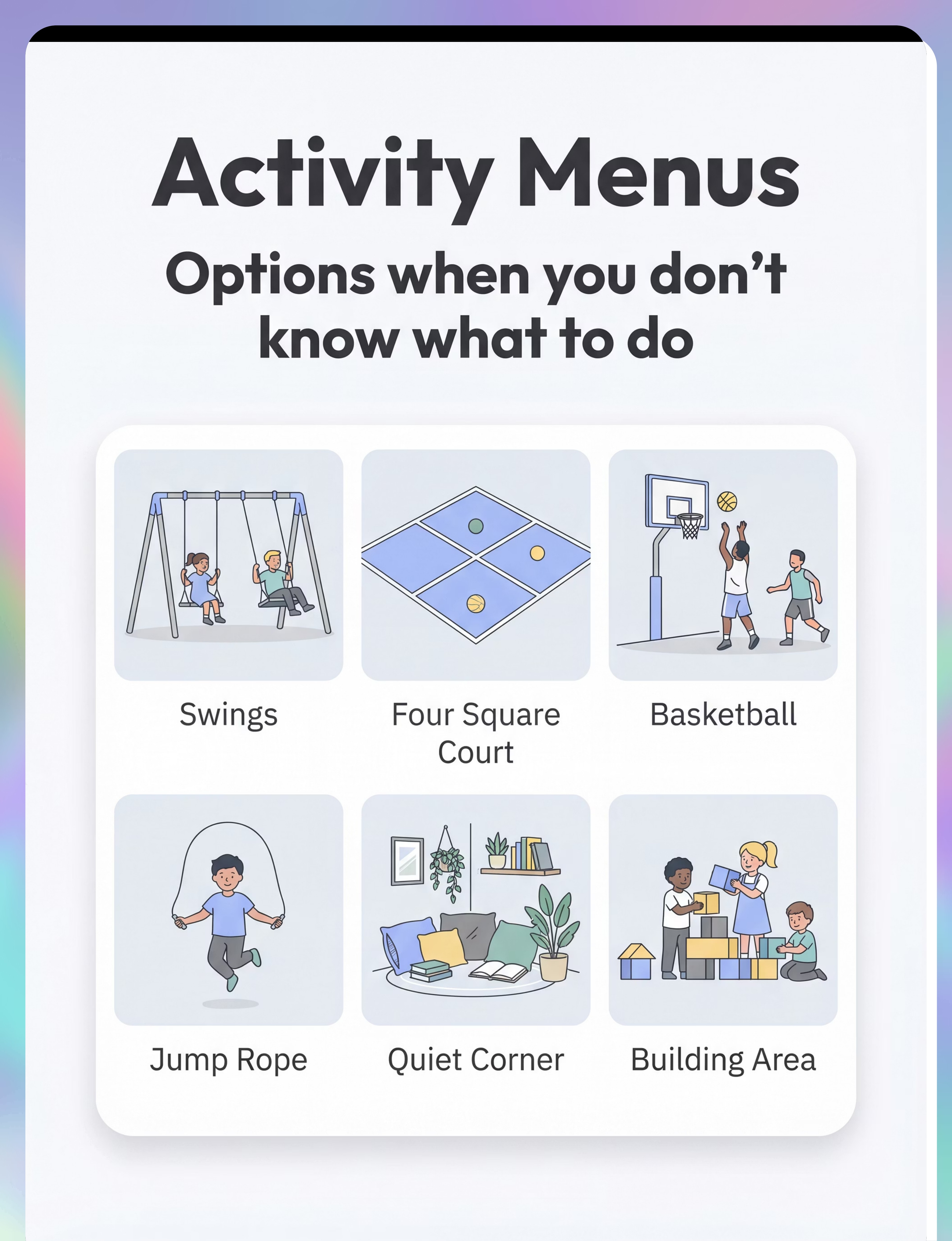
Material 2: Activity Menus
What it is: Visual menu of 5–8 recess activities categorized by energy level and social demand. When to use: First 60 seconds of recess — before wandering starts.
Map your child's actual playground
What activities exist? Swings, four square, open field, quiet bench area, climbing structure — list them all.
Create the menu with 3 tiers
3 solo options / 3 partner options / 2 group options. Covering all social demand levels ensures a valid choice on any day.
Add pictures or drawings next to each
Visual reinforcement reduces cognitive processing time in a high-stimulation moment.
Laminate and attach to school bag
Loop attachment or inside pocket. Accessible within 5 seconds of stepping onto the playground.
Morning brief: pick primary and backup
Child selects "primary" and "backup" activity before leaving home — so the decision is already made at the whistle.
DIY Cost
₹0 — paper, markers, and tape
Outcome Indicator
Child goes to chosen activity within 2 minutes of recess start (vs. 15-minute wander)
STEP 3 OF 6 — MATERIAL 3
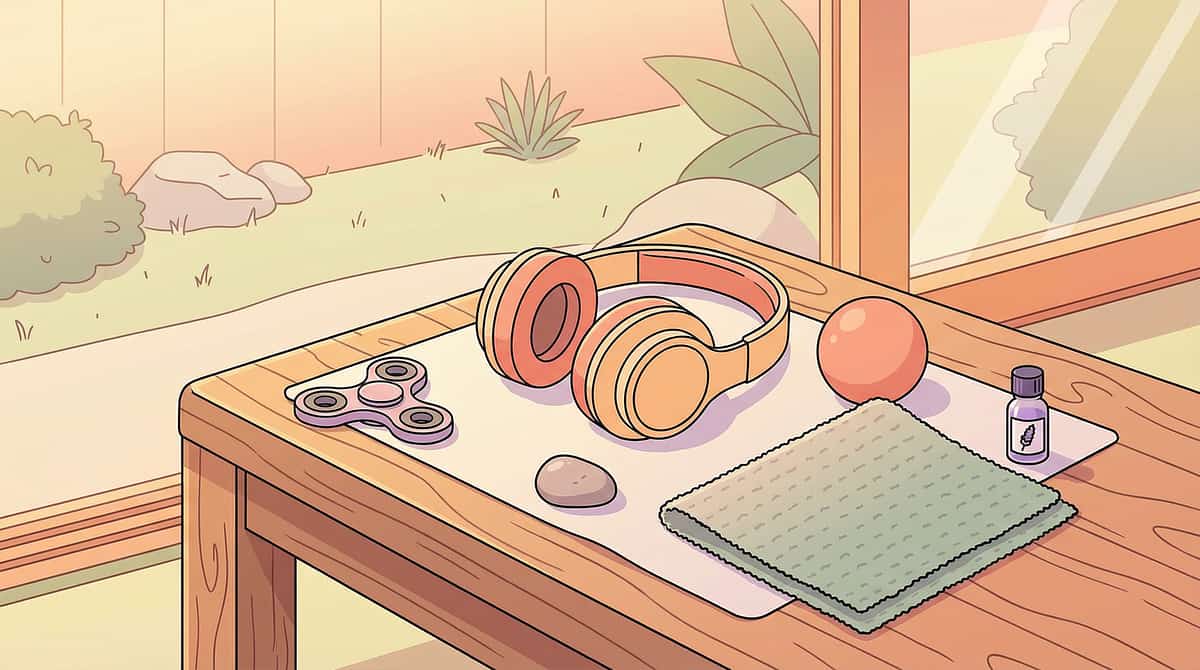
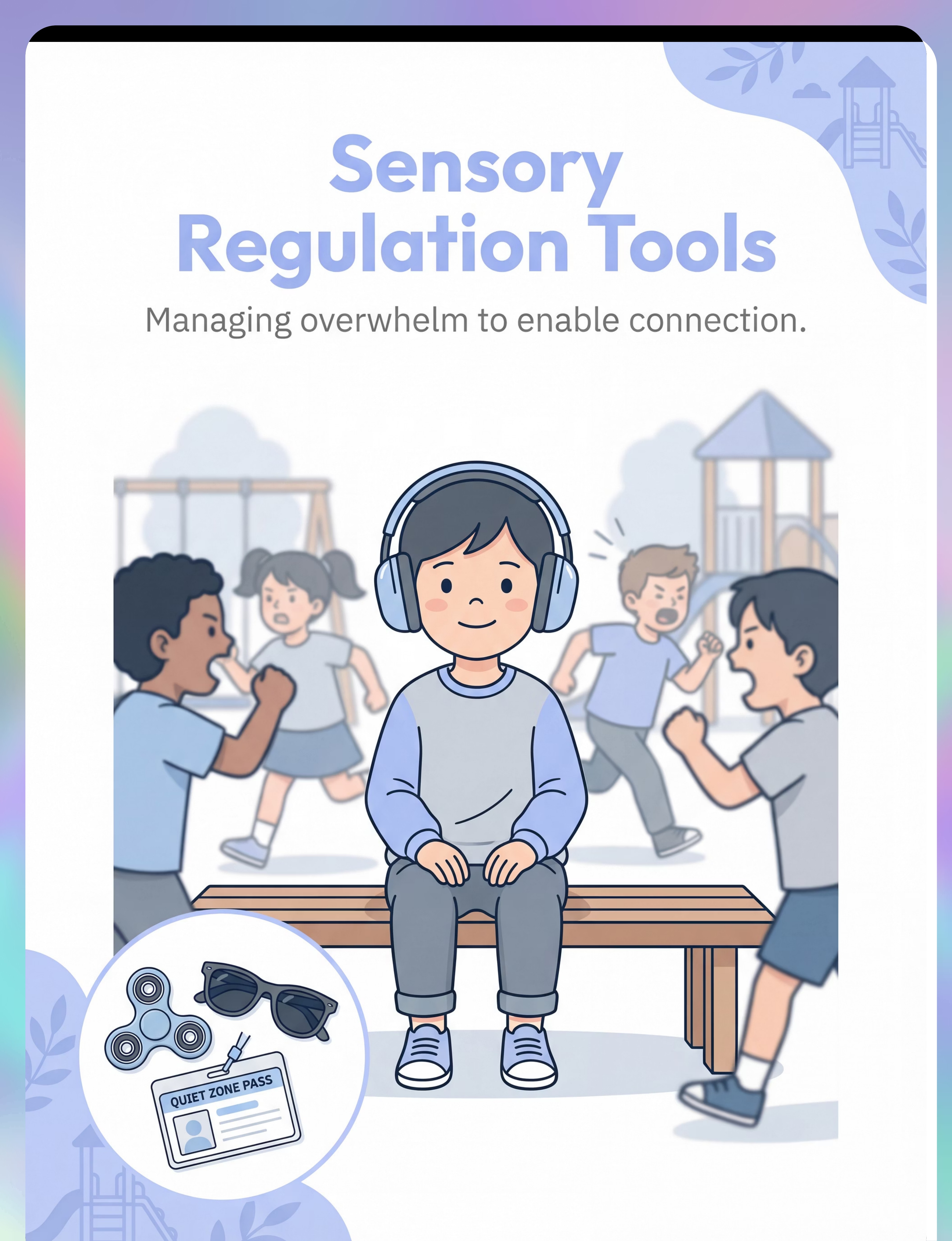
Material 3: Sensory Regulation Tools
What it is: A small "regulation kit" tailored to the child's sensory profile. When to use: Proactively — before sensory threshold is crossed; during high-stimulation moments.
🎧 Auditory Sensitivity
Noise-reducing ear muffs or foam ear plugs. NOT noise-canceling — child must hear safety signals and teachers.
✋ Tactile / Anxiety
Small squeeze ball or textured fidget in pocket. Provides proprioceptive input that regulates the nervous system.
☀️ Visual Overwhelm
Sunglasses or peaked cap for glare reduction. Low-cost, socially normalized, highly effective for bright outdoor environments.
🏋️ Proprioceptive Seeking
10 wall push-ups before exiting building. Provides deep pressure input that primes the nervous system before high-demand environments.
👄 Oral Sensory
Chewing gum or chewy jewelry (school permission required). Oral input is a highly effective self-regulation pathway.
Safety: Breakaway lanyard ONLY. No dangling cords. Hearing must be maintained for safety. Ensure all items are age-appropriate (no small parts under age 7).
DIY Cost
₹30–200 (market squishy ball, foam ear plugs)
Outcome Indicator
Child reports feeling "less loud" or is observed staying in main playground area (not retreating)
STEP 3 OF 6 — MATERIAL 4
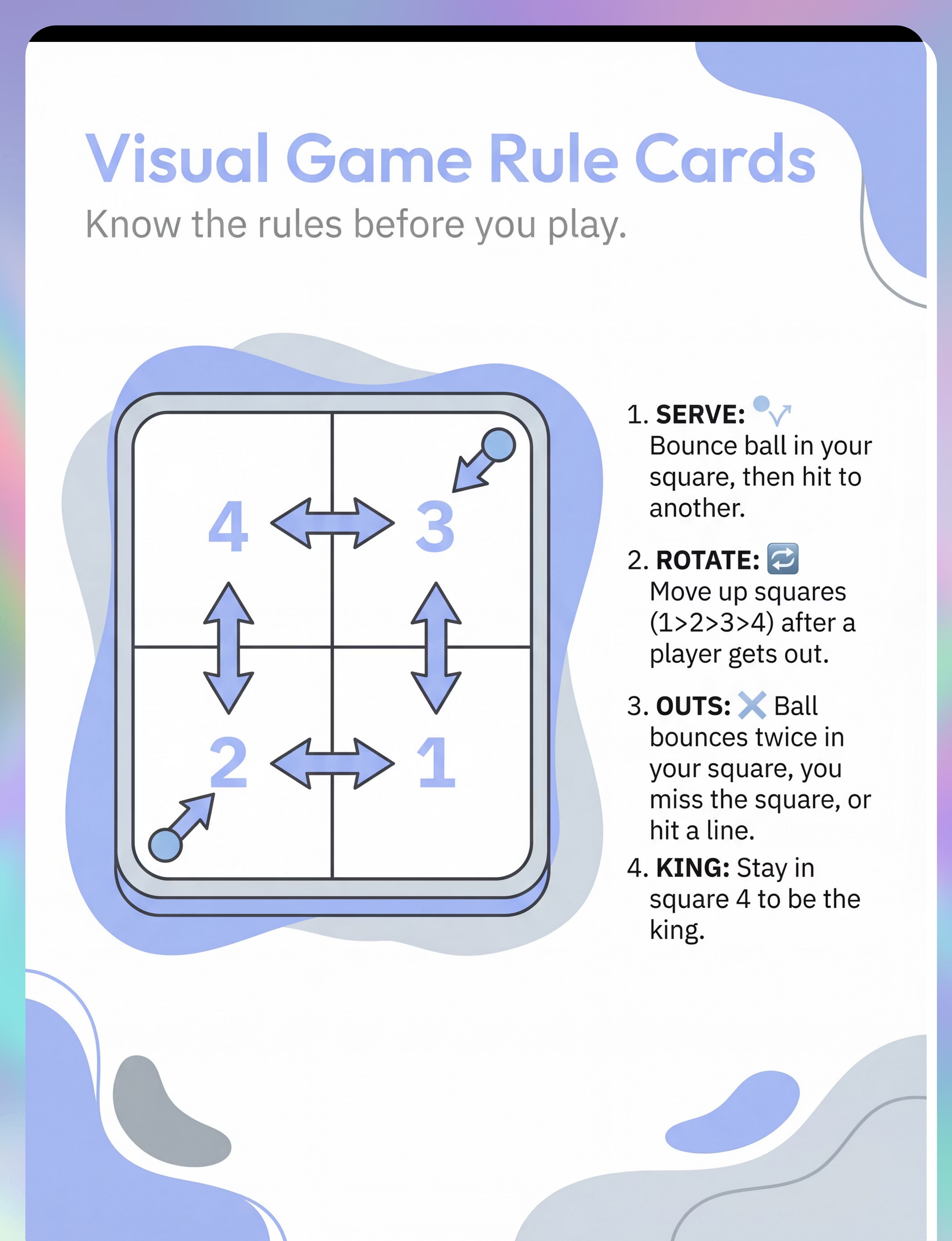
Material 4: Visual Game Rule Cards
What it is: Step-by-step illustrated guides to 5 common playground games. When to use: At home (study before school) AND at recess (pocket reference).
Games to include: Four Square | Tag (freeze/TV/blob variations) | Kickball | Hopscotch | Wall Ball
Format for Each Card (4 steps maximum, with illustrations):
How to Join
Wait for new round / ask "next round?" — timing the entry is the social skill, not just the asking.
How the Game Works
4 illustrated steps maximum. Simple, clear criteria. Visual makes it memorable under cognitive load.
How You're "Out"
Clear, unambiguous criteria prevent disputes that derail inclusion. Knowing the rule prevents embarrassment.
When Rules Are Disputed
"Let's ask the teacher" / "You decide, I'll go next time." — Scripts for the hardest social moment in games.
DIY Cost
₹0 — draw game steps on index cards
Outcome Indicator
Child participates in at least one rule-based game without being excluded for "playing wrong"

STEP 3 OF 6 — MATERIAL 5
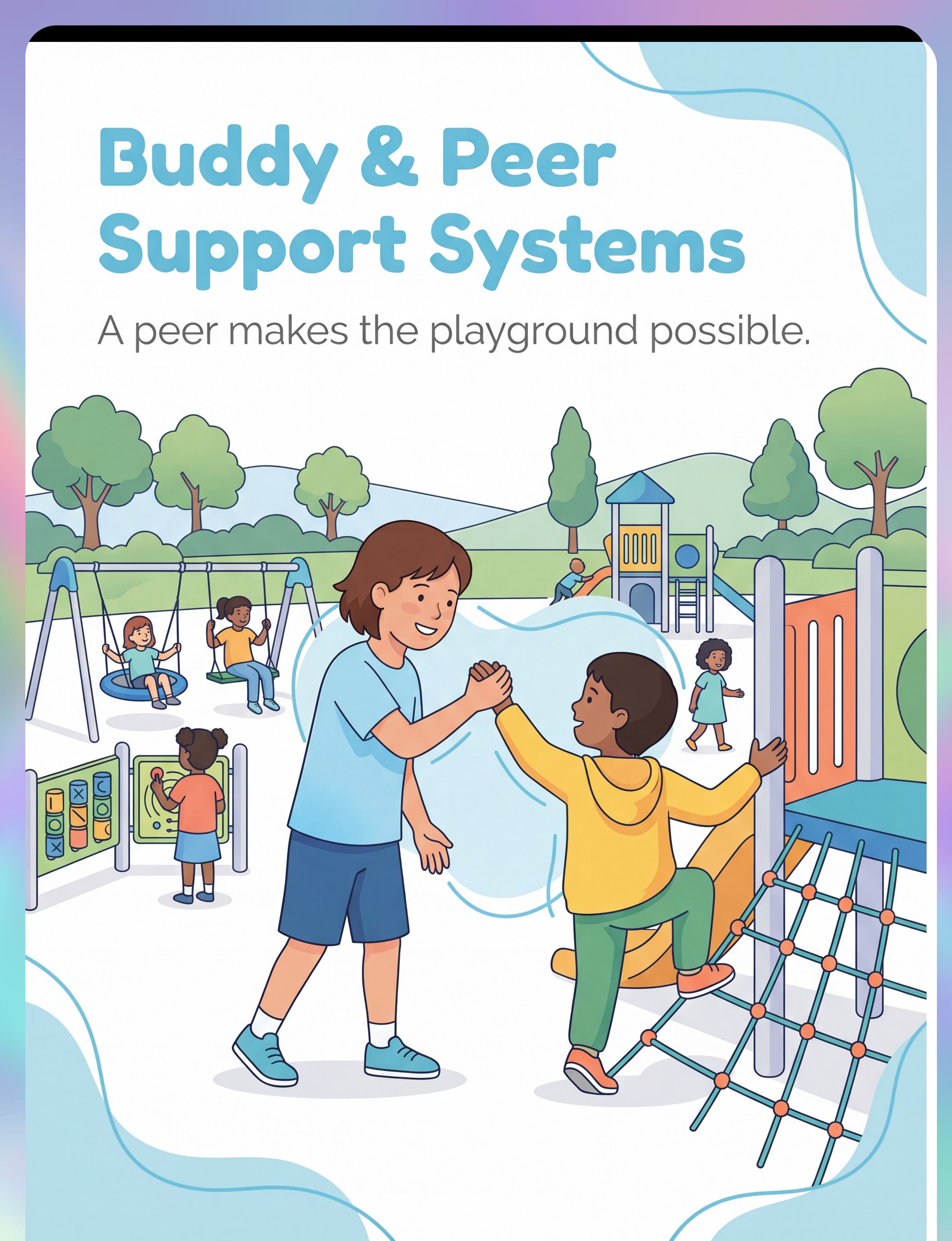
Material 5: Buddy & Peer Support System
What it is: A structured peer relationship with training for both children. When to use: Daily recess — buddy identified, relationship maintained with adult support.
Identify the right buddy candidate
Kind, socially skilled, genuinely willing (not coerced). The buddy's motivation determines the relationship's durability.
Parent-to-parent conversation
"Would [child's name] be willing to include [your child] at recess sometimes?" — Low-pressure, friendly, framed as mutual enrichment.
Teacher facilitation
Structured introduction, scheduled activity together. Adult scaffolding ensures the first interactions succeed.
Equip the buddy
Conversation starter card + 2-player activity list. The buddy gets tools too — this is supported inclusion, not burden.
Weekly check-in
Ask child and teacher weekly how buddy relationship is progressing. Adjust support level as needed.
Buddy Kit Materials
Conversation starter card | 2-player activity list | Schedule (same lunch table 2×/week)
DIY Cost
₹0 (organizational materials only)
Outcome Indicator
Child reports having "someone to play with" at least 3×/week

STEP 3 OF 6 — MATERIAL 6
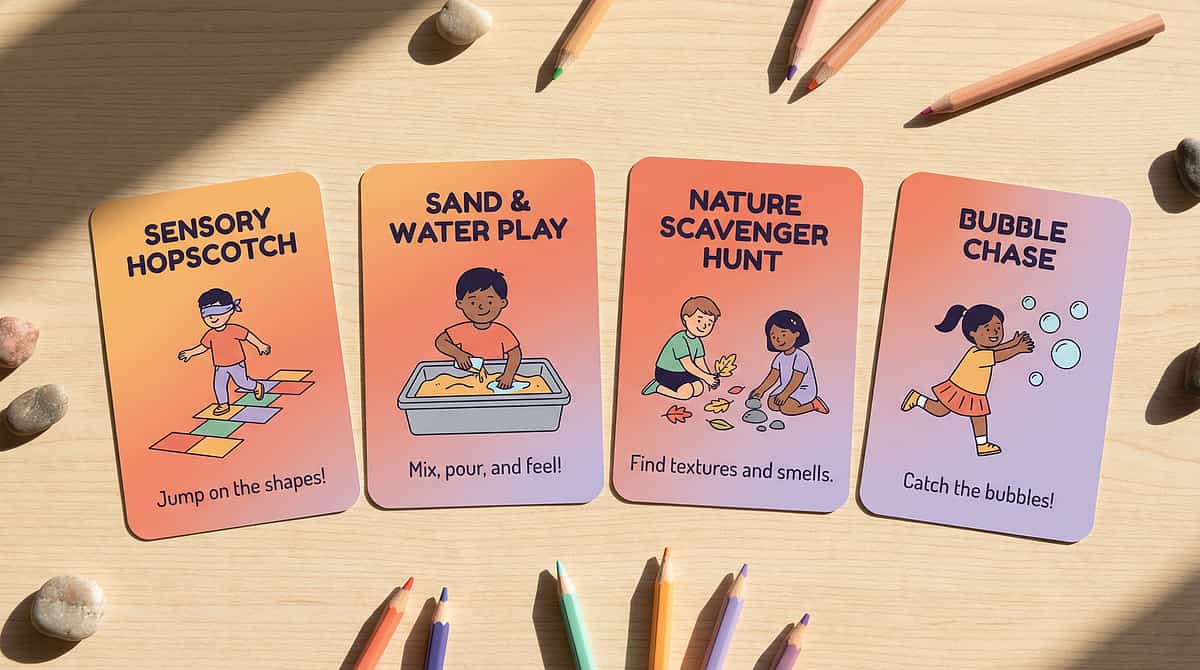
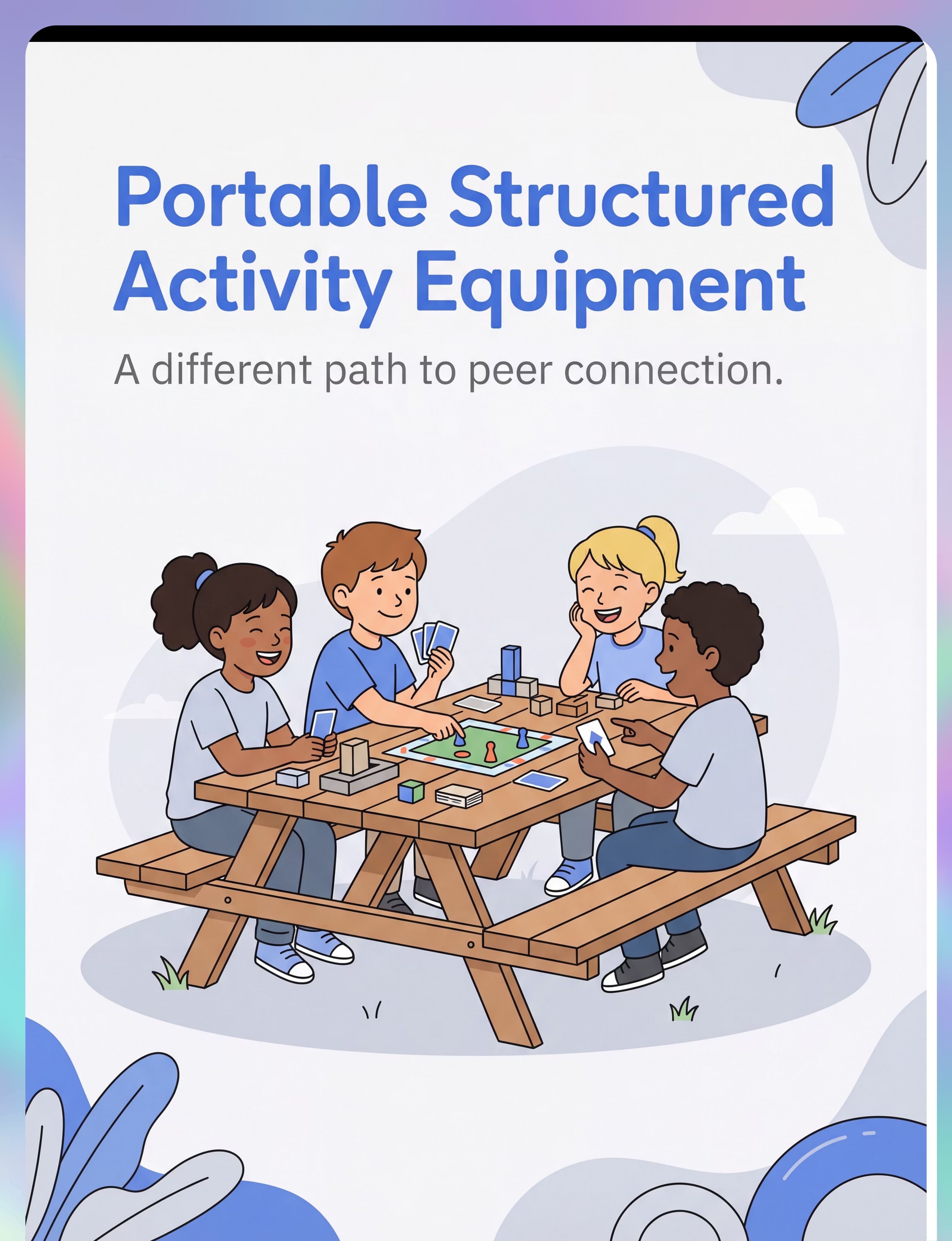
Material 6: Portable Structured Activity Equipment
What it is: A small bag of peer-appealing, school-approved activities child brings to recess. When to use: Days when group games feel too demanding; for peer invitation through activity sharing.
Key principle: The child isn't asking "will you play with me?" — they're offering: "I have UNO, want to play?" The activity does the social work. The object becomes the social bridge.
🃏 UNO or Go Fish Card Deck
₹50–150. Portable, structured, 2–6 players, universally known rules. The gold standard portable recess activity.
🗂️ Origami Paper + Instructions
₹20. Self-directed or partner activity. Attracts curious peers naturally. Zero social script required to engage.
💜 Friendship Bracelet Kit
₹50–100. Creates a natural conversation and a tangible gift-giving opportunity. Peer engagement through craft.
🎨 Mini Drawing Challenge Cards
Self-made: ₹0. Draw 20 prompts on cards. Invite peers to guess your drawing. No rules explanation needed.
🌿 Nature Journal + Pencil
₹30. Solo to parallel to interactive pathway. Quiet, low-demand, easily shared with a curious peer.
DIY Cost
₹20–100
Outcome Indicator
Child engages peer(s) in table activity 2+ times per week
STEP 3 OF 6 — MATERIAL 7
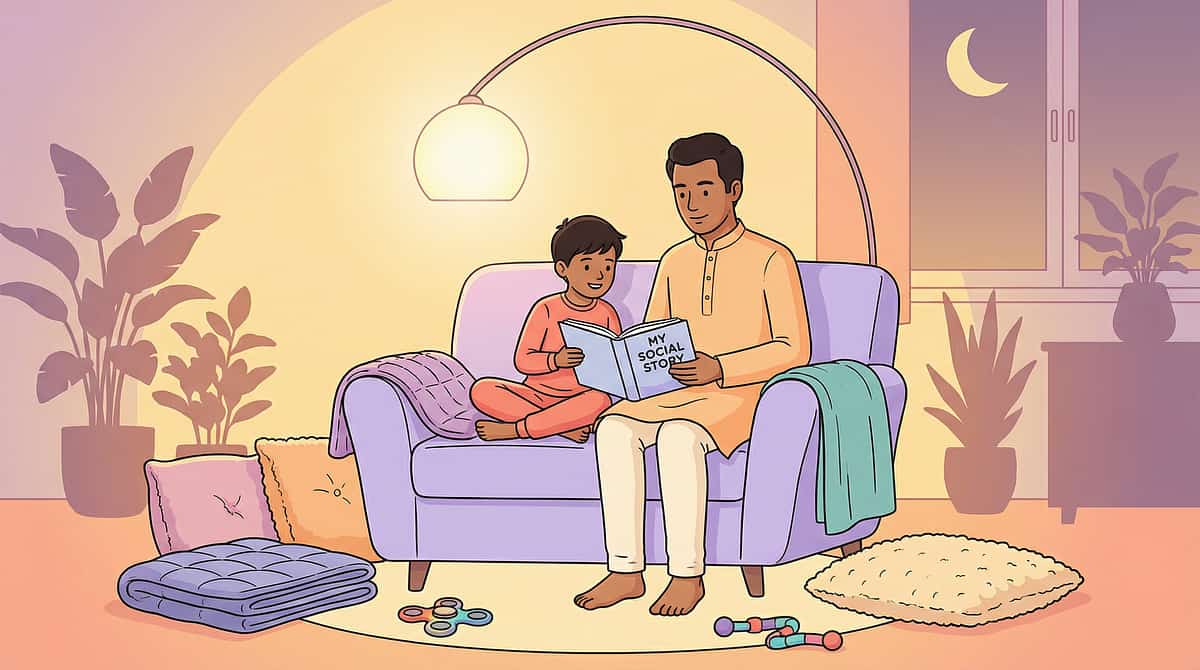
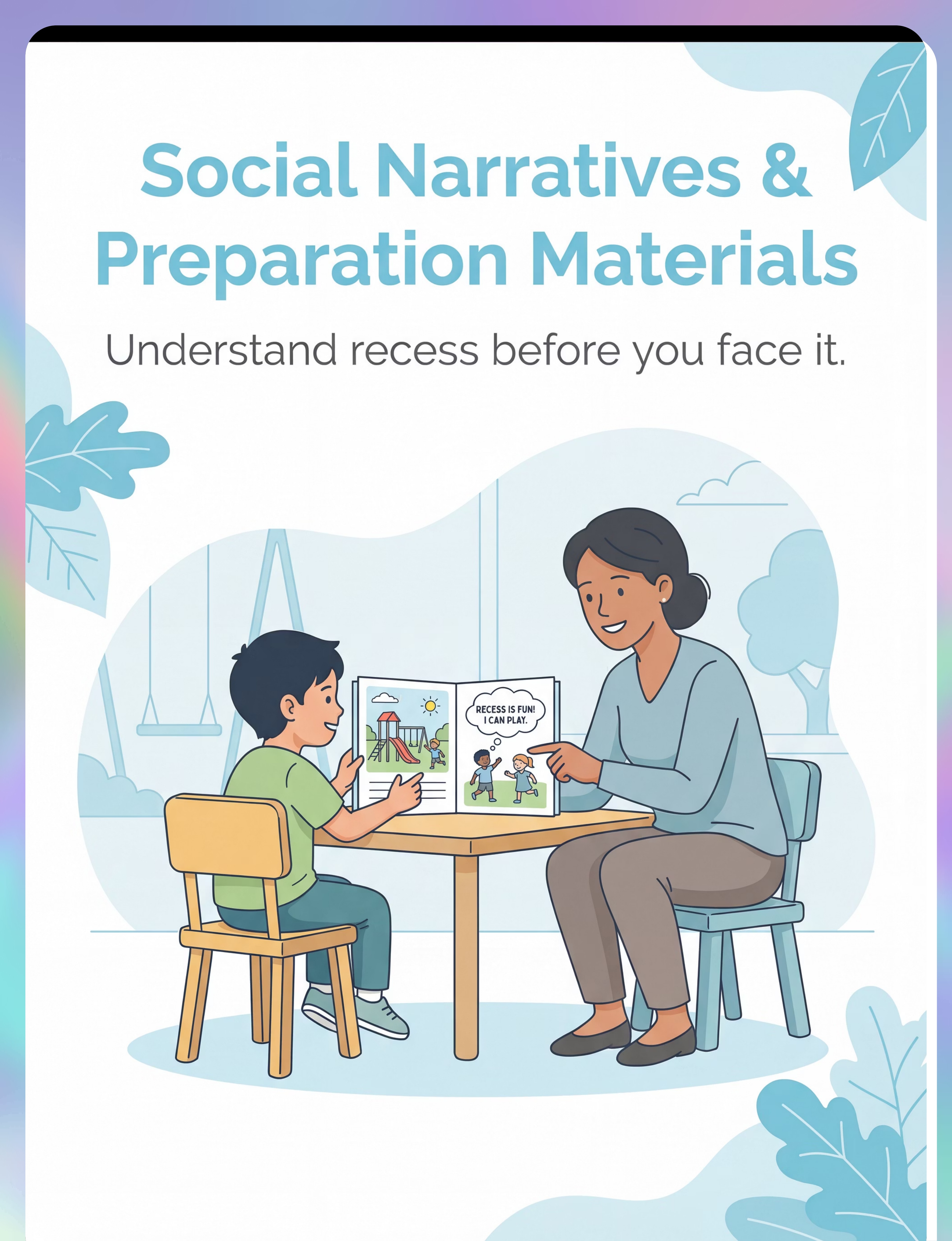
Material 7: Social Narratives & Recess Preparation
What it is: A personalized story about recess — what happens, what the child does, how they cope. When to use: The night before school. Every school night. 5-minute read.
"[Child's name] goes to school every day. At [school name], there is a playground. When the whistle blows for recess, all the children go outside. The playground is loud because many children are playing. [Child's name] knows this. [Child's name] has a plan. First, [child] checks how they feel. Then [child] picks an activity. If [child] wants to play with someone, [child] says 'Can I play too?' If they say no, [child] can find something else. When the whistle blows, recess is over. [Child's name] did their best. That is enough."
Why Personalization Matters
Using the child's actual name, their school's name, and real playground scenarios activates the narrative as a mental rehearsal — not a generic story.
Why Nightly Reading Works
Bedtime is the nervous system's consolidation window. Narrative review during calm pre-sleep state reduces amygdala threat response to the playground by encoding familiarity.
Update Over Time
As situations change (new buddy, new game, new challenge), update the narrative. Personalization is more effective than any commercially published social story.
DIY Cost
₹0 — one page, handwritten or typed
Outcome Indicator
Child's morning recess anxiety (rated 1–10) drops from baseline within 2 weeks of nightly reading
STEP 3 OF 6 — MATERIAL 8
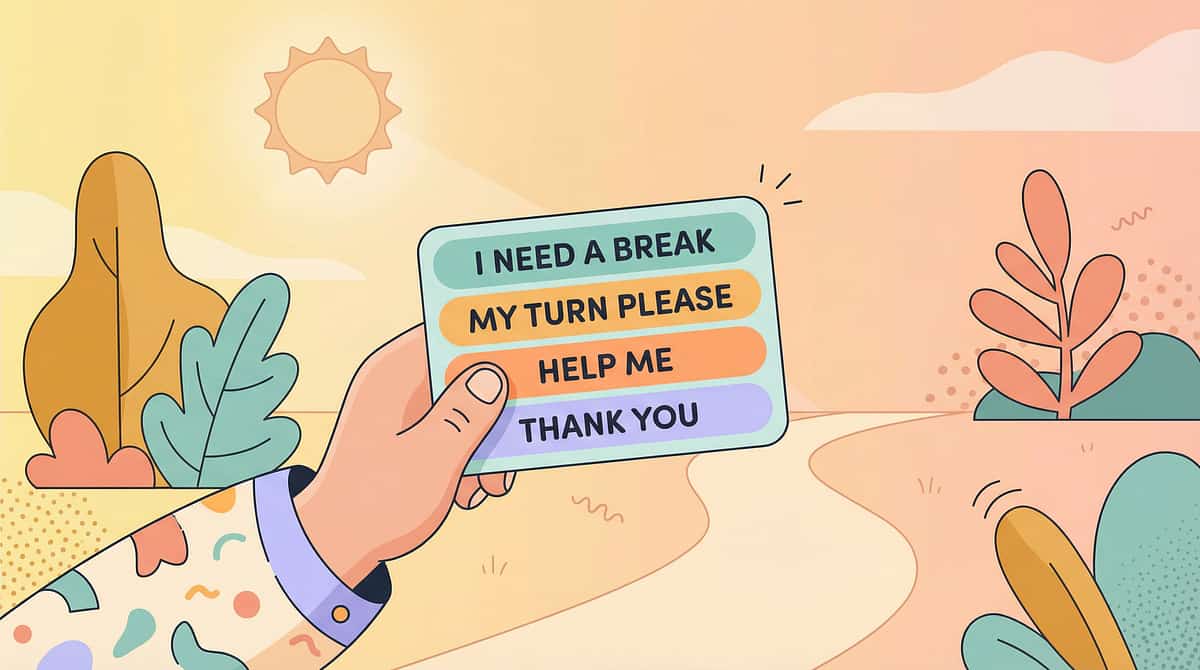
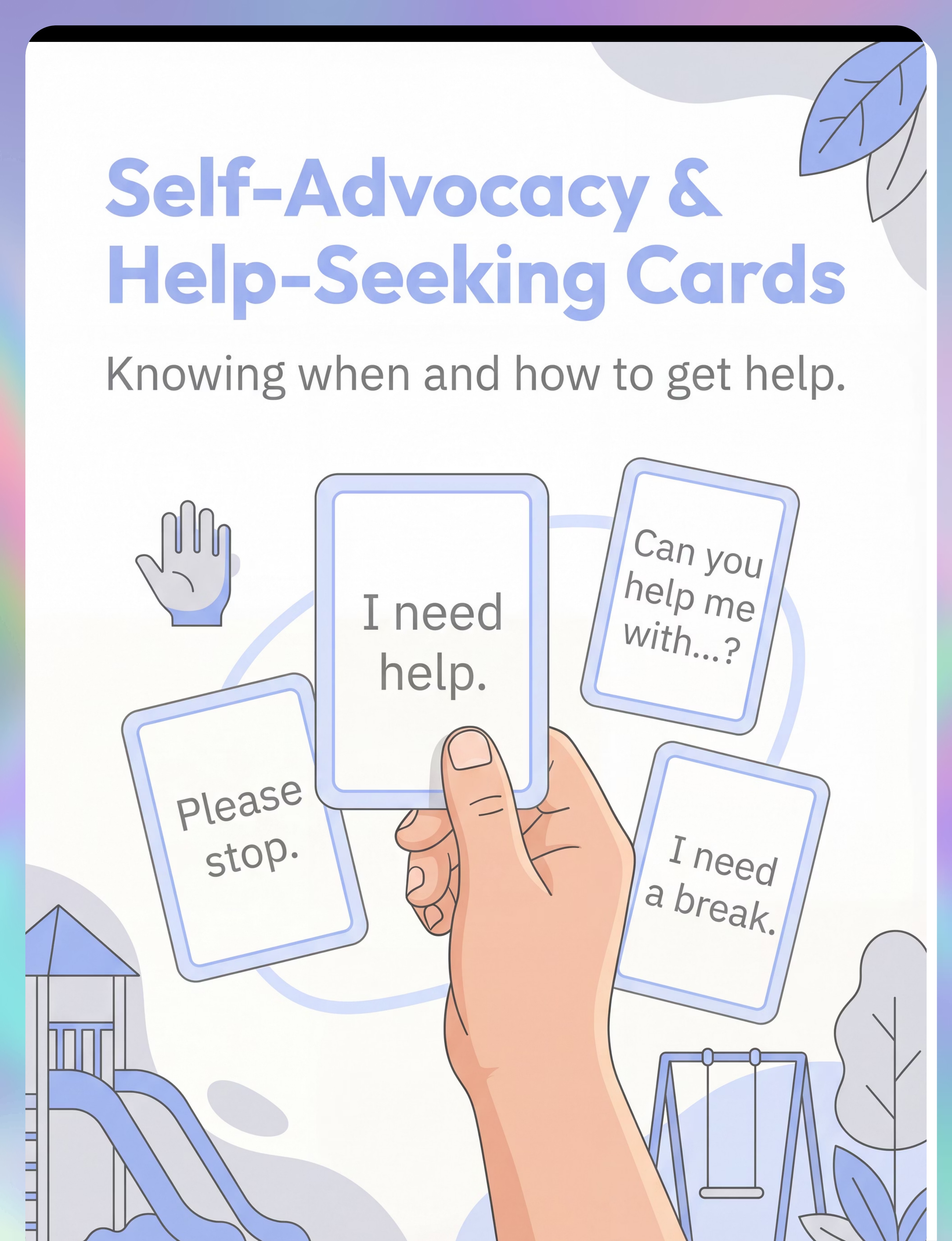
Material 8: Self-Advocacy & Help-Seeking Cards
What it is: 4 specific phrases on a small card for crisis moments. When to use: When overwhelmed, bullied, unable to cope, or needing adult help.
Phrase 1
"I need help."
To adult. The most foundational self-advocacy phrase. Opens every intervention pathway.
To adult. The most foundational self-advocacy phrase. Opens every intervention pathway.
Phrase 2
"I need a break."
To adult or self-direction. The regulatory exit. Prevents escalation to meltdown by honoring threshold limits.
To adult or self-direction. The regulatory exit. Prevents escalation to meltdown by honoring threshold limits.
Phrase 3
"Please stop."
To peer. The boundary-setting phrase. Communicates consent and preference in the language of the playground.
To peer. The boundary-setting phrase. Communicates consent and preference in the language of the playground.
Phrase 4
"Can you help me with...?"
To adult. The specific request. Moves from generic distress to actionable communication.
To adult. The specific request. Moves from generic distress to actionable communication.
Practice format: Role-play each phrase. Practice recognizing when to use which. Rehearse the walk to the teacher: "If you need help, where do you go? Show me." The physical rehearsal of walking to the teacher is as important as the words.
DIY Cost
₹0 — four phrases on a business-card-sized paper
Outcome Indicator
Child uses appropriate verbal phrase instead of meltdown, shutdown, or physical response

STEP 3 OF 6 — MATERIAL 9
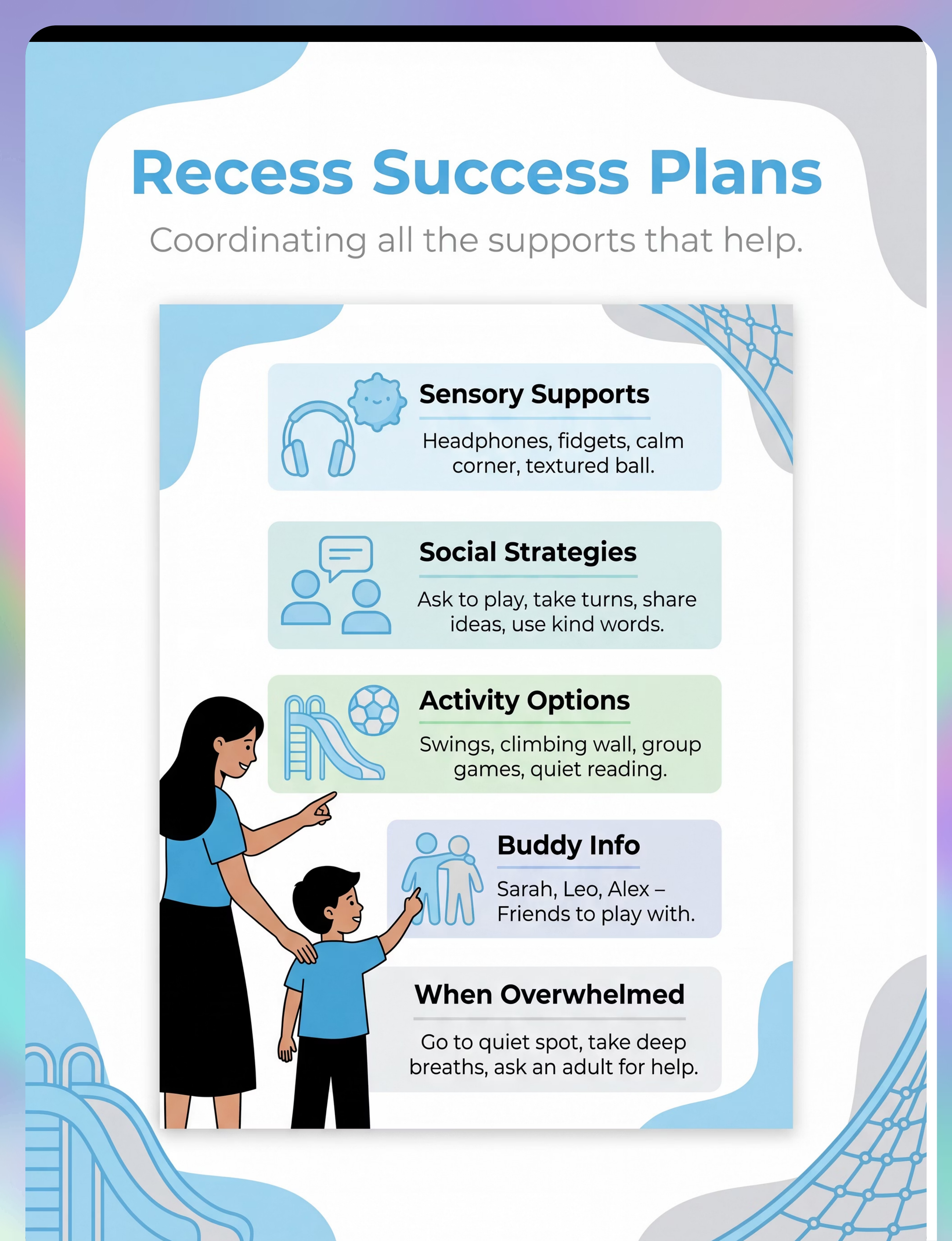
Material 9: Recess Success Plan
What it is: A 1-page coordination document shared with ALL adults who support the child. This is the connective tissue that makes every other material work at school.
Section | Content | |
Child's Name + Profile | Grade, key challenges (sensory/social/motor), current functioning level | |
Active Supports | List of 3–5 approved strategies with brief descriptions for each adult | |
Buddy Information | Name of buddy, arrangement details, scheduling | |
Quiet Zone | Location on playground, protocol for use, adult response | |
Staff Role | What teachers/aides do (prompt? observe? facilitate?) | |
Red Flags | Signs that require adult intervention immediately | |
Contact | Parent phone; therapist name; next review date |
Share with: Class teacher + recess supervisor + school counselor + SpEd coordinator. Every adult who touches the child's school day should receive this plan — consistency across adults multiplies impact.
DIY Cost
₹0 — one A4 sheet
Outcome Indicator
All school adults provide consistent, coordinated support — child receives same message from every adult
NCAEP (2020): Social scripts, visual supports, and peer-mediated interventions each independently classified as evidence-based practices for autism. | Video modeling + social narratives: NCAEP EBP Report 2020.
STEP 4 OF 6
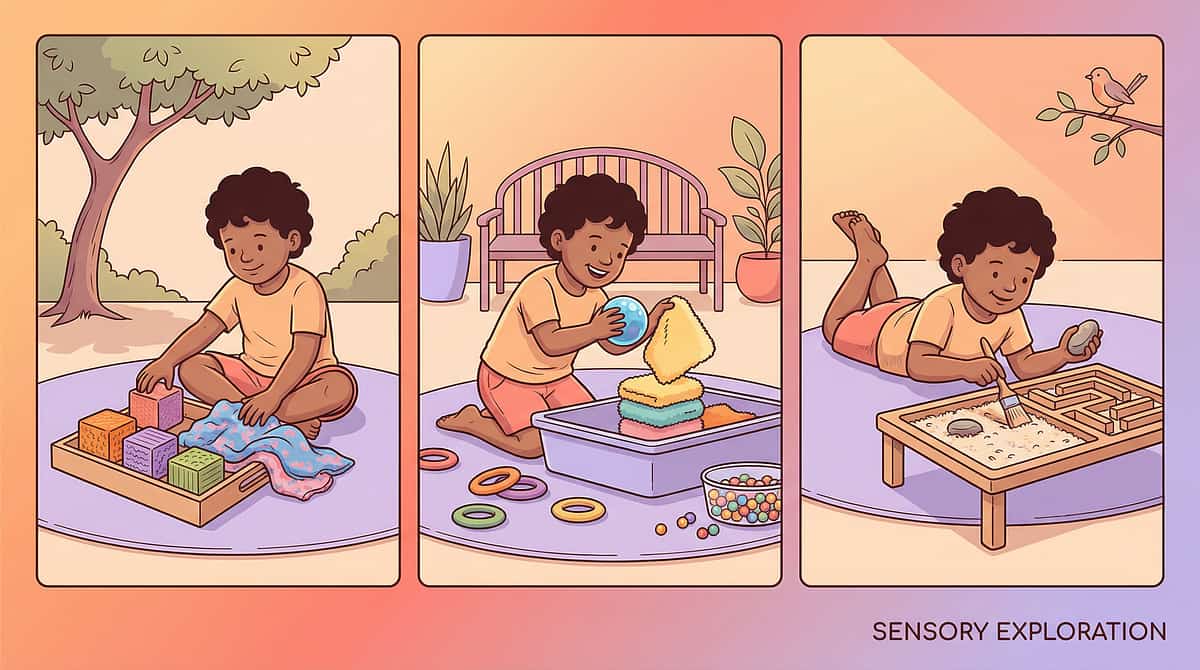
Repeat & Vary — The therapeutic dose: Consistent, varied, non-forced.
Material | Daily Dose | Weekly Minimum | Variation Principle | |
Social Scripts | 1 use attempt per recess | 5 attempts/week | Rotate which script; vary approach target (different peer each week) | |
Activity Menu | 1 decision per recess | 5 selections/week | Rotate activities; add 1 new option monthly | |
Sensory Tools | As-needed; pre-emptively daily | Proactive use every recess | Vary tools based on weather/playground noise level | |
Game Rule Cards | Study 1 new game per week | 1 game/week home study | Rotate to new game after child successfully plays current one | |
Buddy Time | 2–3 scheduled interactions/week | Minimum 2 buddy contacts | Vary activities; don't always do same thing with buddy | |
Structured Activity | 2–3 days/week offer | At least 2 peer invitations/week | Rotate games; introduce new activities monthly | |
Social Narrative | Nightly reading | 5 nights/week minimum | Personalize story as situations change | |
Self-Advocacy | Role-play 1 scenario nightly | 5 practice scenarios/week | Vary scenarios (rejection, bullying, overwhelm, injury) | |
Success Plan | Review with school monthly | Monthly review meeting | Update as skills develop |
3 good attempts > 10 forced attempts. If your child makes 3 genuine, regulated attempts at peer contact this week — even if all 3 are rejected — that is MORE therapeutic progress than 10 anxious, parent-pressured attempts that end in meltdown. Quantity is not the target. Regulated, genuine engagement is.
Satiation Indicators
- Child becomes irritable when reminded about scripts → Too much pressure. Back off 1 week.
- Child refuses to take kit to school → Scripts are too visible/embarrassing. Redesign for discretion.
- Child stops mentioning recess (positive sign) → Anxiety is decreasing. Good sign.
- Child brings up recess voluntarily → Engagement is developing. Excellent sign.

STEP 5 OF 6
Reinforce & Celebrate — Celebrate the attempt. Not just the win.
When child TRIED (regardless of outcome)
"I heard you tried to join the four square game today. That took courage. That's exactly what we've been practicing. I am proud of you."
When child SUCCEEDED
"You walked up, you used your words, and you played with someone today. Do you know how big that is? I am so proud of you."
When child had a HARD day
"Today was hard. That's real. AND — you went out there. You tried. That means something."
When child USED SELF-ADVOCACY
"You told the teacher you needed help. That is a skill. That took strength. Perfect."
Immediate Reinforcement (within 60 seconds)
- Verbal praise (specific, warm, brief)
- Physical affirmation (high five, hug, fist bump — if touch-comfortable)
- "Telling Dad/Grandma" ritual (child reports success to another adult)
Accumulated (weekly milestone system)
- Rosette Reward Jar: add a marble/token for each genuine attempt
- 1800+ Reward Stickers: sticker on recess chart for each day of attempting
- Weekly milestone: 5 attempts = chosen family activity
Timing Rule: Reinforce the specific behavior FIRST — before asking about anything else. ❌ "How was school?" (too vague) ✅ "Tell me about recess — what happened?" (specific focus). Then reinforce whatever attempt was made BEFORE discussing what was hard. | ABA Reinforcement Principles: Immediate, specific reinforcement within 3 seconds increases behavior occurrence.

STEP 6 OF 6
The After-School Cool-Down — The school day is over. The nervous system isn't.
The first 20 minutes after pickup are sacred regulation time. The nervous system that managed a full school day — including the sensory and social demands of recess — needs to decompress before language returns. Rushing the debrief produces less information and more distress.
What to Do if Recess Was Terrible
- Regulate first (physical calm before verbal processing)
- Validate: "That sounds really hard. I'm sorry."
- Don't problem-solve immediately — just witness
- After 20 minutes: "Can you tell me what happened? Not to fix it — I just want to understand."
- If bullying is involved → School contact that evening, not the next morning
For children who use the animal soft toy as a transition anchor — having it visible at pickup significantly reduces post-school dysregulation. This is not babyish; it is clinical. The object bridges the school emotional state to home safety.

ACT III — DATA
Capture the Data — 60 seconds of data now. Months of insight later.
3-Field Daily Tracker
Record within 60 minutes of school pickup:
- Recess Attempt: Did child attempt social contact today? Yes / Partial / No
- Regulation Level: How regulated was child during/after recess? 1 (dysregulated) → 5 (fully regulated)
- Tool Used: Which material(s) deployed today? [list]
Optional adds: Duration of peer contact | Which script was used | Peer response (positive/neutral/rejection) | Tomorrow's plan (child's words)
Why This Data Matters
- At 2 weeks: You'll see patterns (Monday is worst; Friday is better)
- At 4 weeks: You'll see direction (regulation scores improving even before social scores)
- At 8 weeks: You'll have data to share with school and therapist that changes the intervention
"60 seconds of data now saves hours of guessing later." — Pinnacle GPT-OS® Protocol

ACT III — TROUBLESHOOTING
The 7 most common recess setbacks — and what to do.
🔴 Problem 1: Child refuses to take the kit to school
Why: Scripts and cards feel embarrassing — peers might see.
Solution: Redesign for invisibility. Script on phone notes app. Tiny laminated card in shoe insole. Activity menu memorized rather than carried. Sensory tools that look like "normal" earphones.
Solution: Redesign for invisibility. Script on phone notes app. Tiny laminated card in shoe insole. Activity menu memorized rather than carried. Sensory tools that look like "normal" earphones.
🔴 Problem 2: Script used correctly but peers still reject
Why: Entry strategy may be timing-based, or peer group is genuinely exclusive.
Solution: Practice reading "game pause points" (right moment to ask). Identify more receptive peer targets. Build parallel activity base. Time + buddy system.
Solution: Practice reading "game pause points" (right moment to ask). Identify more receptive peer targets. Build parallel activity base. Time + buddy system.
🔴 Problem 3: Child uses script once, fails, and refuses to try again
Why: One rejection = catastrophic interpretation ("No one likes me").
Solution: Explicitly teach "rejection rate" — "Even adults get rejected 30% of the time. That's normal. It's not about you." Reinforce the attempt, not the outcome.
Solution: Explicitly teach "rejection rate" — "Even adults get rejected 30% of the time. That's normal. It's not about you." Reinforce the attempt, not the outcome.
🔴 Problem 4: Sensory tools draw negative attention from peers
Why: Headphones/fidgets are visible and peers question them.
Solution: "Cool framing": "My doctor said these help me think better." Or use invisible tools: ear plugs, compression undershirt, sugar-free gum (where permitted).
Solution: "Cool framing": "My doctor said these help me think better." Or use invisible tools: ear plugs, compression undershirt, sugar-free gum (where permitted).
🔴 Problem 5: Buddy system collapses after 2 weeks
Why: Buddy experience is one-sided; buddy gets "burned out."
Solution: Ensure reciprocity — identify what your child BRINGS to the relationship. Rotate between 2 buddies. Brief the buddy's parents on reciprocal support. Schedule breaks.
Solution: Ensure reciprocity — identify what your child BRINGS to the relationship. Rotate between 2 buddies. Brief the buddy's parents on reciprocal support. Schedule breaks.
🔴 Problem 6: Progress at home but not generalizing to school
Why: Home is safe/controlled; playground is unpredictable.
Solution: Practice in progressively realistic settings: home → quiet park → noisy park → school before school starts → recess. Graduated exposure is evidence-based. Don't skip steps.
Solution: Practice in progressively realistic settings: home → quiet park → noisy park → school before school starts → recess. Graduated exposure is evidence-based. Don't skip steps.
🔴 Problem 7: Teacher reports child is "fine" but child says it's terrible
Why: Child is masking at school (appearing fine while experiencing significant distress).
Solution: Request structured observation by school counselor during recess (not casual supervision). Trust your child's home report. Request formal recess observation.
Solution: Request structured observation by school counselor during recess (not casual supervision). Trust your child's home report. Request formal recess observation.
ACT III — ADAPT
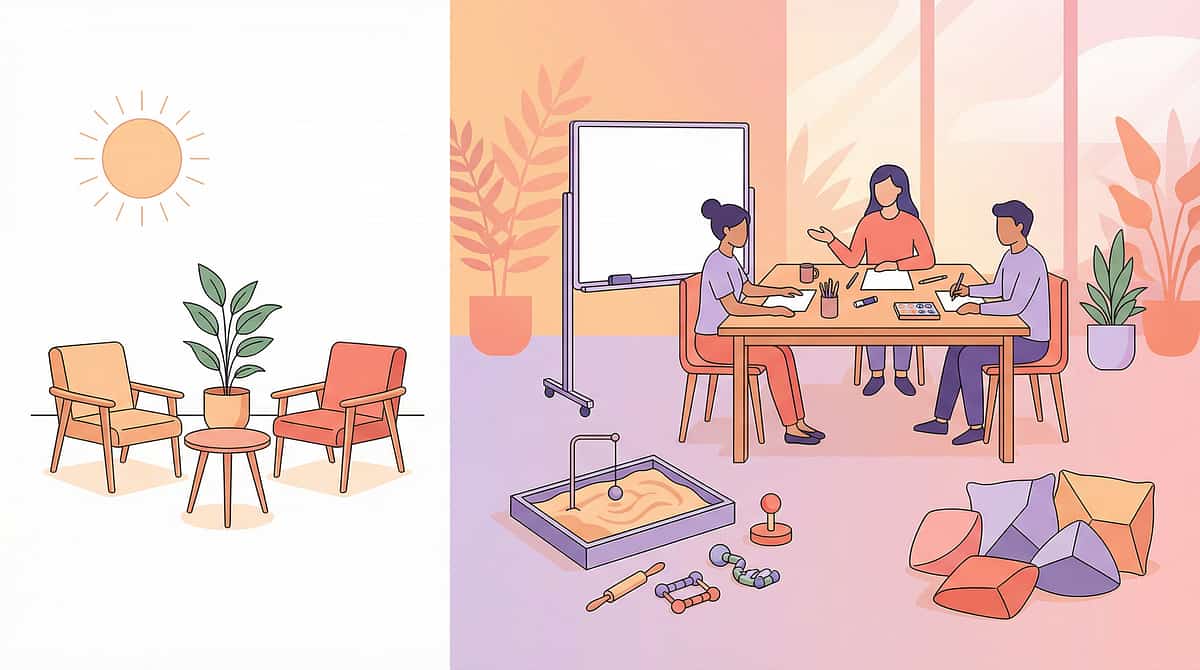
Your child is not the average child. Neither is their plan.
← EASIER VERSION
For difficult days, new environments, post-illness. Reduce social demand: solo activity only; quiet zone approved. Use only ONE tool (most impactful for this child). No new scripts; use most-practiced phrase only. Goal: survive recess with dignity.
STANDARD VERSION
Baseline protocol, most school days. Full kit deployed. 1–2 social attempts. Activity menu used. Buddy connection if scheduled. This is the default operating mode.
→ HARDER VERSION
Breakthrough days, after success. Attempt to join unfamiliar group. Try a new game using rule card. Initiate conversation topic. Reduce tool use (test emerging independence).
For Sensory Seekers (craves movement/noise)
Activity menu should include HIGH ENERGY options. Use playground equipment (climbing, swinging) as sensory diet AND social entry point. Game rule cards for physically active games are priority.
For Sensory Avoiders (overwhelmed by noise/chaos)
Quiet corner access is non-negotiable. Structured table activities are primary social pathway. Buddy system is more important than script cards.
For Language-Limited Children
Picture-based activity menu (photos, not words). Script cards with images (pointing is communication too). Buddy does more of the verbal work. Focus on parallel play first, then interactive.
For High-Masking / Anxious Children
Social narrative work is priority. Success plan sharing with school is critical. Self-advocacy cards address the primary vulnerability.
ACT IV — PROGRESS ARC
Week 1–2: Tolerance, not transformation.
✅ What You WILL See
- Child accepts the morning brief without shutting down
- Child takes the kit to school (even if doesn't use it) — this is huge
- Child uses ONE sensory tool proactively (vs. meltdown response)
- Child reports ONE recess detail at home (vs. "fine" or total shutdown)
❌ What You Will NOT See Yet
- Spontaneous peer play initiation
- Rejection handling without distress
- Consistent strategy use without prompting
- Buddy relationship naturalizing
If your child stays on the playground 5 minutes longer before retreating, that is a measurable neurological win. If morning anxiety about recess drops from 8/10 to 6/10, that is a real outcome. Tiny changes in Week 1–2 predict large changes by Week 6–8.
Parent Emotional Preparation: You will feel like nothing is working. This is the normal emotional arc of parent-delivered intervention. The data will tell a different story. Keep tracking. | Systematic review (Children, 2024): PMC11506176

ACT IV — PROGRESS
Week 3–4: Watch for the subtle signals.
🔵 Child anticipates the morning brief positively (vs. dreading it)
The morning routine is no longer a source of anxiety — it is a familiar preparation ritual.
🔵 Child mentions recess spontaneously
Even to say something negative — this is engagement returning. The subject is no longer shut down completely.
🔵 Child reports using a specific phrase at recess
Even if it "didn't work" — the script was deployed. The behavior occurred. That is the progress.
🔵 Child uses sensory tool proactively rather than reactively
Moving from crisis response to prevention is a significant regulatory milestone.
🔵 Buddy relationship has continued for 2+ weeks
Even with adult facilitation — consistency is the precursor to naturalization.
🔵 Morning anxiety drops from baseline
Track on 1–10 scale. Even a 1-point reduction over 2 weeks is neuroplasticity in action.
These are not coincidences. These are neural pathway consolidation markers. The prefrontal cortex is beginning to automate previously labored processes. The amygdala threat response to the playground is reducing. This is neuroplasticity in action.
Neuroplasticity research: Synaptic strengthening through repeated structured input follows predictable timelines in pediatric populations. Behavioral consolidation markers align with neural adaptation curves.

ACT IV — MASTERY
Week 5–8: The moment you realize something has shifted.
Skill | Baseline (Week 0) | Mastery (Week 5–8) | |
Social Initiation | Zero attempts per recess | 1–2 independent attempts per recess | |
Script Use | Requires card + prompting | Uses phrases from memory without card | |
Sensory Regulation | Retreats from playground | Manages in main area with tools | |
Game Participation | Excluded or watches | Participates in at least one game/week | |
Rejection Recovery | Meltdown or shutdown | Uses backup plan; moves on | |
Buddy Relationship | None | Regular contact 3+×/week |
Generalization Indicators — skill appearing beyond recess:
- Using social initiation phrases at birthday parties, family events
- Applying sensory tools independently in other loud environments
- Demonstrating self-advocacy language in other school contexts
Mastery Unlocked Criteria — Recess Readiness Level 1:✅ 3 consecutive weeks of attempted peer contact ✅ Sensory regulation maintained through full recess on 70%+ of days ✅ At least one ongoing peer relationship (buddy or natural) ✅ Self-advocacy used at least once without prompting | Meta-analysis (World J Clin Cases, 2024): PMC10955541
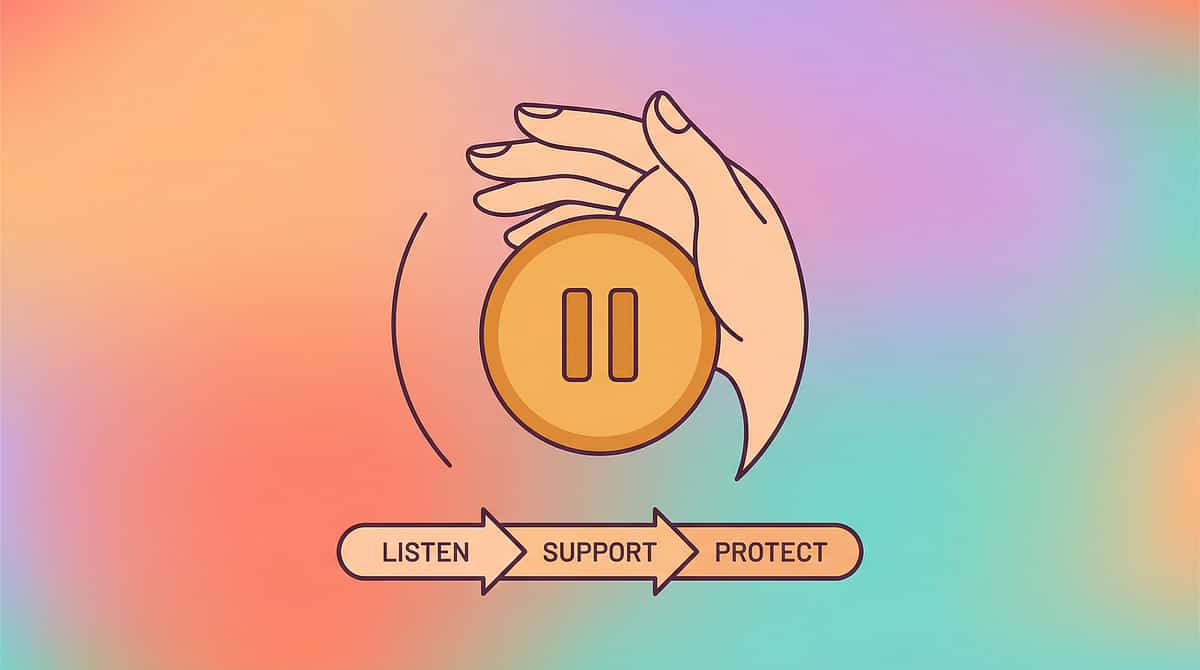
ACT IV — RED FLAGS
Even in the success zone — know when to stop.
🚨 Red Flag 1: Increasing school refusal
Signs: Refusing to go to school; physical symptoms (stomach aches, headaches) on school mornings; escalating morning meltdowns.
Action: Pause recess social goals immediately. Assess for school anxiety disorder. Contact school and therapist. This is not a recess problem anymore.
Action: Pause recess social goals immediately. Assess for school anxiety disorder. Contact school and therapist. This is not a recess problem anymore.
🚨 Red Flag 2: Evidence of bullying
Signs: Child reports being deliberately targeted, mocked, excluded with intention; physical harm; belongings damaged.
Action: Stop recess protocol. Document incidents. Report formally to school administration. Request a safety plan. Formal meeting with principal.
Action: Stop recess protocol. Document incidents. Report formally to school administration. Request a safety plan. Formal meeting with principal.
🚨 Red Flag 3: Self-harm or talk of self-harm
Signs: "I wish I didn't exist" / "No one likes me and they never will" / any self-harm behavior.
Action: Immediate mental health consultation. This is a clinical emergency, not a recess strategy problem. Call helpline: 9100 181 181
Action: Immediate mental health consultation. This is a clinical emergency, not a recess strategy problem. Call helpline: 9100 181 181
🚨 Red Flag 4: Regression below baseline after progress
Signs: Skills that were stable deteriorate significantly; child returns to pre-intervention behaviors.
Action: Pause intervention. Assess for change (new medication, peer event, home stressor). Consult therapist before resuming.
Action: Pause intervention. Assess for change (new medication, peer event, home stressor). Consult therapist before resuming.
🚨 Red Flag 5: Buddy relationship causes distress to buddy child
Signs: Reports from buddy's family that buddy feels pressured, resentful, or burdened.
Action: Restructure or pause buddy arrangement. One-sided relationships cause harm to both children.
Action: Restructure or pause buddy arrangement. One-sided relationships cause harm to both children.
ACT IV — PATHWAY
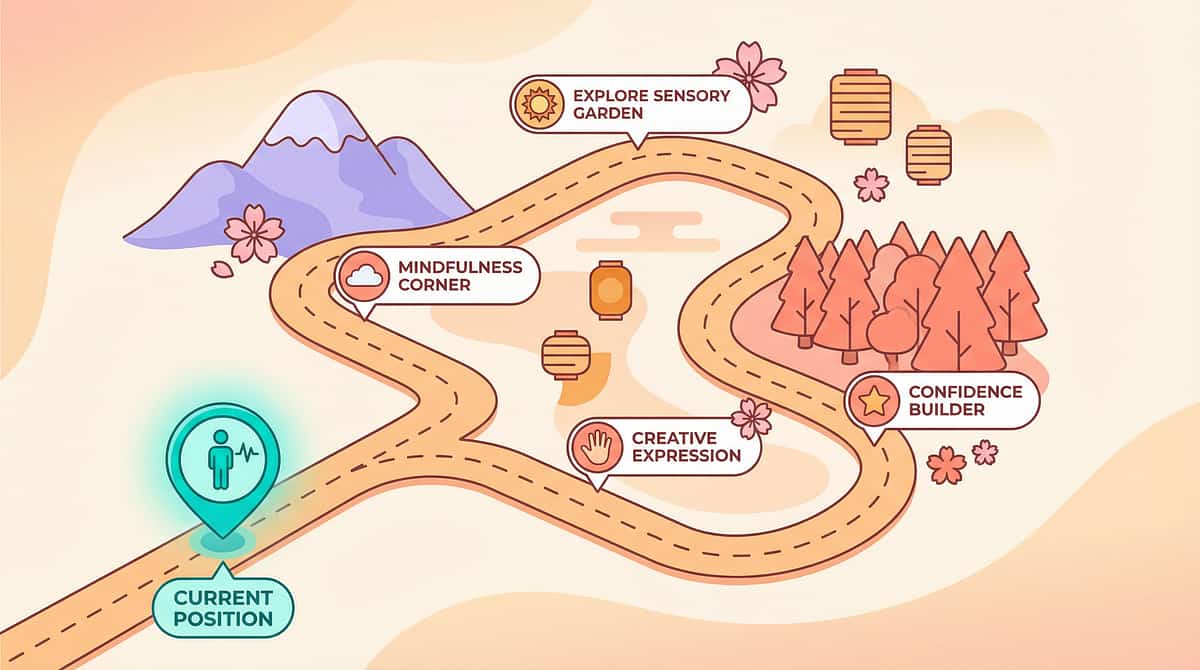
Where you've been. Where you are. Where you're going.
H-711
Classroom Participation Supports — Prerequisite technique
H-712
School Transition Supports — Prerequisite technique
H-713 ← YOU ARE HERE
Recess Challenges — Current technique. 9 evidence-based materials for playground participation.
H-714
Cafeteria Challenges — Next technique in School Participation domain
H-715
Bus & Transportation Support — Continuing School Participation series
Prerequisite Check Before H-714
- ✅ Child navigates playground sensory demands with minimal support
- ✅ At least one stable peer connection established
- ✅ Self-advocacy skills functional in playground context
Lateral Alternatives (if support is needed first)
- ← G-655: Sensory Regulation (foundational)
- ← B-series: Social Communication Skills (prerequisite for script use)
- ← G-650: Social Communication — Peer Entry (Core)
The long-term goal this feeds into: School Participation Readiness Index — Unstructured Time Participation → Peer Relationship Development → Social Identity → Community Inclusion Readiness.
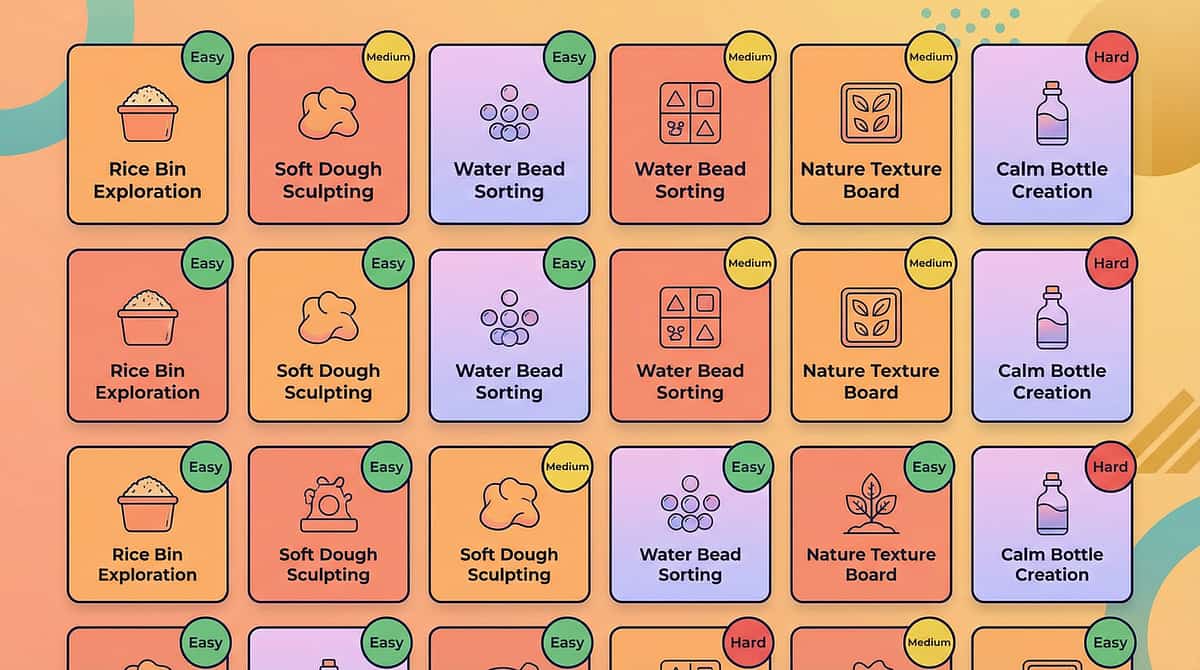
ACT IV — RELATED TECHNIQUES
Same domain. Materials you may already own.
Code | Title | Level | Canon Material | Materials Overlap | |
H-711 | Classroom Participation Supports | Intro | Visual Schedules | Activity Menu ✓ | |
H-712 | School Transition Supports | Intro | Transition Objects | Comfort toy ✓ | |
H-714 | Cafeteria Challenge Materials | Core | Social Scripts | Script Cards ✓ | |
H-715 | Bus & Transportation Support | Core | Social Narratives | Narrative book ✓ | |
G-650 | Social Communication — Peer Entry | Core | Social Scripts | Script Cards ✓ | |
G-655 | Sensory Regulation in Public Spaces | Advanced | Sensory Tools | Full kit ✓ |
If you've built the H-713 kit, you already have materials for H-711, H-712, and H-714. The investment made here multiplies across your child's full school participation profile.
ACT IV — FULL MAP
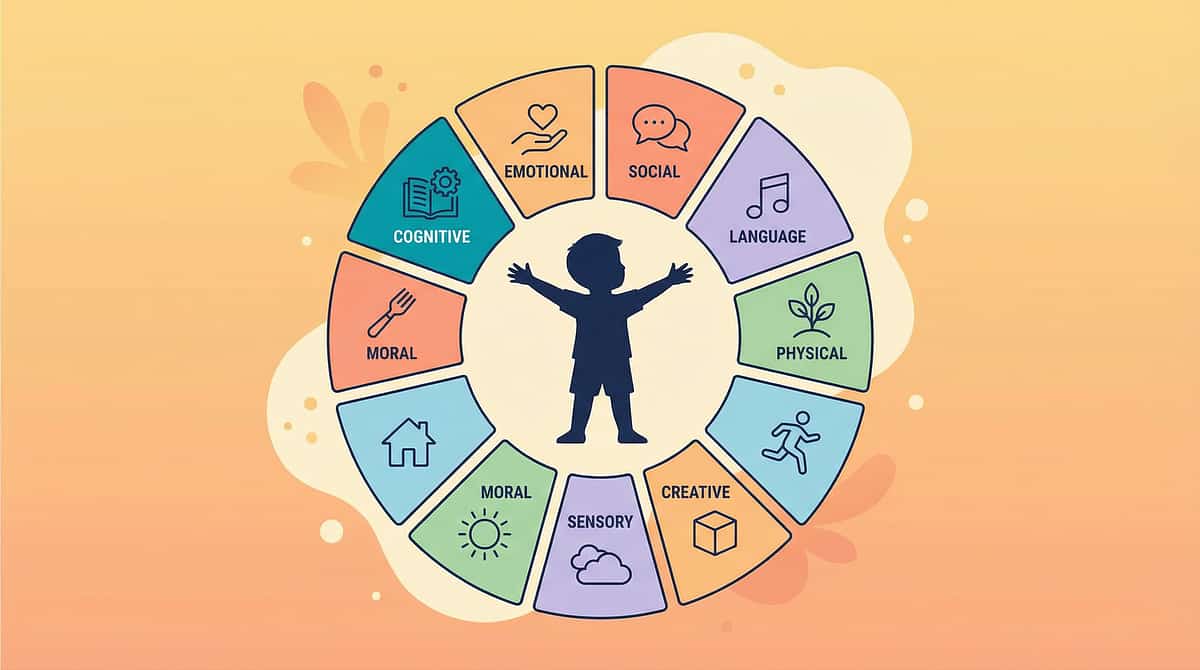
One technique. Twelve domains. One child.
This technique lives in Domain H: School Participation. But it feeds every domain. Sensory regulation skills built here (Domain A) reduce cafeteria overwhelm. Social scripts mastered here (Domain B) transfer to birthday parties and family events. Rejection tolerance built here (Domain C) reduces emotional dysregulation across all settings. Game rule comprehension (Domain F) builds cognitive flexibility across academic contexts.
Your child's developmental profile is interconnected. Every technique page on this platform is one node in that whole-child map. Progress here radiates outward.
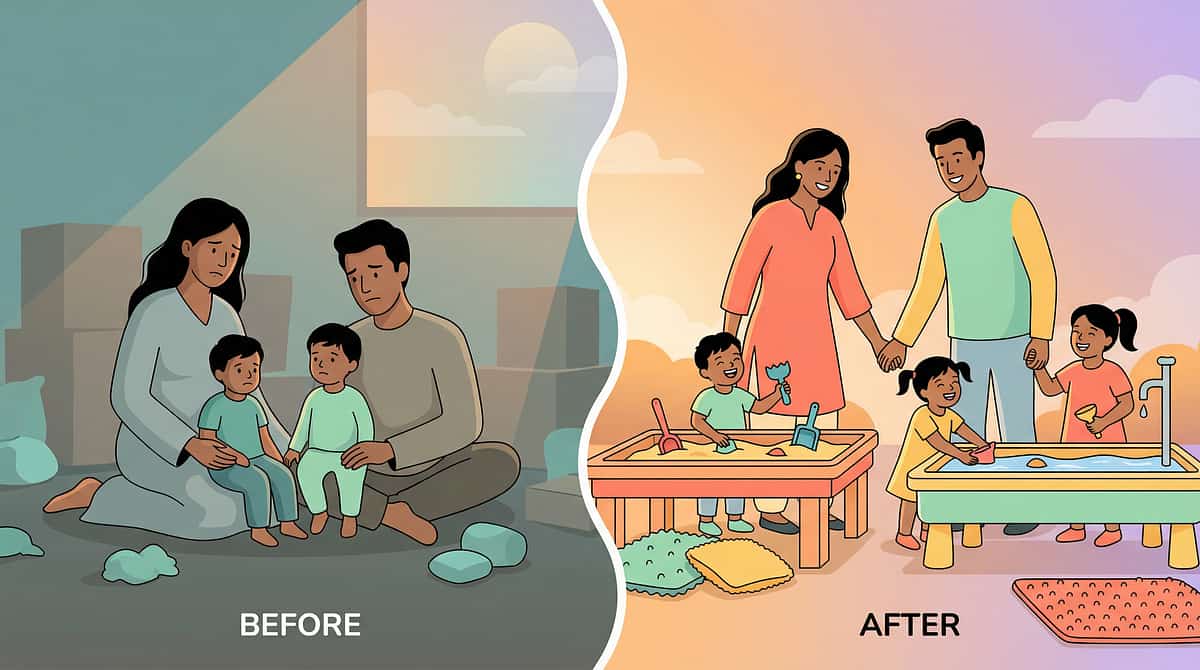
ACT V — COMMUNITY
They started where you are. Here's where they arrived.
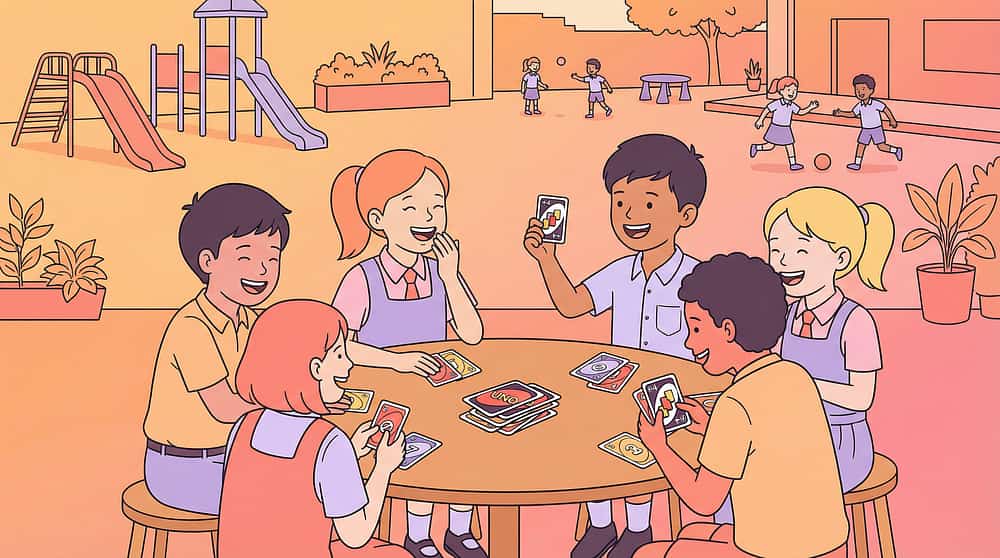
Arjun, 7 — Hyderabad
Before: Spent every recess walking the perimeter alone. Three rejections in one week left him saying "I'm the only boy in my school without any friends."
The Intervention: OT assessment revealed auditory hypersensitivity. Ear plugs + a portable UNO set + three social scripts practiced nightly for 6 weeks.
Week 8: Arjun had a standing UNO group at the corner table during recess. Three classmates asked him to play.
"The ear plugs were the first thing. Once the noise wasn't attacking him, he could actually think about talking to people." — Arjun's parent

Meena, 9 — Chennai
Before: Academically strong. Socially invisible at recess. Her teacher said she was "fine." She told her mother every night that "no one ever talks to me."
The Intervention: Social script cards + buddy system arranged through school counselor + social narrative reviewed nightly.
Week 6: Meena had a buddy who saved her a seat at lunch. She'd used the "Can I play?" script twice and gotten positive responses both times.
"She came home one day and said 'Priya asked me to be her partner today.' I went to the bathroom and cried. We'd been waiting two years for that sentence." — Meena's parent
Illustrative narratives drawn from composite clinical cases. Individual outcomes vary by child profile, underlying factors, school environment, and intervention consistency.

ACT V — CONNECT
You should not be navigating this alone.
🟢 Pinnacle Parent WhatsApp Groups
Topic-specific groups for recess + school participation challenges. Request via 9100 181 181 to join the School Participation Support Group.
🌐 Online Community
Pinnacle Parent Community at pinnacleblooms.org/community | Forum: Recess & School Participation
👥 Peer Mentoring
Connect with a Pinnacle parent who has navigated recess challenges with their child. Request a Peer Mentor at pinnacleblooms.org/peer-mentor
📍 Local Parent Meetups
Pinnacle center parent groups meet monthly in 70+ center locations across India. Find Your Center at pinnacleblooms.org/centers
"Isolation is the enemy of adherence. When you're executing a challenging intervention alone, the likelihood of sustained implementation drops significantly. Community doubles your follow-through." — Pinnacle GPT-OS® Parent Engagement Framework
WHO NCF (2018): "Over 1000 individuals from 111 countries contributed to the framework." Community engagement is a core principle. Parent support networks improve intervention outcomes. | PMC9978394

ACT V — PROFESSIONAL SUPPORT
Home practice + professional guidance = maximum impact.
🔵 Occupational Therapist
Sensory processing assessment, regulation kit design, school environment recommendations. Find OT near me
🟢 Speech-Language Pathologist
Social script development, pragmatic language assessment, peer communication targets. Find SLP near me
🟠 BCBA / ABA Therapist
Behavioral intervention for recess avoidance, reinforcement system design, data analysis. Find BCBA near me
🟡 Special Educator
School collaboration, IEP recess goals, buddy program facilitation. Find SpEd near me
Teleconsultation Available
Can't reach a center? Start with teleconsultation — a 30-minute session with a Pinnacle OT + SLP to build your child's personalized kit, wherever you are.
Insurance & Funding Note
Some Indian states provide funding for developmental therapy through government schemes. Ask your center coordinator about current eligibility. International families: Pinnacle serves 70+ countries — consult your local specialist network.
📞9100 181 181 — FREE | 24×7 | Connect to your nearest Pinnacle center
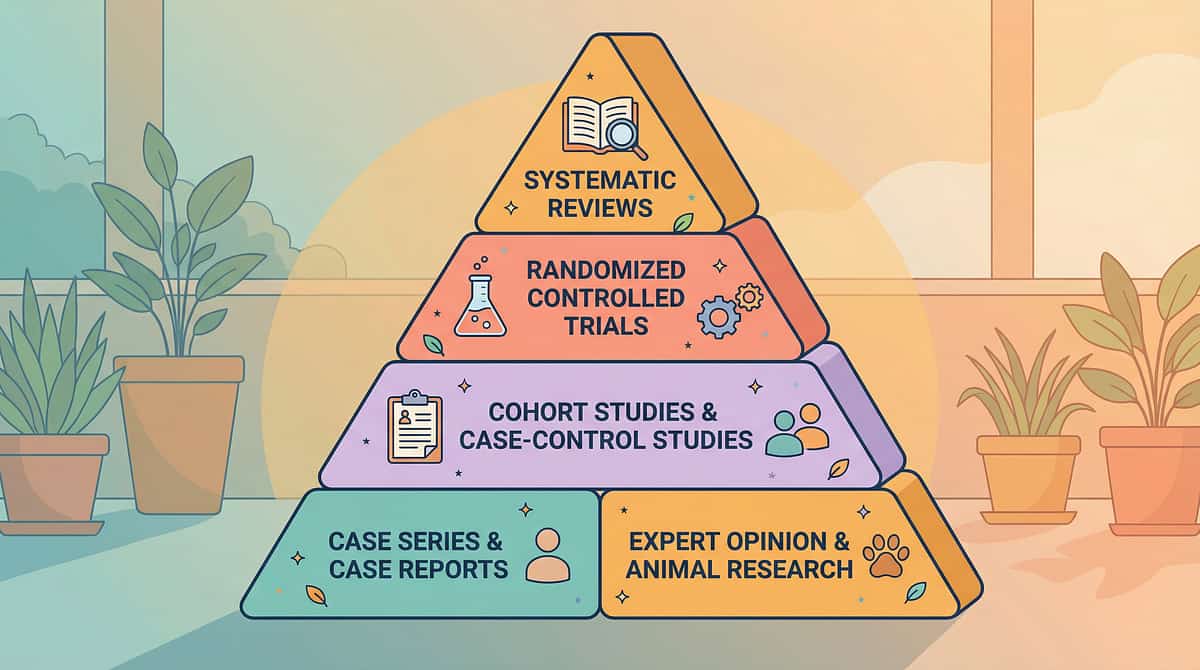
ACT V — RESEARCH LIBRARY
The science is solid. Here's where to verify it.
PMC11506176 — Systematic Review (Children, 2024)
"Sensory integration intervention meets criteria to be considered evidence-based practice for ASD — 16 studies, 2013–2023." → Read on PubMed
PMC10955541 — Meta-analysis (World J Clin Cases, 2024)
"Sensory integration therapy across 24 studies effectively promoted social skills, adaptive behavior, sensory processing, and motor skills in ASD." → Read on PubMed
PMC9978394 — WHO CCD Implementation Study (2023)
"Home-based caregiver-delivered interventions across 54 low- and middle-income countries demonstrate effectiveness for developmental outcomes." → Read on PubMed
NCAEP Evidence-Based Practices Report (2020)
"Social scripts, visual supports, peer-mediated interventions, and social narratives each independently classified as evidence-based practices for autism." → Read: NCAEP 2020 Full Report
Padmanabha et al., Indian J Pediatr (2019)
"Home-based parent-administered interventions show significant outcomes in Indian pediatric ASD population." → DOI: 10.1007/s12098-018-2747-4
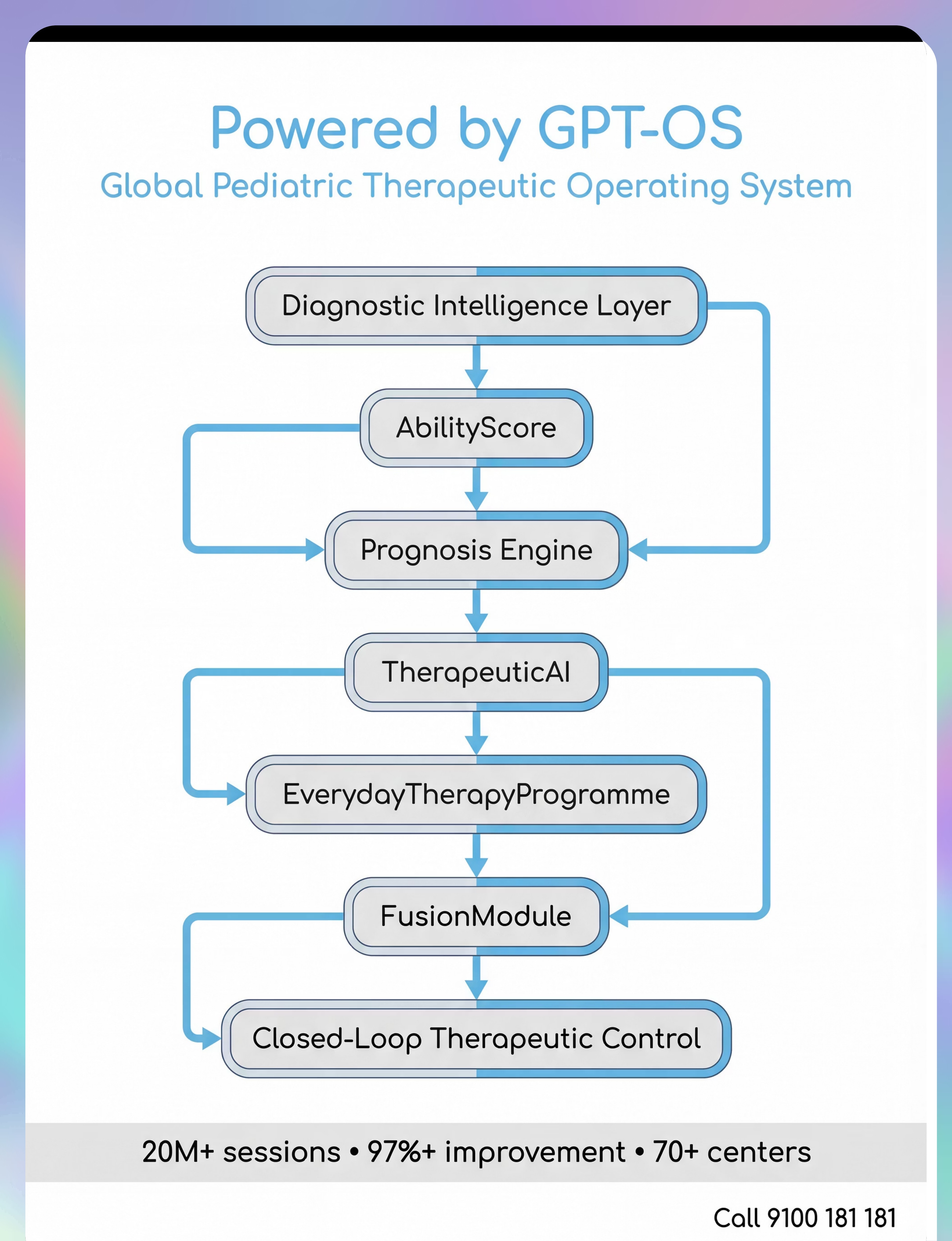
ACT V — GPT-OS®
Your 60 seconds of data. What it becomes.
Layer | What It Does | For Your Child | |
DiagnosticIntelligence | Converts observations → standardized diagnostic clarity | Recess data clarifies sensory vs. social vs. anxiety primary drivers | |
AbilityScore® | Universal developmental score (0–1000) | Tracks recess readiness domain progress over time | |
Prognosis Engine | Predicts trajectories from 20M+ sessions | Shows expected timeline for recess mastery given current profile | |
TherapeuticAI® | Determines therapy focus and sequencing | Suggests which of the 9 materials to prioritize next | |
EverydayTherapyProgramme™ | Daily home-executable micro-interventions | Customizes your morning brief and evening debrief | |
FusionModule™ | Integrates OT + SLP + ABA + SpEd inputs | Ensures your home work aligns with clinic work |
Privacy Assurance: Data collected under India's PDPB framework. No data shared with third parties without explicit consent. Your child's data is yours — export at any time. Aggregate anonymized data improves recommendations for all 70,000+ families on the platform.
"When you record that ear plugs reduced your child's recess anxiety by 30%, that data point joins 20 million others. The algorithm learns. The next parent whose child has the same profile benefits from your experience."
ACT V — SHARE
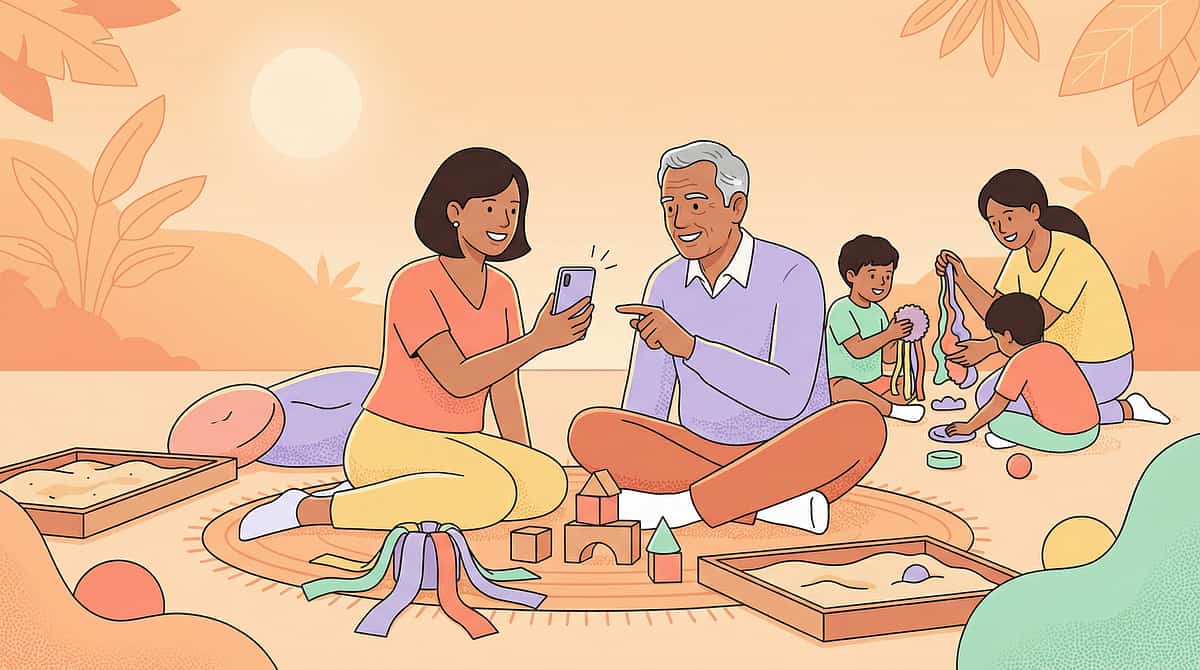
Recess success requires the whole village. Share this.
For Your Child's Teacher
Message template:"Hi [Teacher's name], I've been working with [child's name] on recess support using evidence-based materials from Pinnacle Blooms Network. I'd love to share a one-page summary of the strategies and discuss a few simple school-side supports. Could we find 10 minutes this week? Here's the full resource: [link to this page]"
For Grandparents / Extended Family
Simplified version:"[Child's name] sometimes finds recess hard because the playground is noisy and busy, and it's hard to know what to say. We're using some simple tools to help: small cards with words to use, special ear plugs for the noise, and practicing games at home. When you pick them up, ask 'Tell me one thing that happened at recess' and celebrate any answer."
Consistency Principle
"A child who has 3 consistent adults implementing the same strategy gets 3× the practice. Scripts memorized at home + reinforced by teacher + supported by buddy = exponential progress."
WHO CCD Package: Multi-caregiver training is critical for intervention generalization. | PMC9978394
📱 Share on WhatsApp | 📧 Share via Email | 🔗 Copy Link
ACT VI — FAQ
8 questions parents ask most. Answered here.
❓ Q1: My child has ASD. Will these materials work for them specifically?
Yes. The 9 materials were designed primarily with ASD profiles in mind. Social scripts address pragmatic language differences. Sensory tools address the sensory processing differences present in 80%+ of ASD diagnoses. Visual supports exploit strong visual processing common in ASD. The buddy system addresses the social motivation that IS present in ASD (contrary to the myth of "no desire for peers"). All materials are classified as evidence-based practice for ASD by NCAEP (2020).
❓ Q2: My child's teacher says they're "fine" at recess. Should I still use these?
If your child reports distress at home, they are not fine — they are masking. "Looking fine" during school is not the same as experiencing recess positively. Request a structured recess observation by the school counselor (not informal supervision). Trust your child's home report. These tools are designed for children whose recess distress is real but invisible to teachers.
❓ Q3: How do I get the school to allow sensory tools?
Frame it clinically. Write a brief note (or ask your OT to write one): "[Child's name] has been recommended noise-reducing ear protection and a small fidget tool by their occupational therapist to support sensory regulation during high-stimulation periods. These tools have been approved as part of their therapeutic protocol. Please allow their use during recess." Most schools comply when the clinical rationale is clear.
❓ Q4: My child refuses to practice scripts at home. What do I do?
Don't call it "practice." Call it "recess training" or make it a game. Role-play as if YOU are the child and THEY are the classmate — reverse roles are less threatening. Use video: watch social initiation scenarios on YouTube and discuss. Reduce the demand: one phrase, 30 seconds, no role-play required. Gradual, non-forced engagement is more effective than demanded rehearsal.
❓ Q5: Two weeks with no visible progress. Should we stop?
No. Two weeks is within the tolerance phase. Check your data: even if social outcomes haven't changed, has sensory regulation improved? Has morning anxiety reduced? Are morning briefs less contentious? Continue to Week 4 before reassessing. If genuinely no change by Week 4, consult a therapist for protocol adjustment — not abandonment.
❓ Q6: My child was bullied at recess. How does this change the plan?
Bullying requires school intervention before therapeutic intervention restarts. Document the incidents, report formally to school administration, request a safety plan. Once safety is established and your child feels school is safe, the therapeutic materials can re-engage. Do not ask a traumatized child to practice social approach toward peers who have harmed them.
❓ Q7: We live in a rural area with no Pinnacle center nearby.
Every material in this toolkit can be implemented without a clinic. The entire toolkit costs ₹0–2,000 and requires only paper, a pen, and home practice time. Teleconsultation is available through pinnacleblooms.org for families without center access. The free helpline 9100 181 181 connects you to trained counselors in 16+ languages regardless of location.
❓ Q8: When should we involve the school formally with an IEP/504 plan?
When recess challenges have persisted for 4+ weeks despite home supports — request a formal school meeting. In India, the Rights of Persons with Disabilities Act (2016) mandates inclusive education provisions. Request documentation of recess support needs within the school's inclusion framework. A Pinnacle therapist can provide a school consultation letter.

ACT VI — START NOW
From the playground edge to the game.
Start today.
🟢 PRIMARY ACTION
Start This Toolkit Today
Download the free H-713 Starter Kit — social scripts + activity menu templates + recess success plan. Everything you need to begin tomorrow morning.
🔵 SECONDARY ACTION
Book a Recess Strategy Consultation
30-minute consultation with a Pinnacle OT + SLP to build your child's personalized kit. Expert guidance from India's largest pediatric therapy consortium.
🔶 TERTIARY ACTION
Explore the Next Technique
H-714: 9 Materials That Help With Cafeteria Challenges — the natural next step in the School Participation domain.
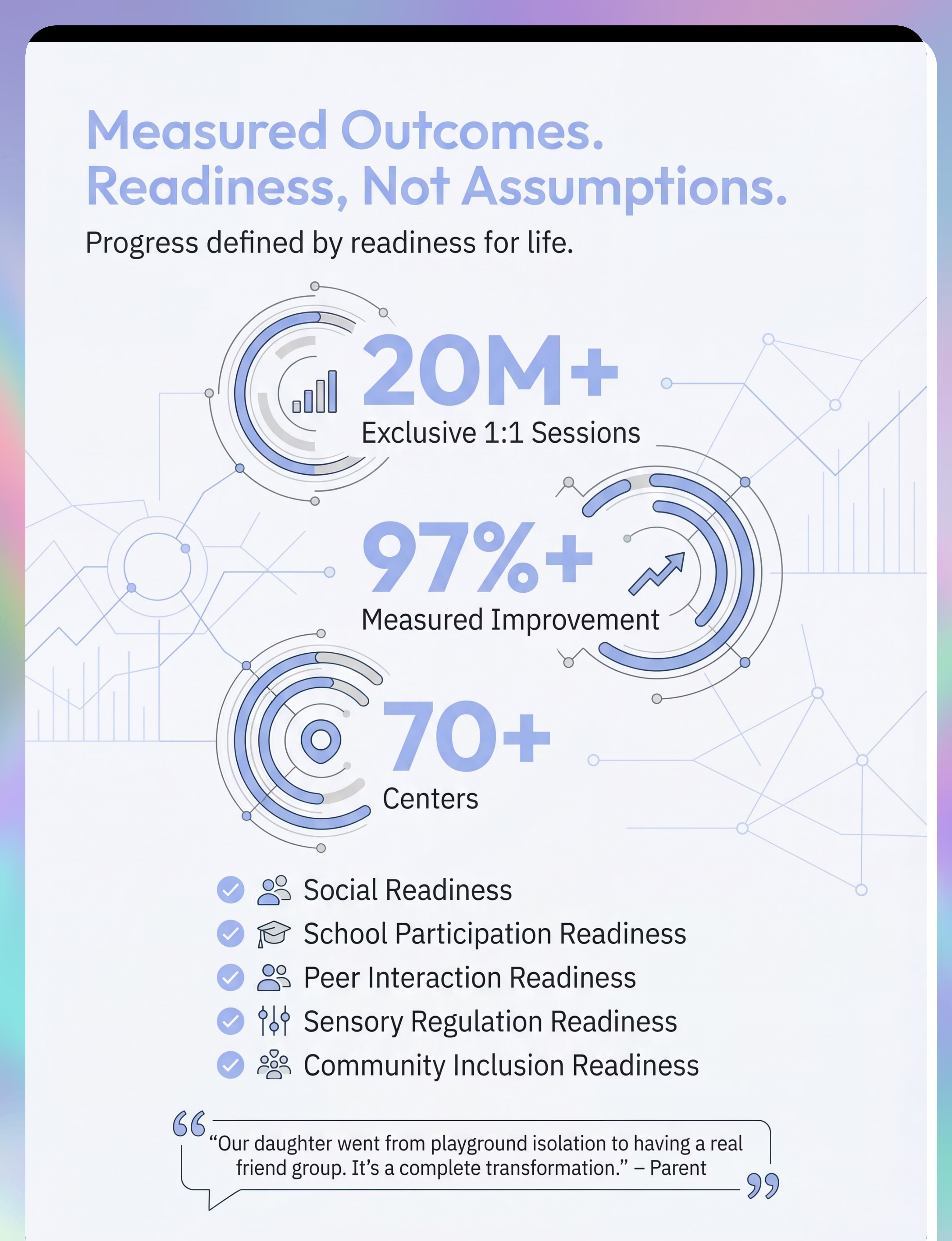
20M+
Exclusive 1:1 Sessions
Pinnacle Blooms Network® clinical database
97%+
Measured Improvement
School Participation Readiness Index outcomes
70+
Centers Across India
And serving 70+ countries worldwide
70K+
Techniques Available
Across 12 developmental domains on the platform
Validated by
OT • SLP • ABA • SpEd • NeuroDev • CRO • WHO Aligned
Disciplines
🔵 OT | 🟢 SLP | 🟠 ABA/BCBA | 🟡 SpEd | 🔴 NeuroDev | 🔬 CRO
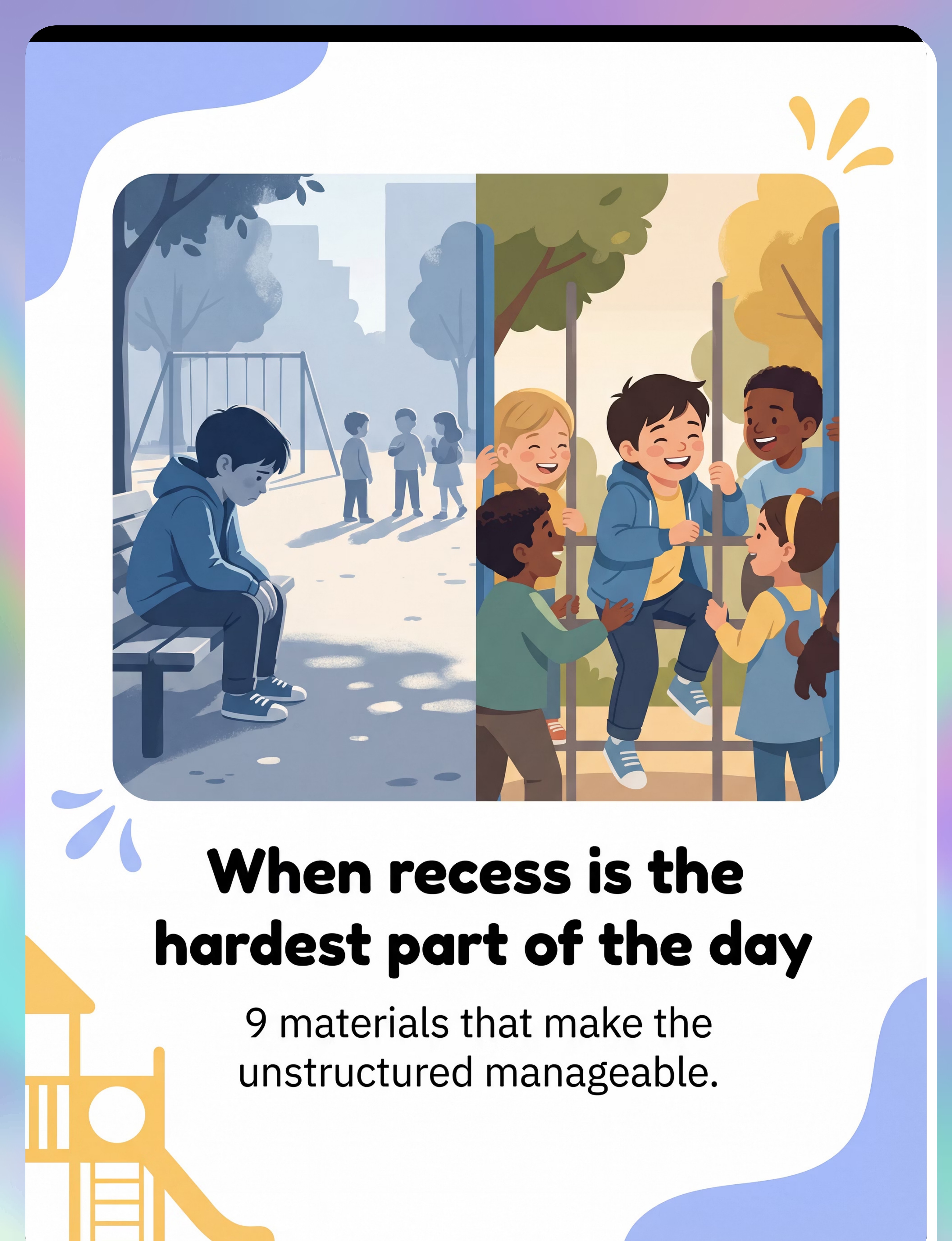
Preview of 9 materials that help with recess challenges Therapy Material
Below is a visual preview of 9 materials that help with recess challenges therapy material. The pages shown help educators, therapists, and caregivers understand the structure and content of the resource before use. Materials should be used under appropriate professional guidance.


Link copied!

ACT VI — THE PINNACLE PROMISE
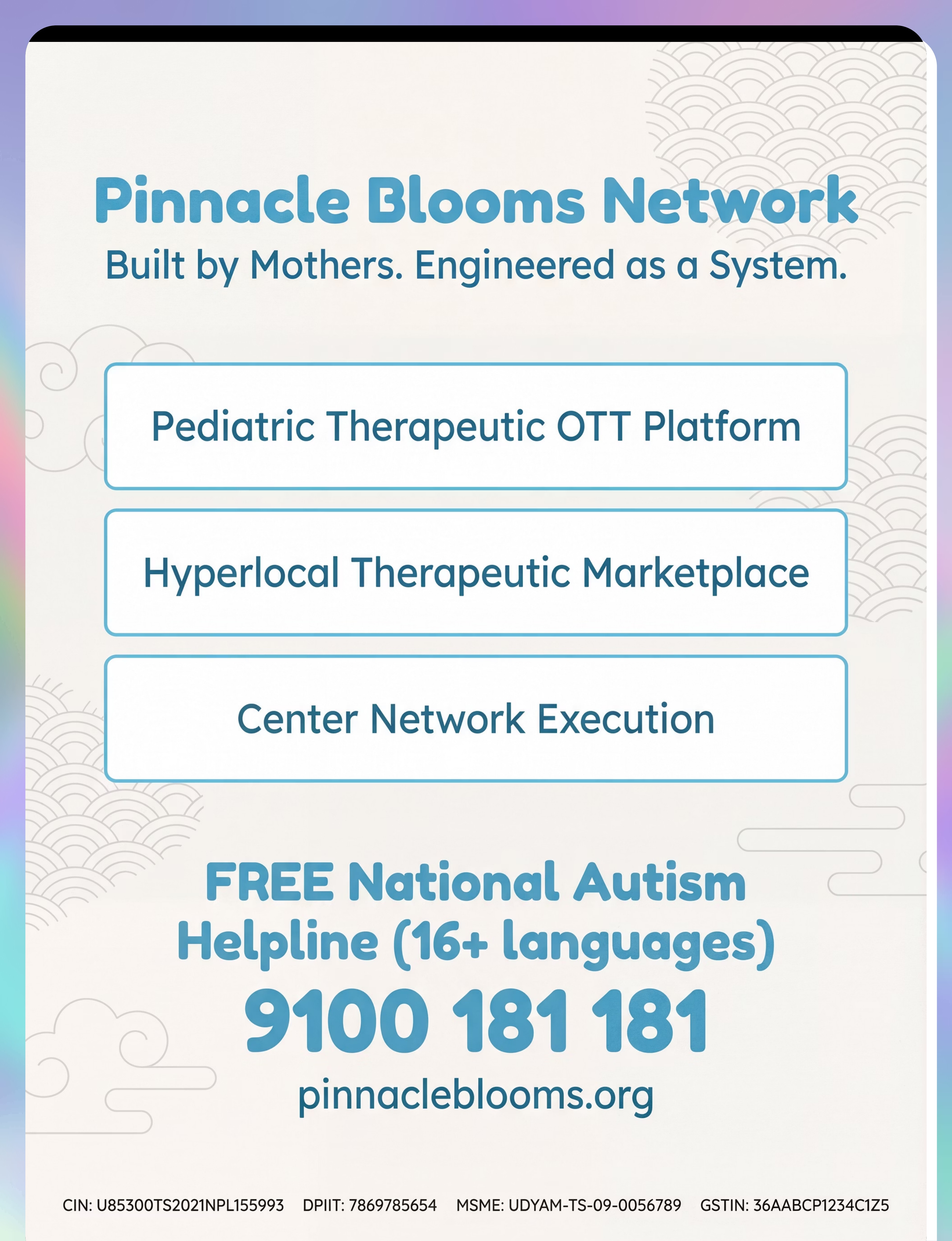
🌸 Pinnacle Blooms Network® 🌸
Built by Mothers. Engineered as a System. Global Pediatric Therapeutic Operating System — GPT-OS®
"From fear to mastery. One technique at a time."
Pinnacle Blooms Network® exists to transform every home into a proven, scientific, 24×7, personalized, multi-sensory, multi-disciplinary integrated therapeutic environment — for every child, in every family, in every corner of the world.
70,000+ techniques. 20M+ sessions. 97%+ improvement. 70+ centers. One mission.
Contact & Helpline
- 📞 FREE National Autism Helpline: 9100 181 181
- Available 24×7 | 16+ Languages | Nationwide
- ✉️ care@pinnacleblooms.org
Statutory Identifiers
- CIN: U74999TG2016PTC113063
- DPIIT: DIPP8651 (Government of India)
- MSME Udyog Aadhaar: TS20F0009606
- GSTIN: 36AAGCB9722P1Z2
This content is educational and informational. It does not replace individualized assessment and intervention planning by licensed occupational therapists, speech-language pathologists, behavior analysts, special educators, or other qualified professionals. Recess challenges may reflect various underlying factors requiring professional evaluation. Strategies should be individualized based on clinical assessment findings and coordinated with school staff. Seek professional consultation for persistent social participation concerns. Individual results may vary. Statistics represent aggregate outcomes across the Pinnacle Blooms Network®.
© 2025–2026 Pinnacle Blooms Network®, unit of Bharath Healthcare Laboratories Pvt. Ltd. All rights reserved. GPT-OS®, AbilityScore®, TherapeuticAI®, FusionModule™, and EverydayTherapyProgramme™ are proprietary marks of Pinnacle Blooms Network®. Unauthorized reproduction prohibited. | techniques.pinnacleblooms.org/school-participation/recess-challenges-H-713