9 Materials That Help With Receptive Language
When your child hears you but doesn't seem to understand — their hearing is fine, but the words aren't landing. These 9 materials build the foundation of comprehension, one word and one direction at a time.
Language Development – Episode 968
Receptive Language · Auditory Comprehension · Following Directions
Language and Communication Development
1
L-966
Pre-Linguistic Communication
2
L-967
Joint Attention
3
L-968
Receptive Language — You Are Here
4
L-969
Expressive Language
5
L-970
Social Communication
Receptive language is episode 968 in the Language and Communication Development series — a systematic journey from pre-linguistic foundations to full social communication. Understanding comes before speaking. Every episode builds on the last.
When Words Don't Seem to Land
"My son is four and a half, and I've started to wonder if there's something wrong with his hearing. But we've had it tested twice — it's fine. The problem isn't that he can't hear me. It's that he doesn't seem to understand what I'm saying. I'll ask him to get his shoes, and he'll just stand there looking at me. I'll say 'put the book on the table,' and he'll bring me the book instead. During storytime, his eyes glaze over after two sentences."
This experience is more common than most parents realize. The child isn't ignoring you — they are genuinely not processing the meaning of the words. Receptive language is the ability to understand spoken language, and when it's delayed, every interaction becomes a guessing game for both child and caregiver.
A Parent's Story — Recognizing the Gap
"My daughter just turned five, and I'm realizing that what I thought was stubbornness or not paying attention might actually be a language comprehension problem. She's not ignoring me — she genuinely doesn't understand. When I say 'go upstairs and bring your blue bag,' she might go upstairs but come down with something random. If I ask 'what did you do at school today?' she'll answer 'yes' or just repeat the last word I said."
What parents often do (without realizing it)
- Simplify language automatically
- Use gestures and pointing
- Repeat instructions 3–4 times
- Show instead of tell
- Speak louder (even though hearing is fine)
What's actually happening
The child's brain is still learning to decode the meaning of language. Every word is like a puzzle piece, and they are still learning how the pieces fit together. This is a comprehension challenge — not a behavior problem, not inattention, and not a hearing issue.
The good news: receptive language can be built. With the right materials and consistent practice, understanding grows — and when it does, everything else becomes possible.

What Is Receptive Language?
Receptive language refers to the ability to understand spoken (and written) language — comprehending vocabulary, following directions, understanding questions, grasping grammar and sentence structure, and making meaning from connected discourse.
1
Vocabulary Comprehension
Understanding the meaning of individual words — nouns, verbs, adjectives, and concepts.
2
Following Directions
Processing and acting on one-step, two-step, and multi-step verbal instructions.
3
Question Comprehension
Understanding what different question types ask — Who? What? Where? When? Why? How?
4
Narrative Understanding
Following stories, conversations, and explanations as connected discourse.
5
Grammar Comprehension
Understanding how word order, tense, pronouns, and grammatical markers change meaning.
Receptive language difficulties can occur in isolation or alongside expressive language delays. Children with receptive challenges often hear language clearly but struggle to decode its meaning. Receptive language is foundational — children typically need to understand language before they can use it effectively.
Common Challenges to Watch For
Following Instructions
- Not responding to spoken instructions despite normal hearing
- Following only part of multi-step directions
- Appearing to "ignore" when actually not understanding
Question Responses
- Difficulty understanding WH-questions
- Answering "yes/no" regardless of question type
- Misinterpreting what others say
Stories and Conversation
- Trouble following stories or conversations
- Taking language literally, missing figurative meanings
- Losing track of who did what in a narrative
Group Settings
- Watching other children to figure out what to do
- Struggling in group instruction settings
- Relying heavily on visual cues and context to understand

Why Receptive Language Matters So Much
The Ripple Effect
Receptive language difficulties affect every area of development. Learning is compromised when children can't understand instruction. Social relationships suffer when children misunderstand peers and conversation. Behavior problems can emerge when children don't understand expectations.
Understanding Enables Everything
Expressive language development is fundamentally limited by receptive capacity — children generally can't meaningfully use language they don't yet understand. Before a child can name an object, they must understand what that word means. Before they can answer a question, they must understand what is being asked.
The key insight: How can a child learn to talk if they don't fully understand what words mean? Receptive language is the foundation upon which all communication is built.
Receptive Language Developmental Milestones
Understanding develops in a predictable sequence. These milestones help identify where a child's comprehension currently stands and what to target next.
Birth–12 months
Startles to sounds, responds to name, understands "no," follows simple routine directions with gesture
12–18 months
Understands 50+ words, follows one-step directions, identifies common objects by pointing
18–36 months
Understands 200–500+ words, follows two-step directions, understands basic spatial concepts
3–4 years
Understands 1,000+ words, follows three-step directions, understands most WH-questions
4–5 years
Understands 1,500+ words, follows complex directions with concepts, understands most grammar structures
5+ years
Comprehends stories and discourse, understands complex sentences, figurative language emerging
These are typical milestones. Children with developmental differences may follow different trajectories. Focus on building skills rather than comparing to exact age norms.
The 9 Materials — Overview
These materials work together as a systematic progression — from concrete vocabulary building through to understanding complex narratives and grammar. Choose materials based on the child's current comprehension level, not chronological age.
1
Real Objects and Miniatures
Connect words to tangible, touchable things — the concrete foundation
2
Picture Vocabulary Cards
Extend vocabulary to thousands of words beyond what objects can show
3
Basic Concepts Teaching Kit
Build the building blocks of direction-following: in, on, big, small, same, different
4
Following Directions Activity Sets
Practice one-step to multi-step instruction-following
5
WH-Question Visual Supports
Decode who, what, where, when, why, and how visually
6
Listening and Auditory Attention Games
Build the auditory attention and memory that comprehension requires
7
Story Comprehension Materials
Move from single words to following full narratives
8
Vocabulary Categorization Materials
Organize word knowledge into rich semantic networks
9
Grammar and Sentence Structure Manipulatives
Make sentence structure visible and manipulable
Material 1 of 9
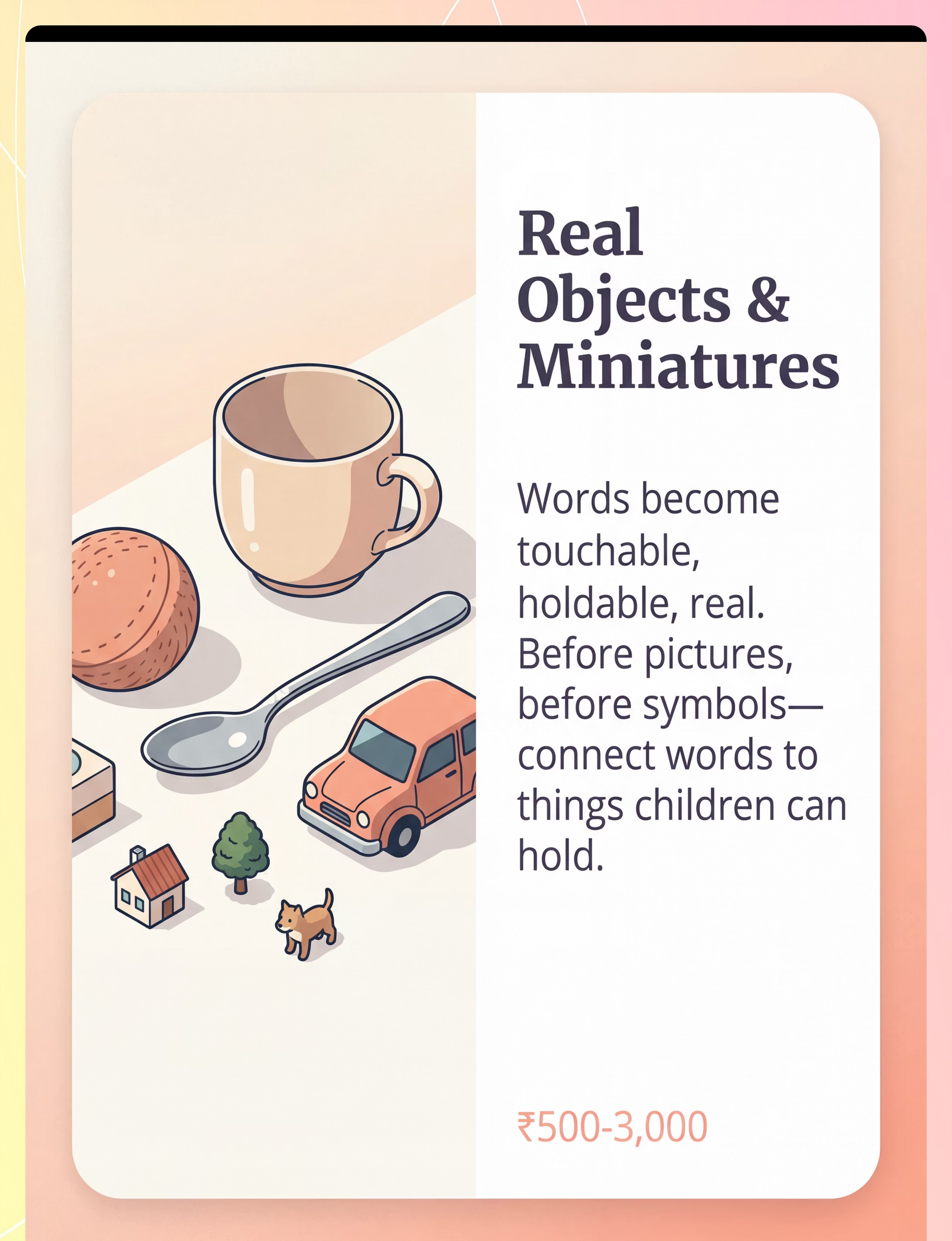
Real Objects and Miniatures
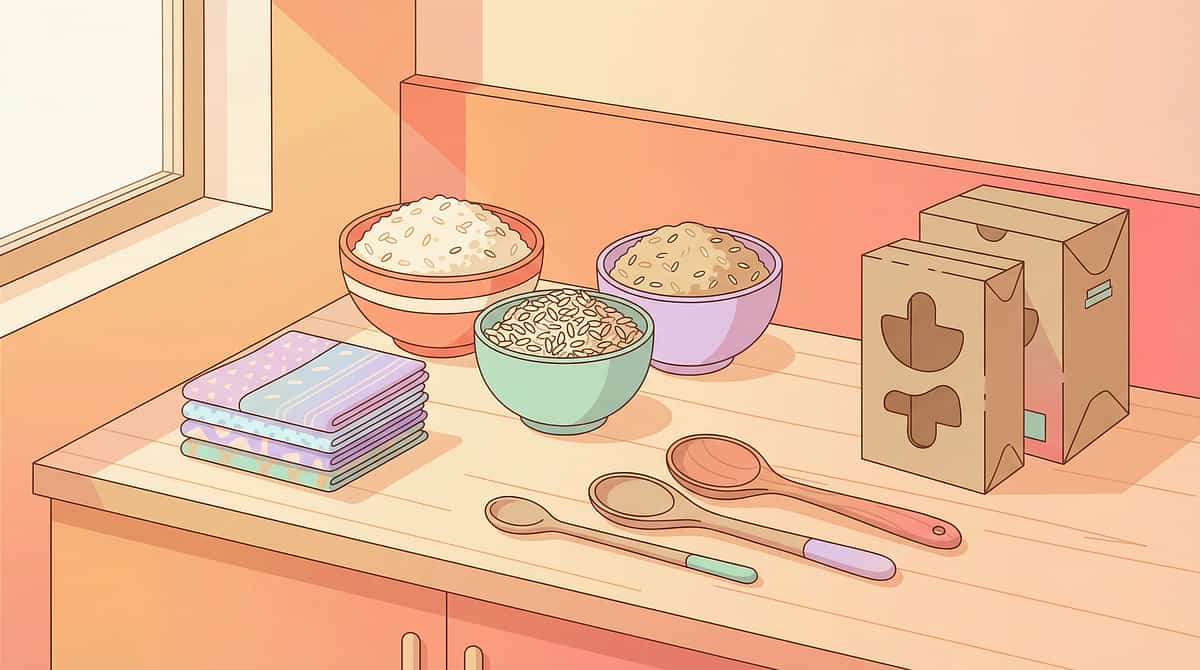
Words become touchable, holdable, real. Before children can understand words as symbols, they need to connect words to real things they can see, touch, and manipulate. When you say "cup" while the child holds a cup, sees a cup, drinks from a cup — the word becomes meaningful.
Why It Helps
The three-dimensional, tactile nature of objects provides richer sensory input than pictures, making the word-meaning connection stronger. Miniature objects extend this learning — allowing you to teach vocabulary for things you can't bring to therapy (animals, vehicles, furniture). For children with significant receptive language delays, real objects are where vocabulary building begins.
What to Collect
- Everyday objects: cup, spoon, ball, book, shoe, brush, soap, towel, phone, keys, bag
- Animal miniatures: farm, zoo, pets, insects
- Vehicle miniatures: car, bus, train, airplane, boat
- Furniture miniatures: bed, chair, table, sofa, cupboard
- Food items: fruits, vegetables, common foods
- People figures: family, community helpers
Store by category in clear containers. Aim to have both a real object AND miniature for key vocabulary items.

Real Objects — Activities and Progression
Identification
"Where's the cup? Show me the cup. Give me the cup." Start with familiar objects, one at a time.
Feature Identification
"Which one do you drink from? Which one has wheels?" Connect objects to their defining features and functions.
Location Following
"Put the cup ON the table. Put the ball IN the box." Combine object vocabulary with spatial concepts.
Two-Item Commands
"Give me the cup AND the spoon." Build toward multi-step comprehension using known objects.
Category Sorting
"Put all the animals here." Build the semantic organization that strengthens vocabulary recall.
Progression: Start with highly familiar objects (the child's own cup, their ball). Add new vocabulary systematically. Move from real objects to miniatures. Eventually transition to pictures — but maintain objects for new or difficult vocabulary at any stage.
Safety Note: Ensure miniatures are appropriate size (no choking hazards for young children). Avoid items with small detachable parts.
Key Insight:Concrete before abstract. Children understand words better when they can touch what the word means.
Material 2 of 9
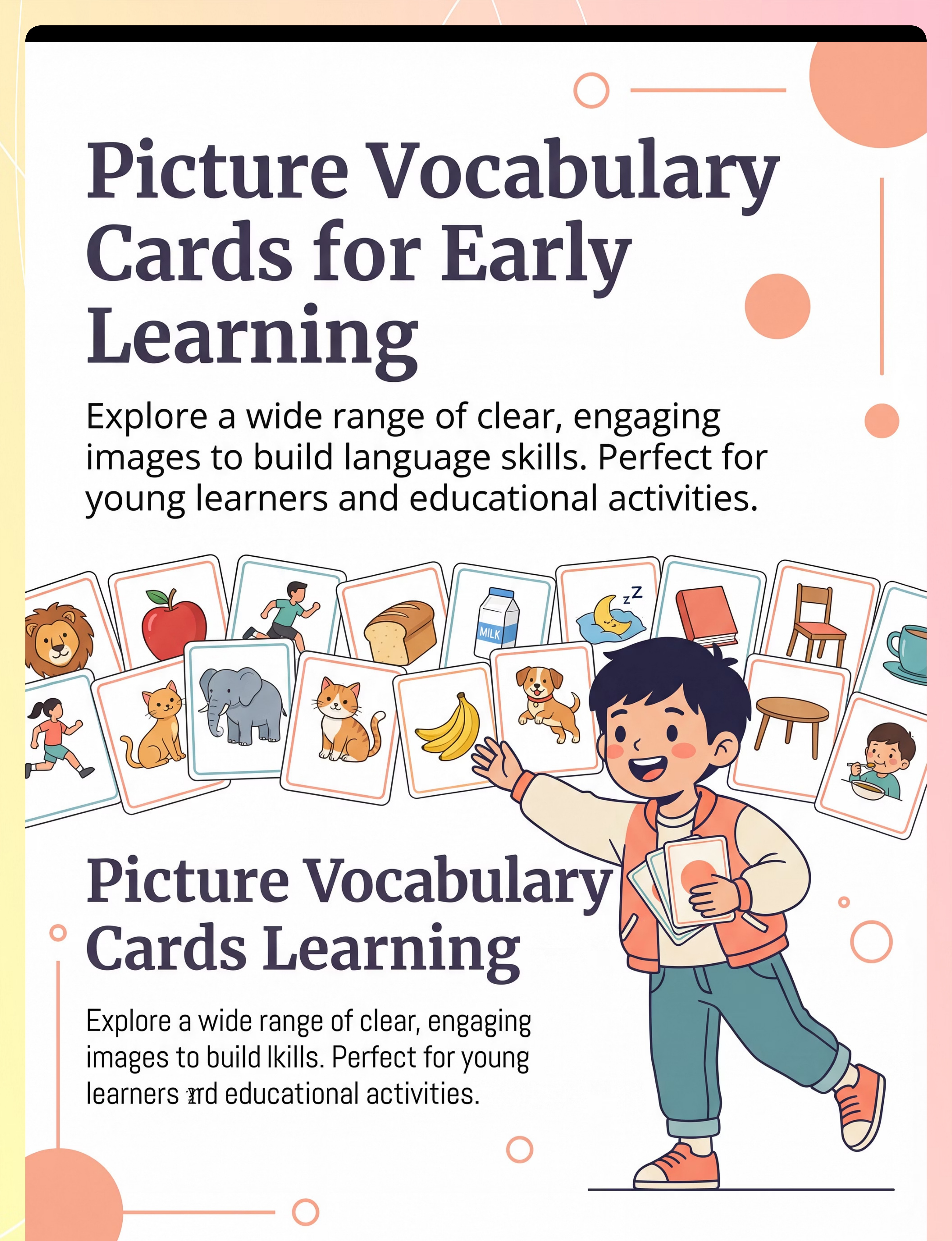
Picture Vocabulary Cards
Thousands of words become visible. Once children can connect words to real objects, picture cards extend vocabulary learning efficiently. Picture vocabulary cards represent thousands of vocabulary items that can't be present as objects — actions, adjectives, places, feelings, abstract concepts.
Why Picture Cards Matter
High-quality picture cards with clear, uncluttered images help children learn to recognize words in their two-dimensional form — which is how most vocabulary will be encountered in books, screens, and printed materials. They bridge concrete object learning and more abstract language understanding, and can be organized by category for targeted practice.
Image Quality Matters
- Clear, uncluttered backgrounds
- One main subject per card
- Realistic rather than cartoon (for the learning phase)
- Consistent size for handling
- Laminated for durability
Vocabulary Categories to Build
- Nouns: objects, animals, people, places, food, clothing, body parts
- Verbs/Actions: eating, running, sleeping, reading, playing, washing
- Adjectives: big/small, hot/cold, happy/sad, wet/dry, colors, shapes
- Prepositions: in, on, under, next to, behind (shown in pictures)
- Categories: vehicles, animals, fruits, furniture
Receptive Activities
- "Show me [word]" / "Point to [word]" / "Find [word]"
- "Which one has wheels? Which one flies?"
- "Find all the animals" / "Which ones are food?"
- "Which one is NOT a fruit?"
- "Find something red. Show me the big dog."
Key Insight: Pictures are portable vocabulary. Cards let you teach and practice thousands of words anywhere — at the therapy table, in the waiting room, at home.
Material 3 of 9
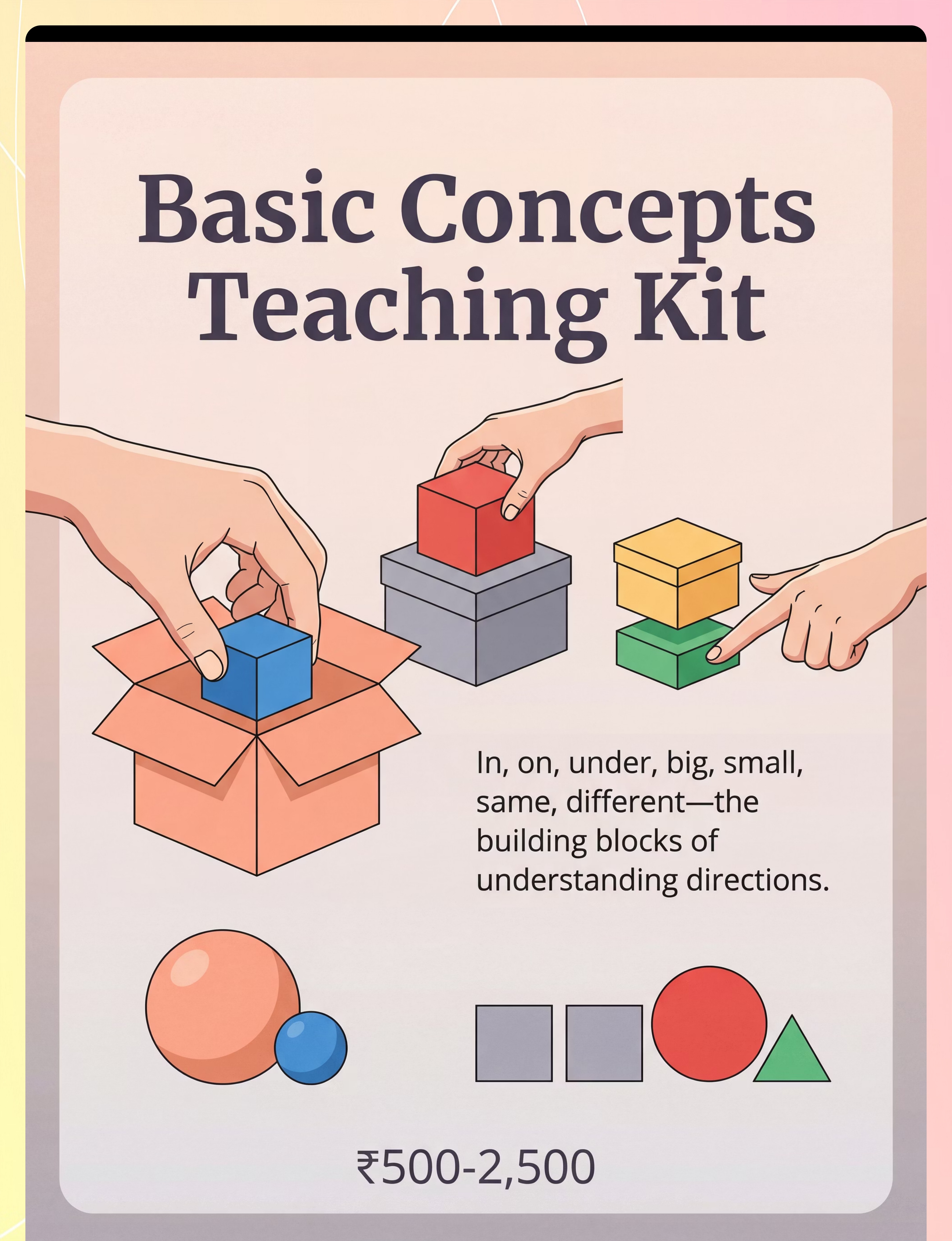
Basic Concepts Teaching Kit
The building blocks of understanding. Basic concepts are the skeleton of language comprehension — words like in/on/under, big/small, same/different, first/last, all/some, before/after. These concepts appear constantly in directions, stories, and everyday conversation. Without them, children miss critical meaning.
1
Spatial Concepts
in, on, under, next to, behind, between, in front of
Use containers, flat surfaces, and the child's own toys to demonstrate positions physically.
2
Quantity Concepts
all, some, none, more, less, many, few
Use counting bears or identical objects in containers. Snacks work exceptionally well for this.
3
Size Concepts
big/little, tall/short, long/short, fat/thin
Nesting cups or boxes, graduated-size objects, and comparison pairs of familiar items.
4
Quality Concepts
same/different, colors, shapes, textures
Matching pairs for "same," non-matching pairs for "different," shape sorters, texture cards.
5
Temporal Concepts
first/last, before/after, beginning/end
Sequence cards, visual schedules showing order, and stories emphasizing temporal sequence.

Basic Concepts — Teaching Approach
Follow this progression for every new concept. Physical demonstration — actually putting objects IN a box, ON a table — is far more powerful than verbal explanation alone. Concepts must be taught across many different objects, contexts, and settings before they are truly understood.
Sample Receptive Tasks
- "Put the ball IN the box."
- "Show me the big one."
- "Find one that's the SAME."
- "Which comes first? Which is last?"
- "Before you sit down, clap your hands."
Concept Books
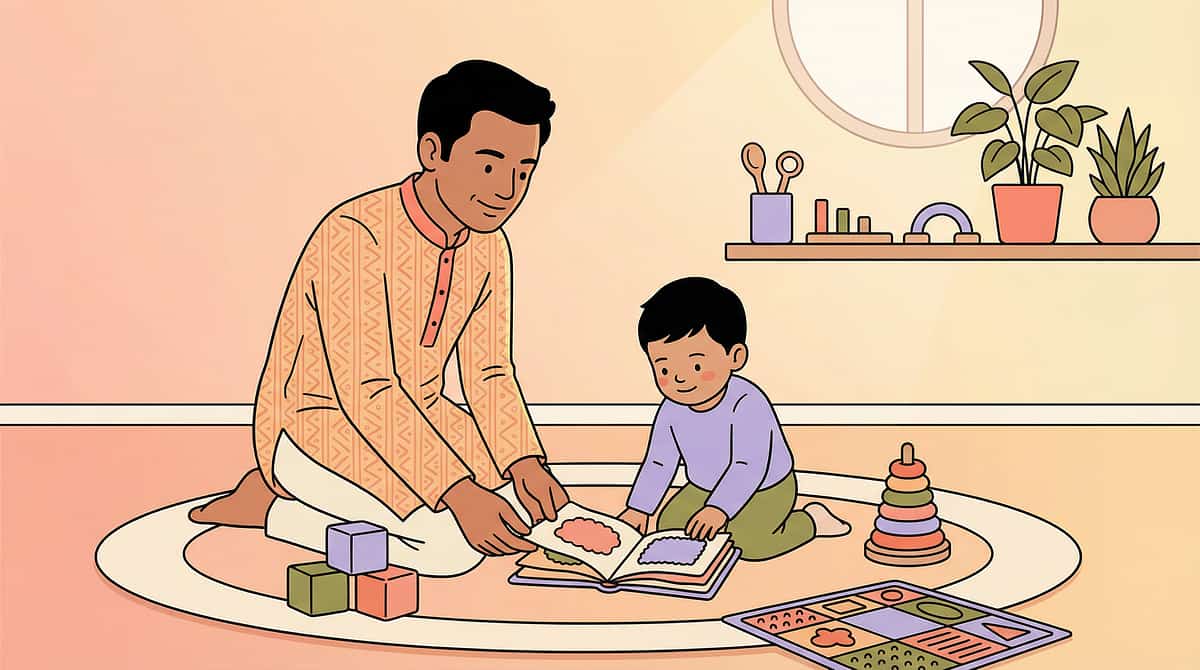
Many picture books target basic concepts directly — "In and Out," "Big and Small" — and provide natural, engaging exposure. Point out concepts during shared reading and during daily routines (dressing, mealtime, play) throughout the entire day.
Safety Note: Small manipulatives should be size-appropriate for the child's age. Supervise use of small items with young children.
Key Insight:Concepts are the skeleton of sentences. Without "in," "on," "big," "first" — directions simply don't make sense.
Material 4 of 9
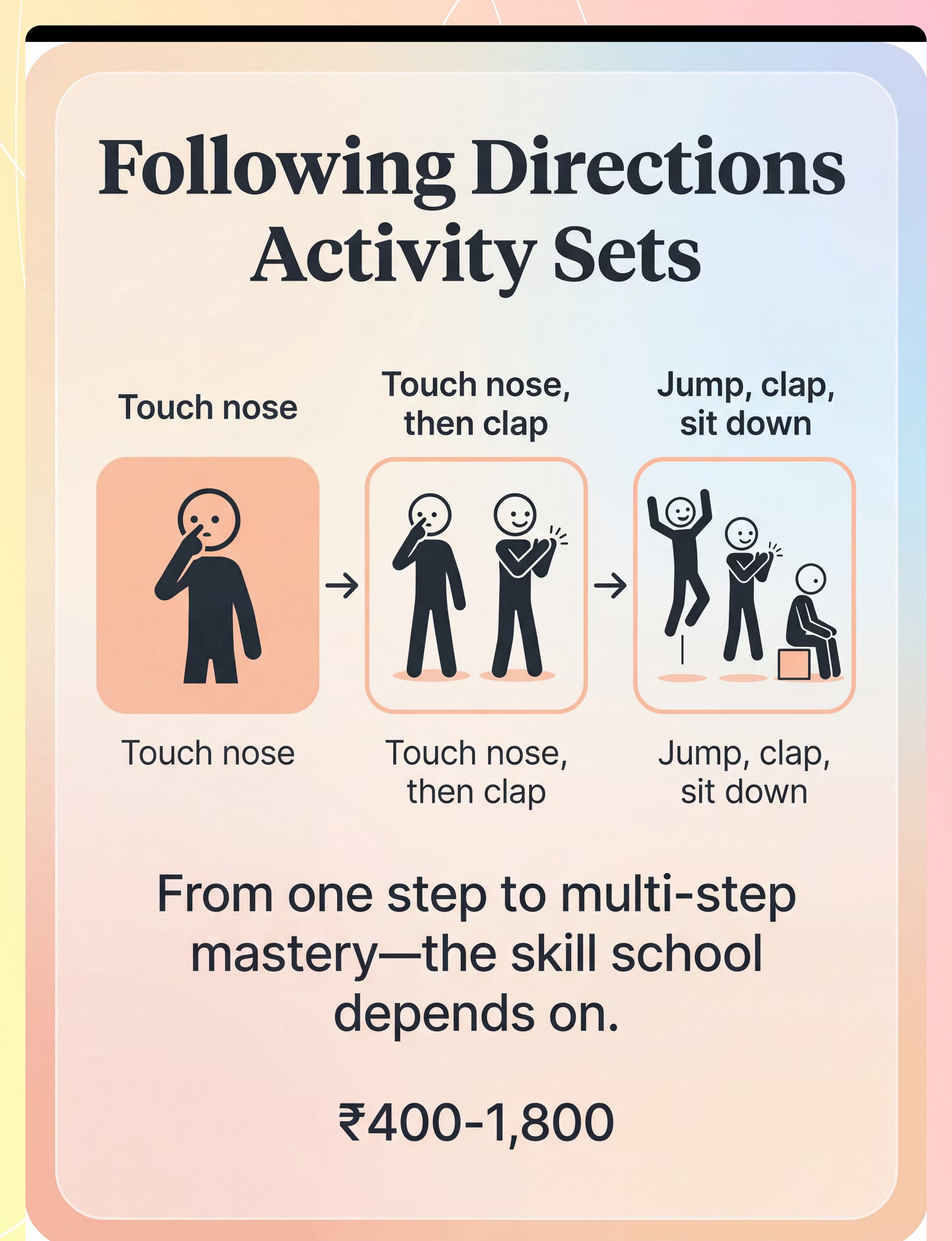
Following Directions Activity Sets
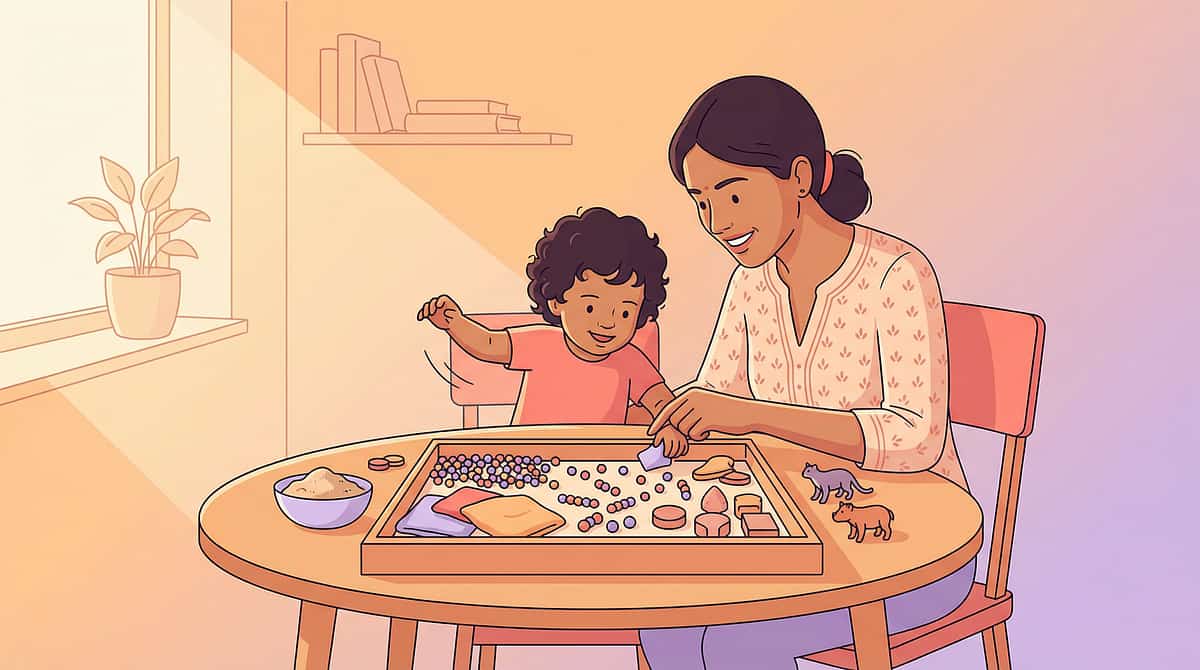
From one step to multi-step mastery. Following directions is a core receptive language skill with immediate functional importance. Direction-following activity sets provide structured practice with increasingly complex instructions — starting where the child succeeds, then stretching systematically.
Regular practice improves auditory attention, working memory for language, and the ability to process sequential verbal information — skills that transfer directly to classroom learning and daily routines.
Direction-Following — The Progression
One-Step Directions (Foundational)
Simple action commands: "Stand up," "Sit down," "Jump," "Clap." Object commands: "Give me the ball," "Touch the cup." Location: "Go to the door," "Sit on the chair."
Two-Step Directions (Sequential)
Sequential actions: "Jump, then clap." Object + action: "Pick up the ball and give it to me." With concepts: "Put the big block IN the box, then sit down."
Three-Step and Complex Directions
"Touch your nose, clap your hands, then jump." Add complexity gradually. Include before/after: "Before you sit down, clap your hands."
Conditional Directions
If/then structures: "If I clap, you jump. If I snap, you sit." Requires listening for detail and processing logical conditions — high-level comprehension skill.
Key Practice Tip: Give a direction once, then wait 5–10 seconds for processing before repeating. Avoid immediately restating — this teaches children to wait for the second delivery rather than processing the first.
Direction-Following — Games and Activities
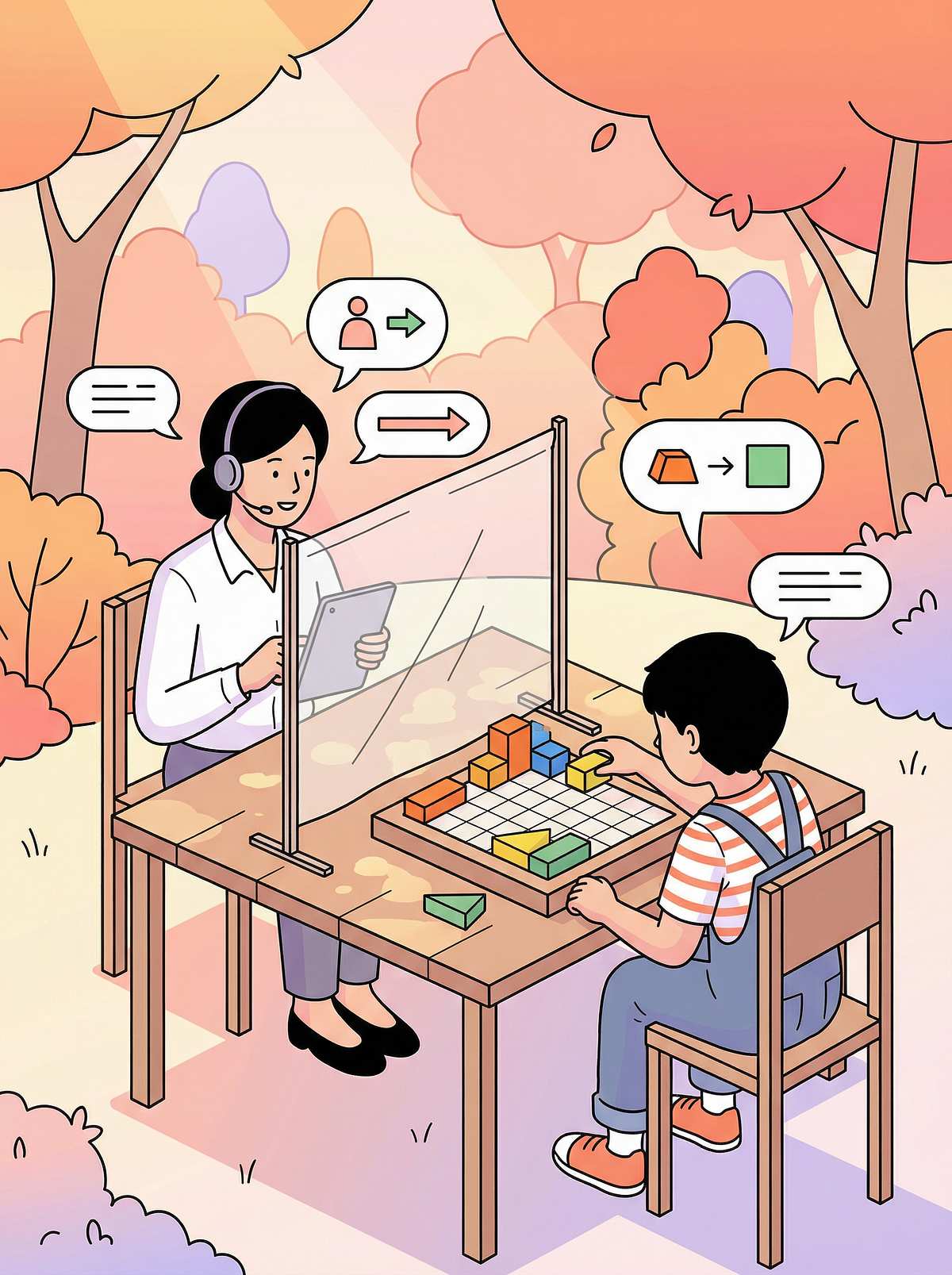
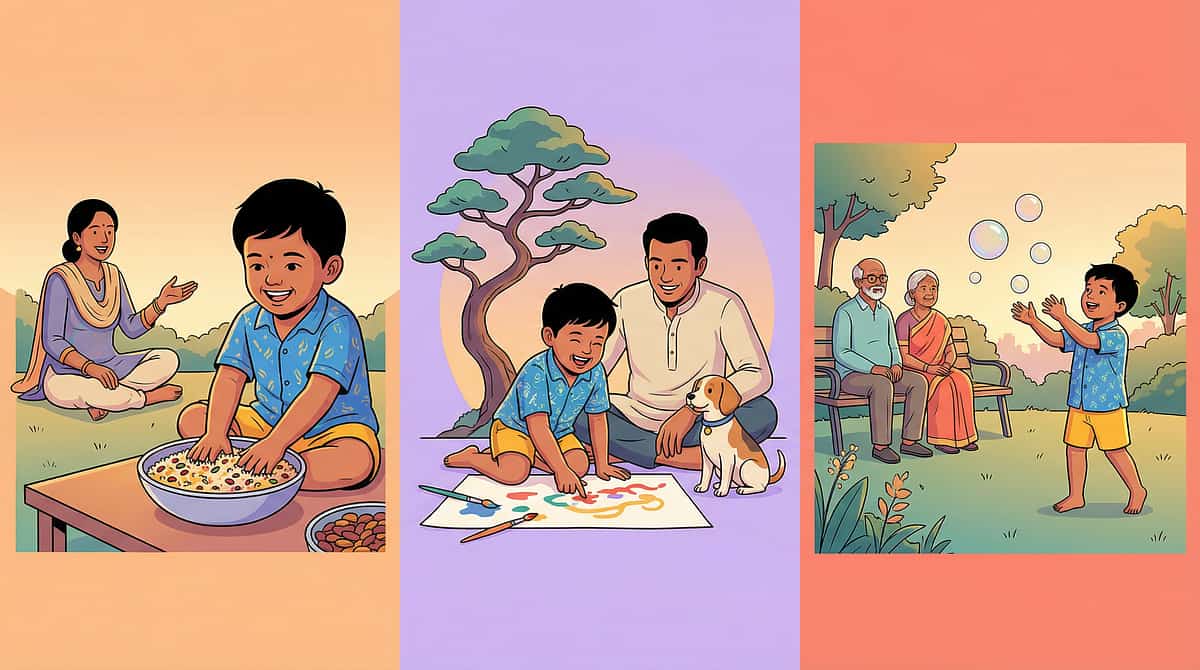
Barrier Games
Partners can't see each other's workspace. One gives directions, the other follows. Compare results to check accuracy. Use identical sets of stickers or shapes. Excellent for precise direction-giving and following.
Simon Says
Classic game for direction-following with an attention component. Must listen for "Simon says" before acting. Increases attention to every detail of spoken directions.
Scavenger Hunts
Multi-step directions in the natural environment: "Go to the kitchen, find something red, and bring it back." Functional, motivating, and generalizable to real life.
Daily Life Integration
Give directions for real tasks: "Go to your room and bring your blue bag." Start at the child's achievable level, increase complexity as skills grow.
Safety Note: Ensure physical directions are safe. Match direction complexity to child's level to avoid frustration — the goal is success at a stretch, not failure.
Key Insight:Direction-following is comprehension in action. Practice makes the language-to-action connection automatic.

Material 5 of 9
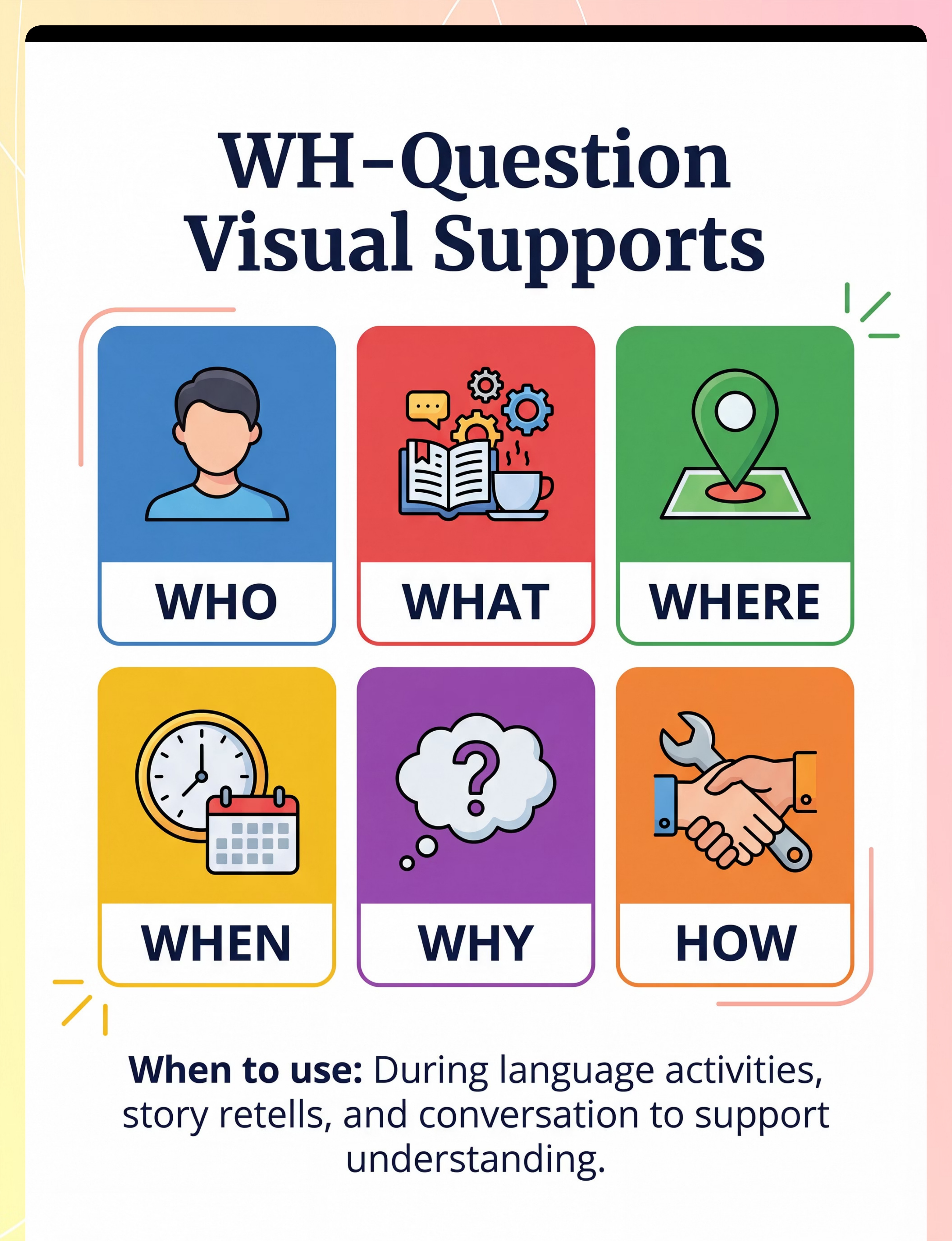
WH-Question Visual Supports
Who, What, Where become clear. WH-questions are fundamental to conversation and learning, but children with receptive language difficulties often struggle to understand what each question type is actually asking. Visual supports use color-coding and icons to make the invisible visible.
1
WHO 👤
Person icon — asks about a person. Answer is always a name or person description.
2
WHERE 📍
Location icon — asks about a place. Answer is always a location.
3
WHAT 🔷
Object icon — asks about a thing or action. Answer is an object or what's happening.
4
WHEN 🕐
Clock/calendar icon — asks about time. Answer is a time or day.
5
WHY 💭
Thought bubble icon — asks about reason. Answer explains cause or reason.
6
HOW 🤲
Hands icon — asks about manner. Answer describes how something is done.

WH-Question Visuals — Activities and Progression
Teaching Approach
Display all WH-question cards visually. When asking a question, point to the relevant card as you ask. The child begins to associate the question word with the answer type. Gradually fade the pointing as understanding becomes automatic.
Answer Choice Boards
For early learners, provide answer choices:
- "Who ate the cookie?" → choice of person pictures
- "Where is the ball?" → choice of location pictures
Child selects from the appropriate answer category — success without guessing.
Progression — Teach in This Order
WHO, WHAT, WHERE first
Most concrete — visible people, objects, and locations. Start here.
WHEN next
After temporal concepts (before, after, now, later) are understood.
WHY and HOW last
Most abstract — require reasoning and causal understanding. Teach after all others are solid.
Practice with Stories: Read simple stories, pause to ask WH-questions, and point to the visual support for each question type. "WHO is in this story?" (point to WHO card).
Key Insight:Visuals decode the invisible. When question types are visible, answering becomes possible.
Material 6 of 9
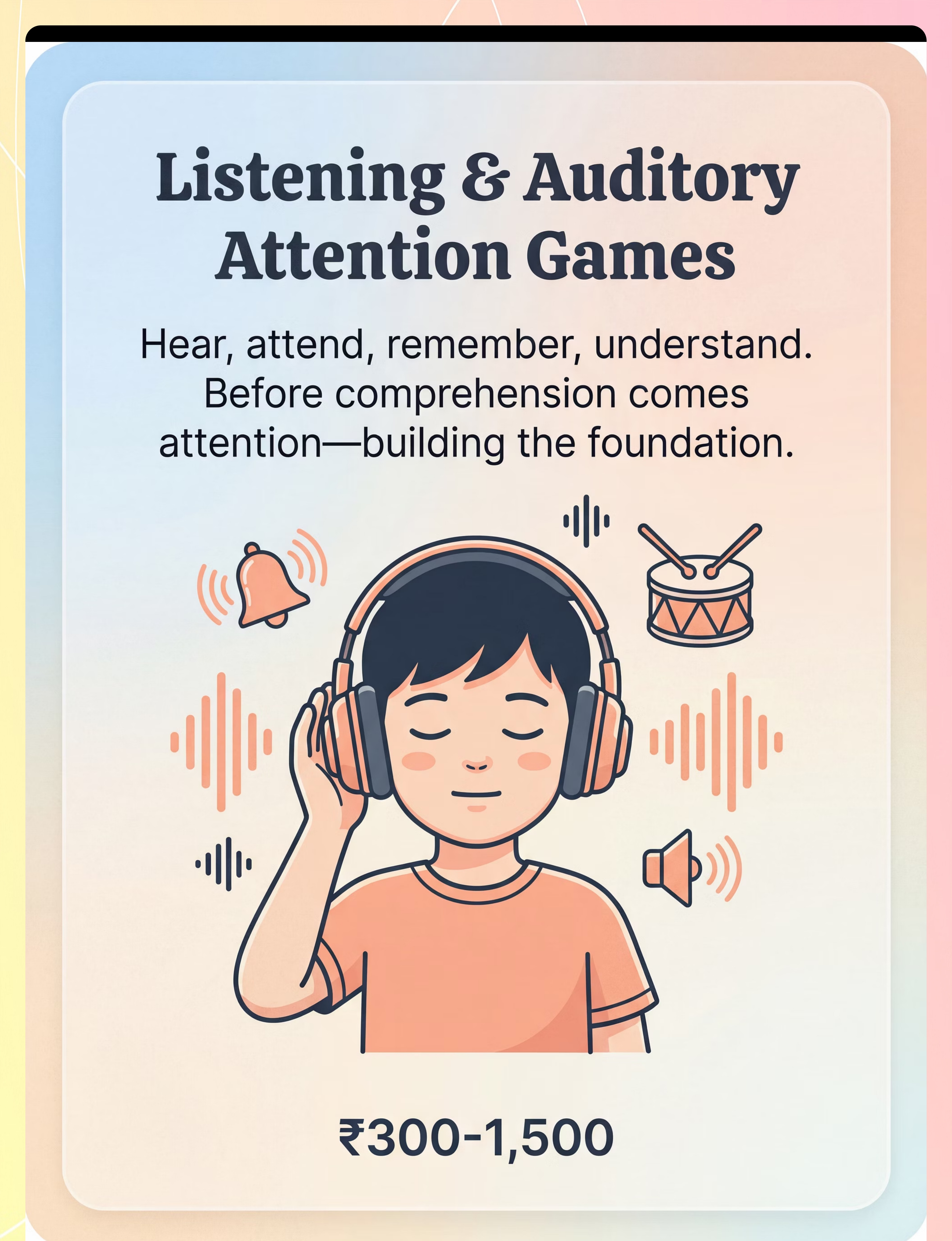
Listening and Auditory Attention Games
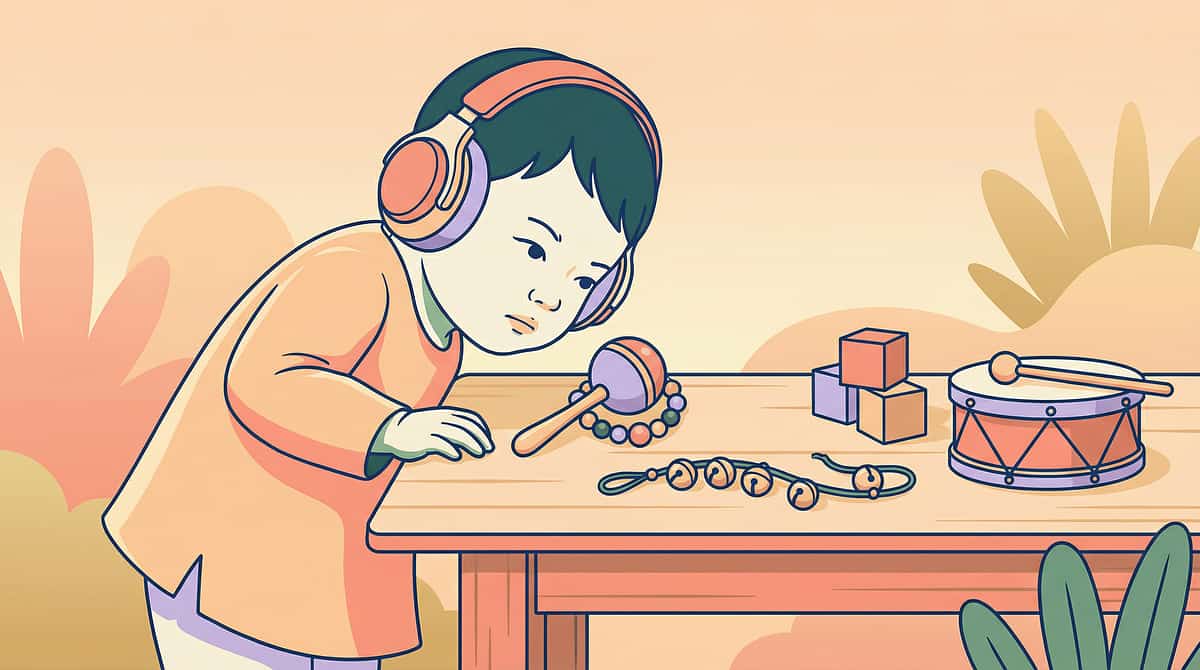
Hear, attend, remember, understand. Before children can understand language, they must attend to it. Listening and auditory attention games build the essential foundation — teaching children to tune into auditory information, distinguish sounds, hold sounds in memory, and process what they hear.
If a child can't attend to and hold auditory information, they can't process its meaning. Listening is a skill, not just a sense. Children must learn to attend to and process what they hear — and games make this engaging.

Listening Games — Activities and Techniques
1
Environmental Sound Awareness
- Sound scavenger hunt: identify sounds in the environment
- Guess the sound: make sounds for child to identify
- Sound matching: match sounds to pictures
2
Auditory Discrimination
- Same/different sounds: "Are these the same?" (clap-clap vs. clap-knock)
- Minimal pair words: "Point to cat/cap"
- Distinguishing sounds that are often confused
3
Auditory Memory Sequences
- Repeat the sequence: clap patterns for child to repeat
- Word sequence memory: "Touch ball, cup, book" (in order)
- Remember 3–4 environmental sounds in sequence
4
Listening for Key Words
- "When I say [color], clap."
- "Raise your hand when you hear an animal word."
- Requires selective auditory attention
5
IF-THEN Listening
- "If you hear a bell, stand up. If you hear a drum, sit down."
- Requires listening and processing conditional information
- High-level auditory comprehension skill
6
Reducing Visual Dependency
Many children compensate for weak auditory processing by relying heavily on visual cues. Practice with reduced visual input builds auditory reliance — but fade visual support gradually, never abruptly.
Safety Note: Ensure sound levels are safe for hearing. Some children with sensory sensitivities may find certain sounds aversive — introduce new sounds gently.
Material 7 of 9
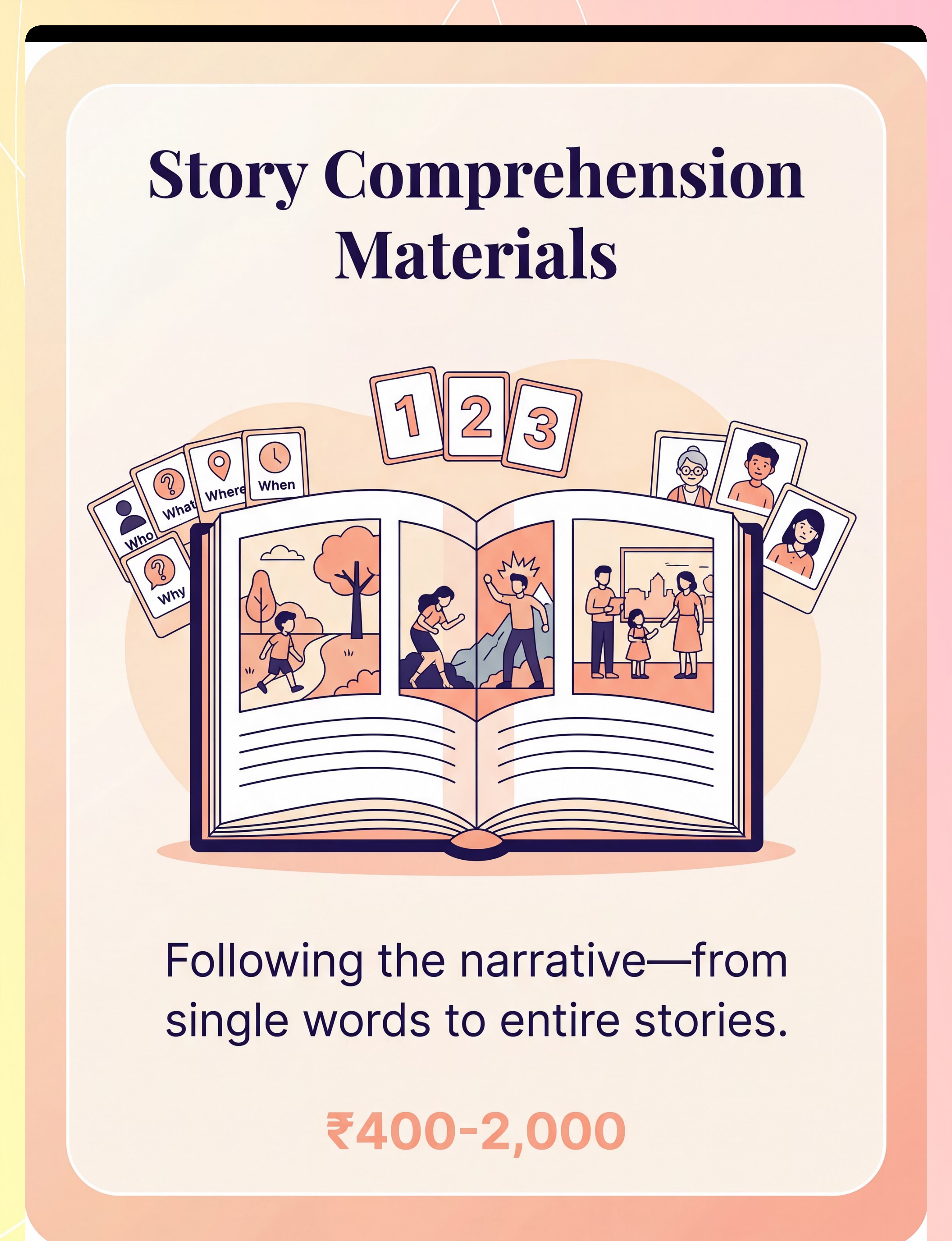
Story Comprehension Materials
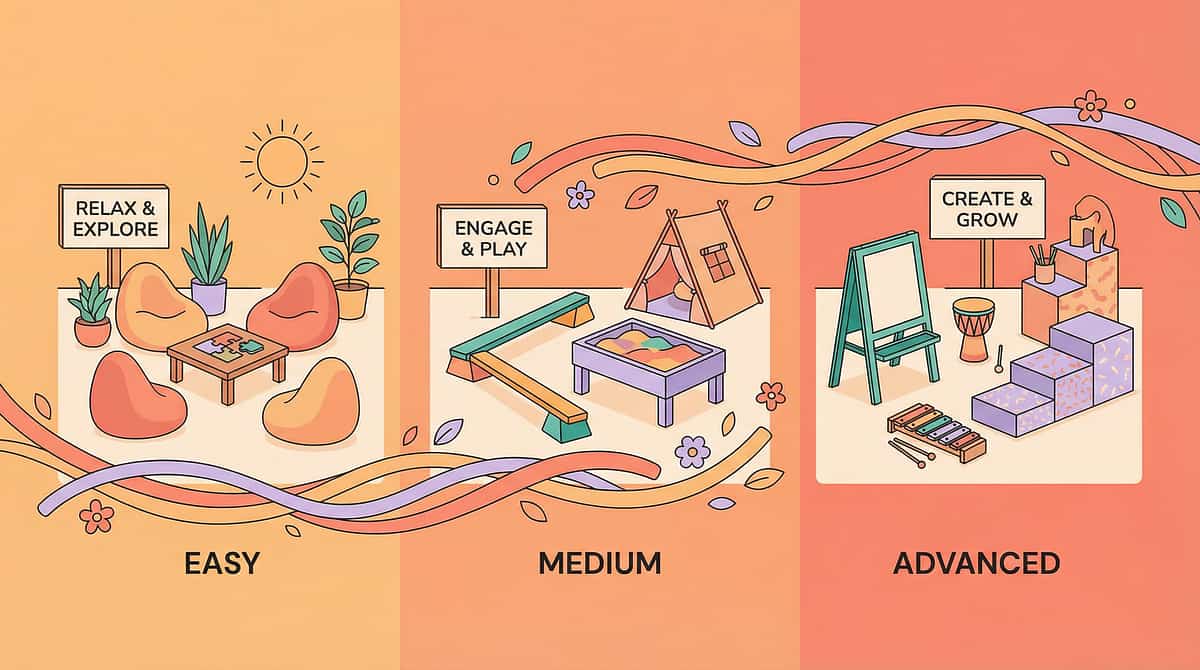
Following the narrative. Understanding connected language — stories, conversations, explanations — is the ultimate goal of receptive language development. Story comprehension materials help children move beyond single words and directions to understanding narrative as a whole.
These skills are essential for academic learning (reading comprehension depends fundamentally on oral language comprehension) and for understanding the social narratives that make up everyday life.
What to Look for in Story Books
- Clear, simple narratives with obvious sequence
- Identifiable characters with distinct roles
- Repetitive structure (supports comprehension)
- Pictures that directly support the text
- Beginning, middle, end structure
Key Materials to Build
- Simple picture books with comprehension question cards
- Story sequence cards (3–4 key scenes)
- Character identification cards
- Story map templates (who, where, what happened, how it ended)
- Retelling props — puppets and figures matching story characters

Story Comprehension — Questions, Sequences, and Inference
Comprehension Questions
WHO: "Who is in this story?" WHAT: "What did the character do?" WHERE: "Where did the story happen?" WHY: "Why did the character feel sad?" HOW: "How did the problem get solved?"
Sequence Cards
Print or draw 3–4 key scenes from familiar stories. Child arranges in order, then retells using the sequence. Progress from 3 scenes to more. Create sequence cards for the child's own daily routines too.
Picture Walk
Before reading: look at pictures and predict. During reading: connect to predictions. After reading: recall with picture support. Builds prediction and narrative tracking skills.
Inference Activities
"What do you think will happen next?" "How do you think the character feels?" "Why do you think the character did that?" Inferences are advanced — build after literal comprehension is solid.
Personal Narratives
Create "stories" about the child's own experiences with photos. Sequence personal events. Answer questions about their own experiences. This connects narrative comprehension to real, meaningful life.
Safety Note: Match story complexity to the child's comprehension level. Frustration with too-difficult stories decreases motivation and engagement.
Key Insight:Stories are connected language. Comprehending narrative prepares children for reading — and for life.

Material 8 of 9
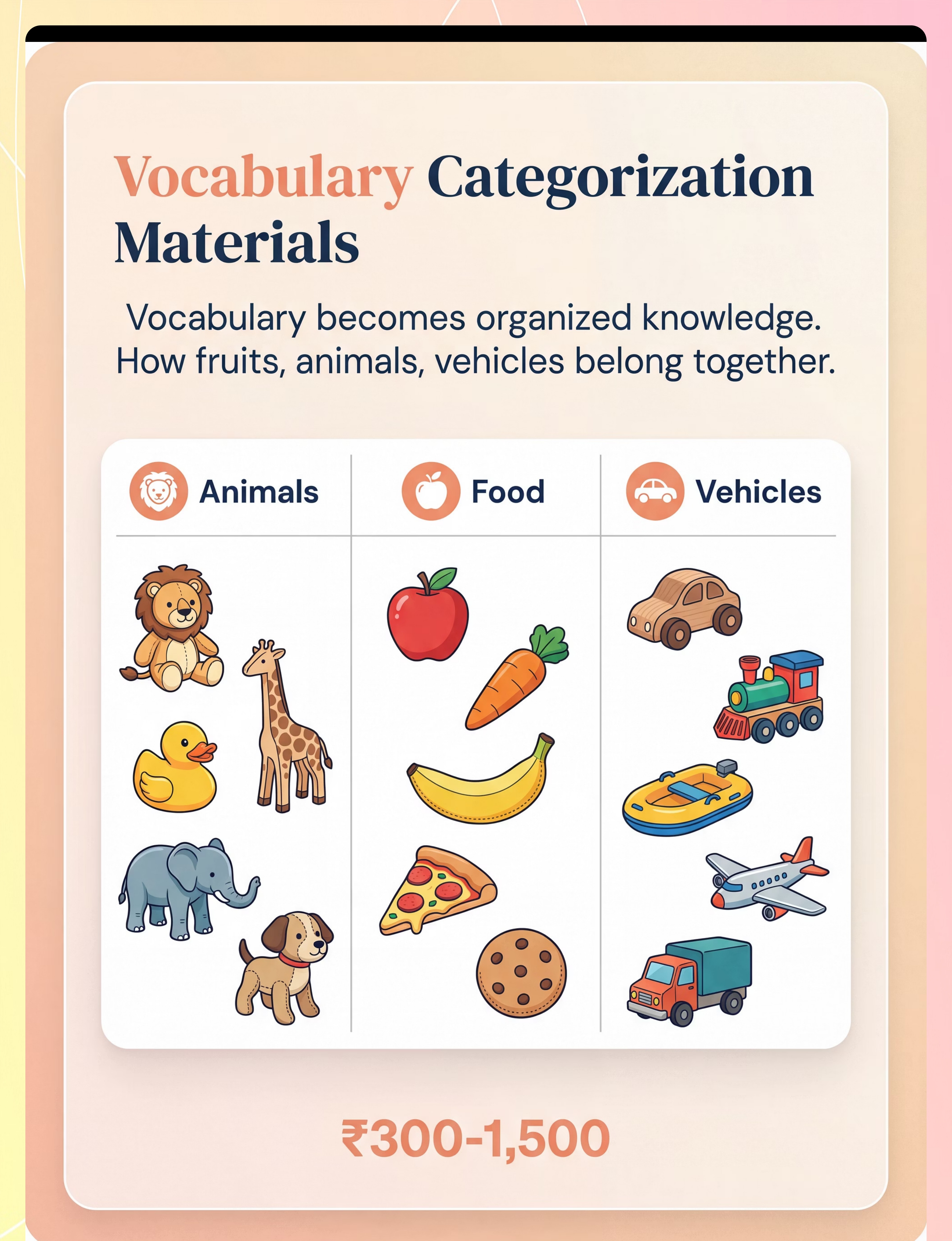
Vocabulary Categorization Materials
Vocabulary becomes organized knowledge. Vocabulary isn't just a list of words — it's organized knowledge. When a child knows that "apple" belongs with "fruits," is "red" and "round," and "you eat it," they understand "apple" much more deeply than if they simply recognize the word label.
Categorization materials include sorting activities, feature matching, category naming, and semantic web activities that build rich vocabulary networks — the kind of deep word knowledge that supports both comprehension and learning.

Vocabulary Categorization — Activities
1
Category Sorting Mats
Animals (farm, zoo, pets, ocean), Food (fruits, vegetables, drinks), Vehicles (land, water, air), Clothing, Furniture, Actions. Physical sorting with miniatures or picture cards onto labeled mats.
2
Feature Identification
"Which ones have wheels?" "Find things that are red." "Which ones are soft?" Multiple features: "Find something red AND round." Builds rich semantic connections beyond simple category names.
3
Function Categorization
Group by what you do with items: "Things you eat with," "Things you wear," "Things you ride." Receptive: "Which ones do you eat?" Connects words to real-world purpose.
4
Associations
What goes together: "Socks and..." "Brush and..." Match associated item pairs. Builds the automatic word connections that support fluent comprehension.
5
Odd One Out
Four items, three related, one different. "Apple, banana, car, orange — which doesn't belong?" Requires understanding category boundaries and the ability to reason about word relationships.
6
Real-Life Sorting
While shopping: "We're in the fruit section — what fruits do you see?" While dressing: "These are all things we wear on our feet." Categorization embedded in daily routines.
For older children, try Semantic Webs: put "dog" in the center, connect related words — barks, furry, pet, has tail, runs, needs food. Builds the richest possible word knowledge.
Key Insight:Organized vocabulary is stronger vocabulary. Categories and features give words context and connection.

Material 9 of 9
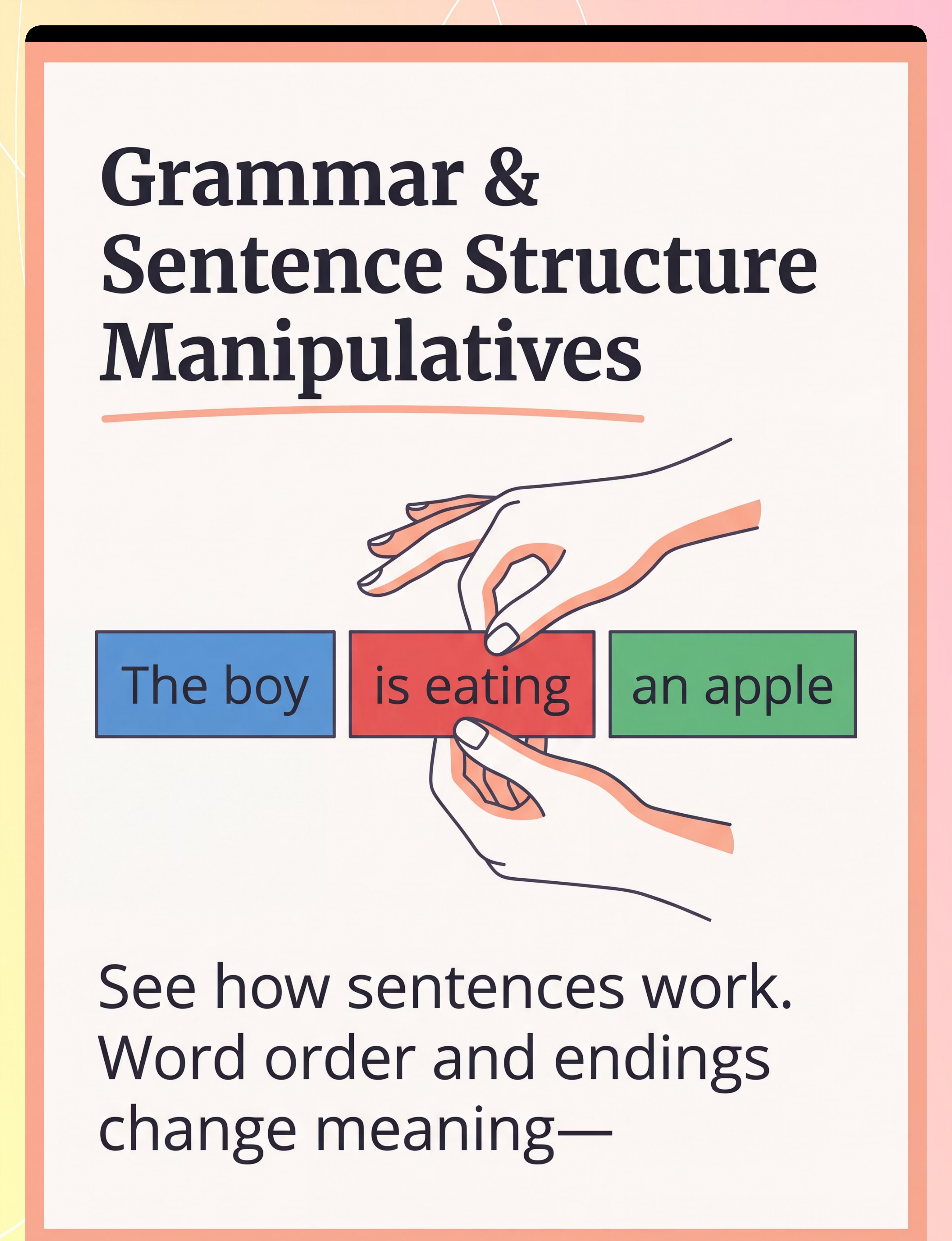
Grammar and Sentence Structure Manipulatives
See how sentences work. Understanding language isn't just vocabulary — it's also grammar. "The dog chased the cat" means something very different from "The cat chased the dog" — same words, different structure, completely different meaning. Grammar manipulatives make this visible.
Sentence strips, word cards, and action figures allow children to physically build and manipulate sentences, seeing how structure creates meaning — hands-on exploration rather than abstract explanation.
Grammar Manipulatives — Materials and Activities
1
Color-Coded Sentence Strips
Subject (blue): "The boy," "The girl." Verb (red): "is eating," "is running." Object (green): "an apple," "the ball." Children physically build sentences, then manipulate to watch meaning change.
2
Actor-Action-Object with Figures
"The boy is eating the apple." Switch figures: "The girl is eating the apple." Switch objects: "The boy is eating the cookie." Act out with figures to demonstrate how changing one element changes meaning.
3
Pronoun Practice
Cards with "he," "she," "they," "it." Match to pictures. "He is running" (point to boy). "She is running" (point to girl). Receptive: "Point to HE," "Show me THEY." Many children confuse pronouns — this makes the difference visible.
4
Verb Tense Visuals
Past (yesterday icon), present (today icon), future (tomorrow icon). Same action in different tenses shown in matching pictures. "He ran," "He is running," "He will run." Match sentence to correct picture.
5
Plurals and Possessives
Singular vs. plural pictures (one cat, many cats). "Find the dogs" requires hearing the 's.' Possessives: "His ball," "Her ball" — objects clearly belonging to different people. Receptive: "Point to HIS ball."
6
Negation and Complex Sentences
Understanding "not," "don't," "isn't." For advanced learners: "Before you eat, wash your hands." "Because it's raining, we stay inside." Build complex sentences only after simple structures are solid.
Safety Note: Grammar teaching should follow developmental sequence. Don't teach complex structures before basic ones are solid.
Key Insight:Grammar carries meaning. Understanding sentence structure unlocks comprehension of everything — from directions to stories.
How the 9 Materials Work Together
These materials aren't isolated tools — they form a systematic progression from concrete vocabulary to complex discourse. Assessment by a speech-language pathologist should guide where to focus. Don't skip foundational levels to work on complex comprehension.
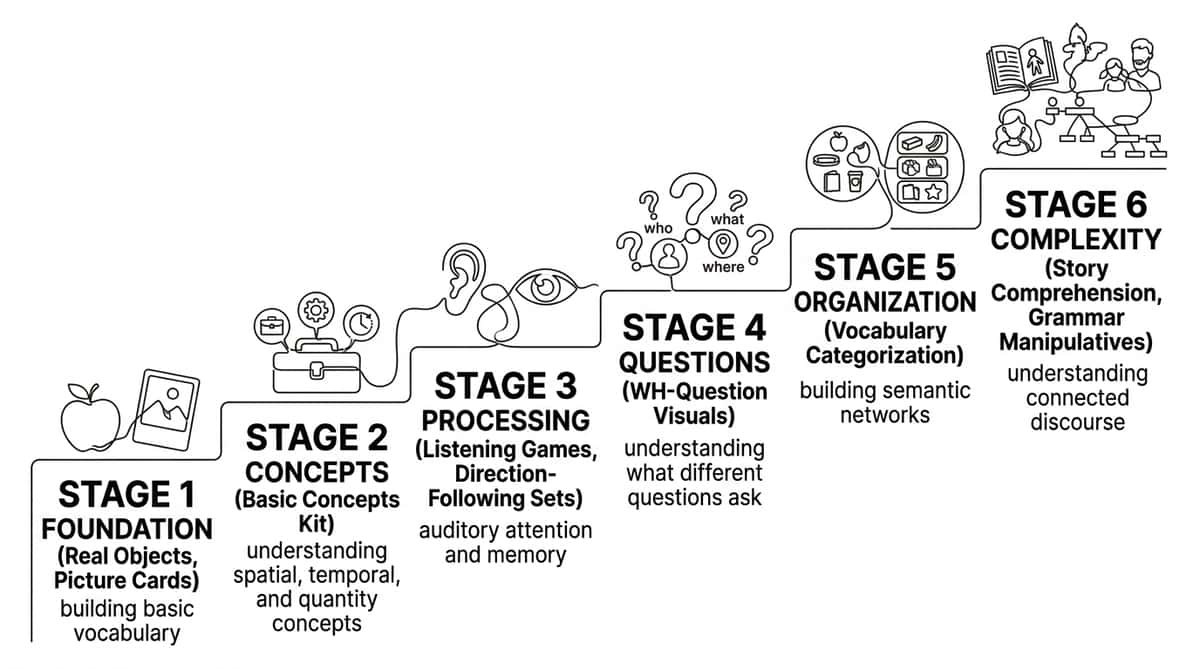
Choose materials based on the child's current comprehension level, not chronological age. The child who is 5 years old but functioning at an 18-month receptive level starts at Stage 1 — and that is exactly right.
Budget Guide — From Free to Comprehensive
1
Free / DIY Starter
Real household objects · Printed and laminated picture cards · Sorting mats drawn by hand · Clap pattern listening games · Simon Says
2
Low Budget (₹500–2,000)
Miniature object sets · Commercial picture card sets · WH-question cards printed at home · Simple picture books · Basic concept containers
3
Comprehensive Kit (₹2,500–12,000)
Full miniature sets (animals, vehicles, furniture, food, people) · Barrier game materials · Story comprehension kits · Color-coded sentence strip sets · Category sorting mats
Essential Starter Kit: Real household objects · Basic picture cards · Simple concepts materials · Direction-following activities. Much of the most effective receptive language work costs nothing — it's about how you use everyday objects and interactions.
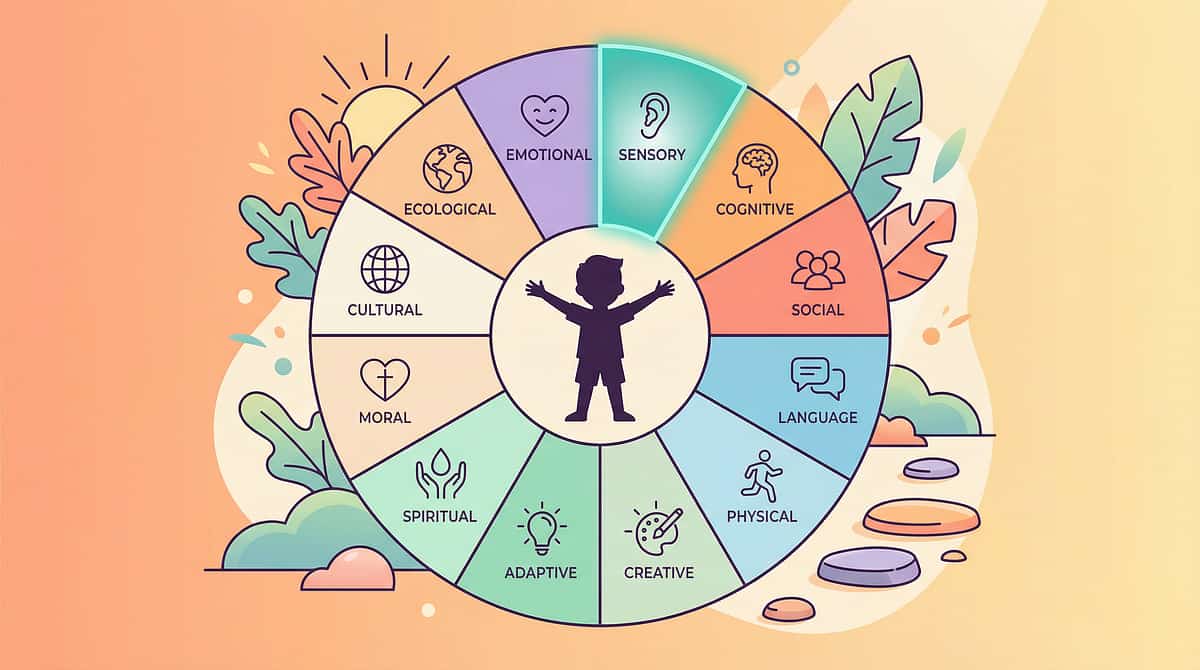
Home Strategies for Parents and Caregivers
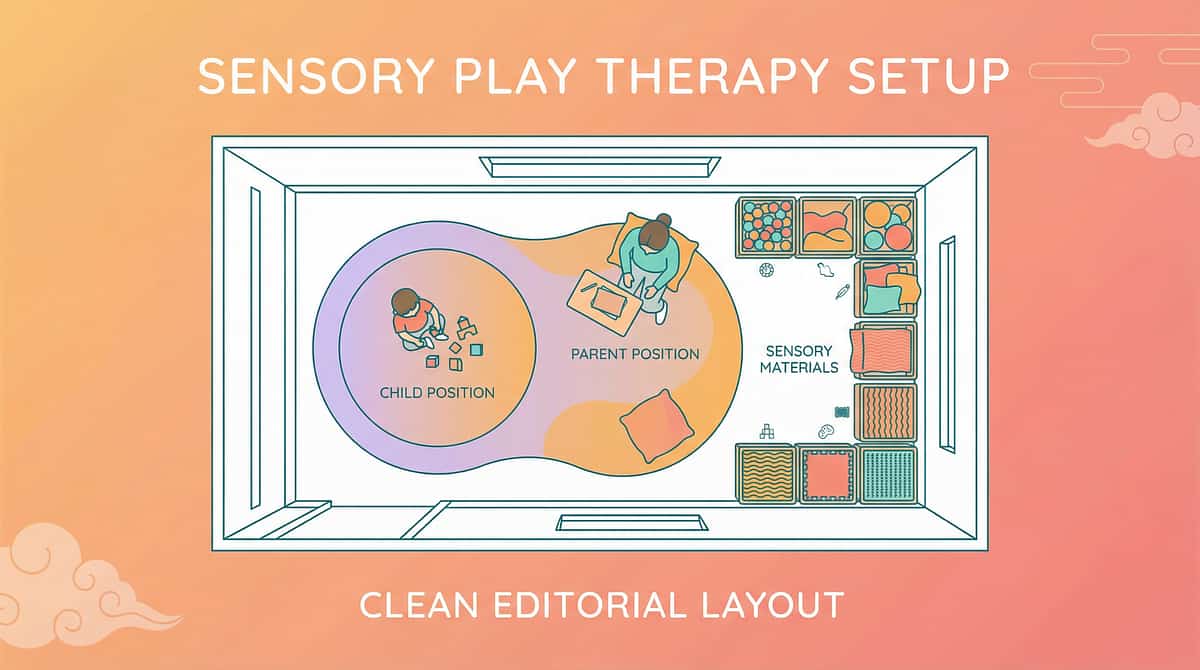
The most powerful receptive language intervention happens in the natural environment — throughout daily routines, mealtimes, dressing, play, and storytime. These strategies can be implemented starting today.
Simplify Language
Match your language to the child's comprehension level. Use shorter sentences and clear vocabulary. Build complexity gradually as understanding grows. Instead of long explanations, use key words.
Give Wait Time
Count to 10 in your head after giving a direction before repeating. The child may still be processing. Repeating immediately teaches them to wait for the second delivery rather than process the first.
Check Understanding
Ask the child to show you, not just say. "Show me the cup" verifies comprehension far better than "What's this?" — which can be answered by repeating your word.
Repeat Key Vocabulary
Use target words throughout the day in natural contexts. Repeated exposure in varied contexts builds true understanding — not just recognition in one setting.
Pair Speech with Visuals
Point while talking, show while naming, use consistent gestures. Visual support isn't a crutch — it's scaffolding. Fade gradually as spoken language comprehension strengthens.
Read Together Daily
Shared book reading with interaction — point to pictures, ask simple questions, make connections to real life. Reading aloud is one of the most powerful receptive language activities available.
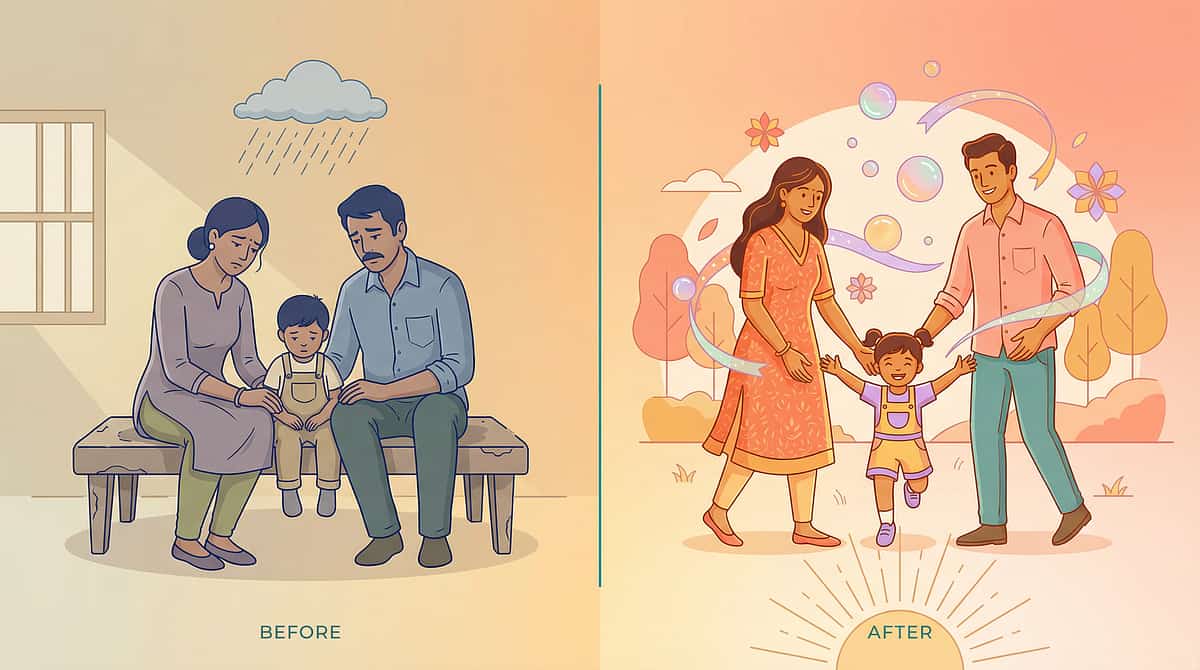
Red Flags — When to Seek Professional Evaluation
Some patterns in a child's comprehension development warrant prompt evaluation by a speech-language pathologist. Early intervention consistently improves outcomes — don't wait to "see if they grow out of it."
Not responding to name consistently by 12 months
Not understanding common words by 18 months
Not following simple directions by 24 months
Significant gap between receptive and expressive skills at any age
Regression — losing language understanding previously mastered
Consistent difficulty following group instructions in preschool or school settings
Heavy reliance on visual cues and watching others to figure out what to do
Not understanding questions appropriate for age
Always rule out hearing loss first. Even mild or fluctuating hearing loss from ear infections can significantly affect receptive language development. A hearing evaluation is the essential first step.
Multilingual Considerations
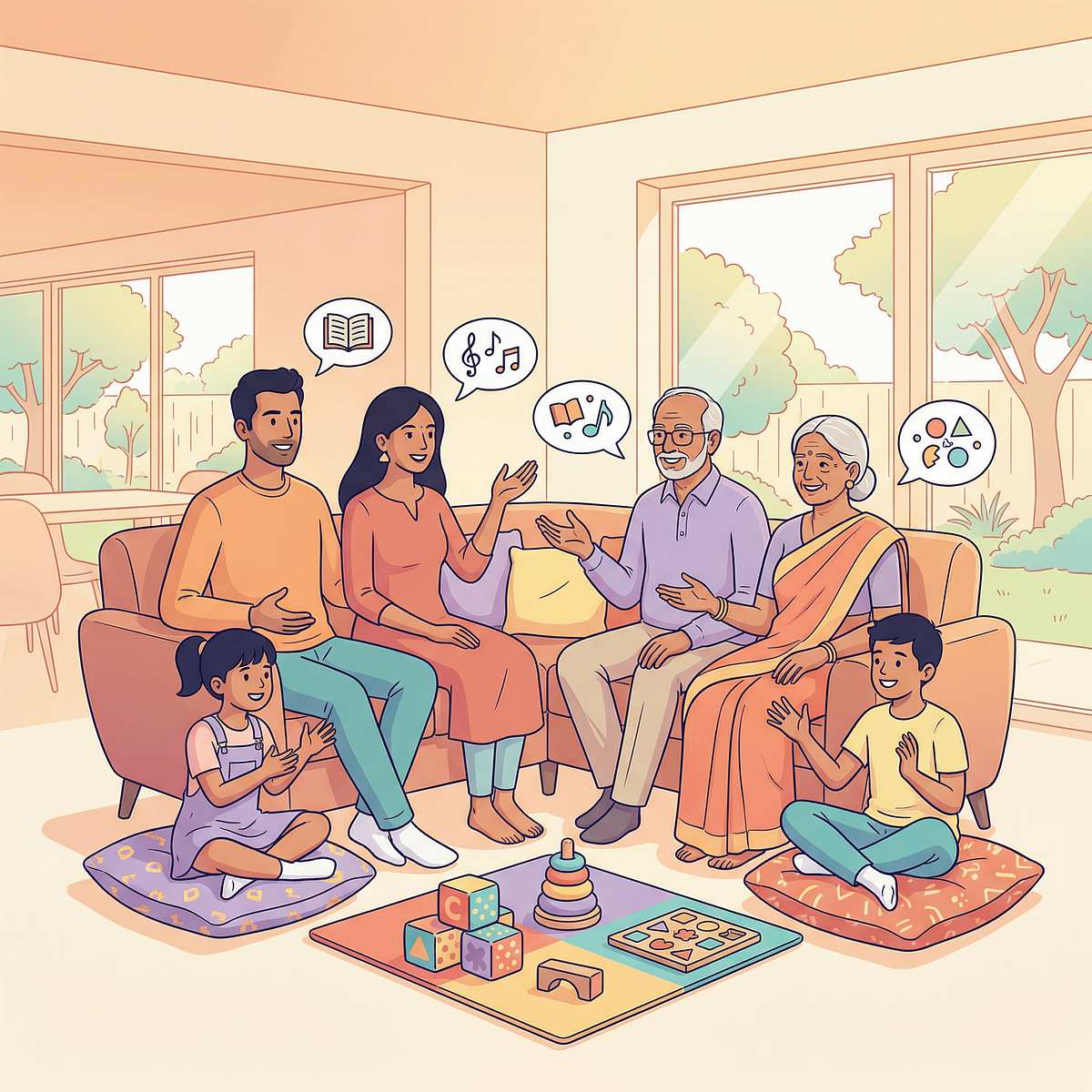
Receptive Language Across Languages
In multilingual homes, receptive language may develop differently across languages. Children may understand better in one language than another — this is typical and expected. What matters clinically is whether comprehension difficulties appear across all languages the child is regularly exposed to.
For Families and Therapists
- Note which language(s) present comprehension challenges
- Share this information clearly with the evaluating speech-language pathologist
- Receptive language difficulties should be assessed in all languages the child is exposed to
- Apparent difficulties may be language-specific or may appear across all languages
- Assessment should account for linguistic exposure, not assume one-language norms
Do not confuse language difference (expected variation in a multilingual child) with language disorder (difficulty present across all languages). A bilingual speech-language pathologist or culturally informed assessment is ideal.

Receptive vs. Expressive Language — Understanding the Relationship
These two domains are deeply interconnected — but they don't always develop in parallel, and understanding how they relate is essential for designing effective intervention.
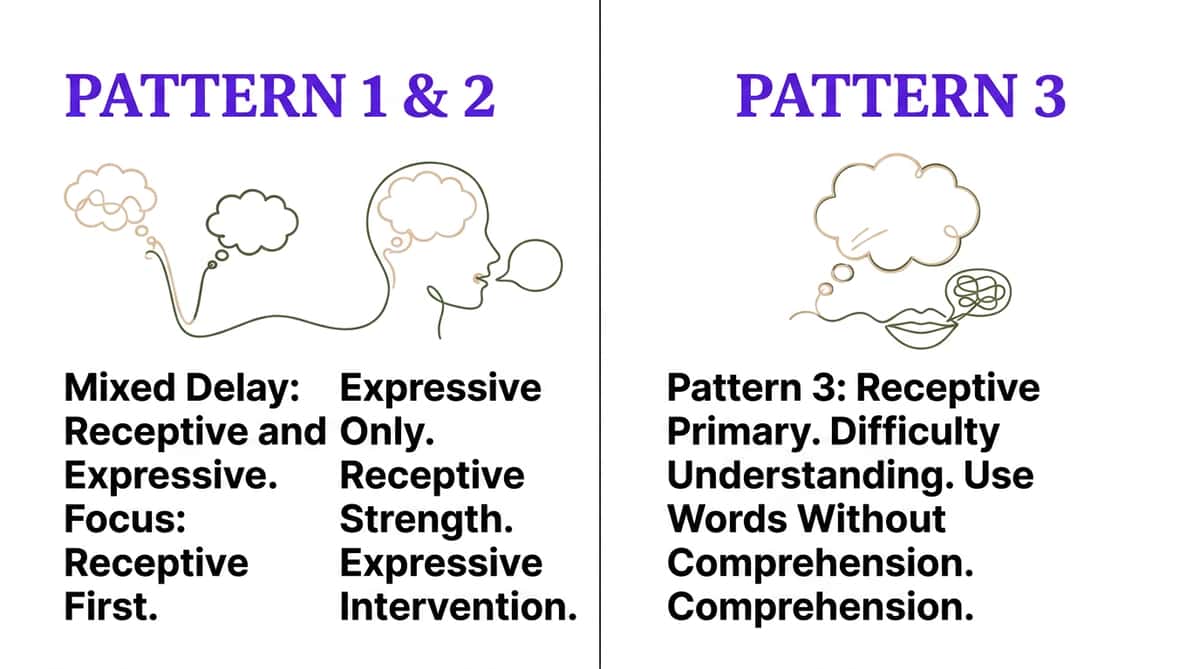
Typical Pattern: Receptive language develops ahead of expressive language. Children understand before they speak. Building receptive language often directly improves expressive language — because children generally can't meaningfully use words they don't understand.
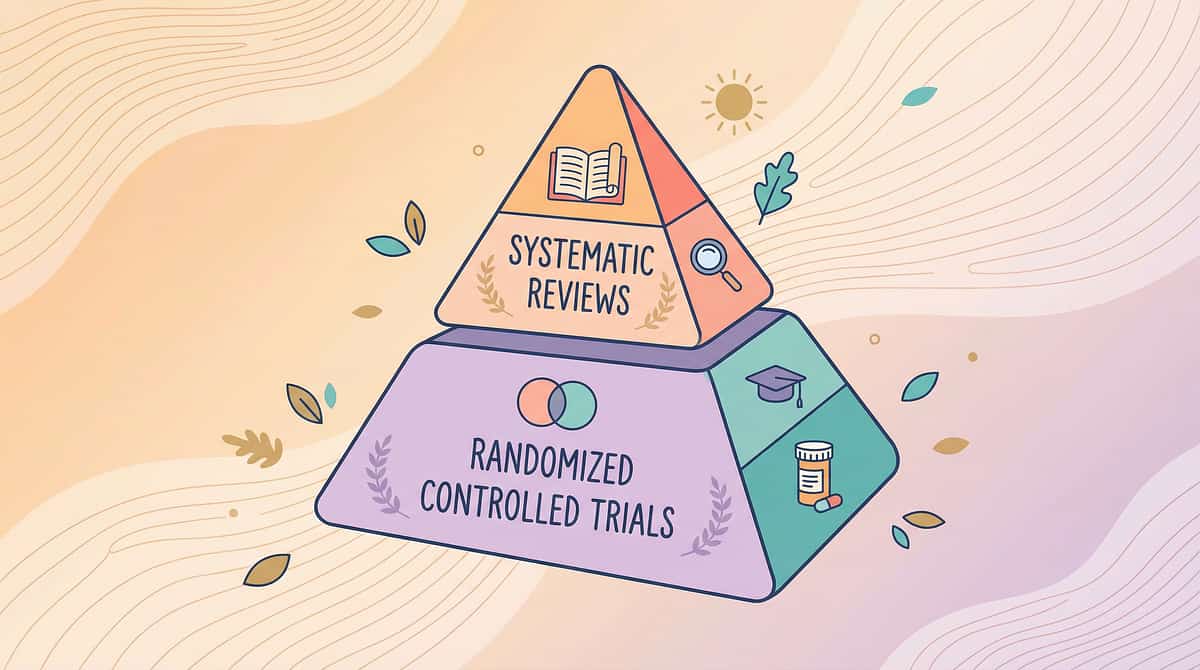
Assessment Principles for Receptive Language
Formal Assessment
Standardized tools (PPVT, ROWPVT, CELF receptive subtests) administered by a speech-language pathologist. Provides comparison to age norms and identifies specific areas of difficulty across receptive language components.
Informal Observation
Following directions with and without visual cues · Identifying objects and pictures · Answering questions about stories · Following conversation · Understanding spatial, temporal, and quantity concepts
Observational Signs
Watches others to know what to do · Responds to routine but not novel directions · Answers "yes" regardless of question type · Relies heavily on context and visual cues · Repeats back what was said instead of responding meaningfully
Rule-Outs to Consider
Hearing: Always rule out hearing loss, including mild or fluctuating loss from ear infections. Attention: Some children can understand when they attend but have difficulty sustaining attention. Autism: Receptive language difficulties are common in autism and should be addressed as part of comprehensive intervention.

8 Core Principles for Building Receptive Language
Follow developmental sequence
Build foundational skills before advanced ones. Master single-word comprehension before multi-step directions.
Concrete to abstract
Start with visible, touchable concepts before abstract ones. Objects before pictures, present items before past events.
Multisensory engagement
Engage multiple senses — touch objects while hearing names, see pictures while hearing descriptions.
Repetition in varied contexts
Repeated exposure across different contexts builds genuine understanding, not just recognition in one setting.
Check comprehension actively
Ask child to show/demonstrate rather than repeat. Don't assume understanding just because the child says something back.
Simplify language to target level
Don't bury key words in too much language. Instead of a long request, try: "Get shoes." Then build from there.
Allow processing time
Give direction, wait 5–10 seconds for processing before repeating. The brain needs time to decode spoken language.
Use natural contexts
Practice in meaningful, everyday contexts — not just at the therapy table. Mealtime, dressing, and play are all opportunities.
A Parent's Message — From Our Network
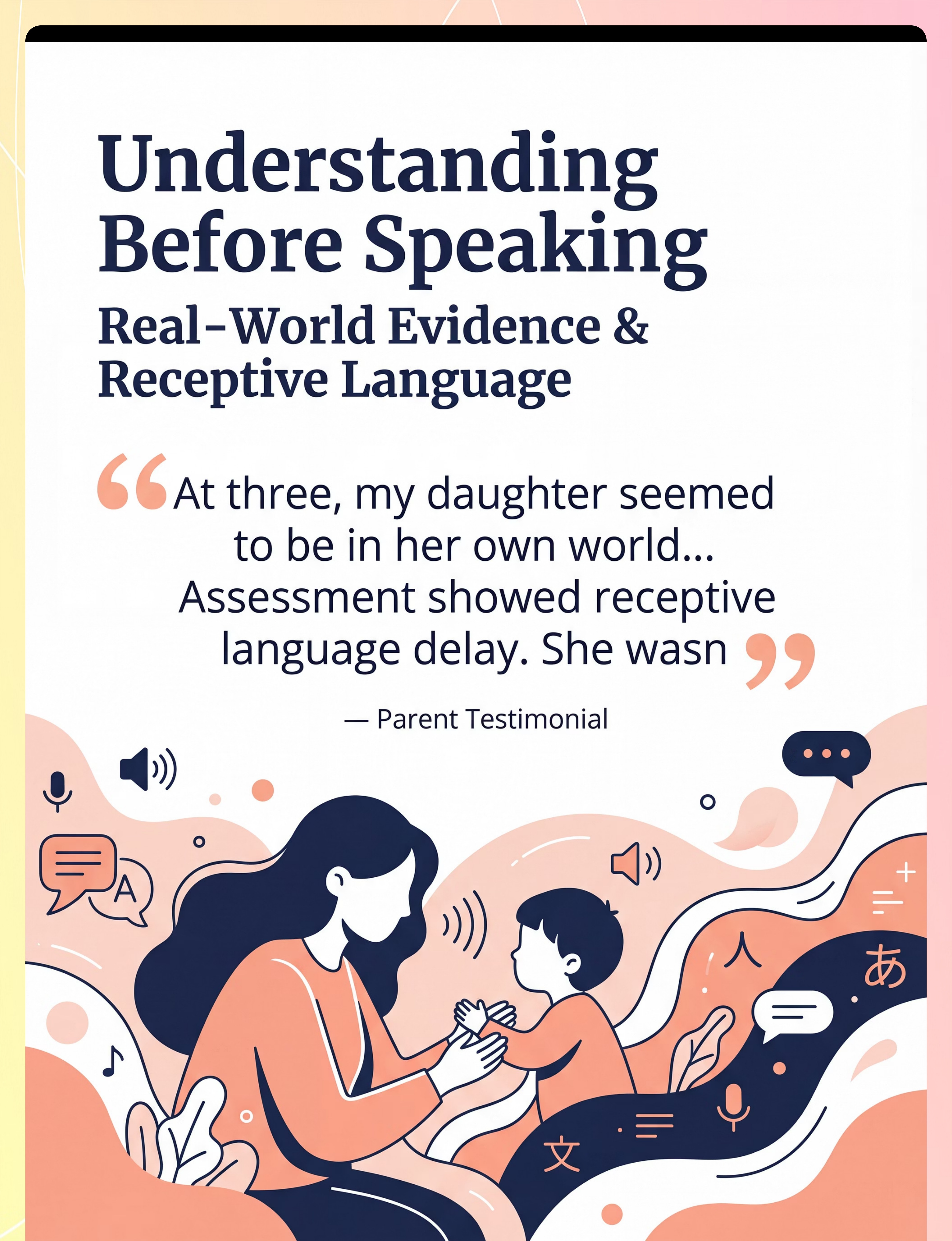
"At three, my daughter seemed to be in her own world. We'd talk to her, give directions, ask questions — and it was like the words passed right through her. We thought she was stubborn or inattentive, but assessment showed significant receptive language delay. She wasn't ignoring us — she wasn't understanding us."
The Journey
Therapy started with basic objects and simple one-word understanding. Then vocabulary building, concepts, following directions — each stage building on the last. At five, she follows two-step directions reliably, answers simple questions, and her eyes light up during stories because she actually understands what's happening.
The Breakthrough
"When she began understanding, her expressive language exploded too. Understanding was the key that unlocked everything."
Mother, Pinnacle Network
Illustrative case; individual outcomes may vary based on the child's specific needs and intervention intensity.
Save · Share · Follow
If this resource has been helpful, save it for your comprehension-building journey and share it with parents and caregivers whose children hear but struggle to understand. Follow for the complete Language and Communication Development series.
🔖 Save
Bookmark this guide for reference when building your receptive language material toolkit.
📤 Share
Share with parents whose children hear but struggle to understand — and with educators and therapy teams.
🔔 Follow
Follow for more language development strategies — expressive language is next in Episode 969.
Coming next: 9 Materials That Help With Expressive Language — Episode L-969

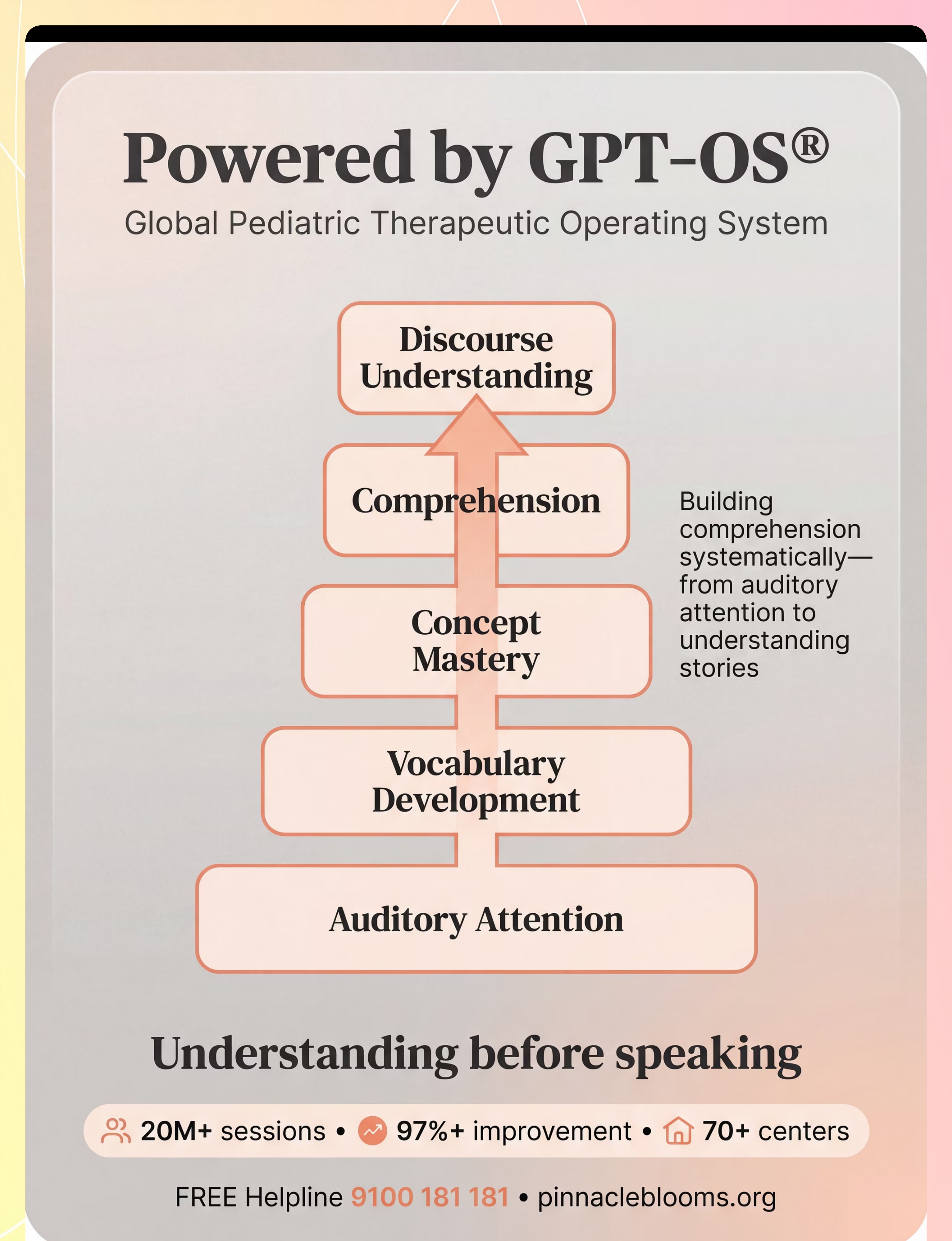
Powered by GPT-OS®
Global Pediatric Therapeutic Operating System
GPT-OS® builds receptive language systematically: from auditory attention to vocabulary understanding, from basic concepts to complex comprehension — creating the foundation all communication depends on.
1
Auditory Processing Foundation
Building attention to and discrimination of auditory information — the prerequisite for all language comprehension.
2
Vocabulary Development Protocol
Systematic expansion of receptive vocabulary through objects, pictures, and real-world exposure at every level.
3
Concept Mastery Sequence
Teaching spatial, temporal, quantity, and quality concepts in developmental order — the building blocks of all directions.
4
Comprehension Ladder
Progressing from word-level to sentence-level to discourse-level understanding in systematic, measurable steps.
5
EverydayTherapyProgramme™
Home practice integrating receptive language targets into daily routines — so therapy happens all day, not just in sessions.
6
Multi-Language Support
Receptive language development honoring the child's full linguistic environment — assessment and intervention in all languages.
20M+
1:1 Therapy Sessions
Building comprehension across ages and needs
97%+
Measured Improvement
In receptive language outcomes across the network
70+
Centers
Comprehensive language development services nationwide

Pinnacle Blooms Network®
Built by Mothers. Engineered as a System.
Pinnacle delivers comprehensive speech-language therapy that builds receptive language systematically — because understanding is where communication begins. From thorough assessment through to home integration, every element of our approach is designed to build comprehension that lasts.
Comprehensive Assessment
Thorough evaluation of receptive language across vocabulary, concepts, directions, questions, and discourse — in all relevant languages.
Systematic Intervention
Evidence-based protocols for building comprehension from foundation to fluency — developmental sequencing, not guesswork.
Home Integration
Parent coaching and home activities that reinforce receptive language development throughout every day, not just in sessions.
FREE National Autism Helpline
📞 9100 181 181
Available 24×7 in 16+ languages
pinnacleblooms.org
care@pinnacleblooms.org
Statutory Identifiers
- CIN: U74999TG2016PTC113063
- DPIIT: DIPP8651 (Govt. of India)
- MSME: Udyog Aadhaar: TS20F0009606
- GSTIN: 36AAGCB9722P1Z2
© 2025 Pinnacle Blooms Network®, unit of Bharath Healthcare Laboratories Pvt. Ltd. All rights reserved.
Preview of 9 materials that help with receptive language Therapy Material
Below is a visual preview of 9 materials that help with receptive language therapy material. The pages shown help educators, therapists, and caregivers understand the structure and content of the resource before use. Materials should be used under appropriate professional guidance.


Link copied!

Understanding Before Speaking
Receptive language is the foundation of all language development. Children typically understand language before they can use it. Building strong receptive language creates the base upon which expressive communication, learning, and social understanding are constructed.
Comprehending age-appropriate vocabulary
Knowing what words mean — nouns, verbs, adjectives, and concepts — across contexts and speakers
Following multi-step directions
Processing, holding, and acting on two-step and complex sequential instructions
Understanding questions and answering appropriately
Decoding what each question type is asking and responding with relevant information
Comprehending stories and conversations
Following connected discourse — narrative, explanation, and social conversation
Understanding grammatical structures
Grasping how word order, tense, pronouns, and morphological markers change meaning
Children develop the ability to understand spoken language, follow directions, answer questions, and comprehend narratives — skills essential for learning, social connection, and daily functioning. When comprehension builds, everything else becomes possible.