
ACT I — RECOGNITION
You Are Among Millions of Families Navigating This Exact Challenge
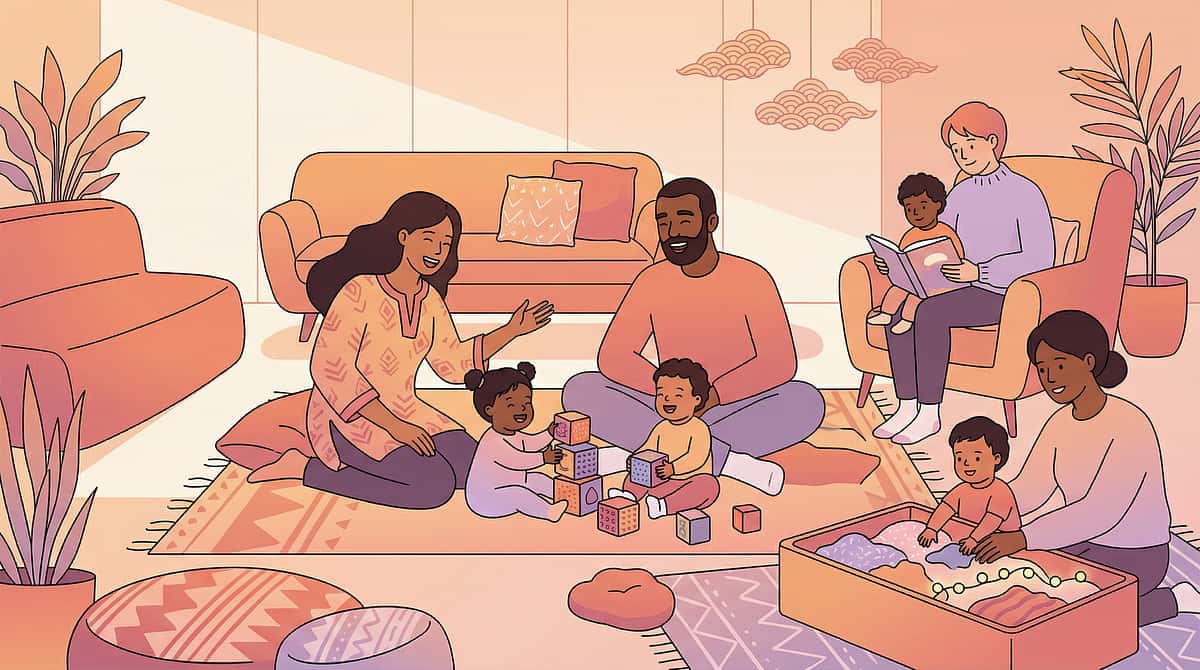
Parallel play is not a failure — it is a developmental stage. The challenge is when it becomes a ceiling rather than a step. Your child's tolerance for peer proximity is already a foundation. Now we build the bridge.
1 in 36
Children with Autism
Diagnosed globally, per WHO 2023 estimates
80%
Social Play Delays
Of autistic children show social play progression differences (PMC11506176)
20M+
Therapy Sessions
In Pinnacle's clinical database tracking play development outcomes
Parallel play is developmentally typical from ages 2–3. Concern arises when it persists as the exclusive play mode beyond age 3–4 without natural progression. (Parten, 1932; Wolfberg, 2009) · PMC11506176 · PMC10955541
📞FREE National Autism Helpline: 9100 181 181 — Available 24×7 | 18+ Languages
ACT I — UNDERSTANDING
This Is a Wiring Difference. Not a Social Choice.
The Science
When children engage in interactive play, several neural systems must fire together: the mirror neuron network (understanding what another person is doing), the joint attention pathway (shared focus on a third object or person), and the social reward circuitry (finding peer interaction intrinsically motivating).
In many neurodivergent children, the effort required to simultaneously manage sensory input from a peer while coordinating shared action exceeds comfortable neural capacity. Parallel play is the brain's elegant solution — proximity without the overwhelming demands of coordination.
Parent Translation
"Your child is not ignoring their playmate. Their nervous system is managing proximity as a significant cognitive task. The materials in this guide reduce that cognitive load — making interaction easier than avoidance."
Parallel play is the brain protecting itself from overwhelm. Our job is to make togetherness feel safer than separateness.
Research: Frontiers in Integrative Neuroscience (2020): Sensory integration and social processing in ASD. | Kasari et al. (2006): Joint attention and symbolic play — foundational intervention research.
ACT I — CONTEXT
Your Child Is Here. Here Is Where We're Heading.
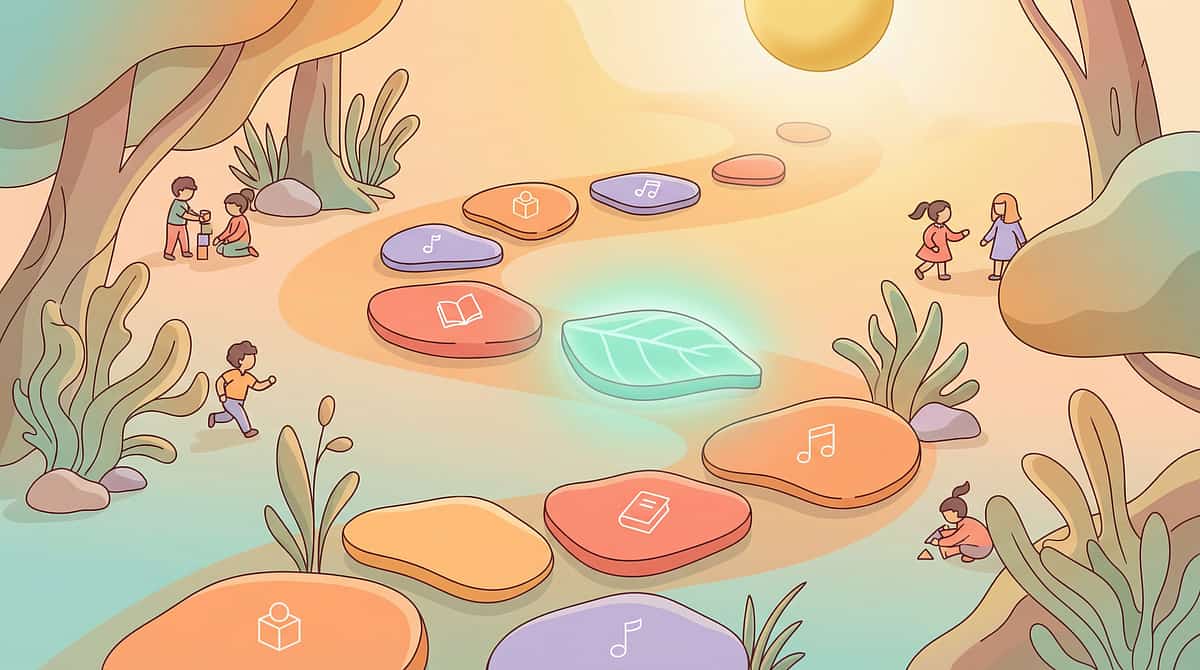
Understanding where your child sits on the developmental play continuum is the first step. Each stage is valid — the goal is to gently scaffold the next one.
Solitary Play
Infancy — Plays entirely alone, no awareness of peers
Onlooker Play
Age 1–2 — Watches others play but does not join
Parallel Play ▲
Age 2–3 — Plays alongside peers, no interaction. Your child's current stage · C-303 Zone
Associative Play
Age 3–4 — Loose sharing, brief coordination, no shared goals
Cooperative Play
Age 4+ — True teamwork, shared goals, negotiation
What commonly co-occurs: Joint attention challenges | Social initiation deficits | Language delays | Sensory regulation differences | Executive function differences. WHO Care for Child Development Package (2023) | PMC9978394
📞9100 181 181 — FREE assessment guidance | 24×7

ACT I — EVIDENCE
Clinically Validated. Home-Applicable. Parent-Proven.
🛡️ LEVEL I–II EVIDENCE
Systematic Review + RCT Grade Play Development Interventions for ASD
"Structured environmental arrangement and targeted play materials significantly increase peer interaction frequency and quality in children with ASD aged 3–8."
NCAEP 2020: Visual supports and structured play are classified as evidence-based practices for autism (National Clearinghouse on Autism Evidence and Practice).
Key Studies
Study | Finding | |
PRISMA Review 2024 (PMC11506176) | 16 studies confirm structured play = evidence-based practice for ASD | |
Meta-analysis, World J Clin Cases (PMC10955541) | Structured play materials promote social skills and peer interaction | |
Kasari et al. (2006) | Joint attention + play skill interventions show significant social gains | |
WHO/UNICEF CCD Package (PMC9978394) | Home-based caregiver interventions effective across 54 countries | |
Padmanabha et al., Indian J Pediatr (2019) | Home-based interventions show significant outcomes in Indian paediatric populations |
85%
Evidence Confidence
Strong evidence base for structured play material interventions (OCEBM Level II)
ACT II — KNOWLEDGE TRANSFER
Technique C-303: The Bridge Builder Approach
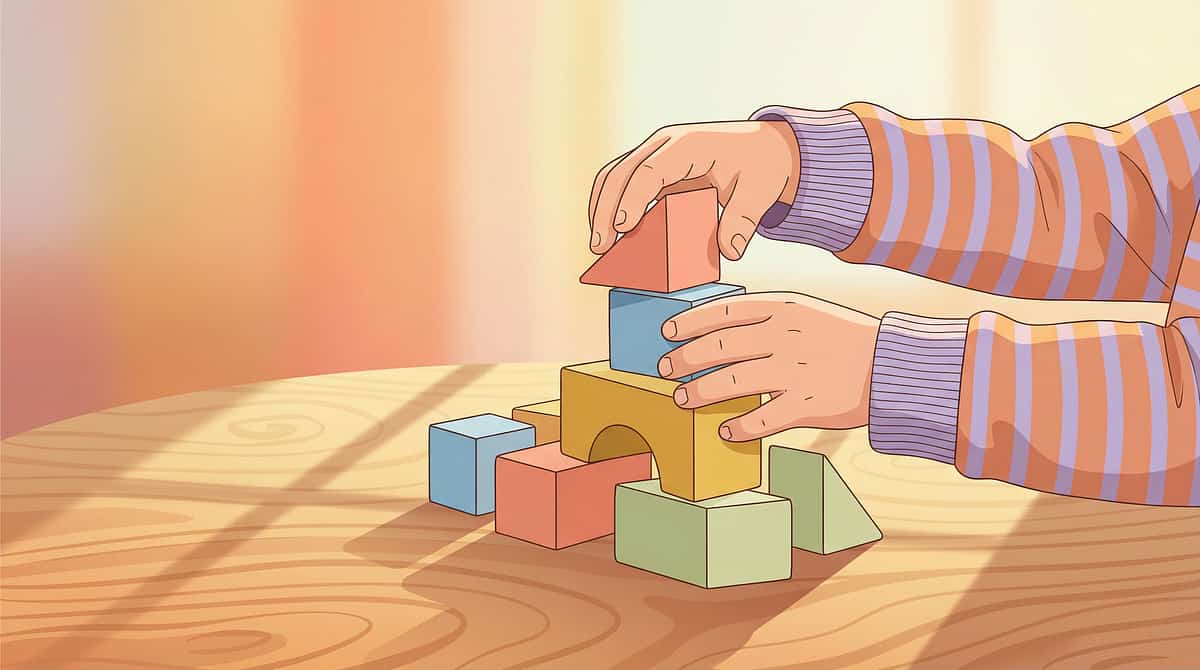
Formal name: Parallel Play Progression — Structured Material Scaffolding. A structured home-based intervention using 9 specifically selected therapy materials to scaffold the natural progression from parallel play to associative and cooperative play. Rather than forcing interaction, these materials create conditions where interaction becomes easier, more rewarding, and more natural than continued isolation.
🏷️ Domain
Play Development — Social Play Progression
📅 Age Range
3–8 years
⏱️ Session
15–20 minutes daily
📆 Programme
8–12 weeks minimum
🧩 Materials
9 therapeutic material categories
✅ Building bridges at the child's pace ❌ Not forcing interaction ❌ Not eliminating parallel play ❌ Not demanding eye contact
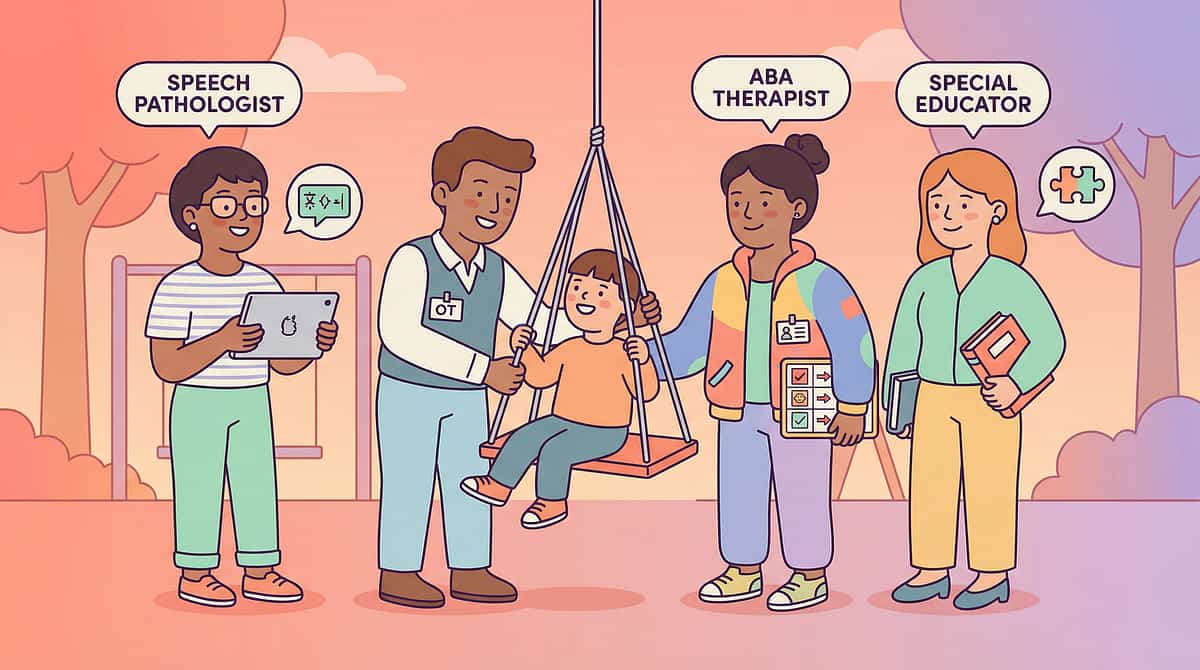
ACT II — DISCIPLINES
This Technique Crosses Every Therapy Boundary
Because the brain doesn't organise by therapy type — every discipline plays a critical, coordinated role in helping your child move from parallel to cooperative play.
Occupational Therapist (OT) — Primary Lead
Designs the sensory-safe play environment. Selects materials matching the child's sensory profile. Guides progression through environmental arrangement and material scaffolding.
Speech-Language Pathologist (SLP)
Targets the verbal bridge — commenting, narrating, requesting. Uses commenting prompt cards to build the language of play. Supports joint attention and shared reference.
BCBA / ABA Therapist
Designs reinforcement systems for interaction attempts. Conducts functional analysis. Implements systematic prompting and fading to increase interactive episodes.
Special Educator (SpEd)
Embeds play progression work into structured learning. Uses role assignment and cooperative game frameworks. Tracks social participation indices.
NeuroDevelopmental Paediatrician
Monitors overall developmental trajectory. Identifies co-occurring challenges that maintain parallel play. Coordinates the multi-disciplinary approach.
"When all five disciplines work together through one GPT-OS® governed plan, the child's nervous system gets coordinated input — not conflicting messages from separate therapy silos." — Pinnacle Blooms Consortium
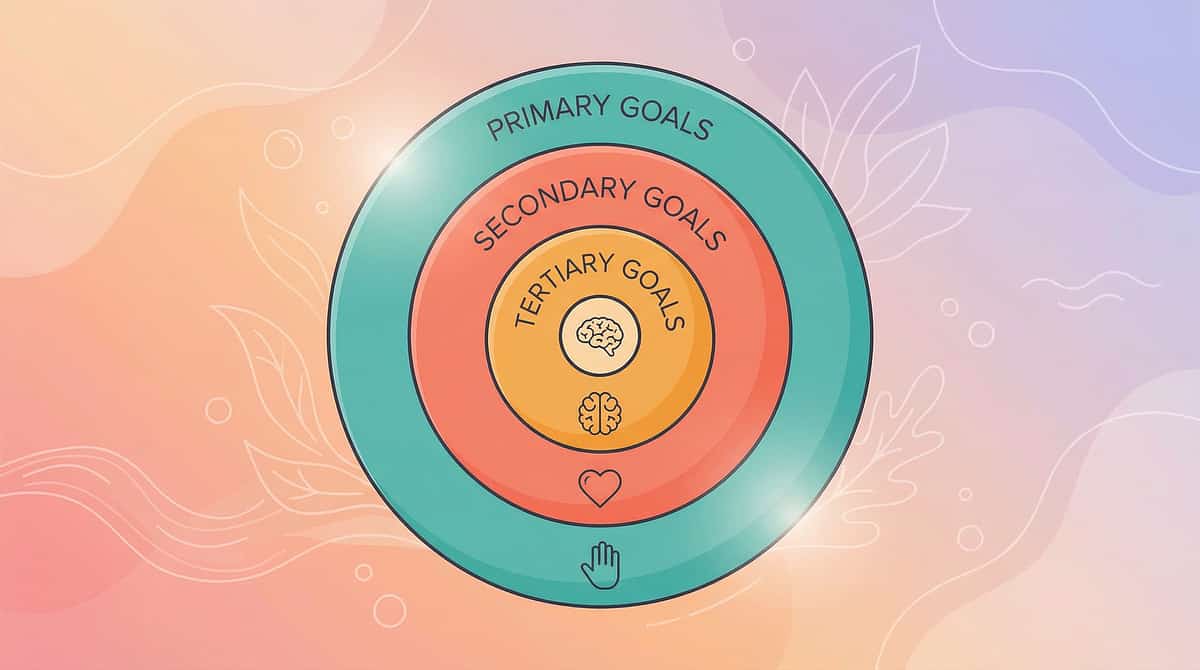
ACT II — TARGETS
What Changes. What You Will See. What the Data Tracks.
Primary Therapeutic Targets
Peer Awareness
Child notices and acknowledges what peer is doing
Verbal Bridging
Child makes comments about peer's play ("I like your tower!")
Material Exchange
Child shares, passes, or requests from peer
Joint Attention
Child and peer focus on same object together
Role Acceptance
Child accepts a defined role within shared play
Cooperative Episodes
Brief moments of true "together" play emerge spontaneously
GPT-OS® Social Participation Index — Play Interaction Levels
Stage 1
Parallel play only — plays alongside without interaction
Stage 2
Prompted interaction — interacts with adult facilitation
Stage 3
Associative play — shares materials, loose coordination
Stage 4
Cooperative play with support — coordinates with adult scaffolding
Stage 5
Spontaneous cooperative play — initiates and maintains collaboration
Stage 6
Flexible social play — adapts to different peers and contexts
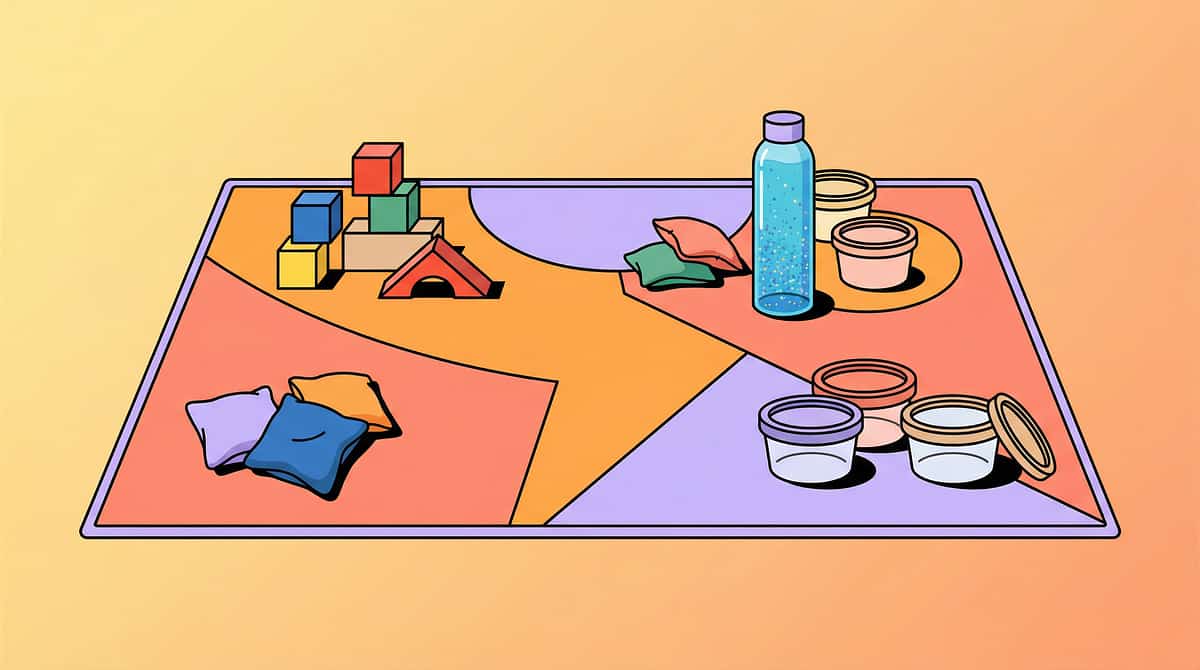
ACT II — THE 9 MATERIALS
9 Materials. 9 Bridges From Near to With.
Each material below targets a specific mechanism of interaction. You don't need all nine at once — start with one. The system is designed to layer progressively.
Shared-Supply Scarcity
Limited resources → must interact
Connection Construction
Materials that physically join creations
Commenting Prompt Cards
Words that bridge the parallel silence
Pass-It-Along Activities
Your turn → my turn → rhythm builds
Cause-Effect Partner Toys
Your action = my experience
Role Assignment Props
You're the chef, I'm the customer
Cooperative Game Progressions
Individual → team goals, gradually
Shared Goal Visual Supports
One picture of what WE'RE building
Interaction Reinforcement Systems
Tokens for every bridge crossed
Price Overview: Full setup ₹1,400–4,500 | Essential starters ₹400–900 | DIY-capable: 5 of 9 materials | All materials available on Amazon.in
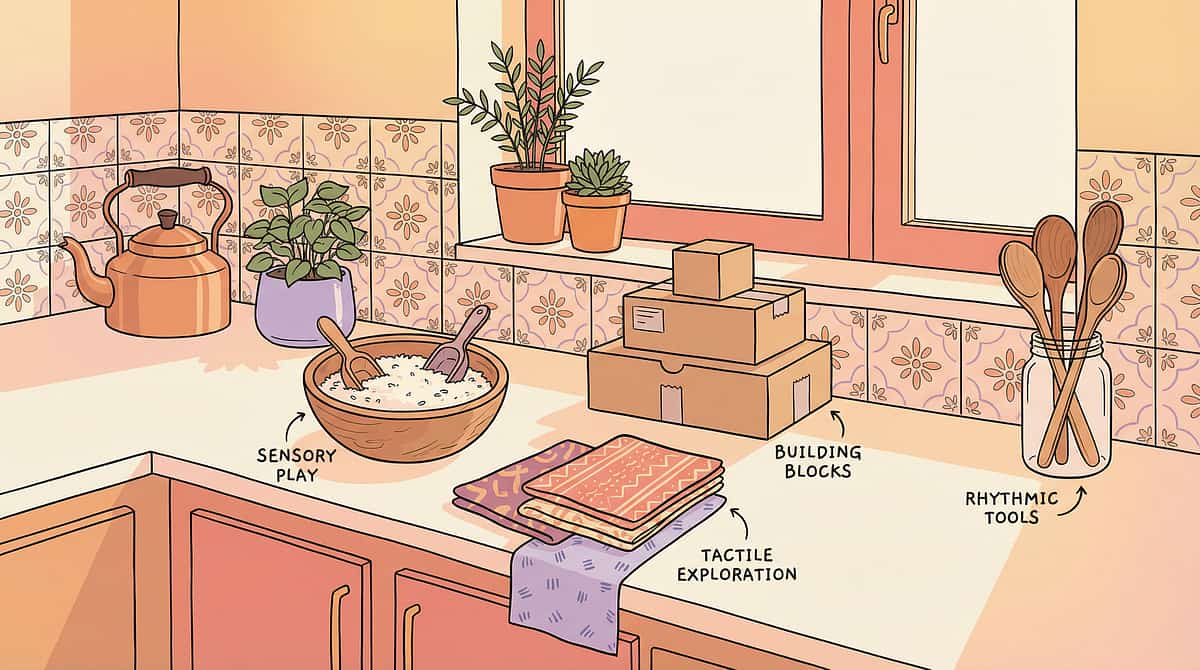
MATERIAL 1 OF 9
Shared-Supply Scarcity Materials
Not Enough for Both = Must Interact
₹100–300 | DIY: ₹0
Why It Works
When resources are abundant, parallel players never need to acknowledge each other. When there's only one container of the favourite colour, the child must interact to continue. Scarcity creates the natural communication opportunity that abundant separate supplies eliminate. The need to request, wait, and receive is the interaction.
DIY Zero-Cost Version
Use a single bowl of LEGO bricks instead of two separate piles. One crayon box shared between two children. One playdough ball instead of two separate pieces. Zero cost — maximum scarcity engineering.
How to Use — 5 Steps
Place one shared container of blocks/crayons/playdough at centre of table
Sit both children close enough to access the same source
Adult models: "Can I have the blue one? Thank you."
Prompt child: "Ask [name] for the red block"
Celebrate any verbal or gestural request attempt immediately
⚠️Safety Note: Don't create frustrating scarcity — ensure enough materials overall. Adult ready to mediate if needed. Goal is interaction, not conflict.
Canon Product: Sorting Activities set (₹628) — Amazon.in | Research: Kasari et al. (2006) | NCAEP (2020)
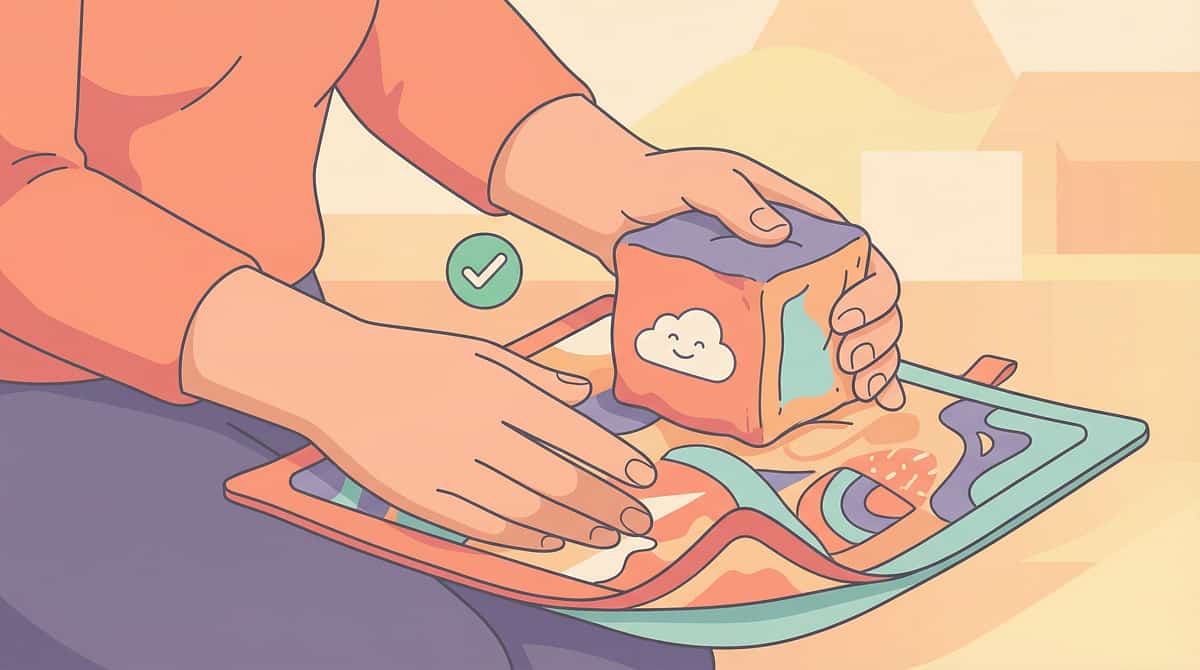
MATERIAL 2 OF 9
Connection Construction Materials
Build Separate. Merge Together. The Materials Do the Work.
₹300–800 | DIY: ₹0–100
Why It Works
These are materials designed by nature to link separate creations. When the child's track section physically connects to their peer's section — when the marble run only works if both sections are joined — the material itself demands collaboration. The engineer in the child cannot resist completing the system. Connection construction shifts motivation from social to functional, which is often easier for neurodivergent children to access.
DIY Version
Tape two separate paper drawings together to make one continuous picture. Use cardboard tubes to build marble run sections that must join. Use dominoes placed end-to-end from each child's starting point meeting in the middle.
How to Use — 5 Steps
Give each child their own portion of track/blocks to build with
Position them so the creations can physically connect
When ready: "I wonder if your track could connect to [name's] track?"
Let the child discover the connection possibility themselves if possible
Celebrate the merge: "You built it TOGETHER!"
⚠️Safety Note: Don't force connection if child is distressed by merging. Allow some individual portions within the shared project.
Canon Product: Cause-Effect / Problem-Solving Toys (₹428–519) | PMC10955541 — Structured construction play promotes social coordination and shared attention
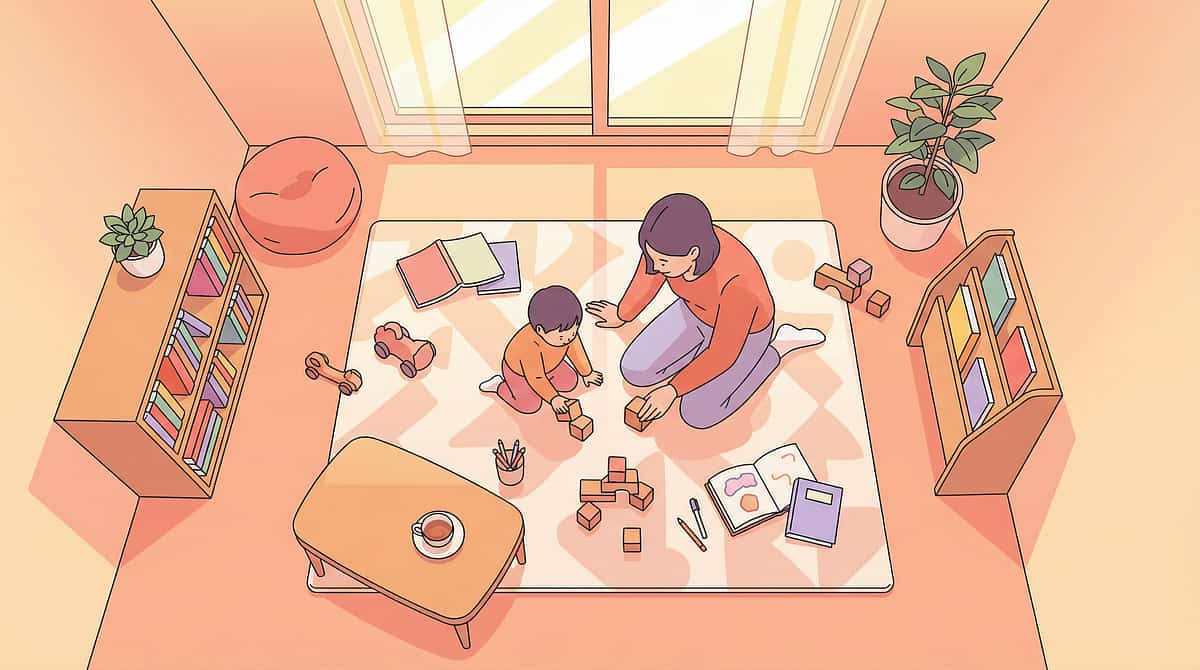
MATERIALS 3–9 QUICK-SCAN GUIDE
Your Complete 9-Material Setup Guide
# | Material | Core Mechanism | Price | DIY? | |
3 | Commenting Prompt Cards | Visual cards with phrases: "I like your tower!" "What are you making?" | ₹150–400 | ✅ Make your own | |
4 | Pass-It-Along Activities | Ball rolling, drawing passed for additions, rhythmic exchange | ₹150–400 | ✅ Any ball works | |
5 | Cause-Effect Partner Toys | One child's press = other child's lights/sound | ₹300–700 | DIY: "When you push, MY light goes on!" | |
6 | Role Assignment Props | Chef hat + customer menu = structured interaction scaffold | ₹200–600 | ✅ Apron + notepad | |
7 | Cooperative Game Progressions | Board games that start individual, merge into team goals | ₹300–700 | ✅ Modify any game | |
8 | Shared Goal Visual Supports | Picture of what we're building together, displayed prominently | ₹100–300 | ✅ Print any image | |
9 | Interaction Reinforcement Systems | Token board: sticker for commenting, star for sharing | ₹100–300 | ✅ Paper chart |
⏱️ Setup Time
5 minutes
📐 Space
Any table — dining, floor, low table
📅 Frequency
2–3 sessions/week minimum, 15–20 min each
Canon Products: Reward Jar — ₹589 (Amazon.in) | Dyomnizy Educational Memory Game with Lights & Sound — ₹519 (Amazon.in)
📞9100 181 181 — Ask our therapists which 3 materials to start with for YOUR child
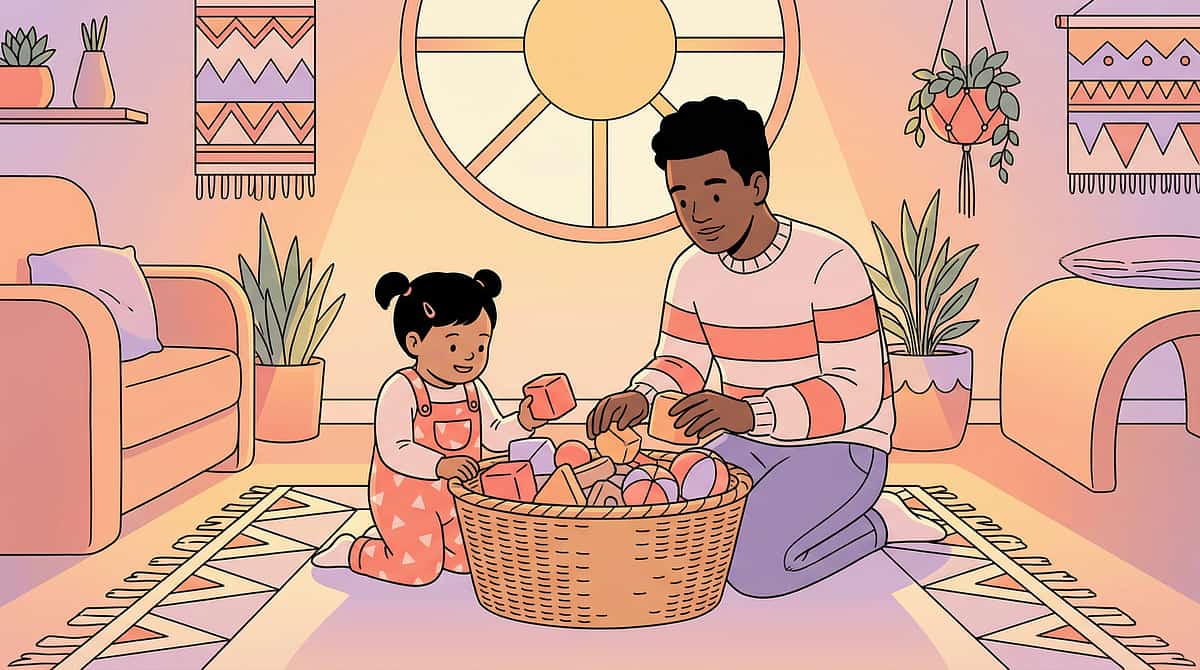
ACT III — EXECUTION · STEP 0
Check Before You Start — Every Session
A 5-minute successful session on a green-light day is worth more than a 20-minute forced session on a red-light day. Run this readiness check before every session without exception.
✅ Green Light — Proceed
Child has had a snack and is not hungry
No recent meltdown or dysregulation in past 30 minutes
Child is in familiar, low-sensory environment
Peer is known to the child (sibling, regular playmate)
You have 20 uninterrupted minutes available
Materials are prepared and ready before children arrive
⛔ Amber/Red — Modify or Postpone
Child is tired, hungry, or recently upset
New or unpredictable peer present
Loud, stimulating, or unfamiliar environment
Child is in the middle of a preferred solo activity
Adult is distracted or stressed
Run a 30-second sensory sweep before positioning children: volume acceptable? Lighting comfortable? No unexpected smells or textures?
Research: NCAEP (2020): Antecedent-based interventions — environmental preparation significantly increases intervention success rates
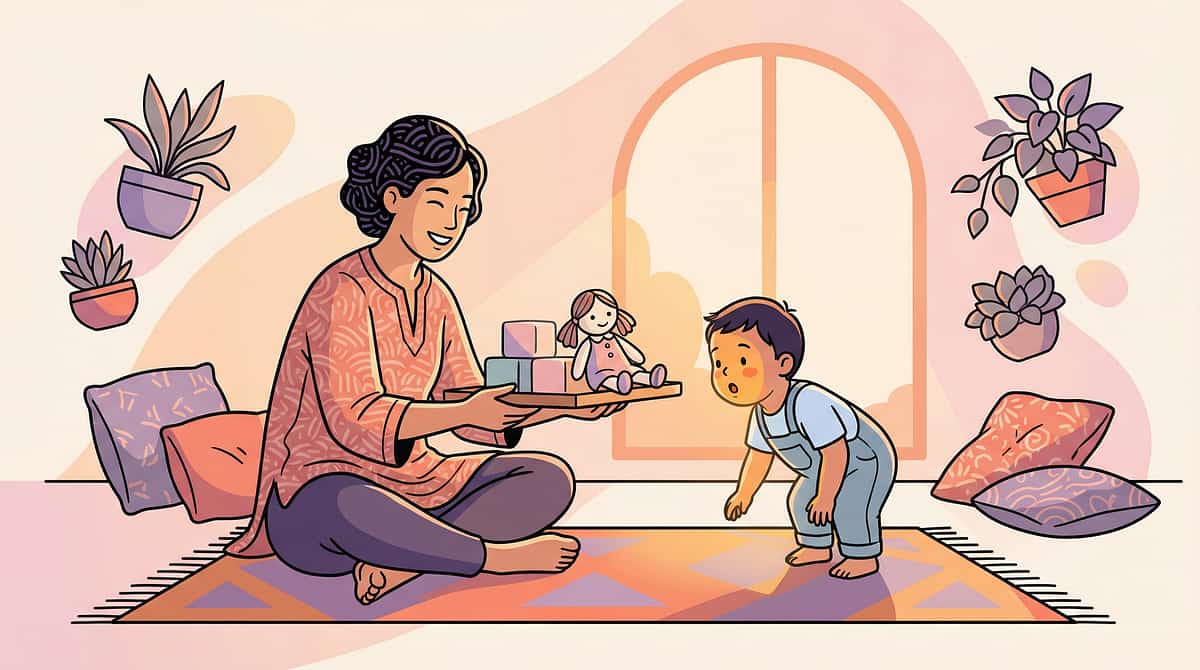
ACT III — EXECUTION · STEP 1 OF 6
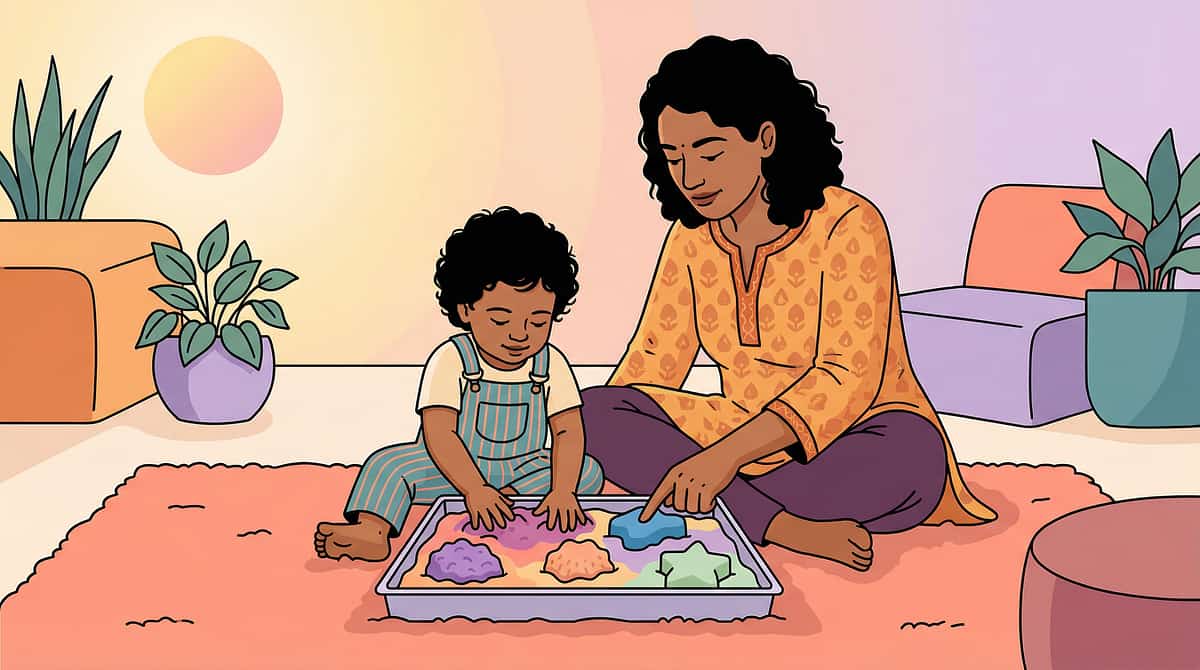
The Invitation: How You Set Up the Session Determines Its Success
The Invitation Script
"I have something really cool set up — do you both want to come and build with me?"
✅Use this. It's open, warm, and inviting.
❌ NOT: "You need to play together now."
❌ NOT: "Let's practice playing with friends."
First 2 Minutes — Parallel Warmup
Allow both children to engage with materials in parallel first. Do not prompt interaction immediately. Let the shared environment establish comfort before introducing bridging prompts. Let the materials do the work first. Your job is setup, not performance.
Positioning
Place children at 90° to each other — not directly facing (less overwhelming than face-to-face)
Shared materials at exact centre — equidistant access for both children
Adult seated behind/beside (not between) the children
Shared goal visual prominent and pre-explained: "We're going to make THIS together"
PMC11506176 — Gradual approach to peer interaction increases successful engagement in ASD populations. Consortium Lead: Pediatric OT + BCBA/ABA
ACT III — EXECUTION · STEP 2 OF 6
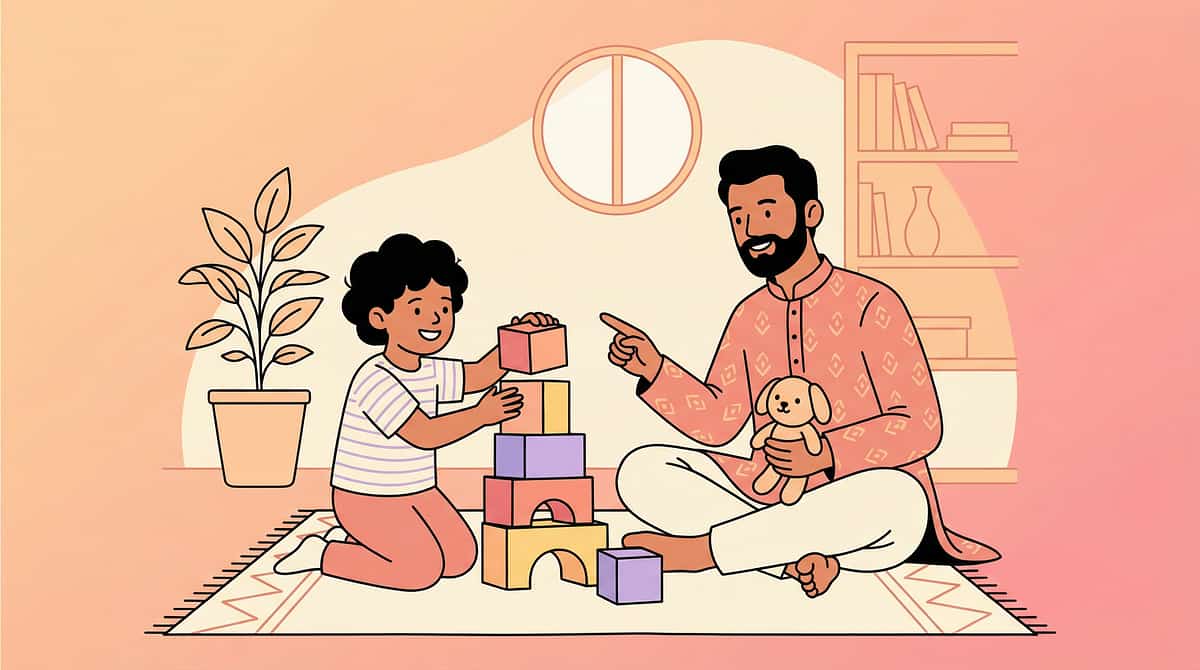
Creating Engagement: The First Bridge Across the Parallel Divide
Engagement techniques are ordered from least to most demanding — always begin at the lowest rung and let success guide you upward. Never skip ahead.
1. Comment Modelling
Adult says aloud, "Oh, [Child A] is building a tall tower! [Child B], look at that!" — drawing attention without demanding response
2. Material Scarcity Prompt
Adult "accidentally" puts all the blue blocks near Child A — prompting Child B to request naturally
3. Narration Invitation
Use commenting prompt card — hold up "I like your tower!" card near Child B to model the social phrase
4. Physical Bridge
Suggest tracks/sections can connect — let material design do the persuading, not adult pressure
5. Role Announcement
"You're going to be the chef today — [Child B] is going to be very hungry!" — structured context creates interaction
What to Watch For: Any glance toward the peer = success moment (acknowledge immediately) · Any reach toward shared container = interaction attempt (celebrate) · Any vocalisation near the peer = verbal bridge beginning
PMC11506176 | Video modeling (NCAEP 2020) — adult modelling of social comments increases child commenting during peer play. Consortium Lead: SLP + BCBA/ABA
ACT III — EXECUTION · STEP 3 OF 6
The Core Therapeutic Action: This Is What Changes Brains.
Choose one option per session. Rotate across weeks to maintain interest. This core action should occupy 8–12 minutes of the 15–20 minute session.
Option A — Scarcity Bridge
Position one shared container. Wait for natural resource need. Prompt request: "Ask [name] for the [item]." Reinforce any request attempt. Duration: 5–8 minutes.
Option B — Connection Construction
Each child builds separately for 3 minutes. Adult bridges: "I wonder if these could connect?" Hold tracks adjacent. Let the child physically connect them. Celebrate the merge.
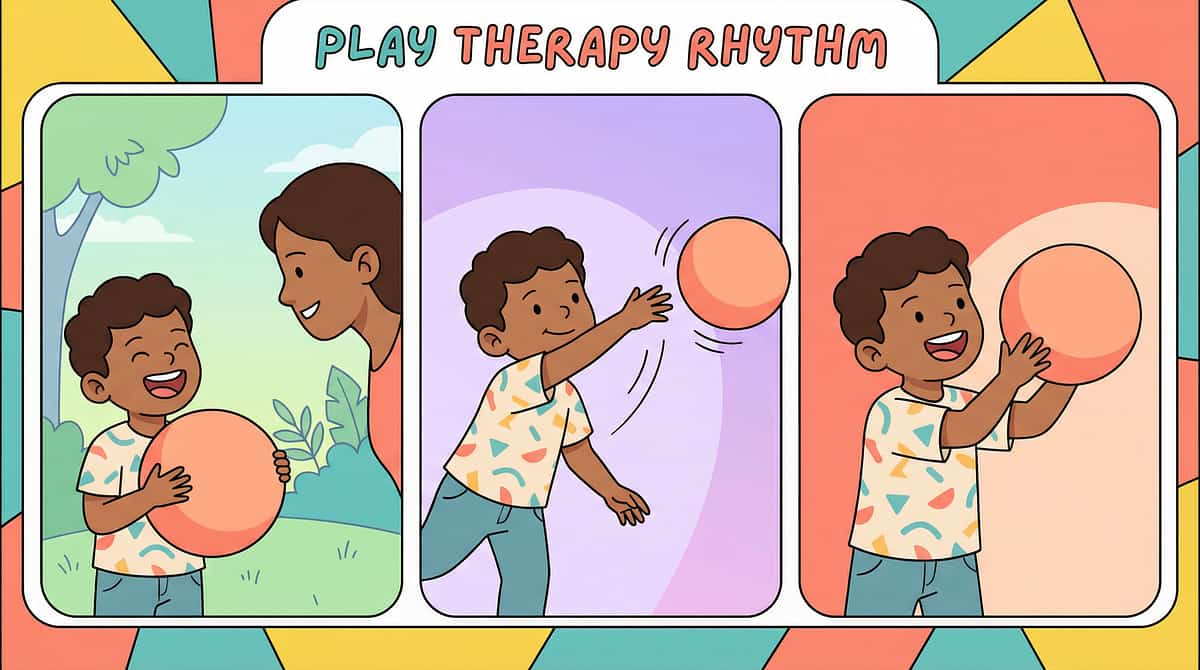
Option C — Pass-It-Along
Ball rolling: adult → Child A → back to adult → Child B. Gradually remove adult from sequence. Target: 3 consecutive exchanges without adult prompt.
Option D — Commenting Prompts
Adult models commenting on Child B's work. Hand commenting card to Child A. Celebrate any verbalisation directed at peer. Target: 1 unprompted comment per session.
🟢 Ideal Response
Child initiates interaction with peer spontaneously
🟡 Acceptable Response
Child responds to peer when prompted by adult
🔴 Stop & Note
Child distressed, refuses, or becomes aggressive — stop session and record antecedent
PMC10955541 — Core therapeutic action occupying 40–60% of session time shows optimal outcomes
ACT III — EXECUTION · STEP 4 OF 6
Repeat and Vary: 3 Good Repetitions Are Worth More Than 10 Forced Ones
Repetition Guidance
Target: 3–5 meaningful interaction moments per session — not counting total minutes or number of exchanges. A "meaningful moment" = any voluntary bridge across the parallel divide.
Satiation Indicators — When the Child Has Had Enough
Increased self-stimulatory behaviour
Moving away from the shared space
Reduced responsiveness to prompts
Vocal protests or physical resistance
Rule: When you see satiation signs → immediately move to cool-down (Step 6). Do not push through.
Weekly Variation Schedule
Weeks 1–2
Scarcity + commenting prompts
Weeks 3–4
Connection construction + pass-it-along
Weeks 5–6
Role play props + cooperative game
Weeks 7–8
Shared goal visuals + reinforcement fading

ACT III — EXECUTION · STEP 5 OF 6
Reinforce and Celebrate: Timing Matters More Than Magnitude
⚡The Golden Rule: Deliver reinforcement within 3 seconds of the interactive behaviour. This is non-negotiable for neural pathway strengthening.
For Commenting
"You TOLD [name] you liked it! That was amazing talking!"
For Sharing
"You shared the block with [name]! That was so kind!"
For Requesting
"You asked [name] for help! That was such great talking!"
For Any Bridge
"You played WITH [name]! Did you see that?"
Reinforcement Menu
Social praise (always first): Enthusiastic, immediate, specific
Token economy: Reward Jar (₹589) — sticker/token for each interaction attempt
Preferred activity: 2 minutes of favourite solo activity after 3 interaction attempts
Natural consequence: The shared building worked → celebrate the creation together
Token Economy Setup
Chart columns: "Commenting" | "Sharing" | "Playing Together"
5 tokens → preferred reward. Fade the token system over 6–8 weeks as natural social motivation develops.
Celebrate the ATTEMPT, not just the success. An interrupted comment attempt still gets praise.
ABA reinforcement principles — immediate, specific reinforcement increases behaviour occurrence. BACB ethical guidelines for reinforcement. Consortium Lead: BCBA/ABA
📞9100 181 181 | FREE Helpline — Ask how to build your child's reinforcement menu
ACT III — EXECUTION · STEP 6 OF 6
The Cool-Down: No Session Ends Abruptly
The bridge back to baseline is as important as the bridge across. Abrupt endings create anxiety about future sessions. A predictable, warm close builds safety and willingness to return.
Warning (2 minutes before end)
"Two more turns, then we're all done building together."
Countdown
"One more. Last one. All done! Great job!"
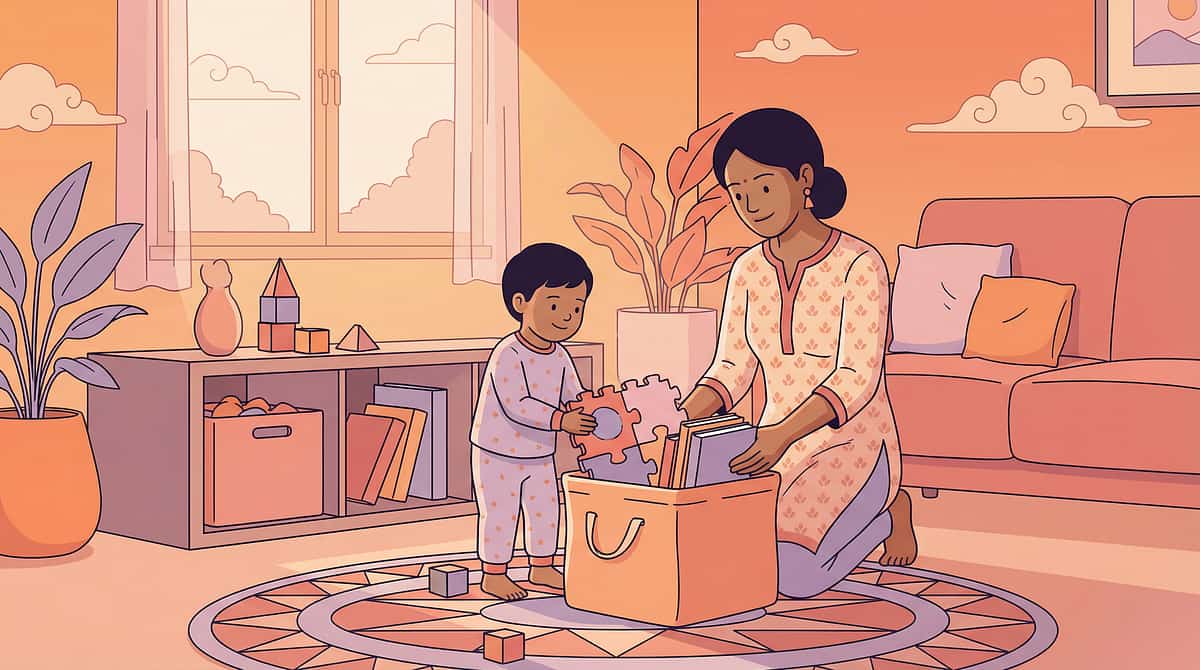
Put-Away Ritual
Both children place materials back in shared container together — a final collaborative act
Celebration Summary
"You both played together today! That was amazing." Then cue next familiar preferred activity.
Post-Session Regulation: Allow 5–10 minutes of preferred solo sensory activity after session. Peer interaction is cognitively expensive. Recovery time is therapeutic. | If child resists ending: "We'll do it again [tomorrow/this week]. Same table, same blocks."
NCAEP (2020): Visual supports for transitions are evidence-based practice for autism. Use a sand timer or visual countdown — children see time remaining, not a surprise ending.
ACT III — DATA CAPTURE
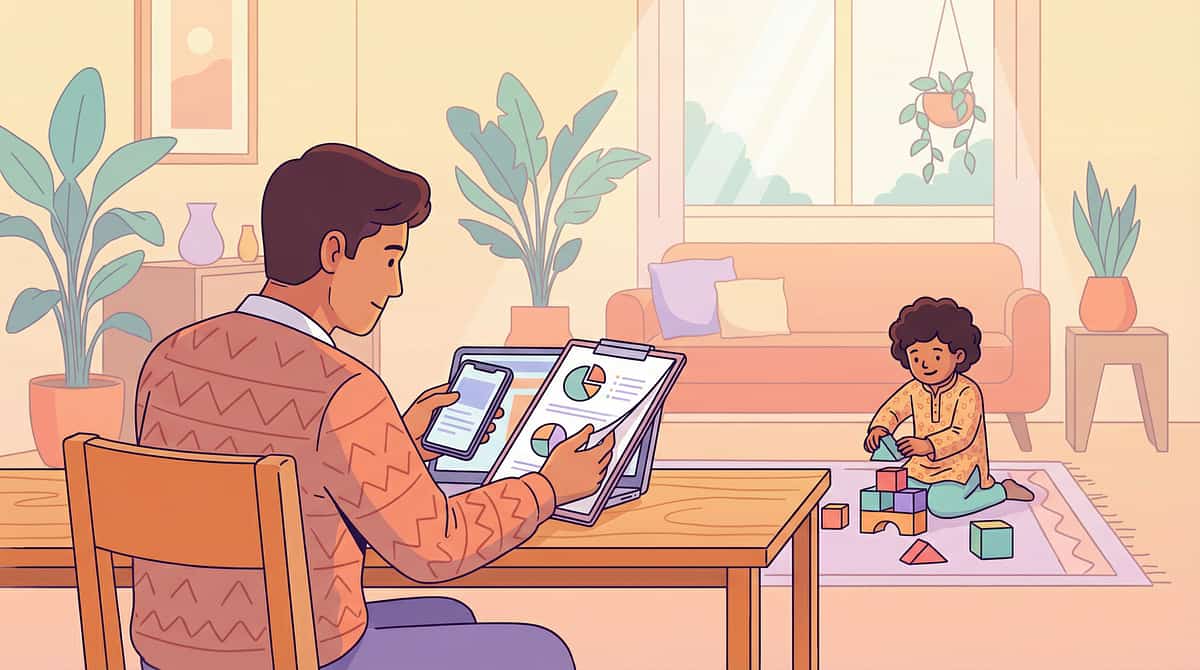
60 Seconds of Data Now Saves Hours of Guessing Later
3-Field Session Tracker
Session Date: ___________
Material Used: ___________
Interaction Moments: ☐ 1 ☐ 2 ☐ 3 ☐ 4 ☐ 5
(Circle how many voluntary bridges today)
Best Moment: ___________________________
Challenges: _____________________________
Next Session Adjustment: _________________
You are not a caregiver — you are a co-therapist with a 24×7 window we don't have.
3 Core Data Points to Capture
Voluntary Interaction Moments
Child-initiated bridge attempts — the most important metric
Type of Interaction
Comment / share / request / physical connection
Prompt Level Needed
Independent / verbal prompt / physical prompt
Tracking Options
📊 GPT-OS® AbilityScore® App — Social Participation Index tracker
📋 Download PDF: techniques.pinnacleblooms.org/c-303/tracker
📝 Paper log (above format — print or handwrite)
📞9100 181 181 — Ask how to connect your home data to GPT-OS® | Research: BACB Guidelines + Cooper, Heron & Heward (Applied Behavior Analysis, 8th ed.)

ACT III — TROUBLESHOOTING
Session Abandonment Is Not Failure — It's Data.
Every difficult session tells you something important about your child's current capacity. Here are the seven most common challenges and exactly what to do about each one.
"Child refused to sit near the peer at all"
Reduce proximity. Start 1 metre apart, same activity, no interaction expectation. Proximity tolerance itself is Stage 1 progress.
"Both children played parallel — no interaction"
That's the baseline, not a failure. Note it as data. Introduce scarcity element next session. Increase material bridging.
"Child took peer's materials and peer got upset"
This is attempted interaction (maladaptive form). Prompt replacement: "Ask with words." Celebrate the attempt to engage, redirect the method.
"Child used commenting card but peer didn't respond"
Peer non-response is not failure. Adult can voice peer's response: "Your friend is saying yes with their eyes!" Lower interaction bar to one-sided commenting.
"Child became distressed when tracks were connected"
Child may have rigidity around "their" section. Start with additive rather than merger-based materials. Return to scarcity approach first.
"Sibling/peer disrupted the session"
Have a parallel adult work with peer simultaneously. Reduce session demands for both children.
"No progress after 4 weeks"
Review material selection (is the child motivated by these?). Review timing (green-light conditions met?). Consider professional consultation.
⚠️Emergency Protocol: If child becomes severely distressed → Stop immediately. Note exact antecedent, behaviour, and what calmed the child. Share with therapist. Do NOT continue.
ACT III — PERSONALISE
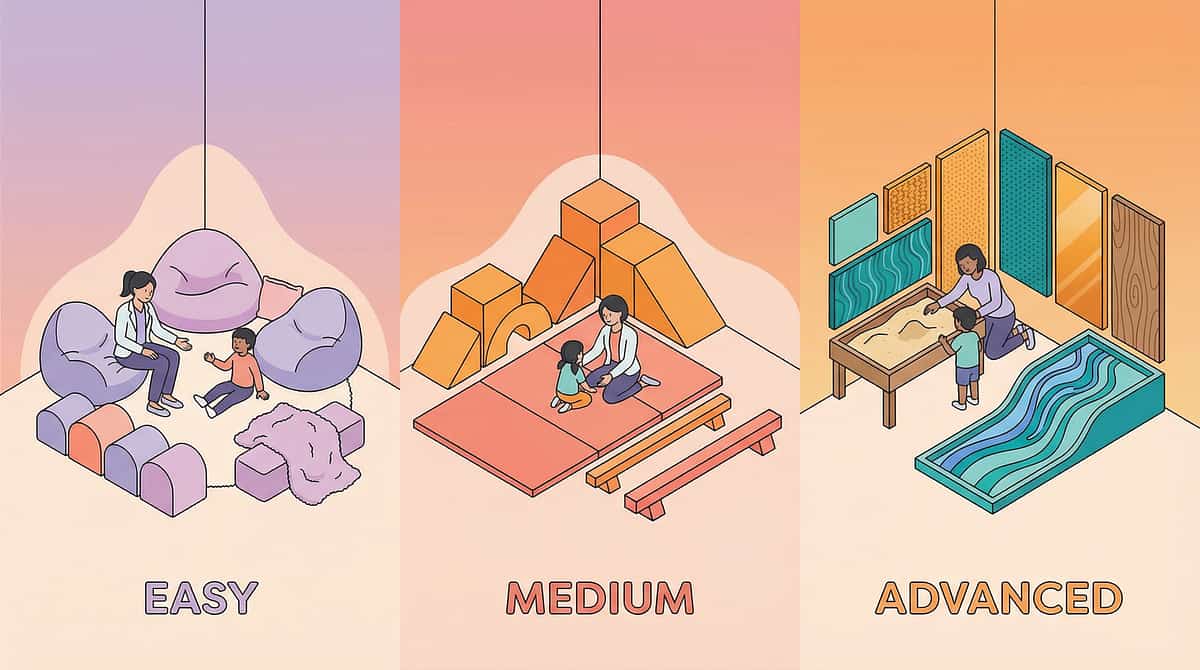
No Two Children Are Identical. Adjust the Technique to Fit Your Child.
🌿 Sensory Sensitive
Use quieter, tactile materials (playdough, fabric, sand). Reduce visual clutter. Shorter sessions (8–10 min). Larger physical space between children. Progress slowly on proximity before verbal bridging.
🗣️ Language-Limited
Focus on gesture-based bridging first — pointing, showing, offering. Pass-it-along activities work brilliantly. Don't require verbal commenting before non-verbal exchange is established.
🔁 Routine-Dependent
Create a predictable session ritual (same sequence every time). Use visual schedule for session. Introduce material changes one at a time. Capitalise on special interests.
⬆️ Higher-Demand
Move directly to cooperative game progressions and role play. Focus on sustaining and expanding interaction rather than initiating it. Target 5+ minute cooperative episodes.
Age Modifications
Ages 3–4
Proximity + scarcity + pass-it-along (physical, non-verbal focus)
Ages 5–6
Add commenting prompts + role play + shared goal visuals
Ages 7–8
Full cooperative games + structured dramatic play + leadership roles
CT IV — PROGRESS ARC · WEEKS 1–2
Progress at This Stage Looks Invisible. It Isn't.
What You Will See (Weeks 1–2)
Child tolerates peer proximity for full session duration
Child glances at peer's creation at least once
Child uses material from shared container without protest
Session can be completed without meltdown
What Is NOT Progress Yet
❌ Voluntary commenting is not expected yet
❌ Spontaneous sharing is not expected yet
❌ Cooperative building is not expected yet
Key Calibration
"If your child tolerates the shared material container without grabbing everything — that's real progress. If they glanced at what the peer was building — that's joint attention beginning. These are the neural pathways forming."
Parent Milestone
You may notice you're less anxious about "making it work" — that's also progress. Your calm regulates the session. Your nervous system is part of the therapeutic environment.
PMC11506176 — Sensory integration and play intervention outcomes emerge across 8–12 week timelines; early indicators focus on tolerance and participation rather than skill mastery.

ACT IV — PROGRESS ARC · WEEKS 3–4
Consolidation Signs: The Neural Pathways Are Strengthening
1
Approaches Shared Container
Without prompting — independent material access now established
2
Spontaneous Glancing
Looks at peer's work 2–3 times per session without adult direction
3
Peer Response
Responds to peer's vocalisation — even if just with a look or pause
4
Commenting Card Use
Uses commenting card with 1–2 word verbal output with adult prompt
5
First Connection
First track/creation connection happens — even if adult-facilitated, this counts
"When you see the child anticipate the pass-it-along exchange — reaching before the peer offers — the rhythm is internalising. This is synaptic strengthening in real time."
When to Increase Demand: If child has achieved all Week 3–4 indicators consistently for 3+ sessions → introduce the next material tier (role play / cooperative games). Don't rush — consistency matters more than speed.
Neuroplasticity evidence: synaptic strengthening through repeated structured input follows predictable timelines in paediatric populations | PMC11506176

ACT IV — PROGRESS ARC · WEEKS 5–8
Mastery Indicators: Together Is Becoming Natural
✅ Mastery Indicators
Makes 2–3 spontaneous, unprompted comments per session
Initiates sharing or requesting without adult prompt
Sustains 2–3 minute cooperative play episode
Accepts assigned role and maintains it across activity
Shows awareness if peer leaves the activity
Mastery threshold: 3 unprompted peer interaction moments per session across 3 consecutive sessions = mastery of associative play foundation.
Generalisation Targets
At Week 5–8, begin testing skills in new contexts. Generalisation = the neurological transfer of learning beyond the training context.
New Peer
Same materials, different peer
New Materials
Same peer, different materials
New Setting
Playground, birthday party, new environment
Next Level
Introduce cooperative game progressions with rule-based interaction and shared victory/defeat experiences — the foundation for true teamwork.

ACT IV — CELEBRATE
Every Bridge Built Is a Victory Worth Celebrating.
🌱 First Glance at Peer's Work
"You noticed! That's the beginning of together." Date this in your journal.
🌿 First Shared Container Use
"You shared the space — that's brave!" A physical act of proximity trust.
🌳 First Verbal Comment to Peer
Document this. Date it. Frame it if you have to. This is the language of connection beginning.
🏆 First Track/Structure Connection
"You built something TOGETHER!" A physical representation of social bridging.
🎆 First Spontaneous Cooperative Episode
This is the milestone. Call your therapist. Share with the community. This is what you came for.
"You are doing therapeutic work every day that most people cannot sustain. Celebrate your own consistency. Your child's progress is built on your showing up." — Pinnacle Blooms Consortium
📸The Photo Journal Prompt: Take a photo of each milestone session. In 6 months, you'll have a visual record of a journey that felt invisible while you were in it. | 📞9100 181 181 — Share your milestone. Our team wants to hear it.

ACT IV — RED FLAGS
These Signals Mean It's Time to Escalate — Not Give Up.
Red flags mean more support is needed, not that the child cannot progress. Every child on this pathway can achieve some level of interactive play with appropriate clinical support.
🔴 No Peer Proximity Tolerance
Child actively avoids or becomes distressed near any peer — not just resistance, but persistent fear response
🔴 Regression
Child was achieving interactive play and has lost that ability — a change worth investigating clinically
🔴 Aggression Toward Peers
Any hitting, biting, or destructive behaviour during play sessions — immediate professional consultation required
🔴 No Progress After 10–12 Weeks
Consistent intervention with these materials showing no measurable change across tracked data
🔴 Persistent Distress
Not just occasional resistance but persistent fear/panic response at every session
🔴 Complete Absence Across ALL Contexts
No interaction at home, school, therapy, or structured play — across every environment
Referral Pathway
Contact FREE Helpline: 9100 181 181 — describe what you're observing
Request AbilityScore® baseline assessment
Ask about FusionModule™ multi-disciplinary intensive support
Consider OT sensory processing evaluation — may be maintaining parallel-only pattern
ACT IV — PATHWAY MAP
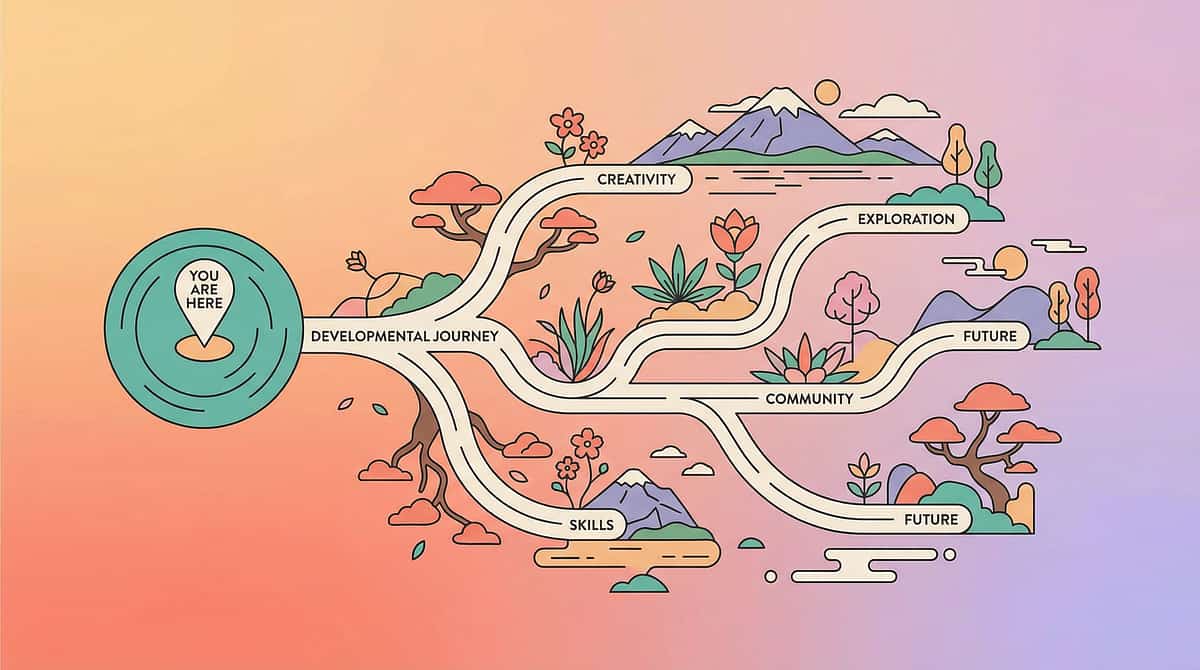
You Are Here. Here Is the Full Journey.
C-303 sits at a pivotal junction in the Play Development cluster — the child has already crossed from solitary play into proximity. The next steps build on that foundation.
← Previous Technique
C-302: Plays Alone Only
techniques.pinnacleblooms.org/play-development/plays-alone-only-c-302
Related Parent Guides
→ Next Technique
C-304: No Imaginative Play
techniques.pinnacleblooms.org/play-development/no-imaginative-play-c-304
K-940
Supporting Play Development at Home
K-955
Facilitating Peer Play Dates
K-881
Parents After Diagnosis
K-903
Therapy Carryover at Home
ACT IV — RELATED TECHNIQUES
The Play Development Family — Techniques That Work Together
Code | Challenge | Technique | |
C-301 | Child shows no awareness of other children | No Peer Interest | |
C-302 | Child refuses proximity to peers entirely | Plays Alone Only | |
C-303 | Child plays alongside but never with peers | Parallel Play Only ← You Are Here | |
C-304 | Child can't engage in pretend or symbolic play | No Imaginative Play | |
C-305 | Child insists on exact same play script every time | Rigid Play Patterns | |
C-310 | Child can't wait or share in structured games | Turn-Taking Difficulty | |
B-Series | Child has play skills but not the words to connect | Social Communication |
Sensory Foundation Note: Many children stuck at parallel play have underlying sensory processing differences that make peer interaction overwhelming. If you haven't explored A-Domain (Sensory Processing) techniques, these may be the foundation your child needs first. → techniques.pinnacleblooms.org/sensory-processing
ACT IV — THE FULL MAP
Parallel Play Is One Node in a 70,000-Technique Map
techniques.pinnacleblooms.org hosts 70,000+ intervention technique pages across 12 developmental domains. C-303 sits within Domain C — Emotional Regulation & Social Development, Subdomain: Social Play Progression.
A: Sensory Processing
B: Social Communication & Pragmatic Language
C: Emotional Regulation & Social Development
D: Autism & Behavioural Foundations
E–F: Motor & Cognitive Development
G–L: Language, ADL, Academic, Executive, Family, Transition
"Every one of these 70,000+ techniques is governed by the same clinical architecture — the same evidence standards, the same Consortium voice, the same goal: transforming any home into a 24×7 personalised, multi-sensory, multi-disciplinary therapeutic environment." — GPT-OS® Vision, Pinnacle Blooms Network®
📞9100 181 181 | pinnacleblooms.org | techniques.pinnacleblooms.org

ACT V — COMMUNITY · PARENT STORY
From the Pinnacle Parent Community
"For two years, my son and his cousin would sit at the same table with the same lego — two separate universes. We tried everything. Then we tried one simple change: one shared lego box instead of two separate ones. Within two weeks, he was asking his cousin for pieces. By week four, they were building the same tower. The first time I heard him say 'look what WE made' — I had to leave the room. I cried in the hallway for five minutes."
— Parent of a 6-year-old, Pinnacle Network, Chennai(Anonymised. Illustrative case. Individual outcomes vary.)
Clinical Note
This parent used Material #1 (Shared-Supply Scarcity) exclusively for the first three weeks before introducing Material #2. Starting with the single most accessible material — rather than all 9 simultaneously — is the approach our OTs recommend for most families.
Outcome Tracking
This child's Social Participation Index moved from Stage 1 (parallel play only) to Stage 3 (associative play with loose coordination) over 8 weeks. Tracked via GPT-OS® AbilityScore® platform.
This is the journey C-303 is built for.
📲 Share your milestone: tag @pinnacleblooms | #FromNearToWith | 📞9100 181 181 — Join the Pinnacle Parent Network
ACT V — COMMUNITY
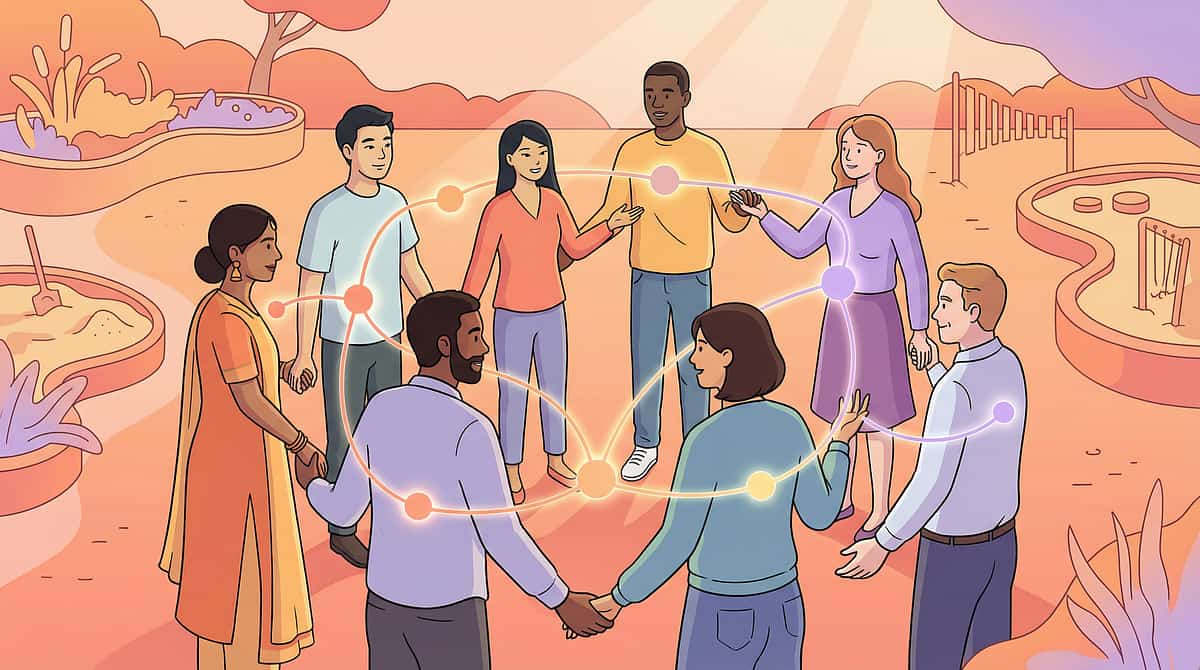
You Are Not Navigating This Alone. 70+ Countries. One Community.
Pinnacle Parent App
Log sessions, track milestones, connect with parents on the same journey — right from your phone
GPT-OS® Parent Forum
Technique-specific discussion threads — this page: C-303 Parallel Play thread with parents navigating the exact same challenge
Parent Training Modules
EverydayTherapyProgramme™ home delivery — learn the same techniques our therapists use
Peer Parent Matching
Connected with parents of children at the same developmental stage — because shared experience matters
21M+
Therapy Sessions
In the Pinnacle clinical database
97%+
Measured Improvement
Across tracked families in the programme
70+
Countries
Parents in 70+ countries using Pinnacle techniques
The Caregiver Consistency Principle: WHO CCD Package — Multi-caregiver training is critical for intervention generalisation. When both parents, grandparents, and teachers execute the same techniques, progress accelerates by an estimated 3× compared to single-caregiver delivery. (PMC9978394)
📞9100 181 181 | pinnacleblooms.org | FREE National Autism Helpline
ACT V — PROFESSIONAL SUPPORT
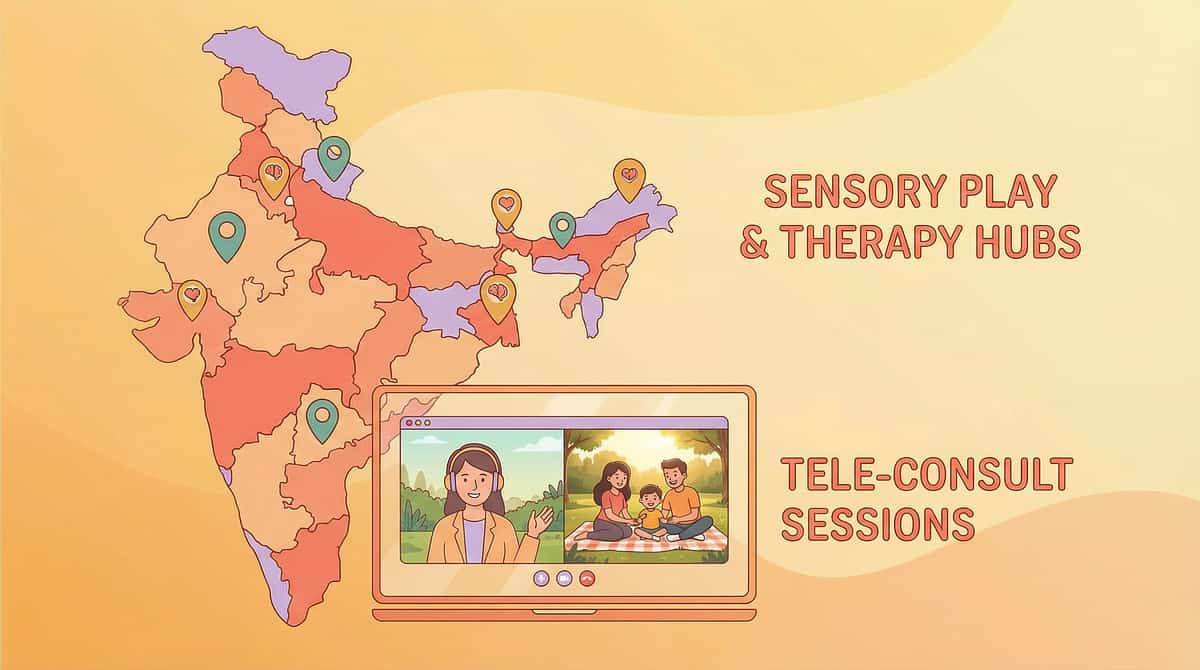
Professional Support When You Need It — 70+ Centres Across India
What a Pinnacle Centre Provides for C-303
🧪 AbilityScore® baseline assessment — establishes your child's current Social Participation Index
🎮 OT-led play therapy sessions using the full 9-material protocol
📋 ABA reinforcement programming for interaction behaviours
🗣️ SLP-led commenting and narration skill building
📈 GPT-OS® governed progress tracking with fortnightly reports
👨👩👧 Parent training — you learn the same techniques our therapists use
Find Your Centre
Use our centre locator to find your nearest Pinnacle Blooms Network location across India.
🌐pinnacleblooms.org/find-a-centre
Teleconsultation Available
Not near a centre? Book a teleconsultation with a Pinnacle Consortium specialist from anywhere.
🌐pinnacleblooms.org/teleconsult
FREE Helpline
📞9100 181 181
Available 24×7 | 18+ Languages | FREE
Available 24×7 | 18+ Languages | FREE
Ask about: assessment booking | nearest centre | home programme guidance | AbilityScore® enquiry
ACT V — RESEARCH LIBRARY
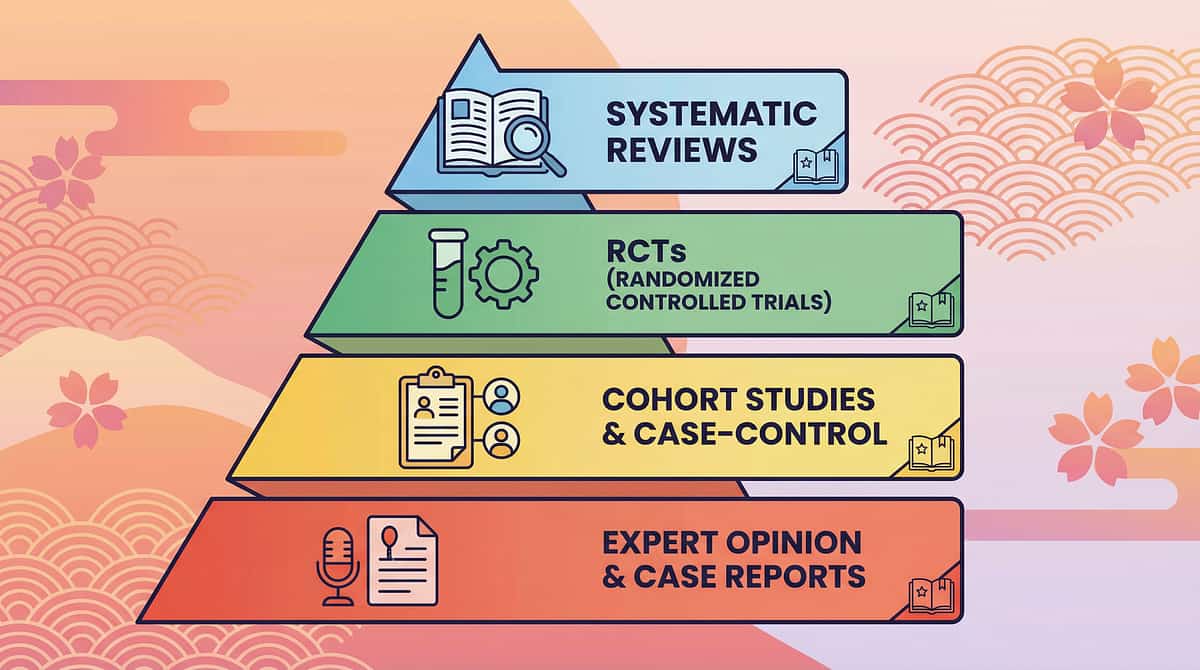
The Science Behind C-303 — Deeper Reading for the Curious Parent
PMC11506176 (Children, 2024)
PRISMA review of 16 studies: structured play interventions meet criteria as evidence-based practice for ASD
PMC10955541 (World J Clin Cases, 2024)
Meta-analysis: structured play material interventions promote social skills, adaptive behaviour, and peer interaction
Kasari et al., J Child Psych (2006)
Joint attention and symbolic play interventions in autism show significant social gains — foundational research for play progression protocols
PMC9978394 (WHO CCD Package, 2023)
Home-based caregiver interventions effective across 54 low- and middle-income countries — validates the home delivery model
Padmanabha et al., Indian J Pediatr (2019)
Home-based interventions for Indian paediatric populations show significant outcomes — DOI: 10.1007/s12098-018-2747-4
Additional Reading: Wolfberg, P. (2009). Play and imagination in children with autism. Teachers College Press. | Parten, M.B. (1932). Social participation among preschool children. | NCAEP Evidence-Based Practices Report (2020) — ncaep.fpg.unc.edu | Evidence grading follows OCEBM levels. C-303 protocol = Level II evidence.
ACT V — TECHNOLOGY
Powered by GPT-OS® — Your Data Makes Every Child's Journey Better
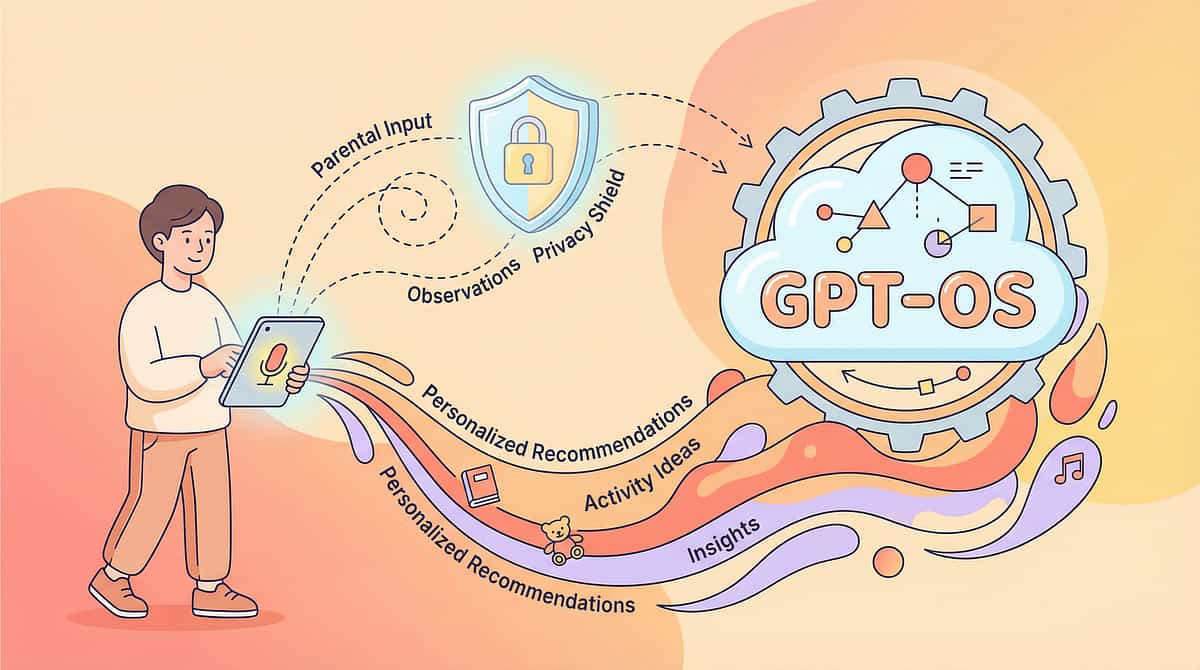
GPT-OS® Architecture
Your Home Session Data → Social Participation Index, Play Interaction Sub-Index
AbilityScore® Calculation → 0–1000 universal developmental scale
TherapeuticAI® Analysis → Pattern recognition across 20M+ session database
Personalised Recommendations → Next technique, intensity, frequency adjustments
Clinical Review → Always under licensed human authority
Your Updated Programme → Delivered to you in real time
What GPT-OS® Learns From C-303 Data
Which of the 9 materials produces the fastest progression for children with similar sensory profiles, age bands, and baseline Social Participation Index scores — informing recommendations for every family using this technique globally.
Privacy Assurance
All data is de-identified, encrypted, and protected under India's data protection regulations and Pinnacle's ISO/IEC 27001 information security management system.
GPT-OS® Core Stack
AbilityScore® | TherapeuticAI® | FusionModule™ | EverydayTherapyProgramme™ | Prognosis Engine | Closed-Loop Therapeutic Control
CIN: U74999TG2016PTC113063 | DPIIT: DIPP8651 | MSME | GSTIN: 36AAGCB9722P1Z2
📞9100 181 181 — Research: 21 RCTs, 1,050+ participants (2024 meta-analysis) — technology-assisted therapy delivery and tracking shows strong promise in ASD care
ACT V — WATCH THE REEL
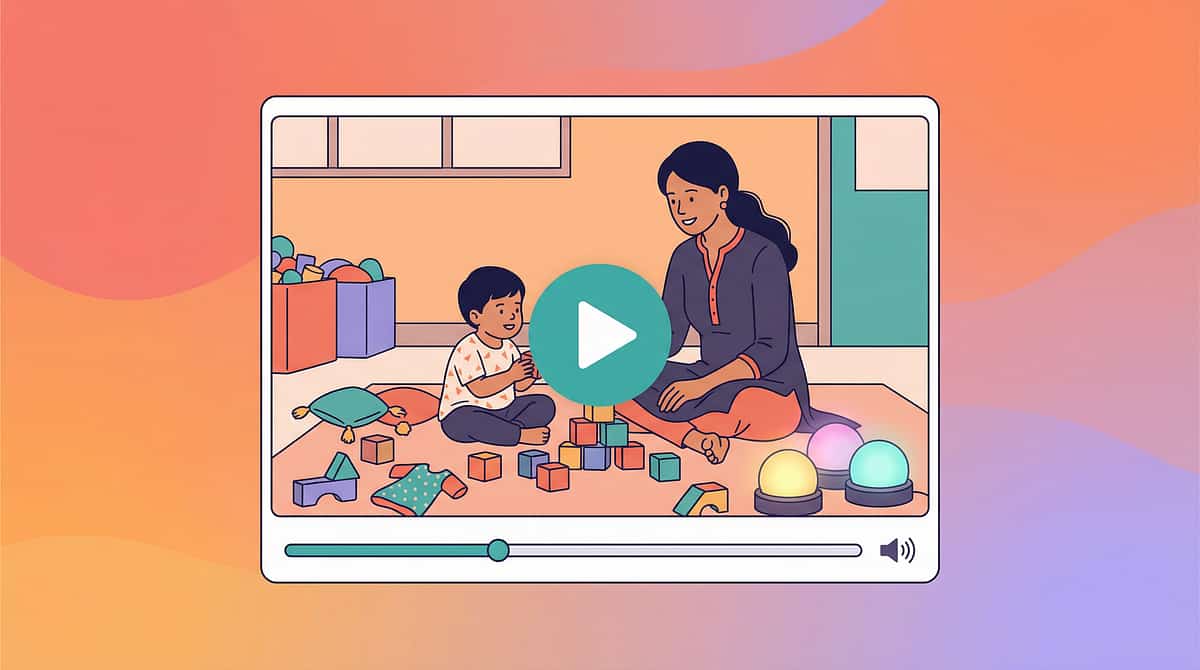
Watch the Reel That Started This Journey
Reel C-303 — Series Metadata
Title: 9 Materials That Help With Parallel Play Only
Series: Play Development Solutions Series — Episode 303
Domain: Play Development | Social Play Progression
Duration: 75–85 seconds
Available on: @pinnacleblooms Instagram / YouTube / Pinnacle App
What the Reel Covers
Same Table. Same Blocks. Different Worlds. → 9 Materials → From Near to With → GPT-OS® → FREE Helpline
Reel Series Connection
This is Episode 303 of the Play Development Solutions Series. Episode 304 covers "No Imaginative Play" — coming next.
Therapist Introduction
This reel was created by the Pinnacle Blooms Consortium — Paediatric OT, SLP, BCBA, SpEd, and NeuroDev specialists working together. The 9 materials shown were selected from Pinnacle's 128 Canon Therapeutic Material System based on evidence grade, home accessibility, and clinical effectiveness data from 20M+ therapy sessions.
NCAEP (2020): Video modeling is classified as an evidence-based practice for autism. Multi-modal learning (visual + text + demonstration) improves parent skill acquisition significantly.
ACT V — SHARE
Consistency Across Caregivers Multiplies Impact by 3×
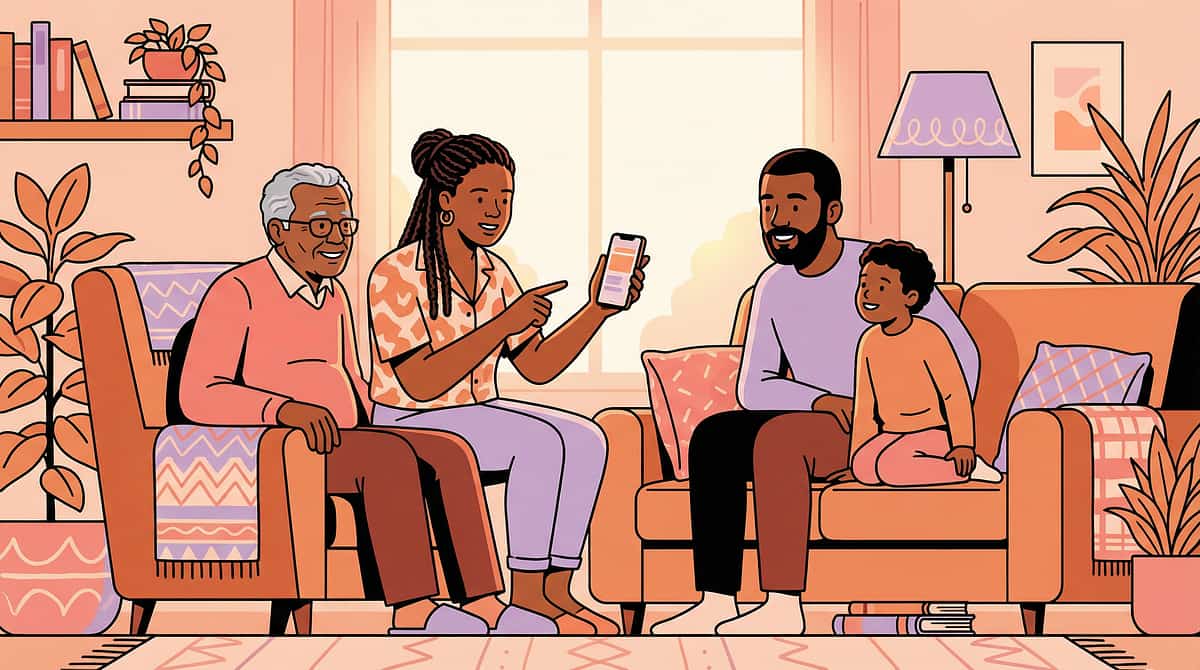
WHO CCD Package: Multi-caregiver training is the single highest-leverage intervention in paediatric development. When both parents, both grandparents, and the school teacher all understand the same approach — the child receives consistent scaffolding across every environment. (PMC9978394)
📲 WhatsApp
"Share C-303 Guide with Family" — pre-formatted message with link to this page
📧 Email
"Send to Grandparents / School Teacher" — one-click email template, plain language version
🔗 Copy Link
techniques.pinnacleblooms.org/play-development/parallel-play-only-c-303
Explain to Grandparents (Simplified)
"Instead of giving [child] separate toys, give both children ONE container to share. Wait for them to ask each other for pieces. When they do — celebrate it loudly. That's the entire intervention."
School Teacher Template
"We're working on a play development programme at home — C-303 Parallel Play Progression. Key strategies: shared materials at centre of table, commenting prompt cards, connection construction activities. Brief implementation details attached."
📄Download 1-Page Family Guide — "How to Help [Child] Move From Side-by-Side to Together" — simple language, 3 key actions, the helpline number. Designed for grandparents and teachers who may not read a 40-card guide.
📞9100 181 181 | 24×7 | FREE

ACT VI — CLOSE · FAQ
Every Question You Have After Reading This Guide
"My child is 7 — is it too late for this to work?"
Not at all. Play progression can be developed at any age during childhood. Older children (6–10) often progress faster once they understand the social rules — they have more cognitive capacity to apply the learning. The 9 materials work across the 3–10 age range.
"Do both children need to have autism or developmental delays?"
No. Many families use a neurotypical sibling as the play partner — this is actually very effective. The technique works wherever a child is stuck at parallel play, regardless of diagnosis.
"How many sessions per week is minimum?"
Research suggests 2–3 sessions per week for 8–12 weeks for measurable outcomes. 2 consistent sessions per week is far better than 7 inconsistent ones. Parent sustainability matters.
"Our child has language delays — can they still do this without words?"
Yes — start with non-verbal materials: pass-it-along (ball rolling), connection construction (tracks joining), cause-effect partner toys. Physical interaction can precede verbal interaction. Call 9100 181 181 for SLP guidance.
"The sibling is getting frustrated and won't participate — what do we do?"
Have both children working toward individual rewards that require cooperation to achieve. Brief the sibling: "Your brother is learning a new skill — your job is to build your track near his." Keep sibling sessions short (10–12 minutes max).
"We tried commenting cards but our child just mimics without understanding — is that ok?"
Echolalic commenting is a legitimate starting point. The peer still receives the social bid. Over time, echolalia in social contexts typically becomes more flexible. Celebrate the scripted comment as the first step. Discuss with SLP.
"When do we know it's time to move to C-304?"
When your child is consistently making 2+ spontaneous comments per session AND initiating at least one material exchange per session, across 3 consecutive weeks — move to C-304.
"What if we can't afford a Pinnacle centre assessment?"
The FREE National Autism Helpline (9100 181 181) provides guidance at no cost. The DIY versions of 5 of the 9 materials cost ₹0. Start where you are. Cost is never a barrier to beginning.

ACT VI — START NOW
The Invisible Wall Between Your Children Can Be Broken.
Start Today. Start Small. Start With One Shared Container.
"The bridge from 'near' to 'with' is built one interaction at a time. The first step is a shared container and two children. You already have both."
🟠 Start This Technique Today
GPT-OS® EverydayTherapyProgramme™ Session Launcher — your personalised 8-week C-303 programme, guided daily
pinnacleblooms.org/start-c-303
🔵 Book a Free Consultation
Pinnacle Centre Booking or Teleconsultation — FREE AbilityScore® assessment discussion with a Consortium specialist
pinnacleblooms.org/book | 📞9100 181 181
⬜ Explore Next: C-304
No Imaginative Play — the next step on the play development journey
techniques.pinnacleblooms.org/play-development/no-imaginative-play-c-304
✅ OT • SLP • ABA/BCBA
Validated by Pinnacle Blooms Consortium
20M+ Sessions
97%+ measured improvement across tracked families
70+ Centres
Across India | SpEd • NeuroDevelopmental Paediatrics
📞9100 181 181 — FREE | 24×7 | 18+ Languages
Preview of 9 materials that help with parallel play only Therapy Material
Below is a visual preview of 9 materials that help with parallel play only therapy material. The pages shown help educators, therapists, and caregivers understand the structure and content of the resource before use. Materials should be used under appropriate professional guidance.


Link copied!
ACT VI — THE PINNACLE PROMISE
"From fear to mastery. One technique at a time."
Every technique published at techniques.pinnacleblooms.org carries the same commitment — to every child, every family, every caregiver.
✅ Drafted by the Pinnacle Blooms Consortium (CRO, SLP, OT, BCBA/ABA, SpEd, NeuroDev)
✅ Grounded in peer-reviewed evidence (PRISMA-standard sourcing)
✅ Aligned with WHO/UNICEF developmental frameworks
✅ Validated against 20M+ real therapy session data via GPT-OS®
✅ Accessible to every family — including zero-cost DIY versions for all 9 materials
✅ Designed to be executed at home, right now, without clinic access
Medical Disclaimer: This content is educational and does not replace assessment by a licensed developmental specialist, occupational therapist, psychologist, or paediatrician. Parallel play is developmentally appropriate for children ages 2–3 — concern arises when it persists as the exclusive mode beyond expected age. Individual results vary based on child profile, intervention consistency, and co-occurring factors. If you are concerned about your child's development, please consult a qualified professional. 📞 9100 181 181 (FREE).
© 2025 Pinnacle Blooms Network®, a unit of Bharath Healthcare Laboratories Pvt. Ltd. | CIN: U74999TG2016PTC113063 | DPIIT: DIPP8651 | MSME Registered | GSTIN: 36AAGCB9722P1Z2 | All rights reserved.
← C-302: Plays Alone Only | ↑ Browse All Techniques | C-304: No Imaginative Play →
📞9100 181 181 | 🌐 pinnacleblooms.org | 💻 techniques.pinnacleblooms.org | Generated by GPT-OS® Content Engine | C-303 | Cluster: PLAY-SOC-03 | Next: C-304 | Previous: C-302