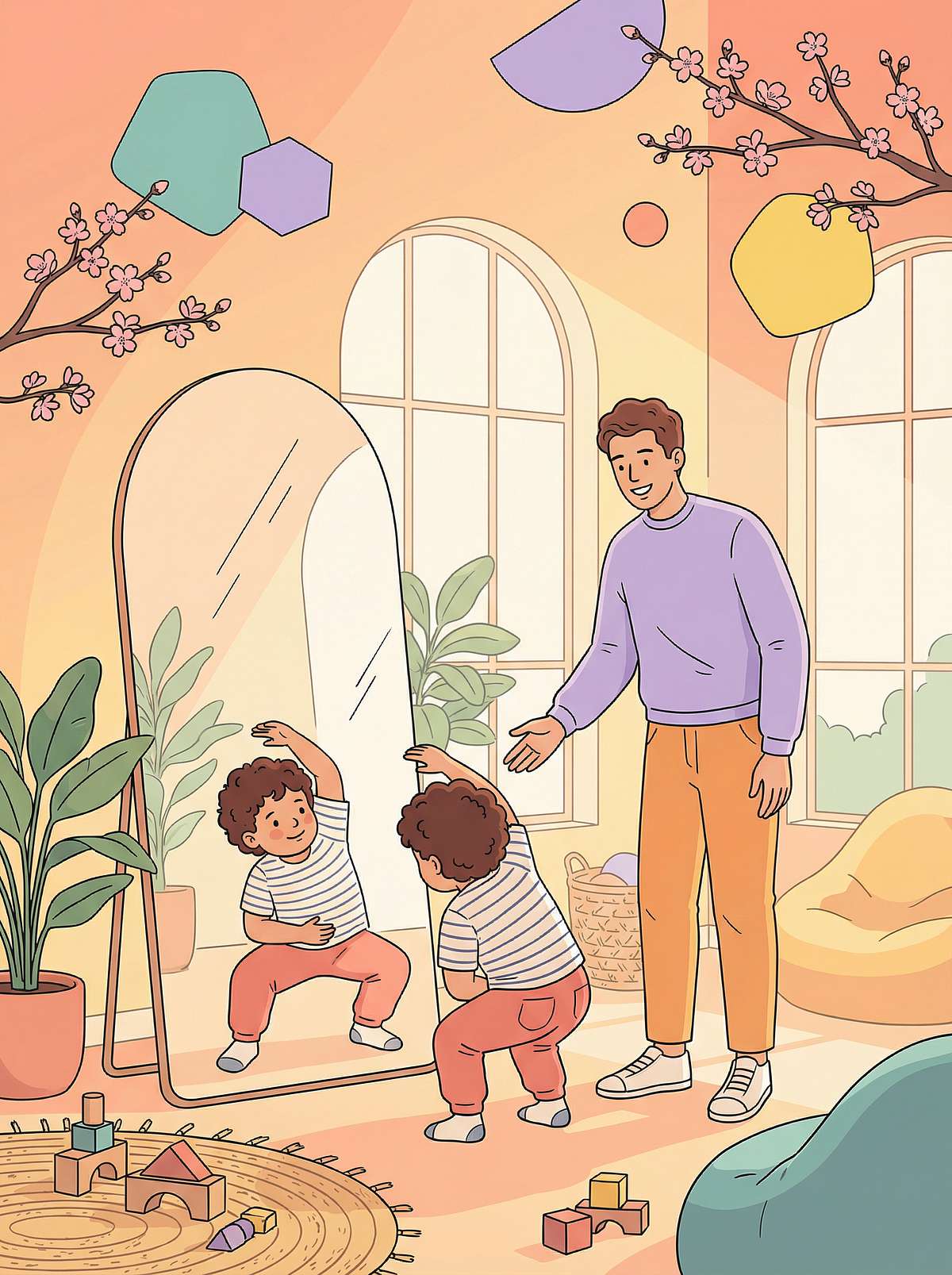
"My child watches. They just don't copy."
Dance class last Tuesday. The teacher raises her arms — every child follows. Except yours. You smile and gesture, hoping they'll start. They look at you, then at the other kids, then back at the teacher. The movement just doesn't transfer from eye to body.
9 Materials That Help With Movement Imitation — When the see-to-do connection needs to be built, not assumed.
"You are not failing. Your child's motor learning system is working differently — and there is a precise, evidence-based path to build what isn't developing automatically."
Pinnacle Blooms Consortium®
OT Lead
ABA Lead
NeuroDev Pediatrics
Age: 18mo–10yr
You Are Among Millions of Families Navigating This Exact Challenge
1 in 36
Children with Autism in India
CDC/Indian prevalence data
68–89%
ASD + Motor Imitation Deficits
Peer-reviewed motor imitation literature
4.4M+
Families in India Affected
WHO UNICEF country data 2023
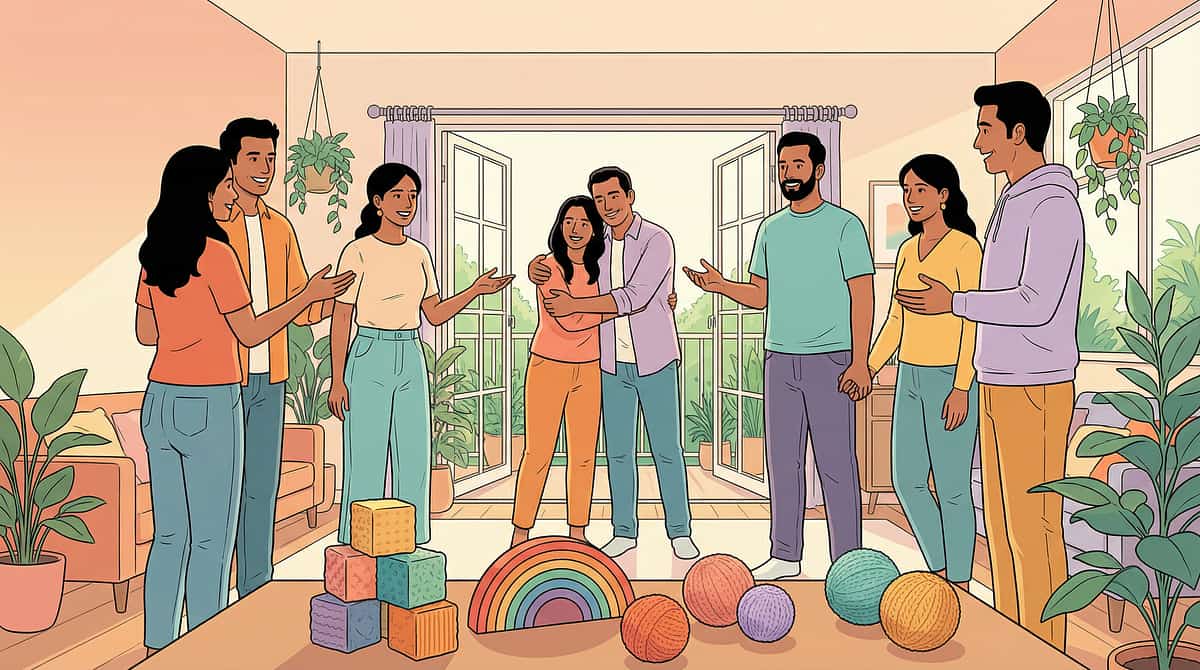
Motor imitation difficulty is not rare, not a parenting failure, and not untreatable. It is one of the most researched challenges in pediatric developmental science. The fact that your child watches but cannot copy is a known neurological pattern with a known intervention pathway. In India alone, millions of children are navigating this exact disconnection between seeing and doing.
"The child who cannot imitate is not a child who cannot learn. They are a child who needs to be taught the very skill that makes learning easier." — Pinnacle Clinical Team
References: PMC11506176 | PMC10955541 | DOI: 10.12998/wjcc.v12.i7.1260
The Neuroscience of "I See It But Can't Do It"
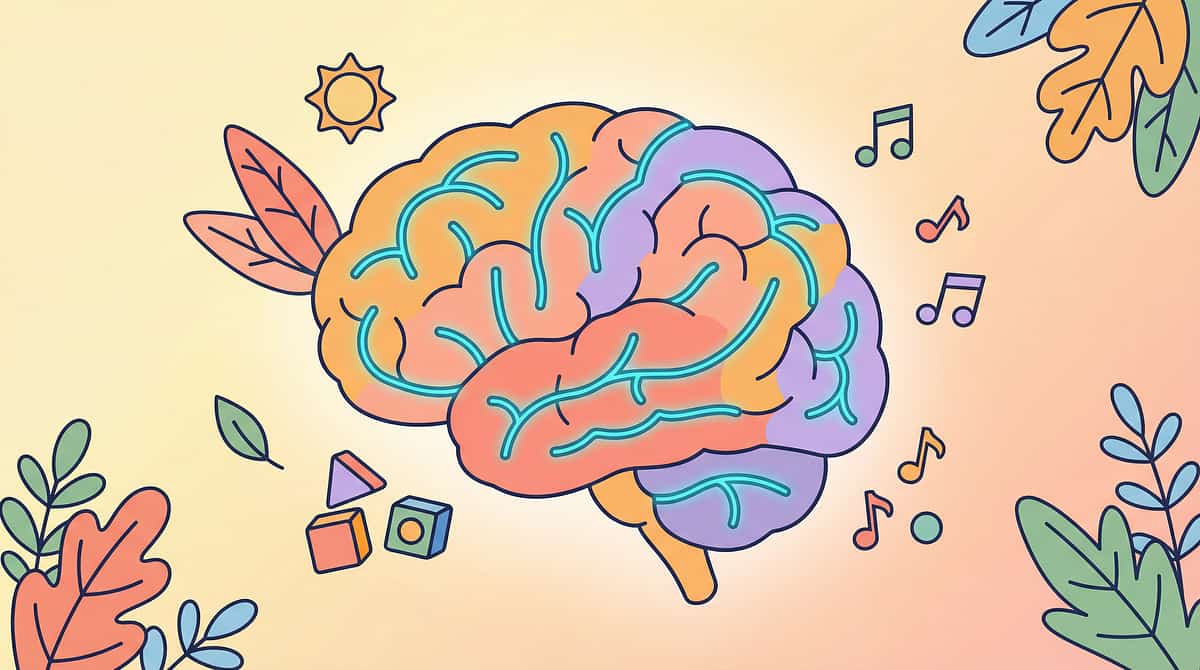
The Motor Imitation Circuit
Visual Cortex — perceives the movement
Superior Temporal Sulcus (STS) — processes biological motion
Mirror Neuron System (MNS) — activates to internally simulate the seen action
Premotor & Motor Cortex — converts simulation into movement plan
Cerebellum — coordinates timing and execution
Proprioceptive Feedback Loop — tells the brain where the body is
What This Means for Your Child
When you wave at your child, their eyes see the wave. That signal travels to a system in the brain — sometimes called mirror neurons — that normally fires both when you DO something and when you WATCH someone else do it.
In many children with autism or motor planning differences, this internal "simulation" step is quieter or less automatic. The body doesn't receive a clear signal: "this is what you need to do with YOUR arm." This is a wiring difference, not a defiance choice.
The materials on this page work by providing external scaffolding for each step that isn't working automatically — mirrors for feedback, body awareness tools for the body map, video for a slowed-down, repeatable signal.
"Mirror neurons are not broken — they may simply need more structured input to fire reliably. This is what intervention does: it provides that structure until the circuit strengthens." — NeuroDev Pediatrics, Pinnacle Consortium
References: DOI: 10.3389/fnint.2020.556660 | Iacoboni & Dapretto, Nature Reviews Neuroscience (2006)
The Motor Imitation Developmental Ladder
8–12 mo
Object Imitation — Copies actions with objects
10–14 mo
Simple Imitation — Waves, claps, blows kisses
12–18 mo
Gestural Imitation — Arms up, jumping, spin
18–24 mo
Gross Motor Imitation — Finger movements
18–30 mo
Fine Motor Imitation — Multi-step sequences
24+ mo
Sequential & Deferred Imitation — Copies actions seen earlier
⬆ YOUR CHILD'S WORK ZONE: Movement Imitation / Gross Motor → Sequence Imitation
Motor imitation doesn't arrive as one skill — it builds in layers. Object imitation (copying what someone does WITH a toy) typically comes first because the object gives the child something external to focus on. Body imitation requires the child to have a mental map of their own body — to know that their arm corresponds to the arm they see moving. Every child with a motor imitation challenge has a rung they're standing on right now. These 9 materials create the ladder for the next step up.
Dyspraxia / Apraxia
Proprioceptive Processing Differences
Sensory Processing Disorder
Developmental Coordination Disorder
References: PMC9978394 | WHO/UNICEF CCD Package (2023)
Clinically Validated. Home-Applicable. Parent-Proven.
Evidence Grade
EVIDENCE GRADE: I Systematic Review + Multiple RCTs Level: STRONG
NCAEP 2020
AOTA Endorsed
WHO/UNICEF Aligned
Key Evidence Summary
Video Modeling — NCAEP 2020
Tier 1 Evidence-Based Practice for autism. Directly supports motor imitation outcomes.
Sensory Integration Meta-Analysis 2024
24 studies: measurable improvement in gross/fine motor skills and proprioceptive body awareness. PMC10955541
India RCT — Padmanabha et al., 2019
Home-based motor protocols with parent-administered sessions show significant developmental outcomes. DOI: 10.1007/s12098-018-2747-4
"This technique family is supported by the strongest level of pediatric evidence available. It is recommended by AOTA, classified as evidence-based practice by NCAEP, and consistent with WHO/UNICEF developmental frameworks."
References: PMC11506176 | PMC10955541 | PMC9978394 | WHO NCF 2018 | NCAEP 2020
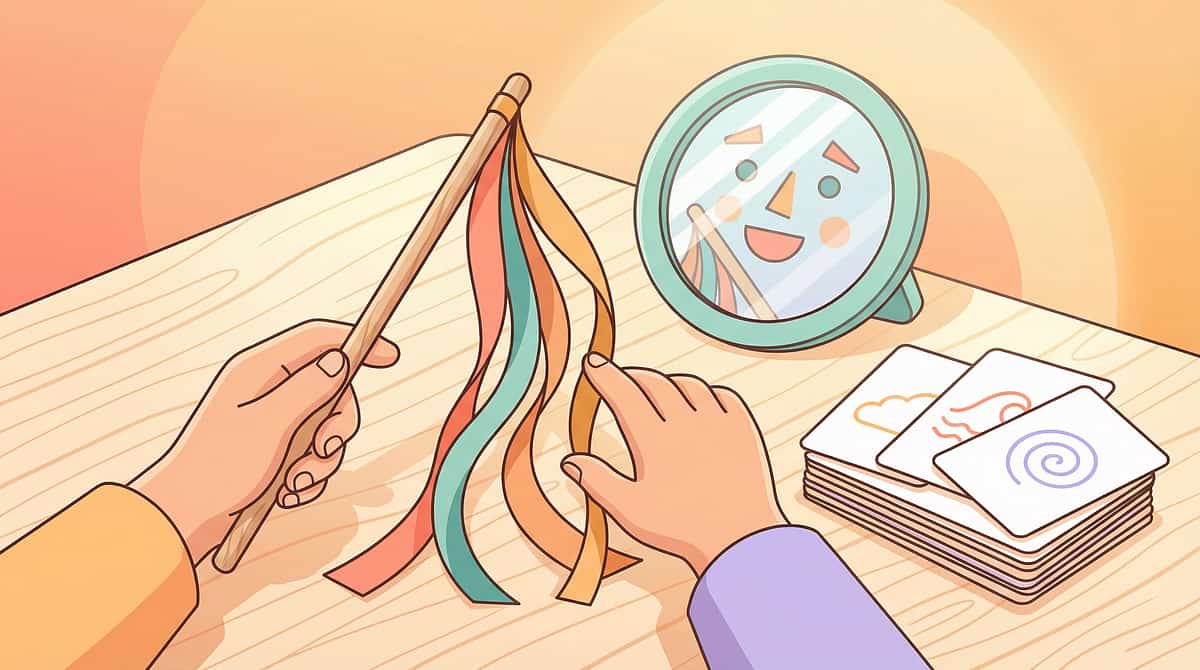
Act II: Knowledge Transfer
Domain F — Motor Skills
Code: F-575
Motor Imitation Training Through Multi-Sensory Material Scaffolding
Parent Alias: "Building the Copy-Movement Skill"
DEFINITION: Motor imitation is the ability to observe another person's body movement and reproduce that movement with one's own body. This page introduces 9 categories of therapy materials that each address a different component of the motor imitation process — from body awareness and visual feedback to proprioceptive grounding and structured practice.
Unlike a single therapy technique, this is a material ecosystem — each tool targets a specific breakdown point in the imitation circuit. Parents select the materials most relevant to their child's specific imitation challenge, then embed them into daily routines through the EverydayTherapyProgramme™.
Visual Feedback Tools
Body Awareness Toys
Proprioceptive Equipment
Visual Sequence Cards
Reinforcement Menus
Action Games
Age: 18 months – 10 years
Session: 10–20 min
Frequency: Daily
Episode: 575 of 999
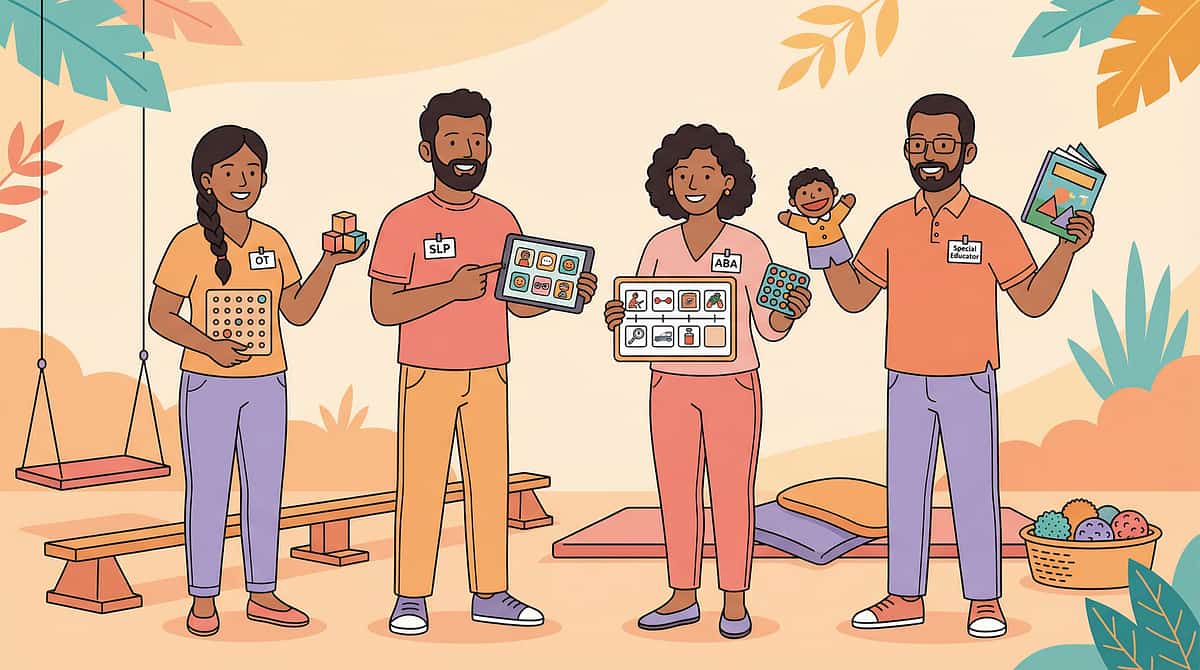
A Multi-Disciplinary Consortium Technique
🟢 Occupational Therapist (OT Lead)
Assesses proprioception, body schema, praxis, and sensory processing. Designs sensory-motor scaffolding. Selects weighted and compression tools. Leads mirror work.
🔵 ABA / BCBA Therapist (Lead)
Structures imitation training programs, discrete trial teaching, prompt hierarchy and fading, and reinforcement scheduling for each imitation trial.
🟣 Speech-Language Pathologist
Addresses gestural and oral imitation when verbal imitation is also affected. Builds communication gesture and social imitation contexts. Apraxia of speech connections.
🟠 Special Educator
Embeds imitation practice into classroom routines, group activities, and curriculum-based motor learning tasks. Social imitation contexts.
⚕️ NeuroDev Pediatrician
Differential diagnosis for apraxia, DCD, and ASD. Medical clearance. Praxis assessment referral pathway. Clinical oversight of intervention design.
"This technique crosses therapy boundaries because the brain doesn't organize by therapy type. A child's motor imitation circuit involves sensory processing (OT), behavioral learning (ABA), communication gesture (SLP), and classroom execution (SpEd) — simultaneously." — Pinnacle FusionModule™ Clinical Philosophy
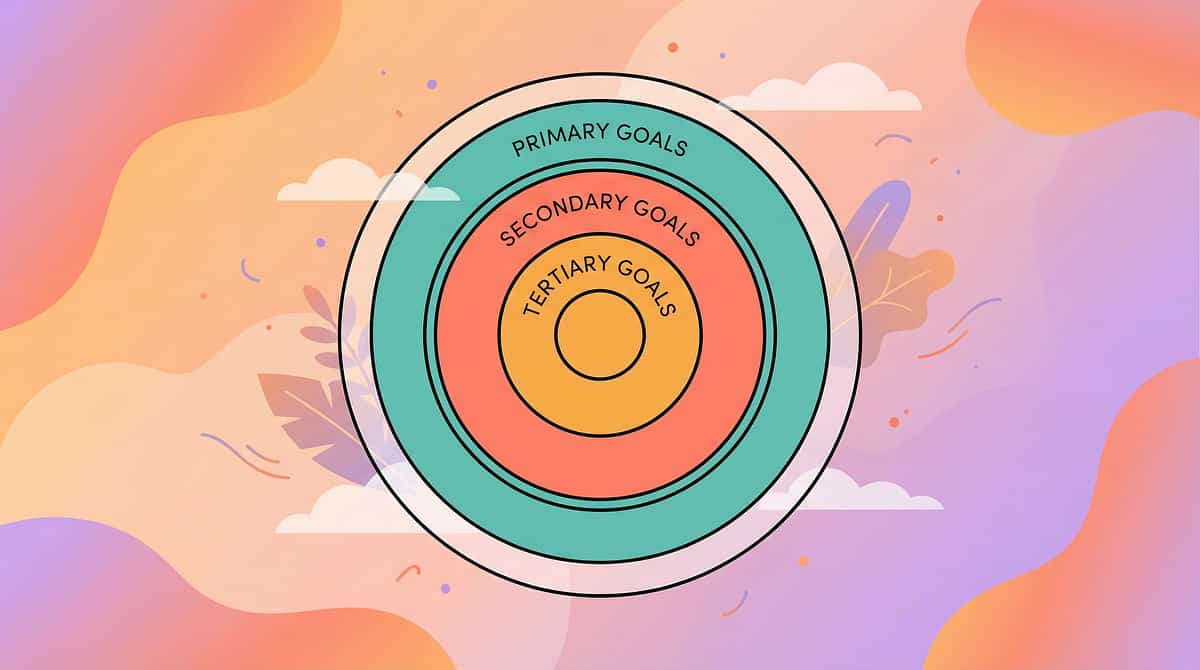
Precision Targets — This Is Not a Random Activity
Primary Observable Behaviors
- Child attempts to copy adult's arm/body movement without physical guidance
- Child self-corrects movement using mirror
- Child anticipates movements in familiar action songs
Secondary Indicators
- Child can name and point to own body parts
- Child tolerates/seeks proprioceptive input
- Child tracks moving objects/bodies visually
- Child sustains attention for 30+ second demonstrations
Tertiary Developmental Gains
- Child participates in Simon Says
- Child can follow PE/dance class
- Child learns self-care by watching (brushing teeth, dressing)
- Child imitates peers on playground
References: PMC10955541 — Meta-analysis across 24 studies
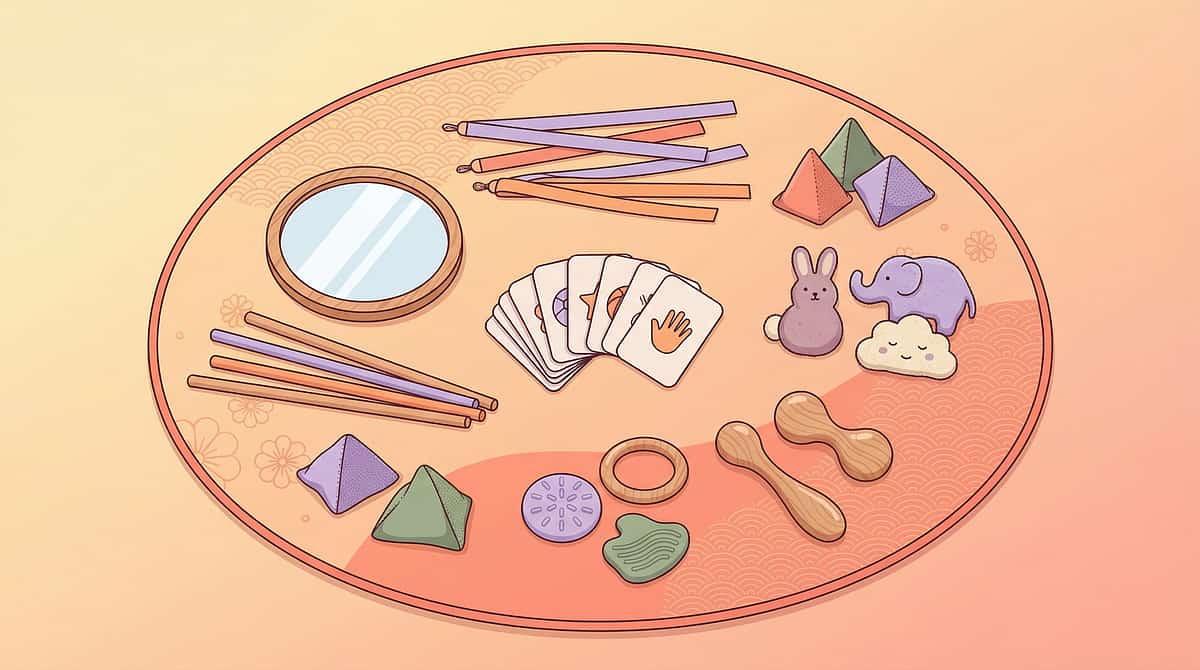
The 9 Materials — Your Home Therapy Toolkit
Each material below targets a specific breakdown point in your child's imitation circuit. Start with the materials most relevant to your child's challenge, then expand the toolkit gradually.
Full-Length Mirror
Visual Feedback Tools — Real-time body position comparison 💰 ₹800–₹3,000 | Safety glass preferred Search Amazon.in: shatterproof full-length mirror child safe
Action Cards with Photo Sequences
Visual Sequence Cards — Freeze movements in time for study 💰 ₹200–₹800 Search Amazon.in: action cards gross motor photo children
Body Puzzle / Anatomy Doll
Body Awareness Toys — Builds foundational body schema 💰 ₹300–₹1,200 Search Amazon.in: body parts puzzle children anatomy
Tablet / Screen (Video Modeling)
Visual Modeling Tools — Repeatable, pauseable demonstrations 💰 ₹0 (existing device) – ₹20,000 (new tablet) Search Amazon.in: children tablet for therapy
Ribbon Sticks / Movement Scarves
Movement Visualization Tools — Makes arm movement paths visible 💰 ₹100–₹400 Search Amazon.in: ribbon sticks dance children scarves
Action Songs / Music Player
Auditory-Motor Integration — Predictable structure cues movement timing 💰 ₹0 (streaming) – ₹500 (speaker) Search Amazon.in: bluetooth speaker children songs
Weighted Lap Pad / Compression Vest
Proprioceptive Equipment — Enhances body awareness for imitation 💰 ₹800–₹3,000 Search Amazon.in: weighted lap pad compression vest child therapy
Gross Motor Imitation Game Cards
Action Games / Structured Practice — Turns repetition into playful practice 💰 ₹200–₹600 Search Amazon.in: action game cards gross motor children
Flashlight / Laser Pointer
Visual Targeting Tools — Directs attention to specific body parts 💰 ₹100–₹500 | ⚠️ Body/limbs only — NEVER near eyes COOLCOLD Laser Pointer ₹579 — Buy on Amazon
Pinnacle Recommends®:Reinforcement Reward Jar ₹589 | 1800+ Reward Stickers ₹364 | COOLCOLD Laser Pointer ₹579
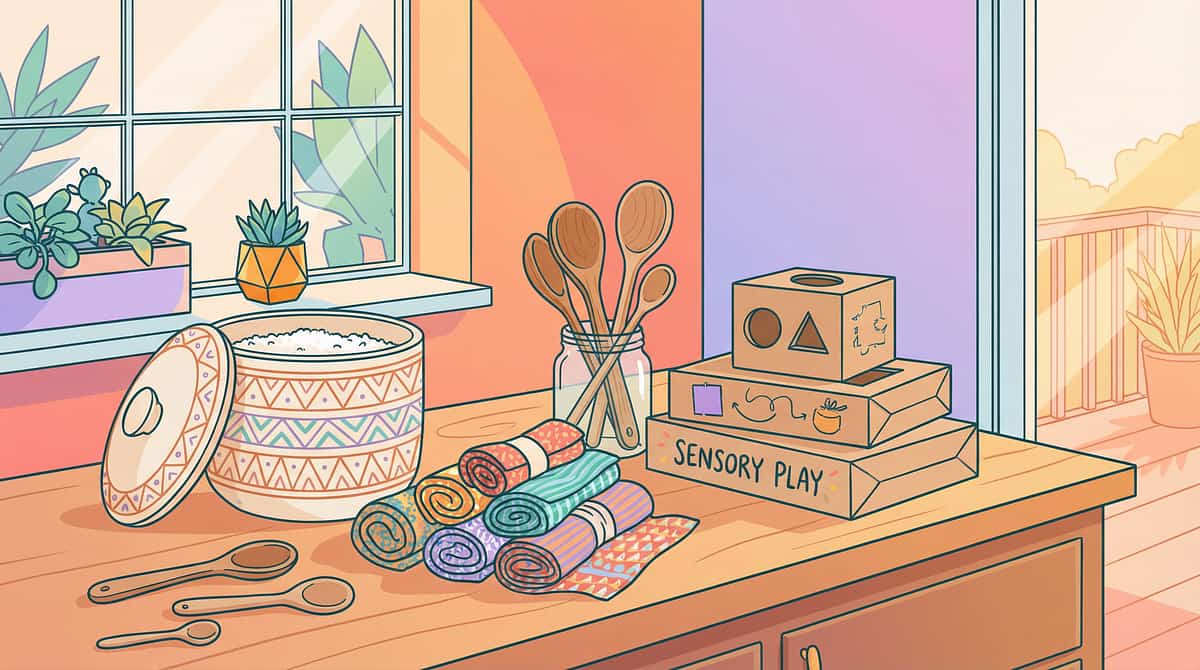
Every Child Deserves This — Regardless of Budget
Per WHO Nurturing Care Framework: effective intervention must be accessible to all families regardless of economic status. Every material below has a ₹0 household alternative that delivers the same therapeutic principle.
Material | Purchase Option | ₹0 DIY Alternative | |
Full-Length Mirror | ₹800–3,000 | Reflective mylar/foil on wall. Smartphone selfie camera in stand. Window glass in dark room. | |
Action Cards | ₹200–800 | Printed smartphone photos of family in positions. Cut from magazines. Hand-drawn stick figures. | |
Body Puzzle/Doll | ₹300–1,200 | Play dough/chalk body outline on paper. Stuffed animal + labelling game. "Point to your nose" song games. | |
Tablet | ₹5,000–20,000 | Parent demonstrates live (slower, paused). Existing smartphone propped up. | |
Ribbon Sticks | ₹100–400 | Ribbon tied to any stick/dowel. Dupatta/scarf. Streamer from birthday party. Paper strips taped to ruler. | |
Action Songs | Free | Hum or sing any familiar action song. YouTube (free). Handclap games. | |
Weighted Lap Pad | ₹800–3,000 | Sand-filled cloth pouch (consult OT for weight). Folded heavy blanket on lap. | |
Game Cards | ₹200–600 | Index cards + simple drawings. Slips of paper with action written on them. | |
Flashlight | ₹100–500 | Smartphone torch. Any handheld light. Avoid direct eye contact. |
When Clinical Grade is Non-Negotiable: Weighted and compression items require OT guidance for appropriate pressure and weight. Shatterproof mirror is essential for safety with young children. All others: household substitutes work equivalently.
References: PMC9978394 | WHO NCF Handbook (2022)
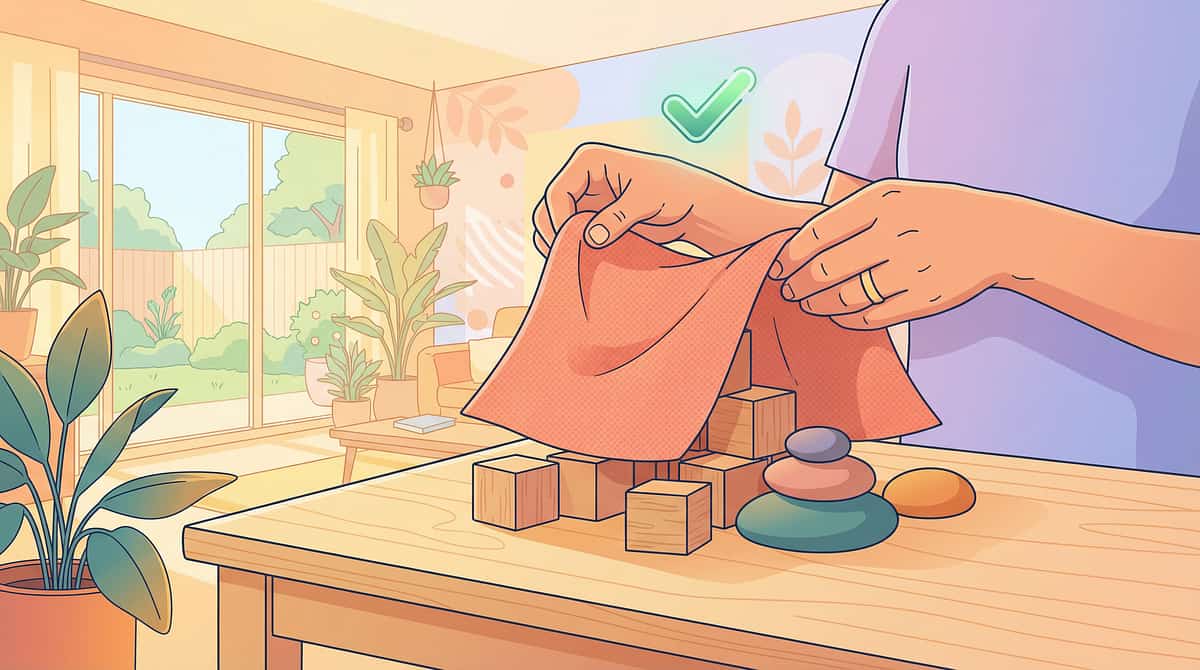
Pre-Session Safety Gate — Read Before Every Session
🔴 RED — ABSOLUTE STOP CONDITIONS
- Child has had a seizure in the last 24 hours — do not proceed without medical clearance
- Child shows signs of pain, fever, or physical illness
- Child is in full meltdown or extreme dysregulation state
- LASER/FLASHLIGHT: NEVER point toward child's eyes or face — body/limbs only
- Weighted items: do not exceed 5–10% of child's body weight without OT clearance
🟠 AMBER — MODIFY AND PROCEED
- Child is mildly dysregulated — use proprioceptive warm-up first (5 minutes of heavy work)
- Child is tired but not exhausted — shorten session to 5 minutes maximum
- New material introduced for first time — begin with 1 minute exposure only
- Mirror causes distress — face away from mirror initially, introduce gradually
- Compression vest being used for first time — 15 minutes maximum
🟢 GREEN — OPTIMAL SESSION CONDITIONS
- Child is fed, rested, calm
- Child has had 10-minute outdoor/physical activity (optimal proprioceptive priming)
- Space is clear of distractions and potential hazards
- Parent/caregiver is regulated and not rushed
- Materials are prepared and accessible before session starts
RED LINE — STOP IMMEDIATELY IF: Child shows self-injurious behavior, extreme distress, vomiting, loss of consciousness, or any behavior that concerns you significantly. These are data — record them and consult your therapist.
References: DOI: 10.1007/s12098-018-2747-4
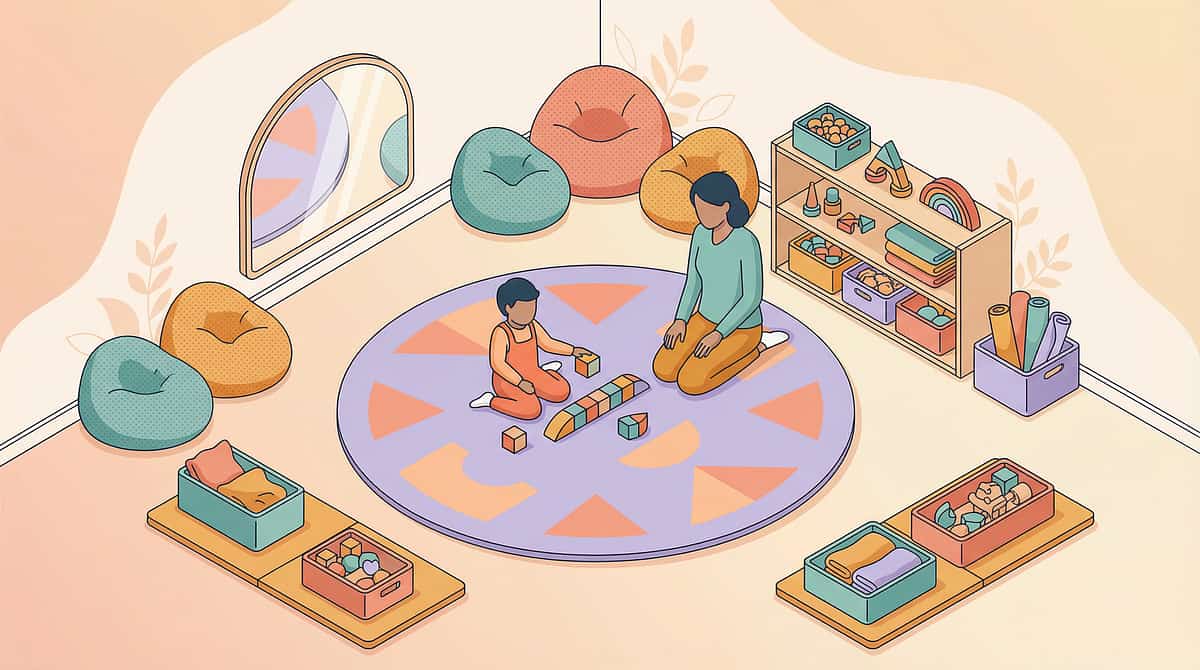
The Movement Imitation Station — Set Up in 3 Minutes
Numbered Setup Checklist
Mirror — secure against wall, child-safe, at child's height. Both adult and child fully visible.
Clear floor space — minimum 2m × 2m for movement. Remove furniture that could cause injury.
Tablet/screen — propped at child's eye level, 60–90cm distance. Pre-load target video.
Materials — organized and accessible. Don't produce all at once — one material per session.
Lighting — bright, even. No glare on mirror. Natural light preferred.
Sound — quiet background or action song playlist cued and ready. No TV/competing sounds.
Temperature — comfortable. Remove heavy clothing if using compression vest.
Reinforcement — sticker chart visible, reward item identified, within 3-second reach.
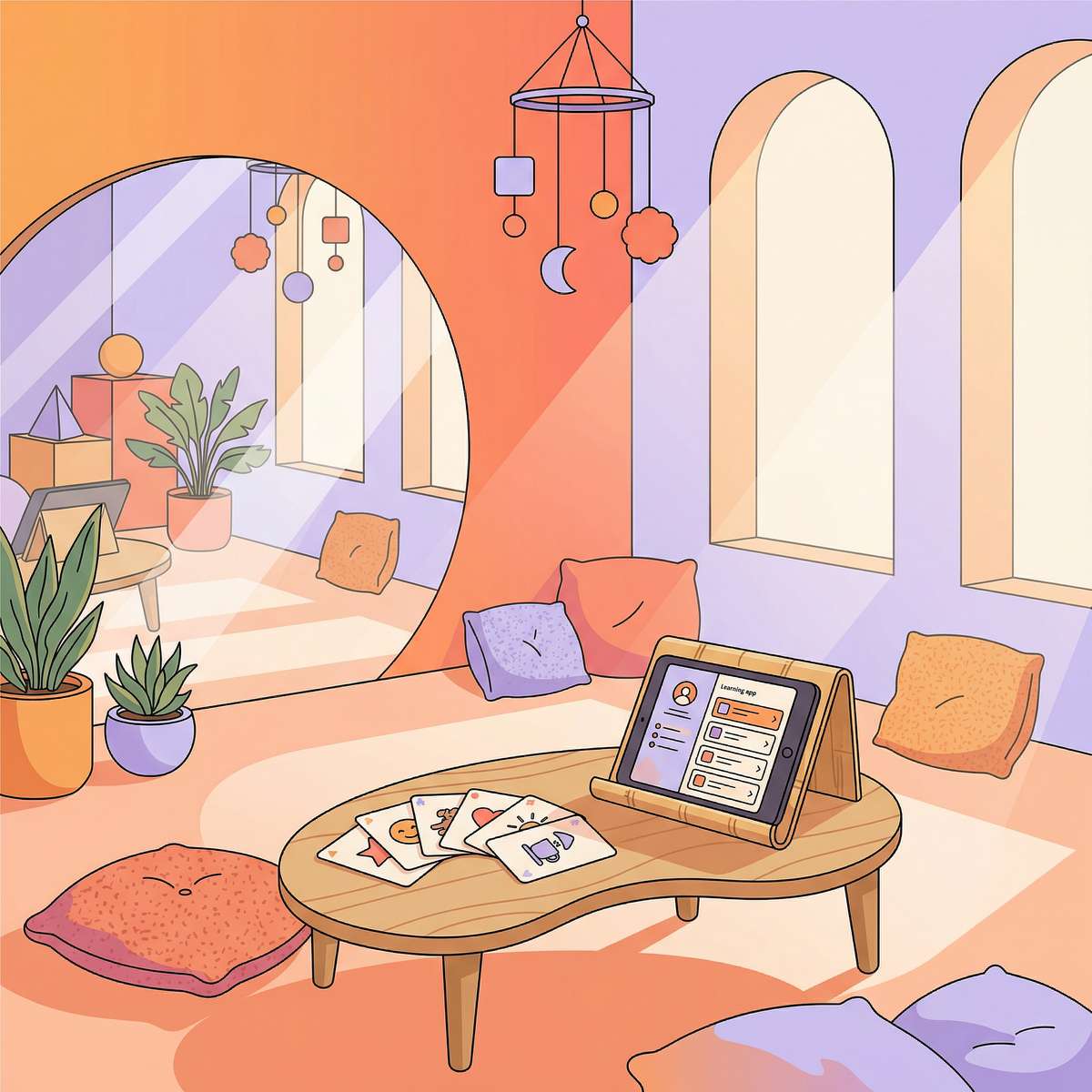
Spatial Principle: The mirror is the anchor. Everything else supports the mirror as the central visual feedback tool. Child and parent should always be side by side (not facing each other) during mirror-based practice — this eliminates mirror-reversal confusion.
Act III: Execution
60-Second Pre-Flight Check — Go / Modify / Postpone
All 7 items must be YES for a full session. Honest assessment now prevents a difficult session later.
Child is fed (not hungry, not just eaten — 30–60 minutes post-meal)
Child has slept adequately (not overtired)
Child is in a calm-to-alert state (not already escalated)
No significant triggers in the last 2 hours (no recent meltdown, no medical issue)
Child shows at least one engagement signal when you show them a preferred material
Your space is set up (mirror, materials, reinforcement ready)
You have 15–20 uninterrupted minutes
🟢 ALL 7 ✅ — GO
Full protocol
🟠 5–6 ✅ — MODIFY
Shorten to 5–7 min, use only favorite material, reduce demand
🔴 ≤4 ✅ — POSTPONE
Calm activity today. Try again in 2–4 hours or tomorrow.
"If your child is dysregulated when you begin, the session teaches dysregulation, not imitation. 5 minutes of readiness > 20 minutes of forced practice."
Step 1 of 6 ●○○○○○
Bring Your Child In — Don't Command, Invite
The Opening Script
"Hey — look what I found! Come stand with me in front of the mirror / come see this cool card / look what happens when I do this…"
For non-verbal children: Take their hand gently, walk to the mirror together, stand beside them, and begin moving YOUR body first — without any demand for them to copy yet. Let curiosity lead.
What Acceptance Looks Like (3–5 seconds)
- Child orients toward you and the material
- Child touches or points to the mirror/card/ribbon
- Child imitates even 10% of your opening movement
- Child stands or sits beside you without moving away
If Resistance — How to Modify
- Child walks away → Follow with material, don't call them back. Bring the mirror to where they are.
- Child ignores → Start with highly preferred material first (action songs, ribbon sticks)
- Child covers eyes/ears → Lower the demand immediately. Sit beside them in silence first.
Body Language: Kneel or sit to child's height. Open, relaxed posture. No sustained eye contact demand. Face the mirror with them — be BESIDE them, not IN FRONT of them. Timing: 30–60 seconds.
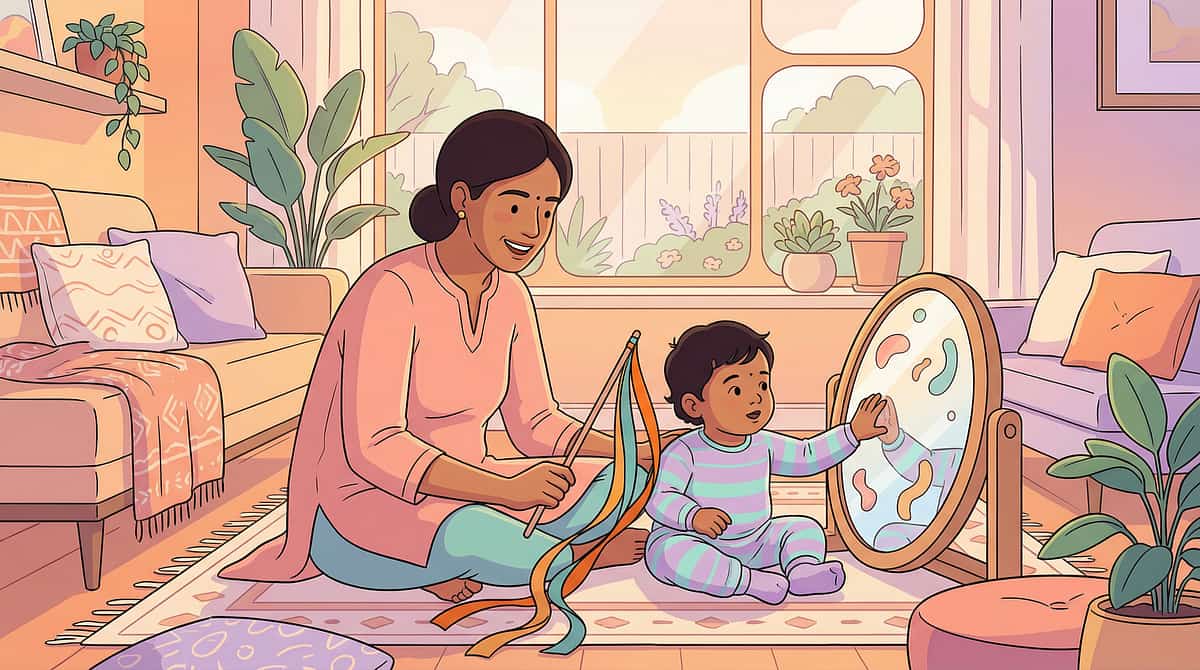
Step 2 of 6 ●●○○○○
Introduce the Material — Your Way In
Mirror Work
Stand side by side, both facing the mirror. Make a slow, simple movement — arms up. Pause and look at YOUR reflection. Say: "Look at my arms in the mirror." (No demand to copy yet.) Wait 10 seconds. Watch the child's eyes — are they looking at the mirror?
Action Cards
Show one card. Hold it at child's eye level, not higher. Say: "Look at this person — what are they doing?" (No demand to copy yet.) Point to the body part. Tap the card. Wait 10 seconds.
Ribbon Sticks
Hold YOUR ribbon stick and make a slow circle. Let the ribbon trail catch their attention. Hand them their ribbon stick — no instruction. Let them explore for 30 seconds.
Video Modeling
Start the video on a movement they can currently do. Volume at comfortable level. Watch WITH them. Point to the screen: "Look — arms up!" Don't demand imitation during first viewing.
🟢 Full Engagement
Orients to material, attempts movement, shows positive affect
🟠 Tolerance
Near material, passive observation, no distress
🔴 Avoidance
Moving away, covering, distress vocalizations — reduce demand, don't escalate
The moment any movement approximation occurs — even accidental — deliver praise immediately and specifically: "Yes! Your arms went up — just like mine!" Allow 1–3 minutes of material exploration before introducing imitation demand.
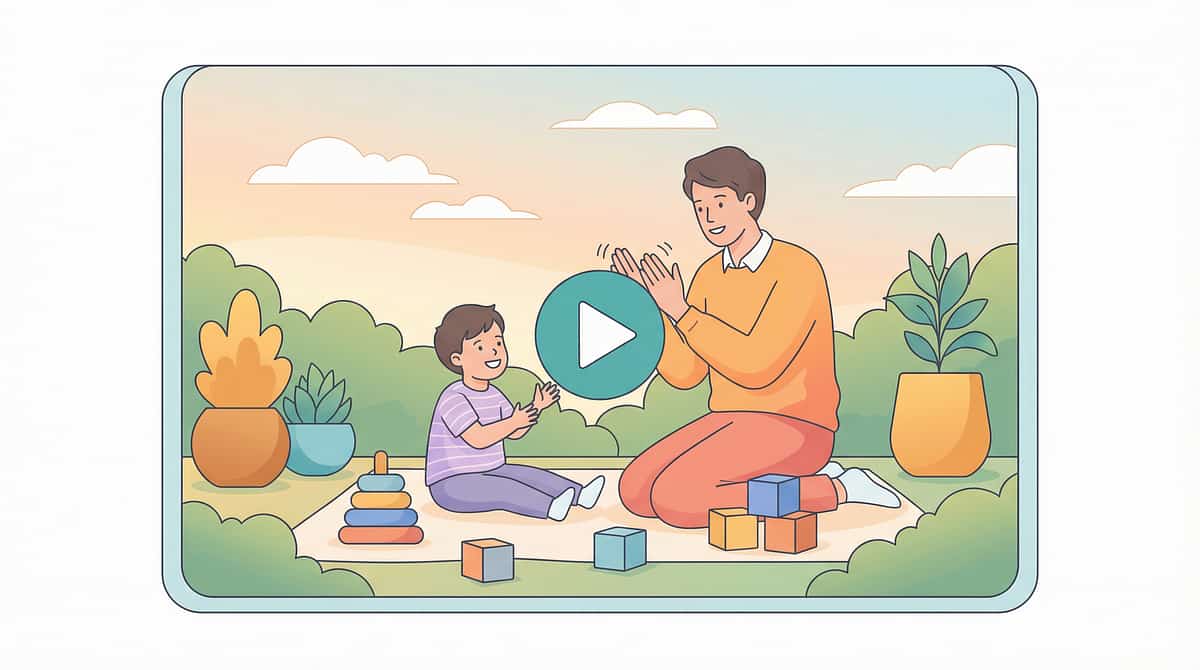
Step 3 of 6 ●●●○○○
The Core Imitation Practice — 4 Methods by Material
Method A — Mirror Imitation
- Stand side by side facing mirror
- Make ONE simple movement slowly (arms up)
- Pause — hold the position 5 seconds
- Say: "Now you. Arms up." (Point to their arms in the mirror, not directly at them)
- Accept any approximation — celebrate immediately
- Gradually progress: arms up → touch head → one arm out → both arms out
Duration: 5–10 minutes | 5–10 imitation trials
Method B — Action Card Imitation
- Show card — point to body position shown
- Name the body part: "Look — hands on head."
- You do the action (modeling)
- Pause — say "your turn"
- If no response: point to their body part while you hold the position
- If still no response: gentle physical guidance, then show card again
Duration: 5–8 minutes | 8–12 cards
Method C — Video + Mirror Combo
- Watch video clip (30–60 sec) of target movement
- Pause video at the target position
- Move to mirror — you model the same position
- Child attempts in mirror — can see self and you simultaneously
This dual-reference method is the most powerful for visual learners. Duration: 3–5 minutes | 3–5 video-to-mirror cycles
Method D — Ribbon Stick Path Matching
- Make a simple path with your ribbon (circle, up-down, side-side)
- Say: "Make the same path!" Point to their ribbon
- The path is visible in the air — child can SEE where the movement should go
- Match ribbons — celebrate when paths look similar
Duration: 5 minutes | natural turn-taking rhythm
Common Execution Errors: Demonstrating too fast → Slow to half speed. Demanding too many body parts → Start with ONE. Not waiting long enough → Give 10 full seconds. Correcting too quickly → Let them try first. Partial is progress.
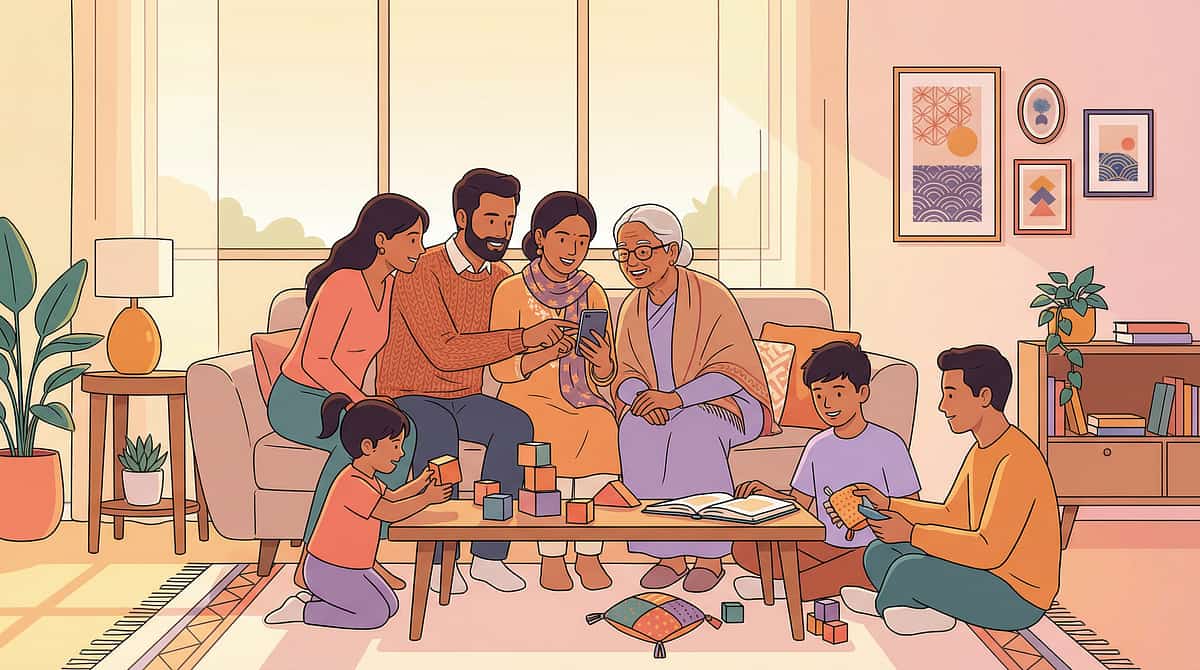
Step 4 of 6 ●●●●○○
Dosage — How Many Reps, How Much Variety
THE DOSAGE PRINCIPLE: 3 GOOD REPS > 10 FORCED REPS. Each repetition should be: Child-Initiated (or at minimum Child-Accepted) + Attempt-Completed + Reinforced.
Child Level | Target Reps Per Session | Session Length | |
Beginning (no spontaneous imitation) | 3–5 successful prompted trials | 5–8 minutes | |
Emerging (imitates with max support) | 5–8 trials, 2 different movements | 8–12 minutes | |
Consolidating (imitates with cues) | 8–12 trials, 3–4 movements | 12–15 minutes | |
Advancing (imitates independently) | 10–15 trials, sequences of 2 | 15–20 minutes |
Variation Options — Maintain Engagement, Same Principle
01
Change the body part (arms → legs → head → whole body)
02
Change the direction (up/down → side to side → front/back)
03
Change the material (mirror → ribbon → video → cards, same movement)
04
Change the speed (slow motion → normal → fast — for advanced)
05
Add music (action song — same movements in musical context)
06
Turn-taking (child models for parent to copy — builds both sides of imitation exchange)
Satiation Indicators — Stop or Vary NOW: Child looks away repeatedly | pushes material away | perseverative behavior increases | attempts to leave | energy drops dramatically.
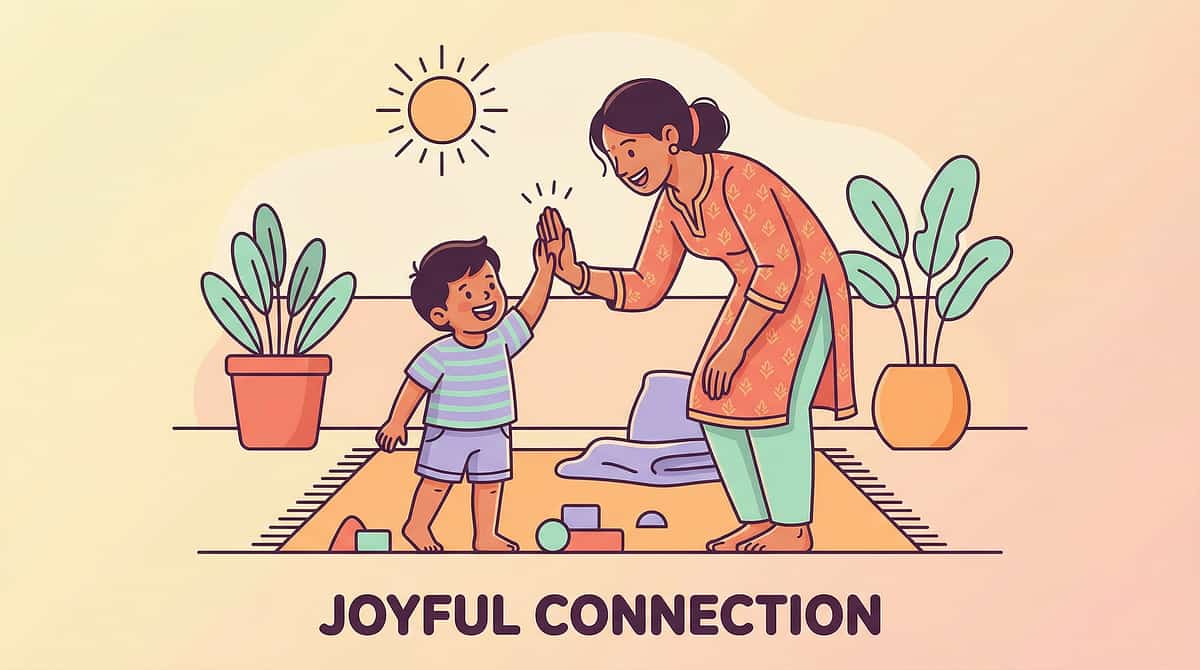
Step 5 of 6 ●●●●●○
The ABA Moment — Timing Is Everything
THE GOLDEN RULE: Reinforcement within 3 seconds of the target behavior. Specific, enthusiastic, genuine. Every time, every trial.
Reinforcement Scripts — Use Variations
- "YES! Your arms went UP! Just like mine — brilliant!"
- "I saw that! You copied the movement — that's exactly right!"
- "Hands on head — and yours are on YOUR head! Amazing!"
- "Look in the mirror — you did it! You copied!"
Reinforcement Menu
Social: High five, hug, dance together — most sessions, primary reinforcer
Verbal: Specific praise script — every trial, non-negotiable
Token:Reward Stickers ₹364 — sticker on chart for each successful imitation
Tangible:Reward Jar ₹589 — end-of-session reinforcer
Activity: Access to preferred activity after session — for high resistance children
Token Economy: 5 stickers = one preferred reward. Show the child the chart before the session: "When you have 5 stickers, you get [preferred item/activity]." Track stickers visibly — the chart IS part of the motivation.
"Celebrate the attempt, not just the success. An approximation is a success. Any movement in the right direction is worth celebrating. You are building the neural pathway, not testing its completion."
Step 6 of 6 ●●●●●●
End Every Session — Never Just Stop
The Transition Sequence
- 2-minute warning: "Two more movements, then all done." Use visual timer if helpful.
- Final celebration movement: One more joint movement in the mirror together — joyful, not therapeutic
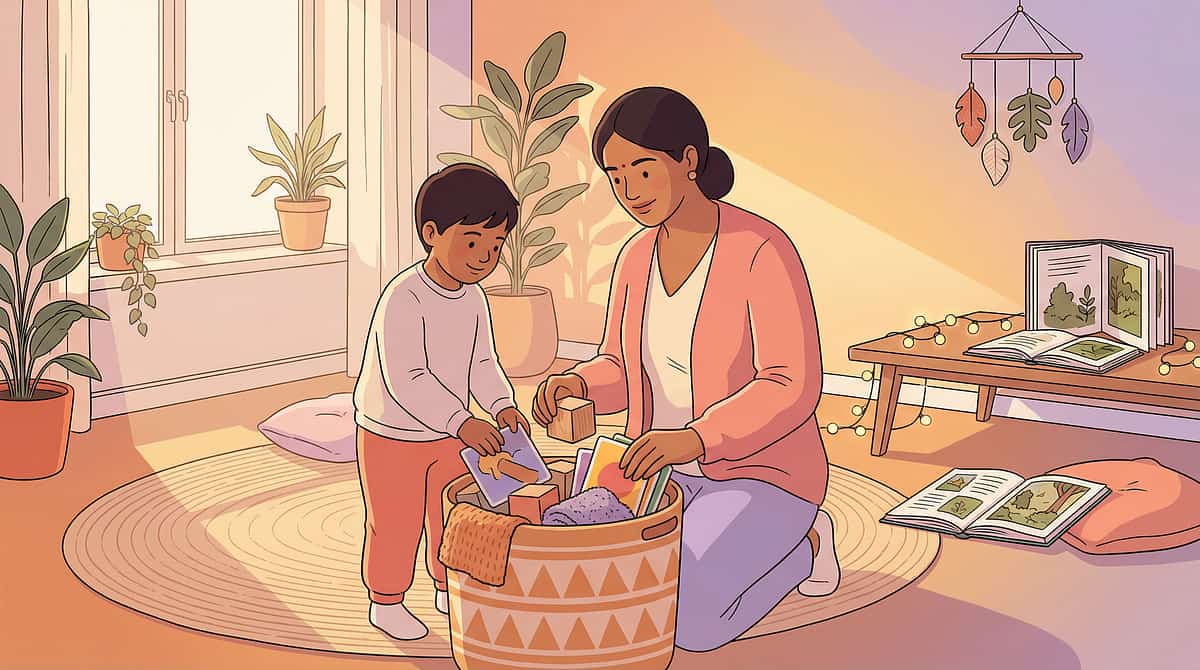
- Put-away ritual: "Help me put the cards away / hang the ribbon / turn off the tablet" — child participates if able
- Transition phrase: Your consistent closing phrase every time: "Great imitation practice! See you tomorrow!"
- Sensory cool-down (if needed): 2 minutes of proprioceptive calming — squeeze blanket, wall push-ups, weighted lap pad
Visual Timer Options
- Sand hourglass (2 minutes) — visible countdown
- Time Timer app — shrinking red circle
- Verbal countdown: "5... 4... 3... 2... 1 — all done!"
- Song countdown: last verse of favorite song = session ends
If child resists ending: Add one final bonus movement, offer the sticker AFTER put-away (natural consequence), don't abruptly stop — honor the 2-minute warning you gave.
References: NCAEP Evidence-Based Practices Report (2020) — Visual supports classified as evidence-based practice for autism.
60 Seconds of Data Now Saves Hours of Guessing Later
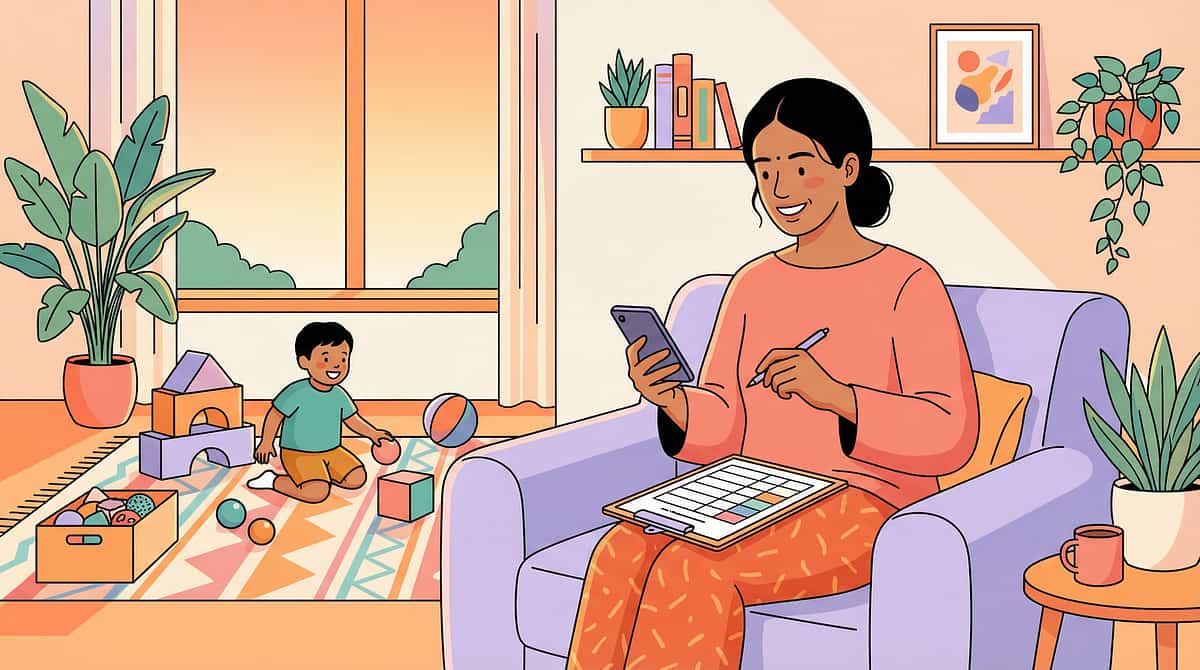
What to Record After Every Session
Date + Time
Materials Used — Mirror / Cards / Video / Ribbons / Songs / Compression / Game Cards / Flashlight
Successful Trials — 0-5 / 6-10 / 11-15 / 15+
Highest Prompt Level Needed — Full Physical / Partial Physical / Visual Cue / Verbal / Independent
Engagement Level — 1–5 scale
Any Concerns? — free text, optional
Why Data Matters
Your data feeds GPT-OS® — the more sessions tracked, the more personalized your child's TherapeuticAI® recommendations become. Population-level data from 20M+ sessions is what makes the recommendations accurate.
ABA Data Collection Standards require continuous measurement (frequency, latency, prompt level) as standard practice. Even a simple tally marks system works:
||| = 3 successful trials.📥Download F-575 Movement Imitation Tracker PDF — 4-week tracking sheet, print at home. Link: forms.pinnacleblooms.org/F-575-tracker
Session Didn't Go as Expected? Here's Your Fix
"Session abandonment is not failure — it's data. Every imperfect session teaches you something the clinic never could."
Child watches but makes NO movement attempt
What happened: The imitation demand exceeds current ability, OR the cue to respond wasn't clear. Fix: Add physical prompt (gently guide their arm up while you hold the position). Pair with a clear verbal cue: "Your turn — arms up!" Use mirror to show them their own arm in the target position.
Child imitates immediately but incorrectly (wrong body part)
What happened: Body schema gap — they don't know which body part corresponds to the one they see. Fix: Touch the body part on THEM first. "This is YOUR arm." Then demonstrate. The mirror shows them which arm you're moving vs. which one they're moving.
Child was engaged for 2 minutes then completely shut down
What happened: Processing overload or satiation. Motor imitation is genuinely hard neurologically. Fix: End session immediately — you got 2 minutes of good data. Tomorrow, begin with something easier (action song they already know). Build success before introducing new demands.
Child only imitates when physically prompted — never independently
What happened: Prompt dependence. Physical prompt may be the only signal that triggers the movement. Fix: Fade physical prompt to partial (touch their arm, then remove). Use mirror + verbal only for 3 trials. Expect this to take weeks — prompt fading is gradual. Don't remove all support suddenly.
Ribbon sticks / flashlight caused dysregulation
What happened: Material was overstimulating. Fix: Use ribbon briefly — 2 minutes max. Store immediately after use. Use softer, less colorful material next time. Introduce gradually, not all at once.
Child refuses to look in the mirror
What happened: Mirror may cause sensory discomfort or self-recognition uncertainty. Fix: Don't force mirror use. Use video modeling instead. Introduce mirror passively — just have it in the room. This is common and resolves gradually.
Session was completely abandoned after 1 minute
What happened: Readiness check may have been incomplete, OR the chosen material was wrong today. Fix: Note in tracker. Try different material tomorrow. If this happens 3+ sessions in a row, call Pinnacle Helpline 9100 181 181 — this is a signal for clinical recalibration.
No Two Children Are Identical — Customize This Technique
Body Awareness Deficit (Proprioceptive Issues)
- Lead with weighted lap pad / compression vest (5 min warm-up)
- Begin with body puzzle BEFORE any imitation demand
- Touch and name each body part before asking them to move it
- Flashlight targeting: light on YOUR arm → light on THEIR arm → move
Visual Processing Differences
- Use action cards (static image — no processing speed demand)
- Video with pause/slow-motion — pause every 3 seconds
- Avoid ribbon sticks initially (fast, visually complex)
- Strong preference for same movements every session (build predictability)
Motor Planning Difficulties (Dyspraxia)
- Every session begins with 5 minutes of heavy work (proprioceptive input)
- Break EVERY movement into its smallest possible component
- Full physical guidance through new movements, always
- Very high repetition of same movements before introducing new ones
Ages 18mo–3yr
Object imitation first (tap drum, push car). Transition to body imitation with objects (shake scarf, bang two blocks, then transfer to body actions).
Ages 3–6yr
Action songs, ribbon sticks, mirror. Gross motor game cards. Simple sequences (2 steps).
Ages 6–10yr
Video self-modeling (record them, show them the video). Full sequences. Peer modeling. Group Simon Says with support.
Sensory Seeker
Use weighted vest, heavy ribbon sticks, full-body movements, fast pace.
Sensory Avoider
Begin with softest material (action cards, songs). No compression tools initially.
Act IV: Progress Arc
Week 1–2
Week 1–2: Foundations Are Being Laid (Even If You Can't See It)
██░░░░░░░░ 15% — Foundation Phase
What You May See
- Child tolerates standing in front of mirror without moving away (even 30 seconds = progress)
- Eyes tracking your movement more consistently than before
- Any spontaneous movement attempt — even wrong body part, wrong direction
- Reduced resistance to session routine (knows what's coming, less avoidance)
- Beginning to reach for ribbon stick or touch action card unprompted
What Is NOT Progress Yet (and That's Okay)
- Spontaneous imitation without prompting → comes in weeks 4–6
- Correct body part, correct movement → needs weeks of foundation first
- Carrying skills to other settings → generalization comes after mastery
Daily Routine Integration: Practice does NOT need to be a formal session every day. Action songs at bath time. Mirror play while dressing. Ribbon stick for 3 minutes before dinner. Consistency over perfection.
"If your child tolerates the action card for 3 seconds longer than last week, that is neurologically significant progress. The circuit is connecting."
References: PMC11506176 — Motor imitation outcomes emerge across 8–12 week timelines.
Week 3–4
Week 3–4: The Neural Pathway Is Forming
████░░░░░░ 40% — Consolidation Phase
Child anticipates movements in action songs (begins moving BEFORE the lyric)
Child self-initiates standing at the mirror
Child attempts imitation with LESS prompting than week 1 (partial prompt works where full was needed)
Child corrects their own movement when looking in mirror
Imitation attempts are more consistently directed at the right body part
Child smiles or shows positive affect during imitation practice
"Neural Pathway Forming" Signs Parents Often Miss: Child watches your hands more carefully when you do ANYTHING (not just therapy). Child spontaneously waves, claps, or copies a gesture outside of formal practice. Teacher notices child participates more in action songs at school.
When to Increase Intensity
- Child completes sessions without resistance → add 5 more minutes
- Child imitates 10/10 trials with only verbal prompt → introduce 2-step sequence
- Child seems bored with current material → rotate materials, introduce video self-modeling
Parent Milestone
"You may notice you're more confident too. You know the script, the materials, and how to read your child. Your confidence IS the therapeutic environment."

Week 5–8
Week 5–8: Mastery Is Emerging
███████░░░ 75% — Mastery Phase
🏆 MOVEMENT IMITATION MASTERY CRITERIA — F-575✅ Imitates 5+ different single gross motor movements ✅ With modeling prompt only (no physical guidance) ✅ Across 3+ sessions in a row ✅ In 2+ settings (home + one other)
In the Classroom
Imitates actions in PE class or dance class without special prompting. Teacher reports child follows movement demonstrations in group settings.
With Peers
Spontaneously copies a peer's movement on the playground. Can follow "Simon Says" with simple movements (2-step).
Generalization
Learns new motor skill (e.g., how to hold a bat, how to pour) by watching once or twice. The true mastery marker — when the mirror and ribbons are unnecessary.
Mastered — Move On
Progress to F-576 (Vocal Imitation Foundations) or F-577 (Deferred Imitation Development).
Not Yet at Week 8
Stay and call Pinnacle Helpline 9100 181 181 for clinical recalibration. Consistency matters more than speed.
References: PMC10955541 — Meta-analysis across 24 studies with measurable mastery outcomes.
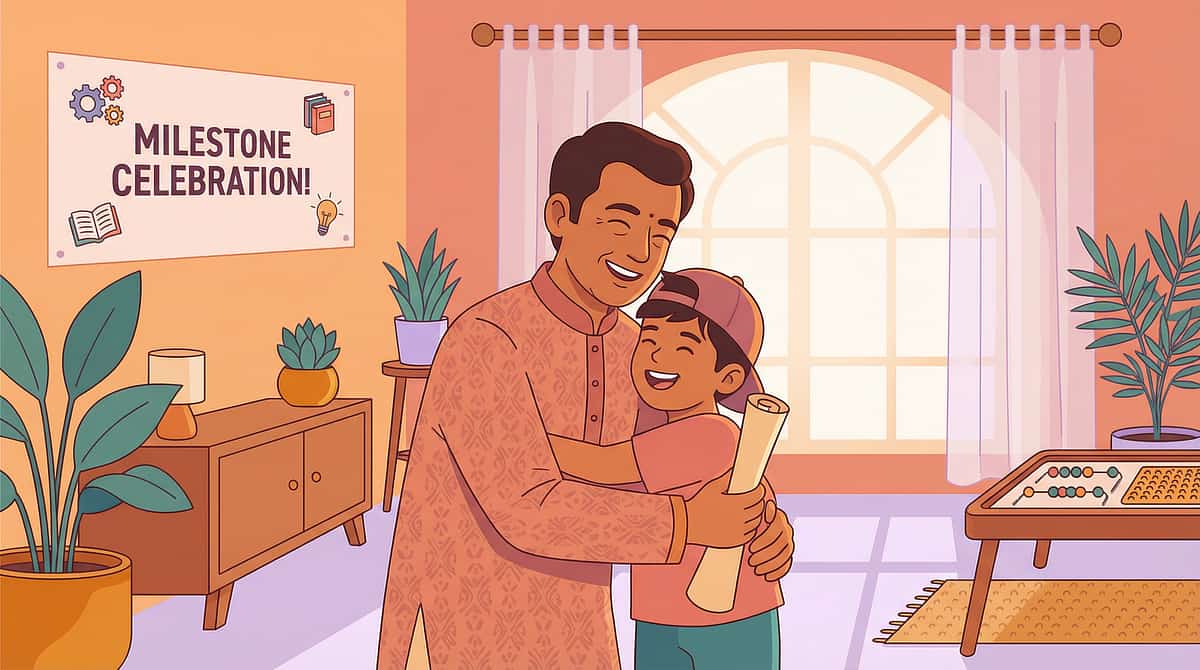
You Did This. Your Child Grew Because of You.
You came to this page because your child couldn't copy movements. You learned the science, set up the space, gathered the materials, and showed up — day after day — in front of a mirror, with ribbon sticks and action cards, in between a hundred other demands of family life.
Your child can now do something they couldn't do before. That is not small. That is one of the most profound gifts a parent can give.
Specific Win to Document: Write down (or record a video of) the FIRST time your child spontaneously copied a movement without being asked. This is the moment the circuit connected. Journal Prompt: "On [date], [child's name] first copied [movement] without any prompting. We were at [location/activity]. Their face looked [description]."
"Family Celebration Suggestion: An imitation party — play Simon Says, do a family action song, take a video of everyone copying each other's movements. Show your child: 'Look — everyone is copying! YOU can copy now too.'"
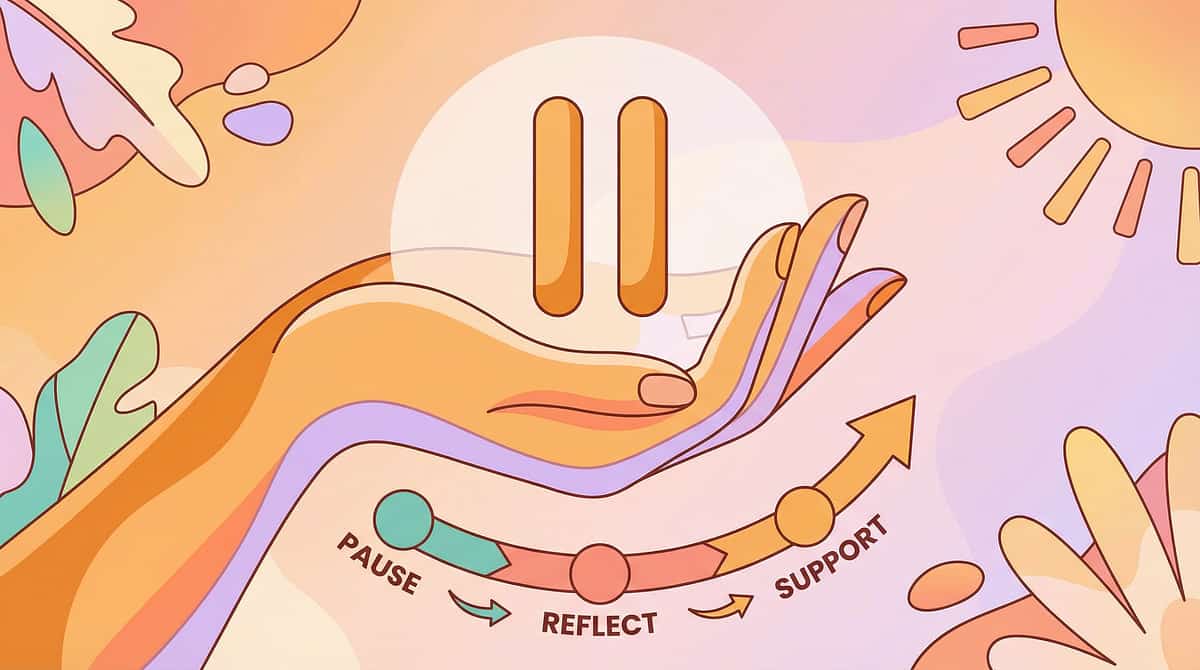
Trust Your Instincts — If Something Feels Wrong, Pause and Ask
🔴 Regression
Child was imitating with prompts in Week 3, now showing less imitation than Week 1. May signal medical issue, life stressor, or need for intervention recalibration.
🔴 Self-Injury During or After Sessions
Any scratching, hitting, or biting that appears related to frustration in sessions. Session design must change immediately.
🔴 Significant Behavioral Deterioration
Increased meltdowns, sleep disruption, or food refusal appearing after sessions started. May signal sensory overload or session demand mismatch.
🔴 No Progress at Week 8
Zero movement toward mastery criteria across 8 full weeks of consistent practice. Clinical reassessment required.
🔴 Motor Skill Regression in Other Domains
Child losing skills they previously had. Escalate to NeuroDev Pediatrician immediately.
🔴 Parent-Child Relationship Impact
Sessions creating significant conflict. Adjust or pause and consult — the relationship is more important than any single technique.
References: WHO NCF Progress Report 2018-2023 | Pinnacle clinical escalation protocols
Where You Are. Where You're Going. Your Developmental GPS.
Branching Based on Child's Response
- Mastered gross motor but struggles with fine motor → Stay in F-domain, progress to Fine Motor Imitation sequence
- Movement imitation established but sequences fail → F-579: Sequential Action Imitation (next priority)
- Imitating movements but not vocalizations → F-576: Vocal Imitation Foundations (parallel domain)
Long-Term Developmental Goal
Movement Imitation
Peer Play Participation
Learning from Demonstration
Group Instruction Following
Full Social & Educational Participation
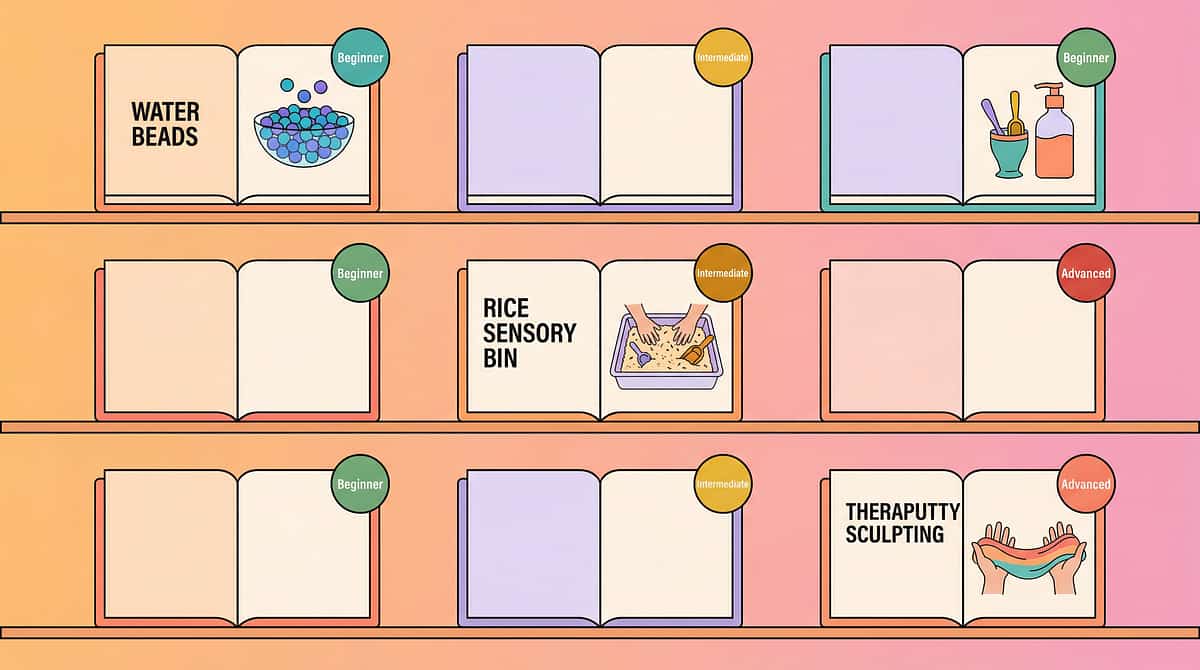
You're Building a Library of Motor Skills — These Come Next
Technique | Code | Difficulty | Materials You Already Own | |
Object Imitation Skills | F-573 | 🟡 Intro | Cards, Ribbons | |
Facial Imitation Development | F-574 | 🟡 Intro | Mirror | |
Movement Imitation (current) | F-575 | 🟢 Core | ALL | |
Vocal Imitation Foundations | F-576 | 🟢 Core | Songs | |
Deferred Imitation Development | F-577 | 🟠 Advanced | Cards, Video | |
Sequential Action Imitation | F-579 | 🟠 Advanced | Cards, Video, Mirror |
💡"You Already Own Materials for These": Based on your F-575 toolkit, you already have the materials for F-573, F-574, F-576, and F-577 with zero additional purchase. Your investment scales.
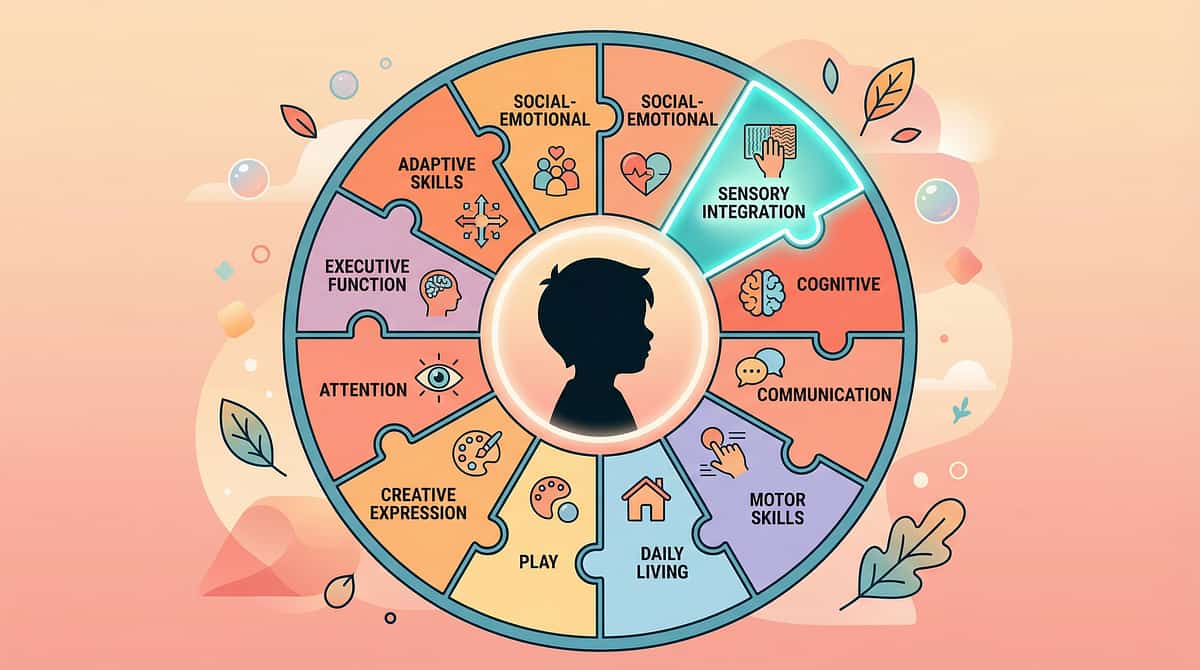
This Technique Is One Piece of a Larger Plan
The FusionModule™ Effect
Your child's development spans 12 interconnected domains. Movement imitation (Domain F) doesn't exist in isolation — it directly feeds communication (B), social learning (I), and attention (H). As Domain F strengthens, you may notice unexpected gains in other domains. Therapy designed to cascade across systems.
Connected to GPT-OS®
If your child is enrolled in GPT-OS®, their full developmental profile across all 12 domains is tracked and updated in real time. F-575 progress feeds the Motor Imitation Readiness Index and updates their TherapeuticAI® recommendations.
References: WHO NCF (2018) | PMC9978394 | UNICEF 2025 Country Profiles
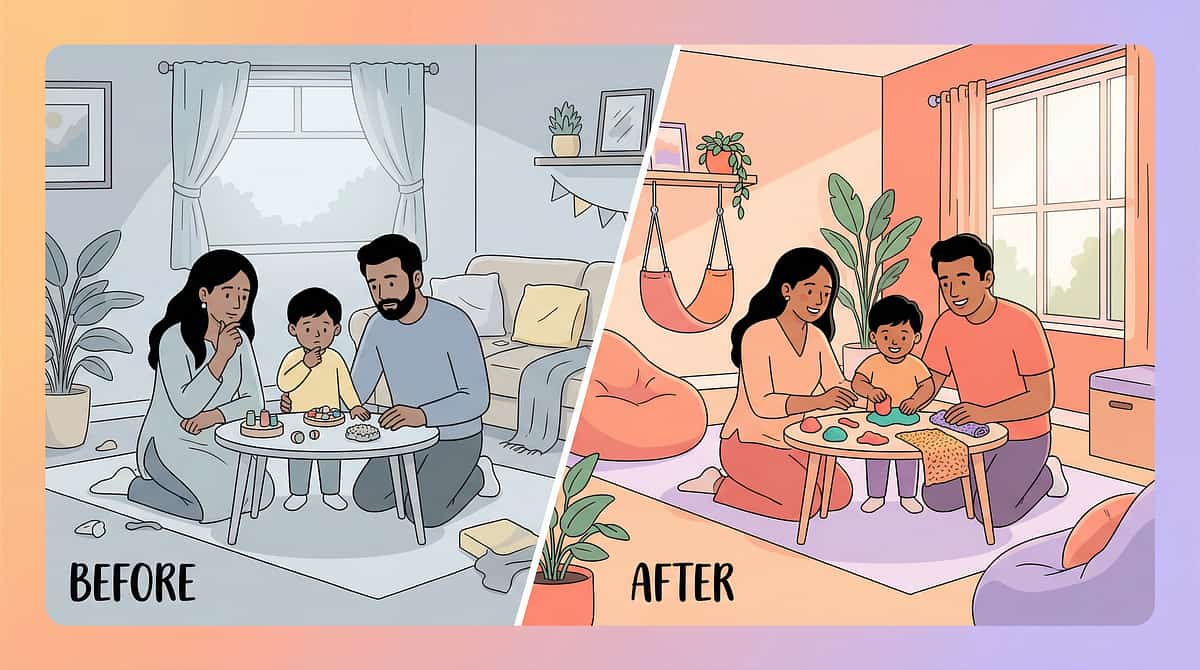
Act V: Community & Ecosystem
From "He Won't Copy Anything" to "He Learns by Watching"
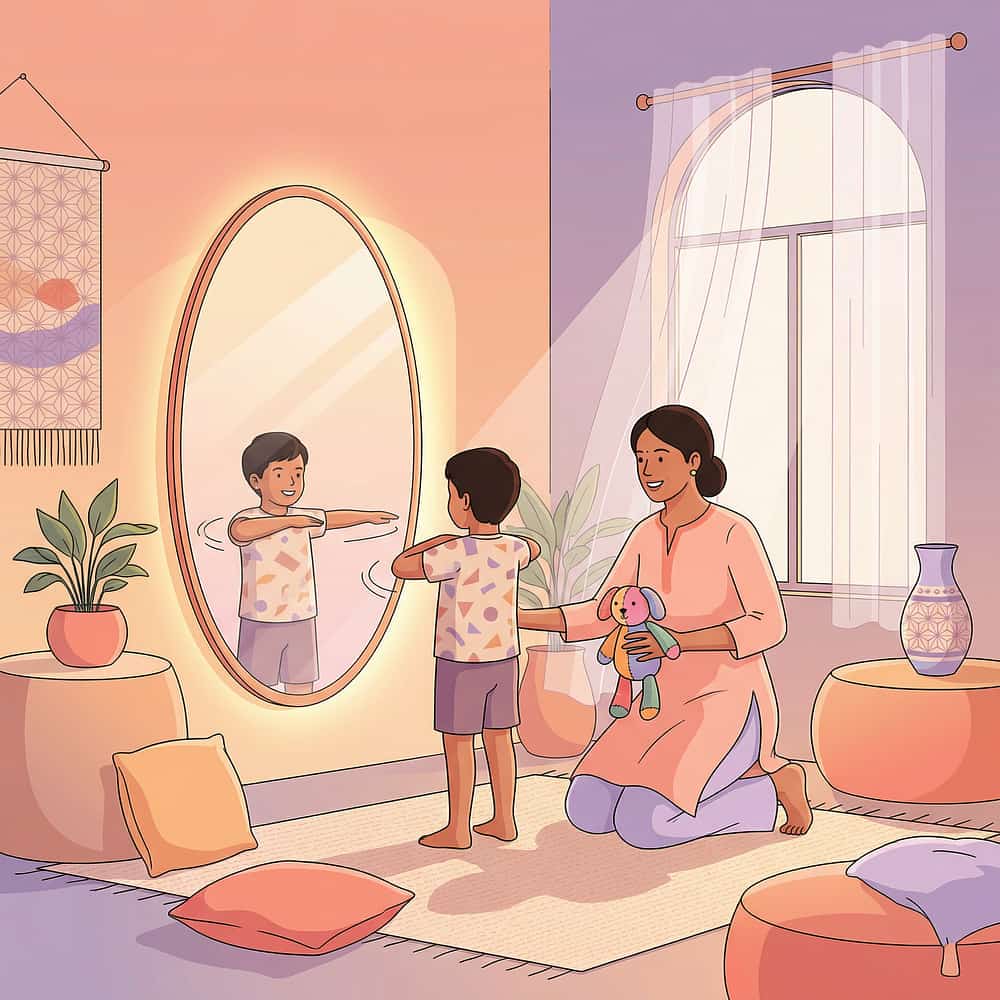
Family Story 1 — Hyderabad
Before: "Our son was 4.5 years old and could not copy a single deliberate movement. Wave goodbye — blank stare. Clap hands — nothing. Dancing at birthday parties was painful to watch. All the other children followed the instructor while he stood frozen."
After: "We started with the mirror — just standing together every morning while getting dressed. Action songs at breakfast, same 3 songs every day. After 3 weeks, he started anticipating the movements. At week 6, he copied a clapping game with his cousin — spontaneously. At week 8, his teacher said he was following movement demonstrations in PE. We cried." — Parent, Pinnacle Network, Hyderabad
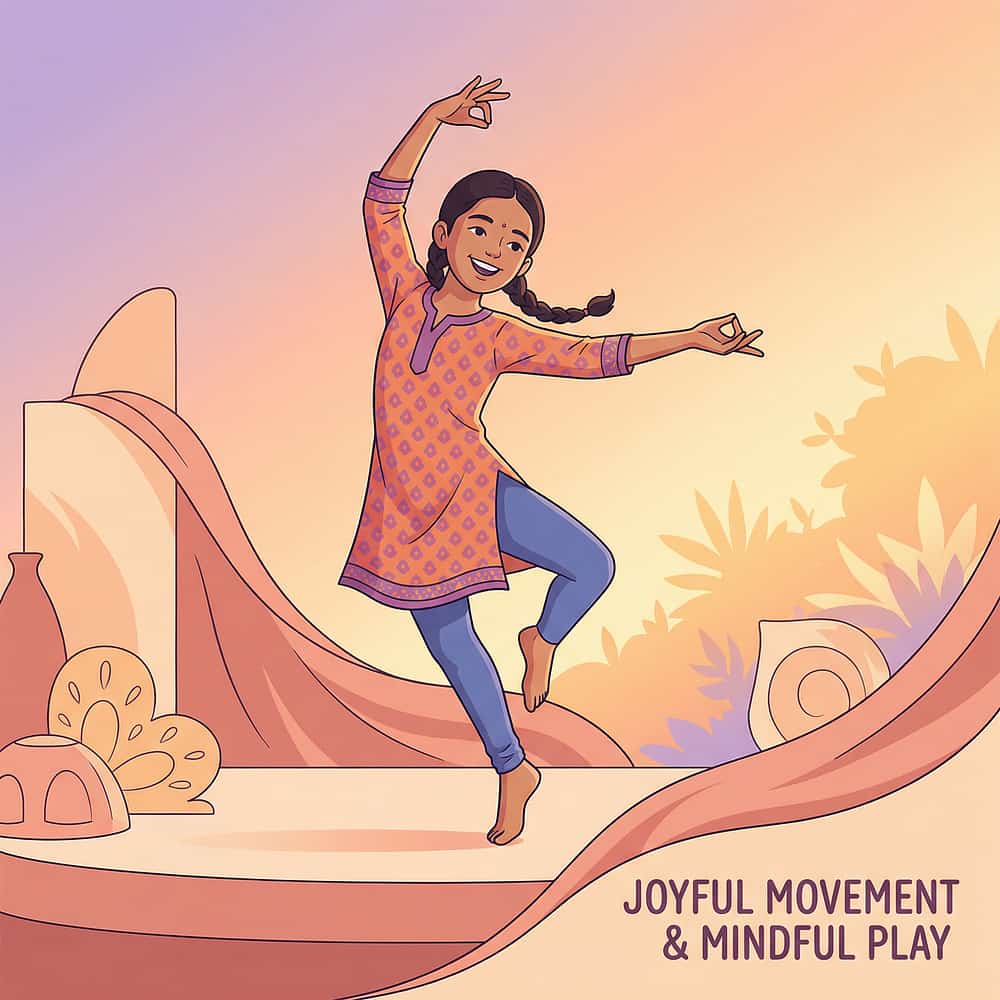
Family Story 2 — Bengaluru
Before: "My daughter is 7 with DCD (developmental coordination disorder). She desperately wanted to do the dance performance at school but couldn't copy the choreography no matter how many times the teacher showed her. She was devastated."
After: "We used video modeling on the iPad — paused at each position, matched it in front of our mirror. We broke the 2-minute routine into 6 sections and practiced each for a week. She performed in the show. She wasn't perfect, but she was there — doing it. That's everything." — Parent, Pinnacle Network, Bengaluru
"When movement imitation begins to emerge, parents often describe it as a 'switch flipping.' The reality is more gradual — but the day it becomes visible is real, and it's worth the weeks of invisible work that preceded it." — Senior OT, Pinnacle Consortium
Note: Outcomes are illustrative. Individual results vary by child profile, underlying factors, and intervention consistency.
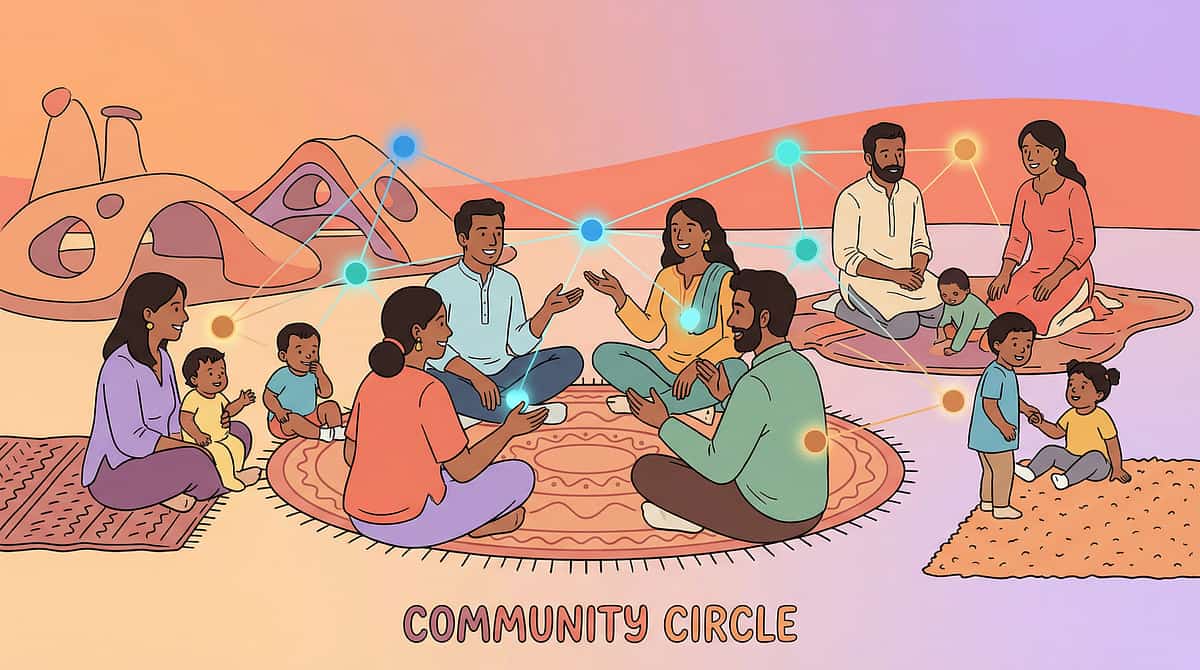
You Don't Have to Navigate This Alone
🟢 WhatsApp: Motor Imitation Parent Group
Pinnacle parent community specific to motor imitation challenges — share wins, ask questions, find support from families who are 6 months ahead of you.
💬 Pinnacle Parent Forum
pinnacleblooms.org/community/motor-skills — moderated by Pinnacle clinical team. Evidence-based answers to parent questions about motor skills and imitation.
📍 Local Pinnacle Parent Meetups
70+ centers across India host monthly parent support groups. Find the nearest center for in-person community connection.
Peer Mentoring Programme
Pinnacle's peer mentoring program matches newly-navigating families with parents 12–18 months ahead on the same journey. Free. Confidential.
🔆FREE HELPLINE: 9100 181 181 — 16+ languages, 24x7. Your experience helps others — if you've completed 8 weeks, consider sharing your journey.
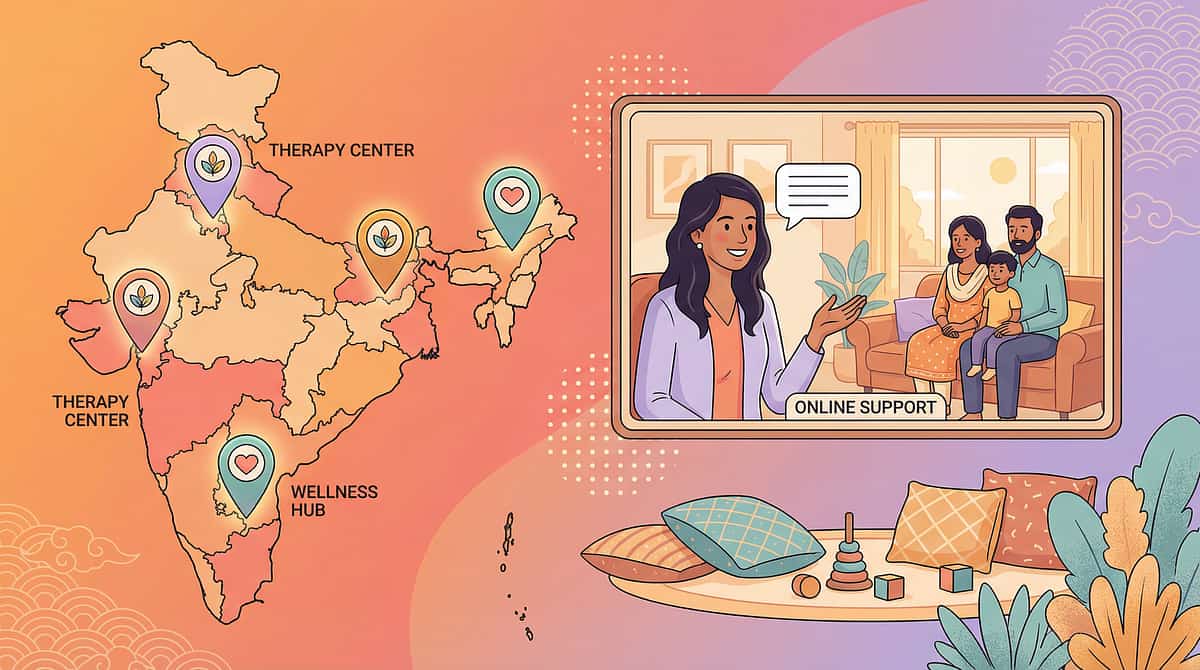
Home + Clinic = Maximum Impact
Therapist Matching — F-575
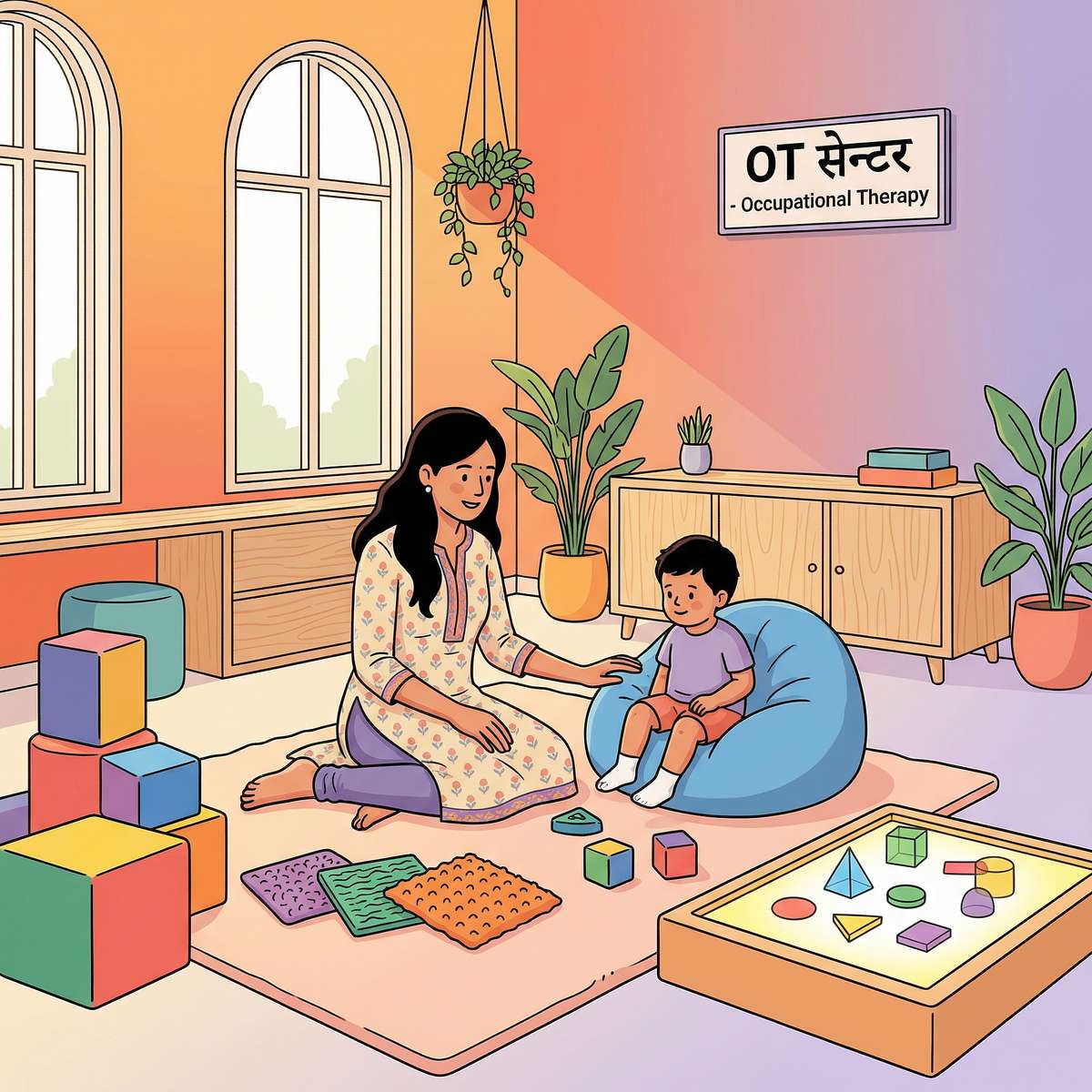
🟢 Occupational Therapist
Body awareness, proprioception, praxis, mirror use. Book OT Assessment for F-575 baseline.
🔵 ABA / BCBA Therapist
Structured imitation training, prompt hierarchy. Book ABA Assessment for detailed data-driven protocol.
📊 AbilityScore® Assessment
Baseline + severity + personalized F-domain plan. Full developmental profile across all 12 domains.
Funding / Affordability: Financial assistance programs available. Pinnacle works with multiple state government disability support schemes. Call 9100 181 181 for guidance on available support in your state.
References: WHO NCF Progress Report (2023): 48% increase in countries adopting ECD policies.
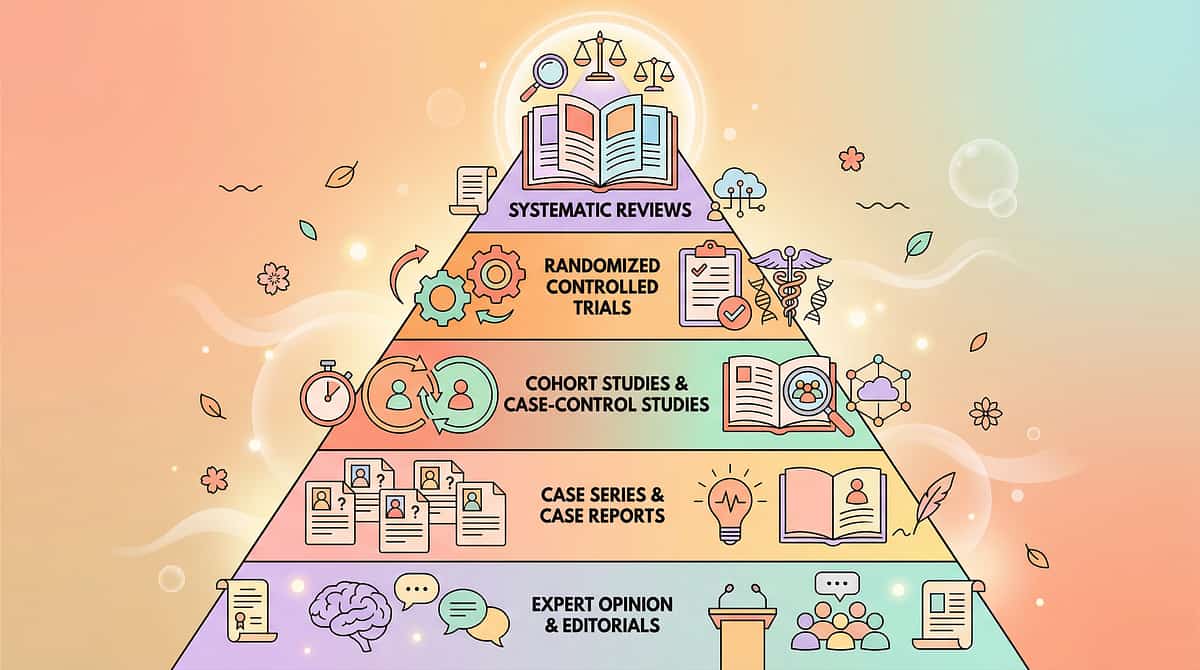
Deeper Reading for the Curious Parent
NCAEP Evidence-Based Practices (2020)
Video modeling classified as Tier 1 EBP for autism across multiple outcome domains including imitation. ncaep.fpg.unc.edu
World J Clin Cases Meta-Analysis (2024)
24 studies: Sensory integration therapy promotes motor skills, social skills, adaptive behavior, sensory processing. PMC10955541
Children Systematic Review (2024)
16 articles (2013-2023) confirm sensory-motor interventions as evidence-based practice for ASD. PMC11506176
Indian Journal of Pediatrics RCT (2019)
Home-based motor and sensory interventions show significant outcomes in Indian pediatric populations. DOI: 10.1007/s12098-018-2747-4
WHO Care for Child Development Package (2023)
Age-specific caregiver guidance implemented across 54 low-and-middle-income countries. PMC9978394
Additional references: Mirror neuron system differences in autism — Iacoboni & Dapretto, Nature Reviews Neuroscience (2006) | AOTA Motor Imitation and Praxis Clinical Practice Guidelines | WHO NCF (2018)
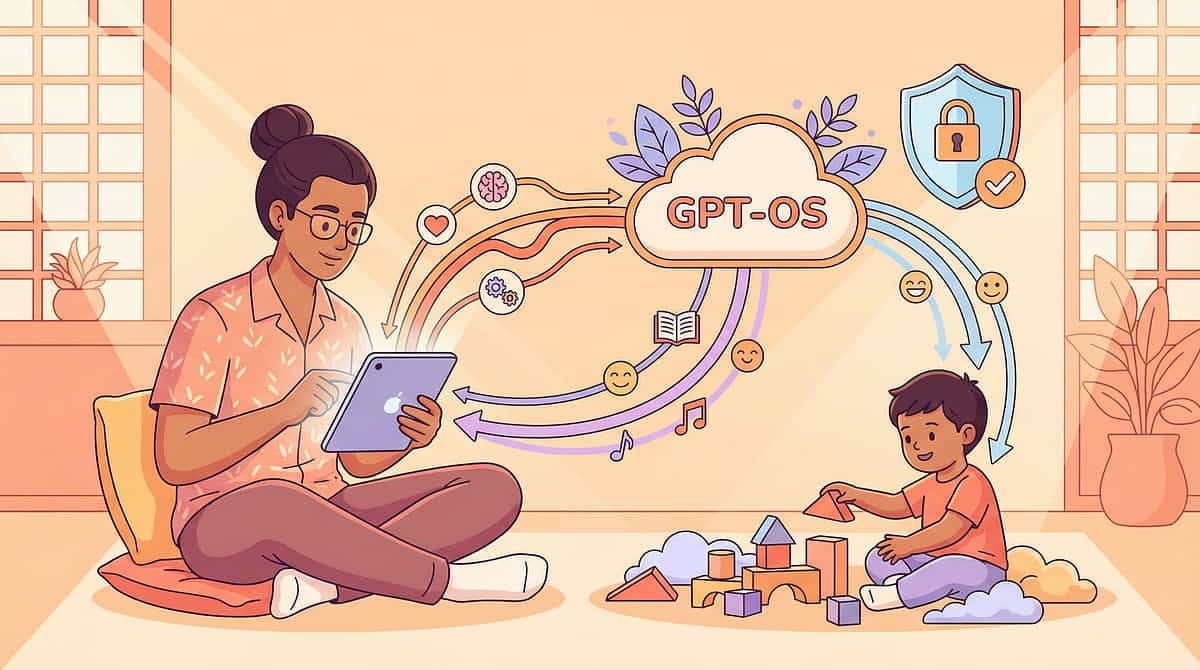
Your Sessions Teach the System — The System Teaches You Back
What GPT-OS® Learns from F-575 Data
- Which of the 9 materials showed fastest response for this child's profile
- Optimal session length for this specific child
- Prompt level trajectory (fading rate)
- Predictive indicators for mastery timing
- Cross-domain cascade effects (does motor imitation improvement predict communication gains?)
Privacy Assurance
All data is anonymized, encrypted, and stored under Indian data protection standards. Pinnacle Blooms Network does not sell or share individual data. Population-level insights are de-identified.
"Your data helps every child like yours." The 20M+ session database was built by families exactly like yours, tracking sessions exactly like this one. Every session you record improves recommendations for families who register next year.
Watch the Original Reel — 9 Materials That Help With Movement Imitation
Reel F-575 Details
Episode: 575 of 999
Series: Motor Development & Imitation Skills in Children
Domain: F — Motor Skills
Duration: 75–85 seconds
Presenter: Pinnacle OT + ABA Consortium Team
Therapist Introduction
"Movement imitation — copying what we see — is how humans naturally learn countless skills. When this doesn't work automatically, learning becomes harder for everything: dance, sport, self-care, peer play. But imitation is a skill. Like any skill, it can be built. The key is understanding where the breakdown is in YOUR child's system — and using the right material to address exactly that point." — Pinnacle OT + ABA Consortium
Reel Series Navigation
NCAEP (2020): Video modeling is Tier 1 EBP for autism. Multi-modal learning (visual + text + demonstration) improves parent skill acquisition.
Consistency Across All Caregivers Multiplies Impact
Share This Page
Every caregiver in your child's life — grandparents, teachers, childcare workers — benefits from understanding the technique. Consistent support across settings is what drives generalization.
Downloadable Family Guide
📥Download: 1-Page Family Guide — F-575 Movement Imitation Simplified version for grandparents, school teachers, and other caregivers. Clear, plain-language summary of the technique.
"Explain to Grandparents" Version
[Child's name] is learning to copy movements. This is called motor imitation. It doesn't come naturally for them — but we can help by: standing beside them at a mirror and doing slow movements, doing action songs together, and praising any attempt to copy. Physical guidance (moving their arm for them) helps when they can't copy yet. This is not disobedience — it's how their brain works, and we're teaching it a new pathway.
Teacher / School Communication Template
"Our child is working on motor imitation skills through a Pinnacle Blooms GPT-OS® programme. They benefit from: demonstrations done slowly and repeated, standing beside them rather than in front when showing movements, and praise for any attempt to copy. If you notice improved participation in PE or dance, please let us know — this supports our home tracking."
References: WHO CCD Package — Multi-caregiver training critical for intervention generalization. PMC9978394.
Act VI: Close & Loop
Questions Parents Ask Most
How do I know if my child's movement imitation difficulty is related to autism?
Motor imitation difficulties are present in 68-89% of children with autism, but also occur in DCD, apraxia, sensory processing differences, and general developmental delays. A formal assessment by an occupational therapist or developmental pediatrician is the only way to understand the underlying cause. Call 9100 181 181 for guidance on assessment options.
My child can imitate with objects but not body movements. Is that normal?
Yes — this is a very common pattern. Object imitation typically emerges before body imitation because the object provides an external visual focus. This is the starting point many therapists use: build on object imitation and gradually transfer to body imitation. F-573 (Object Imitation Skills) is the recommended prerequisite.
How long will it take to see results?
For most children, with consistent daily practice, the first observable improvements appear in Weeks 3-4. Functional improvement typically emerges in Weeks 5-8. Some children with more complex profiles take 12-16 weeks. Consistency matters more than intensity.
Can I do this without an OT or therapist?
You can begin with the materials on this page — they are designed for parent-led home implementation. However, if your child has been assessed with autism, DCD, or apraxia, professional guidance dramatically accelerates progress by identifying which specific breakdown point to target.
My child hates looking in the mirror. Should I push through?
No. Never force mirror use. Mirror aversion is relatively common and usually resolves with gradual exposure. Use video modeling instead. Introduce the mirror as a passive element in the room, then progressively closer, then used briefly. This desensitization typically takes 2-4 weeks.
Are weighted vests safe to use at home without OT guidance?
Weighted items are generally safe within 5-10% of body weight for brief periods (20-30 minutes). However, OT guidance is strongly recommended to determine appropriate weight, duration, and type for YOUR child. Call 9100 181 181 for a teleconsultation before purchasing.
My child can imitate in therapy sessions but not at home. Why?
This is called "context-bound learning" — very common. The solution is: use the same materials, same setup, same scripts at home. Gradually vary the setting (living room → kitchen → outdoors → grandparents' house). Bring the therapy environment to the home first, then expand it.
This isn't working after 4 weeks of consistent practice. What should I do?
Four weeks without progress is a signal for clinical recalibration, not failure. Contact Pinnacle Helpline 9100 181 181 for a free teleconsultation. The most common reasons: wrong breakdown point targeted, session demand level too high, or an underlying clinical factor that needs professional assessment.
You Have Everything You Need — Start Today
20M+
Sessions Tracked
97%+
Measured Improvement
70+
Centers Across India
70,000+
Techniques Available
📞 FREE • 16+ LANGUAGES • 24x79100 181 181 | pinnacleblooms.org
✅Validated by the Pinnacle Blooms Consortium® | OT • ABA • SLP • SpEd • NeuroDev Pediatrics Endorsed by GPT-OS® Therapeutic Intelligence | Aligned with WHO/UNICEF Nurturing Care Framework
Preview of 9 materials that help with movement imitation Therapy Material
Below is a visual preview of 9 materials that help with movement imitation therapy material. The pages shown help educators, therapists, and caregivers understand the structure and content of the resource before use. Materials should be used under appropriate professional guidance.


Link copied!
From Fear to Mastery. One Technique at a Time.
— The Pinnacle Blooms Consortium
PINNACLE BLOOMS NETWORK® CONSORTIUM🟢 OT 🔵 ABA 🟣 SLP 🟠 SpEd ⚕️ NeuroDev 🏥 CRO Built by Mothers. Engineered as a System. Powered by GPT-OS® | Global Pediatric Therapeutic Operating System
Pinnacle Blooms Network® exists to transform every home into a proven, scientific, personalized, multi-sensory, multi-disciplinary pediatric therapy center — available 24 hours a day, 7 days a week, at zero marginal cost to any family on Earth. This is not a goal. It is happening now across 70+ centers, 70,000+ techniques, and 20M+ sessions.
Medical Disclaimer: This content is educational and does not replace individualized assessment and intervention with licensed occupational therapists, speech-language pathologists, behavioral therapists, or developmental specialists. Motor imitation deficits can have multiple underlying causes including autism spectrum disorder, developmental coordination disorder, apraxia, or sensory processing differences. Professional evaluation is recommended for persistent imitation difficulties affecting learning and participation. Individual results may vary. Statistics represent aggregate outcomes across the Pinnacle Blooms Network. Pinnacle Blooms Network® does not provide medical diagnoses.
Statutory Identifiers
CIN: U74999TG2016PTC113063 DPIIT: DIPP8651 (Govt. of India Recognized Startup) MSME: Udyog Aadhaar TS20F0009606 GSTIN: 36AAGCB9722P1Z2
Copyright
© 2026 Pinnacle Blooms Network®, unit of Bharath Healthcare Laboratories Pvt. Ltd. All rights reserved. GPT-OS® is a registered trademark. AbilityScore®, TherapeuticAI®, FusionModule™, EverydayTherapyProgramme™ are proprietary systems.
Contact
techniques.pinnacleblooms.org pinnacleblooms.org 9100 181 181 FREE • 16+ languages • 24x7