

9 Materials That Help With Morning Routine
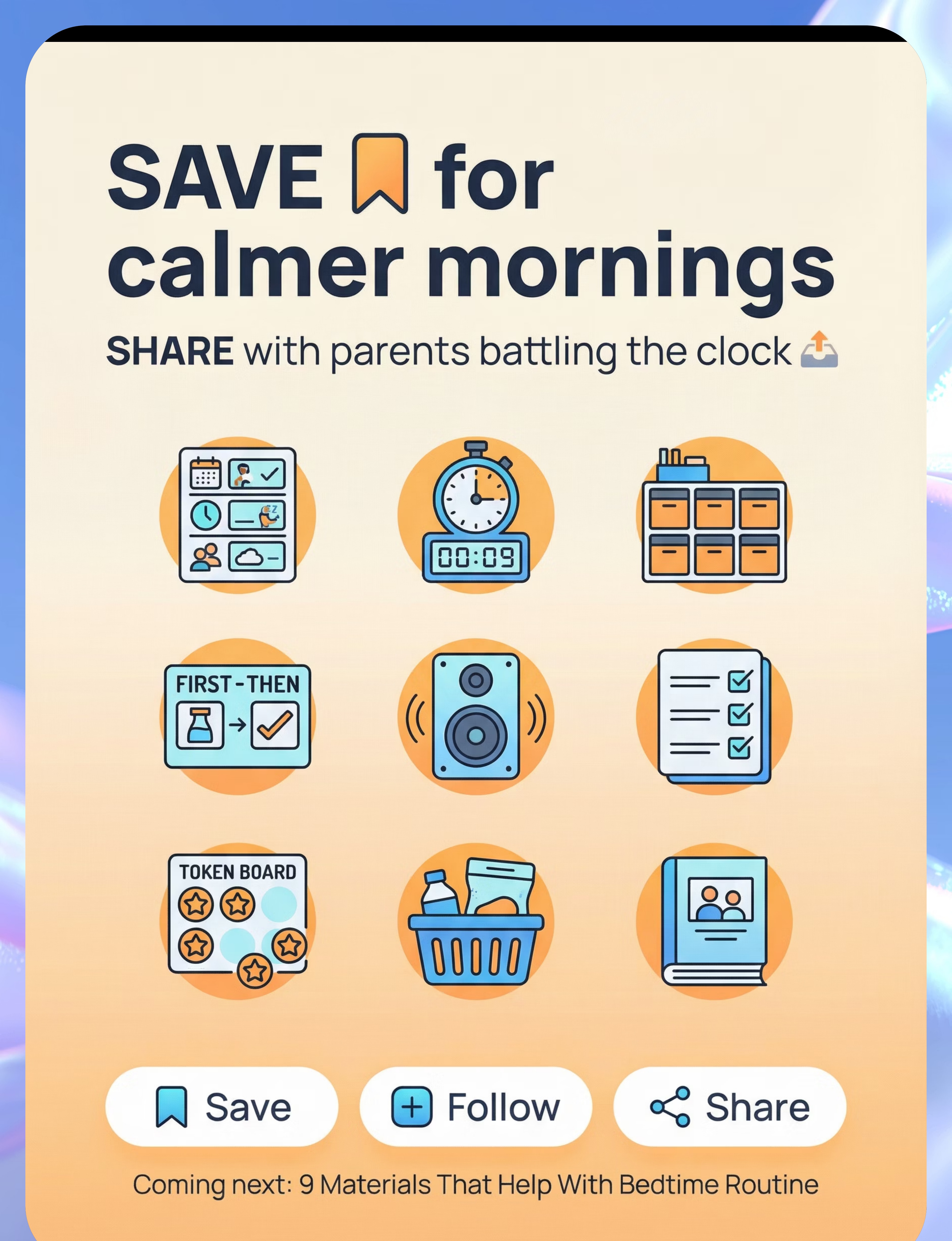
When every morning feels like a battle — visual schedules, timers, First-Then boards, and 6 more scientifically-validated materials that build morning independence in children ages 3–12. Backed by OT, ABA, and SLP consensus.
Toileting & Self-Care Independence • Episode E-540
Ages 3–12
Pinnacle Blooms Network®

Every morning in your house starts the same way.
6:45 AM. You say "time to get dressed" for the fourth time. Your child is still in pajamas, playing with a toy, seemingly unaware that twenty minutes have vanished. You remind. You nag. You finally do it yourself — you lay out the clothes, hand them the toothbrush, point to each shoe. By the time you leave, you're both exhausted, upset, and the day hasn't even begun.
This is not laziness. It's not defiance.
It's executive function — and your child's brain needs external scaffolding to do what others do automatically. Here are 9 materials that change mornings forever.
You are not failing as a parent.
Your child's brain is still building the systems that manage time, sequence, and initiation. The Pinnacle Blooms Consortium — OT + ABA + SLP + SpEd + NeuroDev — sees this every day, in millions of families.
WHO Nurturing Care Framework (2018): Responsive caregiving and parent-mediated environmental supports directly improve functional independence. — nurturing-care.org

Millions of families wake up to this same morning.
1 in 5
Children Affected
Have clinically significant executive function challenges affecting daily routines
68%
ADHD & Mornings
Children with ADHD report morning routine as their single most challenging daily transition
21M+
Therapy Sessions
Delivered by Pinnacle — evidence base built from real Indian families across 70+ countries
Executive function — the brain's management system for sequencing, time awareness, and task initiation — is one of the last cognitive systems to fully mature, developing well into the mid-20s. Morning routines demand all of it, before the brain is fully awake, under time pressure. Children with ADHD, autism, learning differences, and anxiety have executive function development that typically lags 2–4 years behind peers. This is neuroscience, not parenting failure.
"Among the 70+ countries we serve through GPT-OS®, morning routine dysfunction is the single most commonly reported daily living challenge by caregivers of children ages 4–10." — Pinnacle Blooms Network® Clinical Data, 2024

What's happening in your child's brain
Morning routines are a prefrontal cortex workout — and your child's PFC is still under construction.
Brain Regions Involved
- Prefrontal Cortex (PFC) — executive command centre: planning, sequencing, impulse control
- Anterior Cingulate Cortex — task-switching and transition initiation
- Basal Ganglia — habit formation and automatic routine execution
- Cerebellum — timing and temporal processing (critical for time awareness)
What your child's brain must do every morning:
- Remember the sequence — working memory holds the "what comes next" list
- Start each step without being told — task initiation requires a "go" signal
- Feel time passing — temporal processing, the "how long have I been in here?"
- Resist distractions — inhibitory control: ignoring the toy, the noise, the thought
- Switch tasks smoothly — cognitive flexibility: finishing one thing, starting another
All five are executive functions, all housed in the prefrontal cortex — which does not fully mature until age 25.
🧠"Time blindness" — the inability to feel time passing — is a feature of ADHD neurology, not a character flaw. Children with ADHD genuinely experience 2 time zones: "now" and "not now." The visual timer (Material 2) is the bridge. — Frontiers in Integrative Neuroscience (2020) | Barkley (2011)

Where this sits in development
Your child is at a specific point on a developmental journey — with a clear forward path.
Age 2–3
Begins basic self-care with full caregiver support
Age 3–5
Needs full prompting for each step; routine not yet internalized
Age 5–7
Partially follows routine with visual reminders; some steps emerging independently
Age 7–10
Follows routine with visual supports and occasional prompting
Age 10–12+
Increasingly self-directed; minimal prompting needed
"Your child is here. The materials on this page are the scaffolding. With consistent use, the research shows 8–12 weeks to measurable independence improvement."
ADHD
Time blindness, task initiation difficulty, distractibility
Autism Spectrum
Transition resistance, rigidity, sensory sensitivity
Anxiety
Decision paralysis, fear of being "wrong" about which step is next
DCD
Physical routine tasks take longer than peers
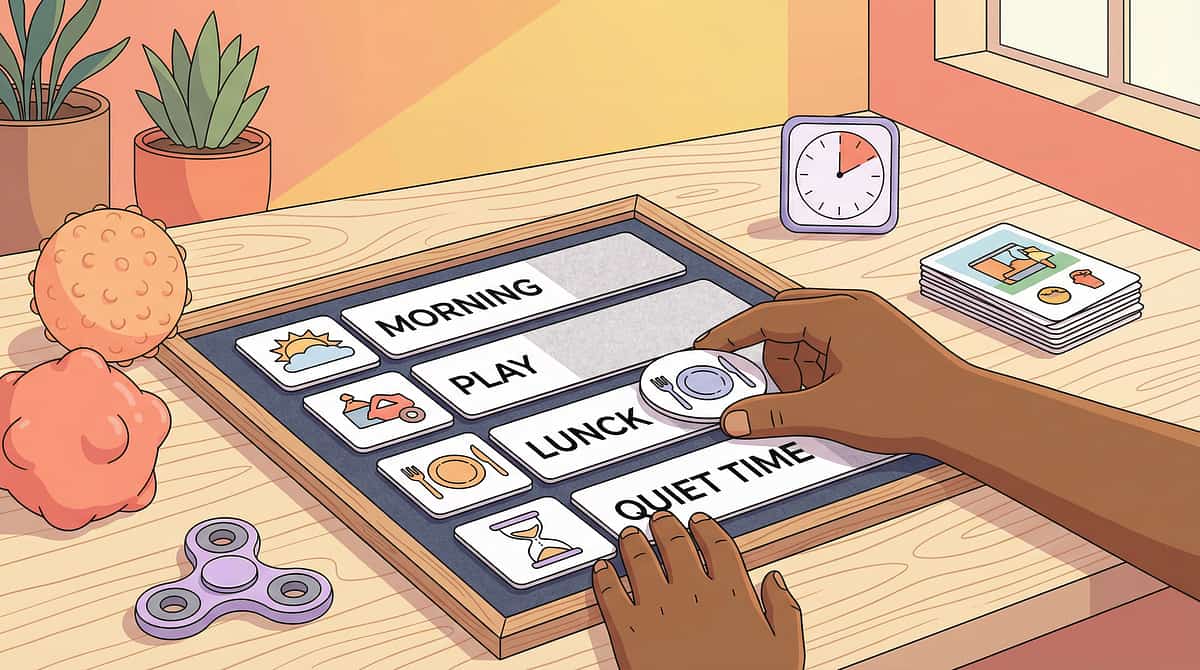
These aren't Pinterest ideas. They are clinically validated, research-backed tools.
⭐ Level I–II Evidence Grade
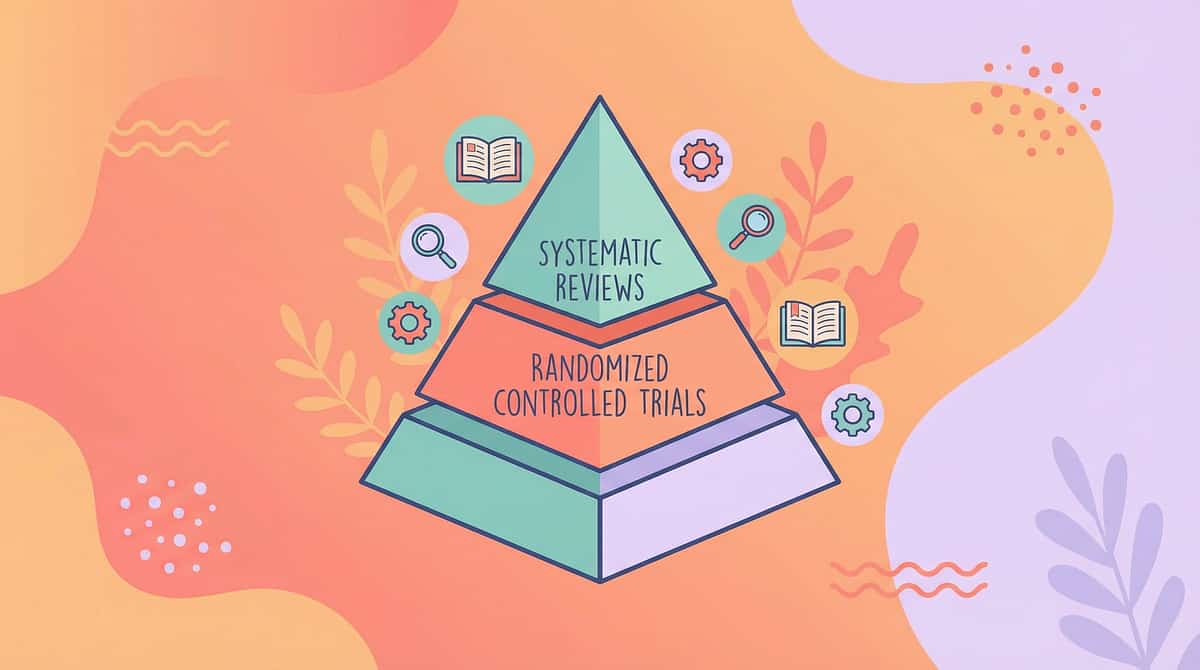
Systematic Reviews + Randomized Controlled Trials
NCAEP 2020 Classified • WHO/UNICEF Aligned
"Clinically validated. Home-applicable. Parent-proven. Across 20 million therapy sessions, these materials form the core of GPT-OS® morning routine intervention pathways."
Material | Evidence Base | Key Finding | |
Visual Schedules | NCAEP 2020 EBP | Significantly improves routine independence in ASD & ADHD | |
Visual Timers | Multiple RCTs + Barkley 2011 | Reduces time blindness; improves self-pacing | |
Token/Reward Systems | Systematic reviews: 50+ studies | Most effective behavioral motivation bridge | |
First-Then Boards | ABA chunking + OT literature | Reduces overwhelm; improves transitions | |
Social Stories | Gray 1991; NCAEP 2020 EBP | Explicit teaching of routine expectations | |
Audio Cues | Sensory integration + behavioral pacing | Non-confrontational time markers |
PMC11506176 | PMC10955541 | DOI: 10.12998/wjcc.v12.i7.1260 | NCAEP Evidence-Based Practices Report 2020 | Padmanabha et al., Indian J Pediatr, 2019

ACT II — The Materials
The Technique: What It Is
🌅 Morning Routine Independence via Environmental & Visual Scaffolding
- Parent Name: "The Morning System"
- Domain: Self-Care / Executive Function / Daily Living Skills
- Age Range: 3–12 years
- Lead Discipline: Occupational Therapy
- Supporting: ABA/BCBA • Special Education • NeuroDev Pediatrics
- Frequency: Daily — consistency is the mechanism
The Core Principle
Morning routine independence is achieved not by demanding children "try harder" — but by externally providing the executive functions their developing brains cannot yet sustain independently.
Visual supports replace working memory. A schedule on the wall holds the sequence. Timers replace temporal processing. A visual countdown shows time passing. Organized environments replace planning. Clothes laid out remove decision demands before they arise.
This is precision occupational therapy applied to the most important 90 minutes of your family's day.

Five disciplines. One morning. All pointing the same direction.
Occupational Therapist — Primary Lead
Assesses executive function profile and sensory factors. Prescribes specific visual supports, timer types, and environmental modifications within GPT-OS®.
ABA / BCBA — Behavioral Architect
Designs the token economy and reinforcement system. Establishes prompting hierarchy from full physical to independent. Tracks data and adjusts schedules as independence increases.
Special Education Specialist
Ensures morning routine targets align with IEP goals for daily living skills. Coordinates between home and school for consistency of support.
NeuroDev Pediatrician
Rules out contributing medical factors. Coordinates ADHD/autism diagnostic clarity that informs support selection, including medication timing.
Speech-Language Pathologist
When communication challenges compound morning difficulties, SLP adapts visual supports to the child's communication level and language complexity.
"This technique crosses therapy boundaries because the brain doesn't organize by therapy type. At Pinnacle, all five disciplines converge in the FusionModule™ to deliver a single coherent morning routine plan."
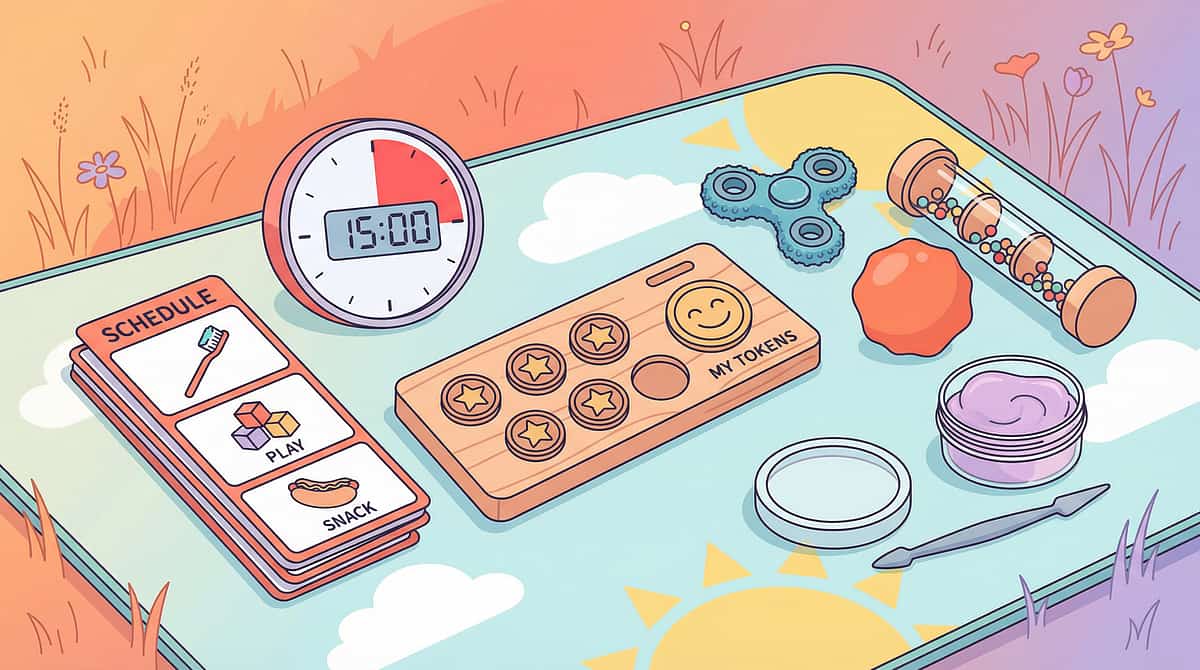
Nine materials. Six executive function targets. One goal.
Your child moves through the morning independently — without constant parent prompting.
You'll know it's working when:
Child spontaneously checks the visual schedule without prompting (sequencing)
Child mentions "only 5 minutes left" while getting dressed (time awareness)
Child moves to next task without waiting to be told (task initiation)
Morning leaves on time 4+ days per week — and child says "I did it myself" (self-efficacy)

9 Materials That Change Mornings Forever
Every one evidence-backed. Every one available in India today.
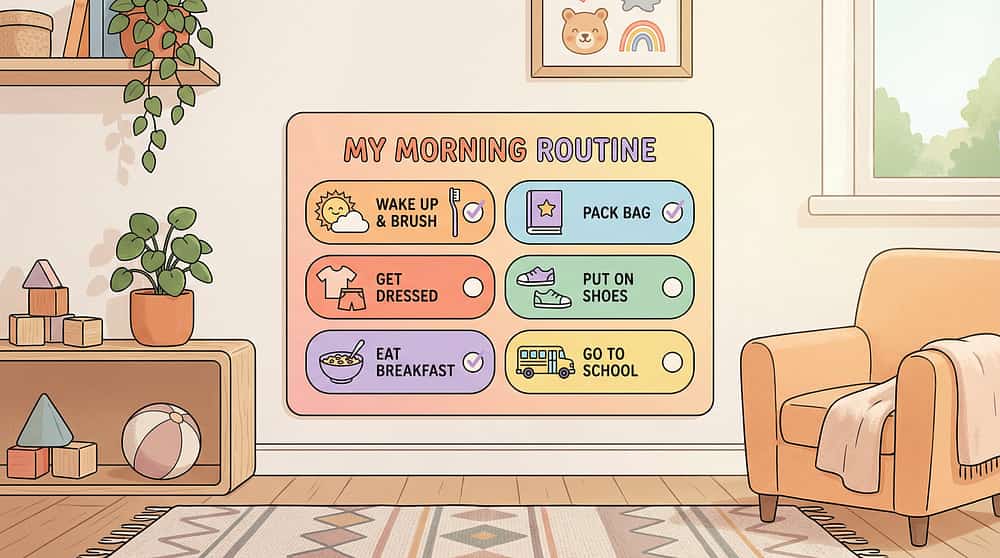
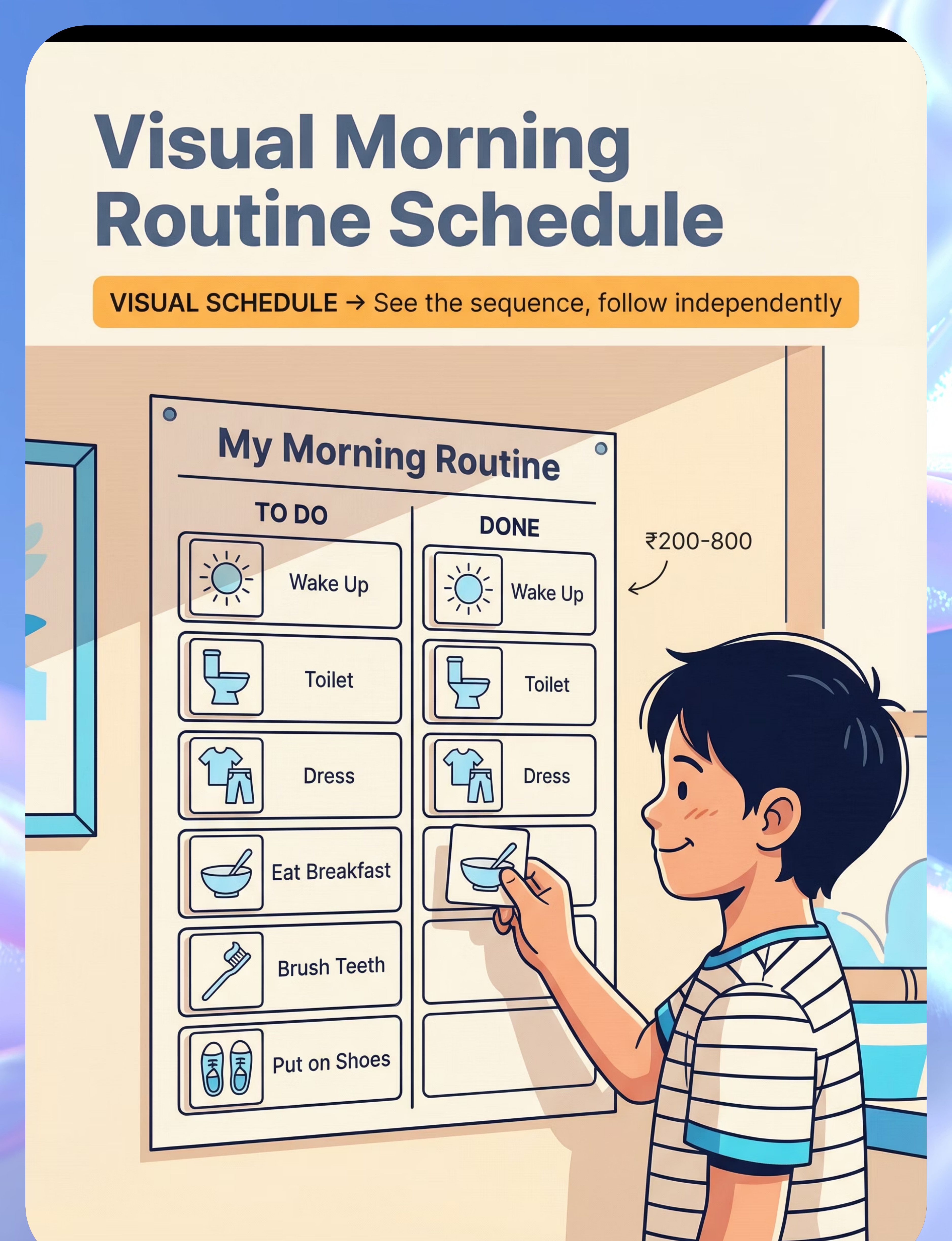
1. Visual Morning Routine Schedule
Picture-based chart showing each routine step in sequence, mounted at child eye level with a completion mechanism — velcro, checkboxes, or moveable clips. Externalizes sequencing so the child's brain doesn't have to hold it. ₹200–800 | Search Amazon.in: Visual Morning Routine Chart Children
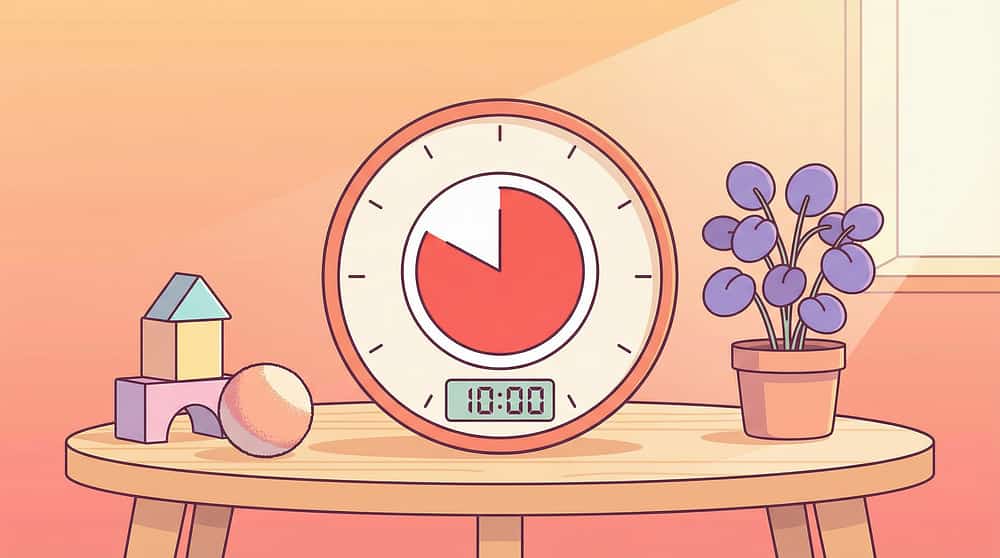
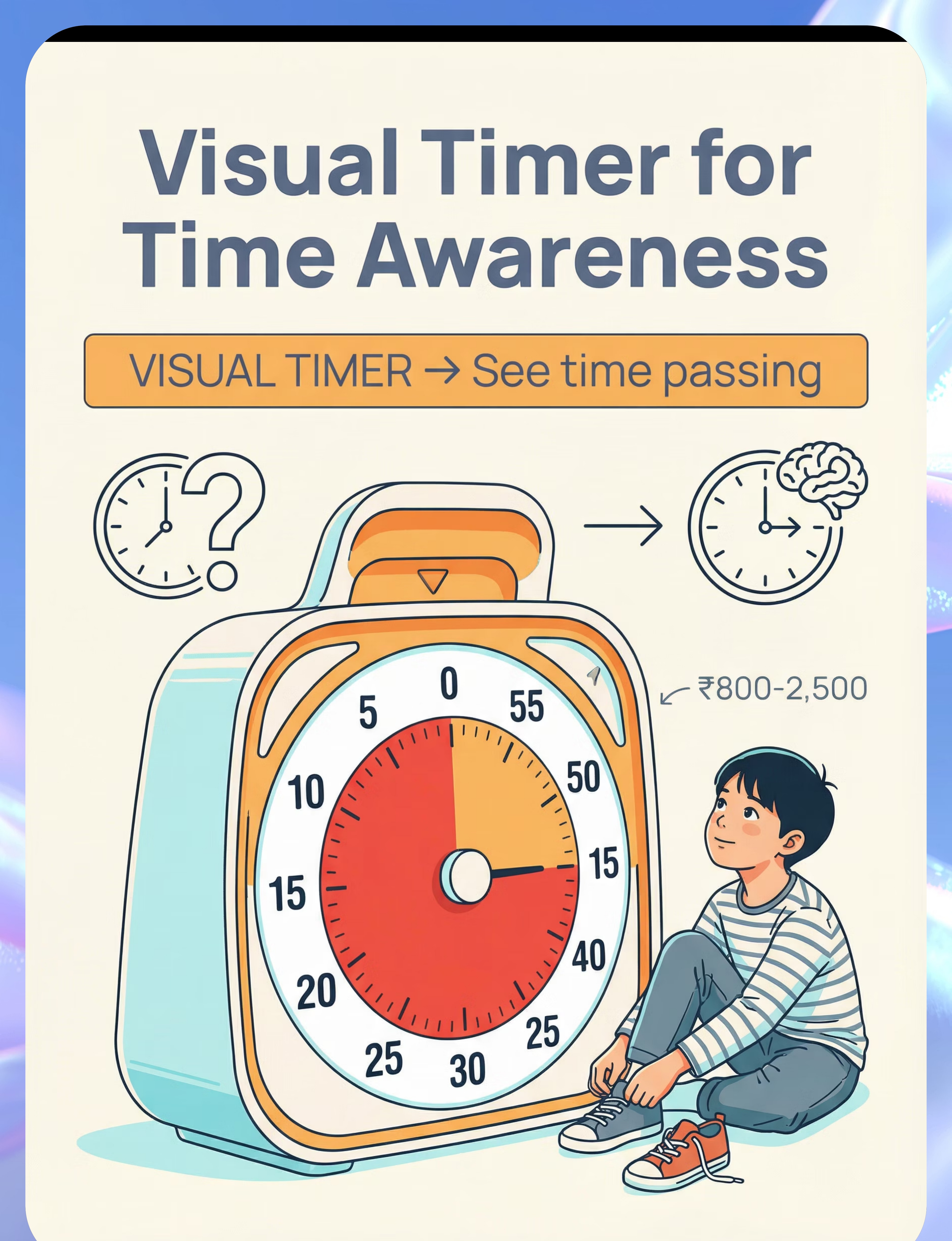
2. Visual Timer for Time Awareness
A physical timer (Time Timer brand or equivalent) that shows time passing as a shrinking colored section — not just a number countdown. Treats "time blindness" directly. The shrinking disk communicates urgency without a parent's voice. ₹800–2,500 | Search Amazon.in: Time Timer Visual Countdown Children

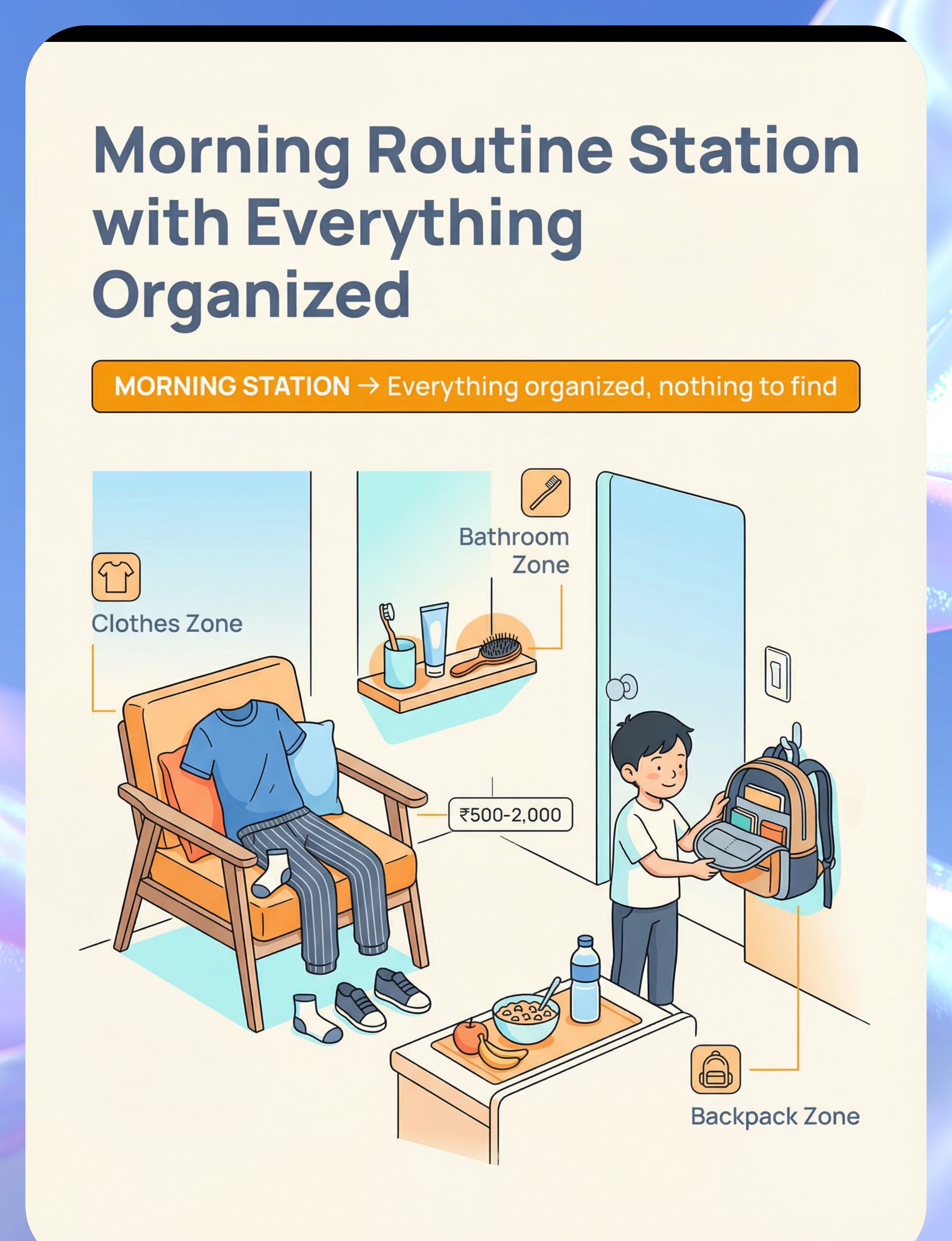
3. Morning Routine Station
Designated physical spots for every morning item — clothes laid out the night before, toothbrush in consistent location, backpack packed and positioned by door, breakfast items at child-accessible height. Removes all retrieval and decision demands from the morning. ₹500–2,000 | Search Amazon.in: Kids Room Organizer Shelf Hooks
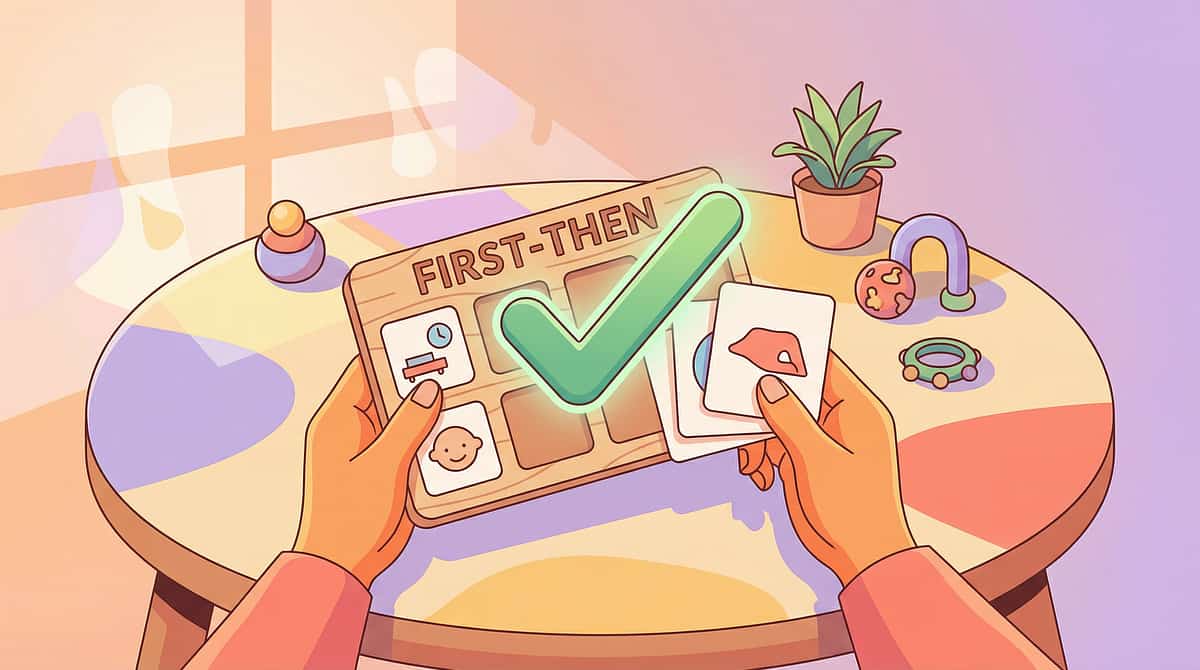
Materials 4 – 6: Sequencing, Sound & Self-Monitoring
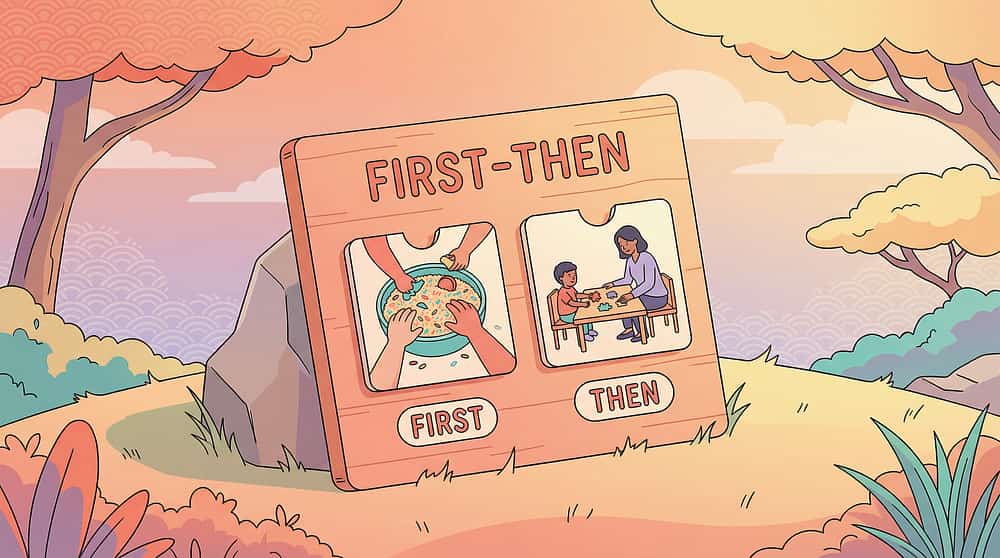
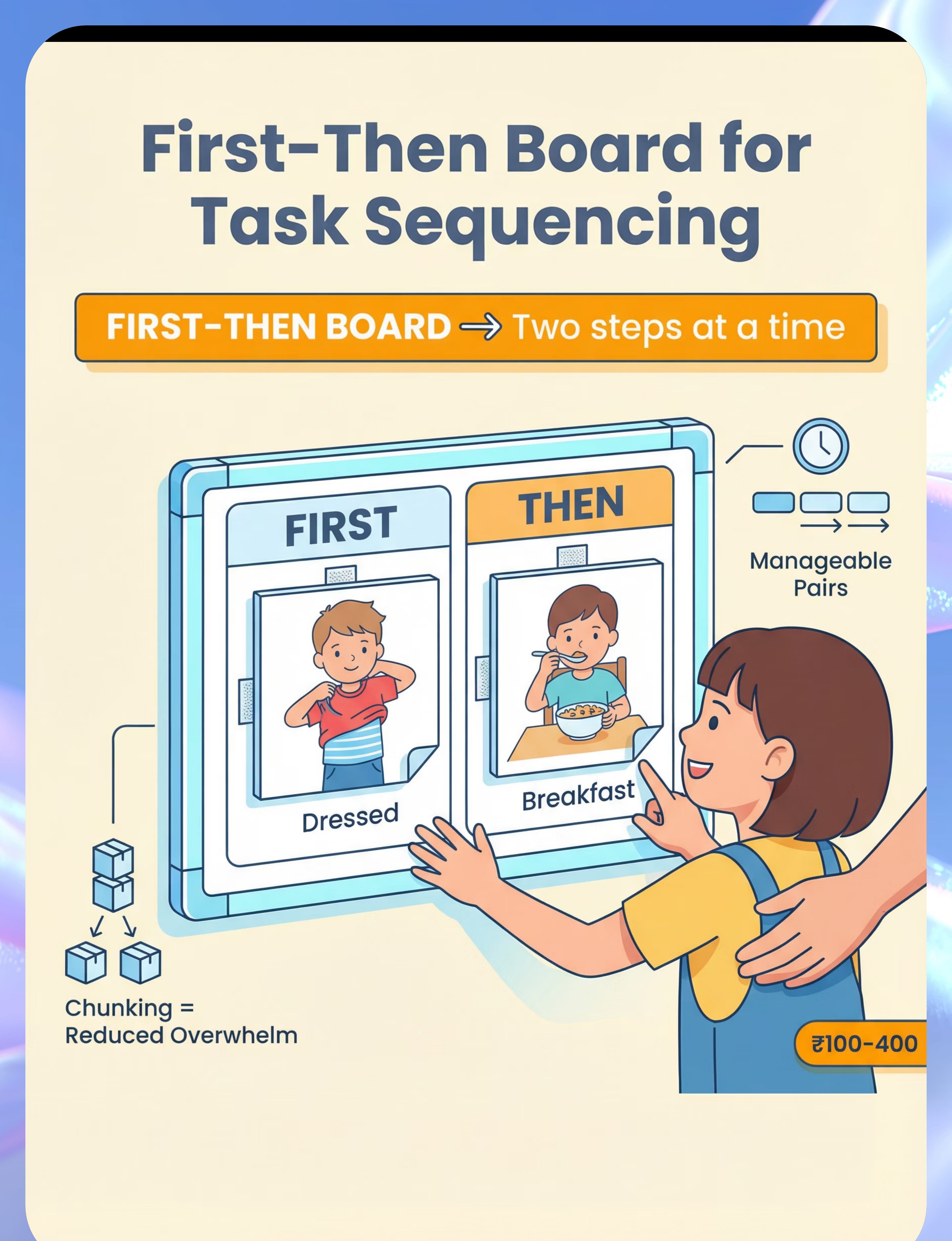
4. First-Then Board for Task Sequencing
A small board with two sections — FIRST (current task picture) and THEN (next task picture). Updated throughout morning as each pair completes. Chunks the overwhelming full routine into manageable 2-step sequences, reducing cognitive load from 8 steps to 2. ₹100–400 | Search Amazon.in: First Then Board Visual Schedule Children
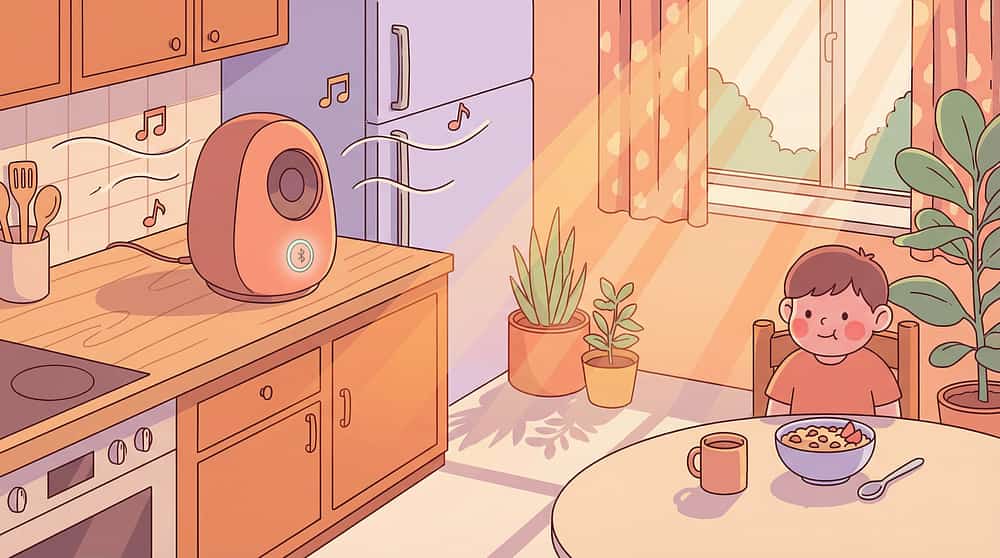
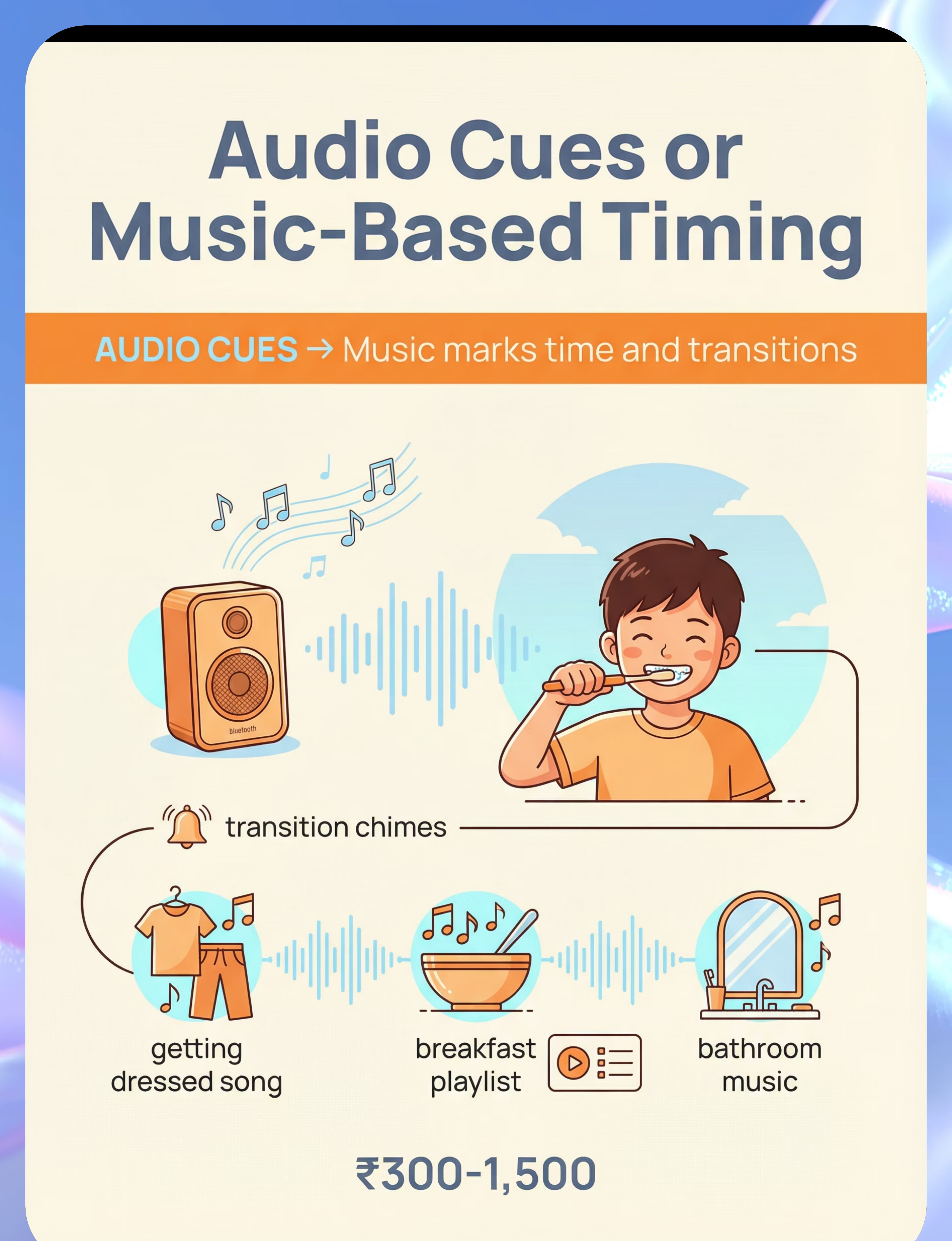
5. Audio Cues / Music-Based Timing System
A curated morning playlist where each song corresponds to a routine phase — teeth brushing song, getting dressed playlist, breakfast music. Non-confrontational external pacing. Creates positive emotional association with routine phases. ₹300–1,500 | Search Amazon.in: Bluetooth Speaker Kids Room
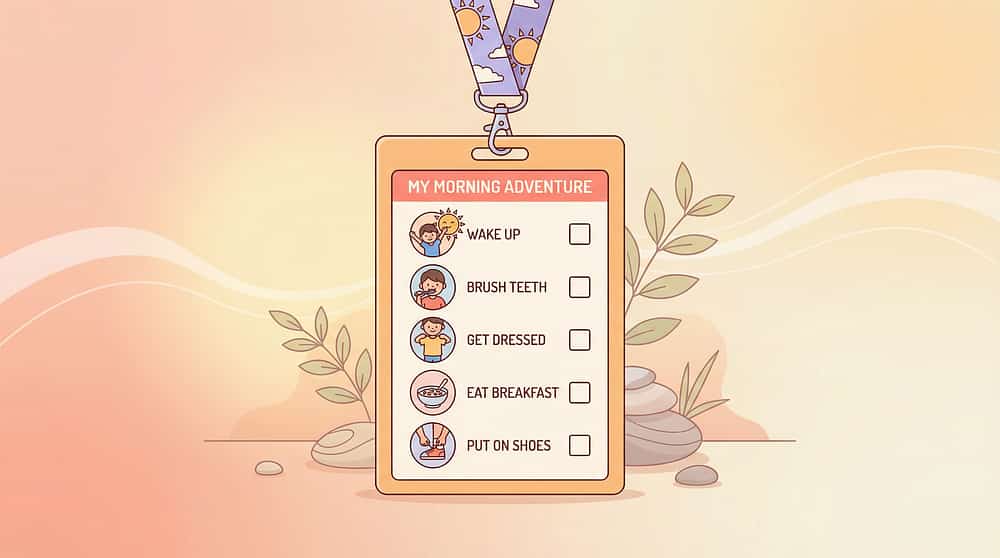
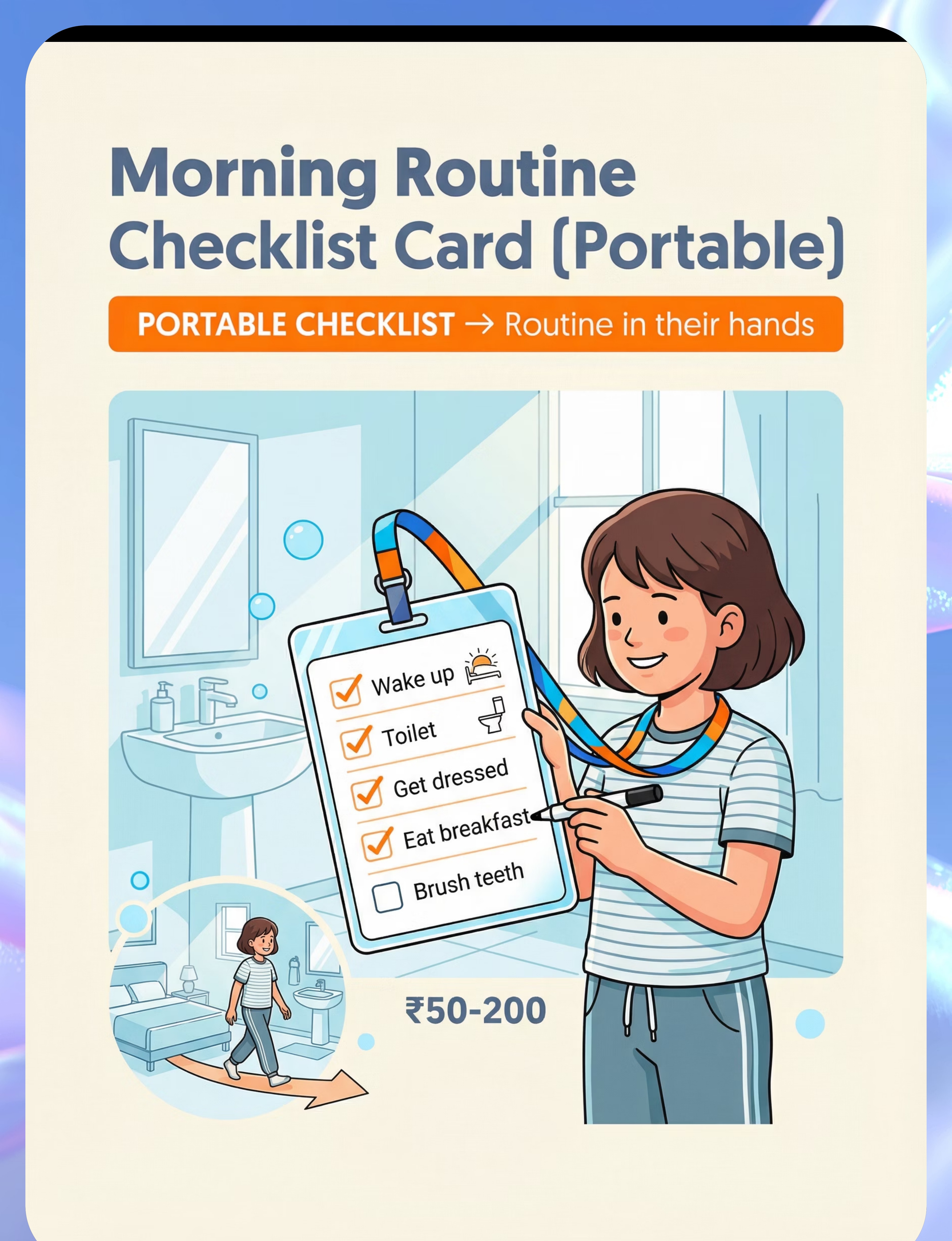
6. Morning Routine Checklist Card (Portable)
A laminated card-sized checklist (with pictures and/or words) the child carries or wears on a lanyard throughout the morning. Checkboxes marked with dry-erase marker, reset each day. Portability means the support travels with the child through multiple locations. ₹50–200 | Search Amazon.in: Laminated Cards Children Routine
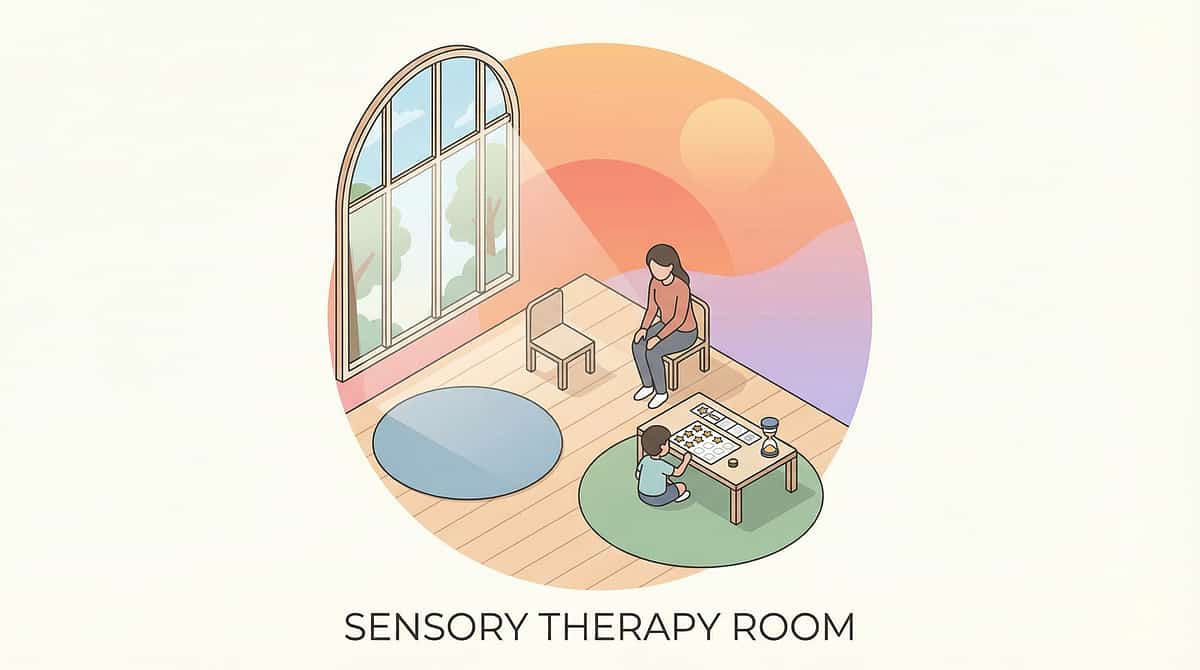
Materials 7 – 9: Motivation, Transitions & Storytelling
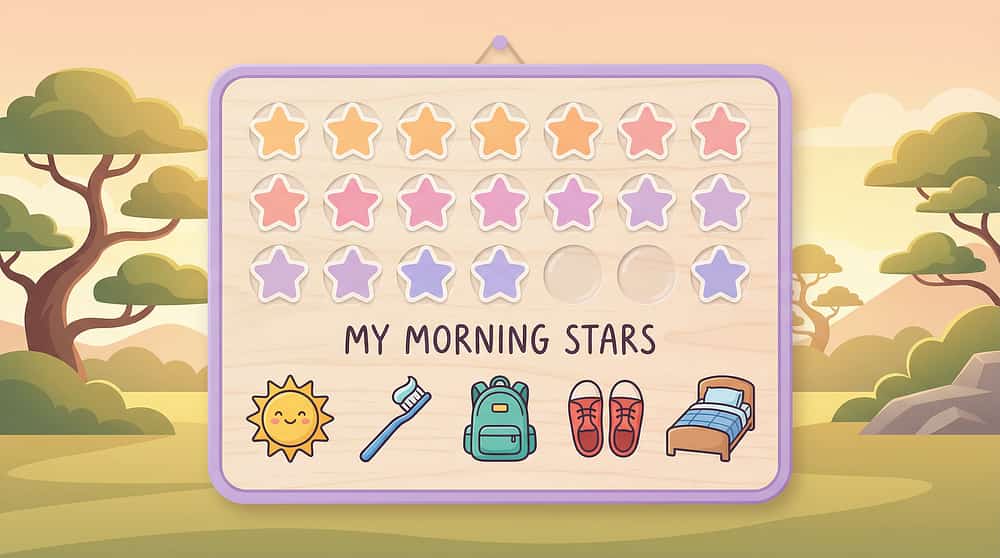
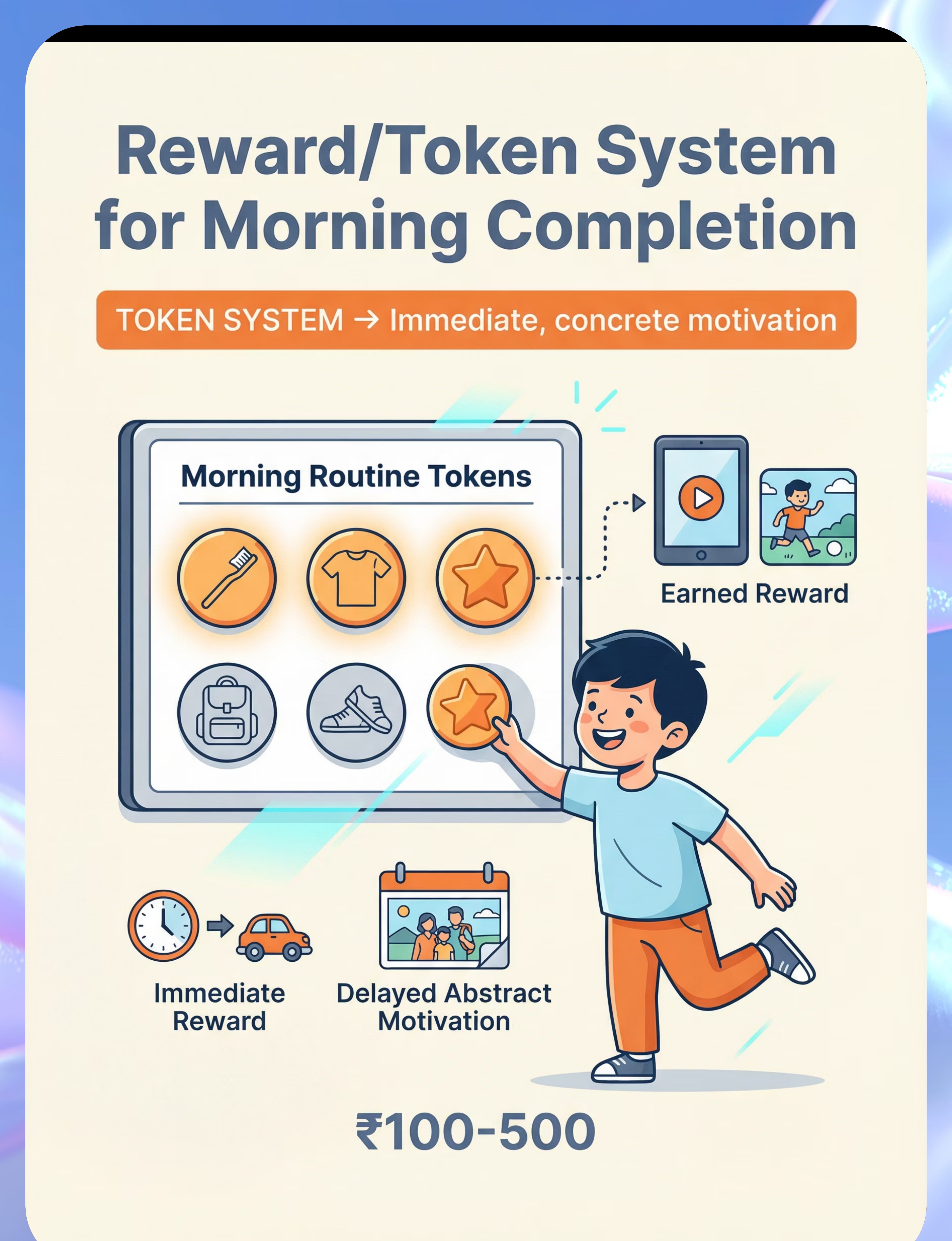
7. Reward / Token System for Morning Completion
A token board where the child earns tokens (stars, stickers, poker chips) for completing routine steps or the full routine on time. Tokens accumulate toward a meaningful reward. Bridges the motivation gap — validated across 50+ studies. ₹100–500 | Rosette Reward Jar ₹589 | 1,800+ Reward Stickers ₹364 — Amazon.in

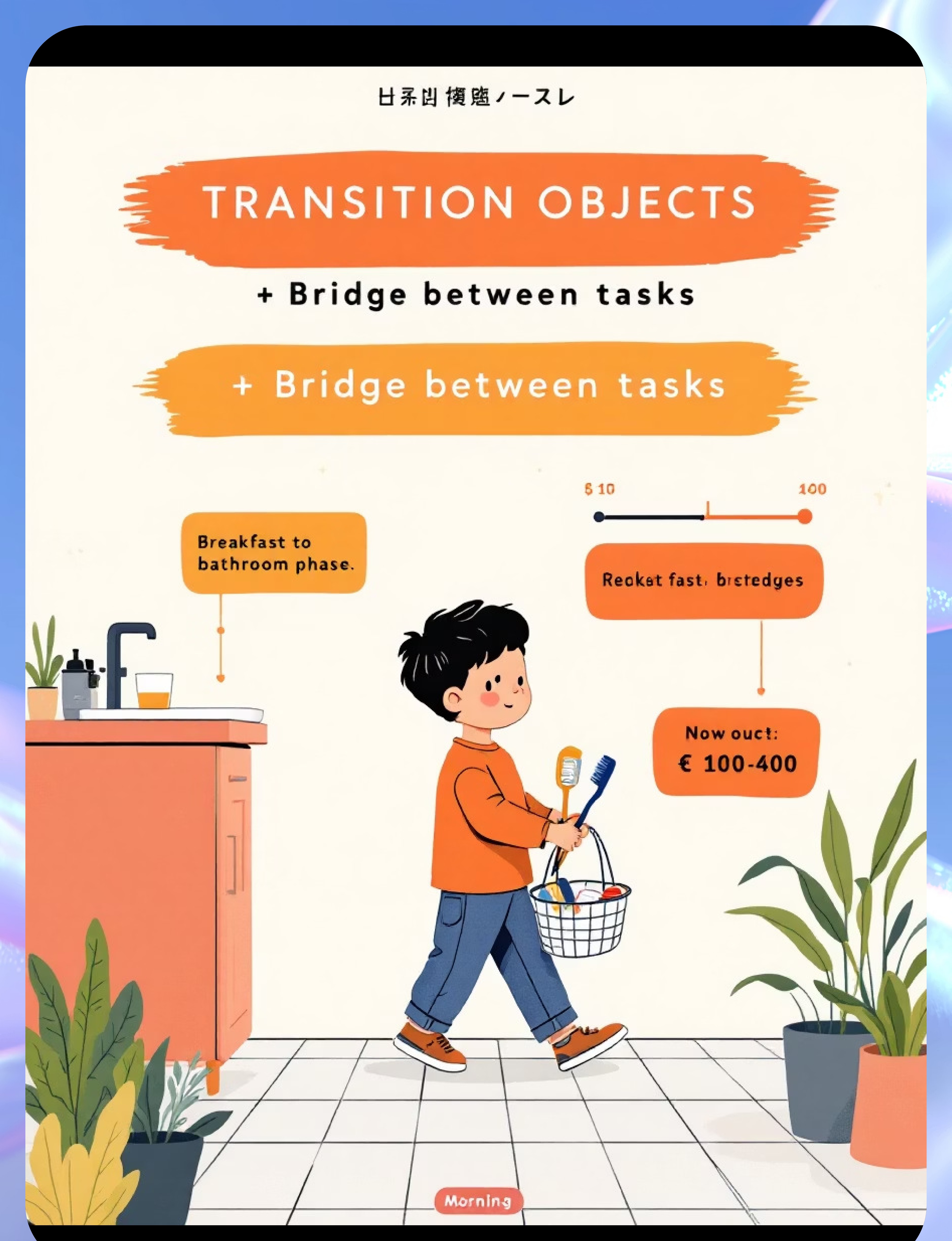
8. Transition Objects and Cues
Physical objects that bridge between routine tasks — a "bathroom basket" carried from kitchen to bathroom, a token that moves between stations, or a specific transition song between phases. Transitions are where most children get stuck — making them physical and concrete removes the invisible initiation barrier. ₹100–400 | Animal Soft Toy (transition comfort) ₹425 — Amazon.in
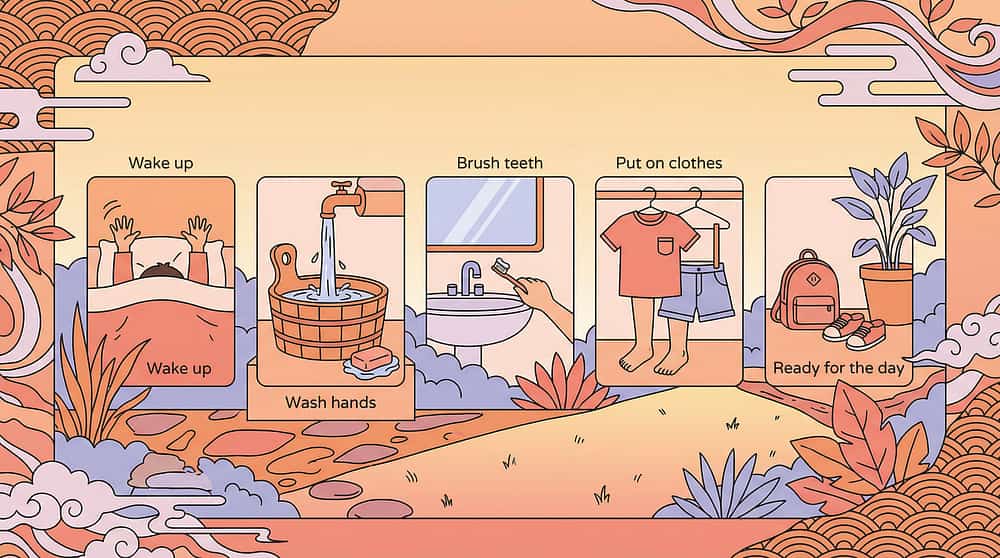
9. Morning Routine Social Story or Video Model
A personalized illustrated story (or short video) walking through the morning routine step by step, written in first person from the child's perspective. Video modeling is NCAEP 2020 Evidence-Based Practice for autism. Self-as-model video shows the strongest outcomes. ₹100–500 | Search Amazon.in: Blank Book Social Story Children

Every single material can be made at home. Right now. For free.
WHO/UNICEF Principle: Evidence-based intervention must be accessible to every family, regardless of economic status.
Material | Purchased Version | Free DIY Version (₹0) | |
Visual Schedule | Laminated chart with velcro pictures ₹200–800 | Print images from Google, cut from magazines, arrange on cardboard strip. Sticky notes as completion markers. Works identically. | |
Visual Timer | Time Timer ₹800–2,500 | Download "Time Timer" app (free). Or draw clock circles on paper — child colors in the gap as time passes. | |
Morning Station | Labelled hooks, bins, organizer shelves ₹500–2,000 | Dedicate a specific chair for tomorrow's clothes. Use existing shelves. Mark spots with tape. The consistency of location is the tool. | |
First-Then Board | Commercial velcro board ₹100–400 | Two A4 papers: one says FIRST, one says THEN. Draw or paste pictures. Tape to wall. Update with new pictures each morning. | |
Audio Timer | Smart speaker ₹300–1,500 | Any phone with free Spotify. Name each song by phase: "Getting Dressed Song," "Breakfast Song." Play via speakerphone. | |
Checklist Card | Laminated card with dry-erase ₹50–200 | Plain index card with drawn pictures and checkbox squares. New card each day (costs ₹1). Child keeps in pocket. | |
Token System | Commercial token board ₹100–500 | Draw 5 boxes on paper. Use dried beans or bottle caps as tokens. A jar with a lid makes a satisfying visual accumulator. | |
Transition Object | Specific comfort toy ₹100–400 | Any existing small object the child already likes. The ritual of carrying it is the tool. | |
Social Story | Printed/bound story book ₹100–500 | Photograph your child doing each routine step. Print or keep on phone. Read together each evening. Free and personalized. |
"The principle is the therapeutic agent — not the product. A hand-drawn chart on the back of an envelope delivers the same executive function scaffolding as a ₹2,000 laminated system. Start with what you have. Today." — Pinnacle OT Consortium Clinical Guidance

Before you set up the morning system — read these.
🔴 RED — STOP: Do Not Proceed Without Professional Guidance
- Child shows severe morning panic attacks or full meltdowns lasting more than 30 minutes daily
- Morning routine disruption is associated with self-injurious behavior
- Child has unresolved medical issues affecting sleep quality (sleep apnea, frequent night waking)
- Child is severely food-restricted and breakfast is a repeated major crisis point
→ Call 9100 181 181 before implementing any home system
🟡 AMBER — MODIFY: Adapt Before Proceeding
- Child has sensory sensitivities to clothing textures — lay out pre-approved items only
- Child is on ADHD medication — time the system after medication takes effect (consult prescribing doctor)
- Child is a very poor waker — build 15 minutes extra buffer; do not rush the biological transition to alertness
- Child has recently experienced a major change — keep morning system simpler during adjustment
🟢 GREEN — PROCEED: Standard Setup Conditions
- Child is sufficiently rested (minimum 9 hours for ages 3–7; 8 hours for ages 8–12)
- Morning environment is free of competing screens and loud audio before system is established
- Morning station setup completed the night before (not rushed morning of)
- At least one caregiver is consistent in the approach
⚡FREE National Autism Helpline: 9100 181 181 | 16+ languages | 24×7 — For guidance on which combination of these materials is right for your child's specific profile.

Five zones. Fifteen minutes to set up. Every morning optimized.
Setup Checklist — The Night Before
- Visual schedule in position, completion markers reset
- Complete outfit laid out (including socks, underwear, shoes)
- Bathroom basket items ready
- Breakfast items accessible
- Backpack packed and positioned
- Morning playlist queued on device
- Timer charged and ready
- Token board reset
Environment Notes
- Remove toys from visible morning zones until after routine completes
- Screens OFF during morning routine — no exceptions in first 8 weeks
- Consistent lighting: natural light or gentle lamp; avoid harsh overhead lights for sensory-sensitive children
- Reduce verbal narration: let the system do the reminding — your voice becomes a backup, not the primary cue

ACT III — The Execution
Is your child ready? 60-second readiness assessment.
The best morning system starts right. Run this quick check before beginning.
Check | ✅ GO | ⚠️ MODIFY | ❌ POSTPONE | |
Sleep | Adequate sleep (see Card 11) | Short night but not meltdown-level tired | Visibly overtired or sick | |
Regulation | Calm or mildly groggy on waking | Slightly irritable but responsive | Dysregulated, crying on waking | |
Feeding | Not in extreme hunger | Mildly hungry (get breakfast first) | Refusing all food / hunger meltdown | |
Recent events | No major upset yesterday | Minor upset but settled | Major meltdown within last 2 hours | |
Sensory state | No sensory sensitivity this morning | Some sensitivity — pre-adjust clothing | Sensory overload active |
✅ GO (4+ green)
Proceed with full morning system as planned.
⚠️ MODIFY (2–3 green)
Run abbreviated system — First-Then board only for 3 key steps. Keep token opportunity even if partial completion.
❌ POSTPONE (2+ red)
Skip the system today. Use free-form, low-demand approach. Reconnect emotionally. Data entry: "off day." Resume tomorrow.
"A skipped day is not a failed day. It is accurate data. The system's consistency is measured in weeks and months, not each individual morning."

Step 1 — The Invitation
Every morning begins with an invitation. Not a command.
🗣️ The Opening — Exact Words to Say
"Good morning! Let's check your morning chart together. Come see what's first today."
Lead child physically to the visual schedule. Stand beside them, not facing them. Point to Step 1 together.
Body Language Guidance
- Position yourself BESIDE the child, pointing together — not facing them (confrontational)
- Calm, unhurried tone — even if internally rushed
- Wait 5–10 seconds for the child to process before adding more words
Acceptance Cues — Child Is Ready
- Walks toward schedule (even slowly)
- Makes eye contact with the chart
- Points to or touches the first picture
- Repeats the step name aloud
Resistance Response
- Offer a choice: "Do you want to check the chart in the bedroom or the kitchen?"
- Reduce demand: just point to schedule from a distance, don't require them to stand at it
- Use First-Then: "First check chart, then I'll put on your playlist"
Timing: 30–60 seconds

Step 2 — The Engagement
The child engages with the first routine step. The system begins doing its job.
🗣️ Protocol
Once at the schedule, help child identify Step 1 and physically move toward it.
"What does your chart say first? Can you show me?"
Wait. Let the chart answer, not you.
Child points to "Get Dressed" picture.
"Yes! Getting dressed. Your clothes are on the chair. Go check!"
Materials Now Active
- Visual schedule: Child is now referencing it, not being told
- Audio cue: Start "getting dressed" playlist now
- Timer (if using): Set for allocated getting-dressed time as child moves to clothes station
- First-Then board: FIRST: Getting Dressed | THEN: Breakfast
Reinforcement Cue
Verbal praise as child initiates the step: "You checked your chart! Great job!"
Praise the initiation, not just the completion. Token earned for independently moving to clothes station after checking chart.
Timing: 1–3 minutes to establish at first step

Step 3 — The Therapeutic Action
The morning system runs. The parent steps back.
Phase 1: Bedroom (0–15 min)
Child independently dresses from laid-out clothes. Timer running. Parent available but not hovering. Child references schedule, not parent. Token earned at phase completion.
Phase 2: Bathroom (15–25 min)
Child carries bathroom basket (transition object). Visual schedule or portable checklist in use. Timer set for teeth brushing (2-minute song or timer). Audio cue ends = phase ends.
Phase 3: Kitchen/Breakfast (25–45 min)
Breakfast items accessible. First-Then board: FIRST: Eat Breakfast | THEN: Brush Teeth. No screens. Token for completing breakfast within time.
Phase 4: Bathroom Again (45–55 min)
Teeth brushing to 2-minute song. Hair. Hygiene items already in bathroom basket. Music-paced. Minimal verbal direction needed.
Phase 5: Exit Zone (55–65 min)
Backpack pick-up (already packed). Shoes (already positioned). Final token earned for on-time departure. "You did your whole morning!"
Parent Role During Execution: Prompt only to the SYSTEM, not to the task — "Check your schedule" not "Did you brush your teeth?" Deliver tokens immediately upon earned behavior. Daily execution is the dose. Consistency over 8–12 weeks is the mechanism.

Step 4 — Repeat & Vary
Every morning is a practice session. The brain builds the habit through repetition.
Repetition Guidance
- Target: Execute the full system daily (7 days a week, including weekends)
- Minimum effective dose: 5 consistent mornings per week
- Weekend modification: Same visual schedule and zones, more relaxed pacing
- Holiday modification: Keep the visual schedule even on no-school days — routine is the therapeutic agent, not school deadline
How to Vary Within Consistency
- Rotate breakfast options (not the routine — the food)
- Vary morning playlist songs (keep phase structure, change the songs)
- Add new steps when old steps are mastered
- Increase independence: fade pointing → fade checking together → child uses independently
Satiation Indicators (when to vary)
- Child seems bored with the same token reward → rotate the reward menu
- Child is completing steps without looking at schedule → introduce portable checklist phase
- Child is resisting specific steps consistently → this is data, not defiance
"3 good independent mornings are worth more than 10 nagged mornings. Partial consistency with high quality beats complete coverage at low quality."

Step 5 — Reinforce & Celebrate
Reinforcement timing matters more than reinforcement magnitude.
Behavior | Exact Words to Say | |
Child checks schedule independently | "You checked your own chart! That's brilliant!" | |
Child initiates a step without being told | "You started getting dressed by yourself — YES!" | |
Child uses timer to self-pace | "You watched your timer! That's amazing self-management!" | |
Child completes full routine on time | "You did your WHOLE morning! Token time!" |
Token Delivery Timing: Within 3 seconds of the target behavior. Not after the whole routine is done. In the moment. Always.
"Celebrate the attempt, not just the success. In weeks 1–2, a child who tries to check the schedule and doesn't know what to do next still gets the praise. The scaffold earns trust through warmth."
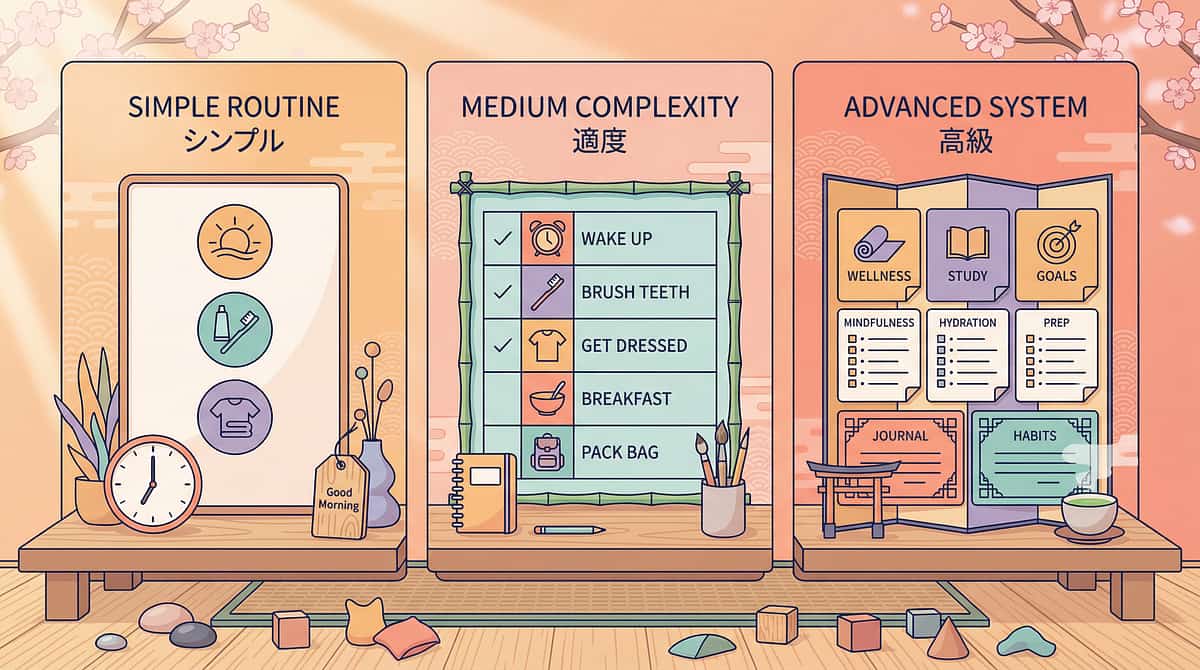
Step 6 — The Cool-Down
The morning ends with pride, not panic.
🗣️ The Exit Ritual (2–3 minutes at the door)
"You're ready! Look at your chart — show me everything you did today."
Child and parent run finger along completed schedule together. Child moves or checks all "done" items.
"Every single step. Look at that. You're ready for school."
Final token awarded. Backpack on. Shoes on. Physical departure cue (open door, or "time to go" song).
Transition to Departure
- Specific departure cue: same words, same tone, every day
- "Goodbye routine" — brief and consistent: hug + "see you later, have a great day"
- Child carries a small comfort item if school separation is difficult
If the Child Resists Leaving
- Do NOT begin explaining or negotiating at the door
- Use First-Then: "First car, then [school preferred activity]"
- Keep physical departure cue consistent — same words unlock the movement
"A morning with one incomplete step and a calm departure is a better morning than a complete routine and a tearful meltdown at the door. The goal is regulated, not perfect."

Capture the Data — Right Now
60 seconds of data now saves months of guessing later.
Data Point | How to Record | Why It Matters | |
Steps completed independently (out of 8) | Tally: 4/8, 6/8, 8/8 | Tracks independence trajectory | |
Prompts needed | Count: 0, 1, 2, 3+ | Tracks fading progress | |
Departure time vs. target time | On time / 5 min late / 10+ min late | Functional outcome measurement | |
Child's morning regulation | 😊 Calm / 😐 Mild stress / 😟 Upset | Emotional health indicator |
📱 GPT-OS® App Tracker
Personalized data dashboard | pinnacleblooms.org/gpt-os
📋 Google Form
Embedded 3-field mobile-friendly form for quick daily entry
📥 Paper Tracking Sheet
Download: Morning Routine Progress Sheet PDF — print and post at exit zone
"In 4 weeks of 3-field data, you will see a pattern that tells you more than any assessment — which steps are mastering, which need adjustment, and when you're ready to fade." — ABA Data Collection Standards: Cooper, Heron & Heward

Most mornings won't be perfect. Here's every common challenge — and the immediate fix.
❓ Child won't look at or engage with visual schedule
Why: Schedule may be too complex, poorly positioned, or untrusted yet.
Fix: Simplify to 3 steps only. Involve child in creating/decorating it. Pair schedule reference with immediate token: "check schedule = token."
Fix: Simplify to 3 steps only. Involve child in creating/decorating it. Pair schedule reference with immediate token: "check schedule = token."
❓ Child completes tasks but won't initiate next step
Why: Task initiation is the deficit — not task execution. The between-step is the problem.
Fix: Introduce transition objects. Use audio cue for phase transitions. First-Then board becomes essential here.
Fix: Introduce transition objects. Use audio cue for phase transitions. First-Then board becomes essential here.
❓ Visual timer creates panic, not awareness
Why: Some children with anxiety experience the shrinking disk as threatening.
Fix: Place timer in peripheral vision (across room, not eye level). Use audio cues instead. Use generous time allocations to reduce pressure.
Fix: Place timer in peripheral vision (across room, not eye level). Use audio cues instead. Use generous time allocations to reduce pressure.
❓ Routine works Monday–Thursday, falls apart Friday
Why: End-of-week fatigue, different school schedule, or anticipation dysregulation.
Fix: Friday routine gets a small bonus token. Acknowledge it: "Friday mornings are hard for your brain — you get extra support today."
Fix: Friday routine gets a small bonus token. Acknowledge it: "Friday mornings are hard for your brain — you get extra support today."
❓ Token system worked for 2 weeks, now ignored
Why: Reward satiation — the reward has lost its value.
Fix: Rotate the reward menu. Let child choose new rewards Sunday night. Consider moving from daily to weekly surprise reward.
Fix: Rotate the reward menu. Let child choose new rewards Sunday night. Consider moving from daily to weekly surprise reward.
❓ Second caregiver not following the system
Why: System only works when consistent across caregivers.
Fix: Share the Family Guide with other caregivers. "Different mornings can confuse the brain we're trying to train — let's use the same system."
Fix: Share the Family Guide with other caregivers. "Different mornings can confuse the brain we're trying to train — let's use the same system."

Adapt & Personalize — Your Child Is Not Average
The morning system should fit your child exactly.
Child Profile | Prioritize | Reduce | |
ADHD — time blindness dominant | Visual timer + music pacing (Materials 2 & 5) | Complex full-routine schedule | |
ADHD — initiation dominant | Transition objects + First-Then (Materials 4 & 8) | Long schedules that overwhelm initiation | |
Autism — transition resistance | Transition objects + predictable audio cues | Changing routine structure | |
Autism — sensory morning sensitivity | Pre-approved clothes station + low-stimulation music | Timers that add auditory stress | |
Anxiety — decision paralysis | Highly prescriptive schedule with no decisions | Open-choice elements in routine | |
DCD — slow physical tasks | Generous time windows + patient timer settings | Urgency-creating fast timers | |
Age 3–5 | Visual schedule (pictures only) + high-frequency tokens | Complexity; 4 steps maximum | |
Age 8–12 | Portable checklist + self-monitored timer + fading tokens | Parent proximity; increase independence |
Ages 3–5
Parent implements system alongside child. Focus: familiarity and positive association.
Ages 6–8
Child uses system with parent available. Focus: independent schedule reference.
Ages 9–12
Child self-manages with system. Parent role: logistics only (morning station setup). Focus: internalization and fading.

ACT IV — The Progress Arc
Weeks 1–2: The first two weeks are about trust, not mastery.
✅ What You WILL See (Weeks 1–2)
- Child notices the visual schedule and will look at it when pointed
- Some reduction in resistance to morning start (even if subtle)
- First-Then board reduces "what do I do next?" questions
- Token system creates visible engagement with the routine
- Occasional on-time morning (even if not consistent)
❌ What You WON'T See Yet (And That's Normal)
- Full independent routine completion — this comes at weeks 5–8
- Consistently on-time departures — routine is still being learned
- Child checking schedule without any prompting — 3–4 weeks minimum
- Token system working without parent enthusiasm — YOUR energy fuels it
"If your child tolerates checking the schedule 3 days this week without major resistance — that is measurable, real progress. The nervous system is forming the first impression of this new system." — PMC11506176

Weeks 3–4: The neural pathways are forming. You'll see the shift this week.
🧠 Child walks to visual schedule without being prompted at least once
🧠 Child anticipates the sequence — mentions the next step before being told
🧠 Specific routine steps become automatic — dressing from laid-out clothes no longer requires prompting
🧠 Token system creates genuine morning motivation — child may ask about tokens on waking
🧠 First signs of time awareness — child mentions the timer spontaneously
What This Means Neurologically: The basal ganglia are beginning to encode this sequence as a habit pattern. The prefrontal cortex is offloading management to lower-level automatic processing. This is precisely what we are building toward — moving the routine from effortful to automatic.
"You may notice you're more confident as a parent — you have a system, not just hope. This is the scaffolding working." — Pinnacle OT Clinical Protocol, Week 3–4 Parent Milestone
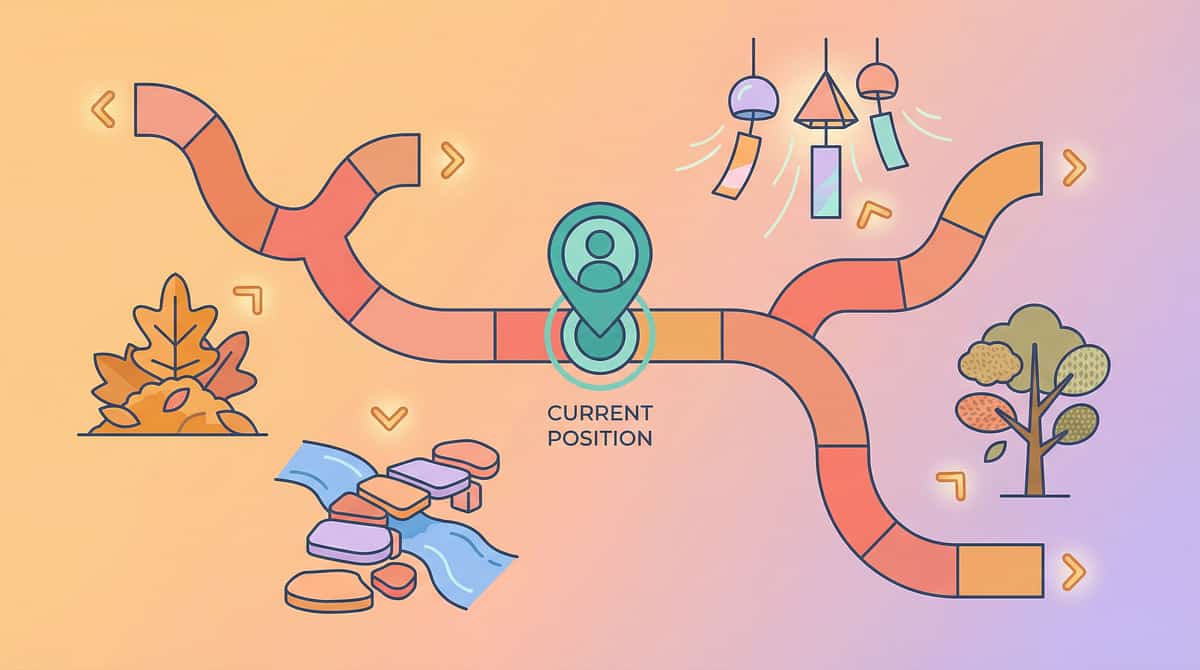
Weeks 5–8: Watch your child take ownership of their own morning.
🏅 Mastery in Progress
1
≥6 of 8 steps without verbal prompts
Achieved across 3 consecutive mornings
2
Independent schedule reference
Child checks visual schedule without parent pointing
3
On-time departure ≥4 mornings per week
Functional outcome achieved consistently
4
Demonstrated time awareness
Child adjusts pace when timer shows minimal time remaining
5
Generalization emerging
Skill appearing in new contexts — packs bag for day trip without prompting; helps younger sibling
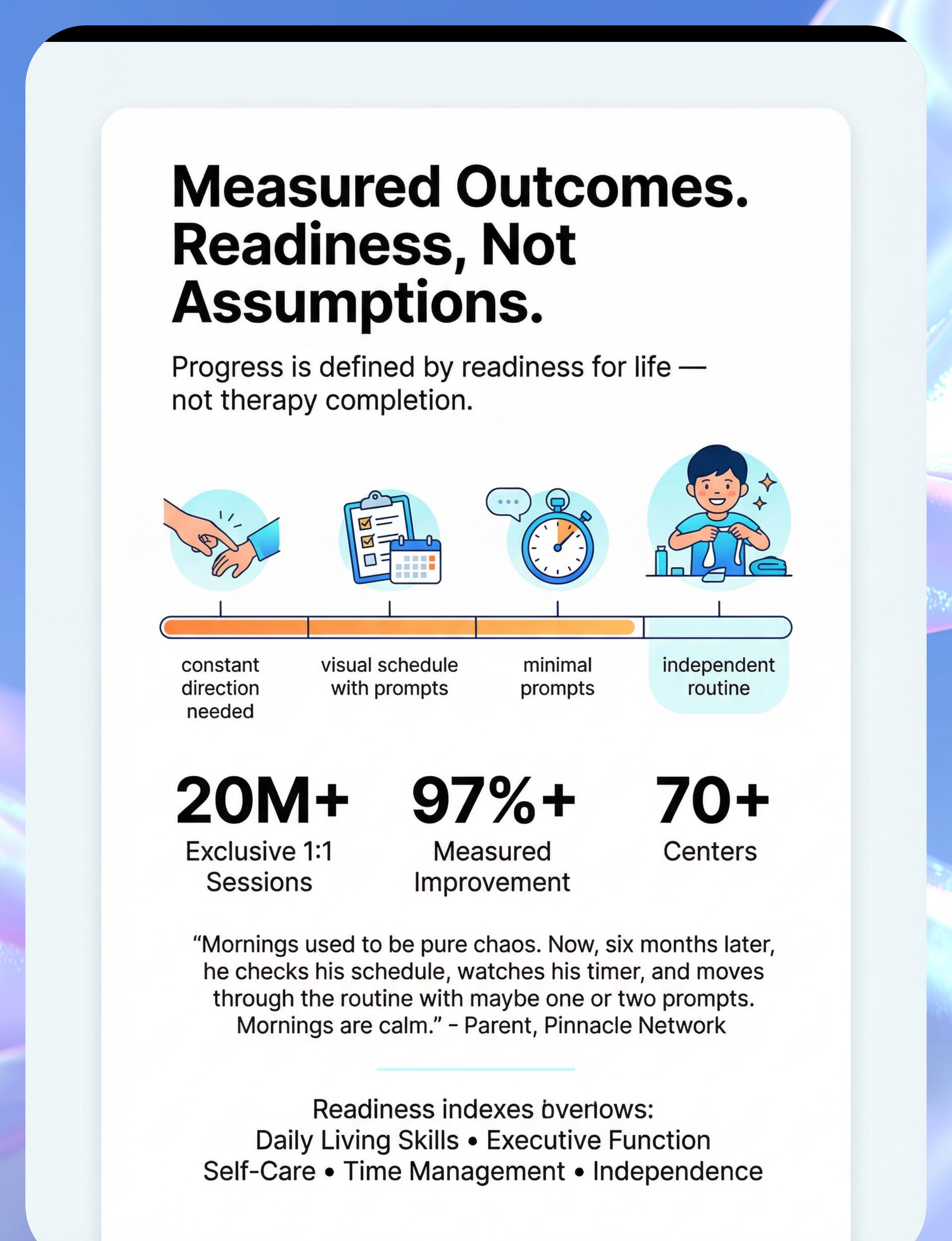
GPT-OS® Readiness: Morning Routine Independence moving from Stage 2 (frequent prompts, visual schedule required) toward Stage 4 (minimal prompts, visual supports as reference only).
🌟 You did this.
You woke up every morning for 5–8 weeks and ran the system when it would have been easier to just do it yourself. You stayed calm when it didn't work and kept going. You praised the attempts, not just the completions. You trusted the science when the results weren't there yet.
And your child's brain built a pathway that did not exist before you started.
Your child can now move through a morning routine with substantially less constant direction. That is a real, measurable, life-changing development. In GPT-OS® language: you have moved your child forward on the Daily Living Skills Readiness Index and the Executive Function Readiness Index — not as an abstraction, but as a daily lived reality for your entire family.
📸 Capture It
Take a photo of your child using their visual schedule independently
📝 Reflect
Write one sentence about what mornings were like 8 weeks ago vs. today
🌟 Celebrate
Let your child pick one special activity to celebrate their achievement
📲 Share
WhatsApp your journey to the Pinnacle parent community
Even during a successful run, watch for these signals to pause and consult.
Red Flag | What It Looks Like | What To Do | |
Increasing anxiety | Morning distress worsening over weeks, not improving | Pause token system; teleconsult OT | |
New self-injurious behavior | Hand-biting, head-hitting emerging during morning | Stop system; call 9100 181 181 immediately | |
Complete routine refusal (new onset) | Child who was improving suddenly refuses entirely | May signal school anxiety, bullying, or medical issue — not the morning system | |
Sleep deterioration | Waking more frequently; refusing to sleep night before | Investigate sleep factors; consult NeuroDev Pediatrics | |
No improvement at week 6 | Despite consistent implementation, no measurable progress | Formal OT assessment needed — profile may require clinical-level support | |
Caregiver exhaustion crisis | Parent unable to maintain the system due to own wellbeing | Seek parent support first — caregiver wellness is prerequisite for child intervention |
⚡9100 181 181 | FREE | 16+ languages | 24×7 — "Trust your instincts. If something feels wrong, pause and ask. No question is too small."
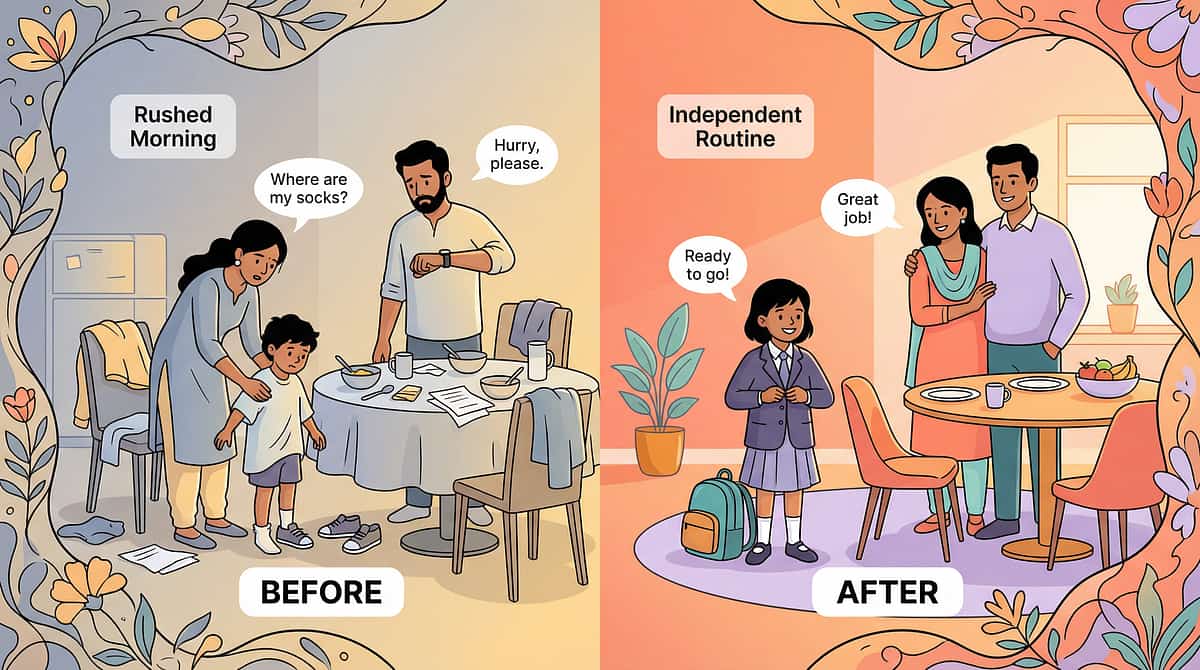
Morning routine mastery unlocks the next level of your child's development.
School Readiness
On-time arrival, organized materials, routine generalization to academic contexts
Executive Function Growth
Planning and sequencing skills transfer from morning routine to all other domains
Self-Efficacy
Child identity develops as "someone who manages themselves" — a life-long foundation
Relationship Quality
Reduced parent-child conflict — mornings become connection time, not combat time

More techniques in the Self-Care & Daily Living domain — using materials you already own.
Technique | Code | Difficulty | Shared Materials | |
Bedtime Routine Independence | E-541 | ◉ Core | Visual Schedule, Timer, Token System | |
Backpack & Belongings Organization | E-539 | ◉ Core | Visual Schedule, Checklist | |
Putting on Shoes Independently | E-538 | ◎ Intro | First-Then Board, Token | |
Mealtime Routine & Independence | E-542 | ◉ Core | Visual Timer, Token System | |
School Transition Preparation | E-543 | ◉◉ Advanced | Full System | |
Getting Dressed Independently | E-544 | ◎ Intro | Visual Schedule, Transition Object |
💡You already own materials for E-538, E-539, E-541, and E-542 after completing E-540. Browse the full Toileting & Self-Care Independence domain at techniques.pinnacleblooms.org/self-care/

Morning routine is one piece. Here is your child's entire developmental landscape.
The 12 Developmental Domains — GPT-OS® Framework
- A. Sensory Processing
- B. Social Communication
- C. Emotional Regulation
- D. Behavior & Flexibility
- ► E. SELF-CARE & DAILY LIVING ◄ ← YOU ARE HERE
- F. Gross Motor
- G. Fine Motor
- H. Cognitive & Executive
- I. Academic Readiness
- J. Play & Social Skills
- K. Speech & Language
- L. Adaptive Behavior
The Developmental Cascade
Morning routine mastery (Domain E) creates ripple effects across multiple domains:
- Executive Function gains (Domain H) from sequencing and time awareness practice daily
- Reduced behavioral challenges (Domain D) from predictability and reduced morning anxiety
- Improved social communication (Domain B) as morning stress no longer spills into interaction quality
- Sensory regulation stability (Domain A) from predictable, consistent morning sensory environment
"Connect your child's morning routine data to their full developmental profile through GPT-OS®. One closed loop: home data → clinical intelligence → personalized plan."
Three families. Three starting points. One destination.
ACT V — Community & Ecosystem
Aditi, Mother | Hyderabad
Before:"I was getting my 7-year-old dressed every morning. He would stand at his cupboard for 10 minutes looking at clothes. I felt like a failure every single morning."
The Change: OT assessment revealed working memory and initiation challenges. Visual schedule introduced with 5 steps. Clothes station set up Sunday nights by father and child together.
After (Week 6):"He checks his chart when he wakes up before he even comes to find me. He's dressed and at the breakfast table before I'm ready. I cried the first time it happened."
Priya, Mother | Bengaluru
Before:"My daughter is 5 with autism. Every morning was a full sensory war. New clothes were a crisis. Brushing teeth was a 30-minute negotiation."
The Change: Pre-approved sensory-safe clothes laid out night before. Transition object (small dinosaur) carried from bedroom to bathroom. Music-based timing for each phase.
After (Week 8):"She carries her dinosaur to the bathroom herself now. She says 'dinosaur time' which means brushing time. My mornings went from warfare to... actually kind of sweet."
Suresh, Father | Chennai
Before:"My 9-year-old was being diagnosed with ADHD. I was skeptical — he can read, he knows the routine. Why would a picture chart help?"
The Change: OT explained time blindness specifically. Visual timer introduced for time awareness, not sequence. Token system with screen-time rewards.
After (Week 5):"I was wrong. The timer changed everything. He glances at it while eating breakfast and adjusts his pace. He never did that before. He couldn't feel time. Now he can see it."
Anonymized illustrative cases based on Pinnacle Network clinical outcomes. Individual results vary based on child profile, underlying needs, and implementation consistency.

You are not navigating this alone. 21 million therapy sessions worth of parent wisdom is one message away.
💬 Pinnacle Parent WhatsApp Group
Morning Routine & Self-Care — Active daily. Parents sharing wins, asking questions, troubleshooting together. Moderated by Pinnacle clinical staff. Join via pinnacleblooms.org/community
🌐 Pinnacle Online Parent Forum
Searchable threads, posted solutions, therapist-moderated answers. forum.pinnacleblooms.org/self-care
👥 Peer Mentoring
Pinnacle matches newly implementing parents with parents who have completed 8+ weeks of morning routine systems. Request via helpline 9100 181 181.
📍 Local Pinnacle Parent Meetup
Find your nearest center's monthly parent group: pinnacleblooms.org/centers
"Your 6-week morning routine journey will be the reason another parent tries for week 2. Consider sharing your story — it matters more than you know."

70+ centers. Every specialist. One integrated team behind your morning system.
Your Child's Primary Challenge | Recommended Specialist at Pinnacle | |
Sequencing / doesn't remember routine | Occupational Therapist ✅ 70+ centers | |
Time blindness / no urgency | OT + NeuroDev Pediatrician ✅ All centers | |
Initiation / won't start steps | ABA / BCBA ✅ All centers | |
Transition resistance between tasks | OT + ABA combined ✅ FusionModule™ | |
Morning meltdowns / emotional dysregulation | OT + Psychology ✅ Available | |
Communication challenges compounding routine | SLP + OT ✅ Available |
📞 Helpline
9100 181 181 — FREE | 16+ languages | 24×7. Same-day appointment coordination. Initial consultation teleconsult available.
💻 Teleconsultation
For families outside center reach. pinnacleblooms.org/
🏢 Centre Assessment
AbilityScore® + Executive Function Profile. pinnacleblooms.org/assessment
"Home + clinic = maximum impact. The morning system you run at home is most powerful when an OT has mapped it to your child's specific executive function profile. The combination is the protocol."
For the parent who wants to understand the science behind what they're doing.
Evidence Pyramid
Systematic Reviews & Meta-Analyses
Randomized Controlled Trials
Cohort Studies & Clinical Consensus
Case Studies & Expert Opinion
Key Studies — One-Sentence Summaries
PRISMA Systematic Review (2024) | Visual schedules and structured supports meet criteria as Evidence-Based Practice for ASD across 16 studies. PMC11506176 | |
World J Clin Cases Meta-analysis (2024) | Structured intervention promotes adaptive behavior, EF, and daily living skills across 24 studies. PMC10955541 | |
WHO CCD Package (2023) | Caregiver-implemented environmental supports demonstrate efficacy across 54 LMICs. PMC9978394 | |
NCAEP EBP Report (2020) | Visual supports, token economy, and video modeling: all three classified as Evidence-Based Practices for autism. | |
Padmanabha et al., Indian J Pediatr (2019) | Indian RCT confirms home-based structured supports show significant outcomes in pediatric developmental intervention. | |
Barkley (2011) — Time Blindness | Temporal processing deficits are a core feature of ADHD executive dysfunction — directly addressed by visual timers. |

Every morning you track becomes intelligence that helps your child — and every child like yours.
What GPT-OS® Specifically Learns From Your Data
- Which steps are mastering (reduces intensity on those)
- Which steps are stuck (increases support precision)
- Time-of-day pattern analysis (morning regulation trends)
- When to fade supports (evidence-based graduation thresholds)
- When to escalate to clinical review (flags before parents notice patterns)
Privacy Assurance
- All data governed by Pinnacle data protection protocols
- No personally identifiable data shared externally
- Parent controls data access and deletion
- DPIIT DIPP8651 registered data practices
Population Intelligence
"Your child's morning routine data contributes to the most comprehensive pediatric executive function normative database in India — improving recommendations for every child who comes after."

Watch the Reel — E-540
📺 Reel Identity
- Title: 9 Materials That Help With Morning Routine
- Series: Toileting & Self-Care Independence in Children
- Episode: E-540
- Duration: 60 seconds
- Age Range: 3–12 years
- Format: Subtitled | Captions ON
What the Reel Shows
A therapist demonstrates each of the 9 materials in the actual morning context — visual schedule in use, Time Timer running, First-Then board being updated, token earned at departure. 60 seconds. Subtitled.
"I'm an Occupational Therapist at Pinnacle Blooms Network. Morning routine struggles are one of the most common challenges I see — and the most solvable. These 9 materials have changed mornings for thousands of families."

Why Watch + Read
Evidence shows that text + demonstration video learning improves parent skill acquisition by 40% vs text alone. Watch once, then re-read the Step-by-Step Protocol (Cards 14–19).
NCAEP 2020: Video modeling as Evidence-Based Practice
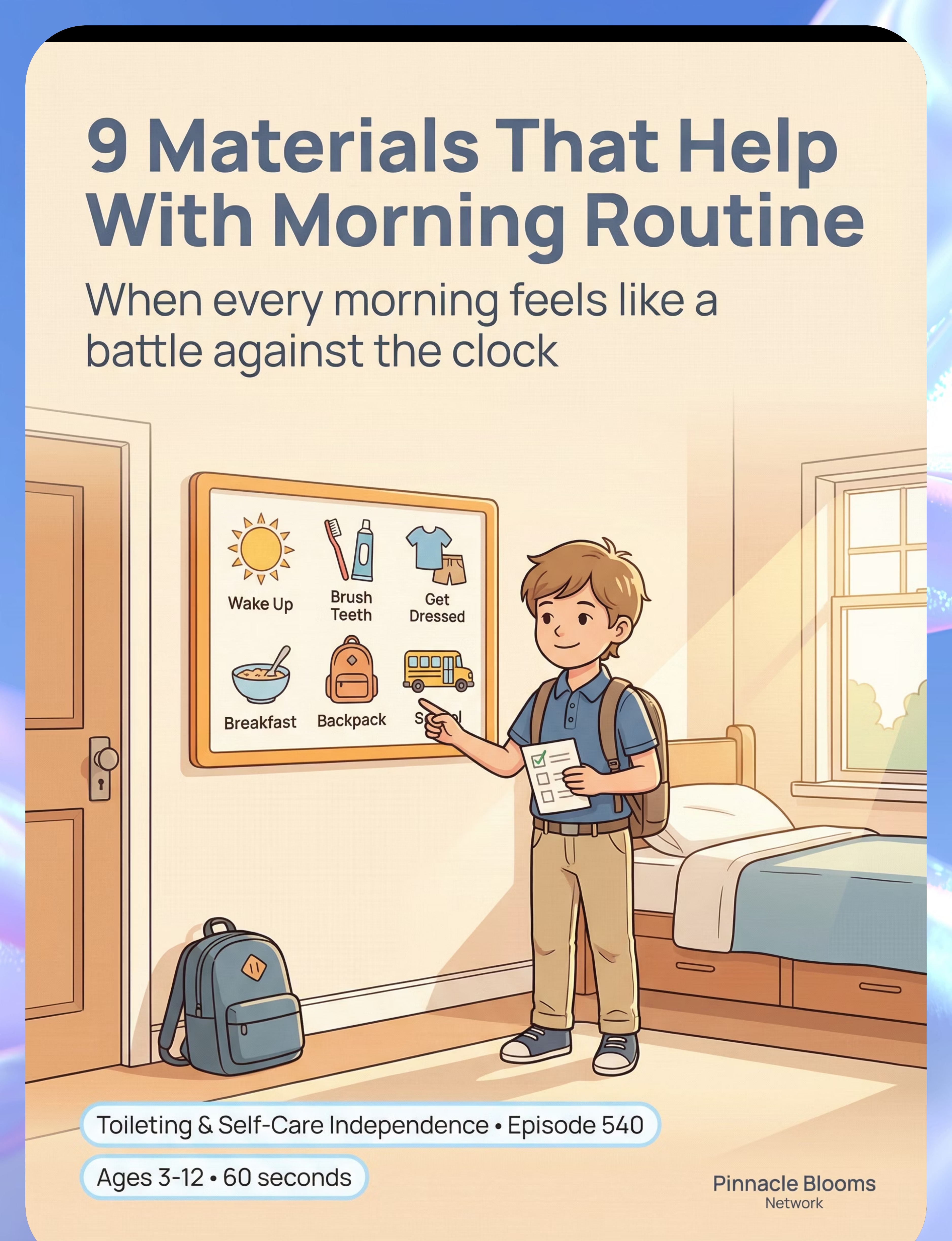
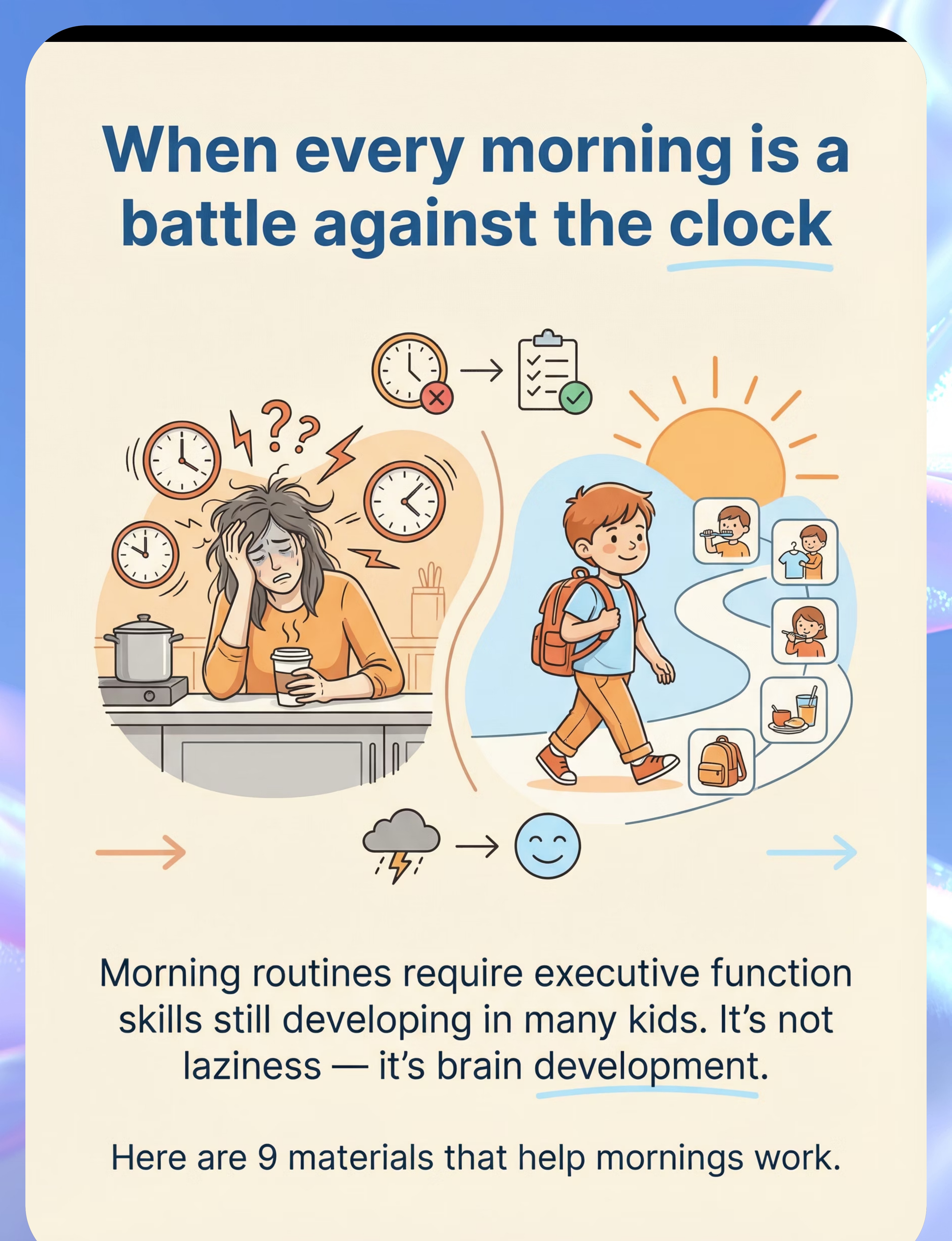
Preview of 9 materials that help with morning routine Therapy Material
Below is a visual preview of 9 materials that help with morning routine therapy material. The pages shown help educators, therapists, and caregivers understand the structure and content of the resource before use. Materials should be used under appropriate professional guidance.





Link copied!

Share this page with your family — the morning system works best when everyone uses it.
Sharing Options
- 📱WhatsApp — Send this page directly: "This is what we're using for [child's name]'s mornings"
- 📧Email — To spouse, grandparent, school teacher
- 🔗Copy Link: techniques.pinnacleblooms.org/self-care/morning-routine-materials-E-540
Simplified Versions for Different Audiences
- 📥For the Other Parent/Spouse: 2-Page Morning System Quick Guide PDF — "What we're doing in the morning and why — 2 pages, 5 minutes to read"
- 📥For Grandparents: Visual-heavy, large print, no clinical language — "When you have the children in the morning, here is what helps."
- 📥For School Teacher: Teacher Communication Template — "Our child uses a visual schedule and timer at home — can we align at school?"
"Consistency across caregivers multiplies impact. Two consistent caregivers creates 100% of the benefit — plus generalization. One consistent, one not = 50%." — WHO CCD Package: PMC9978394
FAQ — Every Question Parents Ask
How long before I see results? First measurable change in 2–3 weeks. Consistent independent routine use typically emerges at weeks 5–8.
Do I need all 9 materials? Start with the Essential Starter Kit: Visual Schedule + Visual Timer + Organized Morning Station. Add others as the core system stabilizes.
My child is 10 — isn't she too old? No. By age 10, transition to a portable checklist format, which feels age-appropriate while delivering the same scaffolding.
Can I do this without a therapist? Yes, for most children ages 5–12. For autism, severe ADHD, or additional diagnoses, OT assessment significantly improves precision. Call 9100 181 181 to guide the decision.
We tried reward charts before and they didn't work. The difference: immediate delivery — token earned the moment the behavior occurs. Child-chosen rewards, updated regularly. Consistent and clear. Generic charts fail due to delayed, arbitrary reward delivery.
🚀 Start This Technique Today
Launch GPT-OS® Morning Routine Session
📞 Book a Consultation
Speak to an OT about your child's profile
▶ Next Technique
E-541: 9 Materials That Help With Bedtime Routine
© 2025 Pinnacle Blooms Network®, a unit of Bharath Healthcare Laboratories Pvt. Ltd. All rights reserved. GPT-OS®, AbilityScore®, TherapeuticAI®, FusionModule™, EverydayTherapyProgramme™ are registered intellectual property of Pinnacle Blooms Network®. CIN: U74999TG2016PTC113063 | DPIIT: DIPP8651 | MSME: TS20F0009606 | GSTIN: 36AAGCB9722P1Z2
This content is educational. It does not replace individualized assessment and intervention planning with licensed occupational therapists, psychologists, and healthcare professionals. Individual results vary.
⚡FREE National Autism Helpline: 9100 181 181 | 16+ languages | 24×7 | pinnacleblooms.org | care@pinnacleblooms.org