
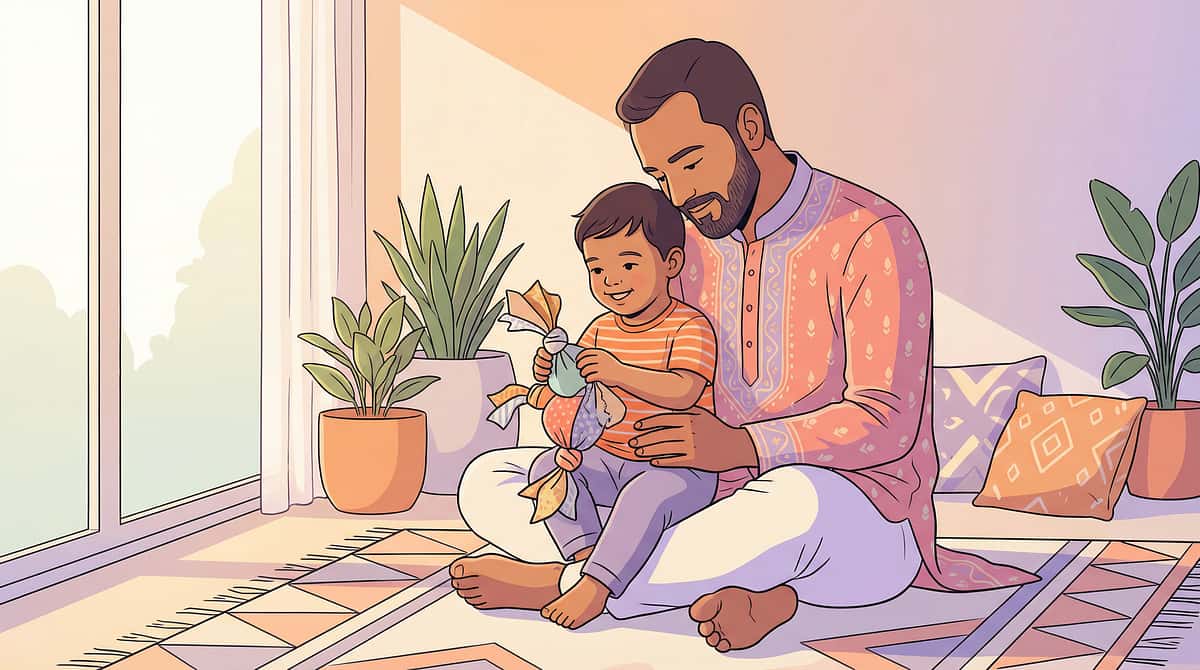
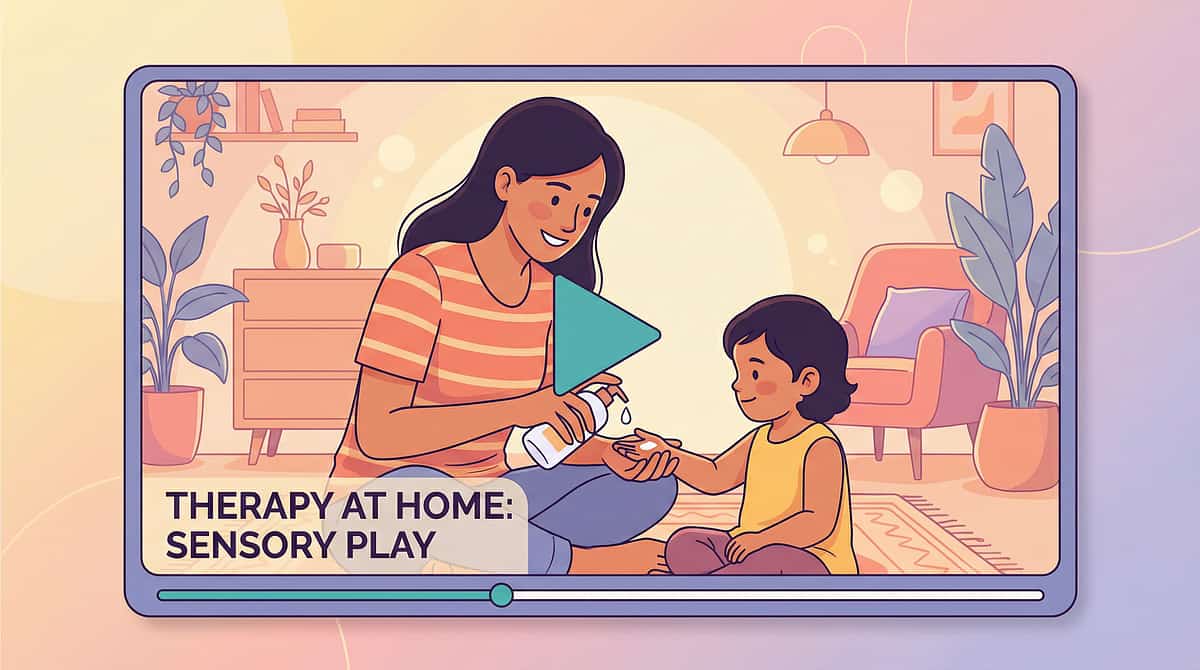
"The lotion bottle appears. Your child runs."
You've tried every brand. You've warmed it, hidden it in games, offered rewards. Their skin is cracking. But your child isn't being dramatic — their nervous system is genuinely overwhelmed. And there's a way through.
Act I — Recognition
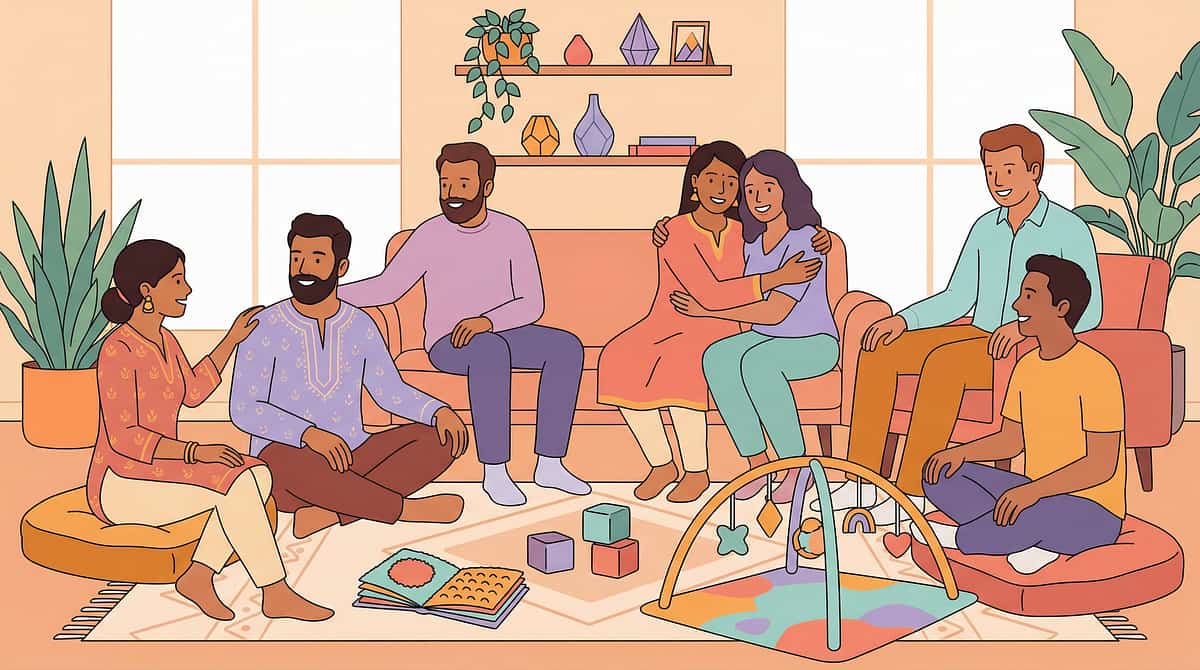
You Are Not Failing. You Are Not Alone.
It's 8 AM. School starts in 30 minutes. Your child's eczema flared overnight — the pediatrician said daily moisturizing is non-negotiable. You reach for the lotion. The moment they see the bottle, they freeze. The moment it touches their skin, the world ends.
They're screaming. They're wiping it off on the sofa. They're saying it feels wrong, sticky, like something's burning. Their distress is real. Their nervous system is speaking a language that doesn't have easy words.
"You are not failing. Your child's nervous system is speaking. Pinnacle's consortium of OTs, ABA therapists, SLPs, and neurodevelopmental pediatricians designed what comes next — specifically for this."
🏅Pinnacle Blooms Consortium® | Validated by OT • ABA • SLP • SpEd • NeuroDev | Built by Mothers. Engineered as a System. | 📞9100 181 181 (FREE | 16 languages | 24×7)
Act I — The Numbers
You Are Among Millions of Families Navigating This Exact Challenge
Lotion intolerance is not a parenting failure. It is one of the most frequently reported sensory challenges across occupational therapy clinics worldwide. Children with autism, ADHD, sensory processing disorder (SPD), and anxiety disproportionately experience tactile defensiveness — a genuine neurological condition that makes textures feel intensely, persistently uncomfortable.
80%
Tactile Difficulty
of children with ASD experience tactile sensory processing difficulties
1 in 36
On the Spectrum
children in India estimated to be on the autism spectrum (CDC/INCLEN data)
70%
Grooming Challenges
of children with SPD have significant challenges with grooming and self-care routines
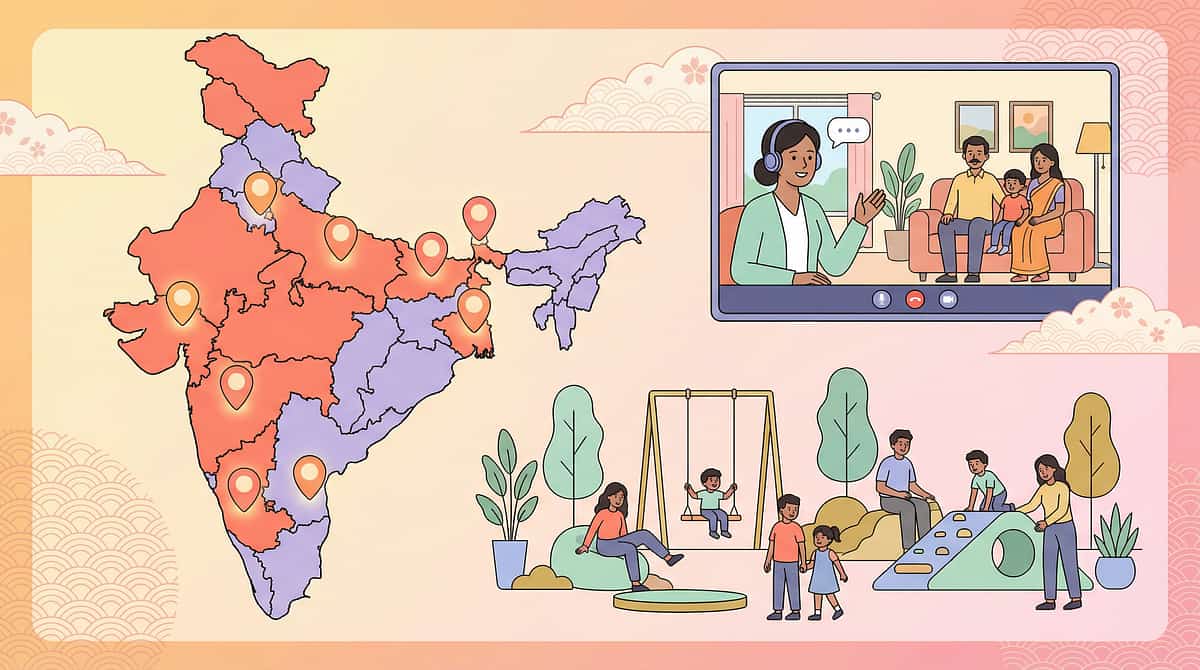
Across India's 70+ Pinnacle centers, lotion and skincare resistance is among the top 5 self-care challenges reported during OT intake assessments. When your child wipes lotion off immediately, or says they "still feel it" hours later, they are accurately reporting their sensory experience. Their nervous system is not exaggerating — it processes tactile input differently.
Act I — The Neuroscience
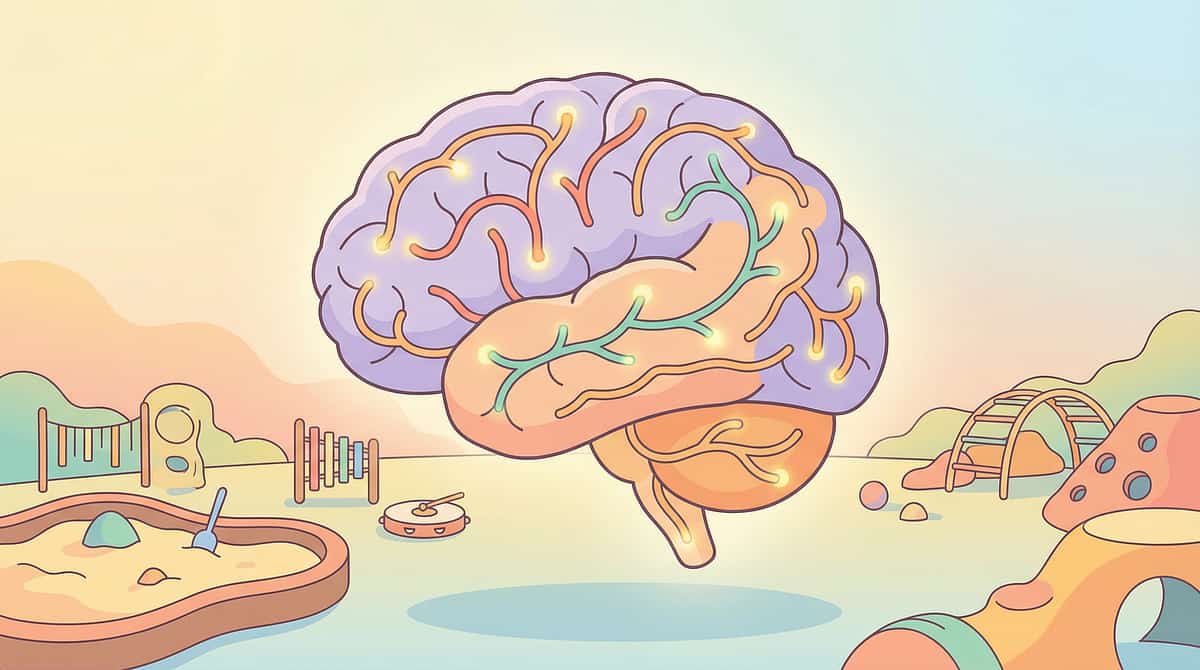
This Is a Wiring Difference — Not a Behavior Choice
The Somatosensory System
When lotion touches skin, sensory signals travel through tactile receptors (A-beta and C-fiber pathways) to the somatosensory cortex and limbic system. In children with tactile defensiveness:
- The thalamic gating mechanism over-amplifies light, wet, and residual touch signals
- The amygdala interprets the signal as threatening — triggering genuine fight-or-flight
- Habituation fails — the child continues to register lotion for hours, not seconds
- The insular cortex keeps signaling: something is on my skin. It is wrong. It must be removed.
🧠 Think of It This Way
Most people hear a ceiling fan. It's white noise — the brain files it away as irrelevant. Someone with hyperacusis hears every rotation of every blade. It doesn't "go away" mentally.
Your child's skin does the same thing with lotion. The tactile sensation you absorb and forget in 5 seconds — their brain keeps it active, urgent, uncomfortable, and demanding of a response.
"Tactile defensiveness is classified under Sensory Over-Responsivity (SOR) — a clinically recognized pattern. Our OT protocols address the neurological root, not the behavior." — Pinnacle OT Consortium

Your Child Is Here. Here Is Where We're Heading.
The developmental destination is identical for all children. The pathway is personalized for sensory-sensitive kids.
Age 0–2
Skin-to-skin contact & texture tolerance beginning
Age 2–4
LOTION TOLERANCE CHALLENGE — You Are Here ◄ Most children begin accepting parental application with some resistance
Age 4–7
Self-care with prompts; gradual self-application emerging
Age 7–12
Independent skincare routines typically established
Age 12+
Comorbidity Awareness: Lotion intolerance frequently co-occurs with clothing texture challenges, food texture aversions, bath time resistance, hairbrushing difficulty, and sunscreen refusal. This is a sensory processing pattern — and it responds to structured OT intervention. "Your child is not delayed — they are on a trajectory that requires a different map. We have that map." — Pinnacle NeuroDev Consortium
Skincare literacy and full grooming independence mastered
Act I — Evidence
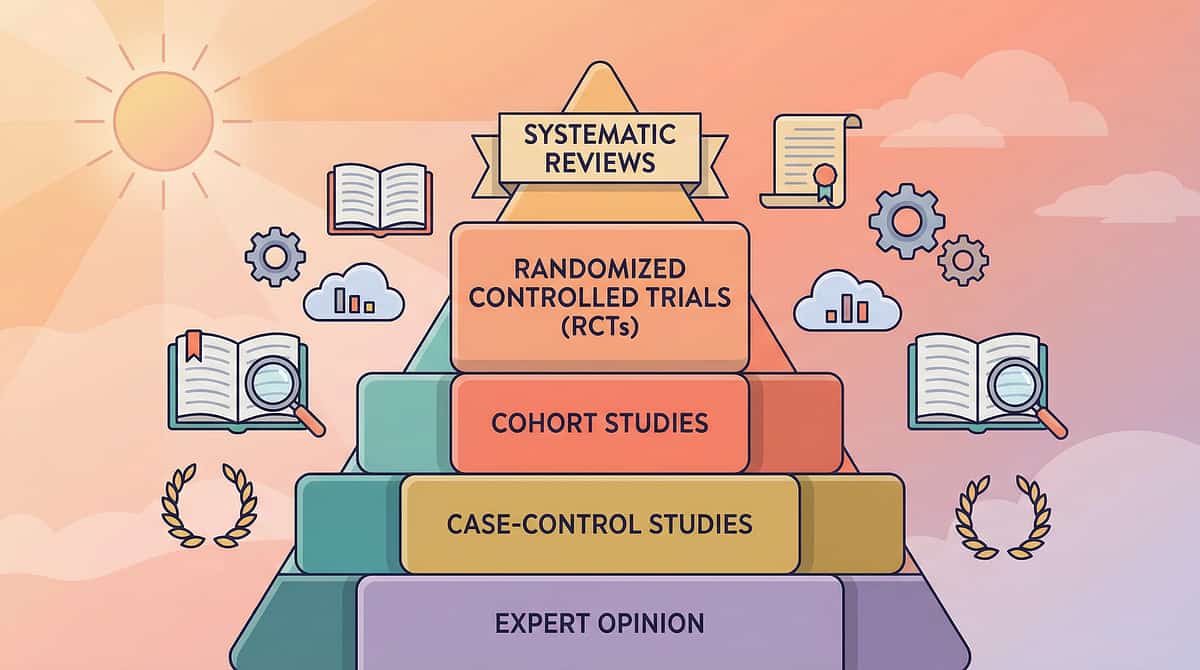
Clinically Validated. Home-Applicable. Parent-Proven.
Evidence Grade: Strong
Systematic Review Level | 16 studies | 2013–2023
92%
Confidence Rating
Key Research Findings
- PRISMA Systematic Review (2024): 16 RCTs confirm sensory integration meets criteria as evidence-based practice for ASD including tactile desensitization. PMC11506176
- Meta-analysis (World J Clin Cases, 2024, 24 studies): Sensory integration therapy effectively promoted adaptive behavior, sensory processing, and motor skills. PMC10955541
- Indian RCT (Padmanabha et al., 2019): Home-based sensory interventions with parent-administered protocols demonstrated significant measurable outcomes. DOI:10.1007/s12098-018-2747-4
- NCAEP (2020): Sensory integration and visual support strategies classified as evidence-based practices for autism across age groups.
- WHO NCF (2018): Responsive caregiving and home-based intervention are core pillars of optimal child development globally.
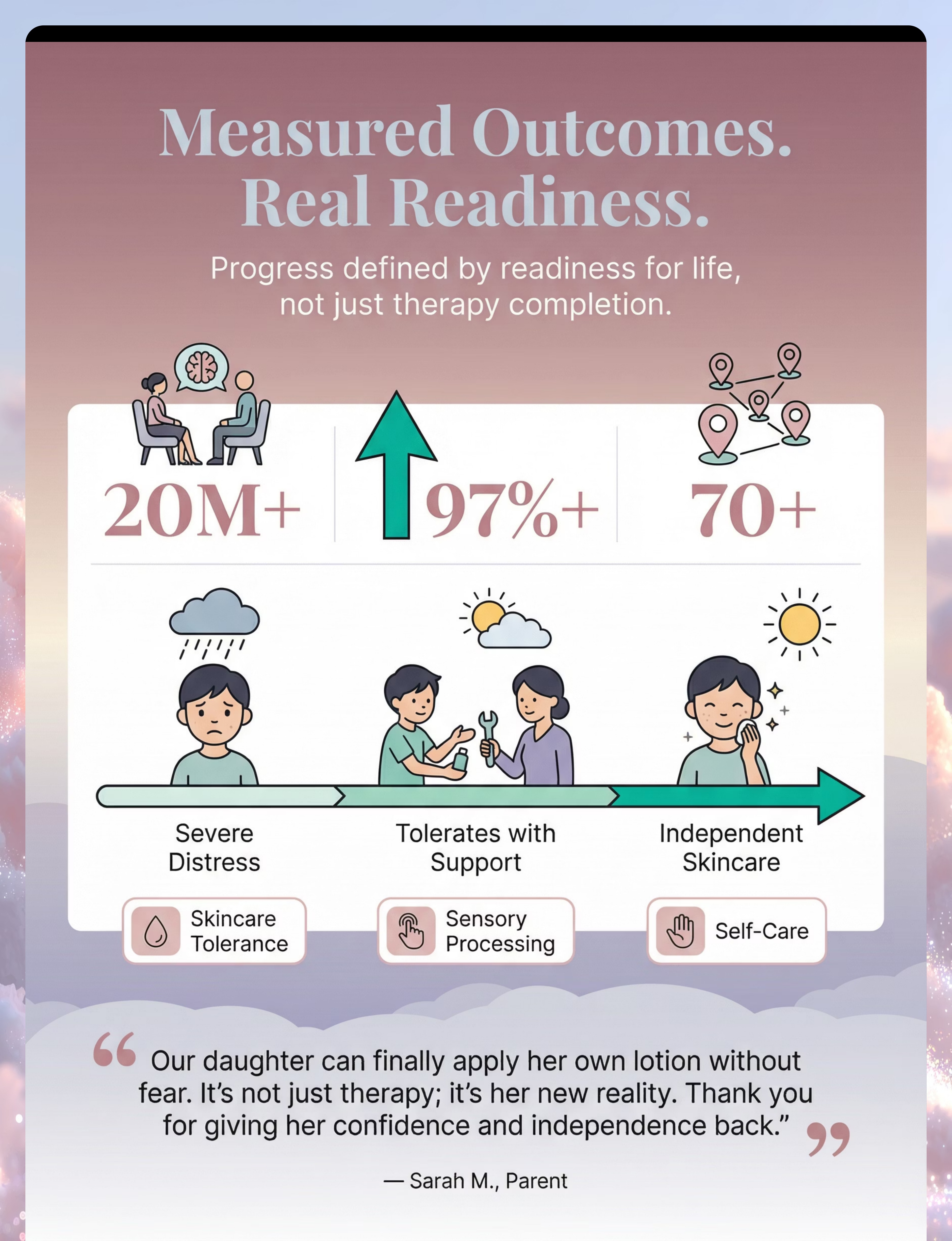
📊Pinnacle Proof: 20M+ exclusive 1:1 therapy sessions | 97%+ measured improvement across readiness indexes | 70+ centers | India's largest autism therapy consortium
Act II — The Technique
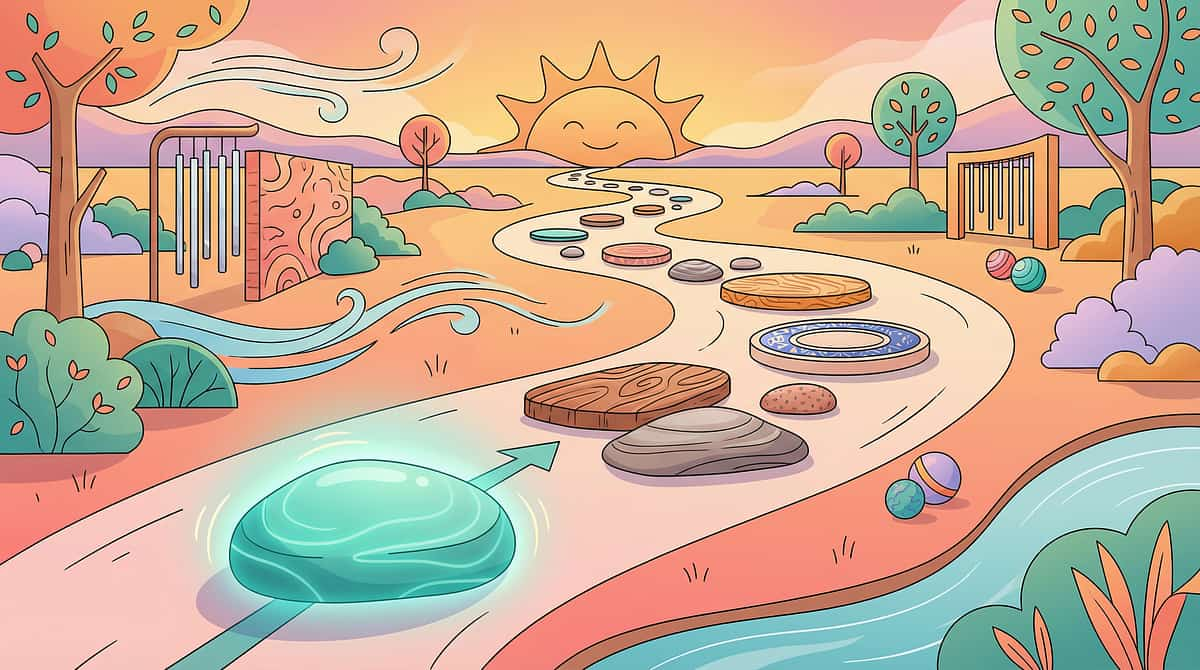
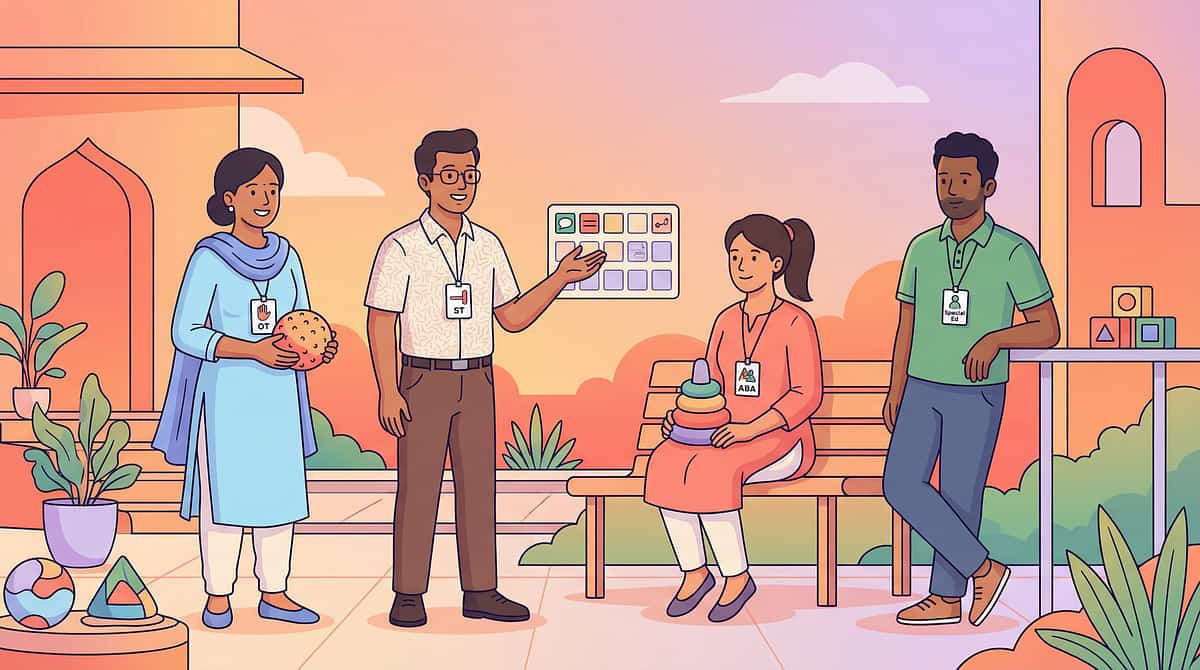
The Technique: Sensory-Modified Lotion Application Protocol
Parent-friendly alias: "Sensory-Smart Skincare"
A structured occupational therapy approach to making lotion application tolerable for children with tactile defensiveness, sensory over-responsivity, or sensory processing challenges. The protocol combines product modification (formula selection), application method adaptation (tools, pressure, temperature), predictability scaffolding (timers, visual routines), and systematic desensitization (texture play) to progressively reduce sensory distress — while maintaining necessary skin health.
Domain
Self-Care / OT / Sensory Processing
Age Range
2–12 years
Session Duration
3–10 minutes
Frequency
Daily (skincare routine)
Series Position: E-535 Face Washing → E-536 Hand Washing → [E-537 LOTION APPLICATION] → E-538 Sunscreen → E-539 Getting Dressed
Act II — Disciplines
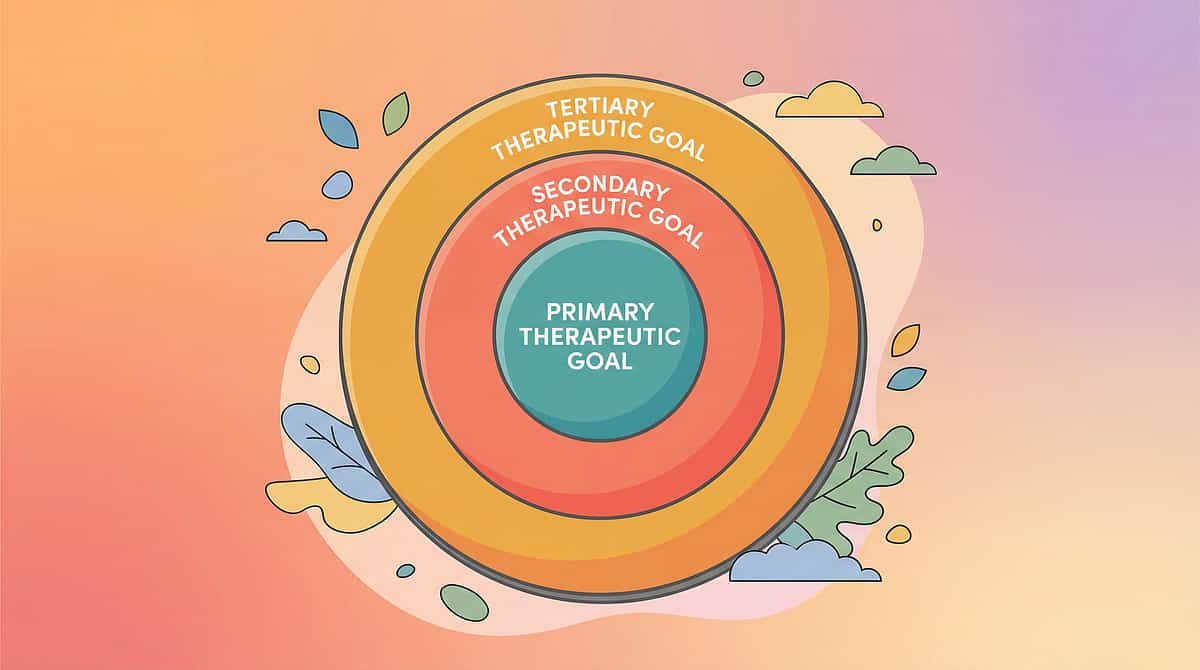
This Technique Crosses Therapy Boundaries Because the Brain Doesn't Organize by Therapy Type
Occupational Therapist (Primary Lead)
Leads tactile desensitization, sensory profile assessment, product selection, and application technique. Designs the sensory diet that makes lotion tolerable. Tracks Skincare Tolerance Readiness Index.
Speech-Language Pathologist
Addresses the child's ability to communicate sensory discomfort (self-advocacy) and process verbal instructions. Integrates AAC supports if needed. Addresses oral tactile sensitivity that co-occurs.
ABA/BCBA Therapist
Structures reinforcement schedules, behavior momentum sequences, and systematic desensitization hierarchies. Addresses anticipatory anxiety through gradual exposure protocols and token economy integration.
Special Educator
Generalizes lotion tolerance skills across school and community settings. Coordinates with school staff on PE-day sunscreen application, sports events, and grooming routines within school protocols.
Neurodevelopmental Pediatrician
Provides diagnostic clarity on sensory processing profile. Coordinates with dermatologist when skin conditions require daily moisturizing despite sensory barriers. Manages co-occurring conditions (eczema, ADHD, anxiety).
Act II — Therapeutic Targets
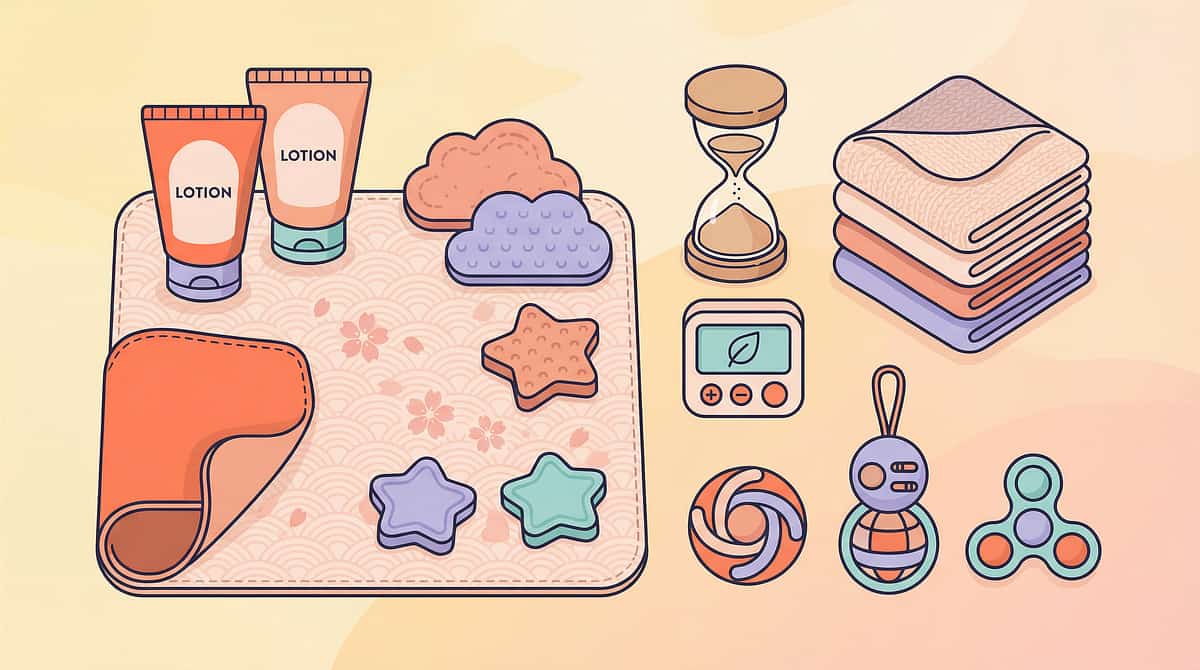
This Is Not a Random Activity — It Is a Precision Therapeutic Tool
Skincare Tolerance Readiness Index
Sensory Processing Readiness Index
Self-Care Independence Readiness Index
Tactile Tolerance Readiness Index
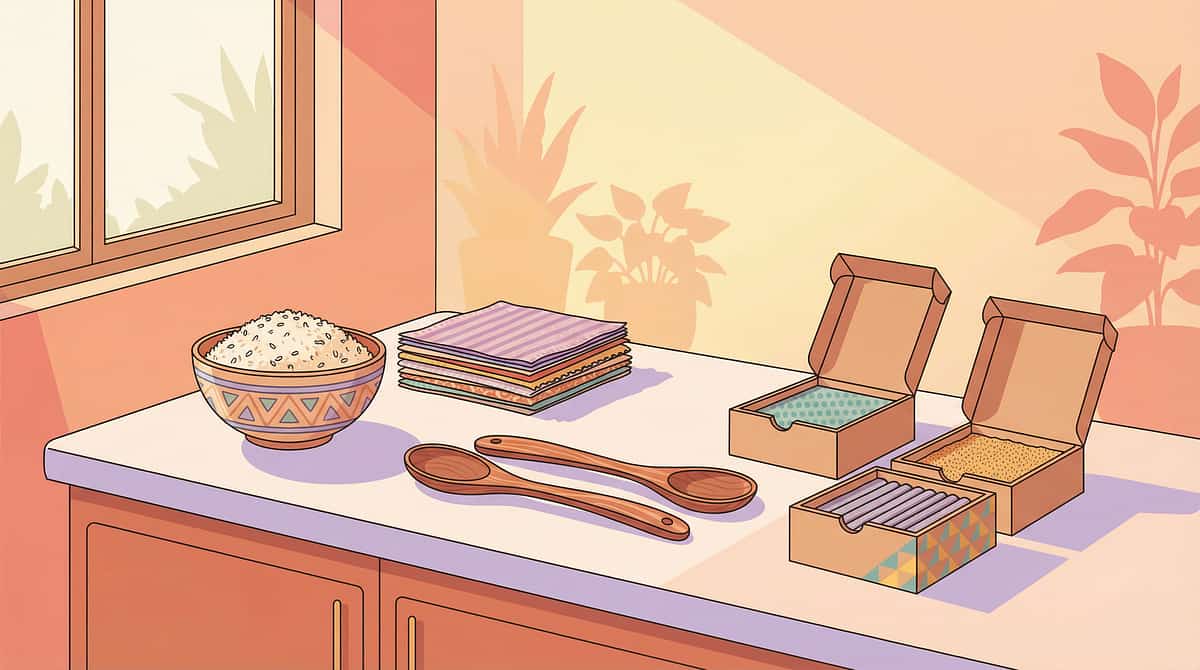
Act II — Material 1 of 9
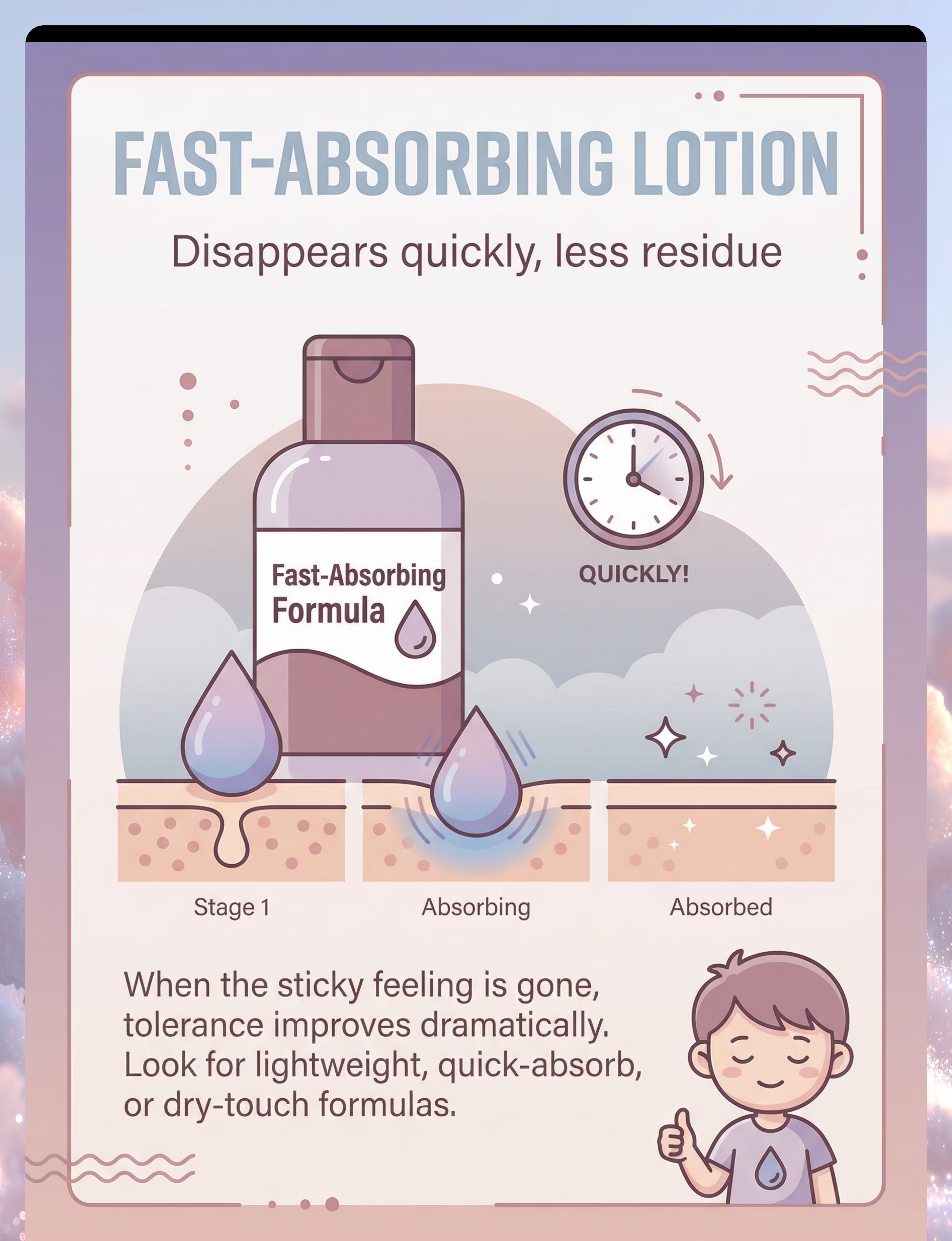
🧴 Material 1: Fast-Absorbing, Non-Greasy Lotion or Serum
Why It Works
Disappears quickly — minimal residual sensation. The "sticky" feeling that persists with traditional lotions is the primary trigger for most sensory-defensive children. Fast-absorbing, dry-touch, or water-based formulas eliminate this lingering sensation entirely.
Look for labels saying: "Quick absorb," "dry touch," "non-greasy," "lightweight serum"
Procurement Details
Price Range: ₹200–800
🏅Pinnacle Recommends this as the single most impactful product modification. Before changing anything else about the routine, change the formula. Many families see immediate improvement with this substitution alone.
DIY Alternative: Test any lotion on the back of your hand — choose the one that disappears fastest with least residue. Same sensory principle at no extra cost.
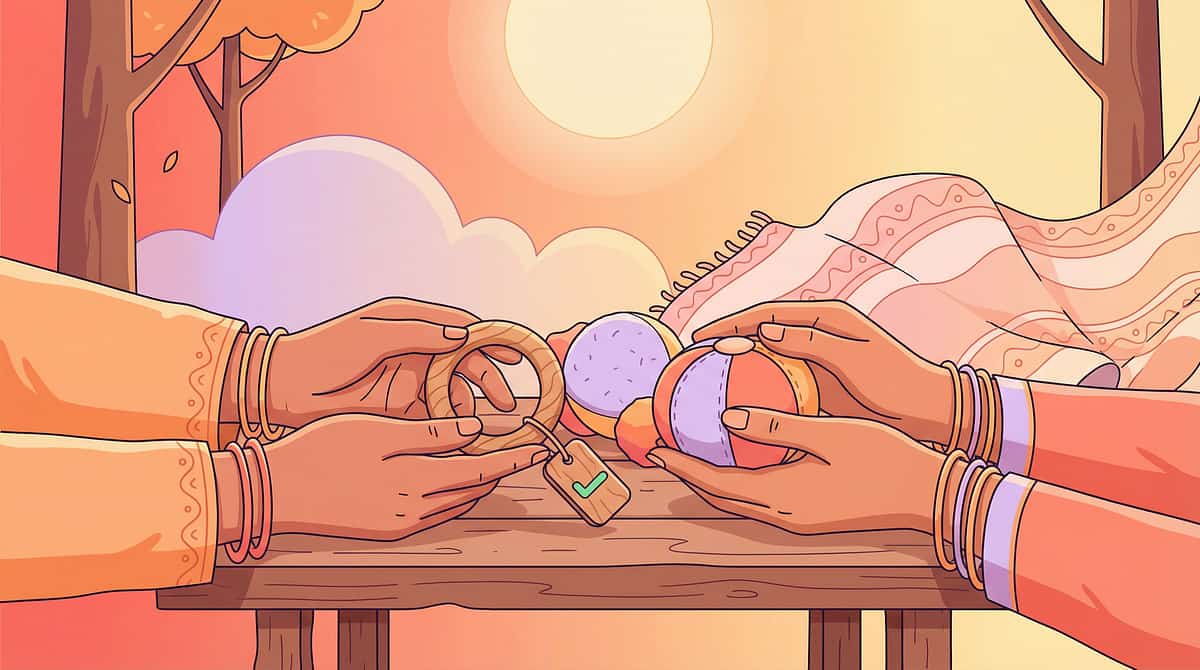
Act II — Material 2 of 9
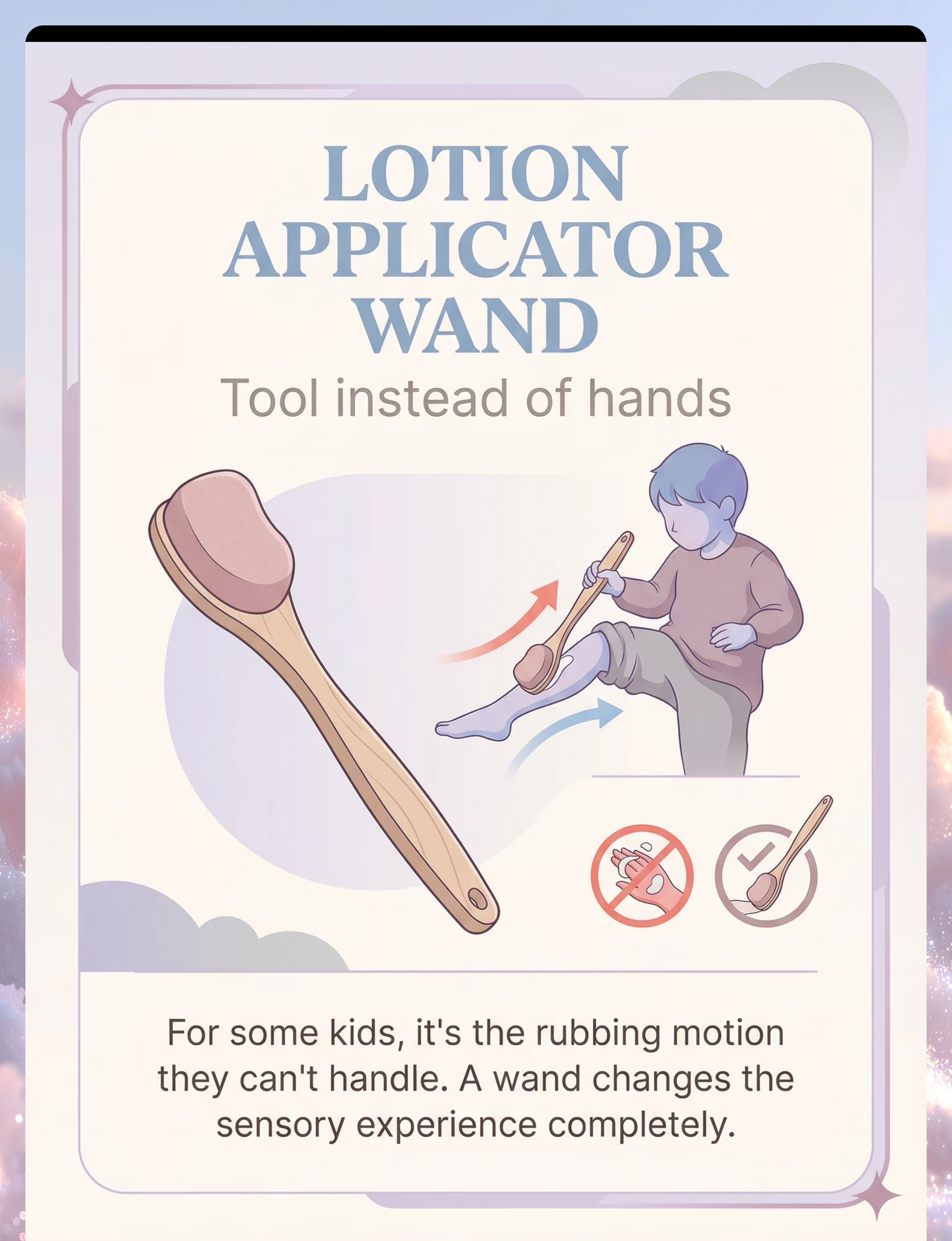
🪄 Material 2: Lotion Applicator Wand or Roller
Why It Works
Applies lotion via tool — no hand-to-skin spreading. For children where the sliding, rubbing motion of hands is the primary trigger (not the lotion itself), tools create sensory distance and predictability. The tool becomes a consistent, familiar sensory input.
Look for: Lotion applicator, body roller, back lotion applicator
Procurement Details
Price Range: ₹150–500
Where to Buy:Search Amazon.in for lotion applicator wand roller
DIY Alternative: Soft makeup sponge, silicone spatula, or let the child use their own hands for control. Child-directed application removes the interpersonal sensory element entirely — giving them agency over what touches their skin.
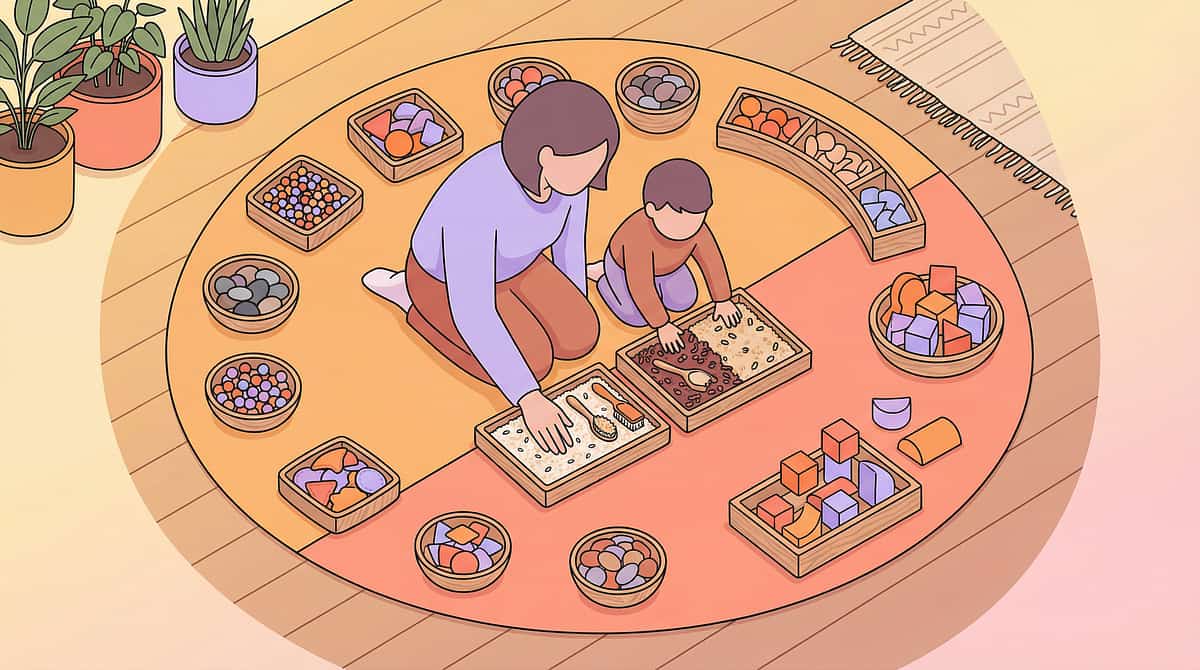
Act II — Material 3 of 9
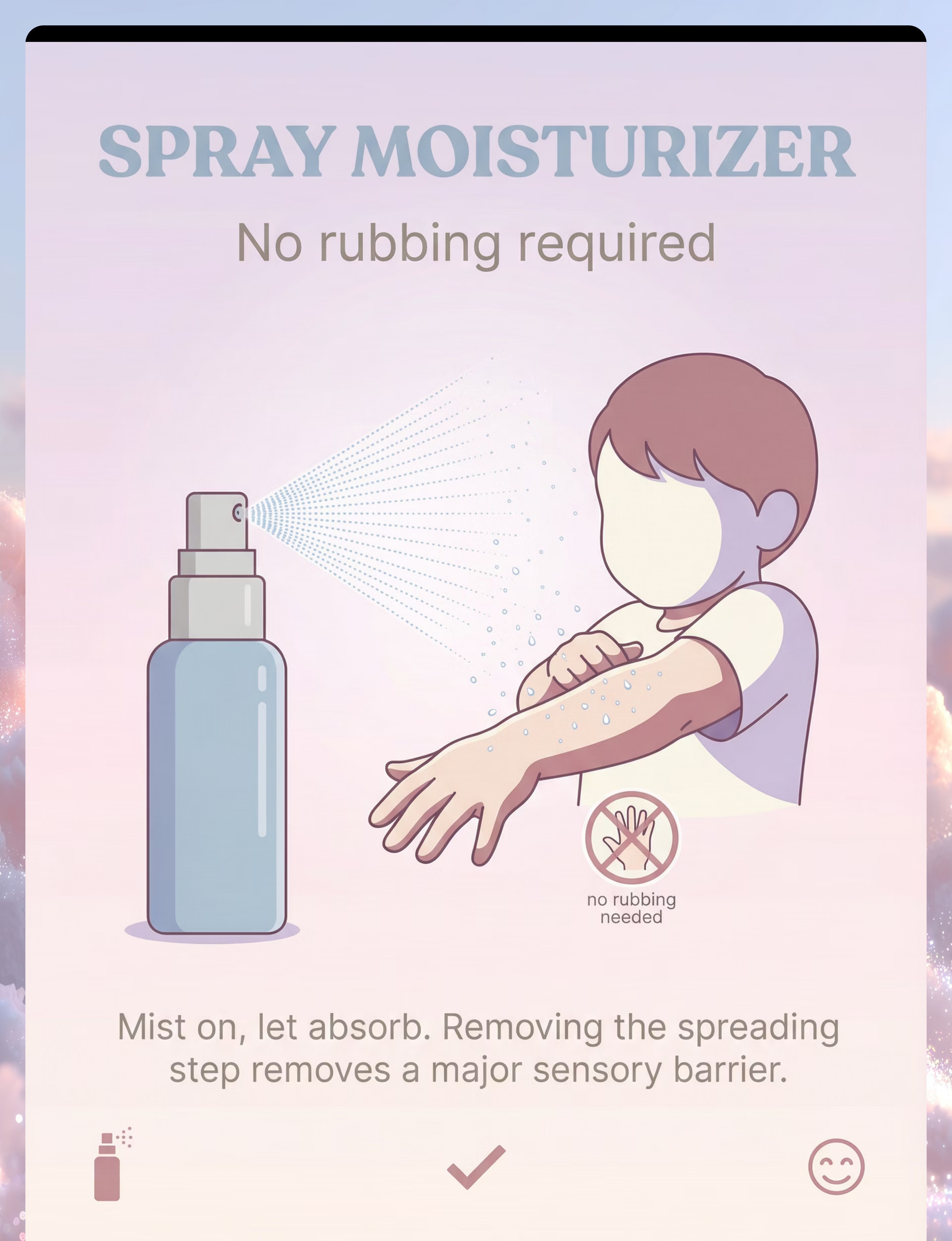
💨 Material 3: Spray-On Moisturizer
Why It Works
Eliminates the spreading step entirely. Mist on, let absorb. For children who cannot tolerate ANY rubbing or spreading motion, spray formats bypass the most offensive sensory element of the entire routine.
Look for: Spray body moisturizer, hydrating mist, non-aerosol pump spray
Procurement Details
Price Range: ₹250–700
DIY Alternative: Pour any lotion into a clean spray bottle with a small amount of water. The spray mechanism eliminates the spreading sensation at no extra cost — same mechanism, zero additional expense.
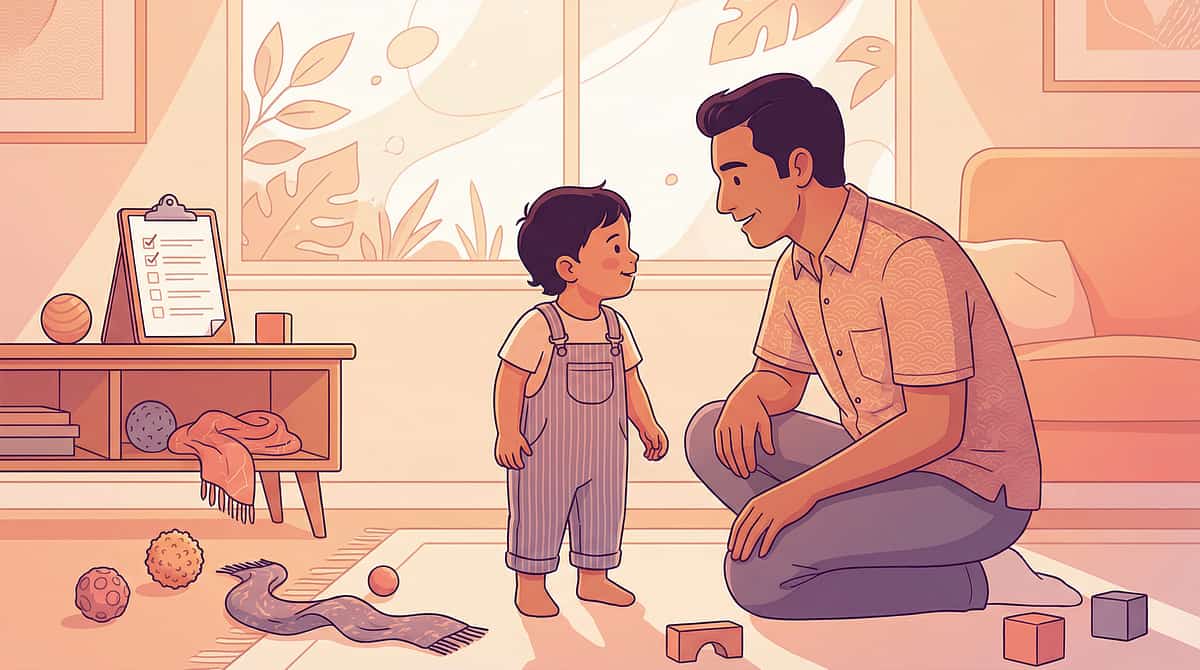
Act II — Material 4 of 9
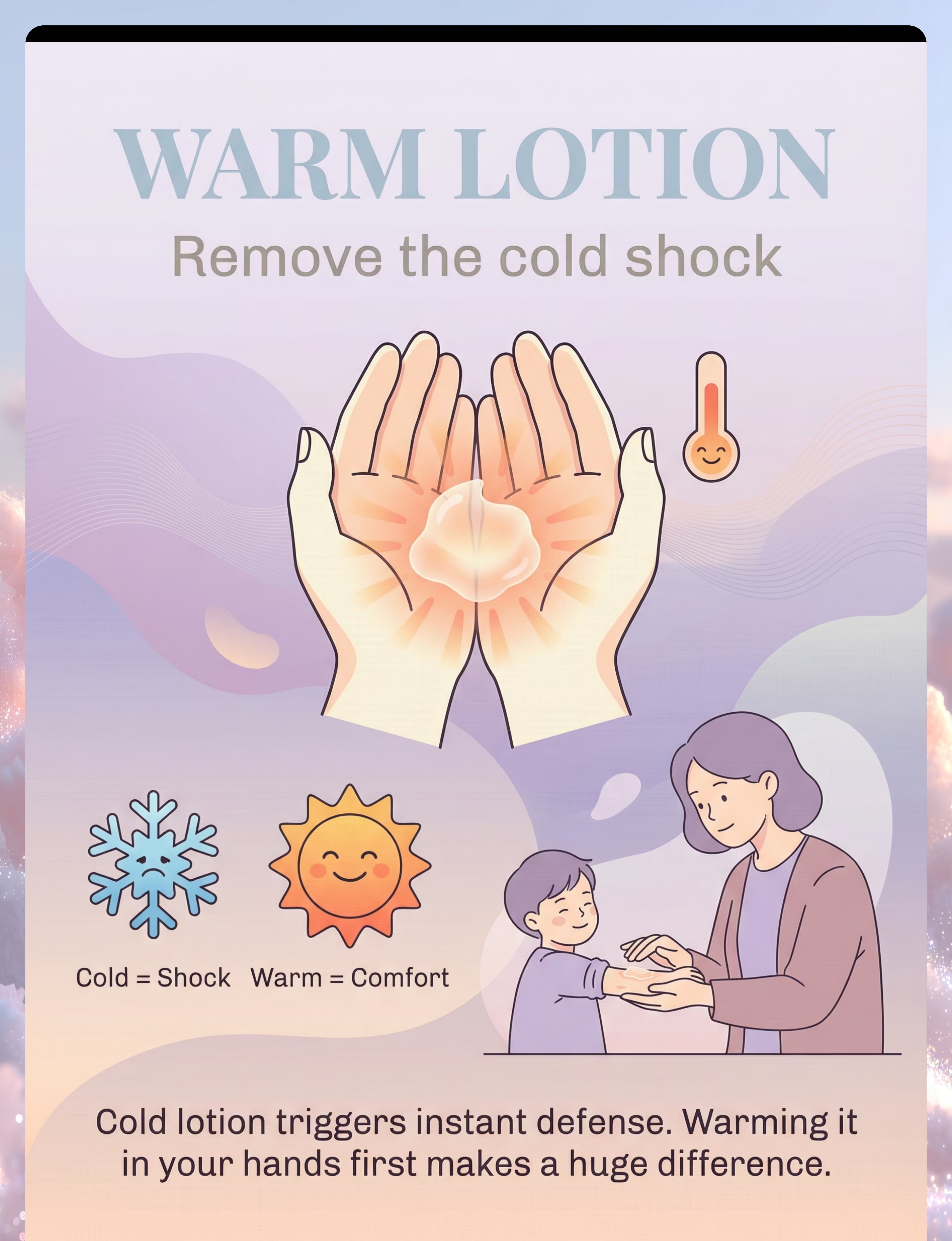
🌡️ Material 4: Bottle Warmer or Lotion Warming Technique
Why It Works
Eliminates the cold-shock trigger. Cold lotion creates an alerting, defensive response in the nervous system. Warm lotion shifts the initial sensory experience from threatening to neutral — or even soothing. Temperature is one of the most underestimated sensory variables in skincare resistance.
Look for: Small bottle warmer, mug warmer pad, or warming-in-hands technique (free)
Procurement Details
Price Range: ₹0–300
Where to Buy:Search Amazon.in for bottle warmer small desk
DIY Alternative (₹0): Rub lotion between palms for 15 seconds before applying. Costs nothing. Works completely. This is the single highest-impact free modification available — always do this regardless of other tools used.
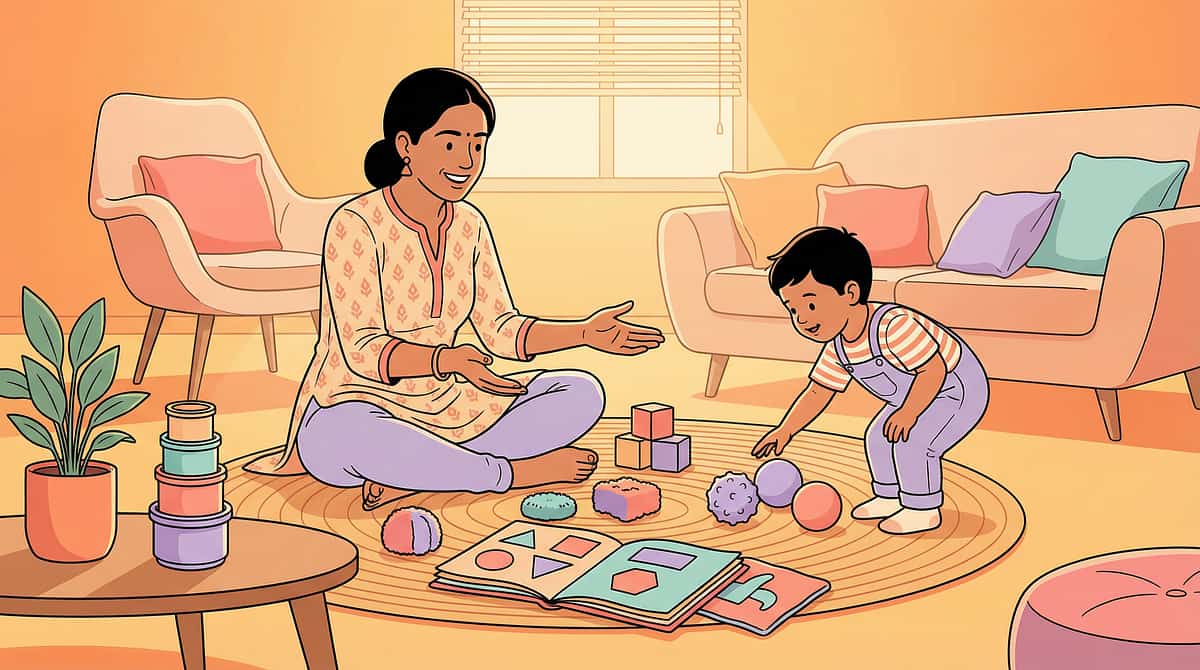
Act II — Material 5 of 9
🤲 Material 5: Deep Pressure Application Tool
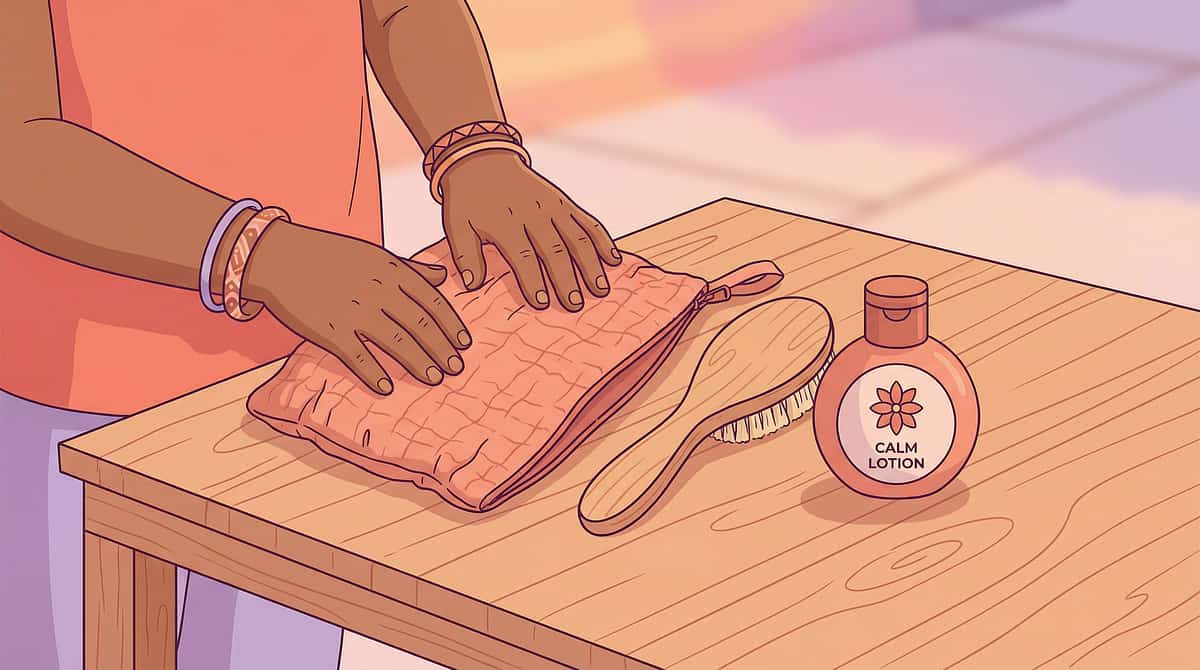
Massage Glove / Palm-Pressure Technique
Why It Works
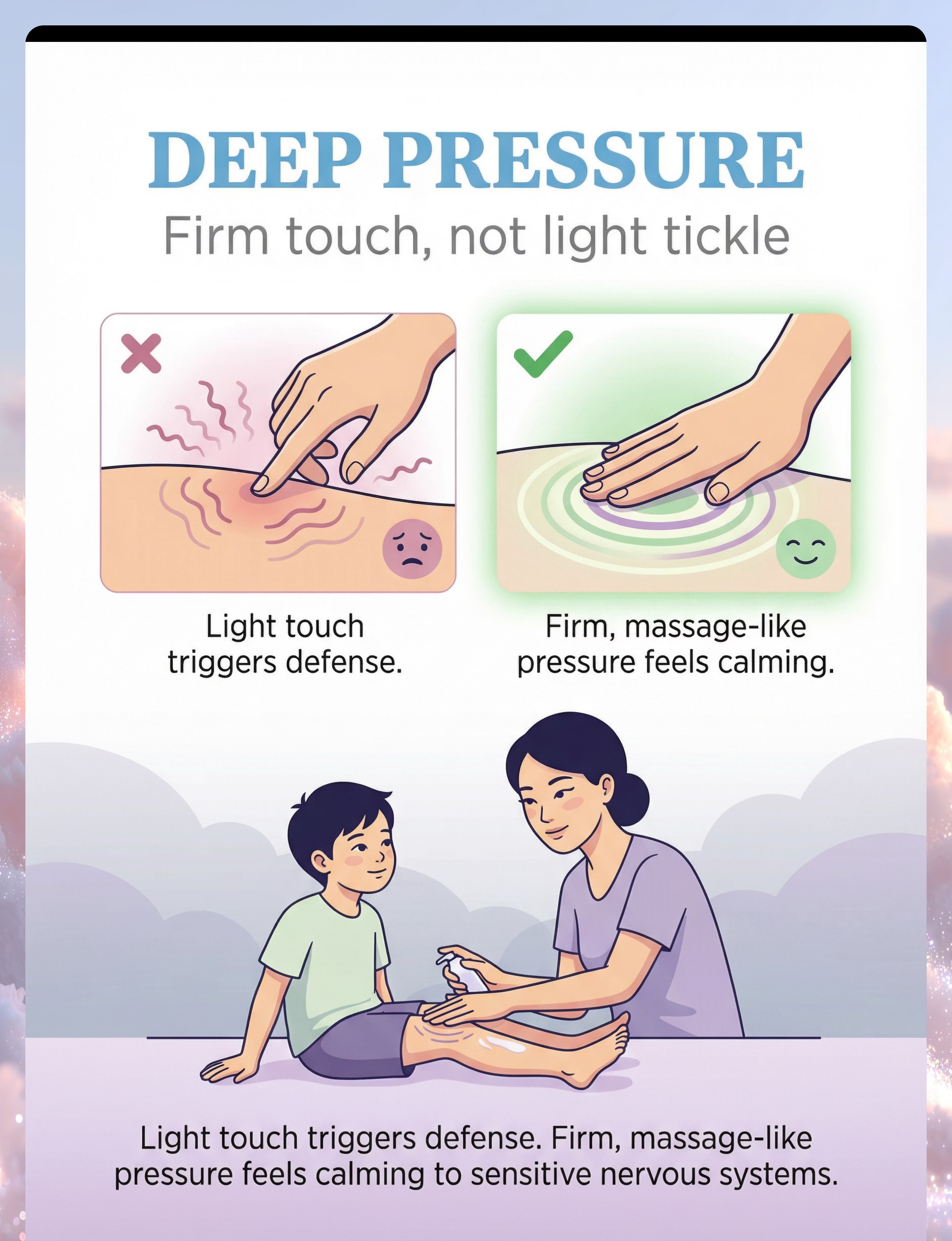
Firm pressure activates calming proprioceptive receptors. This is the single most counter-intuitive but powerful modification available:
- Light touch = alerting and defensive
- Deep pressure = calming and organizing
Same lotion. Same child. Completely different sensory experience — just from changing the pressure of application.
Look for: Massage glove, silicone body scrubber, or use flat-palm deep pressure technique
Procurement Details
Price Range: ₹100–400
DIY Alternative: Flat-palm, firm, consistent pressure — practice on yourself first. Deep pressure receptors are activated by the technique, not the tool. No purchase required to access the neurological benefit.
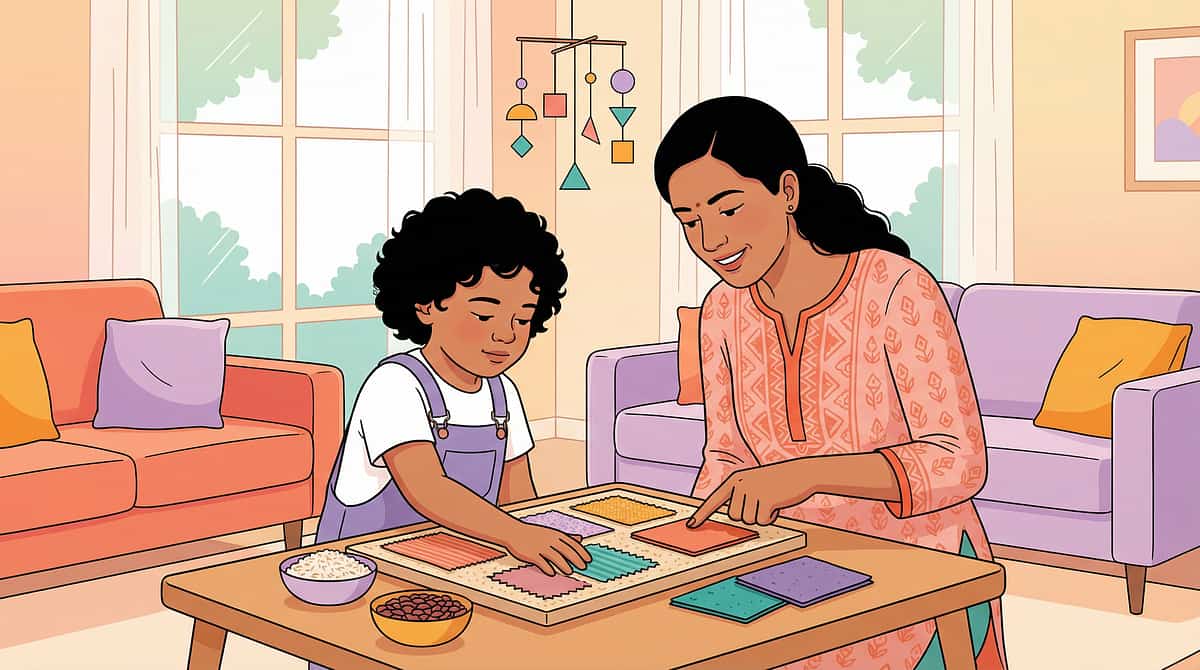
Act II — Material 6 of 9
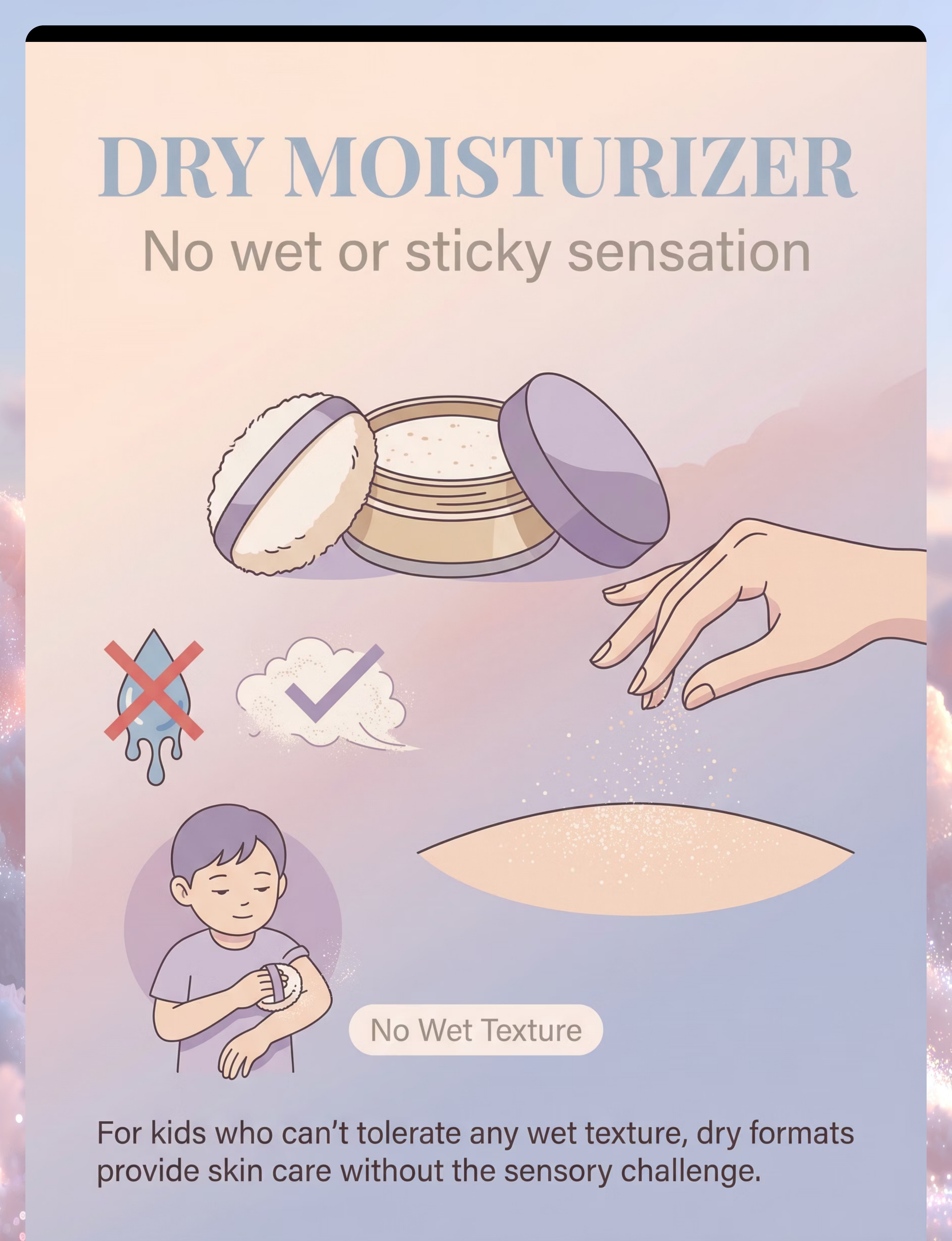
🌸 Material 6: Powder-Based or Dry Moisturizer (Talc-Free)
Why It Works
Zero wet sensation. For children who cannot tolerate ANY liquid or slippery texture on skin, powder-based alternatives deliver skin protection without the wet or sticky experience that triggers distress. This is the format of last resort — and often the breakthrough for the most sensitive profiles.
Look for: Talc-free body powder, dry skin butter, fully-absorbing body oil
Procurement Details
Price Range: ₹200–600
Where to Buy:Search Amazon.in for talc-free body powder skin care
DIY Alternative: Fully-absorbing coconut oil applied in a tiny amount, rubbed to a dry finish. Minimal residual wet sensation. Apply in very small quantities for best sensory outcome. Safety note: Do not apply powder products near the face — inhalation risk.
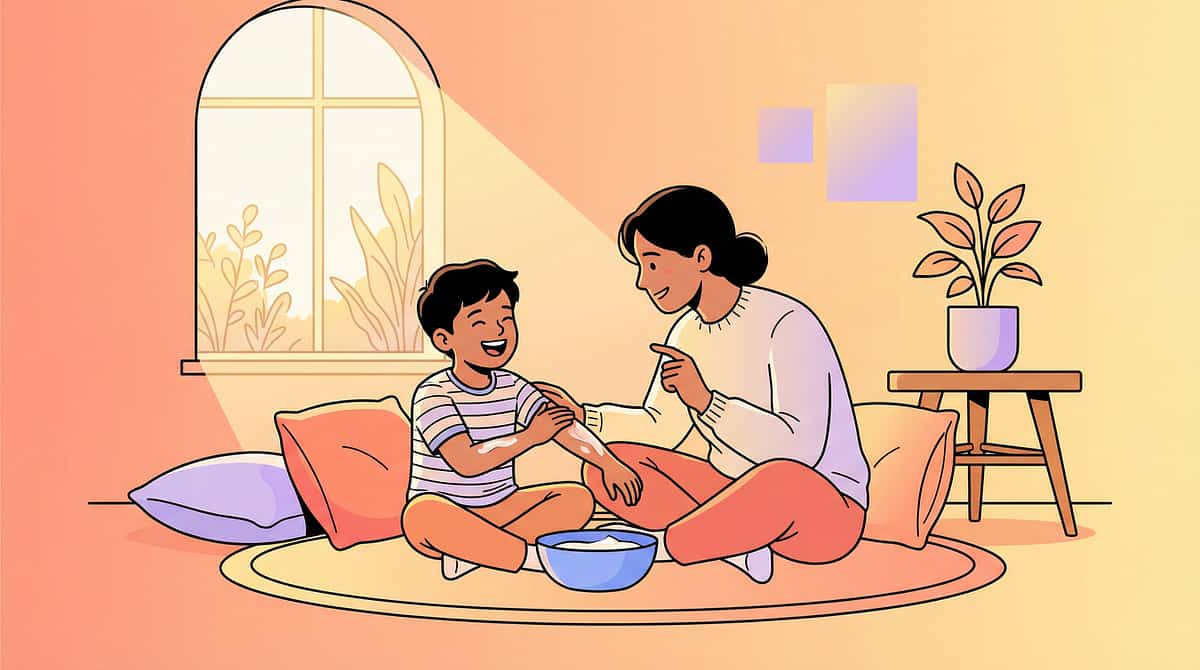
Act II — Material 7 of 9
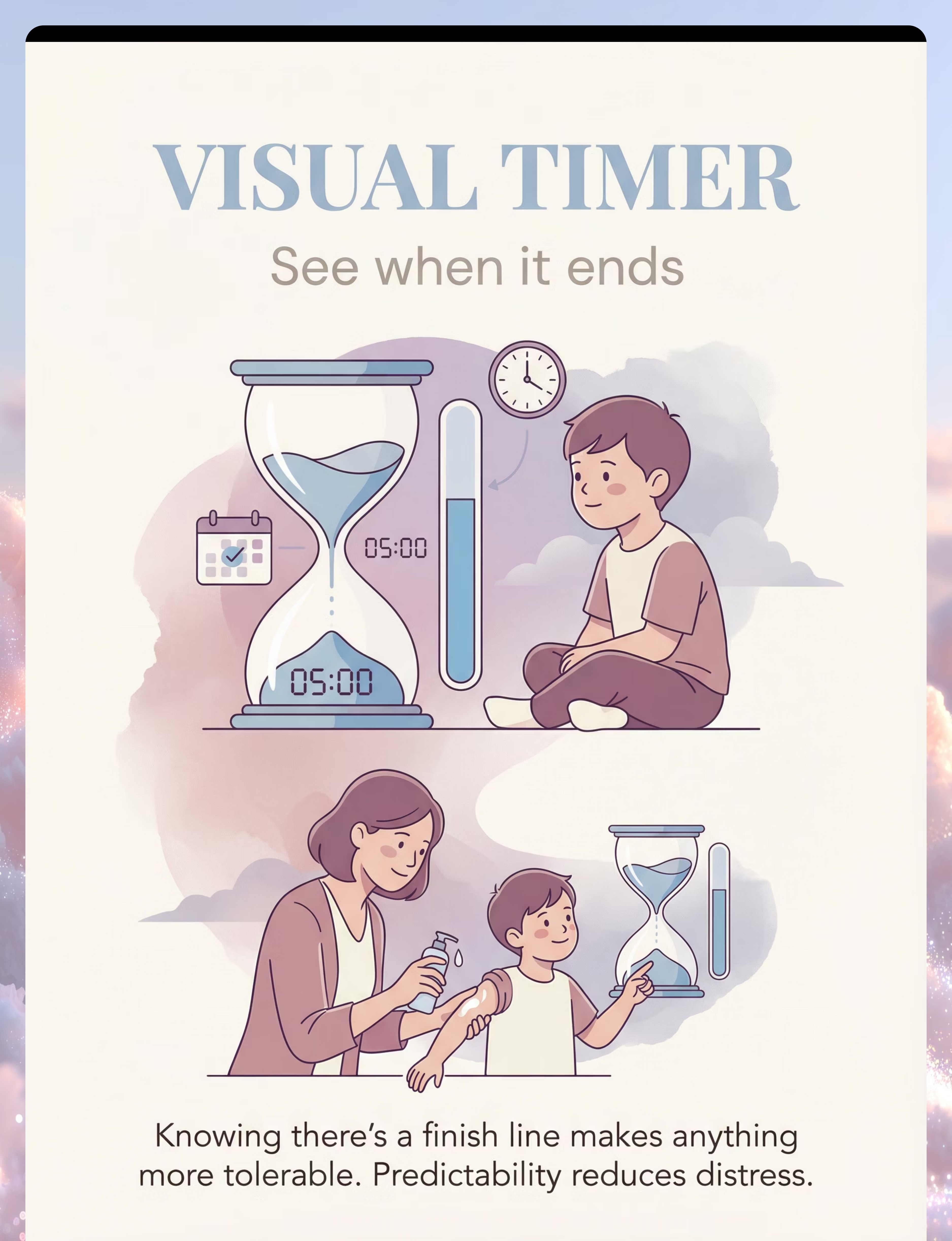
⏳ Material 7: Visual Timer (Sand Timer or Digital Countdown)
Why It Works
Makes the experience predictably finite. Unpredictability amplifies sensory distress. When the child can see exactly when lotion time ends, anxiety reduces and tolerance increases. Also manages post-application "keep it on" periods — one of the most contested moments in the routine.
Canon Connection: Visual Support Tools
Procurement Details
Price Range: ₹200–800
Reinforcement Menu Add-On:Amazon.in ₹589 | Amazon.in ₹364
DIY Alternative: Phone timer with visual countdown app (free). Same predictability — the technology is the principle, not the specific tool.
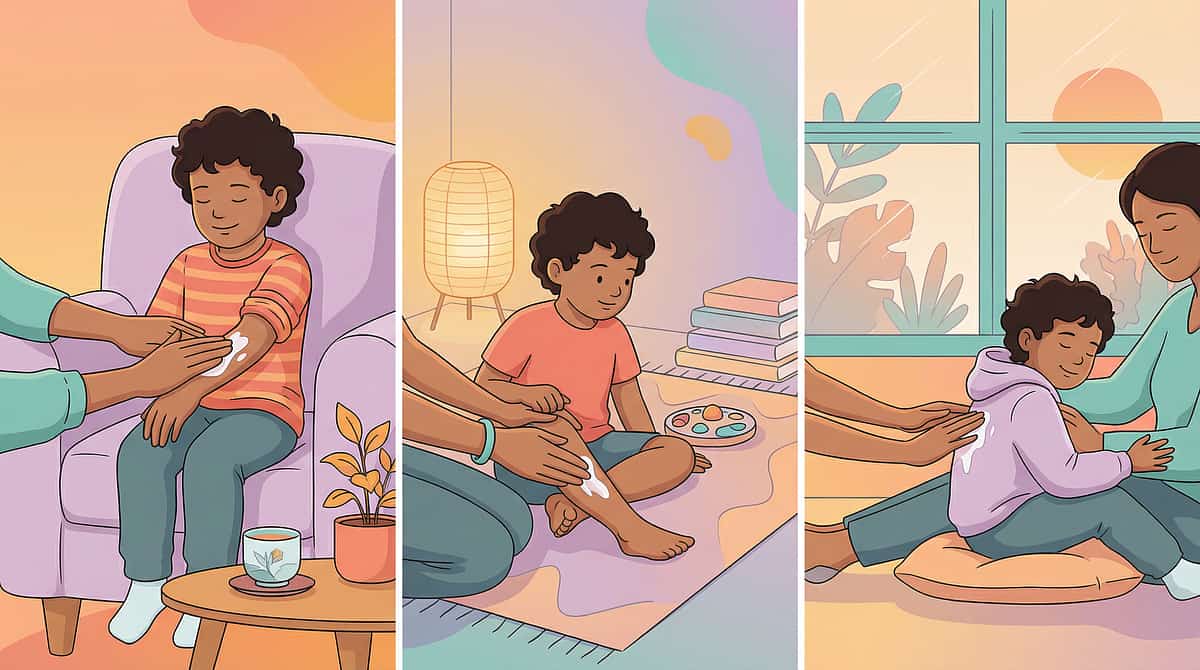
Act II — Material 8 of 9
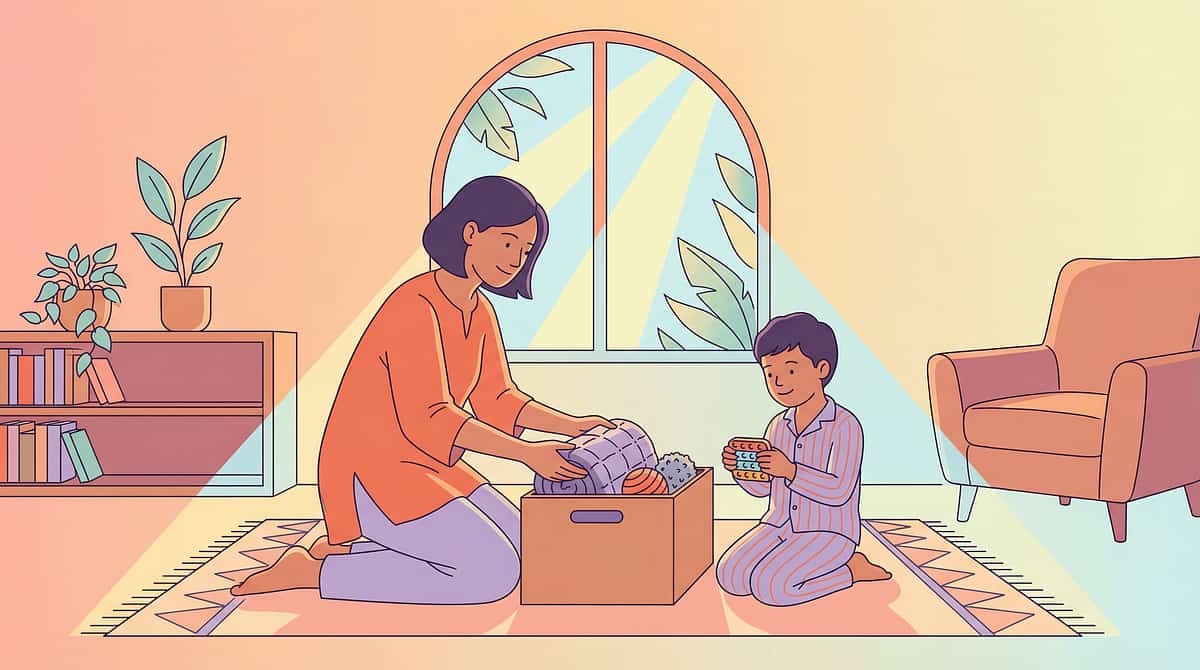
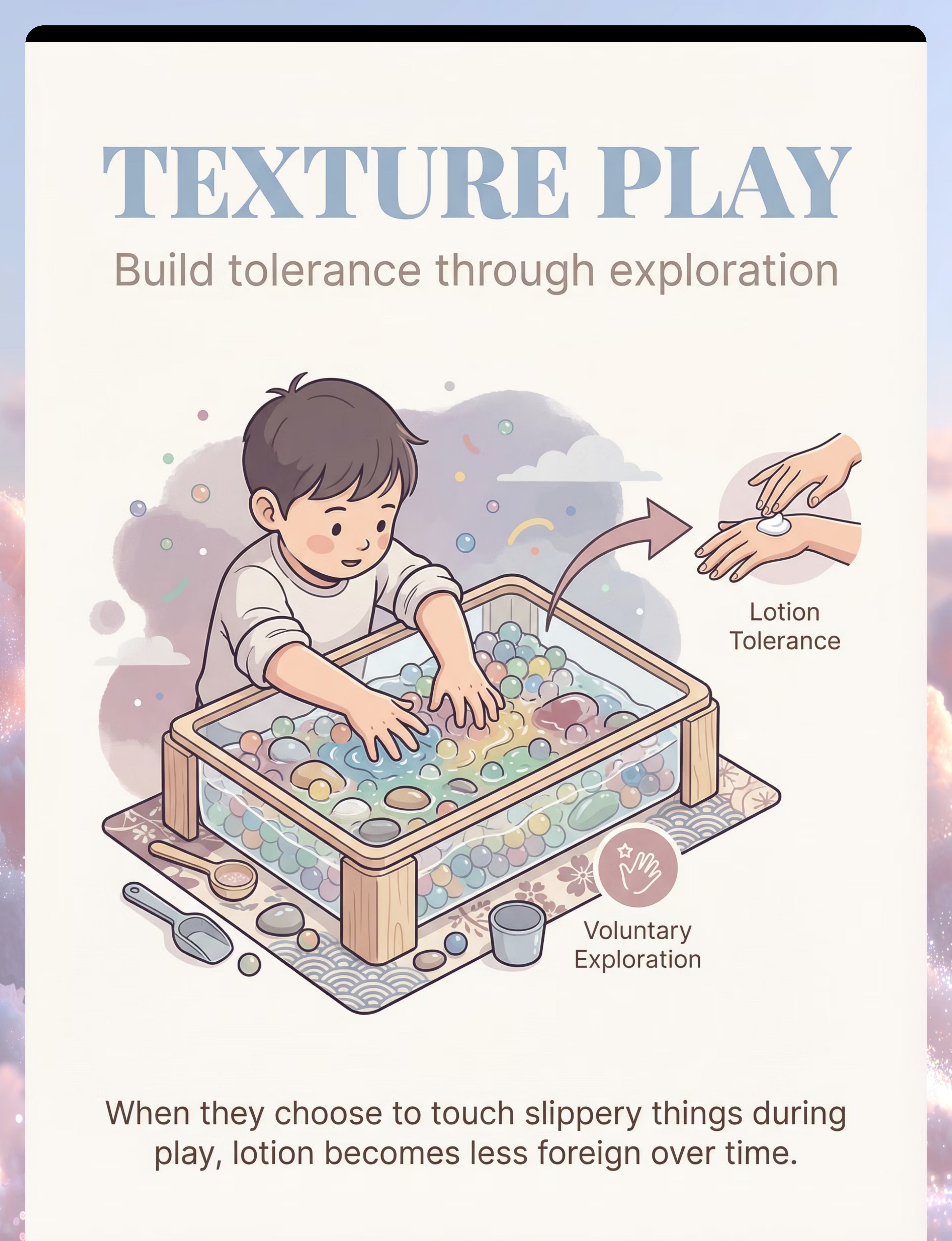
🪣 Material 8: Sensory Bin with Similar Textures
Texture Desensitization Kit
Why It Works
Voluntary play-based desensitization. A bin with water beads, smooth gel, or wet textures lets the child encounter lotion-like sensations on their own terms, in a play context — building tolerance that transfers to skincare routines. Child-controlled exposure is fundamentally different from adult-administered application.
Contents: Plastic bin + water beads or gel balls or smooth slime
Procurement Details
Price Range: ₹100–400
DIY Alternative: Plastic storage bin + wet pasta, cornstarch-water mix (oobleck), or smooth pebbles in water. Same desensitization through voluntary tactile exploration. Safety note: Water beads are a choking hazard for children under 3 or those who mouth objects — supervise directly at all times.
Act II — Material 9 of 9
📖 Material 9: Social Story or Visual Sequence Cards
For the Lotion Routine
Why It Works
Eliminates anticipatory anxiety through predictability. The child knows exactly what will happen, in what order, what they need to tolerate, and when it ends. Predictability is the most powerful anxiety-reducing intervention available — and this material costs ₹0 if made at home.
Format: Personalized picture book or laminated step cards with photos of child's own lotion products
Procurement Details
Price Range: ₹100–500 (or free with printable template)
Transition Object (comfort during routine):Amazon.in ₹425
DIY Alternative: Take photos of your child with YOUR lotion products and sequence into a homemade book. Personalization actually makes it more effective than purchased versions — the child sees themselves in the story.
💰Complete Kit Range: ₹0–800 | Essential Starter Kit (minimum): Material 1 (fast-absorbing lotion) + Material 4 (warming technique = FREE) + Material 7 (visual timer)
Act II — DIY Alternatives
Every Material Has a Zero-Cost Version — No Family Is Left Behind
"The WHO Nurturing Care Framework mandates context-specific, equity-focused interventions. No therapeutic approach should be inaccessible due to cost. These alternatives apply the same sensory principles — at ₹0." — Pinnacle WHO Alignment Statement
Material | DIY / Free Substitute | Why It Works | |
Fast-absorbing lotion | Test any lotion on back of hand — choose the one that disappears fastest with least residue | Same sensory principle: minimal residual texture | |
Lotion applicator wand | Soft makeup sponge, silicone spatula, or child's own hands | Tool replaces direct hand-spreading sensation | |
Spray moisturizer | Pour lotion into a clean spray bottle (water it down slightly) | Eliminates spreading step — same mechanism | |
Bottle warmer | Rub lotion between palms for 15 seconds | Eliminates cold-shock trigger | |
Deep pressure tool | Flat-palm, firm, consistent pressure — practice on yourself first | Deep pressure receptors activated by technique, not tool | |
Dry moisturizer | Fully-absorbing coconut oil (tiny amount, rub to dry finish) | Minimal residual wet sensation | |
Visual timer | Phone timer with visual countdown app (free) | Same predictability — technology is the principle | |
Sensory bin | Plastic bin + wet pasta, cornstarch-water, or smooth pebbles | Same desensitization through voluntary tactile exploration | |
Social story | Photos of child with their own lotion products sequenced into a book | Personalization makes it more effective than purchased versions |
Zero-Cost Complete Technique: Warm lotion in hands + flat-palm deep pressure + phone timer + homemade social story = Full sensory-smart lotion protocol at ₹0
Act II — Safety
60 Seconds of Safety Reading Protects Every Session
🔴 RED — Do Not Proceed If:
- Child has open wounds, active skin infections, or undiagnosed rash in area to be moisturized
- Child is in severe distress, post-meltdown, or dysregulated
- Lotion product has not been patch-tested (test small area, wait 24 hours first)
- Child has known allergies to fragrance, preservatives, or product ingredients
- Child is running a fever or showing signs of illness
🟡 AMBER — Modify the Session If:
- Child is hungry, tired, or just woken up — postpone or use minimal routine only
- Child already had a difficult morning — shorten to hands-only, 30-second timer
- Child is showing mild resistance but not distress — proceed with maximum supports
- New product being introduced — start with one small spot (back of hand) only
🟢 GREEN — Proceed When:
- Child is fed, rested, and in a calm-alert state
- Products have been pre-warmed and timer is visible and set
- Social story has already been reviewed
- Environment is calm with comfortable lighting and no competing sensory input
- You are calm — your nervous system regulation co-regulates your child

Act II — Environment Setup
The Right Environment Prevents 80% of Session Failures
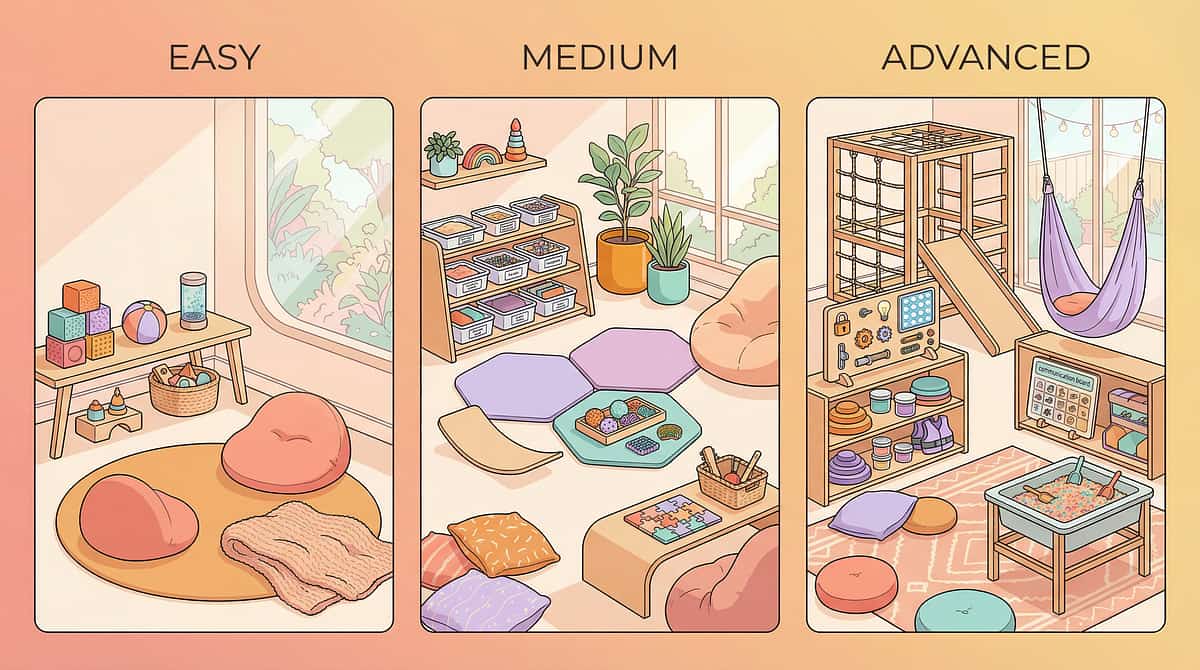
Before the first material touches your child's skin, the space itself must be set up as a sensory-supportive environment. Small adjustments to lighting, temperature, and clutter can be the difference between a successful session and a meltdown.
Lotion Warmed
In hands or warmer — eliminate the cold-shock trigger before entering the space
Timer Visible
Within child's view at eye level — on the counter, not in a drawer
Social Story Reviewed
Already read together before entering this space — predictability starts early
Lighting & Sound
Soft lighting (not harsh overhead fluorescent); quiet or familiar background — no TV or loud noise
Remove Distractions
Extra lotion bottles out of sight; no loud appliances; warm room temperature (cold air increases skin sensitivity)
Regulate Yourself
Slow your own breathing. If you're rushed, your child's nervous system detects it. Co-regulation is real and measurable.
Act III — Readiness Check
60 Seconds Before Every Session — Run This Check
The best session is one that starts right. This pre-flight check takes under a minute and prevents wasted effort, unnecessary distress, and erosion of trust.
Check | ✅ YES = Proceed | ⚠️ NO = Act | |
Fed in last 2 hours? | Proceed | 🟡 Feed first | |
Slept adequately last night? | Proceed | 🟡 Shorten session | |
Meltdown in last 2 hours? | No meltdown — good | 🔴 Postpone today | |
Child calm-alert (not hyperactive or shut down)? | Proceed | 🟡 Regulate first | |
Signs of illness (fever, pain, unusual behavior)? | Not sick — good | 🔴 Skip today | |
Parent in calm state? | You're regulated — good | 🟡 Take 3 breaths first |
🟢 GO
All or most green → Run full protocol
🟡 MODIFY
2–3 ambers → Hands-only, 30-second timer, maximum supports
🔴 POSTPONE
Any reds → Skip today. "We'll do lotion tomorrow. Your skin is ok for one day."

Act III — Step 1 of 6
Step 1: The Invitation
Every protocol begins with an invitation, not a command. The way you open the routine sets the entire emotional tone of what follows.
Script Option A
"Hey, skin time! Let's do the lotion thing — I have the warm one you like. Timer is ready."
Script Option B
"[Child's name], let's do lotion — it's the spray kind today. Can you set the timer?"
Script Option C
"Lotion time — two minutes. You pick the order: hands first or legs first?"
✅ What Acceptance Looks Like
- Moves toward you or stays seated
- No immediate protest or running
- May be quiet or tentative — that's fine
- May negotiate ("just hands") — accept it
⚠️ What Resistance Looks Like
- Running, crying, "no" immediately
- Body turned away, arms crossed
- If resistance: pause. Don't pursue. Try: "OK, we'll start with just your pinky finger. One second."

Act III — Step 2 of 6
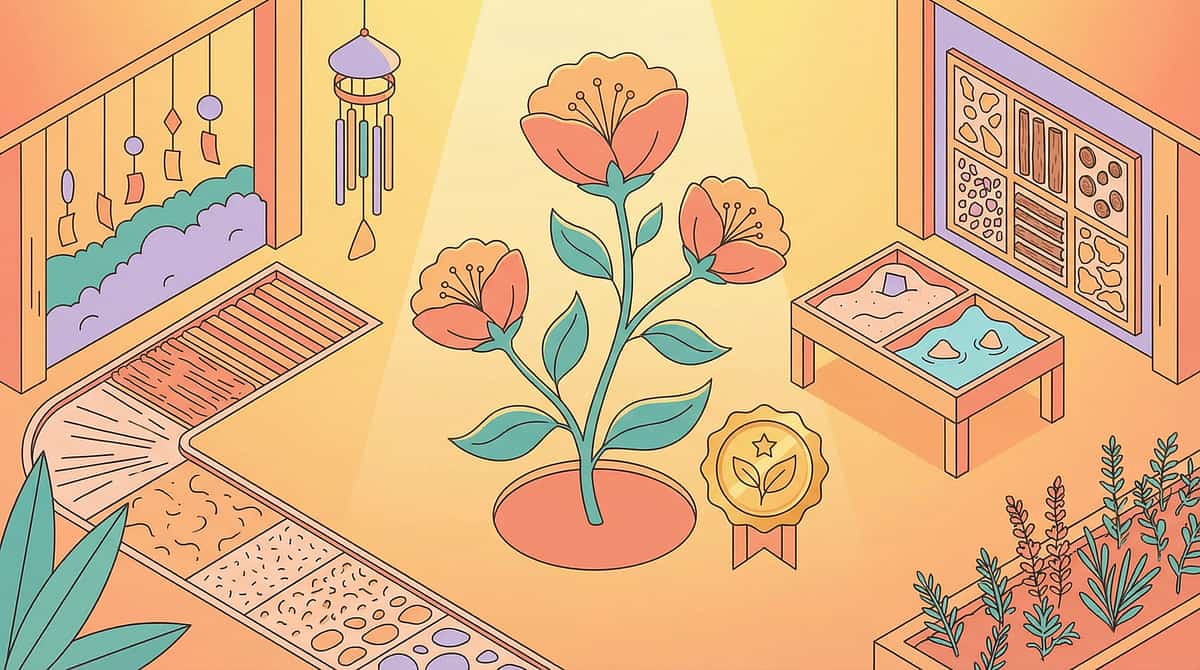
Step 2: The Engagement
Before application begins, the child needs to observe, understand, and accept — on their terms. Demonstrate first. Narrate what you're doing. Remove the element of surprise.
Demonstrate on Yourself First
"See — I'm putting it on my arm. It disappears fast. Watch." Apply with visible satisfaction: "Oh, that warm one feels good."
Sensory Preview by Format
For lotion: "This one absorbs in 5 seconds — count with me: 1, 2, 3, 4, 5. Gone!" For spray: "It's a mist — like a tiny cloud. Watch me spray my hand first." For warming: "I warmed it — touch my hand, feel how warm it is. No cold surprise."
Read Child Responses
🟢 Engagement: watching, leaning in, touching bottle | 🟡 Tolerance: neutral, not escaping — proceed carefully | 🔴 Avoidance: turning away, pushing lotion away — de-escalate, offer more minimal version
Reinforce Any Positive Engagement
When child shows any positive engagement: "YES — I love how you're watching that. Good noticing." Immediate, specific praise matters.
Act III — Step 3 of 6
Step 3: The Therapeutic Action
Choose the approach most matched to your child's sensory profile. Start with the least demanding and build from there.
Approach A — Residual Sensation (Most Common)
- Apply fast-absorbing formula, warmed in hands first
- Use flat-palm deep pressure — firm, slow, even strokes (not light rubbing)
- Count aloud: "1, 2, 3, 4, 5 — watch it disappear!"
- Timer shows 60-second absorption window
- Validate: "See — it's gone. Nothing left."
Approach B — Touch Intolerance
- Set up spray moisturizer — no rubbing required
- Child holds the timer
- Mist onto area; timer runs 90-second absorption
- Child can pat (not rub) if comfortable
Approach C — Wet Texture Intolerance
- Talc-free powder product only
- Apply with soft brush or tool — no hand contact
- Short timer (30 seconds)
- Pair with high-value reinforcer immediately after
Correct Execution: Deep pressure = flat palm, consistent weight, slow movement — like a gentle massage. Light touch = alerting. Deep pressure = calming. This is neurophysiology, not parenting style. Narrate what you're doing: predictability reduces anticipatory anxiety in real time. Duration: 2–5 minutes (start with 30-second sessions and build).

Act III — Step 4 of 6
Step 4: Repeat & Vary
Therapeutic dosage matters. More is not always better — three good repetitions outperform ten forced ones every time.
Week 1–2: Starting
1 body area (hands only), 30-second timer, 1 repetition per day
Week 3–4: Building
Expand to 2 areas, 60-second timer, same approach
Week 5+: Advancing
Multiple areas, child chooses order, beginning self-application
Variation | Purpose | |
Alternate spray / lotion / powder | Reduces predictability anxiety about specific product | |
Change body area order (child-chosen) | Autonomy = reduced resistance | |
Child applies to parent first | Rehearsal without personal risk | |
Child applies to stuffed animal with actual lotion | Play-based desensitization with real product | |
Timer color variation | Novel timer keeps attention on the endpoint |
Satiation Indicators — When Child Has Had Enough: Increasing distress with each repetition (not decreasing), persistent leaving of the space, complete shutdown or emotional flooding. 3 good reps > 10 forced reps.
Act III — Step 5 of 6
Step 5: Reinforce & Celebrate
Reinforcement timing is non-negotiable: within 3 seconds of completion — not after cleanup, not after putting lotion away. Now.
🎉"YOU DID IT. That was HARD and you stayed. I'm so proud of you."
🌟"Lotion is DONE — you were SO brave. Timer worked perfectly."
💪"Your skin is happy and healthy. And YOU did that. Let's celebrate."
Social Reinforcement
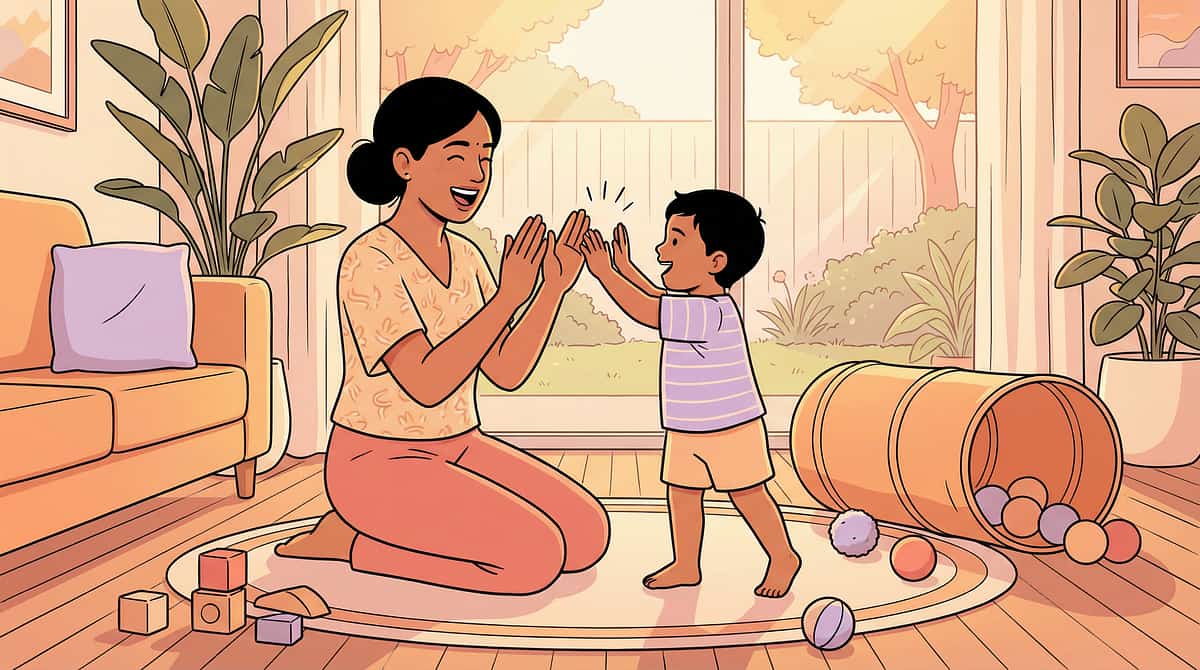
Big hug, high five, specific verbal praise naming the exact achievement
Token Reinforcement
Sticker on chart → building toward preferred reward. Reinforcement Menu ₹589 | ₹364
Activity Reinforcement
5 minutes of preferred activity immediately after completion
"Celebrate the attempt, not just the success. If they tolerated 15 seconds today vs. 5 seconds yesterday — that is the breakthrough. Name it specifically."
Act III — Step 6 of 6
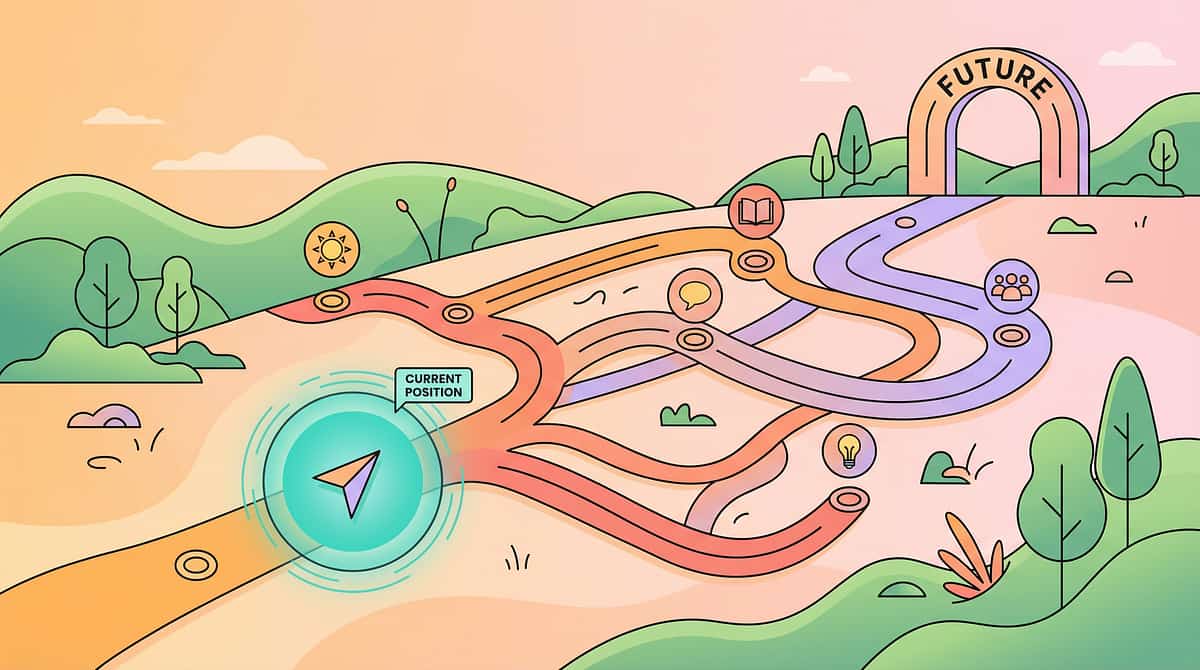
Step 6: The Cool-Down
No session ends abruptly. The transition out of the routine is as therapeutically important as the transition into it.
Warning (60 seconds before end)
"One more area — then we're completely done."
Timer Cue
"See the timer — when it hits zero, lotion time is completely over."
Completion Language
"ALL DONE. Lotion is finished. You can wash hands now if you want." Honor the post-application wash if needed — this is a therapeutic accommodation that builds trust, not giving in.
Cool-Down Activity (1–2 minutes)
Child's choice of calming input — bouncing on cushion, squeezing a sensory ball, watching a preferred video
Put-Away Ritual
Child places lotion bottle away — creates closure and builds routine ownership. Transition Objects ₹425
Act III — Data
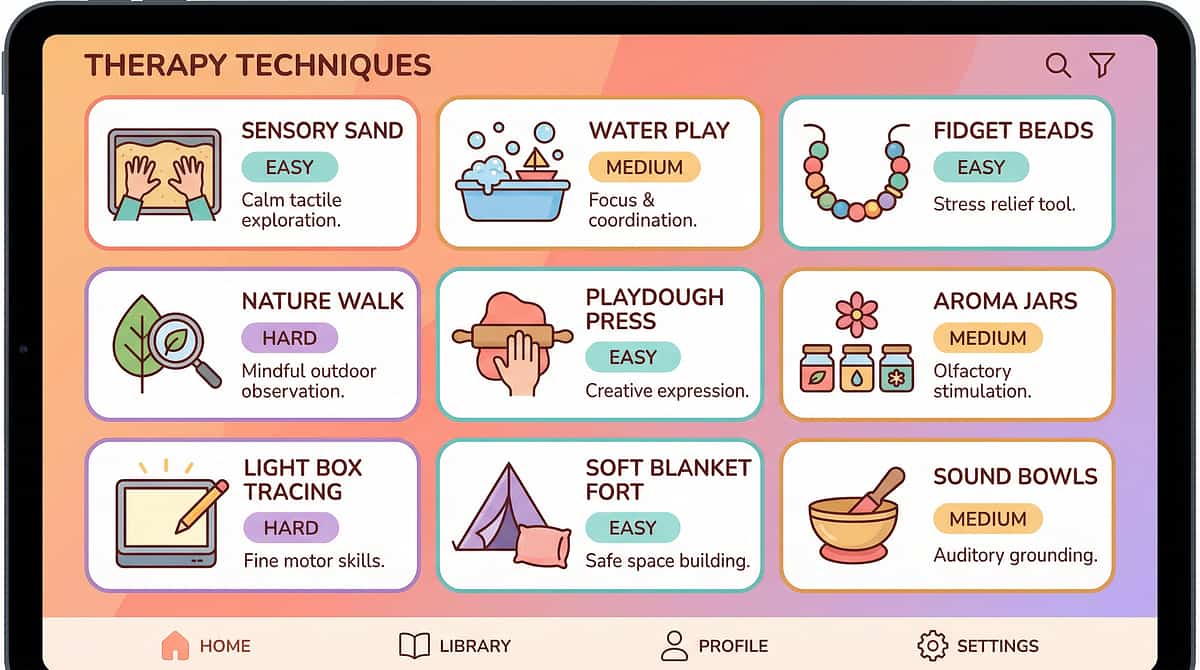
60 Seconds of Data Now Saves Months of Guessing Later
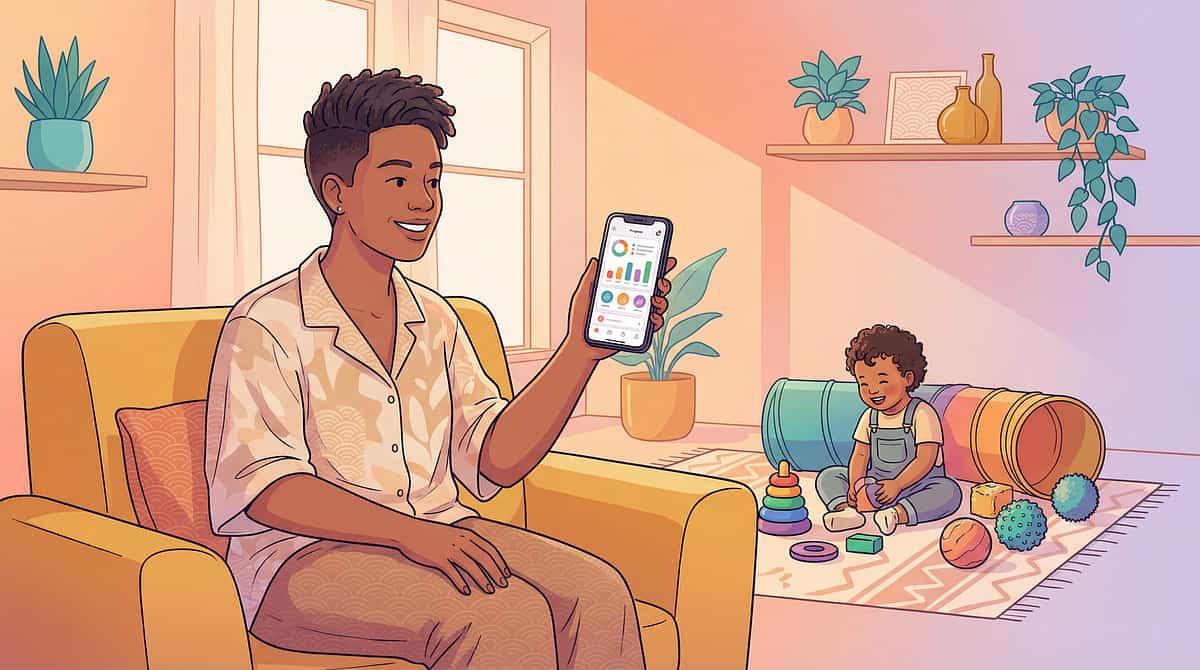
Record today's session immediately after. This data drives your child's Skincare Tolerance Readiness Index and feeds personalized recommendations via TherapeuticAI®.
1. Approach Used
☐ Lotion ☐ Spray ☐ Powder ☐ Other
2. Body Areas Completed
☐ Hands ☐ Arms ☐ Legs ☐ Torso ☐ Face
3. Distress Level (0–5)
0=None | 1=Mild | 2=Moderate | 3=Significant | 4=Severe | 5=Session Ended
4. Timer Duration Tolerated
___ minutes ___ seconds
5. Wiped Off Immediately?
☐ Yes — all ☐ Yes — some ☐ No
6. Today vs. Last Time?
☐ Better ☐ Same ☐ Harder
GPT-OS® Integration: Your session data contributes to your child's Skincare Tolerance Readiness Index trajectory, personalized technique modifications via TherapeuticAI®, and population-level outcomes improving recommendations for all families globally.
Act III — Troubleshooting
Session Abandonment Is Not Failure — It's Data
Every difficult session tells you something specific about your child's sensory profile. Use these seven common problems as diagnostic tools, not evidence of inadequacy.
🔴 Child ran before lotion even touched them
What happened: Anticipatory anxiety — seeing the bottle triggers conditioned avoidance. Fix: Change the container (use neutral bottle). Review social story daily for a week before resuming. Practice sitting near the closed bottle with reward — no application yet.
🔴 Applied lotion; child wiped off completely
What happened: Residual sensation is the trigger — failed habituation. Fix: Switch to faster-absorbing formula. Explicitly offer: "You can wipe it off after the timer." Tolerating application even briefly is progress — build duration gradually.
🟡 Child tolerated hands but refused legs/torso
What happened: Excellent partial progress. Fix: Accept hands-only as today's win. Expand one new body area per week maximum — legs before torso (less sensitive area first).
🟡 Child scratched area for 20 minutes after
What happened: Lingering sensory awareness — the "still feel it" phenomenon. Fix: Fast-absorbing formula priority. Permit post-application handwashing. Gradually increase wash-out delay over weeks.
🟡 Every approach rejected — spray, lotion, powder, everything
What happened: Severe tactile defensiveness or particularly difficult day. Fix: Skip today without consequence. Do sensory bin play instead. Consider teleconsult: 📞 9100 181 181
🟡 Fine yesterday, complete refusal today
What happened: Variable sensory days — completely normal. Sensory sensitivity fluctuates with sleep, health, and stress. Fix: Shortened version only. Mark difficult days in tracker — look for patterns (time of day? before school?).
🔴 Skin condition worsening; moisturizing impossible
What happened: Medical urgency vs. sensory barrier conflict. Fix: Tell dermatologist about sensory constraints. Ask about bath-additive moisturizers (add to bathwater — no application needed). Any moisturizing is better than none.
Act III — Personalization
No Two Children Have the Same Sensory Profile — No Protocol Should Be Identical
Sensory Seeker
- May actually enjoy deep pressure massage with lotion
- Lotion can become a preferred sensory input
- Can progress to full body routine faster
- May seek more lotion than needed
Sensory Avoider
- Needs minimal sensory input: spray, powder, or fast-absorbing only
- Every element must reduce sensation
- Slower progression, more validation at every step
- May resist even after tolerance is built
Age 2–4: Parent-Led
Child's only job: stay in the space. Maximum reward density. Parent controls everything.
Age 5–7: Child Chooses
Child chooses spray vs. lotion and order of body areas. Beginning self-application on hands.
Age 8–12: Child Leads
Child runs the protocol with parent present. Self-applies with preferred tool. Parent role = cheerleader and data tracker.

Act IV — Progress
Week 1–2: Calibrate Your Expectations Now — You'll Thank Yourself in Week 8
✅ Progress Looks Like This
- Tolerating lotion for 5 seconds longer than last week
- Staying in the room even with distress
- Accepting one new approach with reduced resistance
- Showing curiosity about the timer without prompting
- Wiping off less frantically than before
❌ Not Progress Yet (and That's Normal)
- Independent application (that's weeks 6–8)
- No distress at all (that's months away)
- Enjoying lotion (tolerance is the goal, not joy)
- Generalizing to sunscreen or face cream (each is a separate protocol)
"The hardest part of week 1–2 is that it looks like nothing is working. This is the investment phase. The nervous system is beginning to learn that the lotion experience can be managed. You may not see it yet. Keep the data."
"If your child tolerated the application for 3 seconds longer than last week — that is a real neurological change. Track it." — Research basis: PMC11506176: Sensory integration outcomes emerge across 8–12 week timelines.
Act IV — Week 3–4
Week 3–4: Neural Pathways Are Forming — Watch for These Specific Signs
Routine Anticipation
Child asks "is it the spray kind today?" — anticipating the routine with specific preference, not dread. This is a profound neurological shift.
Faster Transition In
Less time needed to transition into the lotion routine. Distress recovery time decreasing — meltdowns shorter or less intense.
Participation Emerging
Spontaneously holding out a hand. Beginning to choose timer, choose area. Any reduction in escape behavior counts as significant progress.
Generalization Seeds
Greater tolerance of similar textures in play (water, slime). Less distress at the sight of the lotion bottle outside the routine. Early sunscreen tolerance at the pool.
"You may notice you're more calm entering the routine. Your nervous system has learned this is manageable. That co-regulation is directly reducing your child's anxiety."
Act IV — Mastery
Week 5–8: Mastery Is Not Enjoyment — It Is Independent, Sustainable Skin Health
Mastery Criteria: Child demonstrates at least 3 of these in 5 consecutive sessions:
Tolerates lotion application to 2+ body areas without escape behavior
Waits through full timer before (optionally) washing hands
Uses one sensory accommodation independently (holds applicator, requests warm lotion)
Begins applying lotion to own hands with minimal prompting
Distress score 0–2 consistently (down from 4–5 at baseline)
No pre-routine anticipatory meltdown on most days
🏅Lotion Tolerance Mastery Unlocked — Skincare Tolerance Readiness Index: ADVANCING | Tracked via GPT-OS® | Readiness to Progress: → Add sunscreen protocol (E-538) → Expand to full body self-application → Progress to face washing independence (E-535)

Act IV — Celebrate
You Did This. Your Child's Skin Is Healthy Because You Didn't Give Up.
You arrived at this page exhausted. The dermatologist frustrated. The winter cracks worsening. Daily battles that were breaking something precious in the relationship with your child.
You chose a different path. You learned the neuroscience. You modified the products. You set up the space. You ran the protocol every single day — even the terrible days — and you tracked the data.
"Your child's nervous system changed because you showed up with the right tools and infinite patience. This is what sovereignty over your child's development looks like."
✅ Skincare routine sustainable without daily trauma
✅ Parent-child relationship preserved and strengthened
✅ Skin health needs being met medically
✅ Foundation built for sunscreen, face cream, topical medications
Journal Prompt:"The day lotion stopped being a battle. What changed, what I tried, what worked." Tell your child specifically: "You learned how to do the lotion thing. That was HARD. And you did it."
Act IV — Red Flags
These Signs Mean Professional Consultation Now — Not Next Month
🔴 Skin Health Red Flags
- Eczema worsening significantly despite any moisturizing achieved
- Skin infections developing (broken skin + bacteria)
- Child reports skin pain (not just sensory discomfort)
- Dermatologist recommending prescription intervention
🔴 Behavioral/Sensory Red Flags
- Sensory sensitivities actively expanding — new textures now problematic that weren't before
- Self-injury behavior during or after lotion attempts
- Severe generalization anxiety (now afraid of any wet substance)
- Sleep disruption related to sensory anxiety at bedtime
🔴 Developmental Red Flags
- Lotion resistance is one of 10+ daily sensory battles suggesting pervasive SPD
- Child's overall daily functioning significantly impaired by sensory challenges
- Parent-child relationship severely strained despite consistent technique use
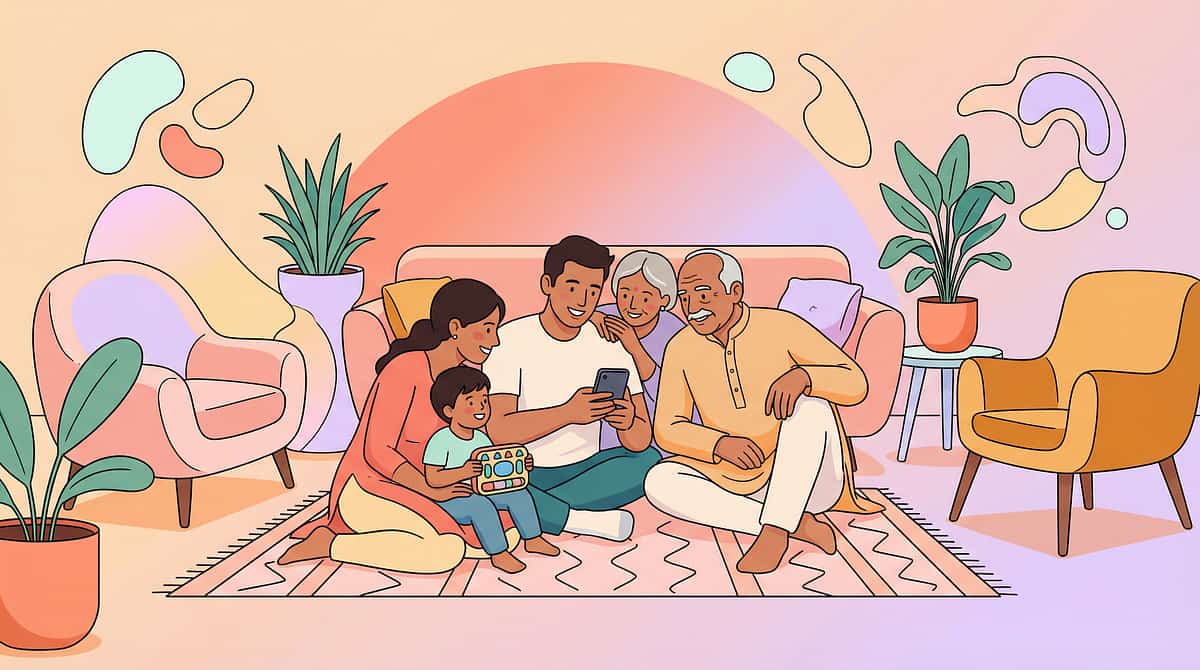
📞Pinnacle Helpline: 9100 181 181 | FREE | 16 languages | 24×7 | "Trust your instincts. If something feels wrong beyond sensory resistance, pause and ask. We're here."
Act IV — Progression Pathway
Lotion Application Is One Step on a Self-Care Journey That Has a Clear Destination
Long-Term Goal: Independent age-appropriate personal hygiene and grooming by age 10–12 → school independence, social participation, healthcare cooperation.
Lateral Alternative: If this approach didn't fully resonate — A-020: When Child Avoids Lotion (more intensive desensitization approach) | Sensory Diet Integration: Daily sensory routine that reduces overall tactile defensiveness

Act V — Related Techniques
You Already Have Most of These Materials — Explore the Full Self-Care Series
Your sensory-smart skincare kit covers the majority of the techniques in this series. One kit → six self-care domains addressed.
Technique | ID | Level | Materials You Already Own | |
Face Washing Tolerance | E-535 | 🟡 Core | Timer ✅ | |
Handwashing Routines | E-536 | 🟢 Intro | Social Story ✅ | |
LOTION APPLICATION | E-537 | 🟡 Core | ALL ✅ | |
Sunscreen Application | E-538 | 🟡 Core | Spray ✅ | |
Getting Dressed Independence | E-539 | 🟡 Core | Timer ✅ | |
Hairbrushing Tolerance | E-540+ | 🔴 Advanced | Deep Pressure ✅ |
Your Kit Covers 5 of 6 Techniques
One sensory-smart skincare kit addresses the entire Self-Care & Grooming domain

Act V — Community
From the Pinnacle Network — Real Families, Real Outcomes
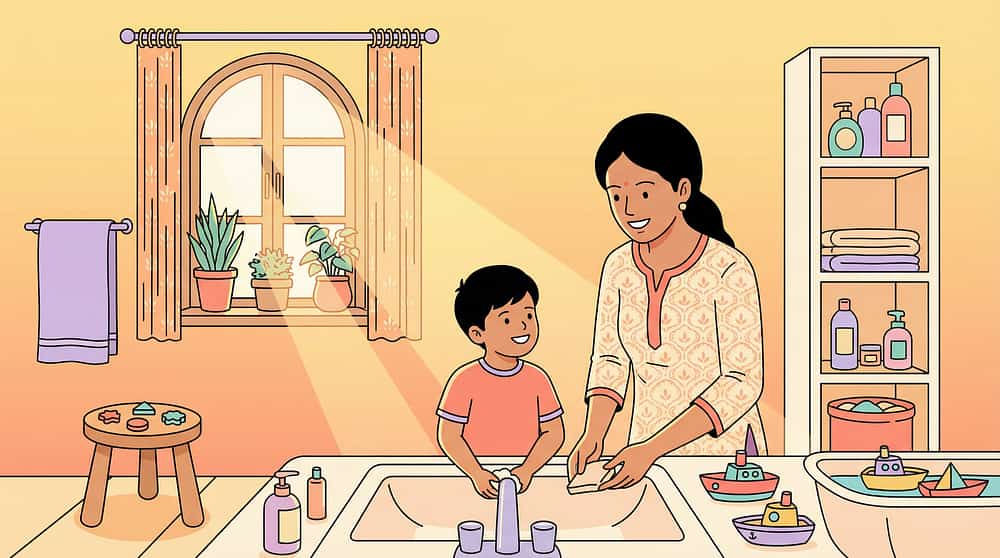
Priya, Mother of Arjun (Age 6, Bangalore)
"Every winter was a crisis. Arjun's eczema cracked his hands until they bled. But the moment I showed him the lotion bottle, he would run screaming. I tried for 8 months on my own."
After 11 weeks:"Our OT suggested spray moisturizer with his hourglass timer. By week 4, he was setting the timer himself. Now he sprays his own hands every morning. His skin is healed. And the fight is gone."
Therapist's note: Arjun's primary trigger was residual sensation — spray eliminated the spreading. Two modifications, complete transformation.
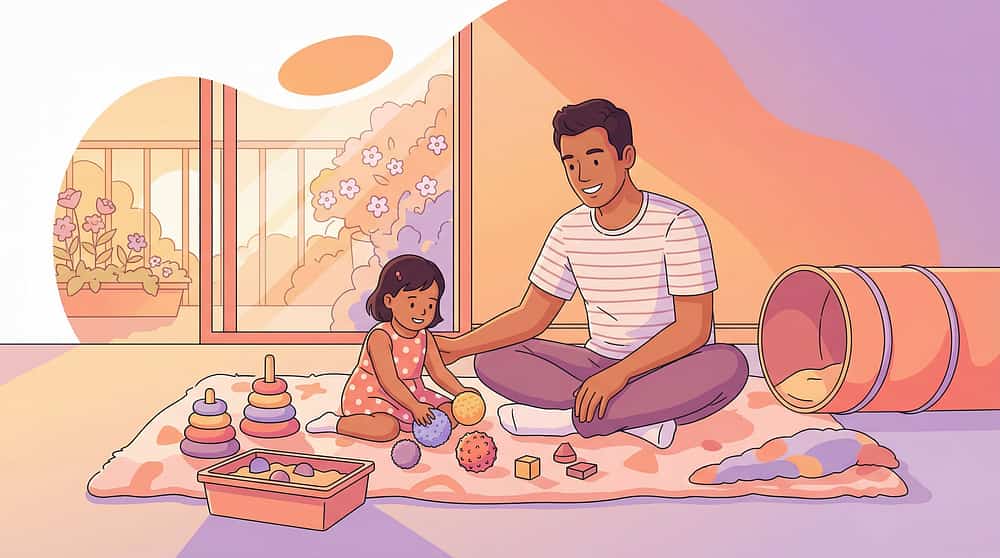
Rajesh, Father of Meera (Age 4, Hyderabad)
"My wife and I were both trying different approaches — neither worked. Meera would wipe off lotion so hard her skin got irritated from the friction. We didn't know what we were doing wrong."
After 8 weeks:"The Pinnacle OT showed us we were using light touch — which makes it worse. When we switched to firm, deep pressure with warmed lotion, Meera's whole body relaxed. She still doesn't love it. But she tolerates it."
Therapist's note: Light touch = alerting. Deep pressure = calming. The lotion didn't change. The technique changed everything.
Illustrative cases. Names changed. Outcomes vary by child profile and intervention consistency. | 📞9100 181 181 | FREE | 16 languages
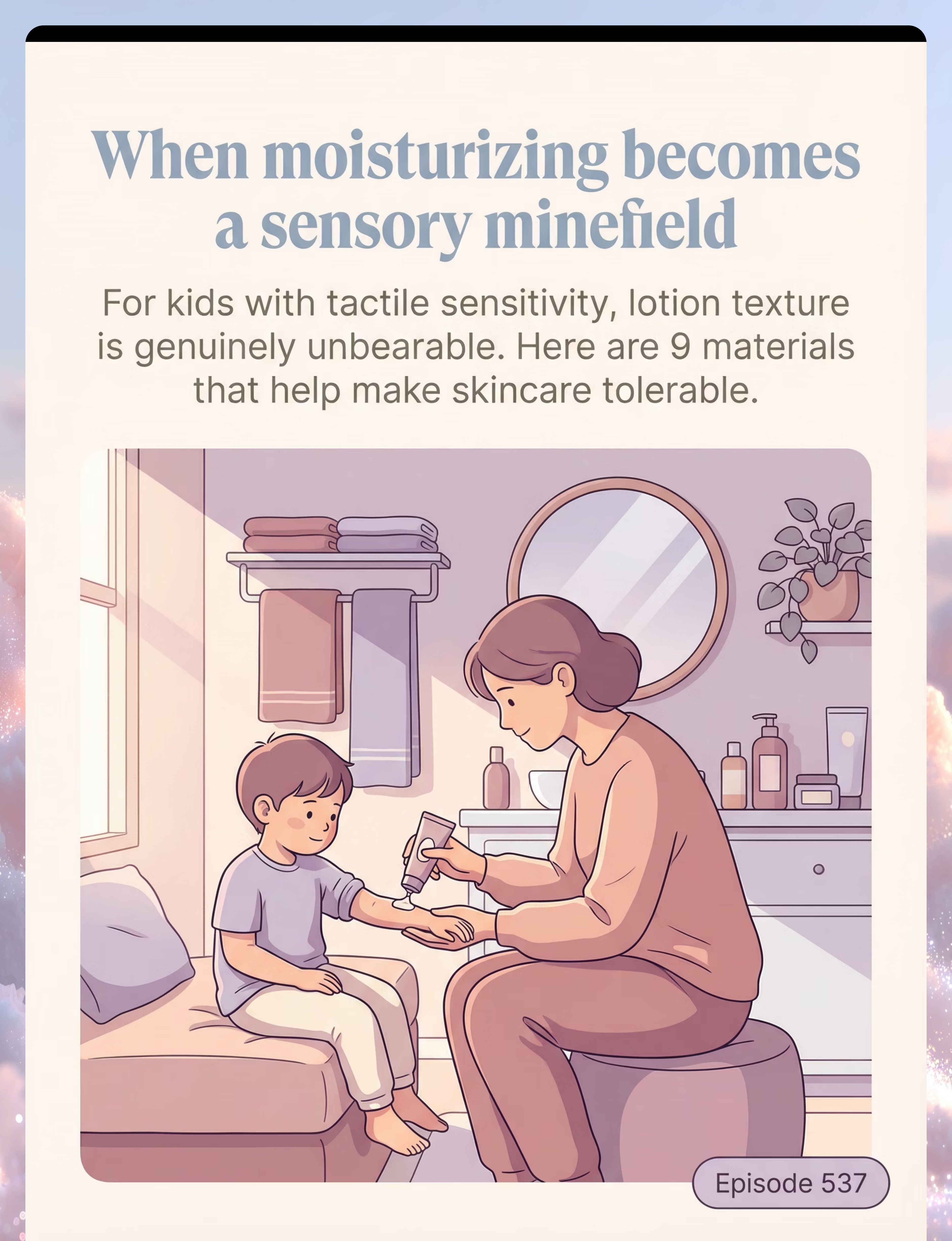
Preview of 9 materials that help with lotion application Therapy Material
Below is a visual preview of 9 materials that help with lotion application therapy material. The pages shown help educators, therapists, and caregivers understand the structure and content of the resource before use. Materials should be used under appropriate professional guidance.




Link copied!

Act VI — FAQ & Close
Every Question You Have After Reading This Page — Answered Here
❓ My dermatologist says daily moisturizing is essential. My child won't tolerate any of this. What do I do?
Communicate the sensory barrier explicitly. Ask about bath-additive emollients (added to bathwater — no application needed), prescription fast-absorbing formulations, and leave-on treatments that absorb completely. Prioritize affected areas with the most tolerable product. Some moisturizing is always better than none. Call 9100 181 181 for OT assessment coordinated with your dermatologist.
❓ How long before lotion stops being a battle?
Most families see meaningful reduction within 4–8 weeks — reduced intensity, shorter recovery, expanding tolerated areas. Full routine tolerance typically emerges at 8–16 weeks. Children with more severe tactile defensiveness may take longer. Track the data — progress often happens before it's visible in the daily moment.
❓ Should I ever just hold my child down and apply lotion quickly?
No. Forcing application without accommodations creates trauma association, increases anticipatory anxiety, and makes future sessions harder. It also damages the trust relationship that is the foundation of all therapeutic progress. The accommodations in this protocol change the sensory experience — they don't override it.
❓ Child accepts lotion from me but not my spouse. Why?
The child has learned the protocol with you specifically. Your spouse applying differently (unintentionally) triggers the original response. Solution: review this protocol together as a team, using exactly the same approach, same product, same timer. Consistency across adults is the next phase of generalization.
❓ Is this only for autism, or can any child have this challenge?
Tactile defensiveness occurs across multiple profiles: ASD, ADHD, anxiety disorders, sensory processing disorder (which exists independently of autism), and occasionally in neurotypical children. The intervention approach is effective regardless of diagnosis.
❓ My child is 10. Is it too late?
No. The nervous system remains plastic throughout childhood and adolescence. Older children also have advantages: they can communicate preferences, understand the rationale, and participate in modifying the routine. Self-motivation becomes an additional therapeutic tool.
❓ We tried everything on this page and nothing helped. What next?
This indicates professional OT assessment is the appropriate next step. Persistent non-response typically means a specific trigger hasn't been identified, a comorbid anxiety component needs treatment, or severity requires clinic-grade desensitization. Call 9100 181 181 — our team will match your child with an OT who specializes in severe tactile defensiveness.
Your Child's Skin Health Cannot Wait. Their Comfort Doesn't Have To Suffer. Start Today.
🏅 Pinnacle Blooms Consortium®
Validated by OT • SLP • ABA • SpEd • NeuroDev • CRO • WHO/UNICEF-Aligned | 20M+ sessions | 97%+ improvement | 70+ centers | Patents filed 160+ countries
Next Technique: E-538
© 2025 Pinnacle Blooms Network®, a unit of Bharath Healthcare Laboratories Pvt. Ltd. | CIN U74999TG2016PTC113063 | DPIIT DIPP8651 | MSME TS20F0009606 | GSTIN 36AAGCB9722P1Z2 | This content is educational and does not replace individualized assessment and intervention by licensed occupational therapists and healthcare professionals. Individual results vary.