
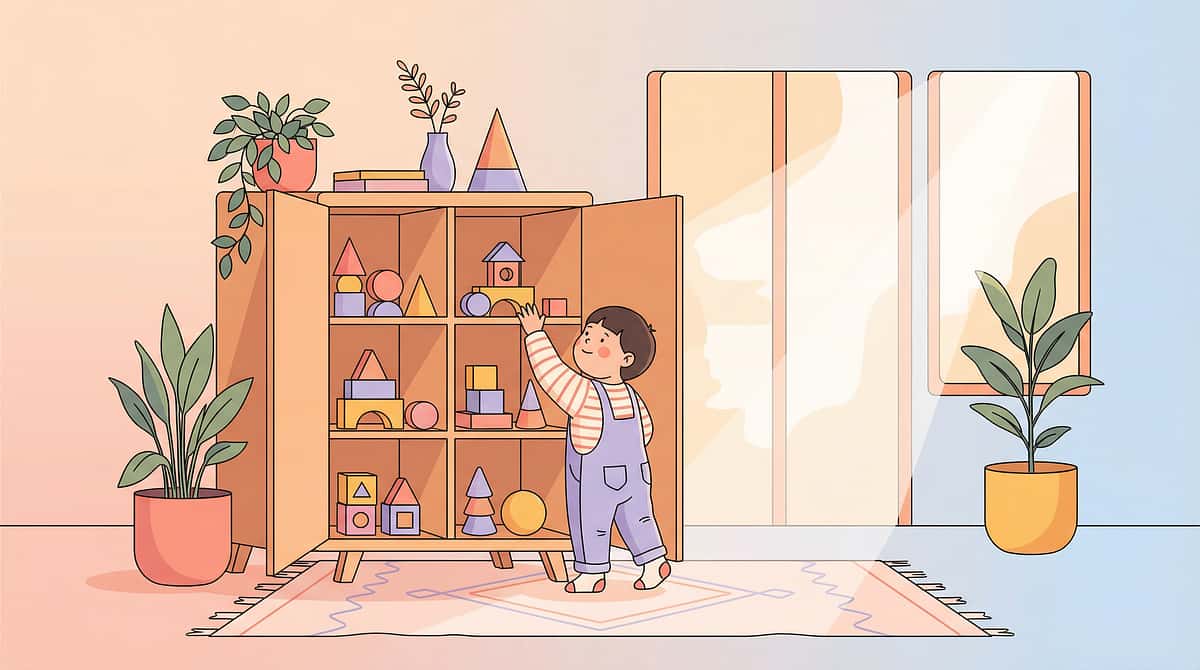
Your Son Reaches for That Toy Every Morning. And Every Morning, the Moment Passes.
He points at the shelf. He reaches. He makes a sound — somewhere between a word and a wish. You hand it to him. He grabs it, turns away, and the moment is over in three seconds. What if that exact moment — his reaching, his wanting — is the most powerful teaching opportunity in his entire day?
Pinnacle Blooms Network®
techniques.pinnacleblooms.org
What Is Incidental Teaching?
Incidental Teaching transforms the moments your child already initiates — into structured communication milestones that compound over thousands of natural daily interactions. Every time your child wants something, that is a complete ABA therapy trial hiding in plain sight.
"You are not failing. Your child is communicating in the only way they know how. We are here to build a bridge from reaching to requesting — and that bridge begins with 9 materials already accessible to every family."— Pinnacle Blooms Consortium | ABA • SLP • OT • SpEd • NeuroDev
🔵 Why It Matters
Responsive caregiving is the single most powerful predictor of language outcomes in early childhood (WHO, 2018).
📚 What & How
9 clinician-validated materials, all home-ready, that create natural teaching moments from daily life.
▶️ Do It Now
A 6-step protocol any parent can implement today — no clinic, no table, no flashcards required.
✅ Start Today
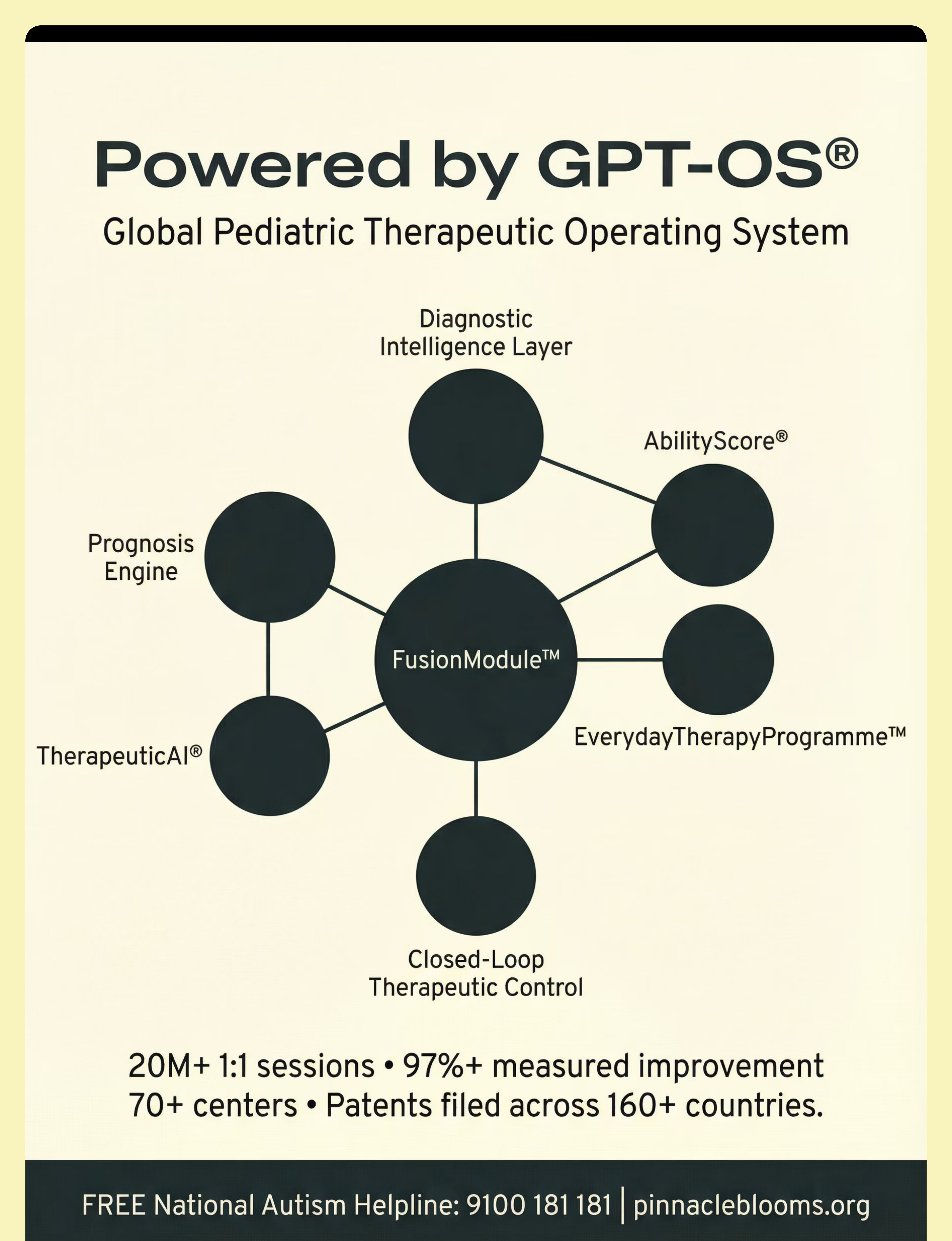
GPT-OS® powered. Free helpline: 📞 9100 181 181
The Numbers
Every 54 Seconds, a Child Is Diagnosed With Autism Somewhere in the World.
1 in 36
Children in the US
Meet autism diagnostic criteria (CDC, 2023)
85%
Generalisation Gap
Children with autism who struggle to generalise skills from clinic to home
3×
More Effective
Incidental teaching's generalisation outcomes vs. table-based drill (NDBI meta-analysis, 2023)
India's autism prevalence is estimated at 1 in 68 children (National Trust of India). With 1.4 billion people, that is an estimated 18 million children on the spectrum — the vast majority receiving fewer than 3 therapy hours per week from professionals.
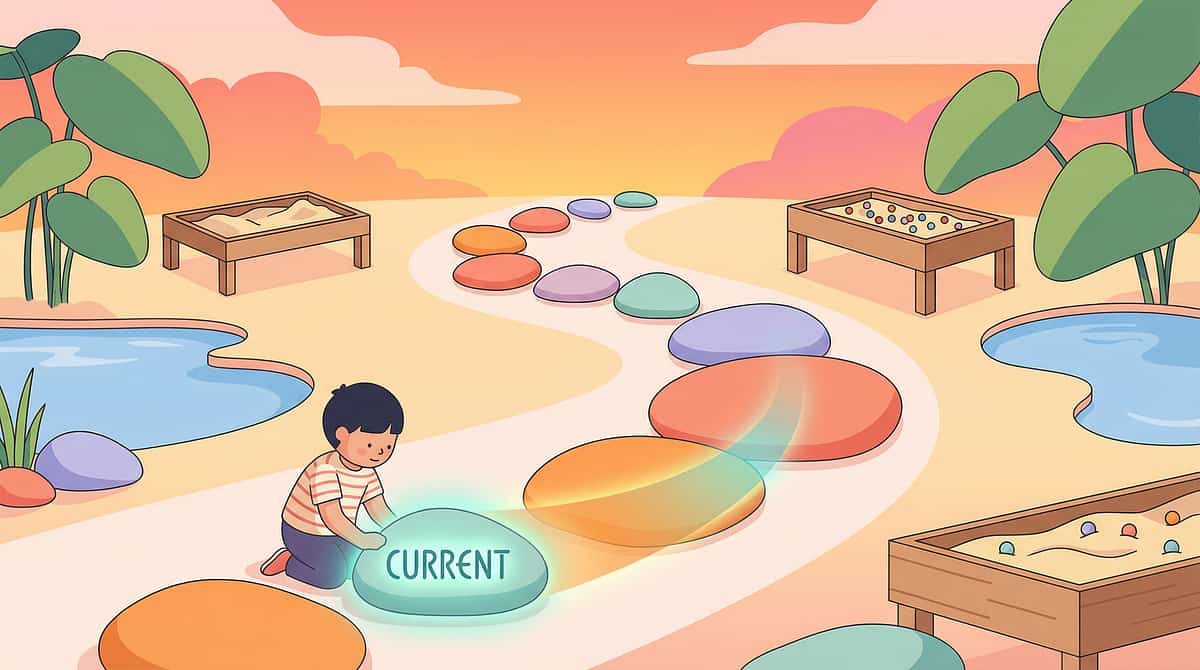
Your child is awake for 14 hours a day. Professional therapy occupies 3–5 of those hours at most. The other 9–11 hours are yours. Incidental teaching is the evidence-based method that fills every one of those hours with learning — without turning your home into a clinic.

Neuroscience
Why Motivation Is the Most Powerful Learning Switch in the Human Brain
Four Brain Systems Fire Simultaneously
When your child wants something — genuinely, intrinsically wants it — something remarkable happens in their brain:
- The Reward System (nucleus accumbens) releases dopamine, tagging this moment as important.
- The Language Centre (Broca's area) activates, searching for the sounds or words to request.
- The Memory System (hippocampus) records: "communicating gets me what I want."
- The Executive System (prefrontal cortex) coordinates the request behaviour.
The Wiring Difference
When a therapist at a table holds up a flashcard and asks "What's this?" — only system 4 fires. When your child reaches for bubbles and you pause, waiting — all four fire at once.
"This is why incidental teaching produces skills that generalise. It is not just teaching a word — it is wiring the complete motivational circuit that makes communication meaningful."— Pinnacle NeuroDev Consortium Lead
Frontiers in Integrative Neuroscience (2020): Motivational state modulates neural pathway activation during communication learning. DOI: 10.3389/fnint.2020.556660

Evidence Grade: Level I
Incidental Teaching: Level I Evidence. 50 Years of Research. Still the Gold Standard.
Endorsed by BACB | NCAEP | WHO. Over 47 studies reviewed. Clinically validated, home-applicable, and parent-proven across 6 continents.
Study | Finding | Source | |
NCAEP (2020) | Naturalistic Intervention classified as Evidence-Based Practice for autism | National Clearinghouse on Autism Evidence & Practice | |
Hart & Risley (1975) | Original incidental teaching research — established 50-year evidence base | Journal of Applied Behavior Analysis | |
NDBI Meta-analysis (2020) | 29 RCTs confirm NDBIs produce superior generalisation vs. DTT alone | Schreibman et al., J. Autism & Dev. Disorders | |
Indian RCT (2019) | Home-based naturalistic interventions showed significant outcomes in 8-week protocol | Padmanabha et al., DOI: 10.1007/s12098-018-2747-4 | |
PMC11506176 (2024) | 16 studies confirm naturalistic strategies meet EBP criteria for ASD | PRISMA systematic review |

Technique Definition
Incidental Teaching
Parent-friendly alias: "Teaching in the Moment" | "Motivation-Based Learning" | "Natural Opportunity Teaching"
Incidental Teaching is a naturalistic Applied Behavior Analysis (ABA) strategy that uses the child's own motivation and self-initiated interest to create structured communication learning opportunities — embedded within everyday play, routines, and daily life activities. The child's reaching, pointing, vocalising, or orienting toward something they want IS the teaching trial.
ABA / Applied Behavior Analysis
Core evidence base. Reinforcement, prompting, and generalisation principles.
Speech-Language Therapy
Communication targets: manding, tacting, intraverbals, AAC selection.
NDBI Framework
Naturalistic Developmental Behavioural Intervention — child-led, motivation-based.
Parent-Implemented
Designed for home delivery. Parents are the primary intervention agents.
Age: 18 months – 8 years | Duration: 5–15 min intentional sessions + all-day embedding | Frequency: Daily (multiple natural opportunities) | Setting: Home-primary + clinic + school
Who Uses This
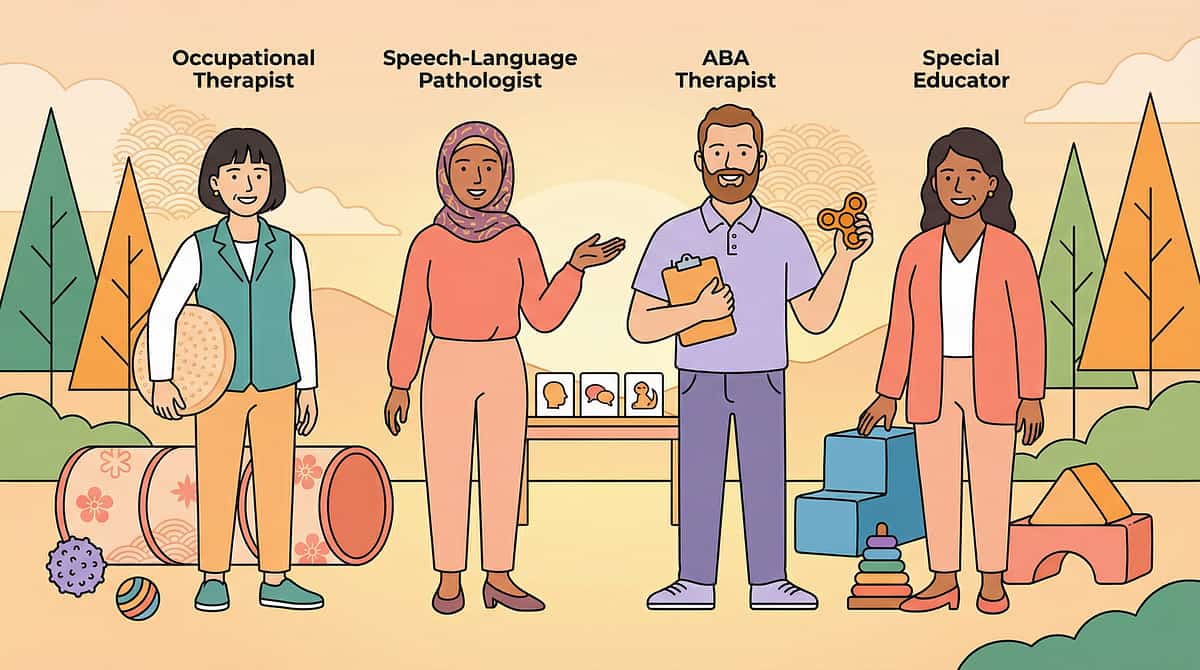
Five Disciplines. One Technique. Your Home Is Where They All Converge.
🔵 ABA / BCBA — Primary Lead
Designs the reinforcement schedule, prompt hierarchy, and environmental arrangement. Identifies target behaviours (manding, tacting, intraverbals) and supervises parent implementation fidelity.
🗣️ Speech-Language Pathologist
Uses incidental teaching for requesting, labelling, commenting, and conversational turn-taking. Selects communication modality: verbal, AAC, or sign.
🤸 Occupational Therapist
Identifies sensory-motivating materials. Ensures environment supports regulation. Selects materials that are both therapeutically appropriate and motivationally compelling.
📚 Special Educator
Embeds incidental teaching into academic skill-building. Uses child-led moments to teach pre-literacy, numeracy, and adaptive skills in naturalistic contexts.
🧠 NeuroDev Paediatrician
Confirms diagnostic context. Monitors medication effects on motivation. Validates outcome trajectories against developmental norms.
"When your child reaches for a toy, that one gesture activates communication goals (SLP), social initiation targets (ABA), fine motor reach (OT), and early learning objectives (SpEd) — simultaneously."— Pinnacle FusionModule™ Consortium Lead
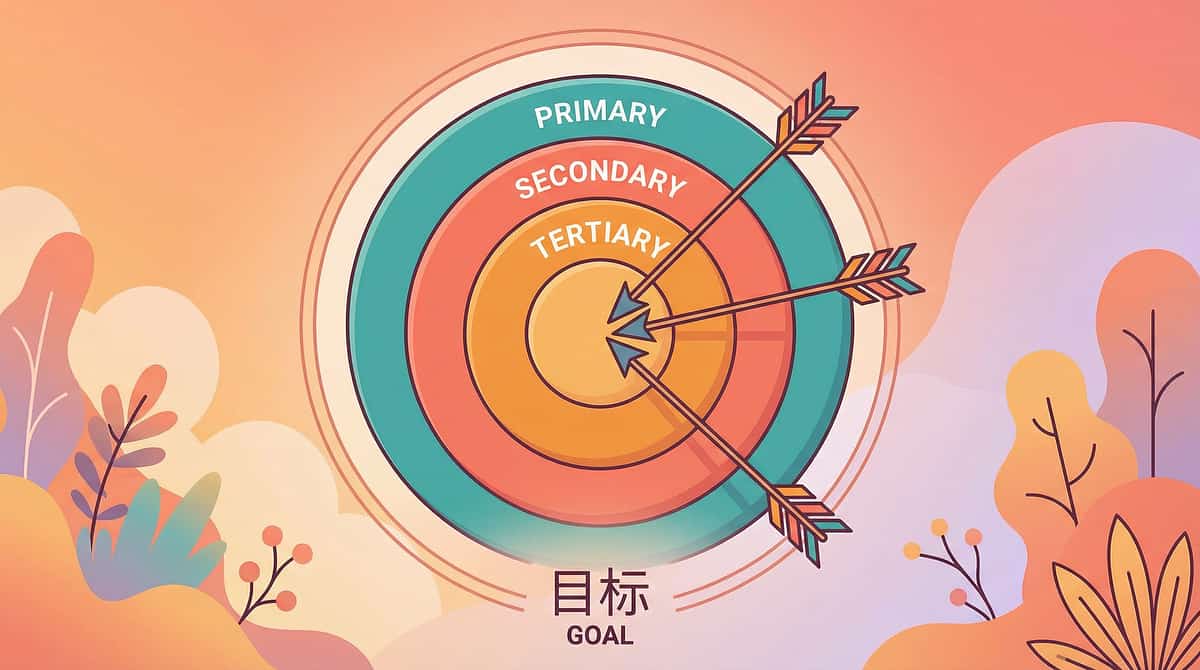
What It Targets
The Precision of Incidental Teaching: What It Actually Changes in Your Child
Primary Targets (Observable within 2–4 weeks)
- Requesting (Manding): Child asks for desired items, help, or actions using any modality
- Labelling (Tacting): Child names objects, actions, and attributes in motivating contexts
- Functional Communication: Communication that gets the child what they need in real life
- Skill Generalisation: Target skills transfer from therapy to home, school, and community — spontaneously
Secondary Targets (4–8 weeks)
- Joint attention: Child checks in with adult to share interest
- Social initiation: Child seeks adult engagement unprompted
- Turn-taking: Child participates in reciprocal interactions
- Imitation: Child copies adult models during motivating activities
Tertiary Targets (Long-term Gains)
- Executive function: Self-regulation and flexible thinking
- Persistence: Tolerating effort before reward
- Social understanding: Communication is for sharing, not just getting
Observable Behaviour Indicators
- ✅ Child points at shelf more than grabs at you
- ✅ Child makes eye contact when wanting something
- ✅ Unprompted vocalisation increases at preferred items
- ✅ Skills appear at home without being drilled at clinic
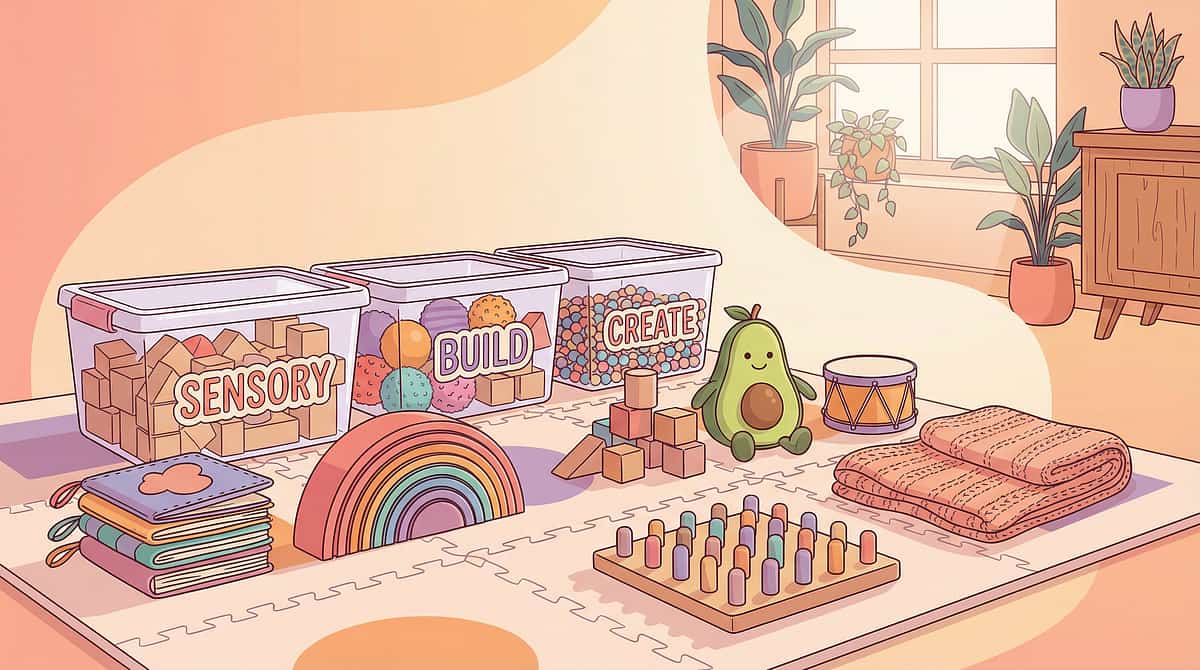
The 9 Materials
9 Materials. One Principle: Create the Want, Then Teach the Ask.
Every material below is chosen for a single reason: it creates a moment of genuine motivation that becomes a structured communication teaching trial. Together, they transform your home into a 14-hour-a-day learning environment.
Total starter kit cost estimate: ₹800–1,500 for core kit | ₹1,500–6,000 for full kit. Implementation priority order: Clear Containers + Preferred Items → Cause-Effect Toys → Incomplete Sets → Snacks → Choice Boards → Help Toys → Turn-Taking → Timers.

Material 1 of 9
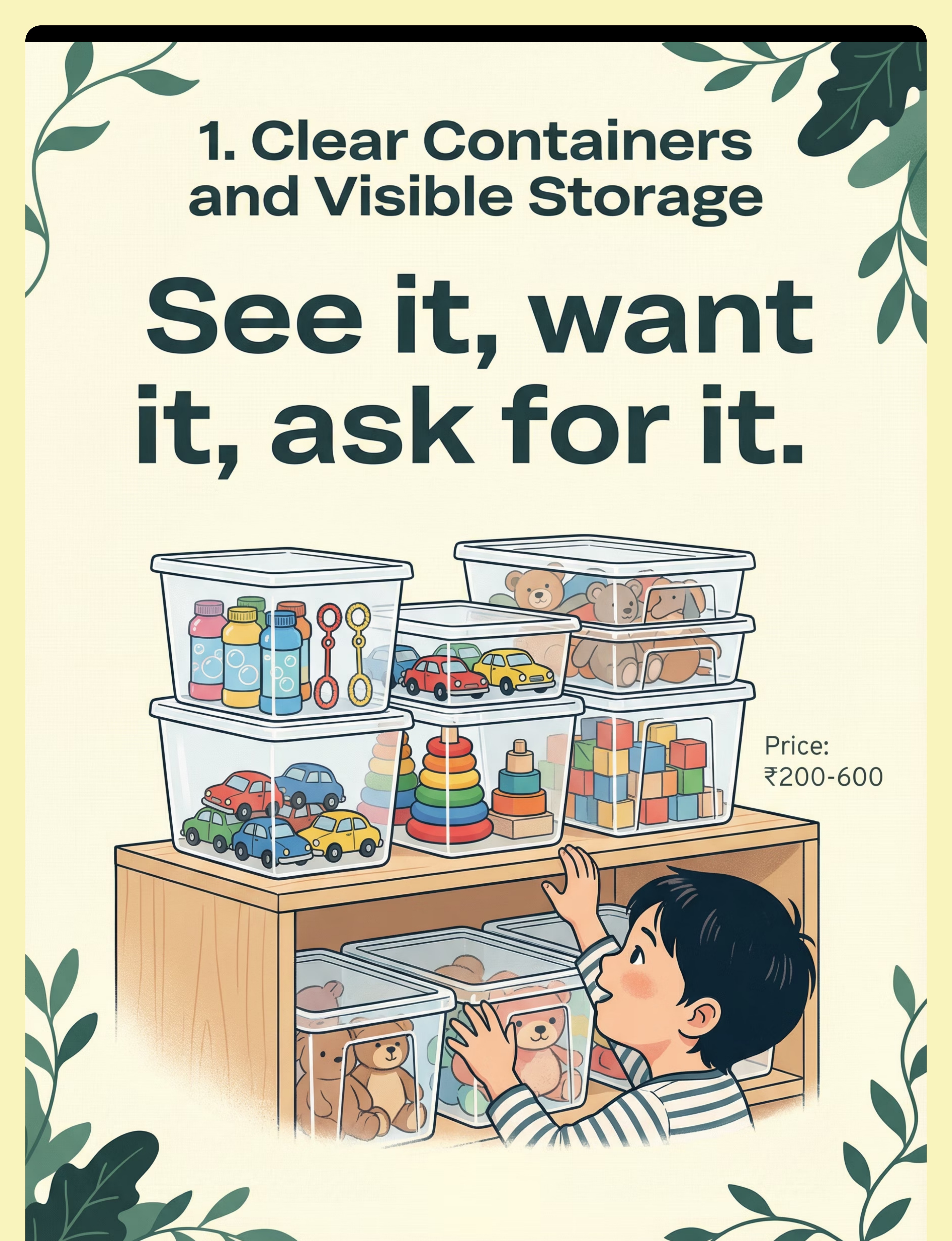
Clear Containers & Visible Storage
Canon Category: Environmental Arrangement / Visual Access Materials
What It Does
Makes desired items visible but inaccessible — creating the motivation to communicate. When a child can see what they want but cannot reach it independently, the stage is set for a natural communication attempt. This is the foundation of environmental arrangement in incidental teaching.
Price range: ₹200–600
What to Use
Pinnacle Recommends: Clear plastic storage containers with lids | See-through jars | Transparent organiser bins
Free DIY Option
Any transparent container from your kitchen — a plastic water bottle, a zip-lock bag, a glass jar with a tight lid. The material itself is irrelevant; the transparency is everything.
Material 2 of 9
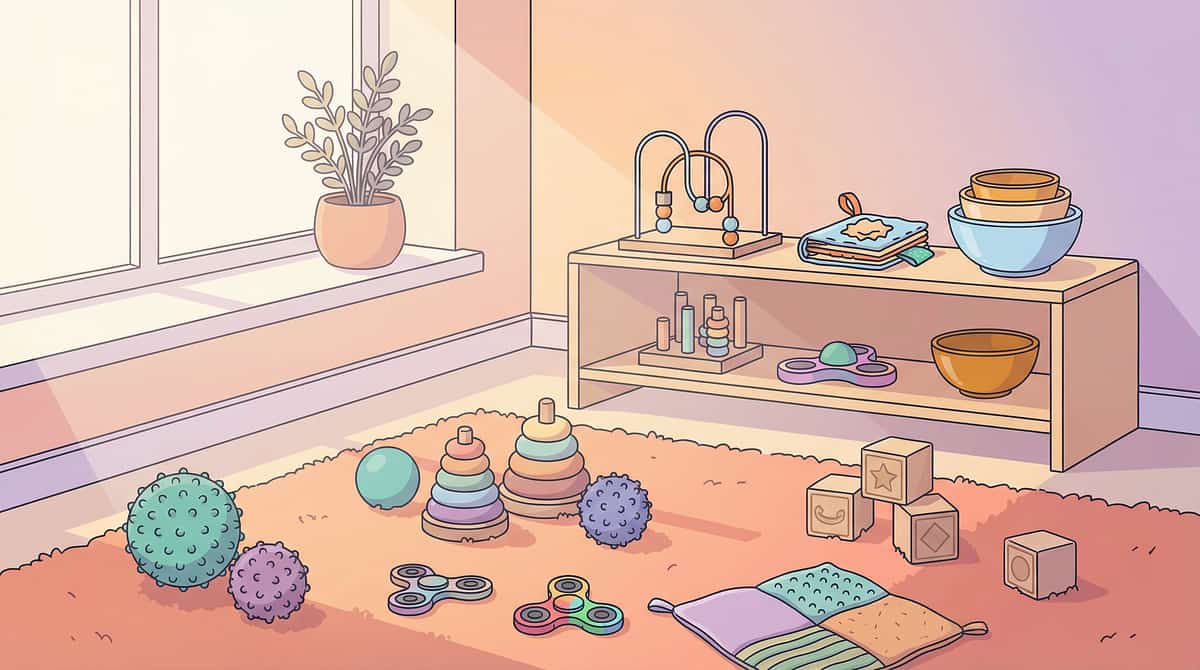
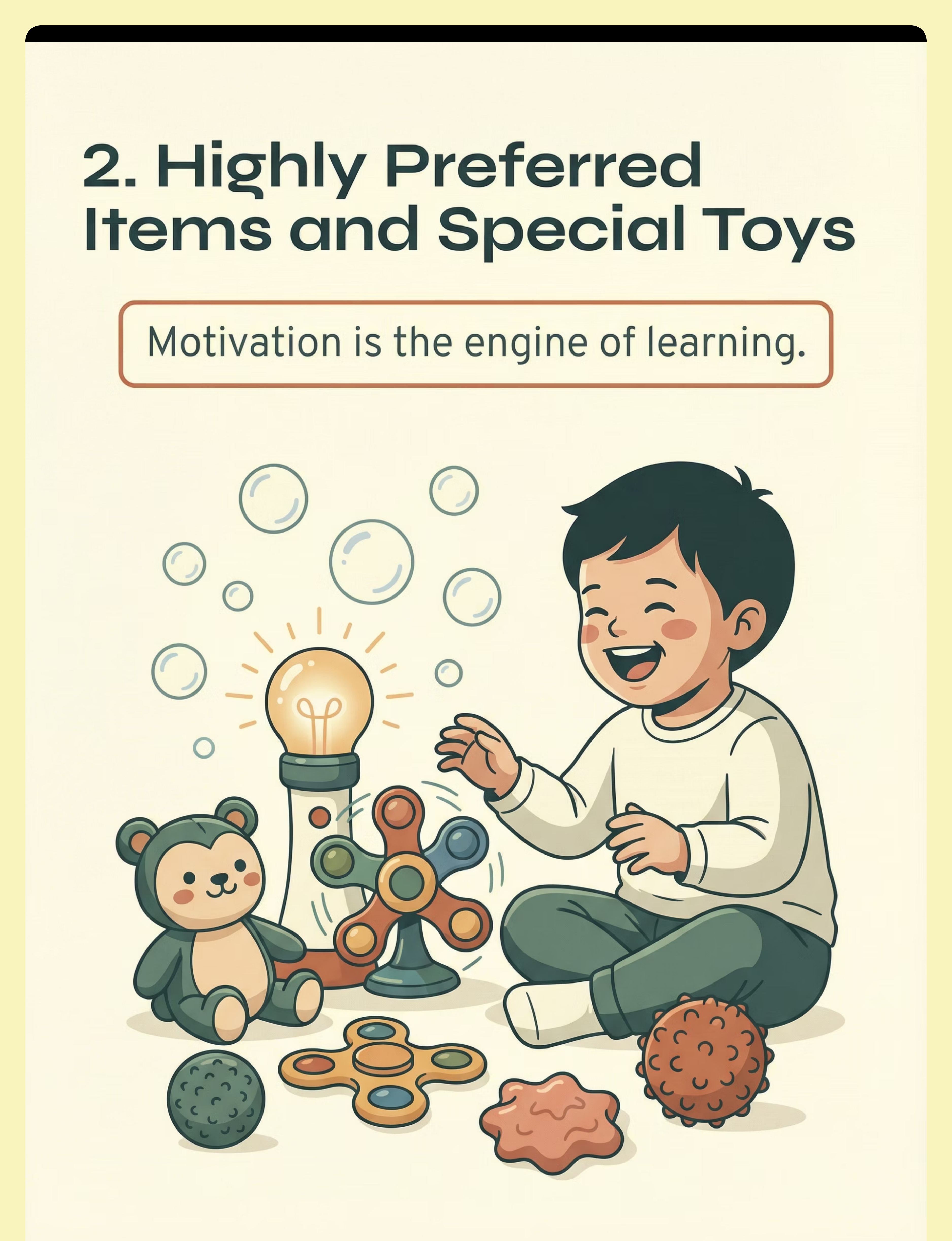
Highly Preferred Items & Special Toys
Canon Category: High-Preference Motivating Items
What It Does
Motivation is the engine of learning — preferred items are the fuel. Without genuine motivation, there is no teaching moment. These are not just toys; they are the currency your child already values. Every interaction with a preferred item is a natural opportunity to build communication.
Price range: ₹300–1,500
What to Use
Pinnacle Recommends: Whatever YOUR child reaches for — this is observation-based, not product-based. Run a quick preference assessment by placing 5–8 items on the floor and watching which one your child moves toward first.
Free DIY Option
Identify your child's top 5 preferences through observation. The discovery costs ₹0. Motivation is internal — your job is to observe, not purchase.
Material 3 of 9
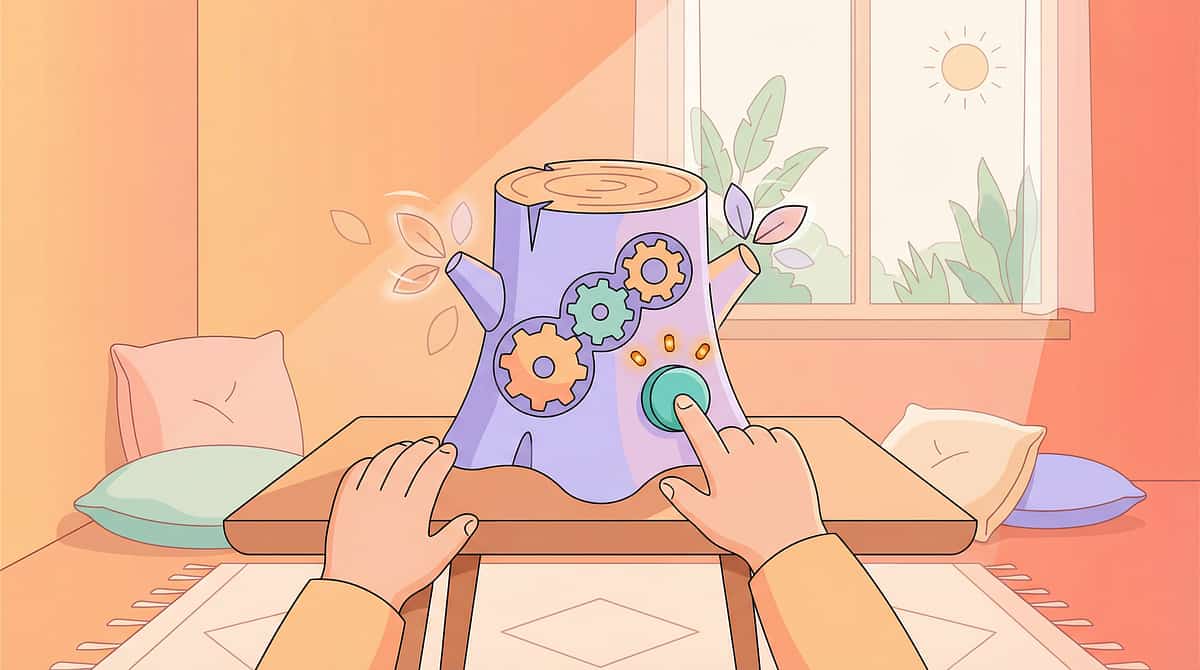
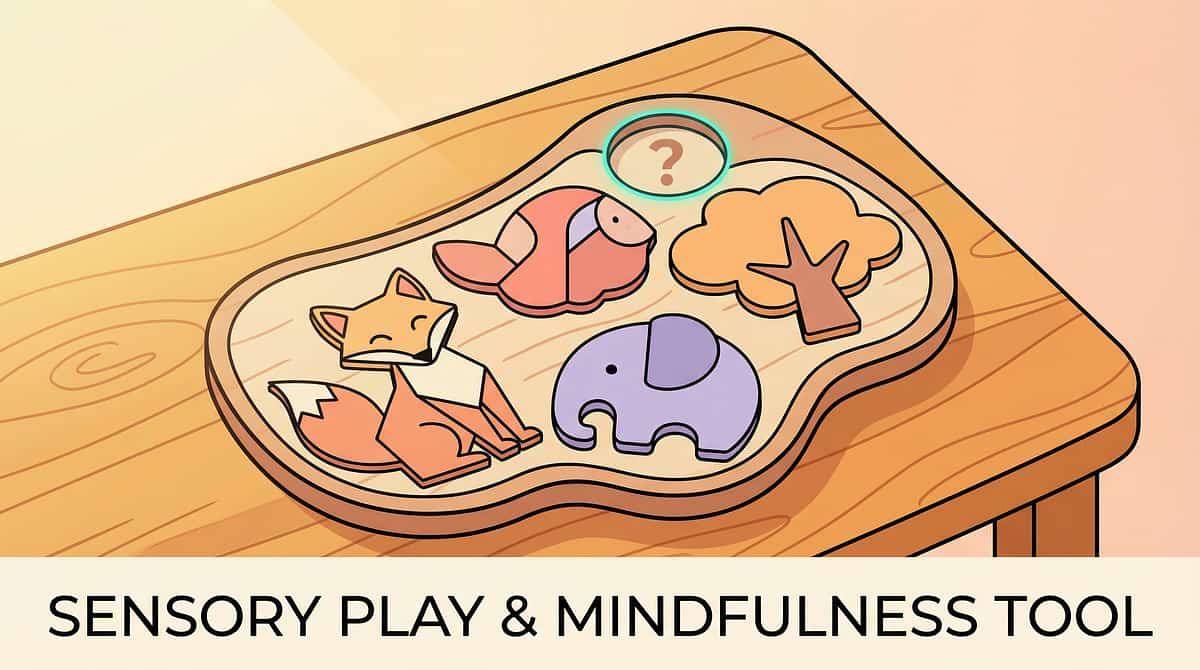
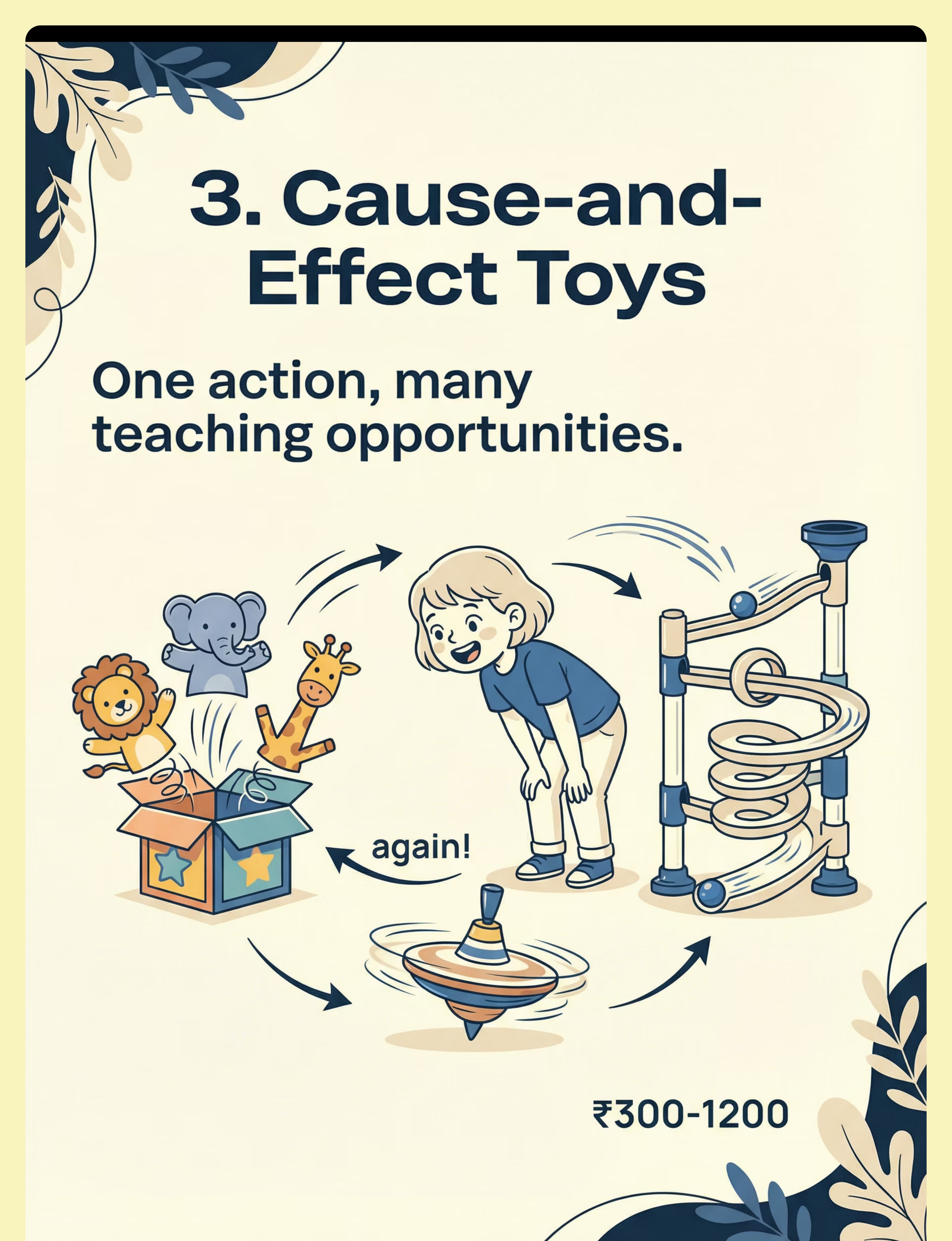
Cause-and-Effect Toys
Canon Category: Cause-Effect Toys / Switch Toys
What It Does
One action = one motivating result = one teaching opportunity, repeated dozens of times. Cause-effect toys are uniquely powerful because they are inherently repetitive — children want "more" of the rewarding result. Every "more" request is a complete manding trial. These toys build the requesting foundation faster than almost any other material.
Price range: ₹300–1,200
What to Use
⭐Canon Product:Dyomnizy Educational Memory Game Toy with Lights & Sound Effects — ₹519 | Interactive cause-effect with lights and sound
Free DIY Option
Spinning tops, rolling balls, pop-up boxes made from household items. Any object where a child's action produces a consistent, motivating result.
Material 4 of 9
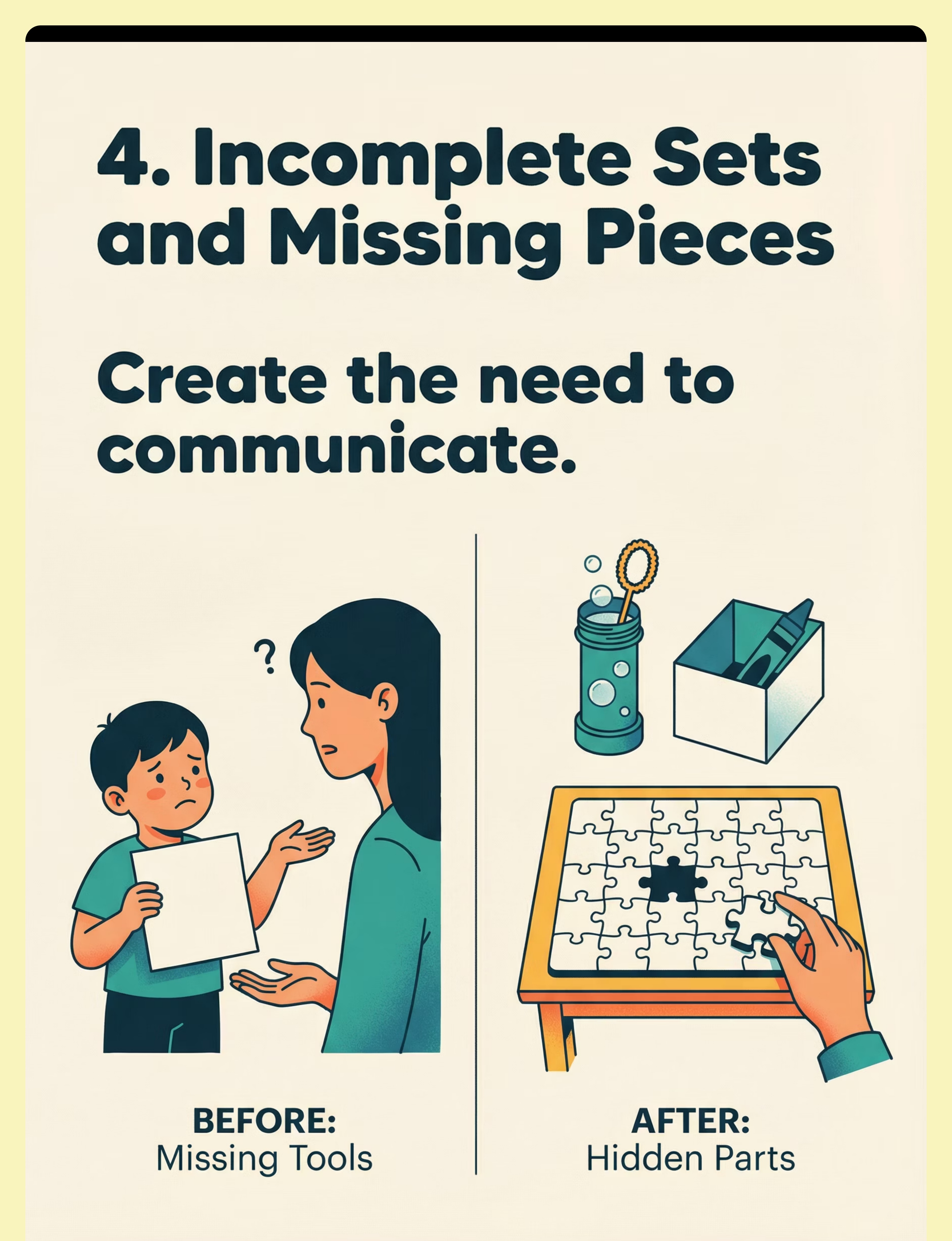
Incomplete Sets & Missing Pieces (Sabotage Tools)
Canon Category: Communication-Necessity Creation Tools
What It Does
"Strategic sabotage" — give paper but hold crayons. Give the puzzle base but keep the pieces. This creates the necessity to communicate, not just the opportunity. Unlike other materials that create motivation through desire, incomplete sets create motivation through need. The child cannot complete the activity without communicating with you.
Price range: ₹200–800 (often ₹0 — use items you already own)
What to Use
Pinnacle Recommends: Puzzles, art supply sets, building block sets, bubble containers with separate wands
Free DIY Option
Any multi-component activity: paper + crayons | puzzle + pieces | toy + battery | snack + container. You already own these. The sabotage is the technique.
Material 5 of 9
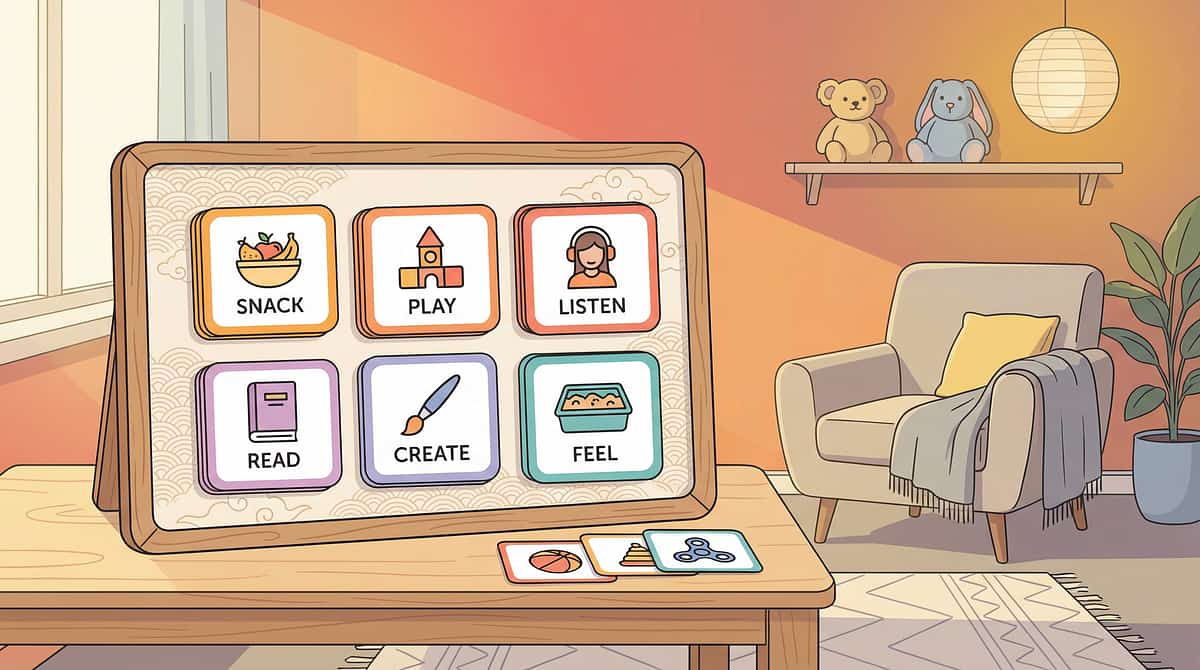
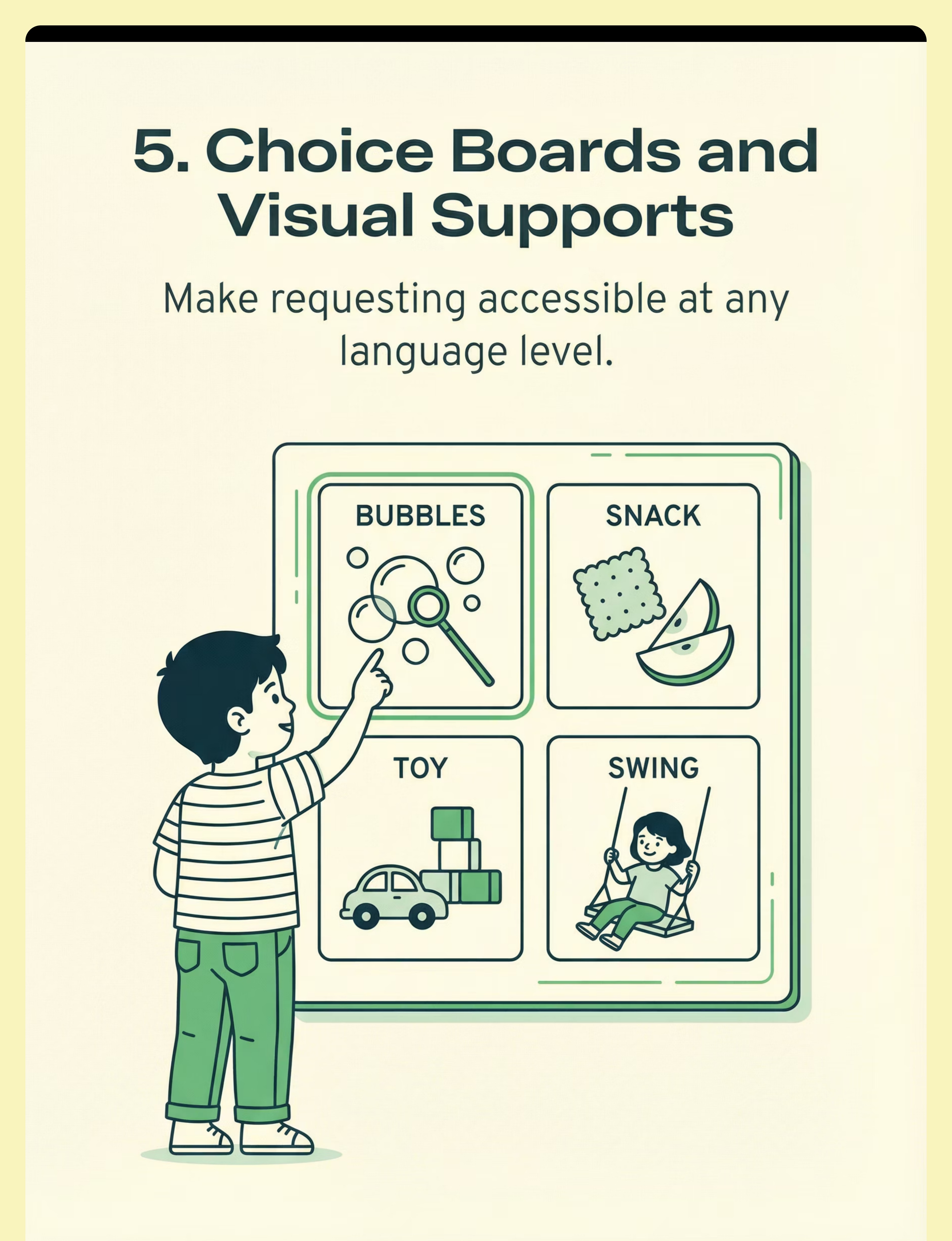
Choice Boards & Visual Supports
Canon Category: Visual Communication Supports / AAC Supports
What It Does
Makes requesting possible at ANY language level — including pre-verbal children. A choice board democratises communication: a child who cannot yet produce words can still initiate a request by pointing to a picture. This removes the language barrier from incidental teaching, making every moment a potential communication trial regardless of the child's current verbal ability.
Price range: ₹200–600
What to Use
Pinnacle Recommends: Laminated photo boards with Velcro | First-then boards | PECS-style communication books
Free DIY Option
Print photos of your child's 10 most preferred items. Laminate with tape. Stick to cardboard. Pointing to a drawing has the exact same AAC function as pointing to a laminated card.

Material 6 of 9
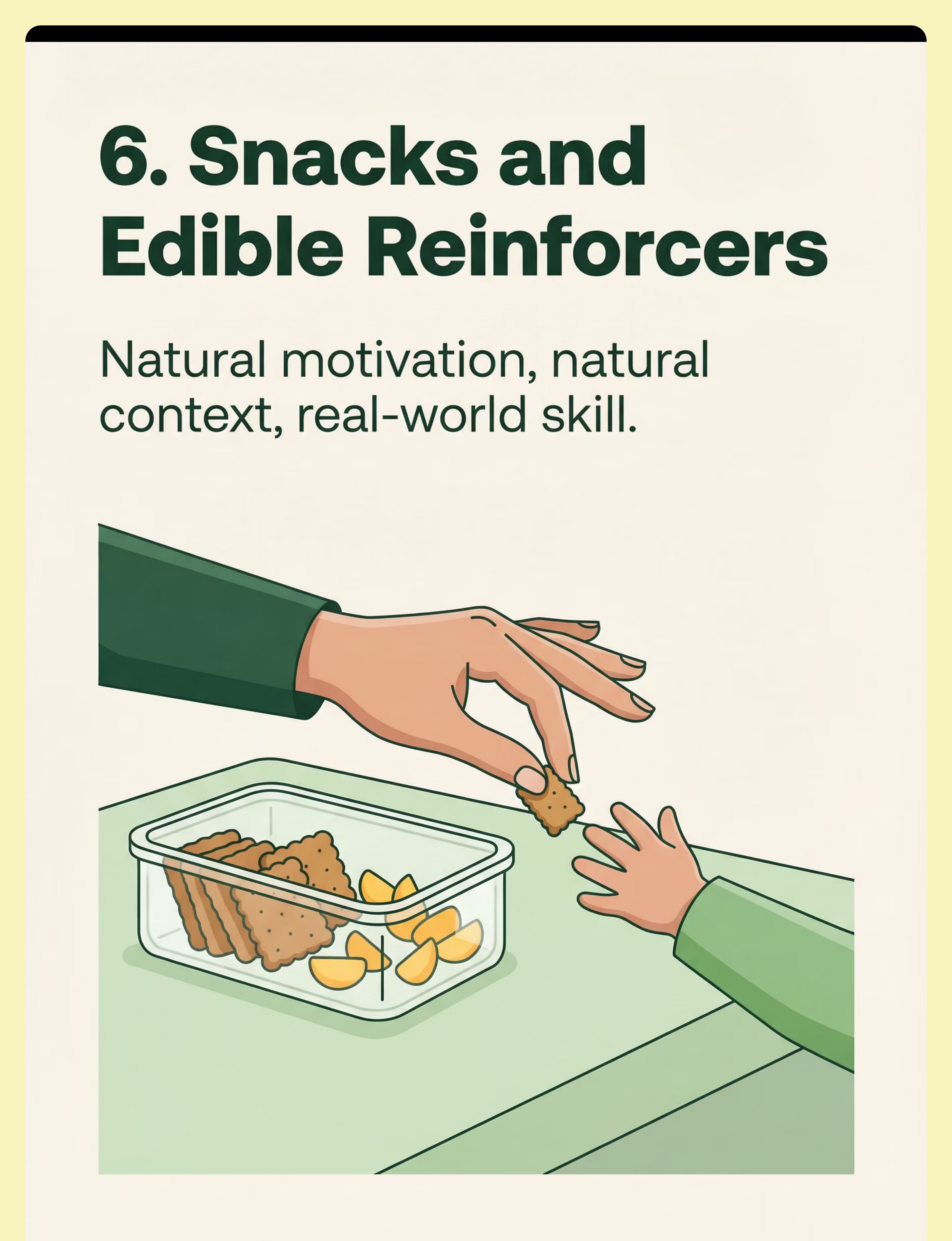
Snacks & Edible Reinforcers
Canon Category: Edible Reinforcers / Natural Consequence Items
What It Does
Every "more please" at snack time is a functional communication trial for life. Snack-based teaching is uniquely powerful because it creates multiple high-motivation opportunities throughout the day within routines that already exist. Small portions given one at a time create natural repetition — the same snack becomes 10 or 15 teaching trials in a single sitting.
Price range: ₹100–400
What to Use
⭐Canon Products:Rosette Imprint Reward Jar — ₹589 | 1800+ Reward Stickers — ₹364 (for pairing tangible + social reinforcement)
Pinnacle Recommends: Small portions of any preferred snack — crackers, fruit pieces, biscuit halves
Free DIY Option
Your kitchen. Give one piece at a time. Wait for communication. Repeat. The technique requires no commercial product.
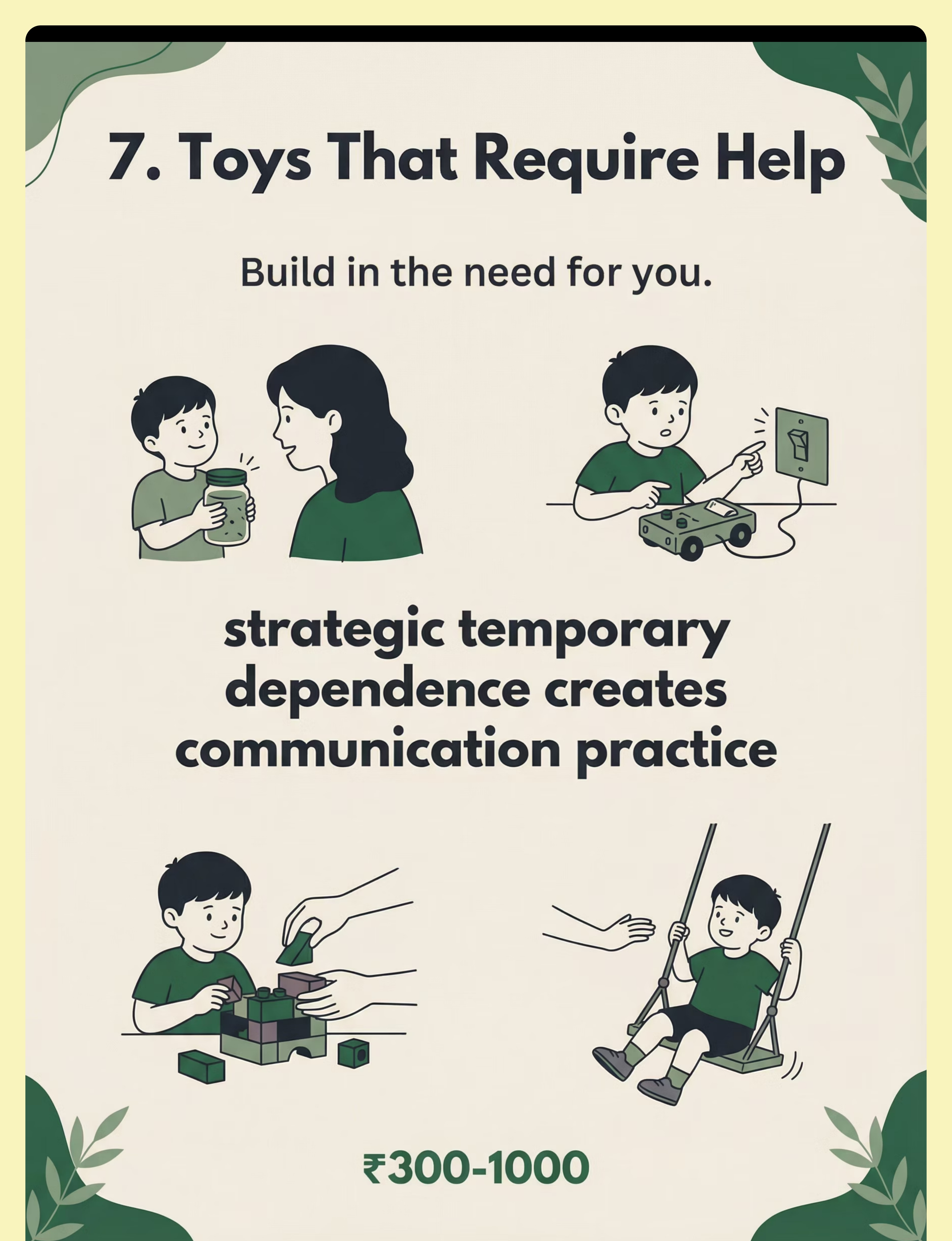
Material 7 of 9
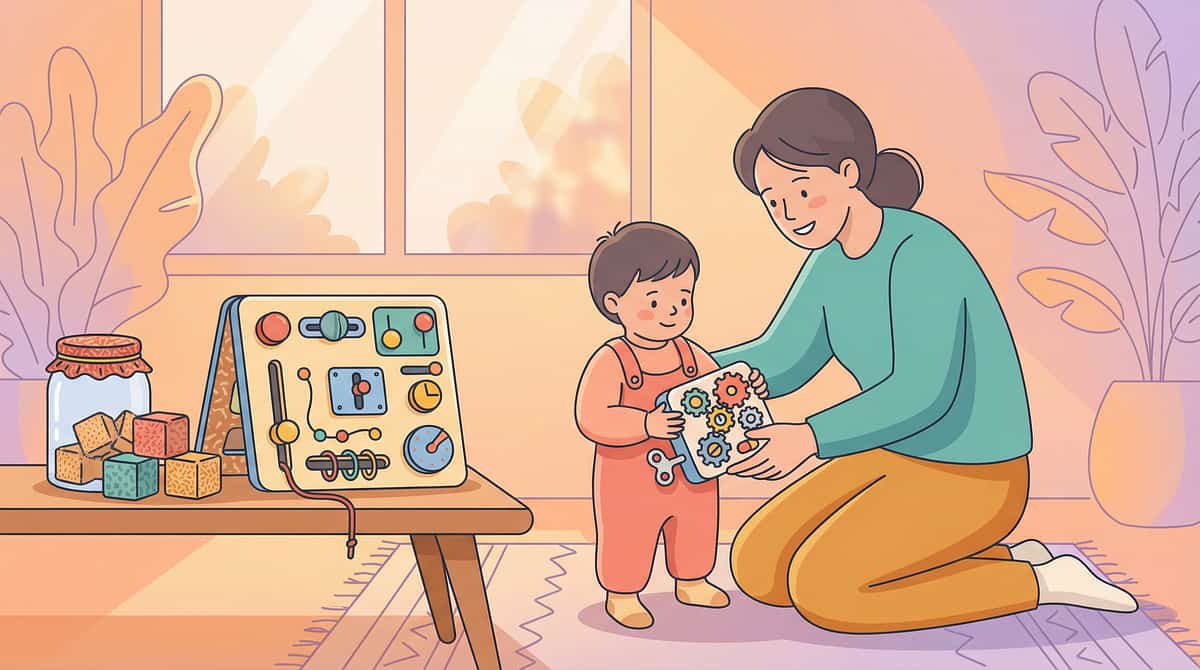
Toys That Require Help
Canon Category: Assistance-Requiring / Communication-Dependent Toys
What It Does
Builds in the need for you — temporarily making the child dependent on adult help to create interaction. Unlike preferred items that the child might independently access, help-requiring toys ensure that adult involvement is always necessary. This creates a natural, recurring context for requesting "help" — one of the most functional communication targets in early intervention.
Price range: ₹300–1,000
What to Use
Pinnacle Recommends: Tight-lid jars | Wind-up toys | Battery toys with hidden switch | Push-to-activate toys
Free DIY Option
Any jar with a tight lid. A toy with batteries that require adult access. A swing that needs a push. The barrier is the mechanism.
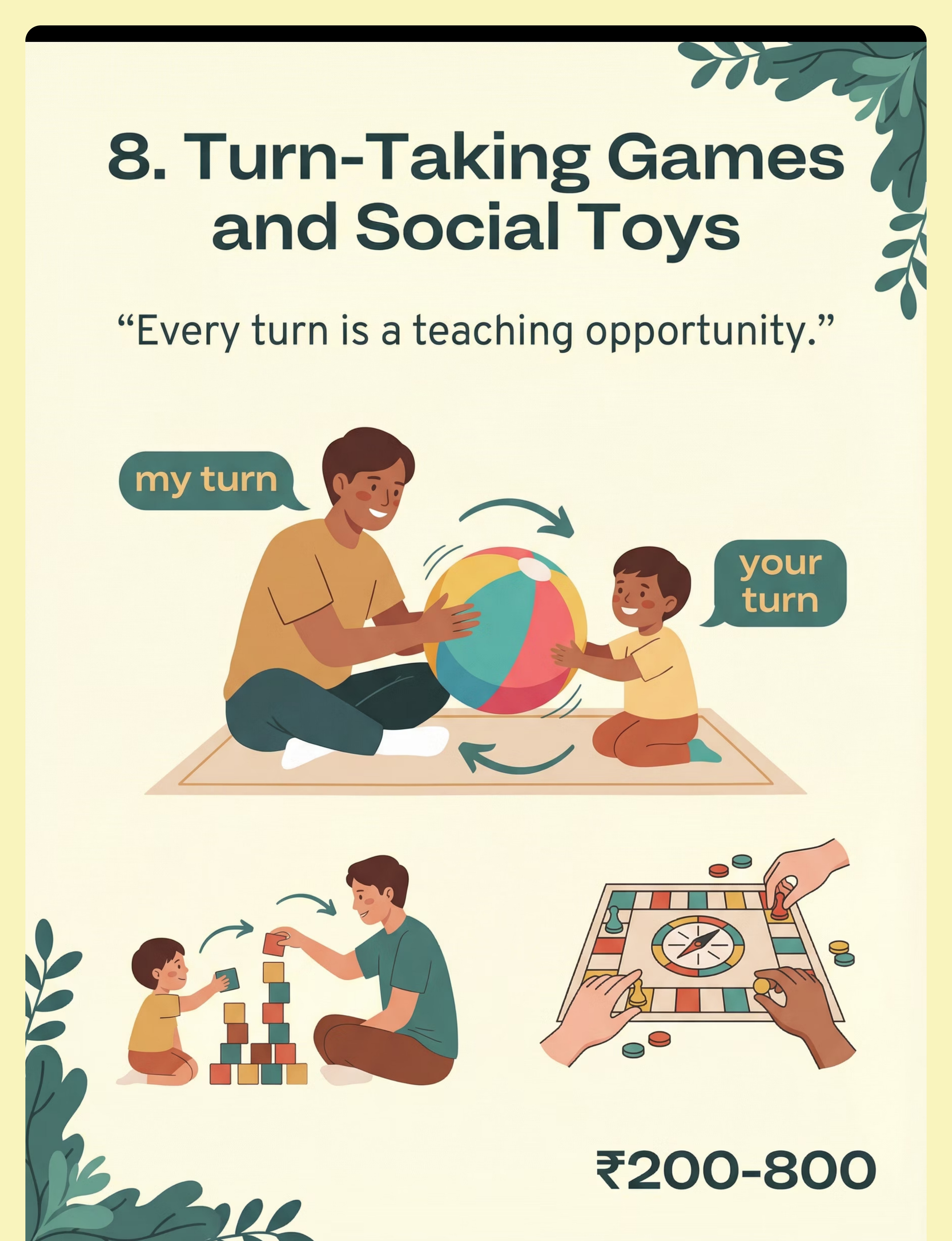
Material 8 of 9
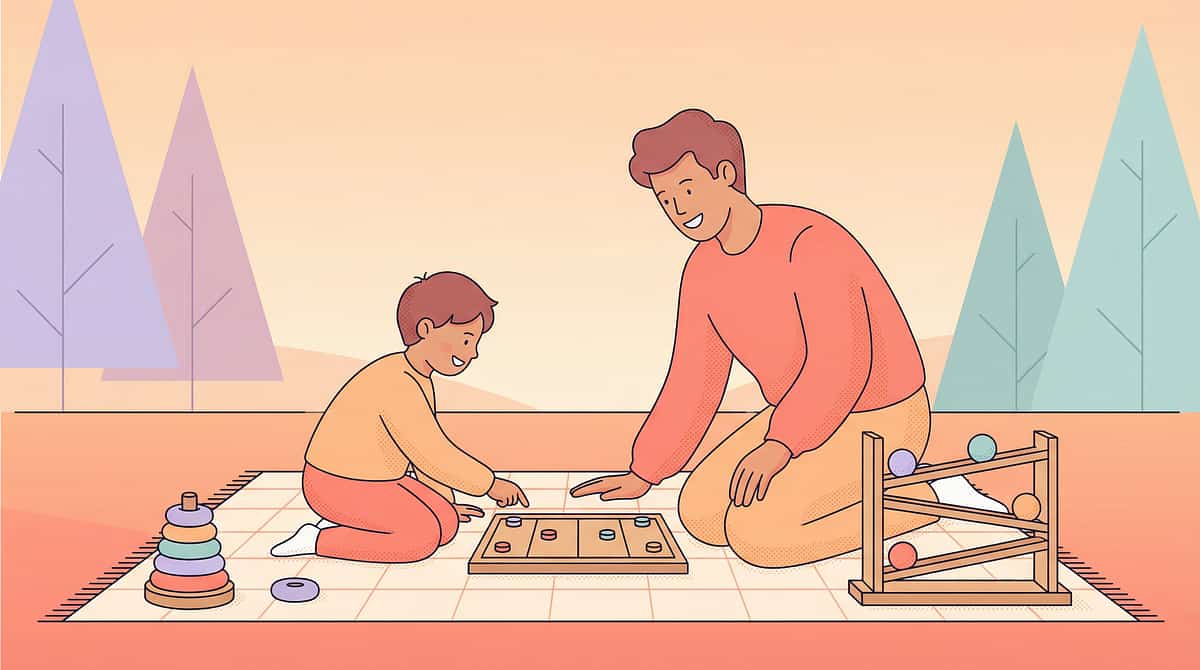
Turn-Taking Games & Social Toys
Canon Category: Social Interaction Games / Turn-Taking Supports
What It Does
Every turn is a built-in teaching trial for requesting, waiting, and social language. Turn-taking games create natural reciprocity — the back-and-forth that is the very foundation of conversation. A child who learns to wait for their turn with a ball is building the same neural circuit that will one day wait for their conversational partner to finish speaking.
Price range: ₹200–800
What to Use
Free DIY Option
A ball. Any ball. Roll it back and forth. Wait for them to roll it back or request your turn. Reciprocal back-and-forth is the mechanic — the toy is secondary.
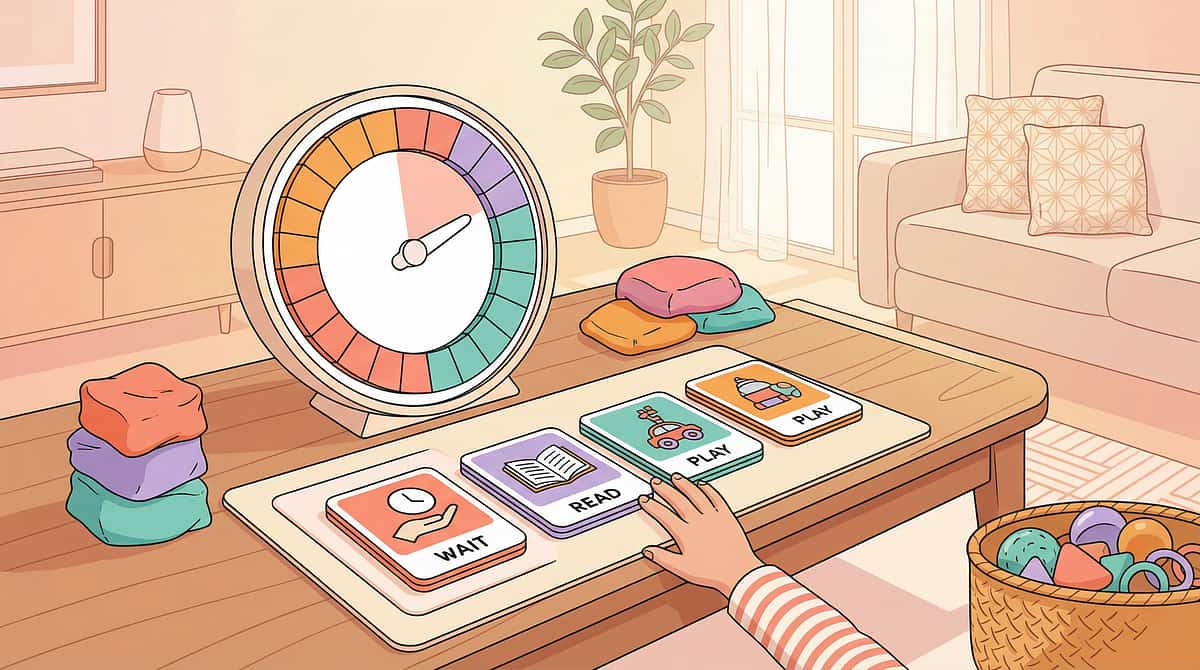
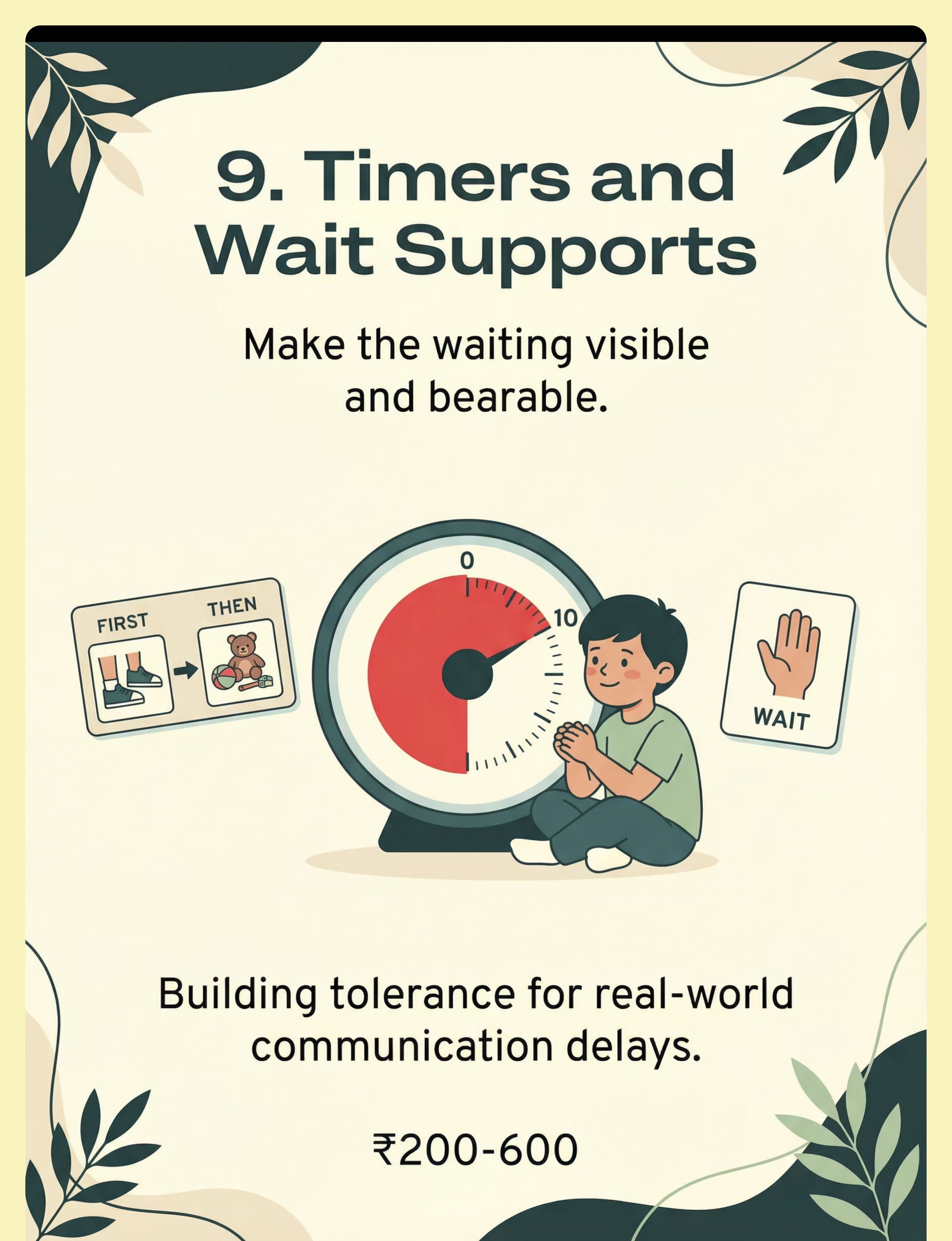
Material 9 of 9
Timers & Wait Supports
Canon Category: Visual Timer Systems / Tolerance-Building Supports
What It Does
Makes waiting visible, tolerable, and teachable — building real-world communication tolerance. One of the most challenging aspects of incidental teaching is the pause between the child's desire and receiving the item. Visual timers externalise time, making the abstract concept of "waiting" concrete and predictable. When a child can see the wait ending, the pause becomes manageable.
Price range: ₹200–600
What to Use
Pinnacle Recommends: Visual sand timers (2–5 minute) | Time Timer visual timer | First-then boards | Wait cards
Free DIY Option
Count aloud ("1, 2, 3...") | Use phone timer with visual countdown | Draw a simple "wait" card on paper. The function is the visibility of time passing — not the device.

DIY & Substitutes
Every Material Has a ₹0 Version. No Child Should Wait for Amazon Delivery.
A family with zero budget can implement incidental teaching fully and effectively. Every commercial product has a household equivalent. The science does not care about the price tag.
🛒 Buy This | 🏠 Make This | Why It Works | |
Clear storage containers (₹200–600) | Any transparent kitchen container, glass jar, zip-lock bag | Child sees desired item → creates motivation → creates communication need | |
Cause-effect toys (₹300–1,200) | Spinning top, homemade rattle, ball in a tube | Child performs action → gets motivating result → wants "more" | |
Choice boards (₹200–600) | Photos drawn on paper, laminated with tape, on cardboard | Pointing to a drawing = same AAC function as laminated card | |
Visual timer (₹200–600) | Count aloud 1–10, mark a paper strip, use phone countdown | Seeing/hearing the wait makes it tolerable and predictable | |
Puzzle sets (₹300–800) | Any multi-piece household item — container + lid, socks + shoes | Missing piece creates communication need regardless of material type | |
Snack containers (₹100–400) | Any container with a lid the child cannot open independently | Natural consequence reinforcement requires no commercial product | |
Turn-taking toys (₹200–800) | A ball. A stack of cups. A spoon tapping a pot. | Reciprocal back-and-forth is the mechanic — the toy is secondary |
"Context-specific, equity-focused interventions ensure that developmental support reaches every child regardless of economic circumstance." — WHO Nurturing Care Framework (2018)
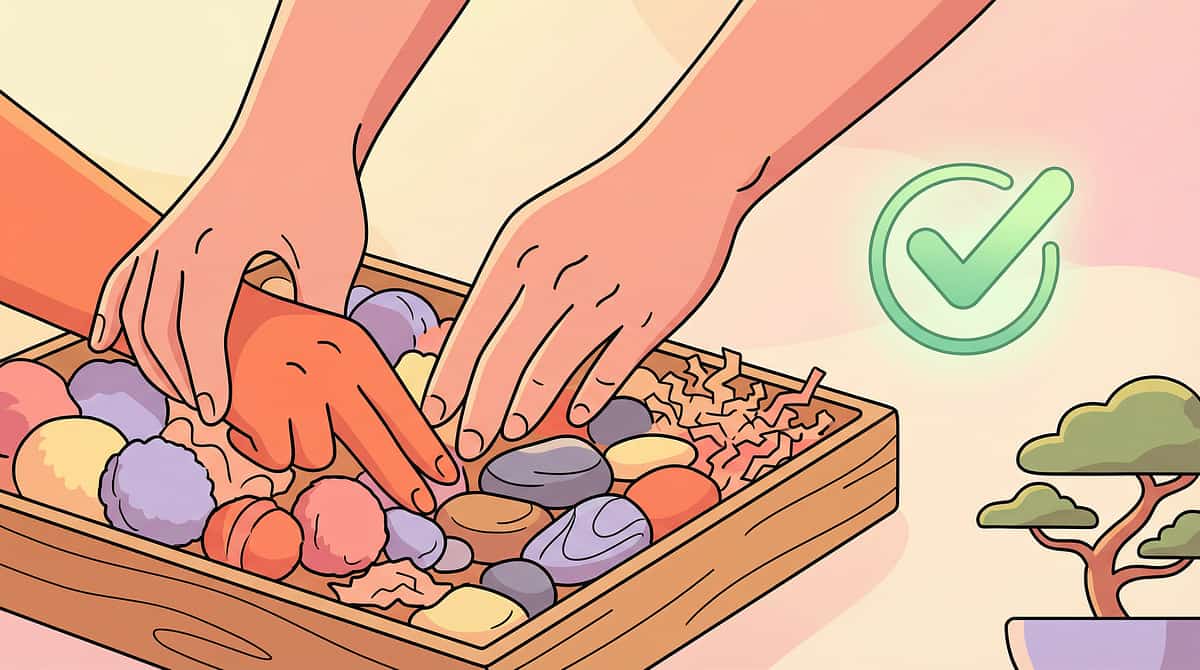
Safety First
Read This Before Any Session. 90 Seconds That Protect Your Child.
🔴 STOP — Do NOT Proceed If:
Child is in a meltdown or post-meltdown recovery state | Child shows signs of illness or fever | Child has eaten a large meal within 20 minutes | Child has recently experienced major trauma | You are stressed, rushed, or distracted
🟡 MODIFY — Proceed With Caution If:
Child appears mildly tired (shorten session, reduce demand) | Child is in a new environment (use only highest-preference items) | Child refused the preferred item in the last hour | Parent is new to incidental teaching (start with 3–5 minute windows only)
🟢 PROCEED — Ideal Conditions:
Child is alert, regulated, and showing interest in the environment | Child has not eaten in 45–90 minutes | Environment is set up with preferred items visible but inaccessible | Parent has 10–15 undivided minutes
The RED LINE — Stop Immediately If: Child attempts self-injury | Child shows signs of extreme frustration or physical aggression | The motivation strategy is creating anxiety rather than communication motivation. Protocol: provide the item without requiring communication → move to neutral calming activity → note what happened → if pattern repeats 3+ times, consult Pinnacle BCBA: 📞9100 181 181
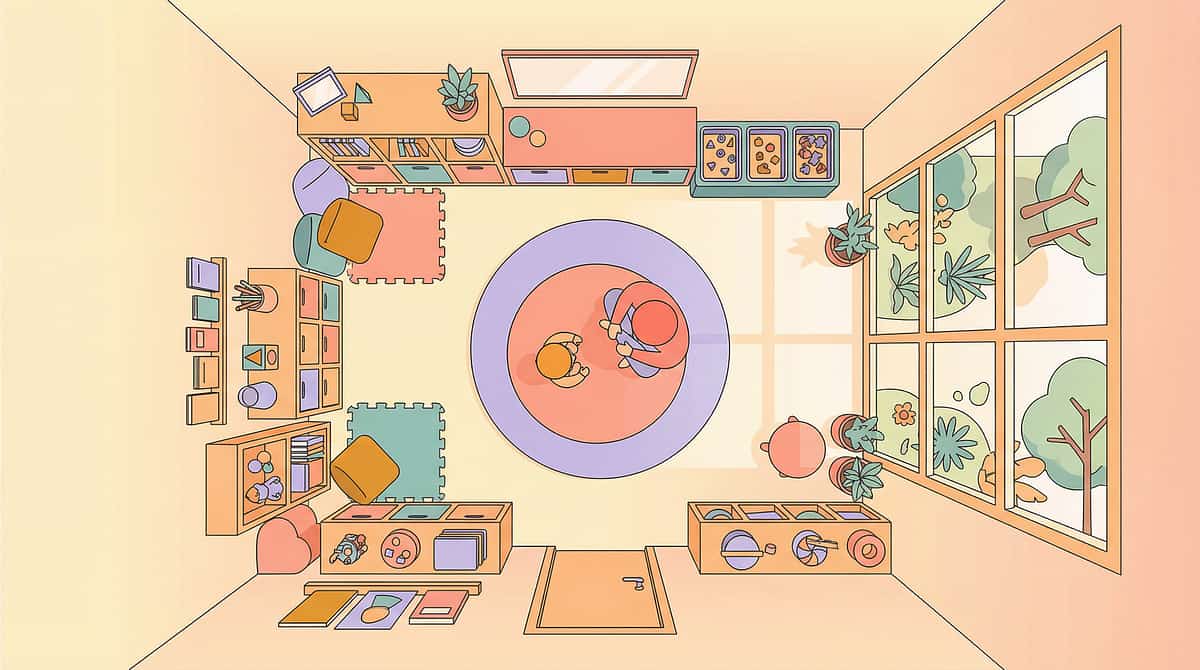
Environment Setup
The Incidental Teaching Environment: 8 Minutes to Set Up. All Day to Harvest.
Child's Movement Zone
Clear, safe floor space. Remove obstacles. Child should be free to reach, point, and move toward items.
Parent Position
Within arm's reach but NOT between child and desired items. Parallel play position — beside, not in front.
High Shelf / Visible Storage
Place 3–5 preferred items visible to child, not independently accessible. Rotate daily to maintain novelty.
Incomplete Activity Station
Paper ready, crayons in your pocket. Puzzle base out, pieces in your lap. Snack visible, container sealed.
Remove from space: Free-access preferred items (defeats motivation) | Screen devices (compete for attention) | Chaotic sensory distractions. Lighting: Natural or warm light preferred. Sound: TV off. Background music: soft only if child is sensory-seeking.
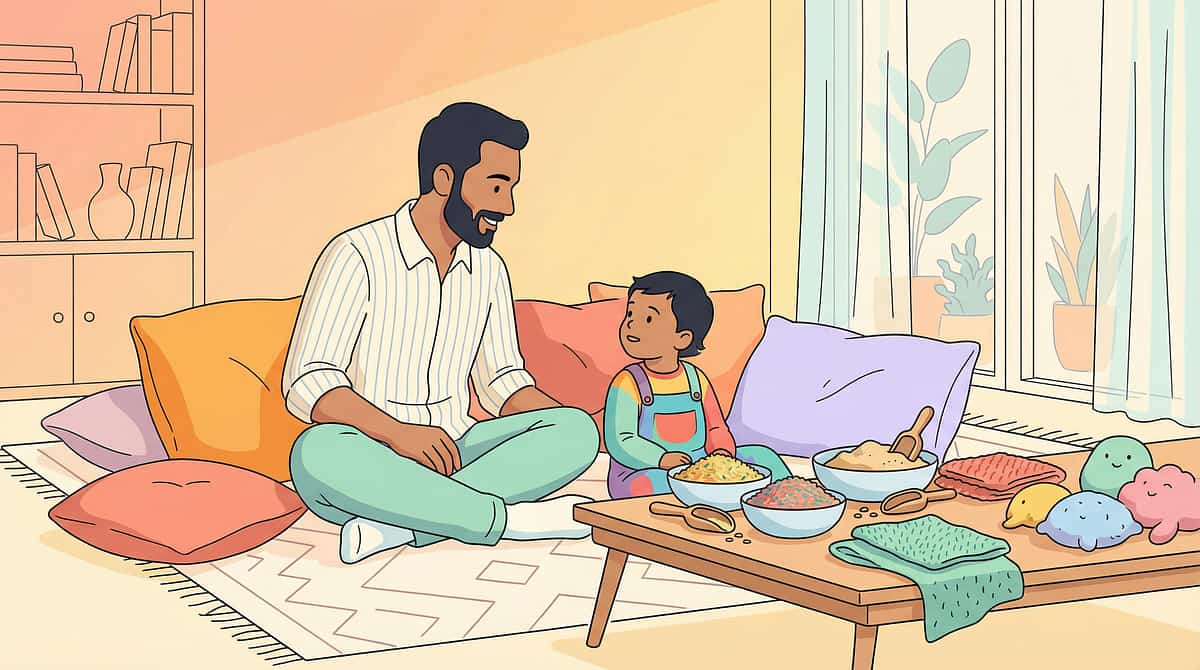
Readiness Check
60 Seconds. 7 Questions. Before Every Session.
# | Indicator | ✅ GO | 🔄 MODIFY | ⛔ POSTPONE | |
1 | Alertness | Alert, responsive | Slightly tired, slow | Drowsy, refusing | |
2 | Regulation | Calm body, baseline | Mild agitation | Active meltdown | |
3 | Motivation | Reaching for items | Some interest | No response | |
4 | Health | No fever or pain | Minor cold, slightly off | Sick, medicated | |
5 | Hunger | Mild hunger (45–90 min) | Just ate large meal | Hungry to distress | |
6 | Social Availability | Some eye contact | Limited, distracted | Completely withdrawn | |
7 | Environment | Setup complete | Partially ready | Cannot supervise |
All ✅ → PROCEED
Move to full protocol (Step 1).
2–3 🔄 → MODIFY
1 preferred item only. Shorten to 5 minutes. Reduce demand level.
Any ⛔ → POSTPONE
Calming activity now. Retry next natural opportunity (often 20–30 minutes).
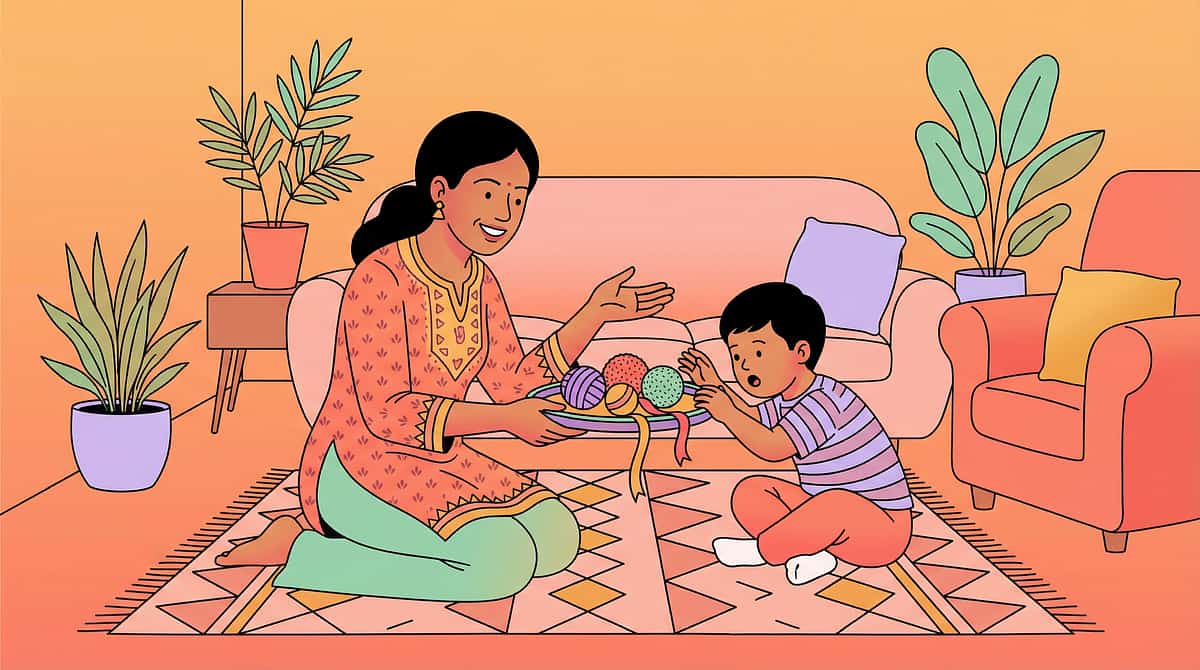
Step 1 of 6
Step 1: The Invitation — Not a Command. An Opening.
⏱️ 30–60 seconds
The principle: Every incidental teaching session begins with an invitation, not a demand. The child is brought into the learning opportunity through their own interest — not your agenda. Position yourself near the setup. Allow the child to move freely. Do NOT call their attention to the items. Wait for spontaneous orientation.
The Parent Script (choose one):
"Ohhh, look at that..." (said softly, to yourself, as child notices item)
[Say nothing — just wait and observe. Let interest emerge naturally.]
"Hmm, I wonder what's in there..." (if child has noticed clear container)
✅ Acceptance Looks Like:
- Child moves toward preferred item
- Child looks at item and then at you
- Child reaches, points, vocalises, or gestures
- Child brings you to item or to their side
⚠️ If Child Resists:
- Child ignores all items → switch to different preferred item
- Child grabs at you → redirect to item with gestural cue
- Child moves away → follow to self-selected activity; use THAT as the teaching context

Step 2 of 6
Step 2: The Engagement — They Want It. Now Create the Teaching Moment.
⏱️ 1–3 minutes
The moment has arrived. Your child has shown interest. Now you do not hand over the item. You create the teaching opportunity by holding the item, placing your hand between child and item, making eye contact, and creating a brief, non-frustrating pause. This pause IS the teaching moment.
Situation | What You Do | What You're Teaching | |
Child reaches for toy in clear container | Hold the container, look expectantly | Requesting: "I need help getting this" | |
Child wants more of cause-effect toy | Stop the toy, hold it, wait | Requesting "more" or "again" | |
Child reaches for snack jar | Keep lid on, present jar, look at child | Requesting "open" or food item name | |
Child approaches incomplete puzzle | Show them the missing piece, hold it up | Requesting the missing item | |
Child wants help with toy requiring adult | Wait for child to orient to you | Requesting "help" |
The teaching moment window: 3–10 seconds of expectant waiting. After 10 seconds: prompt. Calibration rule: Too easy (child gets item before communicating) = no teaching. Too hard (child distressed) = modify. Just right = child shows wanting, adult pauses, communication emerges.
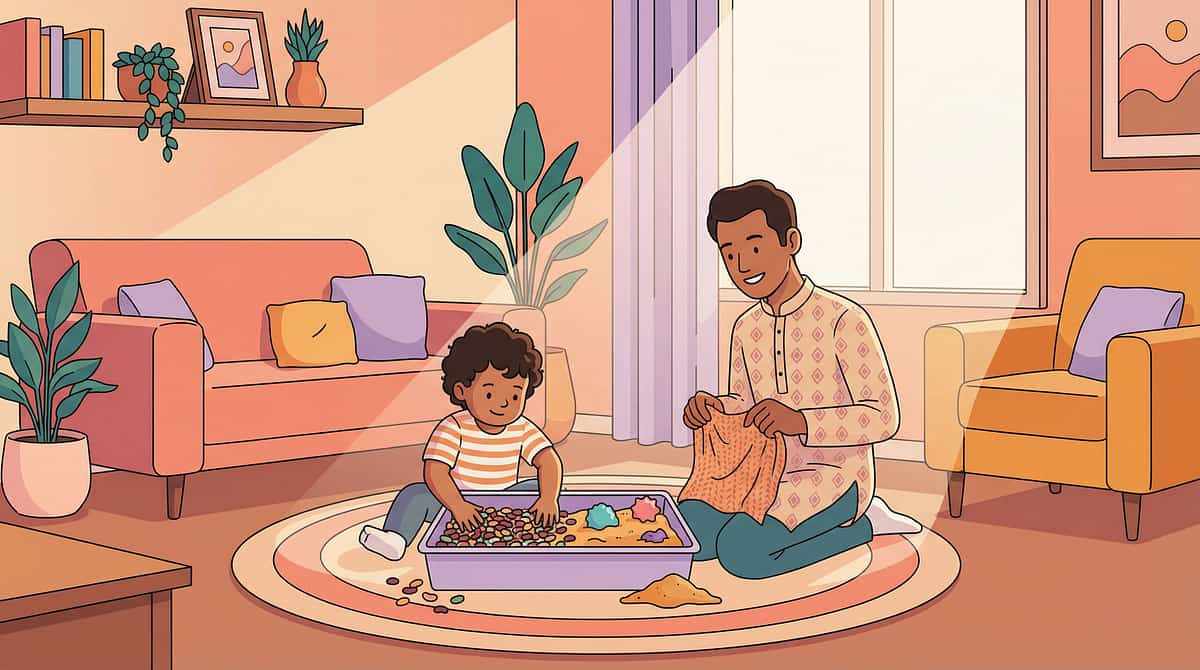
Step 3 of 6
Step 3: The Therapeutic Action — Prompt, Model, Respond.
⏱️ 5–30 seconds — This is the active ingredient of incidental teaching.
Level | Prompt Type | Example | When to Use | |
4 (Full) | Model — say the word | "Bubbles. Say: bubbles." | Early in learning, new word | |
3 | Partial verbal — first sound | "Bubb-" (pause and wait) | Child knows word, needs cueing | |
2 | Gestural — point to item | Point + expectant look | Emerging verbal, choice board available | |
1 (Least) | Time delay — pause and wait | Expectant look, 5–10 seconds | Established word, building independence |
For pre-verbal / AAC users — accept ANY communicative attempt: Eye gaze toward item | Reaching or pointing | Picture exchange (PECS) | Device activation | Any vocalization or approximation (even "buh" for "bubbles")
The 3-second rule: Upon any communicative attempt, deliver the item within 3 seconds. No delay. No lengthy praise. Item first, celebration follows. Holding the item too long after communication destroys the learning signal.
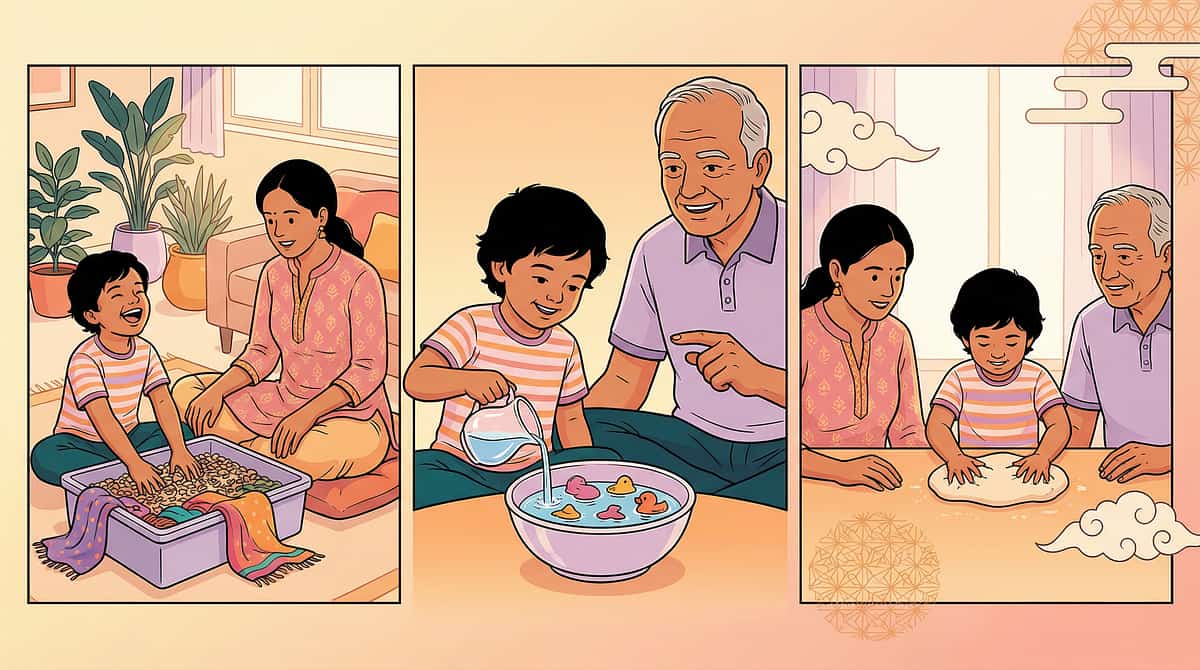
Step 4 of 6
Step 4: Repeat & Vary — 3 Good Trials Beat 10 Forced Ones. Always.
⏱️ 3–5 minutes
Each natural motivational opportunity is one trial. Your goal per intentional session: 3–7 high-quality trials with genuine motivation intact.
Trial # | What You Do | Target | |
Trial 1 | Full support (highest prompt level) — guarantee success | Build positive association | |
Trial 2 | Fade one prompt level — pause before prompting | Test independent emergence | |
Trial 3 | Minimum prompt — longest wait before prompting | Measure independence | |
Trial 4+ | If motivation still high: maintain minimum prompt level | Consolidation |
Satiation Indicators — STOP When You See:
Child loses interest and moves away
Communication attempts become mechanical (without genuine motivation)
Child looks bored or unengaged (glazed expression, body turns away)
Child becomes frustrated (trial ended with wrong prompt calibration)
"Leave them wanting more. The next session's motivation depends on ending this one at the right moment."

Step 5 of 6
Step 5: The Reinforcement — Timing Is Everything. 3 Seconds Is the Window.
⏱️ Within 3 seconds of any communication attempt
The reinforcement principle: In incidental teaching, the item itself is the reinforcer. Getting the bubbles after saying "bubbles" IS the reinforcement. The natural consequence teaches. No sticker chart needed.
Reinforcement Type | Example | When to Use | |
Natural consequence | Deliver the requested item immediately | Always — primary reinforcer | |
Social reinforcement | "YES! You asked for bubbles! Here are your bubbles!" | Layer ON TOP of natural consequence | |
Canon Reward Jar | Rosette Reward Jar ₹589 — token for session completion | Building toward longer-duration practice | |
Canon Reward Stickers | 1800+ Stickers ₹364 — visual progress tracker | Older children who respond to achievement markers |
"Celebrate the attempt, not just the success. In early stages, reinforce ANY intentional communication attempt — even if not the target word."

Step 6 of 6
Step 6: The Cool-Down — No Session Ends Abruptly.
⏱️ 1–2 minutes
A child who ends a session well will accept the next one. A child whose session ends abruptly will learn to avoid future teaching opportunities. The cool-down is where the session earns its next invitation.
1
Transition Warning (30 seconds before end)
"Two more turns, then all done." | "One more, then we put it away." | "Last one! Then it's [next activity]."
2
Cool-Down Activity (1–2 minutes)
Soft proprioceptive input: gentle shoulder squeeze, bear hug | Preferred music (brief) | Transition object: Animal Soft Toys — ₹425
3
Material Put-Away Ritual
"Help me put the toy back. You can do it. There it goes." This builds the environmental arrangement understanding: items go back to their visible-but-inaccessible position.
4
If Child Resists Ending
Do NOT give one more trial | Use visual timer: "Timer says we're done" | Redirect to next scheduled activity. Severe resistance: consult BCBA for demand fading protocol.

Track Progress
60 Seconds of Data. Months of Direction. Do This Before You Move On.
📊 # Communication Attempts
Count how many times child tried to communicate (any modality). Example: "7 attempts today."
🔢 Highest Prompt Level Used
What was the most support you needed to give? (4=Model, 3=Partial, 2=Gesture, 1=Wait). Example: "Mostly Level 2."
⭐ Motivation Rating
1–5: How motivated was the child throughout? Example: "4/5 — high interest in bubbles."
Quick tracking sheet: Date: _____ | Material used: _____________ | Communication attempts: _____ | Prompt level: 4 / 3 / 2 / 1 (circle) | Motivation: 1 2 3 4 5 | Best moment today: _________________________ | One thing to adjust: _________________________
"60 seconds of data now saves hours of guessing later. Your BCBA can see your child's pattern across weeks — but only if the data exists."

Troubleshooting
The Reality Card: Most First Sessions Are Imperfect. Here's What to Do.
❓ Child grabbed the item before I could create the teaching moment
Your environmental arrangement needs adjustment. Items are too accessible. Move preferred items higher, use tighter lids, increase the barrier. This is setup calibration, not failure.
❓ Child became frustrated and cried before communicating
The motivation gap was too large. Start with a 1-second pause instead of 5–10 seconds. Accept the most minimal communication attempt. Gradually increase the gap over days. Frustration means you moved too fast.
❓ Child communicated but I wasn't fast enough with the item
Have items pre-positioned for immediate delivery. Review the 3-second rule. Practice smooth delivery until it becomes reflexive.
❓ Child shows no interest in any of the arranged items
Preference has shifted. Lay 3–5 items on the floor, observe which child moves toward first. That is today's motivator. Preferences change — your observation is the curriculum.
❓ Child seems to understand but never says a word
Verbal output may not be the appropriate initial target. Consult with SLP to set realistic modality-appropriate communication targets. Many children use gesture, eye gaze, or AAC before verbal approximations emerge.
❓ Other family members are giving child whatever they want
Consistency across caregivers is essential. Share the Family Guide (Card 37) with all caregivers. The technique only works if all adults in the environment apply it consistently.
"Session abandonment is not failure — it is data. Every imperfect session tells you something. Write it in your tracking sheet. Tell your BCBA."
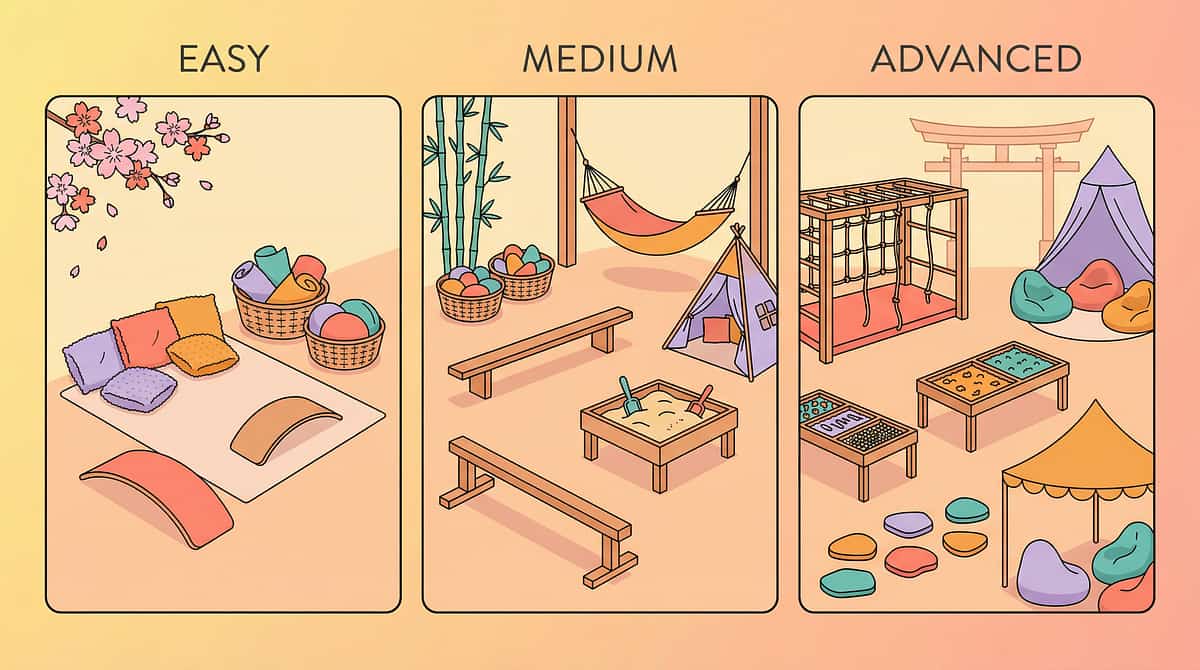
Adapt & Personalise
Your Child Is Unique. This Technique Must Be Too.
Child's Current Level | Your Target Response | Prompt You Use | |
No intentional communication | Any consistent signal (reach, look, move) | Model or physical guide | |
Intentional reach/point | Point toward choice board or item | Gestural cue | |
Vocalisations (no words) | Approximation of target word | Partial verbal model | |
Approximations | Clear word or sign | Time delay (wait) | |
Single words | Two-word combination ("more bubbles") | Expansion model | |
Two words | Sentence ("I want bubbles please") | Sentence expansion |
Sensory Seeker
- High-stimulation cause-effect toys (lights, sound, movement)
- Increase repetitions — seeker thrives on "more"
- Snack items: crunchy, chewy textures
- Turn-taking: physical, movement-based games
Sensory Avoider
- Calm, low-sensory preferred items (visual, gentle tactile)
- Shorter sessions — avoider fatigues faster
- Snack items: soft, familiar textures only
- Turn-taking: table-based, predictable games
18–24 months: Accept any communicative gesture. Target: any consistent signal. 2–3 minute windows. | 2–4 years: Target 1–2 word requests. 5–10 minute sessions. | 4–8 years: Target phrases and sentences. 10–15 minute sessions. Embed in structured routines.

📈 Week 1–2
Week 1–2: The Environment Is New. Your Child Is Noticing.
Observable Sign | What It Means | Why It Matters | |
Child moves toward clear containers more than before | Environmental arrangement is creating attention | Foundation of motivation is building | |
Child makes eye contact when wanting item (even briefly) | Joint attention emerging | Critical precursor to requesting | |
Communication attempts last 2–3 seconds longer before frustration | Tolerance for the teaching moment is building | Prompt gap is becoming learnable | |
Child accepts the teaching moment without melting down (even once) | Pairing of teaching = getting item is beginning | Trust in the procedure is forming |
Managing expectations: Independent word production (likely weeks 3–8+) | Consistent requesting across all items (weeks 4–8+) | Generalisation to new environments (weeks 6–12+). Week 1–2 is often the hardest. You may see more frustration before you see communication. Daily minimum: 5 natural teaching opportunities per day.
"If your child tolerates the teaching moment for 3 seconds longer than last week — that is measurable neurological change. You are watching a neural pathway form."

📈 Week 3–4
Week 3–4: Neural Pathways Are Forming. Look for These Specific Signs.
1
Anticipatory Behaviour
Child begins to orient toward teaching setup BEFORE you initiate. They remember: "this is where I ask for things."
2
Increased Eye Contact
Child checks in with you when they want something, rather than just reaching at the object.
3
First Unprompted Attempts
Child tries to communicate (any modality) before you create the teaching moment. This is the breakthrough signal.
4
Reduced Frustration at the Pause
The 3–5 second teaching window is no longer a source of distress. Child has learned: "the pause ends, and I get it."
5
Preferred Communication Strategy
Child deliberately uses their best strategy (point, vocalisation, picture exchange) rather than random reaching.
"In week 3–4, you may notice that you are also more confident. Your reading of your child's communication attempts has sharpened. You are becoming a therapist in your own home."
When to increase frequency: If child shows anticipatory behaviour and unprompted attempts, increase to 10–15 natural opportunities per day. Extend session windows to 10–15 minutes.

📈 Week 5–8
Week 5–8: The Technique Has Become a Lifestyle. Here Is the Mastery Badge.
Mastery Criteria — Specific, Observable, Measurable:
☑️ Child spontaneously communicates for 5+ different preferred items without adult initiation
☑️ Communication attempts occur across 3+ different settings (home, car, outdoors)
☑️ Prompt level has faded to Level 1 (time delay only) for established items
☑️ Child uses same communication strategy with 2+ different communication partners
☑️ Sessions end without significant resistance 80%+ of the time
☑️ New items are requested using established communication strategy (generalisation)
🏅L-924 Incidental Teaching: MASTERED — Child has demonstrated spontaneous requesting in natural environments, across communication partners, with minimal prompting, for variety of desired items. When to move forward:L-925: Natural Environment Teaching | L-926: Pivotal Response Training

Celebrate
You Did This.
Eight weeks ago, you read about incidental teaching and wondered if you could actually do it. Today, your child asks for things. Maybe with a word. Maybe with a point. Maybe with a look that has never been there before. That communication is not accidental. It grew because you arranged your home with intention. You waited — sometimes uncomfortably — for your child to reach before you responded. You tracked data when you were exhausted. That is parenting as a clinical act. And it changed your child's brain.
🎉Family Celebration Suggestion: Take a video of your child requesting their favourite item today — without prompting. Date it. Label it. That is a developmental milestone documented.
Journal prompt: "What is the most unexpected communication moment I've seen this week?"
⚠️ Red Flags
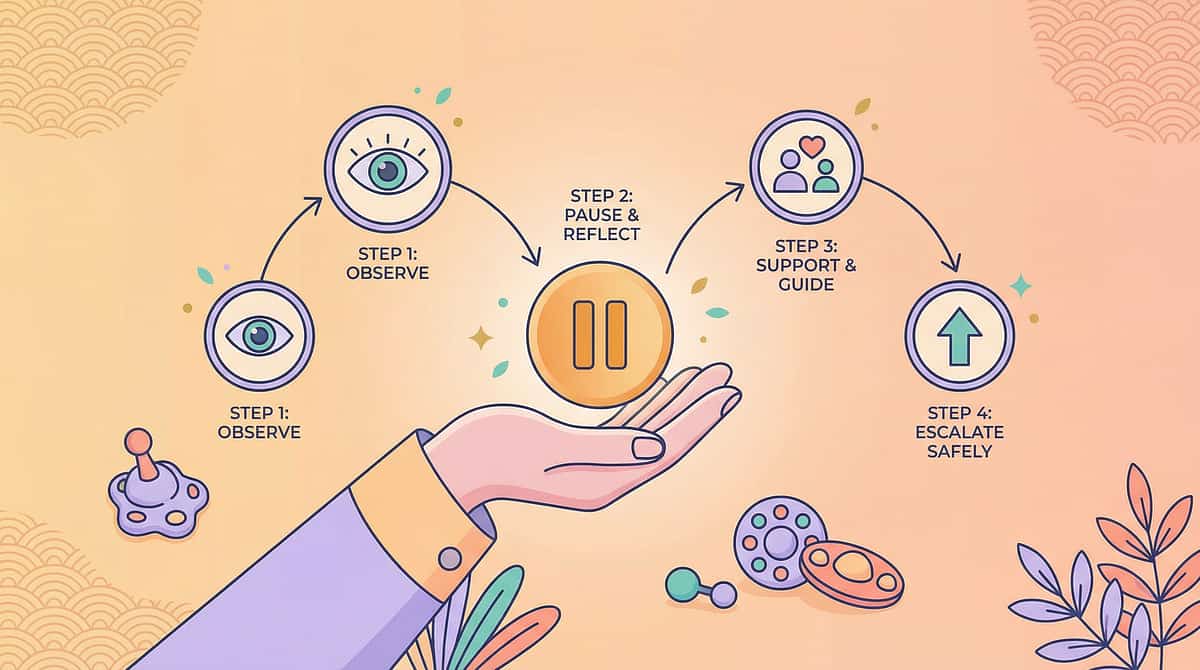
Trust Your Instincts. If Something Feels Wrong, Pause. These Are Your Clinical Guardrails.
🚨 Increased Self-Injurious Behaviour
During or after incidental teaching sessions → Stop immediately. SIB during motivation-based teaching indicates the demand is too high or the motivation strategy is aversive. BCBA consultation required.
🚨 Extreme Emotional Dysregulation
Takes more than 30 minutes to resolve after sessions → The teaching moment is creating trauma-level stress responses. Modify protocol, increase support, consult.
🚨 Complete Communication Regression
Child was communicating at baseline, now communicating less → Environmental or medical factor may be at play. Medical review + BCBA consultation immediately.
🚨 Food Refusal or Eating Changes
Associated with snack-based teaching → Consult dietitian + OT. Snack-based teaching should not create mealtime anxiety.
🚨 Sleep Disturbances After Protocol Initiation
May indicate sensory overload or anxiety. Consult NeuroDev team. Document pattern and timing before consultation.
📞 FREE National Autism Helpline: 9100 181 181 | Find Nearest Pinnacle Centre →
Related Techniques
Other Techniques in the ABA Naturalistic Teaching Domain
[L-922] Discrete Trial Training Basics
🔵 Intro
Table-based structured learning — the complementary approach to incidental teaching. Canon: Reinforcement Menus, Flashcards.
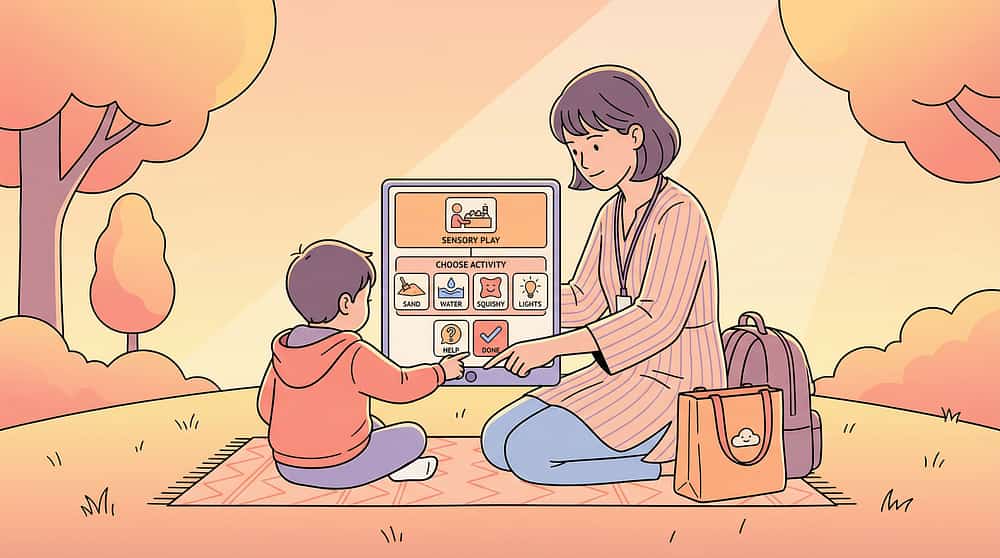
[L-923] Prompt Hierarchies
🟡 Core
Systematic prompting strategies that pair with incidental teaching. Canon: Visual Supports, Communication Cards.

[L-925] Natural Environment Teaching
🟡 Core
Structured naturalistic sessions — the next step from L-924. Canon: Cause-Effect Toys, Environmental Arrangement.

[L-926] Pivotal Response Training
🔴 Advanced
Motivation + pivotal behaviours — next-level naturalistic teaching. Canon: Preferred Items, Social Toys.
If you have set up L-924 materials, you already own the core toolkit for L-922, L-923, L-925, and L-926. The same clear containers, preferred items, and cause-effect toys serve all four techniques.
🤝 Families Who've Been Here
Three Families. Three Journeys. One Technique.
Arjun, 3 years, Hyderabad
Before: 8 functional words, all learned at the table, none used at home. "He doesn't talk to us at home. He knows the words but won't use them."
After (8 weeks): 47 new communication attempts in week 8. 23 were spontaneous. He now requests items at the grocery store, in the car, and with grandparents.
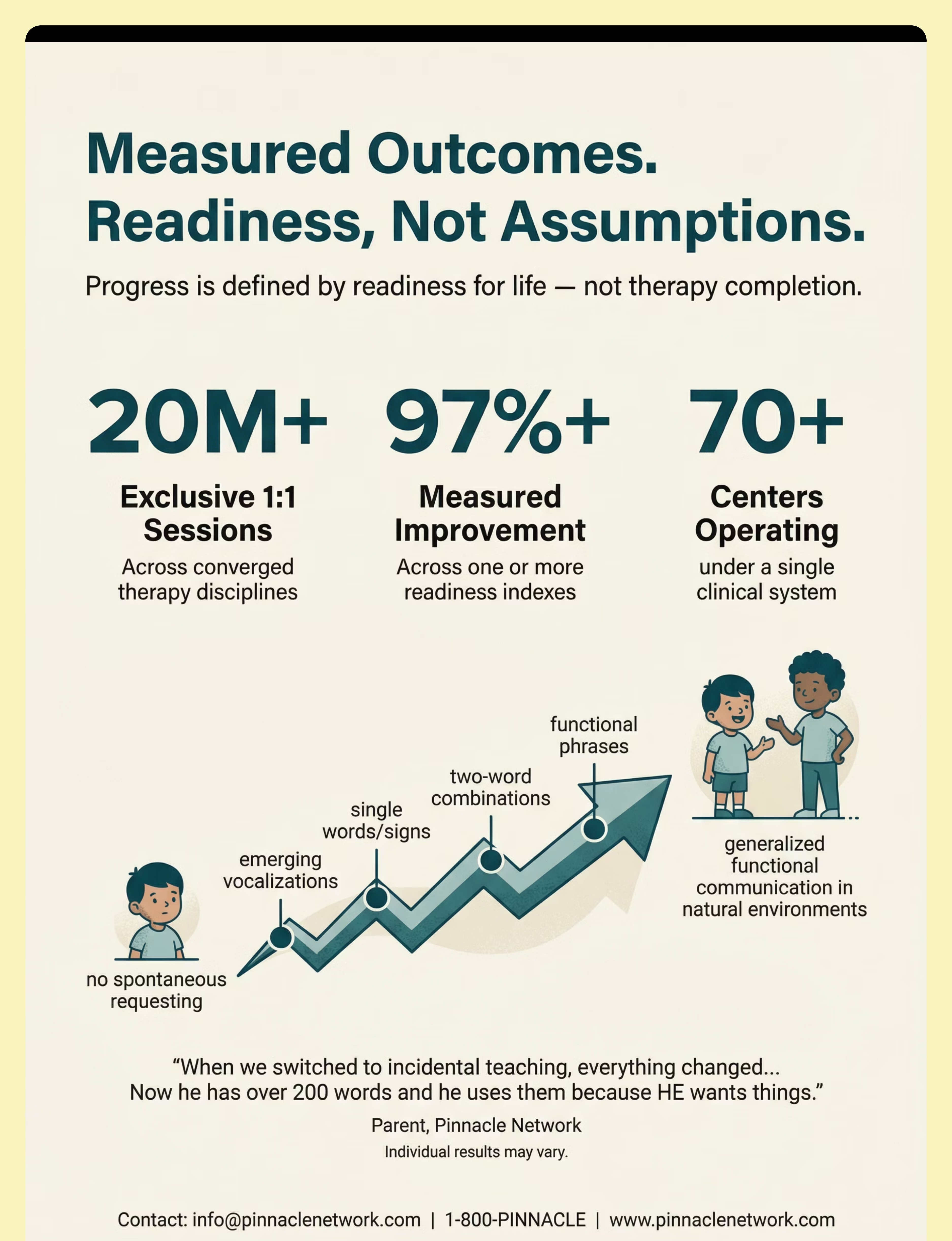
"When we switched to incidental teaching, everything changed. He doesn't know he's in therapy. He just knows that talking gets him what he wants." — Arjun's mother
Meera, 4.5 years, Bengaluru
Before: Communicated primarily through meltdowns. Parents felt they had no teaching opportunities because any delay caused distress.
After (12 weeks): Initiates communication 15–20 times per day using verbal approximations and choice board pointing. Meltdown frequency reduced 60%.
"I used to think her meltdowns were the problem. Now I understand they were communication. We just didn't give her a better way to ask." — Meera's father
Rohan, 2.5 years, Delhi
Before: Pre-verbal. No pointing. Limited eye contact. ABA therapist recommended incidental teaching at home between sessions.
After (6 weeks): First spontaneous pointing in week 4. First word approximation ("bah" for ball) in week 6. BCBA confirmed: "His requesting foundation is solid."
"He pointed at the bubbles. Just... pointed. We all cried." — Rohan's parents
All outcomes are real-world clinical narratives. Individual results vary by child, baseline, implementation fidelity, and clinical support.

Community
You Are Not Navigating This Alone. 18 Million Indian Families Are On This Journey.
Incidental Teaching WhatsApp Group
📱unknown link — 1,200+ parents actively sharing strategies, material recommendations, and progress victories.
Domain-Specific Communities
ABA at Home Parents Group | Naturalistic Teaching Discussion | Communication Development Families | GPT-OS® EverydayTherapyProgramme™ Users
Peer Mentoring
Connect with a parent who has completed L-924. They started where you are. Request Peer Mentor Connection →
Local Parent Meetups
70+ centres. Monthly incidental teaching parent workshops in every major city. Find Local Meetup →
"Your experience helps others. Consider sharing your journey — every parent story reduces another family's isolation by months."
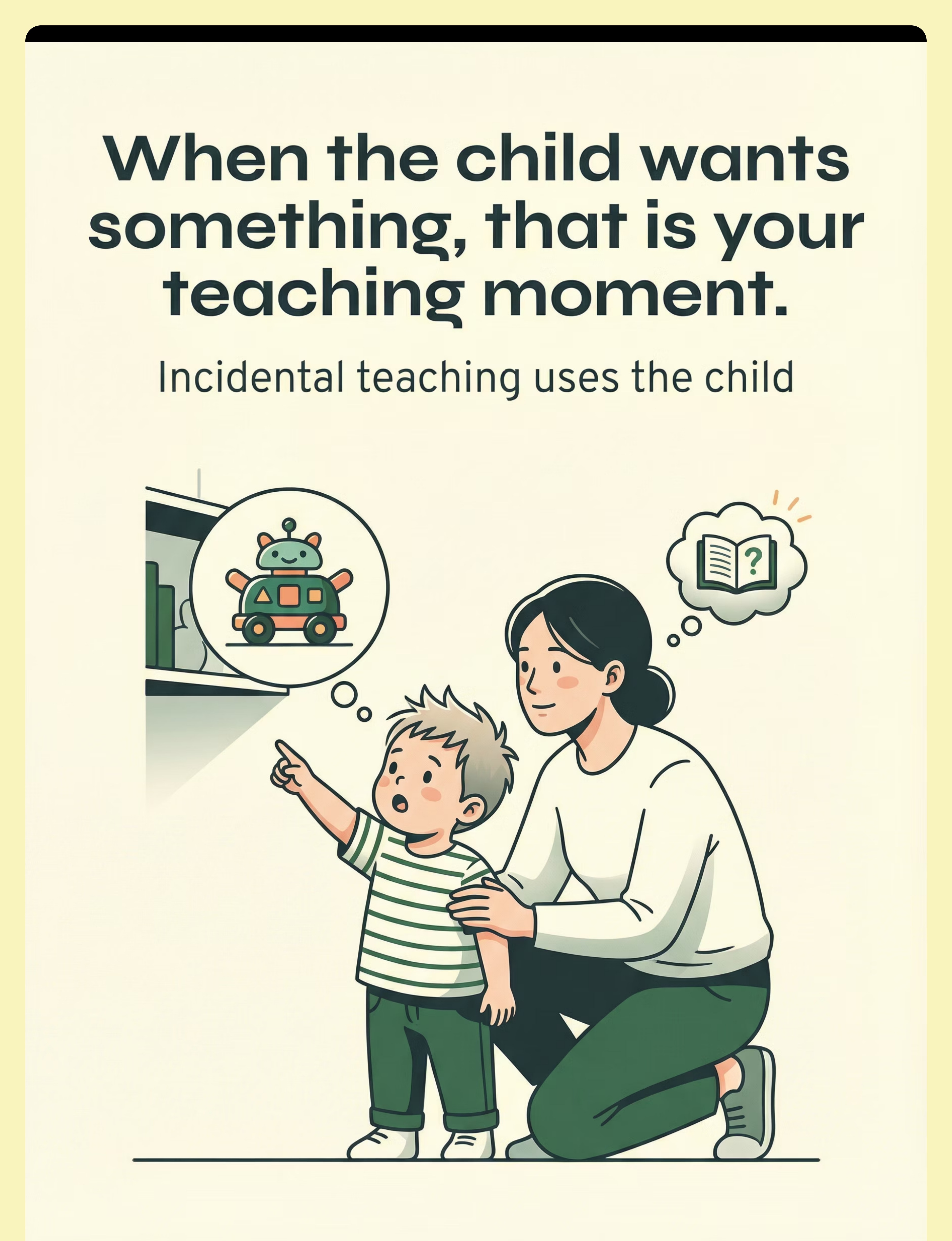
Preview of 9 materials that help with incidental teaching Therapy Material
Below is a visual preview of 9 materials that help with incidental teaching therapy material. The pages shown help educators, therapists, and caregivers understand the structure and content of the resource before use. Materials should be used under appropriate professional guidance.



Link copied!

Watch the Reel
The Reel That Brought You Here
Reel ID: L-924 | Title: 9 Materials That Help With Incidental Teaching | Series: Applied Behavior Analysis & Teaching Strategies — Episode 924 | Duration: 75–85 seconds
"This isn't about holding flashcards at a table. Incidental teaching happens in the moments your child already initiates — and these 9 materials ensure those moments happen more often, every day."— Pinnacle BCBA Consortium Presenter
9 Materials Covered in this Reel:
1
Clear Containers & Visible Storage
2
Highly Preferred Items & Special Toys
3
Cause-and-Effect Toys
4
Incomplete Sets & Missing Pieces
5
Choice Boards & Visual Supports
6
Snacks & Edible Reinforcers
7
Toys That Require Help
8
Turn-Taking Games & Social Toys
9
Timers & Wait Supports