When Your Child Doesn't Copy What You Do
And Learning Depends on It
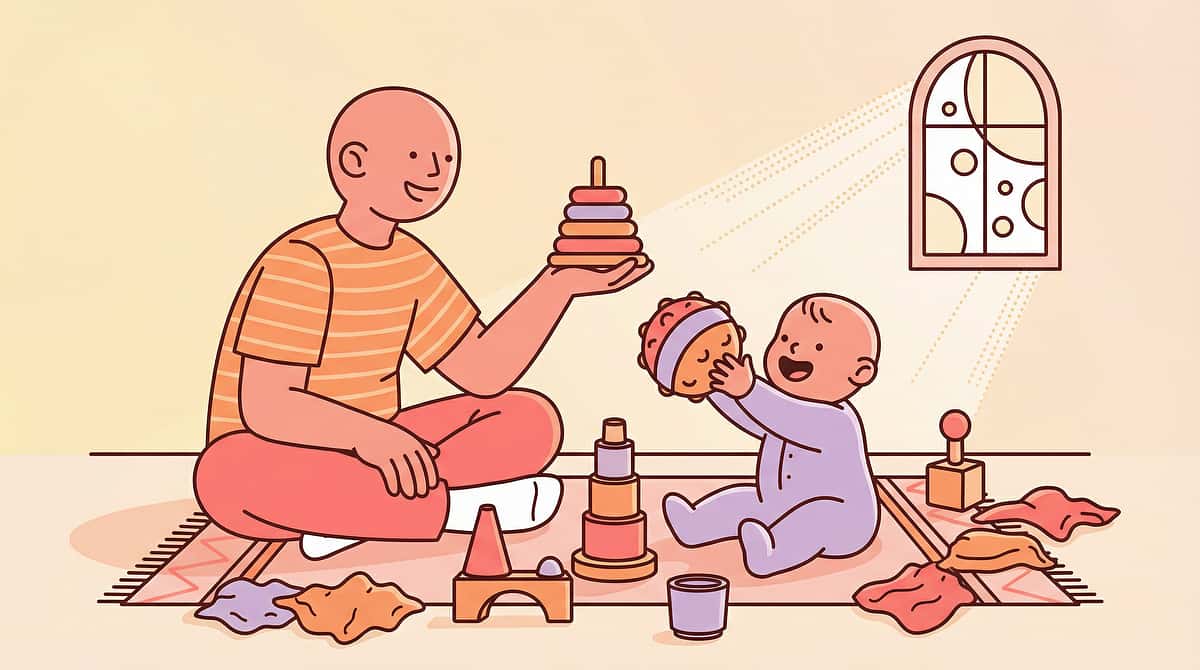
You wave and your child looks away. You clap, you stack blocks, you show them how to blow a kiss — and they carry on as if none of it happened. You've realised that everything you hoped they'd learn by watching, your child has to be taught one piece at a time — and you're wondering if there's a way to change that.
"You are not failing. Your child's brain is simply waiting for a different door into learning — and we know where that door is."
🎯 IMITATION TEACHING | Foundational Learning — L-962
FL-IM | OT • SLP • ABA • SpEd • NeuroDev • CRO
🏅Pinnacle Blooms Network® Consortium — Validated across 21 Million+ therapy sessions | 70+ Centers | India
📞FREE National Autism Helpline: 9100 181 181 | 16 languages | 24×7
You Are Among Millions of Families Navigating This Right Now
Imitation delay is not rare, not exotic, and not a reflection of your parenting. Across India, an estimated 1 in 66 children has a developmental condition affecting learning through observation. UNICEF's developmental monitoring data across 197 countries confirms imitation skills are a universal early-development priority — and a universal intervention target when delayed. You are navigating a well-mapped road, not uncharted wilderness.
1 in 36
Autism Prevalence
Children diagnosed with autism globally (CDC 2023)
63–79%
Imitation Delays
Children with ASD showing significant imitation delays affecting all learning (ASHA, 2023)
21M+
Sessions Delivered
Therapy sessions delivered by Pinnacle across India
Indian families carry an additional layer — the expectation that children learn by watching elders, participating in rituals, copying household tasks. When a child doesn't imitate, traditional "show and do" fails, and families often feel confused before they feel supported. This page is built for you.
PMC11506176 | PMC10955541 | DOI: 10.12998/wjcc.v12.i7.1260 | CDC Autism Prevalence (2023) | ASHA Imitation in ASD (2023)
📞9100 181 181
The Neuroscience Behind Imitation Delay — Explained for Parents
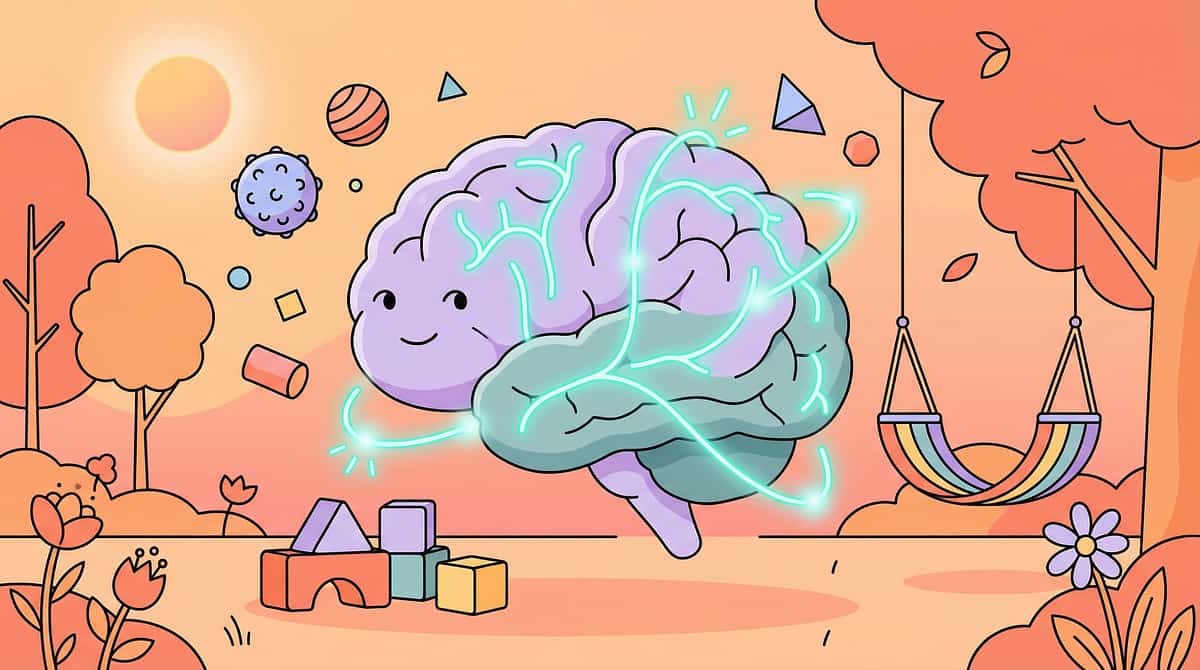
When a neurotypical child watches you wave, a cluster of brain cells called mirror neurons fires — essentially running a simulation of the wave in their own motor cortex. The brain says: "I see it, I simulate it, I do it." This is why typical children appear to learn by magic — they are literally pre-wired to copy.
In many children with autism, this mirror neuron network processes social stimuli differently. The "see it → simulate it → do it" chain has gaps or delays. The child may see the wave but the automatic bridge to doing the wave doesn't fire spontaneously.
Crucially: this is a wiring difference, not a motivation problem, not a behaviour choice, not stubbornness. The child isn't refusing to copy. The neural scaffold for spontaneous imitation is under-developed — and it can be built, systematically, with the right materials.
"Mirror neurons are not destiny. Structured imitation teaching rebuilds the bridge — one successful copy at a time." — Pinnacle Consortium NeuroDev + OT + ABA Team
Frontiers in Integrative Neuroscience (2020): DOI: 10.3389/fnint.2020.556660 | Ramachandran & Oberman (2006)
Your Child's Imitation Journey — On the Developmental Map
Typical imitation develops in a cascade — facial imitation in newborns, gestural imitation in infancy, object imitation in toddlerhood, and peer imitation driving much of preschool learning. When this cascade is disrupted, the downstream effects are enormous: language acquisition slows, play stays limited, and social behaviour development stalls.
0–6 Months
Facial & vocal imitation (tongue, cooing)
6–12 Months
Simple gesture imitation (wave, clap)
12–18 Months
Object imitation emerges (copy toy use)
18–24 Months
Action sequences + deferred imitation
2–3 Years
Peer + social imitation dominates learning
▲ Most Intervention Focus Here ▲ — Object imitation → Gross motor → Vocal imitation → Action sequences → Spontaneous observational learning
Imitation delay commonly co-occurs with joint attention deficits, language delays, and reduced social motivation — all of which GPT-OS® addresses as an integrated programme, not isolated targets.
WHO Care for Child Development (CCD) Package (2023) | PMC9978394 | UNICEF MICS Developmental Indicators
📞9100 181 181

Clinically Validated. Home-Applicable. Parent-Proven.
🏆 LEVEL I–II EVIDENCE | Systematic Review + RCT Support
🔬 NCAEP (2020)
Imitation-based intervention is classified as a Focused Intervention Practice with strong evidence across 27 peer-reviewed studies for children with ASD ages 0–22.
🔬 PMC11506176 (Children, 2024)
PRISMA systematic review of 16 studies (2013–2023) confirms structured imitation intervention meets criteria as an evidence-based practice, with outcomes spanning motor development, language, and social skills.
🔬 Padmanabha et al., Indian J Pediatr (2019)
Indian RCT demonstrates that home-based, parent-delivered imitation teaching shows significant skill gains when structured protocols are followed. DOI: 10.1007/s12098-018-2747-4
"This is not an experimental approach. Imitation teaching has been studied, validated, and scaled across thousands of children in India and internationally. Your investment of 15 minutes per day can produce measurable, lasting change."
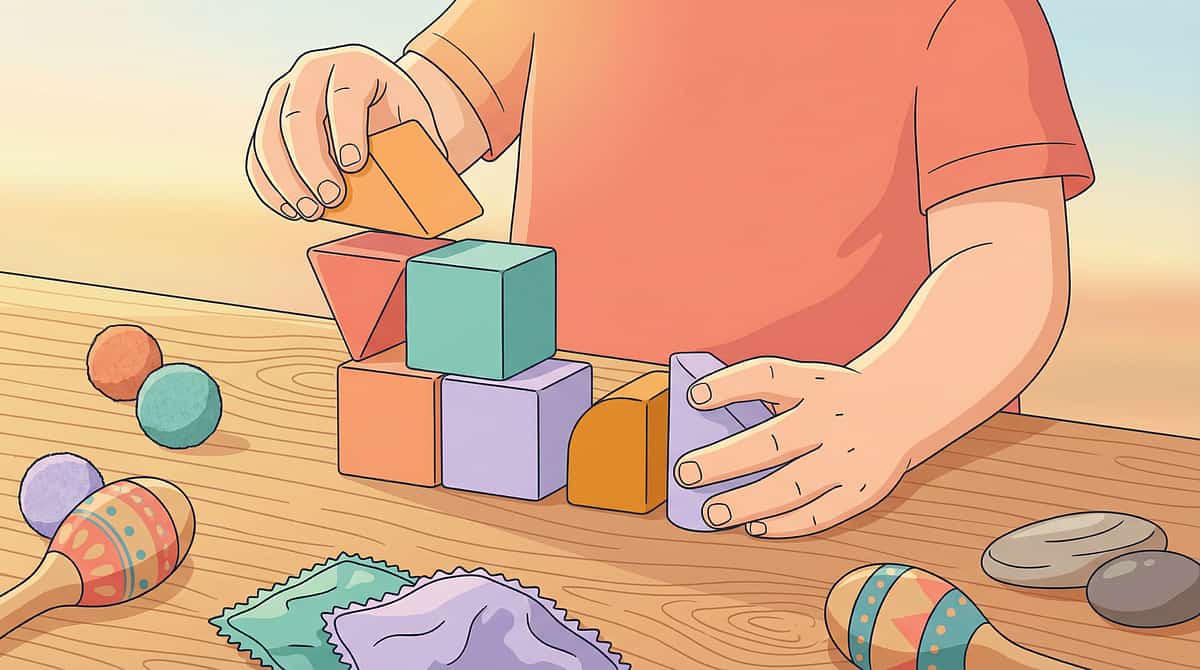
The Technique: What It Is
Formal Name
Imitation Teaching — Materials-Supported Structured Imitation Protocol
Parent-Friendly Alias
"The Copying Bridge"
Age Range
All ages — targets developmental level, not chronological age
Session Duration
15–20 minutes, 1–2× daily
Frequency
5–7 days per week for first 8 weeks
Imitation Teaching is a structured, materials-supported intervention that explicitly teaches a child to observe and reproduce another person's actions, sounds, or behaviours. Unlike typical children who copy naturally, children with autism or developmental differences often need imitation to be directly taught — broken into observable steps, supported by motivating materials, and reinforced systematically.
This technique uses 9 specific material categories — mirrors, identical object pairs, video models, musical instruments, imitation games, action cards, puppets, cause-and-effect toys, and building materials — to create contexts where copying is obvious, motivating, achievable, and rewarding.
🟦 Foundational Learning (FL-IM)
🟦 Motor Learning
🟦 Social Learning
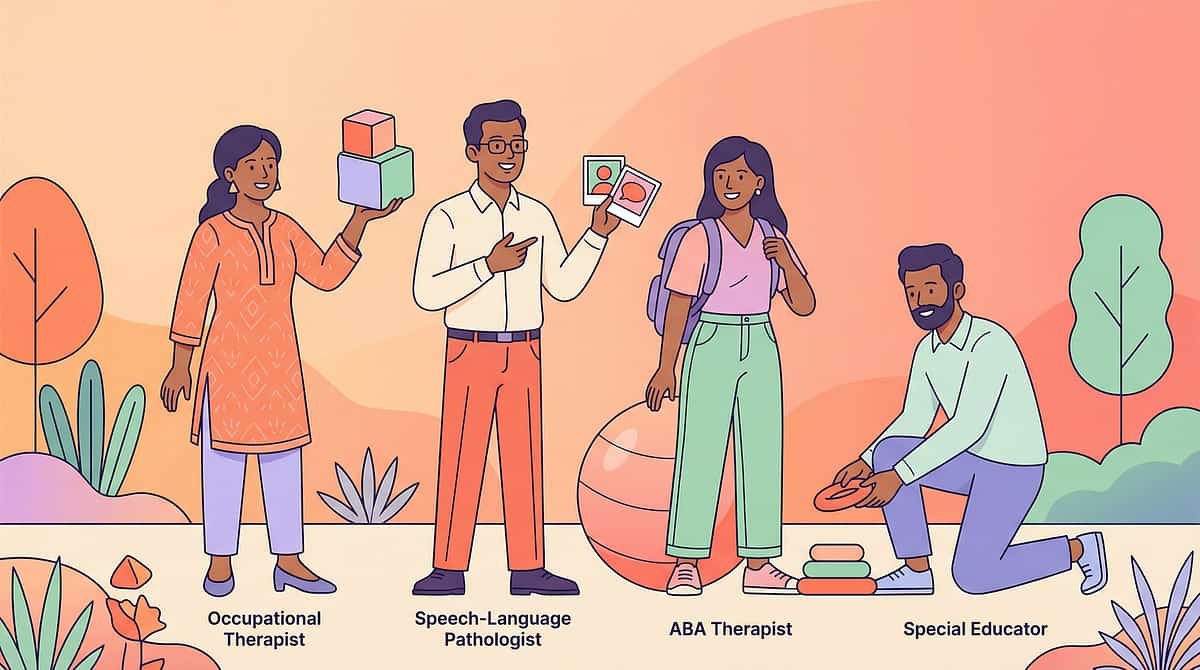
Five Disciplines. One Technique.
Because the Brain Doesn't Organise Itself by Therapy Type.
🦾 OT — Occupational Therapy
Targets gross motor + fine motor + oral motor imitation. Uses mirrors, identical object pairs, and building materials. Focuses on body-awareness and proprioceptive feedback during copying.
🗣️ SLP — Speech-Language Pathology
Targets vocal + oral motor imitation as foundation for speech. Uses mirrors for oral-facial copying, video models, and musical instruments to build phonation and word imitation.
📊 ABA/BCBA
Designs the reinforcement schedule for imitation trials. Runs discrete trial training (DTT) to build generalised imitation from structured trials to natural contexts.
📚 SpEd — Special Education
Embeds imitation into classroom learning readiness. Teaches children to follow teacher demonstrations — the core skill required for group learning.
🧠 NeuroDev Paediatrics
Provides the neurological framework. Monitors mirror neuron pathway development. Integrates imitation goals into overall developmental planning and medical oversight.
"At Pinnacle, these five disciplines don't work in silos. Every child's imitation programme has an OT lead, an SLP voice, a BCBA structure, a SpEd generalisation plan, and NeuroDev oversight. That's what GPT-OS® coordinates."
📞9100 181 181
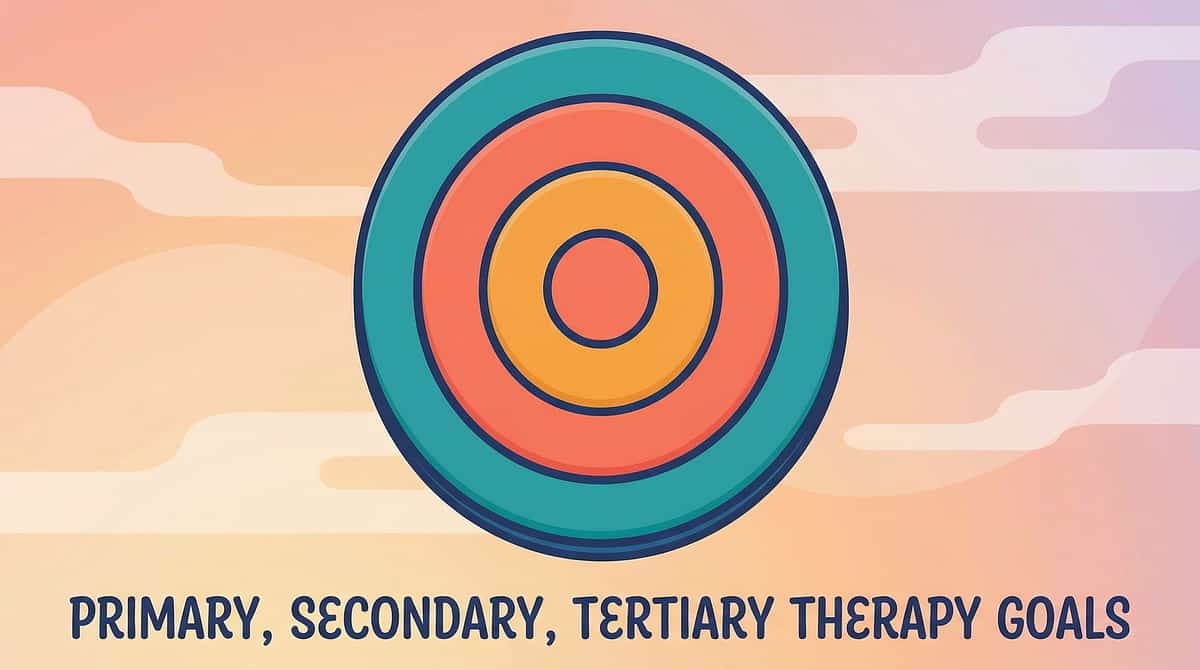
Precision Is Power. This Is What Imitation Teaching Changes.
Observable Behaviour Indicators
- Child watches when adult says "Look!" — eye contact on model
- Child attempts the action within 3 seconds of model
- Child copies novel actions not previously trained
- Child spontaneously copies sibling or peer actions
- Language gains begin accelerating
🎯 Primary
Generalised Imitation — spontaneous novel copying
🎯 Secondary
Gross Motor, Fine Motor, Object, Vocal, Gestural
🎯 Tertiary
Language, Play, Social, Self-Help, Academic Readiness
PMC10955541 | NCAEP EBP Report (2020) | ASHA Imitation Framework (2023)
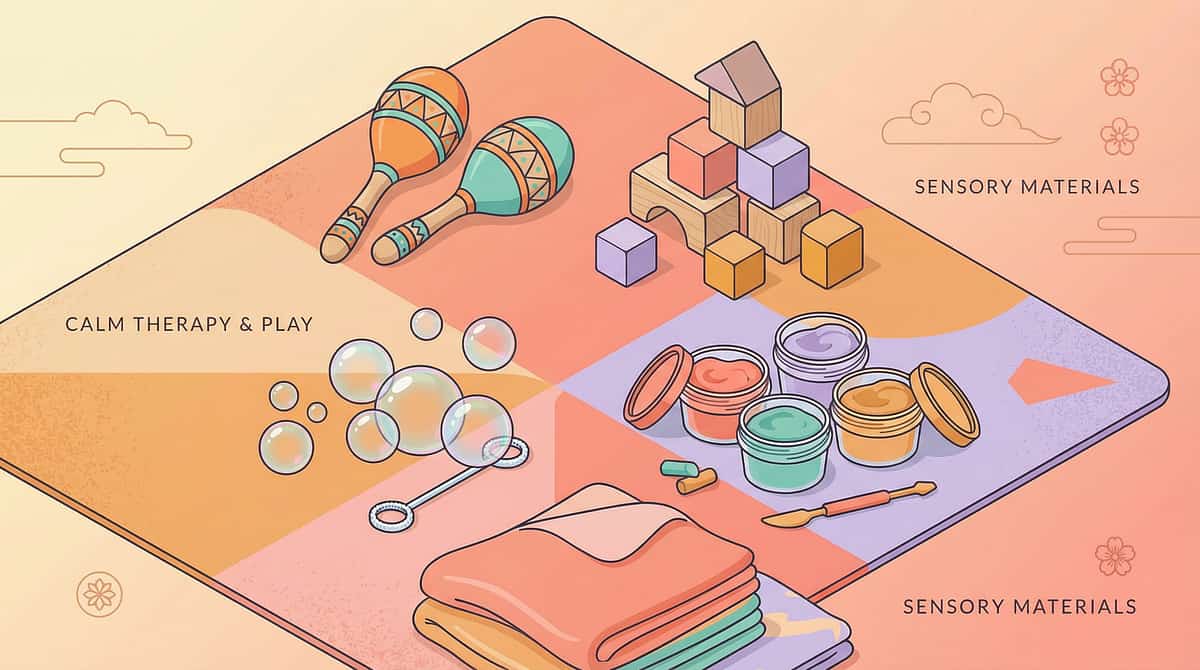
9 Materials. Clinically Selected. Practically Sourced.
Each of the 9 material categories below has been selected by the Pinnacle Consortium across OT, SLP, ABA, and SpEd disciplines. Every material creates a specific neurological context where copying becomes obvious, motivating, and rewarding. DIY options exist for every category — cost is never a barrier.
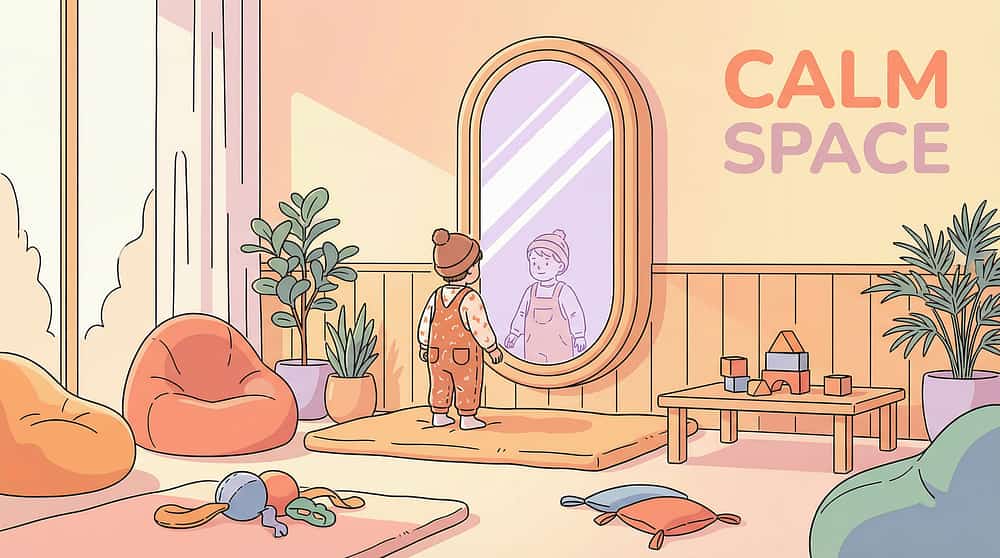
1. Large Mirror or Mirror Wall
Canon: Visual Supports | Full-length or wall-mounted mirror providing real-time visual feedback — child sees themselves copying. Price: ₹500–3,000. Search Amazon.in → "Full length mirror shatterproof" | DIY: Large glass window ✓
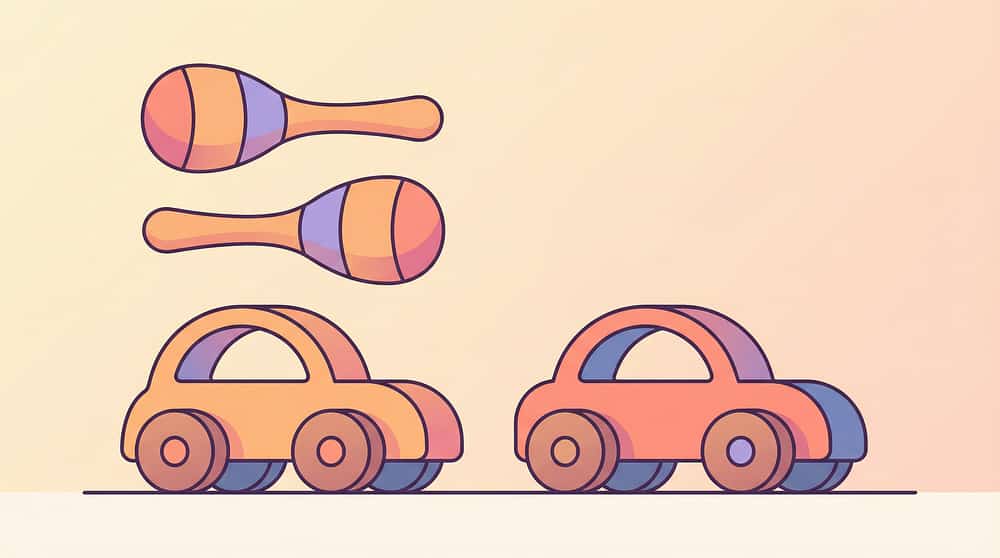
2. Identical Object Pairs
Canon: Cause-Effect Toys / Musical Instruments (×2) | Two maracas, two drums, two identical cars — one each. Matching action, zero turn-taking complexity. Price: ₹300–2,000 per pair. Search Amazon.in | DIY: any two identical household items ✓
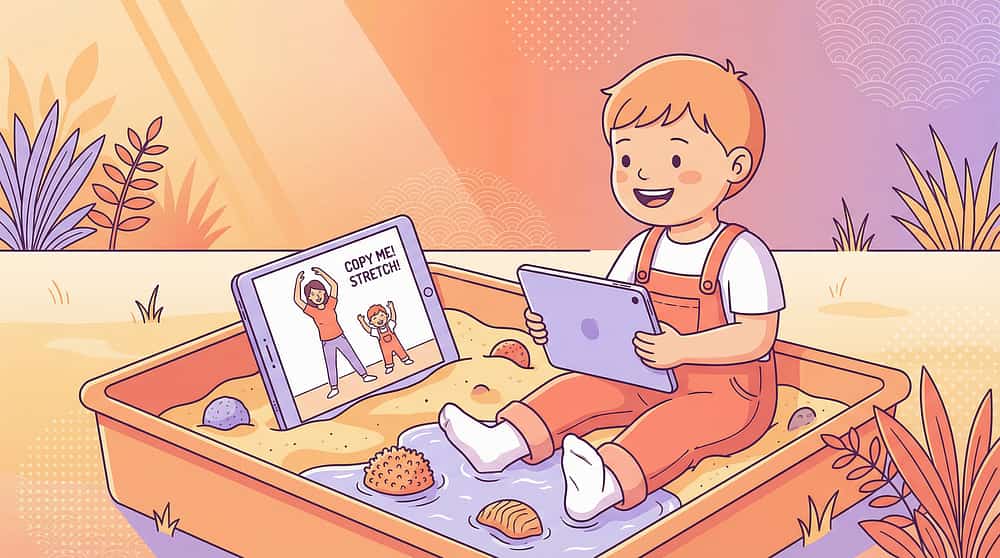
3. Video Modeling Resources
Canon: Technology / Tablet Use | Tablet or phone with video modeling library. Repeatability advantage: same demonstration, unlimited replays. Price: ₹0 (YouTube) to ₹5,000+. GPT-OS® Video Library → pinnacleblooms.org | DIY: film yourself ✓
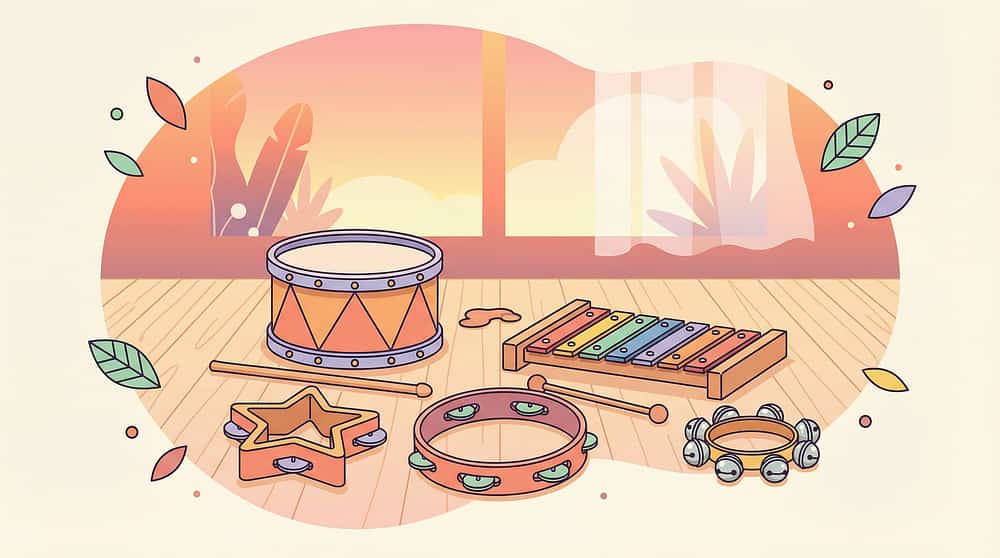
4. Musical Instruments (Pairs)
Canon: Musical / Auditory Materials | Drums, maracas, tambourines, xylophone, bells. Auditory feedback confirms successful copy instantly. Price: ₹200–2,000. Search Amazon.in | DIY: rice-in-container shakers ✓
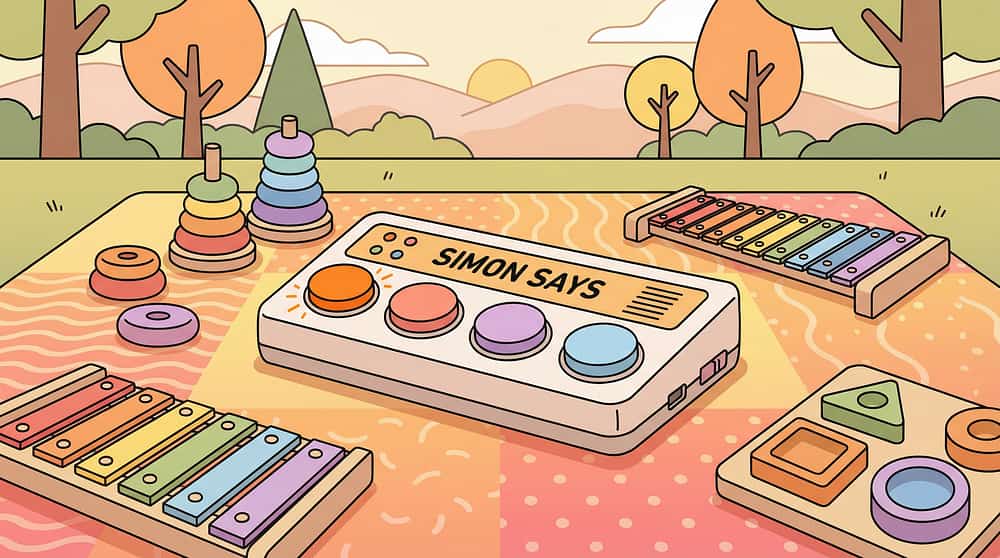
5. Imitation Games & Copy-Cat Toys
Canon: Matching Games / Memory Games | Cause-Effect Toys | Simon Says, Follow the Leader props. Structure makes copying feel like play. Price: ₹300–1,500. Pinnacle Recommends:Dyomnizy Educational Memory Game with Lights & Sounds — ₹519
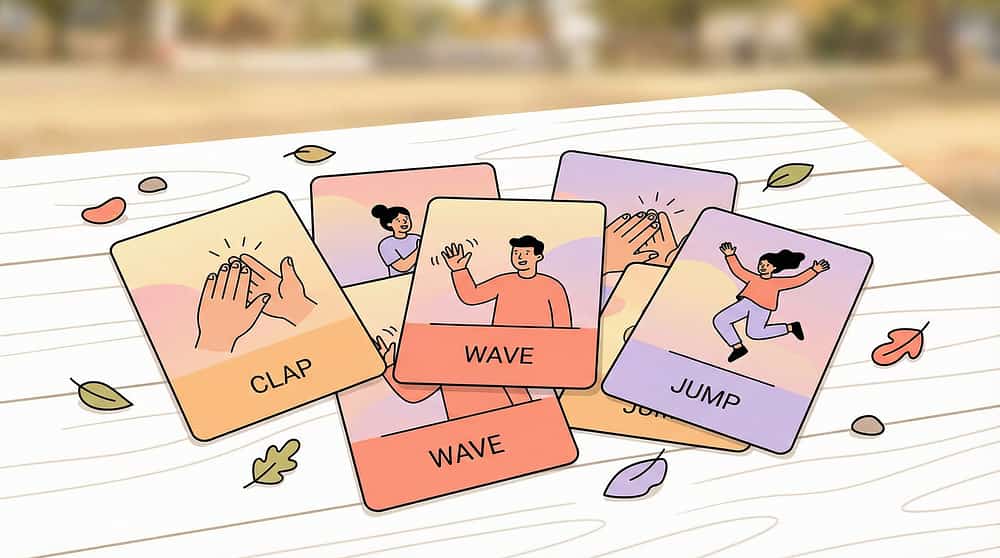
6. Action Cards & Picture Prompts
Canon: Visual Supports / Communication Cards | Photos or drawings of actions to copy. Visual target makes abstract movements concrete. Price: ₹200–800 | Homemade: FREE. Search Amazon.in | DIY: print or draw at home ✓
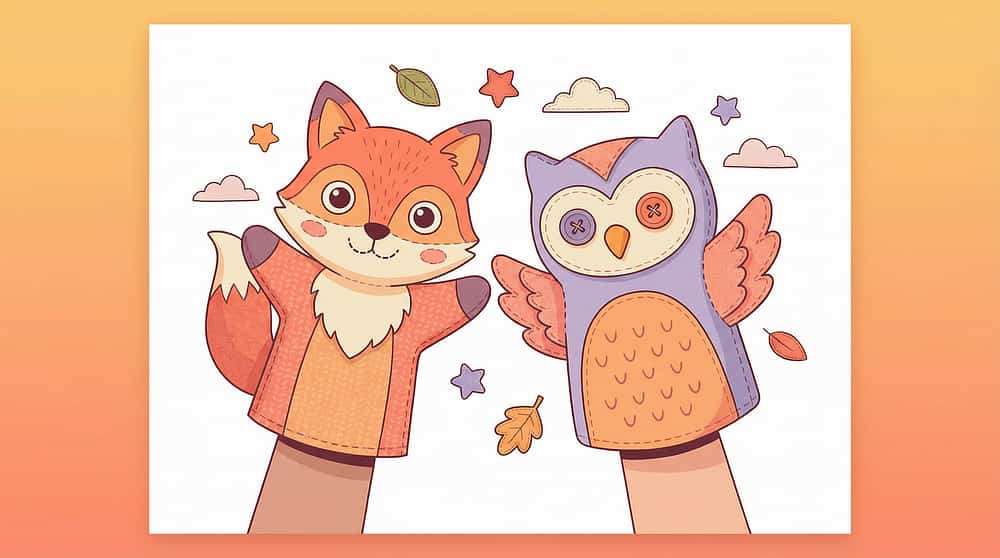
7. Puppets & Character Toys
Canon: Pretend Play / Puppets | Hand puppets or matching puppet pairs. Children copy a puppet when they won't copy an adult. Price: ₹200–1,000. Search Amazon.in | DIY: sock puppets (2 minutes) ✓
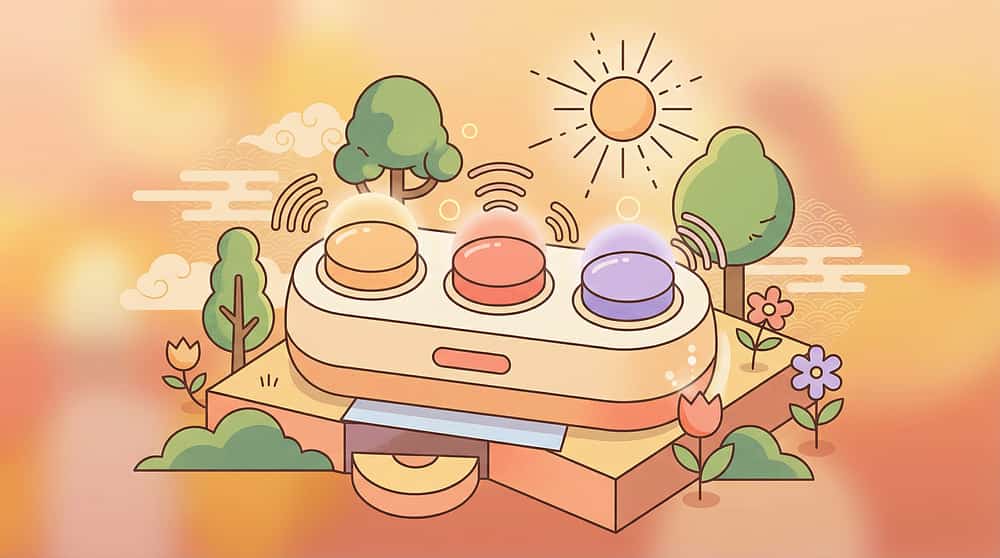
8. Cause-and-Effect Toys
Canon: Cause-Effect Toys / Switch Toys | Pop-up toys, button-press music toys, light-activation toys. Copying produces a reward — intrinsic motivation. Price: ₹300–2,000. Pinnacle Recommends:Dyomnizy Educational Memory Game Toy — ₹519
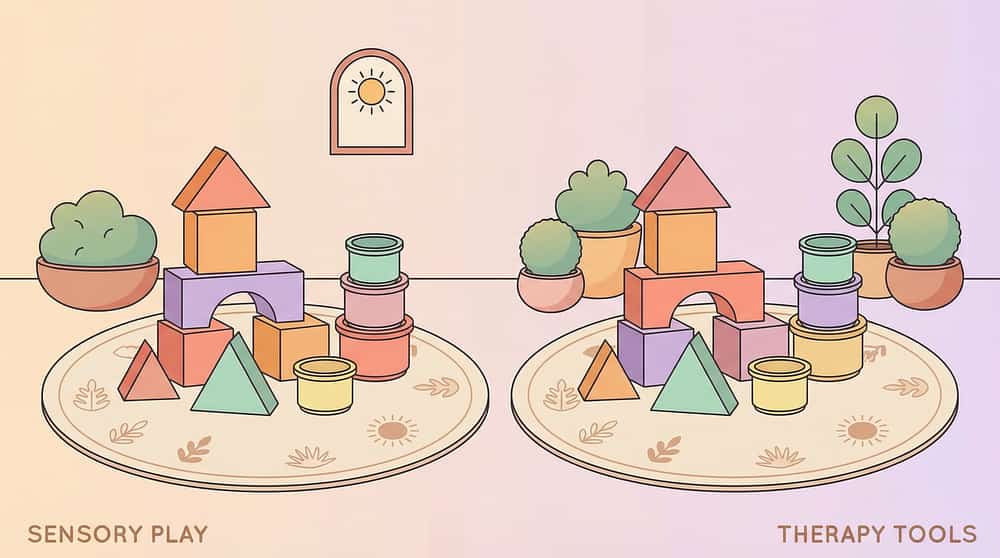
9. Building & Stacking Materials
Canon: Sorting Activities / Construction | Identical block sets (2×), stacking cups (2×), stacking rings (2×). Child builds alongside adult — visible matching result. Price: ₹200–1,500. Pinnacle Recommends:Lattooland Rainbow Sorting Activity Set — ₹628
Essential Starter Kit (₹1,500–3,000 total): Mirror + 2 pairs musical instruments + homemade action cards + duplicate household toys
📞9100 181 181
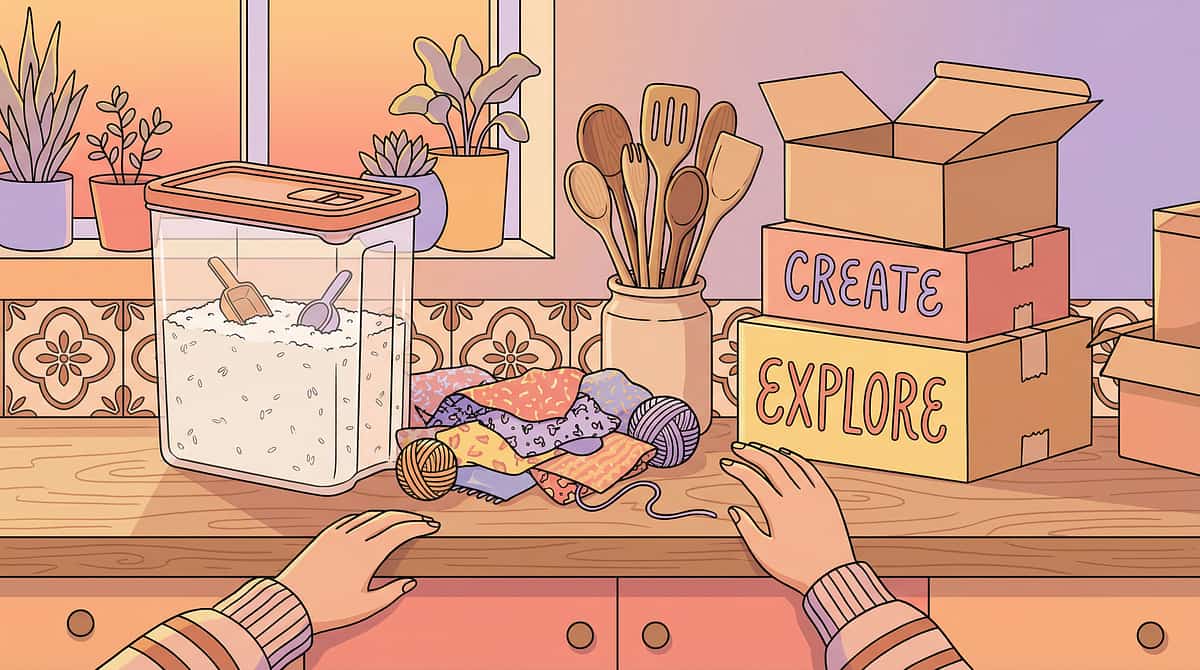
Every Family Can Execute This Technique Today — Regardless of Budget
WHO/UNICEF Equity Principle: Zero-cost options are not inferior options. Same neurological principles, household materials.
Material | Buy This | Make This (₹0) | Why It Works | |
Mirror | Full-length mirror ₹500–3,000 | Large glass window | Reflection is reflection — neuroscience works either way | |
Identical Object Pairs | Toy sets ₹300–2,000 | Two of anything: spoons, cups, socks | Any matching pair creates the identical-pair advantage | |
Video Models | App ₹500–5,000 | Film yourself on phone, replay on screen | Your phone + YouTube = complete system | |
Musical Instruments | Set ₹200–2,000 | Two plastic containers with rice | Auditory feedback is identical; brain doesn't check the brand | |
Action Cards | Commercial ₹200–800 | Print or draw stick figures of actions | Visual target works whether printed or hand-drawn | |
Puppets | ₹200–1,000 | Sock puppets (2 minutes to make) | Character intermediary works regardless of fabric quality | |
Cause-Effect Toys | ₹300–2,000 | Light switch, tap on/off, jack-in-box | Cause-effect principle is universal | |
Building Materials | Block sets ₹200–1,500 | Stacking dibbas/steel cups — every Indian kitchen | Match-your-construction visual is identical |
Zero-Cost Complete Setup: Any large glass surface + two identical household items + your phone + two cups with rice + printed stick-figure cards + two socks = complete Imitation Teaching kit. Total cost: ₹0.
When the clinical-grade material is non-negotiable: Shatterproof mirror is strongly recommended for safety. Size-appropriate blocks (not small parts) for children who mouth objects.
WHO NCF Handbook (2022) | PMC9978394 | WHO CCD Package across 54 LMICs
Pre-Session Safety Gate — Read Before You Begin
🔴 RED — STOP: Do NOT Proceed If:
- Child is in acute distress, meltdown, or severely dysregulated
- Child has a recent injury affecting the motor actions being targeted
- Child has sensory sensitivities that would make the specific material painful
- Child is unwell, feverish, or significantly sleep-deprived
- Mirror is cracked, loose, or not safely mounted
🟡 AMBER — MODIFY: Proceed With Adjustments If:
- Child is mildly tired → shorten session to 5–7 minutes, reduce repetition demands
- Child is in a new environment → use only highly motivating materials until settled
- Child has had a difficult day → lead with cause-effect toys (highest intrinsic motivation)
🟢 GREEN — PROCEED: Session Ready When:
- Child is fed, rested, calm, and in a regulated state
- Materials are ready, space is set
- Reinforcement items are available and accessible
- You (the parent) are calm, patient, and ready to celebrate approximations
Material Safety Specifics
- 🪞 Mirror: must be shatterproof or safety-film-backed. Supervise — no climbing or pushing.
- 🥁 Musical instruments: check no small detachable parts. Volume levels for auditory-sensitive children.
- 🧱 Building blocks: size-appropriate — no small parts for mouthers.
- 📱 Video models: screen time is a learning tool here. Always pair with real-life practice immediately after.
RED LINE — STOP IMMEDIATELY if: Child shows signs of extreme distress, self-injury, or panic. Any physical injury risk appears.
DOI: 10.1007/s12098-018-2747-4 | Pinnacle Clinical Safety Protocols
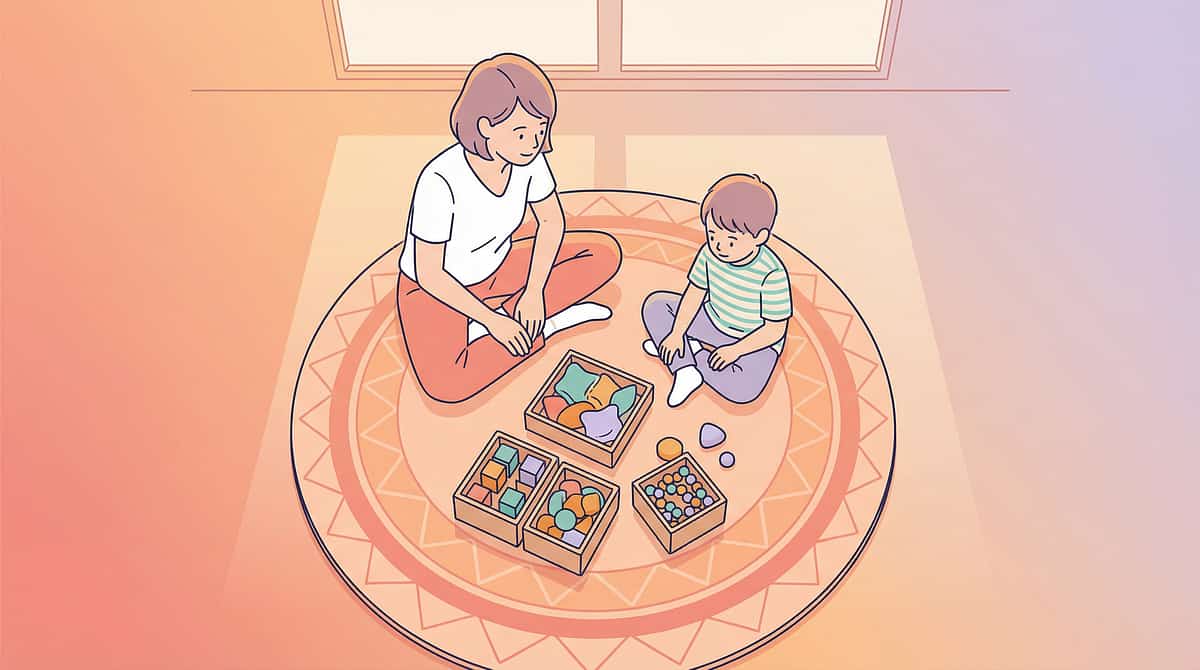
The Stage Before the Technique
Environment Determines 80% of Session Success.

Ideal setup: cleared floor, child and adult facing each other at eye level, materials within reach, minimal distractions
Setup Checklist (10 Steps)
- Clear the floor — remove toys, distractions. This is a focused learning space, not free play.
- Face each other — child and adult seated at eye level. Not side-by-side initially.
- Mirror positioning — at child's eye height so both reflections are visible simultaneously.
- Materials ready but hidden — bring out one material at a time. Multiple options visible = distraction.
- Reinforcement menu accessible — preferred snack, toy, or activity ready in reach within 3 seconds.
- TV/screens OFF — except when video modeling is the specific session goal.
- Other children — ideally remove siblings during structured sessions initially.
- Lighting — natural or warm light preferred. Avoid harsh overhead fluorescents.
- Duration timer — 15-minute visual timer on the table. Child can see the session end point.
- Yourself — sit at the child's level. No phone. No distraction. Full presence.
"Spatial precision prevents session failures. A therapist at a Pinnacle centre spends 5 minutes setting up for a 15-minute session. So should you. The setup IS the therapy preparation." — Pinnacle Consortium
📞9100 181 181

60-Second Pre-Flight Check — Before Every Session
Run this readiness check before every session. The best session is one that starts right. A 5-minute successful session builds more momentum than a 20-minute forced one.
Check | ✅ GO | 🟡 MODIFY | 🔴 POSTPONE | |
State | Calm, alert, regulated | Slightly tired or fussy | Meltdown / distressed | |
Fed | Full, not hungry | Slightly hungry | Not eaten — snack first | |
Rested | Well-slept | One poor night | Multiple poor nights | |
Recent meltdown | None in 2+ hours | 1–2 hours ago | Less than 1 hour ago | |
Illness | Healthy | Very mild cold | Fever, pain, significant illness | |
Motivation check | Engaged with materials | Neutral | Turns away from all materials | |
Sensory state | Regulated, comfortable | Slightly over/under-stimulated | Seeking or defending intensely |
5+ in GO
→ Proceed with full session
3–4 GO + some MODIFY
→ Shortened session (8–10 min), single preferred material, high reinforcement
Any POSTPONE
→ Skip session. Do a preferred activity instead. Tomorrow is a new opportunity.

Step 1: The Invitation
Every Protocol Begins With an Invitation, Never a Command
STEP 1 of 6
The Script (exact words)
"[Child's name], come! I have something FUN. Want to see?"
[Show one preferred item — shake the maraca once, make the mirror flash, press the cause-effect toy]
Body Language
- Get to the child's level — floor, not standing over
- Animated face, warm tone — you are genuinely excited
- Physical space open — no crowding, child can leave if needed
- Eye contact offered, not forced
⏱️Timing: 30–60 seconds. Do not rush this step.
✅ Acceptance Cues (GO looks like this):
- Child moves toward you or the material
- Child reaches for the object
- Child looks at you and the material alternately
- Child smiles or vocalises in response
Resistance Cues and Response:
- Child turns away → Re-offer with different material (try 2–3 options)
- Child pushes away → Create more distance, try again in 5 minutes
- Child completely disengaged → Postpone (revisit Card 13 readiness check)
You are activating motivating operations (ABA) and the just-right challenge principle (OT) simultaneously. No compliance, no demand — pure invitation.

Step 2: The Engagement
The Child Is Here. Now Deepen the Connection Before the Ask.
STEP 2 of 6
"Look at this! [demonstrate material playfully — shake maraca enthusiastically, build one block tower and knock it gently, wave at mirror reflection]. So fun, right? [Give to child] — your turn to play!"
Allow 60–90 seconds of free play with the material. No imitation demands yet. The child must first experience the material as intrinsically enjoyable before it becomes a vehicle for learning. If you introduce the demand too early, the material becomes associated with effort and compliance. Let the child discover joy first — the subsequent imitation then feels like continuing the fun.
🪞 Mirror
Let child explore their own reflection first. Play "find your nose!" before any copying demand.
🎵 Identical Pairs
Give child their instrument/object. Play together freely for 60 seconds before any imitation ask.
🔔 Cause-Effect Toy
Let child discover the effect independently first — then say "Now watch me do it THIS way."
📱 Video Model
Watch video together once, commenting warmly: "Look — she's waving! Wow."
Reinforcement begins here: Any engagement with material = warm praise. "You're playing! I love it!" Timing: 1–3 minutes of free engagement before any imitation demand.

Step 3: The Therapeutic Action
Now the Real Work Begins — And It Still Feels Like Play
STEP 3 of 6
Imitation Progression Ladder
Level 1–2: Object Imitation
Shake maraca, press button, stack block. Start here if no imitation baseline.
Level 3–4: Gross + Fine Motor
Clap, wave, arms-up, point, thumbs-up. When object imitation is emerging.
Level 5–6: Oral + Vocal Imitation
Open mouth, tongue out, copy sounds/syllables. After motor domains established.
Level 7–8: Sequences + Generalised
Tap-tap-shake, wave-then-clap, spontaneous novel copying.
Prompting Hierarchy (Most → Least Intrusive)
- Full physical — guide child's hands through the action
- Partial physical — initiate movement, child completes
- Light touch — gentle reminder
- Gestural — point to body part/object
- Model only — demonstrate, wait
- Verbal only — "Do this"
- Independent
Common Execution Error: Adult demonstrates and immediately reaches to prompt before waiting. Wait 3–5 seconds BEFORE prompting. The child may just need processing time.
Duration of therapeutic exposure: 3–8 minutes of imitation trials per session
📞9100 181 181 | NCAEP EBP Report (2020) | PMC10955541 | Cooper, Heron & Heward: ABA (8th ed.)

Step 4: Repeat & Vary
Dosage. Variation. Engagement Maintenance.
STEP 4 of 6
Target repetitions per session:🔁 3–8 successful trials per material/action | Total session: 15–20 minutes | Not more.
Vary the Speed
Same action, slower or faster. Builds flexible copying rather than rigid matching.
Vary the Intensity
Soft tap vs. loud tap on drum. Teaches the child to copy the action, not just the sound level.
Vary the Object
Same action type, different object. Critical for generalisation beyond specific trained materials.
Vary the Person
Spouse, grandparent, sibling takes the modeling role. Builds cross-person generalisation.
Vary the Setting
Kitchen, garden, bathroom mirror. Generalise across environments — the ultimate goal.
"Three engaged, successful copies in a warm, joyful interaction is worth more therapeutically than ten mechanical repetitions with a withdrawn child. Engagement is the vehicle for neurological change. Never sacrifice engagement for repetition count."
Satiation Indicators — Child Has Had Enough of This Action:
- Begins looking away more than at the model
- Actions become sloppy or disengaged
- Child tries to take both objects or disrupt the activity
- Response latency increasing (taking longer to copy each time)

Step 5: Reinforce & Celebrate
Timing Is Everything. The Brain Learns What Gets Celebrated — Within 3 Seconds.
STEP 5 of 6
3 Seconds
2 Seconds
1 Second
0 Seconds
Child Copies
Reinforcement Script Options
- "YES! You did it! That's EXACTLY it! [clap, high five, hug]"
- "You COPIED me! [child's name], you copied! That's AMAZING!"
- "You're a copy-cat! [make it playful and joyful]"
- "Look in the mirror — you look JUST LIKE me! Wow!"
Reinforcement Types
- Social: enthusiastic verbal praise + physical affection
- Tangible: preferred food, toy, activity (30 seconds)
- Token economy: sticker → exchange for larger reward
- Natural: the activity itself is the reward (cause-effect toy)
✅ Pinnacle Recommends — Reinforcement Materials
- 🛒Reward Jar — Rosette Imprint — ₹589 (token/sticker economy)
- 🛒1800+ Reward Stickers Book — ₹364
"Celebrate the ATTEMPT, not just the success. An approximation that moves toward the target gets full celebration. A child who tried and got it 70% right is building exactly the same neural pathway as one who got it 100%. Perfectionism kills imitation teaching."

Step 6: The Cool-Down
No Session Ends Abruptly. The Cool-Down Protects the Learning.
STEP 6 of 6
Ending a session abruptly — especially a successful, exciting one — can cause dysregulation as the child's nervous system transitions back to baseline. The cool-down is not optional; it is the final therapeutic act.
"Two more [holds up two fingers], then ALL DONE. [Complete two final easy repetitions]. ALL DONE — [child's name] did SO well! Now let's put these away."
Transition Warning
2 minutes before end: "Two more, then we're done." Visual timer pointing to end.
Two Final Easy Reps
Make the last two the simplest in the session. Always end on success.
Put-Away Ritual
Child participates: "Help me put the drums in the bag." Natural transition activity.
Calming Input
1 minute: child's preferred calming activity — lap time, quiet favourite toy, brief deep pressure hug.
Bridge to Next Activity
"After this, we'll have [snack / outside / screen time]." Predictability reduces resistance.
If the child resists ending: Do NOT extend the session to avoid resistance — this teaches that resistance = more time. Use visual timer as the "authority" — "The timer says all done, not me."

60 Seconds of Data Now = Hours Saved Later
Capture These 3 Data Points Immediately After Each Session
Session Tracker — L-962
Date: _________ | Session Length: ___ mins
Material Used: [ ] Mirror [ ] Instruments [ ] Video [ ] Cards [ ] Puppets [ ] Cause-Effect [ ] Building [ ] Games
Action Targeted: _______________________
Trials Attempted: ___ | Independent Copies: ___ | Prompted Copies: ___
Highest Prompt Level: [ ] Full physical [ ] Partial [ ] Gestural [ ] Model [ ] Independent
Child Engagement: [ ] 1-Refused [ ] 2-Tolerated [ ] 3-Engaged [ ] 4-Delighted
Parent Confidence: [ ] 1 [ ] 2 [ ] 3 [ ] 4 [ ] 5
Why This Data Matters
Whether the prompt level is decreasing (progress indicator)
Which materials produce most engagement (personalise the programme)
Whether generalisation across settings is occurring
Whether intensity needs to increase or decrease
"Data is not paperwork. Data is the voice your child's progress uses when it can't speak for itself yet." — Pinnacle BCBA Team
📞9100 181 181

Session Abandonment Is Not Failure. It Is Data.
7 Common Failure Modes + Immediate Fixes
❓ Problem 1: Child Won't Look at Me When I Model
Why: Joint attention precedes imitation — the child must look before they can copy.
Fix: Place model in child's direct line of sight. Use attention-getting material: shake maraca while saying "LOOK!" before demonstrating. Consider whether joint attention sessions (L-961) need parallel focus.
❓ Problem 2: Child Watches But Doesn't Copy
Why: Processing time needed, OR prompt level needs to increase.
Fix: Wait 5 seconds FIRST. Move to physical prompting if no response. Reduce complexity of action. Return to a simpler level on the imitation hierarchy.
❓ Problem 3: Child Only Copies With Full Physical Guidance
Why: Prompt dependency — child hasn't learned the model IS the cue.
Fix: Introduce a time-delay before prompting. Wait 3 seconds after verbal cue before any physical prompt. Celebrate any independent movement toward the action.
❓ Problem 4: Child Copies But It Looks Nothing Like the Model
Why: Motor planning difficulty or early stage of skill building.
Fix: Accept and celebrate approximations fully. Shape toward accuracy over sessions — don't reject 70% copies. Mirror work helps child visually compare their action to the model.
❓ Problem 5: Child Was Copying Well Last Week, Not Today
Why: Normal variability — state-dependent learning, illness, sleep, life disruption.
Fix: Review readiness check. Drop complexity to easiest action type. Use highest-motivation material. Shorten session. Record and move on — not every session is a peak session.
❓ Problem 6: Child Only Imitates Objects, Not Body Movements
Why: Object imitation is typically easier; body awareness may be lower.
Fix: Build object → gross motor transition systematically. Use mirror to increase body awareness. Pair body movements WITH objects initially: "Wave YOUR maraca!"
❓ Problem 7: Sessions End in Distress
Why: Demand level too high, session too long, transition too abrupt.
Fix: Halve session length, halve trials, upgrade reinforcement value, strengthen cool-down protocol. If consistent distress: pause and consult a Pinnacle therapist.
📞 Emergency: 9100 181 181

No Two Children Are Identical. This Technique Isn't Either.
Adapt & Personalise for Your Child's Profile
EASIER VERSION
Bad days, new materials, regression
- Single, highly preferred material only
- One action, maximum 3 trials
- Full physical prompting available
- Session: 5–8 minutes
- Reinforcement: highest-value item
STANDARD VERSION
Core daily practice
- 1–2 materials per session
- 3–8 actions per material
- Prompt fade in progress
- Session: 15–20 minutes
- Reinforcement: standard menu
ADVANCED VERSION
Strong responders / generalisation phase
- Novel materials (unpracticed)
- Novel people as models
- Novel settings (park, kitchen, school)
- Action sequences (3+ steps)
- Spontaneous opportunities embedded daily
🔵 Sensory Seeker
Use more auditory/tactile materials. Increase movement in imitation actions.
🔴 Sensory Avoider
Reduce auditory intensity. Start with visual-only imitation before sound-producing instruments.
🟡 Low Motor Tone
Choose lower-demand gross motor actions first. Progress to fine motor more gradually.
🟢 Language-Emerging
Pair every successful copy with a word: "Wave! You waved! WAVE!" — builds vocal bridge.
Age adaptations: Under 3 years → object + gross motor only, 5–8 min sessions, 3–4× daily brief opportunities. 3–6 years → full protocol including games and peer imitation. Over 6 years → complex sequences, peer modeling, video self-modeling.

Week 1–2: What to Expect
Progress in Weeks 1–2 Looks Invisible to the Untrained Eye. Know What to Look For.

Week 1–2: The neural pathway is being laid silently — trust the process for 14 days.
✅ What Progress Actually Looks Like in Weeks 1–2
- Child tolerates the material for 3 seconds longer than day 1
- Child looks at you when you say "Watch me!" — even briefly
- Child reaches for the object after you demonstrate — even without copying
- Resistance is shorter — from 2-minute protest to 30-second protest
- Session mood is warmer — less avoidance, more curiosity
What Is NOT Progress Yet (and That's Normal)
- Spontaneous, accurate copying — that's weeks 4–8
- Generalisation to other people or settings — weeks 6–12
- Vocal imitation emerging from motor imitation — that comes later
"Week 1–2 will test you. You will wonder if the technique is right for your child. This is universal — every family reports this. The neural pathway is being laid silently. Trust the process for 14 days."
📞9100 181 181 | PMC11506176 | Pinnacle 8-week baseline data

Week 3–4: Consolidation Signs
Week 3: The Brain Is Forming the Pathway. Week 4: The Child Is Testing It.
Child anticipates the activity
Shows excitement when materials appear — material has become a positive signal.
Child initiates imitation before "Do this!" cue
Starting to self-prompt — the observe→copy link is beginning to fire spontaneously.
Prompt level dropping
From full physical to partial, or partial to gestural. This is measurable, objective progress.
New actions being copied spontaneously
Actions that weren't specifically trained — early generalisation beginning to appear.
Child copying outside structured sessions
Siblings or parents in daily life. Spontaneous imitation beginning. This is the milestone.
The Neural Pathway Forming: Weeks 3–4 correspond to synaptic consolidation — repeated structured input is strengthening the observe→simulate→copy neural chain. The child is beginning to expect that watching someone means they should try to do the same thing.
Parent milestone:"You may notice you're more patient, more confident, more able to read your child's cues. The technique is working on you too."
Neuroplasticity: synaptic strengthening through repeated input | Pinnacle week 3–4 milestone data

Week 5–8: Mastery Indicators
Mastery Unlocked When the Child Learns to Learn.
✅ 80%+ Independent Trials
Across 3 consecutive sessions with a given action. Consistent, reliable, independent.
✅ Novel Action Copying
Child copies actions they've never been trained on. The meta-skill is emerging.
✅ Cross-Person Generalisation
Copies multiple different adults, not just primary carer. Extending beyond the trained relationship.
✅ Cross-Setting Generalisation
Copies at home AND at clinic, park, kitchen. The skill is becoming portable.
✅ Spontaneous Observational Learning
Child watches sibling and tries the same action. The gateway has opened.
"When a child achieves generalised imitation, they have gained access to the most efficient learning pathway available. Language accelerates. Play develops. Social behaviour develops naturally through peer observation."
🏆 Mastery Badge: "Generalised Imitation Established"
PMC10955541 | BACB mastery criteria standards | Pinnacle 8-week outcome data (97%+ improvement rate)

You Did This. Your Child Grew Because You Showed Up Every Day.
"Five to eight weeks ago, your child's brain had a gap where copying should have been. You didn't wait for a miracle. You built the bridge, one session at a time — imperfect sessions, short sessions, sessions where you cried after they went to bed. Every single one mattered. Every single one laid the path your child is now walking."
What to Celebrate Specifically — YOUR Development as a Therapeutic Parent:
The days you showed up when you didn't feel like it ✅
The sessions you adapted on the fly ✅
The moments you celebrated a 70% copy as if it were 100% ✅
The data you collected when you were exhausted ✅
The patience you found that you didn't know you had ✅
📸Photo/Journal Prompt: Film your child copying an action spontaneously today. Not for social media — for your family archive. This is the moment. Document it.
Family celebration suggestion: Tell grandparents: "Our child is learning to copy — and that means language, play, and school are all getting easier." This is not a small thing. This is the skill that unlocks all other skills.

Trust Your Instincts. These Signs Mean Pause and Seek Guidance.
🔴 Regression After Strong Progress
Sudden loss of previously mastered imitation skills across multiple sessions. Not a bad day — a clear, sustained regression. Pause and consult immediately.
🔴 Consistent Session Distress
Child becoming severely upset, self-injuring, or showing extreme avoidance across more than 3 consecutive sessions despite protocol modifications. Requires professional review.
🔴 No Change at All in 4 Weeks
Engagement score, prompt level, or trial success rate completely flat despite faithful implementation. Programme needs professional review and likely redesign.
🔴 Motor Concerns Emerging
Child cannot physically produce the movement even with full physical prompting. OT assessment is indicated for fine/gross motor planning evaluation.
🔴 Vocal Imitation Not Emerging by Week 8
If motor imitation is developing well but no vocal imitation signs at all, SLP consultation urgently needed for oral motor + phonological assessment.
🔴 Parent Mental Health
If you are in a state where you cannot deliver sessions calmly and warmly, take a pause. The technique requires your regulated presence. Taking care of yourself IS taking care of your child.
Escalation Pathway: 1. 📞 Call Pinnacle Helpline: 9100 181 181 (free, 16 languages, 24×7) → 2. Book teleconsultation: pinnacleblooms.org/consult → 3. Visit nearest Pinnacle centre
WHO NCF Progress Report 2018–2023 | Pinnacle clinical escalation protocols

You Are Here. Here Is Where You Are Going.
The Progression Pathway
Parallel Tracks
Next Level
Current
Prerequisites
If This Approach Resonated Strongly
→ L-963 Following Instructions — builds on imitation into compliance and receptive language
If Vocal Imitation Is a Particular Gap
→ SLP Vocal Imitation Protocol — specifically targets sound and word copying (consult your SLP)
If Motor Coordination Is a Concern
→ OT Motor Imitation Programme — addresses fine/gross motor planning specifically
Observational Learning
Language Acquisition
Play Skills
Social Development
Academic Readiness
"Imitation is not one technique in a list of 70,000. It is the technique that makes all other techniques learnable. Once a child can copy, the whole world becomes their teacher."

You Already Have What You Need for These — Explore the Domain
Related Techniques in This Domain
Technique | Code | Difficulty | Materials You Already Own | |
Attending & Attention | L-960 | 🟢 Intro | Mirror, instruments | |
Joint Attention | L-961 | 🟢 Intro | Action cards, identical pairs | |
Imitation Teaching ← You Are Here | L-962 | 🟡 Core | All 9 materials on this page | |
Following Instructions | L-963 | 🟡 Core | Action cards, puppets | |
Matching & Sorting | L-964 | 🟡 Core | Building materials, sorting sets | |
Memory & Recall | L-965 | 🔴 Advanced | Action cards, video models |

This Technique Is One Piece. Here Is the Full Picture.
Your Child's Full Developmental Map
Your child's development is not a single problem with a single solution. It is a 12-domain landscape, each domain interconnecting with the others. Imitation sits at the centre because it unlocks all others — but it is not the only priority.
GPT-OS® coordinates your child's full therapeutic programme across disciplines so no domain is left unaddressed.
What GPT-OS® Shows You
- Which of the 12 domains are currently in programme
- Which techniques are active across domains
- How this week's imitation progress connects to next week's language targets
- The complete developmental journey — not just today's technique
📞9100 181 181
WHO/UNICEF Nurturing Care Framework (2018): Five components of nurturing care require holistic developmental monitoring

Real Families. Real Outcomes. Specific Enough to Believe.
Family 1 — Hyderabad, 3.5-year-old boy
Before: "He didn't copy anything. We would wave — he'd look away. We'd clap — he'd continue lining up blocks. His sister learned everything by watching us. He learned nothing by watching. It was like he was on a different channel."
After (week 8): "He copies his sister now. Not everything. Not always. But yesterday she started dancing to a song and he started doing the same moves. I cried for ten minutes. That moment paid for every session."
Therapist Notes: Object imitation by week 3 (identical pair instruments). Gross motor crossing by week 5. First spontaneous peer copy at week 7. Currently progressing to vocal imitation targets.
Family 2 — Chennai, 4-year-old girl
Before: "Every new skill had to be physically guided. Dressing, brushing teeth, even how to hold a cup — I had to guide her hands through every single step every single time. She never watched and then did. She needed to BE moved."
After (week 10): "She watched me fold a towel last week and then folded her own towel. Roughly — but she watched, she tried, she did it. That's new. That's completely new. Her SLP says her word attempts have also jumped."
Therapist Notes: Action card + video self-modeling protocol. Motor imitation generalisation confirmed. Vocal imitation emerging — SLP now working in parallel track. Dressing skill acquisition accelerating.
Note: Case details are illustrative composites from Pinnacle Network outcome patterns. Individual outcomes vary based on child profile and intervention intensity.
📞9100 181 181

Isolation Is the Enemy of Adherence. You Were Never Meant to Do This Alone.
Connect With Other Parents
📱 WhatsApp: Imitation Teaching Parents' Group
Parents currently using L-962 and related foundational skill techniques. Join via pinnacleblooms.org/community
💬 Pinnacle Parent Forum
Online forum: post questions, share victories, get support from experienced parents. community.pinnacleblooms.org
🤝 Peer Mentoring Programme
Connect with a parent 12 months ahead of you on the same journey. Book via: 9100 181 181
📍 Local Parent Meetups
Pinnacle conducts parent workshops and peer support groups across all 70+ centres. Find your nearest centre
"I thought I was the only one whose child stared blankly when I tried to teach by showing. Finding other parents in the same place made me realise this is a path — not a wall." — Parent, Pinnacle Bengaluru Network
WHO principle: Parent networks improve long-term intervention adherence by 40–60%. | 📞9100 181 181

Home + Clinic = Maximum Impact. You Don't Have to Choose.
Your Professional Support Team

70+ Pinnacle Blooms Network® centres across India. Find your nearest: pinnacleblooms.org/centres
Therapist Matching for L-962
🦾 OT Lead
Motor imitation components
🗣️ SLP
Vocal/oral motor imitation
📊 BCBA
DTT structure and data systems
📚 SpEd
Generalisation into learning contexts
Teleconsultation Available
For families outside major cities, or for check-in sessions between clinic visits.
"Home-based intervention is most powerful when clinicians and parents operate as one team. Your daily sessions at home, combined with our weekly clinical guidance, produce results that neither can achieve alone."
WHO NCF Progress Report (2023) | Coverage: 70+ centres across India | 70+ countries served through GPT-OS®

For the Parent Who Wants to Go Deeper
The Research Library
📄 PMC11506176 — Children (2024)
PRISMA systematic review: 16 studies confirm structured imitation intervention meets evidence-based practice criteria for ASD. Outcomes: motor development, language, social skills. View on PubMed
📄 PMC10955541 — World J Clin Cases (2024)
Meta-analysis of 24 studies: structured therapy promotes social skills, adaptive behaviour, and motor skills. 1:1 individual treatment showed maximum effectiveness. View on PubMed
📄 Indian J Pediatr (2019) — Padmanabha et al.
Indian RCT: home-based parent-delivered interventions demonstrate significant outcomes when structured protocols followed. India-specific family-based delivery validated. DOI: 10.1007/s12098-018-2747-4
📄 NCAEP EBP Report (2020)
Imitation-based intervention classified as Focused Intervention Practice with evidence across 27 peer-reviewed studies. View NCAEP Report
📄 PMC9978394 — WHO CCD Package
Care for Child Development: evidence-based, context-specific caregiver interventions validated across 54 LMICs. Multi-material, home-based delivery model.

Your Sessions Build a Personalised Intelligence That Makes Every Next Session Better
How GPT-OS® Uses Your Data
Your Child's Improving Programme
Session data input
Parent session information
Developmental trajectory update
Adjust child's progress plan
Prompt-level calibration
Tune prompts for effectiveness
Next best action
Recommendation for tomorrow
GPT-OS analysis engine
Processes inputs and learns
Material effectiveness ranking
Which materials engage most
What GPT-OS® Specifically Learns from L-962 Data
- Which of the 9 materials produces highest engagement for your child
- Whether object or body imitation is the stronger entry point
- Optimal session length and trial density for your child's profile
- When to introduce vocal imitation parallel track
- When peer imitation opportunities should begin
🔒 Privacy Assurance
- Data is private and secure — Pinnacle adheres to Indian IT Act data protection standards
- Population-level aggregate data (de-identified) informs improvements for all families
- You own your child's data. Export available on request.
"21 million therapy sessions = the world's largest structured paediatric imitation therapy dataset. Every session you complete makes the recommendation engine more accurate — for your child and for every child like yours, globally."
📞9100 181 181

See the Materials in Action — Before Your First Session
Watch the Reel: L-962

▶ Reel L-962 | 9 Materials That Help With Imitation Teaching
Domain: FL-IM | ~75–85 seconds
"This reel was created by the Pinnacle Blooms Network Consortium — OT, SLP, ABA, SpEd and NeuroDev specialists working together with families across India. The materials shown are the same ones described in this page. Watch once. Then do once. That's the learning pathway."
Related Reels in This Domain
Why Multi-Modal Matters
Video modeling is itself an evidence-based practice for autism (NCAEP 2020). By watching the technique demonstrated AND reading the step-by-step protocol on this page, you are using both visual and text learning pathways — proven to improve parent skill acquisition.
NCAEP EBP Report (2020): Video modeling as EBP | Multi-modal parent skill acquisition literature

Consistency Across Caregivers Multiplies Impact. Share This Page.
📲 Share This Technique
For Your Spouse/Partner
"Quick summary: Our child learns best when copying is made fun and structured. We're using mirrors, musical instruments, and a few specific toys to teach them HOW to copy. 15 minutes a day. I'll show you the exact steps — it's simpler than it sounds and the research behind it is solid."
"Explain to Grandparents" — Simplified Version
"Thatha/Naana/Ajji — our child needs extra help learning to copy what we do. When you play with them, try this: do something simple (like clapping or shaking a toy) and say 'Do this!' Wait 5 seconds. If they copy — celebrate big. If they don't — show them once more and gently guide their hands. That's it. Everything helps."
Teacher/School Communication Template
"[Child's name] is currently working on imitation skills with the Pinnacle GPT-OS® programme (Technique L-962). In class: when demonstrating new activities, pause after modeling and prompt '[Name], do this!' Celebrate any copying attempt immediately and enthusiastically. Please contact us at [parent contact] if you'd like the full protocol."
Downloadable Family Guide
📄 One-page summary your whole family can use.
📞9100 181 181
PMC9978394: Multi-caregiver training critical for generalisation

Every Question a Parent Has Asked About This Technique — Answered
Q1: My child is 7. Is it too late to start imitation teaching?
No. Imitation skills can be developed at any age. Older children respond well to peer modeling (videos of age-similar children), more complex action sequences, and game-based formats. Age is less relevant than developmental level. Consult a Pinnacle BCBA for age-appropriate programme design.
Q2: How long before I see results?
Engagement improvement is typically visible in weeks 1–2. Prompt level reduction by weeks 3–4. Generalised imitation emerging by weeks 5–8. Track the micro-progress indicators in Cards 23–25 — progress is happening even when it feels invisible.
Q3: My child imitates objects but won't imitate body movements. Is that normal?
Yes — this is one of the most common imitation profiles in autism. Object imitation is typically the stronger entry point. Build systematically: objects → gross motor with objects → gross motor without objects → fine motor. See Card 16's progression ladder.
Q4: Should I try to teach vocal imitation the same way?
Vocal imitation requires specific SLP assessment and guidance — it's not just "do this but with sounds." Oral motor differences, phonological processing, and breath support all contribute. Use this motor imitation programme in parallel with SLP guidance. Call 9100 181 181.
Q5: My child copies in therapy but not at home. How do I fix this?
Prompt-dependent, setting-specific learning — very common. Ensure your home setup matches the clinic setup as closely as possible. Have the therapist coach you in session. Video the therapist session and watch before your own. Introduce different people modeling the same actions.
Q6: Can I do too much imitation teaching?
Sessions longer than 20 minutes or more than 3× daily structured sessions can reduce engagement and effectiveness. The goal is intensity of quality, not quantity of time. Brief, frequent, highly engaged sessions are more neurologically effective than long, mechanical ones.
Q7: My child was copying and then suddenly stopped. Should I be worried?
Temporary regression is normal — illness, sleep disruption, environmental change, or stress can cause apparent regression. If it resolves within a week, continue. If persistent for 2+ weeks, review Card 21 troubleshooting and consider calling the helpline.
Q8: How does imitation teaching connect to language development?
Directly and powerfully. Vocal imitation — copying sounds and words — is the engine of early speech development. Every advance in motor imitation creates the neural scaffold for vocal imitation. This is why Pinnacle OT, ABA, and SLP teams work in coordination — they are all building the same pathway from different angles.

You've Read the Science. You Have the Materials. Your Child Is Ready.
Now You Begin.
🏅 Validated by the Pinnacle Blooms Network® Consortium
OT • SLP • ABA/BCBA • SpEd • NeuroDev • CRO
20M+ sessions • 97%+ improvement • 70+ centres across India • 70+ countries served
📞FREE National Autism Helpline: 9100 181 181 | 16 languages | 24×7 | No cost | No judgement
Preview of 9 materials that help with imitation teaching Therapy Material
Below is a visual preview of 9 materials that help with imitation teaching therapy material. The pages shown help educators, therapists, and caregivers understand the structure and content of the resource before use. Materials should be used under appropriate professional guidance.


Share this resource
Help others discover thisLink copied!

"From fear to mastery. One technique at a time."
— The Pinnacle Blooms Consortium
Pinnacle Blooms Network® exists to transform every home in India — and across the world — into a proven, scientific, 24×7 personalised therapeutic environment for children with autism and developmental differences. Through GPT-OS®, 70,000+ evidence-linked techniques, 21 million+ therapy sessions, and a multi-disciplinary consortium of OT, SLP, ABA, SpEd, NeuroDev, and CRO experts, we ensure no parent has to face this journey without science, support, and community behind them.
🔄 Return to Top
→ Next Technique
🗂️ Browse Domain
🏠 Technique Library
Medical Disclaimer: This content is educational and addresses teaching imitation skills to children with autism and developmental differences. It does not constitute medical advice and does not replace individualised assessment and guidance from qualified therapists. Imitation skill development should be guided by qualified professionals who can assess current levels and design appropriate progressions. Materials and strategies must be adapted to each child's developmental level, sensory profile, and individual needs. Individual outcomes vary. Stop any technique if the child shows signs of distress and consult a qualified professional.
CIN | U74999TG2016PTC113063 | |
DPIIT Recognition | DIPP8651 (Govt. of India) | |
MSME | Udyog Aadhaar: TS20F0009606 | |
GSTIN | 36AAGCB9722P1Z2 |
© 2025 Pinnacle Blooms Network®, unit of Bharath Healthcare Laboratories Pvt. Ltd. All rights reserved. GPT-OS® is a registered trademark. | Bharath Healthcare Laboratories Pvt. Ltd. | Hyderabad, Telangana, India