

9 Materials That Build Complete Emotional Intelligence in Children
From feelings cards to calm-down kits — a clinically validated system that builds emotional awareness, vocabulary, and regulation in children with autism, ADHD, and developmental differences. Psychology + OT + ABA. Ages 2–14.
EMO-OVR
Ages 2–14 Years
Home + School + Clinic

ACT I — THE EMOTIONAL ENTRY
"She goes from laughing to screaming in 30 seconds — and she can't tell me why."
You have tried the breathing. The counting. The charts. And when she finally collapses, exhausted, she whispers "I don't know what happened, Mama." She isn't choosing this. She genuinely cannot see what's happening inside her.
"You are not failing as a parent. Your child's emotional brain is still learning to speak."
🎯 Emotional Awareness
Noticing you have a feeling before it becomes a flood.
🗣️ Emotional Vocabulary
Naming it precisely — beyond "bad" and "fine."
🛠️ Emotional Regulation
Managing intensity with tools that are ready before crisis hits.
💛 Emotional Expression
Communicating feelings in ways that bring connection, not chaos.
🏛️Pinnacle Blooms Consortium® — Psychology • Occupational Therapy • Applied Behavior Analysis • Special Education • NeuroDevelopmental Pediatrics | FREE Helpline: 9100 181 181
Card 02 — The Numbers
Emotions Are the Hardest Thing to Teach. The Science Explains Why.
The inability to identify, name, and regulate emotions is not a character flaw. It is a neurological difference in how the brain processes internal body signals — a difference that has a name (interoception), a mechanism, and most importantly: a systematic solution.
1 in 36
Autism Diagnoses
Children receive an autism diagnosis globally — WHO, 2023
70–80%
Alexithymia Rate
of children with ASD experience alexithymia — inability to identify their own emotions (Frontiers in Psychiatry, 2023)
3x
Regulation Challenges
More likely to have significant emotional regulation challenges vs. neurotypical peers (J Autism Dev Disord)
"Across India alone, over 18 million families are navigating exactly what you are right now."
These 9 materials are the systematic solution. References: PMC11506176 | PMC10955541 | WHO NCF 2018
Card 03 — The Neuroscience
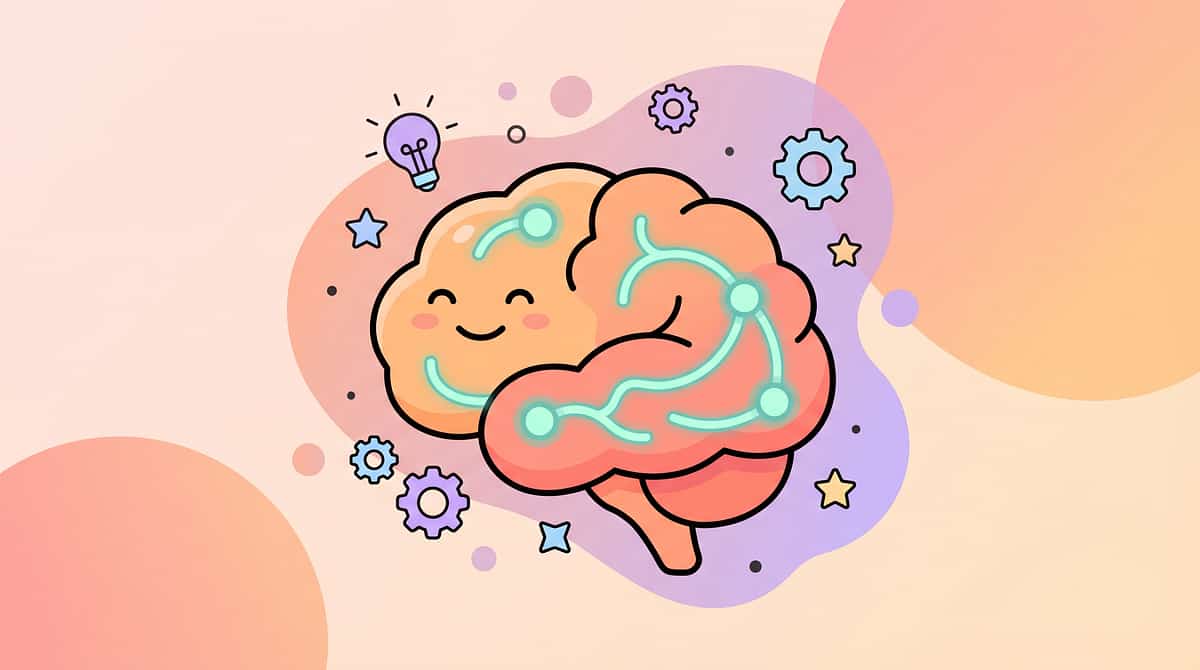
The Neuroscience of Emotional Blindness — Explained for Parents
The Interoception Pathway
Body signals (heart rate, stomach tension, muscle tightness) flow upward through the Insular Cortex → Amygdala → Prefrontal Cortex for naming, regulating, and planning.
⚠️ In many children with ASD/ADHD: The signal from body → brain is disrupted. Emotions arrive as explosions, not early warnings.
Why Meltdowns Seem to Come "From Nowhere"
Most children feel a gentle rise — "I'm getting frustrated" — and can intervene. Children with interoceptive differences experience the full emotional flood before their brain has processed that anything was building.
The Three Missing Links This Program Rebuilds
- Body-emotion connection — learning to feel the rising signals before explosion
- Emotional vocabulary — having precise words for specific emotional states
- Regulation toolkit — strategies practiced and ready before crisis
"This is not a behavior problem. This is not parenting failure. This is a specific neurological processing difference — and it responds to exactly the structured, material-based intervention this page describes."
Frontiers in Integrative Neuroscience (2020): Comprehensive framework for evaluating sensory integration treatment in ASD — DOI: 10.3389/fnint.2020.556660 | Kelly Mahler, Interoception Research (2015–2023)

Card 04 — Developmental Context
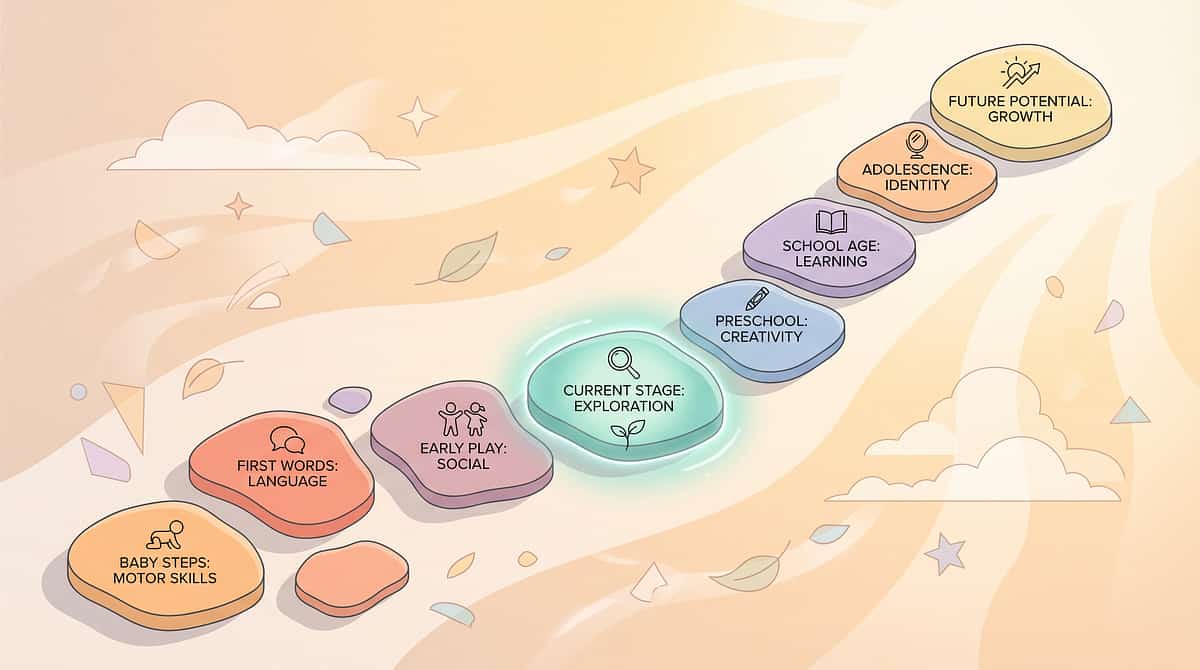
Emotional Development: Where Your Child Is — Where They're Heading
Children with autism, ADHD, or sensory processing differences frequently have emotional development that runs 2–4 years behind chronological age. A 7-year-old may have the emotional awareness of a 3-year-old — this is not a failure; it is a predictable developmental pattern that responds to targeted intervention.
▲ Your child may be working at an earlier stage regardless of chronological age. Developmental age ≠ Chronological age for children with neurodevelopmental differences.
Sensory Processing Differences
Anxiety
Executive Function Challenges
"Your child is here. With these 9 materials, consistent daily practice, and the Pinnacle framework — here is where they're heading: full emotional vocabulary, self-directed regulation, and the ability to name their inner world."
WHO Care for Child Development (CCD) Package | PMC9978394 | WHO/UNICEF CCD Package (2023)
Card 05 — The Evidence
Level I Evidence. Validated Across 24+ Studies. Home-Applicable Today.
🎓 Pillar 1 — Social-Emotional Learning
CASEL meta-analyses: SEL interventions produce an 11-percentile-point gain in academic achievement alongside significant improvements in social-emotional skills.
Durlak et al., 2011 — 213 studies, 270,000 students
🔬 Pillar 2 — Sensory Integration & Interoception
PRISMA systematic review (2024): Sensory integration therapy meets evidence-based practice criteria for children with ASD across social skills, adaptive behavior, and sensory processing.
PMC11506176
📊 Pillar 3 — ABA & Behavioral Approaches
NCAEP (2020): Reinforcement-based procedures, visual supports, and video modeling are classified as evidence-based practices for emotional skill building in autism.
Indian Evidence: Padmanabha et al., Indian Journal of Pediatrics (2019): Home-based sensory and emotional regulation interventions showed significant measurable outcomes in Indian pediatric populations. DOI: 10.1007/s12098-018-2747-4
"Clinically validated. Home-applicable. Parent-proven. Consortium-delivered."

ACT II — THE KNOWLEDGE TRANSFER | Card 06
The Technique: What It Is
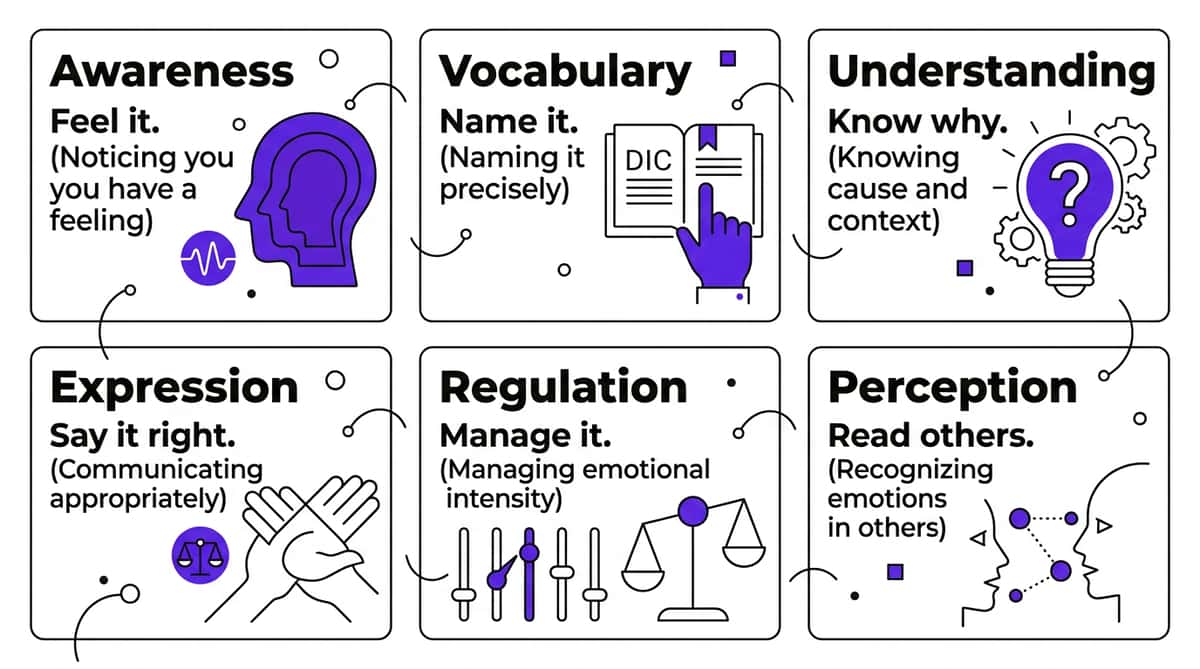
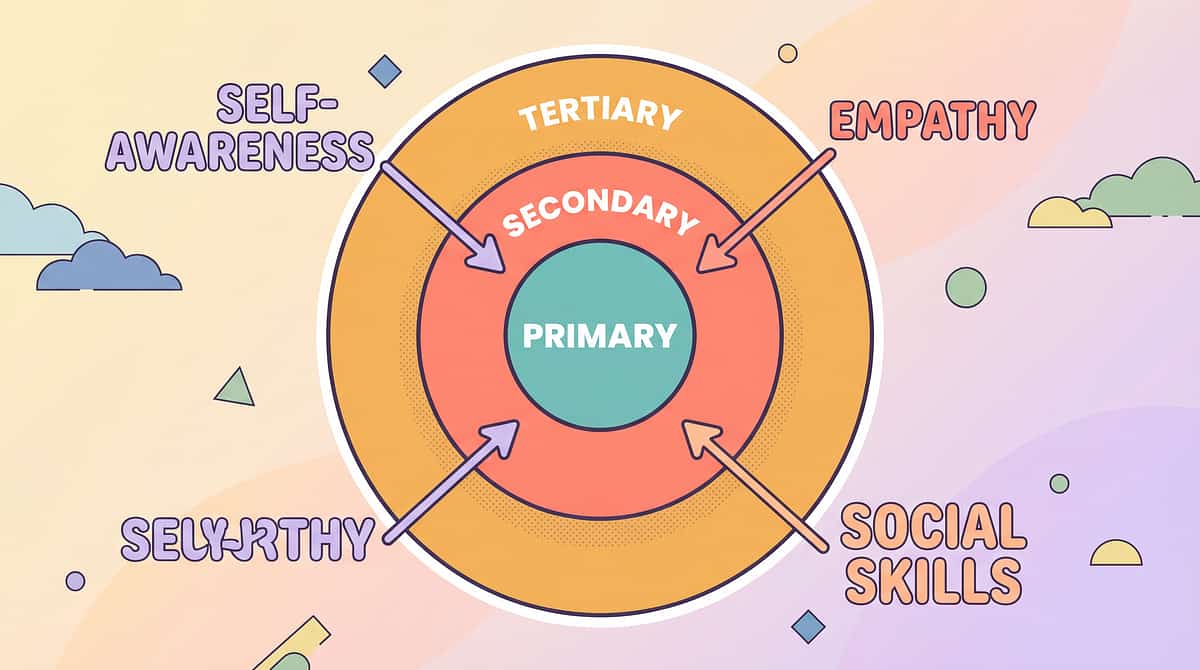
This is not a single technique — it is the complete materials-based system for building emotional intelligence from the ground up. Emotional development encompasses six interconnected skills that must ALL be built in sequence, creating a comprehensive toolkit rather than a patchwork of unconnected activities.
Domain: L
Emotional Development & Regulation
Age Range
2–14 Years
Duration
Daily, 5–20 min
Frequency
Daily, ongoing
Taxonomy from Pinnacle 128 Canon Materials + CASEL Social-Emotional Learning Framework
Card 07 — Who Uses This
Five Therapy Disciplines. One Unified Emotional Framework.
Psychologist
Core emotional assessment, alexithymia identification, CBT-based emotional regulation strategies, parent emotion coaching.
Occupational Therapist
Interoception curriculum, sensory regulation, body awareness, calm-down kit construction and personalization.
ABA / BCBA
Emotion vocabulary acquisition via discrete trial, reinforcement for emotional labeling, data collection on emotional skill generalization.
Special Education Therapist
Social-emotional curriculum integration, classroom emotion regulation systems, Zones of Regulation implementation.
NeuroDevelopmental Pediatrician
Ruling out medical contributors, medication management if indicated, developmental trajectory monitoring.
"Your child's emotional brain does not organize itself by therapy type. All five disciplines are building the same house — from different rooms. Parents executing this protocol at home are functioning as the integration layer across all five."
Card 08 — What This Targets
Precision Over Guessing: Exactly What Each Material Builds
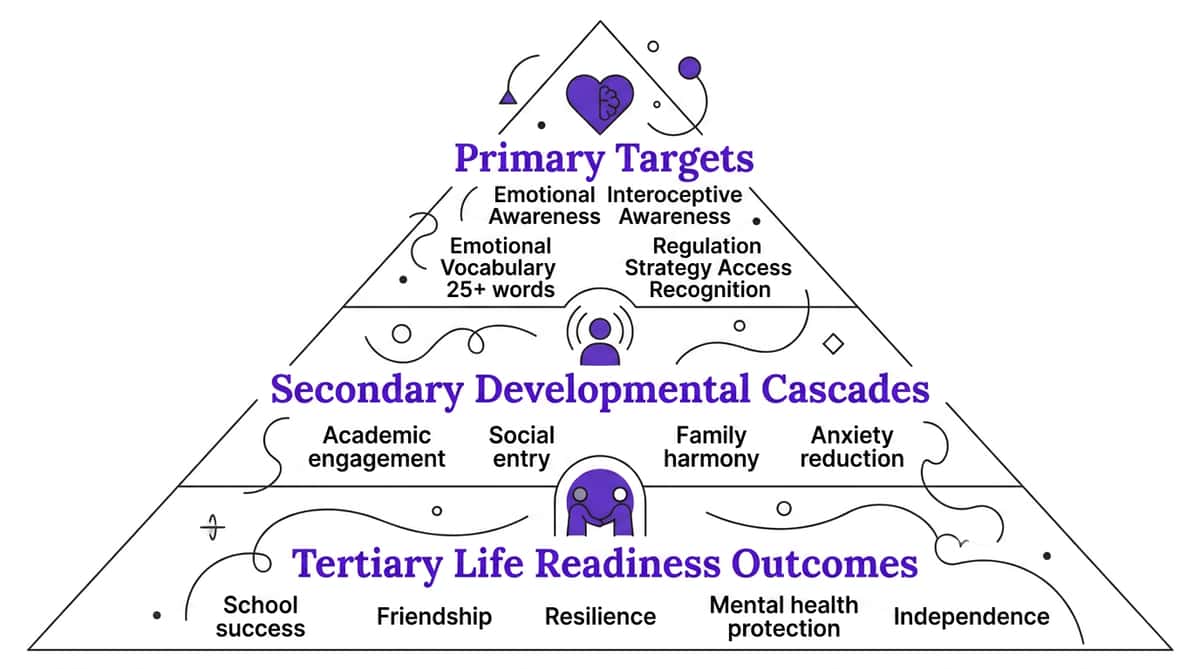
What You Will See by Week 8
- Child spontaneously names their emotion before being asked
- Uses "I'm at a 7" or "I'm in yellow zone" to communicate intensity
- Reaches for calm-down kit independently when escalating
- Identifies at least 10 distinct emotions (not just happy/sad/mad)
- Recovers from meltdown 30–50% faster
- Notices when a family member is upset and responds appropriately
Emotional intelligence is the single strongest predictor of adult life quality beyond IQ — stronger than academic performance, stronger than socioeconomic status. Meta-analysis, World J Clin Cases, 2024 | PMC10955541
ACT II — Card 09 | The Materials Overview
The Complete Emotional Toolkit — 9 Materials, One System
Each of the 9 materials below addresses one or more of the six emotional domains — creating a comprehensive, interlocking system rather than a patchwork of activities. Materials can be purchased or made at home with zero cost.
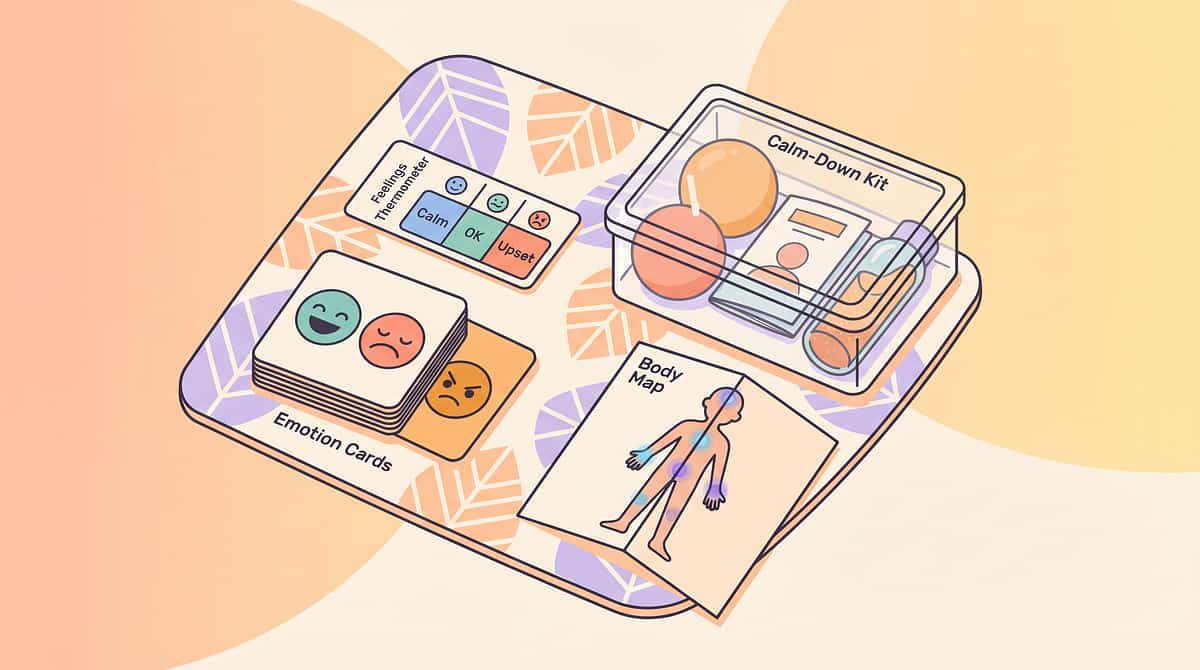
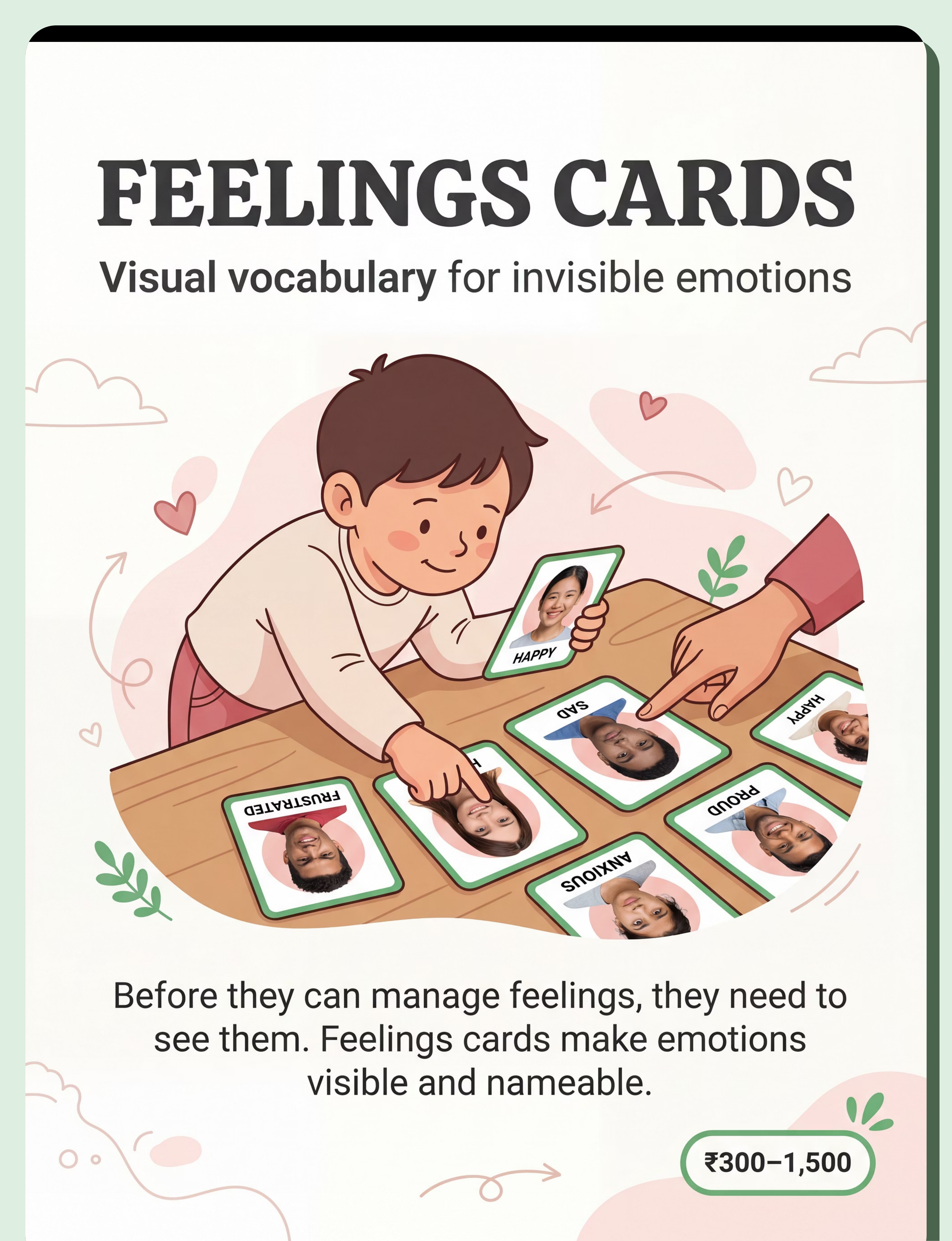
Feelings Identification Cards & Posters
Visual vocabulary for invisible emotions. Domains: Awareness + Vocabulary | ₹300–1,500 | DIY: ₹0
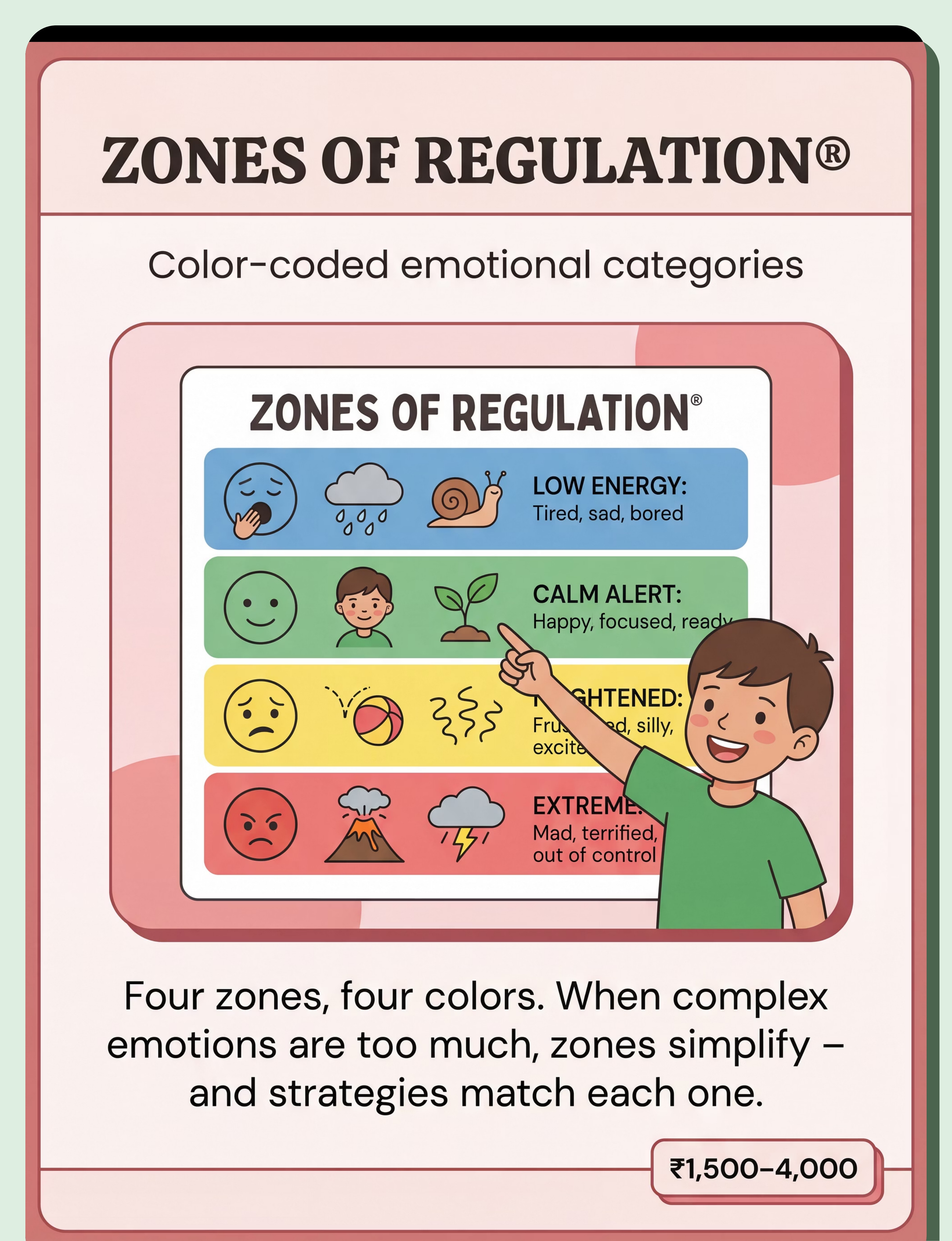
Zones of Regulation® Materials
4 color-coded zones simplify complex emotional landscape. Domains: Awareness + Regulation | ₹1,500–4,000 | DIY: ₹50
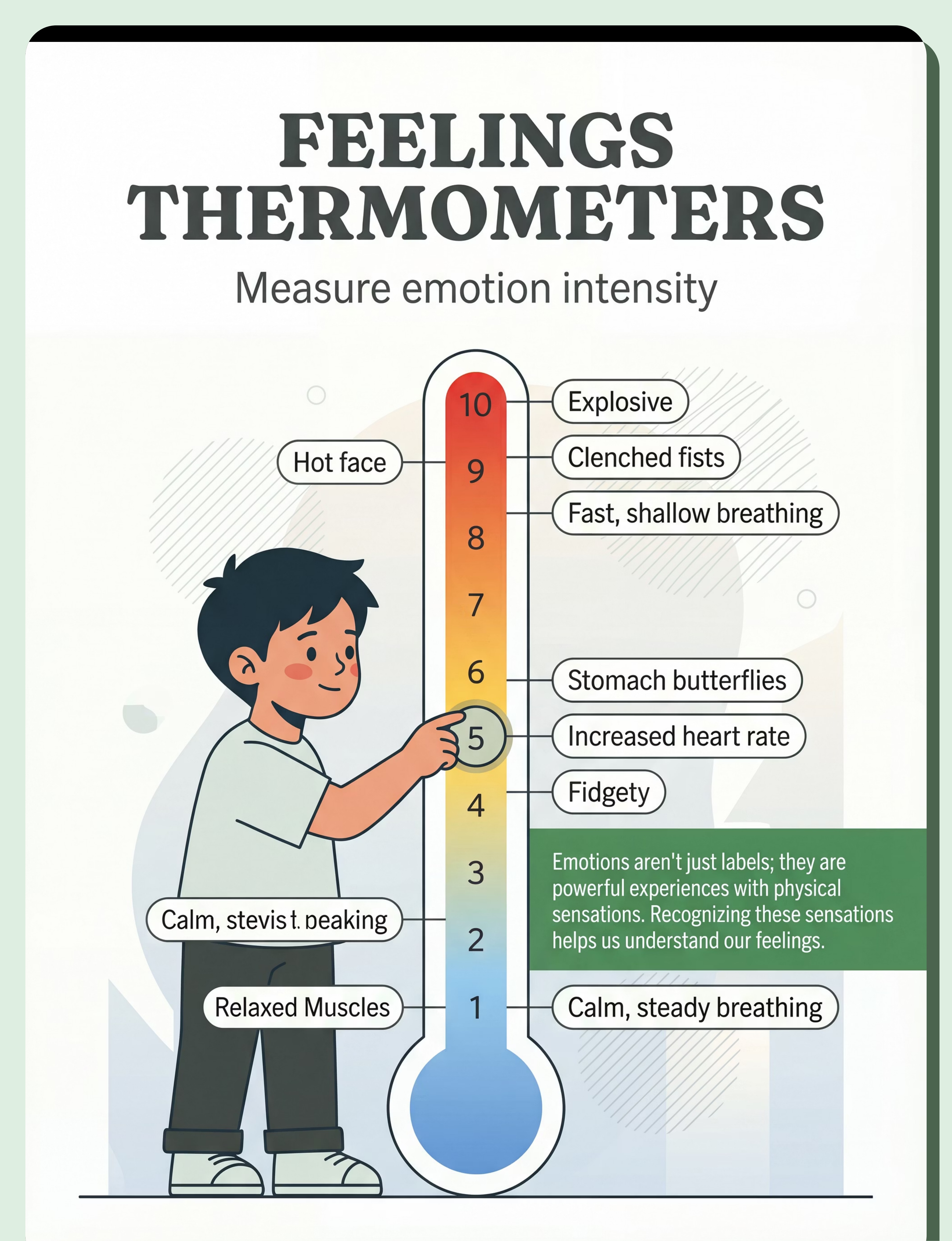
Feelings Thermometers & Intensity Scales
Graduated understanding enables early intervention. Domains: Awareness + Regulation | ₹200–800 | DIY: ₹0
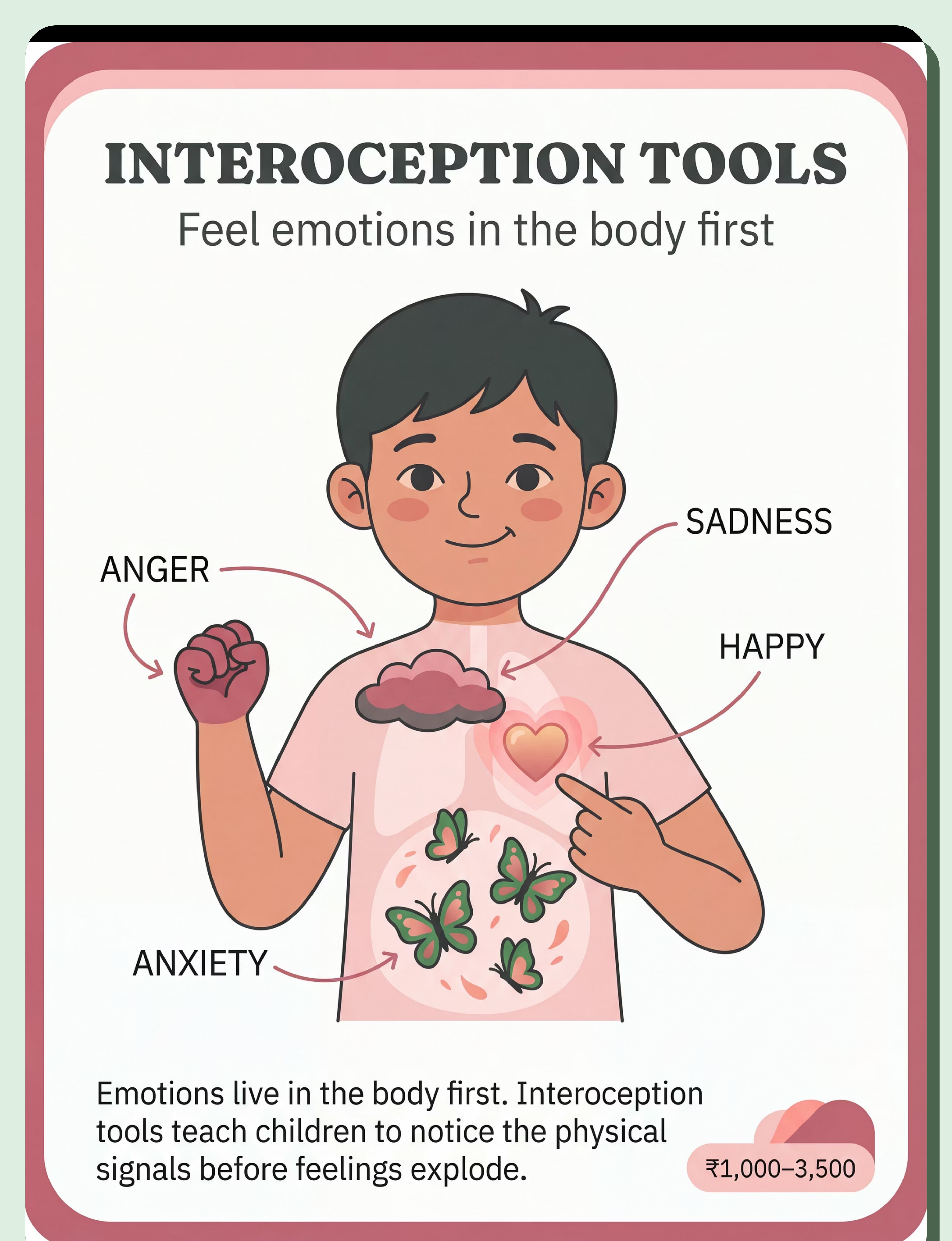
Interoception Curriculum & Body Maps
Emotions live in the body first. Domain: Awareness (foundational body-emotion link) | ₹1,000–3,500 | DIY: ₹0
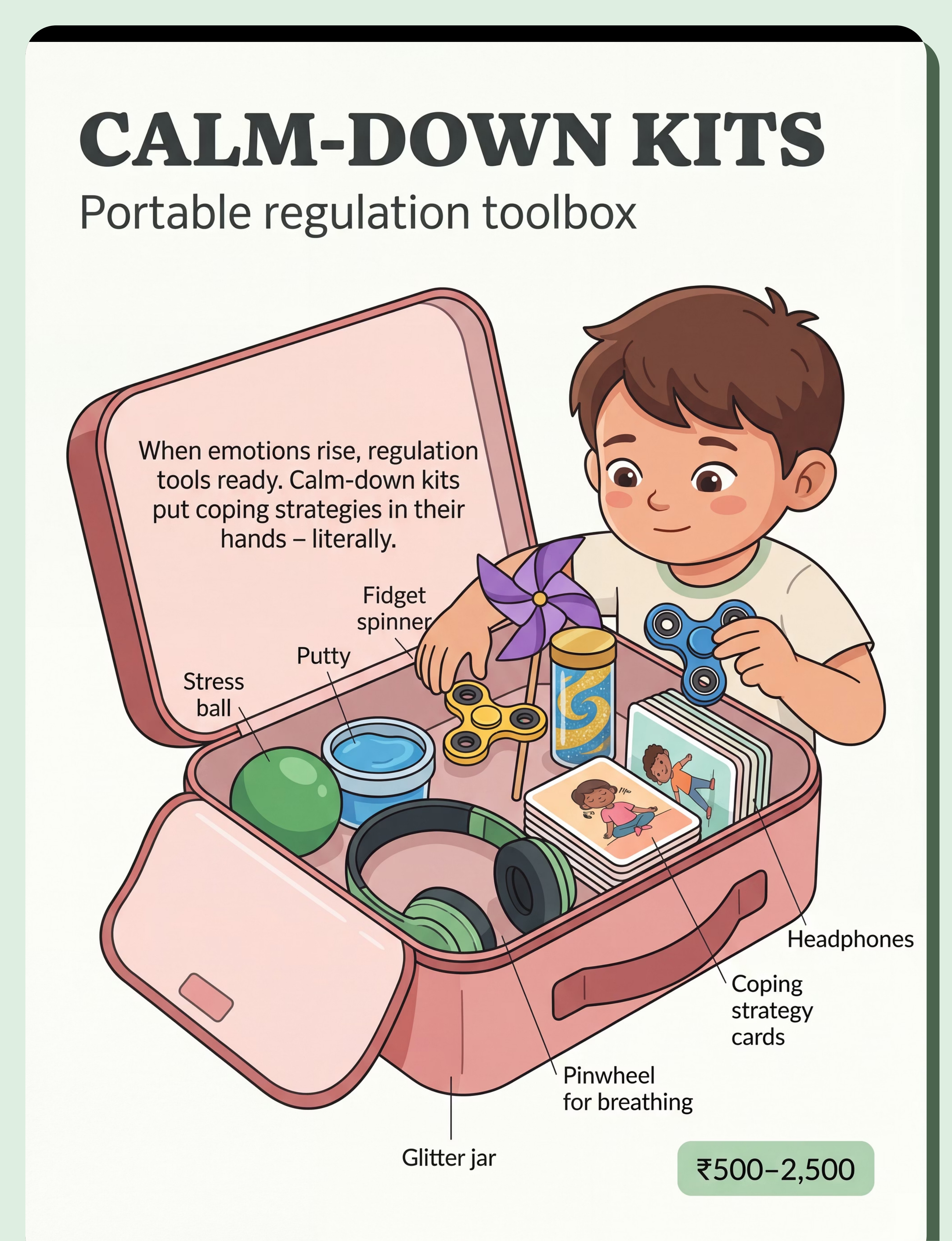
Calm-Down Kit & Self-Regulation Toolbox
Puts regulation tools in the child's hands — literally. Domain: Regulation | ₹500–2,500 | DIY: ₹100–300
Emotion Coaching Books & Bibliotherapy
Stories make feelings safe to explore. Domains: Vocabulary + Understanding | ₹300–2,000 | DIY: ₹0
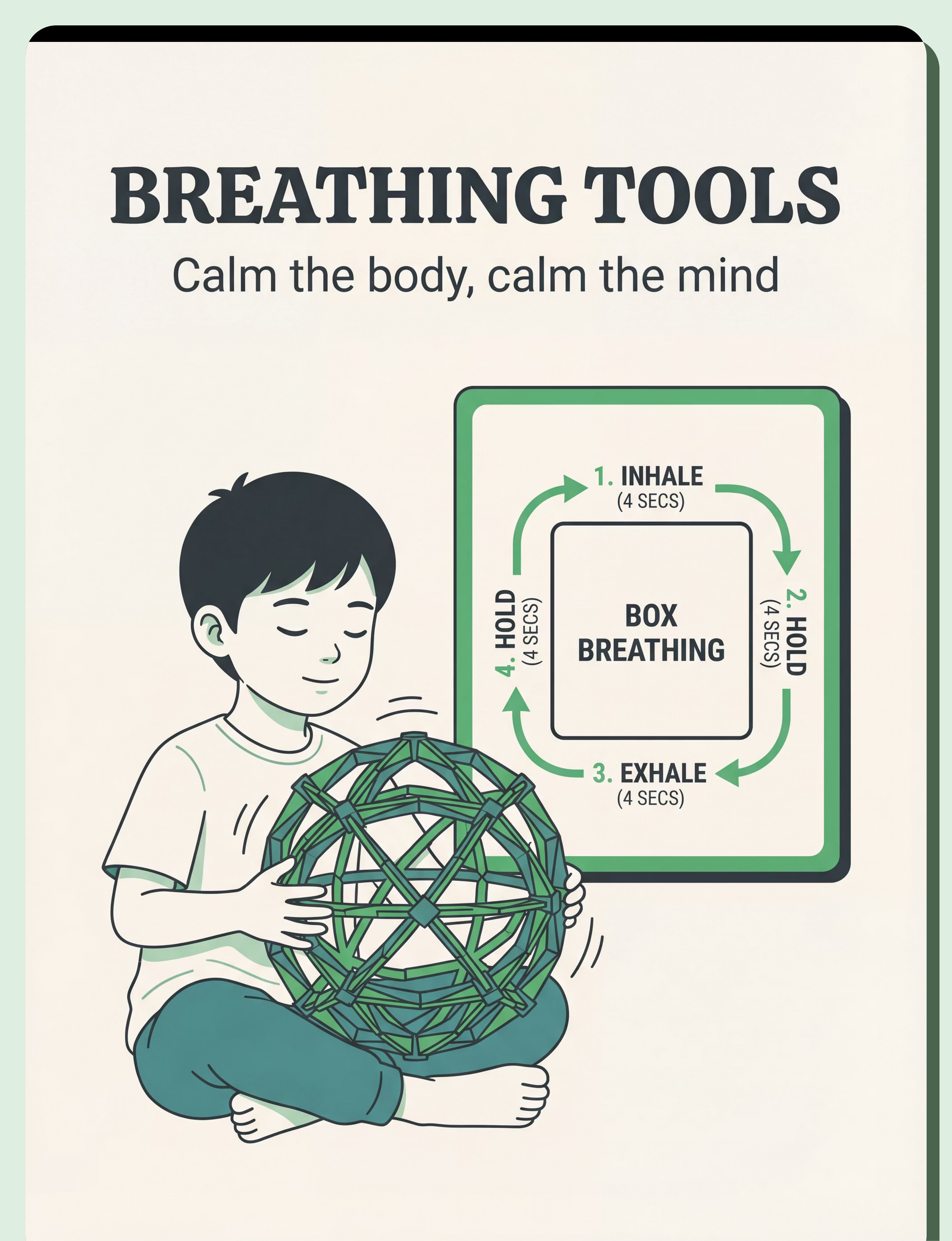
Breathing & Mindfulness Tools
Slow breath shifts nervous system to calm — works during active escalation. Domain: Regulation | ₹200–1,200 | DIY: ₹30
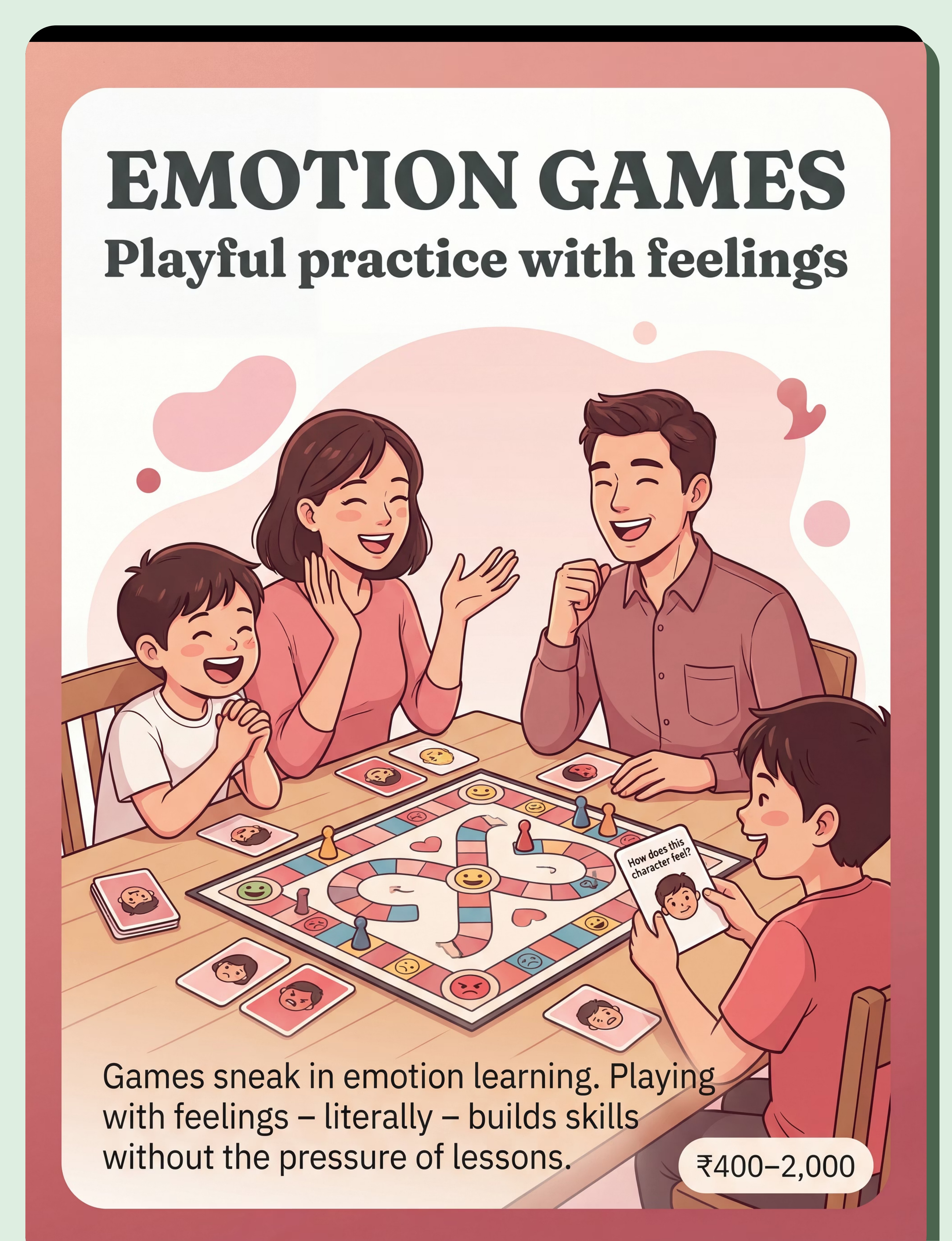
Emotion Regulation Games & Activities
Play-based practice reaches children who resist direct teaching. Domains: Vocabulary + Understanding + Expression | ₹400–2,000 | DIY: ₹0
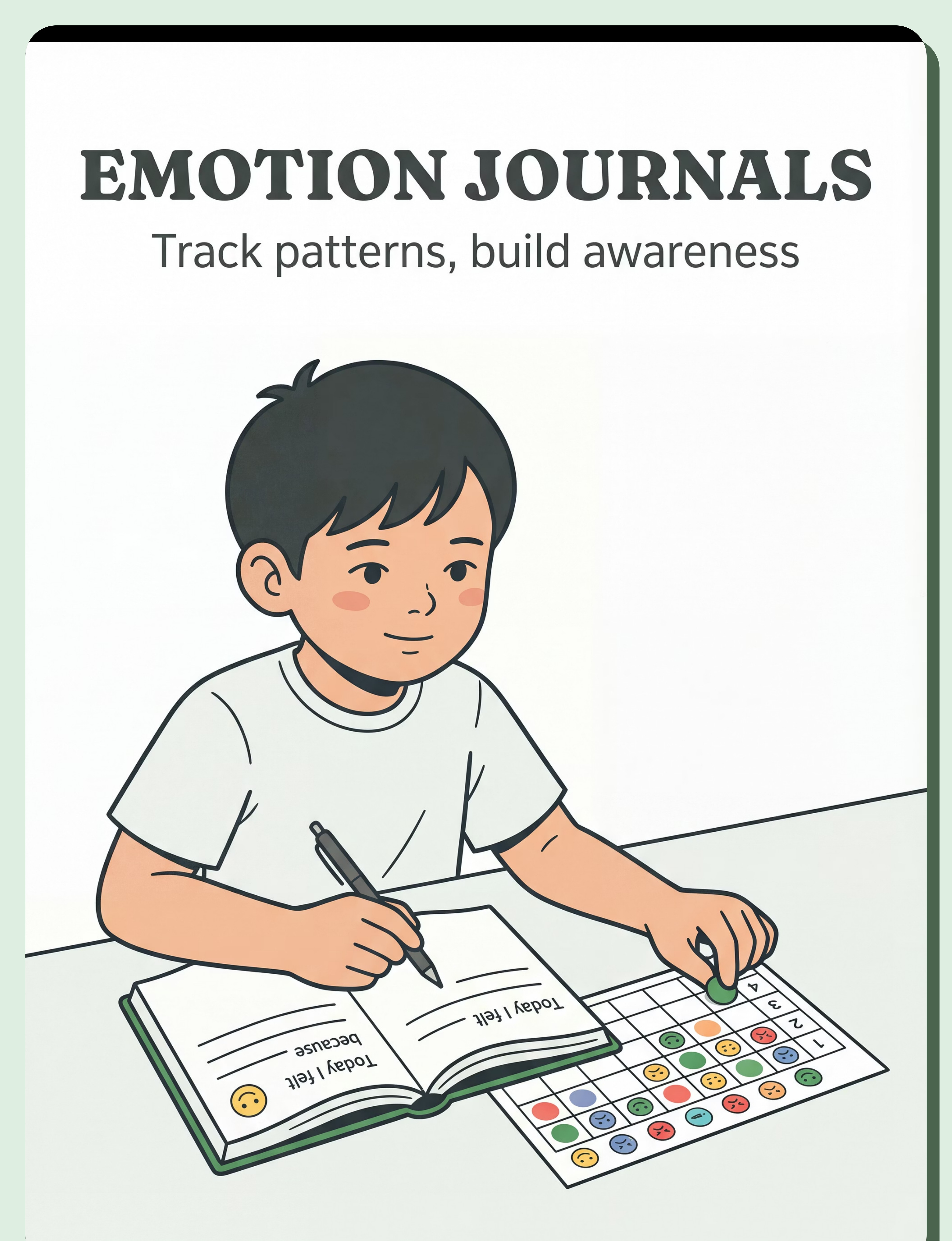
Emotion Journals & Feeling Trackers
Pattern recognition transforms raw data into insight — integrates all 6 domains. All 6 Domains | ₹200–800 | DIY: ₹0
Comprehensive System
₹4,700–19,300
Smart Starter Kit
₹700–3,000 (top 3 priority materials)
Zero-Cost DIY Version
₹0 — full detail in next card
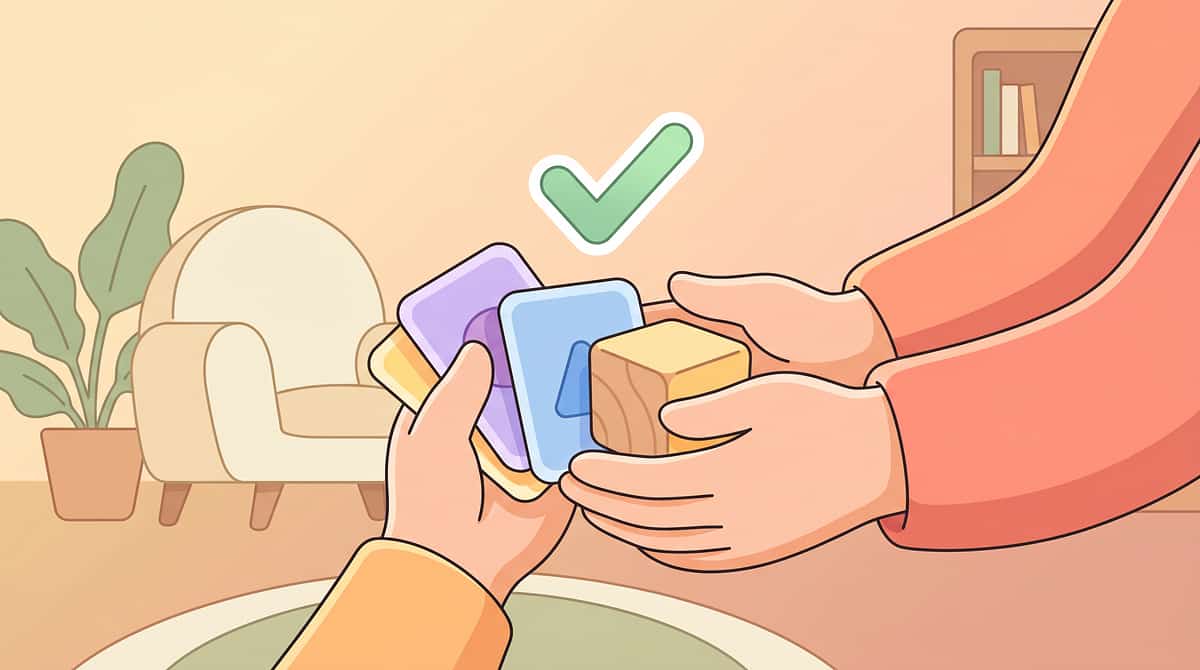
Card 10 — DIY & Zero-Cost Alternatives
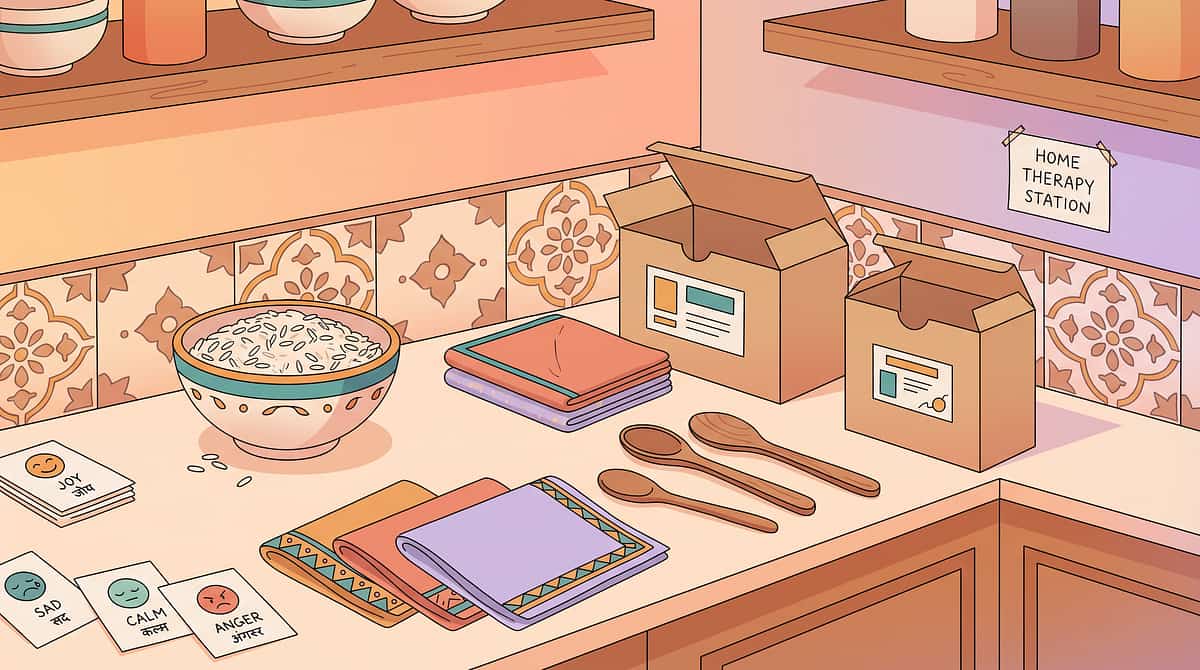
Every Family. Every Budget. Zero Exceptions.
WHO/UNICEF Principle: Equity means the same therapeutic quality — regardless of economic access.
Material | 5-Minute DIY Version | Why It Works Equally | |
Feelings Cards | Print 12 emotion faces from Google Images. Cut, laminate with tape. Label each. | Same visual identification mechanism. The brain doesn't care if it cost ₹0 or ₹1,500. | |
Zones Poster | Fold A4 paper into 4 quadrants. Color Blue/Green/Yellow/Red. Write 3 emotions per zone. | The framework is the intervention — the poster is just the delivery vehicle. | |
Feelings Thermometer | Draw a thermometer on cardboard. Number 1–10. Add a clothespin that slides. | The intensity scaling builds interoceptive awareness — not the material quality. | |
Body Map | Print a free body outline. Print 5 copies. Keep stack handy. | Repeated use builds the body-emotion connection regardless of quality. | |
Calm-Down Kit | Stress ball (rolled socks), putty (flour+salt), glitter jar (water bottle + glitter glue), bubbles (₹20). | Sensory regulation principles work with household materials. Same neuroscience. | |
Emotion Books | Any public library OR photograph family members making emotion faces. | The bibliotherapy mechanism is the discussion, not the book brand. | |
Breathing Tools | Bubbles (₹20). Pinwheel (₹30). Free apps: Breathe Think Do (Sesame), Smiling Mind. | Slow controlled exhalation is the therapeutic mechanism — not the specific tool. | |
Emotion Games | Feelings Charades (0 cost). Emotion Memory Match (print and cut). Feelings Bingo (hand-drawn). | Repeated emotional practice in a play context is the intervention. Production value: irrelevant. | |
Emotion Journal | Any notebook + one daily sentence: "Today I felt ___ because ___." | The habit of emotional reflection is the intervention. Journaling brand: irrelevant. |
When Clinical-Grade Materials Matter: Interoception curricula (Kelly Mahler's structured program) offer systematic lesson sequences that DIY cannot fully replicate. For children with significant interoceptive differences, professional-grade curriculum may be recommended by your OT. Ask your therapist. WHO NCF (2018) | PMC9978394
Card 11 — Safety First
The Safety Gate: Read This Before Your First Session
🔴 RED — Do NOT Proceed If:
- Child has shown self-injurious behavior in the past 24 hours
- Child is currently ill, feverish, or in physical discomfort
- Significant recent trauma event occurred
- Child is in a full dysregulation episode RIGHT NOW
- You are using this as a consequence or punishment — NEVER punitively
🟡 AMBER — Proceed With Adaptation If:
- Child had a difficult morning (use simplified version, reduce duration)
- Child is hungry or tired (address basic needs first)
- Sibling conflict occurred recently
- Child shows mild avoidance of specific material (offer choice between 2)
- Child has sensory sensitivities to specific textures
🟢 GREEN — All Systems Ready If:
- Child is in a calm-alert regulatory state
- Basic needs met: fed, rested, comfortable
- You have 10–20 uninterrupted minutes
- Space is prepared (see Card 12)
- Your own emotional state: regulated and patient
- Materials are familiar to child
🚨STOP IMMEDIATELY IF child shows self-injurious behavior, severe distress unresponsive to co-regulation, physical symptoms (vomiting, shaking), or complete emotional shutdown/dissociation. Discontinue, comfort child, consult your Pinnacle team. FREE Helpline: 9100 181 181
Material Safety Notes: Small pieces — choking hazard for children under 3 or those who mouth objects. Check for latex or wheat allergies in putty/playdough. Replace glass glitter jars with thick plastic bottles. Go slowly with body awareness activities — never force focus on body parts that feel unsafe to child. Safety protocols from Indian J Pediatr RCT (2019) — DOI: 10.1007/s12098-018-2747-4

Card 12 — Setup Your Space
The Right Space Doubles the Effectiveness of Every Material
1. Light
Soft, natural light preferred. Overhead fluorescent lighting OFF if possible. A small lamp creates a warmer emotional learning environment.
2. Sound
Quiet background — optional very soft instrumental music (no lyrics). All notifications off. Siblings in another room or occupied.
3. Temperature
Child's comfortable temperature. Cold environments increase physiological stress, impeding emotional access.
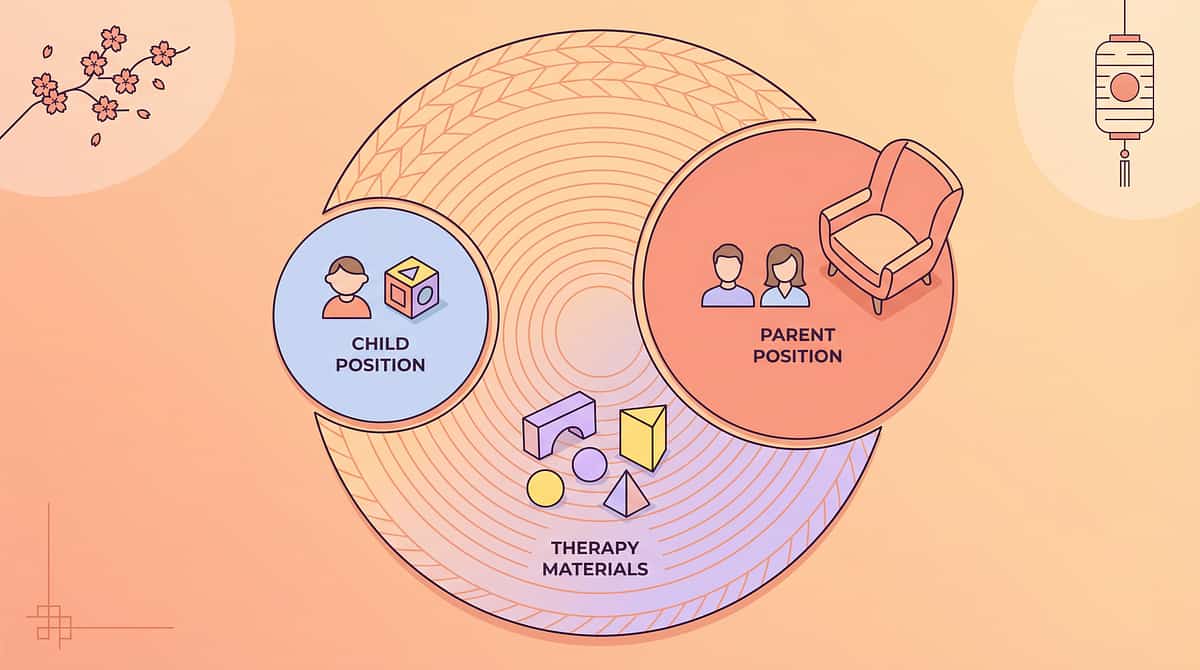
4. Parent Position
Beside the child, not across a table. The authority-distance of "across a table" activates assessment anxiety. Side-by-side says: we are doing this together.
5. Materials Display
All 9 materials visible but not overwhelming. Lay out only the 2–3 you plan to use today. Choice = autonomy = engagement.
The Non-Negotiable: Practice the materials when the child is CALM. The calm-down kit must be introduced and explored during happy times — NOT during a meltdown. You cannot teach a drowning child to swim. Meta-analysis: Structured 1:1 individual sessions in appropriate environment were most effective | PMC10955541

ACT III — THE EXECUTION | Card 13
60-Second Pre-Session Check — The Best Session Starts Right
Check | ✓ GO | ~ MODIFY | ✗ POSTPONE | |
Physiological Readiness | ||||
Fed within last 90 minutes? | ✓ | ~ | ✗ | |
Slept adequately? | ✓ | ~ | ✗ | |
No current illness/fever? | ✓ | ~ | ✗ | |
Pain-free? | ✓ | ~ | ✗ | |
Emotional Readiness | ||||
No meltdown in last 30 minutes? | ✓ | ~ | ✗ | |
Baseline calm (not hyper, not distressed)? | ✓ | ~ | ✗ | |
Recent positive interaction with you? | ✓ | ~ | ✗ | |
Environmental Readiness | ||||
Space prepared per Card 12? | ✓ | ~ | ✗ | |
You are calm and regulated? | ✓ | ~ | ✗ | |
Materials laid out and ready? | ✓ | ~ | ✗ |
ALL GREEN ✓
Full session, 15–20 minutes
SOME YELLOW ~
Modified: 1 material, 5–8 minutes, lower demand
ANY RED ✗
Postpone: brief co-regulation activity instead. Not a failure — just data.
"Before every session, take one slow breath. Remind yourself: this is not a performance. This is connection. Your regulation is your child's regulation."
Step 1 of 6
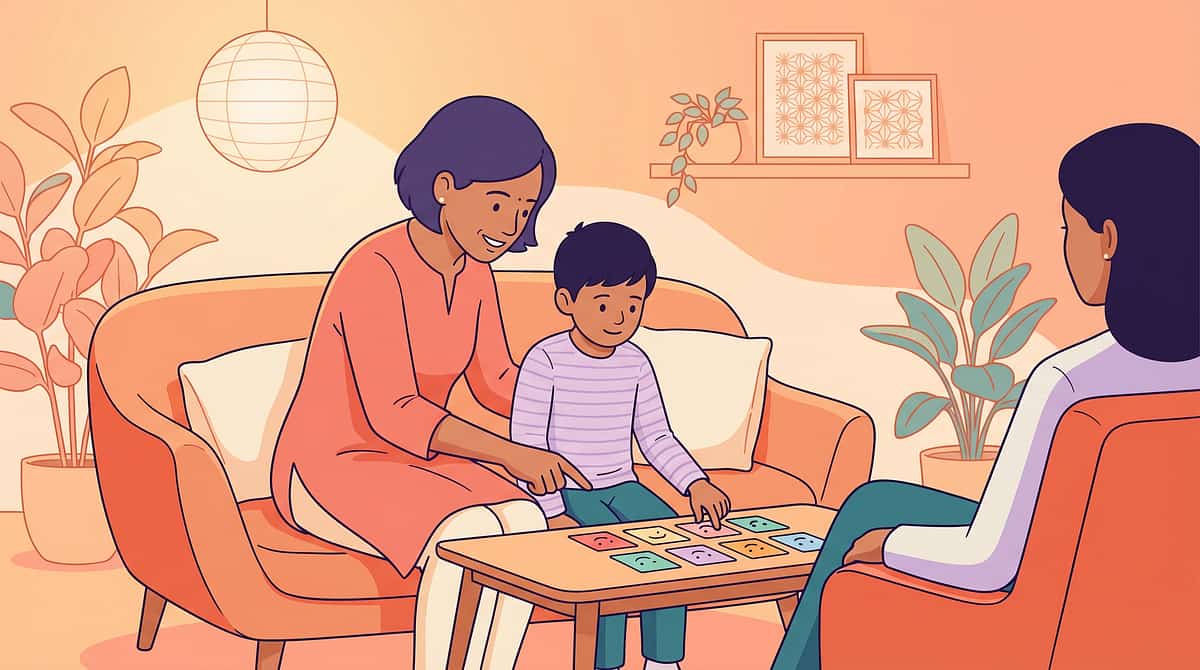
Step 1: The Invitation
⏱ 30–60 seconds — Every emotional development session begins with an invitation, not a command. The child must feel safe, not evaluated. The materials are presented as interesting objects to explore — not as a "therapy exercise."
🗣️ What to Say — Exact Script
"Hey [Name], I found something I want to show you. Want to see?"
OR for a child who responds to choice:
"We can look at the feelings cards or the color zones chart. Which one do you want to check out first?"
Body Language Guide
- Get to the child's physical level — kneel or sit on the floor
- Relaxed posture, not leaning forward expectantly
- The material in YOUR hands first — let them come to you
What Acceptance Looks Like ✓
- Moving toward you or the materials
- Pointing at or reaching for materials
- Eye contact + lean-in
- Verbally responding (any words)
- Sitting down near the materials
What Resistance Looks Like & How to Respond ~
- Child walks away → Follow at distance: "That's okay. I'll just look at these."
- Child ignores → Narrate to yourself with curiosity, no demand
- Child says "no" → "Okay! We can do this later." Never push — one "no" ends today's formal session
ABA Pairing Procedures: Establishing motivating operations before demand placement | OT "Just-Right Challenge": matching task demand to child's current capacity
Step 2 of 6
Step 2: The Engagement
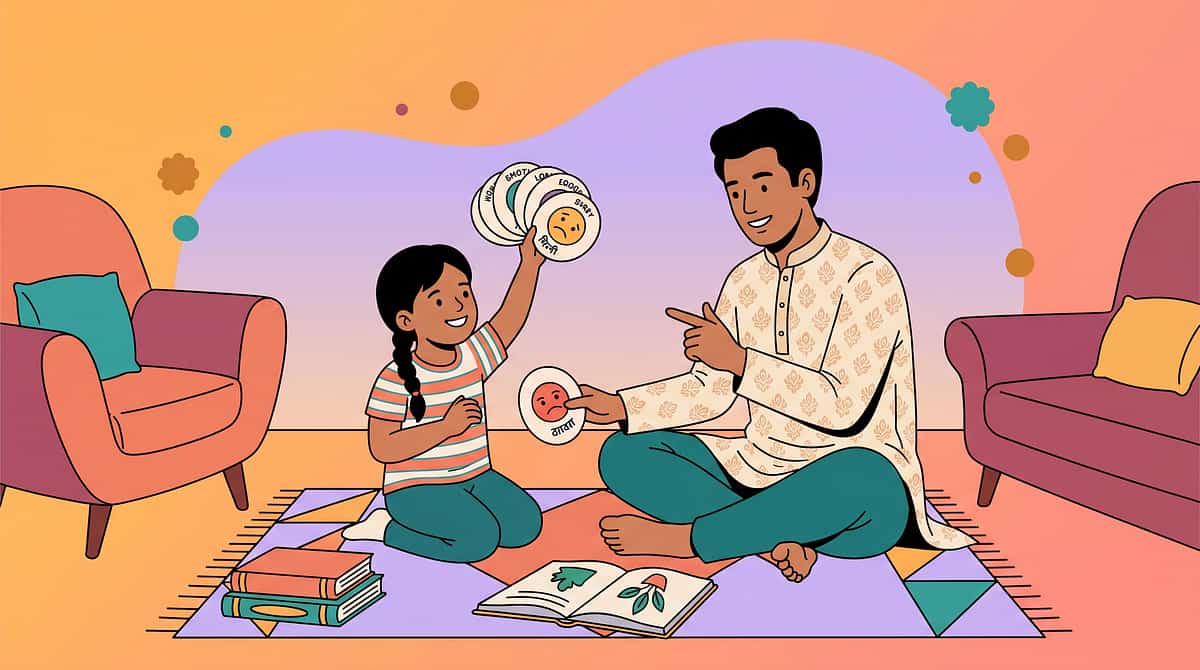
⏱ 1–3 minutes — Invitation accepted. Now deepen the interaction by introducing the therapeutic material with curiosity-led exploration. The reinforcement schedule begins here — every correct response or attempt gets celebrated.
Material Introduction Notes by Type
Feelings Cards
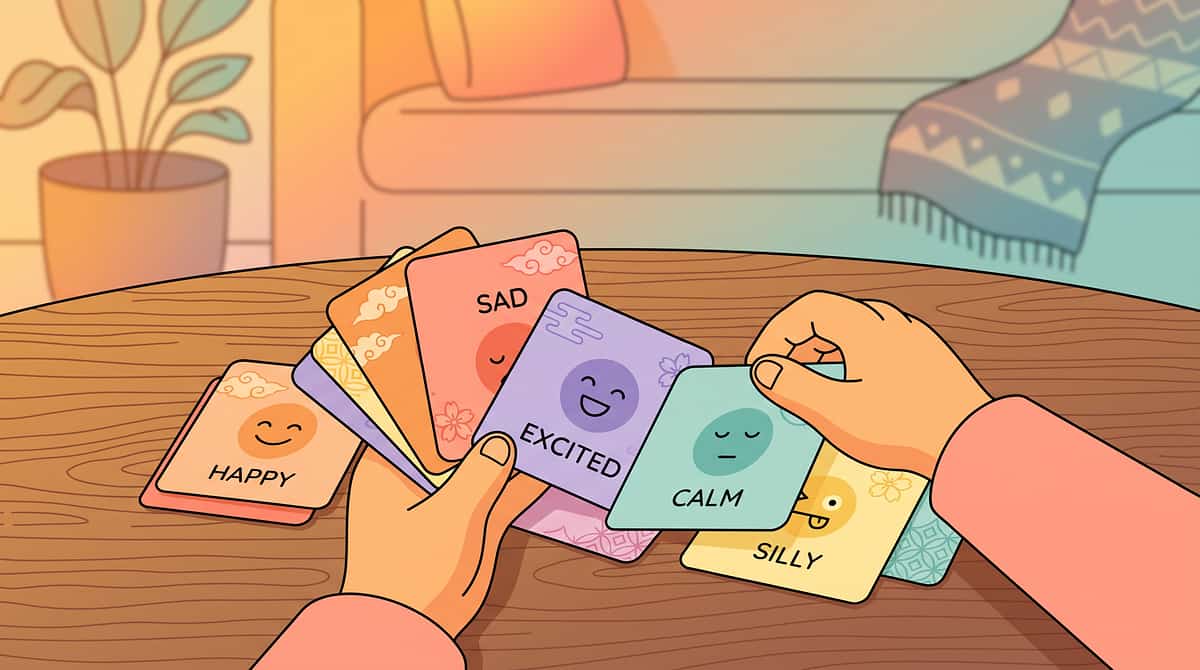
Fan them out face-up. Ask: "Can you find happy? Can you find sad?" Start with the 4 cards the child knows before introducing new ones.
Zones Poster
Point to green zone first. "Green means calm and ready. Where are YOU right now?" Always start from the calm reference point.
Feelings Thermometer
"This goes from 1 (super calm) to 10 (super big feelings). Where are you right now?" Point to mid-range initially to normalize the scale.
Watch For: Child categorically refusing all materials, distress signals, dissociative disconnection (glassy eyes, non-responsive). These are amber signals — reduce demand immediately. Systematic review, Children, 2024 | PMC11506176
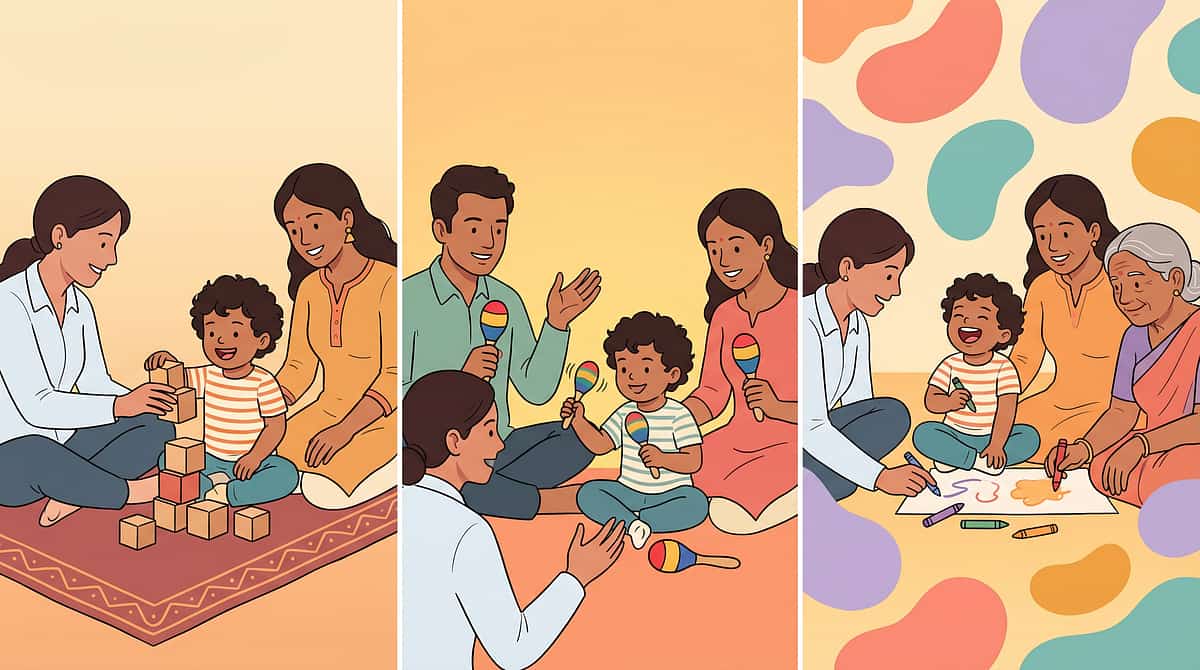
Step 3 of 6
Step 3: The Therapeutic Action
⏱ 5–12 minutes — This is the core therapeutic event where the emotional skill is being directly practiced. Clinical protocols for each of the 9 materials are detailed below.
🎴 Feelings Cards Protocol
- Lay 6–8 cards face-up; call out an emotion: "Show me worried"
- Child selects card; confirm + discuss: "What makes you feel worried?"
- Progress: have CHILD call emotions for YOU (role reversal deepens learning)
- Advanced: "When was the last time YOU felt like this?"
Duration: 5–7 min | Reps: 4–8 emotion identifications
🌡️ Zones/Thermometer Protocol
- Child names an emotion in each zone/level
- "What zone/level are you RIGHT NOW?" (real-time awareness)
- "What moved you to that zone today?" (cause awareness)
- "What zone do you want to get to?" (regulation intent)
- "What helps you get there?" (strategy awareness)
Duration: 3–5 min | Do daily as check-in habit
🫀 Interoception/Body Map Protocol
- Start neutral: "Let's notice how your body feels right now"
- "What does your stomach feel like? Tight? Relaxed? Butterflies?"
- After physical activity: "NOW what does your heart feel like?"
- Connect sensations to emotions gradually over weeks
Duration: 3–5 min | Build slowly over weeks
🎒 Calm-Down Kit Protocol
- Introduce kit when CALM: "This is your feelings helper kit"
- Practice each tool: "Let's try the breathing pinwheel together"
- Role play: "Pretend you're starting to feel angry. What do you reach for first?"
- Memorize placement: access kit without looking
Duration: 5–8 min intro | Build to 30-second autonomous access
🌬️ Breathing Tools Protocol
- Model the technique yourself FIRST: "Watch me do box breathing"
- Do it together: "Breathe IN while I count to 4..."
- Practice 3 cycles together; use pinwheel as visual anchor
- Associate with emotion: "Next time you feel your heart racing, this is what to do"
Duration: 2–4 min | Practice DAILY during calm
📓 Emotion Journal Protocol
- Open to today's page together; child fills in: "Today I felt ___ when ___ happened"
- Review last week's entry: "Do you remember what helped?"
- Pattern discovery: "I notice you feel really happy on gym days"
Duration: 3–5 min | Best at same time daily — bedtime ideal
Meta-analysis (World J Clin Cases, 2024): Core therapeutic action occupies 40–60% of session time | PMC10955541

Step 4 of 6
Step 4: Repeat & Vary
⏱ 3–5 minutes
"3 good repetitions are worth more than 10 forced ones."
Material | Target Reps | Frequency | |
Feelings Cards | 4–8 emotion identifications | 1 session | |
Zones Check-in | 1 daily | Every day | |
Thermometer | 1–3 rating moments | Every day | |
Body Map | 2–4 body scan pauses | 1 session | |
Breathing | 3–5 breath cycles | 1 session | |
Emotion Journal | 1 entry + 1 reflection | Daily |
Variation Menu — To Prevent Satiation
For Feelings Cards
- Have child call emotions for you
- Use only nuanced cards (frustrated/disappointed vs. sad)
- Match game: two sets, find the pairs
- "Make this face in the mirror" — embodied practice
For Zones/Thermometer
- Check in at different times of day (morning vs. after school)
- Check in AFTER something good happened
- Check in during a movie: "What zone is that character in?"
For Breathing
- Try star breathing vs. box breathing vs. balloon breathing
- Practice during a walk (rhythm breathing while moving)
- Let child TEACH the technique to a stuffed animal
Satiation Signals — Stop Now ⚠️
- Child says "I want to stop" → Honor immediately
- Eyes glazing, becoming distracted → One more, then transition
- Physical agitation increasing → Cool-down now
- Quality of responses declining → End on last good rep
Step 5 of 6
Step 5: Reinforce & Celebrate
⏱ 30–60 seconds per reinforcement
The ABA Reinforcement Principle: Timing beats magnitude. Specific beats generic. Enthusiasm beats formality.
"YES! That face IS frustrated — you saw it! That's exactly right."
✅ Correct Emotion Identification
"I love that you're looking so carefully at that face. You're working so hard at this."
✅ Effort Without Accuracy
"Wait — did you just reach for your calm-down kit BY YOURSELF?! That is AMAZING. That's EXACTLY what that kit is for!"
🏆 Spontaneous Use — Highest Value
Reinforcement Menu
Verbal Praise
"Amazing / Brilliant / You got it / I'm SO proud" — always
Physical (if welcomed)
High five / fist bump / hug
Token
Sticker on chart → Reward Jar (₹589)
Preferred Activity
"2 more feelings cards and then 5 minutes of [preferred]"
The Attempt > The Success Principle: Celebrate reaching for the calm-down kit even if it doesn't help. Celebrate checking the thermometer even if the number is wrong. The behavior you want to build is the ATTEMPT — accuracy comes later. ABA Reinforcement Principles | BACB ethical guidelines
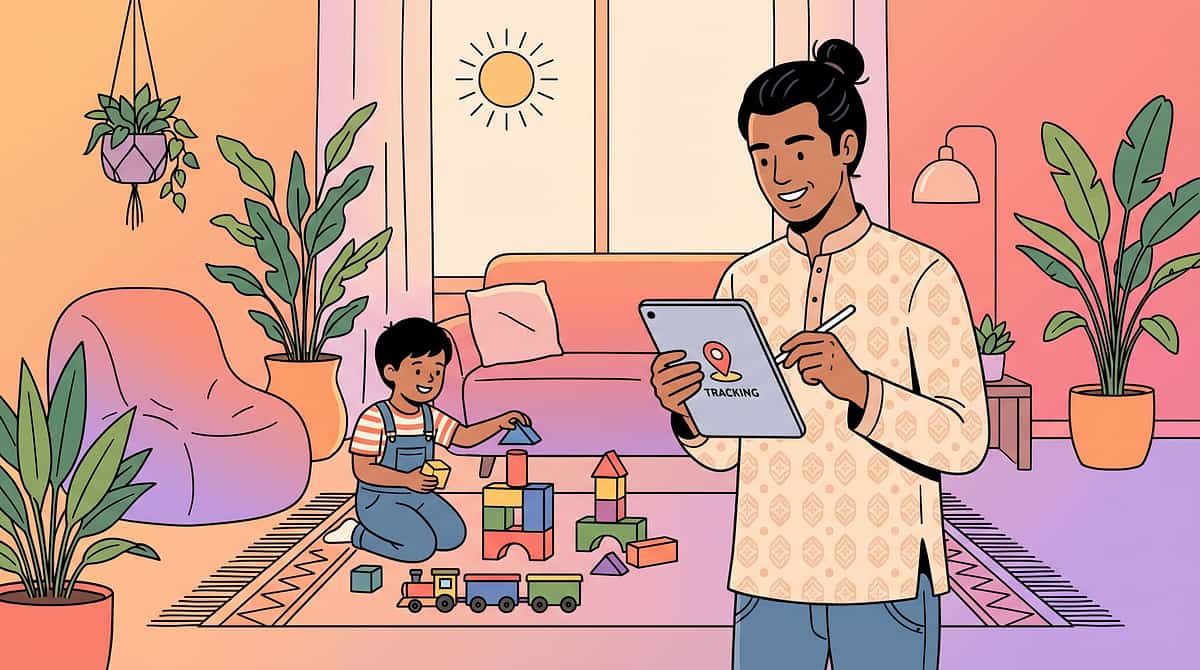
Step 6 of 6
Step 6: The Cool-Down
⏱ 1–2 minutes — No session ends abruptly. An abrupt ending disrupts the child's sense of closure and can cause post-session dysregulation. The cool-down communicates: "This safe, good experience is ending completely. You're safe. You did well."
🗣️ The Transition Warning Script
"One more after this one, and then we're all done for today."
Use a visual timer if the child responds better to visual supports.
If Child Resists Ending
- "I know you want to keep going. That means you like it — which is great! We'll do more tomorrow."
- Give ONE more (not three more — honor the limit)
- Offer carrying a material (e.g., a feelings card) as a transitional object
Post-Session Window
The 5–10 minutes following a session are valuable for organic emotional conversations — the child may spontaneously talk about emotions they identified during the session.
Stay available and conversational. This is not the time to debrief or analyze — just to be present and responsive.
Visual supports and transition aids: Evidence-based practice for autism (NCAEP, 2020) | Visual timer research from multiple ABA studies
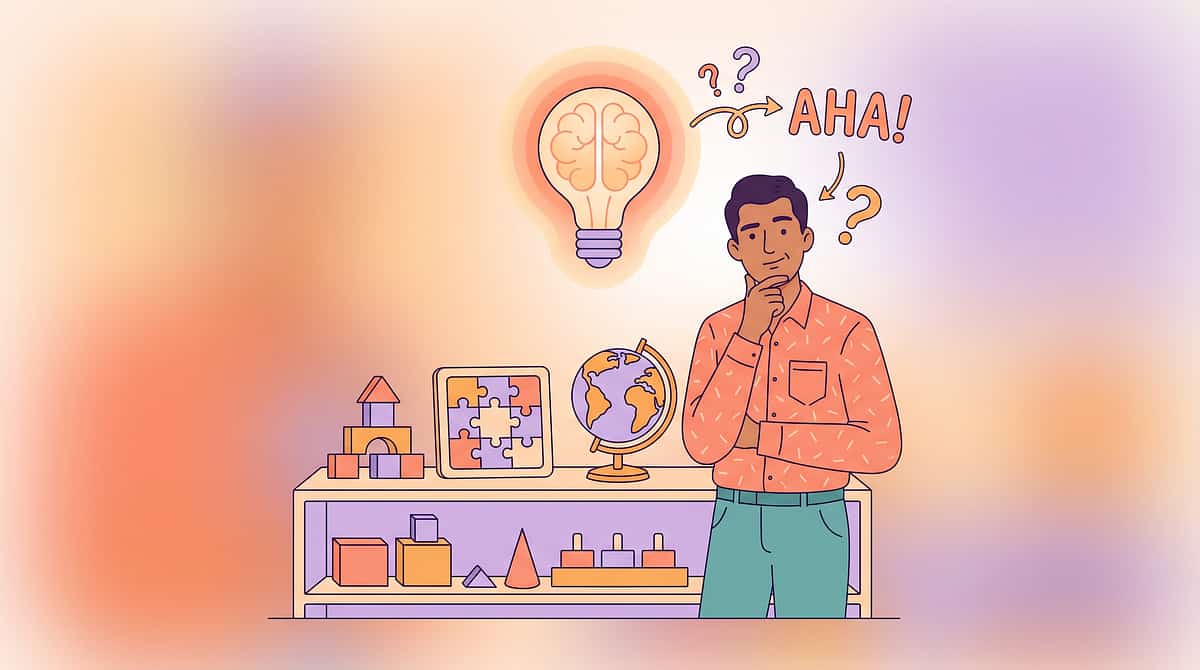
Card 20 — Data Collection
60 Seconds of Data Now Saves Hours of Guessing Later
Engagement Rating
How engaged was your child today?
[1 — Refused] [2 — Tolerated] [3 — Engaged] [4 — Enthusiastic] [5 — Led session]
Materials Used + Response
Feelings Cards: __ emotions correctly identified | Zones: Spontaneous? Y/N | Thermometer: Level reported __ | Breathing: __ cycles | Journal: Reflection depth Low/Medium/High
Notable Moment
One sentence: "Today [child name] ___." Example: "Today Arjun spontaneously used the calm-down kit when he felt his hands getting tense during Lego."
Quick Tracking Options
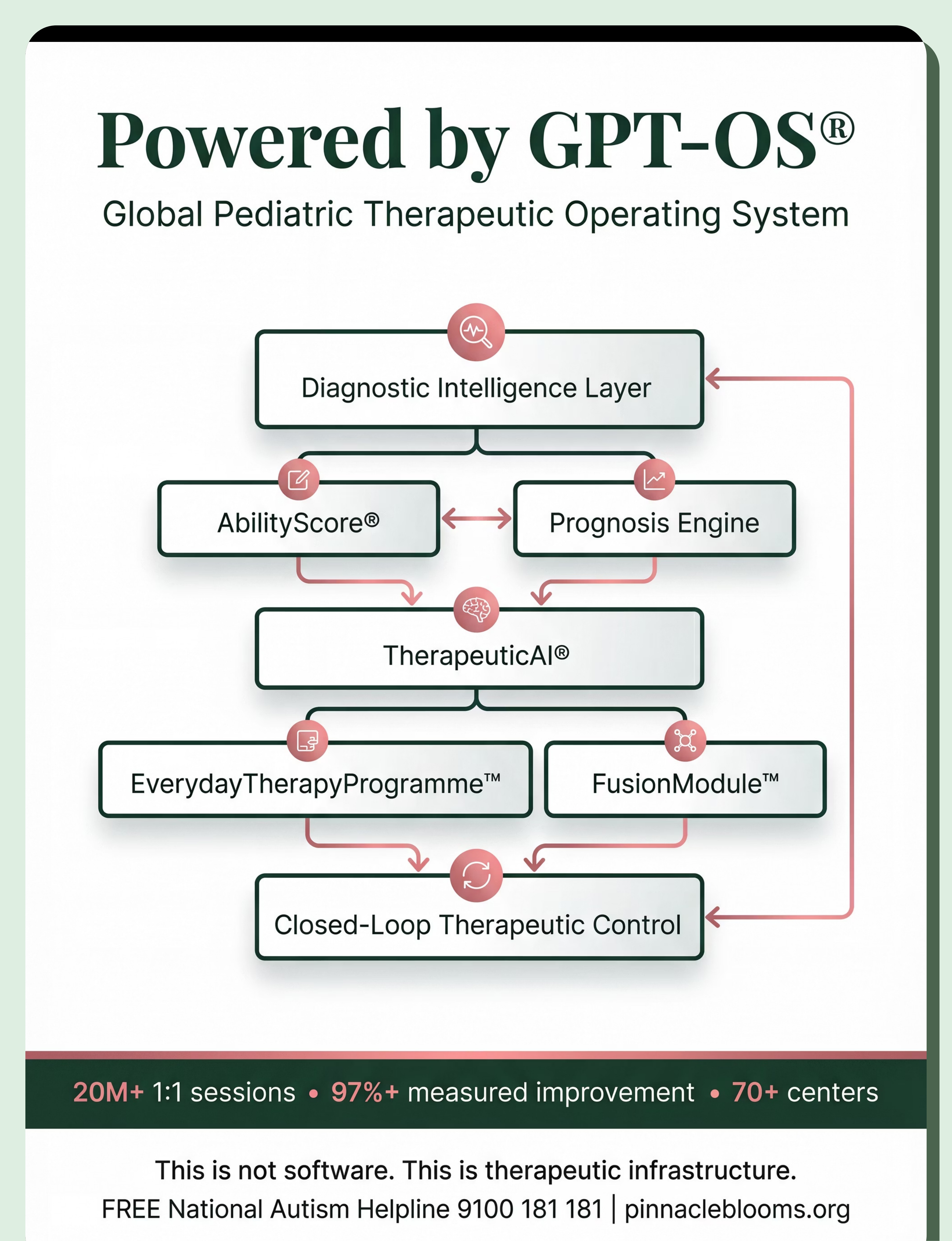
📱 GPT-OS® App
Log directly in app after session
📋 Download PDF
Date | Material | Engagement | Notable moment
💬 WhatsApp Voice Memo
Voice memo to yourself — works perfectly
Data Value Reminder: Every data point you collect is fed into GPT-OS®'s pattern recognition. Your 5 data points + 10,000 other families' data points = the recommendation engine that tells us exactly when your child is ready to advance. ABA Data Collection Standards | Cooper, Heron & Heward (Applied Behavior Analysis, 8th ed.)
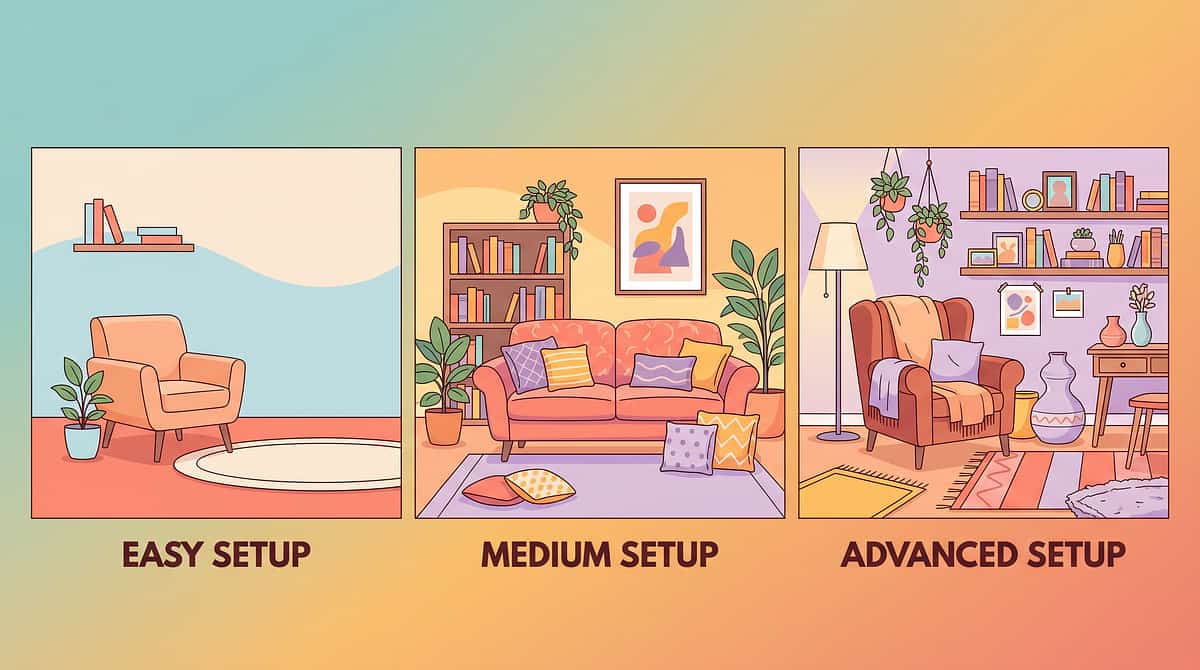
Card 21 — Troubleshooting
Session Didn't Go Well? That's Data, Not Failure.
Child refused to engage with any materials
Why: Overwhelm, wrong timing, materials feel like a test. Fix: Don't push. End the session. Return in 2 hours with ONE familiar material. Note what preceded the refusal.
Child identified all emotions as "happy" or "fine"
Why: Alexithymia in action — "happy/fine" is a social script for "what adults want to hear." Fix: Remove social pressure. Use non-verbal methods: let them color, point, or circle.
Child became MORE dysregulated during emotion work
Why: Emotion work is activating. Normal and expected. Fix: Reduce dose: fewer materials, shorter session. Do regulation BEFORE vocabulary work, not after.
Feelings thermometer numbers seem random
Why: Child doesn't yet have body-emotion interoceptive connection. Fix: Teach the translation: "Your voice sounds louder. Your shoulders look tight. What number might that be?"
Child memorizes right answers but doesn't use them in real life
Why: Rote learning vs. internalized understanding. Fix: Point to emotion cards DURING real emotional moments. Bridge the learning to life constantly.
Parent can't maintain consistency
Why: Life. Exhaustion. Other siblings. Work. Fix: Lower the bar radically. One emotional check-in ("What zone are you in right now?") takes 10 seconds. That IS the session on hard days.
Child uses materials only during sessions, never spontaneously
Why: Materials are associated only with "therapy time." Fix: Reference the materials constantly in daily life: "We're watching this movie — what zone is that character in right now?"

Card 22 — Adapt & Personalize
One System. Your Child. Your Pace.
🛡️ For the Sensory Avoider
- Fewer materials per session (start with 1, max 2)
- Lower visual complexity: 4 feelings cards vs. 20
- Thermometer before vocabulary
- Allow distance — don't require hands-on contact
⚡ For the Sensory Seeker
- Allow fidget tools ALONGSIDE emotion work
- Use physical embodiment: "Jump 10 times, then check your thermometer"
- More materials per session acceptable
- Incorporate movement into all activities
💬 For the Verbal Child
- Introduce nuanced emotions (melancholy, apprehensive, elated)
- Journal becomes a dialogue: write AND discuss
- Emotions of fictional characters in books/TV
- "Teach me about..." role reversal
🤝 For the Minimally Verbal Child
- Pointing is as valid as naming
- Picture-based tracking (sticker on zone)
- Body map coloring (no words needed)
- AAC device can incorporate emotion vocabulary
Age Band | Primary Focus | Primary Materials | Session Length | |
2–4 years | Basic 4 emotions: happy/sad/angry/scared | Simple cards + emotion books + breathing bubbles | 5–8 min | |
4–7 years | Zones + thermometer + calm-down kit | All 9, rotating | 10–15 min | |
7–10 years | Interoception + nuanced vocabulary + journal | Interoception tools + journal | 15–20 min | |
10–14 years | Self-directed regulation + pattern recognition | Journal + independent kit access + apps | 10–15 min (joint) |

ACT IV — THE PROGRESS ARC | Card 23
Week 1–2: You Are Building Foundations — Not Floors
15%
Progress — Weeks 1–2
Foundation phase: tolerance and early participation
What "Progress" Looks Like ✓
- Child tolerates materials being present (even without engaging)
- Child looks at feelings cards without turning away
- Any verbalization during emotion work — even "I don't know"
- Child completes one breathing cycle with you
- One spontaneous zone/thermometer comment ("I'm mad")
- Sitting in the same space for 5 minutes with materials
What is NOT Progress Yet — And That's Okay ✗
- Accurate emotion identification — too early to expect
- Spontaneous use of calm-down kit — hasn't been practiced enough
- Reduced meltdown frequency — neural pathways haven't formed yet
- Emotional conversations — vocabulary isn't there yet
Patience Metric
Emotional skills take 8–12 weeks of consistent practice to show behavioral generalization. You are not 2 weeks in and "failing." You are 2 weeks in and building.
"If your child tolerates the feelings cards for 3 more seconds this week than last week — that is real, measurable, neurological progress."
Systematic review (Children, 2024): Sensory-emotional intervention outcomes emerge across 8–12-week timelines | PMC11506176

Card 24 — Weeks 3–4
Week 3–4: The Neural Pathways Are Forming
40%
Progress — Weeks 3–4
Consolidation phase: emerging spontaneous use
Consolidation Indicators — Look for These
Anticipates the Session
Child brings you a feelings card or asks "Can we do zones today?" — the materials have become meaningful objects.
Correctly Identifies 4–6 Emotions
From cards without prompting, including emotions beyond the basic happy/sad/mad trio.
Attempts Breathing in Real Moments
One breathing technique used during a mildly stressful moment — without you suggesting it.
Unprompted Zone Language
Refers to zones spontaneously: "I'm in yellow right now" — language has moved to daily vocabulary.
Body-Emotion Connection Emerging
"My tummy hurts when I'm nervous" — the foundational interoceptive link is forming.
The Neural Pathway Formation Moment: When the child uses a material, language, or strategy from your sessions IN A NATURAL MOMENT without prompting — that is the moment that proves learning has moved from explicit to implicit memory. It is a profound neurological event. Celebrate it loudly. Neuroplasticity: Synaptic strengthening through repeated structured input follows predictable timelines in pediatric populations
"You may notice you're becoming more confident too. Your own emotional vocabulary for your child's states is expanding. You are part of this development."

Card 25 — Weeks 5–8
Week 5–8: Watch for These Mastery Signals
75%
Progress — Weeks 5–8
🏆 Mastery badge unlock pending
Skill Domain | Mastery Indicator | |
Emotional Awareness | Notices their emotional state before it escalates to crisis, unprompted | |
Emotional Vocabulary | Names 10+ distinct emotions accurately in self and others | |
Interoception | Identifies at least 2 body sensations associated with 3 different emotions | |
Regulation Strategy Access | Reaches for calm-down kit or uses breathing within 30 sec of escalation start, without prompt | |
Zones/Thermometer | Uses independently as a communication tool: "I need a break, I'm at a 7" | |
Emotion Perception | Notices when a family member or peer is upset and responds appropriately |
Generalization Indicators — Skill in New Contexts
At School
Uses emotional vocabulary at school (teacher reports unprompted use)
Without Materials
Uses regulation strategies without materials present — skill is internalized
In Daily Life
Discusses emotions during car rides, dinnertime, before bed — emotionally fluent in natural conversation
Maintenance Check (Week 8+): Remove structured session for 1 week. Does the behavior persist? If yes — mastered. If drops — needs reinforcement cycles. Meta-analysis (2024) | PMC10955541 | BACB mastery criteria standards
Card 26 — Celebrate This Win
You Did This.
Your child's emotional world grew because of your commitment.
"You showed up — on the tired days, the refused-to-try days, the this-doesn't-seem-to-be-working days. And now your child can name what's happening inside them. They can catch the rising tide before the flood. That is not a small thing. That is a life skill."
Emotional Vocabulary
__ emotions named vs. 3 when you started
Self-Regulation
Reaches for kit/uses breathing independently
Body Awareness
Notices body signals of at least 3 emotions
Emotional Perception
Beginning to notice and respond to others' feelings
Family Celebration Suggestions
- Create a "Feelings Gallery" on your fridge with all the emotions they can now name
- Let them teach the feelings thermometer to a grandparent or sibling
- Journal entry: "I remember when my child couldn't name their feelings. Now they can…"
- 📸 Share your milestone — tag #PinnacleEmotion #L998 #EmotionalToolkit
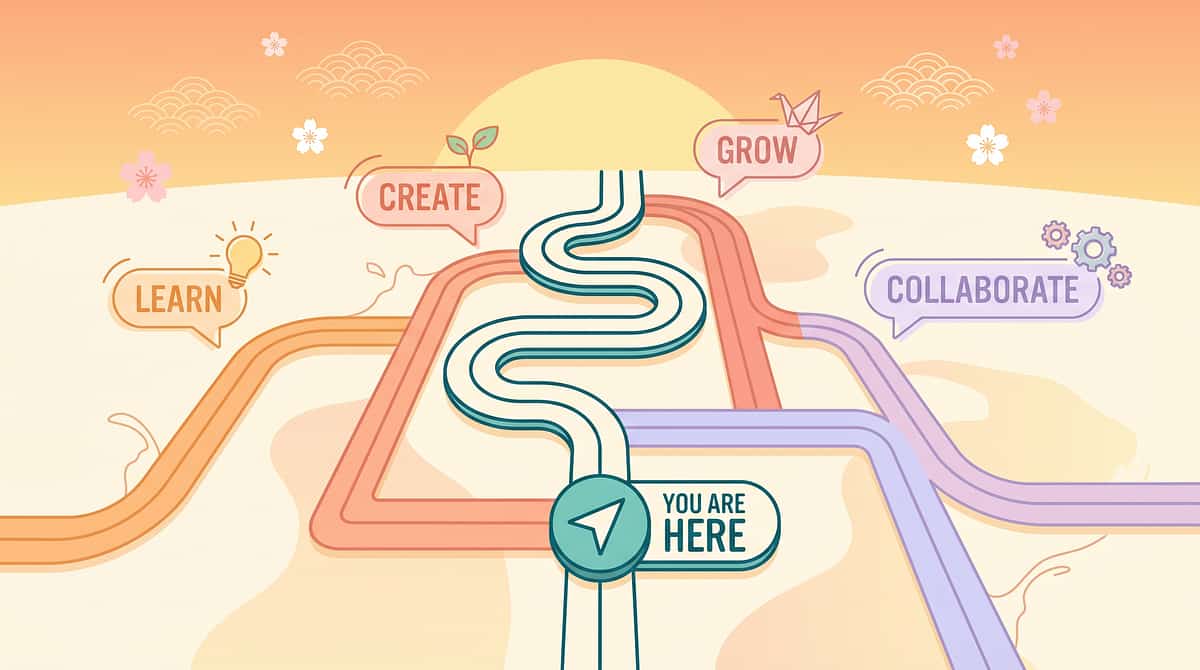
Card 27 — Red Flags
Trust Your Instincts. These Signs Mean: Pause and Ask.
🔴 Red Flag 1: Emotional Work Triggers Self-Injurious Behavior
Looks like: Head banging, scratching, biting self during or after emotion sessions. Why it matters: Accessing emotional content creates unbearable internal pressure. Do: STOP all emotion work immediately. Consult Pinnacle Psychology team.
🔴 Red Flag 2: Meltdowns Increasing in Frequency or Duration
Looks like: Daily meltdowns lasting 30+ minutes, more severe than before intervention. Do: Shift entirely to regulation tools for 2 weeks before reintroducing vocabulary work.
🔴 Red Flag 3: Child Has NO Emotional Expression (Flat Affect)
Looks like: No laughing, no crying, blankly compliant. Why: May indicate trauma response, depression, or dissociation. Do: Consult child psychologist immediately.
🔴 Red Flag 4: Fixation on Specific Negative Emotions / Catastrophizing
Looks like: Child obsessively focuses on fear, death, or harm. Why: May indicate anxiety disorder. Do: Redirect sessions. Consult Pinnacle Psychology for anxiety assessment.
🔴 Red Flag 5: Child Regresses in Other Developmental Areas
Looks like: Loss of language, toileting, or social skills coinciding with intervention start. Why: Intervention load is too heavy. Do: Pause all therapeutic work. Consult NeuroDev pediatrician and OT.
🔴 Red Flag 6: Parent-Child Relationship Shows Significant Strain
Looks like: Child refuses contact with parent; parent feels angry/hopeless during sessions. Do: Pause technique work. Prioritize relationship repair — play together with no demands for 2 weeks.
Escalation Pathway: Self-resolve (2–3 days) → Teleconsult with Pinnacle (call 9100 181 181) → In-person OT/Psychology assessment → Comprehensive clinical review. WHO NCF Progress Report 2018–2023 | Pinnacle clinical escalation protocols
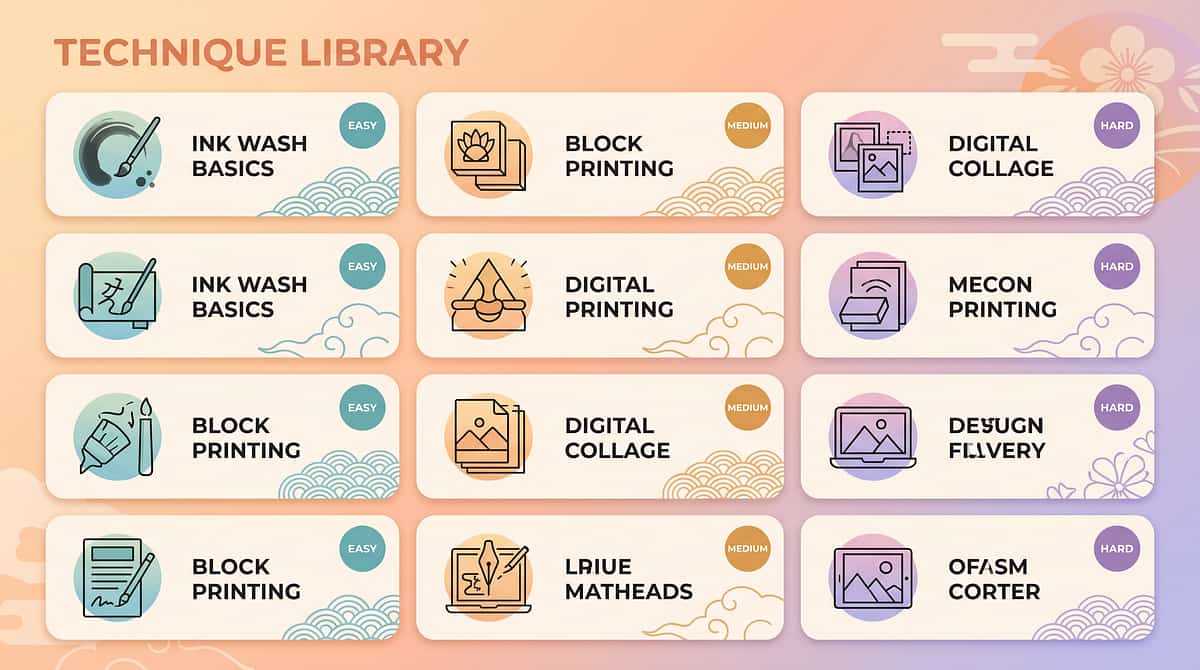
Card 28 — The Progression Pathway
L-998 is One Station on a Longer Journey
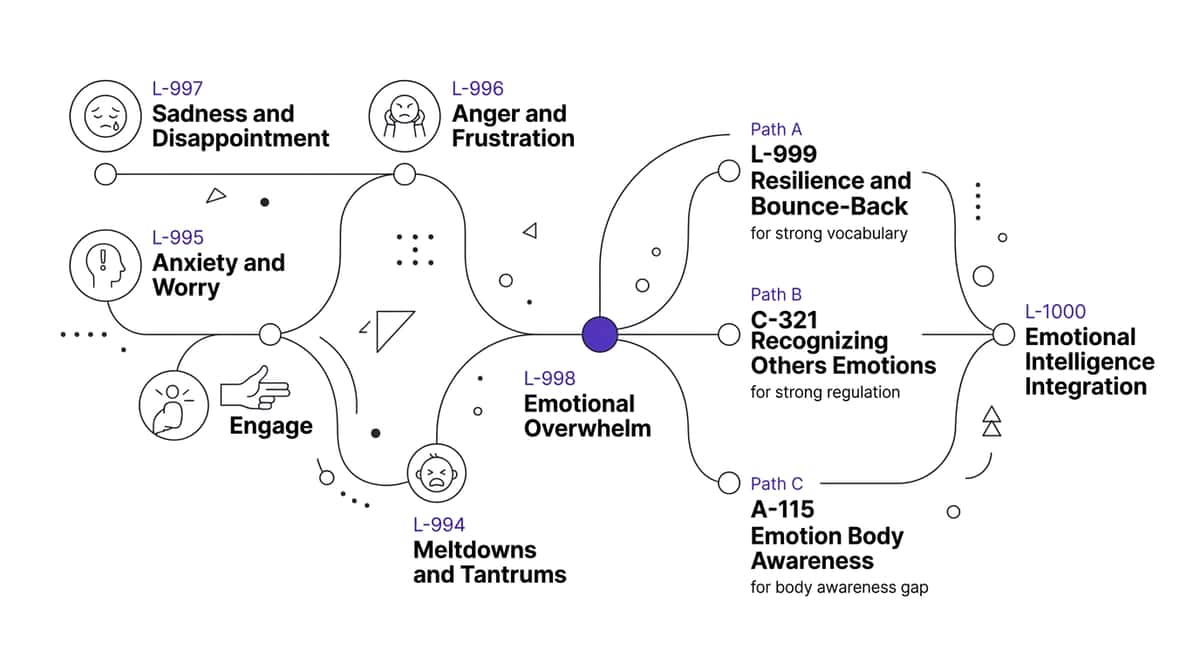
Path A — Emotional Vocabulary Strong, Regulation Emerging
→ L-999: 9 Materials That Help With Resilience & Bounce-Back
Path B — Regulation Good, Social Reading Emerging
→ C-321: 9 Materials That Help Recognizing Others' Emotions
Long-Term Developmental Goal: This technique builds toward independent emotional self-regulation, full social-emotional reciprocity, and the emotional intelligence that protects mental health across a lifetime. WHO/UNICEF developmental trajectory framework | Domain L progression architecture
Card 29 — Related Techniques
Techniques That Work Alongside L-998
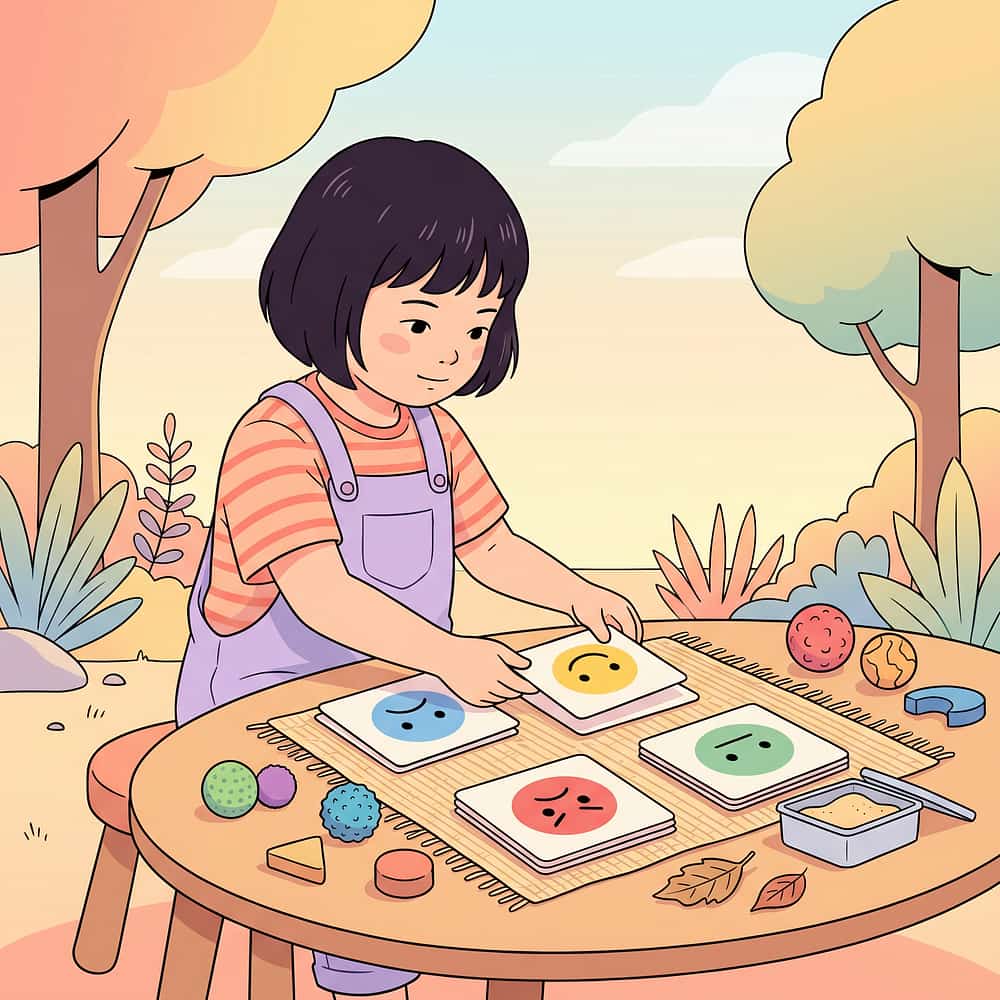
C-249 — Identifying Emotions
[INTRO 🎭] Feelings Cards foundation. If you've assembled L-998 materials, you already own most of what you need.
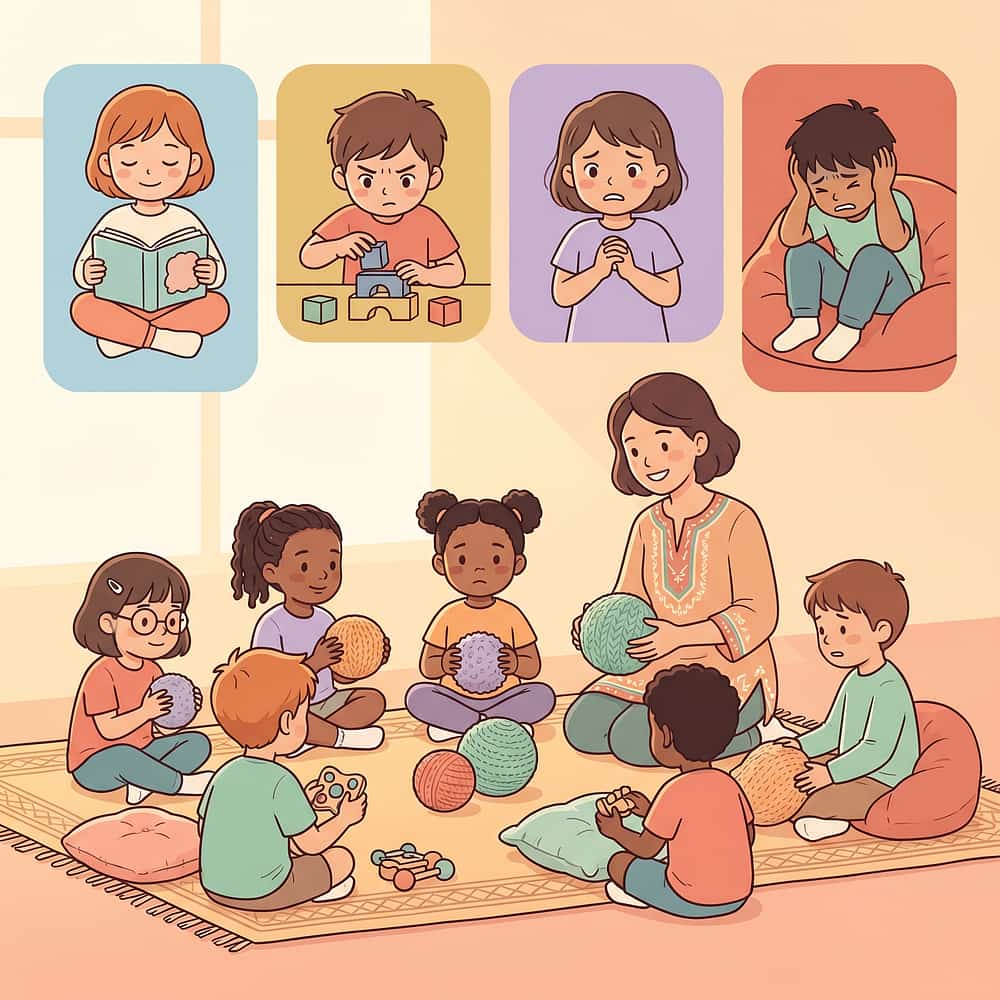
C-273 — Emotional Thermometer
[CORE 🌡️] Thermometer + Zones deep dive. Extends the awareness work from L-998 into a standalone mastery program.

C-271 — Teaching Emotion Words
[CORE 📚] Vocabulary + Books. Bibliotherapy expansion of the language-building strand from L-998.
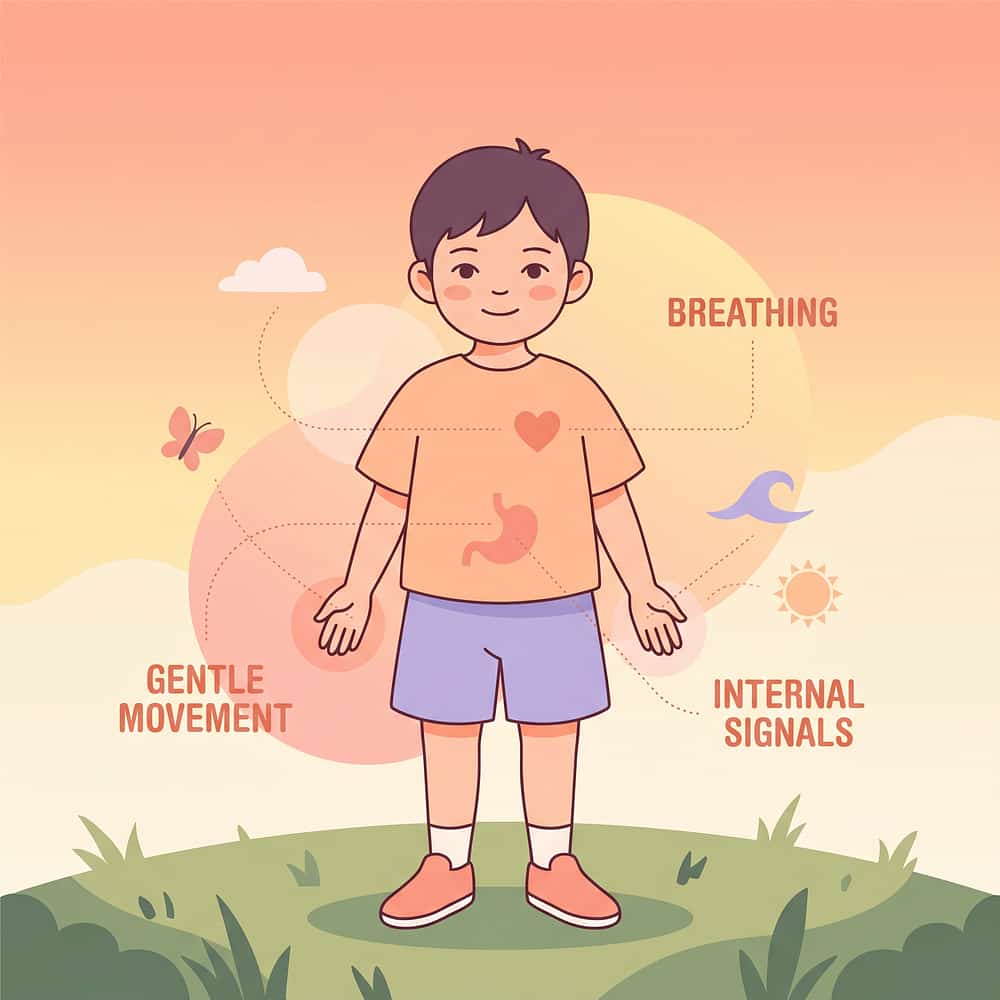
A-115 — Emotion Body Awareness
[CORE 🫀] Interoception curriculum deep-dive. Extends the body-emotion connection work from Material 4.
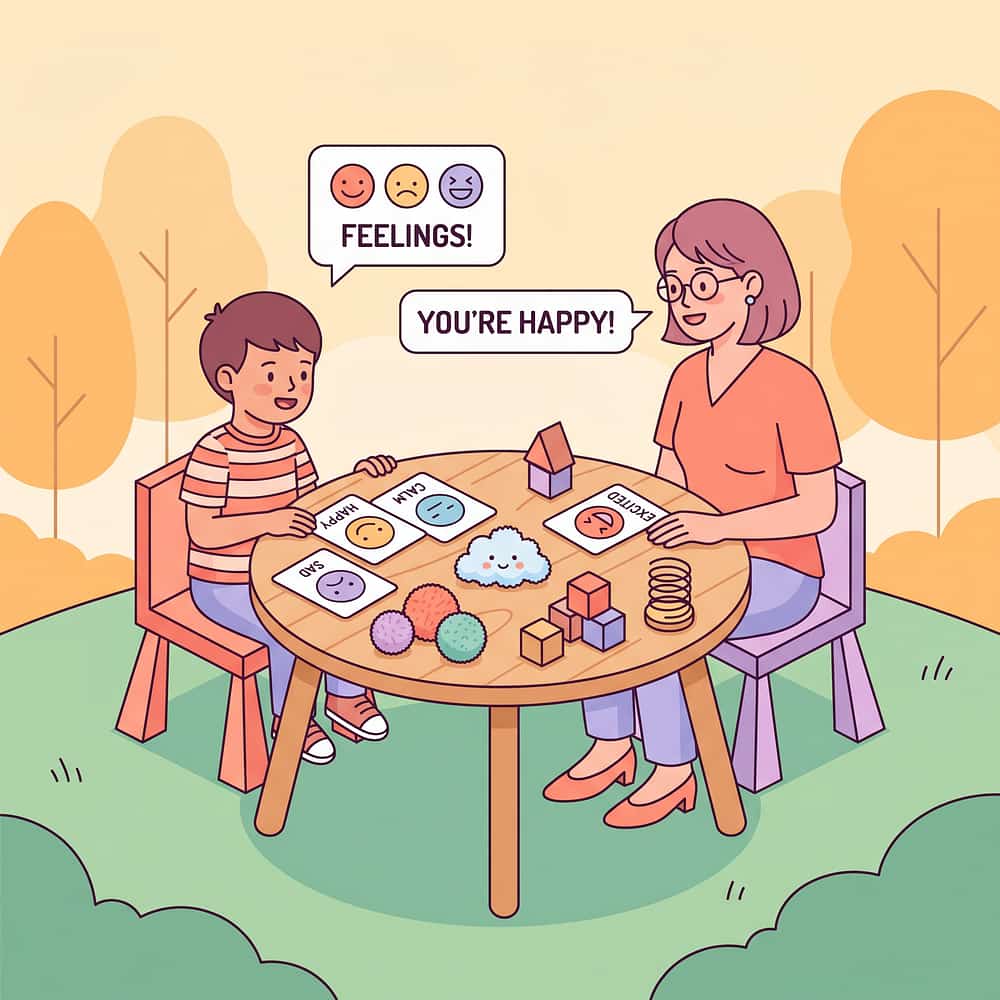
B-164 — Emotion Word Understanding
[CORE 💬] SLP + OT collaboration. Supports children with language processing differences.
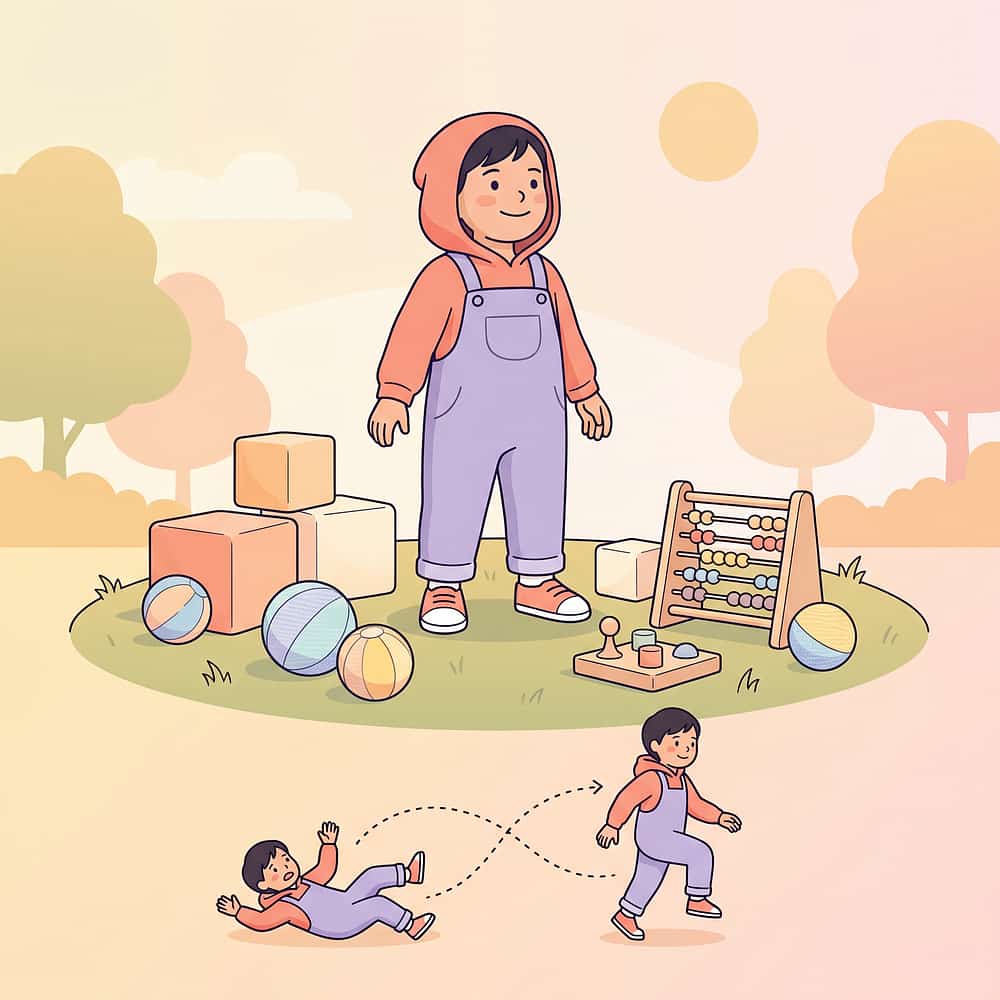
L-999 — Resilience & Bounce-Back
[ADVANCED 💪] The natural next level after L-998 mastery. Builds on the complete emotional foundation you've built.
"You Already Own Materials For These" Indicators: If you've assembled the L-998 toolkit, you already own most materials for C-249, C-273, C-271, A-115. Your investment scales.
→ Browse All Emotional Development Techniques
→ Browse All Emotional Development Techniques
Card 30 — Full Developmental Map
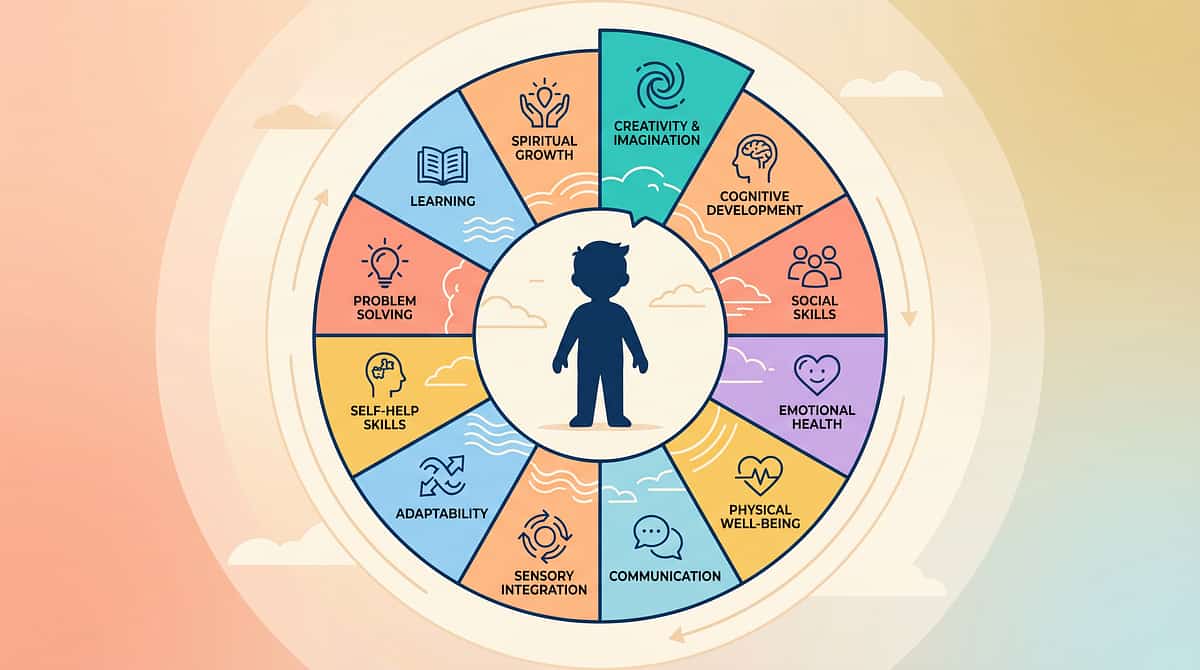
Emotional Development is One Domain in Your Child's Complete Journey
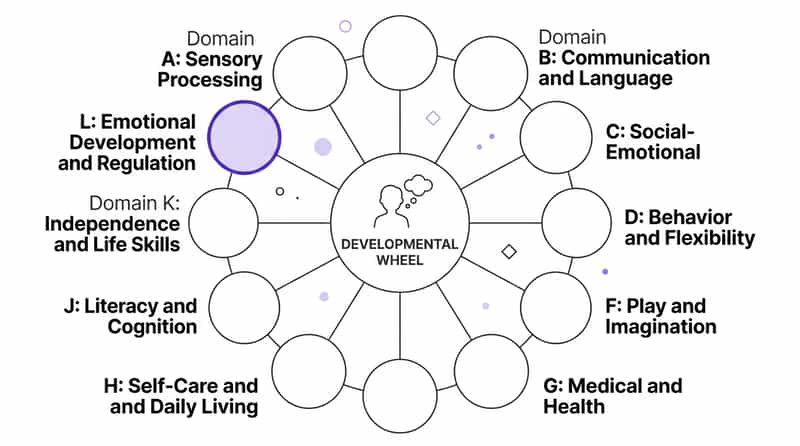
You Are Working in Domain L
Emotional Development & Regulation — one of 12 interconnected developmental domains. Progress in Domain L directly feeds Domain C (Social-Emotional), Domain A (Sensory Regulation), and Domain B (Communication & Language).
GPT-OS® Integration
Connect your L-998 session data to GPT-OS® to see how your child's emotional development progress maps against their full AbilityScore® developmental profile.
WHO NCF Five Nurturing Care Components: Health, nutrition, responsive caregiving, security/safety, early learning require holistic monitoring | UNICEF 2025 Country Profiles (42 indicators per country)
ACT V — THE COMMUNITY | Card 31
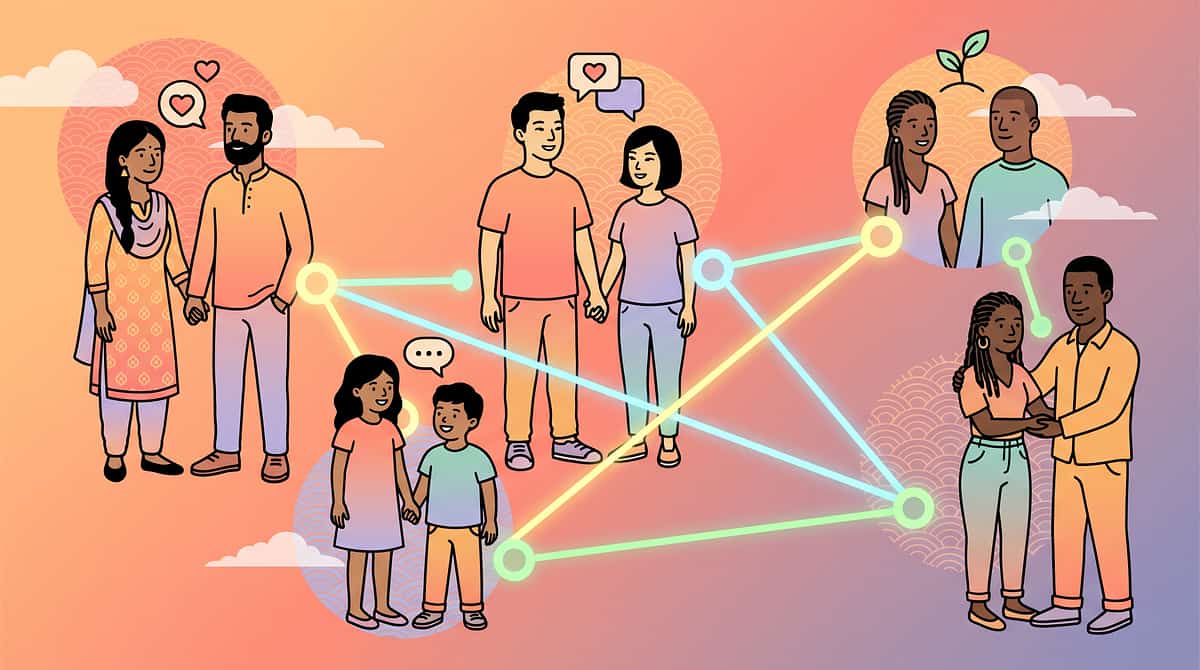
From Emotional Chaos to Emotional Intelligence — Family Stories
Arjun, 7 years — Autism + ADHD
Before: "He had maybe 3 words for feelings: happy, sad, mad. Everything else was 'bad.' He could go from laughing to a 45-minute meltdown with zero warning. His teachers said he had zero self-awareness. The OT said 'alexithymia' — I had to Google it."
After (Week 9): "Something changed in week 6. He looked up from breakfast and said 'I'm feeling a little worried about the math test.' Not mad. Not bad. WORRIED. By week 9, he's using the thermometer himself — 'Amma, I'm at a 6, I need 5 minutes.' We have a language now. Both of us do."
9 weeks daily 10-min sessions | Feelings cards + Thermometer + Calm-down kit
Meera, 5 years — Sensory Processing Disorder
Before: "She was an emotional mystery — even to herself. Happy for no reason, devastated for no reason. Her little brother would be crying and she'd just keep doing what she was doing. Empathy seemed absent."
After (Week 8): "The interoception body map was the breakthrough. She noticed her stomach tightness = anxious. Now she runs to me: 'My tummy is doing the nervous thing, can we do breathing?' This week she walked up to her crying brother and said 'You look like blue zone. Do you need a hug?'"
8 weeks | Body map + Breathing pinwheel + Zones poster
"The families that see the most dramatic emotional development gains are the ones who make daily check-ins a habit — not a 'therapy activity.' When a parent says 'What zone are you in?' during breakfast, lunch, dinner, and bedtime — that's 1,000 reps per year. That's how neural pathways are built." — Pinnacle Network Child Psychologist

Card 32 — Connect With Other Parents
You Are Not the Only Parent Navigating This. Find Your Community.
💬 Emotional Development Parent Community
WhatsApp Group: Families practicing L-998 tools daily. Active daily sharing of session successes, questions, and tips. → Join at pinnacleblooms.org/community/emotional-development
🌐 Online Forum
Pinnacle Parent Network: Emotional & Behavioral Support Forum → pinnacleblooms.org/forum/emotional-regulation
👨👩👧 Local Parent Meetups
Organized quarterly by your nearest Pinnacle center. Emotion coaching workshops + material demonstrations. → Find your nearest center: pinnacleblooms.org/centers
🤝 Peer Mentoring Program
Connect 1:1 with a parent who has successfully implemented this protocol. "Been there" guidance from lived experience. → Request a mentor: care@pinnacleblooms.org
"The parent who is 12 months ahead of you on this journey has the answer to the question you'll have next Tuesday. Find them. Learn from them. One day soon, you'll be the one answering someone else's question."
📞FREE National Helpline: 9100 181 181 | 16+ languages | 24×7 | FREE — For families just beginning: call this number first. WHO NCF: Community engagement is a core principle | Parent support networks improve intervention outcomes
Card 33 — Professional Support
Home Practice + Professional Guidance = Maximum Impact
🧠 PRIMARY: Child Psychologist
Emotional assessment, alexithymia evaluation, CBT-based regulation therapy, parent emotion coaching
🖐️ SUPPORTING: Occupational Therapist
Interoception curriculum, sensory regulation, calm-down kit construction, body awareness protocol
📊 SUPPORTING: ABA / BCBA
Emotion vocabulary discrete trial, data collection, reinforcement design, generalization planning
📚 SUPPORTING: Special Education Therapist
School-based emotion regulation, Zones of Regulation integration, teacher collaboration
Three Access Points
📍 In-Center Sessions
70+ centers | Book at pinnacleblooms.org/book
📱 Teleconsultation
Available nationally | Book online within 24 hours
📞 FREE Helpline First Call
9100 181 181 | 16+ Indian languages
"Home + Clinic" Principle: Every Pinnacle therapy session for emotional development is designed to teach a skill in clinic, send it home with a practice protocol, and receive data at the next session. This page IS the home protocol for L-998. Your clinic therapist and this page work together. WHO NCF Progress Report (2023): Primary health care as key platform for reaching all families
Card 34 — The Research Library
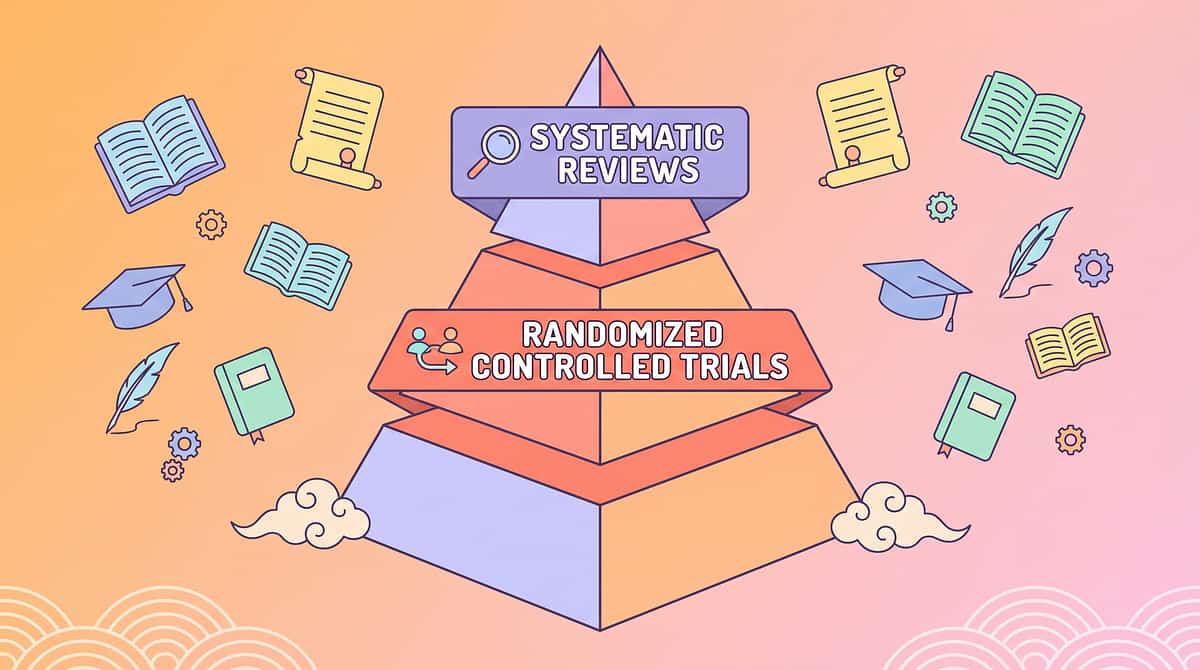
The Science Backing Every Card on This Page
5 Key Studies for L-998
Study 1 — The Definitive SEL Evidence Base
Durlak, J.A. et al. (2011). Child Development, 82(1). SEL interventions produce +11 percentile point academic gains AND significant improvements in emotional competence across 213 studies, 270,000 students.
Study 2 — Sensory Integration in ASD (PRISMA 2024)
Systematic Review: Children, 2024 — 16 articles. Sensory integration intervention meets evidence-based practice criteria for children with ASD including emotional regulation domains. → PMC11506176
Study 3 — Interoception & Emotional Regulation
Mahler, K. (2015–2023). Interoception: The Eighth Sensory System. AOTA Press. Interoceptive awareness training directly improves emotional self-awareness and self-regulation in autism and ADHD populations.
Study 4 — Indian Home-Based Intervention RCT
Padmanabha, H. et al. (2019). Indian Journal of Pediatrics. Home-based sensory and emotional regulation interventions in Indian pediatric populations showed significant measurable outcomes. → DOI: 10.1007/s12098-018-2747-4
Study 5 — NCAEP Evidence-Based Practices
National Clearinghouse on Autism Evidence and Practice (2020). Visual supports, reinforcement, breathing/mindfulness, and video modeling classified as Level I evidence-based practices for emotional skill building in autism. → ncaep.fpg.unc.edu
Card 35 — GPT-OS® Technology
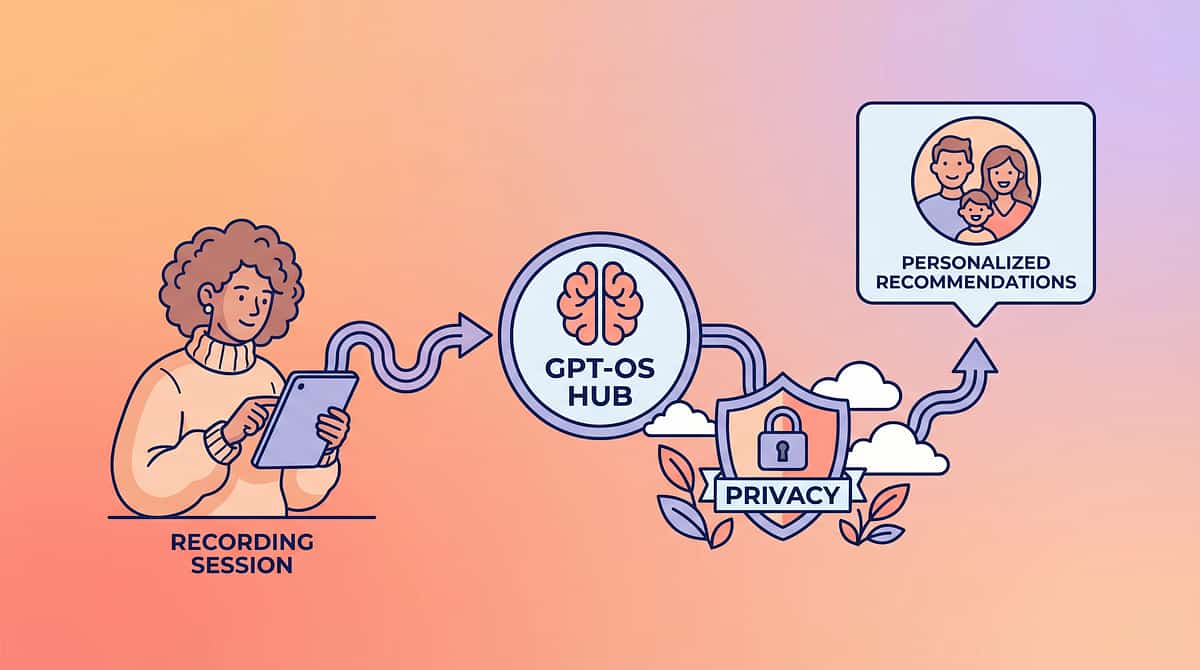
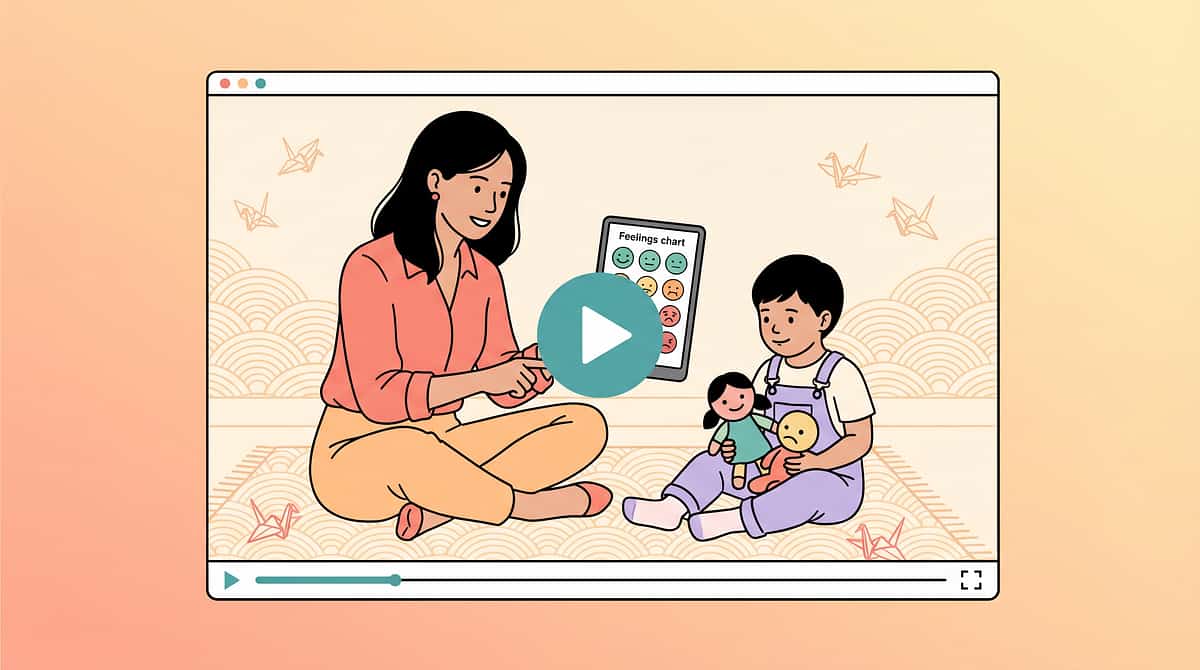
Your Sessions Build Intelligence — For Your Child and 10,000 Others
What GPT-OS® Learns From Your L-998 Data
Highest Engagement Material
Which of the 9 materials produces highest engagement for your child's specific profile
Vocabulary Growth Plateaus
When emotional vocabulary growth plateaus — precisely when to introduce new challenges
Limiting Factor Analysis
Whether body awareness or vocabulary is the limiting factor for regulation progress
Optimal Session Duration
Your child's ideal session length based on attention pattern data across sessions
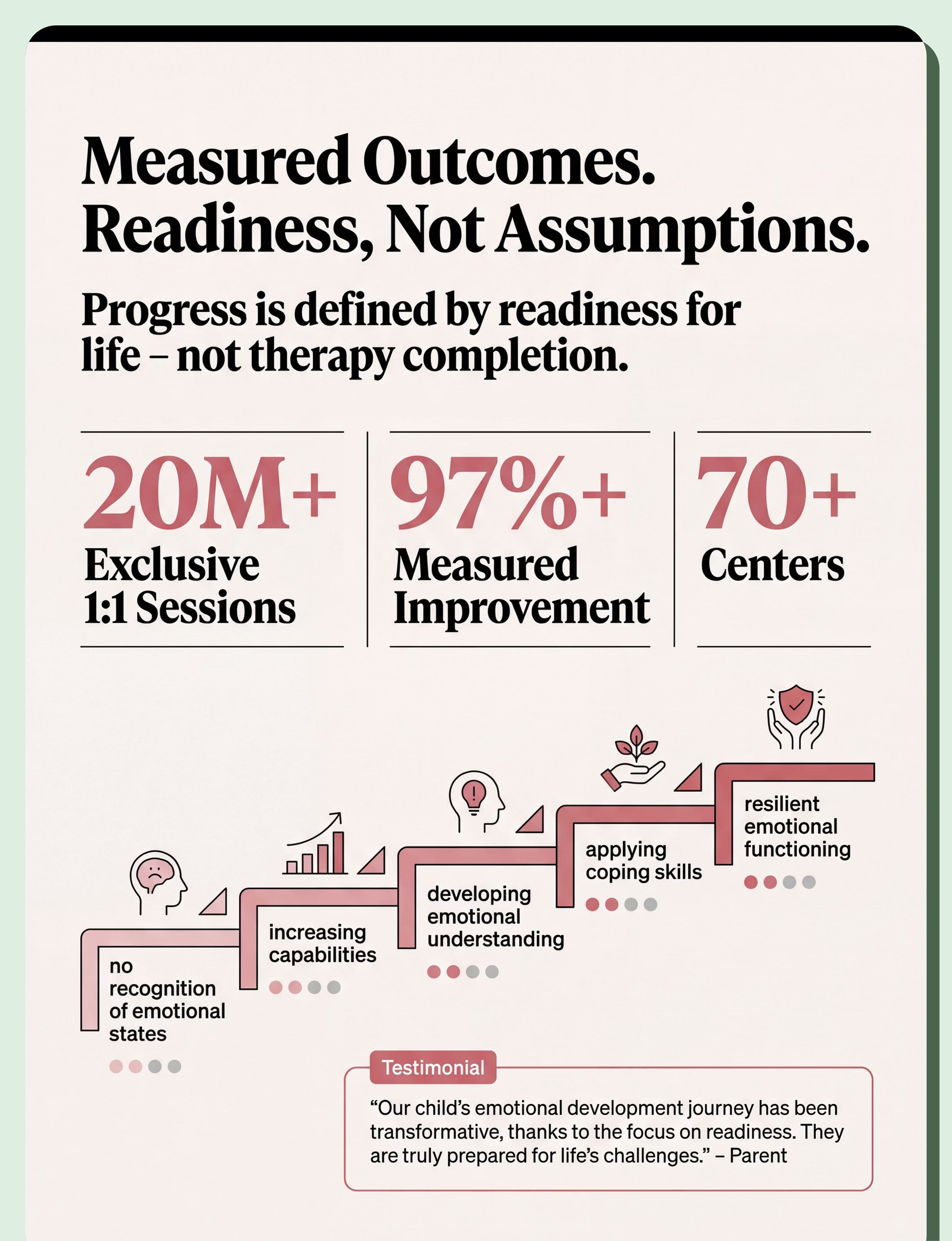
Population-Level Impact: Your family's session data contributes to the pattern recognition engine serving 70+ countries. The recommendation it gives you next Tuesday is based on 20M+ prior sessions across the Pinnacle network.
Privacy Statement: All data is processed under DPIIT-recognized startup data governance frameworks. Individual children are never identified. You control what data is shared. Digital health + ASD: 21 RCTs, 1,050 participants demonstrate efficacy of digital health monitoring in pediatric developmental intervention (2024)
Privacy Statement: All data is processed under DPIIT-recognized startup data governance frameworks. Individual children are never identified. You control what data is shared. Digital health + ASD: 21 RCTs, 1,050 participants demonstrate efficacy of digital health monitoring in pediatric developmental intervention (2024)
Card 36 — Watch the Reel
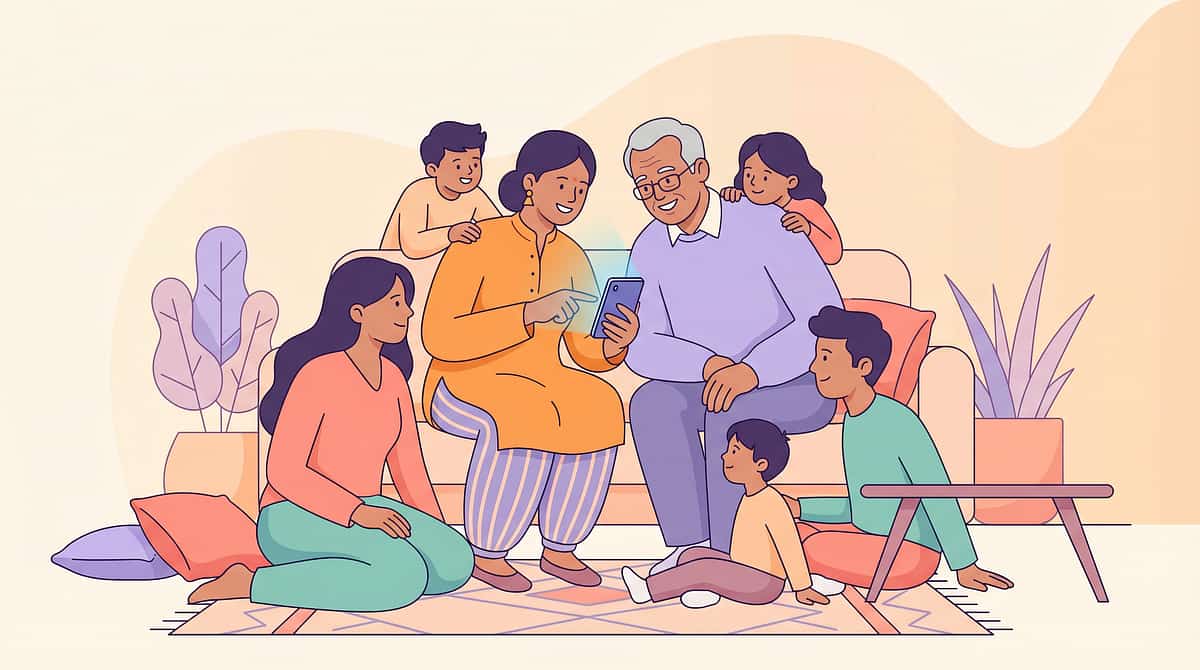
See These 9 Materials in Action — 60-Second Expert Reel
Reel Details
Reel ID: L-998
9 Materials That Help With Emotional Overall
Series: Emotional Development & Regulation
Episode 998 of 999 | Domain L
Disciplines
Psychology + Occupational Therapy + ABA
Duration: 60–75 seconds
Complete material overview with demonstration
What the Reel Covers
- What each material looks like in use
- A child demonstrating feelings cards, thermometer, and calm-down kit
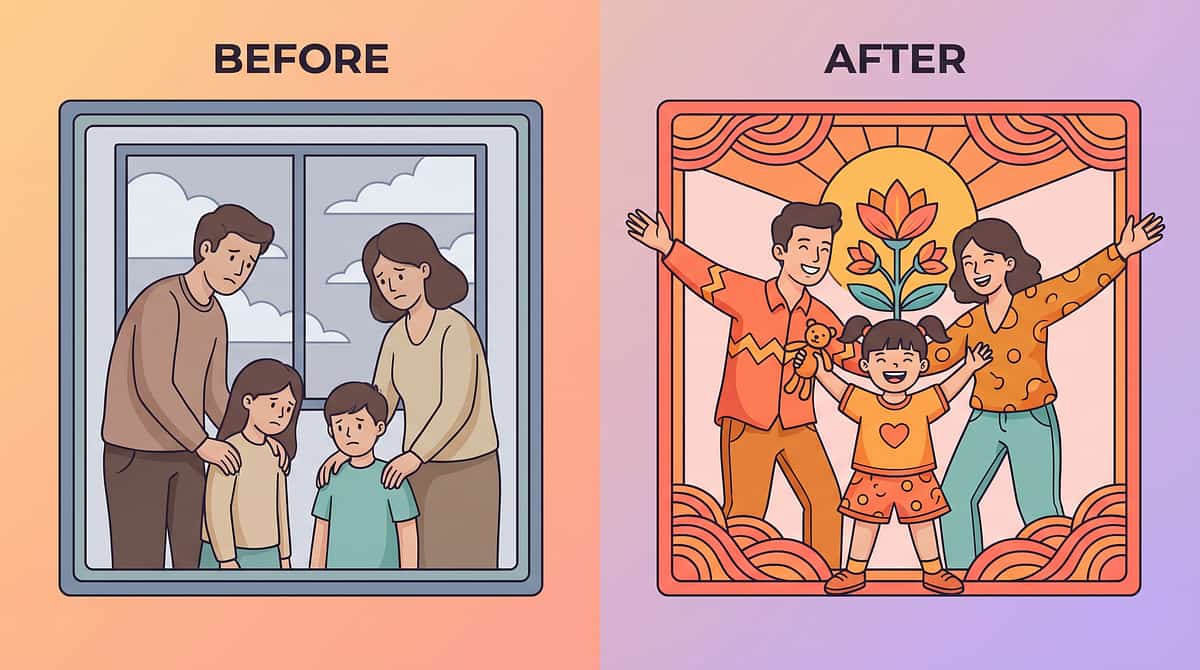
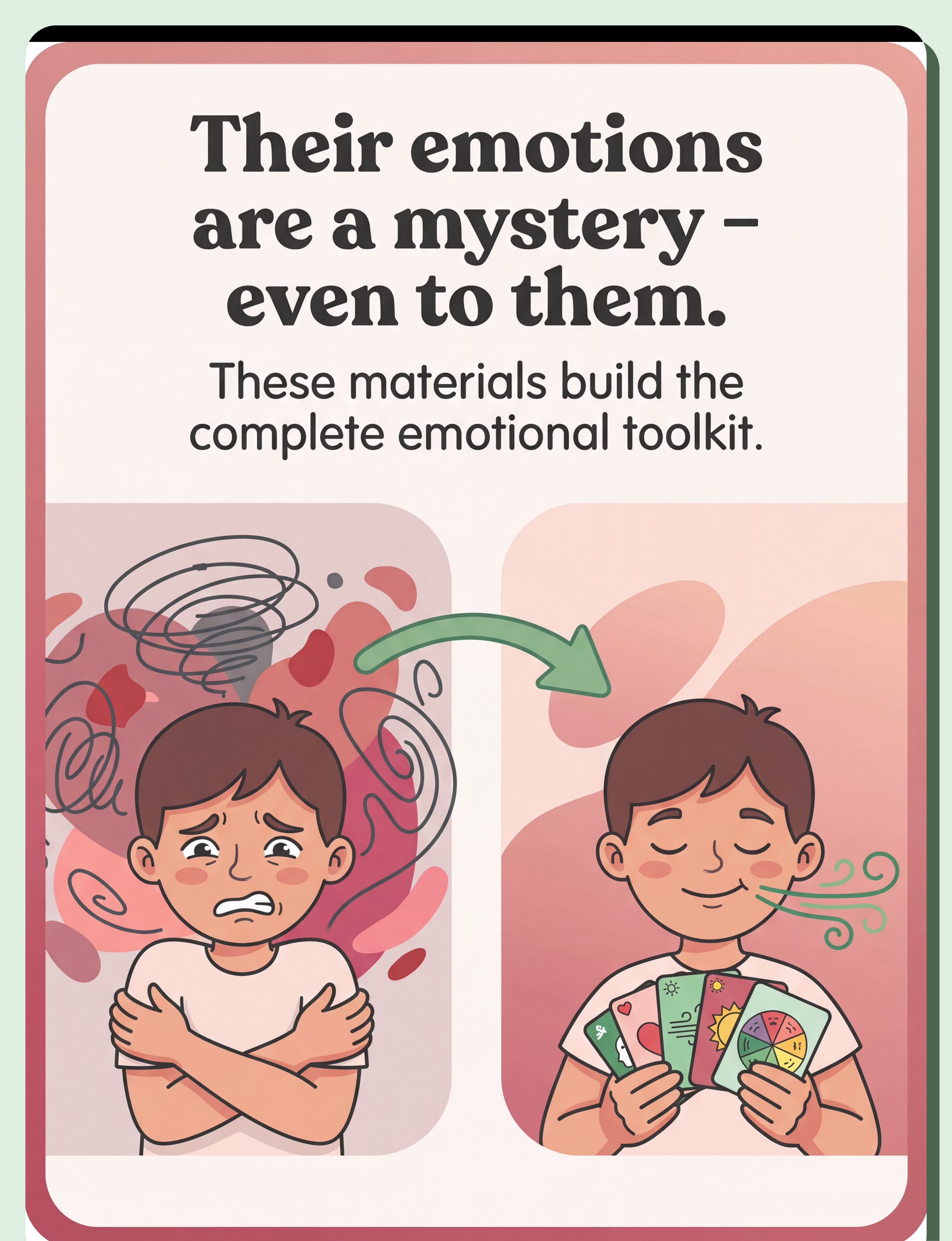
- The "before" emotional chaos vs. "after" regulated child visual comparison
- Complete material list with price ranges
Related Reels in This Series
- ← L-997: 9 Materials That Help With Sadness & Disappointment
- → L-999: 9 Materials That Help With Resilience & Bounce-Back
- ↔ C-249: 9 Materials That Help Identifying Emotions
- ↔ A-115: 9 Materials That Help With Emotion Body Awareness
Reel-to-Page Connection: The reel creates awareness in 60 seconds. This page delivers the complete implementation protocol in the time you choose to invest. Video modeling: Evidence-based practice for autism (NCAEP, 2020) | Multi-modal learning improves parent skill acquisition
Card 37 — Share With Your Family
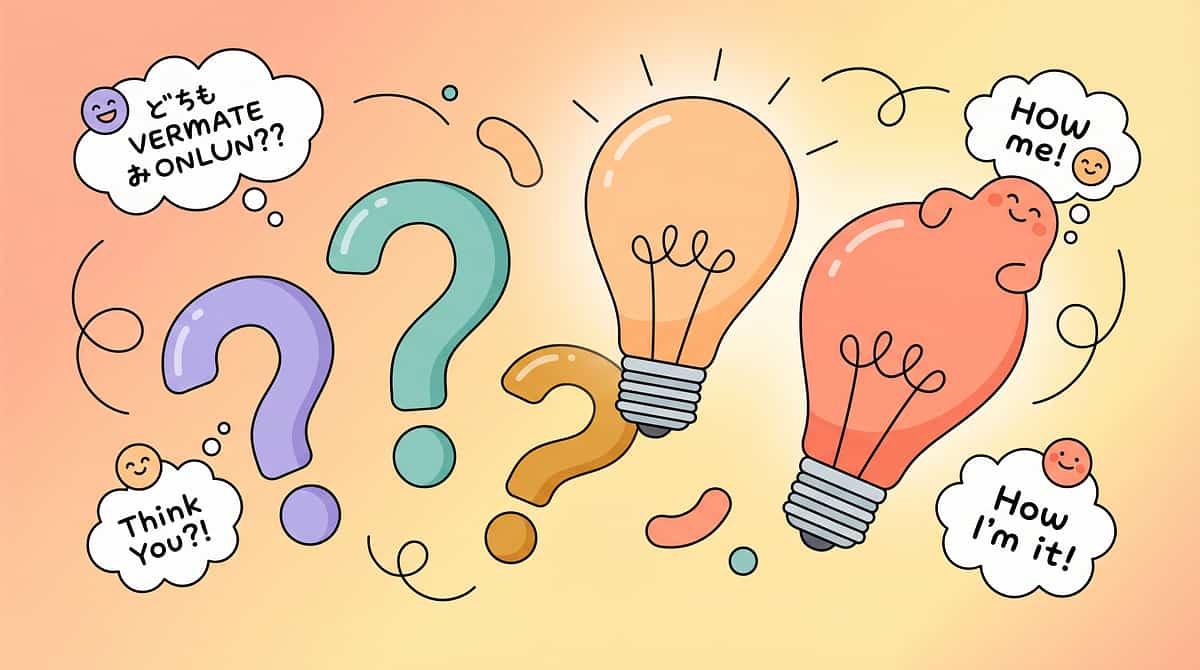
Consistency Across Caregivers Multiplies Impact by 3×
The Research Reality: A child who practices emotional tools only with one parent gets 1× the repetitions. When grandparents, teachers, and extended family participate — the child gets the generalization environment that builds mastery. WHO CCD Package: Multi-caregiver training critical for intervention generalization and maintenance | PMC9978394
📱 WhatsApp
Pre-loaded message: "I'm using these 9 emotional development tools with [child's name]. This page explains the science and the how-to. Can we do this together?" → techniques.pinnacleblooms.org/emotional-development/9-materials-emotional-overall-L998
📄 Family Guide PDF
One-page visual summary: all 9 materials, 6-step protocol simplified, 3 most important phrases, helpline 9100 181 181. Designed for: Spouses | Grandparents | School teachers | Daycare staff
"Nanamma/Thatha, these are special cards and tools that help [child's name] learn about feelings. When you're with them, ask 'What color are you feeling right now?' and point to the color chart on the fridge. If they seem upset, offer them this small kit. It's how we're helping them understand their emotions."
Teacher/School Communication Template: Subject: Emotional regulation tools we're using at home for [child's name]. We're implementing L-998 materials. [Child] is learning "zone" language and feelings thermometer (1–10 scale). Please: (1) Ask "What zone are you in?" once daily, (2) Reference thermometer scale if child escalates, (3) Provide access to calm-down tools. Pinnacle team can provide school consultation — call 9100 181 181.

ACT VI — THE CLOSE | Card 38
Questions Parents Ask Most — Answered by the Consortium
My child is 11. Is it too late to start emotional development tools?
No. Neuroplasticity allows emotional skill development at any age. Approaches adapt for older children (journals become more sophisticated, Zones vocabulary becomes more nuanced), but core materials work across the full 2–14 age range. Teens with autism, ADHD, or anxiety regularly show significant gains starting this protocol.
How is this different from telling my child "use your words" or "calm down"?
"Use your words" presupposes the child HAS words for their emotional states — which is precisely what's missing. These materials BUILD the words and BUILD the tools first. Then "use your words" becomes possible because the vocabulary exists.
My child won't touch the feelings cards or any materials. What do I do?
Don't require touching. Introduce materials as YOUR interesting objects — lay them out and explore them yourself while narrating. The invitation protocol (Card 14) is specifically designed for this profile. Many children approach materials indirectly.
Should I do all 9 materials at once or pick one?
Start with the STARTER TRIO: Feelings Cards + Feelings Thermometer + one Breathing Tool. Introduce Zones in week 3. Build the calm-down kit in weeks 4–5 after you know what tools your child responds to. Layer materials over weeks — not all at once.
My child uses materials during practice but never in real life. Is that progress?
Yes — this is a critical and predictable phase. To accelerate generalization: reference the materials DURING natural emotional moments daily. Bridge deliberately: "You look like you might be in yellow zone right now — want to check?"
How do I know if my child has alexithymia vs. just choosing not to identify emotions?
Signs of alexithymia: child says "I don't know" to ALL emotion questions consistently (even clearly positive emotions), physical symptoms without awareness (stomach ache before school without connecting it to anxiety). A Pinnacle child psychologist can assess specifically — it significantly changes the intervention approach.
Can I do this without professional support?
Yes — this page provides the complete home implementation protocol. However, if your child shows any red flags from Card 27, or if progress plateaus after 8 weeks, professional support from a Pinnacle child psychologist or OT will significantly accelerate outcomes. Call 9100 181 181 for a free initial guidance call.
What if sessions end in meltdown?
Document it, review timing and readiness indicators (Card 13), check what preceded the session, and modify. Common causes: session too long, wrong time of day, started when child was already escalating, material introduced too quickly. A meltdown during session is data — not failure. Adjust, not abandon.
Preview of 9 materials that help with emotional overall Therapy Material
Below is a visual preview of 9 materials that help with emotional overall therapy material. The pages shown help educators, therapists, and caregivers understand the structure and content of the resource before use. Materials should be used under appropriate professional guidance.



Link copied!

Card 39–40 | Your Next Step + The Pinnacle Promise
Your Child's Emotional Journey Begins With One Card.
Pick it up. Ask the question. Begin.
🚀 Start This Technique Today
Download the L-998 Session Starter PDF | Log first session in GPT-OS® App
→ pinnacleblooms.org/start/L998
📅 Book a Consultation
Get professional guidance from a Pinnacle Child Psychologist or OT — first call FREE
📞9100 181 181 (24×7, 16+ languages) | pinnacleblooms.org/book
🗺️ Explore the Next Technique
L-999: 9 Materials That Help With Resilience & Bounce-Back
→ techniques.pinnacleblooms.org/emotional-development/9-materials-resilience-bounce-back-L999
"From fear to mastery. One technique at a time." — Pinnacle Blooms Network®
🧠 Psychology
🖐️ OT
📊 ABA/BCBA
📚 SpEd
🏥 NeuroDev
Medical Disclaimer: This content is educational and informational. It does not replace individualized assessment and intervention from qualified psychologists, occupational therapists, or mental health professionals. Emotional development needs vary significantly based on developmental profile, underlying conditions, and individual history. Consult your child's therapy team for personalized strategies. Individual results may vary. Statistics represent aggregate outcomes across the Pinnacle Blooms Network.
© 2025 Pinnacle Blooms Network®, unit of Bharath Healthcare Laboratories Pvt. Ltd. | CIN: U74999TG2016PTC113063 | DPIIT Recognition: DIPP8651 | MSME: TS20F0009606 | GSTIN: 36AAGCB9722P1Z2
📞 FREE National Helpline | 16+ Languages | 24×7 | 9100 181 181 | 🌐 pinnacleblooms.org | ✉️ care@pinnacleblooms.org
L-998 | Emotional Overall | Version 1.0 | March 2026 | techniques.pinnacleblooms.org