

9 Materials That Help With Emotion Expression
Helping children find words, faces, and ways to show what they feel inside.
Social-Emotional Development · Episode 972
Ages 2–10 · Emotional Literacy
A Parent's Voice
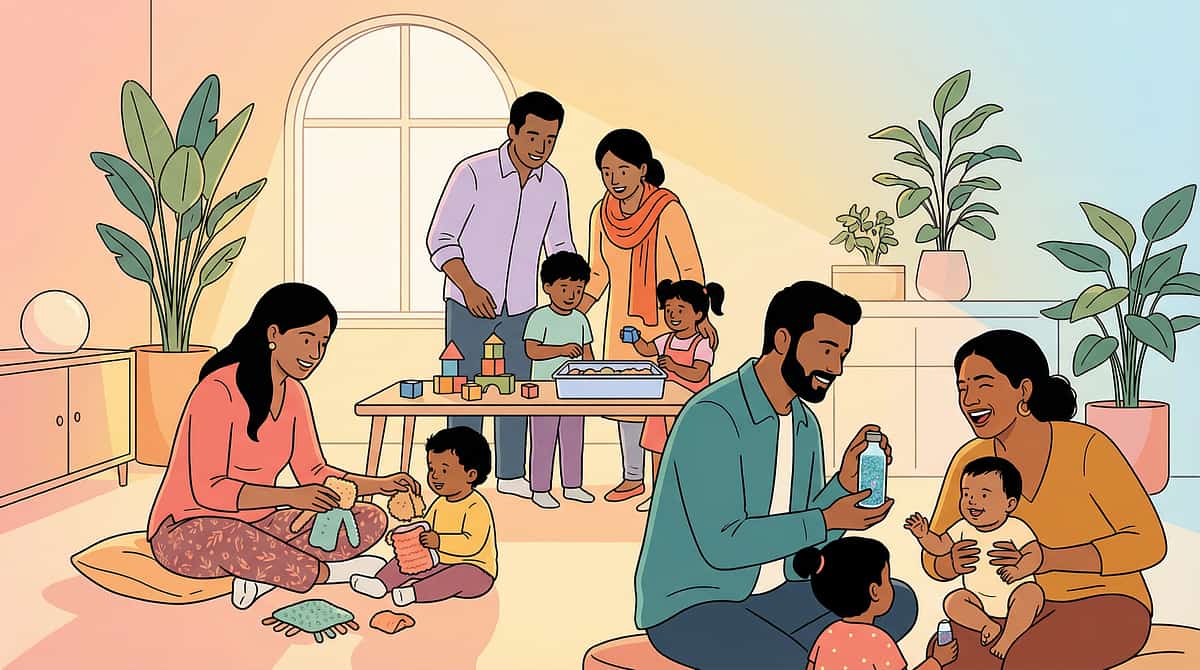
"My son feels everything so intensely, but he can't tell me what's wrong. He melts down, and I'm left guessing — is he angry? Scared? Overwhelmed? Sad? He doesn't have the words. When I ask 'How do you feel?' he just says 'bad' or 'I don't know.' His teacher says he hits when he's frustrated because he can't express himself. I've tried emotion charts, but he just points to 'happy' every time, even when he's clearly not. Other children his age can say 'I'm mad because…' or 'That made me sad.' My son just shuts down or explodes. I know he has feelings — big ones — but there's a wall between what he feels inside and getting it out in a way others can understand. How do I help him find ways to express emotions he can't yet name?"
If this sounds familiar, you are not alone — and this is not a behavior problem. It is a skill gap. A nameable, teachable gap.
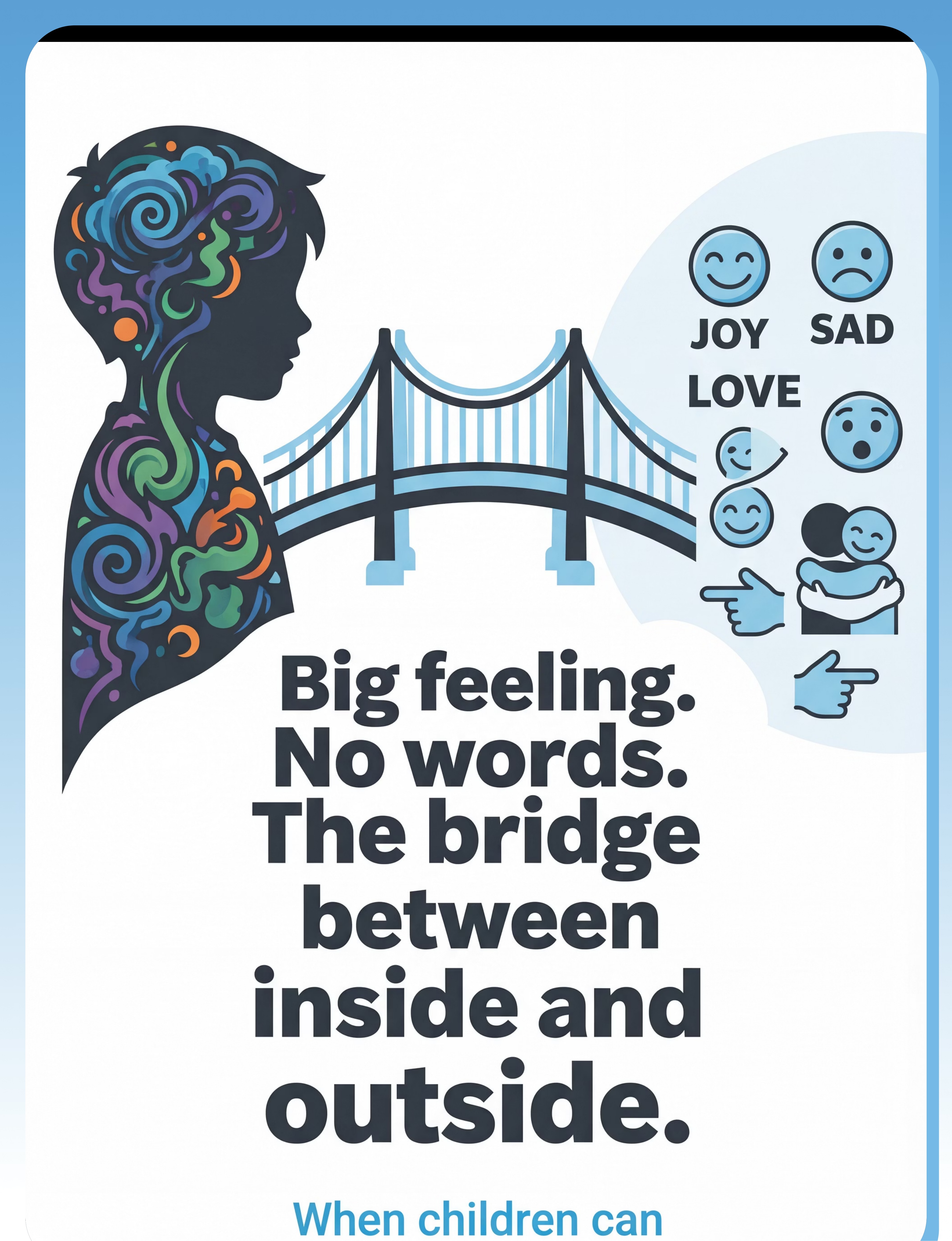
Big Feelings. No Words. The Bridge Between Inside and Outside.
When children can't express what they feel, they show it in other ways — meltdowns, silence, aggression, withdrawal. These responses are not defiance. They are the only communication tools available to a child whose emotional vocabulary hasn't been built yet.
"I don't know" isn't defiance. It's a skill gap. A nameable, teachable gap. Before regulation comes expression. Before expression comes recognition. Build the chain — and everything else becomes possible.
These 9 materials help build that bridge, one layer at a time.

Understanding the Problem: Emotion Expression Difficulties
Clinical Definition
Emotion expression is the ability to communicate internal emotional states to others through words, facial expressions, body language, or other means. Children who struggle may have difficulty at any point in a multi-step chain.
Clinical Terms: Emotion Expression Difficulties / Emotional Literacy Deficits / Affective Communication Challenges / Alexithymia
The Expression Chain
- Interoception — sensing internal body states
- Emotion Recognition — identifying what the feeling is
- Emotional Vocabulary — having words for feelings
- Expressive Communication — conveying the emotion to others
Breakdown can happen at any point. Many interventions assume vocabulary is the problem when interoception or identification are the real gaps.

Common Signs to Watch For
Limited Vocabulary
Uses only "mad," "sad," "happy" — or just "good/bad." Says "I don't know" when asked how they feel.
Physical Instead of Verbal
Complains of tummy aches when anxious. Behavioral outbursts without verbal explanation.
Shuts Down or Explodes
Goes completely silent when emotional — or escalates to meltdown. No middle ground.
Charts Don't Help
Points to "happy" on emotion charts regardless of actual feeling. Can't connect cartoon faces to internal experience.
Delayed Recognition
Identifies emotions hours or days later. Uses intensity extremes — "fine" or "terrible," nothing in between.
Non-Verbal Expression
Better at expressing through art, play, or movement than words. Confusion about what emotions feel like in the body.
How Emotion Expression Develops
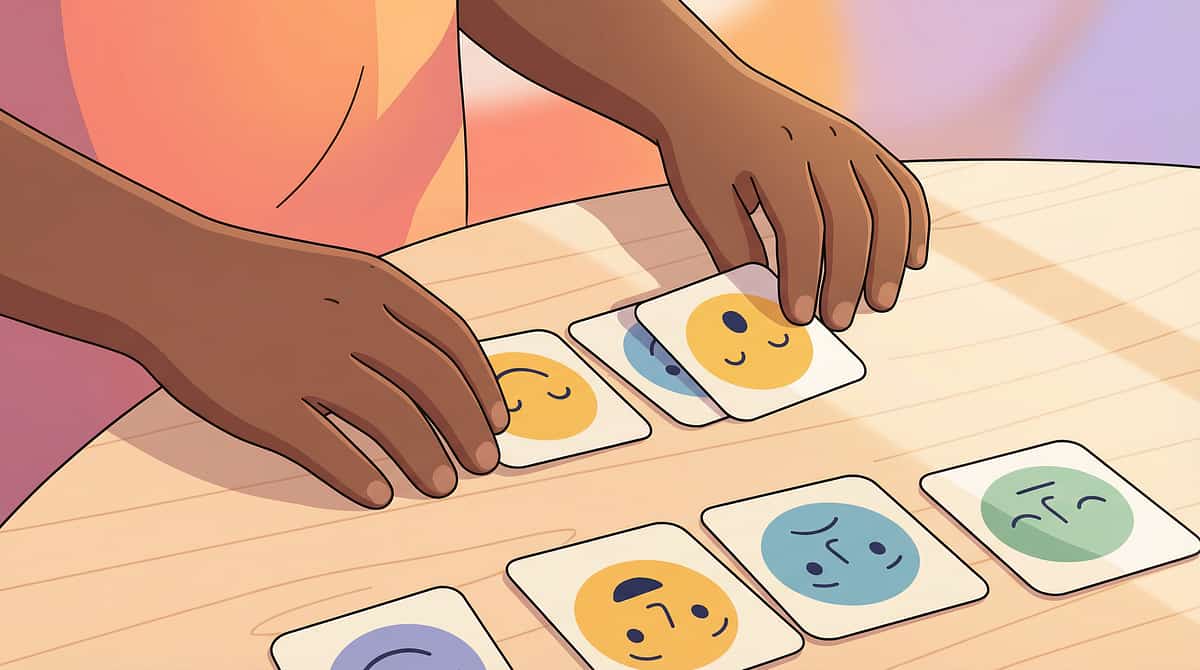
Emotion expression unfolds in predictable stages. Children with developmental differences, sensory processing challenges, language delays, or trauma histories often need explicit teaching of skills that neurotypical children absorb implicitly.
1
0–12 Months
Undifferentiated distress signaling; emerging social smiles; beginning facial expression matching
2
12–24 Months
Beginning to connect words to basic emotions; pointing to feelings in pictures; self-referential emotion words emerging
3
2–3 Years
Labels basic emotions in self and others; talks about causes ("I'm sad because…"); emerging emotional narrative
4
3–5 Years
Expanding vocabulary (frustrated, scared, excited, worried); understanding different people feel differently
5
5–7 Years
Nuanced emotion vocabulary; understanding mixed emotions; social display rules beginning; can discuss hypothetical emotions
6
7+ Years
Complex vocabulary (jealous, embarrassed, anxious, disappointed); context-dependent expression; self-reflection about emotions

9 Materials at a Glance
Each of these materials targets a different layer of the emotion expression chain — from body awareness all the way to social communication. Used together, they build a comprehensive scaffold for children who need more than words.
1
Emotion Faces Cards and Charts
Visual vocabulary for invisible feelings
2
Emotion Dolls and Figures
Feelings you can hold and change
3
Feeling Wheels and Selection Tools
Expanding the vocabulary of inner experience
4
Body Mapping and Interoception Materials
Finding feelings in the body first
5
Emotion-Themed Storybooks
Safe stories for unsafe feelings
6
Art and Creative Expression Materials
When words aren't enough, colors speak
7
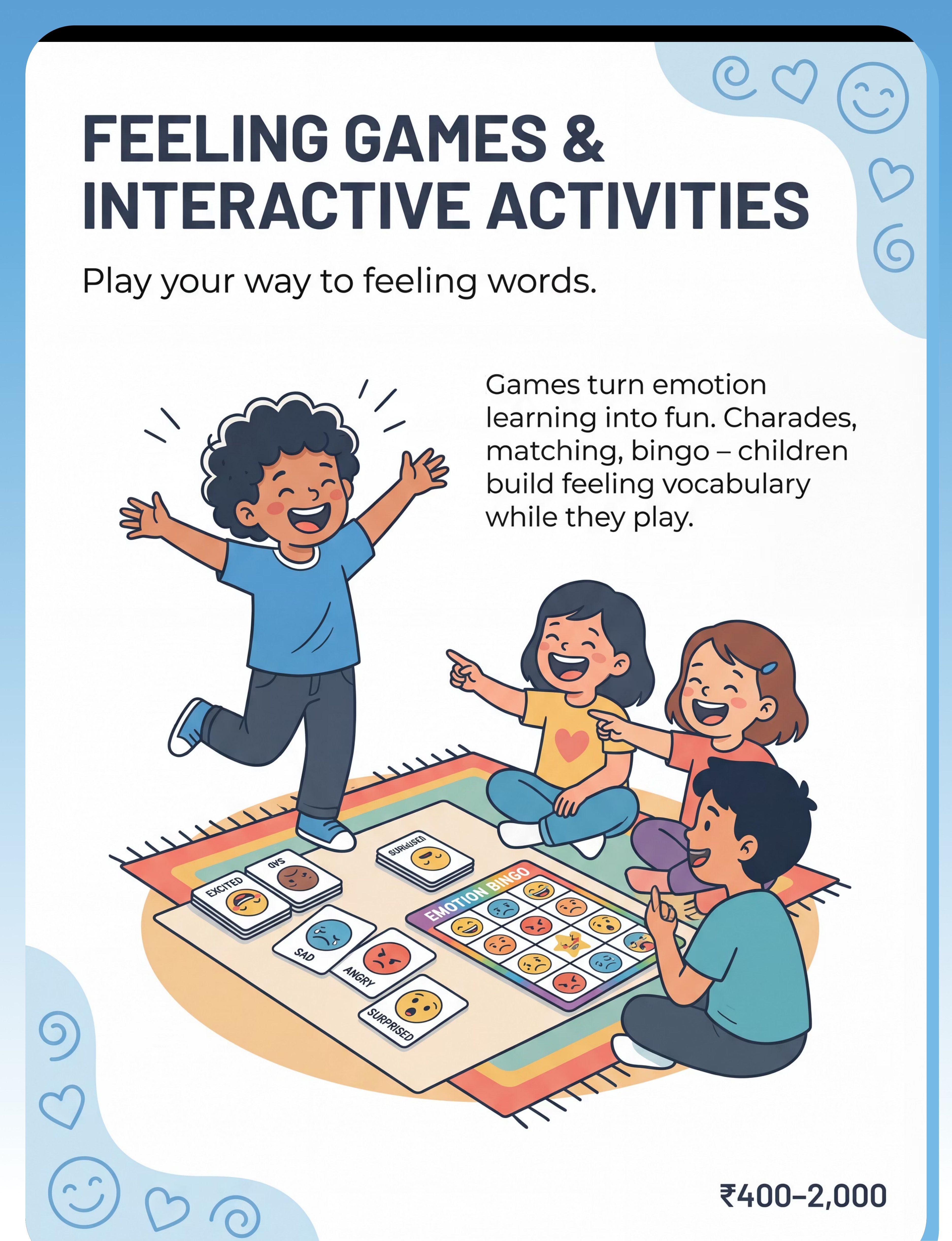
Feeling Games and Interactive Activities
Play your way to feeling words
8
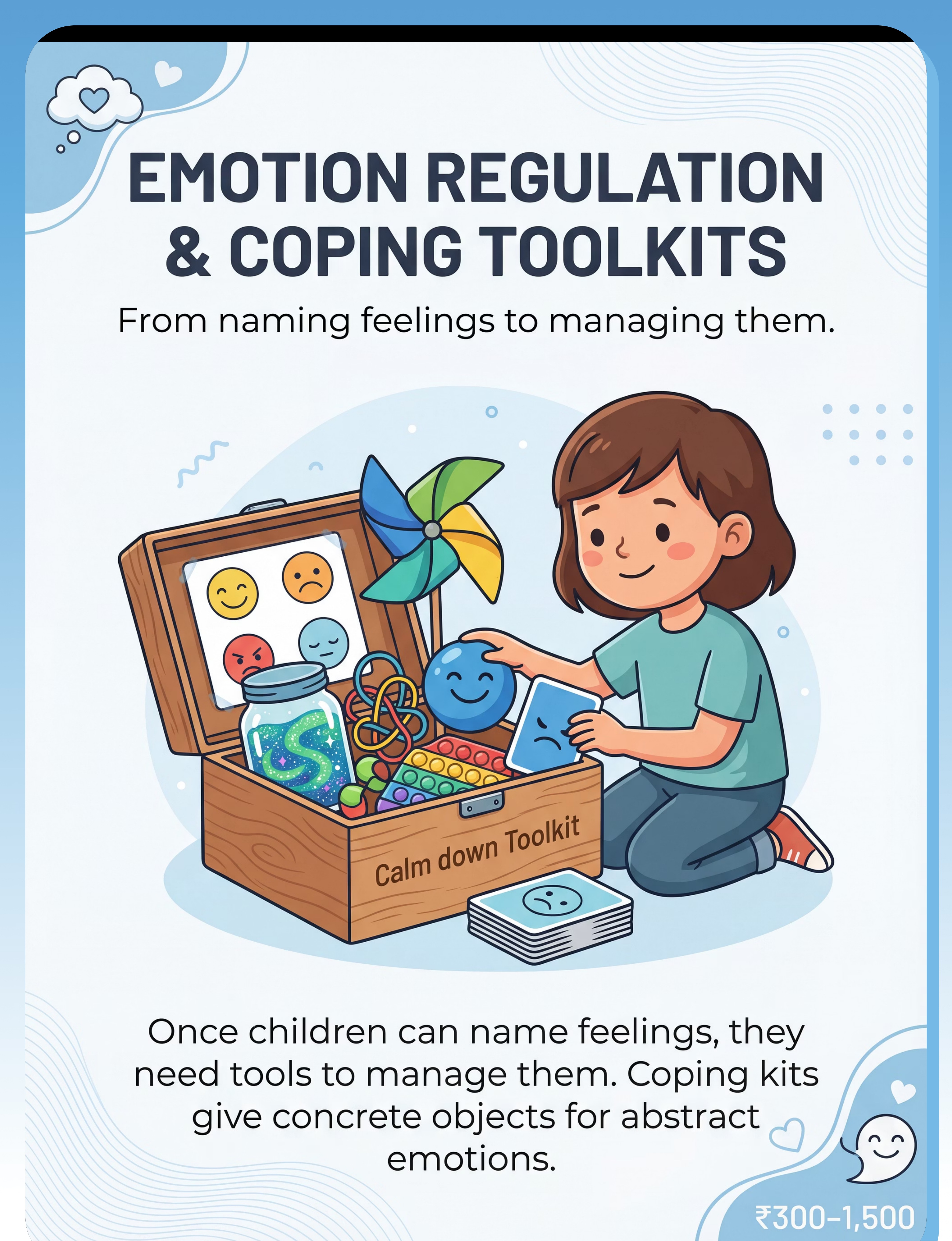
Emotion Regulation and Coping Toolkits
From naming feelings to managing them
9
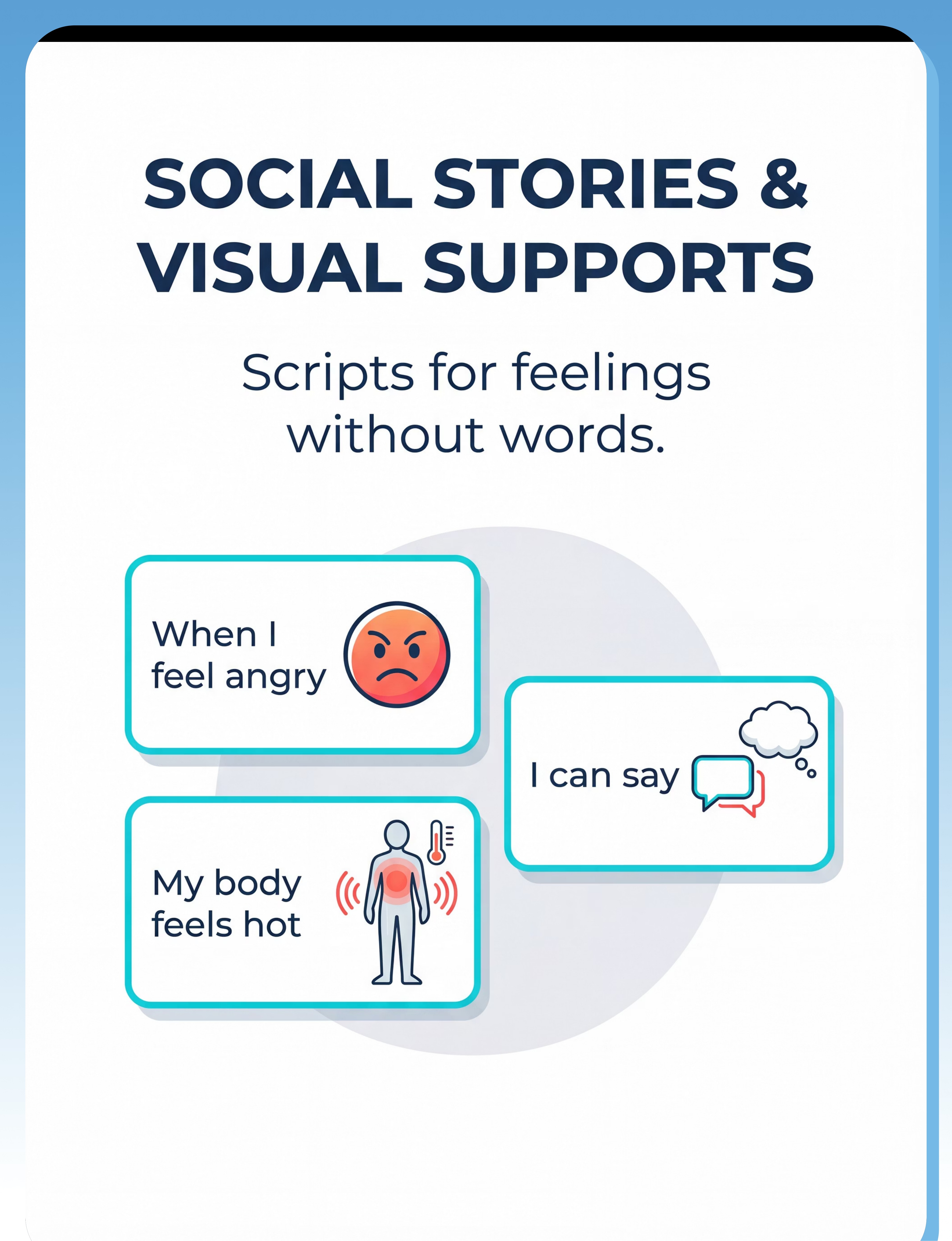
Social Stories and Visual Supports
Scripts for feelings without words
Material 1 of 9
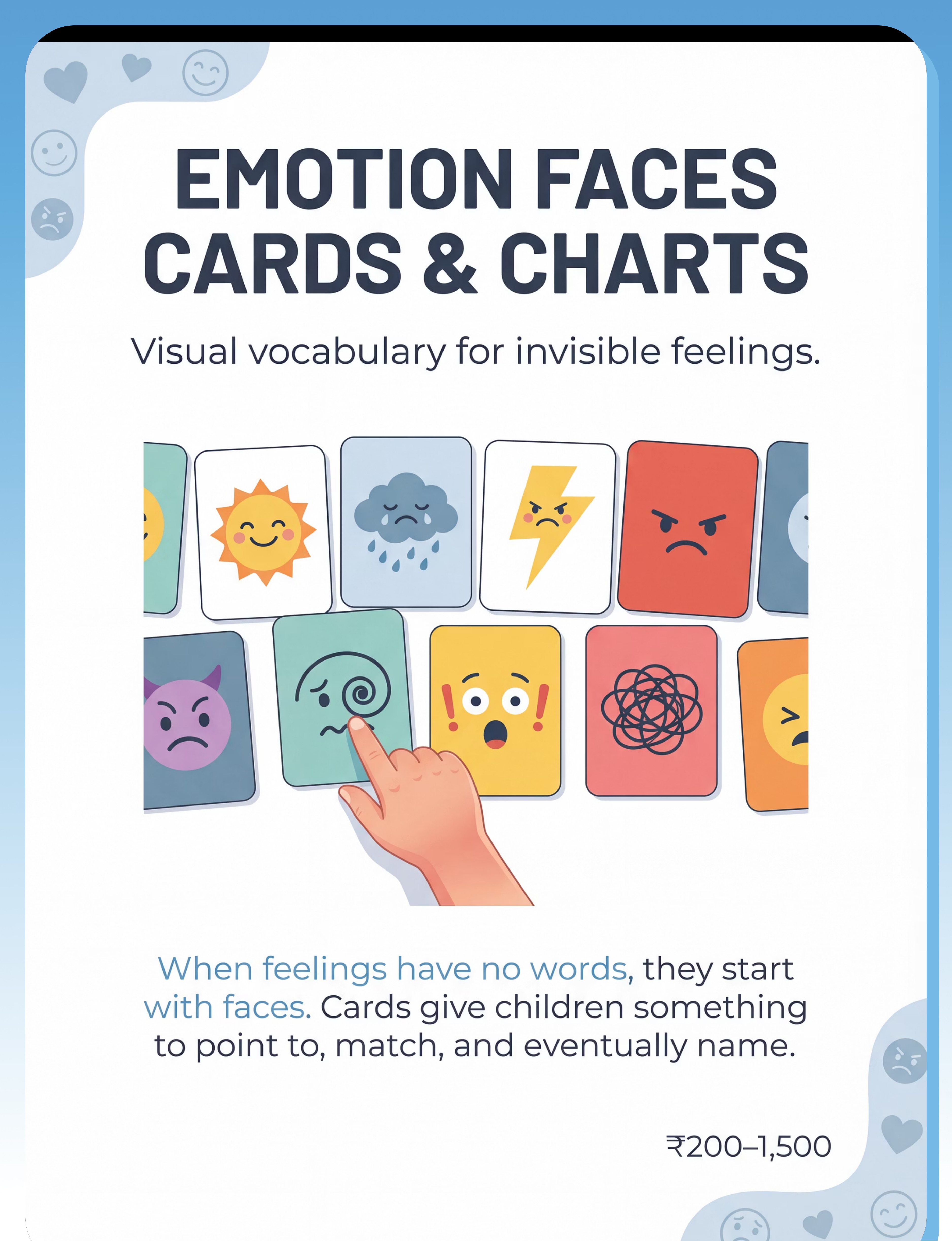
Emotion Faces Cards and Charts
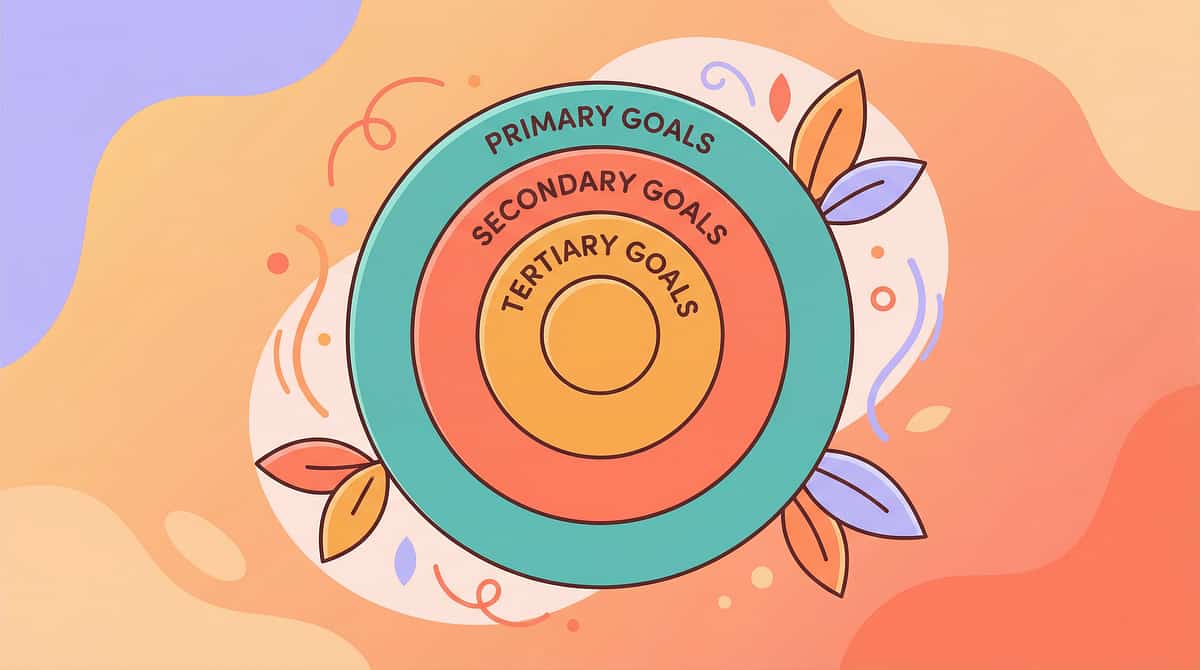
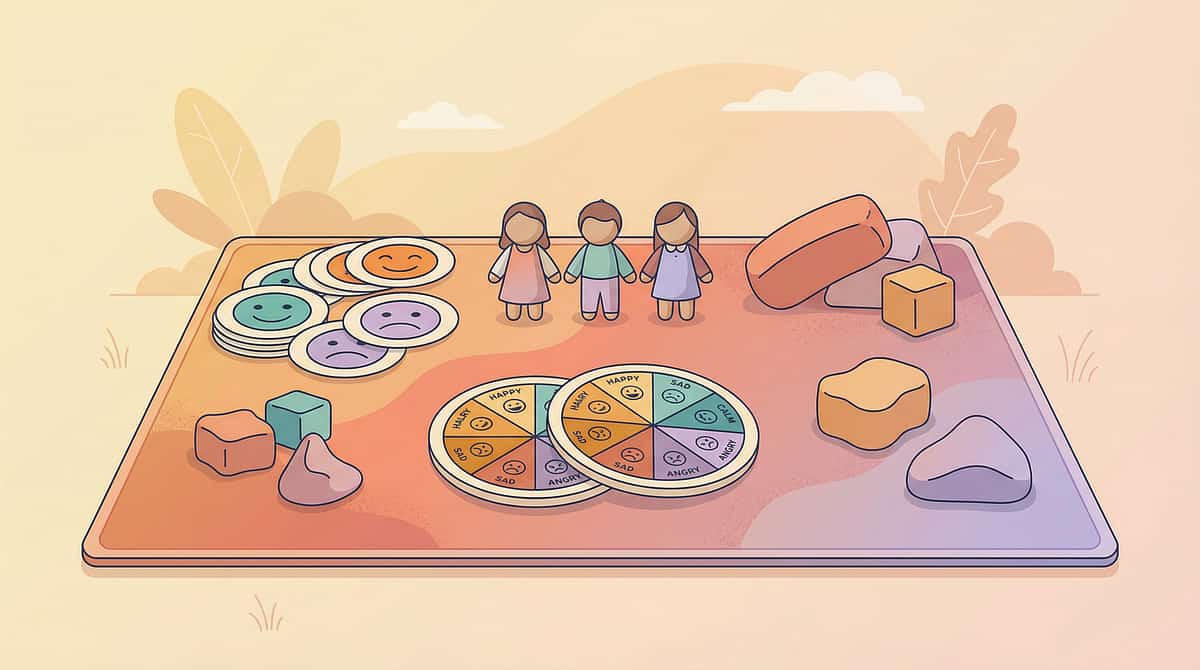
Visual vocabulary for invisible feelings. When feelings have no words, children can start with faces. Emotion cards give children something to point to, match, and eventually name — bypassing the demand for language before it's available.
Why Emotion Faces Cards Work
The Science Behind It
Emotion faces provide external visual references for internal states. Many children struggle to connect the abstract concept of an emotion with what they're experiencing. Photo-realistic emotion cards show real facial expressions; illustrated cards simplify features for easier recognition. Charts display multiple emotions together for comparison and selection.
These visual supports help children identify emotions in others first — which is easier — before identifying their own. They also provide a pointing vocabulary for children who can't yet verbalize: "Show me how you feel" with a card selection requires far less than finding words independently.
Quality matters: Exaggerated cartoon faces may not transfer to real-life recognition. Photo cards with diverse faces build better generalization across people and contexts.
What, Why, When, Where & How
What: Cards or charts showing facial expressions representing different emotions, ranging from basic (happy, sad, angry) to nuanced (disappointed, embarrassed, jealous).
Why: Children with autism often have difficulty reading facial cues. Visual references make the invisible visible — giving concrete form to abstract emotional states.
When: Use during calm moments for learning, and keep accessible during emotional moments for pointing and selection.
Where: Home, classroom, therapy room, and community settings. Post on the fridge, in the child's room, in their school folder.
How: Start with high-contrast emotions (happy vs. sad) before subtle distinctions. Use mirror play: make faces together and name them. "Show me how you feel right now."

Emotion Faces: Materials, DIY & Key Insight
🛒 What to Look For
- Photo-realistic emotion cards (diverse faces)
- Illustrated emotion charts (simple to complex)
- Emotion matching games
- Feelings thermometer or intensity scales
- Mirror for expression practice
Price Range: ₹200–1,500
🛠️ DIY Approach
Print emotion photos from the internet, cut from magazines, or take photos of family members making expressions. Create a "feelings board" with photos of people your child knows and loves.
Use mirror play: make faces together and name them. The DIY approach can be more meaningful because it uses familiar faces — your child can see emotions on people they trust.
💡 Key Clinical Insight
Start with high-contrast emotions (happy vs. sad) before moving to subtle distinctions (frustrated vs. annoyed). The goal is building bridges, not testing knowledge.
For children with autism, ensure images represent diverse faces across ages, ethnicities, and expressions. Generalization depends on variety in the input.
⚠️ Safety Note
No specific safety concerns. Ensure images are age-appropriate and culturally relevant. Avoid images that may be distressing for children with trauma histories.

Material 2 of 9
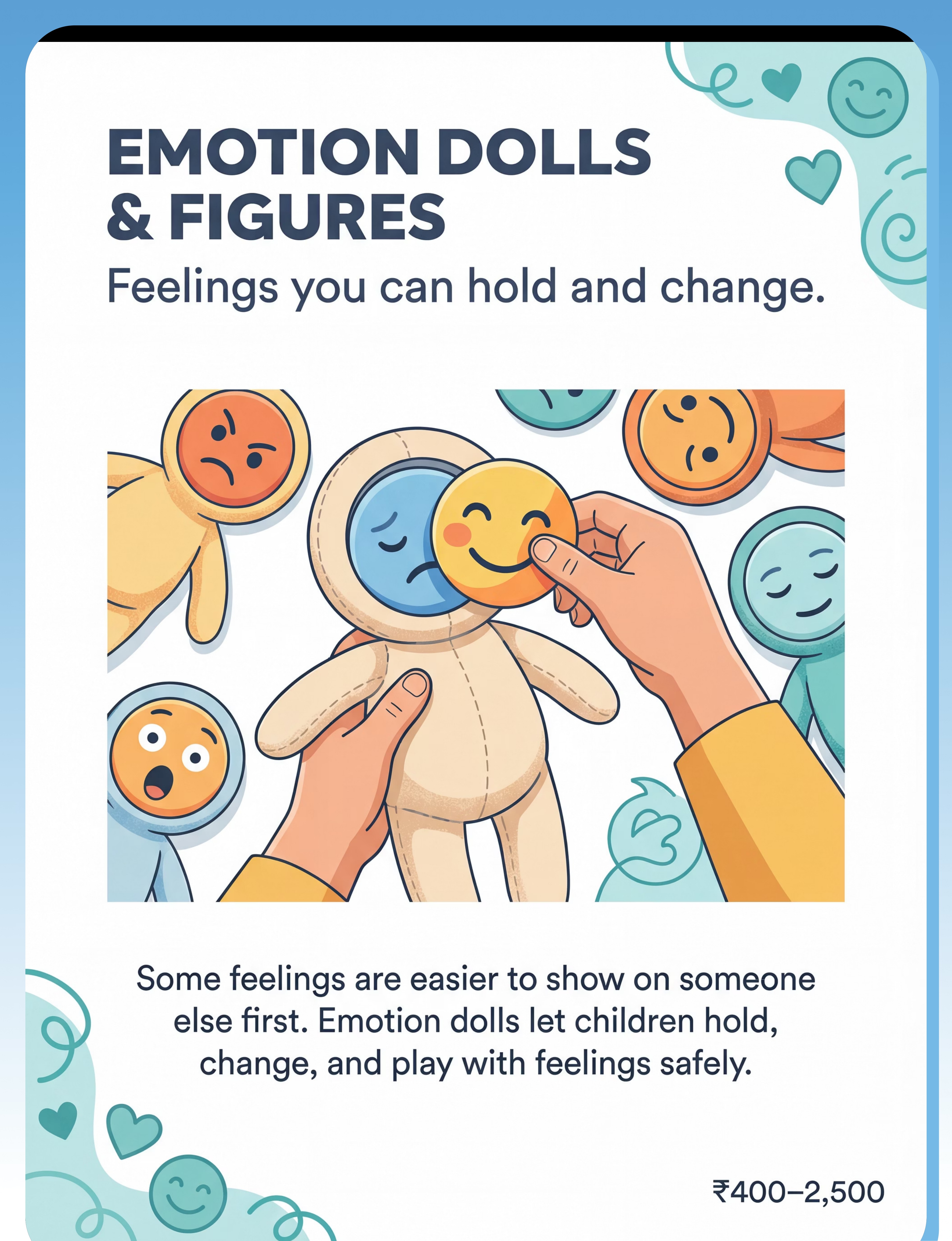
Emotion Dolls and Figures
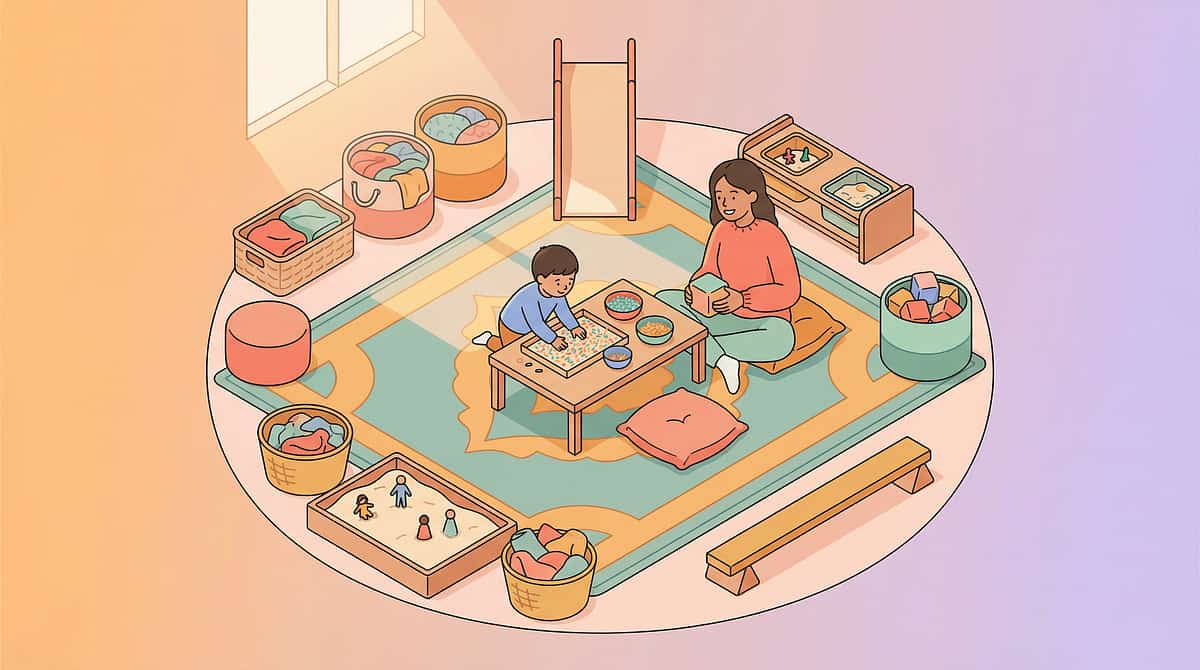
Feelings you can hold and change. Some feelings are easier to show on someone else first. Emotion dolls let children hold, change, and play with feelings safely — creating the psychological distance needed to explore difficult emotions without feeling overwhelmed.
Why Emotion Dolls Work
The Science Behind It
Three-dimensional figures with changeable expressions allow children to manipulate emotions externally — turning abstract feelings into concrete, tangible objects. Dolls with interchangeable faces or adjustable features let children "try on" different emotions at a safe remove.
Figures used in play become emotional proxies. Children often express through characters what they cannot say directly. "The doll is scared" is emotionally accessible in a way that "I am scared" is not — especially for children with autism who may experience intense self-consciousness around emotional disclosure.
Figures that can be positioned (sitting, lying down, curled up) add body language to emotional expression, teaching posture and affect simultaneously.
What, Why, When, Where & How
What: Three-dimensional figures with expressive or changeable faces — dolls, puppets, character sets, worry dolls, or poseable figures.
Why: Psychological distance provides emotional safety. Children with autism and those processing difficult experiences often access feelings more readily through a character than through direct self-reference.
When: During play sessions, therapy time, and any natural play context. Particularly useful when a child is calm — not mid-dysregulation.
Where: Home play area, therapy room, classroom emotional learning center.
How: Follow the child's lead. Don't push them to own the feelings immediately. "The doll is angry" is real progress — even before "I am angry."

Emotion Dolls: Materials, DIY & Key Insight
1
🛒 What to Look For
- Dolls with interchangeable expression faces
- Emotion figure sets (families, diverse representation)
- Worry dolls (traditional tiny figures for expressing worries)
- Puppets with expressive features
- Playmobil or similar figures for emotion scenes
Price Range: ₹400–2,500
2
🛠️ DIY Approach
Draw different expressions on wooden spoon puppets. Create paper plate face puppets with changing mouths (use a brad to attach movable parts). Pipe cleaner figures can be posed to show emotions through body language — hunched for sad, arms out for excited, curled for scared.
Low-tech works beautifully here. The investment is in time, not expense.
3
💡 Key Clinical Insight
The doll becomes a safe "other" for projection. Don't push children to own the feelings immediately — "The doll is angry" is real progress even before "I am angry." Honor the distance. Over time, bridges form naturally.
Anatomically simple figures work best — complex dolls may distract from the emotional focus.
4
⚠️ Safety Note
Check for small parts that may be choking hazards for younger children or those who mouth objects. Supervise play with small figures. Worry dolls are tiny — appropriate for children 3+ with supervision.
Material 3 of 9
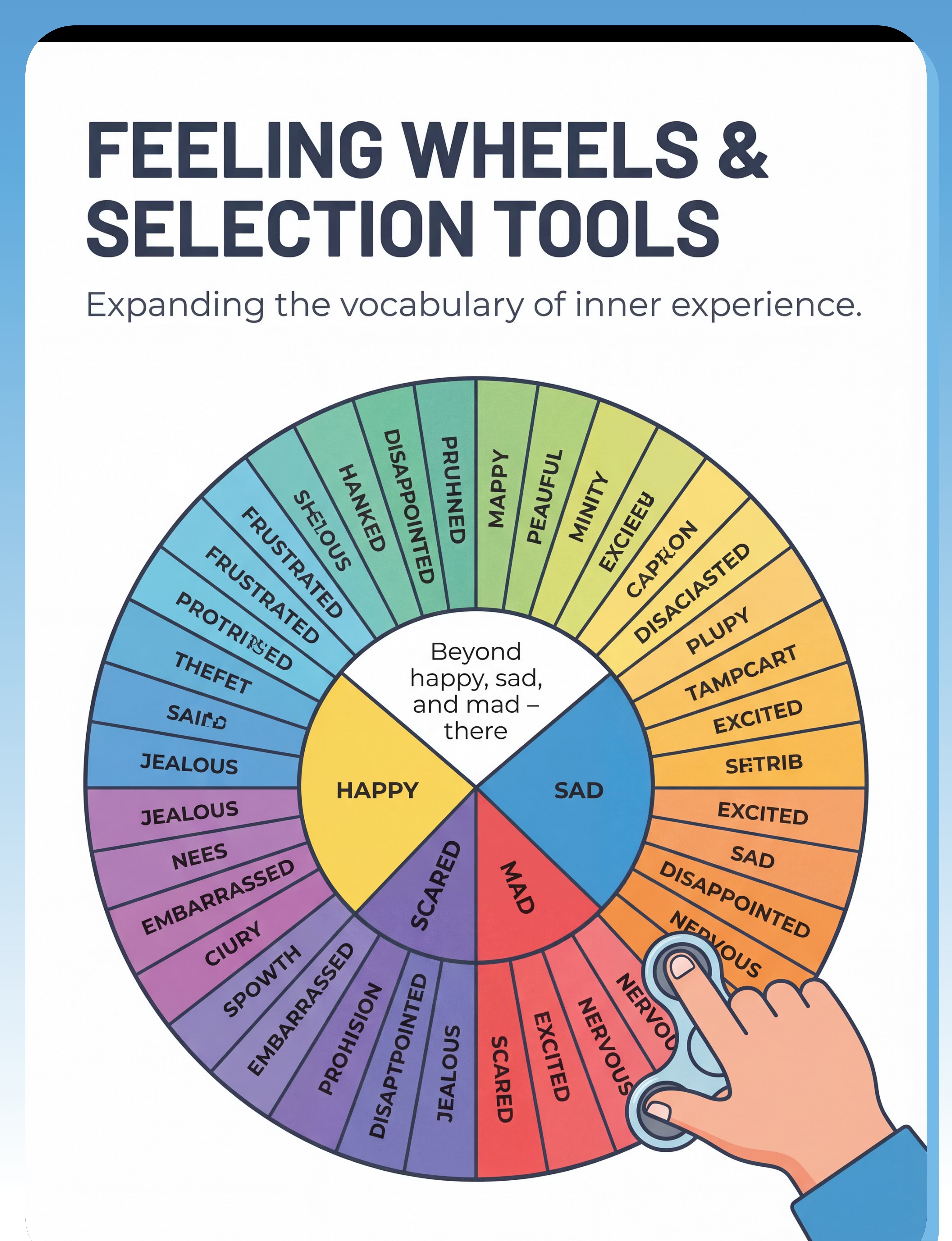
Feeling Wheels and Selection Tools
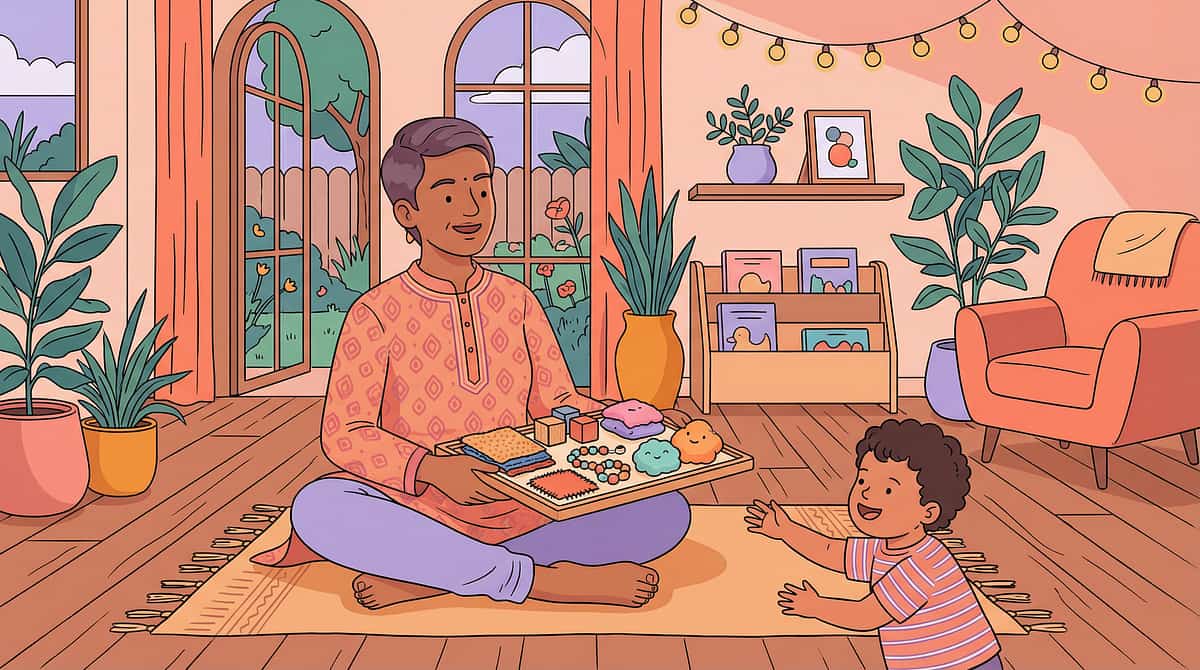
Expanding the vocabulary of inner experience. Beyond happy, sad, and mad — there's a whole world of feeling words. Feeling wheels help children discover the exact word for what's inside, revealing that emotional experience is far more nuanced and richly textured than "fine" or "terrible."
Why Feeling Wheels Work
The Science Behind It
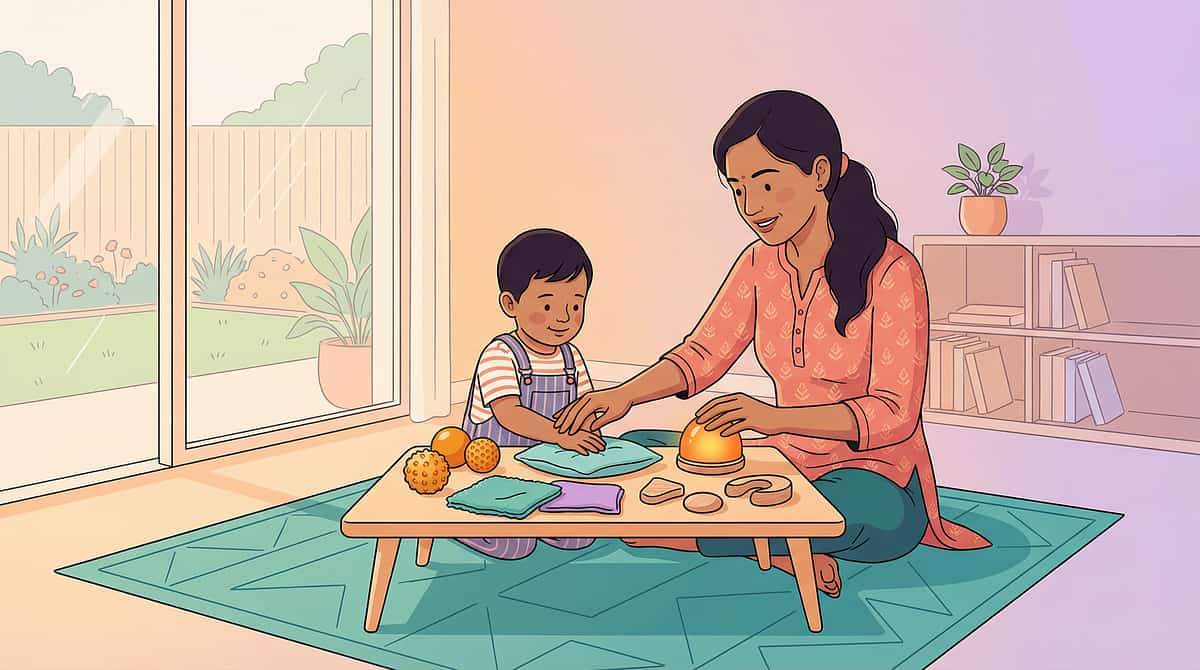
Feeling wheels organize emotions into visual categories, with basic emotions in the center and more nuanced words radiating outward. This structure teaches emotional vocabulary systematically — children learn that "frustrated" and "irritated" are types of "angry," that "terrified" and "nervous" are types of "scared."
Selection tools — spinners, sliders, pointers — add interactive engagement. The physical act of spinning or sliding to select an emotion creates a concrete moment of identification, making the abstract process tangible and memorable.
Most critically: these tools reveal the range of emotional possibilities. Many children with limited emotional vocabulary simply don't know that words like "disappointed," "embarrassed," or "jealous" exist. Exposure expands options. You can only choose from what you know.
What, Why, When, Where & How
What: Circular or visual charts organizing emotions from basic (center) to nuanced (outer rings), often with interactive spinning or selection mechanisms.
Why: Children with autism and language delays often settle for "mad" because they don't know "frustrated," "disappointed," or "jealous" exist. The wheel makes the whole emotional landscape visible at once.
When: During calm check-in moments, morning routines, therapy sessions, and after emotional events during reflection time.
Where: Kitchen, classroom, therapy room. Keep it visible and accessible — not stored away.
How: Begin with the center (basic emotions), explore outward gradually. "This feeling is a type of angry — which one is closest to what you feel right now?"
Feeling Wheels: Materials, DIY & Key Insight
1
🛒 What to Look For
- Feeling wheel charts (various complexity levels)
- Emotion spinners and selectors
- Mood meters with sliding indicators
- Emotion vocabulary builder card sets
- Zones of Regulation tools
Price Range: ₹300–1,200
2
🛠️ DIY Approach
Print feeling wheel templates (many available free online). Create a spinner with a paper plate and a brad fastener. Make a simple sliding scale with basic emotions on index cards attached to a ruler or strip of cardboard.
The wheel structure itself — core emotions branching into variations — teaches the concept even in the simplest homemade version.
3
💡 Key Clinical Insight
Children often settle for "mad" because they don't know "frustrated," "disappointed," or "jealous" exist. Exposure to vocabulary creates options — and options create emotional agency. The wheel doesn't just identify; it expands what's possible.
4
⚠️ Safety Note
Spinners may have small brad or pin parts. Supervise younger children appropriately. Choose age-appropriate vocabulary complexity — overwhelming a child with 72 words at once defeats the purpose.
Material 4 of 9
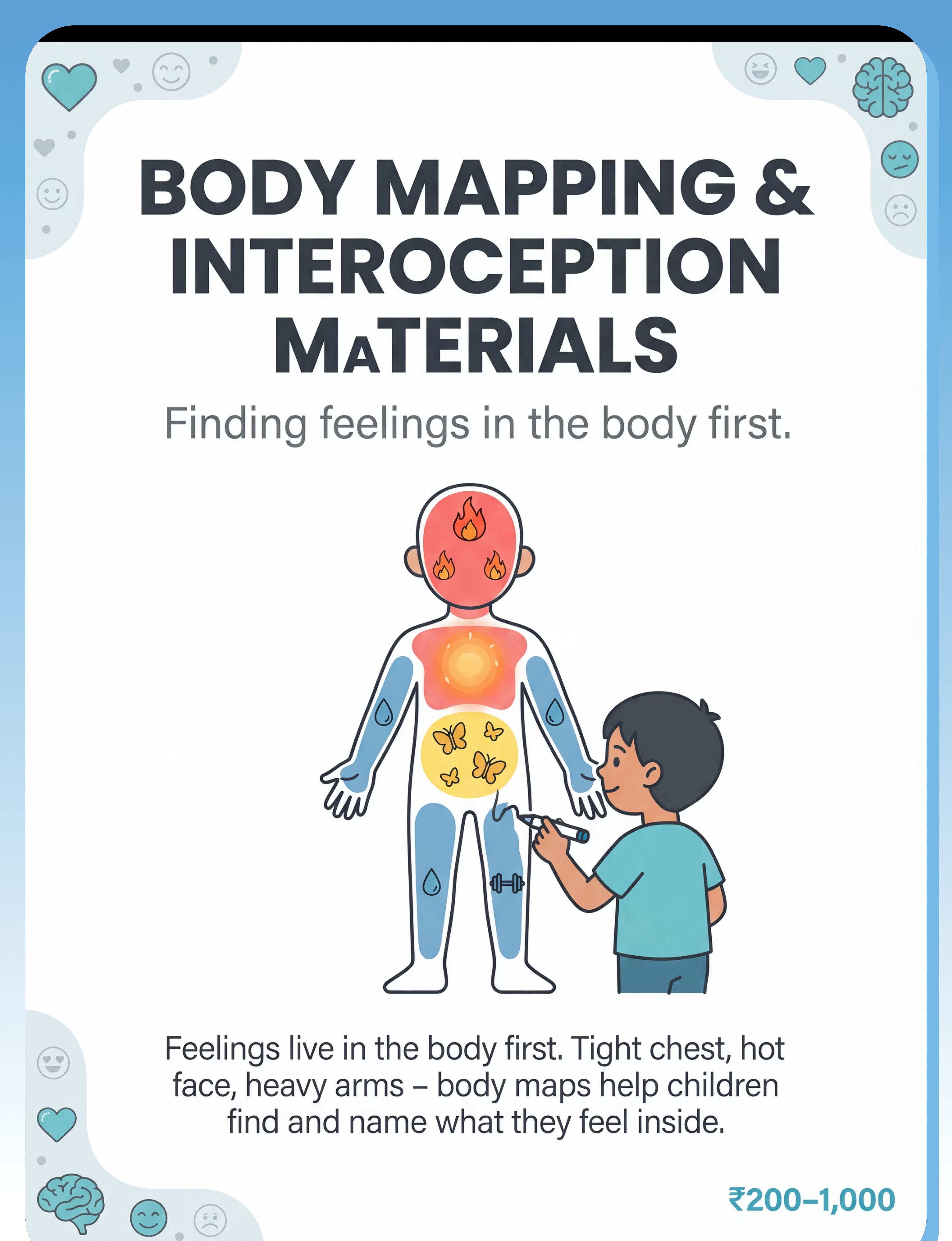
Body Mapping and Interoception Materials
Finding feelings in the body first. Feelings live in the body before they reach the mind. Tight chest, hot face, heavy arms — body maps help children find and name what they feel inside, using the body as the gateway to emotional awareness.

Why Body Mapping Works
The Science Behind It
Emotions live in the body before they reach the mind. Anxiety is a tight chest and racing heart. Anger is a hot face and clenched fists. Sadness is heavy limbs and low energy. Many children with emotion expression difficulties have poor interoception — they don't notice or interpret these body signals.
Body mapping materials help children connect body sensations to emotions: "Where do you feel angry in your body?" Children color body outlines, place stickers where they feel emotions, or use zone-based body maps. This builds the interoception-to-emotion bridge that makes emotional awareness possible.
For children who can't answer "How do you feel?" — the question "What does your body feel?" is often more accessible. The body is concrete. Emotion is abstract. Start where the child can reach.
What, Why, When, Where & How
What: Outline drawings of a body that children use to mark, color, or annotate where different emotions are felt physically.
Why: Many children with autism have interoceptive differences — they don't register internal body signals reliably. Explicit body mapping practice builds this sensory awareness, which is the foundation of all emotion recognition.
When: Practice during calm states ("Where do you feel happy in your body?") so the skill is available during emotional moments.
Where: Therapy sessions initially, then home. Keep a blank body outline accessible for check-ins.
How: Use colors for different emotions. "Color where you feel that feeling." Build a personal "emotion body map" over multiple sessions.

Body Mapping: Materials, DIY & Key Insight
🛒 What to Look For
- Body outline templates for emotion mapping
- Interoception activity cards (Kelly Mahler curriculum)
- Body sensation–emotion matching materials
- Body-based zones charts
- Tactile body awareness tools
Price Range: ₹200–1,000
🛠️ DIY Approach
Draw simple body outlines on paper for coloring. "Where do you feel scared? Color it." Use different colors for different emotions — build a color key together. Create body sensation check-in cards. Any body outline becomes an emotion mapping tool with a simple question.
💡 Key Clinical Insight
Some children access emotions more easily through "My tummy feels tight" than "I feel worried." The body is the gateway to emotional awareness for many children — especially those with autism and sensory processing differences. Body-first approaches meet children where they can actually reach.
⚠️ Safety Note
Body awareness activities should be presented sensitively, especially for children with trauma histories. Never force or require body disclosure. Follow the child's lead — make it curious and playful, never clinical or demanding.
Material 5 of 9
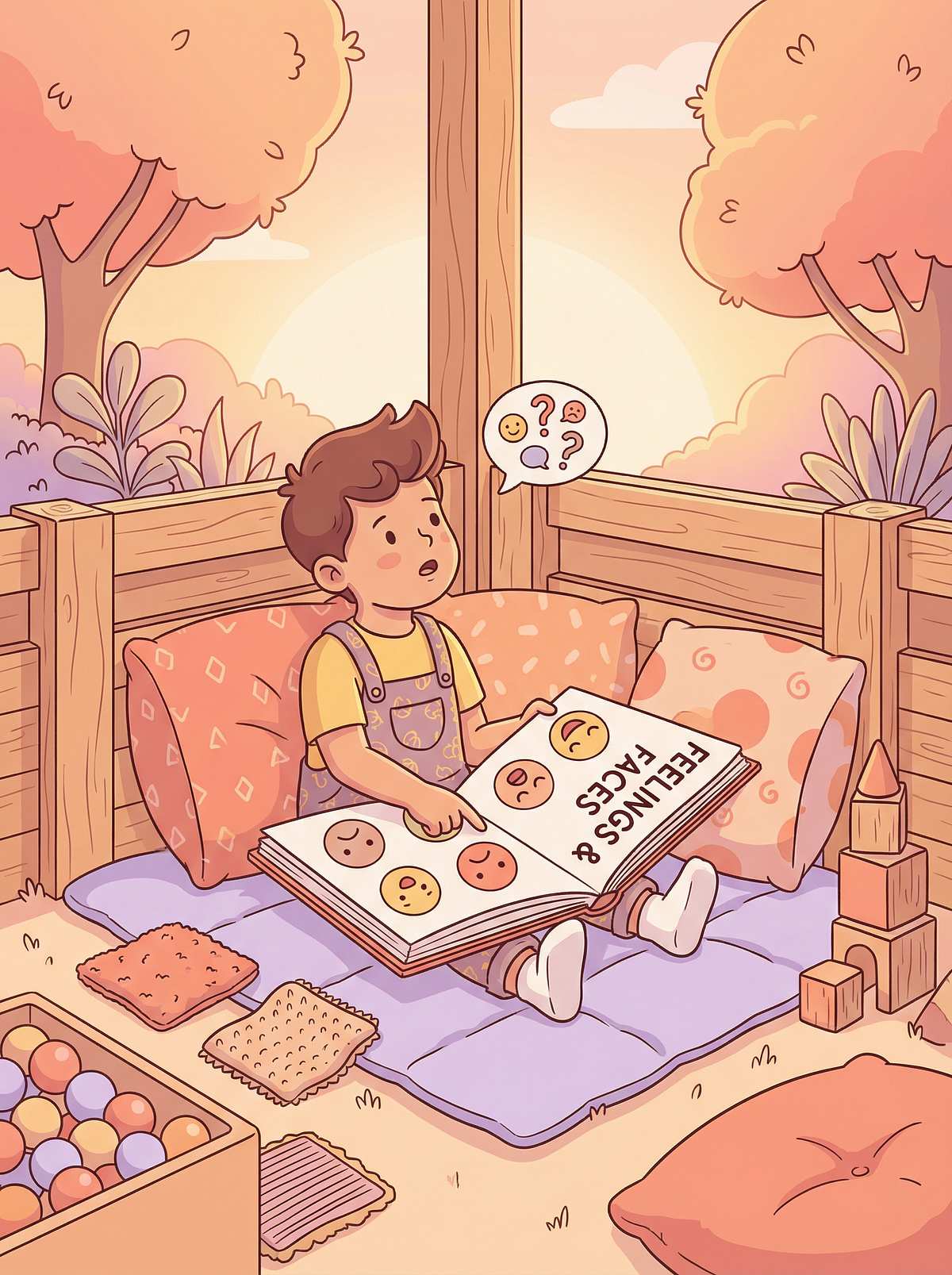
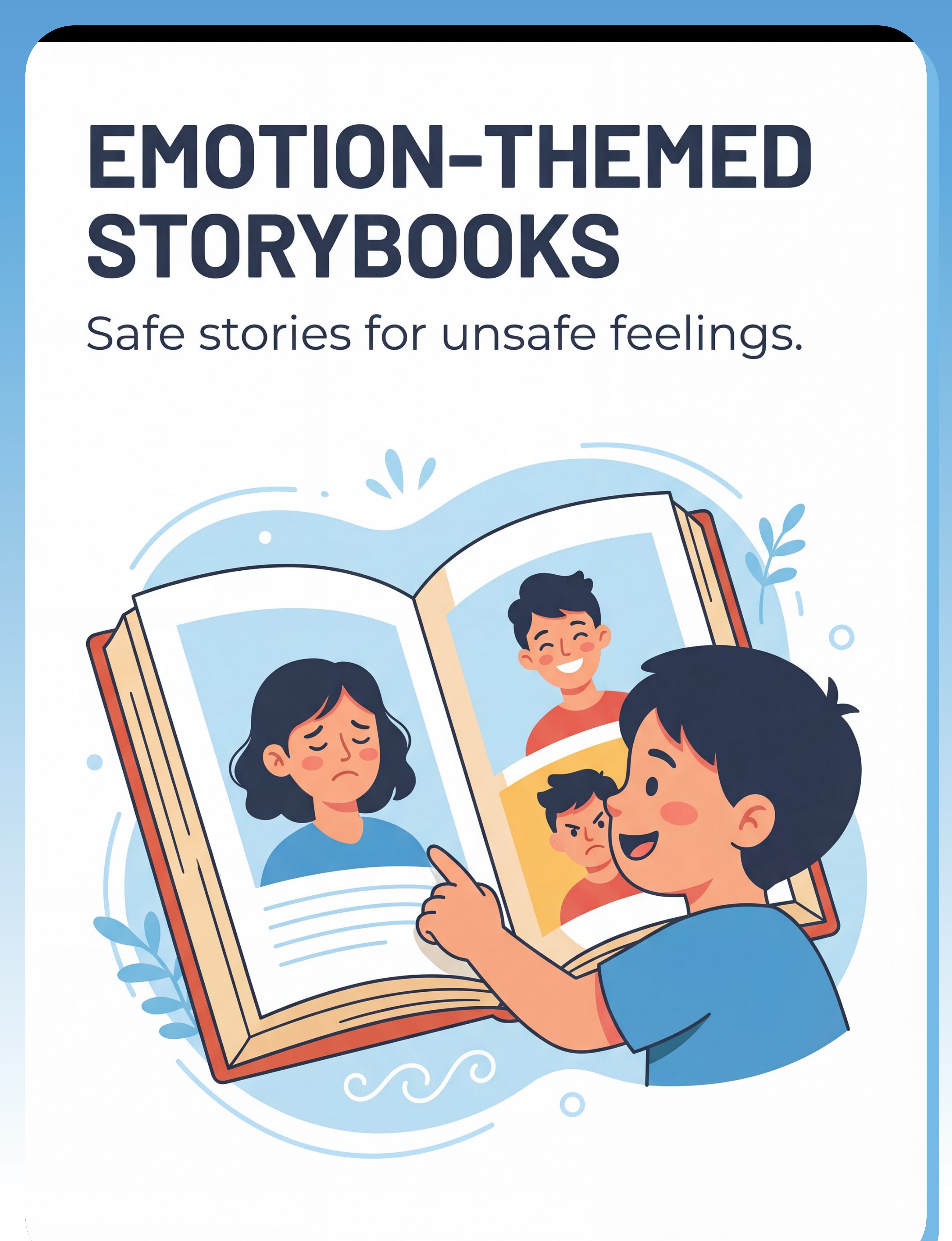
Emotion-Themed Storybooks
Safe stories for unsafe feelings. Stories let children meet feelings safely — in characters they care about. Books build emotional vocabulary and understanding without overwhelm, creating learning opportunities without emotional activation.
Why Emotion Storybooks Work
The Science Behind It
Stories provide safe containers for exploring emotions. Characters experience feelings that children may not be able to name in themselves — but recognize with a flash of connection: "That's how I feel!"
Books normalize emotions ("Everyone feels scared sometimes"), model expression ("The character said 'I need help'"), and show natural consequences ("When she used her words, her friend understood"). Reading about emotions is lower-stakes than experiencing them in the moment, creating learning windows without flooding the child's nervous system.
Quality emotion books go beyond labeling to explore causes, body sensations, and helpful responses. Series featuring the same characters build relationship and predictability — repeated emotional learning through trusted narrative companions.
What, Why, When, Where & How
What: Picture books and chapter books centered on emotional experiences, featuring relatable characters navigating feelings with support.
Why: Narrative distance allows children — especially those with autism — to explore difficult emotions through characters before connecting to their own experience. It's less threatening to discuss the bear's anger than one's own.
When: Bedtime reading, quiet time, proactively before anticipated challenging situations, and after emotional events as a processing tool.
Where: Home, classroom, therapy. Build a small "feelings library" in an accessible spot.
How: Pause and ask: "How do you think she feels?" "Have you ever felt like that?" "What could he do?" These questions build bridges from the story to the child's own inner world.
Emotion Storybooks: Materials, DIY & Key Insight
🛒 What to Look For
- Emotion-themed picture books (curated collection)
- Social stories about specific emotions
- Feelings series (characters encountering various emotions)
- Interactive emotion books (lift flaps, mirrors)
- Personalized emotion stories
Price Range: ₹200–800 per book
🛠️ DIY Approach
Create simple feeling stories using photos of the child or family. "Sometimes I feel mad. My face looks like this. My body feels hot. I can take deep breaths." Personalized stories are extraordinarily powerful — children see themselves in the narrative and recognize their own experience immediately.
💡 Key Clinical Insight
The conversation about the book matters as much as the book itself. "How do you think he feels?" "Have you ever felt like that?" "What could he do?" — these questions build the bridges from fiction to the child's inner world. Read less, discuss more.
⚠️ Safety Note
Choose books appropriate for child's developmental level. Avoid content that may be triggering for children with trauma histories without proper support in place. Preview books before sharing with children who have experienced loss, abuse, or medical trauma.

Material 6 of 9
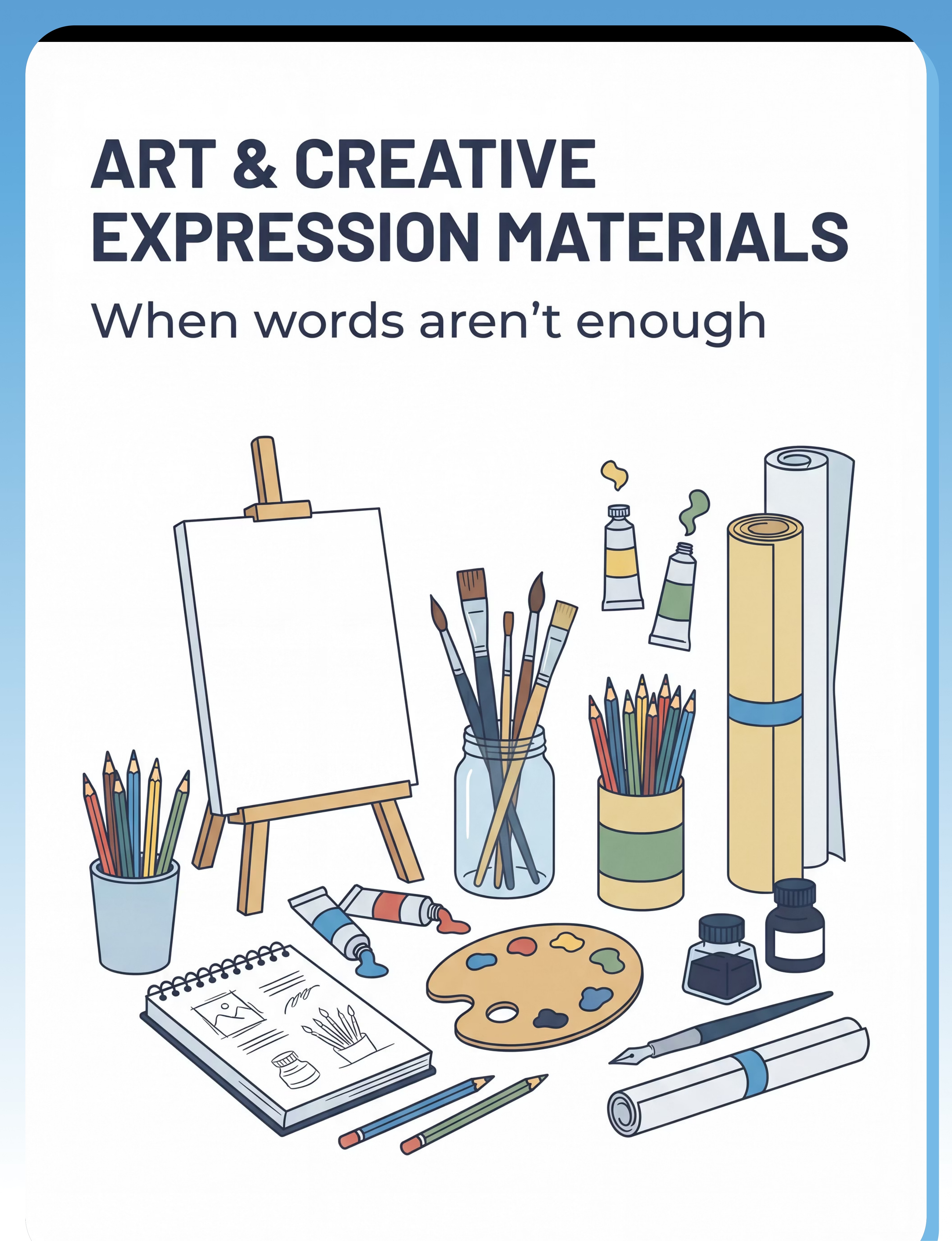
Art and Creative Expression Materials
When words aren't enough, colors speak. Some feelings are too big for words. Art materials let children get feelings out through color, shape, and movement — no words required. Art bypasses language demands entirely, accessing emotional expression through creation.

Why Art Expression Works
The Science Behind It
For many children, emotions are easier to express through art than words. Art bypasses language demands and accesses emotional expression through color, shape, movement, and creation. Children who cannot say "I'm angry" can pound red paint onto paper. Children who cannot describe sadness can create a blue, drooping figure.
Art provides externalization — the feeling moves from inside to outside, becoming visible and shareable. This is profoundly relieving for children who feel trapped by their inability to verbalize.
Process matters more than product. The act of expressing through materials is therapeutic regardless of artistic result. Varied materials offer different modes: painting for big emotions, clay for anger and frustration, collage for complex mixed feelings that don't fit into a single emotion label.
What, Why, When, Where & How
What: Open-ended art supplies — paint, clay, playdough, collage materials, drawing tools — used for emotion-driven, non-directive creative expression.
Why: Children with autism, language delays, and anxiety often have rich inner emotional lives that they cannot access verbally. Art gives those experiences a form, a color, a shape — a way out.
When: Proactively as a regular expressive practice. Also as a discharge valve during or after emotionally intense periods.
Where: Dedicated art space at home, therapy room, classroom. Access matters — supplies should be reachable, not packed away.
How: "Show me how you're feeling with these colors." Then step back. Watch. Don't interpret or judge the art. Ask: "Tell me about this."

Art Materials: Materials, DIY & Key Insight
🛒 What to Look For
- Paints and painting supplies (tempera, watercolor, finger paint)
- Modeling clay and playdough
- Collage materials (magazines, colored paper, glue)
- Drawing and coloring materials
- Sensory art supplies (finger paints, textured materials)
Price Range: ₹300–1,500
🛠️ DIY Approach
Basic art supplies work perfectly: paper, crayons, paint, playdough made at home (flour, salt, water, food coloring). The materials don't need to be special. The invitation to express through art is what matters. "Show me how you're feeling with these colors" costs nothing and opens everything.
💡 Key Clinical Insight
Don't interpret or judge the art. Ask: "Tell me about this." "What color is that feeling?" "What's happening here?" The child is the expert on their own expression. Your role is to witness and wonder — not to decode or evaluate.
⚠️ Safety Note
Ensure all art materials are non-toxic and age-appropriate. Supervise younger children with scissors and small materials. Check paint and clay products for safety certifications appropriate for your child's age and any oral sensory tendencies.

Material 7 of 9
Feeling Games and Interactive Activities
Play your way to feeling words. Games turn emotion learning into fun. Charades, matching, bingo — children build feeling vocabulary while they play, without the self-consciousness of direct emotional instruction.
Why Emotion Games Work
The Science Behind It
Games make emotion learning engaging rather than therapeutic-feeling. Children who resist "feelings talk" may engage enthusiastically with emotion games. The play context reduces pressure and creates natural opportunities for emotion vocabulary practice without the emotional activation of direct discussion.
Game formats include emotion charades (acting out feelings), emotion bingo (matching expressions), emotion memory (pairing feeling faces), and emotion board games (moving through emotional scenarios). Each format builds different skills — charades builds expression, matching builds recognition, scenarios build understanding.
Games also create shared experiences — playing emotion games with parents or siblings builds family emotional literacy together. Repeated exposure through game play builds recognition and vocabulary through engagement rather than instruction.
What, Why, When, Where & How
What: Structured play activities with emotion content — charades, bingo, matching, memory, board games, dice games — designed to build emotional vocabulary through repeated, playful engagement.
Why: For children with autism who resist direct emotional conversation, the game format provides scaffolding and reduces vulnerability. Emotions become part of play, not a lesson to endure.
When: Family game nights, therapy sessions, classroom community building times, and transitions that need bridging.
Where: Home, school, therapy. Games work particularly well in group settings where social modeling adds another layer of learning.
How: Play alongside — don't just facilitate. Your own participation normalizes talking about feelings. When you act out "embarrassed" in charades, you show that emotions are safe to name.

Emotion Games: Materials, DIY & Key Insight
🛒 What to Look For
- Emotion charades cards
- Feelings bingo games
- Emotion matching and memory games
- Social-emotional board games
- Emotion dice and spinners
Price Range: ₹400–2,000
🛠️ DIY Approach
Create emotion charades cards by writing feeling words on index cards. Make a feelings bingo board with a free grid template. Play "Guess the Feeling" using facial expressions in the mirror. Adapt any standard matching game with emotion cards — homemade or printed. Emotion games are genuinely easy and cost-effective to DIY.
💡 Key Clinical Insight
Games normalize talking about emotions. When feelings are part of play, they become part of regular conversation more easily. The goal isn't just learning emotion words during the game — it's making emotional vocabulary a comfortable, everyday part of family communication.
⚠️ Safety Note
Ensure games are age-appropriate. Small game pieces may be choking hazards for younger children. For children with competitive anxiety, choose cooperative game formats over competitive ones — connection, not winning, is the goal.
Material 8 of 9
Emotion Regulation and Coping Toolkits
From naming feelings to managing them. Once children can name feelings, they need tools to manage them. Coping kits give concrete objects for abstract emotions — bridging expression to regulation in a way that children can own and operate themselves.
Why Coping Toolkits Work
The Science Behind It
Expression and regulation are deeply connected: children who can express emotions can also begin to regulate them. Coping toolkits contain concrete objects for managing emotions — stress balls for squeezing, calm-down jars for watching, breathing tools for regulating, fidgets for redirecting energy.
Making emotions tangible through tools externalizes the experience: "I'm using my calm-down tool" is simultaneously expression and action. The child names their state and takes agency over it in the same moment.
Toolkits that children help create have special power — choosing their own coping objects builds ownership and genuine agency. These materials bridge the space between naming a feeling and actually doing something about it.
What, Why, When, Where & How
What: A personalized collection of sensory and calming tools that a child selects and owns for managing overwhelming emotions.
Why: Children with autism often experience emotion dysregulation as a sensory-emotional cascade. Concrete tools give them a physical action to take when verbal processing is unavailable — bypassing the language demand entirely.
When: Introduced and practiced during calm states. Made accessible before emotional escalation. Reviewed and refreshed regularly so the child knows and trusts their tools.
Where: Everywhere the child goes — home, school, therapy. A portable kit in a small pouch travels with the child.
How: Build it together. Let the child choose. "Which of these helps you feel calmer?" Ownership increases use. Practice using tools during calm — so they're available during the storm.
Coping Toolkits: Materials, DIY & Key Insight
1
🛒 What to Look For
- Stress balls and squeeze toys
- Calm-down jars / sensory bottles
- Breathing tools (pinwheels, Hoberman spheres)
- Fidget and sensory items
- Personalized coping cards or choice boards
Price Range: ₹300–1,500
2
🛠️ DIY Approach
Build a personalized calm-down box: stress ball (balloon filled with flour or rice), calm-down jar (water + glitter glue in a sealed bottle), breathing pinwheel (paper and straw), favorite fidget, comfort object, feeling cards. The personalization matters far more than purchased items — a child who helps build their box trusts it.
3
💡 Key Clinical Insight
Let children choose their tools — ownership increases use. A toolkit built together becomes "my tools" rather than "things grown-ups gave me." Practice during calm so that when the storm comes, the tools feel familiar. You can't learn to swim during the flood.
4
⚠️ Safety Note
Inspect all items for small parts or choking hazards. Ensure sensory bottles are securely sealed with glue — not just the lid. Check stress balls and squeeze toys regularly for tears or breakage. Replace worn items promptly.
Material 9 of 9
Social Stories and Visual Supports
Scripts for feelings without words. Some children need the words written down. Social stories and visual supports provide scripts when emotions take words away — offering structured scaffolding for expression in the moments when language is hardest to access.
Why Social Stories Work
The Science Behind It
Social stories present information about emotions and expression in simple, concrete, visual formats. They describe situations, expected feelings, and appropriate responses: "When someone takes my toy, I might feel angry. Angry feels hot. I can say 'I'm angry' or 'I need help.'"
Visual supports — cue cards, visual scripts, first-then boards — prompt expression in the moment. A card that says "I feel ___" with emotion options below provides scaffolding precisely when words are hardest to find. These materials are particularly valuable for children with autism, language delays, or anxiety who need explicit instruction in implicit social-emotional skills that neurotypical peers absorb without being taught.
What, Why, When, Where & How
What: Short, illustrated narratives describing emotional situations and appropriate responses, plus visual cue cards and scripts that support in-the-moment expression.
Why: Children with autism often need explicit instruction in social-emotional skills that are implicit for others. Social stories provide the script; visual supports make that script accessible during emotional moments.
When: Read social stories proactively — before anticipated situations. Keep visual cue cards accessible during emotional moments, not locked away.
Where: Classroom, home, therapy. Laminated cue cards can be attached to a keyring, kept in a pocket, or posted in high-need locations.
How: Write stories in first person, simple language, with photos of the child when possible. "When I feel ___, I can say ___." Personalized materials change behavior. Generic stories build knowledge.

Social Stories: Materials, DIY & Key Insight
1
🛒 What to Look For
- Social story books about emotions
- Emotion cue cards and scripts
- First-then boards for emotion situations
- Visual support templates
- Communication boards with emotion options
Price Range: ₹200–1,000
2
🛠️ DIY Approach
Create simple social stories: "When I feel ___, I can say ___." Use photos of the child, simple language, first-person perspective ("I" statements). Visual cue cards can be hand-drawn on index cards and laminated with clear tape.
Personalized materials nearly always outperform generic ones for children with autism. Your child's face, your home, your family — in the story.
3
💡 Key Clinical Insight
Social stories work best when created for specific situations the child encounters regularly. Generic stories build general knowledge. Personalized stories — written for the actual playground, the specific sibling, the real classroom — change real-world behavior.
4
⚠️ Safety Note
No specific safety concerns. Ensure materials are developmentally appropriate and directly relevant to the child's actual experiences and environments. Avoid stories about situations the child hasn't encountered — start with familiar contexts.

The Complete Expression Chain: Where Each Material Fits
Emotion expression is a multi-step process. Each material in this collection targets a specific link in the chain — from noticing body sensations all the way to communicating feelings to others. Understanding where your child struggles helps you choose the right starting point.
The Emotion Expression Starter Kit
You don't need everything at once. Start with a small, intentional collection that covers the most critical layers of the expression chain. Build gradually as your child shows readiness for more nuanced tools.
Essential Starter Kit
- Photo emotion cards (diverse faces)
- Simple feeling wheel
- Body outline for mapping
- 2–3 emotion storybooks
- Basic art supplies
- 1 emotion game
- Small coping toolkit items
Total estimated: ₹2,500–13,000 for a comprehensive collection
Budget-Friendly DIY Version
- Photos of family members making expressions
- DIY feeling wheel (free printable + brad)
- Body outline drawings on paper
- Library books about feelings
- Paper, crayons, playdough
- Homemade charades cards
- DIY calm-down box with household items
The materials are scaffolds. Relationship and attunement are the real intervention. The adult's emotional presence matters more than any purchased product.
Population Considerations: Autism Spectrum
Children on the autism spectrum often experience emotion expression difficulties through specific patterns that require tailored approaches. Understanding these patterns helps families and therapists select and use materials most effectively.
1
Alexithymia
Difficulty identifying and describing emotions is common. Children may have vocabulary but not connect it to internal experience. Body-first approaches are often more accessible than emotion-first.
2
Interoception Differences
Internal body signals may be muted, amplified, or misread. Explicit body-emotion connection teaching is essential — not assumed. Use body mapping materials early and consistently.
3
Atypical Expression
Expression may be atypical but not absent. Flat affect doesn't mean no feeling. Honor all modalities — art, movement, play — as valid expression, not just verbal communication.
4
Visual Supports Essential
Explicit, visual instruction in implicit social-emotional skills is necessary. Social stories and visual cue cards provide the scripts that neurotypical children absorb from observation.
5
Avoid Masking Pressure
Authentic expression is valued over performed expression. Never push a child to display emotions they don't feel. Genuine expression — in any form — is always the goal.

Readiness Progression: What Growth Looks Like
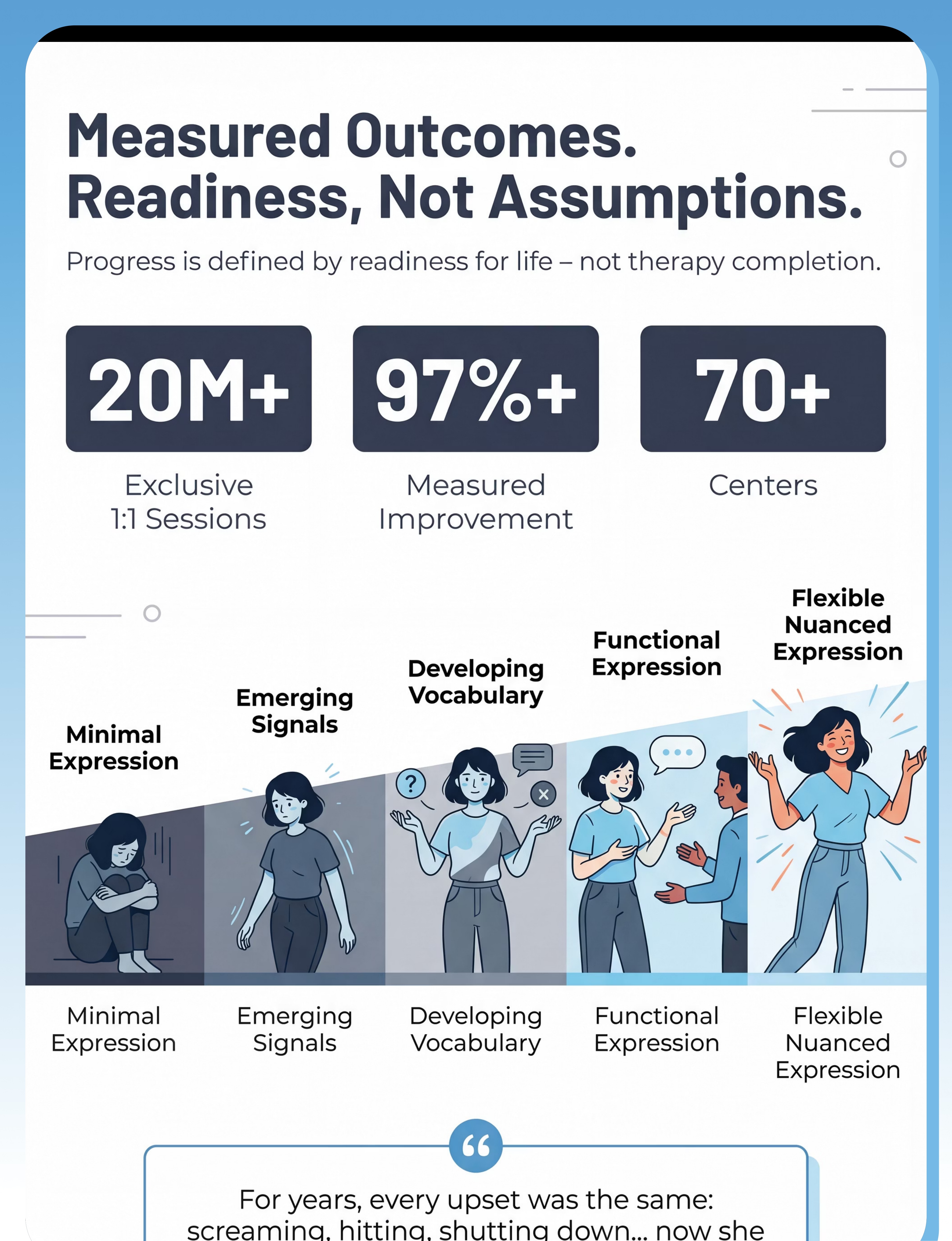
Progress in emotion expression isn't linear — but it is trackable. The Emotion Expression Readiness Index maps development from minimal expression to flexible, nuanced emotional communication.
Stage 1: Minimal Expression
Undifferentiated distress without communication; no functional emotion vocabulary; expression only through behavior. Caregivers cannot interpret emotional states.
Stage 2: Emerging Expression
Expression through behavior or basic signals; caregivers can sometimes interpret; 1–2 basic emotion words used inconsistently. Significant support still needed.
Stage 3: Developing Vocabulary
Can identify basic emotions in self or others with support; uses some feeling words; beginning body-emotion connection; expression noticeably improving.
Stage 4: Functional Expression
Can name multiple emotions; identifies feelings in self and others; expresses emotions appropriately most of the time; some nuanced vocabulary emerging.
Stage 5: Flexible Expression
Rich emotional vocabulary; clear body-to-emotion awareness; appropriate expression across contexts; can discuss emotions and coping strategies; begins to support peers.
A Parent's Journey: Real-World Evidence
"For years, every upset was the same: screaming, hitting, shutting down. We had no idea what she felt — and honestly, I don't think she did either. The therapist started with body awareness first — 'what does your tummy feel?' Then connecting sensations to feelings. Then words. It was slow, but now she'll say 'I'm frustrated because…' and I nearly cry every time. She can tell us. She doesn't have to explode anymore. She has words."
— Parent, Pinnacle Network. Illustrative case; outcomes vary by child profile and intervention consistency.
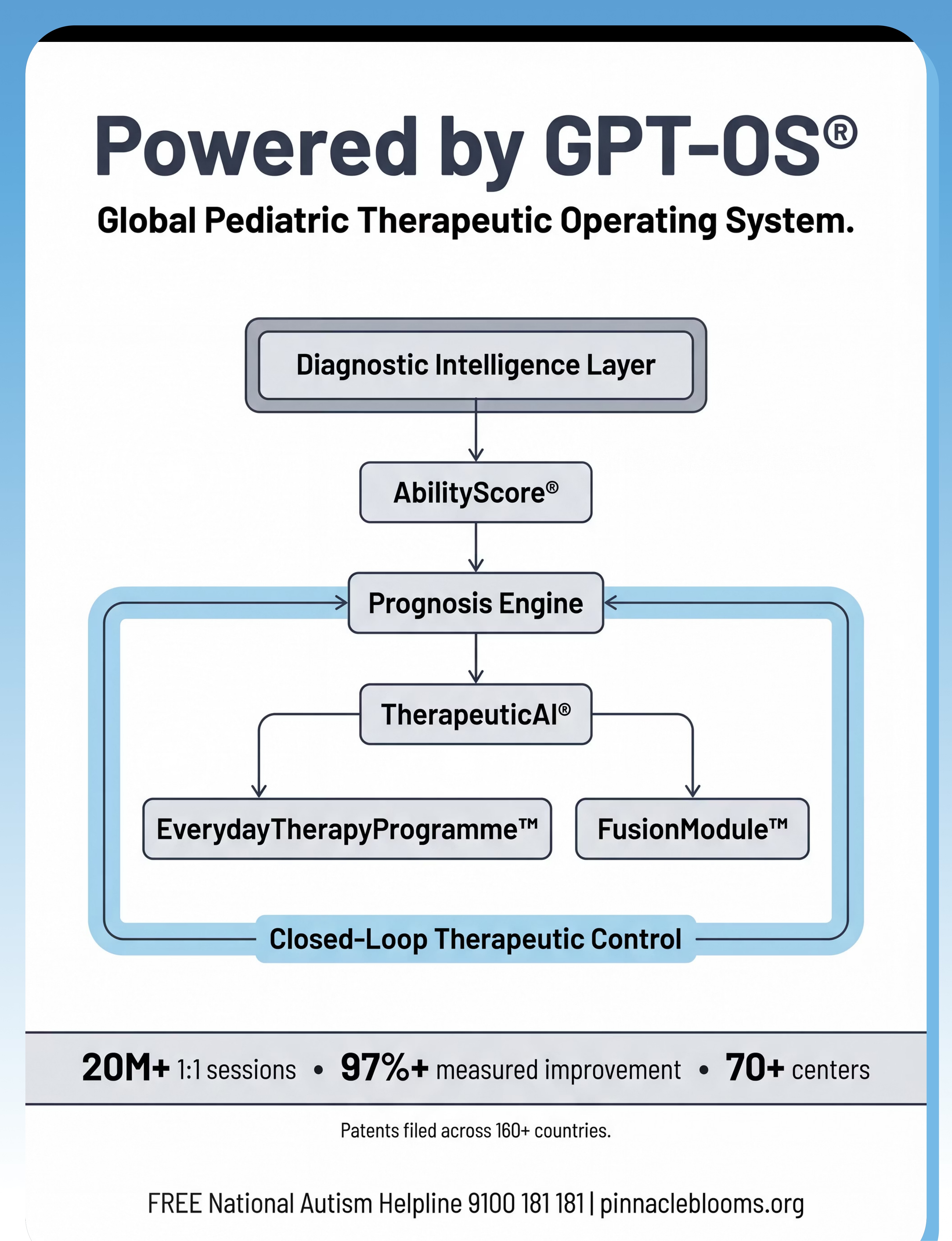
20M+
Exclusive 1:1 Sessions
Across converged therapy disciplines including OT, SLP, ABA, and Psychology
97%+
Measured Improvement
Across one or more readiness indexes in the GPT-OS® system
70+
Centers
Operating under a single unified clinical system with consistent standards
Preview of 9 materials that help with emotion expression Therapy Material
Below is a visual preview of 9 materials that help with emotion expression therapy material. The pages shown help educators, therapists, and caregivers understand the structure and content of the resource before use. Materials should be used under appropriate professional guidance.


Link copied!
Save This. Share It. Help a Family Find the Words.
If you know a family whose child struggles to express what they feel — whose meltdowns are mysterious, whose silence is heartbreaking, whose "I don't know" hides a world of feeling — share this resource with them. Expression comes before regulation. Vocabulary comes before calm. Build the bridge, piece by piece.