
In just thirty heartbeats, silence falls — and your child is already at the door.
For 49% of autistic children, the urge to wander is a silent, sudden reality. Tragically, most incidents occur within a mere 30-second window of a caregiver turning away—in the familiar sanctuary of your home, during quiet transitions, or in the spaces you trust most. Our Elopement Prevention System is a comprehensive, life-saving response, meticulously crafted by India’s largest pediatric therapy consortium: OT · ABA/BCBA · SLP · SpEd · NeuroDev Pediatrics · CRO.
Aligned with the WHO Nurturing Care Framework and UNICEF guidelines, this protocol integrates 9 clinically validated layers of safety:
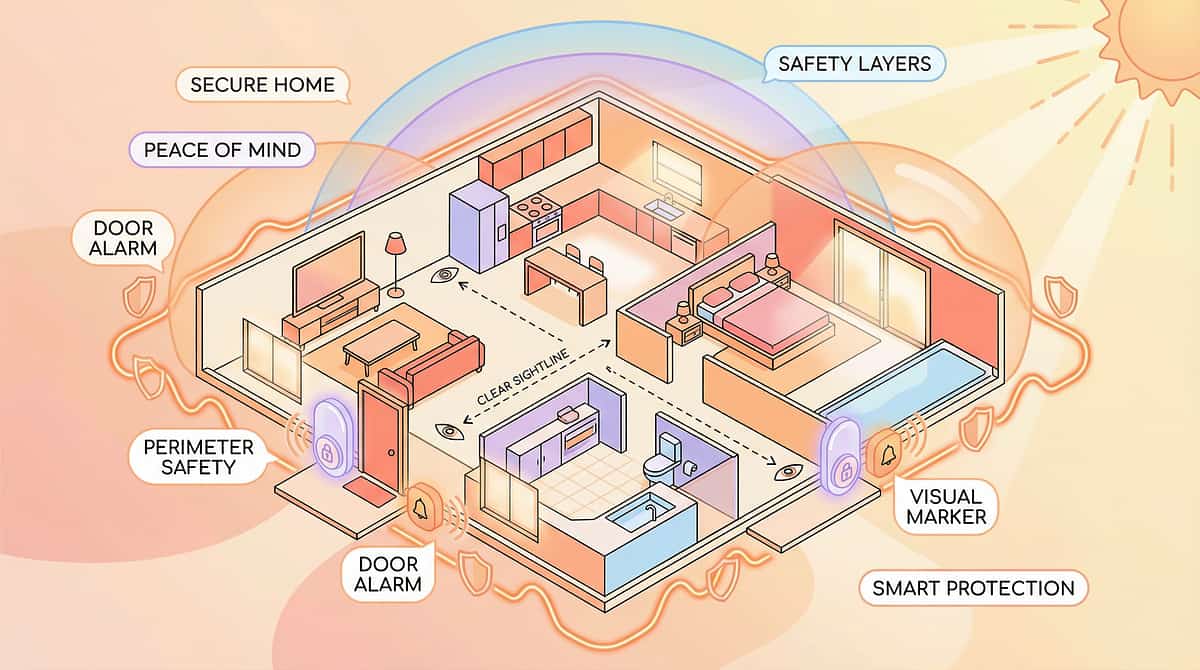
- Magnetic door & window alarms
- High-mounted specialised locks
- GPS wearable trackers
- ID & medical alert tools
- Visual boundary markers
- AAC communication devices
- Structured safe outdoor access
- Sensory regulation tools
- Community alert networks
This is not a product. This is a protocol. Built for Indian families. Validated by international research. Free helpline in 16+ languages, 24×7.
Act I — Recognition
The Recognition Moment
"He was right beside me. I blinked — and he was at the door. The latch was too high for him last week. This week, he figured it out. I wasn't even in the next room. Thirty seconds is all it takes to lose a child who doesn't understand danger."
Elopement Prevention: A 9-Material Layered Safety System. You are not failing. Your child's nervous system is driving them forward — and your vigilance is the only thing standing between them and a world that can hurt them in seconds. That changes today.
🛡️Validated by Pinnacle Blooms Consortium — OT · ABA/BCBA · SLP · SpEd · NeuroDev Pediatrics · CRO · WHO/UNICEF Aligned
📞FREE National Autism Helpline: 9100 181 181 | 16+ Languages | 24×7
📞FREE National Autism Helpline: 9100 181 181 | 16+ Languages | 24×7
Research: WHO Nurturing Care Framework (2018) — Early identification and parental awareness directly impacts outcomes.
Act I — You Are Not Alone
49% of autistic children elope. You are among millions of families living this fear.
49%
Children with ASD elope
Engage in elopement or wandering behaviour. Source: Anderson et al., 2012 | PMC3638163
#1
Cause of Death
Drowning is the leading cause of death for autistic children under 14 who elope. Source: National Autism Association | Interactive Autism Network
3.5M
Children with ASD in India
Making elopement a national-scale safety emergency. Source: Pinnacle Blooms Network® | DPIIT DIPP8651
The fear you feel — the sleepless vigilance, the bathroom visits with your child in tow, the exhaustion of constant watchfulness — is proportional to a real, documented, life-threatening risk. This is not anxiety. This is accurate threat assessment. And you are not alone. Families across India, across the world, are building the same layers of protection. This page gives you the system.
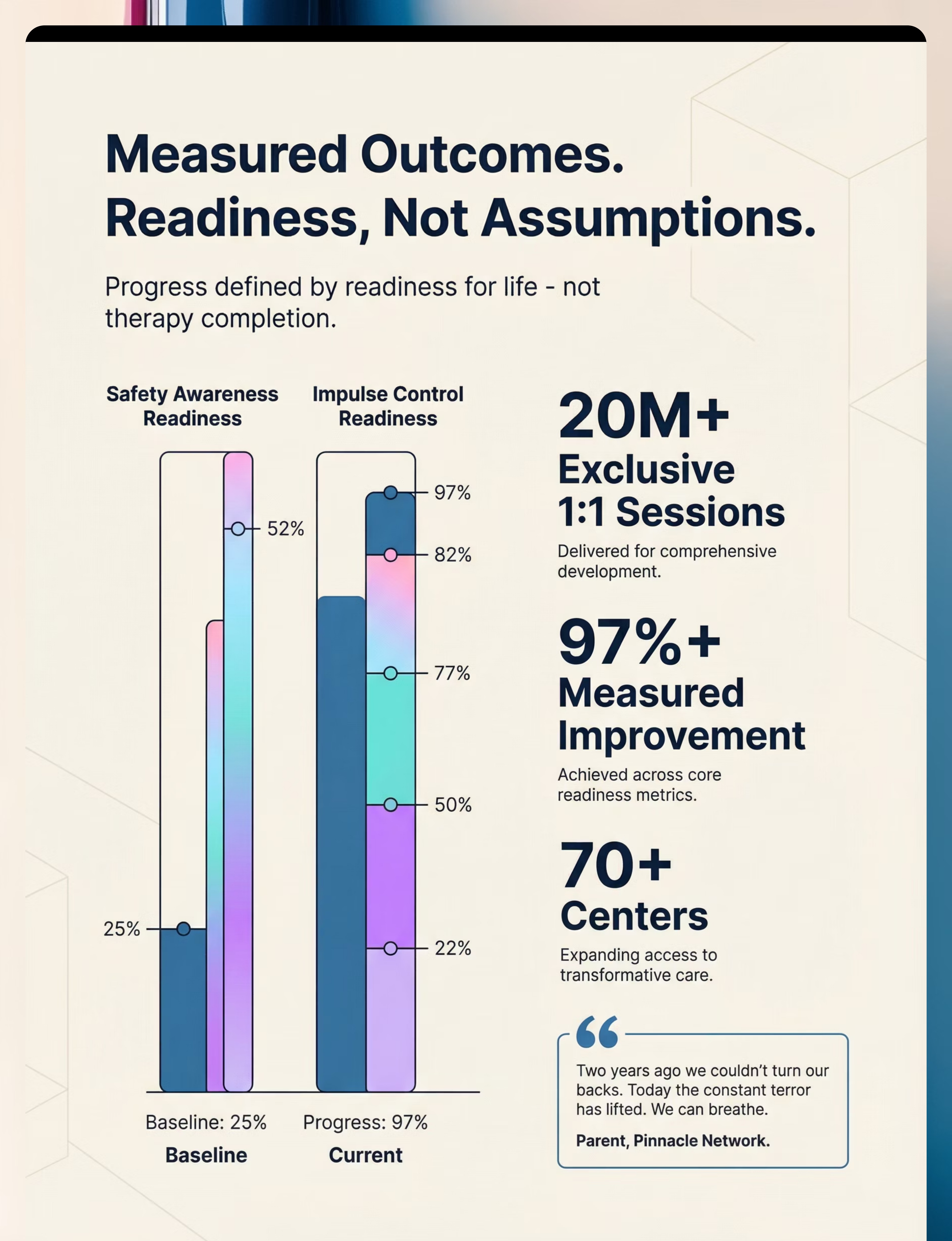
📞9100 181 181 | FREE | 16+ languages | 24×7 | 20M+ exclusive 1:1 therapy sessions across 70+ centres · 97%+ measured improvement in Safety Awareness Readiness Index

Act I — Neuroscience
This isn't defiance. This is a nervous system without a brake.
The Science
🧠 Prefrontal Cortex (Impulse Control & Danger Awareness)
In neurotypical development: inhibits impulsive movement, recognises danger, weighs consequences. In autism: prefrontal-amygdala connectivity differences create a "go" signal that overrides the "stop" — especially when attraction to stimuli (water, animals, roads) or escape from sensory overwhelm is involved.
In neurotypical development: inhibits impulsive movement, recognises danger, weighs consequences. In autism: prefrontal-amygdala connectivity differences create a "go" signal that overrides the "stop" — especially when attraction to stimuli (water, animals, roads) or escape from sensory overwhelm is involved.
⚡ Amygdala Activation
The amygdala processes threats and rewards. In children with sensory processing differences, environmental stimuli can simultaneously trigger intense attraction (toward water) or intense flight (from noise) — both producing the same elopement behaviour from different neurological causes.
The amygdala processes threats and rewards. In children with sensory processing differences, environmental stimuli can simultaneously trigger intense attraction (toward water) or intense flight (from noise) — both producing the same elopement behaviour from different neurological causes.
🔄 Impulsivity Pathways
Inhibitory control — the ability to stop an impulse already in motion — is one of the latest-developing capacities, particularly in children with ASD and ADHD. The child is not choosing to run. They are responding to a neurological event faster than executive control can intervene.
Inhibitory control — the ability to stop an impulse already in motion — is one of the latest-developing capacities, particularly in children with ASD and ADHD. The child is not choosing to run. They are responding to a neurological event faster than executive control can intervene.
Parent Translation
"Your child isn't testing your authority. Their brain generates a 'go' command — toward water, toward freedom, away from overwhelm — before the 'stop' signal has a chance to fire. Physical barriers and alarms are not punishments. They are external brakes for a nervous system that hasn't grown its internal ones yet."
"The materials on this page give your child's brain TIME — time for impulse to pass, time for you to intervene, time for safety awareness skills to develop over weeks and months."
— Pinnacle Blooms NeuroDev Pediatrics & ABA Consortium
Citation: Frontiers in Integrative Neuroscience (2020) — Neurological basis for sensory-based interventions in ASD. DOI: 10.3389/fnint.2020.556660

Act I — Development
Your child is here. Here is where we are going.
Elopement does not have a fixed endpoint. With layered protection and consistent skill-building, the frequency and severity decrease over time in most children. The goal is survival first — then independence.
Sensory Processing
OT domain — drives both escape and attraction-motivated elopement
Communication Limits
SLP domain — child cannot request what elopement is getting them
Impulse Control
ABA domain — the stop signal arrives too late
Danger Awareness
NeuroDev domain — reduced perception of consequences
Anxiety & Escape
Psychology domain — overwhelm drives flight
WHO Care for Child Development (CCD) Package: Age-specific evidence-based recommendations for caregivers. Implemented in 54 low- and middle-income countries. PMC9978394 | WHO/UNICEF CCD Package (2023)

Act I — Evidence
Not opinion. Not fear. Evidence. This system is built on international research.
🛡️ Level I Evidence
Systematic Reviews + RCT Level — Multi-layer elopement prevention
Key Finding: Nearly 50% of children with ASD elope. Drowning is the #1 cause of death. Multi-layered prevention — physical barriers + alarms + tracking + communication + community — is the international clinical standard.
Study Summaries
- Anderson et al. (2012) — Interactive Autism Network: ~49% of children with ASD elope after age 4. 53% go missing long enough to cause concern. 24% nearly drowned. [PMC3638163]
- NCAEP (2020): Visual supports, AAC, and reinforcement-based interventions are classified as evidence-based practices for autism — forming the behavioural backbone of the elopement prevention protocol.
- Padmanabha et al., Indian Journal of Pediatrics (2019): Home-based behavioural interventions demonstrated significant outcomes for Indian paediatric populations. DOI: 10.1007/s12098-018-2747-4
- WHO Nurturing Care Framework (2018) + UNICEF CCD (2023): Security and safety is the foundational prerequisite for all developmental progress. PMC9978394
📞9100 181 181 — For personalised safety planning with a BCBA or behaviour specialist. "Clinically validated. Home-applicable. Parent-proven."
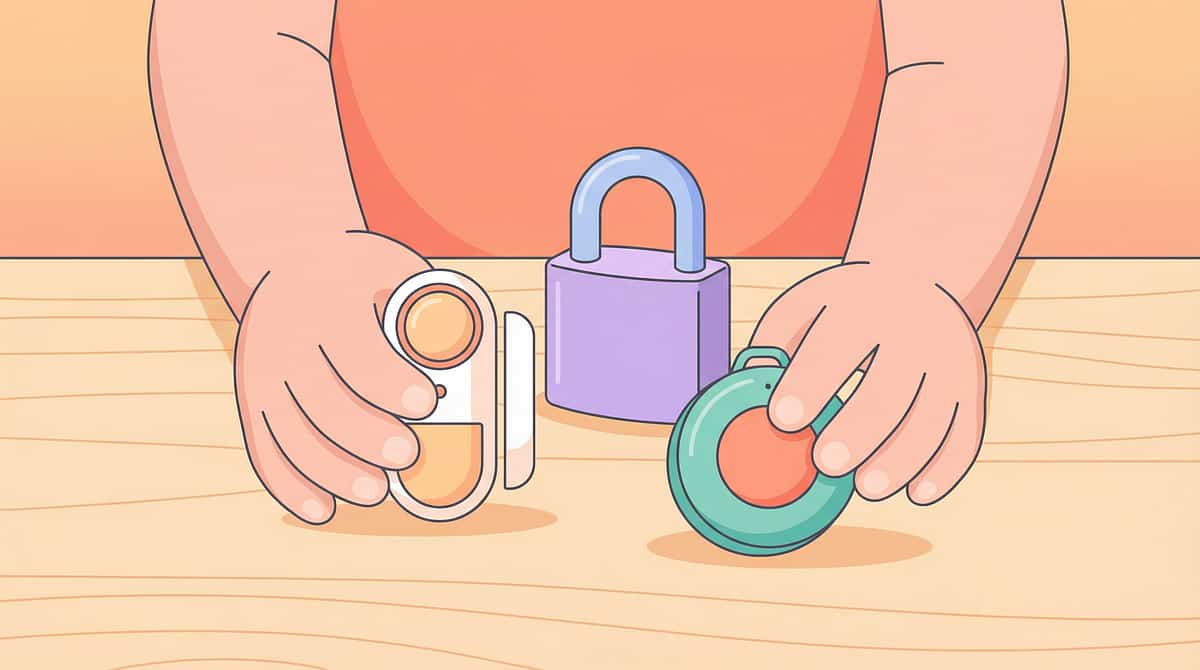
Act II — The Technique
Elopement Prevention: Layered Safety Materials System
"The 9 Layers That Keep Your Runner Safe" — Elopement (also called wandering, bolting, or running) is when a child leaves a supervised, safe area without permission or awareness of danger. Affecting nearly 50% of autistic children, elopement creates acute life-threatening risks: drowning, traffic injury, exposure, and encounters with unsafe people.
The Layered Safety Materials System is the internationally recommended approach — not a single solution, but 9 categories of tools that together create overlapping protection. Each layer catches what the previous layer misses. The goal: keep your child alive and safe while the skills of danger awareness and communication develop over time.
1
🔴 Safety / Elopement Prevention
2
🟠 Physical Safety
3
🟡 Impulse Management
4
🟢 Behavioural Support
5
🔵 Communication Alternatives
6
🟣 Environmental Containment
Age Range: 2–14 years (and beyond) | Duration: Continuous system (not a timed session) | Frequency: 24/7 home infrastructure

Act II — Disciplines
This technique crosses every therapy boundary. Because elopement affects every domain.

🦾 Occupational Therapy (Primary Lead)
Sensory processing assessment — identifying whether elopement is escape-motivated or attraction-motivated. Prescribes sensory regulation tools. Designs the physical environment modification. Provides weighted vest and proprioceptive input.

🗣️ Speech-Language Pathology (Co-Lead)
Functional communication training — giving the child words and AAC tools to request what elopement was getting them: "outside," "break," "help," "all done." Reducing the communicative function of flight. Danger awareness vocabulary instruction.

🧩 ABA / BCBA (Behaviour Lead)
Functional behaviour assessment — determining WHY the child elopes. Designing the behavioural intervention: reinforcement of staying, response training to "stop," visual boundary teaching paired with consistent reinforcement. Data collection and progress measurement.
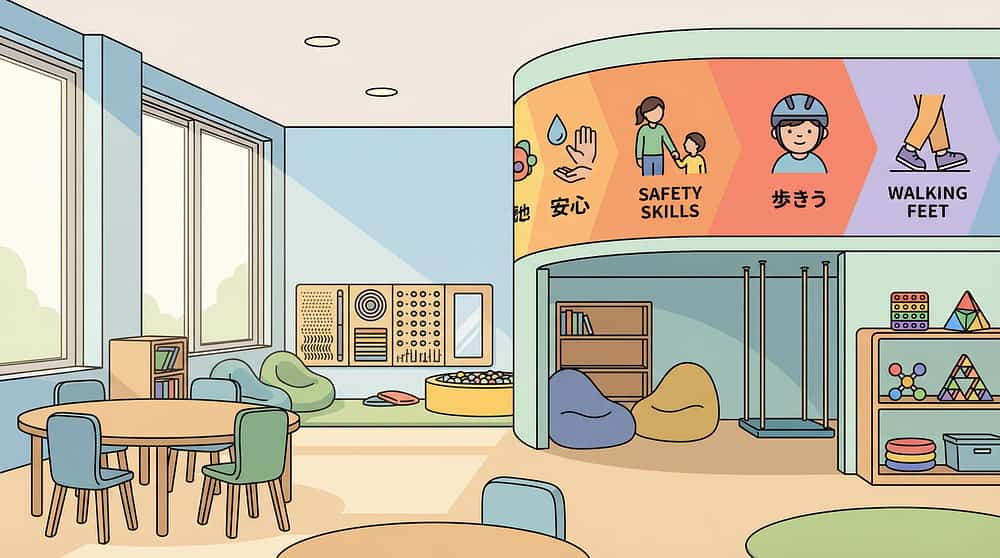
📚 Special Education
Safety skill instruction across settings — generalising danger awareness, boundary respect, and help-seeking to school, community, and novel environments. Individual Safety Education Plan integration.

🏥 Neurodevelopmental Paediatrics
Evaluating neurological factors contributing to impulsivity and elopement. Medical evaluation for co-occurring ADHD or anxiety. Medication consultation where appropriate. Coordinating the diagnostic picture.
"No single discipline owns elopement. The Pinnacle FusionModule™ coordinates all five disciplines into one converged safety plan — so your child doesn't need five separate appointments to get a single answer." 📞9100 181 181 — Request a multi-disciplinary elopement assessment
Act II — Targets
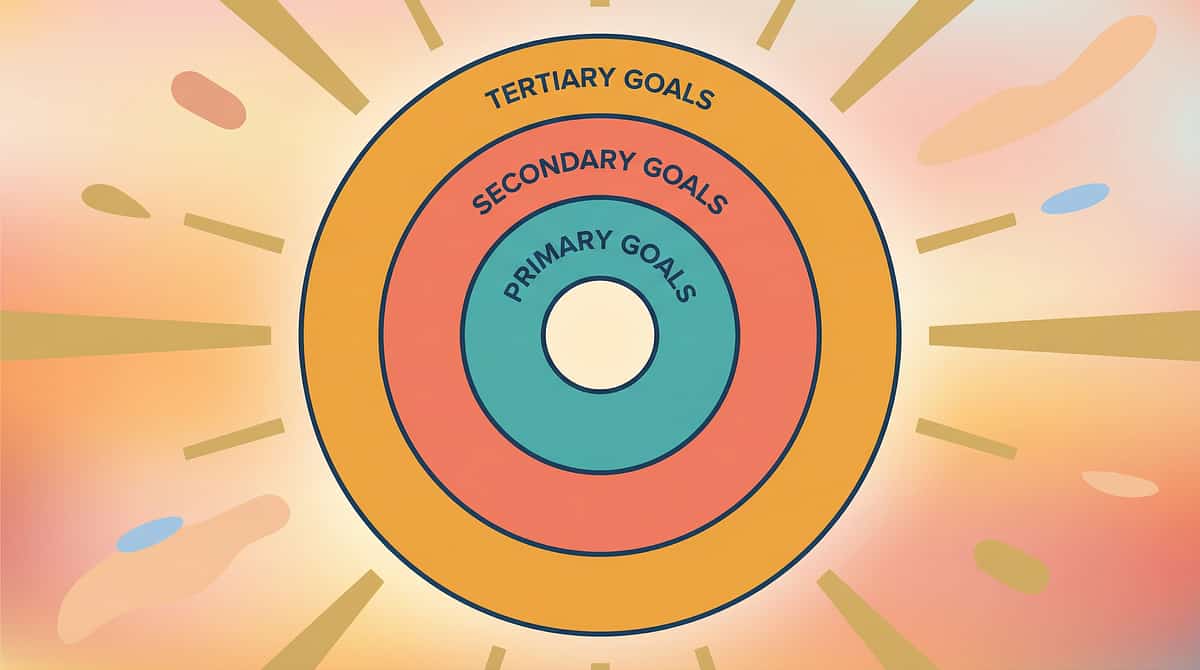
What this system is actually trying to achieve. (Hint: it's more than just "stop running.")
All targets are tracked within the Safety Awareness Readiness Index and Impulse Control Readiness Index — not as abstract goals, but as measurable, data-driven progressions within AbilityScore®.

Act II — The 9 Materials
9 Layers. No single one is enough. Together, they catch what every other layer misses.
The Swiss Cheese Model of Safety: Each layer has gaps. Overlap means no gap is fatal.
1
1️⃣ Door/Window Alarms
"Know the moment they move." ₹300–3,000 | Detection Layer
2
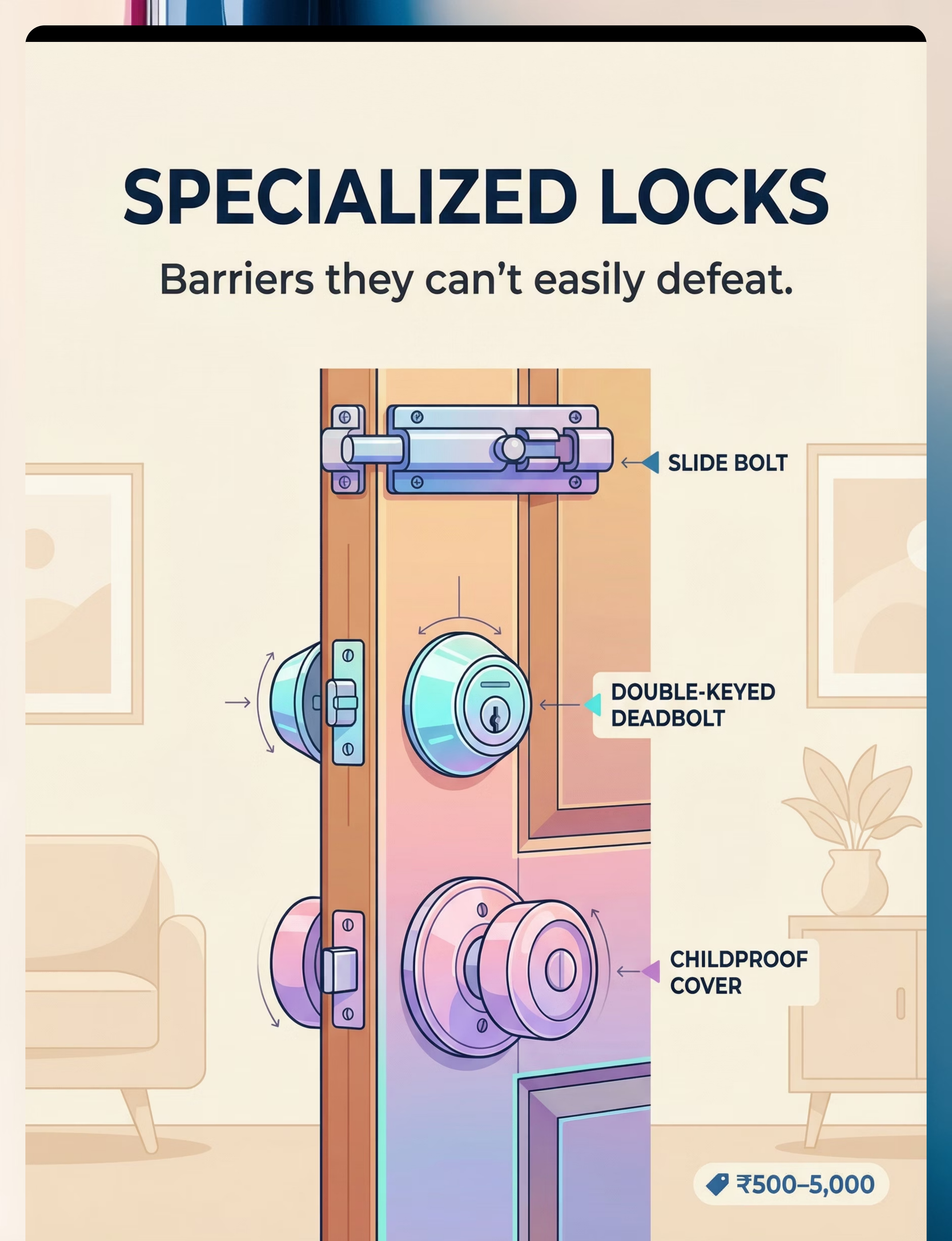
2️⃣ Specialised Locks
"Barriers they can't easily defeat." ₹500–5,000 | Physical Prevention Layer
3
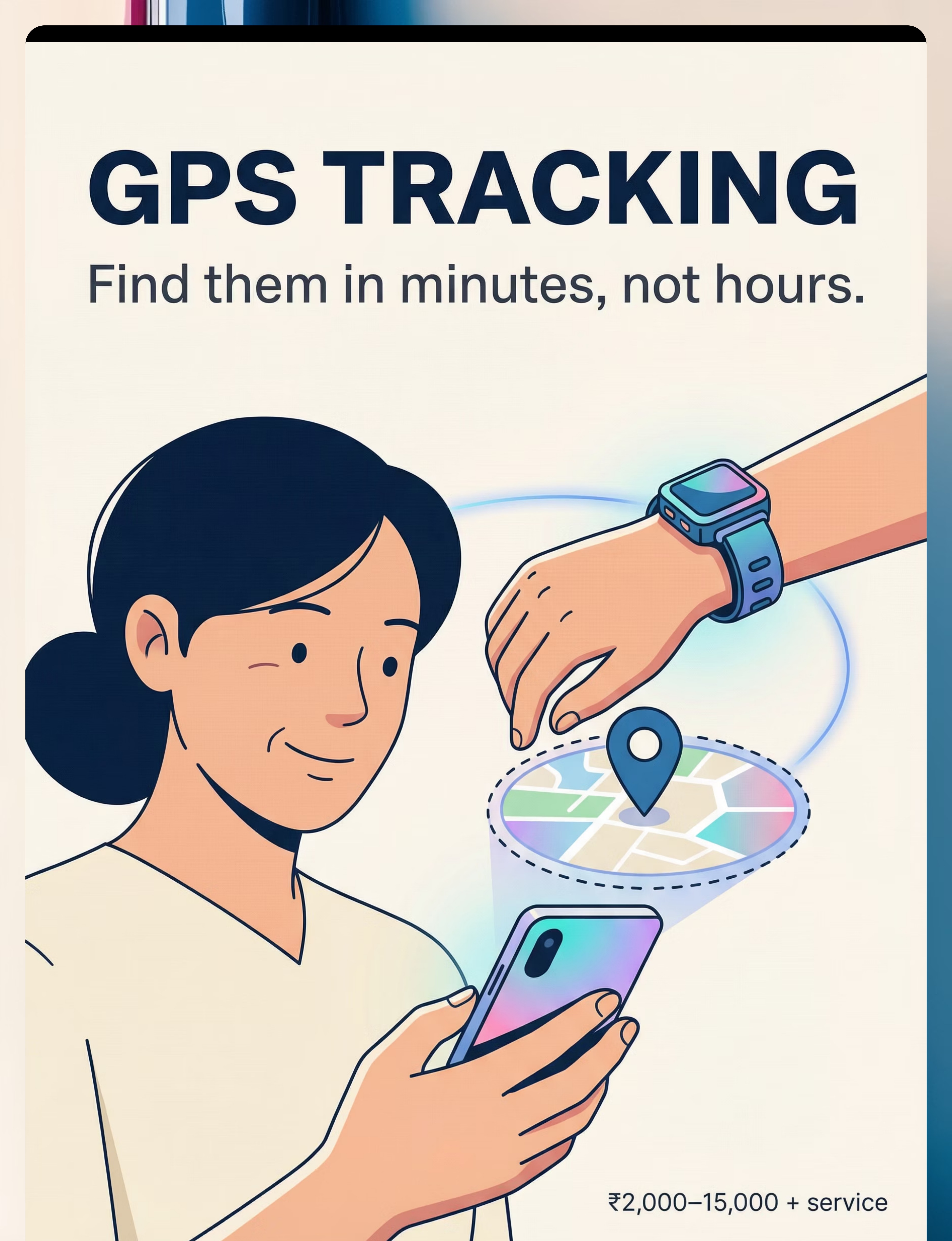
3️⃣ GPS Tracking Devices
"Find them in minutes, not hours." ₹2,000–15,000 + service | Recovery Layer
4
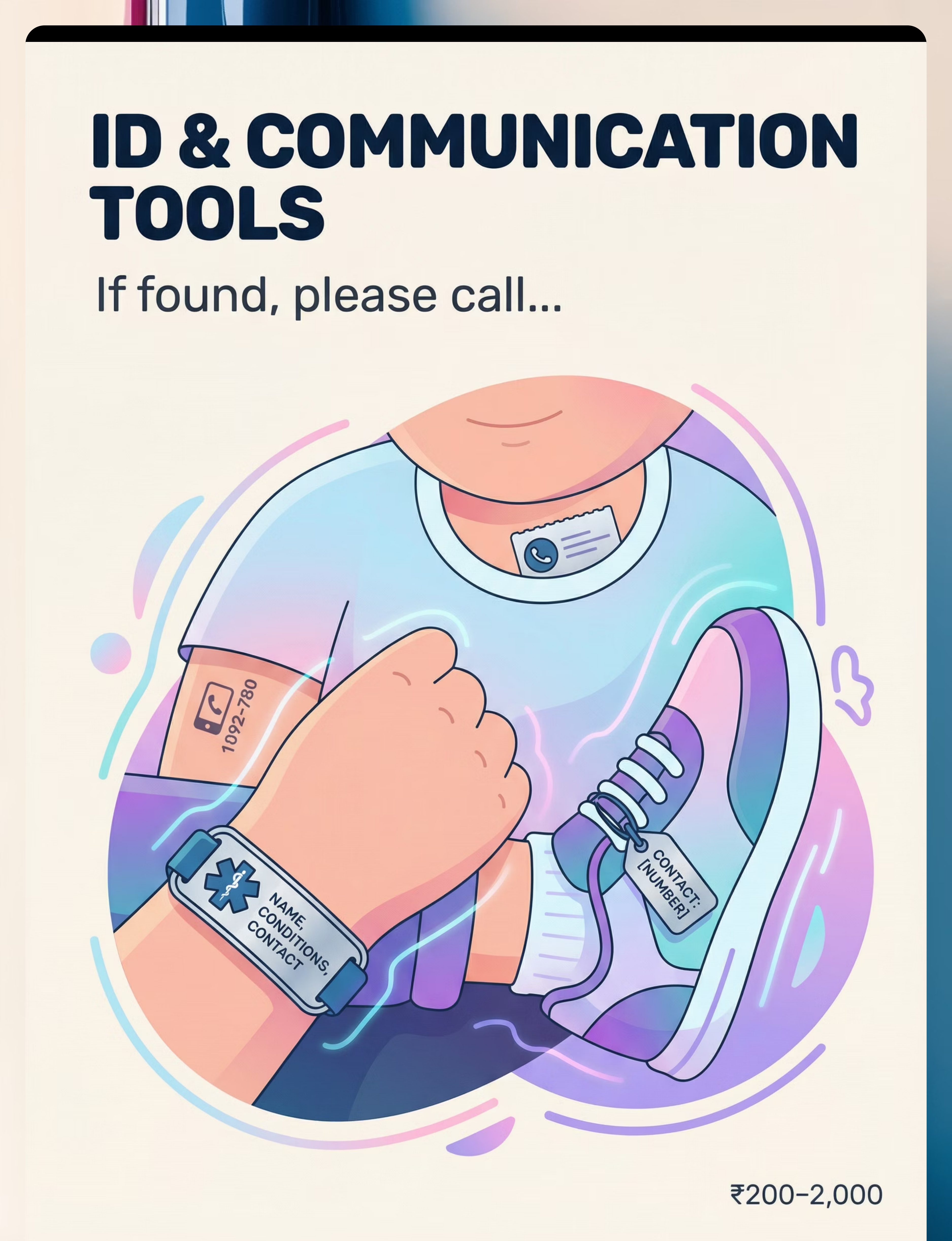
4️⃣ ID & Communication Tools
"If found, please call..." ₹200–2,000 | Identification Layer
5
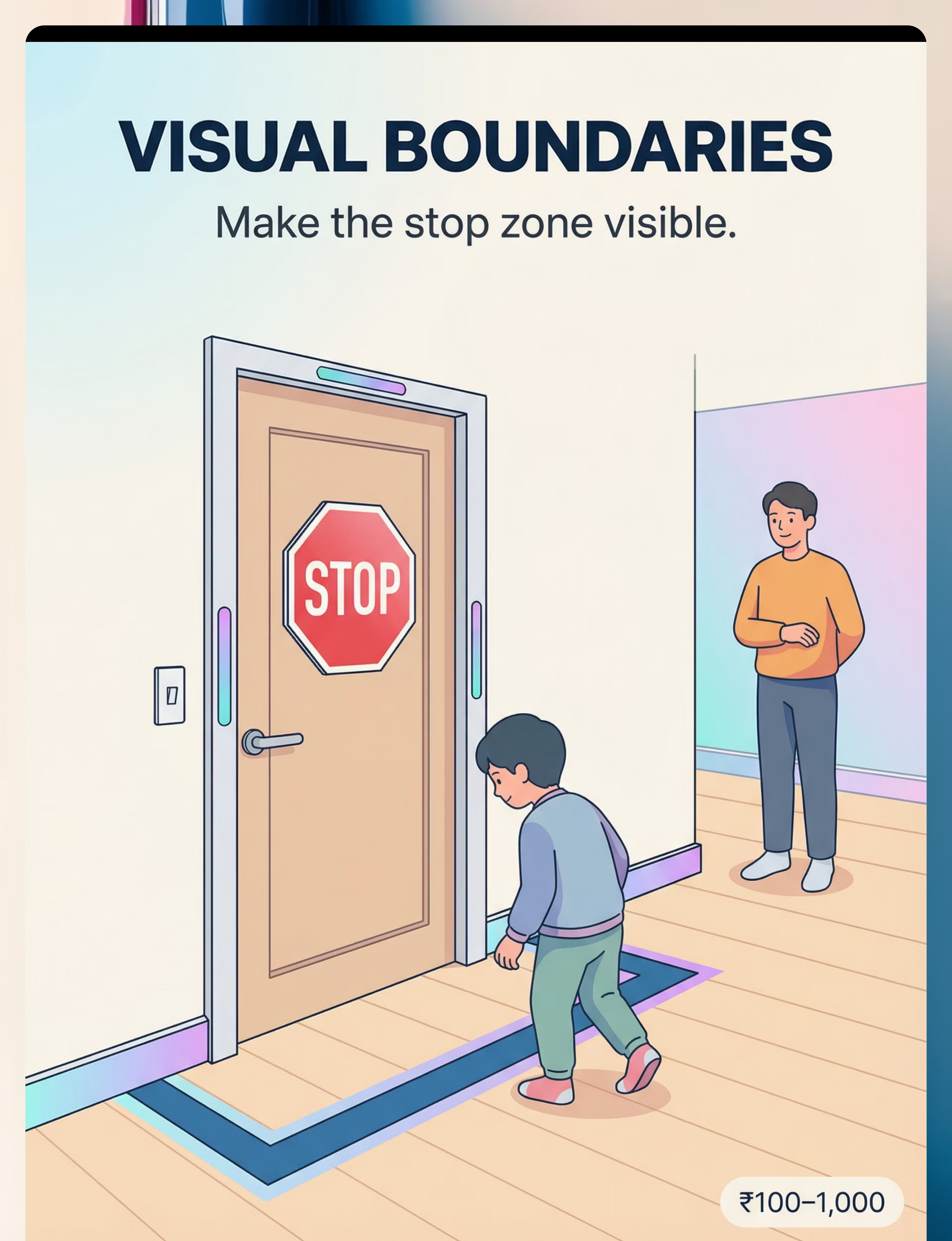
5️⃣ Visual Boundary Markers
"Make the stop zone visible." ₹100–1,000 | Behavioural Teaching Layer
6
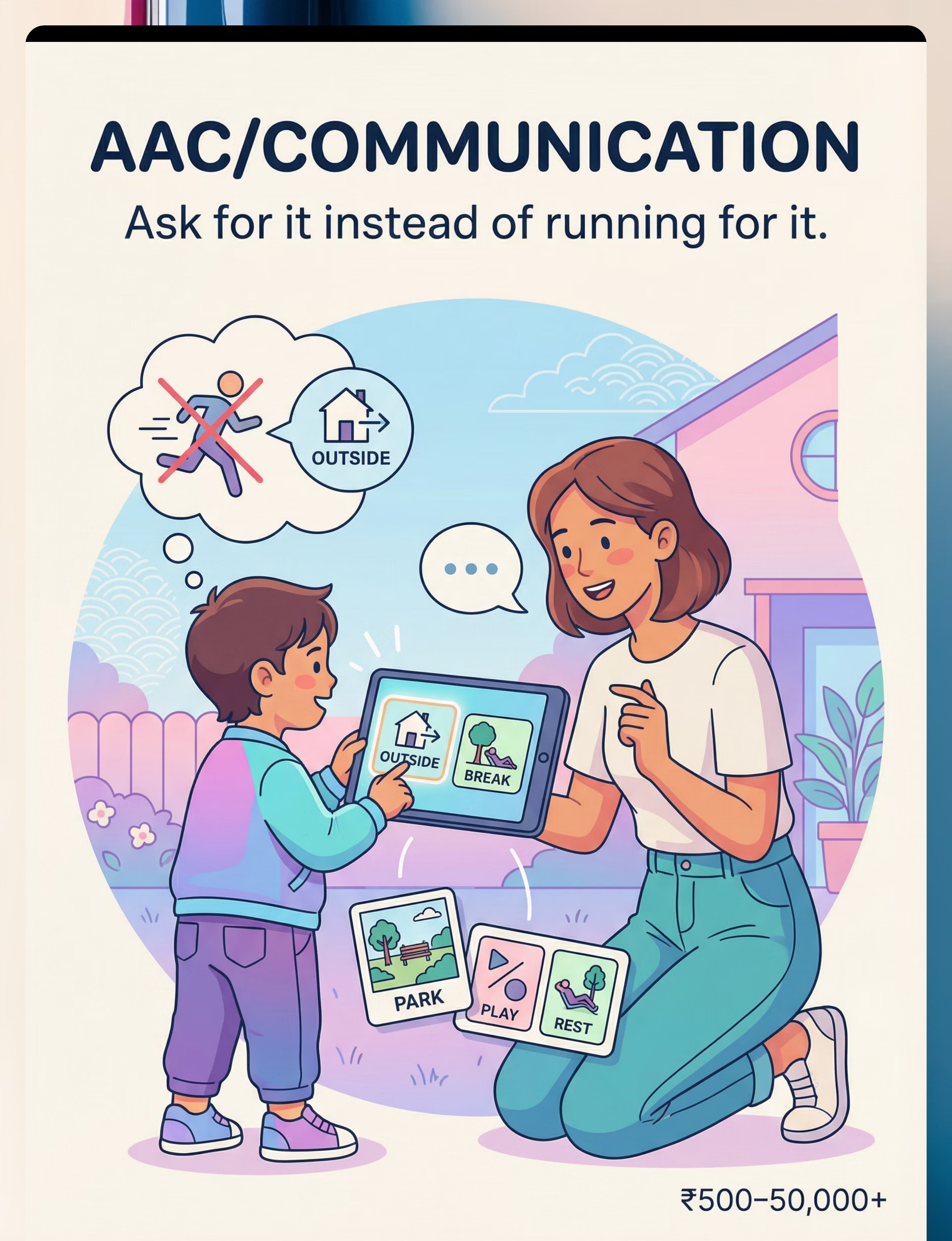
6️⃣ AAC / Communication Tools
"Ask for it instead of running for it." ₹500–50,000+ | Needs Communication Layer
7
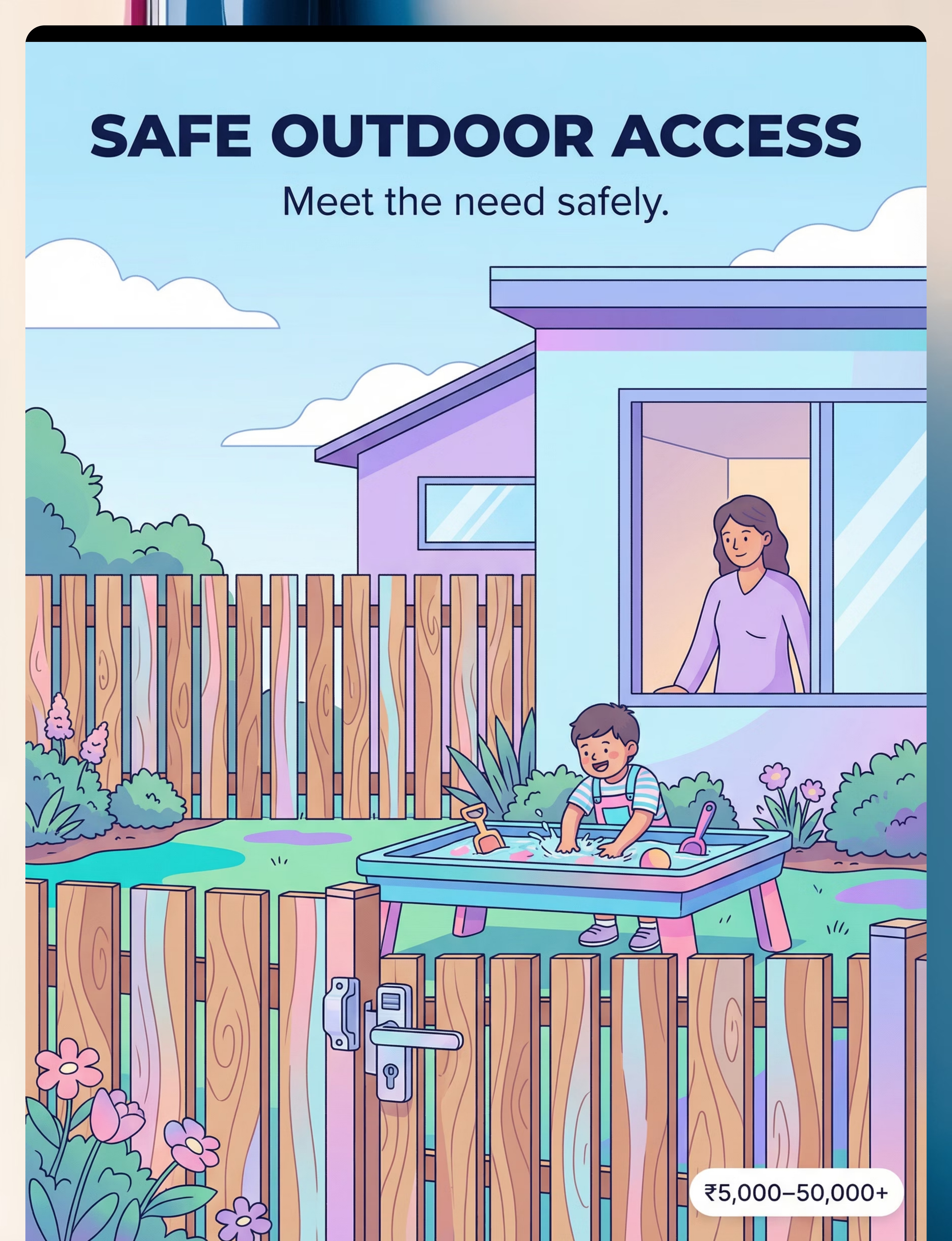
7️⃣ Safe Outdoor Access
"Meet the need safely." ₹5,000–50,000+ | Environmental Layer
8
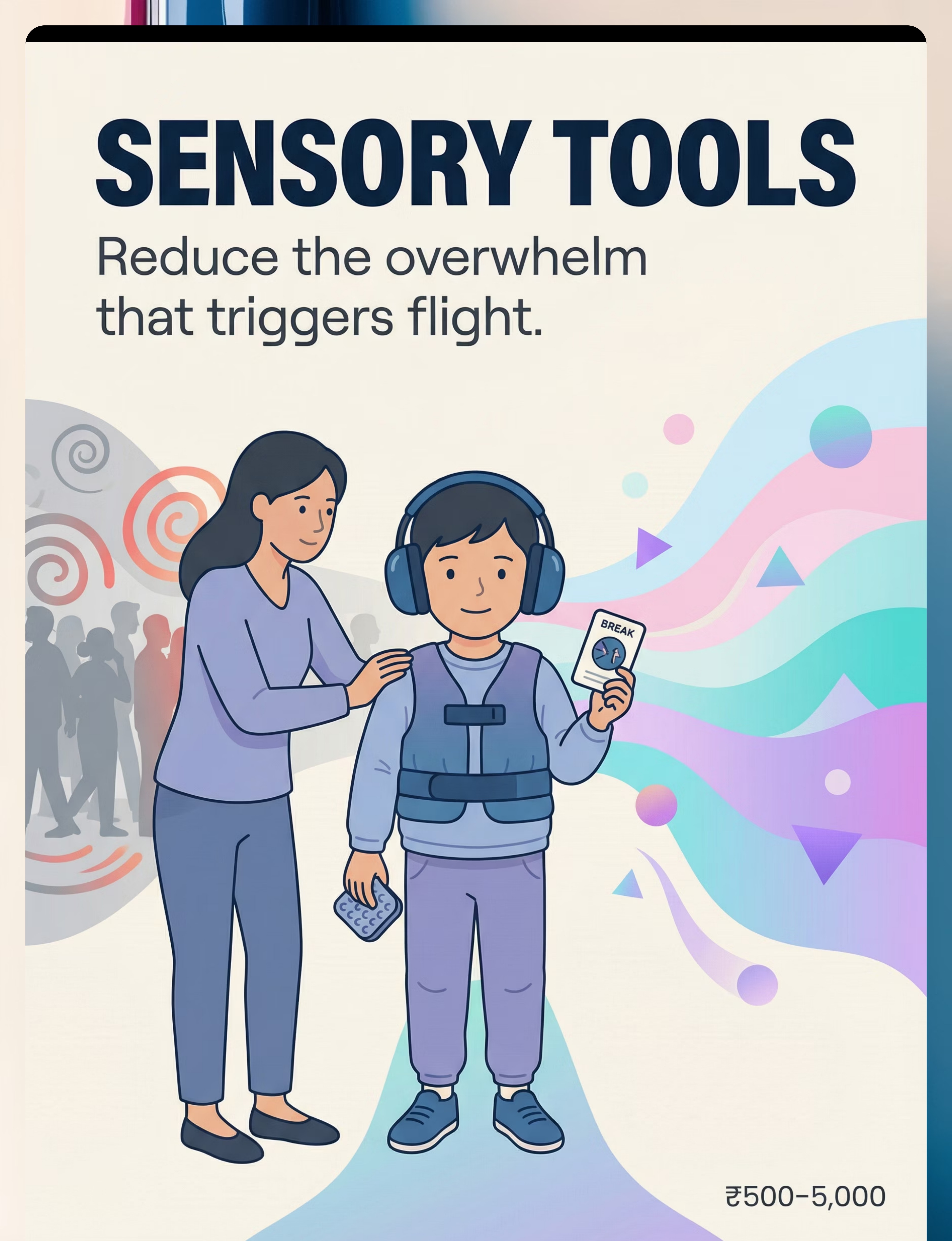
8️⃣ Sensory Regulation Tools
"Reduce the overwhelm that triggers flight." ₹500–5,000 | Sensory Prevention Layer
9
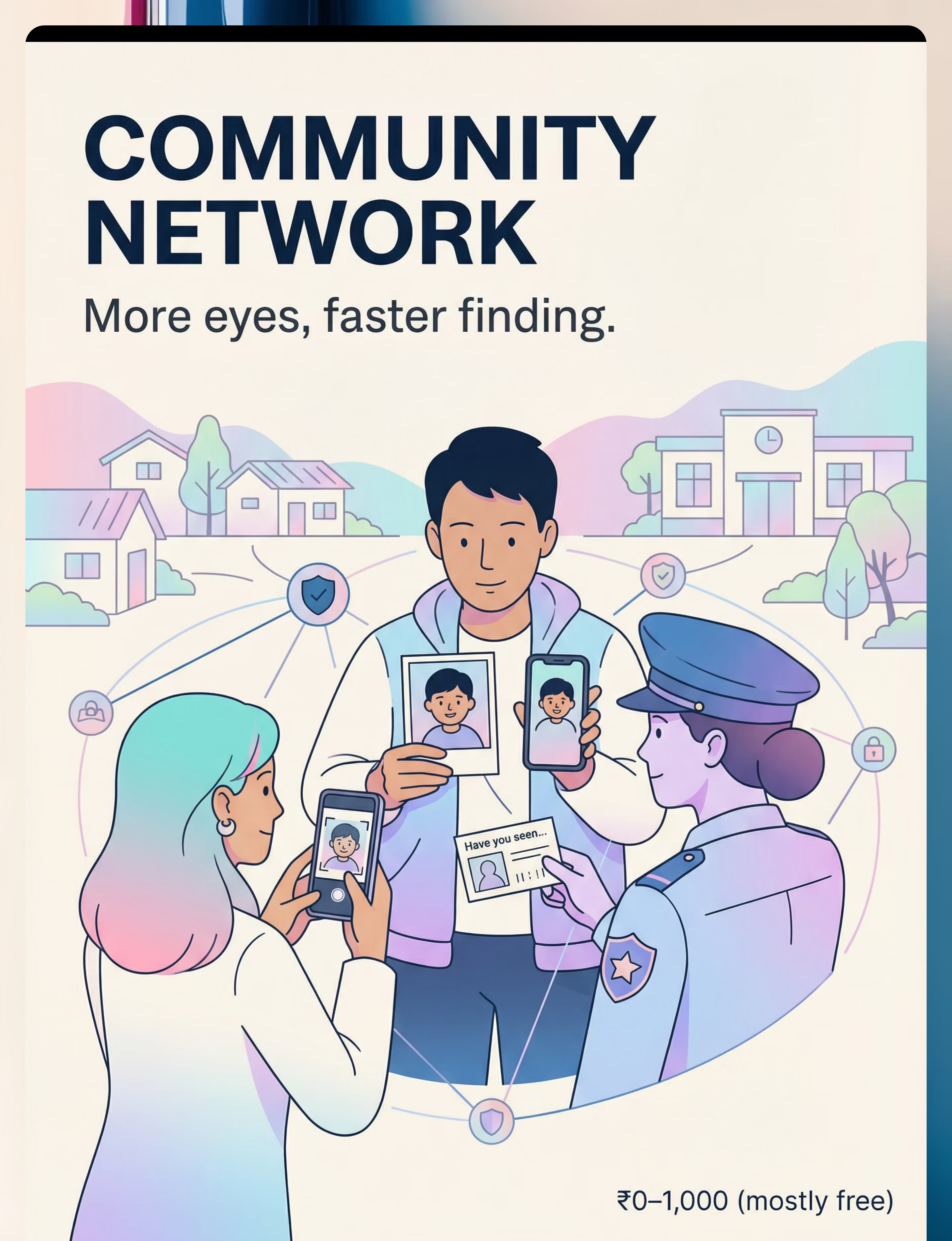
9️⃣ Community Alert Networks
"More eyes, faster finding." ₹0–1,000 (mostly free) | Community Layer
Total Starter Kit: ₹4,000–10,000 covers Layers 1, 2, 3 (essential first three). Essential first purchases: Door/window alarms + ID bracelet + current photo for distribution = minimum baseline today.
📞9100 181 181 — Ask our specialists which layers to prioritise for your child's elopement profile
📞9100 181 181 — Ask our specialists which layers to prioritise for your child's elopement profile

Material 1
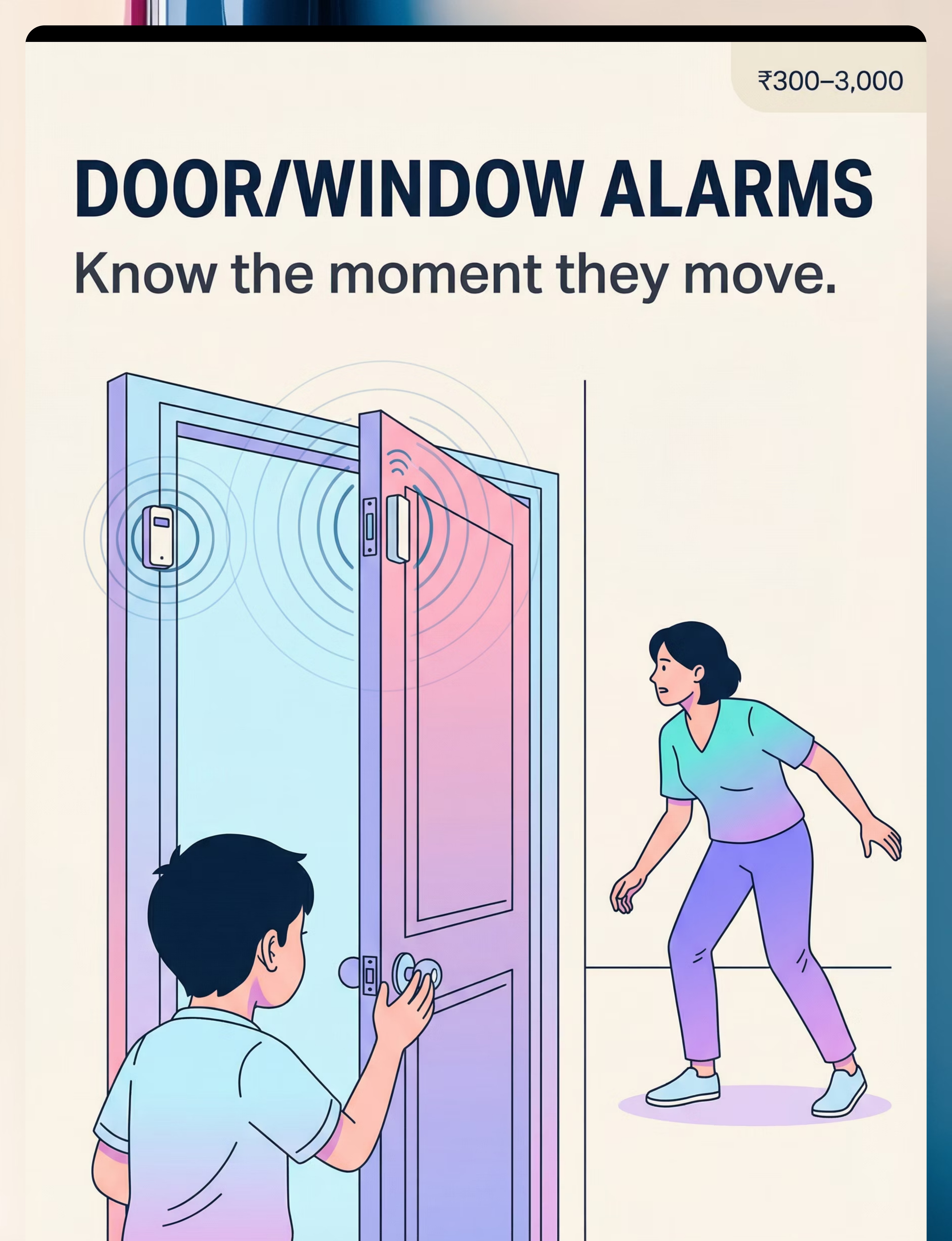
Door and Window Alarms — "Know the moment they move."
What It Is
Battery-operated or smart magnetic sensors mounted on all external doors and accessible windows. When contact breaks (door or window opens), the alarm sounds — loud enough to hear anywhere in the home — and/or sends a notification to your smartphone.
Why It Works
Silent escape is the most dangerous escape. A child who elopes without detection can travel hundreds of metres in the time it takes an adult to finish a task. Alarms convert "gone without knowing" into "moving NOW — respond." Even 10 seconds of warning is the difference between interception at the door and a neighbourhood search.
Material List
- Magnetic door/window contact sensors (battery-operated, ₹300–800 each)
- Wireless chime alarm systems
- Smart WiFi alarms with phone push notifications
- Alarm systems with multiple sensors (whole-home coverage)
- Poolside/water-entry alarms for homes with water access
- Motion sensors for exit areas
- Pressure-sensitive floor mats near doors
Price Range: ₹300–3,000 | DIY/₹0 Option: A simple door chime bell attached to the door handle provides auditory alert for under ₹100. Multiple small bells at child's reach level provide early warning.
Amazon.in Search: "door alarm sensor home security" or "window contact alarm"
Installation Guide (Consortium OT): Cover ALL exits: front door, back door, side gates, garage entry, windows reachable by climbing. Test alarm volume from each room — can you hear it from the bathroom with the tap running? Check and replace batteries monthly. Install pool/water alarms if any water body is accessible.
⚠️Safety Note: Alarms provide notification, not prevention. They give you seconds of warning — the child can still exit while the alarm sounds. Always combine with physical barriers.
⚠️Safety Note: Alarms provide notification, not prevention. They give you seconds of warning — the child can still exit while the alarm sounds. Always combine with physical barriers.

Material 2
Specialised Locks & Physical Barriers — "Barriers they can't easily defeat."
What It Is
Children who elope are expert lock-defeaters. They observe, practise, and eventually overcome any single barrier. Specialised locks layer multiple barrier types — making defeat require defeating ALL simultaneously.
Why It Works
No single lock works forever. But when a child faces a high-mounted slide bolt PLUS a childproof doorknob cover PLUS a double-keyed deadbolt, the time required to defeat all three exceeds their window of opportunity — and your alarm gives you the seconds to respond.
Material List
- Double-keyed deadbolts (key required from both sides)
- High-mounted slide bolts (above child's reach)
- Childproof doorknob covers (require adult hand span and grip pattern)
- Door lever locks
- Window opening limiters (limit to 10cm opening — ventilation but not egress)
- Security chain locks mounted high
- Door reinforcement kits
- Portable door locks for travel, hotels, grandparents' homes
Price Range: ₹500–5,000 | DIY/₹0 Option: A length of rope tied through door handles at adult height. Also: furniture pushed against door for nighttime security.
Amazon.in Search: "childproof door lock" | "high mount slide bolt" | "double keyed deadbolt India"
🔥Fire Safety Protocol (CRITICAL): Double-keyed deadbolts REQUIRE that keys be hung on a hook IMMEDIATELY beside each door — visible, accessible to all adults and older children. Practise fire drills with current lock configuration. Fire safety and elopement safety are both life-critical. Plan must address both.
Consortium Installation Guidance: Layer minimum 3 different lock types on all primary exits. Reassess quarterly — expect that your child will defeat one layer within 3–6 months. Add a new layer when this occurs.
Consortium Installation Guidance: Layer minimum 3 different lock types on all primary exits. Reassess quarterly — expect that your child will defeat one layer within 3–6 months. Add a new layer when this occurs.

Material 3
GPS Tracking Devices — "Find them in minutes, not hours."
What It Is
Wearable devices that transmit real-time location data to your smartphone, enabling you to locate a child who has eloped within minutes. Geofencing features send an alert the moment the child leaves a designated "safe zone."
Why It Works
When prevention fails — and sometimes it will — the question is: how quickly can I find them? GPS reduces recovery time from hours (neighbourhood search, police involvement) to minutes (phone shows their current location). In drowning, traffic, and exposure incidents, recovery time is the difference between survival and tragedy.
Material List
- Wearable GPS trackers (wrist or ankle)
- GPS shoe inserts (hidden, harder to remove)
- Clothing-attached GPS devices (sewn into seams)
- Tamper-resistant GPS watches designed for elopement
- GPS tracking apps with family sharing (multiple phones)
- AirTag / SmartTag in secure holder (sewn into backpack or clothing lining)
- Dedicated elopement tracking services with 24×7 monitoring
Price Range: ₹2,000–15,000 (device) + monthly service fees (₹200–800/month)
DIY/₹0 Option: Share location with trusted family member via smartphone Find My app — requires the child to carry a phone, but provides a free baseline tracking layer.
Amazon.in Search: "GPS tracker children India" | "child GPS watch India" | "AirTag holder secure"
Setup Protocol: Test the device in multiple locations before relying on it. Set geofence around home, school, and grandparents' homes. Install the tracking app on at least 2 family members' phones. Check battery daily — dead battery = no tracking. Note: GPS has dead zones (underground, thick buildings). It is one layer, not the only layer.
⚠️GPS IS A RECOVERY TOOL, NOT A PREVENTION TOOL. Never reduce supervision or barriers because GPS is in place.
📞9100 181 181 — Ask for GPS and barrier assessment at your nearest Pinnacle centre
⚠️GPS IS A RECOVERY TOOL, NOT A PREVENTION TOOL. Never reduce supervision or barriers because GPS is in place.
📞9100 181 181 — Ask for GPS and barrier assessment at your nearest Pinnacle centre
Material 4
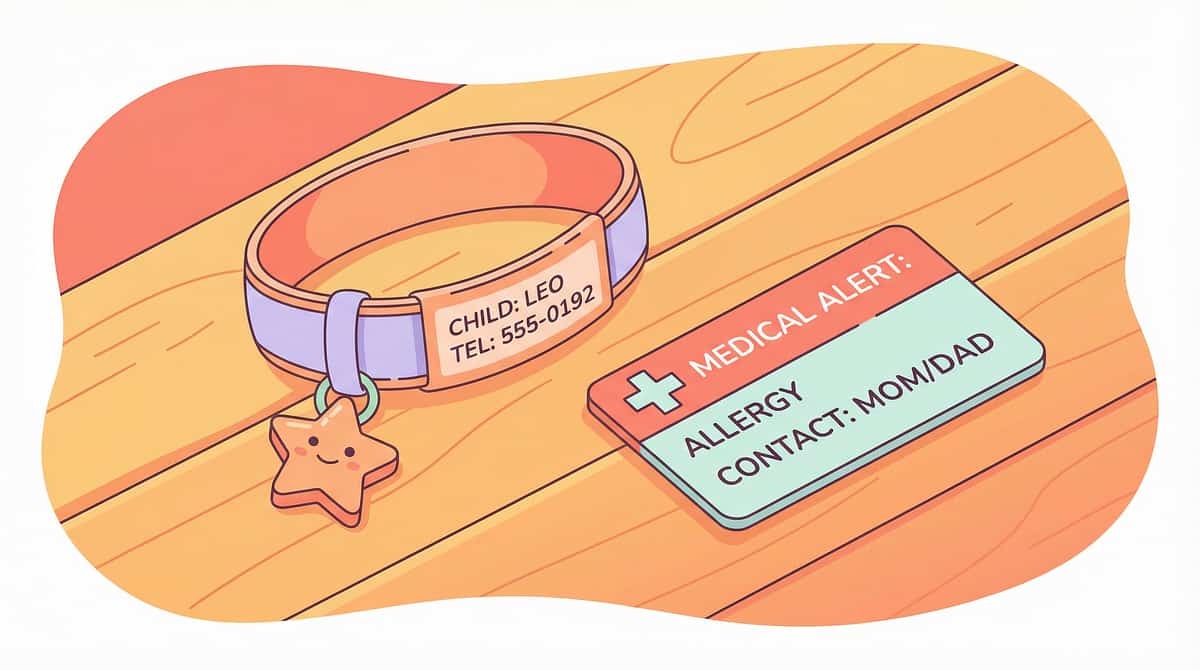
ID & Communication Tools — "If found, please call..."
What It Is
Children who elope often cannot provide their name, address, or caregiver contact to a stranger who finds them. Identification tools bridge this gap — ensuring that anyone who finds the child knows exactly who to call.
Why It Works
When a child cannot speak for themselves, their ID speaks for them. The time between "found by a stranger" and "returned to family" is determined by how quickly that stranger can act. An ID bracelet or shoe tag that provides a direct phone number can collapse this time from hours to minutes.
What to Include on ID
- Child's name
- "I have autism" (or relevant diagnosis)
- Two parent phone numbers (in case first is unavailable)
- "Please call" instruction
- Do NOT include: home address (security risk if found by unsafe person)
Material List
- Medical ID bracelets (autism-specific, stainless steel, adjustable)
- Shoe ID tags (clip to shoelace)
- Temporary ID tattoos with phone numbers (waterproof, lasts 1–2 weeks)
- Clothing ID labels (iron-on, inside collar and waistband)
- Emergency contact cards (in pocket, in backpack)
- QR code ID tags linking to digital profile with photo + medical notes
- Communication cards for non-verbal children ("I have autism. Please call my caregiver.")
- Photo ID cards with emergency information
Price Range: ₹200–2,000
DIY/₹0 Option: Write parent phone number on child's arm with permanent marker before any outing. Extremely low-tech, extremely effective. Repeat as needed.
QR Code Option: Services like Road ID (international) or local printshop QR tags can encode a digital profile with photo, medical information, and emergency contacts — a first responder scans the QR and gets full information immediately.

Material 5
Visual Boundary Markers — "Make the stop zone visible."
What It Is
For many children, the rule "don't go through the door" is invisible. Visual boundary markers make the boundary concrete and physical — a bright tape line on the floor, a red STOP sign on the door at eye level, coloured mats marking the "stay zone." Paired with consistent teaching and reinforcement, visual boundaries can become rules the child respects.
Why It Works (OT + ABA Science)
Children who process visually — and most children with autism do — respond more reliably to concrete visual rules than to verbal instructions. Making the boundary visible gives the child something to respond TO. When paired with systematic reinforcement (praise and reward every time the child stops at the line), the visual marker becomes a reliable cue.
Material List
- Bright coloured floor tape (red or yellow, wide)
- Visual STOP signs (mounted on door at child's eye level)
- Coloured welcome mats marking boundary zones
- Door handle covers with STOP symbols
- Outdoor boundary markers (coloured flags, garden cones)
- Different coloured flooring or rugs in exit areas
- Social stories about boundaries (paired with visual markers)
Price Range: ₹100–1,000 | DIY/₹0: Masking tape + red marker = STOP line on floor near door. Takes 2 minutes. Free.
ABA Teaching Protocol
- Install visual boundary marker
- Practise with low pressure — walk toward marker together, stop, praise
- Use reinforcement (from Canon Reinforcement Menus) when child stops independently
- Generalise to new settings (school, grandparents, community)
⚠️Important: Visual boundaries work only for children who have some capacity to learn and follow the rule. They cannot be the only protective layer. Use ALONGSIDE physical barriers and alarms — never instead of them.

Material 6
AAC / Communication Tools — "Ask for it instead of running for it."
What It Is
Running is communication. It says: "I need something I can't ask for." AAC (Augmentative and Alternative Communication) devices, picture exchange systems, and communication boards give children a safer alternative: the ability to REQUEST what elopement was getting them — outdoor time, a break, sensory input, escape from overwhelm.
Why It Works
The most powerful long-term intervention for escape-motivated and goal-directed elopement is functional communication training. When a child can reliably communicate "outside," "break," "all done," or "help" — and when caregivers HONOUR those requests — the drive to bolt decreases because the need is being met through safer means.
Key Vocabulary for Elopement
Priority words: BREAK · OUTSIDE · HELP · ALL DONE · I WANT ___ · GO TO ___
Material List
- AAC dedicated devices (Proloquo2Go, TouchChat, Snap Core)
- Tablet AAC apps (₹0–₹5,000/year, some free)
- PECS (Picture Exchange Communication System) — Phase I–VI
- Communication boards with elopement-relevant vocabulary
- Visual request cards (laminated picture cards)
- Sign language for key requests (taught by SLP)
- First-Then boards for negotiating needs
- Core vocabulary boards (low-tech, high-reach)
Price Range: ₹500 (low-tech PECS) to ₹50,000+ (dedicated AAC device)
DIY/₹0 Option: Print and laminate 4 picture cards: OUTSIDE | BREAK | HELP | ALL DONE. Attach velcro to wall near exits. Teaching a child to hand you the "OUTSIDE" card instead of running to the door is functional communication training at ₹50 investment.
Critical Principle: When the child uses communication to request "outside" — take them outside (supervised). If you consistently ignore the communication, elopement returns. Honour the request. Meet the need.
⚠️ AAC is a long-term intervention. It does not provide immediate safety and cannot replace physical barriers. Implement both simultaneously.
📞9100 181 181 — Request AAC evaluation from Pinnacle SLP Consortium
⚠️ AAC is a long-term intervention. It does not provide immediate safety and cannot replace physical barriers. Implement both simultaneously.
📞9100 181 181 — Request AAC evaluation from Pinnacle SLP Consortium
Material 7
Structured Safe Outdoor Access — "Meet the need safely."
What It Is
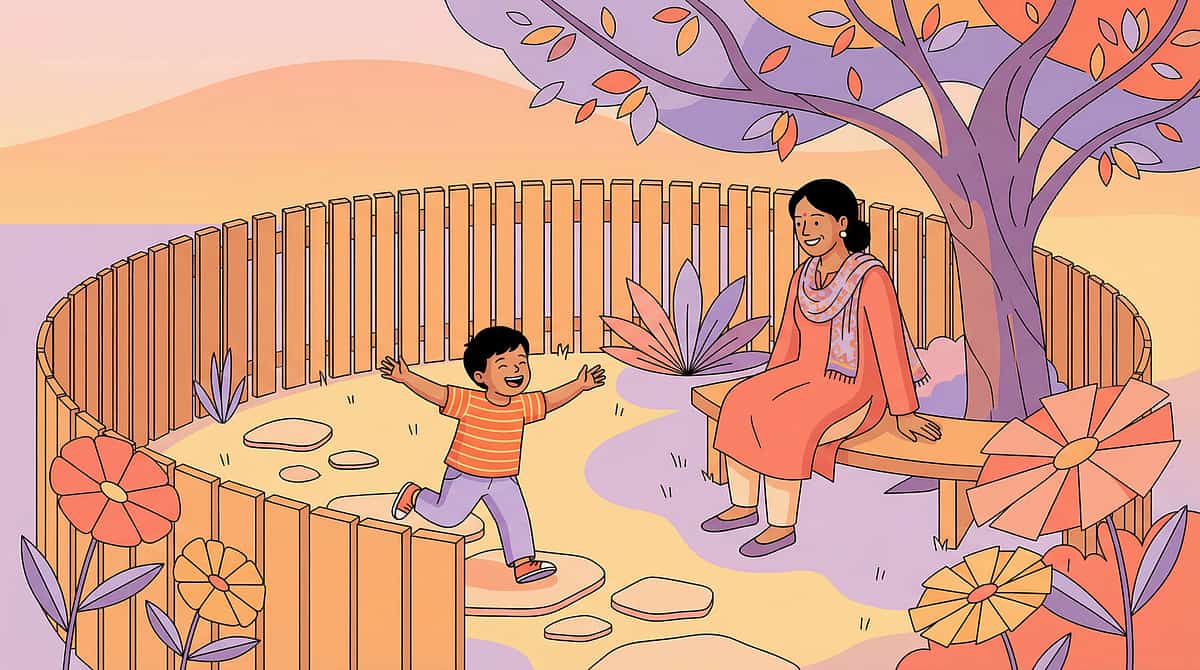
Many children elope because they WANT to go outside — for movement, sensory input, exploration, or specific stimuli. When outdoor access is severely restricted, the drive to elope intensifies. Safe outdoor access creates a contained environment where the need can be met without the risk.
Why It Works
When the function of elopement is "access to outdoor/sensory experience," the intervention is MORE outdoor access — not less — provided in a contained, supervised setting. This addresses the root cause while maintaining safety.
Materials
- Secure fencing (minimum 1.5m, no footholds, self-closing gate with lock)
- Gate locks the child cannot defeat
- Outdoor sensory equipment: swings, sandbox, water table, sensory garden
- Visual schedules showing scheduled outdoor time (child can anticipate and wait)
- Outdoor calm-down spaces
- Shade and weather-appropriate equipment
Price Range: ₹5,000 (basic fence + gate) to ₹50,000+ (full sensory yard)
DIY/₹0 Option: Schedule predictable outdoor time (same time daily). Visual schedule showing "OUTDOOR TIME: 4pm" reduces impulsive elopement toward outdoor access because the child can WAIT — they know it's coming. Total cost: ₹0.

Material 8
Sensory Regulation Tools — "Reduce the overwhelm that triggers flight."
What It Is
Many elopement episodes are flight responses to overwhelming sensory environments — the child runs FROM noise, crowds, lights, demands that their nervous system experiences as intolerable. Sensory regulation tools address this cause BEFORE it escalates to flight.
Why It Works (OT Science)
Proprioceptive input (weighted items), auditory filtering (headphones), visual reduction (sunglasses, dimming), and designated calm spaces reduce nervous system arousal before it reaches the threshold that triggers flight. Proactive sensory support prevents reactive elopement.
Identify Your Child's Elopement Type
- Escape-motivated (runs FROM noise, crowds, demands): Prioritise sensory tools
- Attraction-motivated (runs TOWARD water, animals, roads): Prioritise barriers and safe access to the stimulus
- Goal-directed (runs TO get something): Prioritise communication tools
- Impulsive (no clear trigger): Prioritise maximum barriers + close supervision
Materials
- Noise-canceling or noise-reducing headphones (₹500–5,000)
- Sunglasses or light-filtering glasses
- Weighted vests (500g–1.5kg, prescribed by OT)
- Weighted lap pads
- Fidget tools for tactile regulation
- Chewable jewellery for oral sensory input
- Designated calm spaces / sensory retreats
- Portable sensory kits for community outings
- "BREAK" card — child signals need before flight
Price Range: ₹500–5,000
DIY/₹0 Option: A heavy blanket draped over shoulders (proprioceptive input). A quiet corner with pillows (sensory retreat). A jar of dry rice for hand-plunging (tactile regulation). Total cost: ₹0.
Canon Product: Transition Objects / Comfort Items — Animal soft toys (₹299+) for sensory comfort and regulation

Material 9
Community Alert & Support Network — "More eyes, faster finding."
What It Is
You cannot watch all directions simultaneously. But if your entire neighbourhood knows your child — their photo, the fact that they may run, your phone number — you have multiplied your eyes exponentially. Community awareness is the final and outermost safety layer.
Why It Works
Most children who elope are found by community members before emergency services. A prepared community — neighbours who recognise the child, first responders who know about the elopement risk, school staff with protocols — finds children faster.
Materials / Actions
- Current, recent photo (front + profile) ready for quick distribution
- Contact cards for neighbours (printed, with photo + your number)
- Police special needs registry enrolment (check if available in your district)
- Elopement response plan document (who to call, where to search first, in order)
- School notification and formal school safety plan
- Community awareness letter template for apartment buildings/neighbourhoods
- First responder information sheet about child's communication and safety needs
Price Range: ₹0–1,000 (mostly free)
DIY/₹0 Option: Send a WhatsApp message to your building group with your child's photo, name, and your number. "Our son [Name] has autism and may sometimes run outside. If you see him alone, please call [number] immediately." Takes 5 minutes. Potentially lifesaving.
Act II — Home Setup
Home Setup Checklist — Do This Today
Minimum Immediate Safety Baseline
- ☐ Alarm on every external door
- ☐ Alarm on every accessible window
- ☐ At least one additional lock layer on front door (above standard)
- ☐ ID bracelet on child (or shoe tag at minimum)
- ☐ Current photo saved on your phone and shareable
- ☐ Emergency response plan written: who to call, where to search first
- ☐ Nearest neighbour notified with photo and your number
Next 2 Weeks
- ☐ GPS tracker ordered and configured
- ☐ All exits assessed and lock layers added
- ☐ Visual STOP boundary markers installed at exits
- ☐ Sensory trigger patterns identified (what precedes elopement attempts)
- ☐ AAC vocabulary started with SLP guidance
Ongoing
- ☐ Monthly battery check on all alarms
- ☐ Quarterly lock defeat assessment (has child learned to defeat any layer?)
- ☐ Data tracking initiated (elopement attempts per week)
- ☐ Progress reviewed with BCBA and OT
📞9100 181 181 — Request a home safety assessment visit from the Pinnacle Blooms team

Act III — Execution
Daily Readiness Assessment — Before every session. Before every outing.
Child State Indicators
- ☐ Regulation level: Is the child calm or already dysregulated?
- ☐ Sensory state: Any elevated sensory sensitivity signs today? (covering ears, squinting, agitated movement)
- ☐ Communication: Is the child communicating more or less than usual?
- ☐ Sleep: Was last night's sleep adequate?
- ☐ Trigger exposure: Any known trigger events today (transitions, new environments, high demands)?
Safety System Check
- ☐ All door/window alarms armed and tested (press test button)
- ☐ All locks engaged
- ☐ GPS tracker battery: above 50%? (charge if below)
- ☐ ID bracelet on child's wrist
- ☐ Phone GPS app open and showing child's location correctly
Decision Gate
🟢GREEN — All systems active, child in moderate regulation:
Proceed with routine
Proceed with routine
🟡YELLOW — Child showing elevated dysregulation OR any system gap:
Increase supervision, simplify demands, ensure sensory tools accessible
Increase supervision, simplify demands, ensure sensory tools accessible
🔴RED — Child severely dysregulated AND any system gap:
Maximum supervision, do not leave child unattended, address system gap before any outing
Maximum supervision, do not leave child unattended, address system gap before any outing
"The best time to add a lock is before the child defeats the current one. Reassess your barriers every 3 months. Children grow, develop new skills, and defeat barriers they couldn't last season." — Pinnacle Blooms BCBA Consortium
ABA Principle: Antecedent management is the most efficient behaviour intervention. Addressing conditions BEFORE elopement is attempted is infinitely easier than responding to it in progress.

Act III — Step 1
Step 1: The Structured Day Invitation
A predictable, structured day with scheduled outdoor time and communication opportunities significantly reduces elopement frequency. This step: set up the day for success.
The Opening Frame
Begin each day by reviewing the visual schedule WITH the child. Show them:
- When outdoor/outside time occurs ("OUTSIDE: 4pm")
- What sensory tools are available ("HEADPHONES: anytime")
- How to request what they need ("Show me the OUTSIDE card when ready")
Exact Script (Say This in the Morning)
"Today we have [home time, outdoor time at 4pm, dinner]. If you want outside, show me the card. If you need a break, show me BREAK. The alarms keep us all safe — they let us know when doors open."
Visual Schedule Setup
- Use picture-based visual schedule at child's eye level
- Include outdoor time as a confirmed daily event
- Include break card accessible at all times
- Include dinner/activity transitions (predictability reduces anxiety that triggers escape)
Body Language Guidance
Calm, matter-of-fact presentation. Not anxious (children read parental anxiety and it increases arousal). Confident that the day will go well.
ABA Pairing Principle
The visual schedule is a discriminative stimulus that predicts when preferred activities (outside) will occur — reducing impulsive attempts to access them immediately.
Research: Visual supports — NCAEP Evidence-Based Practice (2020). Predictability and routine reduces anxiety-driven elopement across multiple intervention studies.

Act III — Step 2
Step 2: Active Monitoring & Engagement
The Surveillance Architecture
Layers working simultaneously:
- Physical barriers: preventing or slowing exit
- Alarm system: alerting to exit attempts
- GPS tracker: confirming location if exit occurs
- Parental proximity: adjusted to child's current risk level
Monitoring Protocol
- Supervision sight-line: maintain visual access to child at all times when indoors
- Bathroom protocol: either bring child or have second adult present
- Sleep monitoring: door alarm on bedroom door for nighttime elopement
- Transition points: highest-risk moments are entry/exit from home, start/end of activities, demand situations
Engagement Strategies That Reduce Elopement Drive
An engaged child — meaningfully occupied with preferred activities — elopes less often than a bored or under-stimulated child.
- Preferred sensory activities from Canon Reinforcement Menus
- Structured play with preferred materials
- Outdoor sensory time (scheduled, predictable)
- Movement breaks (proprioceptive input reduces arousal)
Child Response Indicators to Watch
- Increasing proximity to doors/exits (approaching, touching handles)
- Increased agitation, stimming, or running in place
- Communicating or looking toward exits
- Decreased engagement with current activity
- Any early warning behaviour YOU know precedes this child's elopement
Early Intervention Point
When you notice early warning signs, BEFORE the elopement attempt:
"Do you want OUTSIDE?" → honour the response → supervised outdoor time
"Do you need BREAK?" → provide break → remove the trigger
"Do you want OUTSIDE?" → honour the response → supervised outdoor time
"Do you need BREAK?" → provide break → remove the trigger

Act III — Step 3
Step 3: The Alarm Response Protocol — Every second counts.
Pre-Emergency Plan (Write This Now)
- First search area: _____________ (child's known attraction — water? specific road? neighbour?)
- Second search area: _____________
- First call: _____________ (family member, neighbour)
- Emergency services number saved in phone
- Recent photo: saved and shareable from phone
- Child's description: clothing today, ID on or not, GPS tracker on or not
Community Activation Script
"We need help. Our son [Name] has autism and has left the house. He is [age], [height], wearing [clothing], [ID bracelet yes/no]. Please check [specific area]. Call [number] if found."
Post-Incident Protocol
After child is safe:
- Do NOT punish
- Provide regulation support (calm space, sensory tools)
- Record: time, trigger if known, route taken, how found, time elapsed
- Review: which layer failed? (defeated lock? alarm battery dead? GPS not worn?)
- Upgrade: add or strengthen the layer that failed

Act III — Step 4
Step 4: Daily Communication Replacement Training
The 10 minutes per day that can end elopement permanently. (Over months of consistent practice.)
What You're Teaching: "You don't have to run for what you need. You can ask." Duration: 5–10 minutes, 1–2× daily. Materials: Communication board, AAC device, or 4 picture request cards.
1
Set the Scene (1 minute)
Go to the exit/door that the child typically elopes through. Have preferred item visible outside or describe what's outside.
2
The Request Opportunity (30 seconds)
Wait for the child to show any sign of wanting to exit. BEFORE they reach for the handle: present the communication tool. "Do you want OUTSIDE? Show me OUTSIDE."
3
Model and Prompt (30 seconds per attempt)
Physical prompt → partial prompt → independent use. Accept ANY approximation: pointing, eye gaze toward card, vocalization near the card.
4
Honour the Communication (Immediate)
When the child uses the tool to request: take them outside (supervised) WITHIN 10 seconds. This is critical. If you ignore the communication, elopement returns.
5
Reinforce the Communication
"YES! You asked for OUTSIDE! Great asking! Let's go." Verbal praise + preferred item + sticker from Canon Reinforcement Menus.
Key Vocabulary (Priority Order)
- OUTSIDE / GO OUT
- BREAK
- HELP
- ALL DONE
- SCARED / TOO LOUD
- I WANT ___
Timeline Expectation
- Weeks 1–4: Learning to use the tool in practised scenarios
- Months 1–3: Using spontaneously in some real situations
- Months 3–6: Reliable use across contexts; elopement frequency begins decreasing
Research: Functional Communication Training (FCT) — Strongest evidence base for reducing escape-motivated and goal-directed behaviour. NCAEP Tier 1 evidence-based practice.

Act III — Step 5
Step 5: Reinforce & Celebrate — Every time. Every single time.
The ABA Principle: Behaviour that is reinforced increases. Safety behaviours — stopping at the boundary, using communication, returning when called — must be reinforced EVERY time they occur, especially early in learning. Timing: within 3 seconds of the desired behaviour.
For stopping at the visual boundary
"YES! You STOPPED! Great stopping! That's so safe!"
For using communication instead of elopement
"You asked for OUTSIDE with your card! Wonderful asking! Let's go outside right now."
For returning when called
"You CAME BACK when I called! That's brilliant! You are SO safe. Here's [preferred item]."
For wearing ID bracelet without protest
"Thank you for wearing your safe bracelet. You're doing great."
Token Economy for Safety Behaviours — "Safety Star" Chart:
1 star for stopping at boundary · 1 star for using communication card · 1 star for wearing GPS tracker · 5 stars = preferred activity (child chooses from menu)
Celebrate the Attempt, Not Just Mastery: Child glances at communication card instead of running: "I saw you look at your card! Good thinking!"
Canon Reinforcement Menus: 1800+ Reward Stickers (₹199) · Rosette Reward Jar (₹249) · Preferred activity access · Natural consequence reinforcement
1 star for stopping at boundary · 1 star for using communication card · 1 star for wearing GPS tracker · 5 stars = preferred activity (child chooses from menu)
Celebrate the Attempt, Not Just Mastery: Child glances at communication card instead of running: "I saw you look at your card! Good thinking!"
Canon Reinforcement Menus: 1800+ Reward Stickers (₹199) · Rosette Reward Jar (₹249) · Preferred activity access · Natural consequence reinforcement

Act III — Step 6
Step 6: The Daily Cool-Down Review
Close the day with awareness. Open the night with protection.
Evening Review Ritual with the Child
If able to participate:
- Review the visual schedule: what happened today
- Name the safe behaviours: "You used your OUTSIDE card today. That was so safe!"
- Preview tomorrow's outdoor time: "Tomorrow: outdoor time at 4pm. You can wait until then."
With Yourself (2 minutes)
- Did the child attempt to elope today? (Y/N)
- Which layer detected or stopped the attempt?
- Was any layer defeated or bypassed?
- What triggered the attempt?
- What worked?
Nighttime Safety Protocol
- ☐ Door alarm armed on bedroom door (nighttime elopement is common)
- ☐ External door alarms armed
- ☐ All locks engaged
- ☐ GPS tracker charging (or on child if nighttime elopement history)
- ☐ Monitor app enabled
Transition Cues for Bedtime
- "2 more minutes, then it's sleeping time."
- Visual timer (hourglass or sand timer)
- Cool-down sensory activity: deep pressure massage, weighted blanket
- Consistent bedtime sequence (predictability reduces anxiety)
Research: Consistent routines reduce anxiety-driven and escape-motivated behaviours. Predictability of reinforcement schedule reduces impulsive immediate access-seeking.

Act III — Data
Capture the Data — Right Now. 60 seconds of data is all it takes.
Elopement data reveals patterns invisible to daily observation: time of day, triggers, frequency trends over weeks. This data determines whether the intervention is working, which layers to strengthen, and when to escalate to professional support.
Field 1: Elopement Attempts Today
0 / 1 / 2 / 3 / 4 / 5+
(Count: any intentional move toward exit without permission)
(Count: any intentional move toward exit without permission)
Field 2: Safety Layer That Intervened
☐ Visual boundary ☐ Physical lock ☐ Alarm ☐ GPS ☐ Communication ☐ No attempt today ✓
Field 3: Trigger Observed
☐ Wanted outside ☐ Sensory overwhelm ☐ Demanded task ☐ Attracted to stimulus ☐ No clear trigger ☐ Unknown
Weekly Pattern Review
Are attempts decreasing week-over-week? → Safety intervention working.
Attempts consistent or increasing? → Review with BCBA. Upgrade layers.
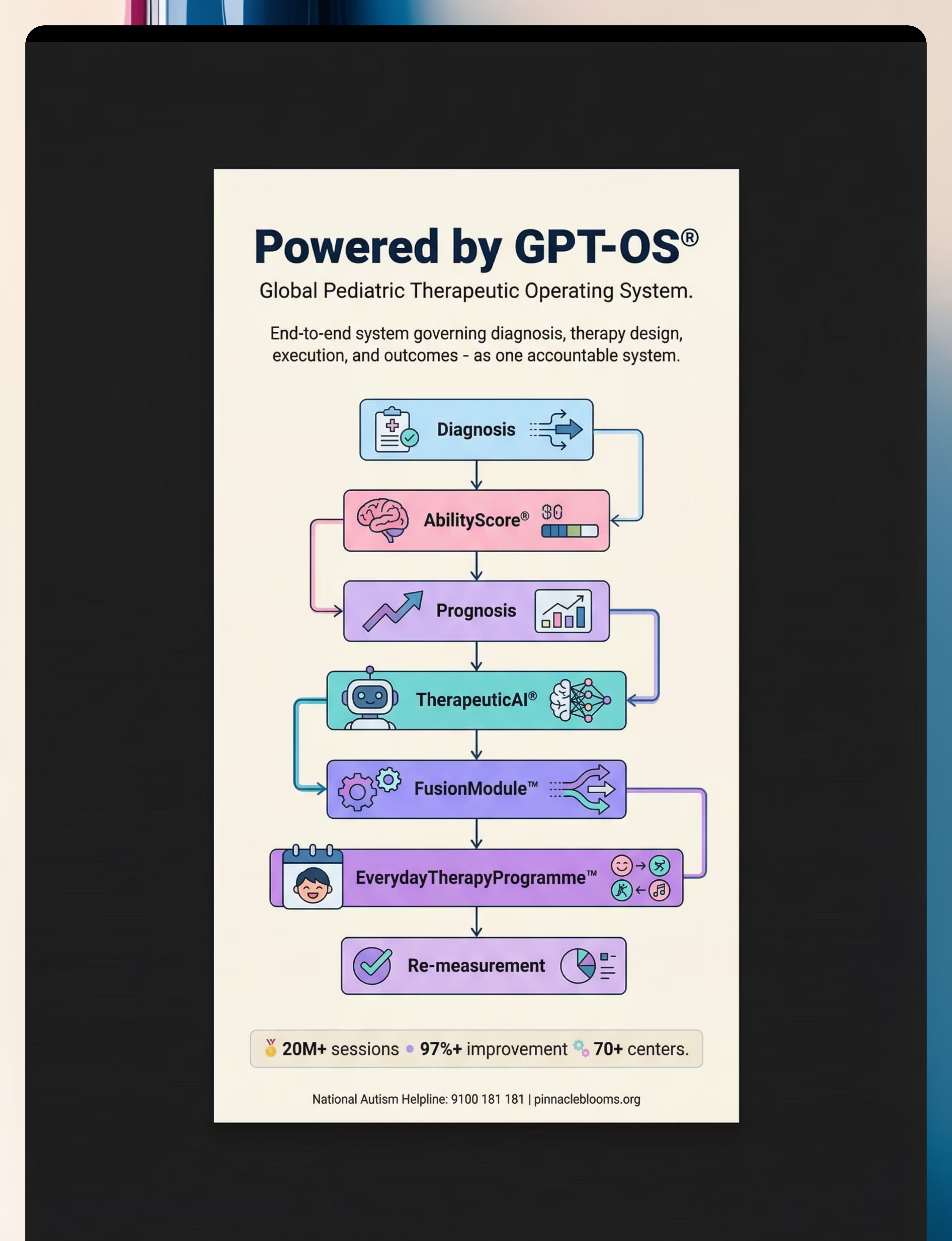
GPT-OS® Integration
Data entered flows into your child's Safety Awareness Readiness Index within GPT-OS®. Your therapist sees patterns in real-time.
📥 Download Printable Elopement Tracking Sheet — D-416 (Weekly grid, space for trigger notes, visual for BCBA review)
Link: forms.pinnacleblooms.org/elope-track-D416

Act III — Troubleshooting
When it's not working. Common problems and exactly what to do.
Child has defeated the lock
Solution: This is expected. Add a DIFFERENT type of lock immediately. Layer at least 3 different types. No single lock is permanent. Consider: is it time to add an alarm layer if not yet installed?
Child removes GPS tracker
Solution: Try alternative placement: sewn into clothing, shoe insert, backpack lining. Consider dual-tracking (GPS + someone always with line of sight). Reinforce wearing tracker with preferred item.
Child not responding to visual boundaries
Solution: Increase reinforcement density — reward EVERY stop at boundary. Simplify visual cue (brighter, larger, at eye level). Consult BCBA — child may not yet have capacity for rule-following that visual boundaries require. Do not remove physical barriers.
AAC communication not transferring to real elopement situations
Solution: Practise closer to the actual exit. Practise during elevated arousal, not only calm. Prompt BEFORE the child reaches for the handle. Ensure the communication is HONOURED — if they request outside and don't get it, communication stops.
Child elopes at night
Solution: Alarm on bedroom door (interior). Consider GPS tracker worn during sleep. Assess: is the bedroom secure (no window egress)? Install window limiters. This is a separate layer from daytime systems.
Elopement at school, not just home
Solution: Formal school safety plan required. Request meeting with school staff. Provide written elopement risk notification. Request 1:1 supervision if risk is severe. Ensure school has same visual boundaries and alarm protocols. Share GPS tracking plan with trusted school staff.
Multiple lock types installed, child still exits
Solution: Comprehensive functional behaviour assessment (BCBA) now. Child's motivation or capability may require professional assessment. Add community network layer immediately. 24×7 GPS is non-negotiable. Consider whether residential or intensive day-support is needed.
📞9100 181 181 — Live guidance from BCBA and safety specialists for troubleshooting
Act III — Adapt the System
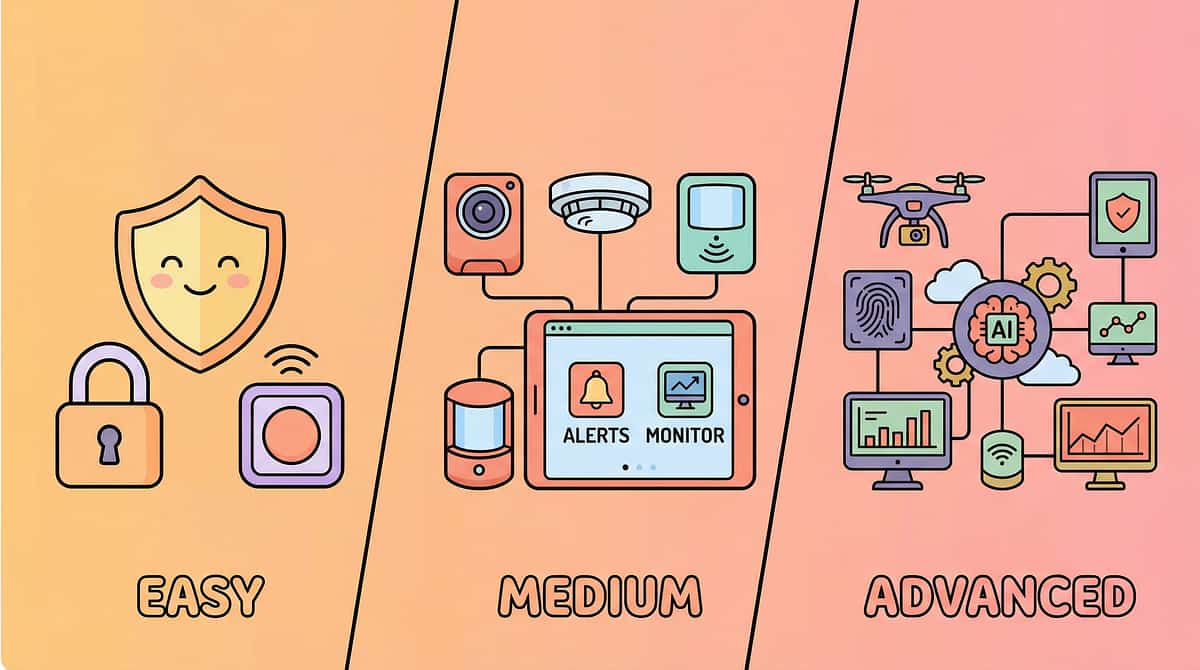
This system is not static. Your child grows. Your layers must grow with them.
Adaptation Triggers
Upward Adaptation (child has defeated a layer):
- Add one new layer immediately (don't wait for an incident)
- Rotate lock types: defeat of Type A → add Type B + C
- Upgrade GPS: wrist to shoe insert if child removes wrist tracker
- Increase community network: more neighbours, school coordination
Downward Adaptation (child is demonstrating safety skills):
- Communication reliable in multiple contexts for 8+ weeks → reinforce and monitor
- Boundary compliance consistent for 12+ weeks → may trial reduced density of visual cues (but NEVER remove physical barriers without professional guidance)
- Elopement-free for 3+ months → review with BCBA before modifying any layer
Age-Based Progression
- Ages 2–5: Maximum barriers. Minimal behavioural teaching (capacity limited). Focus: survival.
- Ages 6–9: Upgrade barriers as child grows stronger. Add GPS urgently. Increase communication training. School coordination.
- Ages 10–14: Adult-level barriers. Reliable GPS essential. Community network expanded. Behavioural + medication evaluation if frequency remains high.
Quarterly Review Protocol
- ☐ Test all alarm batteries and sensors
- ☐ Assess: can child defeat any current lock? Add layer if yes.
- ☐ Review elopement data trend
- ☐ Update emergency response plan with current photo
- ☐ Report data to BCBA/OT for clinical review
Sensory Seeker vs. Sensory Avoider Adaptation:
• Seeker (runs TOWARD stimuli): Add safe outdoor access, schedule preferred sensory activities, meet the stimulus need safely.
• Avoider (runs FROM overwhelm): Prioritise sensory regulation tools, reduce trigger exposure, provide escape options before flight occurs.
📞9100 181 181 — For AbilityScore® assessment and TherapeuticAI® adaptation guidance
• Seeker (runs TOWARD stimuli): Add safe outdoor access, schedule preferred sensory activities, meet the stimulus need safely.
• Avoider (runs FROM overwhelm): Prioritise sensory regulation tools, reduce trigger exposure, provide escape options before flight occurs.
📞9100 181 181 — For AbilityScore® assessment and TherapeuticAI® adaptation guidance

Act IV — Progress Arc
Week 1–2: The system goes live. Expect learning. Not mastery.
15%
Progress at Week 1–2
System installed and active. This is itself a profound achievement.
Observable Indicators at This Stage
- ✓ All exits alarmed (measurable: alarms installed and tested)
- ✓ ID on child every day (measurable: bracelet/tag worn)
- ✓ GPS tracker configured and in use
- ✓ Child tested alarm at least once (expected — they're exploring the system)
- ✓ Parent response time to alarm: under 30 seconds
What Progress Looks Like in Week 1–2
- Child reaches door, alarm sounds, parent responds, child doesn't exit = SYSTEM WORKING
- Child wearing ID bracelet without daily protest = progress
- Child has used communication tool 1–3 times instead of elopement = early success signal
- Elopement attempts may INCREASE initially as child tests new barriers — this is normal
What Is Not Progress Yet
- Child reliably stopping at visual boundaries (takes 4–8 weeks minimum)
- Spontaneous communication replacing elopement (takes 3–6 months)
- Zero elopement attempts (unrealistic in weeks 1–2)
"By end of week 2, you have a system. That is itself profound. The exhausted, solo vigilance is now supported by alarms, GPS, and ID. You are not alone in watching anymore."

Act IV — Progress Arc
Week 3–4: The child is learning the system. You're learning your child's patterns.
40%
Progress at Week 3–4
Consolidation phase. Neural pathways forming. Patterns becoming visible.
Consolidation Indicators
- ✓ Child has predictable response to visual STOP boundary (slows, stops, or pauses at the line — even if not reliably)
- ✓ Communication tool used spontaneously at least once (without prompt)
- ✓ Elopement data shows at least 1 day per week with zero attempts
- ✓ Parent has identified child's primary elopement function (escape? attraction? goal-directed?)
- ✓ Trigger patterns becoming visible in data (specific time of day? after specific demands?)
What "Neural Pathway Forming" Looks Like
The child begins to approach the door, then looks at the communication card, then looks at parent. This hesitation — this moment of checking — is the impulse inhibition circuit forming. That glance at the card is worth celebrating as loudly as if they'd used it.
When to Increase Intensity
- If elopement attempts are still daily with no decreasing trend → increase supervision, review all layers with BCBA
- If communication tool is being used → increase vocabulary options (add "I need BREAK" etc.)
- If sensory triggers are identified → introduce OT sensory regulation protocol actively
"By week 4, you know more about WHY your child runs than you did at week 1. That knowledge is the basis of permanent reduction."

Act IV — Progress Arc
Week 5–8: Skills are forming. The system is proving itself.
65%
Progress at Week 5–8
Deepening impact. Measurable reduction confirmed by data.
Deepening Indicators
- ✓ Elopement frequency measurably lower than week 1–2 baseline (data confirms)
- ✓ Child stops at visual boundary 3+ times per week independently
- ✓ Communication tool used multiple times per week without physical prompt
- ✓ Child can wait for scheduled outdoor time with visual schedule support
- ✓ At least one sensory regulation tool in regular use
Skill Generalisation Seeds
- Child stops at visual boundary at grandparents' house (new setting = generalisation)
- Child uses "BREAK" card at school (new setting = generalisation)
These are significant achievements.
What the Therapist Sees (AbilityScore® at Week 8)
- Safety Awareness Readiness Index: typically 10–25 points above baseline
- Impulse Control Readiness Index: early movement
- Communication Readiness Index: movement in FCT-targeted vocabulary
Research: Sensory integration + behavioural intervention outcomes emerge across 8–12 week timelines. References: PMC11506176 | PMC10955541

Act IV — Celebrate
You have kept your child safe. That is an extraordinary achievement.
1
🏆 Week 2 Milestone
System live, child ID'd, GPS active. You have built infrastructure that didn't exist before. Celebrate this.
2
🏆 Week 4 Milestone
You know your child's elopement function. Understanding WHY they run is the prerequisite for permanently reducing it. You now know what others guess at.
3
🏆 Week 8 Milestone
First spontaneous communication instead of elopement. When your child shows you the OUTSIDE card instead of bolting for the door, something has changed in their brain. A new pathway has formed.
4
🏆 Month 3 Milestone
Measurable elopement frequency reduction. Your data shows the trend. The system is working.
5
🏆 Month 6 Milestone
Communication reliable in multiple settings. The intervention has generalised. This is the foundation of long-term safety.
"The level of vigilance required for a child who elopes is not sustainable without support. What you have built — layers, systems, data, community — has transformed that vigilance from solo, exhausted watching into a supported, intelligent safety network. You did that." — Pinnacle Blooms Parent Support Team
📞9100 181 181 — Share your milestone with our team. We celebrate every one.

Act IV — Red Flags
Know when to call immediately.
1
🚨 IMMEDIATE (Emergency)
- Child has eloped and was found near or in water
- Child was found near a road or was involved in a traffic incident
- Child was found by strangers and could not be identified (no ID worn)
- Child has been missing for more than 15 minutes
2
🔴 URGENT (This Week)
- Elopement frequency has increased 2+ weeks in a row despite system in place
- Child has defeated all current lock layers
- Child is removing GPS tracker consistently and cannot be tracked
- Any elopement at night that was not detected
- Elopement at school — teacher unaware or no protocol in place
3
🟡 IMPORTANT (This Month)
- No elopement reduction after 8 weeks of full system implementation
- Child's elopement function is unclear after data collection
- Caregiver exhaustion is affecting consistent system implementation
- Other caregivers (grandparents, school) are not implementing safety layers
📞9100 181 181 — FREE national autism helpline, 24×7, 16+ languages
Ask for: BCBA emergency consultation | Safety risk assessment | Home visit coordination
International Resources: National Autism Association (US): Big Red Safety Box programme · Project Lifesaver International: GPS + community tracking programmes · WHO NCF Safety Framework: nurturing-care.org
Ask for: BCBA emergency consultation | Safety risk assessment | Home visit coordination
International Resources: National Autism Association (US): Big Red Safety Box programme · Project Lifesaver International: GPS + community tracking programmes · WHO NCF Safety Framework: nurturing-care.org

Act IV — Progression Pathway
Your child is not stuck. They are at Stage [X] of 5. Here is the map forward.
Every child who elopes is somewhere on a developmental safety continuum. The Pinnacle Blooms GPT-OS® system tracks exactly where your child is — and generates the precise next clinical target. This is not a linear race. It is a personalised journey. Some children move through all 5 stages in 18 months. Some take 5 years. Both are valid. Both are progress.
1
Stage 1: Maximum Risk
Week 1–8
All 9 physical layers active. Constant supervision. No danger awareness. No functional communication. GPS worn at all times. This is where most families begin. You are not failing — you are building.
All 9 physical layers active. Constant supervision. No danger awareness. No functional communication. GPS worn at all times. This is where most families begin. You are not failing — you are building.
2
Stage 2: System Holding
Month 2–3
Alarms are catching attempts. GPS is being worn. Child is beginning to respond to visual boundaries in familiar spaces. 1–3 word communication emerging. Elopement frequency beginning to plateau.
Alarms are catching attempts. GPS is being worn. Child is beginning to respond to visual boundaries in familiar spaces. 1–3 word communication emerging. Elopement frequency beginning to plateau.
3
Stage 3: Communication Replacing Running
Month 4–8
Child uses AAC or words to request preferred items/activities instead of running. Stops at visual boundaries most of the time. Responds to 'stop' in practised scenarios. Elopement frequency reduced by 40–60%.
Child uses AAC or words to request preferred items/activities instead of running. Stops at visual boundaries most of the time. Responds to 'stop' in practised scenarios. Elopement frequency reduced by 40–60%.
4
Stage 4: Supervised Community Navigation
Month 8–18
Rare elopement attempts. Functional communication in familiar and some unfamiliar contexts. School safety plan effective. Can navigate community with 1:1 supervision. Knows basic road safety rules.
Rare elopement attempts. Functional communication in familiar and some unfamiliar contexts. School safety plan effective. Can navigate community with 1:1 supervision. Knows basic road safety rules.
5
Stage 5: Functional Safety Awareness
Long-term goal
No elopement incidents for 3+ consecutive months. Asks permission before leaving spaces. Knows what to do if lost — can state name, parent's phone number, or use AAC to communicate. Danger awareness functional.
No elopement incidents for 3+ consecutive months. Asks permission before leaving spaces. Knows what to do if lost — can state name, parent's phone number, or use AAC to communicate. Danger awareness functional.
"The question is never 'will my child be safe?' The question is 'what is the next stage, and what does my child need to get there?' Every stage is a child safer. Every stage is a family less afraid." — Pinnacle Blooms NeuroDev Paediatrics
📞 9100 181 181 — FREE AbilityScore® Stage Assessment. Find out exactly which stage your child is at and receive a personalised GPT-OS® progression plan. Available in 16+ languages, 24×7.
Act IV — Pathway Forward
Where this system leads. The developmental progression from maximum risk to functional safety.
1
Stage 1
Maximum physical barriers, constant supervision, alarms, GPS, ID. No danger awareness | No communication | Severe risk. You are here if this is week 1–4 of the system.
2
Stage 2
Barriers effective, some alarm activations, GPS worn. Emerging communication (1–3 words) | Some visual boundary respect. Typically months 2–3 with consistent implementation.
3
Stage 3
Reduced elopement frequency, communication functional in familiar contexts. Responds to "stop" in practised scenarios | Stops at boundaries most of the time. Typically months 4–8 with professional support.
4
Stage 4
Rare elopement attempts, reliable communication. Community navigation with supervision | School safety plans effective. Months 8–18 with continued intervention.
5
Stage 5
No elopement incidents for 3+ months. Functional danger awareness | Asks permission to go places | Knows what to do if lost. Long-term goal: varies by child profile and severity.
"Some children will reach Stage 5 by age 10. Some will require safety supports into adulthood. The goal is always the next stage — never a fixed endpoint. Each stage achieved is a child safer, a family less afraid, a future more possible." — Pinnacle Blooms NeuroDev Paediatrics
📞9100 181 181 — For current AbilityScore® stage assessment. Your child's AbilityScore® progression tracks exactly which stage they are in and what the next clinical target is.
Act IV — Related Techniques
This technique works best with these companions.
1
🔗 D-414 | Understanding Elopement: Why Children Run
Before building the system, understand the function. Foundational prerequisite.
techniques.pinnacleblooms.org/safety-behavior/understanding-elopement-D414
techniques.pinnacleblooms.org/safety-behavior/understanding-elopement-D414
2
🔗 D-415 | Elopement Risk Assessment and Safety Planning
The formal assessment that determines your child's specific risk profile.
techniques.pinnacleblooms.org/safety-behavior/elopement-risk-assessment-D415
techniques.pinnacleblooms.org/safety-behavior/elopement-risk-assessment-D415
3
🔗 D-417 | Water Safety for Children Who Elope
Drowning is the #1 cause of death for eloping autistic children. Water-specific safety is critical.
techniques.pinnacleblooms.org/safety-behavior/water-safety-elopement-D417
techniques.pinnacleblooms.org/safety-behavior/water-safety-elopement-D417
4
🔗 D-418 | Building Danger Awareness Over Time
The long-term skill-building pathway that eventually reduces elopement from the inside.
techniques.pinnacleblooms.org/safety-behavior/danger-awareness-D418
techniques.pinnacleblooms.org/safety-behavior/danger-awareness-D418
5
🔗 D-420 | Response to "Stop" Commands
Teaching the single most important safety skill: stopping when called.
techniques.pinnacleblooms.org/safety-behavior/stop-command-D420
techniques.pinnacleblooms.org/safety-behavior/stop-command-D420
6
🔗 B-221 | Functional Communication Training (SLP)
The communication intervention that addresses the root cause of escape-motivated elopement.
7
🔗 A-089 | Sensory Regulation for Overwhelm (OT)
The sensory intervention that reduces escape from overwhelming environments.
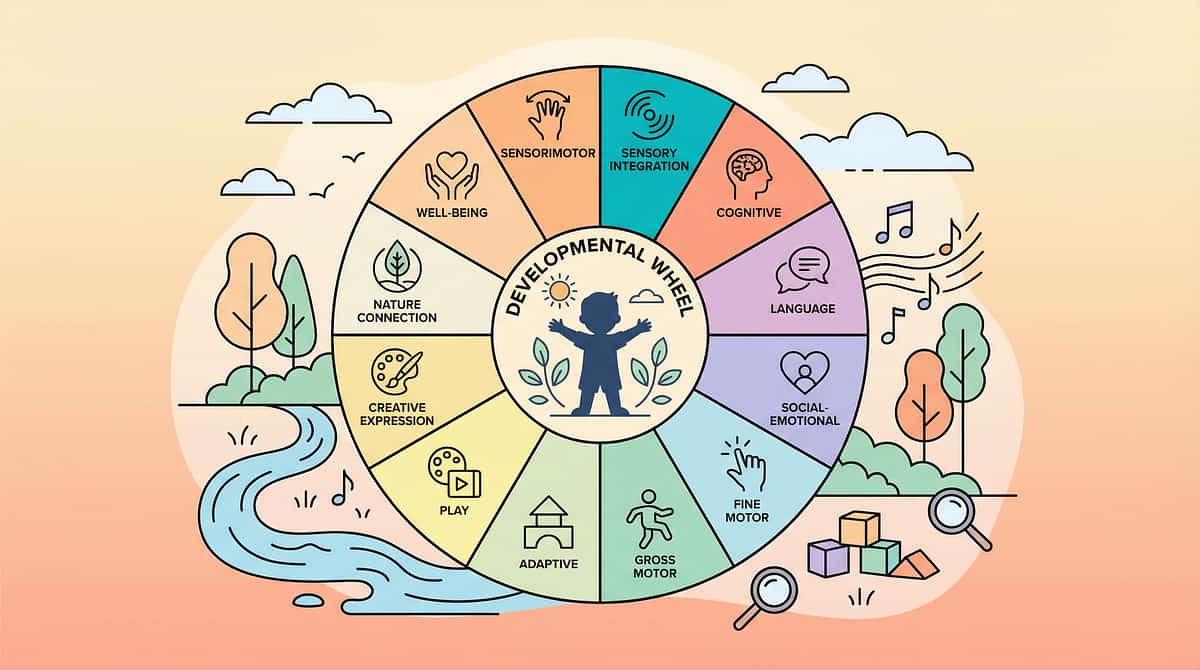
Act IV — Full Developmental Map
This technique is one piece of a complete developmental plan.
Active Domains for This Child
- 🔴Domain D: Safety/Behaviour — CURRENT FOCUS (D-416)
- 🟠Domain A: Sensory Processing — Supporting (Sensory regulation reduces elopement)
- 🟡Domain B: Communication — Active (FCT reduces elopement)
- ⚪Domains C, E–L: Context-dependent (child's GPT-OS® profile determines activation)
The Big Picture
"Elopement is not an isolated behaviour. It sits at the intersection of sensory processing, communication, impulse control, danger awareness, and environmental factors. The Pinnacle FusionModule™ addresses all active domains simultaneously — not sequentially. Your child's safety depends on all active domains being addressed as one converged plan."
WHO/UNICEF Framework: Security and safety + Responsive caregiving + Early learning = three of five nurturing care components directly relevant to elopement intervention. WHO NCF (2018) | UNICEF 2025 | PMC9978394
📍 See your child's full developmental profile: pinnacleblooms.org/ability-score
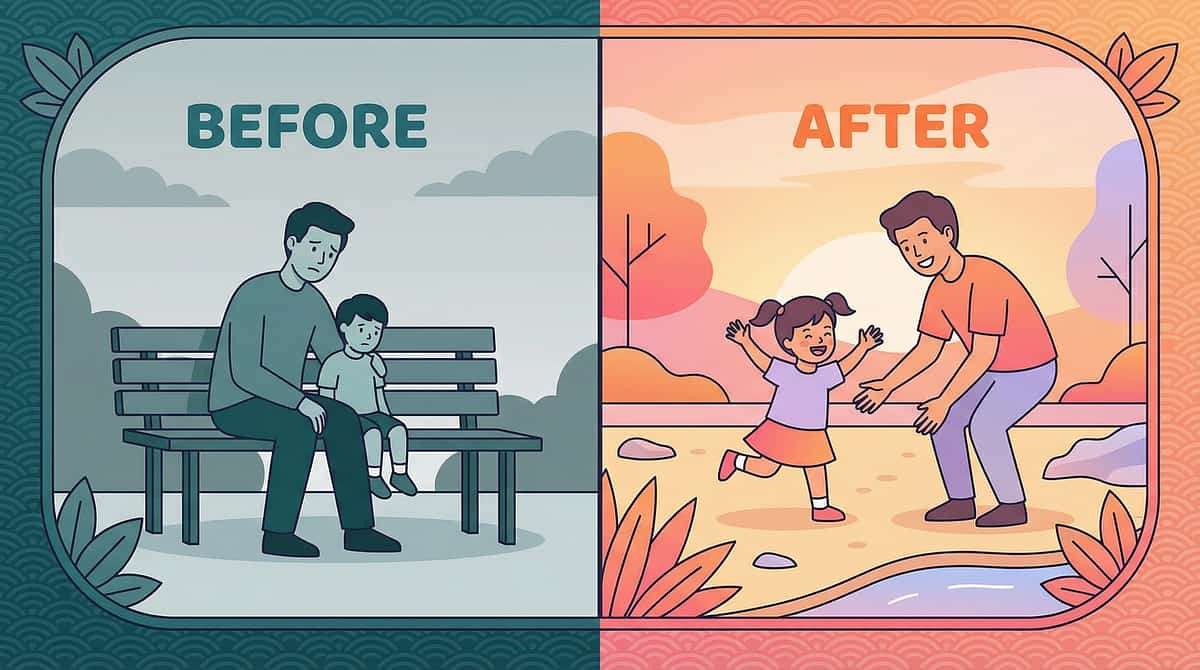
Act V — Community & Ecosystem
Families who've been here. Here is where they arrived.
Family Story 1 — Before (Month 1)
"Our 6-year-old son defeated every lock we installed within a week. We found him at the lake three doors down. I stopped sleeping. My husband took to sleeping across the front door." — Parent, Pinnacle Hyderabad Network
Family Story 1 — After (Month 9)
"He uses his picture card to ask for outside. The alarms have been quiet for three months. He still wears his GPS tracker — we haven't removed that layer. But the terror has reduced to manageable vigilance." — Parent, Pinnacle Hyderabad Network
From the Therapist's Notes: "Functional assessment revealed two elopement functions: outdoor sensory seeking AND escape from demand. We addressed both — structured outdoor time for the sensory function, FCT for the demand function. Communication training was the turning point." Timeline: 9 months | Disciplines: ABA/BCBA + SLP + OT | Tools: FCT + Visual schedule + Specialised locks + GPS
Family Story 2 — Before (Week 1)
"My daughter eloped twice in one day at my mother's house. My mother didn't know. She didn't have alarms. My daughter was found on the main road." — Parent, Pinnacle Chennai Centre
Family Story 2 — After (Month 4)
"We gave every grandparent, every relative, the same lock + alarm setup guide. We distributed ID cards for the whole extended family to carry. Community layers saved her when barriers failed." — Parent, Pinnacle Chennai Centre
"Two years ago, we couldn't turn our backs for ten seconds. Our son bolted constantly — toward water, toward roads, through any door he could find. Today, the alarms rarely go off. He stops at visual boundaries. He can tell us 'I want outside' instead of running for it. The constant terror has lifted. We can breathe." — Parent, Pinnacle Blooms Network
Illustrative of clinical patterns. Individual outcomes vary.
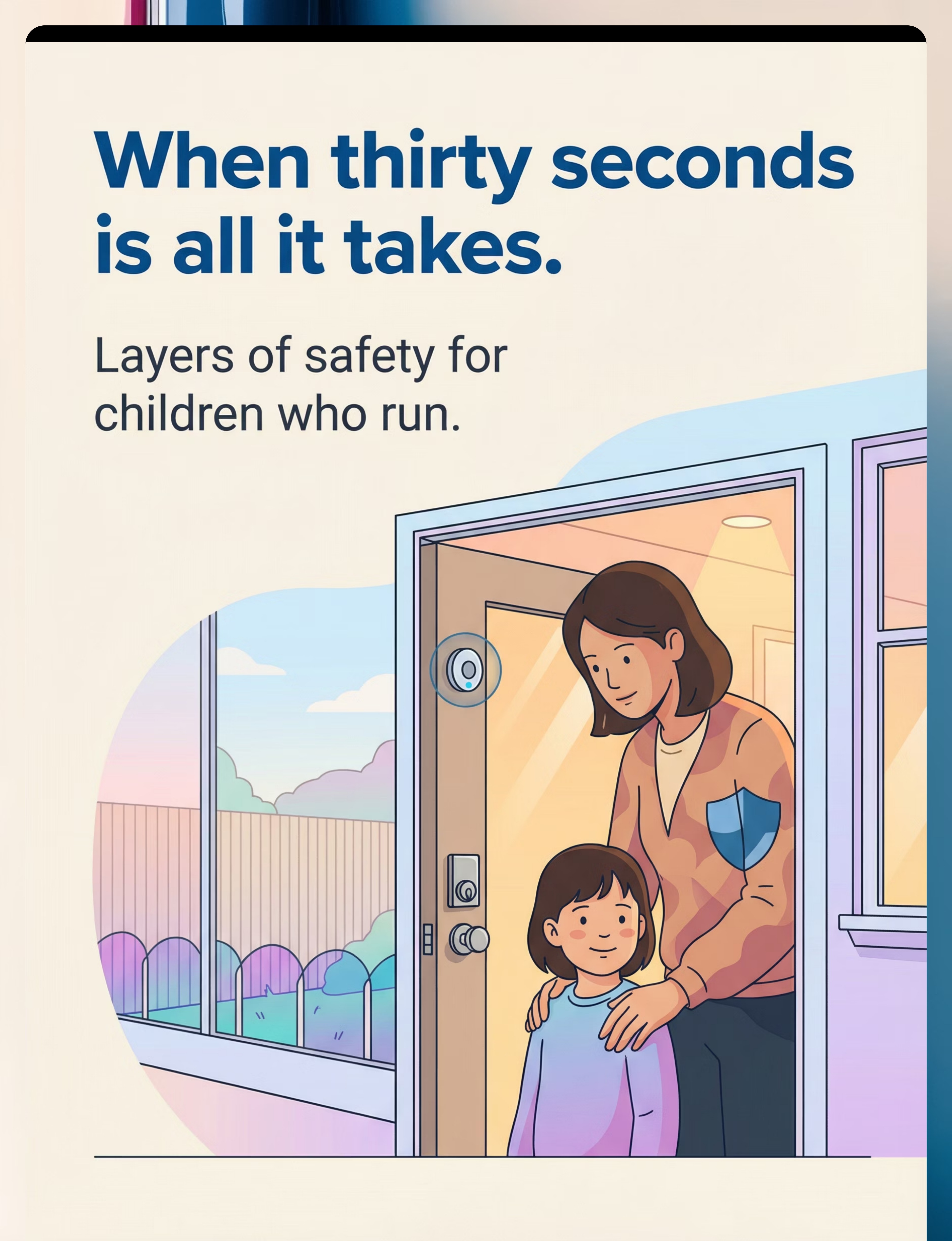
Preview of 9 materials that help with elopement prevention Therapy Material
Below is a visual preview of 9 materials that help with elopement prevention therapy material. The pages shown help educators, therapists, and caregivers understand the structure and content of the resource before use. Materials should be used under appropriate professional guidance.


Link copied!
Act V — Community
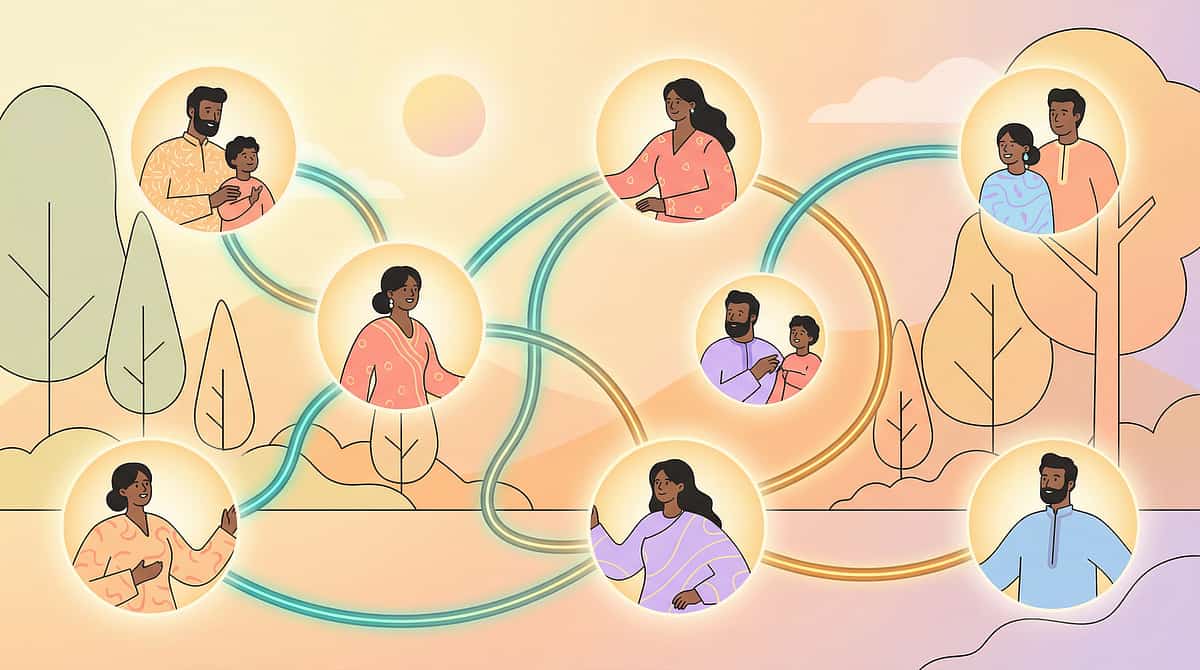
Isolation makes this harder. Community makes it survivable.
💬 WhatsApp Group: Elopement Prevention Parents India
pinnacleblooms.org/whatsapp-elope-safety — A safe space for families of runners. Share what works. Get support when it doesn't.
🌐 Online Community Forum
PinnacleParents.org/elopement — Research-grounded discussion. Moderated by Pinnacle BCBA team.
📍 Local Parent Meetup
Pinnacle centres run monthly parent groups on safety-critical behaviours. Call 9100 181 181 for your nearest centre's schedule.
🤝 Peer Mentor Programme
Connect with an experienced Pinnacle parent who has navigated elopement and built a working safety system. Request at: pinnacleblooms.org/peer-mentor
"Your experience — what defeated you, what finally worked, what you wish you'd known — helps every family that comes after you. When you share your journey, you save another child."
WHO Principle: Community engagement is a core component of WHO NCF. Over 1,000 individuals from 111 countries contributed to the Nurturing Care Framework — because no family navigates developmental challenges optimally in isolation.
📞9100 181 181
📞9100 181 181