

1 in 36 children with autism exhibits dangerous climbing behavior as a primary safety concern.
80%
Sensory Differences
of children with ASD experience sensory processing differences including vestibular-proprioceptive seeking
1/6
Global Impact
children globally have sensory processing difficulties significant enough to impact daily functioning
70M+
Indian Families
families in India alone navigate some form of sensory-driven behavior challenge
Dangerous climbing is not rare. It is not caused by bad parenting. It is documented, studied, and — critically — addressable. Across Pinnacle Blooms Network's 70+ centres and 21 million therapy sessions, this is one of the most commonly reported safety challenges in the 2–8 year age window. India has approximately 18 million children with autism. Sensory-driven risk behaviors — including dangerous climbing — are among the top 5 reasons Indian families first contact our helpline. You are among millions of families navigating this exact challenge — right now, today, across every country on earth.
PRISMA systematic review (2024, PMC11506176): 80% of children diagnosed with autism display sensory processing difficulties. World J Clin Cases meta-analysis (2024, PMC10955541): Sensory integration therapy effectively promotes adaptive behavior across 24 studies.

This is a wiring difference. Not a behaviour problem. Not defiance.
The Vestibular-Proprioceptive Loop
The vestibular system (inner ear → cerebellum) processes movement, gravity, balance, and spatial position. In children who climb compulsively, this system is under-responsive — it requires more input than typical to reach its threshold.
The proprioceptive system (receptors in muscles, joints, tendons) processes force, body position, and muscle tension. Climbing provides maximum proprioceptive input: gripping, pulling, weight-bearing, resistance against gravity.
When your child reaches the top of the refrigerator and looks calm for the first time all day — their vestibular-proprioceptive loop has finally received what it was demanding.
What This Means for You
Punishment cannot eliminate a neurological drive. You cannot time-out away a hunger signal.
When your child climbs, they are self-regulating — meeting a sensory need the same way you might reach for a coffee when you're exhausted. The method is dangerous. The need is real and biological.
The solution is not suppression. The solution is redirection — meeting the same neurological need through safer materials and structures.
📞9100 181 181 — Speak with a Paediatric OT about your child's specific sensory profile
Frontiers in Integrative Neuroscience (2020, DOI: 10.3389/fnint.2020.556660): Comprehensive neurological framework confirms sensory processing differences as neurobiological basis for sensory-seeking behaviors in ASD. Sensory Integration Theory (Ayres): Vestibular-proprioceptive seeking behaviors serve self-regulation purposes and must be addressed through appropriate input, not suppression.

Your child is here. Here is where we're heading.
Birth – 18 Months
Typical climbing begins — exploratory, responsive to gentle redirection
2–3 Years
Climbing is normal but should respond to redirection. Unstoppable, fearless climbing signals sensory processing differences. Intervention window opens here.
4–6 Years
Risk assessment should be emerging. If dangerous climbing continues at same intensity — seek OT evaluation. The window remains open and effective.
7–10 Years
Skills can and do develop with targeted intervention. Children in this range can learn to channel climbing need appropriately. Do not wait.
Comorbidity awareness: Dangerous climbing is commonly associated with Autism Spectrum Disorder (ASD), ADHD, Sensory Processing Disorder (SPD), Developmental Coordination Disorder, and anxiety disorders with sensory components.
Early intervention does not mean your child is broken. It means you recognised the signal and chose to respond intelligently.
WHO Care for Child Development (CCD) Package: Age-specific evidence-based recommendations implemented in 54 low- and middle-income countries. UNICEF MICS developmental monitoring indicators across 197 countries. References: PMC9978394 | WHO/UNICEF CCD Package (2023)
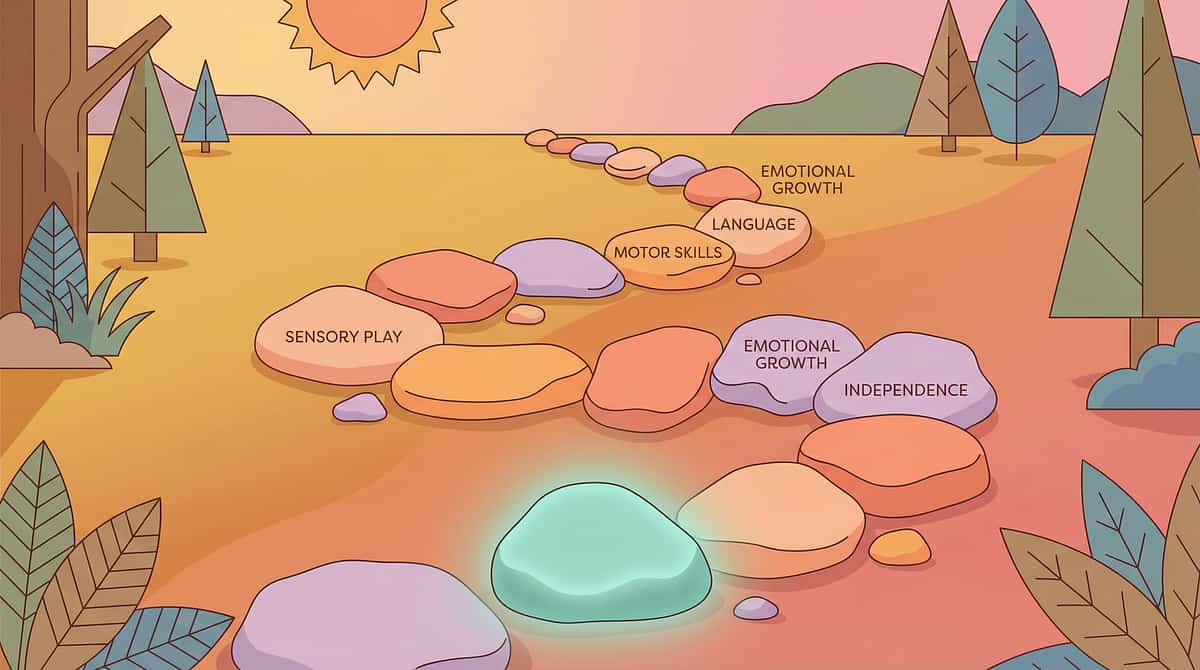
Clinically validated. Home-applicable. Parent-proven.
🏆 Level I–II Evidence
Systematic Reviews + Multiple RCTs + 20M+ Real-World Sessions
Study | Finding | Reference | |
PRISMA Systematic Review (2024) | 16 studies confirm sensory integration intervention as evidence-based practice for ASD | ||
World J Clin Cases Meta-Analysis (2024) | SI therapy promotes adaptive behavior, sensory processing, motor skills across 24 studies | ||
Indian RCT — Padmanabha et al. (2019) | Home-based sensory interventions demonstrate significant outcomes in Indian paediatric population | ||
Frontiers in Integrative Neuroscience (2020) | Neurological basis confirmed for sensory-based interventions in ASD | ||
NCAEP Evidence-Based Practice Report (2020) | Visual supports and environmental modification are evidence-based practices for autism |
Across 21 million therapy sessions in the Pinnacle Blooms Network, sensory-motor interventions for vestibular-proprioceptive seeking behaviors show measurable improvement in Motor Safety Readiness Index in the majority of cases within 8–12 weeks of consistent implementation. This is not anecdote. This is a decade of science, 70 centres, and 21 million sessions. Your child deserves this level of evidence.

Safe Climbing & Vestibular-Proprioceptive Input Provision
"Meeting the Climbing Need Safely" — Code: D-418 | Series: Safety & Risk Management
This technique addresses dangerous climbing behavior — persistent, compulsive, fearless climbing on unsafe surfaces — by providing materials and strategies that meet the underlying vestibular-proprioceptive neurological need through safe, designed-for-purpose channels. Rather than attempting to eliminate climbing (which cannot be done without addressing the underlying need), this approach works on four levels:
1
Sanctioned Climbing Structures
Provides structures that meet the need safely
2
Vestibular Alternatives
Offers vestibular and proprioceptive alternatives that partially satisfy the same drive
3
Environmental Safety
Implements modifications to reduce catastrophic risk while other work proceeds
4
Proactive Sensory Diet
Establishes a schedule so the child's system is never running on empty
🟠 Safety / Sensory
🟢 Motor Development
🔵 Behavioural Regulation
🟣 Environmental Adaptation
Age Band: 2–10 years | Session Duration: Daily integration | Frequency: Multiple times daily
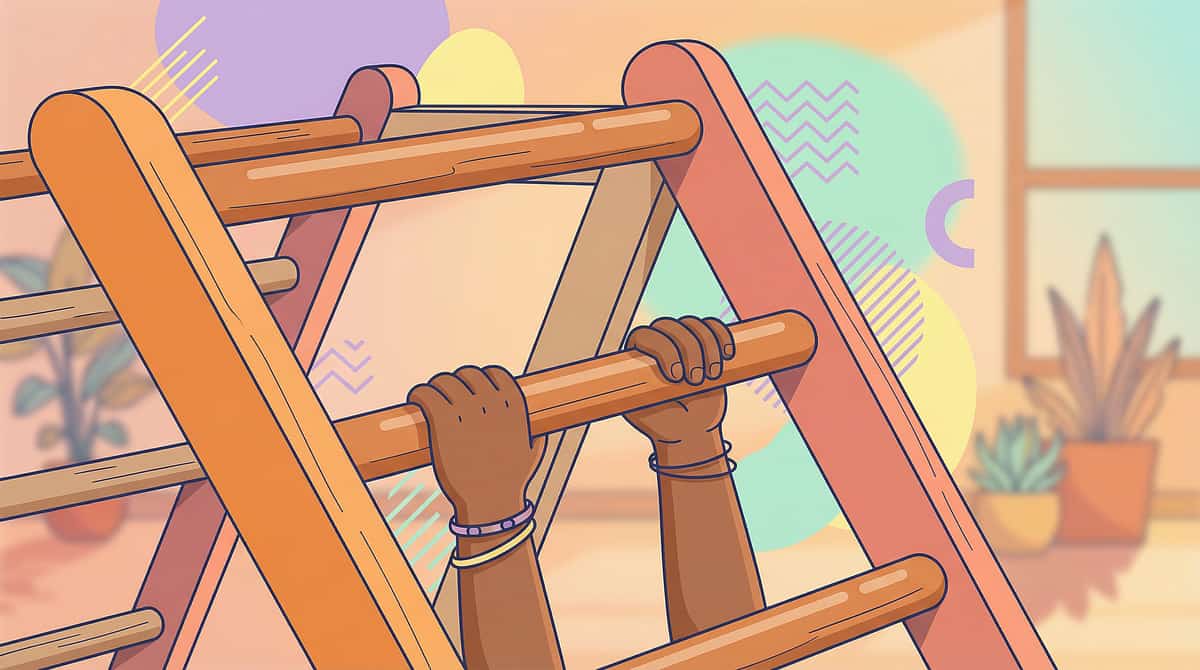
This technique crosses therapy boundaries — because the climbing brain doesn't organise by discipline.
Occupational Therapy (Primary Lead)
Assesses vestibular-proprioceptive sensory profile. Designs individualised sensory diet. Recommends appropriate climbing equipment. Addresses sensory integration at the root-cause level.
ABA / BCBA
Conducts functional behaviour assessment to identify antecedents and consequences of climbing. Implements differential reinforcement for safe climbing. Builds impulse regulation and risk-awareness skills through behavioural protocols.
Neurodevelopmental Paediatrics
Rules out or identifies co-occurring conditions (ASD, ADHD, SPD). Monitors for orthopedic injury patterns. Coordinates comprehensive evaluation when climbing behavior is extreme.
Special Education
Implements sensory diet across school environment. Coordinates movement breaks. Adapts classroom environment and trains school staff in recognition and response.
Speech-Language Pathology
Addresses communication strategies for the child to request climbing input rather than impulsively seeking it. Builds body awareness vocabulary. Supports self-advocacy around sensory needs.
📞9100 181 181 — Request FusionModule™ coordinated care
Adapted UNICEF/WHO Nurturing Care Framework for SLPs (2022): Multi-disciplinary contribution to nurturing care. DOI: 10.1080/17549507.2022.2141327

This is not a random activity. It is a precision tool.
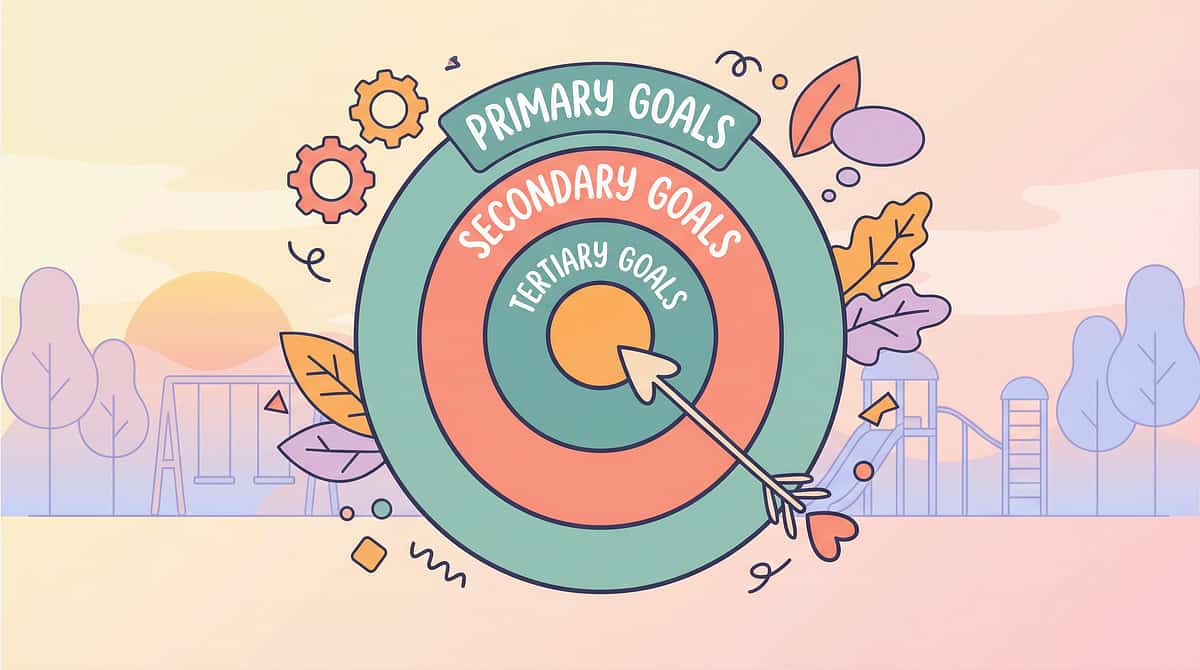
1
🎯 Primary Target
Child no longer scales refrigerators/bookshelves/windows. Redirects to appropriate climbing structures when prompted. Frequency of dangerous climbing incidents decreases week over week.
2
🔵 Secondary Targets
Vestibular regulation · Proprioceptive processing · Impulse regulation · Motor safety awareness
3
🟢 Tertiary Targets
Self-regulation capacity · Risk assessment development · Family safety · Social participation
PMC10955541 — Meta-analysis: Sensory integration therapy effectively promoted social skills (primary), adaptive behavior (secondary), sensory processing and motor skills (tertiary) across 24 studies.
Material 1 of 9
Canon: Climbing Equipment
Indoor Climbing Structures & Walls
What It Is
Pikler triangles, indoor climbing walls, climbing domes, rope ladders, monkey bars — structures designed for children to climb.
Why It Works
Provides sanctioned vertical movement that meets vestibular-proprioceptive need without the danger of furniture and appliances. A child who needs to climb will climb something — provide appropriate structures to redirect rather than fight the need.
Price Range
₹3,000–₹50,000
DIY ₹0 Option
Install rock climbing holds on a dedicated, stud-anchored wall section. Build a Pikler triangle from raw timber (plans widely available). Repurpose a sturdy ladder against a padded wall.
Find It
⚠️ Safety Note
Must be properly anchored. Placed over impact-absorbing surface. Weight-rated with safety margin.

Material 2 of 9
Canon: Vestibular Equipment
Vestibular Equipment
What It Is
Platform swings, rope swings, trapeze bars, hammock chairs, spinning discs, tire swings.
Why It Works
Climbing feeds the vestibular system through height, movement against gravity, and head-position changes. Swings and spinning provide similar vestibular input in safer contexts.
Price Range
₹2,000–₹25,000
DIY ₹0 Option
Install swing hooks in ceiling joists (structural beams, NOT drywall). Old tyres from scrap yards make excellent outdoor swings. Supervised spinning on office chair provides rotational vestibular input.
Find It
⚠️ Safety Note
ALL hanging equipment must be installed into structural supports. Weight ratings must exceed child's weight by significant margin. OT supervision recommended for spinning — can cause nausea.
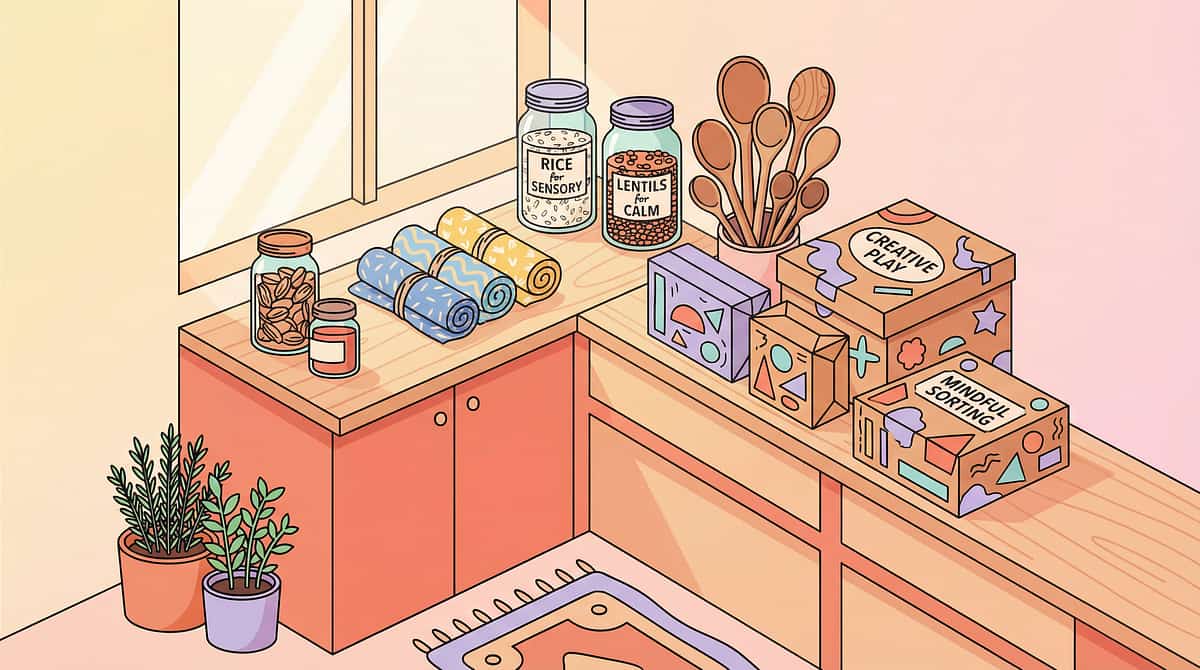
Material 3 of 9
Canon: Safety Equipment
Crash Pads & Soft Landing Surfaces
What It Is
Gymnastics crash pads, thick foam mats, interlocking foam floor tiles, large dense bean bags, ball pits.
Why It Works
Falls will happen. Crash pads don't prevent falls — they make falls survivable. They also provide safe proprioceptive input for intentional jumping and crashing.
Price Range
₹2,000–₹15,000
DIY ₹0 Option
Layer old mattresses in climbing areas. Stack thick blankets/duvets as emergency padding under high-risk furniture. Old gym mats from schools or community centres.
Find It
⚠️ Safety Note
Crash pads reduce severity but don't eliminate risk. Head injuries can still occur from sufficient height even on padded surfaces.

Material 4 of 9
Canon: Heavy Work / Proprioceptive Input
Heavy Work Materials
What It Is
Weighted vests (age-appropriate), push toys with resistance, weighted balls, resistance bands, body socks, compression tunnels.
Why It Works
Climbing provides intense proprioceptive input to muscles and joints. Heavy work — pushing, pulling, carrying, lifting — provides equivalent proprioceptive input without the height danger.
Price Range
₹500–₹5,000
DIY ₹0 Option
Fill a backpack with books for "heavy work." Carry grocery bags. Push furniture together (supervised). Dig in dirt or sand. Pull a sibling in a laundry basket.
Find It
⚠️ Safety Note
Weighted items should be 5–10% of body weight maximum. Consult OT for weighted vest protocol (time-limited wearing). Never use weights for infants.
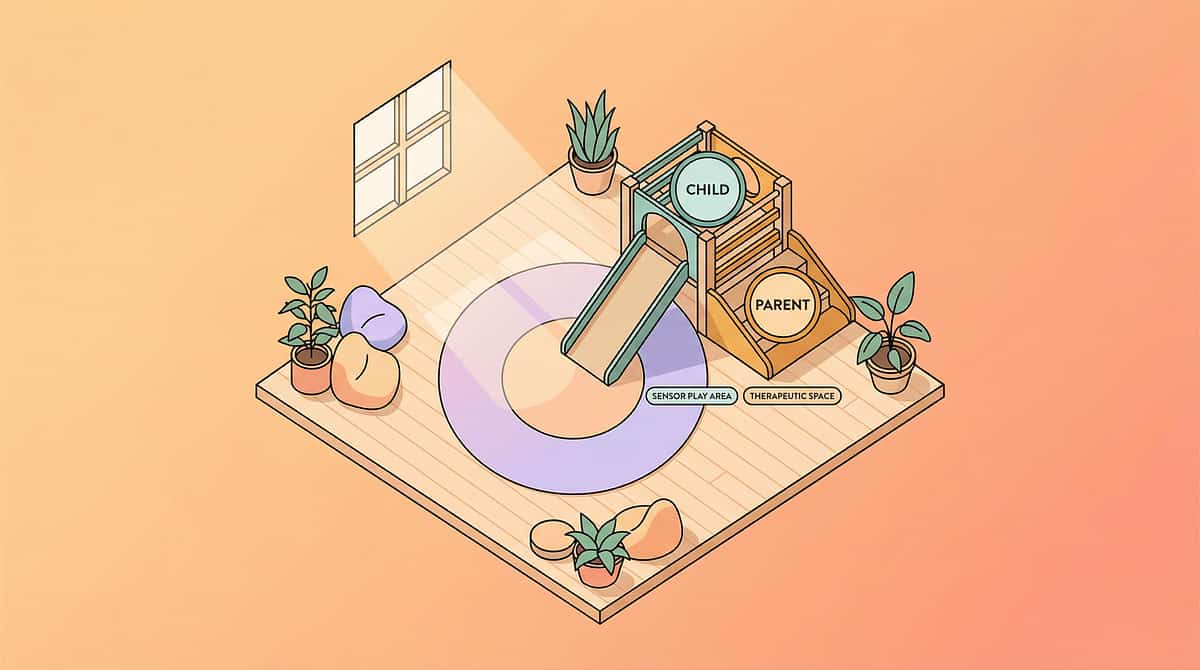
Material 5 of 9
Canon: Nature Play / Outdoor Activity
Outdoor Climbing Environments
What It Is
Access to climbing trees, playground structures with climbing elements, outdoor rock walls, boulder piles, rope climbing structures, natural terrain.
Why It Works
Outdoor environments provide safer fall surfaces (grass vs. tile), more appropriate risk feedback (branches flex and give warning), and natural vestibular-proprioceptive input. Time outdoors reduces indoor dangerous climbing.
Price Range
₹0–₹20,000
DIY ₹0 Option
Local parks with climbing structures are free. Supervised tree climbing on appropriate low trees. Natural rock formations in outdoor spaces. Any sloped terrain for rolling and rough-and-tumble.
Find It
Pinnacle Centres with Sensory Gyms — many have outdoor sensory play areas.
⚠️ Safety Note
Not all trees are safe — evaluate branch strength, bark grip, root stability. Always supervise outdoor climbing for this age group.

Material 6 of 9
Canon: Environmental Safety
Environmental Modification Kit
⚠️ IMMEDIATE ACTION: If your child has roof access, window access, or has caused structural injuries — implement environmental modifications TODAY regardless of any other step.
What It Is
Furniture anchoring straps, window guards and locks, extra-tall safety gates, cabinet drawer locks, corner and edge guards, non-climbable barriers.
Why It Works
While meeting the underlying need is the long-term strategy, environmental safety modifications are essential now. They buy time and prevent catastrophic outcomes while sensory-motor work proceeds.
Price Range
₹500–₹5,000
DIY ₹0 Option
Use strong rope or zip-ties to anchor furniture to wall studs. Reposition furniture away from windows immediately. Remove dresser drawers that function as stairs. Block access to highest-risk areas with any available barriers.
Find It
⚠️ Critical Note
Environmental modification is necessary BUT NOT SUFFICIENT. A determined climber will find a way. Modifications buy time — they don't address the cause.
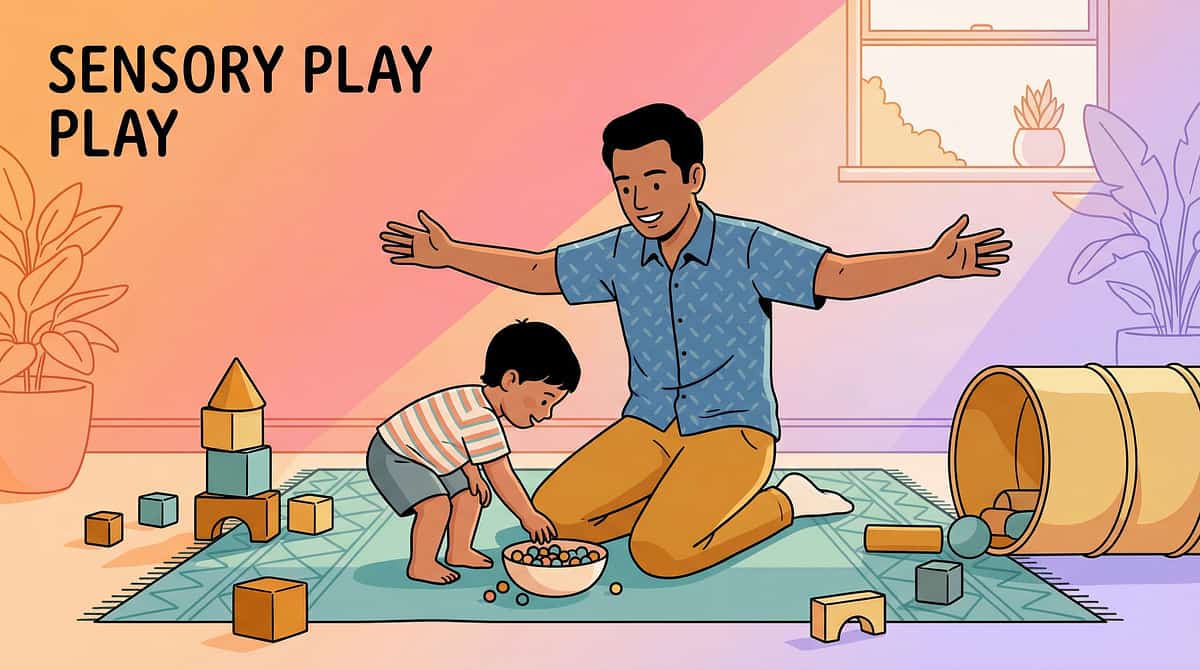
Material 7 of 9
Canon: Sensory Diet Planning
Sensory Diet Scheduling Tools
What It Is
Visual sensory diet schedules, timers for movement breaks, activity cards for climbing options, tracking sheets for climbing patterns.
Why It Works
Proactive input prevents crisis-level seeking. Schedule climbing activities throughout the day — morning, before meals, after school. When the sensory system gets regular input on a predictable schedule, the desperate dangerous seeking decreases.
Price Range
₹0–₹1,000
DIY ₹0 Option
Draw a visual schedule on paper with pictures of climbing times. Set phone alarms for movement breaks. Create a simple tally sheet to track when dangerous climbing peaks (identify the high-risk times and pre-empt them).
Find It
Pinnacle GPT-OS® EverydayTherapyProgramme™ — personalised sensory diet planning
⚠️ Safety Note
A sensory diet should ideally be reviewed by an occupational therapist who understands the child's specific sensory-motor profile.
Reinforcement Materials:Reward Jar — ₹589 | Reward Sticker Book 1800+ — ₹364(Pinnacle Canon: Reinforcement Menus)
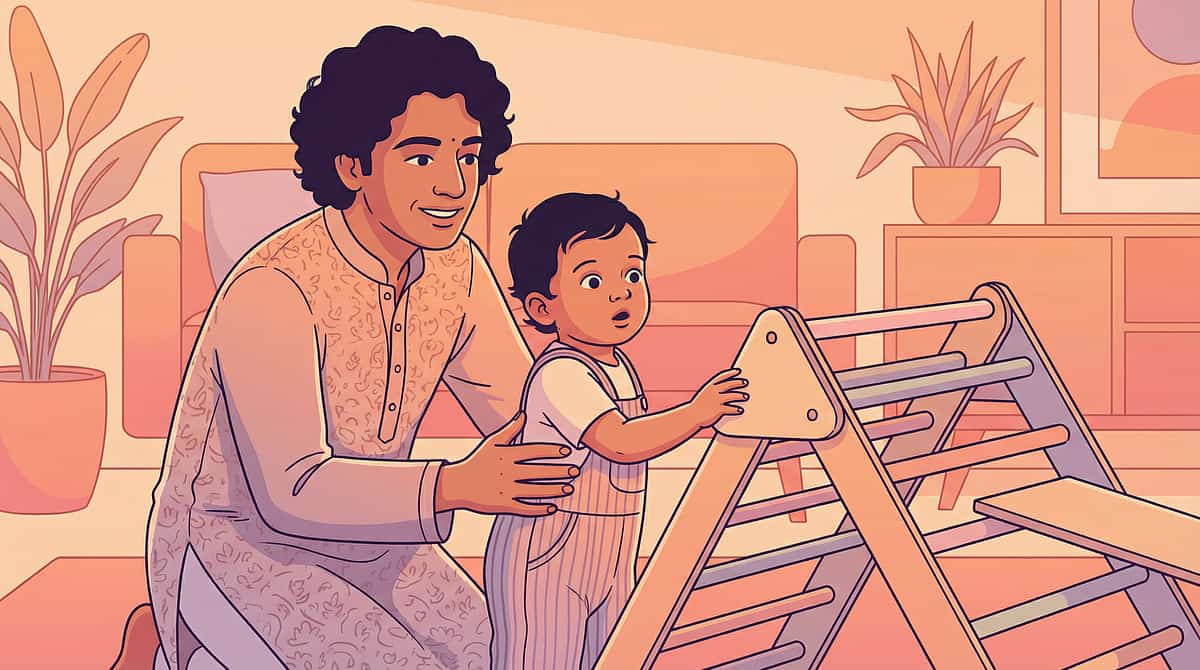
Material 8 of 9
Canon: Supervised Physical Activity
Supervised Challenge Access
What It Is
Climbing gym memberships, outdoor adventure programme enrolment, youth-sized climbing harnesses, progressive challenge planning tools.
Why It Works
Some children need genuine challenge and real risk to satisfy their climbing drive. Equipment that is "too safe" provides insufficient input. Climbing gyms with trained supervision provide intensity with professional safety systems.
Price Range
₹500–₹3,000 per session
DIY ₹0 Option
Contact local climbing gyms about "sensory-friendly" sessions (many exist in major Indian cities). Free community climbing programmes through sports bodies. Supervised challenging outdoor climbing (hill, rock formation) with direct adult spotting.
Find It
⚠️ Safety Note
Supervised risk is NOT unsupervised danger. Professional environments have trained staff and designed fall zones — profoundly different from allowing dangerous climbing at home.
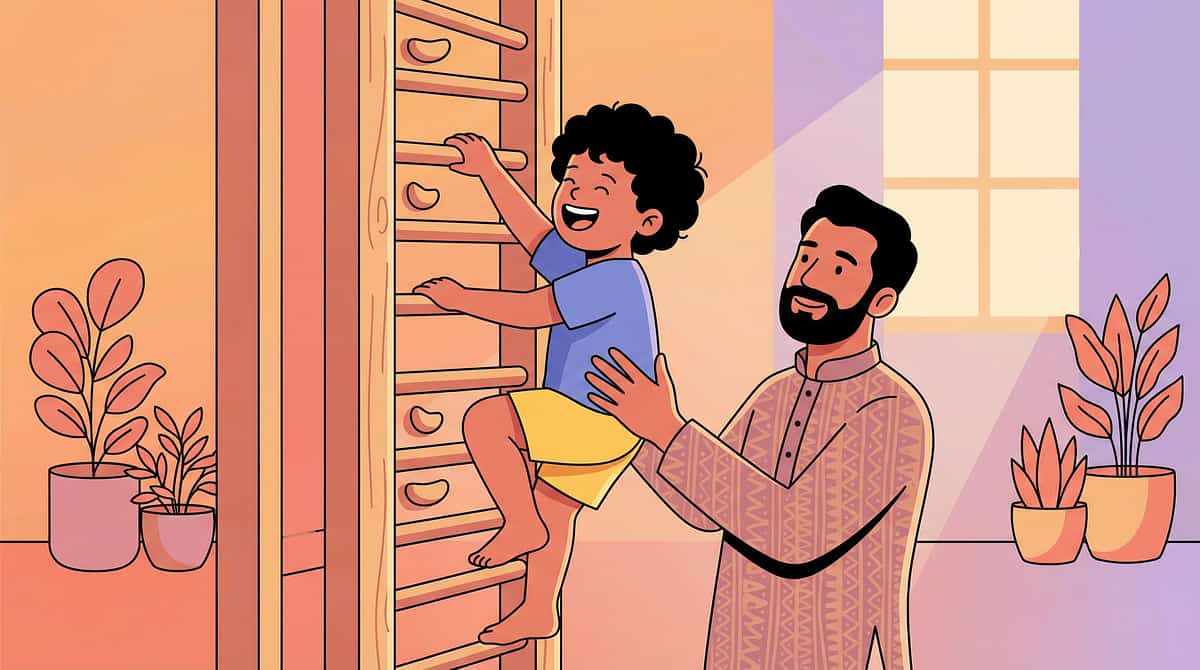
Material 9 of 9
Canon: Professional Assessment & Intervention
Occupational Therapy & Sensory Integration
What It Is
Occupational therapy evaluation, sensory processing assessment, individualised sensory diet plan, professional equipment recommendations, home programme with OT guidance.
Why It Works
For persistent dangerous climbing, professional evaluation is not a last resort — it is the fastest path to understanding and safely meeting the underlying needs. OT addresses root causes, not just surface behavior.
Price Range
₹1,000–₹3,000 per session
Free Option
Pinnacle Blooms FREE National Autism Helpline: 9100 181 181 — speak with a qualified paediatric OT today to understand whether your child needs professional evaluation.
Book Assessment
pinnacleblooms.org — Request AbilityScore® Assessment
⚠️ Safety Note
Dangerous climbing that involves roof access, window access, or repeated severe injuries requires professional evaluation. Do not wait.
PMC6011011: Vestibular and proprioceptive seeking behaviors driven by neurological differences in sensory processing. Meeting needs through appropriate sensory-motor activities more effective than behavioral suppression. Ayres Sensory Integration: Sanctioned movement activities as primary intervention for sensory-seeking behaviors.
📞9100 181 181 — Free. Available in 16+ languages. Ask for a paediatric OT recommendation.
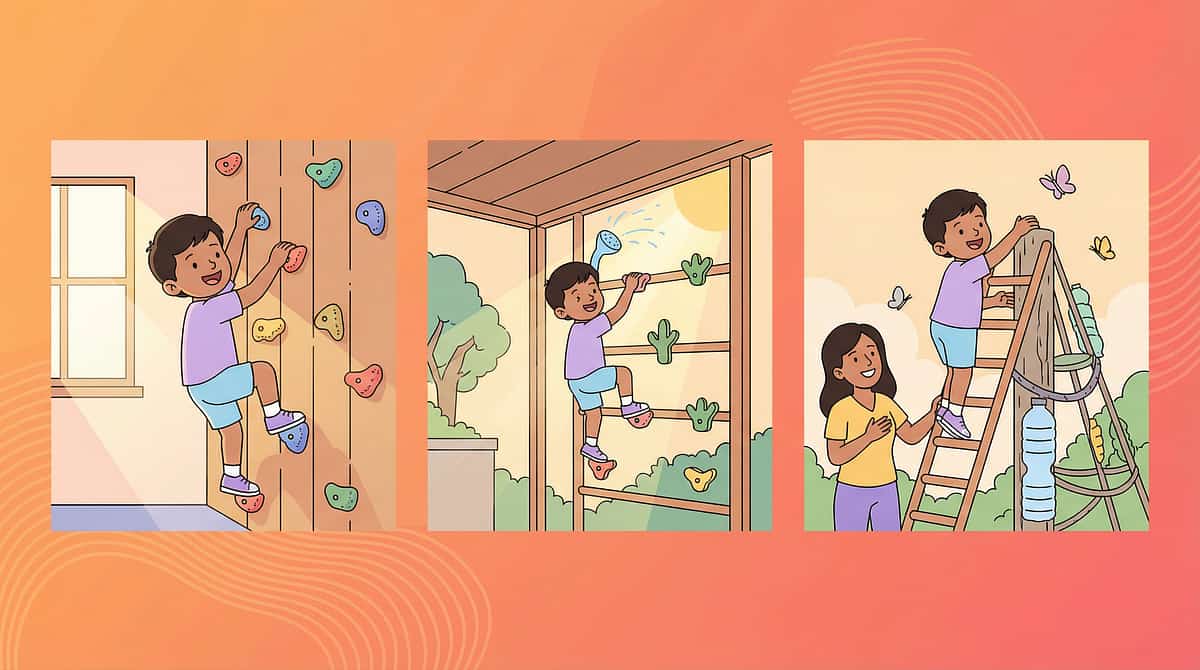
Every family, regardless of budget, can start today.
WHO/UNICEF Equity Principle: No child left without access due to resources
Material | ₹0 Household Version | Why It Still Works | |
Indoor Climbing Wall | Rock climbing holds screwed into stud-anchored plywood sheet | Same hand-grip, weight-bearing proprioceptive input | |
Vestibular Swing | Old tyre + rope on sturdy outdoor branch | Equivalent vestibular input to commercial swing | |
Crash Pad | Stacked old mattresses / layered thick duvets | Energy absorption principle is identical | |
Heavy Work | Books in backpack + carrying groceries | Proprioceptive loading is same neurological input | |
Sensory Diet Schedule | Paper + marker + phone alarm | Visual predictability equally effective | |
Environmental Anchoring | Strong rope / belt + wall studs | Physics of furniture stabilization unchanged | |
Climbing Trees | Local park, appropriate trees | Grass landing >>> tile landing |
Important Caveat: Clinical-grade materials are non-negotiable when: (1) the child is at high risk of severe injury, (2) DIY solutions cannot be made structurally safe, (3) the child's weight exceeds what improvised solutions can safely bear.
WHO Nurturing Care Framework (2018) + CCD Package (PMC9978394): Household-material-based intervention efficacy confirmed across 54 low- and middle-income countries. Equity of access is core principle.
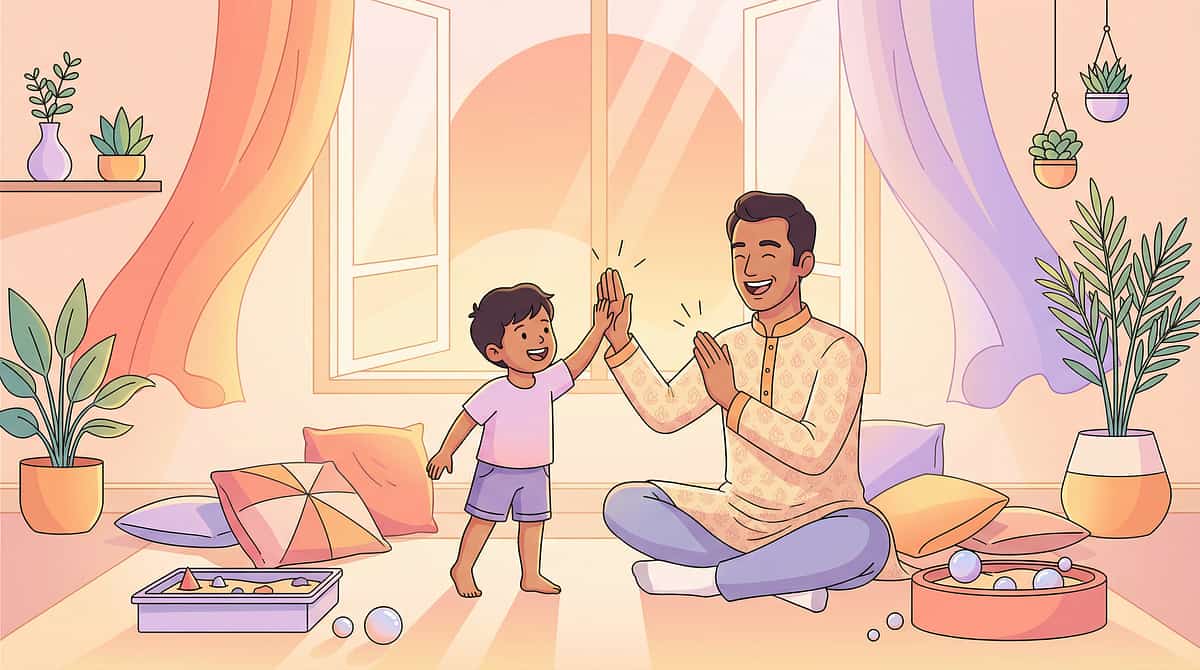
Read this before implementing anything else.
1
🔴 RED — Immediate Environmental Safety
Do This First, Today. If your child can access any of these — act NOW:
- Windows at height → Install window guards/locks TODAY
- Tall furniture that can topple → Anchor to wall studs TODAY
- Roof access → Block access TODAY
- External staircases / railings that can be scaled → Physical barrier TODAY
- Any surface from which a fall could cause serious head injury → Crash pad or access block TODAY
This is not optional. Environmental safety modification is the prerequisite for everything else.
2
🟡 AMBER — Before Each Climbing Session
- Child is not sick, injured, or acutely distressed
- Climbing structure/equipment has been inspected (no loose bolts, structural issues)
- Surface under climbing area is appropriately cushioned
- Parent/caregiver is physically present and able to spot
- Child is not severely dysregulated (wait for window of moderate alertness)
3
🟢 GREEN — Optimal Conditions
- Child is in a moderately aroused, engaged state
- Safe climbing structure is ready and accessible
- Parent has time to supervise fully (not distracted)
- Session is scheduled at a high-seeking time in the child's day (use tracking data)
Contraindications — Do Not Proceed If: Recent orthopedic injury · Signs of concussion or head trauma · Child is severely ill · You cannot safely supervise for the full session
📞9100 181 181 — If you're uncertain whether a situation is safe, call before proceeding
Indian Journal of Pediatrics RCT (2019, DOI: 10.1007/s12098-018-2747-4): Home-based sensory intervention safety protocols established for parent-administered sessions.
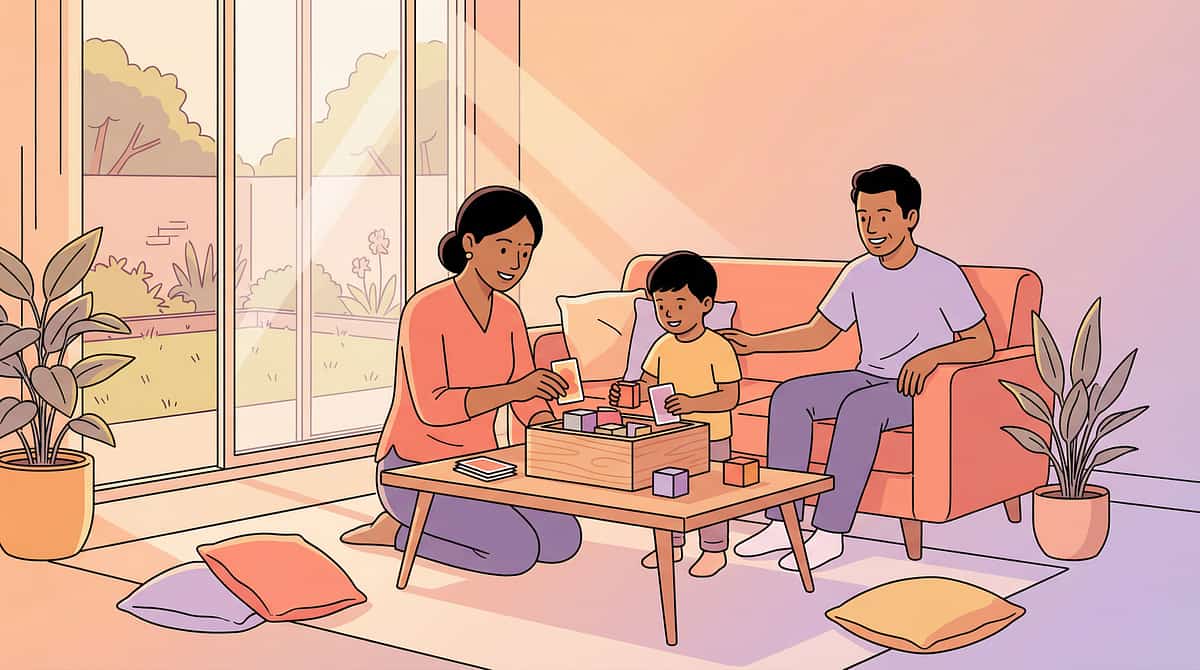
Spatial precision prevents 80% of session failures.
Climbing Structure
Centred, away from walls/furniture, clear 1.5m fall radius on ALL sides
Parent Position
Within arm's reach, forward-facing stance, able to spot from below
Crash Pad
Under and around ALL sides of climbing structure — no gaps
Heavy Work Area
Adjacent to climbing zone (for transitioning off the structure)
Transition Corner
Visual timer visible from climbing area; next activity materials ready
Remove from space: Any furniture that could be climbed as alternative · Fragile objects within reach · Distractions during active climbing · Obstacles between parent position and child. Lighting: Bright, natural if possible. Sound: Neutral or calm background. Temperature: Comfortable — not hot enough to add dysregulation.
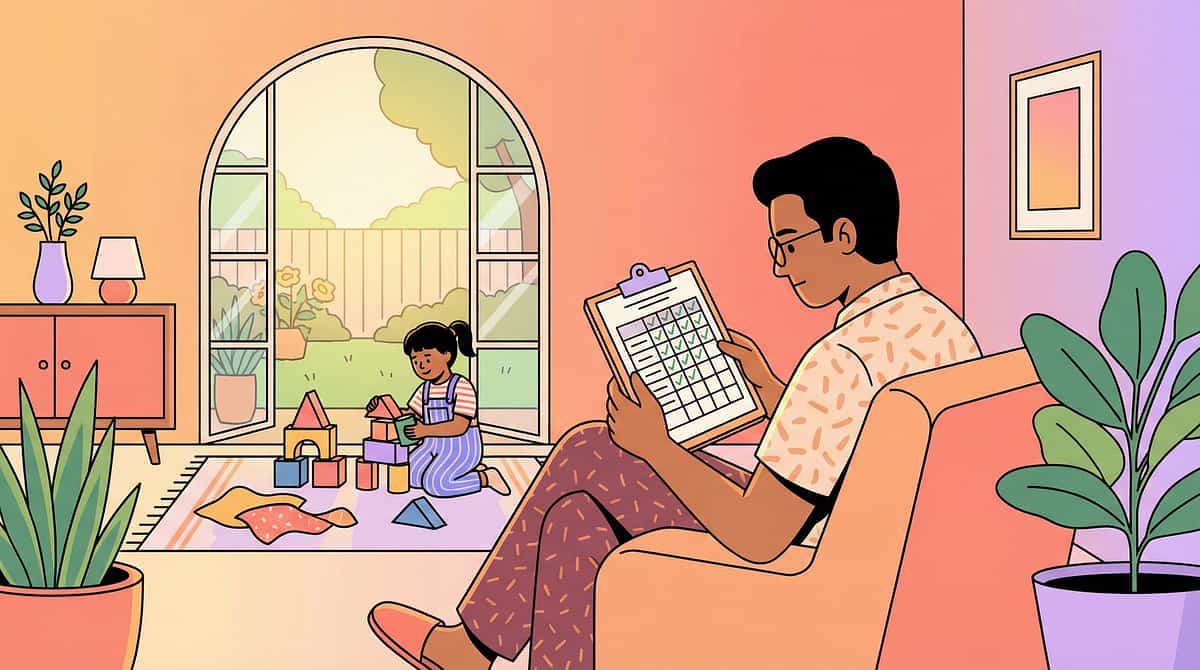
The best session is one that starts right.
Indicator | ✅ Go | ⚠️ Modify | 🛑 Postpone | |
Fed within last 2 hours | Yes | Snack available | Hungry / just ate | |
Sleep: adequate last night | Well-rested | Slightly tired | Overtired | |
Current arousal state | Moderately active | High/low | Meltdown/shutdown | |
Recent illness | No | Mild, stable | Sick/feverish | |
Current environment | Calm, set up | Manageable | Chaotic/unavoidable trigger | |
Climbing urgency visible | Seeking, ready | Neutral | Already in dangerous climb |
5–6 ✅ — Full Session
Proceed to The Invitation (Step 1)
3–4 ✅ — Modified Session
Shorter duration, lower intensity. 1–2 minutes of gentle proprioceptive input instead.
0–2 ✅ — Postpone
Offer alternative calming activity. Deep pressure, quiet corner, or preferred calming object. Reschedule.
ABA antecedent manipulation principles: Setting events determine intervention effectiveness. Readiness assessment is core to applied behavior analysis session protocol.
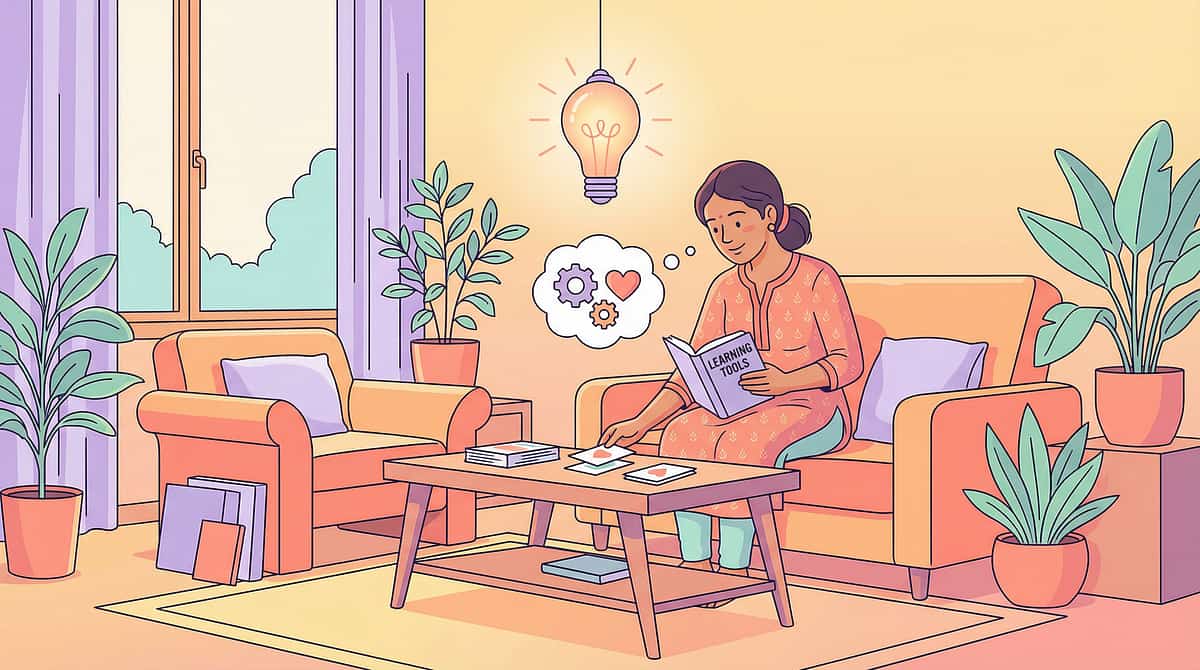
Step 1 of 6
The Invitation
Timing: 30–60 seconds | Tone: Calm, playful, low-demand
What To Do
Position yourself near the climbing structure — not in front of it as a barrier, but beside it as an invitation. Lower yourself to the child's eye level. Do not issue a command.
What To Say
"[Name], want to climb? This is for climbing."
Or simply point to the structure with a warm, open expression.
Body Language
- Open posture, relaxed shoulders
- Eye contact offered but not demanded
- Step back slightly once the invitation is extended — give space
- Smile that signals safety, not performance expectation
What Acceptance Looks Like
- Moving toward the structure
- Reaching out to touch it
- Any vocalisation of interest
- Even looking at it is a beginning
What Resistance Looks Like
- Moving away or turning body away
- Protest sounds
- Climbing something else instead
If Resistance Occurs
Do not pursue. Try heavy work (push the sofa together — you and the child) for 2 minutes, then re-offer.
ABA Principle: Pairing — establish the structure as a reinforcing object before adding any demand.
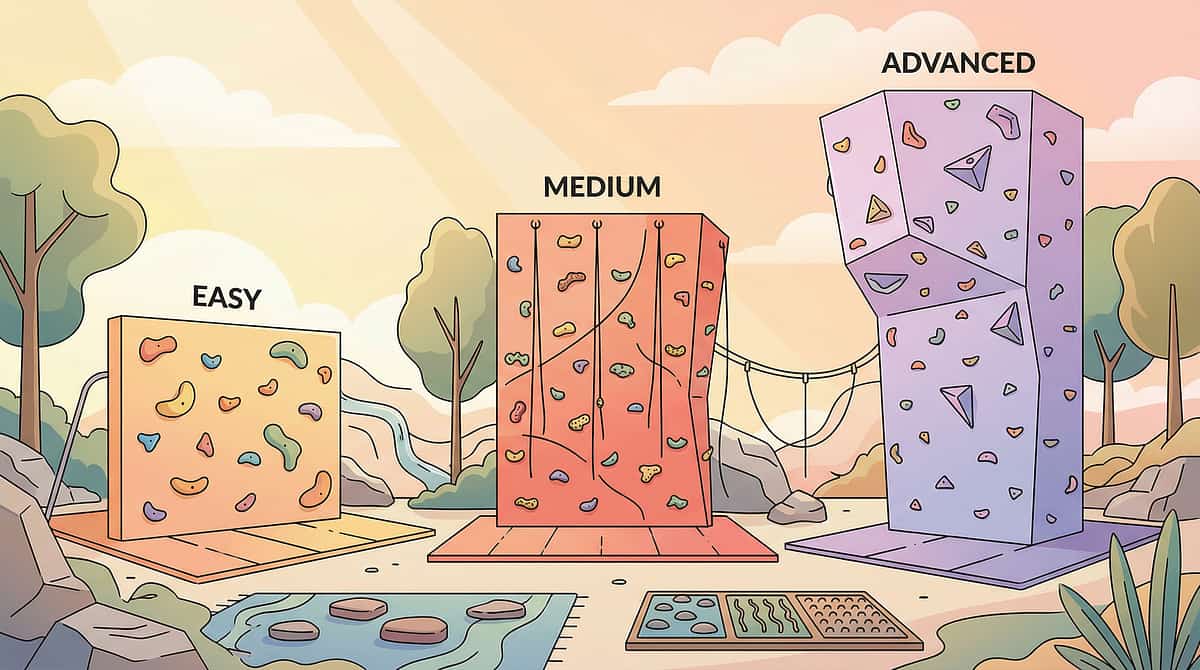
Step 2 of 6
The Engagement
Timing: 1–3 minutes | Tone: Present, supportive, responsive
Once the child moves toward the structure, narrate what they're doing in simple, affirming language:
"Climbing! Yes, this is for climbing. Up, up."
How To Present / Position
- Stay within arm's reach but don't crowd
- Keep body low and to the side — not directly behind (can feel like pressure)
- If the child is hesitant, demonstrate by placing your own hands on the rungs at their level
Engagement Spectrum
- Full Engagement: Climbing actively, focused → Step back, observe, celebrate
- Tolerance: On structure but not climbing → Stay present, offer "Up?" prompt
- Avoidance: Uses structure as prop only → Accept this — any contact is progress
Reinforcement Cue
The moment the child's foot leaves the floor — immediate, specific verbal praise:
"YES! You're climbing! Look at you go!"
PMC11506176 — Structured material introduction with reinforcement scheduling meets evidence-based practice criteria.

Step 3 of 6
Core Active Ingredient
The Therapeutic Action
Timing: 5–15 minutes | Core Dose: This is the active ingredient
Allow the child to climb freely on the designated structure. Do not direct or correct the climbing pattern. The nervous system self-regulates through the climbing — your role is to ensure safety and presence, not to choreograph the movement.
What Good Therapeutic Climbing Looks Like
- Child is focused, purposeful — even quiet
- Repetitive up/down cycles are normal and therapeutic (do not interrupt)
- Varying routes, trying different handholds = motor planning
- Child at the top looking calm = vestibular system receiving needed input
Your Positioning
- Maintain spotting position at all times
- Hands ready to catch but not touching the child
- Verbal presence: occasional calm narration — "You're so high. Nice grip."
- Do not express alarm — this can dysregulate
Minimum Effective Dose
3 full climbs up and down
Optimal Session
Until child begins to show satiation cues (see Step 4)
Maximum
Before visible fatigue or after 15 minutes of active climbing
PMC10955541: Meta-analysis confirms 40-minute therapy sessions optimal; home sessions 10–20 minutes with core therapeutic action at 40–60% of session time.

Step 4 of 6
Repeat & Vary
Timing: 3–5 minutes within session | Dosage: 3 good reps > 10 forced reps
Target Repetitions:🔄3–8 full climbs (up and down = 1 rep). Do not count aloud — this creates performance pressure. Simply observe.
Change Direction
Climb up the left side, come down the right
Change Hand Position
Underhand grip variation
Add a Challenge
Place a small toy or object at the top to retrieve
Add Movement Variety
After climbing: jump to crash pad, then back to climb
Satiation Indicators — When They've Had Enough
- Climbing becomes slower, less purposeful
- Child begins to look away from the structure
- Child self-initiates transition away from climbing
- Child's body language shifts from focused to relaxed/disinterested
⚠️ DO NOT push through satiation. 3 quality repetitions when the child is engaged > 10 reluctant ones. The proprioceptive and vestibular systems don't need more — they need enough.

Step 5 of 6
Reinforce & Celebrate
Timing: Within 3 seconds of desired behavior | Rule: Celebrate the attempt, not just the success
"You climbed! That was AMAZING. You did it! [Child's name] climbed all the way up! High five!"
Timing Is Everything: Within 3 seconds of the target behavior · Specific (say what they did): "You climbed to the top!" · Enthusiastic but not overwhelming (calibrate to child's sensory threshold)
Reinforcement Menu — Use What Works for THIS Child
Verbal Praise
Immediate, specific, enthusiastic
Token / Sticker
Reward Jar Access
Physical Affection
If accepted — deep pressure hug often preferred by proprioceptive seekers
Extra Climbing Time
1 extra minute — often the most powerful reinforcer for this population
Visual Chart Mark
Seeing progress on a visual chart — builds intrinsic motivation over time
ABA Principle: Immediate, specific reinforcement increases behavior occurrence. For safe climbing, reinforcement powerfully shapes preference toward the appropriate structure.
Step 6 of 6
The Cool-Down
Timing: 2–3 minutes | Purpose: Transition nervous system from active to regulated
Transition Warning (Begin 2 minutes before planned end):
"Two more climbs, then all done." / "One more time, then we put it away."
Show a visual timer (count down from 2 minutes where the child can see).
1
Final Climb
Let the child have the last one, on their terms
2
Landing Ritual
Land on crash pad, lie still for 30 seconds ("melt into the mat")
3
Heavy Work Transition
Carry the climbing equipment together to its storage spot (proprioceptive)
4
Calming Input
Offer deep pressure, blanket, preferred calming object
5
Next Activity Cue
Show or describe what comes next — visual predictability reduces resistance
If the child resists ending: Add 1–2 more climbs, then try again. Use transition object: Transition Comfort Toy — ₹425. Pre-establish "first/then": "First all done, then [highly preferred activity]."
NCAEP (2020): Visual supports and transition structures are evidence-based practices for autism.
60 seconds of data now saves hours of guessing later.
Data Point | How to Record | Example | |
Duration on structure | Minutes | "8 minutes" | |
Engagement level | 1–5 scale | "4/5 — fully engaged" | |
Dangerous climbing attempts since last session | Tally count | "3 attempts" | |
Satiation signal reached? | Yes / No / Partial | "Yes — child self-transitioned off" | |
Parent stress level today | 1–5 scale | "2/5 — manageable" |
📱 GPT-OS® Tracker
pinnacleblooms.org/track — EverydayTherapyProgramme™ data dashboard
📄 Tracking Sheet PDF
techniques.pinnacleblooms.org/downloads/D-418-tracker.pdf
📞 Therapist Review
9100 181 181 — Therapist can review your tracking data and adjust the plan
Pattern to Watch For: Over 2 weeks of tracking, you will begin to see: (1) peak dangerous climbing times — pre-empt these with scheduled climbing, (2) effective session durations, (3) correlation between session quality and dangerous climbing frequency.
ABA Standards: Continuous measurement (frequency, duration) as per Cooper, Heron & Heward Applied Behavior Analysis standards.
Session abandonment is not failure — it's data.
❓ Child refuses to use the climbing structure, goes for furniture instead
Why: The structure isn't yet paired as a reinforcing alternative. The furniture is more familiar.
Fix: Spend 3–5 sessions just playing near the climbing structure without requiring climbing. Eat snacks near it. Play preferred games next to it. Let the structure become safe before it becomes a demand.
❓ Child climbs the structure but is more agitated afterward
Why: Arousal level increased but underlying need still not met (structure insufficient), OR over-stimulation from ungraded input.
Fix: Follow climbing immediately with heavy work (push the sofa, carry books) to provide proprioceptive organisation. Assess whether structure intensity is sufficient.
❓ Child won't come down from the structure
Why: Need being actively met at height — neurological satisfaction in process.
Fix: Add 5 minutes, then use transition warning with preferred motivator. Never physically pull a child off a climbing structure — safety risk.
❓ Siblings disrupt the session
Why: Climbing is reinforcing — siblings want in.
Fix: Schedule sessions during sibling's nap / school time, or give siblings specific roles (cheerleaders, data trackers).
❓ Child became severely distressed during session
Why: Wrong timing, wrong state, wrong intensity.
Fix: Stop immediately. Return to calming input. Do not retry for at least 4 hours. Reassess readiness criteria. If distress was severe, call 9100 181 181.
No two nervous systems are identical. Neither are two sessions.
Modification | When to Use | How | |
Reduce height | Child is very fearful OR highly dangerous/impulsive | Use low-to-ground balance beam, steps, bolster | |
Increase proprioceptive load | Need not met by climbing alone | Add weighted vest during heavy work component | |
Extend session duration | Child is deeply engaged, need is large | Up to 20 minutes for intense seekers | |
Shorten session | Child is tiring, approaching satiation | 3 climbs is enough if quality is high | |
Add challenge | Child is bored, seeking more | New routes, objects to retrieve, higher targets |
🔴 Intense Seeker
Full protocol as described. Consider climbing gym access (Material 8). May need 2–3 climbing sessions per day scheduled.
🟡 Moderate Seeker
One daily session sufficient. Environmental modifications are primary protection.
🟢 Seeker with Anxiety
Begin at ground-level proprioceptive work, build up to climbing slowly over weeks. Fear is a protective signal — honour it while gradually expanding tolerance.
Age Modifications: 2–3 years: ground-level only, maximum 60cm height, crash pad essential. 4–6 years: standard protocol, 1–1.5m maximum height. 7–10 years: full protocol; begin adding risk assessment conversations during cool-down.
Week 1–2
Progress Arc
Progress in weeks 1–2 is not mastery. It is the beginning of a nervous system learning it can be fed safely.
What "Progress" Looks Like at This Stage
- ✅ Child uses the climbing structure even once without being forced
- ✅ Dangerous climbing frequency decreases by even 10–20%
- ✅ Child shows brief satiation signals after safe climbing (calm for 5 minutes after)
- ✅ Environmental modifications are in place — this alone significantly reduces catastrophic risk
What Is Not Progress Yet (And That's Normal)
- Child still seeks dangerous surfaces — need is still large relative to what safe structure provides
- Sessions sometimes fail or are very short — setting events not yet established
- Child hasn't "learned" to prefer the structure yet — pairing takes time
Parent Emotional Preparation: Weeks 1–2 are the hardest. The structure is new, the child's need is still fully active, and you're learning a new protocol simultaneously. The dangerous climbing will not stop this week. Your goal this week is simply: structure is in place, schedule exists, first sessions have happened.
Metric to Track: "Did we use the climbing structure at least once today?" — aim for YES at least 5 days of 7.
📞9100 181 181 — Week 1 struggles are normal. Call if you need real-time guidance.
PMC11506176: Sensory integration intervention outcomes emerge across 8–12 week timelines. Early-phase indicators are tolerance and participation.
Week 3–4
Consolidation
The nervous system is beginning to trust that the need will be met.
Spontaneous Movement
Child moves toward the climbing structure spontaneously — without prompting
Extended Calm Periods
After safe climbing, the calm period is extending: 5 min → 10 min → longer
Downward Trend
Dangerous climbing frequency continues downward on your tracking chart
Easier Transitions
Child can sometimes accept transition off the structure with one warning (not two or three)
Parent Wellbeing
Parent reports feeling "slightly less exhausted" — this is real and measurable progress
Spontaneous Generalisation Seeds: You may begin to see the child pointing to the climbing structure when dysregulated, leading a caregiver toward it, or asking (verbally or by gesture) for "climbing time." These are neural pathway formation indicators — celebrate them.
"I have done this every day for 3 weeks. I know what my child's climbing need looks like. I know when to schedule it. I can see the difference in their regulation after sessions."
Neuroplasticity evidence: Synaptic strengthening through repeated structured input follows predictable timelines in paediatric populations. Behavioral consolidation at weeks 3–4 aligns with neural adaptation curves.
Week 5–8
Mastery
The child is not cured of climbing. The child is becoming safe at it.
Safe Structure Preference
Child primarily uses designated climbing structure (>70% of climbing episodes go to safe structure)
Efficient Redirection
Child can be redirected to safe structure within 1–2 attempts (down from 5–10 at start)
Risk Awareness Emerging
Child shows pre-climbing hesitation on dangerous surfaces — the beginning of risk awareness
Data Confirms Progress
Dangerous climbing incidents dropped >50% from baseline — your tracking data will show this
Safe Climbing Requested
Child requests climbing time verbally or gesturally — demand for safe climbing exceeds demand for dangerous climbing
Mastery does not mean: The need for climbing has disappeared. The need will remain — likely for life. Mastery means the need is being met through safe channels and the child has developing judgement about where and how.
PMC10955541 + BACB mastery criteria standards: Measurable outcomes across 24 studies; mastery measured by generalisation and maintenance.
Trust your instincts. If something feels wrong, pause and ask.
Red Flag | What It Looks Like | Action | |
Climbing intensity is increasing, not decreasing | More dangerous attempts despite intervention | OT evaluation urgently | |
Child is getting injured more frequently | Multiple falls/injuries in a 2-week period | Medical review + OT escalation | |
New dangerous behaviors emerging | Elopement, window access, roof access | Emergency environmental review + helpline | |
Child cannot tolerate any safe climbing alternatives | Refuses all structures, only seeks dangerous | Full developmental evaluation | |
Parent safety is being compromised | Caregiver exhausted to dangerous threshold | Respite + professional co-ordination | |
School reporting incidents | Dangerous climbing at school, teacher injuries | Multidisciplinary team meeting |
📞9100 181 181 — Available 24×7. Do not wait if safety is at risk.
WHO NCF Progress Report 2023: Primary health care as platform for early identification. Referral pathways integrated into service delivery.
You are not done. You are on a journey with a clear forward path.
1
D-416
Understanding Sensory-Driven Dangerous Behaviors — Conceptual foundation
2
D-417
Signs Your Child's Climbing Is Beyond Typical — Assessment readiness
3
← YOU ARE HERE → D-418
9 Materials That Help With Dangerous Climbing
4
D-420 / D-419
Building Risk Assessment Skills · Running and Elopement Safety (if co-occurring)
5
D-425
Vestibular Seeking Behaviors — Advanced Intervention
Long-Term Developmental Goal: A child who can use climbing as a conscious self-regulation tool, with age-appropriate risk assessment, meeting their vestibular-proprioceptive needs safely within their community and school environments — without constant supervision.
Ready for More?
→ D-420: Building Risk Assessment Skills
Climbing + Elopement?
→ D-419: Running and Elopement Safety
Vestibular Needs Broad?
→ D-425: Vestibular Seeking Behaviors
Structured Sensory Diet?
→ GPT-OS® EverydayTherapyProgramme™ personalised plan
More tools for the child whose body craves intensity.
Technique | Code | Difficulty | Materials You Have | |
Running and Elopement Safety | D-419 | 🟡 Core | Crash pads ✅ | |
Building Risk Assessment Skills | D-420 | 🟢 Advanced | Environmental mods ✅ | |
Vestibular Seeking Behaviors | D-425 | 🟡 Core | Vestibular equipment ✅ | |
Proprioceptive Deep Pressure | A-089 | 🔵 Intro | Heavy work materials ✅ | |
Sensory Diet Design | A-095 | 🟡 Core | Scheduling tools ✅ | |
Height and Climbing Fear | A-080 | 🔵 Intro | Crash pads ✅ |
"You already own materials for all 6 of these techniques."
Domain D: Safety / Sensory Regulation / Motor Development
Browse all 450+ techniques in this domain: techniques.pinnacleblooms.org/domain-d
Browse all 450+ techniques in this domain: techniques.pinnacleblooms.org/domain-d
This technique is one piece of a larger plan for your child's whole development.
Dangerous climbing is a Domain D challenge. But a child who climbs compulsively may also have Domain A (sensory processing), Domain C (emotional regulation), and Domain F (gross motor development) needs. GPT-OS® tracks and coordinates all 12 domains.
📱 Your AbilityScore®
pinnacleblooms.org/ability-score — See your child's full developmental profile
🔗 Connect GPT-OS®
All 12 domains tracked, coordinated, and personalised in one place
Nurturing Care Framework (2018): Five components of nurturing care require holistic developmental monitoring. PMC9978394.
They started where you are. Here is where they arrived.
Ananya — Chennai, 5 years
Before: Found on the roof at age 4. Three ER visits in one year. Furniture removed, windows locked, constant supervision. "I couldn't use the bathroom alone."
After (Week 10): Climbing wall installed in bedroom. OT twice weekly. Dangerous climbing down 80% by tracking data. "He now goes to his wall, not the refrigerator. The need is the same. The wall is just the better answer."
Timeline: 8 weeks to significant change. 12 weeks to family calling it "manageable."
"What changed everything was understanding it was neurological, not defiance. Once I stopped fighting the need and started meeting it — everything shifted." — Ananya's mother
Rohan — Hyderabad, 3 years
Before: Scaled door frames, exterior staircases, climbed out of crib before age 2. "We lived in terror."
After (Week 8): Pikler triangle + sensory diet + OT evaluation revealed vestibular hypo-responsiveness. Now attends climbing gym weekly. "He still climbs — he always will. But now he asks for it."
"The climbing didn't stop. It moved to places that could hold him." — Rohan's father
"In nearly every case of dangerous climbing I've assessed, the child was trying to tell us something. Their vestibular-proprioceptive system was asking for input that climbing uniquely provides. When we provide appropriate structures, the 'dangerous' climbing almost always decreases — because the system no longer needs to seek desperately. The need was never the problem. The gap between the need and the safe outlet was." — Pinnacle OT, Domain D Lead
Outcomes are illustrative based on Pinnacle clinical data patterns. Individual results vary. Statistics represent aggregate outcomes across Pinnacle Blooms Network's 70+ centres and 21M+ sessions.
Isolation is the enemy of adherence. Join the community of parents who understand.
WhatsApp Group — "Sensory-Seeking & Safety"
For families navigating dangerous climbing, elopement, and intense sensory-seeking behaviors. Request access: pinnacleblooms.org/community/sensory-seeking
Online Forum — Pinnacle Parent Network
Search "D-418 Dangerous Climbing" for thread-specific discussions. Access: pinnacleblooms.org/forum
Local Parent Meetups
Organised at Pinnacle centres across India — connect with families in your city. Find your nearest: pinnacleblooms.org/centers
Peer Mentoring
Connect with a parent who has navigated dangerous climbing and emerged with strategies. Request: pinnacleblooms.org/peer-mentor
Parents who connect with peer communities show significantly higher intervention adherence rates. If you're weeks or months ahead of where a newly arriving parent is — consider sharing your journey. Your "Week 12" is someone else's hope.
📞9100 181 181 | WHO NCF: "Over 1,000 individuals from 111 countries contributed." Community engagement is a core principle of the Nurturing Care Framework.
Home + clinic = maximum impact. You don't have to do this alone.
Find Your Nearest Centre
70+ centres across India. Find the nearest centre for in-person support.
Therapist Matching for D-418
Primary lead: Paediatric Occupational Therapy with ABA/BCBA support.
Teleconsultation
Not near a centre? Book a video consultation with a Pinnacle-certified OT.
Home + Clinic Integration
- Home: EverydayTherapyProgramme™ — daily micro-sessions following this protocol
- Clinic: Weekly/biweekly OT sessions for professional sensory integration therapy
- Data Bridge: Session data synced to GPT-OS® — your therapist reviews your tracking before each appointment
Funding
Information on funding options for paediatric OT in India: pinnacleblooms.org/funding
📞 Helpline
9100 181 181 | Available in 16+ languages | 24×7 | FREE
"Home-based intervention works best when supported by professional guidance. The research consistently shows: clinic + home > clinic alone."
WHO NCF Progress Report (2023): 48% increase in countries adopting ECD policies. Primary health care as key platform for reaching all families.
Preview of 9 materials that help with dangerous climbing Therapy Material
Below is a visual preview of 9 materials that help with dangerous climbing therapy material. The pages shown help educators, therapists, and caregivers understand the structure and content of the resource before use. Materials should be used under appropriate professional guidance.


Link copied!
Deeper reading for the parent who wants the science.
📄 PRISMA Systematic Review (2024)
16 studies (2013–2023) confirm sensory integration intervention as evidence-based practice for ASD. → PubMed: PMC11506176
📄 World J Clin Cases Meta-Analysis (2024)
24 studies: SI therapy effectively promotes social skills, adaptive behavior, sensory processing, and motor skills. → PubMed: PMC10955541
📄 WHO/UNICEF CCD Package (2023)
Household-material-based interventions in 54 LMICs — equity access confirmed. → PMC9978394
📄 Padmanabha et al., Indian J Pediatr (2019)
Indian RCT: Home-based sensory interventions — significant outcomes in Indian paediatric population. → DOI: 10.1007/s12098-018-2747-4
📄 NCAEP Evidence-Based Practice Report (2020)
Visual supports, environmental modification, video modelling as evidence-based practices for autism. → NCAEP 2020 Report
📄 Frontiers in Integrative Neuroscience (2020)
Neurological basis confirmed for sensory processing differences in ASD. → DOI: 10.3389/fnint.2020.556660