
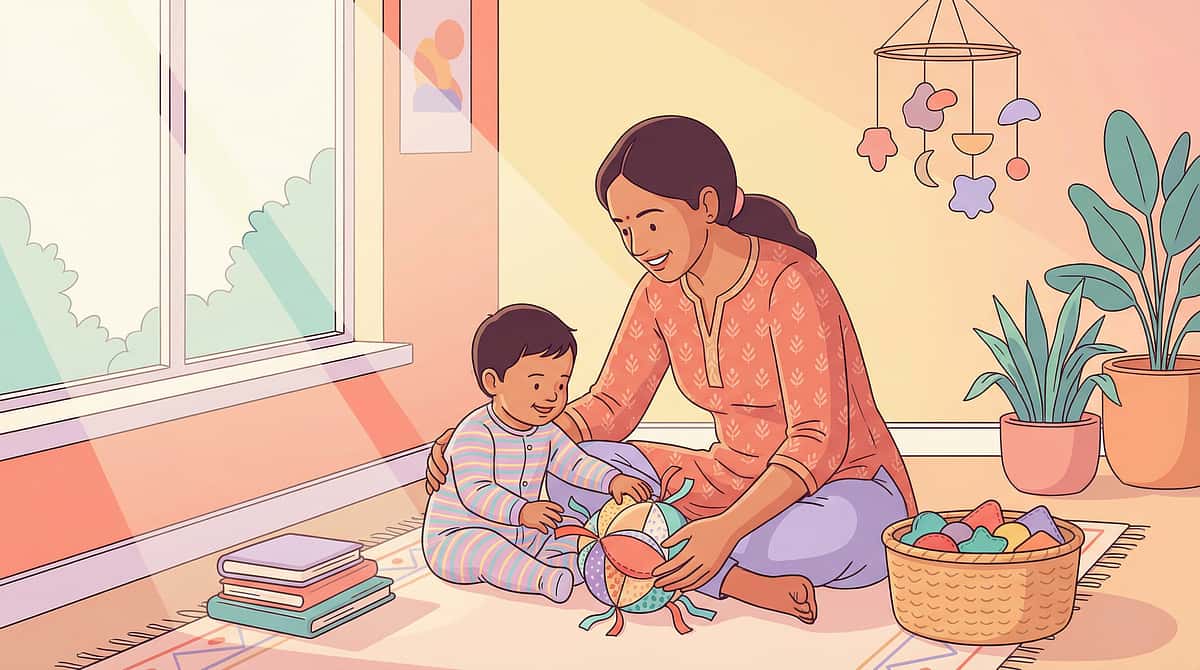
She draws on the left side with her left hand — then switches for the right.
She's not being difficult. Her brain has an invisible wall down the middle. That wall has a name. And it can come down.
Crossing Midline — F-588
Pinnacle Blooms Network®
You are not failing. Your child's brain is waiting for the right bridge.
Act I — Recognition
Millions of Families Are Navigating This Same Wall
You are not alone in watching your child twist, switch, and avoid. This challenge crosses borders, diagnoses, and socioeconomic lines — and it is addressable. The switching. The twisting. The avoided activities. All connected. All addressable. Starting today.
1 in 3
Neurodevelopmental Differences
Children with neurodevelopmental differences show midline crossing difficulty as a primary motor challenge. Developmental OT research compilation
80%
Autism + Motor Processing
Of children diagnosed with autism display sensory-motor processing differences that include bilateral integration challenges. PMC11506176 | PRISMA Systematic Review, 2024
2.4M+
Families in India
Navigating motor coordination challenges in children ages 3–10 in India alone. WHO MICS + India NSSO developmental prevalence data
Neuroscience
The Brain Bridge Your Child Is Still Building
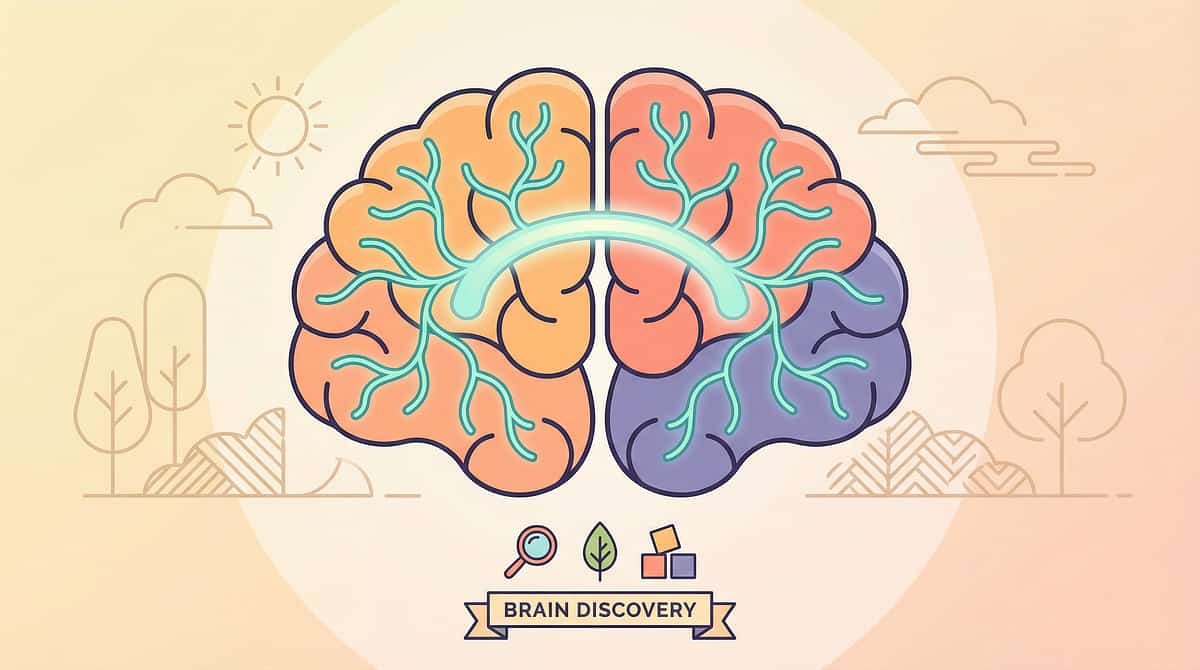
The Corpus Callosum
Your child's brain has two hemispheres. The left controls the right side of the body. The right controls the left side. To reach the right hand into left-side space, both hemispheres must communicate — instantly, automatically — across a structure called the corpus callosum.
When this communication is inefficient, the brain finds workarounds: switch the crayon to the closer hand, rotate the whole trunk, or avoid any activity that requires crossing.
This Is Not Defiance
This is not laziness. This is not defiance. This is a brain that hasn't yet built its bridge.
Lateralization note: When midline crossing is difficult, hand dominance cannot emerge cleanly. The brain needs to cross efficiently before it can specialize. A 6-year-old still switching hands is showing you the bridge is under construction — not broken.
Developmental Timeline
Your Child's Developmental Timeline — Midline Crossing
8–10 Months
Infant begins reaching across body for toys — the first crossing seeds are planted.
18–24 Months
Bilateral play emerges; both hands begin working together.
3–4 Years
Should spontaneously cross midline during play without prompting.
4–5 Years
Hand dominance begins to emerge as crossing becomes more efficient.
5–6 Years ★ Critical Window
Automatic midline crossing now supports reading and writing — the academic bridge activates.
6–8 Years
Academic demands — handwriting, reading tracking — fully depend on midline crossing.
8–10 Years
Remediation still highly effective; neuroplasticity remains strong throughout this window.
Midline crossing difficulty commonly co-occurs with: delayed hand dominance, handwriting challenges, reading tracking difficulties, Developmental Coordination Disorder (DCD), sensory processing differences, and limited infant crawling history. This challenge aligns with the WHO Care for Child Development (CCD) Package Domain: Gross Motor + Cognitive-Motor Integration.
Evidence — Level II-A Strong
Clinically Validated. Home-Applicable. Parent-Proven.
This isn't an experiment. It's 40 years of OT science, validated across thousands of children, packaged for your living room. F-588 carries a Level II-A — Strong evidence grade, supported by systematic reviews, randomized controlled trials, and clinical consensus.
Study | Finding | Source |
PRISMA Meta-analysis (2024) | 16 studies confirm sensory integration intervention is evidence-based for ASD — motor skills included | PMC11506176 |
World J Clin Cases (2024) | Promotes motor, adaptive, and social outcomes across 24 studies | PMC10955541 |
Indian J Pediatr RCT (2019) | Home-based sensory-motor interventions show significant measurable outcomes | DOI:10.1007/s12098-018-2747-4 |
NCAEP Evidence-Based Practices (2020) | Bilateral/motor activities classified as evidence-based practice for autism | NCAEP 2020 |
20M+ Sessions
Across 70+ Pinnacle centers worldwide
97%+ Improvement
Measured via GPT-OS® Readiness Indexes
Level II-A
Strong evidence grade — systematic reviews + RCT support

Act II — Knowledge Transfer
Crossing the Midline — Building the Brain Bridge
What Is the Midline?
The midline is an imaginary vertical line dividing your child's body into left and right halves. Crossing the midline means moving one hand, foot, or eye into the space of the other side — your right hand reaching to your left knee, or your eyes tracking smoothly from left to right across a page.
This seemingly simple ability requires both hemispheres of your child's brain to communicate efficiently across the corpus callosum.
Why These 9 Materials?
When the brain can't cross automatically, it develops workarounds: switching hands, rotating the whole trunk, or avoiding bilateral tasks. These 9 materials create structured, enjoyable opportunities to build the neural pathways that make crossing automatic.
Age Range
3–10 years
Duration
10–15 min/session
Frequency
Daily
Setting
Home + Therapy + Classroom
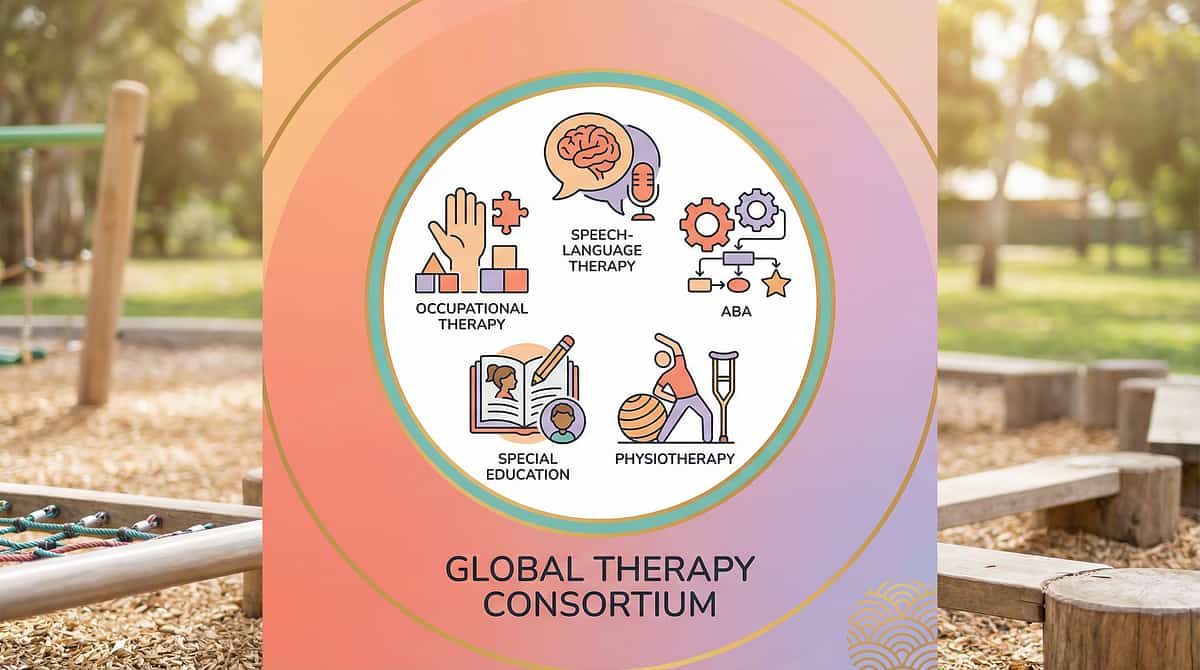
Five Disciplines. One Integrated Approach.
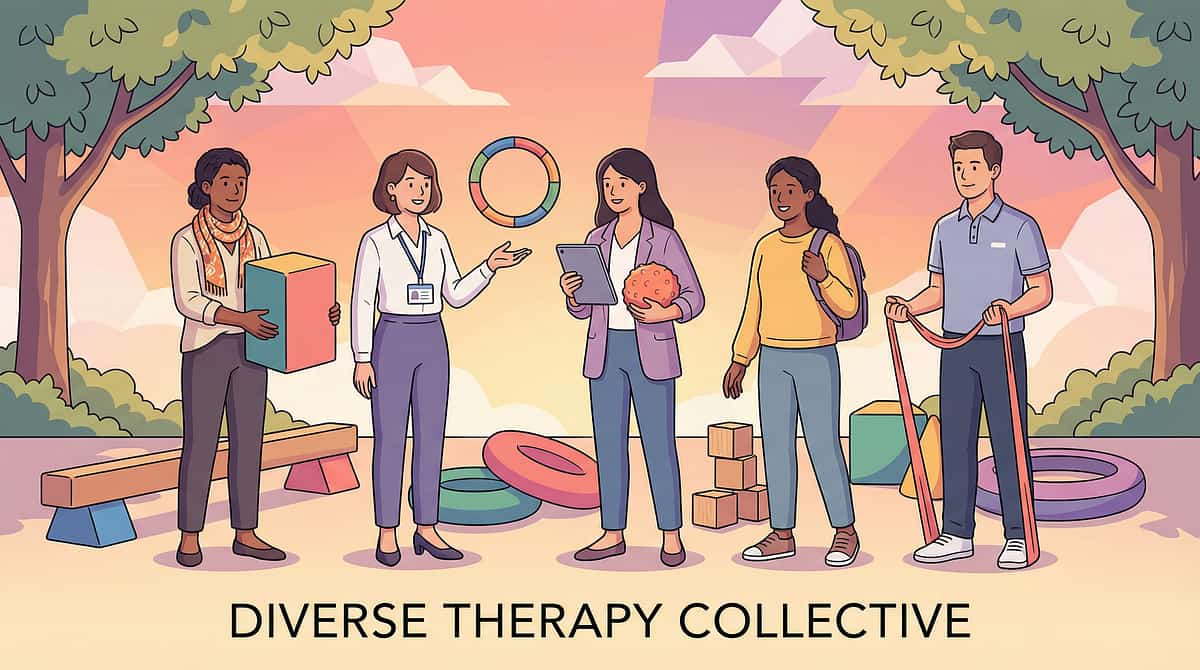
Midline crossing difficulty touches every domain of a child's life — which is why F-588 is designed for coordinated use across five therapy disciplines. The brain doesn't organize by therapy type.
Occupational Therapist — Primary Lead
Addresses midline crossing as core bilateral integration work. Uses figure-8 patterns, crawling activities, and vertical surfaces. Tracks via Bilateral Integration + Fine Motor Readiness Indexes.
Speech-Language Pathologist
Visual tracking required for reading aloud; oral motor bilateral patterns. Coordinates SLP goals with crossing milestones across the FusionModule™.
ABA / BCBA Therapist
Reinforcement scheduling during crossing activities. Antecedent setup with strategic material placement. Behavioral data collection and progress monitoring.
Special Education Teacher
Handwriting foundations, reading tracking, and classroom workspace positioning — all require midline crossing competence as a prerequisite skill.
Neurodevelopmental Pediatrician
Differential diagnosis: DCD vs. sensory processing vs. neurological. Medical oversight for corpus callosum development concerns and co-occurring conditions.

The 9 Materials
9 Materials That Build the Brain Bridge
Evidence-selected by the Pinnacle OT Consortium. Each material targets crossing from a different neurological angle. Total starter investment: ₹0–500. Comprehensive program: ₹2,500–10,000 for all 9.
1. Bilateral Coordination Games
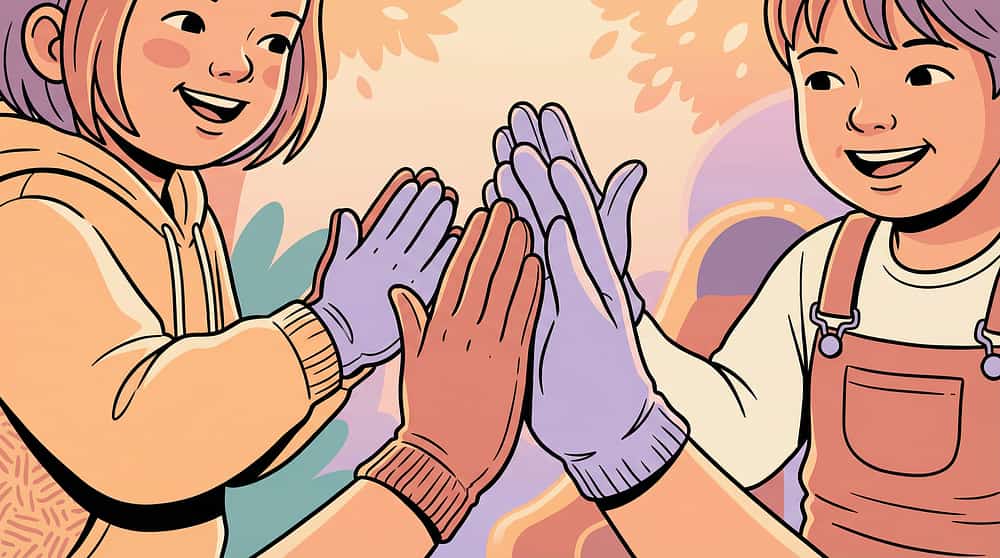
Simon Says, Patty-Cake, Clapping Games. Rhythmic, social, zero-equipment. The neurological foundation.
Price: ₹0 | Canon: Bilateral Games
2. Figure-8 / Infinity Loop Tools
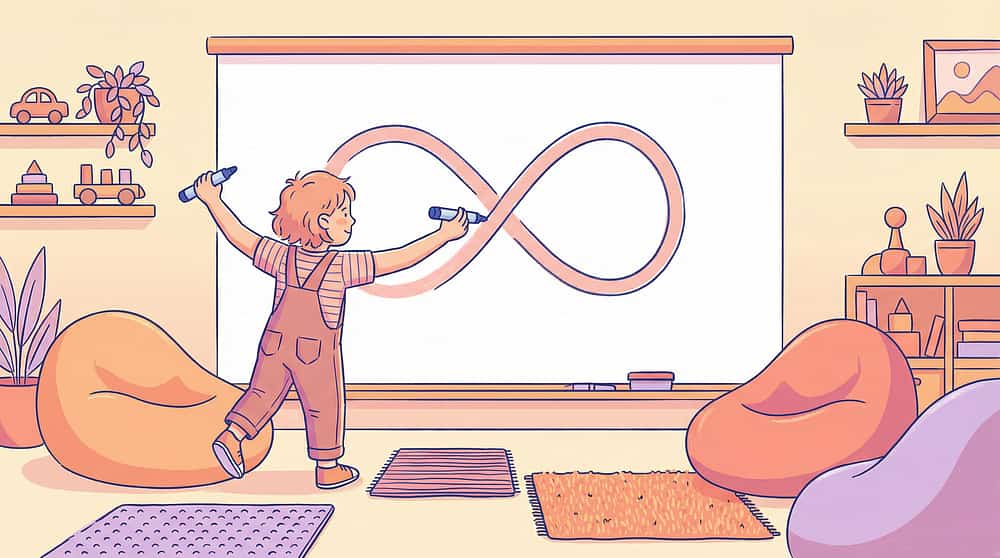
Whiteboard, floor tape, or paper. The neurologically special crossing shape — the most efficient bilateral activation pathway.
Price: ₹0–500 | Canon: Pattern Activities
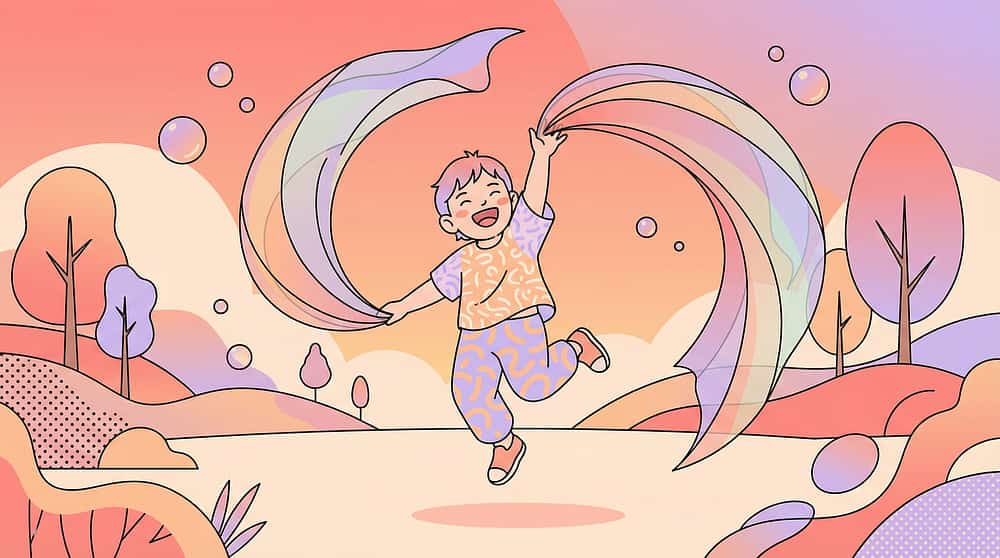
3. Lightweight Dance Scarves
Chiffon or organza fabric squares. Visual feedback plus flowing arm movement creates natural crossing arcs.
Price: ₹100–400 | Canon: Movement Props
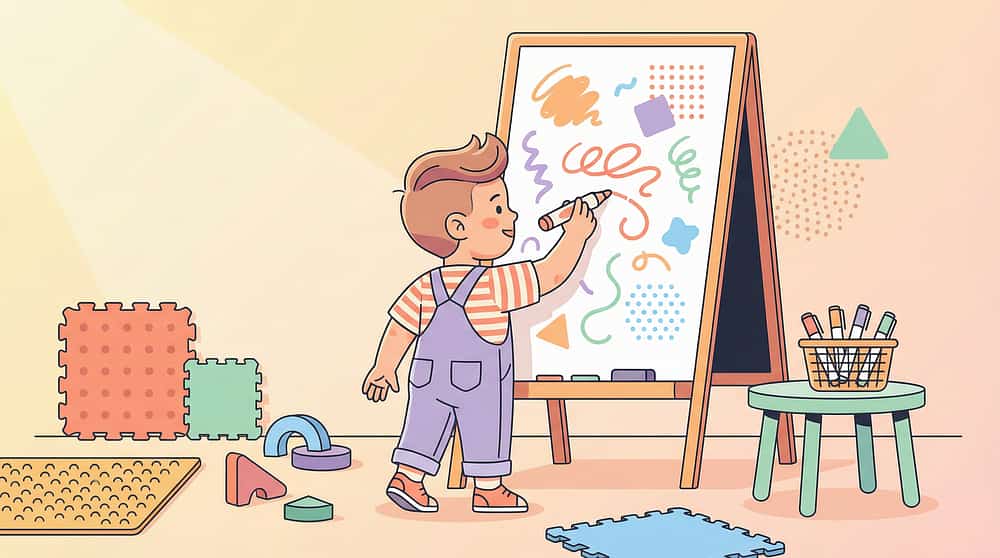
4. Large Drawing Surface
Whiteboard, chalkboard, or easel. A vertical surface makes crossing unavoidable with every horizontal stroke.
Price: ₹500–3,000 | Canon: Drawing Surfaces

5. Crawling Tunnel
Pop-up play tunnel. Cross-lateral crawling is direct corpus callosum activation — the most powerful wiring tool.
Price: ₹800–3,000 | Canon: Gross Motor Props
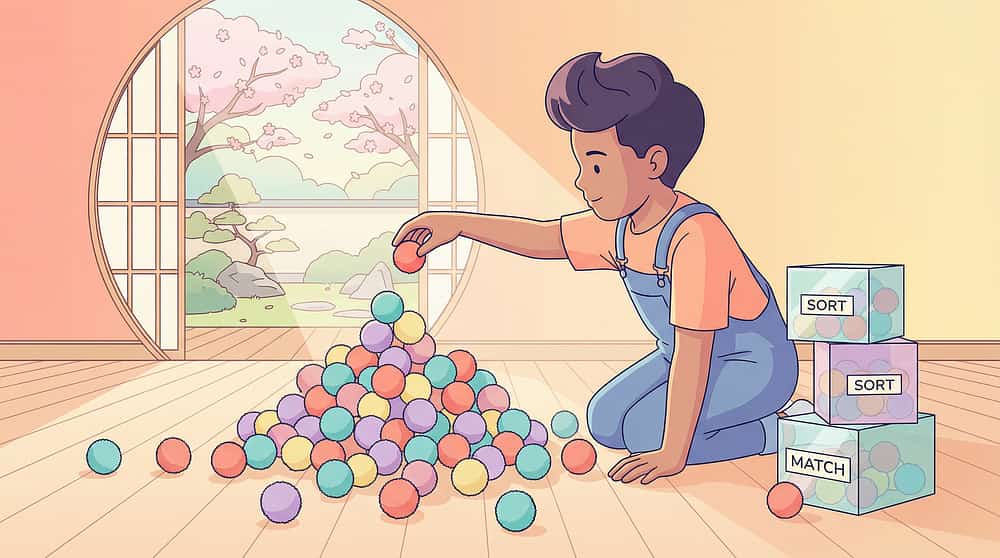
6. Reach & Sort Materials
Pom poms, blocks, sorting containers. Strategic positioning forces intentional, purposeful crossing with every transfer.
Price: ₹200–800 | Canon: Fine Motor Kit
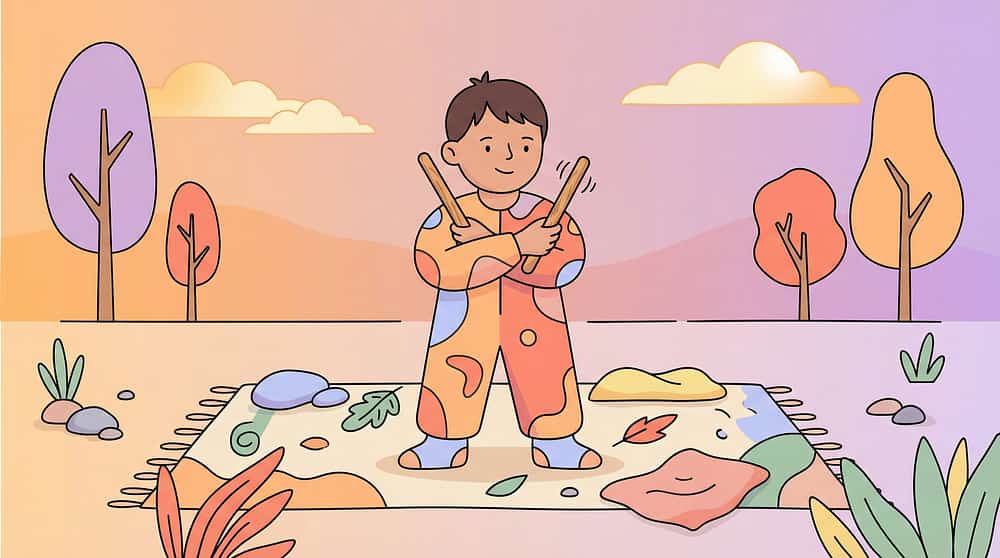
7. Rhythm Sticks / Lummi Sticks
Wooden dowels or percussion set. Music timing provides external structure that scaffolds bilateral coordination beautifully.
Price: ₹200–1,500 | Canon: Rhythm Instruments
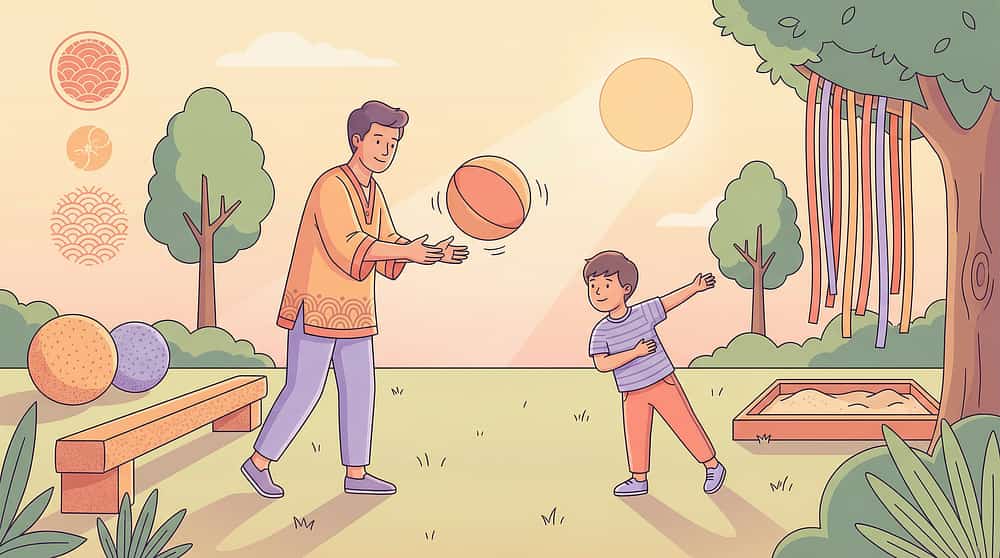
8. Ball (Varied Sizes)
Foam ball, beach ball, or small catch ball. Strategic throw placement forces the arm to cross rather than the trunk to rotate.
Price: ₹100–600 | Canon: Ball Skills

9. Resistance Therapy Bands
Light-resistance exercise bands. Proprioceptive input deepens the crossing pattern — adds weight and depth to every movement.
Price: ₹200–600 | Canon: Resistance Tools
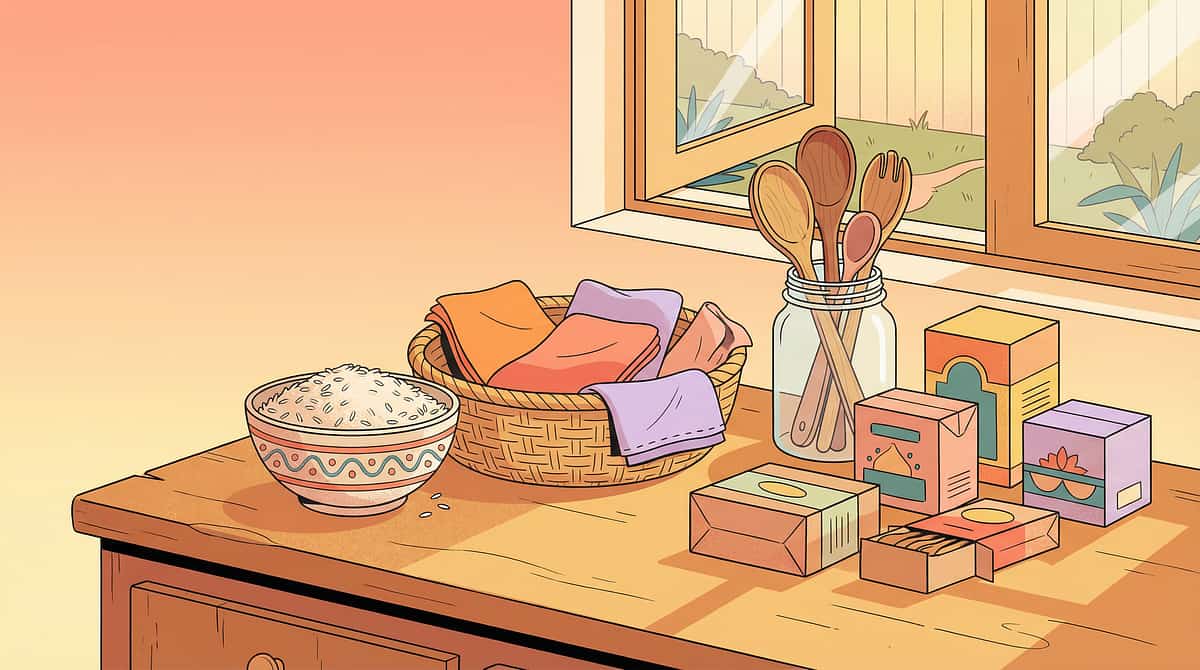
Every Family Can Start Today — Zero Budget Version
Every one of the 9 material categories has a free DIY substitute that delivers the same neurological crossing demand. You can run the complete F-588 protocol with items already in your home.
Material | Commercial Version | DIY Substitute |
Crawling Tunnel | ₹800–3,000 | 3–4 large cardboard boxes with ends cut out, taped together. Blanket draped over chairs. Same cross-lateral crawl trigger. |
Figure-8 Tools | ₹500–2,000 | Large sheet of paper taped to wall. Chalk on footpath. Same neurological crossing requirement. |
Rhythm Sticks | ₹200–1,500 | Two wooden chopsticks (₹0). Painted dowel rods. Same bilateral timing and crossing patterns. |
Dance Scarves | ₹100–400 | Lightweight dupatta or cotton handkerchief. Any fabric square ~50cm × 50cm. |
Resistance Bands | ₹200–600 | Old stockings tied together. Elastic waistband from old garment. Light resistance + stretch = same proprioceptive input. |
Reach & Sort | ₹200–800 | Old plastic containers + newspaper balls. Dried beans in cups. Rocks and bowls. Zero cost; same motor demand. |
Drawing Surface | ₹500–3,000 | Paper taped to any wall or door at eye level. Outside: chalk on floor or low wall. |
Ball | ₹100–600 | Crumpled newspaper ball (very light, slow movement). Balloon (ultra-slow, visual tracking support). |
Bilateral Games | ₹0 | No substitute needed — these ARE the substitute! |
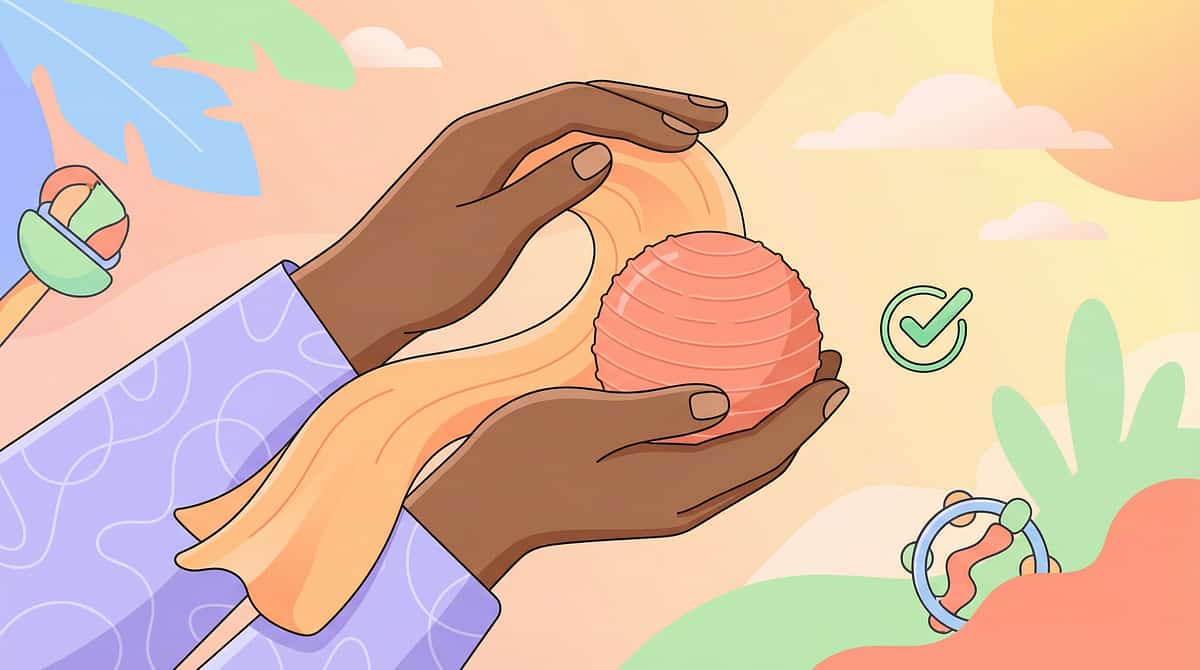
⚠ Safety First
Safety Gate — Read Before You Begin
Every F-588 session begins with a clear safety assessment. This is not optional — it is part of the therapy. A session that begins unsafely will not build the pathways you're working toward.
1
🔴 RED — Do Not Proceed If:
- Child has had a meltdown or dysregulation in the last 30 minutes
- Child is ill, feverish, or recovering from injury
- Child has known vestibular disorder — consult OT before crawling activities
- Child shows self-injurious behavior when frustrated — modify demands
- Environment is unsafe: slippery floors, low ceilings for crawling
2
🟡 AMBER — Modify If:
- Child is hungry or overtired — do 5 minutes instead of 15
- Child shows mild resistance — reduce to one material, one activity
- Using resistance bands with children under 5 — skip or use very light fabric
- Child has shoulder/elbow injury history — avoid band exercises
3
🟢 GREEN — Proceed If:
- Child is calm, alert, and fed within 60–90 minutes
- Environment is clear of sharp objects and breakables
- You have 10–15 uninterrupted minutes
- Child shows engagement or neutral affect
Material Safety Specifics
- Scarves: Must be lightweight, minimum 50cm from neck — no long scarves
- Rhythm sticks: Establish "no wild swinging" rule before starting
- Balls: Foam/soft only for indoor. No hard balls near furniture or other children
- Resistance bands: Inspect for tears before every session. Never allow snap-back
- Crawling tunnel: Check stability before each use; no collapsible edges
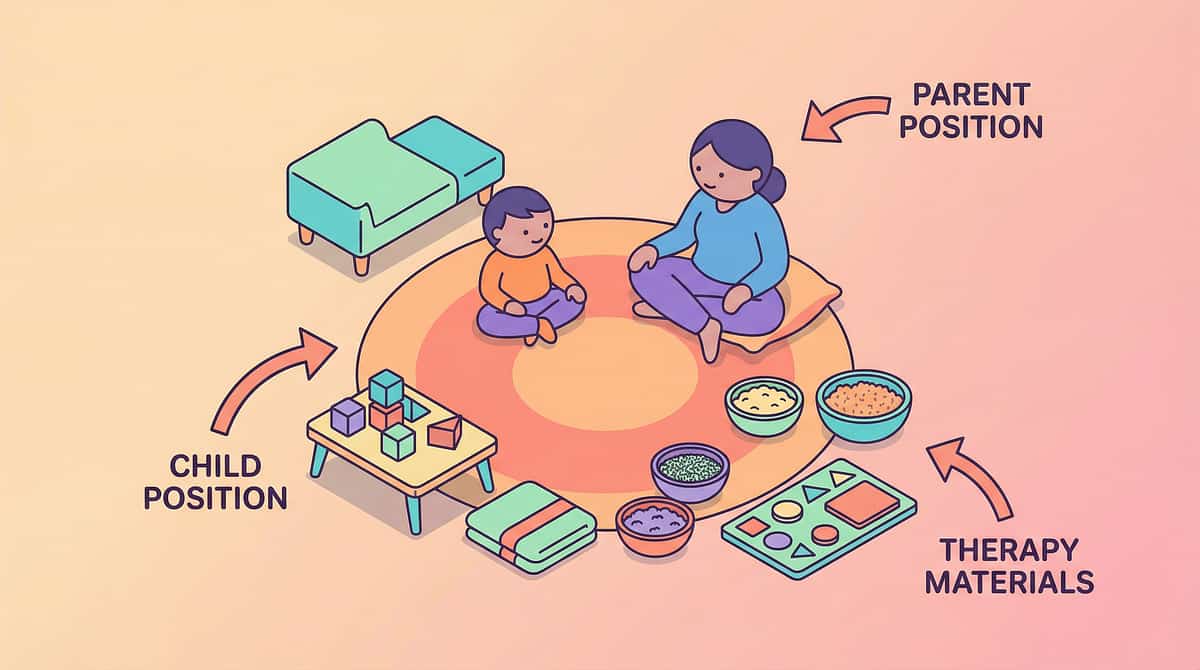
Stage Your Space for Maximum Midline Crossing
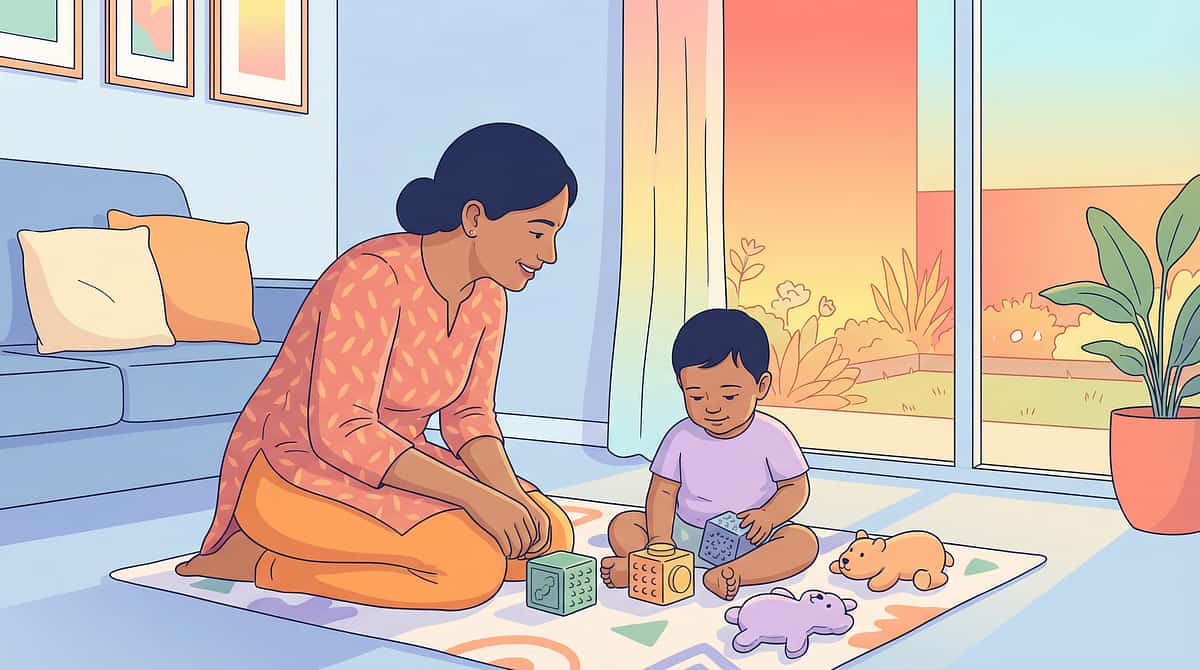
Spend 3–5 minutes setting up correctly. The environment is part of the therapy — strategic positioning of materials is what creates the crossing demand. A well-staged space multiplies therapeutic return by 10×.
Positioning Rules
- Child always seated or standing CENTERED on their body's midline
- Drawing surface at child's EYE to SHOULDER level, centered on body
- Reach & Sort: source pile on child's FAR LEFT, target on FAR RIGHT (or reverse)
- Crawling tunnel: horizontal, child crawls straight through
- Ball throw position: throw TO the opposite side from catching hand
Remove From Space
- Excess furniture (trip hazard during movement)
- Screens and competing stimuli during sessions
- Sharp-edged furniture near tunnel or movement zones
Environment Settings
- Lighting: Bright but not glaring
- Sound: Low ambient; music only during rhythm stick sessions
- Floor: Non-slip mat or carpeted surface for crawling activities
Act III — Execution
60-Second Pre-Session Check — Go / Modify / Postpone
The best session is one that starts right. A child who enters regulated will exit having built neural pathways. Readiness assessment IS part of the therapy — never skip this step.
1
Fed within the last 60–90 minutes?
Alert state for learning is nutrition-dependent.
2
No meltdown or distress in last 30 minutes?
Regulated nervous system = accessible learning state.
3
Alert state — neither too sleepy nor too aroused?
Optimal arousal window for motor learning.
4
No illness, fever, or injury complaints today?
Physical comfort is prerequisite for therapeutic work.
5
Environment ready (Card 12 complete)?
Space staging done and materials positioned correctly.
6
10–15 uninterrupted minutes available?
Consistency of time = consistency of pathway building.
1
✅ 5–6 Checks: GREEN
Go. Full session. All 9 materials available.
2
⚠️ 3–4 Checks: AMBER
Modify. Choose ONE material only. 5 minutes maximum. Use bilateral games as modified option — zero setup required.
3
🛑 1–2 Checks: RED
Postpone. Offer 5 minutes of preferred calming activity. Consistency over perfect execution — not a failure.
Step 1 of 6
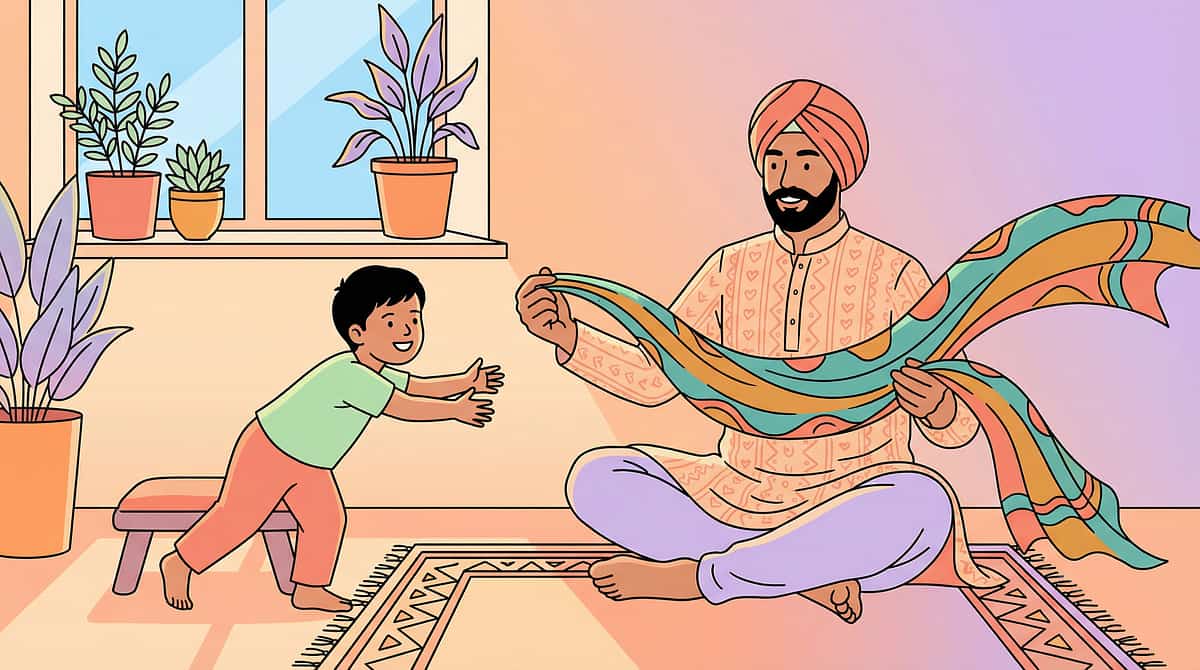
Invite. Never Command.
"Hey [name], I've got something fun to try with you. Come sit here with me for a bit? [Show the scarf / rhythm sticks / ball — whichever is most motivating] We're going to try something cool."
Body Language Guidance
- Get DOWN to child's level — crouch or sit on floor
- Offer the material casually — don't thrust it forward
- Soft eye contact (not sustained staring)
- Relaxed posture — your regulation regulates theirs
ABA Pairing Principle: Before demand, establish positive association. The material must = enjoyable experience before it = therapeutic tool.
Acceptance Cues ✓
- Child moves toward you or the material
- Eye gaze toward material
- Body orientation toward you
- Any vocalization of interest
- Reaches for material spontaneously
Resistance Cues →
- Full body turn away: Pause 30 seconds, try different material
- Vocal protest: Acknowledge and offer alternative material
- No response: Parallel play — do the activity yourself. Child curiosity often activates within 60 seconds.
Step 2 of 6
Introduce the Material — Read Their Response
Each material has its own engagement script. Model first — always. Watch carefully for the difference between engaged, tolerating, and avoiding. Adjust in real time.
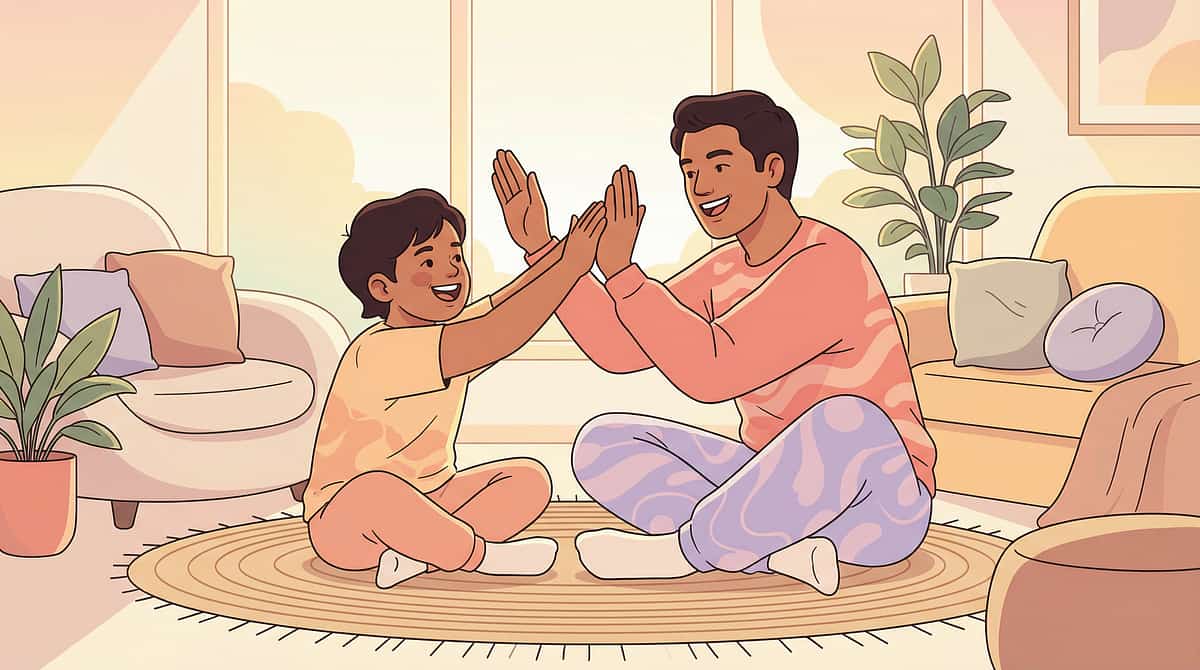
Bilateral Games (Patty-Cake / Simon Says)
"Let's play patty-cake! Ready? Pat-a-cake, pat-a-cake..." Start standard, then introduce crossed clap variation. Watch for: rhythm matching, anticipatory movements, smiling.
Figure-8 Activities
"Can you draw a big 8 on the board? As big as you can!" Model first with your own arm. Watch for: arm movement crossing the center line.
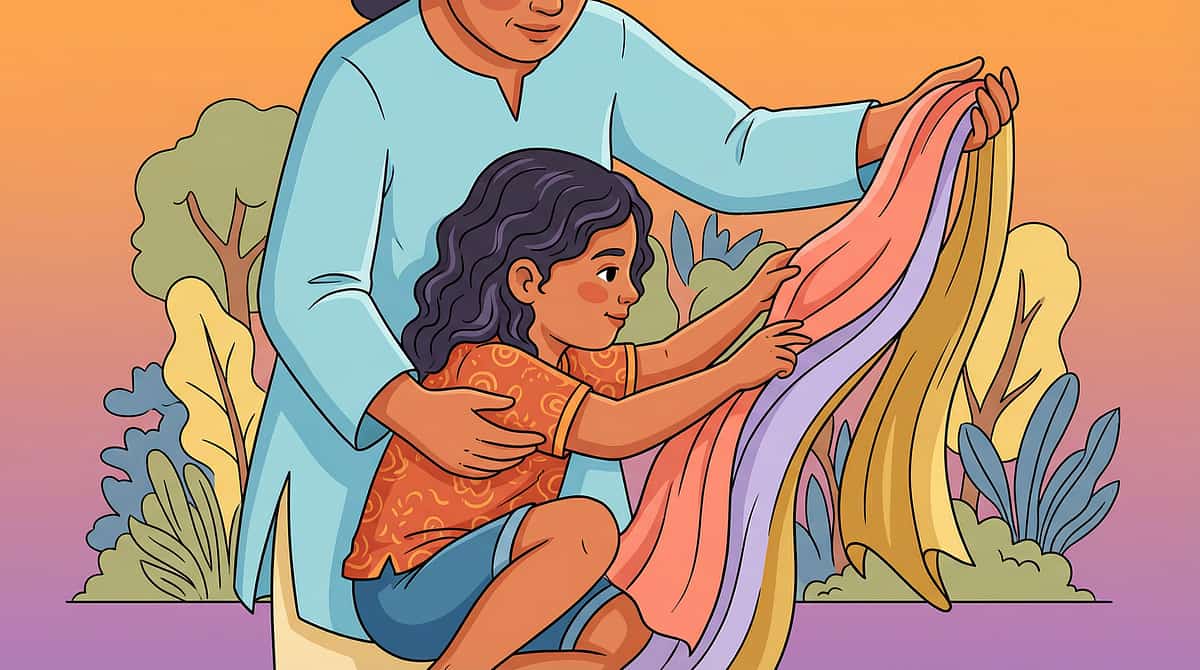
Scarves
"Make the scarf go like this! Big rainbow!" Wave your scarf in large crossing arcs. Child imitates. Watch for: large vs. small movements, crossing pattern.
Crawling Tunnel
"What's hiding in the tunnel? Let's find it!" Place preferred toy at far end before session. Watch for: cross-lateral crawl pattern (right arm + left leg together).
Reach & Sort
"Let's sort the colors! All the red ones go in THIS bucket." Position deliberately: source far left, bucket far right. Watch for: does child rotate body, switch hands, or cross?
Engaged
Active participation, visible enjoyment — continue and celebrate
Tolerating
Compliance without joy — acceptable, continue gently
Avoiding
Consistent redirection, physical withdrawal — modify immediately
Step 3 of 6
The Bridge-Building Moment — Material 1: Bilateral Games
The Action
Patty-cake progression — basic → crossed clap variation.
Simon Says: ONLY midline-crossing commands:
- "Simon says touch your right ear with your LEFT hand."
- "Simon says put your LEFT hand on your RIGHT knee."
Neural Mechanism
Social rhythm + motor demand = bilateral pathway activation. The rhythmic, social nature of these games means the child's nervous system is primed to receive the crossing input — making each rep neurologically richer than isolated exercises.
Session Guide
10–15 crossing commands or patterns per session. Zero equipment needed. Start here on any modified or postponed day — this is always the fallback activity.
Step 3 of 6
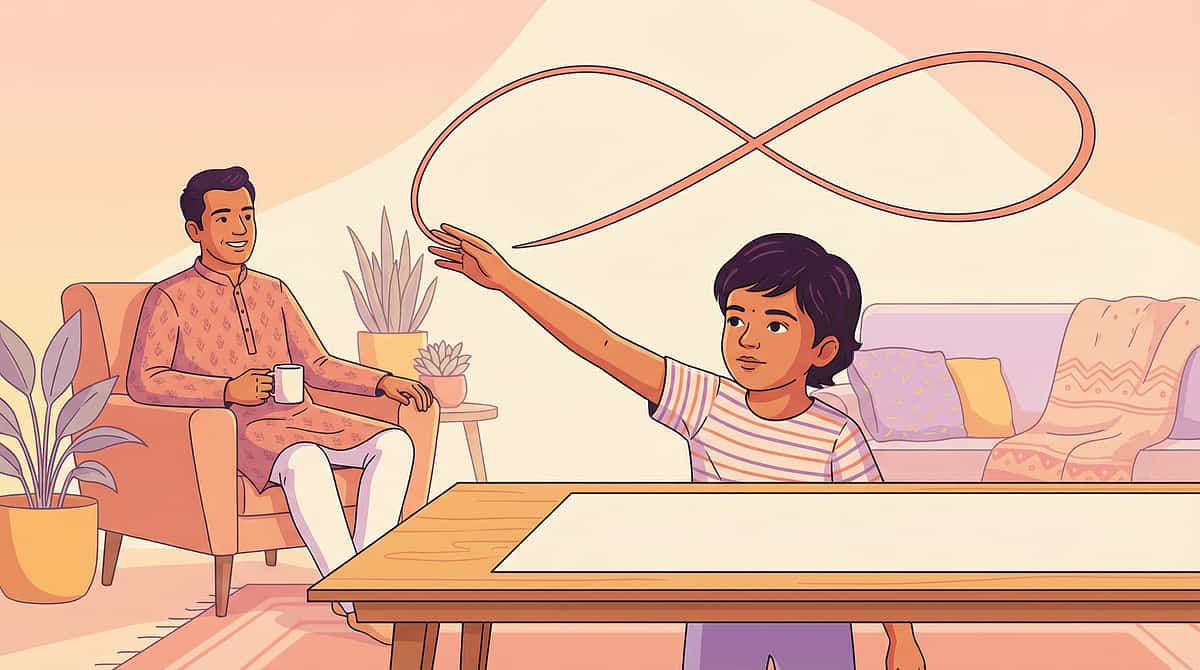
The Bridge-Building Moment — Material 2: Figure-8 Activities
The Action
Child extends dominant arm fully. Head stays STILL. Traces largest possible horizontal infinity loop in air. Crosses midline with EACH loop. Smooth, flowing. No jerkiness.
Progression: Air → whiteboard → floor walking → eye tracking only.
Neural Mechanism
Continuous bilateral brain activation. The figure-8 is the most neurologically efficient crossing shape — each loop requires the brain to cross the midline twice, continuously, without interruption. This is why Brain Gym's Lazy-8 has decades of clinical use in OT practice globally.
Session Guide
5–8 complete loops per hand, per session. Smooth is always more important than fast — slow down to get quality.
Step 3 of 6
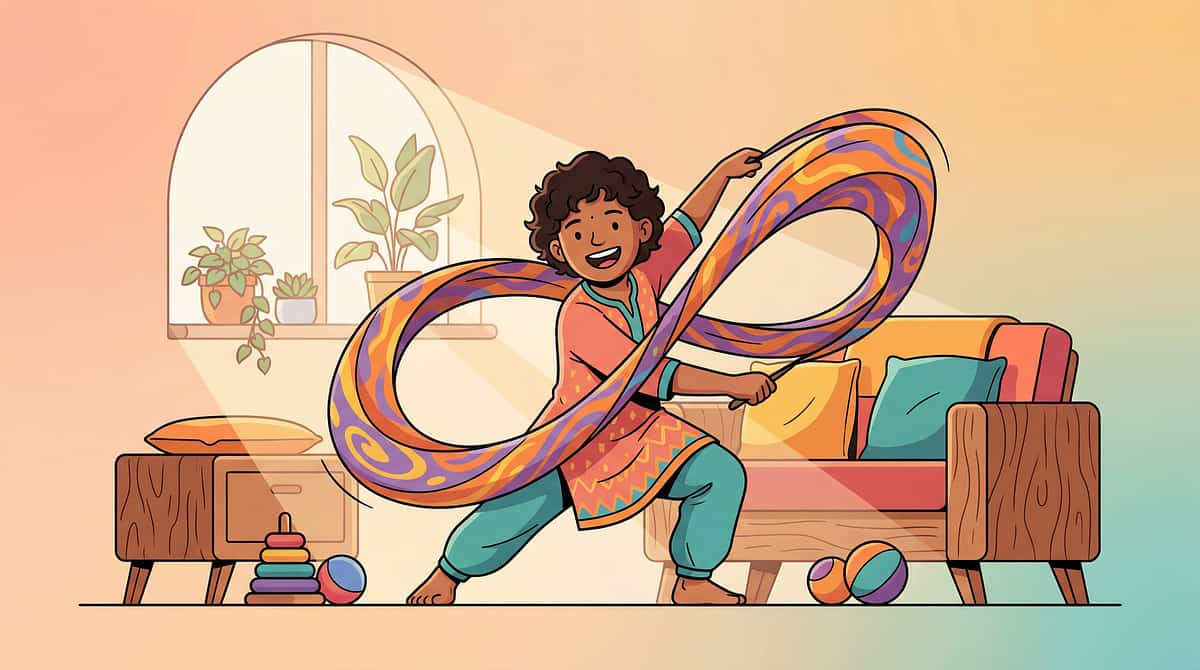
The Bridge-Building Moment — Material 3: Scarves
The Action
- Wave scarf in figure-8 pattern
- Toss from left hand, catch with right
- "Rainbow": sweep high left, arc down right — repeat
- Partner passing: throw to opposite side
Neural Mechanism
Slow visual tracking + large arm movement = crossing pathway reinforcement. The scarf's slow, visible arc gives the child's visual system maximum time to track across the midline — building the visual and motor crossing pathways simultaneously.
Session Guide
20–30 crossing waves per session (2–3 minutes continuous). The slow, flowing nature makes this ideal for children who are sensory-avoiding or who find faster activities overwhelming.
Step 3 of 6
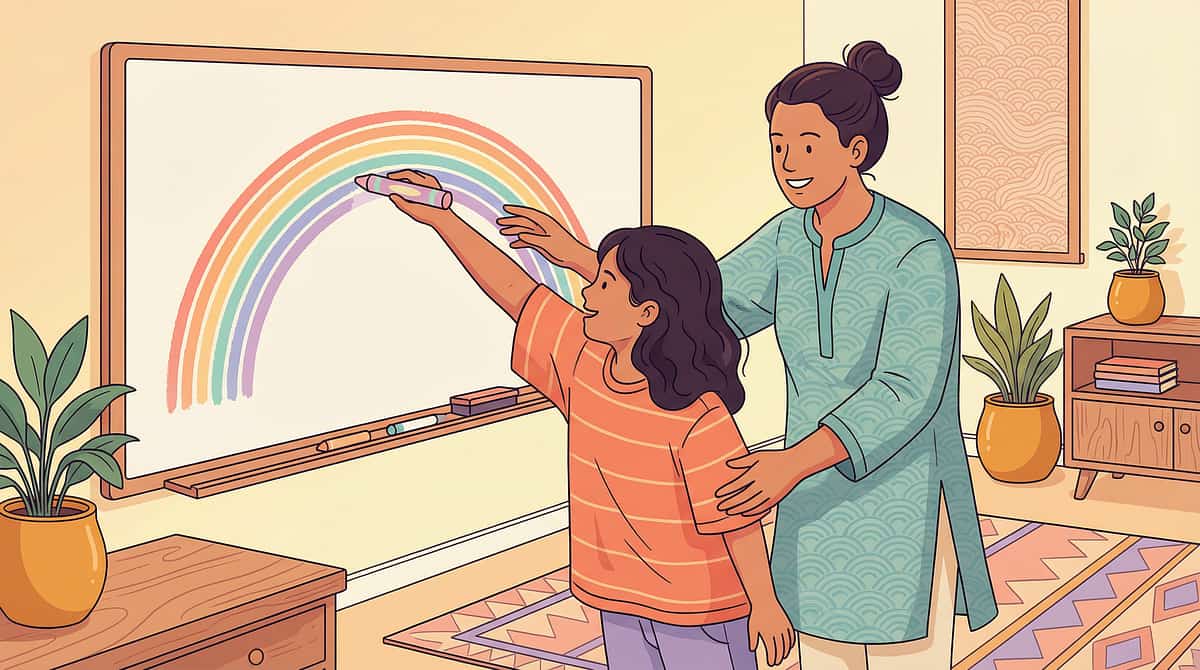
The Bridge-Building Moment — Material 4: Large Drawing Surface
The Action
Draw ONLY activities that span full surface width: rainbows (start left, arc to right), horizontal roads, figure-8s.
Rule: Marker must NOT leave the surface until crossing is complete. One continuous stroke from one side to the other.
Neural Mechanism
The environment forces unavoidable crossing with every horizontal stroke. A vertical surface at eye level means the child cannot rotate their trunk easily — the arm MUST cross the midline. This is why the large drawing surface is particularly powerful: it removes the compensatory rotation strategy from the equation.
Session Guide
3–5 full-width drawings per session. Mount at child's eye to shoulder height, centered on their body — not to one side.
Step 3 of 6
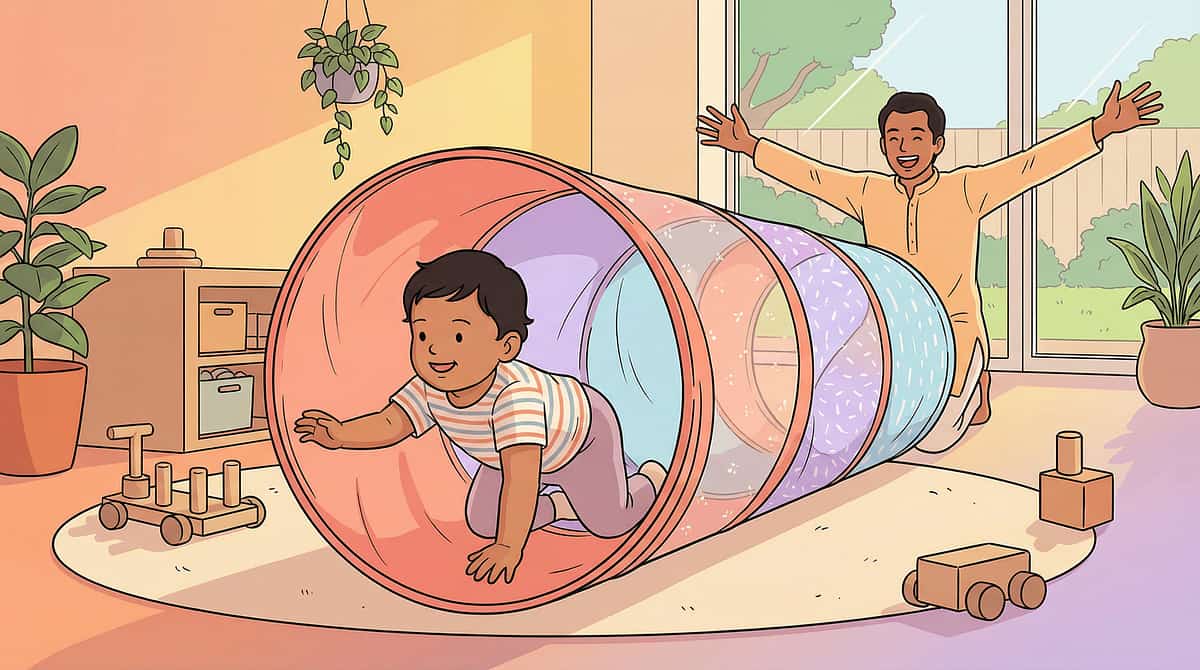
The Bridge-Building Moment — Material 5: Crawling Tunnel
The Action
Child crawls through with the CORRECT cross-lateral pattern:
- Right arm + left leg move together
- Left arm + right leg move together
Adult watches from the side to verify pattern. Gently correct if same-side (homolateral) pattern appears.
Neural Mechanism
Cross-lateral crawl = direct corpus callosum activation. This is the single most powerful tool in the F-588 kit. The reason crawling is a developmental milestone isn't locomotion — it's bilateral brain wiring. Children who missed extensive crawling in infancy often show corpus callosum gaps that cross-lateral tunnel crawling begins to address.
Session Guide
5–8 full tunnel passes per session. Guide the correct pattern from the entrance for the first 2–3 sessions before expecting spontaneous cross-lateral crawl.
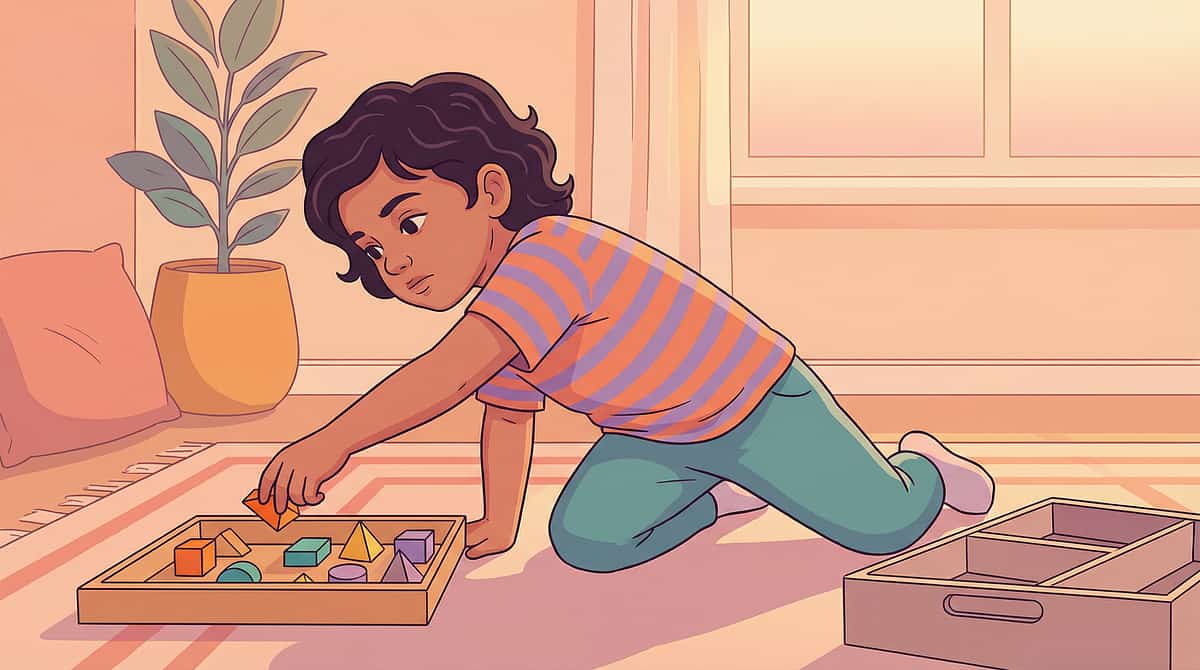
Step 3 of 6
The Bridge-Building Moment — Material 6: Reach & Sort
The Action
- Source pile placed FAR LEFT
- Target container placed FAR RIGHT
- RIGHT hand picks up from LEFT pile and deposits on RIGHT
- Then reverse: left hand from right pile to left target
- One-hand rule: "Only your right hand can touch anything today."
Neural Mechanism
Purposeful reaching with repeated intentional crossing. Unlike games, reach & sort has a clear goal that motivates the child to reach further and further across. The strategic placement of materials makes crossing the path of least resistance — the child must cross to complete the task they find motivating.
Session Guide
15–25 object transfers per direction per session. Vary the objects weekly to sustain engagement and motivation.
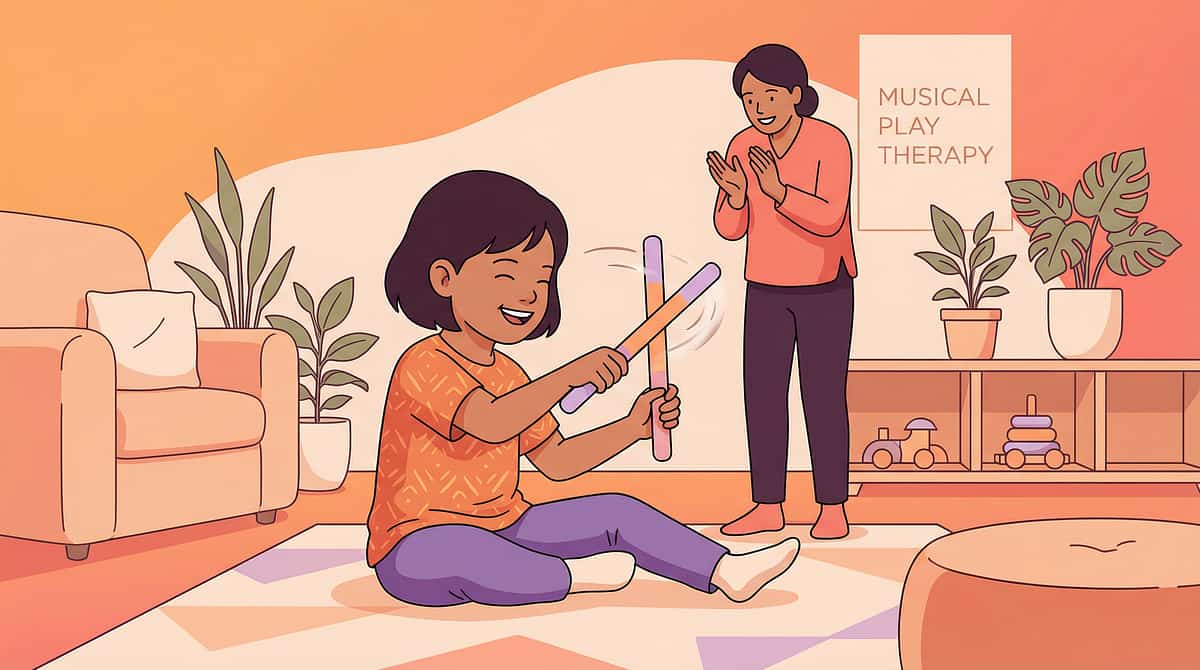
Step 3 of 6
The Bridge-Building Moment — Material 7: Rhythm Sticks
The Action
- Tap sticks together → tap crossed (right stick to left side)
- Partner patterns: tap own → cross-tap partner's
- Progress: slow beat → faster → songs with crossing choreography
Neural Mechanism
Rhythm provides external timing structure for bilateral coordination. Music is neurologically unique — it recruits multiple brain regions simultaneously and provides a predictable beat that scaffolds the timing of crossing movements. Children who find crossing "jerky" often smooth out dramatically when a musical beat organizes the movement.
Session Guide
10–15 crossing patterns per song, 2–3 songs per session. DIY substitute: two wooden chopsticks deliver identical bilateral timing and crossing patterns.
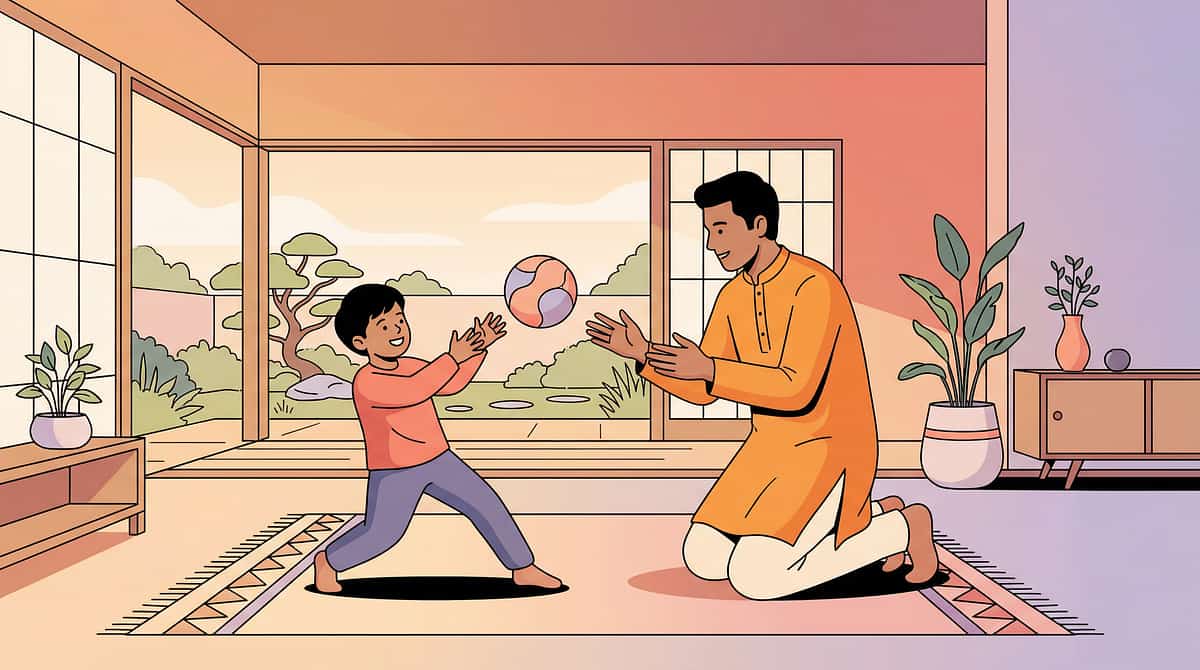
Step 3 of 6
The Bridge-Building Moment — Material 8: Ball Activities
The Action
- ALWAYS throw to child's opposite side from catching hand
- Throw to their LEFT — they catch with RIGHT hand (don't rotate!)
- Bounce on left side, catch with right — alternate
- Progress: large soft ball → medium bouncy ball → smaller ball
Neural Mechanism
Visual tracking across visual midline + motor crossing response. The ball forces the eyes to track into opposite-side space and the arm to follow — combining visual and motor crossing in a single, dynamic, motivating activity. The strategy: if the child keeps rotating their trunk to catch, have them stand against a wall. Cannot rotate. Force the arm to cross instead.
Session Guide
10–15 cross-body catches per session. Start large and soft — a balloon gives maximum visual tracking time with ultra-slow movement.
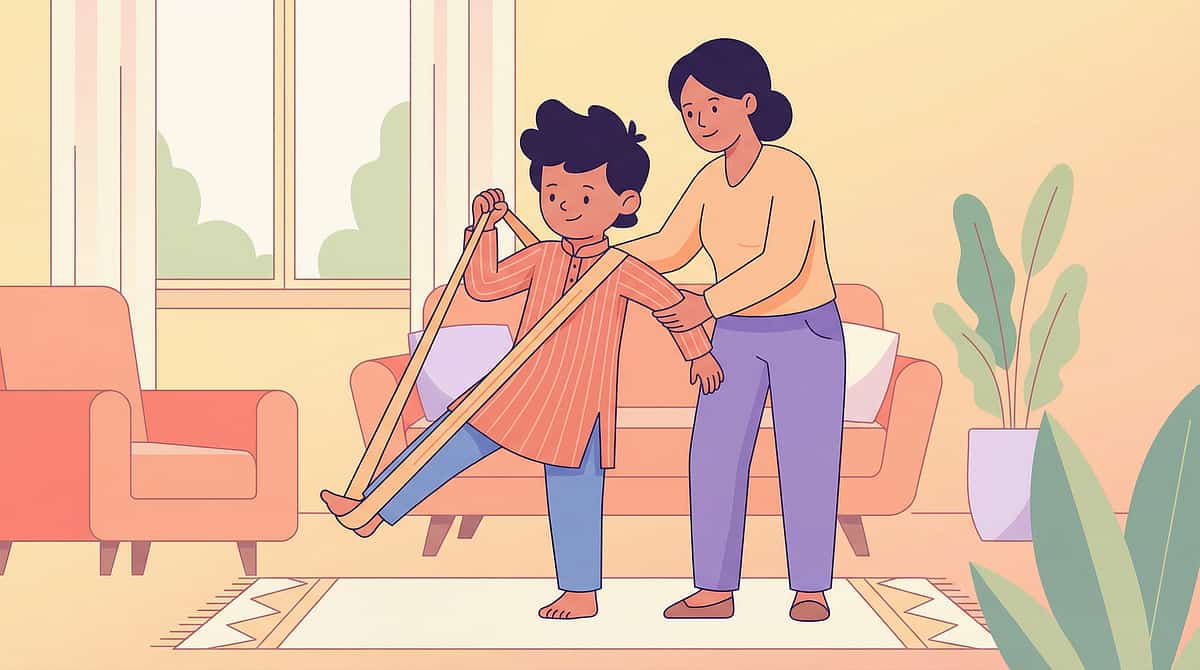
Step 3 of 6
The Bridge-Building Moment — Material 9: Resistance Bands
The Action
- Band anchored low-left. Right hand grabs and pulls diagonally across body to high-right (seatbelt motion).
- Then: band high-left, pull to low-right (chop motion).
- 3–5 repetitions each direction. Controlled movement.
- Adult supervision required throughout.
Neural Mechanism
Resistance adds proprioceptive depth to the crossing pattern. Proprioception is the body's internal sense of its own position — adding resistance means the brain receives much richer feedback about where the arm is in space as it crosses. This deeper sensory input is what makes crossing feel "real" to the nervous system, accelerating pathway consolidation.
Session Guide
3–5 reps per direction, 2–3 sets. Skip for children under 5 or with shoulder/elbow history. Inspect bands for tears before every session. Never allow snap-back.
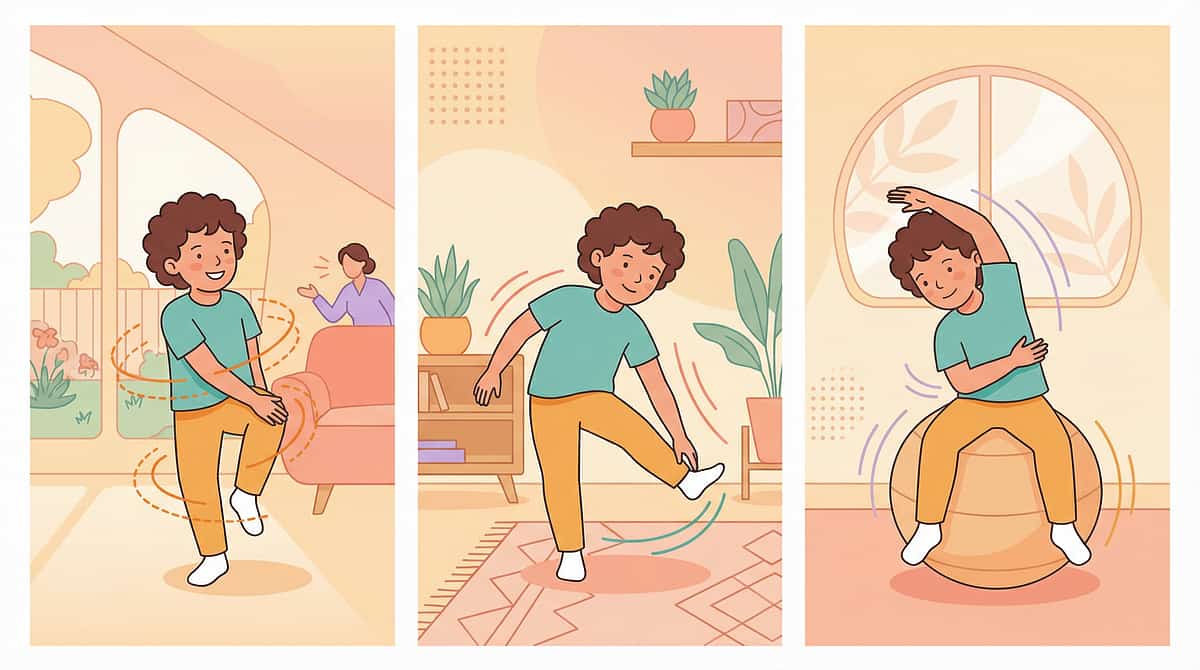
Step 4 of 6
Dosage: 3 Good Reps > 10 Forced Ones
Quality always outperforms quantity in neural pathway building. Three high-quality, engaged repetitions build more pathway than ten mechanical, disengaged ones. Here's how to calibrate dosage across all 9 materials.
Material | Target Reps | Session Time |
Bilateral Games | 10–15 crossing commands/patterns | 2–3 minutes |
Figure-8 Air Tracing | 5–8 complete loops per hand | 2–3 minutes |
Scarf Activities | 20–30 crossing waves | 2–3 min continuous |
Large Surface Drawing | 3–5 full-width drawings | 2–4 minutes |
Crawling Tunnel | 5–8 full tunnel passes | 3–5 minutes |
Reach & Sort | 15–25 object transfers per direction | 3–5 minutes |
Rhythm Sticks | 10–15 crossing patterns per song (2–3 songs) | 3–5 minutes |
Ball Activities | 10–15 cross-body catches | 3–4 minutes |
Resistance Bands | 3–5 reps per direction, 2–3 sets | 3–4 minutes |
Add Music
Any crossing activity becomes more powerful with a beat
Add Speed
As accuracy improves, increase pace gradually
Add Complexity
Bilateral games → add 2-step commands
Add Novelty
Change colors, objects, targets weekly to sustain engagement
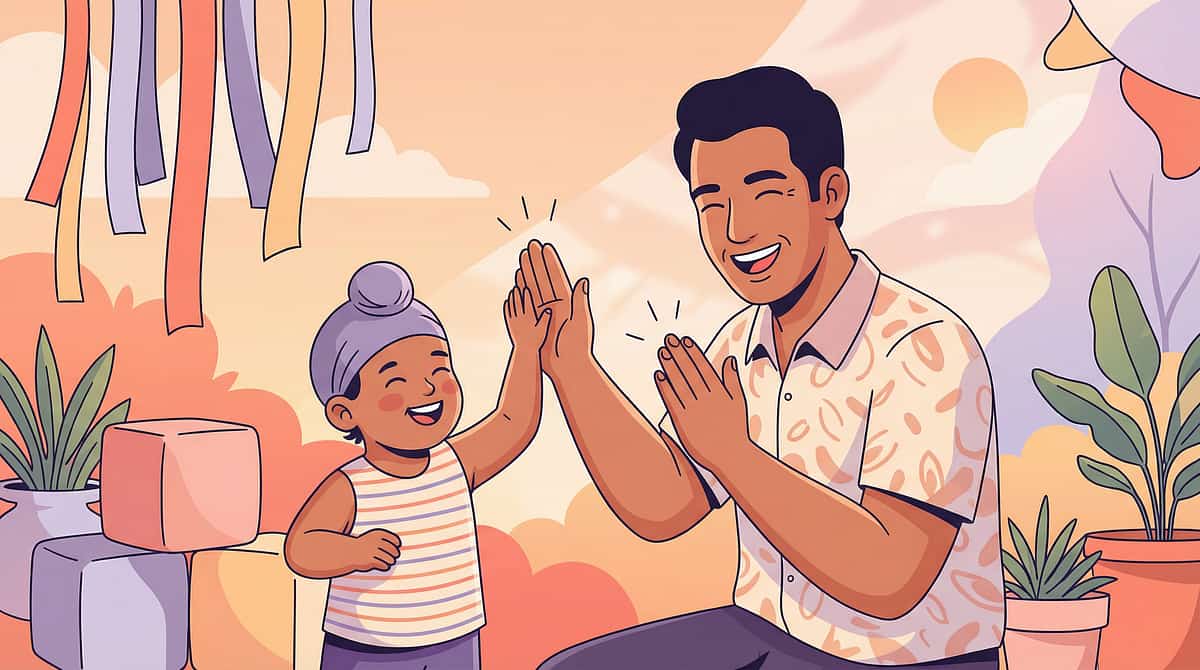
Step 5 of 6
Celebrate the Attempt, Not Just the Success
The nervous system learns faster when achievement feels good. Reinforcement doesn't corrupt the therapy — it IS the therapy. The emotional state during learning determines how deeply the neural pathway is encoded.
"YES! You crossed your arm all the way! I SAW that brain bridge!"
For Successful Crossing
"That's it! Right hand to the LEFT side — amazing!" "Your brain just did something really important right there!" Deliver within 3 seconds of the crossing behavior for maximum impact.
For Attempted Crossing (even if incomplete)
"You tried to reach across — that's exactly what we're practicing!" "Look how far you got! Your brain is learning!"
For Excellent Effort (no crossing achieved)
"I love how hard you tried. That practice is building the pathway." Every genuine attempt is real neural input — celebrate it.
Physical Reinforcement Options
- High five (a bilateral gesture itself!)
- Jump and clap together (bilateral!)
- Preferred toy access: 60-second break
- Sticker chart: one sticker per session completed
Token Economy Integration
- 1 token = completed full session
- 5 tokens = special family celebration
- 20 tokens = "Crossing Champion" certificate (downloadable at Pinnacle)
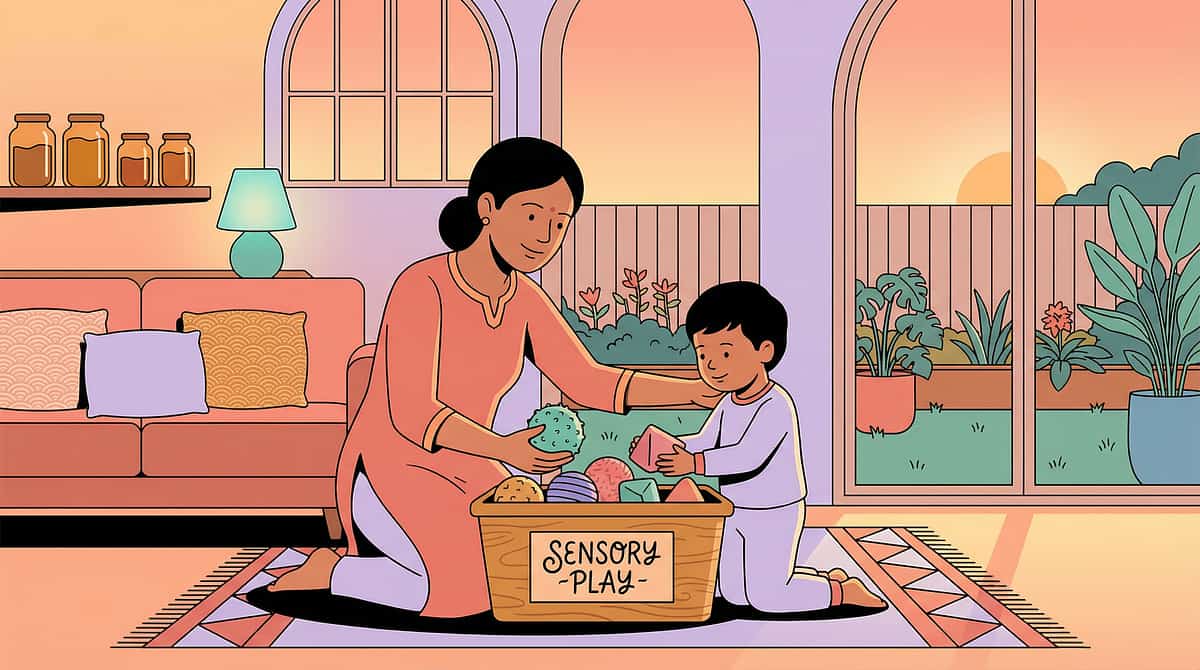
Step 6 of 6
No Session Ends Abruptly
Predictability is safety for neurodiverse children. A structured cool-down isn't a nice-to-have — it's the neurological bookend that helps the brain consolidate what it just built. Give the transition warning before the child reaches satiation.
"Two more [movements/passes/sorts], then we're all done!"
1
Countdown Announcement (1 min before ending)
"One more rainbow on the board, then we clean up together." Named, predictable, kind.
2
Material Put-Away Ritual (child participates)
"Help me put the scarves away. One for you, one for me." Bilateral act of tidying = more crossing practice embedded.
3
Proprioceptive Calming Input (2 min)
Push hands together (10 sec × 3). Wall push: both palms flat on wall, push firmly (10 sec × 3). Deep pressure hug or weighted lap pad if available.
4
Transition to Next Activity Cue
"Great crossing practice today! Now it's time for [next activity]." Always name what's coming next — predictability is safety.
5
Verbal Close
"Your brain worked so hard today. I'm proud of you." Always close with affirmation — this is the last thing the nervous system encodes before the session ends.
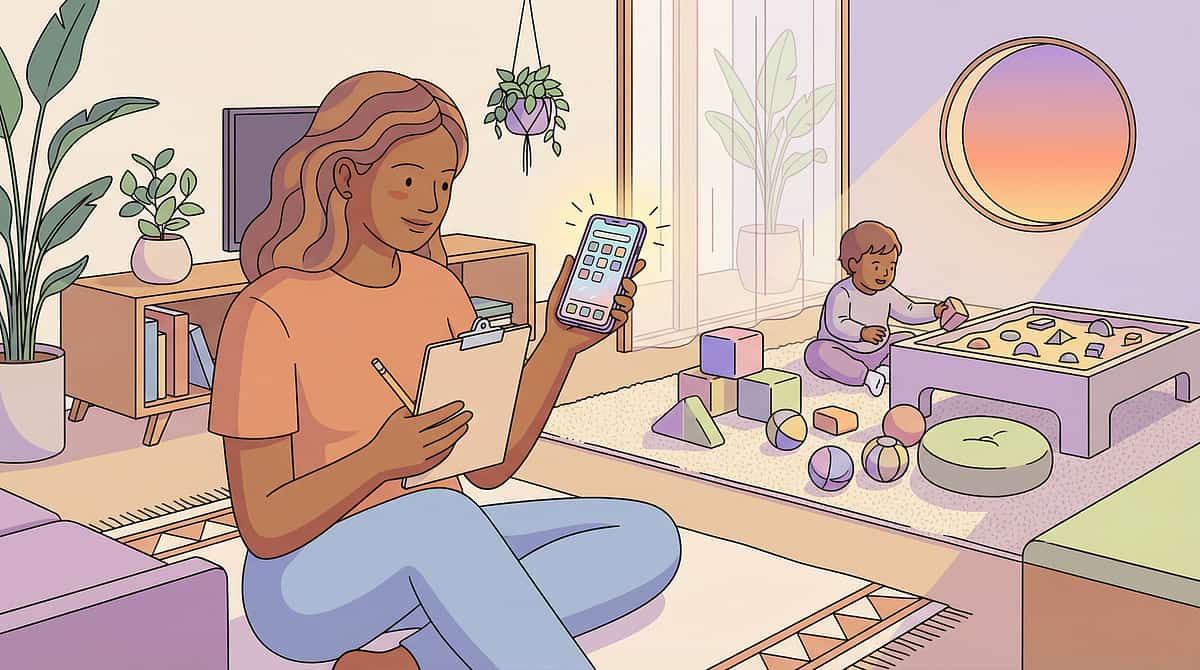
60 Seconds of Data Now = Months of Progress Clarity
Your observation is clinical data. 60 seconds of tracking after each session becomes the evidence base that tells your therapist exactly what's working, what's plateauing, and when to escalate or celebrate.
Data Point 1 — Crossing Quality
- No crossing observed (used hand switching/rotation)
- Crossing with verbal/physical prompt
- Crossing spontaneously in structured activity
- Crossing automatically across all activities
Data Point 2 — Session Duration
- Less than 5 minutes
- 5–10 minutes
- 10–15 minutes
- 15+ minutes
Data Point 3 — Child State at End
- Dysregulated | Neutral | Positive | Highly engaged
What This Data Tells Your Therapist
- Rate of crossing development across 8 weeks
- Which materials produce best crossing quality
- Pattern: is child improving, plateauing, or regressing?
- Readiness to progress to next technique level
ABA Data Standard Alignment
Frequency measurement + Duration measurement + Qualitative notes = complete behavioral data record aligned with BACB standards.

Session Abandonment Is Not Failure — It's Data
Every session that doesn't go as planned is teaching you something precise and clinically useful about your child's nervous system. Here's how to decode it and respond.
Problem 1: Child refuses to cross — keeps switching hands or rotating
Why: The compensatory strategy is deeply ingrained — the brain defaults to its existing efficient workaround. Next time: Position materials FURTHER to the opposite side. Add "one hand only" rule. Add motivating object at target location.
Problem 2: Child became frustrated or distressed
Why: Demand exceeded current capacity. Crossing is neurologically hard — it's genuinely effortful. Next time: Reduce dramatically. Bilateral games only. Build positive association before reintroducing crossing demand.
Problem 3: Child lost interest after 3–4 minutes
Why: Satiation or insufficient novelty without variation. Next time: Rotate between 2–3 materials per session. Add music, a game element, timer, or competition.
Problem 4: Figure-8 tracing was jerky — no smooth crossing
Why: Neural pathway not yet established for smooth midline transition. Next time: Slow down dramatically. Extend arm fully. Guide wrist with gentle hand-over-hand. Smooth always before fast.
Problem 5: Crawling tunnel — same-side pattern (right arm + right leg)
Why: Homolateral crawl — corpus callosum not engaged. Pattern wasn't established in infancy. Next time: Gently guide one arm forward while cueing: "Right arm AND left leg — together." Model cross-lateral crawl before child enters tunnel.
Problem 6: Resistance bands — child moved too fast or lost control
Why: Speed releases proprioceptive input, reducing therapeutic value. Next time: Use lighter resistance. Hold child's wrist to slow movement. Count reps slowly: "One... two... three."
Problem 7: Ball catching — child rotated whole body to catch
Why: Trunk rotation is the established compensatory workaround. Next time: Have child stand against a wall. Cannot rotate. Force the arm to cross instead of the trunk.
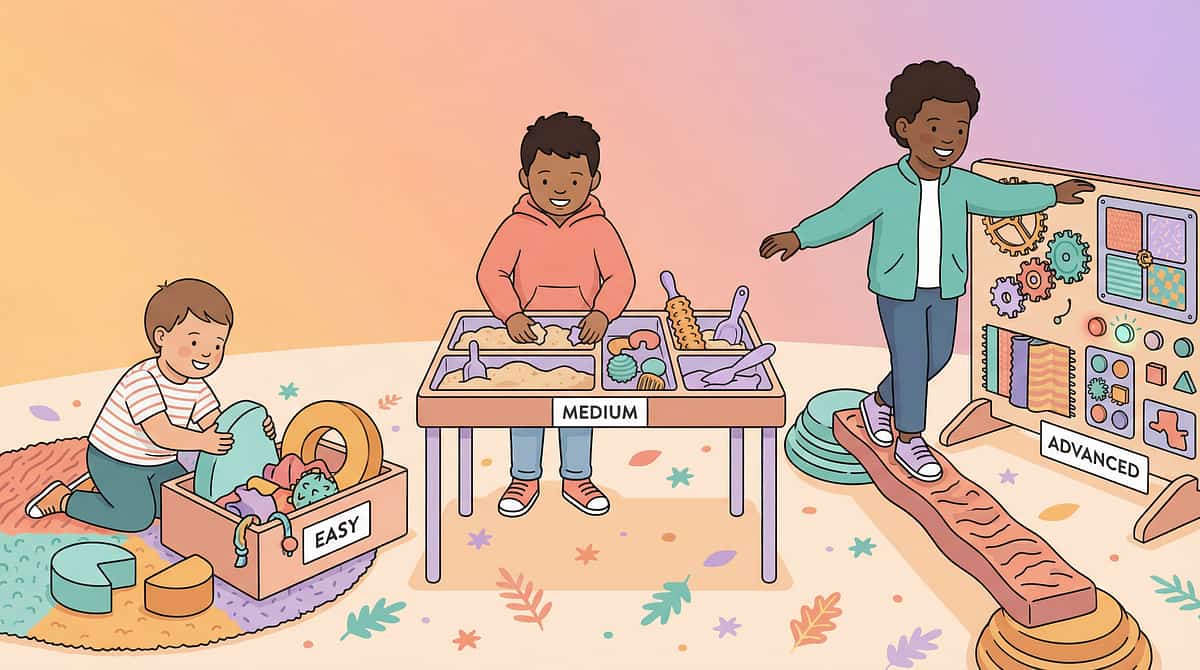
No Two Children Are the Same Bridge
Every child's corpus callosum is at a different stage of development, every sensory system has a different profile, and every motivation landscape is unique. Adapt F-588 to match your child — not the other way around.
Easier Modifications
For emerging or resistant children: Bilateral games only (no explicit crossing demand) | Figure-8 with adult hand-over-hand guidance | Large, slow movements — balloons instead of balls | Tunnel without cross-body reach component | Reach & sort with objects NEAR midline (not far across)
Standard Protocol
As described in Steps 1–6. Full 9 materials in rotation. 10–15 minutes daily. Appropriate for children engaging consistently with 3–5 of the 6 readiness indicators checked.
Harder Modifications
For consolidating children: Eyes closed during figure-8 tracing (proprioceptive only) | One-hand rule + speed challenge in reach & sort | Two-step crossing Simon Says commands | Medium resistance bands | Smaller, bouncier ball for catching
Sensory Seeker Profile
Seeks movement, input, stimulation:
- Use resistance bands and crawling tunnel (heavy proprioceptive input)
- Add vigorous scarf movement
- Drum patterns with rhythm sticks
- Fast-paced sorting games with timer
Sensory Avoider Profile
Over-responsive, avoids input:
- Start with bilateral games (no equipment, no unexpected sensory input)
- Introduce materials slowly — let child touch before using
- Avoid resistance bands initially
- Use slow, large scarf movements — predictable visual input
Ages 3–5
Bilateral games + figure-8. 5–7 min max. Heavy play framing — no "therapy" language. Simple patty-cake before complex Simon Says.
Ages 5–7
All 9 materials appropriate. 10–12 minutes per session. Begin connecting to handwriting/reading goals.
Ages 7–10
Full protocol with academic bridging. 12–15 minutes with functional task integration at end. Sports and instrument practice as advanced crossing contexts.

Act IV — The Progress Arc
Weeks 1–2: The Tolerance Phase
15%
Foundation Progress
Building the neural foundation — the bridge is receiving its first structured input.
What You Will Likely See ✓
- Slightly reduced resistance to crossing activities
- Interest in the materials — curiosity established
- Child tolerates 5–7 minutes (vs. 2–3 initially)
- Occasional spontaneous crossing — then quick reversal to switch
- Session becoming more predictable for child
What Is Not Progress Yet ✗
- Don't expect consistent crossing — it's not there yet
- Hand switching will continue — this is expected
- No visible handwriting improvement in this window
- Reading tracking not yet changed
Document this week: Which material your child engaged with most | Longest session duration achieved | Any spontaneous crossing moment, however brief.

Weeks 3–4: The Brain Bridge Is Forming
40%
Consolidation Phase
Neural pathway formation is now observable in behavior — consolidation is underway.
Consolidation Indicators ✓
- Child begins to ANTICIPATE the session (walks to materials, asks for activity)
- Crossing appears with LESS prompting than Week 1
- Figure-8 tracing becomes smoother — less jerky at midline
- Reach & sort: fewer body rotations and hand switches
- Crawling tunnel: cross-lateral pattern more consistent
- Session duration increasing naturally: 10–12 minutes without resistance
Behavioral Changes Signaling Pathway Formation →
- Child catches ball on opposite side without immediately switching
- Begins using dominant hand more consistently for familiar objects
- Writing shows less midline hesitation — even if still messy
- Any spontaneous crossing in unstructured play = significant milestone
When to Increase Intensity
If child engages easily with minimal prompting: add one more material per session, increase ball difficulty, add speed to sorting game, begin academic bridge activities.

Weeks 5–8: The Bridge Is Open
75%
Mastery Phase
The bridge is functional — now we generalize it to real life.
Mastery Criteria — Specific, Observable, Measurable
Structured Activities
Child crosses midline spontaneously in 3+ structured activities without prompting
Hand Dominance
Clearly established and consistent across all familiar fine motor tasks
Figure-8 Tracing
Smooth, fluid, no jerking at midline — eyes and arm cross seamlessly
Ball Catching
Reaches to opposite side without trunk rotation — arm crosses, trunk stays still
Handwriting
Consistent quality from left to right margin — no midline hesitation or hand switching
Reading Tracking
Smooth left-right eye movement maintained for 2+ lines without losing place
Stage 1: Avoiding
Weeks 0–2: Building the foundation
Stage 2: Emerging with prompts
Weeks 2–4: Most families reach here by Week 4
Stage 3: Spontaneous
Weeks 4–6: Crossing in structured activities
Stage 4: Automatic
Weeks 6–8: Crossing in functional daily tasks
Stage 5: Mastery
Week 8+: Supports handwriting, reading, and sports
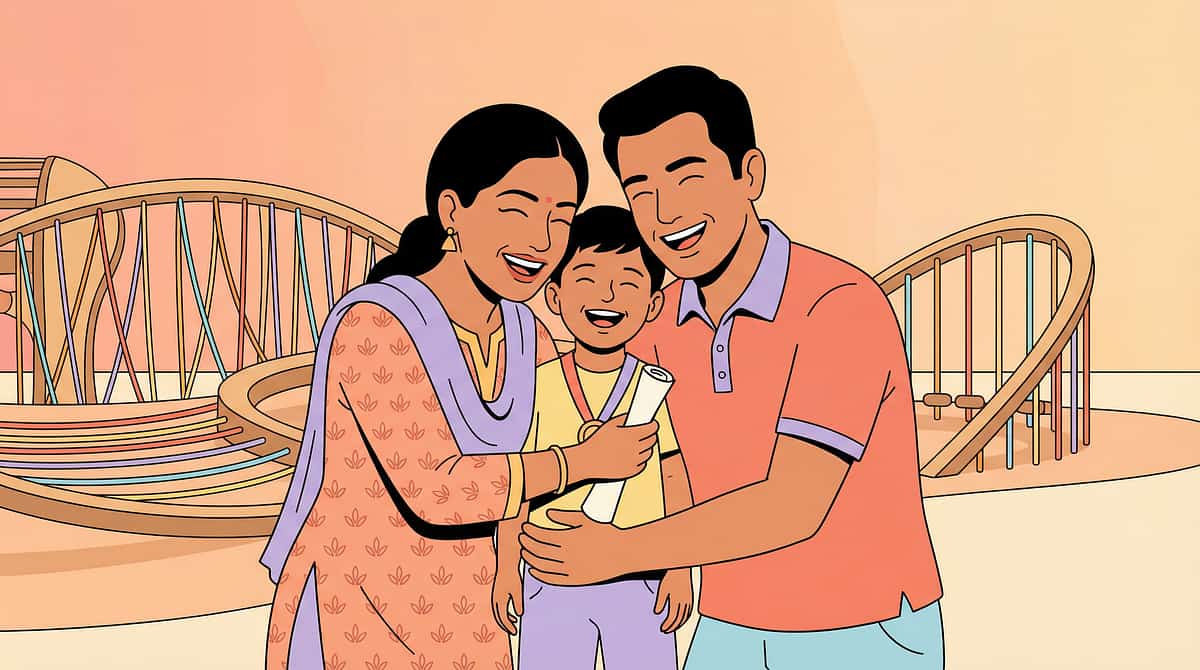
You Did This. Your Child Grew Because of Your Commitment.
✓ You Showed Up
Consistently, when it was hard and change felt invisible
✓ You Adapted
When sessions didn't go as planned — you modified, not abandoned
✓ You Learned
To read your child's nervous system in real time
✓ You Built
Neural infrastructure that will serve your child for life
"What was an invisible barrier is now an accessible bridge. The corpus callosum has been activated and strengthened. Hand dominance has a foundation. Handwriting and reading have a new neurological base. And you built it — from your home, with ordinary materials."
Family Celebration Suggestions
- Tonight: A family dinner where EVERYONE plays patty-cake
- This week: Let your child teach the figure-8 to a sibling or grandparent — teaching is the deepest form of consolidation
Document This Milestone
- 📸 Take a photo of your child crossing midline today
- 📝 Write 3 sentences about what you noticed this week
- 🏆 Download the Crossing Champion Certificate at Pinnacle

🚩 Safety Alert
Trust Your Instincts — If Something Feels Wrong, Pause
Most families never need to escalate. Most concerns resolve with protocol adjustment. But your awareness is your child's first protection system.
🚩 Flag 1: No Progress After 6 Weeks of Daily Practice
Crossing still absent; hand switching unchanged; no consolidation. May indicate: underlying sensory processing, neurological, or vision issue. Action: OT assessment — rule out DCD, visual tracking disorder.
🚩 Flag 2: Regression — Child Was Crossing, Now Has Stopped
Skills from Weeks 3–4 have disappeared. Stress, illness, or environmental change can cause regression. Action: Resume from Week 1 modified protocol. If persistent: OT consultation.
🚩 Flag 3: Extreme Distress During Crossing Activities
Panic, self-injury, or severe behavioral escalation specifically when crossing is attempted. May indicate: proprioceptive processing disorder or anxiety-based avoidance. Action: Stop all structured crossing practice. Consult OT and behavioral specialist immediately.
🚩 Flag 4: No Hand Dominance at Age 7+
Consistent switching between hands for all fine motor tasks at age 7+. May indicate: neurological investigation needed. Action: Developmental pediatrician + OT assessment. Not an emergency, but time-sensitive.
🚩 Flag 5: Academic Skills Deteriorating Despite Crossing Improvement
Crossing improves but reading or handwriting worsens. May indicate: co-occurring learning disability or vision issue independent of crossing. Action: Developmental optometrist + educational psychologist assessment.
🚩 Flag 6: Dizziness, Headaches, or Nausea During Activities
Physical complaints specifically during figure-8 or eye-tracking activities. May indicate: vestibular processing disorder. Action: Pause vestibular activities. Medical review before resuming.
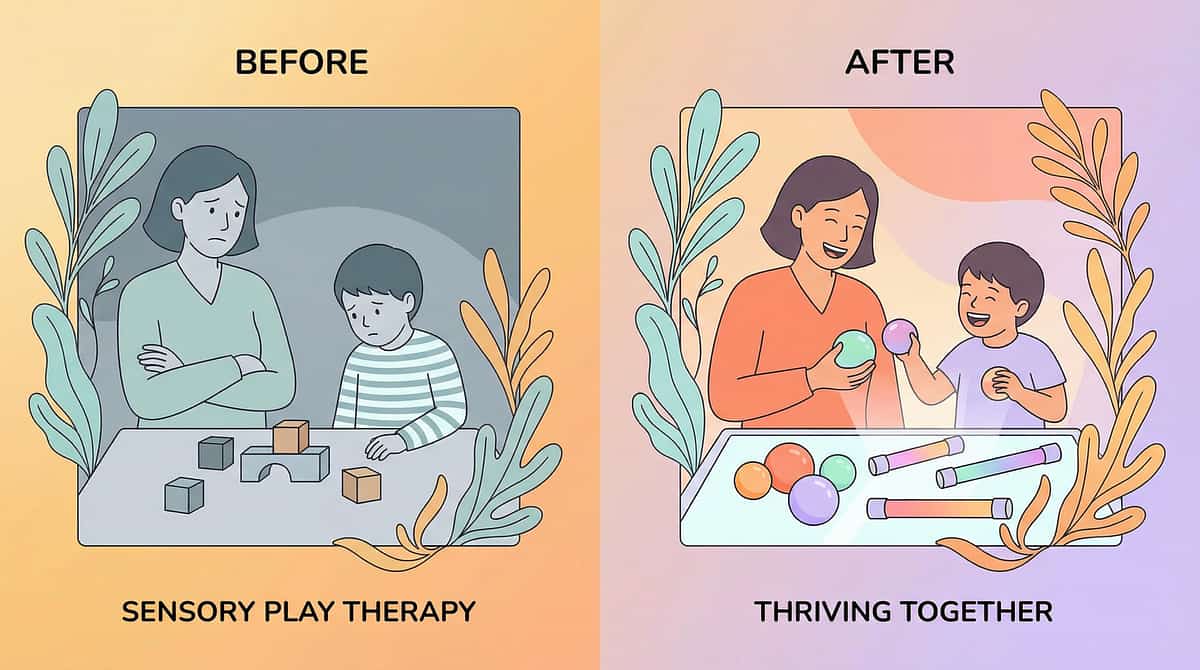
Act V — Community & Ecosystem
From the Families Who Started Where You Are
Priya, Age 6 — Hyderabad Center
Before: Switched hands constantly — mid-sentence in drawing, mid-bite at meals. No dominant hand. Teacher reported handwriting was "illegible and inconsistent."
After 8 weeks: Clear right-hand dominance. Writes from left to right margin without stopping. Teacher's comment: "Her handwriting has transformed."
"I didn't realize ALL of her struggles had the same root. The whiteboard changed everything — it made crossing unavoidable." — Mother, Hyderabad
Rohan, Age 7 — Bangalore Center
Before: Losing place at the middle of every line when reading. Head moved instead of eyes. Avoided sports — couldn't catch a ball thrown to his left side without his whole body turning.
After 6 weeks: Visual tracking smooth across full lines. Reading speed increased 30%. Now catches left-side throws with his right hand.
"The crawling tunnel felt silly at first. A 7-year-old in a tunnel. But within two weeks, his reading tracking shifted." — Father, Bangalore
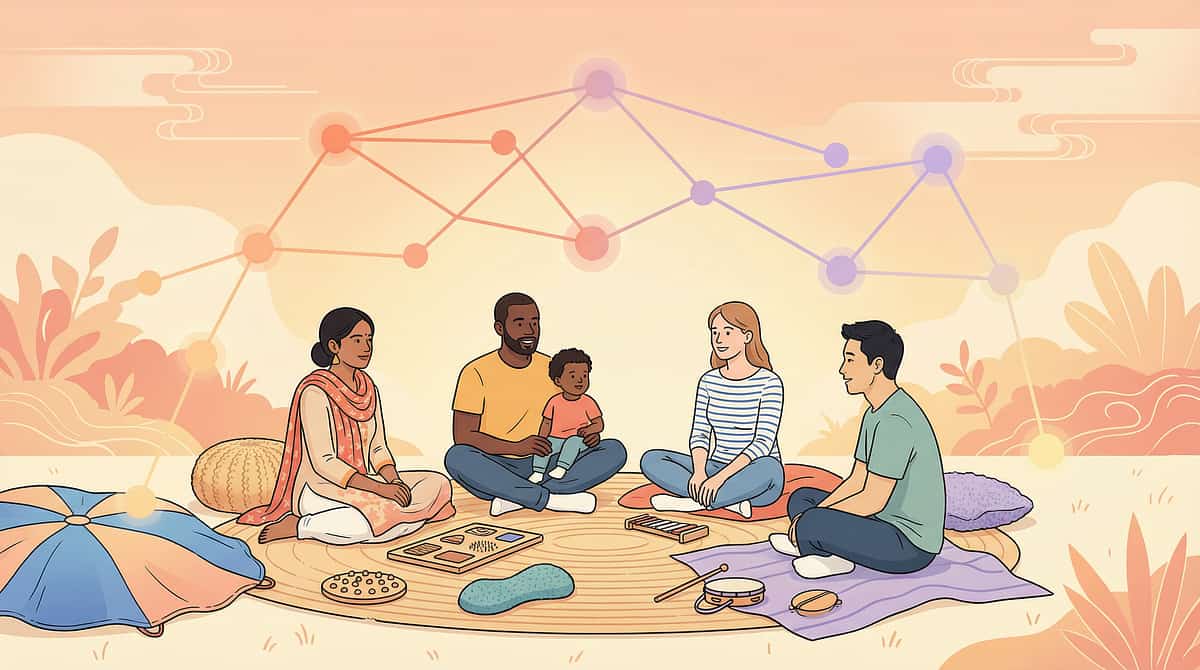
You're Not a Solo Operator — Join the Community
Consistency is the primary predictor of F-588 success — and communities of caregivers are among the most evidence-supported enablers of consistent home-based developmental intervention. (WHO NCF Community Engagement Framework)
Motor Development Parents WhatsApp Group
Pinnacle families navigating Domain F challenges together. Daily sharing of wins, adaptations, and troubleshooting in real time. Join at: pinnacleblooms.org/community/motor-parents
Pinnacle Online Parent Forum
Ask therapists and experienced parents. Search "crossing midline" for 500+ relevant threads from families who have been exactly where you are. community.pinnacleblooms.org
Peer Mentoring Programme
Connect with a parent who has already completed F-588. They've been where you are. They've arrived where you want to be. pinnacleblooms.org/peer-mentoring
Local Pinnacle Parent Meetups
70+ centers host monthly parent groups. Find your city and connect with families face-to-face. pinnacleblooms.org/centers
Home + Clinic = Maximum Impact
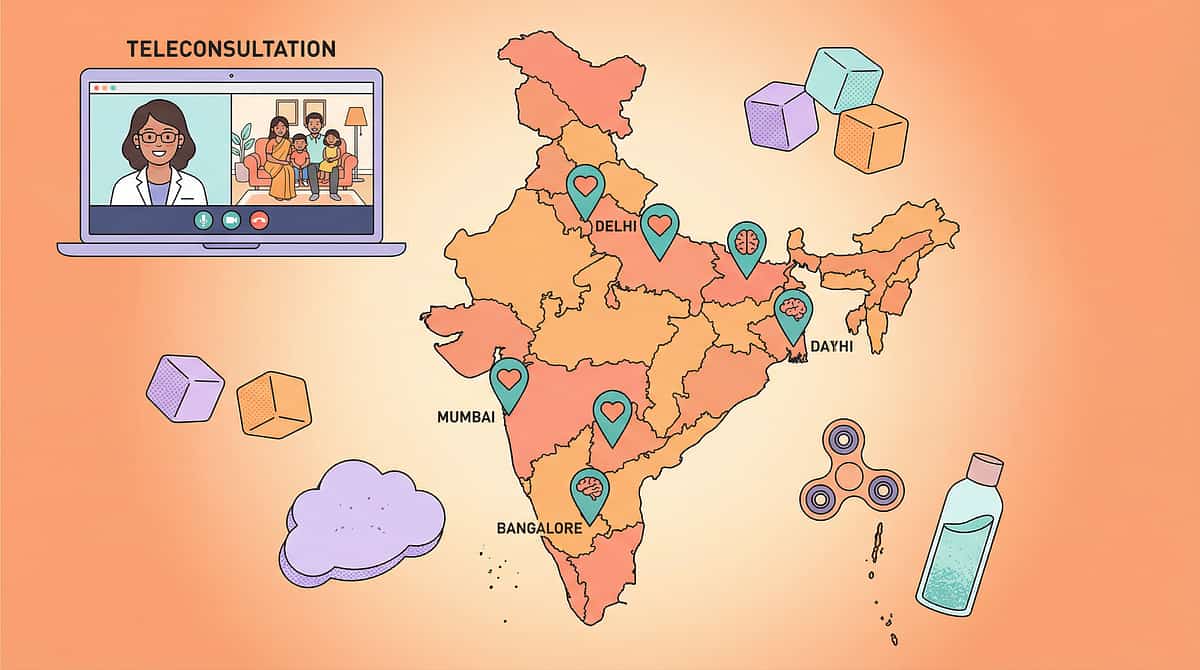
F-588 is designed for home execution — and professional OT support multiplies that impact dramatically. For families seeking formal assessment, clinic-based therapy, or teleconsultation, Pinnacle's 70+ center network is here.
Pinnacle Center Offerings for F-588
- Formal Bilateral Integration Assessment (AbilityScore® baseline)
- 1:1 OT sessions using GPT-OS® protocol
- Sensory integration evaluation for underlying SI differences
- FusionModule™ coordination: OT + ABA + SLP together
- EverydayTherapyProgramme™ home extension with weekly OT check-in
📞FREE National Autism Helpline: 9100 181 181
24×7 | 16+ languages | Free guidance for any question
24×7 | 16+ languages | Free guidance for any question
Teleconsultation for Remote Families
Book a 30-minute OT teleconsult at pinnacleblooms.org/teleconsult. Coverage: all Indian states + 70+ international countries. 16+ languages. First consultation FREE for Helpline callers.
Insurance & Funding Note
Many Indian states have government-funded ECD and disability therapy programs. Pinnacle assists families in accessing RBSK, NDDP, and State-specific disability support schemes. Ask at your nearest center.
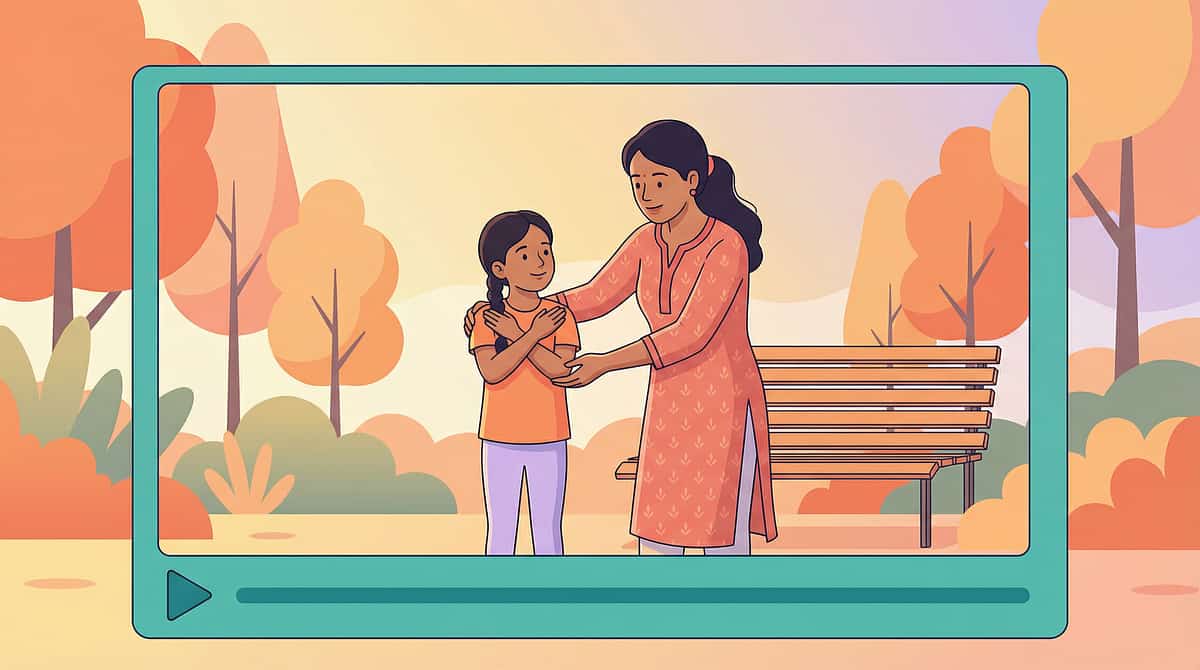
The Reel That Started This Journey
Video modeling is classified as an evidence-based practice for autism (NCAEP, 2020). Watching the technique before doing it creates pre-motor neural activation that improves execution quality.
F-588 Reel
Title: 9 Materials That Help With Crossing Midline
Reel ID: F-588
Series: Gross Motor & Physical Development — Episode 588
Domain: F — Motor Development
Duration: 75–85 seconds
Reel ID: F-588
Series: Gross Motor & Physical Development — Episode 588
Domain: F — Motor Development
Duration: 75–85 seconds
About This Reel
"When the invisible wall stops movement. Some children seem to have a barrier down the middle of their body. They switch hands. They twist around. They avoid reaching across. This reel introduces all 9 materials covered on this page — in 60 seconds of visual, practical, OT-validated content."
Presented by the Pinnacle OT Consortium. Filmed at Pinnacle Blooms Network centers. Part of the 999 Reels ecosystem: ← F-587 | → F-589.
Consistency Across All Caregivers Multiplies Impact
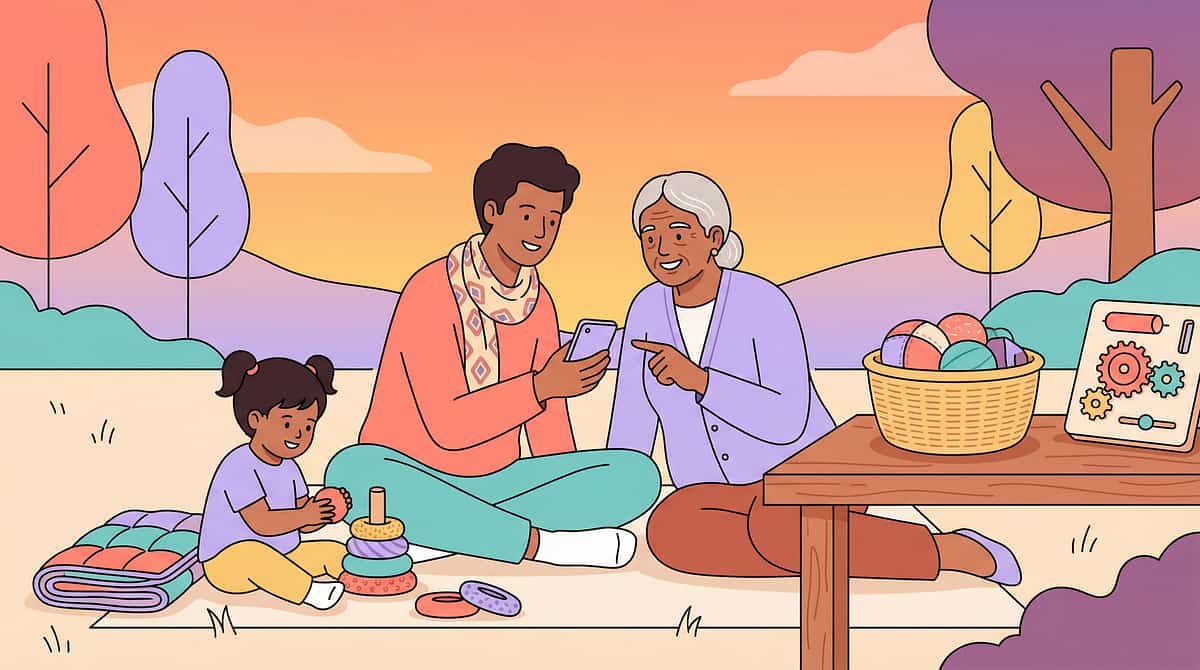
Multi-caregiver training increases intervention effectiveness by 3× compared to single-caregiver execution. (WHO Care for Child Development Package Implementation Data) When grandparents, teachers, and siblings all reinforce crossing opportunities, the neural pathway builds faster.
Explain to Grandparents — Simplified Version
"[Child's name] is working on a skill called 'crossing midline.' It means their brain is learning to connect its two halves — like building a bridge.
When you do activities with them, try this: Put their toy or snack on one side of their body, and ask them to reach across with the other hand. Don't let them turn their whole body — encourage the arm to reach across. Even 5 minutes a day helps. Their therapist says it's the foundation for handwriting and reading."
Teacher/School Communication Template
Subject: Crossing Midline Support for [Child's Name]
"Dear [Teacher's name], [Child's name] is working on midline crossing, which affects handwriting and reading tracking. Simple accommodations that help:
- Position worksheets centered on their body (not to one side)
- Large whiteboards/vertical surfaces preferred over table writing
- Encourage reaching across body rather than rotating trunk
The supporting technique is F-588 from Pinnacle Blooms Network. Full clinical details: techniques.pinnacleblooms.org/motor-development/crossing-midline-F-588"
Preview of 9 materials that help with crossing midline Therapy Material
Below is a visual preview of 9 materials that help with crossing midline therapy material. The pages shown help educators, therapists, and caregivers understand the structure and content of the resource before use. Materials should be used under appropriate professional guidance.


Link copied!
The Pinnacle Promise — From Fear to Mastery. One Technique at a Time.
Pinnacle Blooms Network® is India's largest multi-disciplinary pediatric therapy consortium — 70+ centers, 20M+ sessions, 97%+ measured improvement across 70+ countries. GPT-OS® is the world's first Global Pediatric Therapeutic Operating System — governing diagnosis, prognosis, therapy design, and readiness measurement as one closed, accountable, scalable system.
20M+
Exclusive 1:1 Sessions
Across the Pinnacle network
97%+
Measured Improvement
Via GPT-OS® Readiness Indexes
70+
Centers Across India
Serving 70+ countries globally
160+
Countries
Patents filed across the globe
"A parent arrived on Card 01 scared, confused, and exhausted. They leave with a protocol, the science, the community, and the courage. The bridge doesn't build itself. But now they know how to build it."
— The Pinnacle Blooms Consortium
← F-587
Motor Planning & Praxis
★ F-588
Crossing Midline — You Are Here
→ F-589
Core Strength Development
This content is educational. It does not replace individualized assessment and intervention from licensed occupational therapists, speech-language pathologists, physical therapists, or developmental specialists. Midline crossing difficulties can be one indicator of broader developmental differences requiring comprehensive professional evaluation. Individual results may vary. Statistics represent aggregate outcomes across the Pinnacle Blooms Network®.
© 2025 Pinnacle Blooms Network®, unit of Bharath Healthcare Laboratories Pvt. Ltd. All rights reserved. CIN: U74999TG2016PTC113063 | DPIIT Recognition: DIPP8651 | MSME Udyog Aadhaar: TS20F0009606 | GSTIN: 36AAGCB9722P1Z2 | Registered Office: Hyderabad, Telangana, India | techniques.pinnacleblooms.org