
"They try so hard. Their body just won't cooperate."
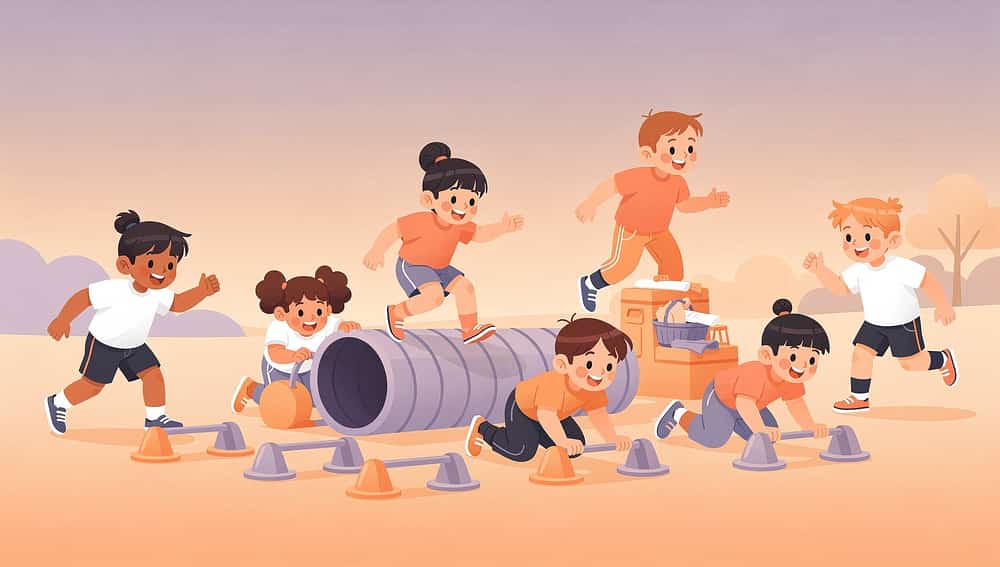
It's Saturday at the park. Every other child is chasing balls, climbing, running in packs — their bodies moving as if thought and movement are one fluid thing. Your child stands at the edge, watching. They've tried. The ball bounced off their hands again. They tripped over flat ground again. And they know they're struggling.
OT + PT | Pinnacle Blooms Consortium
F-571 | Motor Coordination

Motor Coordination Difficulties — F-571 9 clinically validated materials that build the coordination your child's brain is ready to learn.
"You are not failing as a parent. Your child is not lazy or careless. Their neuromotor system is processing movement differently — and that is something we can work with." — Pinnacle Blooms Consortium | OT + PT + NeuroDev | 70+ Centers Across India
1 in 20 Children. Millions of Families. One Name.
Developmental Coordination Disorder (DCD) — also called dyspraxia — affects 5 to 6 percent of school-aged children worldwide, making it one of the most prevalent yet underdiagnosed neurodevelopmental conditions. In a classroom of 30 children, 1–2 children are navigating this exact struggle right now.
5–6%
DCD Prevalence
School-aged children affected by Developmental Coordination Disorder globally
50–70%
Co-occurrence Rate
Children with autism also experience motor coordination difficulties — they're not separate problems
21M+
Therapy Sessions
Across Pinnacle's 70+ centers, with motor coordination programming integrated across OT + PT
"You are among millions of families navigating this exact challenge. The isolation you feel is not because this is rare — it is because it is under-named."
Research: PRISMA systematic review (2024): 80% of children diagnosed with autism display sensory processing and motor difficulties. European Academy of Childhood Disability: DCD prevalence 5–6% globally. References: PMC11506176 | PMC10955541 | EACD DCD Guidelines (2019)
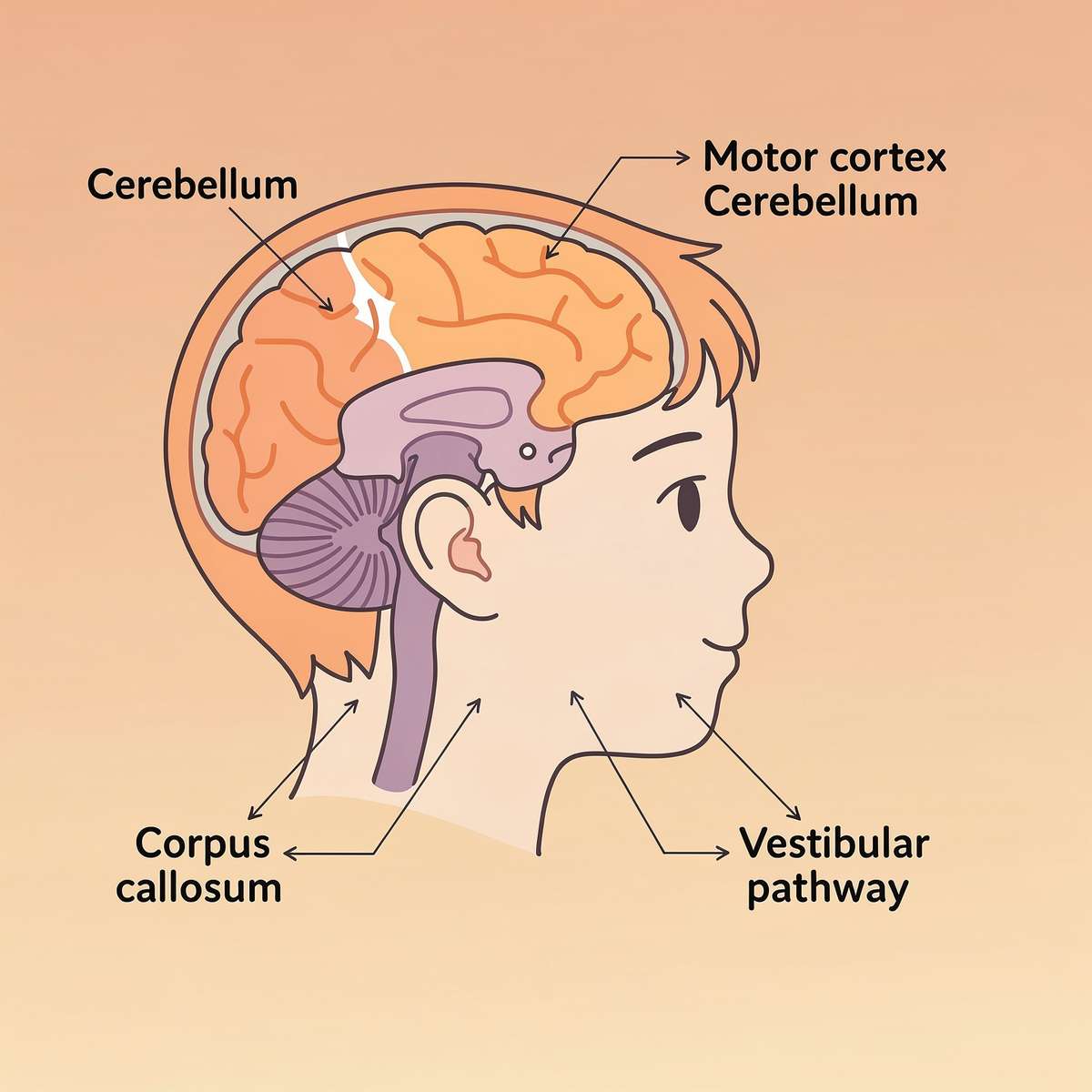
The Coordination Circuit: A Wiring Map
Motor coordination difficulties are not about effort or intelligence — they are about neurology. Understanding which brain systems are involved transforms how parents and caregivers approach the challenge.
9-materials-that-help-with-coordination therapy material
Motor Cortex
Plans what movement to make. In children with coordination difficulties, the plan is formed but the execution signal loses precision on its way to the muscles.
Cerebellum
The brain's movement coordinator. Fires to smooth, time, and sequence every movement. In DCD, cerebellar processing is less efficient — movements feel effortful and choppy.
Corpus Callosum
The communication bridge between left and right hemispheres. Bilateral coordination requires this bridge. When it's less developed, the two hands "don't know" what the other is doing.
Vestibular-Proprioceptive Network
The body's GPS. Tells the brain where every body part is and how much force to apply. When this under-reports, the child must visually monitor every movement — exhausting and slow.
"This is a wiring difference in how motor signals are processed and coordinated. It is not laziness. It is not lack of trying. It is neurology."
Research: Frontiers in Integrative Neuroscience (2020): Cerebellar and proprioceptive processing differences identified as core mechanisms in DCD. DOI: 10.3389/fnint.2020.556660 | EACD DCD Guidelines (2019)
Your Child's Developmental Coordinate System
Motor coordination develops in a predictable sequence, with each foundational layer enabling the next. When early foundations — core stability, balance automaticity, bilateral integration — are weak, the higher levels of coordination never build solidly.
Age 2–3
Runs, climbs basic stairs Vestibular foundation
Age 3–4
Hops, jumps simple obstacles Balance automaticity
Age 4–5
Skips, catches large balls Bilateral integration
Age 6–7
Ball skills, bike riding Visual-Motor Integration
Age 8–12
Complex coordination, scissors, sports Motor Planning

◉ Coordination Difficulties Emerge: Ages 4–7 — when peer comparison becomes clear and school demands escalate. What commonly co-occurs: Sensory Processing Differences, ADHD, Autism Spectrum presentations, Hypotonia (low muscle tone), Developmental Language Challenges.
Research: WHO Care for Child Development (CCD) Package: Age-specific evidence-based recommendations implemented in 54 low- and middle-income countries. PMC9978394 | WHO/UNICEF CCD Package (2023)
Clinically Validated. Home-Applicable. Parent-Proven.
🛡️ Level II Evidence
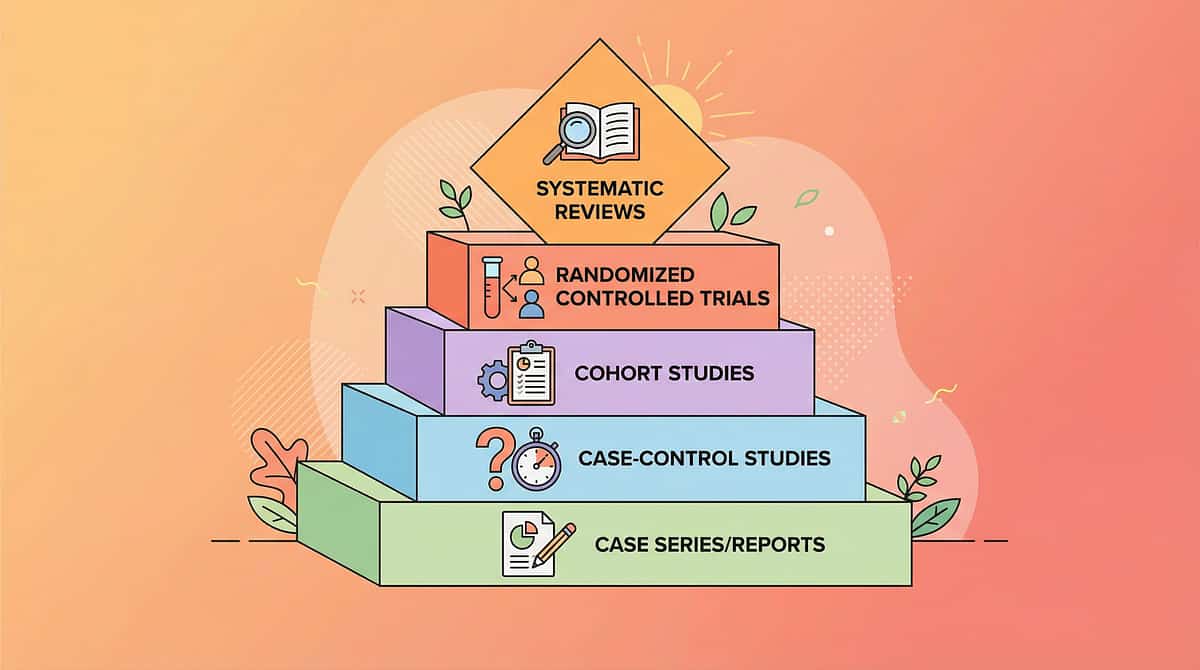
Systematic Reviews + Multiple RCTs
Study
Finding
Source
PRISMA Systematic Review (2024)
16 studies confirm sensory-motor intervention meets evidence-based practice criteria for children with ASD
World J Clin Cases Meta-Analysis (2024)
Sensory integration therapy significantly improved gross motor, fine motor, and coordination outcomes across 24 studies
WHO Care for Child Development
Home-based motor interventions with structured caregiver guidance show significant outcomes across 54 LMICs
Indian RCT — Indian J Pediatr (2019)
Home-based motor interventions demonstrated significant, measurable outcomes in Indian pediatric populations
NCAEP Evidence-Based Practices (2020)
Motor-based and sensory-based interventions classified as evidence-based practice for ASD
"The 9 materials on this page are drawn from occupational therapy evidence, motor learning research, and Pinnacle's 21 million therapy sessions. Every material has a mechanism. Every mechanism has a citation."
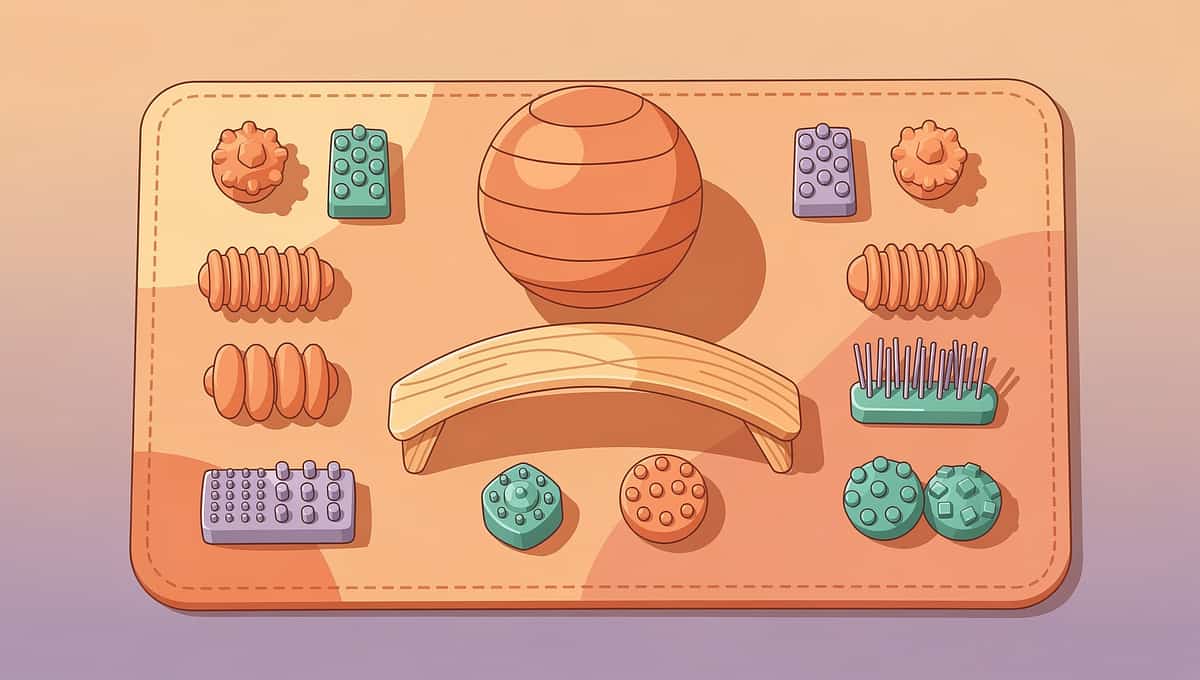
F-571: 9 Materials That Help With Coordination
Parent-Friendly Name:"The Coordination Toolkit" — Your home OT lab for building the motor integration your child's brain is ready to grow.

Motor Coordination Defined: The brain's ability to integrate sensory information, create a motor plan, and execute it smoothly across multiple body systems simultaneously — balance, bilateral movement, timing, visual-motor integration, and motor planning (praxis). When coordination is disrupted — as in Developmental Coordination Disorder (DCD) — movements are effortful, imprecise, poorly timed, and exhausting in ways that movements should not be.
This technique introduces 9 specific therapy materials, each targeting a different layer of the coordination system — from its deepest foundations (core stability, vestibular balance) to its most complex expressions (bilateral integration, visual-motor accuracy, motor planning, rhythmic timing).
🧠 Neuromotor
🎯 Gross + Fine Motor
⚖️ Vestibular + Proprioceptive
👐 Bilateral Coordination
👁️ Visual-Motor Integration
📋 Motor Planning / Praxis
📅 Ages 3–12
⏱️ 15–30 min/session
📆 Daily Practice
🔬 Level II Evidence
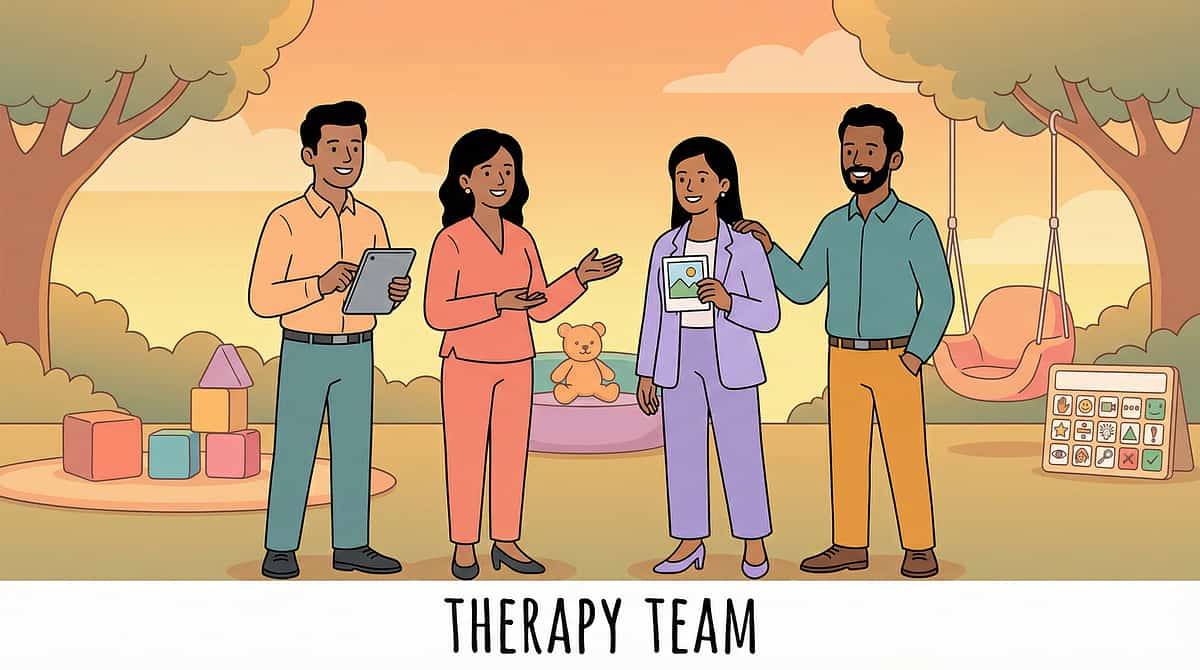
The Consortium Behind This Technique
"Motor coordination doesn't respect therapy department boundaries. A child's cerebellum doesn't know it should only talk to the OT. Our consortium converges all five disciplines into a single, coordinated plan." — Pinnacle Blooms Consortium FusionModule™
🔵 OT — Occupational Therapist (PRIMARY LEAD)
Addresses fine motor coordination, sensory-motor integration, visual-motor integration, bilateral coordination, and the daily living skills that depend on them. Designs the home program, selects materials, and monitors progress via AbilityScore®.
🟢 PT — Physical Therapist (CO-LEAD)
Addresses gross motor coordination, balance, core stability, postural control, and movement quality. Manages the foundational layer of the coordination system — without which OT goals cannot be achieved.
🔴 ABA / BCBA — Behavior Analyst
Manages motivation, reinforcement scheduling, data collection, and protocol adherence. Ensures the child engages with the therapy materials consistently and that progress is objectively measured.
🟡 SpEd — Special Educator
Addresses handwriting, classroom tool use, PE adaptation, and the academic consequences of coordination difficulties. Bridges the gap between therapy progress and school function.
🟣 NeuroDev Pediatrician
Rules out contributing neurological factors, coordinates DCD/dyspraxia diagnosis, monitors for comorbidities (ADHD, autism, hypotonia), and provides medical oversight for the therapy plan.
Research: UNICEF/WHO Nurturing Care Framework for multi-disciplinary teams (2022). DOI: 10.1080/17549507.2022.2141327 | EACD Multi-Disciplinary DCD Guidelines
Precision Targeting: What These 9 Materials Actually Build
Primary Targets — Coordination Foundations
Core Stability & Postural Control
The trunk foundation upon which all coordination is built
Vestibular Balance Automaticity
Balance so automatic that the brain is free to coordinate movement
Bilateral Coordination (Interlimb Integration)
Both hands and both sides working together
Visual-Motor Integration
Eyes and hands operating as a synchronized system
Motor Planning / Praxis
Conceiving, organizing, and executing novel movement sequences
Rhythmic Timing
Internal clock that coordinates when to move and how to sequence movements
Proprioceptive Accuracy
Knowing where every body part is without looking
Secondary Targets
  • Handwriting quality and speed
  • Ball skills (catching, throwing, kicking)
  • Scissor use
  • Bicycle riding
  • Stair navigation
  • Playground participation
Tertiary Targets
  • Physical activity participation and fitness
  • Self-esteem and body confidence
  • Peer social participation
  • School-based academic performance
  • Independence in daily living skills
Observable Progress Indicators
  • Longer sitting balance on unstable surface
  • Successful catching at progressive distances
  • Both hands working in complementary roles
  • Rhythmic movement maintaining a beat
The 9 Materials: Your Coordination Toolkit
Each material targets a specific layer of the motor coordination system. Together, they cover the complete foundation.
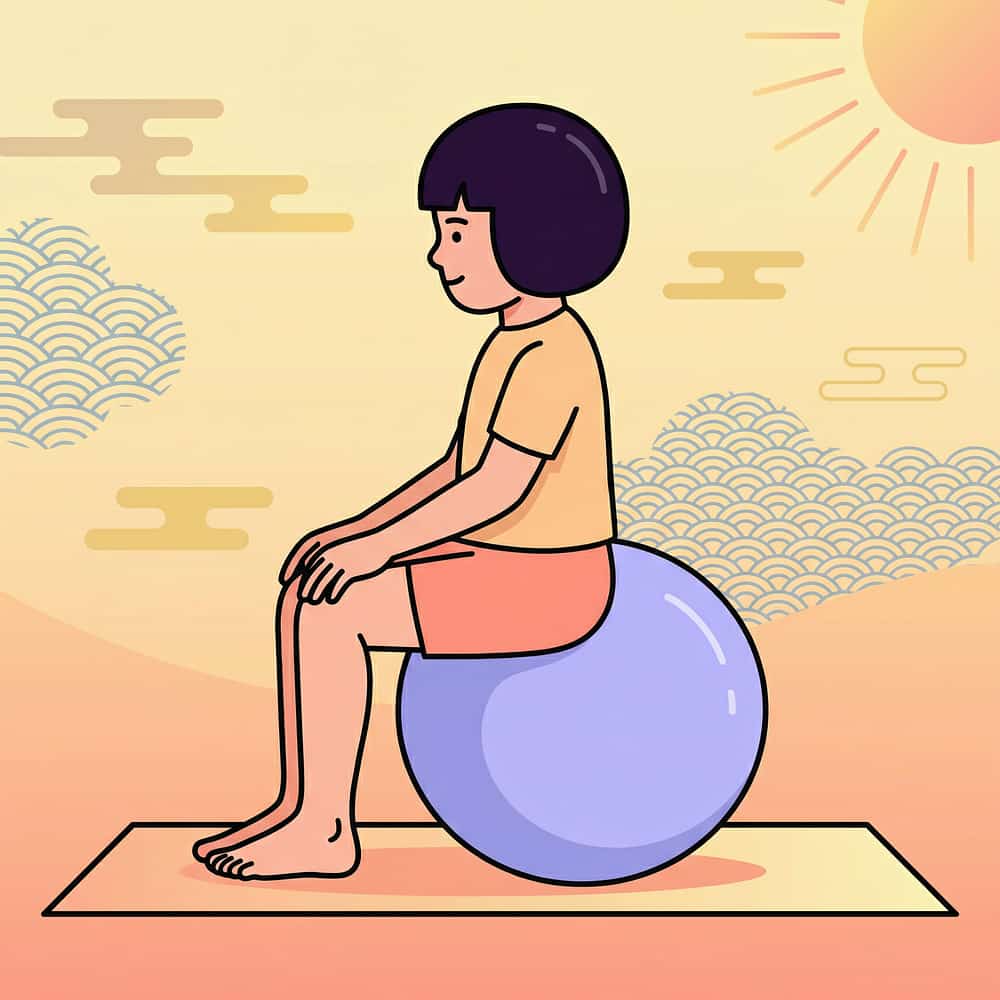
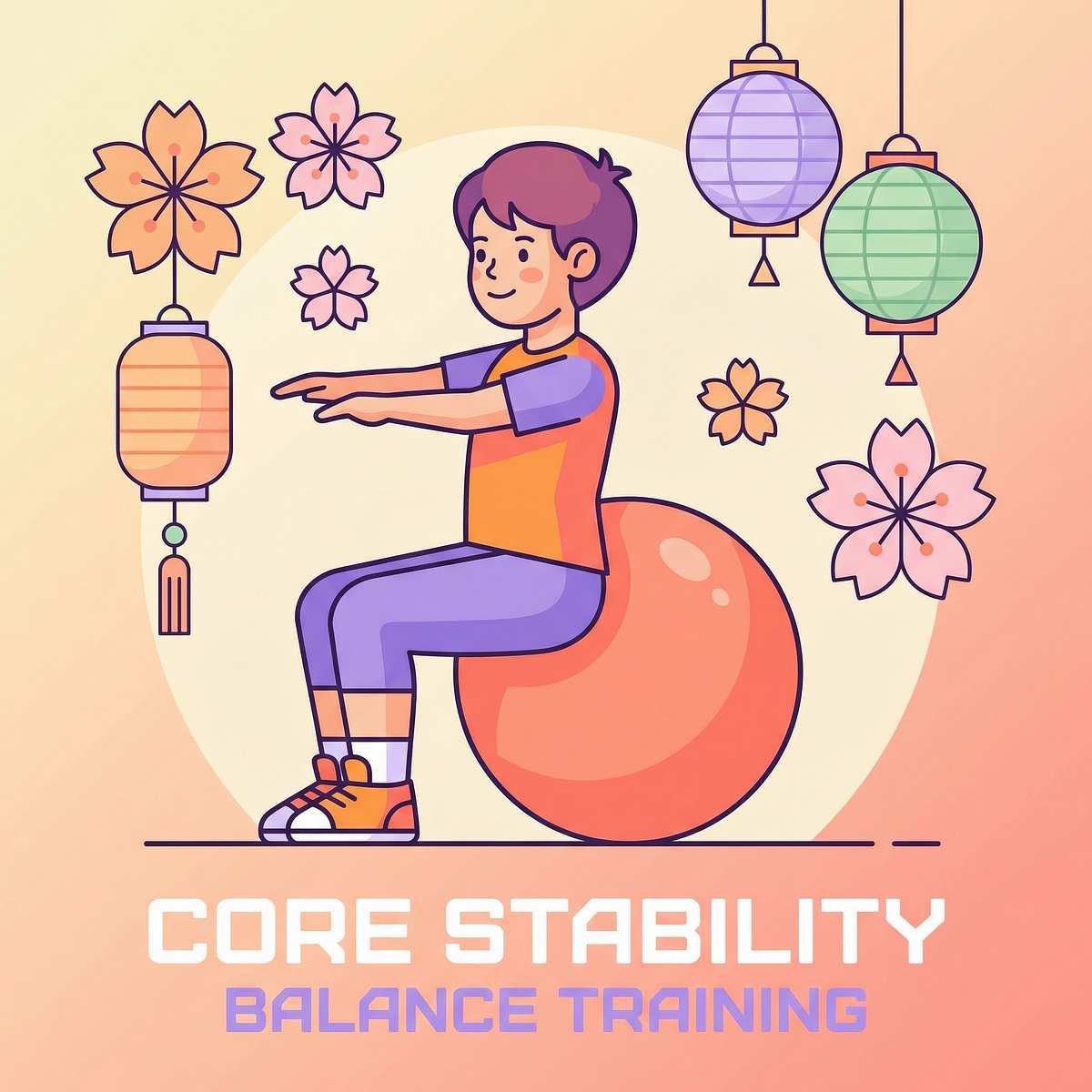
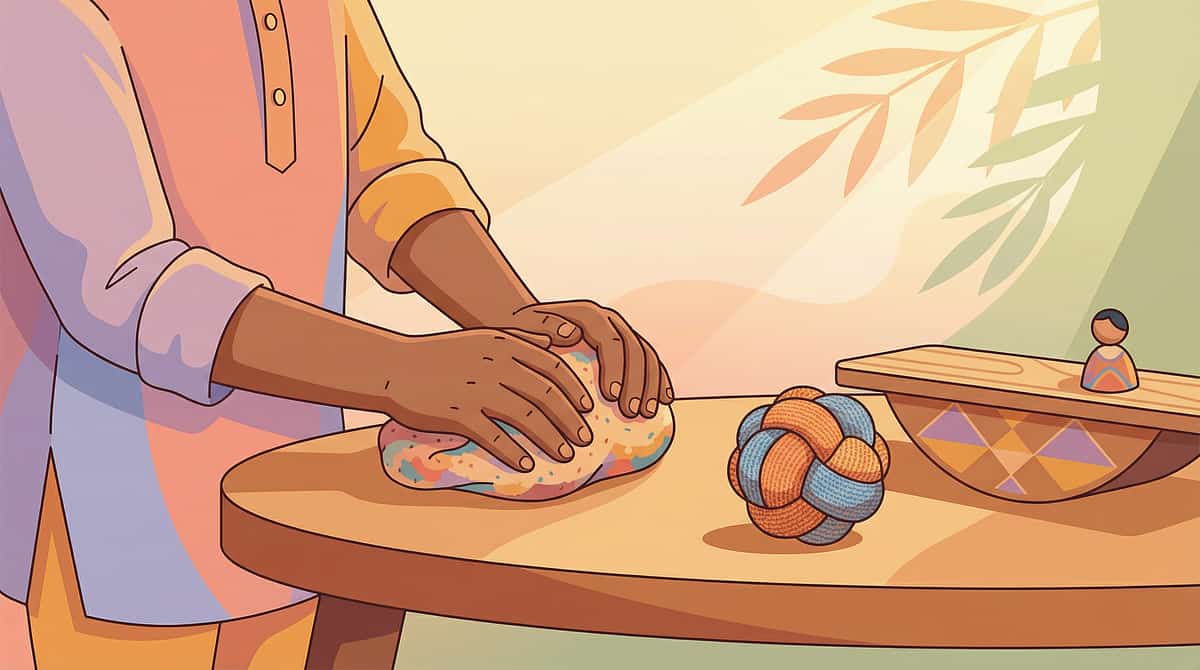
1. Therapy Ball (Swiss Ball)
🎯Targets: Core Stability + Vestibular Balance Canon: Therapy Equipment | ₹400–1,500 🛒 Buy on Amazon.in →Size guide: Child's hips and knees at 90° when seated
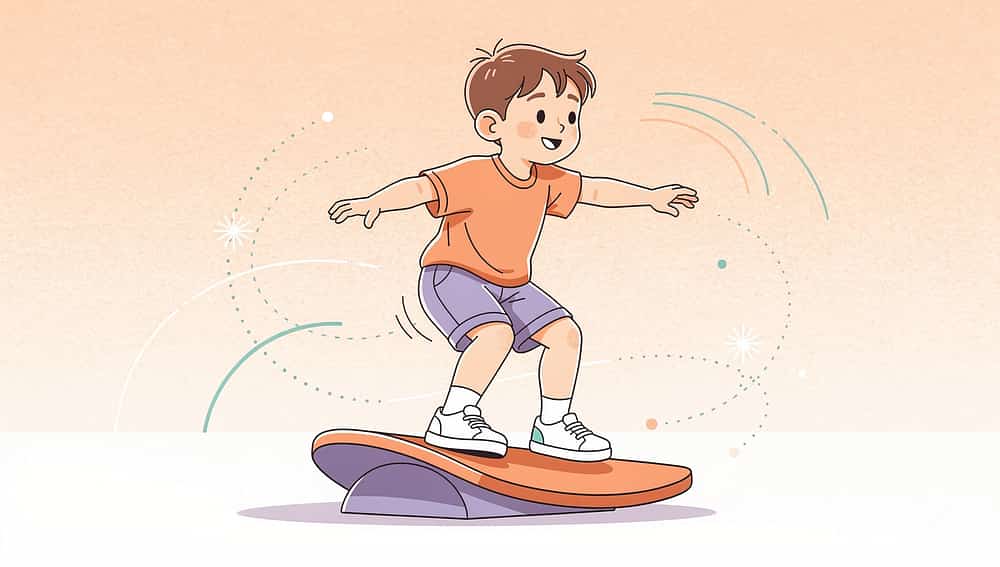
2. Balance Board / Wobble Board
🎯Targets: Vestibular Automaticity + Proprioceptive Calibration Canon: Balance Tools | ₹500–2,000 🛒 Buy on Amazon.in →Start with rocker board; progress to wobble board
3. Beanbags (Set of Various Sizes)
🎯Targets: Hand-Eye Coordination + Bilateral Catching Canon: Motor Skills Materials | ₹150–500 🛒 Buy on Amazon.in →Slow movement = more processing time for developing brains
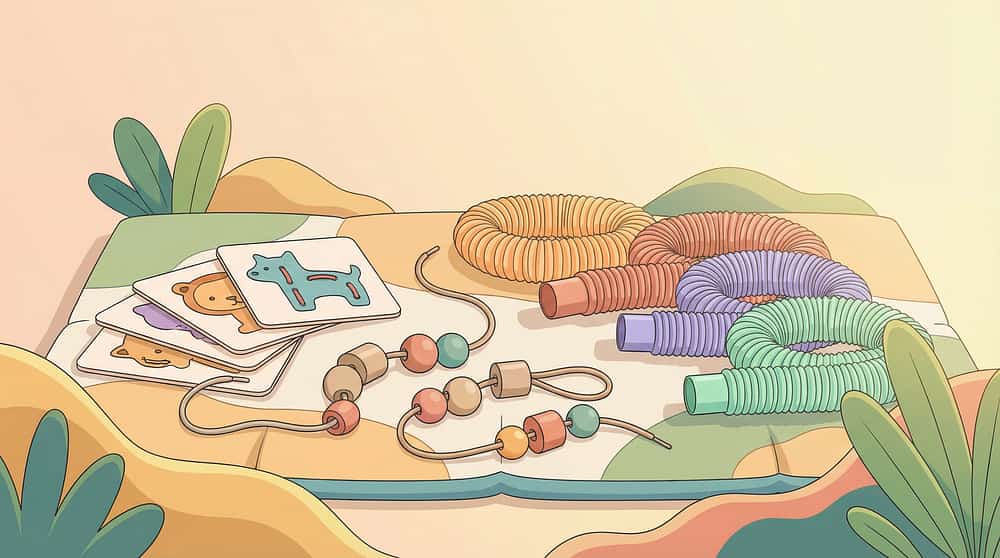
4. Bilateral Coordination Toys
🎯Targets: Bilateral Integration + Interhemispheric Communication Canon: Coordination Toys | ₹200–800 🛒 Buy on Amazon.in →Foundational for: tying shoes, buttons, scissors, catching
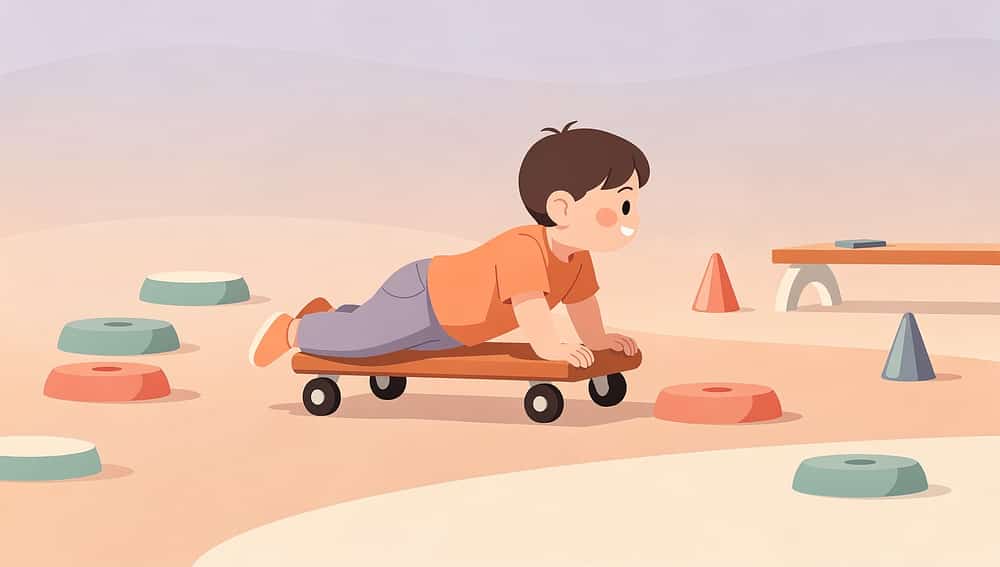
5. Scooter Board
🎯Targets: Core + Upper Body + Motor Planning Integration Canon: Therapy Equipment | ₹600–1,800 🛒 Buy on Amazon.in →Never stand on scooter boards — prone position only for therapy
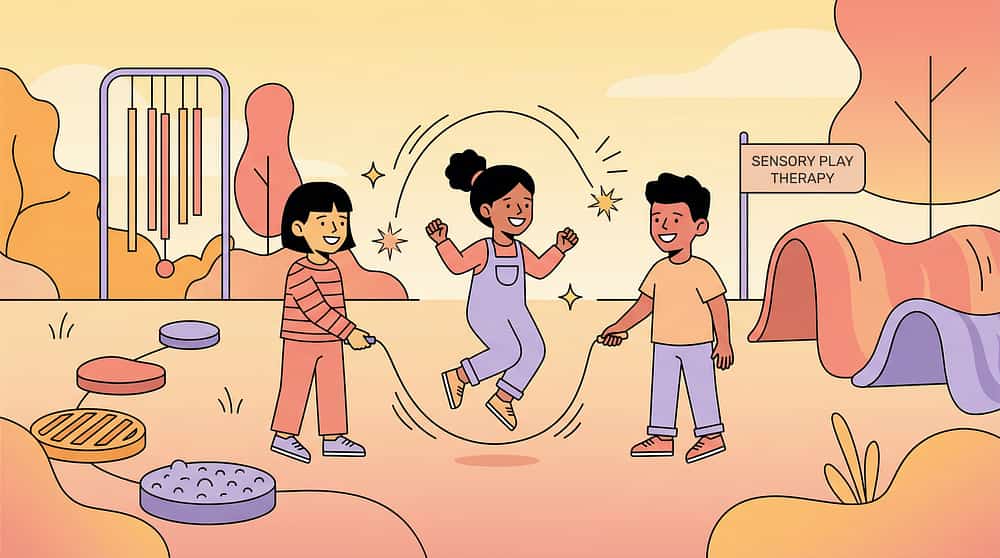
6. Jump Rope / Skipping Rope
🎯Targets: Bilateral Arm Coordination + Timing + Rhythm Canon: Motor Skills Materials | ₹100–400 🛒 Buy on Amazon.in →Use beaded rope — turns slower, easier to time
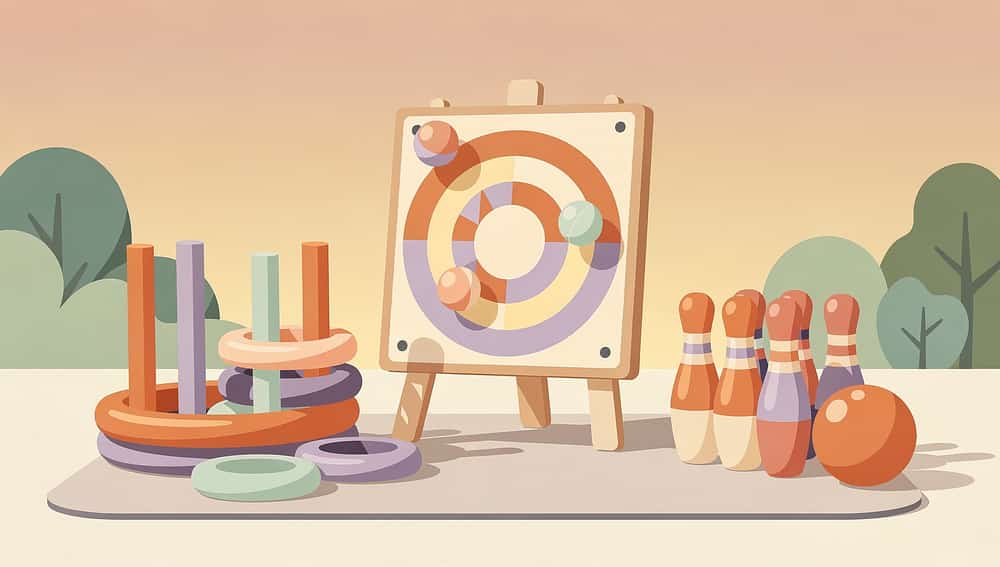
7. Target Games
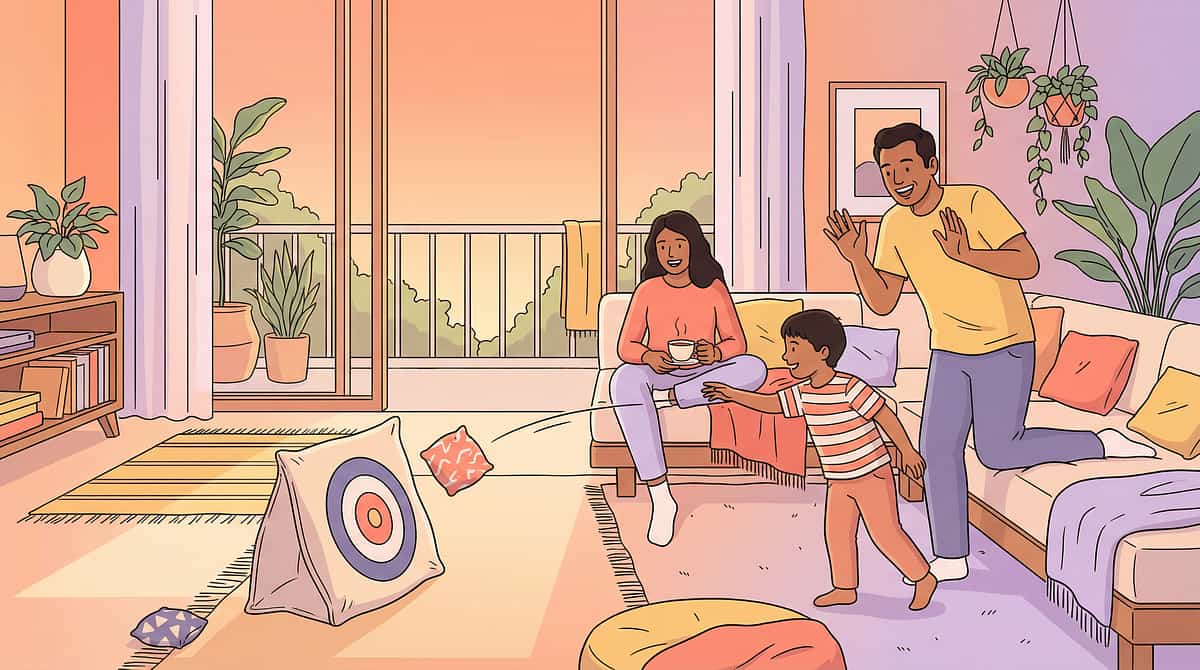
🎯Targets: Visual-Motor Integration + Aim + Force Control Canon: Coordination Toys | ₹300–1,200 🛒 Buy on Amazon.in →Immediate hit/miss feedback calibrates the motor system
8. Obstacle Course Kit
🎯Targets: Motor Planning (Praxis) + Spatial Sequencing Canon: Motor Skills Materials | ₹500–2,500 🛒 Buy on Amazon.in →Change the course regularly — novelty = motor planning practice
9. Rhythm & Movement Tools
🎯Targets: Rhythmic Timing + Movement-Sound Coordination Canon: Rhythm & Movement Tools | ₹300–1,500 🛒 Buy on Amazon.in →Rhythm builds the internal clock that coordinates all smooth movement

Starter Kit Recommendation (₹650–2,900 total): Therapy Ball + Beanbags (set) + Balance Board. These three materials cover the foundational coordination systems and provide immediate, measurable practice opportunities.
Every Family Can Start Today — With What You Have
WHO/UNICEF Equity Principle: No intervention should require purchasing power to access. Every technique in the GPT-OS® system has a zero-cost version.
Material
Zero-Cost Version
Why It Works
Therapy Ball
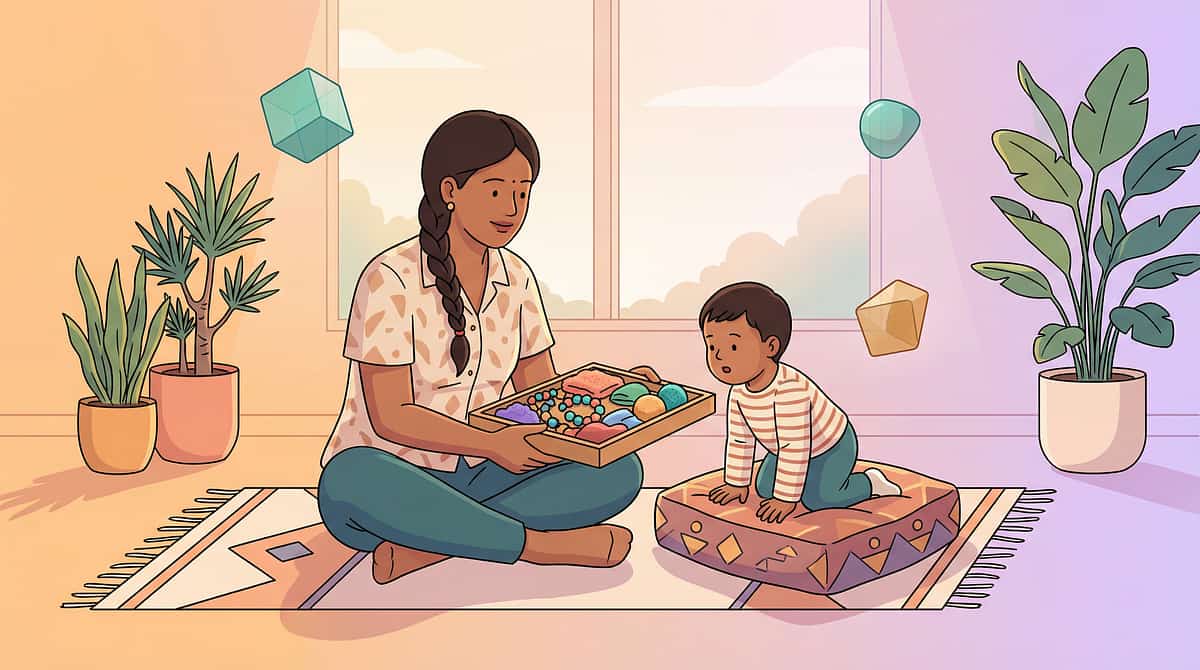
Firm sofa cushion or folded blanket on the floor — child sits and maintains balance
Same principle: unstable surface requiring postural adjustment
Balance Board
A thick hardcover book under a wooden cutting board — stand and balance
Same vestibular and proprioceptive challenge at low intensity
Beanbags
Old socks filled with rice or beans, tied at the top
Identical slow flight, easy grip, doesn't roll away
Bilateral Toys
Old shoelace through cardboard with holes punched
Same bilateral hand-role differentiation (hold vs. thread)
Scooter Board
Folded blanket on smooth floor — child lies on stomach and pushes
Same prone proprioceptive input and arm-propulsion bilateral coordination
Jump Rope
A shoelace, long ribbon, or any rope-like household item
Identical timing and rhythm challenge
Target Games
Tape a circle on the wall; throw rolled socks at it
Same visual-motor calibration loop (aim → throw → feedback)
Obstacle Course
Pillows (step over), blanket fort (crawl through), taped line on floor (balance walk)
Same motor planning demands with novel sequences
Rhythm Tools
Two wooden spoons as drumsticks on any container
Same timing and bilateral rhythm coordination

When clinical-grade equipment is non-negotiable: Proper therapy ball size matters (height-to-ball ratio). If your child has significant hypotonia or balance challenges, a certified therapy ball with anti-burst certification is strongly recommended. Discuss with your OT at Pinnacle before committing to DIY-only.📞9100 181 181 — ask your OT which version is right for your child
Research: WHO Nurturing Care Framework (2018): Context-specific, equity-focused interventions. CCD Package across 54 LMICs demonstrates household-material-based intervention efficacy. PMC9978394 | WHO NCF Handbook (2022)
Pre-Session Safety Gate: Read Before Every Session
🔴 RED — DO NOT PROCEED if:
  • Child is sick, running a fever, or has ear infection (vestibular activities contraindicated during ear infection)
  • Child has had a meltdown or significant emotional dysregulation in the past 30 minutes
  • Child has expressed pain in joints, back, or limbs — consult your PT before balance activities
  • Latex allergy present — confirm therapy ball is latex-free
  • Therapy ball is not properly inflated — risk of sudden deflation
  • Child is in a state of severe sensory overload (e.g., covering ears, self-injurious behavior)
  • Child has an unhealed injury affecting weight-bearing
🟡 AMBER — MODIFY THE SESSION if:
  • Child is tired but not ill — shorten session to 10 minutes, reduce challenge level
  • Child is hungry — always conduct sessions 30–45 minutes after a meal
  • Child skipped sleep — skip balance board, focus on beanbags (lower vestibular demand)
  • Child is in a new environment — allow 5 minutes of free exploration before starting
  • It's the first week — all activities at lowest difficulty, success guaranteed
🟢 GREEN — PROCEED when:
  • Child is fed, rested, regulated, and in their alert "learning window"
  • Environment is set up (see Card 12) and hazards removed
  • You have 15–30 minutes of uninterrupted time
  • Non-slip surface is confirmed under balance activities
  • An adult is present throughout (NEVER leave child unattended on balance equipment)
STOP IMMEDIATELY IF: Child complains of dizziness or nausea during vestibular activities | Child becomes pale, sweaty, or fearful | Fingers go under scooter board wheels — STOP and reposition | Child becomes severely distressed — end session, provide calming input. 📞 Safety questions: 9100 181 181 FREE 24x7
Research: Indian Journal of Pediatrics RCT (2019): Home-based motor interventions — safety protocols established for parent-administered sessions. DOI: 10.1007/s12098-018-2747-4 | Pinnacle Clinical Safety Protocols
The Coordination Home Lab: 5-Minute Setup
① Clear the Space
Minimum 3m × 3m clear area for movement activities. Remove furniture with sharp corners from the practice zone. Roll up any rugs that could slip during scooter or balance activities.
② Surfaces
Non-slip yoga mat or exercise mat under therapy ball and balance board. Clear, smooth floor for scooter board activities. Mark a "start position" with tape for consistent setup.
③ Lighting
Bright, natural light preferred — supports visual tracking for target games. No flickering fluorescents. Position to avoid child looking directly into light source.
④ Sound
Rhythm activities: music at moderate volume (70–75 dB) with clear beat. Balance activities: quieter environment preferred. Turn off TV/screens during the session.
⑤ Materials Staging
Pre-set all 9 materials before beginning — setup interruptions break child's state. For younger children (3–5): lay out only the material for that session. Visual schedule on a table visible to child.
⑥ Parent Position
Maintain 1.5–2m from child during balance activities. Seated at child's level whenever possible. Stopwatch or phone timer visible to both parent and child.
"The space IS the therapy. A chaotic environment produces a chaotic session. A calm, prepared space tells the child's nervous system: 'It is safe to learn here.'"
60-Second Readiness Assessment
The best session is one that starts right. The second-best decision is postponing.
Indicator
🟢 GO
🟡 MODIFY
🔴 POSTPONE
Body state
Alert, moving around comfortably
Subdued but cooperative
Crying, rigid, or overwhelmed
Eye contact / Responsiveness
Responding to name, looking around with interest
Responding slowly
No response to name, glazed expression
Eating status
Had a meal 30–45 min ago
Ate lightly 1+ hour ago
Hungry OR just finished eating
Sleep
Slept well previous night
Mild tiredness
Overtired / didn't sleep
Recent events
Calm past 2 hours
Minor frustration earlier
Meltdown within last hour
Physical comfort
Moving without favoring any limb
Slightly stiff
Limping or guarding an area
3+ GREEN
Begin the full session
GREEN + AMBER
Begin modified session — first 2 materials only, lower challenge
ANY RED
Postpone. Offer calming alternative (deep pressure, quiet sensory play)

IF POSTPONING — ALTERNATIVE ACTIVITY: Offer 10 minutes of deep pressure (proprioceptive) activities: carrying heavy books, pushing a loaded laundry basket, or a firm back massage. This often shifts the child to a "ready" state for a shortened session.
STEP 1 / 6 — The Invitation
Step 1 of 6
Every session begins with invitation, never command.
Parent Script
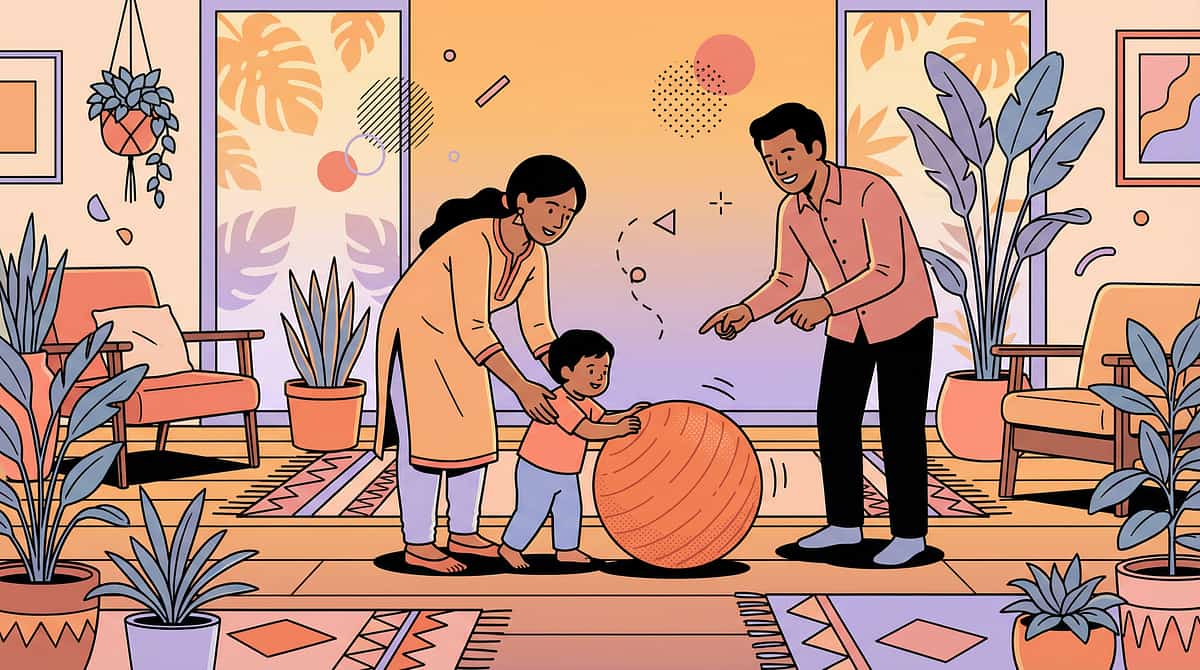
"Hey, I have something fun for you. Want to see if you can sit on this ball without falling off? I'll hold it for you at first."
Why This Exact Wording
  • "Want to" — child-directed, no coercion
  • "I'll hold it at first" — reduces fear of failure
  • Framed as fun/game — not therapy, not work
  • Short and specific — easy for child with language differences to process
Body Language
  • Get to child's level — kneel or sit, not standing over them
  • Hold the material first — show it, explore it, let them touch before doing
  • Relaxed posture — your anxiety becomes their anxiety
  • Face toward the child — not toward the material
Reading Resistance Cues
  • Turns away → "It's okay, you can just watch me do it first."
  • Verbal protest → "We'll only do it for 1 minute, then you choose what we do."
  • Physical avoidance → Reduce demand: put the material on the floor and simply sit nearby
Timing: 30–60 seconds. Do not rush. The invitation quality determines session quality.
STEP 2 / 6 — The Engagement
Step 2 of 6
Child is now in. Deepen the interaction.
Present materials in this order for maximum buy-in and therapeutic progression:
Session A — Weeks 1–2
Therapy Ball (sitting balance) → Beanbags (catching practice). These two provide immediate positive feedback and visible success.
Session B — Weeks 2–4
Balance BoardBilateral Coordination Toys. Progress only after Session A materials are attempted without refusal.
Session C — Weeks 4–8
Scooter BoardTarget GamesObstacle Course
Session D — Weeks 6–8+
Jump Rope componentsRhythm Tools. These require multi-system coordination — only when foundations are present.

Material Presentation Technique: "Watch what this does..." [demonstrate before asking child to try] | First attempt: always the easiest version | Distance from success: set up so the child succeeds 7–8 out of every 10 attempts
Engagement Indicators: ✓ Child initiates repetition without prompting | ✓ Child laughs or vocalizes during activity | ✓ Child maintains eye focus on material | ✓ Child demonstrates increased heart rate (active, not fearful). Timing: 1–3 minutes per material introduction
STEP 3 / 6 — The Therapeutic Action (Materials 1–3)
Step 3 of 6
The active ingredient. Execute with precision.
Therapy Ball — Core Stability Protocol
Duration: 5–10 min | Repetitions: Continuous
  1. Child sits on therapy ball, feet flat on floor, hips/knees at 90°
  1. Begin with hands on ball for support. Parent holds ball steady.
  1. Week 1: Hold for 10 seconds without hands on ball
  1. Week 2: Gentle bouncing with parent holding both hands
  1. Week 3: Reaching for objects while sitting (breaking up balance compensation)
  1. Week 4+: Throwing/catching beanbags WHILE sitting on ball
Correct execution: Spine upright, core gently engaged, NOT gripping the ball with legs
Balance Board — Vestibular Automaticity Protocol
Duration: 5–10 min | Progressions: Beginner → Advanced
  1. Beginner: Stand on rocker board, hands touching wall. Goal: 30 seconds continuous
  1. Intermediate: No wall support. Eyes open. Rock side to side gently.
  1. Advanced: Stand while catching/throwing beanbag OR counting backward from 10
  1. Expert: Eyes closed for 10-second intervals (removes visual compensation)
Key insight: When child must think about balance, the balance isn't automatic yet. Goal is automaticity — balance without conscious effort.
Beanbags — Hand-Eye Coordination Progression
Duration: 5–8 min | Follow progression strictly
  1. Drop beanbag from one hand, catch with both hands (30 cm height)
  1. Toss up 50cm, catch with both hands
  1. Toss right hand → catch both hands
  1. Toss left hand → catch both hands
  1. Toss right → catch left (crossing midline — KEY bilateral milestone)
  1. Partner toss at 1m distance, two-hand catch

Progress to next stage ONLY when 7/10 successful
STEP 3 / 6 — The Therapeutic Action (Materials 4–6)
Step 3 of 6 — Continued
Bilateral Toys — Interhemispheric Integration
Duration: 5–10 min | Both hands MUST be active
  • Lacing cards: one hand holds the card, other hand threads. Rotate which hand does which.
  • Pop tubes: two hands push and pull simultaneously
  • Beading: one hand holds the string, other hand threads the bead
Critical mistake to avoid: Allowing one hand to be completely passive. The non-dominant hand must always have an active stabilizing role.
Scooter Board — Multi-System Coordination
Duration: 5–10 min | Prone position ONLY for therapy
  1. Child lies on stomach (prone) on scooter board
  1. Propel forward using hands only — arms alternate or push simultaneously
  1. Navigate straight line → gentle curve → obstacle course
  1. Advanced: Carry a ball or small stuffed animal while scooting (adds upper limb challenge)
Proprioceptive bonus: The weight-bearing through hands provides deep proprioceptive input — "organizing" the nervous system
Jump Rope — Component Building Protocol
Duration: 10–15 min | Never skip stages
  1. Jumping in place (no rope) with rhythm — 20 consecutive jumps
  1. Turn rope at sides while standing still — build the wrist turning motion
  1. Jump over rope lying on the ground
  1. Jump over rope swung slowly by two adults at ankle height
  1. Jump over rope swung at knee height
  1. Hold handles, step over rope one at a time
  1. One jump + one turn of the rope
Do NOT advance to stage 8 (continuous jumping) until stage 7 is consistent
STEP 3 / 6 — The Therapeutic Action (Materials 7–9)
Step 3 of 6 — Continued
Target Games — Visual-Motor Feedback Loop
Duration: 5–10 min | Start VERY close
  • Ring toss: Begin 30cm from target. Success = move back 15cm. 3 misses = move forward.
  • Velcro darts: Begin 50cm. Progress same way.
  • Bowling: 1 meter distance. Progress by 0.5m for every 3 successful knocks.
Rule: Maintain 70–80% success rate. Too easy = boring. Too hard = frustrating. This is the "just right challenge."
Obstacle Course — Motor Planning Sequence
Duration: 10–15 min | Change course weekly
  • Course A (Beginner): Cone weave (3 cones) → step over pool noodle → walk balance beam
  • Course B (Intermediate): Add tunnel crawl → jump into 3 hula hoops → carry a beanbag throughout
  • Course C (Advanced): Timed course + carry an object + 5 exercises at end
Motor planning key: Show the course ONCE. Then let the child problem-solve. Do NOT guide hand-over-hand unless absolutely necessary.
Rhythm Tools — Timing Calibration
Duration: 5–10 min | Rhythm quality > speed
  • Drum: Play at 60 BPM (one beat per second). Child matches. Build to 80 BPM.
  • Ribbon sticks: Move in circles, figure-eights, up-down to music with clear beat
  • Parachute (group): Lift together on "1", lower on "2" — count aloud
Critical principle: Moving IN TIME matters more than how complex the movement is. Start slow, match the beat, then increase tempo.
Research: Meta-analysis (World J Clin Cases, 2024): 40-minute sessions maximum effectiveness. Home sessions 15–30 minutes. Core therapeutic action 40–60% of session time. PMC10955541 | EACD DCD Intervention Guidelines
STEP 4 / 6 — Repeat & Vary
Step 4 of 6
3 quality repetitions > 10 forced ones.
Material
Target Reps/Session
Variation Strategy
Therapy Ball
3–5 minutes continuous
Change arm positions, add reaching tasks, try eyes closed
Balance Board
3 sets of 30–60 seconds
Change surface under board, add cognitive dual-task
Beanbags
20–30 tosses per stage
Change size, color, toss height, distance
Bilateral Toys
5–10 minutes continuous
Change material (lacing → pop tube → beading)
Scooter Board
5–8 runs per course
Change course layout, add obstacles, change speed
Jump Rope
10 attempts per stage
Change rope weight, change timing cues
Target Games
20–30 throws
Change target size, target distance, throwing arm
Obstacle Course
3–5 complete runs
New course layout each week
Rhythm Tools
5–8 minutes
Change tempo, change instrument, add movement

Satiation Indicators (when to stop repetitions):🔴 Child asks to stop or moves away | 🔴 Accuracy drops significantly despite effort | 🔴 Physical fatigue (flushed, labored breathing) | 🔴 Attention wanders persistently despite redirection
"The brain builds motor skills through variable practice — not just repetition of the exact same action. Vary the angle, the distance, the speed, the size. The brain learns the principle of the movement, not just one version of it."
Research: Motor learning research: Variable practice produces more robust, generalized motor skills. Schmidt's Schema Theory of motor learning. Schmidt & Lee, Motor Control and Learning | Pinnacle Protocols
STEP 5 / 6 — Reinforce & Celebrate
Step 5 of 6
Timing matters more than magnitude.
The Reinforcement Script
For successful attempts:
"That's it! You did it! See how your body figured that out?"
For effort without success:
"Look at how hard you're trying. Your brain is learning right now — even when it's tough."
For a breakthrough moment:
"Did you see what just happened?! Your hands worked together! That's your coordination growing."

Reinforcement Timing Rule: Deliver within 3 seconds of the target behavior. Delayed reinforcement teaches the wrong lesson.
Type
Examples
Social
High-five, thumbs up, hug, "WOW" face
Verbal
Specific praise ("You balanced for 30 seconds!"), not generic ("Good job")
Token
Sticker chart: 5 stickers = small preferred activity. Sticker Reward Charts ₹364 | Reward Token Set ₹589
Activity
5 minutes of preferred play after 15 minutes of coordination practice
Natural
"You caught it! Now try to throw it back to me." (activity continues as reward)
Research: ABA Reinforcement Principles: Immediate, specific reinforcement increases behavior occurrence. Token economy systems show strong evidence across multiple systematic reviews. BACB Ethical Guidelines | Cooper, Heron & Heward, Applied Behavior Analysis (8th ed.)
STEP 6 / 6 — The Cool-Down
Step 6 of 6
No session ends abruptly. The transition IS therapy.
Put‑Away & Next
Proprioceptive Activity
2‑Minute Warning
2 Minutes Before End
"Two more times, then we're all done with coordination practice today. You're doing amazing." (Visual timer visible to child — count down from 2 minutes)
Cool-Down Activity (1–2 min)
  • Wall push-ups (5–10 reps) — deep proprioceptive input, organizing
  • Log roll on carpet (child rolls slowly from one side of mat to other)
  • Bear hug from parent — deep pressure, co-regulation
  • Heavy work — carry the therapy ball back to its spot, stack the materials
Material Put-Away Ritual
Involve the child in putting materials away. This is a natural ending cue, additional bilateral coordination practice (carrying, placing), and a sense of completion and control.

If Child Resists Ending: "I hear you. You're having fun. We'll do this again [tomorrow/the day after]. Let's set the alarm on my phone together so you know it's coming."
Research: Visual timer and transition support: Classified as evidence-based practice for autism (NCAEP, 2020). Proprioceptive cool-down activities from OT sensory diet literature. NCAEP (2020) | Wilbarger Sensory Diet Framework
60 Seconds of Data Now = Hours of Progress Clarity Later
Within 60 seconds of session end — before distraction sets in.
📊 Pinnacle F-571 Session Tracker
Date: ___________ Session #: _____ Duration: _____ min
Material Attempted Today: Ball | Balance Board | Beanbags | Bilateral Toys | Scooter | Jump Rope | Target Games | Obstacle | Rhythm
Child Engagement: 1 (Refused) — 2 (Tolerated) — 3 (Participated) — 4 (Enjoyed) — 5 (Led the activity)
Skill Indicator (write one observation): e.g., "Balanced 15 seconds without hands" / "Caught 6/10 beanbags from 1m" ___________________________________________
Anything Notable: ___________________________________________
Why Data Matters
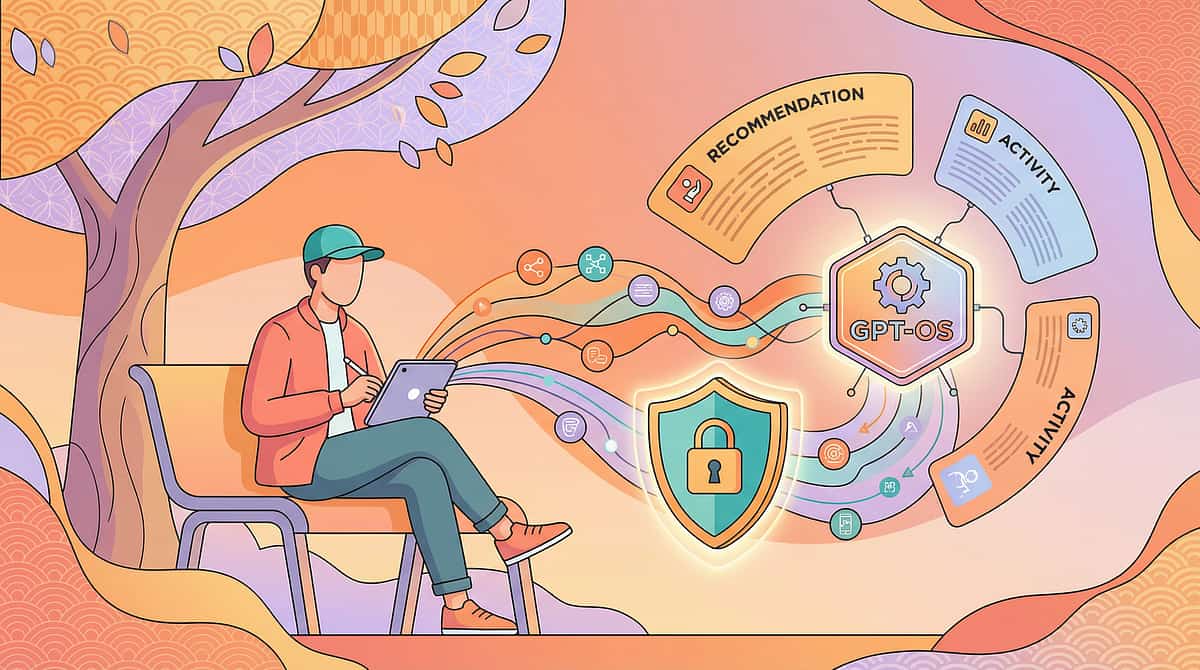
Data you collect today teaches the GPT-OS® engine what your child responds to. 1,000 parents tracking F-571 data makes the AI smarter for every family that comes after.
ABA Data Collection Standards: Continuous measurement (frequency, duration) and discontinuous measurement as standard for behavior-analytic intervention tracking.
4-week printable tracker, one row per session. References: BACB Guidelines | Cooper, Heron & Heward (Applied Behavior Analysis, 8th ed.)
When Sessions Go Sideways — The Repair Guide
Session abandonment is not failure. It is data. The technique needs adjustment, not the parent.
Problem 1: Child refuses to get on therapy ball
Why: Novel unstable surface triggers threat response in proprioceptively sensitive children. Fix: Begin with child sitting on a very firm pillow on the floor. Show the ball for 5 sessions before expecting the child to sit on it. Let child roll the ball around with hands first.
Problem 2: Child can't stay on balance board for more than 5 seconds
Why: Current challenge level exceeds current vestibular processing capacity. Fix: Return to standing on one leg near a wall (no balance board). Build single-leg balance to 20 seconds first. The balance board will then be accessible.
Problem 3: Child misses every beanbag toss and becomes frustrated
Why: Distance or height is set above current visual-motor processing speed. Fix: Move to 20cm drop (child drops beanbag from own hand into other hand). Near-zero distance. Success guaranteed. Then VERY slowly increase over multiple sessions.
Problem 4: Child uses only one hand for bilateral toys
Why: Brain defaults to dominant hand when bilateral demand is present — protective efficiency. Fix: Physically position the non-dominant hand on the material before starting. Use verbal cue: "Both hands working." Reduce the bilateral demand (use larger lacing cord).
Problem 5: Child becomes dizzy or nauseated during balance board
Why: Vestibular stimulation exceeding current processing threshold. Fix: Stop balance board immediately. Offer firm proprioceptive input (push-ups on wall, carry heavy items). Next session: limit balance board to 30-second intervals. If dizziness persists, consult OT before continuing.
Problem 6: Obstacle course bypassed — child runs around obstacles
Why: Motor planning demand being avoided by selecting a simpler path. Fix: Reduce the course to ONE obstacle at a time. Practice that one obstacle repeatedly. Add second obstacle only when first is navigated correctly 8/10 times.
Problem 7: Child can't maintain a beat with rhythm tools
Why: Internal timing is not yet calibrated for external cues. Fix: Start with a VERY SLOW tempo (40 BPM — one beat every 1.5 seconds). Beat on a drum with child — parent models, child mirrors. Build tempo only when child matches at current speed 8 consecutive beats.
📞 Still stuck? Call 9100 181 181 — FREE 24x7 clinical guidance
Your Child Is Unique. The Protocol Adapts.
For Sensory Seekers (craves intense input — may spin, crash, climb)
  • Therapy ball: encourage bouncing and larger movements
  • Balance board: move to more challenging surfaces faster
  • Scooter board: increase speed, add gentle bumps to floor
  • Rhythm tools: louder music, faster tempo, more vigorous movement
  • These children will love coordination activities — channel the energy
For Sensory Avoiders (avoids movement, fear of falling)
  • Begin ALL balance activities with two-point support (both hands touching a surface)
  • Build tolerance gradually — 5 seconds before 30 seconds
  • Warm up with firm proprioceptive input BEFORE vestibular activities
  • Use calming rather than energizing music for rhythm activities
  • Never force or rush — trust-building precedes challenge
Age-Based Modifications
3–5 years
Shorter sessions (10–15 min), more parent play partner, simpler obstacle courses
6–8 years
Standard protocol as written, peer partner activities where possible
9–12 years
Can understand "why" — explain the brain science (Card 03), goal-setting, self-monitoring
Difficulty Adjustments
On bad days: Shorter sessions (10 min vs 30) | Lower challenge versions of materials | Fewer materials per session | More support from parent
On breakthrough days: Add cognitive dual-task (count while balancing) | Novel environments (try outside, new surface) | Add partner challenges | Increase speed/distance
Research: Individualized intervention planning: Core principle across OT (sensory profile-based), ABA (function-based), and PT (movement analysis-based) clinical practice. Dunn Sensory Profile | Pinnacle Individual Program Planning protocols
Weeks 1–2: The Foundation Phase
Progress: 15%
Phase: TOLERANCE BUILDING
Increased Tolerance (not mastery)
Child will sit on therapy ball for 5 seconds before week 1's 2 seconds. Small, real, measurable.
Reduced Refusal Rate
What was met with "No" is now met with hesitation. That is a significant neurological shift.
First Glimpse of Curiosity
Child may bring the beanbags to you — an early engagement signal. The brain is beginning to encode this as a positive motor experience.
Physical Fatigue After Sessions
This is normal. The neural work of motor learning is exhausting. It is a sign that real work is happening.

What you will NOT yet see (and that is normal): Automatic balance on balance board (takes 4–6 weeks minimum) | Successful catch rates above 30–40% | Both hands working together fluidly | Visible coordination improvement in daily activities
"If your child tolerates the therapy ball for 8 seconds this week vs. 5 seconds last week — that IS real, measurable progress. The brain is forming new motor pathways. They are invisible on the outside. They are happening on the inside."
This phase is hardest for parents. Track the data (Card 20) — it makes the small progress visible. Celebrate every 3-second improvement. Research: PMC11506176 | Motor Learning Timeline Research
Weeks 3–4: The Neural Wiring Phase
Progress: 40%
Phase: CONSOLIDATION — Neural pathways forming
Child Anticipates the Activity
Gets the beanbags out before you suggest it. The brain has encoded this as a positive motor experience.
Reduced Setup Anxiety
Getting on the balance board or therapy ball is no longer a negotiation. The vestibular-threat signal has reduced.
First Spontaneous Generalization
Child catches something at dinner "accidentally" — and looks surprised. The motor pathway is beginning to transfer to real life.
Improved Sitting Posture
A downstream effect of core stability work on the therapy ball — noticed during meals or homework.
When to Increase Frequency or Intensity:
  • Child is completing sessions without fatigue and asking for more → add 5 minutes
  • Child is succeeding 9/10 times on current challenge → increase difficulty
  • Child is generalizing skills to daily life → introduce next material category
Research: Neuroplasticity evidence: Synaptic strengthening through repeated structured input follows predictable timelines. Behavioral consolidation markers align with neural adaptation curves. Pinnacle Clinical Milestone Database
Weeks 5–8: The Mastery Phase
Progress: 75%
Phase: MASTERY EMERGING
Material
Mastery Indicator
Therapy Ball
60 seconds sitting balance without hands, while catching beanbags
Balance Board
60 seconds no support, eyes closed for 10-second intervals
Beanbags
Catches 8/10 at 2-meter partner toss with one hand
Bilateral Toys
Completes lacing independently, uses scissors correctly for cutting straight lines
Scooter Board
Navigates 5-obstacle course in under 60 seconds
Jump Rope
10 consecutive jumps with self-turned rope
Target Games
Hits target at 2 meters, 7/10 attempts
Obstacle Course
Completes 8-obstacle course from memory (without being shown each time)
Rhythm Tools
Maintains beat at 80 BPM for 2 minutes continuously
Generalization Indicators (skill appearing in real life):
Handwriting has become slightly less effortful
Child can ride a balance bike or begin two-wheel bike
Sports or PE participation has increased, even slightly
Child navigates stairs, curbs, uneven surfaces with less caution
Research: Meta-analysis (2024): Sensory-motor therapy across 24 studies showed measurable skill outcomes. PMC10955541 | BACB mastery criteria standards
🏆 You Did Something Remarkable
You committed to 5–8 weeks of consistent motor coordination practice with your child. You showed up on the days they refused. You modified when things didn't work. You celebrated 3-second improvements when the world tells parents to expect dramatic transformations. Your child's brain has built new neural pathways because of your consistency.
The therapist can design the intervention. The OT can select the materials. The GPT-OS® can track the data. But none of it works without you in that room, holding the balance board steady, rolling the beanbag back after the miss, saying "try again" with a smile after the sixth consecutive drop. That was you.
"I kept trying. And something got easier." — Every child who completes 8 weeks of coordination therapy

📸Family Milestone Prompt: Write one thing your child could NOT do 8 weeks ago that they can do now. No matter how small. This is your evidence. Keep it. It will matter on the hard days.
Trust Your Instincts — These Signs Mean Pause & Seek Help
This is not about fear. It is about knowing when home practice needs professional backup.
⚠️ Persistent dizziness beyond 5 minutes after vestibular activities
May indicate vestibular processing disorder requiring clinical vestibular therapy assessment — not just home practice.
⚠️ No progress on ANY single material after 6 weeks of consistent practice
Indicates an assessment gap — the root cause may not be what this toolkit addresses. Request an OT/PT assessment.
⚠️ Child is developing avoidance behaviors that are getting WORSE
Refusing more activities after starting the program (not just initially) suggests challenge level is too high or underlying sensory aversion needs clinical attention.
⚠️ New self-injurious behaviors appearing during or after sessions
Stop all activities. Contact Pinnacle immediately.
⚠️ Asymmetrical motor development
One side of the body significantly less coordinated than the other, or one limb consistently avoided — requires neurological evaluation.
⚠️ Falling frequency increasing despite intervention
If clumsiness is worsening rather than plateauing, medical evaluation to rule out neurological causes is warranted.
Self-Resolve
Minor regression, tired day, isolated incident — 1–2 days rest + modification
Teleconsultation
Pattern of difficulty, parent concern, plateau — within 48 hours
Clinic Visit
Red flag signs above, worsening pattern, safety concern
📞FREE Clinical Guidance: 9100 181 181 — 24x7, 16+ languages
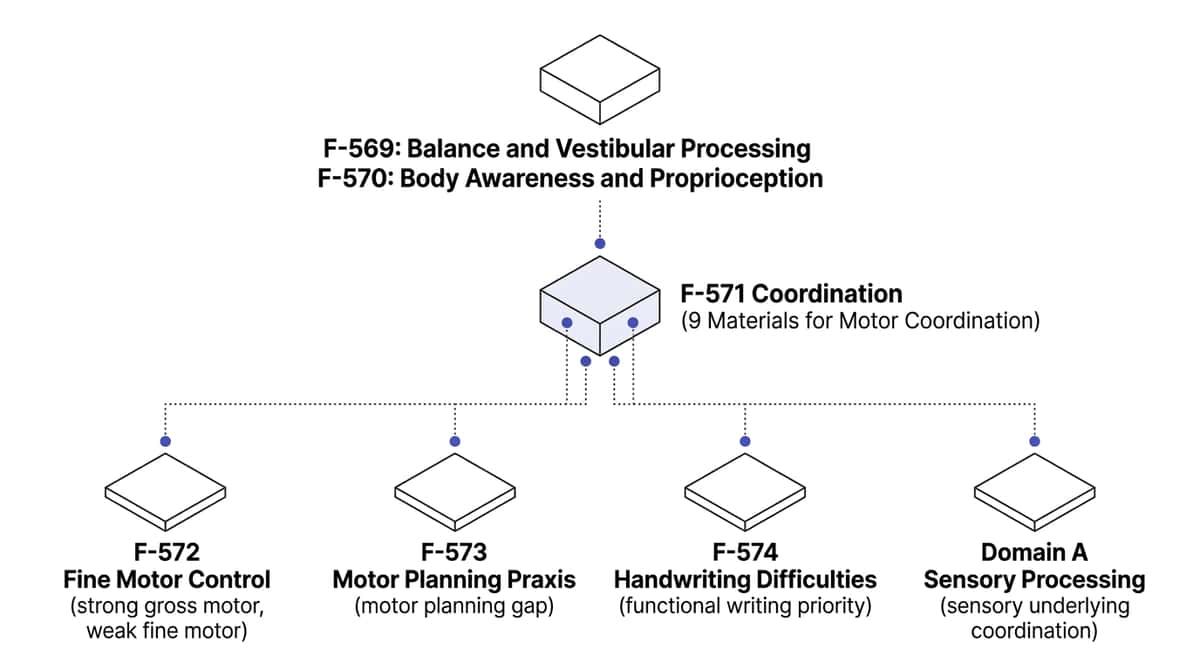
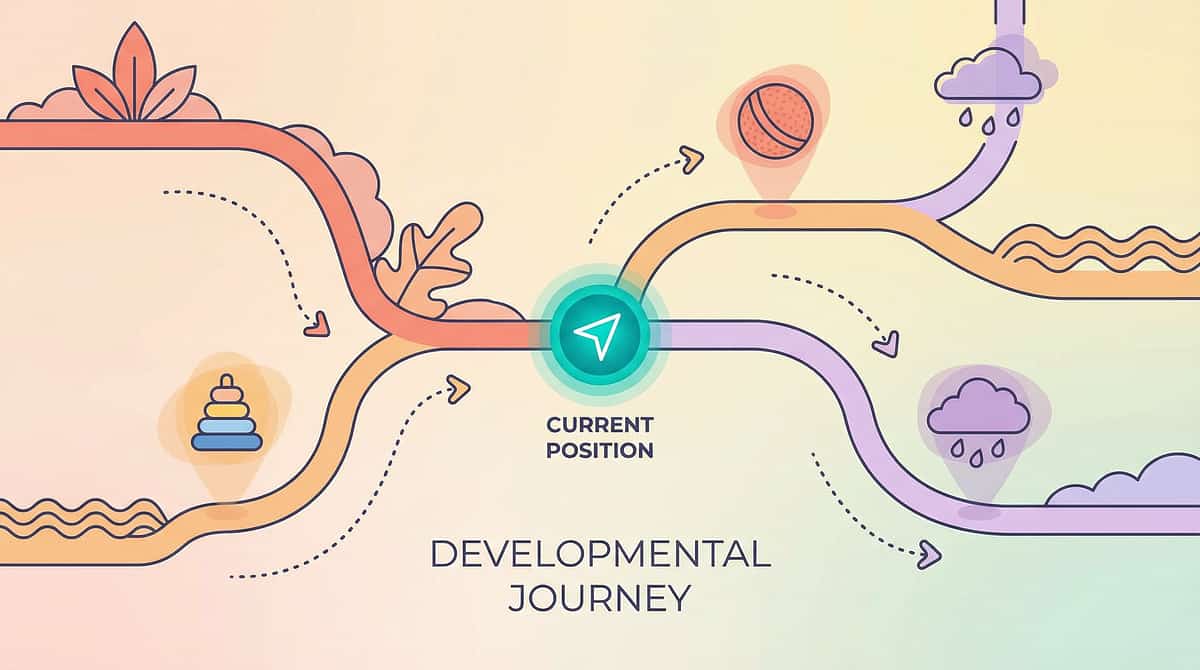
Your Developmental GPS: Where F-571 Lives
Understanding where F-571 sits in the broader developmental architecture helps parents and therapists sequence interventions for maximum impact.
9-materials-that-help-with-coordination therapy material

Long-Term Developmental Goal: GPT-OS® Motor Readiness Index → Level 4: Fluid, confident coordination with minimal gap from peers → Life readiness: sports, tools, independence, self-care
Research: WHO/UNICEF milestones provide the developmental trajectory framework. Intervention sequencing follows evidence-based developmental cascades. WHO Developmental Milestones Framework | EACD DCD Progression Guidelines
Explore the Full Coordination Series
techniques.pinnacleblooms.org/motor-development
[F-569] Balance and Vestibular Processing
🟢 Intro Level | ⚖️ Balance Materials | Ages 2–10 Before F-571: Build the vestibular foundation
[F-570] Body Awareness and Proprioception
🟢 Intro Level | 🖐️ Proprioceptive Materials | Ages 2–10 Before F-571: Build the body-in-space sense
[F-572] Fine Motor Control
🟡 Core Level | ✏️ Fine Motor Materials | Ages 3–12 After F-571: Build the precise hand control layer
[F-573] Motor Planning (Praxis)
🟡 Core Level | 🧩 Motor Planning Materials | Ages 4–12 Parallel to F-571: Target the "figuring out how to move" layer
[F-574] Handwriting Difficulties
🔴 Advanced | ✍️ Writing Materials | Ages 5–12 After F-572: The functional writing layer

Already own these materials? ✓ Therapy Ball → usable in F-569, F-570, F-573 | ✓ Beanbags → usable in F-572, F-573 | ✓ Obstacle Course materials → usable in F-573
F-571 in the Context of Your Child's Complete Development
F-571 builds Domain F: Motor Development. But coordination difficulties ripple into every other domain of a child's life.
Domain B — Communication
A child physically exhausted by movement has less energy for language development. Motor and language share neural resources.
Domain H — Social
Coordination difficulties cause peer avoidance — social skills suffer when physical play becomes painful and embarrassing.
Domain G — Cognitive
Handwriting difficulties create a ceiling on academic expression. The child knows the answer — their hands can't write it.
Domain I — Play
Motor coordination is the infrastructure of physical play. When it's impaired, the child cannot access the social and emotional benefits of play.
"This technique is one piece of a larger plan. GPT-OS® sees the whole child — and this is one precise intervention in a personalized developmental architecture."
From the Families. From the Centers.
Aryan, 6 Years — Hyderabad
Before: Would not participate in any physical games at school. Dropped everything he held. Fell off chairs. Was beginning to avoid all social interaction involving physical activity.
After 12 weeks of F-571 protocol: Aryan completed a full obstacle course at his school sports day. He did not win. He finished it with the other children.
"He crossed the finish line and looked at me like he had just climbed Everest. And for him — he had."
Timeline: Week 1: Refused therapy ball → Week 4: Sitting 45 seconds → Week 8: Sitting while catching beanbags → Week 12: Participated in school games
"Aryan's case was classic DCD with proprioceptive under-registration. The scooter board and therapy ball were the breakthrough materials — deep proprioceptive input was what his brain needed first." — OT, Pinnacle Hyderabad
Priya, 8 Years — Bangalore
Before: Handwriting so poor she was beginning to refuse to write at school. Described by teachers as "not trying." Her mother knew she was trying — her hands simply did not execute what her brain planned.
After 10 weeks of F-571 + F-572: Handwriting improved enough for legibility. Teacher stopped commenting on her "effort." The shift came from bilateral coordination toys and therapy ball core work — foundations she had never built.
"We were told for years that she was being careless. She was 8 years old and crying that her hands didn't work right. That's not careless. That's a child with DCD who needed someone to see the wiring, not judge the output."
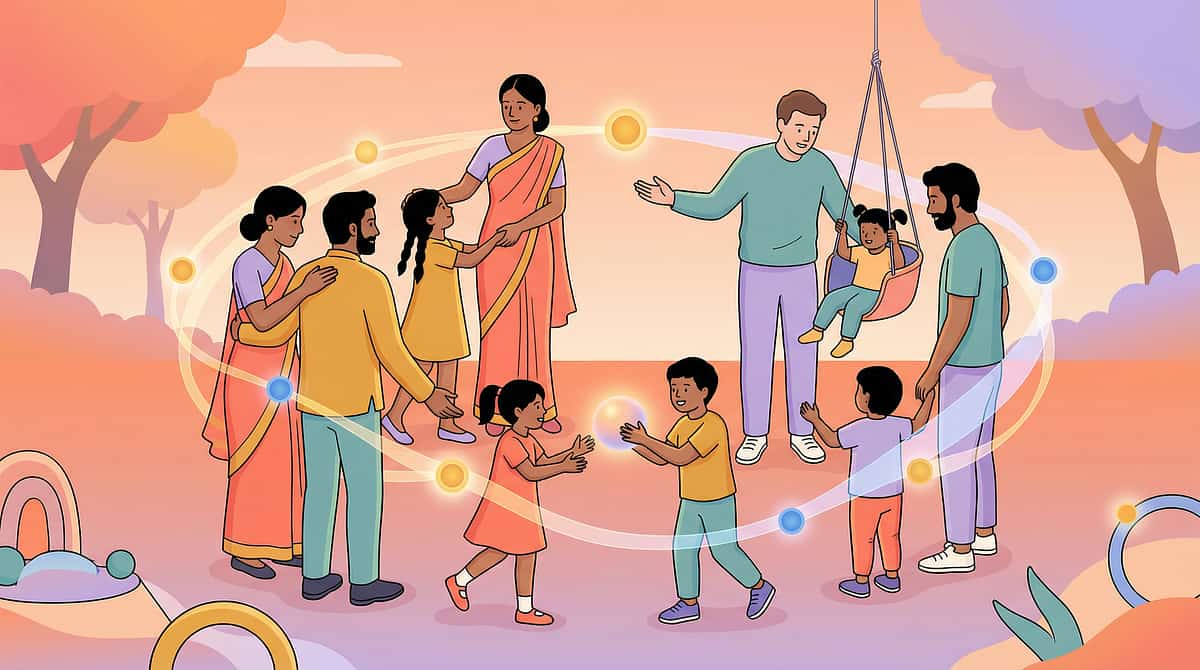
You Are Not Navigating This Alone
Coordination Support — WhatsApp Parent Group
Parents of children with DCD, dyspraxia, and coordination difficulties — India-wide. Active daily | Moderated by Pinnacle therapists | Questions answered within 24 hours.
Online Forum
Post questions, share wins, find families in your city at techniques.pinnacleblooms.org/community
Peer Mentoring
Connect with a parent who has completed F-571 with their child. Request a peer mentor →
Local Parent Meetups
Organized quarterly at Pinnacle centers in Hyderabad, Bangalore, Chennai, Mumbai, Delhi. Find your city's meetup →
"You have data, observations, and lived experience that no clinical study can replicate. Consider sharing your child's journey — anonymously or openly. Your story is the evidence that moves another parent to start."
Research: WHO NCF: Community engagement is a core principle. Parent support networks improve intervention outcomes. WHO NCF Community Engagement Principles | Parent support network literature
Home + Clinic = Maximum Impact
Professional assessment, program design, and progress monitoring from the clinic. Daily dosage that only home practice can deliver. Together, they produce outcomes that neither can achieve alone.
Your Need
Who to See at Pinnacle
Overall coordination assessment
Occupational Therapist + Physical Therapist
Balance and vestibular concerns
PT + Sensory Integration OT
Handwriting and fine motor
OT with VMI specialization
DCD/dyspraxia diagnosis
NeuroDev Pediatrician + OT
Behavior/engagement with therapy
BCBA + OT combination
📹 Teleconsultation
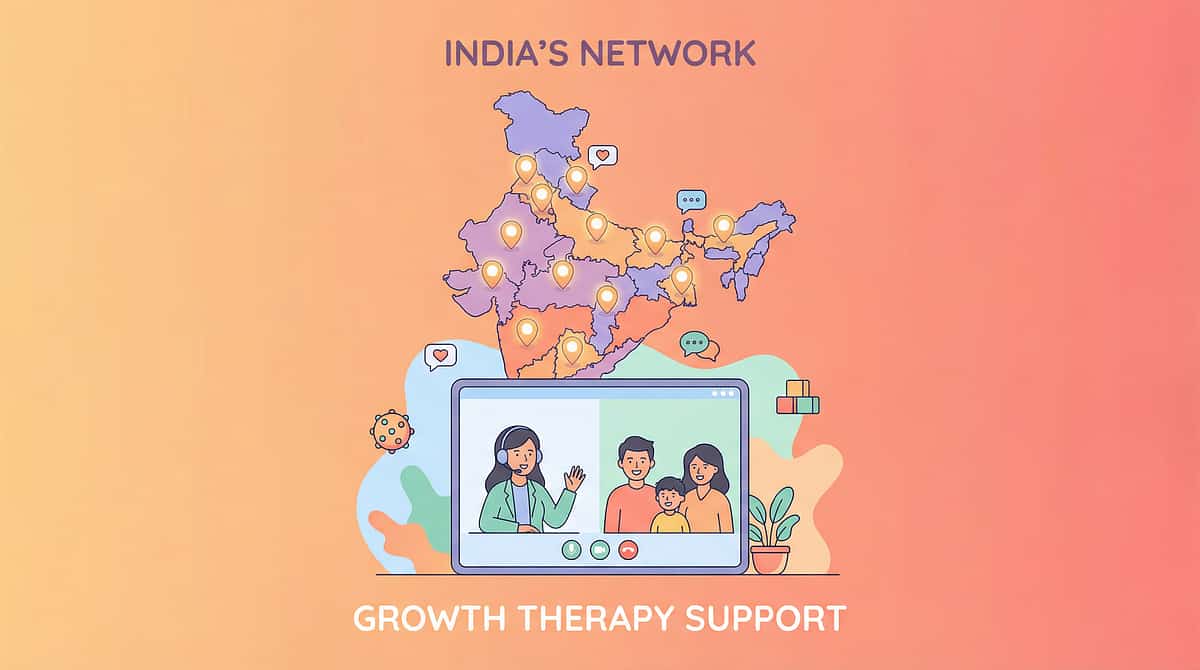
Available across India and 70+ countries. Same-day appointments available for international families. Available in 16+ languages including Hindi, Telugu, Tamil, Kannada, Bengali, Marathi.
📞 Pinnacle Helpline
9100 181 181 — FREE National Helpline 16+ languages | 24x7 | First call always free
"We will tell you what your child needs, honestly. If it's us — we'll say so. If it's someone else — we'll say that too."
The Evidence Foundation — For the Curious Paren
📗 PRISMA Systematic Review (2024)
16 articles (2013–2023) confirm sensory-motor integration therapy meets evidence-based practice criteria for children with ASD. Coordination outcomes across OT/PT approaches. PMC11506176 → | Level: Systematic Review
📗 World J Clin Cases Meta-Analysis (2024)
24 studies confirm sensory integration therapy effectively promotes motor coordination, adaptive behavior, and social participation in pediatric populations. PMC10955541 → | Level: Meta-Analysis
📗 WHO Care for Child Development (2023)
Evidence-based caregiving interventions across 54 LMICs demonstrate motor and coordination outcomes through structured home practice. PMC9978394 → | Level: Implementation Research
📗 Indian J Pediatr RCT (2019, Padmanabha et al.)
Indian RCT: Home-based sensory-motor interventions demonstrated significant, measurable outcomes in Indian pediatric population — directly relevant to GPT-OS® home program design. DOI: 10.1007/s12098-018-2747-4 → | Level: RCT
📗 NCAEP Evidence-Based Practices Report (2020)
Motor-based and sensory-based interventions classified as evidence-based practice for autism and developmental disabilities. NCAEP 2020 → | Level: National Practice Guidelines
📗 EACD DCD Clinical Practice Guidelines
European Academy of Childhood Disability: Gold standard clinical guidelines for DCD diagnosis, assessment, and intervention. EACD Guidelines → | Level: International Clinical Guidelines

From Your Living Room to the Intelligence Layer

What GPT-OS® Learns from F-571 Data Which of the 9 materials produces the fastest coordination progress for different child profiles Which material combination is most effective for sensory-seeking vs. sensory-avoiding profiles At what session number most children break through to each skill milestone What parent behaviors correlate with best outcomes 🛡️ Privacy Assurance Child data is anonymized before entering aggregate models Your family's specific data is never shared without consent GPT-OS® is governed by India's DPDP Act and Pinnacle's data ethics framework "Your data helps every child like yours. 1,000 families tracking F-571 makes the AI a better therapist for the 1,001st family."
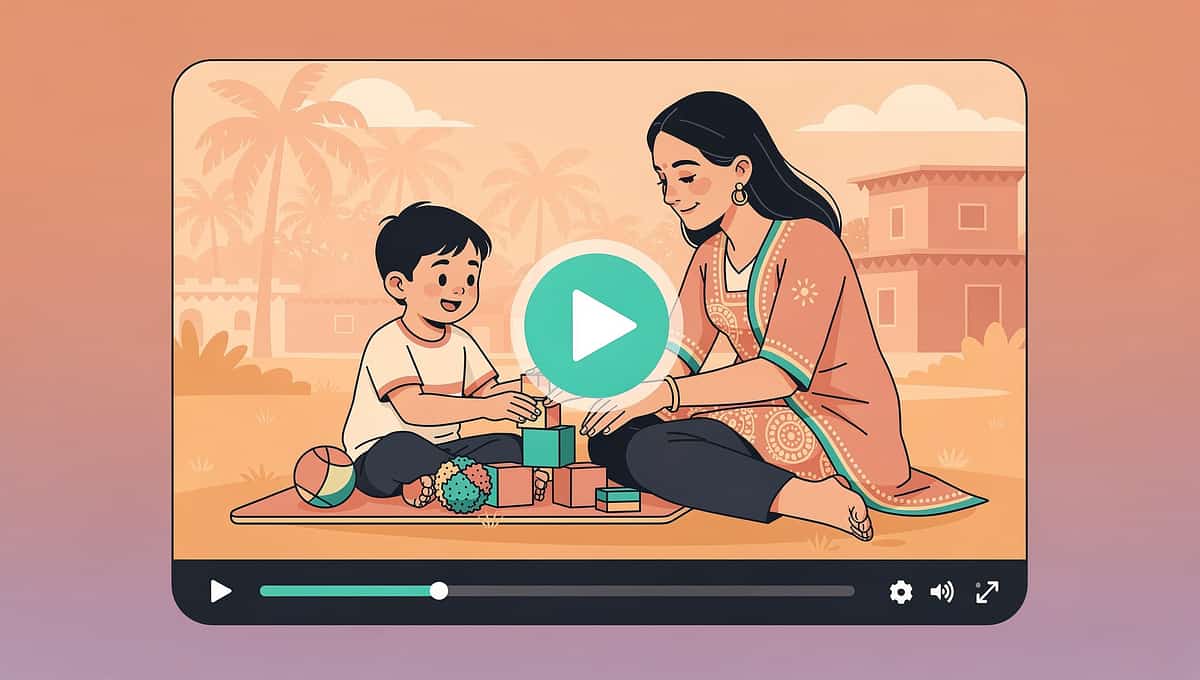

The Reel Behind This Page
9-materials-that-help-with-coordination therapy material
🎬 F-571
Motor Development Series • Episode 571
"9 Materials That Help With Coordination"
OT + PT | Ages 3–12 | 60 seconds Domains: Gross Motor • Bilateral Coordination • Visual-Motor Integration • Motor Planning • Rhythm & Timing
"In this reel, our Pinnacle OT + PT team walks you through each of the 9 materials and why they target the specific coordination systems your child needs. Watch how children at different stages engage with each material — you'll recognize your child in at least one of these moments." — Pinnacle Blooms Consortium Therapy Team
Multi-Modal Learning
  • 📖 Text + science → This page
  • 🎬 Visual demonstration → The reel
  • 👐 Hands-on practice → Cards 13–22 protocol
  • 📊 Progress tracking → Card 20 tracker
Research: Video modeling: Classified as evidence-based practice for autism (NCAEP, 2020). Multi-modal learning improves parent skill acquisition and intervention fidelity. NCAEP Evidence-Based Practices Report (2020)
Consistency Across Caregivers Multiplies Impact

Research shows: when two caregivers implement the same technique, outcomes improve by 40–60% compared to a single caregiver. The science of generalization requires multiple practice contexts.
Share This Page
Downloadable Resources
  • 📥 F-571 Family Guide — 1-Page PDF: The protocol simplified to one page. For grandparents, aunties, and anyone who looks after your child. Contents: 9 materials overview | 5-minute session guide | What to say and what not to say | When to call 9100 181 181
  • 📥 Teacher Communication Template: Ready-to-send email to your child's PE teacher or class teacher. "Dear [Teacher], our child is working with a Pinnacle OT on motor coordination. Here are 3 things that help in the classroom..."
Explain to Grandparents
"Your grandchild is not clumsy on purpose. Their brain is learning to coordinate their body parts. We are practicing with special toys and activities. The most helpful thing you can do is: (1) Be patient when they drop things. (2) Let them try — don't rush to help. (3) Say 'Good try!' when they attempt something hard."
Research: WHO CCD Package: Multi-caregiver training is critical for intervention generalization and maintenance. PMC9978394 | Multi-caregiver consistency literature

Preview of 9 materials that help with coordination Therapy Material

Below is a visual preview of 9 materials that help with coordination therapy material. The pages shown help educators, therapists, and caregivers understand the structure and content of the resource before use. Materials should be used under appropriate professional guidance.

Page 1
Page 2
Page 3
Page 4
Page 5
Page 6
Page 7
Page 8
Page 9
Page 10
Page 11
Page 12
Page 13
Page 14
Page 15
Page 16
Page 17
Page 18
Page 19
Page 20
Link copied!
Questions Parents Ask Most
Q1: My child doesn't have an autism diagnosis. Can I still use these materials?
Absolutely. Motor coordination difficulties, DCD, and dyspraxia occur across all children — with or without autism. These 9 materials are clinically appropriate for any child ages 3–12 experiencing coordination challenges. The techniques are not autism-specific; they are motor-development specific.
Q2: How long will it take to see results?
Early tolerance and engagement changes: 1–2 weeks. Visible skill improvement: 4–6 weeks with daily practice. Functional change in daily activities: 8–12 weeks. Motor learning is a slow-burn process — the brain is building new pathways, not downloading skills.
Q3: What if my child refuses all physical activities?
Don't force. Begin with observation only (child watches you play with the material). Then proximity. Then touching. Then brief participation. This can take 2–4 weeks before active engagement begins. Contact our helpline if avoidance is severe: 9100 181 181.
Q4: We live outside India. Can we access Pinnacle's support?
Yes. Pinnacle's teleconsultation serves families in 70+ countries, available in 16+ languages. Visit pinnacleblooms.org/global for international family resources and GPT-OS® remote assessment.
Q5: Should we stop clinic OT/PT if we're doing this at home?
No. Home practice and clinic therapy are complementary, not competitive. The clinic session provides professional assessment, program adjustment, and progress monitoring. The home practice provides the daily dosage the clinic alone cannot deliver. Maximum outcomes come from both.
Q6: My child improved then seemed to regress. Why?
Motor learning follows a "two steps forward, one step back" pattern. Regression after apparent progress is normal and often precedes a larger breakthrough. Reduce challenge temporarily, return to earlier success points, and continue. Do not interpret regression as failure.
Q7: At what age should a child be able to catch a ball?
WHO developmental milestones: Two-handed catch of a large ball at ~3.5–4 years. One-handed catch of a tennis ball at ~6–7 years. If significantly behind AND affecting daily function, professional OT/PT assessment is recommended.
Q8: Is DCD/dyspraxia genetic?
Current research suggests a hereditary component in some cases, but the majority of DCD presentations do not have a single identified genetic cause. Co-occurrence with ADHD, autism, dyslexia is well-documented. Genetic counseling is not typically part of DCD management — intervention is.