

"He Can't Stop Moving. Not For A Minute. Not For A Second."
You've said "sit still" a thousand times. It doesn't work — because it was never a choice.

His legs bounce under the dining table. His fingers tap the chair arm in a constant rhythm — tap, tap, tap — while you're trying to tell him about tomorrow. At school, the teacher moved him to the front row, then to a desk alone, because his fidgeting "distracts the whole class." His pencil is chewed to splinters. His shirt collar has tiny holes where he's been biting it. He doesn't even know he's doing most of it. And when you ask him to stop, he tries — genuinely tries — and then thirty seconds later he's doing it again, looking at you with those eyes that say: I'm not doing this on purpose. I just can't stop.
You are not failing. Your child's nervous system is speaking. There are tools that answer it.
🌸 Pinnacle Blooms Consortium
OT + ABA + SpEd + NeuroDev
Ages 4–14
D-442
WHO Nurturing Care Framework (2018): Early parental awareness directly shapes developmental trajectories. You noticing this — right now — is the intervention beginning.

The Scale of This Challenge — Globally and in India
80%
With Sensory Difficulties
Of children diagnosed with autism or ADHD display significant sensory processing difficulties, including motor restlessness and fidgeting. (PRISMA Systematic Review, PMC11506176, 2024)
1 in 6
Children in India
Show developmental differences affecting sensory regulation — many never formally diagnosed, but silently struggling. (Padmanabha et al., Indian J Pediatr, 2019)
40M+
Families Affected
Across South Asia navigating exactly this challenge. You are among the majority — not the exception. (WHO / UNICEF MICS, 2023)
"You are among millions of families navigating this exact challenge."
Fidgeting isn't rare. It isn't defiance. It isn't a parenting failure. Across 70+ Pinnacle centers and 21 million therapy sessions, constant motor restlessness is among the five most common presenting challenges we see. The families who struggle in silence are the most common kind.

This Is Not a Behavior Problem. It's a Nervous System Architecture.
The Neuroscience
Proprioceptive Processing System: The proprioceptive system — your child's "sixth sense" — processes input from muscles, joints, and tendons. In children with sensory processing differences, this system is under-responsive: it requires more movement input to register body position. The fidgeting IS the proprioceptive input the brain is desperately generating for itself.
Vestibular-Reticular Activation Loop: The vestibular system has a direct pathway to the Reticular Activating System — the brain's arousal center. Movement activates the RAS, which regulates alertness. A child with a high vestibular threshold literally needs to move more to reach the arousal level required to pay attention.
The Basal Ganglia-Cortex Loop: For some children with ADHD profiles, motor activity occupies the basal ganglia's motor planning circuits — which counterintuitively frees the prefrontal cortex to focus. Forcing stillness forces the motor system to suppress movement using the exact resources needed for attention.
Plain English Translation
🧠In simple terms: Your child's brain needs movement to think. The fidgeting isn't distracting him from work — for his brain, the movement IS how he works.
⚡The bouncing legs: His nervous system is generating proprioceptive input because its threshold is higher than average. He needs more of this input to feel regulated and alert.
🔄The tapping and rocking: These are vestibular self-stimulation behaviors — his inner ear and brain stem are using this movement to maintain the arousal level needed for attention.
💡When you say "sit still": You're asking his brain to operate its attention system while simultaneously consuming those resources to suppress movement. His performance gets worse — not because he's not trying, but because you've just reduced his available cognitive resources.
✅What the tools on this page do: They give the nervous system the input it's seeking — through an appropriate channel — so the brain can direct its full capacity toward the task at hand.
Frontiers in Integrative Neuroscience (2020): Comprehensive framework establishing the neurological basis for sensory-based interventions in ASD — DOI:10.3389/fnint.2020.556660

Your Child Is Here. Here Is Where We're Heading.
Ages 2–3
Normal motor exploration and exploration of all senses begins.
Ages 3–5
Fidgeting begins to contrast with peer behavior as group settings emerge.
Ages 5–7
School demands for stillness first emerge. Children with proprioceptive/vestibular differences begin to "stand out" as the gap widens.
Ages 7–10 ← You Are Here
Academic demands intensify. Peer comparison increases. Teacher reports begin. Primary challenge window for D-442. This is where most families arrive at Pinnacle.
Ages 10–14
With the right tools and strategies, most children develop functional self-regulation strategies that minimize disruption while meeting their nervous system's genuine needs.
Comorbidity Awareness: Constant fidgeting commonly co-occurs with ADHD, Sensory Processing Disorder, Anxiety, Autism Spectrum with sensory-seeking profile, and typically developing children with high movement thresholds. You don't need a diagnosis to start the tools on this page. You need a child who moves.
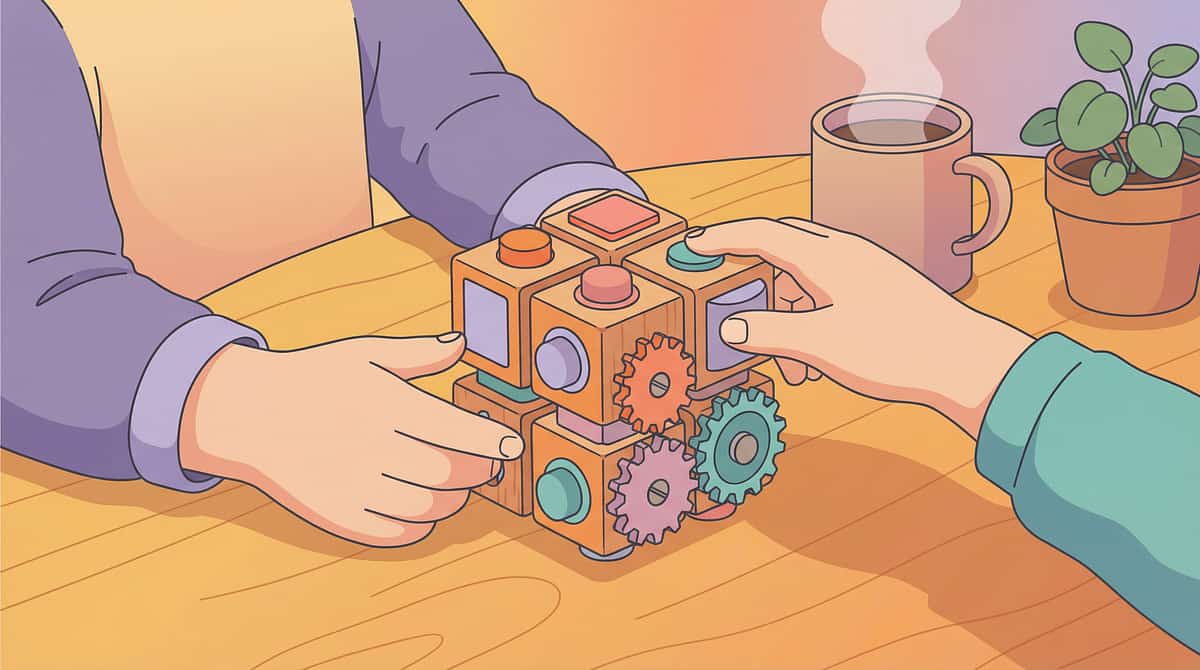
Clinically Validated. Home-Applicable. Parent-Proven.
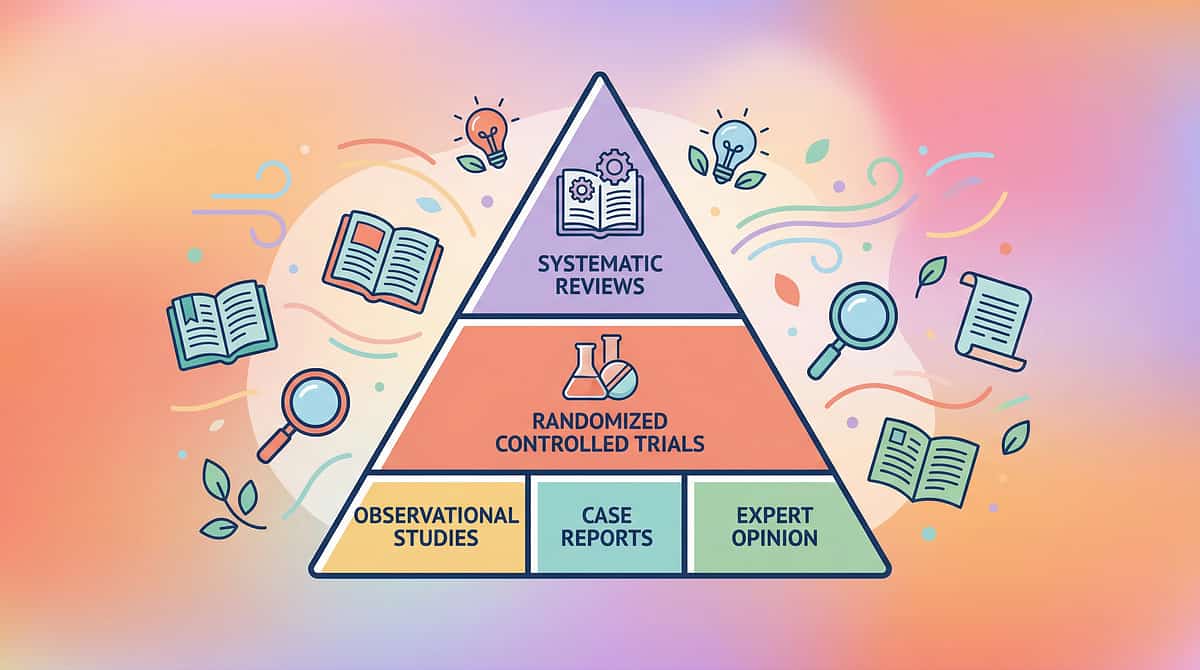
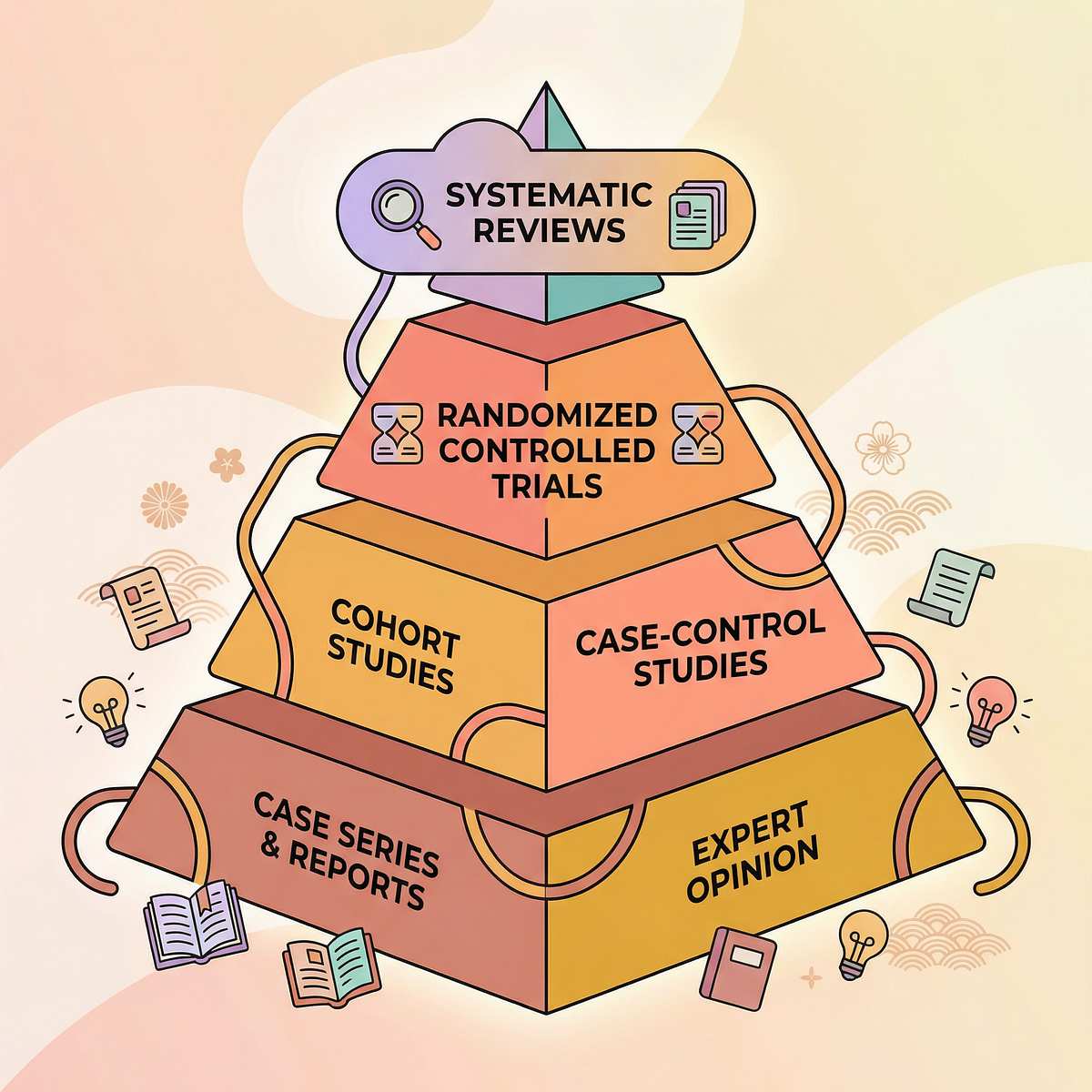
Evidence Grade: Level I ★★★★★
Systematic Review + RCT | 16 Studies | 2013–2024 | NCAEP Evidence-Based Practice Classification
Key Finding: "Sensory integration therapy effectively promotes adaptive behavior, attention, and self-regulation in children with ASD and sensory processing differences — when delivered consistently across clinic and home settings."
This technique is not experimental. It is among the most rigorously studied approaches in pediatric occupational therapy — used across Pinnacle's 70+ centers and over 21 million therapy sessions.
Research Summary
Study | Finding | Grade | |
PRISMA Review, Children, 2024 (PMC11506176) | SI intervention meets criteria as evidence-based practice for ASD — 16 qualifying studies | ★★★★★ | |
Meta-analysis, World J Clin Cases, 2024 (PMC10955541) | SI therapy promoted social skills, adaptive behavior, sensory processing across 24 studies | ★★★★★ | |
Padmanabha et al., Indian J Pediatr, 2019 | Home-based sensory interventions showed significant outcomes — first RCT in India | ★★★★☆ | |
Frontiers Integrative Neuroscience, 2020 | Comprehensive neurological framework for sensory integration treatments in ASD | ★★★★★ | |
NCAEP EBP Report, 2020 | Sensory-based interventions classified as evidence-based practices for autism | ★★★★☆ |

Fidget Tool Integration Protocol
"Channeling the Fidget" — giving the nervous system what it's asking for, through the right outlet
Fidget Tool Integration is the systematic introduction of purposeful sensory tools — tactile fidgets, proprioceptive seating, oral-motor tools, wearable inputs, and scheduled movement breaks — into a child's daily environment to channel motor restlessness into non-disruptive, regulation-supporting outlets. The goal is not stillness — it is regulated, functional engagement with the environment.
📂 Domain
Sensory Regulation → Behavior Flexibility (D)
👶 Age Range
4–14 years
⏱️ Duration
5–20 min active use; continuous ambient use throughout day
🔁 Frequency
Daily — tools available at all times during demanding tasks
🎯 Lead Discipline
Occupational Therapy (OT)
Technique Code: D-442
Series: Sensory Regulation Episode 442
SENS-FIDGET
Every Member of Your Child's Therapy Team Uses This — Differently
🟣 Occupational Therapist (OT) — PRIMARY LEAD
The OT conducts a sensory profile assessment to determine the child's specific regulatory needs — whether primarily proprioceptive-seeking, vestibular-seeking, or oral-motor-seeking — and selects the fidget toolkit accordingly. OTs prescribe specific tools, teach appropriate use, and calibrate intensity. This is your primary professional for fidget tool selection.
🔵 ABA / BCBA Specialist — BEHAVIORAL INTEGRATION
The behavior analyst identifies function (attention-seeking, automatic reinforcement, sensory regulation), structures token systems that reward appropriate fidget use, and reduces disruptive fidgeting through antecedent modification and reinforcement-based skill teaching.
🟢 Special Educator (SpEd) — CLASSROOM TRANSLATION
The special educator ensures fidget tools are embedded into classroom environments and academic tasks. Advocates for accommodation plans (504/IEP), educates classroom teachers on regulatory tools, and monitors effectiveness across academic settings.
🟡 NeuroDev Pediatrician — MEDICAL CONTEXT
Rules out medical causes for hyperkinetic behavior (thyroid, medication effects, tic disorders), provides ADHD evaluation where indicated, and coordinates the clinical picture across all team members. May prescribe pharmacological support as part of comprehensive ADHD management alongside sensory strategies.
"This technique crosses therapy boundaries because the brain doesn't organize by therapy type. This is the GPT-OS® FusionModule™ in action."

Precision Tools for Precise Targets
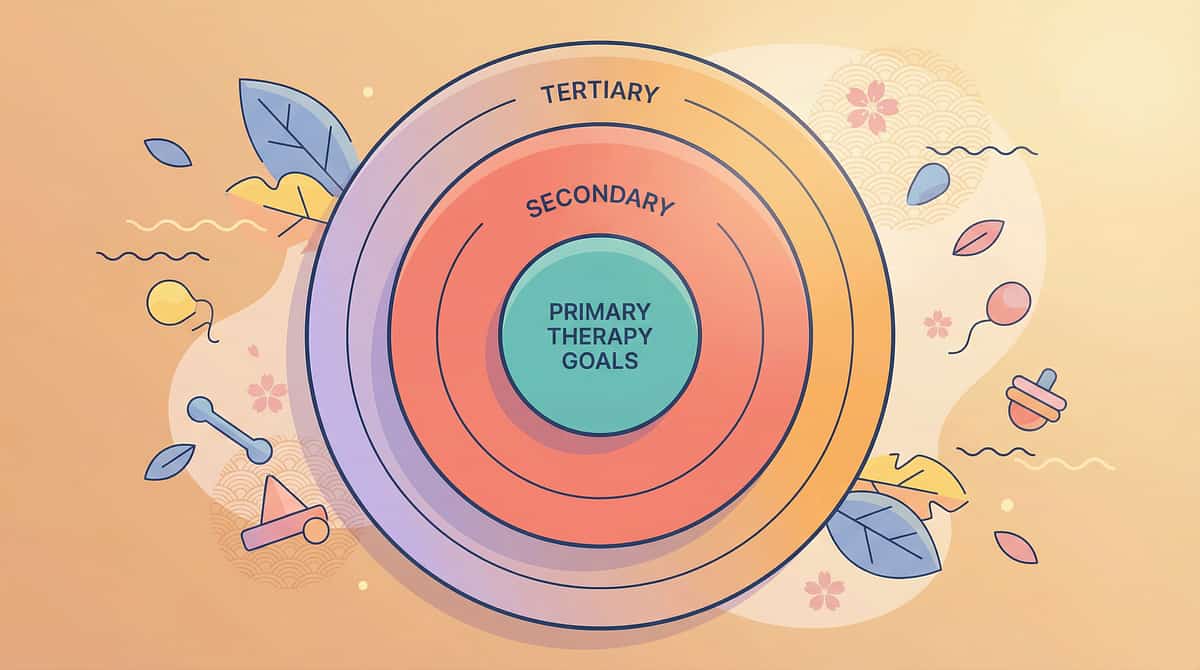
Meta-analysis (World J Clin Cases, 2024): SI therapy promoted social skills (primary), adaptive behavior (secondary), sensory processing and motor skills (tertiary) — PMC10955541

9 Materials That Help With Constant Fidgeting
Every tool below is OT-validated, clinically sequenced, and available in India. Start with the one that matches your child's dominant fidgeting pattern.
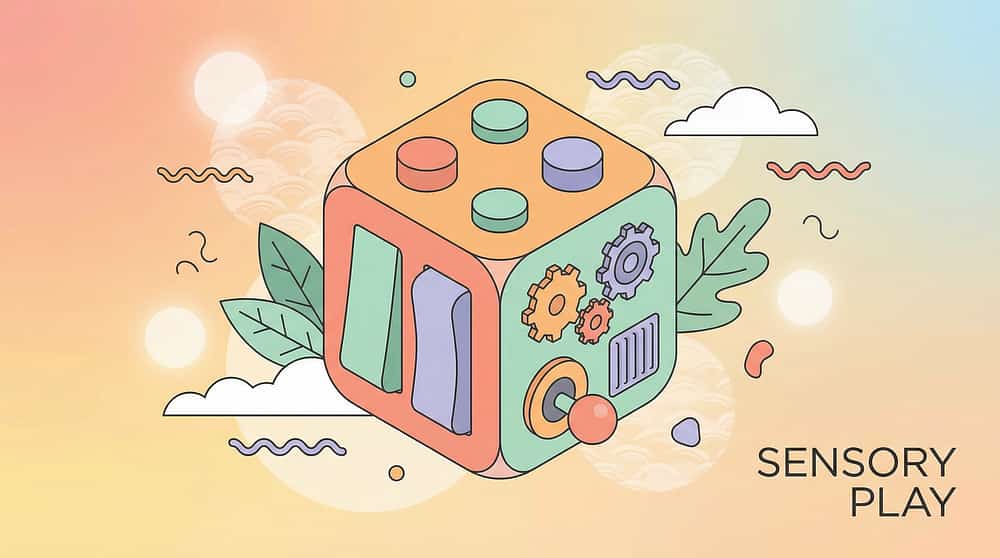
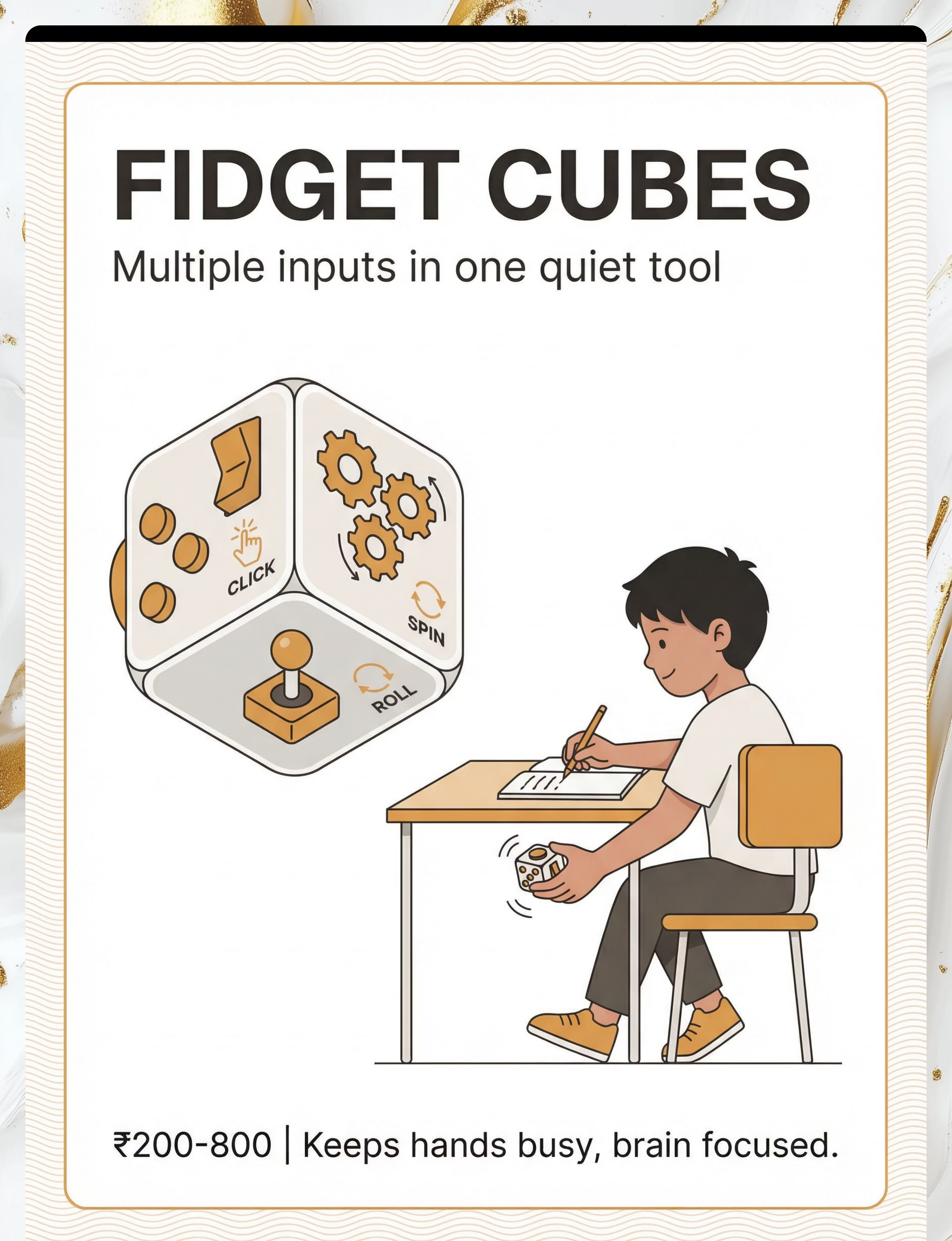
Material 1: Fidget Cubes & Multi-Sensory Fidgets
Multiple inputs in one quiet tool — click, spin, roll, slide. Prevents habituation through variety. Keeps fidgeting hands-only. For children who manipulate whatever is available disruptively, this gives approved tactile and fine-motor input.
🟣 Sensory Tools | ₹200–800
🔑Key: Choose quiet fidgets for classroom use — no clicking sounds.
🔑Key: Choose quiet fidgets for classroom use — no clicking sounds.

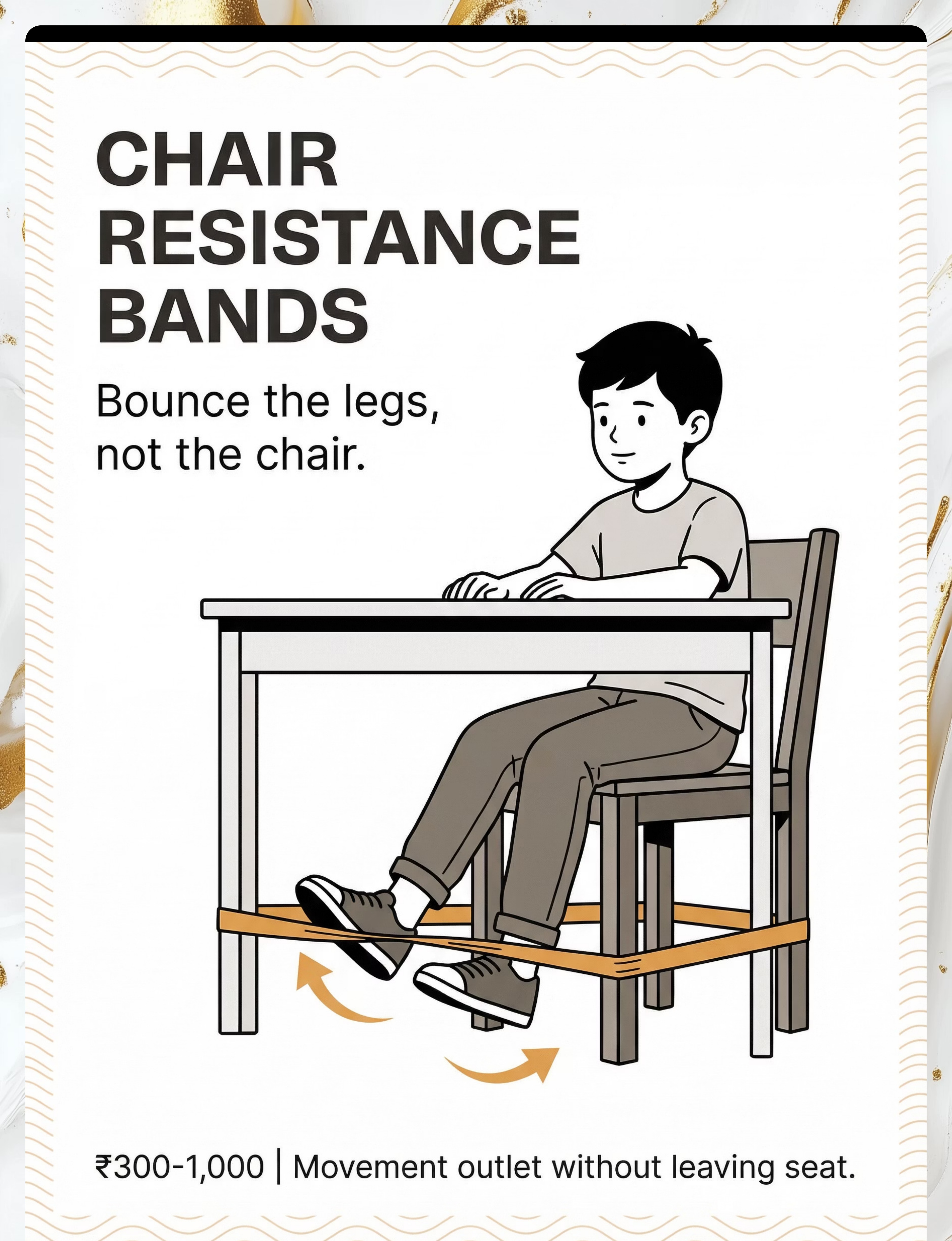
Material 2: Chair Resistance Bands (Bouncy Bands)
Stretches across chair front legs. Gives bouncing, kicking feet something to push against. Delivers proprioceptive input through legs without leaving the seat. For children who bounce, kick, or rock their chairs — this is the invisible solution.
🟣 Motor/Movement Tools | ₹300–1,000
🔑Key: Medium resistance. Too light = no input. Too heavy = fatigue.
🔑Key: Medium resistance. Too light = no input. Too heavy = fatigue.
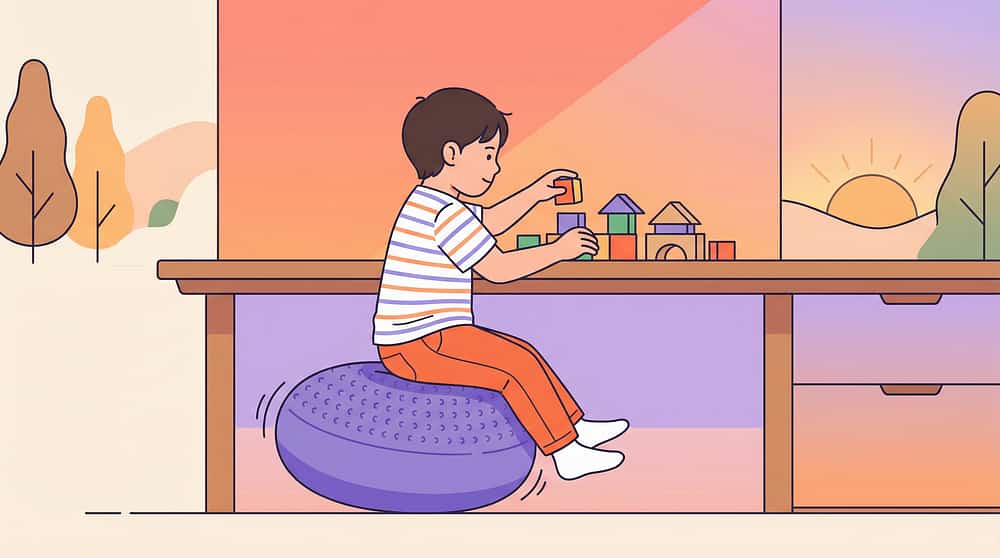
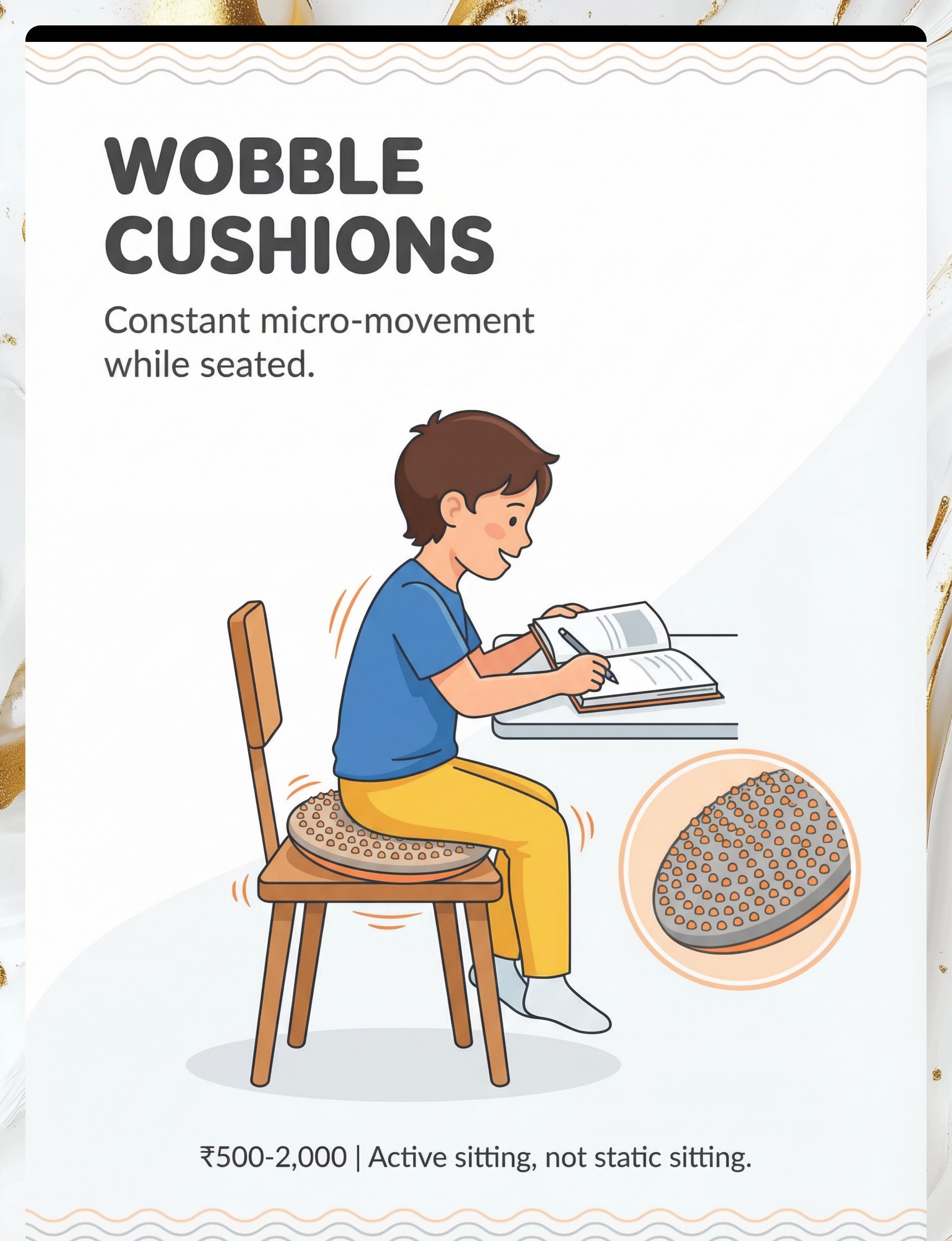
Material 3: Wobble Cushions & Dynamic Seating
Inflatable textured disc creates unstable seating — requires constant micro-adjustments engaging the vestibular system and core. The child is technically moving constantly, but invisibly. Research-supported for improving attention and reducing off-task behavior in ADHD.
🟣 Sensory Tools / Seating | ₹500–2,000
🔑Key: Introduce gradually. Less inflation to start, increase as child adapts.
🔑Key: Introduce gradually. Less inflation to start, increase as child adapts.
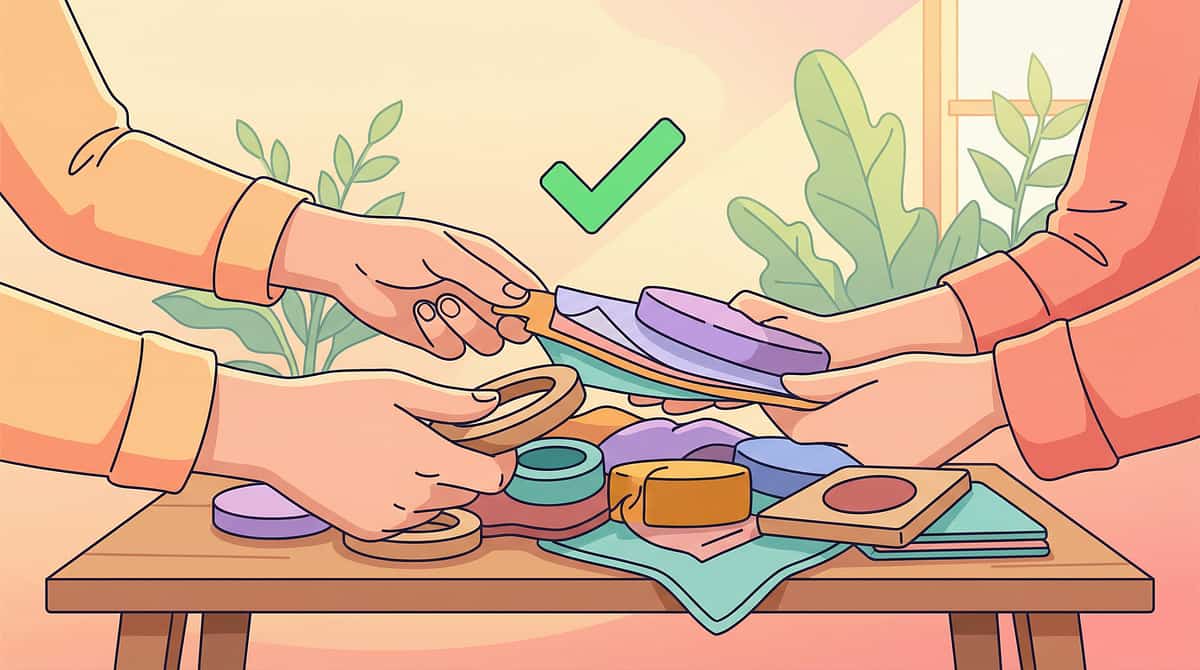
9 Materials — Continued (4–6)

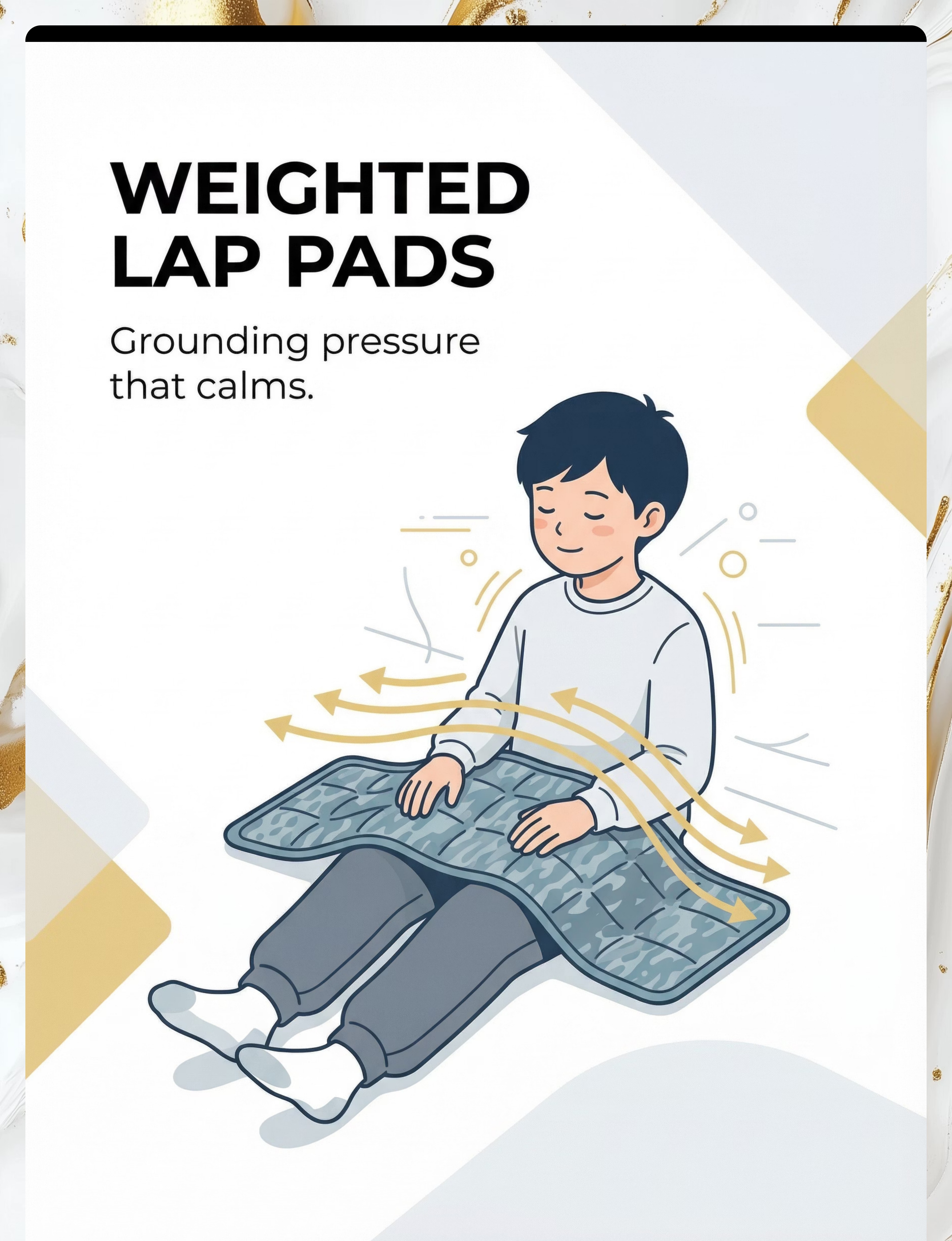
Material 4: Weighted Lap Pads
Deep pressure proprioceptive input — the calming signal the nervous system responds to most powerfully. 1–2.5 kg across the thighs while seated provides continuous grounding input that reduces the need for movement-seeking. For children who feel "floaty" or anxious.
🟣 Weighted Items | ₹800–3,000
🔑Key: ~5–10% of body weight. Child should feel grounded, not trapped.
🔑Key: ~5–10% of body weight. Child should feel grounded, not trapped.
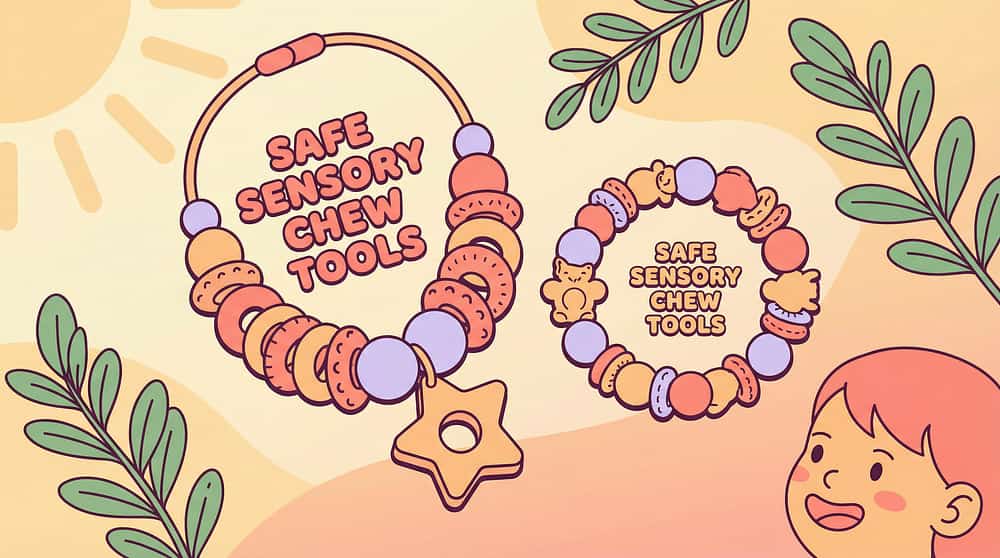
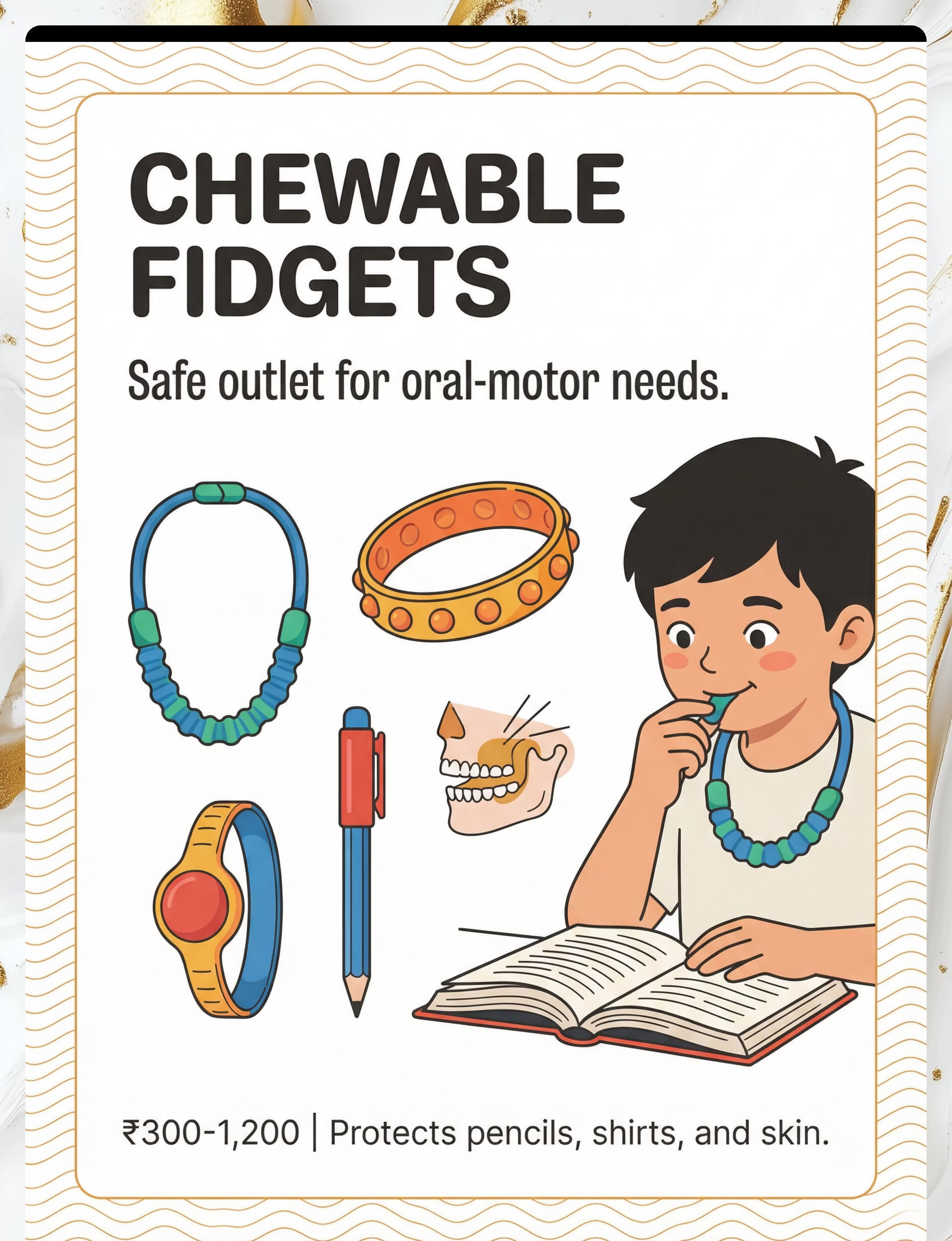
Material 5: Chewable Fidgets & Oral Sensory Tools
Food-grade silicone chew necklaces, bracelets, and pencil toppers. The rhythmic jaw input is highly regulating — similar to how gum-chewing helps adults focus. For children who destroy pencils and clothing, this provides the input safely.
🟣 Oral Motor Tools | ₹300–1,200
🔑Key: Food-grade silicone only. Inspect regularly. Personal use — not shared.
🔑Key: Food-grade silicone only. Inspect regularly. Personal use — not shared.

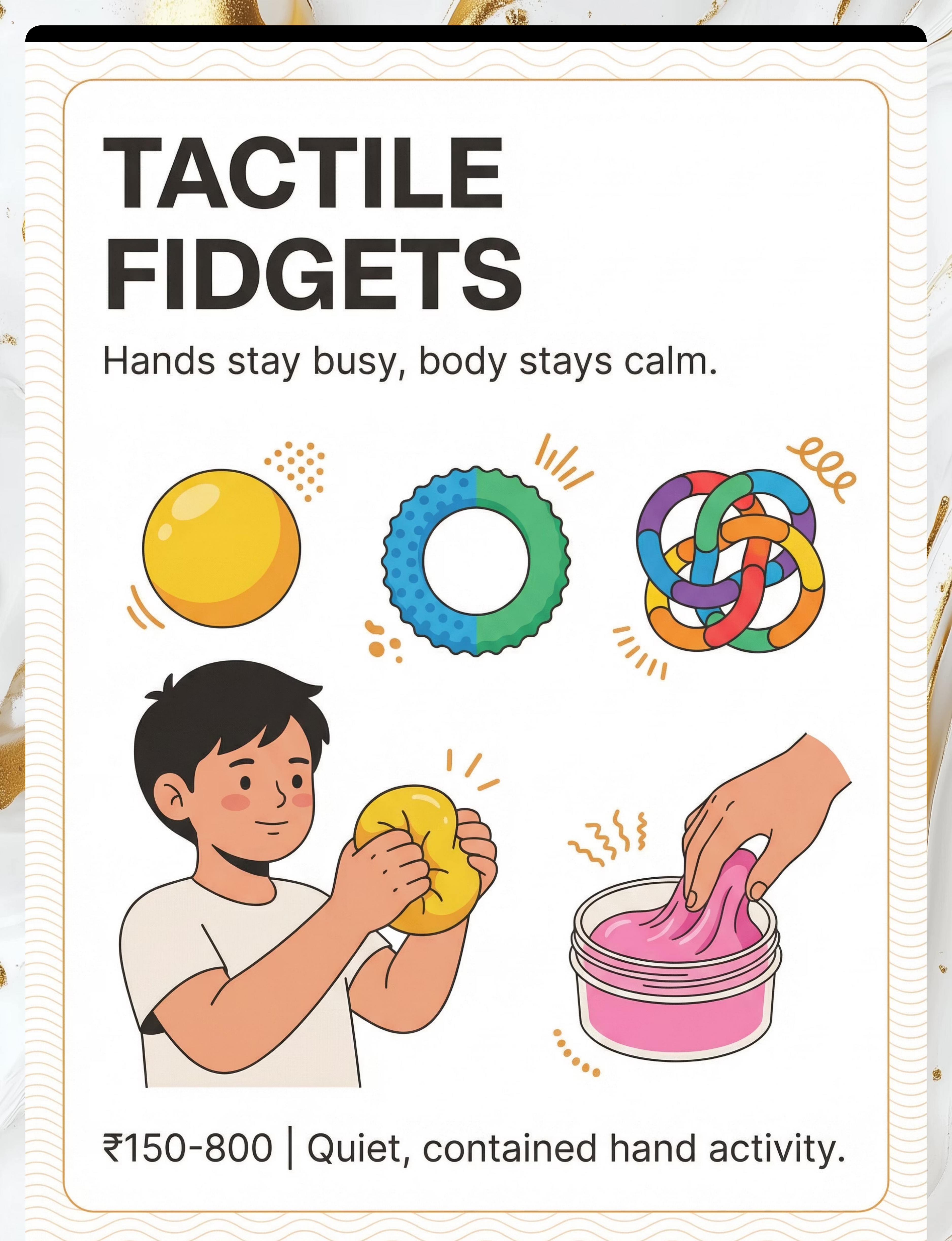
Material 6: Tactile Fidgets & Stress Balls
Stress balls, tangles, therapy putty, textured rings — quiet, contained hand activity providing proprioceptive squeeze input. For children who touch everything and everyone nearby, designated tactile fidgets give the hands approved input.
🟣 Sensory Tools | ₹150–800
🔑Key: Rotate tools every 1–2 weeks — the brain habituates to familiar input.
🔑Key: Rotate tools every 1–2 weeks — the brain habituates to familiar input.

9 Materials — Continued (7–9)
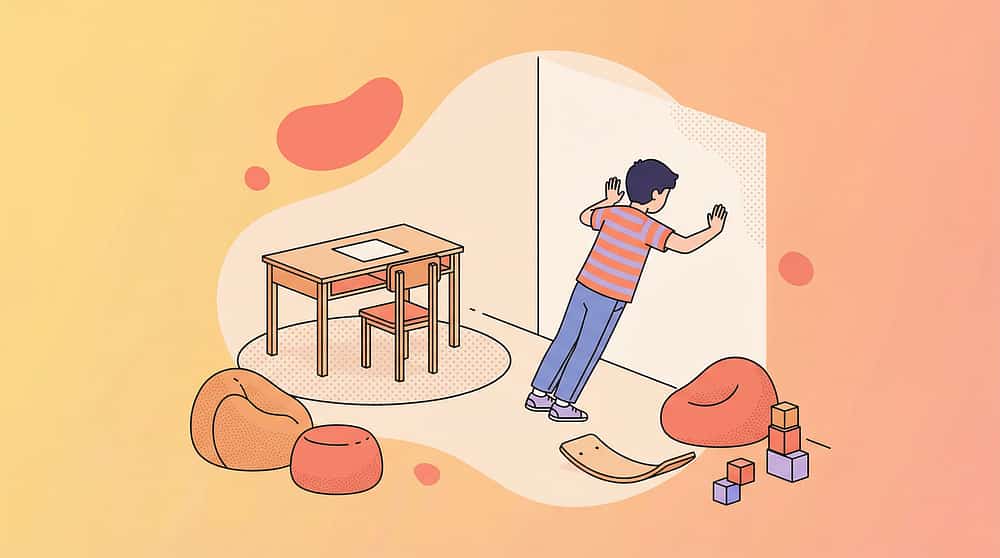
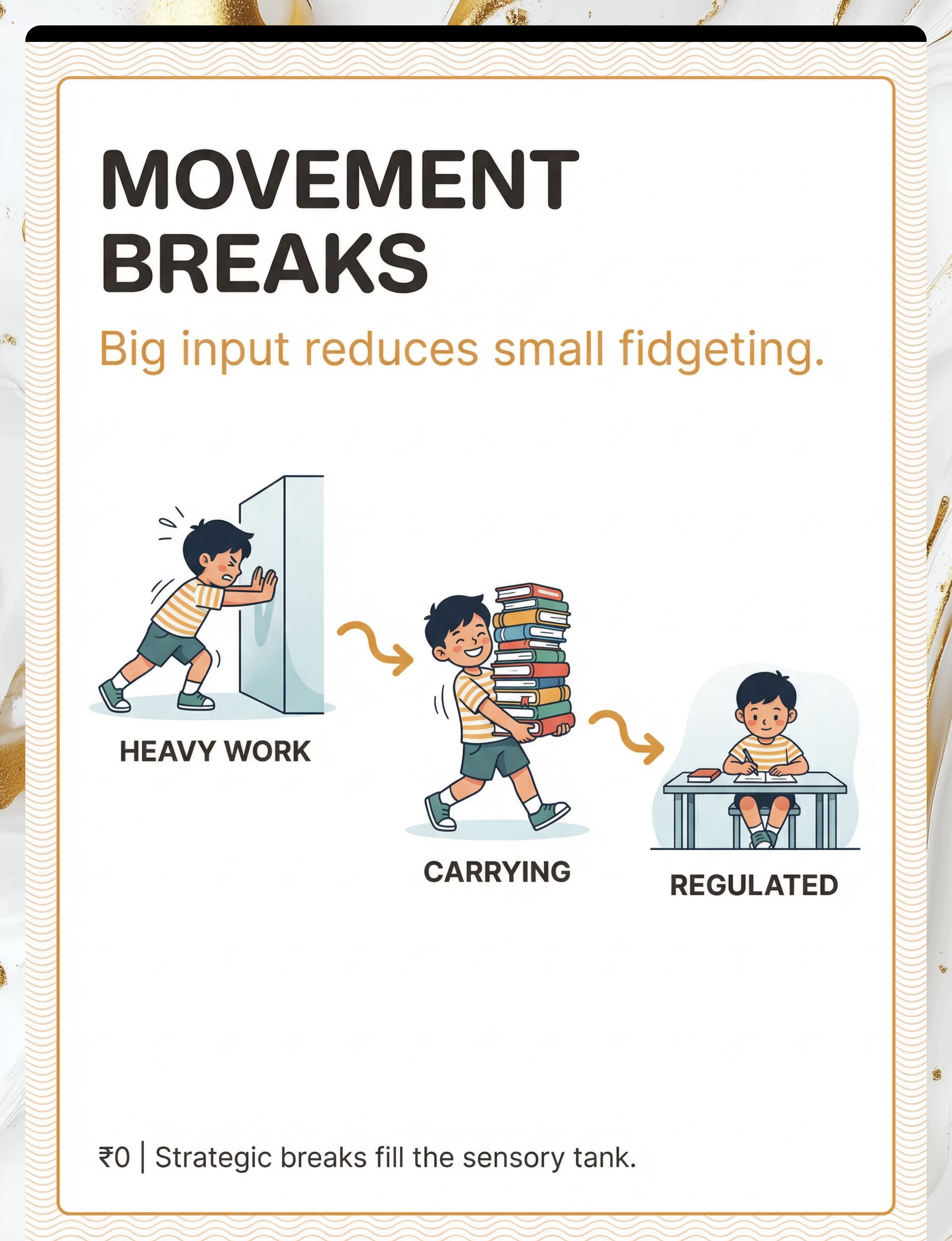
Material 7: Movement Break Tools
Scheduled 2–5 minute movement breaks with heavy-work activities (wall push-ups, carrying books, jumping jacks) proactively fill the nervous system's sensory tank, reducing background fidgeting during subsequent seated work.
🟣 Motor/Movement Tools | ₹0 (FREE — no purchase needed)
🔑Key: BEFORE tasks, not after dysregulation. Proactive breaks prevent problems.
🔑Key: BEFORE tasks, not after dysregulation. Proactive breaks prevent problems.

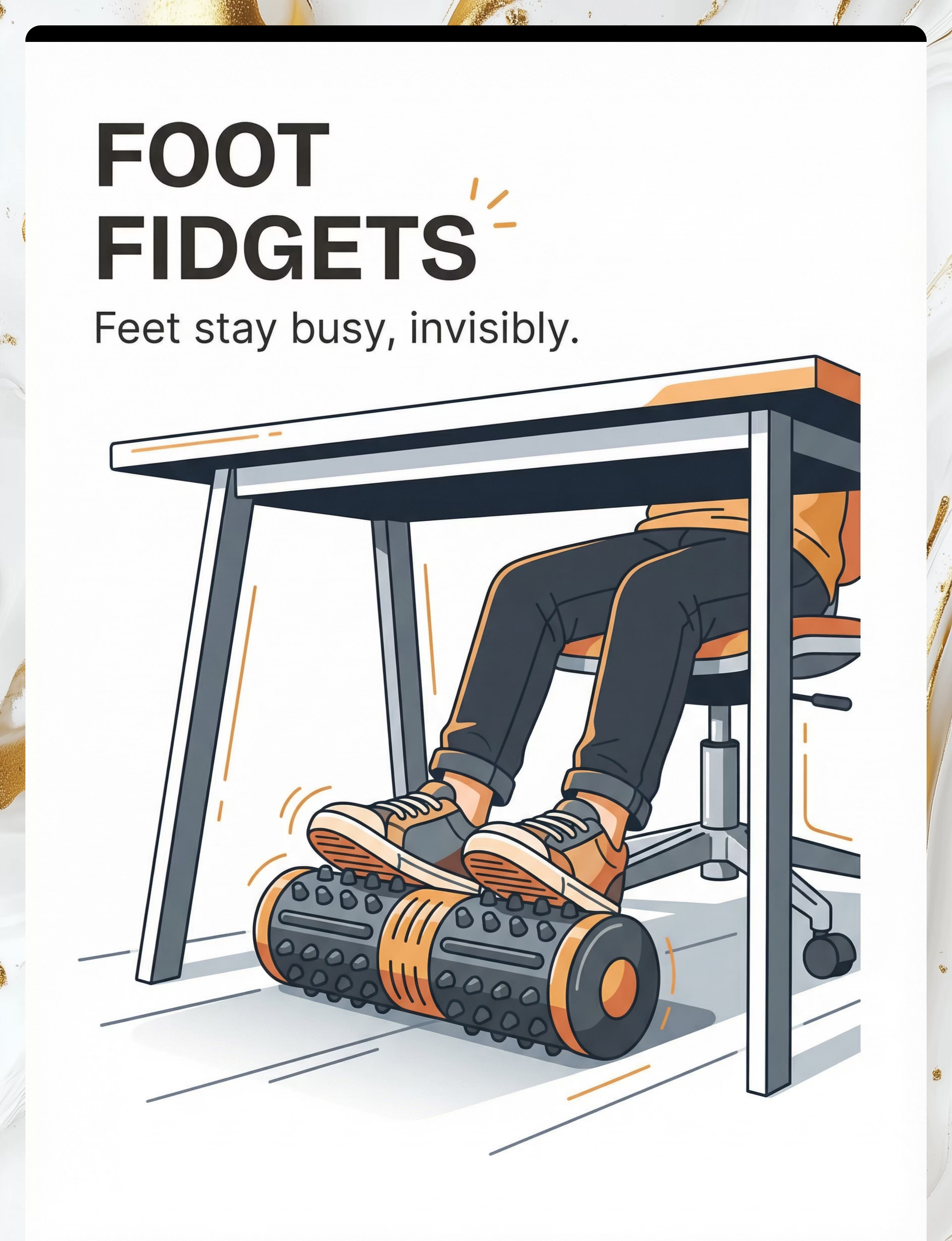
Material 8: Foot Fidgets & Under-Desk Tools
Foot rollers, textured foot rests, foot fidget boards under the desk. For children who kick desks, swing legs disruptively — the movement happens below desk level where no one sees it. Texture + resistance works better than flat surfaces.
🟣 Sensory Tools / Motor | ₹300–1,500
🔑Key: Must stay in position — ensure no tripping hazard.
🔑Key: Must stay in position — ensure no tripping hazard.

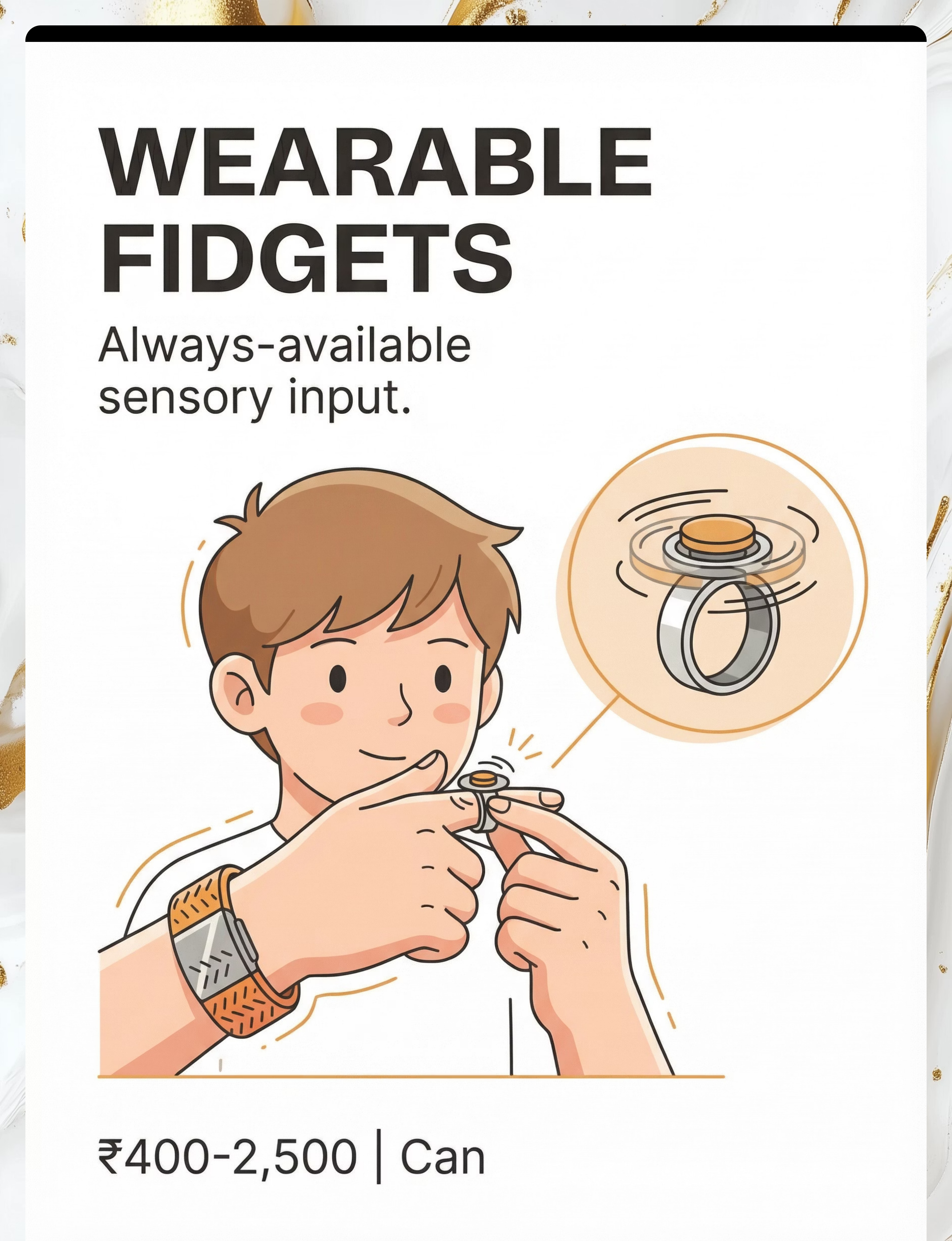
Material 9: Wearable Fidgets & Compression Wear
Fidget rings, spinner rings, textured bracelets, chew jewelry, compression undershirts, weighted vests — always available because they're on the child's body. For settings where separate objects aren't permitted, or children who lose their tools.
🟣 Sensory Tools / Compression | ₹400–2,500
🔑Key: Choose options that blend in. Children's social comfort matters.
🔑Key: Choose options that blend in. Children's social comfort matters.
Pinnacle Recommends Starter Kit: Don't buy all 9. Start with: (1) one quiet tactile fidget, (2) a chair resistance band, (3) a movement break routine. These three, consistently implemented, produce measurable change within 2–3 weeks.

Every Family Can Start Today — Regardless of Budget
WHO Nurturing Care Framework (2018): Effective early interventions must be accessible to families at all income levels. Every tool on this page has a ₹0 household alternative that preserves the core sensory principle.
Material | Buy Option | DIY / Zero-Cost Alternative | |
Fidget Cube | ₹200–800 | Small kit: smooth stone + piece of Velcro + short chain + rubber band — variety of textures prevents habituation | |
Chair Resistance Band | ₹300–1,000 | Thick exercise band tied between chair legs (₹50) — same proprioceptive push-back input | |
Wobble Cushion | ₹500–2,000 | Partially deflated beach ball placed on chair seat — creates unstable surface engaging vestibular system | |
Weighted Lap Pad | ₹800–3,000 | Cloth bag filled with 1–2 kg rice or dried beans, sewn shut — same deep pressure proprioceptive mechanism | |
Chewable Fidget | ₹300–1,200 | NO DIY for chewables. Food-grade silicone is non-negotiable for oral items. Worth purchasing for safety. | |
Stress Ball | ₹150–800 | Balloon filled with flour or rice, double-knotted — same squeeze/proprioceptive input | |
Movement Break | ₹0 | Wall push-ups, carrying books, jumping jacks, animal walks — heavy work = proprioceptive tank fill | |
Foot Fidget | ₹300–1,500 | Shallow box of dried beans under desk for feet — tactile + proprioceptive foot input | |
Wearable Fidget | ₹400–2,500 | Textured hair tie on wrist; smooth ring from kitchen drawer — always-available tactile input |
₹0 Starter Kit: DIY stress ball · Exercise band on chair · Movement break routine · Textured hair tie on wrist · Handful of dried beans in a bag for foot input

Your Child's Safety Is the Intervention's First Step
🟢 GREEN — PROCEED
✅ Child is not in acute distress or meltdown
✅ Child has eaten and is not overtired
✅ Materials are appropriate size for age (no choking hazards for under 5s)
✅ Fidget tools are clean and undamaged
✅ The environment is prepared
✅ You have observed your child's dominant fidgeting pattern before selecting the tool
✅ Child has eaten and is not overtired
✅ Materials are appropriate size for age (no choking hazards for under 5s)
✅ Fidget tools are clean and undamaged
✅ The environment is prepared
✅ You have observed your child's dominant fidgeting pattern before selecting the tool
🟡 AMBER — MODIFY
⚠️ Child seems anxious or over-aroused: begin with weighted lap pad before stimulating fidgets
⚠️ Child new to wobble cushion: start with lowest inflation, seated on floor first
⚠️ Oral sensory tool first use: introduce outside of demanding tasks first
⚠️ Movement break during challenging tasks: end task, complete break, then return
⚠️ Child new to wobble cushion: start with lowest inflation, seated on floor first
⚠️ Oral sensory tool first use: introduce outside of demanding tasks first
⚠️ Movement break during challenging tasks: end task, complete break, then return
🔴 RED — DO NOT PROCEED
🚫 Child has a known tic disorder — consult OT/neurologist first
🚫 Active skin-picking wounds, nail-biting to bleeding, or hair-pulling causing distress — requires specialist behavioral assessment
🚫 Weighted items: NEVER cover face or restrict breathing; NEVER exceed 10% body weight
🚫 Chewable fidgets: NEVER use if torn or damaged; NEVER share
🚫 Any tool that consistently causes MORE agitation — discontinue and consult OT
🚫 Active skin-picking wounds, nail-biting to bleeding, or hair-pulling causing distress — requires specialist behavioral assessment
🚫 Weighted items: NEVER cover face or restrict breathing; NEVER exceed 10% body weight
🚫 Chewable fidgets: NEVER use if torn or damaged; NEVER share
🚫 Any tool that consistently causes MORE agitation — discontinue and consult OT
STOP IMMEDIATELY if: Child is biting/chewing the fidget tool until it tears · Self-injury that is new or escalating · Signs of distress that worsen with tool use · Sudden-onset fidgeting that appears different from baseline (could indicate medical/medication cause). Call 9100 181 181 (FREE, 16+ languages, 24x7)

The Right Environment Determines 80% of Session Success
Setup Checklist
✅ Chair resistance band attached securely to both front chair legs
✅ Wobble cushion inflated to child's preferred level
✅ 2–3 fidget tools within arm's reach (not 9 — choice without overwhelm)
✅ Weighted lap pad accessible nearby
✅ Foot fidget board or bean box positioned under desk before child sits
✅ Television / screens in another room or covered
✅ Work materials already on the desk (fidgets come second)
✅ Timer visible to child (visual transition support)
✅ Water bottle accessible (oral hydration also regulates)
✅ Wobble cushion inflated to child's preferred level
✅ 2–3 fidget tools within arm's reach (not 9 — choice without overwhelm)
✅ Weighted lap pad accessible nearby
✅ Foot fidget board or bean box positioned under desk before child sits
✅ Television / screens in another room or covered
✅ Work materials already on the desk (fidgets come second)
✅ Timer visible to child (visual transition support)
✅ Water bottle accessible (oral hydration also regulates)
Environment Specifications
💡Lighting: Natural light preferred. Avoid flickering fluorescents — they add sensory load.
🔊Sound: Quiet or soft background music (not TV); remove competing noise sources.
🌡️Temperature: Comfortable; not too warm — heat increases arousal.
📏Space: Enough for the child to access all tools without major repositioning.
🪑Seating Position: Feet flat or on fidget board. Hips at 90°. Desk at elbow height. The body mechanics of the chair directly amplify or limit the tools' effectiveness.
👁️Parent Position: Beside the child at their eye level — not across the table, which can feel interrogative.

ACT III: THE EXECUTION
Cards 13–22
60 Seconds Before You Begin — The Pre-Session Check
Check | What to Look For | Notes | Status | |
🍽️ Fed? | Child has eaten in last 2 hours | If not, wait. | ✅ / ⚠️ | |
😴 Rested? | Not overtired; basic night sleep achieved | Modify if tired. | ✅ / ⚠️ | |
🌡️ Regulated? | Not already in meltdown or high-distress state | Postpone if red. | ✅ / 🔴 | |
🏃 Heavy Work? | Ideally 10 min of outdoor play or movement before desk work | Add break first if not. | ✅ / ⚠️ | |
💊 Medication? | (If applicable) within effective window | Note timing. | ✅ / ⚠️ | |
😊 Approachable? | Will make eye contact, not rigidly avoidant | Start slow if resistant. | ✅ / ⚠️ | |
🎯 Task Selected? | Clear, brief task for this session — not overwhelming | Clarify first. | ✅ / ⚠️ |
ALL GREEN → PROCEED
Continue to Step 1: The Invitation
3+ GREEN, 1–2 AMBER → MODIFY
Simplify task + start with weighted lap pad
ANY RED → POSTPONE
Calming activity first, retry in 30 min or call 9100 181 181
The best session is one that starts right. Five minutes of readiness assessment prevents thirty minutes of struggle. Honor your child's preconditions.
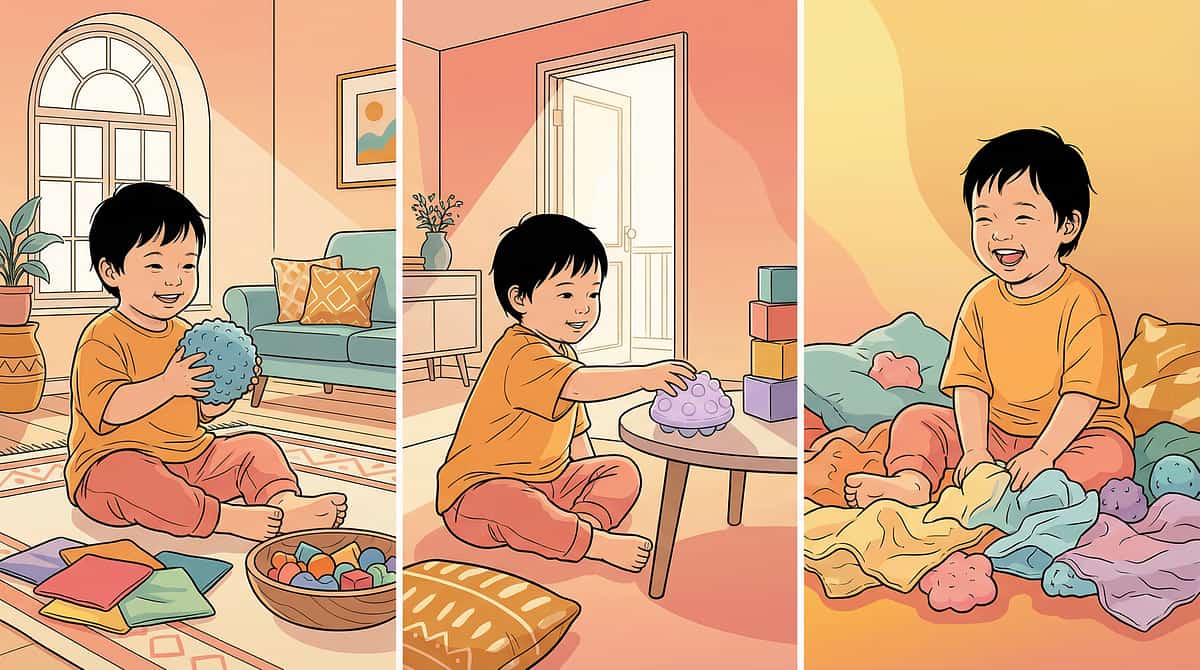
Step 01 / 06
Every Session Begins With Invitation — Never Command
"Hey [name], I've got something for your hands while we do this. Want to pick one?"
(Show 2–3 fidget options in your palm — not the whole kit)
Body Language Guidance
• Crouch to child's eye level — don't stand over them
• Relaxed, curious tone — not urgent, not demanding
• Present tools with open palm, not extended toward them
• Wait 10 seconds without filling the silence
• Relaxed, curious tone — not urgent, not demanding
• Present tools with open palm, not extended toward them
• Wait 10 seconds without filling the silence
Timing: 30–60 seconds
ABA Principle: Pairing + Low-demand initiation before task placement
ABA Principle: Pairing + Low-demand initiation before task placement
What Acceptance Looks Like
✅ Reaches for a tool (any tool — choice is acceptance)
✅ Makes eye contact with the options
✅ Asks about one of the tools
✅ Sits down in the prepared chair
✅ Makes eye contact with the options
✅ Asks about one of the tools
✅ Sits down in the prepared chair
What Resistance Looks Like & How to Modify
⚠️ Pushes tools away: Set them on the table within reach; don't insist. Say: "They're here if you want them."
⚠️ Runs from the area: Follow calmly. Say: "Want to come back in 5 minutes?"
⚠️ Doesn't engage with tools but sits: That's fine — the chair band and wobble cushion are already working.
⚠️ Runs from the area: Follow calmly. Say: "Want to come back in 5 minutes?"
⚠️ Doesn't engage with tools but sits: That's fine — the chair band and wobble cushion are already working.

Step 02 / 06
The Child Is Seated. The Nervous System Is Receiving Input.
The moment your child sits on the wobble cushion with the resistance band at their feet and a fidget in their hand, the nervous system has begun receiving proprioceptive and vestibular input. You haven't done the "task" yet. The regulation is already beginning.
Seating First
Child sits on wobble cushion, chair band at feet. No comment needed. This is invisible regulation already in motion.
Fidget Tool Second
Once seated, casually offer: "Here's the [cube/ball/tangle] — want to hold it while we work?"
Weighted Pad Third (if indicated)
After child is settled: "This is a warm blanket for your lap — it's heavy in a good way."
Task Last
Only introduce the work after the sensory environment is established. The regulation comes before the task.
Reinforcement Cue: When child picks up fidget tool independently: "Perfect — you're getting yourself ready to work." Timing: 1–3 minutes for settling.

Step 03 / 06
The Task Begins — The Fidget Works In the Background
The task is the foreground. The regulation is the background.
Three Key Principles of Correct Execution
1. Permit Movement Through Tools, Not From Tasks:
Allow: feet bouncing on chair band, hands working the fidget cube, rocking on wobble cushion, chewing necklace.
Interrupt: leaving the seat, disrupting others, using tools dangerously.
Allow: feet bouncing on chair band, hands working the fidget cube, rocking on wobble cushion, chewing necklace.
Interrupt: leaving the seat, disrupting others, using tools dangerously.
2. Don't Comment on the Fidgeting:
Narrating the fidgeting draws attention to it and can increase self-consciousness. Simply allow the tools to work silently. Your commentary should be about the TASK, not the movement.
Narrating the fidgeting draws attention to it and can increase self-consciousness. Simply allow the tools to work silently. Your commentary should be about the TASK, not the movement.
3. Duration Architecture:
Ages 4–6: Task blocks of 3–5 min, movement break, repeat
Ages 7–10: Task blocks of 7–10 min with ambient fidget tools throughout
Ages 11–14: Task blocks of 10–15 min; movement breaks every 30–45 min
Ages 4–6: Task blocks of 3–5 min, movement break, repeat
Ages 7–10: Task blocks of 7–10 min with ambient fidget tools throughout
Ages 11–14: Task blocks of 10–15 min; movement breaks every 30–45 min
Child Response Spectrum
✅Ideal: Fidgeting through tools while completing task; less whole-body disruption
✅Acceptable: Still fidgeting significantly but using tools; attempting task
⚠️Concerning: Fidgeting escalating despite tools; abandoning task; distress signs → move to cool-down
Meta-analysis (PMC10955541): 40-minute therapy sessions showed maximum effectiveness. Home sessions 10–20 min with core action occupying 40–60% of session time.

Step 04 / 06
Therapeutic Dosage — Quality Over Quantity
3 sessions where the child genuinely engaged with the tools while completing a task > 10 sessions where tools were forced and the child was distressed. Progress is built through successful repetitions, not exhausted ones.
1
Phase 1 — Weeks 1–2
Daily 10-minute sessions with tools present. Focus on tolerance and habituation.
2
Phase 2 — Weeks 3–4
Daily use; extend task duration by 2–3 minutes per week as child adapts.
3
Phase 3 — Weeks 5–8
Tools available throughout the child's day, not just structured sessions.
4
Phase 4 — Ongoing
Tools embedded as permanent environmental features. Self-selection emerges.
Variation Options to Prevent Habituation
Vary the fidget tool: Rotate between stress ball / tangle / fidget cube / therapy putty every 3–5 days. The brain habituates to familiar input, making the same tool less effective over time.
Vary the chair setup: Alternate between wobble cushion, standard cushion + chair band, and wobble cushion + chair band on different days.
Vary the task: Ensure the task itself is engaging enough that the child wants to complete it. Boring tasks increase dysregulation regardless of tools.
Vary the movement break: Wall push-ups one day, carrying books the next, animal walks the next.

Step 05 / 06
Timing Is Everything — The 3-Second Reinforcement Rule
Reinforcement delivered within 3 seconds of the desired behavior is exponentially more effective than delayed praise. The behavior you reinforce is the behavior that grows. Be specific. Be immediate. Be genuine.
What to Reinforce
✅ Reaching for the fidget tool independently
✅ Completing any portion of the task while using tools appropriately
✅ Remaining seated (even if fidgeting) for longer than yesterday
✅ Choosing the appropriate tool without prompting
✅ Self-correcting (returning to fidget tool after brief lapse)
✅ Completing any portion of the task while using tools appropriately
✅ Remaining seated (even if fidgeting) for longer than yesterday
✅ Choosing the appropriate tool without prompting
✅ Self-correcting (returning to fidget tool after brief lapse)
Reinforcement Scripts
🌟"You kept your hands on your fidget the whole time — and look how much work you got done!"
🌟"Your body needed to move, and you found the right way to do it. That's huge."
🌟"You stayed in your seat for [X] minutes. That's [X+2] minutes longer than last week."
🌟"You chose your wobble cushion all by yourself today. Your body knows what it needs."
Verbal Praise
Always, immediately
Physical Affection
Hug, high-five — if child-preferred
Token
Sticker toward reward board
Preferred Activity
5 minutes of choice activity after session
Celebrate the attempt, not just the success. A child who used the fidget tool for 2 minutes before abandoning it made progress. Reinforce the attempt.
Step 06 / 06
No Session Ends Abruptly — The 3-Minute Transition
Abrupt endings create resistance to future sessions. A structured transition ritual teaches the child's nervous system what "ending" feels like, making next time safer.
Minute 1 — Warning
"Two more minutes, then we're all done for today." Show visual timer if available. Do not remove tools yet.
Minute 2 — Transition
"One more minute. You've done such great work today." Begin casually putting away work materials. Child may continue using fidget tool.
Minute 3 — Closure
"Okay — we're done! You can keep the [fidget] for now, or we can put it in your special spot." Involve child in putting materials away if able.
Transition Object
If the child finds endings difficult, designate one fidget tool as the "carry tool" — it transitions with them into the next activity, bridging the session boundary.
Post-Session Calming Options
🟦 Brief outdoor walk or 5 minutes of free movement
🟦 Preferred quiet activity (book, puzzle)
🟦 Snack (oral-sensory input continues regulation)
🟦 Preferred quiet activity (book, puzzle)
🟦 Snack (oral-sensory input continues regulation)
If child resists ending: Don't force. Say: "I can see you're not ready. Two more minutes." Then use the transition script again.

60 Seconds of Data Now = Weeks of Clear Progress Later
Today's Session — D-442 Tracker
Date: _______ | Time: _______ | Duration: ___ min
Tool(s) Used: □ Fidget cube □ Chair band □ Wobble cushion □ Lap pad □ Chewable □ Stress ball □ Movement break □ Foot fidget □ Wearable
Task Completed While Fidgeting: □ Yes □ Partial □ No
Seated Duration (minutes): _______
Disruptive Fidgeting Incidents: _______
Child's Mood After Session:😊 Calm 😐 Neutral 😤 Agitated
Parent Notes: ___________________________
Why Tracking Matters
The data you collect after each session is the evidence your therapist uses to refine the approach — identifying which tools correlate with longest seated duration, optimal session length before satiation, and whether proprioceptive, vestibular, or oral-motor tools are producing the fastest improvement.
📥Download Tracking Sheet PDF for a printable version to keep at your desk.
📱Open GPT-OS® In-App Tracker → gpt-os.com for digital capture integrated with your child's AbilityScore® profile.
📞9100 181 181 (FREE, 16+ languages) — Ask your Pinnacle therapist to review your tracking data at your next session.
ABA Data Collection Standards: Frequency, duration, and interval measurement as standard practice. BACB Guidelines + Cooper, Heron & Heward (Applied Behavior Analysis, 8th ed.)
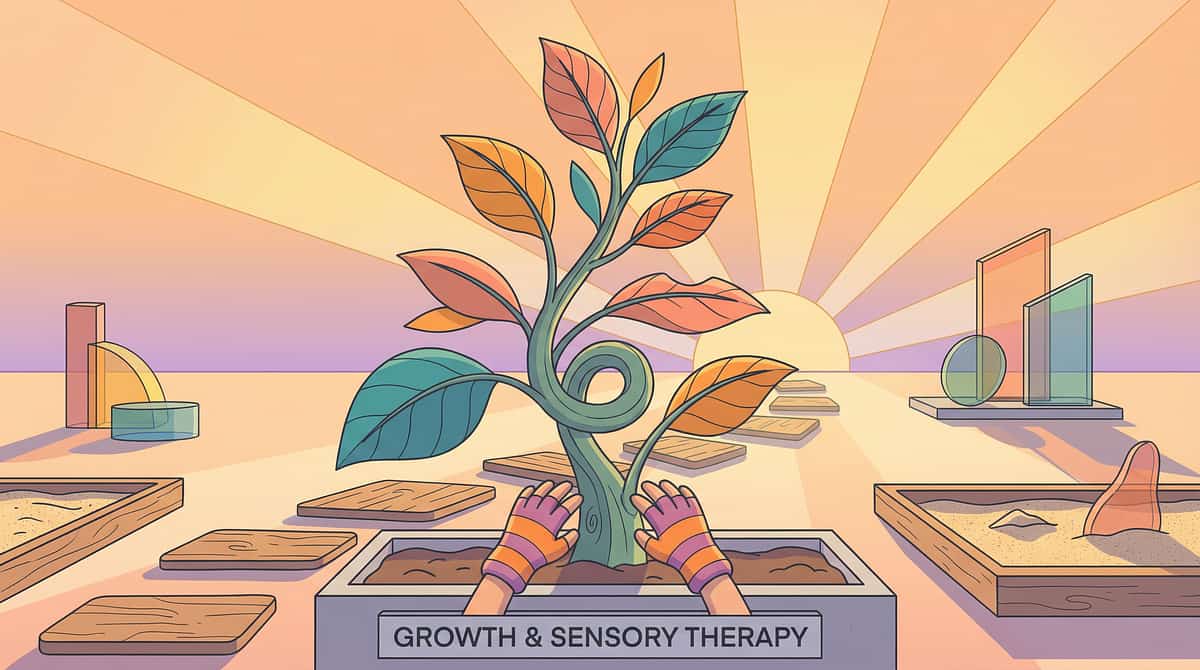
Session Abandonment Is Not Failure — It's Data
A session that didn't go perfectly is still a session. Every observation about what didn't work is information that GPT-OS® and your therapist use to refine the approach. You did not fail. The technique needs adjustment.
"My child refused all the fidget tools"
Why: Tools are new/unfamiliar stimuli — the nervous system may be treating them as potential threats. Normal for sessions 1–5.
Next time: Introduce tools during play (no academic task) first. Let child explore on their own terms for 3–5 days before pairing with work.
Next time: Introduce tools during play (no academic task) first. Let child explore on their own terms for 3–5 days before pairing with work.
"The fidgeting got WORSE when I introduced tools"
Why: Some tools increase arousal before regulating — the wobble cushion effect in first sessions. Vestibular input is activating before calming.
Next time: Start with weighted lap pad (calming) instead of wobble cushion (activating). Match tool type to child's regulation direction needed.
Next time: Start with weighted lap pad (calming) instead of wobble cushion (activating). Match tool type to child's regulation direction needed.
"My child used the fidget tool but still couldn't do the task"
Why: Tools are necessary but may not be sufficient alone if task demand exceeds current capacity.
Next time: Reduce task length by 50%. The tools will work better when cognitive load is lower.
Next time: Reduce task length by 50%. The tools will work better when cognitive load is lower.
"My child is chewing through the fidget tool"
Why: Oral seeking is high — single chew tool may not have enough resistance for this child's oral needs.
Next time: Try higher-resistance chew tool (OT can recommend grade). Add spicy/sour food before session.
Next time: Try higher-resistance chew tool (OT can recommend grade). Add spicy/sour food before session.
"The wobble cushion distracted my child from the task"
Why: Too much vestibular challenge from high inflation; the cushion became the primary focus rather than background regulation.
Next time: Deflate cushion by 50%. The movement should be barely noticeable, not dramatic.
Next time: Deflate cushion by 50%. The movement should be barely noticeable, not dramatic.
"Nothing worked — complete session failure"
Why: Multiple factors may have combined — wrong tools, wrong task, wrong timing, child wasn't regulated to begin with.
Next time: Return to Card 13 (readiness check). Review preconditions. Call 9100 181 181 for guided troubleshooting with a Pinnacle OT.
Next time: Return to Card 13 (readiness check). Review preconditions. Call 9100 181 181 for guided troubleshooting with a Pinnacle OT.
Emergency Guidance: If the child became severely distressed: End the session immediately. Do not "push through." Apply calming input (weighted blanket, dark quiet space, no demands). Call 9100 181 181 if distress is prolonged.

No Two Nervous Systems Are Identical — Adjust the Protocol
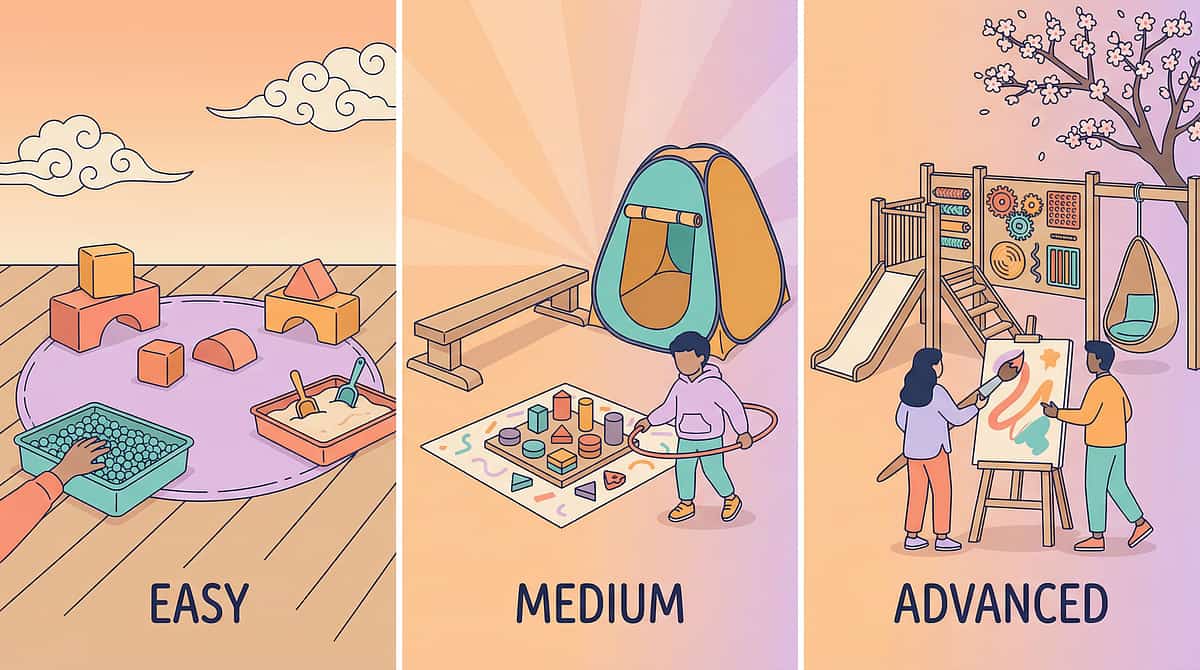
The difficulty arc above shows how to gradually transfer regulation responsibility from the environment to the child — the ultimate goal of the protocol.
🔵 For the Sensory Seeker (Needs MORE input)
Pair wobble cushion AND chair band AND stress ball simultaneously · Use heavier weighted lap pad (1.5–2.5 kg) · Schedule 3x movement breaks per hour · Heavy work BEFORE every seated task · Consider compression vest for whole-body input
🟣 For the Sensory Avoider (Easily Overwhelmed)
Start with ONE quiet, non-textured fidget only · Introduce tools during preferred activities first · Use very gentle, smooth fidgets (smooth ball > spiky ball) · Avoid wobble cushion initially · Keep sessions 3–5 min and predictable
🟡 For Younger Children (Ages 4–6)
Tool introduction through play: "This is your magic helper ball" · 3–5 minute maximum task sessions · Use play-based tasks (puzzles, building) rather than academic work · Focus on chair band and stress ball — simplest tools first
🔴 For Older Children / Adolescents (Ages 11–14)
Involve the young person in choosing tools — autonomy is critical · Choose socially acceptable tools (fidget ring > stress ball in public) · Frame tools as performance enhancers: "athletes use these too" · Shift to self-monitoring data collection — they track their own data
Ages 4–6
5–7 min sessions
Ages 7–10
10–15 min sessions
Ages 11–14
15–20 min sessions

ACT IV: THE PROGRESS ARC
Cards 23–30
Weeks 1–2: You Are Building the Foundation, Not Seeing the House Yet
Progress at Week 2
Foundation-building phase. Neural adaptation is beginning beneath the surface.
What you WILL Likely See
✅ Child tolerates fidget tools being present (even if not using consistently)
✅ Chair band / wobble cushion accepted without active rejection
✅ Slightly less chair rocking or desk kicking
✅ Parent becoming more confident with tool setup routine
✅ Chair band / wobble cushion accepted without active rejection
✅ Slightly less chair rocking or desk kicking
✅ Parent becoming more confident with tool setup routine
What You Are NOT Likely to See Yet
❌ Dramatic reduction in fidgeting (nervous systems change slowly)
❌ Independent tool selection without prompting
❌ Sustained focus during tasks
❌ Teacher commenting on improvement
❌ Independent tool selection without prompting
❌ Sustained focus during tasks
❌ Teacher commenting on improvement
"If your child tolerated the wobble cushion for 5 minutes longer today than last week — that is genuine neural adaptation. Celebrate it."
Weeks 1–2 are the hardest. The new tools may increase some children's awareness of their movement before reducing it. This is normal. Do not interpret early resistance as "the tools don't work." You are building the nervous system's new vocabulary — it takes time.
Data Focus for These Weeks: Track minutes tolerated with tools / minutes seated / task completion % (partial is still data).
PMC11506176 (2024): Sensory integration outcomes emerge across 8–12 week timelines. Early indicators focus on tolerance and participation.
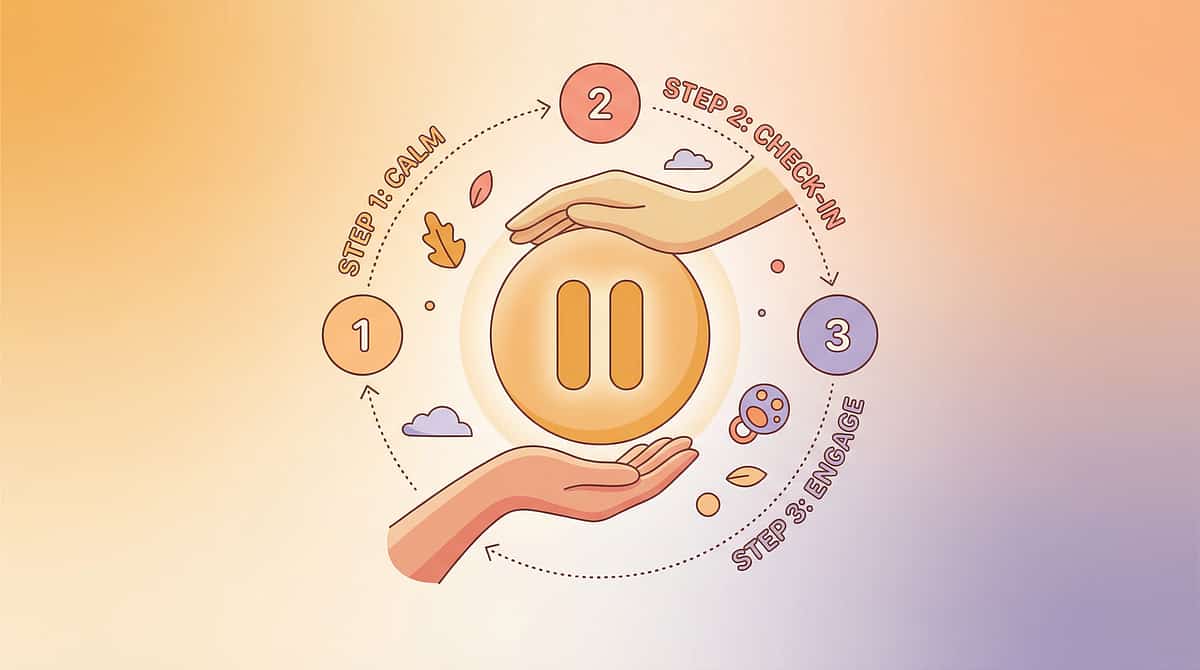
Weeks 3–4: The Neural Pathways Are Forming — Watch For These Signs
Progress at Week 4
Consolidation phase. First signs of internalization emerging.
✅ Child reaches for fidget tool without being prompted — first sign of internalization
✅ Increased time on task before fidgeting escalates
✅ Fewer instances of disruptive fidgeting (kicking desk, disturbing others)
✅ Child begins to show preference for specific tools
✅ Less resistance to the chair band / wobble cushion at setup
✅ Parent setup routine takes under 3 minutes
Behavioral signs of neural pathway formation:🧠 Child anticipates the tools: "Where's my fidget?" before sitting · 🧠 Child verbalizes awareness: "My hands want to do something" · 🧠 Spontaneous use of DIY alternatives when formal tools aren't available
Parent Milestone: You may notice you're more confident too. The setup routine feels natural. You're no longer preparing the environment anxiously — you're doing it fluidly. That parent confidence directly affects the child's nervous system response.
If consolidation signs are clear by Week 3: extend task blocks by 2–3 minutes AND introduce tools to homework context.

Weeks 5–8: The Tools Are Working — Here Is What Mastery Looks Like
Progress at Week 8
Mastery phase. Tools working in multiple settings. Independence emerging.
Mastery Criteria (Specific, Observable, Measurable)
✅ Child independently selects and uses appropriate fidget tools for 80%+ of observed task sessions
✅ Seated task duration increased by ≥50% from Week 1 baseline
✅ Disruptive fidgeting incidents reduced by ≥60% from Week 1 baseline
✅ Child can verbalize why they're using a tool: "It helps my hands so my brain can work"
✅ Tools now used in at least 2 settings (home + school, or home + community)
✅ Seated task duration increased by ≥50% from Week 1 baseline
✅ Disruptive fidgeting incidents reduced by ≥60% from Week 1 baseline
✅ Child can verbalize why they're using a tool: "It helps my hands so my brain can work"
✅ Tools now used in at least 2 settings (home + school, or home + community)
Generalization Indicators
🌍 Tool use appearing in classroom without parent prompting
🌍 Child requesting specific tools before demanding tasks
🌍 Reduction in teacher-reported disruptive fidgeting
🌍 Improved academic task completion per teacher report
🌍 Child requesting specific tools before demanding tasks
🌍 Reduction in teacher-reported disruptive fidgeting
🌍 Improved academic task completion per teacher report
Maintenance Check: Remove tools for one day and observe. Has the baseline improved? Is self-regulation beginning without external tools? This is the long-term goal — the tools teach the nervous system a new regulation vocabulary; eventually the vocabulary exists without the tools.
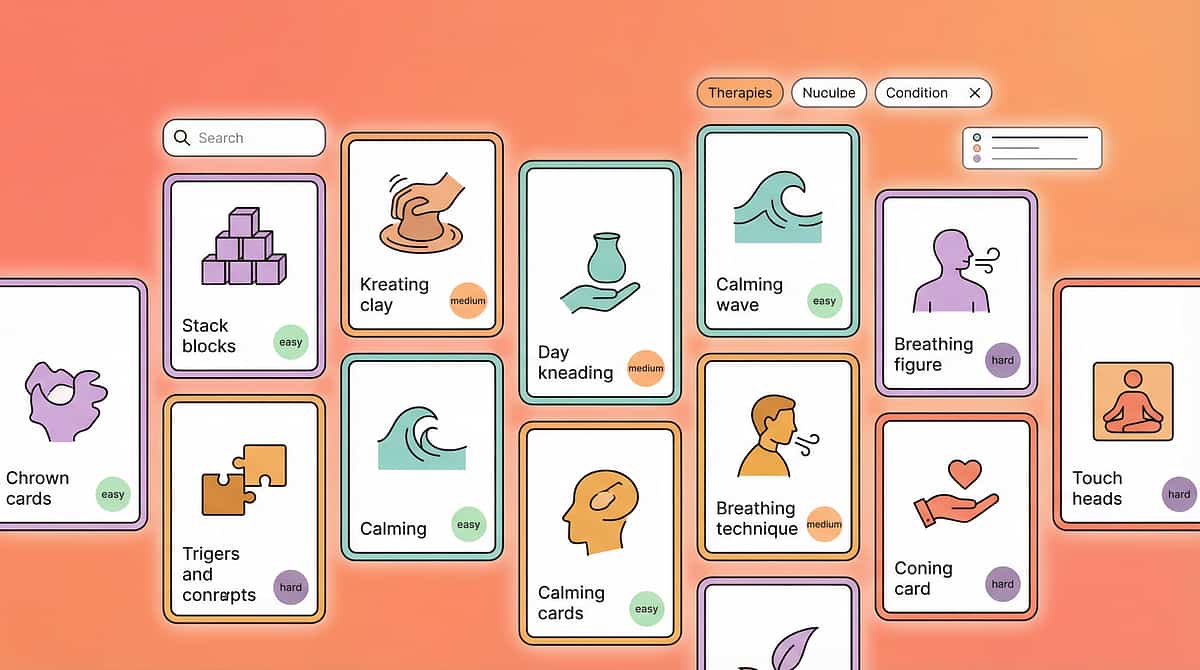
You Did This. Your Child Grew Because of Your Commitment.
You arrived here — possibly in the middle of a particularly difficult day — looking for something, anything, that might help. You read the science. You set up the environment. You built the routine. You adapted when things didn't go perfectly. You showed up, day after day, for a child whose nervous system was asking for something the world wasn't giving it.
And then, quietly, something shifted.
Your child now has tools for their body. Your child's brain has a new vocabulary for regulation. Your home has been transformed — in the space of 5–8 weeks — into an environment that supports your child's nervous system rather than fighting it. That is therapeutic infrastructure. That is what Pinnacle is built to give every family.
Create a Regulation Toolkit Box Together
Let your child decorate it with their name. These are their tools, not the therapist's tools. That ownership matters deeply to their sense of agency and self-regulation identity.
Document This Milestone
Take a photo of your child using their fidget tools effectively. Write down what you noticed in Week 1 vs. now. This is your evidence. It belongs to your child.
Share Your Story
Inspire another family navigating this exact challenge. Your experience shared in the Pinnacle community gives another parent the courage to start.
Even in the Progress Zone — Know When to Pause and Ask
🚨 Flag 1: Self-Injurious Fidgeting
What it looks like: Skin-picking to bleeding, nail-biting to the nail bed, hair-pulling with hair loss, head-banging.
Why it matters: These are beyond fidgeting — they require behavioral assessment, not just fidget tools.
Action: Call 9100 181 181 immediately.
Why it matters: These are beyond fidgeting — they require behavioral assessment, not just fidget tools.
Action: Call 9100 181 181 immediately.
⚠️ Flag 2: Tic-Like Movements
What it looks like: Sudden, rapid, repetitive movements or vocalizations the child cannot control (eye blinking, throat clearing, head jerking, sniffing) — different from voluntary fidgeting.
Why it matters: Tic disorders require specialized treatment (CBIT); fidget tools do not treat tics.
Action: Consult neurologist / developmental pediatrician.
Why it matters: Tic disorders require specialized treatment (CBIT); fidget tools do not treat tics.
Action: Consult neurologist / developmental pediatrician.
⚠️ Flag 3: New-Onset or Rapidly Worsening Fidgeting
What it looks like: Sudden increase in severity clearly different from the child's established baseline.
Why it matters: May indicate medication side effect, anxiety escalation, or medical cause.
Action: Teleconsult within 1 week.
Why it matters: May indicate medication side effect, anxiety escalation, or medical cause.
Action: Teleconsult within 1 week.
⚠️ Flag 4: Consistent Non-Response to All Tools
What it looks like: After 8 weeks of consistent implementation, no measurable change in seated duration, task completion, or disruptive incidents.
Why it matters: May indicate different primary driver (ADHD medication review, anxiety treatment needed, sensory profile mismatch).
Action: Comprehensive OT reassessment.
Why it matters: May indicate different primary driver (ADHD medication review, anxiety treatment needed, sensory profile mismatch).
Action: Comprehensive OT reassessment.
⚠️ Flag 5: Distress During Tool Use
What it looks like: Child consistently becomes more agitated, more dysregulated, or more avoidant when tools are introduced.
Why it matters: The tool type may be mismatched to the child's sensory profile.
Action: OT sensory profile assessment to reselect tools.
Why it matters: The tool type may be mismatched to the child's sensory profile.
Action: OT sensory profile assessment to reselect tools.

You Are Here — Here Is Where This Journey Goes
D-441 — Prerequisite
Self-Regulation Foundations — the groundwork for all regulatory tools
D-442 ← YOU ARE HERE
Constant Fidgeting — 9 Materials & Fidget Tool Integration Protocol
D-443 — Next Level
Hyperactivity Support — broader behavioral picture beyond the fidget tools
Path A — Tools Working Well
Move to D-443 (Hyperactivity Support). Your child is using fidget tools effectively. The next layer is broader hyperactivity support.
Path B — Oral Seeking Dominant
Move to D-442-DD-05 (Chewable Fidgets Deep Dive) for more sophisticated oral regulation strategies.
Path C — Seating Issues Dominant
Move to D-442-DD-03 (Dynamic Seating Solutions) to explore full seating system design.
Path D — Insufficient Progress
Return to D-441 (Self-Regulation Foundations). The prerequisite may not yet be fully in place.

More Techniques in the Sensory Regulation Domain
If you have fidget tools and resistance bands from D-442, you already own the primary materials for D-443, D-445, and D-438. Your investment extends across multiple techniques.
Technique | Code | Level | Canon Material | |
Self-Regulation Foundations | D-441 | 🟢 Intro | Visual Supports | |
9 Materials for Hyperactivity | D-443 | 🟡 Core | Movement Tools | |
9 Materials for Attention & Focus | D-445 | 🟡 Core | Cognitive Tools | |
Sensory Seeking Behavior | D-438 | 🟡 Core | Sensory Tools | |
Classroom Behavior Challenges | D-450 | 🔴 Advanced | Multiple | |
Dynamic Seating Solutions | D-442-DD-03 | 🟡 Core | Seating Tools |

This Technique Is One Piece of a Larger Plan
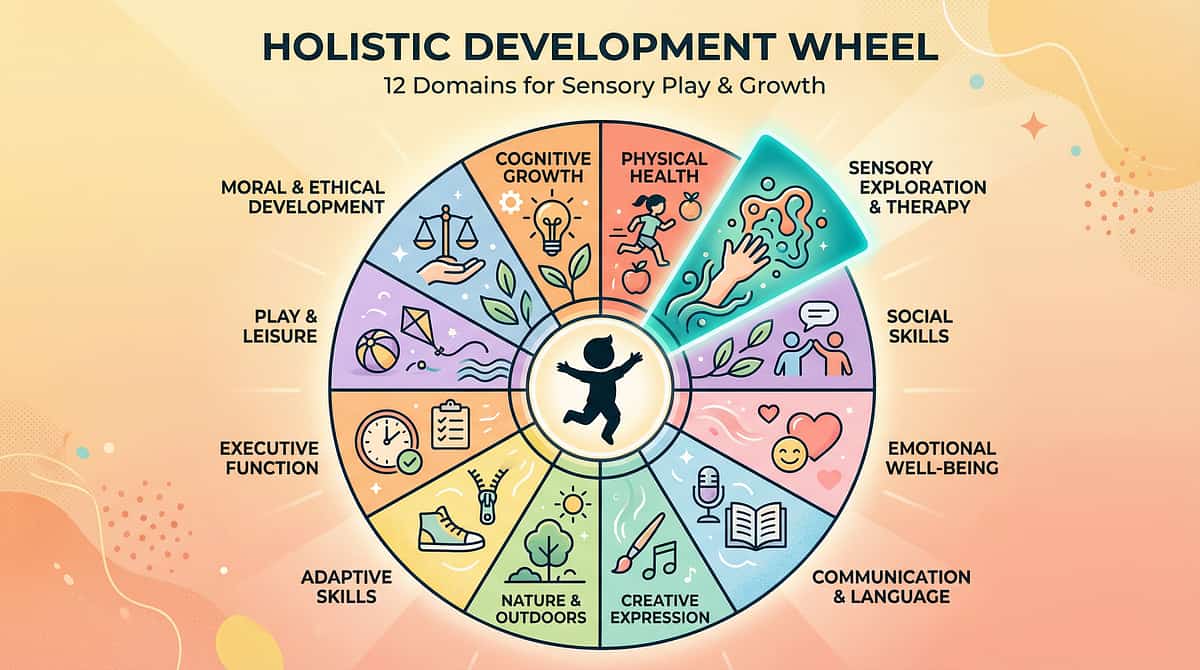
A child's development is not a single thread — it is a web. The regulation you build through D-442's fidget tools directly strengthens Domain B (social communication — less dysregulation means more social bandwidth), Domain C (emotional regulation — proprioceptive tools calm the limbic system), and Domain K (academic readiness — attention improvements feed directly into learning).
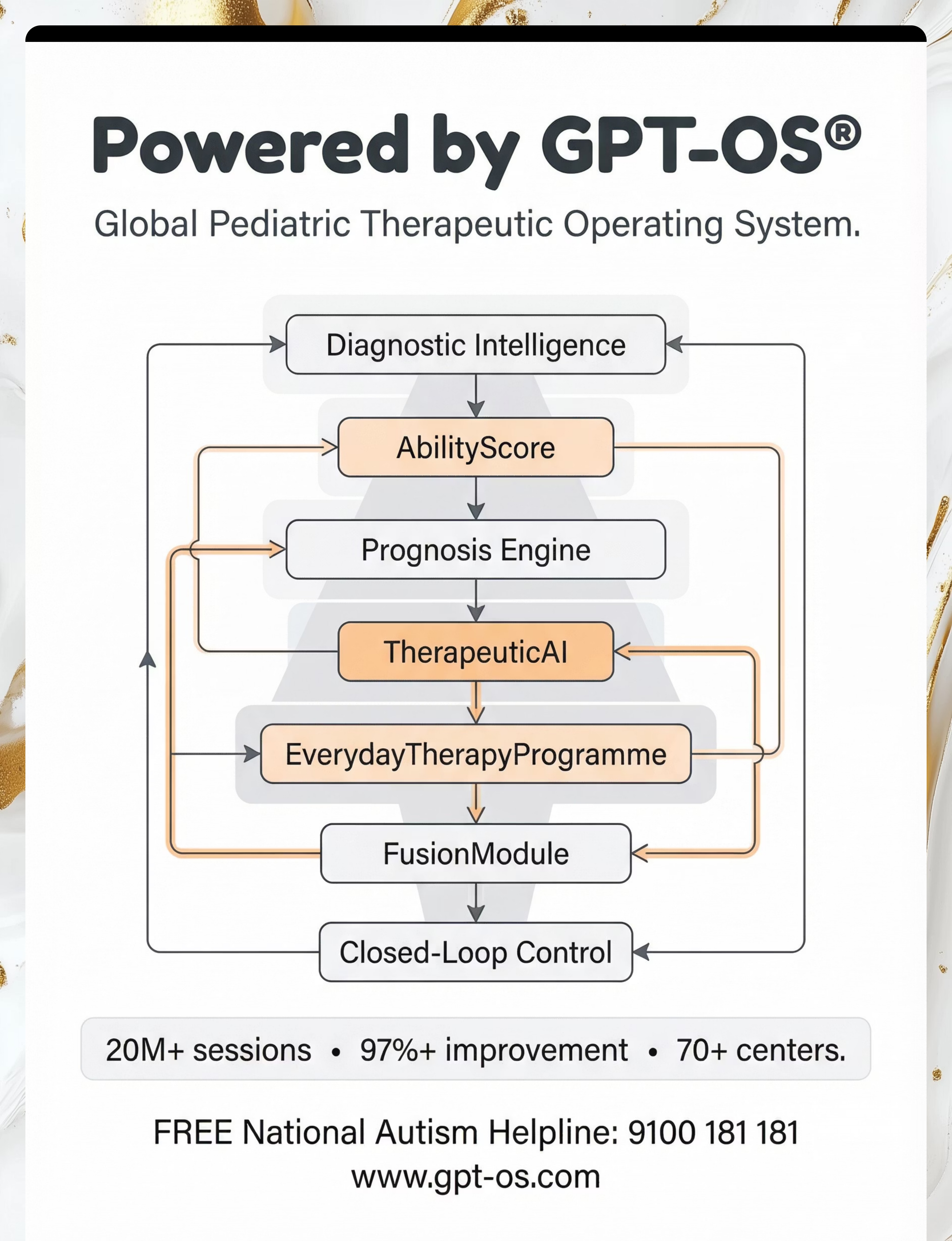
This is why GPT-OS® maps your child across all 12 domains simultaneously. Progress in one domain accelerates progress in others. Request an AbilityScore® assessment — the universal developmental benchmark that tracks your child's trajectory across all 12 domains. → gpt-os.com
ACT V: COMMUNITY & ECOSYSTEM
Cards 31–37
Real Families. Real Outcomes. Specific Behavioral Change.
"The Boy Who Couldn't Stay Seated"
Before (Week 1): Rajan, age 8, was moved to a desk by himself in class within the first month of second grade. He kicked the desk constantly, knocked over other children's materials, and could not complete any written work. His parents had tried reward charts, consequences, and multiple reminders with zero effect. By the time they reached Pinnacle, they were considering homeschooling.
After (Week 6): Rajan has a wobble cushion at his school desk (with OT letter to teacher), a chair resistance band, and a fidget ring he chose himself. He is completing 80% of in-class written assignments. His teacher has not called his parents in six weeks.
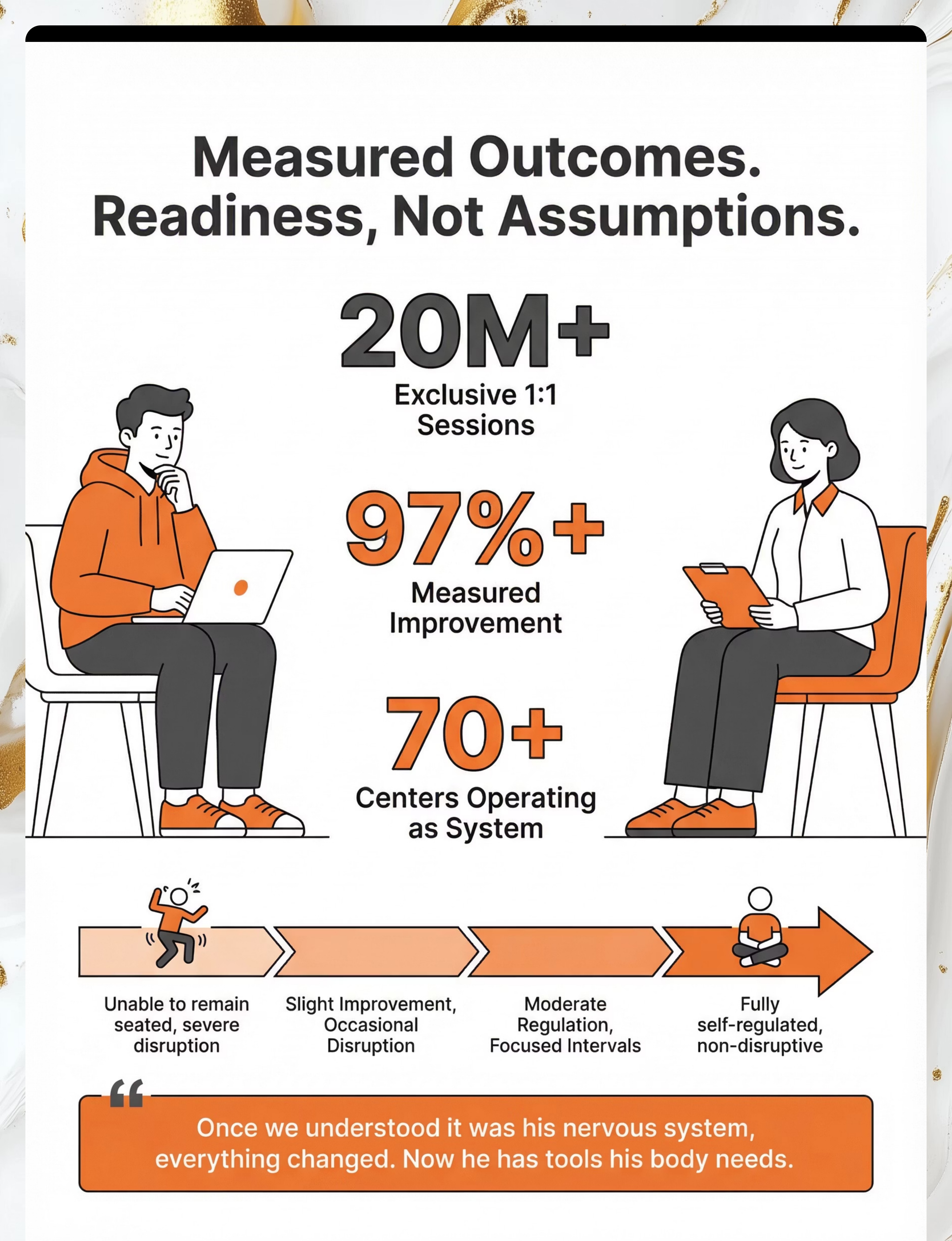
"Once we understood it was his nervous system, everything changed. He wasn't being difficult. He was hungry — and we finally figured out what the hunger was."
— Parent, Pinnacle Hyderabad Center (Illustrative case; outcomes vary)
"The Chewed-Up Shirts"
Before (Week 1): Priya, age 6, chewed through the collar and sleeves of every school uniform within the first week of wearing them. Her parents were spending ₹800/month replacing damaged clothing. She was also diagnosed with ASD and was in OT at a Pinnacle center for sensory processing.
After (Week 4): Priya now wears a food-grade silicone chew necklace at school and at home. The uniform destruction stopped completely by Week 3. She reaches for the necklace independently before any cognitively demanding task.
"Priya's oral seeking was high — her jaw was generating regulatory input. We didn't stop the chewing. We redirected it to an appropriate, hygienic outlet. The behavior didn't disappear — it found its proper channel."
— OT, Pinnacle Bangalore Center (Illustrative case; outcomes vary)
"Stop fighting the fidget. Channel it. Three tools and consistent implementation. That was all it took."

Isolation Is the Enemy of Adherence — Join Your Community
🟢 Pinnacle Parent WhatsApp Group — Sensory Regulation
Join 2,000+ parents navigating sensory processing and fidgeting challenges. Daily conversations, tool recommendations, school advocacy tips. When a parent who's been through Week 1 tells you it gets better, it lands differently than reading it here.
🔵 Pinnacle Online Parent Forum
Searchable database of parent questions and OT-answered responses. Find what worked for families with profiles similar to your child. Browse community.pinnacleblooms.org for answers from families who've navigated every variation of this challenge.
🟡 Local Parent Meetups
Monthly parent meetups at Pinnacle centers across India. Meet other families in your city. Share tools. Share stories. The in-person connection between parents doing this work together is therapeutic in itself.
🟣 Peer Mentoring — Connect with an Experienced Parent
If you've arrived here during a particularly hard stretch, our peer mentor network connects you with a parent who has navigated exactly this. Request a peer mentor by calling 9100 181 181 and asking for parent mentoring.
WHO Nurturing Care Framework: Parent support networks measurably improve intervention outcomes. Community engagement is a core principle of the NCF.
Home + Clinic = Maximum Impact
Specialist | Role at Pinnacle | Availability | |
Occupational Therapist | Sensory profile assessment + tool selection | 70+ centers | |
ABA / BCBA | Behavioral integration, reinforcement structure | 70+ centers | |
Special Educator | Classroom translation, IEP/504 advocacy | 70+ centers | |
NeuroDev Pediatrician | Medical evaluation, ADHD assessment | Selected centers | |
EverydayTherapyProgramme™ Coach | Home integration specialist | All centers + online |
Teleconsultation Available
Can't visit a center? Our teleOT team reviews your tracking data from D-442, watches a short video of your child's sessions (if comfortable), and provides personalized tool recommendations — all via video call.
Free Helpline
📞9100 181 181
FREE | 16+ languages | 24x7
No appointment needed. A Pinnacle specialist answers every call.
FREE | 16+ languages | 24x7
No appointment needed. A Pinnacle specialist answers every call.
WHO NCF Progress Report (2023): Primary health care identified as key platform for reaching all families with essential ECD interventions.
Deeper Reading for the Curious Parent
Study 1 — PRISMA Systematic Review (2024)
"Sensory integration intervention meets criteria to be considered evidence-based practice for children with ASD" — 16 qualifying studies, 2013–2023. 🔗 PubMed: PMC11506176
Study 2 — Meta-analysis, World J Clin Cases (2024)
"SI therapy effectively promoted social skills, adaptive behavior, sensory processing, and gross/fine motor skills across 24 studies."🔗 PMC10955541 | DOI:10.12998/wjcc.v12.i7.1260
Study 3 — Indian RCT, Padmanabha et al. (2019)
"Home-based sensory interventions demonstrated significant outcomes in Indian pediatric population" — first RCT in India. 🔗 DOI:10.1007/s12098-018-2747-4 | Indian J Pediatr
Study 4 — Frontiers in Integrative Neuroscience (2020)
"Comprehensive framework for evaluating sensory integration treatment in ASD establishing neurological basis."🔗 DOI:10.3389/fnint.2020.556660
Study 5 — NCAEP Evidence-Based Practices Report (2020)
"Sensory-based interventions and visual supports classified as evidence-based practices for autism."🔗 NCAEP 2020 Report — autismpdc.fpg.unc.edu
Additional Sources: WHO Nurturing Care Framework (2018) | UNICEF CCD Package (2023) | AOTA Sensory Integration Practice Guidelines | BACB Professional and Ethical Compliance Code

Your Data Is Not a Metric — It's a Signal That Helps Every Child
What GPT-OS® Learns from D-442 Data
• Which fidget tool types correlate with longest seated duration for profiles similar to your child
• Optimal session length before satiation for this child's profile
• Whether proprioceptive, vestibular, or oral-motor tools are producing the fastest improvement
• Cross-domain signals: is fidgeting reduction correlating with improvements in language, social, and emotional domains?
• Optimal session length before satiation for this child's profile
• Whether proprioceptive, vestibular, or oral-motor tools are producing the fastest improvement
• Cross-domain signals: is fidgeting reduction correlating with improvements in language, social, and emotional domains?
🔒 Data Protection
ISO 27001 compliant data handling · No sharing with third parties · Your child's data belongs to you · DPIIT DIPP8651 | MSME registered
"Your data, combined with data from 21 million sessions across 70+ centers, makes the recommendations for the next child more precise. Your participation in GPT-OS® doesn't just help your child — it helps every child whose family comes after you."

Consistency Across Caregivers Multiplies Impact
When a fidget toolkit works at home but not at school — when a child is regulated with one parent but dysregulated with another — it is almost always a consistency gap, not a child capacity gap. Every caregiver who understands these tools extends the therapeutic environment the child lives in. — WHO CCD Package, PMC9978394
📥 Download Family Guide PDF — D-442
One-page parent summary: What fidgeting is, 9 tools at a glance, quick start guide. Print and put on the fridge so every caregiver has instant reference.
📥 School Communication Template
Pre-written letter to teacher/school coordinator explaining the sensory basis of fidgeting, requesting specific accommodations (wobble cushion, fidget tools, movement breaks, front seating), with OT backing.
👴👵 Explain to Grandparents
"[Child's name]'s hands need to be busy to help his brain focus. The fidget gives his hands something to do so his mind can pay attention. It's not a toy — it's a tool his therapist recommended. Please let him use it."
Teacher / School Text Template
"[Child's name] is working with Pinnacle Blooms Network on sensory regulation. Their OT has recommended: wobble cushion / chair resistance band / fidget tool / movement breaks. These tools help [him/her] stay focused and reduce disruptive behavior. I'd appreciate 5 minutes to discuss this."
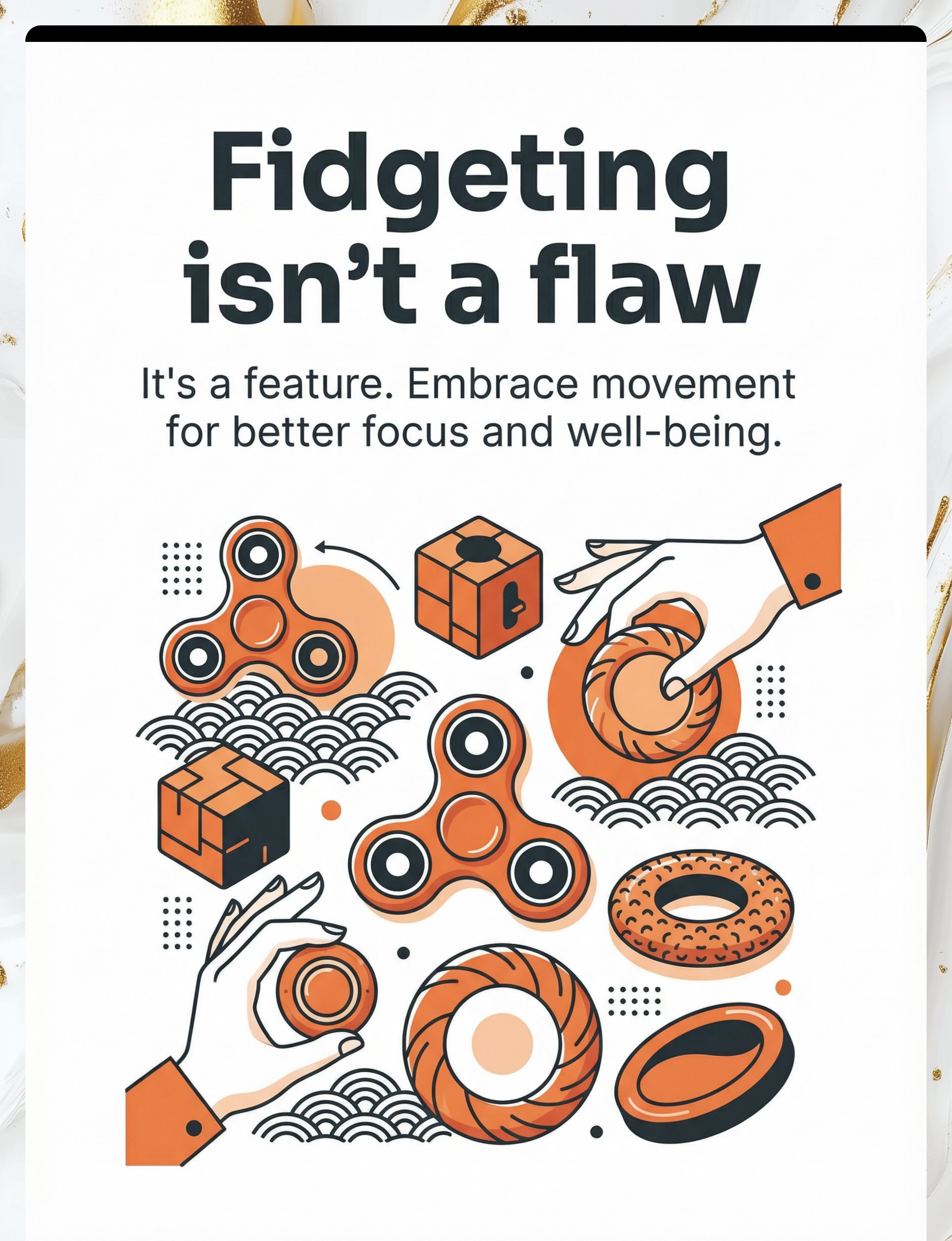
Preview of 9 materials that help with constant fidgeting Therapy Material
Below is a visual preview of 9 materials that help with constant fidgeting therapy material. The pages shown help educators, therapists, and caregivers understand the structure and content of the resource before use. Materials should be used under appropriate professional guidance.


Link copied!

ACT VI: THE CLOSE
FAQ + CTA + Promise
Questions Parents Ask Most — Answered
My child's teacher says fidget tools are distracting to other students. What do I do?
This is a common school concern that an OT advocacy letter (available in the share section) addresses directly. The solution is choosing quiet fidgets (no clicking), under-desk tools (invisible to peers), and the wobble cushion (completely invisible). Students with sensory needs have the right to reasonable accommodations. Request a meeting with the class teacher and share the school communication template.
How do I know which fidget tool to try first?
Look at your child's dominant fidgeting pattern. Hands always moving? Start with a tactile fidget. Legs always bouncing? Start with the chair resistance band. Chewing clothes or pencils? Start with a chewable fidget. The tool should match the body part and sensory channel that's most active. If unclear, call 9100 181 181 for free guidance.
Will my child become dependent on these tools and never function without them?
Research shows the opposite: children who are given appropriate sensory support develop better self-regulation skills over time, not less. The tools teach the nervous system a regulation vocabulary. As mastery builds, most children gradually need tools less — not more. Some children will use them through adulthood, as many successful adults already do.
My child seems to use the fidget as a toy and gets more distracted, not less.
This is a signal that the fidget was introduced during a task that was too demanding. Return to Steps 1–2: introduce the tool during low-demand or play-based activities first. The tool needs to become background regulation before it can work during high-demand tasks.
At what age can these tools start? My child is 3.
Many fidget principles apply from age 2 onward — especially wobble seating, movement breaks, and weighted input. Tool selection must be appropriate for developmental stage and safety (no small parts for under-5). Call 9100 181 181 for age-appropriate guidance. Our EverydayTherapyProgramme™ has specific protocols from age 18 months.
My child's pediatrician says "he'll grow out of it." Should I wait?
Fidgeting that significantly impairs functioning, learning, or relationships warrants intervention regardless of age. "Growing out of it" may mean the child learns to mask or internalize the fidgeting — which creates a different problem. Evidence-based tools give the nervous system what it needs now, while the brain is most plastic.
I can't afford most of these tools. What's the minimum investment to start?
Zero. See the DIY section's ₹0 starter kit: DIY stress ball (balloon + flour), exercise band on chair legs (₹50), movement break routine (free), textured hair tie on wrist (₹10 or from what you already own). The principle of meeting the sensory need is the intervention — the commercial tool is optional.
You Have Everything You Need to Begin Today
Not tomorrow. Not after the next appointment. Today — with what you already have.
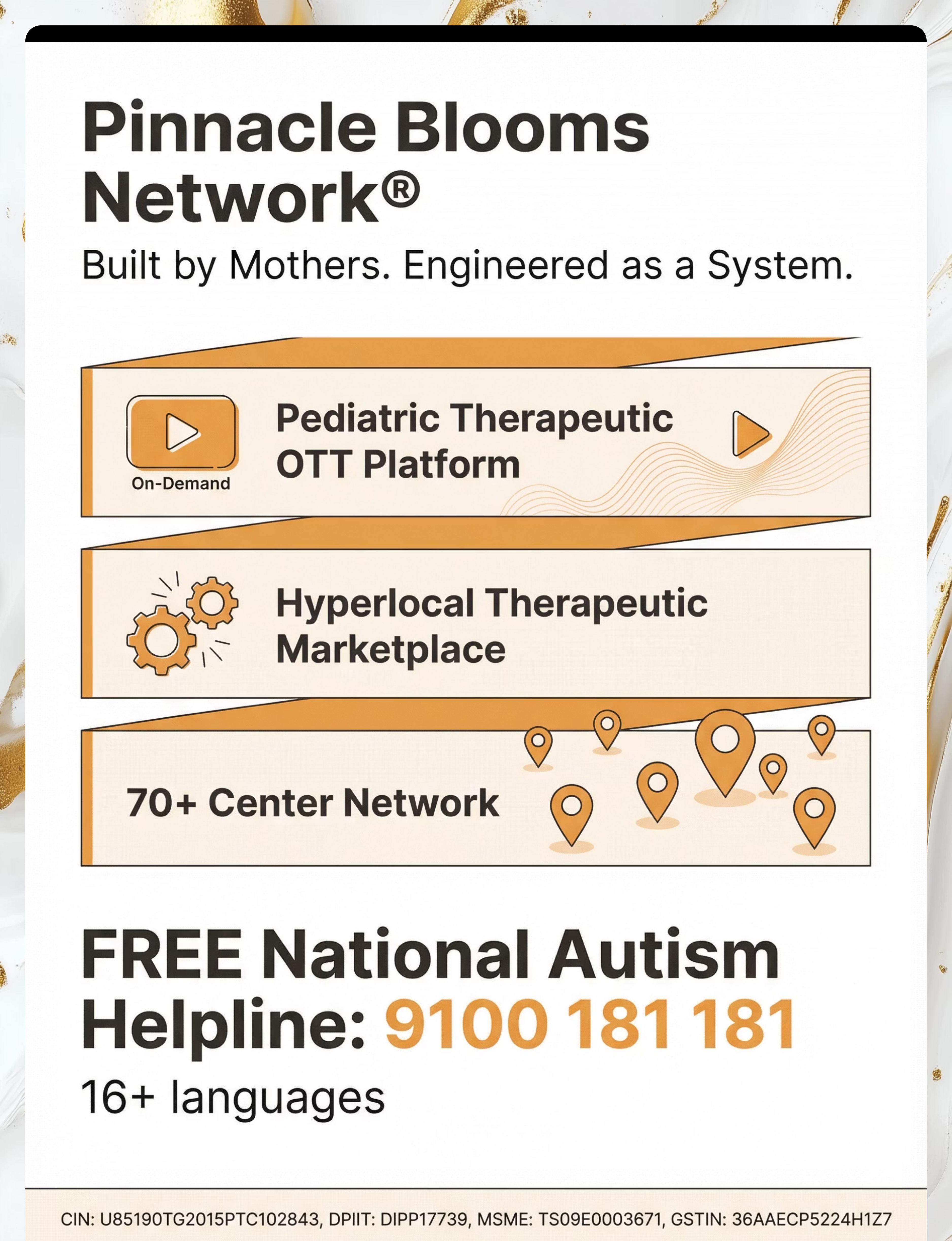
🌸Pinnacle Blooms Network® | Built by Mothers. Engineered as a System.
"From fear to mastery. One technique at a time."
OT • SLP • ABA • SpEd • NeuroDev | 20M+ Sessions | 97%+ Improvement | 70+ Centers | GPT-OS®
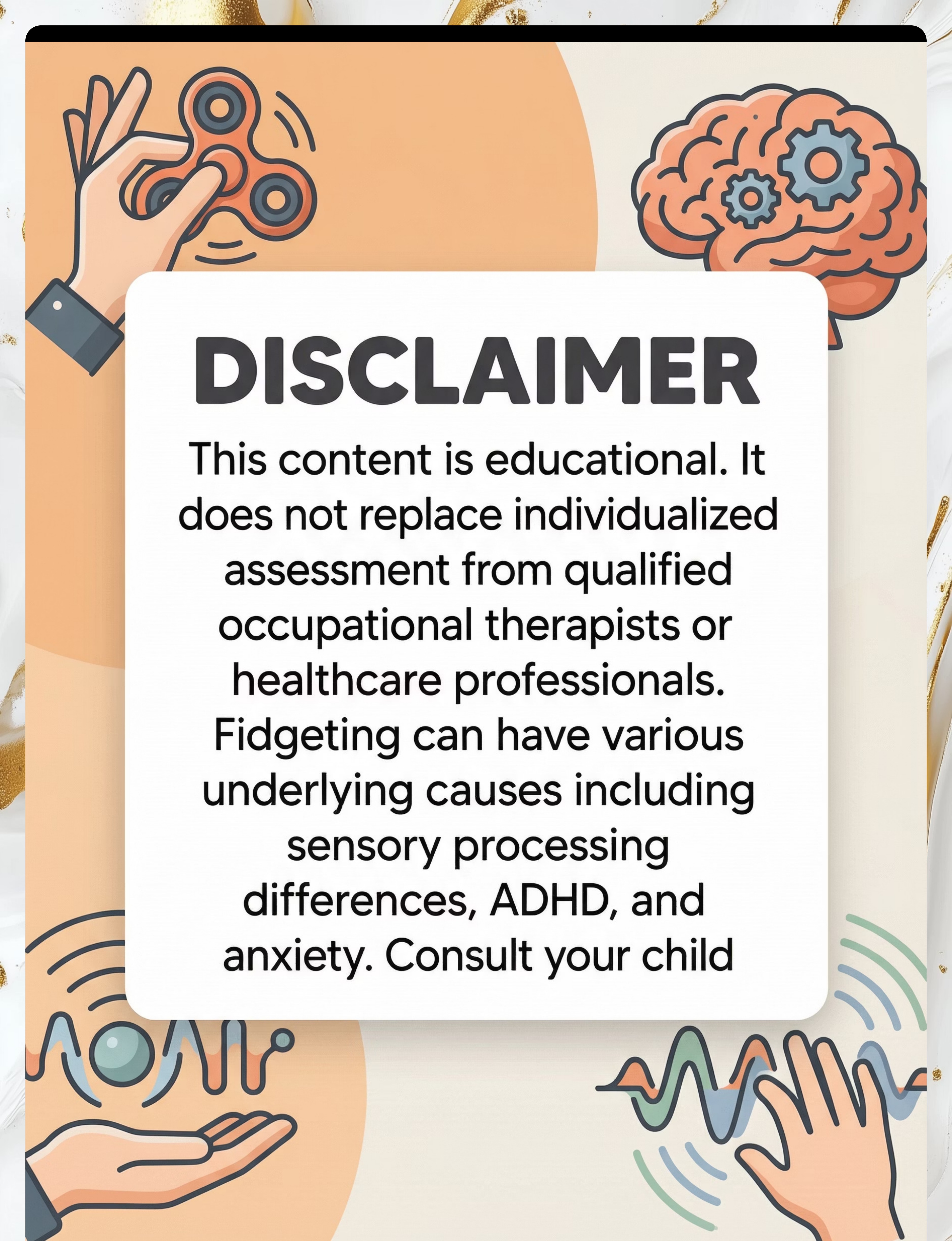
This content is educational. It does not replace individualized assessment and intervention from qualified occupational therapists, behavioral specialists, or other healthcare professionals. Fidgeting can have various underlying causes including sensory processing differences, ADHD, anxiety, and medical conditions. Consult your child's therapy or medical team for personalized recommendations. Individual results may vary. Statistics represent aggregate outcomes across the Pinnacle Blooms Network.
© 2025–2026 Pinnacle Blooms Network®, unit of Bharath Healthcare Laboratories Pvt. Ltd. All rights reserved. GPT-OS®, AbilityScore®, TherapeuticAI®, FusionModule™, and EverydayTherapyProgramme™ are proprietary intellectual property of Pinnacle Blooms Network®.
CIN: U74999TG2016PTC113063 | DPIIT: DIPP8651 (Govt. of India) | MSME: TS20F0009606 | GSTIN: 36AAGCB9722P1Z2
📞 FREE National Autism Helpline: 9100 181 181 | 16+ Languages | 24x7
pinnacleblooms.org | care@pinnacleblooms.org | gpt-os.com
techniques.pinnacleblooms.org/sensory-regulation/9-materials-constant-fidgeting-D-442
pinnacleblooms.org | care@pinnacleblooms.org | gpt-os.com
techniques.pinnacleblooms.org/sensory-regulation/9-materials-constant-fidgeting-D-442