
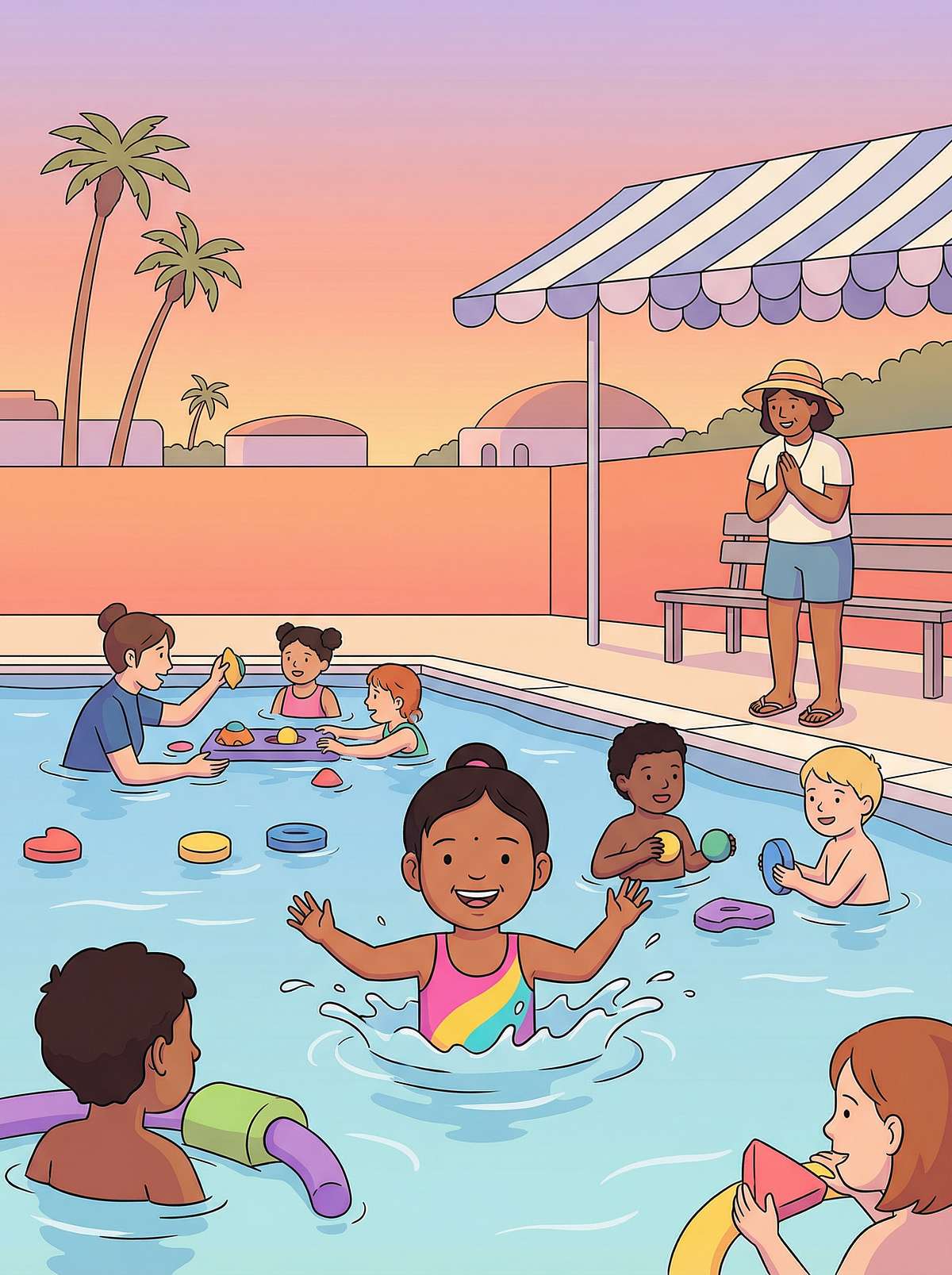
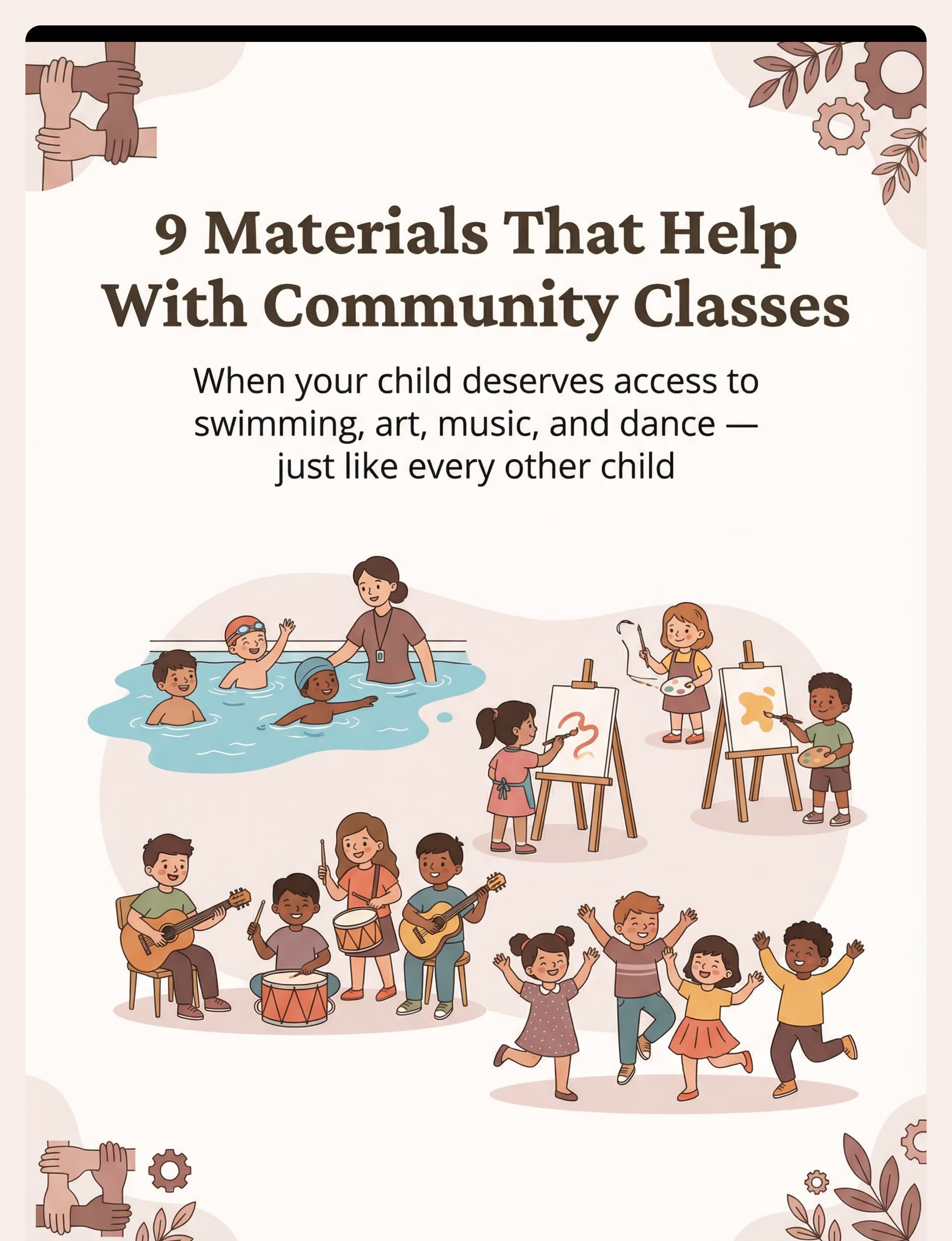
9 Materials That Help With Community Classes
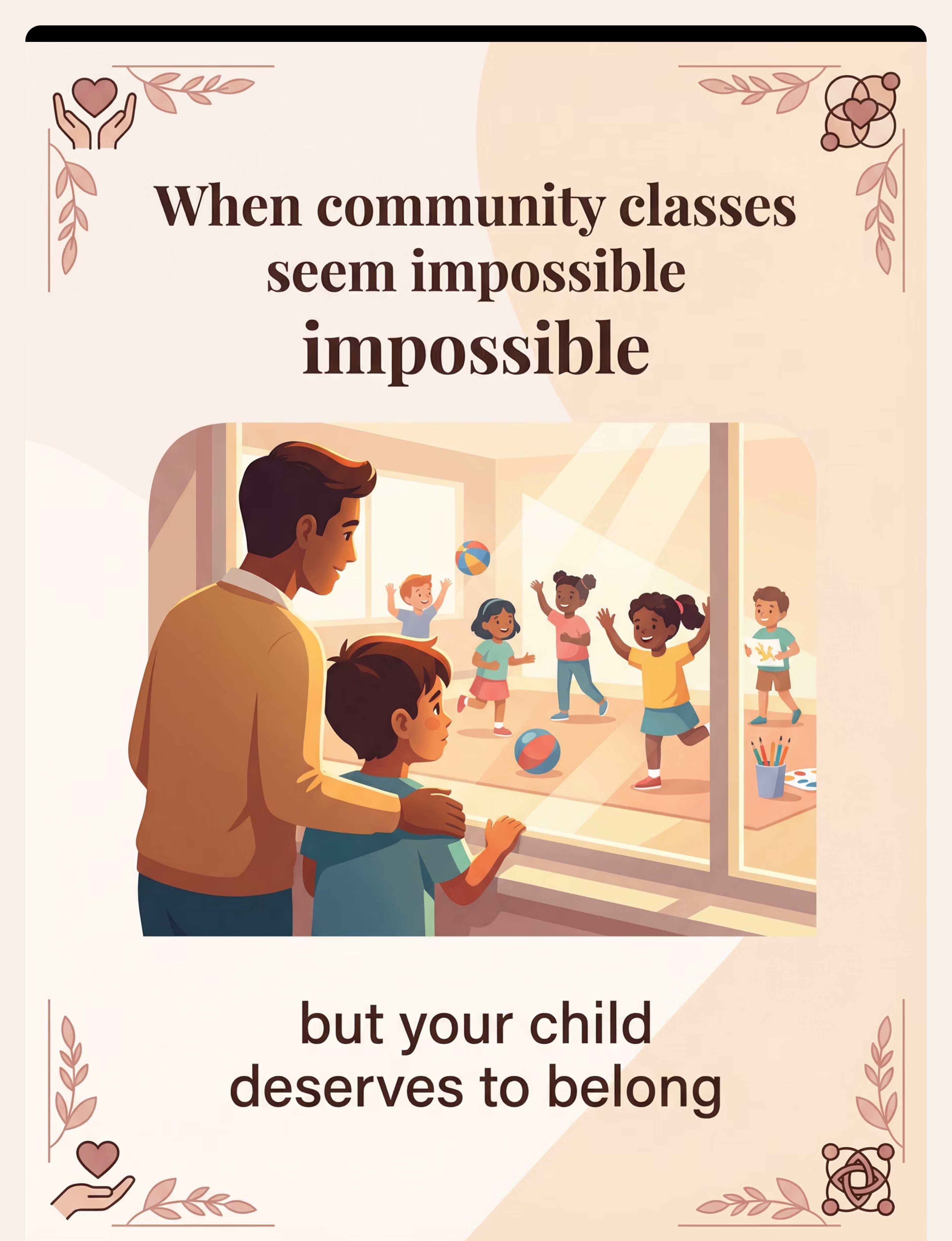
When your child deserves access to swimming, art, music, and dance — just like every other child
Community Integration · Episode 871
Pinnacle Blooms Network®
GPT-OS® Therapy Intelligence
20M+ Sessions · 70+ Centers
Helpline: 9100 181 181
"My son wants to learn to swim. He LOVES art. He's fascinated by music. But every attempt has been a disaster — echoing sounds, unexpected transitions, sensory overwhelm. He watches from the car while his sister goes to dance and swim and art. I know he could do these things with the right support. Are there tools that could bridge this gap?"
— Parent, Pinnacle Network
He can. He will. These 9 materials show you how.
Why Community Classes Are Challenging
Community classes — swimming, art, music, dance, sports — present simultaneous demands: group sensory environments, unpredictable peer behaviour, fast verbal instructions, activity transitions, and social navigation, all at once. Children with autism and sensory differences deserve full access. Success requires the right preparation and the right supports.
Understanding the specific challenges helps you build the right toolkit. These aren't reasons to avoid community classes — they are the exact problems each of the 9 materials is designed to solve.
🔊 Echoing Acoustics
Pools and gyms amplify every sound dramatically
⚡ Rapid Transitions
Activities shift fast with little warning
🗣️ Group Instructions
Verbal directions with background noise and movement
👥 Peer Interaction
Social navigation while managing physical activity
❓ Unpredictable Peers
Other children's behaviour is hard to anticipate
😰 Performance Anxiety
Being observed while learning new physical skills
🏫 Unfamiliar Environments
New instructors, new spaces, new routines
⏳ Waiting Turns
Extended waiting in group settings without structure
🎵 Following Sequences
Choreography and multi-step activity patterns
🚪 Implicit Social Rules
Unspoken class norms that peers absorb automatically
Material 1 of 9 · Preparation · Free–₹800
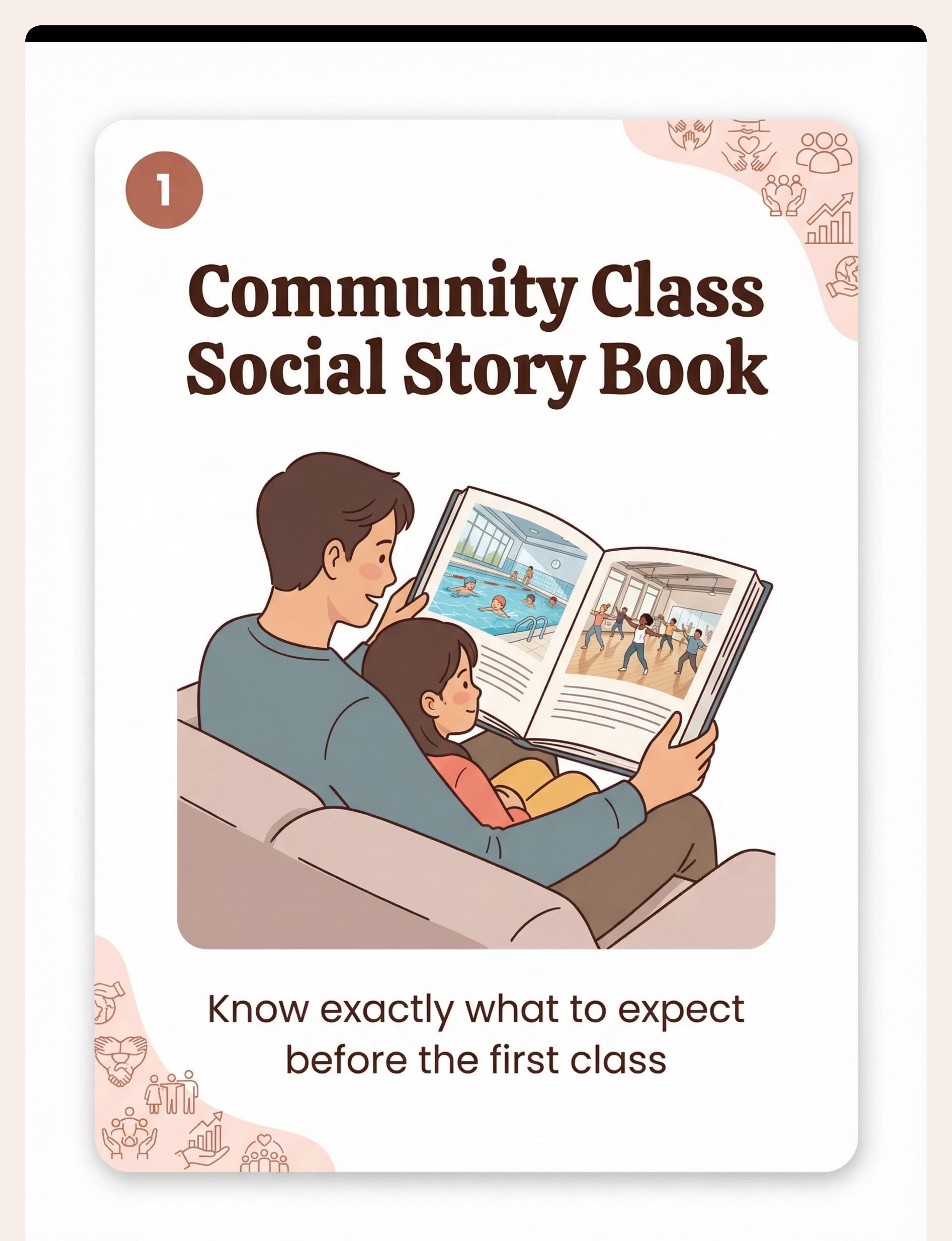
Community Class Social Story Book
Know exactly what to expect before the first class
A social story transforms unfamiliar community classes into predictable experiences. Before the first swimming lesson, art class, or soccer practice, your child reads through a story showing exactly what will happen: arriving at the venue, meeting the instructor, what activities to expect, what sensory elements to anticipate — the pool echoes, the art room has paint smells — and how it ends. Reading it daily the week before class creates deep familiarity. Your child arrives with recognition instead of fear, because in their mind, they've already been there.
The unknown is scary. When your child has "visited" the class through story before the first session, they arrive with familiarity instead of fear. Familiarity is the foundation of participation.

Social Story Book — DIY Essentials
Building an effective social story takes about one focused afternoon. Here is exactly how to structure it for maximum impact.
Visit the venue beforehand
Take photos of the building entrance, activity space, and instructor (with permission). Real photos from your child's actual class are far more powerful than stock images.
Structure your story clearly
Cover → Arrival → What happens during class → Sensory preparation → Coping strategies → Ending → Going home. Every transition should have its own page.
Add class-specific sensory pages
Swimming: getting wet, water on face, changing. Art: messy materials, sharing supplies. Music: loud instrument sounds, group singing together.
Laminate, bind, and read daily
Read every day for one week before the first class, then briefly before each subsequent session. Update whenever the instructor, venue, or class format changes.
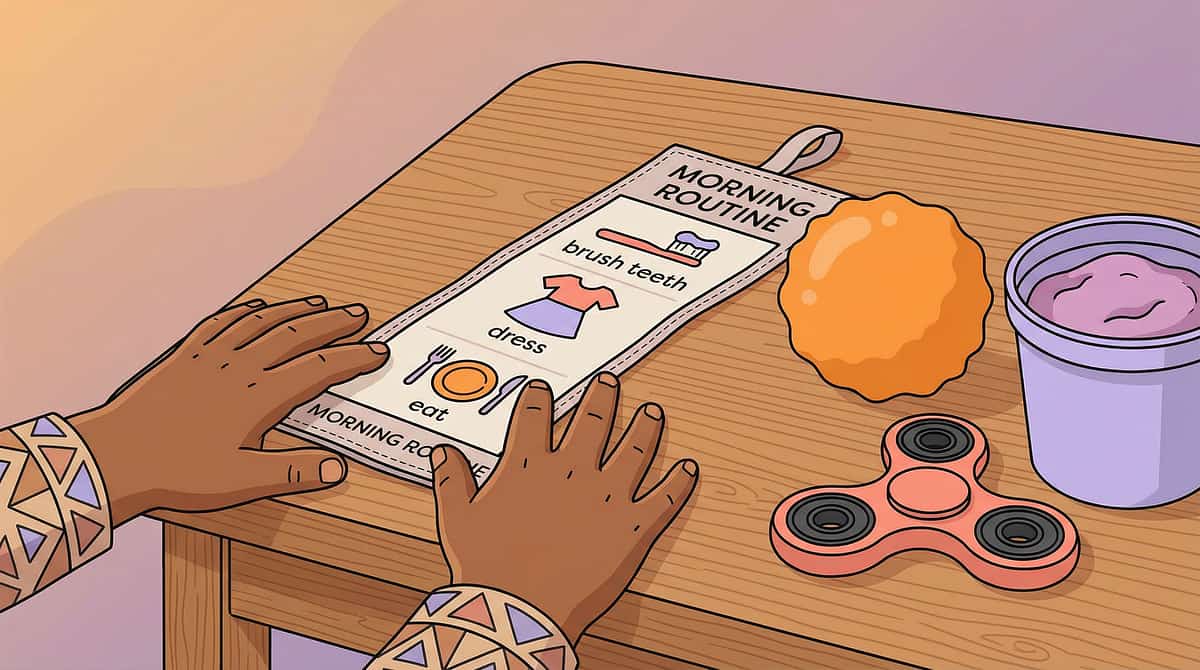
Material 2 of 9 · Visual Support · Free–₹400
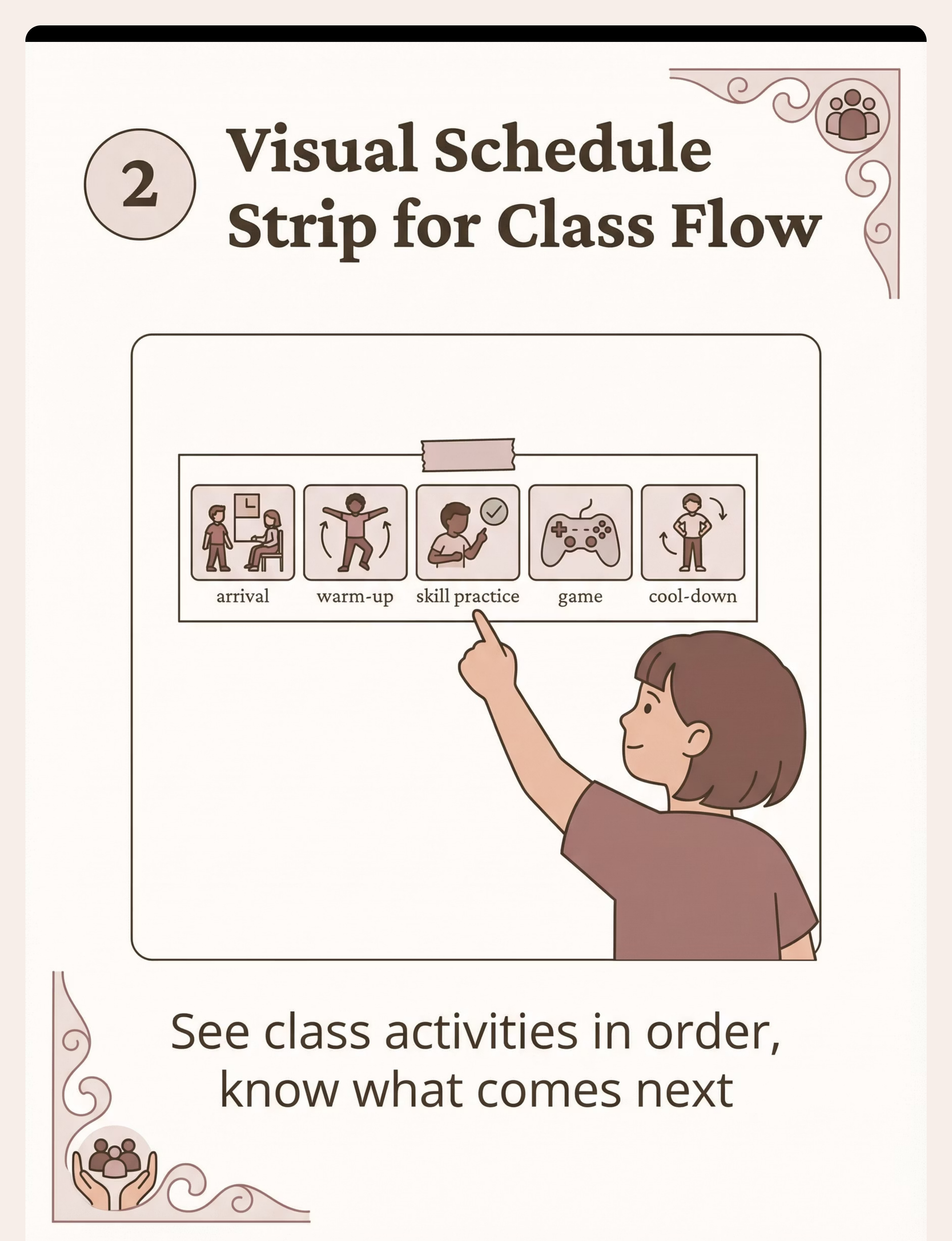
Visual Schedule Strip for Class Flow
See class activities in order — know what comes next
Community classes involve multiple activities and transitions. Children with autism often struggle profoundly with not knowing what comes next. A visual schedule strip shows the complete class sequence — warm-up, skill practice, games, cool-down — on a laminated card they can hold or consult. Your child sees what's happening now, what's coming next, and how many activities remain until class ends. This single tool dramatically reduces transition anxiety: "We're finishing painting — look, just cleanup, then done!"
Transitions are hardest when they're unexpected. Visual schedules make every transition anticipated — and anticipated transitions are manageable transitions.
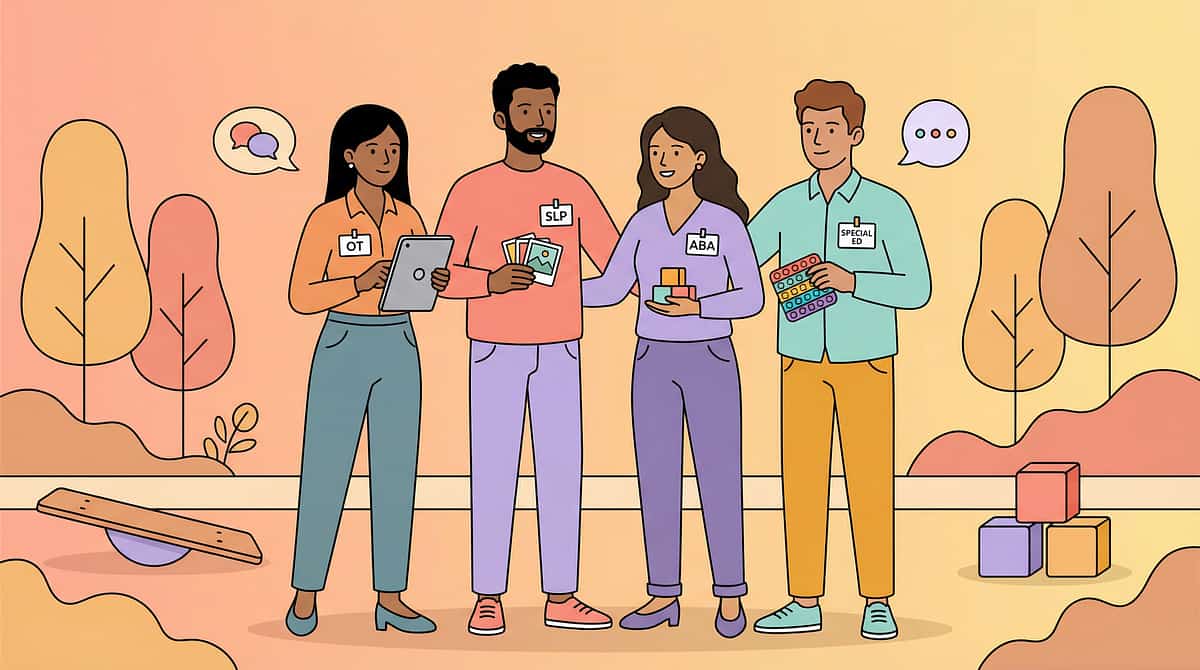
Visual Schedule Strip — Sample Sequences
Laminate as a horizontal or vertical strip with simple icons. Include a 2-minute transition warning before each step. Below are ready-to-use sequences for the three most common community class types.
🏊 Swimming
Arrive → Change → Shower → Enter pool → Warm-up → Skill practice → Game → Exit pool → Change → Leave
🎨 Art Class
Arrive → Circle time → Gather materials → Instruction → Create → Clean up → Share work → Pack up → Leave
🎵 Music Class
Arrive → Circle time → Rhythm activity → Instrument time → Song practice → Movement → Cool down → Pack up → Leave
Format tip: Use icons rather than words wherever possible. A horizontal strip works well on a lanyard; a vertical strip clips to a bag. Always show the child how to use it at home before the first class.
Material 3 of 9 · Sensory Support · ₹800–₹2,500
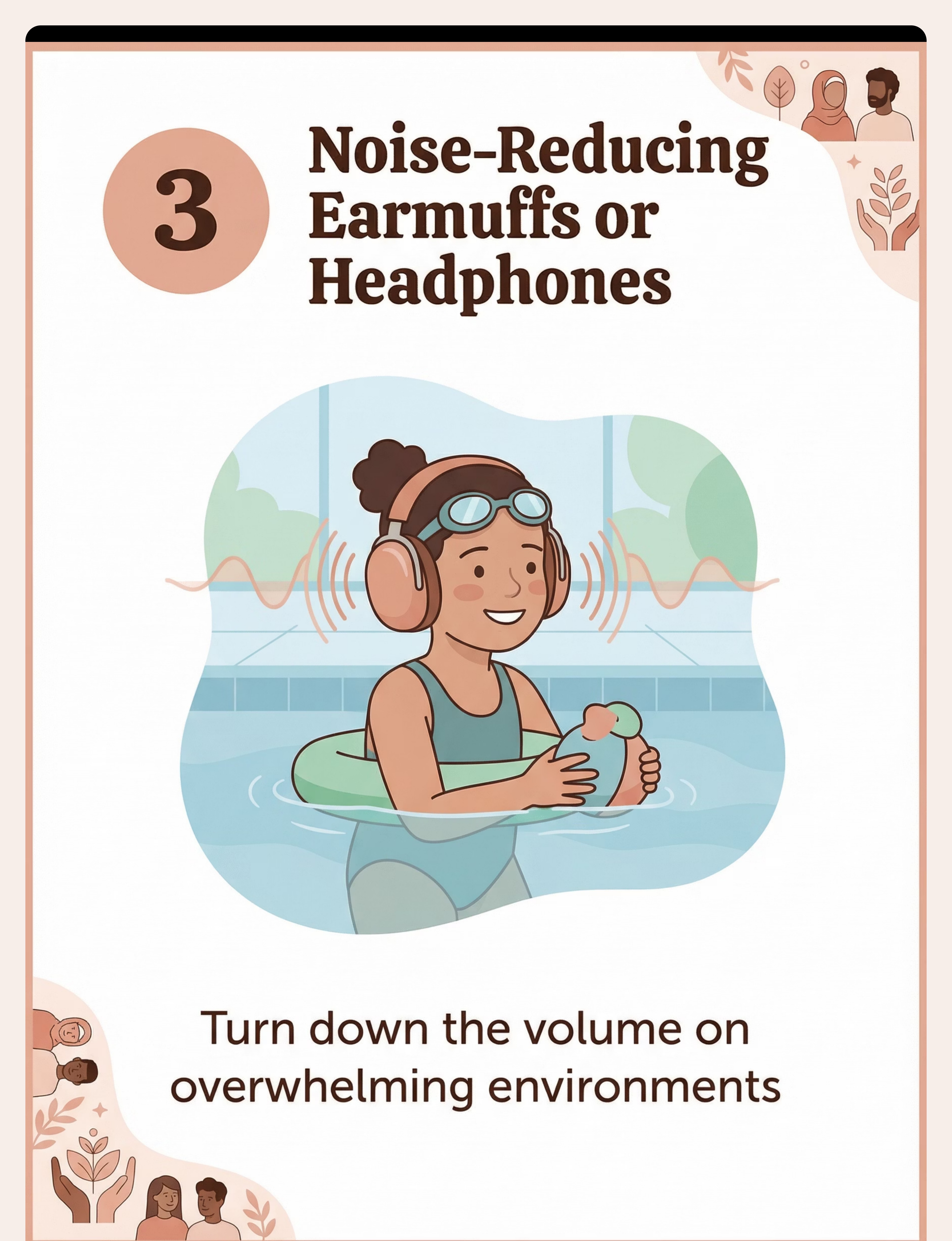
Noise-Reducing Earmuffs or Headphones
Turn down the volume on overwhelming environments
Community class environments are acoustically extreme: pools echo dramatically with every splash and shout, gymnastic gyms are large cavernous spaces, and music classes involve instruments and group singing all at once. Noise-reducing earmuffs reduce acoustic intensity without eliminating sound — your child can still hear instructions while being meaningfully protected from overwhelm. Many children who appear unable to handle community classes become successful participants once acoustic barriers are addressed. Unlike headphones with audio playback, these only reduce; they don't add stimulation.
Many "behaviour problems" in community classes are actually sensory overwhelm driven by acoustics. Reduce the noise, and you reduce the struggle — often dramatically.
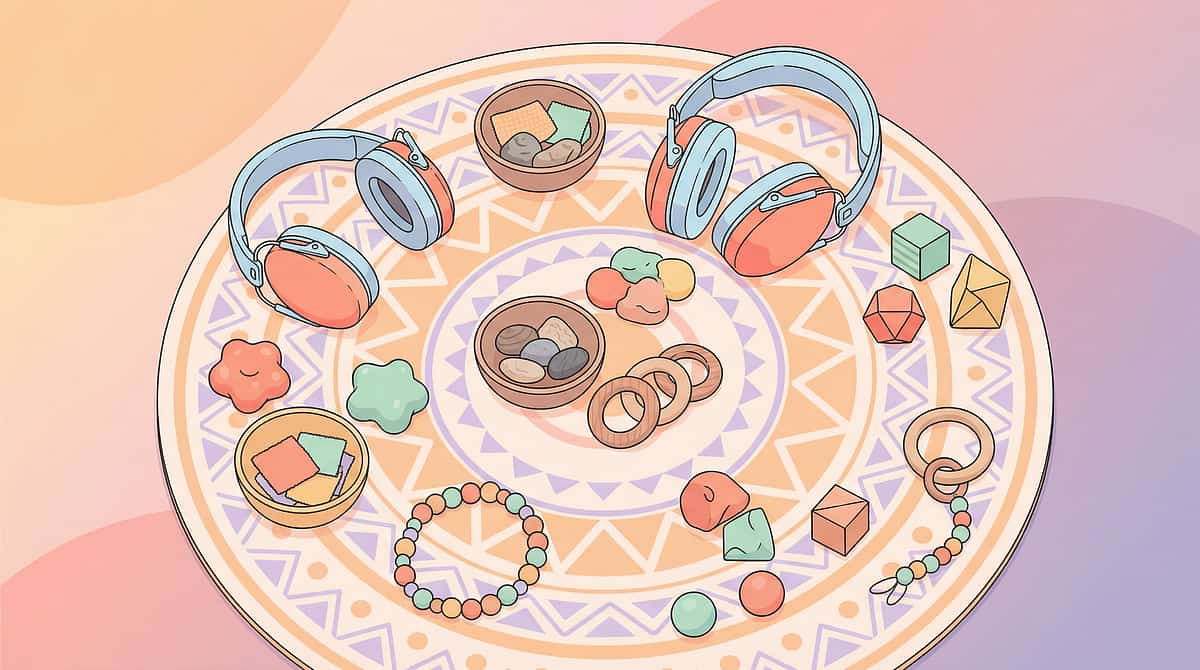
Earmuffs — Activity-by-Activity Guidance
🏊 Swimming
Earmuffs on pool deck before and after. In water: try earplugs or a soft swim headband to reduce underwater echoes and water pressure sensation.
🎨 Art / Music / Dance
Full earmuffs work well for most studio environments. Balance use carefully — child must still hear instructions during key teaching moments.
⚽ Sports
In-ear options or sports earplugs are better for high-activity movement phases. Standard earmuffs may interfere with balance and fast movement.
🏠 Practice First
Always practice wearing earmuffs at home in a variety of settings before the first class. The child must be fully comfortable with them before relying on them in a new environment.
Material 4 of 9 · Communication Tool · Free
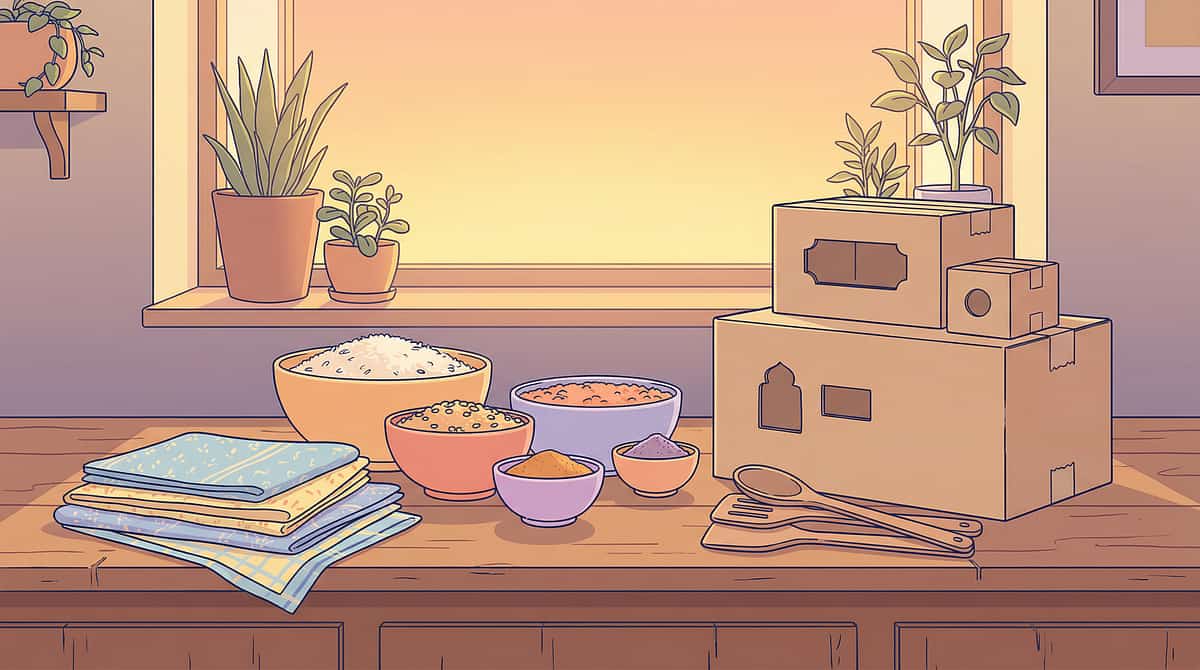
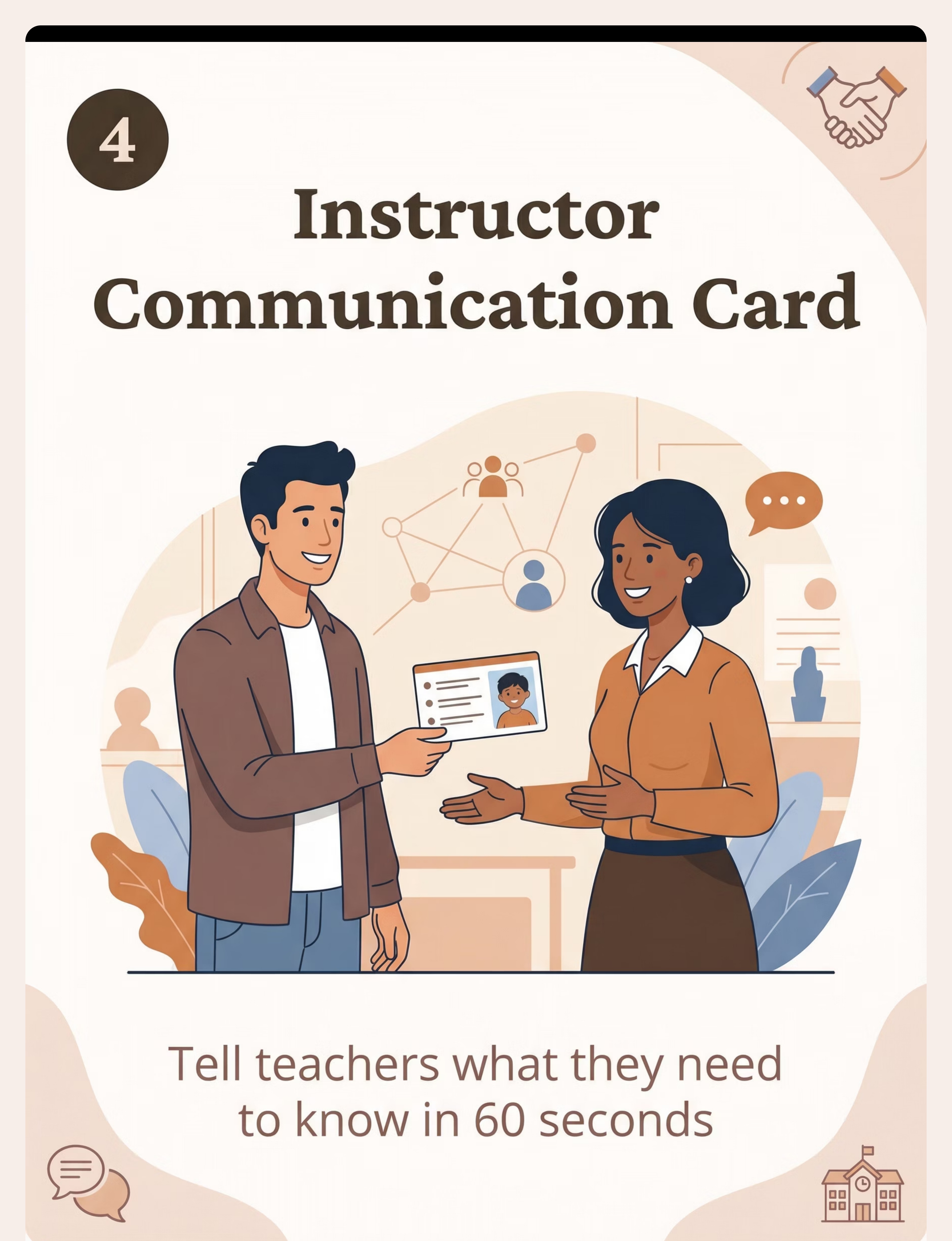
Instructor Communication Card
Tell teachers what they need to know in 60 seconds
Community class instructors are not trained in autism or sensory processing. They don't know your child. Without information, they inevitably misinterpret regulation behaviours as disobedience, and respond in ways that make things worse. An instructor communication card provides essential information in a brief, practical, immediately usable format. Keep it to one card — instructors are busy professionals managing groups. This single, thoughtful gesture transforms your child from "the difficult kid" to "a child with known needs and clear strategies."
Instructors genuinely want to help but often don't know how. A brief, well-designed card transforms confusion and guesswork into clarity and partnership.
Instructor Card — Template
Hand this at the first class with a brief verbal introduction: "This card explains what works best for my child. If you have questions, I'm happy to talk after class." Keep it to one laminated card. Attach a small photo of your child.
✅ Child's Name + Photo + Strengths
[Child's Name] · [Photo] — I learn differently. Here's what helps.
Strengths: I love music · I try hard · I'm a visual learner
Strengths: I love music · I try hard · I'm a visual learner
⚡ Key Challenges
Processing verbal instructions takes time · Transitions are hard · Loud sounds overwhelm me
🛠️ Strategies That Work
Show me, don't just tell me · Give 2-minute transition warnings · Earmuffs are allowed and helpful
🔴 If I Seem Overwhelmed
Let me step back briefly — I will return.
📞 Parent: [Name] · [Number]
📞 Parent: [Name] · [Number]
Material 5 of 9 · Motivation Support · ₹100–₹300
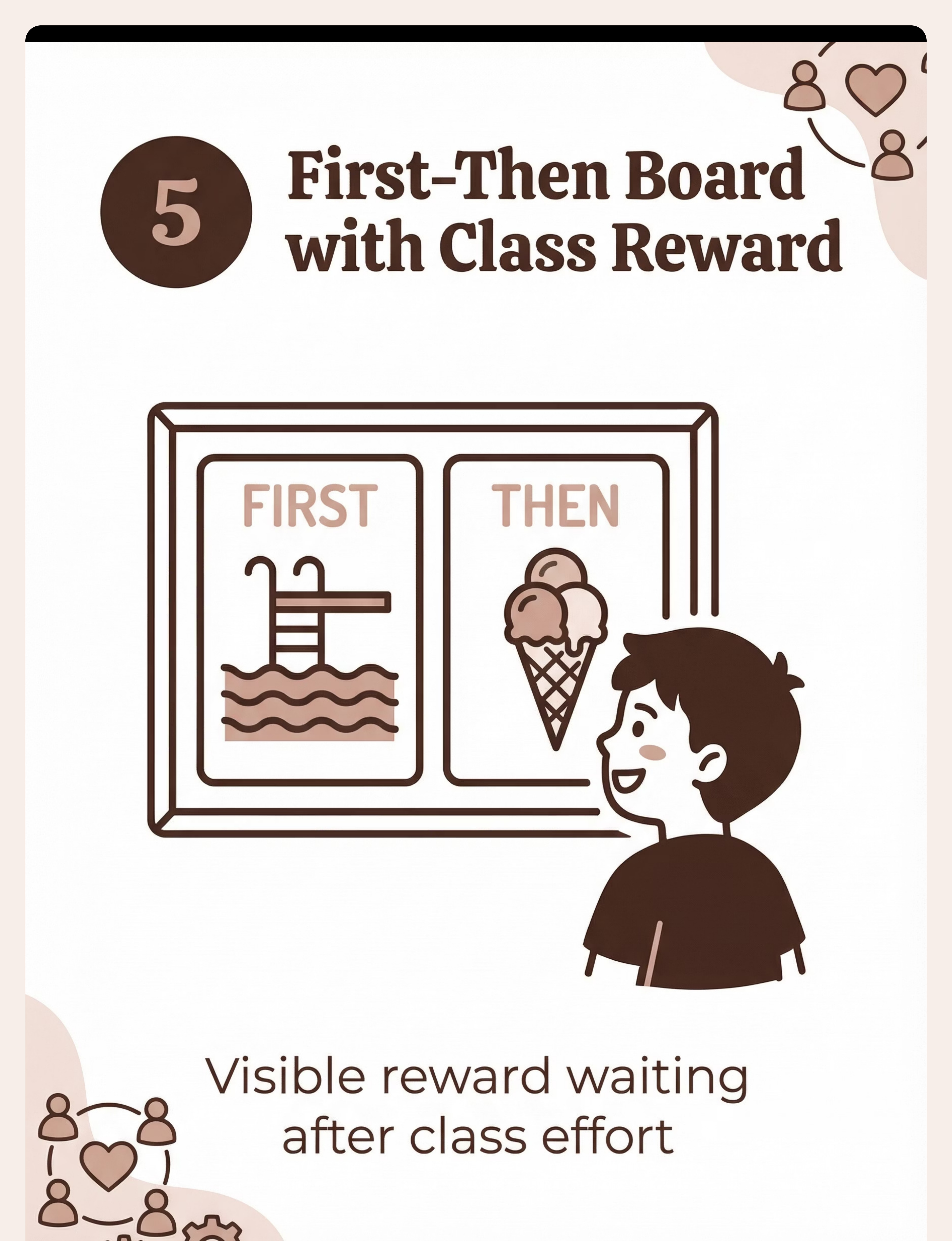
First-Then Board with Class Reward
A visible reward waiting on the other side of class effort
Community classes require sustained effort: staying regulated in challenging sensory environments, following group directions, managing multiple transitions, interacting with peers — all simultaneously. For children who struggle with delayed gratification, abstract motivation simply doesn't work. "You'll get better at swimming!" is too far away and too uncertain. A First-Then board makes the payoff visible, concrete, and immediate: "First swim class, then playground." Reference the board when motivation flags mid-class. The visible, immediate reward provides real, tangible incentive to push through genuinely hard moments.
Abstract motivation doesn't work for many children with autism. Concrete, visible, immediate rewards do — and they're not a crutch. They're the bridge to intrinsic motivation.
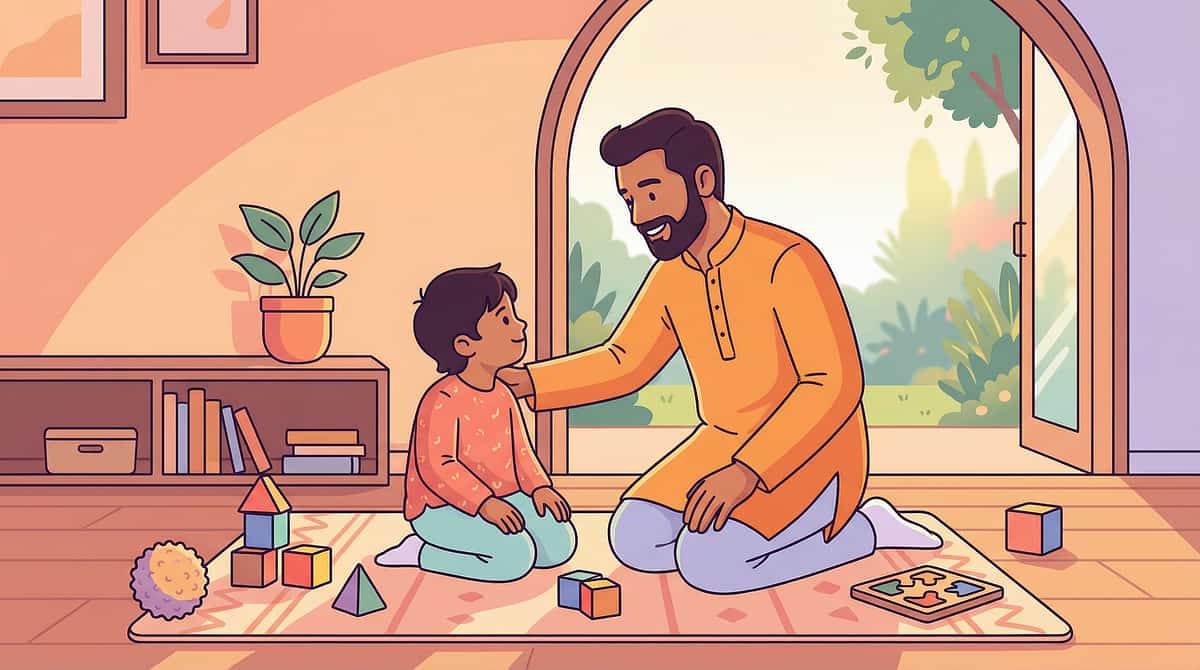
First-Then Board — How to Use It
Set up the FIRST side
Use a photo of the specific class venue or an activity icon — the more concrete and recognisable, the better.
Choose a genuinely motivating THEN reward
Favourite food, screen time, special outing, or preferred activity. Ask the child to help choose — their buy-in matters enormously.
Show the board before entering
At the venue entrance, review the board together. Reference it again at difficult moments during class: "Remember — then playground!"
Reward immediately after class
Same day, within the hour. The shorter the gap between effort and reward, the more powerfully the connection reinforces participation.
Gradually fade the reward
Move from every-class to intermittent rewards as intrinsic enjoyment and motivation naturally develops over time.
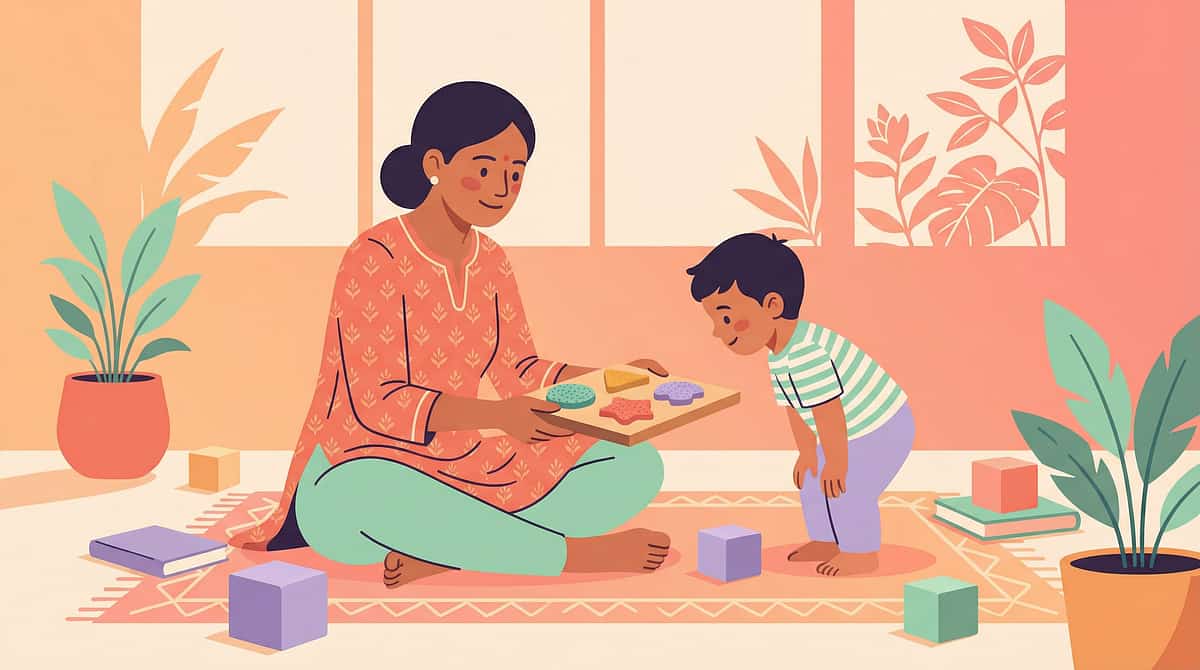
Material 6 of 9 · Sensory Regulation · ₹200–₹800
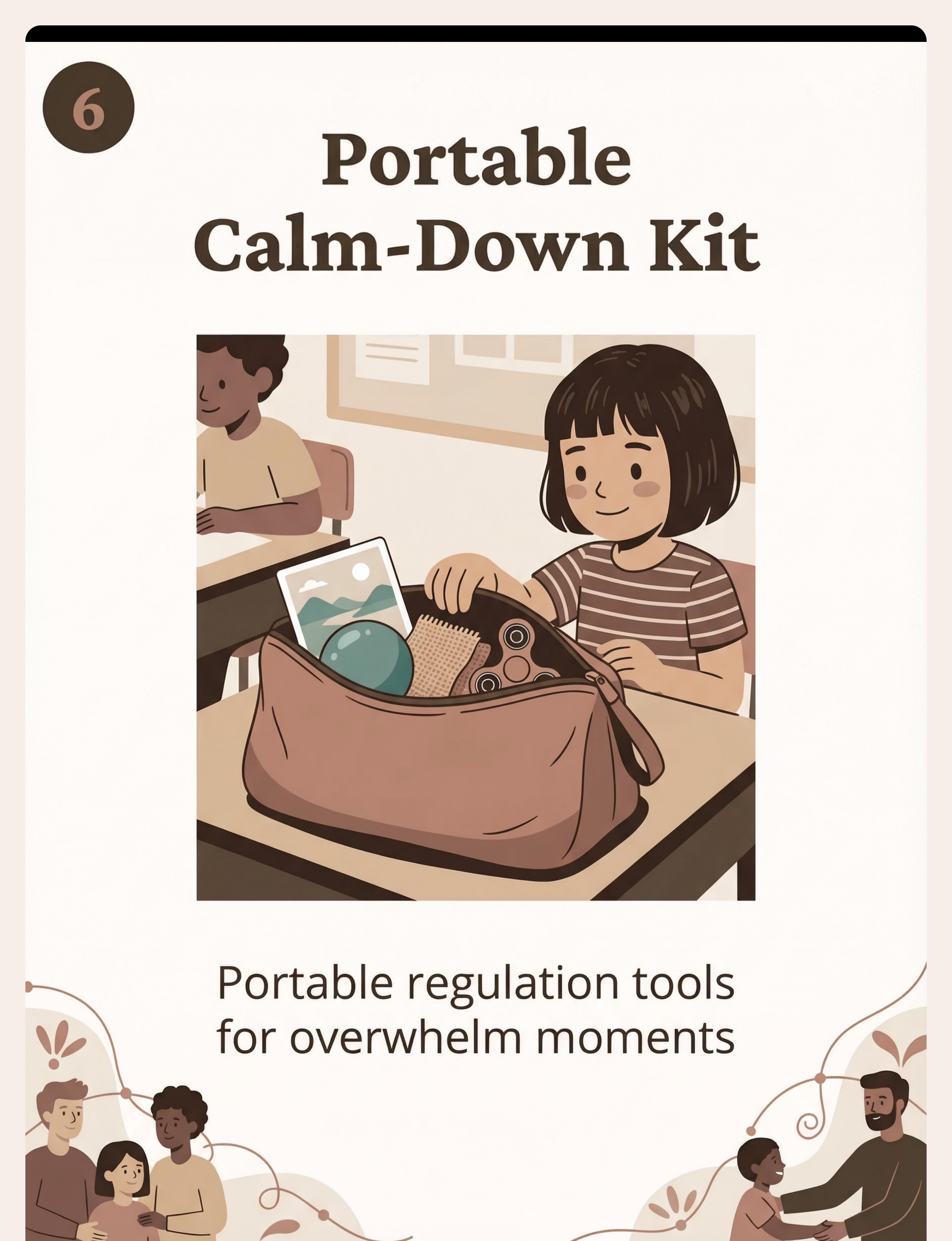
Portable Calm-Down Kit
Portable regulation tools for overwhelm moments — right when they're needed
Even with thorough preparation, community classes can overwhelm. When dysregulation begins, having immediate access to calming tools can prevent a partial struggle from escalating into a full meltdown and an early exit. A portable calm-down kit contains sensory items your specific child finds regulating — a small fidget, stress ball, textured fabric, calming scent, or a photo of something deeply soothing. When you see early warning signs, offer the kit quietly: "Take a squeeze break." Your child can often continue participating while holding a calming object, staying present in the class.
Regulation tools prevent meltdowns. Having them immediately accessible means catching overwhelm early — before it escalates past the point of return. Accessibility is everything.
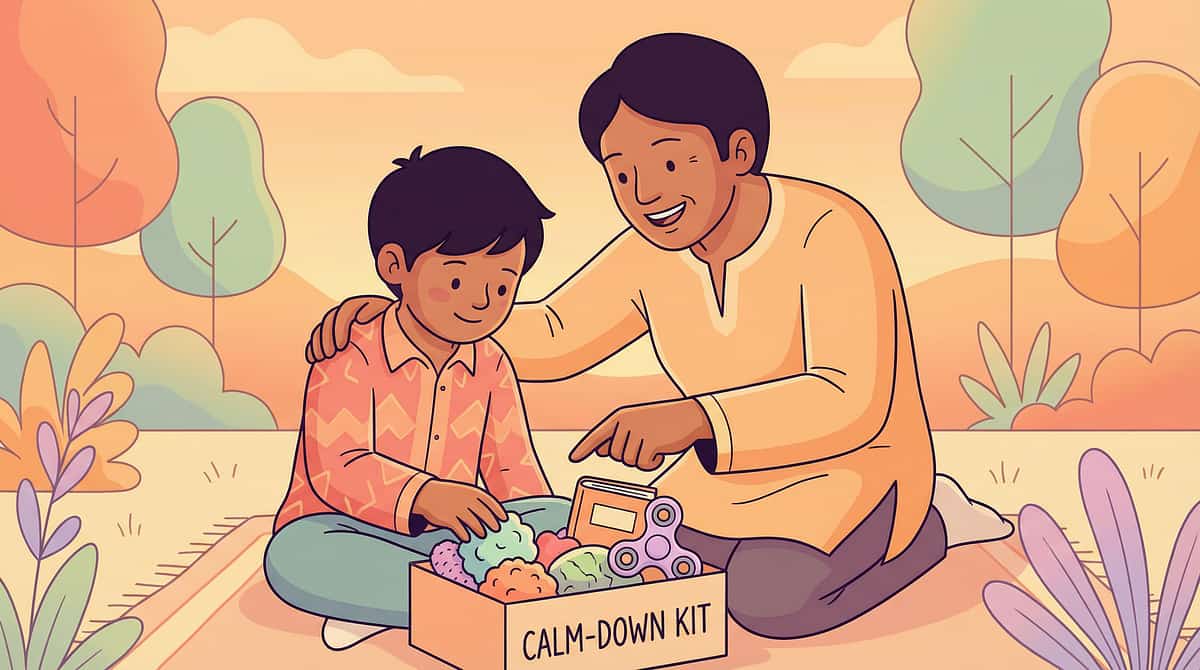
Portable Calm-Down Kit — Contents Guide
Choose 3–5 items that are specifically effective for your child. Test each one at home during calm moments before relying on them in class. Rotate items if novelty helps maintain interest.
🖐️ Tactile Items
Stress ball, textured fabric square, therapy putty, or a smooth natural stone. These provide grounding sensory input through the hands.
👁️ Visual Items
A calming photo of a beloved pet or family member, or a small travel glitter bottle for visual focus and breath regulation.
👃 Olfactory Items
A lavender sachet or a small container with a familiar scent from home. Familiar scents activate the calming response powerfully.
💪 Proprioceptive Items
A small resistance band or a hand weight for heavy input. Deep pressure and resistance are highly regulating for many children.
Activity adaptations: Use waterproof items for pool deck use. Use silent items for music class. Choose items your child can hold discreetly during rest moments in sports activities.
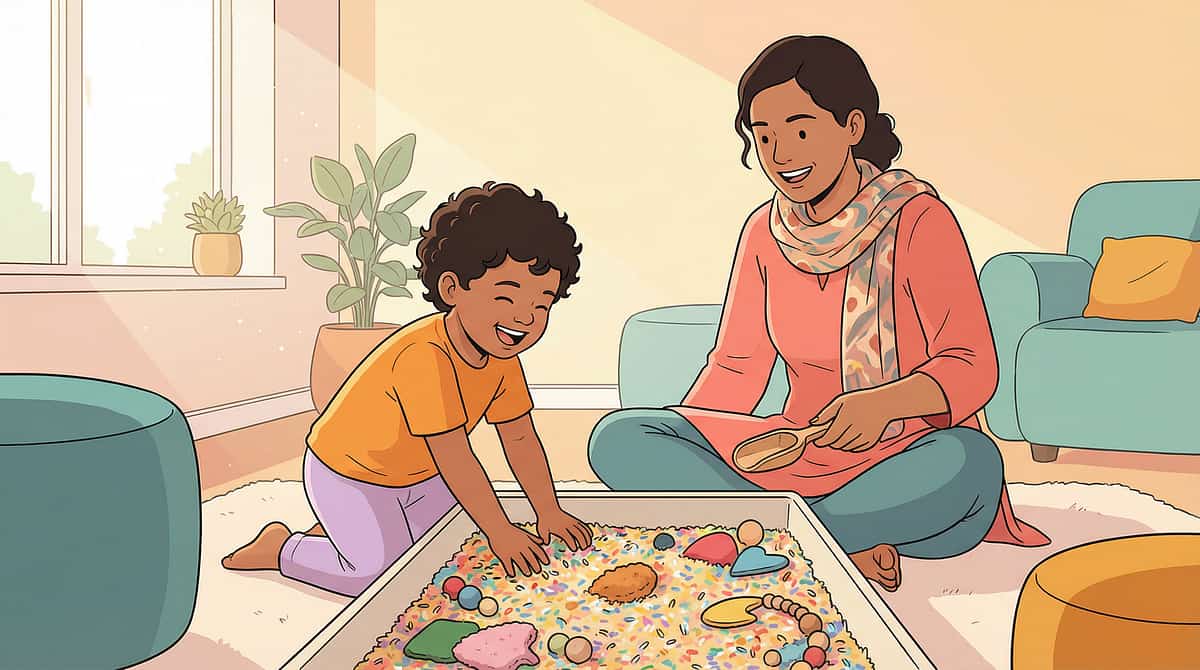
Material 7 of 9 · Visual Support · Free–₹400
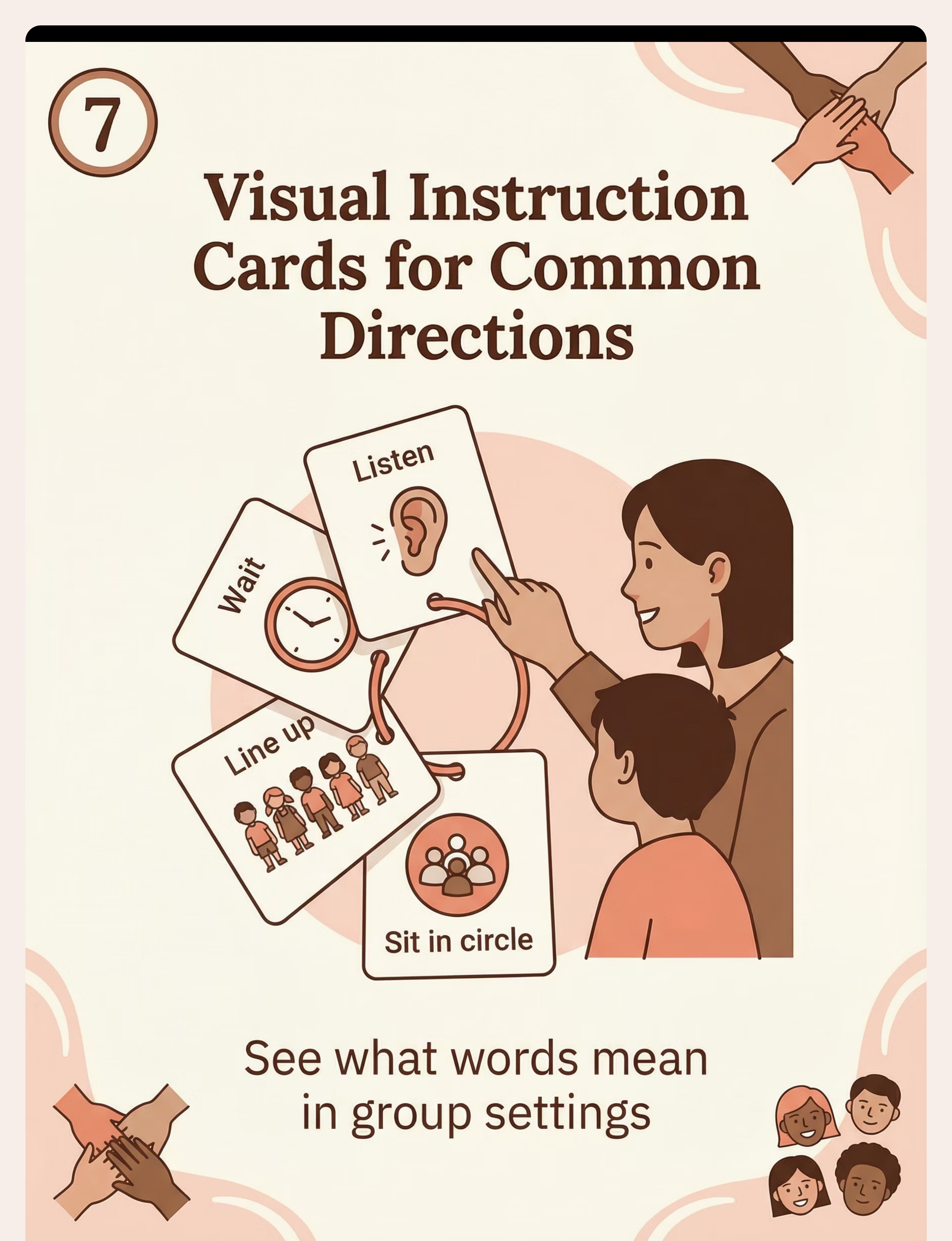
Visual Instruction Cards for Common Directions
See what words mean — even in the noisiest group settings
Group verbal instructions are genuinely challenging: instructors speak quickly under time pressure, there is constant background noise, multiple children are responding simultaneously, and processing time is strictly limited. Visual instruction cards show common class directions as clear images — "Line up," "Sit in circle," "Wait your turn," "Clean up," "Listen." When the instructor gives a verbal direction, you point to the corresponding visual card, providing a vital second channel of input. This directly supports auditory processing in noisy environments. Over time, children often only need visuals for complex or entirely new directions.
Visual supports make auditory instructions accessible. Two channels of input are always better than one — especially when acoustics are working against comprehension.
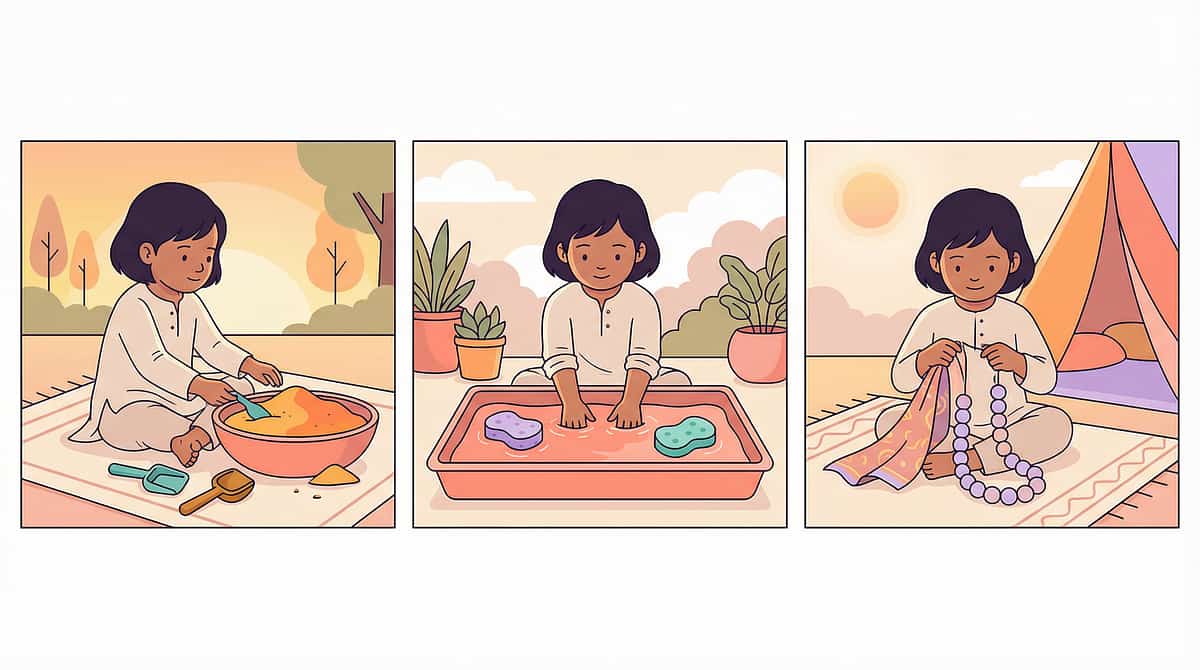
Visual Instruction Cards — Universal + Class-Specific Sets
Universal Card Set
- 👂 Listen
- ⏱️ Wait
- 🚶 Line up
- 🪑 Sit down
- 👁️ Watch / Look
- 🔄 Your turn
- ✋ Stop / All done
- 🧹 Clean up
- 👍 Good job
- 🔁 Try again
🏊 Swimming Additions
Get in water · Hold wall · Kick · Blow bubbles · Float
🎨 Art Additions
Get materials · Draw/Paint · Glue · Share · Dry time
🎵 Music Additions
Play instrument · Sing · Move/Dance · Quiet voices
⚽ Sports Additions
Run · Kick · Throw · Catch · Team huddle
Print on cardstock, laminate, and hole-punch to create a ring. Small enough for a pocket or to attach to your keychain. Replace any cards that become worn or unclear.

Material 8 of 9 · Communication + Advocacy · Free–₹200
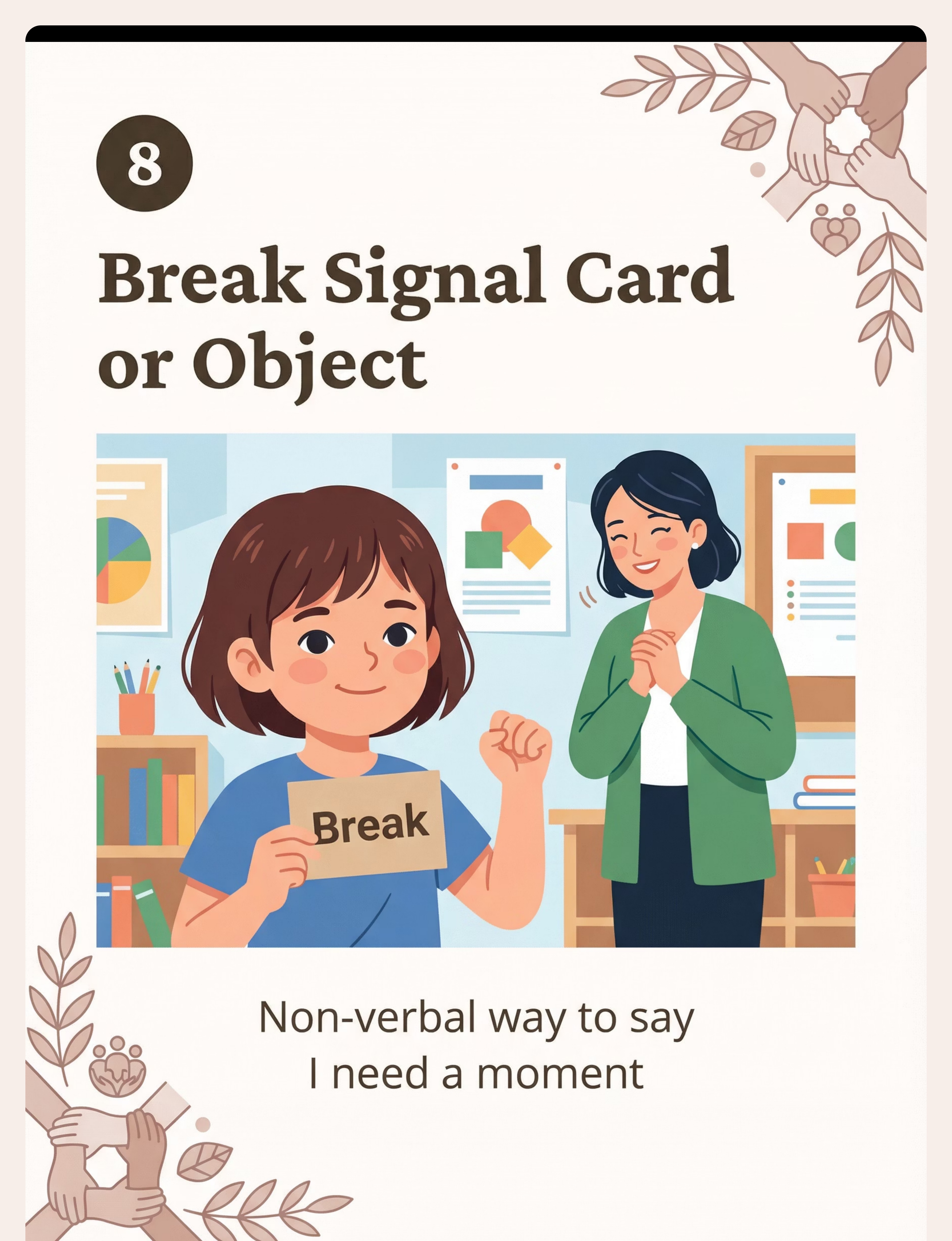
Break Signal Card or Object
A non-verbal way to say "I need a moment" — before it becomes a crisis
Children need a way to communicate "I need a break" before they reach the point of meltdown — but in community classes, many children cannot or will not say it verbally in the moment. A break signal provides a reliable, dignified, non-verbal way to communicate this need: a small laminated card, a coloured wristband, or a specific agreed-upon object. Critically, the signal must always be honoured. When children know they CAN take a break at will, they often don't need to as much — because escape is available, the background anxiety that drives shutdown is significantly reduced.
Control reduces panic. When children know they CAN take a break, they often don't need to as often. The availability of exit is itself regulating — it changes everything.

Break Signal System — Setup Steps
Choose the signal type with your child
Card, coloured wristband, a specific hand sign, or a small object. Child ownership of this choice increases reliable use.
Practice at home first
Child signals → parent immediately and without question honours it. Repetitive home practice builds confident, automatic use.
Establish break logistics
Where to go, how long (typically 2–3 minutes), and what to do during the break. Predictable break structure is calming in itself.
Brief the instructor before first class
"If [child] shows this card, they need a 2-minute break at the designated spot." Designate a specific, consistent break location in the venue.
Return and celebrate break use
After break, child returns to class activity. Praise the self-awareness explicitly: "You asked for a break instead of shutting down — that's real self-advocacy."
Material 9 of 9 · Social Support · Free
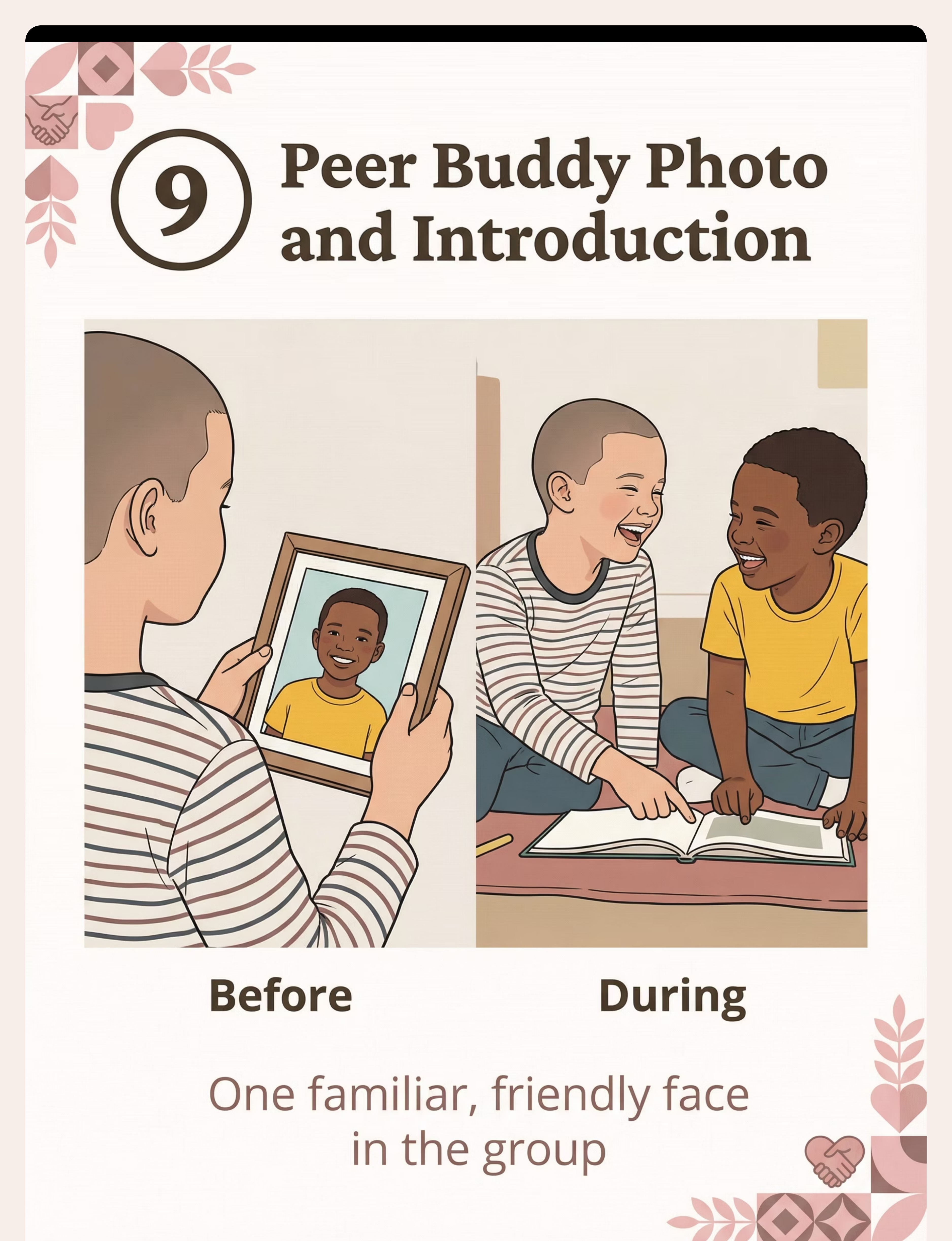
Peer Buddy Photo and Introduction
One familiar, friendly face that makes the whole room manageable
Community classes include other children, and navigating social dynamics while simultaneously managing sensory input and learning new physical skills is cognitively exhausting for any child — and profoundly so for children with autism. A peer buddy — one friendly child in the class who becomes a familiar, reliable social touchpoint — reduces social anxiety dramatically. Your child doesn't need to successfully navigate "all the kids." Just one genuine connection transforms a room full of strangers into a manageable space. Having a photo of the buddy to review at home before class creates real familiarity before that first, often most difficult, session.
Social environments are far less overwhelming when there's one familiar face. One connection makes a room of strangers manageable — and sometimes even exciting.

Peer Buddy — How to Establish the Relationship
Identify the right buddy
A sibling's friend, a neighbour's child, or a child the instructor identifies as naturally patient, calm, and reliably inclusive. Consistent attendance matters greatly.
Look for these buddy qualities
Calm temperament, patient, doesn't get frustrated easily, naturally inclusive, and attends class consistently. These qualities matter more than friendship chemistry initially.
Arrange a brief meeting outside class
Even 10 minutes in a low-pressure setting before the class series starts makes an enormous difference. A face that was unknown becomes a face that is known.
Take a photo and review it at home
With permission, photograph the buddy. Review regularly before each class: "Look — [Buddy] will be there today!" This primes positive anticipation.
Let natural friendship develop
The buddy's role is simply to be a familiar face — not to "take care of" your child. Don't force the relationship; allow it to develop organically at its own pace.
Your Complete Community Class Toolkit
Nine targeted materials addressing preparation, sensory regulation, visual support, communication, motivation, and social connection. Together, they create a complete support system around your child in any community class setting.
1
📖 Social Story Book
Preparation · Free–₹800
2
📋 Visual Schedule Strip
Class Flow · Free–₹400
3
🎧 Noise-Reducing Earmuffs
Sensory · ₹800–₹2,500
4
🪪 Instructor Communication Card
Partnership · Free
5
🔁 First-Then Board + Reward
Motivation · ₹100–₹300
6
👜 Portable Calm-Down Kit
Regulation · ₹200–₹800
7
🃏 Visual Instruction Cards
Group Directions · Free–₹400
8
🛑 Break Signal Card
Self-Advocacy · Free–₹200
9
📸 Peer Buddy Photo
Social Anchor · Free

Toolkit Investment & Essential Starter Kit
Total Investment for Full Set
₹1,550–₹5,600 for the complete 9-material toolkit. Much of this can be DIY or completely free — the social story, instructor card, visual schedule, visual instruction cards, break signal, and peer buddy photo all cost nothing beyond your time and a laminator.
The most significant investment is the noise-reducing earmuffs, which are also frequently the highest-impact single purchase. For most families, starting with the essential starter kit is the right approach — build from there as you learn what your child needs.
⭐ Essential Starter Kit
Begin here before building to the full set:
- 📖 Social Story Book
- 🪪 Instructor Communication Card
- 🎧 Noise-Reducing Earmuffs
- 📋 Visual Schedule Strip
- 🛑 Break Signal Card
Matching Supports to the Activity
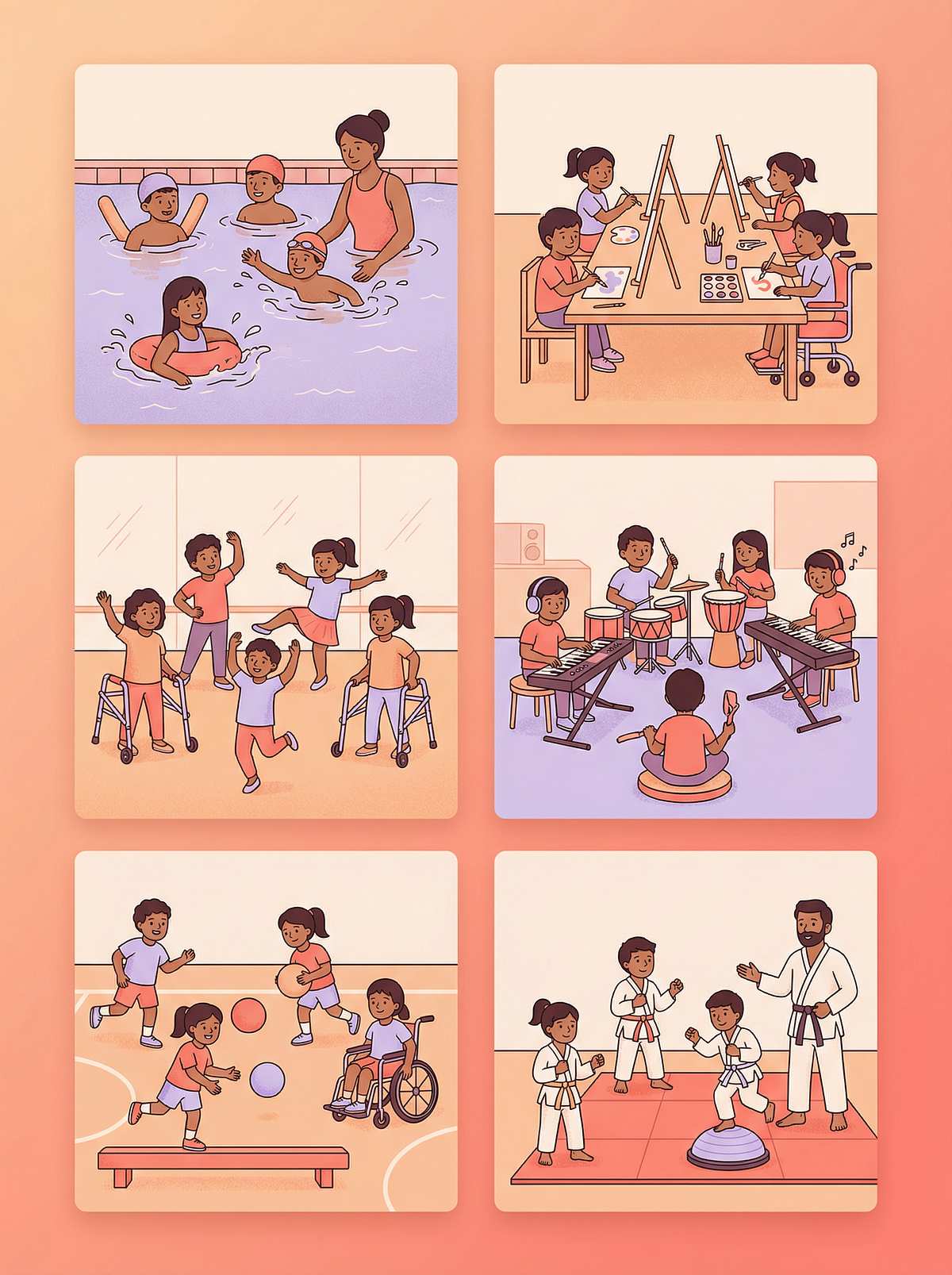
Each community class type presents a distinct sensory and social profile. The same 9 materials apply across all of them — but the emphasis and specific adaptations vary meaningfully. Use this guide to prioritise and adapt your toolkit for the specific class you're preparing for.
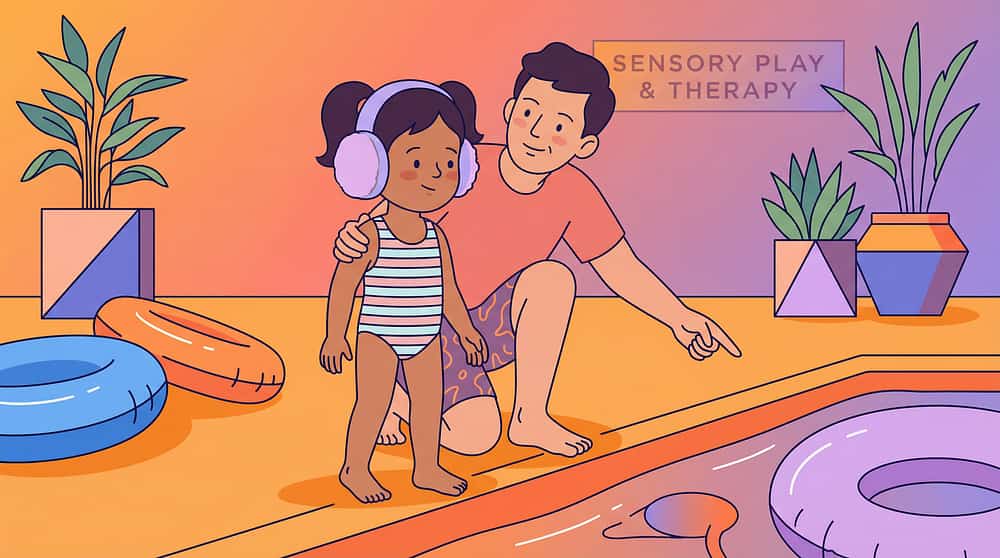
🏊 Swimming
Most acoustically challenging of all community class types. Earmuffs on the pool deck before and after. Earplugs or swim headband in water. Visual changing sequence essential. Safety skill — prioritise swimming above all other community classes first.
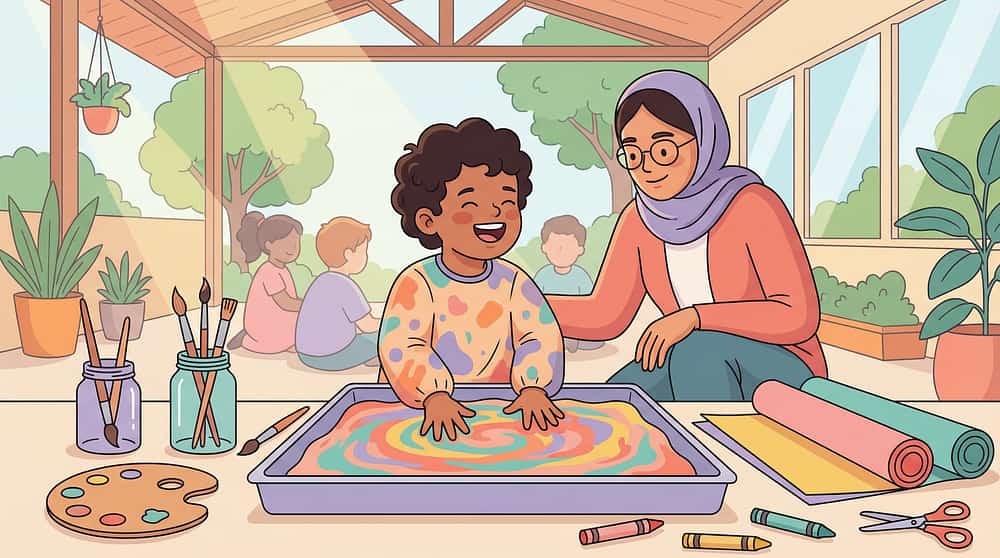
🎨 Art Class
Transition warnings are critical — "Two more minutes of painting, then cleanup." Prepare specifically for messy materials with desensitisation at home. Process over product — "finished" is entirely flexible for your child.
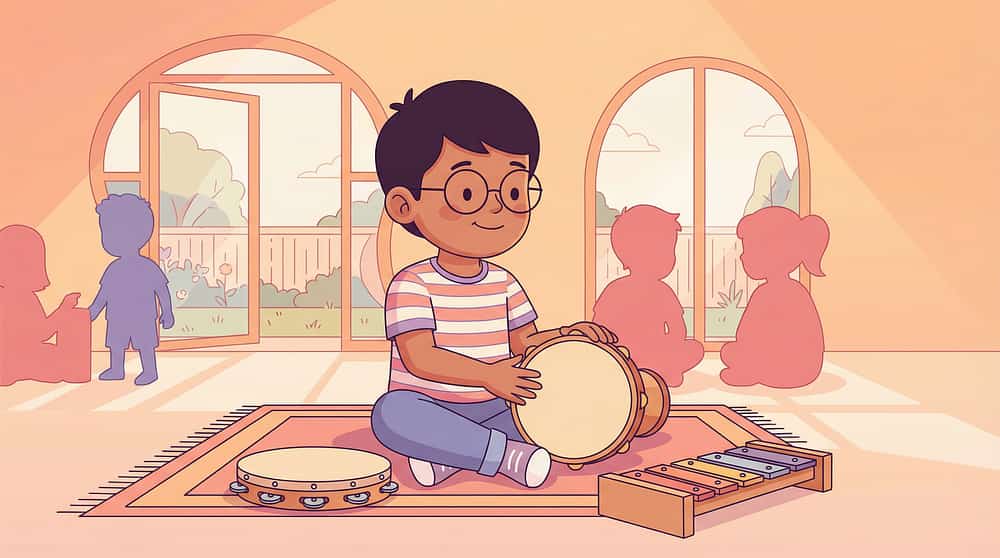
🎵 Music Class
Use noise reduction during loud instrument moments. A visual song list showing the sequence helps enormously. Often highly accessible once initial sensory barriers are addressed — music frequently becomes a genuine strength.

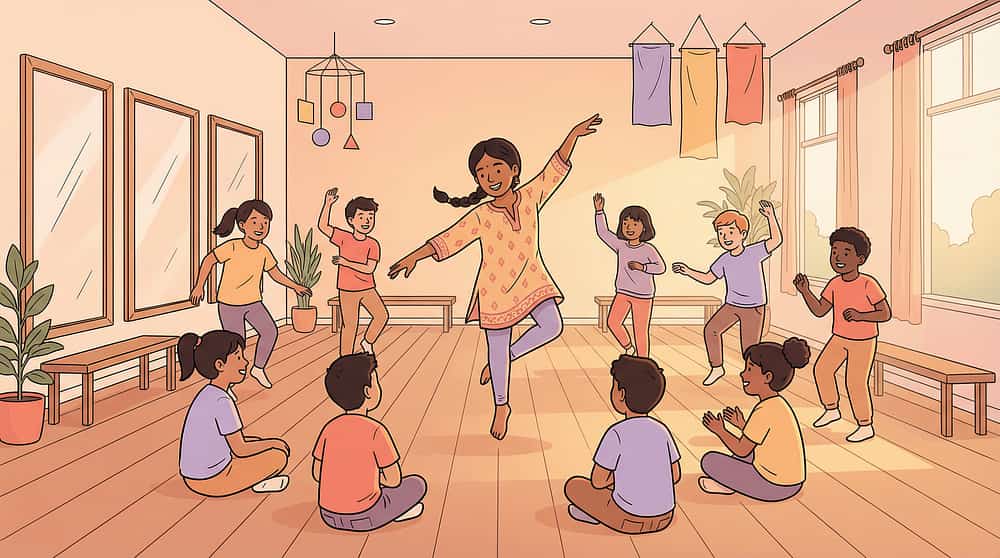
💃 Dance
Video choreography for home practice before class begins. Establish a consistent spot in the formation — positional predictability reduces anxiety. Position away from mirrors if visually distracting or overstimulating.
⚽ Sports
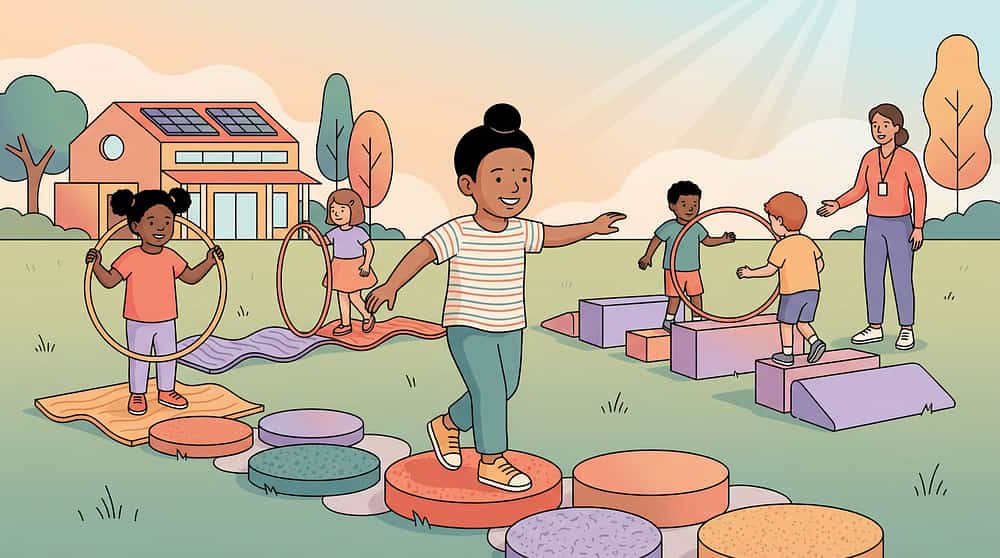
Position selection should match sensory profile carefully. Visual play diagrams help with strategy comprehension. Consider individual sports (swimming, martial arts) first if team social dynamics are currently too complex to manage alongside sensory demands.
🥋 Martial Arts
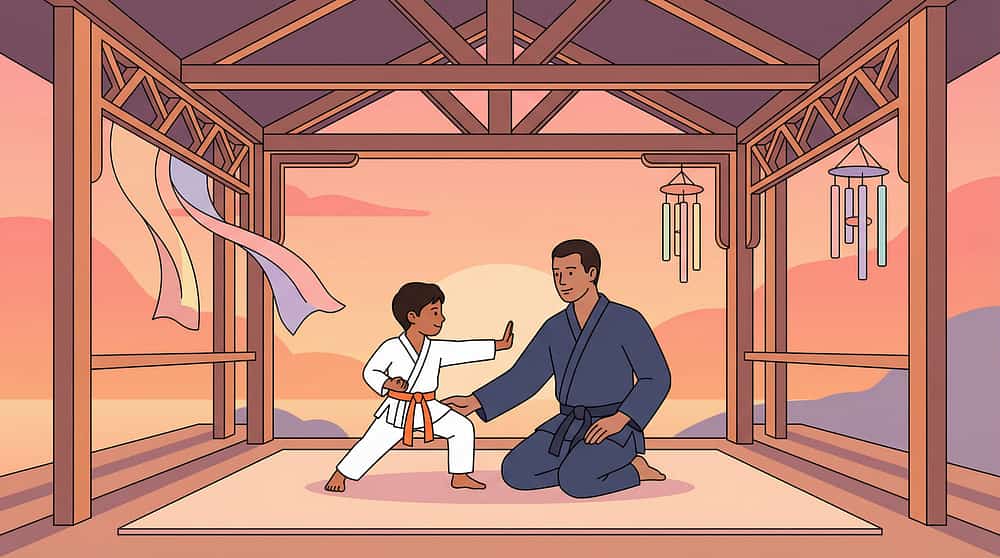
Often an excellent fit: structured, predictable movement patterns; heavy proprioceptive input; belt system provides clear visual goals; highly predictable routine. Frequently one of the most successful first community class choices.
The Path to Community Inclusion
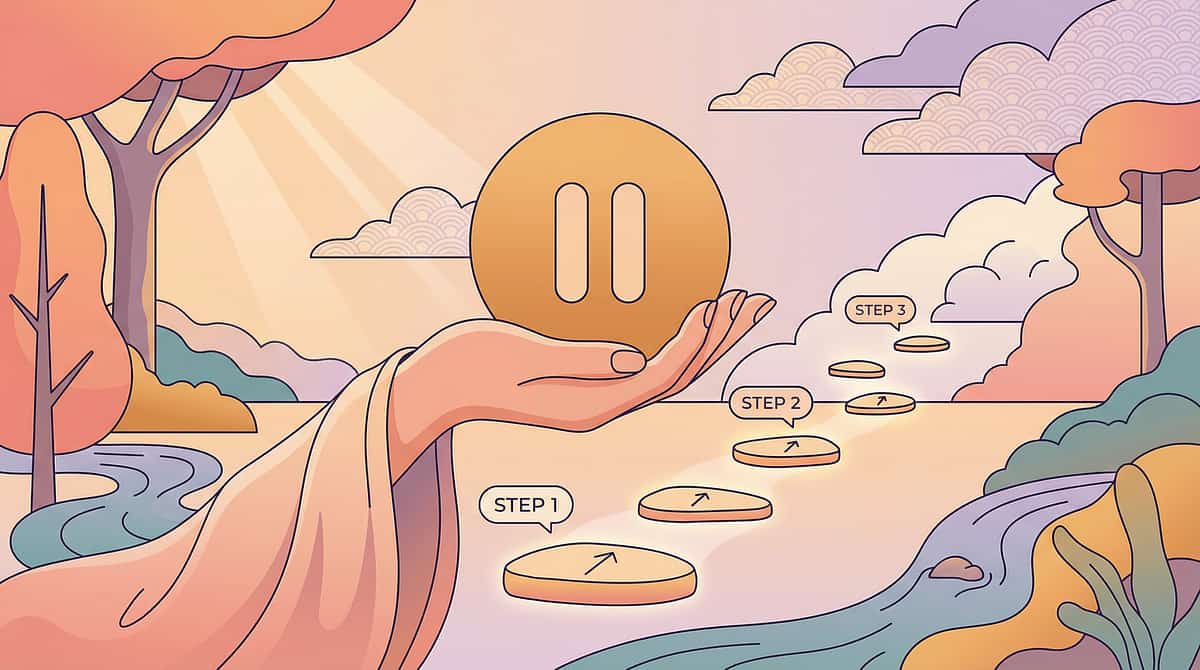
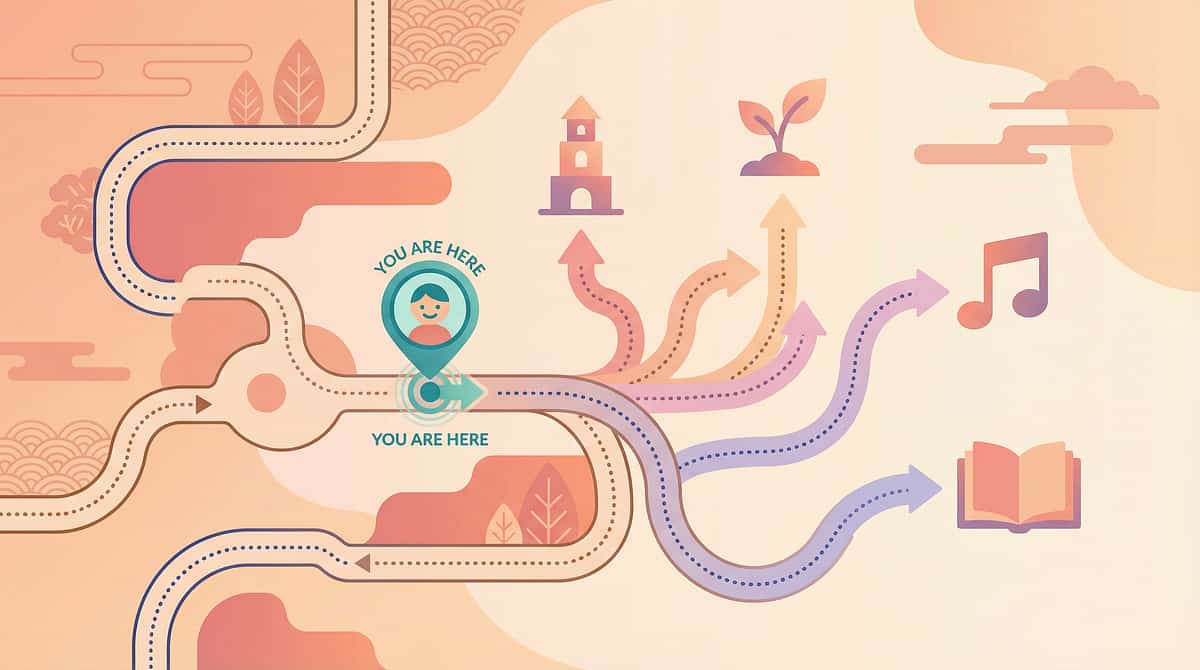
Community inclusion is not a single moment — it is a pathway built through intentional preparation, calibrated exposure, and patient progression. This four-phase pathway has guided hundreds of families from that first anxious car park moment to confident, joyful participation alongside peers. Each phase has a clear purpose. Move through them at your child's pace, not the calendar's.
Gradual Exposure — Phase by Phase
Phase 1 — Home Preparation (2–4 weeks before first class)
Read social story daily. Watch videos of the specific activity. Visit the venue briefly to see the space without any participation. Meet the instructor before the first class. Practice relevant skills at home in low-pressure settings.
Phase 2 — Initial Exposure (First 1–3 classes)
Shortened attendance if needed — even half a class is a genuine success. All 9 supports fully in place from day one. Parent positioned nearby for immediate support. Immediate reward after every session. Celebrate any participation at all, unconditionally.
Phase 3 — Building Duration and Independence
Gradually extend to full class duration as tolerance builds. Reduce parent proximity incrementally. Move toward child-led support use. Begin building peer connections. Celebrate every increment of increasing participation explicitly.
Phase 4 — Maintenance and Fading
Full class participation as the norm. Supports available but used less frequently. Instructor manages most needs independently. Parent not required in or near the room. Skills developing, enjoyment genuine and growing.
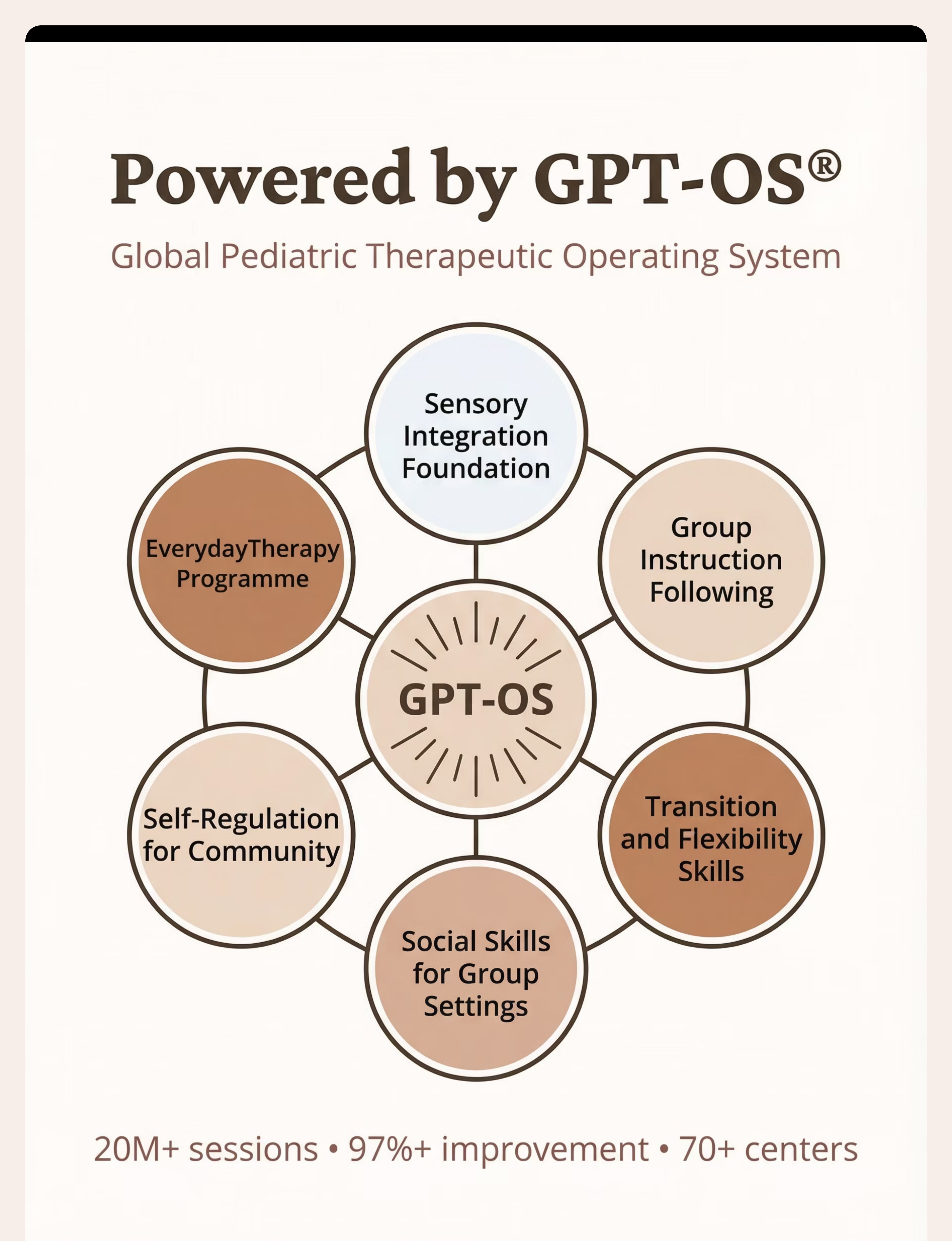
Powered by GPT-OS®
Global Pediatric Therapeutic Operating System
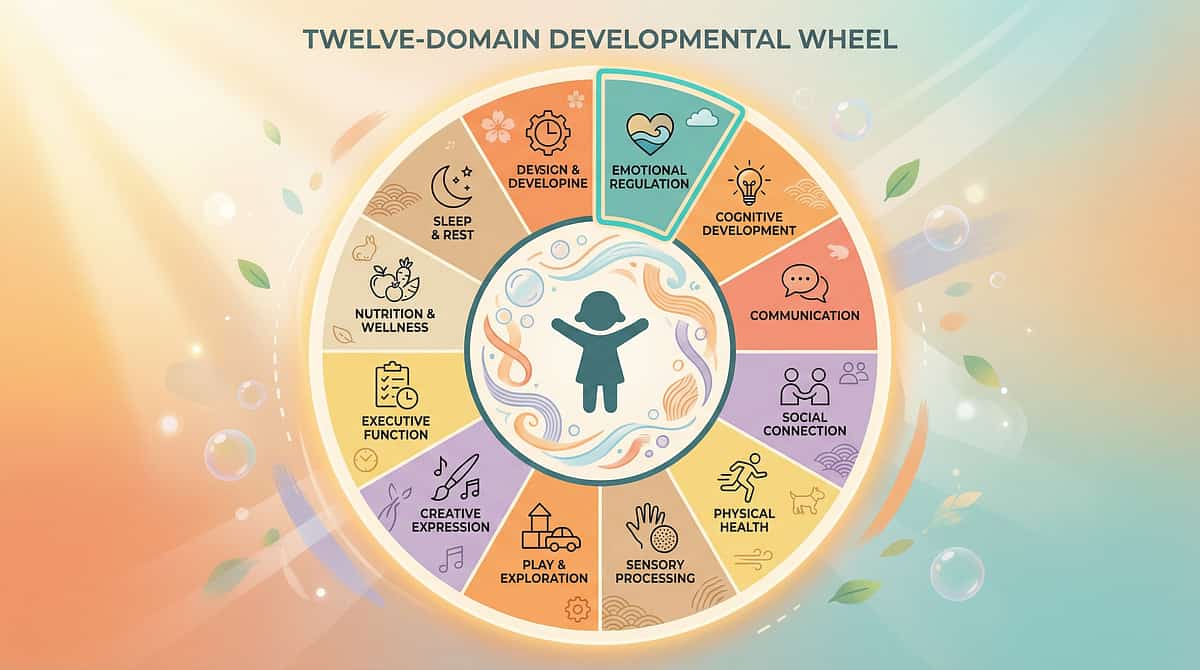
GPT-OS® develops the foundational skills that enable genuine, sustained community participation: sensory regulation for challenging environments, social skills for group settings, following group instructions in noisy conditions, managing activity transitions, and the self-regulation capacity needed to access recreational opportunities alongside neurotypical peers. Community inclusion is not a by-product of therapy — it is an explicit, measured outcome.
GPT-OS® Core Skills for Community Participation
Sensory Integration Foundation
Building progressive tolerance for varied community environments: pools, gyms, studios, and sports fields
Group Instruction Following
Processing and responding to verbal directions accurately in noisy, active group settings
Transition and Flexibility Skills
Managing activity changes, schedule variations, and unpredictable peer behaviour with increasing resilience
Social Skills for Group Settings
Peer interaction, turn-taking, shared activities, and navigating group dynamics
Self-Regulation for Community
Maintaining regulation in stimulating, unpredictable, multi-sensory community environments
EverydayTherapyProgramme™
Home practice that directly generalises therapy skills to real community recreational settings
Therapy that builds skills for belonging — because every child deserves to swim, create, play, and dance.
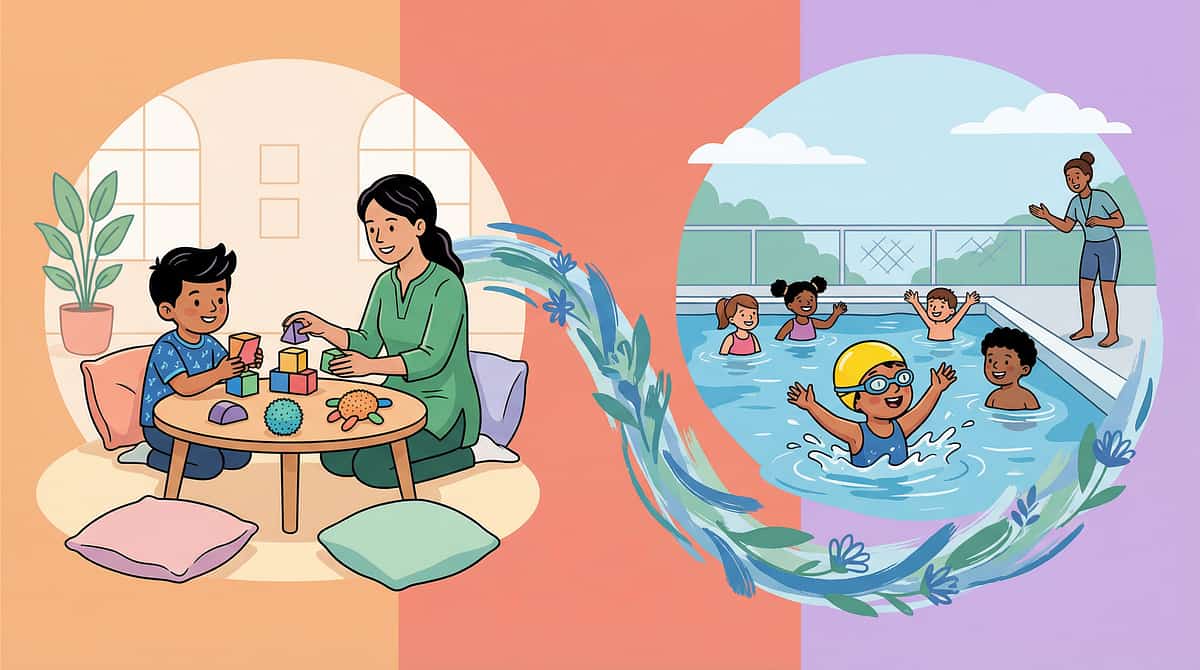
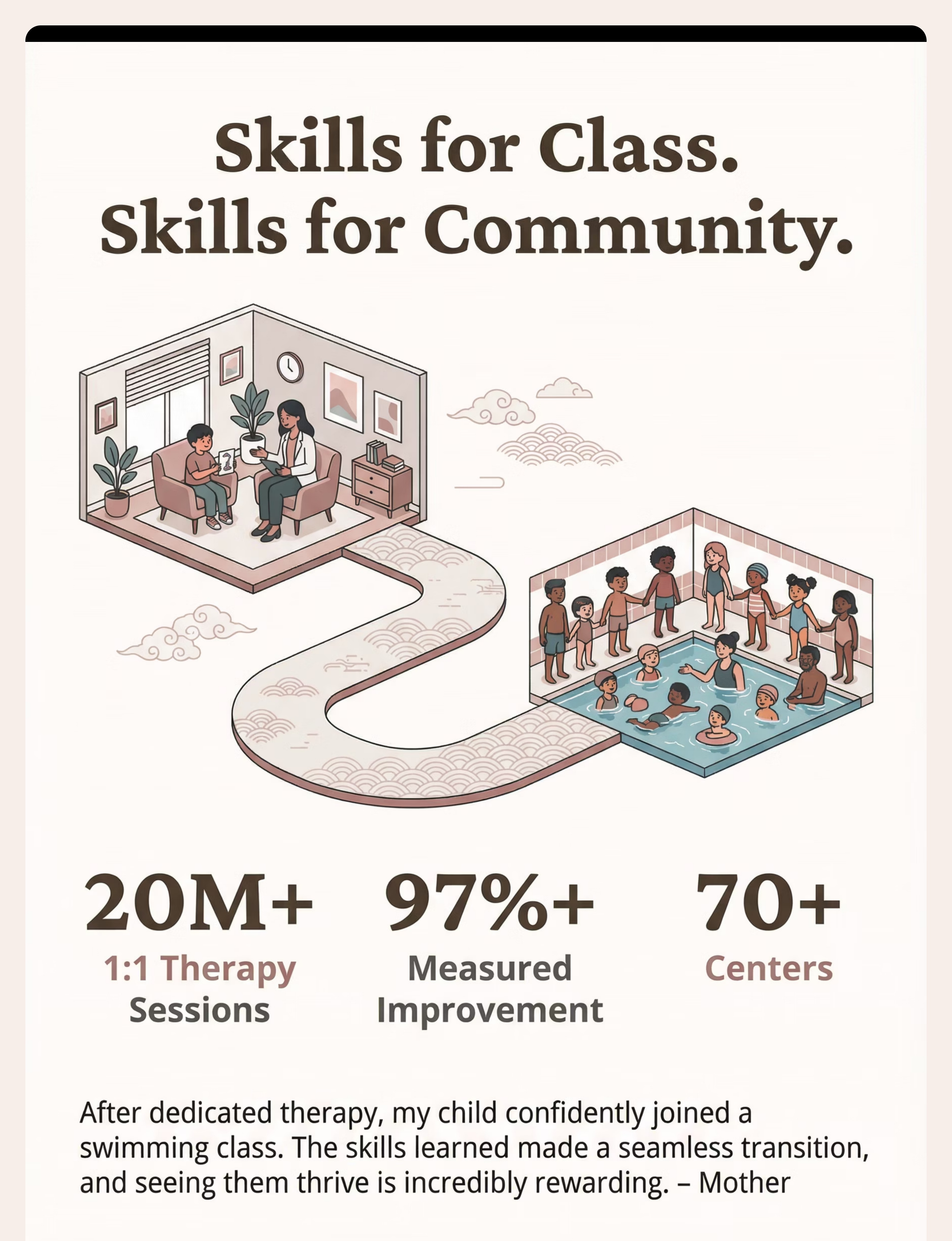
Skills for Class. Skills for Community.
Foundational therapy enables real-world recreational participation.
The skills built in therapy sessions don't stay in the therapy room. Sensory regulation, group instruction following, transition management, and social skills built through structured therapeutic work transfer directly to community class environments. This is the bridge — from the clinic to the pool, from the therapy room to the art studio.
Evidence of Impact
20M+
1:1 Therapy Sessions
Building skills that transfer directly to community participation
97%+
Measured Improvement
Skills measurably progressing toward real-world participation goals
70+
Centers Nationwide
Community inclusion as an explicit, tracked therapeutic outcome
Community Integration Outcomes We Measure
Participating in group recreational activities · Following group instructions in noisy environments · Managing transitions and schedule changes · Interacting with peers during shared activities · Self-regulating in stimulating community spaces
"After dedicated therapy, my child confidently joined a swimming class. The skills learned made a seamless transition, and seeing them thrive is incredibly rewarding."
— Mother, Pinnacle Network
Note: Illustrative case. Individual outcomes may vary based on child's specific needs and intervention intensity.
Pinnacle Blooms Network®
Built by Mothers. Engineered as a System.
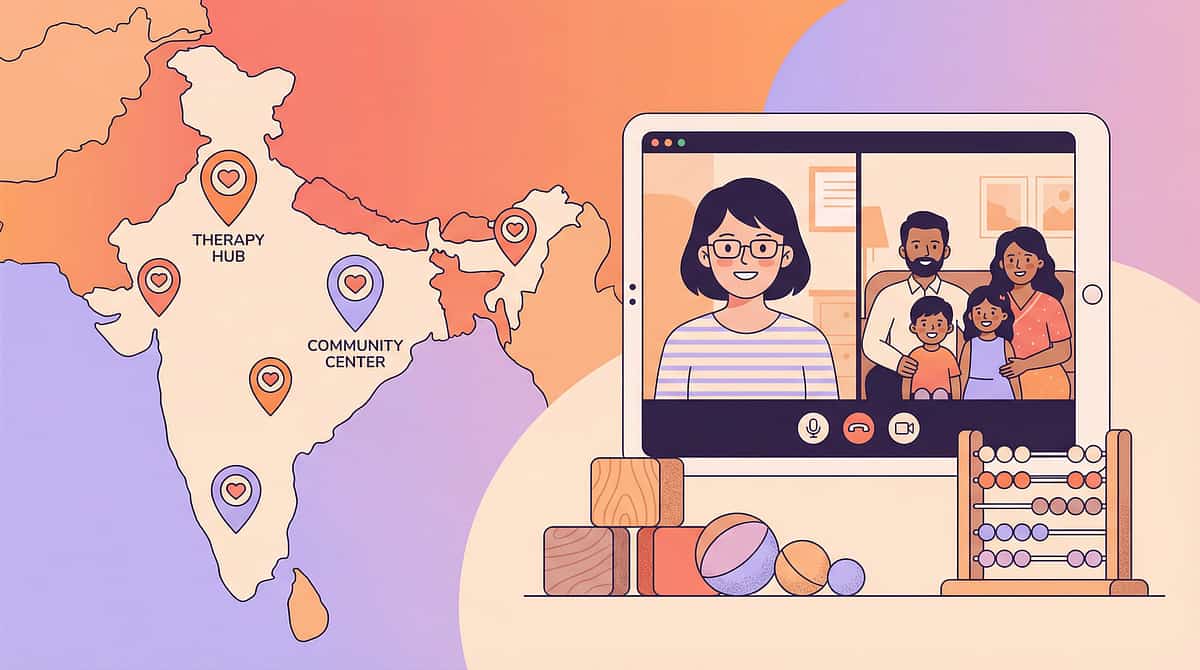
Pinnacle delivers therapy that builds skills for full life participation — including the community recreational experiences that define childhood. Across 70+ centers, in 16+ languages, we have supported over 20 million therapeutic sessions with one consistent goal: children belonging fully in their communities, not watching from the car.
What Pinnacle Delivers
🏗️ Foundational Skill Development
Sensory integration, social skills, and self-regulation that build the capacity for genuine community participation. Skills are explicitly measured and tracked toward real-world goals.
🌍 Community Integration Practice
Skills applied to real community settings through guided exposure and systematic generalisation. The therapy room is the starting point — community belonging is the destination.
👨👩👧 Family Support for Inclusion
Parent coaching on preparation strategies, visual supports, and confident advocacy with community programmes. You are the most important person on your child's inclusion team.
FREE National Autism Helpline
16+ Languages · 24×7
9100 181 181
Call anytime — no cost, no obligation
pinnacleblooms.org
care@pinnacleblooms.org

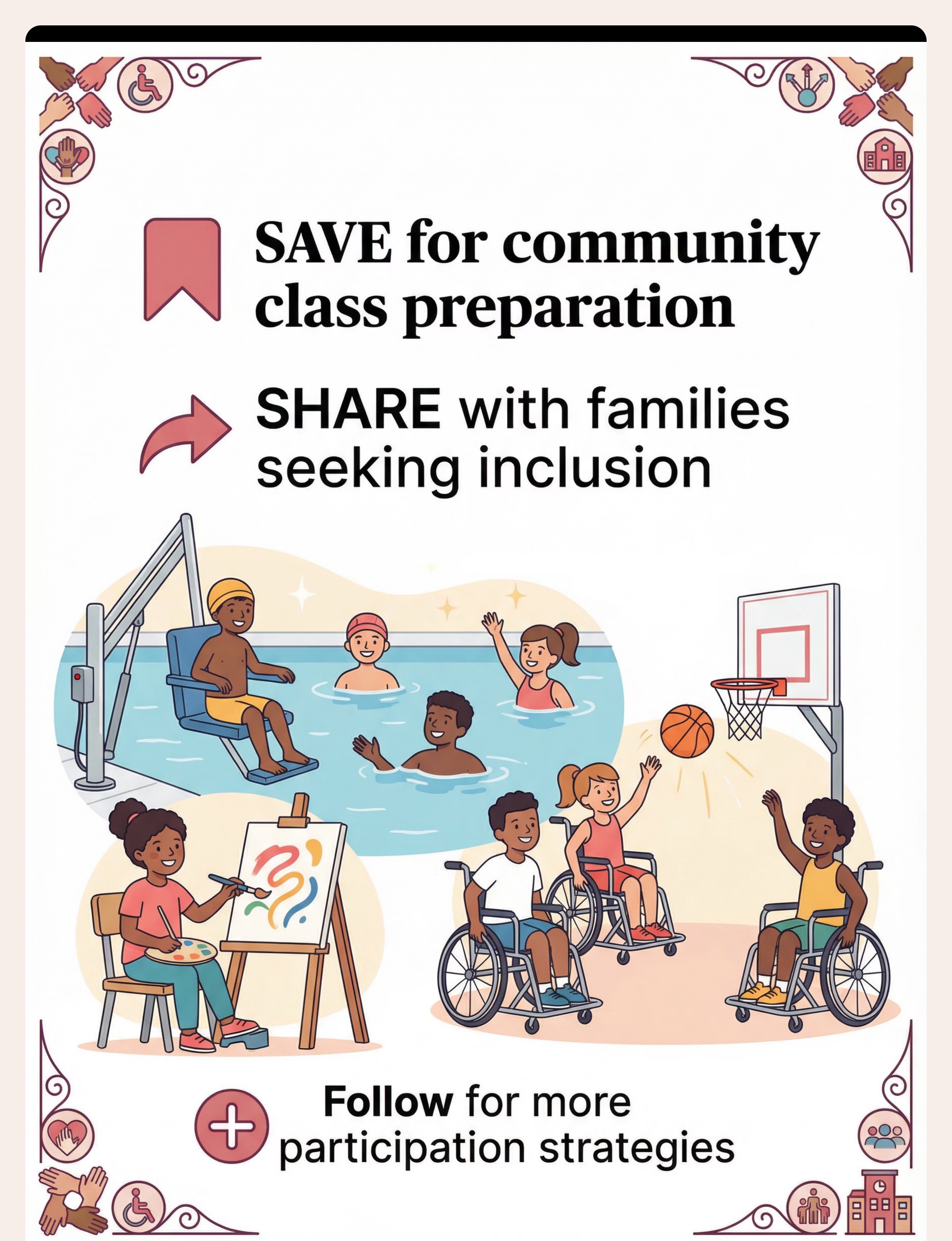
🔖 Save for Community Class Preparation
📤 Share with Families Seeking Inclusion
Swimming. Art. Music. Dance. Sports. Every child belongs. These 9 materials bridge the gap between your child's needs and community class demands — not by lowering expectations, but by providing exactly the right supports to meet them. If this guide helped you, there is another family in your circle right now watching from the car park, wondering if their child could ever join in. Share this with them.
Coming next: 9 Materials That Help With Birthday Parties — the next episode in the Community Integration series from Pinnacle Blooms Network®.
#AutismInclusion #CommunityClasses #SpecialNeedsSwimming #AutismArtClass #SensoryFriendlyActivities #AutismRecreation #InclusionMatters #PinnacleBlooms #GPTOSTherapy
Important Information
This content is educational and addresses supporting children with autism and sensory differences in community class participation. Strategies should be adapted to your child's specific sensory profile, developmental level, and the particular demands of the specific activities and venues you are working with.
Work with community programmes that are genuinely willing to accommodate and include. Some children may require additional support, smaller group sizes, or specialised programming initially — this is not failure, it is appropriate scaffolding toward the goal of broader inclusion.
This content does not replace professional therapeutic assessment and intervention. If you are unsure which strategies are appropriate for your child, please consult a qualified pediatric therapist.
Pinnacle Blooms Network®
Unit of Bharath Healthcare Laboratories Pvt. Ltd.
FREE Autism Helpline
9100 181 181 · 16+ Languages · 24×7
CIN: U74999TG2016PTC113063 · DPIIT: DIPP8651 · MSME: TS20F0009606 · GSTIN: 36AAGCB9722P1Z2 · NE No. 900272 · Individual outcomes vary based on child's profile and intervention. Statistics represent aggregate outcomes across the Pinnacle Blooms Network. © 2025 Pinnacle Blooms Network®, unit of Bharath Healthcare Laboratories Pvt. Ltd. All rights reserved.

Every Child Deserves to Belong
Community classes are not a luxury. Swimming teaches water safety. Art builds creative expression. Music develops rhythm and language. Dance grows coordination and confidence. Sports build teamwork and physical literacy. These are not optional extras in childhood — they are the experiences through which children understand who they are and where they belong in the world.
Your child deserves every one of them. Not a modified version. Not a watching-from-the-car version. The real thing, with the right supports. That is what these 9 materials are for. That is what Pinnacle Blooms Network® exists to make possible.

Quick Reference: The 9 Materials at a Glance
A one-page summary you can screenshot, print, or share. Return to this whenever you're preparing for a new class, a new venue, or a new season of community participation.
# | Material | Category | Primary Benefit | Cost | |
1 | 📖 Social Story Book | Preparation | Familiarity before first class | Free–₹800 | |
2 | 📋 Visual Schedule Strip | Visual Support | Predictable transitions | Free–₹400 | |
3 | 🎧 Noise-Reducing Earmuffs | Sensory Support | Acoustic management | ₹800–₹2,500 | |
4 | 🪪 Instructor Communication Card | Communication | Instructor partnership | Free | |
5 | 🔁 First-Then Board + Reward | Motivation | Concrete incentive | ₹100–₹300 | |
6 | 👜 Portable Calm-Down Kit | Regulation | Early overwhelm prevention | ₹200–₹800 | |
7 | 🃏 Visual Instruction Cards | Visual Support | Group direction access | Free–₹400 | |
8 | 🛑 Break Signal Card | Self-Advocacy | Non-verbal communication | Free–₹200 | |
9 | 📸 Peer Buddy Photo | Social Anchor | Social familiarity | Free |

Frequently Asked Questions
These are the questions parents ask most often when beginning the community class journey. Honest, practical answers — because you deserve both.
Do I need all 9 materials from the start?
No. Start with the Essential Starter Kit (social story, instructor card, earmuffs, visual schedule, break signal). Add others as you identify specific needs through the first few classes.
What if the instructor isn't cooperative?
Some instructors will surprise you with their warmth and adaptability. If an instructor is genuinely unwilling to accommodate, find a different class. Your child deserves an environment where support is welcomed, not resisted.
Which class should we start with?
Martial arts or individual swimming lessons are often the most structured and predictable first choices. Avoid large, chaotic group sports as a first entry point. Match the structure level to your child's current regulation capacity.
What if my child has a very difficult first class?
A hard first class is data, not failure. Review which challenges emerged, add or adapt supports, and try again. Many children who struggle dramatically in the first session become confident participants by session four or five.
How do I know when supports are ready to be faded?
When your child is participating fully, managing transitions independently, and self-regulating without prompting for three or more consecutive classes — begin gradual, systematic fading. Always keep supports available in the bag even after fading begins.
Preview of 9 materials that help with community classes Therapy Material
Below is a visual preview of 9 materials that help with community classes therapy material. The pages shown help educators, therapists, and caregivers understand the structure and content of the resource before use. Materials should be used under appropriate professional guidance.


Link copied!
The Moment Makes It All Worth It
There will be a moment. It might be the third class or the thirtieth. But there will be a moment when you look up and your child is just — there. Not watching from the car. Not standing at the edge. Not overwhelmed and shutting down. Just there, in the water, in the art studio, on the sports field, belonging.
That moment is why every social story gets read, every visual card gets laminated, every instructor gets a thoughtful introduction. That moment is the whole point.
You are building toward that moment, one supported session at a time. These 9 materials are your tools. Your child's belonging is the outcome.
FREE National Autism Helpline
16+ Languages · Available 24×7
📞 9100 181 181
Pinnacle Blooms Network®
🌐 pinnacleblooms.org
Community Integration Series