
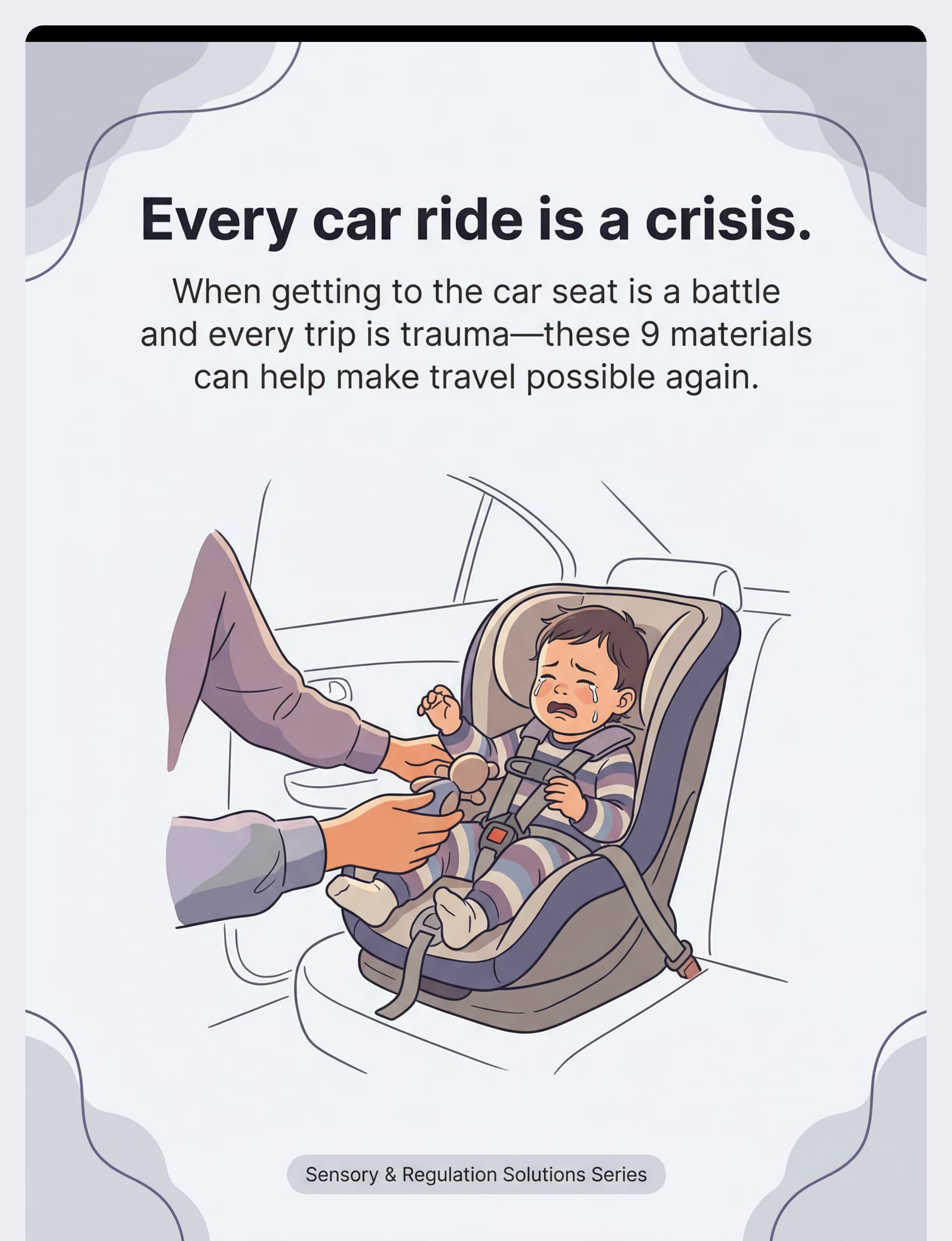
9 Materials That Help With Car Ride Distress
When every car trip becomes a crisis — these evidence-backed materials can help make travel possible again.
Sensory & Regulation Solutions · Episode 94
Ages 1–8 Years

"My daughter is three and a half, and car rides are absolute torture — for her and for us. The moment she sees the car, she starts screaming. Getting her into the car seat is a physical battle. She arches her back, goes rigid, kicks, screams like she's in pain. A ten-minute trip to the grocery store leaves her hoarse and me shaking. We've basically stopped going anywhere that isn't absolutely necessary. Why does my child hate car rides so much? What is happening to her in that car seat?"
— A parent who contacted Pinnacle's National Autism Helpline
If this sounds familiar, you are not alone — and you are not a bad parent. Car ride distress is real, it is neurological, and there are materials that help.
When Car Rides Become a Crisis
Car ride distress is more than typical fussiness. It is intense, unremitting distress that does not resolve with typical comfort measures — new car seats, music, snacks, toys, different positions. Nothing works. And every failed attempt reinforces how awful the experience is.
🚗 Before the Car Moves
Screaming begins at the sight of the car. Physical resistance to the car seat — arching, going rigid, kicking. Anticipatory terror before the trip even starts.
🛣️ During the Ride
Crying continues for the entire duration — regardless of trip length. Escalating distress that doesn't respond to music, toys, snacks, or comfort. Red face, sweating, gagging, sometimes vomiting.
🏠 Impact on Family Life
Families stop going places. Grocery pickup instead of shopping. No visits to grandparents. Missed appointments. The world gets very small — for the child and everyone who loves them.
Why Cars Are So Hard: The Sensory Science
Car travel creates a uniquely overwhelming sensory environment. For children with sensory processing differences, the car combines multiple intense, inescapable stressors simultaneously.
For most children with car ride distress, multiple factors operate simultaneously — sensory overwhelm amplifies anxiety, and anxiety intensifies sensory experience. Understanding which factors are most prominent for your child guides which materials will help most.

Common Signs of Car Ride Distress
Car ride distress looks different from ordinary toddler fussiness. These signs point to genuine sensory and regulatory overwhelm — not behavioral defiance.
Screaming that begins at the sight of the car or car seat
Distress starts before any motion — anticipatory fear, not just a reaction to the ride itself.
Physical resistance: arching, going rigid, kicking
The body is fighting against confinement — this is a nervous system response, not deliberate defiance.
Continuous crying for the entire ride regardless of length
Even 5-minute trips produce the same response. Duration of the ride is not the variable — the environment is.
Distress that worsens over time rather than improving
Every bad ride reinforces the fear. Without intervention, sensitization — not habituation — occurs.
No relief from typical comfort measures
Music, toys, snacks, different car seats — nothing works. Because the source is sensory and neurological, not situational.
Material 1 of 9
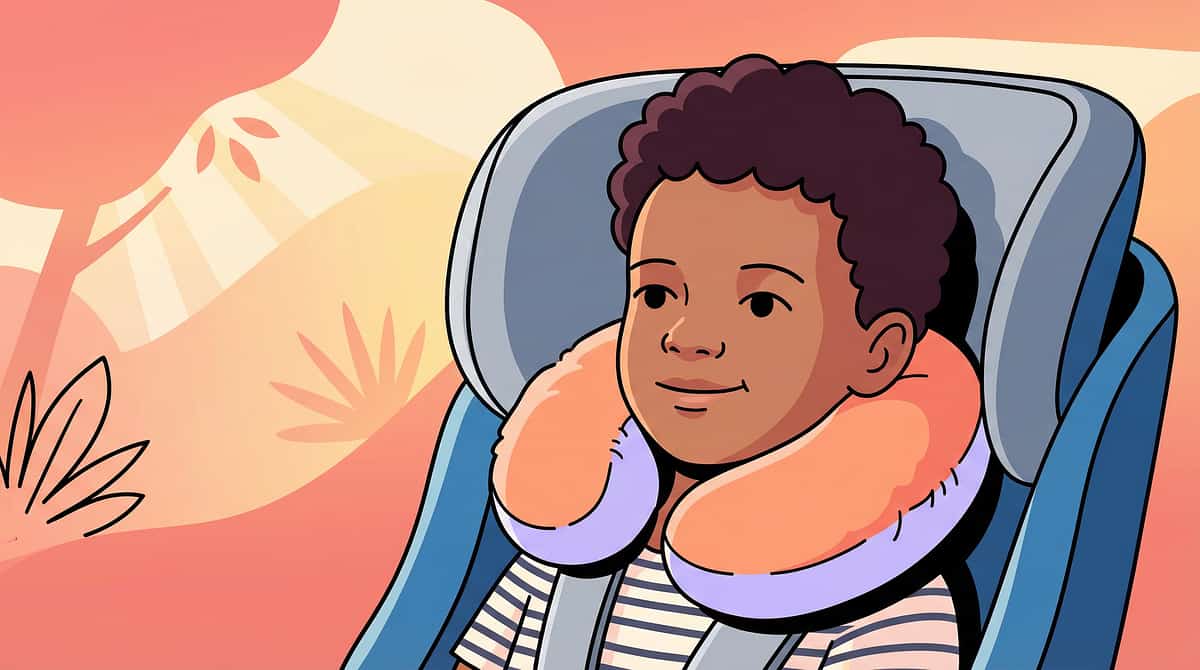
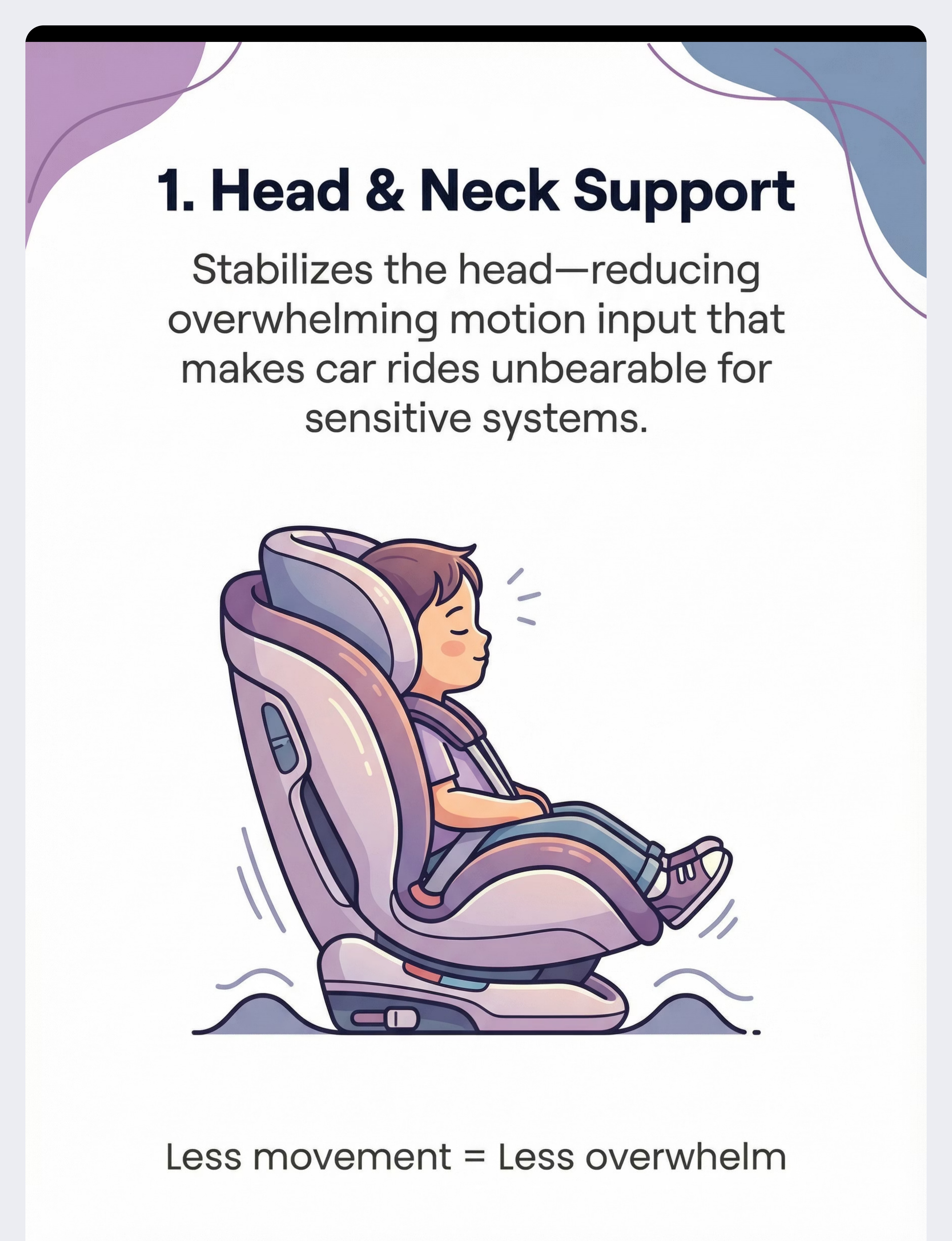
Head & Neck Support
Vestibular Calming Supports · Positioning Aids
Less movement = less overwhelm. Vestibular supports stabilize the head and neck — reducing the overwhelming motion input that makes car rides unbearable for sensitive systems.
The Science
The vestibular system — the sense of movement and balance — is the primary source of overwhelm for many children. Every bump, turn, and stop moves an unsupported head. That's constant vestibular input the child's system cannot process. Stabilizing the head directly reduces vestibular stimulation, significantly lowering the sensory load during travel.
Key Insight
Proper head and neck support reduces the amount of head movement during travel. Less jostling means less unexpected movement — less vestibular overwhelm. Some children also benefit from positioning that allows them to see the horizon, helping vestibular and visual systems work together to reduce disorientation.
Materials
- Car seat head supports
- Child travel neck pillows
- Infant head positioning inserts
- Car seat positioning wedges
Material 1 · How to Use
Head & Neck Support: Practical Guide
DIY at Home
Roll a small towel or receiving blanket to create neck support. Use a travel neck pillow sized for children. These free solutions can be tried immediately before purchasing specialist items.
Check the Car Seat Angle
Ensure the car seat is installed at the correct recline angle for the child's age. An incorrect angle means the head flops forward — increasing vestibular input with every movement.
Harness Fit First
Check that harness straps are snug but not tight. Proper fit reduces sliding and jostling. A loose harness allows more movement — more vestibular stimulation.
Observe & Adjust
Watch whether distress is worse on winding roads or stop-and-go traffic vs. smooth highways. This tells you how much vestibular sensitivity is contributing — and how much positioning is helping.
⚠️ Safety: Only use positioning aids approved for use with car seats or crash-tested. Never add aftermarket padding behind the child's back or under them. Head supports must not interfere with harness fit or car seat function. Consult your car seat manual for approved accessories. Price range: ₹500–2,500
Material 2 of 9
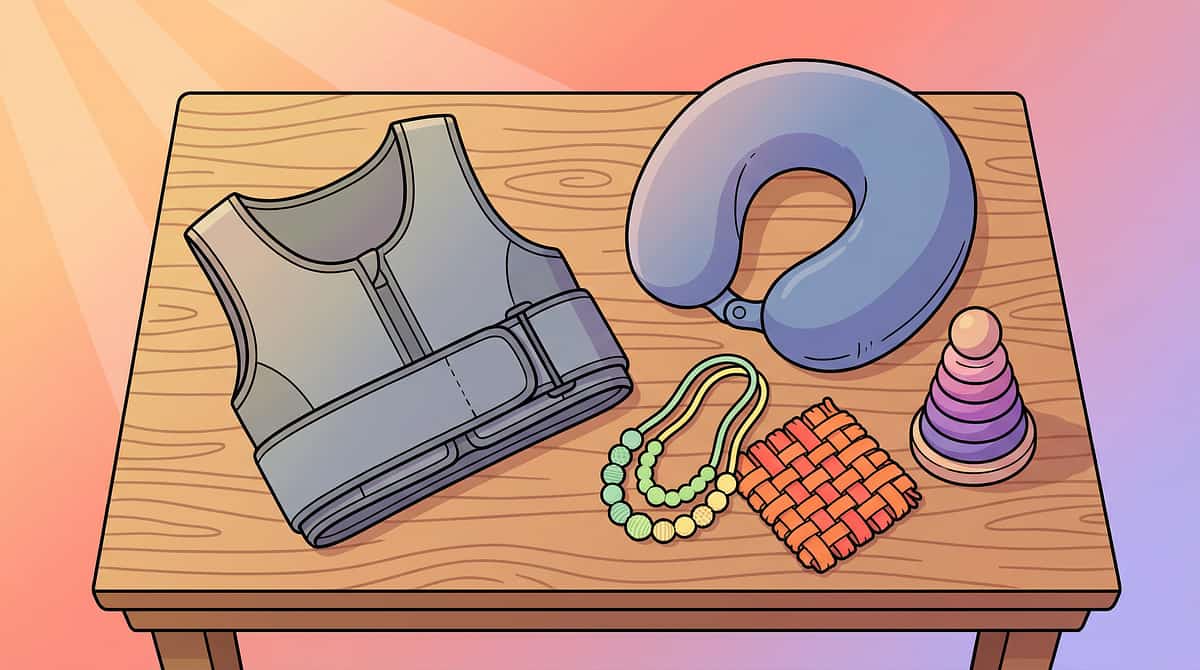
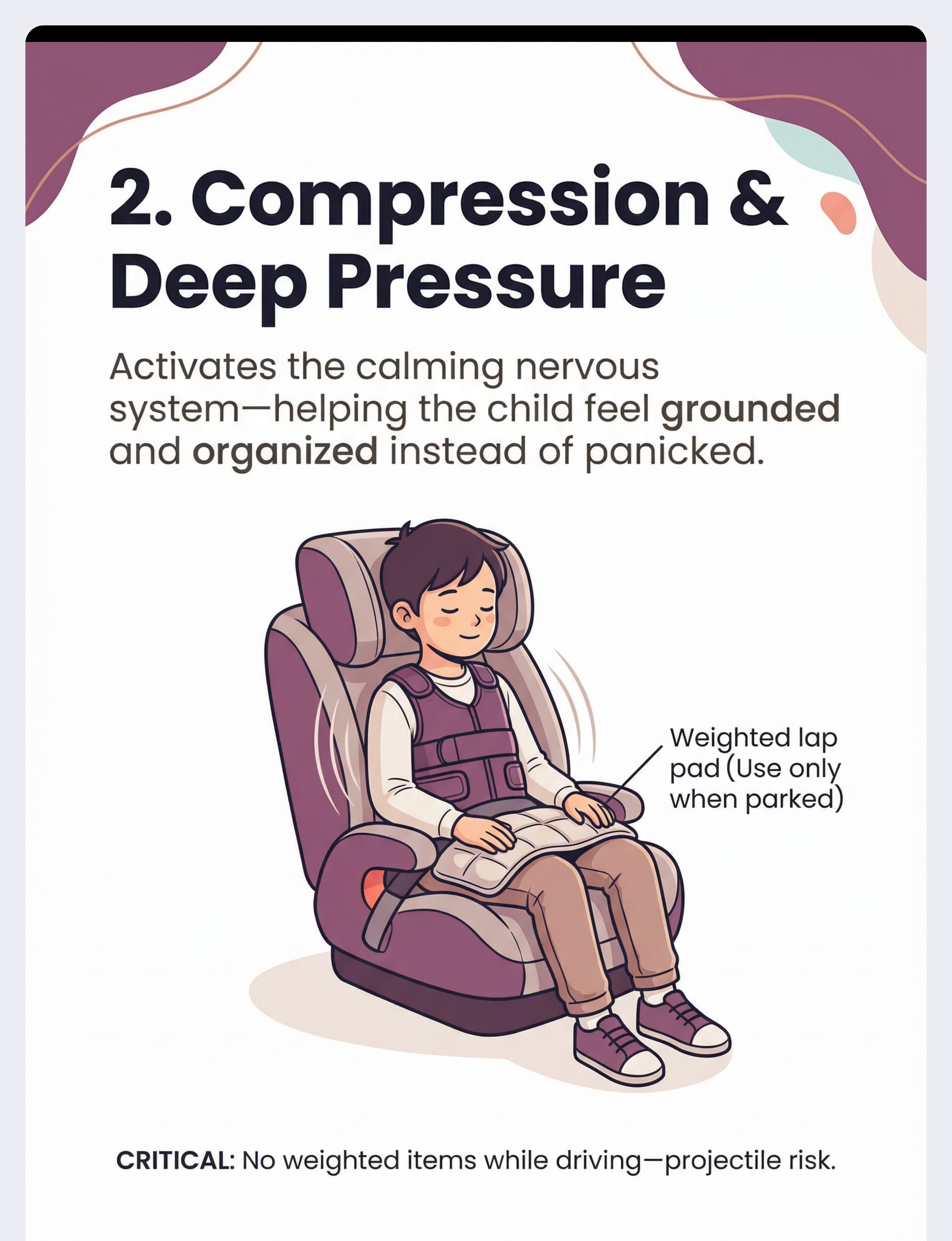
Compression & Deep Pressure
Travel Compression Vest · Weighted Lap Pad
Nervous system calming — grounded and organized instead of panicked. Compression and deep pressure activate the calming nervous system — helping the child feel grounded rather than overwhelmed.
The Science
Deep pressure activates the parasympathetic nervous system — the "rest and digest" mode that counteracts the fight-or-flight response the child is experiencing in the car. The car seat restrains, but it doesn't provide the organizing proprioceptive input many sensory systems need. Adding appropriate compression gives the nervous system what it's looking for: predictable, even pressure that signals safety.
Key Insight
A compression vest worn during travel provides constant, even pressure around the torso. This deep pressure is one of the most reliable ways to calm an activated nervous system — helping the child feel more organized and more able to tolerate the other sensory challenges of car travel.
Materials
- Compression vests for children
- Weighted lap pads (stationary only)
- Compression undershirts
- Deep pressure travel blankets
Material 2 · How to Use
Compression & Deep Pressure: Practical Guide
Start Simple
A snug-fitting undershirt or compression shirt provides some pressure at no extra cost. Try this before purchasing a dedicated compression vest to see if the child responds to compression input.
Use Weighted Lap Pad Before the Ride
A small bag of rice or beans in a fabric pouch can serve as a lap weight during stationary calming time before the trip. Remove completely before the car is in motion.
Apply Firm Touch Before Buckling
Firm pressure from a parent's hands — on shoulders, back, arms — before getting in the car can help regulate the nervous system before the stressful experience begins.
Check Harness Fit Over the Vest
If using a compression vest, verify the harness still fits correctly over or under the vest. You must not be able to pinch any slack in the harness straps at the child's collarbone.
🚨 CRITICAL SAFETY: Weighted items must NEVER be used while the car is in motion — they become dangerous projectiles in a crash. Weighted lap pads are for calming before driving or during stops only. Compression vests must not interfere with car seat harness fit. Price range: ₹800–3,500
Material 3 of 9
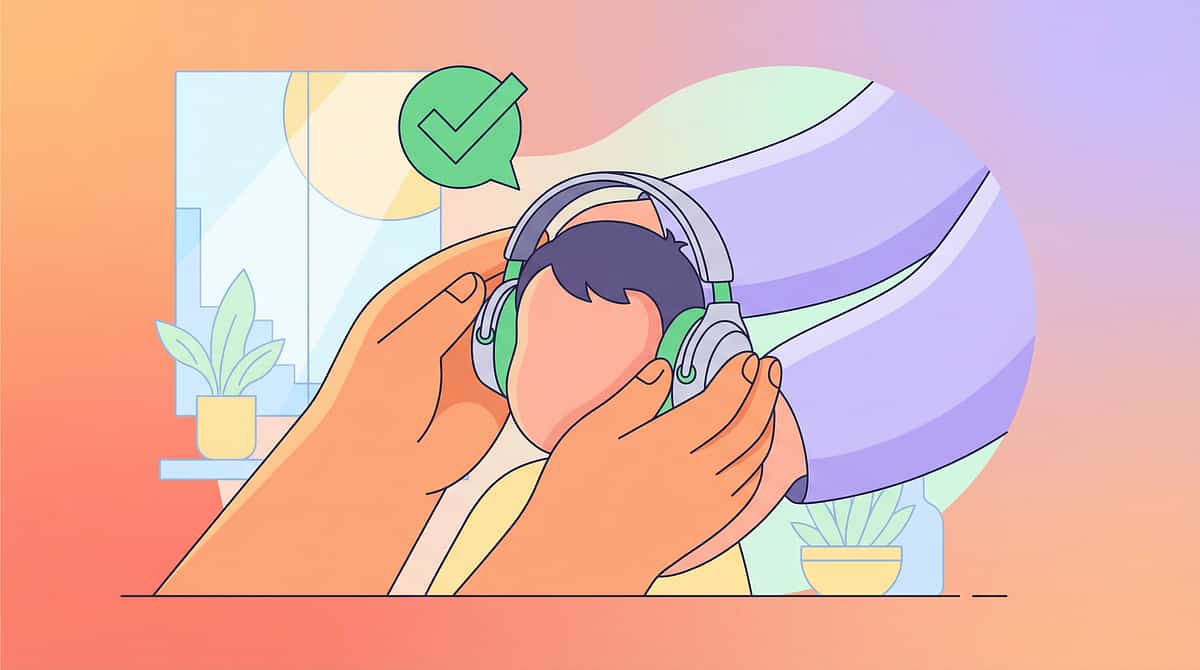
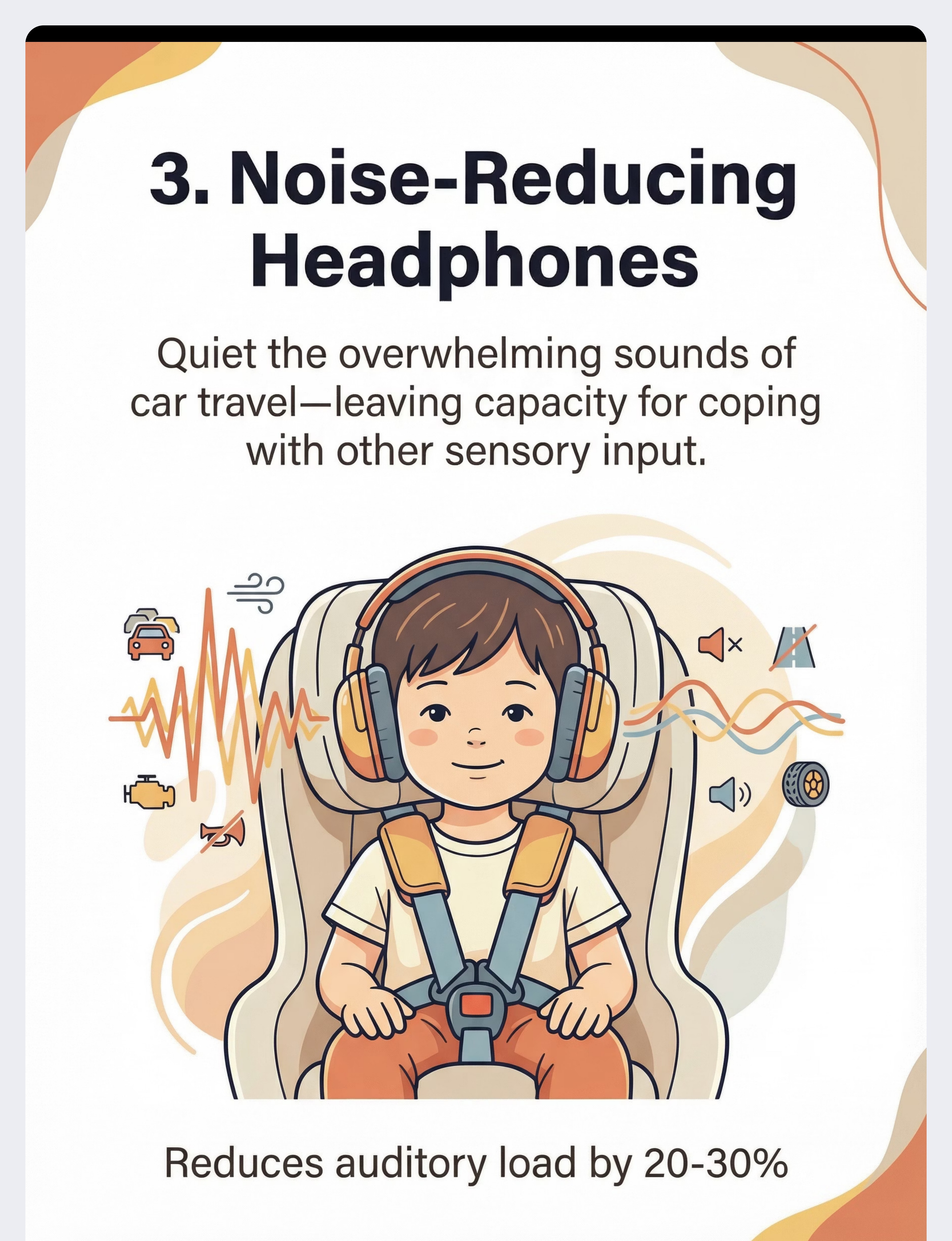
Noise-Reducing Headphones
Ear Protection for Auditory-Sensitive Children
Quieting the overwhelm. Noise-reducing headphones quiet the overwhelming sounds of car travel — giving sensitive ears relief and leaving more capacity for coping with other sensory input.
The Science
Car rides are loud — engine noise, road noise, wind, traffic, siblings, conversation. For children with auditory sensitivity, this constant sound bombardment is exhausting and inescapable. It cannot be turned down or escaped. The sound adds to the sensory overwhelm already happening from motion and confinement. Noise-reducing headphones decrease the volume of environmental sounds, creating a quieter, more tolerable auditory environment.
Key Insight
Reducing auditory input by even 20–30% can meaningfully decrease overall sensory load — leaving more capacity for tolerating the vestibular, visual, and proprioceptive challenges of car travel. For some children, adding calming music through the headphones provides an additional layer of auditory predictability and comfort.
Materials
- Child noise-reducing headphones (passive)
- Child noise-canceling headphones (active)
- Child ear defenders/ear muffs
- Soft foam earplugs sized for children
Material 3 · How to Use
Noise-Reducing Headphones: Practical Guide
Start with Regular Headphones
Try regular child headphones playing familiar, calming music or audiobooks before purchasing noise-canceling versions. For some children, familiar audio alone provides enough auditory anchoring.
Reduce Car Sounds at Source
For children who won't wear headphones: close windows, turn off the radio, speak softly. Reducing car noise at the source helps all children — not just those who tolerate headphones.
Notice the Pattern
Notice whether distress is worse on highways (louder) vs. quiet residential streets. This tells you how much auditory input is contributing to the distress — and how much headphones may help.
Introduce Headphones at Home First
Let the child wear and explore headphones in a calm, familiar setting before trying in the car. Familiarity with the sensory experience of wearing them reduces resistance during the car trip.
⚠️ Safety: Ensure headphones fit properly and don't press painfully on ears. The child must still be able to hear your voice and important sounds — noise-reducing is different from noise-blocking. Don't force headphones if they add to distress. Price range: ₹600–3,000
Material 4 of 9
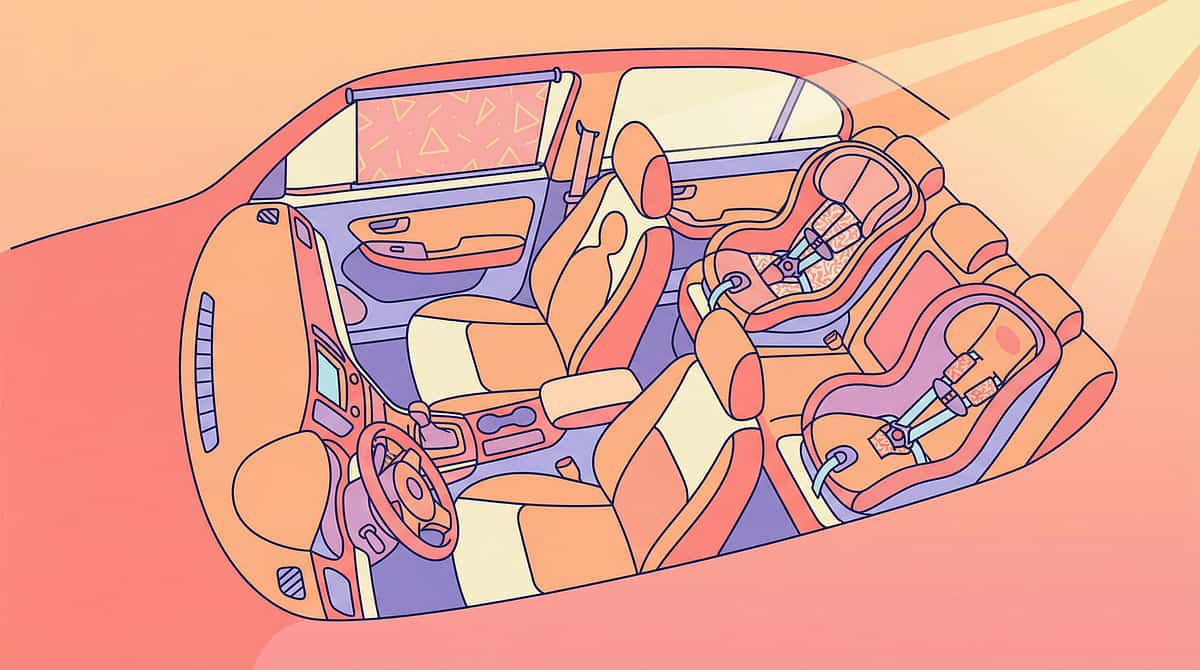
Visual Barriers & Window Shades
Controlling What the Eyes See
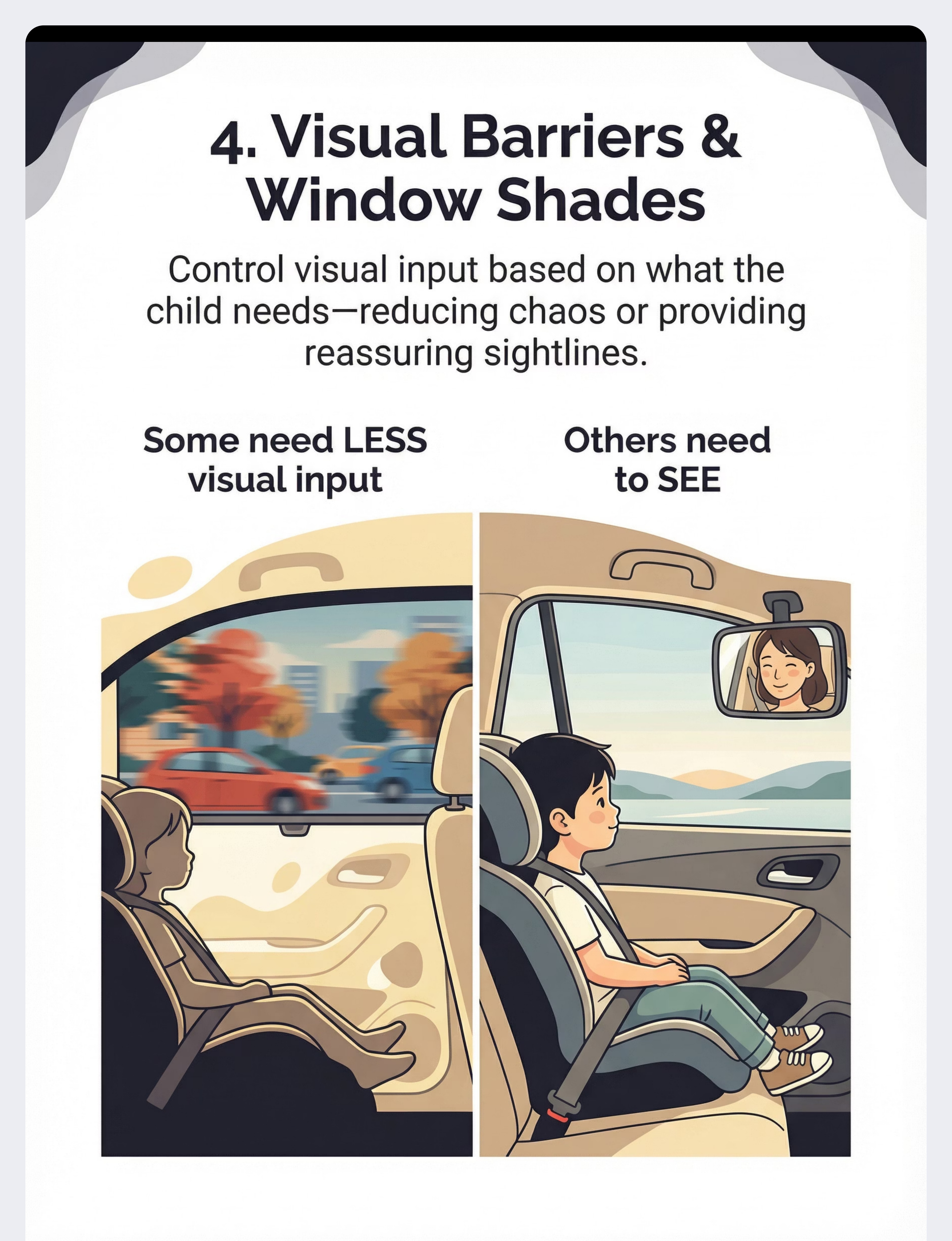
Managing visual input based on what the child needs. For some children, blocking visual chaos helps. For others, seeing helps. The child's response will tell you which is right.
The Science
The visual world in a moving car is chaotic — trees fly past, cars approach and recede, shadows flicker, lights change. For children with visual processing sensitivities, this is overwhelming and disorienting. There is also a sensory mismatch: the vestibular system feels movement while the eyes see chaotic, unpredictable motion — contributing to disorientation and motion sickness. Window shades reduce visual chaos. But for some children, being able to see the road ahead helps the brain make sense of the motion.
Two Directions — One Child
Less visual input: Window shades or a car seat canopy block the chaotic side-window view. This reduces visual overload for children who are overwhelmed by visual motion.
More visual input: A car seat mirror lets rear-facing children see the parent's face. Clear sightlines to the horizon help others orient. Understanding what works for the specific child guides whether to shade or to provide clear sightlines.

Material 4 · How to Use
Visual Barriers & Window Shades: Practical Guide
🕶️ Block the Chaos
Drape a light blanket or cloth over the car seat to block side window view. Use static-cling or suction-cup window shades. Test whether blocking the side windows reduces distress — if it does, visual overwhelm is a key factor.
👀 Enable the View
For children who calm when they can see out, keep windows clean and unobstructed. Try positioning so the child can see the road ahead (horizon orientation). Install a car seat mirror for rear-facing children to see the parent's face.
🧪 Test Both Systematically
One trip with shades, one trip without. Note differences in timing, intensity, and pattern of distress. The child's nervous system will show you what it needs — your job is to observe and respond.
⚠️ Safety: Shades must never block driver's visibility. Don't completely block all light from the child — some children become more disoriented in total darkness. Car seat mirrors should be crash-tested and properly secured. Price range: ₹300–1,500
Material 5 of 9
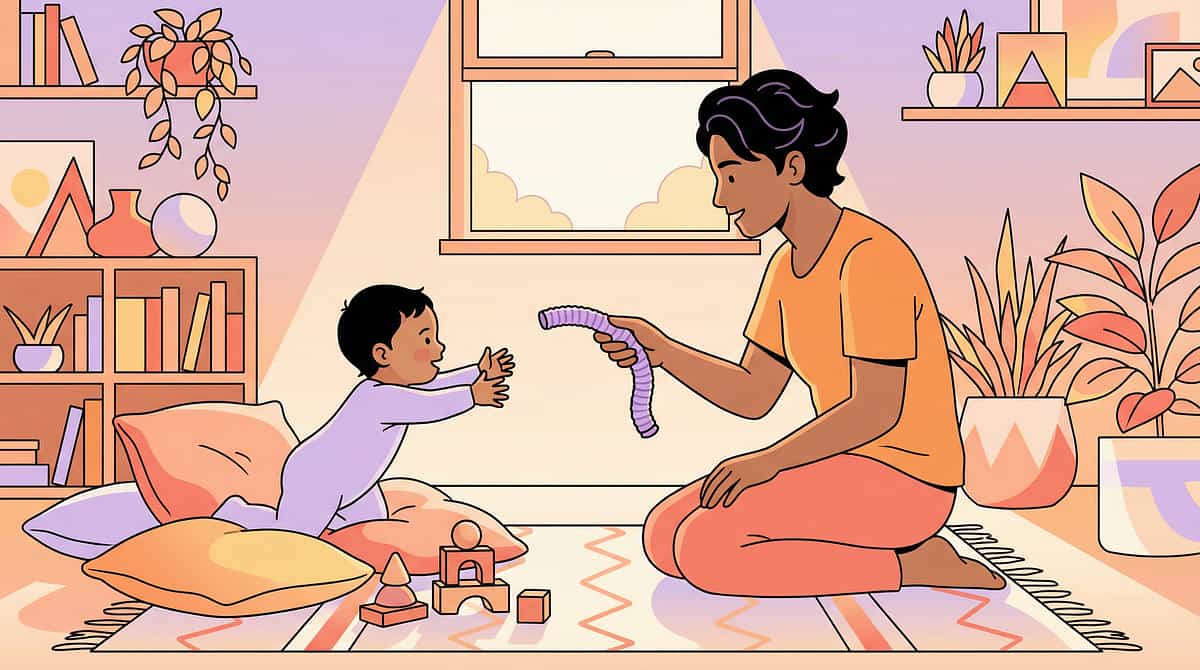
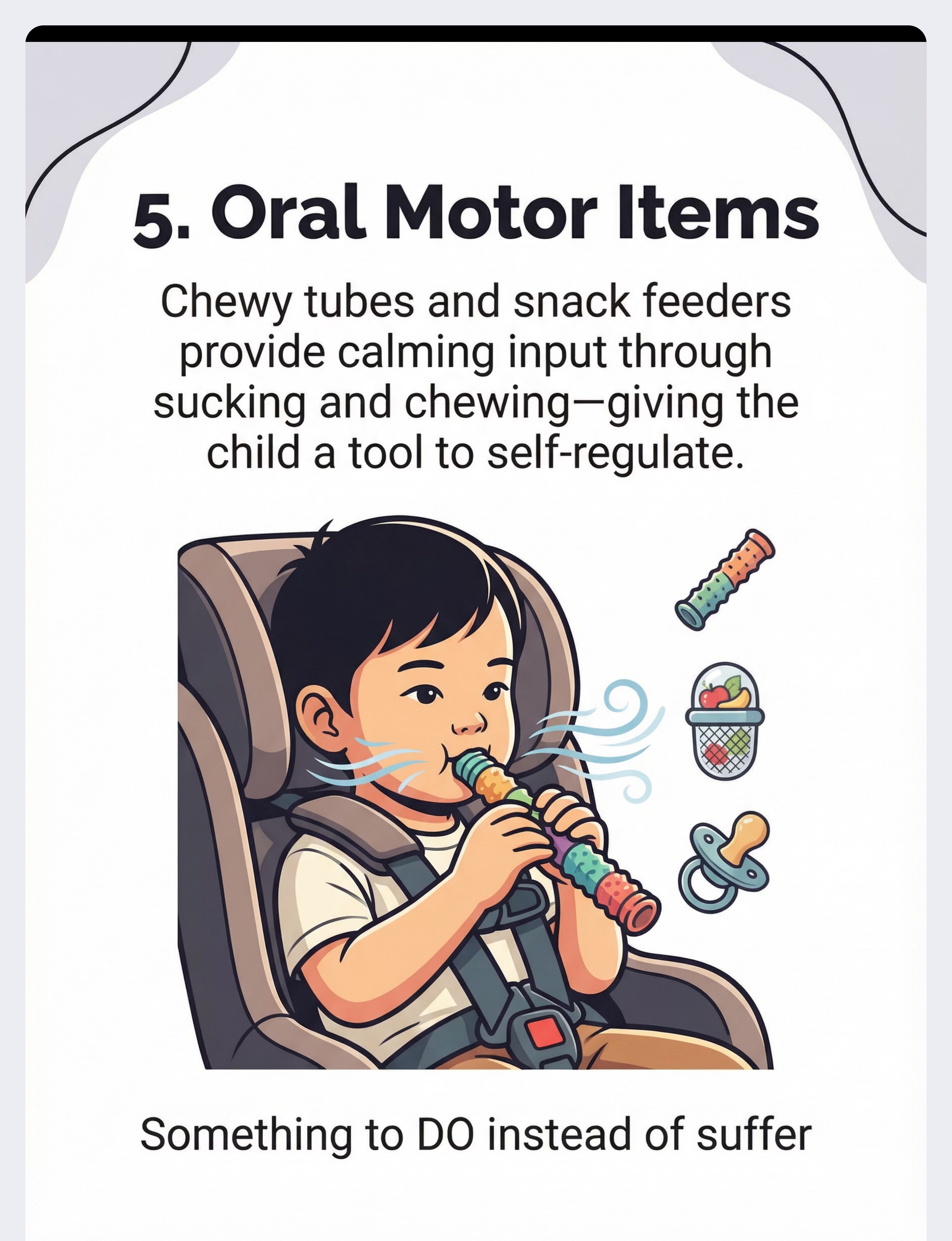
Oral Motor & Sucking Items
Chewy Tubes · Safe Pacifiers · Snack Feeders
Something to DO instead of suffer. Oral motor items give the child an active coping strategy — when you can't escape a stressful situation, having something to do gives the nervous system a regulation tool.
The Science
Oral motor activity — sucking, chewing, crunching — is powerfully calming and regulating. It activates the parasympathetic nervous system and provides organizing sensory input through the mouth and jaw. For many distressed children, having something safe to suck or chew on during car rides provides a self-regulation tool they can use independently — a way to actively cope instead of passively suffering in the overwhelming environment.
How Each Works
- Chewy tubes: Resistive jaw input — calming and organizing
- Pacifiers: Rhythmic sucking for children who still use them
- Snack feeders: Oral input plus comfort of eating
- Thick-straw drinks: Sucking effort provides sustained oral input
- Frozen teethers: Cold input plus oral motor stimulation
Price range: ₹300–1,200
Material 5 · How to Use
Oral Motor Items: Practical Guide
Match the Item to the Child's Preferences
Some children prefer chewy textures; others prefer sucking; others need crunchy foods. Observe what the child naturally reaches for when self-regulating at home — that points to the right oral motor input in the car.
Free DIY Options First
Frozen washcloths to chew (teething age), a pacifier already in use, safe crunchy or chewy snacks in a container, or straws for thick drinks. These are free or already in your home — start here.
Introduce the Item Before the Ride
Offer the oral motor item before getting in the car — ideally during the pre-trip routine. This begins calming the nervous system before the stressors of the car environment begin.
Keep It Accessible Throughout the Ride
Ensure the child can independently access and re-access the item throughout the trip. A clipped chew toy or attached snack feeder stays within reach even when the child drops it.
⚠️ Safety: All oral items must be safe for the child's age — no choking hazards. Chewy items must be durable enough not to break into pieces. Don't give hard foods that could be aspirated if the car stops suddenly. Always supervise oral motor item use appropriately for the child's age and developmental level.
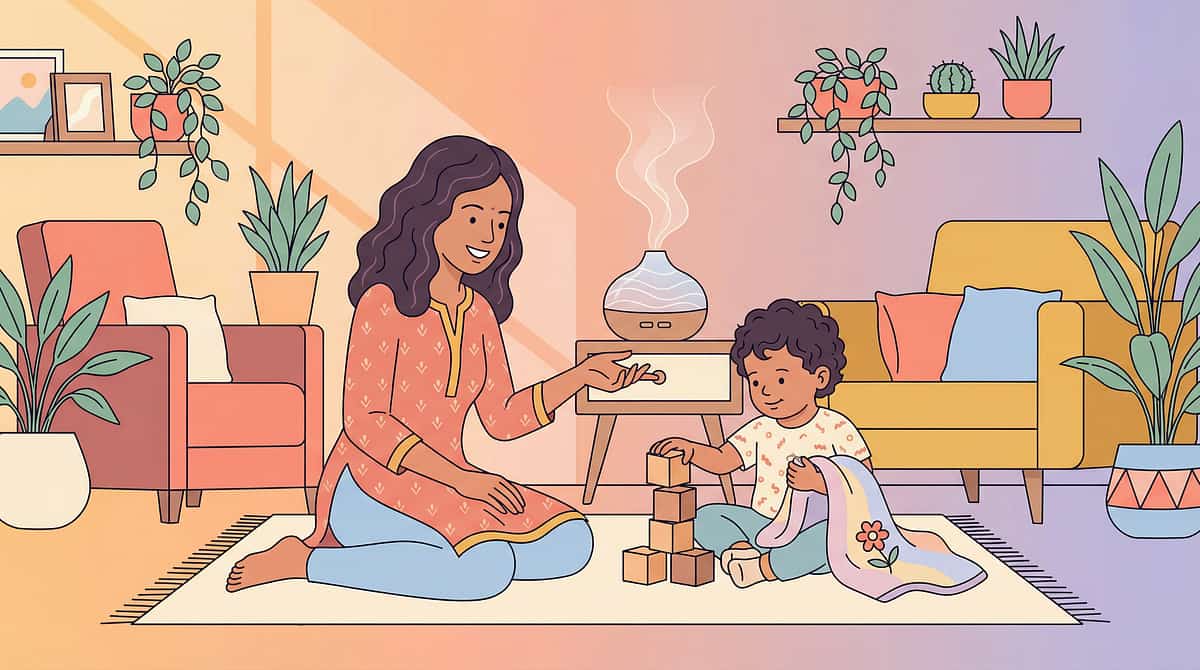
Material 6 of 9
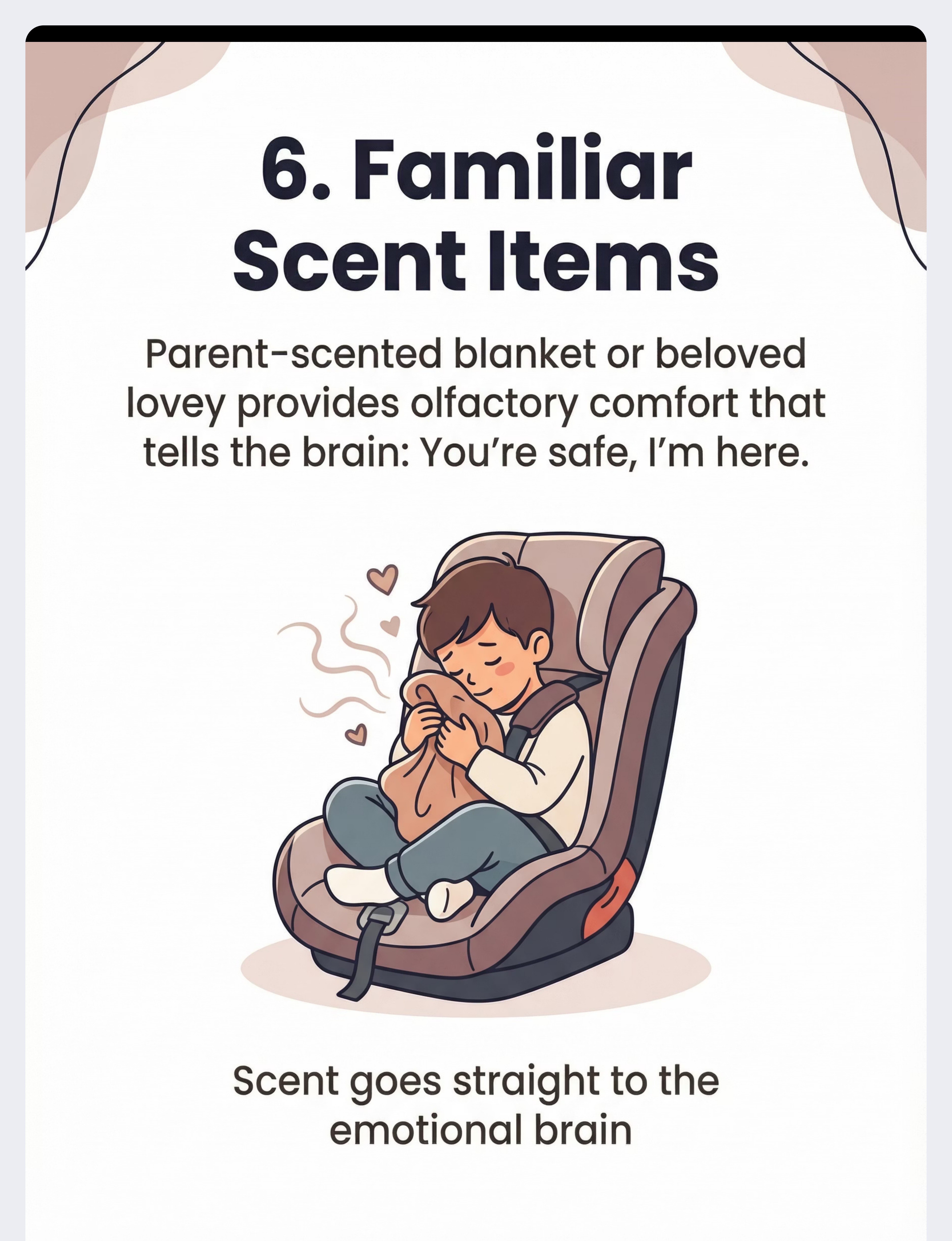
Familiar Scent Items
Comfort Object · Parent-Scented Item
Safety you can smell. When a child can't see you, can't reach you, and is panicking — your scent communicates safety directly to the emotional brain in a way that bypasses conscious thought.
The Science
Smell is the most direct pathway to the emotional brain. Familiar, comforting scents trigger calming and security in ways that bypass the panicking logical brain. For rear-facing children who cannot see the parent, olfactory reassurance provides connection that visual and auditory senses can't offer in the car. The familiarity of a beloved smell anchors the child to safety in an otherwise overwhelming situation.
What Works
- Parent-scented item: A piece of worn clothing the parent has slept with
- Lovey slept with by parent: Transfers parental scent onto the comfort object
- Consistent car blanket: Builds its own association with coping over time
- Child's comfort object: The beloved stuffed animal, the special blanket
The most powerful versions of this material cost nothing — just your worn t-shirt, cut into a small square.
Price range: ₹200–800
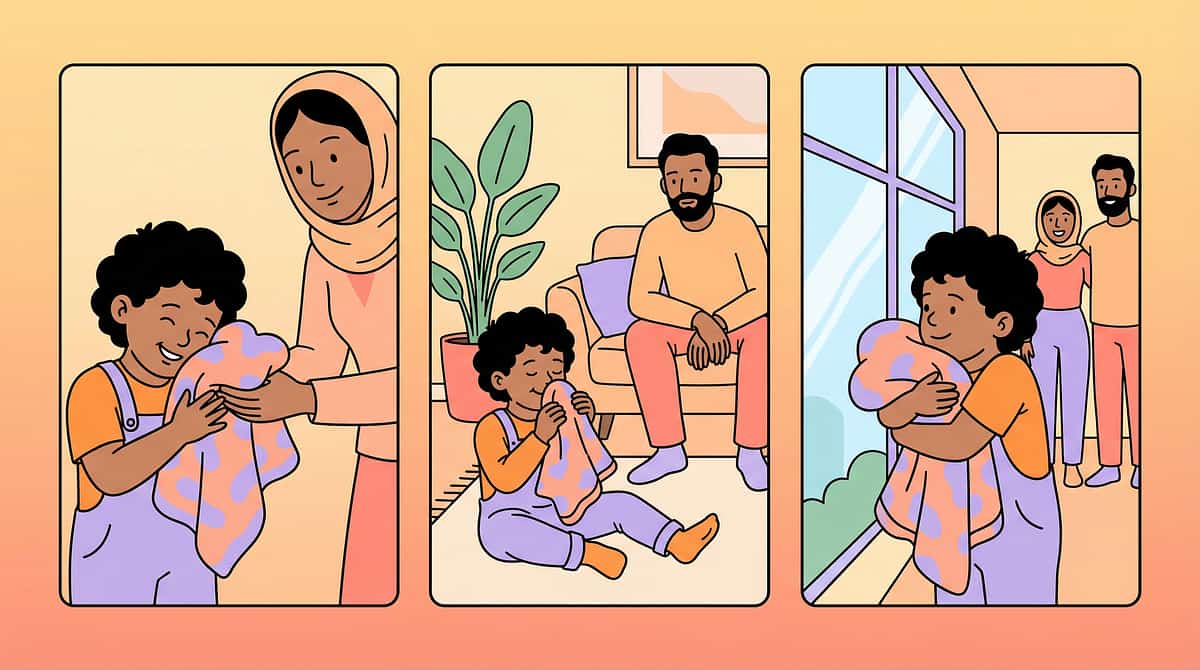
Material 6 · How to Use
Familiar Scent Items: Practical Guide
Sleep With the Car Comfort Item
Sleep with your child's lovey or car blanket for a night or two so it carries your scent. This simple step costs nothing and can begin immediately tonight.
Create a Parent-Scented Cloth
Give the child a small piece of your worn clothing — a small scarf, a cut piece of t-shirt — to hold during the ride. For older children, a small pillow with parent's familiar scent provides olfactory reassurance.
Build a Dedicated Car Comfort Object
Use the same blanket or lovey for every car ride. Over time it builds its own scent association — and becomes associated with the routine of coping, rather than the routine of suffering.
Keep Scent Intensity Mild
Don't use strongly scented products. Overwhelming scent can add to sensory overload rather than reducing it. Natural parental scent — worn clothing, a slept-with blanket — is the right intensity.
⚠️ Safety: Ensure scent items don't pose suffocation or strangulation risks for young children. Don't use essential oils directly on the skin of young children. Keep scent intensity mild. Loose items should be kept away from the child's face during travel.

Material 7 of 9
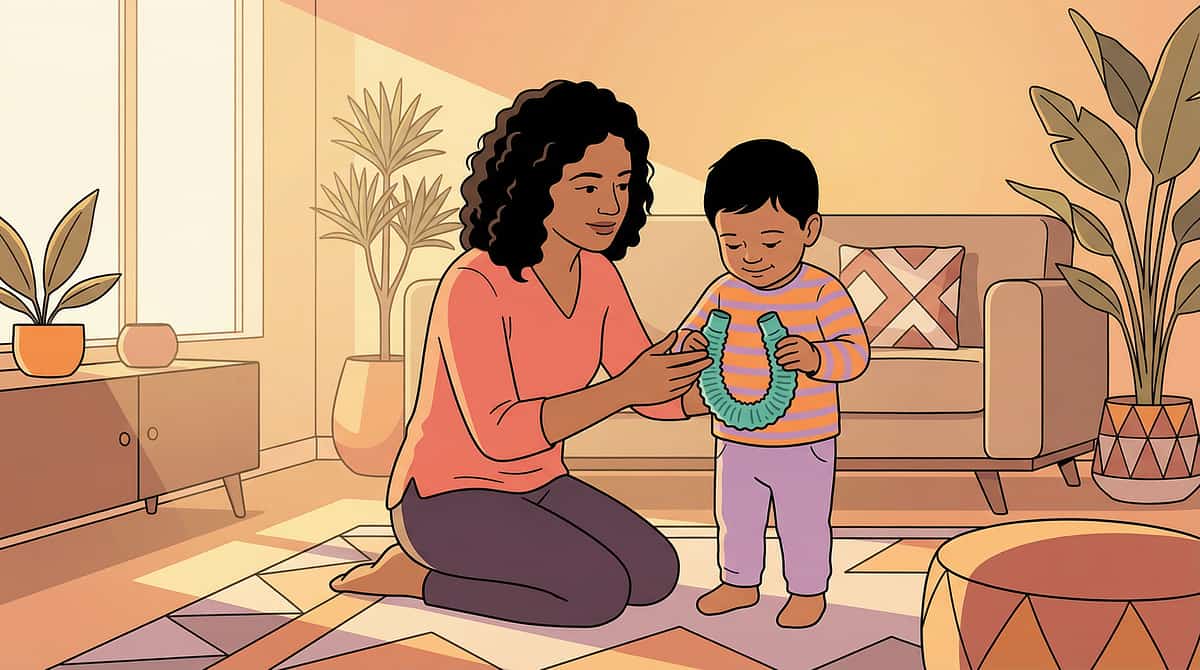
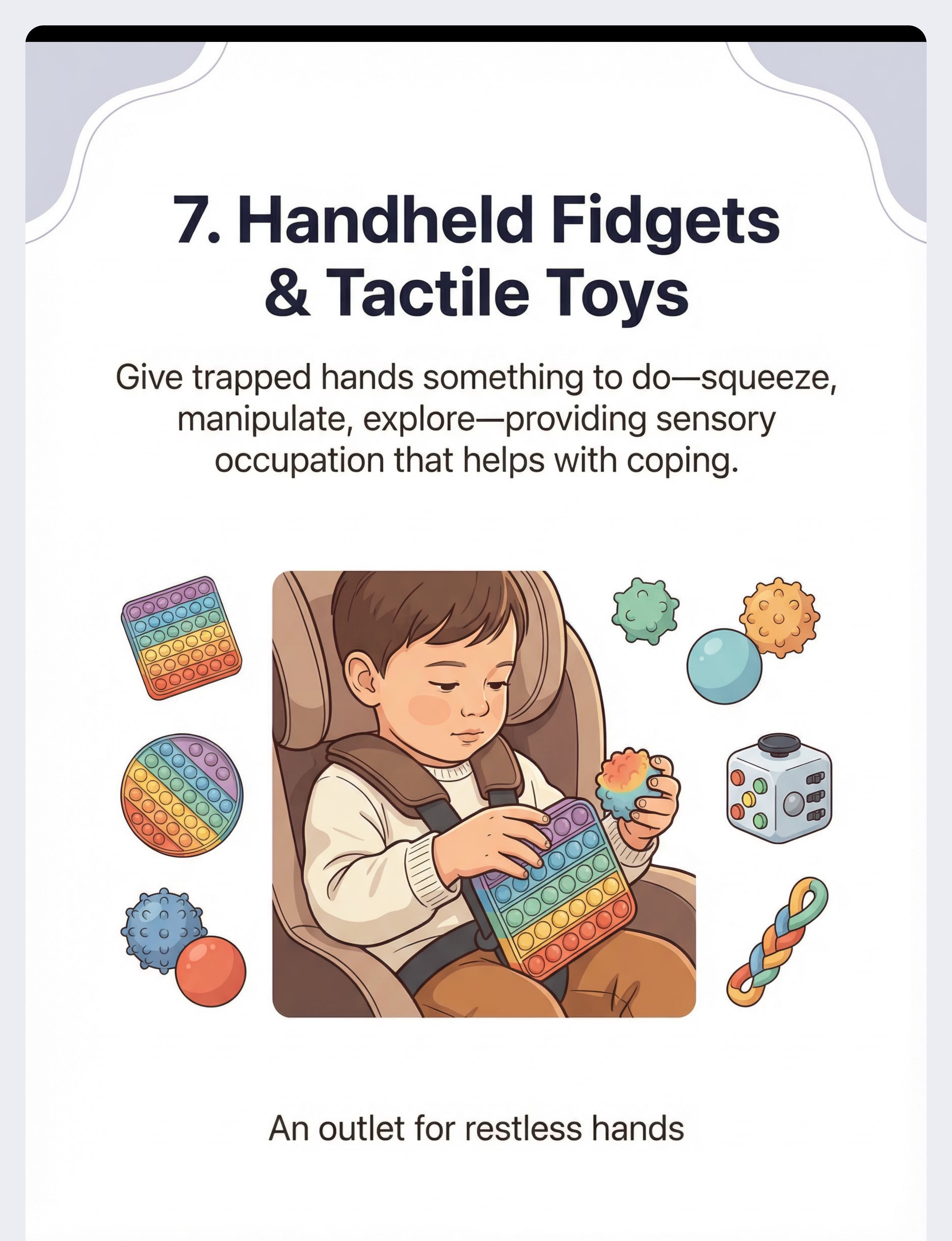
Handheld Fidgets & Tactile Toys
Sensory Occupation for Hands That Need to Do Something
Hands that have nothing to do will flail in distress. Hands that have something interesting to hold and manipulate have an outlet. Fidgets and tactile toys provide sensory occupation that meaningfully helps some children tolerate the ride.
The Science
Confined in a car seat with limited movement options, a child's hands have little to do. For children who regulate through movement and touch, this lack of activity adds to distress. The tactile input from textured toys provides organizing sensory information. The act of manipulating a fidget creates a focus point that can redirect attention from overwhelm. The key: find fidgets that are genuinely engaging for this specific child — not just any toy.
Best Options
- Pop-it fidgets (satisfying, repeatable)
- Squishy stress balls
- Textured sensory balls
- Tangle toys
- Silicone fidgets (durable, safe)
- Fidget cubes
DIY
Small stress balls, textured fabric scraps, a sealed water bottle with glitter and oil to shake and watch. Rotate fidgets to maintain novelty — the same fidget loses power over time.
Price range: ₹200–1,000
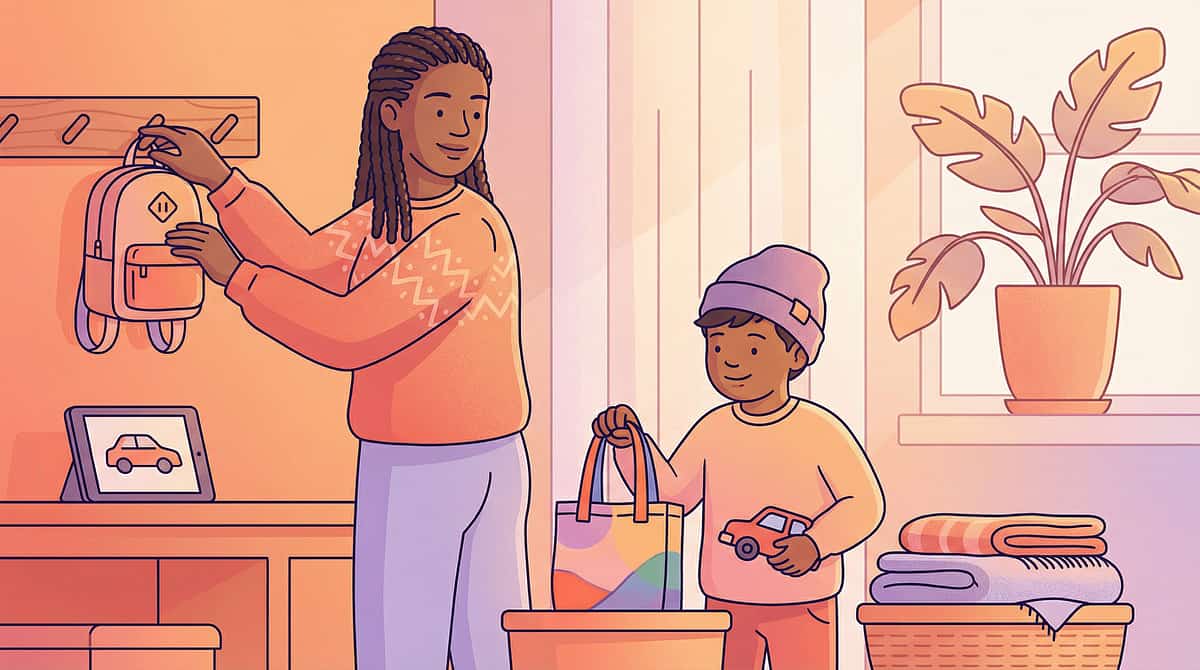
Material 8 of 9
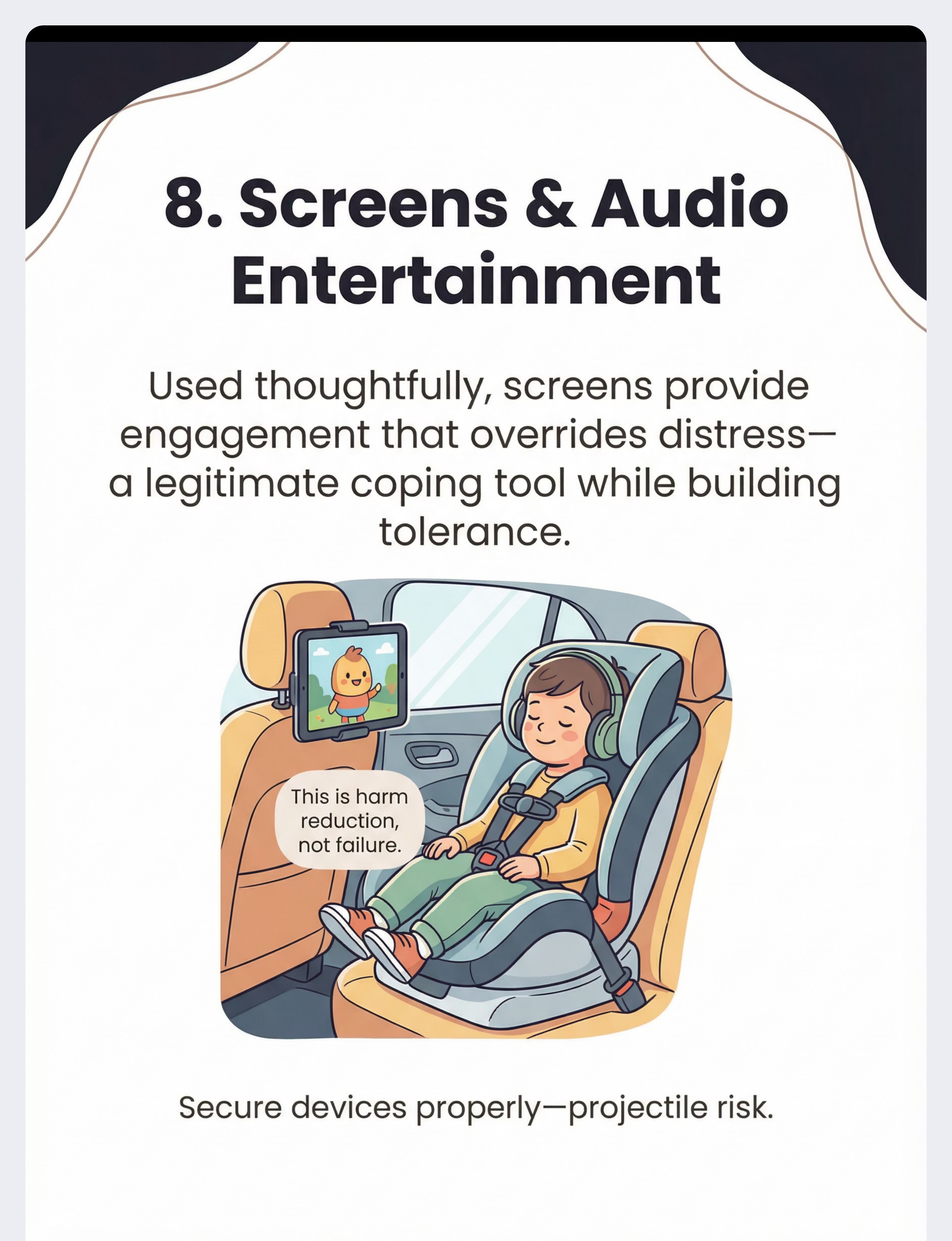
Screens & Audio Entertainment
A Thoughtful Tool — Not a Failure
This is harm reduction, not failure. If the choice is between a child screaming in terror for forty minutes or watching a favorite show and making it through the ride — the screen is the compassionate choice for that child at that time.
The Science
For some children with severe car ride distress, a tablet showing a favorite video or an audio player with beloved songs or stories provides enough engagement to override the sensory distress. This is not a screen time philosophy debate — it's about harm reduction. Screens work best as one tool in a larger strategy: paired with sensory supports, used for the hardest portions of trips, while other interventions build underlying tolerance over time.
Key Insight
Perfection isn't the goal. Getting through the ride is. Use screens thoughtfully:
- Pair with sensory supports — don't replace them
- Download content for offline use
- Try audio-only if child gets motion sick from screens
- Mount securely — tablets are projectiles in a crash
- Work toward building tolerance alongside screen use
Price range: ₹2,000–15,000
⚠️ Safety: Secure tablets properly — they become dangerous projectiles in a sudden stop. Volume must protect hearing — not too loud. Monitor for motion sickness triggered by screens in a moving vehicle. Screen use is a coping tool, not a permanent solution — continue working on underlying tolerance in parallel.
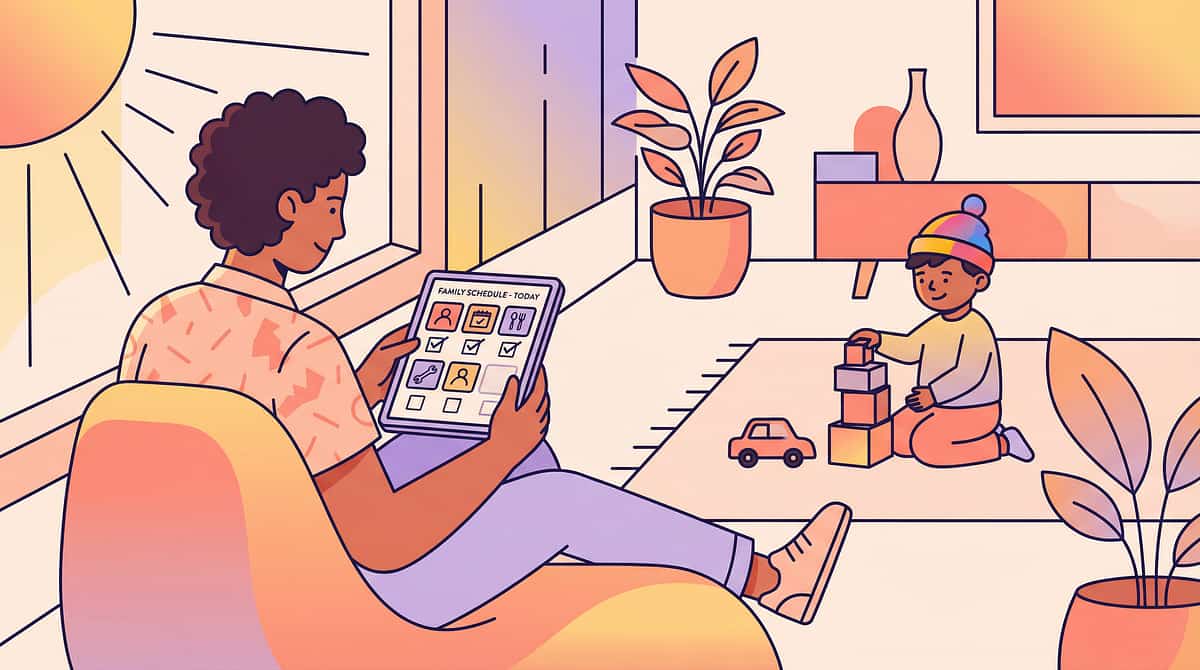
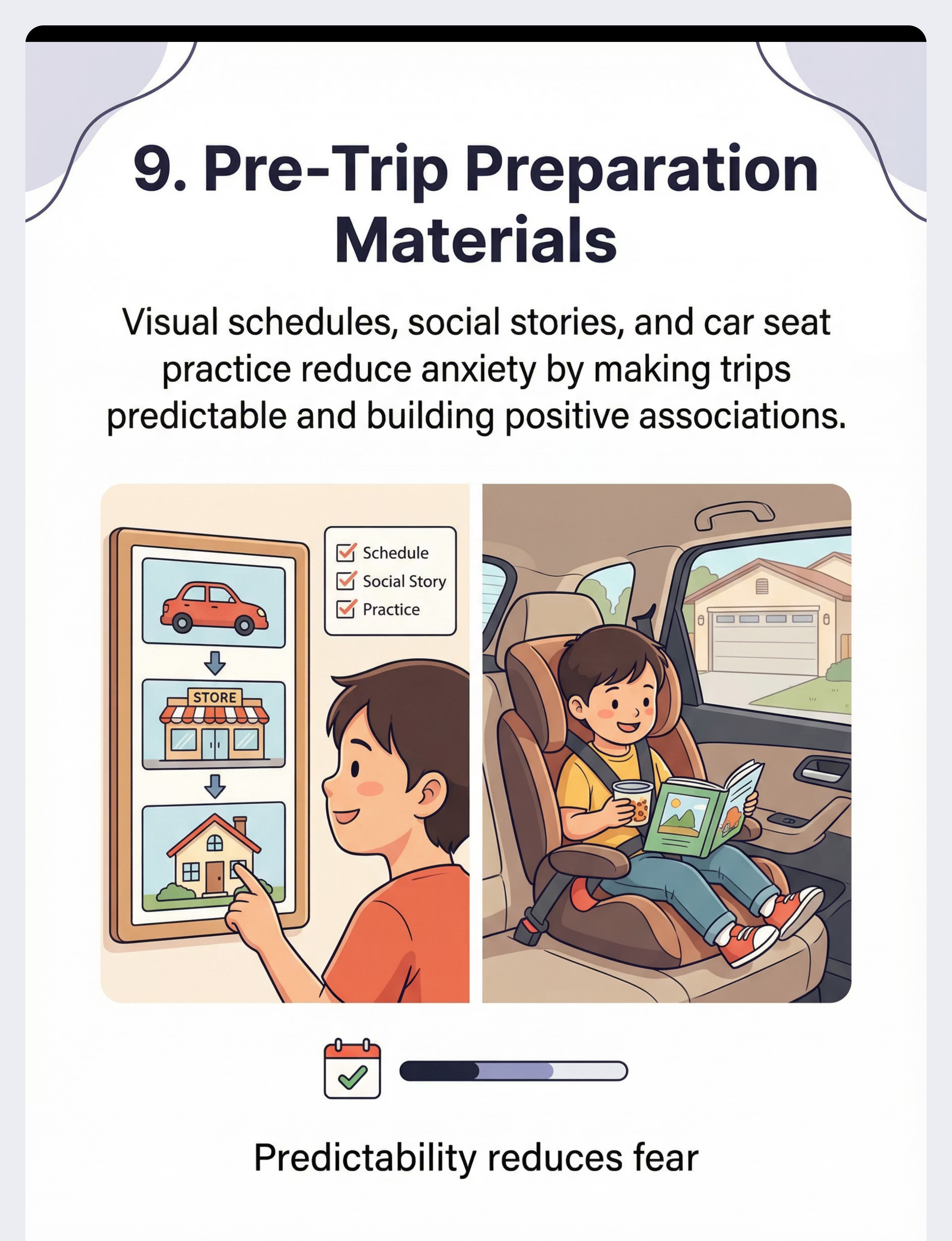
Material 9 of 9
Pre-Trip Preparation Materials
Visual Schedules · Social Stories · Car Seat Practice
Predictability reduces fear. Preparation materials address the anxiety component of car ride distress — making trips understandable and predictable before they happen, reducing the fear of the unknown that amplifies sensory distress.
The Science
For many children, car ride distress includes significant anticipatory anxiety — fear of the unknown, lack of control, dread. Visual schedules showing what will happen reduce the anxiety of the unknown. Social stories about car rides explain and normalize the experience. Car seat practice at home builds positive associations and familiarity without the overwhelming motion. Preparation reduces the anxiety layer that amplifies sensory challenges — it doesn't eliminate them, but it lowers the starting point.
Three Preparation Tools
- Visual schedules: Photos showing: car → destination → activity → home. Step-by-step predictability.
- Social stories: "We ride in the car. The car moves. I can hold my bear. We will arrive soon."
- Car seat practice: Sit in the car seat in the parked car — read books, eat snacks, play games — without going anywhere. Build positive associations with the car environment before adding motion.
Price range: ₹300–1,500. DIY versions cost nothing.

All 9 Materials at a Glance
A complete toolkit for car ride distress — addressing vestibular input, nervous system calming, auditory overload, visual chaos, oral regulation, emotional comfort, sensory occupation, engagement, and anticipatory anxiety.
1. Head & Neck Support
Reduces vestibular overwhelm from motion
2. Compression Vest
Activates calming parasympathetic system
3. Noise-Reducing Headphones
Quiets auditory overwhelm by 20–30%
4. Window Shades
Manages chaotic visual input
5. Oral Motor Items
Active coping through jaw and mouth
6. Familiar Scent Items
Olfactory connection to safety and parent
7. Handheld Fidgets
Sensory occupation for restless hands
8. Screens & Audio
Engagement that overrides distress
9. Preparation Materials
Predictability reduces anticipatory fear
Where to Start: Your Starter Kit
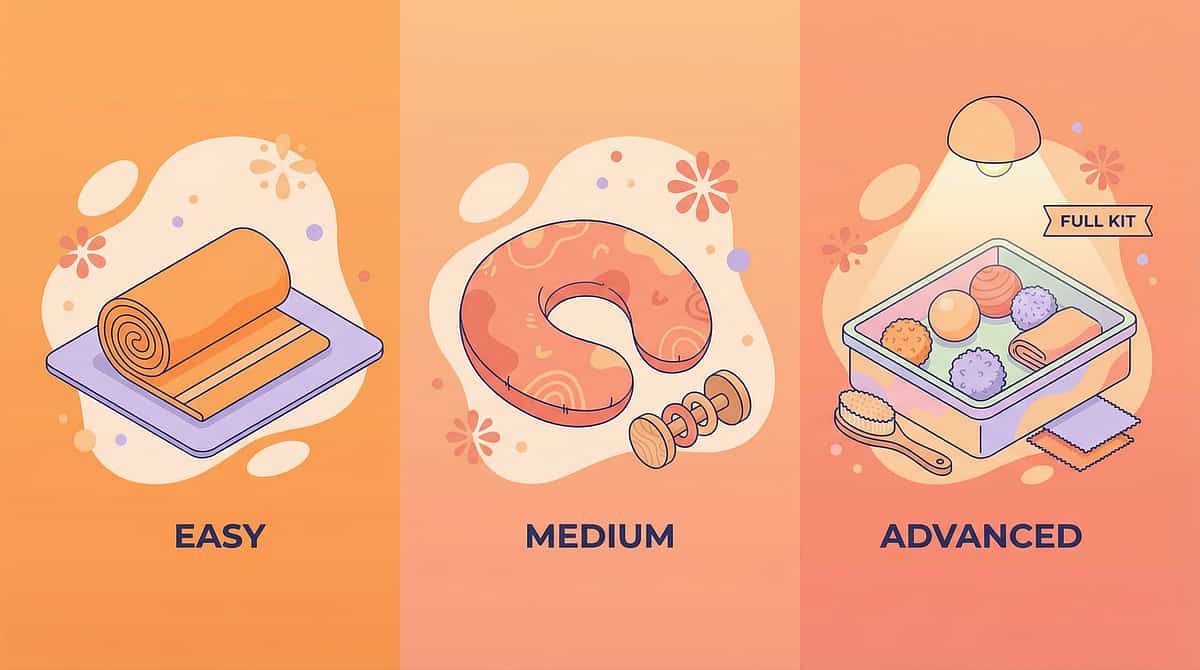
You don't need all 9 materials at once. These 4 free or low-cost items address the most common factors driving car ride distress — and many families see meaningful improvement with just these.
Proper Head & Neck Support
A rolled towel or travel neck pillow — costs nothing. Reduces vestibular input immediately.
Parent-Scented Comfort Object
Sleep with the lovey tonight. Costs nothing. Provides olfactory connection to safety.
Oral Motor Item
A pacifier, a safe chewy snack, or a thick-straw drink. Provides active coping strategy.
Practice Time in Parked Car
Sit in the car, buckled up, reading books and eating snacks — without going anywhere. Builds positive association at no cost.
Add noise-reducing headphones and window shades next if auditory or visual overwhelm is visible. Add screens for severe distress where getting through the ride is the immediate goal.
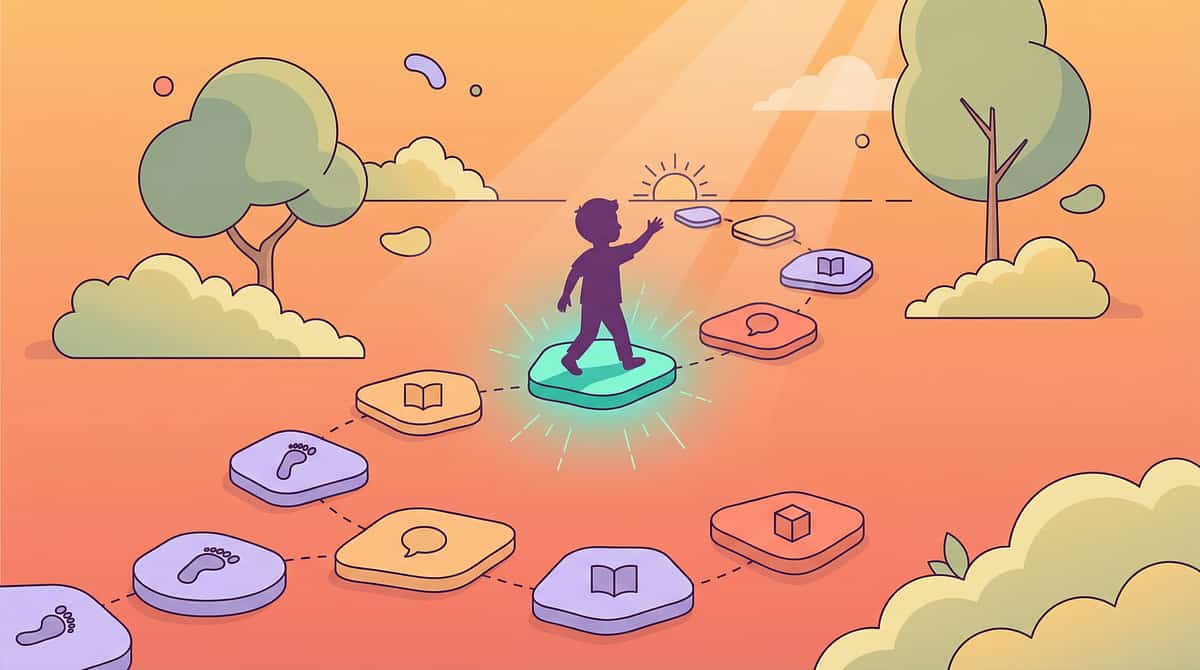
How Progress Happens
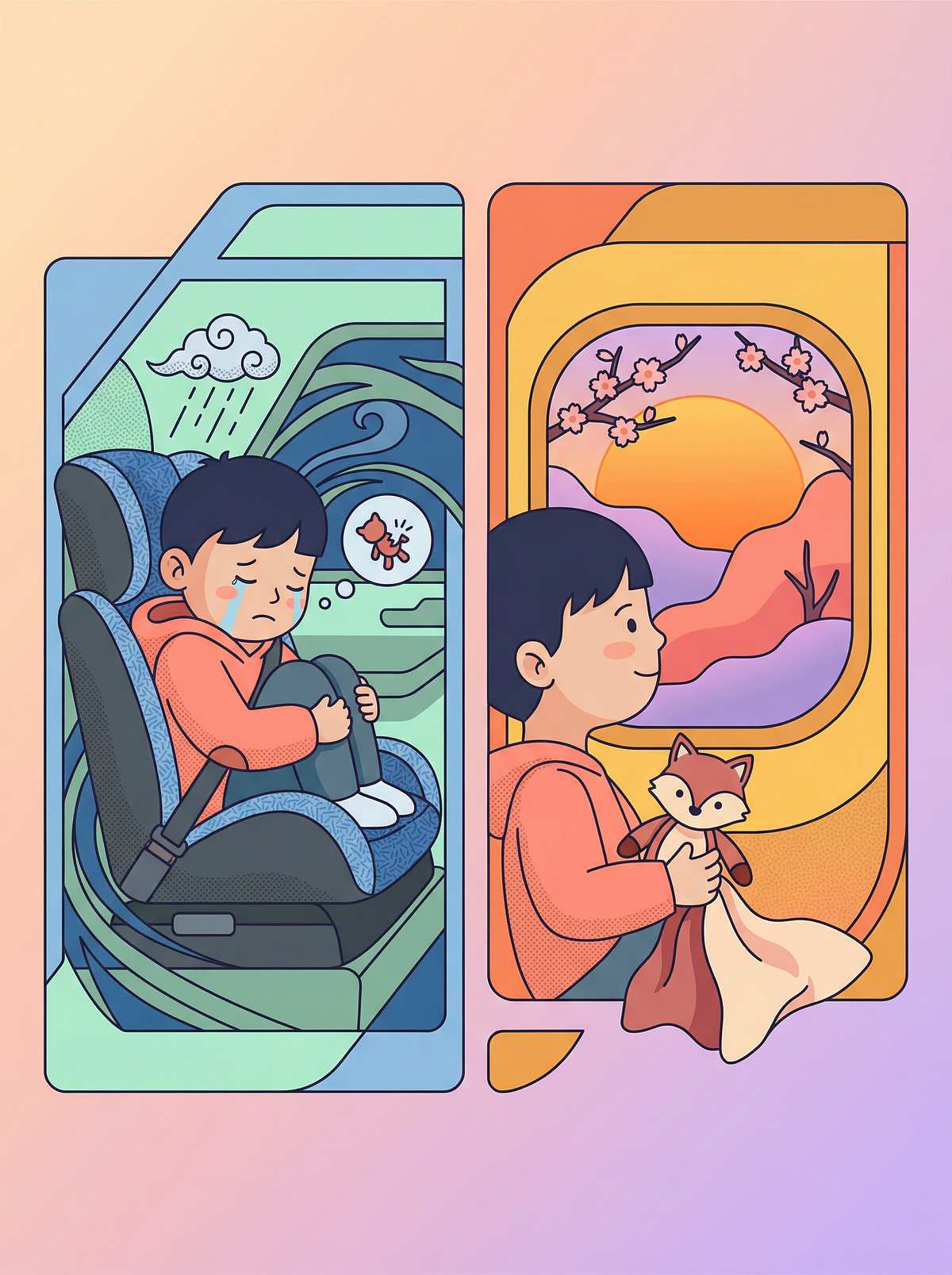
This typically improves over months — not days or weeks. Progress is not linear. But it does happen. Here is what the journey toward travel tolerance looks like, so you know what to watch for.
Regression during illness, stress, or developmental leaps is normal — return to maximum supports and build again. The overall trajectory is forward, even when individual days feel like setbacks.

Common Mistakes That Make Things Worse
Well-intentioned approaches can inadvertently intensify car ride distress. These are the most important mistakes to avoid.
❌ "Just keep driving — they have to learn"
Forced exposure to overwhelming experiences creates sensitization and worsening fear — not habituation. The child's nervous system interprets each traumatic ride as confirmation that the car is dangerous. Supported, manageable exposure builds tolerance. Forced exposure builds fear.
❌ "They're using the tablet/headphones as a crutch — take it away"
Removing coping supports without building underlying tolerance causes regression. Maintain supports while building tolerance. Reduce gradually when the child is ready — not when the parent is uncomfortable with the support.
❌ "Ignore the crying — don't reinforce it"
This isn't attention-seeking behavior that extinguishes — it's genuine nervous system overwhelm. Ignoring it doesn't reduce it; it removes the one co-regulatory resource the child has access to. Provide support and reduce triggers.
❌ "Other kids handle car rides — they need to learn to deal with it"
Neurological sensory processing differences are real. Comparison to other children isn't relevant. Modify the experience to match this child's sensory needs while building tolerance over time.
When to Seek Professional Help
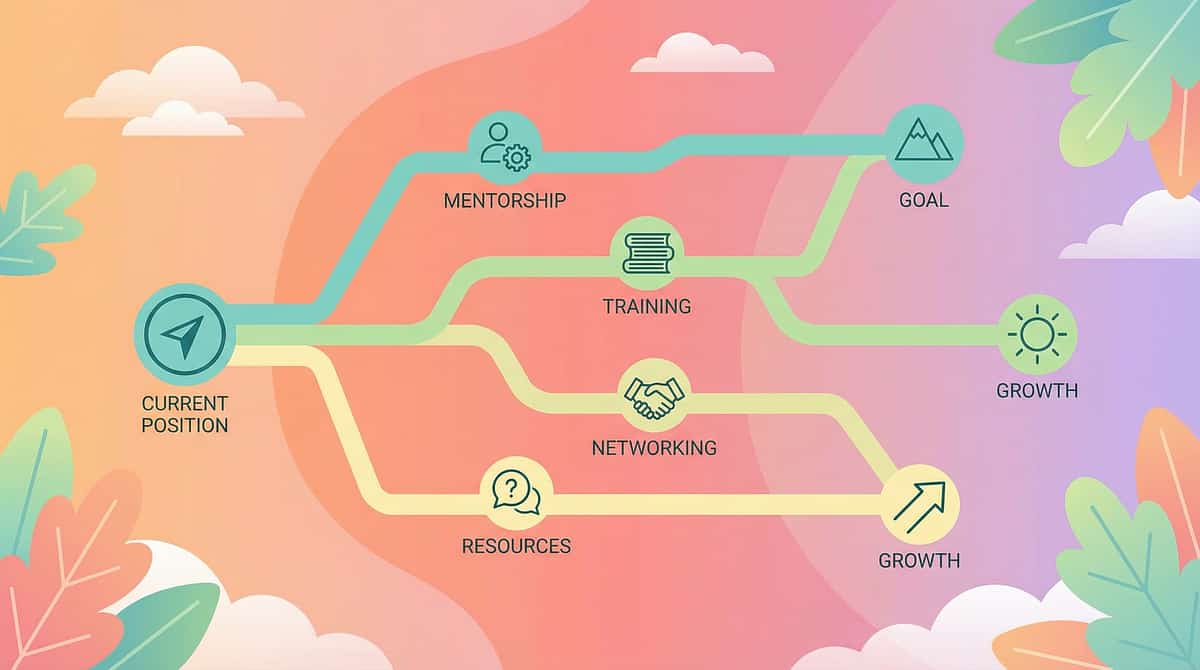
Home strategies are a powerful starting point — but some situations call for professional assessment. Knowing when to escalate ensures the child gets the right support at the right time.
Seek Help Immediately If:
- Child is at risk of injury from fighting car seat restraints
- Parent safety while driving is compromised by distraction
- Child is regularly vomiting from crying intensity
- Family cannot attend essential medical or therapy appointments
Seek Help Soon If:
- Distress is worsening over time, not improving
- Family life is significantly restricted by inability to travel
- No improvement with consistent home strategies
- Concurrent sensory concerns in other areas of daily life
Which Professional Can Help
- Occupational Therapist: Sensory processing assessment and intervention planning
- Pediatrician: Rule out medical factors — ear infections, reflux, motion sickness
- Child Psychologist: If anxiety is a significant component
- Certified Car Seat Technician: Ensure proper fit and positioning — free at many fire stations
FREE National Autism Helpline: 9100 181 181 · Available in 16+ languages · 24x7 · pinnacleblooms.org
A Message to Parents
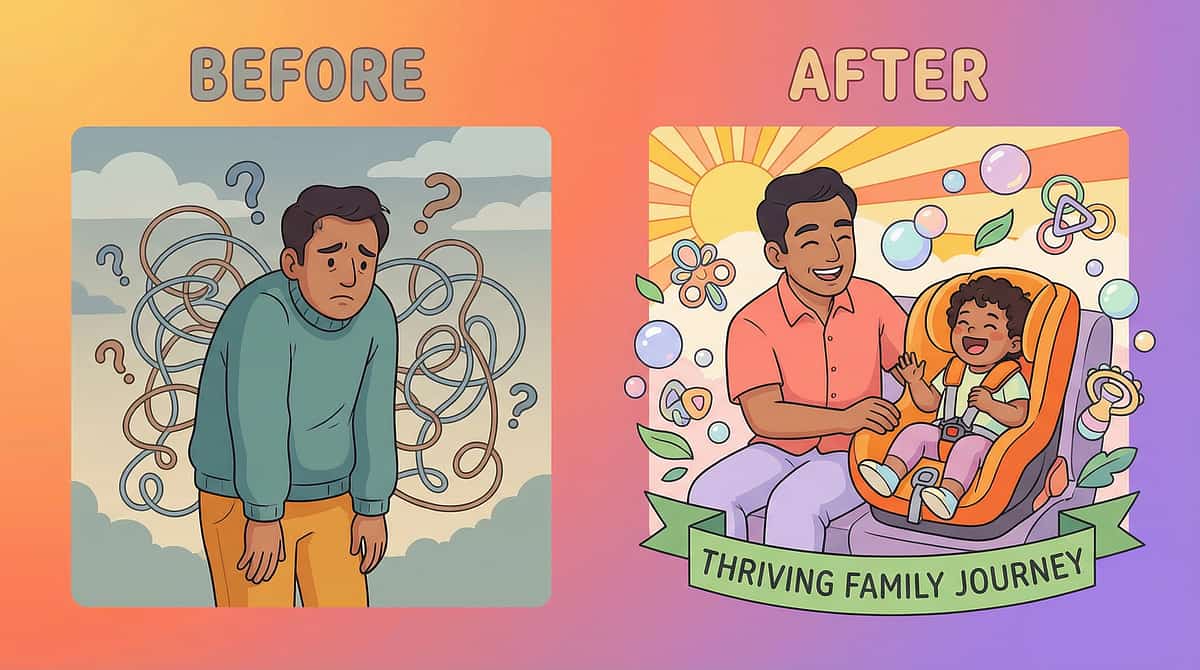
"If your child screams every car ride, you are not imagining it and you are not a bad parent. Car ride distress is real, it is distressing for everyone, and it is not your child choosing to be difficult. Something about the car experience is genuinely overwhelming for their system."
You Have Permission to Use What Works
If screens help, use screens. If you need to limit car travel for a while, that's reasonable. If getting through a trip requires headphones, compression, snacks, and a tablet simultaneously — that's fine. Survival and building tolerance are the goals. Developmental philosophy about screens or pacifiers is secondary to a child who can get to necessary destinations without trauma.
Your Calm Helps Your Child
Your calm — even when you're not calm inside — helps regulate your child. If you're shaking and stressed, that transmits. It's not your fault that you're stressed. But whatever you can do to stay calm or project calm in the moment helps your child's nervous system settle. Your wellbeing is part of the intervention.
Gradual Progress Is Real Progress
There will be good days and bad days. Progress isn't linear. Illness, stress, or developmental leaps may cause regression. That's expected and normal. The overall trajectory, with consistent support and appropriate intervention, is toward greater tolerance. Months from now, this can look very different.

A Real Family's Journey
"Every car ride was a nightmare. My son would scream from the moment he saw the car. We stopped going anywhere. Life got very small. We started with a sensory approach — head support, noise-reducing headphones, a compression vest, and yes, a tablet for the really hard trips. We also did practice in the parked car — just sitting, playing, eating snacks, building positive associations. It took months. There wasn't a magic fix. But slowly, the screaming got shorter. Then it started after we were moving, not at the sight of the car. Then some trips were okay. Now, a year later, he still doesn't love car rides — but he tolerates them. We went to my parents' house last weekend. Forty-five minutes. He was calm. We have our lives back."
— Parent, Pinnacle Network
Illustrative case; outcomes vary by child profile and underlying factors. Individual results reflect the child's specific sensory profile, intensity of intervention, and consistency of implementation.

Safety First
Critical Safety Reminders
All interventions for car ride distress must be implemented without compromising car seat safety. This is non-negotiable.
🚨 Weighted Items
NEVER use while the car is in motion. Weighted lap pads and similar items become dangerous projectiles in a crash. For stationary calming only — remove completely before driving.
⚠️ Aftermarket Accessories
Only use positioning aids approved by the car seat manufacturer or crash-tested independently. Never add aftermarket padding behind the child's back or under them in the seat.
📱 Tablets & Screens
Secure tablets properly with a headrest mount. Unsecured tablets become projectiles in a sudden stop. Never hold a tablet while driving. Mount before departure.
🚗 If You're Too Distressed to Drive Safely
Pull over. A screaming child is extremely distracting. Arriving safely is more important than arriving on schedule. It is always okay to stop, regroup, and continue when you can drive safely.
Have car seat fit checked by a certified car seat technician — this service is free at many fire stations and hospitals. Improper fit can cause physical discomfort that contributes to car ride distress.
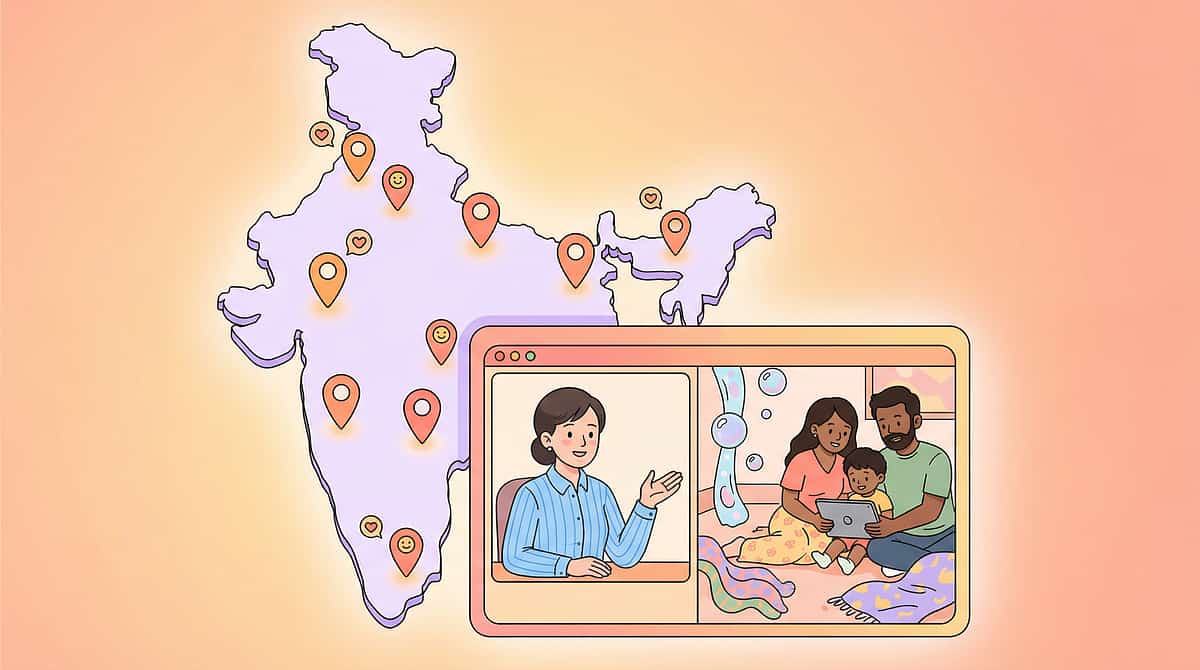
Medical Factors to Rule Out
Before assuming all car ride distress is sensory, consult your pediatrician to rule out medical contributors that can cause or amplify distress during car travel.
Ear Infections
Chronic or recurrent ear infections can make pressure changes in the car painful. If the child has a history of ear issues or distress worsens with altitude changes, consult your pediatrician promptly.
Acid Reflux
Gastroesophageal reflux can worsen when reclined in a car seat, especially after feeding or meals. If distress includes arching, spitting up, or worsens after eating, discuss with your pediatrician.
Motion Sickness
True motion sickness — nausea, pallor, vomiting separate from crying — is a vestibular-visual mismatch with medical solutions. If the child shows signs distinct from emotional distress, address medically.
Car Seat Fit
A poorly fitted car seat can cause genuine physical discomfort. Have fit checked by a certified car seat technician before assuming the cause is purely sensory or behavioral.

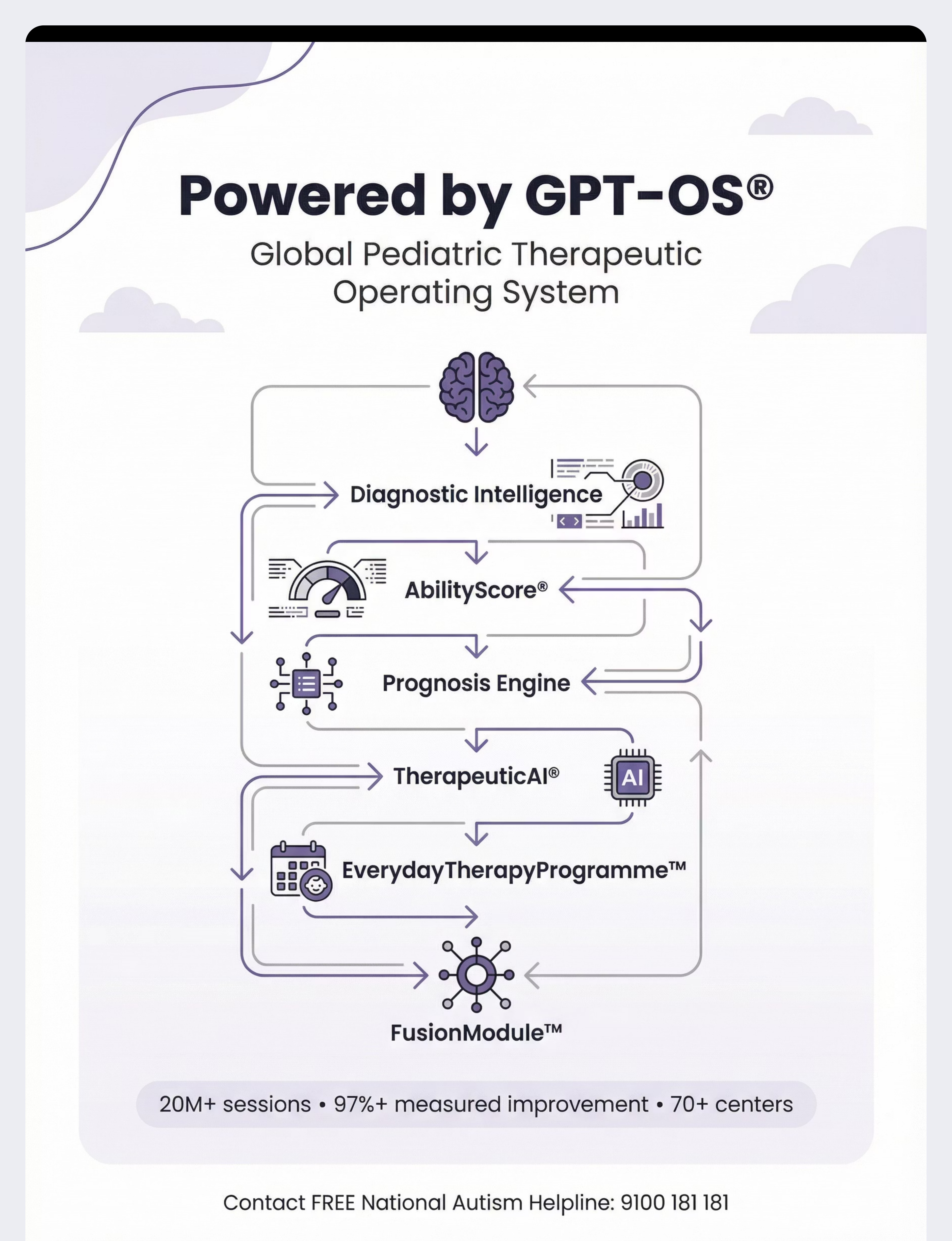
Powered by GPT-OS®
Powered by GPT-OS®
Global Pediatric Therapeutic Operating System
GPT-OS® is the end-to-end operating system governing diagnosis, prognosis, therapy design, execution, monitoring, and readiness outcomes in child development — as one closed, accountable system.
Diagnostic Intelligence Layer
591+ structured observations across 349 skills and 79 developmental abilities — replacing fragmented subjective interpretation.
AbilityScore®
A patented universal developmental score (0–1000) establishing baseline, severity, and longitudinal change — comparable across time, therapists, and centers.
TherapeuticAI®
Determines therapy focus, intensity, sequencing, and escalation thresholds — always under licensed human clinical authority.
EverydayTherapyProgramme™
Translates clinical plans into daily, home-executable micro-interventions so therapy continues beyond sessions.
FusionModule™
Coordinates speech, OT, behavior, special education, and medical inputs into one converged therapeutic pathway.
Closed-Loop Control
Observe → Score → Plan → Execute → Re-measure → Adapt. Plans change only when the child's data changes.
20M+ 1:1 sessions • 97%+ measured improvement • 70+ centers • Patents filed across 160+ countries
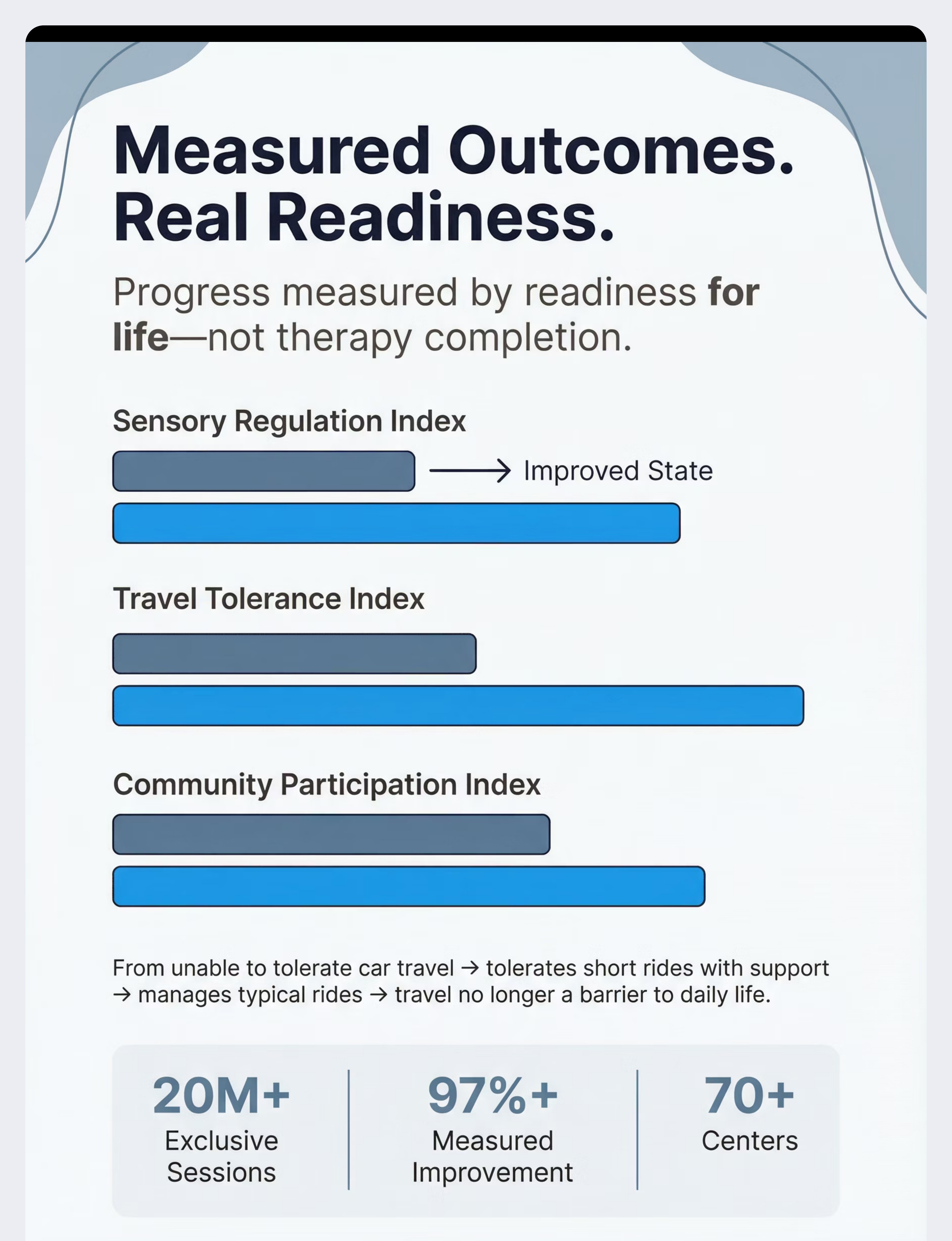
Measured Outcomes. Real Readiness.
Progress is defined by readiness for life — not therapy completion.
Readiness Indexes Tracked
Sensory Regulation Index
Travel Tolerance Index
Transition Management Index
Self-Calming Capability Index
Community Participation Index
Daily Living Skills Index
20M+
Exclusive 1:1 Sessions
Across converged therapy disciplines
97%+
Measured Improvement
Across one or more readiness indexes
70+
Centers
Single clinical system
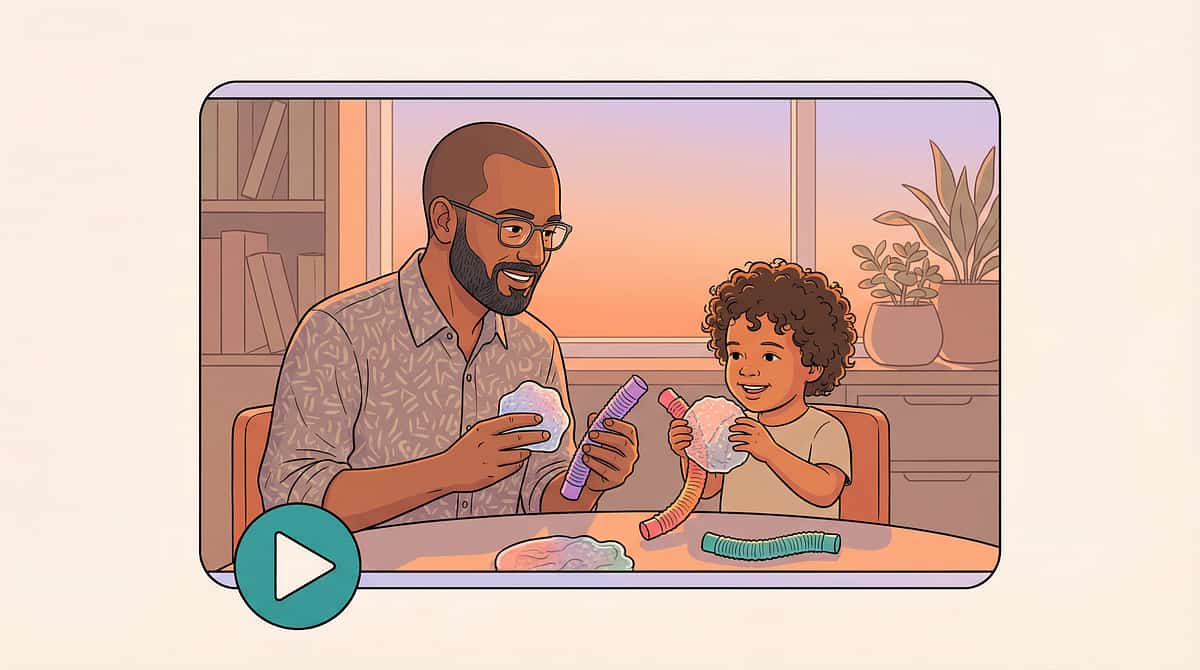
Travel Tolerance Progression
For car ride distress, GPT-OS® tracks readiness progression along the Travel Tolerance Index — from crisis to full community participation.
Progress along this index is tracked longitudinally — showing not just whether the child improved, but where they are in a documented continuum from crisis to full participation. This is readiness measurement, not just symptom reduction.

Pinnacle Blooms Network®
Built by Mothers. Engineered as a System.
Pinnacle is the execution layer of GPT-OS® — delivering therapy, daily programs, digital continuity, and marketplace access at population scale. Every service connects back to a single, closed, accountable clinical system.
Pediatric Therapeutic OTT Platform
On-demand therapy guidance, parent education, and EverydayTherapyProgramme™ delivery — accessible anytime, from anywhere.
Hyperlocal Therapeutic Marketplace
Connects families to verified therapists, centers, programs, and resources — mapped to the child's AbilityScore® and specific readiness needs.
Center Network Execution
70+ physical centers operating under GPT-OS® standards — with measurable accountability at every level of service delivery.
20M+ sessions • 97%+ measured improvement • 70+ centers • Global IP protection
Contact Pinnacle Blooms Network®
FREE National Autism Helpline
Available in 16+ languages · 24 hours, 7 days a week
9100 181 181
pinnacleblooms.org
care@pinnacleblooms.org
What to Ask For
- AbilityScore® Assessment — to establish baseline and severity
- Sensory processing profile within the Diagnostic Intelligence Layer
- Occupational therapy evaluation for car ride distress and travel tolerance
- EverydayTherapyProgramme™ for home-based sensory regulation support
Statutory Identifiers
CIN: U74999TG2016PTC113063 · DPIIT: DIPP8651 · MSME: TS20F0009606 · GSTIN: 36AAGCB9722P1Z2

This Series: Sensory & Regulation Solutions
Episode 94 in a 200-episode cluster addressing sensory processing and daily life challenges. Each episode introduces therapy materials for a specific problem — building a complete picture of sensory-informed care.
A-092
Sensitivity to Clothing Tags and Textures
A-093
Meltdowns at Haircuts
A-094
Car Ride Distress — YOU ARE HERE
A-095
Difficulty with Bath Time
A-096
Overwhelm in Busy Places
Related content: K-1300 Understanding Sensory Processing · K-1305 Creating Sensory-Friendly Experiences · K-1310 Building Transition Tolerance · B-110 Anxiety in New Situations
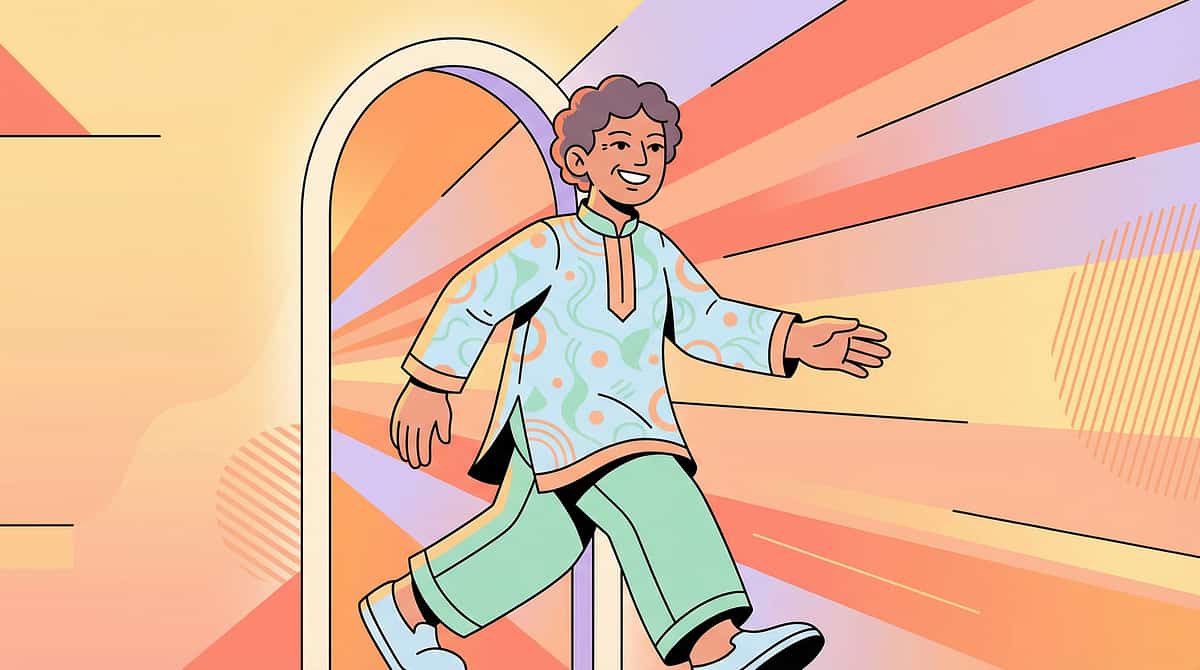
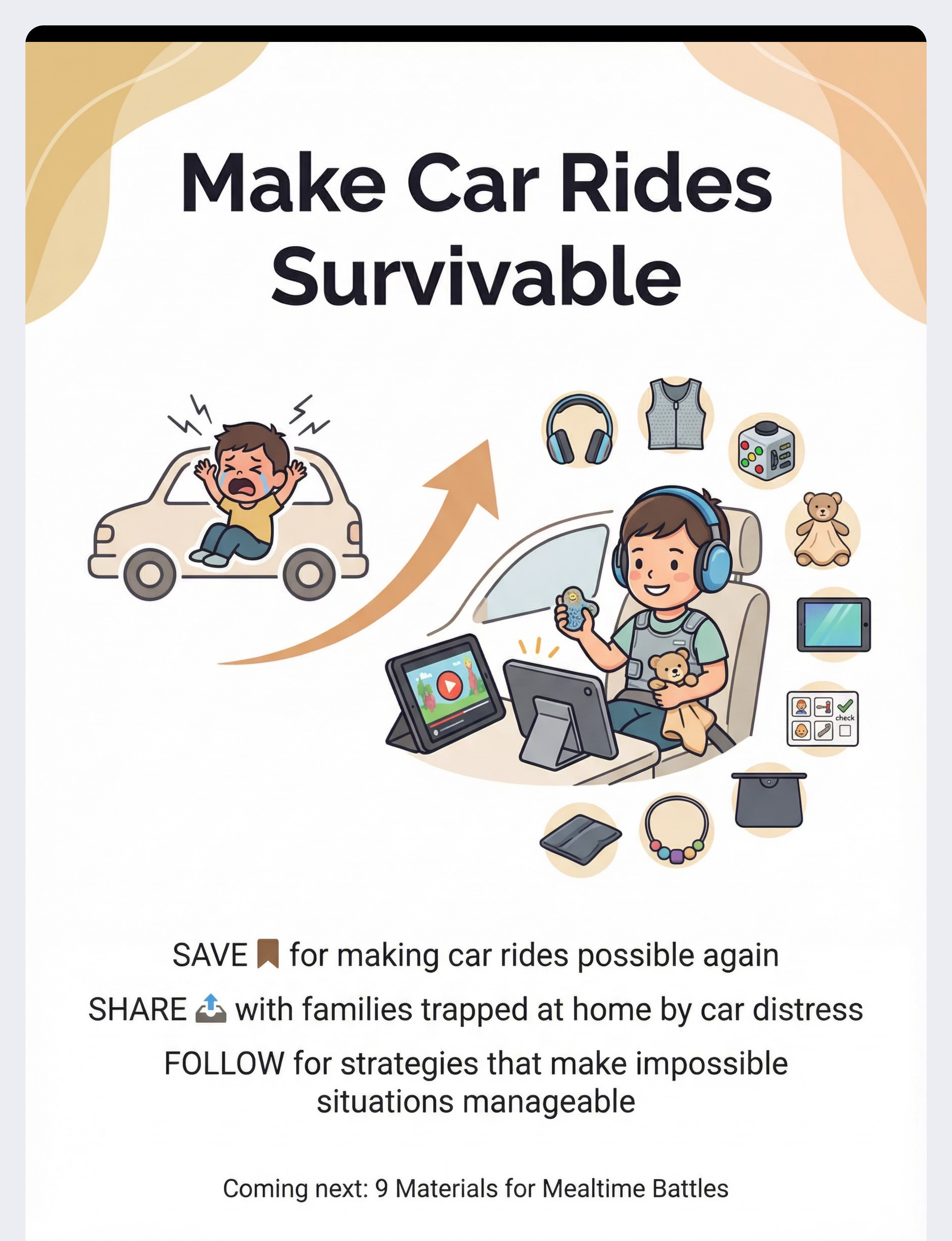
Save This. Share This.
Car ride distress isolates families. The family at the stoplight whose child is screaming doesn't need judgment — they need this information. If you know a family whose world has gotten small because of car travel, share this with them.
🔖 Save
Save this for making car rides survivable. You'll want these materials when the next trip is coming and distress is building.
📤 Share
Share with families trapped at home by their child's car distress. With pediatricians who haven't heard of these strategies. With therapists who can add these to their toolkit.
➕ Follow
Follow Pinnacle Blooms Network® for more strategies that make impossible situations manageable. Coming next: 9 Materials That Help With Mealtime Battles.
#CarRideDistress
#SensoryProcessing
#OccupationalTherapy
#PinnacleBlooms
#SensorySolutions
Quick Reference: Price Ranges
Starting a sensory toolkit for car ride distress doesn't require a large budget. Many of the most effective interventions cost nothing. Here is the full range for planning purposes.
Many families start with the free options — rolled towels for head support, parent-scented clothing, parked car practice time, and a DIY visual schedule — and achieve meaningful improvement before purchasing any specialist materials.

DIY Starter Kit — No Cost
Every one of these interventions costs nothing and can be implemented today. Start here before purchasing any specialist materials.
Roll a towel for neck support
A receiving blanket or hand towel rolled and placed around the neck reduces head movement and vestibular input. Available in every home right now.
Sleep with the lovey tonight
Put your child's comfort object or car blanket under your pillow tonight. By tomorrow it carries your scent — a free olfactory co-regulation tool.
Practice in the parked car this weekend
Sit in the car, buckled up, reading board books and eating snacks together — without going anywhere. 10 minutes, three times this week. Build positive association with the car environment before adding motion.
Create a simple visual schedule with phone photos
Take photos: your car → the destination → the activity → home. Show the child before each trip. "First car, then park, then home." Predictability reduces anticipatory fear immediately.
Clinical Foundation
These materials are grounded in occupational therapy research on sensory processing, vestibular sensitivity, and environmental modification for children with sensory modulation difficulties.
American Occupational Therapy Association (AOTA)
Sensory processing and environmental modification guidelines for children with sensory modulation difficulties. aota.org
Pinnacle Blooms Network® Clinical Data
20M+ exclusive 1:1 therapy sessions with 97%+ measured improvement rate across sensory processing and regulation challenges via GPT-OS® therapeutic system. pinnacleblooms.org
Sensory Integration Research
Studies on vestibular processing, motion sensitivity, and therapeutic approaches to improving tolerance for movement experiences in children with sensory processing differences.
Car ride distress is documented in the occupational therapy literature as a distinct challenge within sensory modulation disorders, with established intervention frameworks including environmental modification, sensory supports, systematic desensitization, and family coaching.
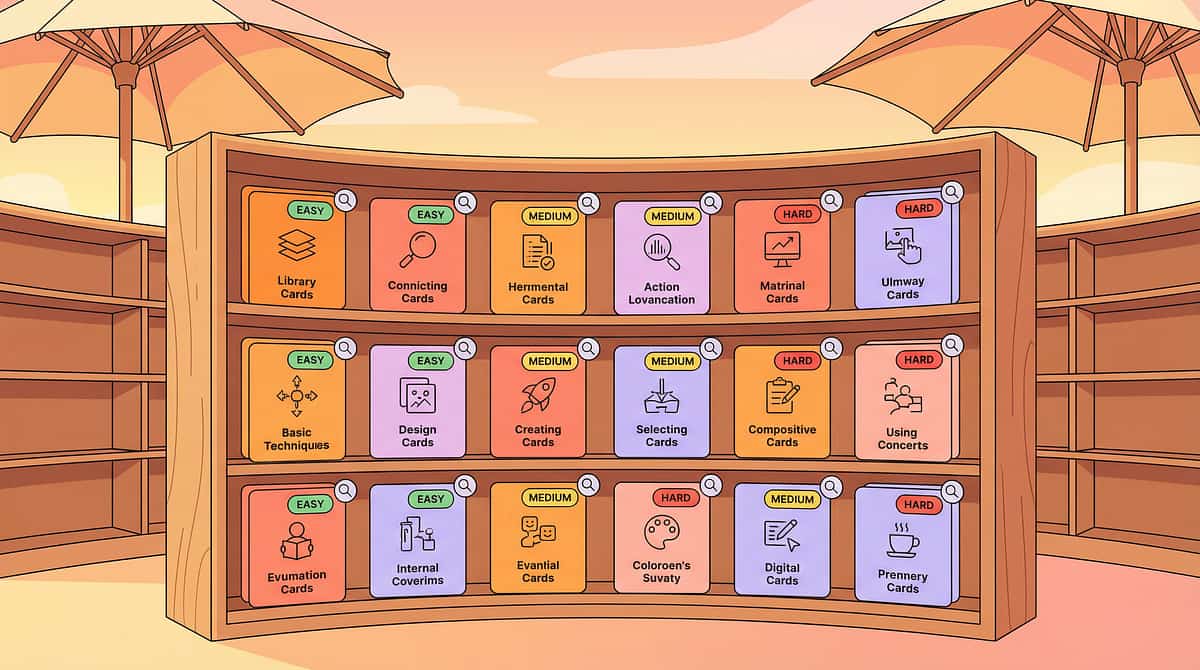
Preview of 9 materials that help with car ride distress Therapy Material
Below is a visual preview of 9 materials that help with car ride distress therapy material. The pages shown help educators, therapists, and caregivers understand the structure and content of the resource before use. Materials should be used under appropriate professional guidance.


Link copied!
Important Disclaimer
This content is educational. It does not replace assessment by a licensed occupational therapist, pediatrician, or healthcare provider. Severe or persistent car ride distress should be evaluated comprehensively to understand underlying factors — including sensory processing differences, anxiety, medical conditions, and individual developmental needs. Individual results may vary. Statistics represent aggregate outcomes across the Pinnacle Blooms Network®.
© 2025 Pinnacle Blooms Network®, a unit of Bharath Healthcare Laboratories Pvt. Ltd. All rights reserved.
CIN: U74999TG2016PTC113063 · DPIIT: DIPP8651 (Govt. of India) · MSME Udyog Aadhaar: TS20F0009606 · GSTIN: 36AAGCB9722P1Z2
FREE National Autism Helpline
16+ languages · 24x7 availability
9100 181 181
pinnacleblooms.org · care@pinnacleblooms.org
Pinnacle Blooms Network®
Built by Mothers. Engineered as a System.
Powered by GPT-OS® Therapy Intelligence
Sensory & Regulation Solutions Series · Episode 94 of 200
Domain: SENS-REG-TRAVEL · Ages 1–8 years
Next Episode: A-095 — 9 Materials That Help With Bath Time Difficulty