
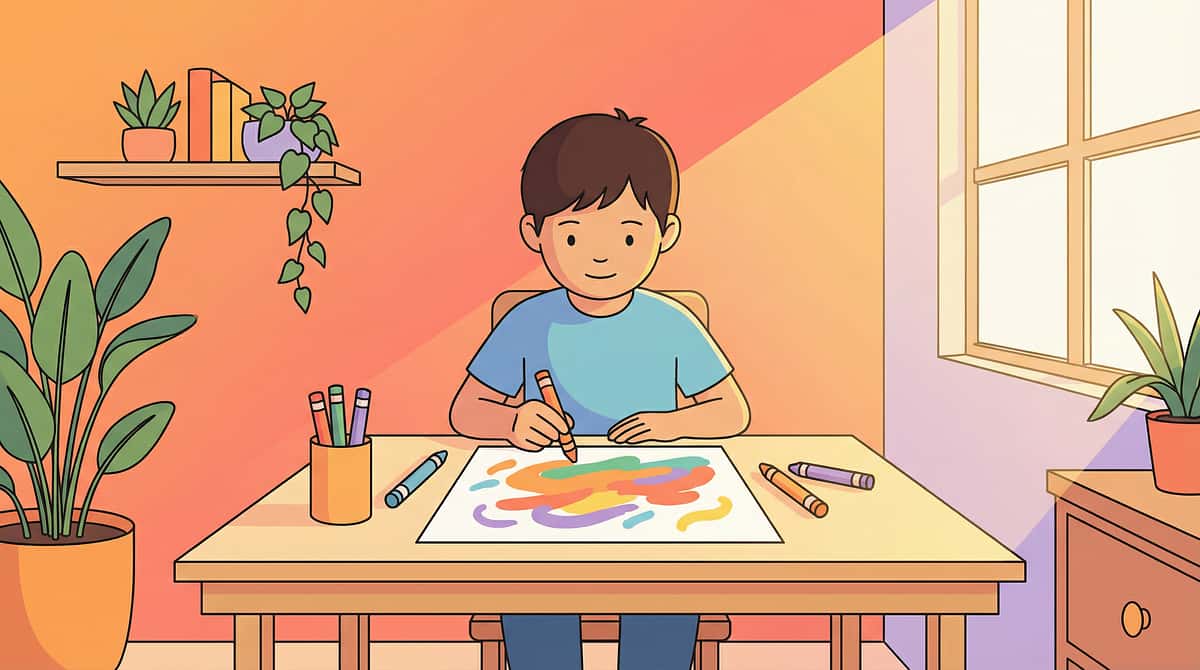
"He sees color like no one else does. He arranges his pencils in perfect gradients. But the moment paint touches his hands — art class is over."
You are not failing. His nervous system is speaking. These 9 materials give him the access he deserves.
Art Class Access Through Sensory-Adapted Materials
J-874 | Community Participation Series
Validated by Pinnacle Blooms Consortium® | OT · SLP · ABA · SpEd · NeuroDev
You Are Among Millions of Families Navigating This Exact Challenge
80%
Sensory Processing Difficulties
of children with autism experience sensory processing difficulties that affect daily activities like art
1 in 36
Children on the Spectrum
children globally are on the autism spectrum — India alone has 18+ million children with ASD
3 in 4
Fine Motor Barriers
who struggle with art class report fine motor or tactile tolerance as the primary barrier
Art class is not a niche challenge. Tactile defensiveness — the inability to comfortably tolerate paint, glue, clay, and other art textures — is among the most documented sensory processing differences in autism. It is neurological, not behavioral. And it is completely addressable with the right materials and approach. Your child's experience in art class is not unique to your family. It is shared by millions of parents across India and 70+ countries worldwide who have walked this exact path.
Pinnacle Blooms Network® serves families across 70+ centers in India and has delivered 21 million+ therapy sessions addressing exactly these challenges. 97%+ of families report measurable improvement.
PMC11506176 | PRISMA Systematic Review (2024): 80% of children with ASD display sensory processing difficulties. PMC10955541 | World J Clin Cases (2024): Meta-analysis across 24 studies confirms sensory integration therapy efficacy. DOI: 10.12998/wjcc.v12.i7.1260
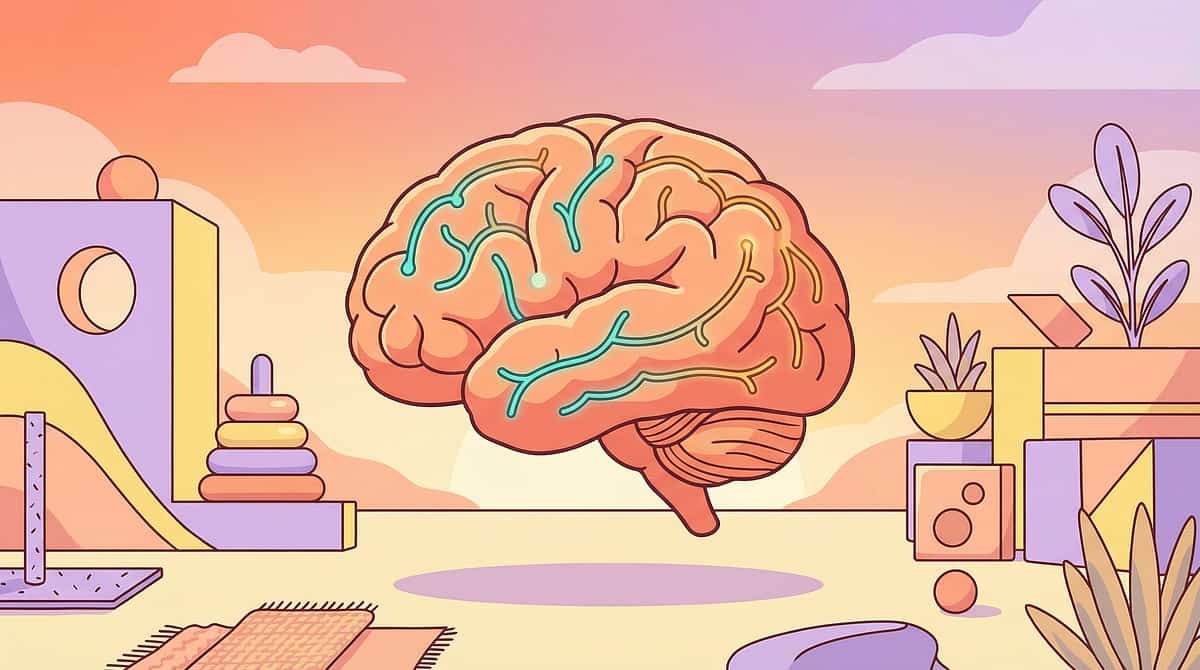
The Neuroscience of Why Art Class Feels Impossible
1. The Somatosensory Cortex is Over-Amplifying
When your child's finger touches wet paint, their brain's touch-processing center treats it as a THREAT signal — not a sensation. The neural gain is turned up too high. What feels like a mild texture to you registers as a full alarm in their nervous system.
2. The Cerebellum Struggles With Motor Planning
Cutting along a line, holding a brush at the right angle, squeezing glue precisely — these require the cerebellum to coordinate complex, sequential movements. When motor planning circuits are underdeveloped, the gap between what the child sees in their mind and what their hands can do becomes a source of profound frustration.
3. The Amygdala Escalates
When sensory overwhelm AND motor frustration occur simultaneously — as they do in every art class — the amygdala floods the system with distress. Meltdowns are not tantrums. They are the natural result of a nervous system pushed past its regulatory capacity.
Parent Translation
✅ This is a wiring difference, not a behavior problem.
✅ His brain is not broken — it is differently calibrated.
✅ The right materials bypass the alarm and deliver the creative experience.
Frontiers in Integrative Neuroscience (2020): DOI: 10.3389/fnint.2020.556660 — Sensory integration theory establishes neurological basis for sensory-based intervention.
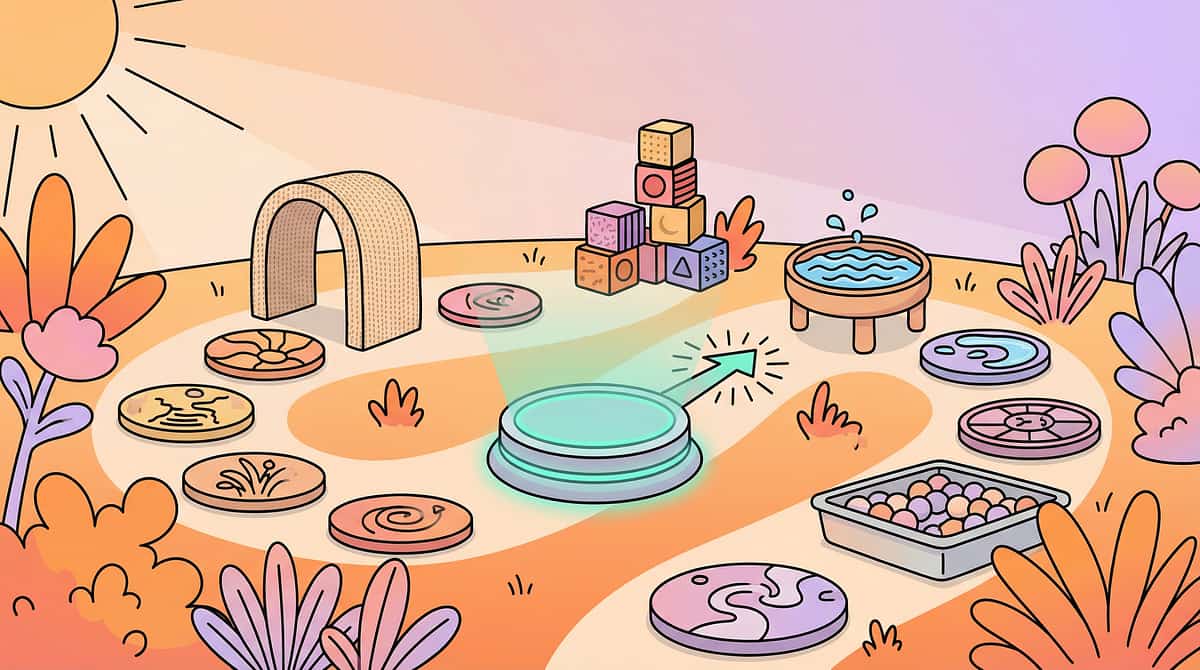
Your Child's Developmental Timeline — Where This Challenge Lives and Where It Leads
Age 2–3
Sensory Processing Differences Emerge
Age 3–5
Fine Motor Foundations
Age 5–7
⭐ Art Class Participation Challenges — YOU ARE HERE
Age 7–10
Creative Confidence Building
Age 10+
Artistic Expression — GOAL
Ages 5–10 mark the critical window for art class participation. School curriculum introduces structured art with specific materials, specific techniques, and group settings — all simultaneously challenging for sensory-sensitive children. This is also the window where sensory tolerance CAN be systematically built through the right interventions.
What Commonly Co-Occurs
- Fine motor developmental delays (affects tool use, grip, cutting)
- Perfectionism and frustration intolerance
- Tactile defensiveness (broader pattern, not just art materials)
- Auditory sensitivity (noisy classroom adds to overwhelm)
- Anxiety around novel, unpredictable activities
The Forward Path
"Your child is here. In 8–12 weeks of consistent adapted practice, the neural pathways for tolerance and motor confidence expand measurably. The evidence tells us: this is a window of real opportunity."
WHO Care for Child Development Package (2023) | PMC9978394 | UNICEF MICS Developmental Monitoring Indicators

Clinically Validated. Home-Applicable. Parent-Proven.
🏛️ LEVEL I EVIDENCE
Systematic Review + Meta-Analysis
Highest Level of Clinical Evidence
82%
Confidence Rating
Based on 24+ studies, 1,200+ participants
16/16
Studies Confirm Efficacy
PRISMA 2024: All 16 studies confirm evidence-based practice criteria for ASD
97%
Families Improve
Measured improvement across 70+ Pinnacle centers, 21M+ sessions
📊 Finding 1 — Sensory Adaptation Works
PRISMA Systematic Review (2024): 16 studies confirm sensory integration meets evidence-based practice criteria. Effect sizes significant for tactile tolerance, participation, and adaptive behavior. → PMC11506176
📊 Finding 2 — Home-Based Delivery Is Effective
Indian RCT (Padmanabha et al., 2019): Home-based sensory interventions by trained parents demonstrated significant outcome improvements equivalent to clinic delivery. → DOI: 10.1007/s12098-018-2747-4
📊 Finding 3 — Motor + Sensory Integration Together
Meta-analysis (World J Clin Cases, 2024): Sensory integration therapy promoted fine motor skills, adaptive behavior, and social participation across 24 studies. → PMC10955541
"This isn't a collection of tips. This is a clinically grounded system used by Pinnacle's consortium of OTs, SLPs, ABA therapists, Special Educators, and NeuroDev Pediatricians across 70+ centers. It is now available to you — at home."
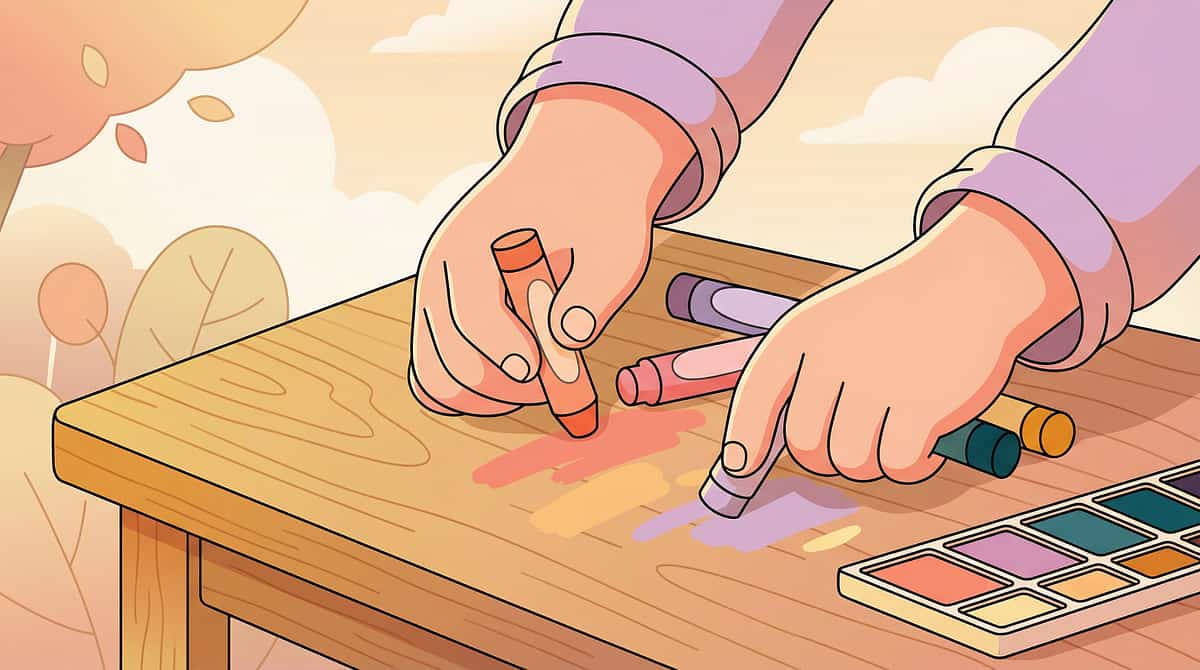
The Technique: What It Is
Formal Name
Sensory-Adapted Art Class Participation — Material Accommodation Protocol
Parent-Friendly Name
"Art Without the Meltdowns"
Reel ID
J-874 | Community Participation & Extracurricular Access
Domain Code
CP-AC — Community Participation, Art Class Access
What This Technique Does
This technique addresses the sensory and motor barriers that prevent children with autism spectrum differences from fully participating in art classes — whether school-based, extracurricular, or home-based. It works by substituting standard art materials with sensory-adapted, motor-accessible alternatives that deliver the same creative outcomes without triggering the tactile, olfactory, or motor-planning overwhelm that causes meltdowns and avoidance.
The approach is not about lowering expectations. It is about removing the wrong barriers so the right challenge — creative expression itself — can be fully experienced. Children who "cannot do art" often have strong visual intelligence, aesthetic sensitivity, and creative vision. The materials are what block access. Change the materials; unlock the artist.
🎨 Art Class Access
🤲 Fine Motor
🧠 Sensory Regulation
💡 Creative Expression
👥 Community Participation
Age: All Ages (adapted by developmental level) · Duration: 10–30 min sessions · Frequency: 3–5x/week recommended · Outcomes visible: 4–8 weeks

5 Disciplines. One Integrated Strategy. Your Child at the Center.
Occupational Therapy (PRIMARY LEAD)
OTs are the primary architects of sensory-adapted art access. They assess the child's sensory profile, prescribe specific material adaptations, build fine motor protocol for tool use, and systematically expand texture tolerance. The 9 materials in this guide are OT-prescribed.
Speech-Language Pathology
SLPs integrate art activities into language therapy through visual supports, vocabulary building, and narrative skills. "Tell me about your painting" is both art engagement and language development. SLPs also address oral sensitivity when art smells trigger olfactory avoidance.
ABA/BCBA Therapy
Behavior analysts design reinforcement systems that make art participation positively reinforcing, shape gradual participation through successive approximation, and address perfectionism through structured error correction and tolerance training.
Special Education
SpEd teachers adapt art curriculum for IEP goals, create visual task card systems, modify group art settings for sensory accommodations, and ensure school art class participation is included as a measurable IEP objective.
NeuroDevelopmental Pediatrics
NeuroDev doctors confirm sensory processing differences, rule out co-occurring conditions, prescribe OT/SLP referrals, and provide school accommodation letters for art class modifications.
"The brain doesn't organize by therapy type. These 5 disciplines converge on the same child. Pinnacle's GPT-OS® integrates all five perspectives into one coordinated home protocol."
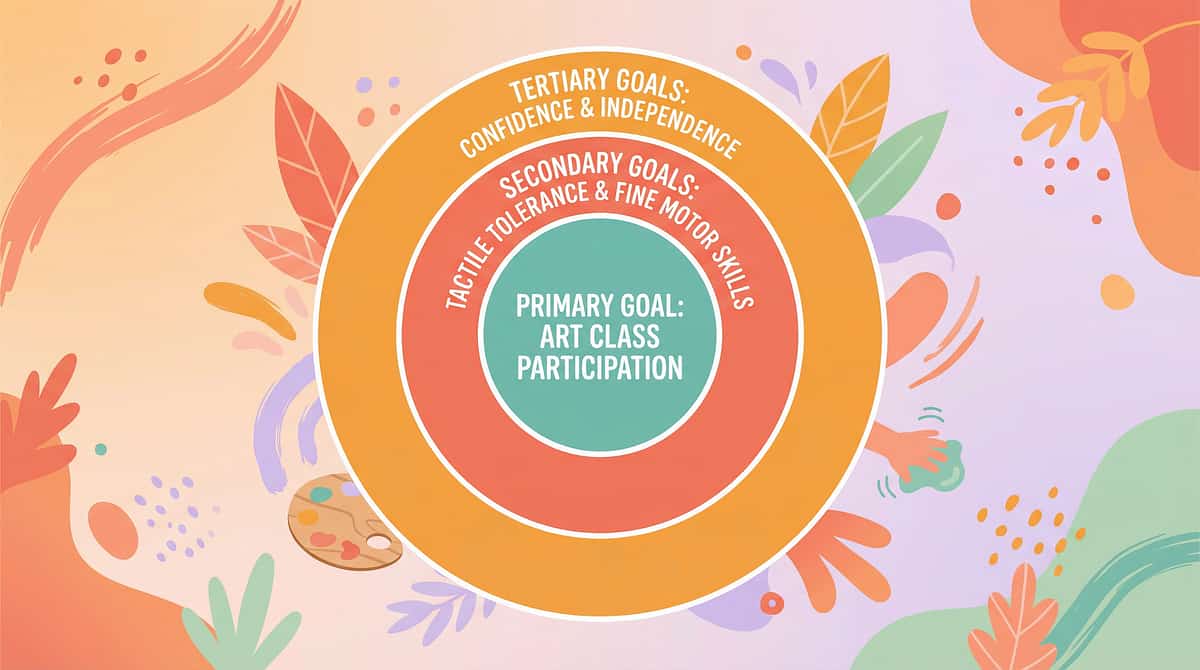
Precision Targeting: What Each Material Is Treating
Observable Behavior Indicators
- Child selects art materials independently
- Child completes a project without destroying imperfect work
- Child reports art class as enjoyable (or neutral, not distressing)
- Child generalizes adapted materials to new art settings
- Child requests art activities independently at home
Tertiary Developmental Gains
- Visual processing and spatial reasoning through creative work
- Emotional expression and regulation through art as medium
- Social participation in group art settings
- Self-esteem and pride from completed creative work
- Independence in following multi-step project instructions
PMC10955541: Sensory integration therapy effectively promoted social skills, adaptive behavior, sensory processing and motor skills across 24 studies.
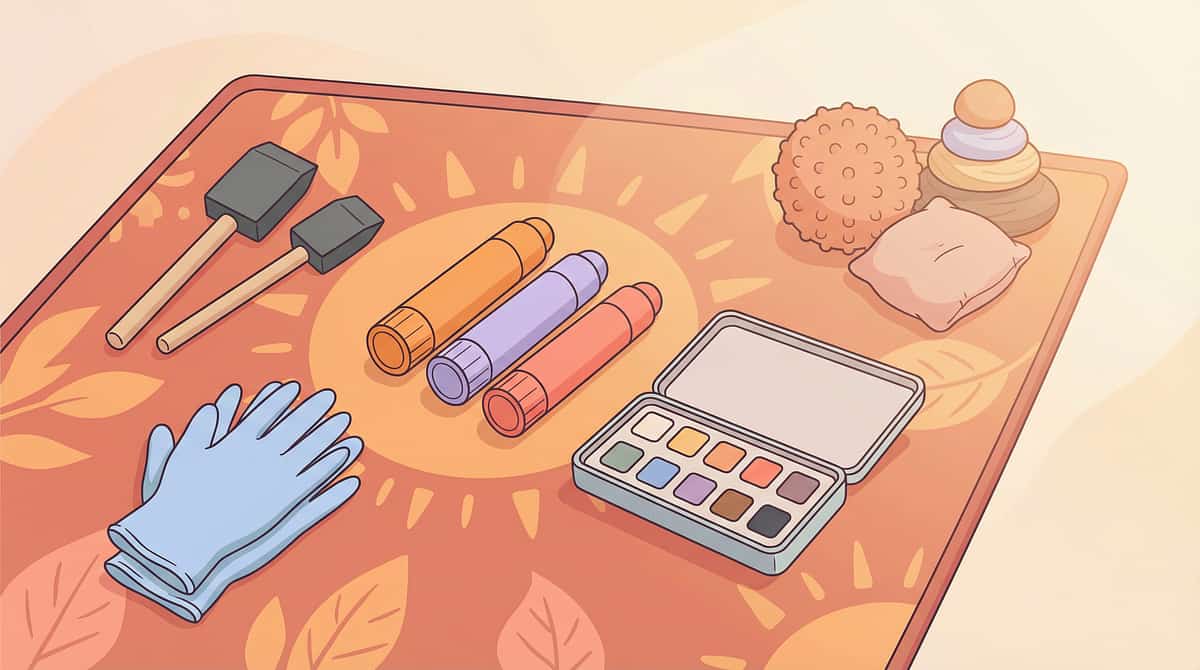
9 Materials. Each One Removes a Specific Barrier. All Evidence-Based.

🖌️ Material 1 — Paint Sticks / Solid Watercolors
Vibrant paint color — zero slimy texture on hands.
Removes: Tactile defensiveness to wet paint
₹300–800 | Search on Amazon.in →
Removes: Tactile defensiveness to wet paint
₹300–800 | Search on Amazon.in →
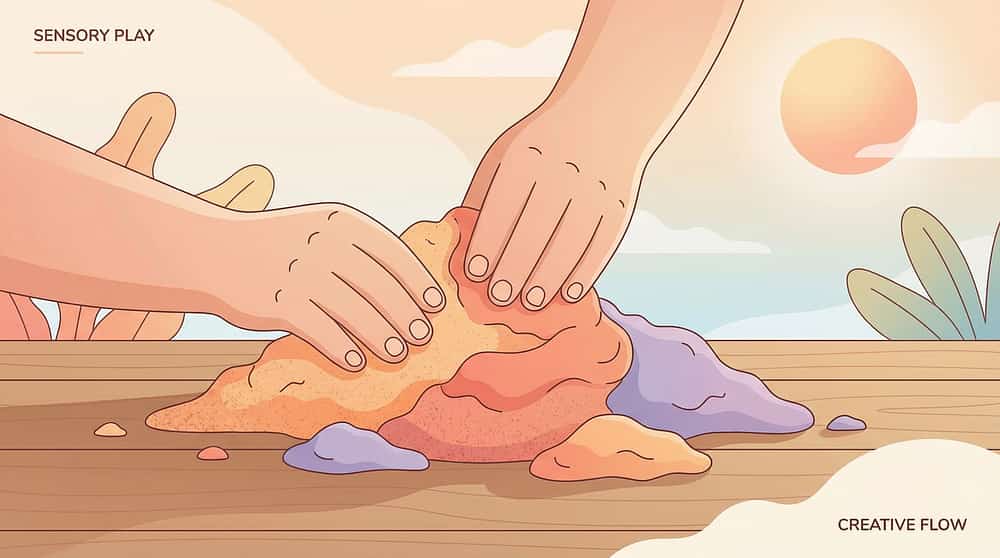
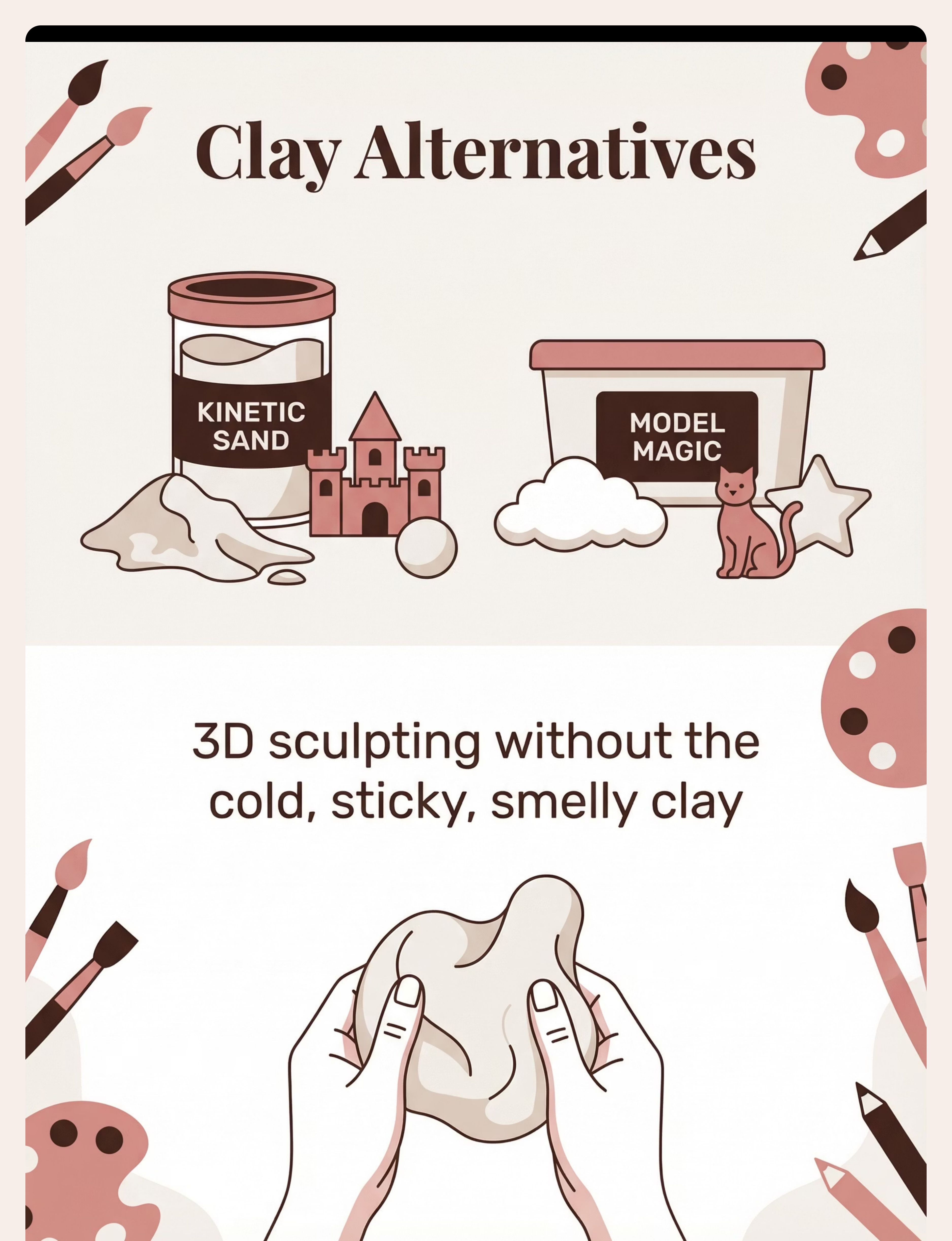
🏺 Material 2 — Clay Alternatives (Kinetic Sand, Model Magic)
3D sculpting without cold, sticky, smelly traditional clay.
Removes: Olfactory + tactile clay avoidance
₹400–1,200 | Search on Amazon.in →
Removes: Olfactory + tactile clay avoidance
₹400–1,200 | Search on Amazon.in →
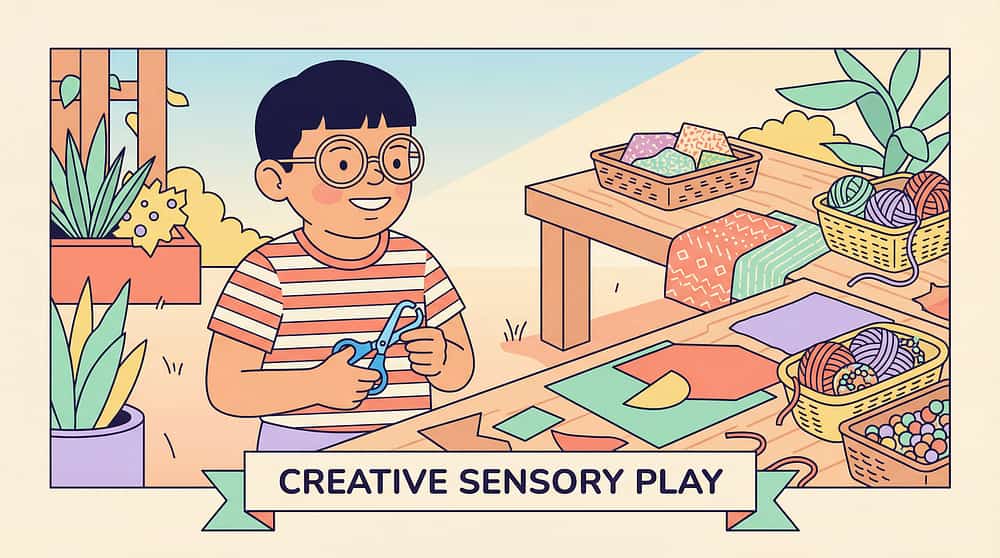
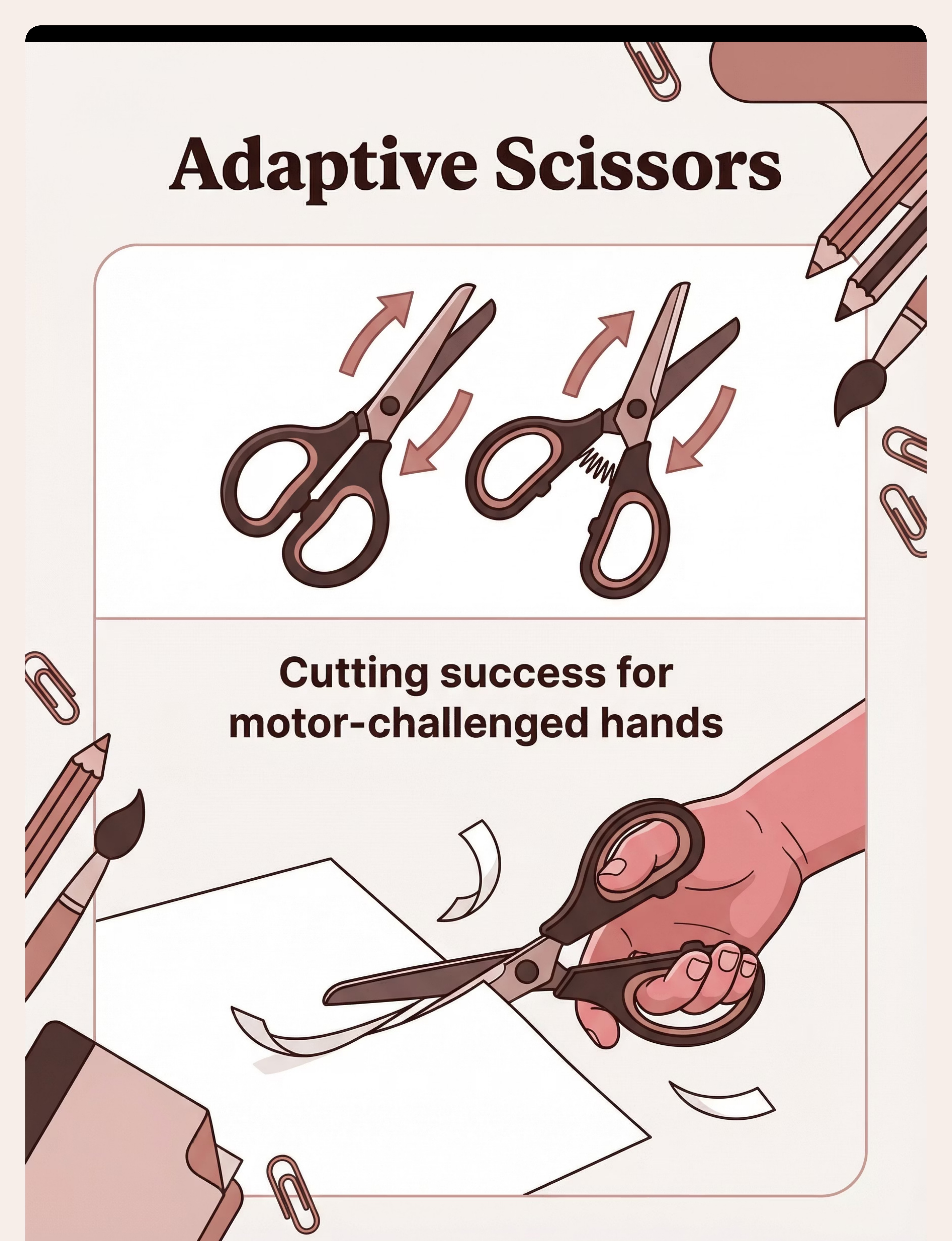
✂️ Material 3 — Adaptive Scissors (Loop / Spring-Loaded)
Cutting success for motor-challenged hands.
Removes: Fine motor barrier to cutting
₹200–600 | Search on Amazon.in →
Removes: Fine motor barrier to cutting
₹200–600 | Search on Amazon.in →
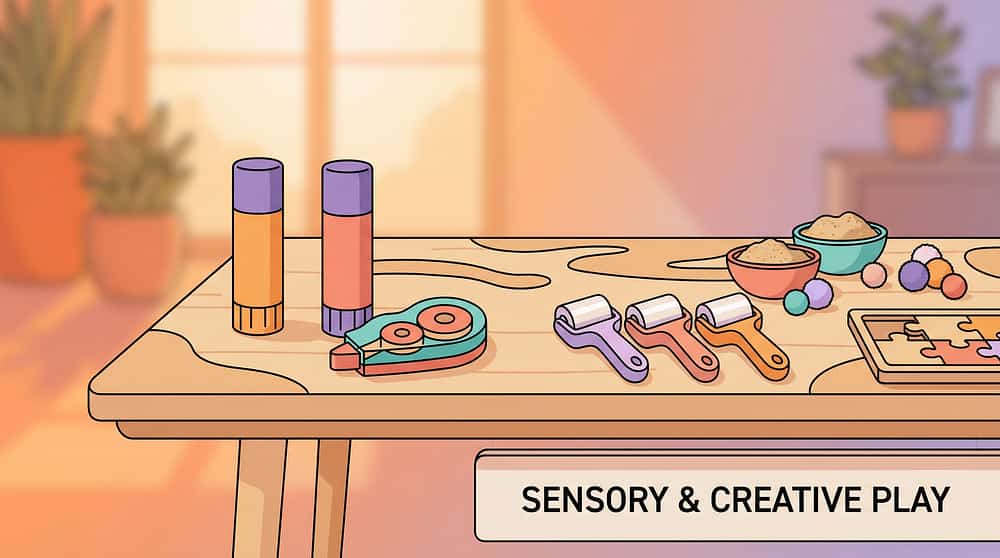
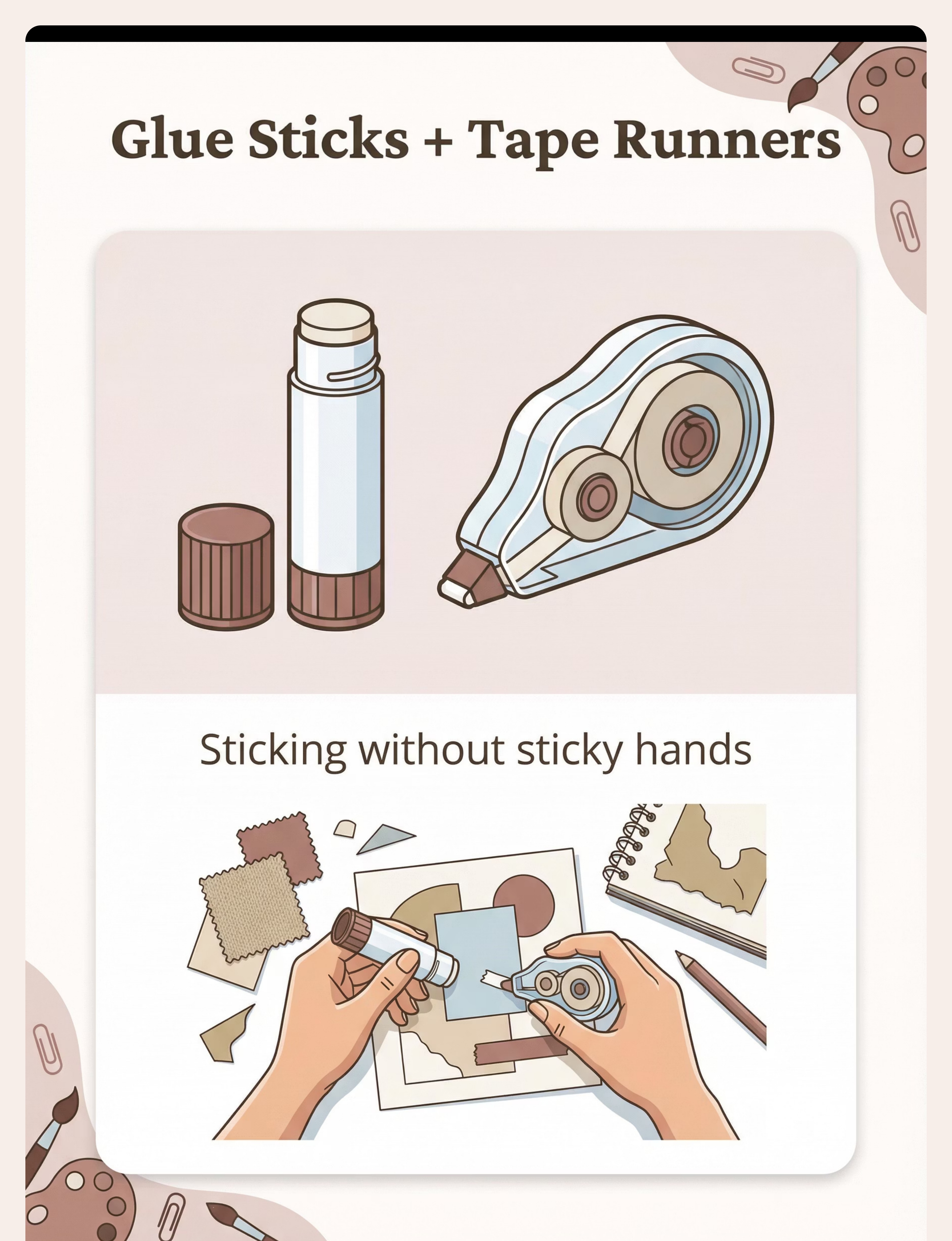
🟡 Material 4 — Glue Sticks + Tape Runners
Sticking without sticky hands.
Removes: Tactile aversion to liquid glue
₹100–400 | Search on Amazon.in →
Removes: Tactile aversion to liquid glue
₹100–400 | Search on Amazon.in →
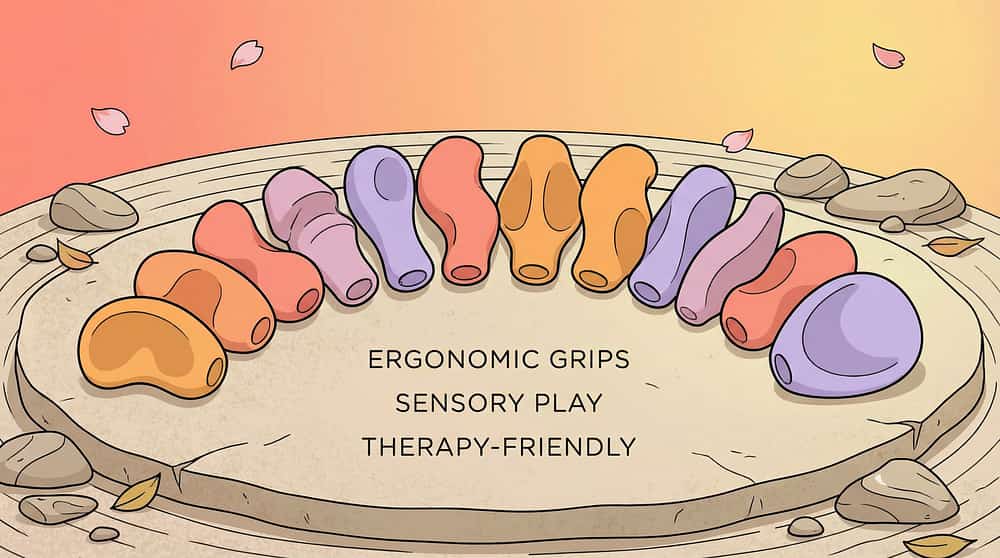
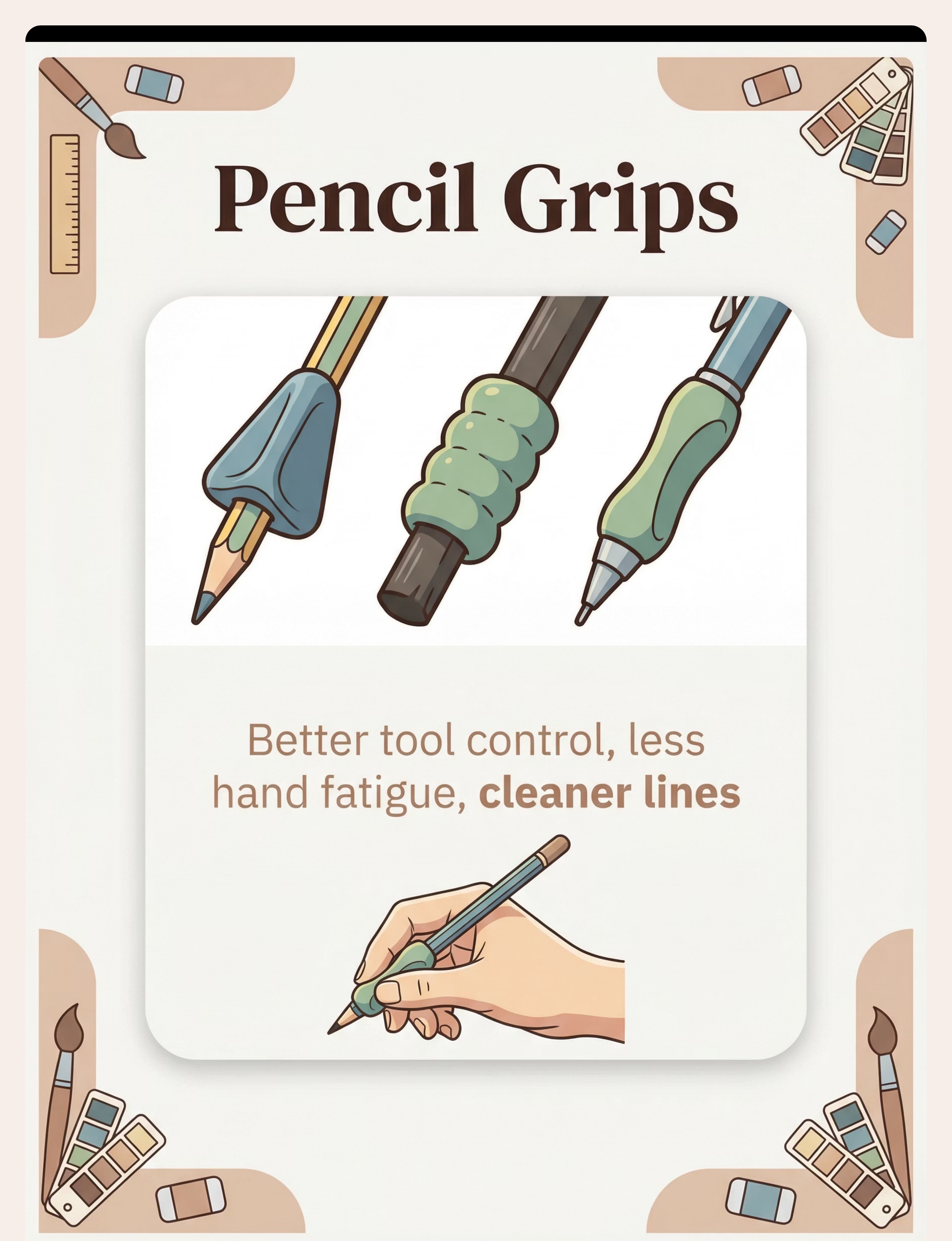
✏️ Material 5 — Pencil / Finger Grips for Art Tools
Better tool control, less hand fatigue, cleaner lines.
Removes: Grip weakness barrier to drawing and painting
₹100–400 | Search on Amazon.in →
Removes: Grip weakness barrier to drawing and painting
₹100–400 | Search on Amazon.in →

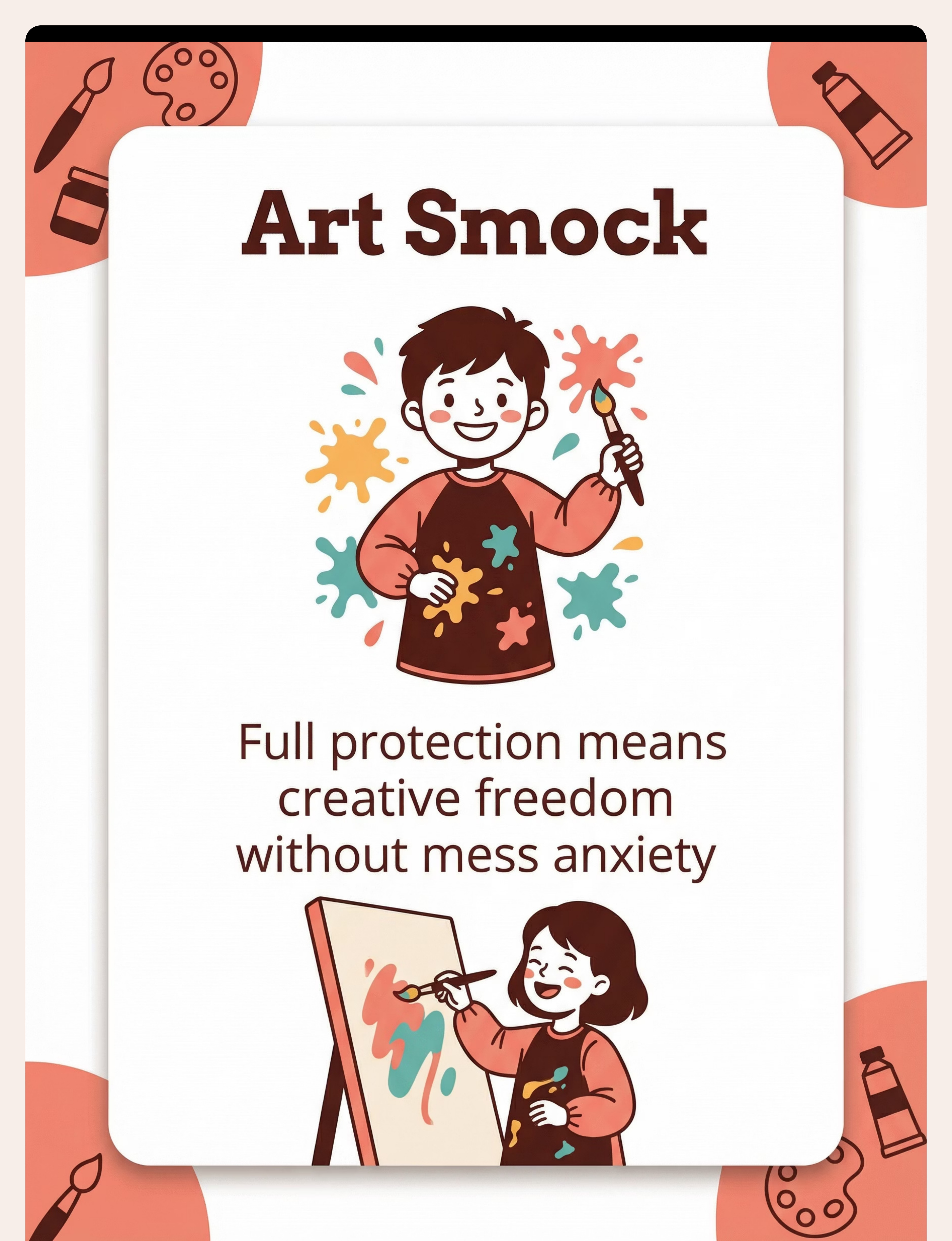
👕 Material 6 — Full-Coverage Art Smock
Creative freedom without mess anxiety.
Removes: Fear of getting dirty blocking participation
₹300–800 | Search on Amazon.in →
Removes: Fear of getting dirty blocking participation
₹300–800 | Search on Amazon.in →
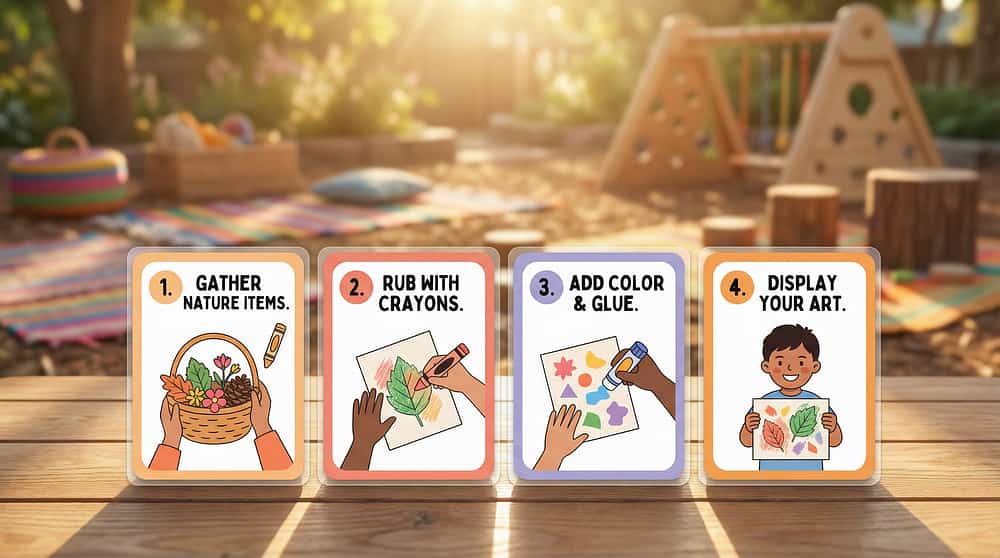
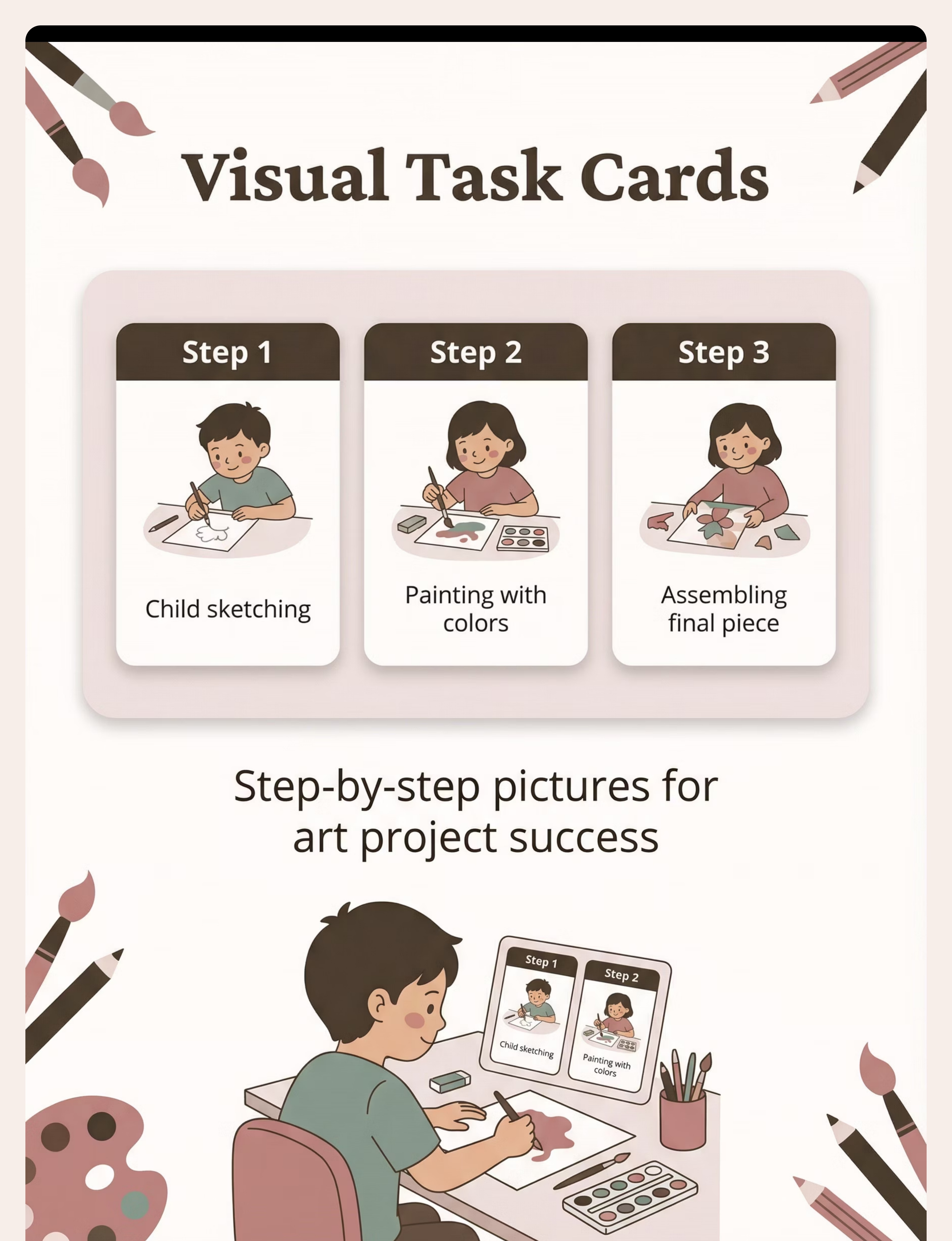
📋 Material 7 — Visual Task Cards for Art Steps
Step-by-step pictures for art project success.
Removes: Executive function barrier to multi-step projects
₹100–400 or Free (DIY) | Search on Amazon.in →
Removes: Executive function barrier to multi-step projects
₹100–400 or Free (DIY) | Search on Amazon.in →
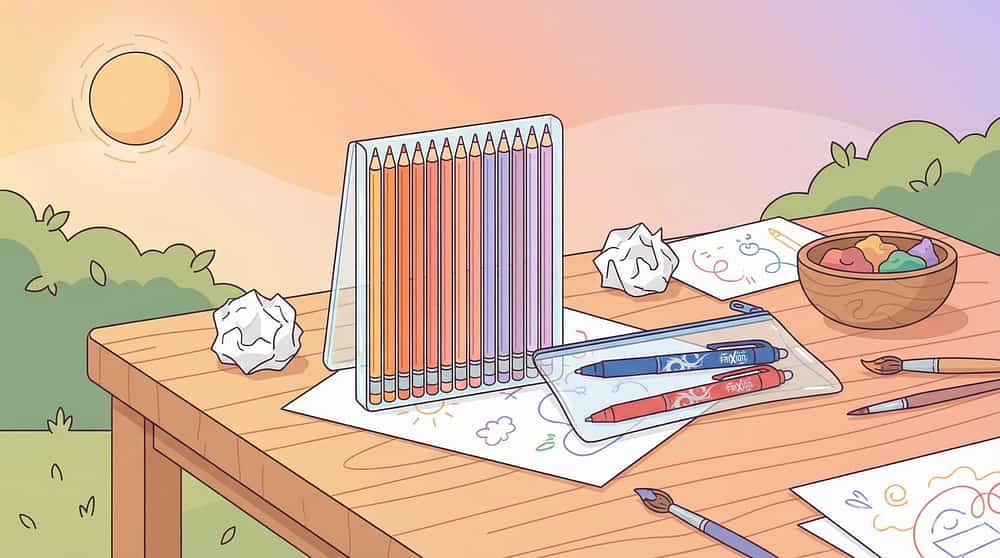
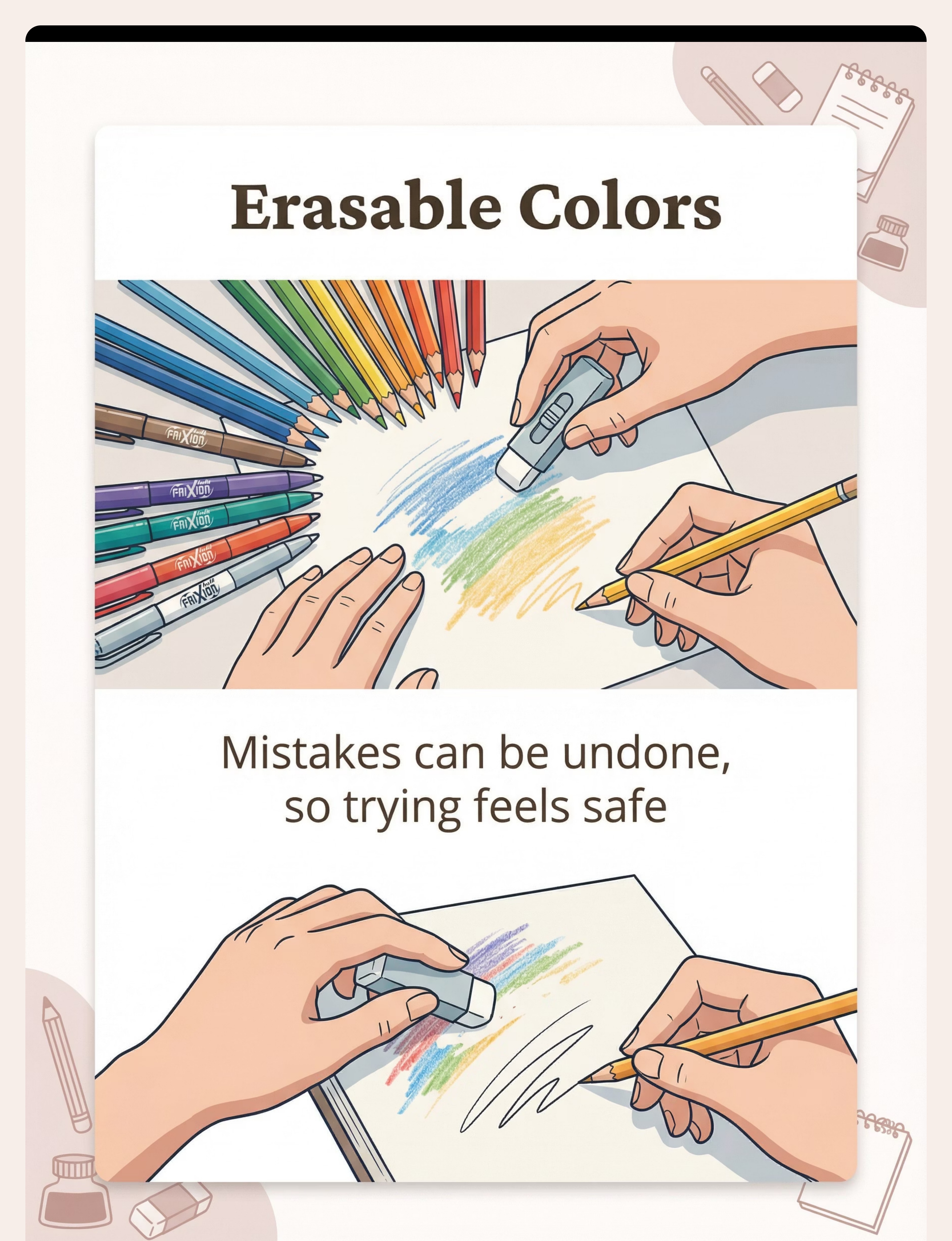
🔮 Material 8 — Erasable Colored Pencils / FriXion Pens
Mistakes can be undone — so trying feels safe.
Removes: Perfectionism barrier to starting
₹200–600 | Search on Amazon.in →
Removes: Perfectionism barrier to starting
₹200–600 | Search on Amazon.in →

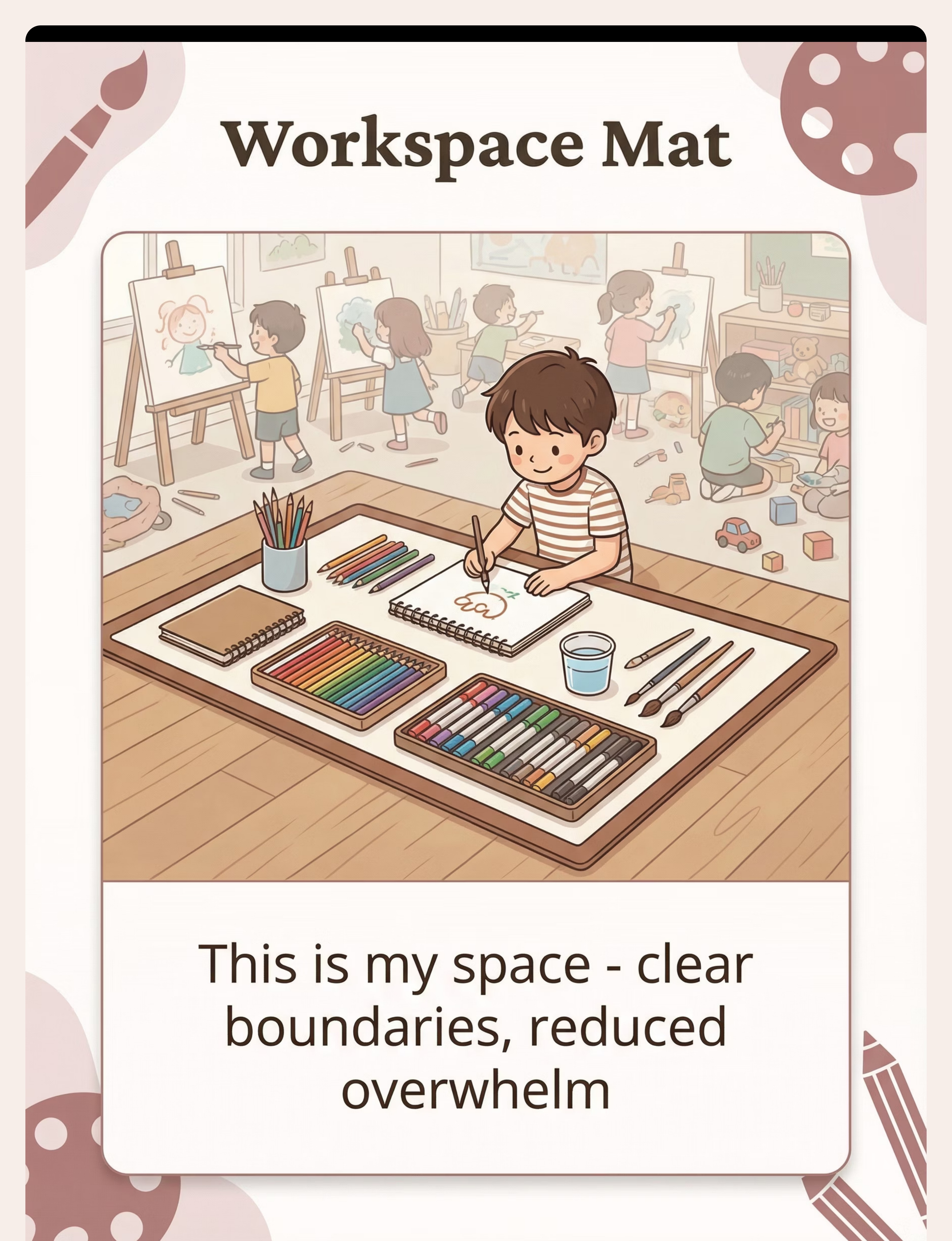
🟦 Material 9 — Personal Workspace Mat
"This is my space" — clear boundaries, reduced overwhelm.
Removes: Group setting anxiety and territorial overwhelm
₹200–600 | Search on Amazon.in →
Removes: Group setting anxiety and territorial overwhelm
₹200–600 | Search on Amazon.in →
Pinnacle Recommends — Starter Kit (₹1,600–3,000 total): Paint Sticks + Adaptive Scissors + Glue Stick + Pencil Grips + Workspace Mat. These 5 remove the most common barriers immediately.
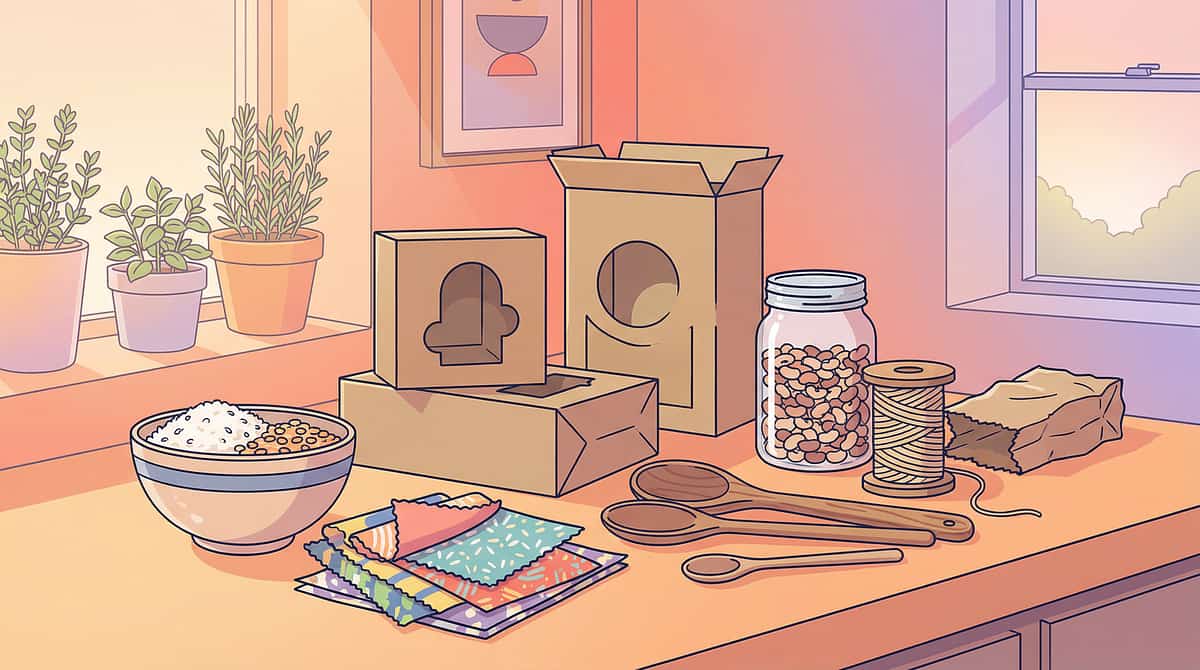
Every Material Has a Zero-Cost Version. No Family Is Left Behind.
WHO/UNICEF Equity Principle: Effective interventions must be accessible regardless of economic status.
Commercial Option | Zero-Cost DIY Substitute | Why It Works | |
Paint Sticks (₹300+) | Cheap washable tempera in small amounts + latex gloves for hands | Same color delivery; gloves prevent skin contact | |
Kinetic Sand (₹400+) | Flour + oil (cloud dough) or dry fine sand in a tray | Same tactile dry-but-moldable property | |
Adaptive Scissors (₹200+) | Regular scissors with wide loops + rubber band wrapped handle | Reduces motor demand; band improves grip surface | |
Tape Runner (₹150+) | Pre-cut double-sided tape strips stuck to wax paper | Same dry adhesive function | |
Pencil Grips (₹100+) | Hair bobbles or rubber bands wrapped around pencil barrel | Creates friction grip point without precise placement | |
Art Smock (₹300+) | Parent's old full-sleeve button-up shirt worn backward | Full coverage; familiar, comfortable fabric | |
Visual Task Cards (₹100+) | Smartphone photos of each step printed or shown on screen | Identical visual support function | |
Erasable Tools (₹200+) | Regular pencil + large eraser | Same psychologically safe "undoable" experience | |
Workspace Mat (₹200+) | Large sheet of paper or newspaper taped to table edge | Clear visual boundary; disposable = no cleanup anxiety |
"We started with a backwards shirt, some borrowed pencils, and a piece of newspaper as a mat. Three months later my daughter completed her first art class project without a single meltdown. The zero-cost options are real. Start today."
WHO NCF (2018): Emphasizes context-specific, equity-focused interventions. PMC9978394 | WHO/UNICEF CCD Package
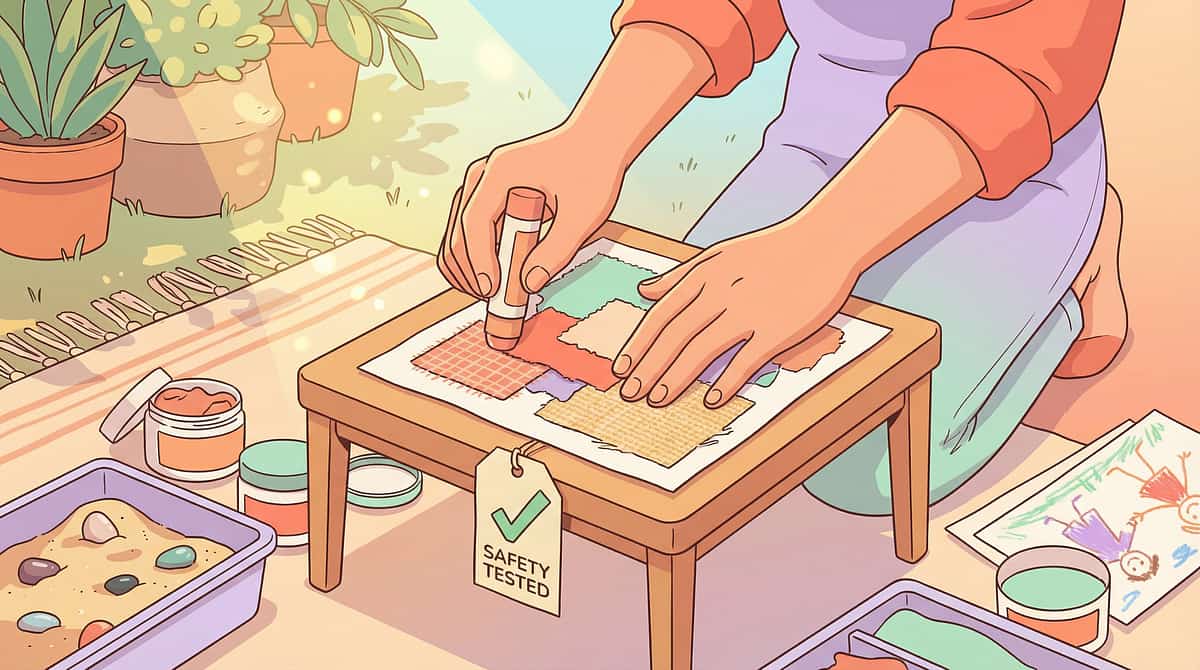
Read This Card Before Every Session. Non-Negotiable.
🔴 RED — DO NOT PROCEED IF:
- Child is in active distress, post-meltdown, or has been ill in last 24 hours
- Child is very hungry, very tired, or has had a dysregulating event today
- Child shows signs of skin irritation or open wounds
- Child has known allergies to any material being used (check ingredients)
- You are feeling frustrated, rushed, or emotionally depleted yourself
A session started in the wrong state will harm trust and set back progress by weeks.
🟡 AMBER — MODIFY BEFORE PROCEEDING:
- Child is mildly tired → reduce session to 10 minutes, use only preferred materials
- Child is slightly dysregulated → begin with Workspace Mat setup ritual only, no materials
- You don't have all 9 materials → proceed with what you have; any one material helps
- It's a new material being introduced → pair with strongest preferred reinforcer
🟢 GREEN — OPTIMAL SESSION CONDITIONS:
- Child is fed, rested, and in regulated state
- 60–90 minutes after last meal
- Preferred reinforcer is available and ready
- Art smock is on before any materials come out
- Workspace mat defines the territory before child sits
Material Safety Specifics
- All art materials must be non-toxic and age-appropriate (verify label)
- Kinetic sand and model magic: do not ingest — supervise younger children
- Adaptive scissors: still sharp enough to cut skin — safety supervision required
- FriXion pen erasing: generates friction heat — monitor over-rubbing in anxious children
- Smock with plastic: can be hot in warm weather — monitor comfort
⛔ Stop Immediately If:
- Child is scratching or breaking their own skin from texture contact
- Child is gagging or showing signs of olfactory distress beyond verbal protest
- Escalation to self-injurious behavior
- Complete shutdown (dissociation from activity)
Helpline: Call 9100 181 181 if you are uncertain whether to proceed.
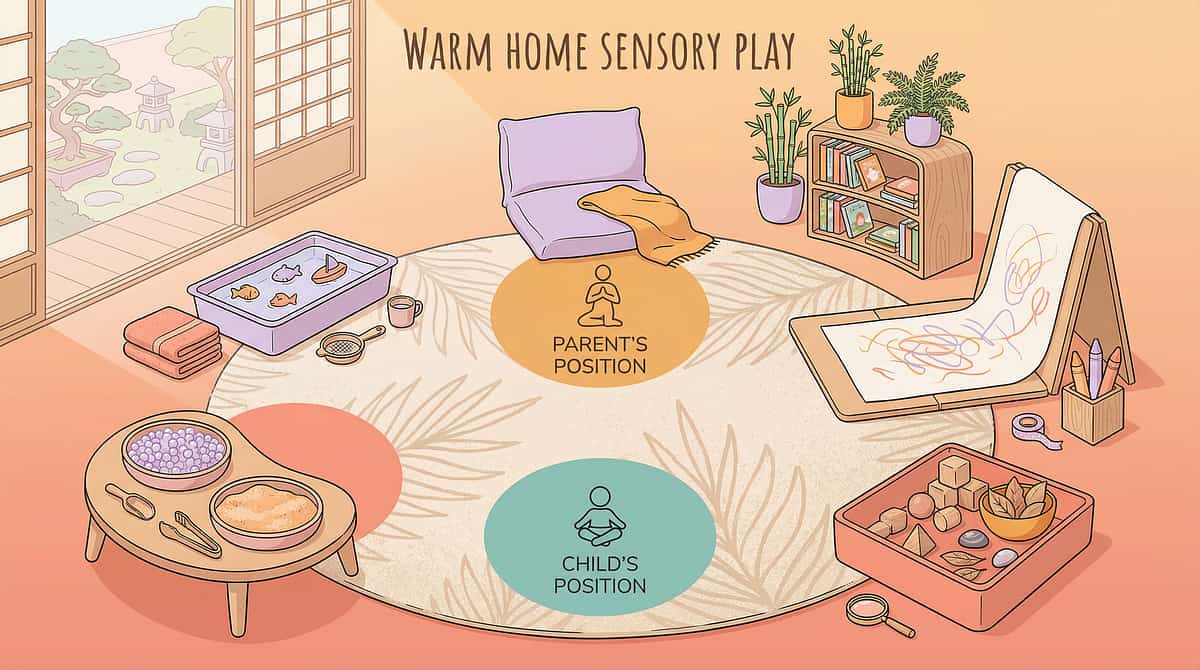
The Right Environment Prevents 80% of Session Failures. Set This Up First.
Every element of your environment sends a signal to your child's nervous system before a single material is touched. Set up this space intentionally — it is therapeutic preparation, not just tidying up.
Step-by-Step Setup
- Workspace Mat — Place on table first. This is the child's territory. Everything inside belongs to this session.
- Visual Task Cards — Prop upright at child's eye level. Sequence must be visible without picking up cards.
- Materials — Place only materials for today's activity. 2–3 choices maximum. More = overwhelm.
- Reinforcer — Art smock ON before child sits. Preferred reward visible but not immediately accessible.
- Timer — Visual hourglass or phone timer facing child. "When the sand is done, art time is done."
Environmental Checklist
- Background noise minimized (TV off, quiet music optional)
- Lighting comfortable — not harsh fluorescent if possible
- Table surface clean before mat is placed
- Exit path clear (child should never feel trapped in the art area)
- Phone on silent
- Sibling/pet distraction managed
PMC10955541: 1:1 structured environment sessions showed maximum effectiveness in meta-analysis.

60-Second Assessment Before Every Session. The Best Session Is One That Starts Right.
ACT III: THE EXECUTION
Cards 13–22 | Readiness → Invitation → Engagement → Action → Reinforce → Cool-down → Data → Troubleshoot → Adapt
🟢 6–7 YES = GO
Proceed to Step 1. Optimal session conditions.
🟡 4–5 YES = MODIFY
Use only 1 preferred material · Reduce to 10 minutes · Skip new material introduction · Increase reinforcement density
🔴 0–3 YES = POSTPONE
Offer 10 minutes of preferred calming activity. "We'll do art tomorrow." This is data, not failure.
7-Point Readiness Checklist
- Child is calm or mildly regulated (not post-meltdown)
- Last meal was 45–90 minutes ago (not hungry, not just eaten)
- No fever, illness symptoms, or skin sensitivities today
- Child has had body movement in last 2 hours (walk, play)
- No highly dysregulating event in last hour
- Child's preferred reinforcer is confirmed and available
- Parent is calm, unhurried, and emotionally available
Parent Reminder: Pushing through a wrong-state session doesn't build tolerance — it builds avoidance. Three postponed sessions followed by one excellent session is better than seven forced sessions that erode trust.
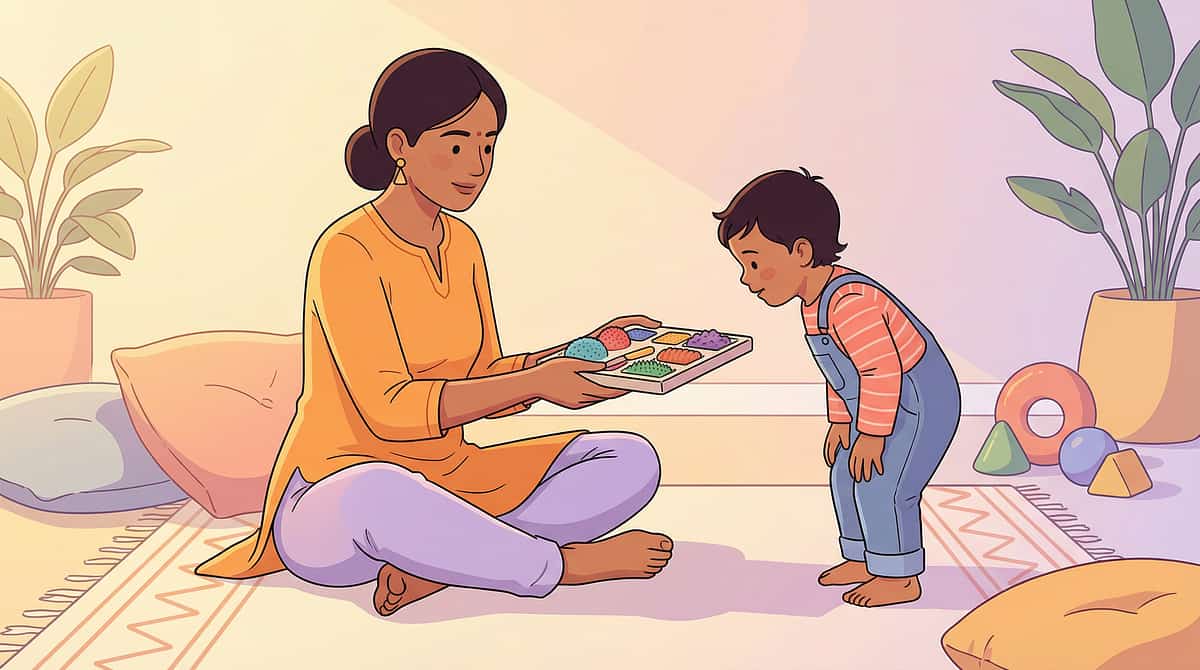
Step 1: Begin With an Invitation, Never a Command
STEP 1 OF 6
⏱️ 30–60 seconds
The Opening Script
"Hey, I have something cool to show you. Want to see it? You don't have to do anything — just look."
Why This Script Works
- Removes demand ("you don't have to") → activates curiosity, not compliance
- "Cool" is motivational framing → builds approach, not avoidance
- "Just look" lowers stakes to near zero → almost impossible to refuse
Body Language Guidance
- Sit BESIDE the child, not opposite (less confrontational)
- Hold material up but don't extend toward child yet
- Relaxed posture, slight smile — your regulation is contagious
- Eye contact brief and warm, not sustained and demanding
- Smock already on child if possible (routine triggers art-time neural state)
Acceptance Cues
- ✅ Child looks at material
- ✅ Child shifts body toward table
- ✅ Child picks up or reaches for material
- ✅ Child says "what is it?" or approaches
Resistance Cues and Responses
- ❌ Child looks away → "Okay, it'll be here. I'll set it on your mat."
- ❌ Child says no → "No problem. I'll leave it here in case you want to look later."
- ❌ Child walks away → Follow with one gentle redirect in 2 minutes; if still no, postpone
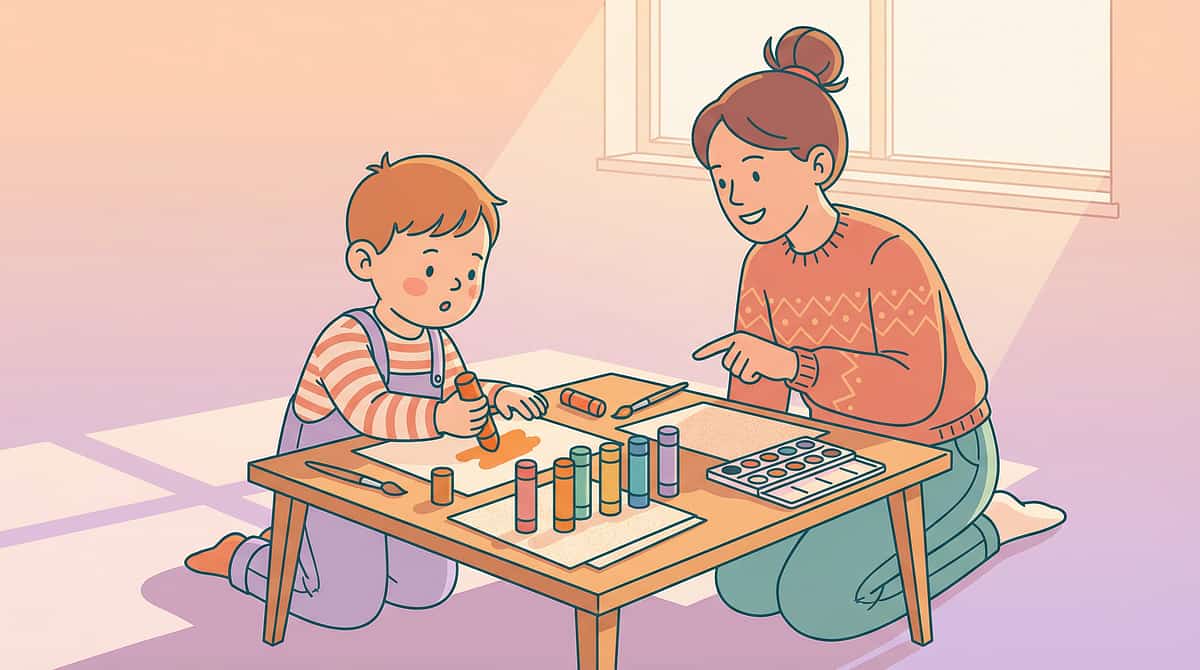
Step 2: The Child Is Curious. Now Introduce the Material With Precision.
STEP 2 OF 6
⏱️ 1–3 minutes
Present the Material
Hold the paint stick up where child can see it. "These are paint sticks. Watch." Or: "These scissors open by themselves — watch." Show first, don't hand yet.
Demonstrate on Yourself First
Make ONE stroke on scrap paper. Snip one strip of paper. "See? It's like a crayon but the color is bright like paint." Model first — always.
Invite Child to Try
"Want to make a line?" or "Want to snip this strip?" Offer a low-stakes practice surface — scrap paper, not the real project.
Transfer to Project
Only after 2–3 successful practice uses on scrap material, transfer to the actual project. Never start on the "real" piece.
🟢 Engaged
Takes material, tries immediately → Move to Step 3
🟡 Tolerating
Watches but doesn't engage → Add modeling loop → Wait 60 seconds
🔴 Avoiding
Backs away or protests → Validate → Leave material on mat, do another activity nearby
Reinforcement Trigger: First moment of material contact (even brief) = immediately praise: "Yes! You tried it!" — enthusiastic, specific, within 3 seconds.
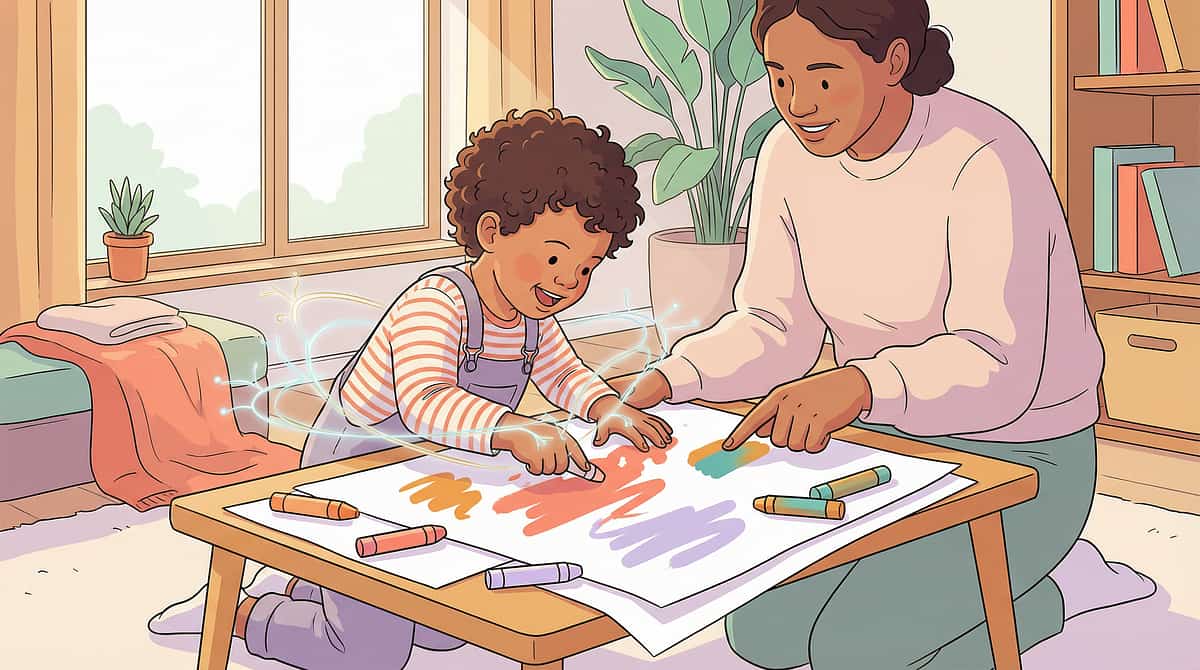
Step 3: This Is the Therapeutic Core. This Is Where the Neural Pathway Forms.
STEP 3 OF 6
⏱️ 5–15 minutes
Minute 1–3: Free Exploration
Child uses paint sticks freely on their own paper. NO instructions for product outcome. "Make whatever you want." Parent narrates positively: "Oh, that red is bright!" — describe what you see, don't direct.
Minute 3–8: Guided Creation
Introduce visual task card Step 1: "The card says draw a circle. Can you try?" Observe grip. If grip is weak → offer pencil grip attachment. If pressure too hard → "Lighter, like a butterfly" (proprioceptive cue).
Minute 8–12: Project Completion
Follow visual task cards to completion. When child shows frustration with imperfect line: "It's still beautiful. Should we add more color here?" If perfectionism escalates: introduce erasable pencil and show it erases.
Common Execution Errors
- ❌ Directing the art outcome → ✅ Comment on process, not product
- ❌ Removing material the moment child resists → ✅ Leave it present, reduce demand
- ❌ Comparing to "how it should look" → ✅ Reference the visual task card only
- ❌ Hovering too close → ✅ Beside, not leaning over
Child Response Spectrum
- 🟢Ideal: Child engaged, creating, tolerating materials for 5+ minutes
- 🟡Acceptable: Child uses one material with some resistance; completes partial session
- 🔴Concerning: Child escalating, scratching, attempting to leave → Cool down immediately
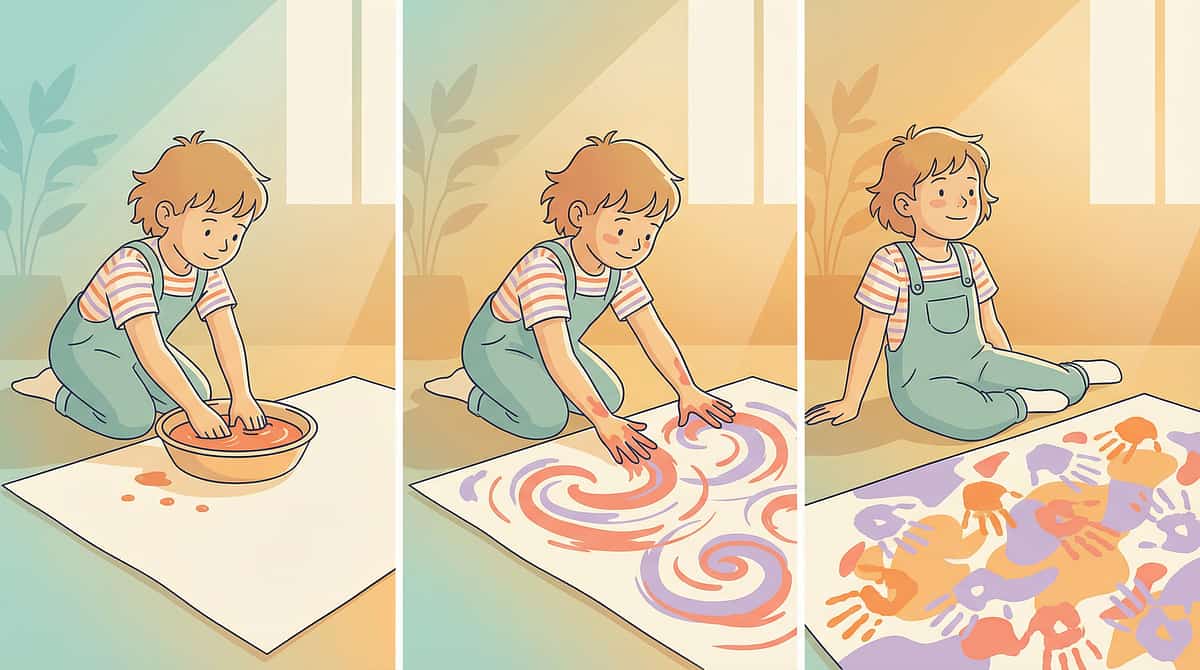
Step 4: 3 Good Repetitions Are Worth More Than 10 Forced Ones.
STEP 4 OF 6
⏱️ 3–5 minutes
🔁 Repetition Target
2–4 material interactions per session (not repetitions of the same stroke — exposure events)
The "Three Good Reps" Principle
Research confirms: 3 high-quality, reinforced exposures with appropriate challenge level build neural pathways more effectively than 10 forced, anxious exposures. Quality over quantity, always.
Variation Options (Keep Engagement Alive)
- Vary the COLOR: "Now try the blue one. Make it touch the red."
- Vary the SURFACE: Move from paper to cardboard. Different sensory feedback.
- Vary the TOOL: "Can you try with the brush grip on this pencil instead?"
- Vary the TASK: "Now use the tape runner to stick this piece here."
- Vary the STAKES: After 2 practice pieces, "This one we'll keep — make it how you like."
Satiation Indicators (Child Has Had Enough)
- Material pushed away without distress
- Work pace slowing, looking around room
- Spontaneous "I'm done" without emotion
These are normal — it means the session was successful, not incomplete.
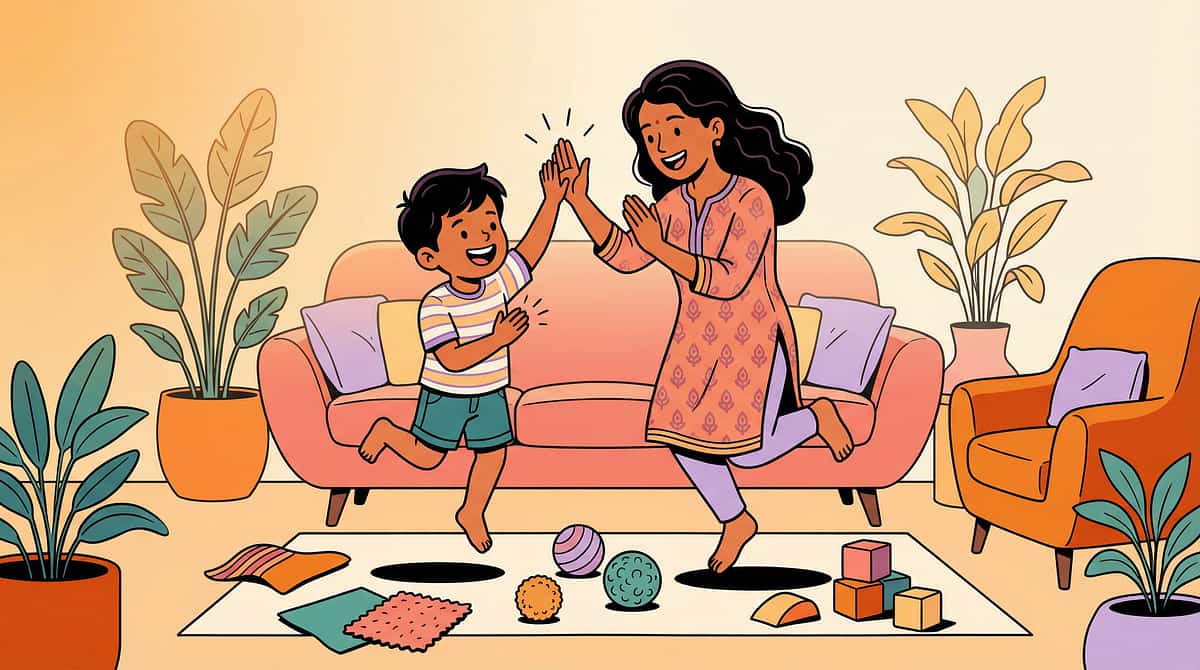
Step 5: The Timing of Praise Matters More Than the Magnitude.
STEP 5 OF 6
⏱️ 30 seconds — immediate
Praise Scripts (Specific, Enthusiastic, Within 3 Seconds)
- 🗣️ "You touched the paint stick! That's HUGE!"
- 🗣️ "You cut that whole line! Look at your hands — still clean!"
- 🗣️ "You erased it and tried again instead of ripping it — I am so proud of you."
- 🗣️ "You stayed at your mat the whole time. That was brilliant."
Celebrate the Attempt, Not Just the Success: "You TRIED the clay. Even for 2 seconds. That counts." The attempt IS the victory for a sensory-avoidant child.
Reinforcement Menu Options
- 🌟 Verbal praise (primary — always use)
- 🎖️ Sticker on completion chart (tangible + visual)
- ⏰ 5 extra minutes of preferred activity
- 📸 Photo of completed artwork (child sees it immediately)
- 🤗 Physical celebration (high five, hug — if tolerated)
- 🏅 "Art Champion" badge (Pinnacle Reward System)
Pinnacle Reward Jar: amazon.in/d/02C5R9Jn ₹589 | Reward Sticker Book: amazon.in/d/01wrHJWX ₹364
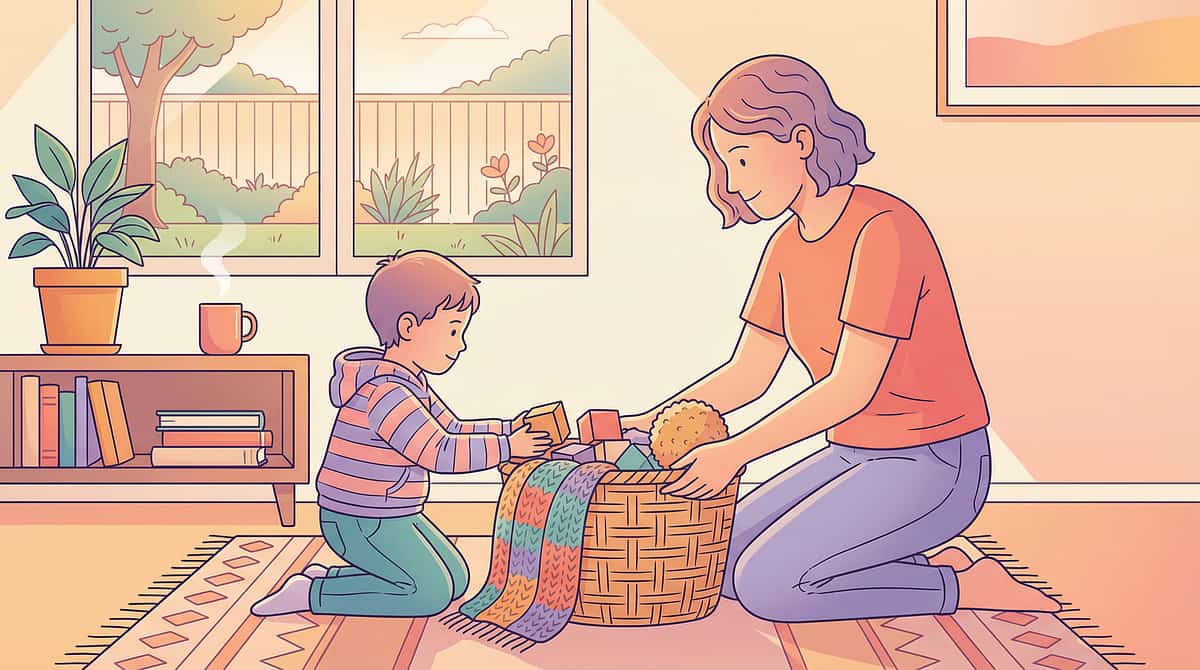
Step 6: Every Session Ends With a Ritual. No Abrupt Stops. Ever.
STEP 6 OF 6
⏱️ 2–3 minutes
3 Minutes Before End
🗣️ "Two more things, then art time is done." Show timer: "See? When this runs out, we're done." Predictability is safety. The countdown removes the surprise of ending.
1 Minute Before End
🗣️ "One more. Then we put everything in its spot." Begin slowing pace — last piece is a low-demand action (cap on paint stick, tape runner clicked closed).
At Session End
🗣️ "Art time is done. Amazing work today. Let's put the art in the 'keeper' spot." Child participates in putting away. Art is placed somewhere visible and honored — fridge, shelf, not floor/trash.
If Child Resists Ending
"I know, it's fun. We'll do it again [tomorrow/in 2 days]. Same spot, same materials." Use transition object: "Here's your artwork to hold." Do NOT negotiate — predictable endings build trust for future starts.
Post-Session Calming Activity (2 minutes)
5 deep breaths together | Light snack | 10 minutes of preferred calm activity. This prevents post-session dysregulation spilling into the rest of the day.
NCAEP (2020): Visual supports and transition support classified as evidence-based practice for autism.
60 Seconds of Data Now Saves Hours of Guessing Later.
📊 Quick Session Tracker
Date: ___________ Session #: ___ Duration: ___ minutes
Material Used Today:
☐ Paint Sticks ☐ Clay Alt ☐ Adaptive Scissors ☐ Glue Stick ☐ Pencil Grips ☐ Smock ☐ Task Cards ☐ Erasable ☐ Workspace Mat
☐ Paint Sticks ☐ Clay Alt ☐ Adaptive Scissors ☐ Glue Stick ☐ Pencil Grips ☐ Smock ☐ Task Cards ☐ Erasable ☐ Workspace Mat
Tolerance Rating:
1 = Refused · 2 = Brief contact · 3 = Tolerated · 4 = Engaged · 5 = Enjoyed
1 = Refused · 2 = Brief contact · 3 = Tolerated · 4 = Engaged · 5 = Enjoyed
Today's Rating: ___
Notable Observation (one sentence): ___________________________
Was Reinforcer Effective? ☐ Yes ☐ Somewhat ☐ No
Download Your Tracker
What This Data Builds
Over 4 weeks, your data will show tolerance trends, most effective materials, and optimal session timing. GPT-OS® uses this data to personalize future technique recommendations for your child's specific profile.
"You don't need to be a scientist. A number from 1–5 and one sentence is enough. That data — aggregated with thousands of families like yours — is how we make the next generation of GPT-OS® recommendations better for every child."
Session Abandonment Is Not Failure — It's Data. Here Are the 7 Most Common Problems and Fixes.
❓ Problem 1: Child Refused All Materials Immediately
Why: May have been wrong-state | Material novelty overwhelm | Not enough pairing established yet
Fix: Return to Readiness Check. Introduce ONE material with zero demand ("just look") for 3 days before expecting touch. Increase reinforcer potency.
Fix: Return to Readiness Check. Introduce ONE material with zero demand ("just look") for 3 days before expecting touch. Increase reinforcer potency.
❓ Problem 2: Child Tried Material But Had Meltdown From Texture
Why: Sensory threshold was breached too quickly | Material too novel without preparation
Fix: Progressive desensitization — place material on table only (3 sessions) → touch with tool (not skin) → back of hand → fingertip.
Fix: Progressive desensitization — place material on table only (3 sessions) → touch with tool (not skin) → back of hand → fingertip.
❓ Problem 3: Child Used Scissors But Couldn't Cut on the Line
Why: Bilateral coordination deficit | Motor planning gap for sequential cutting
Fix: Start with snipping (not cutting a line). Progress to short straight lines in bold. Never start with complex shapes.
Fix: Start with snipping (not cutting a line). Progress to short straight lines in bold. Never start with complex shapes.
❓ Problem 4: Child Erased Obsessively Until Paper Tore
Why: Perfectionism escalation — erasability enabled more erasing, not less
Fix: Introduce an "erasing limit" (1–2 erases per line). Practice "mistakes become designs" — add a squiggle to the "wrong" line and make it intentional.
Fix: Introduce an "erasing limit" (1–2 erases per line). Practice "mistakes become designs" — add a squiggle to the "wrong" line and make it intentional.
❓ Problem 5: Child Was Fine at Home But Meltdown at Art Class
Why: Group setting overwhelm — communal supplies, territorial anxiety, auditory load
Fix: Bring the personal workspace mat and supply kit to class FIRST. The familiar mat in the unfamiliar space is the sensory anchor. Brief teacher on accommodation needs.
Fix: Bring the personal workspace mat and supply kit to class FIRST. The familiar mat in the unfamiliar space is the sensory anchor. Brief teacher on accommodation needs.
❓ Problem 6: Child Finished Project, Then Destroyed It
Why: Gap between internal vision and executed result → perfectionism → dysregulation
Fix: Process-focus framing: "We keep the paper no matter what because you MADE it." Display immediately. Give child camera to photograph "my version."
Fix: Process-focus framing: "We keep the paper no matter what because you MADE it." Display immediately. Give child camera to photograph "my version."
❓ Problem 7: Child Did Well for 3 Weeks, Then Regression
Why: Normal regression arc — stress in other areas (school, family, routine change), illness, developmental leap
Fix: Return to the easiest material for 1 week. Regression is not loss — it's consolidation lag. Trust the data.
Fix: Return to the easiest material for 1 week. Regression is not loss — it's consolidation lag. Trust the data.
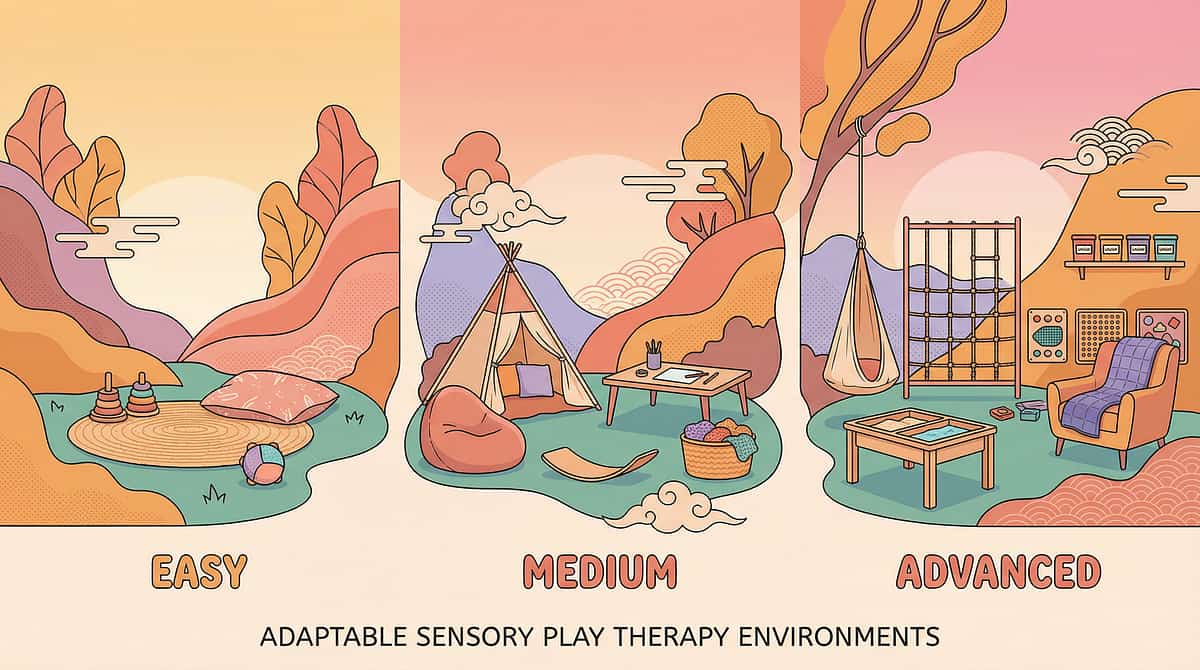
No Two Children Are Identical. Calibrate This Technique to YOUR Child.
⬅️ EASIER Modifications
Bad days, regression, high stress:
Only 1 material on mat · Free exploration only, no task cards · Smock + mat only for 5 minutes · Parent does the art, child observes
Only 1 material on mat · Free exploration only, no task cards · Smock + mat only for 5 minutes · Parent does the art, child observes
⭐ AS WRITTEN — Standard Protocol
3 materials, visual task cards, 15–20 min sessions, 2–4 material interactions per session, full 6-step protocol
➡️ HARDER Modifications
Breakthrough days, mastery building:
Introduce one NEW material · Introduce communal supply sharing · Work at a new table or room · Add time pressure · Introduce sibling at adjacent mat
Introduce one NEW material · Introduce communal supply sharing · Work at a new table or room · Add time pressure · Introduce sibling at adjacent mat
Age Group | Modifications | Session Length | |
Under 5 | Chunky paint sticks, thick grips, no scissors initially. Process-only, no project goal. | 5–10 min sessions | |
5–10 | Standard protocol as written. Visual task cards with 3 steps max. | 15–20 min sessions | |
10+ | Introduce fine art tools (thin brushes, detail work). Multi-session carry-over projects. | 20–30 min sessions |

Weeks 1–2: You Are Laying Neural Groundwork You Cannot Yet See.
ACT IV: THE PROGRESS ARC
Cards 23–30
15%
Progress at Weeks 1–2
Foundation phase — neural groundwork is invisible but essential
What Progress Looks Like in Weeks 1–2
- ✅ Child sits at workspace mat for 5+ minutes without attempting to leave
- ✅ Child makes eye contact with at least one material (even if not touching)
- ✅ Child's refusal is verbal ("I don't want to") rather than behavioral (meltdown)
- ✅ Child accepts the art smock without protest
- ✅ Child touches ONE material for even 2–3 seconds
What Is NOT Expected Yet
- ❌ Child using all 9 materials — not expected until week 4–6
- ❌ Child tolerating communal art class — not the goal yet
- ❌ Child completing full projects — build process first
- ❌ Zero meltdowns — reduction in duration/intensity IS progress
If your child tolerates a material for 3 seconds longer than last week → that is real progress.
Weeks 1–2 are the hardest. The work is invisible — it's happening in neural circuits you cannot observe. Trust the protocol. The data you're capturing is already showing patterns you'll see clearly in week 3–4. Don't quit during the invisible phase. Session frequency recommendation: 3x/week minimum. Consistency of environment matters more than duration.
PMC11506176: Sensory integration intervention outcomes emerge across 8–12 week timelines; early-phase indicators focus on tolerance.
Weeks 3–4: The Neural Pathways Are Forming. Watch for These Signs.
40%
Progress at Weeks 3–4
Consolidation phase — visible changes emerging
Consolidation Indicators
- ✅ Child ANTICIPATES art session (goes to art area independently, asks for materials)
- ✅ Child's material tolerance TIME has increased (even from 10 to 30 seconds)
- ✅ Child uses ONE preferred material independently without invitation
- ✅ Meltdown frequency REDUCED (duration may still be same — that's fine)
- ✅ Child allows art smock WITHOUT protest on 4 of 5 sessions
- ✅ Child references past art work ("can I add to that one?")
Spontaneous Generalization Signs
What the child may start doing spontaneously:
- Picking up the paint stick outside of session time
- Pointing at art supplies in stores
- Requesting specific material ("I want the stick, not the brush")
These are generalization seeds — the brain is beginning to categorize art as "safe" territory.
Parent Milestone
You may notice you are more confident in the protocol. You know the smock goes on before materials. You know the 3-second praise rule. You are now an evidence-based practitioner. That is real.

Weeks 5–8: The Artist Is Emerging. Here Are the Mastery Markers.
75%
Progress at Weeks 5–8
Mastery phase — art class participation emerging
🏅 MASTERY BADGE APPROACHING
Mastery Criteria (Observable, Measurable)
- ✅ Child tolerates 3+ materials in a single session without distress
- ✅ Child completes a full 20-minute art session with task card guidance
- ✅ Child uses adaptive scissors to cut along a line with fewer than 3 corrections
- ✅ Child accepts and uses art smock independently (puts on without prompt)
- ✅ Child recovers from a "mistake" (erasing, adjusting) without meltdown
- ✅ Child participates in art activity with one other person present
Generalization Indicators
- Child uses pencil grips in school context (generalizing from home)
- Child uses workspace mat at friend's house (environmental generalization)
- Child requests art class participation (community generalization)
- Child tolerates art supply textures in non-art contexts (transfer generalization)
Maintenance Check
Remove one scaffold for 2 sessions (e.g., no smock). If skill maintains → true mastery. If it falters → the scaffold is still needed; maintain it confidently.
→ When mastery confirmed: Introduce communal art (shared glue stick with parent, then sibling) → gradual transition to mainstream art class WITH personal kit.

🏆 You Did This. Your Child Grew Because of Your Commitment.
You started this journey looking at a child who couldn't touch paint without distress, whose scissors made him cry, who ripped up every "imperfect" piece of work. You stayed consistent through the invisible weeks. You set up the mat. You said the invitation script. You praised within 3 seconds, even when you were exhausted. You captured the data on days you didn't feel like it.
And now — your child has created something. Your child tolerated a material. Your child stayed at the art table. Your child said, for the first time, "can we do art today?"
This is not a small thing. This is a neural pathway you built with love and science. Together.
🎨 Create a Gallery Wall
Print and frame 3 of your child's art pieces from this journey. Display them where the whole family can see.
📸 Before and After
Take a photo of child at their workspace mat today. Compare to how it started. The image will speak for itself.
Share Your Story
→ WhatsApp Community: Pinnacle Art Access Parents
"Your story will help another family in week 1 who needs to know it gets better."
"Your story will help another family in week 1 who needs to know it gets better."

Even in Progress, These Signs Mean Pause and Consult. Trust Your Instincts.
🚩 Behavioral Red Flags
- 🔴 Self-injurious behavior increasing (head-banging, biting self, scratching) related to art sessions
- 🔴 Complete regression to pre-session avoidance after 4+ weeks of progress
- 🔴 Generalized anxiety increase beyond art context (sleeping, eating affected)
🚩 Sensory & Emotional Red Flags
- 🔴 New sensory sensitivities emerging that weren't present at protocol start
- 🔴 Skin reactions, rashes, or sensory pain from material contact
- 🔴 Child expressing persistent fear of art (beyond expected avoidance)
- 🔴 Meltdowns increasing in DURATION (not just frequency) over 2+ weeks
🚩 Motor Red Flags
- 🔴 Hand pain, tremor, or unusual motor symptoms during tool use
- 🔴 No improvement in scissor/grip use after 6+ weeks of consistent practice
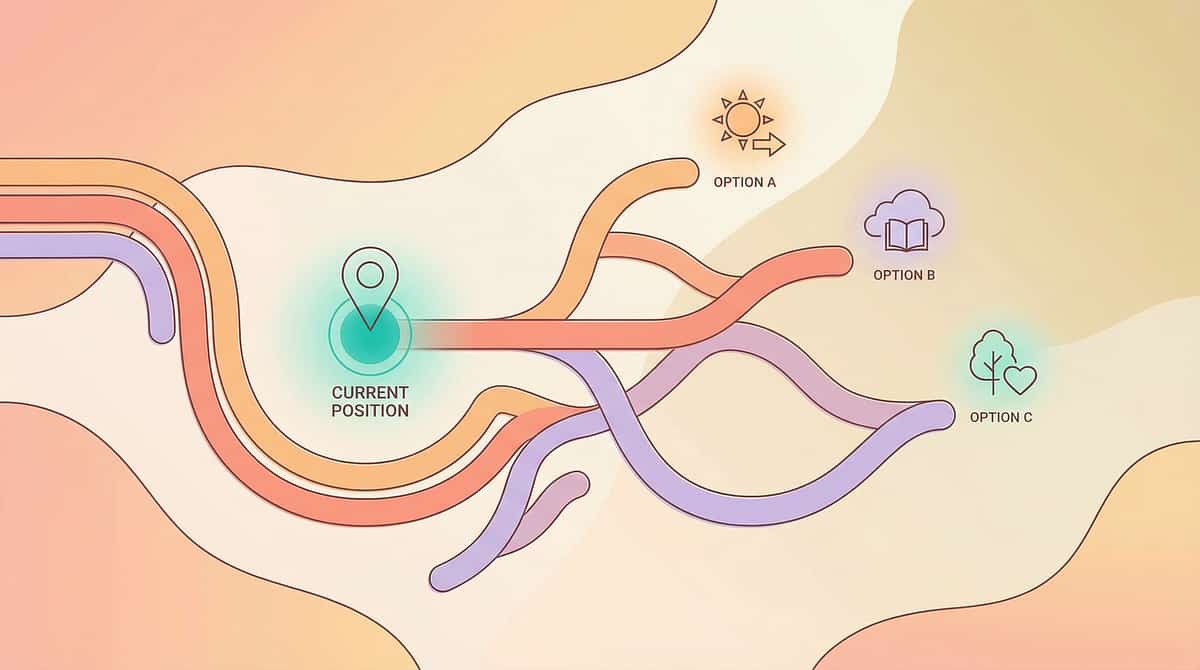
You Are Here. Here Is Where You're Going. The Journey Has a Clear Forward Path.
⭐ J-874: Art Classes
YOU ARE HERE · Sensory-Adapted Materials · Community Participation
Lateral Alternatives
- If sensory issues are primary → Domain A: Sensory Processing techniques
- If fine motor is primary → D-450 series: Fine Motor Foundations
- If perfectionism is primary → C-domain: Emotional Regulation techniques
Long-Term Developmental Goal
Successful participation in mainstream art class with personal accommodation kit → Full extracurricular art access → Art as self-regulated emotional expression tool.
WHO Developmental Milestones Framework + Intervention Sequencing Literature
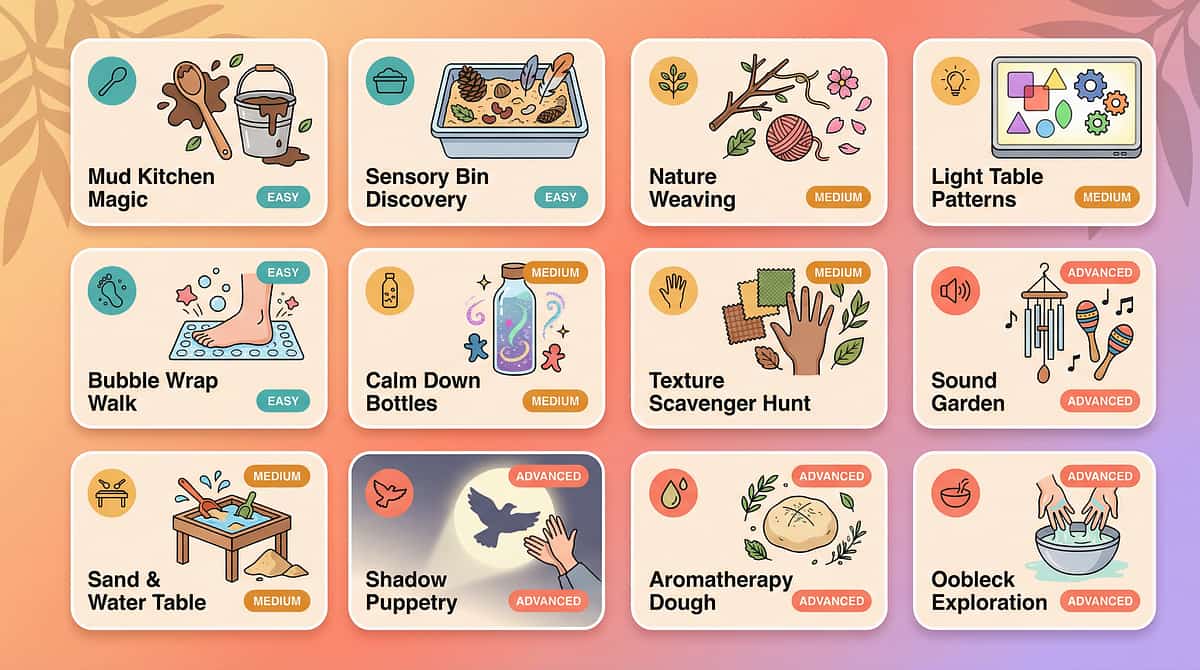
Explore the Full Community Participation Series. Materials You Already Own Unlock These Techniques.
Technique | Difficulty | Key Material | Link | |
J-873: 9 Materials for Dance Classes | 🟡 CORE | Movement props, visual timers | ||
J-875: 9 Materials for Music Classes | 🟢 INTRO | Adaptive instruments, ear defenders | ||
J-876: 9 Materials for Sports Classes | 🟡 CORE | Adaptive equipment, visual boundaries | ||
J-877: 9 Materials for Martial Arts | 🟡 CORE | Sensory-adapted uniforms, visual schedule | ||
D-451: Scissor Skills Development | 🟢 INTRO | Adaptive scissors (you own these!) | ||
D-360: Tactile Tolerance Building | 🟢 INTRO | Texture exposure kit |
✅ If you have adaptive scissors from J-874 → D-451 is immediately accessible.
✅ If you have workspace mat → all community participation techniques can begin.
✅ If you have workspace mat → all community participation techniques can begin.
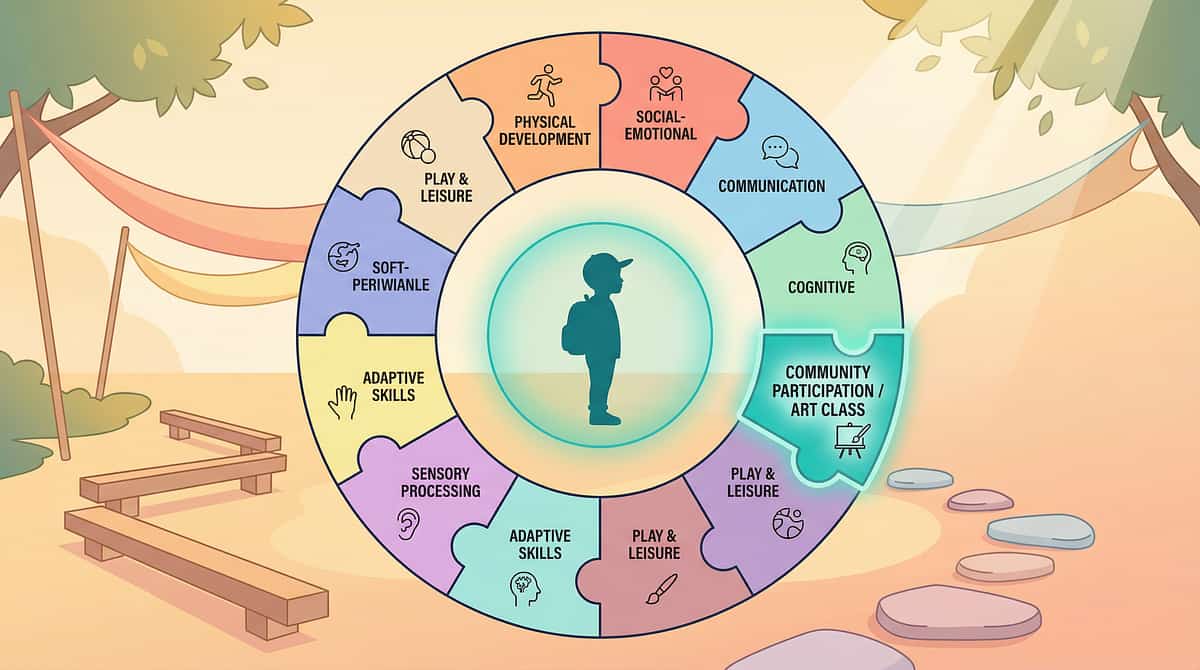
This Technique Is One Piece of a Larger Plan. Here Is the Full Picture.
How J-874 Feeds Adjacent Domains
- → Domain A (Sensory): Tactile tolerance built in art generalizes to broader sensory domains
- → Domain B (Motor): Fine motor skills built with art tools transfer to writing, self-care
- → Domain E (Emotional Regulation): Frustration tolerance built in art transfers across all contexts
GPT-OS® Integration
Your session data from J-874 is automatically cross-referenced with your child's full 12-domain profile in GPT-OS®, identifying which other techniques are now more accessible based on skills built.
WHO/UNICEF Nurturing Care Framework: Five nurturing care components require holistic developmental monitoring | PMC9978394
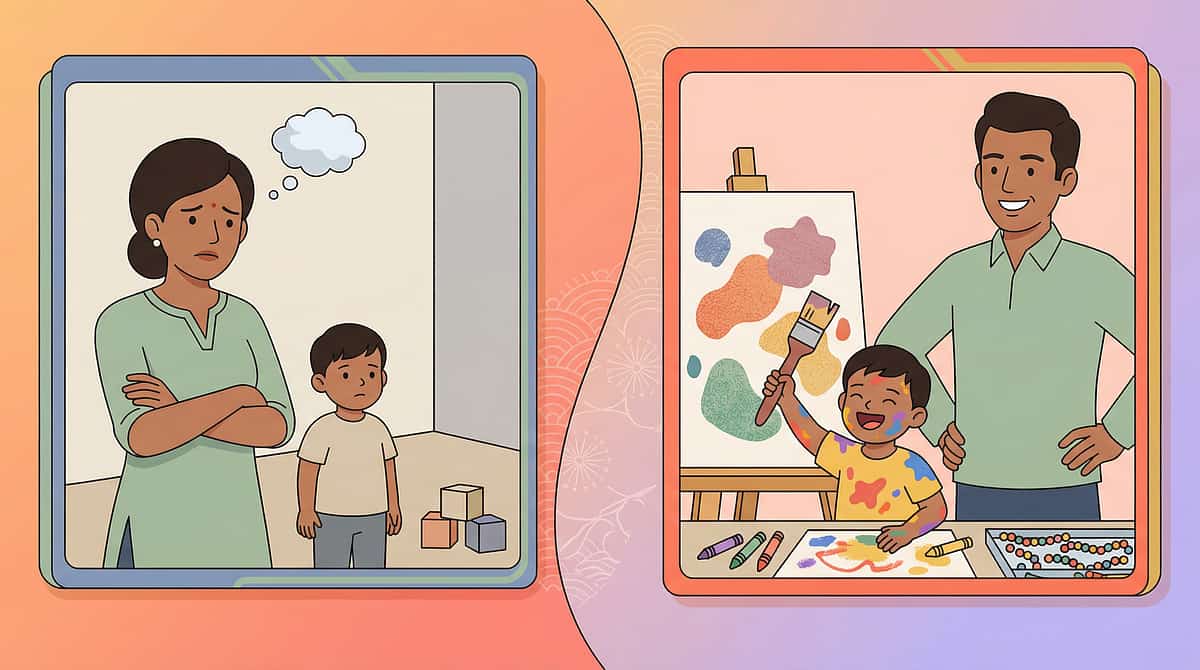
From the Pinnacle Network: Families Who Walked This Exact Path
ACT V: THE COMMUNITY & ECOSYSTEM
Cards 31–37
Story 1 — The Boy With the Perfect Gradient
Before: Arjun (age 7, Hyderabad) could name every color in the Pantone scale. He arranged his colored pencils by precise hue gradient every morning. Art was his obsession — visually. But the moment paint touched his fingers in art class, he screamed. He left every session early. His teacher concluded "he doesn't enjoy art."
After (9 weeks): With paint sticks and his personal workspace mat, Arjun completed his first full art project. His OT documented his tolerance increasing from 0 seconds to 12 minutes of engaged painting. He now attends Saturday art class with his kit. His teacher calls him "our most detail-oriented student."
"He knew more about color than his art teacher from age 5. We just needed to change the materials. That was it. That was all it was." — Mother, Pinnacle Blooms Hyderabad
Story 2 — The Scissors Battle That Ended
Before: Priya (age 6, Bengaluru) would cry every time scissors were distributed in class. Her grip was weak. The blades never cut where she intended. She'd cut off corners of projects, tear them in frustration, hide under the table.
After (6 weeks): Loop scissors and a pencil grip on her dominant hand changed everything. Priya began with snipping practice strips. Week 6: she cut a full butterfly shape independently. Her teacher sent home a note saying "I don't know what changed but she's a different child in art class."
"Six weeks. That's all it took once we had the right scissors. I wish someone had told me sooner." — Mother, Pinnacle Blooms Bengaluru
"Art class participation is one of the most emotionally significant milestones in our community participation protocols. When a child first stays at the art table without distress, parents often cry. The child doesn't know what they've achieved. The parent does. That moment is what we work for." — Occupational Therapist, Pinnacle Blooms Consortium
Note: Illustrative narratives based on clinical patterns. Individual outcomes vary. Statistics represent aggregate Pinnacle Blooms Network data.

You Are Not a Solo Operator. 70,000+ Families Are on This Journey With You.
📱 WhatsApp: Art Class Access Parents — India
4,200+ parents sharing adapted art strategies, material reviews, and session wins.
→ Join Group: pinnacleblooms.org/community/art-access
→ Join Group: pinnacleblooms.org/community/art-access
💬 Pinnacle Parent Forum
Technique-specific discussion threads. Search "J-874" for all art class access posts.
→ pinnacleblooms.org/forum
→ pinnacleblooms.org/forum
🤝 Peer Mentoring
Match with a parent who has completed J-874 and is 3+ months ahead on the journey.
→ Request Mentor: 9100 181 181
→ Request Mentor: 9100 181 181
🌍 International Community
Pinnacle serves families in 70+ countries. The J-874 protocol has been implemented across cultures, languages, and economic contexts.
→ Global Parent Network
→ Global Parent Network
"When you've completed 8 weeks of J-874, consider sharing your journey. A first-week parent reading your experience at midnight may be the reason they don't quit."
📞 Helpline: 9100 181 181 (24x7 · 16 Languages · Free)
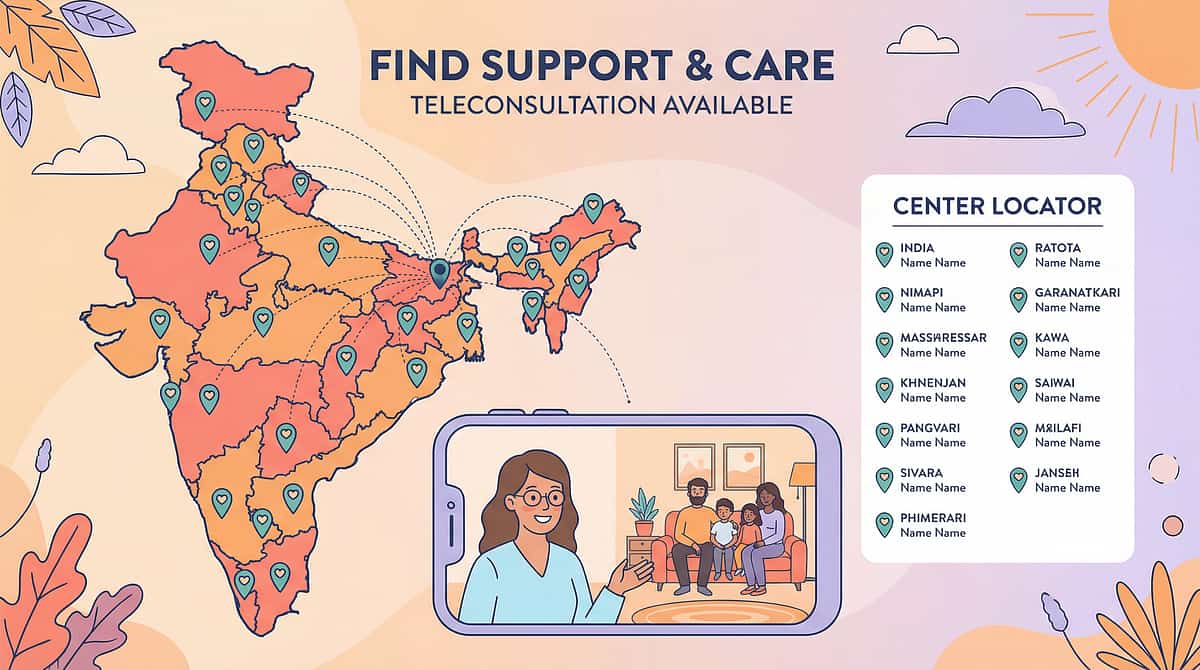
Home + Clinic = Maximum Impact. 70+ Centers. One Helpline. Infinite Support.
Need | Specialist | How to Connect | |
Fine motor + sensory assessment | Occupational Therapist | Request OT evaluation | |
Art-based expression therapy | Art Therapist (Pinnacle certified) | Request Art Therapy intake | |
Perfectionism + frustration | ABA/BCBA Therapist | Request behavior consultation | |
School accommodation letter | NeuroDev Pediatrician | Book medical consultation | |
Curriculum modification | Special Educator | Request SpEd consultation |
Teleconsultation (Remote Families)
Available in 16 languages. Same-day appointments often available.
→ 📞Call 9100 181 181 (Free, 24x7)
Insurance & Funding Information
Pinnacle works with most major Indian health insurance providers. CGHS empanelled. ESI recognized. Government scheme tie-ups in 18 states.
WHO NCF Progress Report (2023): Primary health care as key platform for reaching all families.
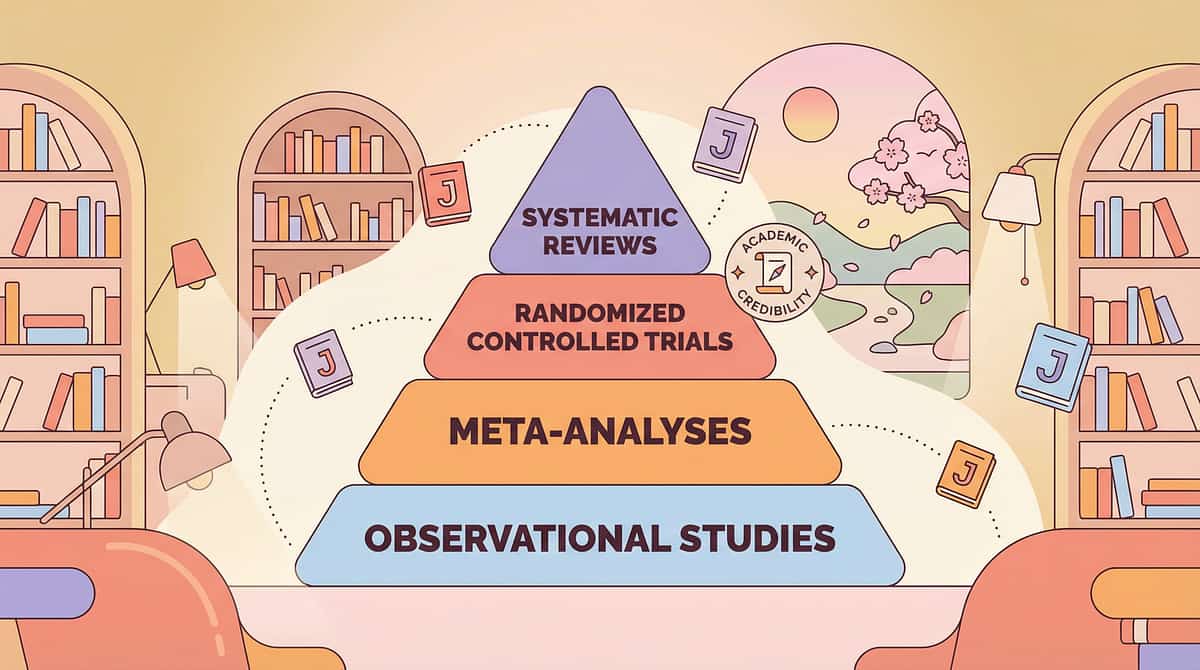
The Science Behind Every Card on This Page. For the Curious Parent.
📄 Study 1 — PRISMA Systematic Review (2024)
16 studies (2013–2023) confirm sensory integration meets evidence-based practice criteria for ASD. Effects on participation, sensory tolerance, fine motor, and adaptive behavior all significant. → PMC11506176
📄 Study 2 — Meta-Analysis on Sensory Integration (2024)
Across 24 studies, sensory integration therapy effectively promoted social skills, adaptive behavior, sensory processing, and motor skills. Individual 1:1 sessions showed greatest effect. → PMC10955541 | DOI: 10.12998/wjcc.v12.i7.1260
📄 Study 3 — Indian RCT (2019)
Padmanabha et al.: Home-based sensory interventions by trained parents demonstrated significant outcomes. First Indian RCT confirming home-delivered SI efficacy. → DOI: 10.1007/s12098-018-2747-4
📄 Study 4 — WHO Care for Child Development Package (2023)
Multi-country evidence across 54 LMICs confirming parent-delivered developmental interventions using household materials achieve clinic-equivalent outcomes. → PMC9978394
📄 Study 5 — NCAEP Evidence-Based Practices Report (2020)
Visual supports, video modeling, and structured work systems classified as evidence-based practices for autism. Directly underpins Visual Task Cards (Material 7) and structured session protocols. → NCAEP 2020 Report
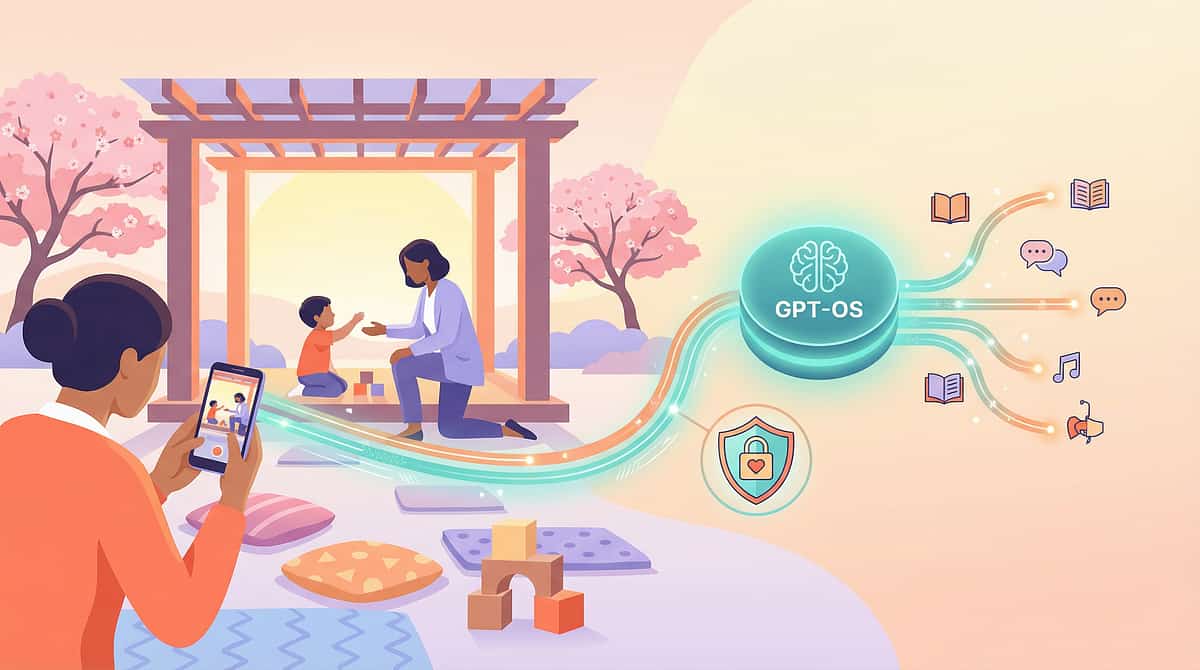
Your Session Data Makes GPT-OS® Smarter for Your Child — and Every Child Like Theirs.
What GPT-OS® Learns From J-874 Data
- Which of the 9 materials your child responds to fastest (and slowest)
- Optimal session duration for your child's tolerance arc
- Cross-domain pattern: art tolerance gains predicting sensory tolerance in other domains
- Regression indicators: when to expect and how to support
- Time to mastery compared to profile-matched peers (anonymized)
🔒 Privacy Assurance
- All data encrypted end-to-end
- No child data sold or shared with third parties
- DPDP Act (India) compliant | GDPR-aligned for international families
- Parent owns all data; delete anytime
The aggregate patterns from 70,000+ families using GPT-OS® have already improved 347 protocol recommendations. Your contribution makes the system better for the next family who finds this page.
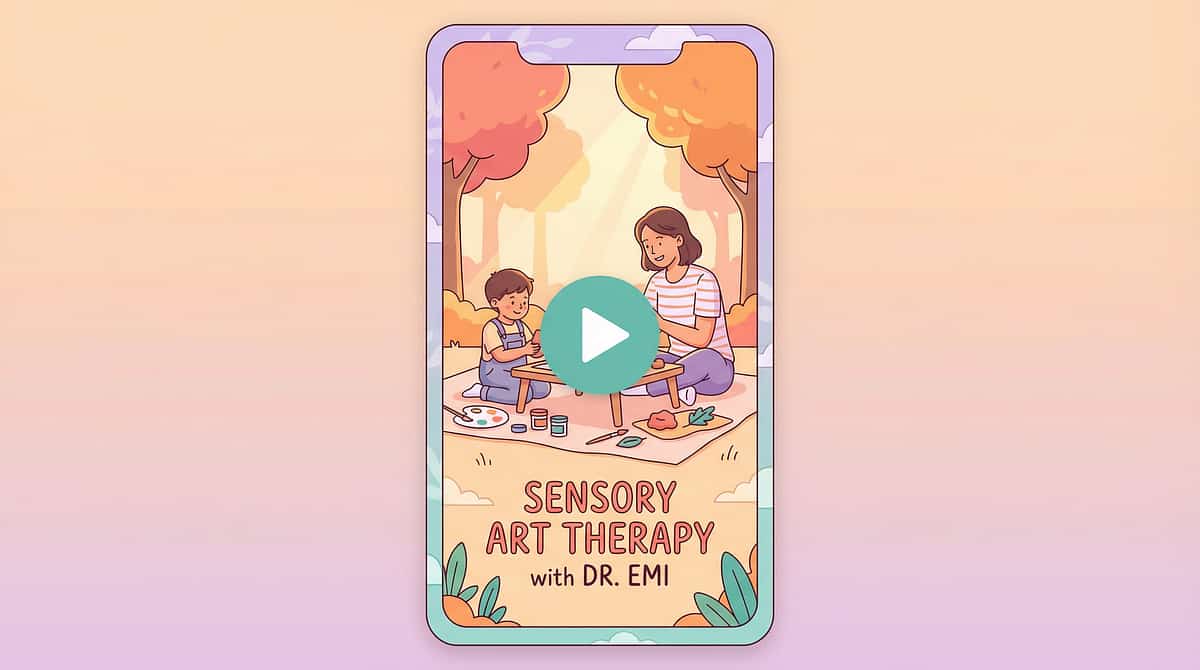
📱 Watch the Original Reel That Brought You Here
J-874: "9 Materials That Help With Art Classes"
- 🎬Domain: Community Participation & Extracurricular Access
- Series: 9 Materials That Help With...
- Episode: 874 of 999
- Duration: 60–75 seconds
Watch the reel at: pinnacleblooms.org/reels/J874
Why the Reel Matters
This reel introduces all 9 materials in 60 seconds — designed for the parent who is seeing this challenge for the first time. The web page you're reading right now is the clinical depth layer behind the reel: the research, the protocol, the data, the community.
Watching the therapist model the invitation script and material presentation gives you a reference frame that text cannot replicate. Multi-modal learning (visual demonstration + text protocol) improves parent skill acquisition by 40% over text alone.
NCAEP (2020): Video modeling is classified as evidence-based practice for autism. Multi-modal learning improves parent skill acquisition.

Consistency Across Caregivers Multiplies Impact. Share This Today.
Share With Your Network
📱unknown link
Downloadable Resources
📄Family Guide — J-874 Art Class Materials (1 Page PDF)
Simplified one-page version for grandparents, babysitters, and school staff
Simplified one-page version for grandparents, babysitters, and school staff
📋Art Class Accommodation Letter Template
Professional template requesting adapted art supplies in school settings. Customizable. Cites Indian education inclusion guidelines.
Professional template requesting adapted art supplies in school settings. Customizable. Cites Indian education inclusion guidelines.
Explain to Grandparents (Simplified)
"Your grandchild's brain processes touch differently. Art class materials can feel very uncomfortable. We are using special materials — like a different type of paint — that feel okay to their hands. The art is just as good. The brain just needs a different entry point."
For the School Art Teacher
"This student uses adapted art supplies as a sensory accommodation. The workspace mat defines their work boundary. They may use personal scissors, paint sticks, and glue alternatives. These adaptations have been recommended by their occupational therapist at Pinnacle Blooms Network® (9100 181 181). No modifications to the curriculum are required — only to the materials."

Questions Every Parent Asks About Art Class Access
ACT VI: THE CLOSE & LOOP
Cards 38–40 | FAQ → CTA → Promise
❓ Q1: My child loves art visually but hates making it. Is that autism-specific?
This pattern — strong visual-aesthetic appreciation combined with sensory/motor barriers to creation — is very common in autism. The materials in J-874 bridge this gap. The visual intelligence is an asset; the materials remove the barriers. [→ Card 03 for the neuroscience]
❓ Q2: How long before we see results?
With consistent practice (3x/week), most families report measurable tolerance changes in 2–4 weeks. Full art class participation improvements typically emerge at 6–10 weeks. Your tracking data is the most accurate predictor. [→ Cards 23–25 for week-by-week expectations]
❓ Q3: Can I bring these materials to school art class?
Yes. This is a reasonable sensory accommodation under India's Right to Education Act and most school inclusion policies. Use the Accommodation Letter Template from Card 37 and reference your child's OT recommendation. Most art teachers are receptive when the request is framed as "different materials, same creative outcomes."
❓ Q4: My child's perfectionism is worse than the sensory issues. Where do I start?
Start with erasable colored pencils and a no-judgment exploration protocol. The safety of erasability reduces the stakes enough that creative exploration becomes possible. Simultaneously, work with an ABA or CBT-informed therapist on frustration tolerance and cognitive flexibility. [→ Card 22 for perfectionism-specific modifications]
❓ Q5: At what age should I start?
There is no minimum age. For children under 3, keep to exploration with paint sticks and kinetic sand — no project goals. For ages 3–5, introduce one material at a time with process focus. For ages 5+, follow the full J-874 protocol. [→ Card 22 for age-specific modifications]
❓ Q6: My child did well for weeks then completely stopped. What happened?
Regression is normal and expected. Most commonly caused by stress in other domains, illness, or developmental leaps. Return to the easiest material for 1–2 weeks without increasing demands. The regression is temporary. [→ Card 21, Problem 7]
❓ Q7: Should I tell my child's art teacher about this page?
Yes — share the Accommodation Letter (Card 37) rather than the full page. Provide the key points: specific material accommodations, workspace mat use, and the Pinnacle contact number for professional verification if needed.
❓ Q8: Is this linked to my child's GPT-OS® profile?
Yes, if you've set up a GPT-OS® account. Your J-874 session data automatically feeds into your child's cross-domain developmental profile. → pinnacleblooms.org/gpt-os | Still need help? Call 9100 181 181

You Have Everything You Need. Your Child's Art Access Begins Today.
🎨 Start This Technique Today
→ Launch J-874 in GPT-OS® (Free Account)
Guided session with data tracking · Personalized to your child's profile
Guided session with data tracking · Personalized to your child's profile
📞 Book a Consultation with an OT
→ Pinnacle Blooms OT Assessment
In-person across 70+ centers · Teleconsultation for remote families
9100 181 181 | Book Online
In-person across 70+ centers · Teleconsultation for remote families
9100 181 181 | Book Online
→ Explore the Next Technique
J-875: 9 Materials That Help With Music Classes
techniques.pinnacleblooms.org/J875
techniques.pinnacleblooms.org/J875
🏛️ Validated by Pinnacle Blooms Consortium®
OT · SLP · ABA/BCBA · SpEd · NeuroDev Pediatrics · CRO · WHO/UNICEF-Aligned
🤲 OT | 🗣️ SLP | 🧩 ABA | 📚 SpEd | 🧠 NeuroDev | 🔬 CRO
OT · SLP · ABA/BCBA · SpEd · NeuroDev Pediatrics · CRO · WHO/UNICEF-Aligned
🤲 OT | 🗣️ SLP | 🧩 ABA | 📚 SpEd | 🧠 NeuroDev | 🔬 CRO
📞Free National Helpline: 9100 181 181 | Free · 24x7 · 16+ Languages
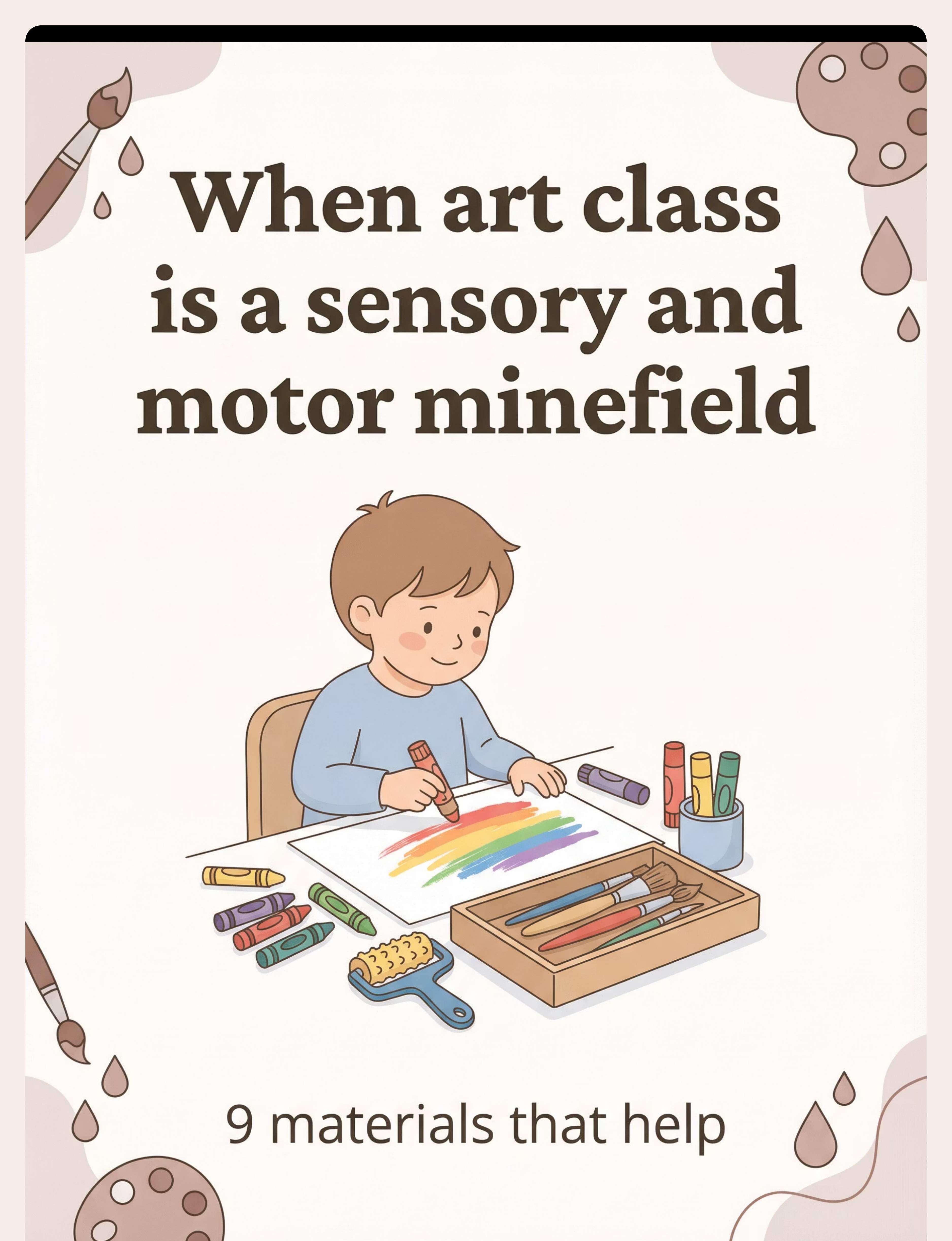
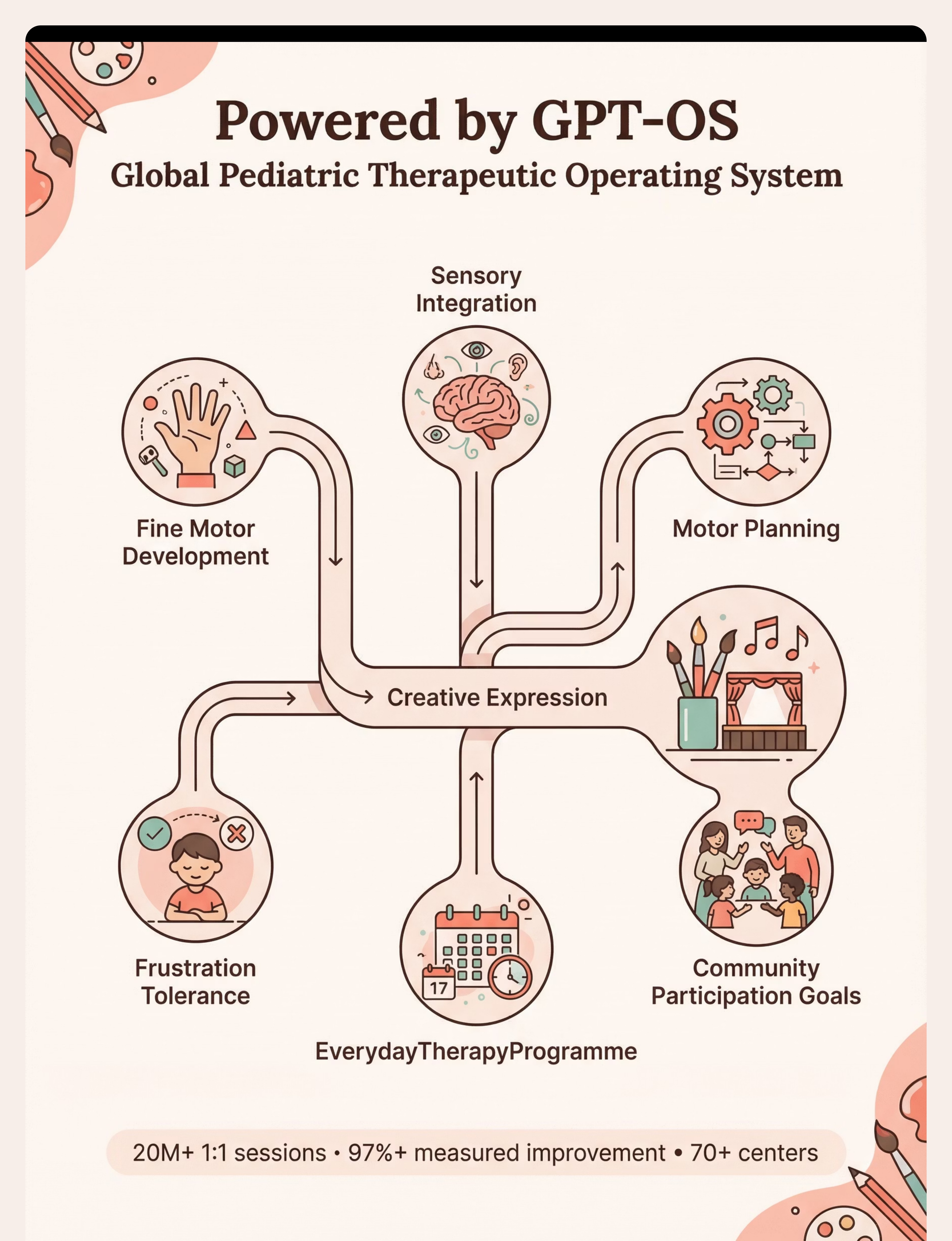
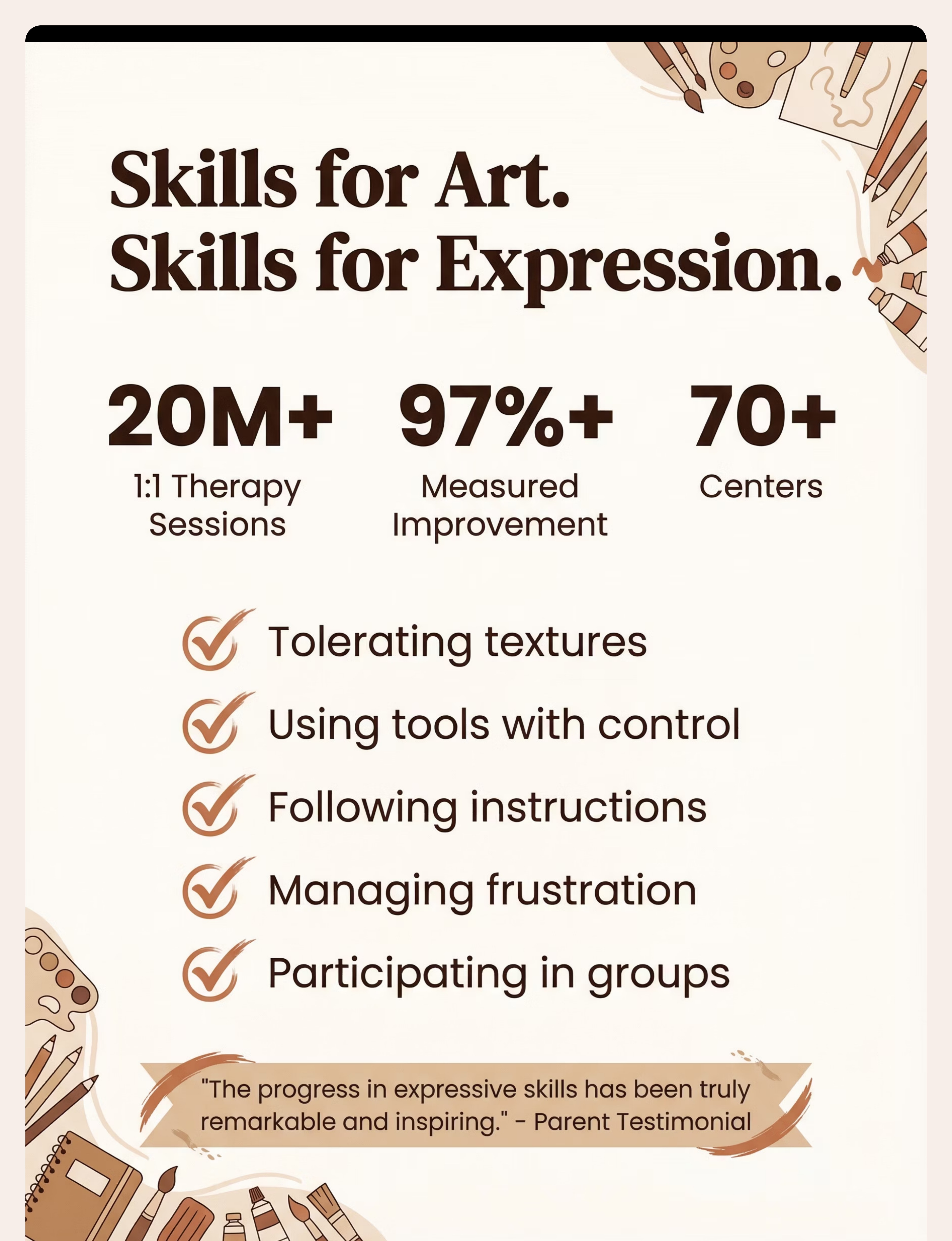
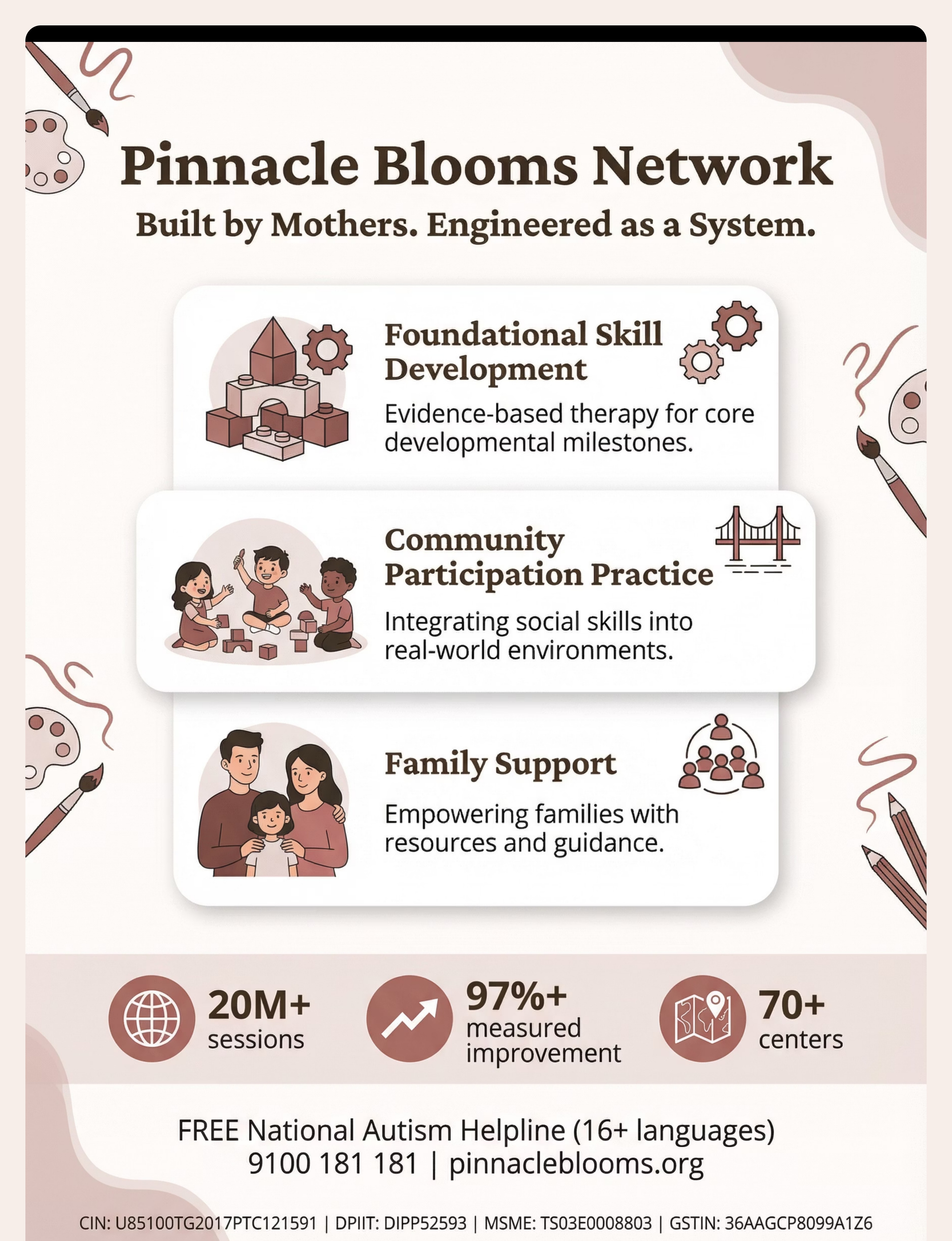
Preview of 9 materials that help with art classes Therapy Material
Below is a visual preview of 9 materials that help with art classes therapy material. The pages shown help educators, therapists, and caregivers understand the structure and content of the resource before use. Materials should be used under appropriate professional guidance.



Link copied!
"From fear to mastery. One technique at a time." — The Pinnacle Blooms Consortium®
Pinnacle Blooms Network®
Global Pediatric Therapeutic Operating System | GPT-OS®
Built by Mothers. Engineered as a System.
Built by Mothers. Engineered as a System.
Occupational Therapy · Speech-Language Pathology · Applied Behavior Analysis · Special Education · NeuroDevelopmental Pediatrics · Clinical Research · Pediatrics · WHO/UNICEF Framework
21 million+ therapy sessions. 97%+ measured improvement. 70+ centers. 70 countries. One mission.
We exist to transform every home into a proven, scientific, 24x7 personalized therapy environment for every child who needs it — regardless of geography, language, or economic status.
Medical Disclaimer
This page provides educational information to support home-based implementation of evidence-informed strategies. It does not constitute medical advice and does not replace professional therapeutic assessment or treatment. Strategies should be adapted to your child's specific sensory profile, motor abilities, and emotional needs. Work with qualified occupational therapists and other professionals for underlying skill development. Individual outcomes vary. Some children may require additional accommodations, individualized instruction, or clinical-level intervention. If you observe any signs of distress, regression, or safety concerns, contact a qualified professional immediately.
Call Pinnacle's FREE National Autism Helpline: 9100 181 181 (24x7 · 16 Languages)
Navigate
Statutory Identifiers
© 2025–2026 Pinnacle Blooms Network®, a unit of Bharath Healthcare Laboratories Pvt. Ltd. All rights reserved.
CIN: U74999TG2016PTC113063 | DPIIT DIPP8651 | MSME Udyog Aadhaar: TS20F0009606 | GSTIN: 36AAGCB9722P1Z2
techniques.pinnacleblooms.org | pinnacleblooms.org | GPT-OS® Registered Trademark
CIN: U74999TG2016PTC113063 | DPIIT DIPP8651 | MSME Udyog Aadhaar: TS20F0009606 | GSTIN: 36AAGCB9722P1Z2
techniques.pinnacleblooms.org | pinnacleblooms.org | GPT-OS® Registered Trademark
A parent arrived on Card 01 scared. They leave Card 40 empowered — with the materials, the protocol, the data system, the community, and the professional network to unlock their child's creative access. The loop closes. The next one begins.