C-301-9-Materials-That-Help-When-Child-Shows-No-Peer-Interest
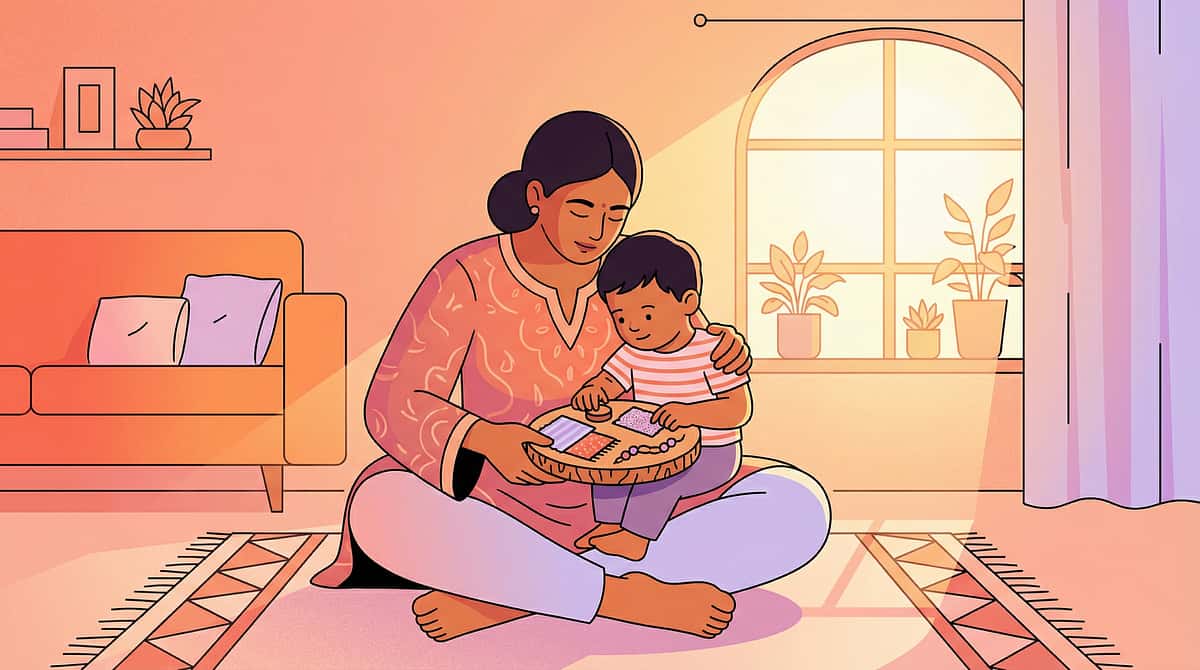
"Other children run toward each other at the playground. Yours walks right past them — like they're furniture."
"He's perfectly happy alone. His trains, his routines. Other kids just aren't part of the equation — and that's what worries you most."

You are not failing as a parent. Your child's nervous system simply processes the world of people differently. This is a neurological difference — not defiance, not preference, not your fault.
Pinnacle Blooms Network®
C-301 | Peer Interest & Social Motivation
Reviewed by CRO · SLP · OT · BCBA · SpEd · NeuroDev Pediatrics
📞FREE National Autism Helpline: 9100 181 181 | Available 24×7 | 18+ Languages
Millions of Families Are Navigating This Right Now
Social motivation differences — reduced drive for peer affiliation — are among the most consistently documented features of autism spectrum disorder. Your child is among millions of families worldwide navigating this exact challenge. The research is vast. The solutions are proven.
1 in 36
ASD Prevalence
Children diagnosed with ASD globally (CDC 2023)
80%
Social Motivation Differences
Of autistic children show social motivation differences
21M+
Sessions Delivered
Therapy sessions delivered by Pinnacle GPT-OS®
India Data
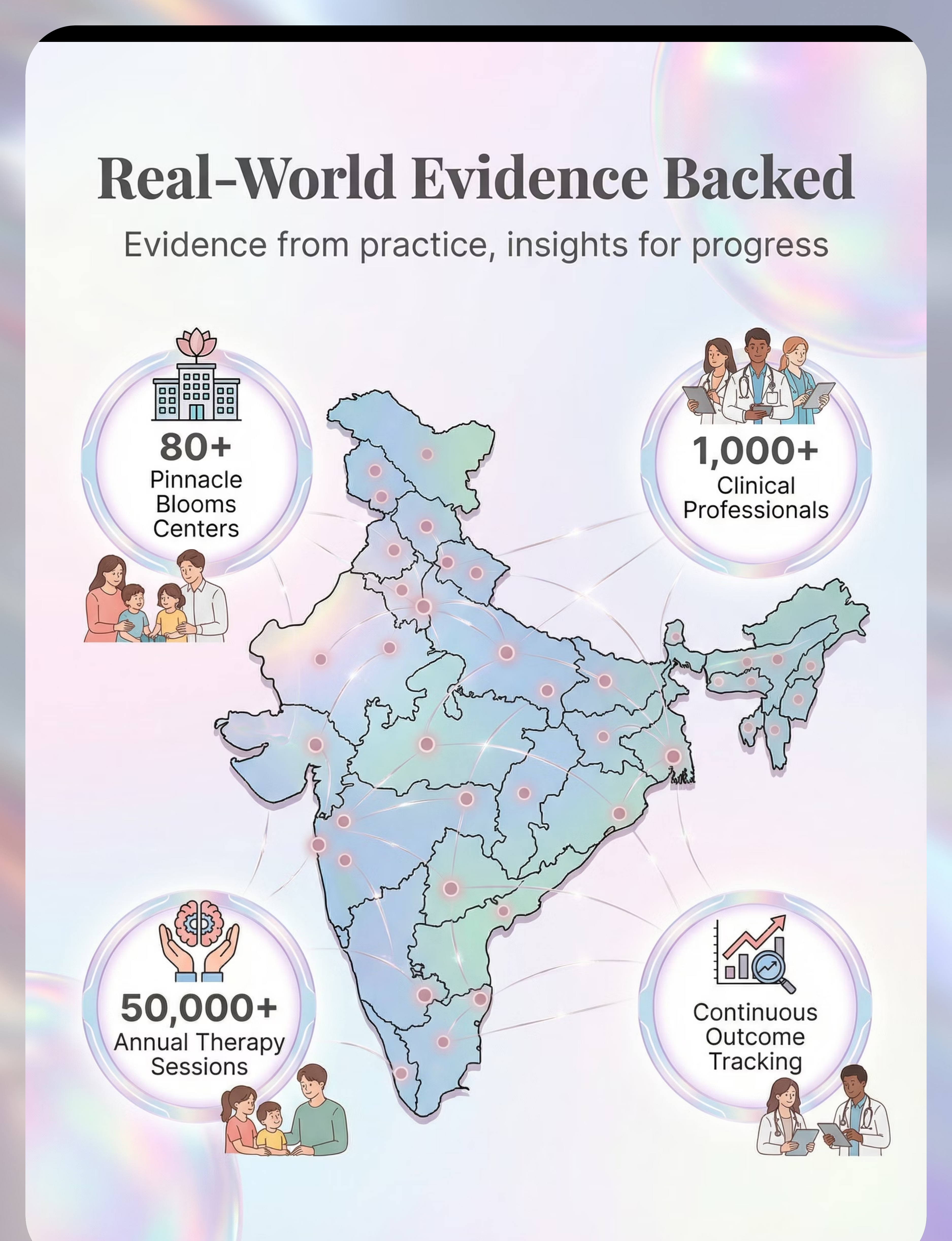
Estimated 1.8 crore+ children with autism in India (WHO/INCLEN estimates). Pinnacle Blooms Network® active across 70+ centers serving children from 70+ countries.
Citation Strip
Sources: CDC ADDM Network 2023 | PMC11506176 (PRISMA Systematic Review 2024) | PMC10955541 | Pinnacle GPT-OS® Clinical Registry
📞9100 181 181 — Call for FREE social development assessment
This Is a Social Reward Wiring Difference — Not a Choice
The Science
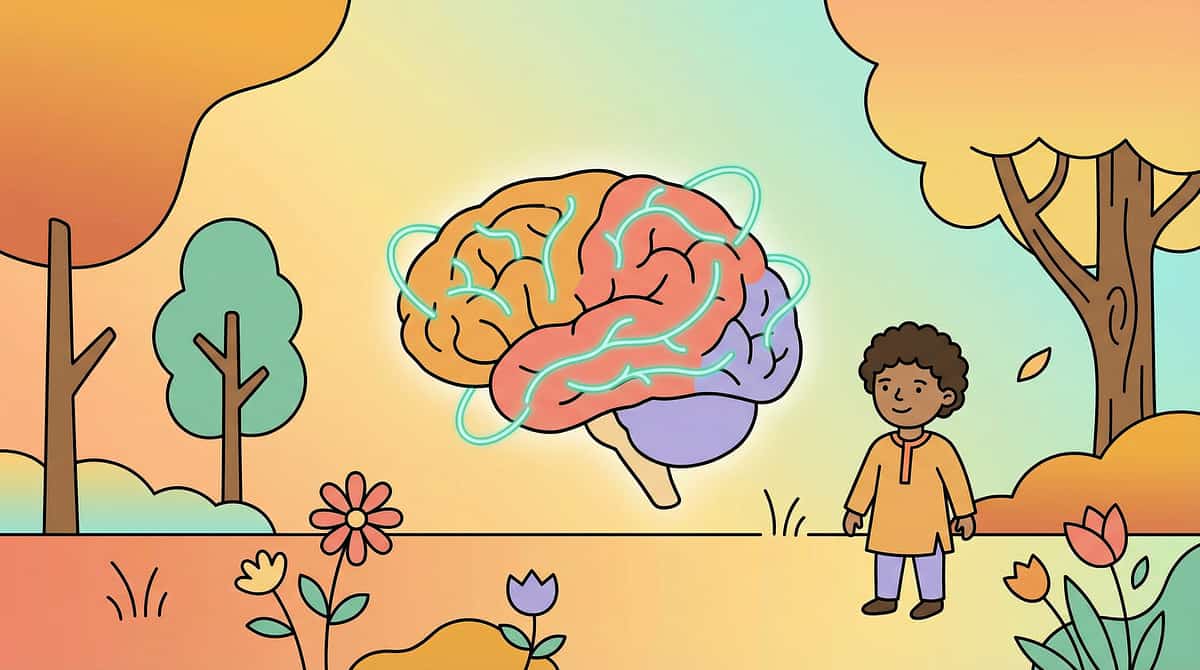
The social motivation theory of autism (Chevallier et al., 2012, Trends in Cognitive Sciences) establishes that the social reward circuitry — the dopaminergic pathway that makes peer faces and voices intrinsically rewarding — processes differently in autistic children. The "pull" toward peers that neurotypical children feel automatically simply isn't present at the same intensity.
What This Means for Your Child
NOT shyness — wanting connection but fearing it
NOT introversion — needing less social time but valuing connection
NOT defiance or preference — a choice being made
IS a neurological difference — in how the brain assigns reward value to social stimuli
"We intervene not to force social desire, but to build positive neural associations with peer interaction — gradually rewiring the reward signal through structured, enjoyable experiences." — Pinnacle SLP + OT + ABA Consortium
Citation: Chevallier, C. et al. (2012). Trends in Cognitive Sciences. | Frontiers in Integrative Neuroscience DOI: 10.3389/fnint.2020.556660
Your Child Is Here. Here Is Where We're Heading.
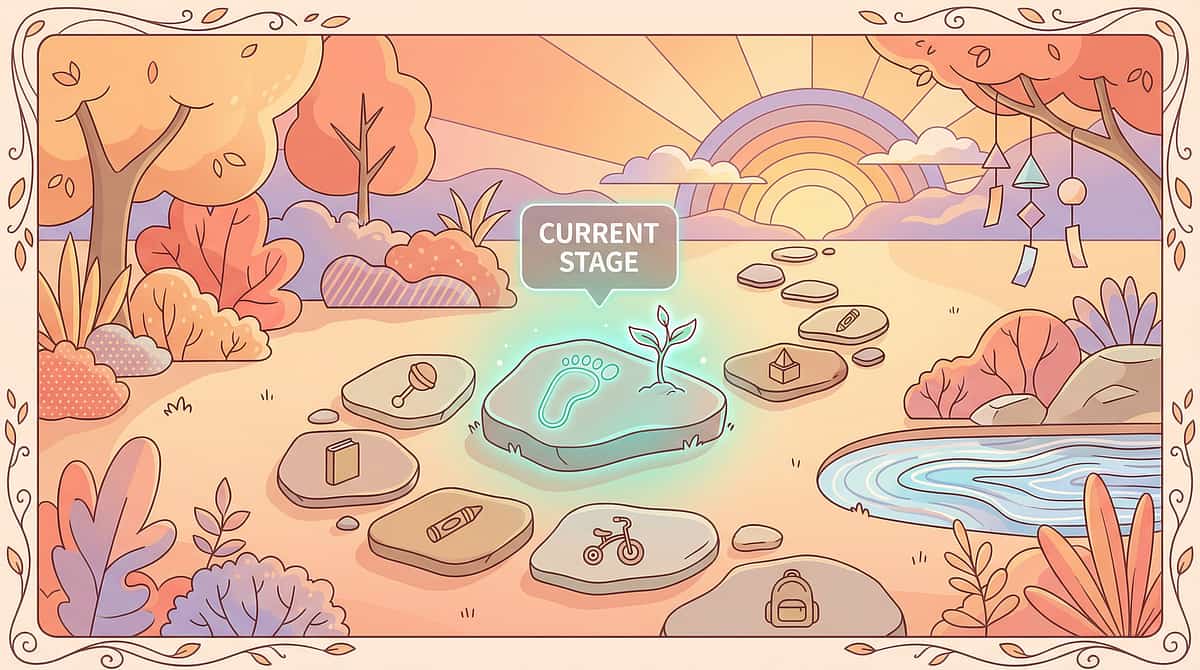
Understanding where your child sits on the developmental arc — regardless of chronological age — is the foundation for setting realistic, meaningful goals. Peer connection capacity genuinely grows with the right scaffolding.
18 Months
Parallel Play Base
2 Years
Noticing Peers
3 Years
Initiating Play
4–5 Years
Cooperative Play
6–8 Years
Genuine Friendships
10–12 Years
Reciprocal Relationships

📍 YOUR CHILD MAY BE AT ANY POINT ON THIS TIMELINE — regardless of chronological age. That is not failure; it is your starting point.
Comorbidity Awareness
Reduced peer interest commonly co-occurs with: Joint Attention Delays (→C-300) | Imaginative Play Deficits (→C-302) | Sensory Processing Differences | Language Processing Differences.
WHO Milestone Anchor
According to the WHO Care for Child Development (CCD) Package — implemented across 54 countries — responsive social engagement from ages 2–6 is the critical window for building peer relationship foundations. Early, structured intervention within this window delivers the strongest outcomes.
Citation: WHO/UNICEF CCD Package (2023) | PMC9978394 | WHO NCF 2018 (nurturing-care.org)
Clinically Validated. Home-Applicable. Parent-Proven.
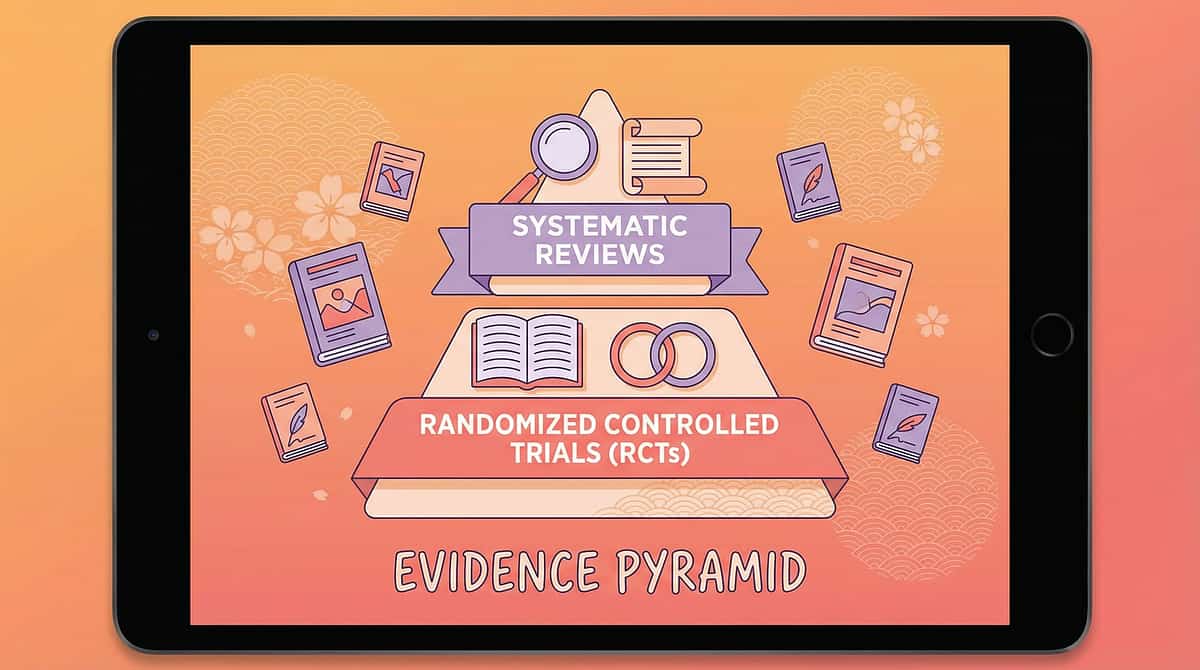
🛡️ LEVEL I EVIDENCE — Supported by Systematic Reviews + RCTs
Study
Finding
Grade
PRISMA Systematic Review (Children, 2024) PMC11506176
Peer-mediated + interest-based interventions are evidence-based practices for ASD
Level I
Meta-analysis (World J Clin Cases, 2024) PMC10955541
Social skills + peer interaction outcomes significantly improved with structured interventions
Level I
Kasari et al. (J Consulting Clinical Psychology, 2012)
RCT: Peer-mediated social skills group = significant gains in peer engagement
Level II
NCAEP Evidence-Based Practices Report (2020)
Peer-mediated instruction + video modeling = evidence-based practices
Level I
Padmanabha et al. Indian J Pediatr (2019)
Home-based structured social interventions effective in Indian population
Level II

Across 21 million+ therapy sessions via GPT-OS®: 97%+ of children showed measurable improvement on the Social Participation Index within 8–12 weeks of structured peer intervention protocols.
📞9100 181 181 — Ask about AbilityScore® Social Participation baseline assessment
Peer Social Motivation Building Protocol
Parent-friendly alias: "Building Bridges to Connection"
Domain C — Social Development
Subdomain: Peer Interest & Social Motivation
Code: C-301

Definition: A structured, multi-material intervention framework designed to gradually build positive associations with peer interaction in children who show reduced social motivation. Rather than forcing social contact, this protocol uses interest-based scaffolding, graduated exposure, environmental engineering, and external reinforcement to help children discover that peers can be tolerable, predictable, and even rewarding.
👶 Age Range
3–12 years
⏱️ Duration
15–30 minutes per session
📅 Frequency
Daily (home) + 3×/week structured
🏠 Setting
Home + Community
"This is NOT about making your child social by neurotypical standards. It IS about expanding their capacity for peer connection, on their terms, at their pace."
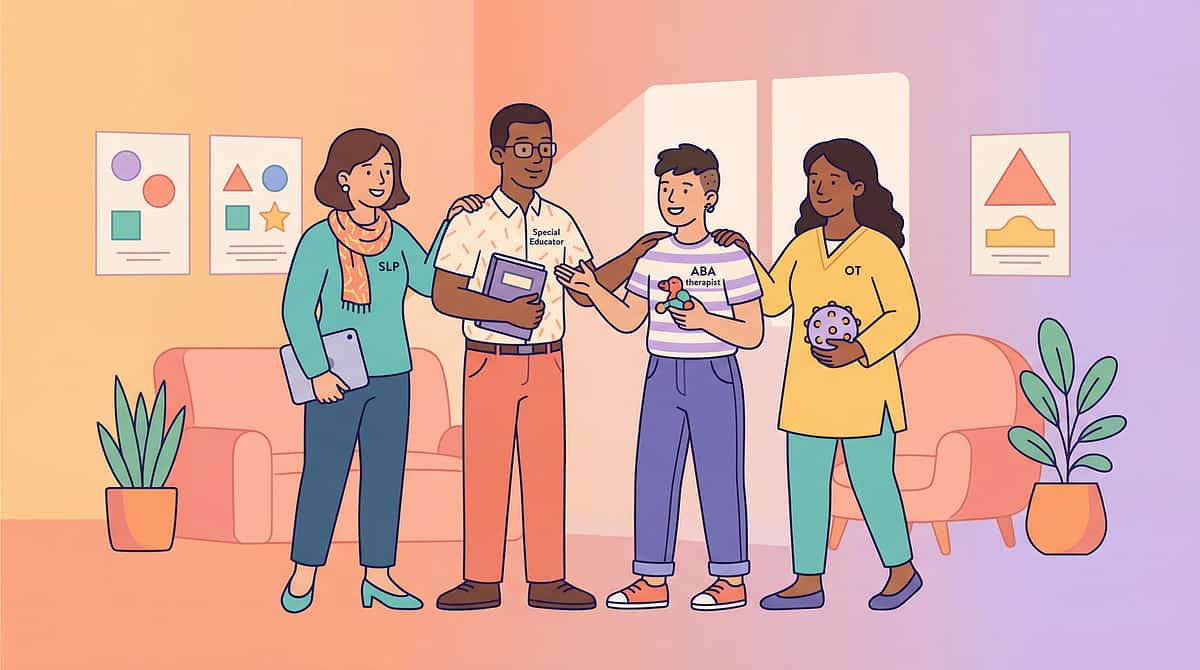
This Technique Crosses Every Therapy Boundary — Because the Brain Doesn't Organize by Therapy Type
🧠 ABA / BCBA — Primary Lead
  • Designs reinforcement schedules for peer interaction
  • Structures peer buddy programs
  • Data-tracks peer engagement attempts
🗣️ SLP — Secondary Co-Lead
  • Targets social language, scripting, peer communication
  • Provides peer interaction scripts
  • Addresses theory of mind foundations
🤸 Occupational Therapy
  • Addresses sensory barriers to peer engagement
  • Designs parallel play environments
  • Manages sensory overwhelm that blocks peer tolerance
🎓 Special Education
  • Facilitates peer buddy programs in school
  • Structures classroom peer activities
  • IEP social goals integration
"A NeuroDevelopmental Pediatrician first rules out anxiety vs. motivation differences. The FusionModule™ within GPT-OS® then coordinates ABA + SLP + OT inputs into a single converged peer motivation pathway."
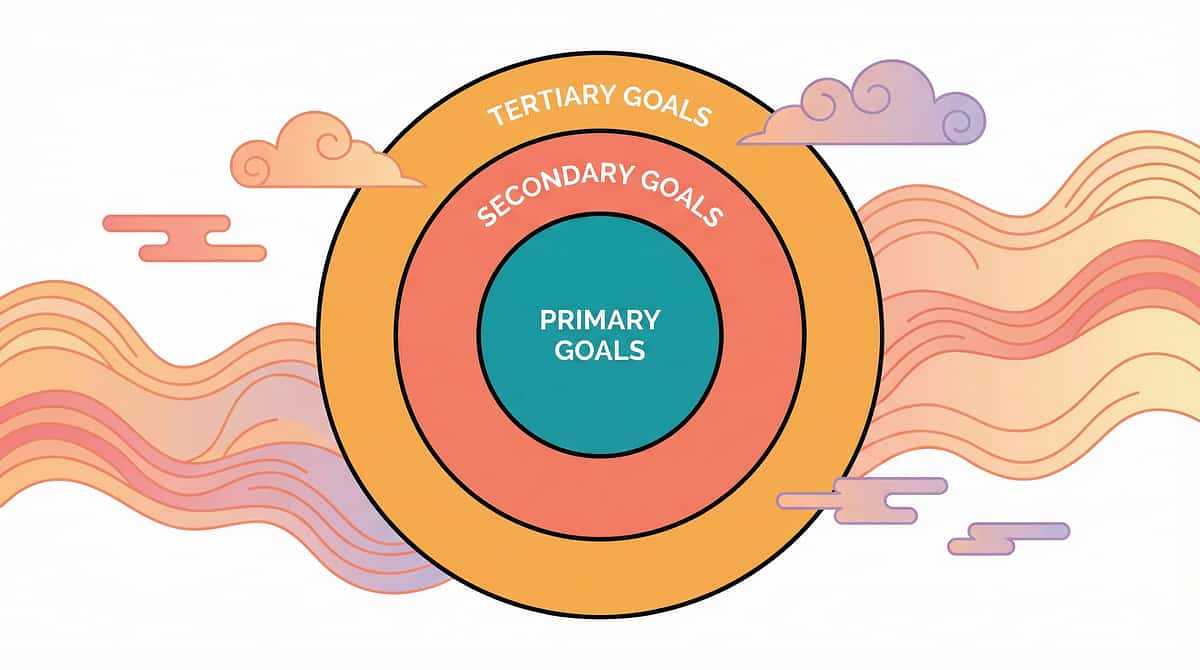
Citation: WHO/UNICEF Nurturing Care Framework (2022) — Multi-disciplinary convergence for social development
6 Layers of Peer Motivation — This Protocol Addresses All of Them
Target Domain
Specific Observable Goal
Peer Proximity Tolerance
Child tolerates peer within 3 feet for 5+ minutes
Peer Orienting
Child glances at peer during peer's action
Structured Interaction
Child participates in rule-based activity with 1 peer for 10+ min
Interest-Based Contact
Child seeks peer to engage with preferred interest activity
Verbal Initiation
Child uses script or spontaneous words to approach peer
Reciprocal Exchange
Child takes 3+ conversational turns with peer
📞9100 181 181 — Request AbilityScore® Social Participation baseline assessment
9 Clinically Validated Materials. Each One a Different Bridge.
The following materials form a complete toolkit for building peer motivation — from the earliest proximity tolerance through to interest-based peer seeking. Each material targets a different layer of the social reward pathway.
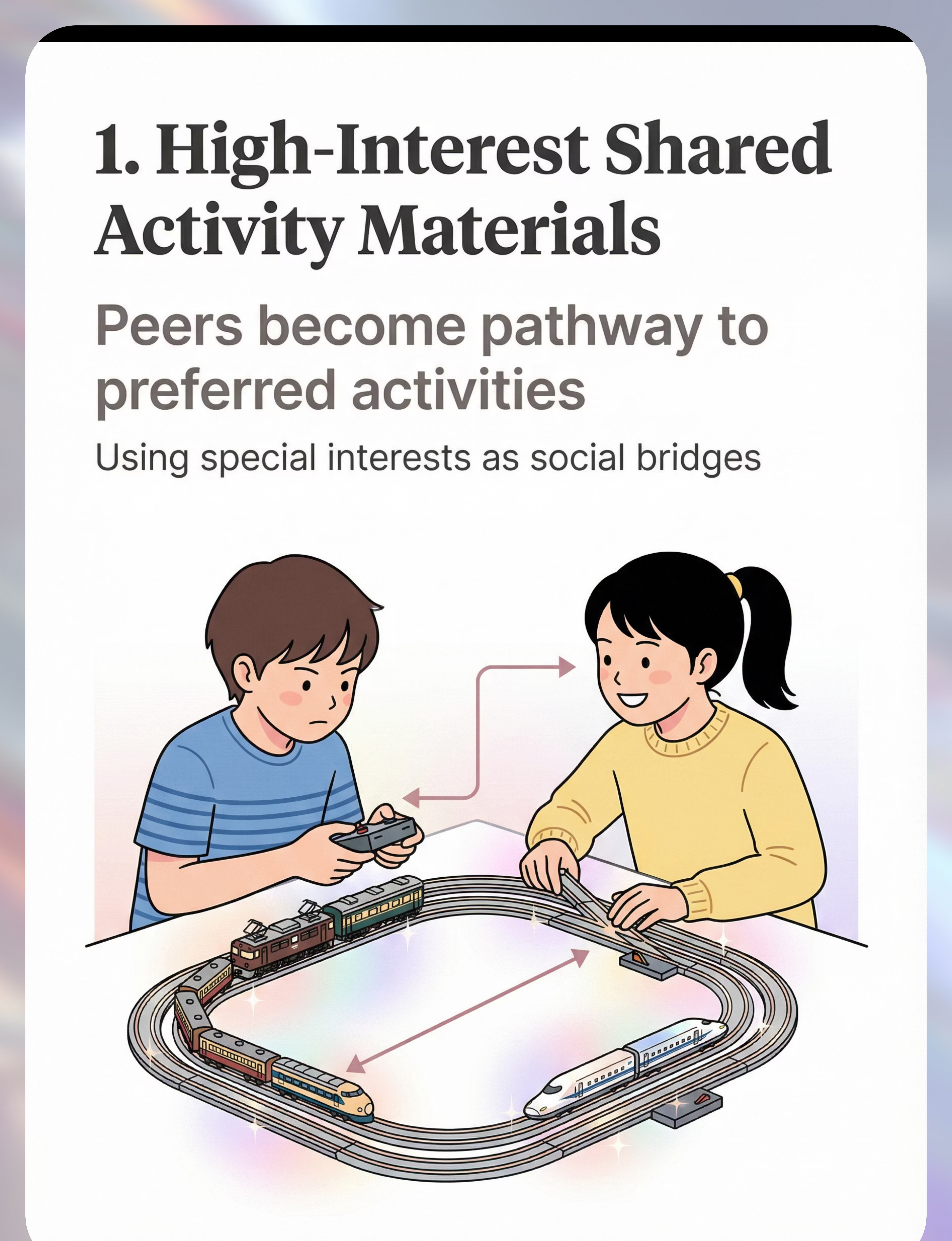
1. High-Interest Shared Activities
Peers become the path to what they love
2. Peer Video Modeling
Watch before doing — safe peer preview
3. Structured Peer Games
Rules make peers manageable
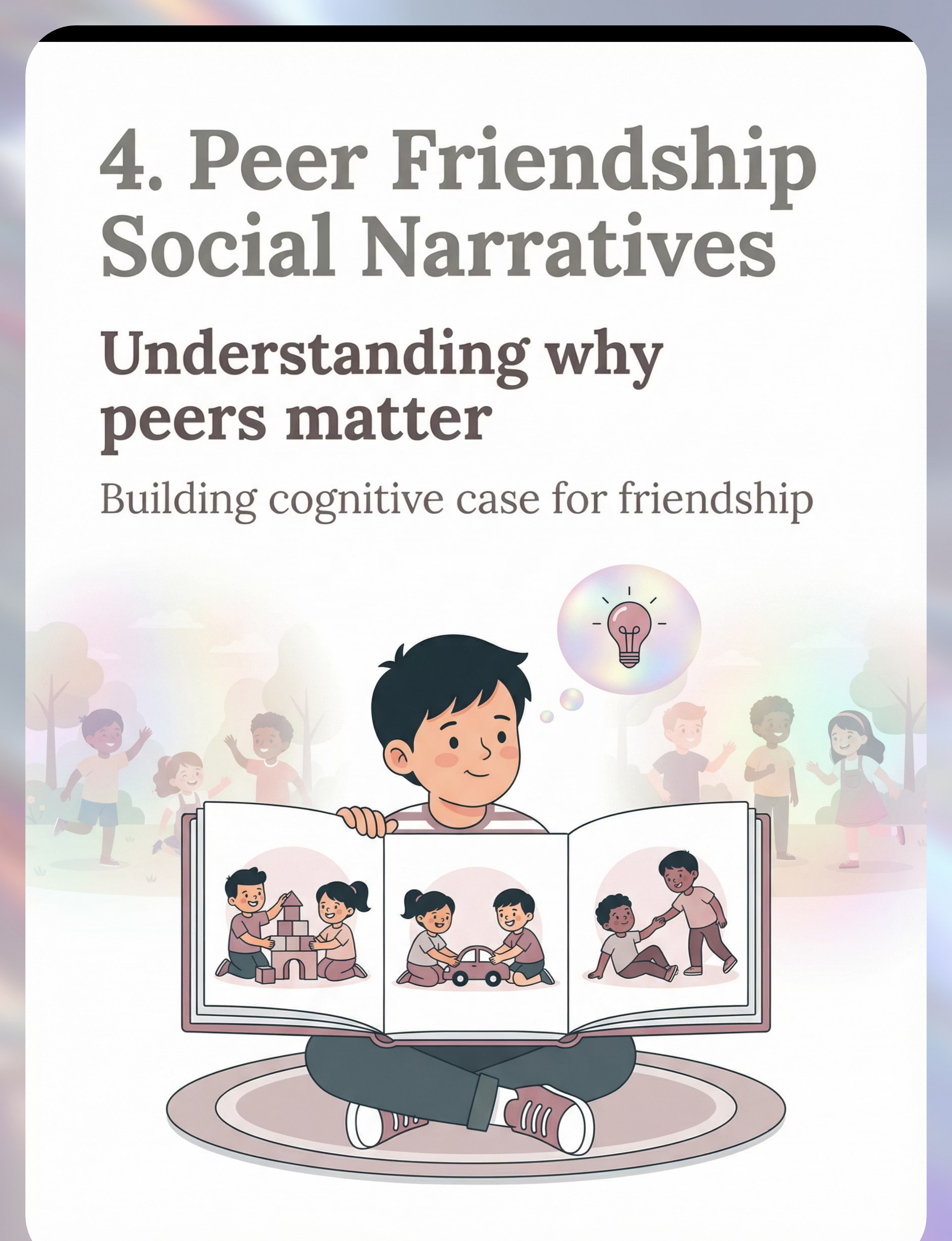
4. Social Narratives on Friendship
Building cognitive case for peers
5. Parallel Play Materials
Proximity before interaction
6. Cause-Effect Social Toys
Peers make exciting things happen
7. Peer Interaction Scripts
Concrete words when intuition is absent
8. Peer Buddy Training
Trained peers bridge the gap
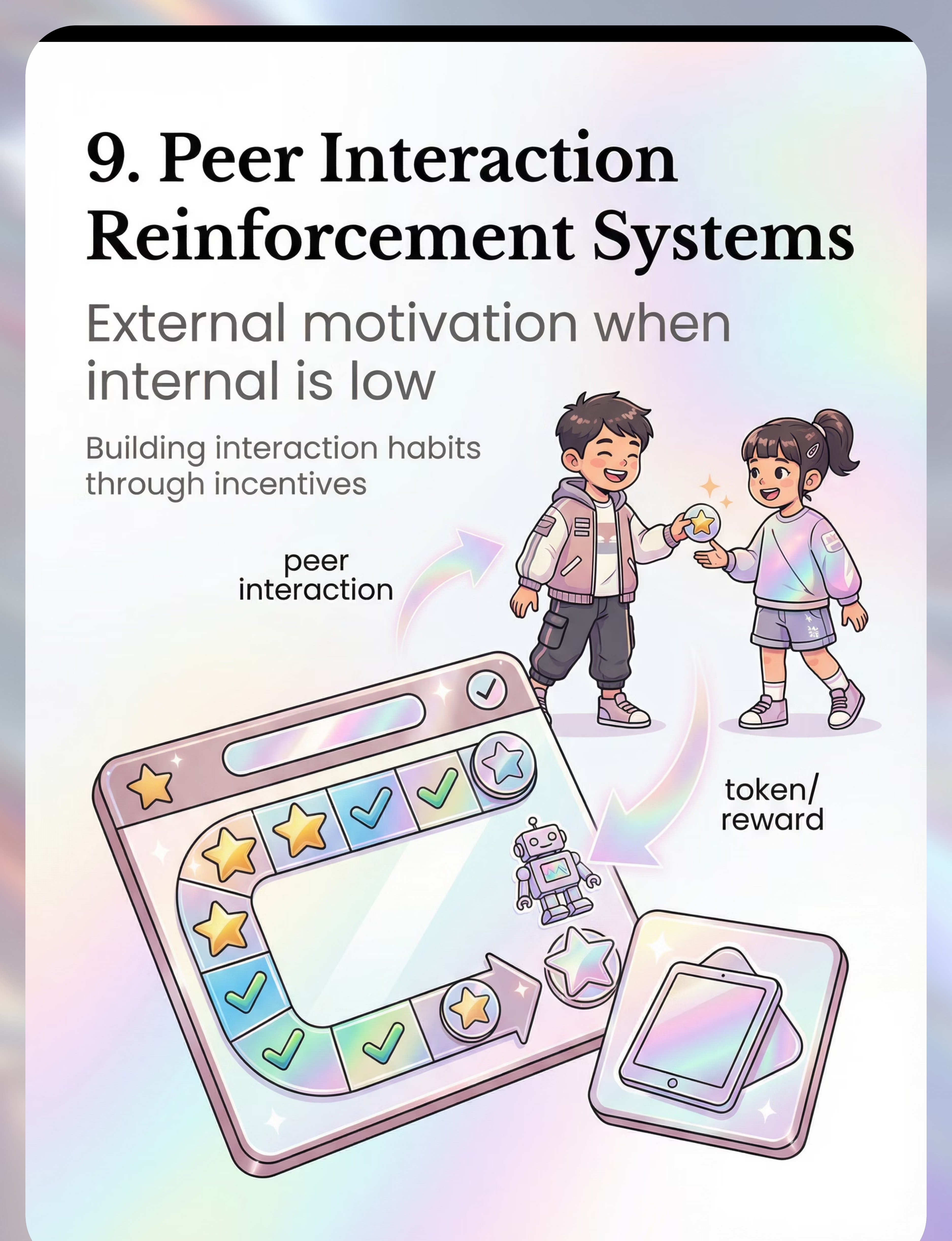
9. Peer Reinforcement Systems
External motivation builds habits
Complete setup: ₹1,600–4,800 | Essential starters from ₹100 | DIY options available for 5 of 9 materials
Materials taxonomy: Pinnacle 128 Canon Materials System + 687 Product Database | NCAEP EBP Report 2020

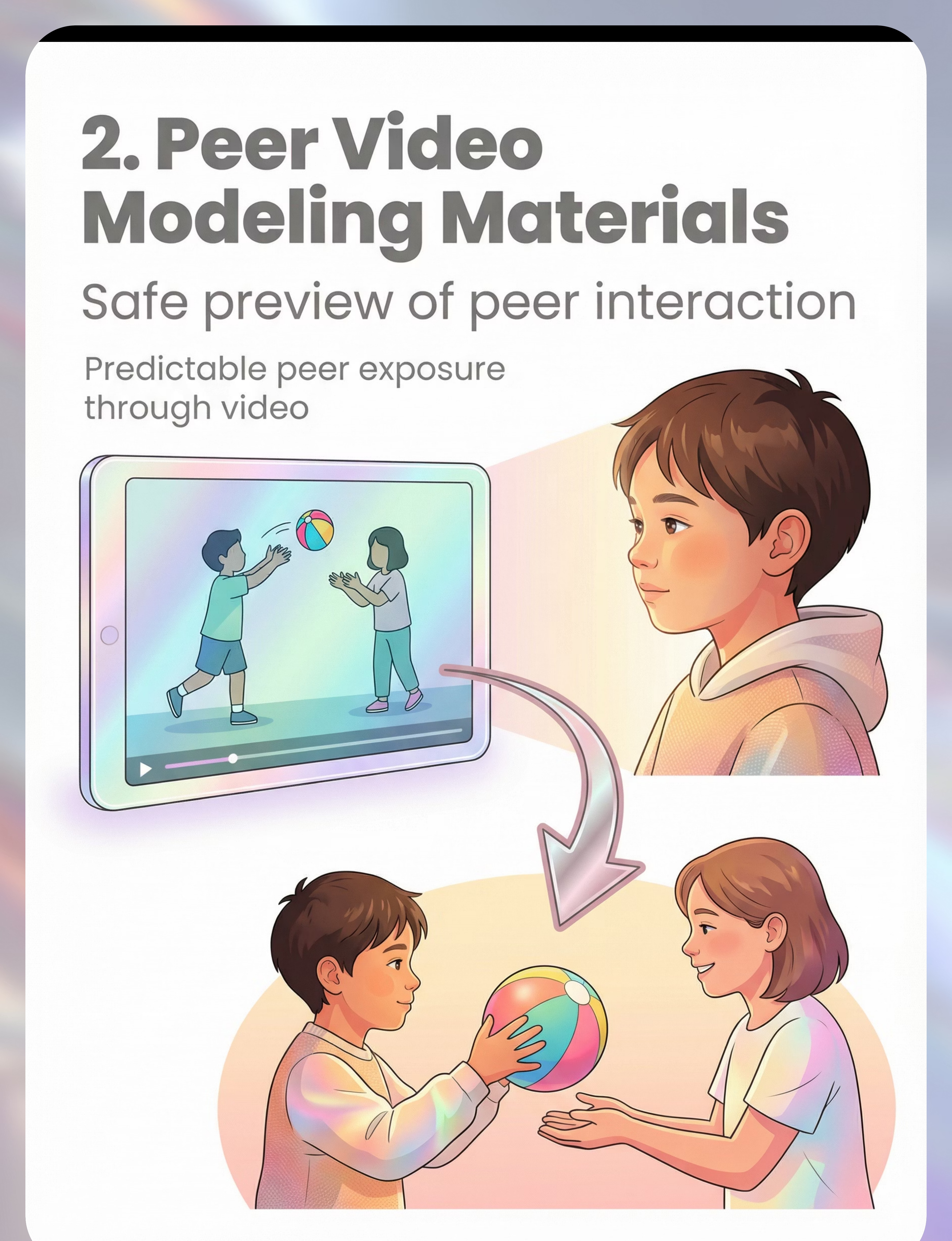
Peer Video Modeling

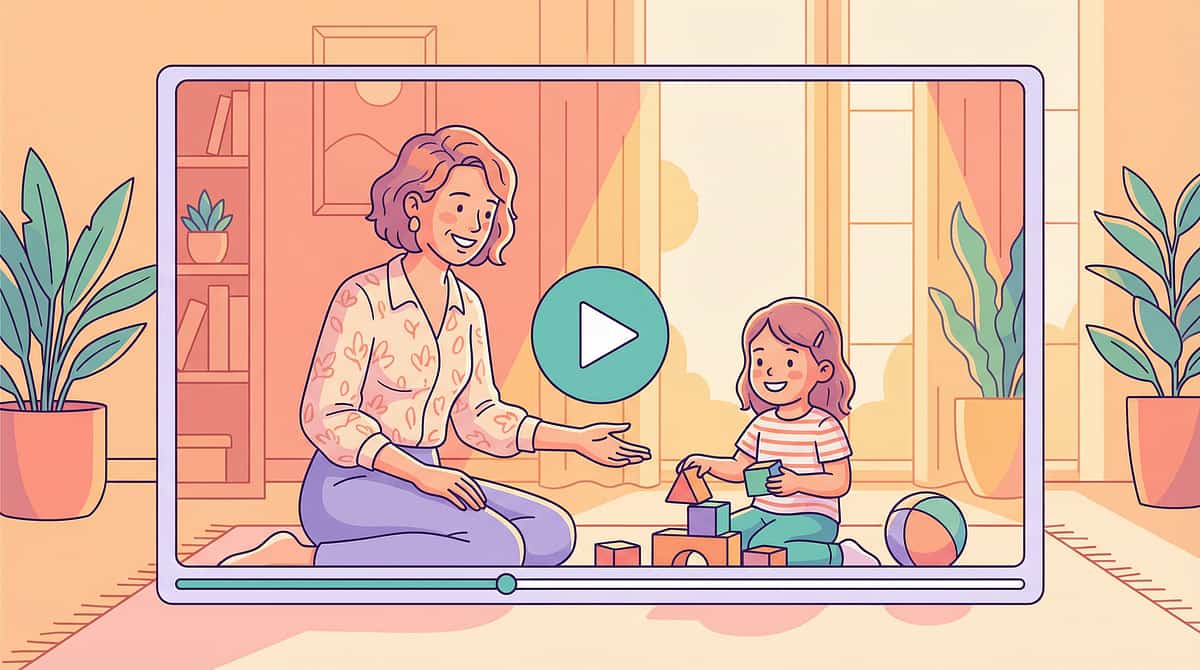
Material 2 of 9 ABA Lead | NCAEP EBP | Exposure Graduation A safe, predictable preview before facing unpredictable real peers The Science (ABA + OT) Video modeling is classified as a Tier 1 Evidence-Based Practice by NCAEP (2020) for children with ASD. The critical advantage for peer-avoidant children: videos offer pausable, rewindable, predictable peer exposure. The child learns what peer play LOOKS LIKE before experiencing its unpredictability. Neural peer-recognition pathways activate without sensory overwhelm. How It Works Watch videos of peers playing cooperatively (culturally relevant, age-matched) Pause and discuss: "See how Aarav shared the ball? That's what sharing looks like" Gradually introduce same activity in real life AFTER video previewing Video preview reduces the novelty threat of real peer interaction DIY Protocol: "Record 2-minute videos of cousins, neighbors, or school friends playing together — activities your child finds interesting. Watch together daily. Pause and label: 'They're taking turns. That looks fun, doesn't it?' Make real peer play predictable by watching it first." 🛒 Canon Product: Dyomnizy Educational Memory Game — Lights & Sound — ₹519 | amazon.in/d/0iwJwOiH — Use alongside video modeling to demonstrate peer cause-effect play sequences ⚠️ Safety Note: Video is preparation, NOT replacement for real peer exposure. Ensure videos feature culturally appropriate, demographically similar peers. | Citation: NCAEP EBP Report (2020) — Video modeling EBP classification
Material 3 of 9
ABA + SpEd Lead | Exposure Graduation
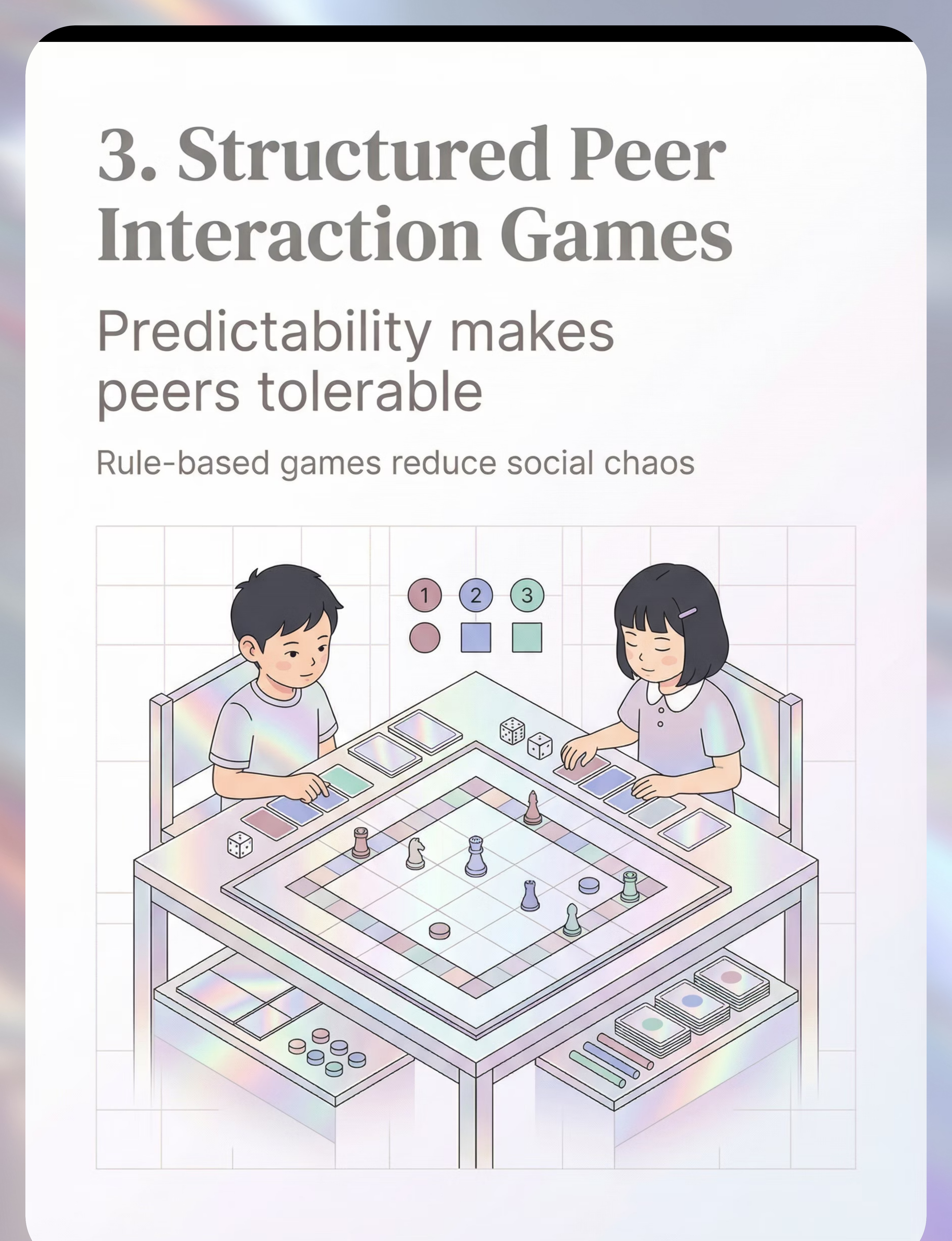
Structured Peer Interaction Games
Predictability makes peers tolerable — rules contain the chaos
The Science (ABA + SpEd)
Children with reduced social motivation often tolerate peers better in rule-governed contexts because rules make peer behavior PREDICTABLE. When a peer follows a known game rule, they become less chaotic and therefore less aversive. Board games with clear turn sequences are the clinical gold standard for initial peer engagement in this population.
How It Works
  • Start with 2-player games with simple, crystal-clear rules
  • Adult mediates the first 3–5 sessions (referee + reinforcer)
  • Short sessions (10 minutes maximum initially)
  • Predictability IS the therapeutic mechanism — don't improvise rules
DIY Protocol: "Ludo. Snakes & Ladders. Simple card games. Uno. These require minimal language, have clear rules, defined turns. The peer becomes safe because they are rule-bound. Start here before anything more complex."
🛒Canon Product: SHINETOY 8 Dice Shut The Box Game — ₹428 | amazon.in/d/0flHweVf — Clear rules, dice turns, defined winner — ideal structured peer activity
⚠️Safety Note: Avoid competitive games with losing consequences initially — early peer interactions should end positively. Keep sessions under 15 minutes.
Material 5 of 9
OT Lead | Exposure Graduation
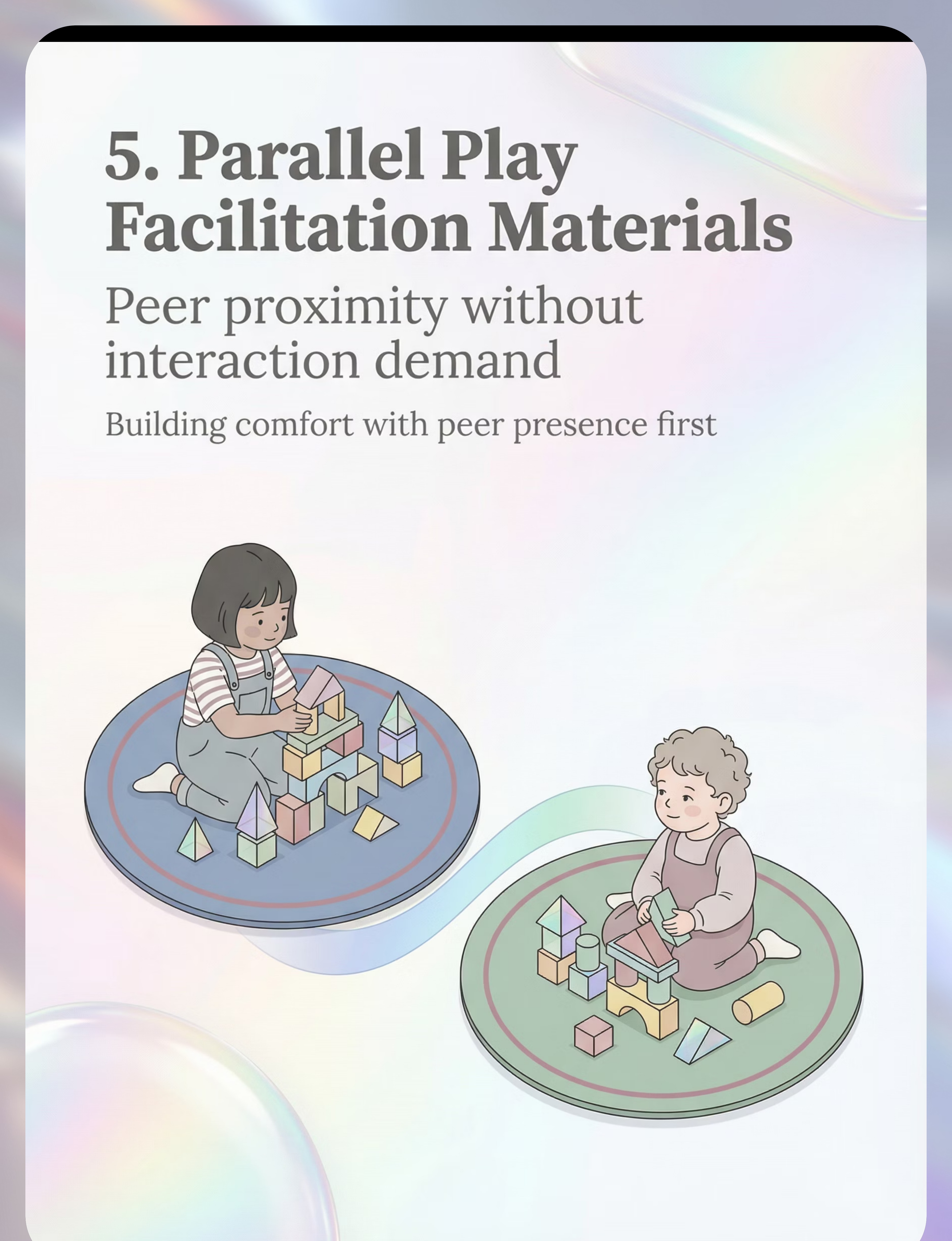
Parallel Play Facilitation Materials
Peer proximity without interaction demand — presence before pressure
The Science (OT + ABA)
Parten's (1932) developmental play hierarchy establishes parallel play as the critical prerequisite to cooperative play. For peer-avoidant children, tolerating a peer's PRESENCE without interaction demand is the first, essential step. OT-designed parallel play environments engineer optimal proximity, personal space buffers, and sensory predictability — making peer presence comfortable before interaction is attempted.
How It Works
  • Set up identical activities at adjacent stations (2 children, same materials, separate spaces)
  • No interaction required or prompted — just shared space
  • Parent narrates: "You're both building. You're in the same room. That's great."
  • Gradually reduce distance between stations over weeks
DIY Protocol: "Two children painting at adjacent tables. Two children building Lego at opposite ends of the same mat. Same activity. Adequate personal space. No pressure to interact — just tolerate the presence. This IS therapy."
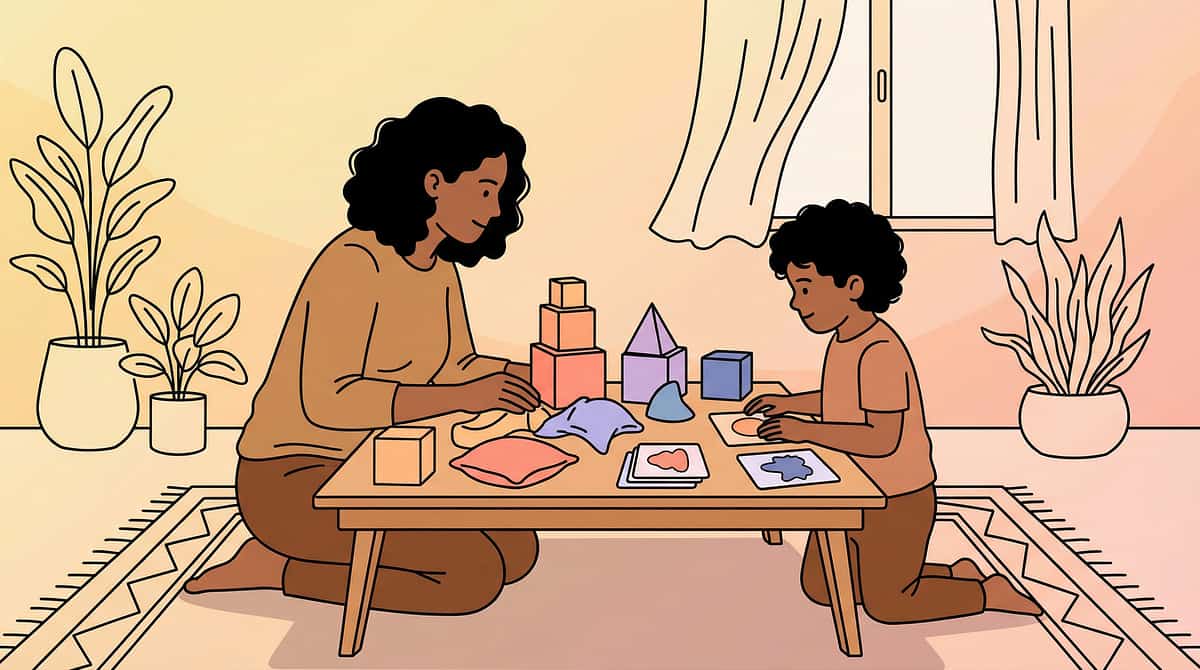
🛒Canon Product: Lattooland Rainbow Sorting Activity Set — ₹628 | amazon.in/d/05LnLJZl — Buy 2 sets — identical parallel play stations. Each child has their own complete set, no sharing needed.
⚠️Safety Note: Ensure sufficient personal space — sensory overwhelm from peer proximity will derail progress. Never push interaction before proximity is comfortable.
Material 6 of 9
ABA + OT Lead | Motivation Building
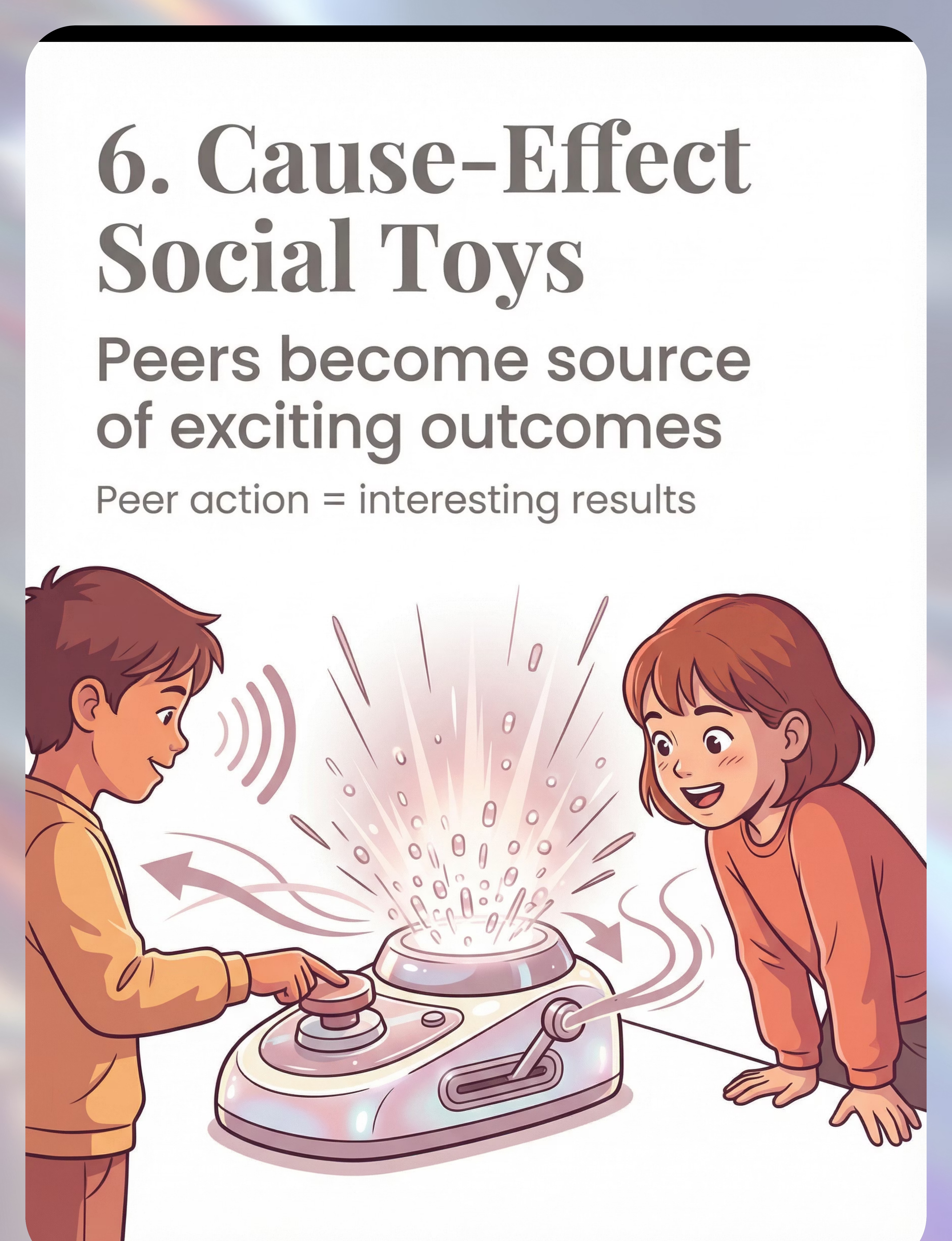
Cause-Effect Social Toys
Teaching that peers cause exciting things — making peers intrinsically interesting
The Science (ABA + OT)
The social motivation deficit in autism partly reflects reduced salience of social stimuli. Cause-effect social toys address this directly: when the PEER'S action causes an exciting outcome (lights, sounds, movement, reaction), the peer becomes associated with positive sensory experiences. This is classical conditioning applied to social reward — the peer becomes predictive of good things.
How It Works
  • Set up toy where PEER activates the exciting effect
  • Point to peer immediately: "Priya pressed it — look what happened!"
  • Child must attend to peer to anticipate the exciting outcome
  • Gradually increase peer's role in generating interesting events
DIY Protocol: "Control a light-up toy or sound toy from one side — child watches from the other. 'Look! [Peer name] makes it light up!' Then let child take turns. The peer becomes the source of interesting things. This is the foundation of social reward."
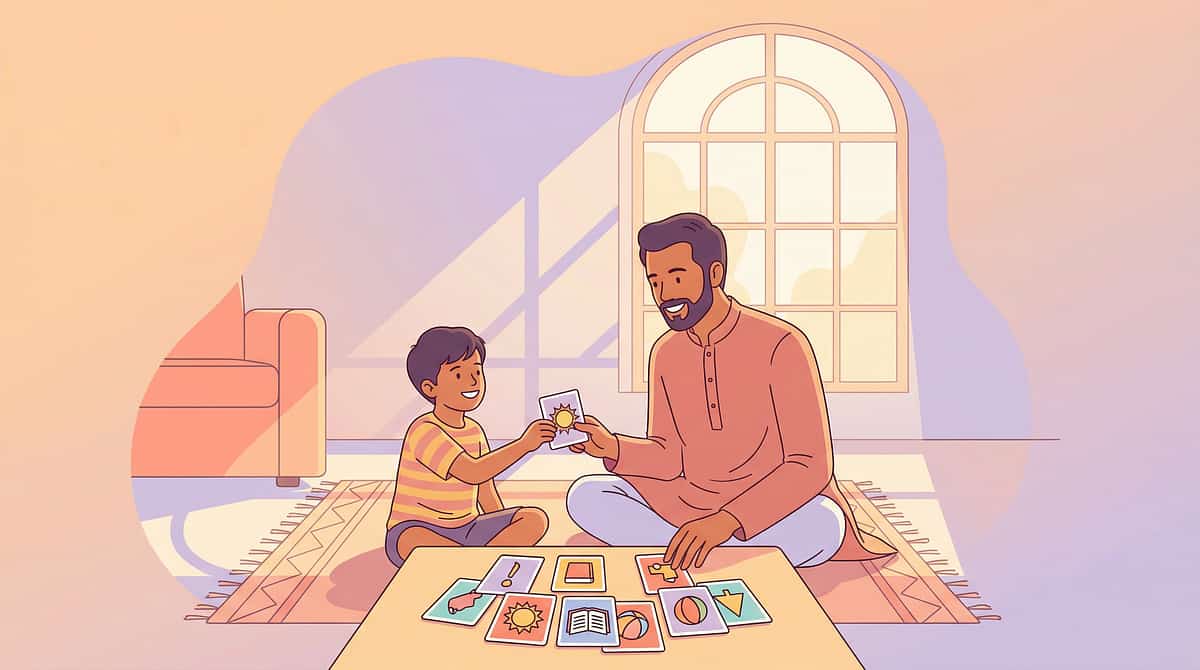
🛒Canon Product: Dyomnizy Memory Game — Lights & Sound Effects — ₹519 | amazon.in/d/0iwJwOiH — Peer presses buttons → exciting effects. Perfect cause-effect social toy template.
⚠️Safety Note: Ensure sensory effects are enjoyable, not overwhelming (check child's sensory profile). Allow child to ALSO activate — reciprocity is essential.
Material 7 of 9
SLP Lead | Skill Building
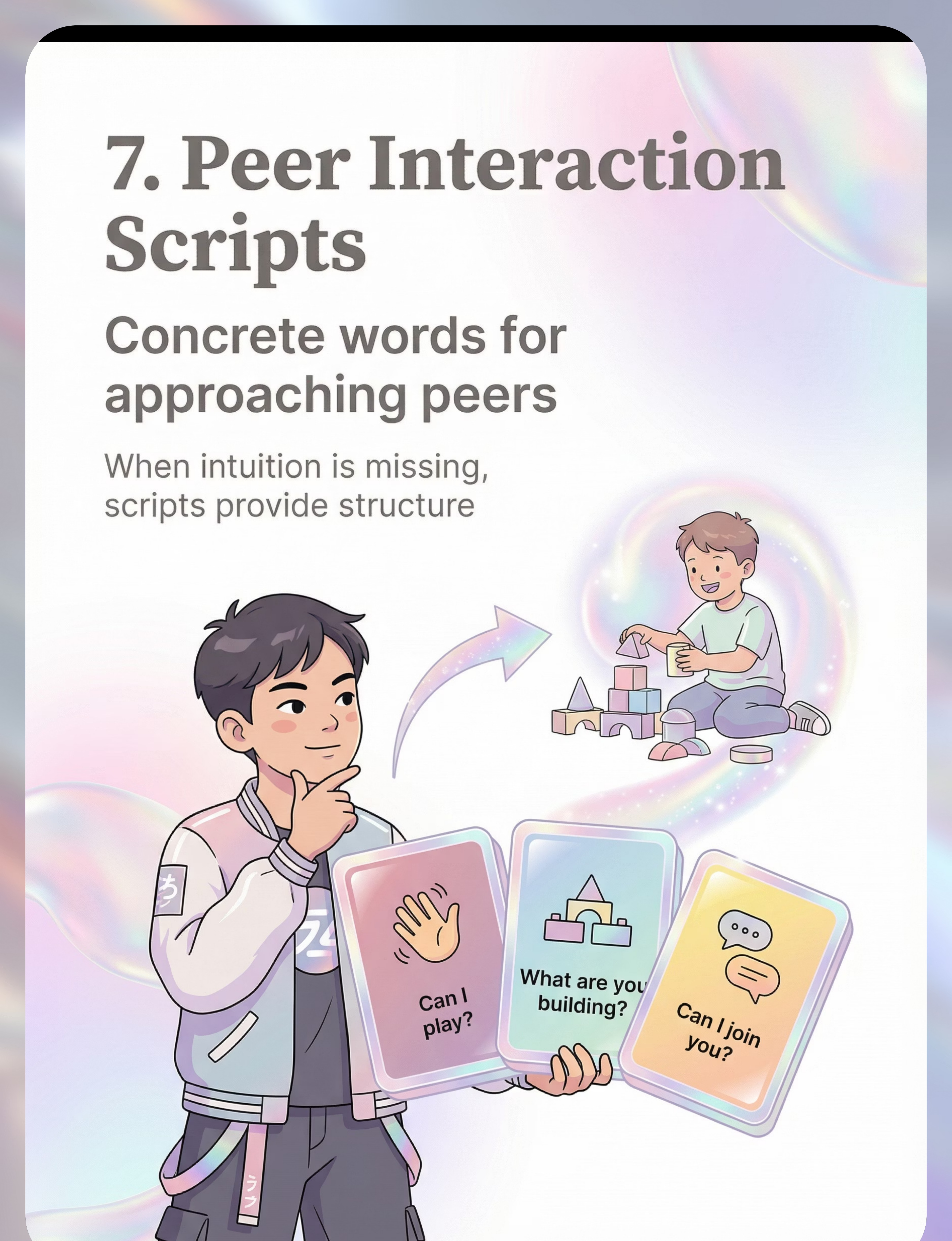
Peer Interaction Scripts & Visual Supports
Concrete words for approaching peers when intuition doesn't provide them
The Science (SLP + ABA)
For children without spontaneous social motivation, the pragmatic language skills for peer initiation must be explicitly taught — they will not develop incidentally. Script training (Goldstein, 2002) demonstrates that teaching specific approach phrases, practiced through role-play, transfers to naturalistic peer settings. The visual support card provides an external scaffold until the script is internalized.
Starter Scripts — Ready to Use
Situation
Script
Joining play
"Can I play?"
Showing interest
"What are you building?"
Requesting turn
"Can I have a turn?"
Sharing
"Do you want some?"
Ending play
"I need to stop now. Bye."
DIY Protocol: "Make 5 laminated index cards with approach phrases. Practice with parent as 'pretend peer' daily for 1 week. Then use in real peer situations with the card as backup. Fade the card over 4 weeks."
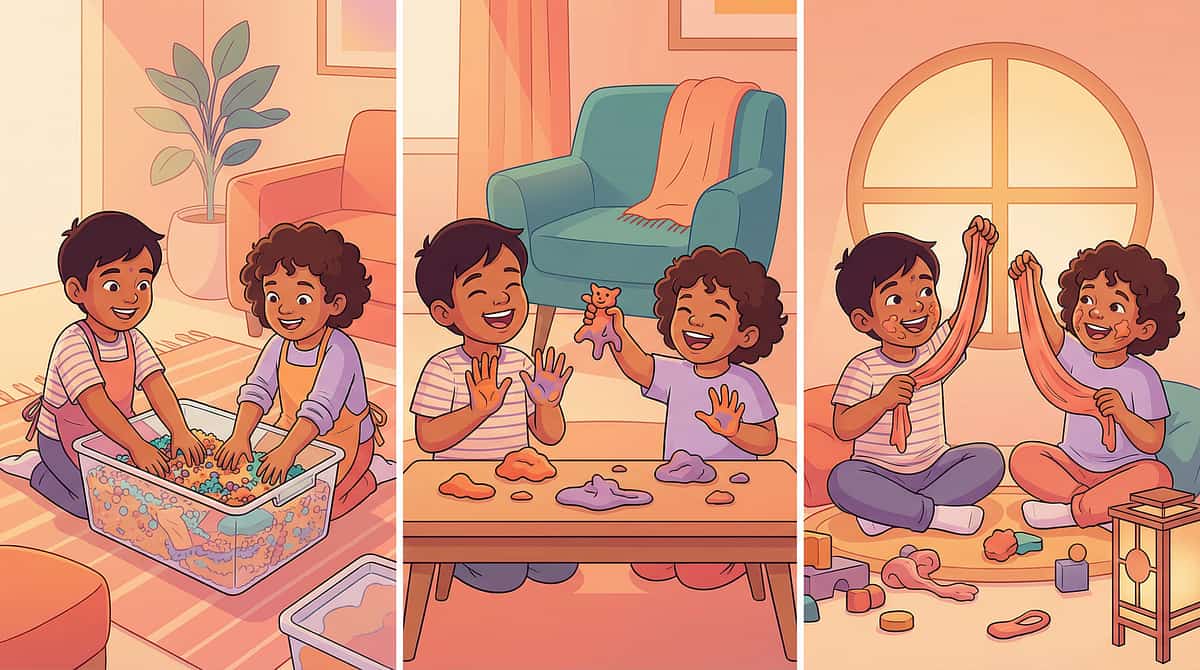
🛒Canon Product: Monkey Minds Clip The Card — Rhyming Words — ₹296 | amazon.in/d/00S726LE — Card-based format — use as inspiration for creating peer script visual support cards
⚠️Safety Note: Ensure scripts sound natural for the child's age and context. Goal is internalization, not permanent card dependence.
Material 8 of 9
SpEd Lead | Environmental Support
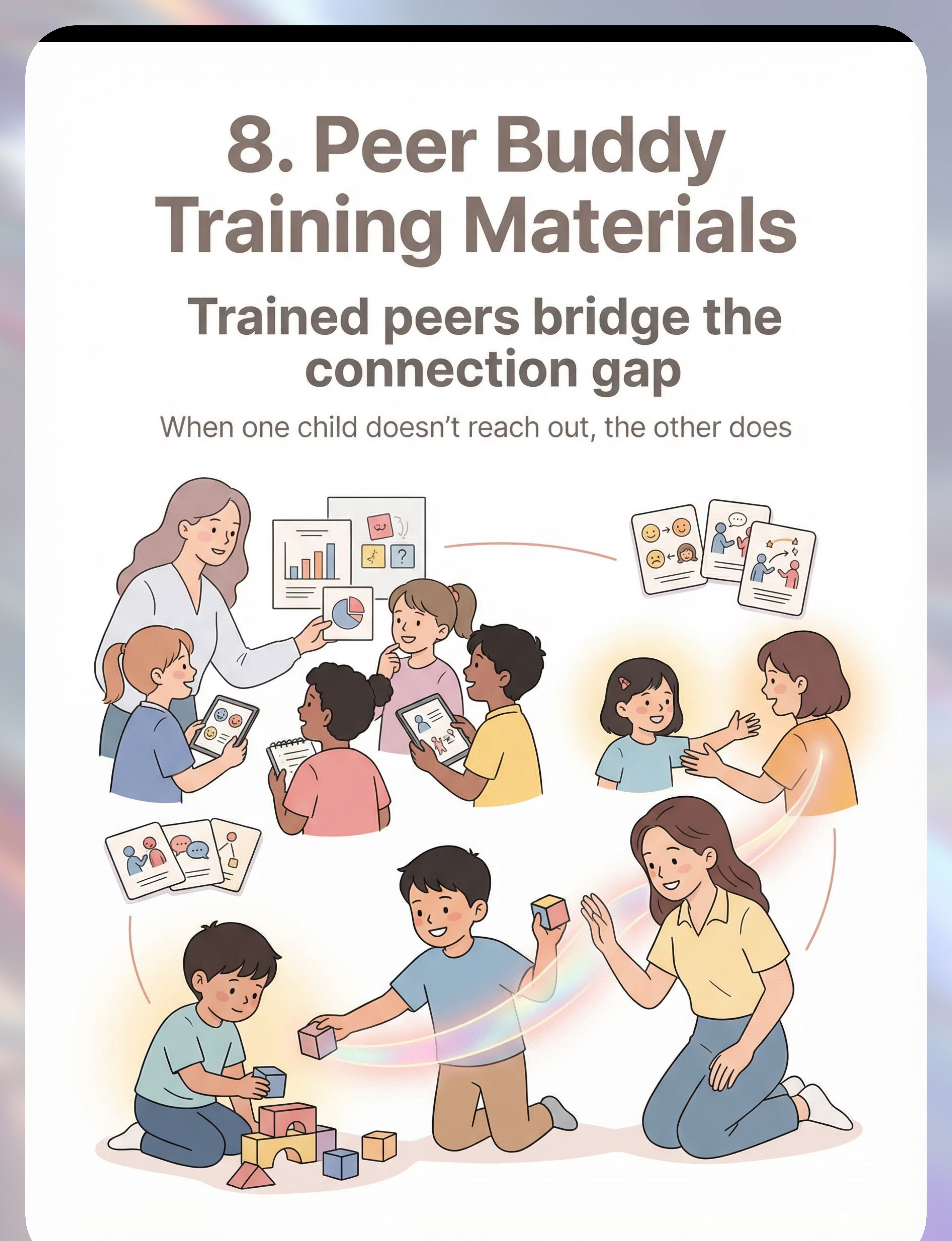
Peer Buddy Training Materials
When the child won't reach out — trained peers reach in
The Science (SpEd + ABA)
Peer-Mediated Instruction and Intervention (PMII) is classified as a Tier 1 Evidence-Based Practice by NCAEP (2020) with robust effect sizes for social engagement. The insight is profound: when the target child lacks social motivation, TRAINING the peers transforms the social environment. Prepared peers become patient, persistent, understanding — dramatically increasing peer engagement opportunities without demanding the child initiate.
How It Works
  • Identify 2–3 tolerant, patient neurotypical peers
  • Train them: how to approach, what to expect, how to persist without pressure
  • Buddy sessions: 15–20 minutes, structured activity, adult nearby
  • Debrief with buddies: what worked, what didn't, celebrate their patience
DIY Protocol: "Talk to your child's cousin, neighbor, or classmate (with parent permission): 'My child finds it hard to start playing with others. Would you help by going to him and saying Can I play too? — and then just starting to play near him?' Brief the willing peer. Most children are kinder than we expect."
⚠️Safety Note: Monitor buddy burnout — buddies must benefit too. Never exploit peer relationships. Stop if target child shows distress.
Citation: NCAEP (2020) — Peer-Mediated Instruction and Intervention EBP classification
Material 9 of 9
ABA Lead | Motivation Building
Peer Interaction Reinforcement Systems
External motivation builds interaction habits while intrinsic interest develops
The Science (ABA)
Applied Behavior Analysis principles are unambiguous: behaviors that produce reinforcing outcomes increase in frequency. When a child lacks intrinsic social motivation, external reinforcement is the evidence-based bridge — building the behavioral habit of peer interaction until positive experiences gradually shift the motivation to intrinsic. This is not 'bribing' — it is clinical reinforcement science.
Token System Design — Step by Step
01
Define tiny achievable target
"Stay in game with peer for 3 minutes"
02
Earn tokens
Child earns token/star for each successful interaction
03
Redeem reward
5 tokens = preferred reward (screen time, special food, activity)
04
Gradually increase requirements
As tolerance grows, raise the bar slowly
05
Fade external rewards
Begin fading as intrinsic interest emerges

🛒Canon Products: The Rosette Imprint Reward Jar — ₹589 | amazon.in/d/02C5R9Jn  |  1800+ Reward Stickers Book — ₹364 | amazon.in/d/01wrHJWX — Both Pinnacle Canon Recommended ✓
DIY Protocol: "Draw a 10-box reward chart. Each box = one successful peer interaction attempt (does not need to be perfect). Fill all 10 boxes = child chooses tonight's movie. Simple. Achievable. Works."
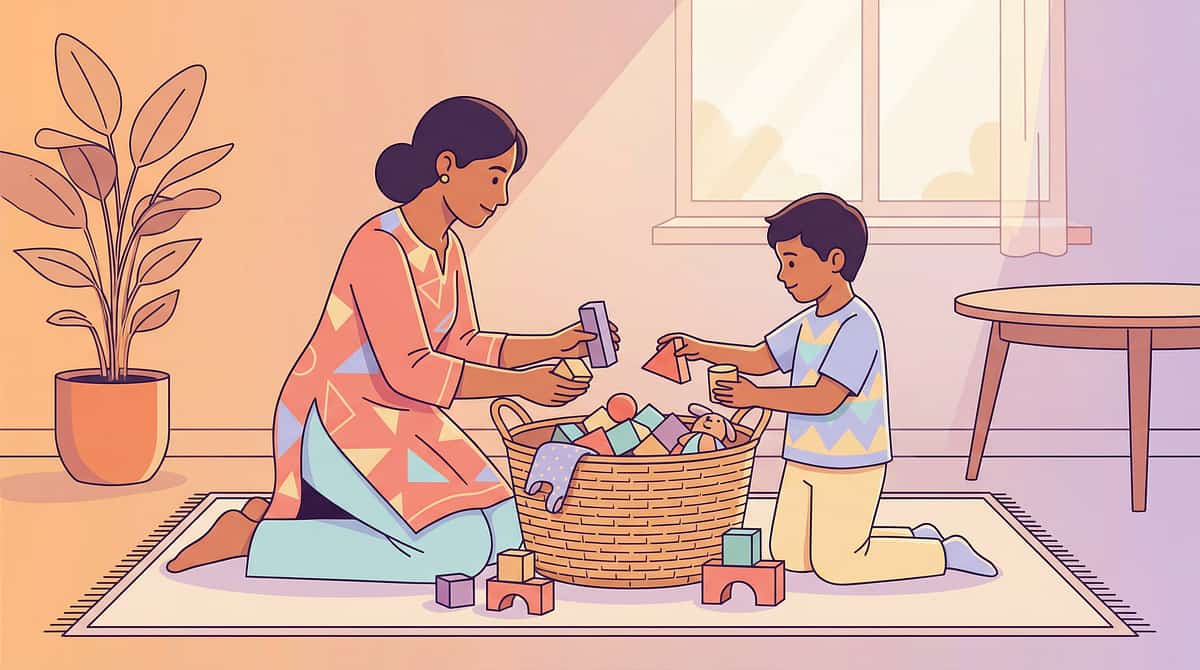
⚠️Safety Note: Start with very achievable targets. Monitor for mechanical compliance without genuine engagement. Plan explicit fading schedule from Week 8.
📞9100 181 181 — Our ABA specialists design personalized reinforcement systems FREE
Read This Before Your First Session
Setting up for success starts before your child and the peer are ever in the same room. The traffic-light framework below gives you a clear go/no-go decision every single time.
🔴 DO NOT PROCEED IF:
  • Child shows active fear or panic at peer presence (may indicate anxiety disorder — consult professional first)
  • Child has had a significant distress episode in last 2 hours
  • Child is unwell, hungry, or overtired
  • You are planning to force physical proximity or touch without consent
  • Peer partner is known to be rough, loud, or unpredictable
🟡 MODIFY IF:
  • Child is mildly dysregulated — use simpler, shorter version
  • Only one peer available and they are unfamiliar
  • Environment is noisy or overstimulating
  • Child refuses materials — switch to parallel only, no demands
🟢 PROCEED WHEN:
  • Child is calm, fed, rested
  • Peer partner is familiar, patient, and has been briefed
  • Environment is quiet, predictable, space is adequate
  • Materials ready and session is planned
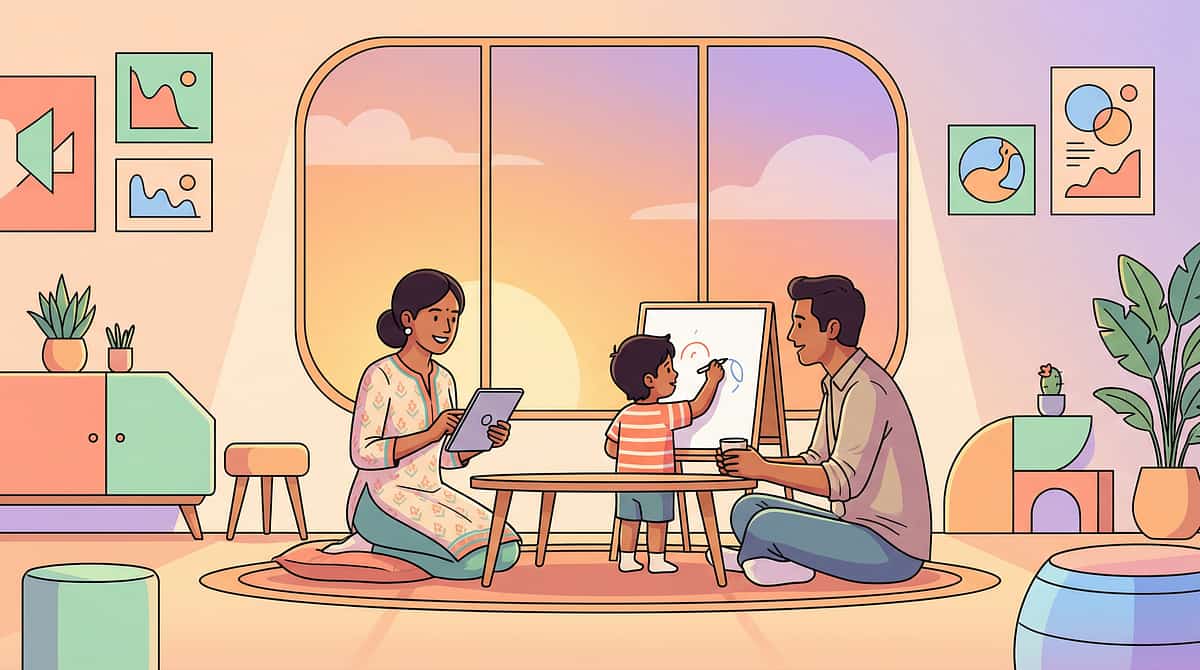
🛑ABSOLUTE RED LINE — STOP IMMEDIATELY IF: Child shows genuine distress (crying, aggression, self-harm) | Peer behavior is frightening or overwhelming the child | Any physical altercation occurs
Citation: Home-based intervention safety protocols: DOI: 10.1007/s12098-018-2747-4 (Padmanabha et al., Indian J Pediatr, 2019) | All safety protocols reviewed by Pinnacle NeuroDevelopmental Pediatrics + BCBA Consortium ⚕️
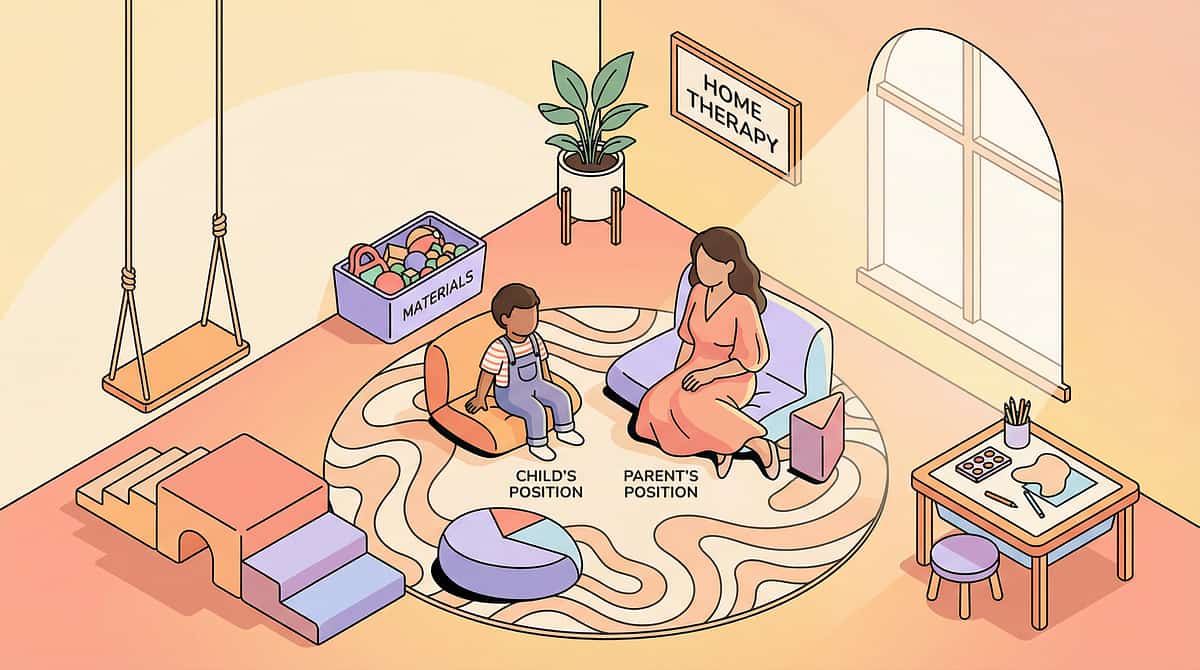
Spatial Precision Prevents 80% of Session Failures
The physical environment is not background detail — it is a therapeutic tool. How you configure the space directly determines how much sensory and social demand the child experiences before the session even begins.
Parent Position
Child B Mat
Child A Mat
Materials Station
Environment Checklist
  • Remove competing distractions (screens off, other toys out of sight)
  • Lighting: natural or warm lamp light (not fluorescent)
  • Sound: quiet background (no TV, low ambient noise)
  • Temperature: comfortable (not hot/stuffy)
  • Materials pre-positioned (not searching mid-session)
  • Timer visible to both children
  • Positive reinforcement items ready nearby
Session Length by Week
Week
Session Length
Week 1–2
10 minutes maximum
Week 3–4
15 minutes
Week 5–8
20–25 minutes
Week 9+
30 minutes as tolerated
Citation: Meta-analysis (PMC10955541): Structured 1:1 environment is the most effective intervention format for peer engagement in ASD.
60-Second Pre-Session Assessment — Do This Every Time
Before every single session — no exceptions. A session that starts wrong cannot succeed. This assessment takes one minute and prevents hours of regression.
Check
Observation
Score
🍽️
Fed? Last meal within 2 hours
✓ / ✗
😴
Rested? Not overtired, no meltdown in last hour
✓ / ✗
🎯
Regulated? Calm baseline, not in escalation
✓ / ✗
😷
Well? No signs of illness, fever, pain
✓ / ✗
👂
Sensory? No visible sensory distress in current environment
✓ / ✗
⏱️
Time? At least 30 minutes of uninterrupted time available
✓ / ✗
🟢 5–6 Checks: GO
Proceed with full protocol as planned
🟡 3–4 Checks: MODIFY
Run shortened parallel play only — 10 minutes, no interaction demands
🔴 0–2 Checks: POSTPONE
Choose a calming activity instead. Try again tomorrow.
"Postponing is not failure — it is clinical wisdom. The best session is one that starts right."
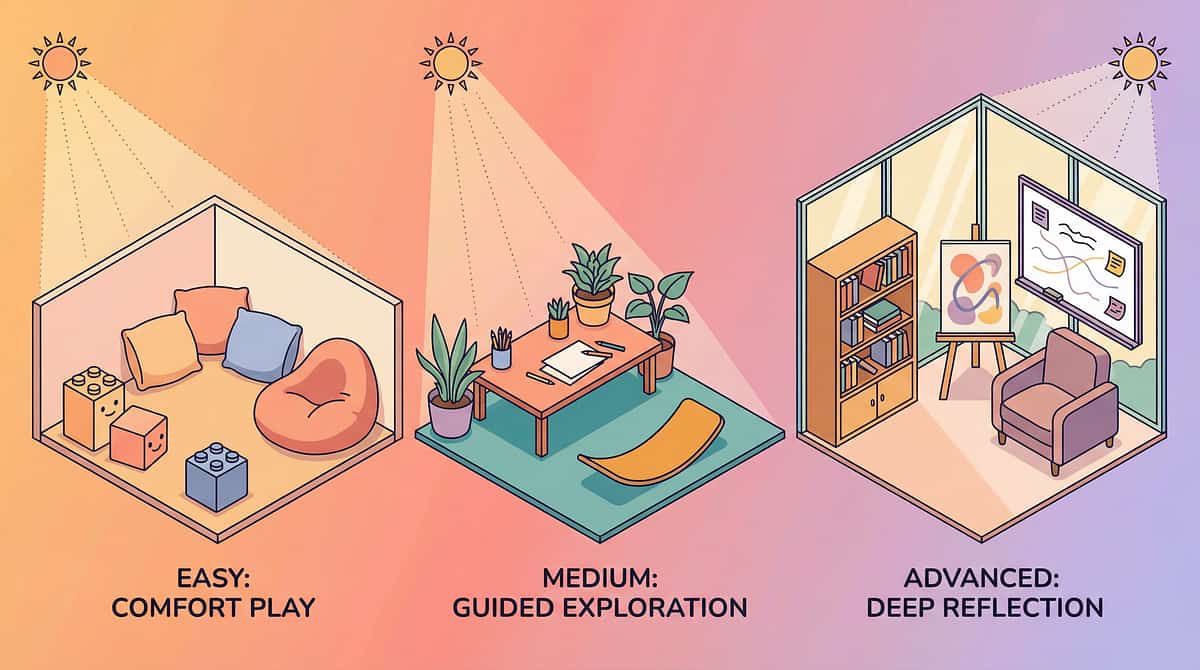
Step 1 of 6
Duration: 30–60 seconds
Every Session Begins With an Invitation — Never a Command

Exact Opening Script (say this): "[Child's name], look — [peer name] is here. They brought [train/game/blocks]. Do you want to see?" — Use preferred interest item — peer is holding it
Parent Body Language
  • Position yourself diagonally — not between children
  • Kneel to child's level — never tower over
  • Soft, warm voice — no urgency
  • Wait 10 full seconds for response before repeating
What Acceptance Looks Like
  • Child glances at peer or peer's item ✓
  • Child moves slightly toward peer ✓
  • Child takes the offered item ✓
  • Child doesn't actively move away ✓ (this is enough)
What Resistance Looks Like & How to Respond
  • Child ignores completely → Re-present with preferred item directly
  • Child moves away → Don't pursue; run parallel play only today
  • Child shows distress → Stop, return to Readiness Gate and Postpone

ABA Principle: This is pairing — establishing the peer as a conditioned reinforcer before any demands are placed.
Step 2 of 6
Duration: 1–3 minutes
The Material Is Introduced — Watch the Child's Response
Script: "[Peer name] is playing with the [game/activity]. You can play too. Here — this is your piece/turn/set."
Material Introduction Protocol
  • Present material at child's preferred distance (not forced into hands)
  • Allow 5–10 seconds of observation before offering
  • Match material to child's sensory profile (avoid overwhelming textures/sounds initially)
Child Response Reading
Response
Meaning
Action
Approaches material
Engagement
Continue — reinforce immediately
Watches from distance
Tolerance
Good enough! Narrate positively
Touches own materials only
Parallel play
Accept — narrate "You're both playing"
Backs away
Avoidance
Reduce proximity, parallel only

Reinforcement Cue: Immediately when child shows ANY orientation toward peer or peer's activity: "Yes! You're watching [peer name]! Good noticing!"
Citation: PMC11506176 — Structured material introduction as evidence-based practice for peer engagement
Step 3 of 6
Duration: 5–15 minutes — The Main Session
The Core Interaction — Your Primary Therapeutic Work
1
Weeks 1–2: Parallel Phase
Both children engaged in same activity, separate materials. No interaction required. Parent narrates: "You're both building. You're in the same space. That's wonderful."
2
Weeks 3–4: Proximity Phase
Introduce one shared material. Peer holds it. Child can access when they choose. Parent does NOT prompt sharing — allows natural reach.
3
Weeks 5–6: Structured Interaction
Run a simple structured game. Adult manages turns. Keep it short. End before resistance builds.
4
Weeks 7–8: Script Practice
Before session: practice approach script. During session: prompt child to use script if they want peer's material. Don't demand — offer.

Reinforcement Cue: Every session must involve child's special interest AT SOME POINT — the preferred item is what makes the peer tolerable and the session rewarding.
Step 4 of 6
Duration: Throughout session — Continuous
Catch Every Single Positive Moment — No Matter How Small
What to Reinforce — In Order of Importance
1
Any look toward peer 🌟
2
Any movement toward peer's activity 🌟🌟
3
Toleration of peer touching shared material 🌟🌟🌟
4
Any verbal or gestural exchange 🌟🌟🌟🌟
5
Any spontaneous initiation toward peer 🌟🌟🌟🌟🌟
How to Reinforce
  • Verbal: "Yes! You looked at [peer name]! Beautiful!"
  • Physical (if appropriate): high-five, shoulder pat
  • Token: place star on reward chart immediately
  • Preferred item access: "Good playing — you can have [preferred item] now"
What to Avoid
  • "Why aren't you talking to [peer name]?"
  • Comparing to peers who play more naturally
  • Ending session on a failure
  • Making reinforcement unpredictable

ABA Principle: Dense reinforcement schedule in early sessions — thin gradually as behavior becomes established.
Step 5 of 6
Duration: 3–5 minutes
End Every Session on a Positive Moment — Never on a Challenge
01
5 minutes before end: Give visual warning
"Two more minutes and we'll finish" — begin winding down the activity (don't abruptly stop)
02
Session closing script
"That was great playing. [Peer name] played with you today. You were both here together. That's really good."
03
Peer goodbye
Coach peer to say: "Bye [child's name]! That was fun!" — Child is not required to respond, but exposure to warm peer farewell matters.
04
Solo recovery time
Allow 5–10 minutes of undemanded solo play after peer session — the child's nervous system needs recovery time after social effort.
What to Observe
  • Did child seem more or less tense during cool-down vs. start? (data point)
  • Any spontaneous behavior toward peer during wind-down?
  • Child's regulation state post-session (for readiness calibration next time)

What Gets Measured Gets Improved — Track These 5 Data Points

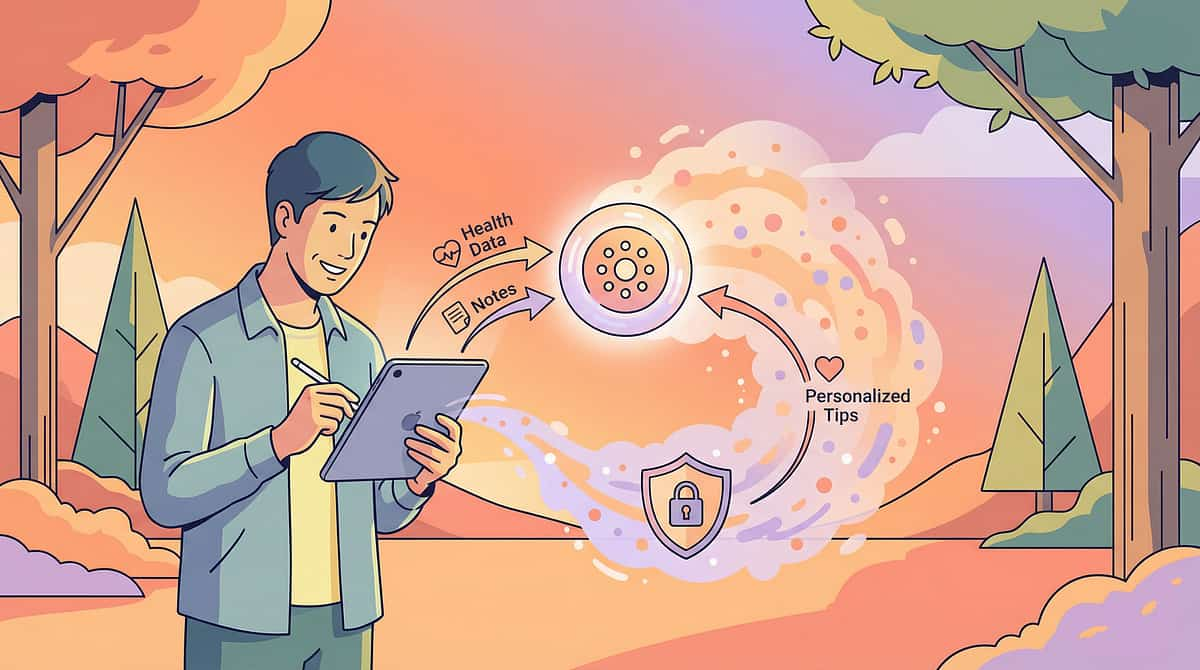
Step 6 of 6 Duration: 5 minutes post-session Data Point What to Record Example Peer orientation events How many times did child look at/toward peer? "3 glances" Proximity tolerance Minimum distance maintained comfortably "5 feet" Interaction type Parallel / Near-parallel / Structured / Spontaneous "Parallel" Reinforcement taken Did child accept tokens/praise? "Yes — 4 tokens" Session length completed How long before first resistance? "12 minutes" 📊 GPT-OS® Tracking: Enter these data points into your GPT-OS® EverydayTherapyProgramme™ tracker to sync with your child's Social Participation Index. TherapeuticAI® will adjust protocol recommendations based on weekly trend data. pinnacleblooms.org/track/C-301 "You don't need clinical precision — a voice memo in the car is enough. 'Today he looked at the peer twice. 12 minutes before he moved away.' That's your data." 📞 9100 181 181 — Ask about our FREE AbilityScore® tracking setup
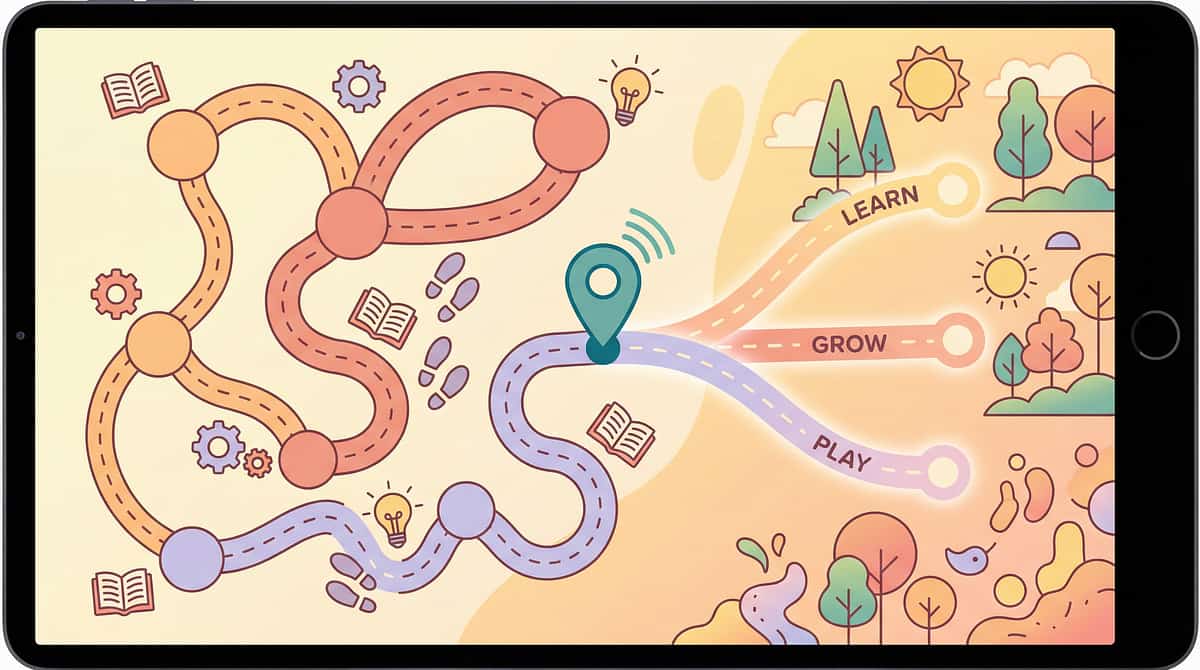
The 7 Most Common Challenges — And Exactly What to Do
Every protocol hits friction. These are the seven most common challenges families encounter — and the Consortium-tested solutions for each one.
Challenge
Likely Cause
Solution
Child leaves the room entirely
Overwhelm, wrong readiness state
Run parallel only tomorrow. Check the Readiness Gate more carefully.
Peer becomes too loud/physical
Unpredictable peer
Pre-brief peer better (Material 8). Choose quieter peer.
Child fixates on solo activity, ignores peer
Normal — this IS the presenting challenge
Introduce cause-effect element: make peer necessary for preferred activity
Child takes peer's materials aggressively
Social script deficit — no 'asking' pattern
Pause. Teach the "Can I have it?" script. Role play.
Child seems more distressed post-session
Possible anxiety component, not just motivation deficit
Consult professional — may need anxiety assessment
No progress after 4 weeks
Protocol may need individualization
Call 9100 181 181 — ABA specialist will review your log
Peer refuses to continue as buddy
Buddy burnout
Rotate peers. Ensure peer is also having fun (not just serving)

"If your child shows NO positive response to ANY of the 9 materials after 4 weeks of consistent implementation, this is the signal to get a professional assessment. Not a failure — a data point."
📞9100 181 181 — FREE protocol troubleshooting with Pinnacle BCBA specialists

One Protocol, Infinite Personalizations — Find Your Child's Version

Difficulty Calibration Easier 10 min parallel only | No interaction required | Single familiar peer | Strongest interest only Standard 15–20 min structured | Prompted interaction | 1–2 familiar peers | Preferred interest Harder 30 min full cooperative | Scripted peer dialogue | Small peer group | Flexible interests Sensory Profile Adaptations Profile Adaptation Sensory Avoider Maximum personal space, minimal peer sound, very short sessions, gradual proximity increase Sensory Seeker High-energy cause-effect toys, physical games, movement-based peer activities Auditory Sensitive Quiet indoor setting, whisper-voice peers, avoid noisy toys Visual-Spatial Strength Block building, puzzle completion, visual-heavy structured games Age Modifications Ages 3–5 Parallel play emphasis, parent as mediator, 10-minute maximum Ages 6–8 Structured games, script cards, buddy program introduction Ages 9–12 Interest clubs, script internalization, gradual peer group expansion
Your Home Protocol — Save This Card

Fill in this personalized protocol card and post it on your refrigerator. Consistency across all caregivers multiplies therapeutic impact significantly. Child Profile Child Name: ____________ | Age: ______ | Start Date: ________Strongest Special Interest: ________________________Primary Material (from 9): ________________________Peer Partner Name: ____________ | Session Time: ________ Session Parameters Session Length: _____ minutes | Reinforcer: _____________Tracking Method: _____________________ Week-by-Week Goals Week 1–2: Child tolerates peer in same room for 10 minWeek 3–4: Child glances at peer 3+ times per sessionWeek 5–6: Child participates in structured game 10 minWeek 7–8: Child uses approach script spontaneously once My Helpline 📞 9100 181 181Free consultation available 24×7 | 18+ languages ⚕️ Protocol template developed by Pinnacle Blooms Consortium — CRO, BCBA, SLP, OT, SpEd, NeuroDev Pediatrics
Phase: Foundation
Progress: 15%
Weeks 1–2: You Are Laying Neural Groundwork You Cannot Yet See
What DOES Count as Progress in Weeks 1–2
  • Child tolerates peer in room without leaving → PROGRESS
  • Child glances at peer even once → PROGRESS
  • Child allows session to reach 8–10 minutes → PROGRESS
  • Child accepts reinforcement for peer-adjacent behavior → PROGRESS
  • No increase in distress compared to first session → PROGRESS
What Is NOT Expected Yet in Weeks 1–2
  • Spontaneous initiation toward peer
  • Verbal exchange with peer
  • Sharing materials voluntarily
  • Requesting peer by name

Data Target: At end of Week 2 — child should reach minimum proximity distance of 4 feet without visible distress.
"In Weeks 1–2, you will question whether anything is happening. It is. Neural exposure pathways are forming. Tolerance is being built. If your child tolerates the peer's presence for 3 seconds longer than last week — that is real, measurable neurological progress."
Citation: PMC11506176 — Early phase indicators focus on tolerance and participation, not skill mastery (8–12 week outcome timelines)

Weeks 3–4: The Neural Pathways Are Strengthening — Watch for These Signs

Phase: Consolidation Progress: 40% Anticipation Signal Child ANTICIPATES peer arrival — looks toward door or moves toward play area before peer arrives. The brain is forming stable representations of "peer = expected/safe." Session Duration Growth Child accepts 12–15 minute sessions without resistance. Peer presence no longer triggers visible avoidance — peer has become a neutral, familiar stimulus. First Vocalizations ANY spontaneous vocalization in peer's direction — even a single sound, word, or comment not directed at you — is a significant synaptic consolidation signal. When to Increase Intensity Child reaching session length without resistance → Extend by 5 minutes Distance comfort established → Reduce distance between children by 1 foot Structured game tolerance shown → Introduce second game option "You may notice YOU are more confident too. Your calibration is improving. You are reading your child's signals more accurately. That is co-regulation — and it matters."
Phase: Breakthrough
Progress: 65%
Weeks 5–8: First Genuine Peer Interest Signals — Celebrate Every One
Tier 1: Most Common Breakthroughs
Child initiates reaching for peer's material | Child uses approach script spontaneously | Child looks at peer during peer's emotional expression
Tier 2: Significant Milestones
Child asks for peer by name on non-session day | Child laughs at something peer does | Child protests when peer session ends early
Tier 3: Landmark Moments 🌟
Child independently approaches peer without prompt | Child shows peer a preferred item ("Look at this") | Child maintains 3+ exchange turns in structured game

Family Celebration Protocol: When Tier 2 breakthrough occurs — celebrate as a family. This is a neurological milestone. Document it. Share with your Pinnacle therapist. It will be entered into your child's AbilityScore® record.
📞9100 181 181 — Report breakthroughs! Your therapist needs to know to adjust the plan upward.
Phase: Emerging Mastery
Progress: 80%
What Mastery Looks Like for THIS Child — Not Neurotypical Standards
Mastery is defined against your child's own developmental arc — not against a neurotypical peer standard. Every level below represents clinically valid success.
1
Level 1 — Tolerance Mastery
Child tolerates familiar peer in same activity space for 20+ minutes daily without distress
2
Level 2 — Structured Engagement Mastery
Child participates in structured peer activity for 20 minutes with fewer than 2 prompts
3
Level 3 — Interest-Based Mastery
Child seeks peer specifically for preferred interest activity 1× per week spontaneously
4
Level 4 — Script-Independent Mastery
Child initiates peer contact using own words (not memorized script)
5
Level 5 — Reciprocal Mastery
Child maintains 5+ exchange turns in 2 different contexts
"Mastery for this child may mean Level 2 — and that is clinically valid success. We do not set neurotypical friendship as the only acceptable outcome. We set the child's own developmental growth as the benchmark." — GPT-OS® Clinical Note
These Signs Mean Pause the Protocol and Call a Professional
🔴 Red Flags — Consult Immediately
  • Complete regression in previously present social interest (sudden increase in avoidance)
  • Active distress (panic, self-harm, aggression) specifically triggered by peer presence
  • No positive response to ANY of the 9 materials after 10 consistent sessions
  • Signs of depression (loss of interest in special interests, sleep/appetite changes)
  • No attachment to any person including primary caregivers
🟡 Yellow Flags — Review Protocol
  • Stagnation at same level for 4+ weeks with consistent implementation
  • Peer buddy showing frustration or reluctance
  • Parent reporting extreme difficulty maintaining sessions
  • Child showing anxiety symptoms (not just motivation deficit)
These are not failures — they are clinical data indicating the protocol needs professional calibration. A developmental pediatrician or BCBA may need to reassess whether underlying anxiety, sensory processing, or a different mechanism is operating.
📞9100 181 181 — FREE clinical review of protocol progress | Citation: DOI: 10.1007/s12098-018-2747-4 | ABA clinical practice — treatment non-response protocols
This Technique Is One Step in a Larger Journey
C-301 sits within a carefully sequenced social development pathway. Understanding where this technique fits helps you see both how far your child has come and the road ahead.
C-300
Lack of joint attention
C-302
No imaginative play
C-299
Social reciprocity difficulties
C-307
Turn-taking in play
C-301
YOU ARE HERE No peer interest
Related Technique Links
  • 🔗 C-300: Joint Attention
  • 🔗 C-302: Imaginative Play
  • 🔗 C-310: Making Friends
  • 🔗 B-198: Conversation Initiation
  • 🔗 C-322: Building Empathy

Each technique in this pathway builds on the last. C-301 peer proximity tolerance is the direct foundation for C-302 imaginative play and C-307 turn-taking — you are building the base of an entire social architecture.
From the Pinnacle Clinical Registry — Real Families, Real Progress
Rohan, Age 6 — Week 10
Before: Walked through birthday parties without acknowledging a single child. Never witnessed initiating with a peer. Seemed complete without social connection.

After: At his cousin's birthday, approached another child building with Lego — his special interest — and said: "Can I build too?" First peer initiation ever witnessed by parents.
Progression: Peer-avoidant → Interest-based peer seeking | Protocol: Materials 1, 5, 7 | Timeline: 10 weeks
Anika, Age 5 — Week 8
Before: Sat at the park watching other children with an expression her mother described as "beyond them." No distress — just complete indifference.

After: Now seeks out her neighbor's daughter specifically when she wants to play the matching game. Asks for her by name. She has a friend — by her own definition.
Progression: Parallel only → Structured interaction seeking | Protocol: Materials 3, 5, 9 | Timeline: 8 weeks
"These outcomes are not extraordinary — they are the expected result of consistent, structured implementation. The brain's capacity to build social reward associations does not disappear in autism — it requires a different pathway to activate." — Pinnacle BCBA Consortium
Note: Names changed. Outcomes vary by child profile. Individual results depend on consistency, child baseline, and professional support.
Consistency Across All Caregivers Multiplies Impact by 3×
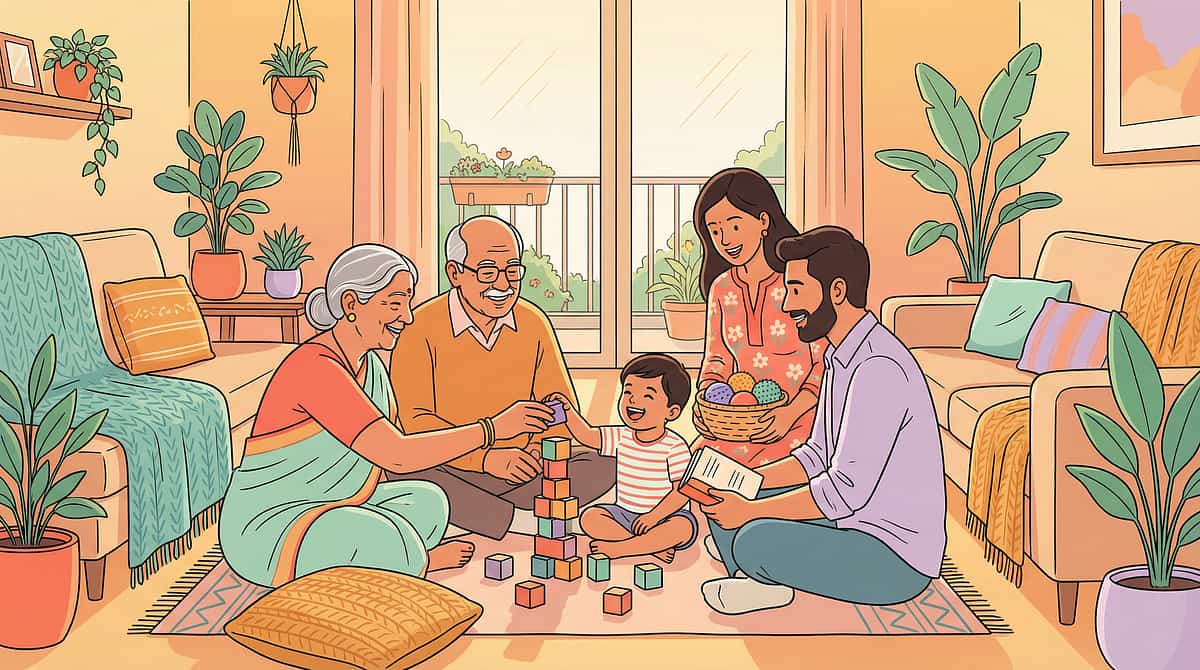
Simplified Grandparent Version
"When [child's name] plays near another child, do not push them to talk or share. Just say: 'Good. You're both here together.' Give them a small treat. Don't ask 'why aren't you playing?' — just notice and reward the presence. That's the therapy."
Teacher Communication Template
"Our child is working on peer proximity tolerance as part of a clinical protocol. For now, please seat them near patient, calm peers during independent activities. Do not prompt direct interaction. Narrate peer-adjacent behavior positively. Thank you."
📱 WhatsApp
Share this page with your partner/family
📧 Email
Send full protocol to school/therapist
🔗 Copy Link
techniques.pinnacleblooms.org/social-development/no-peer-interest-C-301
📞9100 181 181 — We offer FREE caregiver training workshops | Citation: WHO CCD Package — Multi-caregiver training critical for generalization (PMC9978394)
Your Child Is Not Rejecting Peers. They Are Simply Not Yet Drawn to Them. That Can Change.
"You found this page because you noticed. Because you are paying attention. Because you refuse to accept that your child must remain isolated while the world connects around them. That attention — that refusal — is where every breakthrough starts."
📞 Call FREE National Autism Helpline
9100 181 181 | 24×7 | 18+ Languages
Get a free social development consultation with a Pinnacle specialist
🧪 Request AbilityScore® Assessment
Baseline your child's Social Participation Index today
pinnacleblooms.org/ability-score
📋 Download Your C-301 Home Protocol PDF
Print-ready protocol card for your refrigerator
techniques.pinnacleblooms.org/download/C-301
21M+
Sessions Delivered
97%+
Improvement Rate
70+
Centers
70+
Countries
← Previous: C-300 — Joint Attention    → Next: C-302 — No Imaginative Play

Preview of 9 materials that help when child shows no peer interest Therapy Material

Below is a visual preview of 9 materials that help when child shows no peer interest therapy material. The pages shown help educators, therapists, and caregivers understand the structure and content of the resource before use. Materials should be used under appropriate professional guidance.
Page 1
Page 2
Page 3
Page 4
Page 5
Page 6
Page 7
Page 8
Page 9
Page 10
Page 11
Page 12
Page 13
Page 14
Page 15
Page 16
Page 17
Page 18
Page 19
Page 20
Link copied!
The Pinnacle Promise
"Every technique in this library has been developed, reviewed, and validated by the Pinnacle Blooms Network® Consortium — a multidisciplinary body of CROs, Pediatric SLPs, Occupational Therapists, BCBAs, Special Education Specialists, NeuroDevelopmental Pediatricians, Pediatricians, WHO/UNICEF-framework experts, and most importantly — mothers, fathers, and caregivers who have lived this journey.
We do not promise miracles. We promise science, delivered with empathy, at a scale that transforms families — not one at a time, but at population level. 70,000+ techniques. 21 million+ sessions. 97%+ improvement. That is not a claim — that is a measurement."
⚕️ Pinnacle Blooms Network® Consortium Verified

🔗Continue Your Child's Journey → C-302: 9 Materials That Help When Child Plays Alone
techniques.pinnacleblooms.org

CIN: U74999TG2016PTC113063 | DPIIT: DIPP8651 (Govt. of India) | MSME Registered | GSTIN: 36AAGCB9722P1Z2 | © 2025 Pinnacle Blooms Network®, unit of Bharath Healthcare Laboratories Pvt. Ltd. All rights reserved.
This content is educational and does not replace assessment by a licensed developmental pediatrician, psychologist, or behavior analyst. Lack of peer interest may reflect autism spectrum disorder, social anxiety, developmental delay, or other conditions requiring professional evaluation. Some children have naturally lower social needs as part of typical variation. Intervention should respect individual differences while building capacity. Individual results vary. Statistics represent aggregate outcomes across Pinnacle Blooms Network®.
📞 FREE National Autism Helpline: 9100 181 181 | 🌐 pinnacleblooms.org | ✉️care@pinnacleblooms.org
#PeerInterest #SocialMotivation #AutismSupport #PinnacleBlooms #BuildingConnection