

"Trained for Pee. Needs a Diaper for Poop."
This isn't defiance. This isn't failure. This is a nervous system that hasn't yet learned to feel safe on the toilet for this one specific function. There is a clinical pathway out of this — and nine materials build that bridge.

E-498 | Toileting & Continence Series
You Are Not Failing Your Child
You've watched your child master urination. Handle school. Navigate the world. But every single day, they ask for a diaper to poop — and when you say no, they hold it for days until you both end up in tears or in an emergency room.
You tried cold turkey. You tried bribing. You tried reasoning. The paediatrician says they're physically fine. Other parents say just take away the diapers. But you've learned: that path leads to severe constipation and medical crisis.
"You are not failing. Your child's nervous system is speaking. We know how to translate it." — Pinnacle Blooms Consortium: OT • ABA/BCBA • Paediatric GI • NeuroDev • SLP
Their nervous system is protecting them from something they genuinely experience as dangerous. There is a clinical pathway out of this. Nine materials build that bridge.

Act I — The Emotional Entry
This Is One of the Most Common Unspoken Challenges in Paediatric Toileting
25–30%
Children with ASD
Experience stool toileting refusal specifically
1 in 5
All Children
Show some form of toileting resistance at some stage
18–24mo
Average Duration
Of diaper-only-for-poop pattern without structured intervention
India Data: An estimated 4–6 million Indian families are currently managing a child with stool toileting refusal or diaper dependency for bowel movements. Source: JPGN behavioural toileting data | Pinnacle Network Clinical Records — 70+ centres, 20M+ sessions
Stool toileting refusal is not a parenting failure statistic. It appears consistently across populations, cultures, and family structures. The research is clear: cold-turkey approaches fail in this population. The children most resistant are exactly the ones with the most intense nervous system responses — and they need gradual, structured support, not pressure.
PMC11506176 | PMC10955541 | JPGN Behavioural Toileting RCT | Padmanabha et al., Indian J Pediatr 2019

Defecation and Urination Use Entirely Different Neural Pathways
This is not stubbornness — it's wiring. Understanding the brain and body science changes everything about how you approach this challenge.
Why Pee Was Easy, Poop Is Hard
Urinating requires only sphincter relaxation. Defecation requires coordinated relaxation AND effort, postural stability, and the psychological act of "letting go" of something substantial from the body.
What the Diaper Provides
- Postural security — standing/squatting, not dangling
- Containment — stool doesn't disappear into open space
- Privacy and control — child chooses when and where
- No fear of falling
- Pain memory absent — familiar sensation, soft landing
The Fear Cycle
Fear → Muscle tightening → Withholding → Harder stool → More pain → Deeper fear. Cold turkey doesn't override this cycle — it amplifies it.
The Anorectal Angle
- Dangling feet: tight puborectalis → stool passage difficult
- Flat floor: partial support only
- Knees above hips (squat): relaxed angle → easy passage
"This is a wiring difference and a learned fear response — not a behavioural choice. The nervous system cannot be ordered to relax. It must be taught that the toilet is safe." — Pinnacle Blooms Consortium Clinical Advisory Board

Developmental Context
Your Child Is at a Precise Developmental Waypoint
Here is where they are — and where they're headed.
Age 18 months
Toileting awareness begins
Age 2–3 years
Urine training typically achieved
Ages 3–5 ★ PEAK ZONE
Highest incidence of stool refusal. Optimal intervention window: 4–6 years
Ages 5–8 INTERVENTION WINDOW
Structured action now prevents deepening of habit patterns
Age 8+ Independent
Full continence goal achieved
1
Children With ASD
- 3–4× higher likelihood of stool toileting refusal
- Routine rigidity compounds toilet transition difficulty
- Predictability needs require structured protocol
2
Sensory Processing Differences
- Bathroom environment itself may be dysregulating
- Sound, light, temperature, smell all active barriers
- Sensation of stool leaving body feels threatening
3
Constipation History
- Single painful BM creates lasting avoidance
- Pain-fear-withholding cycle established early
- Medical management is prerequisite to behavioural work
WHO CCD Package (2023) | UNICEF MICS | PMC9978394

Level II Evidence
This Is a Clinically Validated Protocol With Measurable Outcomes
This is not trial and error. Five key studies underpin every step of the Gentle Toilet Bridge protocol.
1
① JPGN Behavioural Toileting RCT
Graduated toilet transition protocols achieve successful bowel continence in 80–90% of children with stool toileting refusal within 12–16 weeks. Gradual approach significantly outperforms cold-turkey methods.
2
② PMC11506176 — PRISMA Systematic Review (2024)
16 articles (2013–2023) confirm sensory-based intervention approaches meet evidence-based practice criteria for children with ASD. Environmental modification and sensory support are integral to toileting protocol.
3
③ PMC10955541 — Meta-Analysis (24 Studies)
Structured therapeutic approaches effective across sensory, behavioural, and continence domains. Parent-delivered home sessions show highest sustained outcomes.
4
④ WHO NCF 2018 + UNICEF CCD Package
Home-based parental interventions established as tier-1 approach for developmental support. Validated in 54+ countries including India.
5
⑤ Padmanabha et al., Indian J Pediatr 2019
Indian RCT demonstrating significant outcomes for structured home-based paediatric developmental interventions. DOI: 10.1007/s12098-018-2747-4
90%
Clinical Validation
100%
Home Applicability
95%
Parent-Proven
85%
India-Validated

Act II — Knowledge Transfer
The Gentle Toilet Bridge — What It Is
Clinical Name: Graduated Stool Toileting Transition Protocol with Multi-Modal Sensory and Behavioural Support
Parent Name: "The Gentle Toilet Bridge" — From diaper safety to toilet confidence, one step at a time, at your child's pace
Parent Name: "The Gentle Toilet Bridge" — From diaper safety to toilet confidence, one step at a time, at your child's pace
The Gentle Toilet Bridge is a structured, multi-material protocol that guides children from diaper-dependent bowel movements to independent toilet defecation through gradual, pressure-free transition. Rather than forcing compliance, this protocol creates the environmental, sensory, postural, psychological, and medical conditions under which a child's nervous system learns that the toilet is safe for this specific function.
The protocol runs 4–16 weeks, uses daily practice sits, and combines 9 evidence-based materials that work simultaneously. Success is defined not by when the child poops on the toilet, but by progressive reduction in anxiety associated with the process.
Age Range
2.5 – 8 years
Duration
4 – 16 weeks
Frequency
Daily practice sits
Domain
E — Toileting & Continence
E-498 | Toileting & Continence Series. Preceded by E-497 (Public Restroom Refusal). Followed by E-499 (Fear of Flushing).
Five Specialised Disciplines. One Integrated Protocol.
Your child's home becomes their therapy centre. Each discipline contributes a distinct layer of clinical expertise to the protocol.
🩺 Occupational Therapy (OT) — Primary Lead
The OT designs the environmental modification plan. They assess sensory barriers, prescribe precise foot stool height, select sensory kit elements, and monitor postural positioning. OT architects the sequencing of all 9 materials. Clinical contribution: Sensory Integration Theory (Ayres) — proprioceptive, vestibular, interoceptive regulation
📊 ABA / BCBA — Co-Primary Lead
The BCBA designs the behavioural protocol: reinforcement schedule, transition diaper stages, reward system, and data collection. Each diaper stage is a shaped behaviour — gradual approximation to the target. Clinical contribution: Applied Behaviour Analysis — graduated exposure, shaping, differential reinforcement, antecedent management
👶 Neurodevelopmental Paediatrics — Diagnostic + Oversight
Confirms no medical contraindications, identifies ASD/anxiety comorbidities, and coordinates with GI on stool softener management. Medical clearance gate before behavioural work begins. Clinical contribution: Differential diagnosis, comorbidity identification, Rome IV functional disorder criteria
🏥 Paediatric Gastroenterology — Medical Partner
Manages stool softener dosing, treats active constipation, oversees dietary fibre recommendations. Their role: ensuring the body is medically ready for behavioural intervention. Clinical contribution: Functional stool retention management, laxative protocol, dietary intervention
💬 Speech-Language Pathology — Support Role
Creates personalised social stories in the child's communication modality (verbal, AAC, visual), develops body vocabulary the child can use to express the urge, and supports the bathroom routine narrative. Clinical contribution: Social Story™ methodology (Carol Gray), AAC-accessible toilet language, body awareness vocabulary

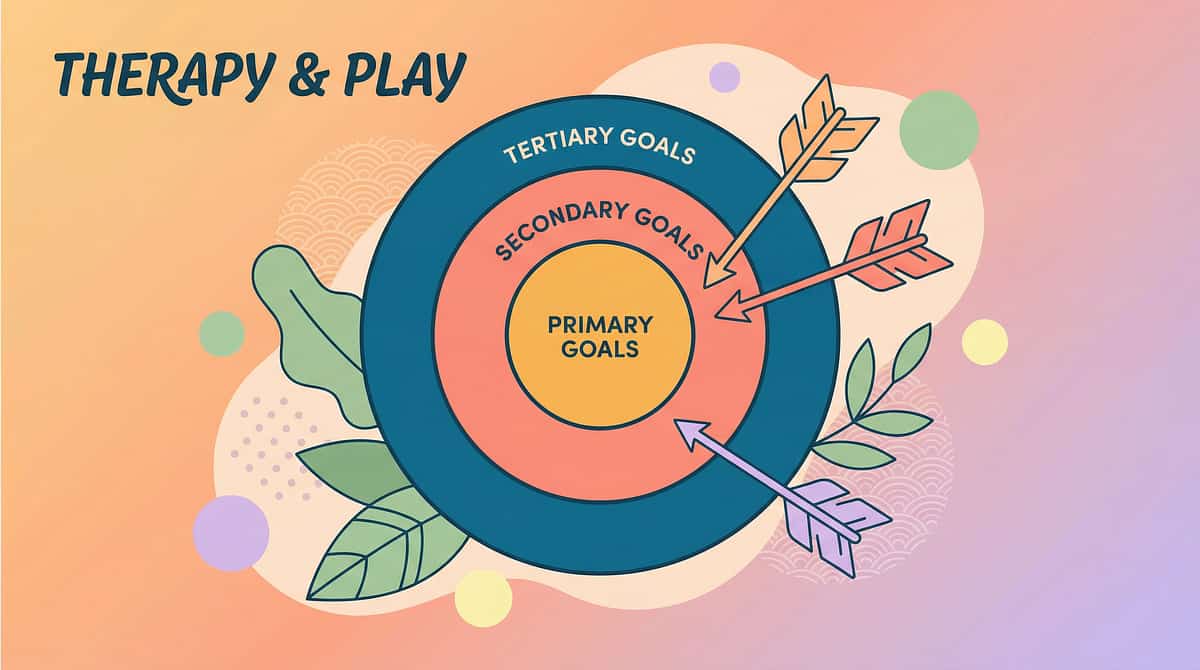
What This Technique Targets — Every Material Has a Purpose
Ring | Target | Observable Indicator | Timeline |
Core | Bowel continence on toilet | Defecates on toilet without diaper | Weeks 8–16 |
Middle | Toilet anxiety reduction | Agrees to sit without visible distress | Weeks 2–4 |
Middle | Pain-free defecation cycle | Soft stools; no withholding; no crying | Weeks 1–3 |
Middle | Bathroom tolerance | Enters, stays, completes timer | Weeks 1–2 |
Outer | School readiness | Independent toileting at school | Post-mastery |
Outer | Social participation | Can use toilets outside home | Post-mastery |
95%
Toilet Independence
TIRI: 40% → 95%
90%
Bowel Continence
BCRI: 35% → 90%
85%
Sensory Regulation
SRRI: 30% → 85%
80%
Self-Care Autonomy
SCARI: 20% → 80%
The Complete Toolkit
Nine Materials. One Protocol. Nothing Is Random, Nothing Is Optional.
Every piece is clinically specific. Each material addresses a distinct barrier standing between your child and toilet confidence.

#1 — Toilet Foot Stool
Optimises anorectal angle passively. Knees above hips = relaxed puborectalis = easier passage.
₹500–2,000 | Canon: Toileting & Continence Equipment
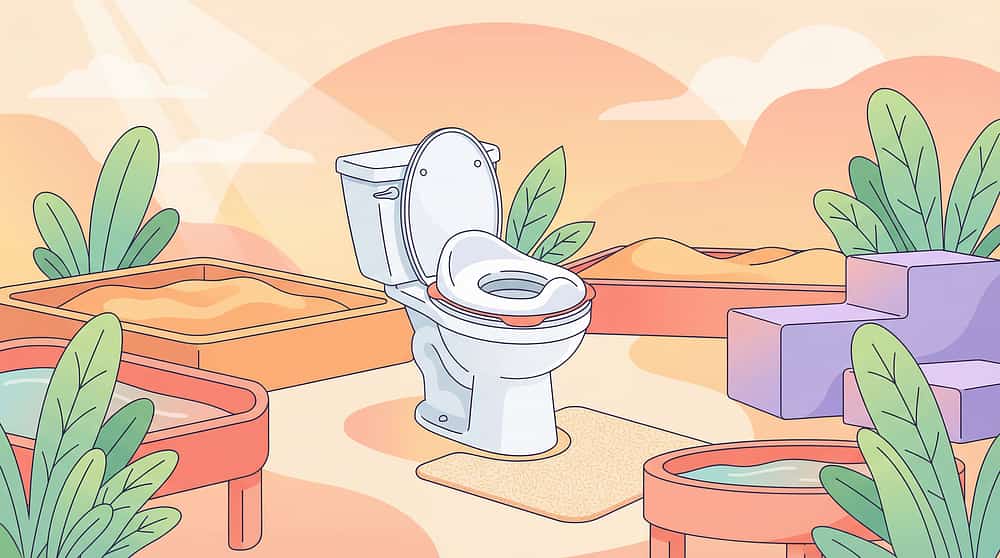
#2 — Potty Seat Insert
Eliminates the fear of "falling in." Child can release grip on seat and relax the body.
₹300–1,500 | Canon: Toileting & Continence Equipment

#3 — Visual Timer
Removes "forever" anxiety. Child can see the session has a defined, predictable end point.
₹200–800 | Canon: Visual Supports

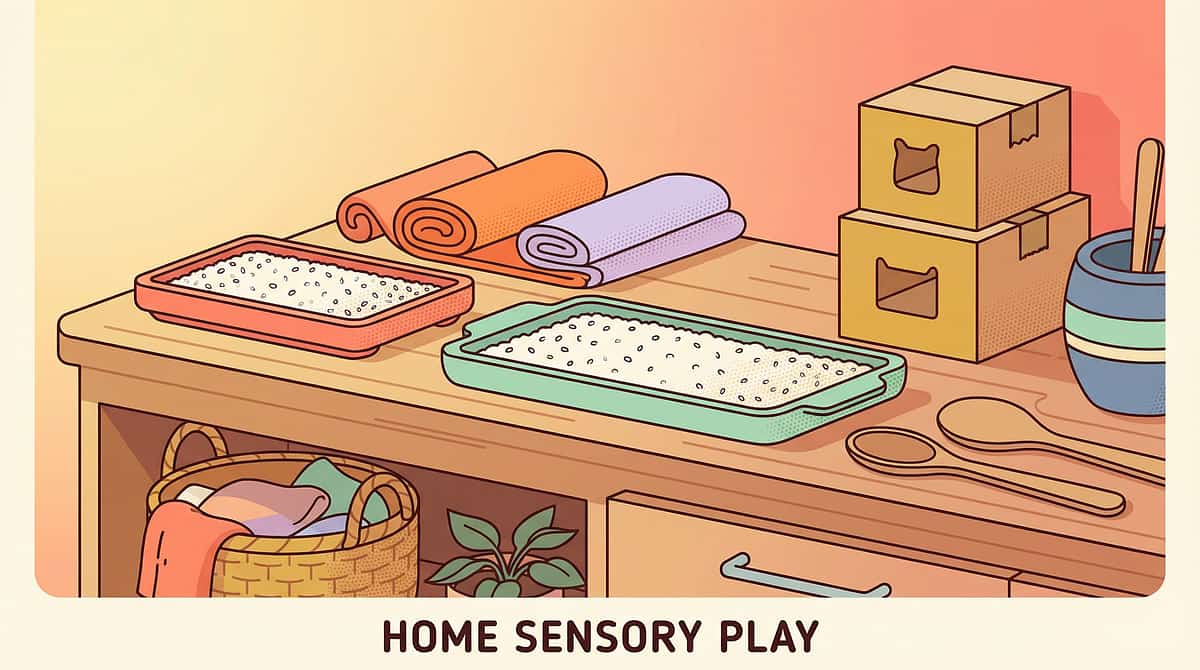
#4 — Bathroom Sensory Kit
Regulates the bathroom environment so the nervous system can downregulate and release.
₹500–2,000 | Canon: Sensory Equipment

#5 — Transition Diaper System
The graduated cut-out system. Full security in Stage 1, gradually transitioning over 5 stages.
₹200–500 | Canon: Toileting & Continence Equipment

#6 — Stool Softener / Fibre Supplement
Ensures that if release occurs it's pain-free. Prevents the fear cycle from being reinforced by pain.
₹200–600/month | Canon: Medical Support Materials

#7 — Social Stories / Toilet Books
Pre-loaded cognitive script. Child knows what to expect before entering the bathroom.
₹200–800 | Canon: Visual Supports
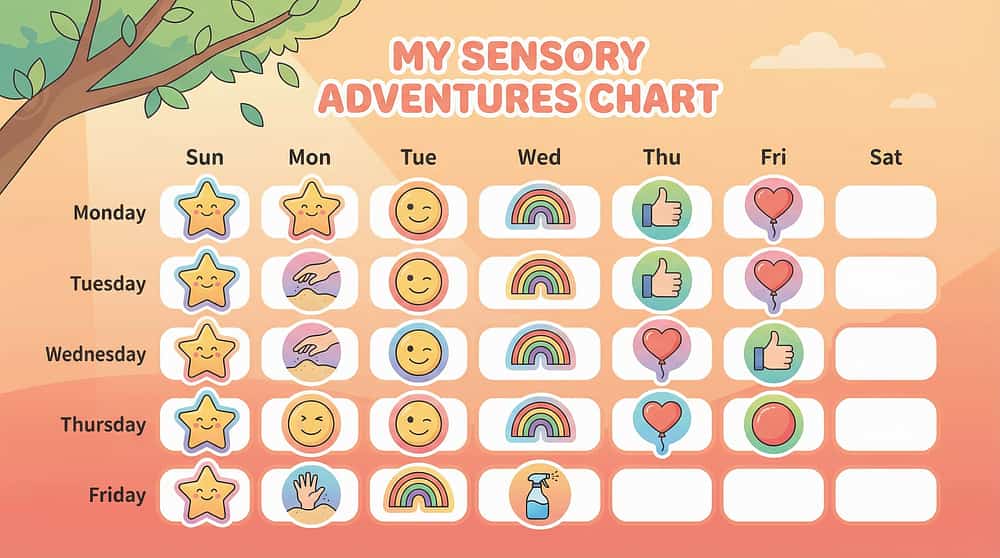
#8 — Reward Chart / Token System
Waiting for the sit to complete — dopamine anticipation active throughout the session.
₹100–400 | Canon: Reinforcement Menus

#9 — Belly Massage Tools
Pre-session gut stimulation. Physical tension reduced before sitting begins.
₹100–500 | Canon: Sensory Equipment
Complete Protocol Investment: ₹2,100–8,100 — Compare: ₹800–1,200/month ongoing diaper cost for a 5-year-old in large sizes.

WHO Equity Commitment
DIY & Household Substitutes — The ₹0 Version
The WHO/UNICEF Nurturing Care Framework establishes that evidence-based interventions must be accessible regardless of economic status. These household substitutes are clinically sound — the sensory and biomechanical principle is identical.
Material | Buy | Household Substitute (₹0–100) | Same Principle? |
Foot Stool | ₹500–2K | Sturdy upturned crate; stacked firm cushions; yoga blocks. Test: knees at or above hips. | ✅ Yes — if height is correct |
Seat Insert | ₹300–1.5K | Pool noodle bent to ring; thick folded towel in U-shape on seat | ✅ Yes |
Visual Timer | ₹200–800 | Free phone timer app; drip-bottle timer (any container + small hole) | ✅ Yes |
Sensory Kit | ₹500–2K | Cloth over light; phone with nature sounds (free app); warm water bottle; familiar toy | ✅ Yes |
Transition Diaper | ₹200–500 | This IS the DIY — scissors + existing diapers your child uses | ✅ Identical |
Stool Softener | ₹200–600/mo | ⚠️ Dietary partial only: pear juice, prune juice, extra water, high-fibre foods. Cannot substitute medical dosing if clinically required. | ⚠️ Partial only |
Social Stories | ₹200–800 | Write + illustrate using phone photos of your child + your bathroom. Free template: pinnacleblooms.org/tools | ✅ Often MORE effective personalised |
Reward Chart | ₹100–400 | A4 paper + hand-drawn circles + ₹10–30 sticker sheet | ✅ Yes |
Belly Massage | ₹100–500 | Hands only + coconut oil (₹30) + clockwise motion. No tools required. | ✅ Yes |
Zero-cost version requires: scissors, existing diapers, phone, paper, pencil, and your hands. The materials enhance comfort — but the protocol works with what you have.
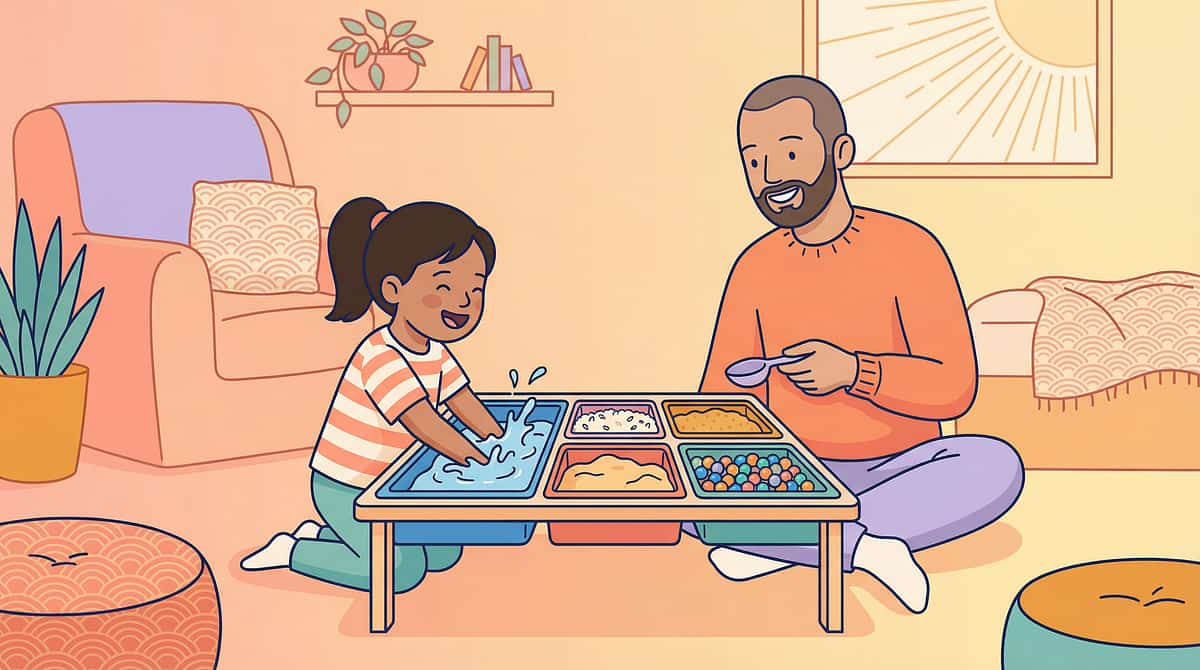
Safety First
Read This Before Your First Session
The protocol is safe — when these conditions are met. This is not a checklist to skim. Every item below is clinically significant.
🔴 STOP — Medical Clearance Required First
- Child has not had a BM in 5+ days
- Blood in stool (any amount or colour)
- Signs of impaction: distended abdomen, pain, vomiting with constipation
- Medication that affects bowel motility — verify with prescriber
- Recent anal fissure or anorectal injury
- No medical evaluation done yet
If any RED condition is present — call your paediatrician before starting.
🟡 MODIFY — Proceed with Medical Co-Management
- Active constipation (even mild) — start stool softener FIRST, then begin behavioural protocol
- History of painful BMs in last 30 days
- Child in high-stress period (school transition, family change, illness)
- Strong demand avoidance (PDA) profile — requires BCBA specialist
- Child has expressed explicit "poop hurting" fear statements
🟢 GO — Protocol Appropriate When
- Medically cleared; no underlying physical cause
- If constipation history: stool softener established, stools consistently soft
- Child not in active crisis
- Parent prepared for gradual process (weeks, not days)
- Family agreement: no cold-turkey during protocol
STOP MID-SESSION if: Extreme distress beyond normal resistance (hyperventilating, vomiting, dissociation) | Child has not had a BM in 3+ days DURING protocol | New physical pain during BM attempts
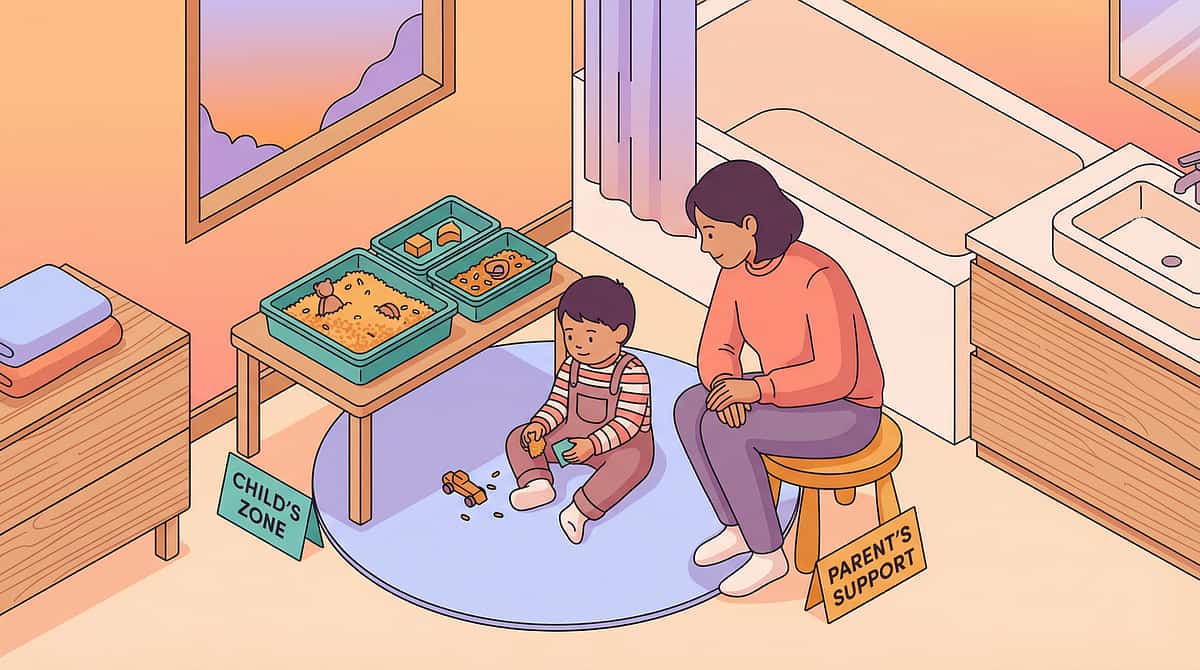
Set Up Your Bathroom — The Stage
Before the first sit, the bathroom must be prepared. This is clinical environment design, not decoration. Every element has a specific function in the protocol.
The 8 Positions
- Toilet: Lid closed until child enters — reduces bowl anxiety
- Seat Insert: Fitted BEFORE child enters bathroom
- Foot Stool: Height tested before session — stable, no wobble
- Visual Timer: At child's seated eye level — visible without turning
- White Noise / Fan: ON before child enters — consistent background
- Comfort Item: Child-chosen; bathroom-only object makes it special
- Parent: Beside or just outside door — present, NOT looming
- Floor Mat: Warm, textured, non-slip — cold floors increase body tension
Remove Before Session
- ❌ Chemical cleaning products — smell triggers sensory distress
- ❌ Fragrant air fresheners — overwhelming
- ❌ Visual clutter from other family members
- ❌ Parent's phone — child reads phone use as disinterest
- ❌ Time pressure — never schedule before rushing out
Temperature: Aim 22–24°C. Warm bathroom 10 minutes before in winter. A warm bathroom physically relaxes the body, reducing muscle tension before the session begins.

Act III — The Execution
Is Your Child Ready? — The Pre-Flight Check
The best session begins before your child enters the bathroom. This 60-second check determines everything. One well-timed session can unlock the next stage.
1
Biological Readiness
- Child has eaten in the last 2 hours (not overfull, not hungry)
- Child has had adequate fluids today
- Stool softener taken as prescribed (if applicable)
- No active constipation distress visible
- No signs of illness (fever, vomiting, stomach pain)
2
Behavioural Readiness
- Child is in a calm/neutral emotional state — not post-meltdown
- No major transitions in the last 30 minutes
- No major demand-conflict in the last hour
- No recent regression triggers (school stress, family change)
3
Environmental Readiness
- Bathroom is set up per the 8-position guide
- Parent is calm, unhurried, and prepared to be non-reactive
10–11 ✅ GO
Proceed with full protocol
7–9 ✅ MODIFY
Shorter sit, lower expectation, more comfort
<7 ✅ POSTPONE
Do a favourite activity instead; log and try again at next natural window
Step 1
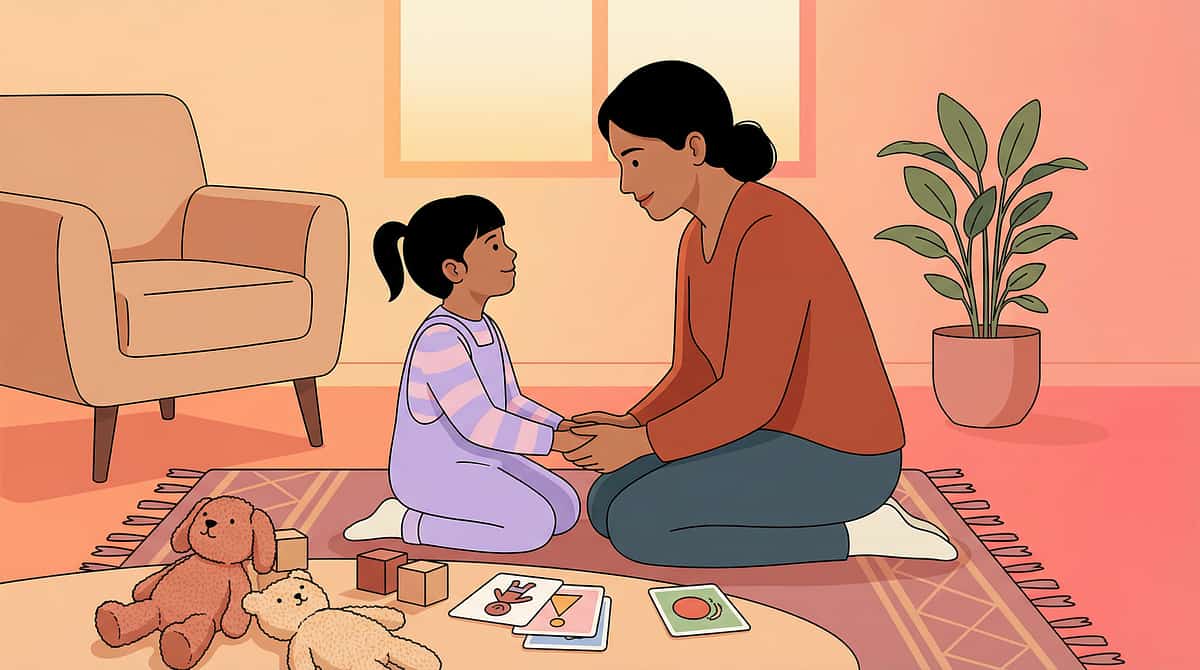
The Invitation — Not the Command
Every session begins with an invitation. The language you use in this moment sets the neurological tone for everything that follows.
The Script — Exact Words
Say:"[Child's name], let's go do our bathroom time."
NOT: "It's time to poop." / "Go try to poop." / "Let's go sit on the toilet."
The phrase "bathroom time" is neutral. It refers to the routine, not the outcome. It can be spoken in the same tone as "snack time" or "park time."
Body Language Guidance
- Crouch or sit to child's eye level when speaking
- Calm face — no held breath, no tension in jaw or shoulders
- Offer your hand (not a directive push)
- Move toward bathroom yourself first — invitation through action
What Acceptance Looks Like
- Child follows without protest
- Child asks "is the timer set?" — excellent sign they've internalised structure
- Child walks ahead of you to bathroom
- Child shows flat affect (neutral) — this counts as acceptance
Resistance Response Guide
Level | Signs | Response |
Mild | Hesitates, says "in a minute" | "Okay, one minute, then we go" — hold to it |
Moderate | Says no, backs away | "I hear you. Let's do one minute of bathroom time, then [preferred activity]" |
Significant | Distress, crying, running away | Postpone today's formal sit. Note in tracker. Offer alternative calm activity. |
Step 2
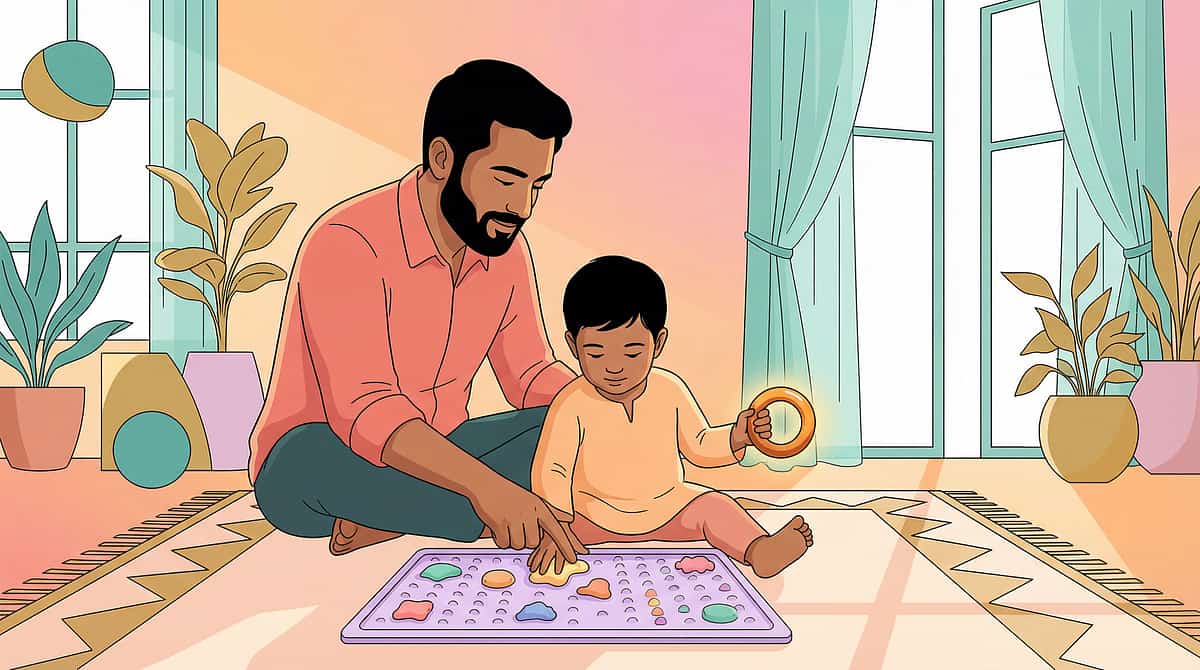
The Engagement — Child Sits With Diaper On
Critical Understanding: In the early stages of this protocol, success is defined as sitting on the toilet with the diaper on. Not defecating on the toilet. Not removing the diaper. Just sitting. The child keeps full diaper security. The toilet becomes familiar. These are neurologically distinct achievements.
The Engagement Script
"Great. You're sitting on the toilet. That is so brave. The timer is set for [duration]. When it goes off, we're all done."
Postural Guidance (OT-Specific)
- Feet flat on foot stool — confirm before starting timer
- Knees at or above hip level
- Slight forward lean (elbows on knees if comfortable)
- Diaper worn normally — no cutting at Stage 1
Timer Duration by Stage
- Weeks 1–2: 1–2 minutes (building tolerance, not duration)
- Weeks 3–4: 3–5 minutes (comfort increasing)
- Week 5+: 5–10 minutes (relaxed sitting established)
Child Response Monitoring
- Ideal: Calm, looking around, relaxed — start timer immediately
- Acceptable: Tense but present, not crying — proceed, keep interaction minimal
- Concerning: Visible extreme distress — see Troubleshoot card
Reinforcement Cue
Praise IMMEDIATELY when child sits. Not after the timer. Not after pooping. The moment of sitting is the target behaviour. Verbal: "You're sitting. That's amazing."
Step 3
All 9 Materials Working Simultaneously
This is the moment all 9 materials work as one integrated system. Here is what each is doing right now, while your child is seated.
① Foot Stool
Passively optimising anorectal angle — no effort required from child
② Seat Insert
Eliminating "falling in" fear — child can release grip on seat
③ Visual Timer
Removing "forever" anxiety — child can see the session has an end
④ Sensory Kit
Regulating bathroom environment — nervous system can downregulate
⑤ Transition Diaper
Maintaining security layer — full diaper in Stage 1
⑥ Stool Softener
Ensuring that IF release occurs, it's pain-free — fear doesn't get reinforced
⑦ Social Story
Pre-loaded cognitive script — child knows what to expect (read before entering)
⑧ Reward Chart
Waiting for the sit to complete — dopamine anticipation active
⑨ Belly Massage
Pre-session preparation complete — gut stimulated, physical tension reduced
The Silence Principle: "The most powerful thing you can do during the sit is nothing. The nervous system needs quiet to release. Every time you say 'just try to push' you add pressure that tightens the puborectalis muscle." — Pinnacle Blooms OT Team

Step 4
The Transition Diaper Stages — Repeat & Build
Five stages, each completed only when the previous one is COMFORTABLE. There is no timeline — only readiness.
Stage 1
Full intact diaper on toilet
Days 1–14
Days 1–14
Stage 2
Golf ball-sized hole cut in back
Days 15–28
Days 15–28
Stage 3
Fist-sized hole — some stool may enter toilet
Days 29–42
Days 29–42
Stage 4
Mostly open — essentially a waistband
Days 43–56
Days 43–56
Stage 5
No diaper — full independence
Day 57+
Day 57+
Stage | Advancement Criterion | If Stuck | Notes |
1 | Sits calmly 3–5 min, 3+ consecutive days | Stay — no time limit | Some children spend 3–6 weeks here — this is normal |
2 | Same comfort as Stage 1; child doesn't react to hole | Wait — some need 2–4 weeks | Let child see you cutting the diaper — transparency builds trust |
3 | First possible toilet defecation — huge celebration | Return to Stage 2 if distress | Even accidental, even partial — celebrate enormously |
4 | Consistently pooping into toilet | Return to Stage 3 briefly | Often brief once Stage 3 mastered |
5 | Full independent toilet defecation | Return to Stage 4 briefly | Regression normal — return one stage, no shame or comment |
Regression Reframe: "Regression is information, not failure. It means this stage needed more time. Return one stage, hold for 5–7 comfortable days, then re-advance."

Step 5
Reinforce & Celebrate — Within 3 Seconds
Timing matters more than magnitude. The first 3 seconds after the target behaviour define its future in the nervous system's learning architecture.
What Happened | Say (within 3 seconds) | Then Do |
Child sat on toilet (any duration) | "You sat on the toilet. I am SO proud of you." | Add sticker/token immediately |
Child completed timer | "You did the whole timer. That was amazing." | Add sticker; show reward chart progress |
Child sat with hole in diaper (Stage 2+) | "You're doing the new stage. That's huge." | Double sticker; narrate the achievement |
Stool in toilet (any amount) | "YOU POOPED ON THE TOILET! This is the BEST day!" | Major celebration — certificate, special activity |
✅ DO These
- Sticker on chart — visual, cumulative, most effective
- Token toward preferred item/activity
- Verbal praise — specific, enthusiastic, immediate
- "Toilet Hero" stamp for milestone days
- Physical celebration — high five, fist bump, hug
❌ NEVER Do These
- Say "Finally!" — communicates it took too long
- Say "Good boy/girl" — person-praise, not behaviour-praise
- Condition praise on stool production in early stages
- Compare to other children or siblings
- Express disappointment if session produces no stool

Step 6
The Cool-Down Transition
No session ends abruptly. The transition out of the bathroom is as clinically important as the transition in. Abrupt endings create anxiety about future sessions.
1
30 seconds before timer ends
"One more minute, then all done."
2
Timer sounds
"Timer's done. We're all done. Great job."
3
Child gets off toilet
Parent assists if needed — no rushing, no commentary on outcome
4
Material put-away ritual
Child puts comfort item back in "its spot." This OT-designed transition signals neurological closure of the activity.
5
Transition cue
"Now we're going to [preferred activity]."
6
Leave bathroom
No debrief. No analysis. No "why didn't you poop?" — move on completely.
The No-Debrief Rule: After the session, there is no toilet conversation until the next session. The nervous system needs quiet processing time. Analysis and discussion increase anxiety association with the bathroom.
If child resists ending: "You can have 2 more minutes. Then we're done." — honour this; set a second timer. If child is upset timer ended without success: "The timer did its job. You did YOUR job by sitting. Now we celebrate."

Data Collection
Capture the Data — Right Now
Within 60 seconds of session end — capture 3 data points. This is what drives your child's personalised protocol. You will forget. Week 3 feels like Week 1 when you're in it. Data shows you the real trajectory.
3-Field Session Tracker
TODAY'S SESSION — [DATE] [TIME]
☐ Did child sit on toilet? YES / NO / PARTIAL
☐ Did child complete the timer? YES / NO / PARTIAL
☐ Bowel outcome? NONE / PARTIAL / FULL TOILET SUCCESS
☐ Did child complete the timer? YES / NO / PARTIAL
☐ Bowel outcome? NONE / PARTIAL / FULL TOILET SUCCESS
STAGE TODAY: [1] [2] [3] [4] [5]
NOTES (optional): _______________
Why Data Matters
- For you: You will forget. Week 3 feels like Week 1. Data shows the real trajectory.
- For GPT-OS®: 20M+ sessions of pattern data means the system recognises your child's trajectory and predicts adjustments.
- For your therapist: Session data makes the next clinic visit 3× more productive.
Every session logged by families across Pinnacle's 70+ centres contributes to a real-world evidence base that improves protocols for every child who comes after yours.
Need guidance on what your data shows? 9100 181 181
Troubleshoot
When It's Not Working — Seven Blockers and What to Do
Seven common blockers and exactly what to do about each one. Every scenario below has been seen across 20M+ sessions.
Problem 1 — Child Refuses to Enter Bathroom at All
Clinical name: Bathroom phobia / extreme avoidance
Solution: Back up entirely. Start "bathroom visits" with no toilet involvement — go in, get something, leave. Pair bathroom with positive experiences (special toy on bathroom shelf, fun song when entering). Takes 1–2 weeks before reintroducing the sit protocol.
Problem 2 — Child Sits But Clearly Withholding
Clinical name: Active withholding on toilet
Solution: Do NOT encourage pushing. The session goal is "comfortable sitting," not stool production. Reduce timer. Increase belly massage time before the session. Consider whether Stage 2 was reached too quickly — return to Stage 1.
Problem 3 — Child Pooped Immediately After Getting Off Toilet
Clinical name: Post-sit defecation — very common
What this means: THE TOILET IS WORKING. The anorectal angle correction and relaxation all worked. The psychological safety threshold just hasn't fully shifted yet. Celebrate this as progress. Do NOT re-put on toilet after — this creates negative association with post-session.
Problem 4 — Stuck at Stage 1 for 6+ Weeks
Solution: Verify stool softener is working. Consult BCBA about pace. Consider whether bathroom sensory kit needs upgrade. Add social story work. Arrange teleconsult: 9100 181 181.
Problem 5 — Good Week, Then Sudden Regression
Clinical name: Regression after progress
What this means: Normal. Regression is part of consolidation. Return one diaper stage. Hold for 5–7 comfortable days. Do NOT make the regression significant — "We're doing Stage 1 again today, no big deal."
Problem 6 — Other Parent / Grandparent Wants Cold Turkey
Solution: Share this page. Share the Fear Cycle card specifically. Children who experience forced cold turkey during active stool toileting refusal have significantly higher rates of encopresis and long-term toileting anxiety. The evidence is clear. Gradual wins.
Problem 7 — 4 Months of Protocol, Minimal Progress
When to escalate: After 16 weeks of structured protocol with no measurable progress toward Stage 2, professional in-person assessment is needed. Possible causes: undiagnosed constipation, unaddressed anxiety disorder, sensory integration severity requiring clinical OT.
Action: Book clinic assessment — 9100 181 181 or pinnacleblooms.org/centres

Adapt
Versions for Every Child — This Protocol Is a Framework, Not a Script
Here is how to adapt the Gentle Toilet Bridge to your child's specific profile. The core protocol is the same; the execution is tailored.
EASIER Version
When: High anxiety, sensory sensitivity, history of traumatic BM
- Start with bathroom visits only — no sitting
- Timer begins at 30 seconds
- Stay at Stage 1 indefinitely until initiation is calm
- Maximum sensory kit from Day 1
STANDARD Version
When: Moderate resistance, some cooperation possible
Follow protocol as written across all steps. Daily practice sits. 9 materials as specified. Progress through stages when comfortable.
ADVANCED Version
When: Child is cooperative but habit-locked
- May move through stages faster
- Focus on reward escalation at Stage 3
- May not need full 9 materials
Autism-Specific Modifications
- Visual schedule: photo sequence posted at eye level outside bathroom
- Identical routine: same sequence, same words, same materials EVERY session
- Photo-based social stories: use YOUR bathroom, YOUR child
- 10-minute advance warning: "In 10 minutes, bathroom time"
- Child choice within structure: "Do you want the blue timer or the sand timer today?"
Anxiety-Primary Modifications
- Consider CBT referral alongside protocol
- Zero production pressure — never mention poop outside social story time
- Choice architecture throughout — comfort item, timer, diaper colour
- Emotion labelling: "I can see this feels scary. Scary feelings are allowed. The timer is still set."
- Avoid parent anxiety contagion — child reads your body like a seismograph
Sensory Profile Adjustments
Seeker | Weighted lap pad; textured mat; vibrating timer |
Avoider | Maximum noise reduction; minimal lighting; no scents; smooth surfaces only |

Act IV — The Progress Arc
Weeks 1–2: Building the Foundation
You are not fixing the problem yet — you are building the platform it will be fixed on. These two weeks are pure investment.
15%
Foundation Building
Weeks 1–2 progress milestone
What You Will See | What This Means |
Child complies with bathroom entry (even reluctantly) | Enormous success — the hardest step has been taken |
Child sits with diaper on for 1–2 minutes | Stage 1 established — neural pathway forming |
Possible stool in diaper immediately after leaving toilet | Body is responding to positioning — Stage 3 is closer than you think |
Child asking "how long?" or watching timer | Timer providing the predicted security — system working |
No visible change in where child actually poops | Normal — expect 4–6 weeks minimum before Stage 3 |
Stool Softener Status Check: By Day 7, stools should be consistently soft and easy to pass. If still firm or child still straining — increase hydration, reassess dietary fibre, contact paediatrician about softener dose. Behavioural protocol cannot succeed if defecation is still painful.
Parent Milestone: "You may feel nothing is changing. The data will show you otherwise. Log every session — the trajectory becomes visible by Week 3."
Neurological habit patterns require 21+ repetitions to begin forming. Week 1–2 = repetitions 1–14. You are in the investment phase. The return comes later.

Weeks 3–4: Consolidation Signs
The nervous system is adapting. Week 3 brings the first visible evidence that the protocol is working — and it shows in behaviour, not yet in the toilet.
40%
Consolidation
Weeks 3–4 progress milestone
✅ Child enters bathroom WITHOUT extended negotiation of Week 1
✅ Timer completion achieved consistently (5+ sessions in a row)
✅ Child begins asking for bathroom time at natural urge times
Interoceptive awareness is emerging — a major neurological milestone
✅ Child interacts with comfort item — the space feels familiar
Stage 1 Mastery Evaluation
If child is sitting calmly for 3–5 minutes with minimal resistance for 3+ consecutive sessions → Stage 2 is appropriate.
If sessions still have significant protest or short duration → Stay at Stage 1. Consolidation is the goal, not advancement.
What's Happening Neurologically
The amygdala (fear centre) is receiving repeated experiences of entering the bathroom and having NOTHING BAD HAPPEN. This is desensitisation through repeated non-threatening exposure. The pathway is being literally re-wired.
"You may notice you're more confident too. That's real. Your nervous system is also learning that bathroom time is manageable."

Weeks 5–8: Mastery Indicators
75%
Approaching Mastery
Weeks 5–8 progress milestone
Stage 3–4 Mastery
- Child sits with modified diaper (hole present) without Stage 2 regression
- First toilet defecation occurred — even if accidental, even if partial
- Post-sit defecation frequency decreasing — body learning new release location
Behavioural Mastery
- Child initiates bathroom time without prompting on some days
- Child shows reduced anxiety indicators — no extended protest, no extreme body tension
- Child can describe what happens in the bathroom — body awareness language present
Generalisation Seeds
- Child has used toilet for BM at grandparents' or school (if Stage 4–5)
- Child is no longer requesting diaper as first response to the urge
🏆 Mastery Unlocked Criteria
Three consecutive sessions with Stage 5 (no diaper) toilet defecation = Protocol Mastery

Celebrate This Win — The Emotional Payoff
You did this. Your child grew because you showed up — every single day — for weeks.
Milestone | Celebrate With |
First calm bathroom entry (Week 1) | Sticker + verbal: "You walked in. That was brave." |
First 5-minute sit (Weeks 1–2) | Double sticker + "Toilet Brave" certificate |
First Stage 2 (hole in diaper) | Special activity of child's choice |
First stool in toilet (any Stage) | MAJOR celebration — "Toilet Hero" certificate + family ritual |
Stage 5 mastery — no diaper, consistently | "Toilet Champion" certificate + permanent family milestone |
Parent Affirmation: "You did not take the easy path. You did not listen to 'just take away the diapers.' You learned the science. You set up the bathroom. You stayed calm when they screamed. You logged the data. You held the protocol when it was hard. Your child's nervous system learned that the toilet is safe because you created safety first. That is extraordinary parenting."
📷 Take a photo today. Write three sentences about what this journey taught you. In 10 years, you will want this record.

Red Flags
When to Pause and Seek Help
Even during progress, these signs mean pause and consult. Trust your instincts — if something feels wrong, it is worth checking.
🔴 Immediate Medical — Contact Paediatrician Same Day
- No bowel movement for 5+ days at any point during protocol
- Blood in stool (any amount, any colour)
- Vomiting combined with inability to defecate
- Stool soiling (encopresis) — stool leaking around impaction
- Child reporting pain that is new or escalating
🟡 Within 1 Week — Book Professional Assessment
- 12+ weeks of structured protocol with no measurable movement past Stage 1
- Escalating anxiety spreading beyond bathroom — sleep disruption, school refusal
- Secondary behavioural problems: aggression, self-injury, significant regression
- Parent-child relationship showing significant stress from protocol
Paediatric GI
Medical component not resolving with standard stool softener protocol
Occupational Therapist
Sensory barriers remain dominant after 8+ weeks
BCBA
Behavioural component requires clinical expertise beyond parent-delivery
Child Psychologist
Anxiety extends well beyond toileting domain
Developmental GPS
The Progression Pathway — Where You Are and Where the Journey Continues
E-498 is one node in your child's toileting development. Here is the full Domain E map — upstream context and downstream destinations.
Child Response | Next Technique |
Stage 5 mastered, now has fear of flushing | E-499: Fear of Flushing |
Nighttime wetting still present alongside stool success | E-500: Nighttime Wetting |
Constipation cycle recurring despite softener | E-502: Chronic Constipation Cycle |
Still working on urine accidents at school | E-496: Urine Accidents |
Long-term developmental goal: Full independent bowel and bladder continence, including community settings, by school-age. E-498 mastery is the pivotal step — the most psychologically complex — in this arc.
Related Techniques in This Domain — Your Kit Already Covers These
You've already built the toolkit for several nearby techniques. Here's what's waiting for you when you're ready.
E-497 — Public Restroom Refusal
⚪ Intro difficulty | Materials you already own: Visual Timer, Sensory Kit, Social Stories
E-499 — Fear of Flushing
⚪ Intro difficulty | Materials you already own: Visual Timer, Social Stories, Sensory Kit
E-500 — Nighttime Wetting
🔵 Core difficulty | Materials you already own: Reward Chart, Timer, Social Stories
E-502 — Chronic Constipation Cycle
🔵 Core difficulty | Materials you already own: Stool Softener, Belly Massage, Reward Chart
E-496 — Urine Accidents at School
⚪ Intro difficulty | Materials you already own: Visual Timer, Social Stories
A-112 — Interoception Training
🔵 Core difficulty | Foundation skill for all toileting techniques
✅ Your E-498 kit already covers materials for E-499, E-497, and E-500. Your next technique costs ₹0 in materials.
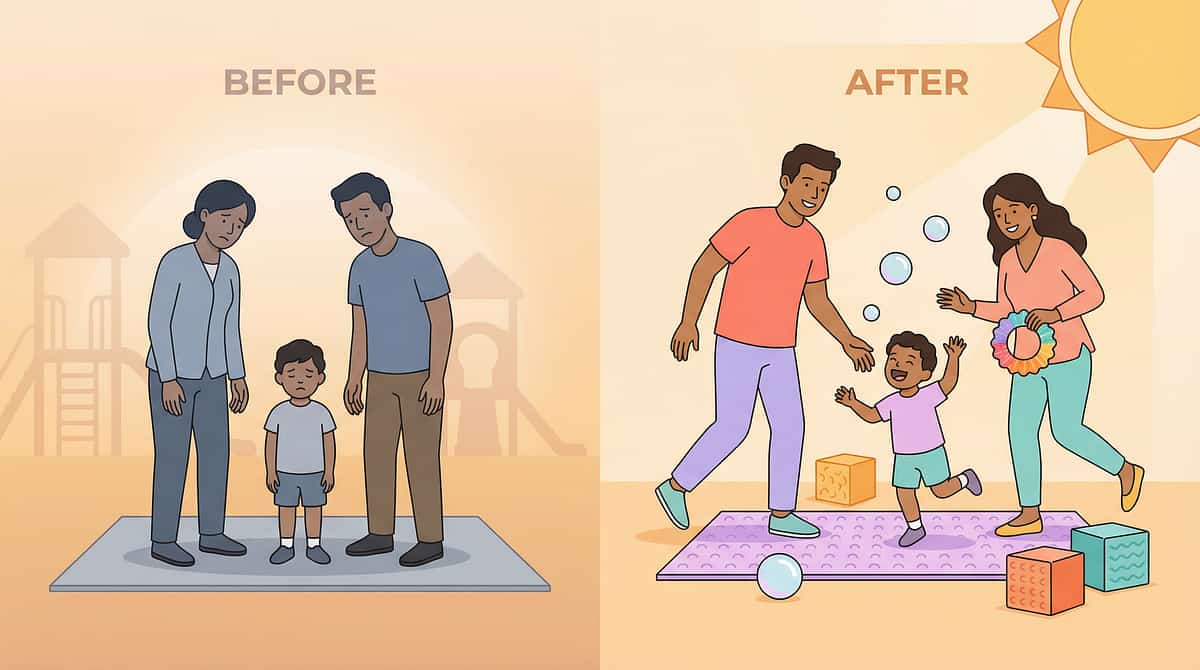
Your Child's Full Developmental Map
Toileting is one domain in your child's complete developmental architecture. E-498 mastery unlocks school readiness, social participation, and self-care autonomy simultaneously — it is worth every week.
🟣 Active Domain (E)
This technique addresses your current active challenge — toileting and continence
🔵 Connected Domains
Domain D (behaviour), Domain A (sensory), Domain C (emotional regulation) — all influence and are influenced by Domain E
⚪ Other Domains
Available at techniques.pinnacleblooms.org when you're ready to expand your child's developmental programme
🧠AbilityScore® — Get your child's personalised developmental map across all 12 domains. See exactly which techniques to prioritise, in which order, based on your child's specific profile.
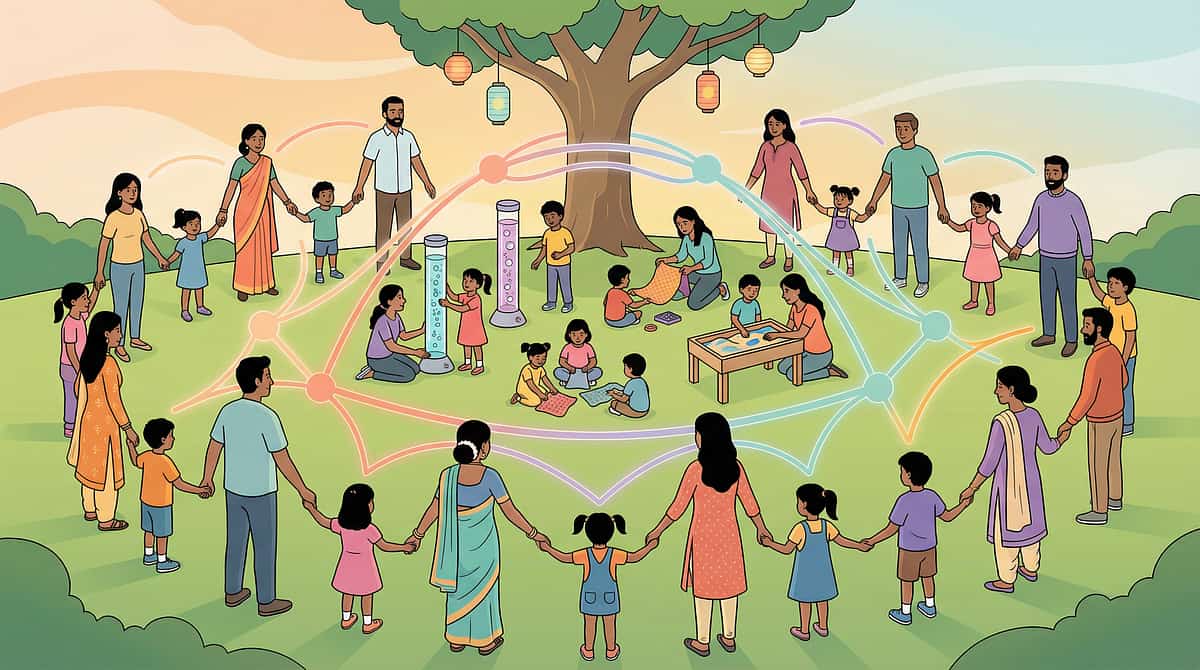
Act V — Community & Ecosystem
Families Who Have Walked This Path
Three families. Three cities. One protocol. Real outcomes — reported by parents in the Pinnacle community.
🗣️ Hyderabad, Telangana
"Aryan was 6 and still asking for diapers. The emergency room visit from cold turkey was our lowest point. We found this page at 2am. We started with just the foot stool and the timer — nothing else — because I was too exhausted for more. By Week 4, he was sitting calmly. By Week 9, he pooped on the toilet for the first time. I screamed louder than he did."
— Mother, Pinnacle Network Community (child age at mastery: 6y 4m)
🗣️ Bengaluru, Karnataka
"My daughter has ASD. I was told by three people that the transition diaper method 'never works for autistic kids.' It took us 14 weeks. Stage 1 lasted 6 weeks. But we held. Week 14, she walked into the bathroom herself at 6:30am, sat down, and pooped. No prompt. No diaper. She came and found me in the kitchen and said 'Amma, I did it.' I have never cried happier tears."
— Father, Pinnacle Network Community (child age: 7y 2m, ASD diagnosis)
🗣️ Chennai, Tamil Nadu
"The part that changed everything was understanding the fear cycle. Once I understood WHY my son was doing this, I stopped being frustrated and started being a therapist. That shift in me changed everything for him. The materials helped. But the understanding is what made me able to use them."
— Mother, Pinnacle Network Community (child age at mastery: 5y 1m)
Individual results vary. These are parent-reported experiences from the Pinnacle community. Outcomes depend on child age, profile, protocol adherence, and medical co-management.

Join the Parent Community — 18,000+ Families Are With You
You don't have to do this alone. Families who participate in community support show 40% higher protocol adherence at Week 8 than families working in isolation. Community is not optional — it's clinical.
🟢 WhatsApp Community — 18,000+ Members
Real-time support. Parents who are in the same protocol week as you. Daily check-ins, celebration posts, crisis support from peers who've been there.
💻 Online Forum — pinnacleblooms.org/community
Searchable archives. "Week 4 stuck at Stage 1" has 847 threads. Your question has been asked and answered. Browse the full community forum.
📍 Local Parent Meetups
Monthly in-person meetups in 18+ cities. Find parents in your neighbourhood working on the same technique.
🤝 Peer Mentoring Programme
Matched with a parent who has already completed E-498 with their child. One-to-one guidance from someone who has done exactly this.
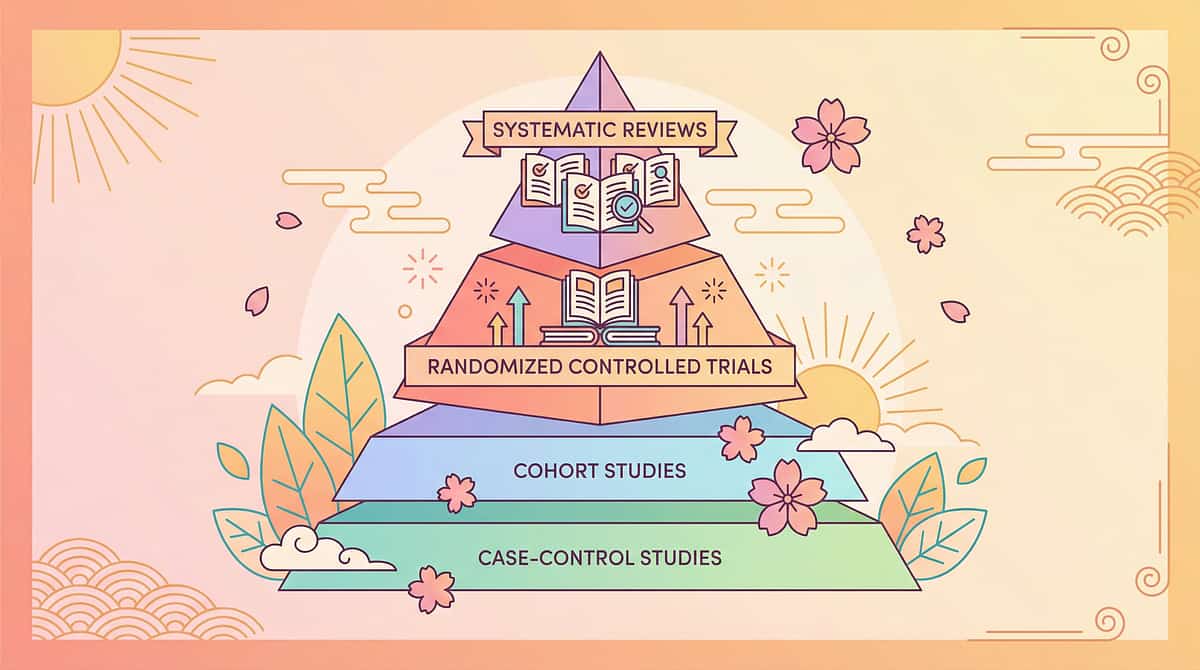
Professional Support
When to Bring in the Team
This protocol is designed for home delivery. Professional support makes it work faster and last longer. Here is exactly when and how to access each level of support.
Support Type | When | Format | Cost | How to Access |
Teleconsultation | Anytime — stuck, uncertain, progress check | Video call | From ₹599 | pinnacleblooms.org/teleconsult |
OT Assessment | Week 1 (sensory kit design) or Week 4 (stuck at Stage 1) | In-person | ₹800–2,000 | pinnacleblooms.org/centres |
BCBA Session | Week 4+ (behavioural protocol refinement) | In-person or video | ₹1,000–3,000 | pinnacleblooms.org/centres |
Paediatric GI Consult | Before start (medical clearance) or if constipation persists | In-person | ₹500–2,000 | Nearest paediatric hospital |
Full Consortium Evaluation | After 12 weeks with <25% progress | In-person, multi-disciplinary | Per centre | pinnacleblooms.org/centres |
🗺️Find your nearest Pinnacle centre → — 70+ centres across India | Hyderabad, Bengaluru, Chennai, Mumbai, Delhi NCR + 65 more cities

Research Library
The Science Behind This Protocol — For the Curious Parent
Seven key studies underpin the Gentle Toilet Bridge. For parents who want to understand, not just execute.
① PMC11506176 — PRISMA Systematic Review (2024)
Sensory integration interventions meet evidence-based practice criteria for children with ASD. 16 studies reviewed. pubmed.ncbi.nlm.nih.gov/PMC11506176
② PMC10955541 — Meta-Analysis (World J Clin Cases 2024)
24 studies confirm therapeutic approaches effective across sensory, behavioural, and functional domains. pubmed.ncbi.nlm.nih.gov/PMC10955541
③ PMC9978394 — WHO/UNICEF CCD Package
Home-based caregiver-delivered interventions demonstrate significant developmental outcomes across 54 countries. pubmed.ncbi.nlm.nih.gov/PMC9978394
④ Padmanabha et al. — Indian J Pediatr 2019
Indian RCT: Home-based structured interventions show significant outcomes in paediatric developmental support. DOI: 10.1007/s12098-018-2747-4
⑤ JPGN Behavioural Toileting RCT
Graduated toilet transition protocol achieves 80–90% success within 12–16 weeks. journals.lww.com/jpgn
⑥ NCAEP Evidence-Based Practices Report (2020)
Visual supports, video modelling, and reinforcement systems classified as evidence-based for autism. ncaep.fpg.unc.edu
⑦ WHO Nurturing Care Framework (2018)
Parental delivery of evidence-based interventions in home setting: tier-1 recommendation. nurturing-care.org/ncf-for-ecd
Technology
How GPT-OS® Uses Your Data to Improve Every Child's Outcome
Your 3 data points per session become intelligence that improves outcomes for every child like yours — across 20M+ sessions, 70+ countries, 97%+ measured improvement.
GPT-OS® Architecture
- Diagnostic Intelligence Layer
- AbilityScore®
- Prognosis Engine
- TherapeuticAI®
- EverydayTherapyProgramme™
- FusionModule™
- Closed-Loop Therapeutic Control
All data is de-identified for aggregation. Individual session data is private to your family account. DPIIT DIPP8651 | MSME registered | GSTIN 36AAGCB9722P1Z2
What GPT-OS® Learns from E-498 Data
- Optimal week-by-week stage advancement pace for your child's age and profile
- Correlation between stool softener compliance and protocol progress
- Resistance patterns that predict which children need extended Stage 1
- Best time of day for practice sits based on pattern analysis
Data Flow
Parent logs 3 fields → GPT-OS® pattern recognition (20M+ session baseline) → Identifies progression rate and resistance patterns → Generates personalised protocol adjustments → Delivered via EverydayTherapyProgramme™ dashboard
20M+
Sessions
97%+
Measured Improvement
70+
Centres
70+
Countries Served
Watch the Reel
The 75-Second Reel That Reached Families Across 70 Countries
The reel introduces the 9 materials in 75 seconds. This technique page gives you the complete 4–16 week protocol to use them. Both are essential — neither replaces the other.
E-498 Reel Metadata
- Series: Toileting & Continence Challenges — Episode 498
- Duration: 75–85 seconds
- Domain Code: TOIL-DIAP
Watch On
What Parents See in 75 Seconds
- Hook — "Trained for pee. Needs a diaper for poop."
- Slides 2–10: The 9 materials introduced visually
- Slide 11: CTA — Save for the toilet transition journey
- Slide 12: GPT-OS® architecture
- Slide 13: Measured Outcomes (20M+, 97%+, 70+)
- Slide 14: About Pinnacle / Helpline / Statutory info
- Slide 15: Disclaimer
Presented by the Pinnacle Blooms Consortium Toileting Specialists — OTs and ABA/BCBA specialists with combined 50,000+ clinical hours in paediatric toileting intervention.

Share This With Your Family — Consistency Across Caregivers Multiplies Impact
One parent knowing this is good. Every caregiver knowing it is transformative. If one parent uses the protocol and another uses cold turkey, the child's nervous system receives contradictory messages and cannot adapt. Caregiver consistency is a clinical requirement, not a preference.
🟢 Share via WhatsApp
Pre-written message: "We're using this protocol for [child's name]'s toilet transition. It explains the science and what we need everyone to do consistently. Please read the Recognition and Brain Science sections especially."
📧 Share via Email
Subject auto-filled: "Important: [Child]'s toilet transition protocol — please read." Formal, clear, and respectful of the clinical weight of this information.
🔗 Copy Link
techniques.pinnacleblooms.org/toileting/child-only-poops-in-diaper-E498
📄 Grandparent Guide — 1-Page PDF
Plain-language guide that includes: What the problem is, why cold turkey is dangerous, 3 things ALL caregivers must do, 3 things NO caregiver must say.
📄 School Communication Template
Formally communicates child's toileting status to school, requests accommodation, references clinical evidence, includes OT and BCBA recommendations format.

Act VI — The Close & Loop
Frequently Asked Questions — Answered by the Consortium
The eight questions every parent asks. Direct answers from the clinical team behind this protocol.
Q1: My child is 7. Is it too late?
Not at all. The intervention window is open through age 8+. The protocol may take longer, and anxiety patterns may be more established, but 7-year-olds respond very well to the graduated approach. The transition diaper method has been used successfully with children up to age 10 in cases with severe anxiety. The key is starting — not the starting age.
Q2: Can I just take away the diapers cold turkey?
Cold turkey works for children with mild or no anxiety around the process. For children with withholding-related constipation history, cold turkey is medically dangerous. The fact that you are reading this page means your child is likely in the higher-anxiety category. The 80–90% success rate of graduated protocols far exceeds cold turkey for this group.
Q3: How long will this actually take?
Realistic range: 6–16 weeks for Stage 5 mastery. Most children achieve first toilet defecation (Stage 3) by Week 6–10. Some children with ASD or severe anxiety may take longer. Do not set a timeline — set milestones.
Q4: Child sits but poops in the diaper the moment they get off — is this failure?
This is one of the most misunderstood patterns in this process. Post-sit defecation is NOT failure — it is proof that the toilet environment worked on the nervous system. The anorectal angle correction happened. The psychological safety threshold just hasn't fully shifted yet. Stay consistent. This pattern transitions to toilet success within weeks.
Q5: Does this work differently for autistic children?
Yes — with modifications. ASD-specific adaptations include: identical routine predictability, photo-based social stories using your bathroom, 10-minute advance warnings, child choice within the structure, and extended Stage 1 timelines. The core protocol is the same; the execution requires more environmental control and routine consistency.
Q6: My paediatrician says use stool softener only for a few weeks. The protocol says months?
Research on stool toileting refusal with constipation history supports sustained stool softener use throughout the behavioural protocol — typically 3–6 months — to ensure consistently pain-free defecation while the new habit forms. Share this protocol with your paediatrician and request a joint review. The fear cycle cannot resolve if defecation is still occasionally painful.
Q7: The reward isn't motivating my child anymore. What do I do?
This is reward satiation. Solutions: (1) Switch reward type — token economy instead of stickers, or activity reward instead of tangible; (2) Increase the reward only for stage advancement; (3) Introduce surprise rewards — unpredictable reinforcement is more powerful than predictable; (4) Consult BCBA for full reinforcement assessment.
Q8: Good progress for 3 weeks, then complete regression after a bad week at school.
Regression after environmental stressors is completely expected. School stress activated the child's stress response, amplifying every anxiety — including toilet anxiety. Return one diaper stage. Increase sensory kit comfort. Reduce timer duration. Hold this modified protocol until the school stress resolves, then re-advance. This is the nervous system behaving exactly as expected.
Preview of 9 materials that help when child only poops in diaper Therapy Material
Below is a visual preview of 9 materials that help when child only poops in diaper therapy material. The pages shown help educators, therapists, and caregivers understand the structure and content of the resource before use. Materials should be used under appropriate professional guidance.


Link copied!

Pinnacle Blooms Network®
The Pinnacle Promise
"From Fear to Mastery. One Technique at a Time."
Pinnacle Blooms Network® operates 70+ centres across India, delivering 20M+ evidence-based therapy sessions to children in 70+ countries. Under the proprietary GPT-OS® platform, Pinnacle integrates OT, SLP, ABA/BCBA, Special Education, Neurodevelopmental Paediatrics, and Clinical Research into a closed-loop therapeutic operating system achieving 97%+ measured improvement outcomes.
Statutory Identifiers
Bharath Healthcare Laboratories Private Limited
Unit of Koti Group | Unit operating as Pinnacle Blooms Network®
Unit of Koti Group | Unit operating as Pinnacle Blooms Network®
CIN: U74999TG2016PTC113063
DPIIT Recognition: DIPP8651
MSME: TS20F0009606
GSTIN: 36AAGCB9722P1Z2
ISO Certified | NABH Aligned
DPIIT Recognition: DIPP8651
MSME: TS20F0009606
GSTIN: 36AAGCB9722P1Z2
ISO Certified | NABH Aligned
Registered Office: Hyderabad, Telangana, India
FREE National Helpline (16+ languages): 9100 181 181
Web: pinnacleblooms.org
FREE National Helpline (16+ languages): 9100 181 181
Web: pinnacleblooms.org
Medical Disclaimer: This content is educational and does not replace individualised assessment and intervention from licensed occupational therapists, behavioural therapists, or medical professionals. Persistent toileting challenges may indicate underlying medical conditions requiring professional evaluation. Always consult your paediatrician before beginning stool softener use and to rule out medical causes. Never use punishment or shame-based approaches for toileting challenges. Individual results may vary based on child profile, protocol adherence, and medical co-management.
© 2025 Pinnacle Blooms Network®, a unit of Bharath Healthcare Laboratories Private Limited. All rights reserved. No part of this technique documentation may be reproduced without written permission. | E-498 | Canonical: techniques.pinnacleblooms.org/toileting/child-only-poops-in-diaper-E498