

"He Doesn't Point. He Takes You There."
When your child wants something across the room — the juice, the toy, the door to go outside — he doesn't point or call out. He walks to you, grabs your hand, and physically leads you there. Every single time. Like you're his personal transportation system. You've counted how many times today. You've wondered if something is different. You've searched for answers. You found the right page.
"When he wants something, he grabs my hand and walks me to it. To the fridge, to the door, to his toys. Like I'm his GPS." — Parent, Pinnacle Network
Communication & Gesture Development Series | Episode B-133
Age: 12–48 months
Domain: Distal Communication & Gestural Development

Thousands of Parents Are Walking This Same Path. Literally.
Physical leading — when a child takes your hand and walks you to what they want instead of pointing or asking — is one of the most common communication patterns seen in children with developmental differences between 12 and 36 months. It is NOT misbehavior. It is NOT manipulation. It is NOT a sign of poor parenting.
It is your child communicating the only way they currently know how — through the most direct, physical channel available to them. And that takes intelligence.
80+
Centers
Observing this pattern daily across India
12–36
Month Band
Most common age range for this communication difference
70+
Countries
Families served through Pinnacle's GPT-OS® platform
"Physical leading tells us the child HAS communication intent. They want something and they're finding a way to tell you. Our job is to build more efficient alternatives — not to shut down the intent." — Pinnacle Blooms SLP Consortium Lead

Your Child's Brain Chose the Most Direct Route
When we communicate at a distance — pointing, calling out, using words — our brain is coordinating multiple systems simultaneously: visual attention, motor planning for gesture, language retrieval, and social monitoring of the other person's response. For children whose communication networks are developing at a different pace, pointing and verbal requesting require more neural coordination than is currently available. Physical leading is the brain's elegant workaround: it bypasses the complex distal communication chain and solves the problem directly.
6–9 months
Reaching toward nearby objects
9–12 months
Pointing begins — close targets first
12–18 months
Pointing across distance; following others' points
18–24 months
Words supplement and gradually replace physical communication
24+ months
Conventional verbal requesting becomes primary
Key Distinction: B-132 (Hand as Tool) = using your HAND to manipulate objects. B-133 (Physical Leading) = using your WHOLE BODY as transportation to a location. Both are communication differences. Both are addressable. Both are different.
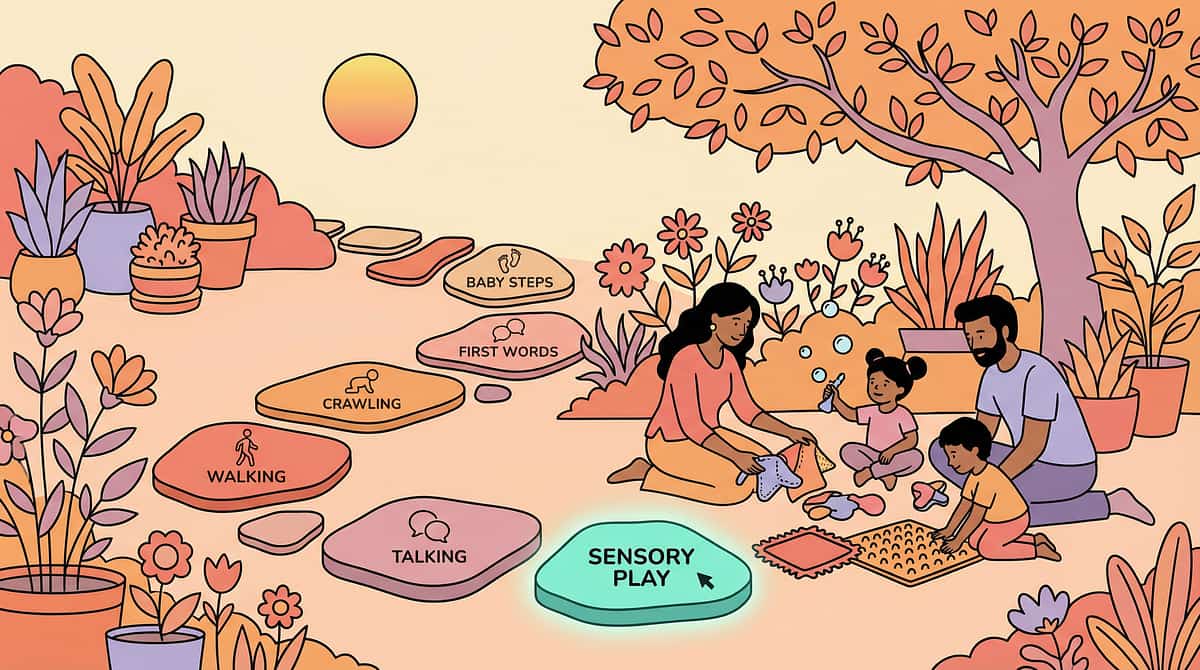
In a Joint Family, Everyone Becomes the Child's Transport System
In Indian households — where grandparents, aunts, uncles, and multiple caregivers often share space — physical leading can go unnoticed for longer. When 6 adults are available to be "transported," the child's need to develop distal communication is never stressed. Everyone responds. The pattern never needs to change. This is not blame. This is structure.
Child leads Nani to the kitchen
For biscuits — Nani obliges immediately
Child pulls Dada to the toy shelf
Dada obliges — no pointing required
Child drags Amma to the door
To go outside — Amma obliges every time
No one has required pointing
Because leading always works — so leading continues
The intervention starts not with the child. It starts with the entire caregiving ecosystem learning to create gentle, loving space for the child to attempt distal communication. The WHO Nurturing Care Framework (2018) explicitly identifies responsive caregiving as requiring consistency across all caregivers — not just parents.
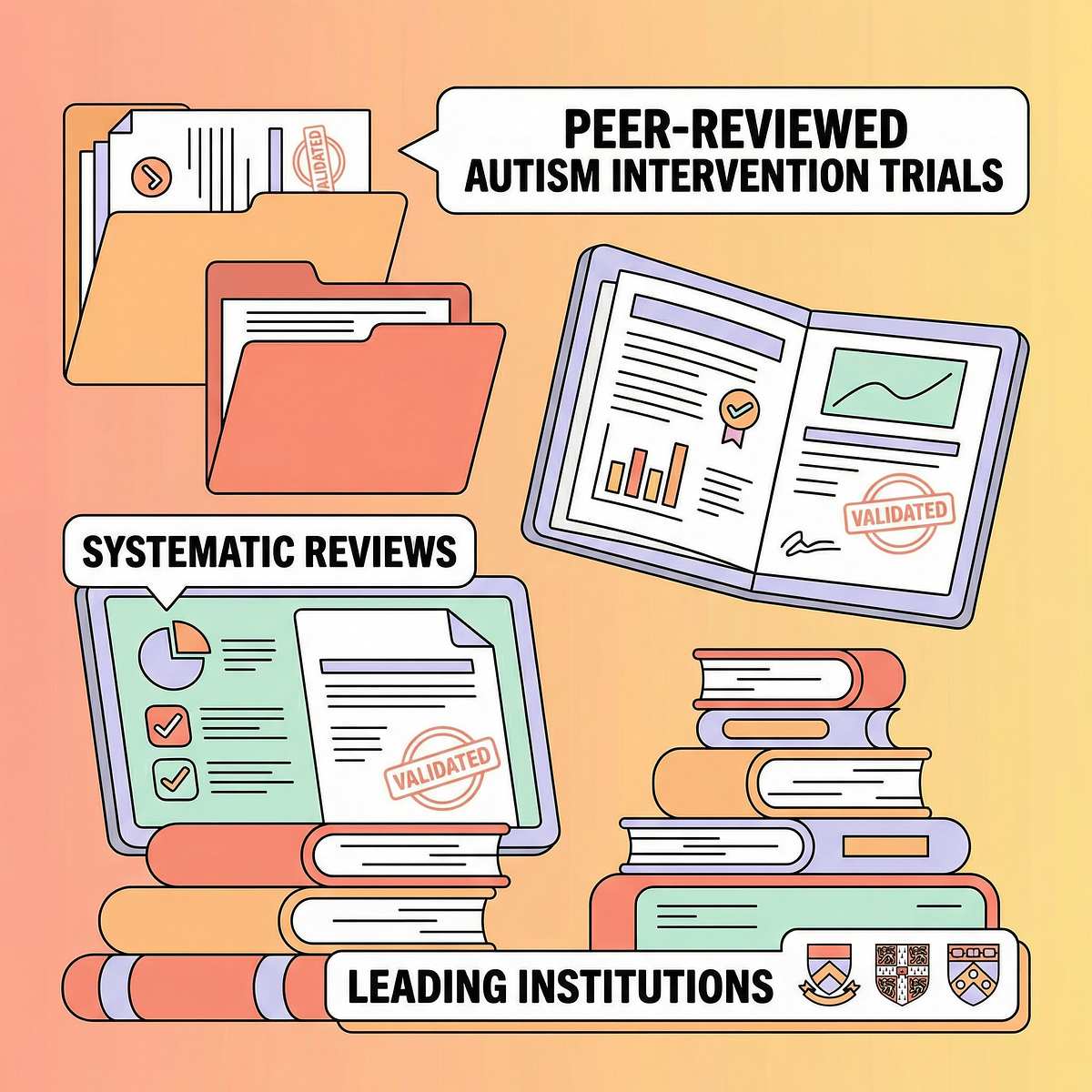
This Is Not Guesswork. This Is Clinically Proven.
⭐⭐⭐⭐ Level I — Systematic Review + RCT Evidence
Kasari et al. (2006)
Joint attention intervention including pointing and distal gesture produces measurable communication gains. Controlled trial. PMID: 16565585
Bondy & Frost (2001)
Picture Exchange Communication System: Level I evidence for building functional requesting as an alternative to physical leading.
NCAEP Report (2020)
Visual supports, AAC, and naturalistic developmental behavioral interventions classified as evidence-based practices for ASD.
Padmanabha et al. (2019)
Indian RCT: Home-based communication interventions showed significant developmental outcomes in Indian pediatric population. DOI: 10.1007/s12098-018-2747-4
PMC11506176 (2024)
Systematic Review: 16 studies (2013–2023) confirm multi-modal developmental intervention meets EBP criteria for ASD.
Bottom Line: Clinically validated. Home-applicable. Parent-proven. Consortium-delivered. This technique draws from the top two levels of the evidence pyramid.
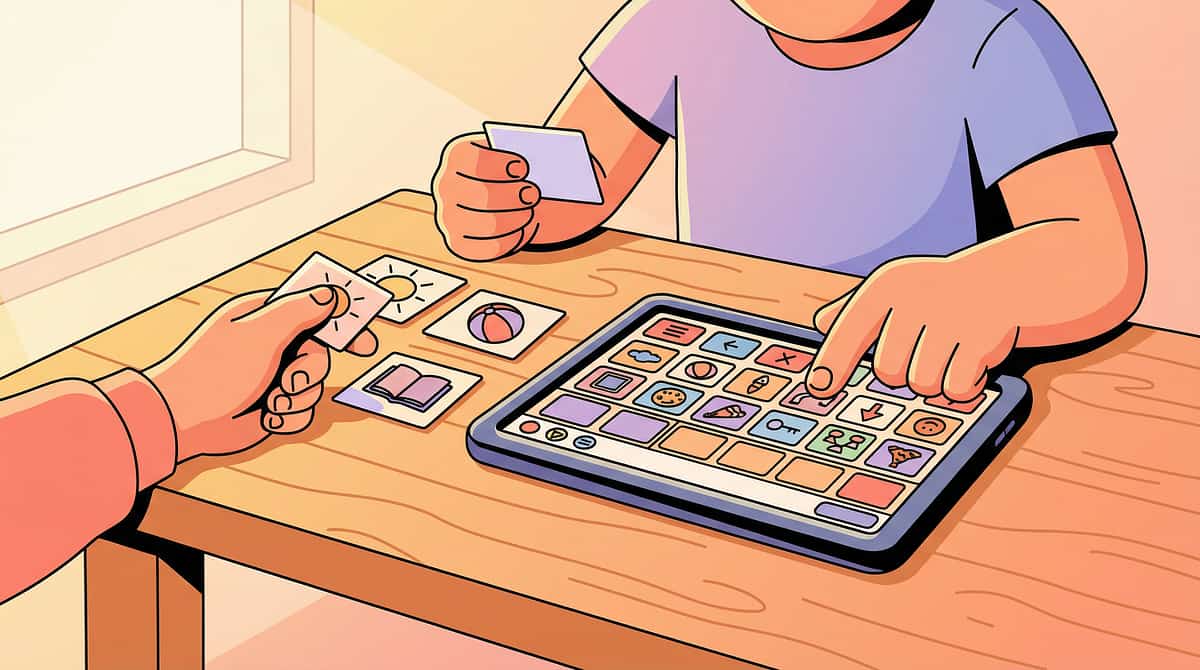
Physical Leading to Objects — Building Distal Communication
Technique B-133
Parent Alias: Teaching Your Child to Point Instead of Pull
Formal Definition: Physical Leading (B-133) is a prelinguistic communication pattern in which a child physically takes an adult by the hand, arm, or clothing and leads them to a desired object, location, or activity — rather than using pointing, gestures, words, or symbols to communicate from a distance. This technique series uses structured materials and naturalistic practice to build distal communication — the ability to indicate wants and share attention across space without physical proximity.
Domain
Behavioral / Developmental — Distal Communication & Gestural Development
Age Range
12–48 months
Session Duration
10–20 minutes
Frequency
Daily practice integrated into natural routines
Disciplines
SLP (lead) | ABA | OT | NeuroDev
This page introduces 9 material categories that address physical leading from different angles: some build pointing, some create portable communication alternatives, some make distal communication necessary. Together they form a comprehensive home ecosystem.

This Technique Crosses Every Therapy Boundary. Here's Why.
The brain doesn't organize by therapy type. Physical leading sits at the intersection of language, behavior, motor planning, and learning — which is why the most effective programs for B-133 bring multiple disciplines to the table simultaneously.
Speech-Language Pathologist (Primary Lead)
SLPs design the distal communication ladder: from physical leading → pointing → picture exchange → words. PECS is an SLP-delivered protocol directly addressing this pattern. SLPs assess AAC needs, select appropriate devices, and train families.
Applied Behavior Analyst (ABA)
ABA provides the reinforcement architecture: identifying motivating operations, structuring prompting hierarchies, and shaping successive approximations toward pointing. ABA governs the data system.
Occupational Therapist (OT)
Motor planning for pointing involves upper limb isolation, finger extension, and proprioceptive awareness. OT addresses the motor component of pointing development and ensures materials are sensory-appropriate for each child's profile.
Special Educator
Integrates distal communication goals into structured learning contexts: identifying objects by picture, following pictorial instructions, matching image to item. Bridges clinic to classroom to home.
Consortium Validated
Pinnacle Blooms Network® Multi-Disciplinary Consortium
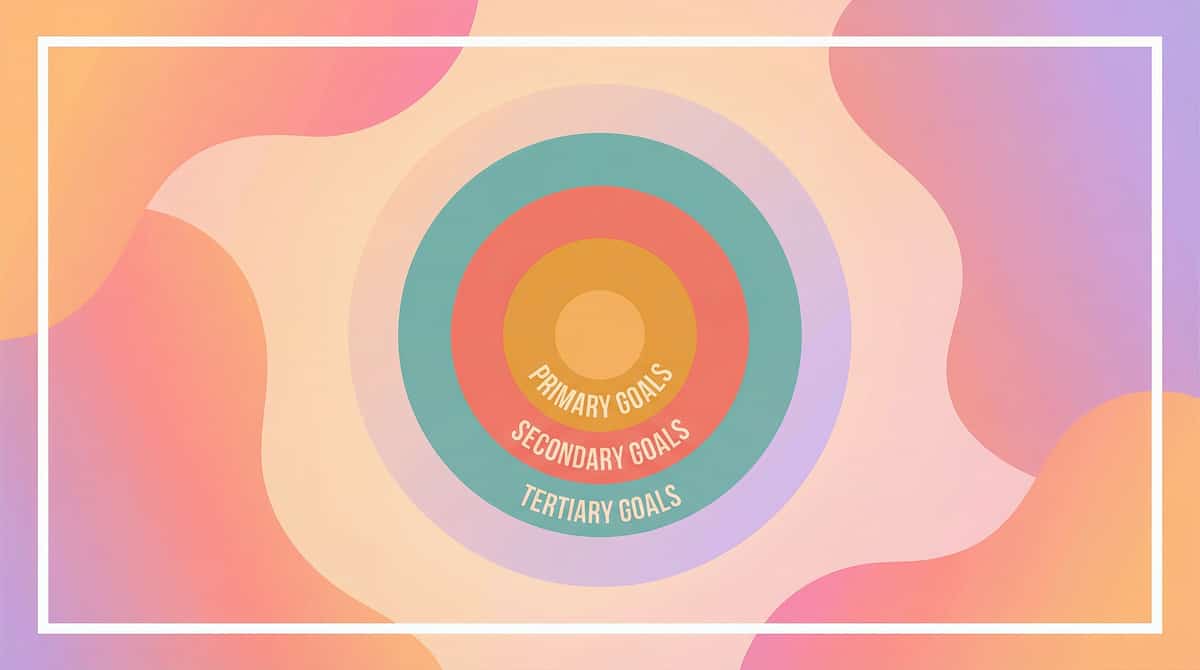
This Isn't a Random Activity. It's a Precision Tool.
The primary target is Distal Communication Development: the child points to objects from across the room, uses pictures or AAC to request without physical leading, and communicates wants without requiring physical proximity. Secondary targets include joint attention, requesting vocabulary, functional independence, and frustration tolerance. Tertiary targets include language emergence, social reciprocity, early theory of mind, and school readiness. This technique progresses along the Communication Readiness Index — Distal Communication & Gestural Development subdomain within GPT-OS® AbilityScore®.

9 Materials. Every One Evidence-Linked. Every One Available in India.
Each of these 9 material categories addresses physical leading from a different angle — some build pointing directly, some create portable communication alternatives, and some make distal communication structurally necessary. Together, they form a complete home intervention ecosystem.
1
Pointing Targets at Distance
Large laminated pictures or wall-mounted photos at child's eye height + 30cm. Creates clear visual targets for distance pointing practice. ₹200–800
2
Request Cards & Communication Boards
PECS-style picture cards the child can bring to the adult — the picture travels instead of the adult. ₹200–1,000
3
Big Button Communicators (AAC)
Single-message or multi-message voice output devices — the child presses, the device speaks. ₹1,500–8,000
4
Visual Schedules with Request Option
Velcro-based daily schedule boards with a dedicated "I WANT" section — the child moves the picture instead of the adult. ₹300–1,500
5
Distance Games & Activities
I-Spy, hide-and-find, scavenger hunts — games that make pointing across space natural and rewarding. ₹0–500
6
Environmental Pointing Targets
Bird feeders, window placements, outdoor setups — things to point at that can never be physically reached. ₹0–500
Materials 7–9: Photo Albums, Flashlights & Barrier Games
7. Photo Albums of Places
Custom photo books of familiar destinations — child shows photo of "park" instead of leading adult to the door. ₹100–500 | Canon: Personal Photo Communication Aids
8. Laser Pointers / Flashlights (Supervised)
Light-beam pointing tools that make the pointing vector visible. Supervised use only. ADULT HOLDS ONLY — never hand to child. Pen-type only, never high-powered. ₹100–500
9. Barrier Games
Physical barriers between child and adult — communication is required because leading is impossible. Keep early versions to 2-minute sessions. ₹0–300 | Canon: Communication Necessity Activities
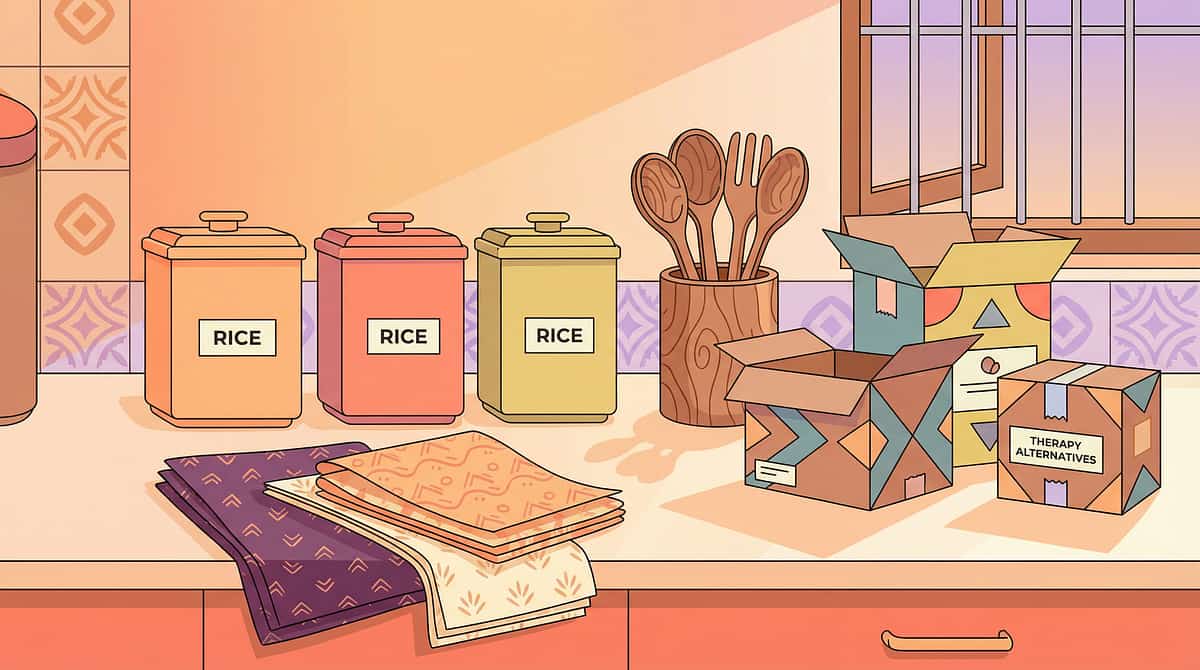
Total Range: ₹600–13,600+ for comprehensive setup — and many items are zero-cost. Every material has a free or low-cost alternative. See the DIY card that follows for your no-budget starter kit.

No Budget? No Problem. Your Home Is Already Full of These Materials.
WHO Principle: Every intervention in the Pinnacle system has a zero-cost version. The WHO Nurturing Care Framework (2018) mandates equity-inclusive intervention delivery. Here is your complete DIY alternative guide.
Material | DIY Version | |
Pointing Targets | Large printed photos laminated with tape. Old magazine pictures. Poster-size prints from a local print shop (₹10–30 each). | |
Request Cards | Photos from your phone printed at any photo shop (₹5–10 each). Laminate with clear tape. Use velcro dots from any stationery shop. | |
Big Button AAC | FREE AAC apps: LetMeTalk (Android), Cboard (browser). Your child's tablet is a speech device right now. | |
Visual Schedule | Cardboard + printed photos + velcro. "I WANT" section = a box drawn in red marker. | |
Distance Games | Favorite small toys hidden around the room. No purchase required. | |
Environmental Targets | Your window + the street outside + birds + vehicles. Free. Already there. | |
Photo Albums | Phone photos printed at a local photo shop. ₹3–5 per print. A small album = ₹50–100. | |
Flashlight | Any torch in your home. Child points the beam. You follow the beam. Free. | |
Barrier Games | A folder, a hardcover book, or a piece of cardboard. Free. |
Zero-Cost Start Kit: Window pointing + distance toy-finding games + 3 printed request cards = a functional communication program starting today for under ₹100.
Read This Before Every Session. It Takes 60 Seconds. It Matters.
🔴 RED — STOP
Active meltdown or post-meltdown (within 30 min) • Signs of illness or fever • Laser pointer without strict adult supervision — NEVER unsupervised (eye damage risk) • Extreme aggression in the last hour • Adult is not regulated — frustration transfers
🟡 AMBER — MODIFY
Child is tired but not dysregulated — reduce session to 5 min • Child resists pointing targets — use closest targets first • Child becomes frustrated — immediately honor ANY attempt • AAC device is unfamiliar — spend first 3 sessions just exploring, no demands
🟢 GREEN — GO
Child fed, rested, regulated ✓ • No major disruptions in last 2 hours ✓ • Parent/caregiver regulated and present ✓ • Motivating targets identified ✓ • Materials prepared and accessible ✓
Material-Specific Safety:⚠️ Laser pointers: ADULT HOLDS ONLY. Never hand to child. Use pen-type, not high-powered. ⚠️ Small objects in hide games: ensure no choking risk for children under 36 months. ⚠️ Barriers in barrier games: must be stable and not fall on the child.

Spatial Precision Prevents 80% of Session Failures.
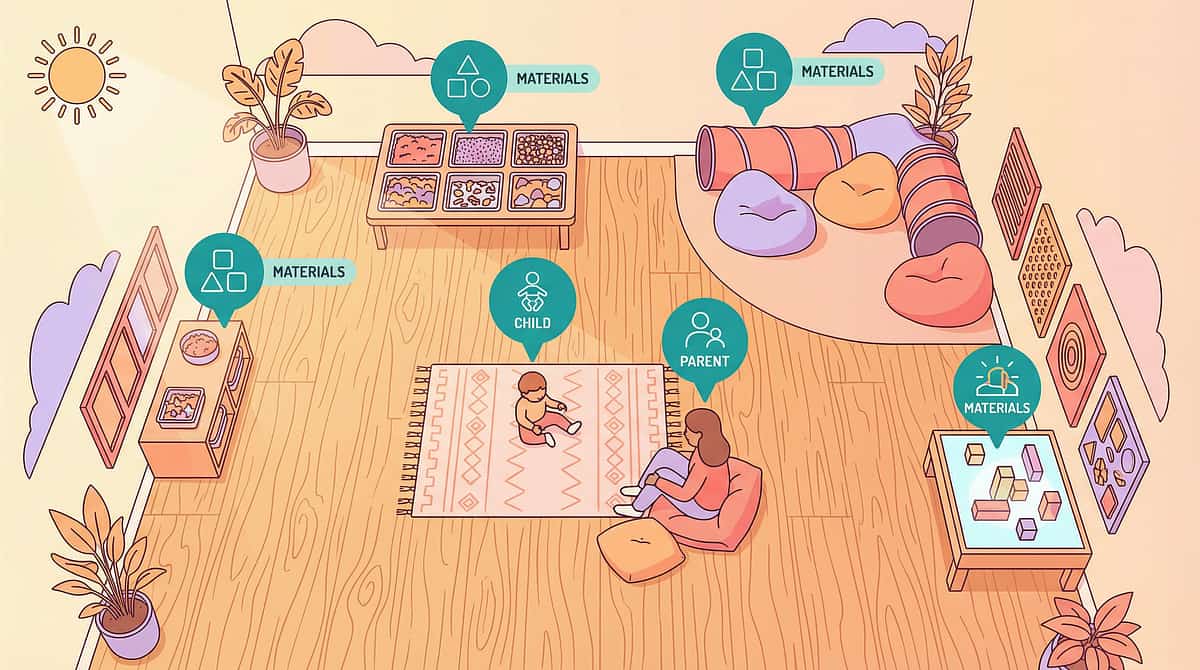
Before your first session, configure your space using the B-133 room layout. The physical arrangement of targets, materials, and people is not cosmetic — it is the intervention architecture itself.
Mount 3–4 large, clear pictures on ONE wall
At child's eye height + 30cm (slightly above reach)
Place 1–2 preferred objects on a high shelf across the room
Request cards accessible to child via velcro strip or small tray at their level
Remove competing visual noise
Turn off screens, clear floor clutter. Bright, even lighting — child must see distant targets clearly.
Calibrate distance progressively
Weeks 1–2: 1–1.5m. Weeks 3–4: 2–2.5m. Weeks 5–8: 3–4m full room. Never increase before success at current level.

The Best Session Is One That Starts Right.
Use this pre-flight checklist before every session. The decision gate below tells you exactly whether to proceed, modify, or postpone. Postponing is not failure. Postponing is clinical precision.
Check | ✅ GO | ⚠️ MODIFY | 🔴 POSTPONE | |
Fed in last 2 hours? | Proceed | Give snack, wait 10 min | — | |
Rested? (not overtired) | Proceed | Shorten to 5 min | If exhausted | |
Regulated? (calm baseline) | Proceed | Use calming input first | If dysregulated | |
No meltdown last 30 min? | Proceed | — | Recent meltdown | |
Engaged with environment? | Proceed | High-motivation targets | Completely withdrawn | |
Parent regulated? | Proceed | Take 3 breaths first | — |
🟢 4–6 checks
GO → Proceed to Step 1: The Invitation
🟡 2–3 checks
MODIFY → Use shortest, simplest version: 2-minute game, closest target, maximum praise
🔴 0–1 checks
POSTPONE → Do a preferred calming activity instead: swinging, music, gentle play
Step 1 of 6
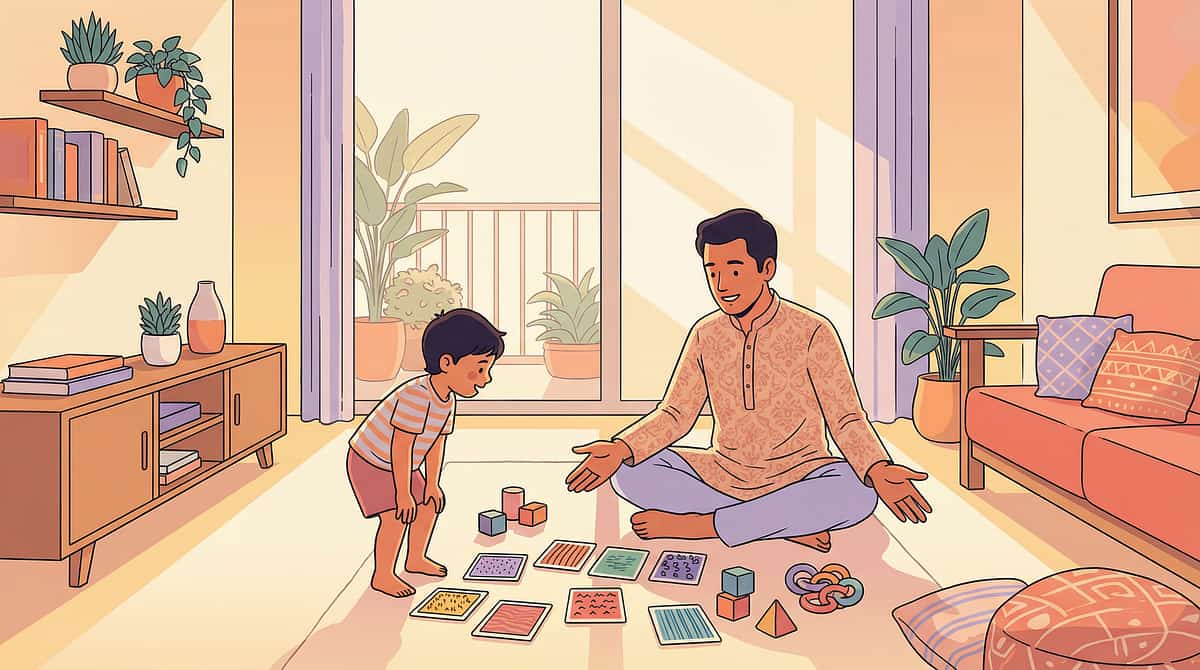
The Invitation
Duration: 30–60 seconds | Principle: Every protocol begins with an invitation, never a demand.
"[Child's name], do you want to play a pointing game? I hid something special..."
Body Language
Get DOWN to child's level (kneel or sit). Make eye contact warmly, don't demand it. Gesture broadly toward the room. Smile — your affect is the most powerful prompt.
Acceptance Cues (child is ready)
Looks at you • Orients toward the room • Approaches you or the play area • Any vocalization or gesture of interest
Resistance Cues & Responses
Walks away → Follow gently: "Look! [Favorite toy]!" | Ignores → Animate yourself, create anticipation | Begins to lead you physically → Say warmly: "I wonder what you want? Show me from here!"
If Using Request Cards
Hold up 2 picture cards: "Which one do you want?" The card exchange IS the invitation.
Step 2 of 6
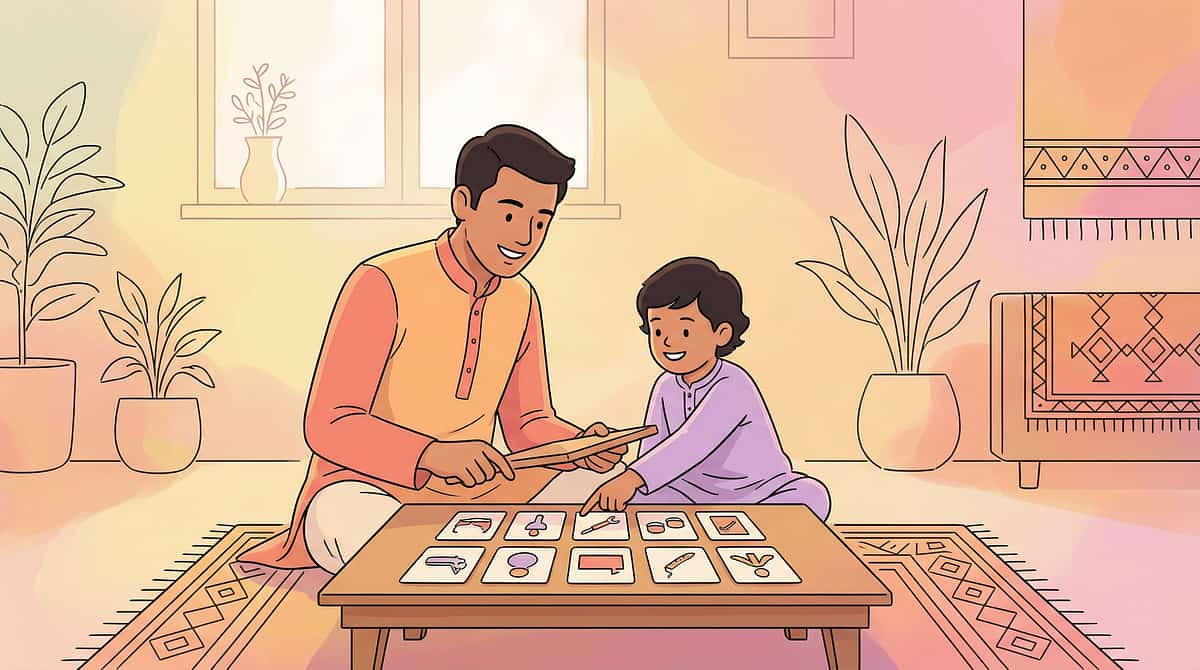
The Engagement
Duration: 1–3 minutes | Principle: Introduce the material playfully, read the child's response.
Pointing Targets (Most Common Starting Point)
Stand with child, facing the wall with targets. Say: "Look! What's that?" — point dramatically yourself. Child looks → CELEBRATE immediately: "You looked! Yes! That's [item]!" Repeat with 2–3 different targets.
Request Cards
Place 2 picture cards in front of child within reach. Wait expectantly (5–10 seconds of silence is okay). If child reaches for a card: "You want [item]! Show me!" → give the item within 3 seconds. If child ignores: model picking up the card and giving it to yourself, then celebrate.
Distance Games
Show child a favorite toy. "Watch where I hide it!" → place it across the room. "Where is it? Show me!" → gesture toward room. Any looking, pointing, or approaching attempt = success at this stage.
Child Response Spectrum:🟢 Ideal: Child looks toward target, makes pointing attempt. 🟡 Acceptable: Child looks, vocalizes, reaches forward. 🔴 Concerning: Child becomes distressed, closes down completely → simplify or postpone.

Step 3 of 6
The Therapeutic Action
Duration: 5–10 minutes | Core of the session. Use the nested approach below for each material type.
▶ Pointing Targets
Position yourself 2 steps behind and beside the child. When child looks at a target: hold your own index finger out and point clearly. Say: "Point to the [item]!" Use hand-over-hand prompt if needed (gently guide child's index finger, then release). Gradually fade physical prompt → gestural prompt → independence over days.
▶ Request Cards (PECS Protocol)
Phase 1: Card within reach — child picks up and gives = immediate fulfillment. Phase 2: Adult is 1 metre away — child must travel WITH card (not drag adult). Phase 3: Card is on strip across room — child retrieves, travels to adult, exchanges. Communication travels. Adult stays.
▶ Big Button AAC
Program device with child's 3 highest-motivation items. When child begins physical leading, redirect: "Press the button to tell me!" Model pressing it yourself first. When child presses → fulfill immediately. Gradually require press BEFORE fulfillment.
▶ Distance Games
"Where's the [toy]?" → child locates it visually → child points or looks significantly toward it → adult says "I see you looking! Over there?" → goes to retrieve it. The adult's EYES follow the child's LOOK. Child learns looking and pointing are effective.
▶ Barrier Games
Place identical toy sets on both sides of a cardboard barrier. Adult: "Make your car go on the long road." Child must use gesture, point, or vocalization to match — cannot reach across. Keep early versions simple. 2-minute sessions.
Common Execution Errors:❌ Waiting for perfect pointing before responding → Accept approximations always. ❌ Correcting the leading behavior directly → Redirect to alternatives, don't punish intent. ❌ Sessions over 15 minutes → Attention and motivation drop sharply.
Step 4 of 6
Repeat & Vary
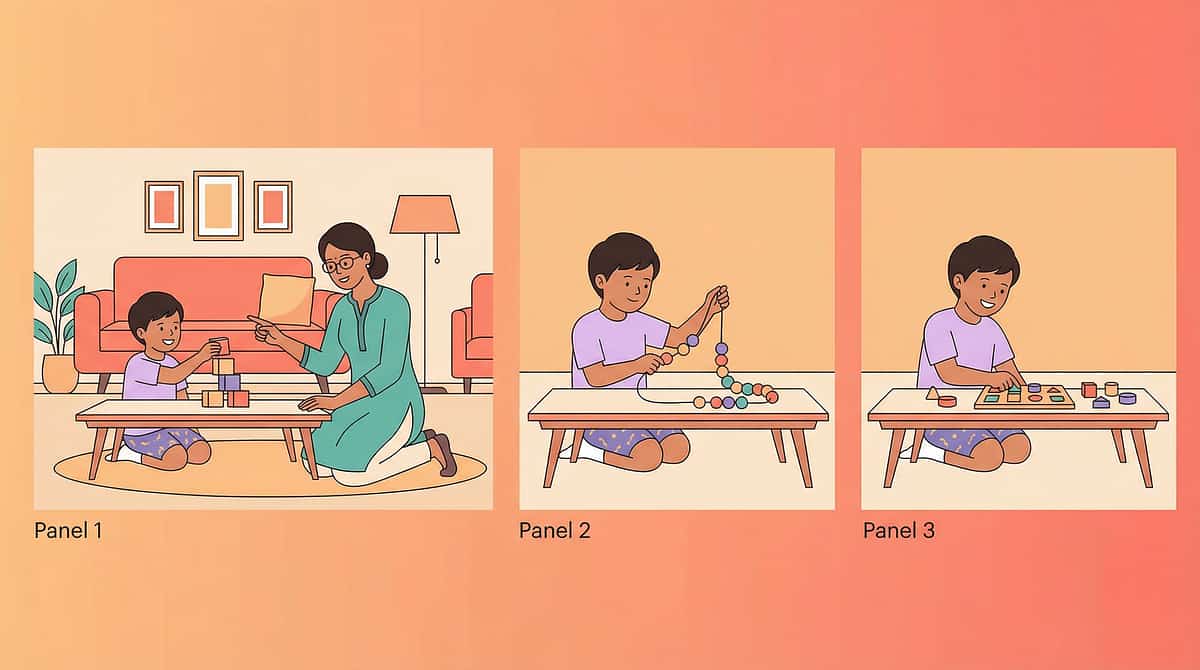
Target: 3–5 good repetitions per material per session. The Golden Rule: 3 good reps > 10 forced reps. After each successful attempt (however approximate), reset and repeat. Vary the target, the distance, the person, and the motivation between repetitions.
Material | Target Reps/Session | |
Pointing Targets | 5–8 target pointing opportunities | |
Request Cards | 3–5 card exchanges | |
AAC Button | 5–10 button activations | |
Distance Games | 3–4 hide-and-find cycles | |
Barrier Games | 2–3 communication exchanges |
Satiation Indicators — Stop repetitions when you see: Child turns body away from activity • Vocalizations shift from positive to protesting • Eye contact decreases AND child begins to wander • Child attempts to end session. Do NOT force past satiation. Ending on success builds positive association. Ending on resistance builds avoidance.
Step 5 of 6
Reinforce & Celebrate
Timing is everything: within 3 seconds of the target behavior.
Natural Consequence
Child points to juice → child gets juice IMMEDIATELY. Communication WORKED. This is the most powerful reinforcement available.
Specific Verbal Praise
"You POINTED! I understood you! Amazing!" Not generic "good boy/girl." Name exactly what they did.
Physical Celebration
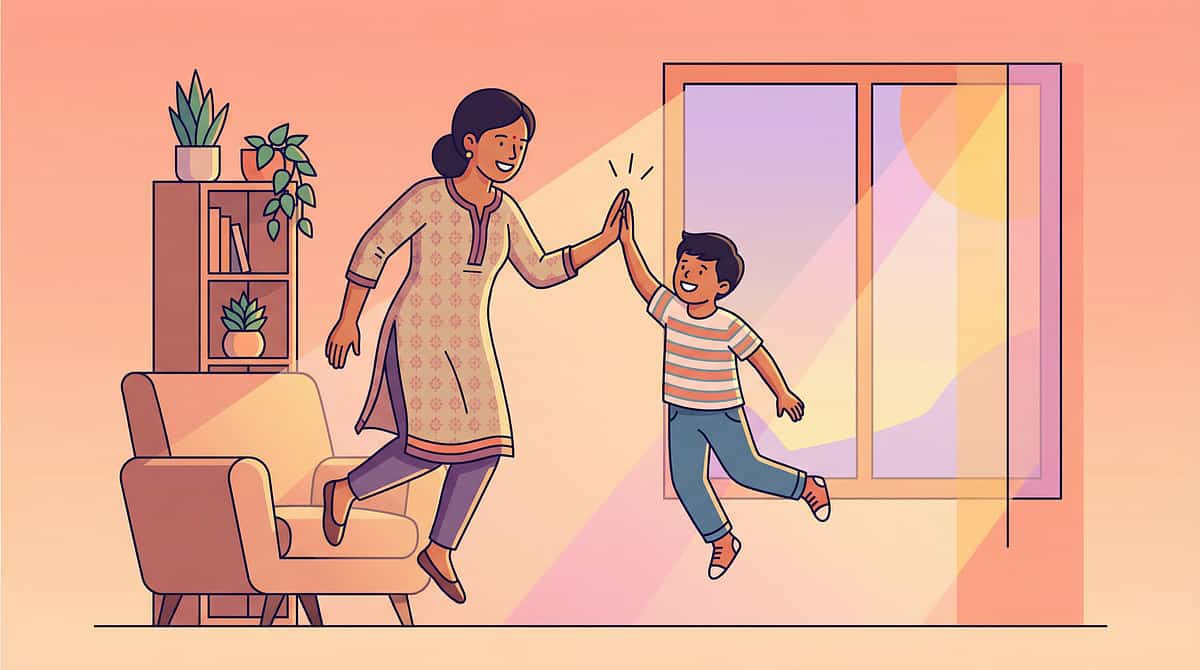
High five, clap together, jump for joy. Match the child's energy level.
Token System
Star on a chart, sticker, point in a visual reward system for children who respond to visual tracking.
Preferred Item
Provide the requested item immediately upon any pointing, card, or AAC attempt.
Critical: Reinforce the attempt, not just the perfect outcome. Approximate point? Reinforce. Child looks significantly toward target? Reinforce looking. Every pointing/card/AAC attempt that goes unrewarded teaches the child that physical leading is MORE reliable. Consistency of response is the single most important variable.

Step 6 of 6
The Cool-Down
Duration: 1–2 minutes | No abrupt endings. The transition sequence is as important as the session itself. Predictable endings build trust and reduce resistance over time.
Warning (2 repetitions before end)
"Two more! Let's do two more, then all done." Hold up 2 fingers — visual + verbal simultaneously.
If Child Resists Ending
Do NOT add more reps — this teaches that protest extends sessions. Maintain the "all done" warmly and firmly. Bridge to the preferred next activity immediately.
Expect a Brief Increase in Leading
Physical leading may increase briefly in the days after you begin this intervention, as the child tests the new expectations. This is normal. Stay consistent. The leading increases before it decreases.
60 Seconds. Right Now. This Data Drives Your Child's Progress.
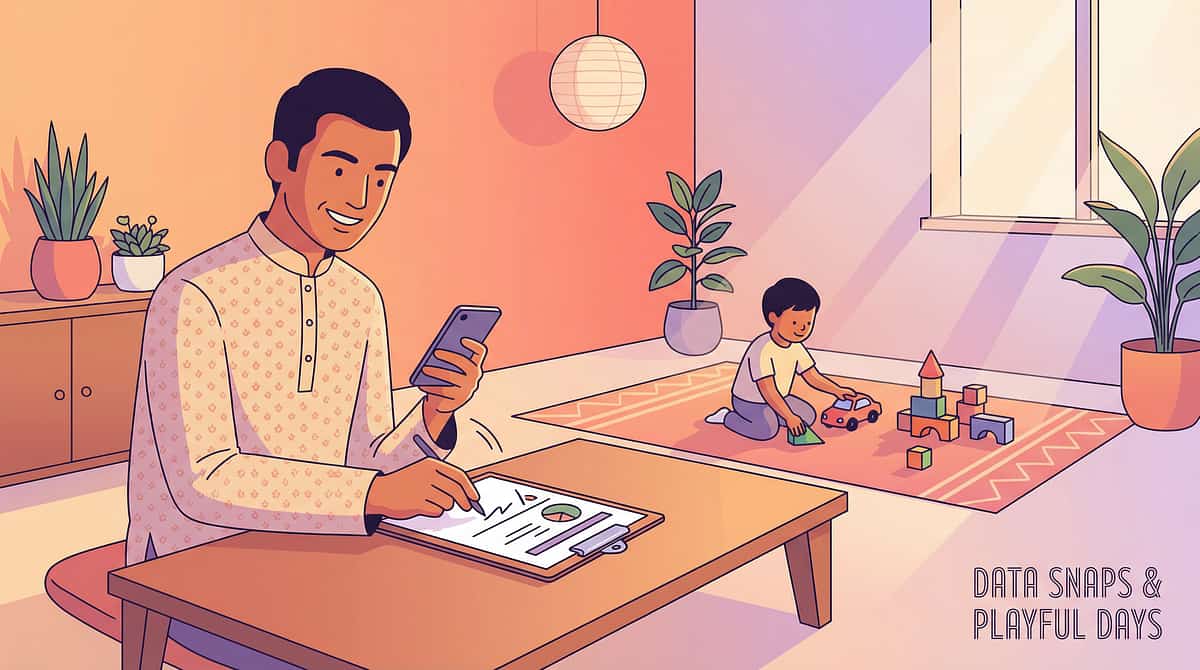
Record this within 1 minute of session end. This data feeds the Communication Readiness Index within GPT-OS® AbilityScore®. Over 20+ sessions, it reveals your child's trajectory — whether pointing distance is increasing, whether physical leading is decreasing, and when the program should be adjusted.
Session Info
Date: _______ | Session #: ___ | Material Used: ☐ Pointing Targets ☐ Request Cards ☐ AAC Button ☐ Distance Games ☐ Photo Album ☐ Barrier Game
Quantitative Data
Best Pointing Distance Today: ______ metres | Physical Leading Attempts (count): ______ | Pointing/Card/AAC Attempts (count): ______
Qualitative Note
Child's Best Moment Today (one sentence): ___________________________
Overall Session Rating
🟢 Excellent | 🟡 Moderate | 🔴 Difficult

Every Parent Hits These Walls. Here's How to Break Through.
Child keeps physically leading even after seeing card/AAC
Honor ALL communication. Do not withhold the item to force pointing. AFTER giving the item, model the alternative: "Next time, show me the picture!" The goal is adding an option, not removing the leading intent.
Child won't look at distant targets at all
The distance is too far. Return to 30cm targets. Any eye contact with the target = success. Gradually move the target back over many sessions.
Child takes the card but throws it instead of handing it
This is Phase 0 — exploring the cards. Treat it as engagement. Model: pick up the card, hand it warmly to the child, wait for reciprocal hand. Very small steps.
Other family members keep walking the child to items
Family calibration IS the intervention. Print the one-page Family Guide (Card 37). Everyone responds to the CARD, not to leading. Inconsistency will extend the timeline significantly.
Child loses interest in request cards after initial novelty
Rotate pictures. Update to current favorites. PECS uses highly motivating items — survey what is currently motivating and update the card set weekly.
Progress feels very slow
Distal communication typically builds over 8–12 weeks of consistent practice. Week-1 progress is tolerance. Week-3 progress is consistency. Week-6 progress is mastery. Trust the process data.
Every Child Has a Version of This Technique That Fits Them Perfectly.
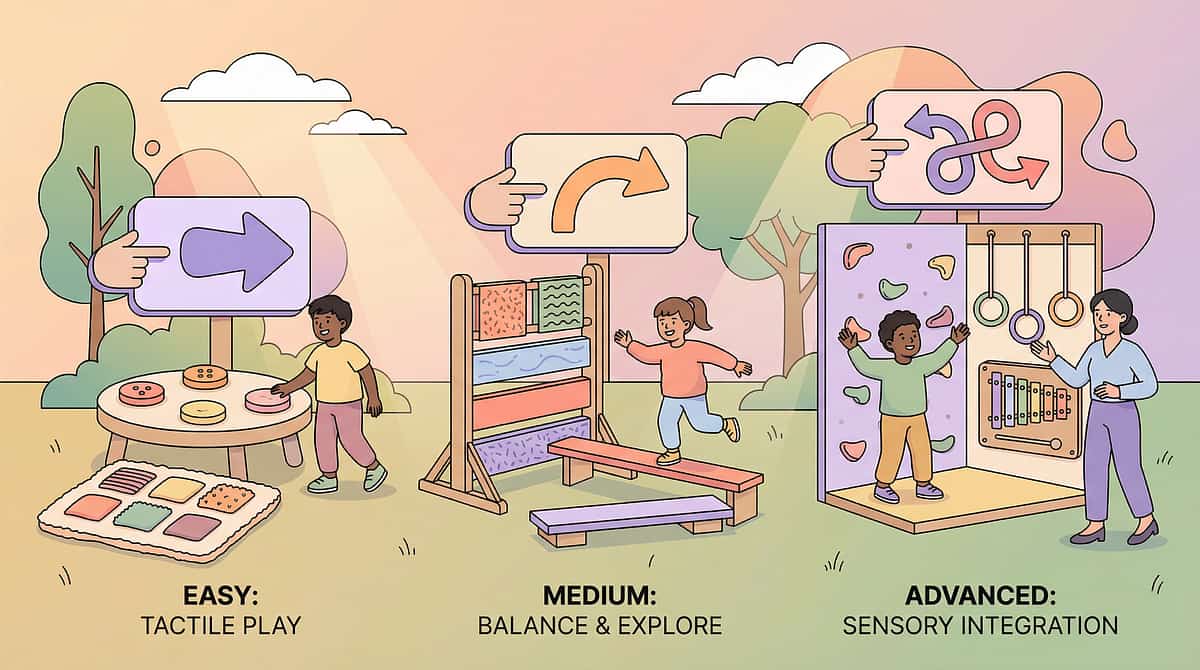
⬅️ Easier Version
30cm distance • Hand-over-hand pointing • 1 picture card • Single AAC button • Parent comes closer
Standard Version
2m distance • Gestural prompt • 4-card board • 4-button device • Parent stays still
➡️ Harder Version
Full room (4m+) • Independent • Full PECS book • Robust AAC system • Parent goes to different room
Very Young (12–18 months)
Focus exclusively on pointing at close targets (30–50cm). Physical leading at this age is developmentally expected — the work is gentle introduction of alternatives, not elimination.
Sensory-Seeking Children
Use animated, high-contrast pointing targets. Distance games with movement. AAC buttons with satisfying tactile feedback.
Sensory-Avoiding Children
Quiet, predictable environments. Muted picture cards. Avoid sudden light-based tools. Build trust before challenge.
Tech-Comfortable Families
Free AAC apps — LetMeTalk, Cboard, Snap Core First trial — provide immediate, portable communication tools at no cost.

Week 1–2: You're Building the Foundation. It Doesn't Look Dramatic Yet.
Progress: ~15%
Foundation Phase
15%
Foundation
Progress at end of weeks 1–2
✅ Child tolerates materials being present
Even without engaging — this is regulation progress
✅ Child looks toward a distant target when named, even briefly
Any visual orientation toward target = neural pathway beginning
✅ Child accepts card being placed in hand
Without discarding it immediately
✅ Any AAC button press, even accidental
Accidental discovery is still discovery
Parent Milestone: "If your child tolerates the pointing target being on the wall without disrupting it — that's real progress in Week 1." Physical leading may INCREASE in the first week as the child tests new expectations. This is normal and expected.

Week 3–4: Neural Pathways Are Forming. Watch for These Quiet Signs.
Progress: ~40%
Consolidation Phase
40%
Consolidation
Progress at end of weeks 3–4
Child anticipates the session
Looks toward materials when routine starts — the brain is building predictive pathways
Physical leading to CARD location
Child goes to GET a card instead of going to GET the adult — a critical transitional behavior
Brief spontaneous pointing at close targets
Even without prompting — even approximate — even just reaching forward
Returns to AAC button independently
2–3 times in a session — self-initiated communication emerging
When to increase challenge: If child is reliably pointing at 1m distance → gently increase to 1.5m. If child is exchanging 1 card type → introduce a 2nd card. If AAC press rate is rising → add a 2nd message button. Always increase ONE variable at a time.
Week 5–8: Mastery Is Measurable. Here Are Your Badges.
Progress: ~75%
Mastery Phase
Pointing Mastery
Child independently points to preferred objects across the room (2m+) without prompting, on 4 out of 5 opportunities across 3 consecutive sessions.
Request Card Mastery
Child independently retrieves a picture card and exchanges it with an adult to request a preferred item, without leading the adult, on 80% of request opportunities.
AAC Mastery
Child independently activates the AAC device to communicate a want, without physical leading, on 4 of 5 opportunities.
Generalization
Pointing or card behavior appears in a different room/location from where it was taught, OR with a different caregiver. This is the gold standard of mastery.

Your Child Pointed Across the Room. Take a Moment. This Is Huge.
"You spent 8 weeks getting down on the floor. Hiding toys. Holding up cards. Sitting beside your child at the window pointing at birds. Celebrating every approximate pointing attempt even when you weren't sure it counted. It counted. Every single time."
Your child now has a new neural pathway — a connection between "I want something across the room" and "I can use my finger (or my picture, or my button) to say so." That pathway didn't exist before you built it. You built it.
📸 Family Milestone
Take a photo this week of your child pointing at something they want. Save it. This is a developmental milestone. It belongs with the first steps and first words.
💬 Share Your Win
Share in the Pinnacle Blooms Community — WhatsApp groups and the website community platform. Other parents need to hear your story.

Trust Your Instincts. These Signs Mean: Pause and Call.
Progress is not always linear. While variation is expected, certain patterns should prompt you to pause the home program and seek professional consultation. These are not failure signs — they are clinical signals that guide the next best step.
⚠️ Complete absence of any pointing after 4+ weeks
Even approximate, even at close range — warrants comprehensive developmental evaluation.
⚠️ No joint attention of any kind
Child does not look toward objects when named, does not follow a pointed finger at any distance — requires developmental pediatrician assessment.
⚠️ Regression
Child had pointing skills that have disappeared over weeks — a change in trajectory, not just a slow start.
⚠️ Communication intent appears to be decreasing
Fewer communication attempts overall — not just fewer physical leads.
⚠️ Significant distress during all communication-based activities
Not just this technique — across all contexts and modalities.
Escalation Pathway: Self-resolve (mild variation) → Teleconsult with Pinnacle SLP → Center visit + comprehensive assessment. Free National Autism Helpline: 📞 9100 181 181 | Available 24x7 | 16+ languages
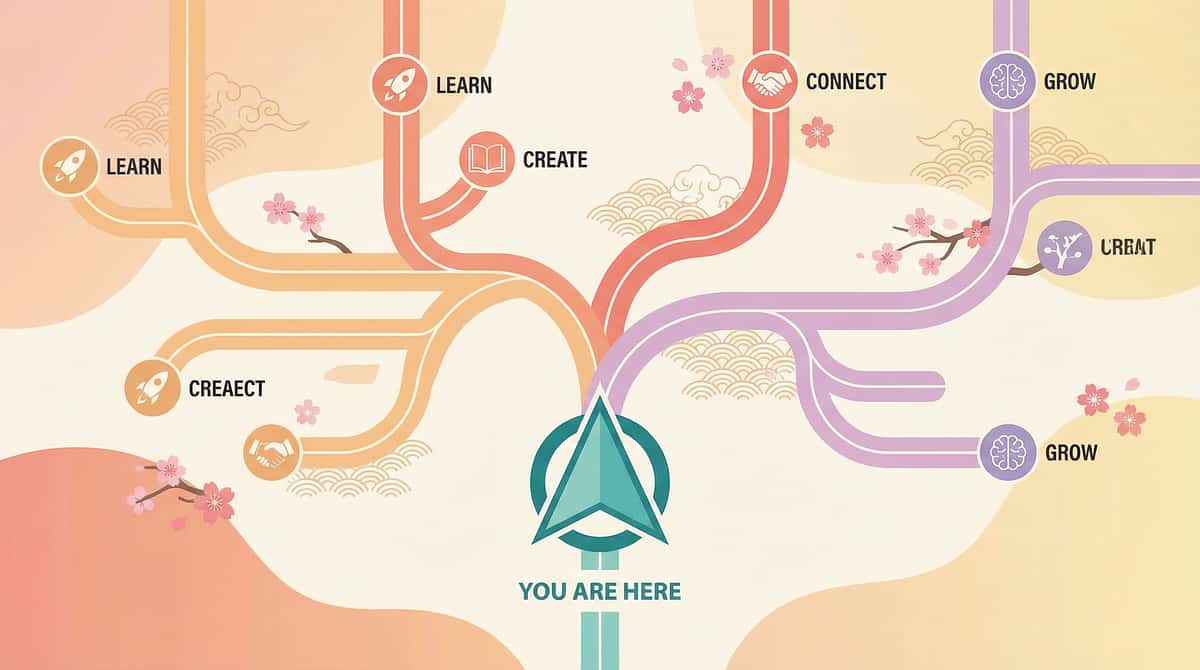
B-133 Is One Step. Here's the Full Communication Journey.
1
Strong Response
Increase challenge within B-133 — longer distance, faster fading of prompts
2
Partial Response
Combine B-133 with B-132 (hand-as-tool) work simultaneously
3
Slow Response
Consider AAC evaluation before progressing — Pinnacle AAC assessment recommended
4
Pointing Mastered
Progress to B-134 (Greetings) and B-007 (Following Pointed Direction)
While You're Here — These Techniques Belong in the Same Journey.
If you've set up B-133, you already have everything needed for several related techniques. No new purchases required for B-131, B-132, and B-134.
B-131 — Limited Pretend Play
Intro level | Related: symbolic communication development

B-132 — Hand Leading / Uses Hand as Tool
Core level | Related: physical communication patterns — the step just before B-133

B-134 — Lack of Appropriate Greetings
Core level | Related: social communication initiation — direct next step from B-133

B-135 — Limited Social Imitation
Core level | Related: modeling and gesture development

B-006 — Limited Pointing or Gesturing
Advanced level | Direct continuation of B-133 goals — the mastery destination
B-007 — Not Following Where Others Point
Core level | Receptive side of the same coin as B-133
B-133 Is One Piece of a Larger Plan. Here's the Full Picture.
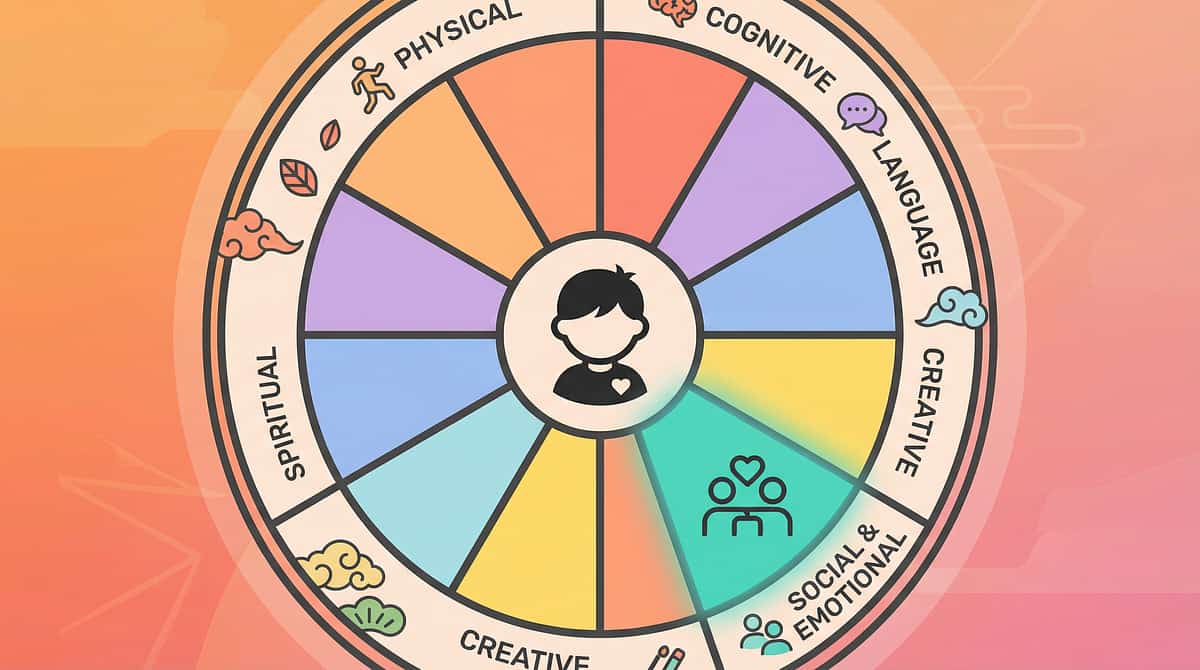
The child's developmental landscape spans 12 Domains (A–L) in the Pinnacle GPT-OS® framework. B-133 sits within Domain B — Social Communication — but connects to every other domain, because distal communication is a whole-child skill.
This technique connects to the AbilityScore® Communication Readiness Index → Distal Communication & Gestural Development subdomain. Tracking your B-133 sessions feeds the GPT-OS® algorithm that personalizes your child's full program across all 12 domains.
Real Families. Real Progress. Real Homes Like Yours.
Bengaluru Family — 2024
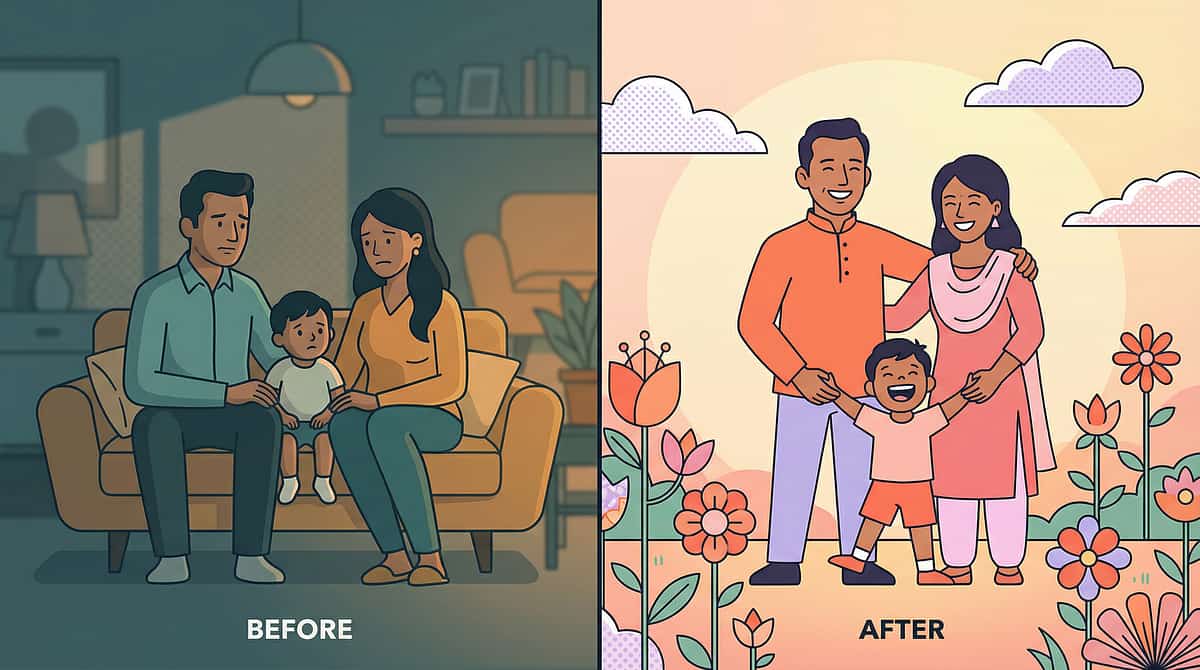
"Arjun was 2.5 years old and had never pointed at anything across a room. He would grab my hand and drag me everywhere. After 6 weeks of distance pointing practice — just large pictures on the wall and hide-and-find games — he pointed to a bird outside the window completely on his own. His dadi started crying. We all did. He had never shared attention like that before."
— Mother, Pinnacle Bengaluru (Illustrative case; outcomes vary)
— Mother, Pinnacle Bengaluru (Illustrative case; outcomes vary)
Hyderabad Family — 2024
"Our daughter would lead us with both hands, very purposefully. She knew exactly what she wanted. Once we set up the request card system — printed photos on a velcro strip near the kitchen — she started bringing us the juice picture instead of the walk to the fridge. In week 2. She figured it out faster than we did."
— Father, Pinnacle Hyderabad (Illustrative case; outcomes vary)
— Father, Pinnacle Hyderabad (Illustrative case; outcomes vary)
The Common Thread: The intervention is consistent. The child's intelligence — the same intelligence that made leading so effective — is redirected into pointing and pictures. The capability was always there.
You Don't Have to Figure This Out Alone.
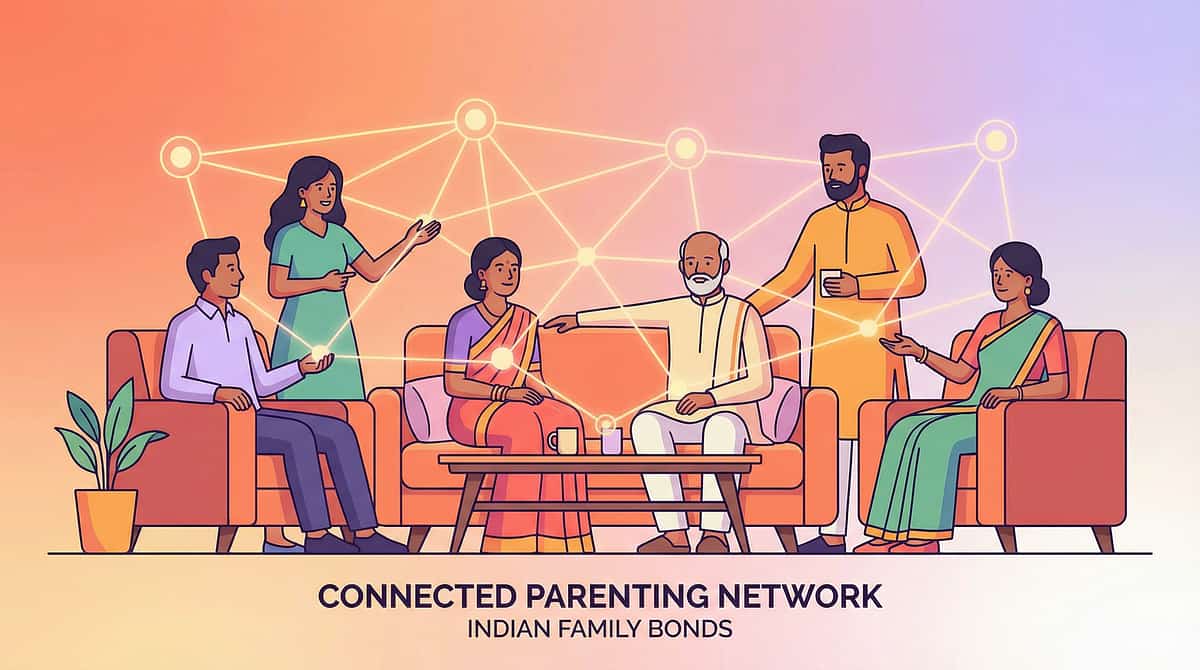
Consistency across caregivers multiplies impact. Community creates consistency. Connect with thousands of Indian families navigating similar journeys — and with Pinnacle clinicians who can guide you in real time.
Pinnacle Parent Community
Connect with thousands of Indian families navigating similar journeys. Share progress, ask questions, get support from parents who've walked this path.
pinnacleblooms.org/community
pinnacleblooms.org/community
WhatsApp Support Groups
Region-specific groups moderated by Pinnacle clinicians. Ask questions, share wins, troubleshoot in real-time.
9100 181 181
9100 181 181
Weekly Parent Webinars
Free live sessions with Pinnacle consortium therapists. Topics rotate through all domains. Recordings available.
pinnacleblooms.org/webinars
pinnacleblooms.org/webinars
Global Network
Pinnacle serves families in 70+ countries through the GPT-OS® platform. You are part of a community that spans continents.
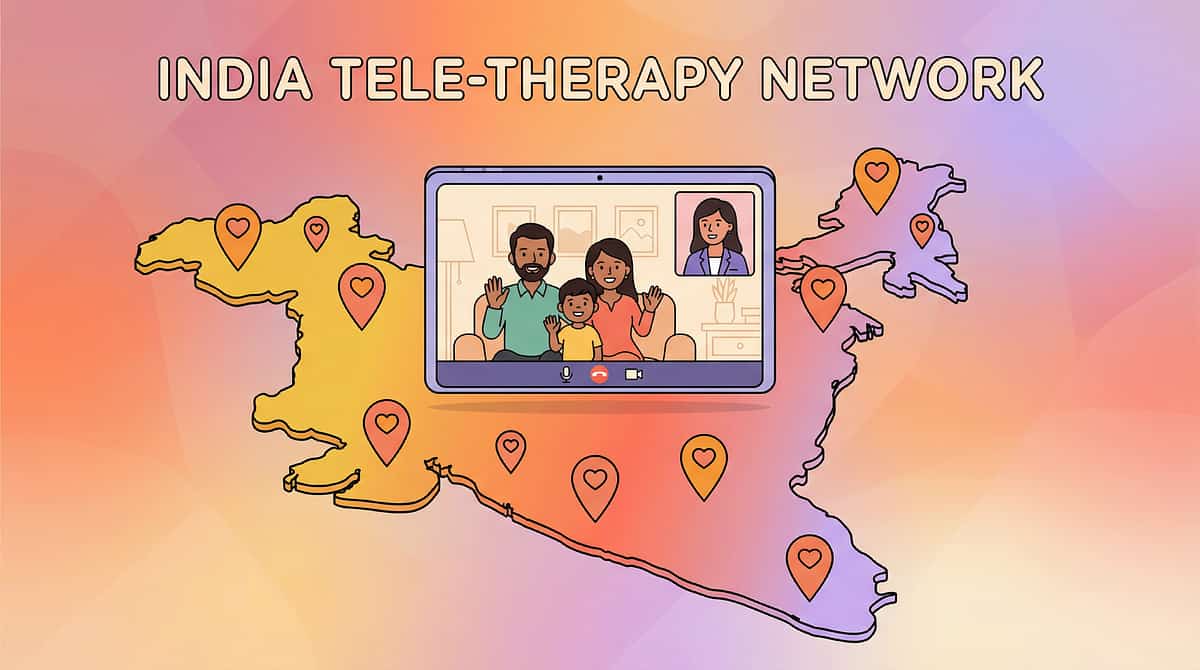
When Home Practice Needs Professional Support — Here's Your Pathway.
🥇 FREE National Autism Helpline
24x7 | 16+ languages | No appointment needed. First call: get guidance, screening questions, and referral pathway.
📞 9100 181 181
📞 9100 181 181
🥈 Teleconsultation with Pinnacle SLP
Video session with a licensed speech-language pathologist. Review your B-133 data, adjust the program, answer questions.
pinnacleblooms.org/book
pinnacleblooms.org/book
🥉 In-Person Center Visit
Comprehensive AbilityScore® assessment. Full communication evaluation. Personalized GPT-OS® program design across 80+ centers in India.
pinnacleblooms.org/centers
pinnacleblooms.org/centers
Who Should Call: ✓ Physical leading as primary communication method beyond 18–24 months ✓ No independent pointing after 4 weeks of B-133 practice ✓ Any concern about regression in communication ✓ Interest in formal AAC evaluation. Pinnacle's protocols align with ASHA Practice Portal guidelines for AAC assessment and intervention.
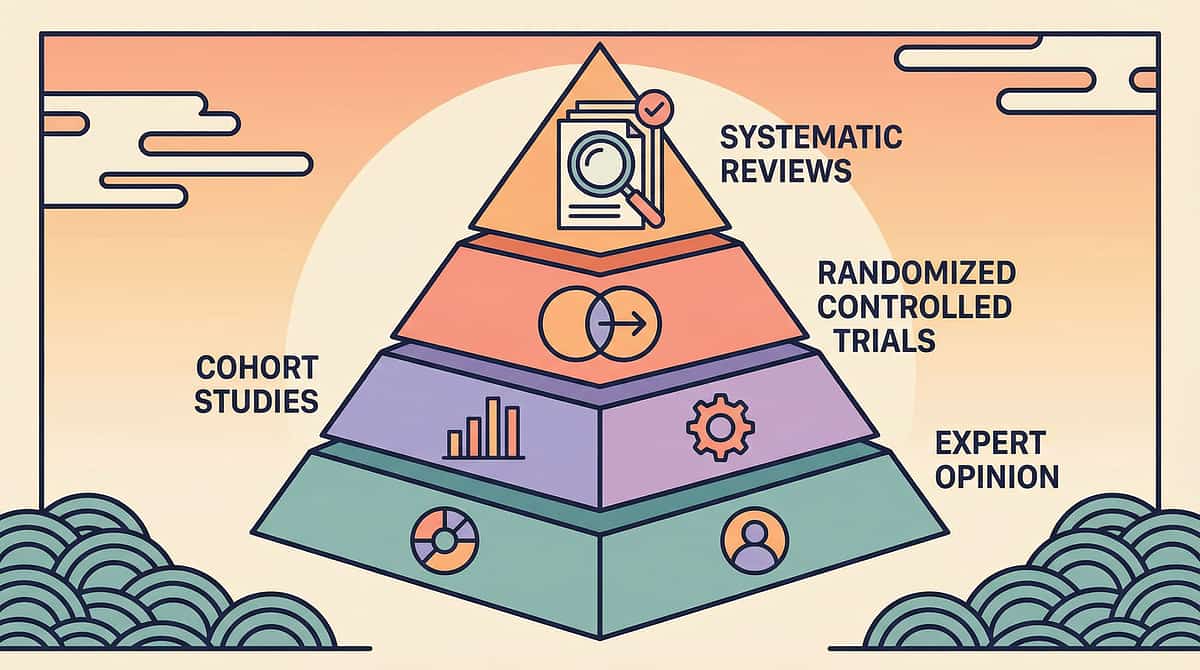
For the Parent Who Wants to Read the Science Themselves.
Bondy & Frost (2001)
PECS training. Level I RCT. Direct evidence for picture-based requesting as alternative to physical leading.
Kasari et al. (2006)
Joint attention and symbolic play RCT. PMID: 16565585. Level I evidence for distal gesture intervention.
Wetherby et al. (2004)
Early indicators of ASD in the second year of life. J Autism Dev Disord. PMID: 15104577.
Padmanabha et al. (2019)
Home-based intervention, Indian population. Indian J Pediatr. DOI: 10.1007/s12098-018-2747-4
NCAEP Report (2020)
AAC, visual supports, and naturalistic developmental behavioral interventions classified as EBP for autism.
PMC11506176 (2024)
Systematic Review: 16 studies (2013–2023) confirm multi-modal developmental intervention meets EBP criteria.
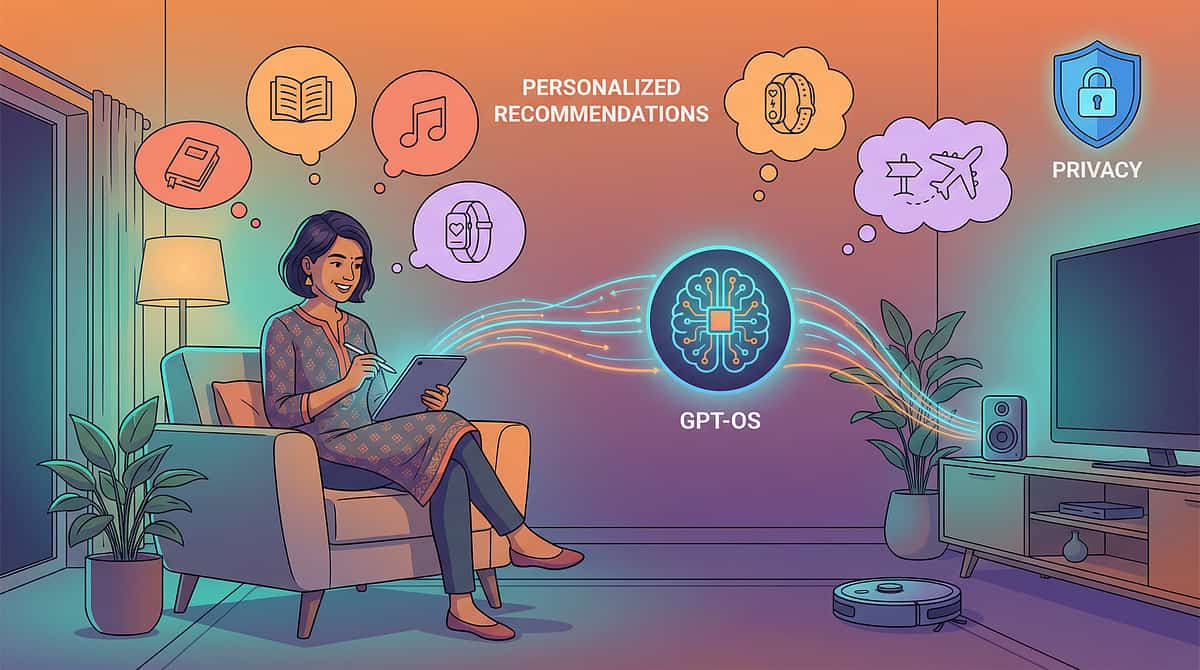
Every Session You Run Makes Your Child's Program Smarter.
What GPT-OS® Learns from B-133
- Rate of physical leading reduction over time
- Pointing distance progression curve session by session
- Which material (cards/AAC/pointing games) shows fastest response for your child
- Comparison to 20M+ session population: how your child's trajectory compares
Privacy & Security
All data is protected under India's Digital Personal Data Protection Act (2023) and Pinnacle's ISO/IEC 27001-aligned security protocols. Your child's data is never sold or shared.
"20M+ sessions. Each one made the next one better."
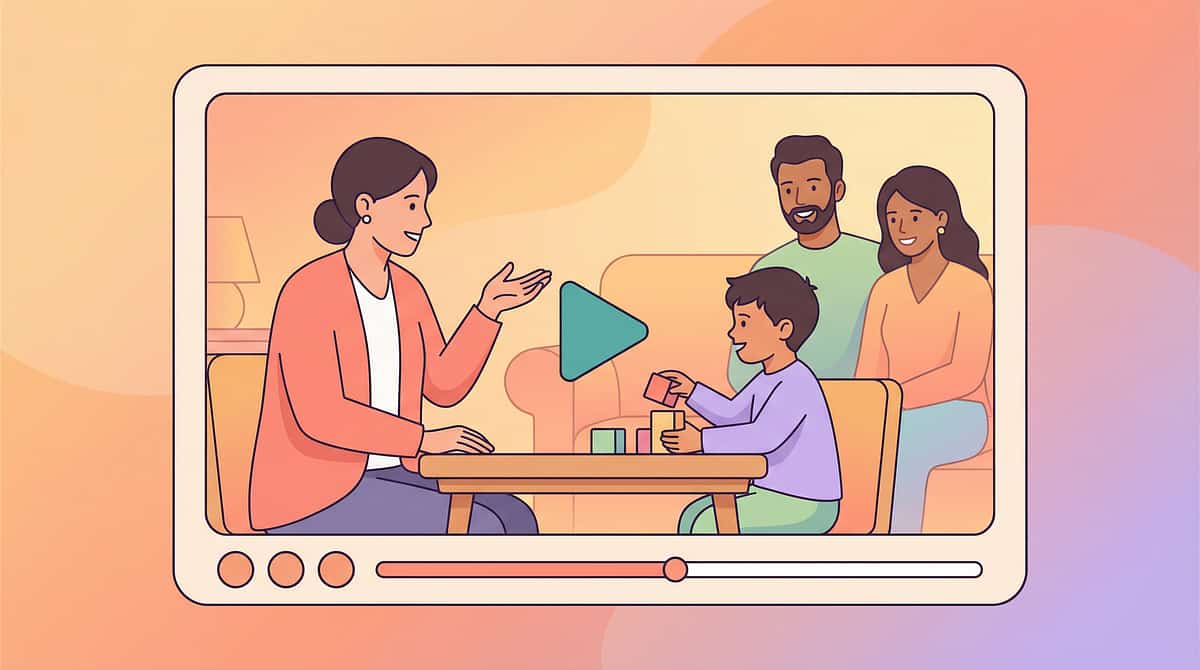
9 Materials. 75 Seconds. Watch Before You Start.
🎬 Reel ID: B-133
Communication & Gesture Development — Episode 133
⏱️ Duration: 75 seconds
Presented by the Pinnacle SLP Consortium
👁️ What This Reel Shows
The physical leading pattern (compassionate, non-judgmental depiction) • All 9 materials briefly demonstrated • Real child, real progression from leading → pointing
Evidence for Video Modeling: Video modeling is classified as an Evidence-Based Practice for autism (NCAEP 2020). Watching the technique before executing it increases parent accuracy by demonstrating correct implementation in a real home context.

Consistency Across Caregivers Multiplies Impact. Share This Page.
If everyone in the house isn't on board, the intervention loses up to 60% of its power. Physical leading persists precisely because it has always worked — with every adult in the home. Alignment across caregivers is not optional. It is the intervention.
"[Child's name] is learning to point and use picture cards to ask for things instead of walking us to them. When he leads you by hand, please say warmly: 'Show me the picture!' and point to the card board. Then give him what he wants. It takes 2 seconds. It builds his communication every time." — The 30-Second Explanation for Grandparents
📱 Share on WhatsApp
Send this page directly to every caregiver in the home — grandparents, aunts, uncles, helpers
⬇️ Download Family Guide PDF
"Explain to Your Family in 1 Page" — free one-page printable guide
🏫 School Template
Download School Communication Template for B-133 Objectives — for teachers and classroom aides

The Questions Every Parent Asks. The Answers You Actually Need.
My child has been leading for 2 years. Is it too late?
It is never too late to build alternative communication pathways. Neuroplasticity is strongest in early childhood, but communication systems can develop at any age. Children who have led for 2+ years may need more time, but the B-133 materials and approach remain appropriate. Start with the easiest level and progress consistently.
Should I stop responding to physical leading?
No. Never withhold responses to a child's communication attempts. Honor ALL communication, while simultaneously building more efficient alternatives. Over time, as alternatives become reliable, physical leading naturally decreases because it's no longer the most efficient option.
My child has no pointing at all. Where do I start?
Start with pointing targets at 30cm distance. The goal in Week 1 is simply looking at the target when named. Any reach toward the target is a pointing precursor. Hand-over-hand pointing is a valid starting point. Call 9100 181 181 for guidance before starting AAC or PECS.
How do I handle physical leading in public?
In the short term, carry 2–3 portable request cards. At home, consistency is more important than public perfection. Public generalization comes after home mastery — do not try to run sessions at grocery stores in the first 6 weeks.
Can we use AAC and pointing at the same time?
Yes — and you should. Research consistently shows that AAC does NOT reduce speech or other communication development. Using multiple channels (pointing, pictures, AAC, words) in parallel builds a more robust communication system.
How long before I see results?
In 8–12 weeks of consistent daily practice (even 10 minutes), most children show measurable increases in pointing distance or picture card use. Individual timelines vary. The data tracker in Card 20 will show your child's actual curve — trust the data over your daily perception.
Preview of 9 materials that help when child leads you to objects Therapy Material
Below is a visual preview of 9 materials that help when child leads you to objects therapy material. The pages shown help educators, therapists, and caregivers understand the structure and content of the resource before use. Materials should be used under appropriate professional guidance.


Link copied!

Your Child Is Ready to Point. Your Home Is Ready. You Are Ready.
Eight weeks. Ten minutes a day. Large pictures on a wall, a few printed cards, and your patient, loving presence. That is the complete recipe for building the neural pathway from physical leading to distal communication. The science is solid. The materials are available. The technique is validated. Your next session starts now.
🗣️ SLP | 🧠 ABA | ⚙️ OT | 📚 SpEd | 🏥 NeuroDev
Pinnacle Blooms Consortium — Validated by multi-disciplinary specialists. 20M+ sessions prove this works.
📞 9100 181 181
FREE National Autism Helpline | 24x7 | 16+ languages | No appointment needed
This content is for educational purposes only and does not replace professional evaluation or treatment. Physical leading instead of pointing may indicate communication or developmental differences warranting comprehensive assessment. Consult a developmental pediatrician, speech-language pathologist, or other qualified professional for individualized guidance. Communication development varies significantly among children. Individual results vary.
CIN: U74999TG2016PTC113063 | DPIIT: DIPP8651 | MSME: TS20F0009606 | GSTIN: 36AAGCB9722P1Z2 | ISO 13485 | ISO/IEC 27001 © 2025 Pinnacle Blooms Network®, unit of Bharath Healthcare Laboratories Pvt. Ltd. All rights reserved. GPT-OS®, AbilityScore®, TherapeuticAI®, FusionModule™, EverydayTherapyProgramme™ are proprietary marks of Pinnacle Blooms Network®.
techniques.pinnacleblooms.org | pinnacleblooms.org | 9100 181 181